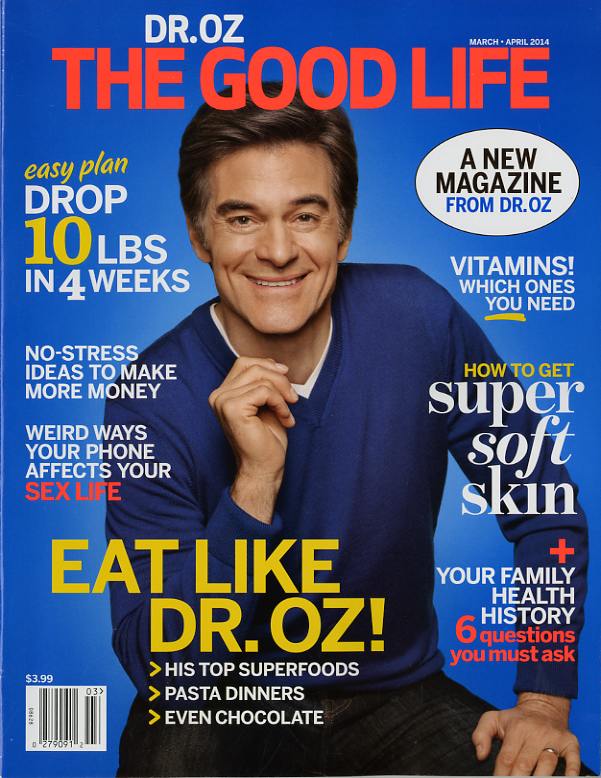
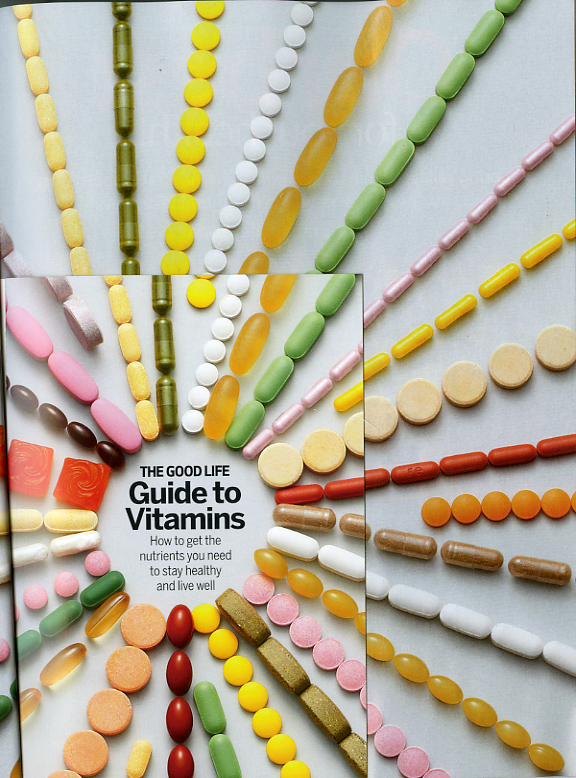
Imagine over 60 advertisers signing on to a magazine sight unseen, no workable name created and not even a prototype to look at. Well, you really don’t have to just imagine it; you can actually believe it, because it really happened with Dr. Oz The Good Life magazine.
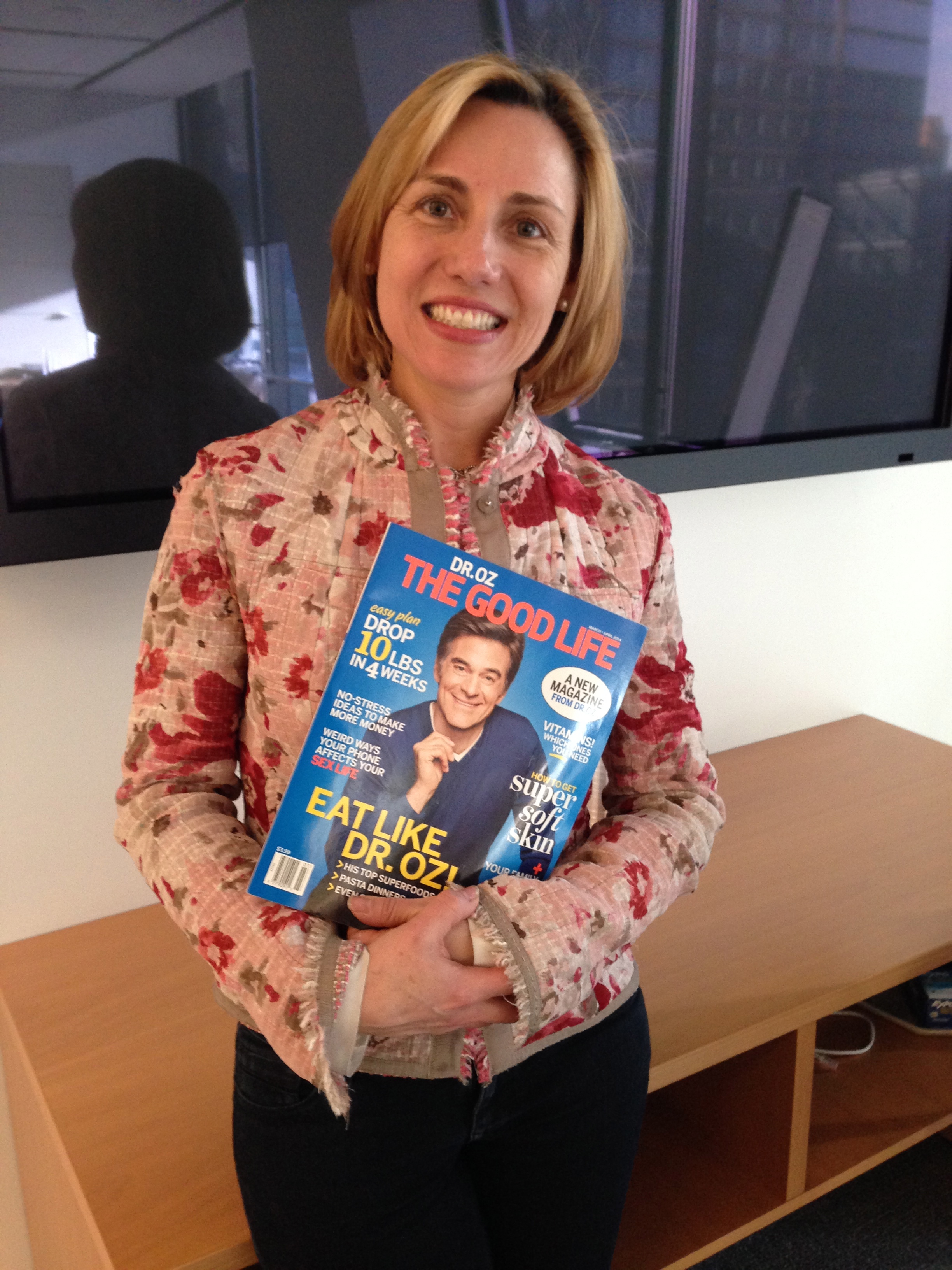
In the conference room of the 16th Floor at the Hearst Tower in NYC, vice president, publisher and chief revenue officer of Dr. Oz The Good Life magazine, Kristine Welker spoke with me about the power of the brand:
“They signed on based on the concept. We didn’t have a name and we didn’t have a prototype. Talk about the power of magazines and voice. All of these advertisers felt like this magazine so belonged or this brand belonged in print that without a prototype and without a name they said, “I’ll be in the issue.” Over 60 of them.”
Now that’s print power personified!
Ms. Welker was the founding publisher of Cosmo Girl! magazine in the late 90s, and the former chief revenue officer of Hearst Digital Media, a job she held for the last seven years.
With her digital background and experience in launching magazines, Welker brings a plethora of talent and creativity to the magazine that no one else could and believes in the Oz brand vehemently and the new launch of a print magazine in today’s digital world.
So sit back and enjoy Mr. Magazine’s™ hale and hearty interview with Kristine Welker, publisher of Dr. Oz The Good Life Magazine… But first the sound-bites.
The Sound-Bites:
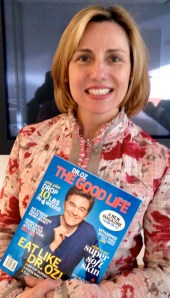 On backing away from the print versus digital argument and focusing on Dr. Oz as a brand…
I don’t see it as print or digital — it’s about a brand and you know I really responded to the power of and I believe in the brand around Dr. Oz. So for me I saw it as a giant opportunity not to go from digital to print but really to say this is a great brand opportunity, a great brand platform and a brand that millions of consumers want to see in print.
On printed magazines in today’s digital world…
With magazines we have to view technology as an enabler not as an inhibitor to growing our brands.
On launching a new magazine in today’s digital world…
You have to build upon your strength at the newsstand, but then begin to mine your own data to really prospect and find a new audience.
On her view of the digital future…
When I think about digital, I don’t just think about digital as your mobile device; I think about digital as maybe your Fitbit and your Jawbone and all the data.
On the first major step to ensure the future of a new magazine…
So the first part of it is for us to prove that we’re reaching and connecting with consumers today in a way that no other brand is and maybe no other platform.
On creating a new category of magazines…
What I was very happy to hear and to see from a media standpoint is that they see the white space that we do. We believe that like we did with Food Network and HGTV magazine that there’s an opportunity to go in and redefine the health and wellness magazine category.
On the power of the printed magazine…
You know there is a moment in time – in real time – that real people sit down on their real couch and they read a magazine for two hours and they enjoy every minute of this magazine.
On the biggest challenge for the magazine thus far…
I think the biggest challenge, which I’m not surprised by, is the struggle (advertising) people will have because they’re saying we don’t have a print budget. And I am trying to change that conversation to say: why don’t we talk about your brand budget and whether or not this brand fits with the profile of what your brand is trying to accomplish and not look at this as a print spend but brand affiliation.
On Kristine Welker’s predictions for the magazine a year from now…
I imagine it being a powerhouse in the magazine arena the way HGTV Magazine and Food Network Magazine became leaders in their field and redefined their categories.
On the genius that is the name — “The Good Life”…
That’s a great question and it’s a brilliant name…The Good Life. Everybody aspires to live the good life and they want to be on the path to a good life, a happier and healthier life.
On what keeps Kristine Welker up at night…
What I worry about is talent and maintaining the talent within big media companies that are perceived as legacy organizations and you know it’s important for us to be able to inspire and attract talent and say, “How excited would you be to work on a startup?” Everybody wants to work at a startup as opposed to, “How excited are you to launch a magazine?”
And now the lightly edited transcript of Mr. Magazine’s™ conversation with Kristine Welker, Publisher of Dr. Oz The Good Life magazine.
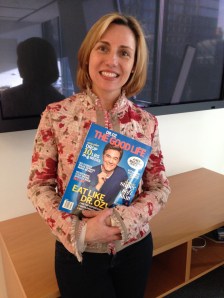 Samir Husni: Of course the obvious question…a lot of your colleagues are jumping ship from print to work with digital and here you were in charge of digital and now you’re back to print. What’s going on?
Kristine Welker: You want to know if I’ve gone crazy, if I’ve gone nuts, right? I don’t see it as print or digital — it’s about a brand and you know I really responded to the power of and I believe in the brand around Dr. Oz. So for me I saw it as a giant opportunity not to go from digital to print but really to say this is a great brand opportunity, a great brand platform and a brand that millions of consumers want to see in print.
And so when you think about it every time he is on anybody’s cover whether it’s a magazine we own and operate or not, you name it, as you’ve been reporting; he’s one of the best if not the best selling magazine on newsstand for those magazines. So for me it wasn’t about going from digital back to print, it was looking at this as we all should — that this is a great brand opportunity and a brand that should be in print.
And clearly if you look at all the research, people want to buy magazines from him so why not a magazine? Anyway, I saw this as a great career opportunity to launch his magazine brand. But it’s also what do I take from digital to bring over to this magazine launch that might be different? How do we create the new model behind launching magazines? So it’s taking what we learned in digital and bringing it over to launching this brand.
SH: As you reflect on your career from working at Meredith in advertising and then going through CosmoGirl! and then going to digital…If you look at it from the beginning to now, how did things change for you in relationship to the industry?
KW: If I look back to CosmoGirl!, that was a great opportunity — launching CosmoGirl!. I was there for seven years and I had a terrific time. We were the first magazine to launch the magazine and the website simultaneously. So that was very, very unique.
What I learned was the power of the youth market, the power of the future. And I really began to listen and watch carefully to how they were consuming media. Obviously they were early adapters of technology. I decided I wanted to follow technology and that’s what brought me over to digital. But you know CosmoGirl! brought me on the path to understanding how people wanted to consume media. And if we look at the younger generation, from early on they wanted a magazine and a website. They wanted a magazine and mobile. It wasn’t one versus the other — they still wanted both.
So that put me on I believe an organic path, because when I started watching how they were consuming media that’s how I then decided to follow the technology, understand the world of digital and how that is changing how people are consuming brands and so that’s why I decided to move into digital.
I’d say what I learned in digital is how do you take existing models and bridge that with new models. So it was never an either or, it wasn’t print or digital. It’s not even native versus display or tablet versus mobile. It’s not an either or, like you said… it’s how do all of these touch points all work together? In digital what I would say I have learned is technology matters. With magazines we have to view technology as an enabler not as an inhibitor to growing our brands.
And so how do you take digital and bring it into the world of evolving the magazine model and bringing that forward? So after being in digital for seven years, I thought it’s time, the right brand and I thought this was the right brand, the right time and I thought the right product to say how might we do things differently? How might we launch a magazine differently?
And so in the past we would launch magazines on the newsstand exclusively and that’s how we would test and then we would do some consumer marketing testing. With this particular launch we were really smart about leveraging our data and so what we’ve learned in digital is the value of data and what publishers do really well now is realize that all of this data is a currency that we need to take advantage of more.
In launching this magazine I thought what was really smart is that we put it on newsstands like we normally do and have a great cover that’s going to pop on newsstand and great newsstand penetration but on top of that we had a really smart consumer marketing data driven strategy, where when we first decided to launch this magazine we had all these women that were what we call ‘hand raisers’ and they said sign me up for when this magazine came out. We call them “super fans” so there were 10,000 women almost over night that said when the magazine comes out I want to know more.
So we said let’s begin to profile the 10,000 women and turn that into a lookalike model and begin to find other likeminded women throughout the Hearst database of around 70 million names. And so that’s where it became very, very interesting.
From there we then learned in the focus groups that there are women who may not be watching Dr. Oz on the TV show because they’re working. They may not be even taping Dr. Oz because they’re taping something else like Scandal or The Good Wife or something else they might be interested in and we know that they may or may not stumble across the magazine at newsstand.
From there in the focus groups when they saw it and said this really speaks to me because I may not be reading parenting magazines anymore, I may not be reading health magazines because I’m not really focused on flat abs in five weeks anymore, but I would read this magazine. And so out of the focus groups we realized we may not stumble across these women.
Then we added Cosmo and Marie Claire into the mix. So anyway, you can begin to see that we became very savvy about using our data and so the company decided that it’s no longer good enough to just say I’m going to polybag this with Good Housekeeping because we know that when he’s on Good Housekeeping they’ll buy that magazine. I thought that was really interesting and we poly-bagged this on its own.
So you see where we began to pull data into doing database modeling and we did lookalike modeling. So all the things that digital advertising is credited for, lookalike modeling, targeted advertising; you know all the things that people love about digital, we took all of that learning and applied it to how we wanted to launch this magazine and we became very targeted in our approach.
So what I wove in there was how I made my journey, but I wanted to give you a sense of how we pulled some digital expertise and knowledge into saying how might we launch a magazine differently. And we decided to layer on the data and that doesn’t mean we didn’t do that it just means that we’re doing it more strategically.
SH: What was the most pleasant surprise in doing this — using digital to help with the launch of Dr. Oz The Good Life?
KW: I thought that was one interesting thing. I really believe that that’s a new approach to launching a magazine and its new model. And so we’re going to build upon our strength at newsstand but then begin to mine our own data to really prospect and find a new audience.
And that’s what I thought was really interesting. I think we’ll find an incremental audience because of that and I think that’s what’s interesting. I think digital for this magazine has only just begun.
What I think is going to be even more interesting is if you step back and look at the wellness space broadly and I’m not talking magazines, I’m talking wellness through the lens of a consumer; when you look around how many people are wearing the Fitbit or the jawbone? When I step back and look at new models I say he is the most trusted voice in the wellness category; so how does a magazine interact not just with your mobile device but what about your Fitbit and your Jawbone.
So when I think about digital I don’t just think about digital as your mobile device I think about digital as maybe your Fitbit and your Jawbone and all the data or I should say all the — obsession’s not the right word — but you know this is no longer a health movement, this is a cultural shift to people wanting to own their wellbeing and their wellness. Just the way people wanted to document their life on Facebook, if you look at the wellness space, people are documenting their own wellbeing so I think that’s where the digital opportunity for Dr. Oz comes in is how do you step back and look at the wellness space and how consumers are consuming wellness and so that’s where I think digital gets really interesting in what we do through that lens.
We’re not there yet but when we think further out such as how does ESPN communicate with twitter, then how do we communicate with our Jawbone? Those are the kinds of thing that I find interesting or fun.
SH: What was the biggest stumbling block? You had a great asset in the launch model, you had a great brand, you used digital to help execute the brand and besides all the naysayers in the media, what was or is the major stumbling block that may hinder The Good Life from succeeding?
KW: Well, first of all let me tell you the positive first. I’ve only been in front of advertisers and the press for about a week now. But advertisers because my friends in the press world don’t have any money to buy ad pages and we all know how important that is, so I’ll talk about it through the advertiser’s lens first.
What I was very happy to hear and to see from a media standpoint is that they see the white space that we do. We believe that like we did with Food Network and HGTV that there’s an opportunity to go in and redefine the health and wellness category. And that doesn’t mean that we want to be a health magazine, in fact we see this as a new kind of healthy women’s lifestyle magazine that covers everything from fitness to cooking, parenting, financial well being, beauty, you know all of the categories.
What I found most refreshing was the willingness of the media industry to not feel the need to categorize us. Because as we know the way people live their lives they don’t live through a vertical lens and from a media standpoint it’s often easier to put you in a vertical category. And I was really happy to hear that people felt like there are opportunities to take a horizontal approach. What I mean is the tendency is to say, “Well, what are you? Are you a health magazine or are you an “x” magazine.” So people, No. 1 saw the white space and really believed that there was an opportunity to create something totally unique. They obviously buy into the trusted voice of the authority of Dr. Oz. People respect the track record Hearst has in launching magazines and redefining categories like food and home.
I think the biggest challenge, which I’m not surprised by, is the struggle people will have because they’re saying we don’t have a print budget. And I am trying to change that conversation to say why don’t we talk about your brand budget and whether or not this brand fits with the profile of what your brand is trying to accomplish and not look at this as a print spend but brand affiliation. Does my brand align with your brand message because this brand holistically isn’t just print…it’s print, it’s digital and if we wanted to go even further, it’s television broadly and everything else that the Dr. Oz brand touches.
So that’s again my two weeks on the road. I’m not surprised by it but that’s the conversation that I need to change. Not talking about a print spend but a brand spend and getting them to look at us as brand to brand. Because if you look at so many brand marketers today, so many of their brand messages speak to health and wellness. And then with the beauty category it’s all about wellbeing and feeling better and taking care of you. If you look at insurance it’s all about being healthier and happier so there’s no question that there’s a brand allegiance — it’s getting past the print versus something else.
SH: I know you’ve only been on the road two weeks explaining this major shift in thinking. How long do you think it will take the media buyers to understand that it’s a brand, it’s not like ink on paper or pixels on a screen and what can you offer them in return?
KW: The first thing we need to do, and we are on the path to doing this, is to prove the power of this brand platform, because ultimately what an agency wants is to connect with an audience – the right audience of course.
And what does a marketer want? The marketer charges their agency with finding that audience and so I think the first thing is to prove that we are doing our job and branding the magazine and connecting with that audience and the audience at scale. And that’s what I would focus on. That’s what I will focus on because a marketer will always stop and say, “I want to reach people,” and right now they believe they can reach people in ways that sometimes include print and then sometimes don’t include magazines, so the first part is to prove that we’re touching the right audience and a sizeable audience because that’s what the marketer at the end of the day wants – they want to reach an audience and they want to reach the right audience.
So the first part of it is for us is to prove that we’re reaching and connecting with consumers today in a way that no other brand is and maybe no other platform is.
SH:One of the buzzwords today is that it’s no longer about the real time, it’s about the right time. You’ve used words like the right audience…
KW: Real time, right message, right context and then the right consumer. And sometimes the magazine might not be the right context so what they’re saying is if there’s a very targeted, click now, download, whatever it is, that may be better served. A highly-targeted, promotionally-driven response right this second to go get an offer of something that happens to be in a store right this moment. I mean that lends itself to a mobile driven strategy.
But yes it is real time, right now; right message and magazines do live in real time. I love that. People don’t read magazines in real time? When do they read them then, in their past life? You know there is a moment in time – in real time – that real people sit down on their real couch and they read a magazine for two hours and they enjoy every minute of this magazine.
 And what Dr. Oz loves is that they pull this out, this insert inside the magazine, this definitive guide to vitamins and they pass this along to other people in their family — it’s the power of living paper as Michael Clinton, (president and marketing & publishing director at Hearst Magazines), calls it. Here’s Dr. Oz, this is the stuff he says he can’t do on television. He can talk about dropping 10 pounds in 10 weeks. This is the thing he says somebody is going to take out of the magazine and put it up on their refrigerator. And what I love that he said once, “I’ll take it one refrigerator at a time, because that’s the door they open every day and if they want to take my magazine apart and put it up on their refrigerator, that’s the power of print.” That’s the power of touch, the power of connecting with people. Show me an advertiser that doesn’t want someone to tear their vitamin booklet out with the Walmart ad on the back and they don’t want this thing floating around the house for three months. That’s the ROI.
So that’s why I’m happy to be back in the magazine world because I have never felt that magazines didn’t matter even when I spent seven years in digital. It was always the power of brand at scale and at digital that we were able to aggregate audiences at scale and do interesting things.
But there are certain magazines that belong in print and this is definitely one of them. And Dr. Oz has proven that he can move an audience to take action. Because whenever he promotes something, whether it’s a diet or a product, people respond. And he himself believes that he can take that into a magazine format and he believes that he can touch more people. He doesn’t believe that he touches everybody… through all of the platforms that he’s on and he decided to go into magazines because he feels like he’s missing a huge audience and a huge opportunity.
SH: When I call you next year and make an appointment to speak with you what will you tell me about Dr. Oz The Good Life a year from now? Where do you imagine yourself to be with the magazine a year from now?
KW: I imagine the magazine published 10 times a year if not more. I imagine the magazine being a powerhouse in the magazine arena the way HGTV and Food Network became leaders in their field and redefined their categories.
But I also like to believe that we have done a good job finding other ways to connect other people to the good life and thinking about cross-platform in new and different ways and I believe people are so engaged with his brand and his content that they will go deeper within his community. Then they pay more to go deeper within that community.
And so I think that lends itself to lots of interesting opportunities for us as publishers of brands and content to do interesting things with that content. It goes back to something you said earlier, you mentioned the word community just in passing; I believe there is a very loyal community around Dr. Oz that will allow us to do interesting things and it could be by partnering with a wearable device or just sort of owning wellness in ways you might not have expected. And hopefully showing that magazines can penetrate and build an audience beyond just the pages of the magazine and I don’t just mean having a website and mobile but to do other things and I’m hesitant to use the term paid content model but you get where I’m going.
What else can we do to engage our audience beyond the pages of the magazine? It’s not just about a website any longer. That’s almost an antiquated model. So it’s redefining what cross-platform looks like is the best way to say it because the new model is no longer, I have a magazine and a website or I have a magazine and I have a mobile optimized site. That’s not the new model any longer.
So the question becomes, as we look back in a year, how we will move the new model forward and I haven’t figured that out yet. But there is something around this sort of momentum behind the health and wellness category and the fact that people want to document their wellness through the Jawbone and the Fitbit the way they wanted to document their lives on Facebook.
Our brand belongs in that space because the good life sets us up to helping people find that path towards living the good life. That could be apps that could be the Fitbit and the Jawbone, it could be a little bit with what Popular Mechanics is doing where they now have their online seminars. It’s all of these things that might take these people with us to achieving the good life that allows us to jump from the pages in the magazine to something out. I haven’t figured out the something else.
SH:Just make sure that I’ll be the first one when you figure it out, let me know and I’ll publish it.
KW: The wearable devices…think about it, TIME last week did a whole piece on mindfulness and everybody is walking around with their Jawbone and Fitbit. This is all about people documenting their health and wellbeing and I’m excited about that because people aren’t going to do that on Facebook. Facebook serves a purpose; I’ve documented my life on FB. But you see that people are now documenting their path to the good life. That’s what the Jawbone is.
SH: You’re focusing so much on the Good Life. I don’t think we can find a single human being and you promise them the good life and they say no I want the miserable life. Is that a purposeful marketing strategy, the focus on the good life more than Dr. Oz in the branding, in the name?
KW: That’s a great question and it’s a brilliant name…The Good Life. Because it’s exactly what you said, everybody aspires to live the good life and they want to be on the path to a good life, a happier and healthier life.
The way we all settled on The Good Life, and there were lots of names, really one came through focus groups, the focus groups that we did through the magazine research, and also the focus groups that Dr. Oz has been doing in touching so many people whether it’s at the hospital or on the TV show. You know we heard in focus groups that people were saying, “It’s not about flat abs, it’s not about my aliment, I genuinely want to live a good life – I want to be healthy and happy. That’s what I’m in pursuit of, the good life.”
What Dr. Oz says so brilliantly is that he wants to meet people where they are. Not everybody is at the same point along that journey to the good life. Somebody might be thinking about losing 10 pounds, somebody might not need to lose 10 pounds but might want to connect more with friends and family. Everybody is at a different place, but what we were hearing through the focus groups and what we’ve heard Dr. Oz comment about as well is that even when people were talking to him is that I want to be happy and healthy and that is speaking very much to what people were looking for in a magazine but also from him.
They don’t just see him as a doctor; they see him as somebody who is living a good life. He’s optimistic, he’s happy and he’s upbeat. And he is a very informed person who happens to be America’s favorite doctor, but they really see him not just as a doctor, they almost see him as the ultimate coach.
I think that’s a good way to look at it…a coach to being healthy of course, but being happy because he appears so happy. When you talk to him and ask him all these questions, and that’s where we felt so good about the Good Life, and then when we were talking more about it with focus groups, were immediately aspired to it and when we were hearing about the white space, the other thing and you’ll find your way to say this, the other thing we were hearing is that they realize that life isn’t one-dimensional and they recognize that life isn’t real simple.
That’s where with the lifestyle approach to the magazine we felt very comfortable and validated by it. Again our lives are just not one-dimensional. If they are time–deprived they may not be able to go deep into a category of interests. It might not just be about fitness or eating well or losing weight…so that was the other thing too.
All of these things rolled up for them as the things that they wanted in achieving the good life. So The Good Life was a great umbrella and the focus groups loved it. Now from a marketing standpoint, I will tell you it was the market speaking and the market of consumers spoke loudly, as you pointed out yourself, who doesn’t want the good life, so everybody really loved it. I will tell you from a marketing standpoint I think it speaks to what we want to do in the magazine very clearly. We don’t want to be a house magazine; we want to be a healthy living magazine, a healthy lifestyle magazine, so the good life says it all. So I love the title. I’m on the path to the good life.
SH: My last question to you…What keeps you up at night?
KW: Well, so I’m in the staffing mode right now. It doesn’t keep me up at night…let me answer not through the lens of just this magazine, maybe pulling back on the industry broadly.
I look at my career as a bit of a narrative and I think it’s important that people do things that they find interesting and not that they feel like they have to do. So this is something that I find very interesting.
What I worry about as an industry, and I get this question a lot, which is…you know people that stay at a company for a very long time, they see me as a throwback as opposed to somebody that has stayed at a company for over a decade and is working on their third start-up. So I latched onto a term that I love called an entrepreneur. I heard that somewhere.
What I worry about is talent and maintaining the talent within big media companies that are perceived as legacy organizations and you know it’s important for us to be able to inspire and attract talent and say, “How excited would you be to work on a start-up?” Everybody wants to work at a start-up as opposed to, “How excited are you to launch a magazine?”
I think it’s the whole idea that we have to continue to motivate and retain talent and keep them exciting and engaged in the idea of big media companies and also the world of media which includes magazines. So that’s the thing, I don’t know if I worry about it and stay up every night about it, but I do think it’s important and then I worry about the next issue.
SH: Thank you.
© Samir “Mr. Magazine™” Husni, 2014.

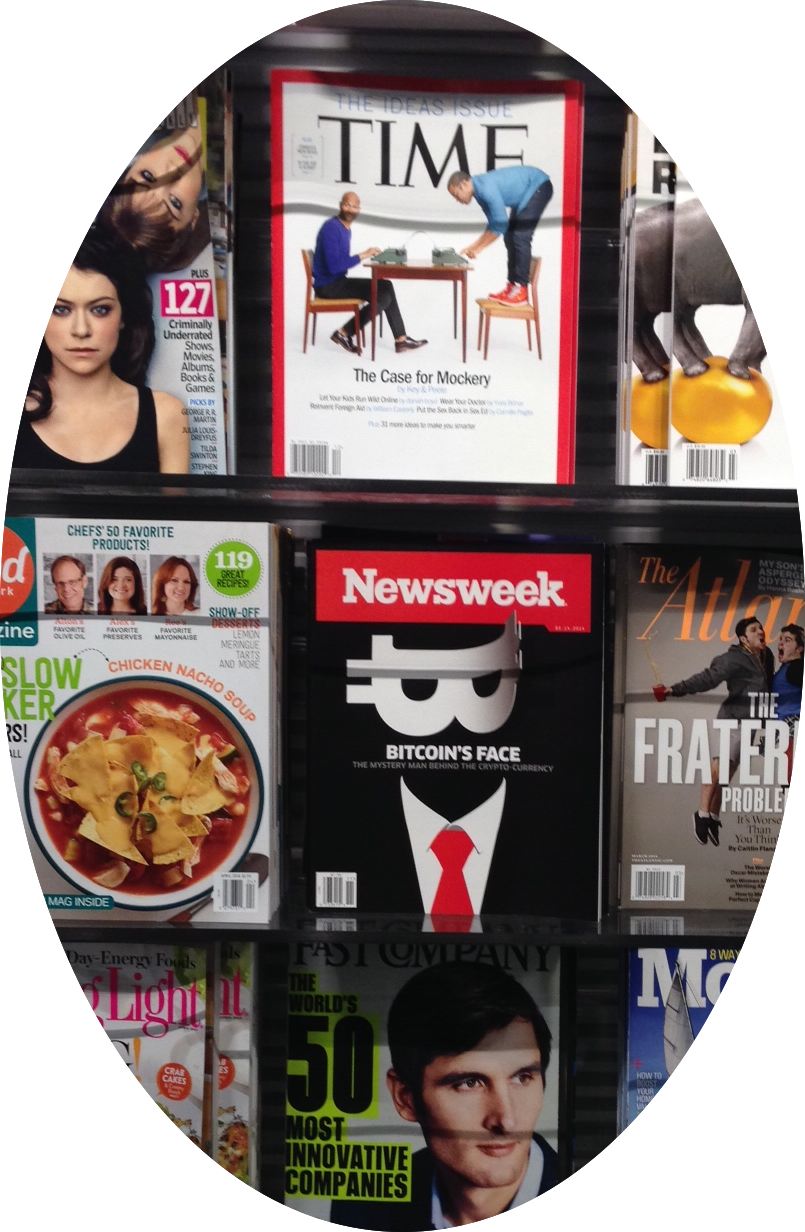
 Etienne Uzac: There are several reasons we bought Newsweek. The first one is the excellence in journalism that it represents. This is something that we want to aspire to for the current Newsweek team and our company as a whole. Newsweek has an amazing history of great journalism, has won many awards and it’s had some of the greatest journalists in America working for the brand. We want to aspire to bring that back into the brand and into the company. It’s a great legacy to aspire to.
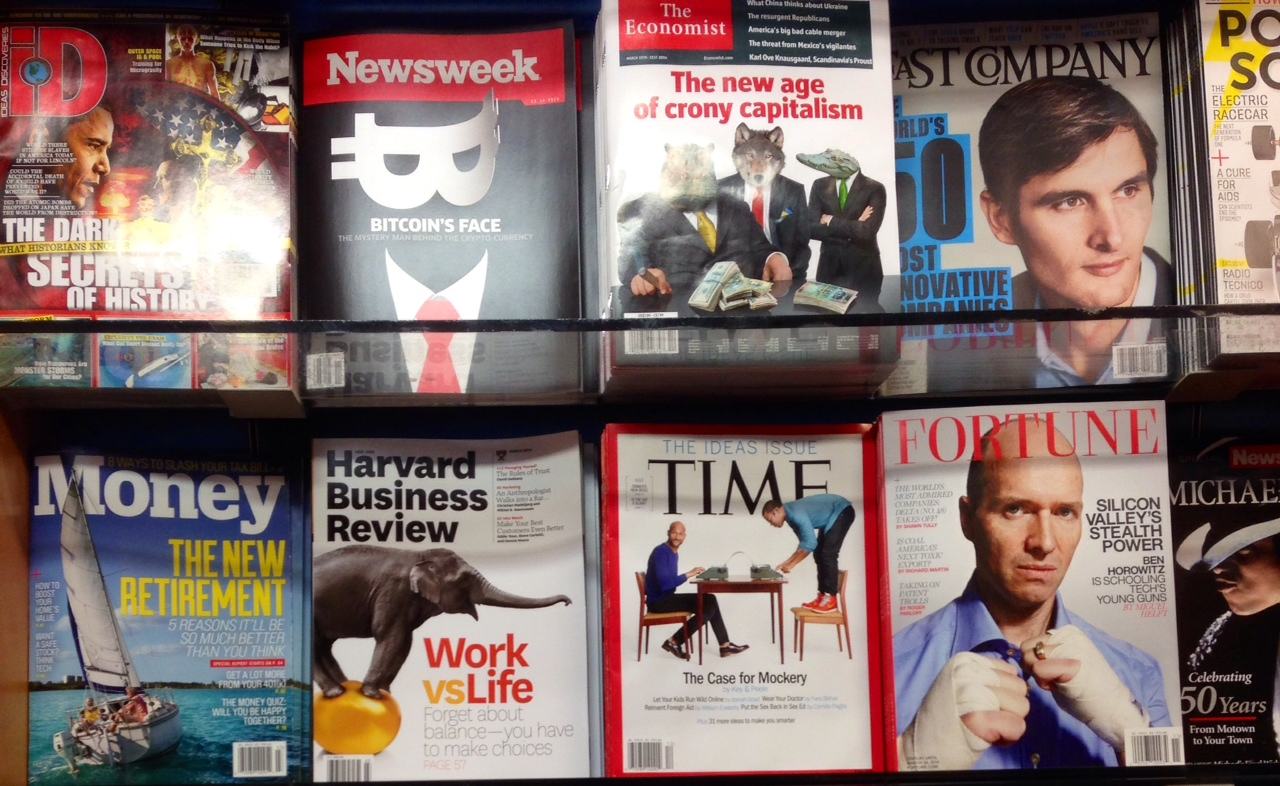 Etienne Uzac: The one you’re looking at now is the U.S. edition and we have a sister edition for Europe, the Middle East and Africa that launched at the same time as the one in the States.
  New: Mr. Magazine™ Monday Morning newsletter. Free and delivered to your in box every Monday. Click here to subscribe.