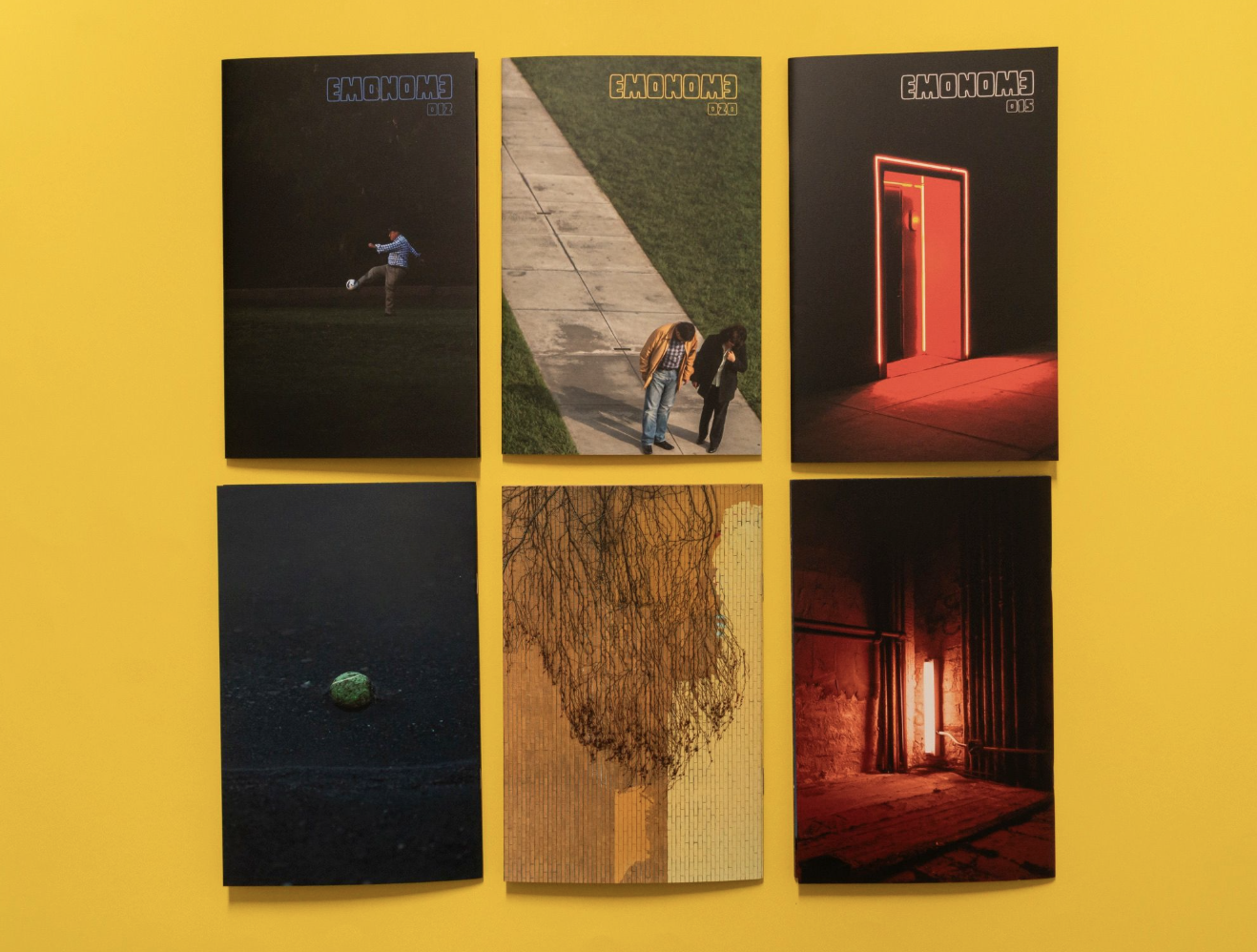
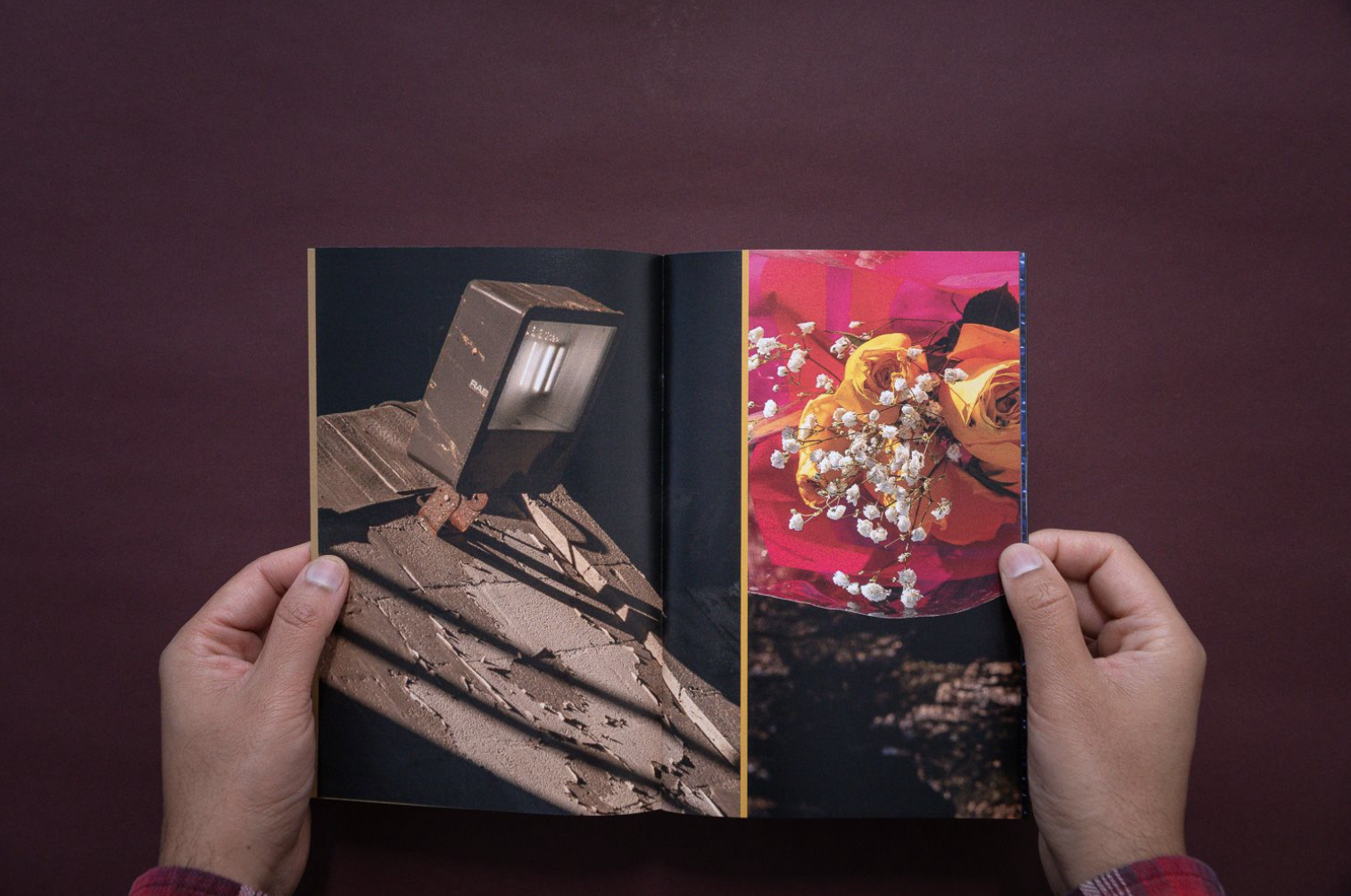
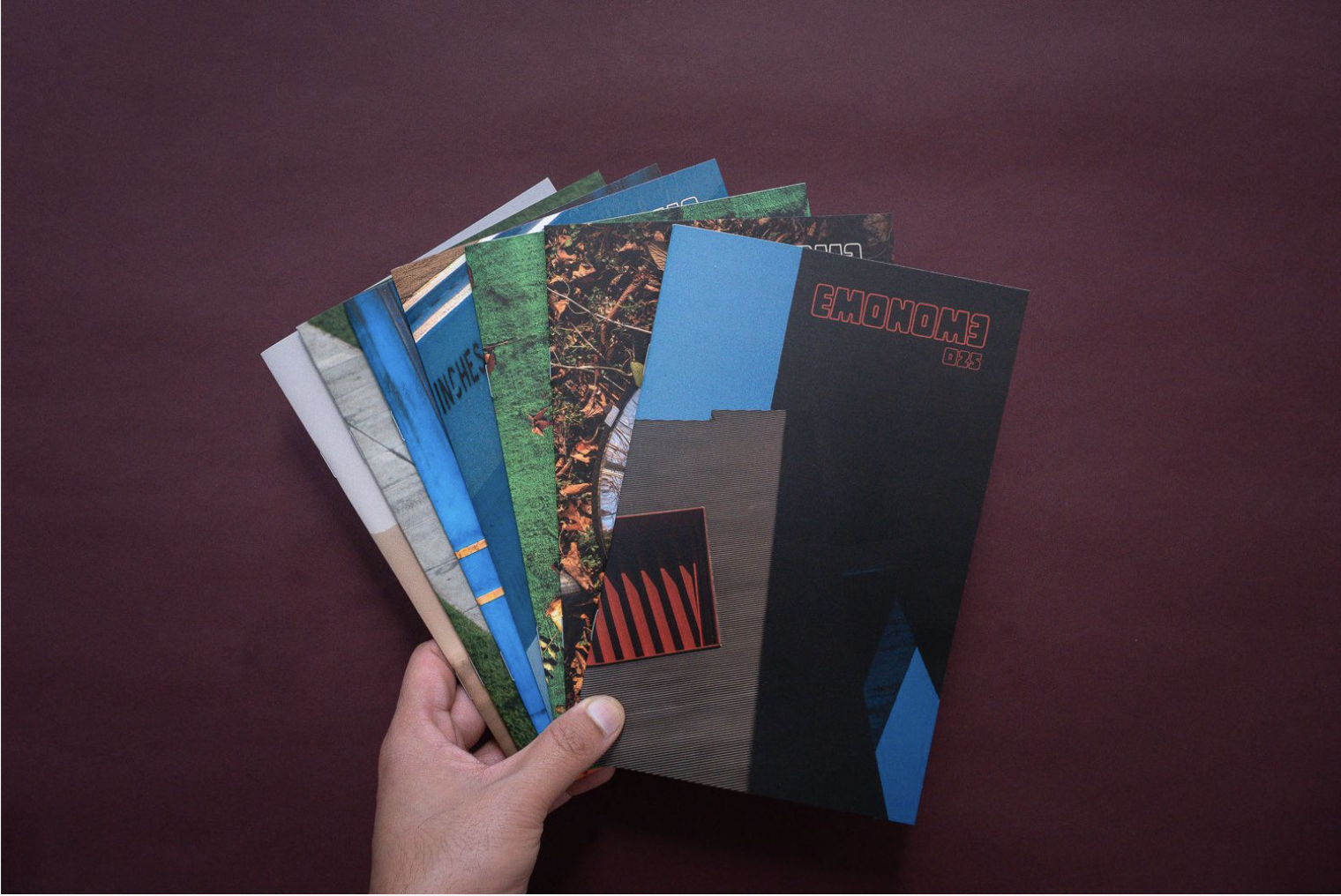
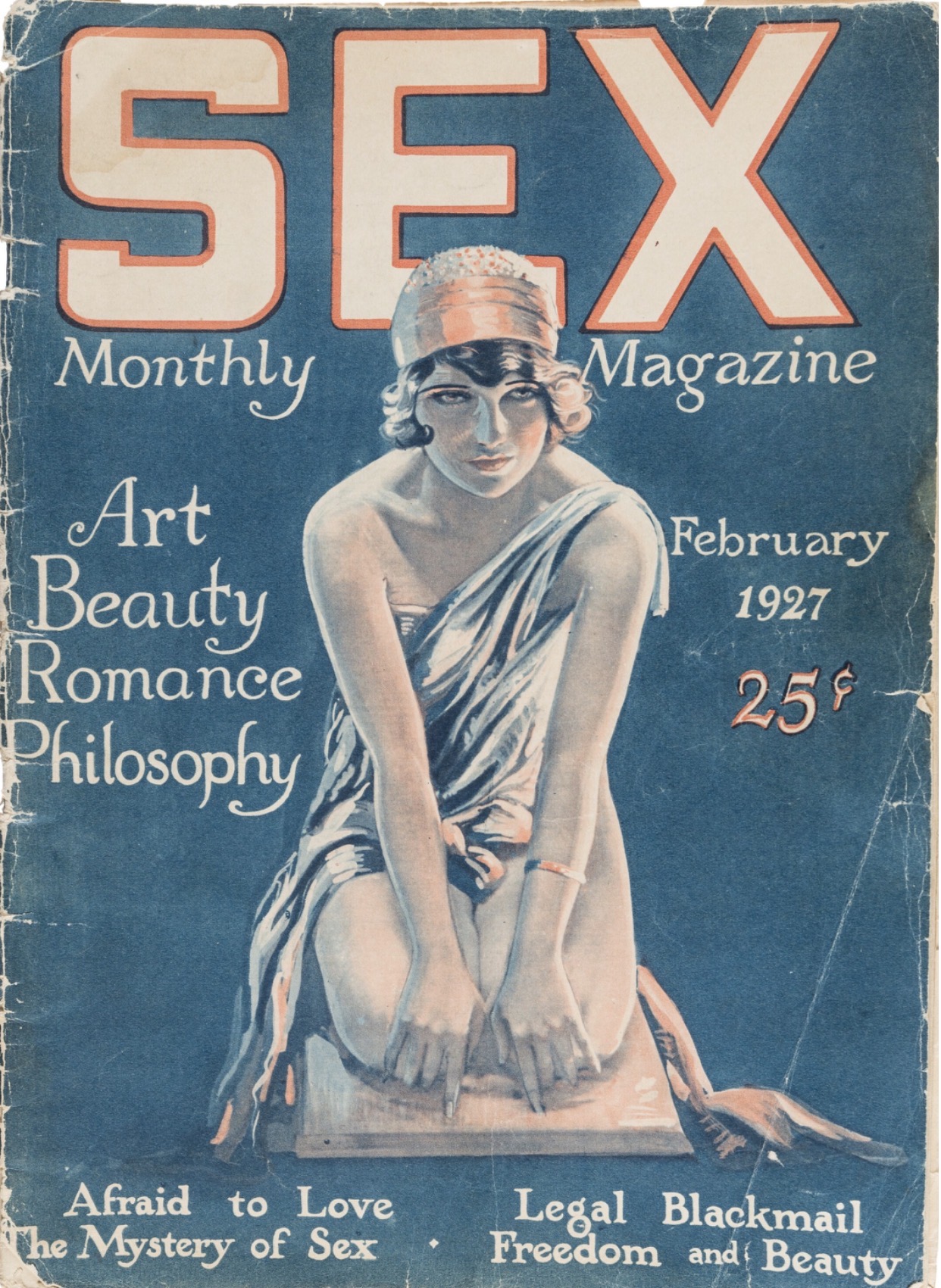
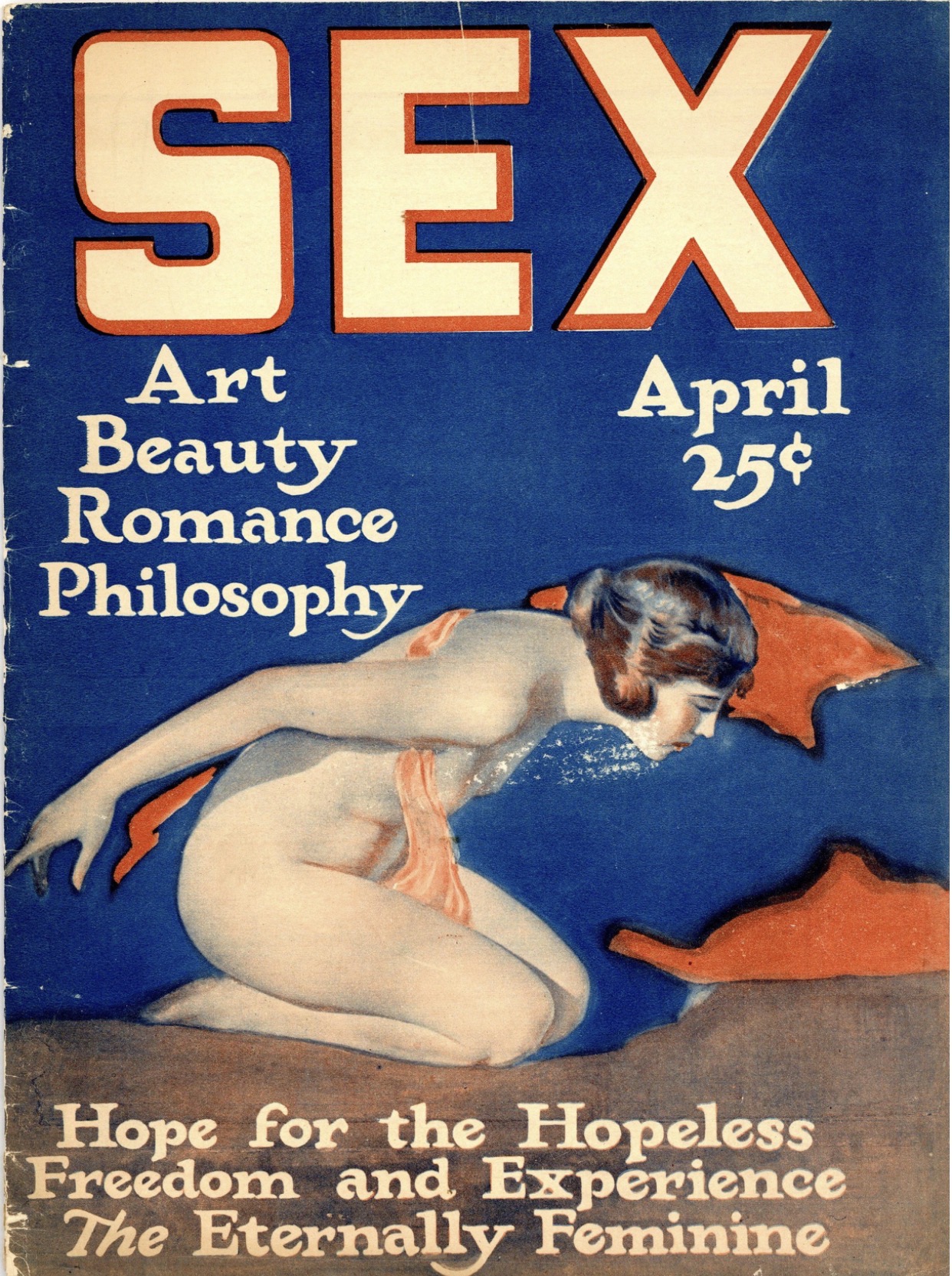
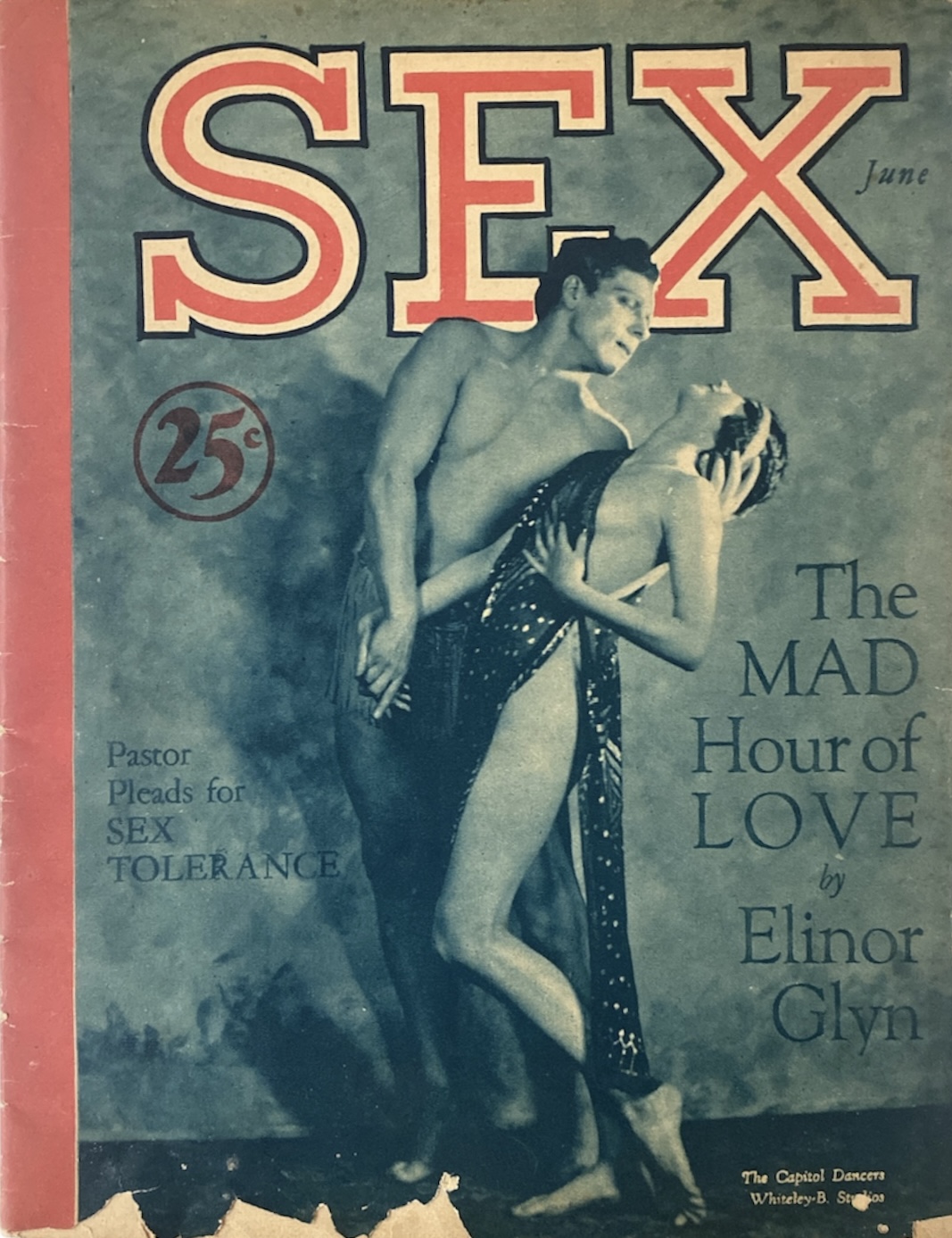
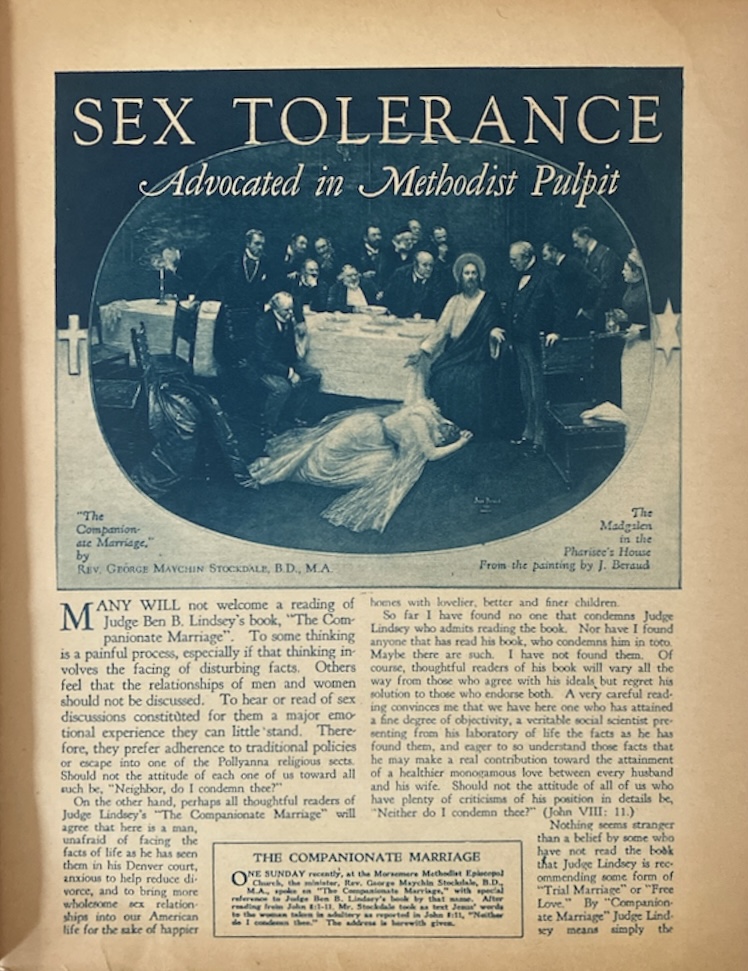
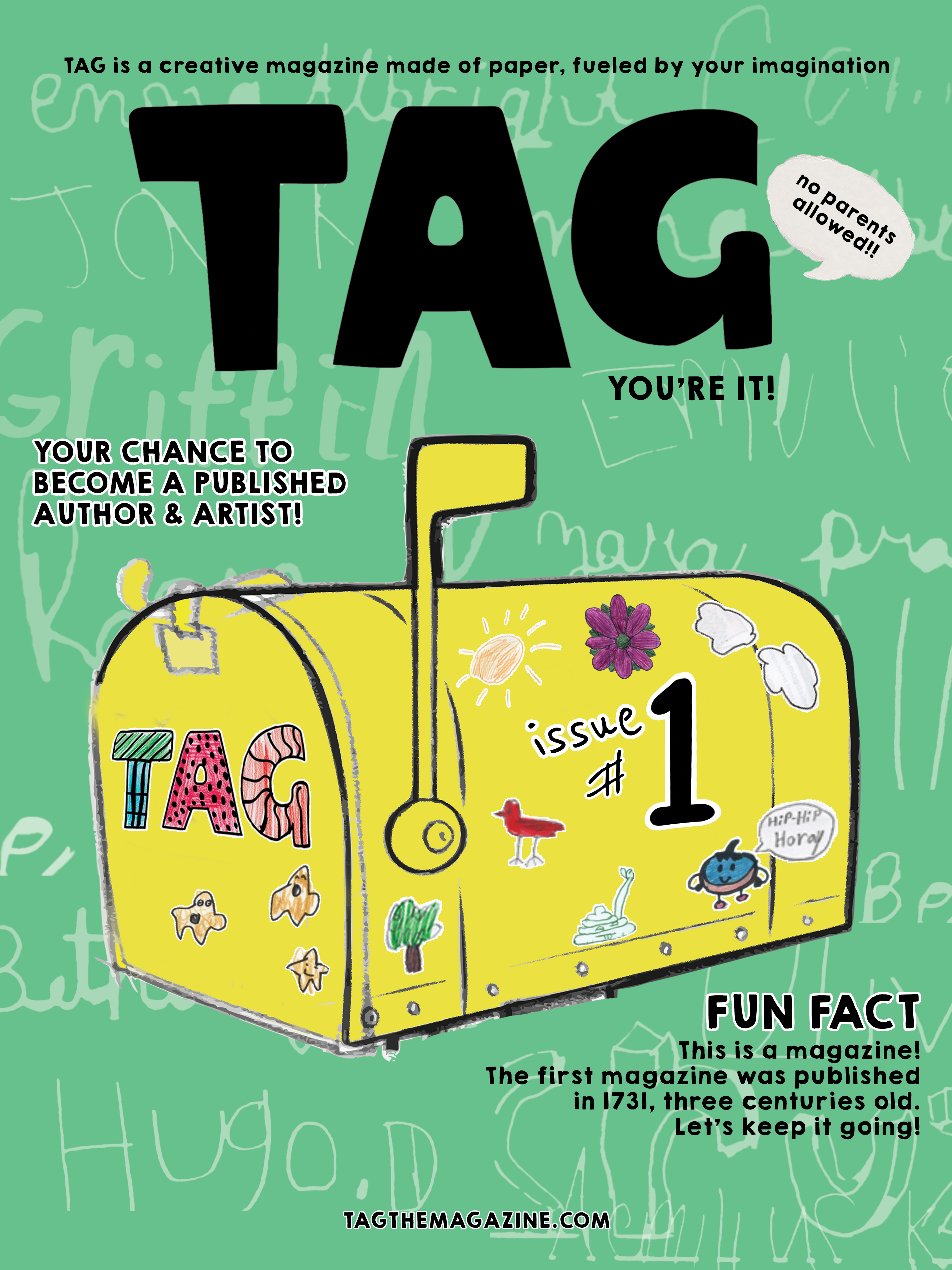
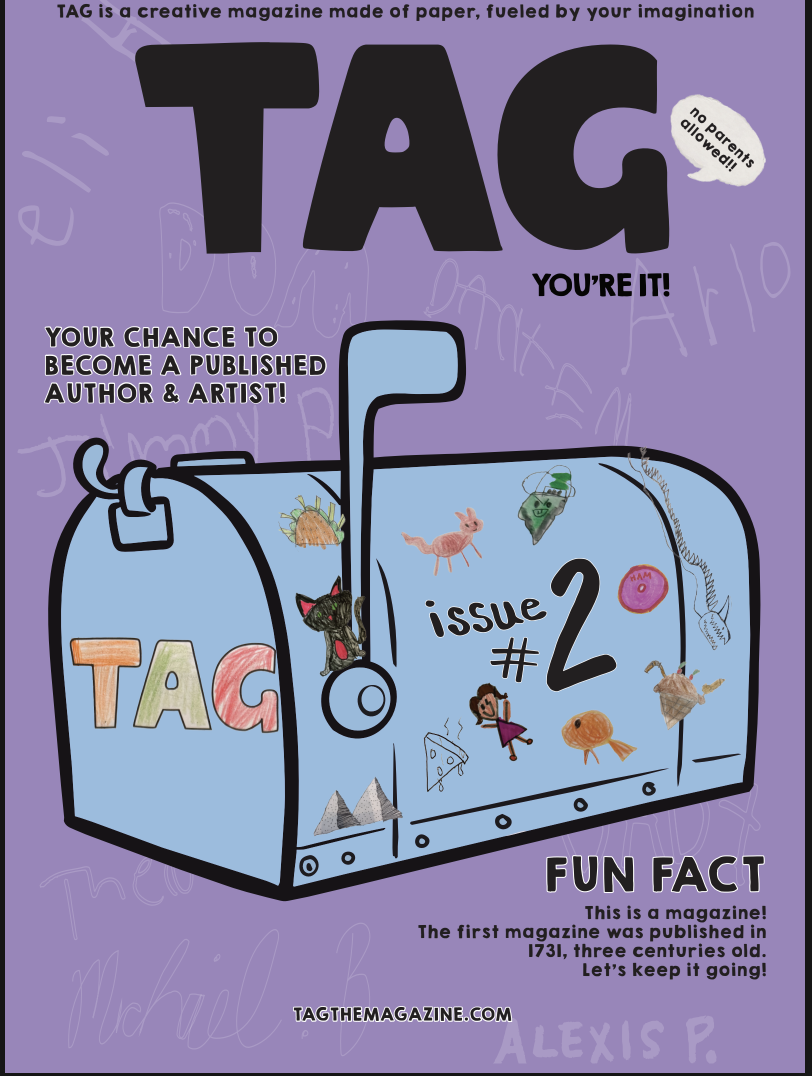
At least 30 new magazines were launched in the first five months of 2026. Those who know me, know that my definition of a magazine is, “If it is not ink on paper, it is NOT a magazine.” Feel free to call those digital platforms anything you want, except a magazine. We never called television radio with pictures.
This leads me to a great editorial written by the editor of the new magazine Rap Central Station. An oversized publication measuring 12X12 inches and refers to itself as a MAGPAPER. The editor writes in the second issue of the magazine, and I quote, “Scrolling ain’t reading. Texting ain’t writing. That line hit even harder after the response to the debut issue of Rap Central Station earlier this year. What we didn’t expect – but we fully respect – is how fast the magazine is becoming a collector’s item. That tells us something important: people still need tangible culture. Something you can hold. Something that doesn’t disappear with a swipe.”
The editor continues, “I’m not gonna front I h’ve been inspired with stories of 2 fledgling magazine publishers from 75 years ago. John Johnson with JET EBONY and Hugh Hefner from Playboy. Both ironically from Chicago. They had visions against insurmountable odds.”
So, what is this magazine that was inspired by two of our great magazine publishers of the last century. The editor writes, “We are an art magazine first. Then artist – driven storytelling. Then music—charted with intention. We believe artists should write their own reviews. Nobody listens harder than the creator. That’s the innovation. That’s how you reverse some of the damage done to hip-hop by speed, neglect, and surface-level coverage. This magazine slows the culture down—so it can breathe again.”
And all what Mr. Magazine™ can say to that is Amen! Let’s slow the culture down a bit, so we can all breathe again.
Nikki Simpson is on a “one woman’s adventure” to help and support independent magazines worldwide. Nikki sees the future of magazines in those independent titles that are being published worldwide on “a daily basis.”
She founded the International Magazine Center specifically for that purpose. She writes about the Center, “My baby is the International Magazine Center – a membership organization supporting independent publishers and freelancers working in magazines. We focus on teams between 1 and 10 people, most of which are owner-run.”
For the first time since establishing the Center, Nikki is bringing her workshops to the United States on June 12 and 13. Titled “Magazine Are Here For Good,” the conference will take place in Portland, Oregon, and will run workshops on circulation, membership and publishing among other subjects.
I reached out to Nikki via Zoom and asked her about the International Magazine Center, and the Magazines Are Here For Good conference. What follows is my interview with Nikki Simpson, founder of the Internation Magazine Center in Edinburgh, Scotland.
But first, the soundbites:
On her goal with the IMC:“What I wanted to do was support independent publishers, teams of between one and ten in a company, because those were the people who were isolated and not just during the pandemic but all the time.”
On the total number of members in IMC: “We’ve got about 190 members and they’re all over the world. 80% of them I suppose are in the UK for obvious reasons but we’re expanding all the time and picking up new members in America, Canada, Australia, New Zealand and we’ve got a couple in Amsterdam.”
On why a conference in the United States: “I’ve been wanting to run an event in America for a while.”
On why Portland, Oregon: “I thought well if everything’s happening in New York then what’s happening on the other side of town? And so Portland seemed like a good place…”
On the role of digital in magazine publishing: “I always feel digital publishing is the add-on, it’s the way that people can access information if they can’t afford to pay for the (magazine).”
On her hopes for the Magazine Are Here For Good conference: “To meet people who are working in publishing basically.”
On what keeps her up at night: “Falling asleep on the couch usually trying desperately to do the hard sudoku and just getting nowhere. I’m getting pretty good at sleeping…”
And now for the lightly edited interview with Nikki Simpson, founder of the International Magazine Center in Edinburgh, Scottland.
Samir Husni: My first question to you, tell me a little bit about this whole one woman’s adventure creating an International Magazine Center.
Nikki Simpson: Yeah, I love the way you put that one woman’s adventure. I suppose that’s exactly what it is really.
I used to work for a magazine publisher years ago and that’s where I fell in love with magazines. Then I went to work for PPA, which is the National Association for Magazine Publishers in the UK, and I was there for about four and a half years. I had a great time but there were elements of it that I found difficult, and I wanted to run my own thing, but didn’t feel that I could. Then I had a kid. He’s nine now, so I had him and when I came back, I just thought I really want to work for myself because if something’s going to drag me away from my son in this moment, my little baby, then it needs to be something that I really love.
But while I’d been at PPA I had this idea to open a physical building dedicated to magazines and that was what the original idea was. We were kind of trying to think about ways to attract people to come and live and work in Scotland and work in magazines obviously. When I left PPA and I had my child, I came back and thought I want to really spend time on that and see what comes of it. It is not a physical building in any way at all apart from this office that I’m sitting in, but what’s come of it is an international membership for magazine publishers. When I first started that, like the first two years, I couldn’t really quite find my niche because I was still talking to all the PPA members I knew in Scotland and nobody was used to communicating by video so it was difficult to run events internationally and then of course the pandemic hit and that’s when everything changed for me.
I realized that what I wanted to do was support independent publishers, teams of between one and ten in a company, because those were the people who were isolated and not just during the pandemic but all the time. I had people coming to me who had been publishing for five, ten years and say, “do you know any other publishers” and I’m like “oh yeah I know a few.” They thought they were the anomaly, they thought they were the one crazy person in town. So, now we’ve got about 190 members and they’re all over the world. 80% of them I suppose are in the UK for obvious reasons but we’re expanding all the time and picking up new members in America, Canada, Australia, New Zealand and we’ve got a couple in Amsterdam and it’s just basically where I spend my time is where we tend to be able to pick up members and I love it.
Samir Husni: I see that you are coming to the States and you are doing the first conference or workshop in Portland, Oregon June 12 and 13. Why Portland and why did you decide to start with the States as your first international venture?
Nikki Simpson: That’s a good question. I think specifically Portland because I’ve been having conversations with a friend called Megan, Megan Schertler, I don’t know if you know her, she does a blog called In Real Life Media and she’s a massive print advocate, runs her own consultancy and so on.
Anyway, I’ve been talking to her a lot about events in the US and how most of them were happening in New York. She’d just been involved with a New York event, Mag Culture were running annual events in New York, and I knew of course that being New York there’s going to be hundreds of events going on full stop. The way I approach things in Scotland is I run maybe one event in London a year because everything happens in London in the UK.
So, for me it’s much nicer to run things locally in either Scotland or we run a regular Manchester event as well. I felt the same way about America. I thought well if everything’s happening in New York then what’s happening on the other side of town? And so Portland seemed like a good place, Megan introduced me to somebody who runs a magazine shop there and it looked like there was lots of great independent titles in the area. Then I heard that Broccoli was based in Portland and then one of my members, it turns out, Kitchen Table magazine, they’re in Portland as well. I thought well this is brilliant, all signs lead to Portland.
And then why the US in general? I don’t know, I’ve been wanting to run an event in America for a while. I think, I mean interestingly I’ve been speaking to quite a few people about this and they kind of said why are you coming to America now? This feels like not the best time for it and I kind of feel like well maybe, but if you know if everybody feels that way then maybe I should go against the grain a little bit and go well maybe what people need now is support right and that’s my job is to support independent publishers so why would I, why would I steer clear of that when something bad’s happening you know or something is controversial is happening depending on which way you look at things. I would much rather come and say well, I’m here to help and support you if you want it.
Samir Husni: You say magazines are here for good, I say we are going to have magazines as long as we have human beings.
Nikki Simpson: Yes, I am absolutely 100% on the same page with you on that. One the independent titles specifically are having a bit of a moment now, but I feel like that moment has been building for so long.
When I first started working in magazines, I’ve been working in magazines for about four or five years by that point, and I remember we did this exhibition on magazine publishing, and it was curated by Jeremy Leslie at Mag Culture. It was a fabulous exhibition and it was all these amazing new titles but I mean you could have chosen another 50 different titles, it was just those ones that he happened to choose and so I feel like that was when people really started to go oh okay there’s an alternative to mass media and there’s an alternative to the rhetoric around mass media and print is dying and so on. I just can’t bear that sentence, print is dead, print is dying, I’m like really, really, do you want to meet some of my members?
Samir Husni: My definition of what a magazine is, “if it’s not income paper it’s not a magazine.” We never called television, radio with pictures, we called it television, why can’t we call those digital platforms some name besides magazine?
Nikki Simpson: Another name for it, that’s a good question.
I’ve got a friend who, well one of my members and friend, up until recently she was a digital publisher only and every time she’d come to my conference she’d say to me afterwards Nikki there’s lots of digital publishers out there who are doing great things too and I’m like I’ll think about that. Now she’s just started publishing in print as well and she absolutely loves it and her readers absolutely love it as well. I always feel digital publishing is the add-on, it’s the way that people can access information if they can’t afford to pay for the £30 or $30 in postage. But it’s not the place where people enjoy reading, it’s not the place where people go oh happy days my digital magazine has arrived. It’s just like oh okay well I need to read it, or I should read it or I can read it because I couldn’t afford the print version or whatever but it’s not everybody’s first choice, is it?
Samir Husni: I just picked up the first two issues of a new magazine from the UK, it’s a rap magazine called Rap Central Station, it’s an oversized rap music magazine and in one of their introductions they write, “scrolling ain’t reading. Texting ain’t writing,” which is amazing. So, what are your hopes for this conference in Portland?
Nikki Simpson: To meet people who are working in publishing basically. We’ve got two workshops in the afternoon so I’m running a workshop on how to turn your magazine into a membership and then Joe Berger, a circulation consultant, is running a circulation health check for people. So, people can come along with their magazines and talk about their circulation.
Then we’ve got an evening social event where we’ve got Anja Charbonneau coming from Broccoli magazine and Brett Warnock from Kitchen Table magazine and the whole event is being sponsored by Neesh who are the company that are connecting publishers direct to retailers as opposed to going through a distributor so they’re going to be talking as well and then the following day on Saturday we’ve got a how to launch a magazine workshop for people who aren’t really actually working in magazines at the moment but who want to.
The idea is just to meet new publishers and to help support people. I’ve never been to Portland. In fact, I’ve never been to America so I’m excited to meet new people and to find new ways and approaches of publishing.
Samir Husni: before I ask my typical last questions, is there anything I failed to ask you about the International Magazine Center and about the Magazines Are Here For Good conference?
Nikki Simpson: That’s a big question. As for the Magazines Are Here For Good conference, anybody that’s coming just don’t forget to bring your magazines. For the International Magazine Center, we run a whole series of training courses and events now. I counted it up the other day I’m running 57 events this year albeit three of them are recurring events but 57 events and they’re all tailored for independent publishers. What else can you say? It’s a welcoming community I’m very non-hierarchical a lot of the events that I run are more about peer-to-peer learning.
Our conference is like the people that I invite to come and speak at it are a real range of people so we have people who aren’t even in the market yet, like they’re still students and they’ve maybe you know produced a magazine as a part of their course right through to you know CEOs of major companies, so we try to really cover the spectrum there and I think that’s really important to for people to feel recognized it’s when you have that focus of teams of one and ten people. Huge problems come from that, usually through lack of confidence , so like the majority of my members are teams of one and two people in a team, or you get one person and then they work with three or four freelancers, which means that they’re not sure about whether they’re doing things correctly or where to focus their attention because they’re doing absolutely everything in their business.
You get that kind of moment of inertia when you have too many decisions to make, so it’s difficult for them to move their businesses. That’s something that we help with.
Samir Husni: My two typical last questions are personal questions: If I come to visit Nikki one evening unannounced what do I catch her doing, reading, cooking, taking care of her child?
Nikki Simpson: Now gardening. We’ve got a big garden, and we stuck our garden through Chat GPT and we’re in the middle of building a dry-stone wall and then putting down you know making it split level and all this kind of thing. I do a lot of swimming in my spare time I go to two different swimming classes now a week and I just want to work my way up to be able to do long distance sea swimming. That’s what I’m aiming for or even just a bit of scuba diving that would be nice.
Samir Husni: My final question is what keeps you up at night?
Nikki Simpson: Falling asleep on the couch usually trying desperately to do the hard sudoku and just getting nowhere. I’m getting pretty good at sleeping, what tends to keep me up I often work late so that I can communicate with people over time zones but I think what keeps me awake at night is when I haven’t worked out in my head what the worst case scenario is because once I’ve discovered what the worst case scenario is, I can go okay, and so that will look like what it looks and that’s okay.
But if I haven’t done that yet, I’m going oh my god it needs 300 people to come to my event and how am I going to get them, that kind of a hamster wheel in my head.
Samir Husni: Thank you and good luck on your Magazines Are Here For Good conference June 12 and 13 in Portland, Oregon.
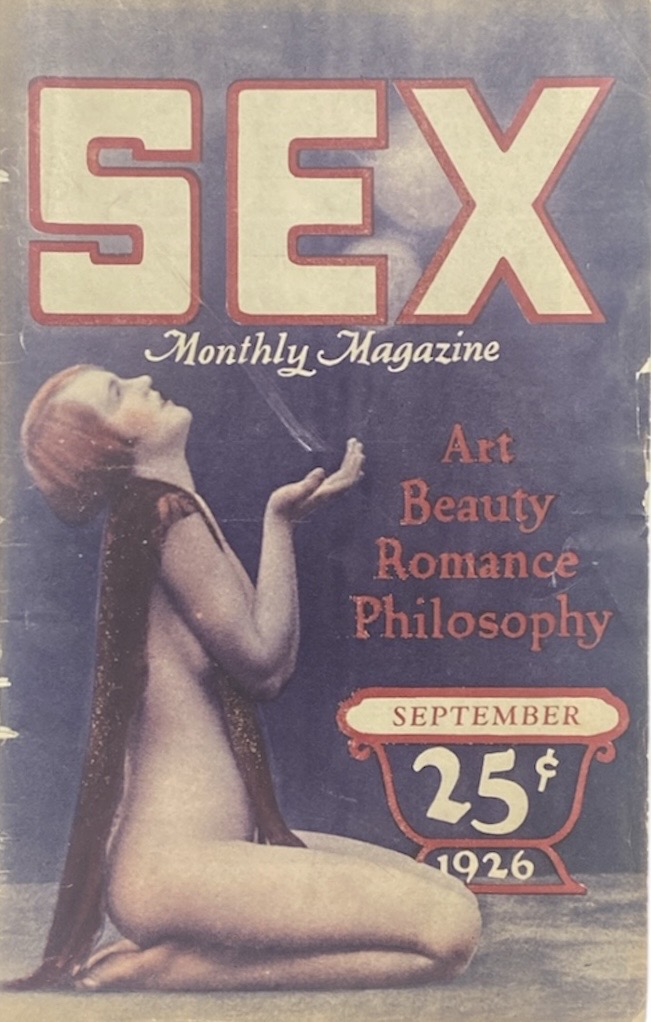
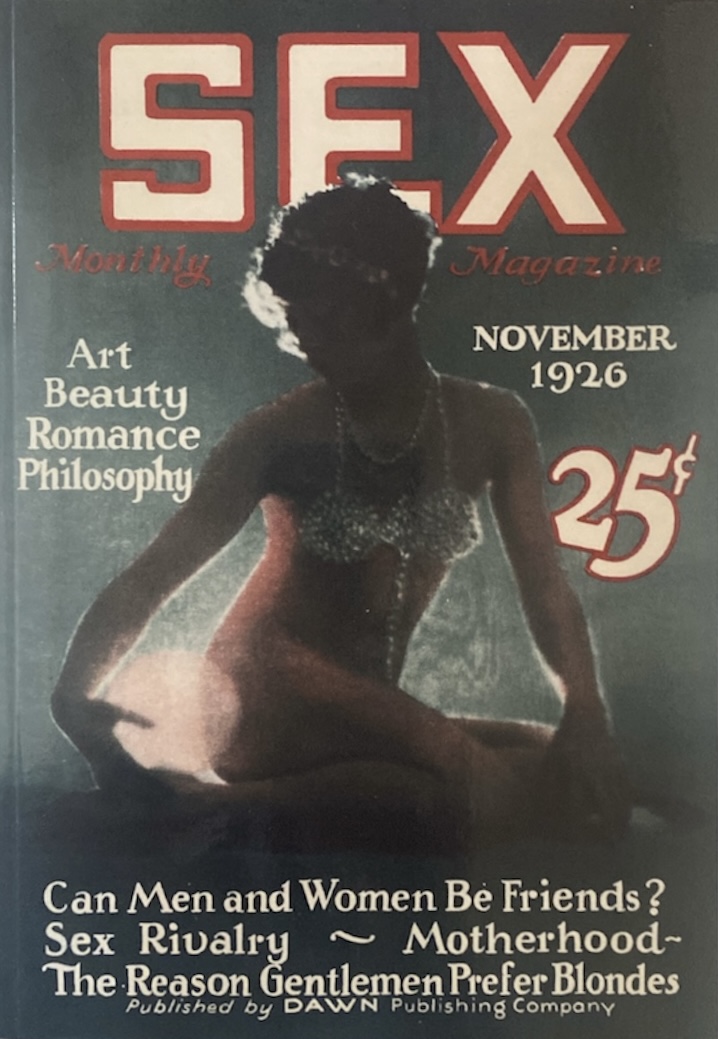
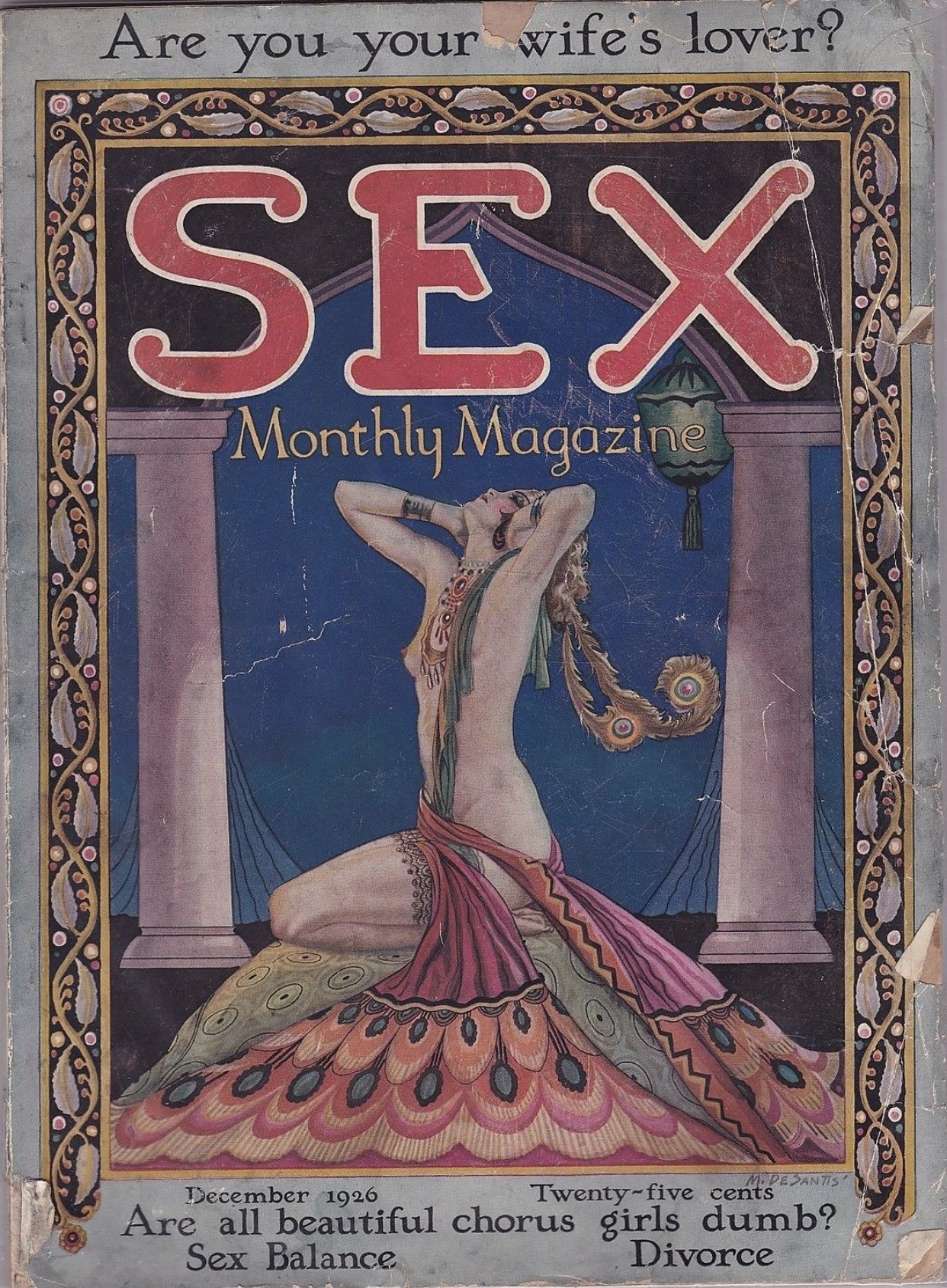
A century ago, we were more culturally and artistically advanced. Magazines in the 1920s shined a very bright light on art and culture. One such magazine, albeit short lived, Art Lovers’ Magazine, is but one example of a cultural and artistic publication from 100 years ago when magazines ruled the media world. Here is its story:
The Audience
In case you are wondering how many artists and art students were there in the 1920s to support and sustain these magazines, the answer is simple: E.B. Hesser wrote in the first issue of ARTS MONTHLY PICTORIAL, “To the laymen, it is surprising how many people need this magazine in their daily word. Without exaggeration, we can point to the following figures: 24,000 photographers, 15,000 commercial artists, including theater lobby artists, 20,000 teachers of art in high and elementary schools, 3,000 advertising experts, 350 editorial and make up men on rotogravure sections of newspapers…”
He added, “All these in addition to thousands of advanced art students, and artists who are “live” enough to keep abreast of the newest compositional ideas. So it is easy to see that this magazine has a decided and distinct field to cover.”
Hesser was quick to add, “It should be regarded primarily as an art trade publication, but it is so edited that nothing therein should be offensive to a clean minded laymen.”
And Hesser was not alone defining his audience. MODERN ART AND STORIES identified itself as “A magazine devoted to the inspiration and technical development of the Graphic Arts. Published for the use of Artists and Art Students, not the general public.”
The same can be said about Paris Art magazine; “With this issue PARIS ART is introduced to art and camera students and all who are interested in the development of modern art.”
One has to wonder if the fact that those magazines are not aimed at the general public, with less than 65,000 possible population according to Hesser’s number, was just a ploy to avoid the troubles with the vice societies, the United States Postal Service, and The New York Daily newspaper that launched a crusade “to eliminate the art magazines from the newstands (sic) resulted in a tremendous increase of the sales of these magazines should prove that the majority of our readers look upon these magazines as a means toward aiding themselves,” wrote the editors of Art & Beauty magazine in that same issue of April 1927.
However, the leading organization that was after the art magazines and other publications they considered immoral was the New York Society for the Suppression of Vice.
The New York Society for the Suppression of Vice
In the 1920s there was a non-governmental agency by the name of The New York Society for the Suppression of Vice. The society was founded in 1873 to enforce laws for the “suppression of trade in and circulation of obscene literature, and illustrations, advertisements, and articles of indecent and immoral use, as it is or may be forbidden by the laws of the State of New York or of the United States.”
The society was a direct dissentient of the Young Men’s Christian Association and was spearheaded by Anthony Comstock, who served as the secretary of the society and as well as an agent and inspector for both the Society and the United States Postal Service. (nyhistory.org)
Upon Mr. Comstock death in 1915, John S. Sumner succeeded him in the role of secretary and an agent and inspector for both the Society and the United States Postal Service.
This society was chartered by the New York state legislature, “which granted its agents the powers of search, seizure, and arrest, and awarded the society half of all fines levied in resulting cases.” Encyclopedia of Censorship, New York: Facts on File, 2005. Page 522.
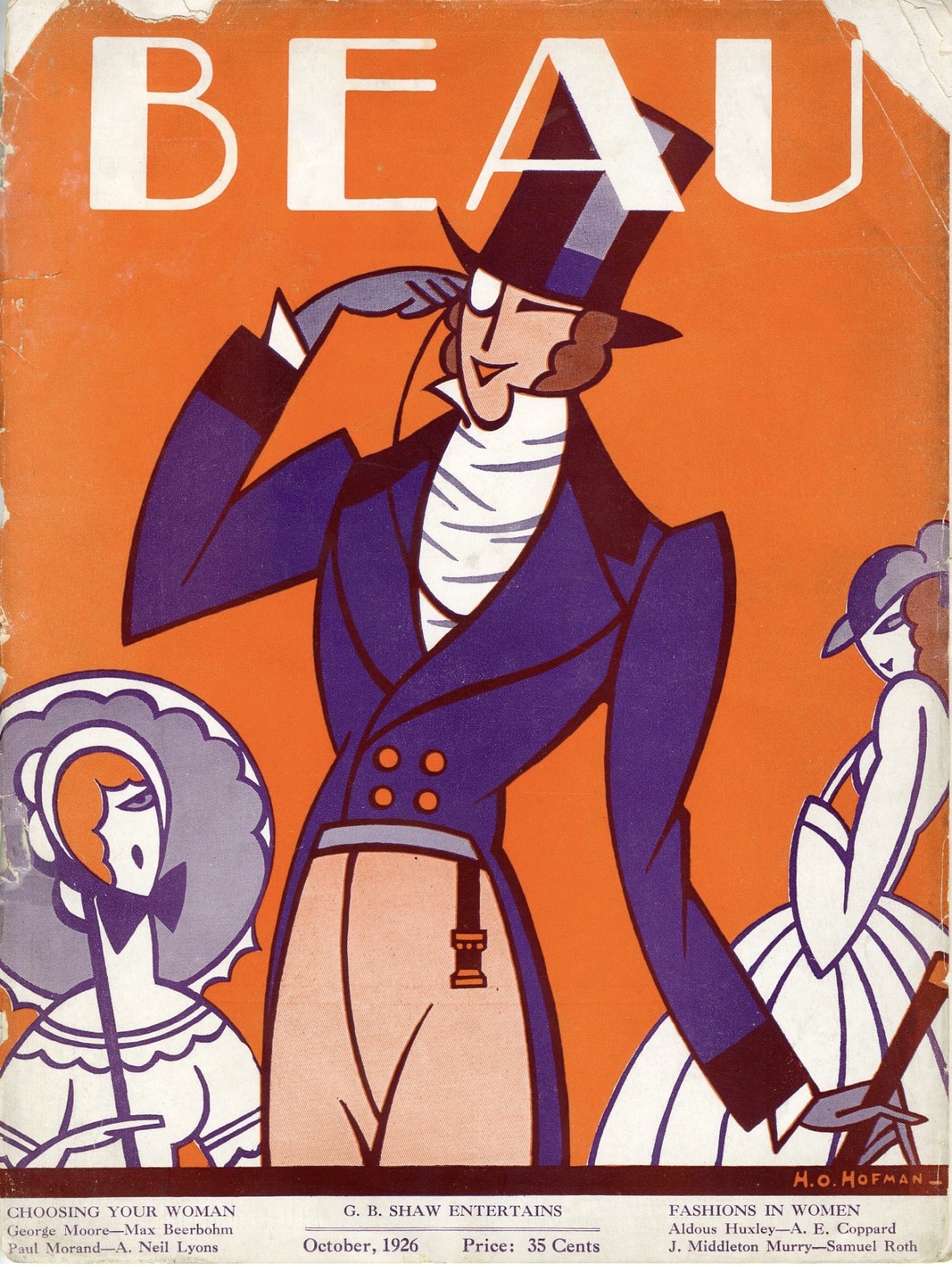
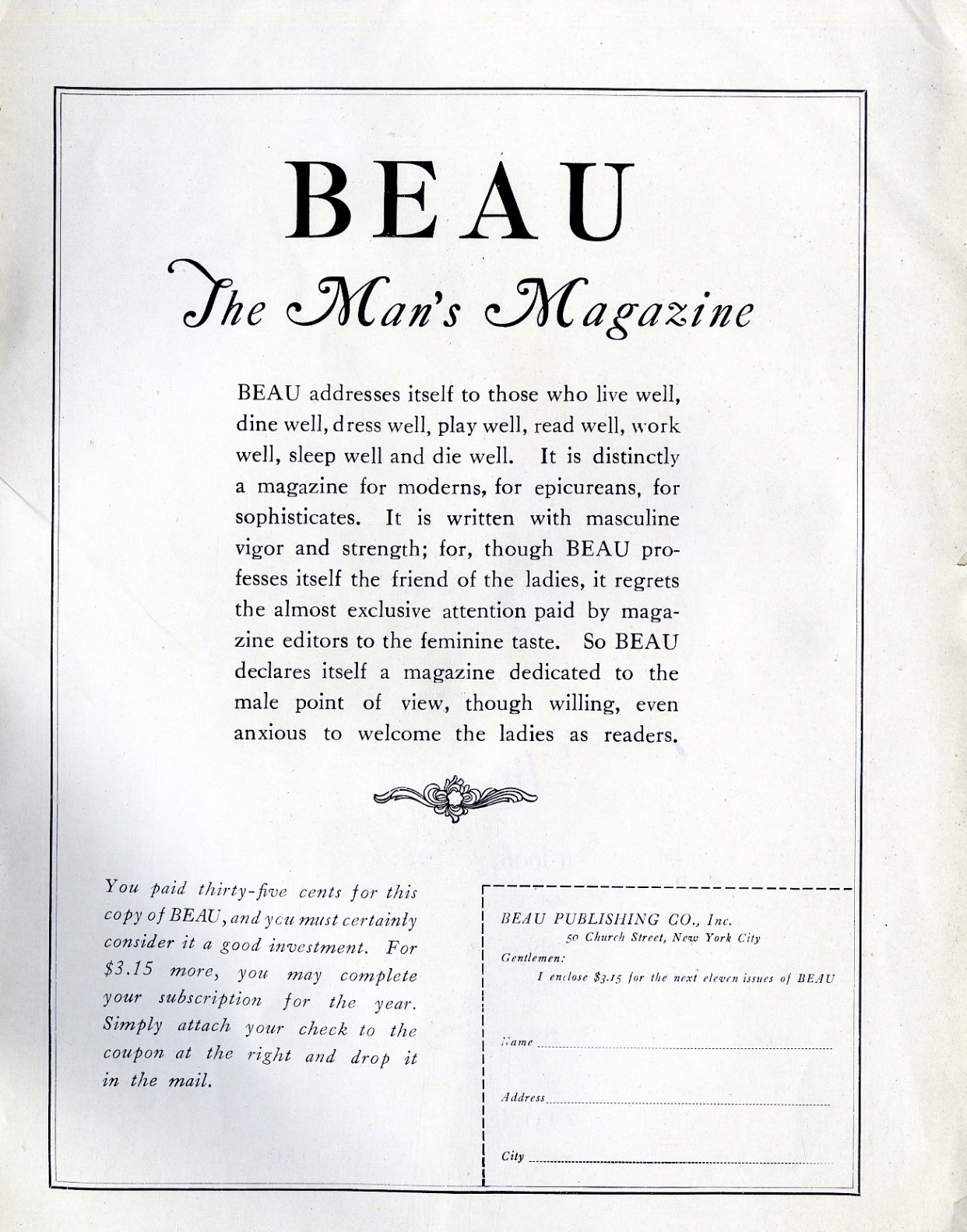
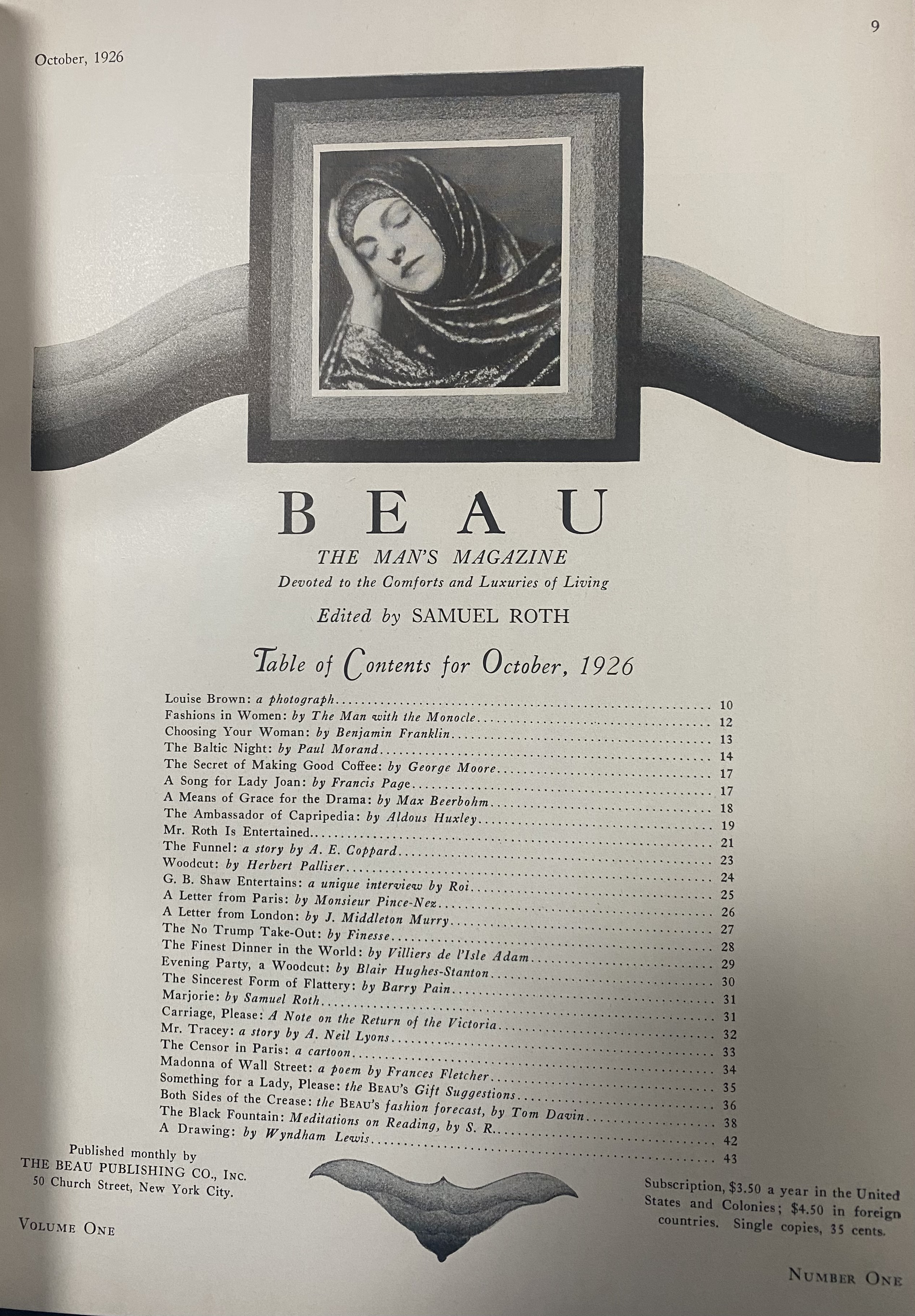
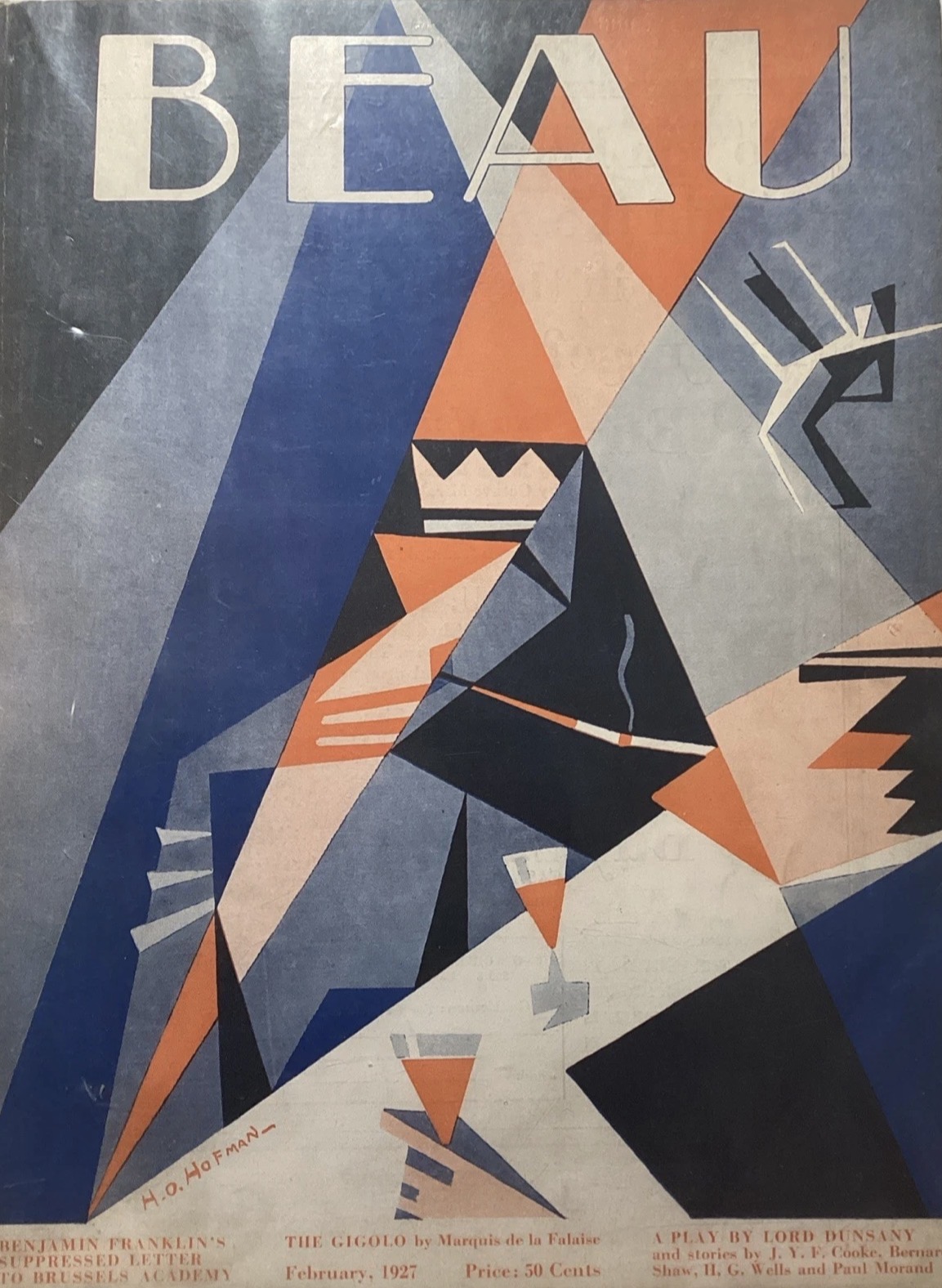
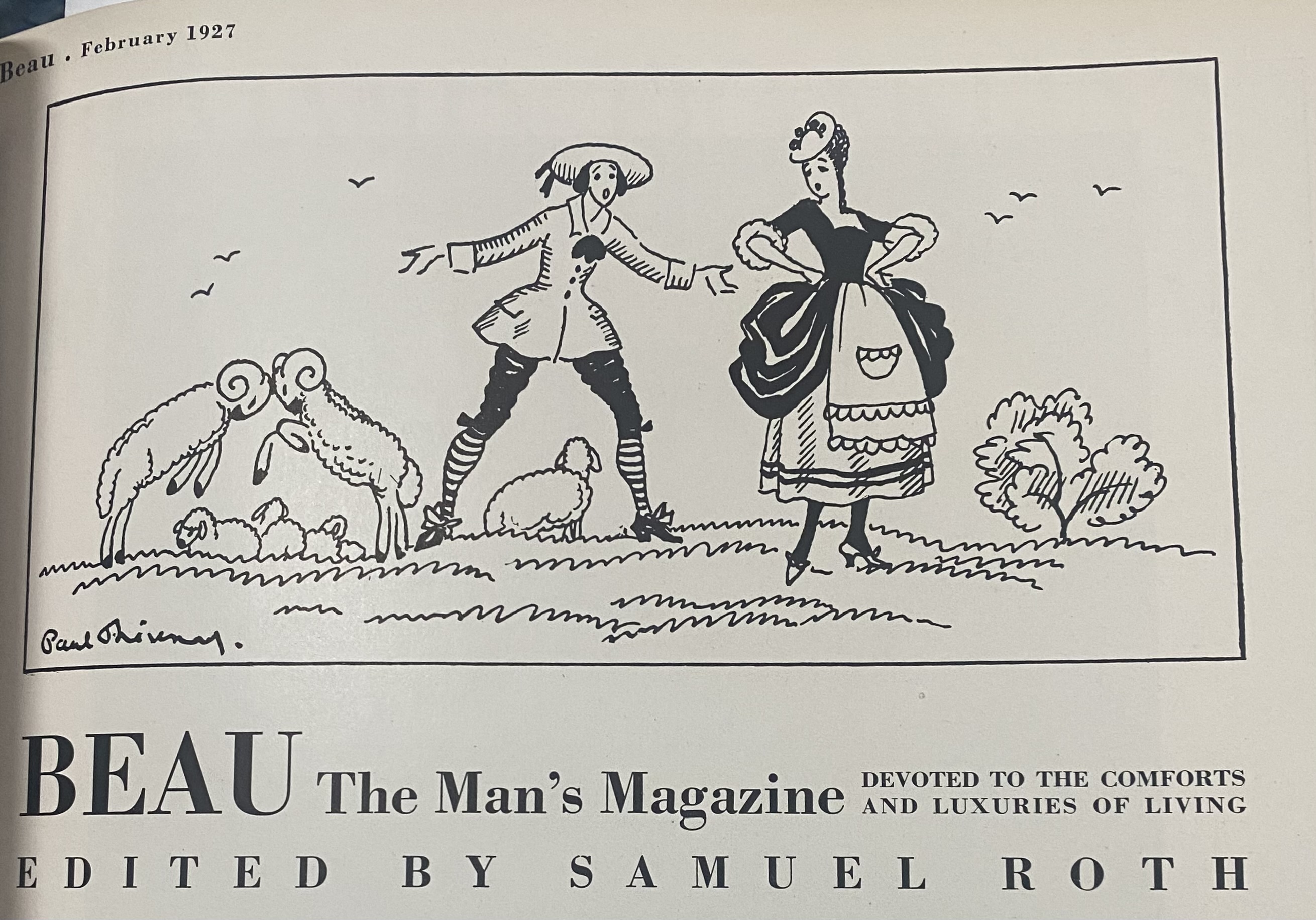
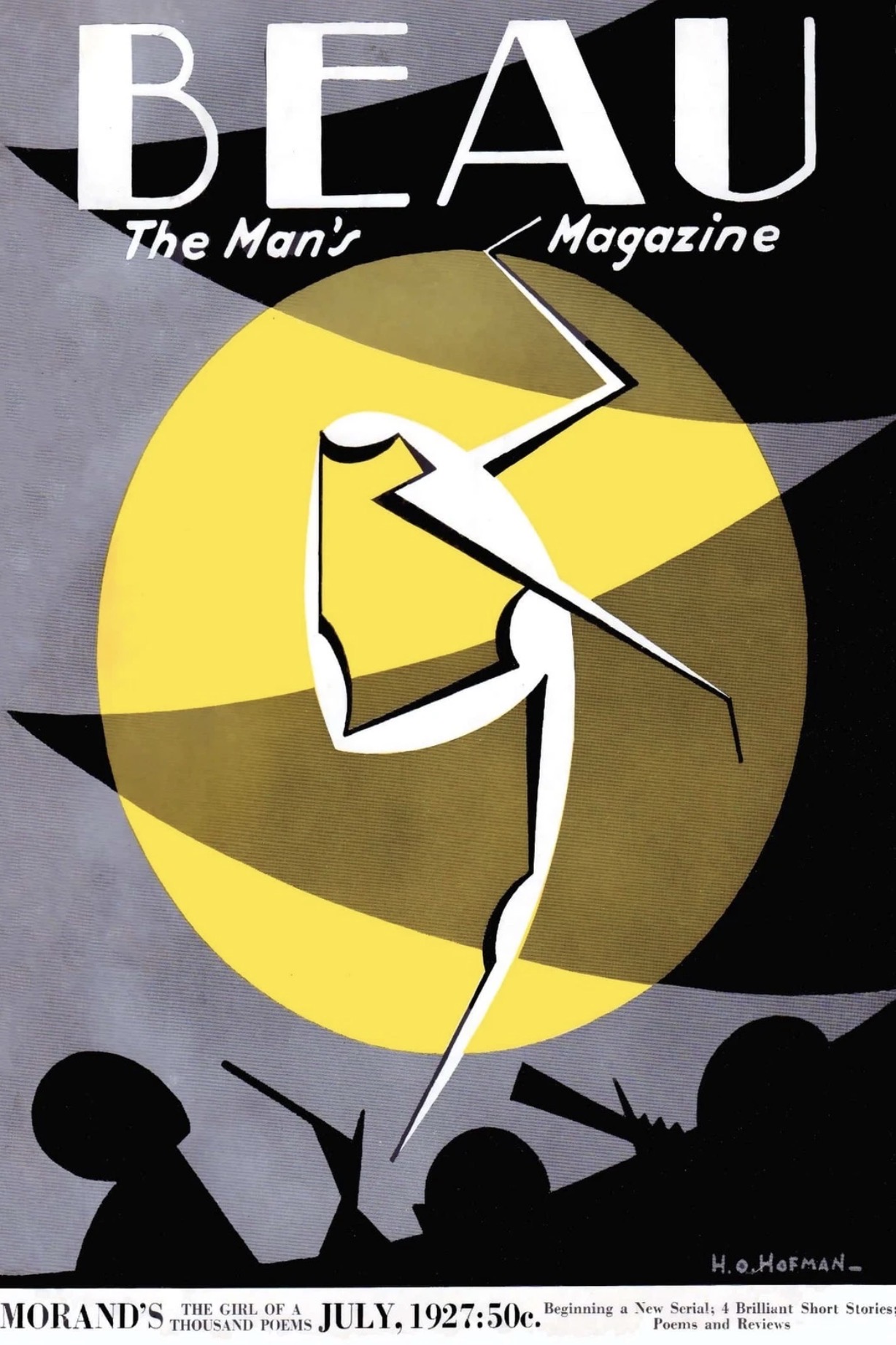
One documented case on how this Society acted in New York City in the 1920s can be found in a one page editorial that Samuel Roth wrote in the March 1927 issue of Beau magazine. Under the heading “MR. SUMNER and BEAU” Samuel Roth, the editor and publisher of the man’s magazine wrote, “Thursday morning, January 27th of this year, I received word from the organization which nurses the sales of TWO WORLDS MONTHLY (Roth’s other magazine) and BEAU nationally that the February issues of these periodicals, which had already been shipped out to all points domestic and foreign, would not be distributed for sale upon the news stands (sic) of New York City.”
“Upon inquiry, I learned that Mr. John Sumner, secretary of that charming body of people known as the New York Society for the Suppression of Vice, had communicated with the local distributing agency, and had informed it that if certain advance information concerning the impending numbers of TWO WORLDS MONTHIY and BEAU was accurate he would take immediate action against any company that would dare to distribute them in New York City. The local agency had the alternative to refuse to distribute, which it did.”
Mr. Roth, with his lawyer, went to meet with Mr. Sumner. He brought with him copies of the magazines that he found out that Mr. Sumner have not seen or read. Mr. Roth told Mr. Sumner that the two magazines “are written and published for the sophisticated only, that neither by lewd pictures or lewd contents do we make appeal to the baser passions of mankind.”
Mr. Sumner promised Mr. Roth to look at the magazines overnight and would render a decision in the morning. “Came the dawn– and” Mr. Roth wrote, “confident and carefree, I went to see Mr. Sumner who very speedily dissipated my peace of mind. TWO WORLDS MONTHLY was quite alright, he said, and we could go ahead distributing it immediately, but BEAU, ah, that was a different story. It was absolutely unthinkable to let BEAU go out on the harmless news stands dripping with nudes which any little boy may purchase for fifteen cents. No, he did not approve BEAU and if I dared to issue it of my own accord he would unfailingly prosecute me.”
It’s that very fragile line that separates nudity from lewdity that the art magazines had to maneuver their way with the Society and the United States Postal Service. That is the main reason the art magazines of the 1920s continued to emphasize that they are not for general public, but rather for artists and art students.
In the words of E. B. Hesser, the founder of ARTS Monthly Pictorial, he wrote, “The Magazine of Pictures for Artists and Art Students.” He added that the magazine “should be regarded primarily as an art trade publication, but it is so edited that nothing therein should be offensive to a clean minded layman.”
Unlike the rest of the art magazines, a new magazine appeared on the newsstands in January of 1925 with the name Art Lovers’ vowing to be completely different than the rest of the publications, yet it did not escape the wrath of Mr. Sumner of the New York Society for the Suppression of Vice. What follows is its story.
The first issue of Art Lovers’ magazine January 1925
A century ago, we were more culturally and artistically advanced. Magazines in the 1920s shined a very bright light on art and culture. One such magazine, albeit short lived, Art Lovers’ Magazine, is but one example of a cultural and artistic publication from 100 years ago when magazines ruled the media world. Here is its story:
Bringing God as the Defense Attorney
Under the headline “Tolerance” the editorial of Art Studio Life’s April 1926 stated, “In the Art field more than in any other may we find a wealth of beauty and inspiration that will soften life for everyone. WE do not claim that everything perpetrated in the name of Art is beautiful, but we do claim that nothing in true art can possibly offend any but those who, having tainted minds and questionable morals themselves, seek to smear the world with their personal tar of iniquity.”
The editorial concluded by stating, “They launch their attacks against all. In the name of religion, they seek to cover themselves by persecuting lovers of beauty. They purposely lose track of the fact that the greatest figure in history of the world was the incarnation of Tolerance, Christ. They seek to reform His world and His children, contrary to His Will.”
In another magazine, Art and Vanities, the editors didn’t stop at the necessity of nudity to the artist, but they went one step further bringing God into the equation of art and nudity. In the September 17, 1926 issue of Arts and Vanities, the editors wrote “In order to create beautiful statuary, soul stirring canvases, and monumental works, he must grasp the significance of each line in the human body. To him the human form spells perfection. No one can improve on the works of our Creator. We do not try. We seek only to understand and appreciate what he has given us in order that our lives and our hopes and aspirations may reach upward to the source of all good.”
And here is that powerful conclusion that sets the stage for all the nude art magazines of 1920s, “God was the first artist, he created plants, trees, animals, birds, and last but most beautiful, he created woman to adorn the universe. Man in order to elevate the ideals of his brother man endeavors to interpret these works for the Master. May we always do our share to help the artists in their struggle for the highest and most idealistic interpretations of Nature.”
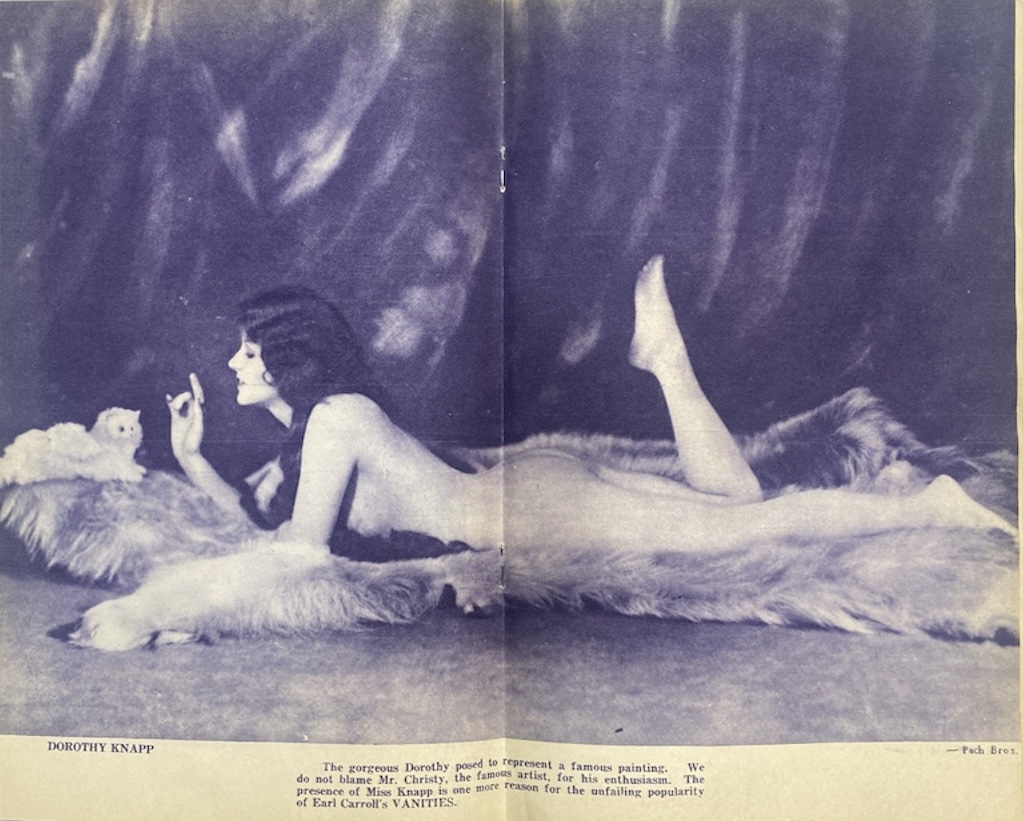
In fact, Arts and Vanities went as far as placing a bible verse on its center spread of the October 17, 1926 issue that was displaying a picture of a half-naked woman. (Yes, there were centerfolds before Hugh Hefner’s Playboy of the 1950s, the only difference they were only one spread).
Arts and Vanities was not the only magazine using God as its defense attorney, Art and Life was doing the same. Art and Life’s motto was The Body Beautiful, The Mind Intellectual, and The Soul Intuitional. The editor wrote in the November 1925 issue, “This magazine stands consistently for the above program (their moto above). That the body may be beautiful it must be healthy, athletic, vibrant with life and action. The editor of this magazine believes that the nude body is inherently decent, the noblest work of the Creator, and those who look upon it as indecent, and to be hid from sight, have indecent minds; that nudeness and lewdness are in no way synonymous terms.”
In fact, earlier in the year, Art and Life magazine, raised the same topic in its July 1925 issue. In an editorial written by the magazine’s editor Guy Lockwood under the title “Concerning The Nude. What Is All The Fuss About?” He wrote “While we have strenuously defended the nude body as the highest work not only of art, but of the Creator, as well yet we are no more in favor of lewdness and real indecency than are those who are behind the movement to rid the news stands of objectionable publications.”
Lockwood added, “Real art magazines have endeavored to supply real needs in the line of figure study by publishing studies of the human body that give a knowledge of basic form and structure, proportions and action. These photographs or drawings, as the case may be, have necessarily often been nude, and Art and Life Magazine has published this kind of photographs and drawings, believing that in doing so this magazine was rendering a valuable assistance to real art advancement.”
Keep in mind that the aforementioned magazines were all in line with the tag line of Hesser’s magazine Arts Monthly Pictorial, “The Magazine of Pictures for Artists and Art Students.” A lot of these magazines did not accept subscriptions, “but Art Clubs or similar organizations may order twelve copies or more shipped by express each month, to be used for instructional purposes,” stated the masthead in ARTS Monthly Pictorial. Those art clubs and the newsstands were the major outlets of the art magazines of the 1920s.
A century ago, we were more culturally and artistically advanced. Magazines in the 1920s shined a very bright light on art and culture. One such magazine, albeit short lived, Art Lovers’ Magazine, is but one example of a cultural and artistic publication from 100 years ago when magazines ruled the media world. Here is its story:
Image generated by Grok
Introduction
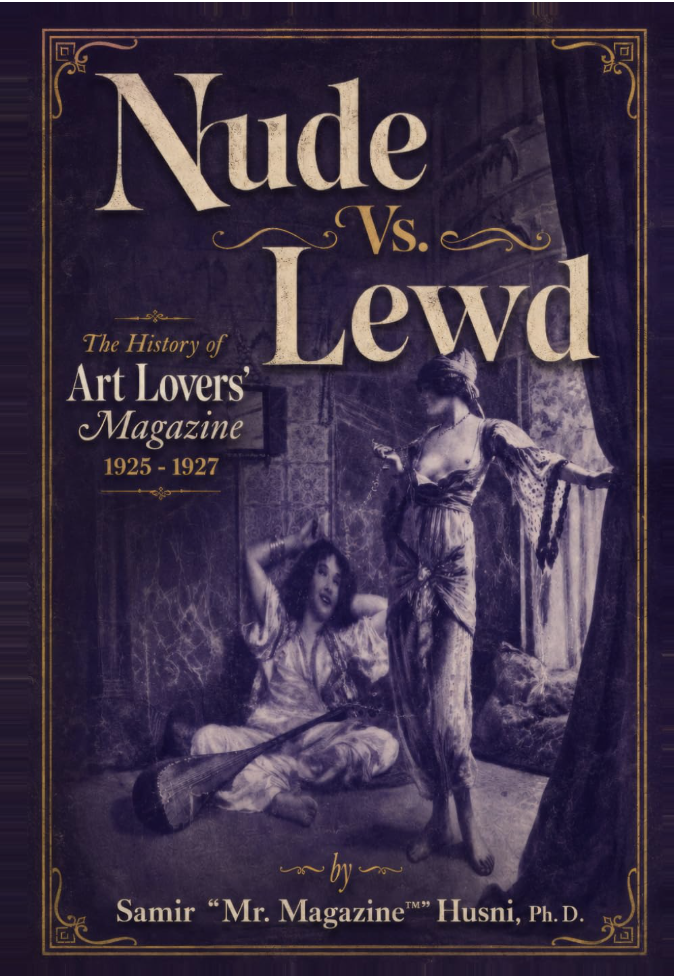
Lewd Vs. Nude:
The Story of Art Lovers’ Magazine 1925-1927
First issue of Art Lovers Magazine
A century ago, marked the golden age of magazines. Giants like TIME, Reader’s Digest, The New Yorker, and Better Homes and Gardens were launched, and the industry was abuzz. Magazine launches flooded newsstands and mailboxes across the country, providing a singular source of information, education, and entertainment—all in one package. In the 1920s, magazines were the only mass media serving the American public “from sea to shining sea.”
Newspapers were local, and so was the theater. Radio didn’t achieve widespread popularity until the late 1920s, and even then, it remained largely localized. Movies in the early 1920s were purely a form of entertainment, gaining mass appeal later in the decade when sound was added to moving pictures.
For those who believe niche publishing is a recent trend in magazine publishing—think again. The 1920s saw the emergence of numerous specialized magazines targeting very specific audiences.
This book-in-a-blog focuses on one magazine in particular: Art Lovers’, which was published from January 1925 to January 1927. While the spotlight is on Art Lovers’, I won’t ignore the many other art magazines of the same genre that came before and after it.
Art Lovers’ never claimed to be, like many of its competitors, “a magazine for artists and art students”. Instead, it positioned itself as a magazine about art—and all that the word “art” entails. Like similar publications of the time, it featured nude art and imagery, but it also included extended fiction, stories, and articles by renowned authors and artists.
Art Lovers’ took an extra step in addressing its audience, clarifying that although the magazine contained nude images, they were not lewd images. Hence the title of this book-in-a-blog: Lewd vs. Nude: The Story of Art Lovers’ Magazine, 1925–1927.
I hope you will enjoy this weekly journey starting today and every Monday.
I gauge my believe in the status of print on the fall and rise of new magazines. Please note that I did not say future of print but rather status. As long as we have humans we are going to have print. End of discussion. And for those who know me and know my writings and analysis know that. “It is only a magazine if it is ink on paper: i.e. print.”
So it should come to no surprise when I tell you I was delighted when the post office delivered to my mailbox the first issue of Hoffman’s Media The Supper Club with Lydia Menzies. The same happened on Christmas Eve when the first issue of the magazine dedicated to the late chef Anthony Bourdain Roads & Kingdom landed in my mailbox.
Those two magazines were but two from a total of 69 new magazines that were launched in 2025, a number that showed an upward move compared with 2024 as the chart below shows.
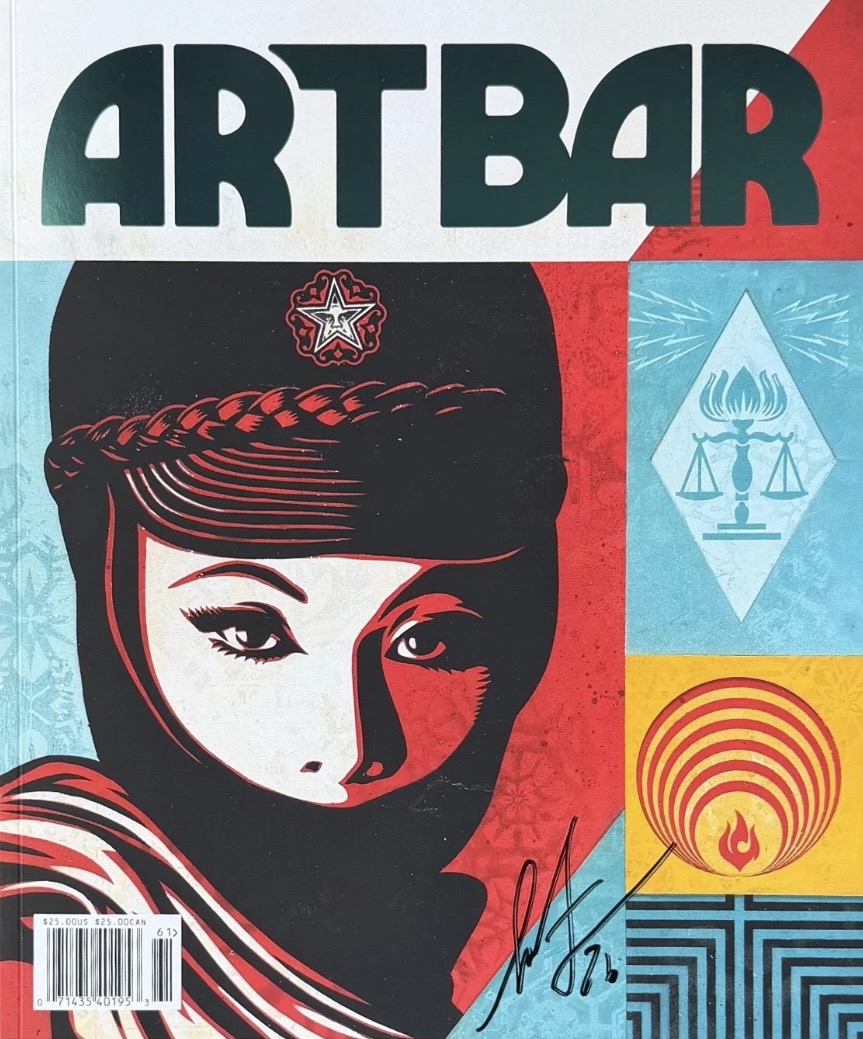
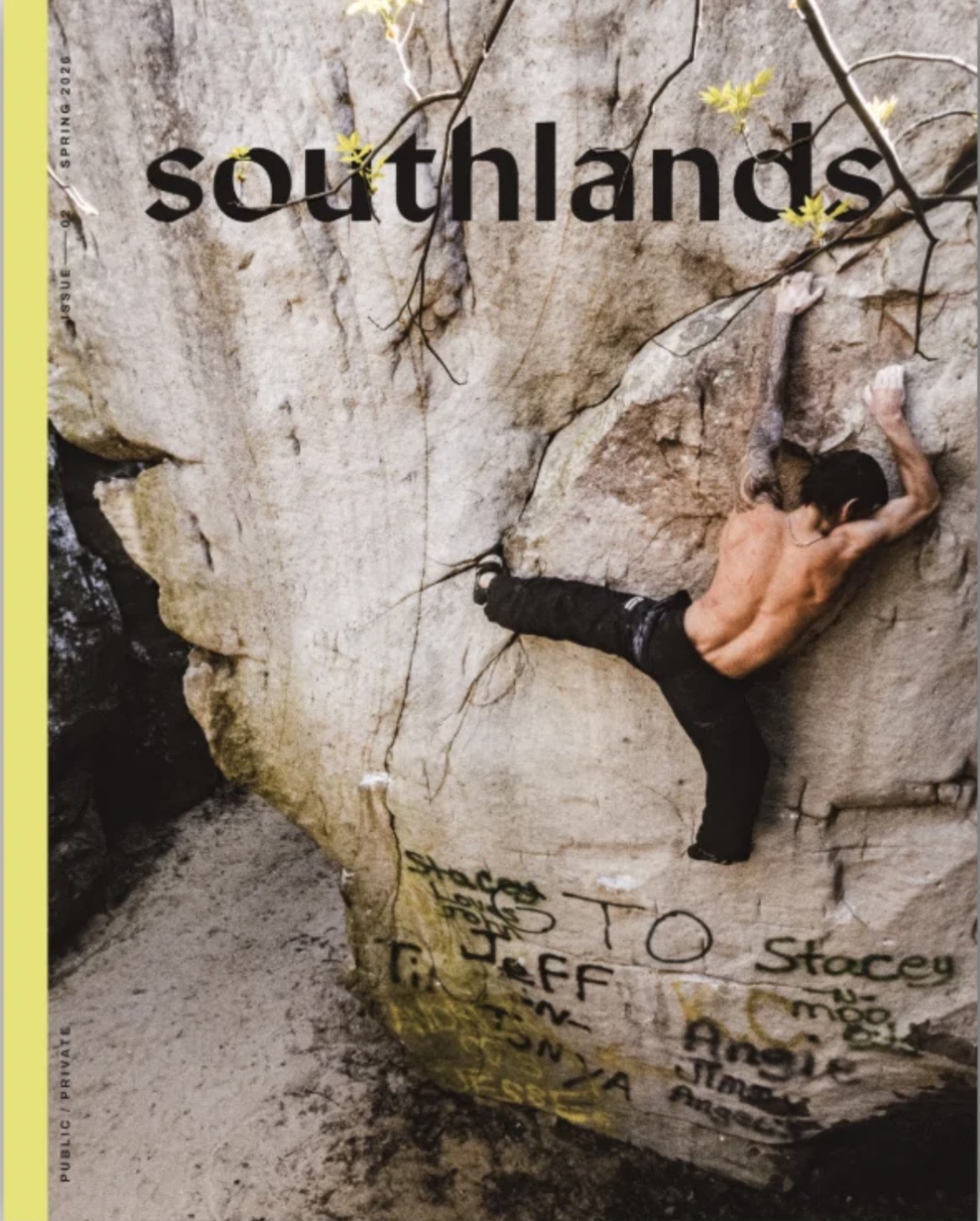
Of note among the launches are Art Bar, Bonnie Christine’s Pattern magazine, Southlands, Outlander, Permanent Record, The Street, and Heartbeat.
An Editor’s Note: Starting next week, I will start publishing a book-in-a-blog about the status of magazines in general a century ago and one specific magazine that changed the status of Art magazines in the 1920s. So, stay tuned.
If you are one of the more than 90% of people who exit the second you see a paywall on an article you want to read, fret no more. There is a new approach to paywalls which allows you to enjoy free content on your favorite publisher’s website in return to accept to receive four promotional emails from the creator of this new platform: Make It Free.
I reached out to Mr. Wade Bradley, CEO of Make It Free and had this engaging conversation to learn more about Make It Free and how it works for both the readers and publishers:
Samir Husni: My first question to you is, give me the elevator pitch of what’s Make It Free.
Wade Bradley: The elevator pitch is pretty simple. We enable consumers to enjoy free content on a publisher site while we pay the publisher.
So instead of publishers turning away 98% of their traffic that hit the paywall and immediately exit, they can now monetize that 98%.
Samir Husni: Give me the background. What makes you come up with this idea? Why do you want to help publishers?
Wade Bradley: Well, initially we had developed the concept for streaming. We utilized it to eliminate ads on free streaming sites. Instead of seeing ads, they would receive four emails. We then realized there was a much more larger market domestically and globally.
Utilizing that technology and utilizing our patents in that technology on publisher paywalls.
Samir Husni: Can you guide me if I’m a publisher and I want to use your Make It Free, how does that work?
Wade Bradley: You sign up a contract and the contract is one year, but you stop it at any point with a 30-day notice.
At the end of the day, we bring in our specialized support team. They work directly with the publisher to put the code and the API (Application Programming Interface) onto their publisher paywall.
Samir Husni: You said that if I want to click on Make It Free, I have to give my email and accept to receive four emails from you. What do you think will make the consumer give you his or her email if they are not willing to give it to the publisher?
Wade Bradley: Well, what we found with publishers and really all consumer product companies, is that if they give the email, there is a relentless approach to market to them. So on our modal, we state very clearly, read article for free. We will send you four branded emails.
You earn a reward coin for each email opened. So we incentivize the opening of the email, not the clicking. And we never sell your data.
I think that’s the key point. Because what we’ve seen is about 10% of people currently click our button that’s on the paywall. And it says read article free with Make It Free.
Then we get a 32% conversion on average. That is essentially because we’re telling them upfront, you’re going to get four emails.
So really a simplified process.
Samir Husni: Are you now fully operating with this model or you’re still in the testing stages?
Wade Bradley: No, we have publishers signed up. We have 16 months of data that proves out the 32% conversion.
And certainly what we’ve seen is that it varies based on geography, etc. But also based on putting it on the front end of your paywall. Meaning don’t give people five articles and have the paywall come up at the sixth.
People that are getting the best results are the groups that are doing it as a hard paywall or a semi-porous paywall. Maybe one, maybe two articles for free each month.
Samir Husni: I’m assuming that it’s available for newspapers, magazines.
Wade Bradley: Yes.
Samir Husni: Do you differentiate between a newspaper like, let’s say, The New York Times or a local newspaper, and magazines, whether it’s big or small? Do publishers get the same $0.10 per article regardless of the size or there’s a scale based on how big or small is the paper?
Wade Bradley: No, we don’t scale it based on the size of the paper. Because at the end of the day, each provides a valuable consumer.
Samir Husni: You said you’ve been at it for 18 months and you have data for 16 months. Has it been a walk in a rose garden or you had some challenges and how you were able to overcome them?
Wade Bradley: Within which aspect? Within the industry, we started with news publishers and they get it.
It took us a while to get the messaging exact because a lot of groups thought their current paywall system would take care of this problem. The current paywall system actually created the problem. So when you have 100% of traffic being presented a paywall and 98% leave.
If they don’t click on the paywall, none of those algorithms and other neat things can be deployed. So what we realized is that we’re the front end of a paywall. The current paywall system is the backend.
And the backend attracts the people that have intention. I want to get Fortune or Forbes, and I’m either going to register or pay. But the bulk of people and research has shown 90 to 95% at a minimum immediately exit when they see the paywall.
That’s where our system comes into play. Because instead of exiting, they’ve got another option. Read article free with Make It Free.
Samir Husni: You said your conversion rate based on those 16 months is 34%.
Wade Bradley: Approximately 10% of people that click the button on the paywall currently 32% return. And it varies.
We had a group tested against sports. Only sports. It hit between 50 and 70%.
It’s much lower traffic, but the conversion rate is extremely high. We think magazines will excel because you have extremely important, lengthy narrative, much more detailed than maybe a general newspaper would provide.
We expect to see uniquely different numbers than what we’re currently seeing on average in the news.
Samir Husni: Do you have data on how many magazines offer paywalls?
Wade Bradley: It’s probably about 80%, if not more, conservatively. A paywall is a necessary element.
When everyone switched to digital, they thought this is Nirvana. We’re going to reach millions more people than we ever could reach. And we don’t have to print it.
But the ad rates are dramatically different than print advertising. When they started to realize how many more millions of people they had to have to be able to make up for the print value, it didn’t work. And that’s why paywalls came into being.
They solved one problem. But they really caused another that’s quite significant that we solve with Make It Free.
Samir Husni: Can you think of a question that I should ask you, but I did not ask you?
Wade Bradley: It’s pretty easy integration.
It usually only takes a couple of weeks to get it set up on a paywall. Then the first 45 days we’re conducting detailed analysis to which brands to match to those particular consumers.
After 45 days of analysis, publishers start earning daily revenue.
Samir Husni: I always conclude my interviews with two personal questions.If I come uninvited to your home one evening, what do I catch Wade doing? Cooking, having a glass of wine, watching TV, reading a magazine or hitting Make It Free?
Wade Bradley: Well, at the end of the day, what Wade’s doing, Wade’s constantly working. Wade doesn’t drink, which is part of the California lifestyle.
At the end of the day, we’re continually working and adjusting what we can do to best benefit publishers.
Because as we benefit publishers, we benefit consumers. And both of those things benefit brands. Brands want this consumer.
These are very literate consumers. They’re excellent consumers. It’s an opportunity where a publisher can be able to now monetize that traffic they’ve been turning away and condition them to become a subscriber. There’s kind of a process leading up to that.
That’s what Make It Free allows them to do. They start gaining the engagement and trust of the consumer. Then the consumer quickly realizes, wow, I really like this magazine.
I’m continually coming here. I’m coming 10, 20 times a month. I should subscribe.
We send out a free quarterly newsletter or subscription offer to the the community using our service on their site. Because we want them to gain that 1st party data for the consumer. You simply must do it at the right time.
Up front in your face, here’s a paywall is not the right time.
Samir Husni: How many times they can hit the Make It Free?
Wade Bradley: As many times as they would like to read another article. So every single time they want to read another article, they hit Make It Free.
It’s a universal signup. So if they’ve signed up elsewhere and now come to a publication that has Make It Free, all they have to do is click agree and accept. They don’t sign up in each publication.
It’s universal. It’s really simple for the consumer. And as this becomes more pervasive across America, we think that the initial clicks are going to increase.
We see that on average, 4.2 times per month, the consumer returns and uses it again. With more city-centric news publications that just have a lot more news going on, or highly specific publications in financial technology, etc., that consumer is going to come more often.
Samir Husni: My typical last question is what keeps Wade up at night?
Wade Bradley: A lot of things keep Wade up at night.
Regarding the business, you know, we’ve gotten to the point where we already have now approximately 180 publications in our queue to integrate. That’s moving at a very quick pace. That’s one of the areas we’re highly focused on.
We’ve got our brand sales teams that are going to brands, and brands absolutely love this because they have a halo effect. They’re the ones providing the article for free. So on the modal, when they sign up, they’ll see the brand.
And then the consumers will receive the offers from that brand. For brands, they’re getting for the first time ever an unduplicated, positive-minded consumer.
Born from the womb of the web, The Fabulist launches its first print issue in 2026 after being a web only platform since 2007. To quote Josh Wilson, the magazine’s editor and publisher, in his letter to the readers accompanying issue zero of the magazine, “In a world that’s glutted with disposable digital ephemera, we love working with print: It is a tactile, tangible, dynamic, and long-lasting medium that transforms your experience as a reader, and celebrates the meaning and value of the works we publish.”
Issue zero of The Fabulist, art by Glenn Buack
And Mr. Magazine™ can’t but 100% agree with Mr. Wilson. There is no better place to combine “amazing stories, rich illustrations, and wild art,” than print. The Fabulist publishers believe so much in print that they make their business model print first.
Intrigued by the concept and the business plan, I reached out to Mr. Wilson to ask him more about the inception of The Fabulist, the plans and the reason for the print magazine after being a web only platform. We had a lovely conversation and learned the secrets behind the transformation from digital to print.
So, without any further ado, please join me in this lovely conversation with Josh Wilson, editor and publisher of The Fabulist.
But first, the soundbites:
Josh Wilson, editor and publisher, The Fabulist
On the reason for print: “I realized that print really was something people were attracted to and aspired to be a part of.”
On the background history of The Fabulist: “For several years we printed chapbooks, short 20, 30, 40, 50 pages, saddle stitched, single story publications. Then we began to think through our model and what we could do with it, which brought us around to this print magazine. I’m surprised to see that it’s really gaining traction.”
On his background: “I started out in print in the 1993 – 1995 period. I’m a journalist who worked at SF Gate in San Francisco and never went back to print until now. And it’s been a pleasure. I’m also amazed to find that readers and writers and everybody else is thrilled to see print happening.”
On The Fabulist elevator pitch: “We’re a literary, a speculative literature magazine. We publish fantasy and science fiction.”
On the business model: “I find that digital monetization is very, very hard, and it’s amazing to me that print from the previous millennium, the previous century, turns out to be a viable business model.”
On the zero issue: “It is a viable standalone issue. But we wanted to just see what we could do with print.”
On the art of curation in print: “There are space considerations in print, which makes the curation process more interesting. What order do the stories go in? What’s the effect of reading them in order? Each piece of art and its positioning, the layout.”
More on the art of curation in print: “I find it a much more interesting and creative medium to curate for that the constraints produce innovation and fun. Whereas on the Internet, every page is the same. It’s a template.”
On the future: “We want to continue to develop work in print and on the web. But we want to lead with print as a beautiful standalone document.”
On what keeps him up at night: “Worrying about the magazine and its success. There’s always something to worry about.”
The first issue of The Fabulist, art by Sergiu Grapa.
To learn more about The Fabulist or to order a subscription please click here.
And now for the lightly edited conversation with Josh Wilson, editor and publisher, The Fabulist:
Samir Husni: First, congratulations on the new magazine.
Josh Willson: Thank you.
Samir Husni: Anybody that launches a print magazine today deserves to be congratulated.
Josh Wilson: Thank you.
Samir Husni: Tell me, what’s the story of The Fabulist?
Josh Wilson: The story of The Fabulist
Well, way back in 2007, I kept getting my stories declined by magazines, and I decided to start a little blog, just a website where I could put my stories and those of my friends. About six months later, we began getting submissions, which was very strange because I never posted a submissions link.
People would just email us their stories. It turned out that we had been listed in a writer’s market called Duotrope. I don’t know who put us there, but we ended up in this writer’s market, and the submissions have been coming constantly since then, far more than we can deal with, and usually better than my own stories.
I took down all my stories and, for a long time, posted new work whenever we could get around to it. I would say about the mid-teens, 2015, 2016, 2017, we were at a reading event in San Francisco, where we live. I was approached by Elizabeth Gonzales James, who went on to become a novelist. She has two novels out, The Bullet Swallower and Mona at Sea. The Bullet Swallower is being developed for a feature film. She approached me before her first book contract and said, Do I need any help?
I remember being overwhelmed by submissions. I said, I could really use a hand managing all the submissions. She read a gigantic backlog of hundreds of submissions and said, You could do a story a week. Why don’t you?
I said, OK. We went with that. At that point, I realized we really should have a contract.
I contacted other publishers I know and asked them for advice. We made a writer contract. There are a few other steps to this.
One is that I realized there is a big difference between genre and literary journals. We were kind of in both places. The literary journals, you often pay a reading fee and don’t get paid for your work, to the extent that I would send a submission’s call to creative writing and MFA programs and get the department chairs sending me their work for this blog.
But the genre magazines, Fantasy & Science Fiction magazine, Asimov’s magazine, these all came out of the pulp era. There was a very strong writer’s advocacy movement. A lot of that business was pretty fast and loose. In the genre world, you don’t pay reading fees. You always pay the writers.
We decided we should at least do an honorarium. We grew that from $25 to $100 per story. Still operating at a loss. All digitally.
Finally, the final chapter for this evolution, in 2023, in the depths of the COVID pandemic, we were, I guess at the end of the worst of it. A colleague of mine here in San Francisco, Jennifer Joseph from Manic D Press, a great local imprint that has their work collected in the Library of Congress, their LGBTQ work, said that she’s going to AWP, the Association of Writers and Writing Programs conference. This was in Seattle.
Did I want to share a table, an exhibitor table at the book fair? I thought, yes, why not? I did that rashly because I didn’t have anything to sell because it was all digital, but I realized the contract that we had been using enabled us to make books. So I got an $80 color printer and began making chapbooks. And my colleague, our art director, Adam Myers, is a gentleman of very high production values.
We produced some beautiful books and they sold. They almost sold out. And I realized that print really was something people were attracted to and aspired to be a part of.
For several years we printed chapbooks, short 20, 30, 40, 50 pages, saddle stitched, single story publications. Then we began to think through our model and what we could do with it, which brought us around to this print magazine. I’m surprised to see that it’s really gaining traction.
This is after months of agonizing and product development. We got a small grant from CLMP, Community of Literary Magazines and Presses, to hire a digital marketing specialist. Lots of thoughts about how to convert from a weekly digital blog to an issue-based periodical.
I started out in print in the 1993 – 1995 period. I’m a journalist who worked at SF Gate in San Francisco and never went back to print until now. And it’s been a pleasure. I’m also amazed to find that readers and writers and everybody else is thrilled to see print happening.
So that’s where we are. I guess that’s a little bit of a long intro.
Samir Husni: In 2025, it looks like a lot of independent publishers, like yourself, are rediscovering print and bringing print magazines to the market.You were born from the digital womb, bringing The Fabulist to print. Tell me, if you are going to give an elevator pitch about what The Fabulist is, what would you tell people?
Josh Wilson: My elevator pitch for The Fabulist is that we’re a literary, a speculative literature magazine. We publish fantasy and science fiction.
But with a literary bent, a magic realist bent, there’s a lot of interest in what’s been called new weird and new fabulism. And we feel that there’s a lot of terrain that is undeveloped for speculative fiction and speculative literature, poetry and art that doesn’t quite fit in genre. Genre has a lot of straight expectations.
We feel that there’s a lot more room to develop this stuff, that we don’t want to be constrained by the expectations of the market, that certainly there’s no limit to the work being produced — the fantastical work that’s not realist fiction, that’s not straight genre, that sometimes sits in between. And it needs a place, a beautiful home. We tried to develop that beautiful home on the Internet, and it worked.
We have a brand. We’re an established presence. But we didn’t have a business model.
I find that digital monetization is very, very hard, and it’s amazing to me that print from the previous millennium, the previous century, turns out to be a viable business model. I guess that’s longer than an elevator pitch.
Samir Husni: It’s a very tall building.
Josh Wilson: Yes. We’re on the way up.
Samir Husni: Your business model is based on giving subscribers, a free complimentary zero issue or a dummy copy. So what’s the idea behind this business model, giving the one issue free for people who subscribe and then billing them technically per issue?
Josh Wilson: Yes. Two reasons.
First, the per issue billing was something I observed and we observed in Patreon. It’s a creator’s platform. It’s like Kickstarter, but you make your contributions serially over time. And musicians and artists and so on use it and every month you pay $2 or $10 or whatever and you get a new song or a new story or a new piece of art. So, that seemed like a really viable model.
It’s been of interest in the journalism world as well, this monthly income. Rather than having it all happen at once in a cluster annually, it gives the reader a lot of flexibility to exit without having to make a full commitment. So, we decided, we tried a Patreon account and it did work, but we get double hit with fees.
Patreon takes 3% or 5% and the credit card company takes a percent, and we really wanted to reduce that friction. So, we are selling subscriptions without Patreon. We are going with a bimonthly for now and we hope to increase to monthly. So that’s why we’re billing per issue.
And the free issue was our marketing consultant, a gentleman named Neal Gorenflo. He is a marketing guy. He started a publication himself called Shareable, Shareable.net and it covered the sharing economy when that was first coming up.
He’s a very astute and accomplished marketing person who said, you got to have a free offer. You got to have a no risk trial. And we already knew we were going to forge ahead with the print periodical and had made this issue zero.
You called it a dummy. It is a viable standalone issue. But we wanted to just see what we could do with print.
I had a whole bunch of those, you know, in a box on our shelf in our spacious corporate offices here. I thought, okay, let’s do it. Let’s use these.
I had to do another print run. We ran out. It’s been so popular.
I’m going down to San Jose to a printer a little later today to pick up another 150 copies.
Samir Husni: One of the things about print is you must do more curation than digital. As an experienced journalist, how is your curation takes place or the difference between accepting something for digital or accepting something for print?
Josh Wilson: We remain really concerned about quality control the whole way through. So, we did not and we never wanted to treat the Internet as a disposable medium where we could just throw stuff.
We always had a long review process. How will this look in our pages? How much work does the story need? It starts with whether we love it and we want to see it flourish. And if we love it, we’ll commit to it.
I would not say that we’re treating the Internet as more of an easy medium to throw stuff into.
There are space considerations in print, which makes the curation process more interesting. What order do the stories go in? What’s the effect of reading them in order? Each piece of art and its positioning, the layout.
I find it a much more interesting and creative medium to curate for, because the constraints produce innovation and fun. Whereas on the Internet, every page is the same. It’s a template.
We try to make it beautiful and we’re going to do a design refresh and get that website up to speed. But, although it is a boundless medium, it is ironically much more constrained, I think, than print. Because you can’t do an interesting layout.
For all its dynamism, it’s much harder to make it an art piece. And with this print magazine, we want to make an art piece. This is collectible.
Samir Husni: When’s your first issue coming out?
Josh Wilson: January. We had to push it back because of the two holidays, there’s no way we can get the proof back. And then everybody’s going out of state at the end of December.
So mid-January, we aim to have that out and then bi-monthly afterwards. I was just looking at the new cover and it’s great. It’s quite different, too.
Samir Husni: Is there any question I’m supposed to ask you, that I did not ask you?
Josh Wilson: I suppose you could ask me about the state of genre and literary publishing in print and online. I find that fascinating and something I’ve gone deep into over the summer, although I might talk a little bit.
Samir Husni: So tell me about the competition. Who’s out there?
Josh Wilson: The interesting thing is a realization that the folks here aren’t competing. The audience for written-text genre fiction, fantasy and science fiction mostly, and the stuff that spills out over into the literary edges of that, is substantial and undiscovered and undeveloped.
There are a lot of conventions and conferences that happen nationally and globally, science fiction and fantasy conventions and comic book and movie conventions and the ones that are game conventions. And there’s some overlap, some Venn diagram overlap, but the literary conferences are tiny. The World Science Fiction Convention, where they give out the Hugo Awards, it’s one of the highest awards in genre fiction, only gets about 8 to 10,000 attendees, whereas Comic Con in San Diego or Dragon Con in Atlanta, Georgia gets tens of thousands or hundreds of thousands of attendees.
These people do read books, maybe not a full percentage of them. But a lot of people are genre fans without ever knowing that they’re genre readers. They watch movies, they watch TV, they love Star Trek, they love Star Wars. They’ll follow the movies and the characters.
The same is true in the literary world. When I was at AWP, the Association of Writers and Writing Conferences conference in LA, we covered all our expenses, including travel and conference registration and housing. We covered all our costs.
A lot of it was these young MFAs walking up to our table and realizing that they could do genre, that they weren’t stuck in a realist, forgive the term, a realist ghetto. There was a lot of room for them to follow their interest and desires.
We broadly feel that the audience is vast and undeveloped. And there isn’t a national, there aren’t national scale, mass media scale consumer magazines. They’re more literary journals.
So, we’re all working together. And there’s a lot of great ones. Asimov’s Science Fiction magazine, Fantasy & Science Fiction magazine, Analog are all the warhorses from the pulp era.
There’s a host of amazing online magazines that sometimes have print as well. Clarkesworld, Lightspeed, Nightmare magazine, Strange Horizons, and Uncanny magazine are really sort of among the top tier of these online magazines that do issues in e-books. And sometimes audio books as well.
But also release all the stories for free on the web. So, there’s this freemium model. And then they’ll do print on demand for print.
I think we may be distinct in really going, switching hard to print first. The editor of, publisher of Clarkesworld, Neil Clarke, who’s an analyst of the industry and an accomplished publisher, pointed out that he goes where the readers are. He has an audio book version.
The people who listen to audio books are different from the ones who read online or who read e-books even. They’re all distinct. And he has a print on demand magazine.
We may be, The Fabulist, may be taking a risk on going so hard on print first. But we are at break-even. We, in about three or four weeks, we sold more than 100 subscriptions with an online ad campaign.
And it’s very interesting to realize that we have such a latent audience. We were getting one to five subscriptions every day. And the subscription drive ends tomorrow.
We’re going to assess, redesign it, redeploy it around our issue one with the new cover. The fact that you must go where the readers are is, as Neil (Clarke) says, is absolutely true. And we want to do audio books.
We can do e-books. And we want to continue to develop work in print and on the web. But we want to lead with print as a beautiful standalone document. This is a distinction.
There’s another magazine, Reckoning magazine, that also does a beautiful print document. And then eyedroppers out their content for free. I feel that that’s an exciting approach that you can do because audiences don’t overlap. Digital is a loss leader. And digital content enters social media and the Internet as a sort of promotional mechanism for your publication.
The print people who are repeatedly exposed to it, they realize they want the magazine. Although there’s a specific strategy we did. We have a landing page.
We show off all the interiors. We boast about the contributors. Try to showcase our production values.
Samir Husni: My typical last two questions. If I come uninvited to your home one evening, what do I catch Josh doing? Cooking, having a glass of wine, watching TV, reading a book?
Josh Wilson: I’m cooking. I love to cook. I’m feeding other people. I want them all to eat, so I try to do a good job.
And I’m usually listening to an audio book while I’m cooking, because I can’t read it. Right now, I’m listening to Barbara Tuchman, the historian.
She’s got a great book called The March of Folly about governments doing stupid things over time. After dinner, ideally, everybody else cleans up and I go back to work.
Samir Husni: And what keeps you up at night these days?
Josh Wilson: Worrying about the magazine and its success. There’s always something to worry about. But I have been sufficiently exhausted that I usually fall asleep quickly.
I’m reading a great book that is keeping me up. It’s a new version of The Tempest, Shakespeare’s Tempest. It’s called Kalivas by the author Nick Mamatas, who is one of our book reviewers.
And it’s in the future. And there’s been a cataclysm. And Caliban/Kalivas lives on the Farallon Islands off San Francisco.
His mother was a nanotech Sycorax. The witch was a nanotech engineer. And Prospero is a techno magnate in this post-human society who invades the island and colonizes it.
And it’s a romp. It’s a great read. That’s been keeping me up a little too late.
Ten years ago, a new magazine was born in the UK: The Week Junior. A news weekly for children that saw a “proper return to things being print-first, magazines being print-first, and not just a vehicle for a toy.” Anna Bassi is the editorial director of the magazine. She has been at the magazine since its launch and is still as passionate about The Week Junior as she was on day one.
Anna Bassi’s work with children’s magazines started over 30 years ago. After 20 years of editing such magazines, she got disillusioned with children’s magazines. She left the field of children’s magazine publishing because “I had a growing realization that we were spending more money on the cover mounts, and less and less money on the content,” Ms. Bassi told me.
She added, “I’d see children, grabbing their magazines, tearing the toy off the front, chucking the magazine on the floor, and it couldn’t even be looked at. And it was just, and we spent so much time talking about the packaging for the toy, it had to look as though it could be shop-bought. And then the budget for the editorial content would be halved and halved again every year.”
Then, something like magic happened. She was recruited to launch The Week Junior magazine, “a great thing to be involved in.” She told me, “It’s a joy to be working on something where the investment actually is in the content and nothing else. It’s a real privilege.”
To read the story of this privilege, please join me in this conversation with Anna Bassi, editorial director, The Week Junior, in the UK, but first, the soundbites:
On reading on paper: “The experience of reading on paper is so very different to reading on a screen, and it’s increasingly the case now, so perhaps we’re a little bit ahead of ourselves back in 2015.”
On the role of the magazine: “We can create news that is made for children, and that didn’t mean that we wouldn’t address important or complicated or serious issues, it just meant that we would do it in a way that was very clear for our readers, like a conversation with them.”
On the tone of the magazine: “One of the principles of the magazine is not to be a teacher, it’s a conversation. We’re trying to have a conversation with the child, we’re trying to meet them where they are, and if anything, we’re the slightly smarter, older sibling of our average aged 10-year-old reader.”
On the content of the magazine: “There’s something around the way a print magazine is curated, that thought that goes into which story goes where, which picture goes where, how a child experiences a page, which is very different to the on-screen experience.”
On launching during a crisis: “There’s something about launching into an adverse situation. It pulls teams together, and it clarifies the purpose of the magazine.”
On her ten-year journey: “There have been loads of challenges, but it’s been, I should say it’s been great fun more than anything else. It’s just an honor and a privilege to do something like this, to create a magazine for children.”
On the many extensions of The Week Junior: “We have a lot of extensions. We’ve been very busy. The first extension was the launch of The Week Junior Science and Nature magazine in 2018.”
On more extensions: “We launched a podcast in 2019 called The Week Junior show, which is still released every week, we just recorded our 10th birthday episode this morning.”
On her advice to someone launching a magazine: “Do your research, know your audience, respect your audience, I think is key.”
On the design of the magazine: “We needed to do to be different, but also to be useful, was to make a magazine that was genuinely accessible. So, it is designed to be read. The way the pages are laid out is very deliberate. It’s about being able to navigate that page easily. You know where it begins and where it ends.”
On what keeps her up at night: “Not so much these days. Sometimes the news keeps me up at night, I do worry.”
And now for the lightly edited conversation with Anna Bassi, editorial director, The Week Junior, in the UK.
Samir Husni: You just celebrated 10 years of The Week Junior, tell me about the genesis of the magazine. Why would you start a print news weekly for children in this digital age?
Anna Bassi: It seems like a crazy idea, doesn’t it? The origin of The Week Junior dates back more than 10 years, in fact even before my time with it. I was the launch editor here in the UK, but there has been around a year’s worth of development work on the idea prior to me joining. It had been born from the realization that The Week magazine, which obviously is also a UK publication, had many schools subscribing to it for their secondary school age pupils, so these are kids who are 12 years and over, and it became increasingly clear that perhaps there was an opportunity there to bring news to a younger audience, and to do so in print, which seemed counterintuitive at the time, but all of us who work on the magazine, and all of those who are involved in the development of it, appreciate that tangible quality of a paper magazine.
The experience of reading on paper is so very different to reading on a screen, and it’s increasingly the case now, so perhaps we’re a little bit ahead of ourselves back in 2015. Parents now are realizing that screen time is addictive, that it can be counterproductive. It doesn’t have to be an either-or situation, but that there are real benefits to children not spending quite so much time on screen, so we felt they would appreciate that offer of an alternative to the screen.
For children, because most of us readers are subscribers, it’s something they own, when you look at something on screen, you don’t own it, it’s fleeting, it’s gone, and you can get lost quite easily as well. Also, you are not experiencing the same depth. Finally there’s something around the way a print magazine is curated, that thought that goes into which story goes where, which picture goes where, how a child experiences a page, which is very different to the on-screen experience, which is good in its own right and has many benefits, but this idea of something being put together with real care and thought as to how a child will read and see and experience what we’re giving to them.
Samir Husni: When you launched the magazine, when the first issue came out, was it an instant success?
Anna Bassi: Well, we had about 5,000 subscribers before we launched, we’d marketed it exclusively through The Week magazine in the UK, and when we launched, we thought that most of our readers would be the children of The Week readers, but as it turned out, it was a bit of a word-of-mouth success, those early subscribers were real advocates for the magazine and shared it with their friends who bought it for their parents.
The first issue was a launch into the unknown, because there was a lot of rhetoric around kids not loving print and why would they want to know about the news, that’s just for adults. But that was also part of the reason why we launched, that there was an assumption that news is just for grown-ups, but actually children do see and hear the news, whether it’s an overheard conversation or they might have heard something on the radio or on the TV, and sometimes having that partial information is worse than having no information, so our thought was we can take control of this and we can create news that is made for children, and that didn’t mean that we wouldn’t address important or complicated or serious issues, it just meant that we would do it in a way that was very clear for our readers, like a conversation with them.
One of the principles of the magazine is not to be a teacher, it’s a conversation. We’re trying to have a conversation with the child, we’re trying to meet them where they are, and if anything, we’re the slightly smarter, older sibling of our average aged 10-year-old reader.
Our first issue put us to the test. We planned a wonderful celebration launch issue, and in fact the week before we launched the magazine, there were a series of terrible terror attacks in Paris. We had to tear up our plans and lead with that as our cover story, which was very difficult to do, but it also meant that we very quickly had to live up to the promise that we’d made to ourselves and to our new subscribers, that we wouldn’t shy away from the difficult stuff.
We quickly were able to establish the blueprint for telling those sorts of stories, which we’ve unfortunately had to use many times since, but it’s been enormously helpful.
Samir Husni: There are similarities between the launch of The Week Junior in the UK and The Week Junior in the US that was ready to launch when Covid hit…
Anna Bassi: Terrible echoes of it. The same thing happened, we were working away, preparing for that first issue to launch. We wheeled out the celebration cover that we planned for the UK launch, and again, it all had to be torn up and started all over.
There’s something about launching into an adverse situation. It pulls teams together, and it clarifies the purpose of the magazine. Many parents here in the UK and then obviously later in the US were incredibly grateful to The Week Junior for being that voice of calm and clarity in a somewhat kind of chaotic and catastrophic environment.
Samir Husni: So those 10 years, has it been a walk in a rose garden or you had some challenges?
Anna Bassi: There have been loads of challenges, but it’s been, I should say it’s been great fun more than anything else. It’s just an honor and a privilege to do something like this, to create a magazine for children.
There have been many challenges and obviously the news agenda has been difficult around the world. There have been conflicts, pandemics, and political upheavals. I don’t think there’s ever a week when there isn’t a story that we really have to sit quietly with before we can begin to tell it.
Covid was both a challenge and an opportunity because we all had to retreat to our homes with our laptops and find a new way of working, we’d always worked together in an office prior to that, we also had to rip up all the plans we had for content that we planned around live events and interactive experiences and places that kids could go to and completely redraw our planning for the whole year and base that around what can you do from your home or within a very small local environment.
One of the things that we launched in 2020 was our summer of reading campaign, which we knew that that summer many kids were not going to be going anywhere much further than their back garden or the local park, there would not be holidays, experiences would be limited, and books present that opportunity to escape the everyday, to get out of your world, to meet new people, to find new places.
We launched a summer of reading campaign encouraging children to read through the summer and tell us about what they’ve been reading. That was a challenge that became an opportunity that became a success. We ran it for four years here in the UK, I think it’s still running in the US. The only reason we stopped running it here in the UK is because we launched our own children’s book awards and that then took the place of the summer of reading challenge.
Samir Husni: You had so many extensions, you’re not limited just to the weekly magazine, can you tell me about those extensions?
Anna Bassi: We have a lot of extensions. We’ve been very busy. The first extension was the launch of The Week Junior Science and Nature magazine in 2018. That’s a monthly magazine here in the UK that was born out of the revelation from research that we’d done with our readers that what they really wanted more of was more science and more animals, so we thought why not launch a magazine that’s just all about science and animals, so that’s now entering its seventh year.
We launched a puzzle magazine in late 2019, unfortunately that didn’t survive the pandemic, it wasn’t a subscription magazine, it was run on newsstands sales and that collapsed during the lockdowns. We launched a podcast in 2019 called The Week Junior show, which is still released every week, we just recorded our 10th birthday episode this morning.
We have a book publishing deal with Bloomsbury in the UK and internationally. We’ve so far published five books with them. We’ve published two novelty gift books. We’ve published two guides so far; a guide to the environment and a guide to politics, and we’ve got money and sports coming out next year.
We launched our book awards which we’ve been running now since 2023. We held our third book awards event at the end of September this year and that’s become a huge industry gathering now. That’s a children’s book publishing world here in the UK, and it’s been enormous fun to develop and launch it with the help of the events team at Future (The Week Junior’s publisher).
What else is there? Of course, we launched in the US in 2020. We have newsletters, we have endless ideas, we have a digital edition, we’re still playing around with social media and seeing what more we can do there with video and so on. There’s still plenty more to come.
Samir Husni: You sound very positive on the future.
Anna Bassi: I am.
Samir Husni: Do you think we are seeing an increase in print? We’ve seen a lot of print magazines coming to the marketplace more than last year and the year before. Suddenly people are rediscovering print.Do you think that trend will continue or is just a nostalgic fad?
Anna Bassi: I think it will continue. I feel very positive about it.
There’s a return to valuing, to go back to what I was saying in the beginning, something that’s tangible. You see the same thing happening with music. The sales of vinyl and CDs are going up. My own children like collecting vinyl and CDs and they like paper as well, so I feel positive about it.
Although the magazine market, and I don’t know what the situation is in the US, but certainly here in the UK, the number of magazines is fewer. Several companies have closed and a lot of titles have closed over the years. Those that are left, there’s a passion for them and there’s a recognition that if you can produce something that’s of a high quality, which The Week Junior is, and you invest in making something that is genuinely worth having, people will be prepared to pay for it and they will value it. There’s a renaissance coming. I’m very excited about it.
Samir Husni: If somebody comes to you and said, Anna, I want to start a new magazine. What advice would you give them?
Anna Bassi: Do your research, know your audience, respect your audience, I think is key.
Think about what they care about, make sure that you’re really feeding their interests, make sure that what you do can be trusted. Trust is a big and important thing these days, especially in the time of fake news and AI and all the rest of it. So do it well.
If you’re a publisher, be prepared to invest in it. These things aren’t cheap. And if you’re going to do it well, you have to be prepared to spend money to do it well and it will pay back.
Samir Husni: Excellent. So, tell me, is there any question I needed to ask you that I didn’t ask you so far?
Anna Bassi: I can tell you a little bit about the way The Week Junior has been designed, which is interesting and important and has been a factor in our success as well.
When we launched here in the UK, we launched into a very busy marketplace. At that time there were many, many children’s magazines. The newsstands were an absolute riot of color.
Many magazines had cover mounts with plastic toys and characters, Disney magazines, Thomas the Tank Engine. So a very crowded place. And we launched with a very simple magazine with no cover mounts, which didn’t have a brand that was recognizable to kids.
And it wasn’t a kind of a riot inside, in the same way as many of those magazines are. Many of them, their design, they look beautiful. They’re very appealing.
They’re obviously very brand led as well. And what we knew we needed to do to be different, but also to be useful, was to make a magazine that was genuinely accessible. So, it is designed to be read.
The way the pages are laid out is very deliberate. It’s about being able to navigate that page easily. You know where it begins and where it ends.
There are also multiple entry points to every single article. There are fun facts, and there are sidebars, and there are boxes. And all of those are there to help lure in the child who may be the reluctant reader.
The child that doesn’t want to read something long, but they might read something that’s short and funny. And then maybe that will tempt them to read something else and get more involved.
We also consulted guidelines around designing printed materials for people who are dyslexic. So we chose the fonts very carefully.
And the fact that most of our type is black on white, or a very light tinted background, is also led by that set of guidelines. So everything that we’ve done, every word is obviously incredibly carefully thought about. Every picture is very carefully thought about.
The layout itself is fundamental. That’s the secret sauce. It might look plain to eyes that are accustomed to other children’s magazines, but it’s read.
It has been read since day one by kids whose parents will tell us, my child doesn’t like reading, or my child has always struggled with reading. They love reading Junior.
I’ve been working in children’s magazines for almost 30 years now. I’ve been through all of that I’ve done, I’ve made those magazines that are a riot of color with crazy typography, and things splattered all over the place. I look back at it now, And I think, I thought I was doing the right thing. But I wasn’t helping any children to read.
Samir Husni: If I come one evening to your home unannounced, what do I catch Anna doing, reading a book, watching TV, cooking, having a glass of wine?
Anna Bassi: All the above.
But also, two years ago, I moved into the house that I’m in now. And it’s been an enormous renovation job. So you’d probably find me if I’m not cooking, eating, drinking wine, or watching TV, or reading a book, which I don’t really do enough of. I’m usually scouring auction sites and eBay, and furniture recycling schemes for pieces of furniture that I can pick up and place in my house.
Samir Husni: And what keeps you up at night these days?
Anna Bassi: What keeps me up at night? Not so much these days. Sometimes the news keeps me up at night, I do worry.
Whenever a big and upsetting news story breaks, I wonder, how are we going to do this? How are we going to tell it? Are we going to tell it? That will keep me awake at night. And then in a positive way, I guess I can be kept awake with ideas, new ideas for doing new things in new ways.
Whenever I told someone this past year that I was researching the state of children’s magazines in America, their response was almost always the same: Aren’t they dying?
At first, I’d laugh and say, “That’s what I’m trying to figure out.” But over time, I started pushing back with curiosity. “Why do you think that?” I’d ask. The answer was always—you probably guessed it—screens.
For my master’s degree thesis, “Magazines Matter: An Analysis of Children’s Magazines in Post-Pandemic America,” I interviewed executive leadership of many publishers across the industry, including Highlights for Children, Scholastic Magazines+, TIME for Kids, Inc., Cricket Media, Topix Media, The Week Junior, Ranger Rick, Kazoo, Honest History, Kennedy Publishing, DC Thomson, Storytime, and past leadership at LEGO Publishing and National Geographic Kids. I also spoke with experts in editorial, distribution, newsstands, accessibility, and the magazine industry in general (including Mr. Magazine himself!). Legacy titles and newcomers, school-based and home-based, subscription and newsstand—my interviews touched most corners of the industry to provide a well-rounded snapshot of its current state.
And here’s what I learned: No, children’s magazines aren’t dying. But they are still figuring out their place in a shifting landscape.
What I Found
The pandemic boosted magazine sales. Parents turned to subscriptions as screen-free tools to keep kids engaged at home, while school-based publishers quickly pivoted to launch digital editions for virtual learning.
That boom didn’t last. Since the return to (somewhat) normalcy, sales have flatlined or declined.
Affordability is a major concern for both publishers and customers. Not unfamiliar to the rest of the publishing industry, costs are rising across the board—paper, production, shipping, distribution, retail space, you name it. Publishers are limited in how much they can pass on to the customer, though, as children’s magazines have a lower ceiling that customers are willing to pay than the rest of the magazine industry.
Competition is fierce for time, attention, and money. Because magazines operate in such a gray space—not quite a toy nor a book—competition isn’t just with screens, but with anything that could fill a child’s time or anything an adult might buy their child for entertainment or learning.
Publishers need to be findable. Because children age out of magazines quickly (within 5-7 years), publishers emphasize acquiring new customers, not getting renewals. But traditional marketing methods are becoming inaccessible, with direct mail increasing in cost, SEO falling victim to artificial intelligence, and social media ads providing mixed results.
Traditional retail is not working. Checkout pocket costs are increasing, the overages are inefficient, and availability is shrinking because of retailers prioritizing more profitable products.
International publishers face unique challenges. U.K.-based publishers cite high overseas shipping costs, difficulty navigating the U.S.’s distribution infrastructure, worries about America’s heightened litigation culture, and unsustainably high retail return rates.
Content ecosystems are the future. Publishers are shifting from thinking of themselves as magazine publishers to content companies. They’re repurposing stories across newsletters, podcasts, videos, books, and other media.
Niche magazines are thriving.Kazoo, Honest History, and other indie titles prove that tightly focused, mission-driven products can succeed with passionate audiences willing to pay for quality.
Why It Matters
Child reading scores in the U.S. have been declining since 2012 and are now at levels unseen since the 1970s. While magazines haven’t been found to directly improve reading scores, plenty of research shows that they get reluctant readers excited about reading. Magazines blend play with learning, spark curiosity, build confidence, and create community. Flexible and low-pressure, they are tactile and screen-free reading materials that easily fit into busy lives. They also scale efficiently, making them a cost-effective way to get print into underserved communities.
In short, children’s magazines can be one of the best tools to spark a lifelong love of reading. They help not only develop the next generation of readers and leaders, but also safeguard the future of the publishing industry.
The Path Forward
If children’s magazines are going to help address falling literacy rates, publishers need to:
Find their place in content ecosystems. Print should complement digital, not compete with it. Children don’t want to choose between the two mediums, and they shouldn’t have to.
Double down on print’s strengths. Print magazines are the tangible, finite, and premium component of content ecosystems and should be treated as such. For example, The Week Junior, the fastest growing magazine in America, succeeds by taking the news—a topic that can easily overwhelm kids with how endlessly available it is online—and explaining it in a concise way that kids understand and adults trust.
Stay financially viable. Diversify revenue streams, especially by repurposing magazine content for licensing and other product lines. Lower costs by smartly thinking through how to make the business more efficient.
Build communities, not transactions. Loyalty comes from a sense of belonging, not one-off sales. Magazines offer a safe space to connect for kids who are too young for social media, and they can also be a natural community for parents looking to find others with shared interests or values.
Grow audiences intentionally. Organic PR builds credibility, and strategic partnerships (such as Highlights for Children’s recent collaborations with Google and Cocomelon) expand audiences for both parties. Some publishers are also focusing on younger audiences to funnel them in earlier and extend the time before the children age out of their products.
Lean into niches. Confident, purpose-driven magazines are proving resilient by attracting and retaining families that resonate with their message.
Expand access. Organizations such as MagLiteracy partner with publishers and the public to get magazines into underserved communities. Low-hanging fruit is the inefficient excess due to high return rates, but a solution would require coordination between many publishers and distributors.
Don’t be afraid to experiment. The most successful magazines are adapting to changing trends in where people shop, how to reach their customers, and the latest popular media. (Do anyone else’s kids have KPop Demon Hunters music on repeat right now?)
Know that we’re all in this together. The pandemic disbanded a lot of communication between publishers, but collaboration in the future will be key. Some publishers are already collaborating by hosting their licensed content on the same platform, negotiating scale deals with printers, and sharing checkout pockets.
The leaders I spoke with were cautiously optimistic, yet deeply realistic about the future of the children’s magazines in America. While up against many challenges, no one is predicting doom. Children’s magazines have survived the advent of the radio, TV, the internet, and smartphones. They can survive this moment, too, if publishers approach them with intention, creativity, and a willingness to change.
Molly Bruni is a freelance editor with a particular passion for children’s magazines and other avenues of learning through play. You can find her at mollybruni.com.