
Different Leaf Magazine: The Intersection Of Culture & Cannabis. The Mr. Magazine™ Interview With Michael Kusek, Publisher & Editor-in-Chief
June 22, 2026Michael Kusek knows when to hold them and he knows when to fold them, like the country music song goes. He started an art magazine for New England called Take few years back, only to fold it and launch Different Leaf magazine, a cannabis magazine for Massachusetts and New England, which he also folded five years later in the midst of all the advertising struggles that the industry was facing as you will read in this interview.
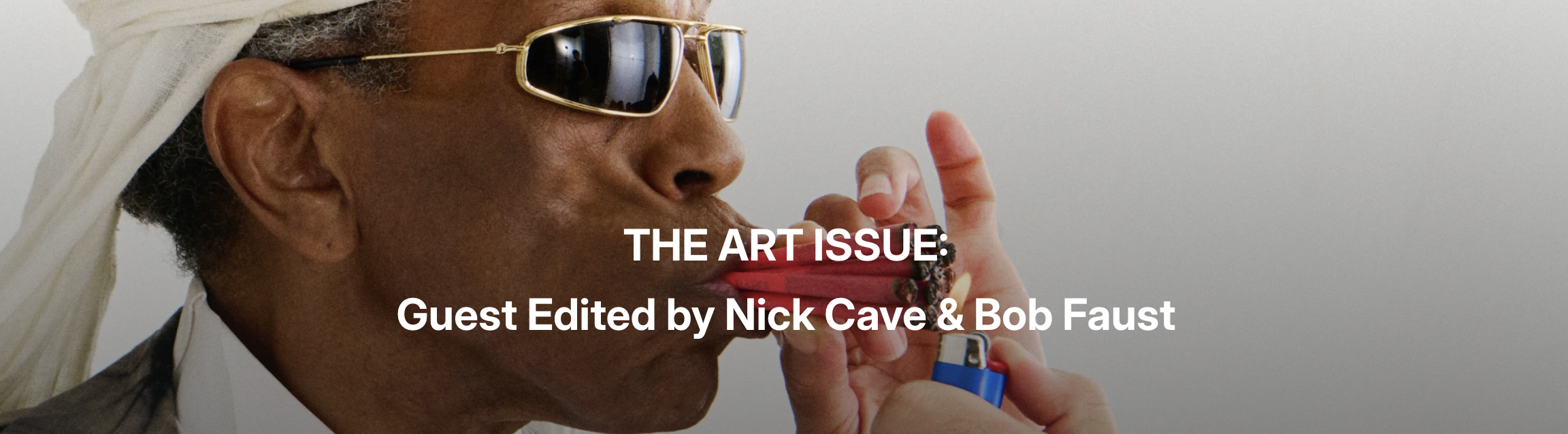
Now he is relaunching Different Leaf with a completely different approach. One, it is no longer a regional magazine, but rather a global one, and two, it is a collector’s item to be hold and displayed, like an art piece. In addition, each issue will have a guest editor or two who will be very involved in the magazine creation. The guest editors for issue 1 is no other that Nick Cave and Bob Faust. Also, a first for the magazine is a magazine curator: Denise Markonish, who is the curator of the first issue. She was the curator at the Massachusetts Museum of Contemporary Art for the last 18 years.
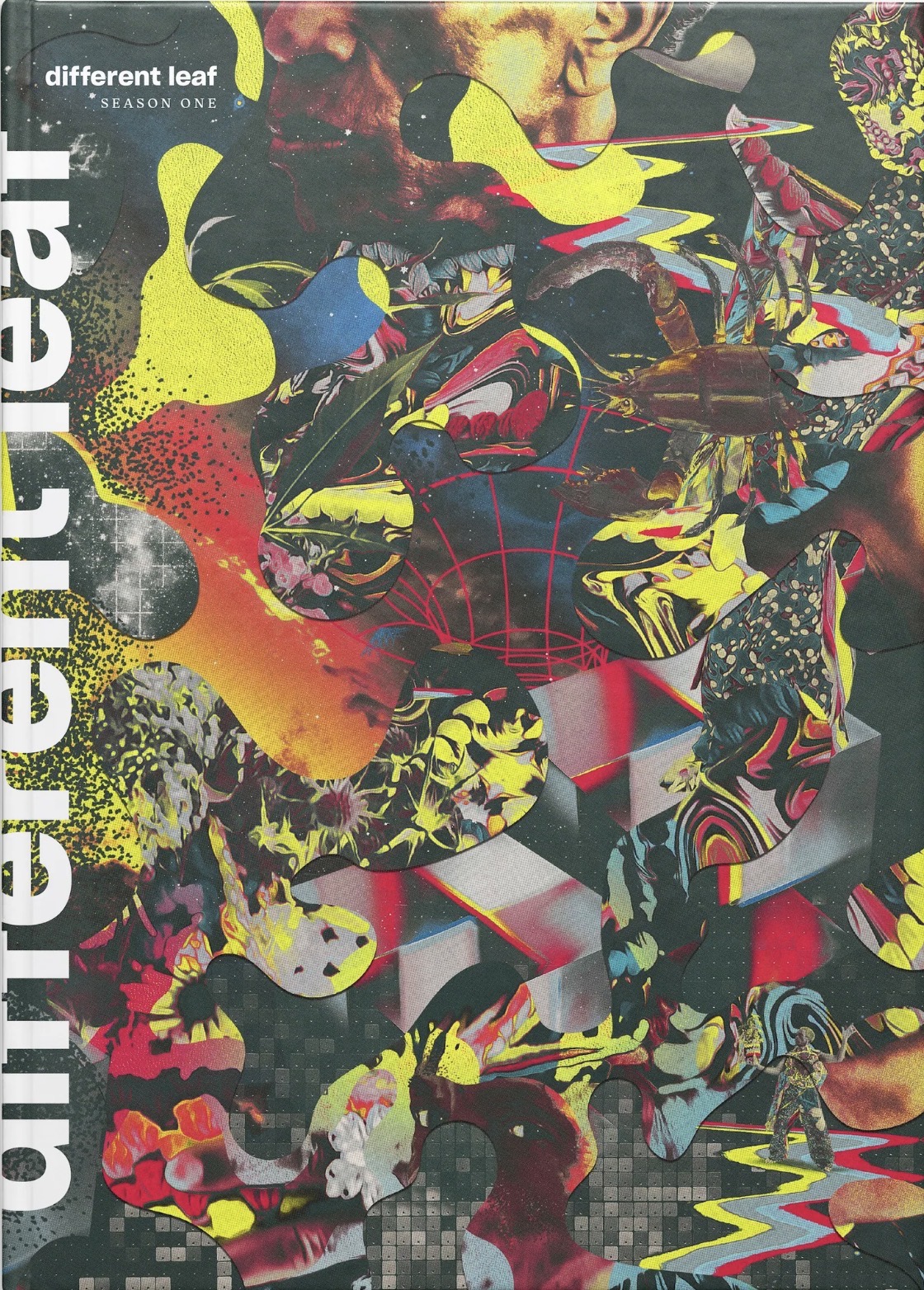
The curated magazine will come in three different formats, a soft cover costing $40, a hard cover costing $100 and a collector’s box with pieces of art costing a hefty $1,000.
As Michael says, there is an entry point to each reader or customer and based on what I saw, each entry point is worth it, so hopefully this third launch is a charm.
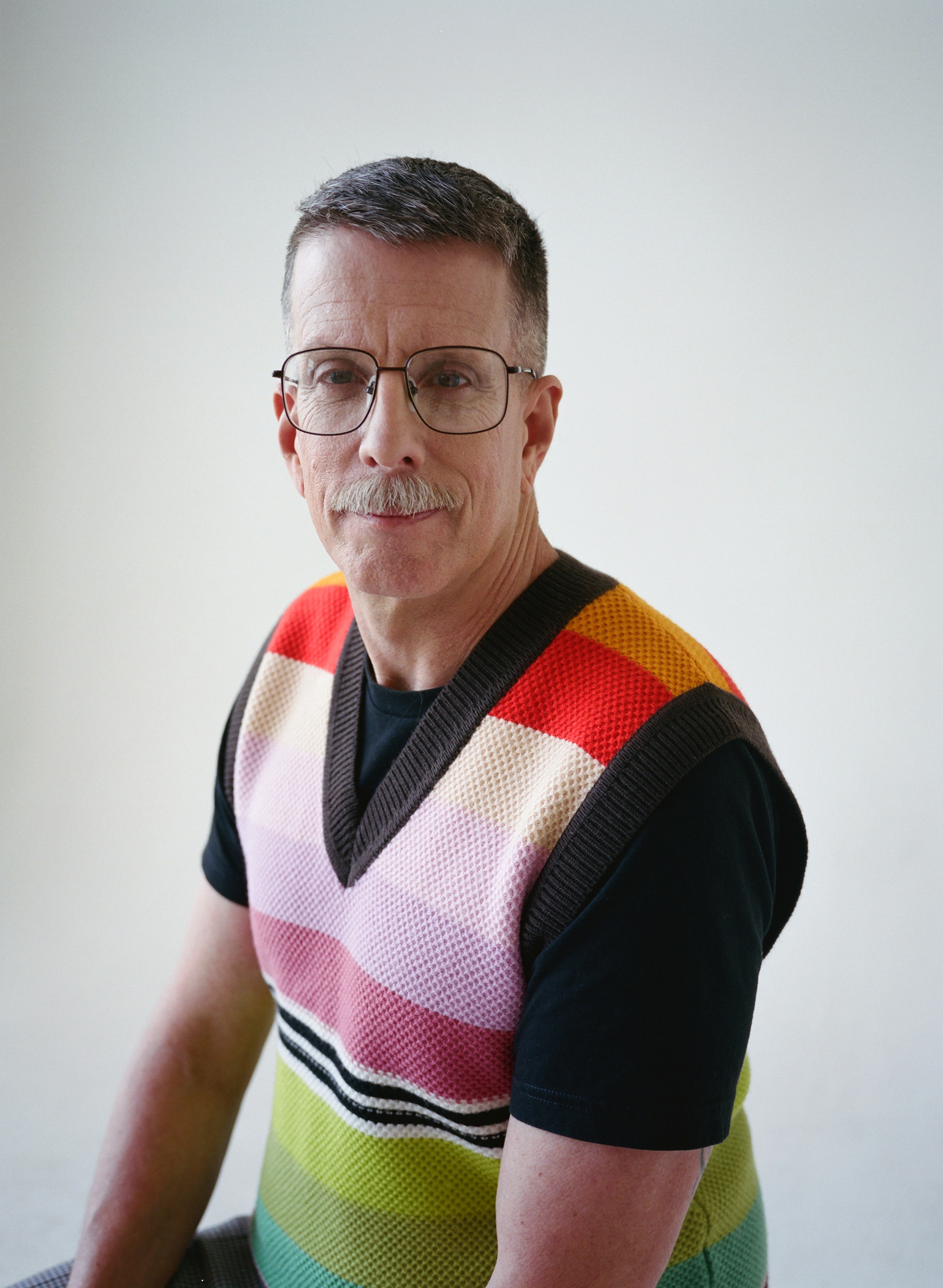
Without further ado, please enjoy my interview with a true believer in print and in its permeance. Michael Kusek, publisher and editor in chief of Different Leaf magazine.
But first the soundbites:
On whether the third time is a charm: “Sure. One hopes, one hopes that the old adage lives up to its lives up to its reputation.”
On the audience: “You had magazines that were definitely targeted towards much younger people. The content in general and the pop culture angles were much younger…There wasn’t anything out there for the older beginner cannabis user at the time that rapidly changed.”
On the new direction for Different Leaf: “The writers that we worked with really closely, were very interested in the cultural intersection of cannabis and the broader culture.”
On the content of the magazine: “How cannabis impacted the broader culture and how the broader culture was impacting cannabis.”
On the mission of Different Leaf: “…bringing in creatives from the world of fine art, music, and fashion to guest edit three issues about their particular look at the intersection of cannabis and culture.”
On the magazine’s format: “Nick and Bob decided that they didn’t want to structure it like a magazine. So, it’s not. It doesn’t have a front of book. It doesn’t have a well, it doesn’t have a back of book. It has a couple of things that make it look like a magazine inside, but it is an art piece in a lot of ways. And it’s ink on paper. It’s in print.”
On the power of print in a digital age: “But it feels like in a period of time where we don’t know what’s real, at least having something you can hold in your hand feels real.”
More on the power of print: “I’m more convinced in the importance of print now than I think I ever have been, because this will always remain this, like this isn’t going to go away. It’s going to stay on a shelf.”
And even more on the power of print: “People used to say to me, why are you doing print? And I was like, because 20 years from now, you’ll still be able to read the interview I’m doing with you. You’ll be able to pick it up and read it. You know, the interview you do online may or may not be there.”
On the major difference this time than the previous ones: “A difference, certainly, is the magazine is going to be global. For the first time, it’ll be available, around the world and on newsstands around the world, which is an exciting difference.”
On what keeps him up at night these days: “Will our guest editor for issue two say yes. I would love it if she did. It would be great to announce it at some point.”
And now for the lightly edited interview with Michael Kusek, publisher and editor in chief, Different Leaf magazine.
Samir Husni: So, tell me, is the third time a charm?
Michael Kusek: Sure. One hopes, one hopes that the old adage lives up to its lives up to its reputation.
SH: Why the relaunch now?
MK: A lot of reasons went into sort of the change.
I think on one hand is the cannabis industry and business in general is always wildly in flux. And so it makes operating in that business environment very tricky. One of the challenges in being a national cannabis magazine was the way advertising is regulated state by state, unlike other industries in this country, where, for instance, cigarettes, there are national regulations around cigarette advertising or alcohol advertising, Federal Trade Commission, sort of standards. So when Different Leaf was just a regional magazine covering Massachusetts and New England, selling advertising was much easier because the advertisers were trying to fulfill regulations for a smaller number of states.
The difference between regional and national
But once we went national, I had more than one perspective, one cannabis company that’s operating on a national level, operating in multiple states, say, well, we can’t take an ad out with you because we can’t design an ad that’s compliant for every state. And so, being small was actually more successful in a way, being just Massachusetts, just New England was much more successful than being national. It made a lot more challenges, just on the business end.
Then on the editorial end there was a real rapid change in five years, which was when I started researching what was out there in the world of magazines covering the cannabis space. You had magazines that were definitely targeted towards much younger people. The content in general and the pop culture angles were much younger.
The way the products were described was definitely much younger. And then you had sort of things like High Times, which were senior level, like a senior level seminar on cannabis, as opposed to something for beginners. There wasn’t anything out there for the older beginner cannabis user at the time that rapidly changed.
You had much more mainstream media pickup on cannabis as a topic. From the time we started to the time we stopped those five years, the number of times that cannabis appeared positively in The New York Times, it really increased a lot.
It was very interesting reading articles we’d already written in The New York Times, after the fact. So, we’re like, we did that two years ago. The sense of our uniqueness in the space was kind of under threat in a way, the mainstream media was going to come along and eat our lunch.
When I made these decisions two years ago, things have changed half a dozen to dozen times in terms of social media. Some days Meta is fine with cannabis advertising. Some days Meta is not fine with cannabis advertising. I think people in the cannabis space, and it’s a problem I face today as a cannabis adjacent arts magazine right now, talking about cannabis on social media can get you banned very quickly and very easily.
On the editorial front, mainstream media was kind of coming along. And then what we wanted to do as a team, the writers who worked for me, we were interested in this particular angle in the cannabis industry that was ultimately not as big as we thought it was going to be. You have a small, savvy group of people in the cannabis industry who are doing new things, and a whole lot of people who are copying them.
A new beginning: A cultural intersection of cannabis and the broader culture
When we got down to looking for topics to write about, or for businesses to write about, we kept coming back to the same pool of businesses repeatedly. One of my better writers, somebody who’s been with me since the days of Take magazine, he’s great, he was a great arts writer who became a great weed writer, basically said to me, I’ve run out of adjectives to describe gummies. It just wasn’t there.
We were working with a great writer, somebody who came from Bon Appetit, who was writing about cannabis and food. And even they were like, I kind of want to talk about the cultural piece. The writers that we worked with closely, were very interested in the cultural intersection of cannabis and the broader culture.
How cannabis impacted the broader culture and how the broader culture was impacting cannabis. That, editorially, was where we were interested in doing. How I’ve ended up wrapping it up in the current package that we have is a long tail as well. But it was from talking to people in the industry, talking to people we work with, talking to people we cover, of what kind of things were you looking for? And then just that desire to try to keep things new and to keep things different.
That’s how we landed on this. I’ve always loved the guest editor idea. I always loved what Visionaire magazine did. A guest editor, or guest editors and bringing people in to work on a magazine, sometimes it can be just a little throwaway. You can see that there wasn’t a lot of real input from the person who did it. And then in other instances, like A magazine, a magazine curated by the fashion title that hands itself over to a different fashion designer or fashion house, every issue, that’s just, it works so incredibly well. Every issue is a radical transformation.
So of course, you want to get every issue because it’s completely exciting every single time. And I prefer to go with that latter than the former. I think because cannabis changes so much as an industry and so much as a topic, one way to meet the challenge of covering that is to always bring fresh eyes into it over time.
I’m committed to this look at cannabis for at least three issues in this format, art, music, and fashion. We shall see if cannabis continues to be the main thrust of this, or if we move on to a different topic, because it’ll all depend on where cannabis is at that time.
SH: So if you are going to define the mission of those next three issues of Different Leaf, how would you define it?
MK: We are bringing in creatives from the world of fine art, music, and fashion to guest edit three issues about their particular look at the intersection of cannabis and culture.
That is our mission for these three issues. And we’re one down.
We are talking to our second guest editor next week to see if she’s willing to come on board. And so there is interest in this, and we’re selling them online already, and we haven’t even printed them. So that’s always exciting.
SH: You are offering the magazine in three different packages. You have the soft cover, you have a hardback cover, or have a collector’s box with art pieces.
MK: Yes, that was the other different way of looking at this and looking at the revenue stream. I don’t think we would have been able to do this model of selling the magazine without my friend, Denise Markonish, who is the curator of the first issue. She was the curator at the Massachusetts Museum of Contemporary Art for the last 18 years.
She’s just switched and she’s now working in New York City, but she’s been a longtime friend. She was somebody I talked to about this project, and she said I’ve never curated a magazine. I’d love to do that.
And so I was like, cool, you can be my first curator. She has the ability to call up Nick Cave and Bob Faust, and she literally sat here in my office, texted them, and they both said yes. I don’t think we’d be able to do that artist edition level, particularly out of the gate without names like Nick Cave and Bob Faust.
It really made a big difference. But also having them involved made a very big difference in who ultimately became involved with all of the editorial in the book. We were able to bring in the author Jonathan Lethem.
We were able to work with the Broadway star André De Shields. It allowed us to sort of level up some of the creative people who came on board. Ultimately, I think that also allows us to sell this artist edition.
The bells and whistles in the artist edition come with a little rolling tray designed by Nick and Bob, and a sleeping mask, which all fits in with the book. And that’s all a limited-edition little object.
So there is interest out there with very little marketing on that front. We’ve sold a couple. We’re about to print up the boxes that it comes in.
SH: The magazine is not cheap.
MK: $1,000 for the box. It is a very limited-edition art piece. $100 for the hardback, and $100 for the hardcover and then 40 for the newsstand. So there is an entry point for everyone.
I had a great intern, a student from UMass, son of a dear college friend, a couple summers ago, as I was thinking about this project, who came to work with me for the summer.
And we talked, we always were talking about things, things that he’s interested in. It’s always nice to talk to somebody half your age every once in a while, to find out, what’s cool, or confirm your priors or learn something new. He talked to me very excitedly about a book he bought. It was a Faden Press book of Virgil Abloh, the fashion designer who was at Louis Vuitton, designed for Nike, and was a very high in demand as a streetwear designer. Abloh had so many cultural connections.
My intern talked to me very excitedly about how he saved up his money to buy that book. He wanted to have that $100 book on his shelf, and how much that book meant to him, because he was incredibly connected to Abloh as a cultural figure.
That meant a lot, and he talked a lot about how having the book on the coffee table meant something for him. I thought about that: for some magazine people it is only meant for a moment. And for some magazine people, those magazines are on a shelf for all time.
Thus, providing that limited run of hardcovers for folks gives them something to step up to, or aspire to, to add to their collection. And Nick in particular, as an artist, is one of those people.
I was in New York City to go to Nick’s gallery opening, I went with two friends of mine. And by 9:30, there were 1,000 people in that galley. I mean, it was mobbed.
It was absolutely mobbed. And overwhelmingly, the later part of the evening, it was incredibly young. And my friend, I was just looking at all of those people in there who love Nick, and one of my best friends who was with me said, so what do you think? I was like, A, incredibly happy for Nick. This is a phenomenal art opening. B, very happy about my choices.
So, we’re sort of seeing it for the third time. You talk about the third time is a charm. I’m working with an agency, which I’ve never done before, for any launch. I’m working with this agency, Digital Council in New York. They have a PR side called Cultural Council. Primarily, they work in the arts and museum space. They don’t work in the media space. They don’t work in the cannabis space.
In the last three weeks they’re saying we need to build up your audience online so that we can market back to them and sell the magazines and sell them books and that sort of thing.
They’ve been running ads for the magazine to find out more information about it. We’ve added something like 1500 names to our email list in three weeks, which for us is an enormous number of people in a short period of time. I’m encouraged, but also, it’s a crazy business. I feel like we threw everything into this issue that we could possibly throw into this issue. Like, I put it all in.
People who’ve seen it really like it, they really are enjoying it. I’ve had people read the proof of it cold, come in cold and just read it and look at it. And I had people in the art world look at it. I had people in the cannabis world look at it and just sort of said, like, is this something you would buy? And they were like, this is, I’ve never seen anything like it.
This is weird. Nick and Bob decided that they didn’t want to structure it like a magazine. So, it’s not. It doesn’t have a front of book. It doesn’t have a well, it doesn’t have a back of book.
It has a couple of things that make it look like a magazine inside, but it is an art piece in a lot of ways. And it’s ink on paper. It’s in print.
SH: Tell me about your love of print and why do you think the power of print in this digital age is still something to talk about?
MK: You and I have talked about this a bunch of the years that we’ve known each other. And I’m more convinced in the importance of print now than I think I ever have been, because this will always remain this, like this isn’t going to go away. It’s going to stay on a shelf.
I think about six, seven years ago, probably when I started Different Leaf and we did five years of issues of that. At the same time, there was a lot of stuff happening in cannabis. There were other titles around. Some of them were digital. Some of them were print. Some of them were both. A lot of them are gone, like don’t even exist on the web anymore. And so you have this stuff disappears. People used to say to me, why are you doing print? And I was like, because 20 years from now, you’ll still be able to read the interview I’m doing with you.
You’ll be able to pick it up and read it. You know, the interview you do online may or may not be there. But then the other part of that now with the rise of AI what is real on digital? The question about, I think that there is the question about what am I looking at? And is it real? And has a human written it? Has a human created this image beyond a prompt? That I’m not saying people in print aren’t using AI.
But if you’re committed to print, you’re probably committed to having people make the stuff that goes in print. I can’t imagine that there are many people out there who are like, I’m going to 100% make a print magazine out of AI. We haven’t run into them yet. Maybe they’ll show up at some point. But it feels like in a period of time where we don’t know what’s real, at least having something you can hold in your hand feels real.
SH: Before I ask you my typical last questions. Is there any question I failed to ask you you’d like me to ask you?
MK: What makes Different Leaf different? A difference, certainly, is the magazine is going to be global. We’re working with Ron Ali in the UK. We, we also have some distribution here. Barnes and Noble has picked us up as well, which I think is interesting for we have a high cover price. These were not cheap to make. And these are not cheap to produce and are not cheap to print. I’m printing in Italy, which is different. I’m printing in Italy because that proved to be the best price. And working with a printer, Nova Press that can do the complexity of it all.
The other part of the business and what’s radically different is that this is a global thing. For the first time, it’ll be available, around the world and on newsstands around the world, which is an exciting difference.
It’ll be interesting to see how we can build a global audience rather than just a domestic one.
SH: My typical last two questions are, if I come to visit you one day unannounced, what do I catch Michael doing at home in the evening, smoking a joint, having a glass of wine, reading a book, watching TV?
MK: Of late, I’ve literally been watching TV. I’ve been assembling things to put in the artist box.
So, I’ve been doing arts and crafts. I am wending my way through the giant stack of magazines I have. I over shopped over the last couple months, but with little time to read.
I’m reading to see what other people are doing. That’s what I’m doing these days. And it’s very exciting. I’m supporting my peers by reading them.
SH: And what keeps you up at night these days?
MK: I think what’s keeping me up right now is the next five months are going to be a lot of promotional activity and will our guest editor for issue two say yes. I would love it if she did. It would be great to announce it at some point.
SH: Thank you and congratulations again on the relaunch.


Leave a Reply