
Beautiful Vs. Salacious: The History Of Art Lovers’ Magazine 1925-1927. A Book-in-a-Blog, by Samir “Mr. Magazine™” Husni. Chapter 2, Part 3
June 26, 2026A century ago, we were more culturally and artistically advanced. Magazines in the 1920s shined a very bright light on art and culture. One such magazine, albeit short lived, Art Lovers’ Magazine, is but one example of a cultural and artistic publication from 100 years ago when magazines ruled the media world. Here is its story:
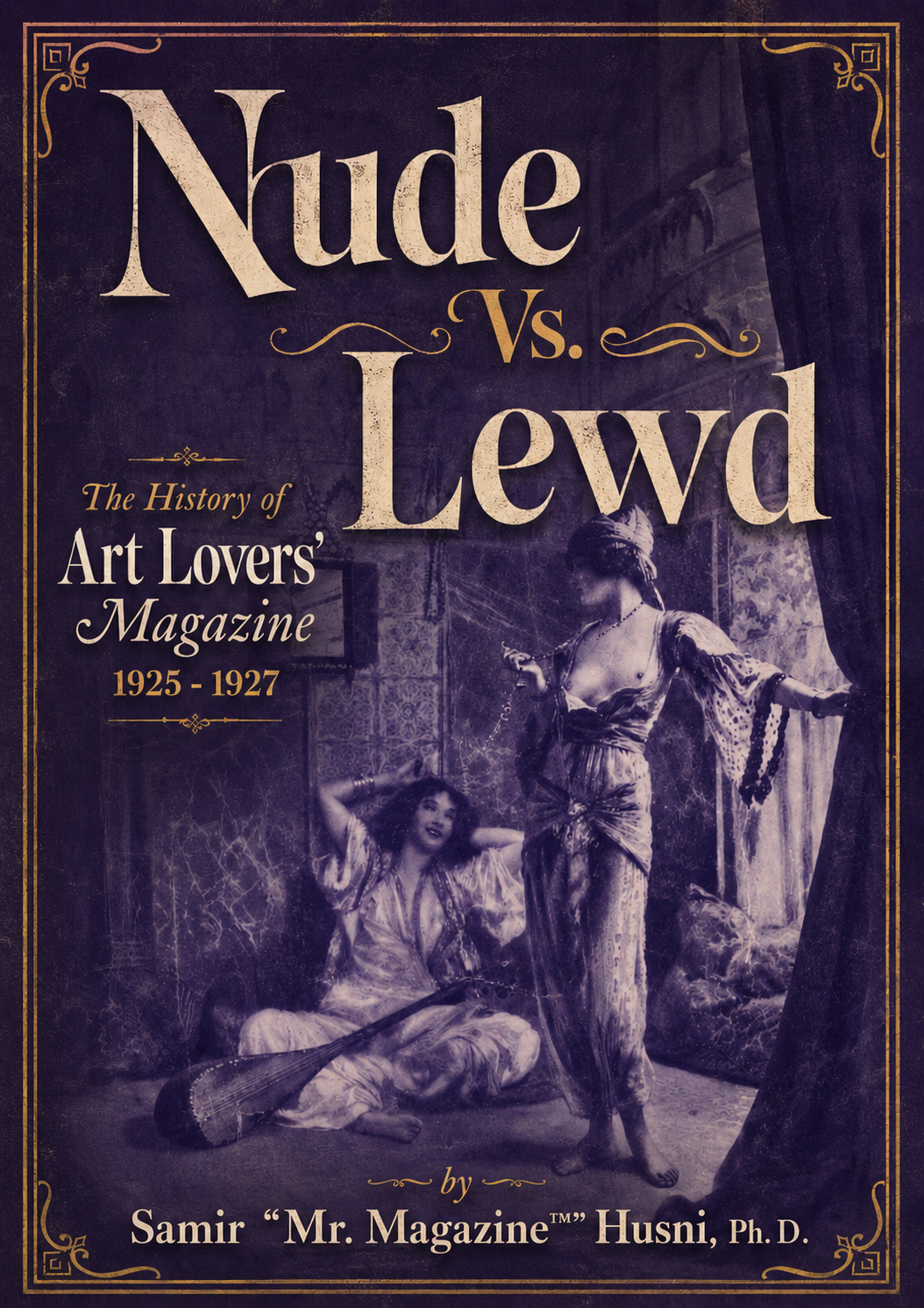
The Philadelphia Ethical Culture Society
So, what are those societies that the Freeman Hubbard and Walter Hubbard were involved in? According to its website, www.phillyethics.org, The Philadelphia Ethical Culture Society is still active today and it is based on, “Ethical Humanism, a humanist, religious and educational movement, has nurtured religious humanism and contributed to progressive causes for well over a century. Founded in 1885, the Philadelphia Ethical Society is a member of the American Ethical Union.”
The influence of the society is evident in a letter dated August 15, 1925 that Freeman H. Hubbard, in his other role at Hubbard Publications, associate editor of The American Art Student and Commercial Artist, wrote to the National Association for Advancement of Colored People. In the letter he wrote, “When I was a student at the Pennsylvania Academy of the Fine Arts some years ago, there was one student who was debarred from a traveling scholarship solely (the rest of us believed) on account of his Negro blood. As an artist he ranked very high.”
He continued, “Although I am not a Negro, the incident made me so bitter against race prejudice, and I determined that I would do all I could to break down such prejudice”
Freeman Hubbard goes on offering the association the opportunity to send him any relevant news, stories, and the full details of the literature and art contest conducted by “The Crisis” the association’s magazine. He promised that he “would probably publish the first, second and third best illustrations submitted in the contest, in this magazine, provided you send them.”
The Philadelphia Law and Order Society
The Philadelphia Law and Order Society was founded in 1881 and was a temperance and Sabbath observance organization. It campaigned for the enforcement of the liquor laws in Philadelphia, the proper observance of the Sabbath, and against “white slavery” (prostitution). It claimed in 1917 to have reduced the number of saloons and similar establishments in Philadelphia from 6,000 to 1,910.
The Rev. Walter Hubbard, the son of one of the founders of Hubbard Publishing Company, was an active member of the society according to the editorial in issue 3 of Art Lovers’ magazine. He was also an active preacher and lecturer in the Pennsylvania Anti-Saloon League, according to the same editorial.
The Pennsylvania Anti-Saloon League
And the Pennsylvania Anti-Saloon League was founded in 1895 and in 1920 was a powerful organization advocating for prohibition, and working to ban the production, sale, and transportation of alcohol. This was part of a larger nationwide effort, that started in Oberlin, Ohio on May 24, 1893, and culminated in the passage of the 18th Amendment and the Volstead Act. The ban was later repealed by the 21st Amendment in 1933.
So as you see both Hubbard’s were involved in ethical, moral, religious and humanitarian issues even before they worked at Art Lovers’ magazine. However, their background left a great influence on the magazine and its direction.
Beautiful vs. Salacious
The editorial of the third issue of the magazine, dated March 1925, opens with the following: “ART LOVERS’ MAGAZINE is in thorough sympathy with the nation-wide movement to suppress salacious and crime-inciting literature, and particularly to keep it out of the hands of the young.”
“The iron hand of the law cannot deal too strongly with the fly-by-night printers and publishers who pander to the vices of youth.” The editorial continues. It goes on to state, “The Hubbard publications have consistently held this position since 1868, when the Hubbard Publishing Company was founded.”
It adds, “We mention these facts because we take great pride in the traditions of the Hubbard publications. We are proud also of the family ties connecting us with the late Elbert Hubbard (he died in 1915) and his son, Elbert Hubbard II, and we lose no opportunity to speak well of the Roycroft publications of East Aurora, N.Y.”
An article in the same issue by R. G. Ingersoll titled “Art and Morality,” the author writes, “There is an infinite difference between the nude and the naked, between the natural and the undressed. In the presence of the pure, unconscious nude, nothing can be more contemptible that those forms in which are the hints and suggestions of drapery, the pretense of exposure, and the failure to conceal. The undressed is vulgar – the nude is pure.”
A mixed bag of ironies
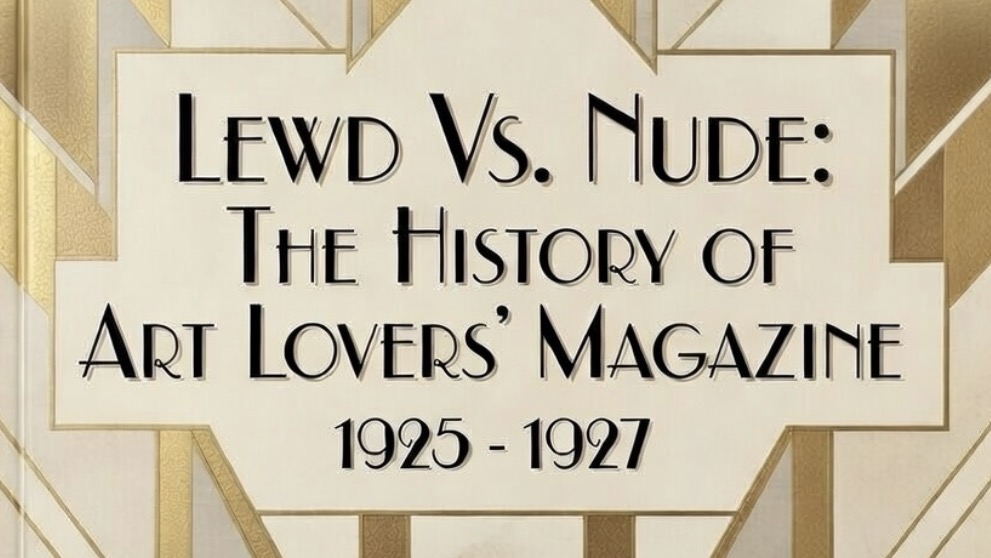
So taking into consideration the facts about the original Hubbard Publications as a Bible publisher, and the fact that the son of one of the founders is a reverend and a preacher, and the editor is a member of an ethical society, it comes to no surprise to read in issue 3 of the magazine the fact that in “reiterating our support of the “clean books” crusade, we wish to make clear, as Elbert Hubbard once pointed out, that there is a difference between lewdity and nudity, despite the similar pronunciation of those two words. Failure to grasp this distinction has led to misdirected effort on the part of some reformers with whom we are otherwise in hearty accord.”
The irony is, Elbert Hubbard was convicted in 1913 on one count of “circulating “objectionable” or “obscene” matter in violation of the postal laws.” He was later pardoned by President Woodrow Wilson in 1914.
Freeman H. Hubbard refers in his third issue editorial to a new bill introduced by Senator Love of the New York State Legislature. The bill introduced to the legislatures would “class a publication as obscene on the basis of any excerpt from it.” Freeman argued, “In other words, condemn an entire book or magazine by separating a sentence or paragraph from its context, instead of judging the publication as a whole.”
He continued, in the signed editorial, “if the Love measure were passed it would make publishers of the Holy Bible, Shakespeare and many other classics liable to prosecution, in addition to publishers of the best art and medical works.”
However, he was quick to note, “Of course, the purveyors of indecent literature would be the hardest hit, but our point is that no publisher could feel safe from the possible attacks of shyster lawyers, blackmailers, and cranks of all kinds.”
His ethics and morals are quick to appear in his last paragraph of the editorial, “By all means, let’s war on the vice and immorality that masquerades under the name of literature, but we dare not surrender the freedom of the legitimate press to a clique of self-appointed censors and overzealous reformers.”
He concludes, “Literature and art are heritages too precious to be shackled by the forces which should be directed entirely against their enemies.”
To sum his views, nudity is art, lewdity is obscene and there is a big difference between the two as you will see in the coming issues of Art Lovers’ magazine.
The magazine continued its growth journey and achieved a print run of 150,000 print run with issue 3, an increase of 25,000 than issue 2.
And Senator Love’s bill did not come to a vote.
Stay tuned for more of the history of Art Lovers’ magazine 1925-1927.


Leave a Reply