Archive for July, 2026

h1

Highlights For Children, Inc. Providing Permanent & Concrete Fun With Purpose For 80+ Years.  The Mr. Magazine™ Interview with Kent S. Johnson, CEO.

July 26, 2026

When the CEO of Highlights for Children Inc. tells you that there is a movement from technology to analog in the life of kids, you listen.  Kent S. Johnson, the great grandson of the company’s founders Garry and Caroline Myers, has been at the helm of the company for the last two decades and is doing an excellent job keeping the vision and mission his great grandparents set for the company in 1946 when they created Highlights for Children with the goal to create experiences that have fun with a purpose.

Kent’s mission to continue this vision with the goal of inspiring “children become their best selves and is focused on making a greater impact in supporting children and families across the globe.”  I had the opportunity to chat with Kent as he was preparing his report for the board and family meeting later this week.  What follows are words of wisdom from someone with a Ph.D. in Physics from Harvard University.

So, like the old saying goes, “When Kent speaks, you listen.”

Without any further ado, please join me for this lovely and lightly edited interview with Kent S. Johnson, CEO, Highlights for Children:
But first the soundbites:

On his elevator pitch for Highlights for Children, Inc.: “Things are moving in the positive direction after what’s been a period of a lot of disruption and uncertainty. I think the uncertainty remains. But knock on wood, things are moving in the right direction.”

On the future: “So while I’m not bullish because the world has so many curveballs to throw at us, I feel cautiously optimistic about where we are and where we’re headed.”

On AI and its role: “I and many of us are really fascinated by what the tools can do internally around processes, around enabling things that we’ve never been able to do before, either with our data or with things we’re trying to do internally.”

On technology and print: “We’re seeing a rebalancing or a readjustment in both schools and with parents at home, trying to rebalance maybe a little bit away from schools and technology.”

On the shift to analog: “We actually are pretty enthusiastic about a shift towards analog, a shift towards in person. About parents wanting those moments that matter and not feeling that those are going to be delivered by AI or delivered by technology and screens.”

More on the shift to analog: “We are seeing schools start to shift a little bit the same, shift away from technology, wanting more experience, physical manipulatives, print, particularly for young kids. I’m not talking high school. I’m talking kindergarten, first grade, second grade, pre-K.”

On the creation of content: “The fact that we have humans involved in every step, that human creators write the stories, human artists create the art, it’s actually going to be a moniker that we think consumers just want content created by humans for their children.”

On the good and bad of AI: “There’s some cool applications, maybe translations, accessibility, types of things that make content more accessible, but we’re not spending really much time at all thinking how does AI create our magazine content? Can it make the processes faster? Yes, but human content seems to be what our human customers want.”

On creating experiences with their audience: “When we mine all the customer feedback is that by creating emotional connections and authentic experiences, often with a child and an adult, but an experience that makes a child feel great, that’s engaging, that’s fun with a purpose, that an adult can look at and say, I want to be part of this, this is something I want to remember.”

On the role of partnerships in expanding the magazine reach: “So a lot of our partnerships are about bringing print into an experience that happens, but in a different setting than traditionally thought of a mailbox moment or a magazine delivery model through the postal system or a magazine newsstand experience. We’re trying to create the way, and Samir, you probably taught me this, like magazines have a relationship with their audience.”

More on the magazine reach: “It is a magazine that we’re handing out, but it’s not the traditional place or goal of a magazine.”

On the relationship with the magazine’s audience: “There’s a theme where parents and kids are gathering for a moment that’s going to matter to them. Can print and Highlights play a role customized to that moment, it’s some of the philosophy.”

On the role of the special partnership magazines: “It solidifies the memory and experience you had, that makes it more impactful in whatever the goal of that family was, so I think of a parent being like, hey, let’s look again.”
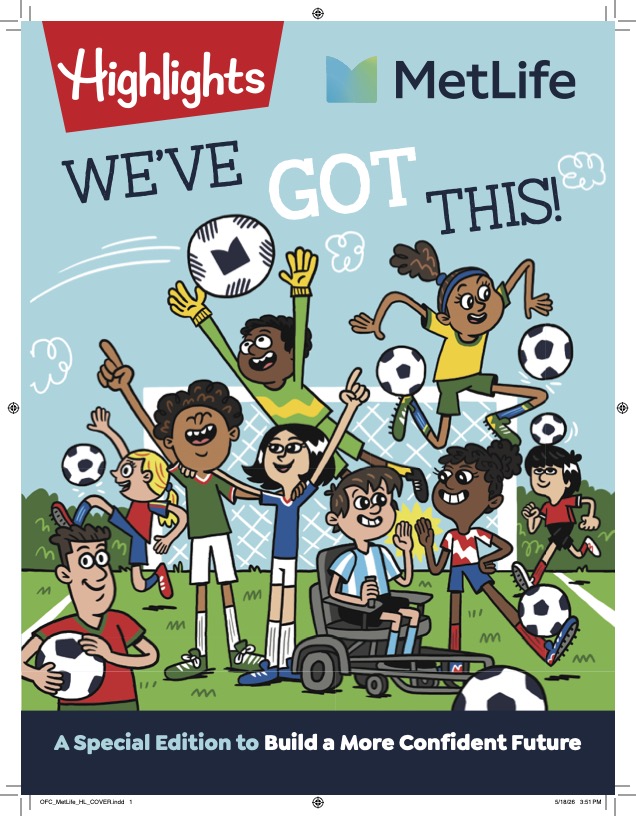
On print being a physical object: “I do think the permanence and concreteness of print to solidify and affect how those memories stay with you and the impact of those memories is kind of a cool way to think about print and physical.”

On the future of the business: “We continue to see a shift to younger in our business. So if you said, how are the core businesses going, core magazines performing? So Highlights Hello, for infants and toddlers is growing nicely.”

On the magazines audience: “So more and more, we see a model of customer engagement where they come in at the younger titles and then graduate up and stay healthy.”

On Highlights global markets: “Our global business, with some of the political disruption and with COVID, we intentionally brought our global business down.”

On his secret of the company’s success: “We’re trying to stay true to our core as a company; values, mission, and the experiences we create, but innovate in how we get that experience to happen. That has been the secret to the success we’ve had over the last few years.”

On the death of the long-time editor in chief Chris French Cully: “I feel grateful I worked with her and talked with her so much over two decades that I can keep her voice going. The other thing I would say is she would be so proud that the people she trained and knew are doing such an incredible job.”

On what keeps him up at night: “What keeps me up is worrying how all the things in our world are affecting the mental health or the psychology, the well-being of our teams and our people around us.”

And now for the lightly edited interview with Kent S. Johnson, CEO, Highlights for Children:

Samir Husni: Since you’re going to a shareholder’s and family meeting, can you give me the elevator pitch about the status of Highlights for Children, Inc.?

Kent S. Johnson: It’s having been through what seems like a cycle of oscillating disruption from the pandemic, putting people at home, inflation afterwards. The business has stabilized.

The teams at Highlights are really working well and working effectively. We’re coming off a good year of success in digital marketing and in retail sales and in building new partnerships. And some of the partnerships we’ll talk about today.

But we’re to report things are moving in the positive direction after what’s been a period of a lot of disruption and uncertainty. I think the uncertainty remains. But knock on wood, things are moving in the right direction.

And I’m excited to see magazine subscriptions up, see renewals at the highest rates we’ve ever seen in the history of the company. So while I’m not bullish because the world has so many curveballs to throw at us, I feel cautiously optimistic about where we are and where we’re headed.

Samir Husni: Any impact of AI in this disruption?

Kent S. Johnson: AI, it’s interesting. I’ll answer your question in two ways. I and many of us are really fascinated by what the tools can do internally around processes, around enabling things that we’ve never been able to do before, either with our data or with things we’re trying to do internally.

And it’s early days and the tools, their capabilities change very quickly. I think on the other side of things, we’re starting to see what, we don’t want to call it a backlash.

We’re seeing a rebalancing or a readjustment in both schools and with parents at home, trying to rebalance maybe a little bit away from schools and technology. I think some of it is fueled by AI, but some of it is fueled probably by larger trends of human connection. So we actually are pretty enthusiastic about a shift towards analog, a shift towards in person. About parents wanting those moments that matter and not feeling that those are going to be delivered by AI or delivered by technology and screens.

So for instance, children’s book sales year to date across the industry are up 10%. That number is almost never out of the low single digits. We’re seeing a consumer trend at point of sale.

Highlights, in at least one category, we’re up 50% point of sale year over year for highlights, books, branded books. And we are seeing schools start to shift a little bit the same, shift away from technology, wanting more experience, physical manipulatives, print, particularly for young kids. I’m not talking high school. I’m talking kindergarten, first grade, second grade, pre-K.

The other thing we’re seeing is parents are starting to ask us, is the content you create for kids created by humans or created by AI? The debate over whether AI can create good content for children is actually not a debate that is that important to Highlights, because we’re starting to see that the fact that we have humans involved in every step, that human creators write the stories, human artists create the art, it’s actually going to be a moniker that we think consumers just want content created by humans for their children. So we’re not spending a lot of time.

I think there’s some cool applications, maybe translations, accessibility, types of things that make content more accessible, but we’re not spending really much time at all thinking how does AI create our magazine content? Can it make the processes faster? Yes, but human content seems to be what our human customers want.
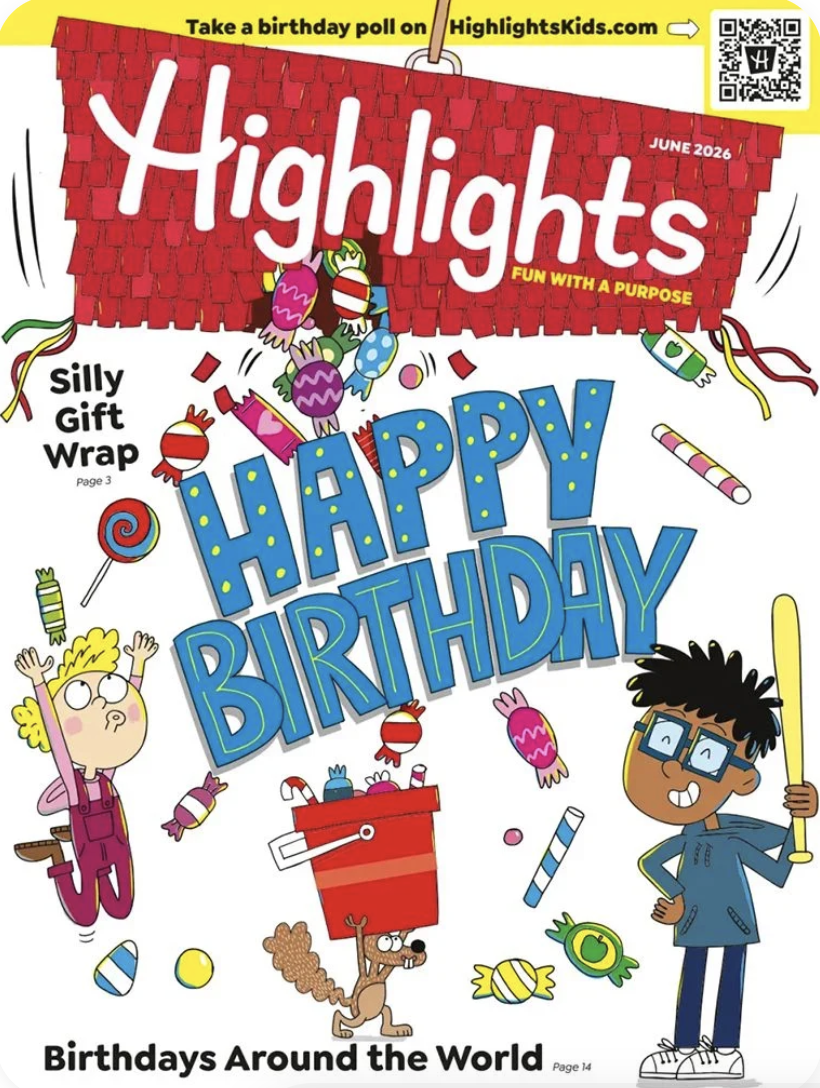
Samir Husni: Since you and I last spoke, you had all the challenges you mentioned but now you are back on a new level of creating print and linking Highlights with so many partners, which really was not part of the highlights process. Tell me a little bit about those partnerships, whether it is with the different counties in Florida, or with the U.S. Tennis Association Foundation, or even with the World Cup.

Kent S. Johnson: The way we’ve developed our approach to these partnerships, and there are a lot of different ones, but there are some commonalities. We tried to step back and say what is our core strength as an organization. We’re celebrating our 80th year in business this year, what are the ways, why do customers, parents and children, why do they like what we do? How have we built the trust and strength of the brand over 80 years?

That caused us to sort of step back from print, step back from magazines and think what we really see when we mine all the customer feedback is that by creating emotional connections and authentic experiences, often with a child and an adult, but an experience that makes a child feel great, that’s engaging, that’s fun with a purpose, that an adult can look at and say, I want to be part of this, this is something I want to remember. We sort of said that’s what we are more than a magazine format, and we realized that there’s incredible ways that people engage kids, and what we realized was anyone who was trying to engage a child or a parent in a way that created a lasting moment of deep engagement or real engagement, authentic engagement, we might be able to partner with.

So, a lot of our partnerships are about bringing print into an experience that happens, but in a different setting than traditionally thought of a mailbox moment or a magazine delivery model through the postal system or a magazine newsstand experience. We’re trying to create the way, and Samir, you probably taught me this, like magazines have a relationship with their audience.

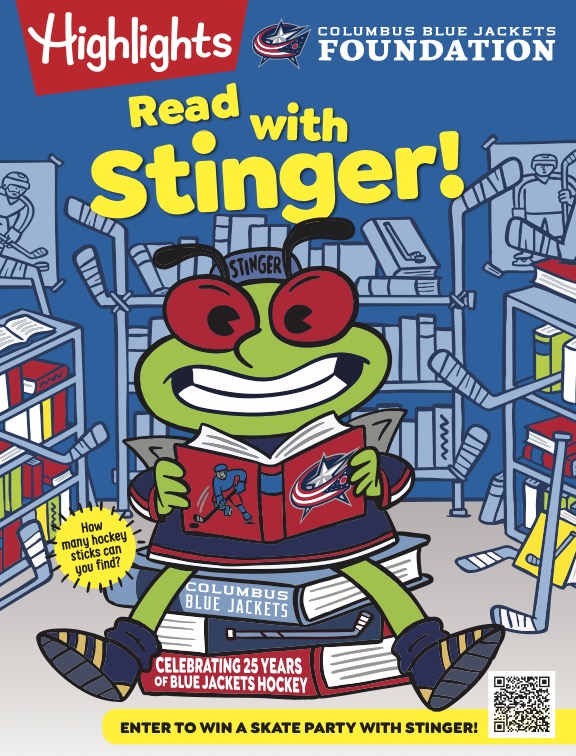
 How can we, if we posit that we want to continue to start new relationships, continue the existing relationships, where can we as a friend show up in surprise and delight? Often through print, so as an example, like where would you last think of a magazine being distributed? I don’t know, there’s a few examples of places we’ve gone, but for instance, you know, it’s on my mind now because I’m local and the World Cup’s over, so I get to turn my fandom to hockey, but to do a partnership with the Columbus Blue Jackets, with the Blue Jackets Foundation, that’s our NHL hockey team here in Ohio, where they had fan engagement goals, they have community engagement, literacy, they want to be part of our effort to help every kid pass the third grade reading guarantee, so to work with them and be able to create custom content, putting a team I love, putting the Columbus Blue Jackets and some of their players into puzzles and content, you’ve got it right there.

We build for them some custom content and then wrap it around a Highlights magazine, give it out at a game, and then put it in the hands of their players and their foundation when they visit schools and libraries, you know, to try to use the fandom that people have for the Blue Jackets to encourage literacy in those settings, and then also trying to use what the special sauce of Highlights is, let’s create this really neat content so that at a game, the kids and families can engage with the Blue Jackets players and organization in a different way.

It is a magazine that we’re handing out, but it’s not the traditional place or goal of a magazine. So similar on, what we did with the U.S. Tennis Association’s Foundation; in that case we created, think of it as a custom publishing relationship, we created a Highlights Fun with a Purpose tribute and engagement around Arthur Ash’s life to be given out at the U.S. Open. Obviously Arthur Ash’s huge connection with Ash, the stadium’s named after him, right. To be able to create that moment so that a family might visit that stand where they’re talking about Arthur Ash and his legacy but then take the magazine away and have that experience, extended their goals and put Fun with a Purpose and Arthur Ash and Highlights and the USTA Foundation in a takeaway for people. There’s a theme where parents and kids are gathering for a moment that’s going to matter to them. Can print and Highlights play a role customized to that moment, it’s some of the philosophy.

Samir Husni: You’re creating something permanent, my great-grandkids, 100 years from now, can pick up your copy and see it unchanged, in perfect shape. That permanency; from somebody who has a Ph.D. in Physics, how important is that permanency that print plays?
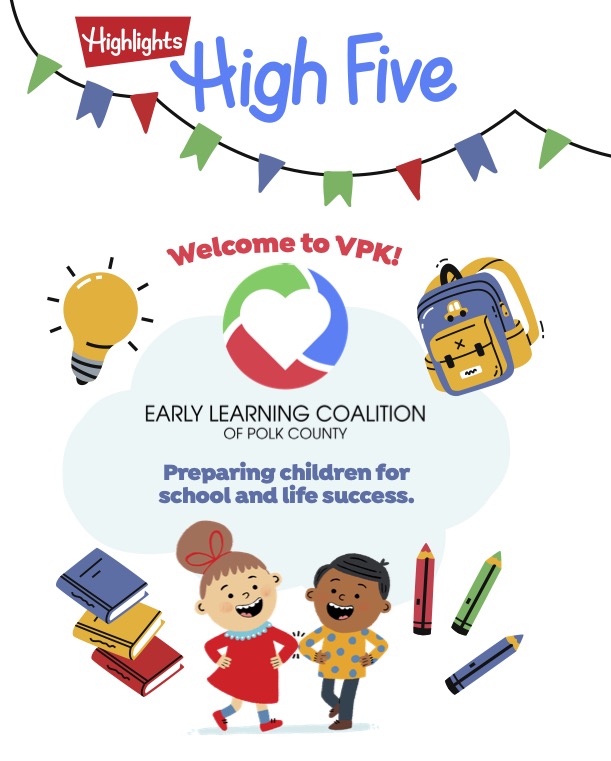
Kent S. Johnson: It’s both the permanency and concreteness. We know if we print half a million copies of something, like our Google partnership and put it out there, some of it is going to get recycled, some of it is going to get passed on, but some are going to be kept. We see this on eBay; the number of old Highlights magazines, that have been kept in attics, in basements, in people’s homes, and then relooked at, or passed on, or ultimately sold as a retro, a throwback. What I love is there’s a fan of the Blue Jackets in our community who’s got the magazine next to the hockey cards, the other giveaways and their t-shirts, so it becomes part of fandom and becomes something that someone wants to save, so I like the permanence.

I also like with print, even if the permanence is a week, you have an experience at a game or at the U.S. Open or at the circus, and maybe you look back three or four times over the next weeks or a month, and it solidifies the memory and experience you had, that makes it more impactful in whatever the goal of that family was, so I think of a parent being like, hey, let’s look again at the Ringling Brothers Highlights magazine, let’s remember how much fun that was last weekend, because now it’s raining and we’re not going out, now we’ll do the puzzles.

So I think permanence on multiple time scales and tangible, we’re all thrown, and when you go to live events, a concert, a game, you’re consuming images, there’s an experience, there’s an emotion, but when you leave, maybe your voice is hoarse from cheering if you’re a World Cup fan, a Spain fan, but the moment is the moment, and you have your memories. I do think the permanence and concreteness of print to solidify and affect how those memories stay with you and the impact of those memories is kind of a cool way to think about print and physical.

Samir Husni: Now you have five different regularly published magazines, and you’re doing partnerships with other publishers to do the bookazines. What’s next? If you and I are talking same time next year, what would you tell me you’ve accomplished in 26, 27?
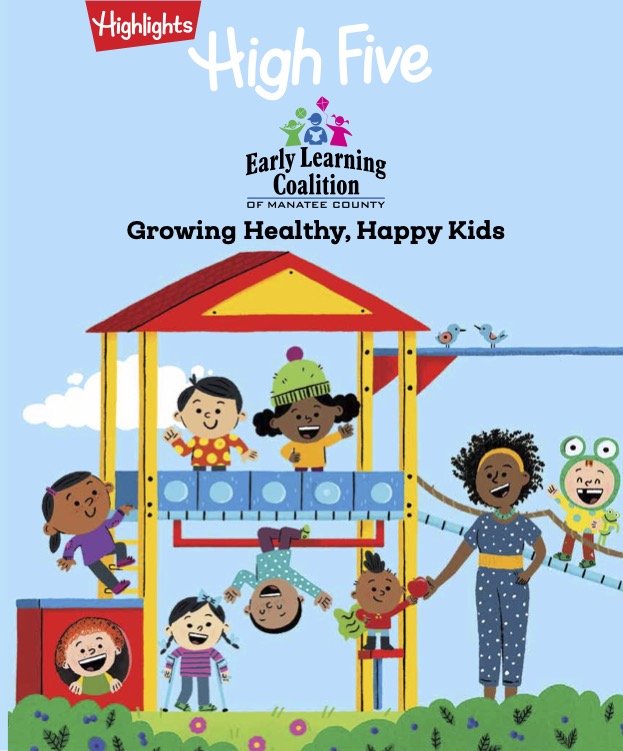
Kent S. Johnson:  It’s funny, I’d say to folks could we imagine a world where custom cover wraps, custom delivery, partnership delivery on the magazine format, how big could we imagine that would be?

Some of it gets really interesting when we think about the partnerships we can do in the space of early childhood education, literacy, community, and parent engagement in that space. As an example, we thought we were starting an early childhood materials and curriculum business, and what we found is there are a lot of needs across the early childhood spectrum where we can, by creating custom publishing, meet those needs. Again, it looks like magazines, but it might be something we’re creating for an organization to distribute in the community to help parents know about the resources available to them and their young children, to help encourage and recruit them to sign up for the state-guaranteed, state-funded preschool experiences.

Could imagine a preschool chain might want to engage with a co-branded magazine to the home or distributed through the school that brings the philosophy of that preschool’s curriculum to life connected with Highlights and Highlights High Five, and does that homeschool connection to create seamless connection on the learning that happens at home and in the classroom.

I see there’s a potential for a big, what is not in any traditional sense, a magazine business, but ultimately could look like a big magazine business through a diversified set of distribution, sometimes to the U.S. postal system, sometimes delivered in bulk. But I also, I keep saying, could that be bigger than some of our magazines? And then I say to the magazine folks, your job is to make sure our magazines are big enough that can’t catch you.

But, even, BrainPlay, which is a six times frequency, it’s surprisingly strong to me. And again, that may be some of this, maybe we’re overloaded with all the digital puzzles and apps, and we’re seeing a little bit of a rebalancing to print puzzles.

And maybe, you mentioned that as a physicist, I’m a believer that we don’t fully understand how all the critical thinking skills one needs for science, one needs for deep problem solving. We don’t fully know how all those develop at all the stages of brain development. And Highlights and I personally believe that solving puzzles and all different varieties of puzzles as a young child is fueling a kind of brain development that’s maybe not as much on the tests we give to young kids.

So I’m enthusiastic about puzzles and BrainPlay as well. Whatever the distribution, whether that’s going to schools to be used in a math class, or in summer school, or it’s going as a periodical to the home. I’m excited about that.

Samir Husni: If you will give me a one second answer to the status of each magazine, Highlights, High Five, Hello, Cocomelon, and BrainPlay.

Kent S. Johnson: At Highlights, we think about our magazine business in aggregate.

Because for our core magazines, many of our customers think about, I’m getting Highlights magazine, and I get the different versions. We continue to see a shift to younger in our business. So, if you said, how are the core businesses going, core magazines performing? So, Highlights Hello, for infants and toddlers is growing nicely.

High Five, has higher penetration, our largest title, is growing but not as fast as Hello. And Highlights, year to date, might be down signal digits or flat. More and more, we see a model of customer engagement where they come in at the younger titles and then graduate up and stay healthy.

BrainPlay, of course, smaller than the others as a 6X and narrow age range, but it’s been growing nicely. Cocomelon, we’re not seeing quite as much pickup as we expected. It does compete in our book bag with Hello.

We’re still trying to figure out what is the customer communication around these two titles in similar age ranges. And Bilingue, it’s up this year. It’s a smaller title. We’re still learning about ways to access the dual language markets. It may be used more in preschools than in home settings. Trying to unlock some of what we know is the continued demographic shift around what should be our suite of bilingual or Spanish language products.

Samir Husni: Where are you now worldwide with your global editions?
Kent S. Johnson: Our global business, with some of the political disruption and with COVID, we intentionally brought our global business down.

We have a joint venture, co-branded title in India. But most of our business outside the United States is not magazine format. It’s a content licensing business, partnership business around English language learning, licensing into technology platforms, curriculum content, licensing into retail products, retail learning products.

For the most part, our global business has been stable and healthy, but smaller than it was pre-pandemic. It’s really a content licensing, English language learning, publishing business, rather than what is traditional, like global magazines, which is typically ad driven. Our partners have used different models to reach their end users with our content and brand.

Samir Husni: Before I ask you my typical personal questions, is there any question that I needed to ask you I did not?

Kent S. Johnson: No, this is good. We’re trying to find innovative ways to create that experience in new ways. So, what’s the secret? We’re trying to stay true to our core as a company; values, mission, and the experiences we create, but innovate in how we get that experience to happen. That has been the secret to the success we’ve had over the last few years.

Samir Husni: Three final questions. Number one, as much as I hate to bring this up, but you have lost an editor who was at Highlights for 30 plus years. Any words of tribute about Chris French Cully?

Kent S. Johnson: I didn’t expect that question. In 2025, we lost our editor in chief, our chief purpose officer, probably the human in the work context that I was closest to for my 20 years of tenure.

We feel that loss. I feel like I still have an ongoing dialogue with Chris. So it sounds crazy to say she is gone. We’ve gone through grief and we miss her. But I also feel like her voice is still in my head. And I feel grateful I worked with her and talked with her so much over two decades that I can keep her voice going.

The other thing I would say is she would be so proud that the people she trained and knew are doing such an incredible job. One of the things she really talked about is she wanted her legacy to be how she helped the editorial team develop their taste, their skill, their judgment. And if I had to give one tribute to her, she would be so proud looking down at the team she trained and how well they’re doing.

Samir Husni: Thank you. And if I come to visit you while you’re not preparing for the shareholders and board meeting, what do I catch Kent doing these days? Watching TV, reading a book?

Kent S. Johnson: I’m reading more and enjoying that. I’ve just got a Peloton bike.

As I’ve progressed in my career, the importance of staying physically fit has become increased. So, you might find me exercising. I’m trying to mix in some fiction; I’m a nonfiction guy. Right now, I’m in the middle of a book revisiting the history of the Schuyler sisters through their lens, not through Hamilton and the others. I love history, nonfiction, and going to hockey games.

Samir Husni: My typical last question, what keeps you up at night these days?

Kent S. Johnson: I feel like almost everything keeps me up at night.

Our world is so full of division and challenges, and the pace of change is increasing. What keeps me up is less those changes because I have a deep optimism that we can handle it. What keeps me up is worrying how all the things in our world are affecting the mental health or the psychology, the well-being of our teams and our people around us.

We just need a little less tension so that people can focus on doing good work together. So that’s what’s keeping me up is worrying about the impact of the ongoing environment on people.

Samir Husni: Thank you very much and good luck at the board meeting.
h1

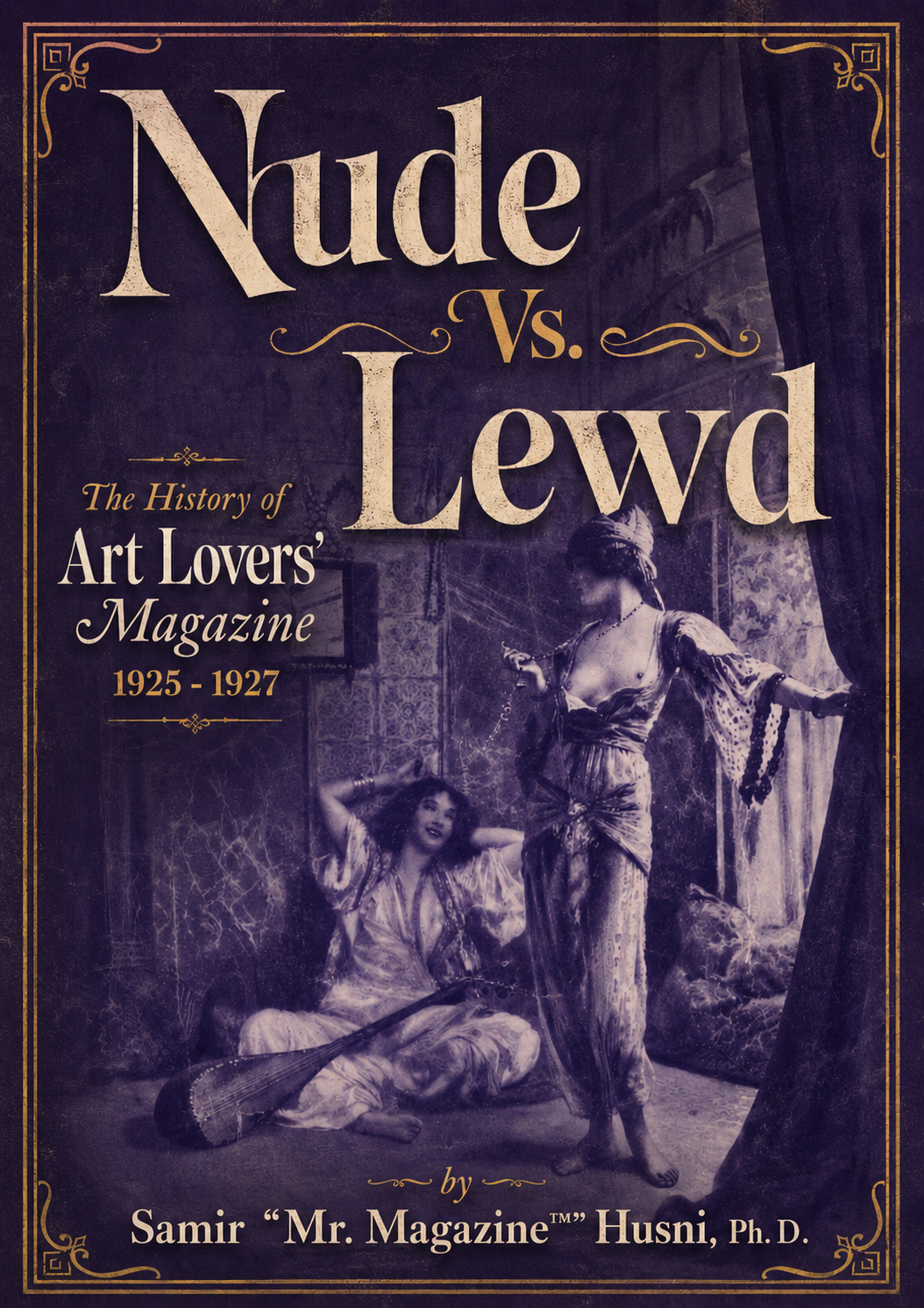
Pruriency Vs. Stupidity: The History Of Art Lovers’ Magazine 1925 – 1927. A Mr. Magazine™ Book-in-a-Blog, Chapter 3, Part 2

July 23, 2026

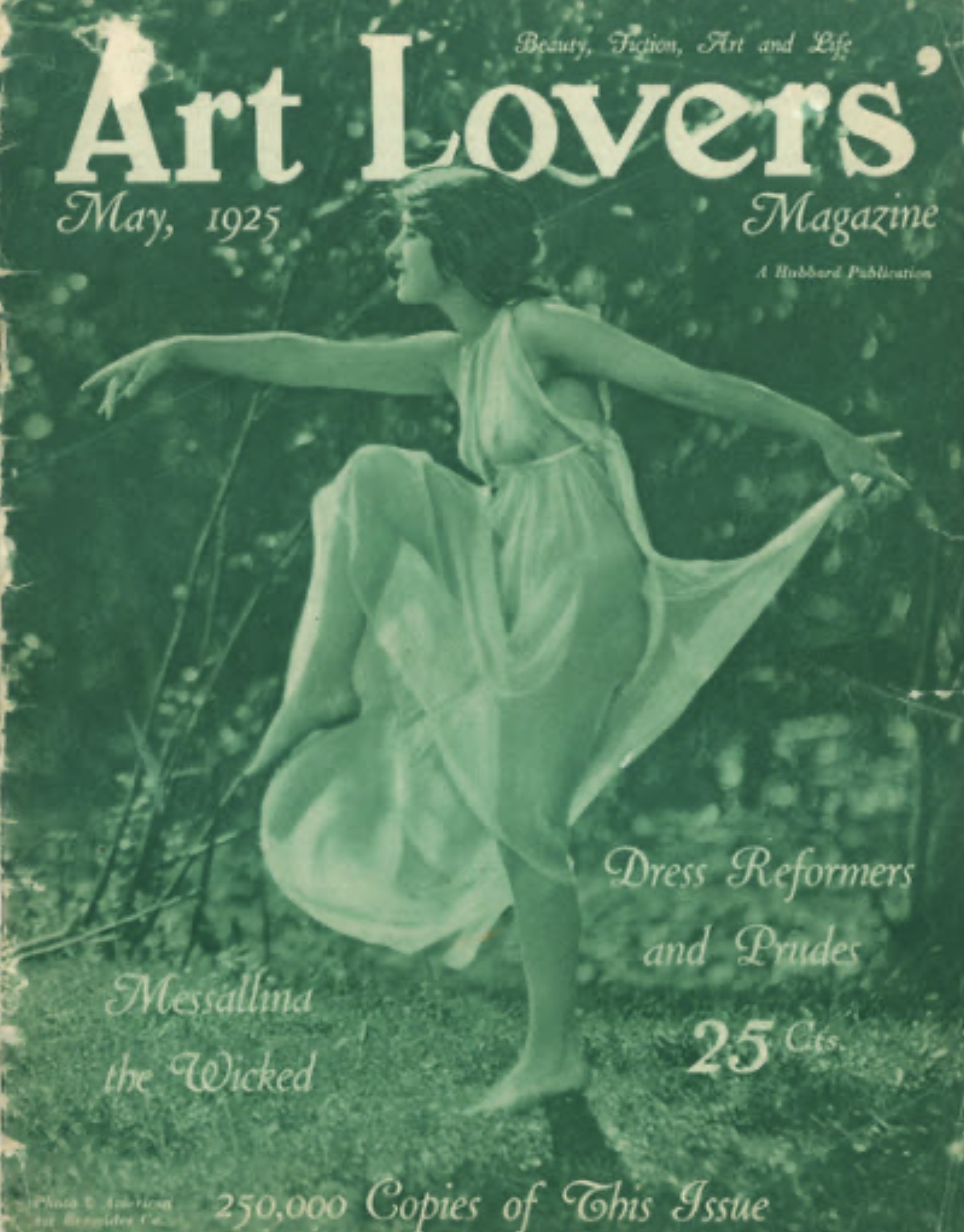
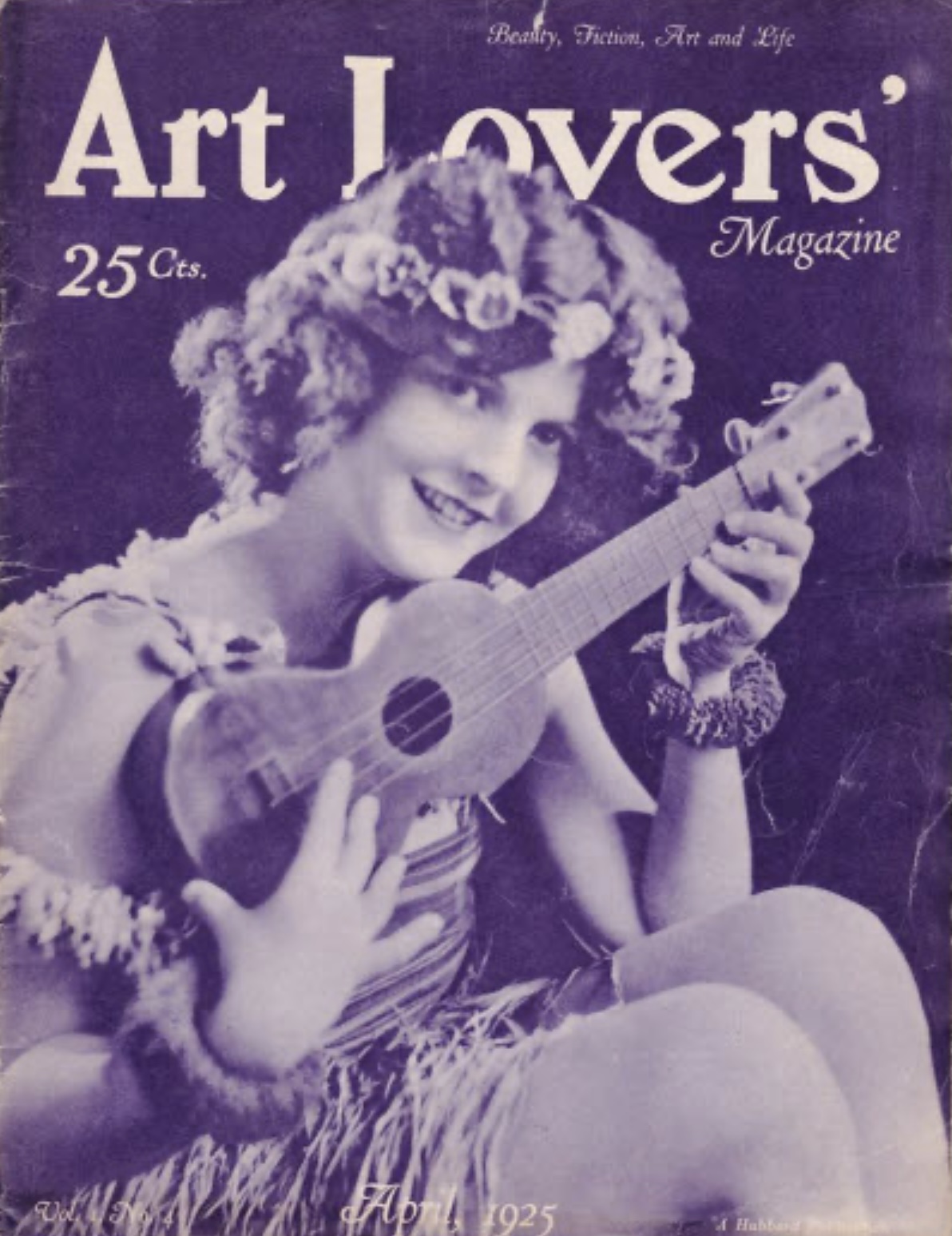
A century ago, we were more culturally and artistically advanced. Magazines in the 1920s shined a very bright light on art and culture. One such magazine, albeit short lived, Art Lovers’ Magazine, is but one example of a cultural and artistic publication from 100 years ago when magazines ruled the media world. Here is its story:

Pruriency vs. Stupidity

The editorial continued, “However, the charges were too ridiculous for serious consideration, and the case was thrown out of court.  Attempted prosecution of a reputable Brooklyn news-dealer for the sale of ART LOVERS’ MAGAZINE also fell flat.

The magazine opined at the end of its editorial, “There is urgent need for a militant anti-vice society, especially in New York City, but frankly we cannot understand a policy of running around to cover undraped statues, putting the stigma of criminality on reproduction of famous nude paintings, and attacking legitimate art publications.”

The irony here is that Art Lovers’ magazine quoted the same newspaper that let a campaign against the art magazines and theatre because of their usage of nudity in their content as mentioned in Chapter 2.  The New York Daily News wrote, and was quoted in the editorial of issue 8, “ There are numerous pecksniffian people who consider that “the nude is rude,” thereby accusing Nature of indecency. In these United States, the land of freedom and prohibition, these ultra-pious persons have formed themselves into Vigilance and Purity leagues, with the result that in several museums and art galleries some of the most famous examples of classical art have of famous statues have had attention drawn to their nudity by being draped in crepe. In one Philadelphia gallery the Purity leaguers have actually immortalized their folly by sewing bathing drawers and a short skirt onto the statue of the far-famed Venus de Milo! Could pruriency and stupidity go farther?”

Reaching out to the NYVSS

Being of moral and ethical background, the Hubbards reach out to the New York  Society for the Suppression of Vice and “offered to publish an account of the “positive side” of its work, but Secretary Sumner replied, “it would be very inappropriate for anyone representing this Society to furnish matter for publication in your magazine.”

The magazine reminded its readers that, “The Hubbard publications have always stood four-square for clean literature, ever since the Hubbard Publishing Co. was established in 1868, and we are willing to cooperate with the Society for the Suppression of Vice or any similar organization with a constructive program.  Our offer of free publicity is still open.”

At the end of the editorial the magazine reminded everyone that, “ART LOVERS’ is the world’s first and original rotogravure art magazine.”

A Soviet Union Link

Having survived the court case, and keeping with its originality, the magazine continued to try to differentiate itself from the rest of the art magazines during the 1920s. It showed great concern with the art, science, and culture of other countries, specifically the Soviet Union and Japan.  Keep in mind that the United States of America did not recognize the Soviet Union after the end of World War I.  That would take place in 1933, eight years after Art Lovers’ magazine called for more cooperation between the artists and scientist of both countries.

The editors wrote, “The lack of continuous contact between artists, scientists and cultural organizations of the United States and the Union of Soviet Republic has been felt for many years in both countries. Since the war there has been practically no mutual exchange of art or scientific publications – with the result that the institutions and organizations concerned were unable to form any comprehensive idea of the mutual activities and achievements.”

In fact, the editors stopped short of praising a new organization that was established in the Soviet Union by the name of the Joint Information Bureau, “which has been created in Moscow with the aim of assisting in the establishment of closer cultural connections between the Union of Soviet Republics and other countries.”

Russian and Japanese Authors

The efforts of Art Lovers’ magazine did not stop at trying to establish a relationship with the Soviet Union, but it was extended to publish J. Tugendhold, “the greatest art authority in Russia” who wrote in issue 6 “on the folk art of his native land.”

The magazine also announced that in the following issue, issue 7, an article “on Japanese art, from the pen of Shinsei Hiroshige, who needs no introduction to readers familiar with the “Cherry Blossom Land.”

Art Lovers’ magazine once more shows that it is unlike any other magazine on the marketplace.


Singing its own praises

Art Lovers’ Volume 1, Number 5

The editors of the magazine were not shy in promoting the praises and accolades they were receiving from readers, especially with the cover of issue 5 announcing the growth of its print run to 250,000, a 100,000 increase since issue 3.

They write, “CONGRATULATIONS have been reaching our desks by the scores, enthusiastic comments on the continued improvement in the editorial and pictorial departments of this magazine. It is no wonder that the circulation has mounted to a quarter of a million copies monthly.”

Elbert Hubbard II appears on the scene

It must have been a Hubbard family affair with Arts Lovers’ magazine.  Elbert Hubbard II was running Roycroft after his father’s death in 1915, and publishing his own magazine, The Roycrofter.  He announced himself President of the Roycrofters in the last issue of The Philistine that carried the cover line in red “VALEDICTORY” which of course means farewell.

Under a picture of himself, with the caption, “ELBERT HUBBARD II, President THE ROYCROFTERE, IN.”  Under the caption he wrote, ““Bert” Hubbard has served in the Roycroft Shops for twenty years; grew up with the Business. He has worked and won promotion in every Department. He knows this Business, its friends, its markets, its possibilities. For eight years he has been Treasurer of this Corporation and handled the “Practical Business” end.”  He concludes, “Now he is Chief of The Roycrofters.”

 He made another announcement in that same issue.  He informed the subscribers that the magazine will cease publication as of this issue dated July 1915 and starting next month, they will receive its sister publication The FRA.  This issue also carried the news that” Elbert and Alice Hubbard Are Dead.”

The older Hubbard, the founder of the Roycrofters has been publishing The Philistine for twenty years and two months.   Two years later, in August of 1917, Elbert Hubbard II announced the closer of The FRA the other magazine his dad was publishing and launched his own magazine The Roycrofter from September 1917 until September 1932. The Roycroft Campus declared bankruptcy and closed in 1938 ending an era filled with arts, crafts, and beauty.

The dilemma of publishing a magazine

With all his activities, Elbert Hubbard II, as it seems, was also involved with Art Lovers’ magazine.  An editorial signed by him in issue 5 of the magazine, he wrote, in the plural tense as if he is part of the team producing the magazine, on the dilemma of publishing a magazine. His editorial, “GETTING out this magazine is no picnic. If we print jokes, folks say we are silly; if we don’t, they say we are too serious; if we print original matter, they say we lack variety; if we publish things from other papers, we are too lazy to write.


Elbert Hubbard II continues in his one paragraph editorial, “If we stay on the job, we ought to be out getting a new viewpoint. If we go out after stuff, we are not attending to business in our own department. If we don’t print all our contributors send us, we don’t show proper appreciation. If we do print them the magazine is a mass of junk. And, like as not, some wise guy will say we swiped this from an exchange, which we did. – Elbert Hubbard II.”

A family affair: more Hubbards

Art Lovers’ Volume 1, Number 6

Another Hubbard appears on the scene in issue 6 of the magazine: Samuel Hubbard, curator of archeology of the Oakland, CA Museum. The editors were as excited as Mr. Hubbard himself by writing that his discovery, “sent a thrill through the scientific world recently by citing new evidence which, in his opinion, proves the existence of primitive artists in the dinosaur age.”

Samuel Hubbard led The Doheny Scientific Expedition into the Hava Supai Canyon in North Arizona where he made his discovery.  He concluded that “some prehistoric man made a pictograph of a dinosaur on the walls of this canyon.”  This prehistoric man, Mr. Hubbard smized, “made and used tools and had an eye for form and a sense of proportion.”

Mr. Hubbard concludes, “The interesting thing about this is that no ibex, not even fossil ones, have ever been found in America.  These drawings would seem to indicate that they must have been a common animal in the Grand Canyon in the prehistoric past.”

Art Lovers’ devoted almost 2/3 of its editorial page to report on and quote the discoveries of Samuel Hubbard.  Another important indication that the magazine was more interested in the culture, science, and art of that period and not just in publishing nude pictures and illustrations for the benefit of art students and artists.

A who’s who of authors

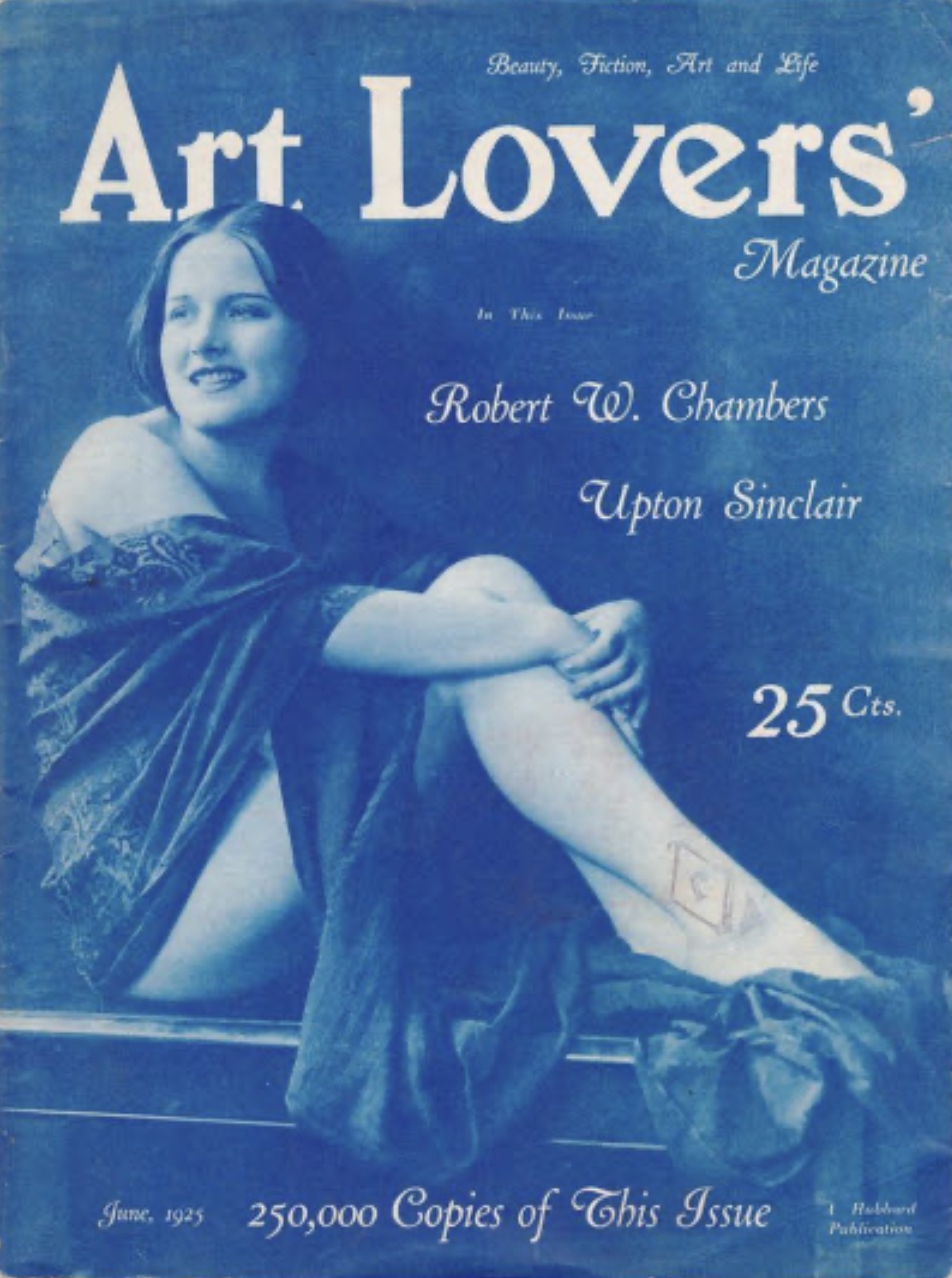
The magazine took pride in the list of authors and artists appearing on its pages. The cover of issue 6 carried the names of Upton Sinclair and Robert W. Chambers in big type.  Mr. Sinclair wrote an article on “Who Pays for Art,” and Mr. Chambers wrote about the “Cotton Murals.” In addition, the editor himself published a signed article on the “Laws of Esthetics.”

Upton Sinclair was a famous journalist, author, and political activist.  Adjectives that are all in line with the mission of Art Lovers’ magazine.  Mr. Sinclair went on to win the Pulitzer Prize for fiction in 1943.  (find sources)

As for Robert W. Chambers, another famous artist and fiction writer whose book The King in Yellow published inn 1895 brought him national attention.

In addition to the authors, the table of contents of the magazine included many names with Dr. and Professor titles highlighting the importance and value of the content and differentiating it one more time from the rest of the magazines on the nation’s newsstands. Also, in issue 6 the editors highlighted what more to come in the next issue of Art Lovers’. “THE RAJAH’S VENGEANCE,” a new and thrilling serial story, will be started in the July issue of ART LOVERS’ MAGAZINE. Romance, splendor and fatalism! Don’t miss it. The author is Marie Garcia, one of whose short stories, “Venus of the Dance Floor,” appeared in our May number.”

Another writer is highlighted in this editorial, Dr. Millicent G. Laevey. She is going to write an article, “on how to stay cool in torrid weather, written in the entertaining style for which she is famous.”

Beauty, Art, Fiction and Life

True to its tag line Art Lovers’ in its second quarter was able to combine beauty, art, fiction and life is a package that made the magazine reach a quarter of a million circulation and made the magazine the “largest rotogravure magazine in the world.”

As Art Lovers’ enters its third quarter, progress continues, and more top-notch authors and artists appear on its pages.

To read Chapters 1 and 2 from Nude vs. Lewd please check the previous blogs below or search from them using the search box on the side.

h1

Trad Hunters Magazine: A Print Publication Born From The Marriage Of Vision And Passion. The Mr. Magazine™ Interview With Ron Notarangelo, Co-Creator & Publisher.

July 19, 2026

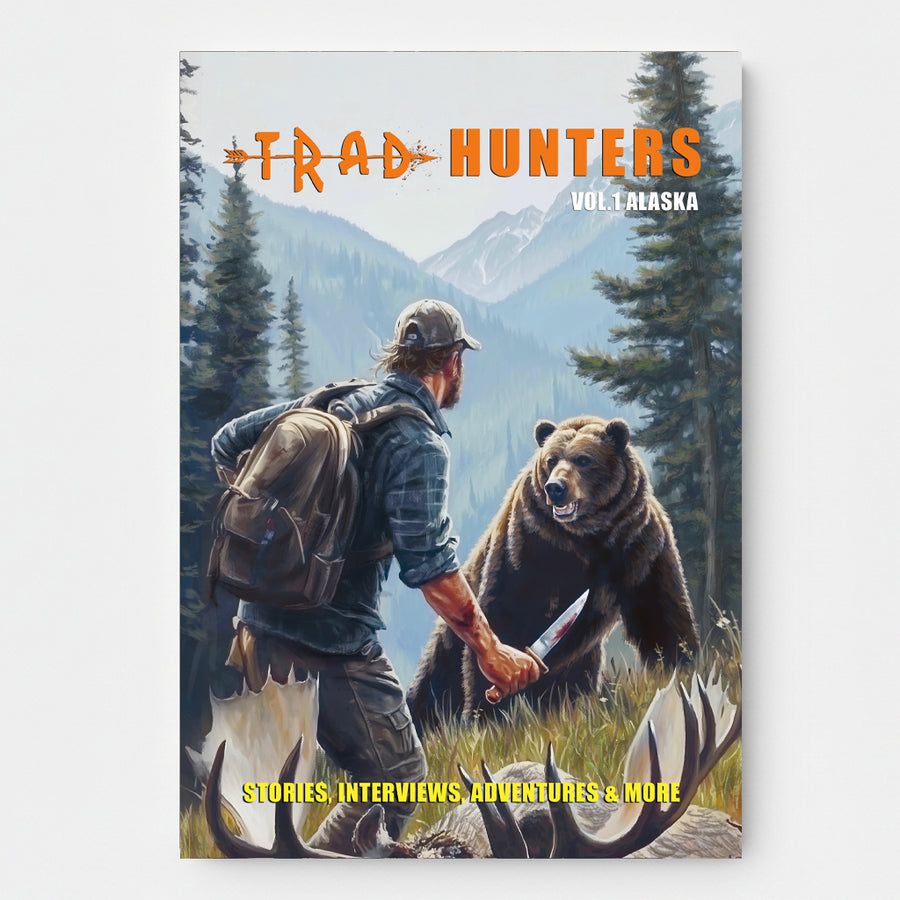
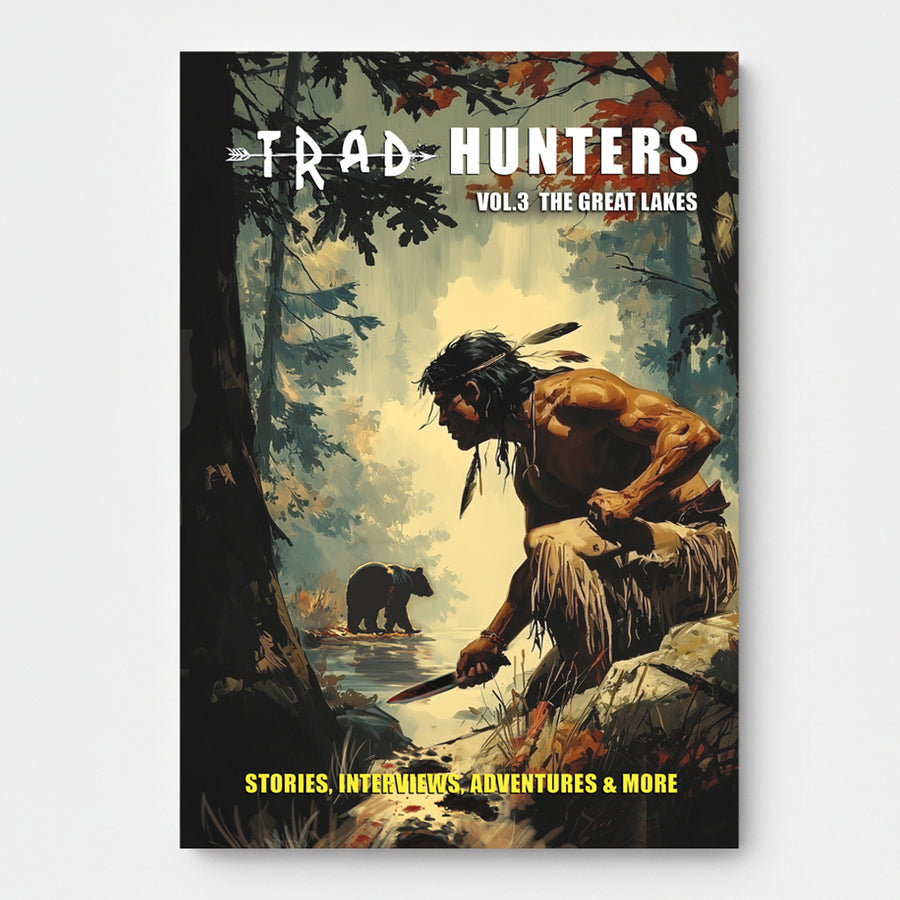
Ron Notarangelo is recreating the love of storytelling and experience making that his mom instilled in him at a very young age.  She used to buy and read him books from the 1950s.  That love of the books of the 1950s led him, and his wife Marie, to create Trad Hunters magazine that reflects that era but is done in a very suitable and readable 2026 style and form.

The magazine was born from a conversation in their kitchen that took two years to come to fruition. What came out from that idea is marvelous content and an experience for anyone interested in traditional hunting or is curious about it.

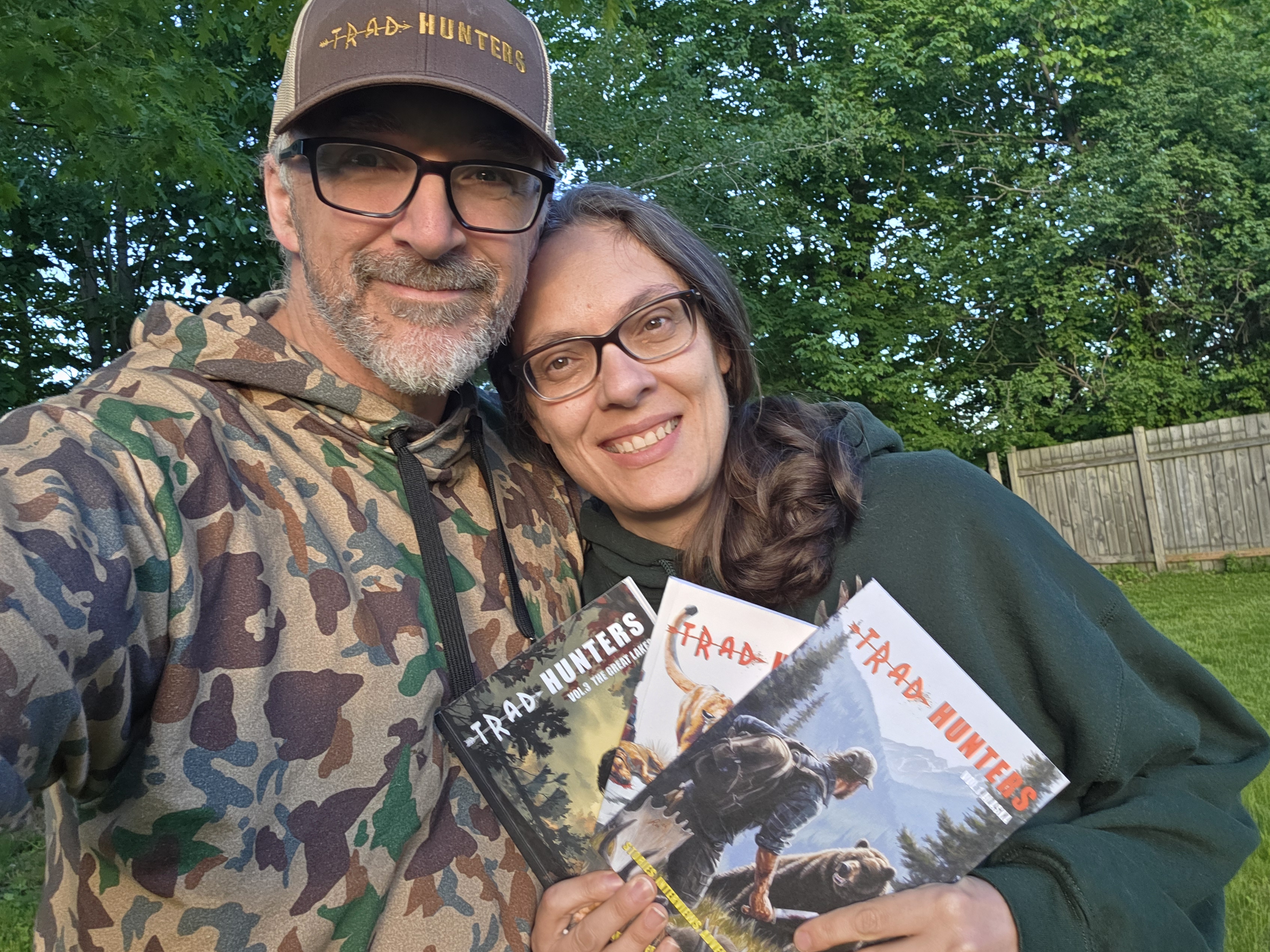
I had the chance to correspond with Ron and Marie and was very impressed by their handwritten personal notes they took the time to write in response to my questions. Later I discovered I was not alone in that treatment.  They take the time to write personal notes to each and every customer.  I guess that is the tradition of Trad Hunters

While both are identified as creators of the magazine, Ron is the publisher and Marie is the editor.  I had the pleasure of talking with Ron for this interview and what follows is the lightly edited transcript of the interview.

But first the soundbites:

On why print: “Being a retro looking magazine, it needed to be print, for one. Also, a lot of the customers who are bow hunters and stuff, they’re older. The demographic is typically like 44 to 65 plus.”

On why they reprinted the first issue: “When we launched, we just did a lot of the writing ourselves and had a couple good friends who would contribute their articles, which helped a lot. So, we added some new content, and we added new art and we just really wanted to make it match what we’re doing now.”

On the personal handwritten notes: “We do a handwritten note for everyone, every single one. So, it takes a bit of time, but before doing the magazine, we had an archery accessory business. And we would do that with our customers too.”

On the magazine’s elevator pitch: “It’s a gritty, no-holds-bar type of traditional hunting magazine that covers traditional bow hunting.”

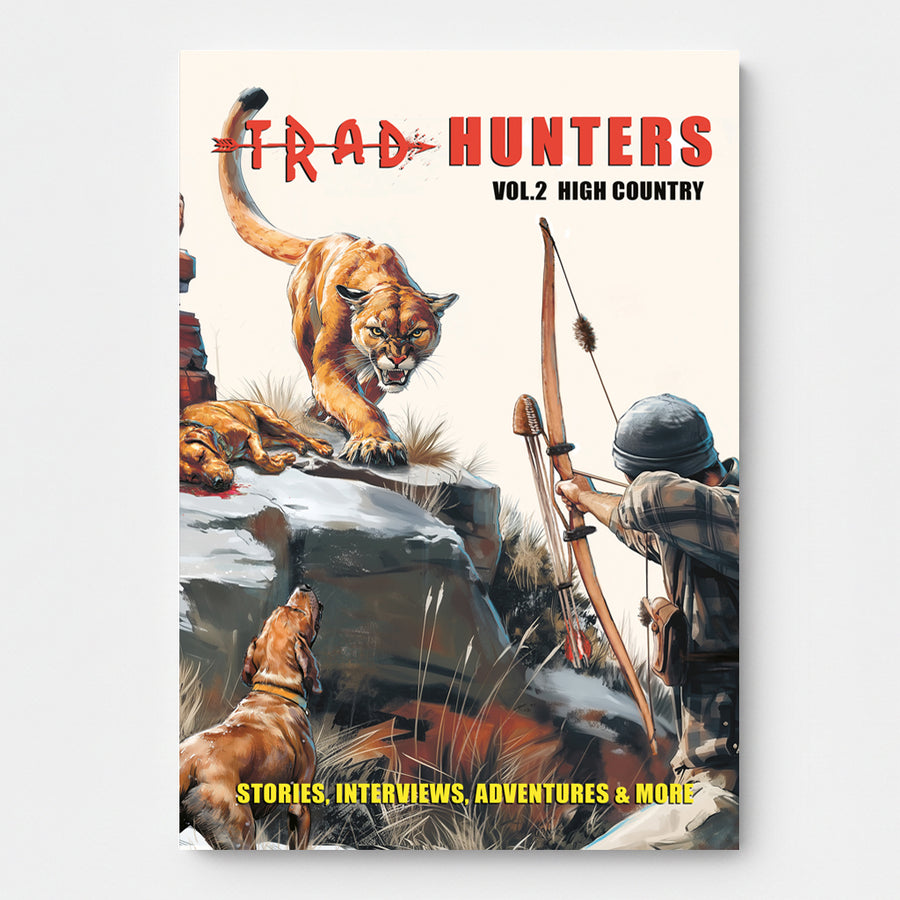
More on the elevator pitch: “It’s gritty stories that are not censored about hunts from real people, not just celebrities, that take you on adventures across the world. Each volume is dedicated to a specific theme. So, Volume 1 is Alaska. Everything is all about Alaska. Volume 2 is about High Country.”

On the mission of the magazine: “I’m just looking at it like we got something incredible to deliver that’s going to entertain you, teach you with legitimate things that you can use in the real world if you’re choosing to hunt or even survive in the wilderness.”

On the look of the magazine: “Wouldn’t it be cool if there was a magazine that looked like it was from that era, (the 1950s), now, but with focus on cool stories like Boy Scout tips, how to do wilderness things, survival stuff, like that, but look like it’s old, I think that would be really cool.”

On the magazine revenues: “But right off the bat, we did a patron thing where people can help support us even more. So, we changed everything right off the bat, the norms, and even advertising, we didn’t even have advertising. We’re not even doing any advertising going forward.”

On their goal: “We’re both thinking about making a better life for us and offer the best possible product and experience for anyone that wants to read Trad Hunters or is curious about it.”  

And now for the lightly edited interview with Ron Notarangelo, co-creator and publisher Trad Hunters magazine:

Samir Husni: You’ve launched Trad Hunters one year ago. Did you feel that you needed a traditional platform for a traditional hobby or profession?

Ron Notarangelo: Traditional meaning like in print, right?

I think because of the nature of what we wanted to do with it, being a retro looking magazine, it needed to be print, for one. Also, a lot of the customers who are bow hunters and stuff, they’re older. The demographic is typically like 44 to 65 plus.

So, they prefer reading a physical book rather than something digital. That was only after the fact that we found that out. Our intention was to make it look like a retro style magazine from the beginning.

Samir Husni: In the one year since you started the magazine, what was the reaction so far?

Ron Notarangelo: So far, it’s been incredible. I think one of the challenges that we had was coming up with a price because we didn’t really know how many we needed to print initially.

We guessed and we did a perfect bound magazine, and not saddle stitched, which is a lot more expensive. We chose to do things that really were quality rather than just a traditional magazine. The paper quality we chose is significantly different than regular magazines.

So, that’s even more expensive. But we knew we wanted to make it like that. One of the challenges was figuring out how do we charge, a price that is high enough to cover our costs because we did not know how many to print.

We printed 750 and it costs quite a bit. We also needed to position it where the psychology of people is used to buying magazines, not books. They do buy books, but they will subscribe to magazines over books. So, we needed to use the magazine even though it’s more like a book.

Samir Husni: And you reprinted the first issue. Can you tell me more a little bit about that?

Ron Notarangelo: The very first one that we launched, we had a printer who printed the magazine digitally.

From the second one on we had everything printed on an offset press. So, it was a completely different type of way of printing.

The look is completely different. So, we sold out of the first issue, we printed 750 and then we had another thousand printed of the first one. And then when we sold out, we just started to market number two.

We had a lot of people come back and say, hey, I want to get the first issue, I want to start from the beginning. We didn’t expect to reprint volume one. We were just like let’s just sell it and then we’ll just move on.

We had such an overwhelming amount of people ask that they want to start from the beginning. So, we decided if we’re going to remake it, we might as well because the first one was even a little bit smaller than the ones we print now. It was five and a half by eight and a half inches.

Now, we’ve made it a touch bigger. It’s six inches by nine inches. So, we decided to reprint it so that it’s all consistent six by nine. And we figured let’s just add more stories in it. And when we launched, we just did a lot of the writing ourselves and had a couple good friends who would contribute their articles, which helped a lot. So, we added some new content, and we added new art and we just really wanted to make it match what we’re doing now.

Samir Husni: You take the time to respond to any request to buy the magazine or to order the magazine with a personal handwritten note? 

Ron Notarangelo: We do a handwritten note for everyone, every single one. So, it takes a bit of time, but before doing the magazine, we had an archery accessory business. And we would do that with our customers too.

That was something that we brought over to the magazine because we want to show our gratitude and our appreciation for someone taking the time to invest in what we made. And so, we feel it’s a good thing to do to show our respect to the people who buy it.

Samir Husni: Can you give me like the elevator pitch for Trad Hunters?

Ron Notarangelo: The elevator pitch? It’s a gritty, no-holds-bar type of traditional hunting magazine that covers traditional bow hunting.

It can cover different types of traditional hunting. It’s gritty stories that are not censored about hunts from real people, not just celebrities, that take you on adventures across the world. Each volume is dedicated to a specific theme.

So, Volume 1 is Alaska. Everything is all about Alaska. Volume 2 is about High Country. Everything is about high country. And everything is made to look like it’s a vintage 1950s style to complement that.  Back in those days, it was all about adventure. It’s not about being censored.

It was really embodied more wholesome times. So, that’s exactly what we deliver with Trad Hunters.

Samir Husni: And during this year, has it been a walk in the rose garden or you had some challenges?

Ron Notarangelo: Oh, we’ve had some challenges.

Because we’re based in Canada. Just a couple weeks before we launched the first magazine, the tariffs kicked in. But thankfully, publications are not a part of that.

It’s a part of the treaty so that publications like schoolbooks or books in general are not affected or are taxed. Thankfully. There are challenges now that the oil and gas situation has caused things to go up. Obviously, people are considering saving money somehow. But I’m not even going to look at that anymore.

I’m looking at it like we got something incredible to deliver that’s going to entertain you, teach you with like legitimate things that you can use in the real world if you’re choosing to hunt or even survive in the wilderness. It’s only $20 and it’s worth every single penny or more for what we’re trying to deliver. I’m not even concerned about it. There’s always challenges, I’m looking past that now.

I’m thinking about the value we’re going to deliver to people every single time that they choose to buy a Trad Hunters magazine. That’s all I’m focused on now.

Samir Husni: What gave you the idea? I know you had an archery accessory business, but what gave you the idea to create a magazine?

Ron Notarangelo:  The idea was born in the kitchen with my wife.

When I was growing up, my mother would always go to the garage sales, and she would buy old Boy Scout and story books from the 1950s and read it to the read it to us when we were kids.

So, like, that type of look, and those adventure stories are always a part of something that I personally grew up with. I just had this idea flashing in my head when I was just talking to my wife, because I do a lot of the illustrations myself. I was experimenting with illustrating, a kind of a vintage style.

I just had this idea, wouldn’t it be cool if there was a magazine that looked like it was from that era, now, but with focus on cool stories like Boy Scout tips, how to do wilderness things, survival stuff, like that, but look like it’s old, I think that would be really cool. My wife was, yeah, that would be awesome. So, it was just an idea for almost two years.

I started talking to a friend who was a contributing writer in the first one. And he was like, yeah, this would be awesome, because he’s really involved in the bow hunting community. He said that this would be incredible.

I started kind of loosely developing it. And then when, when the Tard Hunters magazine happened, we had to shut down our other business, that day. We had to do the magazine; it had to work. We had to survive. And I knew it was either now or never, whether it’s possible, we’ll find out right now. So, the decision was made and we’re going to do it. That’s how it happened.

Samir Husni: If you and I are having this conversation in a year from now, what would you tell me that Trad Hunters accomplished in 26, 27?

Ron Notarangelo: We expanded globally; we grew our readers by 10,000.

We didn’t give up, we persisted, we advanced, we broke a lot of molds, it was very common for it to be seasonal, especially with hunting, we did not do seasonal, we did themes. It was very common for a magazine to be the traditional 81/2 by 11, the standard size, we went smaller. We did publish quarterly rather than monthly because the printing cost is very high.

But right off the bat, we did a patron thing where people can help support us even more. So, we changed everything right off the bat, the norms, and even advertising, we didn’t even have advertising. We’re not even doing any advertising going forward. So, in 2027, you’ll see Trad Hunters magazine not have any advertising, we’re going to be everywhere globally. And we’re going to go to the top.

So that’s where we’re going. 2027. And we’ll have we’ll have more volumes by then, too, obviously.

Samir Husni: Tell me before I ask you my typical personal questions, is there any question I failed to ask you about the magazine that you would like me to ask?

Ron Notarangelo: I don’t know. I think we covered a lot of the basic stuff.

Samir Husni: Are you a hunter?

Ron Notarangelo: I don’t get to hunt as much now because this magazine takes a lot of time.

One of the things that if you were to ask me in a year from now, what’s different is that we have more artists doing the work for us. I have hired people to do some of the graphic design because I had to do it up until now. Right now, the volume that I’m working on, I’m the one doing all the creative design. I must do all the InDesign work.

And I didn’t even know how to do InDesign before volume one, I had to remake volume one four times in two weeks to get it to the printer. I started to design it in Canvas. I had no idea even how to make a magazine.

I had to learn InDesign in a week. I’m going to pass this stuff off to someone who’s far better than me. And I’m going to stay focused on the direction where we want to go.

Keeping the look like the 50s in 2026. That’s the standard. It’s going to evolve. Everything does evolve over time. The winning combination is that vintage look, that colored paper, that makes it look vintage. We try our best, we’re not going to add in fake wrinkles and stuff, but we want it to look different. So that’s always going to be the same. It seems to be very desirable.

Samir Husni: If I come one evening unannounced to visit you at home, what would I catch Ron doing? Having a glass of wine, watching TV, reading a book, etc.?

Ron Notarangelo: It depends on the time of day.

I’ve been reading a lot more now. I’ve been taking the time to get back into reading physical books.

I got my copy of The Science of Getting Richright here. It’s just mindset stuff I’m working on right now. If you were to come in the evening, I would be hanging with my kids watching some TV with them or playing with them.

Anytime during the day, prior to what I just said, I would be in my office illustrating or working in InDesign. Plus, I got to do all the marketing stuff now. I’d be on a computer.

Samir Husni: What keeps Ron up at night these days?

Ron Notarangelo: Samir, it’s a tough question. I mean, there’s been a lot happening in the last couple weeks with my family, just a lot of personal family stuff keep me up.

Getting this magazine out, fulfilling orders to customers, making sure that we’re timely making the magazine, there’s so many things that I must do, and my wife has to do because she’s equally doing everything that I’m doing. We’re both thinking about making a better life for us and offer the best possible product and experience for anyone that wants to read Trad Hunters or is curious about it.  

Samir Husni: Thank you and best of luck.

h1

Comics! The Magazine: A Dream Come True And An Indispensable Guide To Everything Comics: The Mr. Magazine™ Interview With Joe Keatinge, Editor-in-Chief & Atom! Freeman, Publisher.

July 12, 2026

Those who know me, they know that my entire career and profession started at age 10 when the first issue of the Arabic Superman was published in my original home country Lebanon in February of 1964.  It was the beginning of a love affair with storytelling, heroes and villains, ink on paper, comics and magazines. 63 years later that love affair continues with no let down or a break.

This love affair left a soft spot in my heart for comics until this day. So, when I heard about the launch of Comics! The Magazine I felt that all my dreams have come true, comics, magazines, and ink on paper.  Mr. Magazine™ could not ask for any better.  I acquired every issue since its launch earlier this year and three of the secret variant covers of issues 1, 2, and 4 at a price that will go unmentioned for fear in getting in trouble with the family.

My affair did not end there, I needed to know the folks behind the magazine and why someone will publish such a great magazine in this digital age?  I reached out to Joe Keatinge, the editor-in-chief of the magazine and Atom! Freeman, the publisher and had one of most delightful interviews in my career.  It brought back memories of a pleasant childhood and a firm belief in the future of magazines, as in ink on paper.

So, without any further ado, please enjoy those two lightly edited interviews with the editor-in-chief and the publisher of Comics! The Magazine:

But first the soundbites of the interview with Joe Keatinge, editor-in-chief, Comics! The Magazine:

On the need for Comics! The Magazine: “It’s time that there’s a platform for comics that speaks to that level of enthusiasm is the operative word, but also confidence too.”

On the intended audience: “The younger generation is tired of the Internet. I don’t know how close you follow print sales in the comics industry, stores are reporting up to 30 to 40 percent year over year. And that last year was 20 to 30 percent. The people coming in are like 20 years old.”

On the secret variant covers: “There’s a secret cover program and we don’t do it every issue. We like to keep people on their toes.”

On his mission for the magazine: “My mission, personally, with the magazine, again, is what I said earlier: Is to get people enthusiastic about comics. And so with the variant covers, it’s great. They’re selling high.”

On the connectivity between human and paper: “So when you’re a kid and you’re reading Superman, and it’s on paper, and it’s yours, and it’s in your hand, and you’re reading the story, I would assume that there’s a higher level of connection there.”

On the magazine’s goal: “To be of greater service to this industry and become an essential part about how people learn about comics.”

On his future vision for the magazine: “Is that we help inspire people to make great comics. And read great comics, of course. I want people to read it and think, I could do that. Then, they think they can do that and they work really hard and talk about the fight we mentioned earlier. It doesn’t work out. And then it does work out. They keep going and they keep getting better and better and better. And one day, they’re so good, they’re so undeniable, we profile them on the cover.”

On how people decide to buy a comic book: “Atom! (the publisher) did some research a while ago and found that 82% of customers, at comic bookstores, made decisions of what to buy in the store.”

And now the soundbites of the interview with Atom! Freeman, publisher, Comics! The Magazine:

On the magazines mission: “From a business standpoint, it is a platform. From a consumer standpoint, it is just a celebration and a guide for the world of comics.”

On a major challenge: “But print advertising budgets are not something they’ve been doing for a while. Convincing them to make that room or to take away from something else in order to get involved early, that was a challenge early on.”

On another major challenge: “But as a result of that, really our biggest challenge right now is what do we do next? How do we keep the magazine itself exciting? How do we build off of the success of the magazine? Those are the bigger questions that Joe and I spend a lot of time talking about.”

On the high selling price of variant covers: “It takes a lot to really surprise me. I was pleasantly taken aback by the values.”

On the magazine’s digital future: “While we’ve discussed what it would look like to make Comics! The Magazine digital, I think that so far, everything we’ve heard would just be diminishing of the print version.”

On the value of print: “We’re able to have more complex conversations because you’re going to sit and digest it in a way that you don’t, anything that’s on a screen.”

On the future of magazines: “I do think that magazines are going to have a comeback. What we’re seeing in print in comics and magazine right now, I expect to see all over the place.”

More on the value of print: “One of the things that happens in our world is any comic that is on a digital platform ends up on a piracy site. And Comics! The Magazine is on no piracy sites right now.”

And now for the lightly edited interviews with Joe Keatinge, editor-in-chief and Atom! Freeman, publisher, Comics! The Magazine:

Samir Husni: My first question to you is, you said in your last editorial, I love fighters. I love people with vision. Tell me about your fight and your vision with Comics! the Magazine.

Joe Keatinge: Sure. I really appreciate that. I would say the fight or the mission with the magazine is really simple. It’s just to get people genuinely enthusiastic about comics, and that can be genuinely enthusiastic about reading comics.

There’s enough in the world about how everything’s horrible, and that’s just not what we do here.

We are celebrating this art form to the highest degree. Bringing in people that have same sort of mentality, different voices, of course. It’s to spread that genuine enthusiasm for the art form.

Art form that’s fueling not just comics, but television and film and video games. It’s time that there’s a platform for comics that speaks to that level of enthusiasm is the operative word, but also confidence too.

Samir Husni: Why did you decide to do it in print in this digital age?

Joe Keatinge: That’s a great question. It’s something we talked about a lot. It’s because there’s so much digital’s gotten through so much noise. If I live a busy life and I have 10 minutes to determine what comics are out there, you go online and you search comics, there’s a lot of different sources.

A lot of them are skewing negative. So there’s that. The other aspect of it is there’s a new generation coming in and they want physical media.

The younger generation is tired of the Internet. I don’t know how close you follow print sales in the comics industry, stores are reporting up to 30 to 40 percent year over year. And that last year was 20 to 30 percent.

The people coming in are like 20 years old. And it’s two things. One is they’re raised on comics.

They were raised on comics by people like Raina Telgemeier or Jeff Smith or Dave Pelkey. They went in their teen years and they got manga from libraries. Now thanks to there’s a book called Absolute Batman, which is The Book.

It’s the top book in the industry by a huge margin. That’s the new readership. These people who were kids 10 years ago, but now they’re 20 and they have disposable income are interested in this. So they have that education with comics, but also they saw the fruit of the generation that is so digitally focused and living lives online and consuming digital media.

I’m not against the Internet. I mean, that’s how you and I are talking.

There’s a huge great net benefit to it. But you got to be careful in terms of how much you like moderation, essentially.

So I think people really want things like this is 32 pages. It’s now going to be 40 pages. We’re increasing the page count by signature.

You can read it in 10, 15 minutes, maybe 20 minutes, maybe a little longer, depending on the issue. You can know everything you need to know to go to the comic bookstore.

Samir Husni: I noticed that with some issues, you have two different covers. You have a regular cover and you have a variant cover, which is selling for up to like 150 dollars on eBay.

Screenshot

Joe Keatinge:  We’re experimenting a lot because it’s been a while since there’s been a comics magazine. We’re not the only one. There are other ones.

There’s one called Dummy and there’s one called American Nature. There’s one kind of a comic staple. So, we’re not the only one, but we’re the only one doing it our way.

Part of that is what can we do in print? That’s fun and unexpected. You can’t do in digital.

We were at a comic book trade show, Comics Pro, and coincidentally, it was when we got our first issue comps. We did an early edition of the first issue. An Absolute Batman cover.

I was sitting there and I knew that we did bundles of about 25. And I was thinking you could put anything in these bundles. Because, when the stores receive the bundles, they just have to scan in the initial receiving the UPC of the bundle itself. And then the individual UPCs of the covers so that we can sneak in something really cool. And so I contacted Skybound, the company that created Invincible and The Walking Dead. They do surprise better than anybody else in the industry right now. I knew they would get it. I contacted them and said you got this great book called Terminal coming out. Robert Kirkman, Joe Casey, Art Adams, Dave Finch, Andy Kubert, like all- star team. I was like, what if because we were already planning to do a Battle Beast cover with them, what if we did a secret Terminal cover? We don’t announce it. And it gets in there. And then that sold really well. Then we just did a cover. So, we did a feature in the new issue with Mark Spears, the artist behind a series called Monster Monsters. He is doing a new Spawn book.  Spawn, one of the most popular comics in the last 30 years. He actually suggested it.  I’ll give Mark full credit.

He suggested what if we do a secret Spawn cover? I thought that would light the world on fire. If Todd McFarlane would approve it, that’d be great. And he did.

There’s a secret cover program and we don’t do it every issue. We like to keep people on their toes.

We also do variant covers with different partners. Sometimes it’s a store. We’ll want to do a variant cover with an artist whom we have relationship with.

With number five, we’re doing covers with Alex Ross. So we have an Alex Ross interview in there. The opportunity came because of that interview. To do a variant cover with him that he will be given out at his booth at San Diego Comic Con. Mad Cave Studios, another publisher. They’re doing a similar thing.

They have a book coming out with John Cusack, the actor. And again, they thought, hey, can we do a variant cover of this? We don’t do pay to play. As the editor, I don’t care what advertisers we have.

It doesn’t affect in terms of content. Obviously, we love our advertisers, and they make the magazine possible. But in terms of content, it’s what’s interesting, period.

If it’s not interesting, they can’t pay enough money to be in there. But it just worked out. Alex Ross is one of the greatest artists of all time.

I’d want to talk to him. And then this opportunity came to do the cover. Great. Same with John Cusack. That’s interesting. He wants to make comics.

Why? If there was a compelling story there, and there was, great. So any opportunity to do something interesting in print.

I think you’ll appreciate this. It feels like there is a re-education going on. Which is funny, because we work in a print industry.

But in terms of having a promotional venture in print, there’s a lot of re-education. And a lot of like, you can do things differently than you were doing them digitally. Actually, I will even go further and say, a level of freedom.

This is going off on a tangent here. We serialized a comic book called Chew. Chew was by Rob Guillory and John Layman.

One of the major hits of the 2010s. And we were talking with them about doing a new comic. And they agreed to do a new Chew, which is a big deal.

And at first, it starts off as, from the get-go, now that I think about it. They have been doing things you really can only do, storytelling-wise. Because it’s a single page every issue, is Chew.

Just one page. The things that they were storytelling are so interesting. Like the first ever edition looked like it was just an ad.

Then in the second issue, well it turns out that ad is part of the story. Why is it? What’s going on there? And then John Layman, the writer, just sent me scripts for issues 9 and 10. And he is doing, again, it only makes sense in print.

The advertisers really get it. We work with a company, one of their advertisers is a company called Oni Press. And they run ads for, it looks like it’s an ad for another product.

Like a liquor ad that takes place in the world of the comic. It only makes sense. It only makes sense in print. If you ran it online, it wouldn’t work as well. They really understood how we can utilize print to tell a different story than we would be able to if it was just like an Instagram ad even.

Samir Husni: What do you think about those variant covers demanding high prices on eBay and are selling much, much more than the regular $2.99 cover price of the magazine?

Joe Keatinge: Well, you have to understand the perspective of the person you’re asking.

Because I’m the editor-in-chief, right? And so, you might get a different answer from our publisher. You might get a different answer from the ad sales guy. My mission, personally, with the magazine, again, is what I said earlier.

Is to get people enthusiastic about comics. And so with the variant covers, it’s great. They’re selling high. It seems like higher every time we do it. But to me, what that metric really… Because that’s data, right? And the data, to me, says people are excited about this. People want… We put the variant covers out in the marketplace and the marketplace dictated the value of it.

And the value of especially that Spawn cover is, again, upwards of $130.  We did a giveaway. We gave it away for free at a convention. A number zero issue. That was something we handed out. And now it goes for $80 to $100. You know what I mean?

What I love about your story is you were a kid when you first saw that Superman. It was this relationship between reader and the magazine. There was nothing else in that world. There was nothing else distracting you. But I assume that there’s ads in there, you know. But otherwise, it’s the experience between reader and story. There’s no other noise.

There’s a lot of great digital ventures. I’m not discounting them. Like, obviously, Webtoon. Webcomics in general have been going strong.

A lot of the comics I cited earlier, like Raina Telgemeier’s work and a lot of her contemporaries had webcomics. But there’s just something about the relationship between the reader and print.

It may be biological as well. I read a report a long time ago about the data retention you have reading print versus digital. This is purely hypothetical. I don’t know this for sure. But I wonder, too, when you’re reading a fictional story, if there’s a level of empathy you have when you read print versus digital. So, when you’re a kid and you’re reading Superman, and it’s on paper, and it’s yours, and it’s in your hand, and you’re reading the story, I would assume that there’s a higher level of connection there.

Samir Husni: I noticed in some of the issues you have DC on the cover, and some issues you don’t have DC on the cover. So how do you that?

Screenshot

Joe Keatinge: That’s part of the arrangement we have when we utilize their covers and characters. You know, DC is not the publisher of the magazine.

But it’s just how they protect their copyright of their characters. As simple as that. It’s just like other licenses they do; it’s the same arrangement.

Samir Husni: If you and I are having this discussion a year from now, what would you tell me Joe accomplished in this year, in 26 – 27?

Joe Keatinge: That’s an excellent question. I just want to be of service to this industry, you know, and I think I can speak for myself and my business partners, Atom! Freeman, Rico Renzi, and Gabe Yocum.

We’ve got a good team. And I do feel that we’re all unified. Atom! did some research a while ago and found that 82% of customers, at comic bookstores, made decisions of what to buy in the store. Not influenced by the internet, not influenced by anything else. And that’s why Comics! The Magazine, at this current state, is exclusively through comic bookstores. Because it’s there. and that’s where you’re making your decisions, we want to be there. To me, if you ask the publisher the question, his answer may be different. But for me, it is just to be of greater service to this industry and become an essential part about how people learn about comics. It’s not just reading comics. It’s not just sales to me. That’s an aspect that’s important.

But my real dream with this magazine, beyond 2027, is that somebody reads it and they read about whoever we’re profiling. Che Grayson, Scott Snyder, Mark Spears, or Alex Ross and they read it and he and she are like, you know what? I can make comics.  This is just a person. That’s one thing that’s really important to me with the magazine, is the how and the why.  Who, what, where, when, why.

All those questions. How and why interests me the most. In part, because I want people to read it and think, I could do that.

Then, they think they can do that and they work really hard and talk about the fight we mentioned earlier. It doesn’t work out. And then it does work out.

They keep going and they keep getting better and better and better. And one day, they’re so good, they’re so undeniable, we profile them on the cover. That’s the dream for me. Is that we help inspire people to make great comics. And read great comics, of course.

Samir Husni: Before I ask you my typical questions at the end, is there any question that I failed to ask you I should ask you about Comics! The Magazine?

Joe Keatinge: I mean, honestly, you’re doing great. Your insight is wonderful. So, I’m really grateful for the opportunity.

Samir Husni: Joe, tell me how did you get involved with comics in general?

Joe Keatinge: Oh, boy. Nobody really knows. Comics have just always been around. I am a child of the 80s. And comics were at 7-Eleven. Comics were at Toys R Us. Comics were everywhere. Comics were at newsstands. I think it was probably pack-ins with action figures. There was the Masters of the Universe had comics.

I believe Transformers had comics as well. G.I. Joe, maybe. But Masters of the Universe definitely did.

I had those toys around. So, I would guess that that’s how I was first exposed. However, I will say what made me really love comics were comic bookstores.

I was blessed enough to be surrounded by some of the greatest stores of all time. Like, Santa Monica, California, where I was frequently at. There was a store, unfortunately, no longer there. There was a store called Hi De Ho Comics. If you research the history of Hi De Ho, and I really hope someone writes an extensive history of Hi De Ho, I’d run it in the magazine. You know, it was a comic store where so many people came through.

And they had everything. And it was kind of a mess from what I remember. It wasn’t very, in terms of the organization, Rob Liefeld comics were next to Mobius, which was next to Hugo Pratt, which was next to Manga, which was next to Underground Comics. It was all just there. I remember the first time I ever saw Wizard was there.

I was just like, what is this? Why is Spider-Man wearing a, like a wizard hat? What is this? Everything was so wonderful and strange. Because it was just like Matt Groening, I discovered around the same time, pre-Simpsons, when it was Life and Hell ran in the newspapers. And then they had the Pantheon reprints there.

And it was just this wonderful assortment of work. And that’s really influenced my brain.

It also really influences the magazine. Because I don’t distinguish, people are like are you going to cover Manga at all? Are you going to cover Webtoons? You’re going to cover, it’s all comics. It’s all lines on paper.

A lot of the early issues obviously are influenced by what I’m, what I’m aware of and everything. But, again, talk about what I want in 26 – 27. I want there to be a larger scope to what we cover. I know I have blinders on. And I know there’s so much, I was talking to one of our frequent contributors. Well, he did the thing in number one.

He’s doing another thing in number 10. He’s interviewed in number six. It’s Jim Rugg.

And, you know, great guy. He wrote, he was one of the guys behind Cartoonist Kayfabe, which is really instrumental in building an audience. And he was saying after that Comics Pro conference I mentioned earlier, he realized there are more channels than ever to sell comics in.

Atom! Freeman, the publisher, joins our conversation…

Screenshot

Joe Keatimge: We’re just talking comics here. I was going to say what Jim Rugg was mentioning that there’s more channels than ever. And he also estimates that there are more creators working in comics right now than there ever has been, including the golden age, so to speak. I’m assuming there’s stuff I’m not aware of.

Samir Husni: My typical last questions are, one, if I come to visit you one evening at your house unannounced, what do I catch you doing? Reading a comic? Watching TV? On your computer having a glass of wine?

Joe Keatinge: I live a very private life. I’ll say that. I don’t talk about my personal life openly. But I may be fly fishing. I may not be home.

Samir Husni: And what keeps you up at night?

Joe Keatinge: That’s an excellent question. That might be my favorite question you’ve asked. Providing for my family.

And now for the lightly edited interview with Atom! Freeman, publisher of Comic! The Magazine:

Samir Husni: Tell me, from a business point of view, what’s the mission of Comics! The Magazine?

Atom! Freeman: Comics! The Magazine is designed to celebrate the world of comics. It’s designed to give somebody who is new to comics, maybe they just picked up their first Superman comic and they are trying to figure out what this world is.

It’s an entree into a world that Joe and I speak natively. I would say that from a marketing business side, it is a platform upon which marketers and advertisers and promoters can use to launch new properties into the world of comics. The world of comics is very open to new ideas.

It’s a wonderful place to build IP. We’re seeing companies that do multiple TV series, multiple video games. They have tons and tons of properties and projects that are going in other multimedia and making tens of millions of dollars there still launch all of their properties inside a world of comics.

The problem that we saw as marketers was how do we get in front of that audience? Because nothing that was happening on the internet was doing it in this way that magazines used to. There were many of us behind the scenes who were thinking, boy, we really just need a magazine. Eventually, Joe and I ran out of excuses for why not to make one.

We had to do it. I think from a business standpoint, it is a platform. From a consumer standpoint, it is just a celebration and a guide for the world of comics.

Samir Husni: Since issue Zero, has it been a walk in a rose garden or did you have some challenges? How did you overcome them?

Atom! Freeman: Wide open field, Samir. Wide open. We’re just one step in front of the next.

I will say the biggest challenge from a business side was convincing companies that really do need a platform like Comics! The Magazine, that a print advertising budget is something they needed to make room for. They all have advertising budgets. They all have marketing budgets.

But print advertising budgets are not something they’ve been doing for a while. Convincing them to make that room or to take away from something else in order to get involved early, that was a challenge early on. Now I will say that our challenge really is just where do we grow to? We are the best-selling magazine about comics in our space.

There are a few others. They are with different focuses and different mission statements.

But as a result of that, really our biggest challenge right now is what do we do next? How do we keep the magazine itself exciting? How do we build off of the success of the magazine? Those are the bigger questions that Joe and I spend a lot of time talking about.

Samir Husni: Were you surprised when you saw the value of the variant covers selling on eBay for $150 and $80?

Atom! Freeman: Listen, it takes a lot. I’ve been at this now for, I don’t know, 30 years, Samir.

I’ve been in this industry. It takes a lot to really surprise me. I was pleasantly taken aback by the values.

But we know the value of a secret, the value of a surprise. That’s the real challenge. That’s why we come to fiction.

That’s why we come to story, is we want to be surprised. And so we know now occasionally do, like I will say, the Spawn one I really thought was going to, I didn’t know if it was going to do as well as it did. And we have a couple more that are coming up, a couple other surprises that are coming up that I think are going to have a similar effect.

But you never know. Where the market decides those values land, that’s always a surprise, no matter what you do.

Samir Husni: Do you think this can only be done in print?

Atom! Freeman:  So far, yeah, so far.

Magazines, books and movies, TV, all of them really did lend themselves to the shift to digital. I don’t know about you, but I don’t even have cable TV or broadcast TV in my home anymore. I only stream.

I do still buy physical books, but I’m just as likely to read them as a Kindle app on my phone, right? Audiobooks are more likely what I consume the most. I will say that of those other platforms, comics really has not made the shift to digital in the way that the others have. And so while we’ve discussed what it would look like to make Comics! The Magazine digital, I think that so far, everything we’ve heard would just be diminishing of the print version.

And I will say that there’s a focus that comes with reading in print that we’re not getting from anything digital. If you’re reading the pages of a magazine, you’re never going to be caught off guard by an alert popping up on the screen, on the page. You’re never going to have anything reminding you of a calendar invite that you agreed to six months ago, which is not exactly what’s going on here, maybe a little.

But it’s never going to happen that way. It’s going to be you are able to sit and focus. And so as a result, there’s this really interesting thing where websites, even social media posts, they could go 10,000 words.

They could go 1,000 words, but they don’t. They go 10, 20, maybe 50 words. We, in a magazine, we have your attention.

So in that having of your attention, we are able to tell more complex stories. We’re able to have more complex conversations because you’re going to sit and digest it in a way that you don’t, anything that’s on a screen.

Everything about the experience. I love the fact that you have Mr. Magazine because I do think that magazines are going to have a comeback. What we’re seeing in print in comics and magazine right now, I expect to see all over the place. People want that community that comes from sitting and consuming something on a monthly schedule, and they want the ability to reclaim their attention.

They want those things, and all of that comes with print, and all of that comes with magazines. I also want to focus. I’m already seeing it in my other interests that I have.

I just picked up two new jujitsu magazines. Field and Stream is back, and it’s a huge, beautiful format.

I think people are ready to unplug and to focus. Unplug and refocus.

It’s a good time to be Mr. Magazine.

I can tell you it’s going to be a good time for that.

Samir Husni: Allow me to ask some personal questions. First, I have to ask, why the exclamation mark after your first name?

Atom! Freeman: That was a social media, or early, it wasn’t even social media. It was an early Internet joke that kind of got out of hand, and it just made it easier to get myself. I’m a marketer by trade, so it just made it easier to get people to talk about me and to quote me and, you know, ask for interviews.

And also, it’s fun listening to British people pronounce it. That’s always fun, too.

Samir Husni: If I come to visit you one evening unannounced, what do I catch you doing? Reading a book, watching TV, fly fishing?

Atom! Freeman: I’m trying to get everyone in comics to fly fish, but we’ll see.

I’m not nearly as private as Joe, but I will tell you that I, in the evenings especially, sometimes I’m gardening. I spend a lot of time, I’m very lucky in that we moved into a property with a big garden. I do spend a lot of time in that, you know, might be a dip in the pool, might be whatever.

But a lot of times it is just sitting and reading. I’ve learned that if I don’t sit and read, my 11-year-old doesn’t sit and read, and I want that for him more than anything else. And, you know, otherwise it’s just cooking, spending time with family.

I will say, the more often than I like, I’m working. Because, you know, trying to build a career inside of comics, it means you do a lot of different, you wear a lot of different hats.

Samir Husni: And what keeps you up at night these days?

Atom! Freeman: Keeps me up at night these days. That’s an excellent question. Very little.

I sleep really good. I work real hard, Samir. I wake up early.

I’m already on, I was up at like 4 or 5 a.m. and outbuilding bamboo garden beds and then working for several hours. And then I’ll spend some time with family. So, by the time my head hits the pillow, it takes a lot to keep me awake.

But when it does, it’s usually these businesses that we run, that Joe and I are involved in, they’re here because people have forgotten how. They’re viable because there’s not as much competition for what we do because people have forgotten these skills. And so a lot of times we will come up with an idea or a solution, and it doesn’t feel like it fits right. Or if we just had more experience, we might be able to find somebody who knew how to solve this problem.

Those are the things that will wake me up is, that’s not how we should have done that? It’s that stuff. So, running businesses in this environment that are not AI data centers, it’ll keep you up at night, that’s for sure.

Samir Husni: Well, see the nice thing about AI, I didn’t ask you about AI, but the nice thing about if it’s print, AI cannot steal it.

Atom! Freeman: That’s very true. You know, Samir, one of the things that happens in our world is any comic that is on a digital platform ends up on a piracy site. And Comics! The Magazine is on no piracy sites right now.

Samir Husni:  Thank you and best of luck.

h1

“A Deleterious Magazine,” Art Lovers’ Magazine & The Vice Society Of New York 1925 – 1927. A Mr. Magazine™ Book-in-a-Blog. Chapter 3, Part 1

July 6, 2026

A century ago, we were more culturally and artistically advanced. Magazines in the 1920s shined a very bright light on art and culture. One such magazine, albeit short lived, Art Lovers’ Magazine, is but one example of a cultural and artistic publication from 100 years ago when magazines ruled the media world. Here is its story:

ART LOVERS’ MAGAZINE has a definite mission, as we have indicated in previous issues, and that is to popularize art and culture for readers who have no inclination to delve into technical publications.” Thus opens the editorial of issue 4 of the magazine.

The editors continue to differentiate Art Lovers’ magazine from the tens of titles that are out there on the marketplace, including their own sister magazine American Art Student and Commercial Artist “and other purely art periodicals, but in ART LOVERS’ MAGAZINE we offer the general public a high grade of fiction, a department of Health and Beauty for Milady and a few jokes, in addition to strictly art material.”

Art material that they started to count and include in the table of contents starting with issue 3. More than 60 illustrations issue 4 claims to contain as did issue 3.

Trying to stay one step ahead from the competition and curving a niche for itself separate from the many magazines out there (see chapter 1) the editors present their mission statement one more time stating, “Our purpose is to present cultural material in an attractive and entertaining form; but first, last and all the time we wish to emphasize the importance of captivating appreciation for the best in art, literature and drama.”

In addition to the mission statement, the editors justify the need of Art Lovers’ magazine.  They write, “There was a definite demand for a magazine of this character, and the healthy growth of our subscription list and newsstand sales indicates that our influence is being felt. We are always glad to get suggestions and constructive criticism from our readers.”

To Courts We Go

However the magazine was not immune from the long hand of the New York Society for the Suppression of Vice.  John S. Sumner, secretary of the society took Art Lovers’ newsstand distributors to court claiming that it was indecent.  An article  in The New York Times on May 30, 1925 under the headline “Magazine Sales Attacked In Court; Action Opens on Distribution of “Artists and Models” and “Art Lovers’ Magazine.” Indecent, Sumner says. Publications Defended as Giving Cheap Reproductions of Famous Paintings in Museums.”

The article in The Times went on to report, “Mr. Sumner admitted that the magazines presented reproductions of art from the Metropolitan and other museums and of life from Broadway revues. He asserted, however that exhibition in theatre or museum conferred no certificate of good character or any kind of legal approval on the thing exhibited. He argued that the concentration in cheap magazines of nudes from the stage and the gallery was prima facie evidence of the purpose of the publishers to cater to primitive impulses rather than to highly civilized ones.”

Mr. Sumner “charged that the art business had looked up so suddenly when the new methods were now putting out three different magazines, each entitled “Artists and Models.”

The defense lawyer “asked for time in which to prepare a brief. Magistrate Ryttenberg granted the motion and adjourned all the cases until he had time to consider the brief.”

“The lawyer said that the hanging of a picture in a museum did not give it any legal approval, but gave it a standing as art.”

The June 1925 issue of Hubbard Publications’ Cartoons and Movies magazine had this headline on page 18: “Art Lovers’ Magazine Wins Fight For the Freedom of the Press.” 

John S. Sumner was not happy with the decision of the courts, so this time he decided to sue the magazine itself.  Again the results were not to the likings of Mr. Sumner. An editorial in issue 8, dated August 1925, of the magazine said, “ART LOVERS’ MAGAZINE has just won another battle in the war for freedom of the press and decency in art, in opposition to unofficial censors who confuse nudity with lewdity.”

The editorial went on stating, “Charges that this publication violated Penal Code No. 1141 (i.e. contained so-called indecent and objectionable matter in text and illustrations) were filed by John S. Sumner, secretary of the New York Society for the Suppression of Vice.

“The case went on trial before judges Herbert, Salmon and Herman in Court of Special Sessions, New York City, July 3. Mr. Sumner offered as evidence copies of the May number of ART LOVERS’ MAGAZINE, in which material he regarded as objectionable was carefully marked.  The magazine, although officially accepted by the Post Office as mailable, and indorsed by leading artists and other notables, was regarded by the vice society as deleterious.”

And the story continues…stay tuned.