
Trad Hunters Magazine: A Print Publication Born From The Marriage Of Vision And Passion. The Mr. Magazine™ Interview With Ron Notarangelo, Co-Creator & Publisher.
July 19, 2026Ron Notarangelo is recreating the love of storytelling and experience making that his mom instilled in him at a very young age. She used to buy and read him books from the 1950s. That love of the books of the 1950s led him, and his wife Marie, to create Trad Hunters magazine that reflects that era but is done in a very suitable and readable 2026 style and form.
The magazine was born from a conversation in their kitchen that took two years to come to fruition. What came out from that idea is marvelous content and an experience for anyone interested in traditional hunting or is curious about it.
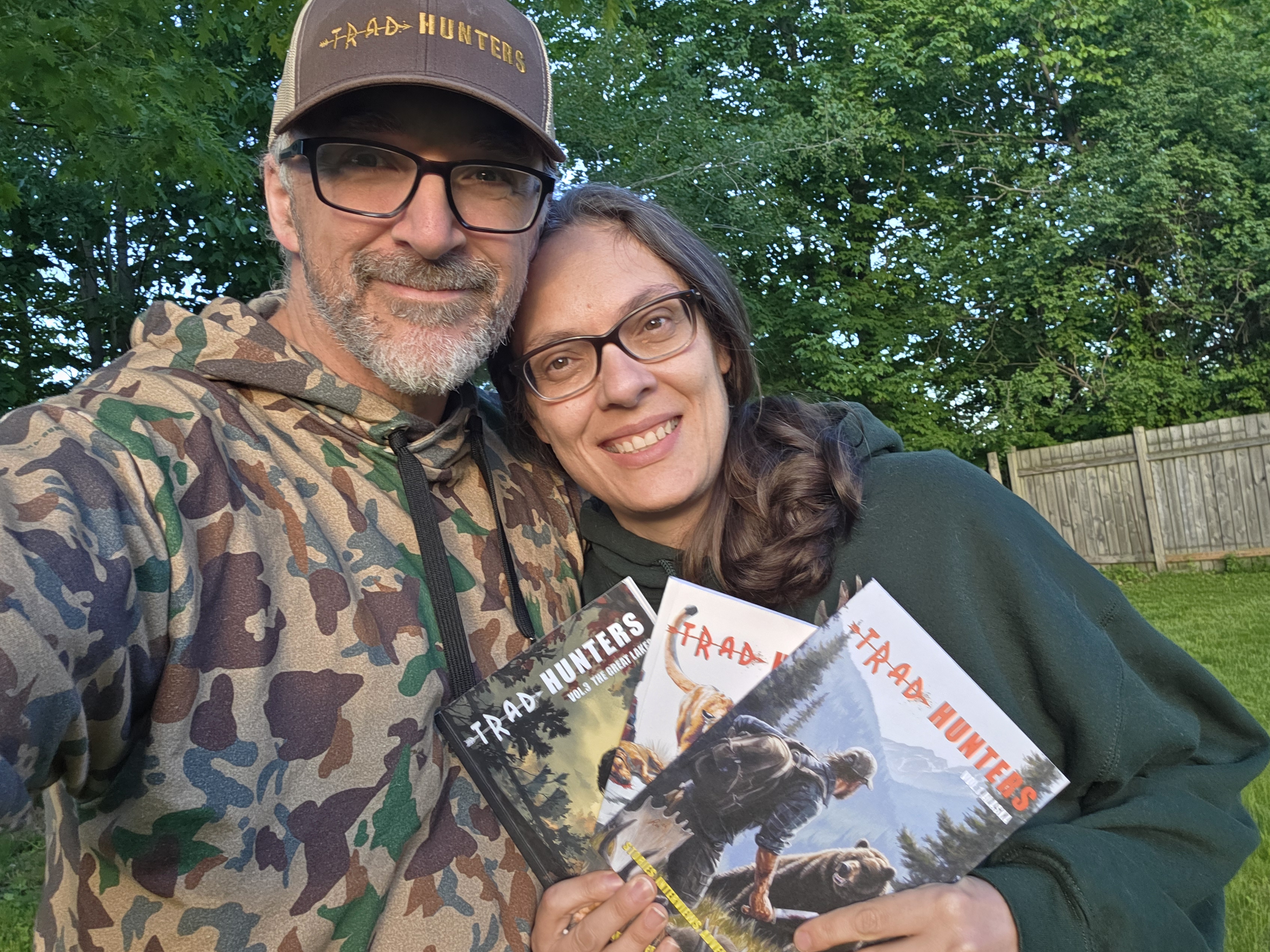
I had the chance to correspond with Ron and Marie and was very impressed by their handwritten personal notes they took the time to write in response to my questions. Later I discovered I was not alone in that treatment. They take the time to write personal notes to each and every customer. I guess that is the tradition of Trad Hunters.
While both are identified as creators of the magazine, Ron is the publisher and Marie is the editor. I had the pleasure of talking with Ron for this interview and what follows is the lightly edited transcript of the interview.
But first the soundbites:
On why print: “Being a retro looking magazine, it needed to be print, for one. Also, a lot of the customers who are bow hunters and stuff, they’re older. The demographic is typically like 44 to 65 plus.”
On why they reprinted the first issue: “When we launched, we just did a lot of the writing ourselves and had a couple good friends who would contribute their articles, which helped a lot. So, we added some new content, and we added new art and we just really wanted to make it match what we’re doing now.”
On the personal handwritten notes: “We do a handwritten note for everyone, every single one. So, it takes a bit of time, but before doing the magazine, we had an archery accessory business. And we would do that with our customers too.”
On the magazine’s elevator pitch: “It’s a gritty, no-holds-bar type of traditional hunting magazine that covers traditional bow hunting.”
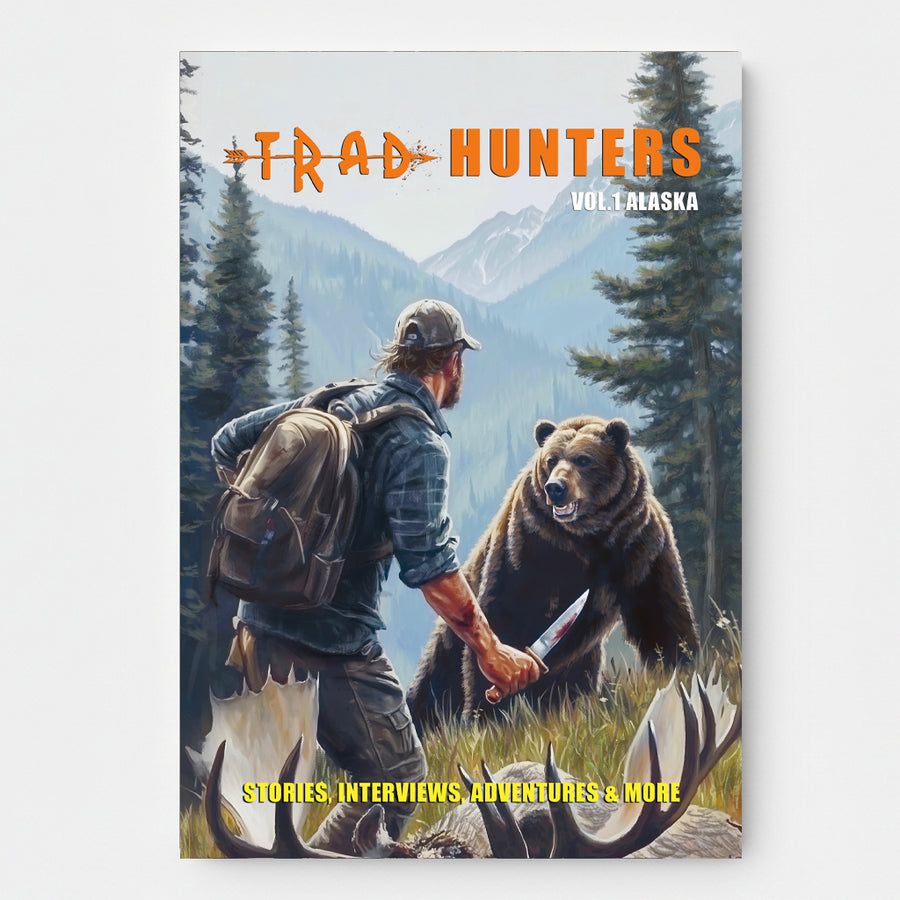
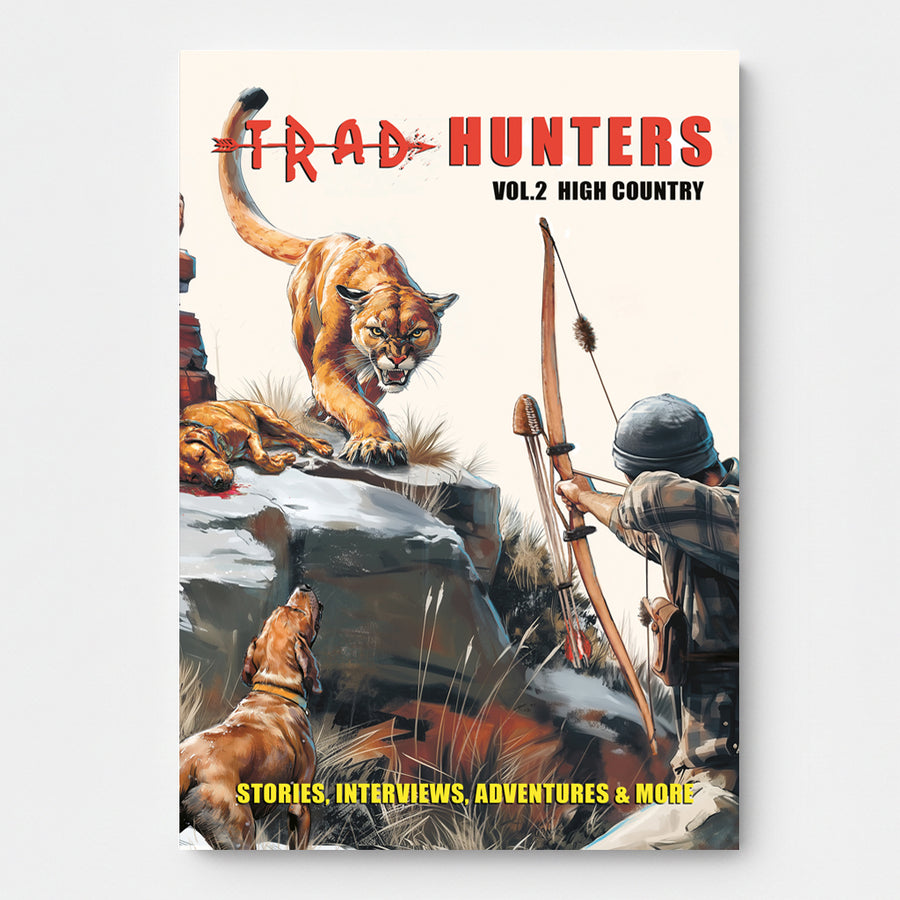
More on the elevator pitch: “It’s gritty stories that are not censored about hunts from real people, not just celebrities, that take you on adventures across the world. Each volume is dedicated to a specific theme. So, Volume 1 is Alaska. Everything is all about Alaska. Volume 2 is about High Country.”
On the mission of the magazine: “I’m just looking at it like we got something incredible to deliver that’s going to entertain you, teach you with legitimate things that you can use in the real world if you’re choosing to hunt or even survive in the wilderness.”
On the look of the magazine: “Wouldn’t it be cool if there was a magazine that looked like it was from that era, (the 1950s), now, but with focus on cool stories like Boy Scout tips, how to do wilderness things, survival stuff, like that, but look like it’s old, I think that would be really cool.”
On the magazine revenues: “But right off the bat, we did a patron thing where people can help support us even more. So, we changed everything right off the bat, the norms, and even advertising, we didn’t even have advertising. We’re not even doing any advertising going forward.”
On their goal: “We’re both thinking about making a better life for us and offer the best possible product and experience for anyone that wants to read Trad Hunters or is curious about it.”
And now for the lightly edited interview with Ron Notarangelo, co-creator and publisher Trad Hunters magazine:
Samir Husni: You’ve launched Trad Hunters one year ago. Did you feel that you needed a traditional platform for a traditional hobby or profession?
Ron Notarangelo: Traditional meaning like in print, right?
I think because of the nature of what we wanted to do with it, being a retro looking magazine, it needed to be print, for one. Also, a lot of the customers who are bow hunters and stuff, they’re older. The demographic is typically like 44 to 65 plus.
So, they prefer reading a physical book rather than something digital. That was only after the fact that we found that out. Our intention was to make it look like a retro style magazine from the beginning.
Samir Husni: In the one year since you started the magazine, what was the reaction so far?
Ron Notarangelo: So far, it’s been incredible. I think one of the challenges that we had was coming up with a price because we didn’t really know how many we needed to print initially.
We guessed and we did a perfect bound magazine, and not saddle stitched, which is a lot more expensive. We chose to do things that really were quality rather than just a traditional magazine. The paper quality we chose is significantly different than regular magazines.
So, that’s even more expensive. But we knew we wanted to make it like that. One of the challenges was figuring out how do we charge, a price that is high enough to cover our costs because we did not know how many to print.
We printed 750 and it costs quite a bit. We also needed to position it where the psychology of people is used to buying magazines, not books. They do buy books, but they will subscribe to magazines over books. So, we needed to use the magazine even though it’s more like a book.
Samir Husni: And you reprinted the first issue. Can you tell me more a little bit about that?
Ron Notarangelo: The very first one that we launched, we had a printer who printed the magazine digitally.
From the second one on we had everything printed on an offset press. So, it was a completely different type of way of printing.
The look is completely different. So, we sold out of the first issue, we printed 750 and then we had another thousand printed of the first one. And then when we sold out, we just started to market number two.
We had a lot of people come back and say, hey, I want to get the first issue, I want to start from the beginning. We didn’t expect to reprint volume one. We were just like let’s just sell it and then we’ll just move on.
We had such an overwhelming amount of people ask that they want to start from the beginning. So, we decided if we’re going to remake it, we might as well because the first one was even a little bit smaller than the ones we print now. It was five and a half by eight and a half inches.
Now, we’ve made it a touch bigger. It’s six inches by nine inches. So, we decided to reprint it so that it’s all consistent six by nine. And we figured let’s just add more stories in it. And when we launched, we just did a lot of the writing ourselves and had a couple good friends who would contribute their articles, which helped a lot. So, we added some new content, and we added new art and we just really wanted to make it match what we’re doing now.
Samir Husni: You take the time to respond to any request to buy the magazine or to order the magazine with a personal handwritten note?
Ron Notarangelo: We do a handwritten note for everyone, every single one. So, it takes a bit of time, but before doing the magazine, we had an archery accessory business. And we would do that with our customers too.
That was something that we brought over to the magazine because we want to show our gratitude and our appreciation for someone taking the time to invest in what we made. And so, we feel it’s a good thing to do to show our respect to the people who buy it.
Samir Husni: Can you give me like the elevator pitch for Trad Hunters?
Ron Notarangelo: The elevator pitch? It’s a gritty, no-holds-bar type of traditional hunting magazine that covers traditional bow hunting.
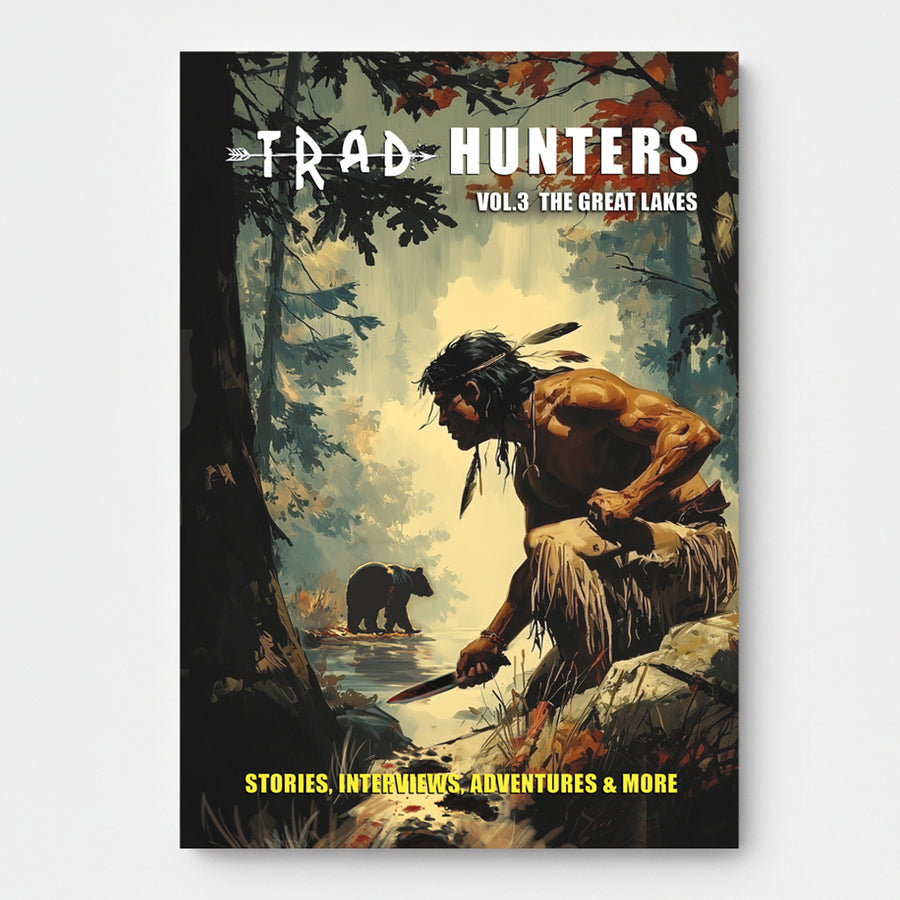
It can cover different types of traditional hunting. It’s gritty stories that are not censored about hunts from real people, not just celebrities, that take you on adventures across the world. Each volume is dedicated to a specific theme.
So, Volume 1 is Alaska. Everything is all about Alaska. Volume 2 is about High Country. Everything is about high country. And everything is made to look like it’s a vintage 1950s style to complement that. Back in those days, it was all about adventure. It’s not about being censored.
It was really embodied more wholesome times. So, that’s exactly what we deliver with Trad Hunters.
Samir Husni: And during this year, has it been a walk in the rose garden or you had some challenges?
Ron Notarangelo: Oh, we’ve had some challenges.
Because we’re based in Canada. Just a couple weeks before we launched the first magazine, the tariffs kicked in. But thankfully, publications are not a part of that.
It’s a part of the treaty so that publications like schoolbooks or books in general are not affected or are taxed. Thankfully. There are challenges now that the oil and gas situation has caused things to go up. Obviously, people are considering saving money somehow. But I’m not even going to look at that anymore.
I’m looking at it like we got something incredible to deliver that’s going to entertain you, teach you with like legitimate things that you can use in the real world if you’re choosing to hunt or even survive in the wilderness. It’s only $20 and it’s worth every single penny or more for what we’re trying to deliver. I’m not even concerned about it. There’s always challenges, I’m looking past that now.
I’m thinking about the value we’re going to deliver to people every single time that they choose to buy a Trad Hunters magazine. That’s all I’m focused on now.
Samir Husni: What gave you the idea? I know you had an archery accessory business, but what gave you the idea to create a magazine?
Ron Notarangelo: The idea was born in the kitchen with my wife.
When I was growing up, my mother would always go to the garage sales, and she would buy old Boy Scout and story books from the 1950s and read it to the read it to us when we were kids.
So, like, that type of look, and those adventure stories are always a part of something that I personally grew up with. I just had this idea flashing in my head when I was just talking to my wife, because I do a lot of the illustrations myself. I was experimenting with illustrating, a kind of a vintage style.
I just had this idea, wouldn’t it be cool if there was a magazine that looked like it was from that era, now, but with focus on cool stories like Boy Scout tips, how to do wilderness things, survival stuff, like that, but look like it’s old, I think that would be really cool. My wife was, yeah, that would be awesome. So, it was just an idea for almost two years.
I started talking to a friend who was a contributing writer in the first one. And he was like, yeah, this would be awesome, because he’s really involved in the bow hunting community. He said that this would be incredible.
I started kind of loosely developing it. And then when, when the Tard Hunters magazine happened, we had to shut down our other business, that day. We had to do the magazine; it had to work. We had to survive. And I knew it was either now or never, whether it’s possible, we’ll find out right now. So, the decision was made and we’re going to do it. That’s how it happened.
Samir Husni: If you and I are having this conversation in a year from now, what would you tell me that Trad Hunters accomplished in 26, 27?
Ron Notarangelo: We expanded globally; we grew our readers by 10,000.
We didn’t give up, we persisted, we advanced, we broke a lot of molds, it was very common for it to be seasonal, especially with hunting, we did not do seasonal, we did themes. It was very common for a magazine to be the traditional 81/2 by 11, the standard size, we went smaller. We did publish quarterly rather than monthly because the printing cost is very high.
But right off the bat, we did a patron thing where people can help support us even more. So, we changed everything right off the bat, the norms, and even advertising, we didn’t even have advertising. We’re not even doing any advertising going forward. So, in 2027, you’ll see Trad Hunters magazine not have any advertising, we’re going to be everywhere globally. And we’re going to go to the top.
So that’s where we’re going. 2027. And we’ll have we’ll have more volumes by then, too, obviously.
Samir Husni: Tell me before I ask you my typical personal questions, is there any question I failed to ask you about the magazine that you would like me to ask?
Ron Notarangelo: I don’t know. I think we covered a lot of the basic stuff.
Samir Husni: Are you a hunter?
Ron Notarangelo: I don’t get to hunt as much now because this magazine takes a lot of time.
One of the things that if you were to ask me in a year from now, what’s different is that we have more artists doing the work for us. I have hired people to do some of the graphic design because I had to do it up until now. Right now, the volume that I’m working on, I’m the one doing all the creative design. I must do all the InDesign work.
And I didn’t even know how to do InDesign before volume one, I had to remake volume one four times in two weeks to get it to the printer. I started to design it in Canvas. I had no idea even how to make a magazine.
I had to learn InDesign in a week. I’m going to pass this stuff off to someone who’s far better than me. And I’m going to stay focused on the direction where we want to go.
Keeping the look like the 50s in 2026. That’s the standard. It’s going to evolve. Everything does evolve over time. The winning combination is that vintage look, that colored paper, that makes it look vintage. We try our best, we’re not going to add in fake wrinkles and stuff, but we want it to look different. So that’s always going to be the same. It seems to be very desirable.
Samir Husni: If I come one evening unannounced to visit you at home, what would I catch Ron doing? Having a glass of wine, watching TV, reading a book, etc.?
Ron Notarangelo: It depends on the time of day.
I’ve been reading a lot more now. I’ve been taking the time to get back into reading physical books.
I got my copy of The Science of Getting Richright here. It’s just mindset stuff I’m working on right now. If you were to come in the evening, I would be hanging with my kids watching some TV with them or playing with them.
Anytime during the day, prior to what I just said, I would be in my office illustrating or working in InDesign. Plus, I got to do all the marketing stuff now. I’d be on a computer.
Samir Husni: What keeps Ron up at night these days?
Ron Notarangelo: Samir, it’s a tough question. I mean, there’s been a lot happening in the last couple weeks with my family, just a lot of personal family stuff keep me up.
Getting this magazine out, fulfilling orders to customers, making sure that we’re timely making the magazine, there’s so many things that I must do, and my wife has to do because she’s equally doing everything that I’m doing. We’re both thinking about making a better life for us and offer the best possible product and experience for anyone that wants to read Trad Hunters or is curious about it.
Samir Husni: Thank you and best of luck.


Leave a comment