
CIVVY Magazine: A New Ink-on-Paper Lifestyle Magazine For British Veterans. A Launch Story With Editor-in-Chief Andy Simms. The Mr. Magazine™ Interview
November 18, 2026Magazine publishing has always been about finding a niche and finding content to fill that niche and its audience. CIVVY, the new lifestyle British magazine for veterans found that niche and is doing something about it.
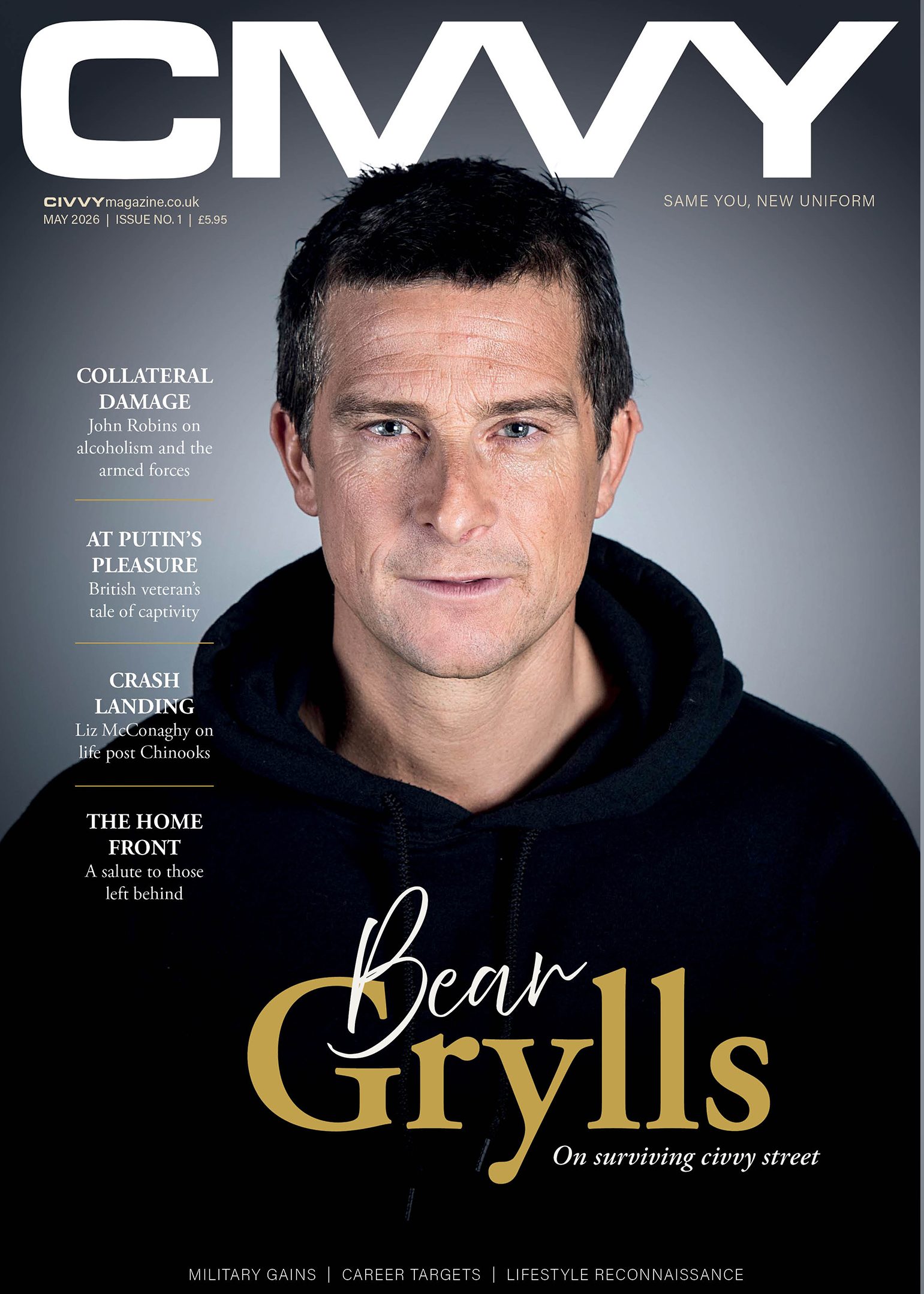
“There’s nothing that talks about the next chapter, talks about veterans of Iraq and Afghanistan now who are young men and women still who are embarking on second careers and writing exciting new chapters. There was no publication that looked at that. Yes, there’s adversity and we don’t shy away from that. But this community have so much to champion, so many success stories to share,” Andy Simms, editor-in-chief of CIVVY told me in a very pleasant conversation about his journalistic background and the story behind the launch of the new magazine.
We spoke about the role of print in a digital age, and the role and dangers of AI in the creative and journalistic sphere.
A new magazine that is out there to serve, entertain and educate a host of people who are adopting and returning to civilian life. As the magazine’s tag line says, “Same You, New Uniform.”
So, without any further ado please enjoy the launch story of CIVVY as told in this Mr. Magazine™ Interview with Andy Simms, editor-in- chief.
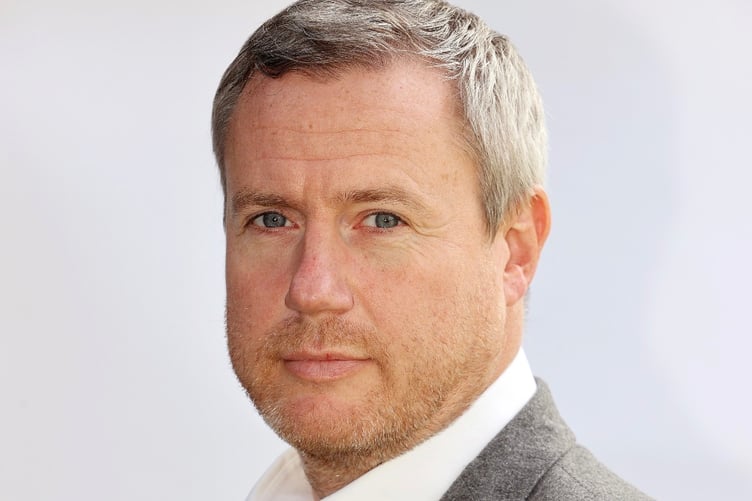
Samir Husni: My first question to you is what is CIVVY?
Andy Simms: What is CIVVY? Okay, I’m going to tell you the story behind CIVVY, if I may. It begins by, I need to talk about my own career. I studied multimedia journalism in university many, many years ago now.
The Background
I was working for daily newspapers on a sports desk. And because of where I worked, boxing was a big popular sport because the army boxing team were based close to my hometown.
They were at the time the best amateur club in the country. I found myself watching lots of army boxing matches. It was the army boxing coach at the time said, have you considered joining a magazine called Soldier magazine, which is the official magazine of the British army.
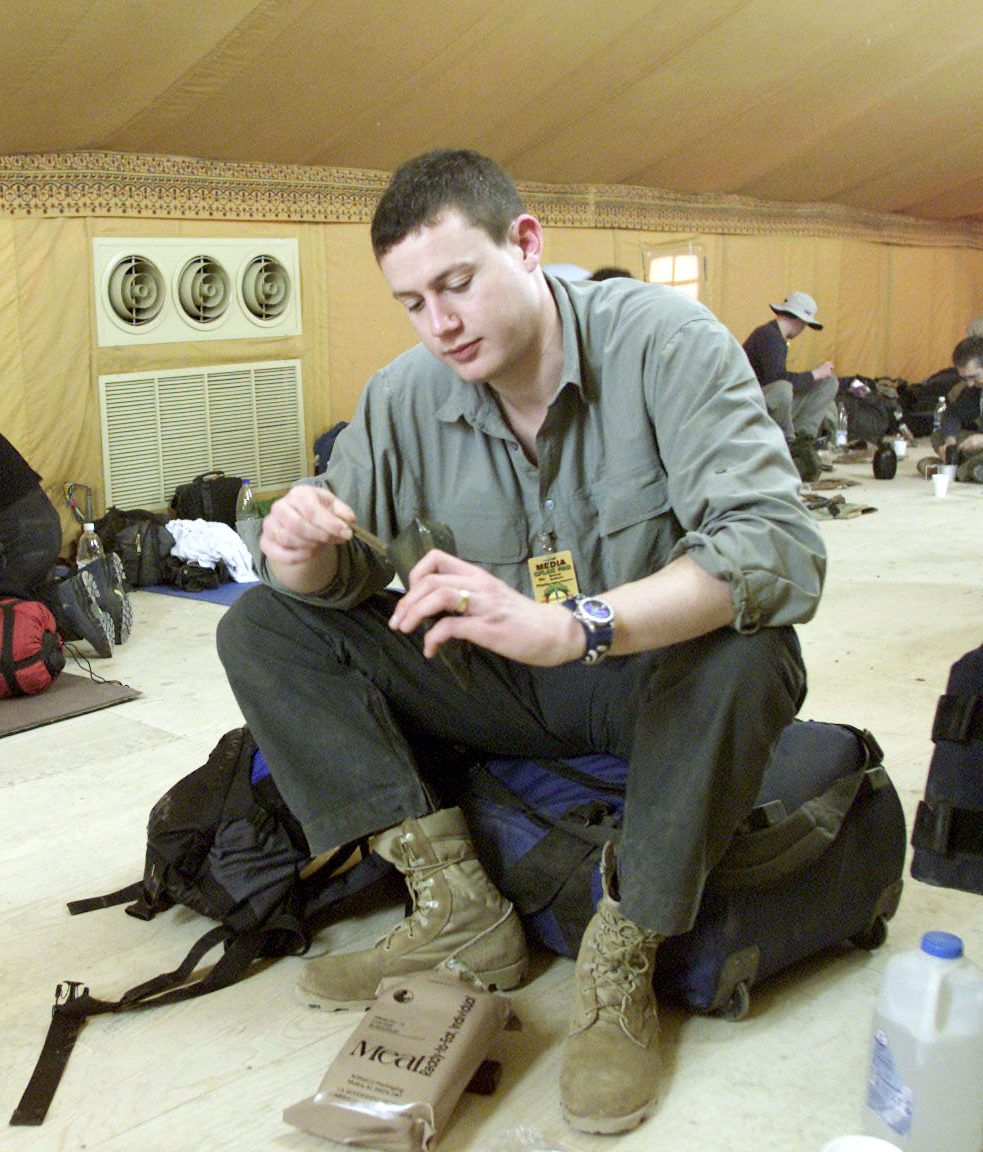
Despite having grown up near a military town, and despite having grandparents who served, I’d never had any affinity with the military, no desire to join the military or anything like that. But the prospect of joining this magazine and just covering military sport really appealed to me. So very long story short, I joined Soldier magazine on September 11th, 2000.
This was a monthly magazine. On day one, the editor pulled me aside and said, you need to slow down, you’re making us all look bad. Because I’d come from newspaper with daily deadlines.
This is a monthly magazine. And I’d written the sports section in a day, effectively. So, I said, that’s fine.
But I’m going to be bored. You need to let me loose on some of the news and features. And at the time, the British forces were in Kosovo and the Balkans.
I spent my first year on the magazine, deploying, feeling like a bit of a war hero. But never under any real threat, particularly in Kosovo. Obviously, a year to the day that I joined the magazine, the planes hit the Twin Towers and the world changed forever.
My career was turned on its head. I’d had a grand plan of staying for two years and then returning to newspapers. But obviously, we suddenly found ourselves, or the army found itself in hot and sandy places.
And I found myself there reporting on them. The army, frankly, got under my skin. I climbed the proverbial ranks from being a reporter to assistant editor, to editor, to editor-in-chief, and ended up staying for 12 years in the end.
I decided to then leave the magazine and branch out on my own. But the community remained close to my heart. And as a company, we took on what is the Army Families Federation magazine. They’re a charity that looks after the families in terms of welfare. And we still, to this day, my company publish that magazine for them. We don’t write it; we just pay to print it each quarter for them.
Despite thinking that I was leaving Soldier magazine and actively looking for a change of scenery, because of my experience of working with the military, I found myself courted by the defense industry who wanted me to tell their stories. I’m now also the editor of the British Army Review, working for a think tank, the British Army’s think tank at the Royal Military Academy Sandhurst. And I work for a US think tank, the Battle Research Group.
I was contacted probably about a year and a half ago, by an Army veteran who obviously understood my professional background in magazines, etc. Soldier magazine certainly during my tenure was hugely popular, hugely successful. We won best magazine awards back-to-back.
He contacted me just to say, he was running a veterans news website at the time, and said, look, I want to launch a print product. I want to do this. Can I just pick your brains? So, I probably had a chat with him for about an hour or so.
And you’ll know this as well as anybody else. I probably spent most of that hour telling him all the reasons not to do it. How tough the industry was, how much work’s involved, how ad revenues and distribution models are difficult, and you need a big team, etc.
But being an ex-military man, he put the phone down and promptly ignored all that I’d said and came back to me six months later and said, look, I’m going to pull the trigger on this. I’d rather do it with you than without you. And then, you know, almost having volunteering Tourette’s said, well, OK, I’ll help you.
It’s still a community close to my heart. And that’s where we are.
What is CIVVY?
What is CIVVY? CIVVY is a magazine for all those who’ve served, regardless of service in terms of Army, Navy, Royal Air Force.
Why? Because there was nothing out there like it. People tended to leave. And every conversation I’ve had with a veteran since is when you’re in the military, you have a very clear identity, a very clear purpose. The day that you leave, some really struggled to find that sense of purpose again. While there’s a few resettlement titles that talk about getting your resume in order and translating your military skills to civvy skills. There’s nothing that then talks about the next chapter, talks about, you know, you’ve got veterans of Iraq and Afghanistan now who are young men and women still who are embarking on second careers and writing exciting new chapters.
There was no publication that looked at that. Yes, there’s adversity and we don’t shy away from that. But this community have so much to champion, so many success stories to share.
And that’s what CIVVY is. It’s a celebration of service, but also a celebration of the next chapter. Unlike other resettlement titles, as I say, it’s a lifestyle magazine.
It covers first-hand accounts of service, personal accounts of success post-service. But then it looks at broader travel, motoring, entertainment, the whole gambit really. And it’s a coffee table keep. We’re deliberately print first, not digital. Like you, I’m still a fan of print magazines. I still believe there’s a place for them in this world.
I still believe that people will continue to push back from digital, particularly for long form content. We spend enough of our lives looking at screens as you and I are doing now. But there’s nothing quite like sitting down with a good quality publication full of professional writing, with a tea or coffee, a beer if you want, and relaxing and enjoying it.
Samir Husni: That was my next question to you is the print magazine different than going online and searching and Googling?
Andy Simms: I say it’s how you consume media. I’ve got two adult sons now, two young men who have grown up, obviously, with media and consume media very differently to how I do. But instilled in them both is a love for reading.
We will often capture, catch them sat down with a book, sat down with a magazine. Everybody leads such busy lives and, the immediacy of finding things online is great. But people consume print differently. I don’t think any long form writing lends itself well to the digital world.
We have a supporting digital issue. Should people wish to read CIVVY online? Absolutely, we’re not stopping them. But we genuinely believe it’s a magazine to be savored. It’s a magazine to sit, read, pick up, put down, come back to. And for that reason, we’ve deliberately invested in print. It’s on high-quality paper stock.
It’s what in the UK we’d call a coffee table read. It looks good. It feels great. It’s and if you’re a print man, it smells beautiful.
Samir Husni: In this age of AI, what role AI plays in the creation of the magazine? Or is it all humanly done?
Andy Simms: It’s all done the old-fashioned way. I’m a journalist.
Why would I want to encourage the use of AI, particularly for writing? I’m sure AI is maturing by the day. It will become increasingly difficult to tell the difference. But I do not believe AI can tell the story as people can tell stories. It’s a quality I can tell, and I’m sure discerning readers can tell. And equally, we want to be faithful to people’s accounts and true to them. So, it’s very much providing a stage for veterans to share their stories on.
And whether that’s them writing themselves or leaning on us as professional editorial team to help them tell that story.
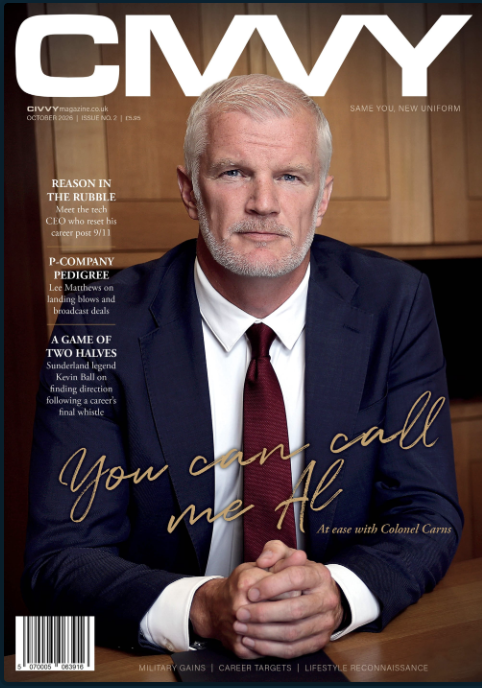
Samir Husni: You have two issues now under your belt. Has it been a walk in a rose garden?
Andy Simms: No, no, no, it hasn’t.
It’s as I’m sure you appreciate, any publication is hard work. And I’m probably a victim of my own success or my own standards, I would say, is that when you’re producing something in print, it’s there for a very long time. So, quality matters, I believe, and quality matters for many reasons to be credible, etc.
But the magazine is there to endure. And we know that if we make a mistake, and we’re human, so we will make mistakes. But that will be there for everybody to see.
Every effort is taken editorially and by our design team to create a product that is polished. So that is an undertaking. And that’s not even touching on the business behind a magazine. Sorting out distribution, marketing, every element, managing the print contract, etc. And we’re a very small team. This is not a full-time job for any of us.
Samir Husni: And what was the most pleasant moment? I mean, since you launched the magazine, what was the aha moment that brought joy to your heart?
Andy Simms: I would say the moment we received the first issue back from the printers. You can get so embroiled in the hard work and it can feel torturous. But as soon as you send that magazine off to print, you can breathe that sigh of relief.
Then to receive it back, and to start hearing from the veteran community that this was different, this felt different. This was something that they wanted. You feel almost mission accomplished.
We’ve done what we set out to achieve, because you never know. It’s while we’ve done our research and we had a strong inkling that it would be well received. You don’t know until it hits the market.
To hear veterans commend us for our efforts. The success of any magazine is your readers’ interaction with it. Such was the engagement with readers and people wanting to submit copy, people wanting to talk to us. I’m certain we will never struggle for content with the magazine. There’s a wealth of good stories, a well of content that will never run dry.
Samir Husni: I’ve noticed that we are seeing more new magazines, ink on paper, coming to the market since COVID. Why do you think this is taking place? Why do you think there’s a resurgence of printed magazines?
Andy Simms: I hope that it is a trend. I don’t mean to disparage digital news services or digital magazines. There’s many, many very high-quality ones out there.
But I do think that there is an appetite now among readers to, and maybe it’s because of COVID. Maybe because people suddenly found they had lots of time on their hands and wanted to sit down with a good book or a good magazine. Or maybe it’s because we had to spend our lives in front of screens and that was the only way we could consume media.
But it’s difficult because the digital world is as it is. It’s hard to find refined copy and content that’s curated, as carefully curated. Again, without being cynical, it seems that a lot of digital media is about immediacy, short form, designed to be consumed and scrolled through it, far and forgotten.
Whereas print magazines provide something a bit different, that classic entertainment, for want of a better word. But can I put my finger on it precisely why? No, I’m just encouraged that print magazines do appear to be on their way back. And again, anecdotally, that’s cross-generational.
It’s not just people of my age who grew up with them. There are examples of younger readers turning to print publications.
Samir Husni: Before I ask you my typical last two questions, is there any question that I failed to ask you that I should ask you about CIVVY?
Andy Simms: That’s a difficult one. I’ll hear the last two questions and come back to you on that.
Samir Husni: If I come to visit you unannounced, I knock on your door one evening, why do I catch Andy doing, reading a book, watching TV, having a glass of wine? How do you rewind at the end of the day?
Andy Simms: You could potentially catch me doing all the above.
I’m the father of two sons, as I say, who are both now at university. So, I’m at a different stage of my life. I work a lot because I work for myself. It’s out of necessity. But because, as I alluded to before, I’m very passionate about what I do. I still, to this day, enjoy writing.
But of an evening when I do get to shut the laptop, you more than likely find me with a glass of wine. I don’t get to read as much as I used to. And maybe part of that is because that’s my day job.
So, tired eyes at the end of the day. But I do still read. I still consume a lot of TV, probably like most people.
Samir Husni: And what keeps Andy up at night these days?
Andy Simms: AI. AI is a worry. I think it’s a threat to the creative industry.
I genuinely believe that. I see big positives of it. But it’s a shame when there’s so many people who are exceptional writers that you can see in the future being denied the opportunities that once existed.
You can see that particularly in the UK. Print newspapers are in big trouble. They are struggling.
What keeps me up at night is the world’s not as safe as it once was. I think now, more so than ever, we have reasons to worry. But then, you know, working in defense probably exposes me to that threat more than others.
Samir Husni: Thank you and all the best.
30


Leave a Reply