
Vicki Whiting On A Life-Long Mission: Get Kids Involved With Ink On Paper Through Kid Scoop News. The Mr. Magazine™ Interview.
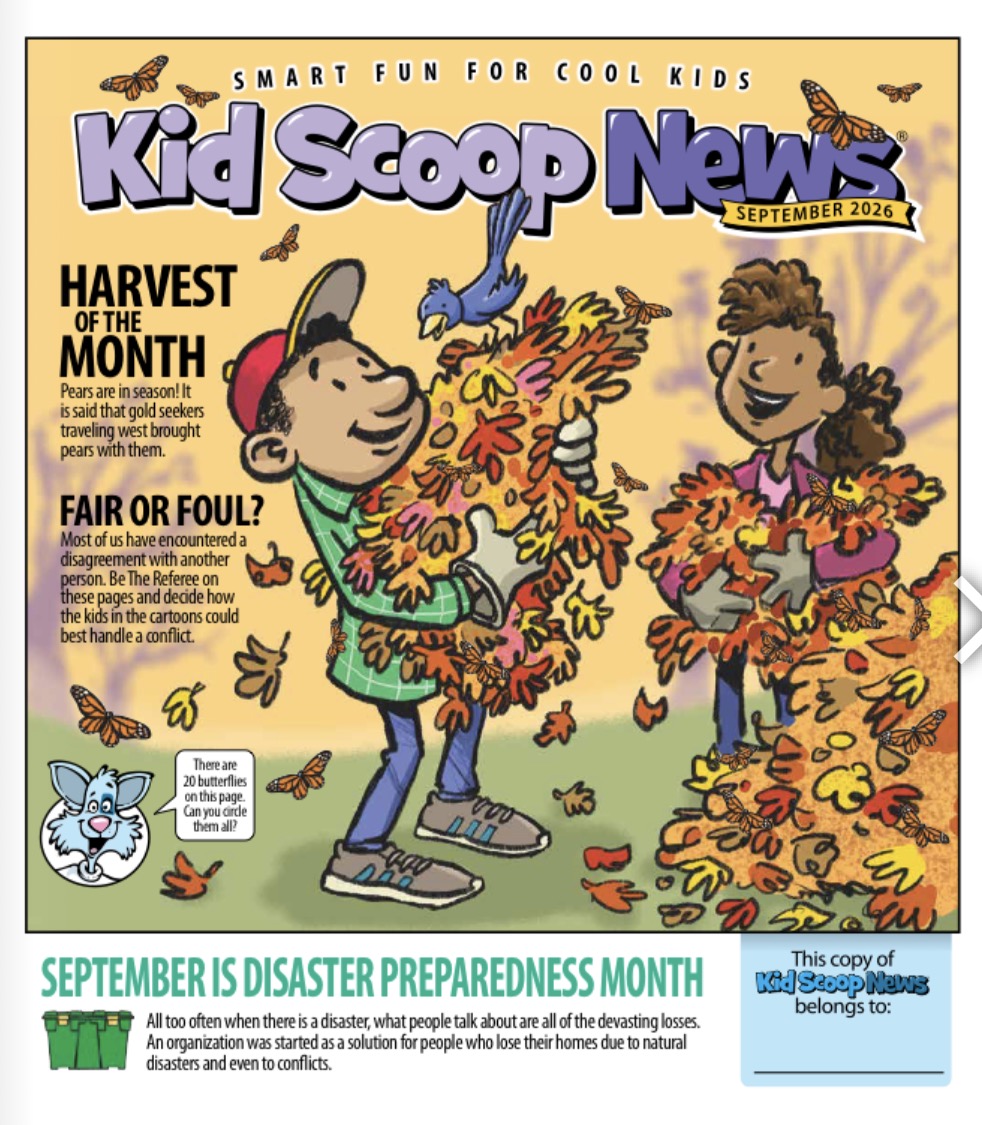
November 10, 2026From a page inside more than 400 newspapers to an independent newspaper tabloid published once a month, Kid Scoop News, is the life-long work of a former elementary school teacher who saw the need for children to engage in ideas about their communities and help improve their mental capabilities and literacy levels at the same time.
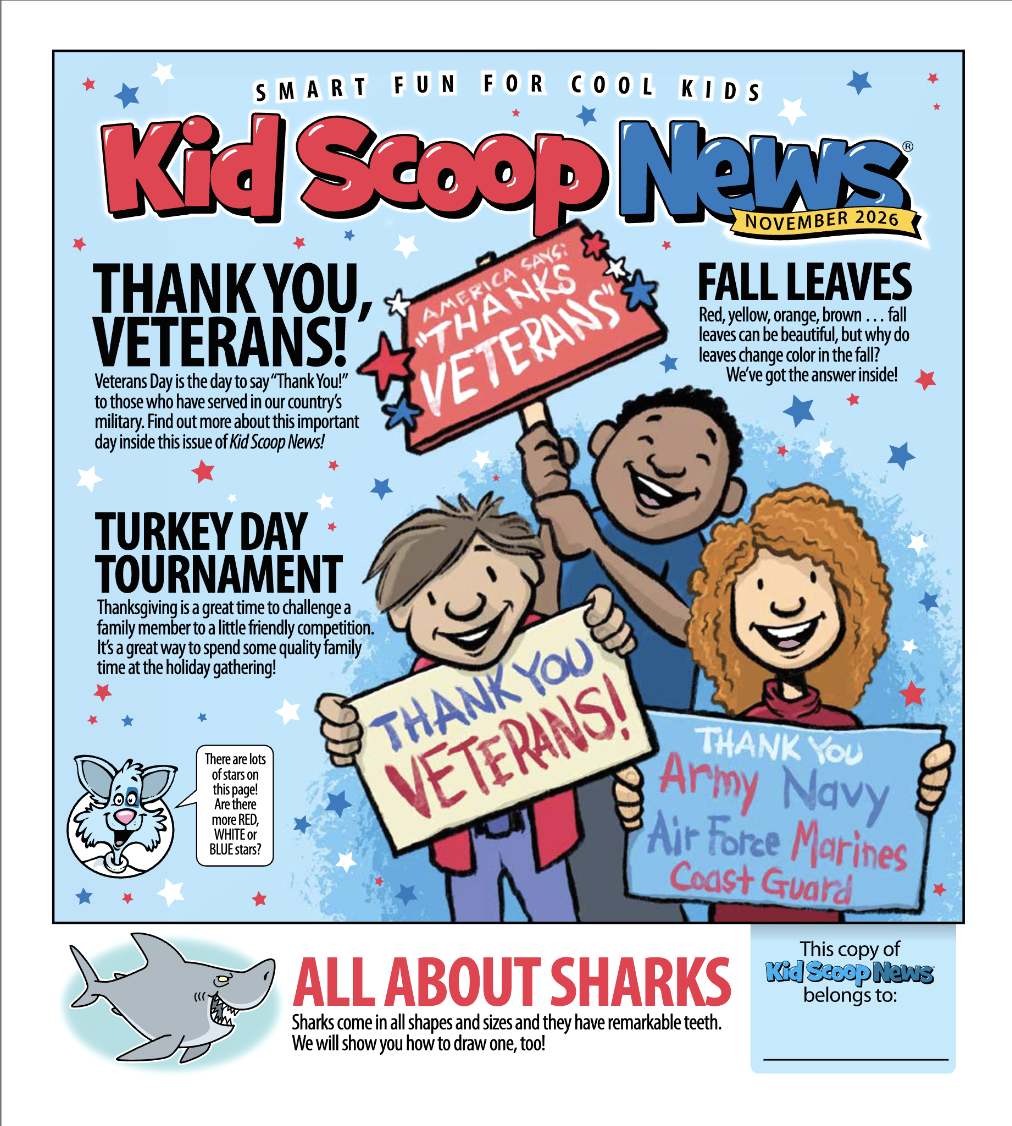
Vicki Whiting is that teacher and innovator who launched the Kid Scoop page in newspapers across the country earning the title of “one of the top one or two self-syndicated features in the country,” from Editor & Publisher magazine. Vicki is in the process of retiring after years in charge of Kid Scoop News, but she has plans for her two colleagues, Eli Smith and Jeff Schinkel, to continue with the tabloid.
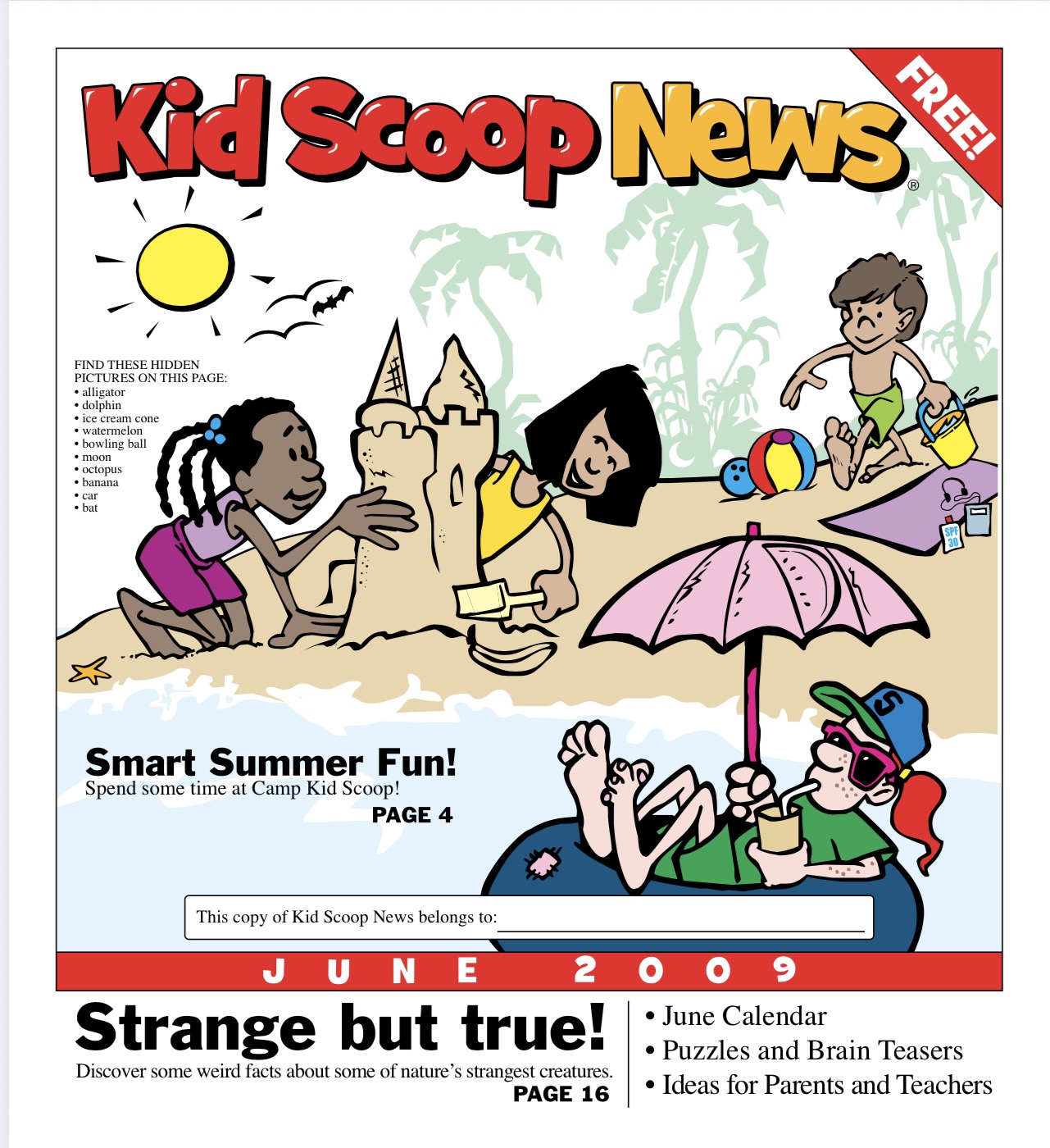
Talking with Vicki, alongside of her “biggest supporter” husband Jim Silverman, who is a former librarian, history buff, and archivist of old kids magazines and prison magazines (he served for years as the librarian at the Louisiana State Penitentiary: Angola), we relived the story of launching the syndicated page in newspapers to launching the ink on paper tabloid newspaper in 2009, ironically the same year the iPad was introduced.
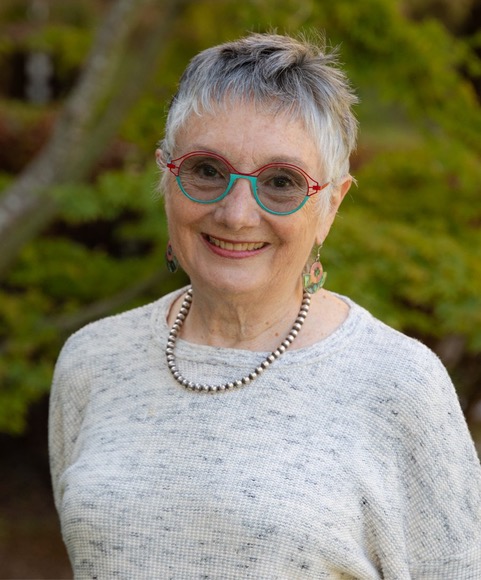
A passionate woman with a mission and a story illustrating the power of print in this digital age, please join me and read this lightly edited Mr. Magazine™ interview with Vicki Whiting, founder and editor of Kid Scoop News.
Samir Husni: My first question to you what’s the genesis of Kid Scoop News? I mean, you started this thing 17 years ago and still going. what gives?
Vicki Whiting: Well, and before that, I was a teacher.
I taught third grade. And in third grade, our curriculum for social studies is about our community. I was and still live in a small community in Northern California.
There’re no textbooks that will write a curriculum on this community of Sonoma. So, in a brainstorming session with my students about where we’re going to learn about our community, it’s my students who said to me the newspaper. So that’s how Kid Scoop started originally, I went down to my local newspaper publisher which was family owned at the time.
I said, I think we should have a page for kids to have a doorway so they can start to open the paper, see what other things are around and a great way to connect with their families and talk about the community. He thought that was a great idea. So, we started, some of his colleagues, other publishers out here in California saw what he was doing, they wanted to do it too.
Fast forward by about 2008. Our weekly page was appearing in about 400 newspapers around the country. Editor & Publisher magazine did an article and labeled me as one of the top one or two self-syndicated features in the country.
Anyway, at that time, lot of factors came into play, the economy, the recession, the advent of the internet, all kinds of different things were impacting. And I used to work a lot with programs that were called Newspaper in Education (NIE).
So, we were always a part of the newspapers, a bigger educational program. And they were cutting their educational programs. By that point, I think there’s probably less than 10 left in the country now.
Anyway, my team and I, we were concerned if this market is going to disappear. One of the things we knew was, we would get contacted by teachers all over the country and saying, there isn’t a Kid Scoop in my local paper, how do I get it? I was facing a decision; do I go back to teaching? Or do we come up with a new way of putting our content out there? I have two wonderful people who work for me, I didn’t want to put them out of work. We reformatted from our archives, the 24-page tabloid publication, printed a first run of a couple thousand.
I sent them out to 100 teachers here in Sonoma County, where we live. And because I had been working in NIE for so long, the model I used was, if the teachers will order it, and they want it, I will go out to the community to raise sponsorship dollars. I didn’t want to do advertising sales.
So, I sent these out to 100 teachers around the county. I always add the caveat; I didn’t send them to any of my friends. I wanted it cold. Do you like this? I said, would you use this? If you would, I will try to find the funding for it. Out of 100 teachers, 80 got back to me. And right then they were starting to have that transition away from print.
More kids were going home, nothing to read in the homes. And they were very excited to have something. Because I was a teacher, and I’ve also been a curriculum developer, while my content looks playful and fun, it’s all connected to elementary school curriculum.
That was the beginning. What we have done now, we have a nonprofit organization, I’m on the board, I don’t work there, that publishes it here in Sonoma Valley. And then I work with five other organizations that publish it where they are.
We have a publisher in Southeast Texas, that publishes it, that means he does the outreach to the teachers, he gets the orders, he finds the funding, gets the papers to the schools, does all the marketing and everything, he just simply pays a licensing fee to us. And we also have that relationship with Nebraska Press Association, North Dakota Press Association, another publisher for a small region in Texas and Baton Rouge, Louisiana.
Samir Husni: When you decided to do the tabloid, the ink on paper in 2009, which was the year of the birth of the iPad, did somebody come to you and say, Vicki, are you out of your mind? This is the digital age and you’re doing a print publication.
Jim Silverman: There was a lot of pressure on Vicki to go digital.
But you held your ground.
Vicki Whiting: Well, what I did, and what I’ve always tried to do is, it’s not up to me by myself, what did the teachers want? So, we do a teachers’ survey at the end of every year. And one of the questions was, would you want this digital only, print only, or digital and print? The teachers overwhelmingly, like 98 percent, we want the print.
We do put the digital up on the California site, but mostly that’s used by teachers to see what’s coming up for their planning.
Samir Husni: Since you started it, has it been a walk in a rose garden or you had some challenges and how did you overcome that?
Vicki Whiting: Oh, there’s been a lot of challenges.
Well, reaching the schools has not been the challenge. Our biggest challenge is keeping up with the demand for the funding for the publication. And one of the challenges there was nobody knew who I was.
Nobody knew what is this thing called Kid Scoop. So, we had to spend a fair amount of time in the early years just getting our name out there. And I’m talking now in California to our donor community here, because what we did basically was we proved the concept out here in California.
Then I took that to these other organizations and publishers and said, you know, here’s a way you can have a new revenue stream for your organization. You can really help impact the terrible, terrible literacy scores we have. I would say really, it’s been in the last year where we’re starting to see a real upsurge in, oh my gosh, we have got to get kids off of digital devices.
So that’s changed. But yeah, I would say, you know, my husband knows, we spent a lot of money. It took a while to get there. I was a teacher and a writer and not always that creative as a businesswoman, but I learned.

Samir Husni: So, tell me, with all the challenges, what was the most pleasant moment? When did you feel like, wow, look what I’ve done?
Vicki Whiting: For me, it’s the excitement of the kids when we bring Kid Scoop News in.
Our teachers tell us kids cheer. We have teachers tell us they must hide the publication when it arrives because the kids can’t wait to get it. When we first started, Jim and I, we drove around to the schools and delivered the papers.
It’s just so nice to walk in a school office and have Kid Scoop’s here. That for me and a lot of validation coming back, from the research and what our teachers are saying that how badly our kids need access to reading materials, non-digital that are appropriate for them. What we add is this extra component of the kid, a little added exposure to some of their curriculum topics.
For me, I’m a school teacher. The bottom line is how the kids respond.
Jim Sliverman: I want to chime in on that.
There’s a Vicki’s artist and an IT guy have worked with Kid Scoop for 30 years and 25 years, maybe each. And part of what’s going on in Vicki’s retirement is largely turning over the syndication business to these two long-term employees because over the many years we created, began to create an index of pages for sale on Teachers Pay Teachers.
We quickly came up with about 600 pages or so. Vicki’s archive is very deep and rich and interesting topically. We are still producing a page every week.
We still have about 125 newspapers who publish Kid Scoop in their papers. We have continued to grow our archive. I would say at least 90% of our content is evergreen.
Vicki Whiting: We’ve occasionally done things that are more reflective, but we’re not a current event. We only have, for example, if there’s a big hurricane, we’ve done a page on what is a hurricane? The COVID coloring book.
We talked about masks and COVID during COVID. I did a special, a separate publication, a COVID coloring and activity book, because I couldn’t find anything for kids to help talk to them about this. And won several awards.
One of them is the World Health Association that I didn’t even apply for it. I don’t know how they found it, but they have a pretty strict protocol on what they put on their website as a resource. And they reviewed my work and asked if I would give it to them to put up on their website, which I do so people can go and download it.
It’s kind of historical now. Also, I may add, the Penny Drive after 9-11. Well, that wasn’t me by myself, but after 9-11, a group of us newspaper and education people promoted kids collecting pennies or coins.
We called it Penny Power. And our goal was to raise enough money to help one of the fire departments replace one of the fire hoses, because there were 12 or 13 fire trucks destroyed that day. We ended up raising enough money for a Brooklyn fire department to buy a completely new fire truck.
And the great thing about that was we could tell kids, look at what you can do. Collective action, you know, adds up.
Samir Husni: Let me ask you one question, Jim. Were you a doubting Thomas or you were a firm believer from the very first day?
Jim Silverman: Well, I fell in love with the woman, and she’s so brilliant and inspirational that she sets a very high bar I need to share with you. I also should mention that in the process of Vicki’s retirement and cleaning up her office, we put together four boxes, four archival boxes of newspaper and education, teacher guides.
Vicki Whiting: Jim has always been supportive and never pushed me to give it up even when we did go through some really tough times and did question whether we should continue this or not. He basically left it up to me and didn’t pressure me either way, which was important.
Samir Husni: If you and I are having this conversation a year from now, what would you tell me you’ve accomplished in 2027?
Vicki Whiting: Well, I’m close to successfully turning over the syndication side of the business to my key staff, Jeff and Eli, and I’m writing less. We will be in Spain. And doing some writing, you know, doing that. But the big thing I will be focused on other than the transitioning out of running the syndication side is hopefully to develop a couple more publishing partners.
I’m in conversation with several other press associations right now. They’re very interested. It’s just, you know, the press association’s situation just seems to get worse every year. They’re losing members. They’re not sure what they should be doing. It’s not lack of interest.
It’s just their plates are so full. I’ve told them, I said, you know, you need to just go out and get a $50,000 grant to hire the people you need to do this.
Samir Husni: Tell me, as a teacher, you said almost 98% of the teachers said they wanted print only. Why do you think is that? Why do you think teachers love print and ink on paper?
Vicki Whiting: Well, historically, I think it’s because we know mental development requires hand-eye coordination. Kids focus better when they’re reading in print. Now I’m in print, but you’ve got a history in this, but you must also look at our design, which is equally important.
The white space, the small boxes of text, the interactive puzzles that are not just hand-eye coordination, but also that pulls kids in. And then sometimes you’ve got their attention. And then that was fun.
I’m going to look around and see if there’s anything else I can do. They see an interesting picture, they do that. It’s not like some recreational digital programs for kids that move quick and constantly changing.
With this, you sit down and you see kids sit with it and they’ll sit. We’re talking 10 minutes, 15 minutes, which is a lot these days. Just sitting there, looking at doing their puzzles.
As teachers, we encourage this, have a lot of the students when they do it, work in pairs or trios and talk about, help out each other. Nowadays, we know the research that’s coming out about the impact of digital on the brain is very shocking. And I think there’s a nostalgia factor.
Most of our teachers still kind of grew up on Highlights. I get compared to Highlights a lot. And not because I look like it or my contents the same, but it reminds people of their good feelings they had when they got their Highlights magazine.
I remember when I used to get Highlights. So there’s something special and holding something in your hand. This is mine. The kidss put their name on the cover of every issue. I think that’s very important.
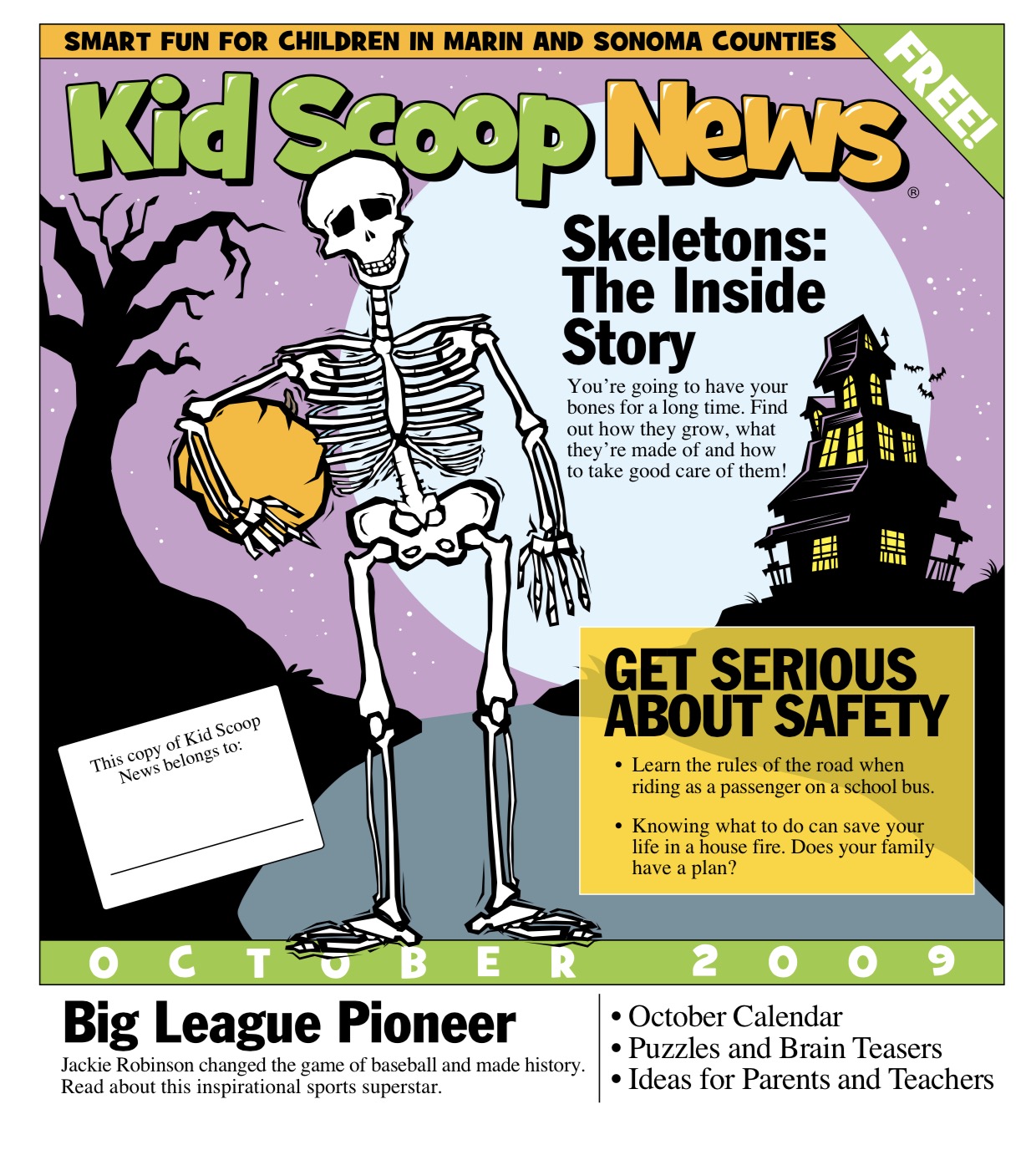
Each copy on the front, it says that this copy of Kid Scoop News belongs to, and you write your name in there. Then you have something. And I had a parent tell me once, she says, oh my gosh, I tried to recycle your paper, and my son was not happy.
Samir Husni: Before I ask you my last two typical questions, is there any question that I have failed to ask you? I need to ask you?
Vicki Whiting: Well, probably the missing element. Most of our focused in fundraising outreach and the work we do is to address the literacy crisis, youth literacy, and how we play a role in that.
But the other thing I’m very concerned about and started from the very beginning is civic engagement. And that’s why for me getting kids to read something in the newspaper. So, while we don’t have that same level of publishing inside newspapers and Kid Scoop News, as I said, is not current events, but it’s printed on newsprint.
I regularly do like media literacy, understanding fact and opinion. We have a parent page in which a couple times a year, at least, I advocate that they subscribe to their local paper. So, it’s sort of the subtext of a lot of what I do is what is journalism? Helping kids to become aware of that and how to navigate this information tsunamis that they get every day.
Samir Husni: What’s the current circulation of? Kid Scoop News partners.
Vicki Whiting: We’re probably around 100,000 to 125,000.
Samir Husni: If I come one evening, unannounced knocking on your door, what do I catch Vicki and Jim doing? Having a glass of wine, watching TV, reading a book?
Vicki Whiting: I’ve been reading a book.
Jim Silverman: If it’s summer, we’re sitting in our backyard. As we get older, we don’t drink the wine so much.
Samir Husni: And what keeps Vicki up at night these days?
Vicki Whiting: Oh, that’s the wrong question.
Everything keeps me up. I’m obsessive. No, I would say, well, we have two sons. I’m always thinking about them. Unfortunately, neither of them wants to take this over, which I would have liked. But, you know, they’ve got their own path.
In terms of the business, I think what I sure hope we can maintain enough revenue to keep it going. I would like Eli and Jeff to be able to get through to retirement. They’ve spent a better part of their careers building this project with us. That would feel to me like this is a business that served the purpose.
It had a mission. It funded a few people to have a somewhat okay lifestyle, not rich, but it’s all work we loved. We enjoy working together. We enjoy the creative process.
Jim Silverman: You’ve touched a lot of kids. A lot. Millions, over the years.
Samir Husni: Thank you and keep up the wonderful work.
30


Leave a Reply