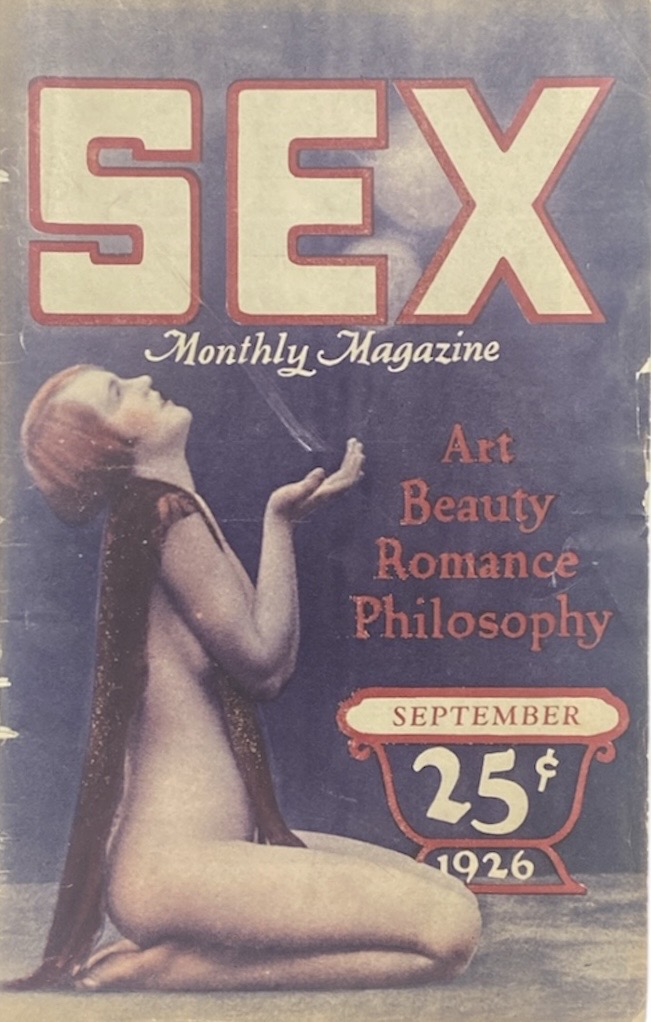
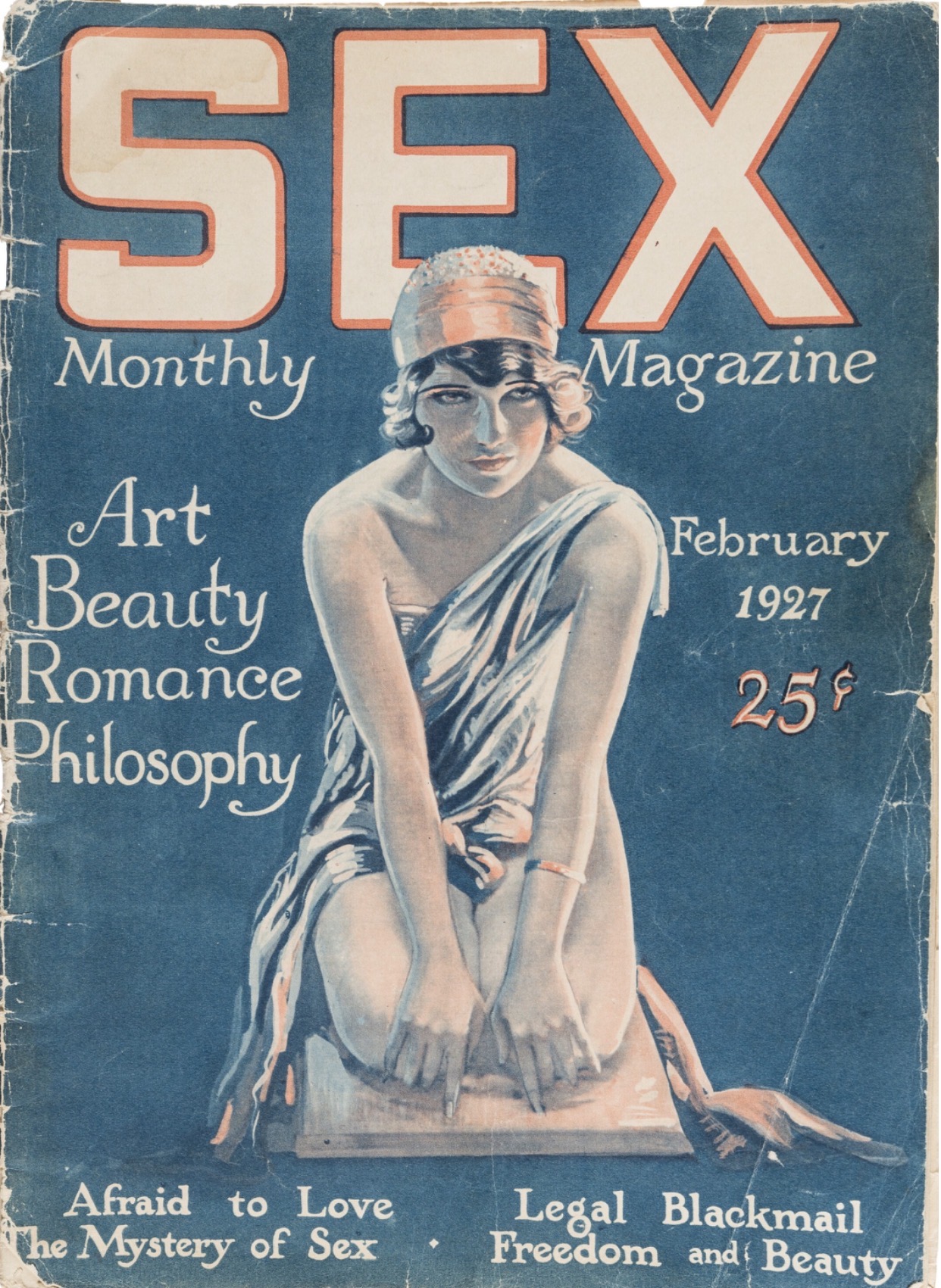
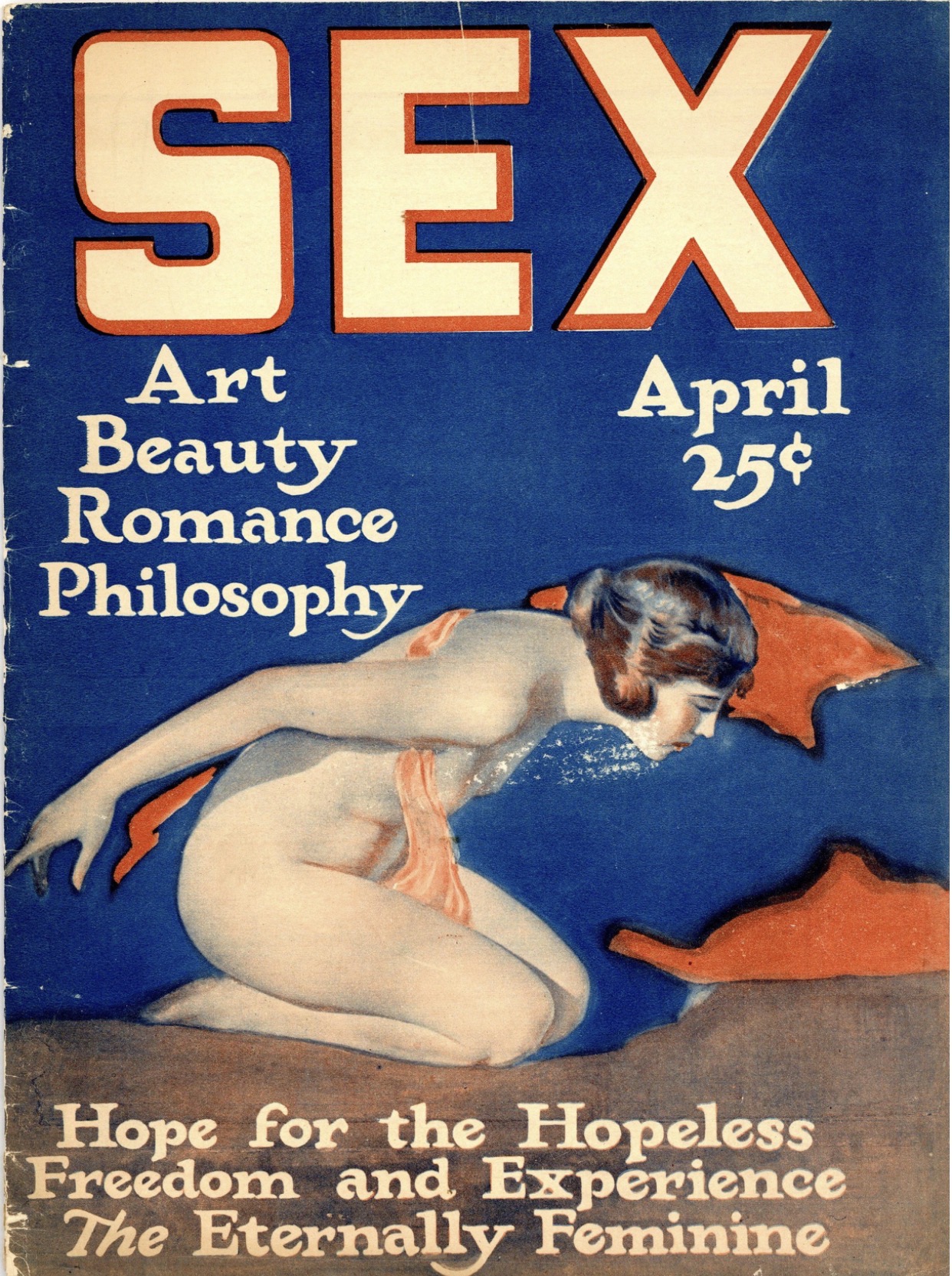
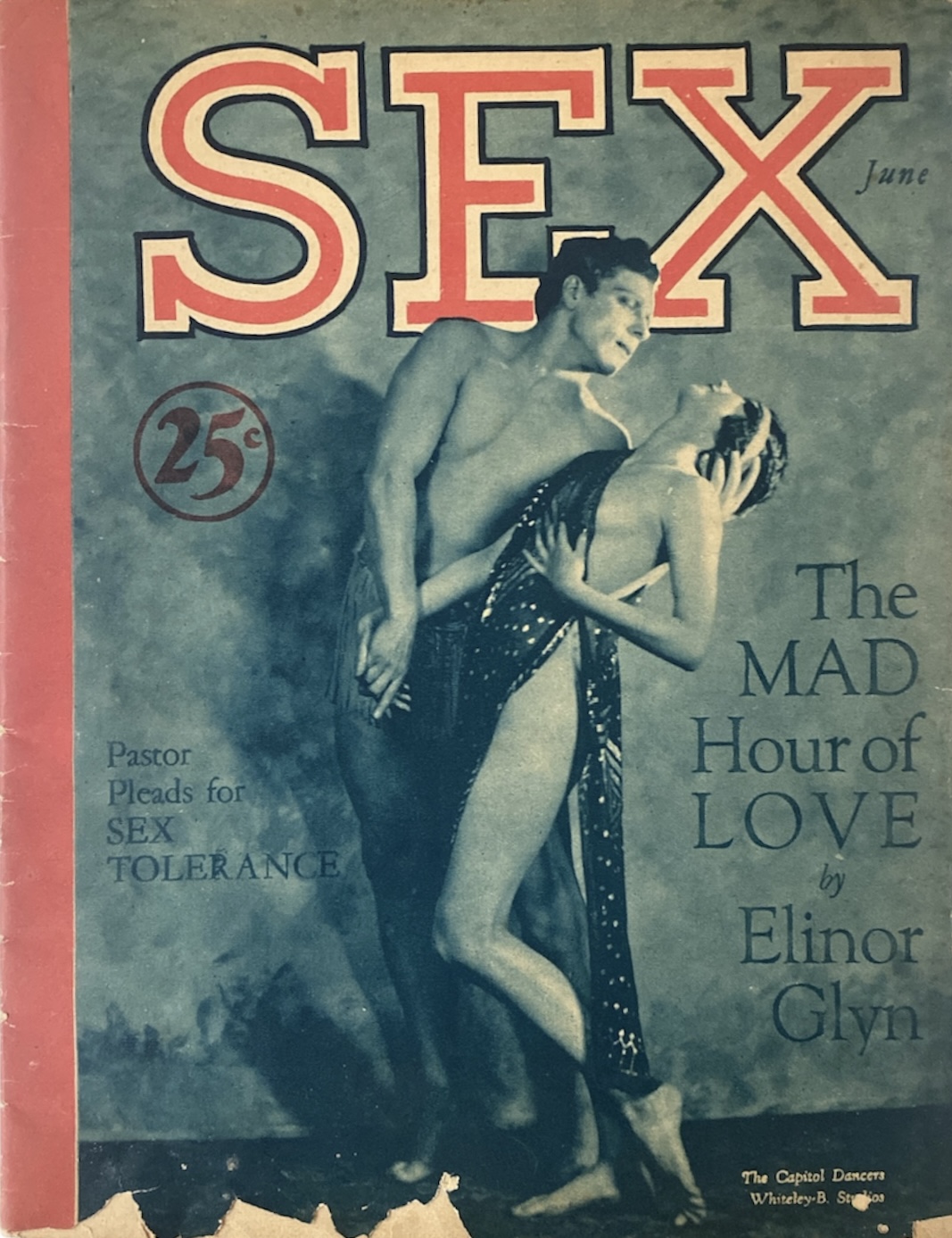
A century ago, yes, you read that right, 100 years ago on this day, a new magazine appeared on the nation’s newsstands. Its name, a three-letter-word and in all caps, breaking every taboo that was out there, and calling it what it is: SEX. A new monthly magazine for the masses from Dawn Publishing Co., Inc., at 17 West 60th Street, New York, N.Y.
September 1926 issue
The magazine was “for sale only on news-stands or in quantities of twenty or more – Express prepaid.” SEX Monthly Magazine was soliciting “articles dealing in a constructive and wholesome way with sex problems and photographic studies.” Its editorial policy stated that “SEX, will include reprints of outstanding articles on sex from current magazines, also heretofore unpublished articles, romantic poems and from time to time fiction stories.”
In the first issue, and every issue that followed, SEX Monthly Magazine included what it referred to as “Our Platform.”
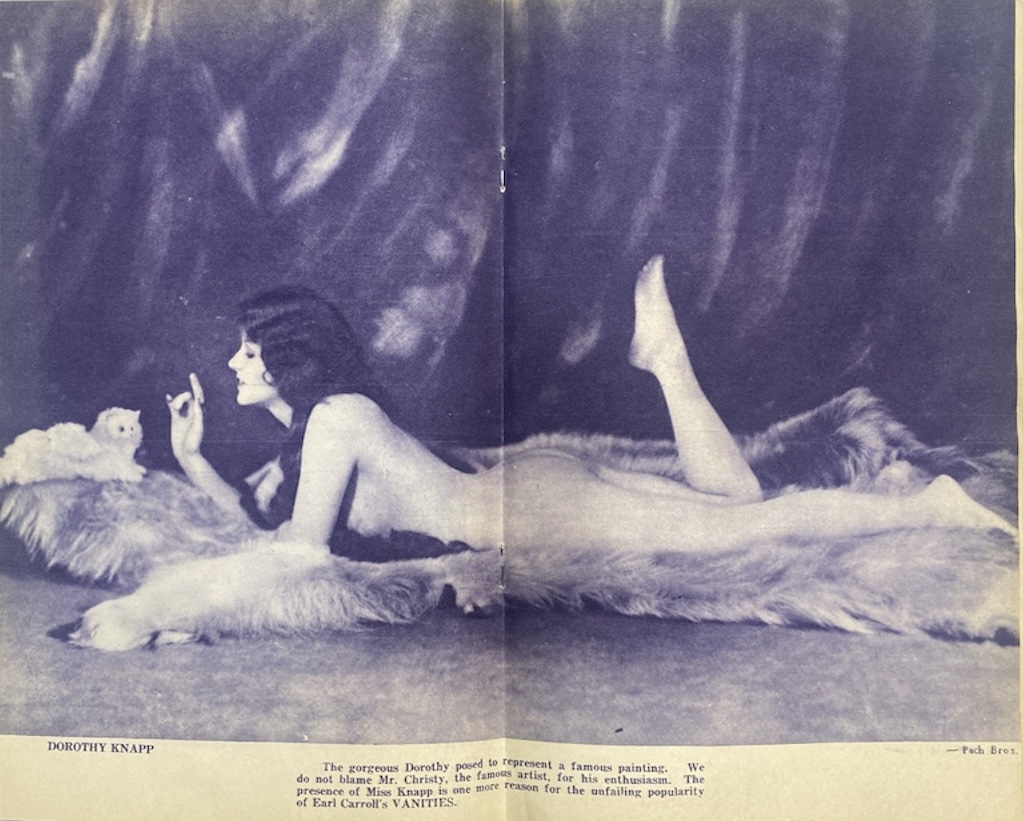
Center spread of the Sept. 1926 issue
The Platform
“Prevailing ignorance, prejudice, and hysteria concerning sex cause widespread misery, error and unhappiness.
We oppose the conspiracy of silence on the subject of sex because not ignorance but understanding will safeguard morals and happiness.
Likewise we oppose the conspiracy of shame whereby the beautiful and God-ordained fact of sex has been made to appear horrible and vile.”
The magazine went on stating, “We oppose the conspiracy of repression because psychoanalysis has clearly shown that to repress an impulse does not kill it but produces nervousness, morbidness, depression, shame, a sense of inferiority, sickness and insanity.
When rationalized, frankly faced and understood, sex energy may be sublimated and used up in constructive activities leading to splendid achievement.”
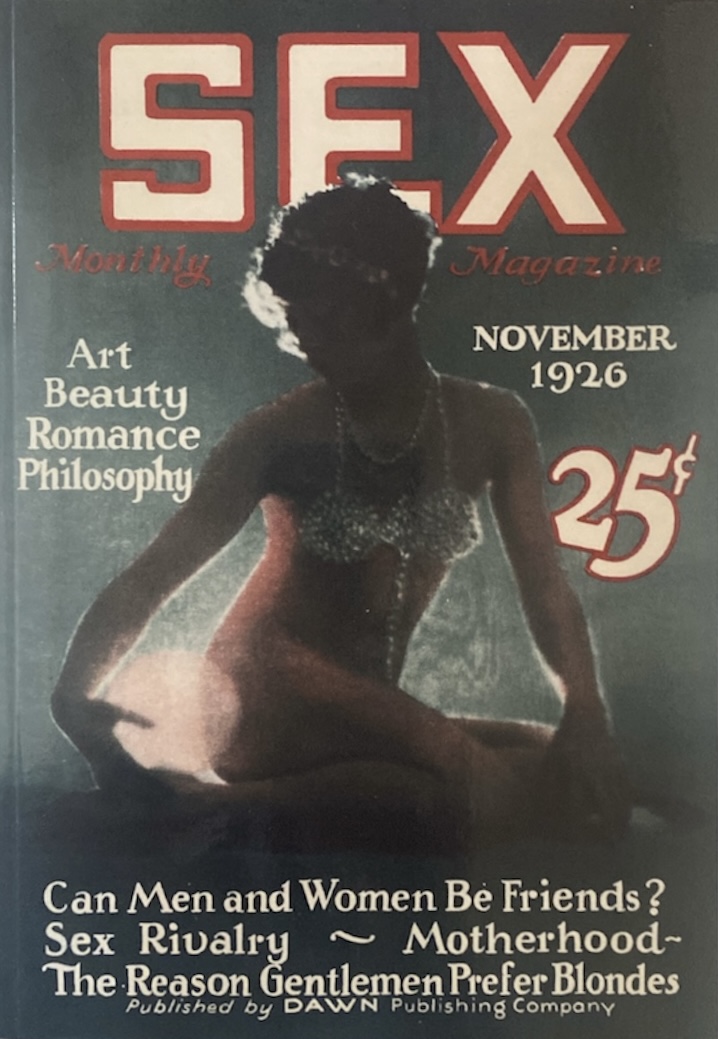
November 1926 issue
A call for tolerance and a solution
“Conventions, customs and morals change from place to place and from time to time. Those who fail to accept any particular set of standards should not be condemned if they are sincere, considerate and constructive.
Marriage is the safest solution of the sex problem but now largely fails thru ignorance of sex laws and technique. The problem of happy marriage should be studied and discussed.
The human bod is not immortal but beautiful and should be reverenced, appreciated and enjoyed. The nude in art may be beautifully and spiritually presented.”
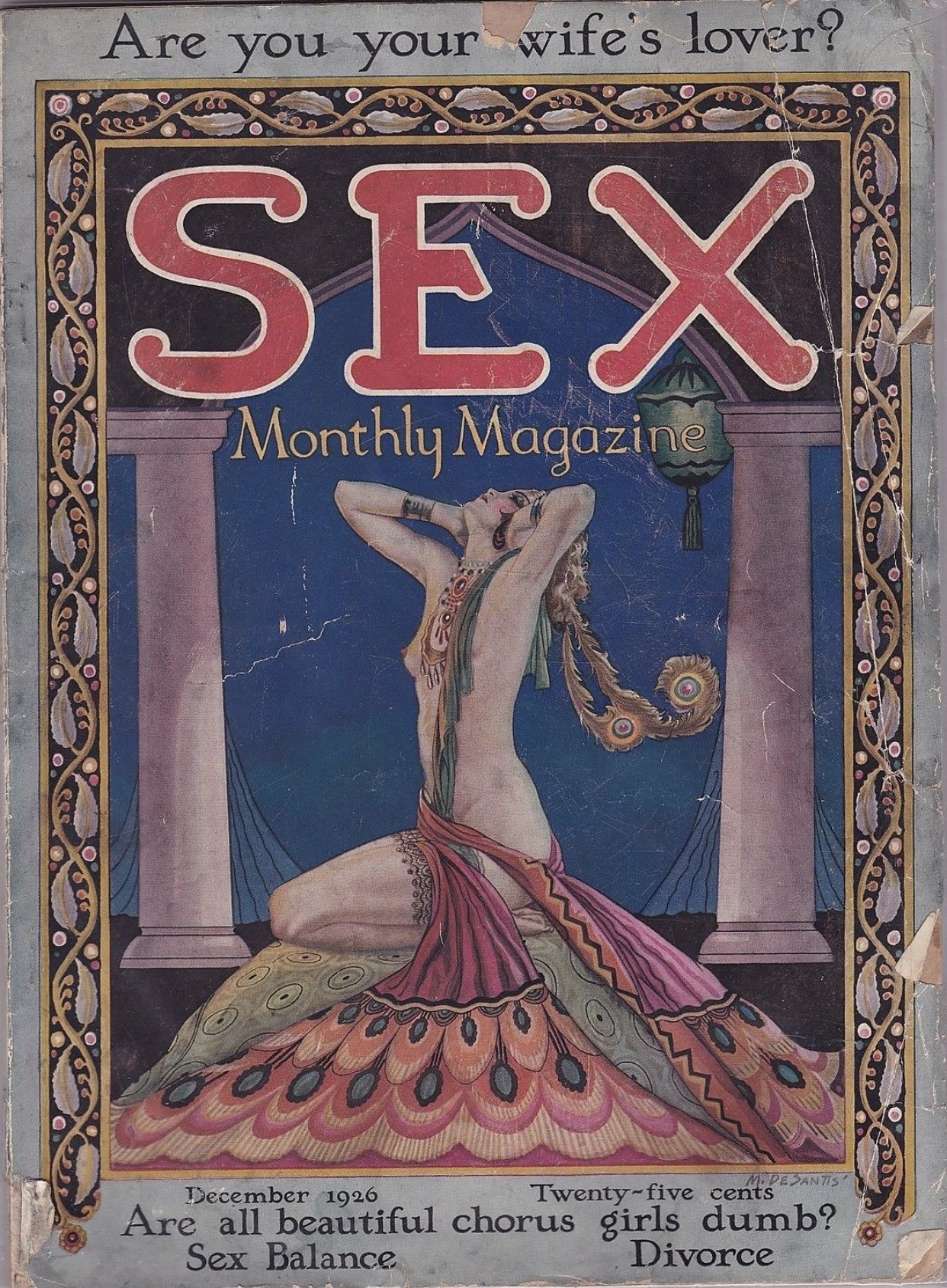
December 1926 issue
Identifying the Problem
“Promiscuous sex relationship leads to restless discontent, interferes with success, destroys happiness and endangers health and is not to be advocated as a solution.
Free love as generally conceived is virtually synonymous with promiscuity and hence will probably fail as a solution for the sex problem.
Yet love must be free and spontaneous – there is no worse immorality than to compel a man and a woman to live together when they do not love each other.”
February 1927 issue
Justifying the magazine
“We are in the midst of an almost universal revolt against the fading sex taboos and puritanic sex repression. This revolt needs to be guided in safe and sane channels. Excesses and extremes breed anarchy. Sex must be rationalized, studied, controlled and wisely directed.
This magazine proposed to supply sane, sound and clean discussion of this subject more important to human health happiness and advancement than any other social problem.
Our program does not condone the salacious, suggestive, morbid sensationalism so current in certain contemporary magazines and daily papers. We propose to face truth bravely, frankly, constructively, hoping to make a real contribution to social good.”
April 1927 issue
Troubles with law enforcement but not the law
With all its good intentions of being a magazine to supply sane, sound and clean information about sex, some law enforcement officials were not happy with the magazine. Such an example is the police chief in no other than Des Moines, Iowa.
In the November issue of the magazine, the editors wrote under the heading, SEX VINDICATED, “The spirit, objective, and character of this great human magazine has been called in question in but one city in America namely Des Moines, Iowa. In that great metropolis of the Middle-West, the chief of police beholding a magazine called SEX, and laboring under the ancient delusion that anything connected with sex must be nasty, immoral, and obscene, blushed for shame, called out the reserve squad, and raided the unsuspecting and unoffending wholesale newsdealer, Louis Hyman, confiscated all copies of SEX available and arrested the dealer on a charge of selling obscene literature and pictures.”
SEX Monthly Magazine went to court and, “The case was tried before Municipal Judge, the Honorable Herman Zench, who dismissed the complaint, ruling that neither the text nor the pictures in SEX constituted obscene literature. The pictures were commended in the decision as being an example of pure and unoffensive art.
This good news, reassuring the publishers of SEX that sanity has replaced unthinking prejudice come just as we are going to press.”
June 1928 issue
A brief success story: The new and improved SEX
The magazine was launched in the small size of 6.5 X 10.25 inches, but an announcement in the November issue of 1926 read, “DUE to the unprecedented and overwhelming public approval of our efforts to create a sane, constructive, modern magazine treating in a helpful and wholesome manner with the subject more important to human wealth, happiness, and welfare than any other interest of life, namely
SEX
the publishers take pleasure in announcing that the December issue of SEX MAGAZINE will appear in a new and superbly beautiful form. Next month you may look for SEX among the larger magazines. The size will be enlarged to 8 X 11. Finest paper will be used. Only pictures that can be found in no other magazine will appear – and these pictures will be the most magnificent art studies procurable! Articles by world renowned scholars! A department of Physical Culture—Exercises for health and beauty—Styles—A department of personal advice on problems of Love, Marriage, and Sex, and other features which will make SEX the livest, most helpful, most illuminating, most interesting and most beautiful magazine in America. A gorgeous four color cover, and thirty fascinating art pictures worth framing. A dollar magazine and no advance in price.
WATCH FOR THE IMPROVED SEX Only twenty-five cents at all stands.”
The lead cover story, June 1928
The end is near
With the new size and the success of the magazine, did not last long. From December 1926 to June 1928 the magazine struggled to publish on a regular monthly frequency. The Monthly Magazine disappeared from the cover leaving only the name SEX, albeit the masthead continued to state, “SEX, a monthly magazine.” Starting in 1927 the magazine appeared every other month. The last known issue of the magazine was the June 1928 that carried a Vol. II, No. 9.
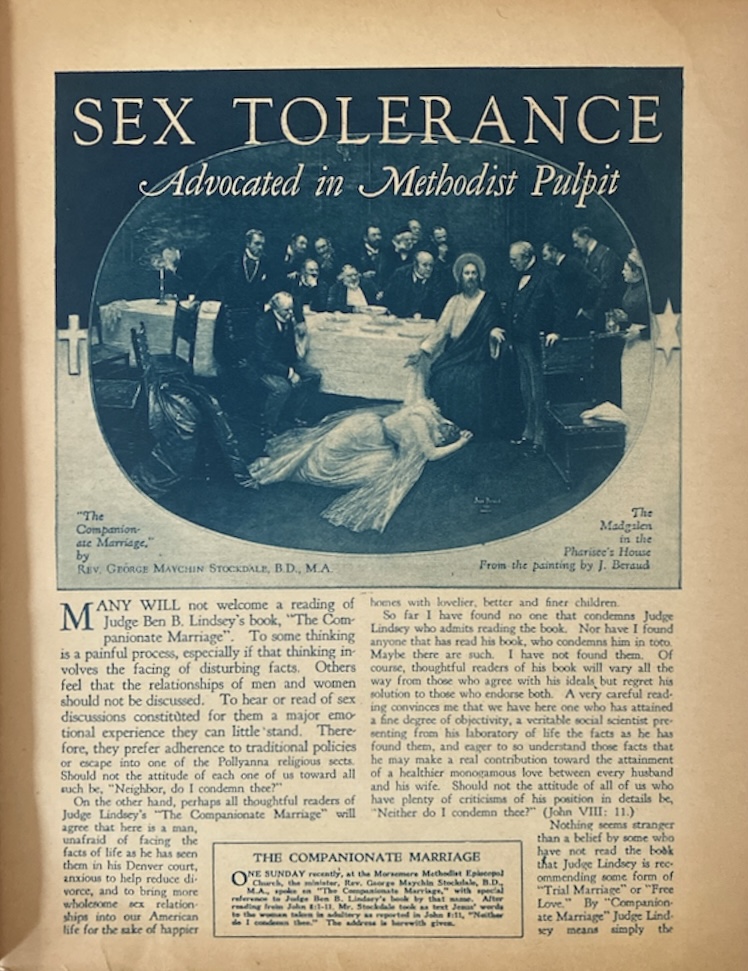
The end was biblical in nature. The lead cover story was a sermon given by the Morsemere Methodist Episcopal Church, the minister, Rev. George Maychin Stockdale, B.D., M.A., on “The Companionate Marriage,” with special reference to Judge Ben B. Lindsey’s book by that name. After reading from John 8: 1-11, Mr. Stockdale took as text Jesus’ words to the woman taken in adultery as reported in John 8:11, “Neither do I condemn thee.””
The entire sermon was published in the magazine under the title, “SEX TOLERANCE Advocated in Methodist Pulpit,” and it took five and half illustrated pages of The Madgalen from different famous religious paintings.
It has been a century ago, yet I wish I can say that things have changed for the better. I feel we have progressed backwards when it comes to culture, art, ethics, tolerance, and morality.
TAG you are it, and a new interactive ink on paper magazine is born. The brainchild of an illustrator, artist, and storyteller, Anthony Deptula, with the help of his nine-year-old son, Hugo, came up with the idea of creating an interactive print publication after seeing the lack of kids’ interactivity on You Tube due to COPPA (The Children’s Online Privacy Protection Act) regulations.
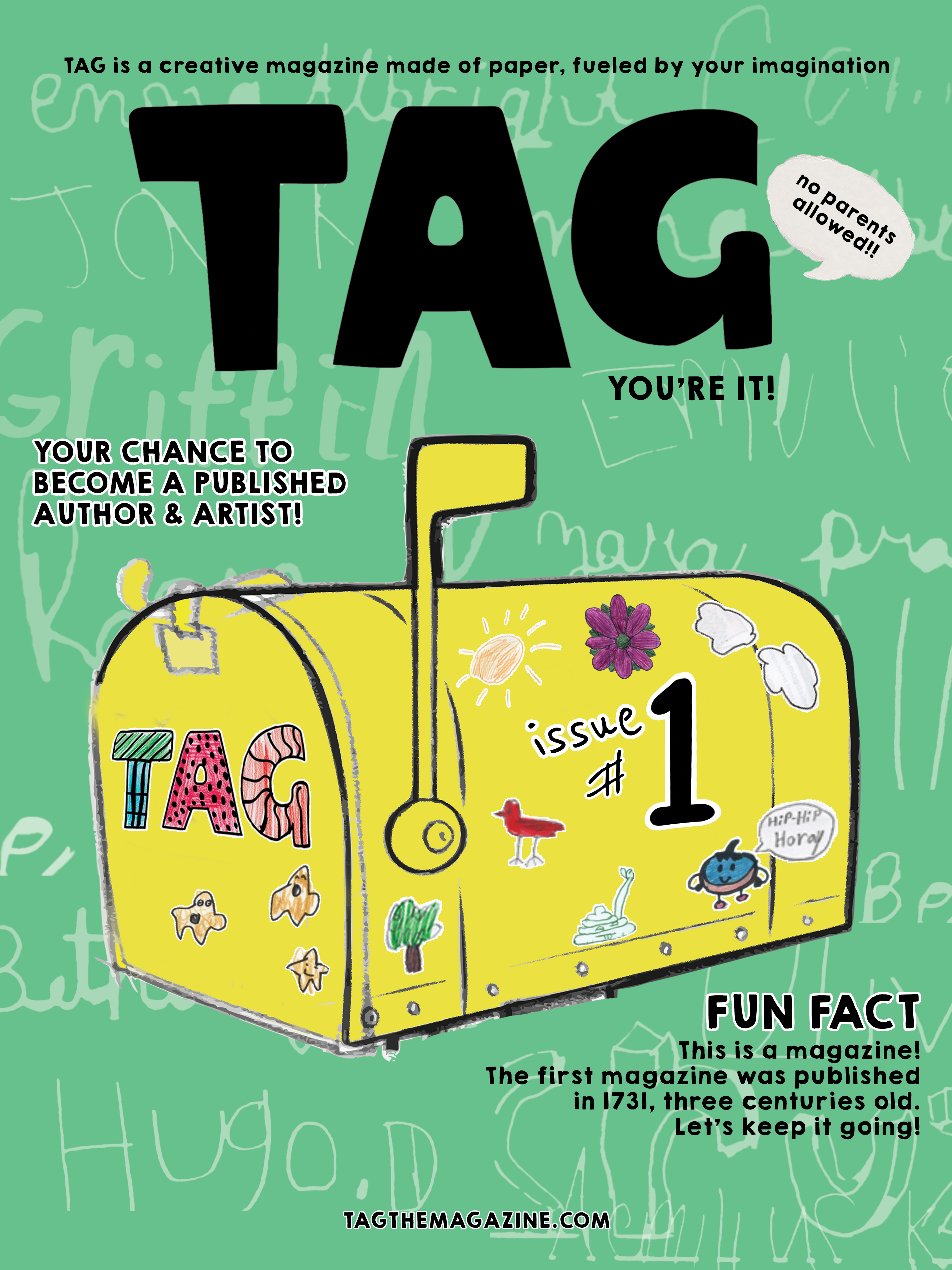
TAG number 1
His love for drawing started as a kid in kindergarten. He started drawing at a very young age and continued to this day with creative stints at Disney Interactive, Maker Studios, You Tube, and now Netflix. With TAG, he wanted to curate and create something big—literally big (approximately 11 X 15)—that kids can interact with, draw on, tear apart, erase, make paper airplanes from, and do whatever their minds and imagination call for. In short, he succeeded in creating a magazine whose tagline (pun intended) says, “No parents allowed,” but is very much welcomed by parents who love for kids to have some screen free time.
Anthony has two issues under his belt and is now working on issues 3 and 4. Recently, TAG became available on Etsy. A post on LinkedIn said, “If Etsy is your jam, you can now grab Issue # 1 of TAG over there. TAG is a screen-free kids magazine for drawing, comics, creative writing, and generally making stuff.”
On a personal note, I may add that, in addition to Highlights and High Five, my grandkids are now receiving TAG, the magazine. I hope that those who have kids or grandkids in elementary or middle school, will consider getting them some screen-free time with interactive TAG. Click here to get a subscription to the magazine.
And now, without any further ado, here is the lightly edited interview with Anthony Deptula, founder and editor-in-chief of TAG, the magazine:
Anthony Deptula, founder, TAG, the magazine
Samir Husni: Congratulations on the new magazine.
Anthony Deptula: Thank you.
Samir Husni: You must be out of your mind to start an ink on paper magazine in this digital age.
Anthony Deptula: Yeah, I don’t know if I’m out of my mind or just nostalgic or understanding that parents want less screen time for kids.
Samir Husni: Your tagline, pun intended, is a creative magazine made of paper. Is it describing the obvious or?
Anthony Deptula: One thing that I’ve figured out as we’re just getting started here, kids didn’t really know what magazines were. And a lot of parents had to explain to them what it was, which is kind of wild to me.
It’s tongue in cheek, trying to be funny, made of paper. I like that it’s made of paper, for me, it’s tangible. Everything is so fleeting today. I like that it’s a piece of paper and kids can draw on it. Kids can have it delivered to their house or where they live, their apartment. That’s exciting to receive something and get something is still exciting for kids.
Amazon proves that; every day, getting something from Amazon, being able to order it, kids still like getting packages and getting something in the mail.
Samir Husni: You say no parents allowed. How are you marketing the magazine?
Anthony Deptula: One parent submitted some art. And I was, okay, that’s interesting. It was pretty good.
Kids love that. Kids really love that. We have a little different style than competitors. We’re a little baby magazine, but we’re a little more punk, as you can tell. We’re a little more comic book based, graphic novel based. And the style is black and white. It’s all over the place. To answer your question in marketing, grassroots, we’re working with partners. One of the interesting things that we’re doing are pop-ups.
For issue number two, we did a partnership with an ice-skating rink, and we worked with a young nine-year-old, hopeful Olympian, in Charlie Roost. She was the model in the ice-skating spread. We’re giving away free ads as well to like-minded partners.
If you look at issue one, those are all free ads in the back. Those partners are like-minded community partners, and they’re pushing it out for me on social, on their newsletters, in person. That way, we’re just growing.
We have no funding. It’s sort of growing grassroots. The more people that know about it, the better it is, because then we get to exist.
Samir Husni: Go back with me to that aha moment. When did you get the idea, and how was TAG born?
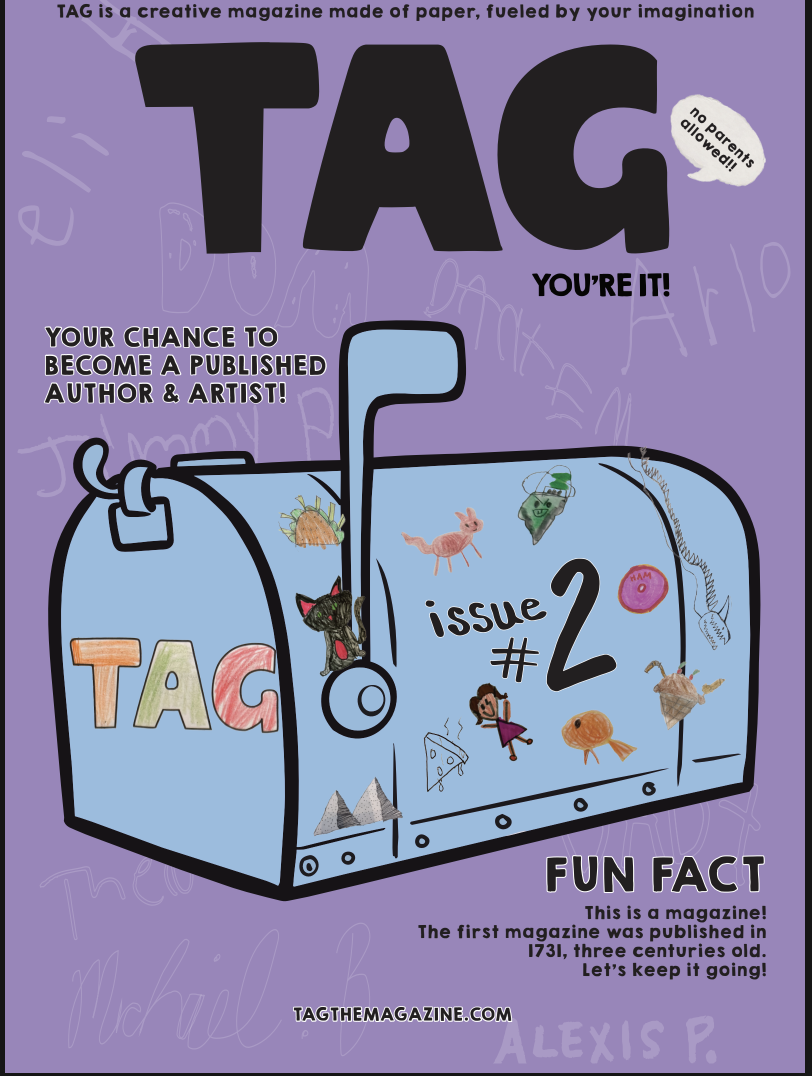
TAG number 2
Anthony Deptula: I grew up in Steubenville, Ohio. My dad worked at Weirton Steel in West Virginia. In Weirton, at our home we had old calendars, the desktop calendars. I would draw on them.
I would make comics with my best friend who was in kindergarten. I was in first grade. I always loved drawing.
In 1998 the United States introduced COPPA (The Children’s Online Privacy Protection Act). YouTube took away comments from kids, because of COPPA. Very safe, very smart. Totally agree with it.
But I think kids lost this interactivity. I helped make a few YouTube shows, one with GoldieBlox. I was an executive producer, which had 60 million views. And another, I was working at Maker Studios as an exec and helped shepherd the idea that had 300 million views.
That was all core curriculum on YouTube, first and second grade. The kids were so engaged and so interested and excited. I just thought, if every page is almost a partnership, if every page is interactive because magazines have had that sort submissions for years. That why TAG is big. I like how big it is.
Kids love the size. It’s not precious. You can tear it up, you can make it papier mache, you can turn it into a paper airplane, and you can erase it. Kids today lost their youth voice. I thought this would be an interesting way to reimagine a magazine where every page is interactive.
On every page, they get a chance to put their comic, their graphic novel, a story that they want to tell and really help them create content that they like, because a lot of content that is created for kids, they don’t like. So, TAG is a little bit of an old Nickelodeon style; to let the kids decide.
Samir Husni: Tell me a bit about your background. You must have a unique background to do this.
Anthony Deptula: I’m from a working-class family, moved to LA and I’ve worked in television. I did comedy in LA.
I had a feature film that I wrote, produced, and acted in at Sundance. I became an executive and started making a lot of kids’ content working for Makers’ Studio, Disney, GoldieBlox, Female Empowerment Toy Company, and Slumberkins. I have a lot of toy clients right now.
I’ve never made a magazine. But I wanted to draw again. I literally just wanted to draw again. People seem to be responding. We’re starting to do wholesale sales.
We’re starting to get into brick and mortars. We have subscriptions, which is great. My background is creative. I have a creative background. I love artists. A lot of the artists that I’ve worked with over the years are in the magazine. Those artists have worked at Disney, Cartoon Network. You know, I also like fine art, which is one of my favorite pages in the spread. We don’t talk down to kids.
Samir Husni: Who is the audience you are trying to reach? I know it is children, but can you be more specific?
Anthony Deptula: The age range is wild, Samir.
I would say first to eighth grade. It’s a very wide range of kids that are loving this thing. I think because of the rise of Captain Underpants and Wings of Fire, all these graphic novel books, kids that are just older are still into comics and drawing and storytelling.
I have a unique perspective. I had a lot of people tell me not to do this, and I didn’t listen. It’s very hard.
Samir Husni: You chose illustrations over photography. Why?Do you think as a creative person, people connect more to illustrations than photography?
Anthony Deptula: There’s some photos, like 1% photos, but. I wanted to draw again. And issue number two, a young woman from Maine, submitted a photo of a bay with a little building. She was thankful publishing it.
There’s also a photo of a sculpture that a young man did, which I thought was cool. I like all the different styles, and I like that we’re a lot different than our competitors. I get to work with the different artists on different spreads, and I think that illustration is what kids like.
Samir Husni: The question I like to ask folks who launch new magazines is, during this six-month period since you launched TAG, was it a walk in a rose garden, or you had quite a bit of challenges? And if you did, how did you overcome them?
TAG number 1
Anthony Deptula: Sure. I’m still in them. The challenges are mainly of getting more subscriptions. We’re not like a legacy brand that’s been around for a long time, and everyone’s kids love it. The wild thing is the feedback everyone says, “this is going to be huge.”
I go, okay. I’m kind of one person with a bunch of freelancers in my basement, and I hope it will be huge. But I’m just trying to overcome the problems, because there are issues starting any sort of business. Trying to find the format of it all is interesting.
I had a lot of people that helped me. Two schools where I brought in the prototype of the magazine, I called, Tag-Ins, just separated sheets of paper. I took these to the schools to get started and schools started filling these out. That was generating content for me.
I was trying to sell these as separate. You got to buy these, and then you got to buy the magazine. Everyone’s like, what are you talking about? And that’s when I decided, oh, I just have it in my head. I have to tell people how this works. Here’s the fairy tale, you fill it out, it becomes this. Here’s time machine one.
Then here’s the people, the kids that talked about history and the folks that they wanted to meet. When you have an idea as a creative, it’s hard to translate sometimes until you prototype it and you put it into the world, and then you start learning. A couple of school principles, a lot of kids, friends and family really helped me understand how to assemble the magazine, to explain it, because it’s a little different.
Samir Husni: Give me your elevator pitch. If somebody met you on the street said, Anthony, what’s TAG?
Anthony Deptula: I say it’s an interactive paper magazine where kids fill out to become the published artists and writers.
Samir Husni: Before I ask you my typical last two questions, is there any question I should ask you I did not ask you?
Anthony Deptula: I would say I’m from Ohio, so I was influenced by Highlights.
There’re a lot of people that tell me it reminds them of Highlights, and some of them don’t even know Highlights still exists, which is interesting to me. I grew up with Highlights. My uncle worked for a sister company of Highlights on the education side, and I feel there’s a real need out there, and all the work that they’ve done over the years inspired me to try to give it my own shot, which is kind of wild to say: I’m going to become a publisher, but people seem to be responding.
I would say the magazines from the past have helped me in the curation, and of making it creative. Even Eastbay or MAD Magazine, or Sports Illustrated for Kids, and The Onion, great magazines that are still printing. Tangible is important to me, and I appreciate, the past publishers that have been around a long time. The great part about not knowing how to run a magazine is I get to invent different spreads that have never been invented or bring those spreads back to life.
For example, the blank black page in issue number two or the kid in issue one erasing the comic. It really made me upset at first, but then I was like, oh, that’s actually a good idea. I’m going to make a blank page so kids can do their own art on it.
I love the big palette. I wanted to be different from Highlights. I wanted to be different from the Ranger Ricks of the world that are serving and been helping kids for a long time, and that’s, hopefully, why Tag feels a little different.
The Tag team is great, too. I have a lot of great young artists, and they bring a lot of energy to this project where they just jumped on board with me. I am also working with a local printer in Tecumseh, Michigan. They’ve been supportive as well. They’ve been around a hundred years, and excited to have a new mag.
Samir Husni: My typical last two questions, if I come to visit Anthony in the evening, unannounced, what do I catch you doing? Reading a book, illustrating, having a glass of wine?
Anthony Deptula: I usually watch Dune, the movie. So, there’s Dune one, part one and two.
Or I’ll play soccer with my son. He’s nine. He helped me with the magazine.
His name’s Hugo. So, if you can mention him, he won’t give me grief.
Hugo helped me with Tag, he helped me create it. Or, I’ll be on the porch with my wife: She’s reading. We got a new puppy.
I work 24-7 because of my job. Netflix is my day job. They’re a client. So, I’m always working.
Samir Husni: And what keeps you up at night these days?
Anthony Deptula: I sleep well. I don’t know. My sprinkler, something’s going on with my sprinklers. They keep shutting off. So, I think I got to fix that.
Samir Husni: Thank you so much and best of luck. You are it.
It takes a geezer to start Geezer magazine—and that’s exactly what Laura LeBleu did: a 100% handcrafted magazine content and AI-free.
Laura LeBleu, Founding Editor, Geezer magazine
The founder and editor-in-chief of Geezer comes from a theater background, not the publishing world. Frustrated by the lack of anything to read that truly spoke to her needs, interests, and stage of life, Laura found inspiration in an unlikely place: the shower. That’s where the idea for Geezer, a magazine created for herself and the Gen X community, was born.
The result is a beautiful, oversized publication that combines a trip down memory lane with a thoughtful look at the issues and concerns facing Gen X today. Laura is the first to proudly admit that she’s a geezer, and she hopes Geezer will eventually grow into a media organization that gives geezers across the country a place to connect, come together, and enjoy this stage of life.
Geezer magazine, issue one
Knowing just how large and diverse the Gen X community is, Laura is determined to keep Geezer independent and focused on its very specific audience, with no desire to turn it into a mass-market publication. It’s a smart move for a woman who is quick to tell you she has no traditional business background and instead comes from a life deeply rooted in the theater world.
I had the opportunity to chat with Laura about the birth of Geezer, its content and audience, and even the distinctive experience of holding such a substantial magazine in your hands. It was a delightful conversation, and I hope you enjoy it as much as I enjoyed conducting it.
So, without any further ado, here is my lightly edited interview with Laura LeBleu, founder and editor-in-chief, Geezer magazine:
Samir Husni: Thank you for sending me the first issue. It was like a time machine.
Laura LeBleu: Oh, indeed. I’m glad you got it. Hopefully you enjoyed it.
Samir Husni: Yes, I did. Please tell me about the idea of Geezer. Laura LeBlue: Geezer magazine was created from my realization that there was no one talking to Gen X in the way that I wanted to be talked to. The actual story is that I was in the shower and I had the idea, and I knew I wanted it to be a print magazine. I knew I wanted it to be called Geezer.
So, the name Geezer is from a focus group of one. That’s my brain. I was just thinking about it.
The only equivalent that we have right now is AARP. When I got my first AARP flyer, I set it on fire. I thought this isn’t the conversation, how dare you come to me? There are probably other people who are feeling this way.
To me, it seemed there was a desire to have a print magazine that addressed the issues of midlife in the way that AARP couldn’t, honestly, because of who they are. They’re mostly a marketing and lobbying organization. So, I thought, well, I’ll do it. Why not? Someone’s going to, it might as well be me.
Laura LeBleu The proud mama…
Samir Husni: And you did a beautiful job in an oversize, 11 by 15 print publication…
Laura LeBleu: I was inspired by Mountain Gazette magazine, which is slightly larger, as you probably know.
I thought if I’m going to do anything, I wanted it to have impact. I wanted to have a visceral feel when you held it. And I also wanted to make it easy on the eyes.
Samir Husni: Why did you decide on print in this digital age?
Laura LeBleu: I tend to zig where everyone else is zagging. And I’ve been thinking a lot about where we are as a society in relationship to technology.
I personally could feel myself overwhelmed with digital information. I call it the empty calories of digital content, that it feels like you’re force fed. It leaves you feeling bloated but never satisfied.
Print, to me, is the antidote to all of that. Print is amazing, and I’m sure you’ve experienced this. I will give Geezer to someone, and they’ll hold it in their hands, and I see their shoulders drop. They will take a breath.
There’s something about print that grounds you and calms your nervous system in the exact opposite. It’s the opposite of what all the barrage of digital content does to us. I was very adamant that this be a print magazine, and that we don’t share all our content online.
I will share some stories, obviously I want people to know what’s in the magazine, they should know that if they’re to plunk down 120 bucks a year for it. I feel print deserves its own special space in the world. These stories deserve to be experienced in print.
Samir Husni: One of the folks commented on my interview with the CEO of Highlights for Children, he said, “digital is brain drain, print is brain gain.”
Laura LeBleu: It’s innervating. It really is, isn’t it? That’s why when people pick up the magazine, it feels the opposite. It feels nourishing. It feels like it makes you stop and focus on what’s in your hands, what’s right in front of you.
From the response I’m getting, I’m not the only one who feels this way. People are really beginning to understand what I’m doing with this magazine.
Samir Husni: Your editorials read as if you are reliving your memories.You’re sharing your journal or your diary?
Laura LeBleu: Well, I would say so. I’ve thought a lot about this as far as the editorial mix goes and what our focus is. I never want to over-rotate into nostalgia.
I don’t want it to feel like we’re all just looking back and talking about when we were drinking out of the water hose, and our parents were off smoking their cool menthol cigarettes while we were playing with fireworks. I don’t want it to rotate too far into that. But I feel we must.
We also must acknowledge that we’re in midlife, we’re looking back and we’re examining what our experiences were growing up. That is a nostalgic portion of the Geezer editorial mix.
The other portion, 60 to 65 percent of the magazine, is about the issues that we’re facing today as we go through middle age, as we’re entering our 50s and our early 60s. That’s where the larger stories are going to come from; the nonfiction narrative and the more reported pieces are going to dig into.
Samir Husni: You have two issues under your belt, and the third issue is on its way. Tell me about this journey.
Geezer number two
Laura LeBleu: We almost have a full year of Geezers out because we publish tri-annually.
The third issue is at the printers right now waiting for the paper to be delivered. I refuse to print on anything other than Sustana, which is 30 percent recycled. I love this paper. It’s got a great texture to it. It’s 80 pounds, heavy and not slick. It feels a little bit tactile, a little bit rougher. That is very much the Geezer ethos. That is how I approach everything in this magazine. We are not slick and we are a little rough around the edges. But I feel that’s a very Gen X sensibility.
Samir Husni: Has it been a walk in the rose garden?
Laura LeBleu: It’s been the hardest thing I have ever undertaken in my entire life, Samir. And it’s also been the most fulfilling journey I’ve ever been on, creatively speaking.
I wrote an article on Substack called This Might Not Work. I don’t know if you saw that, but I break down some of the economics of creating a print magazine, all the dumb mistakes I made, super rookie mistakes, because I’m not a business mastermind. I just had this idea.
I come from a theater background. I have this, hey, kids, we got a barn, let’s put on a show, outlook on life. That’s how I approached Geezer to get the ball rolling and just to crank it out and create something.
The biggest challenges have been financial. We’re up to almost 500 annual subscribers. The first one came out last November. So, from what I can tell, as far as industry goes, that’s quite good.
Making the magazine is the fun part. The hard part is all the business that goes into it. I honestly feel like I’m running this thing and putting it together by bubble gum, hopes, and dreams.
I’m trying to get my business foundations more solid so that I don’t have to worry about how is our subscription? How is our circulation being managed? Right now, I’m working on moving to SimpleCirc so that I have a more bespoke way of managing all of that. But that’s even hard. I hate all the buttons that you must push in software platforms.
I know I can do it. But I would so much rather focus on creating the stories and working with the writers. I’ve come to accept my position as an entrepreneur and a businessperson. So, today after I talked to you, all I’m doing is working on the update of our website to get it refreshed so that it reflects the magazine a little bit more. Those are the challenges. I’m committed to seeing another year of Geezer through and hopefully we’ll get the subscribership that will allow us to be sustainable. I’m a cockeyed optimist. I do believe that the way people are responding now, if we were going to get that critical mass, and I truly believe that that this magazine is going to start to take off.
Samir Husni: When that first issue landed in your hands, what was your feeling?
Laura LeBleu: Oh, my gosh, I’m a mom, I do have a wonderful 16-year-old son. Second to him being born, having this magazine in my hands was the greatest thrill.
I’m sure you’ve heard this from many magazine founders; there’s nothing like holding something in your hands that is a true expression of you and your editorial vision. Some background, I I’ve been writing for other people for 25 years, I’ve been creating for other people and spending my creative energy on other people’s needs. To finally have something that was an expression of my own creative vision, and to have it in your hands, and to be able to know that no one can take that away from you. There’s nothing more exciting. It really is an elation beyond belief.
Samir Husni: If you and I are having this discussion in July or August of 2027, what would you tell me Laura have accomplished in that year?
Laura LeBleu: Well, first and foremost, I would hope that we have hit a subscriber base that allows me to sustain the magazine, and to pay myself someday. But I also am, as Arjun Basu says, and I am a huge fan of his, I was listening to a podcast he was on recently. And he said, “Listen, you’re not a magazine, you’re a media, you’re a media organization.”
I’ve been working on how to expand that, how to expand myself as a media entity, and how to create the community that I want to create. So, this time in two years, if I’ve created a community of people who can connect with each other, can come together over, with this magazine as the nucleus of the, of the community, but also, you know, to have it expand into people getting together having Geezer gathers, hopefully doing a podcast with the people who are featured in the magazine, that would be amazing. I would also love to have a business partner to work with, who can help me expand on these visions I have, that’s something I’m missing right now, because it’s just me at this point.
Samir Husni: If people want to order back issues, are they available? Laura LeBleu: I have back issues of number one. So that’s available for purchase on our website. It’s Geezermagazine.com. And I’ll be releasing back issues of number two, next week. Issue number three will be out, hopefully in the mail at the end of next week.
Samir Husni: I must ask about the name Geezer…
Geezer number three
Laura LeBleu: It’s funny, the name Geezer, I thought it was hilarious. I’m like, that’s a funny, it’s just a funny word. It evokes different things. For Gen X, it was very tongue in cheek, because I feel like we’re not geezers at all.
It had that Gen X ironic twist. People have written me and said, “I’m in my 60s or 70s. Can I still write for you?” And my answer is unequivocally yes.
We are what we are. If the issue is something that focuses on and resonates with Gen X. It’s a wide tent that I’m trying to create here. The editorial vision for Geezer is that it doesn’t look, smell, taste, sound, or read like anything else you’ve ever picked up. I really wanted to make something that felt completely like the metaphor. Like that creature in the woods that you think you know, but you’re not quite sure. You must pick it up to see what’s in there to get it.
Samir Husni: Is there any question I’m supposed to ask you I didn’t ask you?
Laura LeBleu: Oh, goodness gracious. We’ve covered the basics for sure. Let’s see, what else would I want to answer, who is your audience? I would say that Geezer is not for everyone. It’s for the people who recognize it immediately. Although it’s Gen X, we’re not trying to focus on a mass market.
It does resonate strongly with the people who had the eye for what, what I’m creating. I hope people love it.
The one thing that I would want to tell you is how one of the greatest and most wonderful surprises of entering the world of independent magazines is the support, the kindness, and the reaching out of people within the community that I’ve received. So, it’s been unfailingly positive.
I do feel I’ve stumbled into this wonderful world where we really do want to see each other succeed. I’ve been so lucky to make connections with different publishers, new writers. That for me has been the greatest surprise I’m most grateful for. I’m part of something bigger now and that keeps me going.
Samir Husni: If I come to visit you one day, unannounced, what do I catch Laura doing in the evening watching TV, reading a book, having a glass of wine?
Laura LeBleu: Often, you’ll catch me in the theater. I’m either directing or volunteering. I live in a little town in California, but we have an amazing art scene up here. In fact, a lot of artists and actors from New York or San Francisco, when they’re done with the big city, they come here.
We have this really thriving art scene and I’m involved in a theater company here. You’ll probably not see me. I don’t sit and watch a lot of TV. Otherwise, I’ll be reading or out on the trails running. I need to, that’s the only way I can balance my brain is by is by physical activity. I don’t really drink wine anymore. A good book is always a good thing. I have 79 unread books on my nightstand. I don’t trust anyone who doesn’t have a few unread books on their nightstand is waiting to go.
Samir Husni: My typical last question, what keeps you up at night these days?
Laura LeBleu: Besides the general state of our world, it’s how to make Geezer successful. Right now, that’s about creating those business foundations I was talking about.
A lot of things that keep me up are like I needed to respond to that email where someone pitched a story to me, that slipped through the cracks. I don’t want people to feel like I’m not there and paying attention.
But when you are a one person publishing band, it’s difficult to keep up with all the communication. My brain will wake me up around three in the morning. This is not theoretical. This is literal. I’m kept up by wanting to make sure that I’m giving everyone who loves Geezer, who wants to write for Geezer, the attention that they deserve when they reach out to me.
Samir Husni: Thank you. I really appreciate you taking the time to chat with me. Best of luck.
If you would have told the co-founders of Hiii magazine, Pam Patterson and Rob Hill, that their journey with the magazine will be an “out-of-body experience,” they would have told you, “you are out of your mind.” When I first saw Hiii, I fell in love. I am not their audience, but I am The Audience for every good, well done, ink on paper magazine. Hiii was that magazine and that was the reason I selected it The Launch of the Year in 2024.
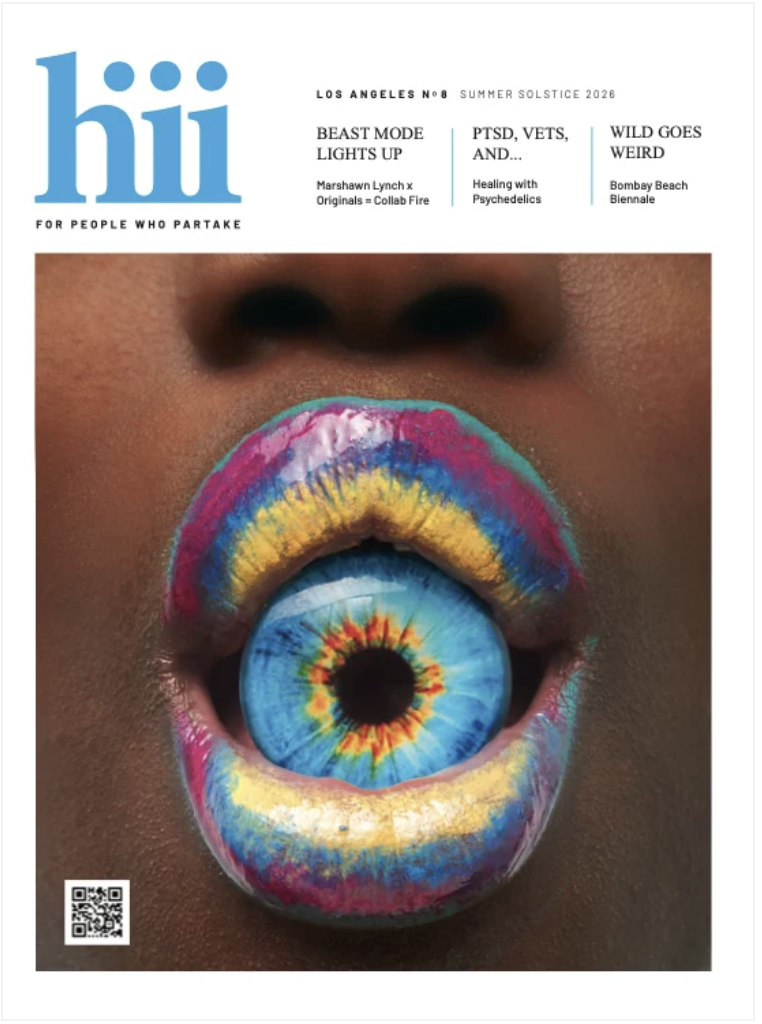
That great content and feeling did not stop with the first issue. Eight issues later and the magazine is going strong with even stronger content and design. Hiii is spreading its wings and going national via subscription for the first time since its inception. The magazine has been limited, due to the different cannabis laws, to the greater LA area and was distributed at the dispensaries of the city. Now, it is your chance to “Get Hiii at Home.” A very smart ad campaign announcing the national launch of the magazine from sea to shining sea.
Rob and Pam are not new to the ink on paper venture. Rob has launched and edited seven previous titles and Pam owned an ad agency in LA. So to say they have placed their combined experience to create a magazine that you can’t put down would be an understatement.
“I read it cover to cover,” is the frequent statement that they usually hear. And who am I to disagree. Every time the issue arrives by mail, Mr. Magazine™ is engaging with Hiii cover to cover. A job very well done and a magazine that is highly recommended.
To “Get Hii at home,” click here and to read the lightly edited interview with Pam Paterson and Rob Hill, co-founders of Hiii magazine, sit down relax and let the fun begins:
Samir Husni: I love your ad campaign, “Get Hiii at Home… Print is Premium” You talk about a very nice way to celebrate your second anniversary. So, has it been a walk in a rose garden these two years? Or in a mushroom field?
Pam Patterson: In many ways, it has been both. A complete exhilaration and an out-of-body experience. People have embraced the magazine and the content so completely that we’re a little dumbstruck to watch people engage with something that’s not their phone. What’s amazing, Samir, is we launched on August 8th, 2024, at Woody Harrelson’s The Woods, which was probably the best of all the cannabis lounges, and it’s so interesting to watch, in just those two years, how print went from being lost in the fog, to now, completely emerged.
We see it every day. Every single day, we see something that shows us that print is powerful. People are wanting it, especially people in their 20s, many budtenders read this magazine from cover to cover. That’s the biggest comment we get. The highest praise is, “We read it from cover to cover.” I recently just experienced an issue of Architectural Digest, because, of course, I get a couple of magazines myself, as do most of the people in the United States. I was so pleased to be able to go from the very front page to the very back page, and everything was just hitting with me. I understood the statement, “I read it cover to cover.” It’s a very satisfying experience. And honestly, not that common.
Samir Husni: This is the first year you are offering subscriptions at home, that people can subscribe. Is it national or still limited to LA?
Rob Hill: The distribution of the physical magazine is in dispensaries from Santa Ana to Ojai in Los Angeles. But with this big subscription push we’re going national.
We’re coming at this because print is being reborn, and it’s got some new things to it, and old things, right? People are loving getting magazines in the mail. It’s an exciting thing, because you don’t get anything good in the mail anymore. Except bills. And so, you’re getting this beautiful magazine. You’re getting new ideas. New food for your mind.
We really wanted to do a campaign. We’re going to be partnering with some other brands. And we think the way forward is to get out of the echo chamber, which is one of the reasons Instagram is not effective as a form of marketing, at least not in cannabis.
It’s like working at a cola company and going to lunch in the cafeteria, and that cola ad or logo is on the wall; you already work there. You already know everything about it. You’re sold. You’re not hitting anybody new.
We know we have a product that people like and want. And now we’re finding our people outside of our physical distribution.
Pam Patterson: The cannabis industry is a smallish niche. People come from all around the country to go to these trade shows and events. Oftentimes, even events we’ll have at our HQ in Frogtown, on the LA RIVER, we’ll get people from other states, multi-state operators (MSOs) who carry the love home to new regions.
But for now, we’re only available free in dispensaries in LA. So subscriptions makes us accessible to the whole US. We’re finding that people want that. The content is very national.
Samir Husni: Like you say, in your ad campaign, print is premium and creating a premium product is not cheap. Tell me about whether there were any struggles, challenges, or was it an easy thing to do?
Rob Hill: Well, I’ll just say, I’ve launched seven magazines and something always surprises you.
One of the big things that we’ve learned is that we have the best advertisers in our business, basically, our core advertisers that stay with us. Now we’re building on top of that. But the subscription model that we have spent the last couple of months researching and talking to people about is going to put us in a position where we’re not just an advertising driven platform, because we all know that advertisers have bad quarters and bad years, they change management, and they change marketing directors.
The people who subscribe don’t cancel.
Curiously enough, people that advertise with us, they have no digital path. Because our industry has very hostile algorithms for both Google and social media. If they spend a lot of money investing in digital, the next day they may just have it completely erased by Instagram and pull the plug on a hundred thousand viewers and that’s that. We’ve had that happen to many of our advertisers. It’s quite shocking because one of them, I went to go tag them the other day because they had sent us some goodies, and they were just gone. I emailed the owner and he’s trying to see if he can recover his audience. Sometimes they can’t. This can represent 10 years of work. And, you know, he’s very upset. The great thing about print is that it can’t be censored, shadowbanned, tracked, etc. This is becoming a big factor in the backlash against social media, etc.
Samir Husni: What are the advantages for people who prefer to have an ink on paper magazine?
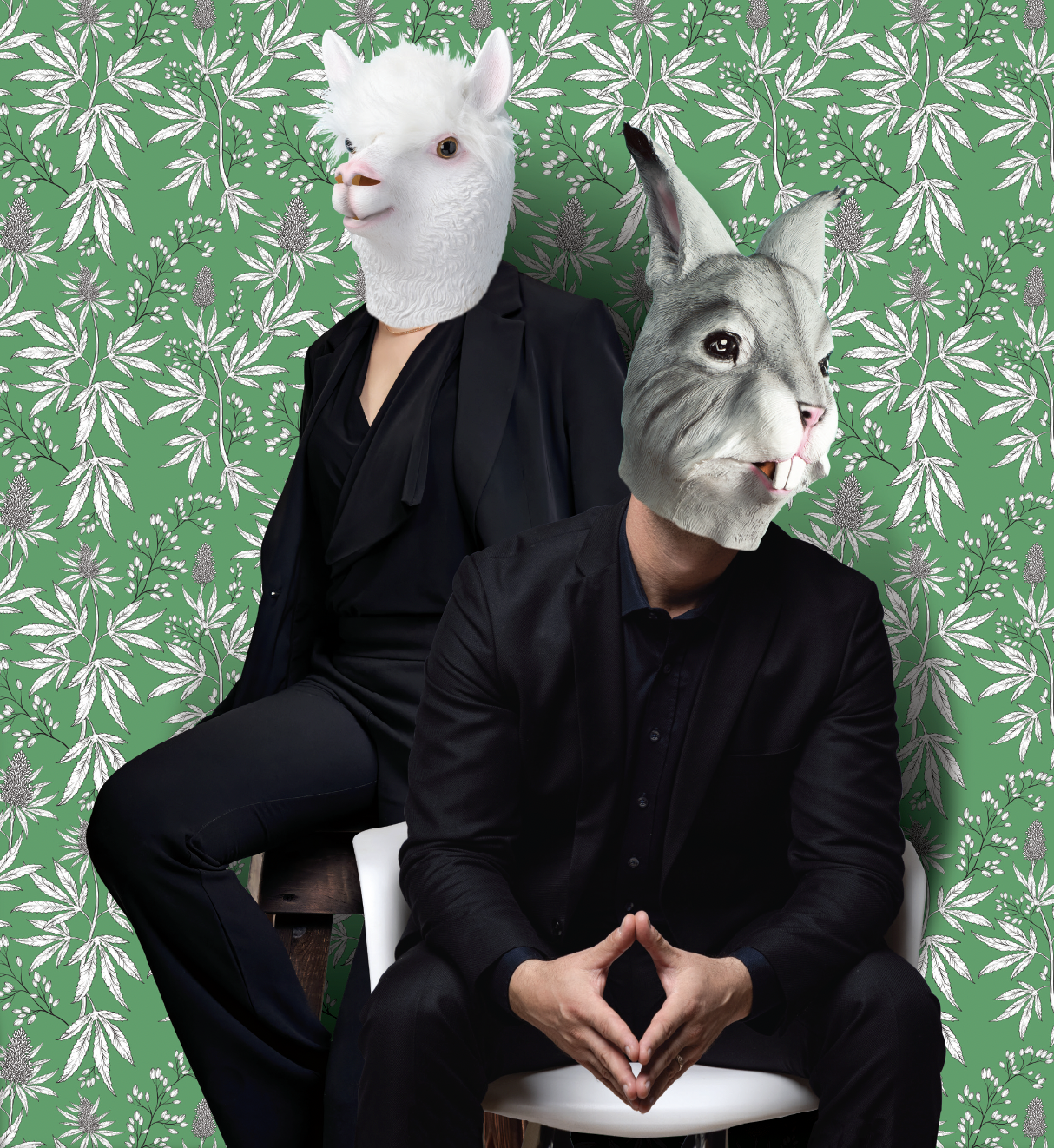
Rob Hill and Pam Patterson
Pam Patterson: “A”, people don’t trust the information online anymore. I don’t know about you, but I see some piece of Ai on my phone on the web or social media and I just disengage immediately and go elsewhere. That factor is only going to increase. And fast.
And “B”, the hostile algorithms. People don’t have a way of figuring out what the good/clean cannabis brands are. We’re very dedicated to raising up those producers who grow weed without pesticides and the legacy farmers of the Emerald Triangle who grow some of the most valuable cannabis in the world.
One of the idiosyncrasies about cannabis is that you need to switch it up every once in a while. If you keep with the exact same strain and producer all the time, the effects can fade a bit with tolerance. We highlight cannabis contest winners because then people gain insights and inspiration into what they should be trying that’s new. Endorced by the community.
People enjoy experimenting, but not with their health. We plug people into the good stuff. And of course, the bigger thing is just a sense of community. People identify with our content. We’ll have upcycled fashion or we’ll have art that’s kind of homespun or out there in new ways.
Our audience trusts us and we take that responsibility seriously. It’s a very powerful thing.
Rob Hill: It’s a strong thread that goes through all of those things. And on top of that, there is a medical efficacy. We’re able to highlight the ways in which cannabis can help people, like with epilepsy or autism, even with skin problems, and it’s been valuable with PTSD and treatment resistant depression.
There are a lot of circumstances that we highlight for our readership. We’re a magazine for people who partake. So, it’s not just cannabis. It’s also psychedelics. And psychedelics are something that are super coming up in the world these days. Eli Lilly just bought a company for 3.8 billion dollars. It’s a nasal spray for people who have treatment resistant depression. It’s proven effective to help people. We work on a basic kind of triad of: pragmatic, fun, and educational.
In this new issue, we have a feature with Marshawn Lynch, who is a Super Bowl champion and Hall of Famer from the Seattle Seahawks. He’s been smoking his whole life. He started a company with his cousins called Dodi, specifically for people in their 40s and 50s who have aches and pains.
He talks a lot about how close to 100 percent of the people he knows in football use cannabis, and use it a lot more than we thought. You see a lot of different people who have had deep and personal experiences, who then turn those learnings and passion into a company because they believe they’ve seen it work firsthand.
In terms of what Pam was saying, I’ve never been part of a magazine that had the editorial mix that we have. It’s got that feel of Vanity Fair in its heyday in the sense of the breadth that we cover. There’s something for everyone in this magazine. That’s what Graydon Carter always used to say in his interviews. There’s something for everyone in every issue of Vanity Fair, even if it’s just one feature that you love. And we try to do that.
We covered a story on Heroic Hearts in our latest issue, which is a company that sends veterans to the forests of Peru to go on psychedelic healing journeys. They pay for it all. We went and met them. They’re doing incredible work. There’s way more veterans out there suffering than we’re being told. This is something that we’re happy to support. Four times more veterans kill themselves by suicide than die fighting for the country. It’s definitely a really prevalent thing that society seems to have only a very surface understanding of. We believe people want to know more.
We delve down into the details of what’s going on, what the different types of trauma are. When you understand it better, it makes more sense. You can be more compassionate around the use of psilocybin and those sorts of things.
Then, of course, we met the people who had benefited by the treatment. It’s very moving because what they’re wrestling with can be very traumatic.
Pam Patterson and Rob Hill
Samir Husni: That content is what impressed me about Hiii and the reason I named it launch of the year two years ago. There’s genuine content that you can sit down and read, even if you don’t partake. There’s a lot of information. You can’t skim Hiii.
Rob Hill: Thank you.I agree. We pay a good rate for an independent magazine for our writers, because our coterie of writers, half a dozen to a dozen; they’re just fantastic.
It’s the best writing and the best visuals put together. It’s almost like everything I’ve done in my life and that Pam’s done came together in this sort of rainbow–these colors and the design, you sink into these articles.
Pam Patterson: That was important to me. I’m an ADHD stoner, so anything I’m going to read really has to entertain or inform me. Good writing with a good rhythm that’s colorful, but not too out there should draw and push you along in the article. That’s important. We wanted the magazine to be completely readable, but also to have a little bit of that early Wired magazine feel, where you let the designs take over.
I think we’ve done that. And now, going on two years, we are looking to expand. We’ve hit a lot of our goals in Los Angeles, and every step of the journey has rewarded us ten-fold with the enthusiasm and connection of the community in a way I frankly didn’t expect.
I’d be hard-pressed to find someone that’s a stoner in L.A. that doesn’t know about Hiii. These first two years, we’ve established ourselves here. That’s been really important in terms of the long game.
And now we’re being asked to come to New York, New Jersey, Toronto, and a few other places. We are looking to expand.
Samir Husni: With the design of issue eight, the cover, even if you’re not familiar with the magazine, it’s a cover that is going to grab you and say, pick me up.
Pam Patterson: I’ve had an ad agency for 20 years and I’d never worked on a magazine unless it was for a corporate client. Which is frankly more of a bastardization of the art form! But I think this background helps us approach the puzzle quite differently than others might.
We use a lot of tools of engagement, images intended to spark curiosity, small touches that bring the joy of discovery, and meaningful things that, as partakers, we know people are curious about. Sometimes I feel some of those magazines that have been around for 20, even 50, years have lost the light, lost the love of their subject.
I’ve been a daily smoker since I was 13. I’ve loved the herb my entire life. There’s no lack of stories for us to lean into and showcase for people. Cannabis is a food for creatives.
Rob Hill: The other thing that I find is that every generation wants their own stuff, whether it’s clothing, or music, or magazines. There haven’t been a lot of magazine launches in the last decades for this new generation, because I’m guessing the big boys and the big girls don’t think that there’s room for it. But we just saw W Youth. They’re launching a magazine for the younger generation. And that, you know, depending on how they do it, I think is exciting.
We aren’t your father’s magazine or your grandfather’s magazine. We’re your magazine. It’s new and exciting and growing. I’m excited for all the launches and to be a part of it. With cannabis now being legalized in Germany and Thailand and a lot of other countries like Australia and Portugal ready to go, there’s a lot of positives right now, both in print and in cannabis. And when we started, it wasn’t quite that way. Both have gained traction over the last couple of years, for sure. And investors are perking up a lot more because they’re understanding this.
And one thing I’ll add, we just got back from the California State Fair, which was in Sacramento. And the Cannabis Village there had, I think, 30,000 square feet. We had a couple thousand magazines there. And it was just so great to watch people walking around this exhibit, carrying the magazine, and rolling up joints on top. Right next to the funnel cakes, the donkeys and the wine and beer. It is exciting to watch cannabis be a driving force in these older paradigms and fit right in.
Samir Husni: If you and I are having this conversation a year from now, what would you tell me you’ve accomplished in 26 -27?
Pam Patterson: We were able to put ourselves in the hands of every partaker in the nation and bring a community of diverse people together for the greater good. Even the weed community has diversity with different audiences.
But there’s also racial diversity; diversity in opinions of why cannabis is important; there’s a pretty equal split between men and women. There are a lot of older people in dispensaries trying to help themselves feel better. And we have seen, there’s definitely a unifying of all of these audiences through the connection to cannabis. It goes surprisingly deep. And crosses most social confines.
We find that with people in cannabis, there’s a predisposition to liking each other, and to understanding the joke, or just getting it. When you know, you know. I never met a stoner I didn’t like.
Samir Husni: Before I ask you my typical last questions, is there any question I should ask you that I failed to ask you?
Rob Hill: No, I think the questions have been quite good, and it’s really what’s been on our mind. We’re excited, really excited to see the momentum.
We’re glad that you’re back because we need you. I’ve been seeing your postings. These are going to be some exciting times. It’ll be different than the past, but that’s good!
Pam Patterson: There are only four states now where cannabis is completely illegal. If there ever were to be a time for federal legislation, it’s definitely more possible than ever.
Hiii surprises people. People open it up and they’re surprised to find that they’re interested and engaged.
It’s as simple as that. A simplicity that is surprisingly sweet in this day and age. The funny thing is that digital doesn’t surprise us anymore. And we don’t believe it. Ai has accelerated that x10. The backlash has been pretty swift. And I think digital disgust will continue to grow.
Rob Hill: You were asking about the future. In the next year, we want to be in a couple more cities.
We want to build up a very solid, loyal subscriber list and newsletter list, and nurture our community with the magazine and at events. People want the magazine, we’ve learned that. So we need to get the mag in front of more partakers so that they can give it a shot.
I’m going to tell you a quick little anecdote. And it was probably the best thing that happened: our driver was sick. And Pam and her daughter went out to do the deliveries. She got to see firsthand what it’s like when you show up there with these magazines. I’ll let her give you some anecdotes.
Pam Patterson: They cheer. And cheer. They’re excited. They talk about how their customers have been coming in and asking for it. They tell us about taking the covers off, framing them, and putting them on the wall. They love doing collages with our imagery. They’re proud to showcase it on their coffee table. They collect all of the issues. They tell us over and over again, “We read it cover to cover. We love it! Our customers love it!”
Rob Hill: It’s fun. We’ve won the readers over but you can never get complacent. I’ve always believed that some magazines launch just for the advertiser, they didn’t truly put their attention to the readers. I was brought up by a couple of magazines earlier in my career, that if you get the readers first, the advertisers are almost forced to come along.
Not every single one of them, but they will gravitate towards the thing that passionately engages their audience. That’s important. Now that we know readers are re-emerging, there’s a whole new generation of curiosity.
We have great advertisers and we would like more. But we’re excited by other revenue streams as well.
Samir Husni: My final typical question: what keeps you up at night these days, Pam?
Pam Patterson: Doing the magazine is an immersive joy. But we need to expand. We’ve touched on a viral element that seems to just go and go. But as a former ad agency owner, I know these things don’t last forever.
So we want to lean into that now. It’s an important phase in our development. Making the jump to the next stage. Getting enough subscribers and getting enough advertisers on board is what keeps me up at night, for sure. Always.
Samir Husni: And Rob?
Rob Hill: The only thing that keeps me up at night is wanting to get to work in the morning. Crazy.
From the beginning, when Pam and I met, we were on the same page. We want to get to, you know, around 10 pivotal cities in the US. The ones that can support us, while we build up our list, build up our presence, build up our brand and then even have it licensed to other countries.
In some ways, there’s a way bigger upside to cannabis than there is to Ai. It’s a much better thing, it’s more creative and has a spiritual component that people should not underestimate. The backlash against AI is fast and furious right now. We hear and see that every day. Of course, AI will play a role in our future, but people are pretty hip to what’s going on, and are thirsting for authenticity.
In addition, the average response rate for print ads is 9%, significantly higher than the 1% for digital ads; print ads command 82% consumer trust, while digital faces challenges like ad blockers; combining print and digital strategies can lead to 400% more effective engagement than digital alone; print can reach a tangible, attentive audience more efficiently.
There are plenty of reasons for the rise of print, and they will only grow. Tangibility creates trust. The revived interest in print magazines has also been attributed to the analog preferences of Gen Z readers. They are making wallpaper collages in their offices from the pages of Hiii! How bout that!
Samir Husni: Excellent. Thank you and all the best
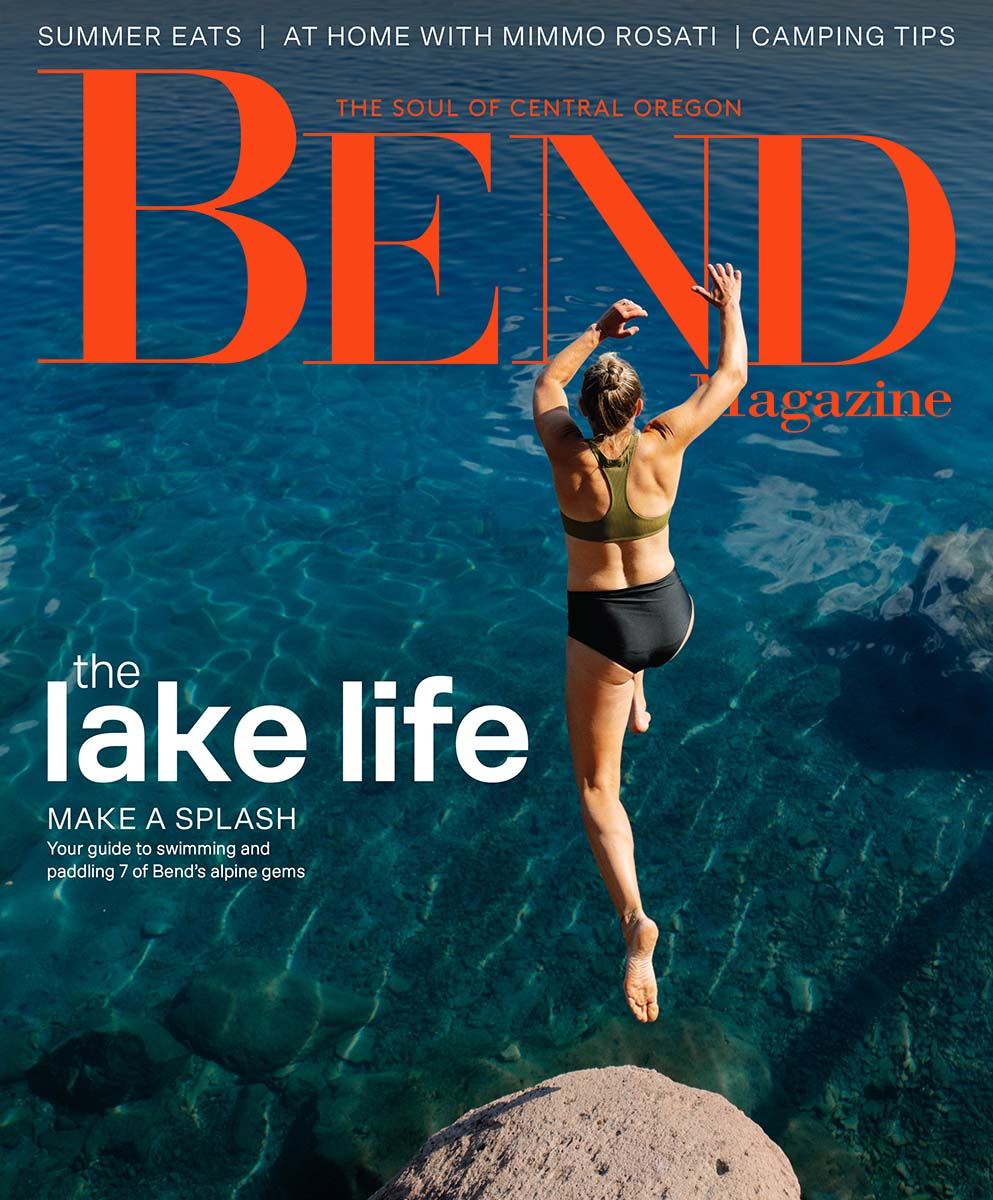
You must be living in Central Oregon, enjoying the scenery and all the touristic attractions that go with it, to have the passion, energy, and love that the CEO of Oregon Media, publishers of BEND magazine among many others, has for the region and the community.
Heather Huston Johnson is that CEO. She herself is a descendent of pioneers who came through the Oregon Trail and settled in that part of the country. She is doing a pioneering job publishing several magazines that she refers to as “the living room of the community.” A phrase I told her I am going to steal and use in my writings and seminars.
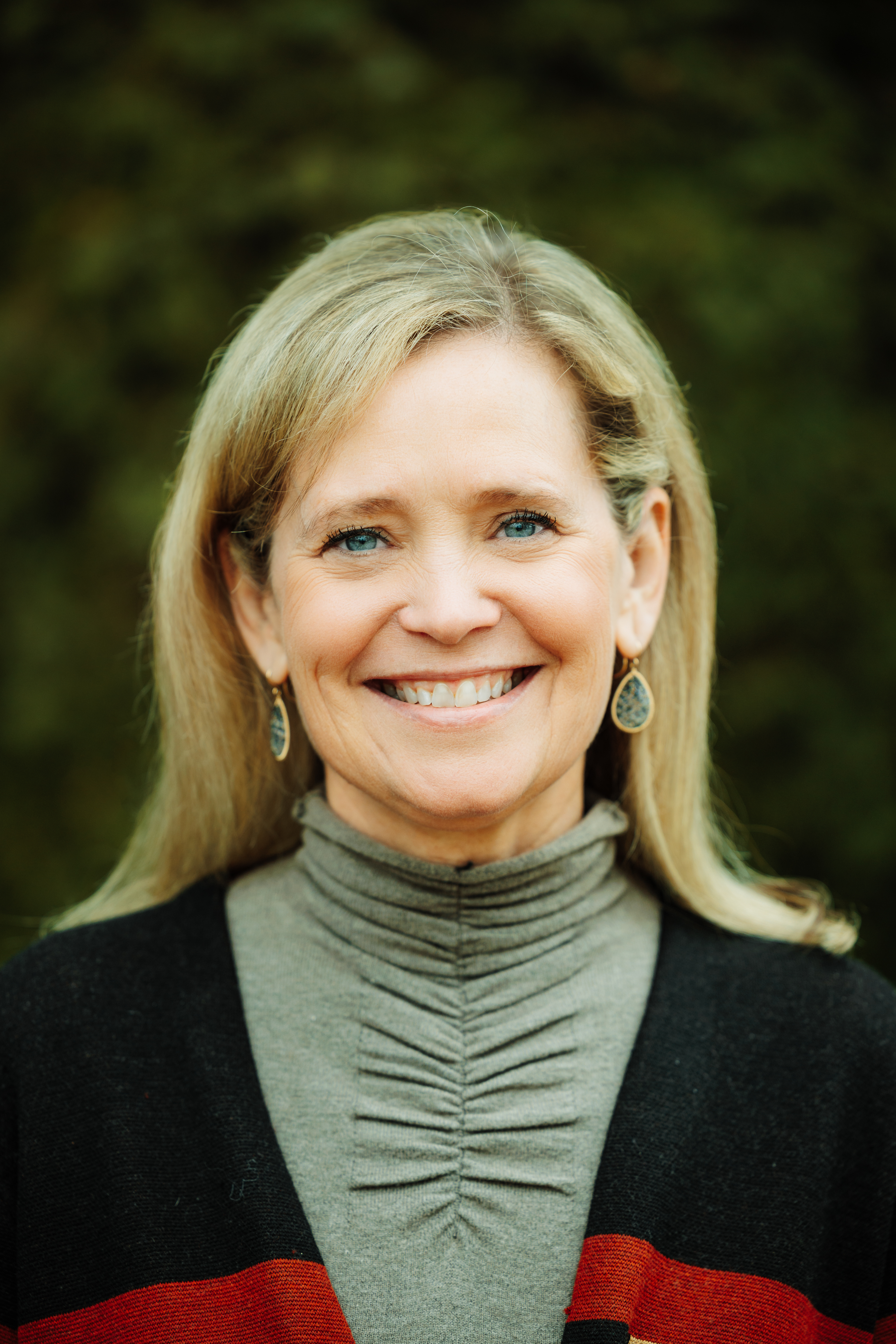
Heather Huston Johnson
Her passion and love for the community are evident on the pages of her magazines, her website, and the many events that she does on a regular basis. Her goal for the future is to grow deeper in the community and not bigger.
I had a very nice conversation with Heather and learned about her company, Oregon Media, and about that part of the country. My conversation with her even tempted me to ask for an invite to visit Central Oregon one day. She happily welcomed my temptation and gave me a rain check for any time I want to visit.
So, without any further ado, please join me in this engaging interview with the CEO of a flourishing regional media company in Central Oregon Heather Huston Johnson:
But first the soundbites:
On the difference between digital and print: “Digital is great for so many reasons, obviously. There’s that immediacy piece. It serves a huge purpose, obviously, but there’s nothing like the permanence of print, and how it can dive deeper.”
On the power of print: “There’s nothing like the permanence of print, and how it can dive deeper. Print is intentional; people are taking their time; they’re sitting down; they’re picking it up; they’re spending time with it. Whereas in digital, you must search it out.”
On her Oregon pioneering heritage: “We’ve needed that pioneering spirit to get to where we are today. It hasn’t been easy, but I wouldn’t change a thing.”
On how she sees herself: “We’re experience makers and we’re community builders. We do believe that through print, through digital, through the events, through the marketing that we do, we’re not necessarily building magazines, we’re building communities.”
On the role of relationships in what she does: “We’re about connecting people to each other, whether it’s somebody finding an artist for something to hang on their wall, or a service that they might need, or just a friend that they might want to reach out to. For us, it’s all about relationships. It’s all about connecting people.”
On her advice to start a magazine: “I’m a proponent of magazines, and I would love other people to do them if they can, but I’m always telling them it’s not easy. And don’t expect to make a lot of money.”
On her favorite magazine: “BEND magazine is truly the one that’s most near and dear to my heart. But I still have a great appreciation for 1859. That’s truly the baby that now has gone off to college, graduated, has had its own family; I’m still very proud of it.”
On the role of local magazines: “Local community magazines allow us to bring our communities together locally. We’re the living room of our town.”
On what a print magazine can do that digital can’t: “That’s what a print magazine can do: either makes you feel such pride in your own hometown, or it helps keep you stay connected to a place that either you would love to visit, you visit frequently, or you’d love to move to one day, or maybe you have kids that live there.”
On her comparing the print magazine to a living room: “In this living room, let’s come in and share stories, let’s share ideas, let’s support one another, let’s embrace this community and make it better. You know, when people know more about their community, they invest more in their community, whether it’s financially or volunteering, or just being aware…”
On what keeps her up at night: “How can we go deeper with our community? How can we be more engaged, provide more information, provide more inspiration? But growing bigger isn’t the goal.”
And now for the lightly edited interview with Heather Huston Johnson, CEO, Oregon Media:
Heather Huston Johnson
Samir Husni: My first question you’re a big advocate for print and you are doing very good with print.
Heather Huston Johnson: Yes.
Samir Husni: Why is that? What’s the secret sauce? Did you find something in Central Oregon people don’t know about?
Heather Huston Johnson: I wish I knew what the secret sauce was, but it comes down to what our values are as a company. We believe print is what can connect a community.
It uncovers the stories. I think of ourselves as historians of the stories of our towns. And there’s that permanence to print. We do have a community where people are very proud of where they live. It’s also a tourism community; we have a lot of people that like to come here and visit.
I don’t know if it’s because we got lucky and we’re in an amazing spot, or if it’s because we truly are committed to telling those authentic stories of our region and having it be a place where people can not only learn about their community but really connect with their community. It’s hard to do that in digital.
Digital is great for so many reasons, obviously. There’s that immediacy piece. It serves a huge purpose, obviously, but there’s nothing like the permanence of print, and how it can dive deeper. Print is intentional; people are taking their time; they’re sitting down; they’re picking it up; they’re spending time with it. Whereas in digital, you have to search it out.
Samir Husni: You mentioned on your website that you “believe it’s the unique pioneering spirit of our state that proposes to create something new, something fresh.”Tell me about that connection between the company, the magazines, and the state of Oregon, and specifically Central Oregon.
Heather Huston Johnson: Well, I should talk about my background. So, I was born and raised in Portland, Oregon.
I’ve been an Oregonian my whole life. Members of my mom’s side of the family had come over on the Oregon Trail and homesteaded in Eastern Oregon in a town called Joseph. That pioneering spirit is in my blood.
When we started this company, my husband and I started it back in the end of 2008, with another couple, Kevin and Sarah Max. The reason we had started it was we; Kevin and I were both working for another magazine called Bend Living at the time.
On December 15 of 2008, we all got our pink slips. Unfortunately, that Bend Living did not survive the recession. In fact, it was probably one of the first ones to fall.
We had moved over to Central Oregon, which is about three hours from Portland. We had moved over probably about 10 years before that. We both had young children, we didn’t want to necessarily move back to Portland. We said, well, let’s just start our own magazine. Right? Why not? There’s only way we can go is up.
So, we started at that time, a magazine called 1859 Oregon’s magazine. And we had great success with that. Kevin wanted to take 1859 and replicate it in other states, which is great.
My husband, Ross and I being from Oregon, and understanding the value of relationships, and how important that is to what we do. We decided at that time to sell our interest in 1859, let Kevin go take it and do what he wanted with it. And we really wanted to focus here locally.
We had just launched BEND magazine before this. So, we took Bend Magazine and our other Oregon products, which were a lot of visitor guide type of work. And we’ve been able to get down to the roots of where we are and stay true to those relationships. We’ve needed that pioneering spirit to get to where we are today. It hasn’t been easy, but I wouldn’t change a thing.
Samir Husni:I’ve always said it’s great to have good content. It’s great to have good design. And you say that on your web.But it’s all about making experiences. I mean, we are more experience makers.
Heather Huston Johnson: We are.
We’re experience makers and we’re community builders. We do believe that through print, through digital, through the events, through the marketing that we do, we’re not necessarily building magazines, we’re building communities.
Samir Husni: What’s your elevator pitch to the advertisers? Why should they advertise on ink on paper, where there’s mountains of websites out there?
Heather Huston Johnson: The world has gotten so global.
But at the same time people live very locally. People spend time, they want to get to know their community. When we go talk to people, it’s not too hard, because everybody we talk to, they love the magazine.
That’s always a great starter. It’s where people are spending their extra time. There’s just not a lot of time these days that people do commit to, and they don’t want to look at ads necessarily online. That’s not what’s driving people in our market. They want to feel like they’re a part of something; they want to feel like they’re a part of the community.
We’re about connecting people to each other, whether it’s somebody finding an artist for something to hang on their wall, or a service that they might need, or just a friend that they might want to reach out to. For us, it’s all about relationships. It’s all about connecting people.
We don’t take the advertisement, put it in the magazine, and it ends there. We work with our advertisers to understand what their goals are, who they’re trying to reach, and we’ll go out of our way to make connections for them outside of that. So it’s more than just the print ad for us.
Samir Husni: If somebody comes to you and say, Heather, I have an idea for a new magazine. What do you tell them? Do you throw them out of the door? Or you give them some?
Heather Huston Johnson: Well, we have a competitor here in town for our home magazine, who came to me, 12 years ago, and asked me those same questions. I told him that it’s hard, but here are the things you should think about.
He went for it, and he’s doing great. I’m a proponent of magazines, and I would love other people to do them if they can, but I’m always telling them it’s not easy. And don’t expect to make a lot of money.
Samir Husni: That leads me to the question, since you started BEND, has your journey been a walk in a rose garden, or you had some challenges? And if you had challenges, how did you overcome them?
Heather Huston Johnson: There have been many challenges. So yeah, when we started the publication, 1859 in 2008, then BEND was very slow to recover from the recession.
We are a town now of just over 100,000 people, but then we were probably 40,000, and very much dependent on the tourism and real estate market. So our economy here recovered very slowly. We did not anticipate how long it would take there.
My husband and I, had to move out of our house. Fortunately, my parents had a townhome here that we could move into with our two little kids, and we rented out our house for three years. So, it wasn’t pretty, necessarily, all the time.
But it taught us all. We believe in what we’re doing. And, we could have given up at any time, but we’ve stuck with it. It’s been very hard.
We’re starting to see the fruits of our labor, just starting.
Samir Husni: From all the publications you have, which one do you feel is your baby, the one that when you go and talk about it, you are so proud of, and so proud of what you accomplished with?
Heather Huston Johnson:BEND magazine is our flagship publication, of course. And that’s the one I do feel the proudest of.
Our other publications are really sister publications to BEND magazine. We have BEND Home and Design. We have Savor magazine, which is our dining publication.
And we have High Desert Weddings, which is our wedding publication. BEND magazine is truly the one that’s most near and dear to my heart. But I still have a great appreciation for 1859.
That’s truly the baby that now has gone off to college, graduated, has had its own family; I’m still very proud of it.
Samir Husni: In terms of the whole publishing scene, do you feel that city and regional magazines have a better chance of surviving in this digital age?
Heather Huston Johnson: I do.
It’s truly because of that community piece. Things have gotten so fragmented out there in the world. Local community magazines allow us to bring our communities together locally. We’re the living room of our town.
You know, if there were a place that you could go to learn about your community, to feel proud about your community. And it really is that, for a town. We are lucky in terms of the size of our community. because of that local, that pride in where you live. I think it’s a little bit tougher for some of the bigger city and regionals, because there’s so many different areas to a town in the bigger cities. But for us, we’re able to still feel like a small town, yet it’s kind of a big town.
It’s that piece where people feel that pride. I remember growing up as a kid, and we would go over to Sun Valley, Idaho to go skiing. It was my most magical place.
As a young adult, I subscribed to Sun Valley magazine, because that was my way of keeping in touch with that community that I love so much. I wanted to live vicariously through it. That’s what a print magazine can do: either makes you feel such pride in your own hometown, or it helps keep you stay connected to a place that either you would love to visit, you visit frequently, or you’d love to move to one day, or maybe you have kids that live there. It has that way of just really connecting you locally to your community and being that, that consistent for people.
Samir Husni; I love your term, “it’s a living room of the community.” Can you expand a little bit on it?
Heather Huston Johnson: I think of town squares where people come together. And that’s how we try to think about what we could be for our community, or that we try to be the place where people can come together in a lot of different ways.
Again, connecting people together. In this living room, let’s come in and share stories, let’s share ideas, let’s support one another, let’s embrace this community and make it better. You know, when people know more about their community, they invest more in their community, whether it’s financially or volunteering, or just being aware, I think is important.
Samir Husni: If you and I are having the same conversation a year from now, what would you tell me you’ve accomplished in 26-27?
Heather Huston Johnson: Well, we are having a big digital growth year.
You need to be everywhere these days; you can’t just be in one place. And both, print and digital, have their purpose, for sure.
So, we’re working on our processes and making sure we’re being as efficient as we can. It’s hard these days with all these content creators out there that are probably stealing information from us, that we’re having to pay to develop this amazing content. We must make sure that everything we’re doing is setting ourselves, we have to be as competitive as these creators that are creating content, on daily basis, for very little, we will never use AI for creating content ourselves.
But we are investing in how we use AI for our productivity. That’s important. So, helping us to be more places for more people, as best we can, so we can expand the size of that living room, I guess I would say.
Samir Husni: Excellent. Before I ask you my typical last questions, is there any question I should have asked you, and I did not ask you?
Heather Huston Johnson: I can’t think of one. Can’t think of one. You do such a great job.
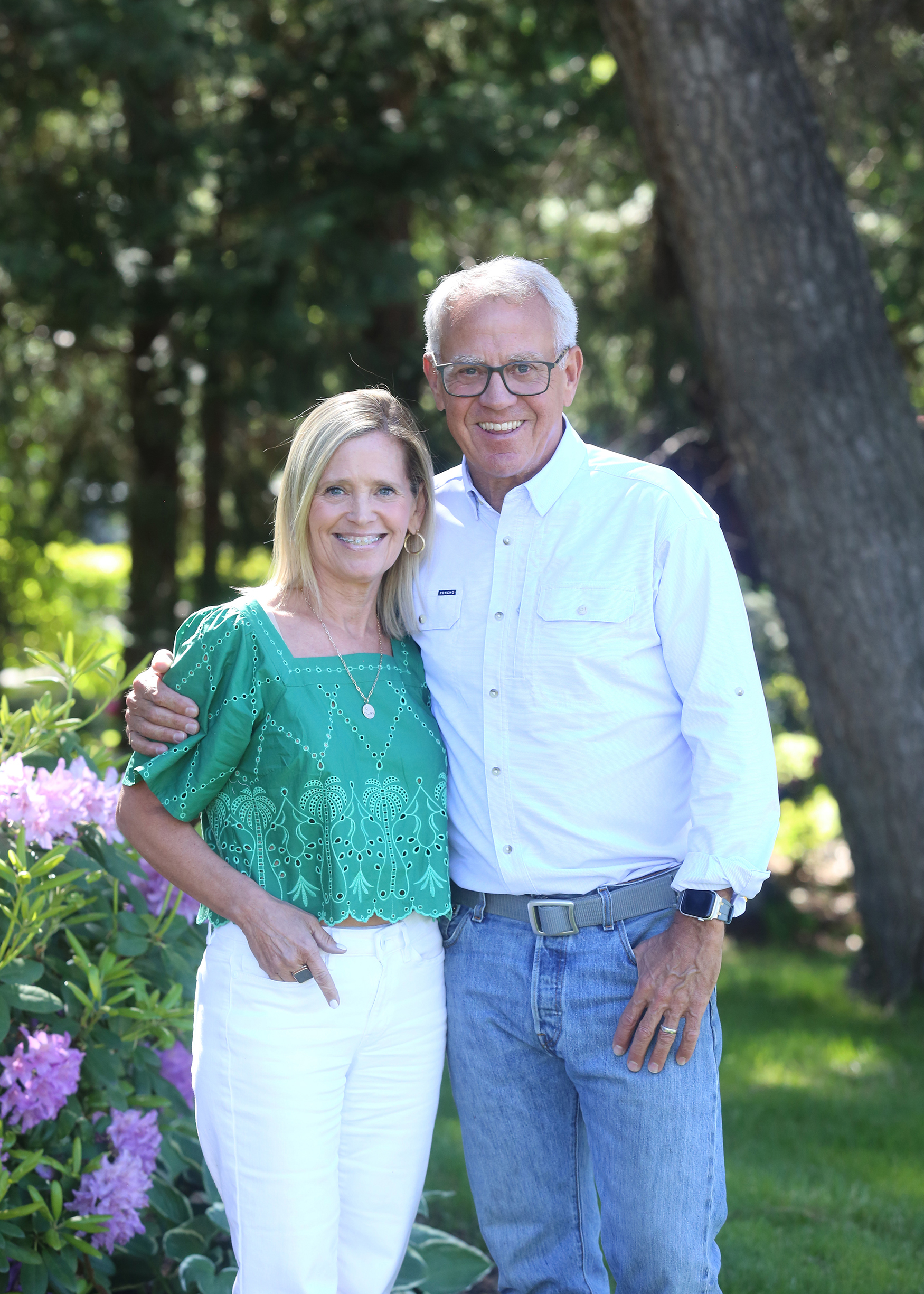
Heather Huston Johnson and Husband Ross
Samir Husni: Thank you. If I come to visit you one day, unannounced.What do I catch Heather doing? Reading a book, watching TV, having a glass of wine?
Heather Huston Johnson: Well, when we’re not at home, we try to be out enjoying the Central Oregon lifestyle as much as we can, whether that’s skiing, golfing, hiking, fishing, those are really our passions.
But if you catch us at home, Ross is probably at night cooking dinner. I’m very lucky to have a husband who is the chef of the family. And then I’m the one who’s still behind the computer getting my work done at night because during the day, I’m usually here, at the office, for everybody else in the company and I got to get my work done.
Samir Husni: My final typical question is what keeps Heather up at night these days?
Heather Huston Johnson: Well, these days, I would say I’m getting a pretty good night’s sleep most of the time. So that’s good. But if I’m not, it usually has, we have two kids, Hannah and Fletcher, who are 22 and 25. And if there’s anything that worries me, it’s this world out there is not so nice sometimes to people and I just want to make sure my kids are okay.
On the professional side, how can we go deeper with our community? How can we be more engaged, provide more information, provide more inspiration? But growing bigger isn’t the goal.