
“Get Hiii At Home,” That’s Hiii Magazine, Of Course: The Mr. Magazine™ Interview With Co-Founders Pam Patterson & Rob Hill.
August 7, 2026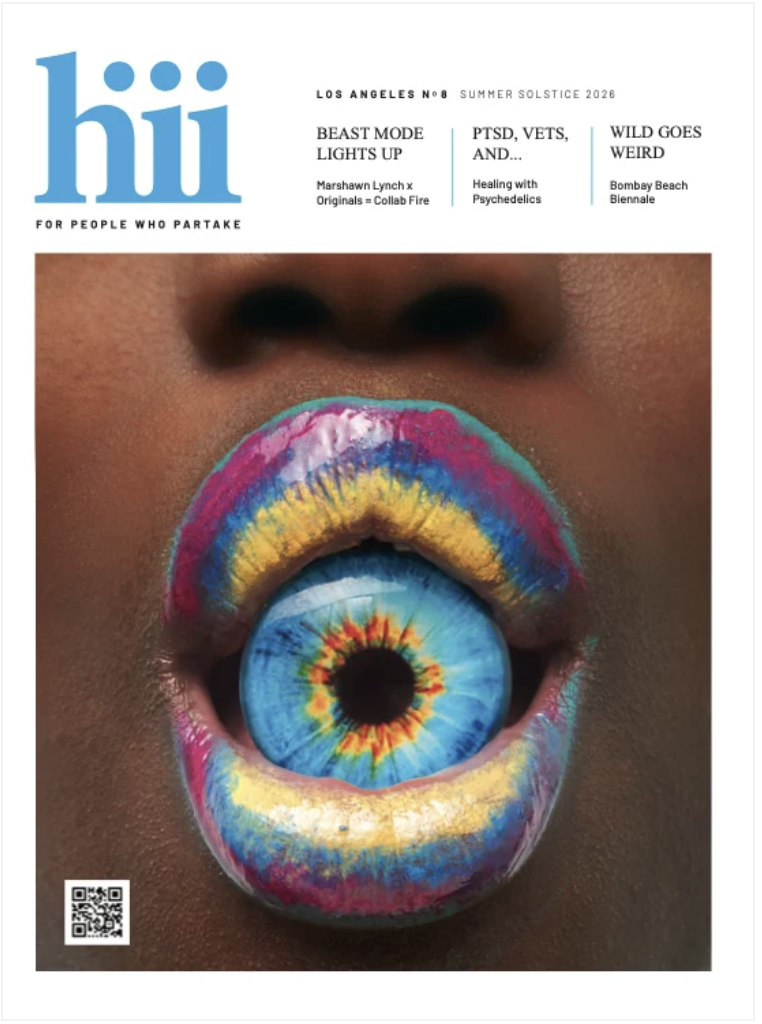
If you would have told the co-founders of Hiii magazine, Pam Patterson and Rob Hill, that their journey with the magazine will be an “out-of-body experience,” they would have told you, “you are out of your mind.” When I first saw Hiii, I fell in love. I am not their audience, but I am The Audience for every good, well done, ink on paper magazine. Hiii was that magazine and that was the reason I selected it The Launch of the Year in 2024.
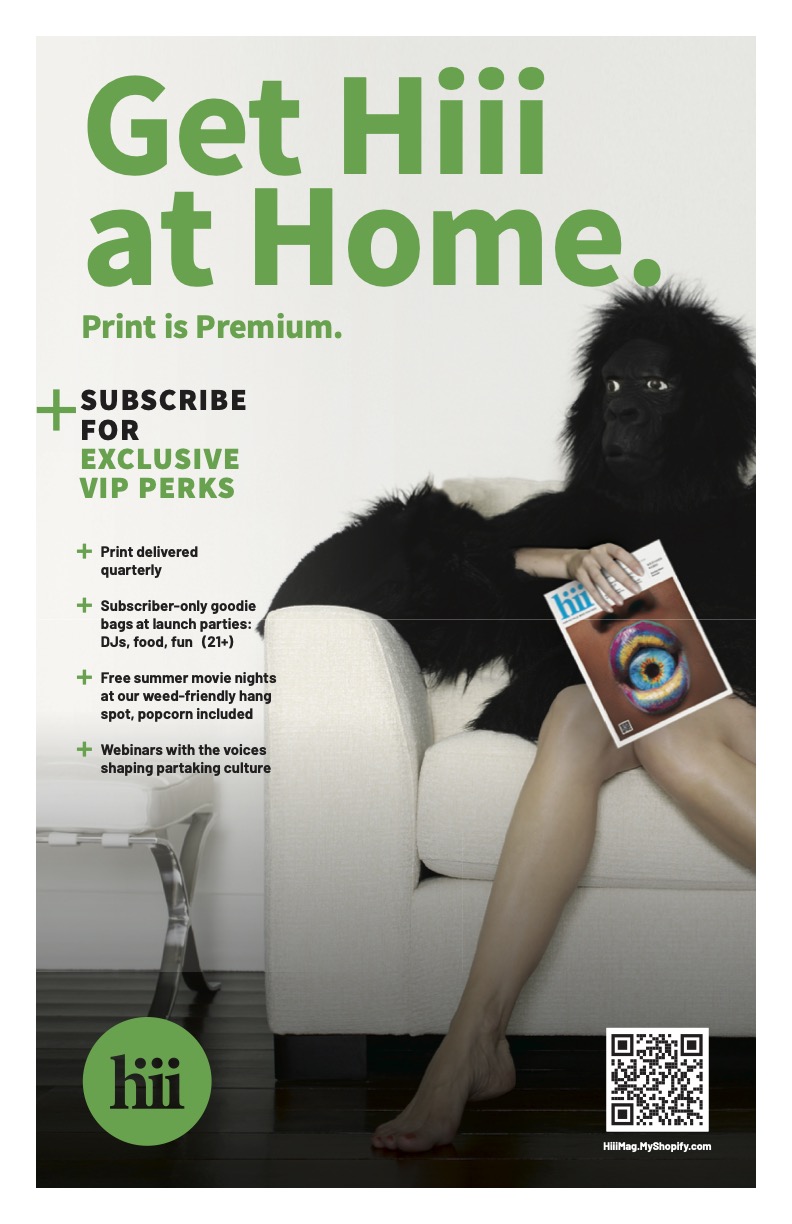
That great content and feeling did not stop with the first issue. Eight issues later and the magazine is going strong with even stronger content and design. Hiii is spreading its wings and going national via subscription for the first time since its inception. The magazine has been limited, due to the different cannabis laws, to the greater LA area and was distributed at the dispensaries of the city. Now, it is your chance to “Get Hiii at Home.” A very smart ad campaign announcing the national launch of the magazine from sea to shining sea.
Rob and Pam are not new to the ink on paper venture. Rob has launched and edited seven previous titles and Pam owned an ad agency in LA. So to say they have placed their combined experience to create a magazine that you can’t put down would be an understatement.
“I read it cover to cover,” is the frequent statement that they usually hear. And who am I to disagree. Every time the issue arrives by mail, Mr. Magazine™ is engaging with Hiii cover to cover. A job very well done and a magazine that is highly recommended.
To “Get Hii at home,” click here and to read the lightly edited interview with Pam Paterson and Rob Hill, co-founders of Hiii magazine, sit down relax and let the fun begins:

Samir Husni: I love your ad campaign, “Get Hiii at Home… Print is Premium” You talk about a very nice way to celebrate your second anniversary. So, has it been a walk in a rose garden these two years? Or in a mushroom field?
Pam Patterson: In many ways, it has been both. A complete exhilaration and an out-of-body experience. People have embraced the magazine and the content so completely that we’re a little dumbstruck to watch people engage with something that’s not their phone. What’s amazing, Samir, is we launched on August 8th, 2024, at Woody Harrelson’s The Woods, which was probably the best of all the cannabis lounges, and it’s so interesting to watch, in just those two years, how print went from being lost in the fog, to now, completely emerged.
We see it every day. Every single day, we see something that shows us that print is powerful. People are wanting it, especially people in their 20s, many budtenders read this magazine from cover to cover. That’s the biggest comment we get. The highest praise is, “We read it from cover to cover.” I recently just experienced an issue of Architectural Digest, because, of course, I get a couple of magazines myself, as do most of the people in the United States. I was so pleased to be able to go from the very front page to the very back page, and everything was just hitting with me. I understood the statement, “I read it cover to cover.” It’s a very satisfying experience. And honestly, not that common.
Samir Husni: This is the first year you are offering subscriptions at home, that people can subscribe. Is it national or still limited to LA?

Rob Hill: The distribution of the physical magazine is in dispensaries from Santa Ana to Ojai in Los Angeles. But with this big subscription push we’re going national.
We’re coming at this because print is being reborn, and it’s got some new things to it, and old things, right? People are loving getting magazines in the mail. It’s an exciting thing, because you don’t get anything good in the mail anymore. Except bills. And so, you’re getting this beautiful magazine. You’re getting new ideas. New food for your mind.
We really wanted to do a campaign. We’re going to be partnering with some other brands. And we think the way forward is to get out of the echo chamber, which is one of the reasons Instagram is not effective as a form of marketing, at least not in cannabis.
It’s like working at a cola company and going to lunch in the cafeteria, and that cola ad or logo is on the wall; you already work there. You already know everything about it. You’re sold. You’re not hitting anybody new.
We know we have a product that people like and want. And now we’re finding our people outside of our physical distribution.
Pam Patterson: The cannabis industry is a smallish niche. People come from all around the country to go to these trade shows and events. Oftentimes, even events we’ll have at our HQ in Frogtown, on the LA RIVER, we’ll get people from other states, multi-state operators (MSOs) who carry the love home to new regions.
But for now, we’re only available free in dispensaries in LA. So subscriptions makes us accessible to the whole US. We’re finding that people want that. The content is very national.

Samir Husni: Like you say, in your ad campaign, print is premium and creating a premium product is not cheap. Tell me about whether there were any struggles, challenges, or was it an easy thing to do?
Rob Hill: Well, I’ll just say, I’ve launched seven magazines and something always surprises you.
One of the big things that we’ve learned is that we have the best advertisers in our business, basically, our core advertisers that stay with us. Now we’re building on top of that. But the subscription model that we have spent the last couple of months researching and talking to people about is going to put us in a position where we’re not just an advertising driven platform, because we all know that advertisers have bad quarters and bad years, they change management, and they change marketing directors.
The people who subscribe don’t cancel.
Curiously enough, people that advertise with us, they have no digital path. Because our industry has very hostile algorithms for both Google and social media. If they spend a lot of money investing in digital, the next day they may just have it completely erased by Instagram and pull the plug on a hundred thousand viewers and that’s that. We’ve had that happen to many of our advertisers. It’s quite shocking because one of them, I went to go tag them the other day because they had sent us some goodies, and they were just gone. I emailed the owner and he’s trying to see if he can recover his audience. Sometimes they can’t. This can represent 10 years of work. And, you know, he’s very upset. The great thing about print is that it can’t be censored, shadowbanned, tracked, etc. This is becoming a big factor in the backlash against social media, etc.
Samir Husni: What are the advantages for people who prefer to have an ink on paper magazine?
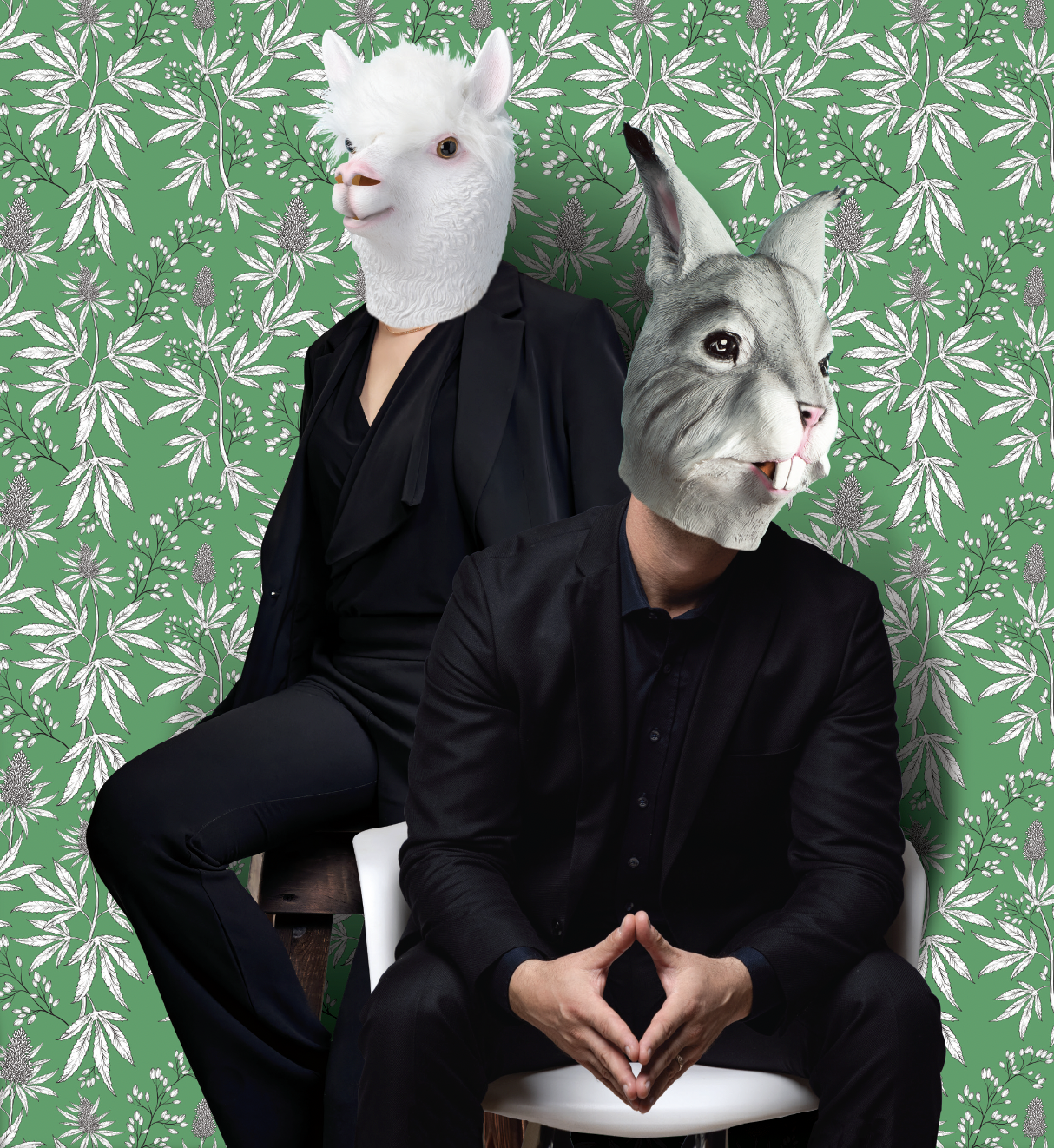
Pam Patterson: “A”, people don’t trust the information online anymore. I don’t know about you, but I see some piece of Ai on my phone on the web or social media and I just disengage immediately and go elsewhere. That factor is only going to increase. And fast.
And “B”, the hostile algorithms. People don’t have a way of figuring out what the good/clean cannabis brands are. We’re very dedicated to raising up those producers who grow weed without pesticides and the legacy farmers of the Emerald Triangle who grow some of the most valuable cannabis in the world.
One of the idiosyncrasies about cannabis is that you need to switch it up every once in a while. If you keep with the exact same strain and producer all the time, the effects can fade a bit with tolerance. We highlight cannabis contest winners because then people gain insights and inspiration into what they should be trying that’s new. Endorced by the community.
People enjoy experimenting, but not with their health. We plug people into the good stuff. And of course, the bigger thing is just a sense of community. People identify with our content. We’ll have upcycled fashion or we’ll have art that’s kind of homespun or out there in new ways.
Our audience trusts us and we take that responsibility seriously. It’s a very powerful thing.
Rob Hill: It’s a strong thread that goes through all of those things. And on top of that, there is a medical efficacy. We’re able to highlight the ways in which cannabis can help people, like with epilepsy or autism, even with skin problems, and it’s been valuable with PTSD and treatment resistant depression.
There are a lot of circumstances that we highlight for our readership. We’re a magazine for people who partake. So, it’s not just cannabis. It’s also psychedelics. And psychedelics are something that are super coming up in the world these days. Eli Lilly just bought a company for 3.8 billion dollars. It’s a nasal spray for people who have treatment resistant depression. It’s proven effective to help people. We work on a basic kind of triad of: pragmatic, fun, and educational.
In this new issue, we have a feature with Marshawn Lynch, who is a Super Bowl champion and Hall of Famer from the Seattle Seahawks. He’s been smoking his whole life. He started a company with his cousins called Dodi, specifically for people in their 40s and 50s who have aches and pains.
He talks a lot about how close to 100 percent of the people he knows in football use cannabis, and use it a lot more than we thought. You see a lot of different people who have had deep and personal experiences, who then turn those learnings and passion into a company because they believe they’ve seen it work firsthand.
In terms of what Pam was saying, I’ve never been part of a magazine that had the editorial mix that we have. It’s got that feel of Vanity Fair in its heyday in the sense of the breadth that we cover. There’s something for everyone in this magazine. That’s what Graydon Carter always used to say in his interviews. There’s something for everyone in every issue of Vanity Fair, even if it’s just one feature that you love. And we try to do that.
We covered a story on Heroic Hearts in our latest issue, which is a company that sends veterans to the forests of Peru to go on psychedelic healing journeys. They pay for it all. We went and met them. They’re doing incredible work. There’s way more veterans out there suffering than we’re being told. This is something that we’re happy to support. Four times more veterans kill themselves by suicide than die fighting for the country. It’s definitely a really prevalent thing that society seems to have only a very surface understanding of. We believe people want to know more.
We delve down into the details of what’s going on, what the different types of trauma are. When you understand it better, it makes more sense. You can be more compassionate around the use of psilocybin and those sorts of things.
Then, of course, we met the people who had benefited by the treatment. It’s very moving because what they’re wrestling with can be very traumatic.

Samir Husni: That content is what impressed me about Hiii and the reason I named it launch of the year two years ago. There’s genuine content that you can sit down and read, even if you don’t partake. There’s a lot of information. You can’t skim Hiii.
Rob Hill: Thank you.I agree. We pay a good rate for an independent magazine for our writers, because our coterie of writers, half a dozen to a dozen; they’re just fantastic.
It’s the best writing and the best visuals put together. It’s almost like everything I’ve done in my life and that Pam’s done came together in this sort of rainbow–these colors and the design, you sink into these articles.
Pam Patterson: That was important to me. I’m an ADHD stoner, so anything I’m going to read really has to entertain or inform me. Good writing with a good rhythm that’s colorful, but not too out there should draw and push you along in the article. That’s important. We wanted the magazine to be completely readable, but also to have a little bit of that early Wired magazine feel, where you let the designs take over.
I think we’ve done that. And now, going on two years, we are looking to expand. We’ve hit a lot of our goals in Los Angeles, and every step of the journey has rewarded us ten-fold with the enthusiasm and connection of the community in a way I frankly didn’t expect.
I’d be hard-pressed to find someone that’s a stoner in L.A. that doesn’t know about Hiii. These first two years, we’ve established ourselves here. That’s been really important in terms of the long game.
And now we’re being asked to come to New York, New Jersey, Toronto, and a few other places. We are looking to expand.
Samir Husni: With the design of issue eight, the cover, even if you’re not familiar with the magazine, it’s a cover that is going to grab you and say, pick me up.
Pam Patterson: I’ve had an ad agency for 20 years and I’d never worked on a magazine unless it was for a corporate client. Which is frankly more of a bastardization of the art form! But I think this background helps us approach the puzzle quite differently than others might.
We use a lot of tools of engagement, images intended to spark curiosity, small touches that bring the joy of discovery, and meaningful things that, as partakers, we know people are curious about. Sometimes I feel some of those magazines that have been around for 20, even 50, years have lost the light, lost the love of their subject.
I’ve been a daily smoker since I was 13. I’ve loved the herb my entire life. There’s no lack of stories for us to lean into and showcase for people. Cannabis is a food for creatives.
Rob Hill: The other thing that I find is that every generation wants their own stuff, whether it’s clothing, or music, or magazines. There haven’t been a lot of magazine launches in the last decades for this new generation, because I’m guessing the big boys and the big girls don’t think that there’s room for it. But we just saw W Youth. They’re launching a magazine for the younger generation. And that, you know, depending on how they do it, I think is exciting.
We aren’t your father’s magazine or your grandfather’s magazine. We’re your magazine. It’s new and exciting and growing. I’m excited for all the launches and to be a part of it. With cannabis now being legalized in Germany and Thailand and a lot of other countries like Australia and Portugal ready to go, there’s a lot of positives right now, both in print and in cannabis. And when we started, it wasn’t quite that way. Both have gained traction over the last couple of years, for sure. And investors are perking up a lot more because they’re understanding this.
And one thing I’ll add, we just got back from the California State Fair, which was in Sacramento. And the Cannabis Village there had, I think, 30,000 square feet. We had a couple thousand magazines there. And it was just so great to watch people walking around this exhibit, carrying the magazine, and rolling up joints on top. Right next to the funnel cakes, the donkeys and the wine and beer. It is exciting to watch cannabis be a driving force in these older paradigms and fit right in.
Samir Husni: If you and I are having this conversation a year from now, what would you tell me you’ve accomplished in 26 -27?
Pam Patterson: We were able to put ourselves in the hands of every partaker in the nation and bring a community of diverse people together for the greater good. Even the weed community has diversity with different audiences.
But there’s also racial diversity; diversity in opinions of why cannabis is important; there’s a pretty equal split between men and women. There are a lot of older people in dispensaries trying to help themselves feel better. And we have seen, there’s definitely a unifying of all of these audiences through the connection to cannabis. It goes surprisingly deep. And crosses most social confines.
We find that with people in cannabis, there’s a predisposition to liking each other, and to understanding the joke, or just getting it. When you know, you know. I never met a stoner I didn’t like.
Samir Husni: Before I ask you my typical last questions, is there any question I should ask you that I failed to ask you?
Rob Hill: No, I think the questions have been quite good, and it’s really what’s been on our mind. We’re excited, really excited to see the momentum.
We’re glad that you’re back because we need you. I’ve been seeing your postings. These are going to be some exciting times. It’ll be different than the past, but that’s good!
Pam Patterson: There are only four states now where cannabis is completely illegal. If there ever were to be a time for federal legislation, it’s definitely more possible than ever.
Hiii surprises people. People open it up and they’re surprised to find that they’re interested and engaged.
It’s as simple as that. A simplicity that is surprisingly sweet in this day and age. The funny thing is that digital doesn’t surprise us anymore. And we don’t believe it. Ai has accelerated that x10. The backlash has been pretty swift. And I think digital disgust will continue to grow.
Rob Hill: You were asking about the future. In the next year, we want to be in a couple more cities.
We want to build up a very solid, loyal subscriber list and newsletter list, and nurture our community with the magazine and at events. People want the magazine, we’ve learned that. So we need to get the mag in front of more partakers so that they can give it a shot.
I’m going to tell you a quick little anecdote. And it was probably the best thing that happened: our driver was sick. And Pam and her daughter went out to do the deliveries. She got to see firsthand what it’s like when you show up there with these magazines. I’ll let her give you some anecdotes.
Pam Patterson: They cheer. And cheer. They’re excited. They talk about how their customers have been coming in and asking for it. They tell us about taking the covers off, framing them, and putting them on the wall. They love doing collages with our imagery. They’re proud to showcase it on their coffee table. They collect all of the issues. They tell us over and over again, “We read it cover to cover. We love it! Our customers love it!”
Rob Hill: It’s fun. We’ve won the readers over but you can never get complacent. I’ve always believed that some magazines launch just for the advertiser, they didn’t truly put their attention to the readers. I was brought up by a couple of magazines earlier in my career, that if you get the readers first, the advertisers are almost forced to come along.
Not every single one of them, but they will gravitate towards the thing that passionately engages their audience. That’s important. Now that we know readers are re-emerging, there’s a whole new generation of curiosity.
We have great advertisers and we would like more. But we’re excited by other revenue streams as well.

Samir Husni: My final typical question: what keeps you up at night these days, Pam?
Pam Patterson: Doing the magazine is an immersive joy. But we need to expand. We’ve touched on a viral element that seems to just go and go. But as a former ad agency owner, I know these things don’t last forever.
So we want to lean into that now. It’s an important phase in our development. Making the jump to the next stage. Getting enough subscribers and getting enough advertisers on board is what keeps me up at night, for sure. Always.
Samir Husni: And Rob?
Rob Hill: The only thing that keeps me up at night is wanting to get to work in the morning. Crazy.
From the beginning, when Pam and I met, we were on the same page. We want to get to, you know, around 10 pivotal cities in the US. The ones that can support us, while we build up our list, build up our presence, build up our brand and then even have it licensed to other countries.
In some ways, there’s a way bigger upside to cannabis than there is to Ai. It’s a much better thing, it’s more creative and has a spiritual component that people should not underestimate. The backlash against AI is fast and furious right now. We hear and see that every day. Of course, AI will play a role in our future, but people are pretty hip to what’s going on, and are thirsting for authenticity.
In addition, the average response rate for print ads is 9%, significantly higher than the 1% for digital ads; print ads command 82% consumer trust, while digital faces challenges like ad blockers; combining print and digital strategies can lead to 400% more effective engagement than digital alone; print can reach a tangible, attentive audience more efficiently.
There are plenty of reasons for the rise of print, and they will only grow. Tangibility creates trust. The revived interest in print magazines has also been attributed to the analog preferences of Gen Z readers. They are making wallpaper collages in their offices from the pages of Hiii! How bout that!
Samir Husni: Excellent. Thank you and all the best
To steal a phrase from Hiii’s subscription campaign, to “Get Hiii at home, click here.”


Leave a Reply