
The Publishers’ Circle: “Publishers Have Almost Become Educators, Strategists & Marketers.” The Mr. Magazine™ Interview With Jon & Erin Westman, Founders & Creators.
October 1, 2026
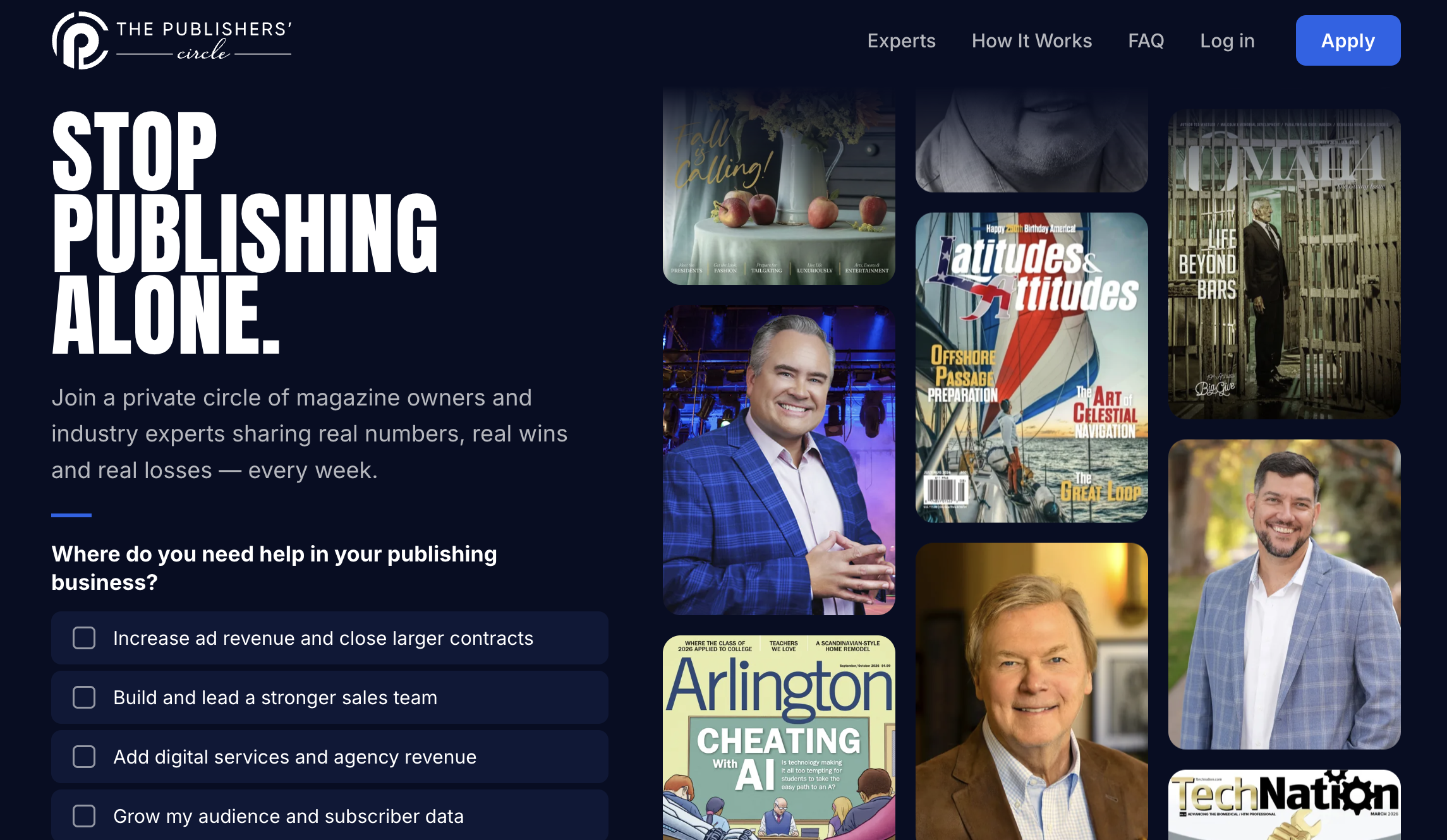
The Publishers’ Circle, a new concept in meetings and helping magazine publishers, based on human interaction on a regular basis. Imagine visiting with your colleagues and experts at least once a week without having to wait six months or a year to go to a magazine conference to chat and interact. That concept was the idea behind Jon and Erin Westman’s creation of The Publishers’ Circle: a regular round-table style information, education, and just conversation among publishers from across the country.
Jon & Erin are the founders and publishers of Coastal Style magazine. They firmly believe in the importance of being relevant in the magazine publishing industry. I had the pleasure to chat with Jon and Erin about this new concept and the services it provides, and I have learned about this opportunity that is open to every magazine publisher whether consumer or business to business magazines. Having colleagues and experts at your disposal is indeed a marvelous idea in these challenging times of magazine publishing.
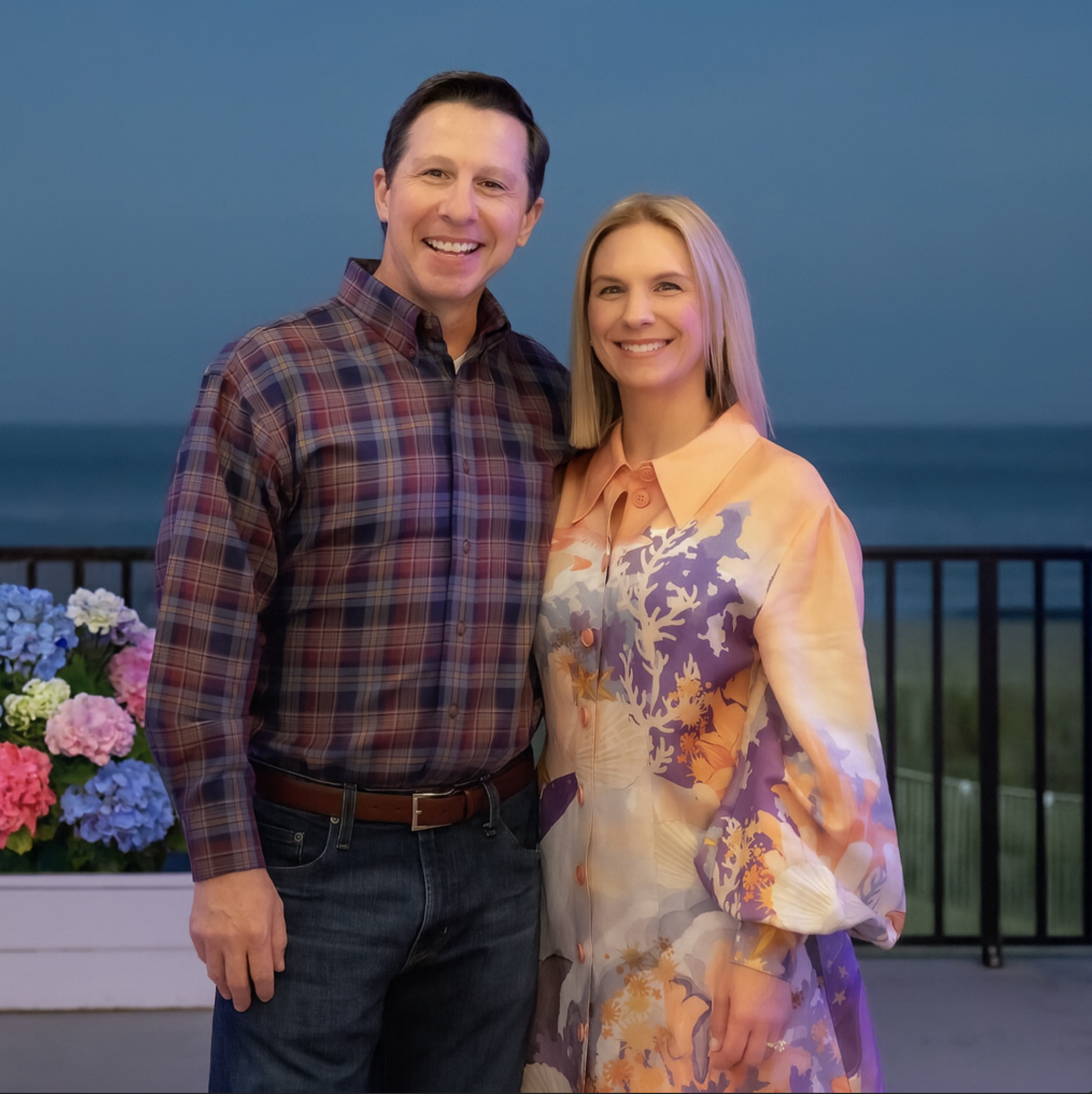
Sometimes it takes too long for an idea to be executed, but Jon and Erin did not waste their time mulling the idea, they made it real and open to other publishers to join, with open arms, their circle.
So without any further ado, please enjoy this Mr. Magazine™ Interview with Jon and Erin Westman, founders of The Publishers’ Circle:
Samir Husni: Give me the elevator pitch first for what’s The Publisher’s Circle?
Jon Westman: Sure, The Publishers’ Circle exists because when publishers like Erin and I go to conferences and we meet so many wonderful people and share ideas, when we inevitably go back to our home markets, that momentum dies very quickly. And we miss the connections. We miss the opportunity to network and generate ideas together.
I believe that that’s why conferences such as Niche have been so successful for so many years. We were missing that connection back in our home market. There are publications everywhere, but in our market, and I don’t think this is unique, the competitors don’t tend to play together very well in the sandbox, right? We’re very proprietary.
We are very much focused on what we can do to protect our brands and our revenue and keep our customers engaged with our brand and no one else really in our home markets. So, Samir, it was just that yearning for that connection beyond conference to conference and having to wait six, eight, 10, 12 months for the next time to see those people that can genuinely help us and help one another. Erin was behind saying, we need to create a model that can bring us together on a more frequent basis.
The Publishers’ Circle is a concept that we first took to Ryan Dohrn and said, Ryan, what do you think? I mean, as the leader of one of the largest independent publishing conferences in the country, what do you think? He said, I think it has tremendous merit. I would support it. We licensed his content and quickly became sponsors of Niche and realized that if he believes in the concept, we hope that his publishing partners would do the same.
It’s only been viable since April, and we don’t have that many publishers in the room, but what I can tell you, Samir, is every single member that’s a part of the community has seen tremendous benefit and value. So much so that we had two members in New Orleans, for this most recent Niche event, spoke on our behalf and said how much value and connection they receive every single week from the community that we’re building.

Samir Husni: Tell me, how does it work?
Jon Westman: We are built on a publishing platform called Circle. It’s a community platform to help build communities.
We can publish content in several different channels. It can be about sales management. It can be about revenue. It can be about digital revenue. It can be about even specific, hyper-specific content, such as a best of program or advertorial content. We have built out all these channels of content.
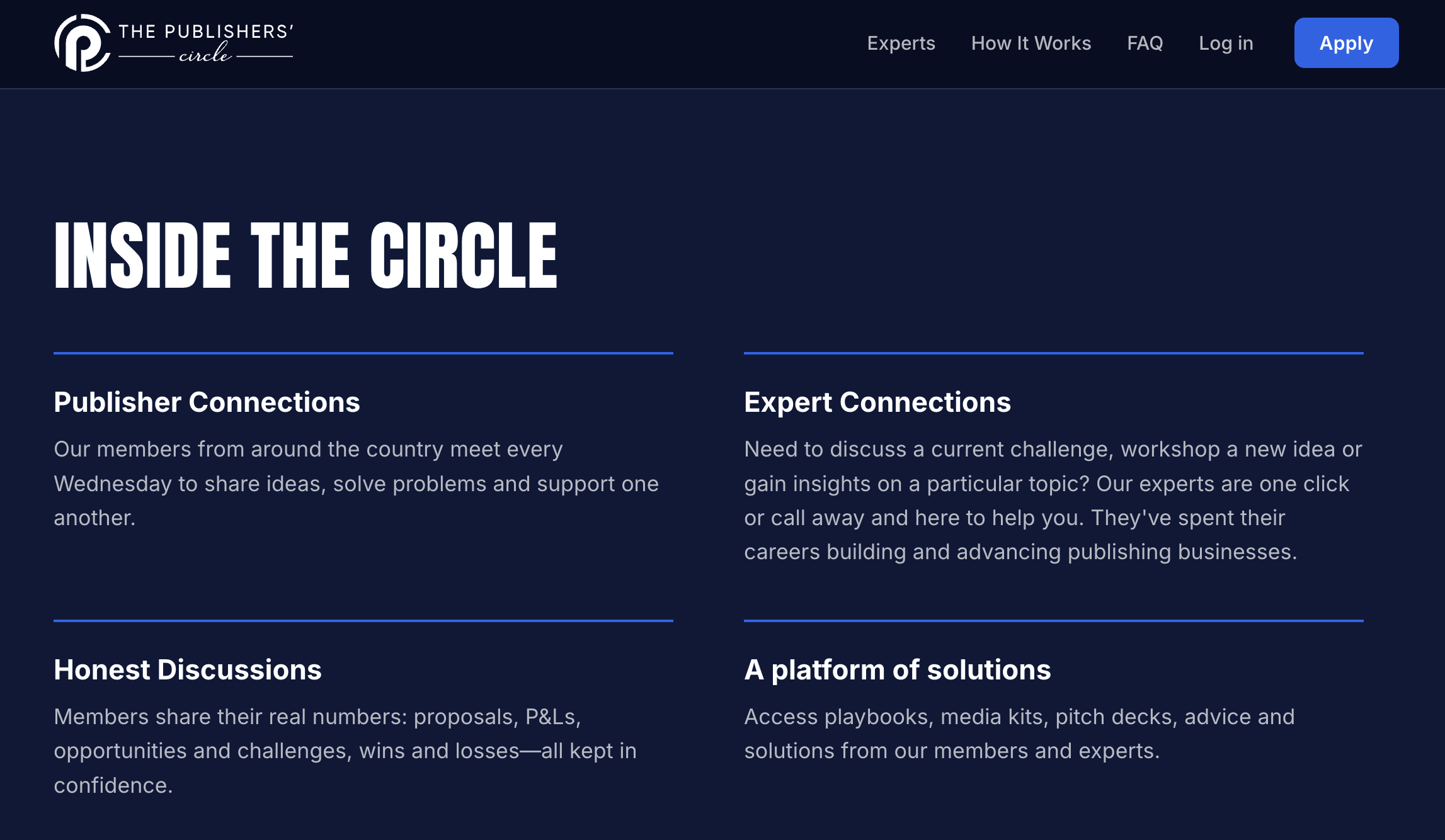
The first thing that we did, we went out and secured the endorsements of experts in every category that we could consider in the publishing space. What value could we bring to our members is the model that we took first. So, we know a publishing representative who sold for various large printers to publishers his entire career. And now he’s created a consultancy on his own. If a publisher needed to negotiate with their printer, or perhaps they didn’t even know how to negotiate with their printer, understand the latest postal regulations. We have an expert that a member can connect with one-on-one.
Ryan Dohrn is the foremost sales expert in the industry. He’s available to our members at the push of a button. He will give them 30 minutes complimentary of his time and help them advance an idea. Then if they want to engage him further, he will discount his services. And so will all our experts. But we also have AI experts in the community.
We have editorial experts. We have copy editing experts. We have paginating experts.
Any way that we felt we could bring value if a publisher is struggling in any area of their business, that’s what we tried to offer them first and foremost, a connection to an expert that they may not have already had. Then we have the content models available for them. It’s a library of content so that they can read, learn, test these concepts that have worked and haven’t worked for us.
We’ll post things that, hey, beware of this opportunity. It may sound great on the surface. We tried it and here’s the negative results that we experienced in the process.
We post all that content. The members are invited then. If you can imagine it, it’s almost a Zoom community with a Facebook community because of all these posting opportunities and sharing of content. Then it’s the library component where every single week we meet on a Zoom-like call for an hour. Every member comes in and we change topics weekly. It’s really a roundtable discussion for our members every single week to talk about what’s happening in their market.
Sometimes we bring in the experts, sometimes it’s an open forum, and sometimes it’s a very poignant conversation around one topic. That’s really where our members have seen the most benefit is that weekly engagement. That was the preface of why we started the community ourselves. Staying connected, staying grounded, staying in the moment in the publishing business.
Because I think it can become its own dark hole, as you know, better than probably anybody else. You can be publishing on an island, and it can be very lonely. So that’s really what The Publishers’ Circle is in a nutshell.
I think the elevator, if I started my pitch on the ground floor, we’re in the pub, we’re in the penthouse by now. But I hope it all makes sense collectively and that you can understand the framework of it.
Erin joins our conversation…
Samir Husni: If a skeptic tells you, but I can ask AI anything and AI will give me the answers. Why do I need to be a member of The Publishers’ Circle? What do you tell them?
Jon Westman: I would tell them that if AI could publish, it would.
I don’t think that you will have the human personal connection and the experience and the in the trench knowledge that our members bring collectively. There are so many things that we all rely on AI and sometimes more so than we should. But it’s very clear on every single model that AI gets it wrong.
They’ll say that in every single instance. I think we all know from our own experience that that’s the case often. AI can be a tremendous partner in how we publish moving forward, but it doesn’t have the real-life experiences.
It’s not in the trenches. It’s not selling advertising. It’s not producing content. It doesn’t know our readers as well as it thinks it does at the same time. Erin, do you have anything you want to add to that?
Erin Westman: No, I think that was spot on. And it also doesn’t hire salespeople; it doesn’t help bring in revenue.
Another reason that The Publishers’ Circle is gaining momentum is because we talk very openly and honestly about the challenges, not only we experience in trying to engage new clients or generate revenue, but it’s the day-to-day struggles with our team, keeping them engaged, keeping them motivated, dealing with those inevitable workforce issues that everybody has. We can have a very open and honest dialogue about those and share the struggles and then welcome ideas that we may be able to implement daily and then issue to issue and year to year.
AI misses a human connection. The Publishers’ Circle is very about human connection and that’s why the Zooms and then catching up in a Niche conference or we hope to evolve into our own hybrid model of not so much a conference, but maybe a mini vacay with a conference model where in the mornings we connect and talk about topics. Then in the afternoon you can hit a round of golf, or you can go explore the town or wherever we are.
We’ll find something unique to do or you can have free time on your own. You don’t have to deal with the groups if we break up and to do things. The guys might go one way, and the ladies might go a different way.
That hybrid model seems to be what people are looking for. They don’t want to fly into a city anymore and sit in a conference room and no windows for two or three days. They don’t want to do that anymore.
Jon Westman: I think the human connection side is where AI is lacking.
Samir Husni: What are the three most important challenges magazines like yours and city and regional magazines that are distributed free are facing these days?
Jon Westman: Sure.
First and foremost, its relevancy related to revenue. There is so much competition from a print perspective today. The way that our advertisers think and all the opportunities that they’re being pitched to invest from a marketing perspective in their business challenges us magazine publishers to evolve.
And how do we remain relevant in their eyes and yet relevant so that we can produce results for them? I think for first and foremost, that is the biggest challenge we face today. And I, well, we did our poll of with publishers at the conference. The number one complaint that they have with salespeople.
Even if we could sell our own product 24/7 and a lot of us do, we can’t be cloned. AI cannot do that yet. We need professional, competent, engaging professionals to represent our brands and help us connect first and foremost with businesses.
If we can’t generate that connection, there’s no chance we’re going to secure their marketing investment. And then third, they must be willing to stay on the journey with each client. I think that’s the biggest challenge.
A lot of people look at this business as it could potentially, they could think it’s easy. They can go do it, but they’ll learn very quickly. It’s one of the most challenging positions in the professional workforce, I believe.
Samir Husni: How can I join the Circle? How can people become members?
Jon Westman: The first thing they would do is visit our website, thepublisherscircle.com and complete our brief yet, revealing application process. We ask some questions that publishers may not have been asked before. If you join our community, are you willing to participate fully? And what that means is share your P&L statements.
I don’t mean literally, but talk about how much revenue you’re generating, where you’re struggling. Are you willing to have open and honest conversations about your team and where those challenges truly lie? I think even in our day-to-day, we need to take a step back because we’re so focused on producing products. We must meet deadlines every month or bi-monthly.
In some cases, we have other projects and multiple publications in our stack that challenge us every single day to where blinders become inevitable. We hope that The Publishers’ Circle allows for a chance to take a step back and really analyze your complete process in how you’re generating revenue and staying relevant. That application process then, Samir, is then vetted.
That would be over the top. We quickly just see, are the answers from that publisher honest and realistic? And if so, we welcome them with open arms. We want to grow this community because that’s how we will all grow, is growing together.
Samir Husni: Is it open to all publishers?
Jon Westman: We quickly learned that in New Orleans at the Niche Leadership Summit, that we’ve been, most of our members are B2C. They’re Lifestyle Regional Publishers. However, we just welcomed our first B2B specific member without that B2B track yet.
That’s something that we will grow into and evolve very soon, is that B2C or B2B, a lot of our challenges remain consistent. We’re eager to learn from that side of publishing and help them accomplish their goals as well.
Samir Husni: And how do you differentiate between The Publishers’ Circle and other organizations that serve the magazine industry?
Erin Westman: Well, I think Niche exists largely because those organizations have some guidelines that don’t allow the Niche publishers access.
I think we’re gated in certain respects. In Coastal Style model, we are a complementary publication with rack distribution. And that’s a clear gate for certain organizations.
And that’s okay. There are many, many more publishers like us than there are that fit every single checkbox. The Publishers’ Circle right now is focused on meeting and helping those publishers.
Those organizations are well-established and they’ve done tremendously for their members. We’re trying to create a model that welcomes everyone else, if that is suitable.
We’re here to fill the gap for people who see things differently.
Samir Husni: If you and I are having this conversation a year from now, what would you tell me you’ve accomplished in 26-27?
Jon Westman: I would say that we’ve created a robust community.
I feel our community is robust now with 10 members, because of the quality of publisher and the action items that we talk about every single week. But let’s try to add some substance to the membership so that we can help that many more publishers. We would hope that to Erin’s vision, there are retreats in place so that we’re coming together in person more than we do currently.
And that’s the Niche model is a two time a year opportunity. We hope to do that two additional times so that we can be face to face and really connect and be together in those moments. I would also say that we have two clearly defined B2B and B2C spaces that have dozens of members that are connecting on weekly calls.
Erin Westman: They are connecting individually. We ultimately hope to have regional meetups so that our memberships can get together on their own. If they’re in the New England area, if they’re in the Mid-Atlantic, if they’re out West, and allow for that additional connection.
It’s really a model in our minds that we know can work. Our biggest challenge is getting the word out and sharing our mission and bringing publishers to the table to see what we’re doing and showing them the community that we built. And to have that spin off into a group for salespeople and all that.
Beyond just having leaders in the room, we know that sales leaders have different roles in our organizations and they need those same connections that publishers are enjoying inside the circle. We have another idea to where we would have a secondary membership model for sales leaders only so that they can connect.
They can share their war stories and their challenges and successes with others at publications across the country to spur community, generate ideas, and ultimately advance our publications. I just feel like it would engage the sales manager leader better than having a CEO or publisher come to them with revenue ideas and special section ideas that could generate revenue. Whereas if this leader was in their own group of other sales leaders across the country, I think it would be more energizing to their sales team when they’re presenting and they kind of feel like it’s their idea.
It helps to engage the leader, the sales leader or manager into their own group so that the owner, CEO, publisher isn’t always having to relay those messages.
Samir Husni: Is print the cornerstone of everything you’re doing or just print is another platform among so many other platforms?
Jon Westman: Well, that’s a great question. Print is first and foremost the platform, but we are not naive.
We’re not naive to know that we must evolve as publishers. And we share our successes. COVID changed a lot of things, obviously, in a lot of respects.
It forced us to evolve in the moment. We did not sell programmatic advertising prior to COVID. Today, it is a growing and purposeful channel of opportunity for our advertisers.
And it’s a purposeful revenue generator for our company. We know that publishers rely on that revenue, obviously, to advance their companies. And what we’ve learned is we try to share, again, both sides of the good and the bad inside The Publishers’ Circle.
We’ve experienced that. The challenges of convincing clients, businesses who aren’t clients, that what would we know about digital advertising? We are magazine publishers. Well, we’re evolving into marketers.
Erin Westman: There’s no difference in creating a print advertisement and getting it into the right demographics’ hands and encouraging them to do business with our clients. The digital environment is the same strategy, just executed differently. It’s understanding consumers.
That’s the bottom line. If we can target our messaging and our clients’ messaging, really, to the right demographic, in the right geographic location, with the right messaging, you’re always hoping. But that strategy is going to, by and large, obviously, spur conversation, spur action faster than not.
Jon Westman: We’ve evolved our own thinking and our own marketing messaging, for Coastal Style, to really check those boxes for clients. It’s not enough anymore to print a beautiful magazine with engaging content and put it in the right demographics’ hands. We must encourage that demographic and our faithful readers to do business with our clients.
It’s got to be more than hoping that they will. We must encourage them and give them easier access to our advertisers.
Samir Husni: How do you do that?
Jon Westman: Well, QR codes, first and foremost, used to be a luxury.
Now they’re a necessity. They must then lead to a purpose-driven landing page that is not only engaging, but aesthetically beautiful. Whatever that message is from that client, it must engage them seamlessly.
They must be connected to that message, that call to action. It cannot be, we’re going to talk, would you like a new deck at your home this spring to enjoy the outdoors? It must lead you to that client’s deck-purposed landing page with their call to action. If you take them and just drop them off at their website and hope that they find that deck call to action, it’s not going to happen.
So that connection is real. It must be made seamlessly. Now we are facilitators in that.
We will create the landing page for the client. It can’t be enough to count on the client to think that their online experience is going to be seamless for the client too. We’ve almost become educators, strategists, marketers, publishers.
Our hats are evolving just as quickly as marketing is evolving itself. Publishers who aren’t, they’re not doing their company a service and they’re certainly not doing their clients, they’re not offering them the best service that they can at the same time. We find that clients don’t understand the purpose of a website.
A lot of times they think I have a business, I have a website, I’m good. I said, what if you could hire an employee that would work for you 24 hours a day, seven days a week, 365 days a year and never call out sick. And to hire this employee, you need an upfront expense of maybe 3,000, 6,000, 12,000, depending on the complexity that you need of this employee to perform.
And then maybe you only must pay the employee $3,000 a year to maintain the employee, but they are working for you at 11 PM, 5 AM and noon every single day, even on Saturday and Sunday. I said, would you hire this person? And they said, yes, absolutely. And I said, well, it’s called your website.
So, I said, why have you neglected it? And they said, I’ve never looked at it like that. I said, well, your website is not there to say a exists. Your website is there to sell the service that you’re selling before they ever pick up the phone to call you.
People don’t look at an ad today and call people. They don’t want to talk to people unless they’re already sold. Okay.
So where, how are you going to bridge the gap? And they just don’t look at it like that. I just, because a lot of business owners aren’t business owners. They were a bath installer that now thought, oh, I want to make the money that my boss is making.
So, I’m going to go out on my own and I’m going to do this myself. I’m already doing all the work. Well, they’re not doing all the work.
They’re not doing all the sales. They’re not doing the bookkeeping. They’re not doing the hiring and the firing.
They’re doing the labor portion. They don’t realize what it takes to run a business. Now in this market, we have all these one-day bath installers.
The market’s flooded with them. But at the end of the day, they’re not business owners.
They’re still just a bath installer. You sign your kid up for dance. Well, that dance studio is run by a dancer. Okay. It’s probably not run well. It’s disorganized. They wait till the last minute to order costumes. They wait till the last minute to tell you what time to show up for the Christmas parade to get in line and where to be.
And it’s stressful, as a parent and you’re just like, gosh, can’t this be done better? You’ve known every year you do Christmas parades. How, where was this last minute? Because they’re all just run by dancers and bath installers and people who just thought they wanted to just make more money. It would be easy.
That ultimately is a lot of what our business is consumed by, that’s who we’re selling to every day. And we’re not alone. So how do we educate these people?
Marketing and it’s very piecemealed and one person at a time, because what this person understands and this person doesn’t understand is different. You have to take it on a case-by-case basis. And it’s very much a boutique service. I would also say to that point that producing a magazine obviously is not the least expensive option available to professionals and professional marketers, professional businesses, from a marketing perspective, there are real costs.
There are parameters, we check boxes, every magazine publisher does. In doing so, we need to command a higher dollar than a lot of our competition.
Erin Westman: Advertising in magazines is the most permanent media. It sticks around like magazines; newspapers get burned in fireplaces. Radio is gone. TV is gone. Social media is gone. Like, billboards you can drive. If you have a 30 minute commute, you drive past a lot of billboards every day. If I asked you when you got to your place of work, tell me three billboards you see, I bet you can only tell me one or two. You can’t even say three that you saw.
I’ve done it. I know because I’ve run these studies on people. I’ll give them a newspaper and I’ll say here, flip through this newspaper and tell them, let me know when you’re done and take your time. I’m not rushing.
I really want you to look at the newspaper and they get done. And I say, tell me two ads. They can’t do it because they’re not mindful in the moment.
It’s just mindless. It’s just flipping. But magazines are the most permanent media.
Samir Husni: Before I ask you my typical last two questions, is there any question I failed to ask you? I should ask you.
Jon Westman: I love that question because I use it all the time in my sales presentations. Uh, I would say no, I can’t think of anything.
Samir Husni: So, tell me, if I come unannounced to visit you one evening, what do I catch Jon and Erin doing? Having a glass of wine, watching Ole Miss football. I see you have a lot of football in this house.
Erin Westman: You will mostly find John working. He’ll stop for dinner. Then he’ll come back to work.
If there’s a game on, he will stop for the games, football games, sometimes hockey games. But we work a lot and especially with the kids gone now, one’s at Auburn, one’s at Ole Miss and, I don’t know, working on evolving. That’s what we’re working on all the time.
Jon Westman: Your visit would be welcomed. And we would pour a glass of wine and sit down and communicate. We’ll sit around the family room and get away from the computer and share stories.
Samir Husni: And what keeps you up at night these days?
Jon Westman: I sleep well. I’m awake most nights. It is the fear and drive because they’re combined to keep going. We have to generate revenue.
We must generate more revenue. That is the bottom-line costs today. The cost of producing a publication continues to rise beyond our control.
We’re challenged to make those line items make sense every single day issue by issue. We know we can’t charge more for advertising to match those escalations in the vendors that we ultimately have to work with.
So how do we do it? We need to evolve. We need to find realistic and viable ways for us to connect. I wouldn’t say new products because those have inherent challenges by themselves, but new opportunities that our clients see benefit in.
And that can keep us awake for nights on end. So that, brings us full circle into The Publishers Circle because those opportunities to have those conversations and to learn from other publishers, how they’re managing the same challenges, the same stresses, the same dynamics, and we can help one another. We can glean from one another and all of us connected in that way purposefully is designed to help us stay relevant, alive, and ultimately thrive.
Erin Westman: I’m going to piggyback what Jon said, I’m just going to word it a little bit differently. While we have challenges of rising costs, so does every single business that we’re trying to sell to. So, relevancy comes in because we must stay relevant enough for them to want to spend their hard-earned dollars in a time where that funnel is just getting smaller.
That is the big drive. How do we keep them, seeing what we’re doing as being relevant enough to stick with us?
Samir Husni: Thank you.


Leave a Reply