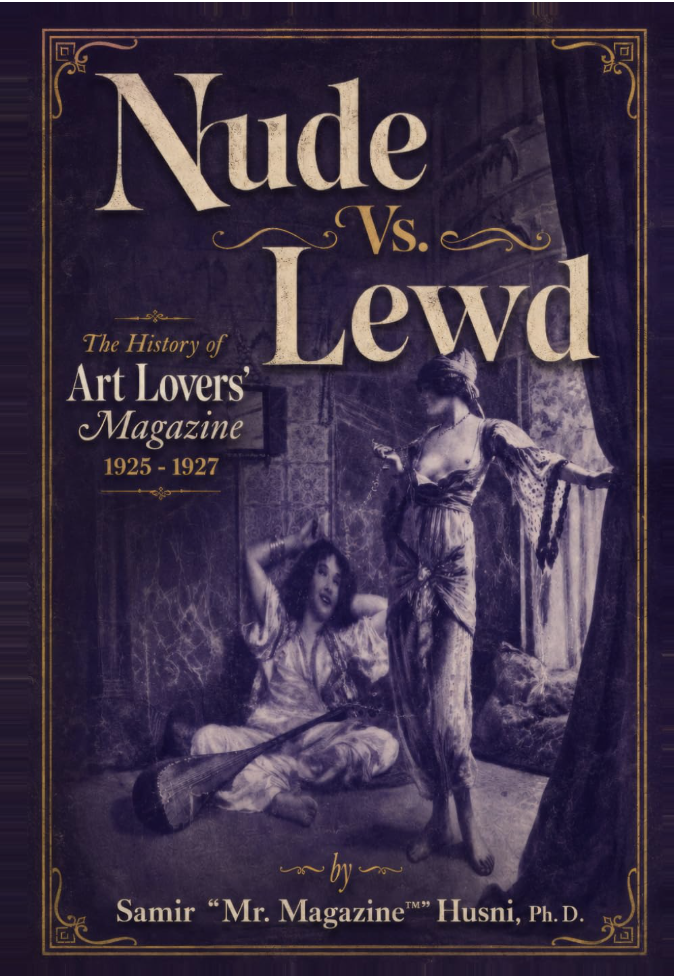
For more than five decades, I have studied magazines not merely as publications but as mirrors of the societies that produced them. Every issue, every editorial decision, every cover image, and every publisher’s promise tells a story about the culture and the people of its time.
Among the many forgotten titles that have crossed my desk, Art Lovers’ stands apart.
Published between 1925 and 1927 during the height of one of America’s magazine boom, Art Lovers’ occupied an unusual position in publishing history. At first glance, it appeared to be another art magazine featuring studies of the human form. A closer examination, however, reveals a publication that consistently argued for the educational and cultural value of art while drawing a sharp distinction between the nude and the lewd.
This book grew out of my fascination with that distinction, especially that the magazine was published by a company known for being a Bible publisher. The debates surrounding censorship, morality, artistic freedom, and public taste that surrounded Art Lovers’ nearly a century ago continue to resonate today. The magazine’s editors insisted that beauty and obscenity were not synonymous, and they defended the idea that context, purpose, and intent matter when judging artistic expression.
My goal in writing this book is not merely to recount the history of a single publication but to illuminate an overlooked chapter in the evolution of American magazines. Through editorials, court cases, publisher statements, contributor biographies, and the changing editorial direction of Art Lovers’, readers can observe the complex intersection of publishing, ethics, law, commerce, and culture during one of the most dynamic periods in media history.
The story also highlights the remarkable role played by the Hubbard publishing family, whose commitment to educational and cultural publishing produced a magazine that challenged conventional assumptions while insisting on high moral standards and artistic legitimacy.
Although this book focuses on the brief life of Art Lovers’ from January1925 to January1927, its larger subject is the enduring struggle over who decides what constitutes art and where society draws the line between appreciation and censorship. Those questions remain as relevant today as they were a century ago.
It is my hope that readers will come away with a deeper appreciation for the richness of magazine history and for the publishers, editors, artists, and writers who navigated the delicate boundary between public sensibility and creative freedom
A century ago, we were more culturally and artistically advanced. Magazines in the 1920s shined a very bright light on art and culture. One such magazine, albeit short lived, Art Lovers’ Magazine, is but one example of a cultural and artistic publication from 100 years ago when magazines ruled the media world. Here is its story:
Pruriency vs. Stupidity
The editorial continued, “However, the charges were too ridiculous for serious consideration, and the case was thrown out of court. Attempted prosecution of a reputable Brooklyn news-dealer for the sale of ART LOVERS’ MAGAZINE also fell flat.
The magazine opined at the end of its editorial, “There is urgent need for a militant anti-vice society, especially in New York City, but frankly we cannot understand a policy of running around to cover undraped statues, putting the stigma of criminality on reproduction of famous nude paintings, and attacking legitimate art publications.”
The irony here is that Art Lovers’ magazine quoted the same newspaper that let a campaign against the art magazines and theatre because of their usage of nudity in their content as mentioned in Chapter 2. The New York Daily News wrote, and was quoted in the editorial of issue 8, “ There are numerous pecksniffian people who consider that “the nude is rude,” thereby accusing Nature of indecency. In these United States, the land of freedom and prohibition, these ultra-pious persons have formed themselves into Vigilance and Purity leagues, with the result that in several museums and art galleries some of the most famous examples of classical art have of famous statues have had attention drawn to their nudity by being draped in crepe. In one Philadelphia gallery the Purity leaguers have actually immortalized their folly by sewing bathing drawers and a short skirt onto the statue of the far-famed Venus de Milo! Could pruriency and stupidity go farther?”
Reaching out to the NYVSS
Being of moral and ethical background, the Hubbards reach out to the New York Society for the Suppression of Vice and “offered to publish an account of the “positive side” of its work, but Secretary Sumner replied, “it would be very inappropriate for anyone representing this Society to furnish matter for publication in your magazine.”
The magazine reminded its readers that, “The Hubbard publications have always stood four-square for clean literature, ever since the Hubbard Publishing Co. was established in 1868, and we are willing to cooperate with the Society for the Suppression of Vice or any similar organization with a constructive program. Our offer of free publicity is still open.”
At the end of the editorial the magazine reminded everyone that, “ART LOVERS’ is the world’s first and original rotogravure art magazine.”
A Soviet Union Link
Having survived the court case, and keeping with its originality, the magazine continued to try to differentiate itself from the rest of the art magazines during the 1920s. It showed great concern with the art, science, and culture of other countries, specifically the Soviet Union and Japan. Keep in mind that the United States of America did not recognize the Soviet Union after the end of World War I. That would take place in 1933, eight years after Art Lovers’ magazine called for more cooperation between the artists and scientist of both countries.
The editors wrote, “The lack of continuous contact between artists, scientists and cultural organizations of the United States and the Union of Soviet Republic has been felt for many years in both countries. Since the war there has been practically no mutual exchange of art or scientific publications – with the result that the institutions and organizations concerned were unable to form any comprehensive idea of the mutual activities and achievements.”
In fact, the editors stopped short of praising a new organization that was established in the Soviet Union by the name of the Joint Information Bureau, “which has been created in Moscow with the aim of assisting in the establishment of closer cultural connections between the Union of Soviet Republics and other countries.”
Russian and Japanese Authors
The efforts of Art Lovers’ magazine did not stop at trying to establish a relationship with the Soviet Union, but it was extended to publish J. Tugendhold, “the greatest art authority in Russia” who wrote in issue 6 “on the folk art of his native land.”
The magazine also announced that in the following issue, issue 7, an article “on Japanese art, from the pen of Shinsei Hiroshige, who needs no introduction to readers familiar with the “Cherry Blossom Land.”
Art Lovers’ magazine once more shows that it is unlike any other magazine on the marketplace.
Singing its own praises
Art Lovers’ Volume 1, Number 5
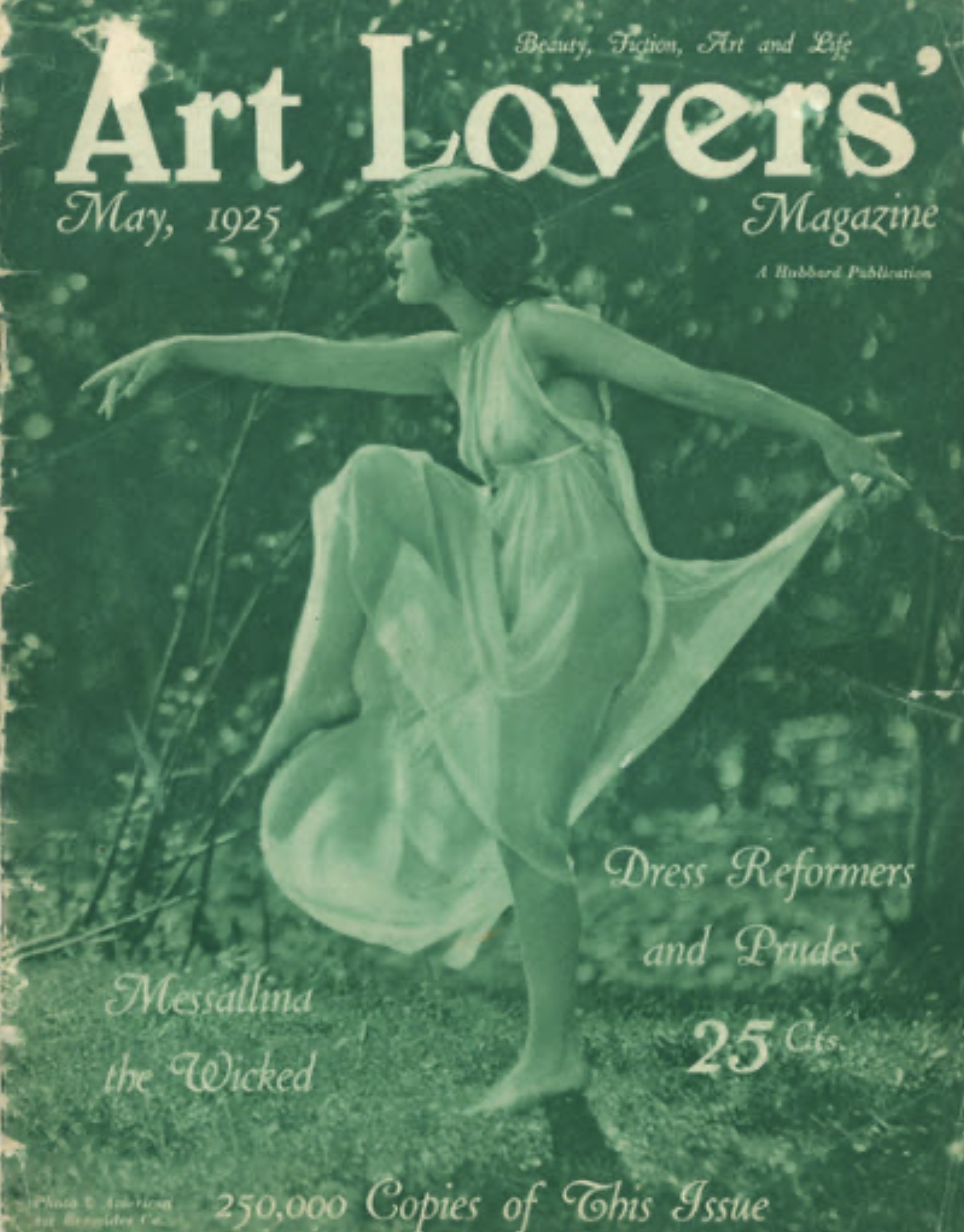
The editors of the magazine were not shy in promoting the praises and accolades they were receiving from readers, especially with the cover of issue 5 announcing the growth of its print run to 250,000, a 100,000 increase since issue 3.
They write, “CONGRATULATIONS have been reaching our desks by the scores, enthusiastic comments on the continued improvement in the editorial and pictorial departments of this magazine. It is no wonder that the circulation has mounted to a quarter of a million copies monthly.”
Elbert Hubbard II appears on the scene
It must have been a Hubbard family affair with Arts Lovers’ magazine. Elbert Hubbard II was running Roycroft after his father’s death in 1915, and publishing his own magazine, The Roycrofter. He announced himself President of the Roycrofters in the last issue of The Philistine that carried the cover line in red “VALEDICTORY” which of course means farewell.
Under a picture of himself, with the caption, “ELBERT HUBBARD II, President THE ROYCROFTERE, IN.” Under the caption he wrote, ““Bert” Hubbard has served in the Roycroft Shops for twenty years; grew up with the Business. He has worked and won promotion in every Department. He knows this Business, its friends, its markets, its possibilities. For eight years he has been Treasurer of this Corporation and handled the “Practical Business” end.” He concludes, “Now he is Chief of The Roycrofters.”
He made another announcement in that same issue. He informed the subscribers that the magazine will cease publication as of this issue dated July 1915 and starting next month, they will receive its sister publication The FRA. This issue also carried the news that” Elbert and Alice Hubbard Are Dead.”
The older Hubbard, the founder of the Roycrofters has been publishing The Philistine for twenty years and two months. Two years later, in August of 1917, Elbert Hubbard II announced the closer of The FRA the other magazine his dad was publishing and launched his own magazine The Roycrofter from September 1917 until September 1932. The Roycroft Campus declared bankruptcy and closed in 1938 ending an era filled with arts, crafts, and beauty.
The dilemma of publishing a magazine
With all his activities, Elbert Hubbard II, as it seems, was also involved with Art Lovers’ magazine. An editorial signed by him in issue 5 of the magazine, he wrote, in the plural tense as if he is part of the team producing the magazine, on the dilemma of publishing a magazine. His editorial, “GETTING out this magazine is no picnic. If we print jokes, folks say we are silly; if we don’t, they say we are too serious; if we print original matter, they say we lack variety; if we publish things from other papers, we are too lazy to write.
Elbert Hubbard II continues in his one paragraph editorial, “If we stay on the job, we ought to be out getting a new viewpoint. If we go out after stuff, we are not attending to business in our own department. If we don’t print all our contributors send us, we don’t show proper appreciation. If we do print them the magazine is a mass of junk. And, like as not, some wise guy will say we swiped this from an exchange, which we did. – Elbert Hubbard II.”
A family affair: more Hubbards
Art Lovers’ Volume 1, Number 6
Another Hubbard appears on the scene in issue 6 of the magazine: Samuel Hubbard, curator of archeology of the Oakland, CA Museum. The editors were as excited as Mr. Hubbard himself by writing that his discovery, “sent a thrill through the scientific world recently by citing new evidence which, in his opinion, proves the existence of primitive artists in the dinosaur age.”
Samuel Hubbard led The Doheny Scientific Expedition into the Hava Supai Canyon in North Arizona where he made his discovery. He concluded that “some prehistoric man made a pictograph of a dinosaur on the walls of this canyon.” This prehistoric man, Mr. Hubbard smized, “made and used tools and had an eye for form and a sense of proportion.”
Mr. Hubbard concludes, “The interesting thing about this is that no ibex, not even fossil ones, have ever been found in America. These drawings would seem to indicate that they must have been a common animal in the Grand Canyon in the prehistoric past.”
Art Lovers’ devoted almost 2/3 of its editorial page to report on and quote the discoveries of Samuel Hubbard. Another important indication that the magazine was more interested in the culture, science, and art of that period and not just in publishing nude pictures and illustrations for the benefit of art students and artists.
A who’s who of authors
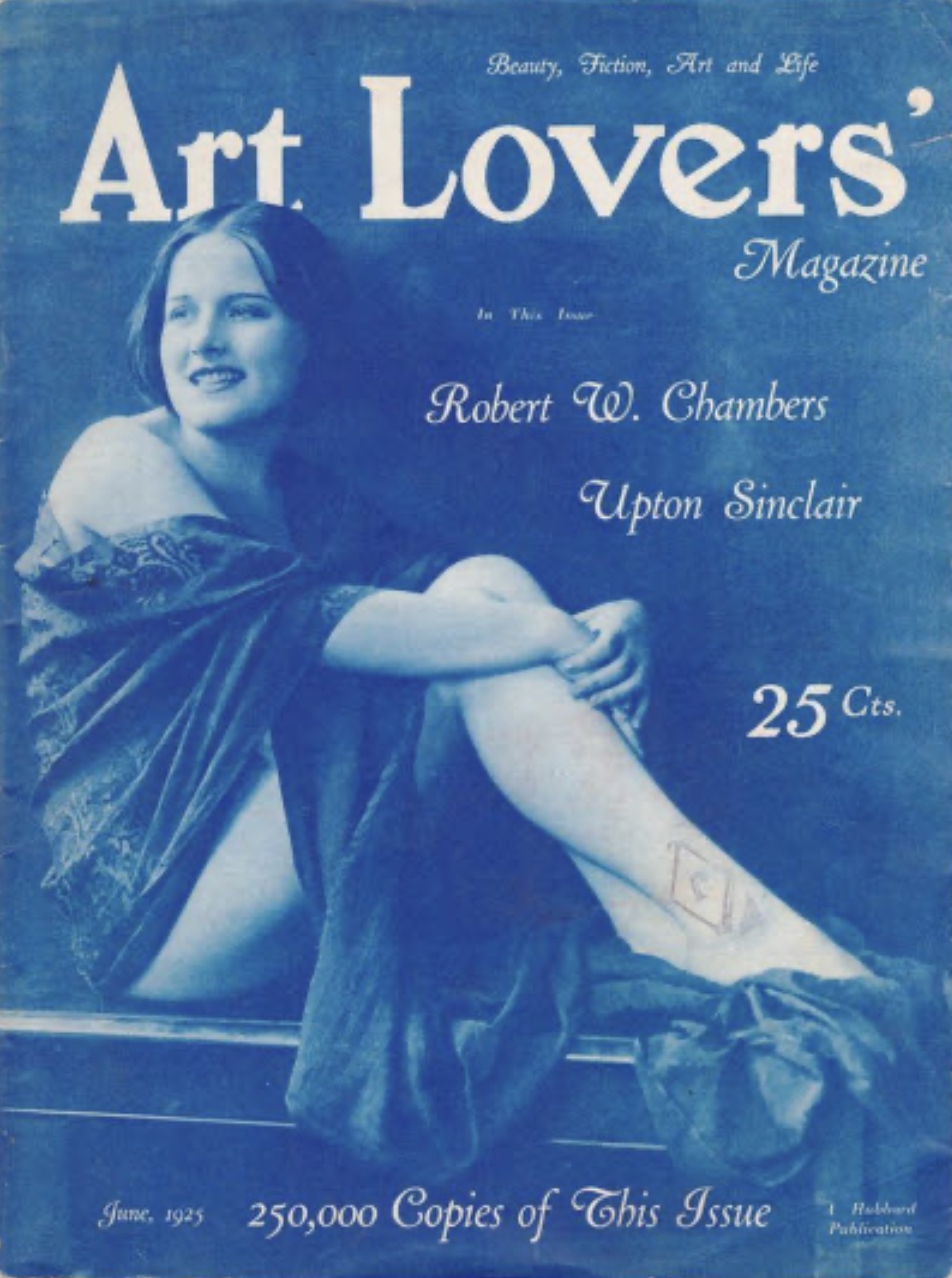
The magazine took pride in the list of authors and artists appearing on its pages. The cover of issue 6 carried the names of Upton Sinclair and Robert W. Chambers in big type. Mr. Sinclair wrote an article on “Who Pays for Art,” and Mr. Chambers wrote about the “Cotton Murals.” In addition, the editor himself published a signed article on the “Laws of Esthetics.”
Upton Sinclair was a famous journalist, author, and political activist. Adjectives that are all in line with the mission of Art Lovers’ magazine. Mr. Sinclair went on to win the Pulitzer Prize for fiction in 1943. (find sources)
As for Robert W. Chambers, another famous artist and fiction writer whose book The King in Yellow published inn 1895 brought him national attention.
In addition to the authors, the table of contents of the magazine included many names with Dr. and Professor titles highlighting the importance and value of the content and differentiating it one more time from the rest of the magazines on the nation’s newsstands. Also, in issue 6 the editors highlighted what more to come in the next issue of Art Lovers’. “THE RAJAH’S VENGEANCE,” a new and thrilling serial story, will be started in the July issue of ART LOVERS’ MAGAZINE. Romance, splendor and fatalism! Don’t miss it. The author is Marie Garcia, one of whose short stories, “Venus of the Dance Floor,” appeared in our May number.”
Another writer is highlighted in this editorial, Dr. Millicent G. Laevey. She is going to write an article, “on how to stay cool in torrid weather, written in the entertaining style for which she is famous.”
Beauty, Art, Fiction and Life
True to its tag line Art Lovers’ in its second quarter was able to combine beauty, art, fiction and life is a package that made the magazine reach a quarter of a million circulation and made the magazine the “largest rotogravure magazine in the world.”
As Art Lovers’ enters its third quarter, progress continues, and more top-notch authors and artists appear on its pages.
To read Chapters 1 and 2 from Nude vs. Lewd please check the previous blogs below or search from them using the search box on the side.
A century ago, we were more culturally and artistically advanced. Magazines in the 1920s shined a very bright light on art and culture. One such magazine, albeit short lived, Art Lovers’ Magazine, is but one example of a cultural and artistic publication from 100 years ago when magazines ruled the media world. Here is its story:
“ART LOVERS’ MAGAZINE has a definite mission, as we have indicated in previous issues, and that is to popularize art and culture for readers who have no inclination to delve into technical publications.” Thus opens the editorial of issue 4 of the magazine.
The editors continue to differentiate Art Lovers’ magazine from the tens of titles that are out there on the marketplace, including their own sister magazine American Art Student and Commercial Artist “and other purely art periodicals, but in ART LOVERS’ MAGAZINE we offer the general public a high grade of fiction, a department of Health and Beauty for Milady and a few jokes, in addition to strictly art material.”
Art material that they started to count and include in the table of contents starting with issue 3. More than 60 illustrations issue 4 claims to contain as did issue 3.
Trying to stay one step ahead from the competition and curving a niche for itself separate from the many magazines out there (see chapter 1) the editors present their mission statement one more time stating, “Our purpose is to present cultural material in an attractive and entertaining form; but first, last and all the time we wish to emphasize the importance of captivating appreciation for the best in art, literature and drama.”
In addition to the mission statement, the editors justify the need of Art Lovers’ magazine. They write, “There was a definite demand for a magazine of this character, and the healthy growth of our subscription list and newsstand sales indicates that our influence is being felt. We are always glad to get suggestions and constructive criticism from our readers.”
To Courts We Go
However the magazine was not immune from the long hand of the New York Society for the Suppression of Vice. John S. Sumner, secretary of the society took Art Lovers’ newsstand distributors to court claiming that it was indecent. An article in The New York Times on May 30, 1925 under the headline “Magazine Sales Attacked In Court; Action Opens on Distribution of “Artists and Models” and “Art Lovers’ Magazine.” Indecent, Sumner says. Publications Defended as Giving Cheap Reproductions of Famous Paintings in Museums.”
The article in The Times went on to report, “Mr. Sumner admitted that the magazines presented reproductions of art from the Metropolitan and other museums and of life from Broadway revues. He asserted, however that exhibition in theatre or museum conferred no certificate of good character or any kind of legal approval on the thing exhibited. He argued that the concentration in cheap magazines of nudes from the stage and the gallery was prima facie evidence of the purpose of the publishers to cater to primitive impulses rather than to highly civilized ones.”
Mr. Sumner “charged that the art business had looked up so suddenly when the new methods were now putting out three different magazines, each entitled “Artists and Models.”
The defense lawyer “asked for time in which to prepare a brief. Magistrate Ryttenberg granted the motion and adjourned all the cases until he had time to consider the brief.”
“The lawyer said that the hanging of a picture in a museum did not give it any legal approval, but gave it a standing as art.”
The June 1925 issue of Hubbard Publications’ Cartoons and Movies magazine had this headline on page 18: “Art Lovers’ Magazine Wins Fight For the Freedom of the Press.”
John S. Sumner was not happy with the decision of the courts, so this time he decided to sue the magazine itself. Again the results were not to the likings of Mr. Sumner. An editorial in issue 8, dated August 1925, of the magazine said, “ART LOVERS’ MAGAZINE has just won another battle in the war for freedom of the press and decency in art, in opposition to unofficial censors who confuse nudity with lewdity.”
The editorial went on stating, “Charges that this publication violated Penal Code No. 1141 (i.e. contained so-called indecent and objectionable matter in text and illustrations) were filed by John S. Sumner, secretary of the New York Society for the Suppression of Vice.
“The case went on trial before judges Herbert, Salmon and Herman in Court of Special Sessions, New York City, July 3. Mr. Sumner offered as evidence copies of the May number of ART LOVERS’ MAGAZINE, in which material he regarded as objectionable was carefully marked. The magazine, although officially accepted by the Post Office as mailable, and indorsed by leading artists and other notables, was regarded by the vice society as deleterious.”
A century ago, we were more culturally and artistically advanced. Magazines in the 1920s shined a very bright light on art and culture. One such magazine, albeit short lived, Art Lovers’ Magazine, is but one example of a cultural and artistic publication from 100 years ago when magazines ruled the media world. Here is its story:
Dummy book cover designed using Chat GPT
The Philadelphia Ethical Culture Society
So, what are those societies that the Freeman Hubbard and Walter Hubbard were involved in? According to its website, www.phillyethics.org, The Philadelphia Ethical Culture Society is still active today and it is based on, “Ethical Humanism, a humanist, religious and educational movement, has nurtured religious humanism and contributed to progressive causes for well over a century. Founded in 1885, the Philadelphia Ethical Society is a member of the American Ethical Union.”
The influence of the society is evident in a letter dated August 15, 1925 that Freeman H. Hubbard, in his other role at Hubbard Publications, associate editor of The American Art Student and Commercial Artist, wrote to the National Association for Advancement of Colored People. In the letter he wrote, “When I was a student at the Pennsylvania Academy of the Fine Arts some years ago, there was one student who was debarred from a traveling scholarship solely (the rest of us believed) on account of his Negro blood. As an artist he ranked very high.”
He continued, “Although I am not a Negro, the incident made me so bitter against race prejudice, and I determined that I would do all I could to break down such prejudice”
Freeman Hubbard goes on offering the association the opportunity to send him any relevant news, stories, and the full details of the literature and art contest conducted by “The Crisis” the association’s magazine. He promised that he “would probably publish the first, second and third best illustrations submitted in the contest, in this magazine, provided you send them.”
The Philadelphia Law and Order Society
The Philadelphia Law and Order Society was founded in 1881 and was a temperance and Sabbath observance organization. It campaigned for the enforcement of the liquor laws in Philadelphia, the proper observance of the Sabbath, and against “white slavery” (prostitution). It claimed in 1917 to have reduced the number of saloons and similar establishments in Philadelphia from 6,000 to 1,910.
The Rev. Walter Hubbard, the son of one of the founders of Hubbard Publishing Company, was an active member of the society according to the editorial in issue 3 of Art Lovers’ magazine. He was also an active preacher and lecturer in the Pennsylvania Anti-Saloon League, according to the same editorial.
The Pennsylvania Anti-Saloon League
And the Pennsylvania Anti-Saloon League was founded in 1895 and in 1920 was a powerful organization advocating for prohibition, and working to ban the production, sale, and transportation of alcohol. This was part of a larger nationwide effort, that started in Oberlin, Ohio on May 24, 1893, and culminated in the passage of the 18th Amendment and the Volstead Act. The ban was later repealed by the 21st Amendment in 1933.
So as you see both Hubbard’s were involved in ethical, moral, religious and humanitarian issues even before they worked at Art Lovers’ magazine. However, their background left a great influence on the magazine and its direction.
Beautiful vs. Salacious
The editorial of the third issue of the magazine, dated March 1925, opens with the following: “ART LOVERS’ MAGAZINE is in thorough sympathy with the nation-wide movement to suppress salacious and crime-inciting literature, and particularly to keep it out of the hands of the young.”
“The iron hand of the law cannot deal too strongly with the fly-by-night printers and publishers who pander to the vices of youth.” The editorial continues. It goes on to state, “The Hubbard publications have consistently held this position since 1868, when the Hubbard Publishing Company was founded.”
It adds, “We mention these facts because we take great pride in the traditions of the Hubbard publications. We are proud also of the family ties connecting us with the late Elbert Hubbard (he died in 1915) and his son, Elbert Hubbard II, and we lose no opportunity to speak well of the Roycroft publications of East Aurora, N.Y.”
An article in the same issue by R. G. Ingersoll titled “Art and Morality,” the author writes, “There is an infinite difference between the nude and the naked, between the natural and the undressed. In the presence of the pure, unconscious nude, nothing can be more contemptible that those forms in which are the hints and suggestions of drapery, the pretense of exposure, and the failure to conceal. The undressed is vulgar – the nude is pure.”
A mixed bag of ironies
So taking into consideration the facts about the original Hubbard Publications as a Bible publisher, and the fact that the son of one of the founders is a reverend and a preacher, and the editor is a member of an ethical society, it comes to no surprise to read in issue 3 of the magazine the fact that in “reiterating our support of the “clean books” crusade, we wish to make clear, as Elbert Hubbard once pointed out, that there is a difference between lewdity and nudity, despite the similar pronunciation of those two words. Failure to grasp this distinction has led to misdirected effort on the part of some reformers with whom we are otherwise in hearty accord.”
The irony is, Elbert Hubbard was convicted in 1913 on one count of “circulating “objectionable” or “obscene” matter in violation of the postal laws.” He was later pardoned by President Woodrow Wilson in 1914.
Freeman H. Hubbard refers in his third issue editorial to a new bill introduced by Senator Love of the New York State Legislature. The bill introduced to the legislatures would “class a publication as obscene on the basis of any excerpt from it.” Freeman argued, “In other words, condemn an entire book or magazine by separating a sentence or paragraph from its context, instead of judging the publication as a whole.”
He continued, in the signed editorial, “if the Love measure were passed it would make publishers of the Holy Bible, Shakespeare and many other classics liable to prosecution, in addition to publishers of the best art and medical works.”
However, he was quick to note, “Of course, the purveyors of indecent literature would be the hardest hit, but our point is that no publisher could feel safe from the possible attacks of shyster lawyers, blackmailers, and cranks of all kinds.”
His ethics and morals are quick to appear in his last paragraph of the editorial, “By all means, let’s war on the vice and immorality that masquerades under the name of literature, but we dare not surrender the freedom of the legitimate press to a clique of self-appointed censors and overzealous reformers.”
He concludes, “Literature and art are heritages too precious to be shackled by the forces which should be directed entirely against their enemies.”
To sum his views, nudity is art, lewdity is obscene and there is a big difference between the two as you will see in the coming issues of Art Lovers’ magazine.
The magazine continued its growth journey and achieved a print run of 150,000 print run with issue 3, an increase of 25,000 than issue 2.
And Senator Love’s bill did not come to a vote.
Stay tuned for more of the history of Art Lovers’ magazine 1925-1927.
A century ago, we were more culturally and artistically advanced. Magazines in the 1920s shined a very bright light on art and culture. One such magazine, albeit short lived, Art Lovers’ Magazine, is but one example of a cultural and artistic publication from 100 years ago when magazines ruled the media world. Here is its story:
Chapter 2, Part 2
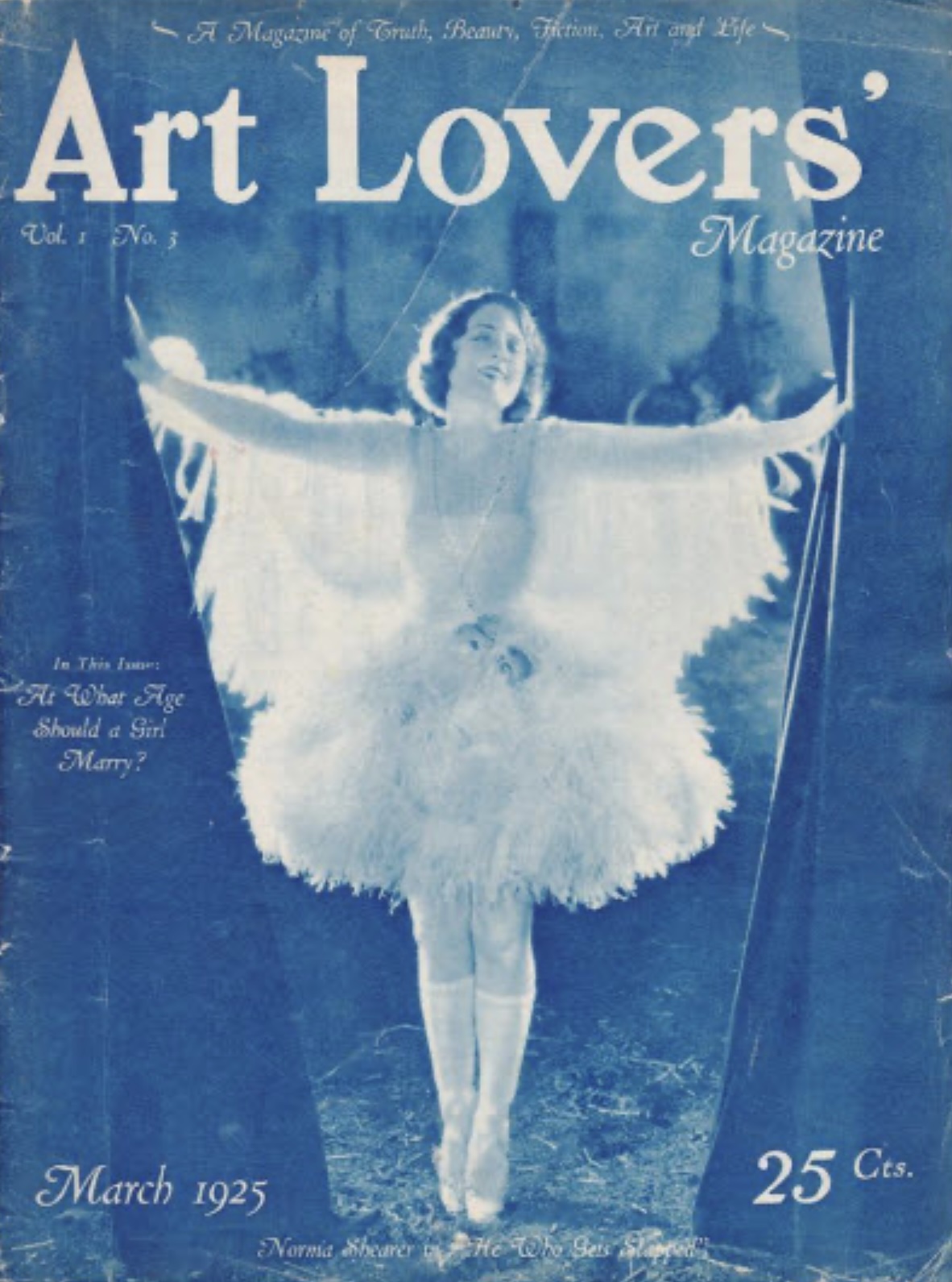
Art Lovers’ Volume 1, Number 3
The Hubbard Connection
A lot has been written about Elbert Hubbard the founder of the Roycroft handicraft community of the late 19th century and early 20th century. The same can be said about Freeman H. Hubbard who was appointed editor of Art Lovers’ magazine commencing with the second issue of the magazine. However, all the current references about Freeman Hubbard are in his association as an author and editor of Railroad magazine from 1930 until its demise in 1979.
Although Art Lovers’ magazine was published by Art Publications, Inc. in New York City, its covers touted that it is a Hubbard Publication starting with issue 4. The president of the company was Walter W. Hubbard and the associate editor of the magazine was the “Rev. Walter Warren Hubbard, the son of one the founders of Hubbard Publishing Company” that was founded in Philadelphia, PA in 1868 by Alfred H. Hubbard and Frank W. Judd as the Hubbard Brothers and was renamed the Hubbard Publishing Company in 1893 according to the 19th Century Juvenile Series last revision on Feb. 24, 2025.
The original Hubbard Publishing Company was, “a subscription publishing house” and “a well-known Bible publisher,” according to the source.
One early indication of the relationship between Art Lovers’ magazine and Hubbard Publications is the reference to Art Lovers’ in a Feb. 1925 article about the photographer James Wallace Pondelicek in Hubbard’s The American Art Student and Commercial Artist magazine. “Without a doubt, James Wallace Pondelicek, photographer and artist, ranks among the few pictorial photographers of America whose work merits the highest honors. As a figure photographer he is a master,” the editors wrote.
They continued, “Of late Mr. Pondelicek, whose work has appeared in the columns of this, and of Art Lovers’ Magazine, has been going in for advertisement illustration. We hope to persuade him, at some time in the near future, to contribute an article, helpful and technical, based on his experiences along that line.”
With the second issue of the magazine, the Hubbard connection became more obvious. In addition to Walter W. Hubbard and Freeman H Hubbard, the magazine announced the appointment of “the Rev. Walter W. Hubbard, of the Philadelphia Law and Order Society and of the Pennsylvania Anti-Saloon League as associate editor with this issue.”
Between the credentials of Freeman H Hubbard and the Rev. Walter W. Hubbard, you will think Art Lovers’ is more of moral, religious magazine. Read how Freeman was introduced when they announced him as editor of the magazine, “The publishers of ART LOVERS’ MAGAZINE announce the appointment of Freeman H. Hubbard, A.B., as editor, effective with this issue.”
“Mr. Hubbard was a scholarship winner at the Pennsylvania Academy of the Fine Arts…In addition, he is well known as a writer of short stories…Mr. Hubbard is recognized as an authority on ethics, having recently received the award of the Philadelphia Ethical Culture Society for the best statement of the meaning of the ethical movement.”
The editorial added, “His connection with ART LOVERS’ Magazine, therefore, is assurance that it will be kept to a high moral standard without losing any of its attractiveness.”
As for the Rev. Water W. Hubbard, the associate editor of the magazine is introduced in issue 3 as, “The son of one of the founders of the Hubbard Publishing Company—the Rev. Walter Warren Hubbard, of the Philadelphia Law and Order Society, widely known preacher and lecturer for the Pennsylvania Anti-Saloon League…”
In fact the Reverand Water Warren Hubbard had a story in issue 3 of the magazine titled, “Three Red Sweaters and a Canary Bird.” Another Hubbard also wrote for the magazine; Henry D. Hubbard, the assistant director of Bureau of Standards, Washington, D. C.: He wrote about “Ther Motion Pictures of Tomorrow.”
Yet, one more Hubbard is also included in the third issue of Art Lovers’ magazine. Hesketh Hubbard, “eminent British artist, has assembled a collection of two hundred and thirty-two prints by ninety-seven contemporary British artists, which arrived in this country recently for exhibition, during March, at the Brooklyn Museum, and later in other museums and galleries in this country.”
The publishers of Art Lovers’ magazine were also proud of their relationship with the late “Elbert Hubbard and his son, Elbert Hubbard II, and we lose no opportunity to speak well of the Roycroft publications of East Aurora, N.Y.”
A century ago, we were more culturally and artistically advanced. Magazines in the 1920s shined a very bright light on art and culture. One such magazine, albeit short lived, Art Lovers’ Magazine, is but one example of a cultural and artistic publication from 100 years ago when magazines ruled the media world. Here is its story:
Chapter 2, Part 1
A Bible Publisher Turns to Art
The beginning: A magazine for everyone
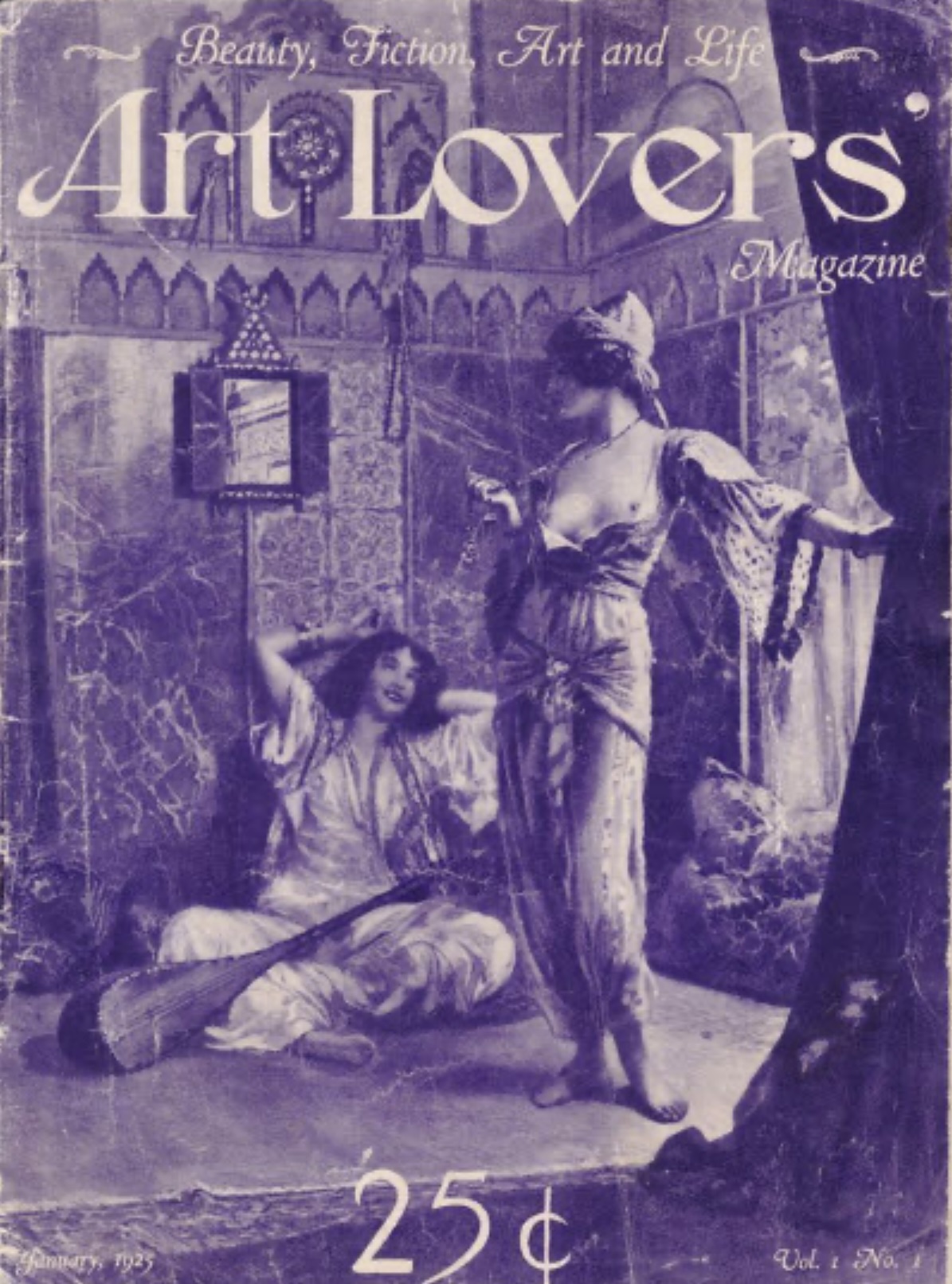
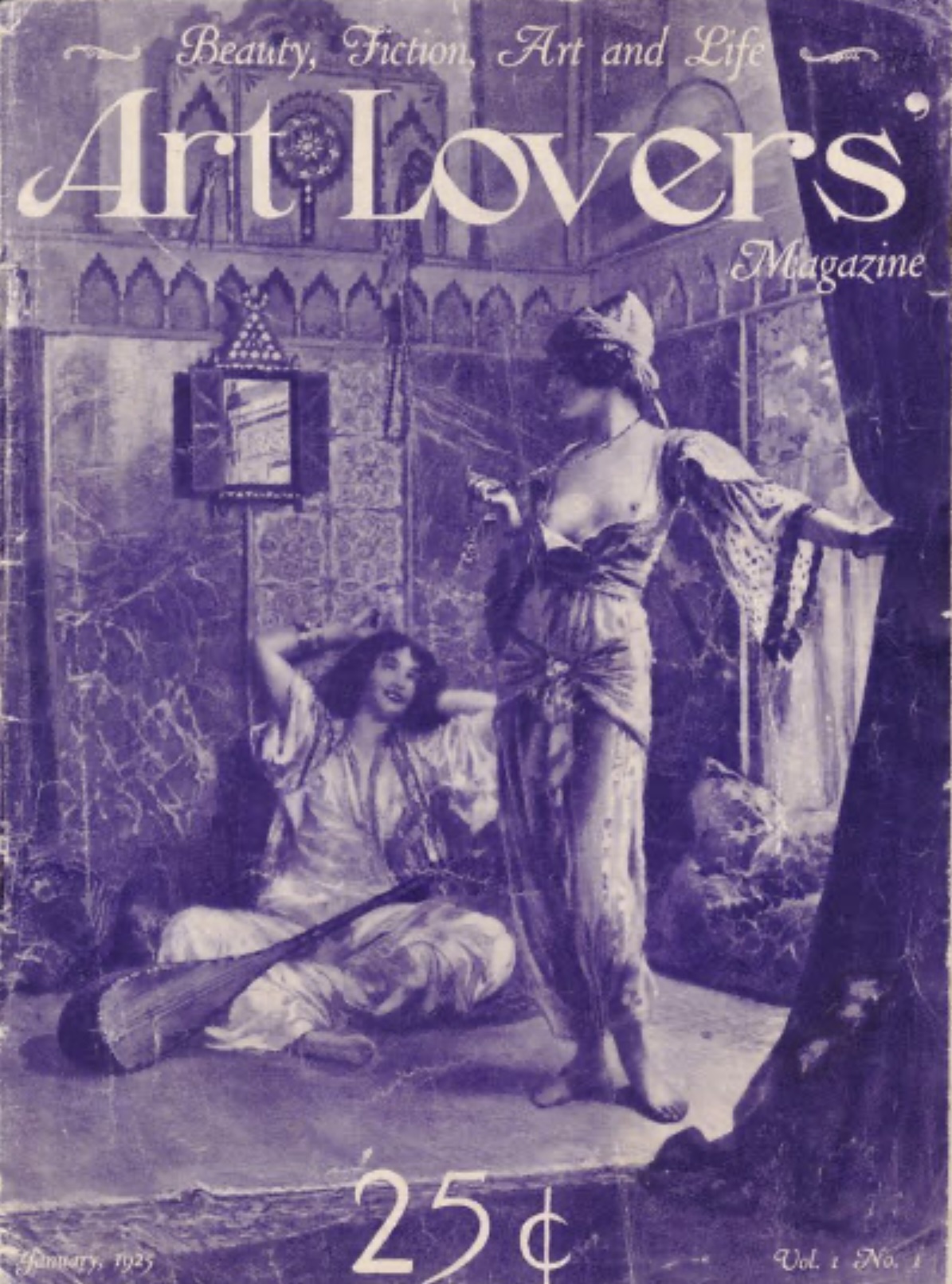
The first issue of Art Lovers’ Magazine Jan. 1925
There was no indication in the first issue of Art Lovers’ magazine that the magazine was a Hubbard Publication. The editorial page carried no masthead, and no table of contents. It served as a page, “In which we become acquainted with you, the reading public.”
The magazine was introduced as such: “ART LOVERS’ MAGAZINE will be published monthly, each month of the year, from their offices at 15 Park Row, New York, N.Y. It is owned and published by Art Publications, Inc., and is not connected, in any way, with any other publication at present.”
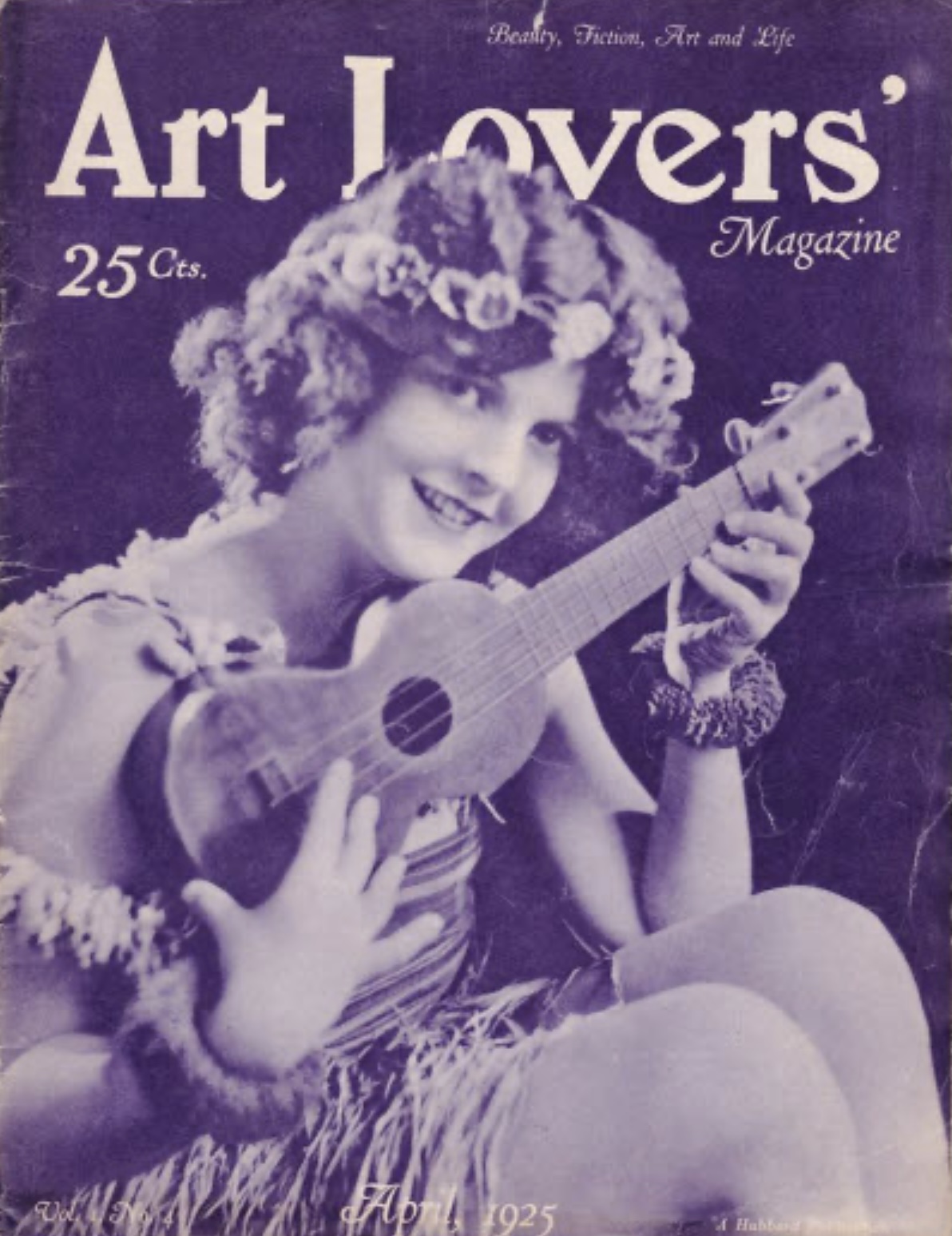
The only Hubbard name appearing in this issue was that of Freeman H Hubbard who wrote the short story “Yvonne” on pages 4 and 5. Later, in issue 2 of Art Lovers’, a masthead appears announcing that the magazine is published monthly by Art Publications, Inc., 15 Park Row, New York City, (other Hubbard Publications were published at 21 Park Row) with Walter W. Hubbard name as president and an announcement of appointing Freeman H Hubbard as editor of the magazine. It was not until issue 4 that the cover of the magazine carried the line, “A Hubbard Publication,” while the masthead continued to say it is an Art Publications, Inc. magazine.
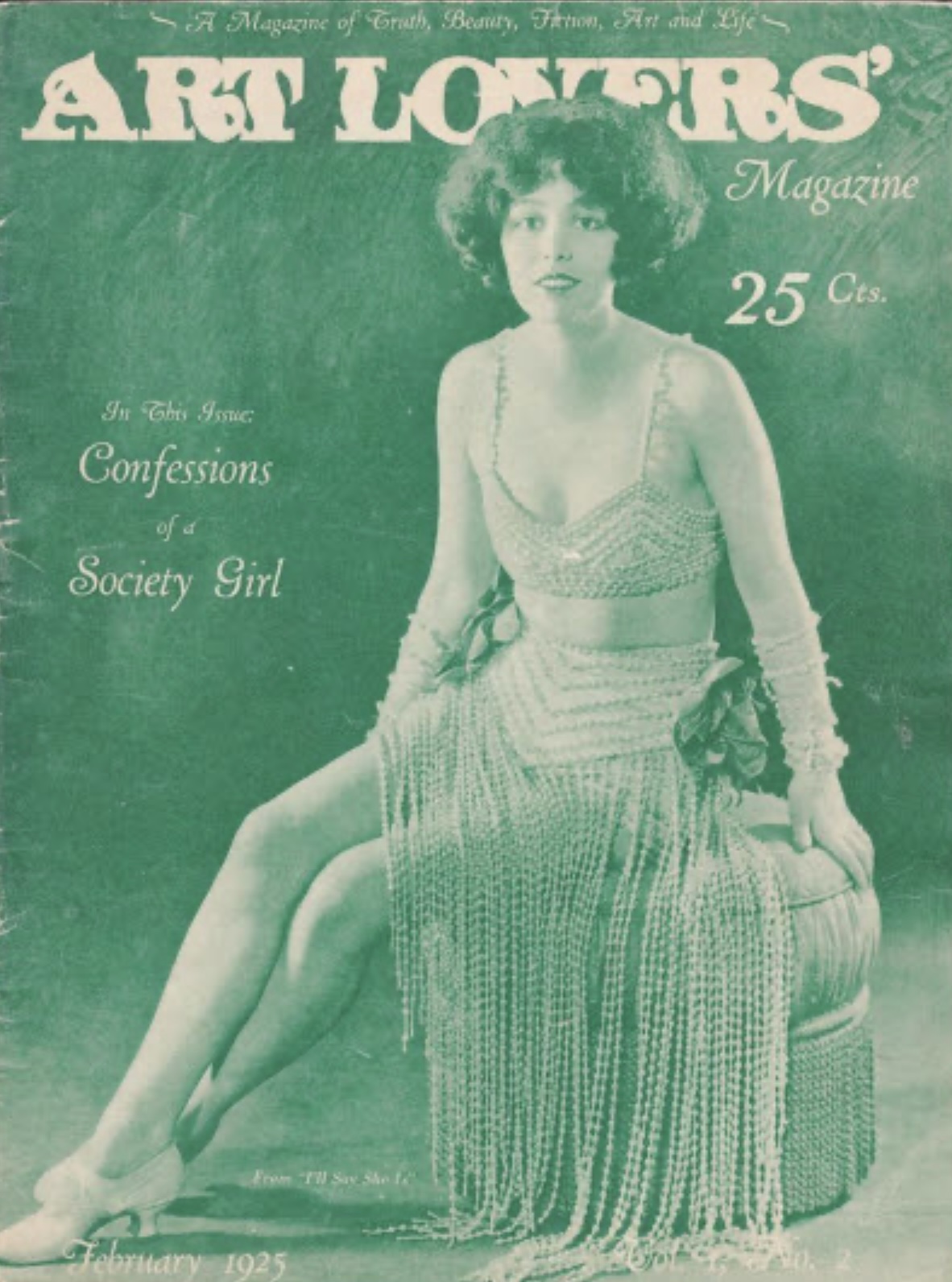
The second issue of Art Lovers’ magazine Feb. 1925
The cover of the first issue of the magazine featured two women, one half naked, in a room setting chatting with each other. Nudity was present in abundance in the inside pages of the magazine that touted “Beauty, Fiction, Art and Life.” With issues 2 and 3, the word Truth was added to the tag line reading, “A Magazine of Truth, Beauty, Fiction, Art, and Life.” However, the word Truth did not last but for those two issues. With issue 4, the word Truth disappeared from the tag line.
Unlike other art magazines of that period, Art Lovers’, in the words of its editors, “will, to the best of our ability, be ‘an all-around meal’ for every one in the family, especially to lovers of beauty, art, fiction, and the theatres. It will contain, each month, excellent stories; — mystery, love, adventure, and true-to -life tales; fully illustrated.”
The editors continue, “We have purposely avoided making this a ‘one-track’ magazine. It is something you can spend hours with; buy it before you go on a railroad journey this winter, for example, and see just how quickly time flies.”
No advertising in the first issue
Another point of differentiation from the rest of the magazines of that era, is that the editors decided not to accept any ads in the first issue. They wrote, “Before the magazine went to press at our rotogravure plant we were obliged to turn down slightly over two pages of advertising. The editorial board decided that there must positively be no advertising in the initial number, and the business office has reluctantly yielded.”
However, the magazine’s editorial board was not completely against accepting ads in the magazine, for they were quick to add, “Future advertising will be scrupulously analyzed before it is accepted for these pages and every effort will be made to keep the highest standards possible. This means protection for us as well as for the readers.”
Another promise: Picture and fiction magazine
The editors added one more promise to the readers of the magazine, “Within the next few months the number of pages will be materially increased, and color covers will be added later. Every improvement possible will be carefully considered and acted upon, — in and endeavor to fill the need of a combined picture and fiction magazine. And in the meantime, –‘On with the dance,– let joy be unconfined.”
Next: The Hubbard Connection
And in case you missed the four parts of chapter one here are the links
A century ago, we were more culturally and artistically advanced. Magazines in the 1920s shined a very bright light on art and culture. One such magazine, albeit short lived, Art Lovers’ Magazine, is but one example of a cultural and artistic publication from 100 years ago when magazines ruled the media world. Here is its story:
The Audience
In case you are wondering how many artists and art students were there in the 1920s to support and sustain these magazines, the answer is simple: E.B. Hesser wrote in the first issue of ARTS MONTHLY PICTORIAL, “To the laymen, it is surprising how many people need this magazine in their daily word. Without exaggeration, we can point to the following figures: 24,000 photographers, 15,000 commercial artists, including theater lobby artists, 20,000 teachers of art in high and elementary schools, 3,000 advertising experts, 350 editorial and make up men on rotogravure sections of newspapers…”
He added, “All these in addition to thousands of advanced art students, and artists who are “live” enough to keep abreast of the newest compositional ideas. So it is easy to see that this magazine has a decided and distinct field to cover.”
Hesser was quick to add, “It should be regarded primarily as an art trade publication, but it is so edited that nothing therein should be offensive to a clean minded laymen.”
And Hesser was not alone defining his audience. MODERN ART AND STORIES identified itself as “A magazine devoted to the inspiration and technical development of the Graphic Arts. Published for the use of Artists and Art Students, not the general public.”
The same can be said about Paris Art magazine; “With this issue PARIS ART is introduced to art and camera students and all who are interested in the development of modern art.”
One has to wonder if the fact that those magazines are not aimed at the general public, with less than 65,000 possible population according to Hesser’s number, was just a ploy to avoid the troubles with the vice societies, the United States Postal Service, and The New York Daily newspaper that launched a crusade “to eliminate the art magazines from the newstands (sic) resulted in a tremendous increase of the sales of these magazines should prove that the majority of our readers look upon these magazines as a means toward aiding themselves,” wrote the editors of Art & Beauty magazine in that same issue of April 1927.
However, the leading organization that was after the art magazines and other publications they considered immoral was the New York Society for the Suppression of Vice.
The New York Society for the Suppression of Vice
In the 1920s there was a non-governmental agency by the name of The New York Society for the Suppression of Vice. The society was founded in 1873 to enforce laws for the “suppression of trade in and circulation of obscene literature, and illustrations, advertisements, and articles of indecent and immoral use, as it is or may be forbidden by the laws of the State of New York or of the United States.”
The society was a direct dissentient of the Young Men’s Christian Association and was spearheaded by Anthony Comstock, who served as the secretary of the society and as well as an agent and inspector for both the Society and the United States Postal Service. (nyhistory.org)
Upon Mr. Comstock death in 1915, John S. Sumner succeeded him in the role of secretary and an agent and inspector for both the Society and the United States Postal Service.
This society was chartered by the New York state legislature, “which granted its agents the powers of search, seizure, and arrest, and awarded the society half of all fines levied in resulting cases.” Encyclopedia of Censorship, New York: Facts on File, 2005. Page 522.
One documented case on how this Society acted in New York City in the 1920s can be found in a one page editorial that Samuel Roth wrote in the March 1927 issue of Beau magazine. Under the heading “MR. SUMNER and BEAU” Samuel Roth, the editor and publisher of the man’s magazine wrote, “Thursday morning, January 27th of this year, I received word from the organization which nurses the sales of TWO WORLDS MONTHLY (Roth’s other magazine) and BEAU nationally that the February issues of these periodicals, which had already been shipped out to all points domestic and foreign, would not be distributed for sale upon the news stands (sic) of New York City.”
“Upon inquiry, I learned that Mr. John Sumner, secretary of that charming body of people known as the New York Society for the Suppression of Vice, had communicated with the local distributing agency, and had informed it that if certain advance information concerning the impending numbers of TWO WORLDS MONTHIY and BEAU was accurate he would take immediate action against any company that would dare to distribute them in New York City. The local agency had the alternative to refuse to distribute, which it did.”
Mr. Roth, with his lawyer, went to meet with Mr. Sumner. He brought with him copies of the magazines that he found out that Mr. Sumner have not seen or read. Mr. Roth told Mr. Sumner that the two magazines “are written and published for the sophisticated only, that neither by lewd pictures or lewd contents do we make appeal to the baser passions of mankind.”
Mr. Sumner promised Mr. Roth to look at the magazines overnight and would render a decision in the morning. “Came the dawn– and” Mr. Roth wrote, “confident and carefree, I went to see Mr. Sumner who very speedily dissipated my peace of mind. TWO WORLDS MONTHLY was quite alright, he said, and we could go ahead distributing it immediately, but BEAU, ah, that was a different story. It was absolutely unthinkable to let BEAU go out on the harmless news stands dripping with nudes which any little boy may purchase for fifteen cents. No, he did not approve BEAU and if I dared to issue it of my own accord he would unfailingly prosecute me.”
It’s that very fragile line that separates nudity from lewdity that the art magazines had to maneuver their way with the Society and the United States Postal Service. That is the main reason the art magazines of the 1920s continued to emphasize that they are not for general public, but rather for artists and art students.
In the words of E. B. Hesser, the founder of ARTS Monthly Pictorial, he wrote, “The Magazine of Pictures for Artists and Art Students.” He added that the magazine “should be regarded primarily as an art trade publication, but it is so edited that nothing therein should be offensive to a clean minded layman.”
Unlike the rest of the art magazines, a new magazine appeared on the newsstands in January of 1925 with the name Art Lovers’ vowing to be completely different than the rest of the publications, yet it did not escape the wrath of Mr. Sumner of the New York Society for the Suppression of Vice. What follows is its story.
The first issue of Art Lovers’ magazine January 1925