For more than five decades, I have studied magazines not merely as publications but as mirrors of the societies that produced them. Every issue, every editorial decision, every cover image, and every publisher’s promise tells a story about the culture and the people of its time.
Among the many forgotten titles that have crossed my desk, Art Lovers’ stands apart.
Published between 1925 and 1927 during the height of one of America’s magazine boom, Art Lovers’ occupied an unusual position in publishing history. At first glance, it appeared to be another art magazine featuring studies of the human form. A closer examination, however, reveals a publication that consistently argued for the educational and cultural value of art while drawing a sharp distinction between the nude and the lewd.
This book grew out of my fascination with that distinction, especially that the magazine was published by a company known for being a Bible publisher. The debates surrounding censorship, morality, artistic freedom, and public taste that surrounded Art Lovers’ nearly a century ago continue to resonate today. The magazine’s editors insisted that beauty and obscenity were not synonymous, and they defended the idea that context, purpose, and intent matter when judging artistic expression.
My goal in writing this book is not merely to recount the history of a single publication but to illuminate an overlooked chapter in the evolution of American magazines. Through editorials, court cases, publisher statements, contributor biographies, and the changing editorial direction of Art Lovers’, readers can observe the complex intersection of publishing, ethics, law, commerce, and culture during one of the most dynamic periods in media history.
The story also highlights the remarkable role played by the Hubbard publishing family, whose commitment to educational and cultural publishing produced a magazine that challenged conventional assumptions while insisting on high moral standards and artistic legitimacy.
Although this book focuses on the brief life of Art Lovers’ from January1925 to January1927, its larger subject is the enduring struggle over who decides what constitutes art and where society draws the line between appreciation and censorship. Those questions remain as relevant today as they were a century ago.
It is my hope that readers will come away with a deeper appreciation for the richness of magazine history and for the publishers, editors, artists, and writers who navigated the delicate boundary between public sensibility and creative freedom
A century ago, we were more culturally and artistically advanced. Magazines in the 1920s shined a very bright light on art and culture. One such magazine, albeit short lived, Art Lovers’ Magazine, is but one example of a cultural and artistic publication from 100 years ago when magazines ruled the media world. Here is its story:
The Audience
In case you are wondering how many artists and art students were there in the 1920s to support and sustain these magazines, the answer is simple: E.B. Hesser wrote in the first issue of ARTS MONTHLY PICTORIAL, “To the laymen, it is surprising how many people need this magazine in their daily word. Without exaggeration, we can point to the following figures: 24,000 photographers, 15,000 commercial artists, including theater lobby artists, 20,000 teachers of art in high and elementary schools, 3,000 advertising experts, 350 editorial and make up men on rotogravure sections of newspapers…”
He added, “All these in addition to thousands of advanced art students, and artists who are “live” enough to keep abreast of the newest compositional ideas. So it is easy to see that this magazine has a decided and distinct field to cover.”
Hesser was quick to add, “It should be regarded primarily as an art trade publication, but it is so edited that nothing therein should be offensive to a clean minded laymen.”
And Hesser was not alone defining his audience. MODERN ART AND STORIES identified itself as “A magazine devoted to the inspiration and technical development of the Graphic Arts. Published for the use of Artists and Art Students, not the general public.”
The same can be said about Paris Art magazine; “With this issue PARIS ART is introduced to art and camera students and all who are interested in the development of modern art.”
One has to wonder if the fact that those magazines are not aimed at the general public, with less than 65,000 possible population according to Hesser’s number, was just a ploy to avoid the troubles with the vice societies, the United States Postal Service, and The New York Daily newspaper that launched a crusade “to eliminate the art magazines from the newstands (sic) resulted in a tremendous increase of the sales of these magazines should prove that the majority of our readers look upon these magazines as a means toward aiding themselves,” wrote the editors of Art & Beauty magazine in that same issue of April 1927.
However, the leading organization that was after the art magazines and other publications they considered immoral was the New York Society for the Suppression of Vice.
The New York Society for the Suppression of Vice
In the 1920s there was a non-governmental agency by the name of The New York Society for the Suppression of Vice. The society was founded in 1873 to enforce laws for the “suppression of trade in and circulation of obscene literature, and illustrations, advertisements, and articles of indecent and immoral use, as it is or may be forbidden by the laws of the State of New York or of the United States.”
The society was a direct dissentient of the Young Men’s Christian Association and was spearheaded by Anthony Comstock, who served as the secretary of the society and as well as an agent and inspector for both the Society and the United States Postal Service. (nyhistory.org)
Upon Mr. Comstock death in 1915, John S. Sumner succeeded him in the role of secretary and an agent and inspector for both the Society and the United States Postal Service.
This society was chartered by the New York state legislature, “which granted its agents the powers of search, seizure, and arrest, and awarded the society half of all fines levied in resulting cases.” Encyclopedia of Censorship, New York: Facts on File, 2005. Page 522.
One documented case on how this Society acted in New York City in the 1920s can be found in a one page editorial that Samuel Roth wrote in the March 1927 issue of Beau magazine. Under the heading “MR. SUMNER and BEAU” Samuel Roth, the editor and publisher of the man’s magazine wrote, “Thursday morning, January 27th of this year, I received word from the organization which nurses the sales of TWO WORLDS MONTHLY (Roth’s other magazine) and BEAU nationally that the February issues of these periodicals, which had already been shipped out to all points domestic and foreign, would not be distributed for sale upon the news stands (sic) of New York City.”
“Upon inquiry, I learned that Mr. John Sumner, secretary of that charming body of people known as the New York Society for the Suppression of Vice, had communicated with the local distributing agency, and had informed it that if certain advance information concerning the impending numbers of TWO WORLDS MONTHIY and BEAU was accurate he would take immediate action against any company that would dare to distribute them in New York City. The local agency had the alternative to refuse to distribute, which it did.”
Mr. Roth, with his lawyer, went to meet with Mr. Sumner. He brought with him copies of the magazines that he found out that Mr. Sumner have not seen or read. Mr. Roth told Mr. Sumner that the two magazines “are written and published for the sophisticated only, that neither by lewd pictures or lewd contents do we make appeal to the baser passions of mankind.”
Mr. Sumner promised Mr. Roth to look at the magazines overnight and would render a decision in the morning. “Came the dawn– and” Mr. Roth wrote, “confident and carefree, I went to see Mr. Sumner who very speedily dissipated my peace of mind. TWO WORLDS MONTHLY was quite alright, he said, and we could go ahead distributing it immediately, but BEAU, ah, that was a different story. It was absolutely unthinkable to let BEAU go out on the harmless news stands dripping with nudes which any little boy may purchase for fifteen cents. No, he did not approve BEAU and if I dared to issue it of my own accord he would unfailingly prosecute me.”
It’s that very fragile line that separates nudity from lewdity that the art magazines had to maneuver their way with the Society and the United States Postal Service. That is the main reason the art magazines of the 1920s continued to emphasize that they are not for general public, but rather for artists and art students.
In the words of E. B. Hesser, the founder of ARTS Monthly Pictorial, he wrote, “The Magazine of Pictures for Artists and Art Students.” He added that the magazine “should be regarded primarily as an art trade publication, but it is so edited that nothing therein should be offensive to a clean minded layman.”
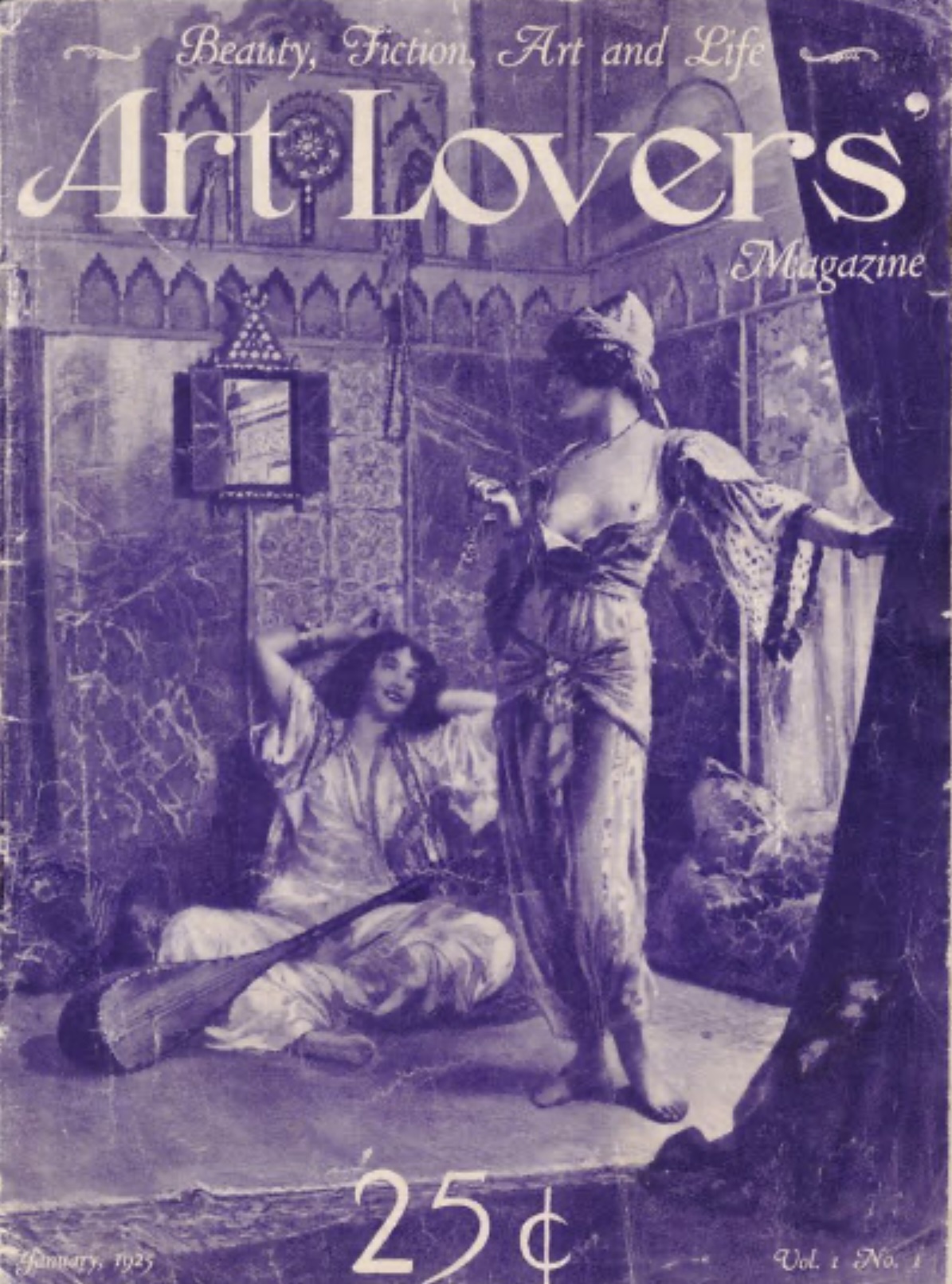
Unlike the rest of the art magazines, a new magazine appeared on the newsstands in January of 1925 with the name Art Lovers’ vowing to be completely different than the rest of the publications, yet it did not escape the wrath of Mr. Sumner of the New York Society for the Suppression of Vice. What follows is its story.
The first issue of Art Lovers’ magazine January 1925
A century ago, we were more culturally and artistically advanced. Magazines in the 1920s shined a very bright light on art and culture. One such magazine, albeit short lived, Art Lovers’ Magazine, is but one example of a cultural and artistic publication from 100 years ago when magazines ruled the media world. Here is its story:
Bringing God as the Defense Attorney
Under the headline “Tolerance” the editorial of Art Studio Life’s April 1926 stated, “In the Art field more than in any other may we find a wealth of beauty and inspiration that will soften life for everyone. WE do not claim that everything perpetrated in the name of Art is beautiful, but we do claim that nothing in true art can possibly offend any but those who, having tainted minds and questionable morals themselves, seek to smear the world with their personal tar of iniquity.”
The editorial concluded by stating, “They launch their attacks against all. In the name of religion, they seek to cover themselves by persecuting lovers of beauty. They purposely lose track of the fact that the greatest figure in history of the world was the incarnation of Tolerance, Christ. They seek to reform His world and His children, contrary to His Will.”
In another magazine, Art and Vanities, the editors didn’t stop at the necessity of nudity to the artist, but they went one step further bringing God into the equation of art and nudity. In the September 17, 1926 issue of Arts and Vanities, the editors wrote “In order to create beautiful statuary, soul stirring canvases, and monumental works, he must grasp the significance of each line in the human body. To him the human form spells perfection. No one can improve on the works of our Creator. We do not try. We seek only to understand and appreciate what he has given us in order that our lives and our hopes and aspirations may reach upward to the source of all good.”
And here is that powerful conclusion that sets the stage for all the nude art magazines of 1920s, “God was the first artist, he created plants, trees, animals, birds, and last but most beautiful, he created woman to adorn the universe. Man in order to elevate the ideals of his brother man endeavors to interpret these works for the Master. May we always do our share to help the artists in their struggle for the highest and most idealistic interpretations of Nature.”
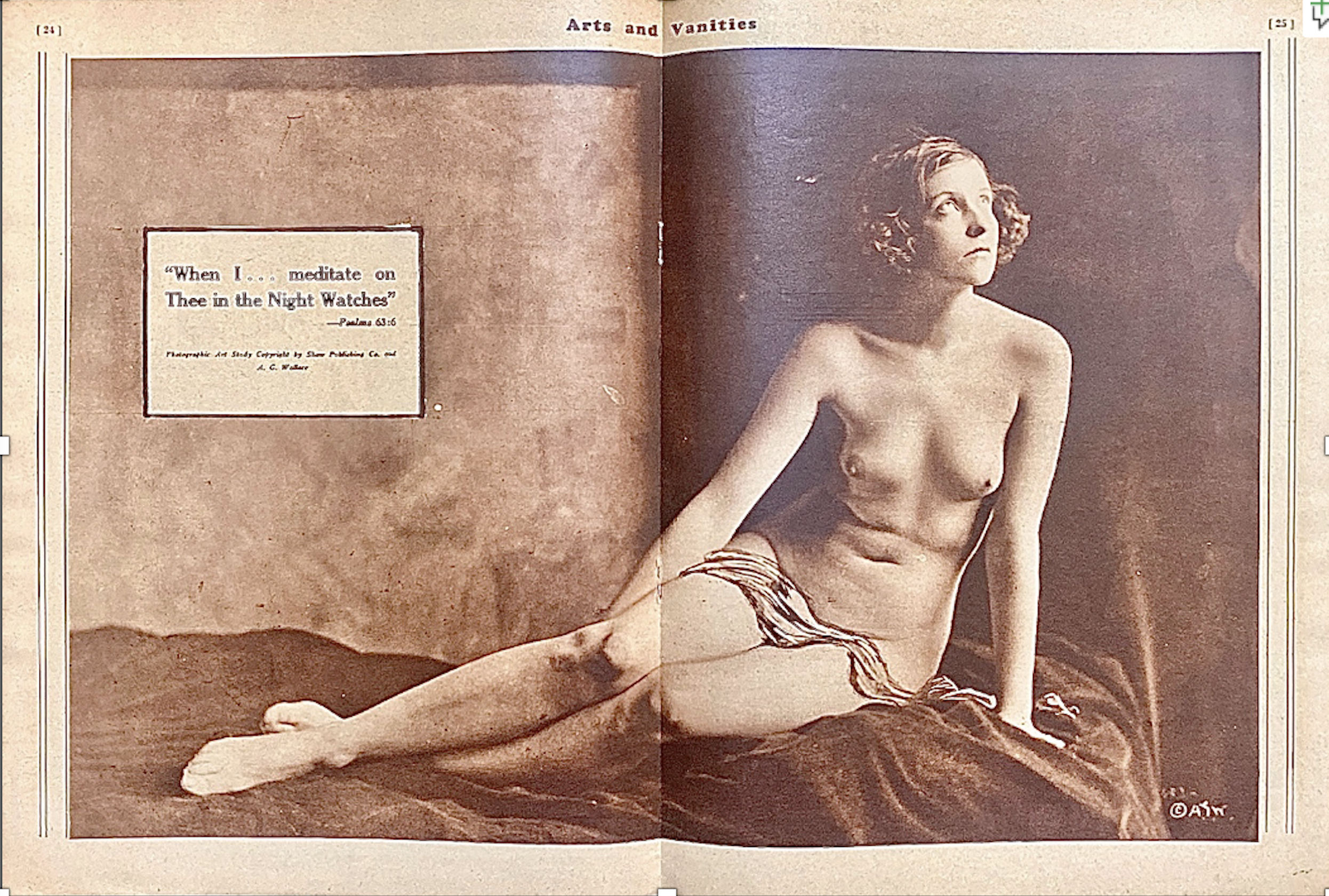
In fact, Arts and Vanities went as far as placing a bible verse on its center spread of the October 17, 1926 issue that was displaying a picture of a half-naked woman. (Yes, there were centerfolds before Hugh Hefner’s Playboy of the 1950s, the only difference they were only one spread).
Arts and Vanities was not the only magazine using God as its defense attorney, Art and Life was doing the same. Art and Life’s motto was The Body Beautiful, The Mind Intellectual, and The Soul Intuitional. The editor wrote in the November 1925 issue, “This magazine stands consistently for the above program (their moto above). That the body may be beautiful it must be healthy, athletic, vibrant with life and action. The editor of this magazine believes that the nude body is inherently decent, the noblest work of the Creator, and those who look upon it as indecent, and to be hid from sight, have indecent minds; that nudeness and lewdness are in no way synonymous terms.”
In fact, earlier in the year, Art and Life magazine, raised the same topic in its July 1925 issue. In an editorial written by the magazine’s editor Guy Lockwood under the title “Concerning The Nude. What Is All The Fuss About?” He wrote “While we have strenuously defended the nude body as the highest work not only of art, but of the Creator, as well yet we are no more in favor of lewdness and real indecency than are those who are behind the movement to rid the news stands of objectionable publications.”
Lockwood added, “Real art magazines have endeavored to supply real needs in the line of figure study by publishing studies of the human body that give a knowledge of basic form and structure, proportions and action. These photographs or drawings, as the case may be, have necessarily often been nude, and Art and Life Magazine has published this kind of photographs and drawings, believing that in doing so this magazine was rendering a valuable assistance to real art advancement.”
Keep in mind that the aforementioned magazines were all in line with the tag line of Hesser’s magazine Arts Monthly Pictorial, “The Magazine of Pictures for Artists and Art Students.” A lot of these magazines did not accept subscriptions, “but Art Clubs or similar organizations may order twelve copies or more shipped by express each month, to be used for instructional purposes,” stated the masthead in ARTS Monthly Pictorial. Those art clubs and the newsstands were the major outlets of the art magazines of the 1920s.
A century ago, we were more culturally and artistically advanced. Magazines in the 1920s shined a very bright light on art and culture. One such magazine, albeit short lived, Art Lovers’ Magazine, is but one example of a cultural and artistic publication from 100 years ago when magazines ruled the media world. Here is its story:
Image generated by AI
Chapter 1
Setting the stage:
Justifying Nudity in the Art magazines of the 1920s
An editorial in the September 17, 1926, Arts and Vanities magazine sums the status of art and beauty magazines that were sprouting like mushrooms amid what was once called The Roaring Twenties. Besides the hundreds of mass titles, some of which are still published today, such as The New Yorker, Reader’s Digest, TIME, and Better Homes and Gardens, there was a host of specialized magazines aimed at Art Students and Artists. However, the irony of those magazines is, with few exceptions, are also sold on the newsstands, defying the laws and regulations of the many ethics and obscenity commissions that were set by the states to insure lewd and obscene material is neither distributed on the newsstands nor sent by mail.
One of the earliest art magazines of the 1920s was the Edwin Bower Hesser’s ARTS Monthly Pictorial that was founded in 1922. E. B. Hesser was a famous photographer in Hollywood, CA. He launched the magazine with tag line of, “The Magazine of Pictures for Artists and Art Students.”
“While primarily a magazine of art for artists in every line of creative endeavor – to whom its great value is obvious –” wrote E.B. Hesser in the editorial of the May 1925 issue. He continued, “the publication of “ARTS MONTHLY PICTORIAL” is based on an appeal that is shared by everyone – the appeal of pictures.”
He was quick to add, ““ARTS MONTHLY PICTORIAL” opens to everyone, everywhere, the gates leading to beauty and art, bringing to many a joy they have never had open to them before.”
Defending Nudity
Hesser concluded his editorial by stating, “ARTS will not be guided by prudery in the selection of its subjects. But nothing will ever be published in it which could not be safely shown to young people. The nude – long recognized as inseparable from art – will of course be represented in its pages, but always in such a delicate manner that the magazine may enter any enlightened home, promoting higher ideals and a truer understanding of art.”
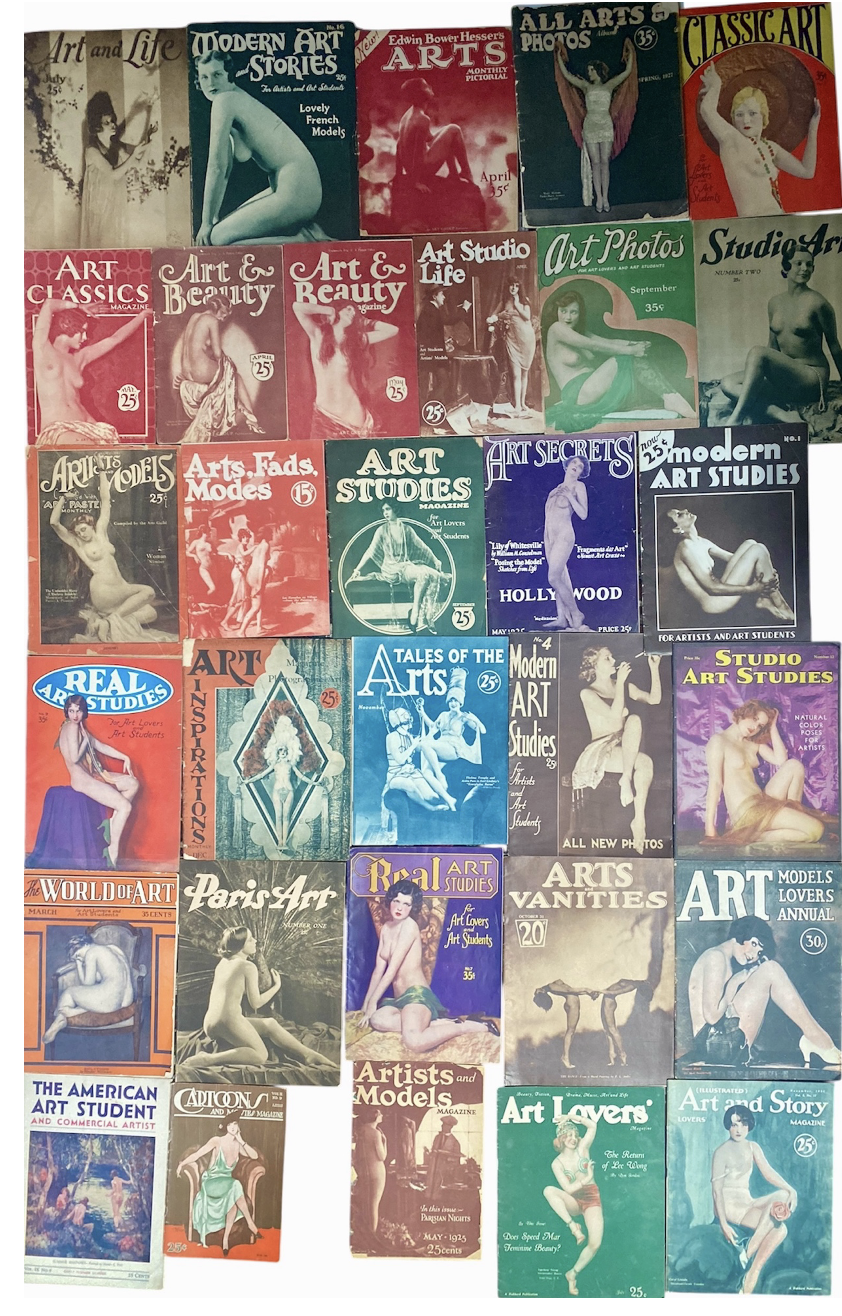
However, Hesser’s magazine was not the only one. There was a slew of art titles in the 1920s almost all claiming to be for artists and art students. Some of those magazines include, but not limited to,
All Arts & Photos Album
American Beauties
Art & Beauty
Art and Life
Art Classic
Art Inspirations
Art lovers’
Art Photos
Art Secrets
Art Studies
Art Studio Life
Art Visions
Artists and Models
Arts and Vanities
Arts, Fad, Modes
Fine Arts Quarterly
Modern Art & Stories
Modern Art Studies
Original Artists and Models
Paris Art
Real Art Studies
Sex Monthly
Tales of the Arts
The American Art Student and Commercial Artist
The World of Art
True Tales Of The ARTS
A sample of the art magazines on the newsstands of the 1920s
Almost without exception these magazines were not intended for the public, but rather for “Art Students, Art Lovers and Artists.” Some stated that they accept no subscriptions, so probably they were either sold on the newsstands or delivered by bulk to art schools and studios.
To clarify the point that the majority of these magazines were not aimed at the general public, the editors of Art and Vanities wrote, “The magazine is a strictly technical publication and aims to giver the artists the best art studies available. We know full well that for many artists, it is almost impossible to work directly from the model. This is due to the fact that models are demanding more for their time now, than heretofore, and also because the services of really good models are in demand at so many of our current Broadway productions.”
The following statement from Arts and Vanities applied to most of the art magazines that carried nudity within its pages. Art and Vanities “is not intended for general circulation. It is a text book for those who are striving to master the fundamental principles of Art.”
However, the magazine was very aware that non art students and artists are going to see the magazine, thus they wrote, “To those of the laity who glance through these pages, we must make one plea. Try to understand that this magazine is a text for artists. Perhaps you do not understand that nudity in art is as indispensable to art classes as food and drink to you. The nudity which you do not understand is fully revealed to the artist. To him, this expression of art is absolutely necessary. Without it he could do nothing.”
Art & Beauty magazine in its April 1927 issue wrote, “The studies in this magazine are photographs of paintings which appear in galleries the world over. They are pictures which any right thinking American citizen would be proud to exhibit in his home. They tend to acquaint young Americans with the fact that there is nothing mysterious or surreptitious about the nude and the sooner this is realized the sooner will there be an understanding of what is rank and what is beautiful.”
A century ago, we were more culturally and artistically advanced. Magazines in the 1920s shined a very bright light on art and culture. One such magazine, albeit short lived, Art Lovers’ Magazine, is but one example of a cultural and artistic publication from 100 years ago when magazines ruled the media world. Here is its story:
Image generated by Grok
Introduction
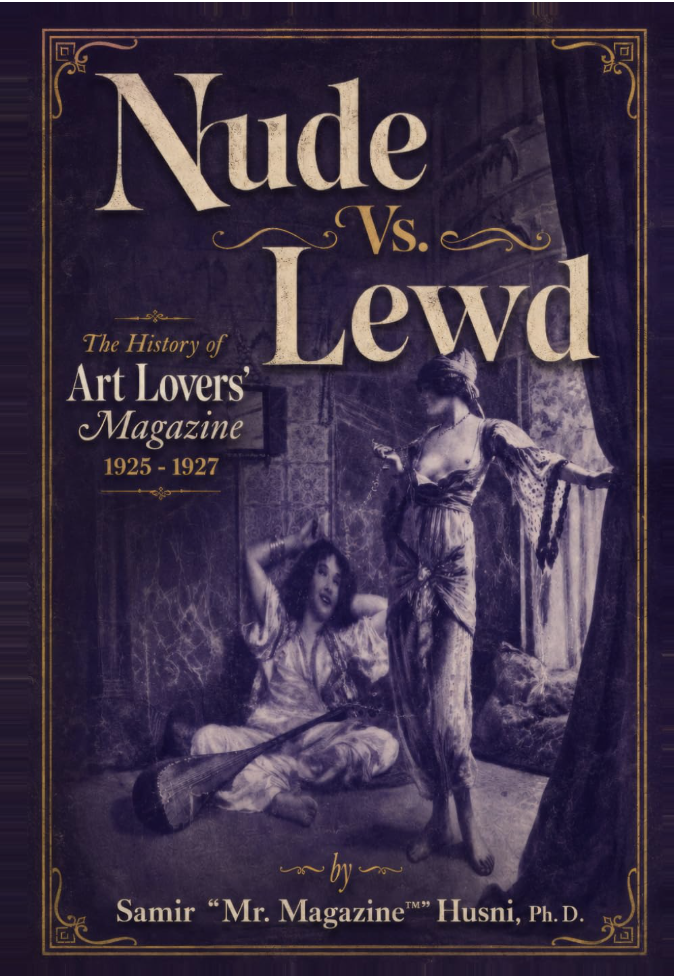
Lewd Vs. Nude:
The Story of Art Lovers’ Magazine 1925-1927
First issue of Art Lovers Magazine
A century ago, marked the golden age of magazines. Giants like TIME, Reader’s Digest, The New Yorker, and Better Homes and Gardens were launched, and the industry was abuzz. Magazine launches flooded newsstands and mailboxes across the country, providing a singular source of information, education, and entertainment—all in one package. In the 1920s, magazines were the only mass media serving the American public “from sea to shining sea.”
Newspapers were local, and so was the theater. Radio didn’t achieve widespread popularity until the late 1920s, and even then, it remained largely localized. Movies in the early 1920s were purely a form of entertainment, gaining mass appeal later in the decade when sound was added to moving pictures.
For those who believe niche publishing is a recent trend in magazine publishing—think again. The 1920s saw the emergence of numerous specialized magazines targeting very specific audiences.
This book-in-a-blog focuses on one magazine in particular: Art Lovers’, which was published from January 1925 to January 1927. While the spotlight is on Art Lovers’, I won’t ignore the many other art magazines of the same genre that came before and after it.
Art Lovers’ never claimed to be, like many of its competitors, “a magazine for artists and art students”. Instead, it positioned itself as a magazine about art—and all that the word “art” entails. Like similar publications of the time, it featured nude art and imagery, but it also included extended fiction, stories, and articles by renowned authors and artists.
Art Lovers’ took an extra step in addressing its audience, clarifying that although the magazine contained nude images, they were not lewd images. Hence the title of this book-in-a-blog: Lewd vs. Nude: The Story of Art Lovers’ Magazine, 1925–1927.
I hope you will enjoy this weekly journey starting today and every Monday.