The new newsletter from Mr. Magazine™ delivered every Monday morning to your in-box. This week’s cover story Reinventing TIME.com in addition to The Saturday Evening Post, Raising Cover Prices, Saving Newspapers and a Dwell interview from the vault. Click here to start your free subscription.
Archive for the ‘New Launches’ Category

Subscribe Now to Get the New Issue of Mr. Magazine™ Monday Morning…
April 14, 2014
When Digital Craves Print, A New Global Food Magazine, The Cleaver Quarterly, Is Born… The Mr. Magazine™ Interview
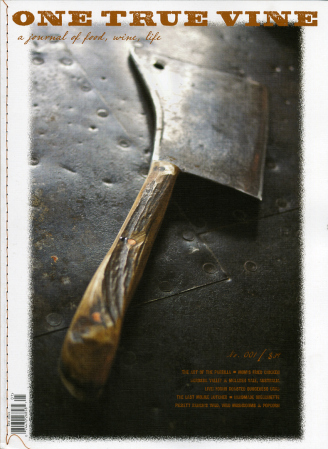
April 2, 2014Kickstarting It Into Gear, A New Print Food Magazine Specializing In All Things Chinese Is About To Be Born: The Cleaver Quarterly Promises To Split Asunder All Doubts About The Asset Of An Ink On Paper Platform…Mr. Magazine’s™ Interview With Lilly Chow, Managing Editor, And Iain Shaw, Brand Director Of The Cleaver Quarterly.
A quarterly print magazine that takes a “playful” look at Chinese food from a global perspective; The Cleaver Quarterly promises to be something unique and different among food mags everywhere.
Using long form writing and vivid photography; Managing Editor, Lilly Chow and Iain Shaw, Brand Director, two of the trio behind The Cleaver Quarterly, talk about their reasons for bringing a print product into today’s world and how their magazine has an audience just waiting to discover it. I could feel the passion in their voices every time they mentioned the name of the magazine. They are a team with a lot of zeal and love about the subject matter and the platform that it will manifest itself upon. The team is not just going through the motions of a magazine launch, they are creating their “Chinese food” and eating it at the same time.
Along with Jonathan White, Executive Publisher, the three have lived in China collectively for over 25 years, so they’re very familiar with their topic and very excited about their new Kickstarter-promoted platform – an ink on paper magazine.
So if you think you know everything you need to about Chinese food, think again as you sit back and enjoy Mr. Magazine’s™ conversation with two of the powers-that-be behind The Cleaver Quarterly all the way from Beijing, China…

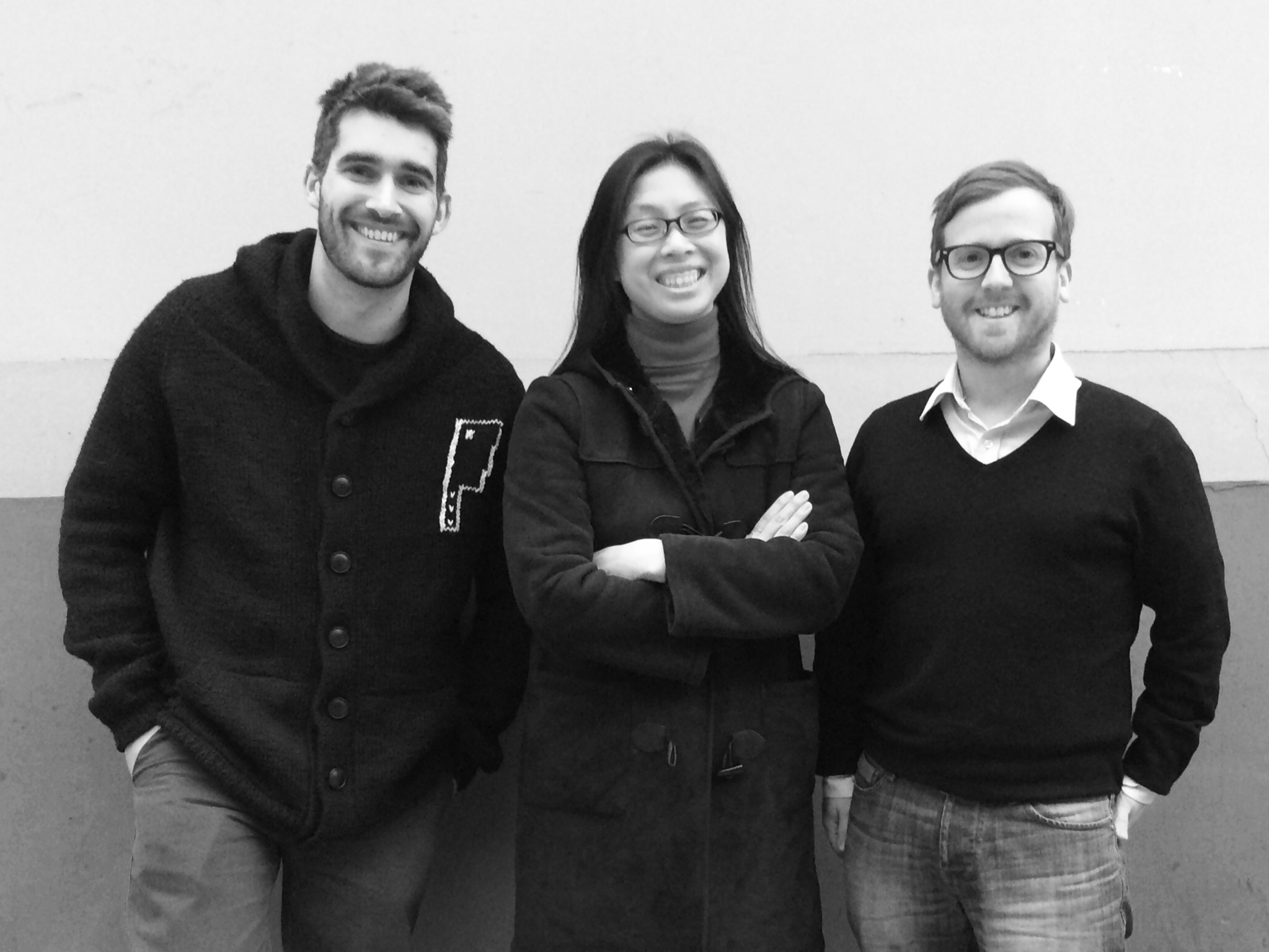
From left to right, Jonathan White, Lilly Chow and Iain Shaw.
But first the sound-bites:
On the reason for going with a print product in a digital world…
People love using Facebook and Twitter to make friends, to keep in touch with people, to share information — they love the immediacy of it. But I think many people are kind of finding that they want something they can get their hands on.
On the decision to launch a food magazine specializing in Chinese food…
We’ve all been living here for many years and in all this time we began to realize that everyone thinks they know Chinese food and we’re talking around the world but for most people that doesn’t go much further than the menu at their local takeout restaurant.
On the target audience of The Cleaver Quarterly…
It’s people that love to eat, they love to read about eating and they don’t have to be experts in Chinese food. They love exploring, they love trying new things, taking photos, putting them on Instagram. It’s people that are curious to know a bit more.
On the importance of social media when it comes to promoting the magazine…
I think social media for us has been a key and will remain a really essential way of how we promote the magazine.
On the power of a great printed product…
A great print magazine, we’ve said to each other, is like a home-cooked meal with friends and family instead of a microwaved dinner for one. We believe that great photography and writing and illustration are like good food, they’re meant to be savored.
And now the lightly edited Mr. Magazine™ conversation with Lilly Chow, Managing Editor, and Iain Shaw, Brand Director of The Cleaver Quarterly…

Samir Husni: My first question to you is what gave you the idea to come up with a food magazine and to have the first issue specialize with Chinese food, but in a playful way?
Lilly: The three of us, there’s Iain and me here tonight, Jonathan, our colleague couldn’t be here. Together we’ve been living in China collectively for over 25 years and in all that time we began to realize that everyone thinks they know Chinese food and we’re talking around the world, but for most people that doesn’t go much further than the menu at their local takeout restaurant. And not that there’s anything wrong with that but because we’ve been living here for so long we’ve been lucky enough to experience so much more about Chinese food. The regional diversity is just staggering and we’ve all eaten many different things from the mouthwatering to the stomach-churning. We’ve discovered that this is truly a culture that’s obsessed with food.
SH: Lilly, you’ve written before, you’ve published and you’ve edited books, so how does the magazine offer information different than let’s say Beijing Eats, the book that you’ve edited?
Lilly: Beijing Eats was a restaurant guide in book form and so it was perfect for tourists and perfect for expats who you know had been living in Beijing and wanted to continue exploring the regional diversity of China in a single city. It was well received but many people who heard about the book felt, “Oh I wish there was a version for Shanghai,” or another city. They loved the resource that it was but they felt it was a shame that it didn’t travel — it was very specific to Beijing.
What we aim to do with The Cleaver Quarterly is to have a global focus and a global audience and a global pool of contributors. It presents a challenge logistically in terms of finding all the people that we want to get great content from and then finding the audience and making sure everybody gets what they want out of it. But it also increases the pool of everybody who has ever experienced Chinese food.
For example, we’ve joked about publishing a story by someone who’s only ever had one Chinese meal in their life and it just so happened to be very memorable. That could be a great contribution — it doesn’t have to be somebody who grew up in China or has been eating it all their life. In fact, the person who encounters it in a completely novel way might have a much more interesting story than somebody who takes it for granted and only eats the same thing, the same Chinese meal every day.
SH: Iain, you’re the brand director and if somebody stops you and says, “Iain, you’re bringing this new food magazine, The Clever Quarterly, you’re in China trying to publish a global magazine all over the world, what’s your strategy as a brand director to ensure that this new launch succeeds? There’s no shortage of launches and there’s no shortage of food magazines, so what’s your brand strategy to create a better and different strategy than what’s out there especially since it’s coming all the way from China?
Iain: The first thing is it starts with knowing your audience, it starts with knowing who we are, who we are aiming this magazine at. We start with a pretty clear idea of that. It’s people that love to eat, they love to read about eating and they don’t have to be experts in Chinese food. They love exploring, they love trying new things, taking photos, putting them on Instagram. It’s people that are curious to know a bit more. We know who they are and the next step is finding them.
I think the key piece of the puzzle has been social media here, and social media plus the existing food blogs that are out there. But getting out there and finding out what people are saying about Chinese food and really finding those people who’re already writing about it, taking photos, and then making contact with them, building a relationship with those people. I think social media for us has been a key and will remain a really essential way of how we promote the magazine.
Up until now we’ve used Twitter; we’ve used Facebook and Instagram. Those have been the three key planks and we have had a blog more or less since the beginning. It’s been a really slow process, but yet we’ve uncovered more and more people out there that a lot of them aren’t even writing for anyone. They’re in it because they love it. Some of it is because they’re ethnically Chinese and some of them it’s just because it’s a cuisine that they really enjoy. We’ve found an Indian guy that’s living in the south of China and he’s all over Instagram. He’s got quite a bit of followers on Instagram but he doesn’t seem to have a blog, for example. This is all quite ironic because it’s a print magazine but in many ways digital has been our friend and will continue to be our friend.
SH: I’m hearing that from a lot of people and new magazine publishers that digital is an important asset in publishing or in communicating where social media can put you in touch with the audience. Why then is there a need for the print magazine? Is it to fulfill; to close that circle? Is it to create reality out of virtual relationships? Why the need for a printed Cleaver?
Iain: Well, social media, it’s one medium. What I was about to say is that social media is the medium by which we’ve built an audience so far but it’s not really the message. The message for us I think is also kind of putting a different face on Chinese Food from what people are used to. I’m sure if I say Chinese Food right now all kinds of images will come flooding into your mind, the usual clichés of Chinese food and Chinese restaurants in North America and in the UK, these are global in some ways. We want to take those clichés and as much as possible throw them out of the window and present a more dynamic sight to Chinese food. Social media is one way.
That’s what we want the Cleaver to be; we don’t want it to look like your aunt’s Chinese cookbook that she’s had at home since the 70s. We want it to look fun, we want it to look dynamic and we think that a print magazine is still one of the best ways of creating that kind of a feeling.
We also think that everyone is using social media now but I think people are finding the limits of what they can find with technology. I’ve got my iPhone, I’m doing crosswords on my iPhone now, it’s much more convenient to do a crossword on my iPhone than in a print newspaper because I won’t buy a print newspaper.
But people will also think that there are limitations to where technology can take them and I think you’re finding that across many different industries. A lot of things that were considered to be dying are coming back, the old is being revised and that’s happening in things like food and drink, craft beer, for example, people want beer that they can taste, that’s interesting, that’s got interesting names and interesting flavors. People want their hair cut by a local barber. They want things that someone’s taken time over and they want things that are well crafted. And I think that’s happening in many different industries.
I think in our industry, the print magazine and the sort of unlikely revival of the print magazine is the expression of that. So people love using Facebook and Twitter to make friends, to keep in touch with people, to share information — they love the immediacy of it. But I think many people are kind of finding that they want something they can get their hands on, they want something that they can take time over on a weekend, they want something that they can hang onto for longer, for however long it takes to punch out 140 characters.
SH: Lilly, you are a digital native and here you are preaching about the beauty and the power of print. What gives? Besides what Iain said, for you as an editor and as a writer; does print provide you with a better medium to release your inner creative soul into the pages of a magazine? Do you feel any better seeing your work in print as opposed to digital?
Lilly: I would have to answer yes to that. I have to answer this from two perspectives, as a writer and then as an editor. Personally, I grew up reading magazines, flipping through them, subscription drives, looking over all the magazine options, the excitement of getting it in the mail, that’s part of me. And there’s something so exciting about creating that tangible product that there’s no replacement for that. And that’s true for all three of us, we love print and we love making magazines.
A great print magazine, we’ve said to each other, is like a home-cooked meal with friends and family instead of a microwaved dinner for one. We believe that great photography and writing and illustration are like good food, they’re meant to be savored. So there’s that aspect to it. But as a writer, yes, seeing my work in print, that’s an incomparable feeling.
As an editor, being able to provide that to other people is also a great privilege. There’s also something to be said for print from the editorial point of view which is you can have higher standards when you have limited real estate. When people come to you and say, “Hey, I have this idea for a story,” if you have a website you can’t say “Oh I’m sorry, I don’t have room for it.” You have all the room in the world. But if you say we only have 80 pages and it’s filling up quickly and you have to show me that you’re really adding value, it’s a great excuse if you will, to encourage people to raise their game from a writing point of view or from a design point of view because they understand it’s limited and they have to bring their best in order to win the right to be in these pages.
And I like being at the top of my game and I like challenging other people to be their best. And the so-called limitations of print, the fact that it’s limited and not infinite, an infinite number of pixels, that compels people to make the most of their creativity.
SH: As a digital native, is it easier for you to promote a brand that has a print entity or just a digital brand?
Iain: Well, I think it’s certainly a challenge to promote a brand whose main entity is print, no doubt, because if you’re only digital, then maybe your content is going to be video which you can easily share on social media. And if it’s print obviously you can’t send paper across Twitter or Facebook and so yes, there’s a certain challenge because you have to kind of convey the excitement and the feeling and the experience of reading your print magazine using digital forms.
But then the challenge is to find unique ways of doing that. I just gave the example, we haven’t used video a lot, but I noticed for example a lot of print magazines are putting up short videos on Instagram when they have a new issue out. And it’s a very simple video of plop down the magazine is simply there on the table and somebody is flipping through the pages and the camera captures it, 15 seconds put that up on Instagram. I’ve had the preview of several print magazines in the past month just because of that.
And you know, it’s challenging promoting print across digital media but then you know it’s always been challenging promoting a print magazine to a global audience because unless that magazine is stocked in your local news agents then you don’t have any sense of what it’s about.
SH: So tell me about your launch plan. I know you are launching a Kickstarter campaign later this week. The first issue will be coming out in May — is it going to be coming out in the states, globally, in china?
Iain: Kickstarter starts this week and that goes on for a month. The first issue should be back from the printers early May and then as soon as it’s back from the printers we’re ready to distribute.
Now we don’t have any physical stock initially so the first issue is going to be mailed out from China direct to subscribers. The first round of subscribers is mainly going to be people who have backed our Kickstarter because the magazine is one of the rewards for that.
We don’t have any distribution points in North America or anywhere else for issue one. We’ll be selling mainly via a shopping cart on the website. The first issue’s distribution will be direct from China to the people’s homes.
SH: Any idea what you would be happy with? Maybe 5,000 subscribers?
Iain: For issue one, I think our initial print run will be smaller than that. So 5,000 would be beyond expectations. If there are 5,000 subscribers that would force us to do a second print run so that would really be incredible. I think a few issues down the line we’d certainly like to be at 5,000. But it’s hard to say at the moment.
We are confident now that there is a real audience for this and what we know now compared to one year ago in terms of the studies that are out there, the food scene that is popping up and growing across different cities, we know so much more about than when this idea came about and we are confident that the audience is there for this that they are waiting for somebody to come along to tell these stories, to start giving them the space that they deserve to start telling these stories and basically to treat Chinese food more than just another ethnic cuisine or a niche interest.
Lily: As a global phenomenon.
Iain: As a subject that has endless variety and endless stories to be told. To answer your question, 5,000 subscribers is a little bit in the future we think. We’re confident that the audience is there.
SH: Did the two of you grow up in China?
Lily: No, I am Chinese American; I was born in the U.S. I grew up in Southern California.
Iain: I started to “grow up” in China when I was 25 years old. I come from quite a small town in Scotland, which probably had about 2,000 people but two Chinese takeaways. I think they say you need 1,000 people to sustain one Chinese restaurant in a small town. The town I grew up in is a small place. I’ve been in China for 10 years now but this is where I live.
SH: My typical last question; what keeps you up at night?
Lilly: I would have to say personally it’s my to-do list. Sometimes I do manage to fall asleep and then I will wake up and it’s like on my mind’s eye, this checklist and then I keep thinking of things to add to it. Part of me just wants to get up and write it down so that I don’t have to keep thinking about it anymore. It’s amazing like all the things I forget to do during the day I remember at 3 o’clock in the morning.
Iain: For me I would say what keeps me up at night is sort of checking Twitter every 20 minutes to see if we have any more followers. Constantly looking at that number.
SH: Thank you.
© Samir “Mr. Magazine™” Husni, 2004
——————————————————————————————————————————————-
Stay updated on everything Mr. Magazine™. Every Monday morning, the Mr. Magazine™ Monday Morning delivered right into your in-box. Click here to start receiving.

Let’s Get Real: Setting the Record Straight on New Magazine Launches: Q1, 2013 vs. Q1 2104. A CommPro Exclusive.
April 1, 2014
Austin Way magazine is not out yet and will not be out until September of this year.
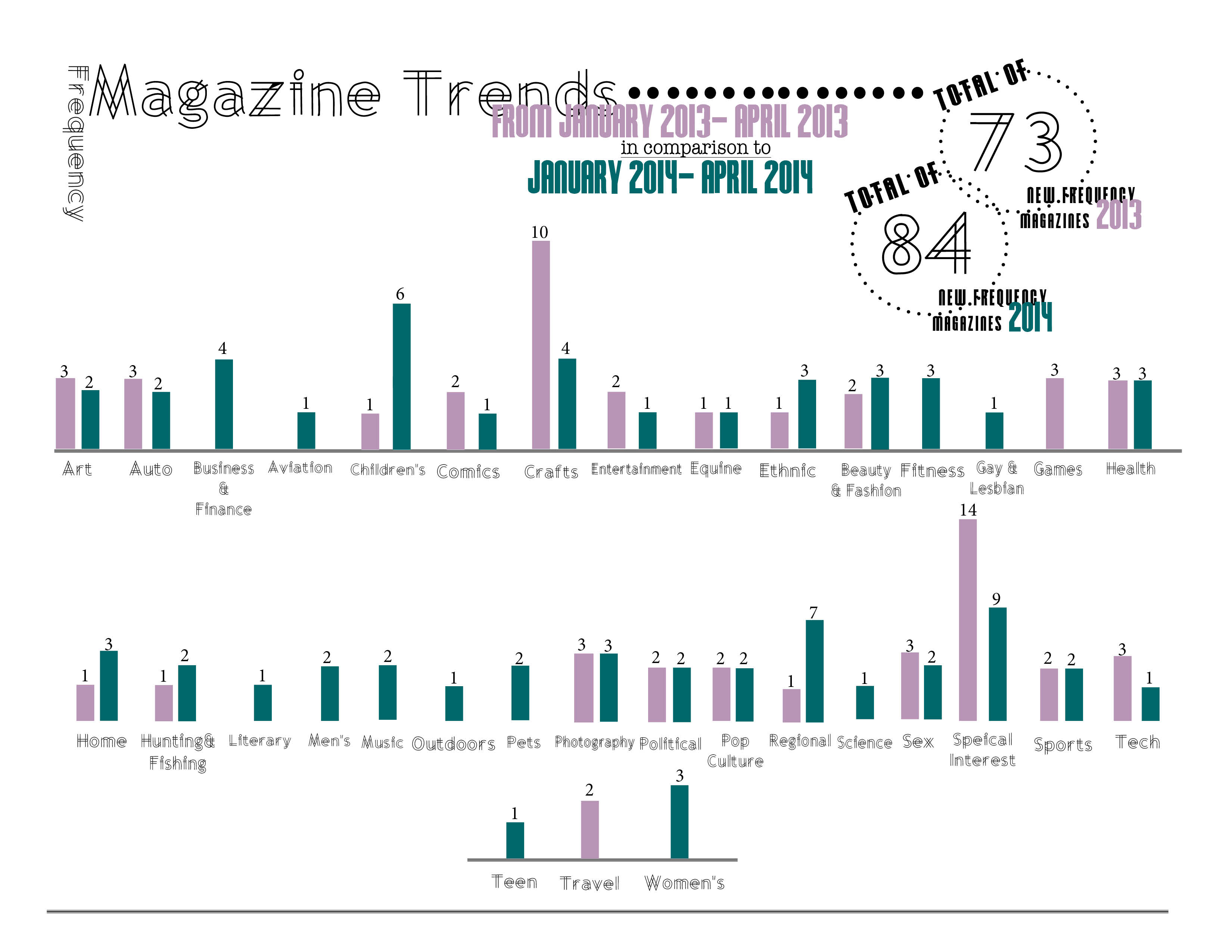
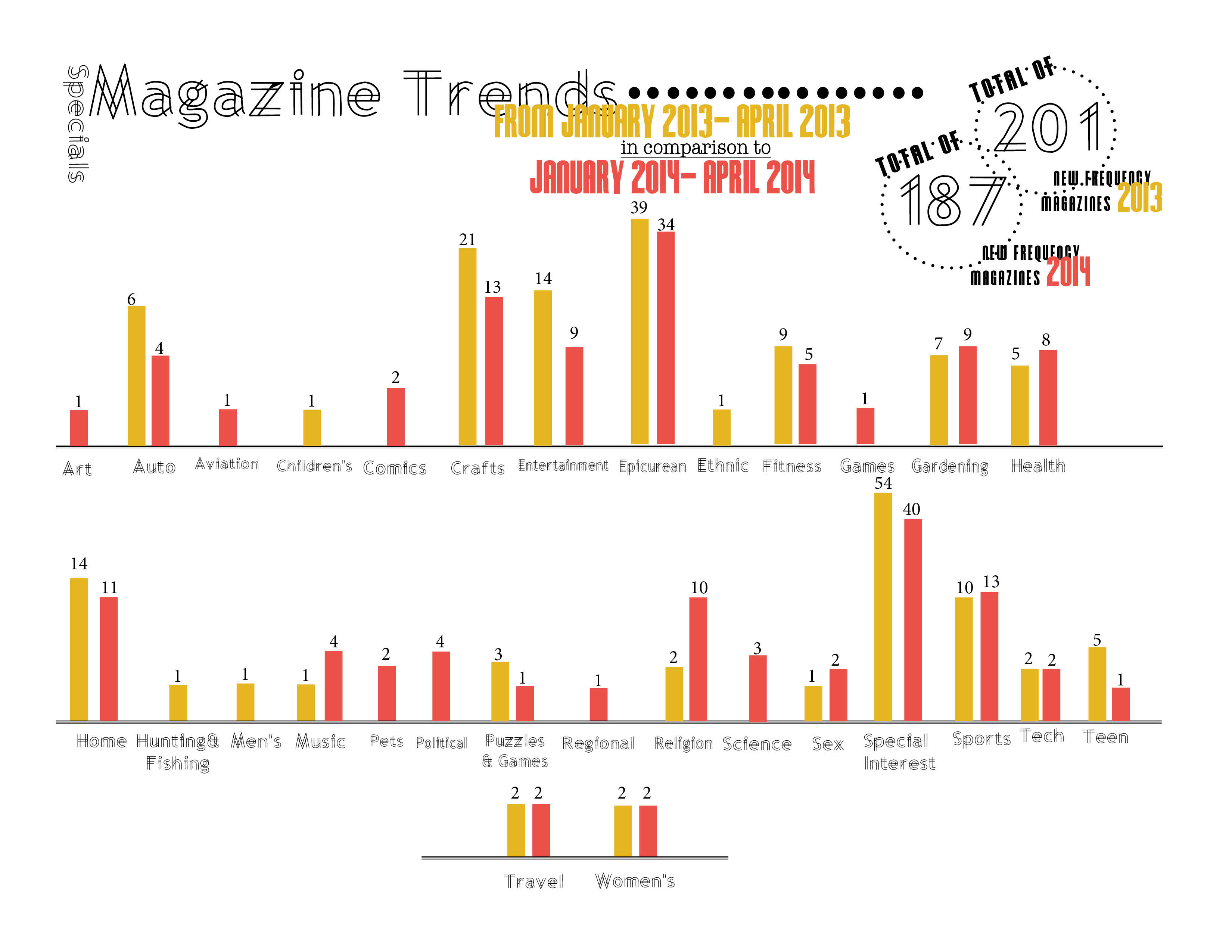
The number of new magazine launches (only ink on paper) with a frequency in the first quarter of 2013 is 56, not the reported 23. The number of new magazine launches with a frequency in the first quarter of 2014 is 62, not the 35 reported. It is time to set the record straight.
If there is anyone who enjoys the good news of higher numbers and more magazines coming to the marketplace, it will be me. However, just making up a story of a tremendous huge increase between one year and another is NOT the journalism that I know.
The new magazines are listed on my launch monitor, month by month, including every cover of every magazine that I acquire. So, the list on the monitor, is what Samir “Mr. Magazine™” Husni was able to locate, buy or obtain before the magazine is included. This being said, it means that those numbers are the minimum of what is out there. There is more. America is a large country and one person alone is sure to miss few titles here and there. So the minimum number of new magazines launched in Q 1 of 2013 is 56 compared to the 62 in the first quarter of 2014. Statistically speaking, it is almost the same number. A great number indeed, but not much better than last year’s.
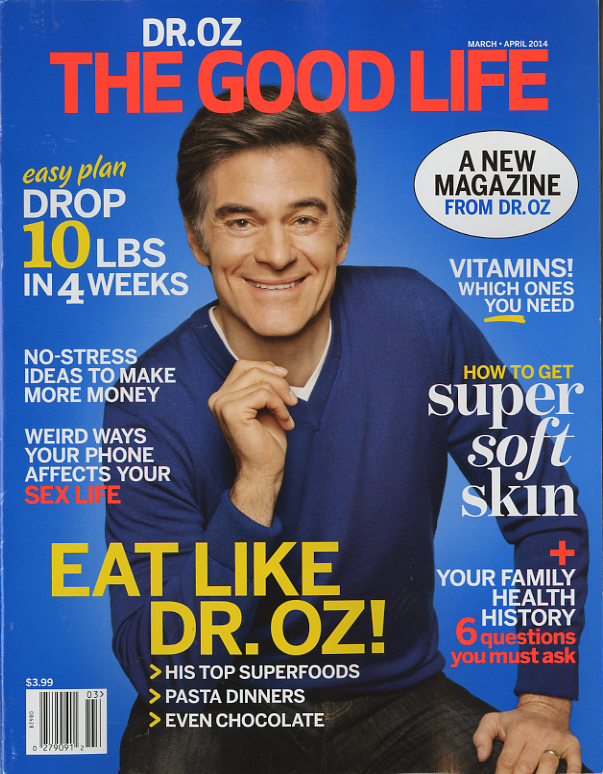
New ink on paper magazines continue to arrive at the marketplace. Porter, Dr. Oz The Good Life are not but two such titles. Established magazines which abandoned print are coming back too. Newsweek and Sesame Street are not but two such titles.
For the record, check the intro of the press release from Niche Media about Austin Way magazine (I have the release, but do not count the magazine a launch until the magazine is out in September of 2014.
NICHE MEDIA ANNOUNCES AUSTIN WAY,
NEW REGIONAL MAGAZINE FOR AUSTIN, TX
NEW YORK, NY (January 24, 2014) — Niche Media Holdings, LLC, the country’s preeminent publisher of regional lifestyle magazines announces the launch of AUSTIN WAY, a new magazine for Austin, Texas. The announcement was made today by Niche Media’s President & COO, Katherine Nicholls. Austin Way’s inaugural issue will be unveiled in September 2014 and will be published six times a year with a circulation of 50,000 copies.
As for the magazines that were actually launched and are on the newsstands, visit my launch monitor blog here.
© Samir “Mr. Magazine™” Husni, 2014

Mr. Magazine™ Monday Morning…
March 31, 2014After three successful preview issues, the first issue of Mr. Magazine™ Monday Morning is out. Click here to subscribe and here to read the first issue.

Eating Naked, Living Naked and Adopting the Naked Lifestyle is the Mission of Naked Food Magazine Founder and Editor-in-Chief, Margarita Restrepo. The Mr. Magazine™ Interview
March 24, 2014New American Kind & Enlightened Diet (NAKED) Shows Us an Organic and Healthier Way to Choose the Foods that We Eat. The Mr. Magazine™ Conversation with Margarita Restrepo, Founder of Naked Food Magazine and Peter Walsh, Circulation Director For the Magazine…
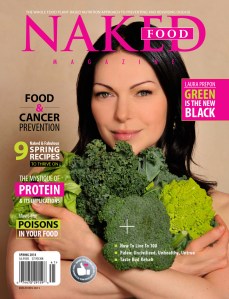
After being born on the web a year ago, Naked Food is going print, with the mission of getting the Naked Concept of life into the hands of more people across the country. Margarita Restrepo is the Founder and Editor-in-Chief of the magazine and along with Peter Walsh, Circulation Director; the two are determined to see this dream become a reality.
After adopting the plant-based diet when her boyfriend was diagnosed with Stage IV brain cancer, Margarita saw a drastic reduction in the growth of the tumor through the food changes they made during the catastrophic experience.
Unfortunately, it was too late to save her boyfriend, but Margarita is now on a mission to teach others and get the information out there that a person’s diet can make a major difference in their overall health and wellbeing with the print edition of Naked Food.
So sit back and get ready to be “Nakedly Enlightened” as you read the Mr. Magazine™ Interview with Naked Food Founder and Editor-in-Chief, Margarita Restrepo and Circulation Director, Peter Walsh.
But first the sound-bites:

On why the print edition and why now: I think the most important part of this whole story is that going through that experience (her boyfriend’s cancer) was extremely difficult, of course. But the most difficult part about it was that there wasn’t really any information that could have actually saved someone’s life or change their future.
On the aspirations and goals for the printed magazine: Of course the goal is to go out there and change the current paradigm that we have in regards to food, nutrition and health. I think that although there may be somewhat similar titles out there, there’s really nothing that will bring food as medicine and food as a tool to prevent and reverse disease.
On the name “Naked Food”: NAKED (New American Kind & Enlightened Diet) refers to foods that have not been tainted and are not toxic with genetically-modified organisms; in other words, the closer the food is to nature, the better it is for you.
On changing the style of the printed cover from the website design: Because not so many people know about the magazine yet, when they see it, there are a lot of people who would have to look into the magazine to see what it is about and I don’t want to turn people off. And sometimes when they don’t know, it’s easier for them to say, well…this is weird or this might be porn with the title, I mean, you never know.
On where they hope the magazine will be a year from now: I think a year from now the Naked concept is going to be a lot more known and I think it’s going to be a popular magazine. I completely believe in it because I know that it’s something that people need to know.
On what keeps Margarita up at night: The one thing that bothers me the most is that we’re trying to survive through a food system that is killing us. And I believe that there has not been a clear voice out there that teaches people why it is so important to choose the right things.
And now the lightly edited Mr. Magazine™ conversation with Margarita Restrepo, Founder and Editor-in-Chief, Naked Food Magazine and Peter Walsh, Circulation Director.
Samir Husni: Congratulations on the new magazine. My first question for you has to be why now and why in print?
Peter Walsh: Margarita has a bit of a back story on that – the plant-based diet having been something she studied and is certified for and she also has a bit of a personal story with her boyfriend who contracted cancer, a GBM, which began her quest, the two of them together, of using a plant-based, natural and organic whole food diet to combat his disease. Unfortunately, it was too little, too late for him and he passed away. So it’s a mission for Margarita and a passion.
Margarita Restrepo: I think the most important part of this whole story is that going through that experience was extremely difficult, of course. But the most difficult part about it was that there wasn’t really any information that could have actually saved someone’s life or change their future, either reverse a disease or prevent it. There just wasn’t anything widely available.
And although there are a lot of sources on the Internet, as we know pretty much everything and anything is on the web, there’s really not a source that is proven and scientifically factual. And something that people can actually read and trust that has scientific purpose and is backed up by doctors and by evidence. The one thing that I found really difficult when I started this whole journey was the lack of information.
I’m a designer, that’s my background. I’m a designer and I’m in branding and I’ve done that for about fourteen years. My other background is in music and that’s actually what I was doing before this. I had nothing to do with nutrition and I probably knew what the regular Joe knows about nutrition; I knew about calories and not getting fat and that’s all wrong. It’s not about that. If you eat the right things you don’t have to worry about all that. Food can actually be treated as medicine.
I did start the magazine digitally; the magazine has been in digital format for about a year. But not everybody has access to digital, and although, yes, that’s where we’re going, there’s a lot of people, like myself; again, I’m a graphic designer, a web designer and a very good researcher; I love Google, but still when I needed the information to save somebody’s life or at least help them, it wasn’t there.
I think that having the magazine in print is going to allow us to reach out to a wider audience. This is not just for adults. Obesity is a huge problem right now; so it’s for parents, it’s for kids, elders and families. And it’s something that affects our country and our planet. It has a lot of potential to change our healthcare system because I think if we focus on it, it’s something that we can control ourselves and it’s not about healthcare reform.
Peter Walsh: I would add to Margarita’s answer on your question why print and why now. I think that there has been, as she’s done her digital issues and she has the Facebook followings, there has been a certain amount of demand for people who have said we would love to see this in print, the online looks beautiful, but we’d love to see it in print. And that’s kind of where I come in, being an old print guy myself. We will have a digital version and it will be on all platforms, including mobile, and yet, I really believe that, first of all, no one in print is doing exactly what we feel we’re covering editorially and secondly, I am a firm believer that in order to make a go of it and make a profit, to have a sustainable operation, print helps you to monetize the online audience tremendously. And I think a lot of other print publishers would share that opinion. So that’s “why” print.
Samir Husni: I was looking at your launch plan and I noticed that you’re starting very small. What’s your roadmap? Your first issue comes out in April with around 5,500 copies. What’s your roadmap for the future to make Naked Food a talked-about brand and a major brand? There’s a magazine called Clean Eating that you can find on all the newsstands. Is that one of your aspirations; to be everywhere or would you rather keep it limited?
Margarita Restrepo: Absolutely. Of course the goal is to go out there and change the current paradigm that we have in regards to food, nutrition and health. I think that although there may be somewhat similar titles out there, there’s really nothing that will bring food as medicine and food as a tool to prevent and reverse disease. Nothing that is really evidence-based.
There are a lot of magazines out there that will talk about something similar, but it’s really not the same as ours. Naked Food is more of something that people can apply to their lives. Whatever lifestyle they lead, this is something that can help them.
Because it’s a mission-driven endeavor and magazine; I think that the more people know about its actual mission, it’ll grab attention and it’s going to let people understand what it’s all about. And it’s really not something that is about dieting or anything like that; it’s about true health. And it’s already happened and I haven’t done really any advertising or promotion.
Peter Walsh: As someone who helps small publishers, I feel like my role is to avoid the landmines and I quote you all the time because a long time ago, you used to say things when, for example, there would be 850 to 900 new titles to come out in any given year, and after one year 80 percent would be gone. And after the second year 50 percent of the remaining twenty percent would be gone, so that makes a two year attrition rate of 90 percent.
And I don’t know if it still holds true, but I always think about that with regards to small magazines. And I think at the same time what you had said was: what makes a magazine good enough to last the two years and get to long-term growth? And number one is funding, capital. A lot of people get into the magazine publishing business with a great idea, but they don’t have any idea of the capital that is involved in investing for that first year until you turn cash flow neutral in year two and then cash flow positive in year three.
So I feel a large part of my role is a steward and as an experienced magazine guy is to teach my clients like Margarita, what things cost and when you get paid and how much per copy you get paid and how subs work and etc., etc. And knowing how you have to struggle to get advertising the first year; my goal for a publisher like Margarita is basically to run the circulation profitably in the first year.
I tend to advise toward keeping the cover price a little on the high end and we want to know when we’ve broken even and we want to get a high sell-through on the newsstand, so by design we’ve started out with the organic grocery stores like Whole Foods and Sprouts, they’ve given us very nice newsstand orders through one source in Denver. So the standard shot approach and trying to be in every retailer would make you go broke very quickly.
We’re not afraid of the growth and we can scale it and we do have some capital that is available to us; it’s just that we wanted to make sure that we walked before we ran so we didn’t trip.
Samir Husni: Tell me about the name; it’s not every day that you’re going to find a magazine with the name naked in it and it has nothing to do with nudity. What does “Naked” stand for and Naked Food as a whole?
Margarita Restrepo: I’m not sure if you know about the Standard American Diet; actually it’s called SAD (Standard American Diet). I’m trying to move away from that and invite people to look at a different plan.
Peter Walsh: And NAKED stands for New American Kind & Enlightened Diet.
Margarita Restrepo: I’m trying to move away from the SAD diet and into the New American Kind & Enlightened Diet, which as Peter said, is what NAKED stands for.
Besides that, NAKED refers to foods that have not been tainted and are not toxic with genetically-modified organisms; in other words, the closer the food is to nature, the better it is for you. And that’s evidence-based fact. The more you eat foods that have not been processed or tainted, the better. Most of our foods are based in petroleum, believe it or not, and actual aluminum. There are so many carcinogens in the foods, it’s just ridiculous. Every day we’re just ingesting toxins.
Naked Food really refers to that. And it teaches and encourages people to make the right choices; for themselves and their families. So NAKED is really a lifestyle. You become acquainted with organic, non-genetically modified foods. And most of the Standard American Diet is an animal-based diet. Everything has butters, oils, creams and fats that are causing our veins to clog, giving people heart attacks and unfortunately cancer feeds off of fats and sugars. So it’s teaching people this: the more the food comes from the ground, potatoes, legumes, vegetables and fruits, the better it is for you.
Unfortunately, when man attempts to create food, there are a lot of things that is added to the food that are dangerous.
Peter Walsh: And it’s profitable for the food manufacturers.
Margarita Restrepo: Yes, it’s about how much money they can make and there are so many different dangers in the food that people are not aware of. This information needs to get out there, so people can make better choices.
Samir Husni: Having said that, I noticed looking at the website, you were really playing on the word “Naked” with the covers that you had. But now with the first print issue, it seems that you’ve decided to go with a more standard food/advocate/celebrity cover approach. Why did you change the style of design from what you had on the web to what you’re doing with the print issue?
Margarita Restrepo: Because not so many people know about the magazine yet, when they see it, there are a lot of people who would have to look into the magazine to see what it is about and I don’t want to turn people off. And sometimes when they don’t know, it’s easier for them to say, well…this is weird or this might be porn with the title, I mean, you never know. And I didn’t want that connotation with the magazine because it’s going to be in Whole Foods, it’s going to be in Barnes & Noble and there are kids there; I didn’t want parents to feel weird about something like the title.
I think the essence of the point stands. In other words, I do want people to understand that, quite honestly, if they eat healthy, they can look great naked, that’s for sure, because that’s what happens. It’s something that occurs naturally. When you eat healthy, you don’t have to worry about being fat or calories; you don’t even have to own a scale and that’s true. I don’t have one, because I don’t need it.
Naked is one of the concepts that apply to a lot of things. It applies to our lifestyle, because you’re getting rid of toxins, chemicals and carcinogens, etc. and you’re also picking better foods and you’re demanding better food, which is going to hopefully help change the food system. And you’re also doing great things for your body. So it all goes together.
Everybody loves the name and everybody gets it. Everybody knows that it’s about clean eating, which is great. We just went a little different with the cover, because we didn’t want to turn anybody off.
Peter Walsh: We have heard from different people about cover treatments. My own opinion is that we don’t want to show just a food or a recipe on the cover because there are a lot of other magazines, like Clean Eating, Eating Well and Allrecipes that are already doing that.
We’ve heard from people who say food on the cover sells well, yet we have a dual mission. Do we want to start out looking like a medical magazine; no, we really don’t. We really feel like the first step of our two-part mission is to introduce people to food that is good-tasting and that you can make, and yes, there are recipes inside.
A core part of what we’re doing is showing that recipes are no longer the traditional recipes; we’re introducing people to a whole lot of food that they’ve never eaten before. And it’s wonderful.
There is a movement out there, the fastest growing supermarket chains in America are the organic ones like Whole Foods and Sprouts. So there is a movement and a trend and we feel like we’re answering that market demand and we’re kind of leading with the food part of it. As to whether there is a celebrity or not; we could have a celebrity on the cover on every issue probably, but I think what we’re going to do is test different covers in different ways. That way we can read the results of what the market is going to react to the best.
Whether it’s a celebrity or a non-celebrity or a close-up of a food dish, or like our current new cover with Laura Prepon, who is kind of our target audience and she has obviously embraced this lifestyle. If you read the article, it’s actually been her salvation, more or less, regarding her own health, which was really pretty poor beforehand and she really raves about how the nutritionist that she was working with introduced her to this type of diet and she is so much healthier because of it.
So, I think that we’re still small and we’re still growing and we still have things that we’re testing and that we want to learn along the way.
Samir Husni: A year from now, if I’m doing this interview with you; what are you going to tell me about Naked Food?
Margarita Restrepo: I think I’m going to tell you: thank you, Samir, for being the first industry interview that made us go everywhere in the market because of something here, hopefully.
Honestly, I think the magazine has had a tremendous growth, even in one year. The magazine started from nothing to what you see today.
I think a year from now the Naked concept is going to be a lot more known and I think it’s going to be a popular magazine. I completely believe in it because I know that it’s something that people need to know, people really need this information and I do know that once somebody knows about it; they can’t wait to tell someone else. They can’t wait to tell their parents and friends, so I think that there is already growth that we’ve seen in a year. And it’s been pretty much word of mouth.
And I also think that now that we’re going to be in stores with a wider approach and a wider audience that the growth is going to double.
So when you interview us again in a year, we’re going to be celebrating success.
Peter Walsh: A year from now we want to thank you when we’re awarded the Title Launch of the Year and we’ll dedicate it to you, Samir.
As the circulation guy on the business side of the equation, I would say that I really am confident that we’re going to run the magazine sensibly and ethically and we’re going to hit circulation milestones and achieve higher circulations. But that’s something you really can’t do the first issue, you have to kind of grow into it and add-on the Safeways of the world and Wegmans and wherever else we end up.
We’re going to grow immeasurably and sensibly. So we feel like we will be adding a much higher milestone in that our advertisers will be getting lots of responses throughout the next year.
Samir Husni: What keeps you up at night?
Margarita Restrepo: The one thing that bothers me the most is that we’re trying to survive through a food system that is killing us. And I believe that there has not been a clear voice out there that teaches people why it is so important to choose the right things. It’s not just for your body; it’s also for the greater good. And the greater good means sustainable living for everyone around you: the planet, the animals, the trees. It’s just seriously so important, because every time that you choose something that is bad for your body; you’re increasing the potential of damaging our oceans, our soil and our planet in general.
I think that the only way for people to be able to make a sustainable choice is education, just like with everything else in our country. The more that we educate people regarding a more conscious, more enlightened way of living, the better off we’ll be.
It’s a Catch-22 really, because the more you eat these dangerous foods, the sicker you’ll be. Unfortunately, the healthcare system wants you sick because they need your money. If everyone ate really healthy, they wouldn’t be making a lot of money. And if we are to be healthy, we need to stop buying all these crappy foods.
I believe it relies on education, so my goal and my purpose is to empower people with information and have them be instrumental tools themselves for their own life and the planet. I do want to be able to help people in ways that I was not able to help my boyfriend. Unfortunately for me and for him, it was too late. It was a very advanced cancer and in Stage IV when they found it. He only lived eight months after that.
However, when we started the plant-based diet, we did see a reduction of tumor growth. It was unbelievable. That never happens in that kind of cancer, in that particular stage.
So I have seen it with my own eyes, the difference that a diet can make for someone with a deadly disease like cancer. I’m hoping that people can see that and to be honest with you, that does keep me up at night. The more we can get that information out there, the more we can save people and teach them to take control of their health and hopefully keep them around for a long time.
Samir Husni: Thank you.
© Samir “Mr. Magazine™” Husni, 2014
————————————————————————————-
New: Mr. Magazine™ Monday Morning newsletter. Free and delivered to your in box every Monday. Click here to subscribe.

Buying Newsweek and Bringing it Back to Print – The Story Behind the Acquisition and the Rebirth of the Printed Magazine. The Mr. Magazine’s™ Interview with Etienne Uzac, Co-Founder and CEO of IBT Media
March 20, 2014“As soon as we purchased Newsweek, we had partners and businesspeople who wanted to work with us and we were open with them and we want this business to grow so we are willing to do deals, we’re willing to grow the brand based on a strong editorial core.” Etienne Uzac
Fresh life has been breathed into Newsweek with its purchase by IBT Media, a global digital news organization founded by Etienne Uzac and Johnathan Davis. I spoke with one half of the duo while in New York recently, Etienne Uzac who is also CEO of the company, and was met with enthusiasm for his Newsweek team and profitable plans for the future, including their reawakening of the printed edition.
In Uzac’s opinion, there was no reason not to revive the print product as long as it could be done profitably and provide a major service to their customers and he certainly feels as though it can. He knew there were people out there who loved and wanted the magazine back in print and was determined to give the customer what they desired.
The man and his company’s reasons for the purchase and the return to print follow in the Mr. Magazine™ conversation with Etienne Uzac, Co-Founder and CEO of IBT Media. So sit back and enjoy Newsweek’s reemergence with a new company, a new future and a whole new leadership vision.
But first, the Mr. Magazine™ Minute with Mr. Uzac answering my question whether he’d rather read Newsweek in print or digital. Click the video to hear his answer:
And now for the Sound-bites:
On why IBT Media bought Newsweek and why they resurrected the print product: There are several reasons we bought Newsweek. The first one is the excellence in journalism that it represents. When we purchased Newsweek we didn’t rule out going back into print. However, we didn’t think we would go back into print this soon.
On their involvement with international editions already in print: Newsweek has had foreign licensed partners. Those are typically in foreign languages and they are complementary to the global/English editions. We currently have about 6 partners and we are planning to continue growing that number this year with partners all around the world.
On their most pleasant surprise since buying Newsweek: I think working with the Newsweek team; I’ve rarely seen this much excitement in the people who work for the brand.
On their major stumbling block: I think as the team grows, as it integrates into a new company, as it integrates with IBT Media, there are technical hiccups sometimes and there are staff hiccups sometimes; I would say it has not been easy, but it has always been moving forward overall.
On his reaction to the media onslaught after the first print issue came out: There was a lot of talk about the cover story and that had a lot to do with editorial. So from a business perspective, I thought that we had a lot of great articles about the launch.
On the future of Newsweek a year from now: I think this passion and the quality of the staff that we have put together will make for really exciting content over the year. And I think it’s going to get better and better.
On whether he prefers to read Newsweek in print or on the app: Personally I prefer the print right now.
On what keeps him up at night: I think making sure that the customer who used the website, who logged into the applications, who subscribed to the magazines, since we’re just launching; they’re experience was great.
And now the lightly-edited transcript of the Mr. Magazine™ conversation with Etienne Uzac, co-founder and CEO of IBT Media about his company’s purchase of Newsweek…
Samir Husni: Tell me first about why you decided to buy Newsweek and why did you choose to bring it back to print?
Etienne Uzac: There are several reasons we bought Newsweek. The first one is the excellence in journalism that it represents. This is something that we want to aspire to for the current Newsweek team and our company as a whole. Newsweek has an amazing history of great journalism, has won many awards and it’s had some of the greatest journalists in America working for the brand. We want to aspire to bring that back into the brand and into the company. It’s a great legacy to aspire to.
Secondly, I would say that Newsweek has an amazing global brand. IBT Media, from its inception in 2006, has always looked at the world to grow and develop. We want to end up making more of our business outside the United States than inside the States in the long run. So we thought that Newsweek was a great way for us to open up doors to meet new partners and that did happen. Since we bought the brand it has opened up a lot of doors internationally and we‘re glad that we bought it.
The third reason is that Newsweek had complementary business models to IB Times and some of our other digital properties. Even up until today, we make over 90 percent of our revenue from digital advertising. We saw in Newsweek opportunities to diversify that; we wanted to diversify that ahead of the purchase of Newsweek, but we thought that by purchasing it we could bring that know-how into the company. So whether it’s subscription revenues or user-based revenues; Newsweek also had foreign-licensing agreements and it also had great syndication deals with big university content aggregators. So it had complementary business models to what we were doing. That’s some of the reasons that we bought Newsweek as a brand.
When we purchased Newsweek we didn’t rule out going back into print. However, we didn’t think we would go back into print this soon. I think what really allowed us to make this decision was one day I essentially asked for the numbers, basically how much would it cost to do a magazine out of curiosity. And I received the numbers; we have a great team of people who work for us either on staff or as consultants.
I got the numbers and I looked at them and was not surprised or shocked by them at all. Because you hear a lot of fear mongering in the market, you hear losses of $20 million dollars, you hear losses of $40 million dollars; if you just read the news you think it’s really scary.
When I looked at the numbers I thought, yes, it’ll cost a few dozen cents to make and distribute, sure; I didn’t expect it to be free. Really, looking at the pricing and the cost of a yearly subscription, distribution and print as well as newsstand; very quickly we were able to see that there was a way for us to become profitable fairly rapidly based on as long as the pricing model made sense.
When we did decide to go to print, we were very clear in our minds that this would not be a loss-leader. That was very clear. We said if we’re going to do print, this is a new platform for us, we have the website and the apps; print is just another platform to reach our audience. There are people out there who do like and want print; we are printing for them, but it has to be profitable.
Samir Husni: One of the things that very few people noticed in the States is that internationally Newsweek did not stop printing; it stopped maybe for 3 weeks before different licensees started printing it in Asia, the Middle East and Europe. Are you now involved in the international editions or is this going to be the national and international edition of Newsweek?
Etienne Uzac: The one you’re looking at now is the U.S. edition and we have a sister edition for Europe, the Middle East and Africa that launched at the same time as the one in the States.
We’re also planning later on to launch an Asia/English edition. So you will have, when the Asian edition comes out; you’ll have your Americas/English edition, you’ll have your EMEA/English edition and you’ll have your Asian/Pacific English edition. So those are all owned and operated by us.
Now, as you said, Newsweek has had foreign licensed partners. Those are typically in foreign languages and they are complementary to the global/English editions. We currently have about 6 partners and we are planning to continue growing that number this year with partners all around the world. And they will typically be in their local language to reach their local audience. And they will probably share the majority of the content with us, they will translate it and there will be a portion of that content that we will allow them to produce on their own. So we will co-exist together; the global/English editions and the foreign licensing agreements in each particular country with their own languages.
Samir Husni: What was the most pleasant surprise in all this, from the day you bought Newsweek until today?
Etienne Uzac: I think working with the Newsweek team; I’ve rarely seen this much excitement in the people who work for the brand. I think just working with this team that’s so passionate about the brand and is trying really, really hard to bring back Newsweek to where it once was; we have really great people on staff. I think working together with them and seeing the level of excitement that we have internally and also externally.
As soon as we purchased Newsweek, we had partners and businesspeople who wanted to work with us and we were open with them and we want this business to grow so we are willing to do deals, we’re willing to grow the brand based on a strong editorial core.
So I guess my best surprise has been the level of enthusiasm that this has generated both internally and externally.
Samir Husni: And what was the major stumbling block?
Etienne Uzac: The major stumbling block? I mean, you have growing pains; we started putting out weekly digital issues, so there were technical difficulties putting out on different platforms: the iPads, Kindles and all that. And transferring the assets from the previous owner and making sure that we fulfilled the date of the digital issue on time for the customer that was stressful.
I think as the team grows, as it integrates into a new company, as it integrates with IBT Media, there are technical hiccups sometimes and there are staff hiccups sometimes; I would say it has not been easy, but it has always been moving forward overall. So I wouldn’t say there have been massive stumbling blocks yet.
Samir Husni: Were you expecting when the first issue came out that you were going to be under the microscope and the gates of the media would “open” at you and were you pleasantly surprised by it, were you upset; what was your reaction when you saw the media onslaught?
Etienne Uzac: There was a lot of talk about the cover story and that had a lot to do with editorial. So from a business perspective, I thought that we had a lot of great articles about the launch. I did several interviews and most of the articles turned out very well.
We did get a lot of media attention, but from a business perspective I was pretty satisfied. I thought that it went pretty well.
Samir Husni: If I sit with you here a year from now; what will you tell me about the year in the life of Newsweek?
Etienne Uzac: I think people will really love the content that we produce and I think they will like the vitality of the content that we bring. Again as I said to you; the team is extremely excited about working here. We have experienced editors that have been doing this for the greatest newspapers on the planet; we have junior guys with digital backgrounds; but really they’re all uniting under this desire to have Newsweek really be a strong editorial brand in media.
I think this passion and the quality of the staff that we have put together will make for really exciting content over the year. And I think it’s going to get better and better. We will continue hiring and investing in editorial. I think that we’ll continue revamping and renewing our apps and the website to give the best possible experience to the user. And I think those folks who are really print nostalgic and who like the medium will be very pleased with the quality of the magazine. They will see beautiful paper, design and images that look really, really high definition, great colors on the beautiful advertisements. So people who like print will be really satisfied by the product.
Samir Husni: Which do you prefer to read Newsweek on, in print or on your app?
Etienne Uzac: I prefer the print because I look at a backlit screen 8 hours a day, so I don’t want to go home and read more news on another backlit tablet screen. Personally I prefer the print right now.
Samir Husni: What keeps you up at night?
Etienne Uzac: Just making sure all the nuts and bolts of the subscription process is working flawlessly. I think making sure that the customer who used the website, who logged into the applications, who subscribed to the magazines, since we’re just launching; they’re experience was great. I think this is what I’m most focused on right now. Making sure that everything runs smoothly as the launch continues to extend.
Samir Husni: Thank you.
———————————————————————————–
New: Mr. Magazine™ Monday Morning newsletter. Free and delivered to your in box every Monday. Click here to subscribe.
Issue Preview 2 is now available. Click here to view.

Mr. Magazine™ Monday Morning: A New Free Newsletter from Mr. Magazine™
March 10, 2014
Check the preview issue of Mr. Magazine™ Monday Morning newsletter by clicking here. Be sure to register to start receiving the newsletter directly to your inbox every Monday morning. You can subscribe here and check the preview issue here.

The Return of Newsweek to Print… More Cheers for its Rebirth than Jeers of its Demise. A Mr. Magazine™ Interview with Newsweek’s Editor Jim Impoco
March 6, 2014“I will say I expected some publicity. I didn’t expect it to be so global and so intense. I am really surprised and I think, in a funny way, it’s getting more publicity for coming back than it got for going out of print. I don’t know, I love the fact that people are talking about it — it speaks to the power of the brand.”
…Jim Impoco

I put my money where my mouth is. I believe so much in this consumer-centric business model that I went ahead and bought a subscription to the Newsweek Premier Subscription deal: all access for $149.99. The all access is the only way you can receive Newsweek by mail; otherwise you have to buy it on the newsstands (which I will also do). There is no print-only subscription. Print reigns supreme.
So why now and why the return to print? Well, to answer my questions I reached out to Jim Impoco, Newsweek’s editor in chief, who is amazed and pleasantly surprised by the amount of publicity the return of Newsweek is receiving.
Read the Mr. Magazine™ conversation with Jim Impoco, Editor of Newsweek, and discover why he thinks the new business model for the ink on paper magazine is certain to work.
But first the sound-bites:
On the negativity surrounding the success of the new Newsweek: It’s funny, even Tina Brown tweeted this morning that she believed a small, targeted circulation is perfect for Newsweek. So I don’t know, the people that say it won’t work, maybe it won’t.
On whether digital entities coming to print may be the new trend: It’s definitely a trend but there are several reasons for it. Some are doing it for marketing and vanity reasons and others, like us, are doing it for commercial reasons as well as legacy reasons.
On whether or not he feels the new business model for Newsweek will work: I think it’s going to work, I’m betting a lot on it.
On the biggest stumbling block the magazine will have to overcome: I would say the biggest stumbling block is the lead time required for print.
On whether or not Newsweek can be the bridge that links yesterday to today: Well, that’s not what we’re trying to do anymore. I think that the era where Newsweek is the last word on last week is over.
On his statement that Newsweek would be like a monthly on a weekly basis: That’s exactly right. It just makes perfect sense that you need that kind of sensibility.
On the publicity the return of Newsweek is getting in the media: I will say I expected some publicity. I didn’t expect it to be so global and so intense.
On what keeps him up at night: Lots of things keep me up at night, but it’s like, are you making the right news call?
And now the lightly edited transcript of the Mr. Magazine™ interview with Jim Impoco, Editor of Newsweek.
Samir Husni: Why do you think there are a lot of negative media reports about the possible success of the new Newsweek?
Jim Impoco: I actually don’t think so. I look at Ken Doctor’s report, he is sort of like the Dr. Gloom of print, right, and he himself said there are a couple of cross currents that could make this work. It’s funny, even Tina Brown tweeted this morning that she believed a small, targeted circulation is perfect for Newsweek. So I don’t know, the people that say it won’t work, maybe it won’t.
SH: I’ve read a lot, you’ve been interviewed a lot, and we’re seeing a lot of digital entities crossing that virtual line and coming to print. Do you think this is a trend?
JI: It’s definitely a trend but there are several reasons for it. Some are doing it for marketing and vanity reasons and others, like us, are doing it for commercial reasons as well as legacy reasons. In other words, Politico doesn’t expect to make any money, I would imagine, right now from its quarterly publication. It’s hard to see what some of those entities have — you know some of their financial models are transparent and others aren’t.
SH: What’s your expectation for the new Newsweek and its new business model? When will you feel that this business plan — the $7.99 cover price and $150 subscription — is working? Do you need to hit 50,000, 100,000 or more?
JI: Actually, well under 50,000 makes us hold.
SH: Do you expect it to work?
JI: I think it’s going to work, I’m betting a lot on it. I am confident that it’s going to work.
SH: From an editorial point of view, what do you think is going to be the biggest stumbling block that you have to overcome?
JI: I would say the biggest stumbling block is the lead time required for print. You have to be able to predict what’s going to be topical four days later.
SH: Is there a way Newsweek can be the bridge that links last week to next week?
JI: Well, that’s not what we’re trying to do anymore. I think that the era where Newsweek is the last word on last week is over. We don’t even think in terms of weeks really, we’re just trying to see where we can advance the conversation, create our own weather.
SH: I’m giving a talk in Germany in two weeks for the newspaper industry about how newspapers must become weeklies on a daily basis. I’ve noticed you’ve mentioned that you’re going to be a monthly on a weekly basis…
JI: That’s exactly right. It just makes perfect sense that you need that kind of sensibility. The Week, the magazine, does a perfectly good job of giving you a concise summary of last week’s news and I think what we’re going to try to do is be a very topical monthly that comes out once a week.
SH: What keeps Jim up at night?
JI: Well, you know, when we close this issue it wasn’t entirely clear if Putin was going to send tanks in or not. Print is a tricky business. Lots of things keep me up at night, but it’s like, are you making the right news call?
SH: Were you surprised by the amount of publicity that the return of Newsweek to print is generating?
JI: I will say I expected some publicity. I didn’t expect it to be so global and so intense. I am really surprised and I think, in a funny way, it’s getting more publicity for coming back than it got for going out of print. I don’t know, I love the fact that people are talking about it — it speaks to the power of the brand.
SH: Thank you.

A Baptism by Fire in the Print World: Book-a-Zines Discover Their Spiritual Side and Faith is Made Strong
March 6, 2014From The Holy Land to The Bible: 50 Ways it Can Change Your Life, to Billy Graham and Faith, many publishers are devoting multitudes of book-a-zines to topics of religion and faith.
Over the last six months alone, there have been innumerous titles exploring God and His word and the staunch servants who deliver it today.
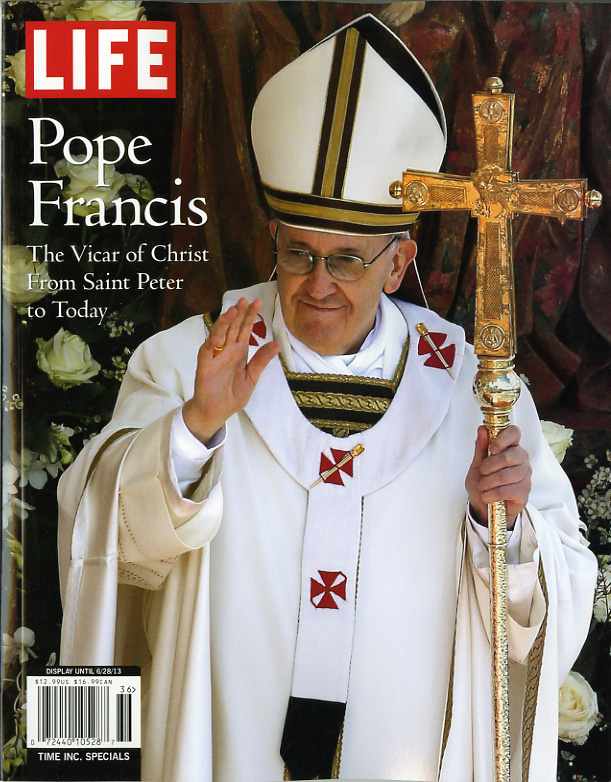
This month, so far, four different titles have come out: Newsweek’s Jesus, I-5 Publishing’s The Life of Jesus of Nazareth, Beckett’s Where Jesus Walked and TV Guide’s Pope Francis.
But not just spirituality is being explored in book-a-zines, there have been a broad range of topics over the last year alone: JFK, Nelson Mandela, The Beatles, The Rolling Stones, The Civil War, John Wayne and the Obama’s are just a select handful of subjects covered within the pages of these special entities. Where all of these titles are dealing with more earthly issues, book-a-zines are now extending their reach into the divine realms as we see from the abovementioned editions.
And with the release of the movie “Son of God,” which follows on the heels of the History Channel’s very successful Bible series and “God’s Not Dead,” which includes a special appearance by Willie and Korie Robertson of Duck Dynasty fame, the expectations of more of these spiritual journals are definitely on the horizon.
So are book-a-zines becoming the reflectors of society, thus usurping the role regular magazines have always held: freezing trends on and within ink on paper, rather than fleeting moments of digital time?
It should be noted, regardless of brand name, whether it’s TV Guide, Newsweek, National Geographic, Time, Life, or People, there are a handful of companies that are creating all these book-a-zines on behalf of those brands.
For example, Time Inc. is publishing on behalf of the American Bible Society and National Geographic. Topix Media Lab did two of the faith-based book-a-zines that have come out this month (TV Guide’s and Newsweek’s), I-5 Publishing did one and Beckett Media the fourth. In addition to the aforementioned, Source Interlink and Husdon News are also producing a lot of book-a-zines under countless titles and brands: the former releasing Real Food Real Kitchens last August.
So the brand appears to be happenstance; what doesn’t, is the burgeoning success of book-a-zines and their in depth information on whatever person, place, or thing that might interest an individual.
So keep the faith, as these special entities we call book-a-zines seem to be. With Jesus on the cover of several of these ink on paper editions lately; there is definitely hope for the print world and all of us!

Dr. Oz The Good Life: Real Time, Right Time, Real Audience, Right Audience, Real Magazine, Right Magazine…A Story of a Good Magazine Launch – The Mr. Magazine™ Interview with Kristine Welker, Publisher and Pursuant of The “Good Life.”
February 11, 2014
Imagine over 60 advertisers signing on to a magazine sight unseen, no workable name created and not even a prototype to look at. Well, you really don’t have to just imagine it; you can actually believe it, because it really happened with Dr. Oz The Good Life magazine.
In the conference room of the 16th Floor at the Hearst Tower in NYC, vice president, publisher and chief revenue officer of Dr. Oz The Good Life magazine, Kristine Welker spoke with me about the power of the brand:
“They signed on based on the concept. We didn’t have a name and we didn’t have a prototype. Talk about the power of magazines and voice. All of these advertisers felt like this magazine so belonged or this brand belonged in print that without a prototype and without a name they said, “I’ll be in the issue.” Over 60 of them.”
Now that’s print power personified!
Ms. Welker was the founding publisher of Cosmo Girl! magazine in the late 90s, and the former chief revenue officer of Hearst Digital Media, a job she held for the last seven years.
With her digital background and experience in launching magazines, Welker brings a plethora of talent and creativity to the magazine that no one else could and believes in the Oz brand vehemently and the new launch of a print magazine in today’s digital world.
So sit back and enjoy Mr. Magazine’s™ hale and hearty interview with Kristine Welker, publisher of Dr. Oz The Good Life Magazine… But first the sound-bites.
The Sound-Bites:
On backing away from the print versus digital argument and focusing on Dr. Oz as a brand…
I don’t see it as print or digital — it’s about a brand and you know I really responded to the power of and I believe in the brand around Dr. Oz. So for me I saw it as a giant opportunity not to go from digital to print but really to say this is a great brand opportunity, a great brand platform and a brand that millions of consumers want to see in print.On printed magazines in today’s digital world…
With magazines we have to view technology as an enabler not as an inhibitor to growing our brands.On launching a new magazine in today’s digital world…
You have to build upon your strength at the newsstand, but then begin to mine your own data to really prospect and find a new audience.On her view of the digital future…
When I think about digital, I don’t just think about digital as your mobile device; I think about digital as maybe your Fitbit and your Jawbone and all the data.On the first major step to ensure the future of a new magazine…
So the first part of it is for us to prove that we’re reaching and connecting with consumers today in a way that no other brand is and maybe no other platform.On creating a new category of magazines…
What I was very happy to hear and to see from a media standpoint is that they see the white space that we do. We believe that like we did with Food Network and HGTV magazine that there’s an opportunity to go in and redefine the health and wellness magazine category.On the power of the printed magazine…
You know there is a moment in time – in real time – that real people sit down on their real couch and they read a magazine for two hours and they enjoy every minute of this magazine.On the biggest challenge for the magazine thus far…
I think the biggest challenge, which I’m not surprised by, is the struggle (advertising) people will have because they’re saying we don’t have a print budget. And I am trying to change that conversation to say: why don’t we talk about your brand budget and whether or not this brand fits with the profile of what your brand is trying to accomplish and not look at this as a print spend but brand affiliation.On Kristine Welker’s predictions for the magazine a year from now…
I imagine it being a powerhouse in the magazine arena the way HGTV Magazine and Food Network Magazine became leaders in their field and redefined their categories.On the genius that is the name — “The Good Life”…
That’s a great question and it’s a brilliant name…The Good Life. Everybody aspires to live the good life and they want to be on the path to a good life, a happier and healthier life.On what keeps Kristine Welker up at night…
What I worry about is talent and maintaining the talent within big media companies that are perceived as legacy organizations and you know it’s important for us to be able to inspire and attract talent and say, “How excited would you be to work on a startup?” Everybody wants to work at a startup as opposed to, “How excited are you to launch a magazine?”
And now the lightly edited transcript of Mr. Magazine’s™ conversation with Kristine Welker, Publisher of Dr. Oz The Good Life magazine.
Samir Husni: Of course the obvious question…a lot of your colleagues are jumping ship from print to work with digital and here you were in charge of digital and now you’re back to print. What’s going on?
Kristine Welker: You want to know if I’ve gone crazy, if I’ve gone nuts, right? I don’t see it as print or digital — it’s about a brand and you know I really responded to the power of and I believe in the brand around Dr. Oz. So for me I saw it as a giant opportunity not to go from digital to print but really to say this is a great brand opportunity, a great brand platform and a brand that millions of consumers want to see in print.
And so when you think about it every time he is on anybody’s cover whether it’s a magazine we own and operate or not, you name it, as you’ve been reporting; he’s one of the best if not the best selling magazine on newsstand for those magazines. So for me it wasn’t about going from digital back to print, it was looking at this as we all should — that this is a great brand opportunity and a brand that should be in print.
And clearly if you look at all the research, people want to buy magazines from him so why not a magazine? Anyway, I saw this as a great career opportunity to launch his magazine brand. But it’s also what do I take from digital to bring over to this magazine launch that might be different? How do we create the new model behind launching magazines? So it’s taking what we learned in digital and bringing it over to launching this brand.
SH: As you reflect on your career from working at Meredith in advertising and then going through CosmoGirl! and then going to digital…If you look at it from the beginning to now, how did things change for you in relationship to the industry?
KW: If I look back to CosmoGirl!, that was a great opportunity — launching CosmoGirl!. I was there for seven years and I had a terrific time. We were the first magazine to launch the magazine and the website simultaneously. So that was very, very unique.
What I learned was the power of the youth market, the power of the future. And I really began to listen and watch carefully to how they were consuming media. Obviously they were early adapters of technology. I decided I wanted to follow technology and that’s what brought me over to digital. But you know CosmoGirl! brought me on the path to understanding how people wanted to consume media. And if we look at the younger generation, from early on they wanted a magazine and a website. They wanted a magazine and mobile. It wasn’t one versus the other — they still wanted both.
So that put me on I believe an organic path, because when I started watching how they were consuming media that’s how I then decided to follow the technology, understand the world of digital and how that is changing how people are consuming brands and so that’s why I decided to move into digital.
I’d say what I learned in digital is how do you take existing models and bridge that with new models. So it was never an either or, it wasn’t print or digital. It’s not even native versus display or tablet versus mobile. It’s not an either or, like you said… it’s how do all of these touch points all work together? In digital what I would say I have learned is technology matters. With magazines we have to view technology as an enabler not as an inhibitor to growing our brands.
And so how do you take digital and bring it into the world of evolving the magazine model and bringing that forward? So after being in digital for seven years, I thought it’s time, the right brand and I thought this was the right brand, the right time and I thought the right product to say how might we do things differently? How might we launch a magazine differently?
And so in the past we would launch magazines on the newsstand exclusively and that’s how we would test and then we would do some consumer marketing testing. With this particular launch we were really smart about leveraging our data and so what we’ve learned in digital is the value of data and what publishers do really well now is realize that all of this data is a currency that we need to take advantage of more.
In launching this magazine I thought what was really smart is that we put it on newsstands like we normally do and have a great cover that’s going to pop on newsstand and great newsstand penetration but on top of that we had a really smart consumer marketing data driven strategy, where when we first decided to launch this magazine we had all these women that were what we call ‘hand raisers’ and they said sign me up for when this magazine came out. We call them “super fans” so there were 10,000 women almost over night that said when the magazine comes out I want to know more.
So we said let’s begin to profile the 10,000 women and turn that into a lookalike model and begin to find other likeminded women throughout the Hearst database of around 70 million names. And so that’s where it became very, very interesting.
From there we then learned in the focus groups that there are women who may not be watching Dr. Oz on the TV show because they’re working. They may not be even taping Dr. Oz because they’re taping something else like Scandal or The Good Wife or something else they might be interested in and we know that they may or may not stumble across the magazine at newsstand.
From there in the focus groups when they saw it and said this really speaks to me because I may not be reading parenting magazines anymore, I may not be reading health magazines because I’m not really focused on flat abs in five weeks anymore, but I would read this magazine. And so out of the focus groups we realized we may not stumble across these women.
Then we added Cosmo and Marie Claire into the mix. So anyway, you can begin to see that we became very savvy about using our data and so the company decided that it’s no longer good enough to just say I’m going to polybag this with Good Housekeeping because we know that when he’s on Good Housekeeping they’ll buy that magazine. I thought that was really interesting and we poly-bagged this on its own.
So you see where we began to pull data into doing database modeling and we did lookalike modeling. So all the things that digital advertising is credited for, lookalike modeling, targeted advertising; you know all the things that people love about digital, we took all of that learning and applied it to how we wanted to launch this magazine and we became very targeted in our approach.
So what I wove in there was how I made my journey, but I wanted to give you a sense of how we pulled some digital expertise and knowledge into saying how might we launch a magazine differently. And we decided to layer on the data and that doesn’t mean we didn’t do that it just means that we’re doing it more strategically.
SH: What was the most pleasant surprise in doing this — using digital to help with the launch of Dr. Oz The Good Life?
KW: I thought that was one interesting thing. I really believe that that’s a new approach to launching a magazine and its new model. And so we’re going to build upon our strength at newsstand but then begin to mine our own data to really prospect and find a new audience.
And that’s what I thought was really interesting. I think we’ll find an incremental audience because of that and I think that’s what’s interesting. I think digital for this magazine has only just begun.
What I think is going to be even more interesting is if you step back and look at the wellness space broadly and I’m not talking magazines, I’m talking wellness through the lens of a consumer; when you look around how many people are wearing the Fitbit or the jawbone? When I step back and look at new models I say he is the most trusted voice in the wellness category; so how does a magazine interact not just with your mobile device but what about your Fitbit and your Jawbone.
So when I think about digital I don’t just think about digital as your mobile device I think about digital as maybe your Fitbit and your Jawbone and all the data or I should say all the — obsession’s not the right word — but you know this is no longer a health movement, this is a cultural shift to people wanting to own their wellbeing and their wellness. Just the way people wanted to document their life on Facebook, if you look at the wellness space, people are documenting their own wellbeing so I think that’s where the digital opportunity for Dr. Oz comes in is how do you step back and look at the wellness space and how consumers are consuming wellness and so that’s where I think digital gets really interesting in what we do through that lens.
We’re not there yet but when we think further out such as how does ESPN communicate with twitter, then how do we communicate with our Jawbone? Those are the kinds of thing that I find interesting or fun.
SH: What was the biggest stumbling block? You had a great asset in the launch model, you had a great brand, you used digital to help execute the brand and besides all the naysayers in the media, what was or is the major stumbling block that may hinder The Good Life from succeeding?
KW: Well, first of all let me tell you the positive first. I’ve only been in front of advertisers and the press for about a week now. But advertisers because my friends in the press world don’t have any money to buy ad pages and we all know how important that is, so I’ll talk about it through the advertiser’s lens first.
What I was very happy to hear and to see from a media standpoint is that they see the white space that we do. We believe that like we did with Food Network and HGTV that there’s an opportunity to go in and redefine the health and wellness category. And that doesn’t mean that we want to be a health magazine, in fact we see this as a new kind of healthy women’s lifestyle magazine that covers everything from fitness to cooking, parenting, financial well being, beauty, you know all of the categories.
What I found most refreshing was the willingness of the media industry to not feel the need to categorize us. Because as we know the way people live their lives they don’t live through a vertical lens and from a media standpoint it’s often easier to put you in a vertical category. And I was really happy to hear that people felt like there are opportunities to take a horizontal approach. What I mean is the tendency is to say, “Well, what are you? Are you a health magazine or are you an “x” magazine.” So people, No. 1 saw the white space and really believed that there was an opportunity to create something totally unique. They obviously buy into the trusted voice of the authority of Dr. Oz. People respect the track record Hearst has in launching magazines and redefining categories like food and home.
I think the biggest challenge, which I’m not surprised by, is the struggle people will have because they’re saying we don’t have a print budget. And I am trying to change that conversation to say why don’t we talk about your brand budget and whether or not this brand fits with the profile of what your brand is trying to accomplish and not look at this as a print spend but brand affiliation. Does my brand align with your brand message because this brand holistically isn’t just print…it’s print, it’s digital and if we wanted to go even further, it’s television broadly and everything else that the Dr. Oz brand touches.
So that’s again my two weeks on the road. I’m not surprised by it but that’s the conversation that I need to change. Not talking about a print spend but a brand spend and getting them to look at us as brand to brand. Because if you look at so many brand marketers today, so many of their brand messages speak to health and wellness. And then with the beauty category it’s all about wellbeing and feeling better and taking care of you. If you look at insurance it’s all about being healthier and happier so there’s no question that there’s a brand allegiance — it’s getting past the print versus something else.
SH: I know you’ve only been on the road two weeks explaining this major shift in thinking. How long do you think it will take the media buyers to understand that it’s a brand, it’s not like ink on paper or pixels on a screen and what can you offer them in return?
KW: The first thing we need to do, and we are on the path to doing this, is to prove the power of this brand platform, because ultimately what an agency wants is to connect with an audience – the right audience of course.
And what does a marketer want? The marketer charges their agency with finding that audience and so I think the first thing is to prove that we are doing our job and branding the magazine and connecting with that audience and the audience at scale. And that’s what I would focus on. That’s what I will focus on because a marketer will always stop and say, “I want to reach people,” and right now they believe they can reach people in ways that sometimes include print and then sometimes don’t include magazines, so the first part is to prove that we’re touching the right audience and a sizeable audience because that’s what the marketer at the end of the day wants – they want to reach an audience and they want to reach the right audience.
So the first part of it is for us is to prove that we’re reaching and connecting with consumers today in a way that no other brand is and maybe no other platform is.
SH:One of the buzzwords today is that it’s no longer about the real time, it’s about the right time. You’ve used words like the right audience…
KW: Real time, right message, right context and then the right consumer. And sometimes the magazine might not be the right context so what they’re saying is if there’s a very targeted, click now, download, whatever it is, that may be better served. A highly-targeted, promotionally-driven response right this second to go get an offer of something that happens to be in a store right this moment. I mean that lends itself to a mobile driven strategy.
But yes it is real time, right now; right message and magazines do live in real time. I love that. People don’t read magazines in real time? When do they read them then, in their past life? You know there is a moment in time – in real time – that real people sit down on their real couch and they read a magazine for two hours and they enjoy every minute of this magazine.
And what Dr. Oz loves is that they pull this out, this insert inside the magazine, this definitive guide to vitamins and they pass this along to other people in their family — it’s the power of living paper as Michael Clinton, (president and marketing & publishing director at Hearst Magazines), calls it. Here’s Dr. Oz, this is the stuff he says he can’t do on television. He can talk about dropping 10 pounds in 10 weeks. This is the thing he says somebody is going to take out of the magazine and put it up on their refrigerator. And what I love that he said once, “I’ll take it one refrigerator at a time, because that’s the door they open every day and if they want to take my magazine apart and put it up on their refrigerator, that’s the power of print.” That’s the power of touch, the power of connecting with people. Show me an advertiser that doesn’t want someone to tear their vitamin booklet out with the Walmart ad on the back and they don’t want this thing floating around the house for three months. That’s the ROI.
So that’s why I’m happy to be back in the magazine world because I have never felt that magazines didn’t matter even when I spent seven years in digital. It was always the power of brand at scale and at digital that we were able to aggregate audiences at scale and do interesting things.
But there are certain magazines that belong in print and this is definitely one of them. And Dr. Oz has proven that he can move an audience to take action. Because whenever he promotes something, whether it’s a diet or a product, people respond. And he himself believes that he can take that into a magazine format and he believes that he can touch more people. He doesn’t believe that he touches everybody… through all of the platforms that he’s on and he decided to go into magazines because he feels like he’s missing a huge audience and a huge opportunity.
SH: When I call you next year and make an appointment to speak with you what will you tell me about Dr. Oz The Good Life a year from now? Where do you imagine yourself to be with the magazine a year from now?
KW: I imagine the magazine published 10 times a year if not more. I imagine the magazine being a powerhouse in the magazine arena the way HGTV and Food Network became leaders in their field and redefined their categories.
But I also like to believe that we have done a good job finding other ways to connect other people to the good life and thinking about cross-platform in new and different ways and I believe people are so engaged with his brand and his content that they will go deeper within his community. Then they pay more to go deeper within that community.
And so I think that lends itself to lots of interesting opportunities for us as publishers of brands and content to do interesting things with that content. It goes back to something you said earlier, you mentioned the word community just in passing; I believe there is a very loyal community around Dr. Oz that will allow us to do interesting things and it could be by partnering with a wearable device or just sort of owning wellness in ways you might not have expected. And hopefully showing that magazines can penetrate and build an audience beyond just the pages of the magazine and I don’t just mean having a website and mobile but to do other things and I’m hesitant to use the term paid content model but you get where I’m going.
What else can we do to engage our audience beyond the pages of the magazine? It’s not just about a website any longer. That’s almost an antiquated model. So it’s redefining what cross-platform looks like is the best way to say it because the new model is no longer, I have a magazine and a website or I have a magazine and I have a mobile optimized site. That’s not the new model any longer.
So the question becomes, as we look back in a year, how we will move the new model forward and I haven’t figured that out yet. But there is something around this sort of momentum behind the health and wellness category and the fact that people want to document their wellness through the Jawbone and the Fitbit the way they wanted to document their lives on Facebook.
Our brand belongs in that space because the good life sets us up to helping people find that path towards living the good life. That could be apps that could be the Fitbit and the Jawbone, it could be a little bit with what Popular Mechanics is doing where they now have their online seminars. It’s all of these things that might take these people with us to achieving the good life that allows us to jump from the pages in the magazine to something out. I haven’t figured out the something else.
SH:Just make sure that I’ll be the first one when you figure it out, let me know and I’ll publish it.
KW: The wearable devices…think about it, TIME last week did a whole piece on mindfulness and everybody is walking around with their Jawbone and Fitbit. This is all about people documenting their health and wellbeing and I’m excited about that because people aren’t going to do that on Facebook. Facebook serves a purpose; I’ve documented my life on FB. But you see that people are now documenting their path to the good life. That’s what the Jawbone is.
SH: You’re focusing so much on the Good Life. I don’t think we can find a single human being and you promise them the good life and they say no I want the miserable life. Is that a purposeful marketing strategy, the focus on the good life more than Dr. Oz in the branding, in the name?
KW: That’s a great question and it’s a brilliant name…The Good Life. Because it’s exactly what you said, everybody aspires to live the good life and they want to be on the path to a good life, a happier and healthier life.
The way we all settled on The Good Life, and there were lots of names, really one came through focus groups, the focus groups that we did through the magazine research, and also the focus groups that Dr. Oz has been doing in touching so many people whether it’s at the hospital or on the TV show. You know we heard in focus groups that people were saying, “It’s not about flat abs, it’s not about my aliment, I genuinely want to live a good life – I want to be healthy and happy. That’s what I’m in pursuit of, the good life.”
What Dr. Oz says so brilliantly is that he wants to meet people where they are. Not everybody is at the same point along that journey to the good life. Somebody might be thinking about losing 10 pounds, somebody might not need to lose 10 pounds but might want to connect more with friends and family. Everybody is at a different place, but what we were hearing through the focus groups and what we’ve heard Dr. Oz comment about as well is that even when people were talking to him is that I want to be happy and healthy and that is speaking very much to what people were looking for in a magazine but also from him.
They don’t just see him as a doctor; they see him as somebody who is living a good life. He’s optimistic, he’s happy and he’s upbeat. And he is a very informed person who happens to be America’s favorite doctor, but they really see him not just as a doctor, they almost see him as the ultimate coach.
I think that’s a good way to look at it…a coach to being healthy of course, but being happy because he appears so happy. When you talk to him and ask him all these questions, and that’s where we felt so good about the Good Life, and then when we were talking more about it with focus groups, were immediately aspired to it and when we were hearing about the white space, the other thing and you’ll find your way to say this, the other thing we were hearing is that they realize that life isn’t one-dimensional and they recognize that life isn’t real simple.
That’s where with the lifestyle approach to the magazine we felt very comfortable and validated by it. Again our lives are just not one-dimensional. If they are time–deprived they may not be able to go deep into a category of interests. It might not just be about fitness or eating well or losing weight…so that was the other thing too.
All of these things rolled up for them as the things that they wanted in achieving the good life. So The Good Life was a great umbrella and the focus groups loved it. Now from a marketing standpoint, I will tell you it was the market speaking and the market of consumers spoke loudly, as you pointed out yourself, who doesn’t want the good life, so everybody really loved it. I will tell you from a marketing standpoint I think it speaks to what we want to do in the magazine very clearly. We don’t want to be a house magazine; we want to be a healthy living magazine, a healthy lifestyle magazine, so the good life says it all. So I love the title. I’m on the path to the good life.
SH: My last question to you…What keeps you up at night?
KW: Well, so I’m in the staffing mode right now. It doesn’t keep me up at night…let me answer not through the lens of just this magazine, maybe pulling back on the industry broadly.
I look at my career as a bit of a narrative and I think it’s important that people do things that they find interesting and not that they feel like they have to do. So this is something that I find very interesting.
What I worry about as an industry, and I get this question a lot, which is…you know people that stay at a company for a very long time, they see me as a throwback as opposed to somebody that has stayed at a company for over a decade and is working on their third start-up. So I latched onto a term that I love called an entrepreneur. I heard that somewhere.
What I worry about is talent and maintaining the talent within big media companies that are perceived as legacy organizations and you know it’s important for us to be able to inspire and attract talent and say, “How excited would you be to work on a start-up?” Everybody wants to work at a start-up as opposed to, “How excited are you to launch a magazine?”
I think it’s the whole idea that we have to continue to motivate and retain talent and keep them exciting and engaged in the idea of big media companies and also the world of media which includes magazines. So that’s the thing, I don’t know if I worry about it and stay up every night about it, but I do think it’s important and then I worry about the next issue.
SH: Thank you.
© Samir “Mr. Magazine™” Husni, 2014.