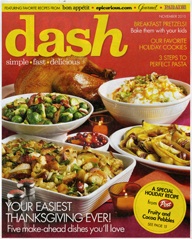
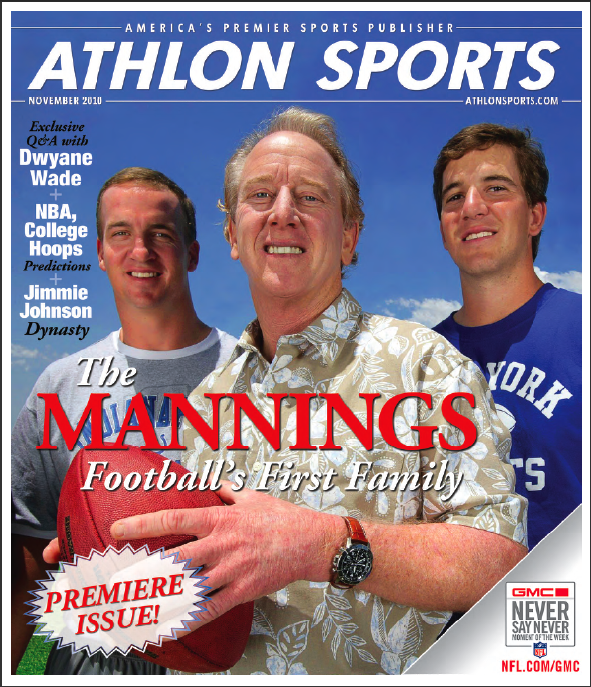
2010 will probably be best remembered as the year of magazines-distributed-via-newspapers. The year that the little kid came to the aid of its big sibling by adding an infusion of blood and livelihood. In October 2010, the new Athlon Sports, aimed at a male audience, was launched with a 7 million circulation inside America’s newspapers. Last week the new Dash magazine was also launched via newspapers with a female audience in mind and a 8.2 million circulation.
Both are attempting to serve the 100 million daily newspaper readership (yes, you read that right, 100 million folks still read the printed newspaper every day in these United States of America). Athlon Sports is going after the 55 million male readers and Dash magazine is going after the remaining 45 million female readers. Read here what I wrote about the launch of Athlon Sports last month.
Dash is the new magazine from Parade, the granddaddy of all newspaper-magazines with a circulation of 32.5 million every week. Dash bills itself as the “go-to source for putting quick and delicious meals on the table during the week. It has a mix of fun, a bit of inspiration using America’s best-loved food brands and always a back-to-basics sensibility.” The magazine is aimed at women who balance work and home and are between the ages of 25 and 54. The November pre-launch issue is the first of what will become a monthly-frequency-publication starting in February of next year. It is the second newspaper magazine launched by Parade after their two-year-old Parade Healthy Style.
“If you know the reader, you can figure out the edit,” Maggie Murphy, Dash’s editorial director told me. And boy, do they know the reader! They have studied and researched their readers inside out. Women newspaper readers, while not big on buying food magazines, read the food section in the newspaper on a regular basis. They want food content that will help them put the food on the table in a “simple, fast and delicious” manner, as Dash’s tagline says.
Ms. Murphy joined Parade in June as editor of the weekly and editorial director of Parade Publications. Her first assignment was to create the prototype issue of Dash magazine in four weeks. Drawing in on the vast wealth of food content from sister company Condé Nast’s bon appétit, Gourmet and epicurious.com, in addition to Parade magazine itself, Ms. Murphy and her team were able to create a down-to-earth food magazine for that “dashing moment in the life of the busy women who have to put that meal in the oven and get it done in the time the kids are done with their homework.”
“The uniqueness of Dash is evident in three areas,” Tracy Altman, senior vice president of special projects at Parade, told me. “One is the lack of duplication from other food magazines; two is the unique audience that we are reaching; and three, the Condé Nast relationship.” Ms. Altman should know. She was the publisher at the Publishing Group of America’s Relish magazine, another mega-launch newspaper-magazine that was launched five years ago. ” We all had such a great time putting together the strategy for Dash,” Ms. Altman said. And the “We” of course refers to the many folks behind the launch of Dash, including Ms. Murphy and Allison Werder, senior vice president of business development under the leadership of Jack Haire, chief executive officer of Parade.
The Dash strategy includes the monthly magazine distributed on Wednesdays (best food day) mainly in the B and C county newspapers. In addition to the printed edition, Dash introduced dashrecipes.com, a daily digital offering that includes a recipe database in partnership with Epicurious.com. Also, a retail distribution plan is part of that strategy which includes a public placement program that will make the magazine available at local markets and food festivals nationwide.
So the next time you are dashing out of the world of print, take a look at Dash and the rest of the national magazines distributed via newspapers; you will be glad you did. It will reassure you that the printed medium is still very well and alive. The problem is not with the medium, as I have said time and time again; it is with the message. So, for a change, stop dashing out of print and stop and study the Dash strategy to launch a new magazine… there are plenty of lessons to be learned. On that note, you can dash out of this blog and go pick yourself up a copy of Dash, lighting a candle in the print tunnel rather than cursing the dark.
There is no question that the program for the ACT (Amplify, Clarify, Testify) Experience, sponsored by the Magazine Innovation Center at the University of Mississippi, held two weeks ago, was different from what we expect at magazine industry gatherings. Speakers included the editorial director of a large Brazilian publisher, the CEO of a publisher launching a seven million copy newspaper supplement, the head of a major custom publishing company, the creative director of group of hotel publications, the founder and president of a national advertising sales service business, the managing director of a major Dutch magazine, the chief marketing officer of digital development company, the editor of a totally online magazine, and two consumer marketing (AKA audience development/circulation) observers and analysts.
The agenda was assembled by a Lebanese immigrant to the United States, and it unfolded in a part of the country probably best known for college football and being the scene of some of the more notable and disturbing moments of the civil rights movement of the 1960’s. The registrants were an equally diverse group, and they also included a good number of journalism students. Given that eclectic mixture, it is my perhaps biased opinion (I was one of the “observers and analysts”), the event provided an outstanding perspective on the state, current and future, of the magazine business. Media businesses are always in transition, but the pace of that transition increases and decreases in cycles.
Right now, for magazines, it has accelerated to a dizzying level. At the American Magazine Conference (AMC), held in early October, where the venerable Magazine Publishers of America changed its name to MPA the Association of Magazine Media, the agenda was heavily focused on digital developments, with a list speakers not quite as international, but equally representative of the onrushing magazine future as those on the program at ACT. Early this summer, not even six months ago, new CEOs were named at each of the four largest publishing companies. Implicit in those executive changes is a shift in publishing strategies, in the words of one of those publishers, from an “advertising-centric” to a “consumer-centric” economic model. Clearly, the focus at AMC, from a more corporate perspective, and at ACT, where a somewhat more entrepreneurial view was evident, was on potentially seismic changes in the publishing business.
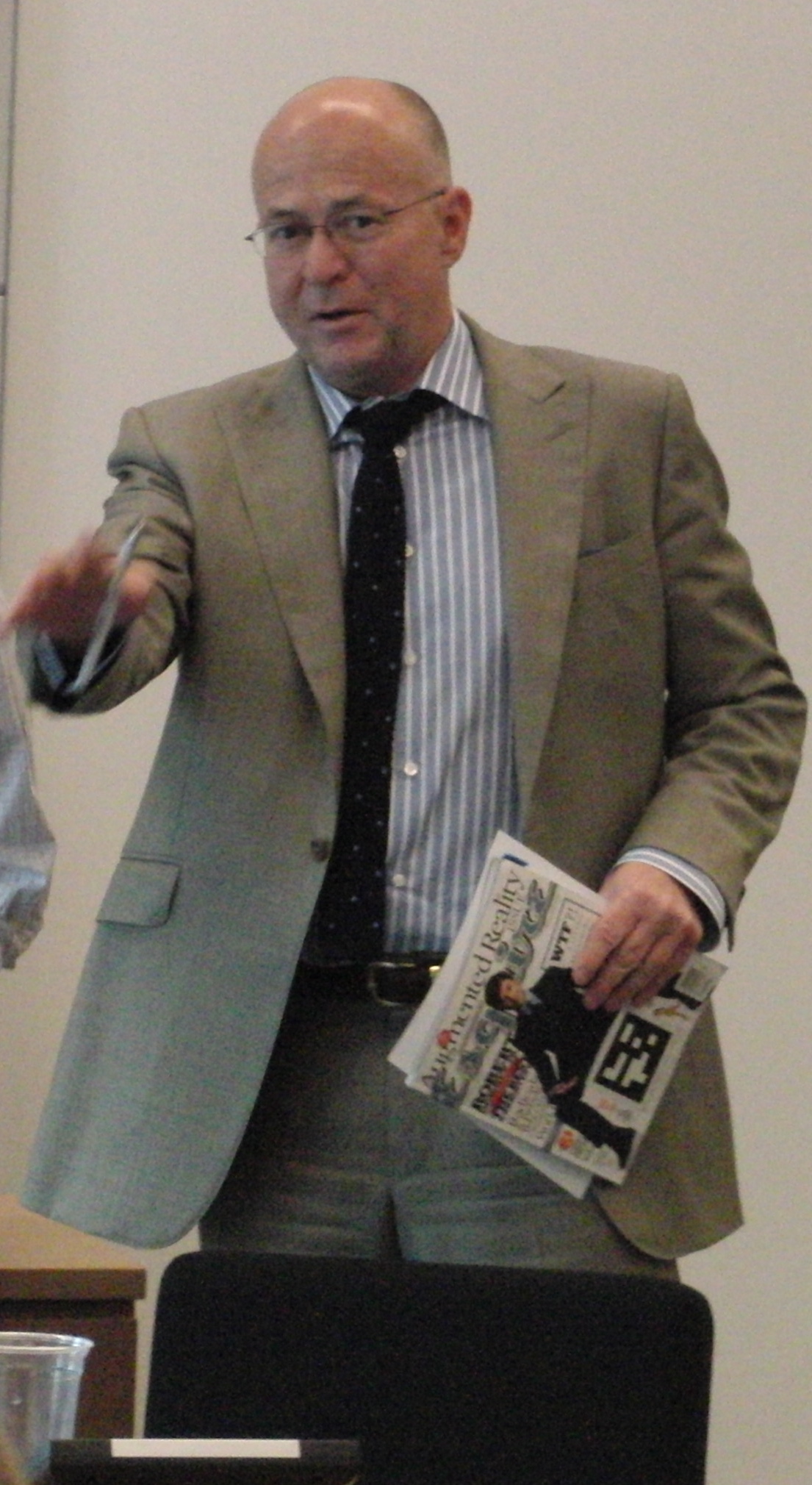
There was a gentle irony evident at ACT, organized by Samir Husni, the professor who made the University of Mississippi’s journalism school a force in magazine publishing, and is generally thought to be proponent of the role of print on paper. Digital was part of nearly every discussion that took place, not just in the development of editorial content, but in the roles of marketing and advertising, and even in consumer marketing. The shifts moving through the business were captured in comments by Ann Russell, editor of VIVMag, an online publication, who also has considerable traditional magazine experience. On her changing role, she said, “The editor is becoming a director.” Looking ahead, she asked, “Are we there yet?,” then answered her own question, with “There is no there.” Another aspect of the shifting landscape was offered by Thomaz Souto Correa, editorial vice president of The Abril Group (Brazil). It is important as digital format are developed, he said, “to concentrate on the future of the reader, more than the magazine.” He followed that up by saying that publishers need to “maintain editorial credibility to keep reader trust.”
Both comments are central to the viability of print, whether on paper, in digital, and in the next incarnation as well. In my presentation on newsstand and its role in a future heavily influenced by digital, I raised the issue of the breaking down of “silos.” Initially, it referred to the oft-times isolated parts of circulation, subscriptions and newsstand, where my experience found promotional strategies often in conflict, and worse, counter productive. However, at ACT, in group discussions following the general presentations, the silo issue, or more properly the breaking down of silos, resonated for the broader magazine media business, especially as publisher models transition from ad-centric to consumer-centric. The New Single Copy has regularly commented on how “good” publishing economics do not always translate into good newsstand channel economics. As an example, a publisher’s decision to reduce frequency saves on production costs while spreading advertising revenues, but reduces wholesaler and retailer income with any operational savings. Further, advertising promises were often the basis, as the late Dan Capell wrote, for “most bad circulation decisions.”
Samir Husni and the Magazine Innovation Center intend a second act, and maybe more, for ACT. It has the opportunity to become an incubator of change for the magazine media business for the next decade and beyond. It will not replace AMC, but if expanded to include a few more of the “usual suspects,” without losing its entrepreneurial flavor, ACT can emerge as an influential and complementary fixture on the media calendar.
Besides Russell, Correa, and myself, the other speakers at ACT were Stephen Duggan, Athlon Sports; David MacDonald, Sunshine Media Group; Haines Wilkerson Morris Visitor Publications; Lisette Heemskerk, Mood for Magazines, the Netherlands; James Elliott, James G. Elliott Company; Baird Davis, consumer marketing analyst; and Jeanniey Mullen, Zinio. The opening dinner speaker was Roger Fransecky, CEO, the Apogee Group; and the closing dinner guests heard from Bob Guccione, Jr., founder of Gear and Spin magazines, as well as the first editor-in-residence at the Magazine Innovation Center.
Reprinted with permission from the November 1, 2010 issue of The New Single Copy newsletter.
The first ever Amplify, Testify, and Clarify (ACT) Experience that the Magazine Innovation Center at The University of Mississippi’s Meek School of Journalism and New Media is now history. However, the lessons learned at this experience offered “a mosaic of opinion and perspective, when combined into a whole, provided a good look at where the industry is now and where it needs to go,” as my friend Tony Silber, general manager of Red 7 Media wrote in his blog on the Folio magazine website.
Over the next few days and weeks, I will providing links to the keynote speeches that the first ACT Experience witnessed and heard. Those experiences help us, as the theme of the first Experience promised, Reimagine the Future While We Still Have Time.
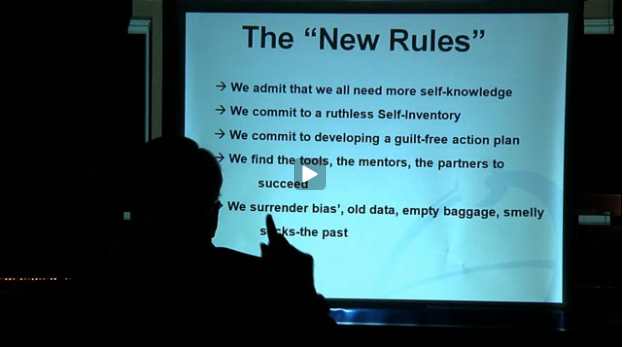
The opening remarks at the ACT Experience came from Roger Fransecky, the chief executive officer of the Apogee Group. When Roger talks, I listen. And so did the 125 lucky folks who were in attendance on the opening night of the ACT Experience. Here are some sound bites from Roger’s presentation:
The thing that we are really about is possibility
The invitation of life is to life a remarkable life and never settle for second best
We are no longer in the information business we are in the conversation business
There are no accidents
The spirit of this conference is one of generosity
Real change happens deliberately
The challenge of life is to pay attention
This whole conference is about that nutty thing called change
Some are running on empty because of their belief
The question of life is not what you are doing but what are you becoming
Living in an age of “digital distraction,” magazine-based media companies need to come to terms with what they’re becoming, and whether they’re doing it by default or design, said Roger Fransecky, CEO of the corporate-consulting firm Apogee Group, and keynote speaker at last week’s “Reimagining the Future,” conference held at the Magazine Innovation Center at the University of Mississippi.
The powerful metaphor going forward is “conversation,” Fransecky said, and media companies can create a path to the next one. “You’re no longer information providers, you’re in the conversation business,” he told the audience of about 125 magazine-industry professionals and journalism-school students. From a business perspective, the challenge is to ask a series of questions in that context. “What’s over?’ Fransecky asked. “What do you still believe? When you look at your business, you need to ask, ‘what do we still trust?’”
The conference was organized by Samir Husni, founder and director of the Magazine Innovation Center, and was held at the center’s facility in Oxford, Mississippi. Over the three-day event, speakers tackled the fast-changing landscape from a variety of perspectives, sometimes outlining what they’re doing in their own businesses and other times prescribing advice for the industry.
For example, James G. Elliott, CEO of an eponymous media sales and consulting firm, noted that the recession has hit all media, not just print media and not just magazines. High unemployment in the upper middle class, he said, has caused a dramatic falloff in subscriptions and newsstand sales.
Magazines, Elliott said, are too magazine-centric. “The thinking is isolated and inbred,” he said. “We allow folks in other industries to define us or ignore us.”
Circulation consultant Baird Davis said publishers were caught flat-footed by the recession. There are, Davis said:
• Too many marginal publications
• Too many “over-circulated” publications
• An over-abundance of “leveraged” companies
• Too many “lightly” qualified CEOs
• A lopsided concentration on advertising
• A fragile newsstand channel and diminished consumer value of subscription files
• Diminished circulation staffs with reduced consumer-marketing skills
• Companies improperly organized and staffed to meet demands of the new digitally driven consumer-centric market
And with the recession, Davis said, the private-equity fueled “Leveraged Era” was done.
‘Don’t Be Scared. Be Excited.’
There were some mixed messages about how to deal with the universe of Internet information, where blogs, videos, comments, posts and other content doesn’t have the same meticulous attention to accuracy and credibility as traditional print media. When it comes to advertising, Elliott said to do in print what you would do online. But Thomaz Souto Correa, editorial vice president of The Abril Group in Brazil, said the correct focus should be on the future of the reader, not the future of the magazine. Correa asked the most provocative question of the event: Given the changing rules for content online, “Will credibility matter in the future?”
The conference closed with a presentation from Bob Guccione, Jr., who kept his commitment to speak even though his father, Penthouse founder Bob Guccione, had died the previous day. Fear and mystification of the Internet, Guccione, Jr., said, is unfounded. “The Internet is a railroad track, an infinite number of railroad tracks, carrying other people’s cargo,” he said. “And we’re the other people. To think otherwise is like a farmer saying to his tool: ‘Command me.’
“I have no insights into digital media,” Guccione said. “None! And I’m starting two Web sites. I think it’s still about, ‘How do you make it interesting?’ It’s all going to come down to the quality of the content. Don’t be scared. Be excited. Wake up excited.”
From time to time I will be posting selective quotes from top magazine editors and other media pundits regarding the future of the magazine industry. Today’s Quote Unquote comes from the November 2010 issue of Esquire magazine. David Granger, Esquire’s editor in chief writes in his Letter from the Editor,
… I lose patience with pundits who prophesy and lobby for the demise of all traditional media in favor of newer forms. Newer media perforce create more ephemeral “content.” And the reality is that all of these forms of expression — new and old, digital and analog — are going to continue, and they are going to continue to prosper. The things we create in print and in digital are so completely different from each other that they appeal to fundamentally distinct needs.The war between old and new is a false construct. Nothing goes away. The human need to create is too great, and the human desire to be entertained is too intense to allow any form, whether books or oil painting or even blogging, to disappear.
I had to spell it out. 7,000,000 is the total circulation figure for the first issue of the new sports magazine Athlon Sports. The newspaper-inserted-magazine’s first issue, sporting the First Family of Football (The Manning Family) will make its debut inside ink on paper newspapers on Oct. 18. Athlon Sports is one of two new publications arriving to the nation’s news(stands)papers this fall. Dash, a food monthly published by the granddaddy of newspaper-inserted-magazines Parade, will make its debut in November.
Althon Sports will be the largest launch this year and the magazine will be one leg of a multi-layered stool that includes a three weekly “Athlon Sports Extra Innings” sports pages distributed and ready to print in the host newspapers in addition to a web feed and presence. The goal of the Extra Innings is to “enhance current sports editorial in print and drive readers online.” Extra Innings will focus on Inside College Football, Inside Pro Football and Inside NASCAR for now.
Athlon Sports is the first newspaper-distributed-magazine aimed mainly at a male audience. The others such as Parade, USA Weekend, American Profile, Relish, Spry and Healthy Style are all aimed mainly at a female audience.
Stephen Duggan, CEO of Athlon Sports is going to be one of the featured keynote speakers at the Magazine Innovation Center’s first ACT Experience during which he will answer the question “7 Million Circ Launch — Why Now?” Three of the talking points of his speech will be, “Go big or go home,” “Crazy? I hope not,” and “Newspapers… A growth story.”
Mr. Duggan will be joined by 13 other keynote speakers at the three day event held on the campus of The University of Mississippi at the Meek School of Journalism and New Media. For more details on all the speakers and the schedule of the ACT Experience events click here.
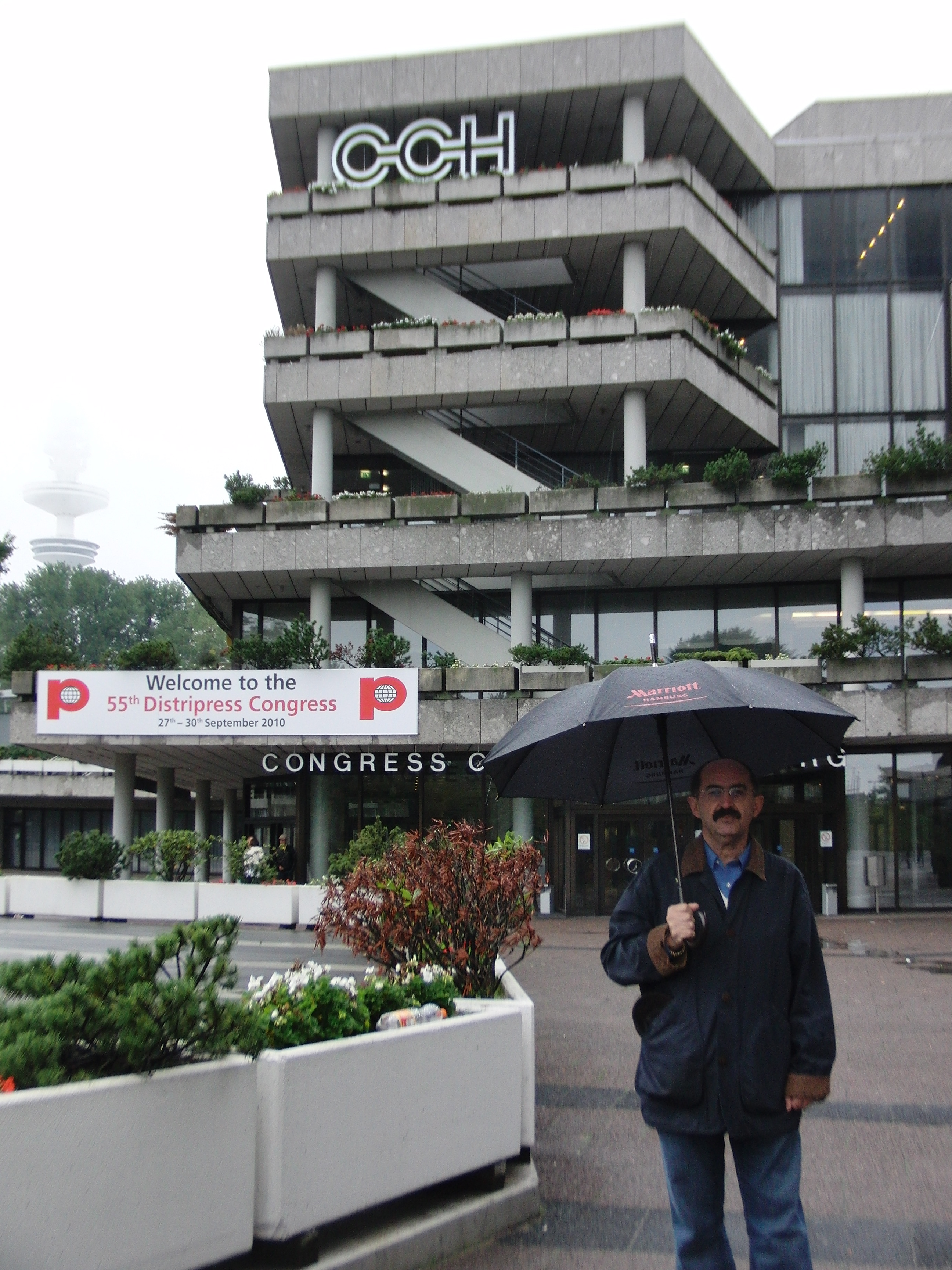
The future was front and center at the 55th Annual Distripress Congress in Hamburg, Germany. More than 1050 attendees gathered, engaged and interacted (try to do that Mr. iPad) with each other at the Distripress annual meeting of the association that bills itself as the “Platform for World Wide Press Distribution.” The wide range of topics focused on providing solutions for publishers and distributors of magazines and newspapers worldwide. Problems were identified and solutions were offered. There was no escape forward attitude and no blame game for the problems facing our industry. The lack of vision, leadership and courage were cited by Tyler Brulé of Monocle as a major source for the ills of the industry.
That was but once lesson from the 55 great lessons that I have learned from the Forum during the 55th Distripress Congress. Here are all the lessons:
1. The role of magazine and newspaper publishers is changing. It is about protecting the heart of journalism and about responsibility. It is the duty of any publisher all over the world to ensure the diversity of opinion and to control competing powers in a democracy.
2. To protect the heart of journalism and to meet our responsibilities we need to be aware of three fundamental aspects:
a. There will be no relevant information without journalistic quality.
b. There will be no journalistic quality without journalistic independence.
c. There will be no journalistic independence without economic independence – which means profitability.
3. The Internet has given us a lot of freedom and journalistic opportunities. But it is not acceptable that third parties use our expensively produced content for their business without any compensation. The economic loss to the publishers is not only massive – it is a threat to press diversity. Therefore it is important to improve the copyright protection and to establish copyright laws for publishers.
4. The greatest challenge of our time is to set up an economic base that allows publishers to run quality journalism as a profitable business.
5. Any strategy for the future of publishing must follow a three- legged model objective: Re-inventing the core, expanding the core and building a new core in the professional publishing segment.
6. Print can and is still a highly profitable and successful business – today and in the future.
7. Technical innovations like the iPad will make an important contribution to the world of media products, and they will help us to win younger audiences.
8. Any newly developed media channel is worthless, if we do not succeed in making a profit from it in the long term!
9. The digital revolution is forcing a complete reinvention of the publishing industry while targeting customer profiles that diverge more and more (in ten years core customer targets will all be internet-native…)
10. The publishing industry as a whole has to reinvent itself. Publishers and distributors have to make their own (R)evolutions.
11. There are three reasons for hope: A growing need for entertainment and media; Reading remains a pleasure and a noble hobby among the population; and reading newspapers and magazines represent an aspirational trend and a new lifestyle among the middle-class population in new countries.
12. Paper remains the easiest way to read newspapers and magazines.
13. A Publication on paper:
a. Is the cheapest device
b. Has the highest definition
c. Is suitable for long reading hours
d. Is mobile, easy to pocket and carry anywhere
e. Allows immediate access, no need to connect and reload
f. Is quick to browse, with immediate response time
g. Has an excellent touch and feel
h. With a special smell
k. Is 100% recyclable
14. Our challenge is to address the “ready-to-move-to-the-web” and increasingly mobile population in a more individualized & differentiated way per age, habits
15. We must venture into mixed offers paper / digital:
a. premium content on portable devices on top of existing paper press with differentiated contents.
b. 3D in printed press both newspapers and magazines (see the Sunday German Bild newspaper example below)
16. Publishers must have a solid commitment to the issue of copyright. They must learn from the mistakes of the music industry and adapt.
17. Inability of publishers to stand united and firm will lead to disastrous results.
18. Unlike music, magazines and newspapers, are not a background medium… they are front and center for the consumer.
19. Customers must come first.
20. Do what you do best and than link to the rest.
21. Endless customers choices is leading to unlimited demand.
22. Consider a business strategy like this one:
a. Determine your customer‘s needs.
b. Focus on the value added you provide best.
c. Make use of technology and platforms.
d. Collect and organize data.
e. Engage your customers – your community.
f. Act authentic.
g. Listen to digital natives and engage them.
23. In the midst of this digital age, we believe in print and we have the story of Grazia in Germany to put our money where our mouth is
.
24. Anti-cyclical acting will be rewarded and sometimes luck is with the bold and active ones.
25. Launching in economically difficult times can possibly create positive expectations and as a consequence strong support from your market and business.
26. Medium sized companies may not be at any kind of disadvantage in difficult times as
reaction time and therefore time to market is possibly faster.
27. Successful international concepts and licensed models can succeed, even
in saturated markets.
28. Stay with your strategy: Our strategy is: Print FIRST.
29.There is a children’s daily newspaper in France called “Le Petit Quotidien” and published in three different editions to reach different age groups from 6 to 14.
30. The daily paper feels and reads like a magazine with relevant focus to the relevant age group. The paper grows with its readers and has a total paid circulation of 150,000.
31. The web and the internet are not to be blamed for our troubles and problems in print.
32. The publishing industry needs to fight back with the tactile nature of its product.
33. Our problems can be summed by: a lack of vision, a lack of leadership and a lack of courage.
34. Every industry, every sector had to rethink the ways they are doing business in the last decade, except for the newsstands business.
35. It is time for a complete overhaul: selling me a candy bar with my newspaper is not the answer nor print on demand is the answer.
36. Look for Japan and South Korea: two places where they are creating rich, true diverse markets and experience… both in print and digital
37. Do not give away your publication. Monocle charges more for a subscription than buying it from the newsstands.
38. Make your subscribers feel like they are club members. Give them some evidence of that membership to showoff and identify with other members.
39. Subscribers will become patriots of the brand.
40. Deliver one story across the globe. Monocle aims to give the newsstands “love.”
41. Do in print what National Public Radio in the United States did to radio.
42. Print has become a more premium medium.
43. Monocle is creating newspapers, stores, products, events using intense branding and partnerships.
44. Soon the Monocle hotels may start appearing and the first one maybe in Beirut, Lebanon. See why in my two minutes interview with Tyler Brule, Monocle’s founder and editor in chief. (See video below)
45. Tyler Brulé and his magazine are a rare breed, but it is not too late to follow his lead.
46. Print will be with us for a long long time.
47. The magic of using four different kinds of paper in the same issue of your magazine works magic and create a wow factor that is missing from a lot of magazines on the market place.
48. When launching a new magazine, go to the source: the customers. Ask them what they want, when they wanted and how they wanted.
49. Think different: feeling good does not necessary means losing weight or looking beautiful.
50. Print is still the best platform for Time for ME. (See Flow magazine cover below)
51. We live in a digital age, but Print is still a very profitable business.
52. Newspapers and magazines are not dying, however some are committing suicide.
53. We can’t afford to be just content providers anymore, we have to become experience makers. In the midst of everything digital we need to focus on the humans.
54. Publishers must sell their products at a premium and must use from digital and technology what enhances their print product and not destroy it.
55. We are in the business of making money, any model invented, being invented or is soon to be invented, if it does not provide the publisher with sources of revenues it will not work.
The aforementioned lessons my friends, are just but a few pearls of wisdom that I’ve learned from the 55th Distripress Congress in Hamburg, Germany. There is much much more to be learned, but since that was the 55th Congress, I will stop at 55 lessons. I can’t wait to learn some more next year in Barcelona. I will have the chance to learn 56 lessons. Enjoy!
Giving credit where credit is due, lessons 1 to 8 came from Dr. Bernd Buchholz, Chairman of the Executive Board, Gruner + Jahr AG, Germany; lessons 9 to 15 from Dag Inge Rasmussen, President and COO, Lagardére Services, France; lessons 16 to 18 from Bhaskar Menon, Director, NDTV, India and Chairman & CEO of International Media Investments, USA; lessons 19 to 22 from Ewald Wessling, Media Consultant, Germany; lessons 23 to 28 from Lars Joachim Rose, President and CEO of Klambt Verlag, Germany; lessons 29 to 30 from Francois Dufour, Editor in Chief at Play Bac Presse, France; lessons 31 to 46 from Tyler Brulé , Chairman and Editor in Chief of Monocle, United Kingdom; lessons 47 to 50 from Anita Mooiweer, Head of Business Development, Sanoma Uitgevers, The Netherlands; and lessons 51 to 55 from yours truly. Thanks to all.
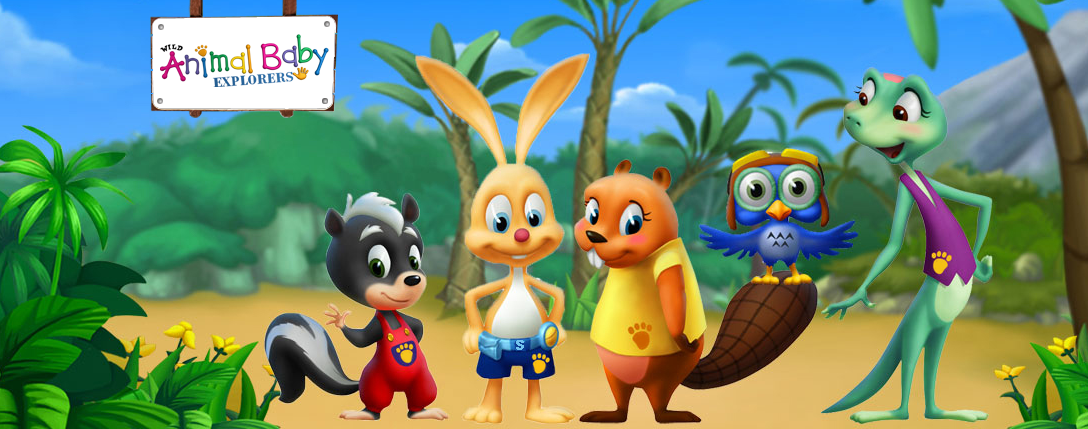
First came the magazine, now the television show. Wild Animal Baby is going 360 and anyone who doubts that children and their parents can multitask have to think twice. Ten years after publishing the magazine for the 2 to 4 years old, Sammy, the explorer skunk, moves from the pages of the printed magazine to the television screen where he and his friends star tomorrow (Oct. 2) in the premiere of Wild Animal Baby Explorers television show on the PBS stations. The goal is to go where the “the kids and their parents are.” The pages of Wild Animal Baby magazine which will also sport a new look starting with the December 2010 issue, will jump, move and explore on the television screen the same way it is doing in print. The goal is one according to Lori Collins the magazine’s editor, “giving children a foundation for a lifelong love of wildlife and wild places.”
I had the opportunity to ask Ms. Collins few questions regarding this evolution from being a print publication to a 360 brand. The Mr. Magazine™ Interview with Lori Collins follows:
Samir Husni: Why television and why now?
Lori Collins: Historically, we’ve grown our subscription base via direct mail. But direct mail has become more expensive and less effective for today’s busy parents. The reach of television is far greater than anything we could achieve through traditional marketing means. By going where kids—and their parents—are, we hope to grow the Wild Animal Baby brand, including magazine sales. By the way, Wild Animal Baby magazine is just one of four children’s magazines published by National Wildlife Federation. As these new Wild Animal Baby subscribers get older, we hope they will move on to our other print publications: Your Big Backyard (ages 4-7), Ranger Rick, (ages 7–14), and Just for Fun (ages 7–14).
SH: How do you see the future of print in this digital age? Is the future all digital or is there print in the future? What are you doing to ensure a print (and do you think it is necessary for kids) future in a digital age?
LC: I think print will continue to play a vibrant role, at least in the near future. Both kids and adults love technology, no question about it. They like the bells and whistles. But kids, especially young ones, love the simple magic only a print product can provide. Our readers look forward to getting mail each month that is not only addressed to them, but also made just for them. It makes them feel special.
More importantly, young children like the quiet time they spend curled up with a parent, mostly at bedtime, going through the pages, looking at the pictures and reading the stories. Most parents cherish those hours with their child as well. Perhaps someday the iPad will allow parents and children to have that cozy, shared experience, but I don’t think we are there yet.
That’s not to say our publications staff isn’t keeping a close eye on where technology is headed. Like other children’s magazines, we’re dabbling with how our wildlife content can be applied to media such as phone apps, software games, and a more interactive website. But for us, it’s a little too early to draw up a specific roadmap. We’re still trying to figure out how to make digital experiences that are as necessary, sufficient, and relevant as the experiences kids already have reading our print magazines.
SH: Launching a magazine for two- to four-year-olds in normal time has been seen as crazy; how about it in digital times?
LC: Our experience is that publishing a magazine for two to four year olds really isn’t that crazy. You have to remember that preschoolers have been enjoying Wild Animal Baby magazine for over 10 years. We aren’t launching the television series because we think the magazine has run its course. Quite the opposite. We don’t have any reason to believe young children won’t continue to enjoy Wild Animal Baby magazine. We’re launching the television series because it allows us to create an experience for preschoolers that is different, but just as valuable as the one created by reading the magazine. We expect our current readers will watch the show and believe viewers will want to read the magazine. Both media offer unique opportunities for us to share our wildlife message.
SH: Will the television show be a lot like the magazine?
LC: As we developed the television show, it was important to us that there be clear connections between the TV series and the magazine. We didn’t want to create another sub-brand for NWF. We wanted to build on the existing Wild Animal Baby brand. So, like the magazine, Wild Animal Baby Explorers introduces preschoolers to the world of animals and helps them develop important observation and problem-solving skills. But we also wanted to make sure that we took advantage of all that television offers. So the series features a unique mix of loveable 3-D animated characters and stunning high-definition wildlife footage that will keep young children engaged and having fun.
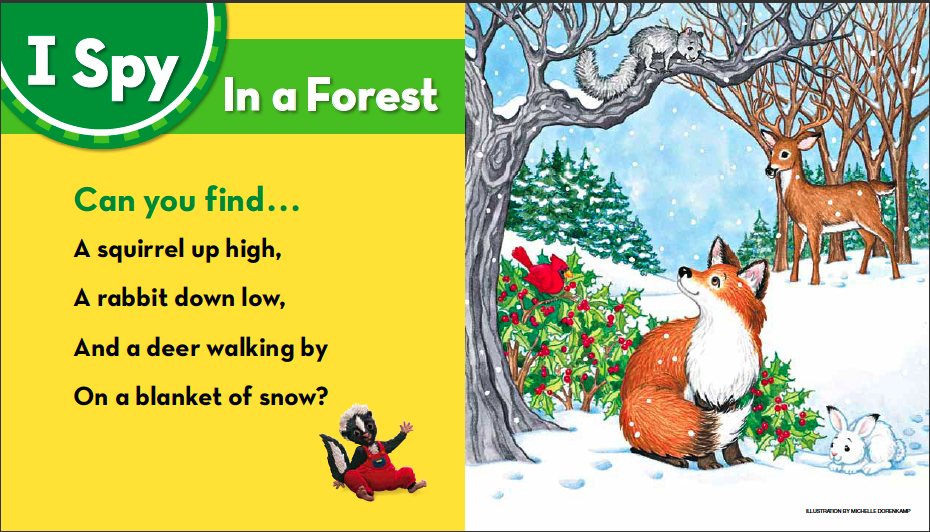
Sammy, a young skunk in red overalls, has long been a fixture in Wild Animal Baby magazine. Each month he hides among the pages, and our readers love to find him. (We get more comments about Sammy than any other aspect of the magazine.) So Sammy is one of the five animated characters in the television show. And like in the magazine—Sammy hides at some point during each episode, and the viewers are encouraged to find him.
“I Can” is another favorite feature of the magazine that we incorporated into the television show. At the end of each episode, viewers are encouraged to get up and move to imitate an animal that has been featured in the show.
But we didn’t just want the magazine to inform the show. We also wanted to include elements of the television show in the magazine. So starting in November, each issue of the magazine will feature a cartoon-style story based on Sammy and his four new friends—Skip, Izzy, Benita, and Miss Sally—that appear in every episode of Wild Animal Baby Explorers.
SH: Are you attempting to be a 360 publisher? TV, print, web, apps, products, events, etc.
LC: NWF is a conservation organization that has a long-standing commitment to educating people—especially children—about wildlife. We view our children’s magazines as educational tools—but not the only possible tools. Our goal is to share our appreciation of the natural world with as many people as possible. That means we need to meet people where they are—watching TV, surfing the web, playing with apps, attending special events, or reading magazines. We’re really just trying to share our love of wildlife and to nurture children’s inherent love of animals.
SH: Five years from now, where do you want the Wild Animal Baby brand to be?
LC: I’d like Wild Animal Baby Explorers to be in every preschooler’s home in the United States—and in homes in several countries overseas as well!
I’d also like for Sammy to have become a beloved character to millions of children, much like Big Bird, Barney the purple dinosaur, and our own Ranger Rick. If that were to happen, it would mean that we were successful at a lot more than selling magazines and producing TV shows. It would mean we were successful at giving children a foundation for a lifelong love of wildlife and wild places.
A good thing just got better. Two more speakers have been added to the great line up of keynote speakers for the Magazine Innovation Center’s first ACT Experience. Anne Russell, editor in chief of the digital only magazine VIVmag and Jeanniey Mullen, executive vice president and chief marketing officer of Zinio will speak on “How to launch an all-digital magazine without a blueprint; the story of VIV Magazine” and “three secrets to worldwide Digital publishing domination,” respectively.
Jeanniey Mullen, is the executive vice president and chief marketing officer for Zinio and its sister company, the exclusively digital magazine, VIVmag. Jeanniey is recognized as a pioneer and visionary in the digital marketing and advertising space, with an expertise in e-mail marketing.
Anne M. Russell is the editor in chief of VIVmag, and has an extensive background in health and fitness journalism. She previously served as editor in chief of Shape and prior to that was the editorial director of FOX Television’s Health Network, where she oversaw the Network’s website, as well as on-air content.
The two aforementioned speakers will join a host of keynote speakers in Oxford, Mississippi October 20 – 22 for the three-day event “Reimagining the future while we still have time.” And talking about time, now is the time to register for the event. Limited spaces are still available. To check the complete roster of speakers at the event and to register for the ACT Experience click here.
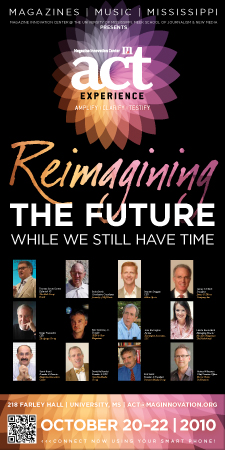
Limited space is still available at the first Magazine Innovation Center’s ACT Experience. The three days of Magazines, Music and Mississippi themed “Reimagining the future while we still have time” is going to take place on Oct. 20 thru Oct. 22.
Today, I am also pleased to release the poster for our first ACT Experience. The poster was designed by J. Kevin Tugman, executive vice-president for creative services at the Sunshine Media Group, one of our Magazine Innovation Center sponsors. Check it out and hope to see you in few weeks.