h1

Bob Garfield to Samir “Mr. Magazine™” Husni: Branding Was A Proxy For Information… We No Longer Need Proxies. The Mr. Magazine™ Interview

September 9, 2015

Google, Facebook and Amazon… these are the new Time Inc.’s, Hearst’s and Gannett’s and they’re not even publishers by any stretch of what we would have used to imagine.

“We have taught audiences to get content for free and to expect it for free. And in a way, it’s not only bad strategic decisions made 20 years ago when digital technology first began having its impact; if you think about it and go back 300 years, that was the offer then; the quid pro quo. Free or subsidized content in exchange for people’s grudging attention to advertising. It wasn’t so easy to ignore back then. And then when the digital revolution came around and publishers decided to attract an audience first and then figure out how to monetize it through digital advertising, not realizing that CPM’s were going to go down, down, down to the vanishing point, it was then that we reinforced the notion that content was free. So, it’s going to be really hard to retrain audiences to pay for what they’re using.” Bob Garfield

The Digital Revolution changed media and advertising, of that there’s no doubt. From the tangible ads that people were accustomed to holding in their hands to the commercials that begged our attention from our television screens each and every day; advertising not only paid the publishers and manufacturers bills; it gave us a connection to different brands that we could then assimilate to our own personalities. It was high cotton for everyone involved.

And then along came the Internet and the cyberspace that most of us couldn’t explain, but came to expect to always be there with free content and pop-up ads that we could either block or totally ignore. In fact, some years later, we’re even more adept and equipped to handle the job of eliminating those pesky ads from our vision and in turn, our minds.
(AP/Photo Michael Albans)

(AP/Photo Michael Albans)

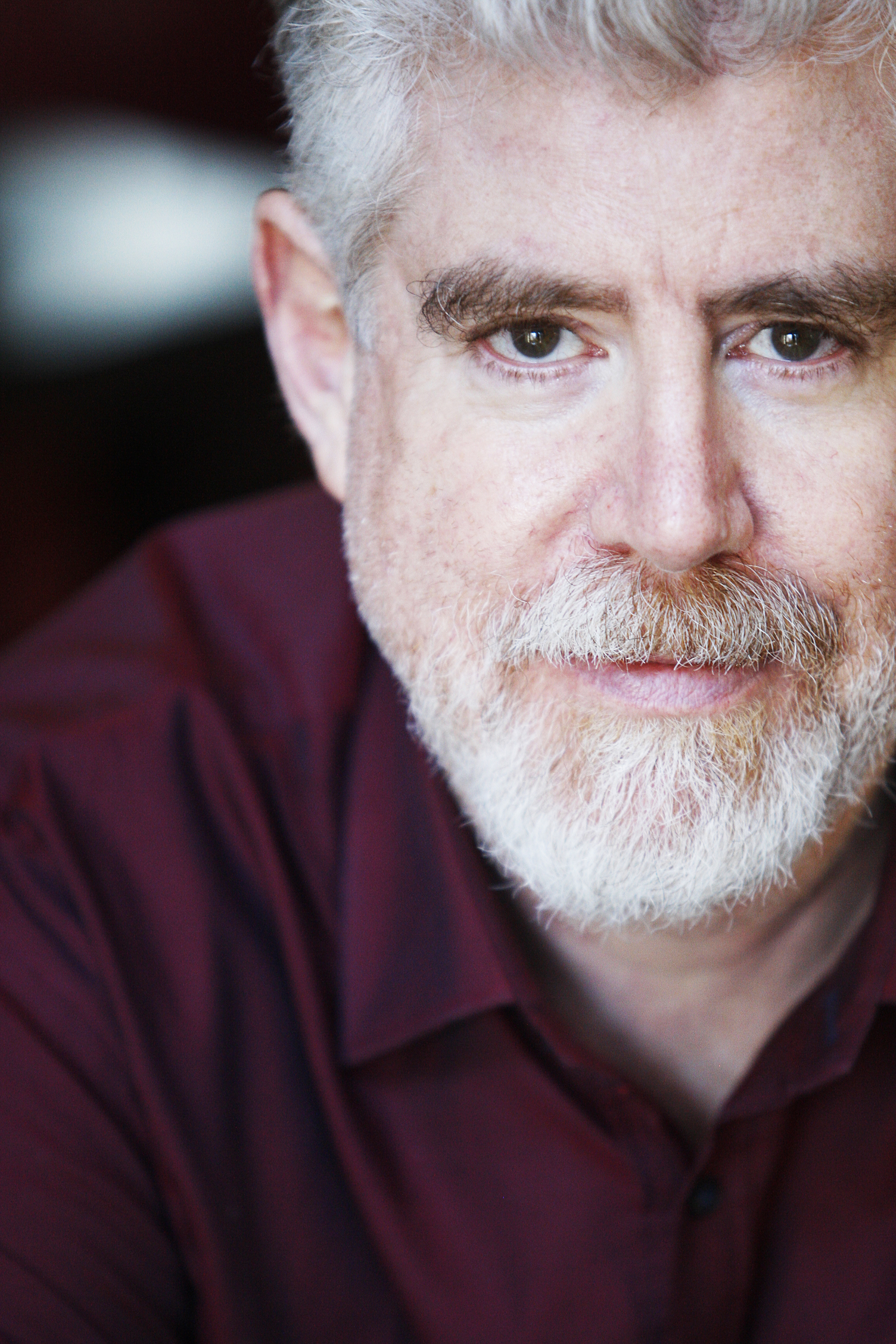
Bob Garfield is a columnist, critic, broadcaster, author and lecturer who has devoted his career to the media and marketing landscape. A MediaPost editor-at-large, he previously spent 25 years as the advertising critic for Advertising Age. For the past 15 years he has been co-host of public radio’s “On The Media.” A recipient of many journalism awards, including the Peabody, he is the author of five books and has lectured in 37 countries on six continents. A visiting lecturer at the University of Pennsylvania, he is also a senior fellow at the Wharton School’s SEI Center for Advanced Studies in Management. His seminal 2007 book, The Chaos Scenario, presciently described the apocalyptic disruptions of the media economy in the digital age.

I spoke with Bob recently about the cessation of media and advertising as we once knew it. After many years of research and study, his words of wisdom are not blanketed with fluffy comforts and pats-on-the-head that everything is going to be alright; instead Bob takes a more aggressive insight and looks for ways to open up new avenues of revenue and communication between advertisers and publishers, such as the October 30, 2015, Media Future Summit which will be held at the Wharton School at the University of Pennsylvania. The summit will bring some top executives from all walks of publishing and media life together to try and make sense of the marketing and media landscape in today’s digital world.

Bob is determined to seek solutions to the revenue issues of today’s media world by studying and researching the panorama, while enlisting the minds of creative and business-motivated people who can contribute to the conversation to offer their views and ideas as well.

I hope you enjoy this fascinating and insightful conversation with a man who has spent his entire career up until now studying the habits and idiosyncrasies of advertising and media, Bob Garfield, columnist, critic, broadcaster, author and lecturer.

But first, the sound-bites:

On the most important change in advertising, marketing and the media industry over the last three decades: That’s easy. And it’s the same thing that’s affected advertising, marketing, media and production and everything else in that ecosystem, and it’s zeroes and ones. It’s the digital revolution and its earth-shattering impact on all of these industries.

On why he thinks the entire media industry was mesmerized by the digital revolution, yet couldn’t and still hasn’t determined a way to monetize it: I have two answers for that; I’ll give the more charitable answer first. There are a lot of really smart physicists and there are a lot of really smart economists and these people are very impressive; some of them win Nobel prizes, but there isn’t one physicist who can defeat gravity and there isn’t an economist in the world who can defeat the law of supply and demand; these are immutable forces of nature. And I don’t think all the king’s horses and all the king’s men can alter the economics that have been imposed by digital transformation.

On the Welfare Information Society that has been created with digital and whether he thinks it’s time to go completely back to print: We have taught audiences to get content for free and to expect it for free. And in a way, it’s not only bad strategic decisions made 20 years ago when digital technology first began having its impact; if you think about it and go back 300 years, that was the offer then; the quid pro quo. Free or subsidized content in exchange for people’s grudging attention to advertising. It wasn’t so easy to ignore back then. Some of the advertising was welcomed and most of it, we now know for certain, was not welcomed, but people couldn’t entirely avoid it and they knew that there was a compact; a quid pro quo, between the audience and the publisher.

On the thinking behind publishers’ devaluing of their subscription models and offering them for pennies instead of what they’re worth: You lose money on every issue, but you make it up in volume. And that’s what happens when you commodify audience and that has certainly happened; the prices go down and down. And this, by the way, is for print and paper magazines, we’re talking about. Just imagine that phenomenon in an exponentially more corrosive way in the digital world, because your audience grows and grows and grows and your CPM’s continue to go down because in a digital world, and I alluded to this earlier, but I didn’t actually say it explicitly, but in a world where there is infinite content, that means there is infinite advertising inventory. And in a world of infinite advertising inventory; what you can fetch as a publisher for any given bit of it is destined to be small.

On the increasing digital audience of publications and whether those people have any value to advertisers: There’s very little value of that audience to the advertiser. And that’s problem number one; it’s Trash Audience, which is not a judgment about human value, it’s a judgment of mercantile value. If your audience is in Lebanon and your distribution is only in the United States, it’s nice to have those people looking at what you’re producing, but it does you no good whatsoever. So, that’s problem number one.

On the solution to the problems, such as Trash Audience: I wish I knew. The summit will hopefully help with that. I mean, there are revenue streams. There’s incomers, affiliate marketing, rate of advertising, which I despise, there’s micropayments; there are ways to generate revenue.

On the nature of today’s media competition and how it’s gone from Hearst and Time Inc. rivaling for audience to Google and Facebook and even Amazon competing: Remember the good old days when there was ABC, CBS, NBC, Hearst, Hachette, Condè Nast and Time Inc.? There were a handful of giant companies and we actually worried about media concentration being antidemocratic. Well, now, despite the supposed democratization of publishing and the wide variety of voices that all have access to audience because of the zero-cost of production; we’re now looking at a universe where the competition is between Google, Facebook and Amazon, which is a bookseller. These are the new Time Inc.’s and Hearst’s and Gannett’s and they’re not even publishers by any stretch of what we would have used to imagine.

On whether he believes there is a dark side to the Internet and social media: Of course there’s a dark side. In fact, I’ve spent 15 years looking at both the Utopian and dystopian effects of these digital universes. Wide-scale plagiarism is something that we just examined. Of course, Jihadi sites and all kinds of criminal conduct; it all happened online and it’s not going to go away. We’re going to have to figure out a way as a society to deal with the fact that bad guys have access to the same knowledge that good guys have.

On whether he thinks brands are still important in this digital age: That’s a good question. I’m happy to report that brands still have value. Perversely, it seems to me that consumers, even millennials, embrace brands as never before. But what a brand has meant to audiences fundamentally is eroding. I say that because why did we have brands? They were shorthand; they were a proxy for actual understanding of the marketplace. Branding was a proxy for information and it created an important level of consumer trust; that was the most important thing that it did. But we no longer really need proxies for information; a few swipes of your thumb on your phone and you can find out absolutely everything about anything.

On what makes him tick, click and stick after 30 years in the business: (Laughs) That’s simple; I have offspring. And they’re very demanding. They want food and shelter; they want to be educated and they like weddings. (Laughs again) It’s not difficult to stay motivated.

On what keeps him up at night: I must tell you; what keeps me up at night has nothing to do with media or marketing. It’s political. I could go on and on with my answer, but let’s just say that I continue to be disappointed by the politics of at least half of the American people and a good part of the rest of the world too. And it troubles me deeply and it really makes me profoundly sad about, not just the country, but the species.

And now the lightly edited transcript of the Mr. Magazine™ conversation with Bob Garfield, columnist, critic, broadcaster, author and lecturer.

Samir Husni: Since we last spoke some 30 years ago, a lot of changes have taken place in the industry, but what would you say has been the most important change when it comes to advertising, marketing and everything you’ve been writing about, observing and critiquing all these years? If you had to pick one thing that you would consider the most important change of the last three decades, what would it be?

Bob Garfield: That’s easy. And it’s the same thing that’s affected advertising, marketing, media and production and everything else in that ecosystem, and it’s zeroes and ones. It’s the digital revolution and its earth-shattering impact on all of these industries.

There are ample benefits to the digital technology, but from a business point of view, it has been extremely destructive to publishers, agencies and marketers, who are having a very hard time dealing with all of the many ramifications of digital transformation. It’s great for keeping production costs down and for user convenience and for the democratization of voices that we have access to and all of those Utopian aspects of the digital world, but the dystopian effects are very, very profound.

Samir Husni: Supposedly people in the media business are smart, creative and excellent businesspeople; why do you think they were so stunned or mesmerized by this whole digital revolution that they couldn’t ascertain a way to monetize it?

Bob Garfield: I have two answers for that; I’ll give the more charitable answer first. There are a lot of really smart physicists and there are a lot of really smart economists and these people are very impressive; some of them win Nobel prizes, but there isn’t one physicist who can defeat gravity and there isn’t an economist in the world who can defeat the law of supply and demand; these are immutable forces of nature. And I don’t think all the king’s horses and all the king’s men can alter the economics that have been imposed by digital transformation. So, the one answer is there’s nothing anyone can do about it. The law of supply and demand, which is the real culprit here from a business point of view, has undermined the model that propped up the media and marketing for almost 300 years.

The second answer, which is closer to your question, is denial. The imperative of the incumbents to maintain the status quo; the notion that, just as you said, we’re really smart; we’ll find a solution here, just as if there were some magic beans that could be discovered that would make it all go away and restore profitable growth, but none of those things are going to happen. The universe has changed. The fundamentals of the economics of media have simply changed and that cannot be fixed.

So, what smart people have to do is figure out how to, and I’m going from metaphor to metaphor and I apologize for that, they have to figure out how to play the hand that’s been dealt and that hand will never include the kind of CPM’s (cost per thousand) for advertising that publisher’s used to enjoy. It will never change the fact that people don’t look at advertising anymore; they avoid it at every opportunity. And publishers have to work within that framework to figure out how to deliver their goods profitably to an audience that clearly wants more and more content. It’s a tough one.

Samir Husni: One of the things that I’ve been saying all along is that we’ve created a Welfare Information Society; that it’s going to be harder than hard to get people to pay for content because of the availability of content everywhere. And now with ad blocking and all of the things we’re hearing about it; do you think it’s time for us to just simply throw in the towel and say: let’s go back to the power of print?

Bob Garfield: (Laughs) Well, that would be great if you could put the toothpaste back in the tube; oops, there’s metaphor number five, I’m going for the record here, Samir. (Laughs again)

Samir Husni: (Laughs too).

Bob Garfield: It would be great, but you can’t go back and restore what we had as recently as 30 years ago; you just can’t do it.

But, you’re right. We have taught audiences to get content for free and to expect it for free. And in a way, it’s not only bad strategic decisions made 20 years ago when digital technology first began having its impact; if you think about it and go back 300 years, that was the offer then; the quid pro quo. Free or subsidized content in exchange for people’s grudging attention to advertising. It wasn’t so easy to ignore back then. Some of the advertising was welcomed and most of it, we now know for certain, was not welcomed, but people couldn’t entirely avoid it and they knew that there was a compact; a quid pro quo, between the audience and the publisher. Look at the ads and we’ll give you your Beverly Hillbilly’s for free or we’ll give you your Life magazine for $1, even though it costs us $4 to produce it. As a consequence, the subscription revenue was always a trivial cost for people and that’s what they came to believe was their birthright.

And then when the digital revolution came around and publishers decided to attract an audience first and then figure out how to monetize it through digital advertising, not realizing that CPM’s were going to go down, down, down to the vanishing point, it was then that we reinforced the notion that content was free. So, it’s going to be really hard to retrain audiences to pay for what they’re using.

There are various schemes out there for doing exactly that thing; I’m not especially optimistic about any of them becoming dominant. There are people who are trying to figure out ways to get people to pony-up, sometimes very cleverly, but the idea of that becoming the default way to monetize media, I think is a bit of a pipe dream.
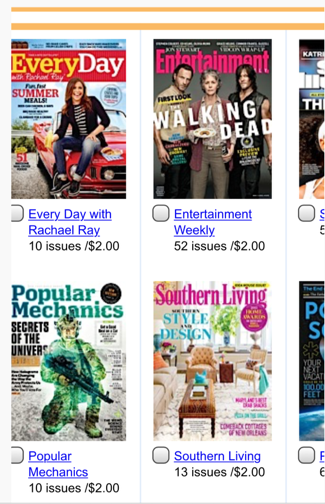
two dollars Samir Husni: Recently I received yet another online offer from one of those magazine dealers, for lack of a better word, offering me subscriptions to almost all of the Time Inc. and Hearst publications for $2 and that was for an entire year.

Bob Garfield: (Laughs).

Samir Husni: When are we going to learn; when is the industry going to learn?

Bob Garfield: Yes; you lose money on every issue, but you make it up in volume. (Laughs again) And that’s what happens when you commodify audience and that has certainly happened; the prices go down and down. And this, by the way, is for print and paper magazines, we’re talking about.

Just imagine that phenomenon in an exponentially more corrosive way in the digital world, because your audience grows and grows and grows and your CPM’s continue to go down because in a digital world, and I alluded to this earlier, but I didn’t actually say it explicitly, but in a world where there is infinite content, that means there is infinite advertising inventory. And in a world of infinite advertising inventory; what you can fetch as a publisher for any given bit of it is destined to be small. And you can increase the value of your advertising with some targeting and you can increase it with video, but it’s still digital pennies versus analog dollars and those pennies will be moving to pay the bills. And that is the world we’re living in.

Which is why, as you know, I am organizing with the Wharton School at the University of Pennsylvania, a Media Post conference on October 30th in Philadelphia to examine the 12 or 13 different kinds of revenue streams that are available to publishers to see which is sustainable, scalable and ethical, and to discard the ones that are problematic and embrace the ones that have some potential as we try and get some level of consensus from all sorts of publishers, whether its E-books, daily newspapers, magazines or any type of published content. It’s a genuine summit where people from all over the media and marketing ecosystem will be present, top executives only, to try and make sense of all of this stuff. And short of collusion, (Laughs) try and get a bit of consensus.

Samir Husni: When we look at this growing audience for our magazines and newspapers; magazines that had circulations of 3 million and maybe an audience of 7 or 10, are now telling me they have audiences of 30 million on digital, but when you look at that audience, most of it is not from the United States. For example, everybody all over the world can now access Time magazine, whether you’re in Lebanon or Peking. Does that audience have any value to advertisers?

Bob Garfield: There’s very little value of that audience to the advertiser. And that’s problem number one; it’s Trash Audience, which is not a judgment about human value, it’s a judgment of mercantile value. If your audience is in Lebanon and your distribution is only in the United States, it’s nice to have those people looking at what you’re producing, but it does you no good whatsoever. So, that’s problem number one.

Problem number two is the advertising that you’re selling them, they’re not looking at. One thing we have learned, and this has all been enabled by the digital revolution, is if you give people the tools to avoid advertising, they will. We let ourselves imagine over 300 years that people would continue to put up with it, maybe every now and then they cherished it, and sometimes it was valuable to them, but we have now learned categorically that given the opportunity to avoid ads, people do just that. To the audience all advertising is Spam, full stop.

So, you’ve got Trash Audience; the audience that is not trash, that is theoretically valuable to you, is now looking at your ad, which by the way they may or may not be able to see because 50% of the ads that come through are not really viewable and that has to do with technology, but mainly fraud.

So, half of the industry is crooked and marketers are getting fooled by criminals and nobody is looking at the ads. And if they were looking at them, it doesn’t matter because they’re not in the target audience anyway. So, that’s a pretty unattractive business proposition. And I’m sorry to say I don’t really know the solution.

Samir Husni: And that was my next question; what is the solution?

Bob Garfield: I wish I knew. The summit will hopefully help with that. I mean, there are revenue streams. There’s incomers, affiliate marketing, rate of advertising, which I despise, there’s micropayments; there are ways to generate revenue, a lot of conferences and other kinds of box-office businesses that are spinoffs of the underlying media property.

But none of them, not even altogether, represent anything close to the revenue that we had in the good old days.

Samir Husni: What about the nature of competition among media? Suddenly, Facebook is looked upon as a media entity. Google is looked upon as a media entity. All of them are competing for the same eyeballs that used to belong to only media: television, magazines or newspapers.

Bob Garfield: Remember the good old days when there was ABC, CBS, NBC, Hearst, Hachette, Condè Nast and Time Inc.? There were a handful of giant companies and we actually worried about media concentration being antidemocratic.

Well, now, despite the supposed democratization of publishing and the wide variety of voices that all have access to audience because of the zero-cost of production; we’re now looking at a universe where the competition is between Google, Facebook and Amazon, which is a bookseller. These are the new Time Inc.’s and Hearst’s and Gannett’s and they’re not even publishers by any stretch of what we would have used to imagine.

And Facebook, you mentioned, may be and may provide the closest thing to magic beans, but again, that is the poster child for both the dystopian and Utopian aspects of digital revolution. It can, because of its reach and its tremendous data set, reach more people with a story, let’s say, from The New York Times, than The New York Times itself can. It can generate higher ad revenue, because of its targeting on Facebook, than the New York Times can, so the magic beans, the big solution could be The New York Times essentially feeds distribution to Facebook and gets more money, more advertising dollars times more audience. That’s a pretty good piece of arithmetic.

That’s something to think about; suddenly the distribution of The New York Times is in the hands of Mark Zuckerberg, who is not interested in journalism and isn’t interested in democracy; he’s interested in maximizing views and therefore he will favor stuff that is not necessarily the most robust journalism in the world. His algorithm will veer towards clickbait and therefore it will be the incentive of The New York Times to produce more clickbait and less of the journalism that has made it The New York Times all these years. It’s a public company and has responsibilities to its shareholders and its judiciary responsibility to them is to generate the most revenue and profits. So, what happens to robust journalism in that scenario? It’s a bit of a scary thought.

Samir Husni: And that brings me to my next question about the dark side of social media. When I interviewed Joe Ripp from Time Inc., he mentioned in passing that people are so excited about the digital world and social media, but none of us wants to think about the fact that there’s a dark side to the Internet and social media. Just look at the way ISIS is using it or the way Ashley Madison was using it; it seems that anybody can say or do anything they want with no curator looking out for the public’s best interests. Do you feel there’s a dark side to social media?

Bob Garfield: Of course there’s a dark side. In fact, I’ve spent 15 years looking at both the Utopian and dystopian effects of these digital universes. Wide-scale plagiarism is something that we just examined. Of course, Jihadi sites and all kinds of criminal conduct; it all happened online and it’s not going to go away. We’re going to have to figure out a way as a society to deal with the fact that bad guys have access to the same knowledge that good guys have. There are a lot of white hats, but there are also a lot of black hats out there too. And Joe Ripp is right; I don’t know what good it does complaining about it; it’s a fact of life.

Samir Husni: From your place of authority and expertise; what’s the power of a brand? Are brands still important in this digital age?

Bob Garfield: That’s a good question. I’m happy to report that brands still have value. Perversely, it seems to me that consumers, even millennials, embrace brands as never before. But what a brand has meant to audiences fundamentally is eroding. I say that because why did we have brands? They were shorthand; they were a proxy for actual understanding of the marketplace, so you knew that if Tide detergent had national distribution and you saw advertising for it, whether or not it was better than the competitors; you knew that it was in the ballpark. It might be superior or it might not, but it was a quality product or at the least a parody product. You knew that it was going to be backed up by its manufacturer, Procter & Gamble; you knew if something went wrong, they would refund your money and you knew that it was going to be there, not only that time when you went to the supermarket, but every time after.

So, branding was a proxy for information and it created an important level of consumer trust; that was the most important thing that it did.

But we no longer really need proxies for information; a few swipes of your thumb on your phone and you can find out absolutely everything about anything, including Tide and all of its competition, from 100 or more different sources through a Google search and other applications.

Strictly speaking, we don’t really need them anymore. Furthermore, distribution channels are going to change and there will be more direct sales, as the retail ecosystem also kind of collapses under digital revolution, the brand’s function for the trade is also less important. So, branding is under threat, and yet still counterintuitively millennials buy only brands and display them all over their bodies. (Laughs) So, there’s something else there.

Mainly I believe the other thing that a brand is, apart from being a proxy for information; brands did for years what Facebook does now, they’re badges. They helped people identify who they are and instead of just being an accumulation of your Facebook likes, brands still allow you to be an accumulation of consumer products that you prefer. You know; he’s a Ford guy or he’s a Maxwell House guy or just whatever. And people still cling to the notion that their brands help define them. And it’s a lucky thing because their fundamental purpose is really eroding.

Samir Husni: What makes you click, tick and stick in this business after 30 years?

Bob Garfield: (Laughs) That’s simple; I have offspring. And they’re very demanding.

Samir Husni: (Laughs too).

Bob Garfield: They want food and shelter; they want to be educated and they like weddings. (Laughs again) It’s not difficult to stay motivated.

It has been a bit of a nuisance that I’ve depended on my livelihood on a couple of industries which are in a state of collapse, both advertising and media; they’re both in a tailspin. (Laughs) And of course, I make my money in the media talking about advertising; that’s problematic, but I’ve been able to dine out on documenting the tailspin. So, until things actually crash, I guess I can still get a paycheck.

Samir Husni: My typical last question; what keeps you up at night?

Bob Garfield: I must tell you; what keeps me up at night has nothing to do with media or marketing. It’s political. I could go on and on with my answer, but let’s just say that I continue to be disappointed by the politics of at least half of the American people and a good part of the rest of the world too. And it troubles me deeply and it really makes me profoundly sad about, not just the country, but the species. And that does keep me up at night. I worry for our world.

Samir Husni: Thank you.
h1

August Ushers 59 New Titles… The Mr. Magazine™ Launch Monitor.

September 3, 2015

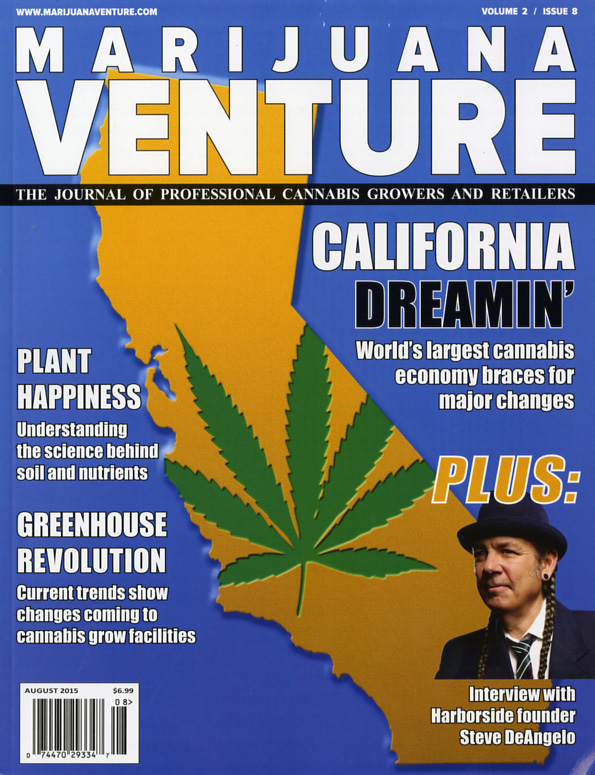
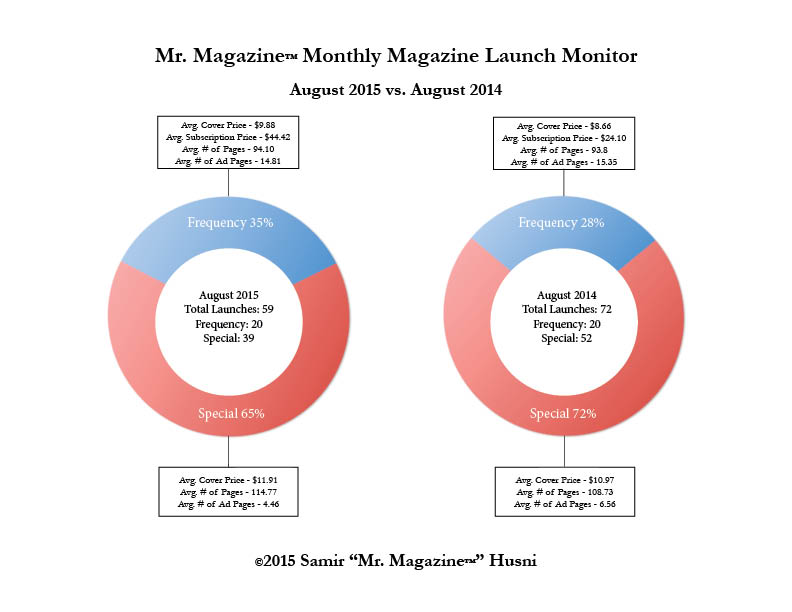
From the latest trend in stress relief for adults: coloring books, to the controversial world of marijuana commercial growing and selling; the month of August was filled with titles that continue to reflect the face of our society more than any other medium in the industry.

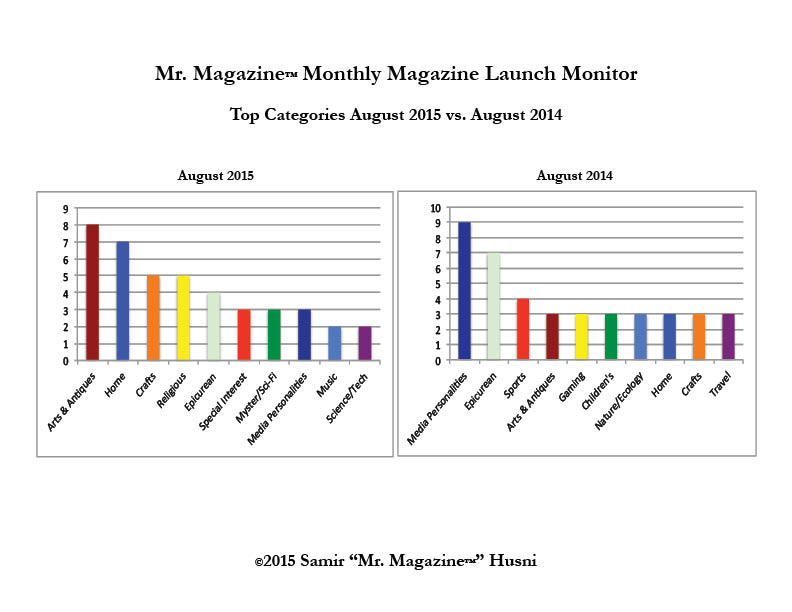
Arts & Crafts were big this time around and eating well remained important as the kaleidoscope of covers below will show as you give them a look – 59 new titles in all – 20 with promised frequency…it was truly another healthy month for magazines…

Chart 1 below compares the numbers of August 2015 to those of August 2014 and Chart 2 compares the categories of new magazines of August 2015 to those of August 2014.

Chart 1: New Magazines August 2015 vs. August 2014
August 2015 v 2014 pie graph

Chart 2: New Magazine Categories August 2015 vs. August 2014
August 2015 v 2014 top categories

And now for the covers of each and every new launch from August 2015.

**You will notice two Time Specials that are both “Marijuana Goes Main Street,” both covers were included for your viewing, but only count as one magazine…

Up first our frequency covers:

Artenol-21 Biz Peake-5 Cabin Living-19 Calming Art-1 Color Calm-4 Coloring Heaven-2 Coloring Meditation-3 Craft Girl-17 Drones-6 Eating Naturally-10 Faces-14 Gunslingers-18 MG-11 Natural Modern-8 Pain-Free Living-7 Relax with Art-16 Shutter-1 Simply Moderne-9 Take-13 The History of Rock-12

And now our August Specials:

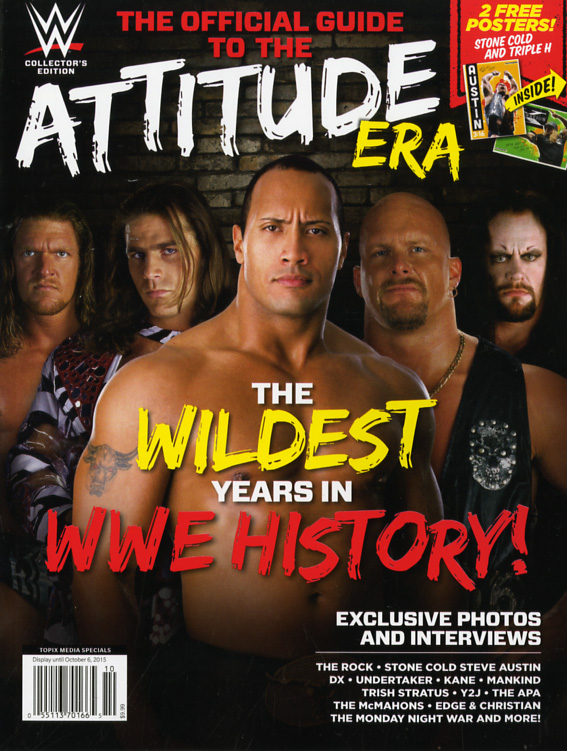
21-Day Yoga Challenge-1 2015 Baseball Hall of Fame-12 All Time Best Make Ahead Recipes-29 All-time Best Recipes-30 American Girl Everyday Fun-9 Attitude Era-10 Coloring is a form of happiness-5 Cottage Counrty-9 Cottage Kitchens-8 Diabetic Desserts-16 Electric Car Insider-10 Elle Style Essentials-2 Felted-17 Forbes The Smarter College Guide-3 From Scraps to Sensational-3 Guide to the Night Sky-26 Haunted Mysteries and Legends-4 Health-20 History's Greatest Conspiracy Theories-28 Kool Kars & Hot Honeys-6 Led Zeppelin-15 Mixed Media Jewelry-19 Movie Reunions-7 Organize your Stuff-13 Pope Francis 2-23 Pope Francis in America-22 Pope Francis-5 Roddy Piper-7 Small Homes-27 The Bible Why It Matters Today-6 The Caitlyn Jenner Story-24 The New Story of the Holy Land-21 The Queen-18 TIME Marijuana Goes Main Street Cover 2-14 TIME Marijuana Goes Main Street-2 Trends-25 Ultimate Book of Bugs-4 Vanished-8 Vanity Fair Special Edition-2 Weapons of WWII-11

h1

Keith Bellows: A Traveler Arrives At His Final Destination…

September 1, 2015

Listening to Keith Bellows’ presentation as he spoke at the ACT 5 Experience last year on October 8, one could hear in his speech that Keith was talking about his journey, his future, his final travel trip and his final destination. I have known and worked with Keith since he was an editor at Whittle Communications in Knoxville, TN. We became good friends and we continued that relationship while he was at the helm of National Geographic Traveler.

Keith and I spoke few weeks ago. He was still looking forward to the future, to new ventures. He was upbeat and determined to beat the illness that took a toll on him. Little did he, or I, know that he was going to take his final journey way too soon. This is the first journey that Keith is not going to report on or even write an article about. Rest in peace Keith Bellows and thanks for the memories and works that you’ve left behind. They will help all those who knew you to continue the journey and remember you one memory at a time.

Watch Keith Bellow’s presentation at the ACT 5 Experience at the Magazine Innovation Center @ The University of Mississippi, Oct. 8, 2014. Click below to watch his presentation.

h1

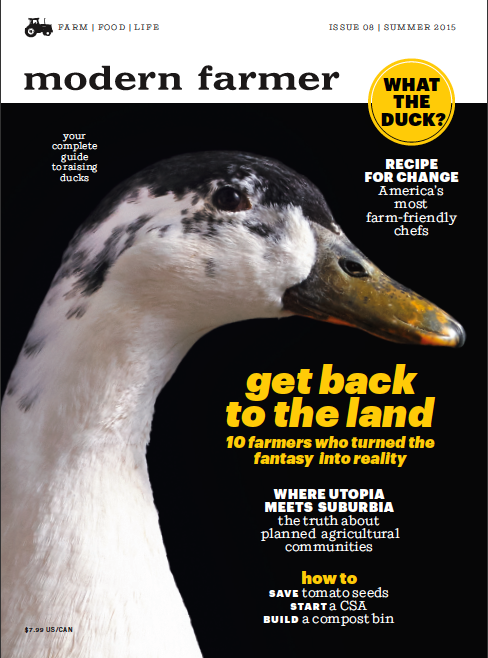
Modern Farmer: A Movement In A Magazine. Live The Experience Of What We Eat & How We Live – The Mr. Magazine™ Interview With Editor-in-Chief, Sarah Gray Miller.

August 31, 2015

“I’m such a firm believer in print. I think one big mistake magazines make is they start looking to cut corners and they denigrate the actual physical print product and in this case Modern Farmer is a luxury item with a high cover price and the actual object looks and feels luxurious. And at the end of the day, the print is the legitimizer of everything that flows from it. Yes, we have a great website; we have a fantastic digital director running it and we’re all over social media, but the print is the true legitimizer and the hub from which everything else flows. And there’s just no substitute for sitting down with a magazine and a glass of wine or a cup of coffee, whatever your poison is, and flipping through it.” Sarah Gray Miller

modern farmer news Modern Farmer magazine celebrates mother earth and all of her mysteries. From what we eat, how it’s grown and what repercussions we might expect from the way we interact with our planet, to the subtlety of earth’s mission to sustain and keep us healthy. The magazine is a plethora of information that is both timely and valuable to the human species.

The magazine relaunched with the summer issue and while most things haven’t changed, the quality and aesthetic value of the magazine to name two; some things did, such as providing more service to the reader and a heavier, more substantial well of content.

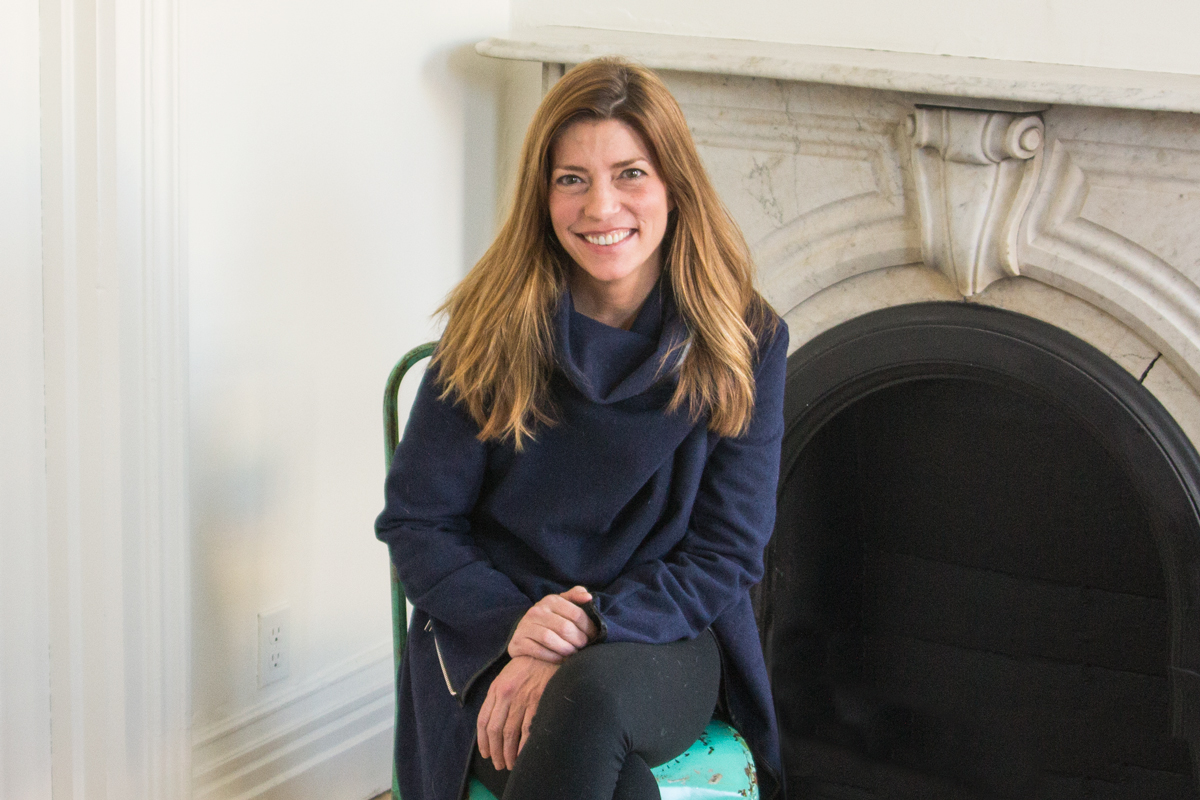
The new editor in chief, Sarah Gray Miller, is a woman who knows quite a bit about the earth beneath her feet in her own right, having spent most of her career working for publications that revere it. Since January 2015, she has been at the helm of Modern Farmer and is passionately thrilled with the magazine’s interestingly hybrid nature.

I spoke with Sarah Gray recently and we talked about that fact, and how the magazine appeals to not only the most experienced of farmers and gardeners, but the backyard enthusiast as well. It was a fun and entertaining conversation and one I think you will highly enjoy.

So, sit back and get ready to do some “Modern” farming, without getting your hands dirty at all…

But first, the sound-bites:

sarahgraymiller
On the fact the magazine first-launched with much fanfare, then was relaunched recently under her leadership:
It’s hard for me to tell you much about what happened before I got here because I wasn’t around. So, I don’t know exactly what went down. What I can tell you is that I’m very lucky in that I came onboard at a really strong brand that caught an amazing wave in the culture and that was right on time, maybe even slightly ahead of its time because I feel like we’re getting even more traction now.

On the magnetic attraction she seems to have for magazines that deal with food, gardening and the country living-type experience: I’ve long been interested in food and the growing of food and lifestyles, so Modern Farmer is the perfect fit for me. Also, I love the fact that it is located in the Hudson Valley in Athens, New York. I’ve had a house up here for nine years now and for the longest time I was relegated to being just a weekender, and sort of dreaded going back to the city on Sunday nights.

On her goals for Modern Farmer and what direction she envisions for the magazine: I might start with the things that I’ve decided not to change. One is the look of the magazine. The production values are amazing. We have incredibly good paper and that we’re keeping. The design is gorgeous; the cover identity remains the same. I do think though that throughout the magazine there is a little more service; a little more in depth reporting. Every time we cover something we ask ourselves the really hard questions such as: why does this belong in Modern Farmer and nowhere else? And these questions are just something that the reader asks too.

On what she thinks the major determinate is for Modern Farmer to survive:
I do think it’s catching this wave in the culture where people care very much about that their food; I think that’s key. Even before advertising, keeping your readers happy and satisfying your consumers and your audience is vital. And I’ve long- edited from the reader’s point-of-view, with a pretty sharp BS meter for whether or not I as the reader understand it and I’m spurred to action, have the tools I need to take that action, etc. And then of course, advertising is part of the equation.

On whether she thinks a magazine called “Modern” Farmer can be successful in print:
I’m such a firm believer in print. I think one big mistake magazines make is they start looking to cut corners and they denigrate the actual physical print product and in this case Modern Farmer is a luxury item with a high cover price and the actual object looks and feels luxurious. And at the end of the day, the print is the legitimizer of everything that flows from it.

On whether her past career experience at places such as Garden Design and Country Living helped to prepare her for her job at Modern Farmer: Immeasurably. I owe the biggest debt to Dorothy Kalins at Garden Design who taught me pretty much everything I know and also the connections I made there and at Organic Style and Country Living were incredibly helpful.

On the challenges of doing cover photo shoots with animals versus people:
Oh, the things that I’ve learned about ducks that you wouldn’t believe. One thing and we laugh here, animals look like what animals look like, so there’s not a whole lot of photoshopping you can do in the same way as you can with celebrities and real people, so that’s different. They bring their own set of challenges however.

On what motivates her to get out of bed in the mornings:
I am so energized by this product that I just can’t tell you how much. There are two different things; one, I love a startup; I love a turnaround and I love indie journalism more than anything, so the fact that this is young and scrappy and a tiny team reminds me of what it was like at Garden Design, Budget Living and Saveur. I do not spend my days in corporate meetings; I’m actually back doing the work again. I’m getting to report things and write things and line edit content, which is thrilling and fun and exciting. It’s a bit of a rollercoaster.

On how her role as editor has changed from before the digital age and after:
I think all editors are busier now than they used to be for sure, because you’re looking at multiple channels, but at the end of the day it’s all about communicating information to your audience, whether you’re doing that on Instagram, Twitter, Facebook, or your website or in print. I really welcome the technology. I also love that it allows for more immediacy and more of a conversation and an exchange with the reader.

On how she decides on the animal that will grace the cover of the magazine each time: For one, we’re not covering animals that have already been covered, that’s a big part of it. And then it’s also looking at, this may sound silly, but with animals, just like fashion or food, there are definite trends. There is a ton of interest in duck eggs and duck meat; they’re the new chickens, if you will.

On whom she sees as Modern Farmer’s number one competitor: I don’t really see one out there. I know every editor likes to say that, but I don’t. It would have been easier for me, at say, Country Living, to name magazines that seemed like they were in a competitive set, but here the magazine is such an interesting hybrid; it’s covering food, gardening, farming and just the whole back-to-the-land lifestyle and it also contains the kind of articles that put it in more of a thought leader category, or a hard journalism category.

On anything else she’d like to add:
One question that I get a lot is: are we for farmers? And are farmers reading the magazine? And the answer is yes, we do have farmers reading us. And we do want to speak to those farmers and cover tools that will help them and cover plants that relate to farming, but we also have a lot of people who read the magazine who are merely backyard gardeners; who are want-to-be farmer-gardeners and dreamers and concerned, responsible consumers. So, we are talking to all of those constituents at the same time, which is challenging but incredibly rewarding.

On what keeps her up at night:
Everything keeps me up at night. (Laughs) Everything from the state of the plants, the pictures; did I put the wrong directional on that caption, just everything. You would think right after we go to press that I would have the calmest, most relaxed time, especially with a quarterly; that I would get a few really calm weeks. But that’s when I wake up in the middle of the night the most wondering did I catch everything; did I get everything right.

And now the lightly edited transcript of the Mr. Magazine™ conversation with Sarah Gray Miller, Editor-In-Chief, Modern Farmer magazine.

Samir Husni: Modern Farmer was born with a big bang and it was the darling of the media and then something happened and now you’re in charge. Tell me about that journey.

Sarah Gray Miller: It’s hard for me to tell you much about what happened before I got here because I wasn’t around. So, I don’t know exactly what went down. What I can tell you is that I’m very lucky in that I came onboard at a really strong brand that caught an amazing wave in the culture and that was right on time, maybe even slightly ahead of its time because I feel like we’re getting even more traction now.

All of that said, everything can be improved, so the first thing that I did when I got here was to really try and elicit criticism; I wanted to hear from readers and people in the business about what they didn’t love; what they wanted to see changed, as well as what they did love and what the sacred cows were. The last thing I wanted to do was to throw the baby out with the bath water.

Samir Husni: This genre of magazines seems to attract you like a magnet; you’ve been with Country Living, Organic Style and Garden Design…

Sarah Gray Miller: I’ve long been interested in food and the growing of food and lifestyles, so Modern Farmer is the perfect fit for me. Also, I love the fact that it is located in the Hudson Valley in Athens, New York. I’ve had a house up here for nine years now and for the longest time I was relegated to being just a weekender, and sort of dreaded going back to the city on Sunday nights. So, to be able to live here full time and be in the media business is amazingly fortunate.

Samir Husni: Tell me about your plans and goals for Modern Farmer and where you expect to take the magazine now that it’s under your tenure.

modern farmer sub Sarah Gray Miller: I might start with the things that I’ve decided not to change. One is the look of the magazine. The production values are amazing. We have incredibly good paper and that we’re keeping. The design is gorgeous; the cover identity remains the same.

I do think though that throughout the magazine there is a little more service; a little more in depth reporting. Every time we cover something we ask ourselves the really hard questions such as: why does this belong in Modern Farmer and nowhere else? And these questions are just something that the reader asks too.

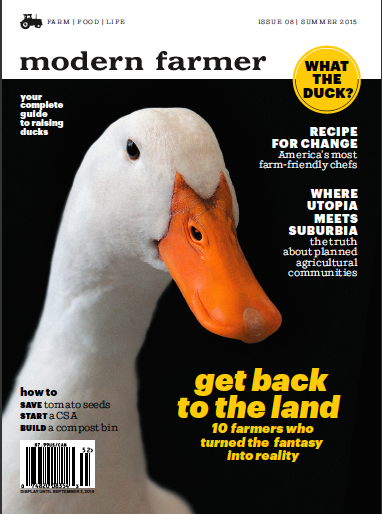
The cover animal; they wanted to know more and see more in depth coverage on that particular animal. So, instead of just a rundown of eight cute breeds, we’re actually telling people about how to go about raising ducks.

The magazine is ultimately for people who care greatly about their food and where it comes from and in the past you never saw a lot of food. And you may have noticed in the fall issue there is food and recipes connected to chefs and the causes that they’re advocating for. But I think it’s important to actually see food.

Samir Husni: You’ve been doing this for some time and you’ve seen a lot of magazines come and go; what do you think is the major determinate for Modern Farmer to survive?

Sarah Gray Miller: I do think it’s catching this wave in the culture where people care very much about that their food; I think that’s key. Even before advertising, keeping your readers happy and satisfying your consumers and your audience is vital. And I’ve long- edited from the reader’s point-of-view, with a pretty sharp BS meter for whether or not I as the reader understand it and I’m spurred to action, have the tools I need to take that action, etc. And then of course, advertising is part of the equation.

So, shortly after I came onboard, which was the very end of January 2015; we brought in a publisher and there’s an ad sales staff, that way I get to focus on making the magazine, which is great, and speaking to the readers. But there’s now a dedicated team out selling it to advertisers.

Samir Husni: What do you say to those people who might ask you; the name of the magazine is Modern Farmer, yet you’re publishing a print magazine, an ink on paper magazine, in these modern digital days; what would you say to them?

Sarah Gray Miller: I’m such a firm believer in print. I think one big mistake magazines make is they start looking to cut corners and they denigrate the actual physical print product and in this case Modern Farmer is a luxury item with a high cover price and the actual object looks and feels luxurious. And at the end of the day, the print is the legitimizer of everything that flows from it.

Yes, we have a great website; we have a fantastic digital director running it and we’re all over social media, but the print is the true legitimizer and the hub from which everything else flows. And there’s just no substitute for sitting down with a magazine and a glass of wine or a cup of coffee, whatever your poison is, and flipping through it.

Samir Husni: Needless to say, I agree with you 100%. (Laughs)

Sarah Gray Miller: (Laughs too). For obvious reasons, Mr. Magazine™.

Samir Husni: With your background; you’re from Mississippi, so you grew up in a farming state and you’ve worked with all of these magazines that have to do with food, farming as a way of life, and getting back to Mother Earth. How do you think all of that has helped and prepared you for the job you’re doing now?

Sarah Gray Miller: Immeasurably. I owe the biggest debt to Dorothy Kalins at Garden Design who taught me pretty much everything I know and also the connections I made there and at Organic Style and Country Living were incredibly helpful.

Another thing that I learned, probably at Garden Design, where you’re dealing with sort of technical, horticultural information is the ability to speak to the expert, the pro, the experienced person who’s been doing it forever and at the very same time talk to the enthusiast who might be new to the subject matter. And there’s a real trick for not talking down to people who already know what they’re doing, but giving the enthusiast context clues to understand the material.

Samir Husni: When you’re shooting your covers of all of the different animals, such as the duck on the summer issue; how difficult is it working with animals as opposed to working with celebrities and other people that you can actually talk to?

Sarah Gray Miller: (Laughs) Oh, the things that I’ve learned about ducks that you wouldn’t believe. One thing and we laugh here, animals look like what animals look like, so there’s not a whole lot of photoshopping you can do in the same way as you can with celebrities and real people, so that’s different. They bring their own set of challenges however.

Luckily with the duck they’re flightless, but they also have notoriously filthy bathroom habits. I tried to say that in the most polite way possible, but I’ll just put it this way; we went through a lot of white seamless paper onset during that shoot.

Samir Husni: What makes you tick and click and motivates you to get out of bed in the mornings and say it’s going to be a great day?

Sarah Gray Miller: I am so energized by this product that I just can’t tell you how much. There are two different things; one, I love a startup; I love a turnaround and I love Indie journalism more than anything, so the fact that this is young and scrappy and a tiny team reminds me of what it was like at Garden Design, Budget Living and Saveur. I do not spend my days in corporate meetings; I’m actually back doing the work again. I’m getting to report things and write things and line edit content, which is thrilling and fun and exciting. It’s a bit of a rollercoaster.

I also think this magazine has the potential to, and this may sound hyperbolic, change the world. This magazine is a force for good, which makes me proud to be a part of it and I get very excited and passionate about the stories that we do.

And we get to do long-form journalism, which is so rare. We’re assigning pieces that are 2,000 words long and very few magazine editors get to do that. And we get to cover important political issues. It’s smarter than your average lifestyle magazine.

Samir Husni: You were editing magazines before the dawn of the digital age…

Sarah Gray Miller: Yes, I think we were on AOL way back 20 years ago when email was brand new. (Laughs)

Samir Husni: You were editing before we became fully digitized and after; how has your role of editor changed during those years?

Sarah Gray Miller: I think all editors are busier now than they used to be for sure, because you’re looking at multiple channels, but at the end of the day it’s all about communicating information to your audience, whether you’re doing that on Instagram, Twitter, Facebook, or your website or in print. I really welcome the technology. I also love that it allows for more immediacy and more of a conversation and an exchange with the reader.

I always said that I’ve never been nor ever will be one of those editors who sit above the reader. I always like to get down on the floor and roll around with them. I’m in it with them. And I think social media, especially, allows us to have such a conversation with our audience. And get instantaneous feedback about what interests them or doesn’t interest them.

And then what the print product lets us do is take our time and sink our teeth into a subject, report it from every angle, lovingly line edit, making sure every single word is right, and create a gloriously deep, physical, luxurious product. But I also like the fast interaction that digital media provides. I consume information on all channels.

Samir Husni: When you’re considering your next cover subject; how do you decide which animal is up next?

Sarah Gray Miller: For one, we’re not covering animals that have already been covered, that’s a big part of it. And then it’s also looking at, this may sound silly, but with animals, just like fashion or food, there are definite trends. There is a ton of interest in duck eggs and duck meat; they’re the new chickens, if you will.

That same thinking went into our fall issue, where we’ve got a cover contest up online still, so I can’t tell you what it is yet, but it’s an animal that has sort of went through a boom-bust economy. And it’s back and people are farming it again.

There’s also a now-ness; we’re not just covering X because it’s summer and that’s the time to cover this particular animal or that one. We’re also thinking about what people are interested in right then.

Samir Husni: Who do you consider your number one competitor?

Sarah Gray Miller: I don’t really see one out there. I know every editor likes to say that, but I don’t. It would have been easier for me, at say, Country Living, to name magazines that seemed like they were in a competitive set, but here the magazine is such an interesting hybrid; it’s covering food, gardening, farming and just the whole back-to-the-land lifestyle and it also contains the kind of articles that put it in more of a thought leader category, or a hard journalism category. So, I don’t see a direct competitor.

Samir Husni: Is there anything else that you’d like to add?

Sarah Gray Miller: One question that I get a lot is: are we for farmers? And are farmers reading the magazine? And the answer is yes, we do have farmers reading us. And we do want to speak to those farmers and cover tools that will help them and cover plants that relate to farming, but we also have a lot of people who read the magazine who are merely backyard gardeners; who are want-to-be farmer-gardeners and dreamers and concerned, responsible consumers. So, we are talking to all of those constituents at the same time, which is challenging but incredibly rewarding.

And I don’t know why it throws people, because Rolling Stone has people who are not rock stars who read the magazine. Farmers are the rock stars for this audience.

Samir Husni: My typical last question; what keeps you up at night?

Sarah Gray Miller: Everything keeps me up at night. (Laughs) Everything from the state of the plants, the pictures; did I put the wrong directional on that caption, just everything. You would think right after we go to press that I would have the calmest, most relaxed time, especially with a quarterly; that I would get a few really calm weeks. But that’s when I wake up in the middle of the night the most wondering did I catch everything; did I get everything right. I take this job really seriously and I feel very responsible to the people who pay for the magazine and read it. It matters to me greatly that we get everything not just right, but great.

Samir Husni: Thank you.

h1

When It Comes To Content It’s All About “The Reader” – Innovation Through Environmentally-Responsible & Moral Journalism – The Mr. Magazine™ Interview With Chris Theodore, Co-Founder, Editor, The Reader Magazine.

August 28, 2015

“The Reader is a publication that’s education-focused, free, and really revolutionizes standard direct mail by focusing on good content and the power of what paper and print can do. And what we find quite interesting and fascinating is that the direct mail industry has really been missing the opportunity that print and stories present. And what we do in The Reader magazine is we revive those values that are inherent in an IT (Information Technology), and we call print an IT that is underappreciated, but also extremely widely-used and understood.” Chris Theodore

PastCoverofReaderMagazine3 The power of print has never been more evident than with The Reader Magazine. Co-founder and editor, Chris Theodore is a soft-spoken man who has the heart of a lion when it comes to the mission of his magazine.

The Reader is a free news publication founded in 2001 and its mission is to help advertisers influence local audiences through positive environmental, social and economic impact in communities. Through moral integrity, social responsibility and a genuine desire to change people’s lives, The Reader is a journalistic endeavor that has definitely made its mark in the world of magazines and magazine media.

I spoke with Chris recently and we talked about the magazine’s noble foundation and purpose and about the goal of expansion which will happen in three phases over the next five years. The goal – to become the first single media entity with a journalistic connection with every American, to create a Reader Nation.

A lofty goal, some might say, but nevertheless, their ultimate dream of providing print and Internet advertising to all U.S. advertisers, would change the face of advertising immeasurably.

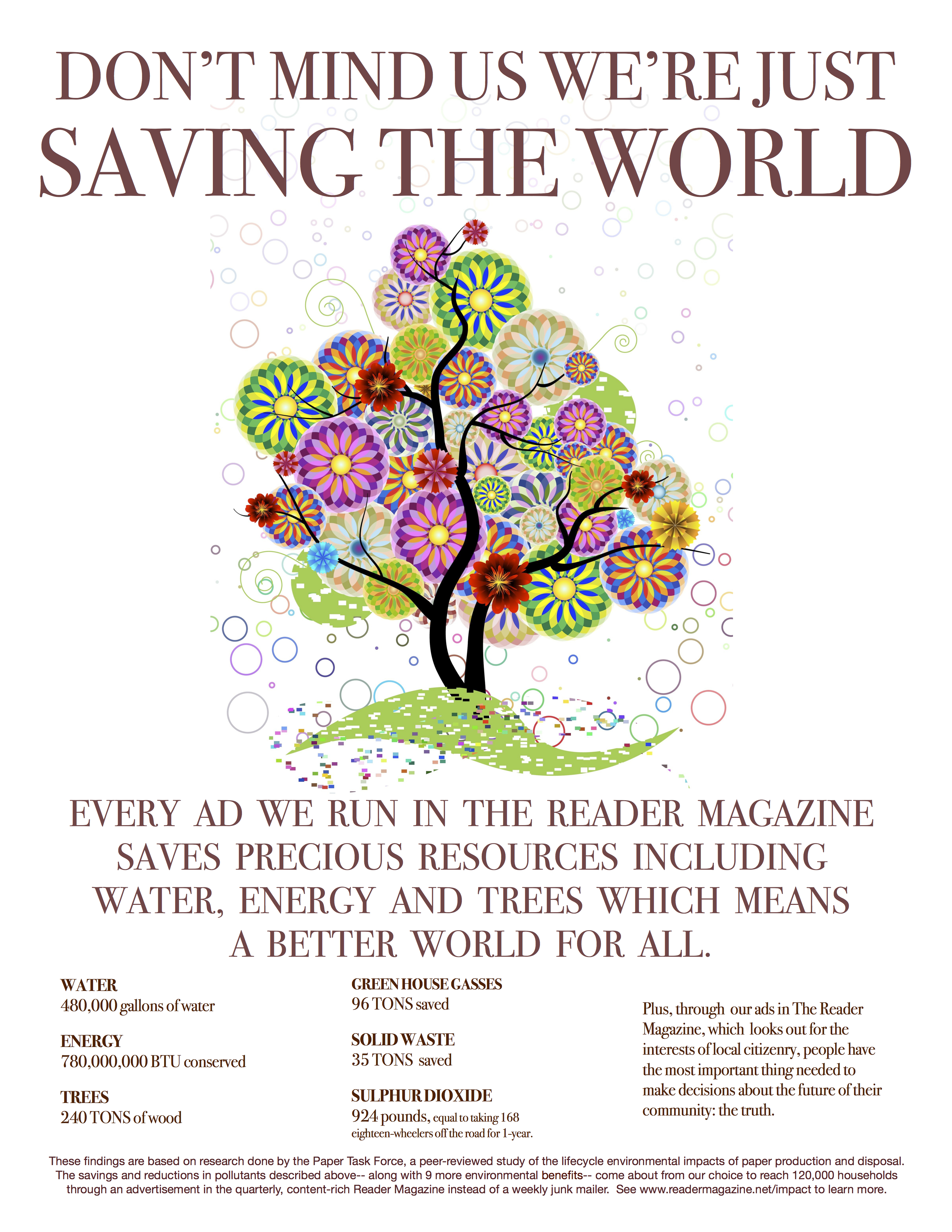
The environmentally-responsible business model that it implements is done with the primary goal of saving each advertiser an average of 4 tons of wood per year by driving advertiser ROI through journalistic content rather than high frequency, which in turn is a monetary amount of over $3,500 per year.

It’s a remarkable magazine with a remarkable man behind the wheel. The passion and enthusiasm that Chris feels for both the brand and the cause is palpable.

So, I hope you enjoy being “The Reader” of this interview with Chris Theodore, Co-founder and Editor, The Reader Magazine… I know I thoroughly did.

But first, the sound-bites:

NobleMediaCEOChrisTheodore
On a description of what The Reader is:
It’s a publication that’s education-focused, free, and really revolutionizes standard direct mail by focusing on good content and the power of what paper and print can do.

On why he believes some magazine publishers have missed the boat on the power of print:
Certainly some people have not missed the boat. Let’s talk about The Economist, which I heard was just up for sale. I read that they were doing something like $500 million in sales and $95 million in profit. I don’t know that company well enough to tell you what part of that revenue is print-driven, but I bet a big part of it is. (Laughs) Probably 80% of it is. So, clearly there are companies who understand that power and are just going right after it, or aren’t trying to hide what they do.

On The Reader’s approach with advertisers when it comes to its environmentally-responsible business model concerning the magazine versus direct mail:
It was research that we undertook about two or three years ago that we’re really glad that we focused on. It came about through relationships with third-party, non-profit organizations that were more than glad to help us determine that. It was really super-cool to be able to give people this sensible, accurate and scientific peer review in a type of analysis, which was awesome. Does it matter to our advertisers? I think to some, yes. I haven’t done research as to the impact our environmentally-responsible model has on our advertisers, but I can tell you that it’s clear when we’re discussing advertising that it is increasingly a positive thing when we’re talking to potential advertisers.

On whether he thinks The Reader is more of an advocate magazine or a journalistic magazine:
One of the most powerful things that we do, and I can feel the goose bumps forming on my arm as I’m telling you, is the fact that we use our magazine in a moral way. We try to find information that can communicate in a moral way. Does that mean advocacy? I wouldn’t use the word advocacy; you might call it solution-focused journalism. Some people call it explanatory journalism.

On whether he believes the magazine could have accomplished its goal and vision without the print component, if it were digital-only: That’s an interesting question. I don’t know the answer to that. We certainly could never do what we’re intending to do, nor would we have the impact in a local community if we were just digital, because there are just too many choices out there. What’s interesting about print is that – well, there are many things interesting about print as you well know, but I would say that one of them is the power to be in someone’s home and to have something tangible. That’s very important.

On the fact that he and The Reader hit the spotlight when he asked the Governor of California for $26 million to hire 439 laid-off PennySaver employees and whether he received the money: No, we haven’t gotten the money yet. (Laughs too) It remains to be seen where that money will come from. It’s important to be patient and our company’s strategy is sure-footed; we’ve always been sure-footed. Things are still in a positive state in terms of potentially working and getting this money from the state of California.

On the expansion plans for The Reader:
When I thought about doing what we’re doing in this area, Southern California, at the very beginning my dream was to just do this area. Then that dream and my desire grew. Even in 2006, believe it or not, we were dreaming about expanding into greater areas, but we really hadn’t put together the plan. We’d done a lot of hard work, but we hadn’t done what can be the excruciatingly hard work of doing all of the financial analysis and all of the operational and strategical analyses and all of the research, that we have now done. So, that has resulted in what is about an 87-page business planning process paper that shows specifically every state, including Mississippi, and when we will create a zone in that area.

On the major stumbling block he might face and how he would overcome it:
The key will be talent; attracting and hiring, managing, inspiring and retaining talent. Our plan for addressing that will be what I eluded to earlier, which is we will keep our focus on the noble purpose of what we’re doing. And we will make sure that those who come aboard understand that this is not just about profitability, it’s about bringing something needed and that can transform hearts and individual’s lives into their homes that they wouldn’t have otherwise.

On anything else he’d like to add:
Blowing the lid off just a little more about the myth of advertising expenditures is something I find interesting and one of my favorites is, according to Ad Age magazine as well as BIA/Kelsey, a local advertising research company, of the $140 billion spent on local advertising last year, 50% was spent on some form of print advertising, 27% of the $140 billion was spent on direct mail. But the most fascinating, I think, is how that shows people what’s happening with print and local advertising. It is $70 billion that is spent on print and that’s not talking about national advertising. That’s local advertising.

On what keeps him up at night:
There’s really not one thing in particular. There’s not one thing that really keeps me up at night, because right now to be honest with you, my feeling is that it’s time to move. There are various times in life that we do things and that we want things, but right now it’s time to simply put it altogether and to move forward.

And now for the lightly edited transcript of the Mr. Magazine™ conversation with Chris Theodore, Co-Founder, Editor, The Reader Magazine.

Samir Husni: Could you tell me a little about The Reader?

Chris Theodore: It’s a publication that’s education-focused, free, and really revolutionizes standard direct mail by focusing on good content and the power of what paper and print can do.

And what we find quite interesting and fascinating is that the direct mail industry has really been missing the opportunity that print and stories present. And what we do in The Reader magazine is we revive those values that are inherent in an IT (Information Technology), and we call print an IT that is underappreciated, but also extremely widely-used and understood.

And why its understanding is important and why its familiarity is actually important is because that’s the door that opens when you start talking about print to actual lay people or businesspeople. And when you’re describing the power of print to businesspeople, it’s not a story that you have to try very hard to get people to understand, which is very important because that way you can sell advertising. So, there is a huge door opening there, which paves the way for a relationship with a businessperson. And that would be one way to describe The Reader magazine.

Samir Husni: Why do you think a lot of other publishers and magazine publishers have missed or ignored that story and now people are calling it content marketing or native advertising, rather than using the power of print to deliver stories plus advertising? Why have they missed the boat on this?

Chris Theodore: Certainly some people have not missed the boat. There’s a great website that I found recently called “The Power of Print,” I’m not really quite sure what they’re doing, but they are people who obviously love print.

But let me try and hit your question straight-on. I would say actually that there are plenty of publishers out there who understand it and that they’re doing well and their business model is doing well.

Let’s talk about The Economist, which I heard was just up for sale. I read that they were doing something like $500 million in sales and $95 million in profit. I don’t know that company well enough to tell you what part of that revenue is print-driven, but I bet a big part of it is. (Laughs) Probably 80% of it is. So, clearly there are companies who understand that power and are just going right after it, or aren’t trying to hide what they do.

Interestingly on the other hand, there are companies here in California that are calling their companies digital first rather than what they are which is a media channel, which I find really quite interesting. They’re supposed to be a local media channel. And I think some of is bad information.

Samir Husni: I refer to that as falling in love with the first gorgeous mistress who walks the hallways of those companies, tempting them with the revenues of digital, while our faithful partner called print has been and still is providing us with our daily bread.

Chris Theodore: You’re right and has been for a long, long time.

Samir Husni: Let me ask you specifically about The Reader because I was fascinated in the way that you said: you use The Reader to advertise instead of high-frequency junk mail or direct mail. And the amount of savings in terms of trees and water; tell me more about that concept and as you go and approach your clients, your advertisers, and you compare direct mail to The Reader as the vehicle of delivery for their advertisements; tell me about that conversation.

Chris Theodore: Yes, of course. It was research that we undertook about two or three years ago that we’re really glad that we focused on. It came about through relationships with third-party, non-profit organizations that were more than glad to help us determine that. It was really super-cool to be able to give people this sensible, accurate and scientific peer review in a type of analysis, which was awesome.

Does it matter to our advertisers? I think to some, yes. I haven’t done research as to the impact our environmentally-responsible model has on our advertisers, but I can tell you that it’s clear when we’re discussing advertising that it is increasingly a positive thing when we’re talking to potential advertisers.

I think that also corresponds to the amount of people in the United States who increasingly care about lowering fossil-fuel burning, which is interesting because our next issue is on the environmental politics in California. And one of the things I’m learning is there are some things that, not just Californians, but all Americans think about in terms of the environment, or let me say not all, but a high majority, and one of them is lowering fossil-fuel use. So, it’s really been a timely thing.

I think one of the things we’re good at is timing, in terms of our publication. In business it’s always helpful to be that. The environmental impact is something that’s important, particularly in California where we’re having a drought, for our advertisers to know and for our audiences to know. And that each of our advertisers is saving a community 40,000 gallons of water a year. From an advertisement standpoint, that’s about the size of two business cards, if I’m not mistaken. And that’s something that matters to them. Then we can figure it all out, there’s all kinds of cool calculators online; we can figure out what 40,000 gallons equals for a community, let’s say with 120,000 households. So, it’s a cool time.

I love being in the magazine business right now for many reasons. One of them is having access to great information that we can provide people simultaneously and generally in my opinion; it’s a quality level of educationally-focused information that is presented in ways that do not alienate or do not pander. There’s a need for that, despite the incredible amount of information everywhere. There is still a need for good content.

Samir Husni: Is The Reader more of an advocate magazine or more of a journalistic magazine?

PastCoverofReaderMagazine2 Chris Theodore: That’s a great question. I’ll answer it this way; my colleague and the co-founder of The Reader magazine, sent me a wonderful article yesterday that was in Forbes. And it was about how some companies, and they were using Monster.com as an example, tail spun and fell apart because they lost their sense of noble purpose. They were talking about how originally Monster.com was saying that they wanted people to have a job that they cared about and something that they could feel good about. The whole focus was on making sure that the users used that medium in order to do something very important in their lives, which was to find something with meaning. And they lost that. When it was all profit-driven and the CEO, who was subsequently fired, was all about the quarterly and focusing on it, they lost that sense of noble purpose.

I bring that up because one of the most powerful things that we do, and I can feel the goose bumps forming on my arm as I’m telling you, is the fact that we use our magazine in a moral way. We try to find information that can communicate in a moral way. Does that mean advocacy? I wouldn’t use the word advocacy; you might call it solution-focused journalism. Some people call it explanatory journalism.

I would say that one of the things missing today is a certain moral quality when it comes to journalism and the information being shared with people. And you might be able to sense why this would be so important; if you have a free publication and you can actually master a certain moral tone without being over-the-top or coming across as: this is the only way, but rather basing your information on a basis of truth, something like what The Center for Public Integrity does, where you can tell after a while, if you’ve been following their journalistic brand, after some years, but it doesn’t really take years. You can actually pick it up the first time you ever see it. There’s a certain truthfulness and a certain avoidance of the same kind of language that gets people into problems.

George Orwell once said that when he wrote an article, he used to be a journalist; he tried to not use words or expressions that were simply the repetition of what others had said. So, if you just try hard enough you can create a certain moral brand, if you will, that actually is legitimate and relevant.

Samir Husni: And do you think you could have accomplished what you have with The Reader without the print component, if you were digital-only?

Chris Theodore: That’s an interesting question. I don’t know the answer to that. We certainly could never do what we’re intending to do, nor would we have the impact in a local community if we were just digital, because there are just too many choices out there.

What’s interesting about print is that – well, there are many things interesting about print as you well know, but I would say that one of them is the power to be in someone’s home and to have something tangible. That’s very important.

So, I guess one of the answers to your question is that I don’t envision that. We wouldn’t have been able to achieve what we’re achieving and what we wanted to achieve any other way than through print.

Samir Husni: Back in May you and The Reader came into the spotlight when you asked Governor Brown to give you a grant or a loan of $26 million to hire 439 Californians who were laid off when PennySaver closed its doors, a media company which had been operating for 50 years. Any reaction from anyone? Did you get the money? (Laughs)

Chris Theodore: No, we haven’t gotten the money yet. (Laughs too) It remains to be seen where that money will come from. It’s important to be patient and our company’s strategy is sure-footed; we’ve always been sure-footed. Things are still in a positive state in terms of potentially working and getting this money from the state of California.

But also it very well might not come from the state, but instead come from the Money Markets and the private sector, commercial sources, basically.

Samir Husni: The Reader is doing well in the local market; it’s my understanding that advertising revenue was something like 46% higher this year than last. Is that the encouraging sign that is pushing you to go nationwide, to expand? Or is it the mission that you want to share with the rest of the country after sharing it with California for 15 years?

Chris Theodore: It’s both. That’s the short answer and I’ve given so few short answers that’ll I’ll keep it at that.

Samir Husni: Tell me about the expansion plans; when could I expect to see, for example, The Reader delivered to my home in Mississippi?

Environmental Impact of Reader Vs. PennySaver copy Chris Theodore: The expansion plan really grew out of a long, simmering desire to have a bigger impact than we had and to be able to bring the kind of information that I’ve described to more people. It came from a desire to share with people who might not have had the same kind of background that I did, which was a father who was an educator and a mother who was involved in non-profit work, so I was given a lot in my very fortunate upbringing. So that changed my trajectory.

When I thought about doing what we’re doing in this area, Southern California, at the very beginning my dream was to just do this area. Then that dream and my desire grew. Even in 2006, believe it or not, we were dreaming about expanding into greater areas, but we really hadn’t put together the plan. We’d done a lot of hard work, but we hadn’t done what can be the excruciatingly hard work of doing all of the financial analysis and all of the operational and strategical analyses and all of the research, that we have now done.

So, that has resulted in what is about an 87-page business planning process paper that shows specifically every state, including Mississippi, and when we will create a zone in that area.

The short story is that the expansion will occur in three phases. The planning is somewhat flexible and I’m proud of our planning for that reason. In California, for example, when PennySaver closed, our plan was flexible enough and we knew the numbers enough that we could very quickly figure out what we would need in terms of upfront capital as well as anything else to change it somewhat so that we could accelerate the expansion and go into California, for example, on a faster way than we had.

But the short story is it will occur in three phases over five years and everything has been laid out, not that things won’t come up, things will come up and problems will occur, but I have a very good understanding of this business; I have a very good understanding of this market and we feel that if we do what we have done up to now, which is being careful and making good decisions and having good people, eventually we will be nationwide in about five years.

Samir Husni: What do you anticipate during those five years as being your major stumbling block and what is your contingency plan to overcome it?

Chris Theodore: The key will be talent; attracting and hiring, managing, inspiring and retaining talent. Our plan for addressing that will be what I eluded to earlier, which is we will keep our focus on the noble purpose of what we’re doing. And we will make sure that those who come aboard understand that this is not just about profitability, it’s about bringing something needed and that can transform hearts and individual’s lives into their homes that they wouldn’t have otherwise.

And I think that if we do a good job of not just communicating that, but actually living that and actually in our company, continue what we’re doing now, which is endeavoring to stay focused on the noble element and the purpose of what we’re doing, then that will continually enfranchise people who are working with us. But we’ll also be dealing with them in a way that they see congruency here and see that it’s real. And I want to be in an honest and real company. And that’s how I would answer that question and I’m not saying it’s going to be easy, but I’ll tell you this, it isn’t new to me. We will be able to apply a decade and a half of trial and error to the application of a very well thought-out plan in a market which is poised to accept what we’re doing.

Samir Husni: Is there anything that you’d like to add?

Chris Theodore: Blowing the lid off just a little more about the myth of advertising expenditures is something I find interesting and one of my favorites is, according to Ad Age magazine as well as BIA/Kelsey, a local advertising research company, of the $140 billion spent on local advertising last year, 50% was spent on some form of print advertising, 27% of the $140 billion was spent on direct mail. Interestingly, the projection for 2018 and by the way direct mail is the number one category of expenditures for local advertising in the United States; interestingly, it will remain so according to BIA/Kelsey in 2018. It will only go down by three percentage points.

But the most fascinating, I think, is how that shows people what’s happening with print and local advertising. It is $70 billion that is spent on print and that’s not talking about national advertising. That’s local advertising.

Samir Husni: My typical last question; what keeps you up at night?

Chris Theodore: There’s really not one thing in particular. There’s not one thing that really keeps me up at night, because right now to be honest with you, my feeling is that it’s time to move. There are various times in life that we do things and that we want things, but right now it’s time to simply put it altogether and to move forward. It’s time to do this and time to expand. So, I’m not really taking a lot of time or worried about it.

Samir Husni: Thank you.

h1

The Global Reach Of Hearst Magazines International – And The Woman Who Guides & Supports With A Passionate Flair Of Communication – The Mr. Magazine™ Interview With Kim St. Clair Bodden, Senior Vice President/Editorial Director, Hearst Magazines International

August 26, 2015

“I think the brands are strong. As a long-time editor, I am very much attached to print. But I would say that my title over the past couple of years hasn’t been editorial director; it’s really been brand manager. I’m a brand steward and it’s about the brand. And I can see that in certain areas maybe print would provide better and in other areas maybe a digital-only aspect of that brand would exist.” Kim St. Clair Bodden (on whether the many brands could exist without a print component)

cosmo australia Being a global entity takes on a whole new meaning when it comes to Hearst Magazines International and its overseas editions. As the largest U.S. publisher of magazines worldwide, Hearst Magazines International is composed of nearly 300 print editions and 200 websites in 34 languages and 81 countries. Its brands, including, Cosmopolitan, Harper’s BAZAAR, Esquire, Town & Country, Good Housekeeping and ELLE. The company has launched new print products in countries from Chile to Vietnam, and in the last five years alone, HMI has launched over 20 new editions in markets around the world.

Those achievements are both extraordinary and competently maintained by a team of professionals that listen to their expert editors around the globe and apply what they learn from them and more importantly, their audience, to the content they create, both in print and in digital.

Kim St. Clair Bodden is the matriarch of all of that international editorial content. As senior vice president/editorial director at Hearst Magazines International, Kim, who has been at Hearst since the early 1980s, believes in a support system with her global partners that far exceeds annual meetings or occasional conversations. Keeping her finger constantly on the pulse of the international editions by promoting and utilizing open dialogues and almost 24/7 access and communication, Kim is a leader that is there for her world editors and admits she learns as much from them at times as they do from her.

I spoke with Kim recently about the many facets of the Hearst Magazines International operation. From the print product to the digital and digital-only entities that are popping up in remote and not-so remote regions of the world. Suffice it to say that the Hearst magazines have definitely gone international and are continuing to explore new opportunities just about everywhere.

I hope you enjoy the Mr. Magazine™ conversation with Kim St. Clair Bodden and get a sense of the scope and “cosmopolitan” (pun intended) flavor of the international arm of Hearst Magazines. I know you’ll appreciate the passion and dedication Kim has for the magazine brands. So, sit back, relax and get ready to globetrot with one very busy lady.

But first, the sound-bites:

KimStClairBodden1
On the impact the Internet, digital and mobile has had on her role as an editor:
That’s a very good question and it’s something that I’ve thought about often. As you know, we have magazines all over the world, but the Internet impact is really affecting everyone at different stages and at different volumes, but at the end of the day, it still is making that impact. But it has turned around quickly. Our editors at our magazines have embraced it; they understand that it is the new world order and it’s something that they go into feet-first, with mind, body and soul following, and they do so with excitement.

On how her mind switches gears from a monthly magazine to the second-by-second dynamics of digital:
We really go from month to moment, because that’s exactly what we need to do. I think the secret to our success is that we rely on our partners around the world to be experts in their markets. And they rely on us to be experts on the brand. And I think the real success comes from the communication and the dialogue that we have, so we are constantly sharing best practices; Melinda Lee (Content & Audience Development – Digital), she and I work very closely together because again, we have to be very nimble and we need to be very practical on how to get that content out there.

On how the Internet is helping print to remove borders and spread the message worldwide:
I think the Internet has helped with the obvious; I mean, it’s quick and easy, it’s rapid-fire. But that said, I’ve been in this industry for a very long time, decades, and we have always been proud to say that our international editions, before the Internet became the Internet, were successful. We were the forefathers of that no-borders mentality. We were able to produce covers worldwide before it became, let’s say, the mode du jour, because our international editions have been based on being able to share content globally.

On the burning question her global editors ask when she speaks with them:
That’s a very good question and I’ll have to say that it differs, but I think there’s a resounding: what next? How do we sustain the business? The good news is that we have these venerable brands that are strong, that have survived the test of time. But they’re looking for a way to keep the motors going, because it’s very – I won’t say uncertain – but the playing field has change. So they’re looking to other countries, to the U.S., the U.K., to the let’s say, more resourced countries, to figure out how they’re surviving and sustaining the business, because they want to sustain themselves and be able to adapt to what they’ve learned and to be able to apply it in their markets, because each market is a nuanced business around the world; each market is very different.

On how much she immerses herself in those markets:
Every single day. And that’s the great pleasure of my job. I have the best job in the whole world, because I am able to…let’s put it this way; I am able to show up in Estonia, lose my passport and wallet, and be able to call somebody, if I have the right tokens in my pocket, who can pick me up at the airport because they’re our friends and family, and I have that all over the world. And that’s a wonderful story for me to tell, because we really are more than just partners; we’re family.

On whether she has a favorite country out of all the different places she visits:
I would be lying to you if I said; no, every place is the same. I will tell you, and I might be dating myself a little bit, but there was this beautiful movie called “The Prime of Miss Jean Brodie” and she was this wonderful schoolteacher and she had all of her children and everybody was the same, and that’s how I feel about all the magazines around the world, but truth be told, do I have a special place in my heart for a country? I would say that two come to mind.

On whether Hearst acquiring some of their franchising and expanding in Europe has changed anything about her job:
It does change, of course it does, but I would say for me personally I go back to the movie “The Prime of Miss Jean Brodie.” I am not going to make a “Sophie’s Choice;” I’m not going to make a distinction between someone who is my own child or an adopted child or my step-child; they’re all ours and at the end of the day it’s really not about them, it’s about the brand. And the brand is the thing that’s up there signing and we need to uphold that.

On whether Hearst has folded some of its international titles:
Yes, of course it happens from time to time. But I have to say that we are, and I hate to say this because it sounds snotty, but we’re almost the biggest and the bestest around. We have the largest selling young women’s magazine in the world called Cosmo; Elle, even though it’s partnered with Lagardere; we have our own huge share, Bazaar is around the world; so yes, there has been some fallout, but I think it was because of economic challenges in certain parts of the world.
seventeen Argentina
On whether the different titles could exist without the print component:
I think the brands are strong. As a long-time editor, I am very much attached to print. But I would say that my title over the past couple of years hasn’t been editorial director; it’s really been brand manager. I’m a brand steward and it’s about the brand. And I can see that in certain areas maybe print would provide better and in other areas maybe a digital-only aspect of that brand would exist.

On one of the most exciting “wow” moments she’s had during her career: But one of the “wow” moments that I’ve had was getting off the plane in Moscow in 1994 when we launched Cosmo in Russia. And that was wow for me because I had never been to Russia; it was a very different market, where there are only a few titles. There were no international titles and we launched Cosmo. So, we really changed the way that women were reading media and consuming content. That was an extremely exciting time for me and that definitely stands out in my mind.

On the biggest stumbling block that she’s had to face:
This may sound cheesy, but difficult times for me I’ve always taken as an opportunity to figure out how we can navigate through the problem. Editors have left; we have had to close magazines. We’ve dealt with horrible tsunamis and natural disasters where our companies have lost people. All of those times have been very difficult for us as a company, but we are partners and we value our partnerships and we will do whatever we need to in order to make that partnership grow.

On whether she looks at and approves every cover of every magazine:
No, and I have to say that I don’t even have the word approve in my international dictionary. We’re partners and I would say that I’m a mentor and guidance counselor. I’m here as the expert of our brands that we publish internationally. I don’t micromanage or micro edit anyone, because the truth is, even if that were my job, I don’t really have the bandwidth here, we have so many titles. Also the truth is that we’re often teaching some of the less experienced countries and editors how to fly on their own. So, we’re here as a support system. I have a whole team of people, editors who are here as support.

On what motivates her to get out of bed every morning:
My personality and my DNA has always been someone who sees the world as the glass half-full. And even though there’s stuff that goes on in the world, I feel that it is my duty and I have been given the right of life to be able to get up and go forward. And I have a very dear friend who left this world a few years ago whom you knew, Helen Gurley Brown, who told me very early on in our relationship: you need darling to hit the deck running. And that’s what I do every day.

On what keeps her up at night: Ideas. Ideas keep me up at night. I have to say night is when I get my best ideas and the silly part of that is, and I think other people have probably said this; I am so tired at night that I get these ideas and I just need to write them down. By the time I get to the office in the mornings; I only remember maybe half of one.

And now the lightly edited transcript of the Mr. Magazine™ conversation with Kim St. Clair Bodden, Senior Vice President/Editorial Director, Hearst Magazines International.

Samir Husni: Hearst has been in the international magazine business and licensing, franchising and owning, for years and years, and you’ve been there for some time as well. From an editor’s viewpoint, could you briefly describe the impact that the Internet, digital and mobile has had on your role as a magazine editor?

Harper's Bazaar China Kim St. Clair Bodden: That’s a very good question and it’s something that I’ve thought about often. As you know, we have magazines all over the world, but the Internet impact is really affecting everyone at different stages and at different volumes, but at the end of the day, it still is making that impact.

What I feel is that if I look at my heart, I think in the beginning, it was frightening, because editors begin with a pencil in their hands, and they’re thinking about addressing an audience from a very different platform. But today I believe that nervousness or scared reaction quickly turns to opportunity and excitement, because at the end of the day an editor wants to reach and resonate with an audience. And on whatever platform that opportunity may be; it’s still the content that’s being provided to that audience.

But it has turned around quickly. Our editors at our magazines have embraced it; they understand that it is the new world order and it’s something that they go into feet-first, with mind, body and soul following, and they do so with excitement.

Samir Husni: In that short period of time, and we’re not talking decades here, we’re talking less than ten years; how do you change your mode of thinking from creating a monthly or bimonthly magazine to something that changes by the second? How do you go from the coal-powered train to the nuclear-powered train with your mindset?

Kim St. Clair Bodden: We really go from month to moment, because that’s exactly what we need to do. I think the secret to our success is that we rely on our partners around the world to be experts in their markets. And they rely on us to be experts on the brand. And I think the real success comes from the communication and the dialogue that we have, so we are constantly sharing best practices; Melinda Lee (Content & Audience Development – Digital), she and I work very closely together because again, we have to be very nimble and we need to be very practical on how to get that content out there.

So, we are taking the best of the best; our U.S. team has an amazing success story related to digital and we’re tapping into that. And we’re providing that knowledge through all of our partners, so they have become quite nimble themselves. They have smaller teams; some of the digital teams are embedded on the editorial print side, some are separated out; we feel whatever works, because our partners are the experts in their markets.

Samir Husni: Do you think the Internet and this global, no-borders kind of world that we live in today has helped with your success? For example, last year you had Katie Perry on the cover of Cosmo worldwide; do you think that would have happened if the Internet wasn’t around to break down borders? How is the Internet helping print to spread the message?

Town & Country Thailand Kim St. Clair Bodden: I think the Internet has helped with the obvious; I mean, it’s quick and easy, it’s rapid-fire. But that said, I’ve been in this industry for a very long time, decades, and we have always been proud to say that our international editions, before the Internet became the Internet, were successful. We were the forefathers of that no-borders mentality. We were able to produce covers worldwide before it became, let’s say, the mode du jour, because our international editions have been based on being able to share content globally. So, if there was a cover in the U.S., our international editions have always been able to use it.

These days it’s easier to do things much more up front, because back in the day, you had the slides and you had to send them around; people had to look at them and they’d have to be retouched in different ways, so the time frame to be able to see something that appeared in the U.S. and the U.K. and then see it internationally was a longer time period. That global takeover was more difficult.

Today it’s easier because of the Internet. And because of how celebrities and publicists want their stories to be told globally; we have the best venue for that because we have 60-some-odd editions of Cosmo; we have 30-some-odd editions of Bazaar and 27 editions of Esquire. So, we’re able to get that message out. Today is easier, but we’ve always been able to do it. If you look back 10 or 15 years ago; you can see on any given month, various editions of Cosmo using the same covers. It’s just easier today, much easier.

Samir Husni: When you meet with your global editors or whether it’s your annual meeting with all the editors of Cosmo or with Esquire or Harper’s Bazaar; when you meet with those editors what is the burning question they all have for you? When the editor of Cosmo from Finland or Spain comes to you and asks: Kim, here’s my question for you…what do they ask?

Esquire Singapore Kim St. Clair Bodden: That’s a very good question and I’ll have to say that it differs, but I think there’s a resounding: what next? How do we sustain the business? The good news is that we have these venerable brands that are strong, that have survived the test of time.

But they’re looking for a way to keep the motors going, because it’s very – I won’t say uncertain – but the playing field has change. So they’re looking to other countries, to the U.S., the U.K., to the let’s say, more resourced countries, to figure out how they’re surviving and sustaining the business, because they want to sustain themselves and be able to adapt to what they’ve learned and to be able to apply it in their markets, because each market is a nuanced business around the world; each market is very different. So they’re trying to glean as much as they can from these opportunities that we make together, so that they can apply it.

And we’re very conscious and sensitive not to give a one-size-fits-all; we know that each operation is different and as I said, nuanced and special. We need to give them information so that they can apply it adequately to their market.

Samir Husni: How much do you immerse yourself in the knowledge of those markets?

Kim St. Clair Bodden: Every single day. And that’s the great pleasure of my job. I have the best job in the whole world, because I am able to…let’s put it this way; I am able to show up in Estonia, lose my passport and wallet, and be able to call somebody, if I have the right tokens in my pocket, who can pick me up at the airport because they’re our friends and family, and I have that all over the world. And that’s a wonderful story for me to tell, because we really are more than just partners; we’re family.

I’m not kidding when I say that we’re on the phone, emailing and texting every single day to see what’s happening with our editors around the world, because we’re constantly feeding them information. We have our yearly or biannual meetings with our magazine editors, but I travel a lot; I’m on the phone a lot; I have my colleagues here whom I work with who are constantly interfacing with our partners, so there’s not enough days in the year actually, I would say, because we do have a lot of titles that we work with.

Samir Husni: And considering all the different time zones, do you work 24/7? (Laughs)

Kim St. Clair Bodden: (Laughs too) I do sleep. But I will say that it is a 24/7 job. And I think when you are in this international arena; you have to be OK with that. You need to be OK with someone texting you at 2:00 a.m. and saying: there’s an emergency.

Of course, you need to be able to have a dialogue with your colleagues and be able to say: I’m not a martyr; yes, call me anytime and I’ll just hop on a plane. (Laughs) But people understand the parameters. It’s definitely not a 9 to 5 job, however.

Samir Husni: When people ask me about my favorite magazine, I always tell them they’re all my favorites; I don’t differentiate among my children. With all of the different places you visit, do you have a favorite country? Is there one place that’s special and dear to your heart?

GHK India Kim St. Clair Bodden: I would be lying to you if I said; no, every place is the same. I will tell you, and I might be dating myself a little bit, but there was this beautiful movie called “The Prime of Miss Jean Brodie” and she was this wonderful schoolteacher and she had all of her children and everybody was the same, and that’s how I feel about all the magazines around the world, but truth be told, do I have a special place in my heart for a country? I would say that two come to mind.

One is because my partner, we’re not married, but he’s my partner, he’s from Argentina and the first time that I stepped off of the plane in Buenos Aires; I fell in love with the country, and this was before I met him. We had magazines there.

And the other place that’s very dear to my heart is Paris. I lived there for a short time and I loved it. Paris is high on my list. But every place in the world has its special charm and I’m fortunate enough to have been to many, many places.

Samir Husni: Do you think now with Hearst acquiring some of their franchising and expanding in Europe and other countries; when you look at say, the Netherlands and Cosmo, which used to be franchised by Sanoma and is now with Hearst; did that change anything about your job?

Kim St. Clair Bodden: It does change, of course it does, but I would say for me personally I go back to the movie “The Prime of Miss Jean Brodie.” I am not going to make a “Sophie’s Choice;” I’m not going to make a distinction between someone who is my own child or an adopted child or my step-child; they’re all ours and at the end of the day it’s really not about them, it’s about the brand. And the brand is the thing that’s up there signing and we need to uphold that.

I don’t want to make a distinction; clearly, wholly-owned has a different relationship with our company than licensees do, but for me I try to remain non-biased and equal. It really doesn’t matter to me.

Samir Husni: Did Hearst lose any of its international titles? Did Cosmo and Esquire fold in some place internationally?

Kim St. Clair Bodden: Yes, of course it happens from time to time. But I have to say that we are, and I hate to say this because it sounds snotty, but we’re almost the biggest and the bestest around. We have the largest selling young women’s magazine in the world called Cosmo; Elle, even though it’s partnered with Lagardere; we have our own huge share, Bazaar is around the world; so yes, there has been some fallout, but I think it was because of economic challenges in certain parts of the world.

Samir Husni: Do you think those brands could continue to exist without the print component?

EsquireBWB Hong Kong Kim St. Clair Bodden: I think the brands are strong. As a long-time editor, I am very much attached to print. But I would say that my title over the past couple of years hasn’t been editorial director; it’s really been brand manager. I’m a brand steward and it’s about the brand. And I can see that in certain areas maybe print would provide better and in other areas maybe a digital-only aspect of that brand would exist.

And who knows what’s going to happen five years from now, because I don’t think anyone is an oracle and can figure out what’s going to happen five or ten years down the line.

But what I do think will happen is our brands will survive. They have survived for many, many years and there have been different iterations of them and we are continuing to explore new opportunities in print and digital. We have a digital-only in Nigeria at Cosmo Nigeria.com, it’s a Greenfield property that we have. We have digital-only in Scandinavia and in the Nordic countries. And we’re exploring other opportunities.

That said, we’re also exploring other opportunities in print and in other things as well. So we’re super excited about how our brands are doing.

Samir Husni: If you could choose a “wow” moment up until today, and I’m sure you’ve had many over the years, but if you had to pick only one that you could honestly say brought more excitement to yourself and to the brand; what would it be?

Kim St. Clair Bodden: That’s a tough one. You’re absolutely right: I have had a lot of “wow” moments through the years. To be honest, I have a “wow” moment every day. And sometimes that’s not a good thing. (Laughs)

But one of the “wow” moments that I’ve had was getting off the plane in Moscow in 1994 when we launched Cosmo in Russia. And that was wow for me because I had never been to Russia; it was a very different market, where there are only a few titles. There were no international titles and we launched Cosmo. So, we really changed the way that women were reading media and consuming content. That was an extremely exciting time for me and that definitely stands out in my mind.

Samir Husni: What has been a major stumbling block that you’ve had to face and how did you overcome it?

Kim St. Clair Bodden: This may sound cheesy, but difficult times for me I’ve always taken as an opportunity to figure out how we can navigate through the problem. Editors have left; we have had to close magazines. We’ve dealt with horrible tsunamis and natural disasters where our companies have lost people. All of those times have been very difficult for us as a company, but we are partners and we value our partnerships and we will do whatever we need to in order to make that partnership grow.

I think any of those things that I just talked about have been on my mind, but I can’t think of any day that I’ve thought I just couldn’t go on. Editors have called me to talk. Part of my job is I’m sort of a psychologist, I guess. I’m a really good listener. Many of our editors will call me and say, “Kim, you know we only have 3.2 people on my team, what do we do? We can’t get the advertising that we need for this month, what do we do about that?” I sit and I listen. And then I try to pull from the thousands of stories that I have in my head, because the truth is, I’ve heard it all. We’re in so many places and there have been so many situations that thankfully, still today, I’m able to pull from the recesses of my mind and come up with something that is going to apply to one of the challenges that our partners or our editors have. And thankfully it helps them; I hope it has anyway.

Samir Husni: Do you look at every cover of all the magazines that you oversee and approve them?

Kim St. Clair Bodden: No, and I have to say that I don’t even have the word approve in my international dictionary. We’re partners and I would say that I’m a mentor and guidance counselor. I’m here as the expert of our brands that we publish internationally. I don’t micromanage or micro edit anyone, because the truth is, even if that were my job, I don’t really have the bandwidth here, we have so many titles.

Also the truth is that we’re often teaching some of the less experienced countries and editors how to fly on their own. So, we’re here as a support system. I have a whole team of people, editors who are here as support.

Yes, we get thousands and thousands of pages of content per week. I see thousands of covers, but I wouldn’t say that I approve them. I might say that one looks really great or this one looks great or what about this? How did this one do and we can think about how we can apply that to future issues? So, we have a very open dialogue with our editors and I think in the end it’s making them feel very comfortable to share their content, because one could say that everyone in the individual countries has not –here theory. How would you know, Kim, you’re not from Serbia or Bulgaria. But we are advocates of the brand and we share content and ideas. And I have to say that it’s reciprocal because we’re learning every day from our partners.

The short answer is no; I do not approve all of the covers. I see content and I help them with their content. My executive creative director works with all of the creative directors around the world; my fashion and entertainment director works with all the fashion and entertainment people around the world. We have brand managers for brand-specific magazines that are constantly looking at the covers and the editor’s pages. We have them translated so we can see what’s going on. Many of the people in my department speak many different languages, so we’re able to read and understand what the content is.

But as I said earlier; we’re in constant dialogue, so there’s never a feeling of “I’m approving them” because I don’t think that would work very well for the model that we have.

Samir Husni: What motivates you and gets you out of bed in the mornings?

Kim St. Clair Bodden: This interview for one. (Laughs)

Samir Husni: (Laughs too).

HBB India Kim St. Clair Bodden: No, my personality and my DNA has always been someone who sees the world as the glass half-full. And even though there’s stuff that goes on in the world, I feel that it is my duty and I have been given the right of life to be able to get up and go forward. And I have a very dear friend who left this world a few years ago whom you knew, Helen Gurley Brown, who told me very early on in our relationship: you need darling to hit the deck running. And that’s what I do every day.

Samir Husni: My typical last question; what keeps you up at night?

Kim St. Clair Bodden: Ideas. Ideas keep me up at night. I have to say night is when I get my best ideas and the silly part of that is, and I think other people have probably said this; I am so tired at night that I get these ideas and I just need to write them down. By the time I get to the office in the mornings; I only remember maybe half of one.

But ideas keep me up at night and I also think the day keeps me up at night. I’m thinking about what happened that day and my kids. I have one son and my partner has three children, so all of our children together are young adults and I’m wondering what they’re doing; are they OK? You know, I’m a parent at work and I’m a parent at home. So, that keeps me up too.

Samir Husni: Thank you.

h1

Via Corsa Magazine: Get Ready For Travel And Adventure From A New Car Enthusiasts Magazine. The Mr. Magazine™ Interview With Ron Adams, Founder And Publisher.

August 24, 2015

A Mr. Magazine™ Launch Story…

“I recently returned from England where I had the opportunity to interview the owner of the best manufacturer of large scale model automobiles on the planet. Their models are highly detailed works of art that are custom made for automobile enthusiasts, car manufacturers and race teams. It was during my interview when I asked him what else he had done, to which he replied he had also built industrial scale models of everything from drilling platforms to office buildings for one of the largest commercial architectural firms in the U.K. He then paused and flippantly said that in the design phase, the firm’s customers really preferred his scale models over the 3D digital renderings. He went on to explain that these models were something tangible that the client could touch and feel and see and therefore felt they could trust. I laughed and told him it sounds a lot like the magazine business.” Ron Adams

via corsa From guidebooks that take you on scenic routes to interesting places all over the globe, to a magazine that defines travel and adventure in some of the most beautiful and exotic cars a person can drive; Ron Adams is a man whose enthusiasm and passion for the trip far exceeds his overwhelming love for the potential vehicle.

Via Corsa magazine is the latest endeavor for Ron and his publishing business, Via Corsa, Ltd. The magazine is a totally collectible publication that’s different from other car mags by promoting travel and the adventure of the trip more than the actual car itself.

I spoke with Ron recently about the launch, which happened this month, and since I am also consulting with him on the magazine, we covered quite a bit of information regarding the genesis, process and ultimate birth and delivery of Via Corsa.

Ron is a man very passionate about adventure when it comes to travel. His love for the trip and the experiences he encounters along the way is infinite. We talked about what it took to go from publishing guidebooks and straight informative content, to a magazine that weaves stories and enchants the reader with a much different type of editorial.

It was a conversation that unlocked many doors to Ron’s belief that the tangibility of print and the power of the written word to tell those stories are priceless.

So, I hope you enjoy the Mr. Magazine™ interview with Ron Adams, Editor-In-Chief, Publisher of Via Corsa magazine – rev up your engines and get ready to read!

But first, the sound-bites:

ron adams On the genesis of the magazine and why he wanted to start a print magazine in this digital age: The passion started many years ago; in fact, as a youngster. But the passion isn’t just for the cars; it’s for the travel and the adventure as well. I recently returned from England where I had the opportunity to interview the owner of the best manufacturer of large scale model automobiles on the planet. It was during my interview when I asked him what else he had done, to which he replied he had also built industrial scale models of everything from drilling platforms to office buildings for one of the largest commercial architectural firms in the U.K. He then paused and flippantly said that in the design phase, the firm’s customers really preferred his scale models over the 3D digital renderings. He went on to explain that these models were something tangible that the client could touch and feel and see and therefore felt they could trust. I laughed and told him it sounds a lot like the magazine business.

On what his expectations are for the magazine:
The whole idea begins with the car, but not as something you might think. The car is just a tool; the car is, perhaps the object of your passion, but the car is just a tool to begin living the adventure. And that’s where the true passion is. And that’s where my passion is.

On the launch story of Via Corsa:
Smooth sailing, it was not. Coming from guidebooks and as a guidebook publisher, we were really looking at only content and information and to transition into a magazine is to become a storyteller. When we looked at what we had in the guidebooks, and the people, places, events and drives that we were covering; we had to take what was really just a listing of information for users who traveled and turn it into stories of adventure. To have the reader experience our adventure as Via Corsa experienced them.

On his emotional journey during the process of bringing the magazine to fruition:
It seemed fairly straightforward and easy to do the guidebooks by comparison. In fact, as a major stumbling block; it was a much harder journey to move to the magazine because everything was so much more complicated, though it was in a good way. There were several times however when I just wanted to throw in the towel and say this is beyond me as a publisher. But we pushed forward and as we did a couple of interesting things happened.

On whether the cover story on Cuba was planned with travel restrictions from the United States being lifted: That was pure luck. It just so happened that Brenda Priddy was going to Cuba and just after she’d finished that trip, announcements were made about travel restrictions to Cuba being lifted. So, it was pure luck.

On what he hopes to say and accomplish concerning the first year of the magazine:
Wow, what a ride! We’ve gone on a great adventure with this magazine. We’re not really talking about the business side of the model; we’re talking about the editorial and the content. And that’s really what drives me as a publisher. The business is what it is. Print is what it is. But really what I’m trying to dive deep into is all of the stories out there to be told.

On how much the magazine launch consumed him and whether his wife and children ever gave him the ultimatum, us or the magazine:
No, that didn’t really happen. Again, coming from several years of publishing the guidebooks, we were able to pace everything pretty well. So, that didn’t happen and as we move forward through priming out the future issues, everything seems to be fitting into a nice schedule.

On the most pleasant surprise he’s had during his publishing experience:
What I call Easter Eggs. And if you know what Easter Eggs are in DVD’s; it’s those weird little icons that you can push with your remote and something strange happens. Easter Eggs in my world are strange little happenings and I’ll tell you a story of one. Several years ago I was at the BMW factory in Germany; they actually have a couple, this was in a place called Dingolfing. And I’d made an appointment to see the media liaison for BMW to photograph the factory. And when I showed up he had no idea who I was, his demeanor said I don’t really care about this; I don’t like this and who are you. So, I handed him a guidebook and he looked at it. After about 30 seconds he put the guidebook down and said, “Moment.” He picked up the phone and spoke in German to someone, hung up the phone and said, “I’ve got a surprise for you.” So, on his own time, after we photographed the BMW factory, he took us to a brand new museum in Dingolfing, Germany that we then covered. And he got it. He saw what we were trying to accomplish.

On where he is going to position Via Corsa in the marketplace with so many titles out there:
A lot of the car magazines today cater to the new purchase experience; in other words, they’re looking to sell a car and that’s a good thing, a lot of people need help when buying their cars. But once you buy your car and it’s sitting in your garage, then what? There are virtually no publications out there, online or in print, that really cater to the enthusiast once he or she owns the car. And that’s where we pick up.

On what his dream car is and where his dream location would be if he were driving that car:
That is the proverbial question isn’t it? Is it the journey or the destination? For me personally, I love the journey. The journey is where the adventure lies and the destination is simply the end. But what would be the dream car? That’s tough. I guess the car manufacturers are far too good at building better and better sports cars for me to want to stick with any one car. But if I had to narrow it down, it has to be Italian.

On what motivates him to get out of bed every morning: Looking for the next story. The joy in getting up and going to the computer, going on the trips, doing the work on the editorial side, is what gets me up in the morning.

On anything else he’d like to add:
When someone looks at my magazine, I don’t want them to say, “Oh, this is great,” and then toss it aside when they’re done. I’m trying to create a magazine that’s enjoyable, informative and tells good stories, but is also collectible. And I would love to hear from people a year from now, five years from now, who would contact us and say, “I so remember that first issue; I still have it. It’s still relevant and interesting. It’s still something that I would read today.”

On what keeps him up at night:
I sleep pretty well, but the one thing that keeps me up at night is I’m always thinking about that next trip.

And now the lightly edited transcript of the Mr. Magazine™ conversation with Ron Adams, Editor-In-Chief, Publisher, Via Corsa magazine.

via corsa 2 Samir Husni: After looking at the first issue of Via Corsa, I can feel that this is a labor of love and passion for you. Tell me a little about the genesis of the magazine; what made you decide that you wanted to start a print magazine in this digital age?

Ron Adams: The passion started many years ago; in fact, as a youngster. But the passion isn’t just for the cars; it’s for the travel and the adventure as well. And the two for me have always gone hand-in-hand, both the travel and the passion for the cars.

I recently returned from England where I had the opportunity to interview the owner of the best manufacturer of large scale model automobiles on the planet. Their models are highly detailed works of art that are custom made for automobile enthusiasts, car manufacturers and race teams. It was during my interview when I asked him what else he had done, to which he replied he had also built industrial scale models of everything from drilling platforms to office buildings for one of the largest commercial architectural firms in the U.K. He then paused and flippantly said that in the design phase, the firm’s customers really preferred his scale models over the 3D digital renderings.

He went on to explain that these models were something tangible that the client could touch and feel and see and therefore felt they could trust. I laughed and told him it sounds a lot like the magazine business.

Samir Husni: What do you expect to showcase to the world from this magazine; to the rest of the hobbyists and to people like you? What are your expectations for Via Corsa?

Ron Adams: The whole idea begins with the car, but not as something you might think. The car is just a tool; the car is, perhaps the object of your passion, but the car is just a tool to begin living the adventure. And that’s where the true passion is. And that’s where my passion is.

The car sitting in the garage doesn’t do very much for anyone, maybe some people, but not for me. The car is there to go on the racetrack; the car is there to go on a drive and it doesn’t matter if you go on a drive down the road to the store or a 1,000 mile rally cross-country. It’s the adventure that the car can take you on; the adventure that you can live and that’s what it’s really all about.

Samir Husni: How did you take that adventure and passion, that car, and create the first issue of the magazine? Tell me the story of the launch. Was it all smooth sailing?

Ron Adams: Smooth sailing, it was not. Coming from guidebooks and as a guidebook publisher, we were really looking at only content and information and to transition into a magazine is to become a storyteller.

When we looked at what we had in the guidebooks, and the people, places, events and drives that we were covering; we had to take what was really just a listing of information for users who traveled and turn it into stories of adventure. To have the reader experience our adventure as Via Corsa experienced them. We had to be able to turn a relatively bland guidebook story about a museum into something far more interesting or a drive that we may have only listed the route for into an adventure along the coast of Oahu, which is one of our feature stories in the first issue.

And that’s a good thing. I think people really want to see more than just a listing of hotel prices or routes along a drive; they really want to feel the passion of the person behind the wheel going on that drive through the countryside or that lap of that racetrack.

Samir Husni: I received a press release for the first issue announcing that the magazine would go on sale in mid-August and it is indeed out now. And for truth in reporting, I am consulting with you on this magazine launch. That being said, from the time you conceived the idea to the day you received your copy of the first issue and held it in your hands, can you describe your emotional journey during that time frame? Was there ever a moment when you said to yourself, this is too hard; why am I doing this?

Ron Adams: There are several times that I said that. It seemed fairly straightforward and easy to do the guidebooks by comparison. In fact, as a major stumbling block; it was a much harder journey to move to the magazine because everything was so much more complicated, though it was in a good way.

There were several times however when I just wanted to throw in the towel and say this is beyond me as a publisher. But we pushed forward and as we did a couple of interesting things happened.

The turning point really came during the ACT 5 Conference, something I want to thank you for, and that was a conversation that I had with Keith Bellows (former editor-in-chief, National Geographic Traveler). Up until that point, everything was headed in one direction and he singlehandedly, in one sentence, changed everything into a different direction.

In talking with him, and at the time he was the editor-in-chief of National Geographic Traveler; I asked him how he approached travel destinations that he knew beyond a shadow of a doubt that most people couldn’t go to. And he said very simply: just tell a good story. And that’s what we’re trying to do.

We’re trying to leave all of that information on our digital side; the information that tells you the routes and the airport times or any of that type of content, but in print we want to bring you the story. We want to bring you into the world that we’re experiencing. And when Keith Bellows said what he did, that really changed the entire direction of the magazine. And from that point on it’s been fairly easy to create the content that you see today.

Samir Husni: Your cover story for the first issue is on Cuba; was that luck or planned, considering what is happening with the United States’ relationship with Cuba?

Ron Adams: That was pure luck. It just so happened that Brenda Priddy was going to Cuba and just after she’d finished that trip, announcements were made about travel restrictions to Cuba being lifted. So, it was pure luck.

The initial cover was supposed to be on Hawaii, but as it turned out, Brenda provided a much better story.

Samir Husni: If you and I talk again a year from now and I ask you how the first year with Via Corsa went, what would you like to think your answer would be?

Ron Adams: Wow, what a ride! We’ve gone on a great adventure with this magazine. We’re not really talking about the business side of the model; we’re talking about the editorial and the content. And that’s really what drives me as a publisher. The business is what it is. Print is what it is. But really what I’m trying to dive deep into is all of the stories out there to be told. And that’s where my passion and my love are. And that’s where I want to see myself one year from now, to look back and reflect on all of those stories that I was able to put into print.

Samir Husni: I hear a lot of fun stories and a lot of horror stories too about people who fall in love with the launch of their magazine and get so busy with that first issue that they lose the rest of their lives; how much did the launch of Via Corsa consume you? Did your wife and kids ever say it’s the magazine or us?

ron adams car Ron Adams: No, that didn’t really happen. Again, coming from several years of publishing the guidebooks, we were able to pace everything pretty well. So, that didn’t happen and as we move forward through priming out the future issues, everything seems to be fitting into a nice schedule, with production, the editorial side, the business side and with family too.

Samir Husni: What has been the most pleasant surprise with the launch of the magazine?

Ron Adams: What I call Easter Eggs. And if you know what Easter Eggs are in DVD’s; it’s those weird little icons that you can push with your remote and something strange happens. Easter Eggs in my world are strange little happenings and I’ll tell you a story of one.

Several years ago I was at the BMW factory in Germany; they actually have a couple, this was in a place called Dingolfing. And I’d made an appointment to see the media liaison for BMW to photograph the factory. And when I showed up he had no idea who I was, his demeanor said I don’t really care about this; I don’t like this and who are you. So, I handed him a guidebook and he looked at it. You could see his expression begin to change from one of confusion and perhaps a little bit of disdain for me, to complete enlightenment and joy.

After about 30 seconds he put the guidebook down and said, “Moment.” He picked up the phone and spoke in German to someone, hung up the phone and said, “I’ve got a surprise for you.” I said great; what is it? He told me that there was a new museum about 300 yards from where we were and he was going to take me to it over lunch.

So, on his own time, after we photographed the BMW factory, he took us to a brand new museum in Dingolfing, Germany that we then covered. And he got it. He saw what we were trying to accomplish. It was something that we could not describe via emails or PDF’s; it was something that couldn’t be described over the phone, but once he held that guidebook in his hands, he saw what we wanted to do and he showed us more. And those little surprises happen all the time and I love those.

Samir Husni: We hear it a lot; in fact, every time a new magazine is launched: there are so many car titles out there, so many travel titles, so many this and so many that. How are you going to position Via Corsa in the marketplace?

Ron Adams: A lot of the car magazines today cater to the new purchase experience; in other words, they’re looking to sell a car and that’s a good thing, a lot of people need help when buying their cars. But once you buy your car and it’s sitting in your garage, then what?

There are virtually no publications out there, online or in print, that really cater to the enthusiast once he or she owns the car. And that’s where we pick up. We’re filling a need that’s there because people have a desire to experience their car, to drive their car once they’ve bought it.

Is this magazine a car magazine; well, maybe, but I think of it as more of a travel and adventure magazine. It just so happens to be geared for car enthusiasts. And I believe that’s an untapped market.

Samir Husni: I’m going to put you in the driver’s seat for a moment, no pun intended. Tell me the dream car that you’d like to be driving to the dream destination that you’d like to be arriving. What would those be?

Ron Adams: That is the proverbial question isn’t it? Is it the journey or the destination? For me personally, I love the journey. The journey is where the adventure lies and the destination is simply the end. I try to live my life as much as an adventure as much as possible and I am far too restless to settle down at any one destination. But what would be the dream car? That’s tough. I guess the car manufacturers are far too good at building better and better sports cars for me to want to stick with any one car. But if I had to narrow it down, it has to be Italian. After all Italian automobiles are passion.

Samir Husni: What motivates you to get out of bed every morning and say it’s going to be a great day? What drives you?

ron adams car2 Ron Adams: Looking for the next story. The joy in getting up and going to the computer, going on the trips, doing the work on the editorial side, is what gets me up in the morning. The business side; that’s important; I’m living and dealing with that, it’s something that’s been a part of my life ever since the guidebooks began. But that’s really not what drives me or gets me up in the morning. It’s the ability to look at the world and try to funnel it through this magazine and bring it to the readers in an exciting way.

Samir Husni: Is there anything else you’d like to add?

Ron Adams: When someone looks at my magazine, I don’t want them to say, “Oh, this is great,” and then toss it aside when they’re done. I’m trying to create a magazine that’s enjoyable, informative and tells good stories, but is also collectible.

And I would love to hear from people a year from now, five years from now, who would contact us and say, “I so remember that first issue; I still have it. It’s still relevant and interesting. It’s still something that I would read today.”

So, as we move through this magazine business, what I hope to see is with this magazine that we’ve created is something that’s really enduring.

Samir Husni: My typical last question; what keeps you up at night?

Ron Adams: I sleep pretty well, but the one thing that keeps me up at night is I’m always thinking about that next trip.

Samir Husni: Thank you.

h1

Fighters And Survivors Of Cancer & Many Other Challenges Are “Out Living It” With Positive Energy And An Outdoor Commitment That Helps Heal The Soul – The Mr. Magazine™ Interview With Sarah Hubbard, Director of Marketing, Out Living It Magazine

August 21, 2015

“We kind of struggled with that in the beginning, because obviously our age demographic is a digital age group: 18-39. They’re engaging with mobile more than anything, but what we wanted to start with was something really tangible. So, at the base level we wanted it to be something that when you’re in a waiting room, you could find it on the table and you could see it, experience it and actually hold it in your hand.” Sarah Hubbard (on why they decided on a print publication instead of digital-only)

Out Living It-1 First Descents is a non-profit organization that provides life-changing outdoor adventures for young adults impacted by cancer and many other challenges. The lifestyle promotes the peace, serenity and positivity of nature to bring people who are facing some of life’s biggest trials a sense of zeal and confidence despite their circumstances.

Sarah Hubbard is the marketing director for the organization and a cancer survivor herself. As a survivor of pediatric cancer, First Descents and the new Out Living It magazine are a combination of Sarah’s love for the outdoor lifestyle and the cause that is the nearest and dearest to her heart.

I spoke with Sarah recently and we talked about the foundation for the magazine, the First Descents organization, and the need she felt was there for a print publication in a world where digital content is fleetingly plentiful. The tangibility of print and the substance of something that could be held and enjoyed was a powerful motivation for Sarah when it came to bringing the magazine to fruition. The passion she has for the First Descents mission is transcended only by her dedication to making the magazine Out Living It a success.

After reading this interview with Sarah, maybe you’ll be reminded of how each day we should all be “Out Living It” to the fullest. I know Mr. Magazine™ was. And now the Mr. Magazine™ interview with Sarah Hubbard, Marketing Director, Out Living It magazine.

But first, the sound-bites:


On the launch of the magazine and on why they decided to add a print publication to their organization:
First Descents provides outdoor adventures for young adults, and for us that means ages 18-39, who’re fighting cancer. The really unique thing about First Descents is, even if you go to the website, but more importantly if you meet some of our participants in person, is it’s a really positive energy. It’s not your typical cancer organization; it’s this incredibly positivity. And I think our participants really embody our mantra of “Out Living It.” So, in thinking about how this would resonate with a larger community, we realized that we use the outdoors as a way to challenge these people and remind them that they’re capable of living a really wonderful life, but that goes way beyond our campus. There are people out there who are facing other diseases and going through really difficult life stages and they might need that mantra of “Out Living It” as well.

On the connection between Mountain Magazine and Out Living It:
Mountain Media publishes a lot of custom publications; I actually had worked with them in a prior career and so when I thought about whom I wanted to publish the magazine and partner with, they were the obvious choice.
Sarah Hubbard
On why they chose print instead of digital-only content:
We kind of struggled with that in the beginning, because obviously our age demographic is a digital age group: 18-39. They’re engaging with mobile more than anything, but what we wanted to start with was something really tangible. So, at the base level we wanted it to be something that when you’re in a waiting room, you could find it on the table and you could see it, experience it and actually hold it in your hand.

On whether the tagline “Out Living It” was always a part of the organization or was added for the magazine: It wasn’t, no. I believe it was added to the organization around 2011. Our founder was trying to come up with a mantra and a tagline for the organization and he came up with Out Living It, which I think is an absolute success. It means getting outside and living your life, but it also means living so well that cancer doesn’t stand a chance or whatever disease doesn’t stand a chance or any given challenge doesn’t stand a chance; just whatever your circumstances might be.

On some of the major challenges she thinks the magazine will face: We put together a combination of content where I think anyone could pick up the magazine and it would look and feel like maybe a Mountain Magazine; it’s travel tips and recipes and it’s these incredible feature stories. But for those who are in our community and those who are really paying attention to the content; I think it’s really easy to realize there’s a thread that goes through all of the stories. And that thread is that every single person from the photographer who is at the very front of the magazine to the athlete at the very end is living the “Out Living It” mantra; there’s some sort of challenge that’s being faced through every single story. The easy part is finding that content; it’s easy to find inspiring content. I think the testing for us is going to be growing this community on just the First Descents family.

On since all of the stories in the magazine are based on survivors of many types of medical and other challenges, whether it’s also written by those same survivors: It’s not. In the first issue we really tried to incorporate other people who were using the outdoors as the root of their therapy, if you will. In the first issue we did a great feature on an amazing organization called High Fives and it’s based more in treatment for people who’ve had debilitating injuries. We try to go beyond campus as much as we can. The articles are not written, at this point, by the people who are going through the challenges. We do have professional writers interviewing them and putting the stories together just like for any other publication.

On what she’d like to be able to say the magazine had accomplished one year from now:
This magazine for us is less about the financial and more about connecting a group of people who are finding common ground in the way that they’re facing whatever challenges are in their lives. So, I really want the energy that exists within First Descents, this really positive outlook on a very difficult situation, to spread outward. For us, obviously growing subscriptions would be really great, just in the fact that it would show us that the momentum was building and that people were really liking the idea and really gravitating toward it.

On being a cancer survivor herself and what motivates her to get out of bed every morning now and look forward to going to work: I was involved with First Descents as a volunteer here and there over the years, even before I came on as the marketing director. And the reason that this really resonated with me, and I think the reason it resonates with so many people is, first of all, the positivity that I talked about; there’s something so unique about this organization; it’s not depressing; it’s so inspiring and happy and funny. But beyond that, I realized that if I were to get cancer again at the age of 33, this is how I would fight it. This is the organization that I would seek out.

On what keeps her up at night:
Right now, this magazine. (Laughs) I’m so passionate about it. It’s really become my little baby. It’s an experiment, for sure, and something that our staff has really gotten behind. I feel like it’s my responsibility to make it successful, so yes, I woke up in the middle of last night, about 2:00 a.m., thinking about how I can do things better for the fall issue; how we can make it successful.

And now the lightly edited transcript of the Mr. Magazine™ conversation with Sarah Hubbard, Marketing Director, Out Living It magazine.

Samir Husni: Would you tell me about the launch of Out Living It magazine and why you decided to add a print publication to the organization?

Sarah Hubbard: Sure. First Descents provides outdoor adventures for young adults, and for us that means ages 18-39, who’re fighting cancer. The really unique thing about First Descents is, even if you go to the website, but more importantly if you meet some of our participants in person, is it’s a really positive energy. It’s not your typical cancer organization; it’s this incredibly positivity. And I think our participants really embody our mantra of “Out Living It.” And they say over and over again that they wouldn’t trade anything, even the cancer diagnosis, because the energy they received from the First Descents organization reminded them that they need to be living.

A lot of us live in this sort of default; we go to work; we come home; we sometimes just go through the motions and this community of people at First Descents really doesn’t live that way. They’re living this packed, engaging and actively-positive lifestyle, which for me, coming in as an employee, was really inspiring. They have more energy and passion in their little finger than I do period.

So, in thinking about how this would resonate with a larger community, we realized that we use the outdoors as a way to challenge these people and remind them that they’re capable of living a really wonderful life, but that goes way beyond our campus. There are people out there who are facing other diseases and going through really difficult life stages and they might need that mantra of “Out Living It” as well.

I started looking out into the marketplace to see what sort of publications were out there in, first and foremost, waiting rooms. If you’ve ever sat in a waiting room, there can be some really depressing type of publications there. They’re either research-based or there’s a bit of a melancholy element to them, so I wanted to come up with a magazine that really exemplified what this “Out Living It” energy was, which is exciting, colorful and adventurous and a wonderful tool for anyone going through something difficult. And they could read it and relate to what others were going through and maybe say, “OK, I got this. If other people are going through something similar to what I’m going through and they’re looking at it with this amazing perspective; I can too.”

And I also wanted it to be a magazine that anyone could read, healthy or unhealthy. Anyone could have it on their coffee table and have a really exciting collection of stories that would really light a fire under them, regardless of whom they were or what they might be going through. And a magazine that would give you great reasons to travel or tell you a little about companies that you didn’t know were doing great things, but they are. I just wanted the magazine to be a really amazing tool on how to live that “Out Living It” type of lifestyle for everyone.

Samir Husni: What’s the link between Out Living It and Mountain Magazine? I get Mountain Magazine and Out Living It was sent to me.

Sarah Hubbard: Mountain Media publishes a lot of custom publications; I actually had worked with them in a prior career and so when I thought about whom I wanted to publish the magazine and partner with, they were the obvious choice.

We work on the editorial content together; I kind of put together to edit what stories I want and who I want to profile and then they take it from there. They contact the writers, they do the editing and layout and they’re not making any profit off of it. They’re doing it absolutely as a passion project and they’re such an amazing group of people and they really believe in the mission as well and that was very important to me.

Samir Husni: As you reflect on your own life, you’re a survivor of pediatric cancer; do you think having a printed magazine instead of digital-only content is a better way to reach that audience? Why print?

Sarah Hubbard: That’s a really good question. We kind of struggled with that in the beginning, because obviously our age demographic is a digital age group: 18-39. They’re engaging with mobile more than anything, but what we wanted to start with was something really tangible. So, at the base level we wanted it to be something that when you’re in a waiting room, you could find it on the table and you could see it, experience it and actually hold it in your hand.

We also wanted it to be a great tool to connect our community; we wanted to be able to send it out to people who were supporting us and have it be something that they actually received in the mail and could look at and flip through.

So, I think the plan is to start with the print magazine to show people what this really looks and feels like, and then potentially, hopefully we’ll be successful and can transition to just digital down the line. I think we needed the print to kind of show people what we’re doing, because it’s such a new concept; I believe we needed something that they could actually hold in their hands to really understand what we’re trying to accomplish.

Samir Husni: Did you always have the “Out Living It” logo under the First Descents umbrella? Was the tagline always there or was this something strictly added for the print magazine?

Sarah Hubbard: It wasn’t, no. I believe it was added to the organization around 2011. Our founder was trying to come up with a mantra and a tagline for the organization and he came up with Out Living It, which I think is an absolute success. It means getting outside and living your life, but it also means living so well that cancer doesn’t stand a chance or whatever disease doesn’t stand a chance or any given challenge doesn’t stand a chance; just whatever your circumstances might be.

I think it speaks perfectly to our audience. We still use the logo without sometimes for marketing purposes, but for the most part we do use the “Out Living It” script logo as much as we possibly can.

Samir Husni: What do you think will be some of the major challenges that will face this new magazine and how do you plan on overcoming them?

Sarah Hubbard: Good question. We put together a combination of content where I think anyone could pick up the magazine and it would look and feel like maybe a Mountain Magazine; it’s travel tips and recipes and it’s these incredible feature stories. But for those who are in our community and those who are really paying attention to the content; I think it’s really easy to realize there’s a thread that goes through all of the stories. And that thread is that every single person from the photographer who is at the very front of the magazine to the athlete at the very end is living the “Out Living It” mantra; there’s some sort of challenge that’s being faced through every single story.

The easy part is finding that content; it’s easy to find inspiring content. I think the testing for us is going to be growing this community on just the First Descents family. And trying to get the Out Living It message out to a broader group of people and have them accept it and be interested in it, especially with a medium like print.

That’s going to be a big challenge. It’s a print magazine; print magazines and content in general can be challenging; I think anyone in the editorial world would say that. So, just trying to make a name for this publication, I think, will probably always be challenging.

I was with the publisher yesterday and we were talking and he said, you know, we’re always going to have to fight for this. And I agree. But I believe it’s really something to fight for and the feedback that we’ve gotten from advertisers, writers and people reading it, has been great. They’ve said they’ve never seen anything like this before. So, I’m really hoping that momentum builds, but you know better than anyone, it’s always a challenge to try and come up with content that people are going to engage with.

Samir Husni: I know all of the stories are featuring survivors; will that always be your DNA? And since all of the features, everything you’ll find in the magazine is about survivors; is it also written by survivors?

Sarah Hubbard: It’s not. In the first issue we really tried to incorporate other people who were using the outdoors as the root of their therapy, if you will. In the first issue we did a great feature on an amazing organization called High Fives and it’s based more in treatment for people who’ve had debilitating injuries. We try to go beyond campus as much as we can. The articles are not written, at this point, by the people who are going through the challenges. We do have professional writers interviewing them and putting the stories together just like for any other publication.

That being said, we do have a lot of talented alumni in our community and some very talented writers that have gone through some really challenging things and we’d love to start folding them in so that they could write from a first-person perspective. We’re hoping to do some of that in the fall issue.

Samir Husni: If we have a conversation one year from now when you’re celebrating the first anniversary of Out Living It magazine; what would you hope to tell me that you’ve accomplished within that year?

Sarah Hubbard: This magazine for us is less about the financial and more about connecting a group of people who are finding common ground in the way that they’re facing whatever challenges are in their lives. So, I really want the energy that exists within First Descents, this really positive outlook on a very difficult situation, to spread outward.

For us, obviously growing subscriptions would be really great, just in the fact that it would show us that the momentum was building and that people were really liking the idea and really gravitating toward it.

But beyond that, I think that a year from now, we’d like to be receiving the same feedback that we’ve been getting from people lately, which has been how inspiring and upbeat the magazine is for someone who’s read it at their oncologist’s office or doctor’s office. Or how people have said it’s the only thing they want to read while they’re waiting to have their bloodwork done and how the magazine really speaks to them on many levels, especially as a young person facing a really difficult time. That would be enough for me.

The financial, I think, will come later, but for me, as long as we continue to get the feedback we’ve been receiving, that would be great. There was a hole in the market and we filled it and it’s really speaking to people, that would be a huge success for me.

Samir Husni: To talk a little on the personal side, you’ve said that you love the outdoor lifestyle and this cause is near and dear to your heart because you yourself are a survivor. What motivates you now to get out of bed every morning and say wow, I can’t wait to get to work?

Sarah Hubbard: I was involved with First Descents as a volunteer here and there over the years, even before I came on as the marketing director. And the reason that this really resonated with me, and I think the reason it resonates with so many people is, first of all, the positivity that I talked about; there’s something so unique about this organization; it’s not depressing; it’s so inspiring and happy and funny.

But beyond that, I realized that if I were to get cancer again at the age of 33, this is how I would fight it. This is the organization that I would seek out, because I’ve already turned to the outdoors for my own kind of personal solace, happiness and adventure, but if I were to be facing something really difficult, First Descents would be the perfect match for me.

The amazing thing about working for an organization like First Descents is that you’re surrounded by and engaging with people all day long who are facing challenges that some of us can’t even imagine. And these people are parents; they have careers; they’re literally trying to schedule in fighting cancer in an everyday life that we all have. It blows my mind what some of them are going through. And they’re going through it with smiles on their faces and they’re making jokes and supporting one another. So, I think this job, unlike any other job I’ve ever had, is a very strong, daily reminder of how important it is to really live every day. That may sound cliché, but it’s true.

Samir Husni: We need those types of clichés in the world today.

Sarah Hubbard: Yes, we do. It’s like all the little catastrophes in my life, such as my car breaking down; they just don’t mean anything in the world that I live in at First Descents. It’s just trying to stay surrounded by the people that I love and being able to do the things that I love and living life as well as I possibly can, those are the things that are really important.

Samir Husni: Is there anything else that you’d like to add?

Sarah Hubbard: We’re just hoping to continue to get great feedback and keep the magazine going and keep it alive as long as we possibly can, because I think there’s something really unique about it.

Samir Husni: My typical last question; what keeps you up at night?

Sarah Hubbard: Right now, this magazine. (Laughs) I’m so passionate about it. It’s really become my little baby. It’s an experiment, for sure, and something that our staff has really gotten behind. I feel like it’s my responsibility to make it successful, so yes, I woke up in the middle of last night, about 2:00 a.m., thinking about how I can do things better for the fall issue; how we can make it successful. So yes, the magazine is keeping me up at night right now.

Samir Husni: Thank you.

h1

Going Green Takes On A Whole New Meaning – “Venturing” Into The Business World Of Marijuana Growers & Retailers – A Magazine For The Cannabis Professional – The Mr. Magazine™ Interview With Greg James, Publisher, Marijuana Venture Magazine.

August 19, 2015

“A lot of people say that print is declining and digital is the thing these days, but I think there’s still a huge demand for print and I think because the barrier of entry to digital is so low there’s just so much stuff out there that a lot of people like the fact that we have a real print magazine that’s 150 pages and it’s in real bookstores. That could be the one thing, there are competitors out there and there is very little barrier to entry for digital magazines, but I think if we just continue to put out a really good publication and focus on business, we’ll be fine.” Greg James

MV 2-2 A strictly-business voice in the world of cannabis magazines; Marijuana Venture is a new business-to-business magazine that focuses on the professional side of planting and growing marijuana. From new techniques to the retailers trying to reach this niche audience, the magazine is a no-nonsense look at the industry of marijuana. There are no ads for the biggest and baddest bong or the latest implement to help one pass a drug test, just ads that are centered on the professional world of growers and retailers.

Greg James is publisher and knows a thing or two about the publishing industry, having founded Topics Entertainment in 1990 and still remains active as the company’s CEO. From CD-ROMS’s to DVD’s, Greg has been involved in media for quite some time.

With Marijuana Venture magazine (his first magazine endeavor), he has seen the magazine go from an eight-page local newsletter as recently as March 2015, to a full-fledged magazine that has grown and expanded with pages of advertising and can now be found from Barnes & Noble to Books-A-Million. It’s a success story that centers on hard work, originality and content that is both tasteful and socially responsible as it delves into the business world of legalized marijuana.

I spoke with Greg recently and we talked about “going green” and what that meant to him as a businessman already in the publishing world and how venturing into the magazine aspect of that environment was both different and the same. We talked about any stigma attached to the subject matter of his publication and the social responsibility the magazine conducts as it educates.

The conversation was open, honest and a lot of fun, much like the personality of the man himself. So, I hope you enjoy the Mr. Magazine™ interview with Greg James, Publisher, Marijuana Venture magazine; Mr. Magazine™ certainly did.

But first, the sound-bites:

Alpental spring On how he made the transition from CD’s and DVD’s to a magazine and whether it’s his first magazine venture (no pun intended): Yes, it is the first time that I’ve done a magazine. I think the background we have in CD-ROM’s and DVD publishing definitely helped, because I knew already how that business worked and there are a lot of similarities. The CD/DVD business, the book business and the magazine business are all fairly similar and a lot of it is handled by the same distributors, they just have different divisions.

On how he came up with the idea for the magazine: Yes, well, I just looked around about a year and a half ago and the marijuana business was getting a lot of publicity and all the existing magazines were all really about pot culture, about getting stoned, but there wasn’t really any business magazine out there that was serious. And I just figured that this could be something that there might be a need for.

On where he sees the magazine one year from now: Well, I just want to keep growing it. We just hired another designer a few weeks ago and I got another salesperson recently, so I think the magazine could become quite a bit bigger and quite a bit more influential.

On the biggest stumbling he thinks he’ll have to face:
A lot of people say that print is declining and digital is the thing these days, but I think there’s still a huge demand for print and I think because the barrier of entry to digital is so low there’s just so much stuff out there that a lot of people like the fact that we have a real print magazine that’s 150 pages in real bookstores. That could be the one thing, there are competitors out there and there is very little barrier to entry for digital magazines, but I think if we just continue to put out a really good publication and focus on business, we’ll be fine.

On the role of print and the content curation it exemplifies when it comes to the low barrier of entry involving digital and social responsibility:
That’s a really, really good point. You can say anything you want on social media and in a digital magazine and it doesn’t really matter. And that really is another reason why we’ve been popular; a lot of the content in the culture pot magazines is just anecdotal articles on growing; where someone says I’ve always done it this way and it’s always worked for me. What we’ve tried to do is go to some of these university websites that do research on controlled environment agriculture and reprint that research.

On whether being a new magazine publisher motivates and excites him, or it’s just another day-at-the-office:
There’s a little bit of the be-careful-what-you-ask-for in this deal. (Laughs) But a year and a half ago I was thinking, this might be a fun little project, and now all of a sudden I’m putting in 10-hour days. No, I’m excited by it and I like it. I love the fact that we’re growing as fast as we are and I like the fact that we’re putting out something that I think is useful for people.

On whether he envisions more competition from other new magazines aimed at the business side of cannabis:
I hope not. (Laughs) Frankly, I was surprised that there weren’t more competitors already, but I think people are kind of figuring it out now that we’re getting all of this exposure at Barnes & Noble, Hastings and Books-A-Million and getting into more places. We probably will get more competition, but we’ve got a pretty good lead.

On how he came up with the name, Marijuana Venture:
I found Garrett Rudolph, the editor, when he was working at a small newspaper in eastern Washington, I have some property up there and I get that newspaper, and he had mentioned that he was leaving, so I shot him an email and asked him would he be interested in doing the magazine. But basically we sat in this office and you know how things are today; we had to find a dot.com that would also work with the magazine name, so we tried all kinds of different names. We discovered that Marijuana Venture.com was an available website, so that became the name.

On anything else he’d like to add or that surprised him with this endeavor: One thing that surprised me a little was that there has been very little negative feedback from anybody that I’ve mentioned the magazine to. In other words, I’ve been pleasantly surprised at how accepted the whole legal recreational marijuana field has become in Washington and just about anywhere else and with everybody I talk to. I think that’s really cool.

On what keeps him up at night:
Nothing. (Laughs) I have about two shots of Johnny Walker every night before I go to bed, so I sleep very soundly. I honestly don’t have any worries about the magazine or the business because it’s been making a profit for about the last eight or nine months in a row and it’s growing, maybe not spectacularly, obviously it doesn’t have the revenues that the software publishing business had. But it’s a nice, consistent growth pattern.

And now the lightly edited transcript of the Mr. Magazine™ interview with Greg James, Publisher, Marijuana Venture Magazine.

Samir Husni: Congratulations on the new magazine and the new reach to the newsstands.

Greg James: Thank you.

Samir Husni: I was looking at the background of your company and at what you do; how did you make the jump from what the company does, in terms of entertainment, languages, documentaries, videos, audio and all the software to a magazine? Is this your first magazine venture (no pun intended)?

MJV Greg James: Yes, it is the first time that I’ve done a magazine. I think the background we have in CD-ROM’s and DVD publishing definitely helped, because I knew already how that business worked and there are a lot of similarities. The CD/DVD business, the book business and the magazine business are all fairly similar and a lot of it is handled by the same distributors, they just have different divisions.

Ingram Publishing or Ingram Periodicals is part of the whole Ingram Company, which also has Ingram Entertainment and Ingram Micro, so that helped. It made it a lot easier to get it into the big retail stores because I knew how it worked at Barnes & Noble, Hastings and Books-A-Million, plus we already had the relationship with those three venues on the entertainment side. So, it was also easier because I knew how to call one of the buyers that bought magazines.

Samir Husni: How did you come up with the idea for the magazine? I know you’re in Washington State, so it’s easier to consider the idea there. (Laughs)

Greg James: (Laughs too) Yes, well, I just looked around about a year and a half ago and the marijuana business was getting a lot of publicity and all the existing magazines were all really about pot culture, about getting stoned, but there wasn’t really any business magazine out there that was serious. And I just figured that this could be something that there might be a need for.

We started out with an eight-page newsletter in Washington State and it just started growing almost immediately. I don’t want to sound too cocky, but it was fairly easy to find advertisers because they were all looking for a way to reach all these people that had their applications in for licenses. So, there were a lot of companies that wanted to sell them lights and soils, fertilizers and fencing, along with security systems and everything else. There were a lot of advertisers immediately out there that wanted to reach these people.

Samir Husni: That statement is more than evident, because the first issue I saw on the newsstand was almost 80 pages of ads.

Greg James: Yes, and it keeps growing every month. We’re probably at 85 or 90 this month.

Samir Husni: If you and I are having this conversation one year from now; where do you think Marijuana Venture magazine will be by then?

Greg James: Well, I just want to keep growing it. We just hired another designer a few weeks ago and I got another salesperson recently, so I think the magazine could become quite a bit bigger and quite a bit more influential.

Our deal is basically to just stay focused on the business. There are probably half dozen, at least, other magazines that deal with marijuana. There are High Times, Weed World, Skunk, Culture, Dope and Chronic; they all have culture-type things in them. They’re all about pot culture. They have articles on getting stoned in Europe and the potency of pot, tattoo art and all those kinds of things. They’re all culture magazines.

High Times has an ad for the Whizzinator; I’m not going to describe it to you, but it’s something you whip out to put fake urine in for a drug test so you don’t fail the test. We’re not going to run an ad for the Whizzinator and we refuse to run ads with girls in skimpy outfits sitting on bongs and things like that, which is what you find in most of those other magazines.

We found that the advertisers that we have really love the fact that we don’t carry ads like that and a lot of them have told us that they won’t advertise in High Times because they think it’s kind of tacky; they don’t want to be in that kind of a magazine. It’s more of a serious business.

Samir Husni: What do you think is going to be the biggest stumbling block that you’ll have to face and how do you plan to overcome it?

MV 1-1 Greg James: A lot of people say that print is declining and digital is the thing these days, but I think there’s still a huge demand for print and I think because the barrier of entry to digital is so low there’s just so much stuff out there that a lot of people like the fact that we have a real print magazine that’s 150 pages and it’s in real bookstores.

That could be the one thing, there are competitors out there and there is very little barrier to entry for digital magazines, but I think if we just continue to put out a really good publication and focus on business, we’ll be fine.

The other thing is if you read the magazine, there are lots of articles written by lawyers and accountants in there on the legal aspects of it and I think that’s the other thing that really resonates with our readers is that they are learning a lot about all of the legalities; that it’s not as simple as they thought to get into the commercial marijuana business. There are a lot of rules and regulations and taxes, among other things that I think our readers are discovering.

Samir Husni: One of my pet peeves, in fact I wrote a Mr. Magazine™ Musing about it recently, is that there is no social responsibility with any of the “social” media. As you said, there are very low barriers to entry and if you say a simple “hi” to someone, they can respond with an inappropriate picture or comment without any repercussions. And that’s why I believe that now more than ever before there’s an even bigger role for print when it comes to the curation aspect of content; exactly as you said about Marijuana Venture and its obligation to remain seriously professional about a topic that is sometimes misused inappropriately.

Dec-Cover-150x150 Greg James; Yes, and that’s a really, really good point. You can say anything you want on social media and in a digital magazine and it doesn’t really matter. And that really is another reason why we’ve been popular; a lot of the content in the culture pot magazines is just anecdotal articles on growing; where someone says I’ve always done it this way and it’s always worked for me.

What we’ve tried to do is go to some of these university websites that do research on controlled environment agriculture and reprint that research. We say, hey, you may have always grown with metal halide lights, but Utah State University did a study, a full-blown research paper was printed and published, on which lights were the best for controlled environment agriculture and they came to the conclusion that it was the double-ended, high-pressure sodium lights that were best. Well, we printed that in the magazine. And it was actually kind of funny because we did get some feedback and usually, you’ll laugh, but a couple of comments we received were: well, what does this guy know about growing marijuana; he’s a university professor; we’ve been doing it forever. (Laughs)

Samir Husni: (Laughs too).

Greg James: I was thinking, you need to listen to yourself here. (Laughs again) This guy is a university professor; he has a Ph.D. in horticulture in the study of lights and their effect on plants for 20 years and you’re trying to tell me you know more about this than he does, because you’ve been growing pot in your basement for the last few years.

Samir Husni: Just an FYI; we have the only legal marijuana field at a university in the United States of America here at the University of Mississippi.

marijuana-venture-4 Greg James: Yes, I know you do. (Laughs) You guys know what’s going on too, but it’s kind of funny, a lot of the pot business is like that. It’s based on anecdotal stuff and it’s based on the marketing departments of lighting companies. They haven’t relied on science because, when you think about it, with these huge margins, maybe 80 or 90 % margins, when you’re growing it illegally in your garage and you don’t have to pay any taxes on it, really if anything works, you’re probably going to get a good return on that investment.

Whereas now that it’s commercially legal in Washington and Colorado and soon they’re going to be growing it in Oregon and Alaska; now there’s real competition all of a sudden. And if you’re going to spend $1 million to create this state-of-that-art indoor growth facility like they’re doing in Colorado and Washington; you better do your research and figure out which lights are the most efficient and which ones have been studied.

And I think that’s one of the things that we’re doing at the magazine now, but again; it’s really funny how people say I’ve always done it this way, so it has to be the best way to do it. Ok, but maybe you should read up a little on it before you buy half-a-million- dollars’ worth of lights.

Samir Husni: As a new magazine publisher; do you get out of bed in the mornings motivated and more excited or is it just another day at the office?

Greg James: There’s a little bit of the be-careful-what-you-ask-for in this deal. (Laughs) But a year and a half ago I was thinking, this might be a fun little project, and now all of a sudden I’m putting in 10-hour days.

No, I’m excited by it and I like it. I love the fact that we’re growing as fast as we are and I like the fact that we’re putting out something that I think is useful for people. I don’t really have an exit strategy or anything; it was all about just doing this and it’s been a fun project and it’s growing fast. We just come in and work hard every day and sell ads, write stories and try and get it into more locations. It’s all pretty basic stuff; there’s nothing super-glamorous about it. Photographers are going out and shooting pot plants; maybe if it was Playboy it would be a little more fun. (Laughs)

Samir Husni: (Laughs too).

Greg James: And none of us in the office, by the way, are users. In a sense, maybe that makes us a little more agnostic or unbiased in our approach to the business. And I do think that might be another thing that has given us a little advantage; I sense when I look at some of these other magazines like Skunk, High Times and Weed World, most of the people who are writing for them and work for them are all pot users. We’re not. We have a clinical approach to the whole thing.

Samir Husni: I was going to ask you if you were going to have the Marijuana Venture Good Housekeeping test kitchen. (Laughs)

Greg James: (Laughs too) We have one guy in the office who’s like our Mikey; he does try it; we give him test pot sometimes, but I learned my lesson; I let him take a toke of this vape and he got so stoned he was useless for most of the rest of the afternoon. (Laughs)

Samir Husni: (Laughs too).

Greg James: So, it’s very restricted now.

Samir Husni: Do you envision that we’re going to see more magazines aimed at the business of growing marijuana with the magazine MG just arriving on the market? Do you think you’re going to have more competitors?

Greg James: I hope not. (Laughs) Frankly, I was surprised that there weren’t more competitors already, but I think people are kind of figuring it out now that we’re getting all of this exposure at Barnes & Noble, Hastings and Books-A-Million and getting into more places. We probably will get more competition, but we’ve got a pretty good lead.

My honest view of a business like this is those that work the hardest are the ones who will succeed. That’s the way it was for Topics Entertainment and the CD-ROM and DVD business. And it seems to me it’s the same thing here; you just get in the office early and you get on the phone, start calling and you work it.

I’ve actually been rather surprised that we haven’t had more competition, but part of it, as I said, is all about how hard you work and I sell ads every day. I’m on the phone all day long.

Samir Husni: How did you come up with the name? You didn’t try and soften it at all; Marijuana Venture is pretty self-explanatory.

Greg James: The name was a bit funny. I found Garrett Rudolph, the editor, when he was working at a small newspaper in eastern Washington, I have some property up there and I get that newspaper, and he had mentioned that he was leaving, so I shot him an email and asked him would he be interested in doing the magazine. And he said he would be, so that’s how fast that happened.

But basically we sat in this office and you know how things are today; we had to find a dot.com that would also work with the magazine name, so we tried all kinds of different names. We discovered that Marijuana Venture.com was an available website, so that became the name. But we tried everything: Marijuana Business, Cannabis Business, Marijuana-whatever, you name it, we tried it and finally Marijuana Venture was the one name that worked for both the magazine and a domain name that we could register. So, it stuck.

Samir Husni: Is there anything else that you’d like to add about Marijuana Venture? Anything that really surprised you?

Greg James: One thing that surprised me a little was that there has been very little negative feedback from anybody that I’ve mentioned the magazine to. In other words, I’ve been pleasantly surprised at how accepted the whole legal recreational marijuana field has become in Washington and just about anywhere else and with everybody I talk to. I think that’s really cool.

I’m going to guess that in most of the states in this country it’s going to be legal within the next ten years, because none of the bad stuff has happened in Colorado that some people predicted. They’re raising taxes from this; it’s been closely regulated; the stores are all nice and clean, they’re not full of weirdos and I think all of the doomsday people are finding out that none of their dark predictions have happened, so that’s what has surprised me.

I’ve mentioned to people that I’m doing a magazine on the legal marijuana business; nobody is judgmental. They just respond with a “that’s cool” or “that’s a good idea”

Samir Husni: My typical last question; what keeps you up at night?

Greg James: Nothing. (Laughs) I have about two shots of Johnny Walker every night before I go to bed, so I sleep very soundly. I honestly don’t have any worries about the magazine or the business because it’s been making a profit for about the last eight or nine months in a row and it’s growing, maybe not spectacularly, obviously it doesn’t have the revenues that the software publishing business had. But it’s a nice, consistent growth pattern. The people I work with are all fun and cool; we all get along well. Yes, so nothing keeps me up at night. I’m quite a sound sleeper and I get up early at 6:00 a.m. every morning.

Samir Husni: Thank you.

h1

For The Love Of Magazines And The People Who Make Them. Mr. Magazine’s™ Two New Books Are Out…

August 18, 2015

Inside 150-4 This week I received the first, hot off the press, copies of my two new books: Inside The Great Minds Of Magazine Makers, published by the Magazine Innovation Center, and printed by Trend Offset; and Managing Today’s News Media: Audience First, published by CQ Press, an imprint of Sage Publications, Inc. and co-authored with two of my colleagues Debora Halpern Wenger and Hank Price.

Practicing what I preach, I sat down with the two books and read every word as if I am the customer and not the author. And, if I may say so, it was a delight. So if you are interested in acquiring either of the two books or both of them, please find below the instructions to do so.

Managing Today's News Media 150-1 Inside The Great Minds Of Magazine Makers can be ordered directly from the Magazine Innovation Center by sending a check or money order for $100 to: Magazine Innovation Center, The University of Mississippi, 114 Farley Hall, University, MS 38655. The book will be shipped to you priority mail, signed by the author if you wish me to do that. For more information about the book click here.

To read more about Managing Today’s News Media: Audience First click here and to order a copy click here.