Archive for the ‘Words of Wisdom’ Category

h1

Fighting For Freedom, Democracy, And Justice – The Lebanese Way: Journalist Paula Yacoubian, The Newest Member Of The Lebanese Parliament In An Exclusive Interview with Samir “Mr. Magazine™” Husni.

July 23, 2018

A Mr. Magazine™ Report From Lebanon

Paula Yacoubian, journalist and one of the newest members of the Lebanese Parliament.
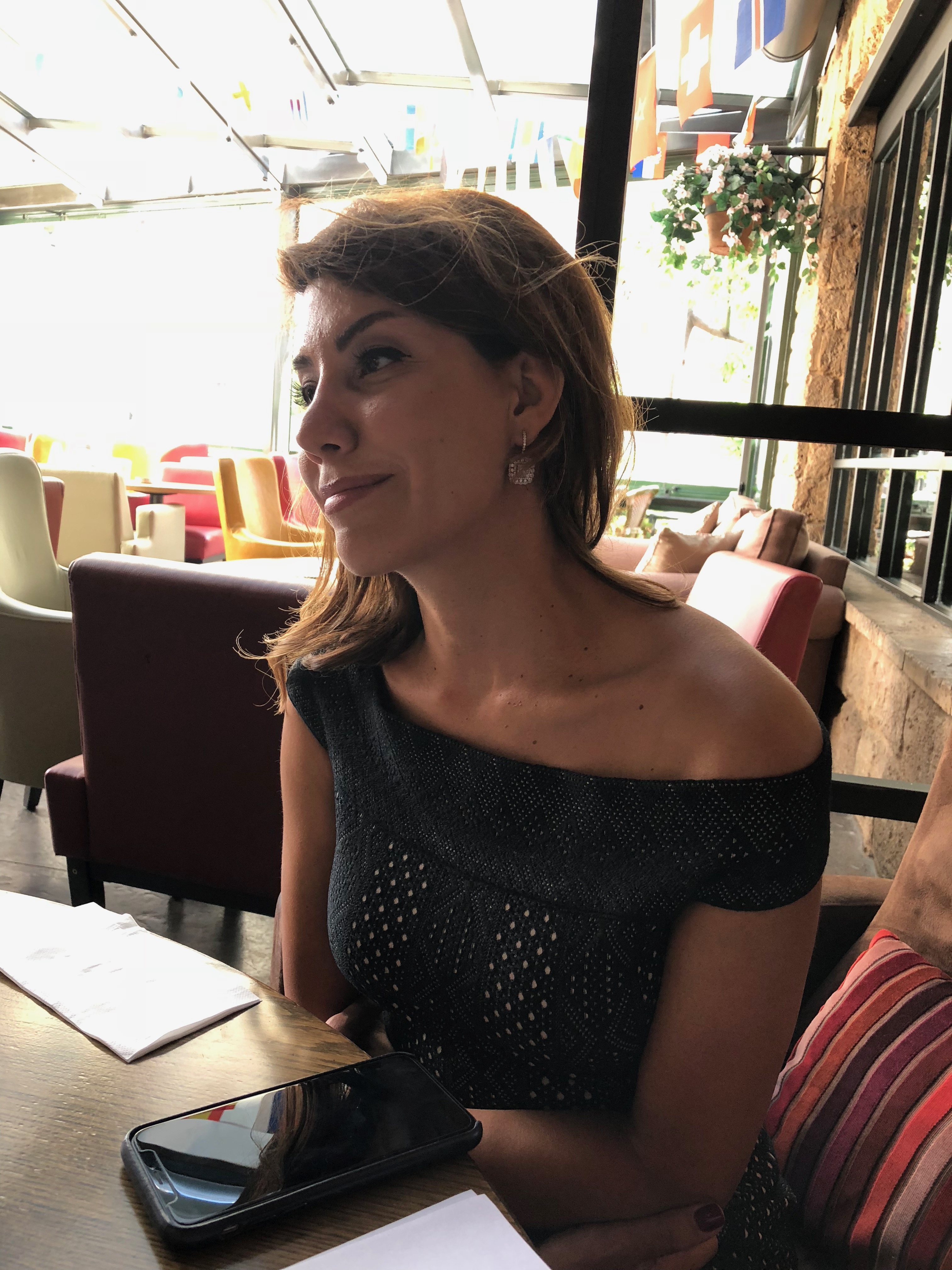
“I feel like I have an obligation to give back and I enjoy it. I love to feel that I’m useful and that I’m helping. And honestly, I cannot imagine myself sitting around. Sometimes I get tired and I want to go and just have fun like everyone else. I go for one day and then the next I realize that what’s fun for me is helping people. So, it’s not only an obligation, it’s a pleasure to help, honestly.” Paula Yacoubian…

“Although it is not yet in the Guinness book of records, I read my first national newscast at the age of 17. Reading the news was not the only skill I started to develop… I had the chance to develop my news writing and language skills…” So starts the biography of one of the most recognized names in Lebanese media Paula Yacoubian. At age 42, Ms. Yacoubian was elected last May to the Lebanese Parliament.

During my visit to Lebanon, I was so intrigued by the story of Paula Yacoubian, I felt the need to meet with her and find out more about the many changes that took place in the Lebanese media since I left my home country in 1978.

Honest, truthful, energetic, ambitious, are but a few of the adjectives that I can think of after my meeting with Paula. She beams with enthusiasm as she recalls her career and her plans now as a member of the parliament rather than a member of the media. The old adage, “nothing will stop us now,” is certainly applicable to her mindset.

I met with Paula at al Mandaloun Café in the Achrafieh district of Beirut and the conversation that followed shed some light on her career, the media, and the issues that are of major concern to her and, if I might add, the majority of the Lebanese people.

“Is it more powerful to be a journalist or a politician in Lebanon?” I asked her. Paula Yacoubian’s answer will surprise you.
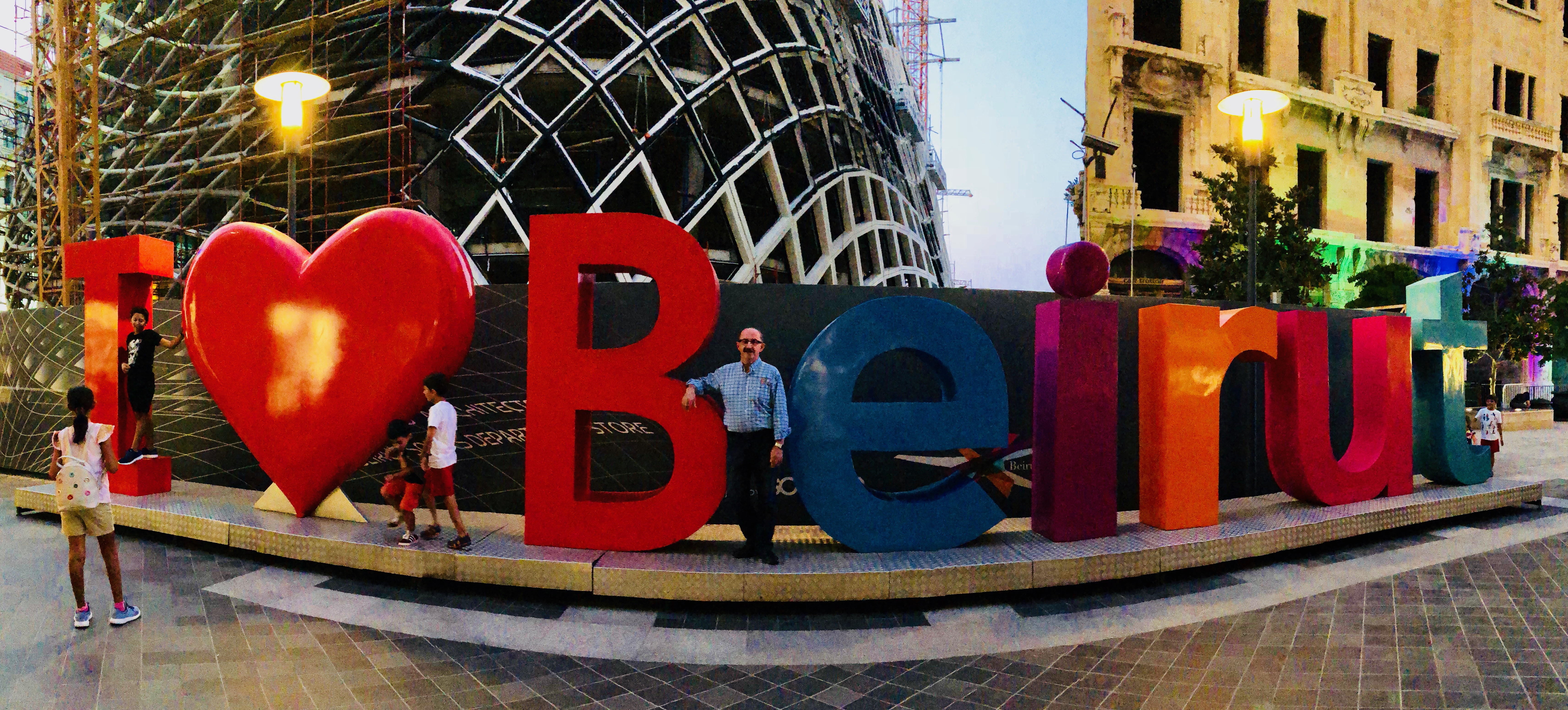
Reporting from Beirut. This is the first of interviews and stories about the media in Lebanon, my birth country.

So join me as we go on a journey of Lebanese media and politics in the Mr. Magazine™ interview with Paula Yacoubian.

But first the sound-bites:

On how Lebanese media has changed in the 25 years she has been involved with journalism: Technically, it has changed and evolved. We have beautiful, big studios and great technologies. However, the problem is the owners are the same and the media in Lebanon is part of the political system.

On who supports Lebanese media: All Lebanese press is supported. Even the Lebanese media that is published outside is no longer supported by foreign governments, but rather is supported by well-known, influential Lebanese individuals. There is no more foreign support of the media in this day and age in Lebanon. The days that Qadafi or other Arab leaders paid to help and launch Lebanese media are long gone.

On some of the stumbling blocks that she’s faced in starting her own communications company: I decided to start my own company because I knew as a journalist I would never be free unless I had my own company. As an employee I would never have the freedom that I would have as the owner, the boss. I care about freedom a lot and without ownership there is no financial security, no building self-confidence and no independence. Because, as you know, working for someone else is never secure. At any time they can let you go regardless of your performance or ability.

On the moment she knew that she wanted to be a journalist:
It happened by pure coincidence. I was paying a visit to someone in television and they asked me would I be interested in doing a screen test. And I said yes, why not. I was in the elevator with the lady and I asked her what kind of anchor she was looking for and she said a news anchor. I wondered how in the world I could do it, but I took the test. And the grammar wasn’t that hard to read and they liked my voice. So, the next day they told me I was hired.

On whether she feels that she has reached the top of her profession or that she still has more climbing to do: It depends on how you want to measure it. My mom’s ambition for me was to have a decent job and to have security. When I look back, I arrived a very long time ago, but you don’t know what life has in store for you around the next corner. And things unfold in your life. Now my ambitions are much, much bigger. I want to try and make a difference in my country. I want people to believe again that they can do change. And if they elect someone out of the box, out of the system, out of the ruling parties, they will do the right thing. This is how change happens.

On her social activism and why she always felt compelled to keep doing more:

“I want to try and make a difference in my country. I want people to believe again that they can do change.” Paula Yacoubian to Samir “Mr. Magazine™” Husni.

I like to be proactive with my life and when I feel that I can help, that I can bring something to the society that has given me so much, I like to pay back. The Dafa Campaign started because I was visiting one of the Syrian camps and it was so awful; the conditions were not human. So, I decided to do something. And I realized when you are a well-known figure you can do so much more than anyone else. A famous person can get things done, but most people don’t think of using their fame to do something for society.

On whether her work as a journalist was easier than her work as a member of Parliament: My work as a journalist wasn’t bringing any change to society. People don’t listen to journalists, unfortunately for us. I wish they did. They would know so much more. If they listened to journalists more than the politicians, they wouldn’t be living in denial. Now that I’m a politician, they listen much more to what I say, it gets more coverage.

On the trust factor that’s missing in both journalism and politics right now and the fact that she represents both: The campaigns in my race were really unheard of. They said all kinds of things about me. Some parties told very Christian conservatives that I was Muslim, because I was once married to a Muslim. I named my son Paul, he is baptized. I’ve never changed my name, it’s always been Paula.

On whether she can ever shed the journalistic Paula and just be the politician: I really wasn’t a journalist when I was a journalist. I was more of a politician, I used to give my opinion. I’ve never thought that objectivity was a really important part of being a journalist. I was always more of a politician when I was a journalist, because living in Lebanon you cannot just cover the news, the news is your life. You just can’t be objective in Lebanon and you shouldn’t be. Amanpour said it in a very nice way, being useful is more important than being objective.

On why she’s never seemed to mind crossing television networks: And it was also any challenge for me was a new challenge. I don’t like routine; I don’t like to keep on with the same thing. I get bored easily and I like new challenges, so that was partly why I used to change television stations. And sometimes circumstances forced me. Like MTV, I had to leave due to a contract obligation.

On how she felt being chosen to conduct an interview with the current Prime Minister: I think they chose the television, someone chose that that interview should be on Future Television and I was the only one who had a political show on Future TV, so I think that the network was very lucky that I was the person conducting the interview because I did everything possible to help the network with the situation they were in. And I did that despite the fact that maybe it was against my own interests, but I did what I had to do and I did the right thing without thinking twice about whether it was the thing for me to do or not.

On what someone would find her doing if they showed up unexpectedly one evening at her home: Honestly, you wouldn’t find me in the house. I don’t go back to the house before midnight. Tonight for instance, I’m having dinner with someone, an environmental specialist, before that I have another engagement, and before that another meeting. I have continuous meetings usually. Normally, I start around 8:00 a.m. and have meetings all day and then dinners in the evening that are related to what I do, such as the garbage crisis.

On what she would have tattooed upon her brain that would be there forever and no one could ever forget about her: Humbleness, because this is also one of our major problems in Lebanon, we all think that we know about everything and no one wants to be just a normal citizen, everyone wants to be someone. And we have an attitude problem. So, I just remind myself everyday about being humble, it’s just so important to stay in touch with reality and be human.

On what keeps her up at night: The garbage crisis, especially the environment. I used to say a few years ago that we can’t swim in our sea anymore. Very soon our kids will not be able to touch the sea and people would say that I was so pessimistic. And then before we realized it, it’s there. You cannot swim anywhere on many of our shores, and things are getting worse and worse by the day. And nobody cares.
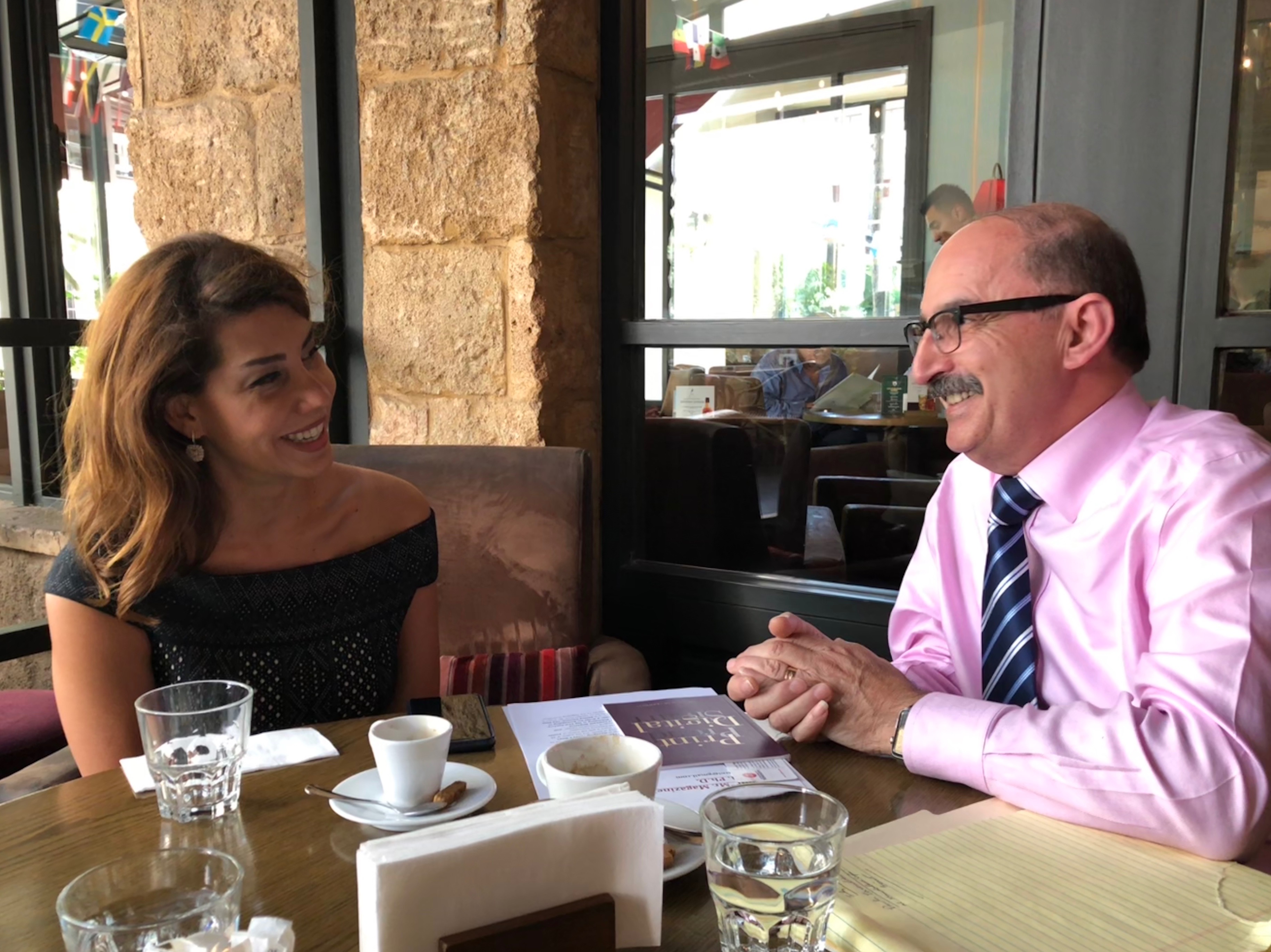
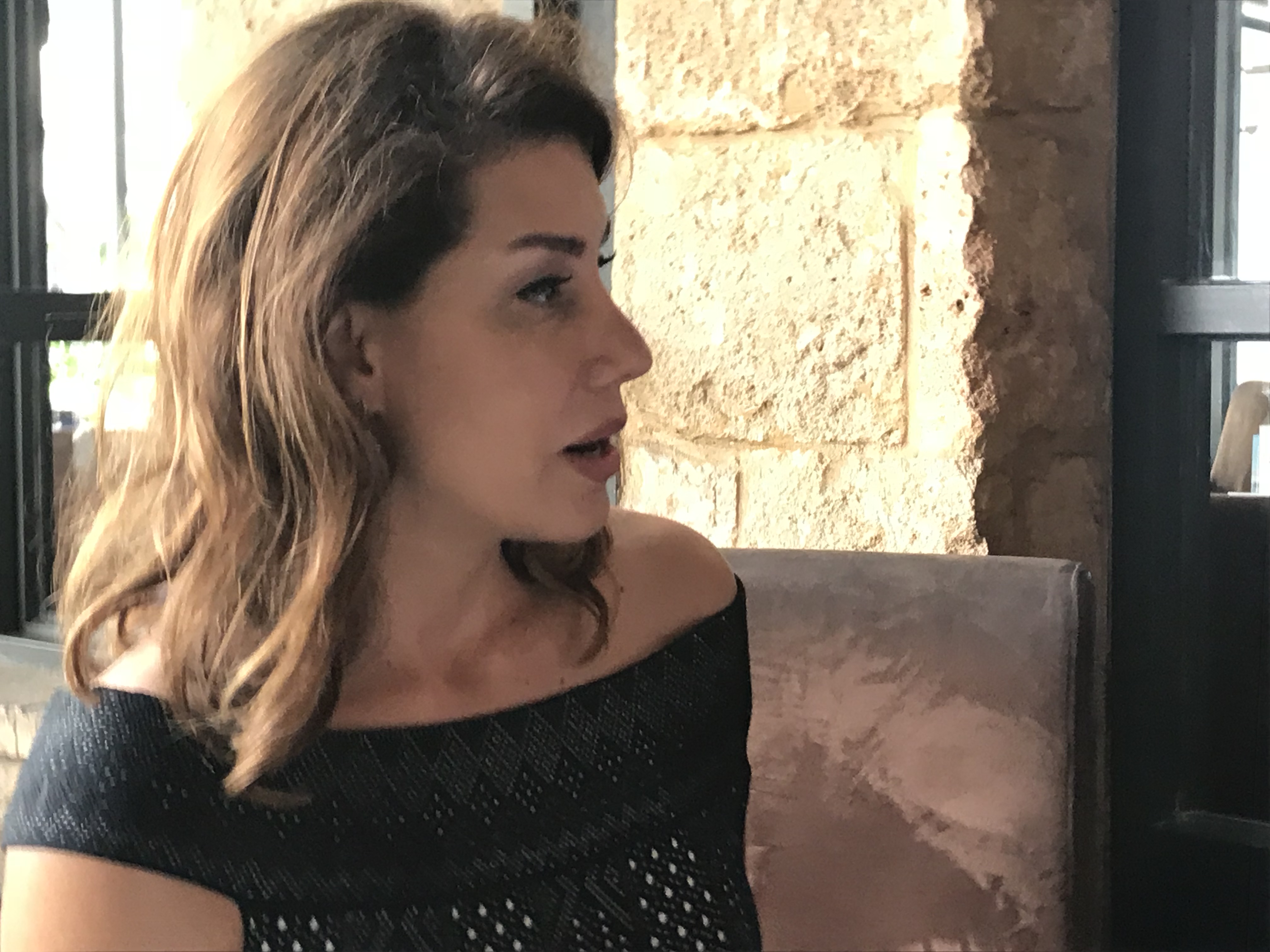
And now the lightly edited transcript of the Mr. Magazine™ interview with Paula Yacoubian, acclaimed journalist, talk show host, and member of the Lebanese Parliament.

Reporting from Beirut, Lebanon.
Samir Husni: You’ve been at this for almost 25 years now; you started as a journalist at 17-years-old. Briefly, from your point of view, tell me how the Lebanese media has changed in those 25 years.

Paula Yacoubian: Technically, it has changed and evolved. We have beautiful, big studios and great technologies. However, the problem is the owners are the same and the media in Lebanon is part of the political system. And this is the same since the end of the civil war. They’re either directly party television or newspapers, or independent television or newspapers that need a political cover to support or defend in order for it to survive. There is really no free press in Lebanon, all the media are nothing but voices of the authority, I am sad to say.

Samir Husni: One of the very first articles I wrote in the States was about who owns the Lebanese press and I said there are three groups: the political parties, the Arab government and the foreign governments.

Paula Yacoubian: All Lebanese press is supported. Even the Lebanese media that is published outside is no longer supported by foreign governments, but rather is supported by well-known, influential Lebanese individuals. There is no more foreign support of the media in this day and age in Lebanon. The days that Qadafi or other Arab leaders paid to help and launch Lebanese media are long gone.

Samir Husni: You’ve done a lot and have established an integrated communications company that you are the CEO of. What have been some of the stumbling blocks that you, as a journalist, have faced throughout your career?

Paula Yacoubian: I decided to start my own company because I knew as a journalist I would never be free unless I had my own company. As an employee I would never have the freedom that I would have as the owner, the boss. I care about freedom a lot and without ownership there is no financial security, no building self-confidence and no independence. Because, as you know, working for someone else is never secure. At any time they can let you go regardless of your performance or ability.

Samir Husni: When Henri Sfeir took a chance on you, you were 17-years-old.
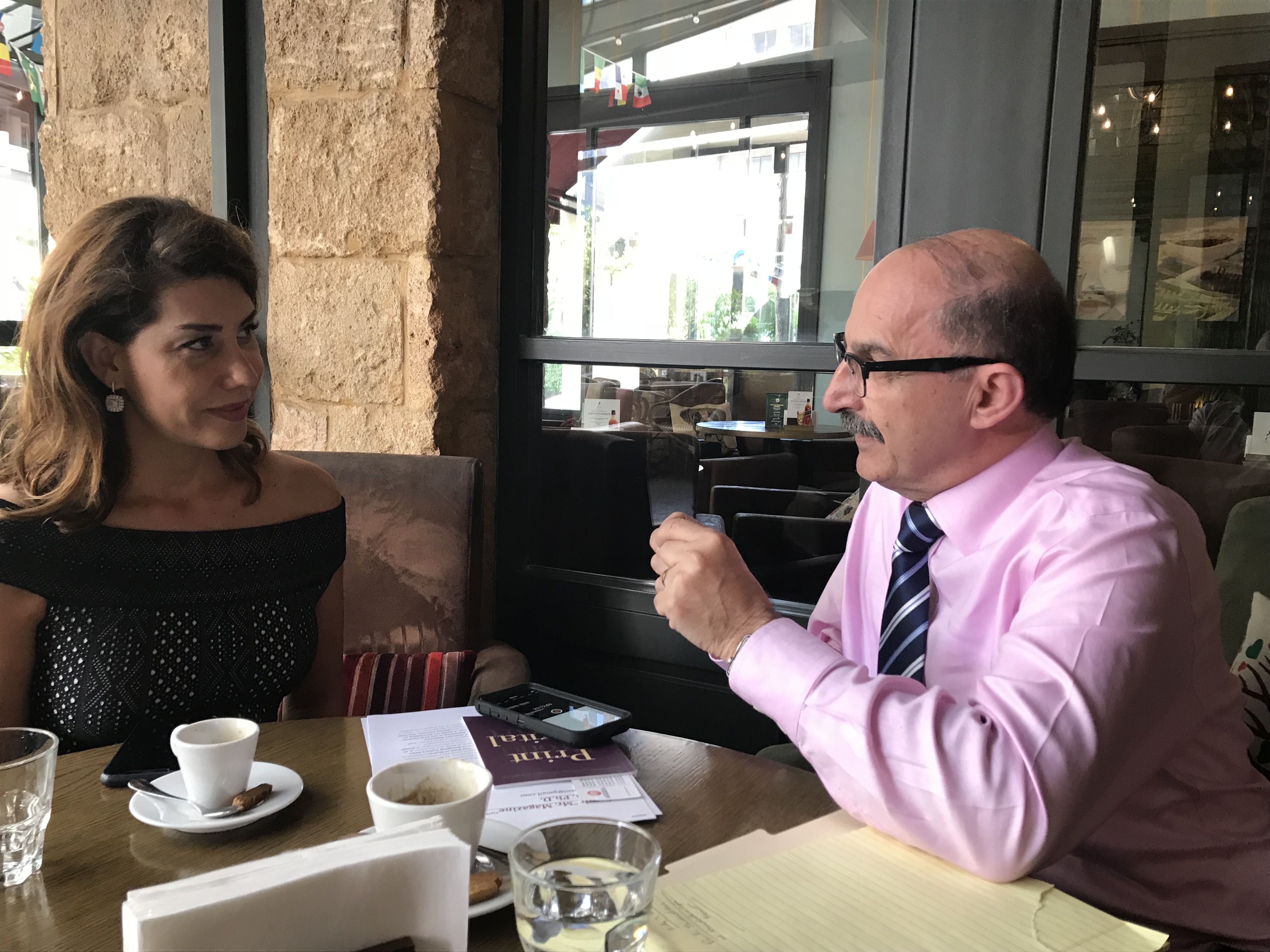
“My work as a journalist wasn’t bringing any change to society,” Paula Yacoubian to Samir “Mr. Magazine™” Husni

Paula Yacoubian: (Laughs) I lied about my age. I said I was 21, and he wasn’t the one to decide, actually. There was someone else who said that this girl could be an anchor and I told him that I was studying political science and that was how I started. And then he told me that my Arabic was very good, even though I was Armenian. And that’s when I told him that they were asking for my papers and I couldn’t bring any papers. And I told him that I was 17 and didn’t have any degree.

But I said one day I will have a political science degree and that’s when he told me to go and do not worry about it. So, I started with a lie and I never thought it would continue, but it was something to do during the summertime. But then it took over my whole life and I’m still somehow, even in what I do right now, I still have my journalistic skills and curiosity, even in my new job.

Samir Husni: You have a new job, as a member of the Lebanese Parliament. I guess congratulations are in order.

Paula Yacoubian: Thank you.

Samir Husni: At 17, even before going to college, when was that moment that you said this is it, this is what I want to do?

Paula Yacoubian: It happened by pure coincidence. I was paying a visit to someone in television and they asked me would I be interested in doing a screen test. And I said yes, why not. I was in the elevator with the lady and I asked her what kind of anchor she was looking for and she said a news anchor. I wondered how in the world I could do it, but I took the test. And the grammar wasn’t that hard to read and they liked my voice. So, the next day they told me I was hired.

It wasn’t something I planned or worked for or applied for; I didn’t even apply for the job. I didn’t fill out an application. But soon I was reading the newscast. And that’s how it happened. I had colleagues who helped me to read well and to know what I’m reading about. Then I learned Arabic and the grammar.

Samir Husni: But you moved from an anchorperson to a journalist, a reporter, an interviewer. And through the years you’ve become a household name in Lebanon and the Arab countries. When did you feel that you’d finally reached the top of your profession, or are you still climbing?

Paula Yacoubian: It depends on how you want to measure it. My mom’s ambition for me was to have a decent job and to have security. When I look back, I arrived a very long time ago, but you don’t know what life has in store for you around the next corner. And things unfold in your life.

Now my ambitions are much, much bigger. I want to try and make a difference in my country. I want people to believe again that they can do change. And if they elect someone out of the box, out of the system, out of the ruling parties, they will do the right thing. This is how change happens.

We have to overcome fears and believe that our country is not doomed and that it can have a future. And that the problem is with us and our choices and this political cast, this molding, and that it owns almost everything: the media, the money, the services. And they own the stories, they can do the stories the way they want. So, this is my new ambition now. But now the sky is the limit and if there are still Lebanese people who can still believe in anything, we can succeed.

Samir Husni: One of the things that I tell my students all of the time is that I never want them to say that the sky is the limit. I want them to say that they are the limit, such as Samir is the limit of himself.

Paula Yacoubian: Circumstances are important. I am lucky enough that people are ready to believe again. I think in four years we can have a major breakthrough and we can be a real alternative to this corrupt cast.

Samir Husni: But even before you entered politics, as a journalist you were involved with a lot of social issues. You did the Dafa Campaign, and I was reading some of your background and you’ve fought for women’s rights; you name it and you’ve done it. Why didn’t you just stop and enjoy being the top journalist and anchorperson in the country?

Paula Yacoubian: I like to be proactive with my life and when I feel that I can help, that I can bring something to the society that has given me so much, I like to pay back. The Dafa Campaign started because I was visiting one of the Syrian camps and it was so awful; the conditions were not human. So, I decided to do something. And I realized when you are a well-known figure you can do so much more than anyone else. A famous person can get things done, but most people don’t think of using their fame to do something for society.

For me, I feel like I have an obligation to give back and I enjoy it. I love to feel that I’m useful and that I’m helping. And honestly, I cannot imagine myself sitting around. Sometimes I get tired and I want to go and just have fun like everyone else. I go for one day and then the next I realize that what’s fun for me is helping people. So, it’s not only an obligation, it’s a pleasure to help, honestly.

Samir Husni: Do you think your work in journalism was easier than the work you will be doing as a member of Parliament?

Paula Yacoubian: My work as a journalist wasn’t bringing any change to society. People don’t listen to journalists, unfortunately for us. I wish they did. They would know so much more. If they listened to journalists more than the politicians, they wouldn’t be living in denial. Now that I’m a politician, they listen much more to what I say, it gets more coverage.

And others are always worried about my next step, what will I do. I think people are watching and they should be able to know what’s happening. They should be able to know the difference between smear campaigns and other things. I’m hoping that now I can do something if I continue, if I have the stamina and the energy. If I don’t get depressed. I can do a lot of things. But I need to feel that I have the support of the people. I think those who elected me are happy. And I hope that I’m making more people happy.

Samir Husni: Trust is the biggest missing factor in media today and in politics. And now you have double mistrust, you’re a journalist and a politician.

Paula Yacoubian: Not only that, they discredited me like no one else. The campaigns in my race were really unheard of. They said all kinds of things about me. Some parties told very Christian conservatives that I was Muslim, because I was once married to a Muslim. I named my son Paul, he is baptized. I’ve never changed my name, it’s always been Paula.

And still they had the guts to go and lie to people and tell them that I had changed my religion. With every Tweet they were saying different statements just to discredit me. And they were picking videos from my interviews, taking sound-bites and cutting them and it was going viral. Things like I wasn’t Armenian and people shouldn’t vote for me. It was a machine that had nothing to do but discredit me.

Samir Husni: But you overcame all of that and you were elected five weeks ago. Are you missing journalism? Can you ever shed the journalistic Paula and just be the politician?

Paula Yacoubian: No, I really wasn’t a journalist when I was a journalist. I was more of a politician, I used to give my opinion. I’ve never thought that objectivity was a really important part of being a journalist. I was always more of a politician when I was a journalist, because living in Lebanon you cannot just cover the news, the news is your life. You just can’t be objective in Lebanon and you shouldn’t be. Christiane Amanpour said it in a very nice way, being useful is more important than being objective.

Samir Husni: You started with the ICN (Independent Communications Network), then you went to LBCI, then MTV, then ART, and briefly at Al_Hurra in the United States. Your last job before being elected to the Lebanese Parliament last May was with Future TV. It seems that you didn’t mind working at politically diverse television stations. It seems to me, it was always Paula, rather than MTV; Paula rather than LBCI, etc…

Paula Yacoubian: Every new job for me was a new challenge. I don’t like routine; I don’t like to keep on with the same thing. I get bored easily and I like new challenges, so that was partly why I used to change television stations. And sometimes circumstances forced me. Like MTV, I had to leave due to a contract obligation.

So, it wasn’t always me choosing to leave or change television stations. I was always looking for something different. I never felt that this is what I want to do and this is where I want to stay. It’s more now that I feel that this is what I’m maybe destined for or what I’d like to do. I’m much, much better as a politician in Lebanon than being a journalist, because there is no independent journalism in Lebanon. It’s part of the system. All media outlets are part of the system.

Samir Husni: When the eyes of the world were on Paula, the only journalist to conduct a live interview with Prime Minister Hariri after he resigned from Saudi Arabia, every television channel, every country, the entire world was watching you. Can you describe for me the feeling that you had the night you were heading to the airport to do the interview and the world was watching you more than anybody else?

Paula Yacoubian: I think they chose the television station, someone decided that that interview should be on Future Television and I was the only one who had a political show on Future TV, so I think that the network was very lucky that I was the person conducting the interview because I did everything possible to help the network with the situation they were in. And I did that despite the fact that maybe it was against my own interests, but I did what I had to do and I did the right thing without thinking twice about whether it was the thing for me to do or not.

Samir Husni: My final typical three questions always start with this: If I showed up unexpectedly at your home one evening after work, what would I find you doing? Having a glass of wine; reading a magazine; cooking; watching TV; or something else? How do you unwind?

Paula Yacoubian: Honestly, you wouldn’t find me in the house. I don’t go back to the house before midnight. Tonight for instance, I’m having dinner with someone, an environmental specialist, before that I have another engagement, and before that another meeting. I have continuous meetings usually. Normally, I start around 8:00 a.m. and have meetings all day and then dinners in the evening that are related to what I do, such as the garbage crisis.

So, it’s every day, ongoing. Day and night, working as a Parliamentarian. And also for the issues that I’m handling. It’s difficult to be up to standards when it comes to the garbage crisis because you have to be a bit of an environmentalist, chemist, and you have to be a lawyer to know how they are doing the TOR (terms of references). So, it’s not an easy job.

Samir Husni: If you could have one thing tattooed upon your brain that no one would ever forget about you, what would it be?

Paula Yacoubian: Humbleness, because this is also one of our major problems in Lebanon, we all think that we know about everything and no one wants to be just a normal citizen, everyone wants to be someone. And we have an attitude problem. So, I just remind myself everyday about being humble, it’s just so important to stay in touch with reality and be human.

And to know that chance and luck are important components in our lives and is what drives you anywhere you go. I believe there are people who are much more qualified than I am, in a much better position to do what I’m doing and they just don’t have the same chance. If we’re all aware of this, maybe we’ll all be more humble.

Samir Husni: My typical last question; what keeps you up at night?

Paula Yacoubian: The garbage crisis, especially the environment. I used to say a few years ago that we can’t swim in our sea anymore. Very soon our kids will not be able to touch the sea and people would say that I was so pessimistic. And then before we realized it, it’s there. You cannot swim anywhere on many of our shores, and things are getting worse and worse by the day. And nobody cares.

Samir Husni: Thank you.
h1

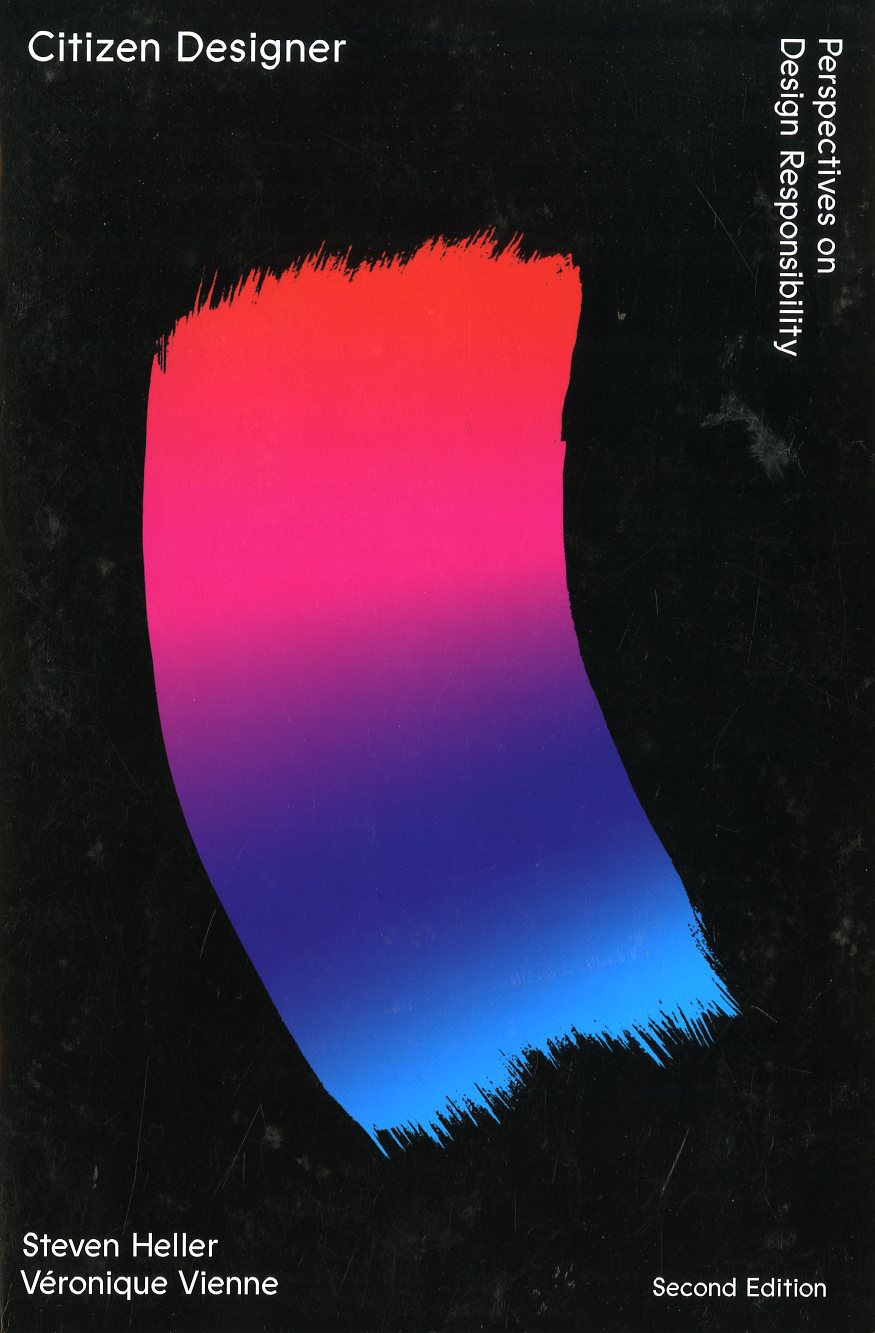
Citizen Designer, Perspectives On Design Responsibility: The Presence Of Ink In Hand Design Is Powerful & Responsible – The Mr. Magazine™ Interview With Véronique Vienne, Co-Editor/Author, Citizen Designer…

June 11, 2018

“I was writing about the fact that taking ink to paper and writing something by hand has so much more credibility than taking that same message and printing it and putting it on a wall. So, the presence of the ink and the hand, which is what the kids did in the anti-gun movement. Kids went out into the streets in the United States and wrote slogans on panels and pieces of cardboard. They weren’t very sophisticated slogans, but they were done by hand. And the kids were holding them. And there were pictures being taken of the kids holding the pieces of cardboard. And those pictures made it onto the Internet.” Véronique Vienne…

The second edition of “Citizen Designer” attempts to answer the question of what it means to be a designer in today’s corporate-driven, over branded global consumer culture, according to the powers-that-be behind this simplistic, yet powerfully-written book. Between the essays that are raw and informative to the glossary of terms and words used religiously in the design community written by former art director and co-author of the book, Véronique Vienne, this dynamic tool is far from a mere self-help guide to great design.

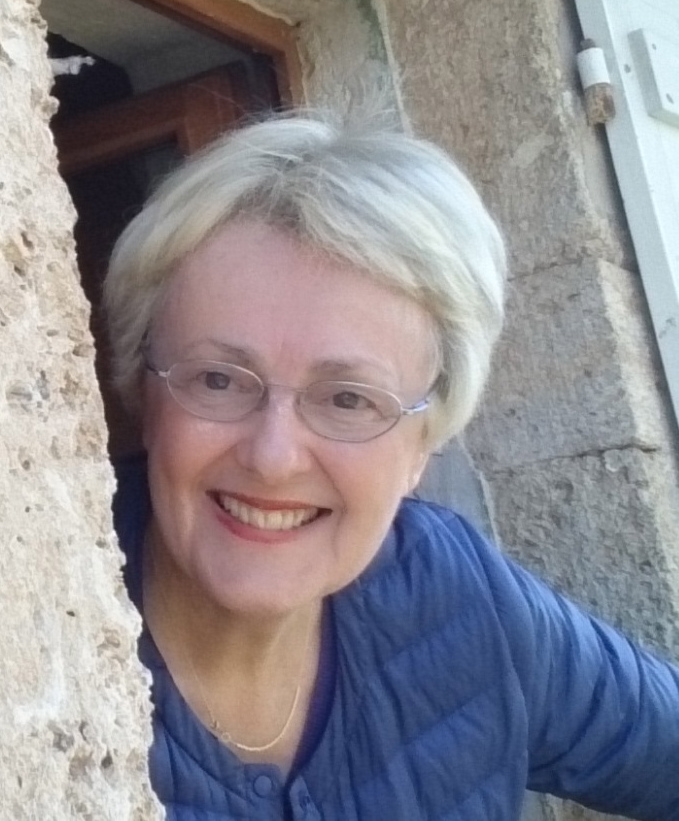
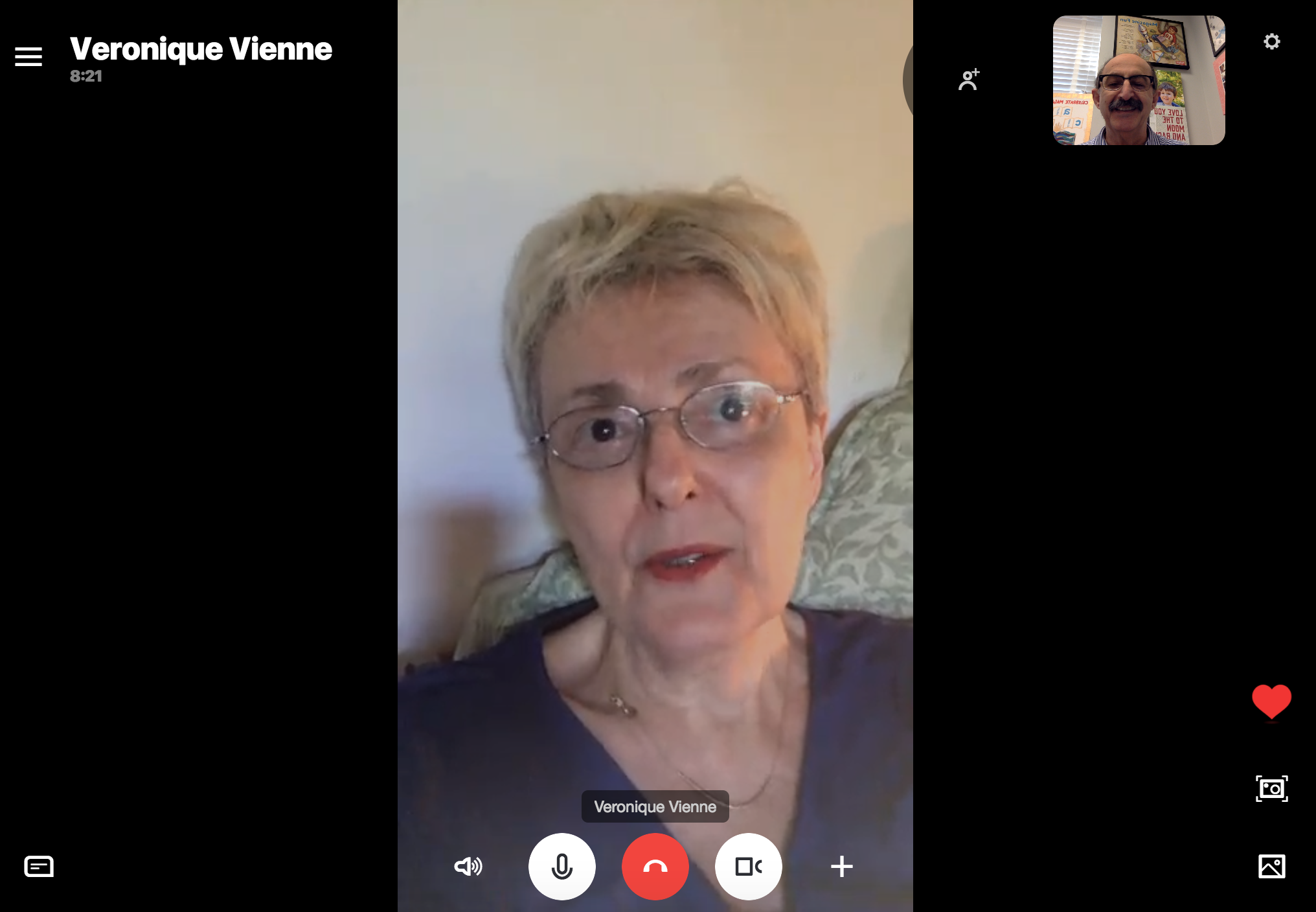
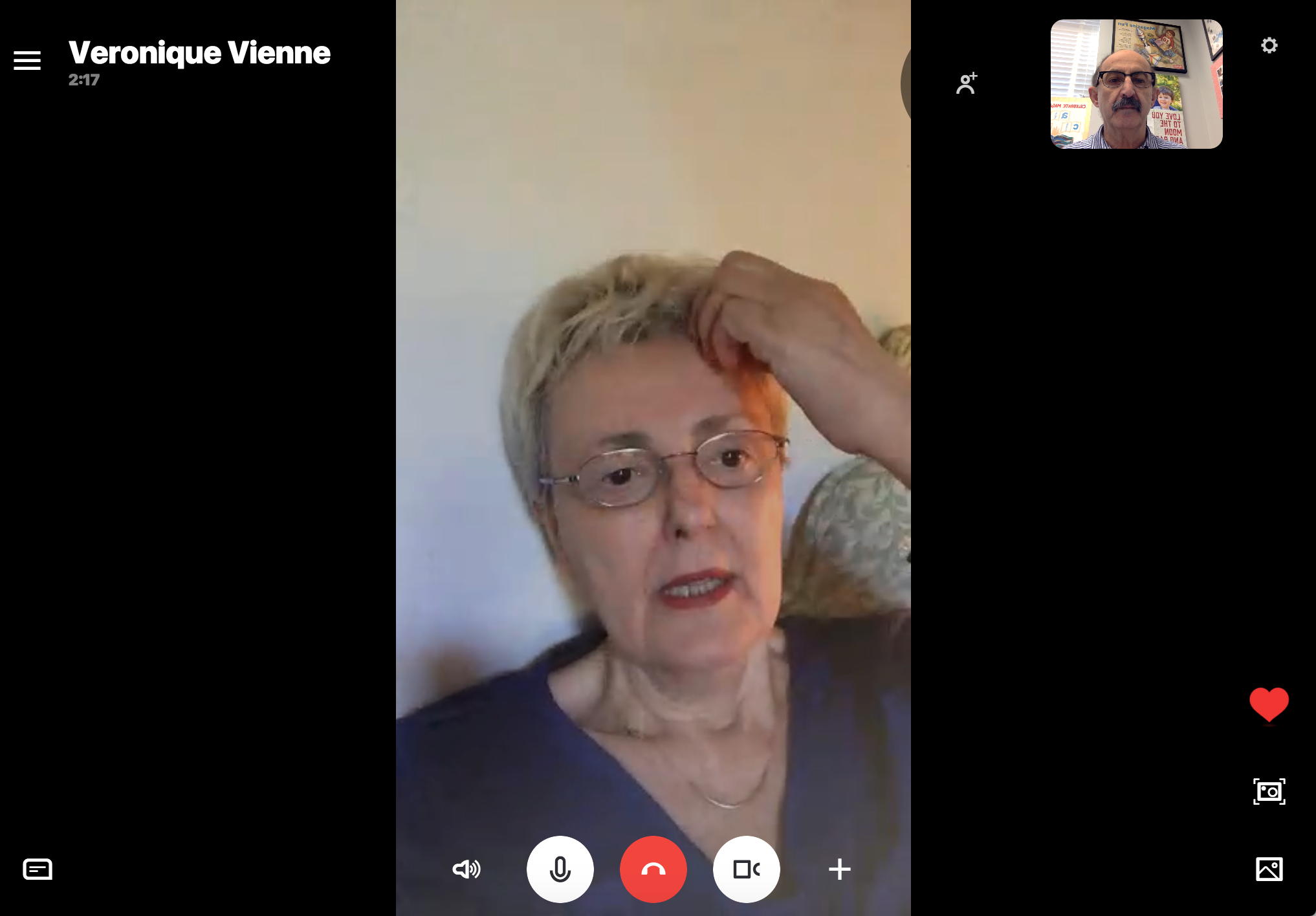
Recently, I spoke with Véronique, via Skype at her home in South France, one half of the team (along with Steven Heller) who put this book together and we talked about the social change and responsibilities that designers can affect and do have in our world. Véronique believes that design can and should be more than just a service to clients and can bring about political and social manifestations of importance within our society. This new edition of the book, the first having been written some 15 years ago, contains a collection of definitions and brief case studies on topics that today’s citizen designers must consider, including new essays on social innovation, individual advocacy, group strategies, and living as an ethical designer.

Véronique said she felt compelled to participate in this updated version due to the upheaval in the world today, with the American political front and many other important issues. And after having spoken with her, Mr. Magazine™ can certainly understand her dedication to her convictions and beliefs; the passion in her words came through loud and clear. And her faith in the power of design is inspiring.

So, without further ado, please enjoy the Mr. Magazine™ interview with Véronique Vienne, co-author, Citizen Designer.

But first the sound-bites:

On the book “Citizen Designer”: About a year ago, the publisher thought that it would be a good idea to bring back the book and update it. And we did. I wasn’t keen on doing it, but I thought that it was my duty to revisit the topic in light of the political situation in the United States and in the world, and all the things that had happened since the first edition. And I thought we needed to take a good look at the profession, not only because of the political situation, but because of the evolution of technology and social networking and all of that. It’s a totally different situation today.

On her belief that graphic designers have a social responsibility: Since I came back to Europe, I can say that in America I think design is miles apart from Europe. The American graphic design community is unfortunately held hostage to marketing. They think they’re apolitical, but you cannot be apolitical. If you’re apolitical, that’s a political stance. You have to stop thinking that you can be apolitical. You serve an economy based on different principles and if you serve that economy, you serve the principle of that economy. You have to stop being naïve.

On what she believes the role of ink on paper is in today’s digital world: I wrote about this very topic in a recent posting on a blog called “Common Edge,” about architecture and design. I was writing about the fact that taking ink to paper and writing something by hand has so much more credibility than taking that same message and printing it and putting it on a wall. So, the presence of the ink and the hand, which is what the kids did in the anti-gun movement. Kids went out into the streets in the United States and wrote slogans on panels and pieces of cardboard. They weren’t very sophisticated slogans, but they were done by hand. And the kids were holding them. And there were pictures being taken of the kids holding the pieces of cardboard. And those pictures made it onto the Internet.

On having worked in magazine media and media on both sides of the Atlantic and some differences that she still sees today: There are many differences, of course. When I came to the States in the early sixties, it was a different time. It was the Cold War; it was Camelot, the whole thing. And I was very gullible, in a way. I bought the bull. I loved America and I still love America. I am very proud of my American passport. I adore the country, I really do. It is my home. I think in English, I write in English and I love the country.

On why a book about design has no pictures: One of the realities is that publishers nowadays want the authors to get the pictures for free. Or do the research for the picture. And you spend half of your time doing the photo research. I’m not interested in that. The second thing is people go online all of the time to look at pictures. To have really good pictures and really good illustrations, it’s a job in itself. Steve and I did a book that does very well, which is going into its second edition called “100 Ideas That Changed Graphic Design.” For that one we did a lot of research and we got designers to give us information for free and they signed paperwork and documents that we could publish it on the moon if we had to. And half of your time is spent chasing images, when actually readers go online and Google the image.

On where in the book she would like for readers to begin: Steve and I put the glossary in front, because I think it’s the first thing they should read. Second, one thing we did not do is make it a self-help book. It’s really a collection of essays, without us trying to have a theory behind it. At the very beginning what I think is there is going to be a change of mentality in the design community. We have to find our soul. We have to find that designer within ourselves. And everybody does it in a different way.

On why the book is dedicated to Michelle and Barack Obama: Yes. I think both Steve and I are sentimental and we thought they were two great people. We love them. And it came from the heart. I think one of the reasons that we did the book is because we’re under the shock of the Trump election, which did not reflect our convictions.

On anything else she’d like to add: Yes, I hope it’s a book that people can browse through and find essays here and there that resonate with them. I love the design; I think it’s very spartan. I think it’s readable. We wanted it to be easy to read, in terms of typography. The design is there in the typography; the choice of the designer. It’s a very humble book. We’re not proclaiming that we know anything. It’s a little grass roots; we wanted it to be that way, because I think that’s the way it’s going to be. I don’t believe we can change the world, but we can try to make sense of it.

On what she would have tattooed upon her brain that would be there forever and no one could ever forget about her: Smart, intelligent, provocative, and honest.

On what someone would find her doing if they showed up unexpectedly one evening at her home: You’d find me cooking for my friends. I believe that around the table, around food, around a glass of wine, yes, but also around food which takes a longer time to enjoy, a dinner, a meal, lunch, people can get to know each other and can spend some time.

On what keeps her up at night: I don’t know. My daughter in Los Angeles. That’s a long way. And I hope she’s fine. It’s thinking about all of my friends in the United States and I’m in France. My heart is still with all my very dear friends on the West Coast and everywhere in the States.

And now the lightly edited transcript of the Mr. Magazine™ interview with Véronique Vienne, co-editor/author, Citizen Designer.

Samir Husni: Tell me about the book “Citizen Designer.”

Véronique Vienne: Steve (Heller – coeditor of the book) and I collaborated together, 15 years ago, on the book, at a more gentle time. We thought that there was already a sense in the graphic design community that there was more to design than just serving the clients; the designer maybe had another function. Another thing that they could do. Pro bono work or who knows what else.

The book was mildly successful in its first edition. It remained in print because I think universities and schools were interested in the topic. It’s a very hard-to-define topic because basically graphic designers are at the service of their clients. There’s an assignment and you try and deal with that assignment. But more and more there was a sense in the community that entrepreneurship and authorship is also a part of the profession.

So, recently, about a year ago, the publisher thought that it would be a good idea to bring back the book and update it. And we did. I wasn’t keen on doing it, but I thought that it was my duty to revisit the topic in light of the political situation in the United States and in the world, and all the things that had happened since the first edition. And I thought we needed to take a good look at the profession, not only because of the political situation, but because of the evolution of technology and social networking and all of that. It’s a totally different situation today.

And more and more graphic designers were questioning and wondering what they could do to “save the world.” You know we all want to save the world. So, we decided to tackle the topic again. We kept about a third of the articles; we reread what had been written 15 years ago, and actually they were quite a few articles that were almost premonitions; they were really good and we kept them at the back of the book.

And we generated more interviews and I did a job that I wanted to do, which was a glossary, that was my main contribution. I took all of those words that we know a little bit about and all of those terms that we have a fuzzy notion of what they are, and I thought it was important to, for myself first and then share it with designers, take a good look at what was behind the terms. I think in order to be effective politically and citizen-wise, you have to be informed. And informed with an opinion and not just informed Wikipedia-style. You need to learn more of a point of view. And that’s why I tackled this glossary.

Originally, I had wanted 100 terms, but after 60 terms, I was running out of time. I feel the first thing a graphic designer needs, or anyone for that matter who wants to make a difference, is information and trying to get some straight answers. You can’t just Google something and think you know what it’s all about. So, I dug a little deeper in those entries. And they were very brief entries, but I wanted to do them to clarify for myself some of the terms.

But with “Citizen Designer,” Steven and I had a discussion about that; what do designers actually do? And my conviction, which is partly shared with Steve, is that designers have incredible communication skills. That they can put into service a lot of good causes. But what’s depressing sometimes is to see good people with really good intentions or good causes have very poor communication skills. I compare designers in a way to scribes of the past. We transcribe, we design, but we transcribe other people’s convictions and ideas into a language that other people can appreciate and interact with.

As scribes, and I always wanted to be a scribe, this ability to make visible, to make readable, to transcribe and translate other people’s convictions into a language that is powerful is what designers can do. They’ve come to save the world by doing a campaign.

A citizen designer for me is someone who is well-educated, like a scribe, smart and savvy, but also chooses their causes and puts their talents at the service of organizations or communities, or something.

Samir Husni: What makes you connect that love of being a scribe, love of translating politics and citizens, and the social aspect with design? You rarely hear graphic designers or art directors talking about social responsibility, most talk about the font their using for this or that.

Véronique Vienne: Since I came back to Europe, I can say that in America I think design is miles apart from Europe. The American graphic design community is unfortunately held hostage to marketing. They think they’re apolitical, but you cannot be apolitical. If you’re apolitical, that’s a political stance. You have to stop thinking that you can be apolitical. You serve an economy based on different principles and if you serve that economy, you serve the principle of that economy. You have to stop being naïve.

I’m actually chagrined and upset sometimes when I look at some of the topics that are discussed in the graphic design community in the U.S. because it’s totally about a tight-fist or the vernacular or blah, blah, blah. It’s about what I call the “merch.” Recently, I was reading an article and it was talking about the royal wedding of Prince Harry and Meghan Markle. The journalist who wrote the article was saying that their marriage was all about love, it was all about the love of two people and it was so inspiring. And another person in the article was saying, no, it’s all about the merch. And by the merch, they mean the merchandise. The hats, the T-shirts; it’s about the merch.

And in a way I think, and I’m really sad to see it, that the American community in general, not everybody, of course, doesn’t think that they can remain on the sidelines. And that’s why I think the book is necessary, along with many more books, not just the one. This one is just the second edition. We could try to define what graphic designers could be. I know that in Europe, political statements start with a manifesto. You write it and you glue it on the wall. So, I think posturizing, writing something on a wall, writing something on a piece of paper, is really part of the DNA of graphic design.

Samir Husni: What role do you think ink on paper, print, plays in today’s digital age? And do you think that we can do the same things through the digital platforms, or there’s a big difference between ink on paper and pixels on a screen?

Véronique Vienne: I wrote about this very topic in a recent posting on a blog called “Common Edge,” about architecture and design. I was writing about the fact that taking ink to paper and writing something by hand has so much more credibility than taking that same message and printing it and putting it on a wall. So, the presence of the ink and the hand, which is what the kids did in the anti-gun movement. Kids went out into the streets in the United States and wrote slogans on panels and pieces of cardboard. They weren’t very sophisticated slogans, but they were done by hand. And the kids were holding them. And there were pictures being taken of the kids holding the pieces of cardboard. And those pictures made it onto the Internet.

It’s a little bit of what we learned with Je suis Charlie – I am Charlie – when people took to the streets. It was a viral panel that a designer had done, Je suis Charlie. And if they had printed it and took to the streets and held it…well, I think the ink and the paper and the handheld message, even in our digital age, still has a lot of power. And it’s still very much a part of how you can harness the strength of the graphic gesture, if you will.

Samir Husni: I’m very intrigued by your own story. You spent 40 years in the States, but you’re originally from France. During those 40 years you spent here in the U.S., you had a chance to work in magazine media and in media, so you’ve worked on both sides of the Atlantic. What are some of the differences that you still see today?

Véronique Vienne: There are many differences, of course. When I came to the States in the early sixties, it was a different time. It was the Cold War; it was Camelot, the whole thing. And I was very gullible, in a way. I bought the bull. I loved America and I still love America. I am very proud of my American passport. I adore the country, I really do. It is my home. I think in English, I write in English and I love the country.

But of course there was a shift after 9/11, even before. I became politicized little by little, like everybody else. With age you start to look at the situation and of course, I had been exposed in France at the Bozar. I had gone to the Bozar School in Paris, briefly in architecture, but I did finish. I had been exposed to something called the Situationists there. And so it was sort of hanging around in my consciousness.

I wrote a bestseller, believe it or not, in the States called “The Art of Doing Nothing.” And in my brain was a critique of the consumer culture. It sold a half million copies. And people completely misunderstood what it was about. They thought it was an adorable gift book. I almost invented the gift book category with it. (Laughs) It’s still in print. I had meant it to be a political gesture. And it turned out to be the opposite. It became a franchise. They wanted me to become a television guru and I refused, because that wasn’t what I wanted to do.

So it was always in the back of my mind, a critique of that consumer frenzy, if you will, but I was never able to do anything about it. And eventually, with the second Bush administration, even before we get to our time, there was an empty intellectualism in the United States. Anti-French intellectualism. And in order to survive, I suppressed in me the desire to be more honest; it was self-censorship, I guess that’s called. After a while, 40 years, I realized that self-censorship was becoming hard; I wanted to do something else. And I couldn’t do it.

I was writing for a women’s magazine at the time, I was no longer an art director, I was writing for an architecture magazine; I was writing for a lot of different things. But I somehow always had to push the merch. And I wanted to go back to a place where I didn’t have to be fabulous all of the time. It’s so tiring to be fabulous all of the time. In the States, in order to survive, we have to be fabulous. If not, you don’t count, you don’t make a difference. So, I wanted to try living in a place where being fabulous wasn’t part of the picture. That’s why I went back to France, and to take care of my mom, who is going to be 100-years-old in a few months. I split my time between Paris and the South of France, where I moved back into the family home.

Samir Husni: As I was reading some of the essays in the book and flipping through the pages, I noticed something. Here is a book about design from two graphic designers, but there isn’t a single picture in the book. Was that intentional?

Véronique Vienne: One of the realities is that publishers nowadays want the authors to get the pictures for free. Or do the research for the picture. And you spend half of your time doing the photo research. I’m not interested in that.

The second thing is people go online all of the time to look at pictures. To have really good pictures and really good illustrations, it’s a job in itself. Steve and I did a book that does very well, which is going into its second edition called “100 Ideas That Changed Graphic Design.” For that one we did a lot of research and we got designers to give us information for free and they signed paperwork and documents that we could publish it on the moon if we had to. And half of your time is spent chasing images, when actually readers go online and Google the image.

So, we made a choice. And we decided it would be a bad idea, because the image we might find and be able to afford, there would be no budget for those images. And it was so insignificant compared to what could be done. So, we decided that we would hopefully write things that people would want to read. But we may be wrong. “100 Ideas That Changed Graphic Design” is a lot of illustrations. And it’s doing well, very well.

Samir Husni: After buying the book, if someone asks you where in the book would you like for them to begin, what would you say?

Véronique Vienne: Steve and I put the glossary in front, because I think it’s the first thing they should read. Second, one thing we did not do is make it a self-help book. It’s really a collection of essays, without us trying to have a theory behind it. At the very beginning what I think is there is going to be a change of mentality in the design community. We have to find our soul. We have to find that designer within ourselves. And everybody does it in a different way.

And so this is not a prescription; we don’t say do this or do that. Everybody has a different approach. And some are a lot more theoretical and some are just gut feelings. And so we left the essays in a raw state, because as an engaged community we are not quite together yet. We’re still in the stage of trying to find ourselves, and I’m talking about the French as well as the Americans, which are the two communities I know well. I think it’s going to take time for us to figure out what on earth we’re doing. Are we already so incredibly obsolete that we’re just kidding ourselves? And I think the book is reflecting a lot of the different attempts by individuals to make sense of what they can do.

Samir Husni: You’ve dedicated the book to Michelle and Barack Obama, why?

Véronique Vienne: Yes. I think both Steve and I are sentimental and we thought they were two great people. We love them. And it came from the heart. I think one of the reasons that we did the book is because we’re under the shock of the Trump election, which did not reflect our convictions.

Samir Husni: Is there anything else you’d like to add?

Véronique Vienne: Yes, I hope it’s a book that people can browse through and find essays here and there that resonate with them. I love the design; I think it’s very spartan. I think it’s readable. We wanted it to be easy to read, in terms of typography. The design is there in the typography; the choice of the designer. It’s a very humble book. We’re not proclaiming that we know anything. It’s a little grass roots; we wanted it to be that way, because I think that’s the way it’s going to be. I don’t believe we can change the world, but we can try to make sense of it.

I was reading recently about the first books, before the invention of the printing press, it was on scrolls, and it basically said that the very fact that we can go back to the book and leaf through it now, allows us to not scroll through a text like in the ancient times, but online we’re back to scrolling. When we go back and forth in print, our relationship, our mental relationship, the structure of our analysis of a text was changed because we were no longer following the linear narrative, we could go back or we could go forward. We could comprehend the whole thing and then choose where we wanted to go.

And that was a major change in our mental structures, because of that leafing and that ability to go back and forth. The mental structure of the text disassociated from speech, because when you scroll, it’s like when you speak, you have to listen to the end of the sentence. In a book you are free from that, you’re free from the speech and it’s a different thing.

Samir Husni: If you could have one thing tattooed upon your brain that no one would ever forget about you, what would it be?

Véronique Vienne: Smart, intelligent, provocative, and honest.

Samir Husni: If I showed up unexpectedly at your home one evening after work, what would I find you doing? Having a glass of wine; reading a magazine; cooking; watching TV; or something else? How do you unwind?

Véronique Vienne: You’d find me cooking for my friends. I believe that around the table, around food, around a glass of wine, yes, but also around food which takes a longer time to enjoy, a dinner, a meal, lunch, people can get to know each other and can spend some time.

One of the things that’s most interesting about what’s happening in the design community is the realization that, and you made a point when you mentioned a Skype interview before we talked, that we need to give it the time. Time is really part of design. You can’t design something because you’re smart and you’re doing it all electronically. I think you need to learn to listen to other people, to hear what they have to say, not be in a result mode. To me, that’s one of the most interesting things that is happening in the design community, the realization that you have to do field work. You have to go ask the people what they want. You can’t just have a brief and try to respond to that. So, you’d find me cooking.

Samir Husni: My typical last question; what keeps you up at night?

Véronique Vienne: I don’t know. My daughter in Los Angeles. That’s a long way. And I hope she’s fine. It’s thinking about all of my friends in the United States and I’m in France. My heart is still with all my very dear friends on the West Coast and everywhere in the States.

Samir Husni: Thank you.

h1

TypeNotes Magazine And How The Typewriter Changed Typography And The Way We Communicate…

June 7, 2018

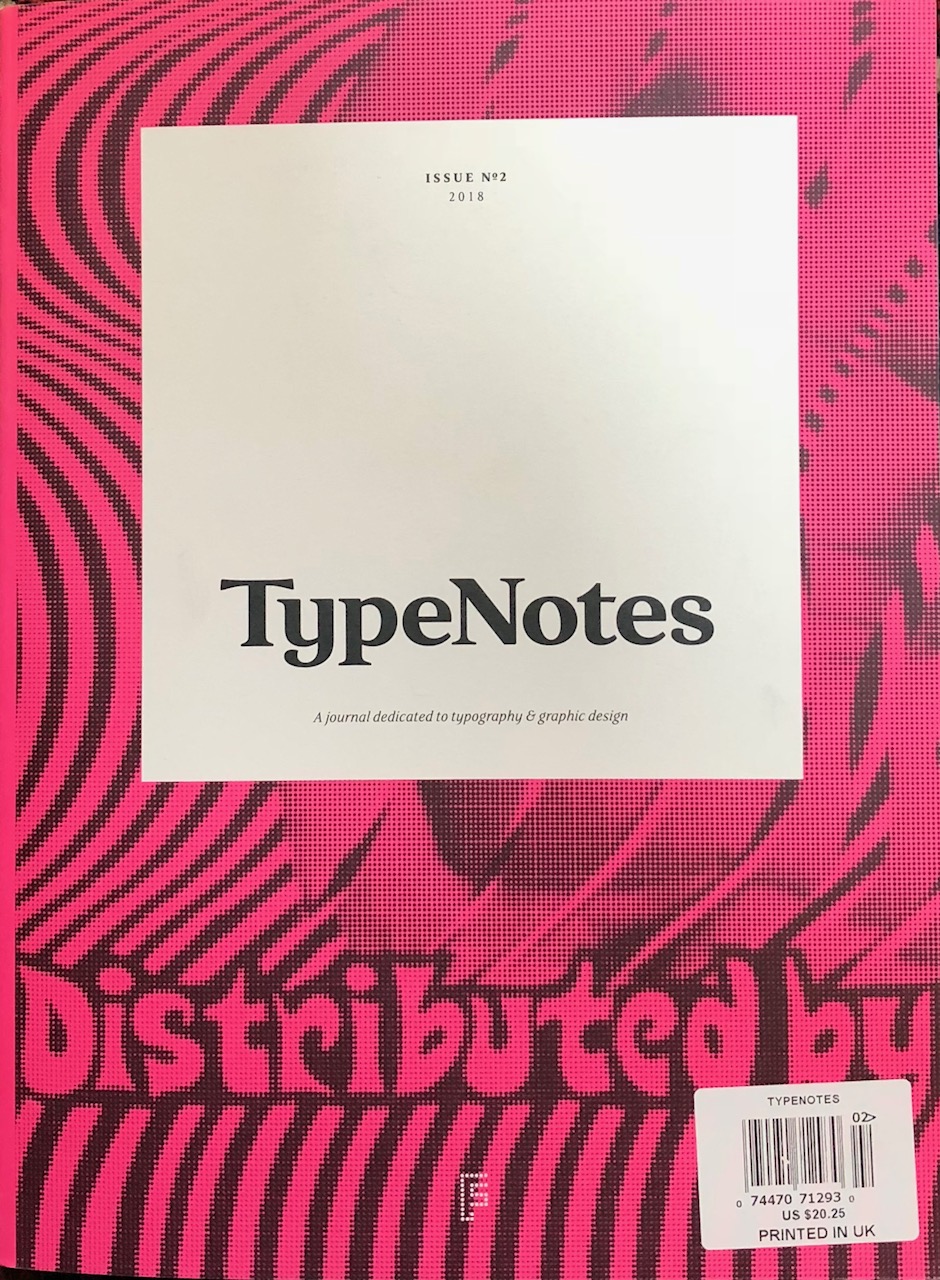
Every now and then, a magazine grabs my attention, I really mean grabs my attention, and it becomes impossible to let go. One such recent magazine is TypeNotes, “A journal dedicated to typography & graphic design.” The magazine is published by the UK’s FONTSMITH that was founded by its creative director Jason Smith.

The first article of issue two is what grabbed my attention. The title “Tap Dance” and the subtitle “Fontsmith designer Stuart de Rozario on how the typewriter changed typography and the way we communicate.” Now, I know some of you don’t even know what a typewriter is, thus you will need to buy the magazine to learn the entire history of the typewriter.

Here is the first two paragraphs from the Tap Dance article… It is worth every single word:

The sound of the mechanical typewriter is a familiar one to many of us, who grew up to its distinctive percussive clack and chime. It’s also the sound of a bygone era; a machine handed its redundancy by computers, tablets and mobile devices.

The fall of the typewriter is just one moment in a long history of changes to how mankind has used written communication, from cave paintings to letter carving and handwriting to texting. Humanity as we know it simply couldn’t have existed without mark making and visual communications.

To read the entire evolution of the typewriter you have to find yourself a copy of issue two of TypeNotes at a newsstands near you. Enjoy.

h1

Magazines and Slow Journalism: Ernest Journal Provides A Great Example…

June 4, 2018

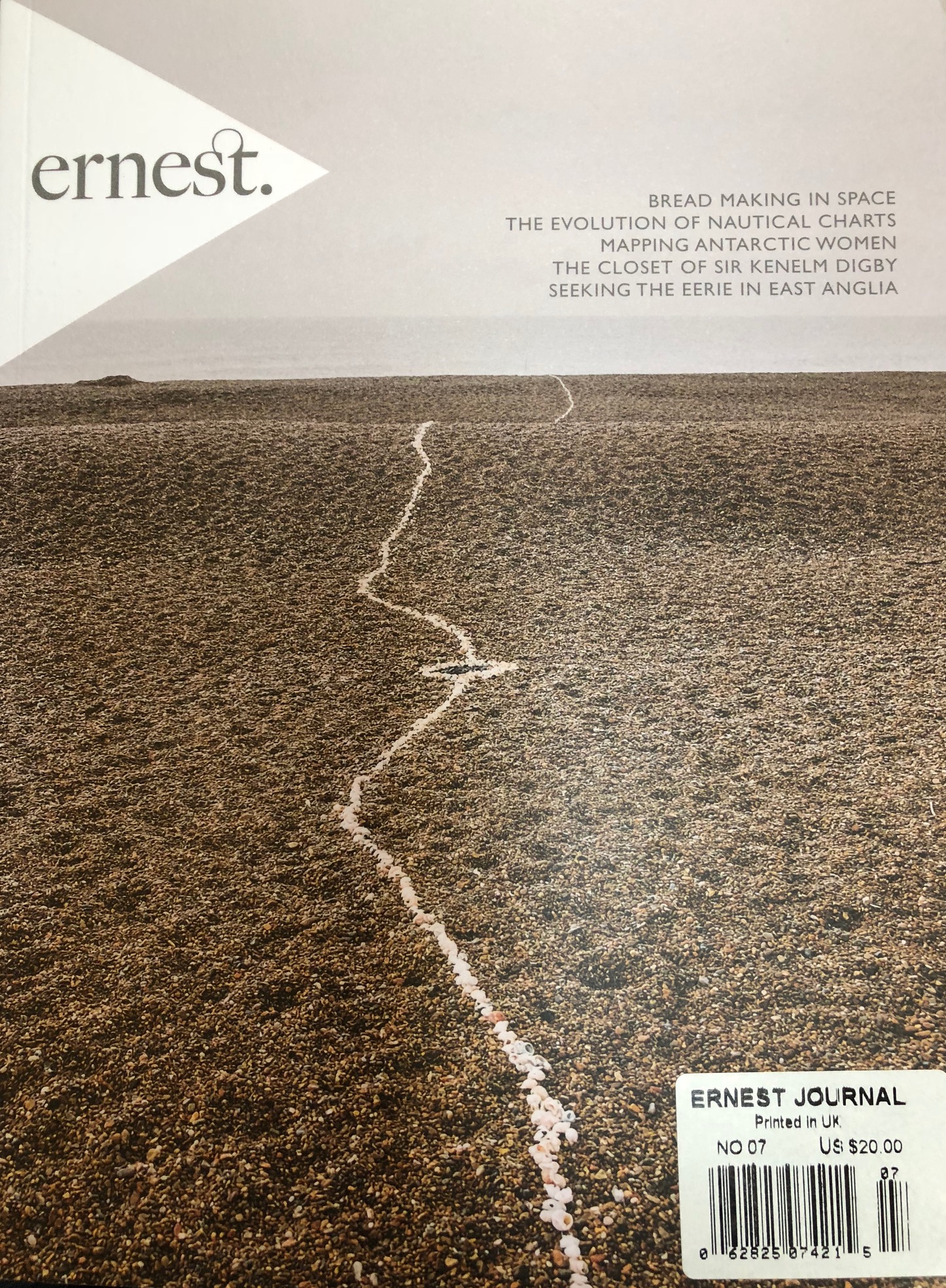
The back page of the British journal Ernest leads with the words, “Curiosity & Slow Adventure.” Nothing describes what a print magazine can and should deliver than those three words. After all, I have always taught my journalism students that their degree should not be in journalism, but rather in curiosity.

Ernest defines itself as such:

Ernest is a journal for enquiring minds. It’s made for those who value surprising and meandering journeys, fueled by curiosity rather than adrenaline and guided by chance encounters.

It is a repository for wild ideas, curious artifacts and genuine oddities, replete with tales of pioneers, invention and human obsession.

Ernest is founded on the principles of slow journalism. We value honesty, integrity and down-to-earth storytelling — and a good, long read every now and then.

And allwhat Mr. Magazine™ can say is AMEN!

h1

What Is A Magazine? “Polpettas On Paper” Provides Us With The Best Definition Yet…

May 26, 2018

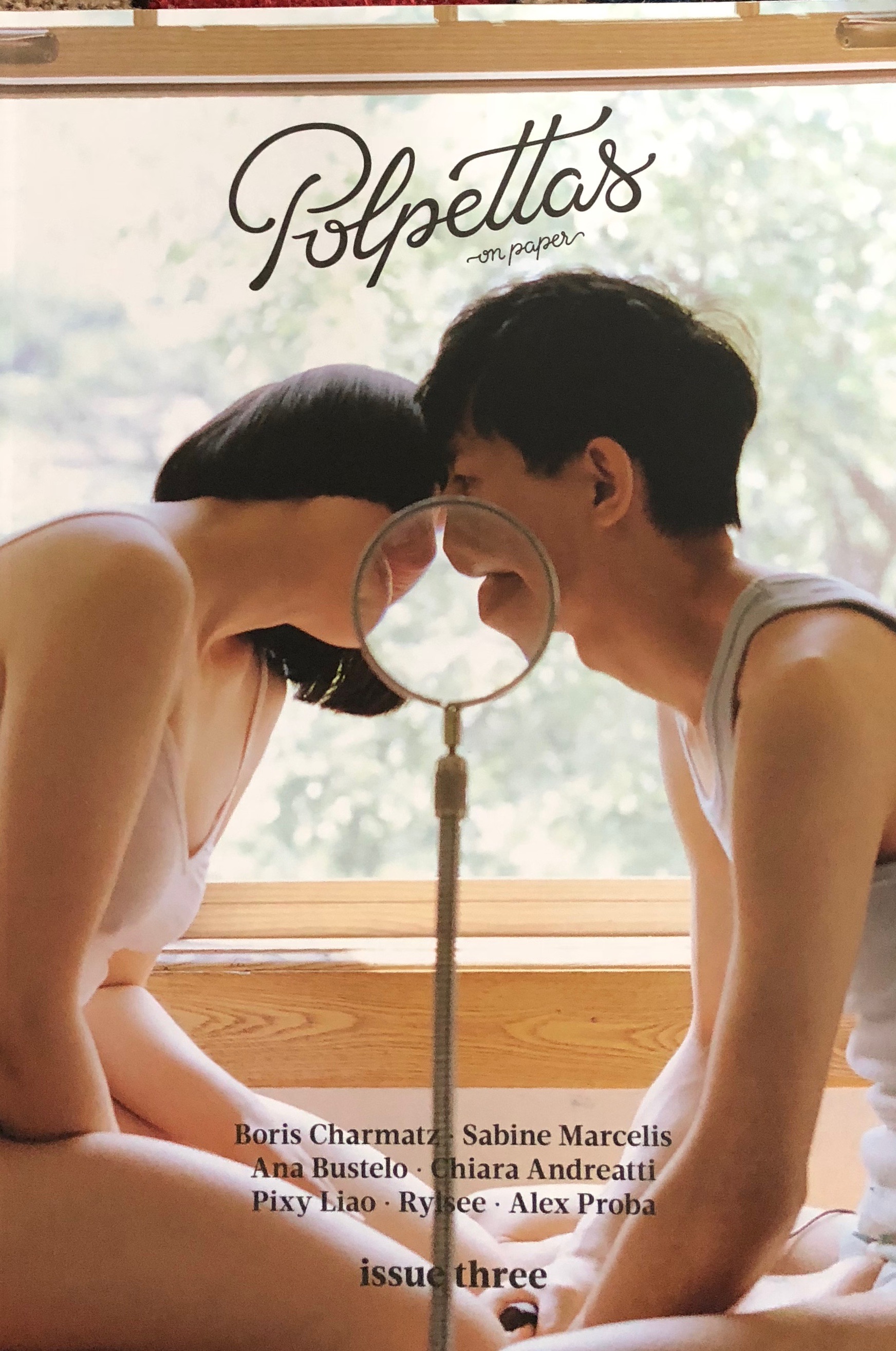
“Polpettas on paper” is an international magazine created and produced in Spain. The name is taking from the word “polpetta” which in Italian means “meatball.”

Here is how the editors of “Polpettas on paper” define a magazine:

“We think of the elements of each story as ingredients: the artists we interview, their works, the time we spend with them, the cities they live in. All these ingredients are chopped up, mixed together and baked into delicious meatballs, each one a unique, easy-to-digest story. The pages of this magazine combine into one very tasty dish. Enjoy.”

What a wonderful way to describe what a magazine really is.

Enjoy, indeed!

h1

Liz Vaccariello & Her 11 New Rules for Making Magazines. Mr. Magazine™ Presents Highlights From The ACT 8 Experience

April 27, 2018

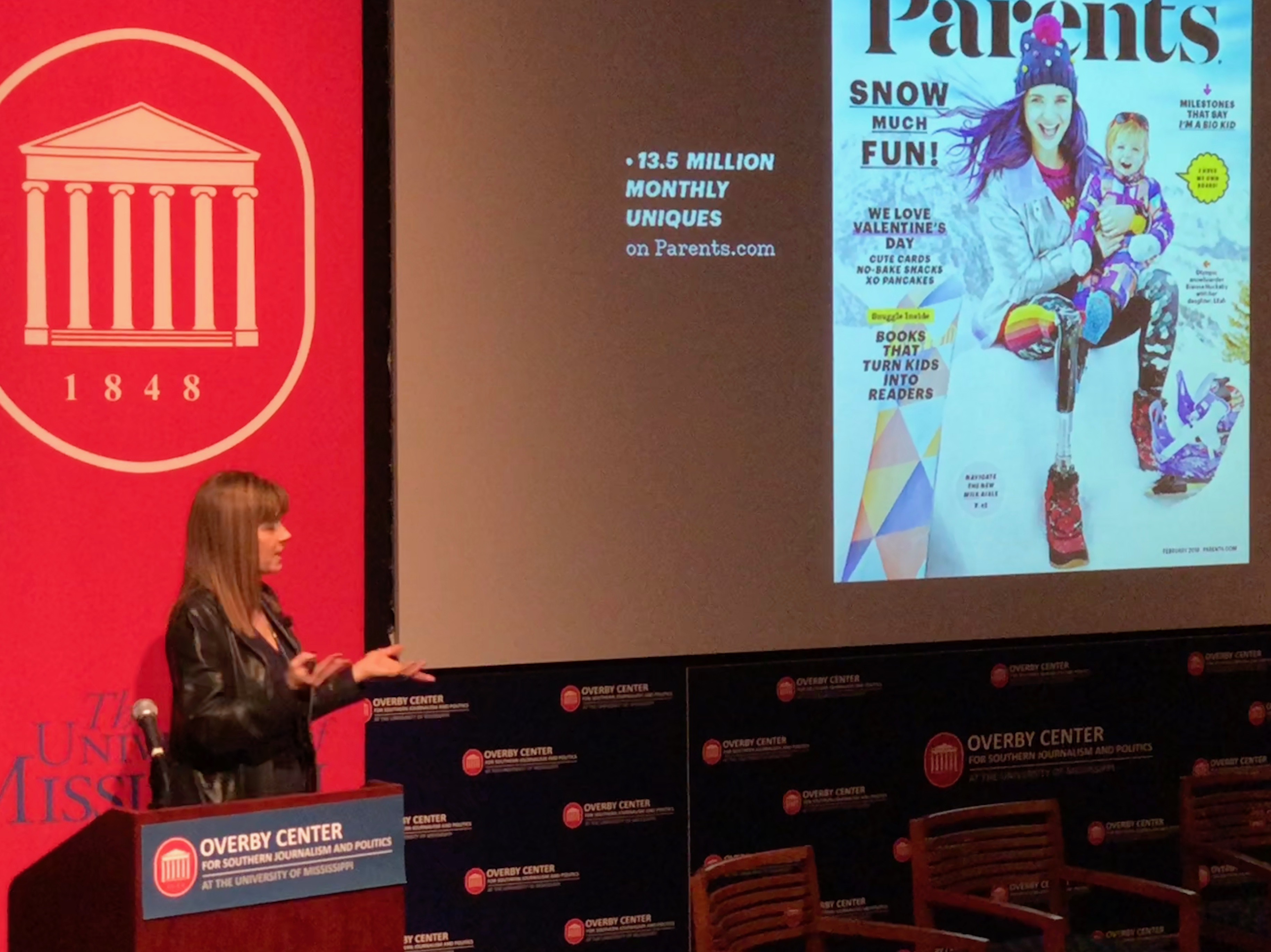
Liz Vaccariello, Editorial Director, Parents Magazine Network, Meredith, speaking at the Magazine Innovation Center’s ACT 8 Experience, April 18, 2018.

If the phrase “energetic enthusiasm” was defined in the dictionary, you’d find Liz Vaccariello’s name written categorically beside it. The editor in chief of the Meredith Parents Network has an exuberance for her brand and the industry in general that is contagious.

Liz was our opening keynote speaker for the first full day of the ACT 8 Experience on Wednesday morning, April 18. While the air in the room was expectant when she took the stage to give her presentation, by the time she accepted the resounding applause and descended the stairs to once again take her seat, it was electric.

Several beautiful covers of Parents magazine began the story she told showing mothers and their real-life children together in varying poses, and progressing into the stories within the magazine’s pages that brings the lives of different people, such as celebrities, Jenny Mollen and Jason Biggs, along with their two sons, onto a level that we all understand, that of simply being parents. Liz’s belief is that Parents magazine, and ALL magazines, can have an emotional connection with readers, and that the cover is the best and most important place to start.

But the meat of Liz’s talk was about her 11 New Rules for Making Magazines, which you will find below. And along with each one she presented, we were as engaged as new students on the first day of class, learning these rules as though they were the difference between an A and an F in the class, and for all intents and purposes, when it comes to a successful magazine, they are.

1. Understand your audience
2. Diversity matters
3. Don’t be too cool for school
4. Go for “Wow” instead of “Ugh”
5. Know that digital natives skim print differently
6. Let your audiences tell stories too
7. Welcome advertisers as partners and collaborators
8. Art is your story’s best friend
9. Display copy is crucial for voice
10. More is not necessarily better
11. Use humor to break through

And to see these rules presented as only Liz can click on the video below.

To watch the entire ACT 8 Experience presentations please go to mr.magazine.me and search for ACT 8 Experience.

h1

The Secret Of Making Life (And Magazines) More Meaningful: Words Of Wisdom From South Korea’s B Magazine…

February 14, 2018

Every now and then I read something that stops me in my tracks… something so powerful that it needs to be shared with anyone and everyone involved in magazines and magazine media… This blog’s words of wisdom (WOW) comes from the publisher and CEO of the South Korean B magazine, Suyong Joh:

“Nowadays, when many people talk of the inevitable disappearance of print media or the analog era and tout the need to focus all of our attention on the new digital realm, I continually try to imagine a world in which warm sunlight and trees in gardens are just as valued as the realm of artificial intelligence and robots. Because regardless of which way we turn, I believe that both will co-exist so as to make our lives even more meaningful.” Suyong Joh, Publisher, B magazine, Issue 60, English edition, Page 9

And the people said amen!

h1

The Mr. Magazine™ Manifesto 2018: Never Stop Learning…

January 1, 2018

A Student Of Magazines For 40 Years

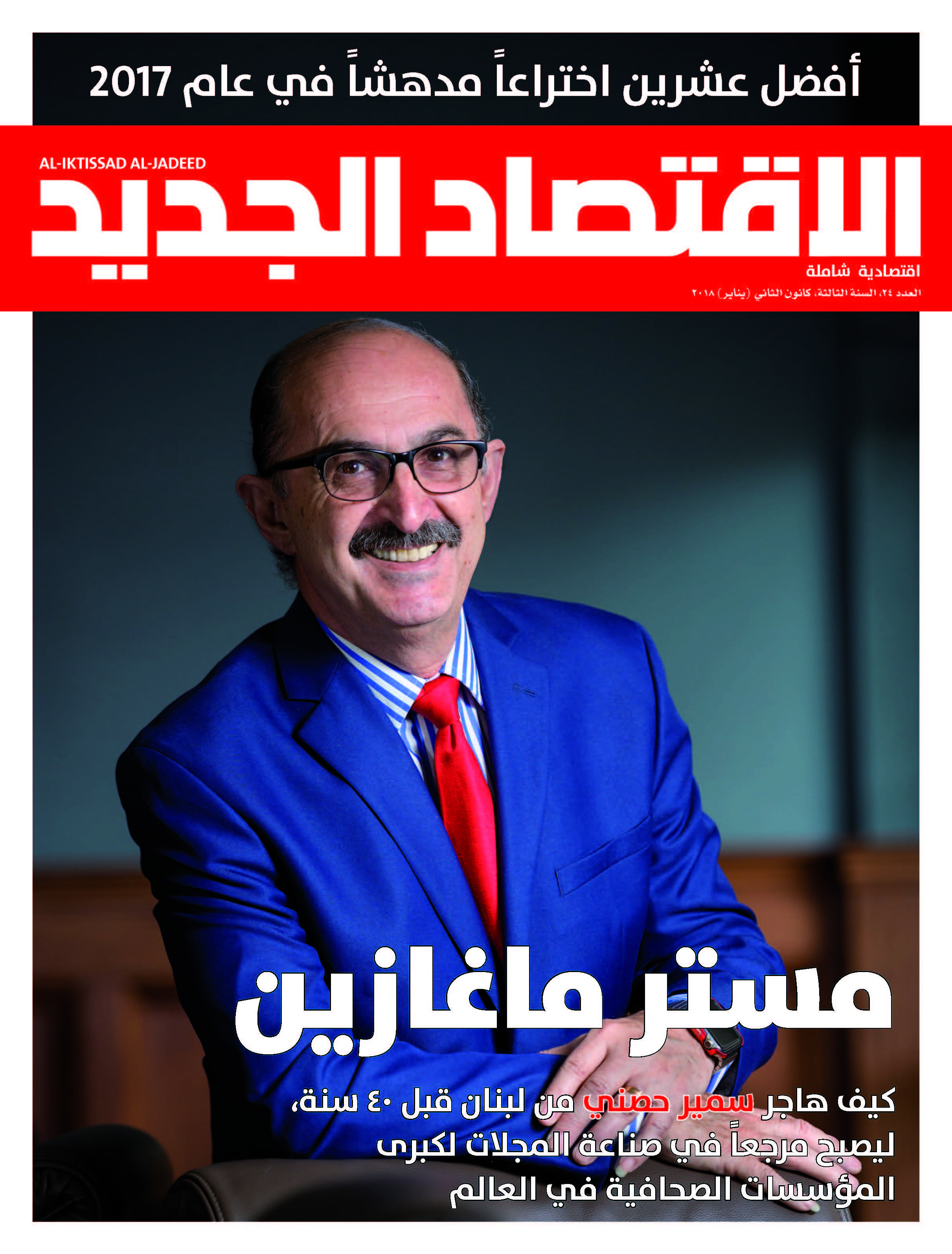
Humbled and proud to be on the Jan. 2018 cover of the Lebanese magazine Al Iktissad Al Jadeed. The cover story traces my journey and love of magazines from the streets of Tripoli, Lebanon to the United States and beyond. Thank you Bassem Bakkour.

I came to America in 1978 as a student of magazines and 40 years later I continue to be a student of magazines. That was a very profound year for me, as it laid the final foundation for something that was started much longer ago than that, when I was a mere boy growing up in Tripoli, Lebanon: my love and addiction for magazines. My hobby became my education, and my education became my profession. I have never worked a day in my life.

As a student of magazines, I have been very fortunate to have interviewed many eminent heads of magazines over the years. In fact, I interviewed 70 industry leaders in 2017 and it was the toughest job ever to highlight only 18 quotes (since it is 2018 that we are celebrating) out of those 70. Each and every interview provided me with many lessons to learn from. So, in true student form, and for the Mr. Magazine™ Manifesto, I decided to let them speak about the industry that I study so profusely. Their words are eloquent and resonate with what magazines are all about: an experience that transforms and transcends time and circumstances, while staying honest and hopeful about the digital age we’re living in.

So, Happy New Year from Mr. Magazine™. Let’s make 2018 the best year yet and I hope you glean as much wisdom and inspiration as I did from the following 18 lessons presented in no particular order:

1. Magazines Are Money Makers:

“We like to make money. We think there is money in print and more print, and we like to make money and grow profits in digital. You can’t have one be primary and one be secondary. We have to be good at both. The businesses have some things in common, but also, a lot of things that are not in common with each other. And we have to be very skilled at running good, solidly-profitable businesses in all of the areas that we operate.” David Carey, President Hearst Magazines.

2. Never Lose Sight Of The Soul And Purpose Of The Magazine:

“But here’s the thing, and this is the important thing; my job and our job in this moment in time is to get all of the technological things right, but never to lose sight of, or the feel for, what The New Yorker is or should be. That if we only concentrate on these questions of technology and business and all the rest, and lose sight of the soul of the place, of the purpose of the place, of the integrity of the place, all-knowing that we’re going to make mistakes along the way, that if we lose sight of that then it’s not worth it.” David Remnick, Editor, The New Yorker

3. Always Put Readers First:

“I tell my staff all of the time; think about your reader, and when you have a million things coming at you; when you’re wrestling with a story or when you’re confused about what to do next, just think about your reader and put yourself in their shoes and look at it from their perspective. And as long as you do that, you’re going to make the right decision.” Sid Evans, Editor In Chief, Southern Living & Coastal Living

4. Hope To Grow Again:

“I’d also like to say that it’s great to speak to someone who is passionate about print. I’m someone who grew up loving print. I love the print medium and nothing would make me happier than helping this company win in this new world and grow again. That’s what we wake up every day to do here.” Rich Battista, President and CEO, Time Inc.

5. Readers Will Pay For Quality Content:

“What’s been the most exciting thing to happen over this time is the consumer’s willingness to pay for quality content in all forms, be it print, digital, etc. And that’s a trend that’s increasing and is an exciting thing for folks that want to create great content for consumers. It’s going to allow us to think about all kinds of different ways that we can sell direct, so that’s an exciting shift over that time period.” Bob Sauerberg, President & CEO, Condé Nast

6. Magazines and Magazine Media Brands Are Credible:

“Part of what we’re doing is talking to consumers to remind them that magazine media brands have that credibility…People have figured out that not all content is created equal and consumers are using magazine brands as a shortcut to quality…All of the outside research, not MPA research, proves that magazines build brands and sell products at the same time better than any other media channel.” Linda Thomas Brooks, President & CEO, MPA: The Magazine Media Association

7. Inspiration Versus Utility:

“Consumers and women still love the printed format to turn to for inspiration and for more of that lean-back experience. And what we look for more with digital is as a utility to help them to do something in the short-term. So, inspiration versus utility, as I like to say.” Tom Harty, President & COO, Meredith

8. Print Is Restorative:

“I think you’re seeing a move-back to print; a move-back to the appreciation that print is restorative; it’s actually information that you take in. We know that there was a connection between the tactile, taking in of information… so, the touching of print and the absorption of information. And I feel very confident that print will continue to evolve and remain relevant.” Joanna Coles, Chief Content Officer, Hearst Magazines

9. Magazines Provide A Bonding Time That Makes You Feel Special:

“Right now there isn’t a digital component for Coloring with Mommy, because it’s really print and paper-driven. It’s a book that digitally, even if you printed out a comic book page, it wouldn’t be the same quality and it wouldn’t have the heart that we put into the magazine, because it’s not just coloring book pages. It’s that bonding time and the extra stuff that makes the magazine feel more special.” Brittany Galla, Editorial Director, Bauer Media Group’s Youth Division

10. Great Magazine and Magazine Media Ideas Get Funded:

“Great ideas do get funded. You know, create and sell. Great ideas get funded. Oftentimes, what I would tell our team when they would say, “Well, they don’t have a print budget.” I would say, “Let me ask you a question: do they have a budget?” Because every brand has a marketing budget, right? And, if you bring them a great idea, a great idea will get funding. And so we have many, many, many examples of business that has been created with no budget. The idea creates the budget. So, my mantra is “Great ideas do get funded” when you have the great, innovative idea.” Michael Clinton, President, Marketing and Publishing Director, Hearst Magazines

11. True Audience Based Magazines Are Here To Stay:

“I think my son at age 12 is pretty engaged across the spectrum of technology, but it was eye-opening to hear him say there might not be print when he becomes an adult. But I’m convinced there will be for my lifetime, particularly for kid’s magazines. I think we face different issues in some types of adult titles and different issues in current events and news than in true audience-based magazines. But at Highlights, we’re believers in print.” Kent Johnson, CEO, Highlights

12. Bookazines Must Reinvent Themselves:

“There was a time when people would put out any bookazine and it did well, because it was a bookazine, and it was single-topic, and it was a novelty. But these days the market is so flooded and the consumer has gotten so used to the bookazine that if you’re not changing the face of what the bookazine is; if you’re not recreating the entire bookazine itself and the bookazine category, it’s just going to start to drop and plummet and it’s going to be catastrophic for anyone in the bookazine business.” Tony Romando, Co-Founder, CEO, Topix Media Lab

13. Be In The Relationship Business:

“There’s room for it (print), of course, and if you’re in the relationship business, to some extent you’re agnostic. Your job is to really know the customer and how they want content experiences delivered to them. And if they’re raising their hands and saying they want magazines, then you provide magazines. And they still today provide fantastic and immersive lean-back experiences.” Dan Hickey, CEO, Kalmbach Publishing

14. Long-form Quality Engagement Is Where People Are Spending Their Time:

“I think this is really an exciting, rich topic right now, because what we are actually seeing is all of the platforms and all of the digital experiences that have endeavored to make the world revolve around the short-form snippet stuff, have all actually come around to the fact that long-form quality engagement is really where people are spending time.” Joe Hyrkin, CEO, issuu

15. Magazines Offer A Much Quieter Editorial Experience:

“When she’s (the consumer) reading the magazine, she needs a much quieter editorial experience. It needs to be more inspiring. And she has more time. She wants to take more of an emotional journey, rather than be hit over the head with all sorts of practical advice and alarming statistics and stories.” Liz Vaccariello, Editor In Chief, Parents Magazine

16. Magazines and Magazine Media Have A Different Business Model:

“I think fundamentally digital businesses are not the same as the magazine media business. We all have social media and you could say a magazine audience might be, from a community standpoint, like the original social media, but Facebook’s business model and Google’s business model are pretty radically different than the traditional magazine business model. So, it wasn’t a natural progression that if you’re in the magazine media business, you should have, would have figured all of that out.” Andy Clurman, President & CEO, Active Interest Media

17. A Tangible Magazine Is A Feather In The Cap For A Digital-First Brand:

“I actually think the tangible magazine you can hold in your hands is a feather in the cap for a digital-first brand. It’s what says, “We’ve made it. We’re here to stay. We’re legitimate.” And, almost counterintuitively, I suspect a lot of that is being driven by millennials. For as digitally savvy, and as digital-first a generation as millennials and Gen Z’s are, there’s also this yearning for authenticity and for something real. Again, I think it’s based on the type of content. I think with that generation in particular. It’s not fair at all to say millennials aren’t magazine readers. They’re magazine readers, but they want different types of magazines and want to consume information in different ways.” Doug Kouma, Editorial Content Director, Meredith

18. There Is No Need To Beat Up On Print:

“Why do people feel this need to beat up on print, in particular people in the industry? We closed our fiscal year June 30; we were up on advertising for both Reader’s Digest and Taste of Home year over year. Print is strong for us. We have a great respect for print and we have a great respect for the print reader. Of course, we expect greater growth to come from digital advertising, but one does not preclude the other.” Bonnie Kintzer, President & CEO, Trusted Media Brands

And there you have 18 lessons from 18 magazine industry leaders about the power of print; the expected growth of digital; and the MANY ways consumers want to consume their information. And in 2018, isn’t it time the industry let the audience decide that for themselves? Whether it’s a gloriously printed ink on paper magazine, a fantastic website that has depth and clarity, or a social media site that brings people and their comments together; the decision of where, how, and when these readers soak up and absorb content is one that in 2018 (and in the 21st century) should be made by them, magazines and magazine media are here to simply provide those outstanding experiences.

Thank you magazine industry leaders for all the lessons you taught me in 2017 and here’s to a great 2018 and more lessons to learn…

Happy New Year!
Samir “Mr. Magazine™” Husni, Ph.D.

* All quotes are taken from my interviews with the industry leaders in 2017 and all titles used are those that the industry leaders held at the time of the interview.

h1

Condé Nast’s President & CEO, Bob Sauerberg, to Samir “Mr. Magazine™” Husni: “I Think That Print Is Really Here To Stay; Consumers Just Love It. And I Think That They Love Our Magazines And They Love Other Companies’ Magazines.” The Mr. Magazine™ Interview…

November 17, 2017

“We’re building a big experiences business. It’s not just that everything is going digital, consumers also want to have real experiences. And we see that as a big business. My plan isn’t just the plan to pivot to digital; it’s a plan to build great brands and different forms of content in a variety of platforms. And that’s what really makes our future so exciting and so dynamic.” Bob Sauerberg…

“What’s been the most exciting thing to happen over this time is the consumer’s willingness to pay for quality content in all forms, be it print, digital, etc. And that’s a trend that’s increasing and is an exciting thing for folks that want to create great content for consumers. It’s going to allow us to think about all kinds of different ways that we can sell direct, so that’s an exciting shift over that time period.” Bob Sauerberg…

In January 2016, Condé Nast, one of the world’s most highly regarded and watched magazine media companies, with revered titles such as The New Yorker, Vogue, GQ, Vanity Fair, Wired, W, and Glamour, elevated Bob Sauerberg to the position of President and CEO, and the company has been moving forward with forceful and news-generating changes ever since. In less than two years under his CEO tenure, Condé Nast has seen more changes than the entire decade before. Following a strategy that is permeating the industry with premium content across all platforms, Condé Nast also has seen its digital revenues increase; has created different brand collections at the company, such as the Women’s Collection under the leadership of Alison Moore, and the Culture Collection under the leadership of Chris Mitchell; and has launched a digital-only platform, Them, that has seen phenomenal success, all without putting its traditional print content on the backburner. In short, Condé Nast is gearing up for a very exciting future and Bob Sauerberg is steady and strong at the helm.

I spoke with Bob recently and we talked about the changes and shifts throughout Condé Nast’s hallowed halls. From the departure of Graydon Carter as Vanity Fair’s editor in chief, to Radhika Jones being named as his successor, Bob expressed confidence and excitement about the company’s future. His supreme belief in the talented people who create Condé Nast’s high quality products is palpable, and his vision is on mark and focused when it comes to what he sees for the company’s future: sealing its position as a premium media company, diverse and varied, but with one sacred cow; the company’s valued position as a high-quality content-maker with 100 + years of expertise.

So, without further ado, I hope that you enjoy the Mr. Magazine™ interview with Bob Sauerberg, president & CEO, Condé Nast.

But first the sound-bites:

On his upcoming second anniversary as CEO of Condé Nast and how he would evaluate those first two years: My first two years have been very focused on putting the people, the employees, in place to do that. It’s not just words, there has to be a lot of action; reprioritizing which platforms we’re going to be publishing our content on over time, and really getting us properly set up so that we can scale those new growth initiatives.

On what percent of the strategic goals he set forth for Condé Nast he feels he’s at right now: We’re probably about 75 percent there. I think the foundation is all set, but it’s been disruptive. Going through massive change like this is incredibly disruptive. It’s very easy to put it down on paper and set up the vision, but it’s really harder to get people to understand it and execute it.

On the biggest challenge he’s had to face since putting those strategic goals in place: I’m going to say that the biggest challenges are culture. Every industry that’s going through massive transformation, by definition, if you’ve been a traditional business that’s been around for 100+ years like we have; we’ve created real expertise in content making, particularly in magazines. And as you go through these transformations, you’re doing different things, so getting the organization to change at a pace that’s at or greater than the marketplace is really difficult.

On whether anything has surprised him during the almost 18 years total that he’s been at Condé Nast: I’ll tell you what surprises me now, and I’ve been saying this forever, but the rate of change; I’ve been telling people that it’s going to keep changing faster than it has in the past, but it’s really mind-blowing to see how the marketplace is changing, particularly the advertising marketplace. It’s astonishing to see how there is always constant shift and change. So, that’s one change that’s been frustrating and perhaps difficult.

On whether he thinks he’ll see the day at Condé Nast where revenue is coming from both print and digital: Yes, I do. Our strategy for the next three years; the digital aspects of our business will be at least 50 percent. And I’m hoping within that composition that a big piece of that is coming from the consumer and not just from the advertiser.

On what the reader can expect from a Bob Sauerberg tenure with all of the changes that are taking place at Condé Nast: The latest announcement is the replacement of Graydon Carter, and that’s with Radhika Jones, who is an absolutely fabulous editor, and one with really endless potential. She’s brilliant; she’s innovative; she’s experienced on all platforms; and she has relationships with people everywhere, and she’s a very cool person. So, that’s the latest. And you’ve seen over the last couple of years a lot of changes; senior management here, and yes, these are my people and I’m really proud of them.

On whether there are any of the Condé Nast brands that would be considered sacred cows: What’s sacred here is quality content. That’s our expertise and it has been for 100 years. We may monetize that content differently over time; we may prioritize different brands at different points in time, because the marketplace changes. Those are all shifts that will happen naturally, but the DNA of our company, the expertise of it, is our quality content and that’s sacred.

On whether he can envision a day there isn’t a printed Vogue or Vanity Fair: I actually really don’t. I think that print is really here to stay; consumers just love it. And I think that they love our magazines and they love other companies’ magazines. All you have to do is hop on an airplane, or you’re sitting at a resort or something, by a pool, and everyone is reading a magazine.

On the thinking process behind folding a magazine such as Teen Vogue, and launching a digital-only entity such as Them: The print advertising business for the teen categories has just been struggling for some period of time. So, we just determined that when we looked out over the three-year plan, that we were fighting that platform; the cost versus the return; we were just finding a marketplace that was not going to return an outcome that we really liked. And most of our revenue was coming from our digital business; it had already transitioned to a digital brand. And we’re just getting started with Them. How many platforms we’re publishing; how things play out; that will change over time, but it could very well be a great magazine opportunity. But we’re just out of the gate and it’s wildly successful so far.

On whether he ever dreamed when he was a student at the University of Arkansas that he would one day become the leader of one the major publishing companies in the world: No, I really didn’t. I’ll tell you something; I’ve never interviewed for a job. I haven’t, I just sort of always tried to redefine every job I was in, and evidently people liked what they saw. I’ve always thought about the future and developing whatever I was doing. I’m obviously motivated, but I never really had a specific outcome that I had planned for my career. These things just sort of played out through just trying to do good work.

On being quoted as saying that he does not motivate people, he hires motivated people: I think that’s true. I would also say that my leadership approach is very much focused on mentoring and developing great people, so I’m not trying to put myself on the pedestal; I’m trying to keep the company on the pedestal. And then having all of the boats that we have rowing toward the vision that we all believe in. And I think motivated people like that.

On whether there are any surprises in store between now and the end of the year: It’s been reported that we’re gearing up to announce a Glamour editor, and I think that will probably be the last bit of noise that you’ll hear from us until 2018.

On what he would have tattooed upon his brain that would be there forever and no one could ever forget about him: Bold.

On what someone would find him doing if they showed up unexpectedly one evening at his home: I’m a SoulCycler. I’m the oldest guy SoulCycling in the back row. (Laughs) But I’m exercising hard. I’m not sure you have that in Mississippi, but it’s a cycling class that is an incredible workout for 45 minutes. It’s a real fun thing to do.

On what keeps him up at night: It really goes back to molding the culture, because I think that we’re working on the right things; we know what we need to do, and getting individuals there and really working on the right things, getting that culture right is really the thing that keeps me up.

And now the lightly edited transcript of the Mr. Magazine™ interview with Bob Sauerberg, president and CEO, Condé Nast.

Samir Husni: In January 2018, you’ll complete your second year as CEO of Condé Nast, and probably in that last two years there have been more changes at Condé Nast than in the previous decade. How would you evaluate those first two years?

Bob Sauerberg: I would say that our transformation plan is very focused on maintaining our leadership position of putting out the best magazines in the world. And trying to turn the magazine business into a better business by using that foundation to develop a very significant digital, video, branded content, and data business. And these experiences could really fuel our growth long-term, because the magazine business is obviously not a growing business.

My first two years have been very focused on putting the people, the employees, in place to do that. It’s not just words, there has to be a lot of action; reprioritizing which platforms we’re going to be publishing our content on over time, and really getting us properly set up so that we can scale those new growth initiatives. And everything we’ve done over the last two years has been really in concert with that plan.

Samir Husni: And if you were going to give yourself a grade, and I know it’s very tough to be your own professor and student at the same time, but do you feel that you’ve accomplished 90. 95, or 100 percent of that new strategic goal you put forth for Condé Nast?

Bob Sauerberg: We’re probably about 75 percent there. I think the foundation is all set, but it’s been disruptive. Going through massive change like this is incredibly disruptive. It’s very easy to put it down on paper and set up the vision, but it’s really harder to get people to understand it and execute it.

This year we reorganized our sales organization from 22 different siloed brands – 22 different sales organizations into one, which was a massive undertaking. Recently, we had our first national sales and marketing leadership meeting that the company has ever had, and it was the most satisfying day of my career at Condé Nast. We came together and it was incredibly clear the things that we could do differently to provide scaled programs for the marketplace, as well as amazing, individually branded things. So, I would say that when you go through transformation, the scorecard continually changes. And I’m feeling really good about the foundation we’ve put in place.

Samir Husni: What has been the biggest challenge that you’ve had to face since you began these changes?

Bob Sauerberg: I’m going to say that the biggest challenges are culture. Every industry that’s going through massive transformation, by definition, if you’ve been a traditional business that’s been around for 100+ years like we have; we’ve created real expertise in content making, particularly in magazines.

And as you go through these transformations, you’re doing different things, so getting the organization to change at a pace that’s at or greater than the marketplace is really difficult. You’ve got digital organization that’s coming in, that can do things quicker, and they have to work with the traditional content-makers who are so important to us. So, getting them to really find a way to work together, not frustrate each other, but really work together is the biggest challenge. When it happens and it works, it’s the greatest thing you’ve ever seen, when you’ve got talented people coming together toward a really great outcome.

Samir Husni: You’ve been at Condé Nast since 2000, so you’ve been there since the beginning of the 21st century, has anything surprised you in those 18 years?

Bob Sauerberg: I’ll tell you what surprises me now, and I’ve been saying this forever, but the rate of change; I’ve been telling people that it’s going to keep changing faster than it has in the past, but it’s really mind-blowing to see how the marketplace is changing, particularly the advertising marketplace. It’s astonishing to see how there is always constant shift and change. So, that’s one change that’s been frustrating and perhaps difficult.

What’s been the most exciting thing to happen over this time is the consumer’s willingness to pay for quality content in all forms, be it print, digital, etc. And that’s a trend that’s increasing and is an exciting thing for folks that want to create great content for consumers. It’s going to allow us to think about all kinds of different ways that we can sell direct, so that’s an exciting shift over that time period.

Samir Husni: I spoke with Chris Mitchell recently and he was telling me that The New Yorker is now almost at a 50-50 revenue break between print and digital. Do you think you’ll see the day at Condé Nast where almost all of the content is generating revenue both from print and digital?

Bob Sauerberg: Yes, I do. Our strategy for the next three years; the digital aspects of our business will be at least 50 percent. And I’m hoping within that composition that a big piece of that is coming from the consumer and not just from the advertiser.

The New Yorker very quietly has had one of the most successful consumer paywalls in existence. It’s a huge business and growing fast. And that’s a very prideful thing for a company, because we’ve got hundreds of thousands of people paying us for content in a variety of formats, in both digital and print. We’re feeling really good about that, and separately, we’re building a big experiences business. It’s not just that everything is going digital, consumers also want to have real experiences. And we see that as a big business.

My plan isn’t just the plan to pivot to digital; it’s a plan to build great brands and different forms of content in a variety of platforms. And that’s what really makes our future so exciting and so dynamic.

Samir Husni: With all of the changes that are taking place, and the fact that you’re also the first CEO without S.I. Newhouse in the house; will we be seeing more of Bob Sauerberg’s fingerprints upon the magazine? From the choices of new editors to the choices for new chief business officers; what can we, the readers, expect from a Bob Sauerberg tenure at Condé Nast?

Bob Sauerberg: The latest announcement is the replacement of Graydon Carter, and that’s with Radhika Jones, who is an absolutely fabulous editor, and one with really endless potential. She’s brilliant; she’s innovative; she’s experienced on all platforms; and she has relationships with people everywhere, and she’s a very cool person. So, that’s the latest.

And you’ve seen over the last couple of years a lot of changes; senior management here, and yes, these are my people and I’m really proud of them. They’re coming to the table with a couple of simple common traits, and one is that they want to do something really special and they want to do something that really creates a level of influence over the world that doesn’t exist elsewhere.

They come with skills that are expansive and not set on just one platform. And they not only want to do it, they know how to do it, whether it’s a chief business officer or an editor, or quite frankly, our digital team, who are really quite fabulous here. And our video team. The entertainment group we have here is second to none.

We started Condé Nast Entertainment five years ago. We had no video views; we were not doing video at all. And this year we’ll have 11 billion views of short-form video; five or six TV shows in production; a movie that’s out in the theaters now, with more to come; and this didn’t exist five years ago. It was an idea that I basically had on my whiteboard and we hired Dawn Ostroff and we made that happen.

What I’m proud about is that we have seen the trends; we know what they are and we’re trying to really balance out where we put our time, attention and investment, between the things that got us here, these great magazines that we produce, and these great brands that were created under S.I.’s leadership. So now, we’re finding ways to spin them into other platforms and to build other businesses around them and change the business model. All these things take time and determination, but it’s really happening and it’s not like a business plan; it’s real action and real revenue and real profit.

Samir Husni: As you move forward, are there any sacred cows with any of the brands, be it print or digital, or you’re going to do whatever it takes to stick to that strategy?

Bob Sauerberg: What’s sacred here is quality content. That’s our expertise and it has been for 100 years. We may monetize that content differently over time; we may prioritize different brands at different points in time, because the marketplace changes. Those are all shifts that will happen naturally, but the DNA of our company, the expertise of it, is our quality content and that’s sacred.

Now, will we figure out how to create that content with different cross-structures or different approaches, of course, everyone will do that, but I want our content to lead our company and I want it to be influential, different, and market-making. To me that’s our sacred cow.

Samir Husni: Do you envision a day when we won’t have a printed Vogue, Vanity Fair, or GQ?

Bob Sauerberg: I actually really don’t. I think that print is really here to stay; consumers just love it. And I think that they love our magazines and they love other companies’ magazines. All you have to do is hop on an airplane, or you’re sitting at a resort or something, by a pool, and everyone is reading a magazine.

The issue right now is the advertising marketplace is a bit fickle with it, because they’re shifting gears in terms of ow they’re spending their monies. What that’s really going to make us do is to think about how to monetize the magazines differently, get the consumers to pay more, find different ways to leverage those brands. And we will do that. But it’s a cultural moment when Vanity Fair’s cover hits the newsstands. And that’s an important part of our business. Just like it is with Vogue and with GQ.

Samir Husni: We’ve never seen anything digital create the same buzz as the covers of Vanity Fair have or the cover of GQ this month. When you fold a print magazine, such as when you folded the print edition of Teen Vogue, how is that different from say, Vogue? Or when you launched Them as a digital-only entity; what’s the thinking behind those types of decisions in the hierarchy at Condé Nast?

Bob Sauerberg: The print advertising business for the teen categories has just been struggling for some period of time. So, we just determined that when we looked out over the three-year plan, that we were fighting that platform; the cost versus the return; we were just finding a marketplace that was not going to return an outcome that we really liked. And most of our revenue was coming from our digital business; it had already transitioned to a digital brand. I wasn’t excited that we were going through that, but it was a good business decision.

And we’re just getting started with Them. How many platforms we’re publishing; how things play out; that will change over time, but it could very well be a great magazine opportunity. But we’re just out of the gate and it’s wildly successful so far. I think we had our first video that in its first day had 1.5 million views. It’s crazy. Our instinct was if we did this right we were going to catch a cultural wave and I think we have. One that makes that level of innovation very exciting.

Samir Husni: From a personal point of view, since your days in Arkansas, when you were a student at the University of Arkansas at Fayetteville, did you ever expect that one day you’d be the leader of one of the major magazine companies in the world?

Bob Sauerberg: No, I really didn’t. I’ll tell you something; I’ve never interviewed for a job. I haven’t, I just sort of always tried to redefine every job I was in, and evidently people liked what they saw. I’ve always thought about the future and developing whatever I was doing. I’m obviously motivated, but I never really had a specific outcome that I had planned for my career. These things just sort of played out through just trying to do good work.

So, I can’t say that it was calculated or anything; I just spent time doing whatever I was doing and tried to it as well as anyone could. And then you show up, and here’s where you end up.

Samir Husni: One of your famous quotes is “You do not motivate people, you hire motivated people.”

Bob Sauerberg: I think that’s true. I would also say that my leadership approach is very much focused on mentoring and developing great people, so I’m not trying to put myself on the pedestal; I’m trying to keep the company on the pedestal. And then having all of the boats that we have rowing toward the vision that we all believe in. And I think motivated people like that.

They like having a big runway where they can develop their skills, and I think that’s why I’m here at Condé Nast, because we have such talented people and I’m not trying to get in the way of their development or growth; I’m just trying to channel it toward the outcomes that we need to grow the company.

Samir Husni: Are there any surprises in store between now and the end of the year?

Bob Sauerberg: It’s been reported that we’re gearing up to announce a Glamour editor, and I think that will probably be the last bit of noise that you’ll hear from us until 2018.

Samir Husni: If you could have one thing tattooed upon your brain that no one would ever forget about you, what would it be?

Bob Sauerberg: Bold.

Samir Husni: If I showed up unexpectedly at your home one evening after work, what would I find you doing? Having a glass of wine; reading a magazine; cooking; watching TV; or something else?

Bob Sauerberg: I’m a SoulCycler. I’m the oldest guy SoulCycling in the back row. (Laughs) But I’m exercising hard. I’m not sure you have that in Mississippi, but it’s a cycling class that is an incredible workout for 45 minutes. It’s a real fun thing to do.

Samir Husni: My typical last question; what keeps you up at night?

Bob Sauerberg: It really goes back to molding the culture, because I think that we’re working on the right things; we know what we need to do, and getting individuals there and really working on the right things, getting that culture right is really the thing that keeps me up.

Samir Husni: Thank you.
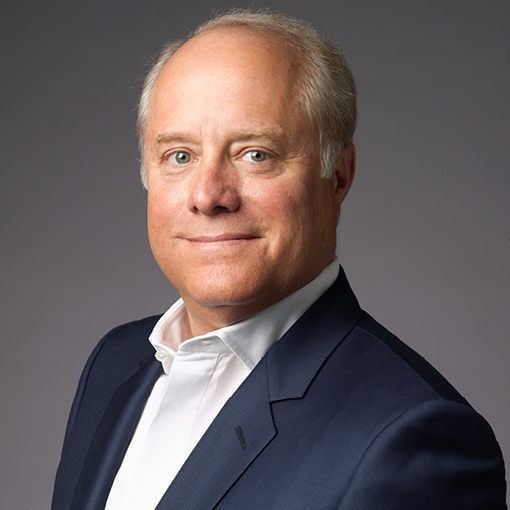
h1

Vanity Fair’s, David Friend, On His Latest Book “The Naughty Nineties”: I Was Making A Transition That Mirrored, In Terms Of The Magazine World, What The Culture Was Doing In Miniature – The Mr. Magazine™ Interview With David Friend, Editor Of Creative Development, Vanity Fair…

November 13, 2017

“I would maybe say “Disruptive Millennials.” We’re looking at our navel; everything is a selfie. And instead, we need to really look at the globe and globalization; at the environment; and we need to reconnect to the human soul; to humanism. And I think we’re getting too far away from what we are at our core and what really matters in life, which is connecting to one another and communicating honestly with one another. And being fulfilled as human beings, family members, friends and colleagues. What I think is happening is that we’re looking at our screens and our navels.” David Friend (on what word or phrase he would designate the “teen” years of this 21st century)…

The culture wars of the 1990s and the red-faced years of the Clinton administration are something that David Friend thoroughly researched and then penned a book about, designating its title as “The Naughty Nineties,” and showcasing his idea that those less than wholesome years set the course for many of the issues we face today. Along with being a prolific author, David also joined the staff at Vanity Fair in 1998 as editor of creative development, after serving as Life magazine’s director of photography.

I spoke with David recently and we talked about his latest book and how the culture changes of the 1990s also impacted magazines and magazine media, with the onset of the Internet and the many disruptions that cable and satellite television presented. It was a fascinating and intriguing conversation that opened up many possibilities for answers to some questions that are being asked today.

So, without further ado, I hope that you enjoy the Mr. Magazine™ interview with David Friend, author and editor of creative development, Vanity Fair.

But first the sound-bites:

On the tipping point that made him decide to write a book about “The Naughty Nineties,” and what role the magazine industry played during that decade in the book: My last book was on the 9/11 tragedy in 2006, and that book was so depressing and so much to confront emotionally as a writer and reporter, deeply reporting people’s stories. So, I felt that in my next book I needed something that would be a lot more fun for me, and I looked back on the nineties as being sort of this overlay of sexuality in our lives. And when you talk about magazines, I looked at myself and my transition from a magazine editor; in April 1998, I made the move from Life magazine, which was middle of the road, middle-American, centrist and wholesome, to Vanity Fair magazine. And that was sophisticated, chic, smart, leaning-left; and it’s really the change that the culture was making, I think; the Boomers had grown up and the counterculture had become the culture.

On whether he believes there will be another revival of the “Gay Twenties” in magazines, where they return to that legendary sophistication: You and I are both glass-half-full people; we look at the world in rose-colored glasses, so I would love to think that you’re right. I love the ‘20s and ‘30s in magazines; I love the between-the-wars Vanity Fair. I love the early New Yorker, and I love when Time magazine and Esquire began. But the jury is out about what’s going to happen with print magazines now. We have real questions with big media companies and the value placed on them. We have big questions about young people who are spending so much time on digital devices. But I’m Pollyannaish and hopeful. I hope we are not at the end of the lifespan of magazines. I hope that there is still kick in the old girl.

On whether he was surprised to find out, after doing research for his book, that it appeared the men’s sophisticate magazine was a dying breed: No, I went into the book understanding that it was as dead as a doornail. What surprised was when I interviewed this very smart guy named Professor Samir Husni and he said to me, and I quote, and I am going to read from the book: “From the late ‘80s and until 1997, there were more new sex magazines published than any other genre. One year in the ‘90s, I still remember the number vividly, one-seventh of all new publications were sex magazines, often devoted to special interests. You could dissect the human body, name any part, and you’ll have five magazines for it.” So, there was this boom, and yet, as I point out in the book, you had three or four other things that were going on at the same time.

On whether by the time he finished the book he felt like judge and jury, defense attorney or prosecutor of the nineties: I think I’m more of a prosecutor, because what I find out at the end is we have Donald Trump and so much of what happened in the ‘90s; the coarseness; the rise of reality TV; the rise of lying as a public default among our leaders, our athletes and our stars; the cheapening of culture to the point of there almost isn’t a business in high culture anymore.

On if he was writing a new book about this teen decade of the 21st century, instead of the “Naughty Nineties,” what would he call 2013-2017: I’m not doing that, but were I to do it, I would maybe say the “Disruptive Millennials.” We’re looking at our navel; everything is a selfie. And instead, we need to really look at the globe and globalization; at the environment; and we need to reconnect to the human soul. To humanism and I think we’re getting too far away from what we are at our core and what really matters in life, which is connecting to one another and communicating honestly with one another. And being fulfilled as human beings, family members, friends and colleagues. What I think is happening is that we’re looking at our screens and our navels.

On what he would have tattooed upon his brain that would be there forever and no one could ever forget about him: He was like his name, a good friend.

On what someone would find him doing if they showed up unexpectedly one evening at his home: I’m rushing to drink very good wine with my wife or my buddies or an exciting group of people. And then for a late nightcap, it’s Soho House.

On what keeps him up at night: The meaning of existence. Why are we here; what is our purpose? How am I spending and how have I spent my life?

And now the lightly edited transcript of the Mr. Magazine™ interview with David Friend, author and editor of creative development, Vanity Fair.

Samir Husni: You’ve written a book called “The Naughty Nineties.” And of course my area of particular interest is the magazine coverage in the book and the entire magazine industry in that sector; what we used to call “The Men’s Sophisticate.” Tell me a little about your interest in this subject matter. What was that tipping point that made you decide to write a book on this subject?

David Friend: Thank you; I’m glad you think we’re innovative. My last book was on the 9/11 tragedy in 2006, and that book was so depressing and so much to confront emotionally as a writer and reporter, deeply reporting people’s stories. So, I felt that in my next book I needed something that would be a lot more fun for me, and I looked back on the nineties as being sort of this overlay of sexuality in our lives. I was raising two kids; my daughter was continually doing sit-ups to have a washboard ab stomach, because she wanted to get a belly-ring like Britney Spears, who she and her girlfriends looked up to.

And there were these sexual cues in MTV and society. And then my son, who was her twin brother, was playing a lot of these online, massive, multiplayer games, as they call them, with older people at night and that was nerve-racking to me and my wife. But I saw this sort of coarsening of the culture in the ‘90s, and the president was talking about his relationships with Gennifer Flowers and what happened with Paula Jones, then his relationship with Monica Lewinsky, and this was a sort of drumbeat throughout the ‘90s.

So, I looked back on the ‘90s and I thought, if the Boomers are the ones that screwed this all up, maybe there’s a book in this. And when you talk about magazines, I looked at myself and my transition from a magazine editor; in April 1998, I made the move from Life magazine, which was middle of the road, middle-American, centrist and wholesome, to Vanity Fair magazine. And that was sophisticated, chic, smart, leaning-left; and it’s really the change that the culture was making, I think; the Boomers had grown up and the counterculture had become the culture.

And even though now we’re still fighting some of the same culture wars that we were in the ‘80s and ‘90s, that transition, that pivot that I made in 1998 was partially reflecting this migration in the culture toward a more open sensibility, both socially and culturally; culturally at least. Maybe not socially, but culturally there was that shift.

My first day on the job, which was April Fool’s Day 1998, Graydon Carter was the editor of Vanity Fair, and he called me in to talk about getting exclusives. And one of the reasons that he hired me was he knew my reputation at Life because we worked together there in the ‘80s. He asked me to see if I could line up Monica Lewinsky, and this was at the height of the scandal with Clinton.

And sure enough, within 22 days I had landed a photo shoot with Herb Ritts and text by Christopher Hitchens. Then I knew I wasn’t in Kansas anymore. (Laughs) It wasn’t Life magazine; this was a new sense of general interest magazine. This bubbling, exciting Vanity Fair. At the same time, the gentrification of the culture and the sophistication of the culture, and the sophistication of magazines, really, was becoming the norm. Graphic design was important; storytelling was important; print was significant, and print still seemed to be, in many ways, driving the conversation. When journalists woke up in the morning, blogging was a new thing in 1998, they still looked to their morning newspapers to get their leads. That’s not true anymore.

So, I think I was making a transition that mirrored, in terms of the magazine world, what the culture was doing in miniature.

Samir Husni: As we move forward, and as I look at and study the magazines of the last century, the 1920s and 1930s, including Vanity Fair; is this the centennial return of that sophistication that you talk about in magazines, and are we going to see another Gay Twenties in 2020 and beyond?

David Friend: You and I are both glass-half-full people; we look at the world in rose-colored glasses, so I would love to think that you’re right. I love the ‘20s and ‘30s in magazines; I love the between-the-wars Vanity Fair. I love the early New Yorker, and I love when Time magazine and Esquire began. But the jury is out about what’s going to happen with print magazines now. We have real questions with big media companies and the value placed on them. We have big questions about young people who are spending so much time on digital devices.

So, what a magazine is today is hard to say. I think it was Kurt Andersen in The New York Times, quite recently, who had a quote: “The 1920s to the 2020s was kind of the century of the magazine,” he said, noting that The New Yorker and Time were founded in the decade before the Great Depression. Today, he added, the industry was in “more of a dusk, a slow dusk, and we’re closer to sunset.” But I’m Pollyannaish and hopeful. I hope we are not at the end of the lifespan of magazines. I hope that there is still kick in the old girl.

Samir Husni: Of course, my position is that as long as we have human beings, we’re going to have magazines. And from your research, technically you had enough evidence to show that there is a life cycle even for categories within magazines. And what you’ve done with the men’s sophisticate magazines in your book, with the research, and the interviews done with Diane Hanson; were you surprised by the conclusions that this is a dying category within the magazine business?

David Friend: No, I went into the book understanding that it was as dead as a doornail. What surprised was when I interviewed this very smart guy named Professor Samir Husni…

Samir Husni: (Laughs).

David Friend: …and he said to me, and I quote, and I am going to read from the book: “From the late ‘80s and until 1997, there were more new sex magazines published than any other genre. One year in the ‘90s, I still remember the number vividly, one-seventh of all new publications were sex magazines, often devoted to special interests. You could dissect the human body, name any part, and you’ll have five magazines for it.” So, there was this boom, and yet, as I point out in the book, you had three or four other things that were going on at the same time.

Why was there a rise in so many different magazines? One, I would say that the cost of entry was declining; it was much easier to produce magazines. It was a print boom. Secondly, there were lax pornography laws. With Janet Reno as the Attorney General under Clinton, people were not being litigated against for porn. So, there was just more of a freedom to generate magazines.

Then there were more lax values; the people who had grown up in the sixties, a generation had passed, and by the nineties, their values became what was driving commerce. So, I think that it was easier to print some of these things with the lax attitudes.

Plus there was AIDS in the eighties. And people were looking for avenues for safer sex, and there’s nothing safer than a magazine. This was a period where strip clubs were on the rise; you didn’t take your clothes off. You went to these places and you had people who were taking their clothes off next to you, but you were “safe.” But for all of those reasons, you had this boom in magazines. There was also a liberation among people who were modeling, men and women, for these magazines.

What else did you have? You had two other big things then that spelled doom for the “men’s sophisticate” magazines, one was the VHS video boom. You had cable TV, satellite TV and VHS tapes. And CD-ROMs. People were seeing sex that didn’t even have to have plots anymore, it was just sex tapes everywhere. And the photos in a magazine didn’t hold a candle to moving pictures. You say something very funny in my book where I quote you as saying: “When pornography became disseminated on cable and on your laptops; you can’t compete in print. No matter how much you shake the magazine, it’ll never move the same way.” (Laughs)

Samir Husni: (Laughs too).

David Friend: But you also had this new thing called the Internet. The Internet had been around for a while, but the Worldwide Web really began in ’92 and ’93. And by the end of the decade, people were getting pornography online. People were having sex chat on AOL People were connecting online and were then able to meet up offline. People were seeing almost the entire smorgasbord of sexuality, every single fetish or desire could be met or found in a community somewhere online. This also spelled doom for the publications, because you had this new medium.

Magazines tried to keep up; you’d have fun sex ads in the magazines and you’d have DVDs and CD-ROMs poly-bagged with these magazines, but it was too late. It was just not to be. There is a fellow who is a historian named Robert Rosen, who did a very good book called, oddly-titled “Beaver Street” about this same period. And he talks about this same thing; the collapse of the companies that were able to sustain these magazines for 15-25 years. They just couldn’t sustain them anymore, because the market fell out.

Samir Husni: Yes, you can’t compete with free. It’s as simple as that.

David Friend: You’re absolutely right; you cannot compete with free.

Samir Husni: As you finished the book; did you feel that you were the judge and jury; the defense attorney and the prosecutor of the ‘90s?

David Friend: I think I’m more of a prosecutor, because what I find out at the end is we have Donald Trump and so much of what happened in the ‘90s; the coarseness; the rise of reality TV; the rise of lying as a public default among our leaders, our athletes and our stars; the cheapening of culture to the point of there almost isn’t a business in high culture anymore.

The 24/7 scandal that arose when you had CNN competing suddenly with a new channel called Fox News, starting in 1996, and the Census spectacle. All of this led to an environment in which voters would be comfortable voting for Donald Trump. And that’s the afterword of the book, really how the nineties laid the groundwork for the sorry state we’re in now.

Samir Husni: If you were working on a new book about the “teens” decade of the 21st century, what’s the word that comes to mind? You named the nineties the “naughty” nineties; what would you call 2013-2017 of this century?

David Friend: I’m not doing that, but were I to do it, I would maybe say “Disruptive Millennials.” We’re looking at our navel; everything is a selfie. And instead, we need to really look at the globe and globalization; at the environment; and we need to reconnect to the human soul; to humanism. And I think we’re getting too far away from what we are at our core and what really matters in life, which is connecting to one another and communicating honestly with one another. And being fulfilled as human beings, family members, friends and colleagues. What I think is happening is that we’re looking at our screens and our navels.

Samir Husni: One phrase I coined and that I use in my teaching is that we live in an age of isolated connectivity.

David Friend: Yes, it’s almost like psychologists talking about parallel play, where children are engaging themselves in the same room with others, but each is doing their own thing next to each other, as opposed to engaging with one another.

Samir Husni: If you could have one thing tattooed upon your brain that no one would ever forget about you, what would it be?

David Friend: He was like his name, a good friend.

Samir Husni: If I showed up unexpectedly at your home one evening after work, what would I find you doing? Having a glass of wine; reading a magazine; cooking; watching TV; or something else?

David Friend: I’m rushing to drink very good wine with my wife or my buddies or an exciting group of people. And then for a late nightcap, it’s Soho House.

Samir Husni: My typical last question; what keeps you up at night?

David Friend: The meaning of existence. Why are we here; what is our purpose? How am I spending and how have I spent my life?

Samir Husni: Thank you.