Archive for the ‘News and Views’ Category

h1

If Magazines Were a Country — Mr. Magazine™ Would Be the Ambassador. A min: media industry newsletter re-post.

December 10, 2014

The following note and article were written by Steve Cohn, editor in chief of min:media industry newsletter and Angela Rogalski, a freelance journalist and former student of mine. It was first published on minonline.com on Dec. 8, 2014.

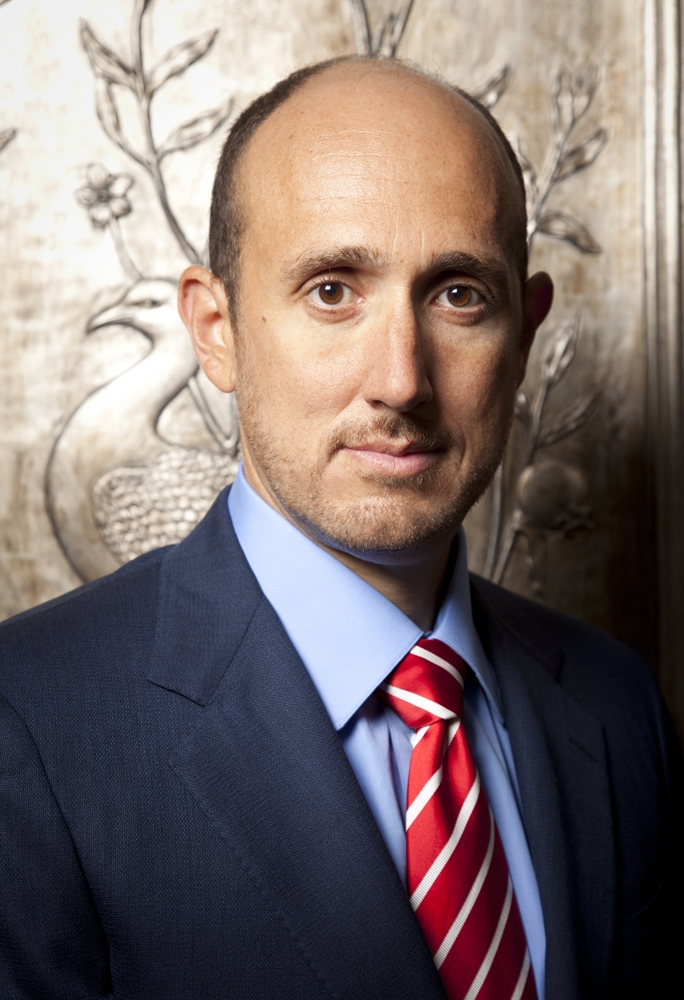
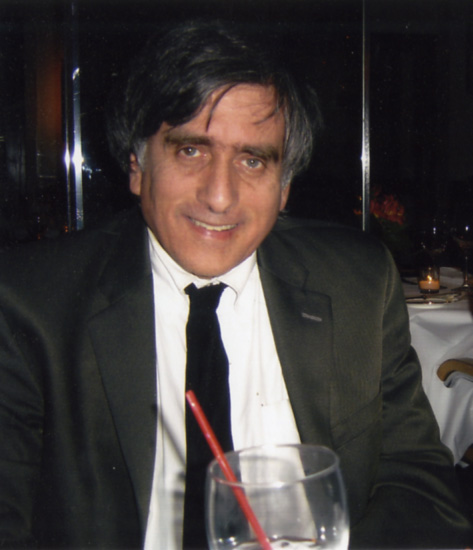
Picture 1 Editor’s (Steve Cohn) note. This fall, Samir Husni celebrated his 30th anniversary teaching magazine journalism at the University of Mississippi. That was the linchpin to Husni’s numerous achievements, begun with his first Guide to New Magazines in 1985 and continuing with his advising magazine entrepreneurs in Mississippi, the U.S.and around the world.

In 2009, Husni opened the Magazine Innovation Center at Ole Miss, and his ‘ACT’ (Amplify, Clarify, Testify) conferences have turned Oxford, Miss., into a global forum for an industry experiencing much change and challenge.

Angela Rogalski studied under Husni at Ole Miss and currently works for him at the Innovation Center. Here is her story of the trademarked ‘Mr. Magazine.’


my pic
If Magazines Were a Country – Mr. Magazine™ Would Be the Ambassador

By Angela Rogalski

Imagine a connection so strong that it’s unexplainable. There’s no tangible reason for it, other than a call from destiny, where kindred spirits meandered along their lone paths, until that point in life when they intersected.

One spirit belonged to a living, breathing human – a man.

The other to a sleek, glossy enchantress – a magazine.

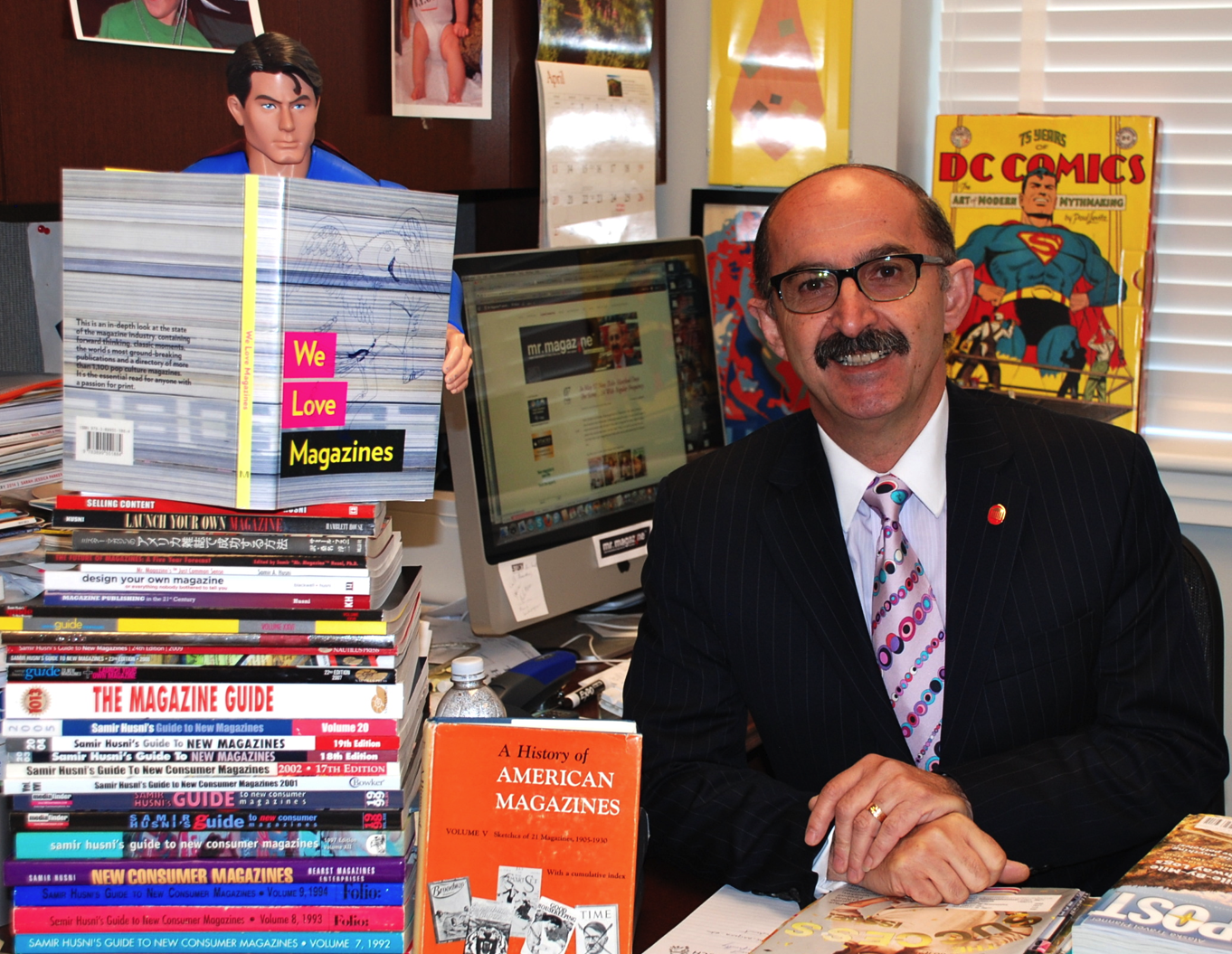
Husni in his office

Samir Husni grew up in Tripoli, Lebanon and when he was a boy, he experienced a life-altering transformation; a transfusion, if you will. It was the moment that he bought his first magazine, Superman.

“I was introduced to the Man of Steel as a young boy,” Husni said, “when I bought my first magazine. It was Superman and when I held that magazine in my hand for the first time, I felt something similar to the blood leaving my body. It was eerie and at the same time, exhilarating. From that moment on, I knew what I wanted to do with my professional life; I wanted to be involved with magazines.”

Husni had always had an abiding affinity for the printed periodicals that could transport a young child from Tripoli to anywhere in the world that he wanted to go. Like rubbing a magic lamp; reading had always provided the small boy with a way of satisfying his wishes to be immersed in the printed world.

From reading to designing his own; the young Husni had more than a fascination with magazines; he had a deep-seated passion for them.

But it wasn’t until that fated moment when he was nine that his heart actually began to pump ink instead of blood and Mr. Magazine™ was actually born.

Today Husni and his alter ego, Mr. Magazine™ is considered the leading expert on magazines and magazine media. From Finland to South Africa, from Lebanon to the United States and every country in between, Husni travels the globe, offering advice and “just common sense” on the subject of his love and obsession: magazines and magazine media.

Husni has never seen a magazine he didn’t like, or a first issue he didn’t buy. Regardless of the language, regardless of the price; if it says, new, first, or special, that magazine has to be his.

“It’s beyond a compulsion,” he said. “It’s a need.”

In the world of publishing and magazine media, Husni is renowned for being able to pinpoint problems and then execute solutions when it comes to the industry he loves.

“When everyone was shouting ‘print is dead, print is dead,’ I was rebuking the naysayers and amplifying print, preaching its value and the stability of its foundation for the brand.”

Not being content with spreading his positivity about print and magazines to just the media industry, Husni recently celebrated his 30th anniversary and that of the magazine service journalism program he initiated at the University of Mississippi.

“With the help of a lot of people from the Meredith Corp. in 1984, we developed five courses, and we began to offer the program,” Husni said. “Students needed to know more than just your basic reporting, writing, editing and designing and that was uncommon for the 1980s. Ole Miss was the first school to include journalism and the business side of magazines in one program.”

Since then, Husni has been teaching and emblazoning his magazine precepts into young minds at the Meek School of Journalism and New Media on the campus of Ole Miss. Imparting his passion and love of journalism, and magazines in particular, to the many students that often have to waitlist his classes just to get in.

From his Mr. Magazine™ Musings to the thousands of interviews he has conducted with industry leaders and entrepreneurs across the globe of magazine media and publishing, Husni knows the topics to cover and the questions to ask when it comes to anything dealing with the world of magazines.

He has interviewed up and coming pioneers such as Editor-in-Chief, Margarita Restrepo from Naked Food Magazine to seasoned vets like Joe Ripp of Time Inc. and David Carey of the Hearst Corp. and many, many in between. The mutual respect and admiration Husni and the commander’s-in-chief of the industry have for each other is palpable. They recognize Husni’s absolute loyalty to the industry and its print components and Husni treasures the people who take care of and put to bed his beloved magazines each day and night.

“The most important contribution that I feel I can make to the magazine media industry,” Husni said, “is to continue to amplify the power of print and to stress the importance of integration when it comes to digital. In the 21st century, there is no reason any one human being should ever have to decide whether it’s going to be “print” or “digital.” Obviously, it has to be both. And while many still tout the declination of print, many, many web entities are producing or completely going to a print format. Collectability and the forever quality of print are characteristics that make ink on paper very seductive and a heady motivation to produce a print product. It’s what the audience wants.”

One telling factor of Husni’s passion for print is the over 30,000 first editions he has in his personal collection. The only rival the magazines have for space is his equally large collection of neckties.

As an ambassador, Husni has visited many countries in the name of magazines. In 2014 alone, his journeys have taken him to South Africa, Germany, France, The Netherlands, Finland, Lebanon, Slovakia, Portugal, Spain, Czech Republic, Mexico, and Russia with many more adventures to come.

As someone who has earned his envoy accreditation, leaders in the magazine media world are ready and willing to recognize his contributions.

These questions were presented to industry notables:

1. In your opinion, what impact has Samir Husni had on magazine media, in terms of his advocacy for the industry and its products?

2. If you could turn the tables and interview “Mr. Magazine™” what would be the first question you asked him?

3. Someone recently commented to Dr. Husni: if magazines were a country, you should be its ambassador, duly noted because of his extensive travel promoting and bringing awareness to every aspect of the medium. As someone else who deeply believes in and loves magazines; what trait or characteristic do you believe makes the ambassador to the country of Magazines so suited for the job?

And these were their answers:

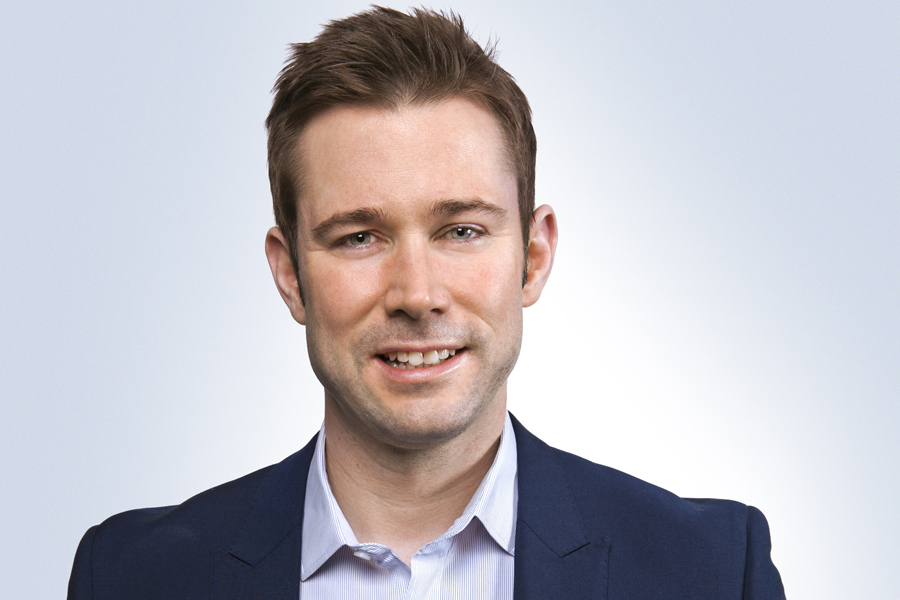
Matt Bean.jpg

Matt Bean
Editor-in-Chief, Entertainment Weekly

1. I thought I was a magazine fanatic, trolling the basement in Gallagher’s for old copies of Spy and obsessing over the old Fortune magazines, the early era at Sports Illustrated, the spread of zines and the development of premium, low-run titles of late. But Samir’s the biggest fan of magazines there is–a hoarder with a mission–and in this time of turbulence and converging media worlds, having someone like him remind you of the power of print is a shot in the arm when you’re a magazine editor. He’s a consistent voice in inconsistent times.

2. If I were to ask Samir one question it’d probably be this: Choose your favorite magazine. Just one. The only title you could bring with you, or put into a spaceship to explain to beings in another galaxy why we smear ink onto pulped paper. Which one would it be, and why?

3. An ambassador’s greatest skill is diplomacy–and Samir has that in spades. He makes it a point to know everyone in the business–he’s fearless in a way–and so upbeat that it’s contagious.

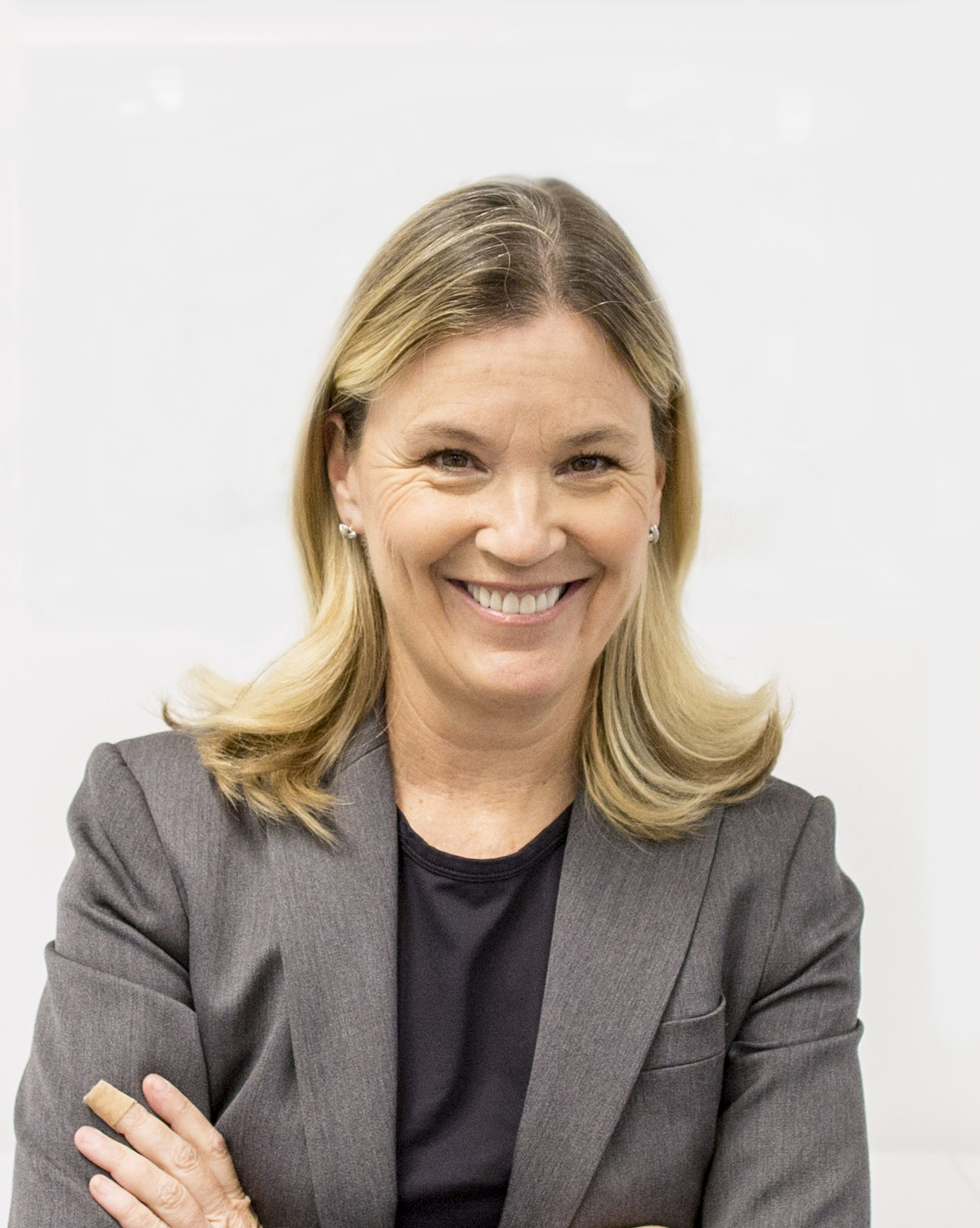
Berner headshot


Mary Berner
President and Chief Executive Officer
MPA – The Association of Magazine Media

1. Samir is the ultimate evangelist. He is tireless in his pursuit of an accurate narrative for the industry. That commitment has impacted how the media covers us, and that impacts everything!

2. I would ask: If you were a magazine, what would the name be? And, what would some of the cover lines be.

3. Samir is endlessly passionate about – and fascinated by – the magazine media industry. But, what makes him such an extraordinary resource is that he also takes a very balanced view of the business and its challenges. There is a reason that he is considered an authority.

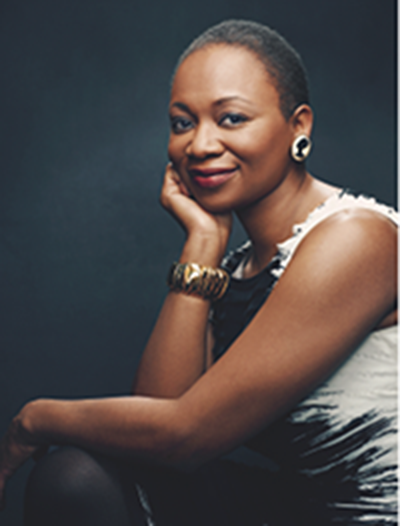
Vanessa Bush pic - ACT 5 (2)


Vanessa Bush
Editor in Chief
ESSENCE Magazine

1. Dr. Husni is the industry’s most visible and vocal champion in support of the power of print. He has a deep understanding of what drives engagement between print magazines and their audiences, and what makes for a successful relationship with the audience. And he uses his platform to advocate for the importance of magazine media.

2. Ha! I would ask him what keeps him up at night!

3. In a word: passion. His enthusiasm and sheer devotion to magazine media is unmistakable, and he’s not afraid to share it—even when others in the industry are questioning the value of printed media. He truly believes in the power of print to not only influence others but also transform lives. His confidence in this medium has encouraged countless others in this industry to feel the same.

Michael Clinton pic - ACT 5 (2)

Michael Clinton
President, Marketing, Publishing Director, Hearst Magazines

1. By his dedication to the magazine industry, Dr. Husni has kept the medium top of mind in marketing, media, associations and other influential circles.

2. How did you develop such a passion for the magazine medium?

3. Loving all people (magazines) equally, acknowledging the successes of the big players, but also celebrating the success of entrepreneurs. Passionate citizens will always follow a leader who is passionate about their world. “The country of magazines” will also welcome Dr. Husni as their Ambassador.

Steve Cohn-1 (2)

Steve Cohn
Editor-in-Chief, Media Industry Newsletter

1. The impact that Samir has on the magazine industry is immeasurable. I recall when he published his first Guide to New Magazines in 1986. He was considered a gadfly back then, but his expertise quickly became highly regarded by magazine watchers. Further, Samir quickly spread the magazine “gospel” around the world. No one can match his impact on the business in Finland and elsewhere. Finally, Samir has given added respect to Ole Miss, which had long been considered an academic backwater since the violence that accompanied James Meredith integrating the university in 1962. He gets some of the credit for bringing one of the three 2008 presidential debates to the school. And look at how many people attend his ACT conferences.

2. I would ask Samir that what in Lebanon induced him to do what he does. I presume that he grew up speaking Arabic, so reading an American magazine as child had to be difficult.

3. Samir leaving the Ole Miss campus many times to write, lecture and teach the magazine business makes him special. My only objection is his trademarked Mr. Magazine. That is too “vanity” for me, but it has worked to make Samir a “brand.” He is a great “ambassador.”

Lisa Scott photo - ACT 5 (2)


Lisa Scott
Executive Director, PBAA – PERIODICAL & BOOK ASSOCIATION OF AMERICA

1. I’ve known Samir for approximately 25 years, and throughout all that time his absolute dedication to and passion for the unique products that are printed magazines is unwavering; his advocacy message is portable to and translatable into every language and society on earth.

2. One thing I’ve always wanted to ask him is to actually do a brief business/editorial plan for a magazine that he believes would be a success in today’s market. He’s had such fabulous exposure to so many of the greatest entrepreneurs, editors and researchers, so there must be a lot of “yet unborn” magazines that he’s thought about.

3. Samir is a “citizen of the world”- no one presumes that his message is grounded in one country, culture, or language, or even economic or political system. His ability to find common ground with publishers everywhere is a tremendous asset, while at the same time empowering publishers to still find their own solutions and successes.

CGX


Vicki Wellington
VP, Publisher & Chief Revenue Officer – Food Network Magazine, Hearst Magazines

1. He is a fair third party source who speaks the truth and is not swayed by any group.

2. How do I create a brand and become Ms. Magazine when he passes the baton.

3. His genuine passion for magazines which is clear when you see his office and the thousands of copies of every magazine piled throughout.

—————–

With many of magazine media’s leaders depending on and looking to Mr. Magazine™/The Ambassador’s opinions and projections about the future of print and its place in the industry, the only entity that hasn’t presented a point of view is the “Magazine” itself. And of course, if that were possible there is no doubt the passion and love Husni has for ink on paper in its purest form (the magazine) would reciprocate the emotions.

So for the sake of unexplored possibilities and an idea that manifested itself from the depths of the unexplainable; here are “Magazine’s” answers to the questions presented to industry leaders:

magazine ambassador

Magazine
Editor-in-Chief of Magazine Media

1. His impact on my existence has been phenomenal. Mr. Magazine™/The Ambassador is my biggest advocate and sometimes my only friend. When the world was ready to bury me in a shallow grave, he was my life support and refused to let them pull the plug. He is my human counterpart.

2. He always asks publishers and editors if they could strike their magazine with a magic wand and a human being could appear in place of the magazine, who would it be? So, I would ask Mr. Magazine™/The Ambassador how it feels to strike ANY magazine and see himself emerge?

3. The characteristic that makes him most suited for the job as my ambassador is tenacity. We ink-blooded organisms are a stubborn lot. And we will not be denied. So he travels the globe evangelizing the world on the value, collectivity and power of print!

The consensus is unanimous: Mr. Magazine™ is definitely the ambassador to the country of Magazines…

Thank you all. I am truly humbled and blessed to be doing what I do. Thank you for your support and keep those magazines and magazine media coming.

h1

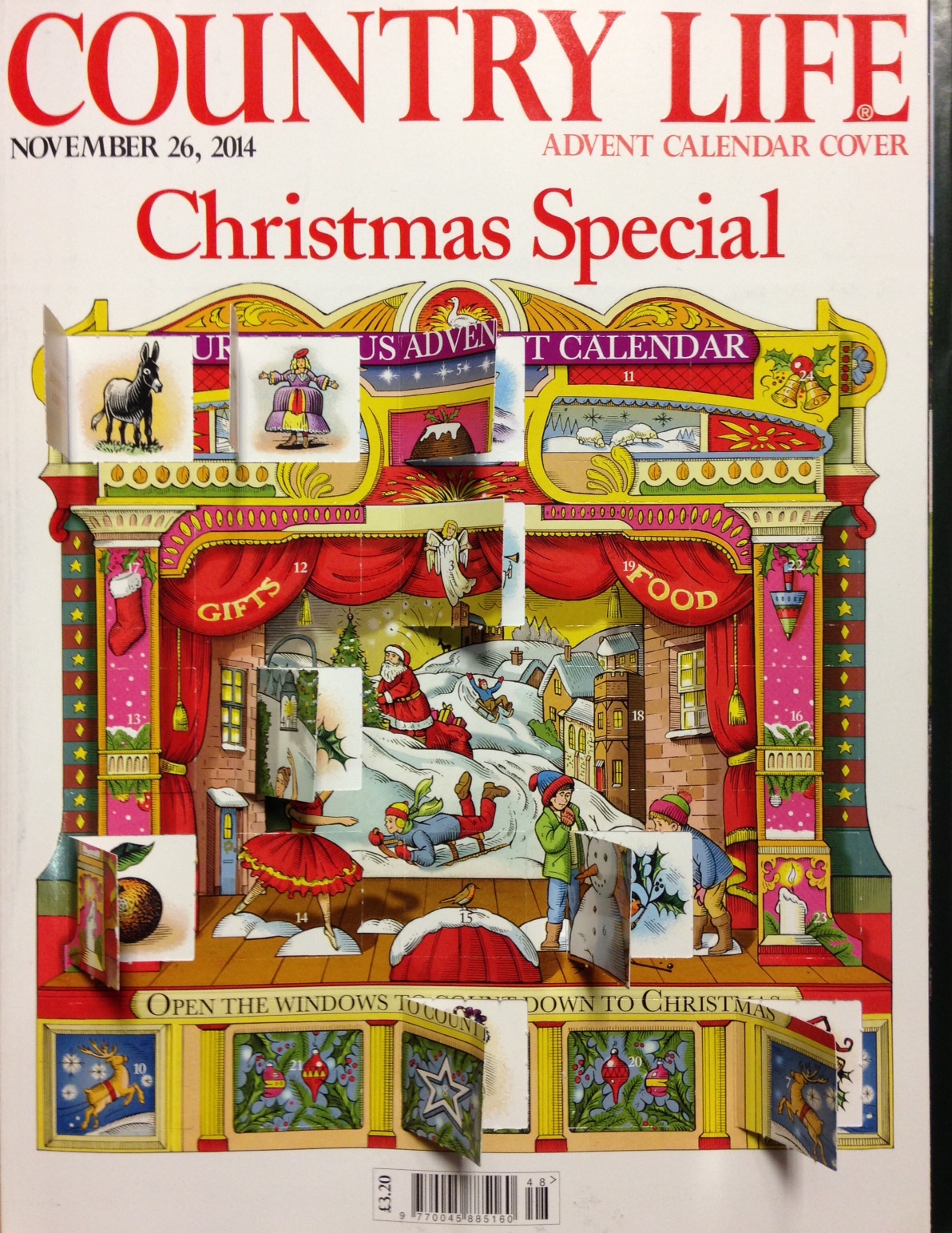
Innovation in Print: Country Life’s Advent Calendar Cover

December 9, 2014

25 windows to open on this cover.

25 windows to open on this cover.


Country Life, Time Inc.’s weekly publication in the United Kingdom, offers one of the best examples of innovation in print.

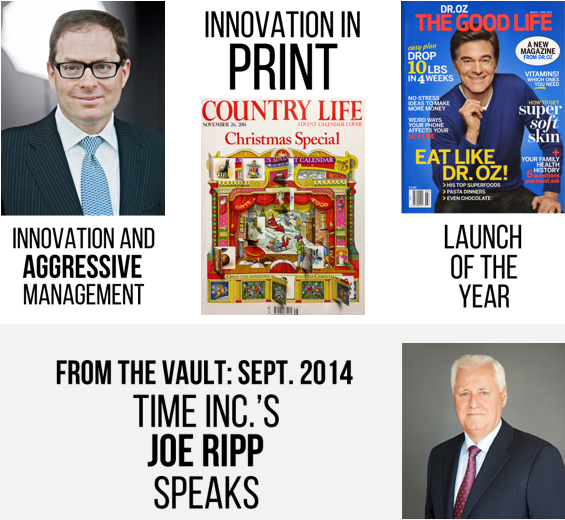
The November 26 issue, which looks and feels like a monthly, has an Advent Calender Cover with 25 windows to open every day in December. The magazine asks readers to find “What’s behind the windows?”

The cover illustration was done by Fred van Deelen.

I have opened my first nine windows as the cover image to the right shows… This is a keeper.

h1

Hearst Magazines President David Carey to Samir Husni: Our Business Is One Part Innovation and One Part Aggressive Management. The Mr. Magazine™ Interview

December 8, 2014

“In fact, our new magazines plus digital, now account for 32% of the profits of our U.S. companies. These are businesses that 5 years ago either did not exist or were in a loss position.” David Carey

david_carey_by_frank_veronsky-7985 As 2014 winds down and the world prepares for an exciting new year; magazines and magazine media also look to the future with hope and potential in both their print and digital products.

Just moments before he heads to a Hearst Board of Directors meeting, David Carey, president of Hearst Magazines, took few minutes to chat with me about the year that passed and the year to come. David has always been a strong believer the power and reach of print and digital as well as in the power of new magazines. He doesn’t see any of the aforementioned changing in 2015. David’s positivity is absolutely contagious.

How can it not be? After all, the last three new print titles launched by Hearst and their partners, together with the digital initiatives, is responsible for 32% of the profits at Hearst Magazines now.

So, between Hearst’s print and digital innovations and the aggressive acquisitions the company is making, David believes that Hearst is looking stronger than ever as it approaches a new year and a new season of engaging with its audience.

So sit back and enjoy the Mr. Magazine™ conversation with the president of Hearst Magazines, David Carey.

But first, the sound-bites:

On Hearst and his thoughts about 2014: I think 2014 was a very complex year. The bankruptcy of Source Interlink threw a big wrench into the middle of everyone’s single-copy strategies.
On why he believes so strongly in new launches: Our new magazines plus digital, now account for 32% of the profits of our U.S. companies. These are businesses that 5 years ago either did not exist or were in a loss position.
On his reaction to people who say digital is the future and there is no room for print: Our corporate mantra here is unbound, which indicates our belief in both our print and digital products. You have to be good at both, so we would strongly disagree that there is no future in print.
On the biggest stumbling block facing the industry in the coming year: The biggest opportunity for us and all media, I think, is we have to make sure our content is really engaging consumers. This is true if you’re a television producer or a magazine or newspaper publisher.
On the benefits of acquisitions: The managers that we pick up through these acquisitions are remarkable. So not only do you get the businesses and the underlying profits, you also get managers you can empower to help drive your next level of growth.

And now the lightly edited transcription of the Mr. Magazine™ interview with David Carey, President, Hearst magazines…

Samir Husni: As a leader in magazine media, how do you sum up 2014 and what are your predictions for the new year?

David Carey: I think 2014 was a very complex year. The bankruptcy of Source Interlink threw a big wrench into the middle of everyone’s single-copy strategies. The market is now recovering, thank goodness, but it made for a longer year than we would have liked.

The same rules and thinking that has been in place for some time is still valid: A. The industry needs to continue to rethink its orthodoxies; how does it organize its teams; how does it produce its content; how do print and digital expressions work together and how do you structure your investment in content?

We’ve been doing a lot of that here at Hearst and I was pleased with my year.

Samir Husni: Hearst is one of the few major companies that has launched and continues to launch print magazines, while others are still gambling that the future is digital. You launched Dr. Oz The Good Life, HGTV magazine, and the Food Network magazine; why do you still believe so strongly in print?

David Carey: And more to come; Trending New York and others that we are thinking about for the next year. We believe very strongly that both consumers and advertisers welcome new magazines. We have found that just like people enjoy seeing new TV shows, new books, films; new everything, people also like to see new magazines.
We do these mostly with partners, so that helps us because we start with an established brand name. And we’ve found that we can get support for these businesses very quickly.

Let’s take Dr. Oz, for example, which maybe a year ago had virtually no subscriptions at that point and now has about 530,000 subscriptions. And the first few issues sold over 300,000 copies at newsstand.
That’s indicative of all the opportunities, so we’ll continue to bring new products to market on a schedule of at least once every 24 months.

Samir Husni: One of the things that I’ve heard recently is that some are placing all their bets on digital, there is no future for print. How do you react to a statement like that?

David Carey: Our corporate mantra here is unbound, which indicates our belief in both our print and digital products. You have to be good at both, so we would strongly disagree that there is no future in print. But we know that in order to succeed, you’re also going to have to be a highly-skilled digital publisher and a very innovative print publisher. You can’t just do one; you have to do both.

Samir Husni: What do you see for the industry as a whole, not just Hearst, as the biggest stumbling block to be faced in 2015?

David Carey: The newsstand ecosystem will have calmed down in 2015, so that’ll be a plus. The biggest opportunity for us and all media, I think, is we have to make sure our content is really engaging consumers. This is true if you’re a television producer or a magazine or newspaper publisher.

Consumers today, by virtue of the amount of time they spend with a little device connected to their hand at all times, people spend 2-3 hours a day on the mobile web, even if you’re producing websites or magazines; you have to make sure that your content will pull people away from other things and engage with you. In this, it’s an absolute battle for readers’ attention and every media form under the sun is facing that same problem of getting people’s attention away from that short-form device focus and have them engage with their content.

Samir Husni: As you walk into the board meeting and one of the members asks you, “David, what will be your Tweet on New Year’s Eve?

David Carey: My Tweet on New Year’s Eve would be – my deepest thanks to my team for a year of creativity, strong management to their business and optimism.

Samir Husni: And for the rest of the world?

David Carey: This is a business that’s one part innovation and one part aggressive management of the business. We saw our web audiences explode and our digital businesses are now a key piece of our profit, very much so. We were losing money in digital in 2010, but today those profits are quite strong and very meaningful.

In fact, our new magazines plus digital, now account for 32% of the profits of our U.S. companies. These are businesses that 5 years ago either did not exist or were in a loss position.

So, I can only say to that – thank goodness we took those risks and thank goodness these teams executed so well because our U.S. companies would be far less profitable if we had not gone down those paths.

Five years ago those numbers from that same set of properties would have been a bracketed number and now it’s a pretty big number. And that means we keep at it, in terms of new products. We’ll keep at the process and our goal is that all of them work, some may not along the way, but that’s OK too.

Samir Husni: I also noticed that you’re buying back a lot of your franchises overseas; I heard in Moscow that Hearst is coming to buy Cosmo again and they did it in Amsterdam; is that a new strategy for the company as a whole, to reacquire your franchises from overseas?

David Carey: We’ve been on that path for a bit. We bought Cosmo in Italy, Amsterdam and we have some other markets planned. It’s not an exclusive strategy except that when those moments come up, we will act upon them. I think especially on the digital front that it helps when we can coordinate all the digital activities under an owned platform.

But we have partners around the world and we’re proud of them. This is more led by our partners and the moves they make and they might be restructuring their businesses. Just to be clear, we’re not pushing anybody out; it’s more a function of if they’re going to restructure their businesses anyway, we’re offering an alternative.

One last thing, since we’re talking about acquisitions, we also get fantastic diversification of management. The managers that we pick up through these acquisitions are remarkable. So not only do you get the businesses and the underlying profits, you also get managers you can empower to help drive your next level of growth. We think not only about new launches, but future acquisitions as well. It’s all important.

Samir Husni: Thank you.
h1

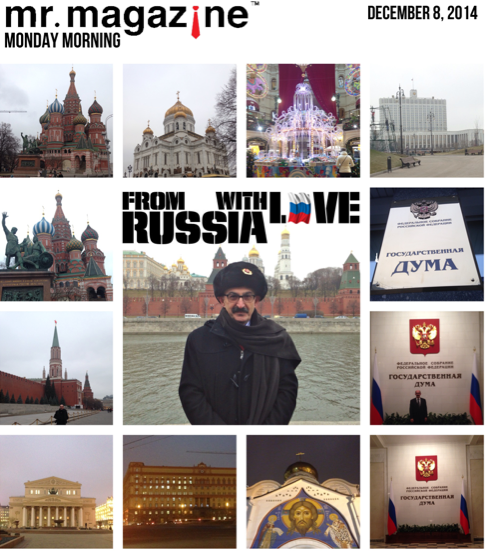
Mr. Magazine™ Monday Morning: From Russia With Love. A Special Issue.

December 8, 2014

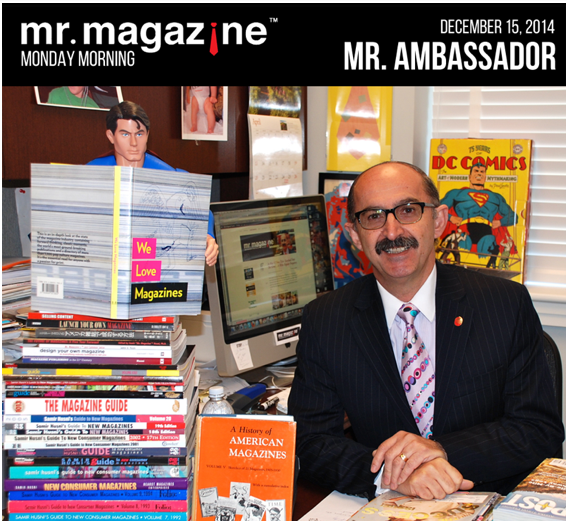
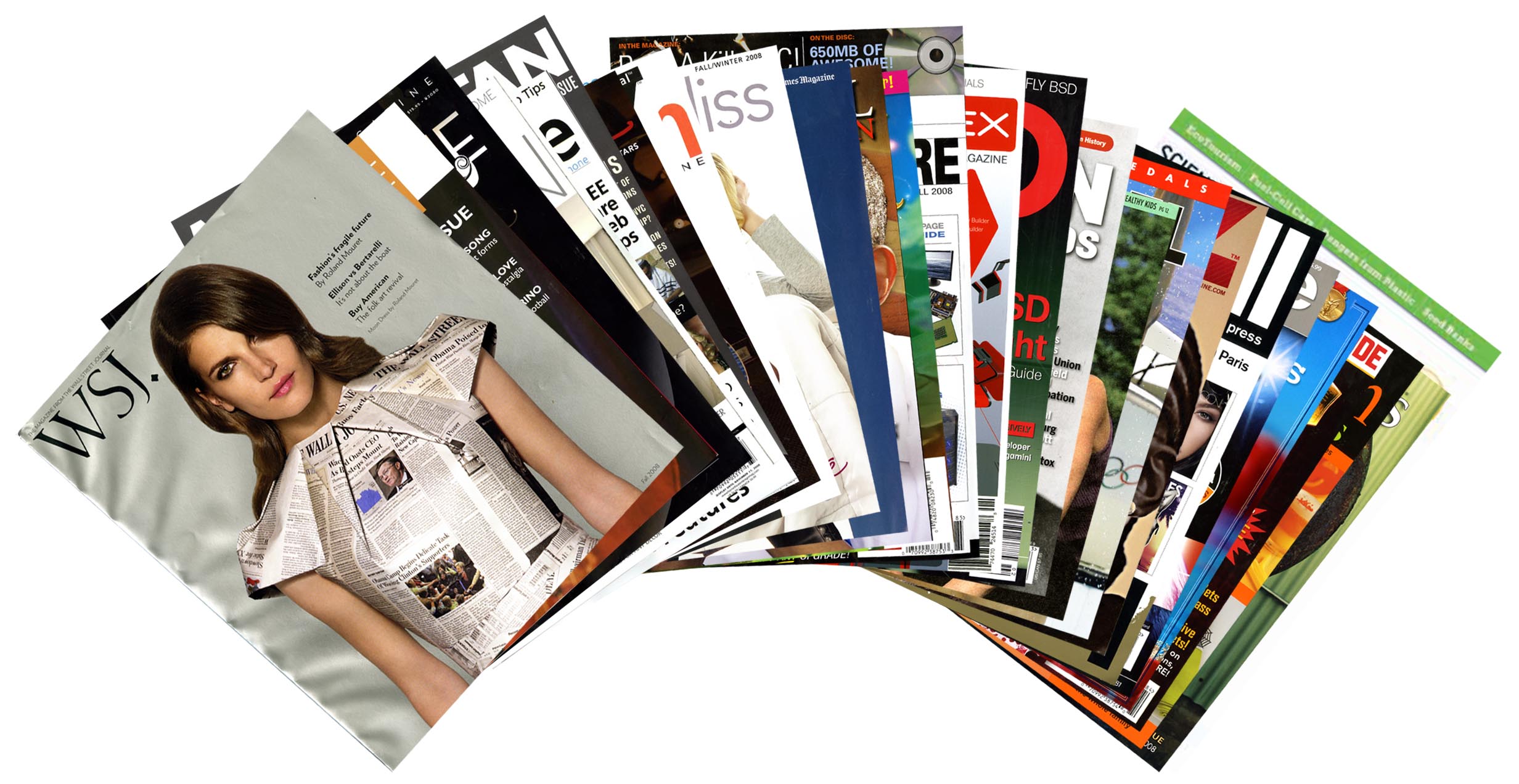
Picture 2 The new edition of Mr. Magazine™ Monday Morning is out. The Dec. 8 issue is a special issue recapping Mr. Magazine’s™ four blogs from Russia and a blog entry written by Alexander Oskin, my host in Russia.

To read this week’s issue of Mr. Magazine™ Monday Morning click here.

To subscribe to the free weekly delivered to your in box click here.

To read Mr. Oskin’s blog chairman of the Russian Press Distributors Association click here.
Picture 3

h1

Closer Weekly Magazine and Dr. Oz The Good Life Magazine Are The Co-Hottest Magazine Launch of the Year

December 5, 2014

Closer-13Dr. Oz-8

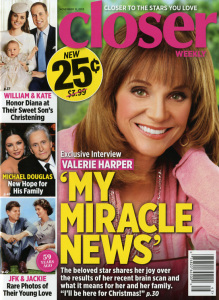
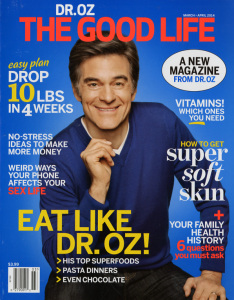
For the first time since 2000, two magazines shared the title “Hottest Launch of the Year.” Bauer Publishing’s Closer Weekly and Hearst Magazines’ Dr. Oz The Good Life were named earlier today as the co-hottest launches of the year. In 2000, American Profile and O, The Oprah Magazine were named co-launches of the year.

Closer weekly is the first major weekly magazine launch since 2004 and Dr. Oz The Good Life is the first new magazine to go to a second printing since 2000.

IMG_4545 The Hottest Launches’ event took place at the Grand Hyatt Hotel in New York City. The 30 Hottest Magazine Launches of 2014 were honored at the event that is held annually in partnership with min: media industry newsletter.

At the same event Newsweek was honored as the Hottest Re-Launch of the year.

The magazines were selected from a field of more than 800 new magazine launches covering the period of Oct. 2013 until the end of Sept. 2014. There were more than 200 titles in that group that were published with a frequency of four times or higher.

Congratulations to all the winners and looking forward to the crop of 2015.

Click here to read about all the 30 Hottest Magazine Launches of 2014.

h1

From Russia With Love 4: Specialization Is The Name of the Game. The Mr. Magazine™ Interview With Alexey Vasin, Za Rulem

December 4, 2014

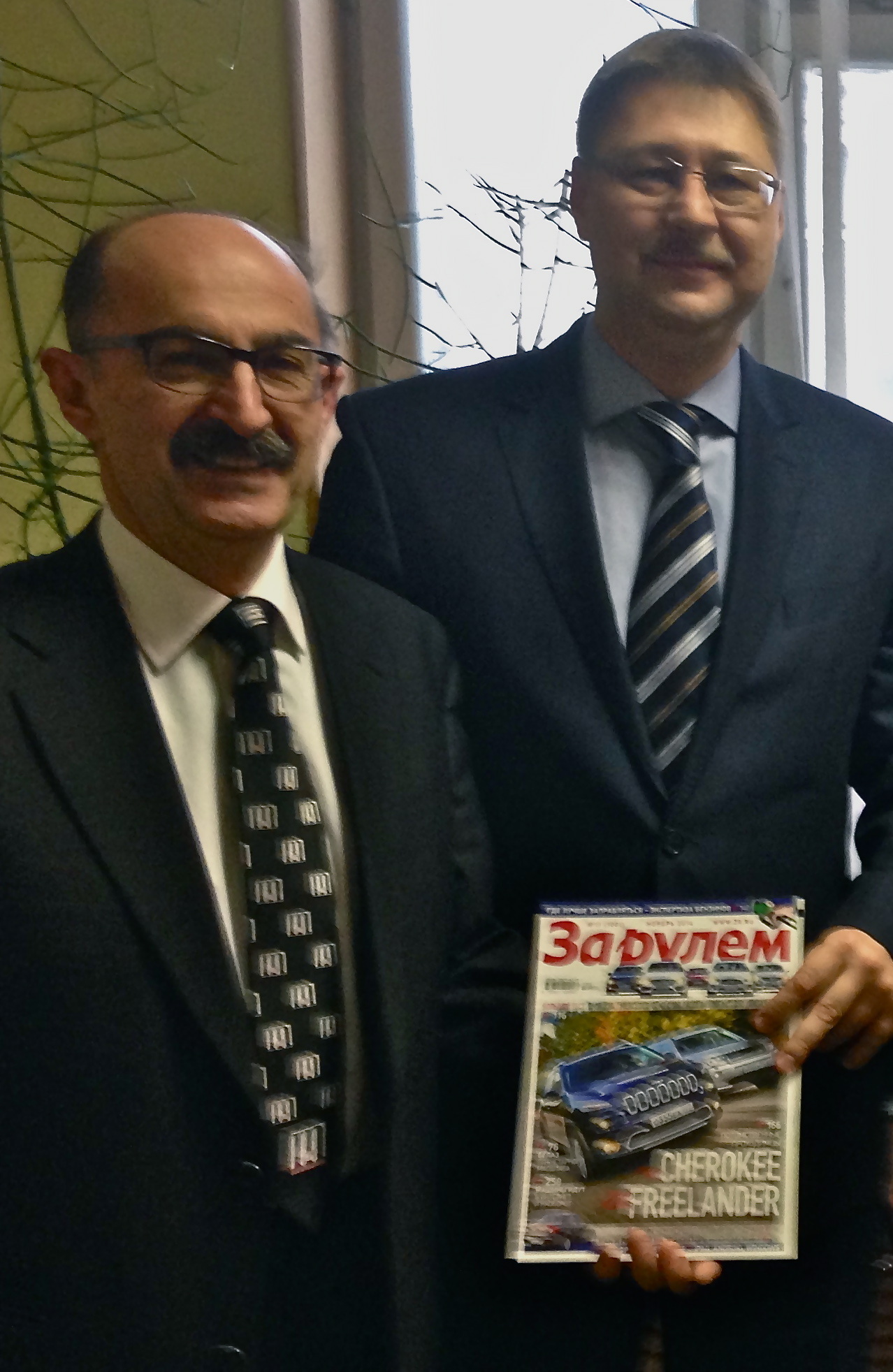
On the banks of Moscow River and Kremlin Propelling a publishing company that was founded in 1928 into the uncertain magazine media future of today might seem like a daunting task, especially when at one time the magazine they published had a circulation of 5 million. Of course, in those years Za Rulem had the only auto magazine in the entire country (the former Soviet Union).

Today, Alexey Vasin, General Director of Za Rulem, has plans to bring the contemporary worlds of print and digital together and continue the success of his predecessors before him, if not surpassing them.

On my recent trip to Moscow, Alexey took time out of his busy schedule to speak with me about the many different extensions of the Za Rulem brand and the platforms being designed and offered to the audience. It was a very entertaining and enlightening discussion.

So sit back and enjoy the last installment of my first trip to Russia as you read the Mr. Magazine™ interview with Alexey Vasin, General Director, Za Rulem.

Alexey Vasin
Husni with Alexey Vasin, General Manager, Za Rulem

But first the sound-bites…

On Za Rulem, past and present: The publishing house of Za Rulem was founded in 1928 and published the magazine. It was the only auto magazine in Russia and the circulation of the magazine was 5 million. Now, it is still the leader of men’s auto magazines in Russia, with probably the largest audience among all the monthly men’s magazines.

On the future of print and digital within Za Rulem’s market: Right now, we are not very profitable in digital either. But it is still important and necessary, because the concept people have of getting information is changing.

On the biggest challenge they face going into the future: Other problems are moving from a printed press to other media. We also have some specialized challenges. For several years we’ve suffered from distribution problems, especially with the kiosks.

On whether he is enjoying his job more now or five years ago: Good question. It was always work, but now it has more tension. It is definitely more challenging than before, especially before the crisis.

On what keeps him up at night: (Laughs) Too many things to mention.

And now for the lightly edited conversation with Alexey Vasin, General Director of Za Rulem:

Samir Husni: Tell me a little about Za Rulem, past and present.

A. Vasin Alexey Vasin: The publishing house of Za Rulem was founded in 1928 and published the magazine. It was the only auto magazine in Russia and the circulation of the magazine was 5 million. Now, it is still the leader of men’s auto magazines in Russia, with probably the largest audience among all the monthly men’s magazines. There are about seven million readers of Za Rulem magazine and the circulation of the magazine is 114,000 monthly.

Za Rulem has four supplements: Moto magazine, the first motorcycle magazine in Russia, and one about logistics and trucks. And two supplements which will be issued in two weeks. We also have our regional newspaper, Za Rulem-Region, which is published in several regions with separate circulations, there are 22 regions in Latvia, but due to the economy, circulation has been reduced to five regions. Also, we publish books and catalogs on the auto topic. And they have many editions.

Za Rulem is actively developing digital. We have a website, which was launched in 1998, one of the first about automobiles in Russia. The audience of the website is about 2 million a month. In 2012, we created a mobile app for tablets and we also have an app suitable for Androids and iPads. We have also estimated that we are the best application for iPads in Russia.

Samir Husni: You mentioned that you started with a circulation of 5 million and now you’re at 114,000…

Alexey Vasin: (Laughs) Our parents started with 5 million. It was the only one at that time (during the Soviet Union era). The market was very different, an innocent time.

Samir Husni: As we are propelling into digital, where do you see the future of print fitting in? In the United States very few magazine companies are making any money from digital.

Alexey Vasin: Right now, we are not very profitable in digital either. But it is still important and necessary, because the concept people have of getting information is changing. And we have to provide our readers with information in the best and most suitable of ways. And concerning the commercial success of digital, we are not lonely in this movement.

Recently we attended a conference in London, where many interesting things about digital content was presented. And we hope that if we unite we will be successful. Unfortunately, it’s not that easy in the beginning.

Samir Husni: Five years ago, most publishers in the United States put their bets on the tablet, this is the future and this is where we’re going to get the money. And that did not happen. Now they’re saying it’s mobile.

Alexey Vasin: (Laughs) Well we haven’t invested all of our money in those things. But when it comes to content, we created a series of things.

Samir Husni: All of the predictions now are on specialized magazines; they will have the most prominent spot in the future.

Alexey Vasin: Such specialization has been here for many years. And talking about our market, we already have only auto magazines and there are even ones for particular models.

Samir Husni: Even with the motor magazines in the States we have specialized ones for baggers, the motorcycles that have bags on the sides.

Alexey Vasin: We are moving in that specialized direction. And, as I said, we are specialized already as we are all about vehicles of some type. And while many other magazines have their auto departments, we are concentrated only on autos.

Samir Husni: What do you think is the biggest challenge you’re facing as you move toward the future?

Alexey Vasin: (Laughs) We have many obstacles. Some just in general with our market and some that are very particular. Speaking about the general ones, it is of course, the reduction of interest in print and switching audience attention to other channels of communication, such as digital.

But from the other side we have the potential for further development. We have the audience and we have the advertising budget.

Other problems are moving from a printed press to other media. We also have some specialized challenges. For several years we’ve suffered from distribution problems, especially with the kiosks.

Samir Husni: Yes, it seems like every publisher I’m meeting with, it’s the same: distribution and distribution.

Alexey Vasin: Yes, but when we are active on every channel of distribution, we have almost a 90% presence in Russia, which is one of the highest. So we can’t avoid the general market woes.

Samir Husni: If someone asked you: are you enjoying your job more or less than five years ago, what would you tell them? If you look at 2008; are you having more fun now or does it feel more like work?

Alexey Vasin: (Laughs) Good question. It was always work, but now it has more tension. It is definitely more challenging than before, especially before the crisis. But we are actively moving forward and managing to have a lot of fun and celebrations. (Laughs) It is interesting challenges though.

Samir Husni: Do you live the lifestyle of the magazine? Are you an avid car person or no?

Alexey Vasin: (Laughs) It is easy to be a motorist in Moscow, everyone has a car. There are some researchers from Europe and they found that only 12% of motorists are really into cars and this topic, so that is our target audience.

Samir Husni: My typical last question; what keeps you up at night?

Alexey Vasin: (Laughs) Too many things to mention.

Samir Husni: Thank you.
And with this, From Russia With Love 4, I conclude my news, views and interviews regarding the Russian media. Until my next trip around the world and its many many magazine and magazine media outlets, here’s to a great magazine day.

h1

From Russia With Love 3: The State and Challenges of Newspapers. The Mr. Magazine™ Interview with Pavel Filenkov, CEO, Kommersant

December 3, 2014

On the banks of Moscow River and Kremlin As in the United States, newspaper markets in Russia are facing many challenges, both in mastering the digital realms and in increasing revenue. I spoke with Pavel Filenkov, CEO at Kommersant Publishing House on my recent trip to Moscow and we talked about the future of newspapers in Russia and whether the level of journalism all publishers globally are experiencing, with digital figured into the equation, is as elevated as it has been in the past.

His answers are seemingly unique, yet extremely familiar as, once again, I realized that while many miles and customs may separate us, in the end we all face similar challenges.

I hope you find the Russian viewpoint of newspaper publishing as intriguing as I did as you read my interview with Pavel Filenkov, CEO, Kommersant Publishing House.

Husni and Filenkov
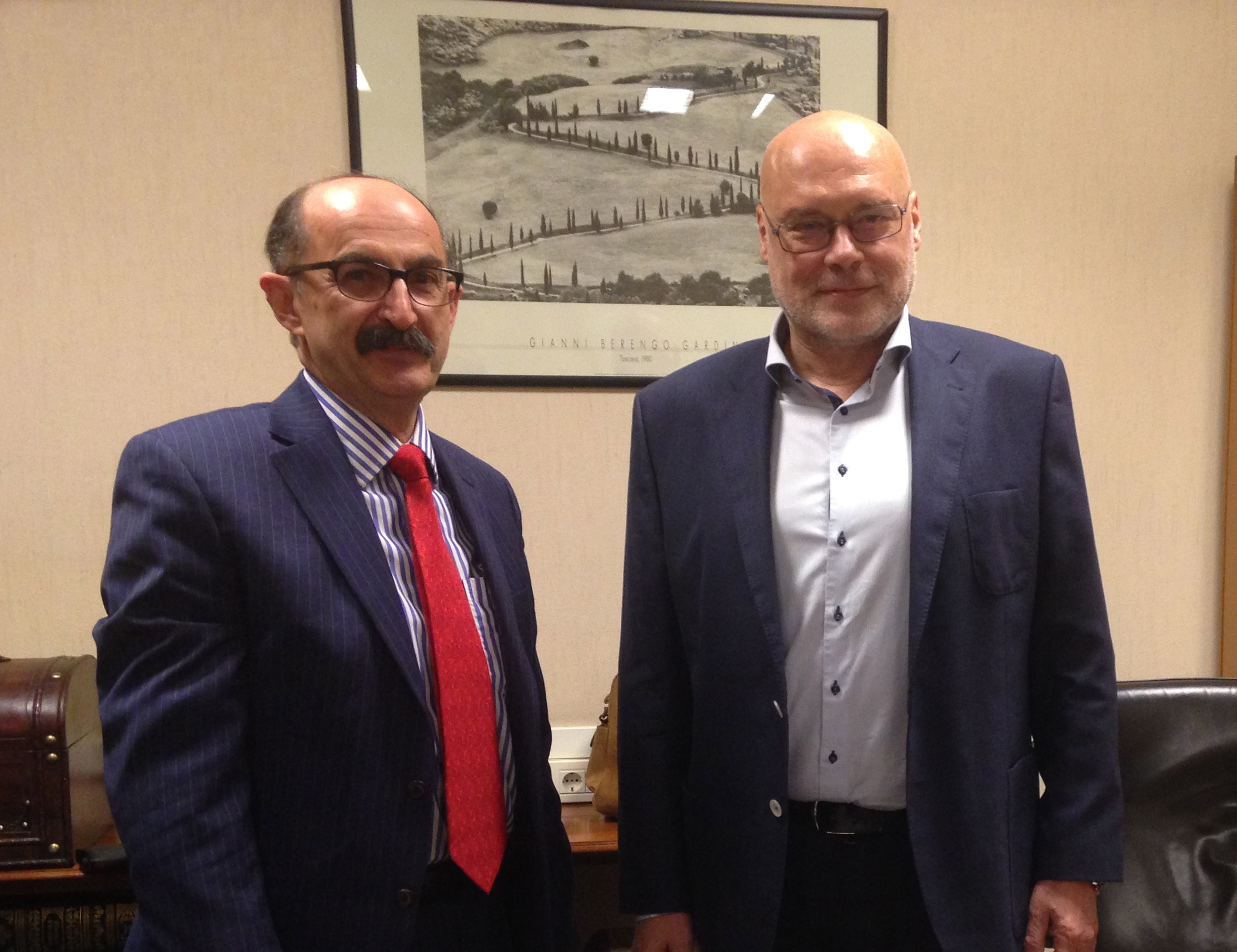
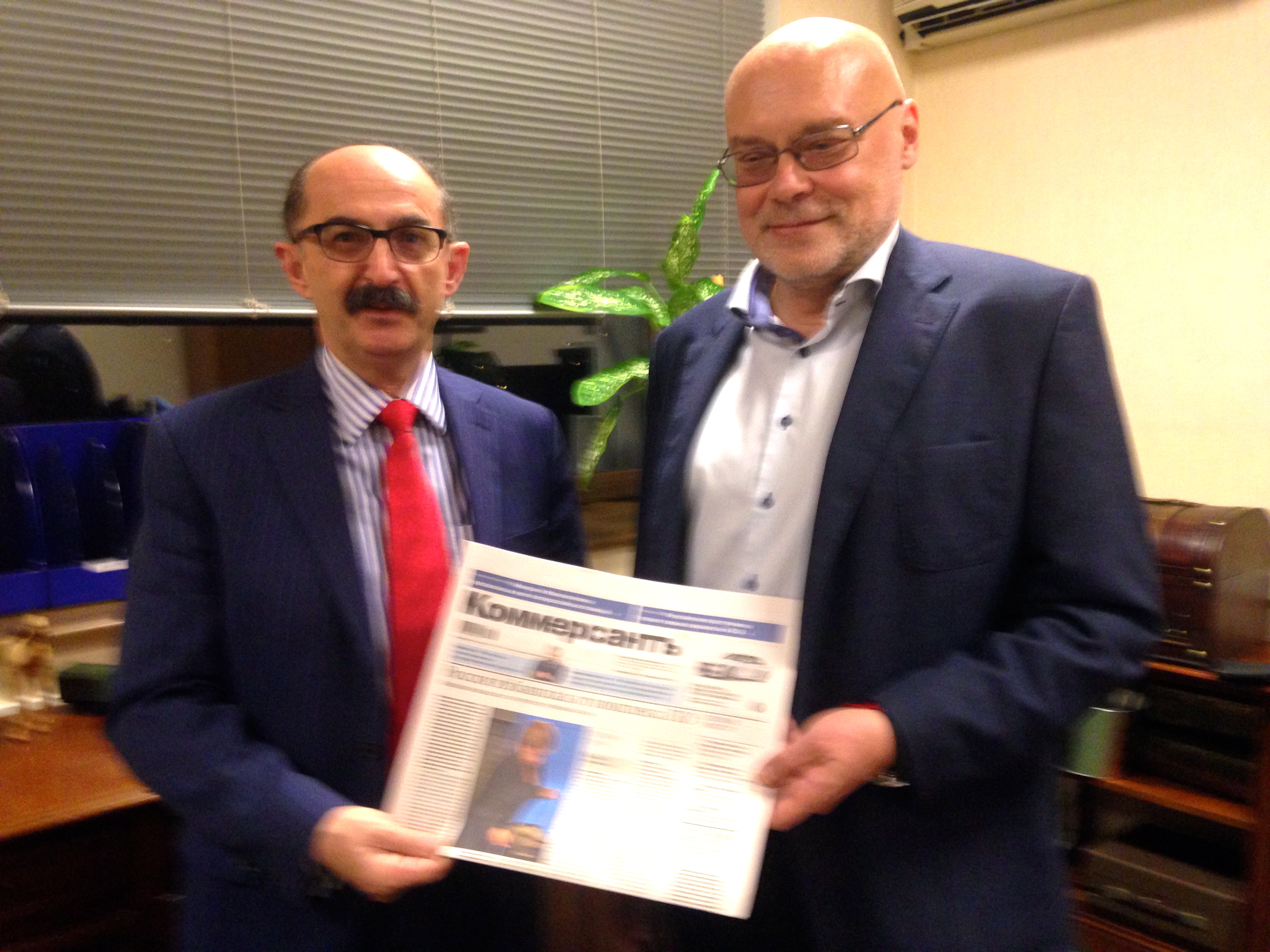
Husni with Pavel Filenkov, CEO, Kommersant Publishing House

But first, the sound-bites:

On whether he sees the cup half empty or half full when it comes to newspapers in Russia, especially his own: Our newspaper market is of course overheated. I think we have three times more newspapers than we really need. We have, at this moment, approximately 6,000 to 8,000 newspapers.

On whether he believes journalism has improved or declined over the last 5 to 10 years: In Russia and in every country, there is government which this country needs. And every country has journalists, which I can also say this country needs, but I am not sure that our country needs the same level of journalism that we have now, or as we had two years ago.

On the impact of digital on print newspapers in Russia: We have to move in the direction of digital media. We do not see a model way, but the quantity of advertising money, which is in the digital field and the printed field, is approximately the same.

On whether the content of newspapers overall is a reflection of the general audience: I agree to some extent with that statement, but here in Russia we have a much more important problem, which limits the future development of our newspapers. And it’s the problem of distribution.

On the distribution problems of his newspaper, Kommersant: Our subscription base is collapsing because we have only one partner in distribution, the Russian post office. And the price of delivering newspapers is growing from month to month and year to year. In fact, our distribution through the Russian post office is absolutely inefficient.

On what he sees as the light of the future for his newspaper: We hope that we will have the capability to get money from the digital outlets in publishing. That’s why we are trying to develop a digital print system from Adobe.

On what keeps him up at night: Too many things. (Laughs) I go to bed very late and I wake up quite early.

And now for the lightly edited conversation with Pavel Filenkov, CEO, Kommersant Publishing House:

Husni and FilenkovSamir Husni: Tell me a little about the state of newspapers, specifically yours, but also in general, in Russia. Do you see the cup as half full or half empty and specifically about your paper first?

Pavel Filenkov: I think all are an advertising market, especially our newspapers. It’s just 100% part of unstolen money from oil. The lesser the price of oil, the less money we have, (Laughs) as the price of oil has fallen. So, of course, our income has fallen approximately the same percentage.

The estimation of how much our advertising market has fallen this year is about 12% among newspapers. The advertising in magazines has fallen even a bit more and a little less in business newspapers. As we are a business newspaper, of course, our percentage has fallen a bit less, around 4% for this year.

Of course, we understand that we have no reason to hope that the price will go high, so we think that next year will be worse than this one. The decrease in advertising incomes will of course continue and we think that decrease next year will be approximately 15%. But, this is certain, we have fun news also.

Our newspaper market is of course overheated. I think we have three times more newspapers than we really need. We have, at this moment, approximately 6,000 to 8,000 newspapers. Of course, not all of them are really working, but maybe around 5,000 are. It’s too many for our country.

And as a result of this, there is a lapse in the advertising market, and maybe a big part of these newspapers will die. And the main newspapers will divide their money, their heritage, and their piece of this pie.

So, I think that the newspapers that will survive during the next year will not have the poor health that we have at this moment. Of course, the quantity of newspapers will reduce, but the ones that survive will be status quo or maybe even in a better state economically.

But I do understand that this logic is, to some extent, crocodile logic, complete with crocodile tears, but we have to see things realistically. (Laughs)

Samir Husni: You have this vast number of newspapers; do you think in the last 5 or 10 years journalism has improved or declined? Are we better overall journalist’s today or are good journalists becoming few and far between?

Pavel Filenkov: We can see our country as a country with constant political and economic sedation. Of course, we will not see a reason why our journalism should become more worthy.

But our country changes and the newspapers should change as well. And of course, we are trying to satisfy external conditions and we try to go together with our country. And when we try to perform under these new conditions, I’m not sure that we become better,

If we can see our level of journalism from that point of view, I think in the future we will have journalism of more worth. But if we can also see journalism as a need of our society, then I think the level of this profession may become higher or at least stay the same.

In Russia and in every country, there is government which this country needs. And every country has journalists, which I can also say this country needs, but I am not sure that our country needs the same level of journalism that we have now, or as we had two years ago.

Samir Husni: What about the impact of digital? Has the advancement of digital impacted the printed newspaper at all?

Pavel Filenkov Pavel Filenkov: We have to move in the direction of digital media. We do not see a model way, but the quantity of advertising money, which is in the digital field and the printed field, is approximately the same. But when we consider money in the digital field, 90% of this money belongs to context advertising. And only 10% belongs to real media advertising. And in print areas, the average is absolutely different, about 100% of the money is real advertising money, maybe a small percentage is context advertising money.

That’s why we can set only media advertising money, not context, so we can get from the Internet, from digital, only 10% of the market. So we cannot get from the digital area more than 10% of our income. But we are ready to go into this area.

For example, our auditorium in digital and our auditorium in print are approximately the same. Even on the internet we have more loyal readers. Only 10% of our money from the print area, do we get from the Internet.

We don’t have a model yet for how to get more money from that market. That’s why our development in the Internet area is very limited. We have finished the period of time when we invested in digital with all of our allotted money for that area. We finished that strategy because we aren’t getting a very high response from the investment.

So, at this moment, my strategy for Kommersant is to invest enough money to support our development level in the Internet; however we don’t consider the Internet our salvation.

Samir Husni: Have you noticed that with the printed newspapers, some people are saying the problem isn’t with ink on paper, it’s with what’s being put inside the paper: the content.

Pavel Filenkov: I agree to some extent with that statement, but here in Russia we have a much more important problem, which limits the future development of our newspapers. And it’s the problem of distribution, because at this time we have a lapse in both channels of distribution. Our subscription base is collapsing because we have only one partner in distribution, the Russian post office. And the price of delivering newspapers is growing from month to month and year to year. In fact, our distribution through the Russian post office is absolutely inefficient.

Samir Husni: It’s costing more than you’re bringing in.

Pavel Filenkov: Yes, exactly. And we have a very big problem with our retail, because the standard way of distribution is retailing by means of kiosks and outlets, and the quantity of these street kiosks is reducing from year to year. I don’t know why, but this is politic of our power, to reduce the number of street kiosks.

So, at this time we have more than a 50% return from our retail. Of course, this is an absolutely inefficient way of distribution. That’s why the problem of distribution is much more important for the survival of newspapers. It’s much more important than all our other problems, levels of journalism or technology or development; for us, all these problems are much less important than distribution.

Samir Husni: Very true. If you can’t get the paper into the hands of the readers…

Pavel Filenkov: Yes, but we are trying to use different ways of delivering and distributing newspapers. For example, for us a very important channel of distribution is on board distribution. The other problem is just printing our newspaper, but we still have enough of a printing press to print it.

We print our newspaper and it’s necessary to understand, the circulation of our newspaper isn’t big for Russia. We print about 100,000 to 120,000 copies and this is a low circulation because we are a business newspaper and our readership isn’t as big as other papers that print1 million to 2 million copies.

Our circulation is so low we have to print out the newspaper in 14 or 15 different places in order to deliver the paper on time to the different regions of the country.

Samir Husni: In the midst of all this gloom and doom that we face as journalists in the industry, where is the bright side? What do you see as the light as you move toward the future?

Pavel Filenkov: We hope that we will have the capability to get money from the digital outlets in publishing. That’s why we are trying to develop a digital print system from Adobe. We have our application in all electronic magazines and the Apple Store in Google Marketplace. Our application is produced for all platforms: tablets, PC’s IOS and Androids. And we believe that this will be another revenue stream for us in the future. So, that’s one channel.

The next channel, which we hope will give us another possibility to survive, is a way to deliver some services to our readers. For example, information services, databases, approaches to some loyal services, registration services and others as well. So we have created a special company which provides these services. And these services can be accessed by means of our site. For us, this is a way to attract additional readers and get more revenue, not just by advertising, but by the means of giving our readership much more value. Almost all of these services are payable services; they aren’t free of charge, so for us this is another important way of income.

At this time we get approximately the same money that we get from the Internet, about 10% of our advertising income we get from these services. And of course, we have a very good partnership between our newspaper and these services. The newspaper, in this case, serves as advertising for our company and our information facilities. We see these two ways as things we are going to develop.

Samir Husni: And this venture into e-commerce…

Pavel Filenkov: Yes, we tried to launch an e-commerce in its simplest form, as an eShort, but we stopped the project because we realized that we are not good sellers when it comes to jewelry or books and songs; we are not professionals. But we are professionals in the area of information, so we’ll produce our kind of goods.

Samir Husni: My typical last question; what keeps you up at night?

Pavel Filenkov: Too many things. (Laughs) I go to bed very late and I wake up quite early. I’m trying to do as much every day as I can and for me that is the result of my sleeplessness. Also, I wish to spend as much time with my work and my family as I can.

Samir Husni: Thank you.

h1

From Russia With Love: Different Media, Similar Challenges… A Mr. Magazine™ Musing.

December 1, 2014

On the banks of Moscow River and Kremlin
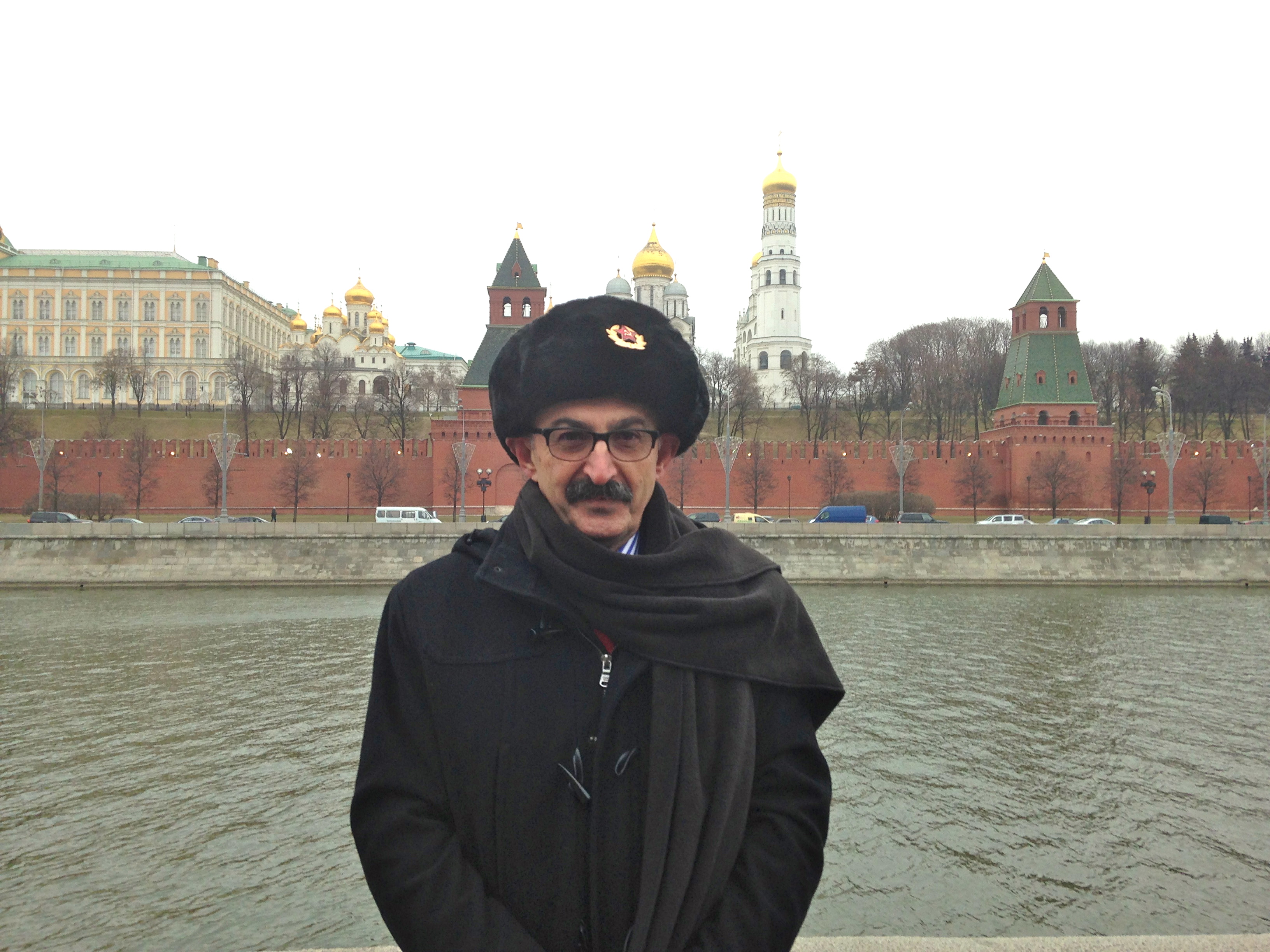
On the banks of the Moscow river with the Kremlin in the background.

The Russian press and magazines face the same challenges as the American magazines and magazine media. Distribution, advertising and the future of print are mainly the three major areas of concern a visitor to Moscow discovers during the first few hours of his visit to Russia. Amazingly they are the same challenges facing the American magazine market.

unnamed-2
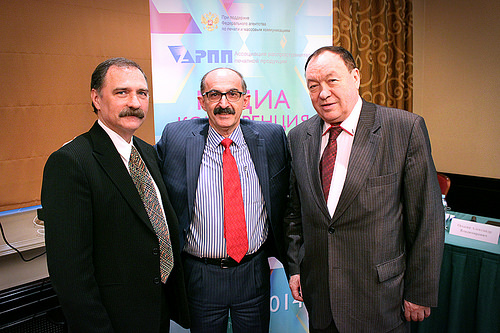
Husni surrounded by hosts Dmitry Martynov (left) and Alexander Oskin during the PDA annual conference Nov. 25

I was invited to keynote the annual conference of the Press Distributors Association (PDA) in Moscow last week. My hosts, Dmitry Martynov and Alexander Oskin, president and chairman of the board of the PDA respectively, asked me to address their annual conference on a topic close to my heart, the power of print in a digital age. I was more than happy to oblige.

The PDA arranged for me visits with major magazine and newspaper companies in Moscow and visits with leaders in The State Duma (The Russian Congress) and the Federal Agency for Press and Mass Communications. My host at The State Duma was Andrey V. Tumanov, first deputy chairman of the committee for information politics, information technology and communication. At the Federal Agency for Press and Mass Communication, I met with the agency’s deputy head Vladimir V. Grigoriev.

IMG_7669
At The Federal Assembly of The Russian Federation The State Duma with Duma member Mr. Andrey V. Tumanov

During my visit to the Duma I was treated to a tour of the chambers of all major political parties in Russia and a lunch at the Duma’s cafeteria. At the Federal Agency for Press and Mass Communication Mr. Grigoriev and I engaged in a healthy conversation about the future of print in a digital age. His main areas of concern are books and preserving archives and historical records. “We have records on paper since the invention of paper and they still exist,” he told me. “With digital you have to update the digital files almost every five years to preserve them. Technology and technological devices are changing so fast, that what you save today will not work tomorrow unless you keep on updating the files.”

At the Federation of Press
At the Federal Agency for Press and Mass Communication with Deputy Head Mr. Vladimir V. Grigoriev

Mr. Grigoriev is focusing the agency’s effort on books as the major printed medium to preserve. He sees little, if any, role of news in newspapers or magazines. “The newspapers and magazines have to be in the business of explaining and editorializing. They have to tell their audience what the news means to them or how it impacts them.”
Mr. Grigoriev adds, “It is the not the medium that have the problem, it is what you put in the medium.”

The PDA arranged for an additional three meetings with different media companies. I met and interviewed the CEO of Burda Russia Jürgen Ulrich, the CEO of Kommersant Pavel Filenkov, and the General Director of Za Rulem Alexey Vasin. In the next three days I will be publishing my interviews with the aforementioned media leaders.

At my final dinner with my hosts Dr. Martynov and Dr. Oskin of the PDA, we engaged in a conversation about the problems facing the Russian and American press and magazine markets. The challenges are many, and the similarities are even more. Maybe, we can leave the political differences aside and work together to find common ground to solve the magazine and magazine media challenges together. As I usually say, there is hope, there is always hope.

h1

Mr. Magazine™ Monday Morning Special Double Issue…

November 24, 2014

mmnov24 Naturally, Danny Seo, is the lead interview in this week’s edition of Mr. Magazine™ Monday Morning. This week’s issue is a double issue for the weeks of Nov. 24 and Dec. 1. Click here to read the issue and click here to subscribe to the free weekly newsletter.

From the entire team at Mr. Magazine™ we wish each and everyone of our readers a very happy and healthy Thanksgiving. Also we are truly thankful for the support of our sponsors at the Mr. Magazine™ web and blog sites and, of course, the Mr. Magazine™ Monday Morning. Without your support there would have not been a Monday Morning newsletter.

All the best and a very Happy Thanksgiving.

h1

Naturally, Danny Seo: The Man,The Magazine, The Movement. The Mr. Magazine™ Interview With Danny Seo.

November 21, 2014

“But the reality is, to actually create a beautiful, curated, well-edited printed magazine; it’s not an easy process. And when we really looked at the space and thought about who our reader and customer was and what she’s really interested in right then, which is having some me-time, we felt the reader was looking for a publication where she could actually turn off her phone or the TV and have an appointed reading time with a tangible product that she can hold in her hands and go through page by page.” Danny Seo

naturally 1-5Living “Simply Green” is something that Danny Seo has been doing and promoting for years. Through his books, television programs, magazine columns, and his how-to lifestyle lectures, Danny Seo has shared his creative ideas on modern, eco-friendly living to millions of people.

And now he has another platform for his environmental practices and beliefs that is as beautiful as it is sustainable. Naturally, Danny Seo is the latest offering from a man who has been described as an eco-friendly lifestyle expert. And looking at and touching his newborn brainchild certainly backs up the description. The magazine is harmonious and balanced, beautiful and filled with creative and innovative ways a person can help sustain our planet in many different ways. From food, home, style, health, travel and just plain fun, Danny embraces a health-conscious attitude about life in general, instead of producing a magazine that promises you to lose 5 pounds in 5 days.

But don’t look for his face on the cover. Ever. In fact, it’s in his contract. Instead, look for sustainable topics done in an oh-so stylish way. And the paper the magazine is printed on feels amazing.

It’s just a great magazine and definitely deserves to be one of this year’s hottest new launches. So, sit back and let your earthy, inner spirit soar as you enjoy the Mr. Magazine™ interview with a man who loves the planet and is determined to prove it, Danny Seo, Naturally, Danny Seo…

But first, the sound-bites:

Danny Seo On why he chose a printed magazine as a platform: Well, you would think being an environmentalist, doing a digital magazine would be something that I’d be interested in because there’s no trees involved, no waste; it’s as eco-friendly as possible. But when you think about digital magazines, the reality is anybody can do a digital magazine.

On whether, as an environmentalist, he thinks print adds or takes away from the environment:
I think what it is, there’s a lot of things in our lives right now that are just cheap and of bad quality.

On a stumbling block he had to face during this journey:
I think it’s what we’ve noticed in Issues 1 and 2: we need to find more women to profile in the magazine.

On where his mind is at when he decides on the covers of the magazine: The number one promise we try to make is nothing sensational, no false promises; five pounds in five days, forget it, that’s not going to happen.

On his most pleasant surprise since starting the magazine:
It’s probably going to sound cheesy, but I was at Whole Foods when the magazine hit newsstands and I was buying a sandwich for lunch, this was in New York. And a woman picked up the magazine and began reading it and I could see her stop at a page, like she was having an “aha” moment and I could almost hear her thinking: I’ve never thought of this, what a great idea. And she put it in her cart to buy it.

On whether he’ll ever be featured on the cover:
No, in fact, that’s in my contract. I will never be on the cover.

On some of his favorite magazines: I really love so many magazines. My all-time favorite magazine and it’s almost impossible to find in the United States is Jaime. It’s a brilliant magazine.

On what keeps him up at night:
Nothing, I sleep very well.

And now the lightly edited transcript of the Mr. Magazine™ interview with Danny Seo, Editor-in-Chief, Naturally, Danny Seo…

Samir Husni: Congratulations on being named one of the hottest new launches for 2014. We had almost 800 new magazines, with over 200 published on a regular frequency.

Danny Seo: Thank you. It was a huge honor and our publisher has been on Cloud Nine ever since. (Laughs)

naturally2-6 Samir Husni: My first question to you is: why did you feel the need for a printed magazine? Your own personal brand is everywhere, so why the printed magazine?

Danny Seo: Well, you would think being an environmentalist, doing a digital magazine would be something that I’d be interested in because there’s no trees involved, no waste; it’s as eco-friendly as possible. But when you think about digital magazines, the reality is anybody can do a digital magazine. And I’m talking about my parents could do one, my neighbor; it’s almost like there’s absolutely no betting process about the quality of the product. If you have $20, you can buy a program and create something that people can flip through.

But the reality is, to actually create a beautiful, curated, well-edited printed magazine; it’s not an easy process. And when we really looked at the space and thought about who our reader and customer was and what she’s really interested in right then, which is having some me-time, we felt the reader was looking for a publication where she could actually turn off her phone or the TV and have an appointed reading time with a tangible product that she can hold in her hands and go through page by page.

When I’m in my office in New York, I actually answer my phone when it rings and women call me and are literally in tears as they tell me what a long time it’s been since they’ve read a magazine that didn’t talk down to them. And that this is the first magazine that’s not only incredibly inspirational, positive and fun, but it’s also beautiful to feel and look at. And that’s the number one reason we did this; there’s just a lack of respect in the printed space for this audience right now.

Samir Husni: When you talk about the environment; do you think that the printed word takes away from the environment or adds to it? You mentioned the trees; what do you think causes more environmental damage, all the computers, phones and devices that we trade in or get rid of every six months, or the paper we use to print magazines?

Danny Seo: I think what it is, there’s a lot of things in our lives right now that are just cheap and of bad quality. And you look at a lot of things in different categories: fast fashion, which is in retail where you buy clothes and after a couple of wears, you just throw it away; we would never think that in the 80s. (Laughs) No one bought clothes that way.

I’ve been a magazine editor at a number of titles and what I saw on the business side happening time and time again was people would say, “Oh, paper. It’s very expensive. We’re going to have to lower the paper quality.” And paper just got cheaper and cheaper and thinner and thinner and the overall product began to feel disposable.

And on the editorial side, I would hear things like, “We don’t have the budget to actually do original stories. So, we’re going to go into the archives and we’re going to reprint a story that ran in another magazine six months ago and no one will be able to tell the difference.” And to me, as a reader, I would think that kind of thing was really disrespectful, as someone who bought magazines. They still expected the reader to pay the same price for the magazine and the paper was so thin, I didn’t even like feeling it and I could see right through it. It was completely inferior in quality and I looked at the stories and things and they appeared more like stock photos and things that I’ve read and seen in the past.

If you just improve the quality of the paper and do all original stories, photograph everything without using any stock images, do original reporting, recipe development and actually go out and find untold stories and then you give everyone at least 8 pages to fully tell those stories; you really can still find an audience who’s willing to pay for that quality product.

If you’ll notice, we’re not $3 an issue or $4 an issue; we’re $10 an issue. And we have not gotten a single negative response from anyone complaining about the price of the magazine. Not a single email, or phone call, tweet or Instagram. (Laughs)

It’s like Field of Dreams: if you build it, they’ll come. (Laughs)

Samir Husni: Issue 2 is on the newsstands now. In the time between Issues 1 and 2, what has been the major stumbling block that you’ve had to face and how did you overcome it?

Danny Seo: That’s a tough one. But I think it’s what we’ve noticed in Issues 1 and 2: we need to find more women to profile in the magazine. You know, you sort of live in a cloud, a foggy, misty cloud when you’re shooting the stories. When we were laying out Issue 2, I was thinking; you know, that’s a lot of men we’re featuring. (Laughs)

We shot a beautiful story that’s going to be in the next issue and on day nine of a ten-day shoot, I was going to the raw images and I looked at the photographer and said, “Have you shot one woman on this trip?” (Laughs) I think we’re a women’s magazine and sometimes as a male editor-in-chief, I need to remind myself that our readers are mainly women, at home or working, with children or maybe thinking about starting a family. So, I have to constantly tell myself: think like your reader, not like yourself.

Samir Husni: When I was reading your editorial, you mentioned that you would never do a story about losing 5 pounds in 5 days, or some fad diet. But rather, I see your cover lines and they read: eat bread, pasta and chocolate. I can think of one other magazine that uses a similar approach and that’s Real Simple magazine, you’ll never find a diet or a celebrity on the cover. What’s your thinking behind the cover of your magazine?

Danny Seo: The number one promise we try to make is nothing sensational, no false promises; five pounds in five days, forget it, that’s not going to happen.

We’re trying to be a place that’s very realistic, but also again it’s very timeless. And what we’re trying to create is a product that people actually want to save and archive and build as a collection. And so there are very, very few magazines that are presented in a really timeless fashion. For me one of the inspirations was the very early editions of Martha Stewart Living. Those stories could be run in 2001 or they could be run today.

What you won’t see in the pages of our magazine are product shots, like 15 sunscreens under $15, because that’s not timeless. That’s now. And what that says to the reader is this is a disposable product and when you’re done reading this, you should throw it away, because 10 years from now those sunscreens aren’t going to be on the shelves and also, who cares about how to shop for sunscreens. (Laughs)

I think the biggest example of where we’re going, and we’re already at Issue 2; a lot of the stories that we’ve created in the first two issues we’re now partnering with One Kings Lane, it’s an online site that’s all luxury home products. We’re going to be doing a fine arts sale of the images from the magazine where people can actually buy them framed as original prints and put them in their home, because that’s been the number one request from readers is how do we buy these beautiful images. It’s very few magazines that could actually sell images from today, from a story that’s been done recently.

That’s sort of our promise when it comes to the covers; everything just feels real and it doesn’t scream at you on the newsstand like you’re five-years-old. (Laughs)

Samir Husni: And what has been your most pleasant moment since you started the magazine?

Danny Seo: It’s probably going to sound cheesy, but I was at Whole Foods when the magazine hit newsstands and I was buying a sandwich for lunch, this was in New York. And the day it launched, I was thinking that I didn’t know how it was going to sell or how people were going to respond to it; I felt like I was under the gun. I didn’t know what to do. That day I saw a woman standing in line and all the magazines were lined up at the check-outs and I saw our magazine among them. She picked it up and standing there in line, she began to read it. Eventually, she put it back on the stand and went to pay for her things and I remember thinking, we’re not a library, buy the magazine. (Laughs) But then the next person behind her picked it up and began reading it and I could see her stop at a page, like she was having an “aha” moment and I could almost hear her thinking: I’ve never thought of this, what a great idea. And she put it in her cart to buy it.

After that, I followed her to the register and asked her why she was buying the magazine. And she said, this (pointing to the article) just looks so delicious and I loved this story (she flipped through the magazine) and there’s just so much more to read and I don’t have time to read it all here. The flip quality to her was very important. And she was talking and pointing out to me the articles she really wanted to read as the cashier was ringing up her purchases. At that moment, I just pulled out my credit card and told her I was going to buy her groceries. (Laughs)

Samir Husni: (Laughs too) That’s a great story. Danny, I’ve read references that have been made about you, such as you’re the green Martha Stewart. But you’re not on the cover.

Danny Seo: Oh, yeah, I’m not.

Samir Husni: Are we ever going to see a Danny Seo cover one day?

Danny Seo; No, in fact, that’s in my contract. I will never be on the cover. It’s interesting, there is another publisher, a major magazine publisher, when we were talking about doing this magazine; we met in a room and they mocked up covers and I just saw a wall of me and I just looked at them and asked, “Why on earth would you want to put me on the cover?” And they said because you’re a brand, you have products in thousands of stores; you’re on TV all the time, so we have to put you on the cover. And I remember just saying, “Do you not want to sell magazines?” (Laughs)

This magazine is not a vehicle for me or to push me; it’s not an ego-driven project. It’s a magazine where also I don’t promote my products on the pages. People are investing $10, which is three times the normal price for a magazine, they deserve a better product. And I’m not going to advertise to my reader things that are only in my lifestyle. I have a very strong philosophy about how to live, how to eat and travel, about beauty and home and that philosophy is what I want to present. I think once you lose that trust or that bond about why you’re doing something like this, you lose the reader forever. That’s my commitment from myself to the readers. It’s about them and there is no other motive when it comes to the things we recommend or talk about.

Samir Husni: Any plans to increase the frequency from quarterly?

Danny Seo: In 2016 we’re going to six issues. We actually needed to increase the issues for Issue 2, but we couldn’t get more of the paper that we use.

Samir Husni: I know you’re a very busy man, but when you unwind or get your “me-time” and forget Naturally for a second, what magazine do you like to spend time with?

Danny Seo: I really love so many magazines. My all-time favorite magazine and it’s almost impossible to find in the United States is Jaime. It’s a brilliant magazine. We just came back from Ireland where we did a photo shoot and I actually went into a bookstore and bought back issues of the magazine. It was another inspiration for me in doing our magazine. I think Donna Hay is another beautiful publication; it also has that archival feel to it. Up in Canada, they do some great titles.

In the United States the titles that I really love is Real Simple, it’s one of the benchmarks that we look at and for news, I think New York Magazine is great and some of the supplement titles from the newspapers, like WSJ are fantastic too.

Samir Husni: My typical last question; what keeps you up at night?

Danny Seo: Nothing, I sleep really well. (Laughs)

Samir Husni: Thank you.