Archive for the ‘News and Views’ Category

h1

Between The Age Of Possibilities & The Age Of Impossibilities. A Mr. Magazine™ Musing…

July 30, 2015

From Lebanon With Love.

From Lebanon With Love.


Having just returned from 19 days in my native Lebanon, via the City of Lights (Paris), and meeting with an array of journalists and editors; perusing as many newsstands as possible (a Mr. Magazine™ fait accompli when he travels) and enjoying a multitude of new titles that both captivated and fascinated me; it is my opinion that print is alive and well and living abroad.

samir in lebanon Despite war and the revilement’s of the ravaging that has gone on in Lebanon and the entire Middle East region, hope is strong and the pleasant approach to media downright refreshing. With all of the problems that conflict can bring to a country and its people, Lebanon has had a renewed spirit and strength when it comes to magazine media and media in general.

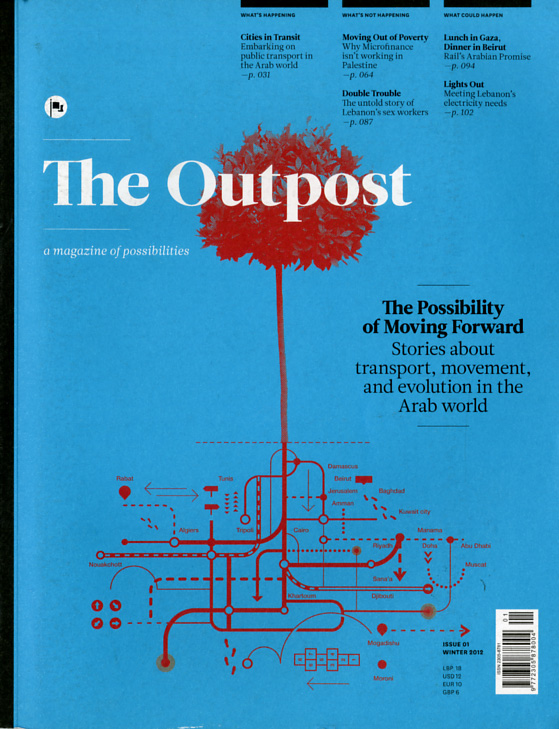
While in Lebanon I did an interview with Ibrahim Nehme, founder and editor-in-chief of The Outpost magazine, which I published earlier this week this blog. The interview was nothing short of amazing due to this young man’s passion and drive when it comes to the possibilities that are out there for young Arabs. He is beyond adamant about the potential of the Arab nation, starting with the youth and continuing on through Arab adults who need his publication’s vision of hope and promise in a world sometimes gone mad with brutality and harshness.

International Blog 14-14 Ibrahim’s magazine media approach and the mission of his magazine, which seeks to promote the positive and facilitate real change within the Arab world, reminded me of a very famous adage that I use quite often in my teachings and in my own publishing philosophy, and which I also have on a plaque in my office: there is always hope. And that dictum carries so much weight not only in the Arab world, but also in our own American media: he who knows the word hope doesn’t recognize the word impossible.

That statement hit me right between the eyes when I returned to the States a few days ago. I have interviewed some of the most influential and knowledgeable men and women of the publishing industry over the years and no one has basically told me anything that even remotely goes against the statement of there is always hope.

Upon my return, I saw articles ranging in negativity from the one on Time Inc.’s CEO, Joe Ripp’s clock is ticking to the statements that have been made recently by some media critics that TIME magazine is no longer relevant, and Self and Details maybe shutting down. It was then that I said to myself, when are media critics going to stop being the bearers of “predicted” bad news? It’s not even factual, on-paper bad news; yet somehow critics always manage to spin negativity on the stories they foretell about the future of magazines and magazine media. They paint a picture so dark and sinister, that it’s totally incongruous to the hundreds of new launches that I personally record on Mr. Magazine’s™ Launch Monitor each and every month. So, who exactly is correct? The Wizards of Woe who thrive on somber speculations or the bright, exciting covers that are scanned and published each month from the Magazine Innovation Center at Ole Miss? I challenge you to be the judge.

To all of these people who respond to my opinion with: but look what’s happening at Hearst or Condè Nast or Meredith; I ask them now; what exactly is happening? As I said; I’ve interviewed all of these CEO’s and I’ve talked extensively with them; they’re not telling media anything as apocalyptic as some are reporting. It’s how the media and some of the media reporters are taking the information and running with it as if they’re being paid to basically dig their own media graves. Instead of promoting positivity the way Ibrahim Nehme from Lebanon’s The Outpost magazine does, they’re biting the very hand that feeds them, and then repeating the obscene gesture over and over again. Isn’t that a bit nonsensical or is it just me?

And have those naysayers seen what folks in Japan are paying for the Financial Times newspaper? When all of the media reporting only reflects one side of a supposed picture, we become cocooned. I guess I’ll have to challenge people to hop on a plane and visit newsstands abroad. The news isn’t nearly as bleak as sometimes reported.

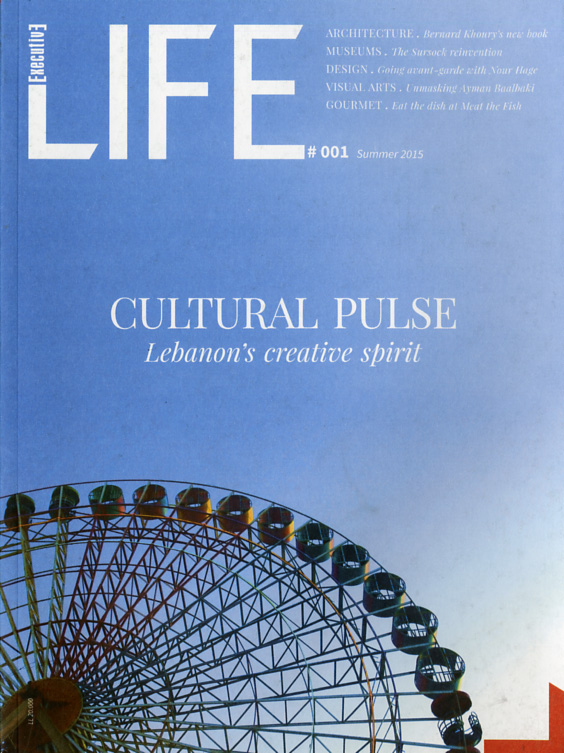
I wrote about The Outpost, of course, since I interviewed its founder and editor-in-chief, but while in Lebanon I also picked up many other magazines, such as Executive Life Magazine, a new title that just came out in English, and by the way it’s amazing how the English language has spilled over into the world, not just in Lebanon, but all over; everywhere English is not necessarily the native language, we are seeing a lot of English-language magazines being born.

From the editorial of the first issue of Executive Life magazine:

International Blog 8-8

Ceci n’est pas un magazine. (This is not a magazine) If you don’t believe me, just read further. Tired of focusing on everything that goes wrong in Lebanon – and there’s a lot – the team at Executive Magazine decided to explore what’s going right in the country; those creating beauty, exploring new frontiers, engendering hope. We found a whole new world of Lebanese artist, connoisseurs and visionaries producing a rich bounty of new ideas, designs and concepts – and now we’re on a mission to promote these people and the beauty they create…This is not a magazine, but a cause – and we want you to join it. Become a believer.

If we substitute the word Lebanon for the words magazines and magazine media and focus on the positive things that are happening in today’s magazine media world; all the new publications that are coming into the marketplace; all the established magazines that are still doing extremely well and making billions of dollars in revenue; if we focus our energies on all these creative ideas that are out there; there’s no impossibilities that can’t be met with possibilities.

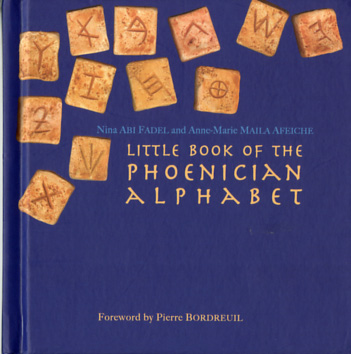
International Blog 7-7 Since my ancestors, the Phoenicians, created the alphabet; what if there were never any alphabet, the ABC’s you learned in school? You wouldn’t have been able to read this book today! This is the story of the birth of the alphabet, the story of a magical link between a sound and a sign. (From the Little Book of the Phoenician Alphabet)

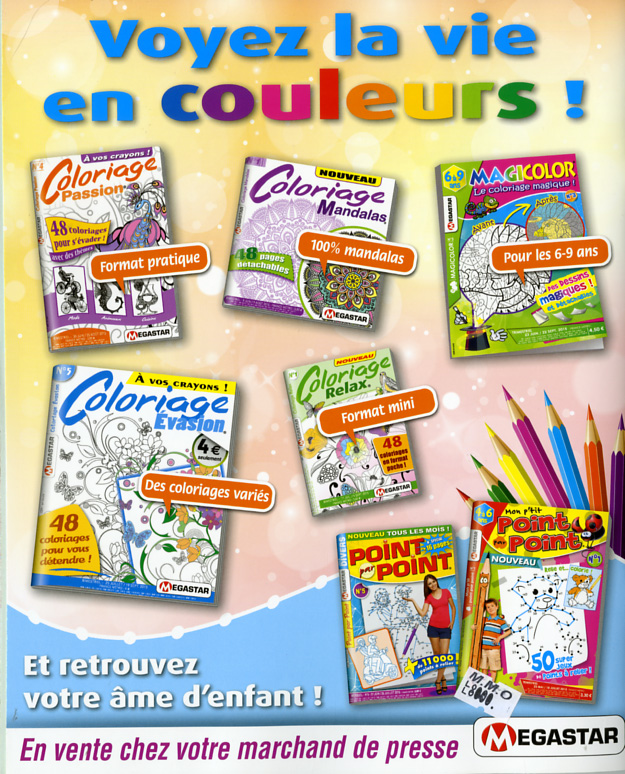
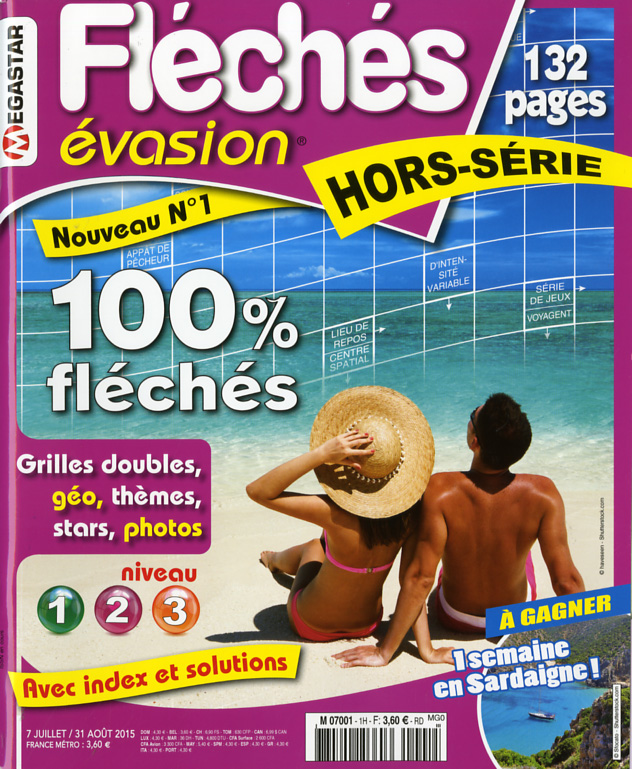
That magical link that we also create in magazines; those magical ideas that keep coming time after time, whether someone is creating a new magazine or a whole series of new coloring magazines, such as the ones I picked up abroad – Jeux èvasion and Flèchès èvasion, which are not for children, but for adults; one title after another of coloring magazines for adults are coming to the marketplace worldwide.

International Blog 5-5

International Blog 4-4

International Blog 3-3

International Blog 2-2

International Blog 1-1

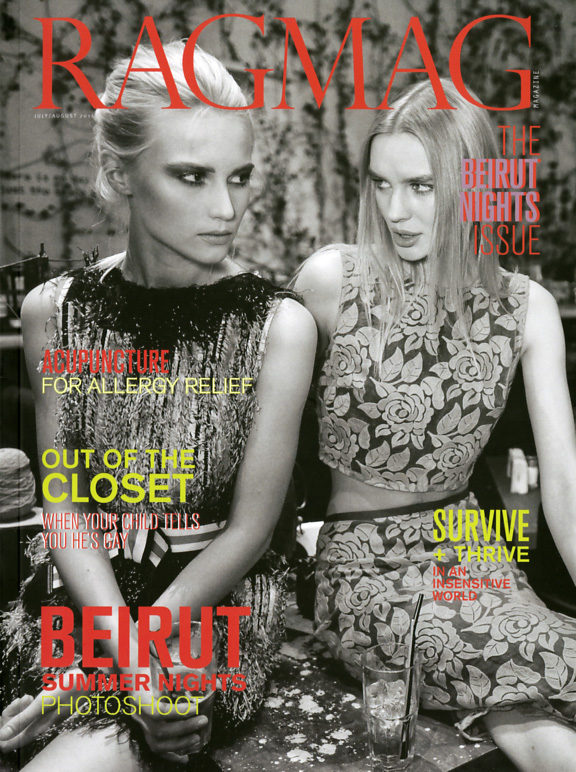
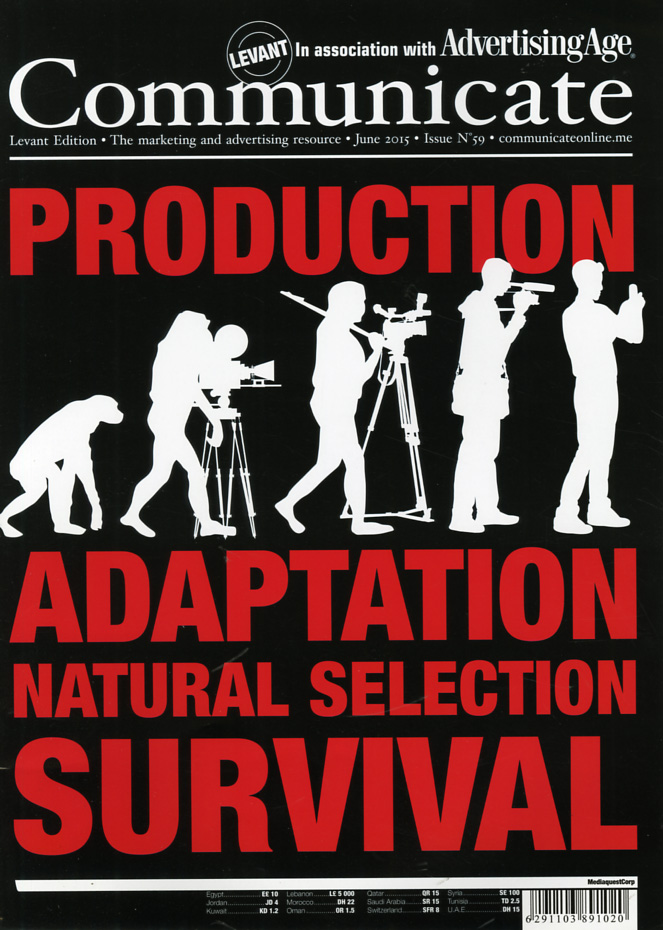
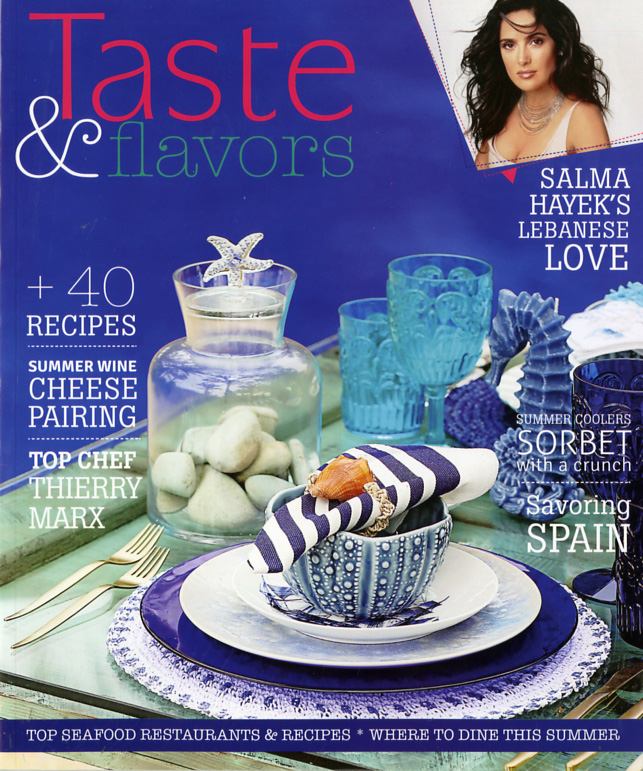
All of these new titles are hitting the newsstands, from coloring to puzzles, just look at the number of titles out there; it’s amazing. I found magazines celebrating the nightlife of Beirut (RagMag – the Beirut Nights issue), magazines celebrating the marketing and advertising resources and all the changes that are taking place (Communicate), stories of pride everywhere, magazines celebrating the international face of Lebanon, such as Taste & Flavors with Salma Hayek and the movie The Prophet.

International Blog 12-12International Blog 11-11International Blog 10-10

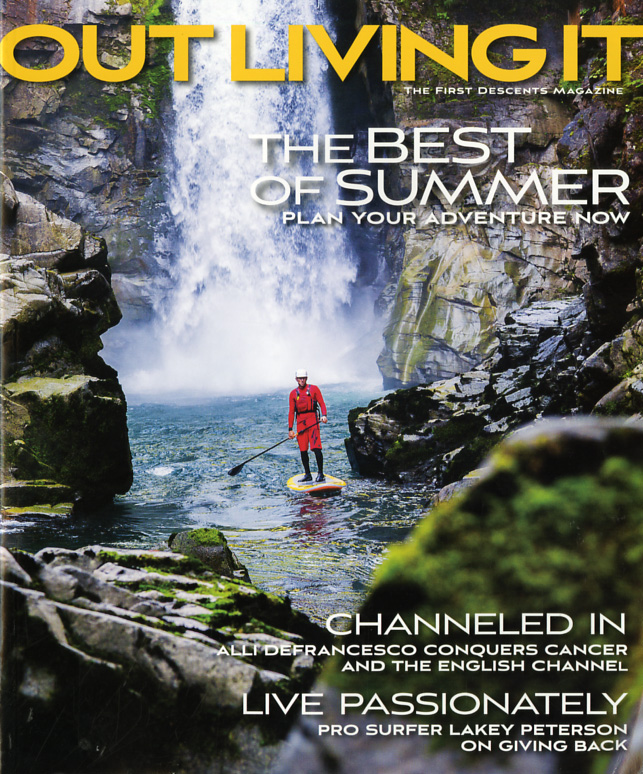
I just received the first issue of a new magazine called Out Living It. It’s the First Descents Magazine coming from Colorado in which the founder of First Descents, Brad Ludden, writes:

International Blog 9-9 This magazine serves to inspire and document the people, places, organizations, companies, and lifestyle choices that represent our collective desire to meet life head-on with undeniable passion. I hope its pages further inspire you to be Out Living It.

After those 19 days overseas, I returned with the conclusion that through all the gloom and doom, through all of these predictions of this or that CEO fading out, or this or that magazine dying; at the end of the day magazines and magazine media are going to be Out Living It and most probably Out Living Us and digital, mobile, or anything yet to be invented, if we continue to be strong and focus on the positive.

People, from both east and west, are exhausted from the negativism that is all over politics and the media… they never see or hear anything good. It’s time for a new wind of thinking to blow through the minds of media reporting. It’s long overdue.

Take it from me; as long as I have that plaque hanging in my office, there is hope, I’ll never give up on magazines or magazine media. They have found their own place in the marketplace since conception and they aren’t going anywhere. Except maybe new frontiers they have yet to explore. A newsstand on the moon perhaps…

Until the next Mr. Magazine™ Musing…

h1

Mr. Magazine™ Monday Morning: The Story of O. A Double Issue.

July 20, 2015

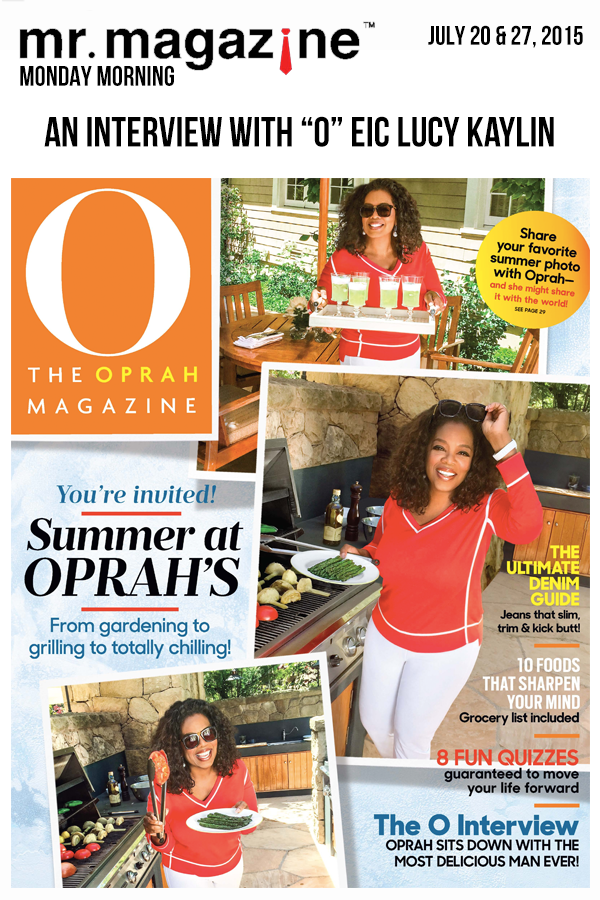
6f3ca72f-2050-4b1e-8583-3d829f31d820 The new issue of Mr. Magazine™ Monday Morning is out. It is a double issue for the weeks of July 20 and July 27.

Click here to read the latest issue of the Mr. Magazine™ Monday Morning and here to receive a free subscription in your in-box each and every Monday Morning.

The Mr. Magazine™ blog is going to take a very needed and deserved break and will be back next week. Here’s to a great summer and all the best.

In the meantime, go a newsstand near you, pick up a magazine or two. Reading a magazine will help you cool off the summer heat… reading a magazine is more fun under the sun!

See you next week.

All my best.

Samir “Mr. Magazine™” Husni, Ph.D.

h1

Inside The Great Minds Of Magazine Makers: “The Mr. Magazine™ Interviews” In A Book.

July 17, 2015

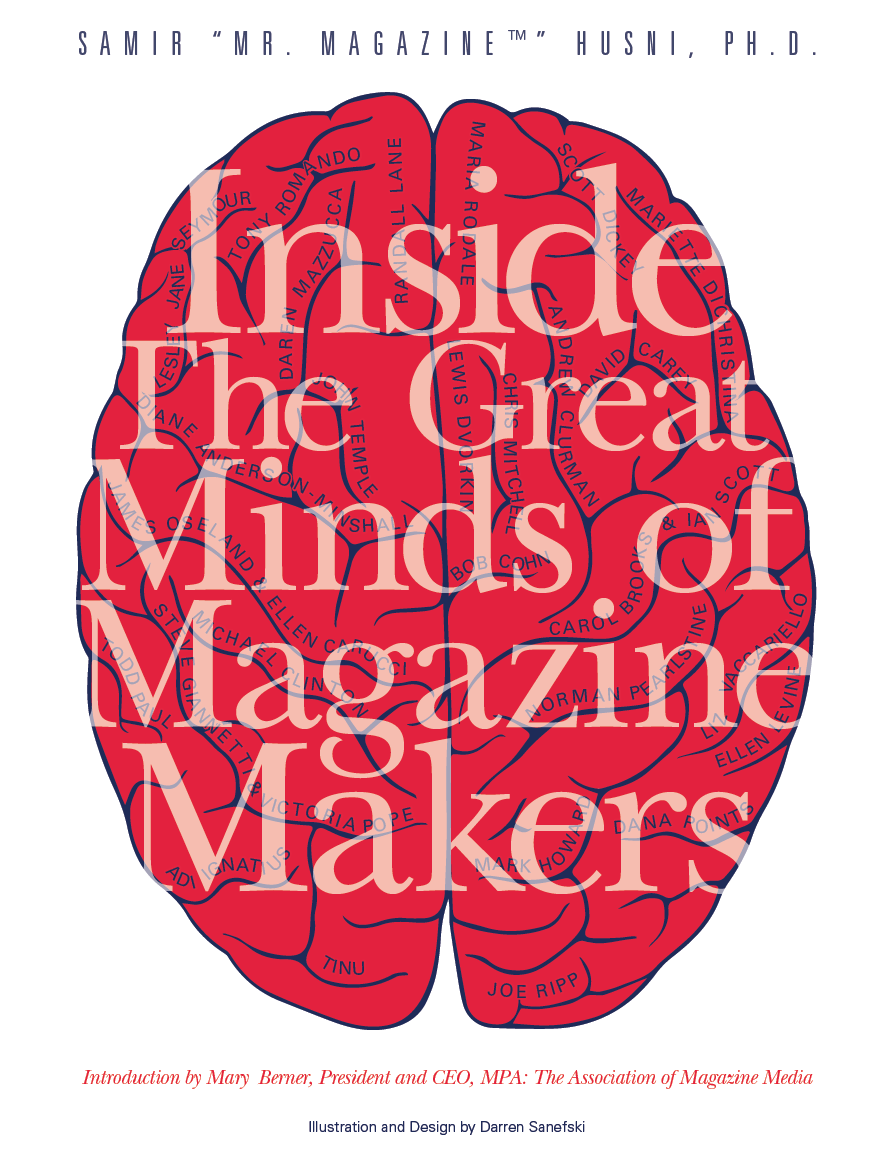
Screen Shot 2015-07-07 at 8.04.21 AMPutting my money where my mouth is, I am publishing a host of Mr. Magazine™ Interviews in a book this coming mid August. The book, Inside The Great Minds Of Magazine Makers, contains interviews with 30 “Magazine Makers” that first appeared on this blog. Believing that the only way for great works to be permanent is to be in print, I am taking 27 of those interviews and publishing them in a 240-page-book. The book is published by the Magazine Innovation Center at The University of Mississippi and printed by Trend Offset.

Mary G. Berner, President and CEO of MPA: The Association of Magazine Media, wrote the introduction to the book. In her intro she writes, “In Inside the Great Minds of Magazine Makers, Samir invites you to join him in his conversations with some of the most powerful and creative people in magazine media today. As these strategists and story tellers navigate the exciting frontier of digital content distribution, measurement, and monetization of magazine media brands, we get a unique fly- on-the-wall perspective on how they continue to deliver engaging, curated and valued content to a rapidly expanding audience.”

In my preface I write, “This is NOT a book about magazines and magazine media. It IS a book about the people who create magazines and magazine media. It is a journey inside their brains to find out what makes them tick and click. A journey that will help readers of this book understand where the creative, the editing, the storytelling, the business, and the marketing skills of today’s magazine and magazine media CEOs, presidents,editors, and publishers come from.”

The 27 chapters in the book (published in random order but keeping interviewees from the same magazine and magazine media company together) include interviews with:

Joe Ripp – CEO & Chairman, Time Inc.
Norman Pearlstine – Executive Vice President & Chief Content Officer, Time Inc.
David Carey – President, Hearst Magazines
Michael Clinton – President, Marketing & Publishing Director, Hearst Magazines
Ellen Levine – Editorial Director, Hearst Magazines
Maria Rodale – Chairman & CEO, Rodale, Inc.
James Oseland & Ellen Carucci – Editor-in-chief & Publisher of Organic Life, Rodale, Inc.
Chris Mitchell – Publisher, Vanity Fair, Condé Nast
Lewis DVorkin – Chief Product Officer, Forbes Magazine
Randall Lane – Editor, Forbes Magazine
Mark Howard – Chief Revenue Officer, Forbes Magazine
Bob Cohn – President & Chief Operating Officer, The Atlantic
Andrew Clurman – Chief Executive Officer & President, Active Interest Media
Carol Brooks & Ian Scott – Editor-in-chief of Simple Grace, & President and Publisher, Bauer Media U.S.
John Temple – President & CEO, Guideposts
Scott Dickey – CEO, TEN: The Enthusiast Network
Liz Vaccariello – Editor-in-chief, Reader’s Digest
Tony Romando – CEO & Co-founder, Topix Media Lab
Tinu – Publisher, Shoeholics Magazine
Todd Paul – President, Open Sky Media, Inc.
Adi Ignatius – Editor-in-chief, Harvard Business Review
Steve Giannetti & Victoria Pope – Publisher & Editor-in-chief, Smithsonian Journeys
Diane Anderson-Minshall – Editor-in-chief, Plus Magazine, Here Media
Mariette DiChristina – Editor-in-chief & Senior Vice President, Scientific American Magazine
Dana Points – Editor-in-chief & Content Director, Parents Latina, Meredith
Daren Mazzucca – Publisher, Martha Stewart Living, Meredith
Lesley Jane Seymour – Editor-in-chief, More Magazine, Meredith

The book is available for a $100 donation to the Magazine Innovation Center at The University of Mississippi. All the proceeds from the sale of Inside The Great Minds Of Magazine Makers will be used to create a magazine student scholarship to help with the costs of students’ internships and such. Please send your checks to Magazine Innovation Center, 114 Farley Hall, The University of Mississippi, University, MS 38677, U.S.A.

h1

15 Years And Counting – O, The Oprah Magazine Celebrates The Major Milestone With A ‘Circle Of Friends’ That Continues To Grow Every Day – The Mr. Magazine™ Interview With Lucy Kaylin, Editor-In-Chief.

July 14, 2015

“I know that magazines have always been and continue to be a really rare and wonderful thing. I think, especially with a magazine like ours, it is a uniquely, immersive experience. It’s such a pleasure to have this beautifully curated collection of stories, ideas, sometimes quizzes, exercises; things that have been put together to challenge readers and to lift them up and get them to see their own life in a new way.” Lucy Kaylin

“I suppose it could, simply because there are so many other ways to express one’s ideas. There are obviously so many formats and platforms out there today. But I wouldn’t love that; I wouldn’t think that would be a positive thing. O, as a print publication is incredibly special and it’s lush and beautiful and it’s tactile and something that is very well-enjoyed in bed, in a hammock, on the couch or in the tub. The physical nature of it is one of the very special things about it.” (on whether the magazine could exist without the print component) Lucy Kaylin

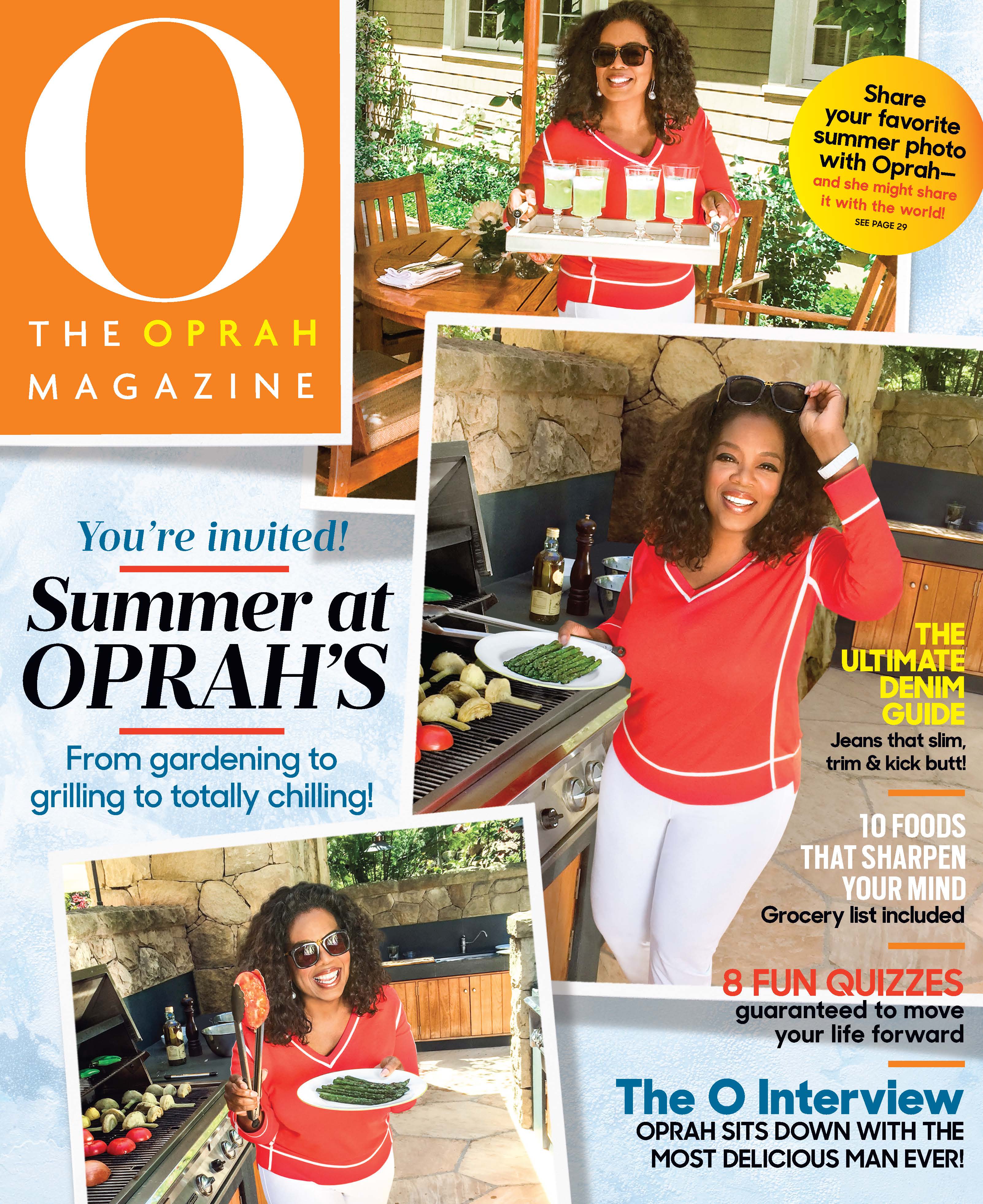
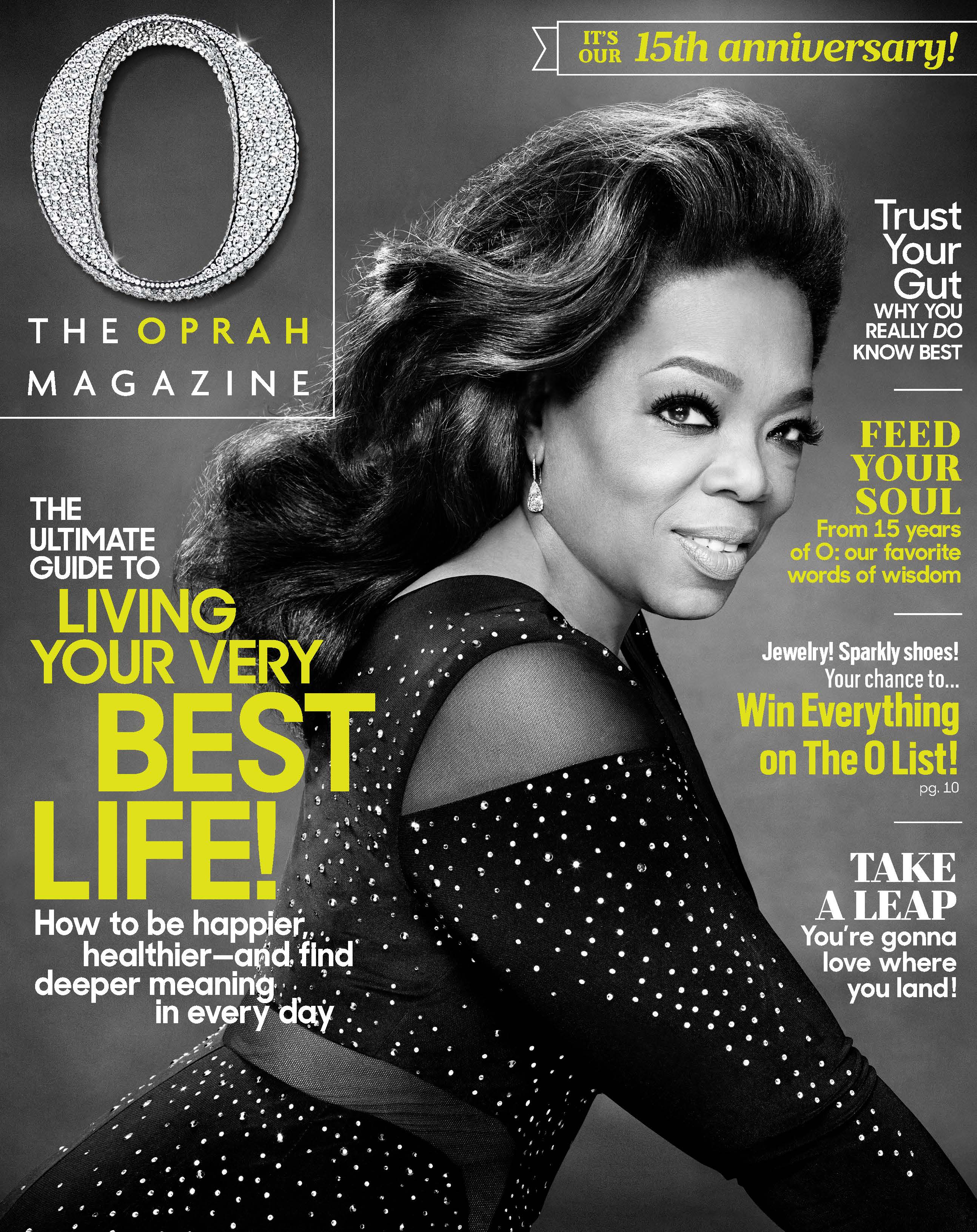
O Mag August Cover Fifteen years is a major milestone for anything these days; sometimes our fast-paced lives, inundated with notifications and distractions coming from all directions make everything seem fleeting and surreal. That’s when Mr. Magazine™ grabs his drink of choice (usually coffee), reclines in his chair and reads a great magazine.

O, The Oprah Magazine is one such relaxing and immersive escape. Celebrating 15 years of publishing success with beautifully curated content and amazing photographs; the magazine is as welcoming and compelling as its namesake.

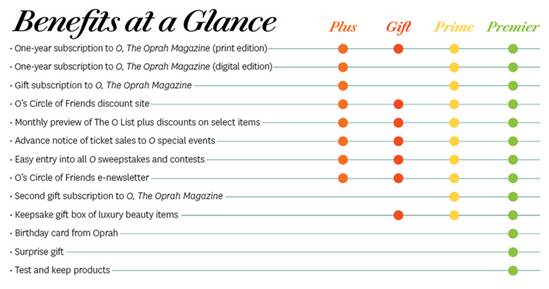
From the launch one year ago of the engaging ‘Circle of Friends’ subscription model to the new cover treatments, inside changes and more; O, The Oprah Magazine is pushing the boundaries on creative innovation and proving once again that there is power in the printed word and allure in good content.

Lucy Kaylin became editor-in-chief of O, The Oprah Magazine in May 2013, having been deputy editor since 2009. I spoke with Lucy recently about the magazine’s 15th anniversary and the ‘Circle of Friends’ subscription model and Oprah herself and the magnetic connection Oprah has with her audience, both the woman and the magazine.

It was a very enlightening conversation and one that proved fame and fortune doesn’t always change the core of a person’s true nature or the ink on paper that bears her moniker. Genuineness and quality always shine through.

So, I hope you enjoy the Mr. Magazine™ interview with Lucy Kaylin, Editor-In-Chief, O, The Oprah Magazine; it was a true joy for me.

But first, the sound-bites:

OPR
On the secret to O, The Oprah Magazine’s longevity:
The magazine is the same; it’s never just about celebrities. It’s always had, arguably, the world’s most famous celebrity on the cover every month anyway. It’s been about big, resonant, rich, important ideas for real women. So, there have always been lots and lots in the magazine for women who have great ambitions for themselves, in terms of living a realized life. And that’s for all time, that’s not something that goes in and out of fashion; it’s something that I think we all want.

On the process of putting together an issue of the monthly magazine: We have what we call ‘Big Idea Meetings’ and that’s where we get the entire staff together and talk about themes, such as what would be worthwhile themes for each of our issues. And we’re in constant communication with Oprah, she’s very interested, obviously, in what we’re doing and she often has great ideas for us, but she’s absolutely wonderful in trusting us and letting us be the magazine-makers, but she’s there for us whenever we need her.

On whether she feels she channels Oprah with each and every issue: To an extent. We really do like to have a multiplicity of voices, of course, so there will be people who have had all different kinds of experiences, sharing what they know and what they’ve been through, within our pages, so in that sense it’s not a strict first-page-to-last channeling of Oprah. But we do have a very, those of us who work here, have a very clear sense of what matters to her.

On how she continuously engages the audience whether Oprah is in the forefront of media or not at any given time: We are blessed with a really wide readership and the readers that we have and our subscribers are quite passionate and quite loyal, so I don’t have the sense of fighting to find readers or fighting to keep them. I think the real secret is that what we’re putting out there is of such sustaining quality; it’s sustenance and it’s the stuff of life. Again, it’s not superficial; it’s not fleeting; it’s something that I feel certain millions upon millions of women and men are looking for.

On why she believes Oprah and the magazine is inimitable to other publications: I really think that Oprah is 100% unique. She’s just a very powerful person and I mean that in the nicest way. She’s very impactful, the way that she’s able to connect with an audience, for instance. The way that she’s able to open up a person who’s sitting across from her that she’s interviewing. These are just incredibly rare gifts and skills that she has. She’s extremely tuned in to the human experience. She’s so not distracted by the trappings of fame and success.

On Oprah’s down-to-earth nature: I know exactly what you mean. I’ve been around her many times when people are encountering her for the first time and it’s really quite something to see the impact that she makes. I can’t imagine that there are too many people you could compare her to in that respect. She peers right into your soul; she’s very much an authentic person with everyone she meets. That’s part of her magic; all that is completely real.

On the most pleasant moment in her career: There have been so many. I can certainly say that one of them was getting this job, which is being the editor of Oprah’s magazine. It really touched me in a very profound way, the responsibility that I was being given.

On the major stumbling block she’s had to face: For me, I think probably it’s just like with most people when you’re starting out. I was a writer at GQ magazine when I was quite young, in my 20s, and I do remember trying to figure out what I wanted to say. I was always good at putting words together and making pretty sentences, but I remember being challenged by my editors at GQ who were great mentors and very talented people, who made it clear, especially at a magazine as great as GQ, that it wasn’t enough to just write well, you had to have a point of view and something to say.

On what she knows for sure as editor of O, The Oprah Magazine: I know that magazines have always been and continue to be a really rare and wonderful thing. I think, especially with a magazine like ours, it is a uniquely, immersive experience. It’s such a pleasure to have this beautifully curated collection of stories, ideas, sometimes quizzes, exercises; things that have been put together to challenge readers and to lift them up and get them to see their own life in a new way.

On whether O, The Oprah Magazine could exist without the print component: I suppose it could, simply because there are so many other ways to express one’s ideas. There are obviously so many formats and platforms out there today. But I wouldn’t love that; I wouldn’t think that would be a positive thing. O, as a print publication is incredibly special and it’s lush and beautiful and it’s tactile and something that is very well-enjoyed in bed, in a hammock, on the couch or in the tub. The physical nature of it is one of the very special things about it.

On what makes her click and tick and motivates her to get out of bed in the mornings: I really love the work itself. As social as I can be, which is what makes me take such pleasure in my colleagues; I love the solitary work of magazines; I love working on copy and I love wrestling with ideas. I love the process of taking the wet clay of a concept and molding it, figuring it out and turning it into something wonderful that you can share with literally millions of people. It’s very pleasurable work.

On anything else she’d like to add: Just that it’s a very exciting time. As you know we’re celebrating our 15th anniversary and I’m really thrilled with the momentum that I’m feeling, creative and commercial, in terms of just the excitement that surrounded our May issue, which was officially our anniversary. And the great sense of a new chapter beginning that we all have.

On what keeps her up at night: I would say that even though this is a volatile time in the magazine business, happily, I don’t feel like anyone is dying from it or suffering deeply or terribly from it. In that sense, I reserve my sleeplessness for what’s happening with my kids. But the magazine business is there and I think it will survive and be there for me, no matter how much sleep I get or don’t get.

And now the lightly edited transcript of the Mr. Magazine™ interview with Lucy Kaylin, Editor-In-Chief, O, The Oprah Magazine.

O Mag May Cover Samir Husni: When O, The Oprah Magazine was launched, there was a lot of talk about how long a celebrity magazine could last; we had Martha Stewart and Rosie, yet, 15 years later, the magazine is still going strong. What do you think is the magazine’s secret to longevity?

Lucy Kaylin: I think it’s a couple of things. The first thing really is Oprah herself. She’s so much more than just a celebrity. She’s a person who is admired the world over for her completely unique and inspiring journey and her approach to life, for her endless curiosity and creativity and her love of challenge and innovation.

I think people realize that they’re not just looking at a really famous face when they see Oprah; they’re seeing a very authentic person who lives in a very big way the life that they see for themselves, which is one of creativity, passion and self-realization, all of those things that are quite genuine and not all just about fame.

And for the other part of my answer; the magazine is the same; it’s never just about celebrities. It’s always had, arguably, the world’s most famous celebrity on the cover every month anyway. It’s been about big, resonant, rich, important ideas for real women. So, there have always been lots and lots in the magazine for women who have great ambitions for themselves, in terms of living a realized life. And that’s for all time, that’s not something that goes in and out of fashion; it’s something that I think we all want.

We’re the very best DNA in the business, I think, and we’re really about something. It’s not about fads or gossip; it’s about what really matters most to the human experience.

Samir Husni: As you channel this human experience with every issue of Oprah; can you describe for me the dynamics of how you put each issue together? How involved Oprah is with the actual magazine? There’s a lot of talk that Oprah reads or looks at everything. Just describe for us the process of putting an issue of O, The Oprah Magazine together every month.

Lucy Kaylin: We have what we call ‘Big Idea Meetings’ and that’s where we get the entire staff together and talk about themes, such as what would be worthwhile themes for each of our issues. Ideas of themes that we’ve had in the past are: ‘Who’re you meant to be,’ ‘The 20 most important questions a woman should ask herself,’ or ‘Aging brilliantly,’ How to love the skin you’re in;’ those kinds of ideas that, again, are really about helping women to live a fuller and better life.

So, when we settle on a theme, we kick around how that would play out in the pages, such as who would be some of the writers that we’d like to contribute stories and who knows someone who has a cool story to tell about the topic at hand.

And we’re in constant communication with Oprah, she’s very interested, obviously, in what we’re doing and she often has great ideas for us, but she’s absolutely wonderful in trusting us and letting us be the magazine-makers, but she’s there for us whenever we need her. She’s certainly not interested in micro-managing and she loves to see what we come up with.

Not long ago my senior staff and I were at a retreat at her house on the West Coast and that was just an incredible opportunity over the course of a couple of days to really pick her brain and to share with her some thoughts that we had for the magazine and her feedback was valuable. We treat her instincts like the gold that they are and listen very carefully to that feedback.

Samir Husni: Do you feel as though you channel Oprah with every issue? Do you transform Oprah the person into Oprah the ink on paper?

Lucy Kaylin: To an extent. We really do like to have a multiplicity of voices, of course, so there will be people who have had all different kinds of experiences, sharing what they know and what they’ve been through, within our pages, so in that sense it’s not a strict first-page-to-last channeling of Oprah.

But we do have a very, those of us who work here, have a very clear sense of what matters to her. And the kinds of things that she likes to see in the magazine and the kinds of positions that she takes on things. We’re all pretty likeminded here. We came here to her magazine for a reason, so it’s not a struggle to figure out or to understand what’s important to her. It’s top of mind, for sure, all the time, what would Oprah think or what would she do and would this please her; whatever the story at hand might be.

Samir Husni: The title of one of my new books that’s coming out in August is called “Audience First” and when I look at the Oprah magazine and hear some critics, such as when Oprah stopped her television program, people were saying that’s the end of Oprah. Or whenever Oprah does anything remotely different, people cry that’s the end of her; how do you continue to capture that audience who are either enthralled with Oprah the magazine or even with what Oprah represents, not necessarily with the human being, Oprah, but her teachings, messages, her lifestyle, or they’re convinced she’s a thing of the past? How do you retain that steadfast audience, regardless of whether Oprah has a television show or not, and keep that magazine relationship flourishing?

Lucy Kaylin: We are blessed with a really wide readership and the readers that we have and our subscribers are quite passionate and quite loyal, so I don’t have the sense of fighting to find readers or fighting to keep them. I think the real secret is that what we’re putting out there is of such sustaining quality; it’s sustenance and it’s the stuff of life. Again, it’s not superficial; it’s not fleeting; it’s something that I feel certain millions upon millions of women and men are looking for.

If you’re putting out high quality content and you also have the benefit of an extremely high profile, extremely well-known face for the entire enterprise, such as Oprah and of course Gayle too, that’s a wonderful double-whammy for us. We have the great content, but we also have the extremely appealing and well-known face of what we do being the billboard for us, in a sense, as we look to attract new readers.

Samir Husni: To me, Oprah is one of the first magazines in the United States that broke the race barrier; it’s more of a melting pot for any woman or man who can relate to that lifestyle or approach. Why do you think that no one else has been able to imitate Oprah?

Lucy Kaylin: I really think that Oprah is 100% unique. She’s just a very powerful person and I mean that in the nicest way. She’s very impactful, the way that she’s able to connect with an audience, for instance. The way that she’s able to open up a person who’s sitting across from her that she’s interviewing. These are just incredibly rare gifts and skills that she has. She’s extremely tuned in to the human experience. She’s so not distracted by the trappings of fame and success.

It’s so interesting to me that there are lots and lots of actors and actresses today who have achieved tremendous fame and wealth and have, as a result, lived very strange lives sometimes and have been sort of walled-off from their public because it’s all become just too stressful and paparazzi-driven. It becomes, again, a kind of strange life.

And that’s just never happened to Oprah, even though she’s the most famous of them all, because she’s really tuned in to the human condition. And what made her famous was, of course, her TV show where she was very much surrounded by and interested in real people and real people’s issues and what was happening with their families and their pasts and childhoods, jobs and marriages.

She’s always been an authentic person in our world. And that doesn’t go away; she’s as real as they come and she’s been fabulously rewarded for it, but that doesn’t change her.

Samir Husni: I met her once when the magazine was launched at the launch party. And with all of the celebrities that I have ever met, I’ve never met anyone so down-to-earth. I felt like when she was shaking my hand and talking to me that we’d known each other forever.

Lucy Kaylin: I know exactly what you mean. I’ve been around her many times when people are encountering her for the first time and it’s really quite something to see the impact that she makes. I can’t imagine that there are too many people you could compare her to in that respect. She peers right into your soul; she’s very much an authentic person with everyone she meets. That’s part of her magic; all that is completely real.

And I think that’s why it’s such an advantage for us at the magazine. The heart of what we do is so real; it’s so authentic and it all stems from her.

Samir Husni: Speaking of real, for everything in this life, including life itself, there is a lifecycle. There’s a time to be born and a time to die, Heaven forbid. That being said; is the life of the magazine attached to the life of Oprah?

Lucy Kaylin: I don’t think I could comment on that. I hate to even think of such a thing, if what we’re implying is what happens when she’s gone. I don’t know.

I think we are just as grateful as we could possibly be for what she’s put into the world and what she continues to bring into the world and that we get to be a part of it. Who could possibly speak about the future?

Samir Husni: Reflect a little on your experience as a magazine editor and working in magazines. Can you recall the most pleasant moment in your career; one where you said, “Wow!”

Lucy Kaylin: There have been so many. I can certainly say that one of them was getting this job, which is being the editor of Oprah’s magazine. It really touched me in a very profound way, the responsibility that I was being given; the trust that the people around me had in my abilities; just the privilege, the privilege of being the chief custodian for something as wonderful as O, The Oprah Magazine.

Samir Husni: And what has been one of the major stumbling blocks that you’ve had to face in your career and how did you overcome it?

Lucy Kaylin: For me, I think probably it’s just like with most people when you’re starting out. I was a writer at GQ magazine when I was quite young, in my 20s, and I do remember trying to figure out what I wanted to say. I was always good at putting words together and making pretty sentences, but I remember being challenged by my editors at GQ who were great mentors and very talented people, who made it clear, especially at a magazine as great as GQ, that it wasn’t enough to just write well, you had to have a point of view and something to say.

And I remember struggling with that and trying to get my arms around the idea that my opinion on things and my point of view on things was worth broadcasting to the reading public. I got over that, but it took me some time.

Samir Husni: If someone asked you today then; Lucy, you’re the editor of O, The Oprah Magazine, what do you know for sure?

Lucy Kaylin: What do I know for sure? I know that’s a very good question. (Laughs)

Samir Husni: (Laughs too).

Lucy Kaylin: I know that magazines have always been and continue to be a really rare and wonderful thing. I think, especially with a magazine like ours, it is a uniquely, immersive experience. It’s such a pleasure to have this beautifully curated collection of stories, ideas, sometimes quizzes, exercises; things that have been put together to challenge readers and to lift them up and get them to see their own life in a new way.

I feel like that there is something that’s just so fun and unique about a magazine. And of course it can be incredibly beautiful; the photography; the illustrations; it’s an art form for all time, even though we are constantly these days finding ways and brainstorming ideas to extend our brands and to do clever things off the page. But a magazine is the wellspring of all of that and it’s just a joyful thing. And I feel very lucky that I found my way into this business.

Samir Husni: Do you think O, The Oprah Magazine could exist without the print component?

Lucy Kaylin: I suppose it could, simply because there are so many other ways to express one’s ideas. There are obviously so many formats and platforms out there today. But I wouldn’t love that; I wouldn’t think that would be a positive thing.

O, as a print publication is incredibly special and it’s lush and beautiful and it’s tactile and something that is very well-enjoyed in bed, in a hammock, on the couch or in the tub. The physical nature of it is one of the very special things about it.

That said; we made a very beautiful app for the E-reader and we’ve made beautiful books out of our content and we have a wonderful website and of course, there’s O, The Network that we sometimes do things with. So, again, there are all kinds of ways to be O, but I’m partial to print and I’m hoping it’s going to be around for a long time.

Samir Husni: What makes you click and tick and motivates you to get out of the bed each morning and say, wow, this is going to be a great day?

Lucy Kaylin: I love the work. I absolutely love the work. One of the things that I discovered when I got into this business a few decades ago, where I started as a fact-checker at Vogue; one of the first things I noticed was the incredible caliber of people that are attracted to the magazine business. They’re all just so smart, funny and well-informed, so that’s always been a huge draw for me. I’ve worked with really fantastic people over the years and it’s just great to spend your day with people you like. That’s always been something that’s quickened my step on the way to work.

But I really love the work itself. As social as I can be, which is what makes me take such pleasure in my colleagues; I love the solitary work of magazines; I love working on copy and I love wrestling with ideas. I love the process of taking the wet clay of a concept and molding it, figuring it out and turning it into something wonderful that you can share with literally millions of people. It’s very pleasurable work.

Samir Husni: Are you a serial comma person?

Lucy Kaylin: I am a serial comma person, for the most part. I’m open to the conversation for those who aren’t, but my instincts say yes; the serial comma is the way to go. (Laughs)

Samir Husni: Anything else you’d like to add?

O's Circle of Friends premium subscription model.

O’s Circle of Friends premium subscription model.

Lucy Kaylin: Just that it’s a very exciting time. As you know we’re celebrating our 15th anniversary and I’m really thrilled with the momentum that I’m feeling, creative and commercial, in terms of just the excitement that surrounded our May issue, which was officially our anniversary. And the great sense of a new chapter beginning that we all have. So, I suppose that’s what I would add.

Samir Husni: My typical last question; what keeps you up at night?

Lucy Kaylin: I would say that even though this is a volatile time in the magazine business, happily, I don’t feel like anyone is dying from it or suffering deeply or terribly from it. In that sense, I reserve my sleeplessness for what’s happening with my kids; how am I going to get my daughter ready to go off to college in a month; concerns for my loved ones that I can’t escape from, for the most part.

But the magazine business is there and I think it will survive and be there for me, no matter how much sleep I get or don’t get.

Samir Husni: Thank you.

h1

Managing Today’s News Media: Audience First… Introducing The 4Cs Strategy For Survival And Success. The Must-Have New Book.

July 9, 2015

Audience First Allow me, for a change, to indulge in a little self promotion for my new book that I have authored with two of my colleagues. Managing Today’s News Media: Audience First, puts in practice what I have been preaching for years. Teaming up with my colleagues from the broadcast and online media world, gives the book a holistic approach to success in a news media world that now recognizes and respects the power of audience. The book will be published on August 18. To order the book click here.

Here’s what the book’s publisher CQ Press an imprint of Sage wrote on their website about the book:

The business of journalism is in the midst of massive change. Managing Today’s News Media: Audience First offers practical solutions on how to cope with and adapt to the evolving media landscape. News media experts Samir Husni, Debora Halpern Wenger, and Hank Price introduce a forward-looking framework for understanding why change is occurring and what it means to the business of journalism. Central to this new paradigm is a focus on the audience. The authors introduce “The 4Cs Strategy” to describe how customers, control, choice, and change are all part of a strategy for successful media organizations. Every chapter in the book relates to one or more of these four key principles:

Customer – Each platform must offer a unique experience to the customer.
Choice – The audience has more options than ever, and news organizations must work harder to be the preferred choice.
Control – Sharing power and control with the audience is now a necessary part of running a successful news operation.
Change – Companies can manage change through adaptation.

Real-world case studies, important theoretical grounding, and a focus on understanding rather than resisting the customer’s desire for choice and control make this an unbeatable resource for students and managers alike who want to succeed in this changed media business landscape.

KEY FEATURES:

Leadership Reports offer insight into what the job of a media manager entails by providing in-depth interviews with major news media managers representing some of the top news outlets in the country, including The Wall Street Journal, Hearst, Forbes.com, CNN, and Bleacher Report.

Think and Do Segments
simulate real-world management decisions through exercises and case studies that test the reader’s ability to apply the techniques discussed in each chapter to good decision making.

Basic Business Principles
that drive the success or failure of the organizations are explained to help students understand the business of media and prepare these future managers for jobs in today’s media organizations.

To order the book click here.

h1

The Perfect Canvas: A Gardener, A Painter, And A Magazine: The Story of Acrylic Artist Magazine.

July 8, 2015

Artistic Inspiration Along With Navigational Instruction Join Hands To Bring Yet Another Creative Masterpiece To Life – The Mr. Magazine™ Interview With Patty Craft, Community Leader & Content Creator/Editor, and Jamie Markle, Group Publisher, Acrylic Artist Magazine.

“I still feel like the magazines are a core part of people being in that community and we know from our own data that our magazine subscribers are the most loyal buyers when it comes to art e-commerce store. Those people are very committed to following the pursuit of their art and they look to us to provide instruction in a lot of different formats. I would say the magazines are still a core part of the communities, whether they are Watercolor Artist or Acrylic Artist or somebody who likes to draw.” Jamie Markle

“Despite the fact that some people may be saying, oh, print is dead or it’s challenged, it’s encouraging to me that as a corporation, we understand our customers’ needs, this magazine is something they want, they want a print product. Our results are double what we expected.” Patty Craft

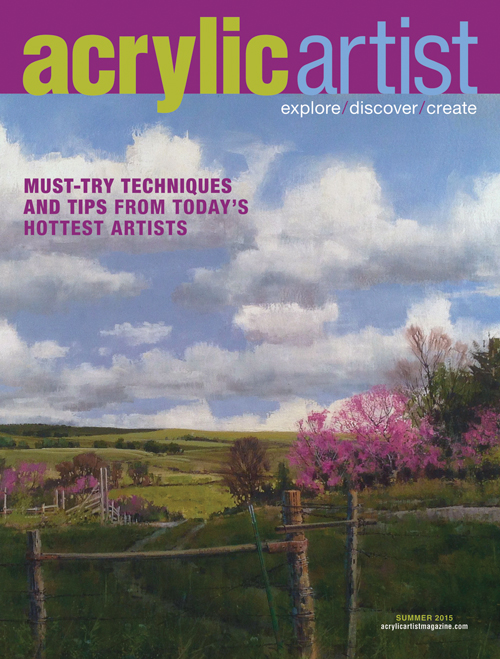
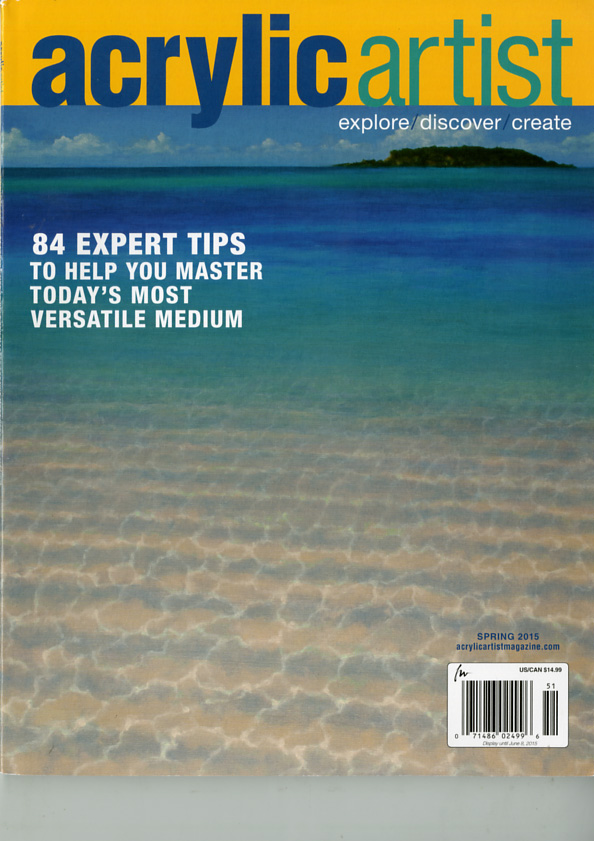
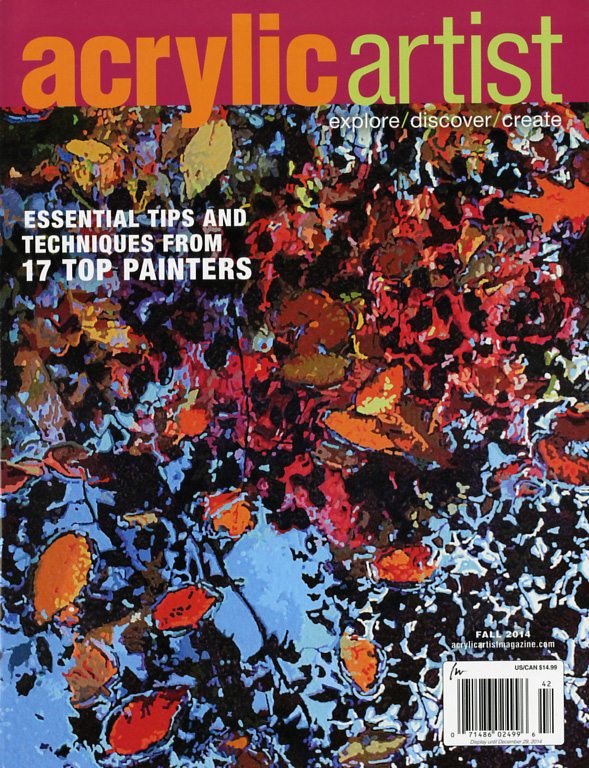
AAsm15_500 For the artist, F+W Media have been producing quality magazines of inspiration and instruction for generations. From Watercolor Artist to Pastel Journal, the niche titles serve the specific audience they’re intended for perfectly, with a new launch joining the stable to fill a need in the acrylic market.

Acrylic Artist joins its brothers and sisters proudly and the parents that are nurturing this new baby are Patty Craft, community leader & content creator/editor, and Jamie Markle, group publisher. Patty reached out to me recently to talk about the new launch and joined by Jamie, we had a lively discussion about niche markets and the future of the targeted title. It was a past, present and future conversation about the long-lived F+W Media and its many reinventions and a glimpse into the personal hopes of both Patty and Jamie for their newborn.

So, get out your easel and brushes and sit down with the three of us for a brief moment in time and be prepared to receive creative inspiration from a painter and wordsmith who both love what they do and believe strongly in their brand. The Mr. Magazine™ interview with Patty Craft, Community Leader & Content Creator/Editor, and Jamie Markle, Group Publisher, Acrylic Artist magazine.

But first, the sound-bites:

J.Markle_April_2011_073 On whether or not he (Jamie Markle) believes the future for print is more and more specialized titles: I would agree with that statement. As the world changes I think that print will continue on, but I think that we’ll see more and more niche publications like Acrylic Artist.

On the higher end cover price of Acrylic Artist magazine and what kind of message the price sends to its audience (Jamie Markle): Acrylic Artist is the only magazine of its kind, the only magazine that is for the acrylic artist and only the acrylic artist and what we’re saying is that we want to provide quality content, but in order for us to provide content in the form that they want with beautiful paper and a nice trim size, we need to charge a little bit more in order to make it work.

On his (Jamie Markle) dual duty as group publisher and vice president of fine art for F+W: I’m the vice president and group publisher for the fine art community here at F+W and we do things a little bit differently. I oversee all the editorial teams and they report directly to me as does the sales teams. I really have a 360° view of the content that we produce whether it’s content from the editorial side that we put in the magazine, but also working with the salespeople as we work with our partners.

On Editor Patty Craft’s feelings about coming back to the creative content side of F+W’s Artist’s magazine collection:
I’ve also been with the company for 15 years and in my early years I started out on Watercolor and Pastel, so many of the teammates that I have now were here then. I moved around a little bit in the business and did some different things. I was also a community leader for our garden community and horticulture magazine. But coming back as the editor to actually work with content creation has been really great. Like Jamie said; it’s the balance between the business side and the creative content side.

On what sort of experience she’s (Patty Craft) looking to engage her audience with in the execution of Acrylic Artist: That’s a great question. We put together each issue; you know it’s quarterly and when it comes out, it feels more like a catalog to me. It has a dual purpose: to inspire and to instruct. You can almost look at the issue as part art gallery and part classroom or workshop experience.


On today’s high cover price trend and whether he (Jamie Markle) sees a point where the consumer will say that’s too high a price for a magazine:
I think that bookazines have really opened the door to higher prices for SIP’s on the newsstands. So, I think that we’re able to get to that $15 range, but I believe going much higher than that, unless it’s a larger product, I think that might be a little bit challenging. But I do believe that people will pay for quality, but we’re still very cognizant to prices according to the skill level and what the production values are.

On Patty’s most pleasant moment during her career at F+W:
The most rewarding and pleasant experience I have is when we do find an artist that we know has great art or a beautiful garden or a really great story to tell and we are then able to work with them to encapsulate their story in such a way that we can share it with thousands of other people. It’s the beauty of community; it really is what community is about.

On why Jamie thinks we surrendered the term “community” to the digital world when communities have long been a part of the magazine domain from almost the beginning: I still feel like the magazines are a core part of people being in that community and we know from our own data that our magazine subscribers are the most loyal buyers when it comes to art e-commerce store. Those people are very committed to following the pursuit of their art and they look to us to provide instruction in a lot of different formats. I would say the magazines are still a core part of the communities, whether they are Watercolor Artist or Acrylic Artist or somebody who likes to draw.

On whether Jamie can ever envision F+W as a digital-only community with no print component:
Gosh, I hope not. Our print subscribers are really loyal. I suppose that it could happen, but I don’t foresee it happening in the next five years. People still like their subscriptions to their favorite magazines and I feel like we’ve helped, along with every other print producer out there.


PattyCraft_headshot On Patty’s thoughts about how quickly people are talking about the death of the tablet and homepage, whereas it took 500 years for people to coin the phrase print is dead:
Despite the fact that some people may be saying, oh, print is dead or it’s challenged, it’s encouraging to me that as a corporation, we understand our customers’ needs, this magazine is something they want, they want a print product. Our results are double what we expected.

On what motivates Jamie to get out of bed each day and go to work: I would say getting to know the members of the community, whether it’s our contributing writers, the artists we interview, the people who write books for us or make videos for us, my staff; I see the passion that people have for the art that they make and the things that they teach and those connections and that view of what they do and how important it is to our consumers, that’s really what brings me to the office every day.

On what motivates Patty to get out of bed each day and go to work:
As I said in one of my Letters from the Editor: your wings as readers are made of paintings. When they get up in the mornings, what makes them soar is to be able to paint. My wings are made of words. And I’ve always dreamed of a career in writing. And so, it’s an opportunity for me as the editor of this magazine to be able to take these people’s stories, which are very visual, and translate them into the written word for people to read.

On anything else either would like to add (Jamie Markle):
I guess the only thing I would say is one of the other reasons that we launched Acrylic Artist is when we looked at our art business as a whole, we saw that we were serving the acrylic artist with books, video and education, but there really wasn’t a hole in the magazine area. So, it really is our hope that we can build up that community of acrylic artists with our subscription plan.

On what keeps Patty up at night:
Right now, when you are launching, even though as a company we produce a vast number of print publications, this is still a new baby. It’s in its first year of subscription service. Horticulture Magazine, for example, it’s been in print for 110 years. I know what the themes are; I know who the writers are; I know who the gardeners are; I am so immersed in the magazine. With Acrylic Artist, acrylic painting has only been around for 75 years. And I’m new to this. So, the thing that keeps me up at night is making sure that not only am I getting this fall issue that we’re going to send to the printer buttoned up tightly and in good shape, but that I have a deep enough view of 2016 and 2017 to make sure that I can keep the momentum going.

On what keeps Jamie up at night:
I think because I’m a pretty chill person and I sleep really well (Laughs), but if anything concerns me it’s that I’m in charge of making sure that we provide a lot of different types of content to a lot of different people, whether it’s our magazines or books. Not only am I responsible for my consumers, but also my staff, so I always want to make sure I’m doing my best to make sure the business is on track and the content is on track.

And now the lightly edited transcript of the Mr. Magazine™ conversation with Patty Craft, Community Leader & Content Creator/Editor, and Jamie Markle, Group Publisher, Acrylic Artist magazine.

Acrylic artists1-1 Samir Husni: F+W Media started The Artist first. Now you have a stable of artist’s magazines, from Watercolor to Acrylic and many others. Are we seeing that the future for print is going to be more and more specialized titles?

Jamie Markle: I would agree with that statement. As the world changes I think that print will continue on, but I think that we’ll see more and more niche publications like Acrylic Artist, which is one of the reasons we decided to branch off into that specific area, because the magazines that we have like Watercolor and Pastel Journal and Drawing; they have very dedicated subscriber bases and we thought that we would be able to replicate that with the Acrylic market.

Samir Husni: The cover price is almost $15; what message are you sending to your audience, to your “cult readership” with that price?

Jamie Markle: Acrylic Artist is the only magazine of its kind, the only magazine that is for the acrylic artist and only the acrylic artist and what we’re saying is that we want to provide quality content, but in order for us to provide content in the form that they want with beautiful paper and a nice trim size, we need to charge a little bit more in order to make it work.

Samir Husni: In one of the ads I saw that you had edited the book Acrylicworks 2: Radical Breakthroughs?

Jamie Markle: Correct.

Samir Husni: So, are you on both the publishing and editorial side?

Jamie Markle: I’m the vice president and group publisher for the fine art community here at F+W and we do things a little bit differently. I oversee all the editorial teams and they report directly to me as does the sales teams.

I really have a 360° view of the content that we produce whether it’s content from the editorial side that we put in the magazine, but also working with the salespeople as we work with our partners.

Sales opportunities in the fine arts area are limited to a certain group of manufacturers and retailers, so those relationships are longstanding and very important. I’ve been with the company for 15 years and having that 360° perspective has helped me to come up with new ideas and to look for crossover opportunities between editorial and our advertisers.

Samir Husni: Patty, I saw that you came onboard with issue three and from reading your editorial, you were very excited to come back to the art community.

Acrylic Artists 2-2 Patty Craft: That’s true. Social media can be sort of a challenge at some points, but I love the opportunity it affords us to reach out to one another. I’ve also been with the company for 15 years and in my early years I started out on Watercolor and Pastel, so many of the teammates that I have now were here then. I moved around a little bit in the business and did some different things. I was also a community leader for our garden community and horticulture magazine.

But coming back as the editor to actually work with content creation has been really great. Like Jamie said; it’s the balance between the business side and the creative content side.

Samir Husni: One of my premises that I try to teach my students is that we’re no longer just content providers; if we’re just in the business of content providing, we’re dead. We are more of the experience makers. Can you explain to me that as you’re putting the magazine together, what sort of experience are you looking to engage your audience with?

Patty Craft: That’s a great question. We put together each issue; you know it’s quarterly and when it comes out, it feels more like a catalog to me. It has a dual purpose: to inspire and to instruct. You can almost look at the issue as part art gallery and part classroom or workshop experience.

We feel that people who are reading Acrylic Artist have a variety of levels of experiences of painting, but across the board, and I’m not making this up for the interview, we have gotten nothing but positive feedback from artists of all levels. They love the format; they love the glossy paper; they love that it’s 116 pages and they feel like that’s something tangible and meaty that they can go back to over and over. And they’re pleased with the variety of artists that we’re showing, so we feel like we’re doing a nice job based on our readership’s response.

Samir Husni: And did anybody get upset with you when you told them in your Letter from the Editor that you would love for them to subscribe and by doing so they could save almost 42% off the cover price? Did they feel a bit taken aback because they had just paid $15 for one issue and the company is telling them after the fact that they could save quite a bit of money by subscribing?

Patty Craft: (Laughs) I have to tell you no, I have not gotten any bad feedback from that at all.

Jamie Markle: I actually think consumers are pretty used to that now. I’ve never had anyone come to me and say anything about that on any of our magazines. I’ve had people say there’s a better offer over here on this title; why didn’t you give me that one? But there are always different offers for different magazines all the time based on who you’re selling it through.

Samir Husni: Where do you see the specialty magazines and the bookazines that are coming to the marketplace and actually flooding the newsstands going? In June alone, the average cover price for new magazines was over $10. Do you see a point where the consumer will say that’s too much money for a magazine? Or the sky is the limit?

Jamie Markle: I think that bookazines have really opened the door to higher prices for SIP’s on the newsstands. So, I think that we’re able to get to that $15 range, but I believe going much higher than that, unless it’s a larger product, I think that might be a little bit challenging.

But I do believe that people will pay for quality, but we’re still very cognizant to prices according to the skill level and what the production values are. We’ve had a couple other magazines come out this year that we’ve really fit $9.99 on, that were still just around 100 pages, but because the skill level was a little bit lower and more entry level, we thought the consumer was a little bit of a general person and not a specific artist, but someone who was a generalist and might just pick up something on drawing. We chose to get that entry level market instead. I would be cautious to go much higher than $15 or $20 at this point, but bookazines sort of open up that market.

The other thing that’s interesting with us is we’re a book publisher as well, so if we’re going to put a lot of energy into something that is larger and book-sized, we’re probably more likely to put it into bookstore shelves, rather than on newsstand, that way it would have a longer life and it could live on all the outlets, like our own directed consumer stores, Amazon and any of the other bookstores, so if we were to go much higher than $15, for us that enters into a different type of product.

Samir Husni: Patty, what has been the most pleasant moment in your career working at F+W and with all of these communities?

Patty Craft: The most rewarding and pleasant experience I have is when we do find an artist that we know has great art or a beautiful garden or a really great story to tell and we are then able to work with them to encapsulate their story in such a way that we can share it with thousands of other people. It’s the beauty of community; it really is what community is about. I love the opportunity to look for these people who are doing something amazing that inspires that niche, whether it’s painting or gardening. Back when I was on Living Ready even, people who were looking at a preparedness way of life.

Being able to connect those people who are truly doing it as a way of life with people who may be aspiring to do it or are looking for a way to improve how they’re already doing it, that’s my greatest joy.

Samir Husni: And why do you think we have surrendered the term “community” to the digital world when in years past magazines were known for being communities and customers who came to our magazines were meant to be a part of that community they identified with?

Jamie Markle: It’s interesting because I think that what you said is true, a lot of communities were focused around “I am a subscriber to X Magazine” and I actually still see that’s true. We have a couple of different direct consumer websites, whether it is selling books and magazines or we have a streaming video service or online education. And when we have the chance to talk to some of those people, and sometimes it’ll be to tell us they have an issue with a product or about their membership, when I get a chance to talk to those people often I still hear, I’ve been a subscriber of The Pastel Journal for 10 years and I now have access to your streaming video site, and they tell me about how much they love the magazine and how they want to try one of our new services.

So, I still feel like the magazines are a core part of people being in that community and we know from our own data that our magazine subscribers are the most loyal buyers when it comes to art e-commerce store. Those people are very committed to following the pursuit of their art and they look to us to provide instruction in a lot of different formats. I would say the magazines are still a core part of the communities, whether they are Watercolor Artist or Acrylic Artist or somebody who likes to draw.

Samir Husni: Jamie, having said that, do you ever envision F+W as a digital-only community with no print?

Jamie Markle: Gosh, I hope not. Our print subscribers are really loyal. I suppose that it could happen, but I don’t foresee it happening in the next five years. People still like their subscriptions to their favorite magazines and I feel like we’ve helped, along with every other print producer out there. We saw some decline in the newsstand and some subscriber decline, but it’s really leveled off in the past couple of years where we’ve been seeing some nice steady numbers again. I think it’s been really good.

Samir Husni: I was at a conference in New York and people were talking about the death of the iPad and the death of the homepage, so I had to Tweet that it took us more than 500 years to talk about the death of print; now in less than seven years we’re talking about the death of the tablet and the death of the homepage.

Jamie Markle: We’ve actually seen some resurgence when it comes to people interested in print advertising again too. They used to scream: give me digital, give me digital and now we’re hearing what, can you do for print or what can we do for both.

Patty Craft: I’m pretty proud of the fact that our customers’ needs are important to us and when we look at the demographic of people who are acrylic painters who have already been consuming online video or online workshops or DVDs, that group is still attracted to a tangible print product. So, despite the fact that some people may be saying, oh, print is dead or its’s challenged, it’s encouraging to me that as a corporation, we understand our customers’ needs, this magazine is something they want, they want a print product. Our results are double what we expected.

Jamie Markle: I agree with Patty. I would add that I wouldn’t expect to see a lot of other magazine launches anytime soon, other than some SIPs. It was really an exception to take this to subscription, but I was really proud and happy that the executive management team saw the opportunity. And I do feel like it’s because there is such an opening in that marketplace that we were able to come in and sell it.

Samir Husni: What motivates either or both of you to get out of bed in the mornings and say I’m heading to F+W and it’s going to be a great day?

Jamie Markle: We can’t speak for the whole of F+W, of course, but we can speak for the fine art community. For me, I’m in a category that I love. My degree is in painting. I came into publishing a little bit after college. I’d always been involved in other ways, like the Yearbook or the newspaper, but I really didn’t leave college with a degree in journalism, I have one in painting, so for me to be able to work with art every day is just a wonderful gift.

And I would say getting to know the members of the community, whether it’s our contributing writers, the artists we interview, the people who write books for us or make videos for us, my staff; I see the passion that people have for the art that they make and the things that they teach and those connections and that view of what they do and how important it is to our consumers, that’s really what brings me to the office every day. It’s a chance to get to work with really great content creators and to serve the needs of our consumers who are so grateful and vocal about what they love and what they don’t love. It’s just very rewarding.

Samir Husni: Before Patty answers, have you Jamie ever seen any of your own paintings make it to the cover of a magazine?

Jamie Markle: (Laughs) No, I always tell people whenever they ask me that question about myself, I leave all of the decisions like that up to the editors of the magazine.

Samir Husni: What type of paintings do you do; oil or watercolor or acrylic?

Jamie Markle: I have done oil and acrylic. I haven’t done a lot of watercolor.

Samir Husni: Patty, what motivates you to go to work each day?

Patty Craft: I am very transparent. As I said in one of my Letters from the Editor: your wings as readers are made of paintings. When they get up in the mornings, what makes them soar is to be able to paint. My wings are made of words. And I’ve always dreamed of a career in writing. And so, it’s an opportunity for me as the editor of this magazine to be able to take these people’s stories, which are very visual, and translate them into the written word for people to read.

Our readers are obviously very visual, but they also love to read the stories. For me, it’s the fact that I get to come to work and I get to write about things that people are very passionate about.

And separate from that, in the horticulture community, I too am a gardener and as Jamie is a painter, I’ve been the community leader for horticulture for five or six years now. It’s the same with me for that community.

Samir Husni: Is there anything else either of you would like to add?

Jamie Markle: I guess the only thing I would say is one of the other reasons that we launched Acrylic Artist is when we looked at our art business as a whole, we saw that we were serving the acrylic artist with books, video and education, but there really wasn’t a hole in the magazine area. So, it really is our hope that we can build up that community of acrylic artists with our subscription plan.

Looking at the entire scope of what we were able to do for people in the watercolor area and the pastel area, we wanted to emulate that for the acrylic person, because what we do here at F+W is to try and provide content in the format for people when and how they want it.

Samir Husni: And I noticed also that your email address is F+W community.com.

Jamie Markle: Yes, because we really wanted to make that statement. We really are focused on the communities. Our titles change a little bit. Internally, we are called community leaders and externally we use the term publisher, because it makes more sense for people who aren’t within F+W.

Samir Husni: My typical last question; what keeps you both up at night?

Patty Craft: Right now, when you are launching, even though as a company we produce a vast number of print publications, this is still a new baby. It’s in its first year of subscription service. Horticulture Magazine, for example, it’s been in print for 110 years. I know what the themes are; I know who the writers are; I know who the gardeners are; I am so immersed in the magazine.

With Acrylic Artist, acrylic painting has only been around for 75 years. And I’m new to this. So, the thing that keeps me up at night is making sure that not only am I getting this fall issue that we’re going to send to the printer buttoned up tightly and in good shape, but that I have a deep enough view of 2016 and 2017 to make sure that I can keep the momentum going. Keep providing what people are accustomed to getting with this launch. Those are the things that give me a little pause once in a while.

Acrylic Artists 3-3 Jamie Markle: I think because I’m a pretty chill person and I sleep really well (Laughs), but if anything concerns me it’s that I’m in charge of making sure that we provide a lot of different types of content to a lot of different people, whether it’s our magazines or books. Not only am I responsible for my consumers, but also my staff, so I always want to make sure I’m doing my best to make sure the business is on track and the content is on track.

The great thing is that I have a super, awesome, amazing team and they really make my job easy because they know the communities and they provide that content portion without a lot of steps, so I consider myself very fortunate.

But if anything keeps me up, it’s making sure that we’re growing the overall business and the tricky part of that is that things are changing still pretty rapidly in the scope of things. And we just want to make sure that we’re covering all the bases and making sure we’re growing the print portion of the business as well as the online portion, because we feel like we need to have all of those in our wheelhouse at this point so that we can make sure that we keep up with the times.

Samir Husni: Thank you.

h1

A Revival In the Business of New Magazine Launches… The First Six Months Of 2015 Official Mr. Magazine™ Numbers

July 1, 2015

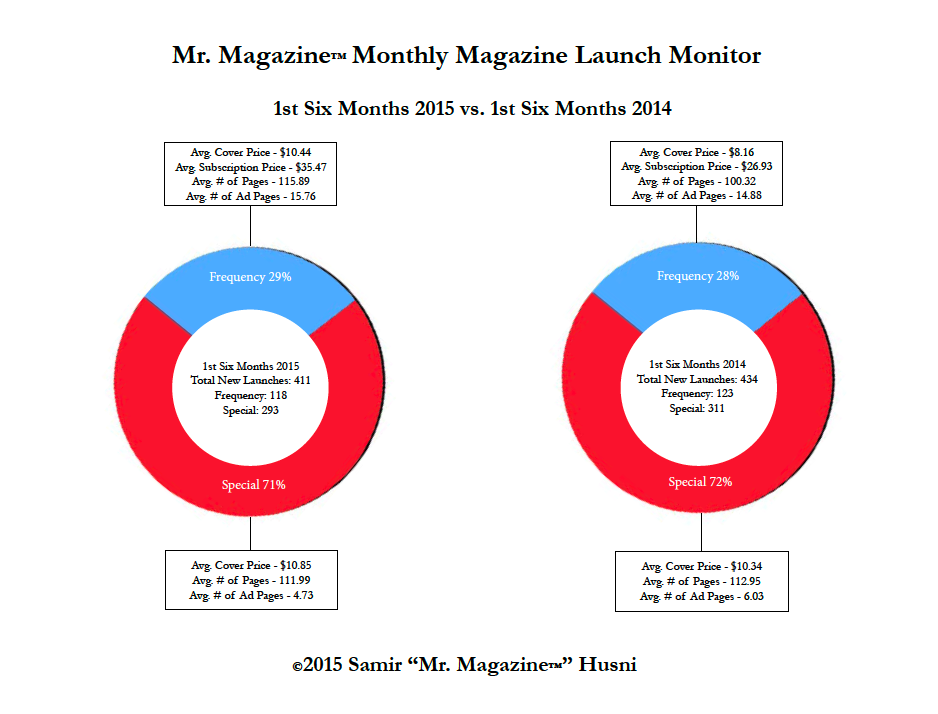
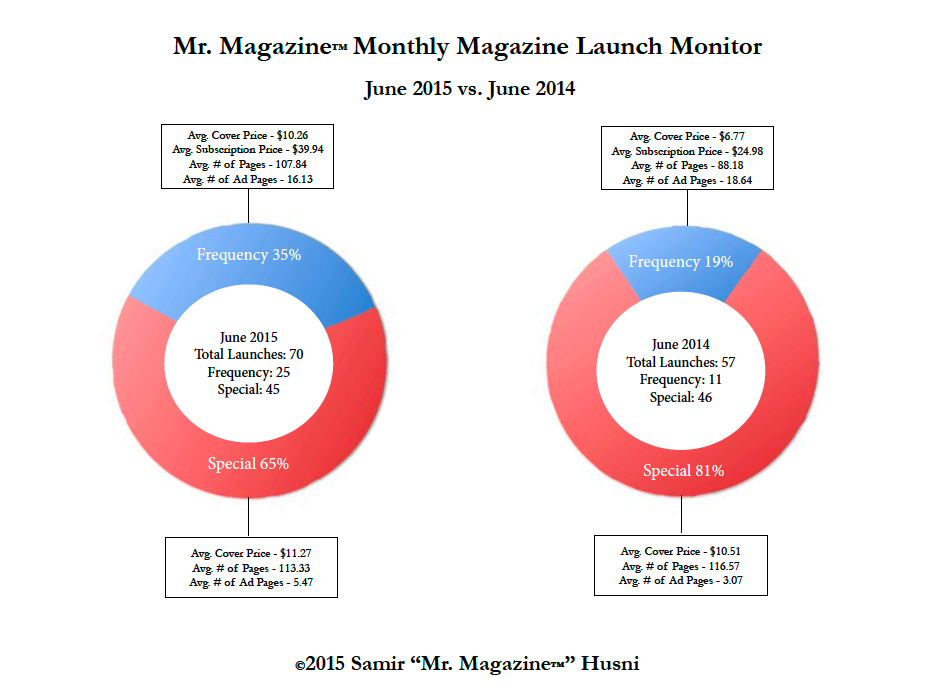
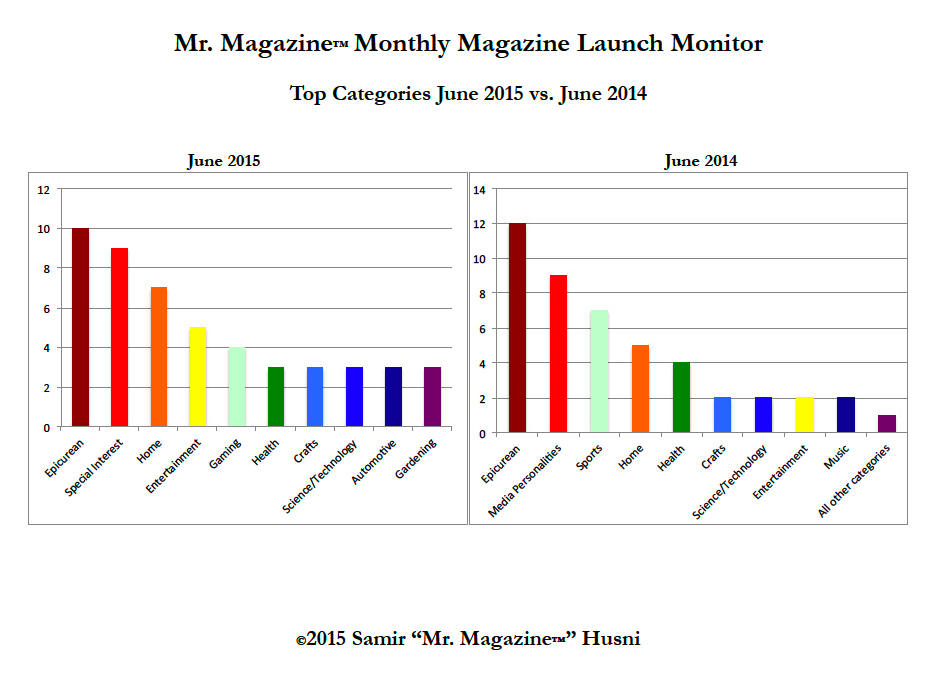
Contrary to what you may have read or seen in some media reports, the growth in the magazine industry is not done, in fact the opposite is true. So here is my tally of new magazine launches for the first six months of 2015 compared with those from the first six months of 2014. Chart one compares the numbers of the first six months, chart two compares the number of the June launches, and chart three compares the different categories from June. (I do have each and every one of those magazines in my possession. Nothing gets coded, counted, or scanned unless I have a physical copy of the magazine).

While the numbers are down by 5 magazines in the frequency titles, what is worth noting is that every major magazine and magazine media company has launched a new magazine during the first half of 2015. A first in a long long time. And the same holds true for the publishers of bookazines. It’s a very good sign indeed when the big players are taking note of the power of print once again and breathing new life back into their ink on paper entities. Some magazine and magazine media companies are putting out three to four new bookazines on a weekly basis.

So, the numbers are good, the health of the industry is good and the light at the end of the tunnel is starting to look like the light and not the train coming…

So here are the charts comparing the first six months, followed by the June charts, and a few magazine covers of the last six months.

Chart One
New Magazine Launches First Six Months 2015 and 2014

Picture 7

Chart Two
Magazine Launches in June 2015 by Numbers

Picture 5


Chart Three
Magazine Launches in June 2016 by Category

Picture 6

And for your eyes only, here are some of the recently published new magazines. To see the entire set of new magazines please visit my sister blog www.launchmonitor.wordpress.com

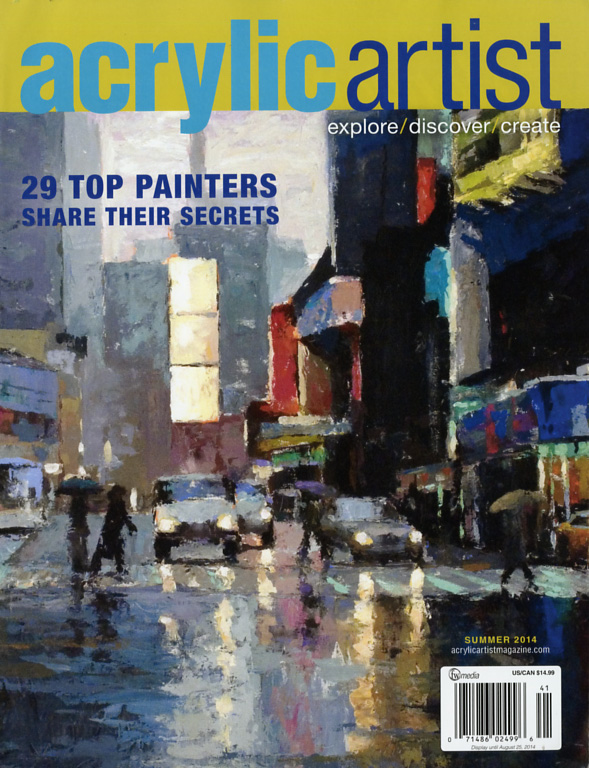
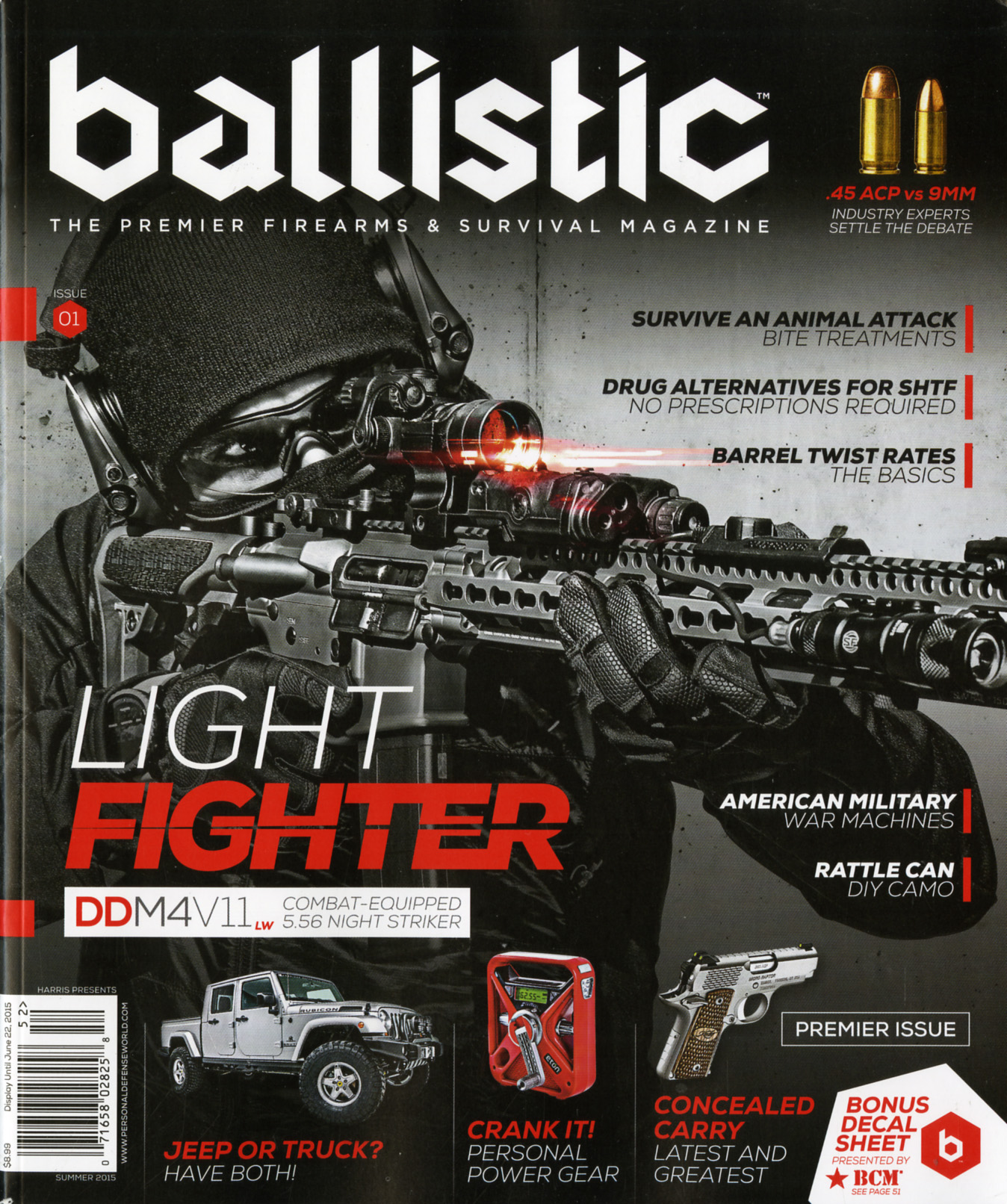
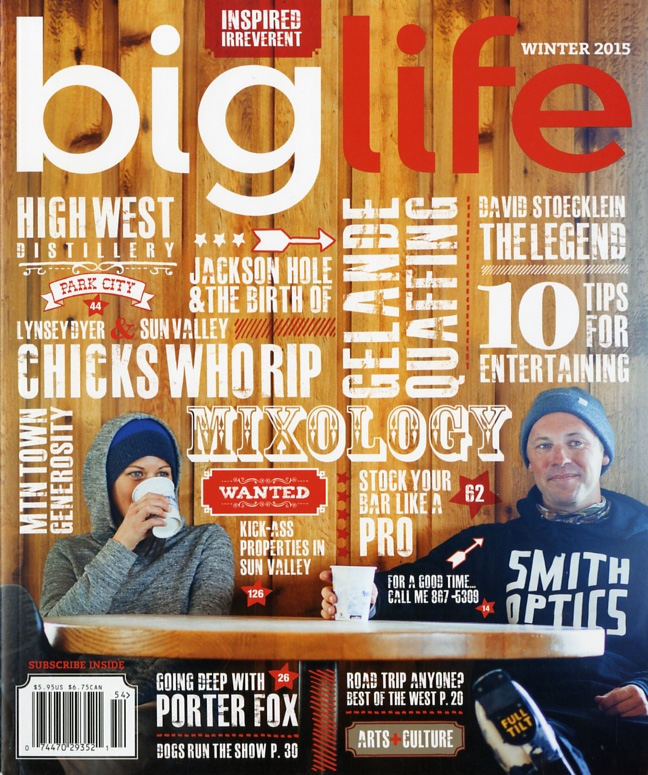
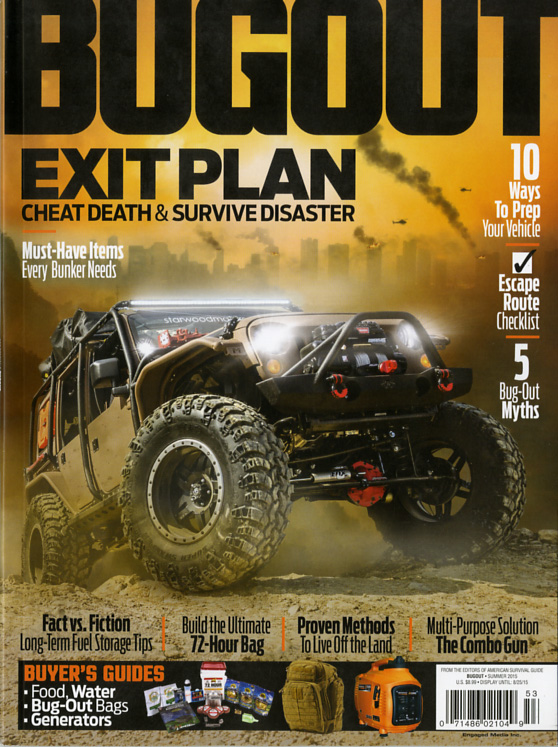
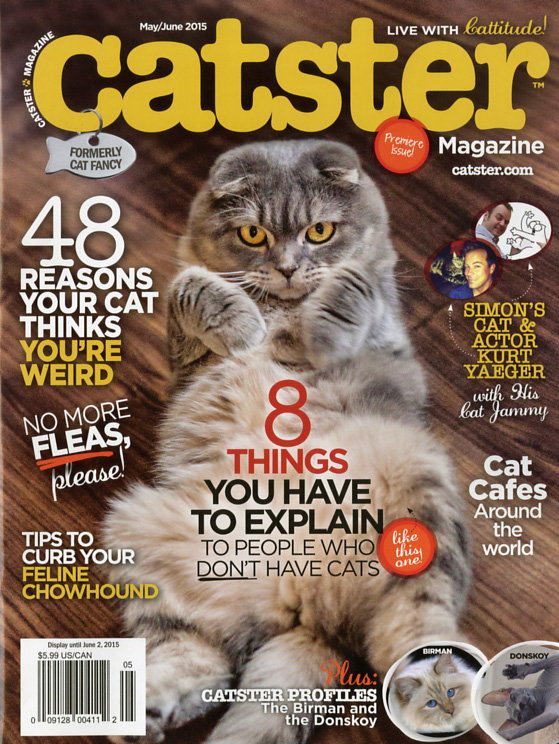
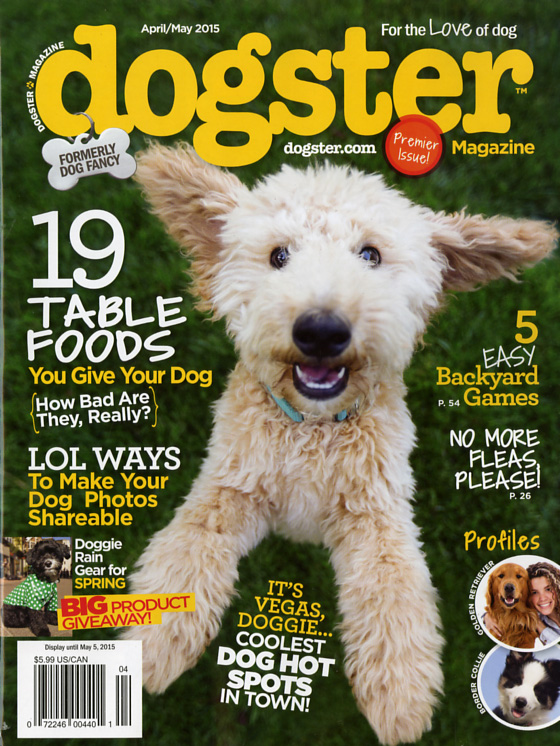
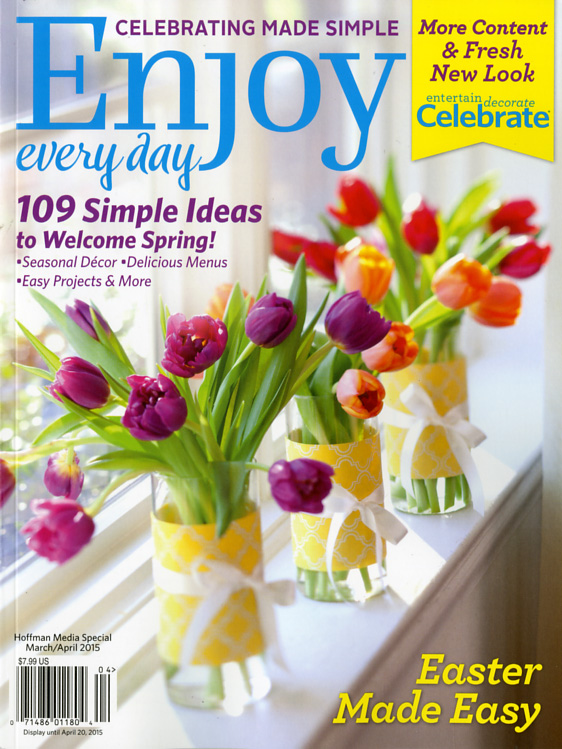
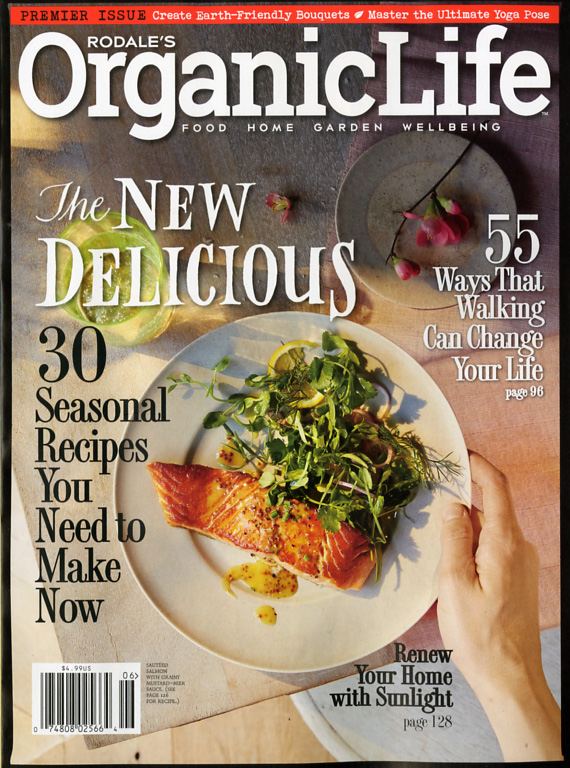
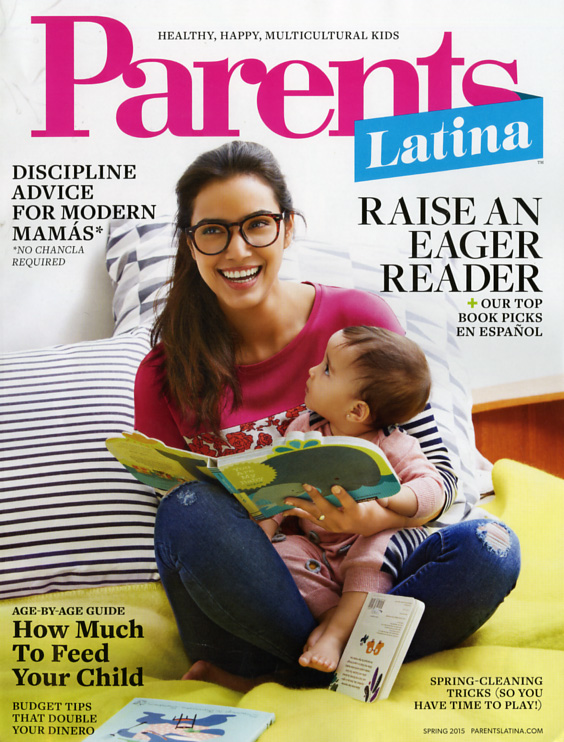
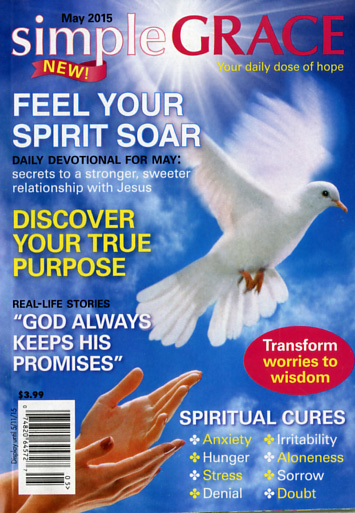
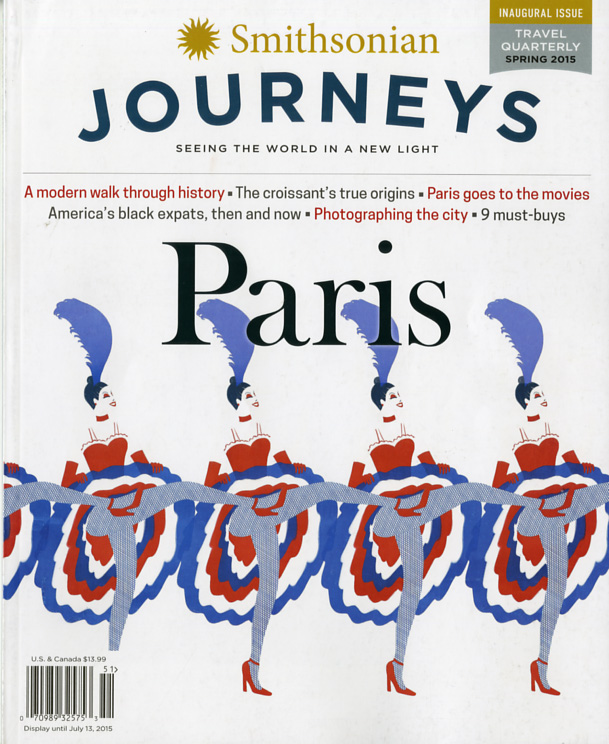
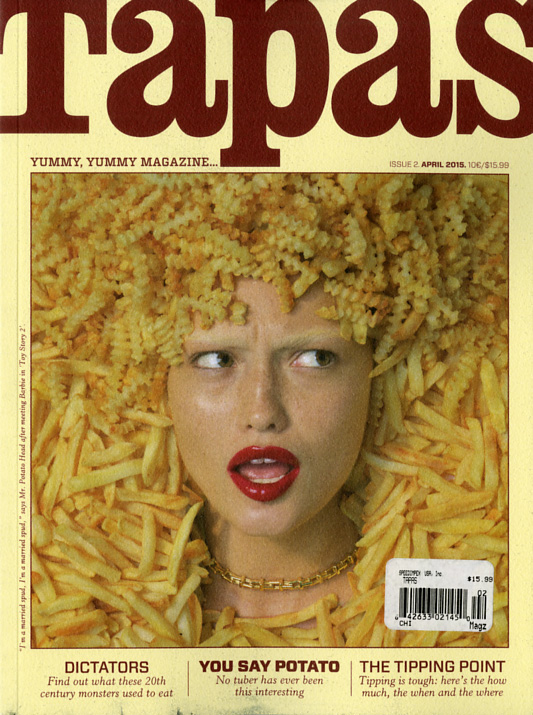
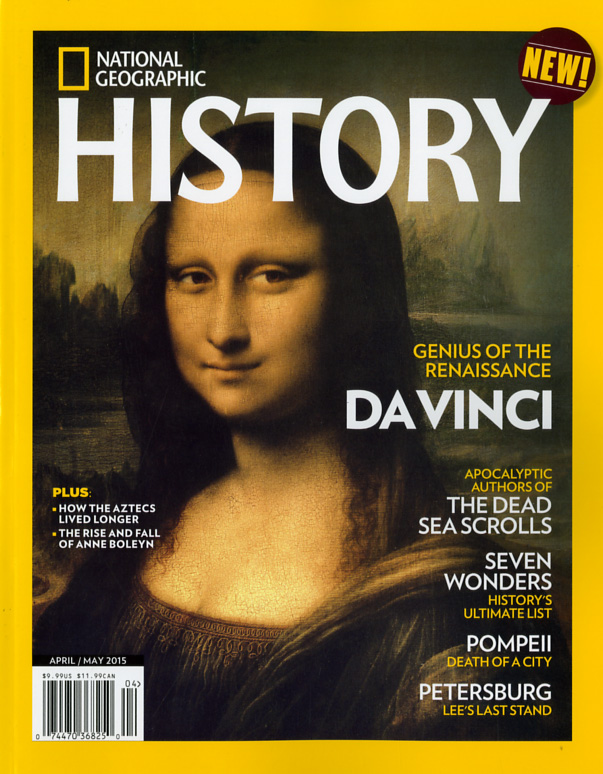
Ballistic-7BigLife-24Bugout-12Catster-6Dogster-7Enjoy Every Day-6Organic Life-5Parents Latina-3Simple Grace-5Smithsonian Journeys-1Tapas-12National Geographic History-7

h1

Looking Forward From The New Single Copy & Through The Tapestry Of A Preeminent 40-Year Career In The Magazine Industry – Those Were The Days – The Mr. Magazine™ Interview With John Harrington, Editor, The New Single Copy…

July 1, 2015

“I think that every major publisher would tell you that the newsstand is a major factor in launching a publication. So they need it there for that. It may certainly be smaller and carry less titles, but for the major publishers launching new titles it will remain necessary to maintain it in some way.” John Harrington

Arriving at a crossroads in one’s life is an important destination for most people as it signifies change which oftentimes leads to growth of immeasurable proportions. For John Harrington, a man 40 years in the magazine industry, it also can be a time for reflection and course redirect as priorities become the prime focus of one’s life. Either way, change is inevitable and growth of immeasurable proportions can also be defined as a collective sigh of a job well done.

But as “they” say, it ain’t over till it’s over. And it’s definitely not over for my good friend, John Harrington. While John has decided to enjoy more of his Sunday afternoons by eliminating the regularly-scheduled newsletter that he’s been doing for the last 19 years, he will still be dipping his toes into the world of magazine wholesaling, publishing and distribution by writing an occasional blog about the industry and continuing to keep his experienced eye on what’s going on in the world he knows so well, the world of magazines.

From his early days as president of CPDA (Council for Periodical Distributors Associations) when the trade group had more than 400 magazine wholesaler-distributors in the United States and Canada, to the editor of the highly successful and renowned The New Single Copy, with its continuous coverage of the magazine business, and a particular focus on the retail distribution channel, John Harrington is a man who knows his way around a newsstand.

As a partner in Harrington Associates, LLC, which publishes The New Single Copy and the annual Magazine Retail Sales Experience series of studies, which provides services to the periodical distribution industry, and works with individual wholesalers, publishers, and national distributors, he definitely knows more about the business side of magazine distribution than most people have had time to forget. He and his wife, Eileen, edited and published The New Single Copy newsletter for almost two decades.

I had the privilege of talking to John recently about his decision to semi-step away from the rigors of a regular gig, so to speak, and the new direction his life is taking, and also about the world of wholesale and distribution, past, present and future. It was an intriguing and interesting conversation to say the least and one that I know you will enjoy being a part of. And now the Mr. Magazine™ interview with John Harrington, Editor, The New Single Copy.

But first, the sound-bites:
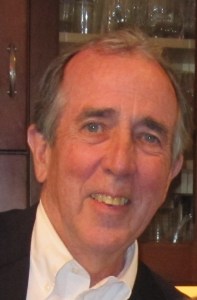
John Harrington On why after 40 years he’s decided to slow down and back away from his regular newsletter offering: First of all, I’ve tried to indicate that I’m not leaving the industry; I’m just not going to write a regularly-scheduled emailed newsletter on a deadline anymore. I intend to maybe do some work with individuals and put out a blog from time to time. I have some notes about things that I’ll probably send out in two or three weeks and I’m still going to be following everything very closely.

On the most pleasant moment he’s had throughout his 40 year career: I would have to say running CPDA (Council for Periodical Distributors Associations) and working with the wholesalers for so many years. The last years became a little difficult because there was so much pressure being put on the channel that we were putting out a lot of fires all of the time and then eventually we didn’t put out the last fire.

On the major stumbling block he had to face and how he overcame it: (Laughs) I’m not sure I ever overcame it. The old wholesaler structure of basically dense market areas, somewhat protected and controlled by publishers, I think was destined to change and the disappointment was that it did not change in an evolutionary way. It did not get modified and be allowed to adapt to changing circumstances, but instead it collapsed virtually overnight. I don’t think that you can find many instances in American business or business anywhere that the entire nature of a business was rendered obsolete virtually overnight.

On why he thinks we’re not seeing any change in the distribution model even though everyone admits that change is unequivocally needed: There’s two sides of the issue, there are the wholesalers themselves who have struggled, even though the surviving wholesalers are from fairly secure entities, parts of either larger companies or owners with sufficient finances to see things out. Their focus for the last 10 years and particularly the last five years, dealing with two major collapses of their competitors, has been basically trying to realign their paths of distribution and take cost out of the system because sales were declining and make best use of the facilities they had in place, which has been an isolated sort of activity, they’re doing it in the terms of which they understand it.

On what he thinks about single-copy cover prices having huge increases while subscription prices tend to be dirt-cheap: It devalues the product in every way and the rates that they offer the new subscribers and the returning subscribers is in some ways a slap in the face to the long-term subscribers. But that’s part of what I was referring to before, and again, this is across the board virtually. There are very few magazines that aren’t well below 65 or 79% off the cover price for the subscriptions.

On whether he can envision a day when there will be no newsstands in America or that the only thing available on newsstands will be bookazines or specials and frequency magazines will be subscription only: No, but it could still get smaller. I think that every major publisher would tell you that the newsstand is a major factor in launching a publication. So they need it there for that. It may certainly be smaller and carry less titles, but for the major publishers launching new titles it will remain necessary to maintain it in some way.

On whether he thinks it’s easier to shop for new titles via a digital device or a regular newsstand: I don’t think there’s any question, bricks and mortar is the only place you can really shop for magazines, take your time and look around and see if there’s something interesting to you. There are probably three other people in the world besides you who do that. (Laughs) Maybe.

On what he’d like the industry to remember and say when they hear the name John Harrington: (Laughs) I hope they’d say he seemed to be very honest about his opinions and they were generally thoughtful and often right. And that he was nice to his grandchildren.

On anything else he’d like to add: As I wrote near the end of the last issue of The New Single Copy; one of my goals is to work on what I call a personal history of the magazine distribution channels during my time. I really don’t have the energy or the capabilities to do the research for a longer history, going back through the entire conception; however, I’ll touch on it in some way.

On what keeps him up at night: Now, nothing.

And now the lightly edited transcript of the Mr. Magazine™ interview with John Harrington, Editor, The New Single Copy.

Samir Husni: It’s rare for anybody in the magazine industry that’s been as connected as you have for almost 40 years and so involved to just leave the industry…
John and Eileen Harrington, editor and associate editor of The New Single Copy.

John and Eileen Harrington, editor and associate editor of The New Single Copy.

John Harrington: First of all, I’ve tried to indicate that I’m not leaving the industry; I’m just not going to write a regularly-scheduled emailed newsletter on a deadline anymore. I intend to maybe do some work with individuals and put out a blog from time to time. I have some notes about things that I’ll probably send out in two or three weeks and I’m still going to be following everything very closely.

Some habits don’t break very easily. I can easily get over the habit of ruining my Sunday afternoons by writing the newsletter, but at the same time I can guarantee you that each morning I’ll still get up and go through the same websites and look for the same email newsletters and kind of keep track of business. So, I’m not leaving the business.

Samir Husni: If you could pick the most pleasant moment of your 40 year career, what would it be?

John Harrington: I would have to say running CPDA (Council for Periodical Distributors Associations) and working with the wholesalers for so many years. The last years became a little difficult because there was so much pressure being put on the channel that we were putting out a lot of fires all of the time and then eventually we didn’t put out the last fire.

But most of those years were good. They were such an interesting group of people, a unique culture within the publishing business. There were just a lot of times that many interesting things came out of that, a lot of experiences from working with them. It wasn’t just me, but overall the CPDA may have even extended their situation and the unique position that they operated in for a long time. I think it may have extended their vitality for a long time too.

I could go into a lot of interesting things about the wholesaler community and not just individuals, but the other thing that I was always pleased with was I just enjoyed being around the magazine business. For someone who had some writing ambitions, even being around it in some fashion was always interesting. You met interesting people; you were working on things that were in the headlines when new magazine articles and issues came out and captured the attention of the country and even the world. And you were there as part of it; you were a part of the group of people that brought it out and put it on the stands.

And in those days particularly even more so, the headlines were made by the magazines that were sold on the newsstands. So it was all interesting fun and very rewarding, all the good adjectives that you could put to it.

Samir Husni: What was the major stumbling block that you had to face during your career and how did you overcome it?

John Harrington: (Laughs) I’m not sure I ever overcame it. The old wholesaler structure of basically dense market areas, somewhat protected and controlled by publishers, I think was destined to change and the disappointment was that it did not change in an evolutionary way. It did not get modified and be allowed to adapt to changing circumstances, but instead it collapsed virtually overnight. I don’t think that you can find many instances in American business or business anywhere that the entire nature of a business was rendered obsolete virtually overnight.

Until mid-1995, sometime in July, a major chain demanded that wholesalers submit offers to service all of its particular divisions. Previously, chains had done that all of the time and for one reason or another they weren’t successful in doing it.

But at that particular time they were and it just set off a cascade of similar operations and demands taking place which literally rendered the business of magazine wholesaling unprofitable, again virtually overnight. And that was going from a profitable, comfortable business to unprofitable almost instantaneously. And it never recovered. Even today; the surviving wholesalers, and don’t forget there were about 300 different locations in mid-1995 and operated by about 195 different ownership units, today there’s basically three ownership units that represent just about all of the significant part of the business. And the business is much smaller. It’s not just smaller because of what happened then, there are a lot of factors going into that, which you’ve written about a lot, as I have, and others have as well.

That’s the biggest disappointment and frankly, while I’ve written about it and I’ve been insulated from it personally, I don’t think I’ve done anything to change the nature of the business to make it a stronger business. It’s probably more fragile today than it ever was.

Samir Husni: Almost every CEO that I’ve interviewed in the last six months, especially those that deal with a lot of single copy sales, tell me that the distribution model needs to change, that the business has to change. Yet, it seems that we’ve become experts in talking about the need to change and we accept the fact, but why do you think that we’re not seeing any change?

John Harrington: You just capsulized what I’ve been writing about particularly for the last year or two, maybe longer. There’s two sides of the issue, there are the wholesalers themselves who have struggled, even though the surviving wholesalers are from fairly secure entities, parts of either larger companies or owners with sufficient finances to see things out.

Their focus for the last 10 years and particularly the last five years, dealing with two major collapses of their competitors, has been basically trying to realign their paths of distribution and take cost out of the system because sales were declining and make best use of the facilities they had in place, which has been an isolated sort of activity, they’re doing it in the terms of which they understand it.

Then from the publishers side and I’m sure that I’ve read every interview that you’ve done, and I’ve met with many of these people myself; I think they’re overwhelmed with the enormous changes that are going on in the entire publishing business. They call themselves magazine media today; they don’t call themselves magazine businesses.

And it’s not just that they have single-copy to worry about or the newsstand to worry about, they’re trying to protect their circulations in general, their subscription circulations. You can maintain subscription circulation, although you’re likely to not be very profitable at maintaining them because there are an infinite number of ways to maintain subscriptions. And they’re seeing the advertising sales decline, not certainly at the same rate, although there have been years at which they’ve declined by 25 or 26%.

So they’re trying to deal with that part of it and they’re trying to extend their brands, that the publishing industry is using more and more, into the digital world or the mobile/digital universe.

And it’s a very uncertain thing. There are several things: one – their leadership, and that’s not the problem, but they’re all running where they are in a very different publishing environment and now they’re trying to extend and make profitable operations in a digital environment that is not what they were born to or what they were trained in.

So they’re having to deal with and adapt to a techy world. And it’s not just the obvious ones, the Apples or the Googles, Amazons and Facebooks and many others as well. I mean, they’re brilliant people, but they’re not trying to sell magazines or magazine media, they’re just trying to communicate on a broader scale, develop new technologies and exploit them in one way or another.

So you’re doing all of this in a great transitioning universe and I think it’s hard for the CEO’s of the five, six, seven major publishing companies to say, golly, I really have to do something about the single-copy, because they’ve got about ten other things they need to do something about.

Everybody can say that they have to do something about it, the distribution channel is dysfunctional and they need to straighten it out, but I guess at the beginning of the day when they make the list of what they’re going to do; they have seven or eight things above that item on their list.

And yet I do think by the fact that it has consolidated so much, they focused on it for a very short time and worked together with the surviving wholesalers. The wholesalers are really smart people and they’re great survivors. They could at least find out if it’s salvageable.

Samir Husni: Based on what I read in your final newsletter, you’re a big fan of The New Yorker. You consider The New Yorker the best magazine in the world.

John Harrington: Absolutely.

Samir Husni: Recently I bought the issue that had the Charleston church and the nine birds flying on the cover, because I wanted to have the copy that doesn’t have a label on it. The cover price was $7.99. And the subscription cards in the magazine screamed at me to get 50 issues for $50, so that’s $1 per issue. Do you think it’s fair for anybody to pay seven dollars more on the newsstand for one issue when they can get it for one dollar? And if go a few years back, The New Yorker was $2.99 or $1.99 at one time, when the subscription was .50 cents or $1 per issue. Why do you think we’re seeing this huge increase in single-copy cover prices and we’re not seeing it in subscription cover prices?

John Harrington: Why, because as I said before, and I don’t want to pick on The New Yorker, there are even more outrageous examples out there and since I subscribe to it, I really didn’t know what the cover price was. There are several ironies in that and one is they’re devaluing the product when they offer these subscription prices.

At CPDA, the wholesalers; we were pointing it out and crying about it when most publishers were saying it was 25 or 35% off newsstand price; we thought that was damaging sales, which it was.

It devalues the product in every way and the rates that they offer the new subscribers and the returning subscribers is in some ways a slap in the face to the long-term subscribers. But that’s part of what I was referring to before, and again, this is across the board virtually. There are very few magazines that aren’t well below 65 or 79% off the cover price for the subscriptions.

You can maintain subscription levels and produce numbers to satisfy your advertising rate base in the subscription business. You may not be profitable at it, but you can maintain the numbers to sustain your advertising sales. It’s not a great business model for the long-term.

Samir Husni: We keep hearing that newsstands in America are only 8% of the total picture. Can you ever envision a day when there will be no newsstands in America? Or that they will continue to exist, but everything we’ll be able to buy will be bookazines or specials and the regular frequency magazines will be subscription only?

John Harrington: No, but it could still get smaller. I think that every major publisher would tell you that the newsstand is a major factor in launching a publication. So they need it there for that. It may certainly be smaller and carry less titles, but for the major publishers launching new titles it will remain necessary to maintain it in some way. How they maintain it is a whole different question.

In the last year or so the question that I’ve asked everybody I’ve talked to is where is the bottom? And everybody says they don’t know. Which is kind of a frightening situation because you hope the bottom isn’t zero. And at the same time there’s nobody that seems to be trying to do anything about it, like promoting the sale of magazines at newsstands in some way.

It’s very hard to reach consumers on that, I realize, but there has to be ways in which they could do it, especially in the digital universe where communicating with readers is an easier thing to do and can be done at a totally different cost than it used to be.

And there would always be some level of newsstands; I mean, look at bookstores and terminals, they’re still a per-location-base to sell more magazines per location on average than any other type of outlet. And they have much larger selections too, at least the bookstores anyway.

And it may end up limited to those types of accounts, but I can’t see there not being newsstands. Certainly, digital newsstands haven’t proven to be a way to find new publications.

Samir Husni: Do you think it’s easier to find a new publication via digital devices or it’s easier to see it displayed on the newsstand?

John Harrington: I don’t think there’s any question, bricks and mortar is the only place you can really shop for magazines, take your time and look around and see if there’s something interesting to you. There are probably three other people in the world besides you who do that. (Laughs) Maybe.

Samir Husni: (Laughs too).

John Harrington: You can’t shop at a digital newsstand. I mean, you can go to it if you know what you’re looking for and maybe find it. Even so-called mixed industry media doesn’t lend itself for shopping a newsstand carrying forty or fifty titles. As far as I’m concerned, no, you can’t shop a digital newsstand, but you can shop a traditional newsstand, whether it’s in a market or a bookstore.

Samir Husni: Are we going to see a bolder, more specifically vocal John Harrington as he now becomes more of an outsider looking in on this industry? Will you now be able to produce that magic wand and tell the magazine media world what it should do in regards to wholesalers and distributors?

John Harrington: Well, as soon as I learn and discover what it is we need to do, I won’t be shy about promoting that. (Laughs) The big frustration is we know all the reasons why the situation is where it is and it’s not just limited to newsstand. We don’t know how to get it to where we’d like it to be. And in fact, for the broader publishing business, they’re trying to determine where it is. I read very definitive statements from all the CEOSs of these companies and yet I sense that there’s a sort of feeling that if something can be said strongly enough and often enough, it’s what’s going to happen. But I’m not sure it will when they turn their backs.

I’ve been trying to raise a lot of questions over the years, so maybe I’ll keep raising questions. I know the first blog that I’m going to put out is going to be a specific suggestion, it’s not going to be outrageous, but it’s something that I’ve been noodling around and trying to work out the details for.

Samir Husni: John, since you’re closing a chapter in your life and since Baird David retired and Dan Capell passed away; who’s going to be the next generation of industry newsstand and circulation watchers? Have you groomed anybody to take your place?

John Harrington: (Laughs) No, no one in my family is going into that business; I can assure you of that. Joe Berger is a publishing consultant and he has a blog and he does some very interesting stuff on it, but the last time I talked to him he said that he’d been so busy trying to help his clients that he hadn’t been able to blog very much.

One of the frustrations and I don’t know what somebody else would do, but one of the frustrations is how often can you raise the same issue and offer the same suggestions or directions; it’s probably the challenge that every editor faces. How do I make this issue of the magazine different from the last one? So, how many times can you say the same thing in a slightly different way?

Maybe it’s you and Bob Sacks. You’ve been doing so many interviews lately; you’ve probably touched on more newsstand issues than I have, particularly after I reduced my frequency to basically every other week. And Bob is out there every day with something.

Samir Husni: John, what would you like the industry to remember and say when they hear the name John Harrington?

John Harrington: (Laughs) I hope they’d say he seemed to be very honest about his opinions and they were generally thoughtful and often right. And that he was nice to his grandchildren.

Samir Husni: Anything else that you’d like to add?

John Harrington: As I wrote near the end of the last issue of The New Single Copy; one of my goals is to work on what I call a personal history of the magazine distribution channels during my time. I really don’t have the energy or the capabilities to do the research for a longer history, going back through the entire conception; however, I’ll touch on it in some way.

And I really do hope to do that. I’ve done a few interviews over the last year or two with some of the old-time wholesalers who are no longer in the business, but still around. I intend to do some more and talk to a number of people. So, while it’s not going to be something that gets into my personal life, it is going to be hopefully a recapping of the events that took place that changed the business through the current time.

But I also think there will probably be an emphasis on the old business because it was so unique. It was a family-owned business, somewhat large in scope; most of them were in the second or third generation and some even into a fourth generation. There were some genuine characters in it.

But I think it will be a fascinating story about a group of people who regarded themselves as a brotherhood and a lot of my contemporaries, people my age, as I was working my way through the business, swore up and down as they left to go off to college or wherever they went when they left home for the first time, that their fathers would hand them a list of all the wholesalers in the United States and Canada and tell them if they needed help for any reason, call the nearest wholesaler. And they did. (Laughs) And they were helped. There was no question.

A wholesaler in Maine felt a connection with a wholesaler in California or Oregon. The wholesaler in Portland, Oregon and the wholesaler in Portland, Maine felt a connection with each other and might even call each other up once in a while and talk to each other. They had relationships literally like that. They understood the pressures and the changes in the business. It was a very unique thing.

It was a relationship too among many of the suppliers. There were family relationships that existed between the suppliers, usually on the circulation side and the newsstand side of the publishing businesses; they had much bigger departments in those days, and the national distributors.

I’d say maybe a year after I got into the business and was working my way through and beginning to understand it a bit more; I was at a conference or a convention and I was talking with somebody from one of the publishing companies and was a newsstand circulator, a guy about my age, but he’d been in it longer than I had at that point. And I said to him, you know what amazes me about this is the family connections; somebody is always related to somebody else. There’s nobody that’s just a loner in the business. I told him that he and I might be the only two people who were not related to somebody else in the business and that I wasn’t entirely sure about him. (Laughs)

And some people moved from the wholesaler side to the publishing side and back and forth. A lot of the wholesalers became wholesalers after spending 20 or 30 years as publishing reps and managed to find a small agency somewhere that they could make a down payment on and take over if they didn’t have any family in the business.

And I heard that distributors encouraged that among their reps and sometimes might even help them by giving them a low-interest loan to buy a small agency. It’s really a fascinating sociology that’s worth writing about.

The thing about national distributors is really how all of that is defined. Now technically, Time Inc. is a national distributor, but it’s actually the circulation distribution arm of Time Inc. But on the other hand, some of the others are so-called pure national distributors. Traditionally, when I came into the business and there were 400-plus wholesalers, there were a dozen national distributors and their function was two-fold. One – they were billing and collection agencies for publishers because a small publisher and even large publishers couldn’t be doing collecting from 400 wholesalers on a monthly basis.

But the other was they were essentially a bank and they advanced publishers a certain amount, say 50% from the day they went on sale, so they kept a cash flow in the business. And if a publisher didn’t sell 50% with that issue, it was deducted from the payment of the next issue. And there’s not much of that going on today, I can assure you. So national distributors as we knew them then through the function they once performed are no longer there. Not the way it was anyway. That was very unique.

Samir Husni: My typical last question; what keeps you up at night?

John Harrington: Now, nothing.

Samir Husni: Thank you and best of luck in your future ventures.

h1

“Engaging” A Global Audience With Quality Content & Creative Expertise – The Mr. Magazine™ Interview With Nick Singh, President, Engaged Media Inc.

June 30, 2015

“I believe magazines will always be there and being strong financially and being a decent size, but not too big gives some companies an advantage in the marketplace… I think trying to figure out this business and what works is challenging and exciting. Putting together a nice group of folks, along with some good strong content, whether it’s editorial or art, and finding out this really helps sales is exciting.” Nick Singh

Withstanding disruption and looking at innovative techniques to move print forward in a digital age is something that Engaged Media is proficient at, especially with Nick Singh at the helm. Nick is President of Engaged Media and his 20-plus years of publishing-industry experience, combined with exemplary leadership skills have driven EM’s continued expansion during unprecedented change in the print-magazine industry over the past decade.

Nick has led EM’s continued expansion globally, increasing EM’s presence in the United States, India and the Philippines over the past 3 years. His primary focuses on leadership development, operational excellence and providing his organization with a clear and concise vision have led to consistent market-share gains for EM.

I spoke with Nick recently about the ever-changing landscape of the magazine media world. From newsstand to distribution, his thoughts were concise and bulleted toward a profitable future for Engaged Media and spot-on advice for the magazine industry at large.

From the gamut of titles that his brand covers, we discussed where the ideas for all the different subject matter came from and if there were any topics Engaged Media shied away from. It was a very compelling conversation.

So, I hope you enjoy this revealing and interesting discussion as I picked the brain of yet another innovative and creative magazine maker of our time and learned quite a bit about the scope and reach of a brand that knows few boundaries as it strives for excellence and expertise in its continued success. Get ready for the Mr. Magazine™ interview with Nick Singh, President, Engaged Media Inc.

But first, the sound-bites:

2015-05-15 11.43.51 On the genesis of Engaged Media and how the company separated from its relative, Beckett Media: Long story short, this one owner stepped in and he owns about 30 other companies, non-publishing for the most part, insurance and healthcare, coding and other areas, and he acquired both Beckett and us, we were basically one company. In 2008, we learned how to turn it around as fast as we could because we had to, no more leverage from the banks. So, in 2012 we separated the companies into two different companies because the Beckett model is a very successful model, but it’s in sports collectables.

On whether he thinks the pendulum is swinging back toward making money at the newsstands: We’ve been doing OK; it’s just that last year when Source shut down was probably the biggest hit because there are inefficiencies. I think people are being optimists and I try to stay middle-of-the-road and as close to reality as possible.

On whether he believes the single-copy sales and distribution model should be reinvented: It isn’t a profitable business model for some publishers to be on newsstand, and yet for others like us and our competitors in our segment; we do rely heavily on newsstand. We also do high quality, high-priced items and that means a lot to us, but not everybody has the same business model, so something has to change, yes. And there has to be better efficiencies and a new model. What that is; we don’t know.

On his thoughts on the rising cover prices of bookazines and where he sees the trend heading: Right now we see some $12.99’s working, at least in our categories and from a competitive perspective, we see some folks doing some nice magazines at $9.99. We’re testing some $12.99’s and we’ve been doing $9.99’s for a while. The $12.99’s seem to work, even in Wal-Mart where they try to be the low price leader. I don’t know where this trend will go, what sort of price limitations or ceiling there will be, if any.

On the most pleasant moment he’s had during his career at Engaged Media Inc.: Growing newsstand has been very pleasant for us and growing profitability has also been very pleasant. Since 2012 to 2015 we’ve been able to grow, and not just newsstand, but also with a good editorial team and a good art design team. I think that’s been very pleasant for us, just this level of growth.

On the major stumbling block he’s had to face and how he overcame it: Changing our business model. I think working with our partners; working closely with a lot of our partners and meeting mutually on what works and what doesn’t. The old way that we used to do business was get copies out everywhere and anywhere, where now we kind of selectively pick and choose where we want to be, there are certain chains that we don’t pick or certain areas geographically because we don’t find them profitable.

On the gamut of topics Engaged Media publishes and if there’s one category they won’t touch: Probably the broader entertainment categories; we’ve tried. We’ve dipped into many categories and there are two or three that we might touch, but our secret sauce so to speak is getting quality people and quality editorial and we’ve done some things without quality editorial and we’ve learned. So we will not touch things that we don’t have the expertise in.

On whether or not he has a favorite title from his broad stable of magazines: That’s a great question. No favorites from my side. Our editors of course do and the newsstand team, I’m sure they do as well, and our ad sales team. Our digital online team probably does too, based on which ones are performing the best. But no, I don’t have any favorites in particular.

On what makes him click and tick and motivates him to get out of bed in the mornings: I believe magazines will always be there and being strong financially and being a decent size, but not too big gives some companies an advantage in the marketplace. It’s not easy; I think it’s challenging and that makes it fun. I think trying to figure out this business and what works is challenging and exciting. Putting together a nice group of folks, along with some good strong content, whether it’s editorial or art, and finding out this really helps sales is exciting.

On whether he can ever envision a day where Engaged Media has no print publications: No, I cannot.

On the future of print for Engaged Media: I think the future of print for us is if we’re 95% print today, I would love to see our print growing slightly in the new categories as needed, specific categories that we do have some expertise in and that we think we can do better, faster and cheaper than some other folks, it would be a market share flag and it would be surviving the newsstand.

On how involved he is with the actual ideas for the magazines’ subject matter: We have a very good team, it’s not just me or about me. We facilitate good thinkers, people who are always creative and out there and we get plenty of ideas from these folks. And we put it through the test; whether it’s from our customers, from advertising, from retailers or wholesalers or national distributors; we kick around a lot of ideas. There’s no “one” place where they come from; our advertising sales reps, our editorial team and our newsstand team are all very, very strong.

On what keeps him up at night: Declining margins. (Laughs) If our partners aren’t profitable, then we’re not going to be profitable. I’d love to see this industry turn around or at least stabilize somewhat. I think that’s what keeps me up at night.

And now the lightly edited transcript of the Mr. Magazine™ conversation with Nick Singh, President, Engaged Media Inc.

Samir Husni: You’re one of the bigger players, especially on the newsstands when it comes to single-copy sales, yet you’re one of the best-kept secrets in the industry. Tell me a little about the genesis of Engaged Media and how you moved from Beckett Media and all the sports collecting magazines under that umbrella to the world of Engaged Media and the many titles that you have now.

Collectibles-13 Nick Singh: We do try to stay below the radar and fortunately we’re able to test a lot of issues and we do a lot of category analysis. We have an international team; we have roughly around 100 employees, 45 or so here in the U.S. and 45 abroad, from the Philippines to India, from our parent company. So we do have decent backing by a private owner who owns about 30 companies.

Engaged Media started roughly about 10 years ago, even though we didn’t use the name Engaged Media then. We purchased or acquired Beckett Media and about three other companies in southern California. Beckett was and still is in Dallas and we’re in southern California with the acquisition of a few small publishers.

A few of us came from Primedia or TEN – the Enthusiast Network or Source Publishing, whatever you might want to call them today; I still have a lot of friends there. So, about ten years ago we came into this company and it was in a lot of debt. We learned our lessons quite a bit and our new owner; I call him new, but he’s seven years new now, I’ve been here for 10 years running a couple of departments, production and circulation, with the new owner in 2008, because we were in high debt and heavily leveraged, when the market crashed we had to learn how to stand on our two feet and become cash flow positive and get rid of the debt somehow.

Long story short, this one owner stepped in and he owns about 30 other companies, non-publishing for the most part, insurance and healthcare, coding and other areas, and he acquired both Beckett and us, we were basically one company. In 2008, we learned how to turn it around as fast as we could because we had to, no more leverage from the banks.

So, in 2012 we separated the companies into two different companies because the Beckett model is a very successful model, but it’s in sports collectables. It was a great brand and still is and Beckett.com is a good revenue stream and a great business model. It’s a completely different business model from our enthusiast publication side where we have Diesel World, Gun World, hunting magazines with some survivalist elements that seem to be working right now, like American Survival Guide. And we have the Homes category, with Cottages & Bungalows, Romantic Homes and these niche titles that did not fit into the Beckett model, so we’re roughly 90 to 95% of the print business, that’s if we combine the two companies.

But as we separated, we learned quite a few lessons. We learned that using newsstands as 60% of our revenues and then ad sales, subscriptions and the very small digital, which has grown pretty fast, but it’s still only about 1 to 2 % of our total revenue, so we think that there’s a lot of upside in digital. We still learned that on newsstand, we can make a profit if it’s done correctly, but also, if not done correctly, we could lose a lot of money. It’s a high-risk, high-reward business for us. The good thing about newsstand is we can pull out whenever we want; there’s no sub-liability with long-term sub-liabilities or advertisers. It’s not advertising-based-strong like our core publications are in the automotive and outdoor segments. So, it allows us to test a lot of things.

Now we realize that there are many challenges. (Laughs) Last year we took the chance and decided to grow revenues and market shares in newsstand and we were able to fortunately move up to, I’m guessing the top 13 or 14 publishers in newsstand in the country or North America, but with that comes a huge price because when Source shut down our margins tightened up quite a bit. And then TNG (formerly The News Group) picked up a lot of businesses and we’re great partners with TNG, but it’s costing us a lot more. Our revenues are up again this year, hopefully the margins are getting better, but right now they’re tightened for sure. And that’s where we are today.

Samir Husni: Do you think the pendulum is swinging back towards not only hope for the newsstands, but also toward the thinking that there is actual money to be made there?

Nick Singh: We’ve been doing OK; it’s just that last year when Source shut down was probably the biggest hit because there are inefficiencies. I think people are being optimists and I try to stay middle-of-the-road and as close to reality as possible.

Many of the things that we did to grow our revenues, many of those specials, maybe if we did 100 specials; I would say that 50 of them didn’t work; it was probably our worse success rate. The good thing is we’ll never do those 50 again, the 50%.

We’re hearing everything with distribution has been fixed, but looking at Q4 and Q1, efficiencies are still low and the wholesaler wants to charge for efficiencies, but if we were to turn it around the other way and say, hey Mr. and Mrs. Wholesaler, why don’t you completely take over the distribution and increase the efficiencies, but if you lose sell or revenues or lose efficiencies, then maybe you should be responsible for it, right? I don’t see that happening and I don’t think anybody wants to be responsible for that efficiency, although the charges were inefficient. I still inefficiency so far; I haven’t seen any actual numbers that prove that it’s getting better.

Samir Husni: With all the changes that have taken place in our industry from the demise of the Mom and Pop wholesalers to the national distributors becoming just two or three major players and the wholesalers maybe two major players; do you think it’s time to reinvent the single-copy sales and distribution model? Do we need that multifaceted distribution channel?

Nick Singh: I don’t think so. I think yes, we need to change and become more efficient; 21 days to get on sale is a long time and that hasn’t changed since I started in the business in the 1990s. I’ve been doing this for 20-something years and I know you’ve been even longer, since the 1970s. And it still takes 21 days to get on sale.

It isn’t a profitable business model for some publishers to be on newsstand, and yet for others like us and our competitors in our segment; we do rely heavily on newsstand. We also do high quality, high-priced items and that means a lot to us, but not everybody has the same business model, so something has to change, yes. And there has to be better efficiencies and a new model. What that is; we don’t know.

Samir Husni: I’ve noticed also that the cover prices have risen, especially with the so-called bookazines. When we hit $7.99 we were sure people wouldn’t go for that. And then $9.99, now it’s $11.99 and recently I bought some for $13.99. Where do you see the red light being erected; the point where you decide people are just not going to pay $15 for a bookazine?

Small Spaces Big Ideas-12 Nick Singh: Right now we see some $12.99’s working, at least in our categories and from a competitive perspective, we see some folks doing some nice magazines at $9.99. We’re testing some $12.99’s and we’ve been doing $9.99’s for a while. The $12.99’s seem to work, even in Wal-Mart where they try to be the low price leader. I don’t know where this trend will go, what sort of price limitations or ceiling there will be, if any. We haven’t tested anything at $14.99 or $15.99. We think these work pretty well in the bookstores, but not in the other classes of trade so far.

Samir Husni: Since you became president of Engaged Media Inc., what has been the most pleasant moment that you’ve had in your career and why?

Nick Singh: Growing newsstand has been very pleasant for us and growing profitability has also been very pleasant. Since 2012 to 2015 we’ve been able to grow, and not just newsstand, but also with a good editorial team and a good art design team. I think that’s been very pleasant for us, just this level of growth.

So for us it’s a little bit of a different strategy than maybe other folks because of the growth we’ve seen three years in a row, roughly a 20 to 25% growth rate. Next year, let’s hope that we can sustain that. But what’s really going to make a big difference for us, and the pleasantry may be over, is if the same level of margins aren’t there. Then we’d have to look at other avenues like digital and all those things. But I’m not sure if anybody’s got that figured out yet. My most pleasant moment has been growing newsstand and growing a good company.

Samir Husni: What has been the major stumbling block that you’ve had to face and how did you overcome it?

Nick Singh: Changing our business model. I think working with our partners; working closely with a lot of our partners and meeting mutually on what works and what doesn’t. The old way that we used to do business was get copies out everywhere and anywhere, where now we kind of selectively pick and choose where we want to be, there are certain chains that we don’t pick or certain areas geographically because we don’t find them profitable.

I think that’s been the best change in our business model, even with our subscription base. We don’t go after new subscriptions if it doesn’t make any sense. We don’t do rate-based; we’re a direct response advertiser, so it’s all about if they’re getting direct responses and phone calls to increase our advertiser’s businesses. We like the return-on-investment strategy for us and for our customers at the same time.

Samir Husni: You have quite the stable of magazines. You can go from Flea Market Décor to Young for Kids to Knife Illustrated to Gun World to American Homesteader and then to Fantasy Football; you really run the gamut of topics. Is there one category where you said no, we won’t touch that one?

Nick Singh: Probably the broader entertainment categories; we’ve tried. We’ve dipped into many categories and there are two or three that we might touch, but our secret sauce so to speak is getting quality people and quality editorial and we’ve done some things without quality editorial and we’ve learned. So we will not touch things that we don’t have the expertise in.

Samir Husni: Do you have any favorites from all of the titles that you put out? Would you say this is my firstborn or that you treat all your children equally?

Nick Singh: (Laughs) That’s a great question. No favorites from my side. Our editors of course do and the newsstand team, I’m sure they do as well, and our ad sales team. Our digital online team probably does too, based on which ones are performing the best. But no, I don’t have any favorites in particular.

Samir Husni: If someone dropped in on you at home and you were sitting down with a magazine and relaxing, which one would it be?

Nick Singh: I just walked into an acquisition meeting recently with probably my favorite magazine right now and that’s Fantasy Football.

Samir Husni: I just finished a new book called Inside the Great Minds of Magazine Makers and now I want to get inside your mind, so what makes Nick click and tick and motivates you to get out of bed each morning and say this is going to be a great day?

Nick Singh: I think seeing a couple of new business models that I won’t go into detail about right now, but that we think could be a way out of this thing; it’s mixing in the print magazine, digital and some online assets, whether it’s e-commerce business or other content management businesses, is exciting and motivational.

I believe magazines will always be there and being strong financially and being a decent size, but not too big gives some companies an advantage in the marketplace. It’s not easy; I think it’s challenging and that makes it fun. I think trying to figure out this business and what works is challenging and exciting. Putting together a nice group of folks, along with some good strong content, whether it’s editorial or art, and finding out this really helps sales is exciting.

I don’t think this business will be the same in four or five years and that excites me every day because what do we do? Do we walk out and leave or do we keep improving and doing things better, faster and cheaper? And I think of course the latter is the answer. So that excites me every day, just trying to figure this thing out.

Samir Husni: Can you ever envision a day where Engaged Media has no print publications?

Nich Singh: No, I cannot.

Samir Husni: What do you believe is the future of print for your company?

Bugout-12 Nick Singh: I think the future of print for us is if we’re 95% print today, I would love to see our print growing slightly in the new categories as needed, specific categories that we do have some expertise in and that we think we can do better, faster and cheaper than some other folks, it would be a market share flag and it would be surviving the newsstand. I don’t think there will be as many players in five years, but I would like to see that revenue share be more mixed and diverse to probably 50% print.

Samir Husni: How involved are you with bringing in actual ideas to the team? For example, when I look at one of your newest magazines Bugout, or Go Gluten Free or Low Sugar Living; how involved are you in suggesting those trends or ideas? Do you wake up at night and say we should do a magazine about that?

Nick Singh: We have a very good team, it’s not just me or about me. We facilitate good thinkers, people who are always creative and out there and we get plenty of ideas from these folks. And we put it through the test; whether it’s from our customers, from advertising, from retailers or wholesalers or national distributors; we kick around a lot of ideas. There’s no “one” place where they come from; our advertising sales reps, our editorial team and our newsstand team are all very, very strong. We have somebody with 30 years of experience on our newsstand team, Gus Alonzo.

We have ideas coming from everywhere. And what we do is shut down a lot of the ideas or we keep them alive if we think they have legs. We have a few more of that hasn’t been done or somebody is doing it, but we don‘t think they’re doing it well enough in new categories.

So, we measure it and we look out. Bugout was a no-brainer that came from a lot of our advertisers; it’s kind of survivalist-meets-automotive, which makes a lot of sense. We’ll see where that one goes. We keep testing the ones that make a lot of sense to us, but there’s still a lot of risk involved, if we’re able to take the risk and currently we are able to manage risk OK, I would say.

Samir Husni: If I wanted to describe you in one word, would it be Victorian, Romantic or American; I’m just looking at some of the different titles of the magazines that you have. Or would it be Maximum Drive? What word defines Nick?

Nick Singh: Enthusiast.

Samir Husni: My typical last question; what keeps you up at night?

Nick Singh: Declining margins. (Laughs) If our partners aren’t profitable, then we’re not going to be profitable. I’d love to see this industry turn around or at least stabilize somewhat. I think that’s what keeps me up at night.

Samir Husni: Thank you.

h1

Mr. Magazine™ Monday Morning Global And Local…

June 29, 2015

Screen Shot 2015-06-29 at 8.36.53 AM The new issue of Mr. Magazine™ Monday Morning is out. To read the June 29 issue click here. The free emailed newsletter contains the best of the Mr. Magazine™ blog and appears every Monday morning in subscribers e-boxes.

To subscribe to the Mr. Magazine™ Monday Morning click here.

Have a great week. Hit the newsstands and buy a magazine or two. There is no better experience than sitting down or laying back with a magazine in your hands. And remember, “if it is not ink on paper, it is not a magazine.”™