A spoken poem, in sound and picture, captivates the power of print. Released by InkGlobal in the United Kingdom The Journey is a must see. Enjoy the “Spoken poem; print is not dying. Produced by Ink, written and directed by David Bowden @ The Garden Studios.” Thank you Simon for sharing.
Archive for the ‘Innovation in print’ Category

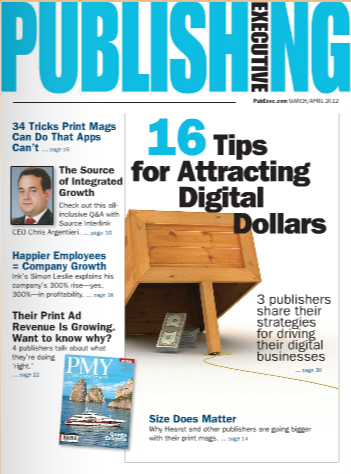
Size Does Matter… and Shape, Weight and Volume… My Latest Publishing Executive magazine column
March 18, 2012My latest column from the March/April issue of Publishing Executive magazine… Enjoy and Comment!
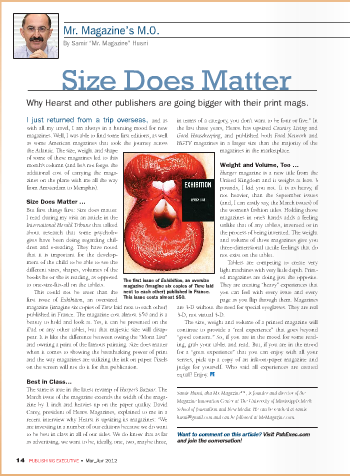
Mr. Magazine’s M.O. : Size Does Matter
Why Hearst and other publishers are going bigger with their print mags.
March 2012 By Samir “Mr. Magazine” HusniI just returned from a trip overseas, and as with all my travel, I am always in a hunting mood for new magazines. Well, I was able to find some first editions, as well as some American magazines that took the journey across the Atlantic. The size, weight and shape of some of these magazines led to this month’s column (and let’s not forget the additional cost of carrying the magazines on the plane with me all the way from Amsterdam to Memphis).
Size Does Matter …
But first things first: Size does matter. I read during my visit an article in the International Herald Tribune that talked about research that some psychologists have been doing regarding children and e-reading. They have noted that it is important for the development of the child to be able to see the different sizes, shapes, volumes of the books he or she is reading, as opposed to one-size-fits-all on the tablets.
This could not be truer than the first issue of Exhibition, an oversized magazine (imagine six copies of Time laid next to each other) published in France. The magazine cost almost $50 and is a beauty to hold and look at. Yes, it can be presented on the iPad or any other tablet, but that majestic size will disappear. It is like the difference between owning the “Mona Lisa” and owning a print of the famous painting. Size does matter when it comes to showing the breathtaking power of print and the way magazines are utilizing the ink on paper. Pixels on the screen will not do it for that publication.
Best in Class…
The same is true in the latest revamp of Harper’s Bazaar. The March issue of the magazine extends the width of the magazine by 1 inch and heavies up on the paper quality. David Carey, president of Hearst Magazines, explained to me in a recent interview why Hearst is upsizing its magazines: “We are investing in a number of our editions because we do want to be best in class in all of our titles. We do know that as far as advertising, we want to be, ideally, one, two, maybe three; in terms of a category, you don’t want to be four or five.” In the last three years, Hearst has upsized Country Living and Good Housekeeping, and published both Food Network and HGTV magazines in a larger size than the majority of the magazines in the marketplace.
Weight and Volume, Too …
Hunger magazine is a new title from the United Kingdom and it weighs at least 3 pounds, I kid you not. It is as heavy, if not heavier, than the September issues (and, I can easily say, the March issues) of the women’s fashion titles. Holding those magazines in one’s hands adds a feeling unlike any on a tablet, invented or in the process of being invented. The weight and volume of those magazines give you three-dimensional tactile feelings that do not exist on the tablet.
Tablets are competing to create very light machines with very little depth. Printed magazines are doing just the opposite. They are creating “heavy” experiences that you can feel with every issue and every page as you flip through them. Magazines are 3-D without the need for special eyeglasses. They are real 3-D, not virtual 3-D.
The size, weight and volume of a printed magazine will continue to provide a “real experience” that goes beyond “good content.” So, if you are in the mood for some reading, grab your tablet and read. But, if you are in the mood for a “great experience” that you can enjoy with all your senses, pick up a copy of an ink-on-paper magazine and judge for yourself. Who said all experiences are created equal? Enjoy. PE
For other columns and articles from Publishing Executive magazine and website click here.
Vicki Wellington to Samir Husni: Food is on Fire. People Who Don’t Even Like to Cook Love Food Network. Mr. Magazine™ Interviews the Publisher of Today’s Hottest Magazine: Food Network Magazine.
January 26, 2012Vicki Wellington does not have to twitch her nose to bewitch you. The publisher of the Food Network Magazine, for whom Darren/Larry and the men at the ad agency from Bewitched were her “role model” growing up, is flying high with the most successful and hottest new magazine since 2009. Unlike Samantha, Wellington does not need a flying broom or a magic carpet to engage her customers with the hottest magazine on the marketplace today. All she needs is to feed the addiction of the American public to “food” and “celebrities.” Add a dash of pixels on a screen (make that a lot of screens) and a pinch of ink on paper (make that a lot of papers) and the result will be the Food Network Magazine –– led by the hottest, passionate and energetic magazine top chef Vicki Wellington.
The smile never departs from Vicki’s face. You could feel the vibrating energy radiating from her every time she mentions the magazine, the Food Network, the customers, the advertisers, the company and above all “her lean and very able staff.” To say she loves her job will be an understatement. She is as affectionate talking about the magazine and her job as her customers are affectionate about the magazine and the network behind it. It is a story of success second to none in today’s magazine world. It is a hot, hot, hot magazine and, of course, magazine publisher.
Watch below my interview with Vicki Wellington, publisher of the Food Network Magazine, followed by the sounds-bites of the interview and then read the entire (lightly edited) transcript of the interview.
The Sound-bites:
On the secret of Food Network Magazine success: An amazing brand, a super, powerful surround sound position in the market, and a beautifully translated magazine in print, great photography, great design.It’s big, it’s growing, and we’re reaching the right types of people with the right kind of edit.
The minute it came out on the newsstand, as you know, it flew off the newsstand.
Food is on fire. So in our country, people who don’t even like to cook love Food Network.
On the expanding of the Food Network Magazine brand:
We’re creating a mini magazine called Food Network Magazine for Kids and it will run in our September back-to-school issue.We’re creating in the May issue Food Network Magazine Travel, all edited through the eyes of our celebrity chefs.
On Vicki Wellington: I’m pretty happy here. It’s a pretty happy place. We have a great brand, we’re on fire; we really are.
On what keeps her up at night: Not having enough hours in the day.
And now, for the lightly edited transcript of the Mr. Magazine™ Interviews with Vicki Wellington, publisher of the Food Network Magazine.
Samir Husni: The Food Network Magazine has been one of few success stories we’ve seen in the last few years. What do you attribute that to?
Vicki Wellington: An amazing brand, a super, powerful surround sound position in the market and, as we just talked about, a beautifully translated magazine in print, great photography, great design. Food Network, as I said, has power on its own, plus the entertainment piece of it is absolutely non-stoppable. It’s a consumer favorite and that’s the lead point on all of it.
Samir Husni: But folks may say, ‘Oh this is just a fad. A year or two from now, people will be watching something else…people will be reading something else…’
Vicki Wellington: I don’t think so. I think that twenty years ago you didn’t even have a celebrity chef, now Food Network literally as a brand has created all these personalities. There’s young, there’s old, there’s someone for everyone. And as you know, we’ve had the TV for many, many years and we’ve got digital for many, many years, both very successful in their own right and we have many other pieces of the brand that surround sound a consumer, but consumers said they wanted this magazine. The minute it came out on the newsstand, as you know, it flew off the newsstand. We hit a million in circulation literally in 4 issues, which, as you know, is unheard of. Right now today, we’re at about 1.58 million over delivering, since we started, over 7 million readers. So I think this is the real deal.
Samir Husni: And you know your critics will say, ‘Well, you know, it’s because of the television the magazine is succeeding.’ Yet Hearst has ventured before into this area and published a magazine called Lifetime, which did not last long.
Vicki Wellington: I wasn’t here for that. That was obviously a whole different entity. I think for us, all of the stars are aligned here. Food is on fire. So in our country, people who don’t even like to cook love Food Network. I think again, this brand has something very special about it, and as we discussed, the interpretation of the brand. I think this is, obviously, a very different proposition. And from what I’m seeing, I think I told you, our Jan-Feb issue just did terrific on newsstand, and that’s not usually one of our biggest selling issues. The content, as you know, is completely integrated, 360, and of course, we do the same for advertising, there’s not a lot of brands, I don’t think there’s any, other than maybe one other, that can actually deliver that.
Samir Husni: Rumor has it that you’re expanding the brand; you’re bringing up a kids magazine, a travel magazine…
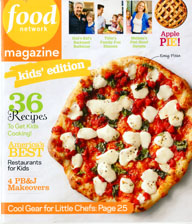 Vicki Wellington: Yes, yes, you’re very good with your rumors. I don’t know where you learned these things from, but we’re doing Food Network Magazine for kids, which is very exciting. I think I mentioned that literally over 12 million kids are watching Food Network programming, which is a huge amount. And we get letters all the time from women who read the magazine, we actually have more women readers than Real Simple has women readers and they’re cooking with their kids every single month. So we’re literally creating a mini magazine called Food Network Magazine for Kids and that will run in our September back-to-school issue and the consumers are really excited about it.
Samir Husni: And what about the travel magazine?
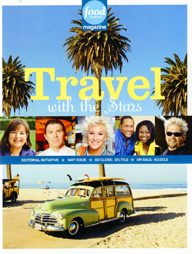 Vicki Wellington: Travel, another thing. When you go on vacation, I don’t know how the food is in Lebanon, I bet it’s good, but when people travel, it’s food-focused. If you go to Italy, it’s about the food. And so what our editors are doing, are creating in the May issue, Food Network Magazine Travel, all edited through the eyes of our celebrity chefs. So you’ll see Guy’s favorite…let’s say, breakfast haunt in San Francisco and where he recommends going and the hotel that he would recommend staying in, so it’ll be a lot of fun, it’ll be exciting and again, all edited through all of the various chefs eyes.
Samir Husni: Any downfalls? I mean, it sounds like one big success story after another.
Vicki Wellington: I’m pretty happy here. It’s a pretty happy place. We have a great brand, we’re on fire; we really are.
Samir Husni: So what keeps Vicki up at night?
Vicki Wellington: You always ask me that question. Honestly, and you laughed the last time I answered it, but it’s the truth; not having enough hours in the day. And that really is the truth. I wish there were more hours; we could be doing more work. You see what we put out, with a pretty lean team every single month. And we’re proud of all of it. But there’s not a lot to worry about, we’re excited. It’s big, it’s growing, and we’re reaching the right types of people with the right kind of edit. So it’s all good.
Jack Haire to Samir Husni: Sunday Newspapers Are Doing Quite Well and So Are Parade and Dash magazines… The Mr. Magazine™ Interview with the CEO of Parade Publications on The Power and Reach of Print.
January 25, 2012The man who believes in newspapers is putting his money where his mouth is. Jack Haire, CEO of Parade Publications, publisher of the mother of all newspaper-distributed-magazines, Parade, and its newest sibling, Dash, has managed to do what only a few managed in this “digital age”: he increased the circulation of one of America’s already largest circulated ink on paper magazines. Parade has increased its circulation by 600,000 copies to reach 32.5 million copies distributed weekly. No, this is not a typo, Parade magazine distributes a total of 32.5 million ink on paper copies every single week inside the pages of some 630 different newspapers every Sunday morning.
So is Jack Haire crazy to believe in the future of newspapers? Does he know something we do not? I visited with Jack last week in New York City in the office of Parade magazine and asked him the questions on everyone’s mind: “You revamped Parade last year and launched Dash. Both publications utilize newspapers for their distribution. The word on the street is that printed newspapers are dead or dying. What gives? Do you have a plan B or do you know something those so called experts don’t?”
Click on the video below to hear his answer and the answers to other questions related to Parade, newspapers, the future of print, and of course, what keeps Jack Haire up at night.
The soundbites:
On the future of magazines distributed via newspapers: There are still a 100 million Americans that read newspapers.
On an example of the health of Sunday newspapers: The Minneapolis Star Tribune, one of Parade’s newest partners, their Sunday editions, their most important day, are actually growing by 6 percent.
On Parade’s circulation: We increased our circulation this year. It’s all tied into distribution agreements and promotional agreements, but our circulation increased by 600,000 this year.
On the future of newspapers: The tale of the newspaper world and the innovation that is happening in that world is really a fascinating story and it’ll go on for a long time.
On the mission and role of Parade: Parade celebrates all that’s good in America, it brings a smile to people’s faces when they hear about Parade.
On his future plans for Parade: I hope to continue to see us grow and maybe launch something else before the end of this year.
On what keeps him up at night: I want Parade to be a great place to work. That’s a tall enough order in a tumultuous town.
And now for the lightly edited transcript of the full interview with Jack Haire, CEO of Parade Publications:
Samir Husni: One of the many things people wondered when you launched Dash, and revamped Parade, was “What’s plan B?” They said newspapers are dying, those people that are launching magazines that are going to be, or are inserted into newspapers… are they out of their minds?
Jack Haire: I’m not sure of the answer to that question, Samir. I don’t think so. There are still a 100 million Americans that read newspapers. It’s a huge audience of people searching for news, well-educated, and Sunday newspapers are actually doing quite well. Your old friend Mike Klingensmith, founder of Entertainment Weekly and publisher and president of Sports Illustrated, CFO of Time, Inc. is now the CEO of The Minneapolis Star Tribune, one of Parade’s newest partners. Their Sunday editions, their most important day, are actually growing by 6 percent. Across Parade’s 630 newspapers are sort of same-store sales, only to climb by one half of one percent across 630 newspapers, 32.5 million in circulation. We increased our circulation this year. It’s all tied into distribution agreements and promotional agreements, but our circulation increased by 600,000 this year. I think long before I go on to meet my maker these newspapers are going to be around and we’re in arguably the best in the country that provide a huge service to their community, and will they change? Surely, and in already 22 or 23 of the top 25 markets, the largest local site is the newspaper site, so we syndicate our contact for Dash and Parade across 500 of those newspapers now and reach an audience online of 50 million people. The tale of the newspaper world and the innovation that is happening in that world is really a fascinating story and it’ll go on for a long time.
Samir Husni: Parade is such a big brand, such a recognized household name. Any plans to expand the brand from outside the newspaper, any plans to do a Parade book or a monthly magazine on the newsstands?
Jack Haire: We have a lot of plans. We’ve tried to stay focused on when we build a digital business that we not only build it ourselves with the parade.com domain, but we build it in partnership with these 500 newspapers, so you want to be good at what you’re doing so before you go to the next thing, it’s important that you make sure Dash is successful. Tracey Altman has done a very nice job at that. We were happily named, by a fellow by the name of Samir, as one of the launches of the year, which we’re incredibly proud of, all of our people, but we were also profitable last year in our first year of not being fully monthly…we were published 11 times and we made a little money. So yes, do we have plans; absolutely. Parade celebrates all that’s good in America, it brings a smile to people’s faces when they hear about Parade. I remember reading Parade, I remember seeing it at my house when I was growing up, whatever town it might be. There’s a lot of great history, we feel that we can do some really interesting special interest publications that are digital only, some apps surrounding our personality at Parade, thematically around certain important holidays, and I also think that we can create some big, stand-alone publishing issues that we can distribute with a number of our key partners. I’m really excited about that and I’m excited about getting at them and I’m excited about getting at them this year. You know last year was such a challenging year in some ways that I want to make sure our base is really solid, but I hope to continue to see us grow and maybe launch something else before the end of this year.
Samir Husni: Last question, what keeps Jack up at night?
Jack Haire: A lot of things, I think. I came to Parade… I don’t know how old I was when I came to Parade… I was 56…been here 2½ years. I’ve worked at a number of other places and I really, really like the people here. I’m blessed to work with our editor, Maggie Murphy, the woman next door, Alice Werner, some very talented publishers, Brett and Tracey, and a 150 other folks. So I want to make Parade… I want to develop it into all that it can be; I want it to be successful in multiple platforms. And I want these people to learn the trade and the trades well here, so they can go on to enjoy a really successful career at other places and I want Parade to be a great place to work. That’s a tall enough order in a tumultuous town.
David Carey to Samir Husni: This IS What Keeps Me UP at Night! The Mr. Magazine™ Interview with the President of Hearst Magazines
January 22, 2012David Carey is the eternal optimist. The president of Hearst Magazines has his fingers on the pulse of the magazine industry. His prescription for an industry’s cure was outlined in his New Year’s letter to Hearst employees in which he stressed the need and importance of both the ink on paper and the pixels on the screen new magazine media business model.
I had the opportunity to visit with Mr. Carey last week in his office on the 43rd Floor of the Hearst Tower on 8th Ave. in New York City. After a brief chat on the status of industry in general and Hearst in particular, David was generous enough to share with me on tape some of his ideas and practices regarding the magazine industry now and in the future. I asked David what keeps him up at night and his answer surprised me as I am sure will surprise some of you, if not all of you interview readers and watchers everywhere.
Watch the edited video interview with David Carey below, followed by the typical Mr. Magazine Interviews™ soundbites and the transcript of the interview.
The soundbites:
On the mix between established titles and new ones: There is always room to both revitalize an existing product and as well as to especially create new ones.
On the reasons behind enhancing their print magazines: We do want to be best in class in all of our titles.
On the creation of a “backlist” single copy business: About 30 percent of our single copy sales are for issues that are no longer available for sale on ink and paper.
On the tablets’ threat: We don’t see that all these new devices have any significant cannibalization on the print form; they tend to bring in incremental new readers.
On costs and spending: We have to really focus on pulling out all of the unnecessary costs that are invisible to the end-users.
On what keeps him up at night: We have to compete against a swarm of entrepreneurs.
The lightly edited transcript of the interview:
Samir Husni: You’re the eternal optimist. I mean, every time I read anything you’ve written, anything you’ve talked about, you have always seen the industry’s cup as more than full, or half full. After being the president of Hearst Magazine for eighteen months, do you still believe the industry’s cup is more than half full?
David Carey: Absolutely; in the U.S., but especially around the world. In the U.S., we were just chatting a moment ago for those that just joined us, about the success of HGTV and this is our latest magazine test. So you read every day in the newspaper about housing woes and all the issues in the housing market, but here is a product, HGTV, all around home and garden television, that’s an enormous positive response by consumers, to a fresh new product that found white space that otherwise was difficult to find. So there is always room to both revitalize an existing product and as well as to especially create new ones. It’s not without their risks. But if you have a good brand, a good promotion planned, it is still within success. And all of the new devices, in a world where there won’t just be a tablet in every home, but there will be five tablets, and nooks, and kindles and so on, that people have opportunities to consume our content with so much greater frequency and you think about having dinner with a friend and they mention a great article in Esquire, and then you have to remember the newsstand, or the bookstore, the airport to buy it, and you might forget, now you go home and open up one of your devices and you buy it, and it shows up a minute later. So in terms of technology, it takes all of the friction out of the consumer experience and allows people, when they hear about something, to immediately be able to activate. And what a great thing for us, not only for our current products, but also as a big magazine publisher, we sit on these vast archives of content and it’s been hard for us to create new products and make money from. And one of the interesting stats that we’ve learned about our tablet business today is about 30 percent of our single copy sales are for issues that are no longer available for sale on ink and paper; so if you want the July issue of Cosmo and you can’t find it easily, you can still buy it, it’s still valid, still relevant, and it still pays off. And so we get an opportunity to create a backlist for content in a way that’s always driven the book industry, which has front list and back list titles. We’ve only been in the front list business, so we have all these new opportunities that have been created literally in the last 12 months.
Samir Husni: In your letter to the employees at the beginning of the year, you emphasized the focus that Hearst Magazines is going to be growing in both print and digital, and your latest enhancement of print is the February issue of Harper’s Bazaar where you upsized the magazine, something that you have been doing for the last few months with the rest of the magazines. Do you see any major change that’s going to take place, in terms of whether print will become rarer in the future, digital will be everywhere, the tablets will take the place… Why are you still investing in print?
David Carey: We don’t see that all these new devices have any significant cannibalization on the print form; they tend to bring in incremental new readers. So that’s a real positive. We are investing in a number of our editions because we do want to be best in class in all of our titles. We do know that as far as advertising, we want to be, ideally, one, two, maybe three, in terms of a category, you don’t want to be four or five. The old Jack Welch rule, about number one or number two or go home is certainly in place. So if there are places where we feel that we should not chop and we should be more competitive, we’re going to make an investment in them and sometimes it’s in the number of edit pages, sometimes it’s in the paper stock, or sometimes it’s in the photography. Then at the same time, I’ll be honest, we’re being very aggressive and looking for efficiencies that consumers don’t see. A lot of our work we’re off-shoring, in terms of production process, so the notion of what the consumers touch and feel has to be better than ever. But we have to really focus on pulling out all of the unnecessary costs that are invisible to the end-users.
Samir Husni: One final question: What keeps David up at night?
David Carey: Wow! Well, in our case, we are so fortunate to work at Hearst…this great company at this moment in time, but I do know that everyday in scores of the proverbial garages, in Silicon Alley and Silicon Valley, you have entrepreneurs who wake up wanting to take down News Corp, Advance, Time Warner, and Hearst, and they do so fearlessly, and they do so by not following normal rules and orthodoxies of what can and can’t be done. So the only thing that I really worry about is we have to compete not against the other big multi-nationals, I think we know how to do that, we have to compete against a swarm of entrepreneurs; so how can we have a company of enormous scale, but have that scale aid us and not get in the way. That’s what we think of everyday, how to be large and nimble, blessed with so much talent with the ability to move fast. If we can achieve that then that’s a significant accomplishment.
Samir Husni: Thank you.
Mr. Magazine™ (Samir Husni) Interviews (3): The Magazine Industry’s Cup? Half Full or Half Empty. Listen to the Experts
January 13, 2012 The Magazine Innovation Center at The University of Mississippi’s Meek School of Journalism hosted the ACT 2 Experience last October. We asked 17 media experts who attended the ACT2 Experience their opinions about the future of the printed word in a digital age. Click on the link above to watch and listen to the experts’ answer to the question “How do you see the magazine industry’s cup, half full or half empty?”
The experts are, in order of their appearances:
1. Sid Evans, Group Editor
Time Inc., Lifestyle Division2. Bob Sacks, President
Precision Media Group3. Vito Di Bari
Innovation Designer and Futurologist4. Mark Pasetsky, Founder
Cover Awards5. Phyllis Hoffman DePiano, CEO
Hoffman Media6. Roy Reiman, Founder
Reiman Publications7. David McDonald, CEO
True North Custom Media8. Will Pearson, President
Mental Floss Inc.9. Jeremy Leslie
Editorial Designer & Founder
magCulture.com10. Sue Roman, President
The Taunton Press11. James Elliott, President
The James G. Elliott Co., Inc.12. John Harrington, Partner
Harrington Associates13. Franska Stuy, Editor in Chief
Libelle14. Frank Anton, CEO
Hanley-Wood15. Scott Crystal, Former President
TV Guide16. Steven Kotok, President
The Week, Felix Dennis Publications17. Kent S. Johnson, CEO
Highlights For Children Inc.
Thanks are in order for all the experts and the journalism students at The University of Mississippi’s 2011-2012 magazine class who recorded the interviews.
Mr. Magazine™(Samir Husni) Interviews (2): So You Want to Start a Magazine? Hear the Advice of 17 Media Experts
January 12, 2012 The Magazine Innovation Center at The University of Mississippi’s Meek School of Journalism hosted the ACT 2 Experience last October. We asked 17 media experts who attended the ACT2 Experience their opinions about the future of the printed word in a digital age. Click on the link above to watch and listen to the experts’ answer to the question “What advice you will give someone who wants to start a magazine today?”
The experts are, in order of their appearances:
1. Sid Evans, Group Editor
Time Inc., Lifestyle Division2. Bob Sacks, President
Precision Media Group3. Vito Di Bari
Innovation Designer and Futurologist4. Mark Pasetsky, Founder
Cover Awards5. Phyllis Hoffman DePiano, CEO
Hoffman Media6. Roy Reiman, Founder
Reiman Publications7. David McDonald, CEO
True North Custom Media8. Will Pearson, President
Mental Floss Inc.9. Jeremy Leslie
Editorial Designer & Founder
magCulture.com10. Sue Roman, President
The Taunton Press11. James Elliott, President
The James G. Elliott Co., Inc.12. John Harrington, Partner
Harrington Associates13. Franska Stuy, Editor in Chief
Libelle14. Frank Anton, CEO
Hanley-Wood15. Scott Crystal, Former President
TV Guide16. Steven Kotok, President
The Week, Felix Dennis Publications17. Kent S. Johnson, CEO
Highlights For Children Inc.
Thanks are in order for all the experts and the journalism students at The University of Mississippi’s 2011-2012 magazine class who recorded the interviews.
Mr. Magazine™ (Samir Husni) Interviews (1): The Future of the Printed Word in a Digital Age
January 11, 2012
The Magazine Innovation Center at The University of Mississippi’s Meek School of Journalism hosted the ACT 2 Experience last October. We asked 17 media experts who attended the ACT2 Experience their opinions about the future of the printed word in a digital age. Click on the link above to watch and listen to the experts’ answer to the question “What is the future of the printed word in a digital age?”
The experts are, in order of their appearances:
1. Sid Evans, Group Editor
Time Inc., Lifestyle Division2. Bob Sacks, President
Precision Media Group3. Vito Di Bari
Innovation Designer and Futurologist4. Mark Pasetsky, Founder
Cover Awards5. Phyllis Hoffman DePiano, CEO
Hoffman Media6. Roy Reiman, Founder
Reiman Publications7. David McDonald, CEO
True North Custom Media8. Will Pearson, President
Mental Floss Inc.9. Jeremy Leslie
Editorial Designer & Founder
magCulture.com10. Sue Roman, President
The Taunton Press11. James Elliott, President
The James G. Elliott Co., Inc.12. John Harrington, Partner
Harrington Associates13. Franska Stuy, Editor in Chief
Libelle14. Frank Anton, CEO
Hanley-Wood15. Scott Crystal, Former President
TV Guide16. Steven Kotok, President
The Week, Felix Dennis Publications17. Kent S. Johnson, CEO
Highlights For Children Inc.
Thanks are in order for all the experts and the journalism students at The University of Mississippi’s 2011-2012 magazine class who recorded the interviews.
Secrets of Success in an Innovative World…
December 24, 2011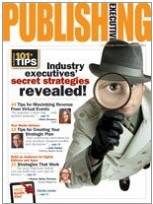 What follows is my column from the Nov/Dec issue of Publishing Executive magazine.
Mr. Magazine’s M.O. : ‘Dare to Be Different’ and Other Tips for Success in an Innovative World
I have a collection of more than 1,000 neckties, however one of them stands apart from all the rest. It is a red tie with tens of white sheep and one—and only one—black sheep. I wear it to class the very first day of school mainly to remind the students about the need to be different. Forget unique. There is nothing unique in this world. A sheep is a sheep is sheep. However, a black sheep is different than a white sheep, and thus the theme of the class becomes “Dare to Be Different.”
➊ Dare to Be Different and Better
Almost on a daily basis I receive phone calls and e-mails from folks who want to start a new magazine. They all start with the same opening line, “There is nothing like it on the marketplace.” My typical answer, “Guess what? There is a reason there is nothing like on the marketplace. It does not work.” So my first tip is always to dare to be different and better than what is out there. There is no such thing as unique. Every publication out there has a different DNA; find out what your DNA is and mingle with the crowds. If you are better and different you will stand out.
➋ Romance the Customer
Being better and different means you have to know and romance your customer, your intended audience that you are aiming to reach to sell a different and better message. We spend so much time nowadays romancing the technology where, in reality, it is not the technology you need, my friend, but the customer. Falling in love with your customer requires knowing that customer, dating that customer and partnering with that customer. There is no better tip than falling in love with your customer. Romancing the stone—or the technology—will take you nowhere.
➌ Serve the Demographical Divide in Your Audience
Dissect that customer based on the demographics. The last few decades, the industry focused so much on psychographics. The challenge today is the demographics. We are approaching a three-generational divide in the country: those who are under 25, the ones born right after the birth of the Mac and the desktop publishing era (remember those years); the ones between 25 and 55, the ones who actually witnessed the birth of the Mac and worked their way to the iPads; and those who are over 55, many of whom spend most of their time with what we now call “traditional media.”
Guess what? Each one of those audiences consumes media in their own way. There is no one size fits all. We need to be aware of the changing demography of this country and adapt our media to that change. Did you know that there are more folks over the age of 50 in the United States of America than under 50? What are you doing for them?
➍ Focus on Who and What … Not How
Last but not least, that fictitious division between old and new media needs to be thrown out of the window. It is something that we create, and, in reality, it does not exist. My grandson, who is barely four, shifts from his iPad to his books without evening thinking, or saying, for that matter, “I am moving from the digital age to the ink on paper age.” It is part of the routine. It is us folks over 50, who make that reference to the shift from one age to the other. To the younger generation, every day brings in a new media, whether it is in print or on a tablet. The absolute best tip I can leave you with is the one that I have learned from my students at the university. Focus on whom you want to reach, with what message, and the how to reach will follow. Stop spending time on the how, but rather on the who and what.
Dare to be different …and I will say one more time, different and better. PE
Samir Husni, aka Mr. Magazine™, is founder and director of the Magazine Innovation Center at The University of Mississippi’s Meek School of Journalism and New Media. He can be reached at samir.husni@gmail.com and can be followed at MrMagazine.com
Introducing “Elsie” The Perfect Outlet for Passion and Creativity. The Mr. Magazine™ Interview with Elsie’s Founder Les Jones
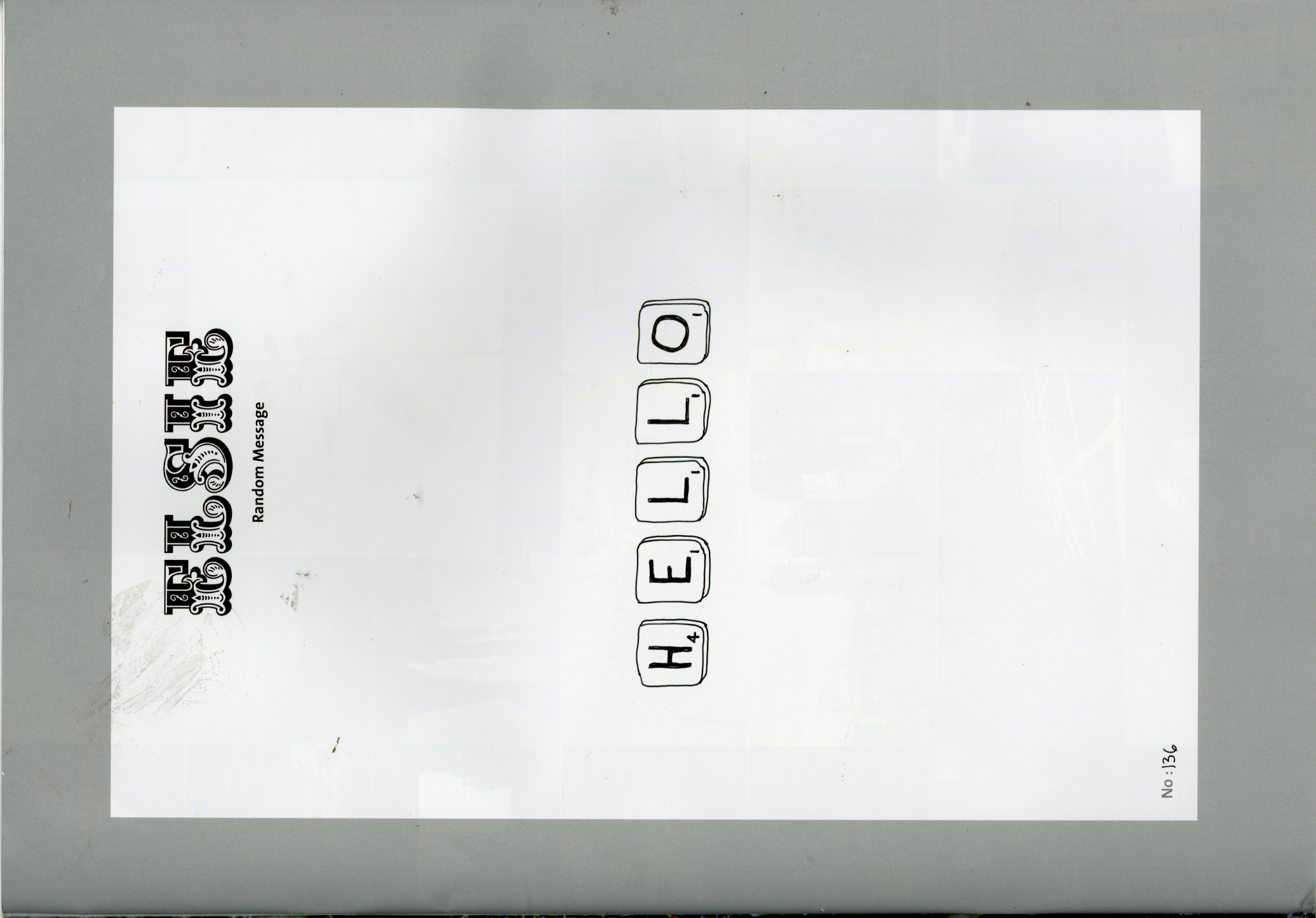
November 21, 2011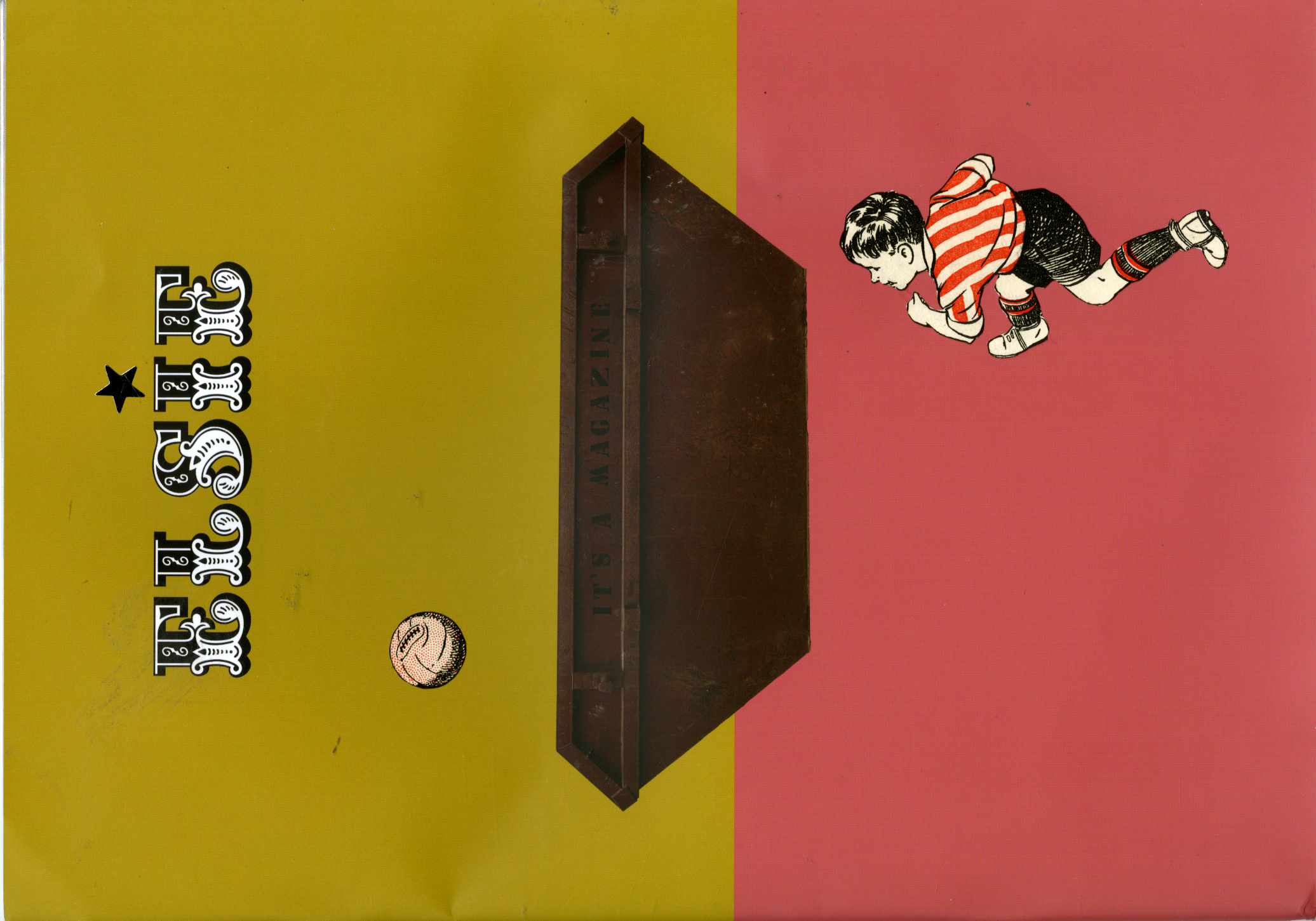 “The magazine format felt like the perfect vehicle” and outlet for all the creative juices flowing from Leslie Colin Jones, the founder and creator of Elsie magazine. An ink on paper magazine where no two copies of the same issue are the same. Limited edition premieres, each one comes with its own serial number together with different cover designs and inserts. While the magazine is printed via the traditional litho method, it is still a true testament to what print, traditional and digital can do for you in this day and age.
Fueled by passion and energized by creativity, Elsie, the magazine, led me to get in touch with its founder to find out the origins of this new venture and the man behind the magazine. In typical Mr. Magazine™ Interviews, here are first the sound-bites followed by the complete interview with Mr. Jones.
The Sound-bites
On the outlet for work as a designer and photographer: The magazine format felt like the perfect vehicle for presenting the results to the outside world
On the reason for the magazine: My work is produced for the sheer joy of being creative
On the role of the magazine: I see Elsie as a vehicle to take me places and people that I would not ordinarily visit or meet.
On the future of print and digital: The emergence of digital print and online printing services has in a way democratized print
On what makes him tick and click daily: The great buzz of excitement that you get when the creative juices are flowing freely!
 And now for the full interview with Leslie Colin Jones:
SH: You say Elsie is a one man’s creation, tell me about the conception and creation of Elsie.
LJ: As a designer and photographer I produce a lot of self initiated work. This portfolio of work has been building over the past few years and I wanted to create something that would be an outlet for this work but also a catalyst to new projects and interactions.
A lot of the work I do is based around themed briefs and the magazine format felt like the perfect vehicle for presenting the results to the outside world and also engaging people in the development of future content.
SH: Who is Elsie?
LJ: Elsie isn’t a real person. I chose the name for two reasons – firstly, I wanted a name that wasn’t in any way pretentious. My work is produced for the sheer joy of being creative – so I wanted a name that didn’t aspire to grander things. The reason I settled on Elsie, is because the initials of my first and middle names are L C (Leslie Colin) – and there it was!
SH: What is the vision and mission of Elsie?
LJ: Elsie the magazine is the first step towards a bigger vision. In the new year, I will be taking the magazine on the road with a series of live events. The live events will be interactive and members of the audience will be engaged in creating content for future issues of Elsie. There will also, hopefully, be exhibitions linked into the mag. I see Elsie as a vehicle to take me places and people that I would not ordinarily visit or meet. Ultimately, it’s all about creative expression and having fun.
SH: Is this the future of print (specialized, niche, limited editions, etc) or there is room for both big and small printed publications?
LJ: I think there’s room for both. The emergence of digital print and online printing services has in a way democratized print – making it available to the masses. There really no reason why anyone with the desire to express themselves in print should not do so. However, these small run exercises are unlikely to be profitable and people should be aware of this from the outset. As such, there will always be a market for the larger publications driven by higher circulations, wider distribution and advertising revenue.
SH: There is a lot of interactivity on the pages of Elsie, each cover is different, each page three is handwritten, post cards, surprise images, etc… What is the purpose of creating a magazine to the nth degree of interactivity?
LJ: For me, it’s about creating something unique and lasting. Many magazines are bought, read and then disposed of. I want Elsie to be something that people want to treasure and keep. The customization makes each copy personal to the buyer. They have something that no-one else has…which hopefully, makes the magazine feel special.
SH: What is the future of Elsie?
LJ: As mentioned above…Elsie will move into live events. I’m already planning the next issue, which will take the magazine to the next level, both in terms of content, volume and customization…so watch this space.
SH: What makes Les tick and click every morning? What is the energy behind the motivation to create an ink on paper magazine in this digital age?
LJ: Online stuff is great, but it’s transient. Print has longevity, it’s tactile – it’s not just about reading it’s also about holding, touching, displaying and storing. It’s permanence creates a different dynamic in the creative and design process – what’s committed to paper cannot be changed by the click of a mouse. I’ve just passed my 52nd birthday, but I actually feel like I’ve just got to the starting line – I’m excited about where Elsie might take me, and I’m looking forward to producing work that will stretch me and take me into new areas.
That’s what drives me…that, and the great buzz of excitement that you get when the creative juices are flowing freely!
SH: Thank you.


