Archive for the ‘Innovation in print’ Category

h1

An Ounce Of ‘Prevention’ Is Worth A Pound Of Print Plus Digital To Propel It Forward Into A Healthy Future…The Mr. Magazine™ Interview With Lori Burgess, Publisher & Bruce Kelley, Editor-In-Chief, Prevention Magazine.

May 19, 2015

“We will not pull the plug on the print edition. It does too well with advertisers; it does too well with people who like print, and not just people of a certain age, but across a whole stretch. So, I can’t foresee it.” Bruce Kelley

“The number two media channel that the entire pharmaceutical industry spends in is print. Consumers are hungry for this information and they want to make great choices.” Lori Burgess

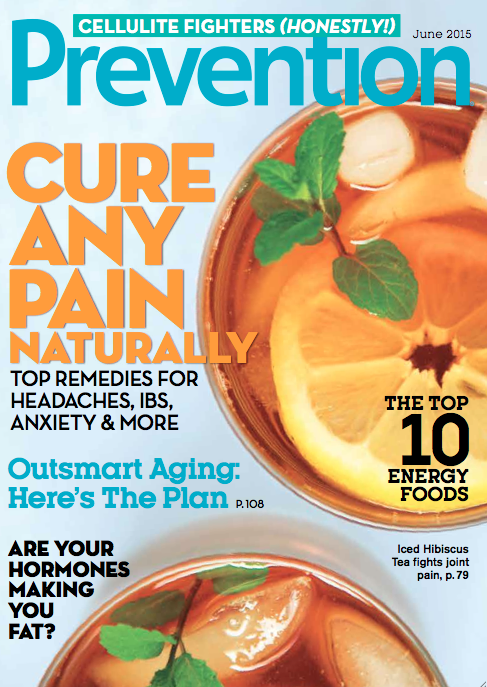
The 65th anniversary issue of Prevention magazine.

The 65th anniversary issue of Prevention magazine.

For 65 years and counting, Rodale’s Prevention magazine has been the leading authority on health and wellness for the nation. Started in 1950, the magazine has spanned the gamut with information on food, nutrition, workouts, beauty, and cooking. Its dedication to a heathier lifestyle and how to get you there is irrefutable.

The captains of today’s Prevention vessel, Lori Burgess, publisher and Bruce Kelley, editor-in-chief, are as enthusiastically committed to the magazine’s mission as the content on the pages themselves. It’s a perfect fit.

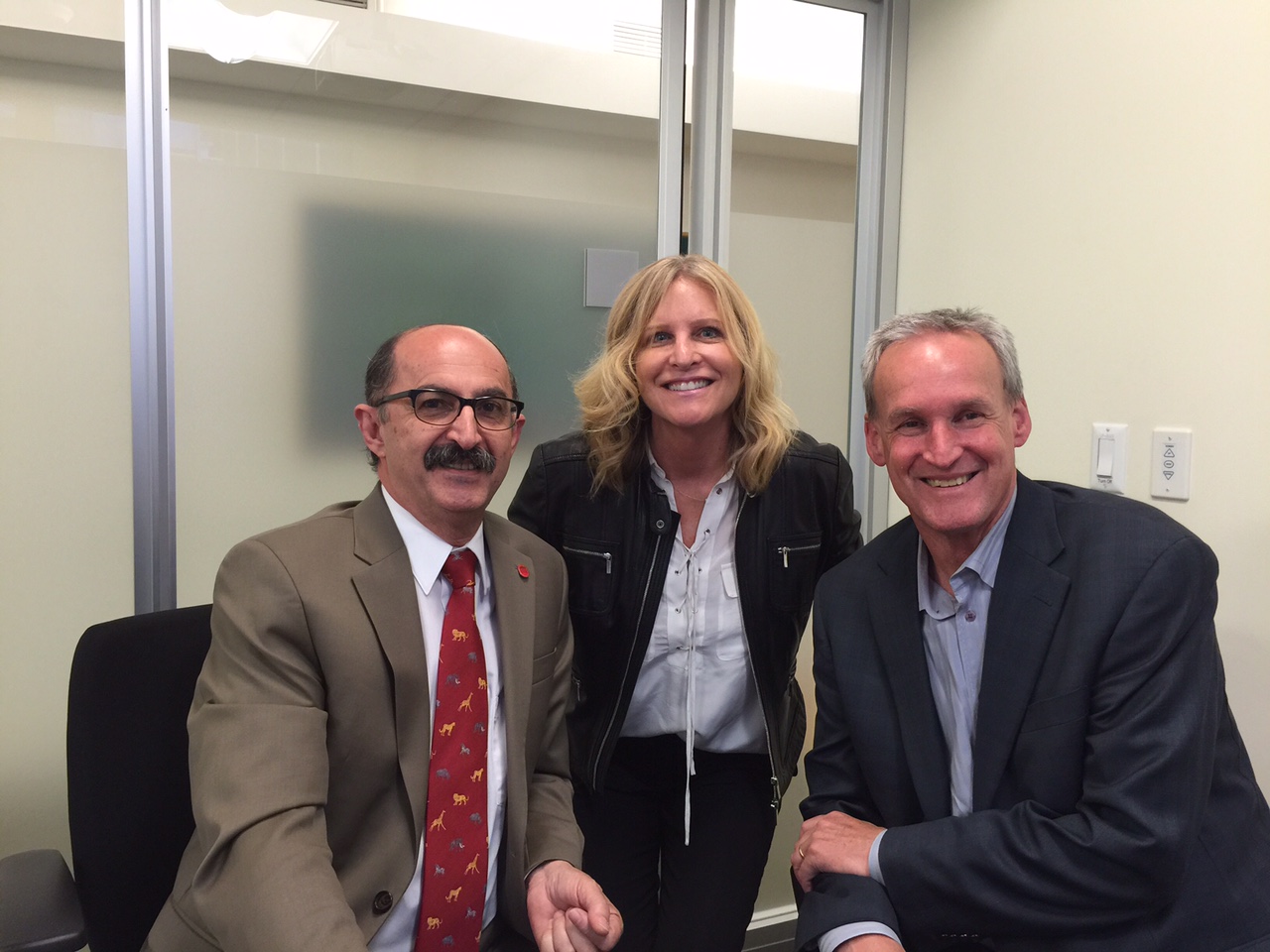
Recently, I was in New York with a group of my students, future industry leaders in the world of magazine media, and I had an opportunity to speak with Lori and Bruce about Prevention’s ability to revitalize and change with the seasons, much like a chameleon, without losing its original DNA, of which the magazine is known for.

Print plus digital, events, books, even a Rodale U where consumers can take E-courses on health and wellness dominated our conversation and proved that these two helmsmen weren’t afraid of innovation or the future at all.

IMG_6525 I hope you enjoy this informative conversation between Mr. Magazine™ and two people who believe in the value of their brand and how it can benefit their audience with an unbridled passion that is definitely contagious. I see clean-eating in my future. Enjoy the Mr. Magazine™ interview with Lori Burgess, Publisher and Bruce Kelley, Editor-in-Chief, Prevention magazine.

But first, the sound-bites:

On the ‘new’ Prevention and plans for its future: (Bruce Kelley) Prevention is in the perfect place at the perfect time, that’s my view of it. I came on 15 months ago and it just strikes me that with the millennials being more interested in health than any other younger generation before them, with the Gen X the same, and the Boomers entering a stage where they have to care about their health; Prevention is in this perfect place where health dominates the Zeitgeist in ways that it probably hasn’t maybe in our lifetimes.

On whether after 65 years, Prevention is now the perfect brand: (Lori Burgess) The really interesting factor, to answer your question, is that we did take stock and dissected this brand a few years ago to really ascertain what tomorrow’s Prevention should be. And what we learned was that we didn’t want to change the target focus; we very much wanted it to be for somebody who is really committed to their health and wellness.

On translating the common sense of Prevention into its editorial content: (Bruce Kelley) The way we’re doing it is adopting a digital-first strategy and by that I mean; how do you know somebody is obsessed or really interested in a topic these days? You put up stories on the web and you see which ones they click.

On knowing both the print and digital audience, with a digital-first strategy, and how they are alike or different: (Bruce Kelley) I believe a digital-first strategy is an audience-first strategy, because the health audience in this world today is coming to health content through digital. If you added up all the impulses that people have to search out health content; I don’t have the actual numbers, but it would be an extraordinary, exponentially larger number coming at it through digital strands.

On the numbers of the rate of duplication between the print and digital audience: (Lori Burgess) Our numbers are low too; they’re not quite that low, but they’re very low. To be straight-up with you, the median age of the print is 59. It fluctuates every month digitally, but the new numbers for April just came out and the median age for our website was 33.

On how they’ve been able to monetize their digital and get consumers to pay for web content: (Lori Burgess) Yes, we’re having great success admittedly in both print and digital. I would say to you that we did return Prevention to its roots. Our DNA has always been about breakthrough content and information.

On a major stumbling block they’ve had to face: (Bruce Kelley) I haven’t really encountered a stumbling block. I hate to sound Pollyannaish. The things that people say should be stumbling blocks; I actually think are strengths, the size, for example. Eighty percent of our readers, the people who are drawn to this, and I guess our newsstand reader is in the low 40s on average; they tell us that they love the size.

On whether they can envision a day Prevention would not have a print component: (Bruce Kelley) We will not pull the plug on the print edition. It does too well with advertisers; it does too well with people who like print, and not just people of a certain age, but across a whole stretch. So, I can’t foresee it.

On the target audience they’re going for with today’s Prevention: (Bruce Kelley) It’s not an age, that’s for sure. I think it’s a spirit and the spirit is a great curiosity about things related to what they eat and how they live. It’s ambitious women who are active. And in some ways the conversation about health has changed a lot in really interesting ways.

On why (for the most part) Prevention’s web content is free: (Lori Burgess) Well, who’s to say we will forever. The consumer has been trained to get their content for free on the web, but that’s changing. We were ambitious enough to launch Rodale U, which are basically internet courses that are paid on the web, and is a brand new feature. It’s the same way; we became one of the few magazine brands that had the courage to create an event program and a two-day summit that we charge money for. People don’t come to our events for free. They pay to come.

On whether they think the magazine media industry will ever recover from the Welfare Information Society that’s been created: (Lori Burgess) I’m going to answer this one politically correct. I truly believe that what this company is founded on is something that is far deeper, in terms of importance in people’s lives. Health and wellness is going to become increasingly important as the Baby Boomer becomes older, as an example.

On Lori’s non-politically correct answer to the same question: (Lori Burgess) I think we shouldn’t have done this, but I also think back then, and I remember it; I don’t believe anyone knew what the Internet could be. I don’t think even Steve Jobs back then completely knew what the Internet could be.

On what keeps Lori up at night: (Lori Burgess) I think that we can’t move quickly enough. We have really spread our tentacles well beyond print and digital into the doctor’s offices points of care, into events; we have a lot of big ideas. We’re partnering with some really interesting companies, so I think we just can’t move fast enough. We are nimble, but there’s so much potential for this brand.

On what keeps Bruce up at night: (Bruce Kelley) What keeps me up is thinking of ways to make Prevention customers happy, such as helping them. That probably sounds so sappy. (Laughs)

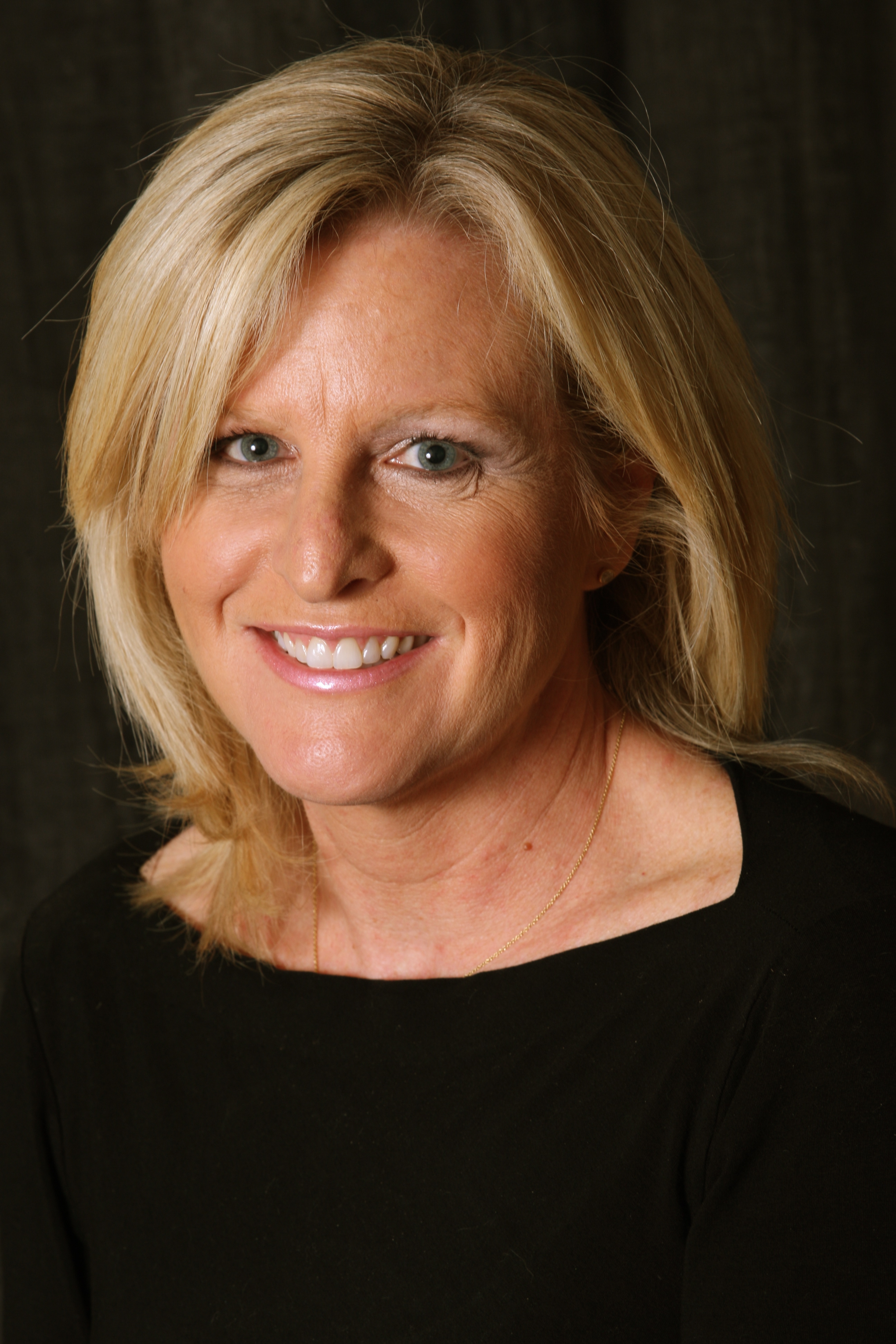
Lori Burgess head shot And now the lightly edited transcript of the Mr. Magazine™ conversation with Lori Burgess, Publisher and Bruce Kelley, Editor-in-Chief, Prevention magazine…

Samir Husni: Prevention has reached the senior age of 65 years old, but now, after 65 years, it’s become younger and more vital than ever. Tell me about the new Prevention and your plans for its future.

Bruce Kelley: Prevention is in the perfect place at the perfect time, that’s my view of it. I came on 15 months ago and it just strikes me that with the millennials being more interested in health than any other younger generation before them, with the Gen X the same, and the Boomers entering a stage where they have to care about their health; Prevention is in this perfect place where health dominates the Zeitgeist in ways that it probably hasn’t maybe in our lifetimes.

Prevention is also produced through a company, Rodale, which has been a part of the health category forever. And I feel more than ever that the company is just so committed and its mission so wrapped up in helping people live a healthier lifestyle and doing it in a very fun way. Rodale is so committed to being a digital force; a force on any platform that people are using, that it was just a perfect place and time for Prevention to essentially say: we’re going to hit a new peak.

Samir Husni: Lately, for maybe the last five or six years, it would appear that Prevention has been trying to find its way. It went through different redesigns, reinventions, approaches to covers and different testing of covers. Do you think, keeping that same DNA, which started 65 years ago, that you have built the perfect Prevention now?

Lori Burgess: I echo to a degree something that Bruce said a moment ago and that is that in a way Prevention is 65 years young, because the time has now come for consumers to get much more serious about their health and wellness. There are so many different forces that are coming into play; the cost of healthcare is through the roof right now.

But the really interesting factor, to answer your question, is that we did take stock and dissected this brand a few years ago to really ascertain what tomorrow’s Prevention should be. And what we learned was that we didn’t want to change the target focus; we very much wanted it to be for somebody who is really committed to their health and wellness.

We did acknowledge that print has historically targeted and been embraced by consumers who are getting older. And we acknowledge with print that what happens to women when they get older is suddenly there’s a day, a moment in time, and it could be a condition which they have been diagnosed with or it could just be the fact that like me, suddenly they’re looking in the mirror and saying, wow, I’m getting older. Why does this hurt in the morning? Or why can’t I recover from going out and having a glass of wine as easily as I once did? So, when a woman experiences these physiological and psychological changes, she wants to get serious about it.

Now what’s different today than five or ten years ago is that the people who are coming into Prevention, and particularly in the print franchise, are Baby Boomers and we all know what they’re like. They’ve got the can-do attitude; they’ve been the people who have changed the world; they’re the people who invented the iPhone 6; all these kinds of people, who have conquered the world, and suddenly they’re waking up and saying, oh my goodness, I’m getting older. Well, I’m going to discover the fountain of youth. I’m not going to let getting older take away my possibilities or the new challenges that I want to face.

To really put closure on what you’re suggesting; we didn’t shift Prevention; we acknowledged with Prevention that we were dealing with a new group, a new mindset of consumers that were coming into our franchise and that our team needed to be a lot more exciting and relevant; a lot more cutting-edge and a lot more ahead of where everybody else was. And I think that’s what really differentiates us.

The sexy part of it is that the digital is attracting a younger audience, because guess what, our kids are living with us and they’re watching us workout like fiends and they’re watching us worry about our parents who might not be quite as healthy as we are. So, these young people are coming into the franchise saying I’m interested in getting healthier earlier, because I’m going to be even better than my parents are.

Samir Husni: You have the perfect name, an ounce of Prevention; you speak to the audience’s common sense; how can you translate that simple, yet ingrained name in the minds of anyone who thinks about health, into the editorial formula of Prevention?

Bruce Kelley Bruce Kelley: The way we’re doing it is adopting a digital-first strategy and by that I mean; how do you know somebody is obsessed or really interested in a topic these days? You put up stories on the web and you see which ones they click.

We came in, and just in the last year, started doing something that I think no other magazine is doing, where essentially all the editors are digital editors and they put up their beats; they put up great content on Prevention.com and then they watch closely what goes up on social, our social audience is just very engaged, and they watch what drives traffic. Then when we see what the hot topic is at that time and we throw more stories at that topic.

For instance, haircuts; who would have known haircuts that make you look ten years younger would be one of our hottest topics right now. That is informative to us as editors and we have a lot of good editors. They create that content and then they determine how they’re going to get that into the magazine in a way that a print reader will have that same visceral reaction to it.

So when you put the right content onsite and people click on it, the word Prevention starts to mean what that content is. It means feeling better, getting younger; one of our hottest clicks these days is ‘Eight Symptoms that Your Doctor isn’t Telling You About.’ And anybody would be interested in that; any demographic. They click; they learn great health concepts and then we can turn that into great content for the magazine.

Samir Husni: What’s the rate of duplication? I mean, if we’re talking about those two audiences, digital and the magazine, and you have this digital-first strategy instead of audience-first; how do you know that these are the same people?

Bruce Kelley: I believe a digital-first strategy is an audience-first strategy, because the health audience in this world today is coming to health content through digital. If you added up all the impulses that people have to search out health content; I don’t have the actual numbers, but it would be an extraordinary, exponentially larger number coming at it through digital strands.

Lori Burgess: And to go a step further; for us too, it’s coming through mobile, not just digital; 72% that are coming to us are mobile. Think about it; they’ve gone to the doctor; they have a thought and they want to get an instantaneous answer right then and there.

Samir Husni: I took my students to MIN Day recently and spent the whole day there and we listened to one speaker after the other, from digital agencies to you name it, talk about the death of the homepage; the death of the tablet; that everything is now mobile and that’s what drove me to write that it took us 500 years to talk about the death of print, but it only took us five years to talk about the death of the tablet and the homepage. (Laughs)

Bruce Kelley: (Laughs too)

Samir Husni: From all the studies that I’ve seen show that the rate of duplication between the digital audience and the print audience is between 6 to 10%. Do you have any numbers that are different from those?

Lori Burgess: Our numbers are low too; they’re not quite that low, but they’re very low. To be straight-up with you, the median age of the print is 59. It fluctuates every month digitally, but the new numbers for April just came out and the median age for our website was 33. A lot of that, the younger side, is due to social media, which tends to attract a younger audience, but it certainly validates that there are a lot of young consumers.

But when you look at all the data, the similarities, in terms of interests that exist between the Boomers and the Millennials; it’s just profound. They’re almost identical. It’s so cool.

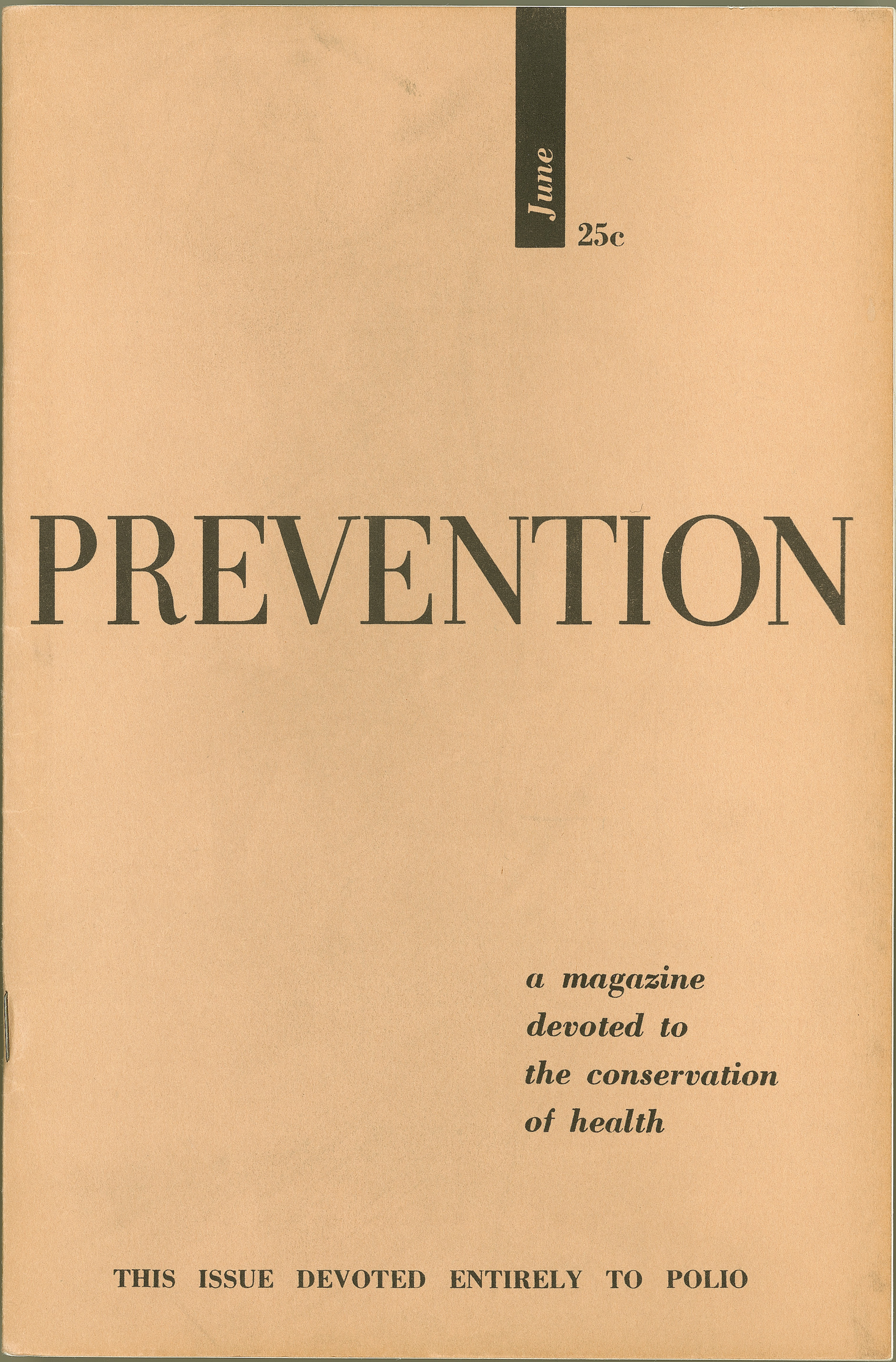
The very first issue of Prevention, June 1950.

The very first issue of Prevention, June 1950.

Bruce Kelley: Imagine a strategy where every week on Prevention.com we are telling people about the magazine and a lot of them don’t even know about the magazine, but they’re interested enough that we get a lot of subscriptions through that, number one. We also have a great book business; we have Rodale U, which is our new product, and we tell them about that and they click on it if they’re interested in a digital E-course.

So, Prevention.com becomes the foundation of growth for Prevention, the brand. And the print and all these other elements become the places that we can send them and the places that they can then pick. They can actually as audiences decide which platform makes the most sense for them. Our growth on Prevention.com; we’re over 100% up year over year. In terms of social posts, we’re up over 500%. So the brand is actually blowing up online and that just has so many ways in which it can make the magazine more vibrant; it can allow us to build new products, which our audience can then choose to be a part of.

Our Transformation Challenge, which we just put up on Rodale U, in eight days, sold 10,000 copies. In 21 days a person can transform their life, lose weight, and feel great. And we had 10,000 people who paid $10 or more for a book to go along with it. And they’re on the Rodale U, literally hundreds of them, on threads talking about what they’re up to; what their diet strategies are; commenting on the course and how they’re using it, and just simply sharing.

Lori Burgess: It’s community. It’s like the biggest community out there.

Bruce Kelley: It’s community; it’s Rodale at its best, because that’s what Rodale is; it’s useful, fun ways of making your life better and healthier.

Samir Husni: So, tell me what’s your secret that you’ve been able to monetize digital in this Welfare Information Society that we created on the web? How are you getting people to pay for those things?

Lori Burgess: Yes, we’re having great success admittedly in both print and digital. I would say to you that we did return Prevention to its roots. Our DNA has always been about breakthrough content and information. We’ve led the nation’s conversation about proactive health and wellness. There are a lot of health media channels out there, from the WebMD’s to the health magazines, but no one has the same degree of unrivaled, authoritative perspective; the fact-checking that these editors go through to determine whether something is viable content and should be covered or not, is unprecedented in the industry.

We’re one of the last, I’d say, beacons of true, real journalism, so advertisers value that because, you know what, we’re not talking about try this shampoo or that shampoo. When we write about a particular story, whether it’s on the topic of mammograms or skin cancer, we have to be sure we’re getting it right because the information that we’re giving the consumer could be the difference of life and the choices that they’re making; it’s all about the sciences.

We sit in a very interesting position and as one advertiser said to me about a week ago, you really don’t have competition, because we sit in a really pretty spot.

Samir Husni: What has been the major stumbling block you’ve had to face?

Bruce Kelley: I haven’t really encountered a stumbling block. I hate to sound Pollyannaish. The things that people say should be stumbling blocks; I actually think are strengths, the size, for example. Eighty percent of our readers, the people who are drawn to this, and I guess our newsstand reader is in the low 40s on average; they tell us that they love the size. That’s what they’re attracted to. And that makes sense to me in today’s world. People are in a hurry, they want something quick; they want something mobile, like a tablet. The tablet may not be working as a magazine enterprise, but this magazine is working as one. (Laughs) People still like print. So, I get excited about the possibilities of getting the ‘next generation.’ I get excited because this is their tablet magazine.

And as Lori said, a perception that we’re not young, but the fact of the matter is if you look at the brand, if you look at how fast it’s growing; the 360 count that Mary Berner and the MPA are doing shows us up 25% year over year, which is better than any of our competitors, in terms of just impressions. Where is that coming from? It’s coming from all the mix of things that we offer.

Samir Husni: Can you ever envision Prevention without a print component? Will the Prevention brand survive if you pull the plug on the print edition?

Bruce Kelley: We will not pull the plug on the print edition. It does too well with advertisers; it does too well with people who like print, and not just people of a certain age, but across a whole stretch. So, I can’t foresee it. If things change much more drastically in the industry, then I can imagine it. This is one of the last print publications, but if it goes away, I totally see Prevention absolutely thriving, because look at it; it’s prevention and health content and people consume health content on digital and they do it in all the ways that Rodale is getting very sophisticated about doing it.

Lori Burgess: And just to echo one other thought, we charge for subscriptions now, it’s pretty bold; we charge 12 issues for $24. We’re one of the most expensive magazines in the industry. We may not be the biggest or the fanciest or the heaviest, but we have the confidence in the editorial product to command one of the highest subscription rates in the industry. And if consumers don’t want to pay for that, they can go to our website; much of our website is free and open access to them. But I also have to say we carry an abundant amount of advertising in the OTC (over the counter) and DTC (direct to consumer) categories. We’re the number one media vehicle in all of magazine media for over the counter remedies and for DTC we’re one of the biggest.

The number two media channel that the entire pharmaceutical industry spends in is print. Consumers are hungry for this information and they want to make great choices. And I think that’s the other thing when you’re talking about what makes Prevention so great; Bruce and his team give the whole perspective, so if you and I are having skincare problems, let’s just say; you might, based on all the information these guys give, make a whole different choice than I might choose. But the point is they treat us like we’re smart and they give us the information to make the right kinds of choices. This is one of America’s great media brands.

Samir Husni: For print, you said 59 was the median age. When you’re putting together the magazine, who’s your target audience; who’s the audience that you’re going after?

Bruce Kelley: It’s not an age, that’s for sure. I think it’s a spirit and the spirit is a great curiosity about things related to what they eat and how they live. It’s ambitious women who are active. And in some ways the conversation about health has changed a lot in really interesting ways.

When I was at Health Magazine in the 1990s when it was in San Francisco and it was a very interesting, cutting-edge magazine. Then it was about the science really trying to figure out what the healthy way of life was then, questions like, how do we deal with cholesterol; is the Mediterranean Diet the right one. Does human growth hormone work? There were a lot of mysteries out there.

Now, it’s less about the mysteries, although there are still some mysteries to report on, it’s more about the fact that we know how to live healthy, but how do we inspire ourselves to actually do it? How do we overcome the reality that it does take inspiration and motivation; it does take friendships; it does take, yes, knowledge, but it also takes authenticity and realism about what it’s really like to try and eat clean, for example. You walk into Whole Foods and you’re head begins to explode because there is so much to choose from.

So, we’re there, both as the one advising you what to eat and how to live, but we’re also that spirit; we’re the ones saying just do the best you can; you’ve got the right attitude, and a lot of it is about attitude. A lot of it is about how you perceive your journey that you’re actually getting better and smarter and more excited as you go.

Turning health into this positive lifestyle attitude is a big part of what Prevention is right now. And to me it’s the most exciting part, because motivation is everything in today’s world.

Samir Husni: When you have such a treasure as Prevention and it has such a good place in the marketplace, in terms of advertising and circulation; why did you make your content on the web free?

Lori Burgess: Well, who’s to say we will forever. The consumer has been trained to get their content for free on the web, but that’s changing. We were ambitious enough to launch Rodale U, which are basically internet courses that are paid on the web, and is a brand new feature. It’s the same way; we became one of the few magazine brands that had the courage to create an event program and a two-day summit that we charge money for. People don’t come to our events for free. They pay to come.

So, I think we are working to shift our model, it’s like a vessel on the seas; we were headed to Australia and we decided to shift gears a bit and head toward Alaska and it takes some change.

Bruce Kelley: And I think Rodale has been, maybe more than any other major media company, founded on the principle that if you give customers good information and good inspiration, they’ll pay for it. Hence, Rodale has a very big book business.

And something like an article that’s in our May issue, the cover story, Lose 10 Pounds and Feel Great; it has great content. They’ve paid for the content and they open it up and it inspires them to join the 21-day Transformation.

Now, to get the most out of the Transformation, they go to Rodale U and they get a Sizzle Reel that tells them this is everything they’re going to get out of the 21 days. And it shows people who have done it. And then at the end of that it says it’s going to cost them $9.95. And we really recommend that you buy the Sugar Smart Express book to get the most out of the plan. And so you have 10,000 people who are doing that and you have almost 1,000 who have bought the book as a part of the plan.

It’s good content and it’s the future, in that if it’s really strong content and it’s really deep, people get a valuable experience out of it and they will pay for it.

Samir Husni: If that’s the case and we know that people will pay for good information and good content; why do you think that as an industry when the Internet came, we created this Welfare Information Society? We actually put people on welfare information; here are the tables filled to capacity; come and get it. You were smart enough to create Rodale U, so you shifted the attention from Prevention.com, where you can get everything for free, to Rodale U where you have to pay for it. Do you think our industry will ever recover from the big, huge mistake of giving our content away for free? Cable never did it. And that’s what I don’t understand with our industry. When HBO first started in 1977, they said if you want cable, you pay me $9.99 and we’ll split it between the deliveries. But the internet; no, we told AT&T take all the money, just wire that home and we’ll provide them with all the information for free.

Lori Burgess: I’m going to answer this one politically correct. I truly believe that what this company is founded on is something that is far deeper, in terms of importance in people’s lives. Health and wellness is going to become increasingly important as the Baby Boomer becomes older, as an example. It’s going to have huge implications on our society, on the financial side and on most situations in this country and so, I would say to you if there is ever a company that is going to figure this out by being innovative and nimble enough to try the new ways of connecting and resonating with consumers and creating enough value that consumers are willing to put some skin in the game and pay for it, it is absolutely Rodale.

Scott Schulman and Maria Rodale have really charged the entire team to think from a very innovative perspective. They don’t want us thinking about the way things were; they want us thinking about the way things should be in the future. And I think as this particular brand becomes more ingrained in people’s lives at a time when it matters the most, it gives all of us permission to try new businesses and new experiences to present to the consumer that perhaps haven’t been realized yet.

This brand has that kind of commission. Some brands don’t; this brand and certainly this company have that.

Samir Husni: And your non-politically correct answer?

Lori Burgess: I think we shouldn’t have done this, but I also think back then, and I remember it; I don’t believe anyone knew what the Internet could be. I don’t think even Steve Jobs back then completely knew what the Internet could be.

So, shame on us? But don’t you remember when everything crashed in 2001; no one knew what tomorrow was going to be.

Bruce Kelley: I came most recently from a couple of years at ESPN, where I was peripherally involved in Insider, which was their premium product. That experience really influenced what my thoughts were when I came in to the brand and had my conversation with Scott Schulman about what Prevention could be, because that’s a model, there are others, but that’s a model where there’s a magazine involved, ESPN the magazine, there’s great content behind a paywall, Insider, and people gladly pay $40 a year to get access to that. And I view sports as one of those know-it-all obsessions; well, health is one of those know-it-all obsessions as well.

It’s also a content area where people have true needs and true ambitions that do require expertise and inspiration. So, I’m still going on the theory and so is Rodale as a whole, because we see it. We were just in a big management meeting where that was the message; we have great experiences and great value. Our number one job is to have relationships with the customers so they are like onboard with us. And if it has value to the consumer, they will pay for it.

Samir Husni: My typical last question; what keeps you up at night?

Lori Burgess: Two things keep me up at night. Actually, I sleep very well, so nothing keeps me up at night. (Laughs) No, seriously, I think that we can’t move quickly enough. We have really spread our tentacles well beyond print and digital into the doctor’s offices points of care, into events; we have a lot of big ideas. We’re partnering with some really interesting companies, so I think we just can’t move fast enough. We are nimble, but there’s so much potential for this brand.

And secondly I would say candidly, we are still selling media to young people. A lot of the people who buy media in the digital space and the magazine space are really young. They’re younger today than they’ve ever been. They’re responsible today for bigger budgets than ever. And their organizations are leaner as well. And they don’t have the time to get to know media and individual properties the way they once did. So, I think what keeps me up at night is how do I, as a marketer and a publisher, do an exceptional job in helping young people that really aren’t quite there yet, in terms of their health and wellness, and they’re working in organizations that have reprioritized things; how do I help them feel the passion, the love and the potential that this kind of brand can have in order to reach consumers. That keeps me up late a lot.

Bruce Kelley: What keeps me up is thinking of ways to make Prevention customers happy, such as helping them. That probably sounds so sappy. (Laughs)

(Everyone laughs)

Bruce Kelley: But it’s so true, because of what we just talked about, which is they need that value and experience that makes them say, this brand, whatever it is; whether it’s an issue of the magazine, or this series of articles online, whether it’s a course on Rodale U, or an app that we produce someday; this brand is valuable to them. That’s where the rubber meets the road. And I’ve felt it most recently when I spent time on the threads of the Transformation Challenge, where you have literally hundreds of women in the midst of trying to have 21 of the best days of their lives talking to each other. And occasionally saying I wish the course had discussed this or mostly just saying how great the course is. I’m five days into this and I feel great. I’ve cut sugar out of my life; I’m working out like I haven’t done in a long time; this is working. This is worth it.

But every once and a while you see that little lack of perfection and it makes you think, darn it; we need to be perfect in every way for that customer to feel like a ‘Rodale’ person. A Prevention person; someone you helped to transform their life. And they love you for it.

Samir Husni: Thank you.

h1

MagFinder: The Grinder And Tinder App For Single Copy Magazine Lovers – The Mr. Magazine™ Interview With Joshua Gary, Senior Vice President, MagNet. A Mr. Magazine™ Exclusive.

May 15, 2015

“We wanted to make it easy for publishers to communicate to their customers where their magazines were available for purchase; not only via a traditional website, but also making it available via mobile, so that when people are actually in the store, they can get information about what’s available to help facilitate that spur-of-the-moment decision. We want to take off the “mobile blinders”, and put a “mobile spotlight” on our brands..” Joshua Gary

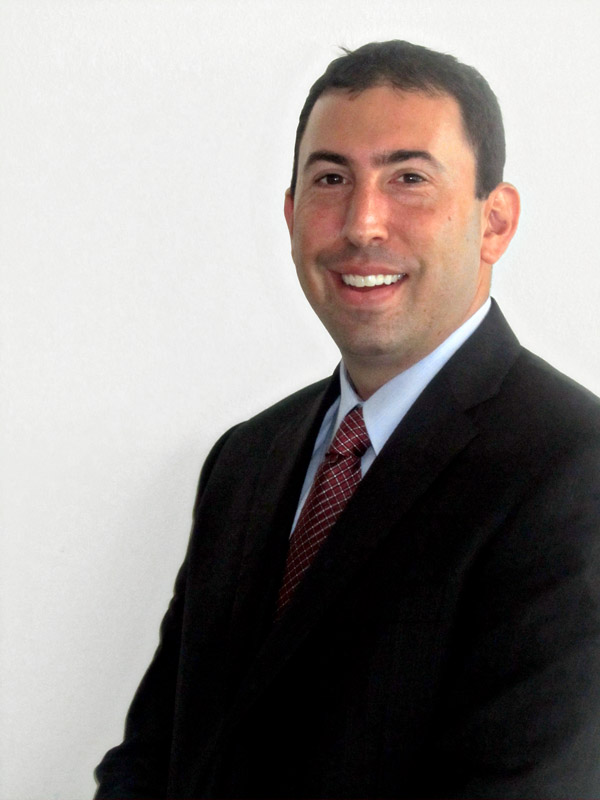
Joshua Gary Photo What if you could browse your favorite retailer’s inventory from the comfort of your own home? Or you’re doing your grocery shopping and you decide that you’d like to see the latest issue of your favorite magazine, but you still have food items to buy; what if you could pull up the store’s availability of magazines right there in front of the macaroni and cheese?

With MagNet’s new app – MagFinder – you can do any of those things, and many more. Joshua Gary is Senior Vice President at MagNet, the company that’s using innovation to raise the customer shopping experience to a whole new level.

I spoke with Joshua recently and received a sneak peek of the MagFinder experience. He allowed me a preview of what this app (which doesn’t need downloading, by the way) can do and discussed the many, many benefits it offers to the entire food chain of the magazine media business, with the consumer being the ultimate winner overall.

In this Mr. Magazine™ exclusive, Joshua made me privy to a demonstration of this creative and extremely cutting edge technology and allowed me the honor of being the first to interview him about it. His baby will be publicly christened at the 2015 IMAG Conference in Boulder, Colorado on May 18. And to say he’s a proud parent would be an understatement.

So, I hope you enjoy the interesting and exciting information he shared with me, as you read the Mr. Magazine™ exclusive interview with Joshua Gary, Senior Vice President at MagNet.

But first the sound-bites:

Screen shot 2015-05-15 at 9.23.15 PM On what MagFinder is all about: Here’s the problem. There’s only been incomplete or outdated information available to publishers and therefore only incomplete information that publishers can make available to their consumers.

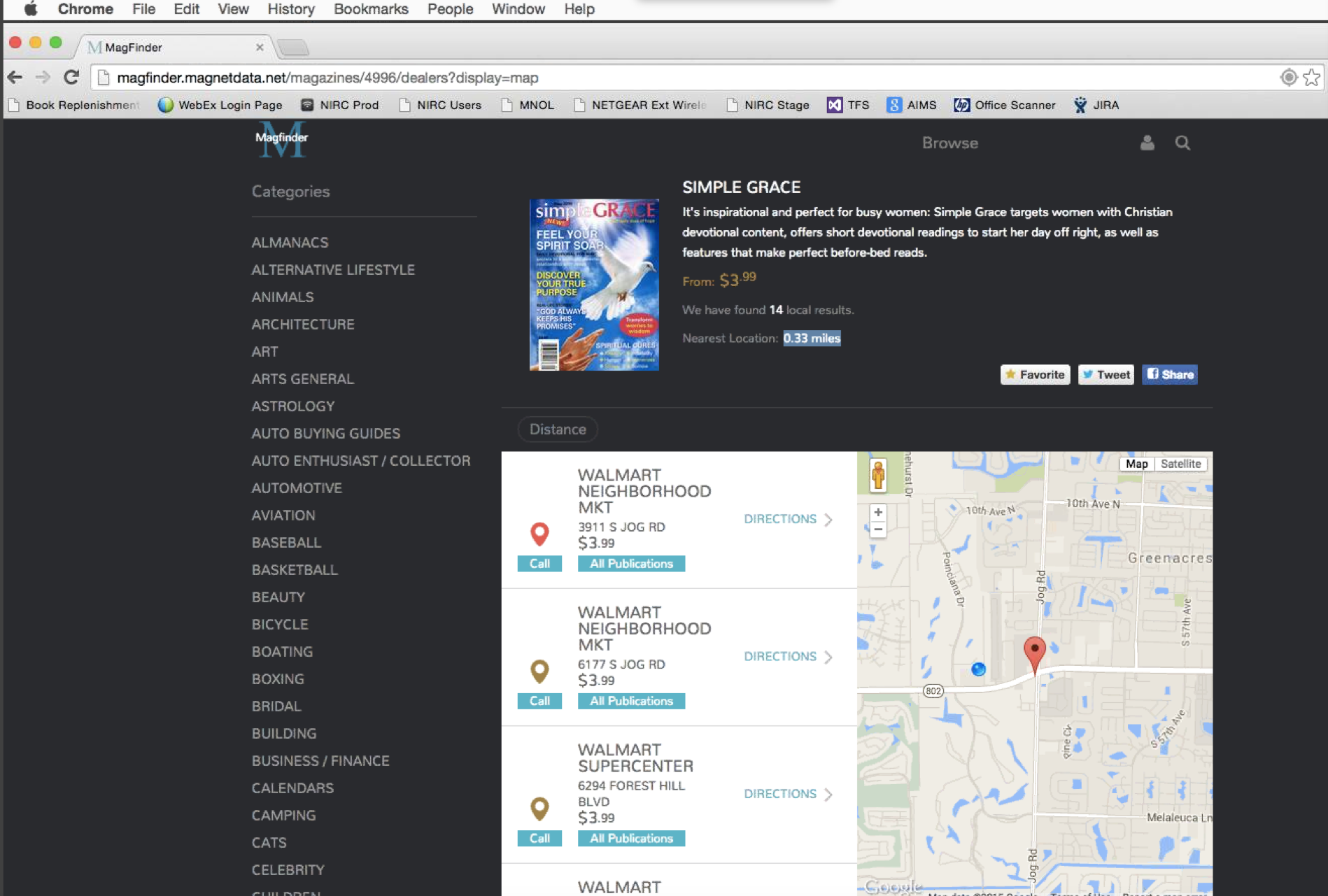
On how MagFinder can help a customer find that elusive new title: Now all you have to do is come into our site, type in your title and it’ll tell you where to find that magazine. Using the example title, Simple Grace; I give the app my location, based on the IP address of my computer. It also works on your phone using GPS. So, when it says nearest location within 3.3 miles that’s based on where I’m located at that point. I can click on Simple Grace and it will bring up a listing of where it’s available to buy now, based on the information we’ve received as recently as yesterday.

On the comparison of a Match Finder, Grindr or Tinder to the MagFinder app: (Laughs) It’s meant to inspire and encourage in store purchases and it’s meant to encourage people to see what’s available to them and then to go find that magazine.

On whether he thinks publishers will be jumping on the bandwagon once the app goes public: I believe that once they hear about this vision, I think they will jump in with both feet. Right now, we’ve been spending a lot of time building out the app and we’re coming to a point where we have to make sure it’s accessible to consumers. It hasn’t been released publicly yet.

On any disadvantages he can see with the app: I think this is going to create another level of competition among publishers who want to try to bring people to their own content. When there are five, six or seven gun magazines out there and many of them may look similar, I can see a publisher being concerned that the consumer might choose a competitive product over their own. And then the best content ends up winning. So, for some publishers this app may not work to their advantage.

On any future profile-driven features of the MagFinder app: Let me tell you about our first foray into individual profiles. Once logged in, I flag favorites for a title or category. With those favorites we can customize content delivery to you.

On the fact that the app doesn’t have to be downloaded: Here’s the best part about it; you don’t have to download anything. It is a completely web-based app. I have my link to MagFinder on my phone and when I click on it, it opens up a web browser and it acts, feels and plays like a natively-installed app, but you don’t have to download anything. And we did that on purpose for a couple of reasons.

On what is in it for MagNet: We’re building solutions that ultimately assist in driving consumers to buy magazines, because that will support the entire supply chain. So, this is really right up our alley.

And now the lightly edited transcript of the Mr. Magazine™ exclusive interview with Joshua Gary, Senior Vice President, MagNet.

Samir Husni: Can you tell me exactly what MagFinder is all about?

Screen Shot 2015-05-05 at 11.07.23 AM Joshua Gary: Here’s the problem. There hasn’t been until today an up-to-date, complete portal by which to communicate available magazines to consumers. There’s only been incomplete, or outdated information available to publishers and therefore only incomplete information that publishers can make available to their consumers.

Every publisher has, whether it’s Architectural Digest, Out Magazine or anything else, customer service agents that take inquiries from customers; every one of them receives phone calls and emails from their customers asking where to find magazines at retail. And their customer service will generally ask someone from consumer marketing and consumer marketing either has an outdated list of stores or has nothing at all to offer. Ultimately, they have to go back to the customer with an answer that’s either incomplete, inaccurate or doesn’t really serve their purposes.

The only place where all of the title allocation information comes together is here at MagNet.

We wanted to make it easy for publishers to communicate to their customers where their magazines were available for purchase; not only via a traditional website, but also making it available via mobile, so that when people are actually in the store, they can get information about what’s available to help facilitate that spur-of-the-moment decision. We want to take off the “mobile blinders”, and put a “mobile spotlight”on our brands. In the five or ten seconds we have to help a customer figure out what they might like while standing in line, we try to fill that gap by giving the customer information about what’s available based on our data base because it’s the only complete set of information available to the industry.

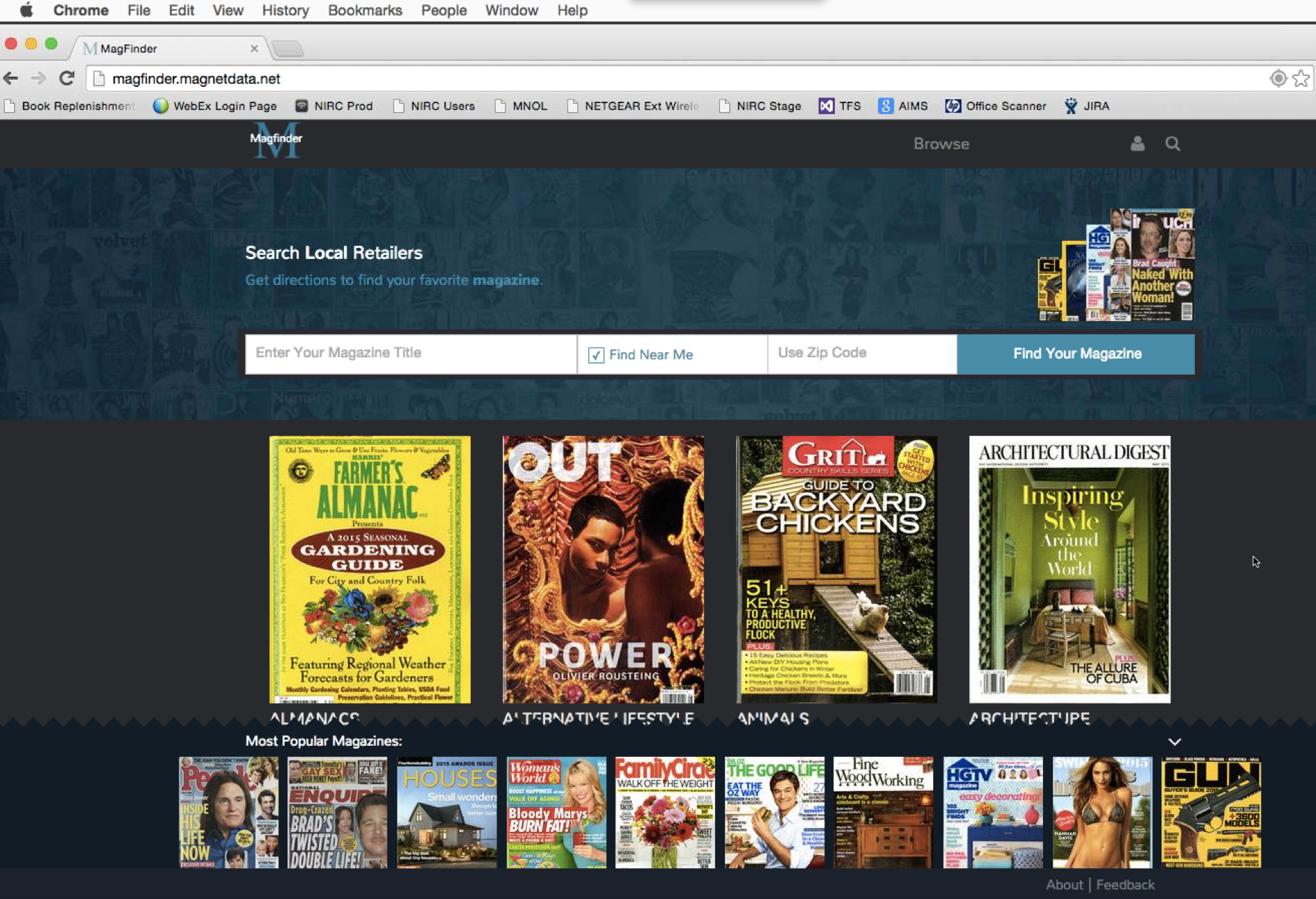
We are filling this with all of the allocation information for every magazine that we collect in the United States and Canada for every store we collect as well as showing the covers that we’re scanning on about 4,000 different magazines so that they can see what they’re looking for.

Samir Husni: And just to illustrate your point; when I published my interview with Carol Brooks from Simple Grace Magazine, I was bombarded by emails and by comments on my blog where the interview was published; where can I find the magazine? I can’t find it anywhere. And Carol had to go to my blog to answer the comments from readers on where they could find the magazine. So this is a perfect example; a new title comes to the marketplace, but no one can find it.

Joshua Gary: Exactly. And now all you have to do is come into our site, type in your title and it’ll tell you where to find that magazine. Using the example title, Simple Grace; I give the app my location, based on the IP address of my computer. It also works on your phone using GPS. So, when it says nearest location within 3.3 miles that’s based on where I’m located at that point. I can click on Simple Grace and it will bring up a listing of where it’s available to buy now, based on the information we’ve received as recently as yesterday.

Samir Husni: You’re telling me that you’re creating a Match Finder or Grindr or Tinder for magazines? (Laughs)

Joshua Gary: (Laughs too) It’s meant to inspire and encourage in store purchases and it’s meant to encourage people to see what’s available to them and then to go find that magazine. We have title descriptions, which by the way, we procure and save ourselves. We have an employee at our home office who goes to all of the publishers’ titles websites and looks for mission statements about the magazine and enters that information into the app, so that consumers have an idea of what it is they might be getting.

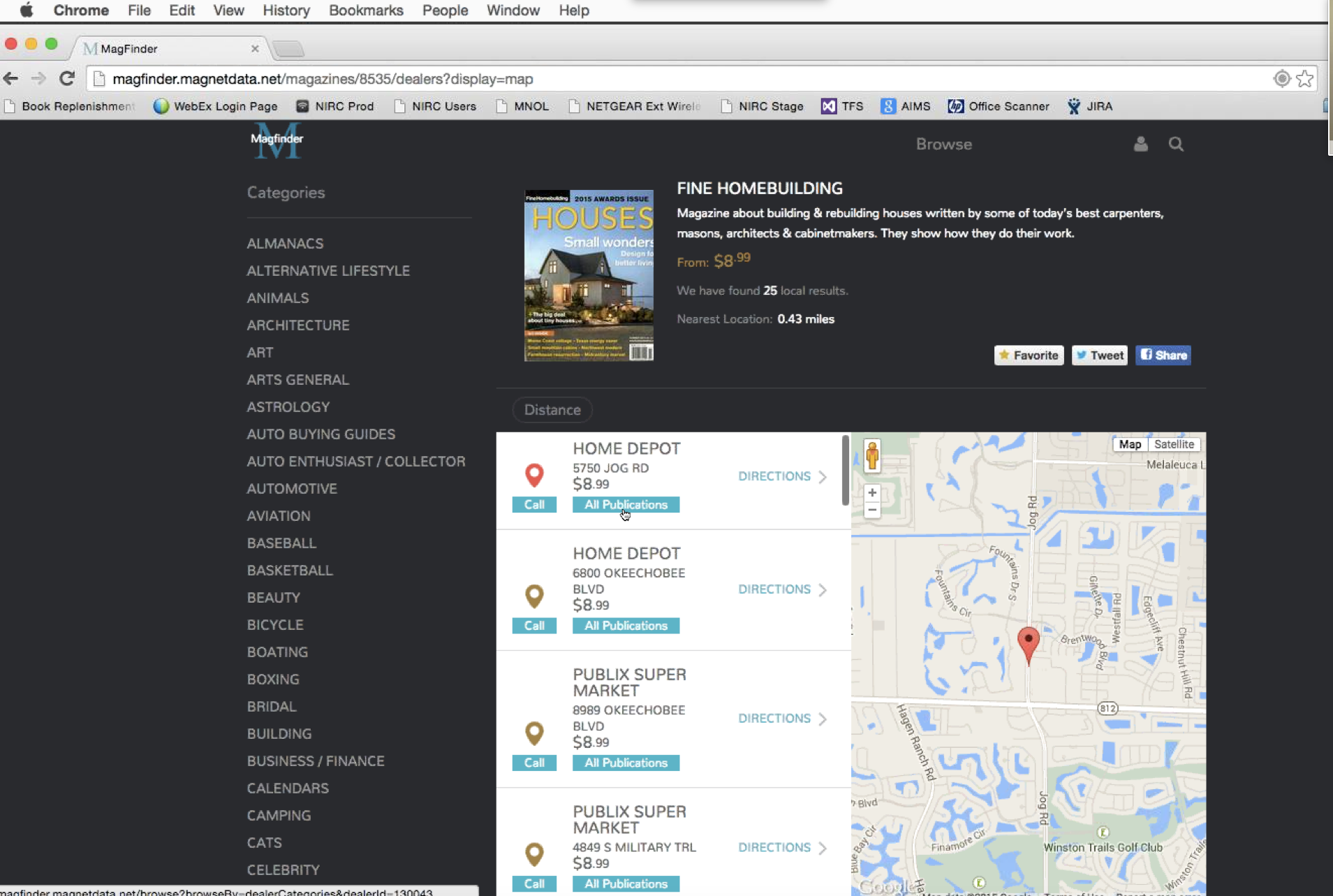
When you see the cover, it’ll bring up the price; the number of locations within a certain radius of where you’re located; the closest store; a way to filter by distance; the store names and addresses, as well as directions to that store. If I want to go the Wal-Mart, I can see the little dot on my map, the little blue dot is where I’m located at that moment, then you can see the location of that Wal-Mart and if you click on the directions button, it will bring up directions to that store.

Screen Shot 2015-05-05 at 11.17.47 AM Samir Husni: This is such an amazing vehicle, especially with mobile technology and the penetration of mobile and Smartphones; why do you think publishers and magazine media companies aren’t jumping in and helping you, instead of you doing this all on your own? There are certainly a lot of benefits for them in this technology.

Joshua Gary: Yes, there are a lot of benefits for them. I believe that once they hear about this vision, I think they will jump in with both feet. Right now, we’ve been spending a lot of time building out the app and we’re coming to a point where we have to make sure it’s accessible to consumers. It hasn’t been released publicly yet.

Obviously, you have access to the behind-the-scenes prerelease version, but it’s not out there publicly. I do firmly believe that when we do release this publicly to the publishing community, we’re going to get tremendous support. The part that we need to encourage is the sharing aspect, because we still have to rely on the publishing community to support and share our vision. Every person that I’ve demoed this to has wholeheartedly embraced the idea. We haven’t had one publisher who has said to us that this doesn’t serve a purpose or isn’t valuable.

We’ve asked every publisher that we’ve shown it to up until now, which has been about a dozen publishers, major publishers and small guys included; we asked them if they would put a link to MagFinder on their website so that their customers would always know and the answer was an emphatic yes.

Samir Husni: When do you think you’ll be ready to release this?

Joshua Gary: The first release is scheduled for the IMAG Conference in Boulder on May 18.

Samir Husni: So I’ll be seeing you there then.

Joshua Gary: Great.

Samir Husni: Do you see any disadvantage with this? Can you think of a reason someone would argue against MagFinder or see anything negative about this app?

Joshua Gary: Yes. I think this is going to create another level of competition among publishers who want to try to bring people to their own content. When there are five, six or seven gun magazines out there and many of them may look similar, I can see a publisher being concerned that the consumer might choose a competitive product over their own. And then the best content ends up winning. So, for some publishers this app may not work to their advantage.

Samir Husni: That’s always been the pipedream for wholesalers, and I remember the days when Anderson News was in the business of wholesale; wholesalers always wanted to create those categories and tiers within the categories and they wanted to make sure that the top titles; 1, 2, or 3, were the ones that received all the attention. Are we creating something similar to that or is it going to be completely up to the customer to decide?

Joshua Gary: It completely levels the playing field; there’s no preference toward any publisher or another; there’s no preference toward any region and there’s no preference toward any retailer.

Samir Husni: Can you see the day where the customer will come to MagFinder and say here’s my profile; I’m interested in cat magazines or gun magazines, etc.?

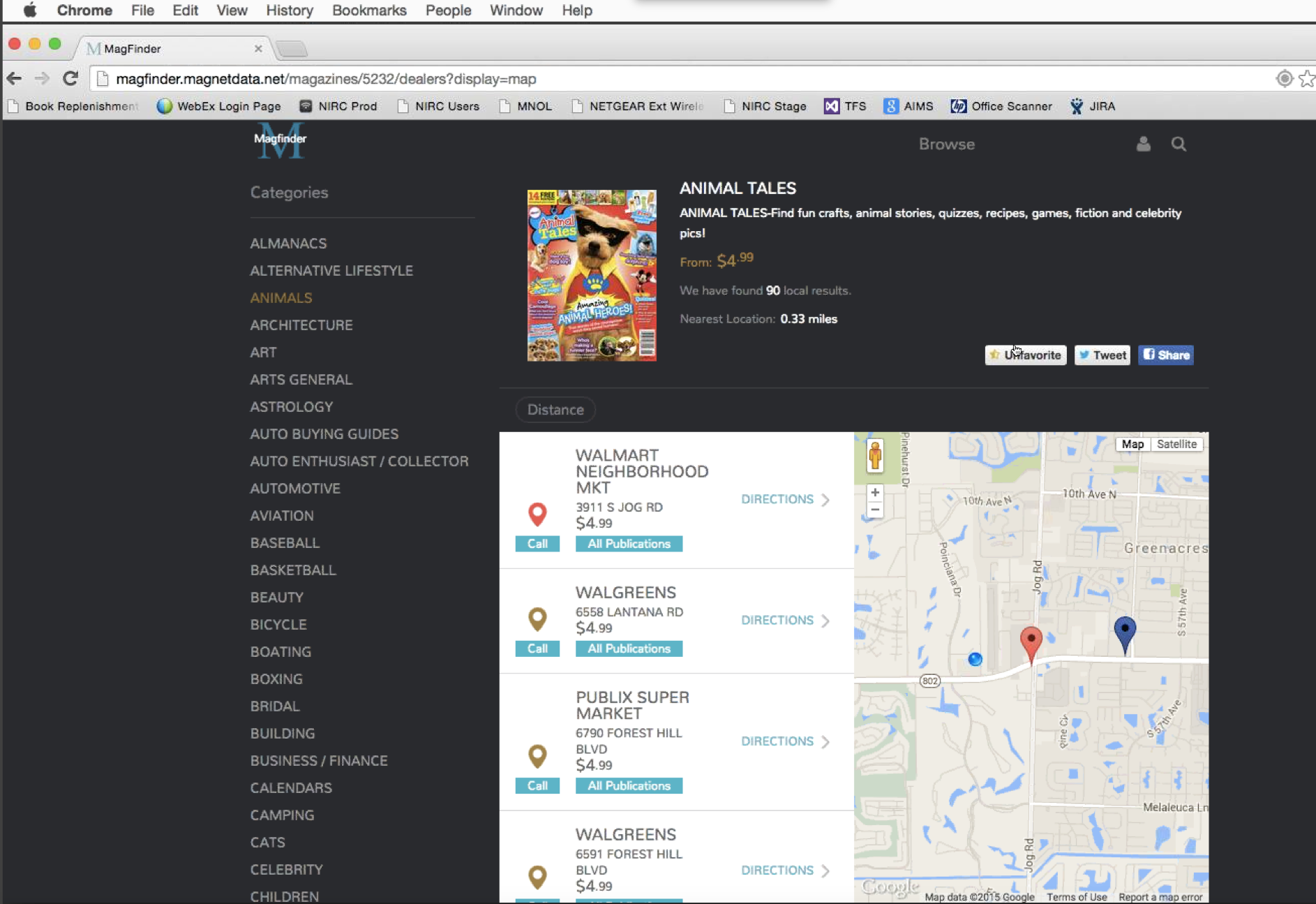
Joshua Gary: Yes. And let me tell you about our first foray into individual profiles. On one page of the app, what you’ll see at the very top is a login button. Once logged in, I flag favorites for a title or category. With those favorites we can customize content delivery to you. So yes, you can actually go into MagFinder and find a magazine you like, say Animal Tales, and you’ll see a favorite button and when I hit that button, a green bar appears and that magazine is added to favorites.

Screen Shot 2015-05-05 at 11.13.01 AM And what we’re doing with that information is using it to customize content delivery to you. And it will be based on your preferences, either by an editorial category or by a specific magazine. Not only for whatever might be interesting for you to read in a newsletter, but also to let you know when there’s a new issue of your favorite magazine available on the newsstand. So, the next time that Animal Tales comes out on sale, MagNet will either send you an email, letting you know the new issue of the magazine is available so you can go purchase it, or you can choose on the app itself to have MagNet send you an SMS text message to let you know.

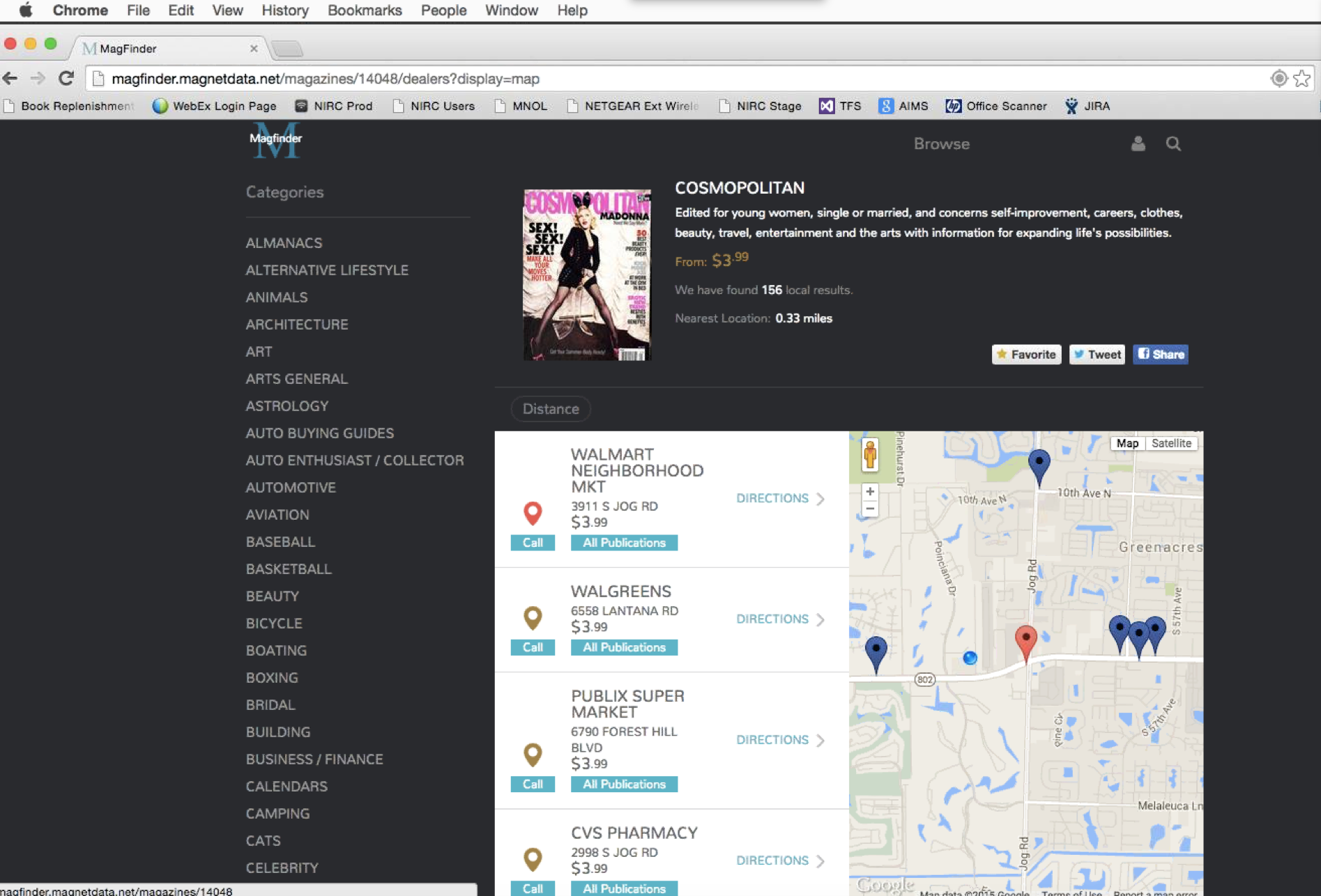
Samir Husni: Technically, after downloading MagFinder and allowing notifications, if the customer has chosen their favorite magazines, let’s say Cosmopolitan or First For Women, the app will have the capability of notifying the customer by either email or text that the new issue of their favorite magazine is out?

Joshua Gary: That’s exactly right. We’re going to make sure that we limit the number of text messages that a customer can receive because we don’t want people to be overloaded or to turn them off because they’re constantly being notified. As we sit here today, the limitation will be one a week, no more.

Samir Husni: So, Joshua, the next question has to be; what took you so long? (Laughs)

Joshua Gary; (Laughs too) So many things to take on at the same time; too many fires to put out. (Laughs again) No, this has been a project that we’ve wanted to do for a long time. It was just a matter of getting the time and the focus associated with making it happen.

Another thing is we didn’t always have a large enough data base of covers. We wanted MagFinder to be very visual, opposed to just reading text; we wanted the customer to be able to see the covers of the magazines, which are scanned at a very high resolution and make sure that they’re ultra-crisp. We have about 4,000 magazines now that we’re scanning per month. We feel like it’s a large enough number of magazines where we can make the app much more visual. We encourage any publisher who doesn’t see their magazine cover to contact us so we can get it added.

Another point is that technology has progressed to the point that we can Tweet, Share and Favorite. We can also make it available on mobile just as easily as on the web with speed as a consideration. There are so many pieces of data that we’re serving up; we wanted to have an app that was fast on the phone. MagFinder Mobile is just as responsive as it is on the desktop. We wanted that to be the case and I think that the technology has now allowed us to do that.

Samir Husni: I’ve been doing this for over 30 years here at the university and to me, this is the first time that I’ve seen or heard an innovative way to help the newsstands or single copy. All I’ve heard, since I began concentrating on newsstand, is all the problems, but nobody ever offers any solutions. My expectations are that this is going to be something very big and very helpful, because you’re saving the consumer’s time, while still allowing them to shop covers and see issues of the magazines without leaving their home.

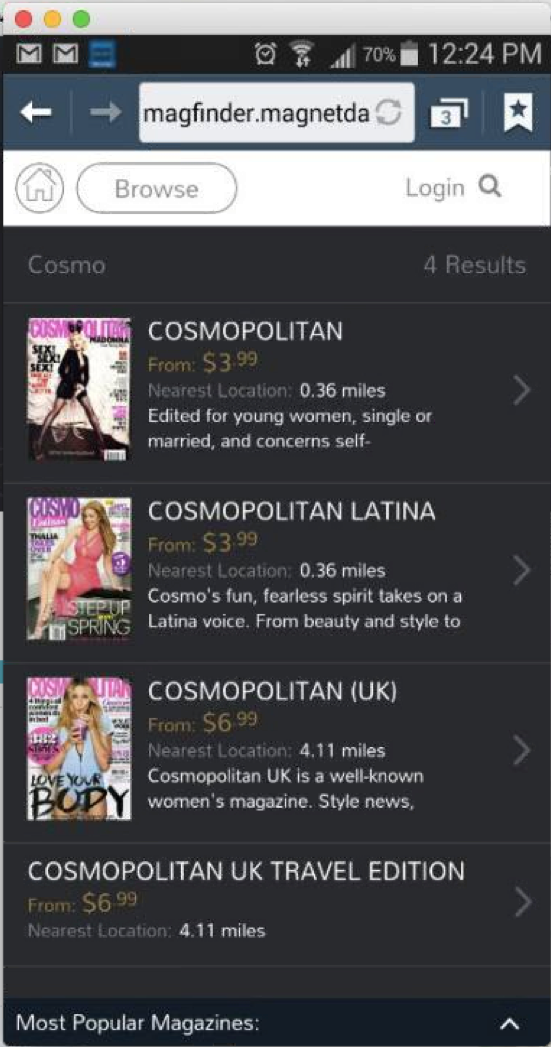
Screen Shot 2015-05-05 at 11.14.47 AM Joshua Gary: Exactly. And we see it taking a variety of different angles from here and I’ll give you one example. Off of the home page, one of the things that you’ll notice is that there’s a little bar at the bottom that reads ‘most popular magazine.’ That’s based on our point of sale data, so I can see helping customers find their magazines based on popularity; based on what’s been purchased more often in a store, in a region, in a category or in a state, or even among their friends or social sphere.

I can see the categorization and popularity expanding and becoming much more profile-driven. If you like Cosmo, for example, you might want to check out Glamour. Why would you want Glamour, because your friends are buying Glamour, a new issue just came on sale; any number of reasons.

Samir Husni: It’s just amazing. The only thing even close to this is in Finland, the wholesalers track the sales and every six months the magazines that get the checkouts or the front displays are the ones that sold the highest numbers in the previous six months. It’s not a matter of ‘you pay me and you get the checkout position,’ it’s ‘how many copies have you sold’. And this app is going to show me, for example, that People magazine and National Enquirer have been the most popular magazines, not because they have the best cover or they’re well-liked, but because of the number of copies sold.

Joshua Gary: That’s right. Look under the National Enquirer or Us Weekly; it’s not even Cosmopolitan; in our example here, it’s Fine Homebuilding. It’s telling you what is selling well.

Samir Husni: I am truly fascinated. I can’t wait to download the app and I know I can’t do it now because it’s not out yet. (Laughs)

Joshua Gary: There’s another interesting thing that I’ll tell you. We’re not just necessarily helping them find a magazine, but we also want consumers to be able to browse the inventory in a store at any given time. And there are a couple of different ways to get to that inventory within MagFinder.

You can also click on the Browse button at the top of the app by store. And then you can actually search a particular store.

Samir Husni: Do you know how much time that will save me if I can find all of my first issues through this app? (Laughs)

Joshua Gary: We’ll have to create a special version just for you, Samir. (Laughs too)

Samir Husni: Right. (Laughs again)

Joshua Gary: Don’t forget about Twitter. You can use MagFinder to tell your friends that you’ve purchased a certain magazine; we have a hashtag; there’s a sharing on Facebook element; you can login via Facebook or Twitter. We truly believe the social tie-ins will be an integral part of the success of this app.

Samir Husni: For the first time in this digital age, how can I be the first one to download this app on my Smartphone?

Joshua Gary: Here’s the best part about it; you don’t have to download anything. It is a completely web-based app. I have my link to MagFinder on my phone and when I click on it, it opens up a web browser and it acts, feels and plays like a natively-installed app, but you don’t have to download anything. And we did that on purpose for a couple of reasons.

Screen Shot 2015-05-05 at 11.23.41 AM The first reason was that we wanted to make sure that we had greater accessibility with the least amount of intrusion for publishers and customers. We didn’t want a customer to feel like they had to download something to be able to use it. We wanted to create all the functionality we needed without the customer having to download anything. It still uses your GPS; it still gives you all the recommendations; it’s still just as fast.

This is great because you don’t have to worry about the different iPhones or Samsungs on the market and the cross-compatibility challenges that software services providers regularly face. MagFinder is what’s called a “responsive, HTML5 based application” which means it’s much more compatible across devices and browsers, even on mobile.

As we get into some of the more advanced functionality capabilities that exist within your phone, I expect that we’ll revisit having a natively-installed application, maybe for the purposes of taking pictures or videos. something like that. But as of right now that wasn’t required.

Samir Husni: What is in it for you?

Screen Shot 2015-05-05 at 11.20.00 AM Joshua Gary: If you think about our position in the business; it is partly to try and support and strengthen an efficient, optimized supply chain, and to facilitate the flow of information amongst the various entities associated with the newsstand. From our perspective, it doesn’t do a whole lot of good if we build solutions that only benefit one rung within the supply chain at the others’ expense.

MagFinder will help everyone in the supply chain, because if we’re finding magazines with greater ease, we’re generating interest, not only in the magazine itself, but in the brand’s content in a way right now that publishers can’t easily do. The people that end up benefiting most are customers; however who benefits when the customer benefits? The retailer, the wholesaler, and the publisher benefit as well. If we can help facilitate that success, it’s right where MagNet wants to be

Samir Husni: As I told you earlier, this is one of the first really innovative ways that I’ve seen to reach the magazine customer in their home and on their phone. I’ve heard a lot of questions asked about how to get the mobile blinders to help the industry. And I think with this, we’re telling our customers to keep their blinders on and we’ll help them find their way.

Joshua Gary: We’ll help them figure it out; exactly.

Samir Husni: Thank you.

h1

Country Living Goes “Country” In The June Issue For The First Time In Its 36-Year History – The Mr. Magazine™ Interview With Rachel Barrett, Editor-In-Chief, Country Living.

May 13, 2015

“Country Living had never dipped its toes fully into the country music waters, but if that audience is going to read a shelter decorating magazine, I think Country Living is the magazine for them. So, we talked about how to be very deliberate about penetrating that world without alienating our core readership, because I’m realistic; I know not all of our readers are country music fans and they don’t come to our magazine for celebrities and/or music.” Rachel Barrett

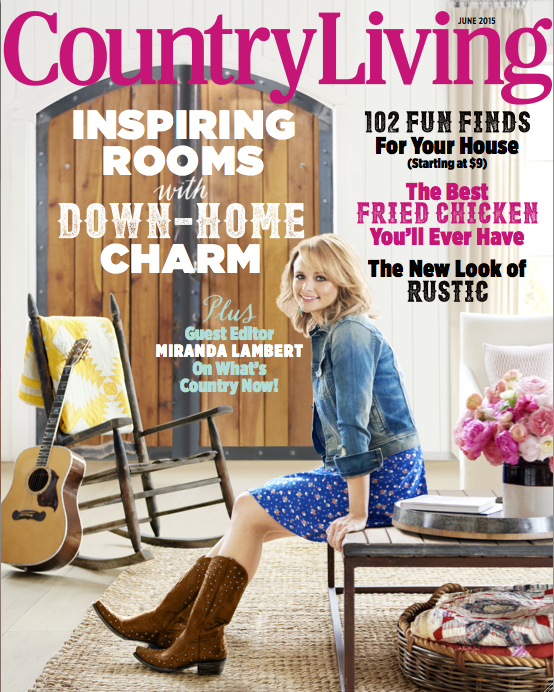
country living june 2015 Country Living magazine is taking its June issue on a long drive into the country with a guest editor and the first-ever person to appear on its cover in the magazine’s 36-year history. Grammy-Award winning singer, Miranda Lambert is the distinguished celebrity that received the honor. And it is a momentous event indeed.

Rachel Barrett is the magazine’s editor-in-chief and said the upcoming issue of Country Living showcases many firsts for the magazine as it rubs shoulders with the country music industry without deviating from its original DNA. No celeb-tell-alls here; Country Living merely continues to do what it does best, celebrating country style with tasteful class and easy fun.

I spoke with Rachel recently about the memorable June issue with all its ‘firsts,’ from the new feature: Turn This Country Room Into a Song to the first edition of Country Living Backstage, a free mini-mag created in partnership with the Country Music Association for the CMA Fan Fest held in Nashville June 11-14.

A true southern lady herself, Rachel graciously shared her enthusiastic excitement about the issue and the magazine in general. It was a conversation that was as refreshing as a mint julep on a hot southern day.

But of course, Country Living doesn’t happen only below the Mason-Dixon, as Rachel was quick to point out, even though it’s published in Birmingham, Ala. The magazine appeals to people everywhere who enjoy the country lifestyle; from New York to Nebraska; Country Living satisfies its audience all across the United States.

I hope you enjoy this fun and lively conversation with Rachel Barrett, Editor-in-Chief, Country Living magazine. I know Mr. Magazine™ did.

But first the sound-bites:

On why the June issue was chosen for the magazine’s maiden voyage into ‘country’: We began looking at what time of year to potentially do this issue and to be honest, we weren’t even seeking to put a person on the cover; we were just talking about the fact that country music is so mainstream. A lot of topics that just lined up with the country music lifestyle felt really right for the magazine to explore right now.

On the things she’s implementing in print to interact with the magazine’s audience: We’re just adding different levels of engagement. I mentioned that we moved Simple Country Pleasures to the back page of the magazine, so now we’re opening the feature well with a seasonal cross stitch and in June it’s a guitar because it’s a country themed issue, but we’ve done various cross stitch patterns.

On discovering Hearst was moving Country Living to Birmingham and her feelings about that when she was offered the job: I felt full support from Hearst; they handled the whole thing brilliantly. Transitioning a major national brand from New York to Birmingham, staffing it from scratch; I was also pregnant when I took the job, so that added to some of the chaos. (Laughs) But there were challenges and sometimes I’m floored, in retrospect, as to how we pulled it off. A lot of that credit goes to the New York-based Country Living team who sort of helped pass the torch in the most graceful manner.

On the major stumbling block she had to face: I think just starting from scratch. There was a small window of time where we had a temporary office space and a post-it note on the door that read Country Living. (Laughs) And our neighbors were like: what, the magazine?

On her most pleasant moment: The best moments are just every time we’ve added a person to the staff; it was also such a unique opportunity because the people would ask what’s the job description and we’d reply, well, what do you want it to be? (Laughs)

On anything else she’d like to add: One of the other exciting things on the heels of this country music play is that we have Country Living Backstage and I think this is a testament to how mainstream country has become.

On what keeps her up at night: What doesn’t keep me up at night? (Laughs) For one, my two children. I have a two-year-old and a one-year-old. But in addition to them, I think it’s just excitement for Country Living. You know, we’re really a small magazine, as I have reiterated a couple of times, and so everyone multi-tasks. We’re definitely kind of scrappy; I’m working on everything from brainstorming the reader page to big picture brand-building.

CLX050115_010 And now the lightly edited transcript of the Mr. Magazine™ conversation with Rachel Barrett, Editor-in-Chief, Country Living.

Samir Husni: There are so many firsts in the June issue of Country Living; we have the first celebrity guest editor, the first Backstage Pass, the first Country Living Backstage mini-magazine, you name it; I was just going through the list of how many firsts the magazine has in the June issue. Why now and why June for all these premier bonanzas?

Rachel Barrett: I’ve been onboard now for almost two years; I started in October 2013, and we took about six months to build a staff here in Birmingham and to complete the transition. And we’ve been a little slow about introducing some changes into the magazine, but recently I read an article in The New York Times about a study done by the MPD Group that talked about how country music had finally become the most popular musical format in the country with its widespread appeal.

Country Living had never dipped its toes fully into the country music waters, but if that audience is going to read a shelter decorating magazine, I think Country Living is the magazine for them. So, we talked about how to be very deliberate about penetrating that world without alienating our core readership, because I’m realistic; I know not all of our readers are country music fans and they don’t come to our magazine for celebrities and/or music.

We began looking at what time of year to potentially do this issue and to be honest, we weren’t even seeking to put a person on the cover; we were just talking about the fact that country music is so mainstream. Recently, even Steven Tyler announced that he was doing a country album; Nelly is also going to do one, and so there’s definitely widespread appeal. We decided to look at the lifestyle associated with the genre of country music.

As we started discussing the issue in more detail and brainstorming ideas, we thought that it would be more authentic and interesting to bring on a guest editor from that world to help us brainstorm. We bounced around a few names, but Miranda Lambert just seemed like the perfect choice for us; she’s the reigning queen of country; she took home a ton of awards recently at the ACM’s, I think more than any other country artist, and then we started digging a little deeper and found out that she’s from Lindale, Texas, where the town’s motto is actually “Good Country Living,” which was perfect. She chooses to live in the small town of Tishomingo, Oklahoma; I think the population is around 3,000 people.

So, we reached out to her publicist, who also happened to be a Country Living fan; it’s always great when an L.A. publicist is familiar with a magazine called Country Living. It turned out she’s a reader and so we didn’t really have this awkward back and forth, where we were trying to rope in the celebrity who didn’t really understand the magazine or was pitching content that was off brand. Miranda reads us on her tour bus.

She bounced around a ton of ideas on our first phone call; she had clearly taken notes and went over ideas with Blake (Shelton), it was a really nice back and forth. We photographed her for the inside story and of course, if you’re Country Living and you have a photo shoot and time carved out with Miranda Lambert, you’re going to shoot a vertical, a potential cover shot; it wasn’t necessarily the plan to put her on the cover, but it felt like the right move at the right time. I can’t think of anyone, particularly in the last five to ten years, who would be a better face for the magazine.

I felt strongly that everything we put in this issue needed to appeal to the Country Living reader who didn’t care at all about country music; the houses weren’t going to be chosen just because they were tied to a celebrity, they had to be houses that would be worth running in the magazine no matter who their owner was.

We found spaces that fit the bill. We have a story called ‘King of the Road’ and the title is inspired by a country song, but it’s a celebration of the new travel trailer culture. Of course, country stars drive around in their Airstreams and have these great, decked-out trailers, but our readers are also really into that lifestyle and we know they’re also into small spaces, so a lot of topics that just lined up with the country music lifestyle felt really right for the magazine to explore right now.

In terms of Backstage, that was just another thing we felt was right. We’d been talking about; generally speaking, people aren’t flocking to the newsstands as much as they used to, so we talked about how Country Living needed to be present where our readers are and where potential readers are. I’m originally from Tennessee and I know that the CMA Fan Fest is a huge event. I think 50,000-plus people flock to downtown Nashville to celebrate country music; HGTV has a presence there, they have this giant building called ‘The Lodge,’ and so we thought: how does Country Living build a presence at this event, because it’s great exposure for us, albeit a slightly different audience.

When I worked at Glamour, we had done a special publication during Golden Globe’s week and it was distributed throughout Los Angeles and Glamour has the Golden Globe’s weekend; this feels similar in spirit to that. It’s sort of Country Living’s inside guide to downtown Nashville throughout that weekend. The content gives attendees a sneak peek into our brand, but through the lens of the things they’re interested in.

One of the stories that we have in Country Living Backstage is ‘Turn this Country Song into a Room,’ so we’re taking four or five songs that will be performed through the CMA Fan Fest in downtown Nashville and we’re putting together a room. There’s one song called ‘Get Your Shine On’ by Florida Georgia Line, so we put together this living room with a bunch of fun, metallic touches and there’s, of course, some sort of Tennessee Moonshine resourcing on the page. (Laughs) Another song out right now is ‘American Kids’ by Kenny Chesney and so we built this whole Americana-inspired porch.

So, I think that we’re finding a way to tap into the world of country music without pandering to the celebrity side of things.

Samir Husni: One of the things that I remember about Country Living from the days of John Mack Carter and Rachel Newman, when the magazine was first launched, was it had that spirit of enjoying everything ‘country.’ And you seem to be bringing that trait back to the magazine. You’re not going miles from the original DNA, but you’re rebuilding upon that basic foundation.

Rachel Barrett: I appreciate your saying that. Country Living has only had four editors in the history of the magazine and I’ve received some sweet letters from readers who’ve said, I think it’s a promising sign that your name is Rachel. (Laughs)

Samir Husni: (Laughs too)

Rachel Barrett: You know, everyone sort of pines for their old issues, including myself; I love looking at magazines from their very beginnings and I’ve been in touch with Rachel Newman and Nancy Soriano, so there’s this nice connection from past editors; I’m sort of revisiting some of my favorite aspects of all of the incarnations of the magazine over the years. We’re definitely trying to celebrate that more in the magazine and we’re putting a little more heart and soul into the pages.

Samir Husni: We’ve named all the previous editors; let’s also add Sarah Gray…

Rachel Barrett: Yes, certainly. Even working in the magazine industry in New York, I’m from Tennessee and she’s from Mississippi; everybody was always saying that she and I needed to meet. And I’ve always been a huge fan of what she did at Country Living; I would say that I started reading Country Living even more regularly when she came onboard. And I think that she definitely seized upon the social trend of country becoming cool again. Even hipsters in Brooklyn were into canning. (Laughs)

Samir Husni: (Laughs as well)

Rachel Barrett: I think that she really embraced that in a smart way and brought a whole new readership into Country Living. I haven’t had a chance to communicate with her, but I’m definitely a fan.

Samir Husni: You also created ‘Find the Horseshoe’ inside the magazine, which was a staple of Country magazine that was started by Roy Reiman many years ago. What other types of things are you doing in print to engage people in this digital age and create that interactivity with the audience through ink on paper?

Rachel Barrett: Country Living was not a magazine that was broken, so we’re not trying to come in and fix it and introduce whiplash-inducing change, but one of the things we did modify was our section called ‘Collecting.’ The word collecting is great, it describes jut what it is, but I felt like it wasn’t tapping into the heart of collecting. So, we renamed the section ‘The Thrill of the Hunt’ because it opens up this section for us to feature some new merchandise. I had been at a Country Living fair in Columbus and they were doing a TV segment and we asked this woman: what brings you to the fair? And she said it’s the thrill of the hunt. And you really see that in action at our events and so we decided to rename the collecting section ‘The Thrill of the Hunt.’ And that’s when the Horseshoe Hunt came up and we thought to play off of The Thrill of the Hunt we’d incorporate that element into our pages, so we’ve been hiding a horseshoe in every issue. It’s just one way to have readers interacting with every page of the magazine.

A reader came up to me recently at the Nashville fair and she said the first thing that she always did when she got her issue of Country Living was look for the horseshoe. And that just made me so happy that that one little touch, a tiny, subtle little horseshoe, could bring such fun to a certain set of our readership.

Another example of that interaction, I would say, would be Simple Country Pleasures, which is this longstanding popular column in the magazine. It used to be the back page of the magazine, then it opened the feature well, and recently, we moved it back to the back page of the magazine. It’s an image of the countryside and then a great quote. To be candid, it’s one of the most popular pages and the easiest page to produce. Beautiful images of the countryside are not hard to come by. On our side, we said, OK, this is a page that we don’t have to really do anything new with; it’s successful as is, but is there some way we can build on this; some way we can do something to get readers really excited about it.

So, I read an article in The New York Times recently about how adults have gotten into coloring books and these childhood-inspired crafts. Even our guest editor, Miranda Lambert, had posted something on Instagram the other day; she was coloring in a coloring book while drinking beer. (Laughs) It was like hashtag beer and coloring book.

One thing that a lot of people shop for at the Country Living fairs is paint-by-numbers, those relics of the 70s and 80s; they’ve really had a big resurgence. So, we found this Kentucky-based company, Easy 123 Art, to team up with and they have turned every image now on the back page of the magazine into a paint-by-numbers kit that readers can order.

We didn’t really change the DNA of the page, there’s just a small redirect to the company. And the company has been inundated with thousands and thousands of orders for these paint-by-numbers kits. It’s really been amazing. Some readers are sharing their paint-by-numbers art online; we’ve tapped into the sort of crafty mindset of readers and given them something else to take away from their magazine experience. So, that’s another example.

This is another small example; we’re introducing in our July/August issue a column called ‘Ask a Country Vet.’ It’s another really popular franchise. We have a fairly new country vet that answers our reader’s questions and talks all things animal. We know from social media that people just love adorable pet pictures, so now we’re adding one pet photo that’s just captioned ‘This Pet Photo’ and it’ll be almost our version of The New Yorker caption contest. So, we’ll see how much readers get into that. It kind of gives them the chance to be clever and we’ll run their best answers in the next issue of the magazine and hopefully, eventually we’ll tie it to a prize.

We’re just adding different levels of engagement. I mentioned that we moved Simple Country Pleasures to the back page of the magazine, so now we’re opening the feature well with a seasonal cross stitch and in June it’s a guitar because it’s a country themed issue, but we’ve done various cross stitch patterns. We make the cross stitch pattern available online and readers are sharing that they’ve recreated our cross stitch. Of course, the ultimate goal would be to sell a Country Living brand of cross stitch kits down the road and it’s beautiful that our copy editor is actually the person who does the cross stitch every month; she’s definitely multi-tasking. (Laughs)

We’re still exploring it every month, but kind of looking at pages that are already successful, but figuring out if there is a way to give them more depth either in the magazine or off the page.

Samir Husni: When David Carey announced that Country Living was moving to Birmingham, there were a lot of skeptics out there who said this move was just a nice way of killing the magazine, shipping it from New York to Birmingham. When you took this job, did you have any doubts or any fears that screamed: I’m moving from an established magazine that was doing very well to a brand that people were sure was about to end? Can you recall your original feelings when you were offered the job? Were you skeptical as well or did you jump and say, no, I believe in this brand and I’m with it all the way?

Rachel Barrett: Even when I moved from Real Simple to Southern Living, I kind of felt like it was a similar challenge. I felt like Southern Living had been a brand that my grandmother had read, but didn’t have as much cache with a younger audience or a new audience, so at the time I think even people in New York were asking; what is she doing. (Laughs) And Southern Living has had this great resurgence and a lot of success recently, so I felt like that challenge only inspired me. I had always loved Country Living. Way back in the day, when I was an associate editor at Glamour and Eliot Kaplan would do his requisite check-in with you and he asked me what magazine at Hearst would I ever want to be editor-in-chief of and I pointed at Country Living and he remembered that.

I love the content, it’s great. And I know while you’re transitioning a magazine, there are a lot of question marks around that and it creates storylines, but Country Living has such a healthy subscriber base and that’s something we’re looking to build on with the Country Living fairs and other events; it’s a really strong subscriber base and they’re very loyal, so I didn’t feel as uncertain as other people around me felt.

And I felt full support from Hearst; they handled the whole thing brilliantly. Transitioning a major national brand from New York to Birmingham, staffing it from scratch; I was also pregnant when I took the job, so that added to some of the chaos. (Laughs) But there were challenges and sometimes I’m floored, in retrospect, as to how we pulled it off. A lot of that credit goes to the New York-based Country Living team who sort of helped pass the torch in the most graceful manner.

I think one of the advantages; obviously, having some sort of history with the magazine, there’s a lot to be said for that, and there were a lot of people at Southern Living and it was so helpful to have these people around you who had this knowledge of the brand and why certain things didn’t work. It’s also rare and maybe unprecedented to be able to look at and build upon a decades-old brand through the eyes of an entirely new team. That was very exciting. Our style director came from the New York-based Country Living staff, but for the most part we were a fresh staff. There was no one saying ‘but that’s not how we’ve always done it.’

I think in some ways it was such an interesting opportunity to be able to take a magazine with a strong subscriber base and look at it with fresh eyes and fresh energy; trying to build on, I hope, the best parts of all the decades of the magazine.

Samir Husni: What was the major stumbling block you had to face and how did you overcome it?

Rachel Barrett: I think just starting from scratch. There was a small window of time where we had a temporary office space and a post-it note on the door that read Country Living. (Laughs) And our neighbors were like: what, the magazine?

In terms of recruiting during that interim period; recruiting a staff from scratch was definitely challenging. I brought over a couple of people from Southern Living who I really admired, but I also saw it as an opportunity to expand within the talent pool of Birmingham. I didn’t want our filter to naturally skew Southern; I wanted to make sure we had people representing different parts of the country. I think seven or eight people on our staff relocated from New York City and other locations. And we’re a small staff right now; we’re at 16.

Just building a staff from scratch and finding office space and really just finding the right balance, sometimes when new editors come in they’re very eager to try a million new things, but I realized that this isn’t a magazine where you need to do that. So, part of the challenge is just reining myself in. (Laughs) I mean, you get very excited and have a ton of ideas. Ellen Levine had some great advice; sometimes I’m like trying to brainstorm some flashy, amazing new pet column, and she says Ask a Country Vet is working, readers love it; don’t overthink it. (Laughs again) Sometimes I need to be reminded of that.

Samir Husni: And what has been the most pleasant moment?

Rachel Barrett: There was a week when we were fully staffed. We have an open position right now; our executive editor was just named editor-in-chief of Coastal Living.

As a small staff we just have lots of great, little victories; we’re a very close-knit group. Every time we get our new issues in the box delivered, we have sort of an official unveiling in the conference room.

The best moments are just every time we’ve added a person to the staff; it was also such a unique opportunity because the people would ask what’s the job description and we’d reply, well, what do you want it to be? (Laughs)

Samir Husni: (Laughs too)

Rachel Barrett: When you have open headcount that’s entirely open; I mean normally at magazines you’re dealing with one very specific role, because one person leaves and they have a very decisive role and you’re filling that position. But with every new person that came onboard, I was asking well, what do you want to do and then we’ll hire the next person based on what you don’t want to do. It’s just been this really unique and interesting experience.

My dad is a recruiter, a headhunter, so maybe I learned a little from him. I was really pleasantly surprised. The most daunting thing probably was having a staff of one and three months pregnant. (Laughs) But one of the most surprising and rewarding things was building this really talented staff from scratch and seeing how well they work together and how everyone inspires each other here.

Samir Husni: The journalist in me has to ask you this question; was that like a Time Inc. revenge, getting your executive editor to be the editor-in-chief of Coastal Living because you left them? (Laughs)

Rachel Barrett: I don’t think so. (Laughs too) I feel like when you hire really talented people, other people are going to recognize their talent too. We were so excited for Steele (Marcoux). We had a champagne toast in the conference room and she was recently at High Point and uploaded a picture on Instagram with our address and I was like hands off, Steele Marcoux. (Laughs) I don’t see it as a revenge play at all, I think Steele is such a great hire; she was the first person I hired. Every meeting I was ever in with her, I was always in agreement.

So, I think if you’re looking to tap into the talent pool to hire a new editor-in-chief for Coastal Living, she was such a clear choice, regardless of where she was working. She also started her career there.

Samir Husni: Is there anything else that you’d like to add?

Rachel Barrett: One of the other exciting things on the heels of this country music play is that we have Country Living Backstage and I think this is a testament to how mainstream country has become. Back when I lived in New York City there wasn’t even a country station and now, of course, they have a country station and they’re also getting a huge country music festival this summer, in late June. It’s called FarmBorough and it’s a 3-day country music concert series that will be held on Randall’s Island. Country Living is also taking over the Green Room for that event. So, that’s exciting. Again, it’s a different audience; it’s a New York City-based audience and so we’re currently putting together the plans of how we’re going to decorate the Green Room for that event.

That’s been fun. It’s hard, because I left New York four years ago, and now I’m thinking if they’d only had a country station and a country concert festival when I lived there. (Laughs) But this is just another exciting thing that Country Living is doing, in tandem with this June issue.

Samir Husni: My typical last question; what keeps you up at night?

Rachel Barrett: What doesn’t keep me up at night? (Laughs) For one, my two children. I have a two-year-old and a one-year-old. But in addition to them, I think it’s just excitement for Country Living. You know, we’re really a small magazine, as I have reiterated a couple of times, and so everyone multi-tasks. We’re definitely kind of scrappy; I’m working on everything from brainstorming the reader page to big picture brand-building.

I think step two for Country Living is really building on our fair franchise; we just had a really successful first-time Country Living fair in Nashville. I think we had 22,000-plus people attending over three days. I go to the fair and it’s a huge success, but then my brain begins churning with how do we build on this franchise and how do we round out the experience? Do we add a sound stage; just that sort of thing. So, the things that keep me up at night probably change every single day, but I think it’s just that we have a great magazine and how do we expand upon it in ways that are really going to resonate with our subscribers.

And then also those toddlers. (Laughs)

Samir Husni: (Laughs too) Thank you.

h1

A Millennial Read That’s Fast-Paced, Upbeat & Not Digital – The Mr. Magazine Interview With Emily Cronin, Editor-In-Chief, Trending NY Magazine.

May 11, 2015

“One of the results of living on your Smartphone is you crave a break and people like me and my friends; our readers, I think increasingly, new magazines bring a breath of fresh air and a treat. Although, like you, it’s my job to read magazines and keep up with everything that’s going on, I still favor them and bring them on vacation with me, because you read a magazine very differently on a long commute or a flight or in a beach chair than you do at your desk.” Emily Cronin

Trending_Cover_May 2015 A new free, monthly fashion, beauty and entertainment magazine for millennial New York women, that’s the concept behind Hearst’s, Trending NY. It’s upbeat, colorful and a fast read that not only competes with millennials’ digital devices; it’s actually a welcomed diversion and something readers are excitedly craving in their fast-paced lives, at least according to Trending NY’s founding editor, Emily Cronin.

And if anyone should know the minds of the magazine’s readers; it’s Emily. Being a millennial herself, she knows the value of a long, deep breath away from the bombardment of today’s information flood and Trending NY is ready to provide that much-needed respite. After four pilot issues last year, Trending NY starts regular monthly publication with the May 2015 issue.

I spoke with Emily recently and we talked about her early interests in political science, becoming a foreign correspondent, and then the ultimate realization of her love of stories, storytelling and beautiful, collectable covers. And of course, we talked about the potential of Trending NY and the goals she hopes to accomplish with the magazine that collects all the trending topics of interest a millennial New York woman wants and needs to know, and puts into the timelessness of print.

I hope you enjoy this refreshing interview with a young lady who knows the convenience of the digital age, but also knows in order to enjoy the beauty and joy of life, sometimes you have to slow down the pace and relax with a great magazine. And now the Mr. Magazine™ interview with Emily Cronin, Editor-in-Chief, Trending NY.

But first the sound-bites:

On how her career transitioned from a Political Science major in college to fashion, beauty and entertainment: It’s a long story, but the short version is when I was in college I wanted to be a foreign correspondent in the Middle East. But at the same time I was working on the student newspaper and the student magazine. And I found that what I loved was telling longer stories that you could really invest in and make beautiful and create covers that had a lifespan.

On why she believes millennials are craving the lean-back experience of print:
One of the results of living on your Smartphone is you crave a break and people like me and my friends; our readers, I think increasingly, new magazines bring a breath of fresh air and a treat.

On whether she fears that readers will come to expect an overabundance of direction from Trending NY:
Actually, that’s really fun. Whether I’m an editor or not, I’m constantly on the hunt for information about what’s new and what’s on the horizon. And Trending NY is an amazing vehicle for my team and me to share our discoveries. Everything that’s in the magazine is something that we’re excited about.

On the basic concept of the magazine:
Trending NY is the new free monthly fashion, beauty and entertainment magazine for millennial New York women. The magazine is a quick shop-able read; everything in the magazine, all the clothes, all the beauty items, are in store now; there’s none of the delayed gratification that we’ve grown accustomed to with traditional monthly fashion magazines.

On whether she thinks we may see more “Trending” titles upcoming:
You never know. I would love it if that were somewhere in the future, but I’m really not at will to say. Although, I will say that Trending is a name that lends itself to other cities, so I wouldn’t be surprised.

On the biggest stumbling block she’s had to face:
There have definitely been small challenges, but there have been no stumbling blocks; this whole thing has been a lot of fun, honestly.

On her most pleasant surprise:
I love it when I see people reading it on the subway. It makes me feel a little like a spy, sitting there watching them and trying to see the pages that they’re lingering over and just to witness people interacting with it and enjoying the product that we’ve worked so hard on is really a joy.

On what she feels the role of an editor is in 2015 compared to the years before the digital explosion: I think now more than ever the editor has a responsibility to filter all of the information that’s out there. There is an unbelievable torrent of information hitting our reader every day and something that I repeat all the time to my team is that we have to be specific.

On what motivates her to get out of bed every morning and look forward to going to work:
What really keeps me going is the next big idea. Hearst has now committed to producing more issues of Trending NY to December 2015 and we have ideas for features for a year beyond that. So, constantly we’re refining and building our ambition and trying to figure out how we can make the next issue even better and that’s a huge motivating factor.

On what she reads at home when she’s relaxing:
What am I reading? Everything, I’m very lucky. One of the best things about being an editor at Hearst is that I get all of our magazines and I bring them home with me and have giant leaning towers of magazines on the floor all over the apartment. I love nothing more than after the kids go to bed, flipping through a magazine and really taking more time with it.

On what keeps her up at night: I’m always thinking about the magazine and am really driven by excitement at what we can accomplish with it.

And now the lightly edited transcript of the Mr. Magazine™ conversation with Emily Cronin, Editor-in-Chief, Trending NY.

Samir Husni: You majored in Political Science and graduated with honors from Duke University, but so far your journalism experience has been in fashion, beauty and technology, no politics. When was the transition from Political Science in school to what you’re doing now? It’s very fascinating. And now you’re editor-in-chief at a very young age for a major magazine; can you tell me about your career paths?

EmilyPortrait1 Emily Cronin: It’s a long story, but the short version is when I was in college I wanted to be a foreign correspondent in the Middle East. But at the same time I was working on the student newspaper and the student magazine. And I found that what I loved was telling longer stories that you could really invest in and make beautiful and create covers that had a lifespan.

When I graduated, instead of moving to the Middle East, I moved to London and I did start working in financial and political news; my first jobs were actually at the Financial Times and CNBC. But it became quickly apparent to me that I wanted to be in fashion magazines; I wanted to do features and fashion and create those beautiful stories that I loved.

I was very fortunate; I entered and won the Vogue talent contest for young writers, which having moved to London and not knowing anyone in the magazine industry, it gave me a great foot in the door and paved the way for me to go and work at Harper’s Bazaar and Elle UK in London. I’m really happy with the path my career has taken.

Samir Husni: Congratulations on your latest achievement, becoming editor-in-chief of Trending NY. If someone your age asked you; Trending NY is aimed at millennials, are you out of your mind to publish a print magazine for this age group? Millennials live on their Smartphones and digital devices; this is a digital age, after all. Why do you think they would be reading Trending NY in print?

Emily Cronin: That’s very true, but one of the results of living on your Smartphone is you crave a break, and people like me and my friends and our readers, I think, increasingly view magazines like a breath of fresh air, like a treat. And although, like you, it’s my job to read magazines and keep up with everything that’s going on, I still savor them and bring them on vacation with me, because you read a magazine very differently on a long commute or a flight or in a beach chair than you do at your desk.

What I’m so excited about with Trending NY is the chance to provide something that surprises and delights our reader and makes her feel like she’s been given a gift. So, absolutely, there’s not just a place for this in New York, but it’s something that women in our demographic are craving.

Samir Husni: You’re now the curator for these women in New York. Do you feel any sense of alarm or fear that they’re going to depend on you to tell them what to do?

Emily Cronin: Actually, that’s really fun. One of the reasons that I think a lot of people, including myself, get into journalism is that we like to be the ones who know what’s going on before anyone else and we also like to be the ones who tell everyone else what’s happening.

Whether I’m an editor or not, I’m constantly on the hunt for information about what’s new and what’s on the horizon. And Trending NY is an amazing vehicle for my team and me to share our discoveries. Everything that’s in the magazine is something that we’re excited about. We make very sure of that. It’s really a pleasure every month to share it with the readers.

Samir Husni: For those who are not living in New York, Emily; can you tell me a little bit more about the magazine so people outside of the City will have a better idea of what’s trending and what it’s all about?

Emily Cronin: Of course. Trending NY is the new free monthly fashion, beauty and entertainment magazine for millennial New York women. The magazine is a quick shop-able read; everything in the magazine, all the clothes, all the beauty items, are in store now; there’s none of the delayed gratification that we’ve grown accustomed to with traditional monthly fashion magazines. And we really collect the best of what’s happening in New York so that our readers can maximize their experience in the City. It’s positive, upbeat and inspirational and everything a girl could want to read on her commute.

Samir Husni: Can we expect to see from Hearst later on a Trending L.A. or a Trending Chicago; is this an experiment or is New York unique for such a magazine?

Emily Cronin: You never know. I would love it if that were somewhere in the future, but I’m really not at will to say. Although, I will say that Trending is a name that lends itself to other cities, so I wouldn’t be surprised.

Samir Husni: What has been the biggest stumbling block that you’ve faced since starting Trending NY and how did you overcome it?

Emily Cronin: This whole experience has honestly been so refreshing because we had a chance to come in and do something completely new. We are effectively a startup publication with all the backing and resources of the incredibly well-resourced Hearst Corporation.

There have definitely been small challenges, but there have been no stumbling blocks; this whole thing has been a lot of fun, honestly.

Samir Husni: What has been the most pleasant surprise?

Emily Cronin: You know what; I love it when I hear that people are saying nice things about the publication behind my back. In other words, when I get positive feedback secondhand; where someone will say to me, my colleagues came in and saw the magazine on my desk and said they picked that up recently and it was really good.

I also love it when I see people reading it on the subway. It makes me feel a little like a spy, sitting there watching them and trying to see the pages that they’re lingering over and just to witness people interacting with it and enjoying the product that we’ve worked so hard on is really a joy.

Samir Husni: You’re now the editor of Trending NY; what would you say if someone asked you what the role of editor is today in 2015 compared to what it was before the digital explosion?

Emily Cronin: I think now more than ever the editor has a responsibility to filter all of the information that’s out there. There is an unbelievable torrent of information hitting our reader every day and something that I repeat all the time to my team is that we have to be specific. If we’re going to tell our reader that she needs to go to this festival in Brooklyn, that’s not good enough. We have to tell her the one event that she can’t miss and what she should eat and drink and wear.

I view one of the roles of Trending NY as a crib sheet for overstretched New York women; they don’t want to know every movie that’s opening this weekend or every restaurant that has a special, they want to know exactly what everyone else is talking about so that they can stay in the flow of the conversation, which is moving faster and faster every day.

Samir Husni: Having said that; what makes Emily get out of bed every morning and look forward to going to work?

Emily Cronin: Well, the first thing that gets me out of bed in the morning is my 16-month-old twins. They wake up very early and then of course, I’m up early too, which gives me a chance to check my email and look at Instagram and Twitter.

But what really keeps me going is the next big idea. Hearst has now committed to producing more issues of Trending NY to December 2015 and we have ideas for features for a year beyond that. So, constantly we’re refining and building our ambition and trying to figure out how we can make the next issue even better and that’s a huge motivating factor.

Samir Husni: The twins are in bed and asleep and you’re sitting on your couch at home with a glass of wine if you indulge; what would I find you reading and would it be on a digital device or in print?

Emily Cronin: What am I reading? Everything, I’m very lucky. One of the best things about being an editor at Hearst is that I get all of our magazines and I bring them home with me and have giant leaning towers of magazines on the floor all over the apartment. I love nothing more than after the kids go to bed, flipping through a magazine and really taking more time with it. Obviously, I look at everything that comes across my desk at work in a very quick way, with a view toward seeing how the things that we’re doing are trending. But really reading the features and looking at the fashion shoots; I look at everything you’d expect me to look at in all of our publications that I can name and some that I can’t. I also look at the international titles, having come up in London; I still get all of my British magazines as well.

Samir Husni: My typical last question; what keeps you up at night?

Emily Cronin: Can I say the twins again? (Laughs)

Samir Husni: Of course. (Laughs too)

Emily Cronin: What keeps me up at night is actually very similar to what gets me up in the morning and that’s excitement at the potential of what we can do with Trending NY and what we can accomplish.

And I’ve definitely learned to sleep with a pen and a notepad on my nightstand so that if I wake up with a very specific, detailed thought about a feature or a headline or a distribution issue, I can write that down and I can also write down the big ideas. Sometimes when I wake up, I find that I’ve written down something that actually is useful.

To be a little more concise, I’m always thinking about the magazine and am really driven by excitement at what we can accomplish with it.

Samir Husni: Thank you.

h1

Travel Is Hot & So Is Print – The Reinvention of Travel+Leisure – The Mr. Magazine™ Interview With Jay Meyer, Publisher & Nathan Lump, Editor-In-Chief, Travel+Leisure Magazine

May 1, 2015

“If you look at travel media; travel media has had a growth of 37% in the last three years and the research team says that because of two reasons. One: because travel is luxury, and two: because we’re all so attached to our desktops, tablets and phones; at some point in time, people actually want to put those devices away and have a lean-back experience and dream a little bit and plan a trip; do something for themselves.” Jay Meyer

“What we’re seeing from the business community is that obviously, from a brand awareness and storytelling perspective, print is still a really important tool for us and that’s also partially because we’re living in the luxury space. And luxury advertisers have really seen that print still works for them from that perspective.” Nathan Lump

TL_May_2015_COVER Travel and magazines are two luxuries that go hand-in-hand, or so the powers-that-be over at Travel+Leisure believe whole-heartedly, and I would have to agree with them. While no one necessarily needs to read a magazine or travel to Europe just to see the Eiffel Tower; more often than not, it’s called for, if for no other reason than simply to disconnect from the real world and all of its devices that seem compelled to proclaim yet another notification of information. Something else travel and magazines have in common is their ability to transport you to idyllic locations totally different from the norm, another much-deserved, take-a-breath experience in our world of fast-paced existence.

Jay Meyer is vice president and publisher of Travel+Leisure magazine and Nathan Lump is editor-in-chief. The two are the highly-proud parents of the reinvented, more immersive and transporting travel magazine. With a redesign aimed at the current ravenous appetite affluent consumers have for travel, the magazine reaches out and touches that audience with an experience that shares their own memories through the art of travel. And for some, travel is art. And the new Travel+Leisure magazine showcases that trait beautifully.

I spoke with Jay and Nathan recently about the positive changes the magazine has made and about some of the numbers that support the idea that travel is a hot commodity right now in the world of magazine media. According to Jay, T+L is enjoying its largest audience ever in print, with 6.7 MM and in digital, 3.3 MM. The magazine is twice as large as its nearest competitor and has more millionaires in its audience than any measured publication.

Also, according to Time Inc.’s 10th Annual Time Inc./YouGov Survey of Affluence and Wealth which was recently released; leisure travel is expected to grow the most among all categories studied, with an increase of 15.9% from 2014 to $115.2 billion. When asked about passions, travel was the top response (67%), followed by “spending quality time with my family” (65%).

The findings certainly bode well for the future of Travel+Leisure and the two men whose passion for travel is exceeded only by their ardor for their brand.

So, I hope you enjoy this “trek” into the minds of two avid travelers as they talk about the magazine that always goes with them on their travels – the Mr. Magazine™ interview with Jay Meyer, Publisher, and Nathan Lump, Editor-in-Chief, Travel+Leisure.

But first the sound-bites:


On why Jay believes travel is so hot right now on the publishing scene:
If you look at travel media; travel media has had a growth of 37% in the last three years and the research team says that because of two reasons. One: because travel is luxury, and two: because we’re all so attached to our desktops, tablets and phones; at some point in time, people actually want to put those devices away and have a lean-back experience and dream a little bit and plan a trip; do something for themselves.

On Nathan’s opinion of the lean-back experience:
I think for me, it’s really true in the sense that when you think about it, we have so much information at our fingertips; no one necessarily needs to read a magazine in order to learn things, so those that do are obviously making a very conscious choice that they want to give a certain amount of their leisure time to that experience.

On whether Nathan can ever imagine Travel+Leisure not having a print component:
Sure. We’ve seen the growth in digital and all of us can imagine that world. I don’t think that world is upon us yet. Our readership in print is actually larger than it’s ever been in its history.

On Jay’s opinion of why Travel+Leisure’s audience numbers have increased within its print media, rather than its digital: I think there are a lot of reasons, but the simplest is that we needed to re-platform, which is now done. And in the past we have been producing about 10 pieces of content per week, and Nathan and his team are moving into a place where they’re going to produce 20 pieces of content per day, high velocity publishing, and we expect those numbers to increase exponentially.

On whether as a publisher, digital makes Jay’s life harder or easier when it comes to selling the brand to advertisers:
I think digital absolutely makes our lives easier. Nathan was talking about consumer behaviors earlier; if you actually think about the process and mindset of looking at travel as being inspired and then planning and considering and then buying and sharing; we need to be on all of those channels; we’re not there yet, but obviously, digital is a huge part of that process.

On how Jay sees the magazine’s attempt to attract luxury advertisers, but stay grounded and keep the magazine at mass appeal at the same time:
The answer is if you look at syndicated research, to your point, we have a really great audience and marketers see that audience as exactly what I said previously, in terms of, they have a healthy income, they take action, they travel, and outside of Travel+Leisure, if you look at it from the advertiser’s brand perspective, these are people that they want as customers.

On the humanization of the magazine and who would appear if Nathan struck the magazine with a magic wand:
Everything that we’ve done with the changes to the brand really begins with who we see this reader as, and fundamentally for me, it is that person who Jay mentioned earlier who takes 23 trips per year. So, when you think about that person, that person has been a lot of places, done a lot of things; they’ve crossed a lot of things off of their bucket list and they are fundamentally worldly people. They bring a sophisticated and cosmopolitan point of view to their lives and to their travels.

On why the magazine’s logo wasn’t changed during the redesign according to Nathan:
Partially, because I think that the brand is in such a healthy place and it has such great awareness and recognition. I felt why tinker with something that is working for us.

On the biggest stumbling block Jay had to face as publisher of the magazine:
In terms of Nathan’s arrival and from that point to where we are now, I think the biggest challenge has been time.

On how he overcame it: Honestly? Relentless hard work and a ton of travel. (Laughs)

On anything either would like to add – Jay first:
One thing that I would add is that we kind of summed up that the travel space is doing quite well and Nathan talked about the travel industry as a whole, the GDP and the number of jobs; I would just say that I want to applaud Time Inc. for giving us the resources to make this happen in print and digital, which as you know, doesn’t always happen together.

On what Nathan would like to add:
The one thing that I would add, Samir, is that we focused quite a bit on the print magazine, but I think the other thing that is really important here too is the digital piece because obviously we see tremendous opportunity for us to grow and also to evolve our business, particularly leveraging our digital platforms.

On Nathan’s opinion of why it took five to six years for the media industry to realize when it comes to print and digital, it’s not either/or, it’s both: I think for a lot of people there was just some basic fear and lack of understanding of how people were really using the product.

On what keeps Jay up at night: As we move forward, it’s an interesting time in the media world; it’s all about ideas. So, ideas keep me up at night, my own and others.

On what keeps Nathan up at night: What does keep me up at night is the fact that I have so many things that I want to do, that we want to do, and there is always that thinking like, oh no, are we going to be able to do it all and do it all as quickly as I would like.

And now the lightly edited transcript of the Mr. Magazine™ conversation with Jay Meyer, Publisher, and Nathan Lump, Editor-in-Chief, Travel+Leisure.

Samir Husni: First, congratulations on the magazine; I love the new design; actually, I love the whole reinvention of the magazine.

Jay Meyer: Thank you.

Samir Husni: Jay, what’s the status of the travel magazine market today? You’ve reinvented Travel+Leisure; Condè Nast Traveler is upscaling their magazine and changing the size; National Geographic Traveler has a new editor; Smithsonian came out with a new travel magazine and so did Airbnb; suddenly, it looks as though travel is hot. Why do you think this is happening now?

Style: "Rich_Color" Jay Meyer: Travel is hot. If you look at travel media; travel media has had a growth of 37% in the last three years and the research team says that because of two reasons. One: because travel is luxury, and two: because we’re all so attached to our desktops, tablets and phones; at some point in time, people actually want to put those devices away and have a lean-back experience and dream a little bit and plan a trip; do something for themselves.

We believe, and these products were built for, the reader and viewer of Travel+Leisure who wants to be inspired and we call those people: experience-collectors. They travel 23 times per year; they all have passports, and they have a really healthy income. And that 23 times per year breaks down to 13 business trips and 10 leisure.

Samir Husni: Nathan, you wrote in your letter from the editor that reading a magazine is a luxury. Can you expand on that a little bit more and on what Jay just said, in terms of the lean-back experience?

Nathan Lump: Sure. I think for me, it’s really true in the sense that when you think about it, we have so much information at our fingertips; no one necessarily needs to read a magazine in order to learn things, so those that do are obviously making a very conscious choice that they want to give a certain amount of their leisure time to that experience.

I’ve spent a lot of time looking at what behaviors look like across the platforms. One of the things, and it sounds very intuitive and I think it’s important to keep it in mind, because we live in a digital age, if I’m looking for information about something in particular, I’m going to engage in digital behaviors around finding that information. If I’m a traveler and I’ve decided to go to Spain; I’m not sitting around waiting for my Travel+Leisure to come and hoping there’s going to be an article about Spain in it for me. I’m going to go online and find out more information about the place that I’m going to go to.

From the magazine reading experience, I think what that means is we have this audience whether they purchased the magazine on the newsstand or they’re a subscriber, they’re interested in travel; they’ve decided to give us some of their leisure time, and they’re basically coming to us in an open mindset. They’re saying, I am open to the idea of discovering new places, new experiences and new things, so they’re issuing an invitation to us to get them excited.

For me, editorially, the bar that we set for ourselves, particularly in print, is to try and create an experience that is immersive and rich enough that we are, in fact, actually getting people excited about things that they didn’t know they should get excited about. And that’s a lot of what I mean when I talk about the luxury of magazine reading.

I would also add, just building on what Jay has said too about the travel category in general, and you probably know some of this, so forgive me if I’m telling you something that you already know; travel is over a $7 trillion industry globally. One in every 11 jobs is generated by the travel industry, so this is a huge category. It’s bigger than a lot of other categories or industries that we think about when we think about media and verticals.

When you look at spending; over the years travel has become much more essential to people. Twenty years ago when you used to ask people if times got tough, what would you cut out of your lives in terms of spending, travel would be right up there at the top. This has actually changed in the years since and it’s become much more of a thing that people say they wouldn’t cut out. They’ll say they won’t buy that new sofa, but they’re still going to take that trip. And that’s been a really important shift.

Recently, Time Inc. released the results of an annual survey that we do, a survey of affluence and wealth, and among the findings, one that I found compelling was of all the discretionary spending categories that these folks said they were going to spend money on this coming year; their desire for travel was the second biggest category in that survey for spending after automobiles. So, it’s obviously a real priority for people, which I think contributes to the durability of the category.

Samir Husni: As an editor-in-chief, Nathan, can you ever imagine Travel+Leisure not having a print component after what you told me about the strength and power of print?

Nathan Lump Headshot 4.15 Nathan Lump: Sure. We’ve seen the growth in digital and all of us can imagine that world. I don’t think that world is upon us yet. Our readership in print is actually larger than it’s ever been in its history.

Jay Meyer: Yes, it’s at 6.7 million.

Nathan Lump: I would say that for the moment we see print still as a healthy piece. Obviously, digital is a really important growth opportunity, but we still see that there is a desire for this kind of luxurious, more lean-back experience, at least, in our category.

Samir Husni: Jay, it has been your print audience that has almost doubled in number, rather than your digital audience. Yet, when I look at statistics and numbers from other magazines and hear about their 3 million in print circulation and their 25 million in digital audience, why do you think Travel+Leisure’s audience is still attached to the print media?

Jay Meyer: I think there are a lot of reasons, but the simplest is that we needed to re-platform, which is now done. And in the past we have been producing about 10 pieces of content per week, and Nathan and his team are moving into a place where they’re going to produce 20 pieces of content per day, high velocity publishing, and we expect those numbers to increase exponentially.

Now, having said that, I think the key was to re-platform and redesign, so that we were able to move this forward.

Samir Husni: Did digital make your life easier or harder, Jay, in terms of selling the brand Travel+Leisure? Is digital making your job as a publisher harder or can you just walk into any ad agency and not hear the word crazy when talking about the reinvention of a print magazine in this digital age?

Jay Meyer: I think digital absolutely makes our lives easier. Nathan was talking about consumer behaviors earlier; if you actually think about the process and mindset of looking at travel as being inspired and then planning and considering and then buying and sharing; we need to be on all of those channels; we’re not there yet, but obviously, digital is a huge part of that process.

Nathan Lump: I would add that what we’re seeing, and Jay correct me if I’m wrong, what we’re seeing from the business community is that obviously, from a brand awareness and storytelling perspective, print is still a really important tool for us and that’s also partially because we’re living in the luxury space. And luxury advertisers have really seen that print still works for them from that perspective.

And then digital gives us an additional tool in our toolkit to do that, but also to help those partners who are interested in really driving bookings or consideration via their own website. It satisfies those kinds of needs, so in fact, I think it gives us, from a strategic perspective; it gives us more to sell as opposed to selling against. It allows us, depending on what the partner is looking for, to provide them with the product that makes sense for them, or in many cases, both products because many of our advertisers advertise across platforms with us.

Jay Meyer: And that’s really the point. I think what we’re seeing and what we’ve seen in the last couple of years is that most core partners of Travel+Leisure are using both. They’re not choosing one over the other; they’re actually using both for different reasons.

Samir Husni: Jay, as I look at the May issue and the variety of ads; we go from Cartier to GEICO; can you briefly tell me how you’re trying to capture that luxury market and at the same time stay grounded and be as mass as the magazine can be since you are the largest travel magazine?

Jay Meyer: That’s a good question and a tough question. And the answer is if you look at syndicated research, to your point, we have a really great audience and marketers see that audience as exactly what I said previously, in terms of, they have a healthy income, they take action, they travel, and outside of Travel+Leisure, if you look at it from the advertiser’s brand perspective, these are people that they want as customers.

On the luxury side, if you break down the 6.7 million, we actually have 1.1 million who are millionaires. So, there is a super healthy top end of that audience and certainly the luxury marketers understand that and want to reach those people.

Samir Husni: Nathan, let me shift gears a little bit and talk about the content. If you could humanize the magazine, strike it with a magic wand and have a person appear; would I see Nathan materialize, and if so, what type of conversation would he and I have about Travel+Leisure?

Nathan Lump: That’s a good question and I may end up answering it in a slightly roundabout way. Everything that we’ve done with the changes to the brand really begins with who we see this reader as, and fundamentally for me, it is that person who Jay mentioned earlier who takes 23 trips per year. So, when you think about that person, that person has been a lot of places, done a lot of things; they’ve crossed a lot of things off of their bucket list and they are fundamentally worldly people. They bring a sophisticated and cosmopolitan point of view to their lives and to their travels. So, from my perspective what that means is, editorially, we need to be where they are. We need to be as sophisticated as they are or more so, because they’re looking at us to surprise them and to give them novelty.

We’re really trying to push the boundaries in terms of what we give them, making sure that we are not only super current and in the know, but that we’re also really insightful. These folks are also, I think, really engaged with the world and understand what’s going on around them, they comprehend that travel is a tool for understanding the world.

You’re going to see in upcoming issues, such as in our June edition, our cover story is about Cuba; we have another big story in that issue looking at New Orleans 10 years after Katrina. These are two of the big stories of our time and we’re looking at them particularly through the lens of travel because we know that our audience use travel as a means of understanding. It’s pleasurable, of course; we want to capture the pleasure and the joy and fun of travel, but we also understand that we need to engage with some of the big issues, so, you can tell me if I’m answering your question, but I’m trying to conjure that reader.

And if we’re personifying ourselves; I want to be them. I want the product to feel, in that way, very intelligent and sophisticated, very worldly and with a very strong global perspective; that we’re paying attention to the entire world, we’re engaged with that; we’re as interested in what’s happening on the other side of the planet as we are with what’s in our backyard.

Samir Husni: So, when the June issue arrives at my home and I peer through the peephole in my door; do I see Nathan standing there?

Nathan Lump: Well, sure; I am definitely this person myself, I would say. I’m a serious traveler and have been my whole life. I probably travel a bit more than 23 times per year; that may or may not be recommended. (Laughs)

Samir Husni: (Laughs too)

Nathan Lump: But I love it. For me, travel is the great passion in my life; it is the thing that has changed me. It’s opened my eyes to so many things. I grew up in a small town in Wisconsin and I’ve had this travel bug ever since I was a child. Who knows why – I do try to bring to the product my own passion for this subject.

In the very first issue that I touched, which was the December issue of last year, and was largely completed when I arrived, but I did make a couple of small changes to it; we changed the cover, but I also wrote my first editor’s note for Travel+Leisure. And one of the things that I said in there was that I believe the fundamental hallmark of a traveler is curiosity. A true traveler is genuinely curious. And they don’t lose that. The more that they see and travel; the more curious they become. And that is absolutely true of myself in my own life and I definitely bring that to the page.

So, yes, I hope that the magazine is a reflection of me in that way.

Samir Husni: You’re also sounding like a journalist because I tell my students that a true journalist is a curious journalist. I tell them they don’t need a degree in journalism; they need a degree in curiosity.

Nathan Lump: I completely agree with that and that’s the thing about our subject matter. A lot of people say that this is fluffy stuff, but I really charge my team with bringing a journalist’s point of view to the work that we do. And that doesn’t mean that it’s all serious, a lot of travel is about joy, and the traveler’s experience is having fun, but I think there is a lot about learning and exploring and seeing the world and that is journalism.

Samir Husni: So, my next curious question is why did you leave the design of the logo the same? You changed everything except the nameplate.

Nathan Lump: That’s true. Partially, because I think that the brand is in such a healthy place and it has such great awareness and recognition. I felt why tinker with something that is working for us. Sometimes an editor will come in and feel that they have to change absolutely everything, including that, but because our brand has such great awareness and such great affection from our readers, I didn’t want to confuse them in that way. I just thought it was better to keep that piece stable.

Samir Husni: Jay, what has been the biggest stumbling block that you’ve had to face with Travel+Leisure and how did you overcome it?

Jay Meyer: In terms of Nathan’s arrival and from that point to where we are now, I think the biggest challenge has been time.

Samir Husni: As in the company, the magazine, or real time? (Laughs)

Jay Meyer: No, real time. In terms of setting the course of what we wanted to do with the product and who we were talking to and actually making that happen in a very short amount of time, which was certainly tough on both sides of the house.

Samir Husni: How did you overcome it?

Jay Meyer: Honestly? Relentless hard work and a ton of travel. (Laughs)

Samir Husni: (Laughs too)

Jay Meyer: I think Nathan and I would have the same answer, which is just relentless determination to make sure it happened.

Samir Husni: Is there anything else either of you would like to add?

Jay Meyer: One thing that I would add is that we kind of summed up that the travel space is doing quite well and Nathan talked about the travel industry as a whole, the GDP and the number of jobs; I would just say that I want to applaud Time Inc. for giving us the resources to make this happen in print and digital, which as you know, doesn’t always happen together.

Travel as a category is not a core category for Time Inc. and not one that they have played in before Travel+Leisure arrived here. So, we applaud them for seeing the opportunity and giving us the resources to make it happen.

Nathan Lump: The one thing that I would add, Samir, is that we focused quite a bit on the print magazine, but I think the other thing that is really important here too is the digital piece because obviously we see tremendous opportunity for us to grow and also to evolve our business, particularly leveraging our digital platforms.

As Jay said, and as you know, we re-launched the print magazine and the website at the same time, and like Jay said that almost never happens. I can’t think of the last time someone did it. And we did it because I was really committed and the company was committed and supportive of the idea to reimagine the platforms holistically, understanding the ways in which they’re related to each other and the existing dialogue they have with each other and they allow us to do slightly different things to serve our audience.

From my perspective, what we’re going to be doing digitally; you’re going to see a lot more from us and the dispersion of the website is really just the beginning. There is a lot more to come in terms of features and functionality, but also in terms of how we use that to engage and serve the audience.

So, the digital piece of it is, I think; we don’t really look at it as a threat; we look at it as an opportunity. I’ve actually been more focused on digital, although I have a long background in print, I’ve been more focused on digital in recent years. And that’s also a little bit unusual for a magazine brand editor. The last five or six years, I’ve been almost exclusively focused on digital products, and so I really see the ways in which we can leverage that.

Samir Husni: Nathan or Jay, why do you think it took us almost five or six years to except the fact that it’s not either/or, it’s both?

Nathan Lump: I think for a lot of people there was just some basic fear and lack of understanding of how people were really using the product.

I also think too that some categories have been more challenged by digital than we have in the travel verticals; for instance, news media have had a harder time adjusting to the balance between print and digital. And those are obviously some of the biggest and best-known brands out there. So, I think that’s also driven the narrative a little bit. Publicly, because the news organizations have such large audiences, such a big pulpit, they’ve also been the ones that have in some ways seen digital be more of a challenge to print than we have in the travel verticals.

Samir Husni: My typical last question, and I’ll start with Jay; what keeps you up at night?

Jay Meyer: I’m not a strong sleeper, so a lot of things keep me up at night. (Laughs) I would say, and I won’t speak for Nathan, but I’m ambitious and curious. As we move forward, it’s an interesting time in the media world; it’s all about ideas. So, ideas keep me up at night, my own and others.

Samir Husni: And Nathan?

Nathan Lump: You kind of stole it from me, Jay. (Laughs) What does keep me up at night is the fact that I have so many things that I want to do, that we want to do, and there is always that thinking like, oh no, are we going to be able to do it all and do it all as quickly as I would like. Like Jay said, the world is evolving so quickly and so is the industry, that there’s always that concern if you’re moving along with it quickly enough. I think that’s why we’ve been so aggressive in the last six or seven months and why we’re going to keep that pace up. That is really the biggest thing, honestly, for me.

Samir Husni: Thank you.

h1

PLUS, A Magazine With A Mission: Where The Readers Are Much More Than Their Status. The Rebranding Of HIV Plus Magazine – The Mr. Magazine™ Interview With Diane Anderson-Minshall, Editor-In-Chief.

April 27, 2015

“Print is not dead for us; it’s thrilling. Of course, I hear it in other magazines and it scares me to death because I’m such an old print horse that I never want it to go away. And so it’s really exciting for me to be at a magazine where there’s never talk of not doing print anymore. Yes, it’s doing well.” Diane Anderson-Minshall

PLUS 2-2 Although we live in the 21st century and in an era of natural enlightenment overall; unfortunately, there is still a stigma attached to the three letters HIV virus and the implications and stereotypes that may follow.

That’s why the powers-that-be at HIV Plus magazine decided that their message of care and concern for people who suffer from HIV and all chronic, medically-managed illnesses would be better served to rebrand without those three letters. Hence, Plus magazine was born with the intent of opening up a whole new conversation with people who felt uncomfortable picking up the magazine when it was known as HIV Plus.

Diane Anderson-Minshall is editor-in-chief of the magazine and is a staunch advocate for the magazine’s mission. I spoke with Diane recently and we talked about the rebranding and how the hope of reaching more people with the magazine’s message was the driving force behind the change in title and design.

I hope you enjoy the Mr. Magazine™ interview with Diane Anderson-Minshall, Editor-in-Chief, Plus magazine, and a woman whose passion for the HIV/AIDS community and all who endure the pain of chronic illnesses, is genuine and far-reaching.

But first the sound-bites:


Head Shot - Diane Anderson-Minshall On changing the name from HIV Plus to simply Plus:
We did have people who told us if you don’t have HIV in the title, even though we’re still a magazine for people with HIV, but if we don’t have it in the title, it looks like a health magazine about several things, including HIV. You don’t have to be HIV positive to read it.

On the new tagline; you’re more than your status:
The bottom line is we’re recognizing that our readers have HIV, which is a chronic manageable condition and it’s not a definer of their lives, so we have to recognize that they need more out of a magazine than just treatment information. They’re looking for a whole magazine for the whole totality of their lives.

On keeping the website and social media with the original name:
We didn’t rebrand the website or the social media sites and part of that is because a magazine is something that is very visible versus a website where anyone can sneak onto it; we all know that because we sneak onto certain websites all the time.

On the new celebrity-oriented covers and whether they convolute the message the magazine is trying to render:
I don’t actually. I think that our mission is the same. We started doing celebrity covers when I came onboard as editor-in-chief and part of that is because celebrity covers are aspirational. I think that we’d be foolish to not recognize that people like to see aspirational profiles of other people who are doing something related to their lives.

On whether any celebrity has ever rejected the magazine’s offer to be on its cover:
Yes, absolutely. I’m not sure I can name who those people are, but that absolutely happens all of the time. And those are oftentimes celebrities who are doing something with an AIDS charity already, but who don’t want to be associated with a magazine. Sadly, it has happened a number of times.

On the biggest stumbling block she’s had to face:
The biggest stumbling block was getting our people who write for the magazine to recognize that our readership is a high school educated level readership, because I think people find that’s sometimes harder to write to.

On her most pleasant moment at the magazine: There have been so many. But at the U.S. Conference on AIDS last year in San Diego, for example, we made a life size cover of the magazine, with just the logo and a little bit of text, and then basically people came up and posed in front of the magazine like they were the cover star of the magazine. And then they Tweeted out the photos or we did and that was a great moment.

On whether she considers herself a journalist first or an advocate for the magazine’s mission:
I consider myself a journalist first, but there’s no denying that this is advocacy journalism. There’s just no denying that in order to do this magazine, you have to consider yourself an advocacy journalist.

On anything else she’d like to add:
One thing that people do keep asking me is whether we’ve made this change because we’re losing money? And this is the very first time I can say this, because a lot of times I’ve been at publications where what I’m about to say was not the case; where we did make a change and it was because we needed to deal with dropping revenue. In this case, we’ve been doing phenomenally well and we’ve been consistently doing well over the last few years that I’ve been here.

On why she believes print is not dead:
Print is not dead for us; it’s thrilling. Of course, I hear it in other magazines and it scares me to death because I’m such an old print horse that I never want it to go away. And so it’s really exciting for me to be at a magazine where there’s never talk of not doing print anymore.

On what keeps her up at night:
In terms of publishing, just production can keep me up at night. Just knowing production is two weeks away and that I have to file 80,000 words by then. That can keep me up at night. And that’s just the very beginning of what keeps me up at night.

And now the lightly edited transcript of the Mr. Magazine™ conversation with Diane Anderson-Minshall, Editor-in-Chief, Plus magazine.

Samir Husni: Why did you change the name of the magazine from HIV Plus to just Plus?

Diane Anderson-Minshall: My publisher, Joe Valentino, and I had been talking for a couple of years about whether the name of the magazine was kind and modern and really reflected all that we were doing with it for readers. We started doing some informal questioning of those readers and of people who distribute the magazine; because we’re a bit like WebMD in that we reached our quarter of a million reader’s right at the point of care, for the magazine in particular, of course, the mobile app and the web as well.

We started talking about how the name was; what we were doing with it; if it was reaching readers, that kind of thing, because when we started the magazine in the late 1990s it was a very different landscape in terms of who was reading the magazine and the kind of information that we were providing.

In the last couple of years, we’ve definitely become much more service-oriented than we were before. The magazine before had been very newsy, of course in part because it was also run by that staff of The Advocate, which is an LGBT news magazine, so it had been very newsy, but maybe wasn’t as useful when it came to what readers were looking for at that point.

This sort of informal questioning and surveying people kind of coalesced at the U.S. conference on AIDS last fall, where we did informal focus groups and we talked with a lot of people who were reading the magazine and also people who provided the magazine, like social workers, clinicians and people who ran LGBT centers or health centers or AIDS service organizations.

And when we started questioning them, we found a couple of things at that point and one of them was that we had a number of people who came up to the booth, picked up the magazine and said, oh my, I love Plus magazine and I read it all the time. And that made us realize that there was a chunk of our readership that was already calling us Plus magazine, sort of like the little HIV in our masthead or our logo at that point wasn’t resonating for them that it was part of the name of the magazine the way we had designed it.

And then at the same time we spoke with a number of people who said, I have a lot of people who read your magazine when they’re at my office or at the center, or getting their monthly healthcare or shots, but they won’t take it home, in part because it’s called HIV Plus. It’s really clear that it’s a magazine only for people with HIV.

So, I asked those people by just dropping the word HIV from the title, would it allow them to take the magazine home and feel comfortable about it? And the consensus was from all these people, yes, just removing the word; those three little letters from the title kind of eliminated the stigmatizing language that led with the virus. And this helped us think, well, OK, maybe this is a time for us to rebrand ourselves as Plus and eliminate the stigmatizing language that leads with the virus and tell our readers that at this point we understand that they more than their HIV status; you’re you, plus a little something more and for a lot of our readers that can be HIV or Hepatitis C or another condition.

At the same time, the change would open the magazine up for those people who would not pick it up or take it home because of having that HIV in the title. The change would make those people feel comfortable and safe to carry the magazine on a subway or read it in their cubicle or leave it on their coffee table if their friends come over.

A part of it was we recognized that there were different types of people reading our magazine and several of those people were very happy and proud to use HIV as a way to describe themselves and those are the people that we feel we were reaching at that point, and those people aren’t often living in the areas hardest hit by the virus. And we knew that there were a lot of people living in areas where they weren’t getting the right kind of treatment or getting connected to care; they’re weren’t getting the right kind of information because they were afraid for people to recognize that they had HIV.

So, we did have people who told us if you don’t have HIV in the title, even though we’re still a magazine for people with HIV, but if we don’t have it in the title, it looks like a health magazine about several things, including HIV. You don’t have to be HIV positive to read it. That’s kind of our angle; we’re trying to work to get those people who are afraid to pick up the magazine and we’re asking those people who lead with HIV in their lives to understand that we’re not going in the closet about being a magazine for people with HIV, we’re just asking them to make some considerations for those people who are afraid to pick up the magazine. By losing those three little letters in the title, we sort of open ourselves up for those people to join the conversation and have access to the information that they desperately need and aren’t getting yet.

Samir Husni: And that led to the new tagline under the name: because you’re more than your status?

PLUS 1-1 Diane Anderson-Minshall: Yes, I mean, we’re really just sort of playing around with different things and for me; I kept thinking with Plus, we wanted to tell our readers that we get you, you’re you, plus something extra, in this case, HIV, but it could be other things too.

But the bottom line is we’re recognizing that our readers have HIV, which is a chronic manageable condition and it’s not a definer of their lives, so we have to recognize that they need more out of a magazine than just treatment information. They’re looking for a whole magazine for the whole totality of their lives.

Samir Husni: You’re website is still HIV Plusmag.com…

Diane Anderson-Minshall: It is and that’s actually going to stay that way for now. We didn’t rebrand the website or the social media sites and part of that is because a magazine is something that is very visible versus a website where anyone can sneak onto it; we all know that because we sneak onto certain websites all the time. People generally don’t see a browser history; they don’t look into what we’re searching for, so you can actually go onto HIV Plusmag.com without feeling the stigma. And I’m assuming a lot of people will still do that, so you don’t feel any stigma when you do it because no one knows what you’re doing online, versus a magazine which is very visible; it’s something that you take home or have on your coffee table or next to your bed.

It’s something very different for people when they’re carrying the magazine versus reading the website. And we recognize that sometimes those are two different audiences with two different needs. So, we went ahead and left the social media and the web and our mobile app with the brand HIV Plus for a variety of reasons, but that’s one.

And then another reason is that making a change to those things right now; we just don’t want to scare off the readers that are accessing us through those channels at this point and we don’t need to lose traffic or any of those kinds of things. And we felt like again, with the website and the social media accounts, it just wasn’t as pressing to change those because people aren’t monitoring you when you’re looking at those sites versus when you have a magazine and it’s everywhere around you. Does that make sense?

Samir Husni: Oh yes, that makes perfect sense. In fact, you give more ammunition to my fight that digital and print each has its own role in today’s world.

Diane Anderson-Minshall: Yes, absolutely.

January February 2015 - Tyson Beckford HI Samir Husni: We all know that we live in a digital age and as you mentioned, it’s much easier for somebody with HIV to sneak onto the web and look for answers or help; yet with the magazine, it’s like announcing it to the world. As you move into Plus, even into the design of the cover with its celebrity-oriented nature; do you see any conflict between the message the magazine is providing and the look of the magazine?

Diane Anderson-Minshall: I don’t actually. I think that at this point, we’re the leading provider of HIV health information through the magazine and our online portals and mobile platforms and we still have the same mission, which is bringing accurate and trustworthy information about HIV and other related mental and physical health conditions, but in a way that’s empowering and entertaining and up-to-the-minute.

And so I think that our mission is the same. We started doing celebrity covers when I came onboard as editor-in-chief and part of that is because celebrity covers are aspirational. I think that we’d be foolish to not recognize that people like to see aspirational profiles of other people who are doing something related to their lives. Everybody picks up a magazine with a celebrity on it; it’s much harder to get people to pick up a magazine without a celebrity, so there’s no reason for us not to run those as well.

What we do is interview celebrities who are either people who do have HIV or have some relationship to HIV or AIDS, maybe through a family member or they work in a social cause related to it as a charity or they’re playing a role of an HIV-positive person on television or in film. And those are some of our most popular pieces.

What I think of these celebrity pieces is a little bit like the cherry in the cough syrup, you know; we need to make this sweet for people to pick up and then they get the information they need inside. The celebrity covers bring people in.

You’re at the doctor’s office and you’re looking at the array of magazines on the table and you’re next to us and you’ve got Sofía Vergara on the cover of WebMD and we’ve got somebody to compete with that so you’ll pick us up. And then you’ll find the information that you need; the treatment and medication information, but also the fitness, mental health, nutrition, sex and dating advice and the real, but aspirational profiles of other people living healthy lives with chronic conditions.

Samir Husni: Have you ever been rejected by a celebrity or a celebrity’s agent who said, no, we don’t want to be on the cover?

Diane Anderson-Minshall: Yes, absolutely. I’m not sure I can name who those people are, but that absolutely happens all of the time. And those are oftentimes celebrities who are doing something with an AIDS charity already, but who don’t want to be associated with a magazine. Sadly, it has happened a number of times.

And then we’ve also reached out to some celebrities we know who are HIV-positive themselves and tried to see if they were ready to have their coming-out interview and they were not. We don’t hold any ill will in those cases because we understand how difficult it is to come out about being HIV-positive, but again if you’re a celebrity with all the resources of the world at your fingertips and you’re not able to come out about being positive, imagine how difficult it is for the 18-year-old kid in the southeast who’s just found out he’s positive and has no resources.

Samir Husni: What has been the biggest stumbling block that you’ve had to face since becoming editor-in-chief of the magazine and how did you overcome it?

Diane Anderson-Minshall: The biggest stumbling block was getting our people who write for the magazine to recognize that our readership is a high school educated level readership, because I think people find that’s sometimes harder to write to. We’ve had to refocus the magazine a little bit and recognize that there are a couple of things happening here with this readership and one is that the readership isn’t college educated. And that changes how you’re writing things. I have a policy where I send back any story if I have to go to the writer and say, do you understand this sentence, and they say no, and I respond, then neither will our readers. I’ll send back anything where I can’t understand it and I think it’s really hard for people to like medical stuff without getting very science-oriented and boring. So, I believe we have a responsibility to our readers to make this stuff more interesting and understandable; to make it information that they’re going to want to read, rather than information that feels like it’s a package insert.

I feel like in a lot of ways one of our responsibilities is to take what pharmaceutical companies are saying about their medication for example, or about clinical trials or studies or new research and development, take that information and then translate for actual readers. And that’s a really heated task because there’s just such a big disconnect between science, academia and the way that they speak and the way an average real person does and the way that we understand things.

That’s actually been a challenge, making the magazine more service-oriented and more understandable to a group of readers who basically don’t know that kind of language and information that I think we sometimes fall back on.

We’re a niche magazine and I’ve always managed niche magazines, but I think in this case, we’re a niche magazine that’s finding out consistently that we have a wider audience than we once thought and so we’re trying to understand how to reach and speak to that audience cross range; 90% of our readers are men and among those, over half are people of color, and a larger majority are gay or bisexual, so that means we have 10% of women who are almost entirely straight, some are transgender, and of our readership, only about 88% have HIV, so I feel like we speak to the health needs of these readers more than any other magazine does. And I can say that even though we belong to the company that has the two largest gay publications on their roster; that we can speak to the health needs of gay and bisexual men in a way that other publications just can’t because we have the know-how and the experience.

But I do think we speak to both gay men and straight women and across different ethnic groupings; it’s a pretty broad range.

Samir Husni: And what has been your most pleasant moment at the magazine?

Diane Anderson-Minshall: There have been so many. I went to the ‘HIV is not a Crime,’ which is an anti-criminalization conference that was held last summer and was the very first, and is basically aimed around reforming HIV criminalization laws in the country, many of which were put together in the 1980s when AIDS was a terrifying thing and a lot of the lawmakers who originally worked on those initial laws are now arguing for those laws to be updated, reformed or ditched completely. I went to the conference, both to cover it and lend any advice and to really just support it to show that our organization supports that movement.

And I met so many people there who just treated me like a rock star, being the editor of Plus magazine, and it was amazing seeing these people who are frontline activists, working directly with politicians and people who had gone to the White House to speak to President Obama about HIV; people who are really major players in what we would call the HIV activist movement. And they were just very excited to have Plus represented there and excited to meet the people behind the magazine. I wouldn’t say it was like being One Direction or something, but it was really amazing.

Certainly, when we go to these events, it’s for us; it’s partly about a new opportunity for audience development, because that’s a part of what events are for publishers and their publications. And we love it. When we go these events we see people moving between our platforms with the brand, and once they get one platform, they explore the other and we’re a part of that when we’re doing these events.

But at the U.S. Conference on AIDS last year in San Diego, for example, we made a life size cover of the magazine, with just the logo and a little bit of text, and then basically people came up and posed in front of the magazine like they were the cover star of the magazine. And then they Tweeted out the photos or we did and that was a great moment because, again, when we’re trying so desperately to reach people who are afraid to pick up the magazine, at the same time, we have all of these other people who are so proud of the work that they’re doing or so proud of the life they’re living.

And some of them aren’t activists; they’re ordinary people living with HIV. But they were so proud to be on the cover of the magazine, to be like cover stars. Just the excitement and the energy around something like that; it wasn’t even about our social media numbers shooting up, which they did, but it was really about that wonderful feedback that people were getting what we were doing, that they like what we’re doing and that we’re giving them something that’s really adding to their lives.

Samir Husni: What do you consider yourself? I know you’re the editor-in-chief, but what do you consider yourself to be first, a journalist, an advocate, or a rock star?

Diane Anderson-Minshall: (Laughs) I consider myself a journalist first, but there’s no denying that this is advocacy journalism. There’s just no denying that in order to do this magazine, you have to consider yourself an advocacy journalist. I think those two things are first and the rock star is very, very far down on the line. I have moments of feeling like a rock star, but I know I’m not.

Samir Husni: (Laughs) Is there anything else that you’d like to add?

Diane Anderson-Minshall: I feel like we reflect the best the country has to offer in coverage of HIV and Aids and we’re trying to take a magazine that’s largely a service publication and work in hard-hitting news and health investigations and have the latest treatment information, and these interviews that are always inspirational, for our readers.

We’ve won a number of awards for our coverage of HIV and AIDS, including the National Lesbian and Gay Journalists Association; they have an excellence in HIV/AIDS coverage award which we’ve won a few times. We’ve won some other awards as well and I was given the Western Publishing Association; the Maggie Award last year. They have an inaugural leadership award and I was given that for the work on HIV Plus mobile app. So, we get pretty good validation from other journalists in other areas media.

One thing that people do keep asking me is whether we’ve made this change because we’re losing money? And this is the very first time I can say this, because a lot of times I’ve been at publications where what I’m about to say was not the case; where we did make a change and it was because we needed to deal with dropping revenue.

In this case, we’ve been doing phenomenally well and we’ve been consistently doing well over the last few years that I’ve been here. In fact, we’ve often been the top print magazine in the company and that includes both Out and The Advocate magazines, because our ad sales are consistent and we don’t face the same economic setbacks that other advertising arenas do, like fashion or travel and advertising industries, for example. Pharmaceutical industries have specific things they need to advertise and they have requirements for that advertising, so as long as the medication market is robust, then we continue to have consistent ad sales, which is our primary driver of funds.

So, it’s important for me to make it clear that this was not a decision we made because we weren’t selling, it was quite the opposite and I’m really proud of that.

Samir Husni: So, you’re telling me that print is not dead?

Diane Anderson-Minshall: Print is not dead for us; it’s thrilling. Of course, I hear it in other magazines and it scares me to death because I’m such an old print horse that I never want it to go away. And so it’s really exciting for me to be at a magazine where there’s never talk of not doing print anymore. Yes, it’s doing well.

Samir Husni: My typical last question; what keeps you up at night?

Diane Anderson-Minshall: Everything. Even though we’re doing well, we still have limited resources allocated to editorial, so we still have everyone doing the job of four different people.

In terms of publishing, just production can keep me up at night. Just knowing production is two weeks away and that I have to file 80,000 words by then. That can keep me up at night. And that’s just the very beginning of what keeps me up at night.

Samir Husni: Thank you.

h1

Harvard Business Review: A Magazine That Readers Care About. The Mr. Magazine™ Interview With Adi Ignatius, Editor-In-Chief.

April 24, 2015

“When I’ve worked at legacy publications, we’d create this content that was basically designed to be an adjacency to advertising. Whatever, fine. Then the advertising disappears. Advertising definitely comes and goes; you have to make sure that you have a product at the end of the day that your readers actually care about, because the advertising dollar today will disappear tomorrow.” Adi Ignatius

Apr15 Cover 300dpi Focusing on areas such as leadership, finance, marketing and the art of managing people, among many other business-related topics, Harvard Business Review (HBR) is a magazine dedicated to improving all facets of management in today’s fast-paced world.

Adi Ignatius is editor-in-chief, or as he likes to refer to himself, the balancer-in-chief of HBR. He came to the magazine in 2009 from TIME, where he was deputy managing editor, helping to oversee the week-to-week editing of the magazine and was also responsible for many of TIME’s special editions, including the Person of the Year and TIME 100 franchises.

After coming onboard at Harvard Business Review, Adi set about reinventing the academic read into more of a consumer-type magazine, one that has seen circulation growth and subscription prices increase since his joining the team.

I spoke with Adi recently and the discussion was both fun and informative. He has definite opinions on where HBR is heading and the future of magazine media in general.

So, I hope you enjoy this conversation with a man who believes in the timelessness of his brand and the collectability factor he thinks all magazines need today, the Mr. Magazine™ interview with Adi Ignatius, Editor-in-Chief, Harvard Business Review.

But first the sound-bites:

Adi Ignatius On the transition he had to make in 2009 when he came to HBR right after the Market crash: When I came on in 2009, Harvard Business Review hadn’t written a word about the recession and that seemed odd. I understood that the magazine always wanted to be timeless in everything it did, but it seemed that this was a different period; readers were desperate for information about the worst economic situation that we’ll all hopefully face in our lifetimes. Luckily, the people who run this place wanted somebody who had that kind of metabolism, someone who could bring a sort of timely sensibility to the timeless tradition and deal head-on with some of the topics people were worried about.

On the advice he would give media leaders about the future of print today:
I think getting past the sense of a lot of things that we thought were traditionally important like print, front pages, home pages, viewing yourself as only a destination site; I think you have to let go of these assumptions and really follow where the market is going and where readers are going. And make sure your content is unique and valuable and make sure you are maximizing every possible connection and platform that you could be on.

On some of the stumbling blocks that would prevent magazine media from implementing his common sense advice:
We all know where this plot line is heading; we all know that we are moving rapidly toward a more digital, or even fully digital, future. The problem is we’re in the present. And the present is still in some ways attaching more value to the print part of our operations than is likely to happen in the future. So, it’s very difficult to handle that transition when we’re still relying on print for the bulk of our revenue and ad revenue, in some cases. It’s very hard to forego the short-term revenue that we all depend on to make the sort of long-term future digital.

On whether he thinks publishers are placing too much dependence on social media these days:
We used to depend on LinkedIn for a huge amount of traffic, but when LinkedIn realized they weren’t simply a place for people to search for jobs, they decided to have content and stickiness, and a lot of that content was HBR. Then they sort of realized that they could be developing their own content and didn’t really need partners. So, that was a moment of panic, but I think as long as you’re creating content that’s valuable to your audience, whether it’s a big or a niche audience, you can adapt to these things.

On whether he can ever see a day when HBR will not have a print component: In theory, yes; it’s not a part of any of our plans at this point. I can imagine a reduction in print, in the number of print copies, and I would say that’s probably likely for us. And that would be driven by two main things: the decline in print advertising, which is real and profound and we see no sign of that being reversed, and more interestingly, a kind of shift in consumption habits.

On the cover price of HBR: Yes, we are higher-priced, but this magazine is for people who love ideas and you’ll find ideas in this publication that can improve your company and your career, well beyond what we’re charging. That’s essentially our value proposition.

On whether the collectability factor is important in magazine media today:
I think we’ve all realized the value of the archives. We have an archive that goes back 25-30 years and subscribers get full access to anything that we’ve published during that time. And we tested that a couple of years ago and found out that subscribers were willing to pay significantly more when they realized they had access to that archive.

On anything else he’d like to add:
That was a reinvention in 2010 and by any measurement that you could use, it worked. Our circulation has risen and is now at a record level, about 300,000. We have to do this again. We have to reinvent the business model again for all the reasons that our colleagues in the industry are doing it.

On what keeps him up at night:
Our situation is a little more complicated because we also need contributors to feel like we’re the best place for them to publish their ideas. We’re this hybrid; we’re somewhere in between a normal magazine and an academic journal. And that sometimes keeps me up at night; whether I can keep that balance intact, while still driving the business forward. That’s what I do; I’m balancer-in-chief.

And now the lightly edited transcript of the Mr. Magazine™ conversation with Adi Ignatious, Editor-in-Chief, Harvard Business Review.

Samir Husni: You’ve been at Harvard Business Review since 2009, so you had just come onboard when the Market crashed. Can you describe how the transition for you was during that precarious time?

Adi Ignatius: I interviewed for the job in 2008, so when I came on in 2009, Harvard Business Review hadn’t written a word about the recession and that seemed odd. I understood that the magazine always wanted to be timeless in everything it did, but it seemed that this was a different period; readers were desperate for information about the worst economic situation that we’ll all hopefully face in our lifetimes. And a publication like Harvard Business Review could provide insight.

Luckily, the people who run this place wanted somebody who had that kind of metabolism, someone who could bring a sort of timely sensibility to the timeless tradition and deal head-on with some of the topics people were worried about.

We took that opportunity to kind of reinvent the magazine, the website and set out a path for growth from that.

Samir Husni: If you were going to apply the same formula that you did for the Harvard Business Review on its business side to magazine media today, in 2015; what type of magazine would you create to help magazine publishers and editors adapt to all the changes that are taking place and what advice would you give those media leaders about the future of print today?

Adi Ignatius: I wouldn’t necessarily get hung up on print. I don’t think the answer for all of us is finding out a way to maximize print; some of us will be print; some of us will be digital, and then some of us will be a hybrid.

I think getting past the sense of a lot of things that we thought were traditionally important like print, front pages, home pages, viewing yourself as only a destination site; I think you have to let go of these assumptions and really follow where the market is going and where readers are going. And make sure your content is unique and valuable and make sure you are maximizing every possible connection and platform that you could be on. That’s obvious maybe, and the hard part might be actually implementing that. I guess that would be my first bit of advice.

Samir Husni: What do you think are some of the stumbling blocks that are stopping people from implementing that common sense solution?

Adi Ignatius: I guess some of them you’re probably very familiar with. We all know where this plot line is heading; we all know that we are moving rapidly toward a more digital, or even fully digital, future. The problem is we’re in the present. And the present is still in some ways attaching more value to the print part of our operations than is likely to happen in the future. So, it’s very difficult to handle that transition when we’re still relying on print for the bulk of our revenue and ad revenue, in some cases. It’s very hard to forego the short-term revenue that we all depend on to make the sort of long-term future digital. And we all think that we can manage that transition and jump from one to the other and do it at the perfect time versus our knowledge of a company like Kodak, which knew very well the digital future was coming, didn’t handle the transition well at all. And that’s what happens if you don’t.

But I think one big problem is simply the fact that print remains hugely important for most of our business models and, as I said, it’s very difficult to forego the short-term revenue.

The second thing is just the landscape is moving so quickly. If you look at social media, the Harvard Business Review is very successful in social media. We have a huge number of shares and a huge number of followers; we generate a lot of traffic through social media. What will our relationships be with Facebook, Twitter, LinkedIn and others in a few years; it’s impossible to know. Probably very different from what they are now.

There’s a fundamental uncertainty that means we’re all experimenting a lot, but it’s somewhat difficult to have as much confidence in precise, future digitally-focused plans because it’s such a moving target.

Samir Husni: Do you think we’re making the same mistake as we did when we put all of our dependence upon advertising, because now we’re trying to depend so much on social media? What if Facebook decides to listen to the rumors I’ve been hearing and becomes an enclosed website, where it won’t take you to your website?

Adi Ignatius: I think we have to be open to that possibility. I think the most important thing is not to panic. There will be surprises like that. We used to depend on LinkedIn for a huge amount of traffic, but when LinkedIn realized they weren’t simply a place for people to search for jobs, they decided to have content and stickiness, and a lot of that content was HBR (Harvard Business Review) and I think HBR was some of the best performing content on that site.

And then they sort of realized that they could be developing their own content and didn’t really need partners. So, that was a moment of panic, but I think as long as you’re creating content that’s valuable to your audience, whether it’s a big or a niche audience, you can adapt to these things. So, we don’t have the same kind of relationship with LinkedIn now, but we’re working on developing other relationships with LinkedIn. Facebook and Twitter are great referrals to our site. If they’re cut off, we’ll figure something else out. A good brand with good content just has to be nimble. And if some of these things happen, we’ll figure something else out; I really do believe that.

Samir Husni: Can you foresee a day when HBR will not be in print?

Adi Ignatius: In theory, yes; it’s not a part of any of our plans at this point. I can imagine a reduction in print, in the number of print copies, and I would say that’s probably likely for us. And that would be driven by two main things: the decline in print advertising, which is real and profound and we see no sign of that being reversed, and more interestingly, a kind of shift in consumption habits. The challenge for us is to truly make digital a long-form reading experience that is as effective as print is now. And that involves new personalization, new utility, kind of a reinvention of what a long-form article is online, which is what we’re doing.

You talked about advertising before; the trap that many legacy publications have fallen into over the years is the pursuit of advertising at the expense of the relationship with the reader and the creation of quality content.

Nowadays, native advertising is viewed as a panacea for a lot of publications and a lot of native advertising solutions are great. We at HBR haven’t plunged into that yet, but we will and that’s fine. But I worry when I see some legacy publications, when they talk about what they’re doing; all they seem to be able to discuss is native. And my only feeling on that is advertising comes and goes, that is fact.

When I’ve worked at legacy publications, we’d create this content that was basically designed to be an adjacency to advertising. Whatever, fine. Then the advertising disappears. Advertising definitely comes and goes; you have to make sure that you have a product at the end of the day that your readers actually care about, because the advertising dollar today will disappear tomorrow. And there will be a new model, fine, you just have to make sure that you’re creating content that people actually care about and that isn’t just being created or advertising dollars.

Samir Husni: Somebody recently told me that the magazine industry doesn’t have an ink on paper problem; it has an advertising problem. Do you agree?

Adi Ignatius: Meaning what, exactly?

Samir Husni: That advertising is disappearing from print.

Adi Ignatius: Well, yes, that’s true. There are other models; some of the magazines that you and I love most are essentially subsidized by, I don’t know, a wealthy benefactor, maybe, something like that.

Samir Husni: (Laughs)

Adi Ignatius: And that’s also a good model. At HBR, just so you know; we’re not subsidized by the school, quite to the contrary. I’ve worked at Dow Jones and I’ve worked at Time Inc. And at HBR, we’re as commercially focused as any other publication that I’ve ever worked at. And we have to be successful on the bottom line and we have to be significantly profitable and the money that we make goes back to Harvard Business School to fund its case studies and research.

So, we’re very much in the real world and we’re very aware that advertising dollars have disappeared, but we’re a premium-priced subscription. Advertising is an important revenue source for us, but subscription is a more important source. What we’ve been able to accomplish in recent years is to increase circulation and increase the average price of a subscription and we want to keep doing that. So, I think there are ways if you have the right model and a target audience.

Samir Husni: With the price of the newsstand edition for just one copy, you can buy a year’s subscription to other magazines.

Adi Ignatius: Yes, that’s true. But I think if you get a subscription offer from Time magazine for $20 for a year and a half, it feels a little like the magazine is saying this publication has no value, please subscribe. And that’s not our approach. Yes, we are higher-priced, but this magazine is for people who love ideas and you’ll find ideas in this publication that can improve your company and your career, well beyond what we’re charging. That’s essentially our value proposition.

Samir Husni: One of the things that you mentioned earlier in our conversation was the need to create this timely, yet timeless, content. Do you think this is the future of print, that the printed word has to have a collectability factor and that it can’t be something described as disposable?

Adi Ignatius: I think we’ve all realized the value of the archives. We have an archive that goes back 25-30 years and subscribers get full access to anything that we’ve published during that time. And we tested that a couple of years ago and found out that subscribers were willing to pay significantly more when they realized they had access to that archive. And I think other publications are doing the same thing and unearthing archival ways that are proving valuable, informative and fun. I think in that sense, a smart curation of archives is a way to prove the timelessness of some of the ideas that we publish. And we want to do more of that.

The Harvard Business Review in the past was only about timelessness and I think the brand has proven adaptable enough that now, particularly on the web, we do things that are really timely.

Samir Husni: On a personal level with the magazine; what has been the biggest stumbling block that you’ve faced and how did you overcome it?

Adi Ignatius: When I came in 2009, we decided that we were going to reinvent the magazine. The company had just hired a consultant who had done focus groups and research and who had talked to people and concluded that the way we used to produce our covers, I don’t know of you remember it, but HBR used to be like an academic journal or like National Geographic in the old days, where the table of contents was fully listed on the cover.

And the consultant concluded that the table of contents on the cover was as iconic for Harvard Business Review as the red border is for Time magazine. And that you mess with that at your own peril. And I wasn’t sure that I bought that. (Laughs) And I saw the focus groups and heard what they were saying, things like, yes, I’m a marketing guy and I can see the table of contents, check out if there’s anything for me and if I’d really like to read it.

But to me that meant they were looking at the table of contents and if there wasn’t anything that appealed to them, they weren’t even going to open the magazine or even tear the plastic covering off, so all that work that one does to produce a magazine, the photos, the layout, the headlines and callouts; they weren’t even going to see any of that.

And our readership was pretty much going to decide that they should just go online and research what they wanted and buy articles there and they weren’t even going to subscribe.

So, we decided to do nothing that was revolutionary, but basically remake HBR more like a magazine. Maybe it was late in the era of print magazines, but it was still very important to us to create more of a personalization. HBR articles are hard going, so we wanted to make them somewhat more accessible, in terms of the art, headlines and presentation, because that’s it, right? You want people to read the articles they didn’t think they wanted to read from the table of contents, but they’re drawn into it for some reason and realize how interesting it really is.

Samir Husni: Anything else you’d like to add?

Adi Ignatius: That was a reinvention in 2010 and by any measurement that you could use, it worked. Our circulation has risen and is now at a record level, about 300,000; our newsstand sales, even in this climate, basically have risen every year from 2010 onward, we average about 40,000 on the newsstand at $17.95, so by any measure, that’ s been successful.

We have to do this again. We have to reinvent the business model again for all the reasons that our colleagues in the industry are doing it. We’re kind of in the process of a strategic rethink to redefine what it means to be a subscriber, a member who belongs to Harvard Business Review. And I believe we’ll have some pretty interesting things to talk about in a few months.

Samir Husni: My typical last question; what keeps you up at night?

Adi Ignatius: (Laughs) Business thinkers often say that you need to focus on one audience primarily and that would be readers, focus on your readers and keep your eye on them. But our situation is a little more complicated because we also need contributors to feel like we’re the best place for them to publish their ideas. We’re this hybrid; we’re somewhere in between a normal magazine and an academic journal.

And maintaining that sweet spot requires us to play this game of wanting HBR to be more accessible, but it also needs to sustain its level of rigor so that we remain true to who we are, but we also remain the place for the kind of authors that we want, who come up with the great ideas and that we remain the place they want to publish them. And that sometimes keeps me up at night; whether I can keep that balance intact, while still driving the business forward. That’s what I do; I’m balancer-in-chief.

Samir Husni: Thank you.

h1

“My Smart Newspaper”… From Dubai With Love: Tomorrow’s Print Newspaper. The Mr. Magazine™ Interview with Faisal Salem Bin Haider, CEO, Printing & Distribution Sector, Dubai Media Inc.

April 21, 2015

“By creating My Smart Newspaper, with its 16 pages, the reader will be able to spend 10 or 15 minutes to get a summary of everything that’s in the market today through a small, compact newspaper, and at the same time has the feel and look that only print can deliver. You are getting all the information with no waste whatsoever. No waste in paper and no waste of the readers time… it is a win-win situation.” Faisal Salem Bin Haider

Imagine It's 2020 Dubai, United Arab Emirates: Imagine it’s 2020, that was the theme of the 10th WAN-IFRA, the international newspaper association, Middle East Conference in Dubai, The United Arab Emirates. I was a speaker at, and an attendee of, the conference. One of the presentations, My Smart Newspaper, caught my attention and made me think: why wait to 2020 when the future here in Dubai seems to have started yesterday, if not yesteryear.

My Smart Newspaper is a project of Dubai Media Inc.’s Masar Printing and Publishing, an arm of the Government of Dubai under the leadership and vision of Shaikh Mohamed Bin Rashid Al Maktoum, Vice-President and Prime Minister of the UAE and Ruler of Dubai.

My curiosity got the best of me and I was fascinated by the idea of My Smart Newspaper and at the same time had tons of questions. For the first time during a media conference I was seeing and hearing someone considering the promotion of the future of print in a digital age. After all, when I started the Magazine Innovation Center at The University of Mississippi in 2009, the tag line for the center was, is, and will continue to be, “Amplifying the Future of Print in A Digital Age.”

Mr. Faisal Salem Bin Haider, CEO, Printing & Distribution Sector, Dubai Media Inc.

Mr. Faisal Salem Bin Haider, CEO, Printing & Distribution Sector, Dubai Media Inc.

So, as soon the conference was over, I reached out to Masar Printing and Publishing and requested a visit and an interview with its CEO Mr. Faisal Salem Bin Haider, CEO of Printing and Distribution. My main conversation with him centered on the My Smart Newspaper project, but he was also gracious enough to fill me in on the history of Masar Printing and Publishing facilities that occupy a space of 50,000 square meters (almost 540,000 square feet), equivalent to 7 soccer fields…

After the tour of Masar’s very impressive facilities, I sat down with Mr. Faisal for this Mr. Magazine™Interview that I am sure you will find as informative, captivating, and delightful as I did.

But first the sound bites:

On the concept of My Smart Newspaper: I am sure that you know why we need to go to a smart platform today. We are bombarded with news, newspapers, magazines, digital platforms, etc.; in newspapers alone, each newspaper arrives with at least 80 pages daily. Add to that mobile news arriving every second of the day. We believe that the reader will go through only 10 or 20 pages max of useful information from any newspaper they receive, with the other pages of content going to waste. The readers’ time and interests are of an essence.

On how the transformation will help My Smart Newspaper: The idea starts with building the readers’ profiles and matching that profile with the wants and desires of the readers. We found out that there are four major areas folks are interested in: front page news, columnists, certain specific information and thumbnails of different newspapers.

On the goal of My Smart Newspaper: The goal of My Smart Newspaper is to match the reader’s profile with the content of the printed newspaper. My Smart Newspaper will also have your name and picture with all the pertinent information related to the reader’s profile.

On the fact that a printer came up with this editorial-type innovation: As you know, we are not only printers, but also publishers. We started with Al-Bayan newspaper where I started in 1990 working in the pre-press department. We are so tight with our publishers and we are always coming up with ideas to improve on the quality of the printed product.

On why they invested so much time and money on new printing machines: Today we are in a much better scenario than we were before. We started investing in 2007, before the crisis of 2008; we had already placed the order for the machines. At that time, yes, it was challenging. Many people in the market liked our business model, but as you know; we are in Dubai. In Dubai, we are always thinking ahead.

On whether it takes a lot of guts to swim against the current: Actually, on this subject, digital, most of us came from the IT side into this in the 1990s, so from the beginning we would like to go digital and we learned the offset on these traditional printing machines maybe a few years back. But we always believed that digital should succeed.

On when My Smart Newspaper will become a reality instead of a dream waiting in the wings: Soon, I think. It isn’t cheap. I recently briefed a publisher about the concept and he said, wow, that’s good. Key people in the government, this is what they want; all of them. The challenge will be with the publishers. Are they willing or not to team up to provide this service?

On anything else he’d like to add: The main thing about this technology is the possibilities. This is what has driven us. To make a change you have to really think out of the box. And this is something that we’re really working on and the technology helps us and the cost is becoming more reasonable.

On what keeps him up at night: (Laughs) I’m always thinking about our business.

And now for the lightly edited Mr. Magazine™ conversation with Mr. Faisal Salem Bin Haider, CEO of Printing & Distribution Sector, Dubai Media Inc.

Samir Husni: Would you please tell me about the concept of “My Smart Newspaper.”

Faisal Salem Bin Haider: I am sure that you know why we need to go to a smart platform today. We are bombarded with news, newspapers, magazines, digital platforms, etc.; In newspapers alone, each newspaper arrives with at least 80 pages daily. Add to that mobile news arriving every second of the day. We believe that the reader will go through only 10 or 20 pages max of useful information from any newspaper they receive, with the other pages of content going to waste. The readers’ time and interests are of an essence.

So, for that reason, and as you know, today we arrived to a very high-end digital printing machines with acceptable ratings and good quality. We do not believe that the newspaper will die, but we believe we have to become smarter in creating our newspapers.

The idea of My Smart Newspaper started with the simple premise: why don’t we create a paper as the reader would create the paper and not as a publisher. The days when the reader depended on the publisher to tell them what content they need to read are limited, if not gone. Today the reader has many different sources of information. Newspapers, TV’s, agencies, blogs; there are just too many to count. So we said, why don’t we curate all this information on paper, compact it, and produce a 16- page-newspaper on average in which the readers can get the daily articles and content that they prefer.

Digital printing has come of age. Today in Switzerland they’re installing a digital machine that will produce maybe 25,000 daily copies of a newspaper. They moved from web offset to digital. The trend is to move from offset to digital. Digital will make My Smart Newspaper real.

Samir Husni: Can you please explain a little bit more on how this transformation is going to help My Smart Newspaper?

The front page of the prototype issue of My Smart Newspaper.

The front page of the prototype issue of My Smart Newspaper.

Faisal Salem Bin Haider: Well, as print publishers and publishers of two major dailies, we asked ourselves why can’t we be different? What and how can we offer readers more in this digital age? What’s the readers’ preference? How can we put those preferences in a platform that the readers want.

For example, if a reader just wants to read the front page of a specific newspaper, the columns from another paper and the sports section of yet another paper, our idea is learn as much as possible about that reader, create a profile about that reader and create a physically printed newspaper. I know that some are offering such services on the web and on the tablet, but here we are more focused on the look and feel of the platform, and because we know the newspaper, and we know how to built it, the final product we will be a newspaper, however it will be my individualized newspaper. That look and feel can never be created on the internet.

So the idea starts with building the readers’ profiles and matching that profile with the wants and desires of the readers. We found out that there are four major areas folks are interested in: front page news, columnists, certain specific information and thumbnails of different newspapers.

Samir Husni: What is the goal of My Smart Newspaper?

Faisal Salem Bin Haider: The goal of My Smart Newspaper is to match the reader’s profile with the content of the printed newspaper. My Smart Newspaper will also have your name and picture with all the pertinent information related to the reader’s profile.

By creating My Smart Newspaper, with its 16 pages, the reader will be able to spend 10 or 15 minutes to get a summary of everything that’s in the market today through a small, compact newspaper, and at the same time has the feel and look that only print can deliver. You are getting all the information with no waste whatsoever. No waste in paper and no waste of the readers time… it is a win win situation.

Samir Husni: What’s fascinating to me is you’re a printer; how did this whole idea of My Smart Newspaper come about? Rather than coming from a publisher, it’s coming from a printer. What’s in it for you?

Faisal Salem Bin Haider: As you know, we are not only printers, but also publishers. We started with Al-Bayan newspaper where I started in 1990 working in the pre-press department. We are so tight with our publishers and we are always coming up with ideas to improve on the quality of the printed product. From utilizing our printing machines to their best capacity, to ensuring that we are meeting the needs of the publishers to create a competitive product without great cost or sacrificing the quality. So in short, we work very close with the publishers almost on a daily basis.

In the office of Mr. Faisal Salem Bin Haider with Hala Hatem, director, sales and marketing and Samer Sabri Abdel Qader, director, pre-press & digital

In the office of Mr. Faisal Salem Bin Haider with Hala Hatem, director, sales and marketing and Samer Sabri Abdel Qader, director, pre-press & digital

Samir Husni: I just took a tour of the printing plant and it looks as though you’ve invested a lot, in terms of new machines. Are you out of your minds? People tell us that print is on its way out; why are you investing so much in new printing machines, both commercial and newspapers?

Faisal Salem Bin Haider: Today we are in a much better scenario than we were before. We started investing in 2007, before the crisis of 2008; we had already placed the order for the machines. At that time, yes, it was challenging. Many people in the market liked our business model, but as you know; we are in Dubai. In Dubai, we are always thinking ahead.

So, from the beginning when we studied the market, we built our list on the budget, which started maybe with $150 million as the initial fund to serve in the international market at that time. The international market based on a newspaper, as you know, and also in the commercial world of magazines and such. So, from that perspective we went big. Why? Let’s go one step back.

At that time, we studied the market, we found that there were maybe 500 printers in U.A.E., in small warehouses, one or two presses here and there, and they called themselves printers. So, we asked ourselves whether we should compete (Laughs) with this red ocean or should we go to the blue ocean.

From that moment on, we said that we would not go with the small machines; we’ll go with the big machines. For that reason we went with the, as you can see in the newspaper press, 16 towers at the same time. On the commercial also, we went with the big web machine, which can print and bind 48 pages in one stroke.

When we ordered these big machines, many people asked us what we were doing, but they don’t know the business. We have a faith that those big machines are good business and good for the business. From there, if we didn’t have these machines, we would not have survived during that time.

Today when we have one of our customers spending his week working on what emotions they want to do, the art work, whatever, but when he’s ready to create and print his content, he wants it to be in the market in one hour…(Laughs)

This big commercial press gives them an advantage. They can get 50,000 copies in one hour in the market. So, this machine can produce a 48 page magazine in one stroke. That is the advantage and that is the reason we decided to go big.

Today, we are celebrating the success. Everybody now knows that was the right move from the beginning.

Interviewing Mr. Faisal Salem Bin Haider

Interviewing Mr. Faisal Salem Bin Haider

Samir Husni: When I started the Magazine Innovation Center at the University of Mississippi, the tagline was “Amplifying the Future of Print in a Digital Age.” And you are a prime example of that. You are actually working on amplifying the future of print using all the digital technology and the latest in the printing technologies that are out there. Does it take a lot of guts to swim against the current?

Faisal Salem Bin Haider: Actually, on this subject, digital, most of us came from the IT side into this in the 1990s, so from the beginning we would like to go digital and we learned the offset on these traditional printing machines maybe a few years back. But we always believed that digital should succeed.

Since 2008 in Drupa (Drupa Print Media Fair) we were seriously working on that. From that time when the digital machines’ makers were invading Drupa, people would come to us and say that they believed we had a big setup and we would like to put our machine on your premises and share the revenues.

In that time it was good news, something given as though a gift. What’s next? If the machine is here, that’s good, but can we sell that type of printing to our clients? At that time, we were doing the visibility studies about digital and digital printing at that time, the answer was no no, we cannot, sell that type of digital printing.

We continued studying this market until we reached 2014 and then we knew it was the time. The time had come when we could successfully implement this business.

Samir Husni: When do you think we’ll see My Smart Newspaper a reality, rather than a dream waiting in the wings?

Faisal Salem Bin Haider: Soon, I think. It isn’t cheap. I recently briefed a publisher about the concept and he said, wow, that’s good. Key people in the government, this is what they want; all of them. The challenge will be with the publishers. Are they willing or not to team up to provide this service?

Today, most of the online content is lifted from its original providers and it seems nobody can do anything with the digital theft. We can’t be like digital. We have to ensure we have permissions to republish the articles, columns, pictures, etc. Some people say this is a crazy idea, but we believe that sometimes out of a crazy idea, a great one is coming.

Yes, today we are telling publishers that the machine is real; we are here to help; let’s sit together and see how we can build this together.

What I think is it will be something like the Newspaper Direct; if you want to read a daily newspaper from anywhere in the world, you can read it online or you can print it. This is the same concept that I’m thinking about today. Today we can build this in Dubai. We will build the portal. In this portal, any reader can build his preference. Then we will have another printer, another hub, in any city; in all of those cities we will have it. This is what we believe; this business model will start penetrating this market. The reader will have all his preferences on his card, think of it as an airline’s frequent flyer card with all your preferences stored in it, from the type of food you like to the seat preference. So, this is his newspaper. When he’s on the plane he can get his Smart newspaper.

Samir Husni: The more I think about it; people go to the Louvre to see the Mona Lisa, they know she’s there, but then they get surprised by all the other beautiful treasures. So, you have your preferences with the Smart Newspaper and then you surprise them with other areas that fit that same preference.

Faisal Salem Bin Haider: I’ve always thought the sky is the limit. If you are traveling to a different city, maybe something may come with some dynamic information from that city.

Samir Husni: NewspaperDirect was amazing to me. When I was speaking in Sao Paulo, Brazil, and I checked into the hotel, they gave me a list of all the newspapers so I could choose which newspaper I wanted at my hotel room door in the mornings. So, I picked one from Lebanon. But you are taking this concept one step further. I love the idea of the airline frequent flyer card and all the preferences. We know you like Real Madrid and politics from this region and…

Faisal Salem Bin Haider: Yes, they will have your account on the portal. The hotel chains can use this portal, so all you’ll have to do is give them your account number, and then they will use your account to produce your newspaper. All the information is there.

Samir Husni: Is there anything else you’d like to add?

Faisal Salem Bin Haider: The main thing about this technology is the possibilities. This is what has driven us. To make a change you have to really think out of the box. And this is something that we’re really working on and the technology helps us and the cost is becoming more reasonable.

To make the dream come true, when we went through this project, we bought an excellent machine, a very fast machine, 300 meters per minute. Then on the finishing part, we were thinking should we go cheap or average. So, there were some options on the printing side. But we went with the high-end; it’s very expensive, the only fold-up that can do inline finishing, the gluing and stitching; everything. We decided to go with the speed of the machine if we want to present this idea of commercial on the hardware side.

We asked ourselves what is the core business of our initiative; it is the portal. The portal could be smart and dynamic. And we want the person who will use the portal to be able to understand the newspaper. We want to keep the feeling of the paper; I want the reader to say this is a paper, not online. So, for that reason we worked with a specialized company out of Lebanon, Layout International, they are international and dominate a big market share with most of the content management systems for newspapers. Today all our newspapers in Dubai are using their system. We told them this is what we want; we can easily get information from online, but we want to have a full page. This is why we need to work closer with the publisher. And today they’re working with us too and we all want to make this business successful.

Samir Husni: My typical last question; what keeps you up at night?

Faisal Salem Bin Haider: (Laughs) I’m always thinking about our business.

Samir Husni: Thank you.

h1

Seeing Science As An ‘Engine Of Human Prosperity,’ Scientific American’s Editor-In-Chief & Senior Vice President, Mariette DiChristina, Marches Boldly Into The Future – The Mr. Magazine™ Interview…

March 26, 2015

“Now that digital media are around, print hasn’t disappeared, but it has changed. And it’ll continue to change and I would expect it to. It would probably be very boring living on this planet if things didn’t change.” Mariette DiChristina

sa0415Cvr_Lo Propelling science into the 21st century might seem like an odd statement, but that’s exactly what Mariette DiChristina, Editor-in-Chief and Senior Vice President of Scientific American magazine has done. Mariette has been inspired and challenged by her career at Scientific American since she began in 2001. And she and the magazine have both benefited from those stimulating revelations.

From a challenging idea posed by Scientific American President, Steven Inchcoombe some years ago: wouldn’t it be wonderful if the magazine could become a major player in the digital field; Mariette proceeded to make that dream a reality. Bringing her print and digital staffs together on equal footing, the two previously separated groups became one team and the website went from 1.3 million unique monthly visitors in 2010 to 7.24 million uniques in January 2015.

Mariette is a firm believer in using every tool available to meet her audience on their own turf, their platform of choice, be it print, laptop, tablet or mobile. I spoke with her recently and discovered that she’s a woman who is passionate about science and about her brand. And that being versatile with every platform possible to engage with her audience is her prime focus and goal. We talked about the past, the present and the future of Scientific American and its diversity when it comes to communicating with readers.

The fascination and love she has for the subject matter of her brand is revealed in every sentence she speaks. Mariette was a science journalist for more than 20 years and her acumen on the topic is irrefutable. She is the eighth person and first female to assume the top post in Scientific American’s 170-year history. Under her leadership, the magazine received a 2011 National Magazine Award for General Excellence and many other awards.

So, I hope you enjoy this interesting and thought-provoking conversation with a woman who believes science is “an engine of human prosperity,” the Mr. Magazine™ interview with Mariette DiChristina, Editor-in-Chief and Senior Vice President, Scientific American magazine.

But first the sound-bites:

Mariette_DiChristina On the secret that has kept Scientific American going all of these years: I guess one answer to your question, at least from my perspective, and of course, I’m partial; although the magazine will be 170 years old this year, it’s really new every day, thanks to a lot of our digital platforms.

On how she is manifesting the brand digitally: We have a website, apps, digital products such as e-books; we have digital products such as PDF collections of our archive material; we call those ‘Classics.’ For instance, if you’re a student and you want to write a story about the history of aviation; we can tell you about it before the Wright Brothers; we have an archive compilation, a ‘Classic’ on that topic, that’s one digital product that we offer.

On whether she can imagine the Scientific American brand without a print component: Well, I think I can imagine anything; I have a pretty good imagination. (Laughs) But a counter point to that, I always think is, what the customers want is what we’ll provide. And as long as there are people who would like to consume in print, Scientific American will provide them with a print product.

On her expectations from new journalists she might hire: What I expect now is what I’ve always expected, which is, first and foremost; you’re an excellent reporter and storyteller, but the tools have changed and as the tools have changed, we’ve changed the way in which we produce that storytelling.

On a major stumbling block she’s had to face over the years and how she overcame it: A challenge that I faced happened in 2011; it was really the end of 2010 and the beginning of 2011. I got a couple of, again, inspiring, challenges from management and one of them was from Steven, who said, it would be great if we could, in a few years’ time, say in five years, get to be a large digital player. And there was a specific number he said to that, which was, he would love it if we could get to 8 to 10 million unique visitors.

On how she thinks the job of editor has changed over the years: My whole team has responsibilities in both directions (print and digital). If you’re an associate editor with not as much experience maybe as a senior editor, then your print work might be editing a column and you might spend more of your time writing. You’ll get some editing experience too, so that eventually you’ll learn how to manage entire packages of content like a special report

On anything she’d like to add: I’d just like to mention a couple of other different platforms to you and these are conventional platforms; they’re kind of ancillary in a way. Scientific American has a book in print with Farrar, Straus and Giroux. So online, we might have short stories or longer stories that are really a fast turnaround. In print, we have longer feature articles that are providing analysis and then we have book-length.

On what keeps her up at night: That’s a great question. I sleep really well actually; I think that’s an executive skill. (Laughs) What keeps me up at night? Well, it’s not that it keeps me up at night, but I think anybody who runs a publication likes to solve problems and likes to solve puzzles, so I’ll think about, what we should consider trying to delight our audiences. I’m always thinking about the audience as people we’re having a conversation with.

And now the lightly edited transcript of the Mr. Magazine™ conversation with Mariette DiChristina, Editor-in-Chief, Senior Vice President, Scientific American magazine…

sa0315Cvr_Lo Samir Husni: Looking at the history of science magazines since their inception; Scientific American is, of course, one of the oldest, if not the oldest, continuously-published magazine in the country; what’s the secret that has kept Scientific American going all of these years?

Mariette DiChristina: First of all, let me confirm for you, as far as our records show, we are the oldest, continuously-published magazine in the United States, not the oldest continuously-published science magazine, but the oldest continuously-published magazine with no gaps of any sort.

And I guess one answer to your question, at least from my perspective, and of course, I’m partial; although the magazine will be 170 years old this year, it’s really new every day, thanks to a lot of our digital platforms. You know once upon a time, Scientific American was even weekly, which was very frequent in those days, but now we have multiple ways of reaching our audiences and for each of those audiences, we have a unique way of expressing what is Scientific American.

Samir Husni: And with that expression; what do you think that you’ve done differently? I remember when I first came to the United States in the late 1970s, there were an amazing number of new science magazines that came to the market and then disappeared.

Mariette DiChristina: You’re referring to the 1980s, aren’t you?

Samir Husni: Yes.

Mariette DiChristina: I remember that and it was a very fun time in traditional print magazines around science. Like you, I was very excited as well.

Samir Husni: I remember Gerald Piel coming to speak to our class. And I asked him that same question and he said, well, at least now we have competition, which means it’ll keep us on our toes and give us the incentive to be better.

Mariette DiChristina: I have to agree with Mr. Piel on that. I’ve always liked the idea of competition, and I guess for all of us who produce magazines, especially in the science area, by that metric, we have more competition than ever. In fact, by many metrics I think people can agree, there is more science communication being consumed today than ever before.

The fact that there aren’t as many that are traditional brands and magazines like Scientific American, well, in some ways I’m sorry about that because I’m a traditional, old-time journalist, but in other ways I would never turn the clock back from people’s active engagement with science across lots of media. I find it all very exciting, actually.

Samir Husni: And how are you translating that? I know you have the monthly print magazine; you have all the SIP’s, the line extensions; how are you manifesting the brand now in the digital world?

Mariette DiChristina: We have a website, apps, digital products such as e-books; we have digital products such as PDF collections of our archive material; we call those ‘Classics.’ For instance, if you’re a student and you want to write a story about the history of aviation; we can tell you about it before the Wright Brothers; we have an archive compilation, a ‘Classic’ on that topic, that’s one digital product that we offer.

We also have digital subscription products that are at different frequencies than Scientific American digital, the main magazine, because the magazine itself, as a print and digital component, digital replica, is monthly, although it’s new every day with news on the site. We also have a weekly product that collects research summaries together called ‘Briefings.’

So, we have a variety of ways to reach out, and let me add to that; like everyone else in the modern era; we have videos and podcasts and we have infographic and interactive images that we put on our website as well.

Samir Husni: Can you imagine all of those different digital platforms existing without a print component?

Mariette DiChristina: Well, I think I can imagine anything; I have a pretty good imagination. (Laughs) But a counter point to that, I always think is, what the customers want is what we’ll provide. And as long as there are people who would like to consume in print, Scientific American will provide them with a print product.

I think one of the things that we’re seeing is, as new media have come on, our consumption patterns have changed. This shouldn’t be surprising. Magazines are organic creatures, like anything else that lives on earth. When TV came along and radio was around, radio didn’t disappear, but it did change.

And now that digital media are around, print hasn’t disappeared, but it has changed. And it’ll continue to change and I would expect it to. It would probably be very boring living on this planet if things didn’t change.

sa0215Cvr_lo Samir Husni: As an editor and someone who’s responsible for the hiring and firing of personnel; what are your expectations now from a new team of journalists that you hire or that come onboard the magazine?

Mariette DiChristina: That’s a great question. I’ve been editor-in-chief here for five years, December was my fifth anniversary, and I can tell you how it was and things we did by way of answering your question.

What I expect now is what I’ve always expected, which is, first and foremost; you’re an excellent reporter and storyteller, but the tools have changed and as the tools have changed, we’ve changed the way in which we produce that storytelling.

When I was first acting editor-in-chief in 2009, I got, at the time, a new boss, his name is Steven Inchcoombe, he’s the president of Scientific American, and he came up to me and he asked, Mariette, what’s your vision? What should Scientific American be? What do you want it to be if you were the editor-in-chief? And I have to tell you; Steven’s questions were probably some of the most inspiring ones I’ve ever had in my career, because I did what you just asked me, Samir; I asked myself, what does it need to be and how do we make it be that?

So, I thought, let’s start with the core; science, I think, is an engine of human prosperity. I really think that everything you care about and I care about, when we read the headlines every day; the phones we’re using to talk on now; the computers that we compose our work on; all these things were developed through basic research and then applied and improved our lives over time.

Knowing that science is an engine of human prosperity, and that Scientific American has played quite a role in that for the past century and a half, I started to think about the things that people need from it and who are those people. And how do they consume their media, because everything has to start with who you’re talking to. If you’re talking to a child, you speak on way; if you’re talking to an adult, you speak another way. So, who are we talking to now and what are their needs?

So, we did a lot of basic reader research at that time, and we do it ongoing, everybody does it ongoing, but I’m just talking about when I first started thinking about where Scientific American needed to go and how we needed to accomplish that.

And I thought about the people who depend on science, which is all of us, but we depend on it in two, rather unique ways. One is people who depend on it because they just love it; they believe science for its own sake is a wonderful thing, that humans are curious creatures and we are inspired to learn about everything around us and science is an amazing evidence-based tool to do that with. I call those people, ‘Mr. Core,’ they’re our core audience.

Then there are people around ‘Mr. Core’ who really appreciate science if only they understand how it connects to something they value. Maybe they need science because they’re policy leaders and they have to make decisions that are going to be good for the populace they’re supporting or serving. Maybe they need to understand science because they’re a business leader and they want to know where to invest or what innovations are the ones that they need to invest in. Maybe they’re scientists and they want to know about other fields; maybe they’re educators or students who have their unique perspectives and needs. So, I thought about all of these customers and then I thought about what do the customers use.

Once upon a time, Samir, you and I as magazine people only had one way to talk to our audiences; we had this print product. We would tell our stories, maybe get some letters back in the mail and occasionally a phone call. But today, it occurred to me one day like a bolt of lightning that was easy then, we had the idea that we were speaking to this mass audience, but I started to look at the way the audience behaved differently in different places. On the iPad, they downloaded certain things; on the website, they did others. Then I really began to realize in a visceral way, and you’ll know this too, because every magazine editor has kind of a character that we have in our heads that we’re writing to or who their particular readers are, or examples of reader personas.

But it occurred to me that they differed not just demographically, but also by temperament, depending on the media they chose to consume. After I had a better understanding of different ways people like to consume the content that Scientific American produces; I could then find the staff to produce that, and when I say ‘I,’ of course I mean, getting training or university training to support our team, so that they had the right digital media skills to do it.

So, the short answer to your question is, we know we need to deliver on a lot of different types of media; the storytelling is and remains the core and then we have specialists who support the editorial team in producing a story and video or producing a podcast or any of the other media that we use.

Samir Husni: You assumed your position as permanent editor-in-chief in December 2009 right after the economy crashed and digital really came onto the scene; what was the major stumbling block that you had to face then and how did you overcome it?

Mariette DiChristina: There are editorial stumbling blocks and business ones, and I’m going to put the business ones to the side, because I think everyone saw the same challenges with advertising, starting around 2009, and the industry has experienced that. And all of us have seen similar challenges, I would say, in newsstand distribution shake-ups and in thinking about last year.

But editorially, let me tell you the biggest challenge. I told you a little bit about 2009 and how I started to, with Steven Inchcoombe’s support, think about a vision for Scientific American that really served the public and would inspire them about science as an engine of human prosperity, which by the way, was not a new invention on my part. Scientific American has always supported innovation in the United States ever since it was founded. In my case, I wanted it to apply to the modern era.

A challenge that I faced happened in 2011; it was really the end of 2010 and the beginning of 2011. I got a couple of, again, inspiring, challenges from management and one of them was from Steven, who said, it would be great if we could, in a few years’ time, say in five years, get to be a large digital player. And there was a specific number he said to that, which was, he would love it if we could get to 8 to 10 million unique visitors. We’d had similar challenges for other areas of the business.

Remember when I was telling you earlier about all of the different products that we produce? Also in 2010, we were producing around 20 digital issues. We had 12 of Scientific American, 6 of Scientific American Mind, which is the sister publication that I started in 2004 about behavioral and neuro sciences; I launched that here in the U.S. And then we did a couple of newsstand anthologies per year. So, let’s call it 20 issues of for-sale content, not counting all the things we put online that’s open-access and supported by advertising, but just counting the paid packages.

We wanted to go from 20 one year to 120-plus the following year as a business. And you might ask: what was the 120-plus? Well, it was the e-books that I mentioned; the ‘Classics,’ which are PDF packages; the series of ‘Briefings’ that I mentioned to you also, and we were going to launch our iPad issue app. We had done iPad tests, but we were a little later than some on the issue app.

And if you add all those things together, knowing that an iPad issue app, which we were using the Adobe DPS platform, requires an issue in adding multimedia content; I called that in my head another 100 issues of content per year basically. Not all original, a lot of it repackaged, but it was a volume question.

So, I looked at my goal; and I also had a personal goal at the same time of wanting to make this a great place to work for the editorial team, because I love to be challenged and I think all editorial people are very curious people who love to tell great stories. So, how could I make it fun, while we’re at it, and make it a good growth experience?

It occurred to me, just like it occurred to me about different platforms and how the audiences were different; it occurred to me that my team was optimized really for content creation, but not yet for content curation.

So, that was the challenge. How was I going to take a team of journalists and make them efficient I curation and still able to continue to deliver inspiring, award-winning editorial content and get to those volumes? That was my biggest challenge.

I took a series of initiatives. First of all; nobody was telling me that I had to do anything in particular, but it occurred to me that we weren’t structured in a way that people could succeed.

So, I got the management group together and I told them, here are our challenges; we’re trying to get to these numbers; we have only a certain amount of staff and we want this to be a great place to work; we don’t want to give up on getting national magazine award nominations or anything like that.

We did what a lot of people do, which is, first of all, we looked for ways we weren’t being efficient. And one of the biggest ways was, like everybody else; our online team was separate from our print team. Everybody was doing that; online was a small thing and it grew over time. And it seemed to me they were similar to silos; at the time, and this was 2011, online team were rather newer in their careers and all they did was churn copy really fast, and a lot of the other people that focused on print were more experienced, dutiful journalists, but not necessarily, because of that, as well connected to the news of the day.

I decided to eliminate the barriers and what I did was remove separate meetings, where everyone met together, paired up the then-called online reporters with the then-called print editors, so they could talk about together how we should cover something. They could think about what was our daily coverage and then what was our longer-term coverage. We had to work out some of the workflows around that too, but the result was startling traffic growth, really startling.

And also startling volume output change of my senior team, because once they were looking more at their colleagues working online, and looking more at the news cycle, they started to write about it more. In one year, there were on the order of about 300 additional articles out of not a very big editorial team. It was just due to opening up some time for them, bringing them together and the act of simply supporting each other.

We went from, in 2010, an average of 1.3 million unique visitors each month to January 2015, we hit 7.24 million unique visitors and I would argue to you that that’s faster than organic growth, because I haven’t added headcount. The reason is because it’s a more digitally adept and a more digitally comfortable team supplying the content behind the science that matters to the public.

Samir Husni: When you were editor of Scientific American Mind, which you launched in 2004; how has the job of an editor changed in those years?

Mariette DiChristina: Let me clarify something to you also. I came to Scientific American in 2001 as its executive editor. And while I was Scientific American’s executive editor, I launched Scientific American Mind. So, I’ve been at Scientific American this whole time. I’ve been the editor-in-chief since 2009. I just wanted you to know that I wasn’t at Mind and then came to Scientific American after. I was at Scientific American and then started Mind.

In 2004, the online team, as I just said, was separate from the print team. So, if you were an online writer, you wrote stories for online and if you were a print editor, you produced content for print.

But now my whole team has responsibilities in both directions. If you’re an associate editor with not as much experience maybe as a senior editor, then your print work might be editing a column and you might spend more of your time writing. You’ll get some editing experience too, so that eventually you’ll learn how to manage entire packages of content like a special report. We’re always trying to make sure that people can grow their skills.

If you’re a senior editor, you’re handling large packages like a 300 to 500 word story, a special report, or maybe a whole single topic issue, but you also write online, and you also take a turn twice a month editing all the copy online. We have kind of a rotating city editor workflow, which lets the senior editors get a break of just editing content that’s running through the website; it puts them in direct touch with the website and it gives the team who are writing every day different editors to work with so it hones their skills as well.

Samir Husni: So surrounded by all these platforms, all these devices and teams that work with you; what makes you eager to get out of bed each morning and say, wow, I’m going to work?

Mariette DiChristina: (Laughs) What doesn’t make me say wow, I’m going to work? I think I have one of the world’s greatest jobs; I can’t imagine anything more inspiring and important than sharing news about science with our audiences.

Samir Husni: Anything else that you’d like to add?

Mariette DiChristina: I’d just like to mention a couple of other different platforms to you and these are conventional platforms; they’re kind of ancillary in a way. Scientific American has a book in print with Farrar, Straus and Giroux. So online, we might have short stories or longer stories that are really a fast turnaround. In print, we have longer feature articles that are providing analysis and then we have book-length.

Also, with Macmillan Education, we have a textbook for non-majors that Scientific American branded. There’s There is one on biology; one on earth science and there is one on psychology.

Samir Husni: My typical last question; what keeps you up at night?

Mariette DiChristina: That’s a great question. I sleep really well actually; I think that’s an executive skill. (Laughs) What keeps me up at night? Well, it’s not that it keeps me up at night, but I think anybody who runs a publication likes to solve problems and likes to solve puzzles, so I’ll think about, what we should consider trying to delight our audiences. I’m always thinking about the audience as people we’re having a conversation with.

Or think of it like you’re a host of a dinner party and at the dinner party you’re expecting your friends to come by and see you. And you hope you have everything that they like. And if you notice that one friend likes watermelon and another likes bananas, then next time, you make sure you have enough of those things for those people.

Running a magazine, and when I say a magazine, I really mean running a brand with all the platforms, is a lot like that dinner party. What are the things that they like and how can you make sure that you have them so that they’ll visit you again? I think magazine editing is a grand conversation.

Samir Husni: Thank you.

h1

Norman Pearlstine to Samir Husni: There Has Never Been A More Exciting Time To Be In Journalism. The Mr. Magazine™ Exclusive Interview With Norman Pearlstine, Executive Vice President and Chief Content Officer, Time Inc.

March 23, 2015

When Norman Pearlstine Talks, Editors And Publishers Listen.

“We may change the (publishing) model in different ways; we may become more sophisticated about printing and delivering content by zip code or by ways in which our readers define themselves, but I think that there’s still a robust market for print having had such a long tradition of creating content.” Norman Pearlstine

“I do believe there will continue to be an audience for a printed product who will be willing to pay for that delivery system.” Norman Pearlstine

“Having to figure out how to make a story a compelling one, but where a desire for fairness really forces you to understand what people do; why they do it, and to really seek out that kind of balance, I think doesn’t come automatically. And that’s one of the things that I always worry about.” Norman Pearlstine

Sometimes practicality and greatness go hand in hand. Toss in almost 50 years of experience and you have a recipe for editorial distinction that can’t be argued or compared. So, when Norman Pearlstine talks, editors and publishers listen.

Norman Pearlstine is the executive vice president and chief content officer for Time Inc. He is a man who has worked at some of the most prestigious and stalwart publishing and financial venues that have ever existed. From The Wall Street Journal to Bloomberg, Norman has been in the business of magazines and newspapers for a long time and has seen the changes that technology has brought to the forefront, and also, how those changes have affected publishing overall. And while the years of experience he has in the industry may have molded his acumen to perfection, his mind is open to 21st century innovation and the excitement of the future.

Recently I spoke with Norman and heard the down-to-earth rationale of a man who knew how to hold the editorial reins of a company like Time Inc., I listened to each and every word he said. His spot-on answers were tight and succinct and his goal clear: keeping Time Inc. engaged with its audience and propelling it forward into a technological position of strength and vitality.

I hope you enjoy this inspiring and exclusive 40-minute-conversation with the “Dean” of editors; a man who knows more about the business than most have forgotten; the Mr. Magazine™ interview with Norman Pearlstine.

But first the sound-bites:

Norm-Pearlstine18198RETOn how he believes the role of editor has changed over the years: First, I think that we have to acknowledge the changes that technology has imposed on us. From Gutenberg until this century, we had a one-to-many model, as everyone has written endlessly, and now we have a model in which increasingly, it’s an interactive one where producers of content and recipients of content engage in a conversation, often digital or video.

On whether having more than 392 million in gross audience across all of Time’s platforms puts enough pressure on him to keep him awake at night: In terms of the business of media, and as we as a company that was just spun off from Time Warner last June feel this; the economic pressure on revenues from print is great and is likely to continue. At the same time, I think it’s never been a more exciting time to be in journalism as we try to sort out all of these new technologies and new ways of interacting with our customers.

On whether he believes a journalist could start a magazine in the 21st century the way Luce and Hadden did, as opposed to a businessperson: I think there are probably three categories, if you will: there are journalists; there are managers or executives, and there are also the technologists. And we should not ignore the people who can introduce a technology without necessarily understanding the implications of it for information or content. I do think that it is certainly possible for a journalist to begin an enterprise today, and in some cases, it’s never been easier because you don’t need a lot of capital to start a blog or something like that.

On the major stumbling block that he’s had to face over the years: I’ve come to appreciate over the years that our best stories have heroes and villains, but more often than not, the situation is more gray than black or white. Having to figure out how to make a story a compelling one, but where a desire for fairness really forces you to understand what people do; why they do it, and to really seek out that kind of balance, I think doesn’t come automatically. And that’s one of the things that I always worry about.

On whether he can ever envision a period where Time Inc. would have no print publications: I believe print will continue to be an important part of Time Inc. for the foreseeable future. Never is a long time. I do think that it is very possible that advertising support for print will continue to be under pressure, but I do believe there will continue to be an audience for a printed product who will be willing to pay for that delivery system.

On why he believes print media reporters are determined to write the industry’s demise, despite the reality: I think the media has always been obsessed with covering itself; it’s a fact that’s not all that new. If you close a news bureau, it’s likely to get much more attention than say, layoffs in the auto industry would. And that’s kind of natural, that on one hand we’re serving an audience, trying to give a worldview, and on the other hand, what happens to us becomes newsworthy and we have that platform.

On creativity and innovation across the platforms: One thing I will say; I believe mobile has come farther and faster and is more significant than certainly any of us thought, say, around 2007 or 2008, when we were thinking about the future of our business. To me, mobile is going to be increasingly a video experience.

On whether he believes we’ll find an audience that’s willing to pay for digital: I think that there will be people who have desires for specialized information they’ll pay for. That B to B may actually have a renaissance for a period on smart phones. I care about college football and I want to know about the May 1st Declaration Day, when every high school athlete in the country makes a decision about where they’re going to school; a service that would shoot me emails on that would probably be something I’d pay for.

On what keeps his momentum up and what keeps him in a positive state of mind: As a chief content officer, I am just exhilarated by the speed with which this business is changing, by the challenges we have, and by the uncertainties, but by an absolute belief that we will continue to create great products that tell stories that address the needs of passionate audiences.

On what keeps him up at night: Just emails from Jill (Jill S. Davison, VP, Corporate Communications) telling me that I have an interview with Samir at noon and I better be prepared for it. (Laughs)

And now the lightly edited transcript of the Mr. Magazine™ interview with Norman Pearlstine, Executive Vice President and Chief Content Officer, Time Inc.

Samir Husni: You’ve been in the business of journalism and editing for almost 50 years, from The Philadelphia Inquirer to The New York Times to The Wall Street Journal to Time Inc.; how do you think the role of editor has changed over the years?
Norman Pearlstine: First, I think that we have to acknowledge the changes that technology has imposed on us. And I do show my age that when I was a copyboy at The New York Times, I nearly caused a walkout in the pressroom above the newsroom when I touched a piece of hot type and a linotypist informed me that only linotypists were allowed to touch hot type. That was in 1967.

As late as 1985, when I was managing editor of The Wall Street Journal, we were still using Royal manual typewriters, ten-ply carbon paper and sending stories by six-level teletype to Chicopee, Massachusetts. And you realize that Netscape went public in 1994, Google was founded in 1998, Twitter and Facebook are only a decade old and the Apple introduction of the tablet was in 2010, only five years ago. As an editor, I think you first have to confront the ways that these technological changes have affected journalism and in some respects very beneficially, in terms of ability to quickly research a story, to get information; if I want to know your address and phone number, I don’t have to spend half a day researching that, so it’s a great time to be a reporter in terms of access to information.

At the same time, from Gutenberg until this century, we had a one-to-many model, as everyone has written endlessly, and now we have a model in which increasingly, it’s an interactive one where producers of content and recipients of content engage in a conversation, often digital or video.

Samir Husni: And does that change the role of the editor? At one stage of your career, I remember reading that 16 of the top magazine editors in the country worked for you at one time or another.

Norman Pearlstine: There was a time, and I think that Jim Friedlich said that once in an introduction to a speech I gave, in 2012 when that was probably correct. First of all, we’re still doing great long-form journalism that requires all the skill sets that we’ve always wanted to have from our editors.

And that hasn’t changed. Nancy Gibbs (managing editor, TIME magazine) does a cover on the threat of ISIS and works with David Von Drehle, who writes the piece, and that process is very similar to the kind of work that Time has been doing for decades. The big difference is that sitting 30 feet away from her desk is Edward Felsenthal (managing editor time.com) with the Time.com staff and next to him is Callie Schweitzer, who’s in charge of social audience development and social media, trying to make sure that we are getting our content to as many people as possible and in as many forms as possible. When we do a cover story like, say the year-end Person of the Year on the Ebola Fighters, the editor also has to think about what the digital package will be, the video presentation, and how are we going to get as much audience for this as possible.

The editor’s job now involves not only all of the skill sets that were once important, but then this whole new set of ways of interacting with audience. And I’d say probably along with that come pain points; we all want to generate content from users that enriches experience for other consumers of information, but at the same time you have to have some kind of a correcting mechanism for things that don’t work and that puts a lot of pressure on people.

Samir Husni: Speaking of pressure; Time Inc. is the largest magazine company worldwide and now you have the largest gross audience. You have more than 392 million in gross audience across all the platforms. Does this put more pressure on you and keep you awake at night?

Screen shot 2015-03-22 at 11.57.09 PM Norman Pearlstine: In terms of the business of media, and as we as a company that was just spun off from Time Warner last June feel this; the economic pressure on revenues from print is great and is likely to continue. And those of us who are now stewards of the brands of Time Inc., begin with this recognition, that while we finished 2014 with 23 magazines producing 33 million print subscriptions and those 23 totals were all profitable; we know that if we don’t move quickly to become multiplatform and multimedia, we’ll be in real trouble. So, the headwinds and the pressures on the core business are there and we just have to acknowledge that.

At the same time, I think it’s never been a more exciting time to be in journalism as we try to sort out all of these new technologies and new ways of interacting with our customers.

Samir Husni: Do you have any fears from the new technologies, from the internet for example? Joe Ripp (CEO of Time Inc.) told me in an interview that the internet can be a force for good as much as a force for evil. What is your fear from the internet or digital?
Norman Pearlstine: With anything as new as the digital age or the internet, there’s a fear of the unknown and there are certainly examples that cause concern, whether it’s the anonymity that allows for bullying on some sites to aggregating content from sources that are unreliable and incorrect. We just have to remind ourselves these are early days.

When I left The Wall Street Journal in 1992 there was no browser, no real search that allowed for personalization. So, when you think about a relatively short period of time, there are certainly concerns and risks that come with embracing a lot of these new technologies.

I do think that one of the things shown is the way in which community corrects itself. Wikipedia, when it first came out, everybody said it would never be as accurate as the Encyclopedia Britannica, and you wouldn’t be able to trust anything in it, and while it’s certainly not foolproof or flawless, but to a remarkable degree the community of people who care about that content corrects things pretty quickly. If anything, if you make a mistake today, you’re much more likely to be found out and exposed.

It’s a balancing act. There’s no doubt that there are areas of risk and danger when you think about the global internet. You think about the sophisticated videos that are being produced by ISIS as a recruiting tool; this is something that society has to learn to deal with. I don’t want to paint a picture that is just all optimism, but I am optimistic that society will figure out ways to correct these abuses.

Samir Husni: At the turn of the 20th century, we had people like Henry Luce, DeWitt Wallace and Briton Hadden who were journalists first, rather than businesspeople. Do you think in this day and age that a journalist instead of a businessperson can start a magazine or a website and gain the same footing that Time has gained?

Norman Pearlstine: I think there are probably three categories, if you will: there are journalists; there are managers or executives, and there are also the technologists. And we should not ignore the people who can introduce a technology without necessarily understanding the implications of it for information or content, but who become very important players.

When Facebook first started, it’s hard to imagine that it would be everything that it is today. When Jeff Bezos started Amazon, he saw it as a way to sell books. Some of these technologists are every bit the visionaries that a Turner or a Luce was. And Turner didn’t start as a journalist, and in fact it was Brit Hadden who was the editor and Luce was the publisher when Time started. It was only after Hadden’s death that Luce took on the editorial role with great energy and enthusiasm.

I do think that it is certainly possible for a journalist to begin an enterprise today, and in some cases, it’s never been easier because you don’t need a lot of capital to start a blog or something like that. I know Andrew Sullivan just walked away from his experiment, but there was an example of someone who had a pretty good following of people who were supporting something that was purely journalistic. And there are other examples like that.

But as I said, these are really early days. As difficult as it may be to start an effective information journalism blog or something in a community; on the other hand, when I think about the ways in which global distribution will allow long-form to find its audience, I think that there are great opportunities for journalists that will be coming and will continue to be around.

Samir Husni: If you were asked to deliver a journalism graduation speech; what would be your challenge to the recent graduates?
Norman Pearlstine: For many years I was kind of dubious about journalism schools, if only because I thought you could get such good training just working at a newspaper or something. But with the decline in the number of jobs for journalist’s right out of school, I’ve come to think that actually journalism schools are places where you can, first of all, learn basic principles of journalism and learn the importance of fairness and accuracy and all those things that have always been taught.

But in addition, without wanting to make it sound like too much of a trade rather than a profession, learning how to code or to use a Smartphone to take video; those kinds of skill sets I think can now be taught in a way that makes you much more versatile when you come out of school than might have once been the case.

I would encourage people to try and understand the technology as much as possible, recognizing too how quickly it is moving.

Samir Husni: If we look back on your masterful career of being an editor and a chief content officer; what was the major stumbling block that faced you and how did you overcome it?
Norman Pearlstine: Well, first of all, I had to get really serious about my work. I started as a summer intern in Allentown, Pennsylvania, and the first day I was assigned an obituary of a Mrs. Druckenmiller and I spelled it ‘Drunkenmiller’ with an ‘n’ and learned rather quickly the importance of accuracy. To this day I’m always afraid that even after I’ve edited something that I’ve written and spellchecked it, that I’ll make another dumb mistake like that. And that was one early lesson.

I’ve come to appreciate over the years that our best stories have heroes and villains, but more often than not, the situation is more gray than black or white. Having to figure out how to make a story a compelling one, but where a desire for fairness really forces you to understand what people do; why they do it, and to really seek out that kind of balance, I think doesn’t come automatically. And that’s one of the things that I always worry about.

For example, if we’re going to print a long, investigative piece, I try to project what the six-page, single-spaced letter I’m going to receive from the person we’re writing about saying what we didn’t understand or what we misconstrued or what we failed to report, will be. And I always worry about that. I continue to think that the use and misuse of anonymous sources is one of the biggest challenges for credibility and trust for journalists.

We live in a world in which, whether it’s Hollywood or Wall Street or Washington, there are spin doctors and managers who insist on anonymity and I’m enough of a realist to understand that it is a part of our profession. But I do worry about ascribing credibility to people who really want to remain anonymous when giving quotes to journalists.

Samir Husni: Is that the lawyer in you, or did you completely give up that law degree that you have when you went into journalism?
Norman Pearlstine: Well, I never practiced. But the law degree was, in many ways, a kind of graduate course of logic. I think the lawyer in me would say just don’t print anonymous sources, but the journalist in me says that’s a disservice to readers. I believe it’s the editor in me that says every time we use an anonymous source, we are taking our brand that the reader trusts and, if you will, asking to extend that to a source that we’re not identifying. I think it’s inevitable and we have to do it, but I also think we have to exert much more care than we do in the use of anonymous sources.

Samir Husni: With all the audience growth for Time Inc. publications across the board, from People to Sports Illustrated; do you ever envision a Time Inc. company with no print publications?
Norm-Pearlstine18198RET Norman Pearlstine: I believe print will continue to be an important part of Time Inc. for the foreseeable future. Never is a long time. I do think that it is very possible that advertising support for print will continue to be under pressure, but I do believe there will continue to be an audience for a printed product who will be willing to pay for that delivery system. And what we’re really talking about in print is a delivery system which in some respects you can understand how technology has created real challenges for.

If the internet had come first and we had electronic distribution of content and I came to you with a business model that said we’ll chop down some trees, get some paper, get a big press and we’ll print on it; we’ll hire drivers to deliver it to your home and we’ll call it a newspaper or a magazine, then we’ll flood the post office with it; you’d probably be a reluctant investor in that product. But having started first with print, we have hundreds of millions of people around the world who still rely on it and appreciate its affordability; who actually like having an editor make determinations of what’s important or what’s entertaining and who are willing to pay a fair price for that content.

So, we may change the model in different ways; we may become more sophisticated about printing and delivering content by zip code or by ways in which our readers define themselves, but I think that there’s still a robust market for print having had such a long tradition of creating content. One of our magazines, The Field (in the United Kingdom), is, I think, over 160 years old. So, we’ve been putting words on paper for a long time and I think the audience for print, the people who are willing to subscribe and pay for content on the printed page, is probably more loyal at this point than the advertisers, who are very much in love with the metrics and measurements that are being promised. It’s not clear to me yet how accurate those metrics are, but there’s certainly affection for them.

Samir Husni: There have been a few controversies taking place in our industry like native advertising or even when you permitted that tiny line for Verizon on the label of the cover and some media people were up in arms. (Laughs)
Norman Pearlstine: Yes, five days of coverage in Ad Age, I think.

Samir Husni: And you had to hunt and find where that ad was. Why do you think the media people are more determined to write our obituary than the actual reality of the situation is? We changed from “print is dead” five years ago, to “print is declining” now, and no one reports on that more than our own media.
Norman Pearlstine: I think the media has always been obsessed with covering itself; it’s a fact that’s not all that new. If you close a news bureau, it’s likely to get much more attention than say, layoffs in the auto industry would. And that’s kind of natural, that on one hand we’re serving an audience, trying to give a worldview, and on the other hand, what happens to us becomes newsworthy and we have that platform.

I do think that there are extraordinary changes that we have to acknowledge. There are now more mobile phones on earth than there are people. And if you live a life where, for instance, you spend a lot of time in airports waiting to get on planes, you don’t find a lot of people reading a newspaper, maybe a few more looking at a magazine, but an awful lot of people are just exchanging emails with friends or telling their kids to do their homework, or using a Smartphone as a form of entertainment that’s very different from what was true before. There are a number of people I know who would bring on a briefcase full of newspapers and magazines for a long flight, and now with a choice of 30 movies and Wi-Fi, we have to share that audience, if you will, with new ways of communication. I think if you’re in the business and every day you’re feeling that pressure, it’s easy to be pessimistic.

I have to look at our own business and say that we finished this year with revenues of $3.3 billion dollars and our operating margin was 16%, and with 33 million print subscriptions per month being delivered to our customers and all of our titles profitable; I have to remind myself that this is still a great business. It may be less than a decade ago when revenues at Time Inc. were $5 billion dollars, we’ve sold off some magazines, but it’s still a very healthy business. Having said that, what’s so wonderful about being spun off from Time Warner is we are able to embrace new technology and create new products for new markets and new consumers. And that’s exciting to me.

I’m not negative on print, but I absolutely believe that some of these new products that we’re creating are really quite exciting. I think you’ve heard about MIMI (mimichatter.com), for example, which is this new product that’s going to focus on fashion and beauty coming out of the InStyle Group. That’s a kind of product that maybe 20 years ago we would have started a small spinoff magazine for millennials, but now we’re excited about the opportunity to be able to reach them using whatever devices that are important to them to take in information.

Samir Husni: Congratulations on MIMI. I read about it and I guess that’s a part of Time Inc.’s future, it’s not, as you said, like a spinoff, but rather thinking about something more innovative and creative to meet the digital age.
Norman Pearlstine: One thing I will say; I believe mobile has come farther and faster and is more significant than certainly any of us thought, say, around 2007 or 2008, when we were thinking about the future of our business. To me, mobile is going to be increasingly a video experience. I’m not saying people won’t read long-form on their Smartphones, but I think video is going to be important.

I think it’s incumbent on every one of our titles to really be creating great, inspiring storytelling through video and print for the mobile audience. So far, of course, there is more Smartphones than tablets, but I’m actually quite optimistic about both.

Samir Husni: We live in a digital age; even a print junkie like me can’t deny that.
Norman Pearlstine: Right. But I also think that if there is an audience that’s willing to pay for print, we’ll continue to produce it and I would say that all of our evidence to date shows that actually our subscription circulation has held up pretty well.

Samir Husni: My question to you then is; are we going to find an audience that is willing to pay for digital? Or have we created a welfare information society?
Norman Pearlstine: When I started watching television it was free and advertiser-supported. It was only with cable that people started paying for it. Outside of Philadelphia, where I grew up, we had three networks and we didn’t pay anything for them. So, there has been a tradition of free information for a while. Your question is a very important one, because, especially on a Smartphone, things like banner ads and pre-roll don’t seem to resonate at this point.

The question of how you get revenue for the products that you’re producing for Smartphones is one that we have to focus on. My guess is that it’ll be a combination of some advertising, some paid products and then a fair amount of linking to commerce. If you’re looking at the latest newsletter from InStyle on your cell phone, your ability to click on that pair of shoes and find out how to buy them within three miles of where you’re located will create some business opportunities. I think that there will be people who have desires for specialized information they’ll pay for.

That B to B may actually have a renaissance for a period on Smart phones. I care about college football and I want to know about the May 1st Declaration Day, when every high school athlete in the country makes a decision about where they’re going to school; a service that would shoot me emails on that would probably be something I’d pay for. If I’m going to pay $1.99 for Angry Birds, chances are there will be some kind of content that we’ll create for a paying audience.

Samir Husni: Why do you think people in the magazine and newspaper industries failed to follow the cable model? I came to the United States in 1978 and everybody was saying, nobody will ever pay for television; why would they pay $10 for cable when television is free? And now, of course, the average American family is paying around $70 or $80 per month to get cable. Why do you think the magazine and newspaper business failed to follow that cable model?
Norman Pearlstine: First of all, until quite recently our margins were so good we didn’t feel any need for change. I do think that Next Issue Media, which Time Inc. has been very supportive of; Joe (Ripp) was very involved in its latest management and Lynne Biggar is now chairman of Next Issue Media, who is our head of consumer marketing. Next Issue Media has a 14.95 per month price tag, which allows you to subscribe to 140 magazines, so we’re beginning to discover some of this.

Meanwhile, of course, HBO just did a deal with Apple recently, which, if you will, sort of walks a little bit away from its subscription model. So, everything is up for grabs.

Samir Husni: What makes Norman get up each morning and say it’s going to be another great day?
Norman Pearlstine: As a chief content officer, I am just exhilarated by the speed with which this business is changing, by the challenges we have, and by the uncertainties, but by an absolute belief that we will continue to create great products that tell stories that address the needs of passionate audiences. To me, to be able to continue to be a journalist, to create new products, to continue to try and serve our audiences the way that we do is a blessing. I feel lucky every day I go to work.

Samir Husni: When you go home in the evening; would we catch you with a magazine in your hand, an iPad or a Smartphone, while you’re sitting and relaxing with a glass of wine?
Norman Pearlstine: I’ve tried that. I do a lot of my reading at night and I still try to read a number of our publications prior to our going to press. I’ll read all of Time or Fortune, Entertainment Weekly or People or Sports Illustrated. That has been my night and weekend activities. And to get paid to be able to read great stories is a wonderful life.

Samir Husni: My typical last question; what keeps you up at night? Norman Pearlstine: Just emails from Jill (Jill S. Davison, VP, Corporate Communications) telling me that I have an interview with Samir at noon and I better be prepared for it. (Laughs)

Samir Husni: (Laughs) Thank you.