Archive for the ‘Across the Pond’ Category

h1

55 Lessons from the 55th Distripress Congress in Hamburg, Germany: The Three Musketeers Needed to Save the Publishing Industry: Vision, Leadership and Courage

October 4, 2010

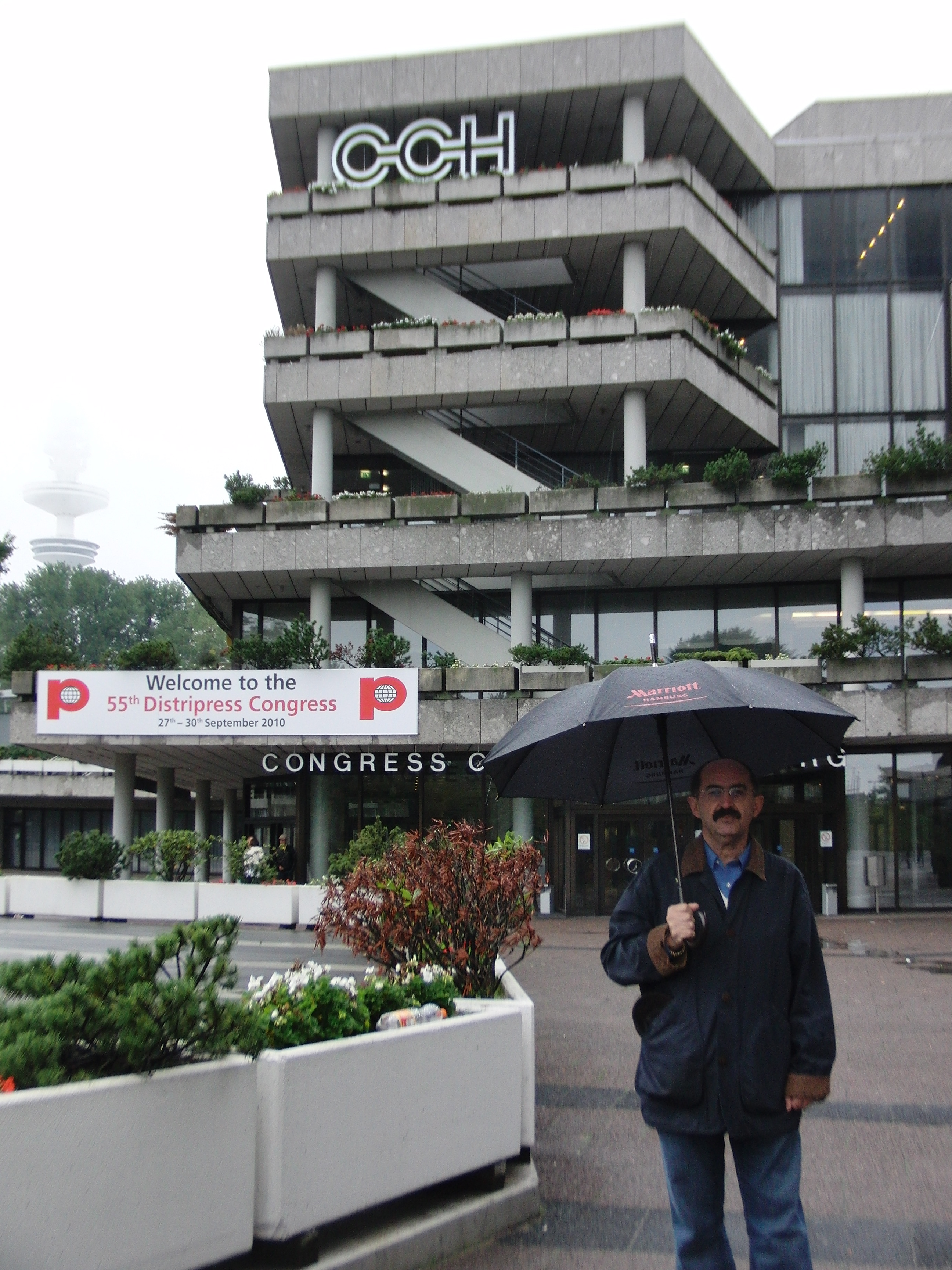
The future was front and center at the 55th Annual Distripress Congress in Hamburg, Germany. More than 1050 attendees gathered, engaged and interacted (try to do that Mr. iPad) with each other at the Distripress annual meeting of the association that bills itself as the “Platform for World Wide Press Distribution.” The wide range of topics focused on providing solutions for publishers and distributors of magazines and newspapers worldwide. Problems were identified and solutions were offered. There was no escape forward attitude and no blame game for the problems facing our industry. The lack of vision, leadership and courage were cited by Tyler Brulé of Monocle as a major source for the ills of the industry.

That was but once lesson from the 55 great lessons that I have learned from the Forum during the 55th Distripress Congress. Here are all the lessons:

1. The role of magazine and newspaper publishers is changing. It is about protecting the heart of journalism and about responsibility. It is the duty of any publisher all over the world to ensure the diversity of opinion and to control competing powers in a democracy.

2. To protect the heart of journalism and to meet our responsibilities we need to be aware of three fundamental aspects:
a. There will be no relevant information without journalistic quality.
b. There will be no journalistic quality without journalistic independence.
c. There will be no journalistic independence without economic independence – which means profitability.

3. The Internet has given us a lot of freedom and journalistic opportunities. But it is not acceptable that third parties use our expensively produced content for their business without any compensation. The economic loss to the publishers is not only massive – it is a threat to press diversity. Therefore it is important to improve the copyright protection and to establish copyright laws for publishers.

4. The greatest challenge of our time is to set up an economic base that allows publishers to run quality journalism as a profitable business.

5. Any strategy for the future of publishing must follow a three- legged model objective: Re-inventing the core, expanding the core and building a new core in the professional publishing segment.

6. Print can and is still a highly profitable and successful business – today and in the future.

7. Technical innovations like the iPad will make an important contribution to the world of media products, and they will help us to win younger audiences.

8. Any newly developed media channel is worthless, if we do not succeed in making a profit from it in the long term!

9. The digital revolution is forcing a complete reinvention of the publishing industry while targeting customer profiles that diverge more and more (in ten years core customer targets will all be internet-native…)

10. The publishing industry as a whole has to reinvent itself. Publishers and distributors have to make their own (R)evolutions.

11. There are three reasons for hope: A growing need for entertainment and media; Reading remains a pleasure and a noble hobby among the population; and reading newspapers and magazines represent an aspirational trend and a new lifestyle among the middle-class population in new countries.

12. Paper remains the easiest way to read newspapers and magazines.

13. A Publication on paper:
a. Is the cheapest device
b. Has the highest definition
c. Is suitable for long reading hours
d. Is mobile, easy to pocket and carry anywhere
e. Allows immediate access, no need to connect and reload
f. Is quick to browse, with immediate response time
g. Has an excellent touch and feel
h. With a special smell
k. Is 100% recyclable

14. Our challenge is to address the “ready-to-move-to-the-web” and increasingly mobile population in a more individualized & differentiated way per age, habits

15. We must venture into mixed offers paper / digital:
a. premium content on portable devices on top of existing paper press with differentiated contents.
b. 3D in printed press both newspapers and magazines (see the Sunday German Bild newspaper example below)

16. Publishers must have a solid commitment to the issue of copyright. They must learn from the mistakes of the music industry and adapt.

17. Inability of publishers to stand united and firm will lead to disastrous results.

18. Unlike music, magazines and newspapers, are not a background medium… they are front and center for the consumer.

19. Customers must come first.

20. Do what you do best and than link to the rest.

21. Endless customers choices is leading to unlimited demand.

22. Consider a business strategy like this one:
a. Determine your customer‘s needs.
b. Focus on the value added you provide best.
c. Make use of technology and platforms.
d. Collect and organize data.
e. Engage your customers – your community.
f. Act authentic.
g. Listen to digital natives and engage them.

23. In the midst of this digital age, we believe in print and we have the story of Grazia in Germany to put our money where our mouth is

.
24. Anti-cyclical acting will be rewarded and sometimes luck is with the bold and active ones.

25. Launching in economically difficult times can possibly create positive expectations and as a consequence strong support from your market and business.

26. Medium sized companies may not be at any kind of disadvantage in difficult times as
reaction time and therefore time to market is possibly faster.

27. Successful international concepts and licensed models can succeed, even
in saturated markets.

28. Stay with your strategy: Our strategy is: Print FIRST.

29.There is a children’s daily newspaper in France called “Le Petit Quotidien” and published in three different editions to reach different age groups from 6 to 14.

30. The daily paper feels and reads like a magazine with relevant focus to the relevant age group. The paper grows with its readers and has a total paid circulation of 150,000.

31. The web and the internet are not to be blamed for our troubles and problems in print.

32. The publishing industry needs to fight back with the tactile nature of its product.

33. Our problems can be summed by: a lack of vision, a lack of leadership and a lack of courage.

34. Every industry, every sector had to rethink the ways they are doing business in the last decade, except for the newsstands business.

35. It is time for a complete overhaul: selling me a candy bar with my newspaper is not the answer nor print on demand is the answer.

36. Look for Japan and South Korea: two places where they are creating rich, true diverse markets and experience… both in print and digital

37. Do not give away your publication. Monocle charges more for a subscription than buying it from the newsstands.

38. Make your subscribers feel like they are club members. Give them some evidence of that membership to showoff and identify with other members.

39. Subscribers will become patriots of the brand.

40. Deliver one story across the globe. Monocle aims to give the newsstands “love.”

41. Do in print what National Public Radio in the United States did to radio.

42. Print has become a more premium medium.

43. Monocle is creating newspapers, stores, products, events using intense branding and partnerships.

44. Soon the Monocle hotels may start appearing and the first one maybe in Beirut, Lebanon. See why in my two minutes interview with Tyler Brule, Monocle’s founder and editor in chief. (See video below)

45. Tyler Brulé and his magazine are a rare breed, but it is not too late to follow his lead.

46. Print will be with us for a long long time.

47. The magic of using four different kinds of paper in the same issue of your magazine works magic and create a wow factor that is missing from a lot of magazines on the market place.

48. When launching a new magazine, go to the source: the customers. Ask them what they want, when they wanted and how they wanted.

49. Think different: feeling good does not necessary means losing weight or looking beautiful.

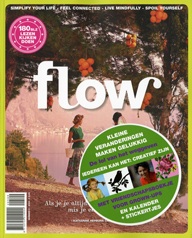
50. Print is still the best platform for Time for ME. (See Flow magazine cover below)
51. We live in a digital age, but Print is still a very profitable business.

52. Newspapers and magazines are not dying, however some are committing suicide.

53. We can’t afford to be just content providers anymore, we have to become experience makers. In the midst of everything digital we need to focus on the humans.

54. Publishers must sell their products at a premium and must use from digital and technology what enhances their print product and not destroy it.

55. We are in the business of making money, any model invented, being invented or is soon to be invented, if it does not provide the publisher with sources of revenues it will not work.

The aforementioned lessons my friends, are just but a few pearls of wisdom that I’ve learned from the 55th Distripress Congress in Hamburg, Germany. There is much much more to be learned, but since that was the 55th Congress, I will stop at 55 lessons. I can’t wait to learn some more next year in Barcelona. I will have the chance to learn 56 lessons. Enjoy!

Giving credit where credit is due, lessons 1 to 8 came from Dr. Bernd Buchholz, Chairman of the Executive Board, Gruner + Jahr AG, Germany; lessons 9 to 15 from Dag Inge Rasmussen, President and COO, Lagardére Services, France; lessons 16 to 18 from Bhaskar Menon, Director, NDTV, India and Chairman & CEO of International Media Investments, USA; lessons 19 to 22 from Ewald Wessling, Media Consultant, Germany; lessons 23 to 28 from Lars Joachim Rose, President and CEO of Klambt Verlag, Germany; lessons 29 to 30 from Francois Dufour, Editor in Chief at Play Bac Presse, France; lessons 31 to 46 from Tyler Brulé , Chairman and Editor in Chief of Monocle, United Kingdom; lessons 47 to 50 from Anita Mooiweer, Head of Business Development, Sanoma Uitgevers, The Netherlands; and lessons 51 to 55 from yours truly. Thanks to all.


h1

Magazine Innovation Center’s ACT Experience: Planning for the future at a minimal cost

August 30, 2010


Are you thinking of launching a new magazine? Are you interested in learning what is going on in the largest South American marketplace? How about successful magazines in The Netherlands? Is there a future for digital or is it the future? Can the advertising driven magazine publishing model survive? What role will design, marketing, branding, distribution play in the future of magazines?

These questions and many other will be answered at the “Re-imagining our future while we still have time” the first Magazine Innovation Center’s ACT Experience taking place in Oxford, Mississippi on Oct. 20, 21 and 22 this year. The experience, which will be conducted by some very high-powered media folks, will be intimate in nature and limited to no more than 100 participants.

Discussions at the ACT Experience will include, but not limited to, our print magazine future, the digital world, marketing and distribution, launching new products, advertising and promotions and a road map for our future.

In addition to the learning aspect of the Experience, the three days will include a trip to the Mississippi Delta, birthplace of the Blues music and a visit to William Faulkner’s House, the Nobel Prize winning author.

Billed as three days of Magazines, Music and Mississippi, the Experience promises to be unlike any other meeting or convention you’ve ever attended. Guaranteed! Click here to register “while we still have time!”

Questions about the ACT Experience, feel free to drop me an e mail at samir.husni@gmail.com and I will be more than glad to answer all of your questions. Looking forward to seeing you in October. It will be an experience of a lifetime.

h1

37 good things I have learned from the 37th FIPP World Magazine Congress

May 10, 2009

4327_103017896186_746391186_2993181_206397_n
I just came back from London after attending the 37th FIPP World Magazine Congress. Here are the 37 good things I have learned from the conference. You will notice that I have focused on the positive things, since media reporters and pundits alike chose to focus on every negative statement that was made in the Congress. Take those 37 positive statements and compare them with you’ve read and heard from the rest of the media world, and I can assure you that you will see, as I do, the cup as half full and not have empty.
All of the following 37 statements come directly from the different speeches and panel discussions that were held during the two-day event in London on May 5 and 6:

1. It is important to adapt a long-term perspective and to accept the short-term decline.
2. Magazine companies will continue to acquire publications and will emerge leaner but better able to compete in the years ahead.
3. The magazine industry may find a new role after one or two false starts
4. By the 4th quarter of 2009 the advertising issues will hit bottom; by 2010 it will be flat.
5. Journalism is an extremely expensive business.
6. The music has suddenly stopped and now we are having a cold shower. In the magazine world the problem is the economy.
7. The digital model (we have now) is a dumb model: putting dollars to chase cents.
8. Increasing traffic to your site is not a trade off: you can’t monetize traffic.
9. The web is a great enabler.
10. Continue to make sure that you are producing quality content (and not just content) and enduring brand. Keep the brand relevant.
11. Continue to invest in valuable editorial content. Content others can’t replicate.
12. If all publishers agree to charge for content, what would Google do?
13. We will still launch new magazines: it is still a very good business.
14. Even newspapers will have longevity.
15. Great magazines are not simply great content; they have a heart and a soul and they will be with us for a long, long time.
16. Magazines have the ability to have an intellectual exchange with the readers.
17. You can’t substitute the magazine experience; it is a treat and is welcomed in your private space.
18. Magazines provide a quality reflective experience and a beautiful thing to have.
19. Do not call the established media traditional media; call it Analog.
20. Do not blame digital and keep in mind it is not yet time for obituaries.
21. Take complete advantage of your brand.
22. Do not stand still.
23. Unlike many sectors, Gucci will see a decrease in luxury online spending.
24. Magazines are still useful, relevant and interesting.
25. Digital and online are like a “successful parasite that does not kill its host.”
26. Google is not a media company; it is a technology company.
27. Magazines are robust and tactical products. The best lifestyle package to sell every issue.
28. Select your best brands and invest in them.
29. The current crisis should help us innovate and find new sources of revenue.
30. The brand DNA should transfer to the web; not the ink on paper magazine.
31. Once you feel safe you should start thinking about the incoming danger.
32. Paper provides emotional engagement and attention: the so called “Did you see moment?”
33. Print is a moment in time. We need to get consumers to value that moment.
34. Content creates conversation; utility creates engagement. Only outstanding content is king and queen.
35. Those who believe that paper and print will disappear, there is only one word to pronounce – nonsense
36. Don’t waste the crisis. Use the time to start thinking. Take advantage of magazines great brands. Magazines have built communities long before the internet started.
37. Ten years from now we will remember the current situation as one of the greatest financial opportunity in the history of our magazine industry.

So, ladies and gentlemen, here you have it in 37 simple aforementioned statements that I hope will push us to innovate and amplify the future of our magazine industry. We are not dead yet, and we will not be for a long, long time.

h1

On making the magazine cup FULL

May 8, 2009


So is the magazine cup half full or half empty? Well, my friend Jeremy Leslie, the executive creative director of the London-based customer communications agency John Brown and the creator of www.magCulture.com, answered this question unlike any other person I have interviewed so far regarding my video blog series on innovation, print and the future. Jeremy was covering the second day of the 37th FIPP World Magazine Congress in London. In the midst of one of the breaks (thus all the noise in the video) I asked Jeremy if print is dead and if he sees the cup half full or half empty. Hear his one minute plus answer by clicking the video above.

h1

Innovation and the future: The view from the Arab World

May 7, 2009


So what does the editor of one of the largest women’s weeklies in the Middle East think about the future of print, magazines and the web. I had the opportunity to ask my two questions to Mohammed Al-Harthi, the editor in chief of Sayidaty and Al-Jamila magazines with offices in Dubai Media City, Beirut and London, and the only Arab magazine editor attending the 37th FIPP World Magazine Congress. Mr. Al-Harthi issues a call for more forward thinking the Arab media and to look at what is happening in Europe and the United States to learn from the current crisis and take lessons for the future. Click on the above video to hear his two minutes answers.

h1

The Only Obama/Bush Cover I found in Europe…

January 29, 2009

panorama
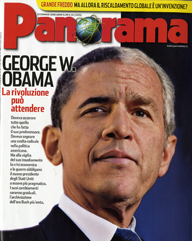
Traveling through-out Europe last week, I came back with tens of newspapers and magazines celebrating the inauguration of President Obama. It was a complete celebration. You would have thought that President Obama has been elected president in Belgium, Holland, France, Germany, Spain, and even as far as Finland. However, one magazine stopped me in my tracks: the Italian newsweekly Panorama. Their cover read George W. Obama and the picture is one of the best photo-shopped images that I have witnessed on a magazine cover in a long time. Judge it for yourself and let me know whether you agree with me or not. It pays to be different (sometimes)…

h1

Lessons from Abroad: Selling Content, and NOT Giving Content…

December 9, 2008

lexpresslexpressstyleslepointparis-match
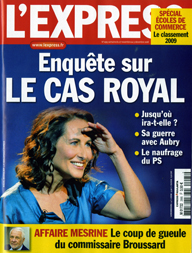
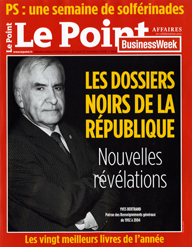
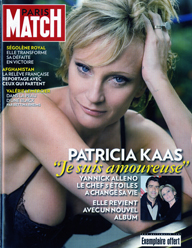
I know it is the season to give, but I am going to write today about selling rather than giving. For starters, I am amazed by the size of the so called news weeklies in Europe. Every time I am on an overseas trip I pick up some of the weeklies, regardless whether I can read them or not, and I am shocked how thick and heavy they are. Case in point the three weeklies I picked up in Paris. L’Express (with a supplement), Le Point and Paris Match. Each is a least 140 pages with one reaching the 200 page count. Paris is not unique, Rome is the same (some issues of Panorama hit the 350+ pages). Brussels, Amsterdam, London, Madrid and other European cities still are producing hefty-sized printed weeklies. So why them and not us? Why are our news weeklies limited to 68 to 80 pages most of the times? One thing I know for sure, it is NOT the size of the staff. Our magazines have at least double if not triple the staff of their European counterparts. So, is it the publishing model or is it the audience? Or is it as one of my colleagues at the University of Mississippi said, “My theory is that our society’s and culture’s anti-intellectualism is partly responsible.”
My theory has more to do with our publishing model. Few points to consider. Point number one, our publishing model is bloated. We SPEND much MORE to CREATE LESS content than our European counter parts. (Did you notice that even with all the cuts in our media industry there were no change in the size of the publications? Whether it is a magazine or a newspaper operating with a slimmer staff, a much slimmer staff, the publications are still the same size. Makes you wonder what were all these people doing!)
Point number two, the publishing model overseas still charges readers/customers for the content of the magazine. We give it away. The publishing model overseas still offers readers/customers content they can’t find in any other medium. We are losing our uniqueness in print. The publishing model overseas is adapting to the changing media consumptions of its audience ONLY when it is needed. Here we are talking a lot about change, we are changing for change sake, but in reality we are doing the same thing over and over and expecting different results every time; the Chinese define that as INSANITY.
Point number three: I know change is hard to come by. Yet, I also know that if we do not change we are going to die. We have to start catering to our Most Valuable Person. Our MVP is our reader turned customer. Our MVP is expecting us to Meet and exceed his or her expectations when in comes to content; Validate his or her expectations; and Preview what is coming in the days ahead. It is all about the content and the price of that content. I will feel much better if a magazine offers its selected readers/customers free subscriptions because they meet the criteria of “customers who count” than asking anyone to send $5 or $10 dollars for a one year subscription. Customers who count will be looking for “content that counts” and not just for any content delivered to any customer.
Drop your shotguns, and sharpen your lasers… The light at the end of the tunnel should not be the train coming.

h1

Back in the USA with a Refreshed View of Print and Newspapers

December 5, 2008

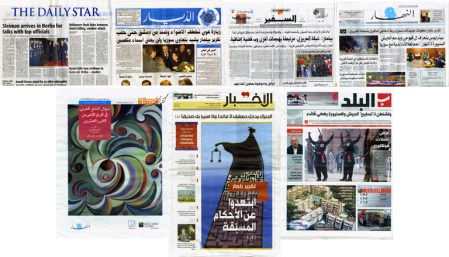
newspapercovers
After a 10-day trip to The Netherlands, France and Lebanon I am back in the office with a more refreshed view of the future of ink on paper and anything else that surrounds it. I will be devoting this space in the next few days on some of the observations that I have witnessed first hand about the future of newspapers, news magazines and print in general.
In Lebanon, my native homeland, I am amazed at the number of dailies that are still published. Every morning I had the choice of almost 20 newspapers, yes, you read that right. In this small tiny middle eastern country newspapers are still thriving. I bought 10 papers every morning (My mom still does not understand why I waste my money on paper… She held the same view since I was eight years old). Each paper provides its readers with a distinct point of view, a deep understanding of what is going on and an explanation of how you are supposed to react to what is going on. There are the independent papers, the political party papers and the so called supported/sponsored papers. Each has its own philosophy and understanding that makes the different television channels available look like child play by comparison.
Yes, there is internet in Lebanon, and yes there is a hefty number of television stations, and yes newspapers have their web sites and on line updates, yet no one is talking about the death of print. No one is digging their own grave by digging so deep in the ground that they are surrounded by nothing but the walls they’ve just created. They studied their content, adjusted their content and some adjusted their size to meet the needs, wants and desires of their readers. Lebanon is not alone; the same is true in the other two countries I have visited. Technology is thriving, but not at the expense of print (More about that in a later blog).
Folks overseas are watching us and learning from our mistakes. My question is, when are we going to learn from their innovations in print and its content?

h1

A Magazine Vote from The Netherlands…

November 5, 2008

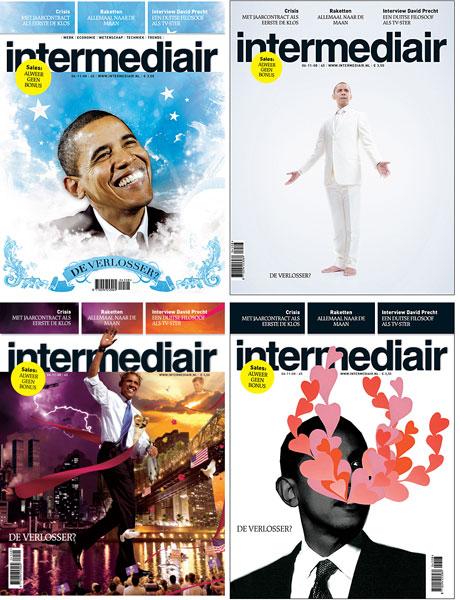
Here is an e mail I received earlier today from The Netherlands regarding the presidential elections and magazine covers.

a_1225793347

Hello Mr Magazine,

As i read your blog i wanted to give some attention on a special split-run-cover about Obama; beautiful artwork.
Printed BEFORE the result of the election, so this is a big gamble for the magazine from the Netherlands, Europe.

Cheers Jaap Biemans

Thank you Jaap.

h1

Greece adds Your… and Yet Another Reader-Generated Magazine is Born

October 24, 2008


Reader-generated content is becoming something of the present. Before the web (BTW) magazines like Country and Taste of Home depended on the postal service to deliver bags of mail to create the reader- generated content that was the corner stone of the Reiman Publications’ empire before selling it to Reader’s Digest Association. After the web (ATW) JPG magazine and its publishing company 8020 pioneered the use of the internet to create printed reader-generated content magazines. Budget Travel magazine and This Old House both created magazines written completely by readers. In fact This Old House altered the name of the magazine to Your Old House to reflect the nature of the content.

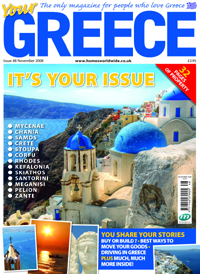
Now in this ATW age, comes Greece magazine from the United Kingdom. Merricks Media’s John Weir tells me that the November issue of Greece magazine will be their first reader-generated issue and they too altered the name of the magazine from Greece to Your Greece.

I asked John about this ATW experiment with Greece magazine and the input he received from the readers.

He responded, “We had more than 500 entries to the reader issue. The really pleasing thing is the quality of both written submissions and picture entries -in many cases the quality and selection of pictures were better than the photo libraries!!”

And as to who had the final say in the selections of the articles and pictures, John said, “The editor and the editorial team did the selection of both articles and pictures and then contacted the readers who were successful in submitting the material.”

As for the major benefit from this experiment John told me that “In all cases, the major benefit to the magazine was the detail on the “undiscovered” Greece – all the tavernas, restaurants, tourist sights and antiquities that are both off the beaten track and real finds for tourists. They are exactly the sorts of things that one journalist cannot find but that thousands of readers can.”

Will he do it again? “We’ll definitely do it again – already we’ve seen a 30% rise in subscription applications and the emails have started coming asking when the next issue containing reader content will be put together,” he said.

John added, “If anything, it has exceeded expectations, and has encouraged us to get a more regular conversation going with readers.”
http://www.merricksmedia.co.uk