Archive for the ‘A Launch Story…’ Category

h1

Molly My Mag: A Magazine To Help You Fall In Love With Reality & Life. The Mr. Magazine™ Interview With Molly My, Founder & Editor-in-Chief…

February 18, 2022

“…We aim to help people fall in love with reality and create a lifestyle they appreciate through the highs and lows; the holidays and the everyday.” Molly My, Founder and Editor-In-Chief 

“While we can all appreciate the incredible impact digital has made on our lives, digital content is often placed in front of us, whether we sought it or not. Print content is what we place in front of ourselves by choice.” Molly My

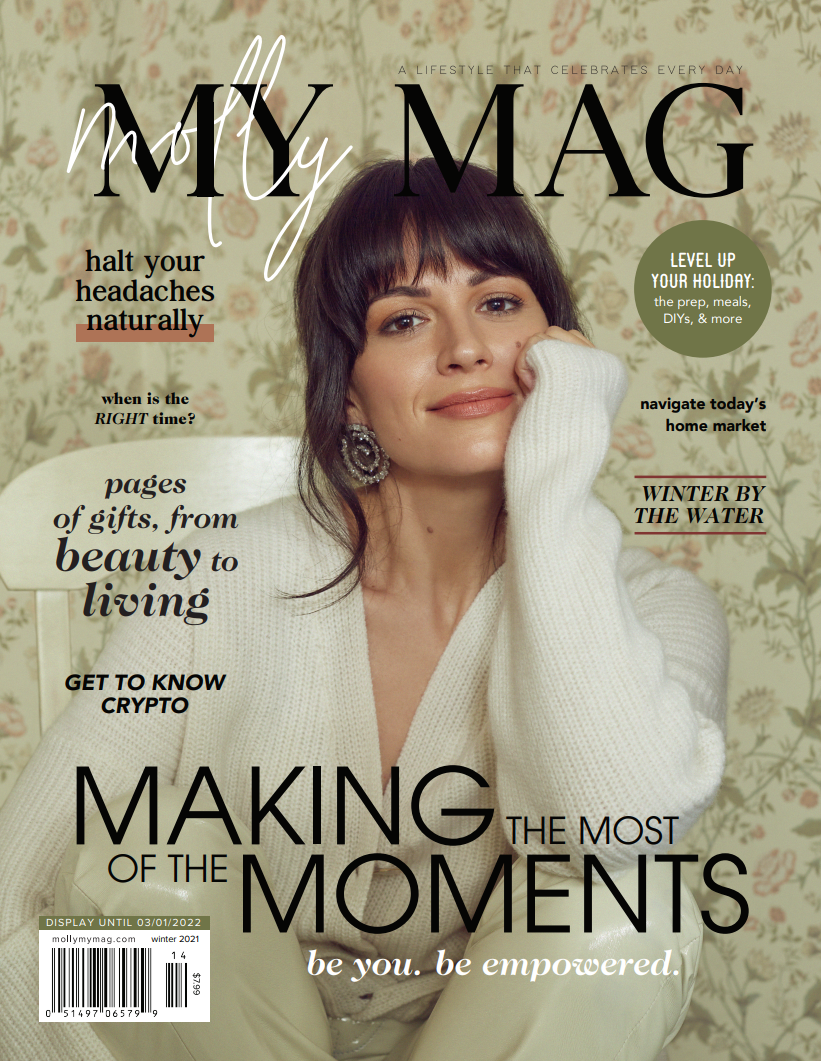
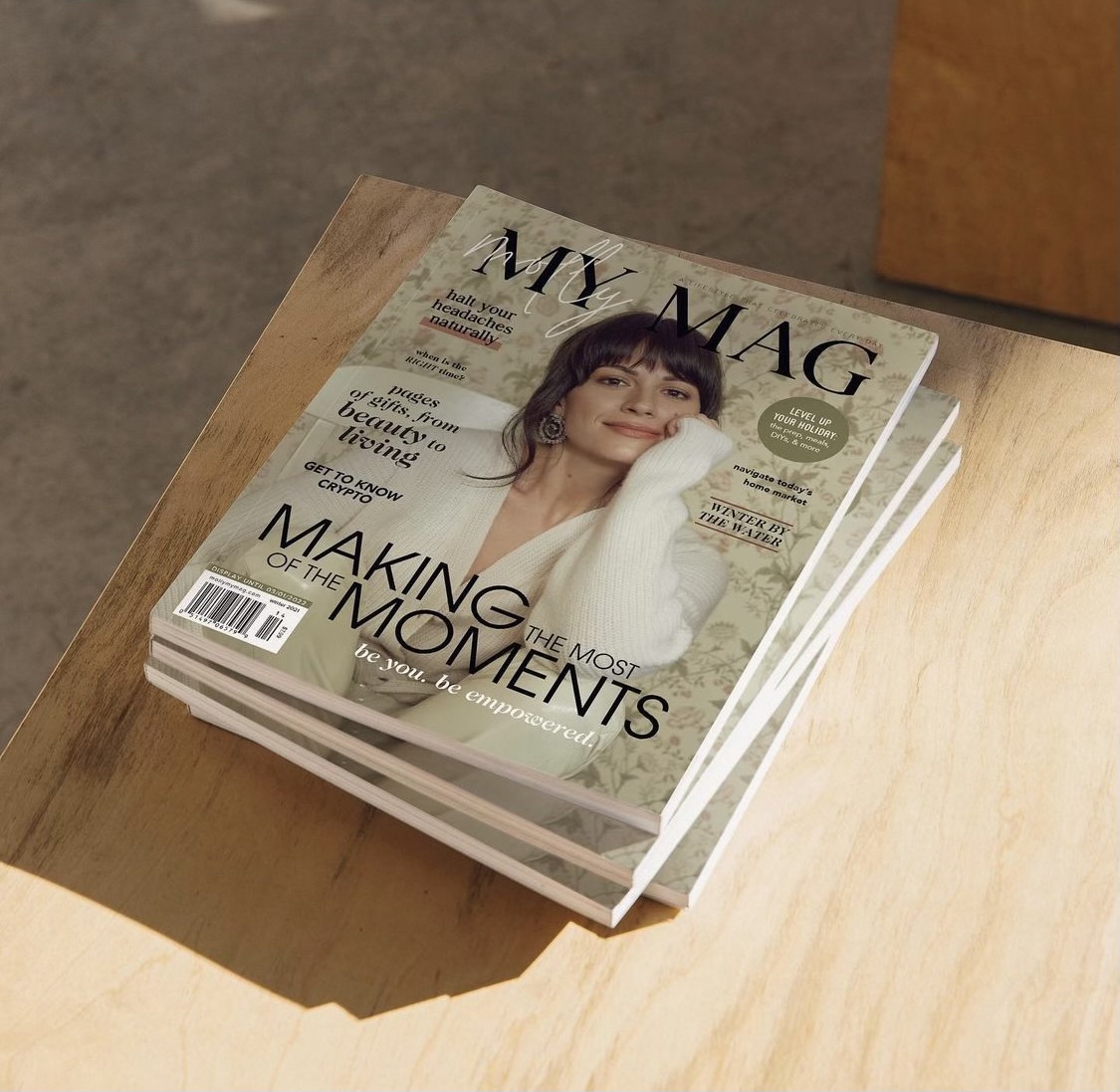
How can I describe the magazine that is the subject of this Mr. Magazine’s™ Interview? Brains meet beauty and a celebration of everyday life, is, in short, the best description I can give to Molly My Mag.  After reading my interview with Molly My, the founder and editor-in-chief of the magazine,  you may add that description to the woman behind the idea of the magazine. Molly My Mag can easily be Molly Your Mag.

Fighting many closed doors, Molly My was determined to launch her magazine idea and open as many doors as possible.  She did not allow the fact that “being young and unknown” in the magazine media business to stop her from finding ways to create her childhood dream: a magazine that speaks to her and her peers.

The story of Molly My Mag is the story of Molly My.  The bi-annual magazine “encourages women to create and seek life’s most beautiful things and moments.” Twice a year, every winter and summer readers have a “date” with the content-rich magazine and a break from the digital blue lights.

A firm believer in the combination of print and digital Molly My presents her audience with a lovely ink on paper magazine to turn the pages one at a time, and a digital website to keep the conversation going among friends.

So without any further delays, here is the Mr. Magazine™ Interview with Molly My, Founder and Editor-In-Chief of Molly My Mag.

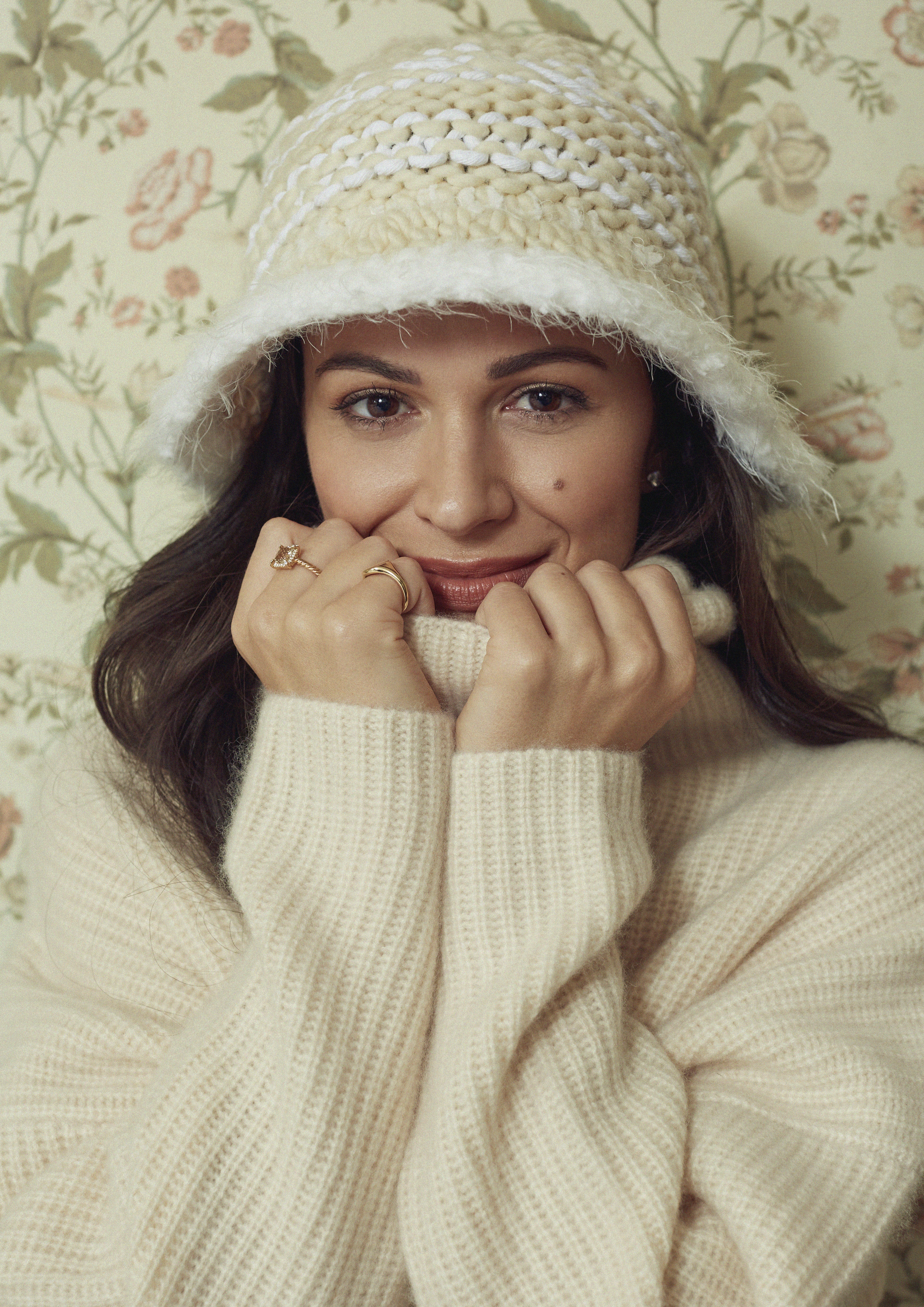
Molly My, Founder and Editor-in-Chief Molly My Mag. Photo by Ssam Kim

Samir “Mr. Magazine™” Husni:   From a young age, you were approaching media giants with your ideas to do a lifestyle program or show.  It seems with Molly My Mag you’ve achieved your teenage dream. Can you please take me through the journey of creating Molly My Mag and how it transformed from My Magazine to Molly My Mag?

Molly My: It’s been a dream come true, but I’m just getting started! I still have so much I’d like to do that stems from my original vision. Growing up as a millennial, the media played a huge role in my life. As I entered my early teens, I noticed it speaking more to my and my peers’ insecurities rather than our strengths — without many tools to help, other than “buy this!” At the time, there were limited voices targeting our demographic in the right ways. This lit a fire in me that hasn’t burned out since. When I was 13 years old, I started to pitch the big guys a lifestyle series for young women, which would integrate into digital content covering health, wellness, food, style, culture, and more. As you can imagine, being young and unknown in the industry meant that this idea was met with a few closed doors, but I was determined to make a difference with or without the help of others.

Keep in mind, when I was pitching these concepts, this was well before YouTube and lifestyle content went mainstream. I kept the idea close to my heart and as I entered college, Facebook emerged. My first jobs were in marketing, public relations, and advertising, when blogging and Instagram were at the forefront. I saw clearly where this was all going, and picked the pieces of my adolescent dream back up. The internet was saturated with content, and magazines, in my opinion, were due for a fresh comeback. I’ve always been inspired by the road less traveled — and with that, Molly My Mag was born. With more life experience under my belt, including launching a social club to support working women transitioning into adulthood, I felt like I had more tools than ever to continue to self-advocate and help others.

As you know, print is beautiful but expensive, so I first launched the magazine digitally (as My Magazine) before building the traction to crowdfund for our first print run. As the concepts grew, I intertwined my name into the brand to further connect with readers. I wasn’t a media giant with backing — I was just Molly, and it was important to me that our readers knew who was behind the pages; just a girl with a big dream. Plus, many were already calling it Molly My Mag and My Mag, so it made sense to make it more easily identifiable. 

S.H.:  What would you consider was the biggest hurdle that you had to overcome during this journey?

M.M.: Getting comfortable with “no” for an answer, and starting from scratch in publishing. Although I studied journalism in college and had a career and internships prior to the magazine, I didn’t have any print experience — just a love for it. When I decided to expand our distribution, I called every single store directly and that’s how I built our list. I work with some amazing distribution partners now! A lot of people thought I was crazy to embark on this in a digitally-focused era; a lot of brands and companies didn’t believe in me or print — that’s hard, and discouraging. 

I always tell people when they start a business to make sure you’re deeply passionate about it, because whatever it is you’re doing, the passion is the thing that keeps you going. You can’t rely on the good days since those can be few and far between. I didn’t have a road map, which made the journey more challenging, but I wouldn’t have changed one thing because I grew so much with each step. In my opinion, the difficulties have made me more valuable in the space, to my team, and to my readers. It makes the wins much sweeter too! 

S.H.: What was the most pleasant moment?

M.M.: Seeing our first print run come to fruition was definitely a great moment; I was like a kid on Christmas opening those boxes! A close runner up would be getting into Barnes & Noble and Whole Foods, which are two chains I‘ve always had my eyes on. I’m so grateful for the support I’ve received from each and every one of our store partners, and I’ve met the most wonderful people through this process. Reflecting on all of the points of view, work backgrounds, and personalities we’ve brought together in the magazine has been tremendous as well. From our contributors to the hands that put us on shelves, the magazine connects us all — and takes a village! We’re among this great community of people and I just feel really, really lucky to have this opportunity. 

S.H.: Tell me more about celebrating everyday life.  Some folks think magazines are an escape vehicle, yours is bringing people to reality. Why?

M.M.: I think it’s so important that we love our lives. Yes, escapes are nice, but they’re not long term and often unattainable. In Molly My Mag, we aim to help people fall in love with reality and create a lifestyle they appreciate through the highs and lows; the holidays and the everyday. Sounds cheesy, but each moment is a blessing, so it’s necessary we recognize that and celebrate the lives we have or take action to create the lives we want. 

S.H.: Can you identify the role of print in this digital age and how is your print and digital working/not working together?

M.M.: For one, print is a break from blue light! I’ve always loved print for its authenticity, connection, and the way you can intentionally take it with you to the airport, beach, couch — you name it. While we can all appreciate the incredible impact digital has made on our lives, digital content is often placed in front of us, whether we sought it or not. 

Print content is what we place in front of ourselves by choice. I think the manner in which we consume content and information today really hinges on these differences. Print and digital sound like enemies of one another, but I believe they can be used together for greater emphasis. On our Instagram

https://www.instagram.com/mollymymag/

we share contributor “takeovers” to showcase the unique personalities and expertise of authors we feature in the magazine. We also bring similar or follow up topics onto our site (mollymymag.com) and utilize platforms like Amazon and LikeToKnowIt to emphasize the great brands and products found in our issues. Now that we have established ourselves in print, we will continue to look digitally. 

S.H.: What are the next steps for Molly My Mag and anything else you want to add that I failed to ask so far?

M.M.: Expanding our content into areas beyond the lifestyle genre we already cover, and becoming a bigger part of the conversations in culture, business, and more. Our base will always be lifestyle. As the magazine grows, I want to get people thinking harder about more aspects of life, but never forgetting about the importance of the light-hearted stuff too. Life isn’t just a singular topic, and I don’t think magazines need to be either. You should be able to read tips on creating your dream home or wedding while also educating yourself about topics like cryptocurrency or women in Afghanistan. 

This is what Molly My Mag is all about. As a media source, I want to introduce new topics to our readers — especially ones they may not have otherwise sought. That’s how we expand our horizons and start to understand the world around us. It would be difficult for readers to grow from the magazine if we covered only a few related topics, which is why we aim to cover it all and pique curiosities in the way we package everything together. Finally, we’ll further build out our website, mollymymag.com, and use digital to complement what we’re doing in print as well as merchandise and more. Wait and see what’s next — but chances are I’ll be very busy for a while! 
That said, anyone who is reading this and interested in contributing to our pages, reach out! We love discovering and connecting with thought leaders and experts. Email our editorial team at editorialasst@mollymy.com.

S.H.: My typical last question, what keeps Molly My up at night these days?
M.M.: The excitement that I have for Molly My Mag. I have a hard time winding down for bed when I’m kept up by the happenings of the day. There’s a weird sense of avoidance in not wanting the day to end, because they never seem long enough and there’s so much I want to do and accomplish. 

S.H.:  Good luck and thank you.

h1

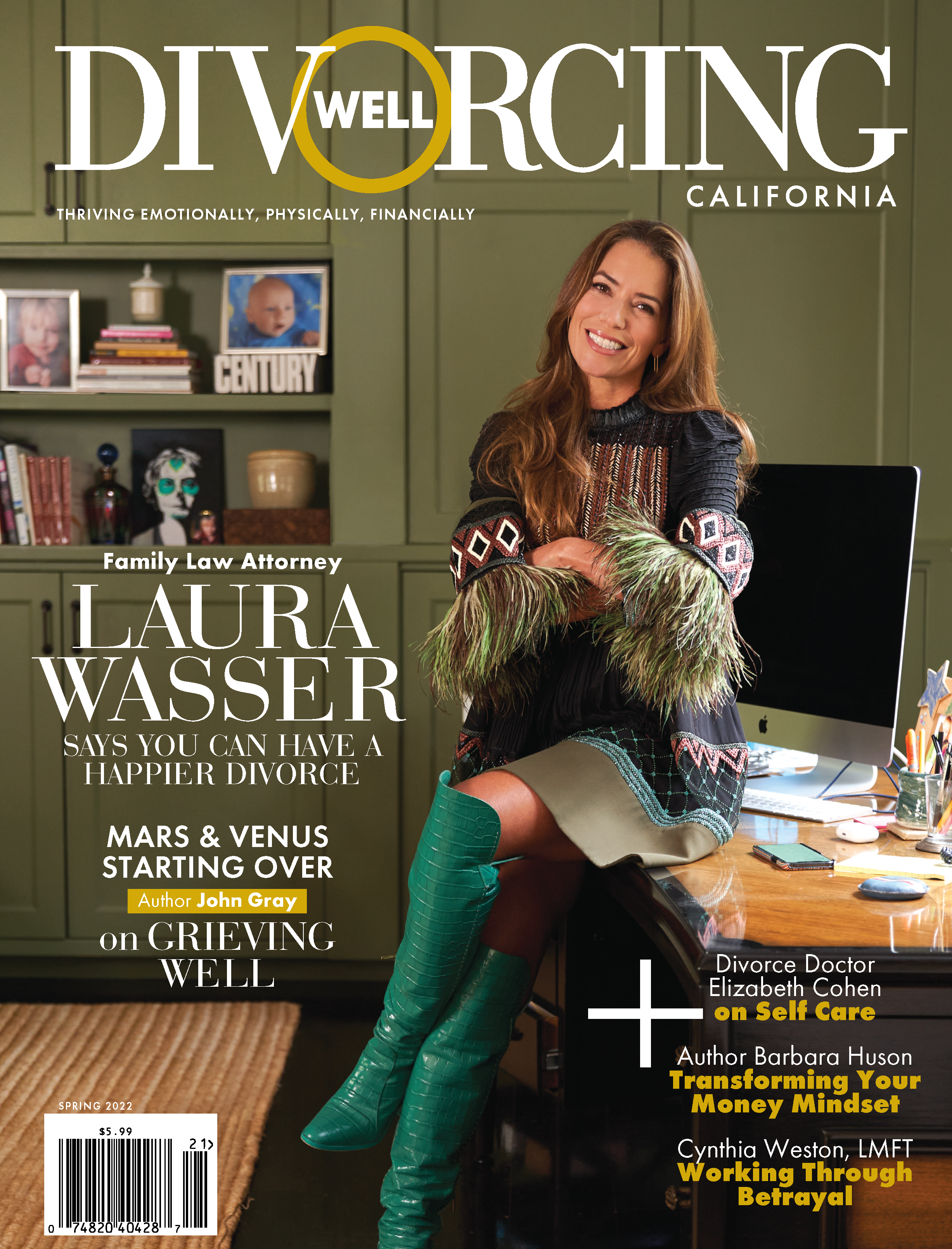
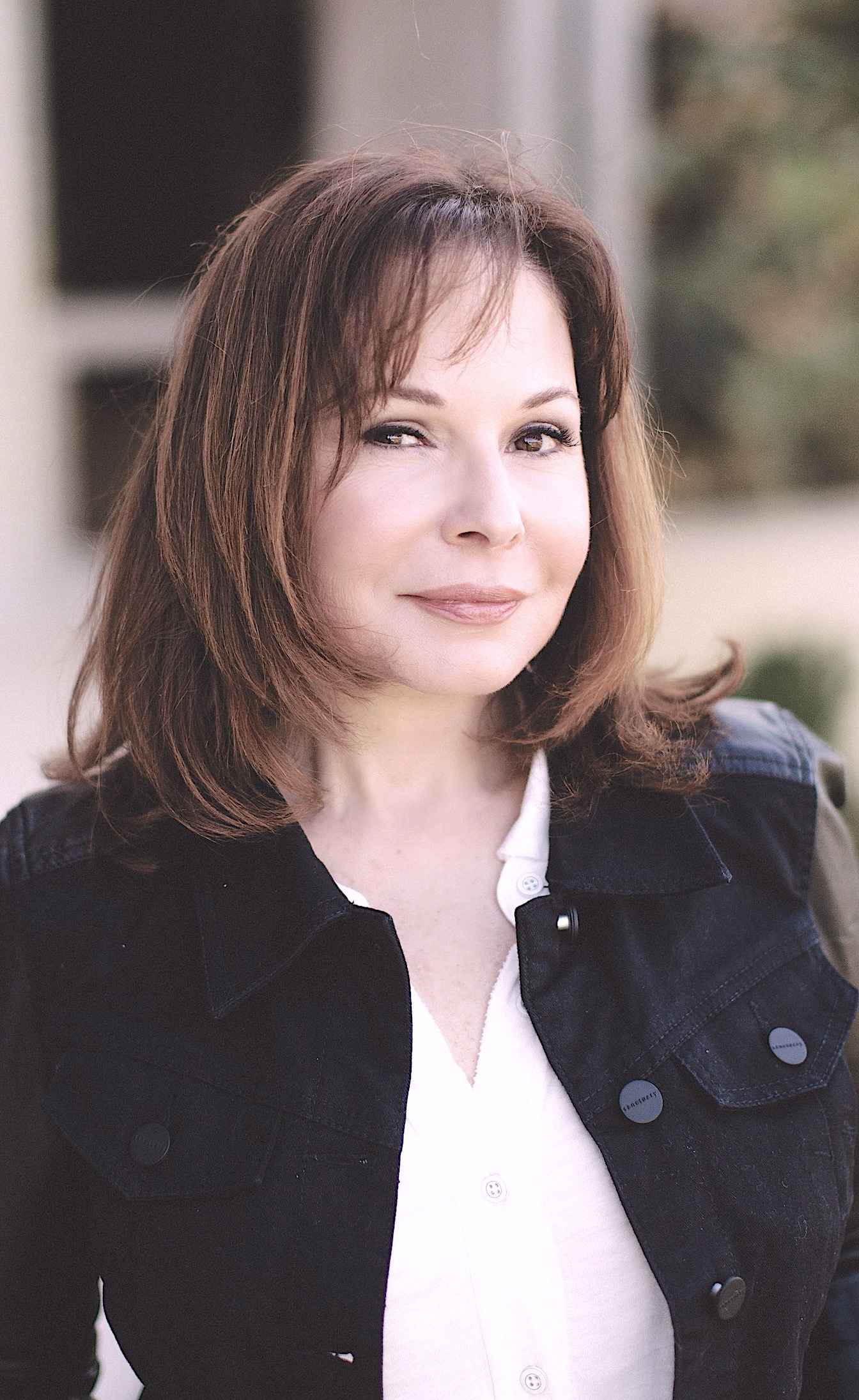
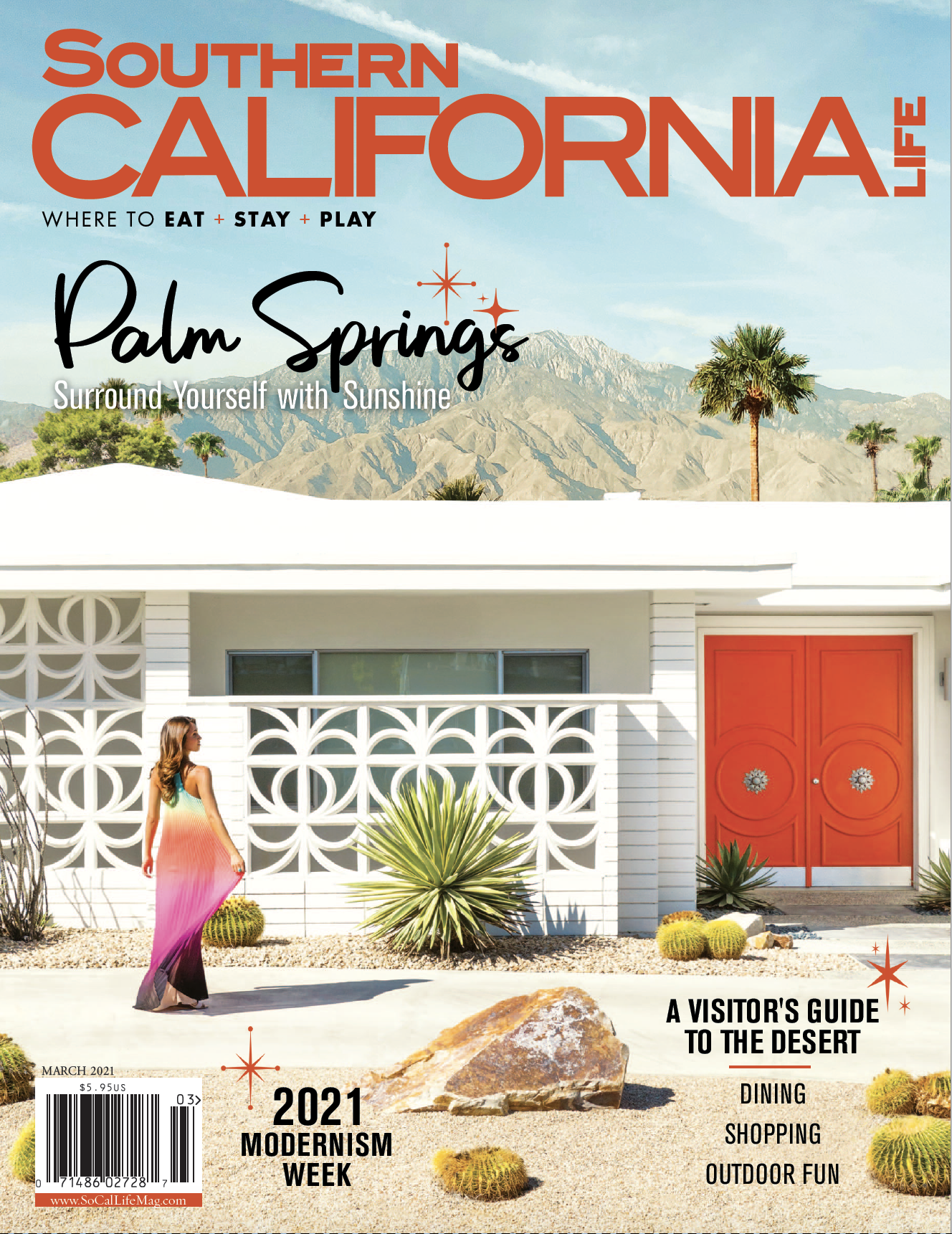
Divorcing Well: A New Magazine Landing On The Stands Valentine’s Day… A Mr. Magazine™ Interview With Monique Reidy, Founder & Publisher.

February 6, 2022

“Magazines have an element of magic – they capture a reader’s attention and keep them engaged for a longer period than their digital counterparts.” Monique Reidy, founder and publisher, Divorcing Well.

“Launching Divorcing Well magazine on newsstands on Valentine’s Day is a proclamation that being single and happy in one’s own skin is a celebration regardless of romantic attachment.” M.R.

“A successful divorce is much better than a failed marriage,” my late brother used to tell us after he and his wife divorced. I was reminded of his statement once I learned that Monique Reidy, the publisher and president of Southern California Life is getting ready to launch her newest magazine, Divorcing Well.

Others have tried to publish divorce magazines, but needless to say they failed after an issue or two. The beauty of Ms. Reidy newest magazine is the Well part of Divorcing… It is like lighting a candle rather than cursing the dark. The new magazine aims to help the divorcee to thrive emotionally, physically, and financially. A tall order, but Ms. Reidy is sure the magazine is going to fulfill.

Judging by the selection of the articles and the design of the magazine, it seems that Ms. Reidy is on the right track. The magazine will hit the newsstands in the state of California on Valentine’s Day and I will leave to Ms. Reidy to explain to you why did she choose this specific day to publish the magazine.

So, here is the Mr. Magazine™ interview with Monique Reidy, founder and publisher of Divorcing Well magazine:

Samir “Mr. Magazine™” Husni:  This is your third magazine launch, why are you still a believer in print in this digital age?

Monique Reidy: People still love magazines because they can read at their own pace and they’re able to enjoy the images and content in a relaxed manner. While digital information can be accessed instantaneously, it can be a challenge to get through an article online with the multitude of intrusive ads and continual distractions. Affiliate ads are now everywhere on the internet, luring readers to click links that hijack them away from what they’re reading to some sort of retail trap. I can’t get through an article about foods that could potentially be poisonous to my dogs without being led shoe shopping (thank you programmatic advertising).

I’m still a believer in print because the medium holds more credibility than the internet in the eyes of most consumers. Magazines have an element of magic – they capture a reader’s attention and keep them engaged for a longer period than their digital counterparts. Studies have shown that a digital piece will attract a person for 10 minutes while readers can linger for 30 minutes or more with a print magazine. It’s rewarding to hear that people enjoy our publications and that they’ve been informed and inspired. 

S.H.: You mentioned you want the magazine to be out in times of Valentine’s, what are you celebrating?

M.R.: February 14th is traditionally a couple’s celebration of their romantic relationship. While it’s a worthwhile occasion, singles can sometimes feel left out because they don’t have a partner with whom to mark the event. Valentine’s day is another reminder to singles that they are in fact … single. And for those who wish to be in an amorous relationship, it’s just rubbing salt into that emotional wound. A newly separated person, particularly one whose spouse left the marriage to be with someone else, could spend a lonely Valentine’s Day marinating in anxious thoughts about how the “ex” is enjoying the evening in the arms of another. 

Launching Divorcing Well magazine on newsstands on Valentine’s Day is a proclamation that being single and happy in one’s own skin is a celebration regardless of romantic attachment. The magazine underscores the importance of self-care and self-worth and that it doesn’t take another human to make one feel worthwhile. Our objective is to inspire readers to love who they are enough to fix what’s broken emotionally and aspire to create a happier life on their own terms. 

S.H.:  What has been the biggest hurdle that you were able to overcome with this launch?

M.R.: Since our first launch of Southern California Life magazine eight years ago, I’ve had to listen to a lot of snarky opinions about why this or that idea won’t work. (And trust me, there’s never a shortage of people who want to hold a storm cloud over your head if you’re on a momentous mission.)  I was vulnerable and easily influenced in those early days, so the pessimists and naysayers sometimes caused me to second guess my goals. Learning to listen to opinions without allowing them to steer me off track has been one of the biggest hurdles I’ve had to overcome. 

When you have a vision and you are focused on a specific target, you better not take your eyes off that mark and just keep moving forward. That’s not to discount getting advice from other professionals, but at the end of the day the backseat drivers can tell you where they think you should go, but you’re the one at the wheel, pressing the gas pedal. 

S.H.:  What was the most pleasant surprise?

M.R.: As a magazine publisher I can imagine about a dozen topics a day that would make a good magazine – but not all of them would make sense. But after I went through a difficult divorce the first time and a bloodbath the second, I decided a magazine offering support to people working through that messy dissolution process would be helpful. The most pleasant surprise has been the overwhelming positive feedback from both divorce professionals as well as individuals currently going through marital divorce. While books can certainly be valuable, a magazine with smaller “get to the point” advice can be much more useful. Every issue will cover how to stay well emotionally, physically, financially, and legally through the arduous divorce process. The objective is to have readers feel encouraged, motivated, and hopeful with every read. The most perplexing part about the project is why no one had thought of this concept before. 

S.H.:  Divorce laws differ from state to state, how are you going to cover all the states and their laws in the magazine?  Are you starting regional (like California first) and then expanding to the rest of the country?

M.R.: The largest sector heading to court are the 50 + year-olds. The divorce rate in the State of California is now at 60% and climbing. I launched Divorcing Well first in California because this is where I live and I’m most familiar with the laws governing dissolution within my State, having just gone through the experience. But while divorce laws differ from State to State within the U.S., some things remain the same, regardless of region. 

For example, when we suffer a marital betrayal, the tools to help us through those feelings of loss and abandonment are not bound by geography. Some of us may have at some point felt like we want to accidentally run over our ex’s new girlfriend. We all feel similar feelings and most of the magazine tackles issues pertaining to staying well on every level (including why running over the girlfriend is a stupid idea). Some of the articles, specifically those that address legal strategies, must be modified based on the laws that apply to each State. Divorcing Well can easily expand to other States as most of the content is universally meaningful. The pieces that address divorce laws would have to be modified to adapt to the laws governing divorce in each State.

S.H.: My typical last question is what keeps Monique up at night these days?

M.R.: Nothing keeps me up at night. I believe in a good and gracious God who keeps my family safe and helps me at every turn. I have many friends who have trouble sleeping — I tell them they should learn to trust God or invest in an effective sleeping pill. 

S.H.: Any additional things you’d like to add or I failed to ask you…

Divorce really does suck. And those going through one that is complicated and contentious need a lot of support from friends, family, psychotherapists, divorce coaches and whomever else they can find to dispense constant encouragement. I hope our publication can be a resource to help breathe life to the heartbroken and tired individuals going through this hardship. Our company is a mostly female group and many of us have experienced divorce. We are putting our hearts and souls into helping readers get through divorce and do it well. 

S.H.: Congratulations on the new launch and thank you.

h1

Bavual: The New Magazine With An Afrocentric Viewpoint. The Mr. Magazine™ Interview With Earl A. Birkett, Editor & Publisher.

February 1, 2022
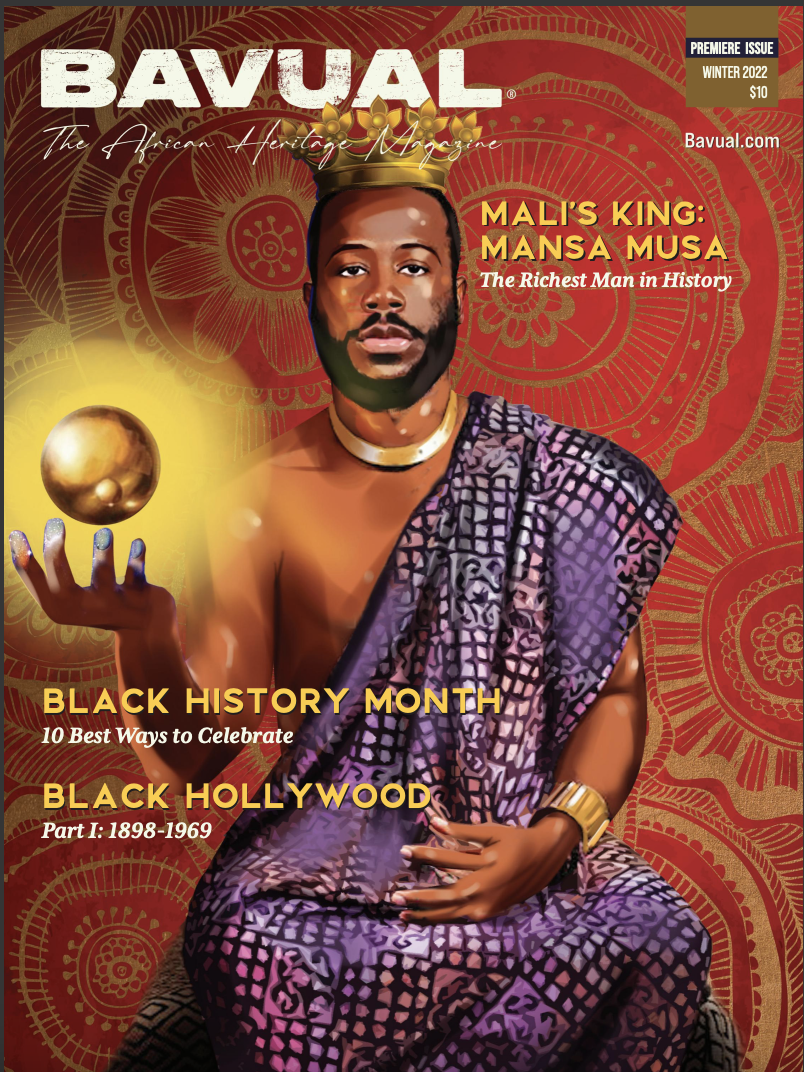
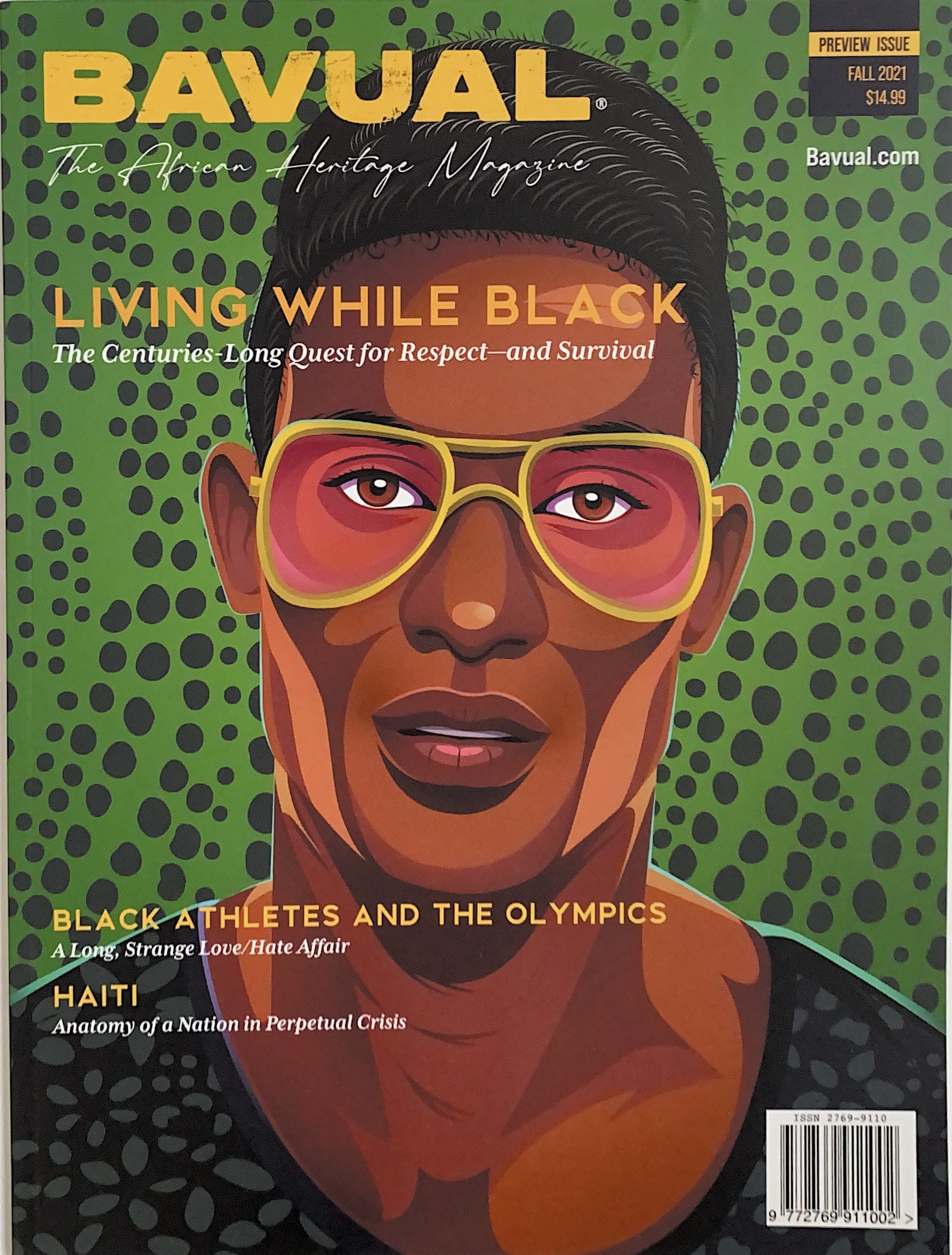
The premiere issue of Bavual magazine.

“Given the divisive and misinformed times in which we live, Bavual just seemed like the right concept for this time.” Earl A. Birkett, Editor & Publisher, Bavual   magazine

“Bavual is a forceful and clear reteller of history from the Afrocentric viewpoint, and explainer of how that heritage interplays with today’s world. My belief is that knowledge is gained through understanding, and understanding is gained through truth.”  E.A.B.

Not too many times do I find myself at a loss of words when I am interviewing an editor or a publisher about his or her magazine.  But after hearing Earl A. Birkett’s story, I was indeed at a loss of words.  His passion to magazines and magazine media is evident in the way he talks about the magazine and on every page of the magazine that will hit the newsstands nationwide shortly.  

Bavual is a powerful forceful magazine with a very lucid focus. The timing can’t be any better, yet the content is timeless. Bavual and the man behind the magazine are both a force to reckon with. This is their story as told in this Mr. Magazine™ Q and A.

Eleven years ago, Mr. Birkett fell critically ill and lost both his legs and kidneys. He told me that he “narrowly survived, thanks to the grace of God and excellent medical treatment. Coming so close to my Maker forced me to re-arrange my priorities and concentrate on leaving a legacy for good. Part of that legacy, I hope, is Bavual.”

And thus the interview is about both Bavual and Mr. Birkett and the legacy that they are creating. So, without any further delay, here is the Mr. Magazine™ interview with Earl A. Birkett, editor and publisher of Bavual.    Enjoy.

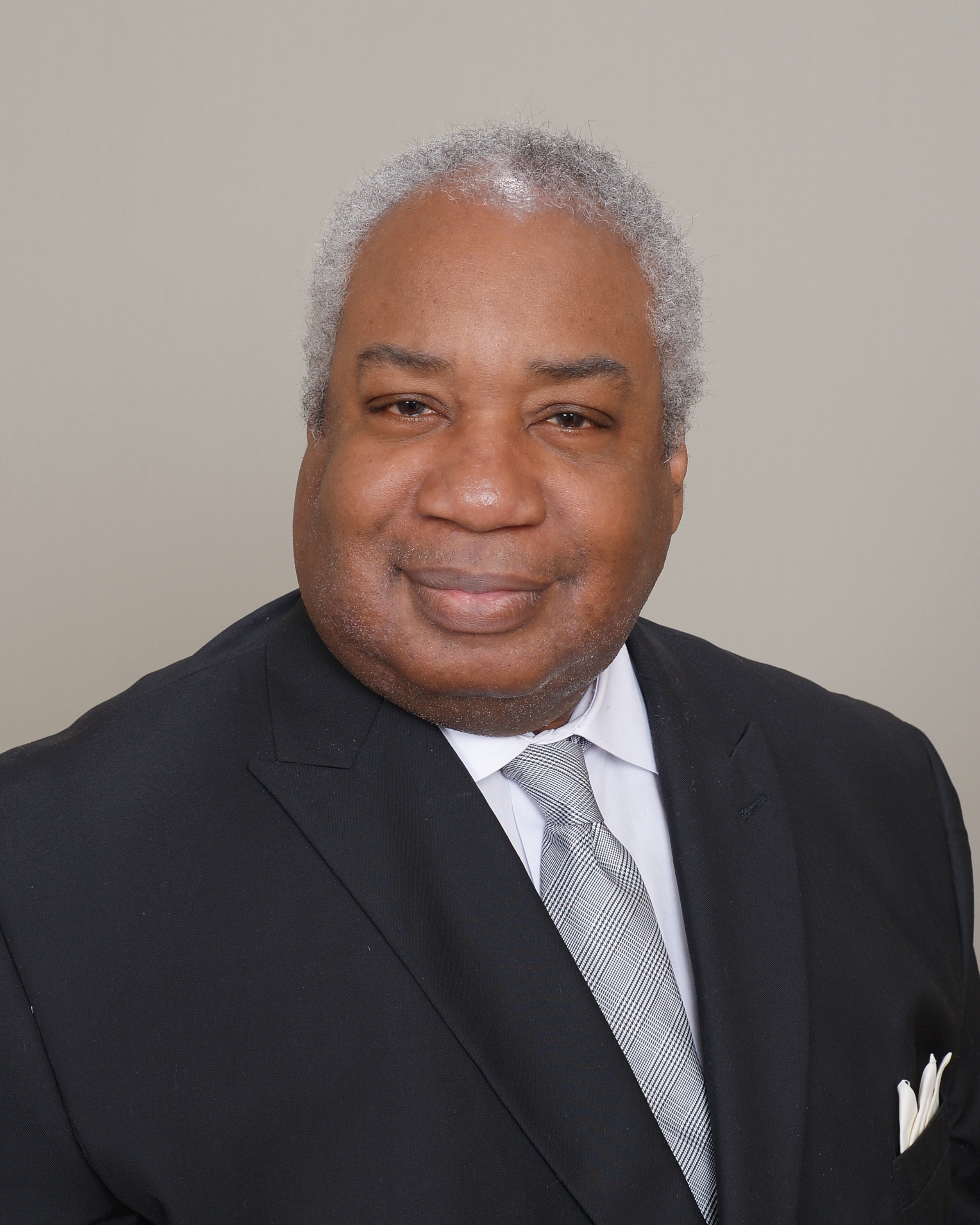
Earl A. Birkett, editor and publisher of Bavual.

Samir “Mr. Magazine™” Husni: Congratulations on the launch of Bavual.  My first question is, “what Bavual, the magazine, is and what does the name mean?

Earl A. Birkett: “Bavual” is a popular name for a male child in many parts of Africa. The name is Swahili for “power, strength, force.” The fictional character I concocted to stand as the magazine’s muse is Bavual   Adisa, a perpetual 25 year old from Tanzania but who could live anywhere on Earth. His last name is Yoruba for “one who is clear, or lucid.” Those two names adequately describe what Bavual is: a forceful and clear reteller of history from the Afrocentric viewpoint, and explainer of how that heritage interplays with today’s world. My belief is that knowledge is gained through understanding, and understanding is gained through truth.

S.H.:  Tell me a little bit about your background and why did you decide to make the move to print after working for years with Time Warner?

E.A.B.: Actually, my background with Time Warner is limited and long ago. I worked in their cable tv division as a salesman in New York’s Outer Boroughs back in the late 80s and early 90s. It started out as a way to supplement my meager income as a high school social studies teacher and surprisingly grew into a lucrative affair for me. After the stint at Time Warner I continued in the business world, eventually becoming a real estate broker.

I have been in love with the magazine publishing business since I was eight years old; I have been a student of the industry ever since. Until now I never quite found the right moment to jump in as a publisher. Given the divisive and misinformed times in which we live, Bavual just seemed like the right concept for this time.

S.H.:  You seem very passionate about this project, yet we know with passion alone success could not be achieved.  What is your plan for success for this new venture?

E.A.B.: It’s true, I am very passionate about Bavual, it is almost a calling for me. Fortunately for me, I am not alone in this feeling. For whatever reason, divine intervention, luck or what have you, I have been able to assemble an editorial staff of nine very talented and dedicated people to help me in this quest. They come from both genders, several races, from diverse regions of the U.S. – including from some places you would not normally think would be attracted to a magazine like Bavual  – and even one from India.

Due to financial limitations, I cannot grow Bavual ‘s circulation as fast as I would like, so I have opted to build an audience the old-fashioned way: make each issue a masterpiece and put it before the public online, in retail outlets and in mailboxes, and let them vote yay or nay. If you build it they will come, right?

S.H.:  In the midst of hundreds of magazine titles out there, where do you see Bavual  fitting and whom do you view as its competitive set?

Ever since the demise of Ebony and Jet (in print) about a decade ago, Bavual is completely alone in the consumer magazine category that caters to the Afrocentric lifestyle. Essence fits only a portion of this market. As for magazines that focus on African heritage, it has been many more decades since. Its closest editorial descendant is a magazine called Encore that was published in the 70s by Ida Lewis, which covered Afrocentric news. I remember it from my teenage years and was captivated by it. 

The preview issue of Bavual magazine.

Bavual is designed to be a feast for the eyes and the mind, a reminder of what the great picture magazines like Life and Look were like combined with the relevance of, say, The Atlantic or The New Yorker

S.H.:  Who is the audience of this feast for the eyes and mind?

E.A.B.: Contrary to its name and focus, Bavual is not a “black” magazine, that is, published by black people for black people. It is inclusive, meaning that it is produced by a multicultural, international staff for ANYONE who wants to know the truth about the world’s past from one point of view, in this case, the Afrocentric one, warts and all, and how it relates to the present.

S.H.:  What has been the most difficult challenge so far and how did you overcome it?  What was the most pleasant surprise so far?

E.A.B.: The most difficult challenge was putting out both a Preview Issue last fall and the Premier Issue this winter. Like I said, we had to work on a shoestring, but you know what? We did it, and I think we did it very well.

The biggest surprise thus far is the broad appeal of Bavual. We have been picked up by retail outlets on the West Coast, the Midwestern heartland and the Southern Bible Belt. The biggest fun is finding out who reads us.

S.H.:  Before I ask you my typical last question, is there anything you’d like to add?

I don’t often like to talk about myself, but I think it important in this instance. There is one other motivating factor for starting Bavual, besides the obvious one of wanting to contribute to the public dialogue on race right now, and that is my health. Eleven years ago I fell critically ill, the victim of an unknown disease that is vaguely traced to complications from diabetes. I narrowly survived, thanks to the grace of God and excellent medical treatment, however it cost me both my legs (amputated below the knee) and my kidneys, which are failing (I am on dialysis), and a reduced energy level. Coming so close to my Maker forced me to re-arrange my priorities and concentrate on leaving a legacy for good. Part of that legacy, I hope, is Bavual. I also want to convey to people that having a disability is not the end of the world. I may not have a great body but I still have a great mind, thank God.

S.H.:  Amen to that.  My typical last question is what keeps you up at night these days?

E.A.B.: I think about the state of the world a lot, particularly the state of the most powerful country in the world, my homeland, the U.S.A. It pains me that a country that has been so good to me in so many ways has decided in many cases to travel down the road of ignorance, intolerance and selfishness. I am constantly reminded that good does not necessarily triumph over evil without constant vigilance.

S.H.:  Thank you and all the best in this new venture.

h1

“This Magazine Idea Will Never Work… And Other Myths…” Reader’s Digest At 100. A Mr. Magazine™ Musing.

January 28, 2022

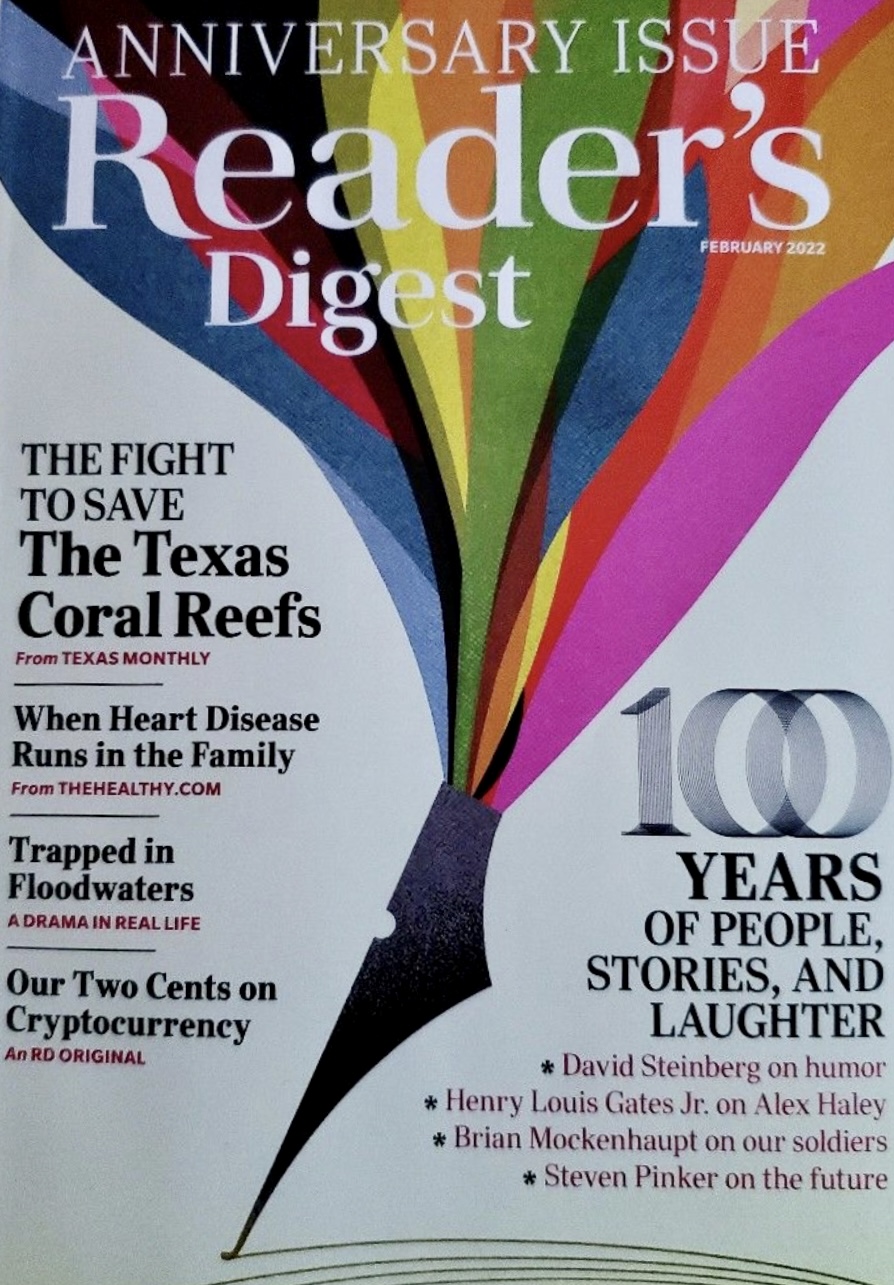
After more than two years of hearing that his magazine idea The Reader’s Digest will never work, DeWitt Wallace, with the help of his wife Lila Bell Acheson, launched the magazine in February 1922. Today the magazine is celebrating its centennial year with the February 2022 issue… and as Paul Harvey used to say, “and now you know the rest of the story.” Enjoy

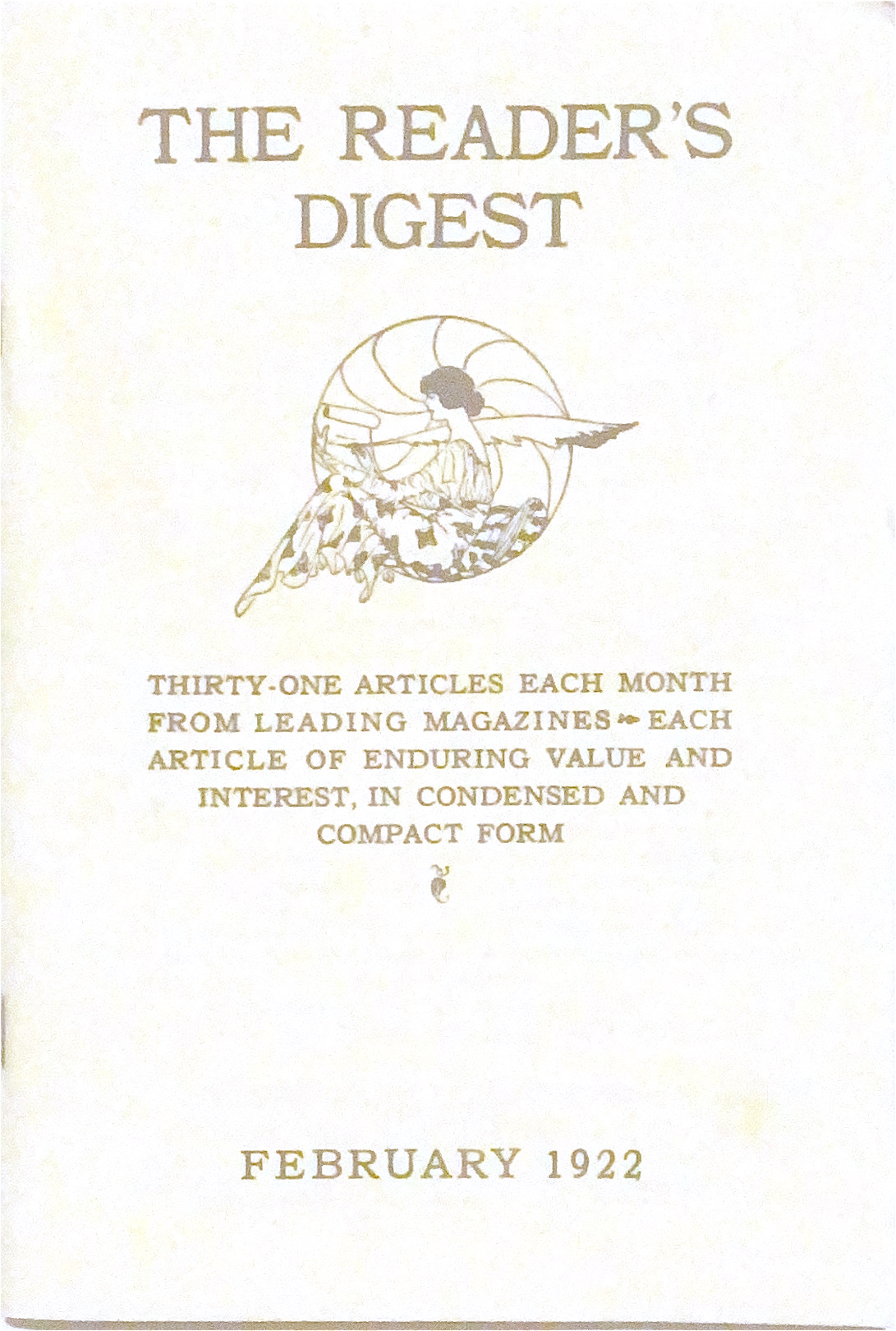
A replica of the February 1922 issue of Reader’s Digest that was produced in 1972 to celebrate the magazine’s 50th anniversary. From the Samir “Mr. Magazine™” Husni magazine collection.

Reader’s Digest is 100, or should I say The Reader’s Digest is 100.  In reality, The Reader’s Digest is 102 years old.  The founder, DeWitt Wallace produced his first issue in January of 1920 and shopped it around with all the major magazine publishers in New York City.  The response was, with no exception, this magazine will never work.  

The mission of The Reader’s Digest, as he called it back then, was summed up on the cover of the magazine and in his very first editorial.  On the cover of the January 1920 issue the concept of the magazine was stated clearly:  

“31 articles each month from leading magazines.  Each article of enduring value and interest. In condensed and permanent form.”

A replica of the January 1920 issue of Reader’s Digest that was produced in 1972 to celebrate the magazine’s 50th anniversary. From the Samir “Mr. Magazine™” Husni magazine collection.

The manifesto of the magazine was published on the very first page of the magazine.  It read:

The Reader’s Digest:

  1. The easiest way in which to learn something really worth while every day.
  2. Because of its “boiled down” interest and pocket size – the most practical and pleasant means of utilizing old moments.
  3. The one magazine containing articles only of such permanent and popular interest that each issue will be of a great value a year or two hence, as on the date of its publication.
  4. The Magazine of 100% Educational Interest – no fiction, no advertisements, no articles on purely transient topics and no articles of limited or specialized appeal.
  5. The Reader’s Digest in condensing its articles, eliminates the unessential and less interesting “filler” which is found in many magazine articles—often simply that reading matter may accompany the advertisements.
  6. The one magazine that is preeminently worth keeping—and binding—for future reference and enjoyment. If it is desired to remove any article, this is an easy matter, there being but one article on a page.
  7. The biggest magazine value – regardless of price – on the market. You find one or two articles, perhaps, of enduring interest in the ordinary magazine.  The Reader’s Digest contains 31 such articles in each issue – “one a day” – each one a “feature” article digested from some periodical.
  8. The Reader’s Digest believes that a thing really worth reading is worth remembering – which is possible in most cases only if the article is kept for occasional reference in the future.  For this purpose, the numbered sub-heads at the beginning of the articles will be found helpful.  Many of the “popular” magazines are too bulky to preserve – and not worth it for the little good matter which they contain.

Needless to say, all the aforementioned reasons to why The Reader’s Digest is a good proposed magazine, did not convince the major publishing houses in New York City to give it the green light.  Disappointed, DeWitt Wallace decided to give up his idea and shelved the January 1920 issue of the magazine.

In 1921 he married Lila Bell Acheson, a sister of one of his college classmates, and she happened, as the story goes, to see the copy of The Reader’s Digest DeWitt produced.  She loved the idea and convinced her newly married husband to publish the magazine on their own with some financial help from her brother.  The first regularly published issue of The Reader’s Digest came out in February 1922.  A new tag line was added to the magazine, “The Little Magazine.” 

Instead of DeWitt Wallace as Editor alone, the masthead carried four names as editors in the following order:  Lila Bell Acheson, DeWitt Wallace, Louise M. Patterson, and Hazel J. Cubberley.  The issue carried an editorial signed by Lila Bell Acheson in which she showed her skills of condensing the eight points DeWitt Wallace wrote in that preview issue to only four points.  She wrote under the heading A Word of Thanks:

“The Reader’s Digest has been made possible by you, and by other charter subscribers who have responded during the past four months to a letter telling of our proposed plan.

            In behalf, not only of ourselves, but of all those who have felt that the fulfillment of our plan would fill a very general need, we thank you.  Without your advance support – and that of other charter subscribers – this magazine could not have materialized.

            We believe you will find The Reader’s Digest of even greater value and interest than you had anticipated. These features will no doubt appeal particularly:

  1. Thirty-one articles each month – “one a day” – condensed from leading periodicals.
  2. Each article of enduring value and interest – today, next month, or a year hence; such articles as one talks about and wishes to remember.
  3. Compact form; easy to carry in the pocket and to keep for permanent reference.
  4. A most convenient means of “keeping one’s information account open” – of reading stimulating articles on a wide variety of subject.

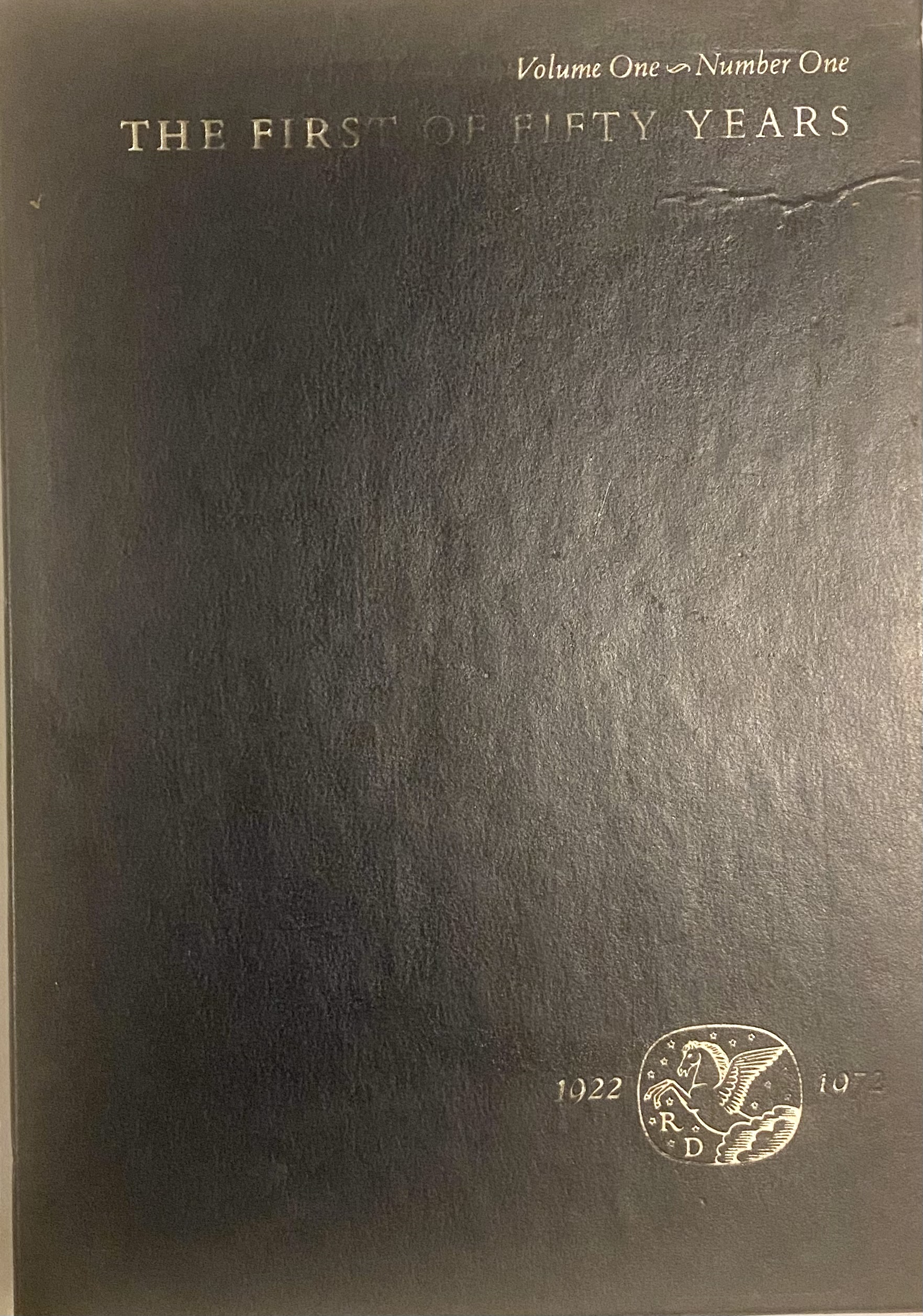
In 1972, The Reader’s Digest, in celebration of its 50th anniversary reprinted both first issues of the magazine and housed them in a nice blue box with gold ink touting The First Of Fifty Years.   Today Reader’s Digest celebrates its Centennial Issue celebrating the “first of 100 years” with many more to come.

I guess the moto of this story is when someone tells you this idea will never work, take that as a good sign that this idea will not only work, but it work very well indeed.

The Centennial issue of Reader’s Digest Feb. 1922

Congratulations Reader’s Digest and here’s to the next 100 years.

h1

Link2Us Magazine: The Intersection Of Faith And Popular Culture: The Mr. Magazine™ Interview With Editor-in-Chief Judith Manigault.

January 12, 2022

“Although we have an online presence (and our culture does thrive on the immediacy of online engagement), there’s nothing like the print experience: sitting down with a great magazine and being transported via images, various stories, and content that teaches and inspires. Print is altogether a different thing – an actual real experience.” Judith Manigault, Editor-in-Chief, Link2Us.

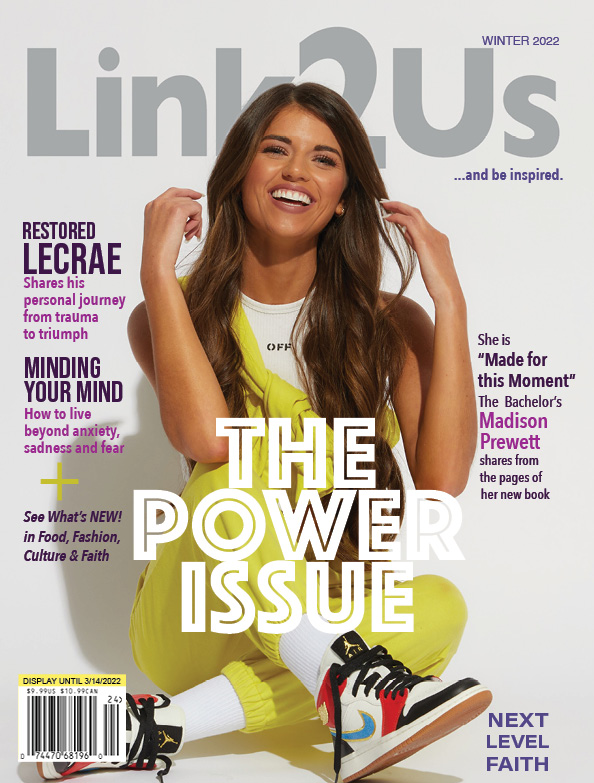
Link2Us Premiere Issue Winter 2022

“At the intersection of faith and popular culture lies Link2Us, a new lifestyle publication providing readers with a blueprint for living their best and most authentic lives. The new magazine delivers fresh and engaging content, including health and wellness news, finance tips, style trends and more, with faith and inspiration at its core,” so says the press release for the last new magazine launch of 2021.  The first issue of the magazine arrived late in December at the nation’s bookstores featuring cover star and ABC’s The Bachelor alum, Madison Prewett. 

The digital entity was launched in 2019 and migrated from the womb of digital to the reality world of ink on paper.  I had the opportunity to chat with Editor-in-Chief, Judith Manigault “who birthed the magazine’s concept while on a quest to find faith-based content that spoke to the issues of everyday life in a contemporary and relevant way.”  Judith noticed a lack in print offerings that filled this faith-based contend, and decided to do something about it.

And thus, Link2Us was born. Please enjoy this conversation with Judith Manigault, founder and editor-in-chief, Link2Us.

Judith Manigault, founder and editor in chief, Link2Us magazine

Samir “Mr. Magazine™” Husni:  Congratulations on the launch of Link2Us newsstands’ debut. Can you please tell me about the idea behind the magazine and why did you decide to launch it in print on the newsstands now?

Judith Manigault : As a new publication, we fill a most overlooked niche: a culture hub for the 70% of adult Americans who consider themselves Christians. Historically, faith-based publications have centered their reach on ALL things spiritual but overlook prominent themes covered in mainstream outlets: note-worthy inspirational personalities, entertainment, food, fashion, travel, and more.

A few years ago, I noticed this missing link as I combed through an airport newsstand. Not one magazine bridged the gap between a world of faith and inspiration (which we all need now more than ever) and the everyday lifestyle topics that make our world a more vibrant place. So, we went to work and created a beautiful hybrid we believe millions will enjoy.

Although we have an online presence (and our culture does thrive on the immediacy of online engagement), there’s nothing like the print experience: sitting down with a great magazine and being transported via images, various stories, and content that teaches and inspires. Print is altogether a different thing – an actual real experience. It has the power to slow us down, make us pause, pay attention—and so we thought, what better time to engage the culture with a physical magazine? 

S.H.: The brand was founded in 2019. How did it evolve and what was the most challenging aspect of creating this brand?

J.M.: Well, the evolution of the brand was relatively seamless. We listened to our readers, expanded on what worked, and took the limits off of what is generally considered faith-based content. We meet the reader where they are and bring a fresh perspective to the conversation. You’d be surprised at how many folks search for a better way of thinking, being, and doing life.

S.H.: What was the most pleasant moment during this experience?

J.M.: As a promotional tactic, we asked our readers around the country to find us at their local Barnes & Nobles, Books-A-Million, and airports. Their posts and videos have been fantastic. Knowing that we have made the leap, and they can now find us across the U.S. – from California to NYC (and now Canada) – is exhilarating!

S.H.: What is the role of print in a digital age, and where does the print edition of Link2Us fit in the brand formula?

J.M.: Print is a media format that will continue to thrive as long as people have stories to tell. Readers everywhere still love to curl up with their favorite book at home, or bring their daily newspaper to their local coffee shop for a skim. Turning the pages to see what’s next (in a story, or what’s next in fashion, for example) is still incredibly exciting. Learning about the next trend or finding inspiration for the weeks ahead, especially at this particular time in our lives, is a basic human need and Link2Us is here to meet it.

S.H.: Your tagline is Link2Us and be inspired… and your motto is Next Level Faith… Can you please expand?

J.M.: “Link2Us and be inspired” was simply a way to convey our mission to inspire the masses. “Next level faith” grapples with how we see ourselves as people of faith in the world, and challenges our readers to reach new heights and create a life of faith that is more dynamic, appealing, and compelling.

S.H.: Is there anything else you’d like to add.

J.M.: While we are living in times marked by cultural, political, and social divides, the reality is that we do need each other to survive. It is my hope that Link2Us will serve as a common ground, where conversations revolve around the things that connect us, and not what separates us.

S.H.: My typical last question is what keeps you up at night?

J.M.: Believe it or not, that would be expansion. For us, the ability to talk to and reach a broader audience is of utmost importance. Launching at retail is a major step in connecting with the masses, and we are thrilled. 

S.H.: Congratulations again and thank you.

h1

Grazia USA: The Most Notable Launch of 2021. The Mr. Magazine™ Conversation With Dylan Howard, Chairman, CEO & Publisher…

December 30, 2021

We live in a digital led environment so our company slogan is ‘stories matter, especially how they are told,’…” Dylan Howard, Chairman and CEO, Pantheon Media

That is the biggest challenge, to constantly bear the cutting edge of how best to tell stories whilst also remembering that there is something beautiful about print…” Dylan Howard

If you told me early in 2021 that someone would launch a print magazine with 400 pages and lots of advertising, I would have told you that you are out of your mind. Bringing Grazia to the U.S.A. is not only an act of faith and belief in the way print can be handled successfully, it is an experience unlike any on the market today combining both quality content, gorgeous photography, and above all a touch of class.

A much needed infusion to the world of magazines in general and the fashion magazine sector in particular. It was not a hard decision for me to choose Grazia USA as the most notable launch of 2021 because it rose to the top of the 122 titles launched that year exactly like the foam rises to the top of an excellent espresso.

To learn more about Grazia USA’s launch, I reached out to Dylan Howard, Chairman, CEO of Grazia USA’s parent company Pantheon Media Group and we engaged in a Mr. Magazine™ conversation about the story behind the launch of the magazine and his role in bringing it to the United States.

Mr. Howard was quick to point out that the launch of Grazia USA was a team effort led by media and business folks he assembled from leading media entities including The New York TimesThe Wall Street Journal, Condé Nast, Tatler AsiaWWD, Reuters, Men’s Journal, Meredith, IAC, Cheddar, News Corp., Refinery29, and a360 Media.

Dylan Howard, Chairman& CEO, Pantheon Media Group

So, here’s my lightly edited casual conversation with Dylan Howard, Chairman & CEO, Pantheon Media Group publisher of Grazia USA:

Samir “Mr. Magazine™” Husni: As the publisher of Grazia USA, the most notable launch of 2021, can you please tell me how you were able to bring into the market in this day and age, an almost 400 page magazine, loaded with advertising among other things…

Dylan Howard: Samir, when COVID hit America, I had a lot to consider about what my next step was going to be, and I decided that I wanted to start another media company and I wasn’t content with it being an independent small player. I wanted to bring to America brands that have flourished internationally but have not reached these shores. And in putting together on the back of an envelope, some brands, one of the first brands that came to mind was Grazia, because close to 20 years ago, I actually wrote for Grazia when it was a weekly magazine in Australia, which is where I am from. So I opened discussions with Mondadori Media in Italy, and it had been Mondadori’s dream to launch a United States version of their flagship fashion and luxury property and just never found the right partner. In me fortuitously, they saw someone who was prepared to actually back it, someone who has an entrepreneurial flair, someone who has gladly no fashion sense, I leave that to the editors, and someone who was prepared to innovate on the brand. 

That innovation has meant more to digital covers, so we launched Kim Kardashian in October of 2020 as our first digital cover in the United States, then in February for New York Fashion Week we did three more digital covers which featured Elizabeth Olsen, Keke Palmer, and supermodel Kate Bosworth, and then in between that and the launch of our September issue, we published seven Grazia Gazettes, which is a first of its kind newspaper/luxury magazine-type publication- five here in the Hamptons, one in Art Basel in Miami, and one for New York Fashion Week, and that allowed us to create a sense of establishment in the industry. Next will be the Rodeo Drive edition in January. People immediately recognized the Grazia name, and they saw that we were doing things differently, and that led obviously up to our September issue, our fall issue, which as you said is almost 400 pages. I personally believe it is one of the best products in the marketplace, in the category. I believe that its editorial is stronger than its competitive set, and that is a tribute to the editor in chief David Thielebeule and Casey Brennan the executive editor, and many others (In fact Mr. Howard mentioned almost everyone who worked on the launch of the magazine), and I think that there is some hype around it. Again you mentioned almost 400 pages, loaded with advertising, content in my view, best in class, and three print runs. We had three separate covers. So this is a commitment to fashion, a commitment to luxury. This is not me saying I want to get back in the industry. This is charting a new course and establishing Grazia for the future because our audience is younger than everyone else. 50 percent of our readers are age 18-34 and you don’t find that anywhere in publishing today. 

SH: The publishing model, you are distributing some as a control circulation, you have the newsstand, you have subscriptions, Grazia is known as a weekly, tell me more about your business model.

D.H.: So Grazia is just one of the tenets in my business, we have near on twenty brands now. We have the digital version of OK magazine, Radar. We did three start up brands. Front Page Detectives which actually picks up on the 1920s pulp magazines- so we relaunched that as a digital website. We have a Royals website. We have a female inspiration website. This year we will announce, we have How it WorksHistory of WarAll About Space, and we are going to announce another 4 or 5 print productions that will launch in 2022. But for Grazia, it is our flagship, we will do four issues per year. We will continue with The Grazia Gazette newspaper which I refer to as the traveling newspaper. We go where people are, much attended events, is where you will find The Grazia Gazette like Art Basel in Miami. We will continue to do our digital covers, but we have a commitment to printGrazia worldwide is in various shapes and forms, as you pointed out, it is a weekly in some countries. In other countries, it is a monthly. In Australia and here in the United States, it is a quarterly, which allows us the time and resources required to put out a publication that is best in class. Instead of flooding the market with more of the same, we can take a considered approach to what it is we are publishing. Likewise, that enables us to work closely with our advertisers to ensure that we are capturing what it is that they want to market and when they want to market. I think we would all agree that the industry is flooded with product and it is not necessarily the highest quality product because of the frequency in which they print. 

S.H.: Did anyone tell you when you came up with the idea that you are going to launch Grazia in the U.S., are you losing it? Are you out of your mind?

D. H.: I’ll tell you about The Grazia Gazette, I mean, I’ve never published a newspaper. I’ve worked at newspapers before. I was sitting on a couch one night and I said what if we were to create a 56 page luxury newspaper and distribute it to 40k households in the Hamptons in 2021 and I called my Chief Operating Officer, Melissa Cronin, who joined me from A360 Media, and she said, this is a brilliant idea, and within days, we were in production. So, I’m sure people like to say behind my back, he’s crazy. They don’t necessarily say it to my face, but I tell you what there is a sense of pride and accomplishment when my editorial staff and my business staff are able to put together a publication like this and for me as a CEO to be able to see that my investment in hiring the best of the best has paid off. So for example, our Global Brands Officer is Brendan Monaghan, who has a strong lineage across the media industry from The New York Times to Vogueand GQ, Tanya Amini who comes from Conde Nast, W Magazine, our CFO Andrew Lee is a 22 year veteran of Conde Nast. Melissa Cronin who is the ying to my yang, a brilliant, insightful smart strategist, she is the COO and president of the company. Also, Casey Brennan who has worked with me for ten years and as I mentioned our editor in chief David Thielebeule who joined us from The Wall Street Journal, and many others. We also had Kevin Sessums as an editor at large. He was the former executive editor of Interview magazine and a host of other contributing editors. It’s interesting before I was a very hands-on content guy in my past role. With this I’m not, I’ve had to take a back seat which is a little different and a little discomforting at times, but when we put out the three issues and we see that a market is reacting the way it has, I could not be more proud of my staff.

S.H.: If you are going to look back at those one and a half years, what do you consider, the most pleasurable, the AHA moment, the I’ve made it…

D.H.: I don’t subscribe to the notion that you’ve ever made it. You are only as good as the last issue and the challenge is on us to produce an issue for March that will again set us apart from the competitive set. This is not a sprint, this is a marathon for our businessWhile those other publications will age out of the category in my opinion, I hope and I believe, and Mondadori also believes that Grazia will be the last one standing. In order for that to occur, we need to continue to invest in fashion and luxury and we need to continue to invest in the product. So whilst 2021 was great and we had enormous success and we are all very proud of what we are able to put out, 2022 is only a few days away and we are looking at a very strong line up already of products that we will distribute to the marketplace whether it be a quarterly, the newspaper, or other news formats to tell stories. We are just really excited about it. To be able to bring a brand that is 83 years young to the United States, with a legacy that it has from Italy to London to France to Germany and now in 21 other countries, is truly passing on the baton to us and we have to do our founding editors proud and I think we did with the launch of the first issue.

S.H.: I remember when Didier Guerin came from France trying to launch Elle magazine in the U.S., the naysayers said this will never work…

D.H.: I think it was the great Theodore Roosevelt who said something that has just sat with me about publishing. Theodore Roosevelt in his speech, The Man in the Arena, he said, “It is not the critique who counts, not the man who points out how the strong man stumbles or where the doer of deeds could have done them better, the credit belongs to the man who is actually in the arena, whose face is marred by dust and sweat and blood, who strives valiantly, who errs who comes short again and again, because there is no effort without error and shortcoming, but who does actually strive to do the deeds, who knows great enthusiasms, the great devotions, who spins himself in a worthy cause, the best knows in the end the triumph of high achievement and who at the worst, if he fails, at least fails while daring greatly, so that his place shall never be with those cold and timid souls who neither know victory nor defeat.”  And that hangs in my office here (in the Hamptons)  and hangs in my office in Manhattan as well.

S.H.: You are the man in the arena. What’s the biggest challenge that’s facing you? 

The biggest challenge is continually innovating. We live in a digital led environment so our company slogan is “stories matter, especially how they are told” It is constantly innovating, looking for the next method or model in which to be able to showcase content, be it through the intersection of QR codes in a magazine pointing back to video, creating premium podcasts that can traverse the United States into Europe and other areas. That is the biggest challenge, to constantly bear the cutting edge of how best to tell stories whilst also remembering that there is something beautiful about print. I think our model of doing a quarterly with a brand offshoot as The Grazia Gazette is not only industry leading, it’s a sign of what should happen moving forward for the industry to sustain itself. 

S.H.: I have to ask you since you were an editorial person, a reporter, a writer, you name it, is there part of your brain that misses that now that you are a CEO and you have to deal with the business side and ensure the business is working and the money is coming in…

D.H.: I am far too busy focused on what is next than I am meddling in what others are achieving with their work, and the premiere issue is tantamount to that. I wasn’t involved in the issue. Our COO and President Melissa Cronin, who I mentioned, was. From a business side, she and Brendan Monaghan lead it. I’m far too busy looking for what the next move for the company is and we have some big things lined up ready to announce in 2022.

S.H.: Before I ask my typical last question, is there anything else I failed to ask you, anything else you’d like to add?

D.H.: No, just that I’ve always viewed myself as a historian and I think I told you this previously of media, I always like to understand the masthead, its history, the people involved, and I think that those that believe the industry is at the crossroads need to sit back and analyze how to continue to operate in this climate. I believe the future lies in topic specific or knowledge based journalism. In order to do that, instead of cutting costs, maybe we need to be a little bit less frugal about that in order to create a product to introduce to customer so that we can convert them into ongoing customers and repeat customers. I would implore others in the industry to do that because the industry cannot survive with few, it has to survive with many. 

S.H.: My typical last question, what keeps you up at night these days?

D.H.: The next deal keeps me up at night.

S.H.: Thank you…

Editor’s Note: To read Tony Silber’s interview with me, for MediaPost’s Publishers Daily, about the magazine launches of 2021 including the launch of the year, the relaunch of the year, and the reinvention of the year please click here.

h1

Alan Katz Heads To The Mountains…Seven Questions With The Mountains’ Founder & CEO. The Mr. Magazine™ Interview…

December 21, 2021

With The Mountains, we’re bringing world-class photography and service journalism to an audience that has “decentralized luxury” and is tricky for advertisers to reach.” Alan Katz, Founder and CEO, The Mountains.

Then in my adult life, I gave the Hamptons a shot, but it wasn’t my vibe. Pun intended, I just thought it was so much cooler in the mountains!” Alan Katz

What can a “dynamic, highly connected sales and marketing executive with over 20 years experience driving growth and developing new businesses and brand extensions across diverse media platforms — from print to digital to e-commerce,” do next? Well, for the man who held top executive jobs in the magazine media world for almost a quarter century, there is nothing else to do but head to The Mountains, (pun intended). Alan Katz, the former publisher of Cargo, Vanity Fair, Interview, and New York magazines, and the former CEO of AKA Media and Chief Revenue Officer of DuJour Media, is ready to be his own boss and ready to launch a new venture called, you guessed it, The Mountains: the magazine that tags itself as the magazine “from to the Catskills to the Berkshires.”

I had the opportunity to ask Alan seven questions regarding his new venture, so without any further ado, here is the Mr. Magazine™ Interview with Alan Katz, Founder and CEO, The Mountains.

Samir “Mr. Magazine™” Husni:  The late Steve Florio once described entrepreneurs launching magazines as “terribly naive about what it takes to make a magazine successful,” yet he was kind enough to call this group of future publishers “the romantics.”  As a former Condé Nast executive and publisher, do you consider the entrepreneurial launch of your new magazine The Mountains a romantic affair or a genuine new media business?

Alan Katz, Founder and CEO, The Mountains

Alan Katz: Both. Steve hired me in 2003 to launch Cargo, a terrific men’s magazine. It was both a romantic notion and a genuine new media business–as is The Mountains.  

To me, the word “mountains” itself is romantic; it’s what my parents called the Catskills back in the day. A magical oasis from the big city, where you could find fantastical hotels and retreats.

I chose the name both for its nostalgia and because it’s so relevant to our mission: to be the exciting new resource for the residents, weekenders and visitors of the region from the Catskills to the Berkshires. What’s more romantic than that? We all LOVE this region. It’s gorgeous, bucolic, adventure-filled, rooted in community.

But make no mistake…this is a genuine business. The region is BOOMING—4 of the top 10 zip codes in the U.S. with the biggest growth in net migration 2019 to 2020 were in our geography. Real estate and new businesses are off the charts. The pandemic fueled a “rebalancing” between cities and more rural areas that was already underway. The result is a more sophisticated audience not being served by the existing media in the area. 

With The Mountains, we’re bringing world-class photography and service journalism to an audience that has “decentralized luxury” and is tricky for advertisers to reach. 

S.H.:  How do you approach the launch of The Mountains as opposed to the launch of Cargo?

A.K.: Back to Steve, he famously said at my first team meeting, “There’s nothing like a Condé Nast launch,” and in 2003 he was so right!

The main difference is fundraising. We’ve chosen to seek investment from strategic partners who care about the community and want to support fantastic writers and creative talent that will help bring this region to life, uncover hidden gems and inspire new discovery. 

S.H.:  What is the genesis of The Mountains?

A.K.: I’ve always loved the area. In my childhood, I experienced it all: a bungalow colony, sleepaway camp and fine hotels, all in the Catskills. I even had my prom at Grossinger’s. From “A Walk on the Moon” to “Dirty Dancing: to “Meatballs” (and these day, “The Marvelous Ms Maisel”), I’ve enjoyed it all!!

Then in my adult life, I gave the Hamptons a shot, but it wasn’t my vibe. Pun intended, I just thought it was so much cooler in the mountains! 

So after 25 years as a weekender and homeowner in Columbia County, traveling  around the Catskills and Berkshires and randomly seeing the various media, I was often left wanting more. More original photography. More insightful writing. More useful advice. I’d worked at New York MagazineCargoVanity FairAndy Warhol’s Interview and DuJour, to name a few. My standards were understandably high, but I believed someone should attempt to deliver the best for the market. Then one day, I finally realized that person should be me.

S.H.:  You are launching both in print and digital, what is the plan?

A.K.: Yes, the plan is to launch with both seasonal print and daily digital in Spring 2022. This is a market that doesn’t have the best digital or cable service. It’s a thing. Hopefully that will improve, but until then, a high-quality magazine is what business owners and consumers want and need. They like to lean back and enjoy great writing and cool finds. Print has a certain credibility and luxury, plus it’s power outage-proof!

Our readers come to the mountains to be disconnected, yet want to stay connected, so we’ll fill in the timely facts with daily digital, email newsletters, social media and future video series and podcasts.

S.H.:  Tell me about the team working with you and the goals you expect to achieve prior to the Spring 2022 launch.

A.K.: We’ve hit the ground running with super-talented and connected editors, writers, designers, sellers, marketers and financial folks. They have deep roots in the community and have worked at some of the best brand in the business such as; New York MagazineUS Weekly,Vanity Fair, Apple, AirbnbArchitectural Digest, 1stdibs, Complex, Travel & LeisureDepartures and The New Yorker.

Prior to 2022 we are building the team and the content strategy, uncovering the fun facts and relationships that will enhance our platforms. And seeking advertising support from local and national businesses, brands and service providers, as well as financial and strategic investment partners.

I’m thrilled to say, both are going exceedingly well!

S.H.:  Anything else you’d like to add…

A.K.: I can’t express how much fun this has been, and how welcoming and collaborative the community has been. Everyone says it’s a long time coming, and appreciates our bringing the counties together under The Mountains moniker. Some of our first advertisers are signing on for 2-year schedules!

S.H.:  My typical final question, what keeps you up at night these days?

A.K.: What keeps me up at night these days is two kids in college, one just starting her first great job and the uncertainty of this global pandemic.

As per The Mountains, every aspect of the business tends to keep me up–my mind is racing with new ideas and ways to improve the media landscape for our audience and marketing partners. I mean it. Let’s go!!

S.H.: Thank you and good luck.

h1

InPickleball Magazine: Celebrating & Enforcing The Joy Of the Game. A Q&A With, The Man Behind The Magazine, Richard Porter.

December 7, 2021

From the CEO of a media company who launched a new magazine with a 9.2 million circulation to president of media sales at a national media group of the largest magazine media company in the world, to the launch of an ultra-niche new magazine,  Richard Porter has done it all and he is not done yet.

From the CEO of the Publishing Group of America (PGA) to the President of media sales for the Meredith Corp., Mr. Porter’s new venture is In Pickleball, a lifestyle publication that reinforces the joy of the game.  A game that is seeing both an uptake in its practitioners and devotees.

I had the chance to ask him a few questions about this latest launch and he was gracious enough to answer them.

Samir “Mr. Magazine™” Husni:  In a nutshell, tell me what is In Pickleball ?  When was it started and how often it is going to be published? Why now and why it is necessary, sufficient and relevant in today’s marketplace?

Richard Porter:  InPickleball launched this summer.   Our third issue will be in market next week.  This is a “media brand” launch that includes a magazine, a website, social media, video, and ultimately ecommerce.  The magazine will be published 10x a year.  Subscription prices are being tested from $24.99 per year to $39.99 per year.  We are testing a variety of sources for circulation — we will be on newsstands in Barnes & Nobel, will test FSIs and Direct Mail, also Facebook ads and other sources/locations where active pickleball players congregate (local clubs, resorts, tournaments, etc).    InPickleball is designed as a lifestyle publication — it reinforces the joy of the game — attributes of pickleball include:

* Social —  usually four people play together.

* Accessible —  The game is easy for all generations to learn — and be pretty good! — quickly compared to other sports.  

* Inclusive not Exclusive — unlike tennis or golf, pickleball really allows all kinds of people from all socioecomic strata, to play together.

* High Engagement/High Passion — but NOT divisive.  Pickleball players are typically on a spectrum from AVID to OBSESSED….people love it! So engagement is high, but content is not divisive (so much of our media/social content today is “hot takes” or “left vs. right” stuff, we feel GREAT about how pickleball is happy for all! — if I was a preacher, I would say this game is good for America and the world!  Social, healthy, fun, accessible, inexpensive…. nice attributes to bring us all together.

Richard Porter

S.H.:  Your background is in big magazine media companies and launches in the millions, how is this launch different from your previous ventures?  

R.P.: I have led a media company with only 50 employees, and worked in executive positions in companies of thousands.  One difference in today’s market, sadly, is the amount of great magazine talent that can’t find a place in the diminished staffing of larger magazine companies.   That has been a wonderful opportunity for InPickleball to hire freelancers, contract workers…the gig economy.  So we were able to launch a beautiful products with a team of top-credentialed people — backgrounds from Entertainment Weekly, The NY Times, The New Yorker, and many other top brands are represented in our ranks.    My very first job was at Ziff-Davis Publishing — at special interest sports magazines like Fly Fisherman, Backpacker, Sport Diver, Adventure Travel, Ski X-C…..I also spent some time at Rodale (Runner’s World, Bicycling).   So while I am known in many quarters for working at some of the largest magazine brands — Reader’s Digest, TV Guide, Meredith Corp — my training was in titles that share some characteristics with InPickleballvertical, how-to, passionate, active participants for example.

S.H.:  Who is the audience of In Pickleball and how do you plan to reach them?

R.P.: The audience for InPickleball magazine is active pickleball enthusiasts.  It’s the fastest growing sport in the country, so finding pickleball players to become readers will get easier for us every day!  There are “hot beds” of pickleball — California, Texas, Utah, Florida, Minnesota to name a few states….and within those states, there are certain cities/towns that really over-index.  Resorts like Marriott is ripping out tennis courts that are not being used by their guests, and replacing them with pickleball.  Retirement communities are now often built with pickleball courts.  There are many local clubs of players who have organized themselves (in Connecticut, one group built courts on the train station parking lot, as the lot was empty due to the pandemic!   Today — about half of all pickleball players are over 50 years old, typically affluent, high HHI.   But the sport is growing fast with younger people —  at least 28 colleges have club teams; it’s becoming a varsity sport at high schools.  The game was originated by three dads in 1965 for their kids to play, the whole family can play.

S.H.:  What are some of the obstacles, if any,  facing you with this venture and how do you plan to overcome them?

R.P.: Obstacles are plenty for any start-up business.  And maybe more so for media businesses.  And even more so for a magazine in 2021.   It isn’t for the faint of heart.  In the case of our magazine, the approach is to rely on the reader, not so much the advertiser, for revenue — as you know “secular decline” has found its way to magazines.  The pickleball market today is fragmented when it comes to media voices, many small ones — nobody has yet become the “megaphone” for the marketThat’s our objective.  To earn robust subscription revenue, which is critical, from readers — we have bet on quality.  I mentioned the great credentials already.  Look at a copy and you will also see and feel the quality — 60 lb paper stock, very white (not gray or yellow) that really holds saturated inks to make the graphics and photos pop!  Cover stock is 100 lb matte UV — we think of the sport as a tactile experience, and an aspirational one (people want to improve of course) so the magazine resonates that too — it’s a great tactile experience.  

S.H.:  Some say we don’t have a print problem, we have a business model problem in the magazine media industry, what do you think?  What is the role of print in today’s media landscape?  What is the future of print?

R.P.: I think we do have a print problem, not just a business model problem.  The business model can be really attractive actually — recurring revenue, first party data, quality content, subscriptions….streaming services have this model, and it’s  a good one.   But lowering quality to lower price and hope you sell enough ad pages to cover it, well, that’s just not a good idea.  Part of the print problem is simple:  Today, many ad agencies have great expertise in digital, video, social, data, etc. — ten years ago the leaders at those agencies had great print experience and passion for the medium.  Finding those knowledgeable advocates …. well, there are fewer of them, so the advertising decline can be a spiral….fewer resources evaluating/recommending the medium will lead to fewer magazines, leading to fewer resources, and around we go….

S.H.:  Anything else you’d like to add before my typical last question?

R.P.:  Well … sure!   I am very proud to have led two teams that won Launch of the Year honors from you!  Relish and Spry.  My goal?  I want to win a third time, Samir!!   InPickleball has a chance to be a really magical ride….I liken myself to an old rocker who was sitting around with his acoustic guitar, quietly writing his own songs, not recording or performing….and then, got together with some other really strong players….put together a band…and…whoosh!  Maybe we have some great new tunes that people will love, and we do an album, hit the road supporting it.     It’s a fun vision!

S.H.:  What keeps Richard up at night?

R.P.: What keeps me up at night?  I am pretty reliant on “to do” lists …. I try to write my list before I hit the pillow, so I can rest at ease knowing my path is charted for the next day.   If I have a day where I forget to make that list, or just don’t do it, I often wake in the middle of the night thinking about something I need to do.   I often then text or email myself that reminder, and go back to sleep…or try to…..I am an advocate of the podcast — one earbud in, the other ear on the pillow.   If I really cannot sleep, I will learn about ecommerce, or sports, or history….or sometimes the droning voices will put me to sleep, so that’s great too!

Thank you so much for your interest.  Cannot wait for Issue 2 to be in your hands….as I said it’s a tactile experience that you will love.  And with a pickleball player already in your family, you have a new reader at the ready for us! Cheers…

S.H.: LOL and Thank you.

h1

RACEWKND magazine: Delivering the Culture & Lifestyle of Formula 1 to Your Home. The Mr. Magazine™ Interview with Magnus Greaves, Founder And Publisher.

November 18, 2021

“So a beautiful, oversized print product that is delivered to your home can have the effect of connecting you to the sport.” Magnus Greaves, Publisher, RACEWKND

Never give up trying new ideas. The aforementioned can easily describe Magnus Greaves, the man coming from the world of finance and an entire Wall Street driven media magazine venture, Double Down Media, that went belly up when the entire market, and the American magazine business model that was based on that market, went belly up too! Magnus, the ever-dreaming and planning financier, found yet another way in this digital age to enhance print and ensure its success in a completely different way than his previous ventures at Double Down Media, MyMag, and Rev.

In 2021 Magnus Greaves founded RACEWKND, a magazine that celebrates the culture and lifestyle of Formula 1 and delivers the racing experience right into your home.

I asked Magnus seven questions about his new venture. My questions and his answers are below. Enjoy…

Q1:  In a nutshell, tell me what is RACEWKND?  When was it started and how often it is going to be published?
RACEWKND celebrates the culture and lifestyle of Formula 1, the highest level of motorsport which is also seen as one of the world’s most glamorous sports. Back in 2015 I started a similar magazine called Rev Journal but was inspired during the pandemic to make significant changes to the branding, packaging, distribution and overall business model. This resulted in RACEWKND which has been extremely well received and we are now on a schedule to publish four issues per year. 

Q2:  How is this launch different from your previous venture MyMag?
MYMAG was a personal publishing platform for famous people but was sadly a bit ahead of it’s time (which I know sounds odd for a print product!) The innovation was in how we worked with the individual and I’m actually revisiting that concept again as I feel it ties in extremely well with social media. RACEWKND is much different as the original premise was more about filling a void in the market (this sexy global sport had no media product that celebrated its sexiness) and the innovation this time comes through the business model and distribution plan. 

Q3:  Who is the audience of RACEWKND and how to you plan to reach them?
Formula 1 has been extremely popular globally for decades but it’s never been able to crack the US market. In recent years the sport was also having a very hard time attracting new fans. That all changed quite dramatically with the Netflix show “Drive to Survive” which explores Formula 1 through the personalities, drama and locations. As a result, F1 is now exploding in the USA and is attracting a far more diverse audience. RACEWKND is created to appeal to this new audience as our editorial approach and design sensibility is a perfect next step for these new fans which, given the size of Netflix, now outnumber the size of the old-school F1 fan base. 

Q4:  What are some of the obstacles, if any,  facing you with this venture and how do you plan to overcome them?
The biggest obstacle we face is in connecting with the American F1 fan base in an efficient way. I will never, ever go down the newsstand route again and that simply wouldn’t be effective with this audience anyway, particularly in the USA. And unlike sports such as basketball, there are no stadiums that host multiple home games and no chains like Foot Locker that sell team merchandise, snaking it hard to find alternative channels to fans. So we had to come up with a completely new plan and that lead to a genuine breakthrough- RACEWKND has adopted the modern direct-to-consumer business/distribution model that’s been so successfully implemented for products such as eyeglasses, clothing, mattresses, etc. I figured if this approach works for mattresses, then certainly a light, flat product like a magazine should be perfect and the results have been amazing. We start the process with targeted advertising and affiliate partnerships which connect us to F1 fans. We then sell every subscription on our Shopify platform and send magazines out very efficiently using AmazonFBA. In fact, I’m thinking about working with other magazines to show them how to implement this great business model which brings so many benefits. 

Q5:  Some say we don’t have a print problem, we have a business model problem in the magazine media industry, what do you think?  What is the role of print in today’s media landscape?  What is the future of print?
Well I 100% agree with this statement!! Per my answer above, studying the direct-to-consumer business model (as well as the subscription box business model) completely changed how I perceive the magazine business, and it’s completely changed the economics of running a magazine company. As for the role of print, I feel it’s more relevant than ever for publishers that use it in a way that truly takes advantage of the medium, which unfortunately not many do. But the flip side of that is that many publishers have done an amazing job of adapting their offering to beautiful new tablets, so growth for magazine brands can come in many forms. As for RACEWKND, a tangible print product has enormous value as Formula 1 hosts 23 races in 23 different countries resulting in 95%+ of fans not attending a race during the season. So a beautiful, oversized print product that is delivered to your home can have the effect of connecting you to the sport. When there is only one shop in the USA that is dedicated to selling F1 merchandise, having a product like RACEWKND come to your house is a nice experience that is hard to replicate. 

Magnus Greaves, publisher, RACEWKND

Q6:  Anything else you’d like to add before my typical last question?
Operating in this new direct-to-consumer business environment has really highlighted to me the value of print as a product in a fresh way as well as the need to create a brand that reflects your overall goals rather than simply what you aim to achieve with a magazine. As a result, I feel less exposed to the various direct threats of the traditional publishing industry and more connected to the innovative companies that are being launched and celebrated in different arenas. And you will have noticed there is not one ad in our magazines- this new business approach eliminates that hassle!!

Q7:  What keeps Magnus up at night?
I go to sleep every night thinking of new ways to connect with the potential RACEWKND audience and making sure that we are doing a good job communicating the attributes of our great print product across digital channels. The tools are in place to achieve all of this but you have to continuously seek out best practices (from outside the publishing industry!) to stay on top of it all. 

Indeed, and thank you…

h1

Crankshaft: A New Automotive Magazine That Believes In The Art Of Storytelling & High-Quality Collector-Car Content – The Mr. Magazine™ Interview With Richard Lentinello, Owner, Publisher & Editor In Chief…

April 9, 2021

“Print is very welcoming. For a while, people were reading magazines online, but I have since heard a lot of people have gotten bored with that. A lot of people are working from home now and they’re on their computers all day. When they want to relax they don’t want to sit in front of a screen again and read. They want to go sit in their backyard in their favorite chair with a print copy, their favorite beverage alongside them, and enjoy a magazine, To have something tangible in their hands.” Richard Lentinello…

A Mr. Magazine™ Launch Story…

With his 22-year history at Hemmings Motor News, Richard Lentinello has been living and working in the automotive media world robustly and then some. After leaving Hemmings, Richard decided he wasn’t exactly pleased with the way American car magazines were handling their content and missing some of the most engaging car stories out there by not writing about them, so he decided to launch his own high quality automotive print magazine.

And Crankshaft was born. Crankshaft is a quarterly with 144 pages of non-stop automotive collector-car history. It’s well-designed, well-written, and a really refreshing addition to the automotive club of magazines.

I spoke with Richard recently and we talked about this new venture of his and his goal for the magazine. According to Richard, Crankshaft offers engaging content, thoughtfully crafted by established writers and photographers, along with his own artful input. The magazine will inform, entertain and captivate readers in a way that he believes no other magazine has done before.

So I hope that you enjoy this delightful Mr. Magazine™ interview with a man who is a true car connoisseur, Richard Lentinello, owner, publisher, editor in chief, Crankshaft.

But first the sound-bites:

On why he chose to do an automotive magazine at this moment in time: I was at Hemmings Motor News for 22 years and I left there July 31. I was sitting in my backyard thinking about what I was going to do after that. I thought the time was right for me to try something new. I knew people were stuck at home with the pandemic and people want to read when they can’t go out, so I thought it could be a good time or it could be a bad time; let’s give it a shot. (Laughs) People were telling me, it’s a pandemic, what are you doing? And I said, well, they’re stuck at home, people want to read.  

On how he came up with the name Crankshaft: The magazine is about classic cars and I didn’t want to go down the same road as classic, vintage, antique, all those names, because I figured, how are we going to attract a younger audience with those old-fashioned type names? So, I wanted to come up with something different, something that had a ring to it. I sent some of the guys that I used to work with an email and asked them to put their thinking caps on and some of them came up with Crankshaft. And I thought it was a great name.

On whether any of his friends or colleagues thought he was out of his mind for starting a print magazine during this digital age: No, no one said that to my face. (Laughs) Only one person online, when I posted it on Facebook, said that I was crazy. But you can’t listen to people like that. When I explained what I wanted to do and the focus of the magazine to everyone, they all said yes, we need this.  

On the business model he’s implementing: The business model is gut instinct. (Laughs) It may not be the best business model, that remains to be seen. I spend a lot of time at newsstands, Barnes & Noble and such, and I see so many magazines that are $14, $15, up to $20, these limited-type magazines. But a lot of them are only 112 pages or 128 pages, so we went 144 pages of good quality stock, $12.95. If you look at some of the regular car magazines out there, they’re $7 or $8, 72 pages and half of it is advertising. So how much editorial are you really getting, 30 pages?

On his favorite role: author, editor, car owner: I think it’s a little bit of all of that. I didn’t go to school to write, I went to school for interior design, interior architecture. But that’s how I look at creating magazines. You start with a foundation, then you put the interior walls in, you decorate it with photographs; so I use that same concept that I learned to create a car magazine.

On what he thinks the role of the printed magazine is today: Print is very welcoming. For a while, people were reading magazines online, but I have since heard a lot of people have gotten bored with that. A lot of people are working from home now and they’re on their computers all day. When they want to relax they don’t want to sit in front of a screen again and read. They want to go sit in their backyard in their favorite chair with a print copy, their favorite beverage alongside them, and enjoy a magazine, To have something tangible in their hands.

On whether he thinks the type of quality content of Crankshaft will be the wave of the future for American car magazines: I think it is, I really do. And it’s true about the British magazines, the quality throughout is excellent. I’ve been reading British car magazines since 1975 when I used to go to the newsstand at the Pan Am building in Manhattan.

On his reaction when the first issue of Crankshaft rolled off the presses: It is nerve-wracking. When the truck pulled up to my house with three pallets of magazines that I stuck in my garage, for a while I didn’t want to open them. (Laughs) I told myself, okay, I’m going to find all the mistakes; I’m going to find something that I don’t like. So I stood there and I opened them and it was just like when I did one of my coffee table books, you want to look at it, but you also don’t, because you don’t want to see all the mistakes. (Laughs again) But once you go through it, it’s very satisfying and rewarding. But the best part is hearing other people tell you how much they love it.

On what he hopes to accomplish with Crankshaft in one year: I hope I’m still around a year from now and can keep this magazine going, because it is an expensive proposition. Hopefully by then we’ll have some advertisers onboard to help support and fund it. And by next year I hope to have a good amount of subscribers that will help us keep it going.

On anything he’d like to add: The magazine is a very serious type of publication. We don’t use any slang; we don’t go into politics or anything like that. We focus on automotive history. That’s what it’s all about. And we try and stay focused on quality photography. Some of the writers who write for Crankshaft are some of the best in the industry.

On what makes him tick and click: Besides my three rescue dogs? (Laughs) I’ve been creating magazines since 1987 and it’s what I love. To me, it’s not a job. I’m one of the fortunate people who turned his hobby into a career. I just love the whole process of going out there and interviewing people, photographing cars, writing stories, and putting it all together in a really interesting and engaging, well-designed package. And then hearing the reader say, wow, that’s a great magazine, I love it. That’s what makes me get out of bed in the morning.

On how he unwinds in the evening: What I do sometimes is I go into my garage and work on my cars; I’m restoring some old cars. I read other magazines, mostly the British car magazines. And sometimes I write at 8:00 or 9:00 p.m. in the evening. But I really unwind by sitting down with a paper and pen and planning out the next two or three issues. I think of all the cars I’ve seen at the different shows and how I want to include them in the next issue or the issue after that.

On what keeps him up at night: All the things that float around in my head, such as is the magazine going to take off? Am I really going to be able to get advertisers to help pay the print bill? Can I keep it going? Those things keep me up at night.

And now the lightly edited Mr. Magazine™ interview with Richard Lentinello, owner, publisher, editor in chief, Crankshaft magazine.

Samir Husni: Give me the genesis of Crankshaft and on what made you decide at this moment in time to be the owner, publisher, editor in chief of a new automotive magazine.

Richard Lentinello: I was at Hemmings Motor News for 22 years and I left there July 31. I was sitting in my backyard thinking about what I was going to do after that. I looked at all the magazines that we were doing under the new leadership, how the quality was going down and how they’re pandering to advertisers. Not just Hemmings, but a lot of publishers do that. They create content for the advertisers. And I feel that’s wrong. You should create content for the readers. Those are the ones who are buying the magazine. 

Between that and the lack of quality content in the automotive industry for American-made magazines, I thought the time was right for me to try something new. I knew people were stuck at home with the pandemic and people want to read when they can’t go out, so I thought it could be a good time or it could be a bad time; let’s give it a shot. (Laughs) People were telling me, it’s a pandemic, what are you doing? And I said, well, they’re stuck at home, people want to read. 

A lot of car magazines have gone out of business in the last 10 years. I think a lot of them went out of business not because of the lack of interest from the readers, but from poor quality content. Again, pandering to advertisers, creating content that is fluffy, not hardcore, not serious. And I just felt, being a hardcore car guy… I was looking around and thinking there was no magazine that I really wanted to read. There were British car magazines, and I get them all. And they’re so well done. The British put a lot of effort in their car magazines. Quality writing, quality photography. 

And I just asked myself why doesn’t someone here in America do a quality car magazine without treating the reader like an idiot? Because all too often people think if he’s a car guy there isn’t much intelligence there, he just likes cars. And that’s not true. Car guys run the whole gamut, from plumbers  to doctors, a brain surgeon in Philadelphia, anybody and everybody can be a car guy, it doesn’t matter who they are.

We treat the readers with respect. We give them hardcore information. And that’s why I decided to launch my own magazine. 

Samir Husni: How did you come up with the name Crankshaft?

Richard Lentinello: The magazine is about classic cars and I didn’t want to go down the same road as classic, vintage, antique, all those names, because I figured, how are we going to attract a younger audience with those old-fashioned type names? So, I wanted to come up with something different, something that had a ring to it. I sent some of the guys that I used to work with an email and asked them to put their thinking caps on and some of them came up with Crankshaft. And I thought it was a great name.

The more I sat at my desk and thought about it, the more I liked it. And Joe Pep, who did the illustration for the first cover, worked in Manhattan for 22 years for DC Comics and he was a font expert. I told him that we were going to call it Crankshaft and asked him what he thought. And within one day he came up with the logo. And I think it’s attractive. A lot of young people that I showed it to love it. So we think it has legs.

Samir Husni: Besides starting a new magazine during a pandemic, did any of your friends or colleagues think you were out of your mind for launching a print publication in this digital age?

Richard Lentinello: No, no one said that to my face. (Laughs) Only one person online, when I posted it on Facebook, said that I was crazy. But you can’t listen to people like that. When I explained what I wanted to do and the focus of the magazine to everyone, they all said yes, we need this.  

Once the first issue came out and everybody started getting it, the reviews from all the readers were 100 percent positive. I didn’t receive one negative email or Facebook post at all. Everyone just absolutely loved the magazine. 

Samir Husni: You’re publishing the magazine as a quarterly with a very high cover price, $12.95, and a very high subscription price of almost $60. Since you’re targeting the magazine more toward the readers and the audience rather than the advertisers, what is the business model that you’re implementing?

Richard Lentinello: The business model is gut instinct. (Laughs) It may not be the best business model, that remains to be seen. I spend a lot of time at newsstands, Barnes & Noble and such, and I see so many magazines that are $14, $15, up to $20, these limited-type magazines. But a lot of them are only 112 pages or 128 pages, so we went 144 pages of good quality stock, $12.95. If you look at some of the regular car magazines out there, they’re $7 or $8, 72 pages and half of it is advertising. So how much editorial are you really getting, 30 pages?

In Crankshaft, you’re getting 144 pages of editorial. Once people saw the value and got the magazine in their hands, they felt it was worth the price and started subscribing or bought a single copy if they didn’t want to spend the $59.95 to subscribe. But I really think we’re on to something.

Samir Husni: You’re an author, an editor and a car lover, all combined; which role is your favorite?

Richard Lentinello: I think it’s a little bit of all of that. I didn’t go to school to write, I went to school for interior design, interior architecture. But that’s how I look at creating magazines. You start with a foundation, then you put the interior walls in, you decorate it with photographs; so I use that same concept that I learned to create a car magazine. 

But what I like best is creating content that people love to read. I go to a lot of car shows every year and I meet all these wonderful people and car owners and there are so many great stories out there that are so interesting and engaging. But they’re being lost because no one is writing about them. And I know if I find it interesting about this car owner whose 1914 Buick was bought by his great-grandfather brand new, how could you not want to read about that? How did the family keep for over 100 years? So that’s what I enjoy most, finding content, creating it, and watching readers enjoy it.

Samir Husni: What do you think is the role of the printed magazine today?

Richard Lentinello: Print is very welcoming. For a while, people were reading magazines online, but I have since heard a lot of people have gotten bored with that. A lot of people are working from home now and they’re on their computers all day. When they want to relax they don’t want to sit in front of a screen again and read. They want to go sit in their backyard in their favorite chair with a print copy, their favorite beverage alongside them, and enjoy a magazine, To have something tangible in their hands. 

I think print may make a resurgence. I think a lot of younger readers are starting to come around to the benefits of having a tangible product in their hands as opposed to just reading it from a screen. Where that will go, no one really knows, but until then we want to keep publishing and see what happens. 

Samir Husni: Do you think that Crankshaft is the way of the future for automotive magazines here in America? You mentioned earlier the quality of the British car magazines and how you see Crankshaft as along those lines and geared more toward the reader and quality content; is this a glimpse into the future?

Richard Lentinello: I think it is, I really do. And it’s true about the British magazines, the quality throughout is excellent. I’ve been reading British car magazines since 1975 when I used to go to the newsstand at the Pan Am building in Manhattan. 

I saw this British magazine called “Thoroughbred & Classic Cars” and I took it home on the subway back to Brooklyn and I couldn’t believe the quality. I wondered why American magazines weren’t like that. And they’ve just been getting better and better while the American magazines have been going downhill for a long time. 

I think it’s the way they treat people, but I do think that more magazines will come out. I hear of others in the process of being created now, along the same lines as Crankshaft. Bimonthly or quarterly, higher quality, higher-priced; it remains to be seen where that goes.

Samir Husni: What was your reaction when that first issue of Crankshaft rolled off the presses?

Richard Lentinello: It is nerve-wracking. When the truck pulled up to my house with three pallets of magazines that I stuck in my garage, for a while I didn’t want to open them. (Laughs) I told myself, okay, I’m going to find all the mistakes; I’m going to find something that I don’t like. So I stood there and I opened them and it was just like when I did one of my coffee table books, you want to look at it, but you also don’t, because you don’t want to see all the mistakes. (Laughs again)

But once you go through it, it’s very satisfying and rewarding. But the best part is hearing other people tell you how much they love it. That’s what I really like about it. Every time I open it, I see something I don’t like or I should have changed, maybe a font here or there should have been a little larger, this picture should have been a little bigger, little things that no one else would notice. It’s like the artist who sees a mistake in his painting. Only he or she sees it. But the satisfaction I get is from readers enjoying it. That’s what it’s all about for me.

Samir Husni: If you and I are having this conversation one year from now, what would you hope to tell me you’ve accomplished with Crankshaft?

Richard Lentinello: I hope I’m still around a year from now and can keep this magazine going, because it is an expensive proposition. Hopefully by then we’ll have some advertisers onboard to help support and fund it. And by next year I hope to have a good amount of subscribers that will help us keep it going. 

There is interest from some other people who want to invest in it. I’m holding off for now; I want them to see two or three issues to show them what we can do. I’m not interested in taking money from investors unless I know I have an honest, viable product that has the beginnings of a solid foundation. We’ll see what happens next year, but that’s what my goal is. To make sure that we’re still in business and subscriptions are still coming in and advertising dollars are starting to come in. 

Samir Husni: Is there anything you’d like to add?

Richard Lentinello: The magazine is a very serious type of publication. We don’t use any slang; we don’t go into politics or anything like that. We focus on automotive history. That’s what it’s all about. And we try and stay focused on quality photography. Some of the writers who write for Crankshaft are some of the best in the industry. And we’re very careful about what words are chosen; we never write down to the readers or over their heads or anything like that. We try and write as though it were a friendly conversation we’re having with the reader. And that’s where we want to stay. A magazine that everybody likes. 

Whether you like American or foreign cars, pre-war or post-war, whatever you like, you’ll find something in every issue of Crankshaft that you will enjoy. 

Samir Husni: What makes you tick and click and motivates you to get out of bed in the morning?

Richard Lentinello: Besides my three rescue dogs? (Laughs) I’ve been creating magazines since 1987 and it’s what I love. To me, it’s not a job. I’m one of the fortunate people who turned his hobby into a career. I just love the whole process of going out there and interviewing people, photographing cars, writing stories, and putting it all together in a really interesting and engaging, well-designed package. And then hearing the reader say, wow, that’s a great magazine, I love it. That’s what makes me get out of bed in the morning. 

Samir Husni: How do you unwind in the evening?

Richard Lentinello: What I do sometimes is I go into my garage and work on my cars; I’m restoring some old cars. I read other magazines, mostly the British car magazines. And sometimes I write at 8:00 or 9:00 p.m. in the evening. But I really unwind by sitting down with a paper and pen and planning out the next two or three issues. I think of all the cars I’ve seen at the different shows and how I want to include them in the next issue or the issue after that. 

Samir Husni: My typical last question; what keeps you up at night?

Richard Lentinello: All the things that float around in my head, such as is the magazine going to take off? Am I really going to be able to get advertisers to help pay the print bill? Can I keep it going? Those things keep me up at night.

Samir Husni: Thank you.