
Tom Martinelli, Publisher, new york by rail Magazine, On The Myth Of Print Is Dead. The Mr. Magazine™ Interview
September 13, 2026Under the heading The Power of Print, Tom Matinelli, publisher of new york by rail magazine writes in the current issue, “I often hear people say print is dead. If I believed that, you wouldn’t be reading this 23-year-old print publication, the only Amtrak magazine remaining, first published in 2004 when magazines were more widely consumed…
“How has new york by rail lasted for nearly a quarter-century? Very simple. We continue to publish a high-quality magazine with appealing curated content aimed at fulfilling our mission of “inspiring readers to want to take an Amtrak trip” and New York State has continued their longstanding support of new york by rail.”
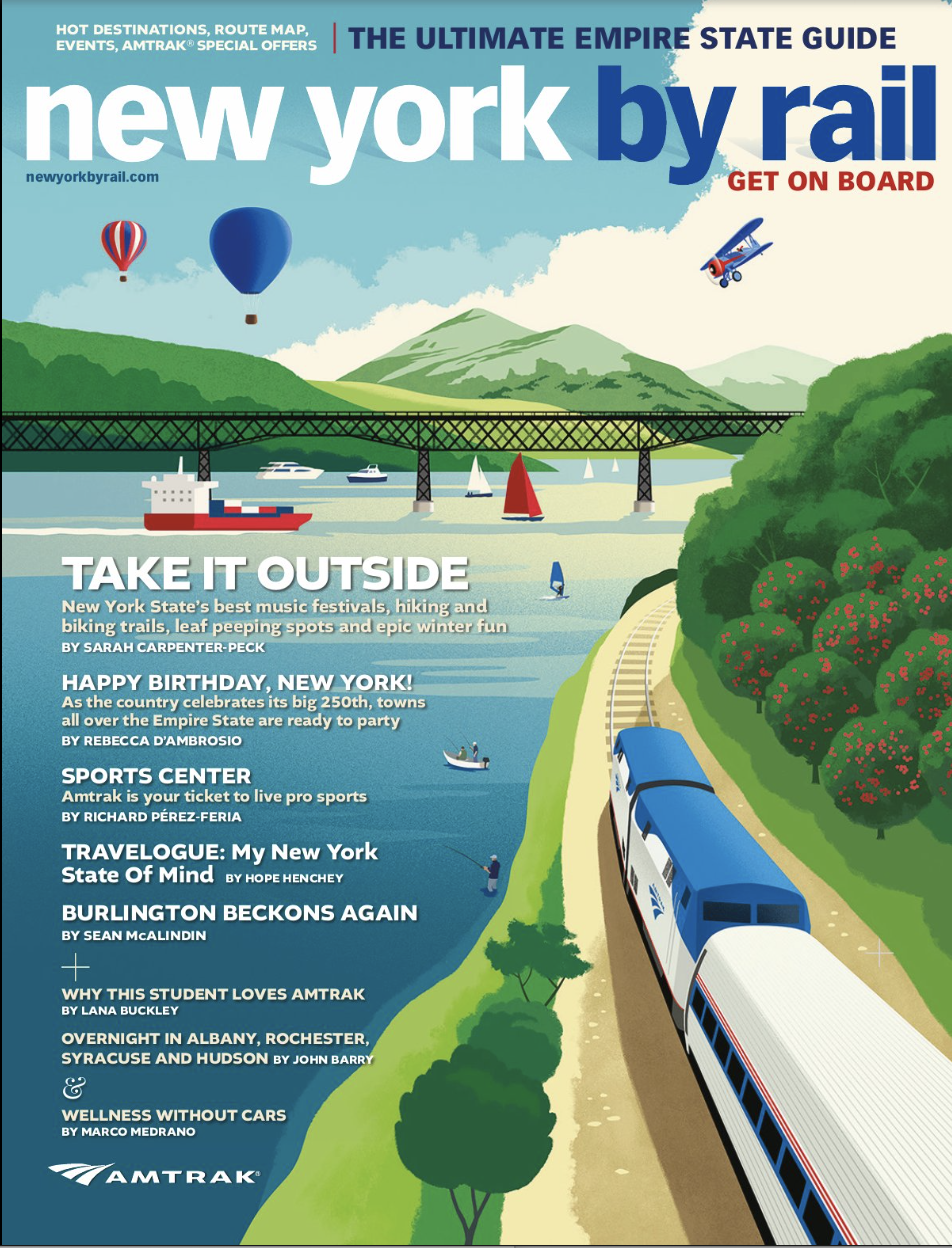
And Mr. Magazine™ can’t say but Amen to that. I was so intrigued by his editorial that I reached out to Tom and had a very lively conversation about the magazine, his believe that print is alive and well, and the changing climate of magazine publishing. The magazine is hard to put down once you pick it up and the content is like a call for action. You will have to take a train trip once you flip through the pages of the magazine. It is as much educational as informational and inspirational.
So without any further ado, please join me for this lively, slightly edited conversation with a man who firmly believes that print is alive and well:
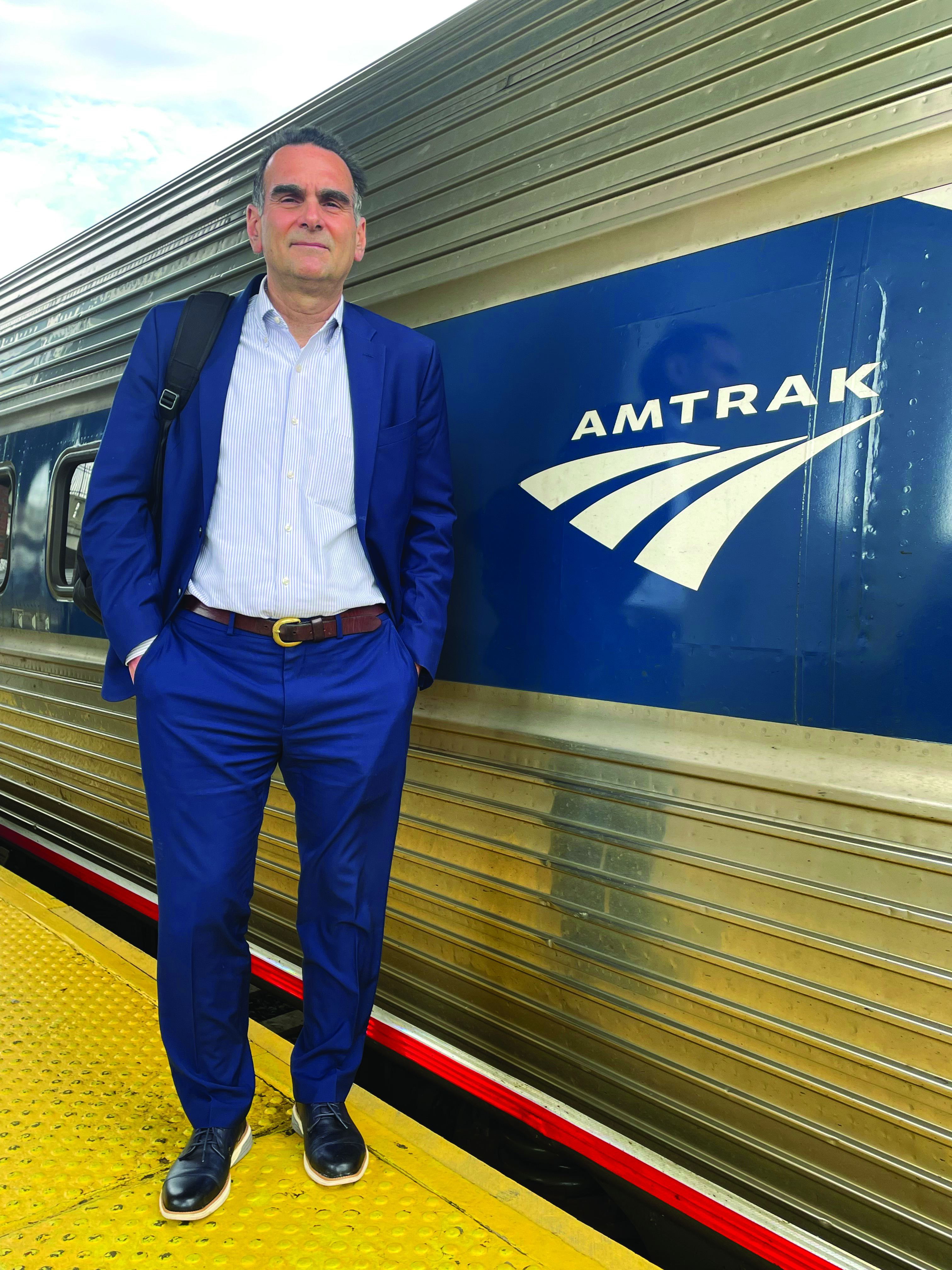
Samir Husni: Tell me about that myth that print is dead that you tell your readers in the 23rd anniversary issue of new york by rail.
Tom Martinelli: It’s alive and well.
It’s certainly been scaled back, but the ones that have survived, they know their mission, they know their audience, and they’re able to serve their readership. For what I do anyway, with a lot of travel related magazines, I’m finding that the travel industry is still embracing print. It’s not the be all end all, because there’s obviously a lot of digital that goes along with it. It’s still part of their marketing efforts.
Samir Husni: What do you think print can offer that digital cannot offer in this field?
Tom Martinelli: Well, I think what print does is that it gives you what you don’t know, right? What print does is it exposes you to ideas, to things that you’re not familiar with.
Our mission is to try to inspire our readers to take a trip. We do that through the content. If we can do our job properly, then they’re going to want to learn more.
That’s where they go online. But you don’t know what you’re going to search for until you have a starting point. Otherwise, you’re just randomly putting things in.
I like to think of our magazines as lore pieces. We’re exposing you to something that we’re the experts. We’re giving you the best of what we feel will make a good trip.
Then, hopefully, you’ll want to know more. That’s where you can go online to dig down in terms of more specifics. You know, so many other magazines have teamed up with Amtrak, but did not have this longevity of 23 years going on.
Samir Husni: Why do you think is that?
Tom Martinelli: Well, I think we’re unique. Amtrak has had a magazine up until the pandemic. They first had a magazine that was called Arrive. It was serving the Northeast Corridor.
That was more for the business traveler to have an amenity. It was a very successful magazine with a celebrity on the cover. It was reaching an audience, corporate audience, from Boston to Washington.
They were promoting that corridor. They scrapped that and they went with a magazine called The National, that was going to promote the long-distance trains.
It was done very well. But when the pandemic hit, Amtrak had a policy to get rid of all the onboard magazines. So, The National was on board, and new york by rail was on board in New York State.
They decided to scrap it because they’re now going in a direction of carbon neutral. They don’t want paper. The magazine, the print magazine did not fit their environmentally friendly ethics.
That’s a mistake. But that’s the direction they went in. We’re in a unique situation in New York, because we’re part of what’s called state supported service.
The state of New York wants this magazine. So, they’re essentially telling Amtrak that we want to continue. Now, fortunately, just about all the distribution of the Amtrak magazine was on board the train.
And that has always been a big part of our distribution. But we have distribution outside of the train, at the train stations, we’re distributed in tourist information areas, we’re distributed at consumer shows, you can request it. So, when the pandemic hit, I was printing 150,000 copies.
I was told we can’t put it on the train. So, we cut the distribution in half. But we still put out 75,000 copies.
And it’s in demand. We try to catch people before they get on the train or after they get on the train, or when they’re looking for travel information. We’ve been consistent for 23 years; it’s been high quality.
We’ve won APEX awards for magazine excellence, 17 consecutive issues. And I would say years, but we combine during the pandemic, an annual into a biannual. So, the last 17 issues, starting with the 2008 issue have all won APEX awards for magazine excellence.
It’s been the consistency. We’ve adapted. Like I said, we had to cut down our distribution, we had to beef up our digital. But nonetheless, we’ve survived.
Samir Husni: It looks like you created a collector’s item. I read the story on the last page of the most recent issue of a person who was missing one issue from the series and was like, livid to get that copy. Tell me about that connectivity with your readers.
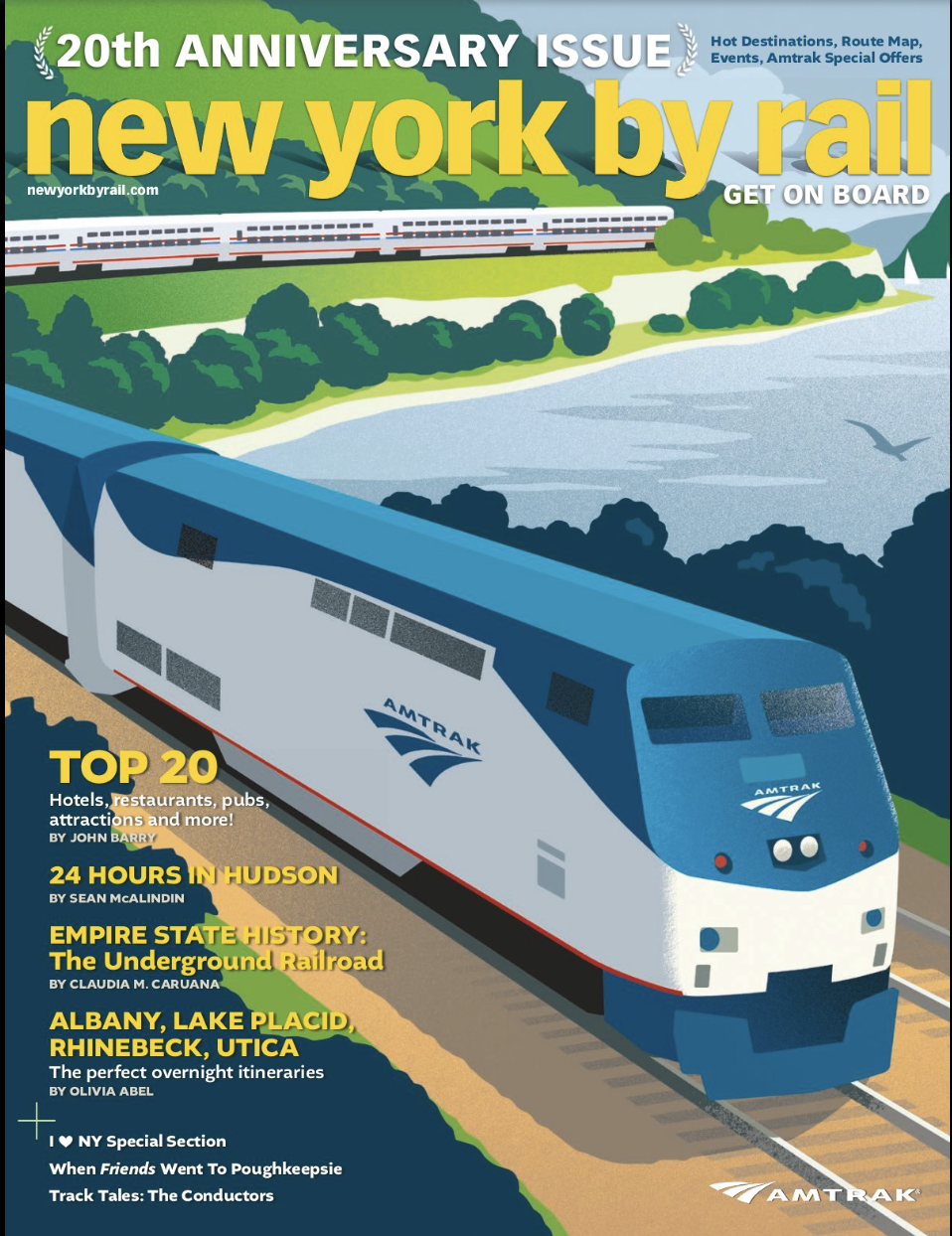
Tom Martinelli: We do have a tremendous connection with our readers. Like the one that we featured in the magazine, he’s collected every issue.
Readers are proud of the fact that our magazine celebrates the area. I put a positive twist on taking the train throughout New York and into Connecticut, Vermont and Canada. There are people who follow it regularly, and they’re proud of it, you know, so they collect it. This particular person was missing one issue.
The consistency of the magazine, they know that they expect it, they know it’s going to be good quality, there’s going to be great content in there. They’re proud of it, they feel like it’s their magazine. So, that why I’m publishing it.
Samir Husni: If you are to duplicate this magazine for another state, which one will it be?
Tom Martinelli: I’ve had discussions with other states. The pandemic changed a lot. I was having some discussions, and because of the Amtrak policy, I think what the states would like is to have an onboard magazine. Amtrak right now doesn’t want to do that. So, they feel like that’s the biggest value for producing a magazine like this. And because Amtrak is not condoning that, but I have had, I’m in discussions with other states like Connecticut, and Maine.
I’ve had inquiries from Pennsylvania and California. This is different, because a lot of the states are now digital oriented, and they feel like they need to be active on social media, they need to be doing digital marketing. They don’t always see this as a primary marketing tool.
I’m hoping to get back on the train at some point as an onboard magazine again. But it’s a challenge. Other states see what I’m doing. And they’re very much aware of it. I will continue to have those discussions, and I would love to do another magazine for another state.
I think this is definitely replicable. But whether the print is going to fit into their model is the big question.
Samir Husni: In this age of AI, where does the trust factor play in the role of a edited, curated print product?
Tom Martinelli: Well, that’s a good question.
I try not to cut corners. So, I take a publishing approach to putting this magazine out, we sit down, we develop a line, a calendar. And we talk about the articles. We have writers that they get assigned these articles. I make that investment.
With AI, it’s a great tool to do research or to provide ideas. But at the end of the day, you really need to curate your content very closely.
AI has not been out taking trips. The difference is that some of our writers are writing first person experience articles about a trip they’ve taken. And that AI can’t do that.
They might try to replicate it, but they’re not taking the trip. So, there’s a difference in terms of that, particularly the first person experience articles. That it’s certainly something to be aware of.
That’s what differentiates us, is that readers see that this is all curated by someone who knows what it’s like to travel by train throughout our service area.
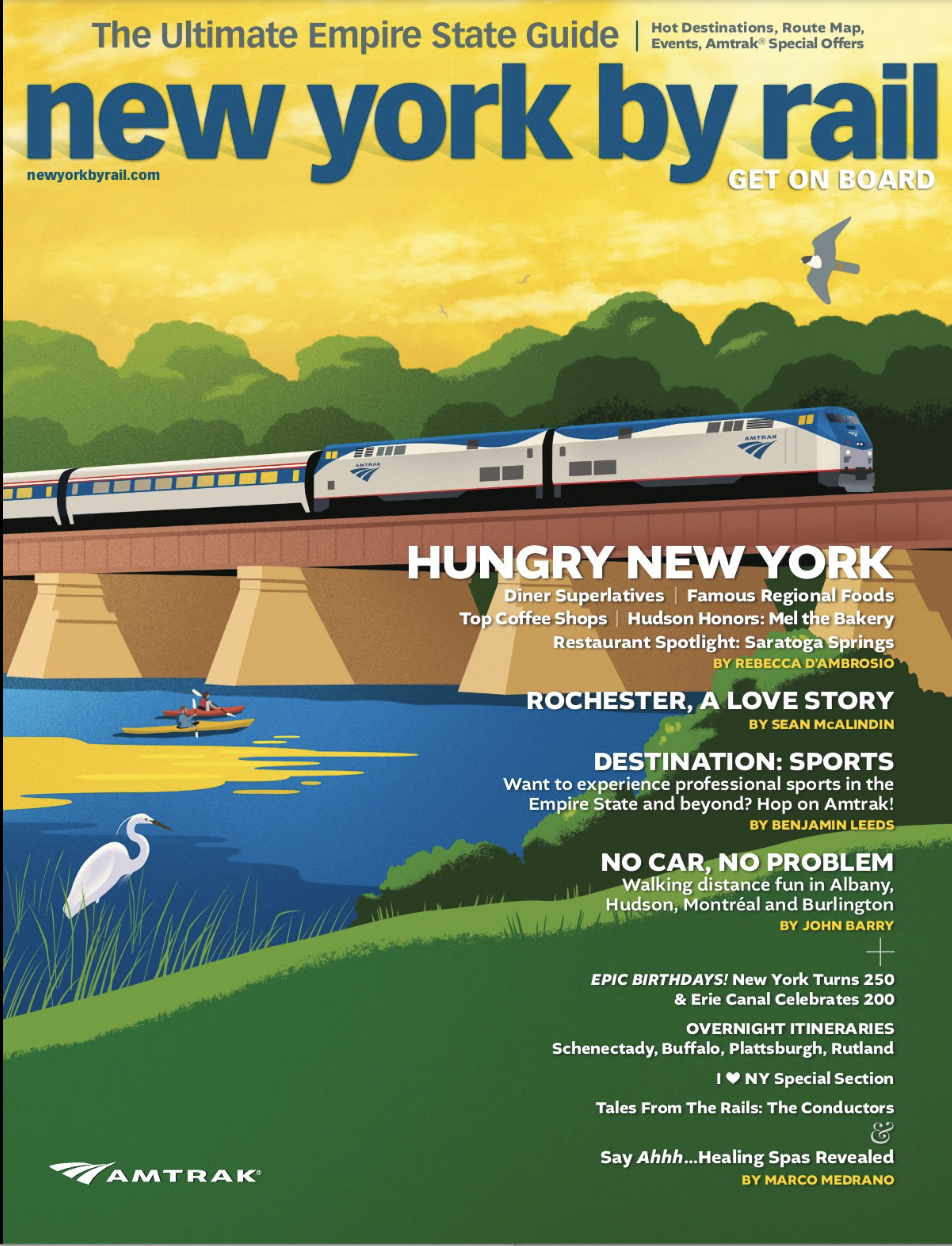
Samir Husni: And, pun intended, has your trip for those 23 years have been a trip in a rose garden, or you had some mountains you had to climb?
Tom Martinelli: No, we’ve had a lot of mountains that we’ve had to climb. I’ve been very resilient in terms of getting through, there were times when Amtrak maybe looked at this, maybe it didn’t fit. There were certainly challenges along the way particularly the pandemic, it set us back, we had to combine two issues, two years’ worth of content.
We lost a lot of revenue. But we persevered. We kept on doing what we’re doing. We also found things that complement the print magazine. This magazine would not have survived 23 years without a digital component.
You have to understand that I don’t get paid any money from Amtrak.
They help with the distribution cost and they do some limited marketing. But aside from that, I have to generate the revenue. I have a large printing bill.
I make that investment. We have to provide a value proposition to our advertisers. And we’ve been able to do that.
I built a brand that is very well respected. It’s award winning. A lot of my advertisers want to be part of that, because of what I’ve created. There certainly have been challenges along the way because it’s an annual. How do you make an annual viable? Right. I think that’s where the digital comes in. I’m a content company, but my roots are in publishing. I started in city and regional magazines. I’m a content company, and I’m developing content. We’re pushing it out through a lot of different mediums, including a print magazine, which is the cornerstone.
It’s like a hub and spoke, there’s a lot of spokes to pushing out that content. And if we weren’t pushing the content out various ways to get the brand out there. We do a weekly newsletter, 52 weeks a year. So, we’re pushing out timely content, a lot of it’s from the print magazine, right? We have a website, very active website that has almost 2000 pages of content.
We’re active on social media. So, the brand has to stay active, you can’t just do an annual magazine and expect people to pick it up. This is not like a subscription base magazine. The brand has to be active.
That’s what I’ve been able to do to; continue to be viable.
Samir Husni: Is there a question that I need to ask you I didn’t ask you so far. You would like me to ask?
Tom Martinelli: I guess a question would be like, what’s an example to show how powerful print is? And that talks about my letter in the current issue. I’m going to tell a story, and it’s a true story about the relevance of a print magazine.
There is a woman, Hope Henshey, she lives in Tennessee, and she was on a USA Amtrak, USA rail pass. So that means you get to go to 10 different places via Amtrak. She was traveling across the country.
She was coming up through New York, she was in New York City, and was heading up towards Albany. During that train ride, she was so inspired by the beauty of the area and the cities along the train stops, that when she got to Albany where she planned to go, and then from there, she was going to go to Milwaukee and Chicago and back to Atlanta. She went up to the train station in Albany, she had a small layover, she picked up new york by rail.
As a result of picking up the magazine, she did not go to Chicago and Milwaukee. She changed her itinerary based on some articles in the magazine; she had been planning everything through Google and online.
She went to four cities in one day, she went from Albany to Hudson, based on an article in the magazine. And she spent her time in Hudson, got back on the train and went to Poughkeepsie. Based on an article in the magazine, she planned out her trip, went down to New York City, and then she went back to Atlanta.
What did this print magazine do? It just opened up her eyes, she changed her itinerary based on the magazine. Now, as a result of that, she ultimately reached out to me, we had a common friend. And she’s my editor at large.
She’s now making video content, but it’s all based on the magazine. We decided we want to tell her story. Now that really is our primary content on social media. And she’s done about 75 reels over the last year. And it’s getting tremendous engagement.
We changed our digital platforms, when we were on social media, we weren’t connecting the magazine to our content, some of it was about the magazine, but some of it was just about things that were timely, go take the train to this event. We changed as soon as I started working with this woman. It was so obvious, I don’t know why I didn’t do it earlier. But now I said, I want you to let me send you some magazines, when you’re doing this content, these reels, I want you to hold up the magazine, I want you to refer to it, I want you to say that it was the magazine that inspired you to find this.
Now you can request a copy of the magazine, or you can follow us on social media. It’s coming full circle; we’re finding a relevant way of promoting the print magazine on social media. It took me 22 years to have that revelation.
Why did she reach out to me? Well, I was at a conference in Arizona.
And there was a gentleman who gave a presentation on car free Arizona. And I started talking to him, well, maybe we could do car free New York. Well, she’s one of these people that is all about sustainability and traveling without a car.
She reached out to him said, I was in New York, I came across this magazine. And he said that you need to reach out to Tom Martinelli. He’s the publisher.
And she did. And it’s been one of the best ways for me to stay relevant. Sometimes you don’t know how you’re going to do it. But we now if you go to our Instagram, New York by Rail, Instagram, you’ll find a lot of great content that starts from the magazine. That’s a testament to how to use the print and the digital in a way they complement each other.
Samir Husni: If you and I are having this conversation, two years from now, you’re celebrating a quarter century of publishing. What would you tell me you’ve accomplished?
Tom Martinelli: What I’ve accomplished is that I’ve been the authority on planning and taking a trip by Amtrak, through our service area. I’ve accomplished the fact that I’ve added a lot of credibility to taking the train as an alternative way of getting to a destination. I’ve kept it going.
Not only kept it going, I’m like a fine wine. Every magazine has gotten better. That’s a testament to the quality and content of the magazine. I’m constantly searching for ways to remain vibrant and relevant. I’ve been able to do that. I told you we’ve won 17 consecutive issues’ awards of magazine excellence from APEX.
But I really believe like the last issue is our best one. And the one before that was the second best. Part of it is my team, so I’ve found a way to continue to adapt. I’m not part of a big publishing company. I’m working differently now. And I’m trying to embrace, the times, but a lot of it has to do with the team.
Working with Richard Perez-Feria has been my editor in chief for four years now, and Kathleen Gates is my art director. The two of them have elevated the magazine that people say this is like a national magazine.
I’m the only Amtrak magazine left. There’s something to be said for that. It just comes down to quality.
You don’t survive if you don’t have something that people want to pick up. People want to pick up this magazine. I found, you know, the ways to be able to do that. I’ve persevered.
Samir Husni: Tell me, if I come to visit you one evening unannounced, what do I catch Tom doing? Having a glass of fine wine, watching TV, reading a book?
Tom Martinelli: Well, it depends what time of year you come in, you visit now, I watch a lot of baseball games at night.
I like to play my vinyl collection. I like to golf, so I might be coming back after a round of golf. I live about an hour and a half north of New York City in the Hudson Valley. I also like just chilling and hanging out in my yard in my property. Those are probably some of the things that you’d find me doing.
Samir Husni: And what keeps you up at night these days?
Tom Martinelli: What keeps me up at night is trying to stay relevant, as I’ve been doing this for a long time.
I want to stay active, I’m trying not to work as much as I used to work, I want to have a life, I want to have balance. I’m at a point in my life, as I enter the twilight of my career, that I still want to continue doing quality work, but I don’t want to put as much time in. So, I’m constantly thinking about how I stay relevant, and how I can do things more efficiently.
I don’t want to retire per se, I want to keep on going. But I’m a lot more focused.
Samir Husni: Thank you so much and congratulations on 23 successful years of ink on paper.


Leave a Reply