h1

TYPE Magazine Presents A Conference That Looks At The Visual Side Of Rolling Stone & The People Who Contributed To That Legacy – The Mr. Magazine™ Interview With Roger Black, Editor In Chief, TYPE Magazine…

May 21, 2018

“I believe that’s the real problem and that’s the second part of what we’re going to talk about at this conference, what do we do; how do we recreate the magazine experience in the digital era? And how do we do it digitally? I will be the first to admit that I have not succeeded in figuring out digital formats for magazines that have the same compelling feeling, the same attraction, the same experience where you sit down with a good print magazine and you enjoy it. And then you get to a finish; you feel like you’ve completed it and you put it down. And that’s not true with the websites or the apps. They’re never finished. And it’s a very tangential and short experience. You dive in and read part of an article and you’re gone. You don’t even know where the article came from some of the time.” Roger Black…

“What I want to ask everyone (at the conference) is what they learned. What was the point? What is the value that we can impart? If you had a young designer today, what would you say to them? Or a young photography editor, what are the main guidelines? What is the meaning of Rolling Stone? What is the end result of all of this? And try to push that into not just an oral history, but actual analysis. And that’ll be fun to do. Andy Cowles, who was one of the designers who shook things up, who burned the brush, he is going to try and talk about how the brand was built and what that means now. And for the new owner, that may be what he paid for, the brand. What can you do with that?” Roger Black…
May 25, 2018 at the School of Visual Arts Theatre in New York, TYPE magazine will present “The Art of Rolling Stone,” exploring the impact art directors, illustrators, photographers, and visual creatives have had on the 50-year-old magazine.

Roger Black is editor in chief of TYPE and a typographer and designer in his own right. The stories and ‘lessons learned’ from the visual leaders of the magazine is the ultimate goal of this conference.
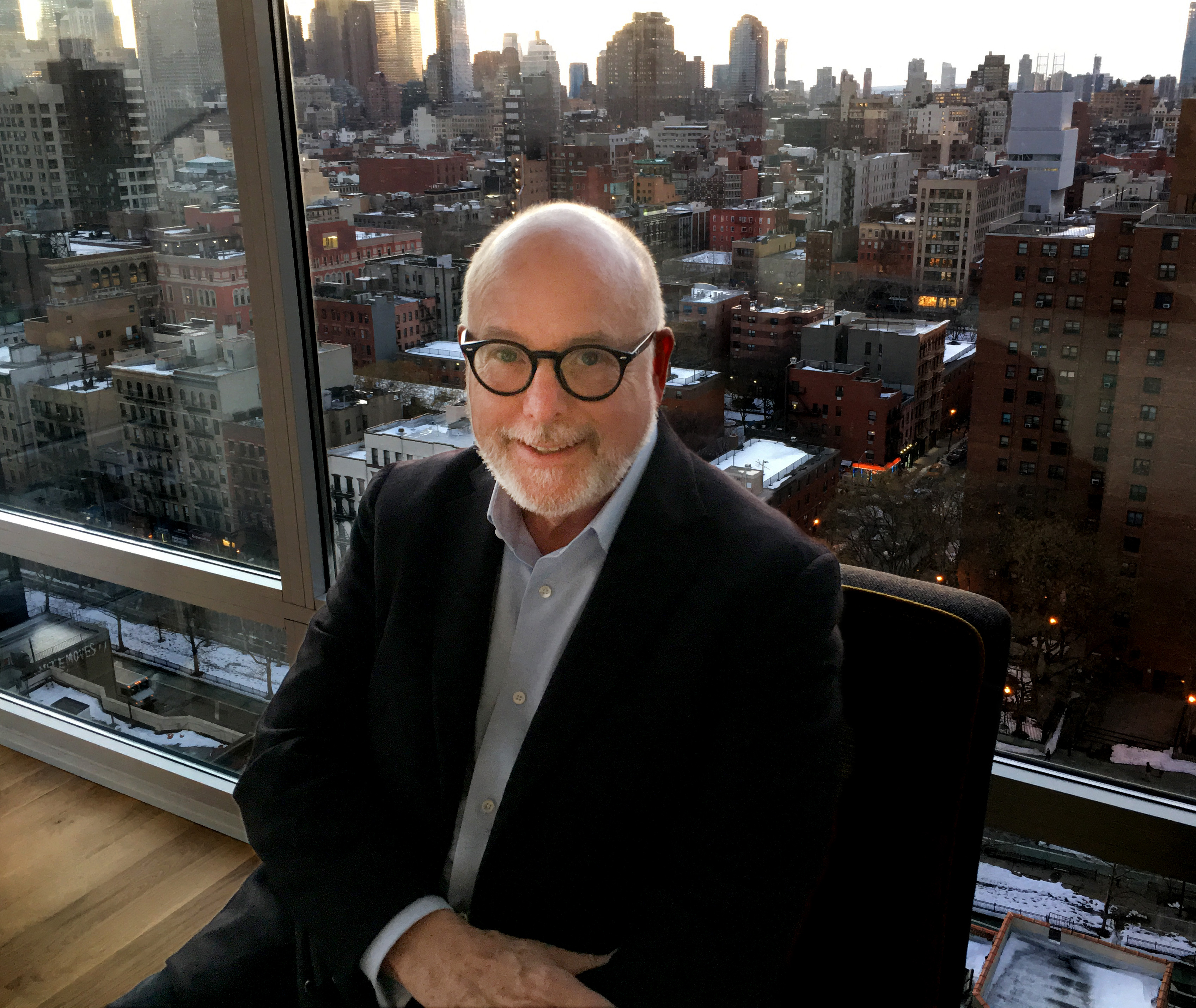
“And I want to get them to tell some of their funny stories, because they all have hilarious anecdotes,” Roger told me when I spoke to him recently. Each time I speak with Roger Black, I feel energized and learn something new with every conversation. This interview was no different. As a former art director for Rolling Stone, the magazine holds a special place in Roger’s heart as he told me during the interview, and he gives the musical icon total credit for putting him on the national map when it comes to design.

The conference, which will be held on May 25, 2018 at the School of Visual Arts Theatre in NYC, will pay tribute to the people who created a design legacy, from Rolling Stone’s first art director to its current one—plus photo editors and photographers who’ve immortalized a whole culture. As the magazine is at a turning point in its 50-year history, what better time to explore the impact of the visual aspects and ask the questions that deserve to be answered: what have we learned from something as influential and connective with its readers as Rolling Stone? And what’s next for the five-decades-old publication?

So, I hope you enjoy this very informative conversation with a man as knowledgeable about design and the magazine industry as a whole, as I have ever spoken with, the Mr. Magazine™ interview with Roger Black.

And for more info on “The Art of Rolling Stone” conference, please visit TYPE magazine’s website here: http://www.typemag.org/home/the-art-of-rolling-stone

But first the sound-bites:

On the conference TYPE magazine is presenting on Rolling Stone magazine: We really hear a lot more about Hunter Thompson and the writers than we do about Mike Salisbury or Fred Woodward. We started talking about doing this a few years ago, but by the time we got it organized it was 2018. (Laughs) Essentially, it’s a non-profit event. We have a nice bit of support from Rolling Stone, they’ve been very friendly about it. But at the same time, we’re really taking stock of what has Rolling Stone done on the visual side and who are the people who did that. So, to some degree they’re very proud of that and happy with the legacy, but they’re preoccupied with trying to figure out what to do next. So, at that level, it’s probably a good idea that we do this, because I don’t know when it would get done again.

On whether he can think of anyone other than Jann Wenner or Hugh Hefner who had 50-plus years as editor in chief at the same magazine: William Shawn, although he was not editor in chief of The New Yorker the whole time. He was there for 50 years, a ridiculously long time and he was an old man when he retired, but in some respects, it wasn’t his magazine, it was Harold Ross’s magazine; he inherited the mantle, so it isn’t quite the same.

On whether the move from the west coast to the east coast for Rolling Stone had an impact on the design or the brand: It’s difficult for me to sort out how much of it was because of New York and how much of it was because of the change in the business, because if you remember, that move coincided with the magazine’s heyday. That was a time when it was filled with ads and had everyone’s attention. It was very important at that moment. It was also past the 10-year mark and it was beginning to institutionalize; it was beginning to settle into patterns. If you look at, say, Fortune magazine, it was very experimental and very interesting from a design point of view in the early days. But then by the 50s it became almost formulaic, and I think Rolling Stone was settling into a formula, into its formula. Three features and one of them would be rock and roll, one would be personality and one would be politics, the front of the book and the back of the book. And a certain number of pages.

On bringing all of these art directors together at the conference and if he thinks it will be a “Clash of the Titans” or they’ll check their egos at the door: One thing that I’m trying to do, and we’ll see how successful I am, is to get everybody to focus, not so much on their portfolios, because with people like Fred Woodward, we know his portfolio. And we don’t need to see the history of Annie Leibovitz’s photographs again. It’s like going to a Picasso show, okay that’s the Blue Period, I get it. (Laughs) I want to get them to tell some of their funny stories, because they all have hilarious anecdotes. But I really want to find out what they learned.

On the collective art of print magazines: Yes, and that’s the fun part too, I think. We do have one session on the team at Rolling Stone, and none of the top art directors are there, but all of the people who are on the panel have gone on to become art directors. We’ve had more people who have become art directors from the 70s than anything else. Some of them went into advertising, there is Rich Silverstein in San Francisco, but there are people like Mick Stevens, The New Yorker cartoonist, he was a paste-up artist.

On why he’s always had a soft spot for Rolling Stone, even though he’s worked on many magazines: Well, I owe a lot to Rolling Stone. It taught me, because I never went to design school. I had already done some newspapers, tabloids. I had been the art director of a weekly in L.A. and then I had done some freelance work. I recently found the first issues of Cycle News that I did in 1973 or 1974. (Laughs) And they looked pretty good. And that was before Rolling Stone. So, I had learned a few things along the way, but Rolling Stone was a much more challenging environment. I had a year before I had to be the art director, so that was great training. And Jann had to be the most, he is a completely compulsive lunatic, but he’s a genius. He would come up with something in a split second that would electrify you and you’d have to move as fast as you could to keep up with him. And that was a wonderful experience.
And now the lightly edited transcript of the Mr. Magazine™ interview with Roger Black, editor in chief, TYPE magazine.

Samir Husni: Tell me about the conference that Type magazine is presenting about Rolling Stone.
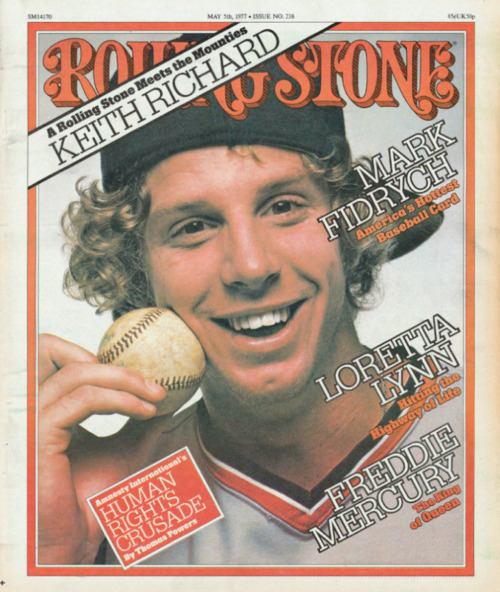
Roger Black: Rolling Stone magazine is at a turning point and at a very interesting moment in its history. There was quite a lot of attention with the HBO special, and there was a very beautiful book put out, but very little about how the magazine was designed and how that visual style developed over the years and the people who contributed to that.

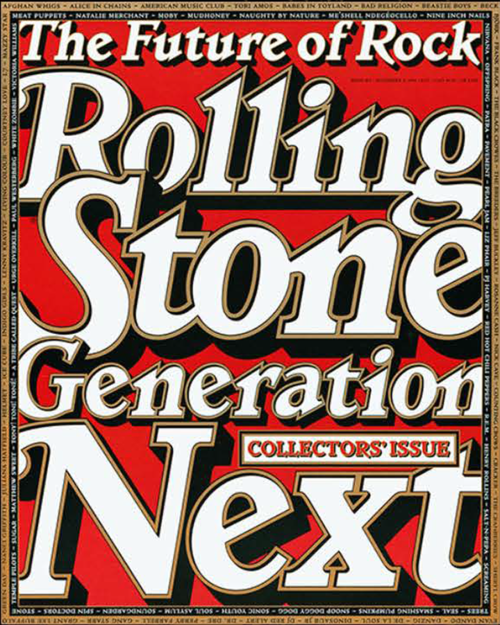
The book about the Rolling Stone covers is in its third edition, and this edition is called “Rolling Stone 50 Years of Covers,” and Jann (Wenner) has a nice introduction to that, where he gives due credit to the designers and the art directors and tells a few anecdotes about that.

But other than that, we really hear a lot more about Hunter Thompson and the writers than we do about Mike Salisbury or Fred Woodward. We started talking about doing this a few years ago, but by the time we got it organized it was 2018. (Laughs) Essentially, it’s a non-profit event. We have a nice bit of support from Rolling Stone, they’ve been very friendly about it.

But at the same time, we’re really taking stock of what has Rolling Stone done on the visual side and who are the people who did that. So, to some degree they’re very proud of that and happy with the legacy, but they’re preoccupied with trying to figure out what to do next. So, at that level, it’s probably a good idea that we do this, because I don’t know when it would get done again.

Samir Husni: When you really think about it, we had two magazines; we had Rolling Stone and Playboy, with the longest-serving editors; from the beginning of Playboy in 1953, Hugh Hefner was editor in chief, and the beginning of 1967, it was the same thing with Jann Wenner. When you look at the magazine industry as a whole, can you think of any other icons who lasted 50 years-plus?

Roger Black: William Shawn, although he was not editor in chief of The New Yorker the whole time. He was there for 50 years, a ridiculously long time and he was an old man when he retired, but in some respects, it wasn’t his magazine, it was Harold Ross’s magazine; he inherited the mantle, so it isn’t quite the same.

At Playboy there was someone else, Art Paul, who just passed. Art Paul did the magazine, when we were at Esquire or something, you’d look at Art Paul a little bit like you would look at Hugh Hefner; he did the magazine very sleek, with a love of chrome and velvet. And it was a little too rich and too polished for the kind of AIGA wisdom of what design is supposed to be. And it was much more eclectic; it wasn’t a powerhouse, modern design, despite the fact that he was in Chicago. It was much more fun. (Laughs)

A little later in the sixties, we saw people like William Holbert, the art director of Look, adapt that modern style in a much warmer way than say, the Germans had done it. But still, what Art Paul was doing was a little more like what Rolling Stone was doing, he was trying to create his own voice or the voice of the magazine, that had its own rich personality. It was what we call today “branding.” (Laughs) And incredibly successful. The paid circulation of Playboy was what, two million at one point? I don’t remember. But it was huge.

Samir Husni: Seven million at one point.

Roger Black: Seven million? There you go. And it wasn’t a discounted magazine either. Now, Rolling Stone never got to those kinds of numbers, but it held over a million for quite a few years; I’m not sure where it is now.

But it was the same kind of thing. Instead of being one art director, there was a series of art directors who all had a different take on the same voice. And I think Jann gets an enormous amount of the credit for pushing that and for also shaking it up from time to time. I don’t think he would be particularly surprised or disheartened by the changes that are very likely to be made today.
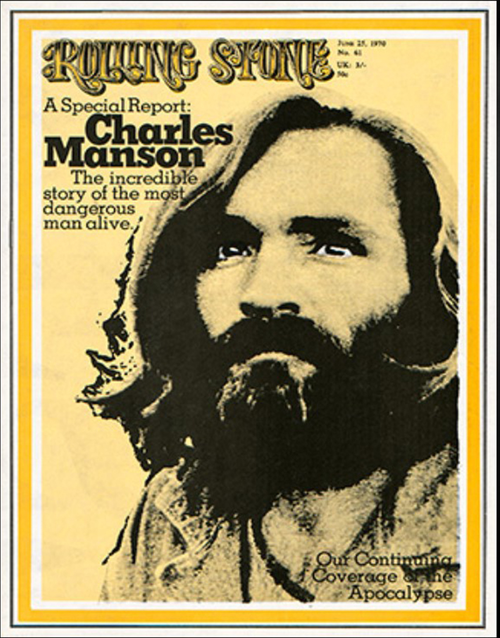
There are two things that we’re going to talk about at this conference with this group, and we do have the photography editors too, all of them, and that I’d say has more continuity than the art directors, but I’ll get to that in a minute. In the graphic design, in the format of the magazine, it started in a very restrained, very classical type of typographical style. I’ve said that it was trying to look like it was the entertainment section of The Times of London. (Laughs) Not even the Sunday Times. It was very sober.

And all of this was pushed back against the why of the illegible underground press, because right in San Francisco, you had all of the wonderful underground comic artists and illustrators. That whole underground look, which was rampant in the mid-sixties, by the time Jann got going, and actually in a way, it was inspired by what Warren Hinckle was doing at Ramparts, because Jann went to work at the Sunday Ramparts. All of this period is very nicely told in Joe Hagan’s book, “Sticky Fingers: The Life and Times of Jann Wenner and Rolling Stone Magazine,” which came out last year. The book’s account of the first 10 years is fun and interesting. How do they do this?

Actually, Steve Heller asked me recently in an interview for Print Mag, did we think Rolling Stone was going to be a long, enduring publication when it was in its first 10 years? And actually, by the time I arrived, which was year eight, I was so young that it didn’t occur to me that it wasn’t already a fixture. It seemed like it was a permanent institution. And your attitude is quite different about that from the hard travel underground, which I also knew from the 70s. There was a staff; there was machinery; everyone had fancy typewriters and we had a budget for editorial. So, we didn’t really think it was anything but something that was going to last a long time. We were building for success and we were building for a continuing style and idea that could be carried on.

And a lot of that has to do with the relationship a magazine has with its readers. I mentioned William Shawn; The New Yorker under keyed a fairly big visual change, but it still looks very much like The New Yorker. The cover idea, the style of illustration may have changed from time to time, but it’s still The New Yorker. You see a painting someplace or another picture and you say, that could be a New Yorker cover. And that’s an amazing thing.

Rolling Stone had that silly rock song, “Cover of the Rolling Stone” about it very early. It had already become a thing, a visual icon that people recognized. So, the first art director struggled with that and started this fairly straightforward, kind of an antidote, to the crazy underground that was unreliable and not very long-lived. Rolling Stone was setting itself up as the arbiter of the style and the culture and the politics. It was trying to give itself authority. And that was something that the underground was pushing against; they were pushing against authority.

So, that was a very interesting thought. For the first five years Jann worked with this fellow, John Williams, the first art director, and who is coming to our conference and who is never mentioned, someone Jann didn’t even know was still around. He’s been in San Francisco the whole time and he’s done very well and is in great shape. He’s done well as a designer, but he went away from publications. He’ll be at the conference and talk about those early days.

Robert Kingsbury, who is still alive, but unable to attend, was the second designer and actually Jann’s brother-in-law. The magazine started getting a little bit of money and hiring named illustrators and then Annie Leibovitz joined the staff. And all of that started the change. And he’s the one who first had Ralph Steadman in the magazine. He was an amazing guy. He was not part of the community of art directors; he was a sculptor and an artist that Jann pressed into service because he didn’t have much money. And he wanted to help. He was a very nice guy. Later, he did a lot of the book.

Then Jann turned to Mike Salisbury, who was a record company art director, fairly big-time and had done Surfer and Surfing magazines. He was a very lively and funny guy, kind of impetuous. It was difficult to have Jann and him in the same room at the same time. (Laughs)

He didn’t last that long, and then Tony Lane came in from a record company in the Bay area that had had some big hits. He was also a really polished art director with a big Rolodex, as we used to have in those days, filled with illustrators and photographers’ names. And he made a lot of amazing assignments. His typography was also superb. But he was also an extremely volatile customer, he and Jann were great friends for a while, then fell out.

I had been hired as the assistant and I came in and was there for about four years. I was the art director for almost three years and then my assistant, Mary Shanahan, took over. So, at that point, we had a certain kind of brand-building era. That was the first 10 years. Five art directors, Mary came in after the 10-year mark, she came in 1978. She went on to do GQ and French Vogue, and then Town & Country, not exactly the same kind of magazines, but she was very good, and the only female art director we’ve had at Rolling Stone for 50 years.

And at that point, when she left, Jann said, clear to the next, getting all so self-referential. And then he brought in Derek Ungless, a Brit, he had been Robert Priest’s cohort on “Weekend in Toronto.” And he took the Oxford rules off; he took the borders off the pages. (Laughs) So, that set up the cycle. Then Fred Woodward came in and he restored it all, put the Oxford rules back, and he was there for a long time. I think about 12 years.

Then another Brit came in and burned off the brush again. (Laughs) And then my friend, Amid Capeci, who is no longer alive and was a wonderful art director, came in and started doing the restoration, and Joe Hutchinson put the typefaces all back. And if you look at the last 10 years of the magazine, it’s very much Rolling Stone-looking. So, the obvious next step would be a big change, but we’ll see. It’s been reformed, has had a whole lot of brand-building, and has had a revival or shall we say, been reformed; radical change again and then revival. It’s very interesting to look at its 50-year history.

Samir Husni: It would make a nice case study, in terms of a conversation about brand-building and change.
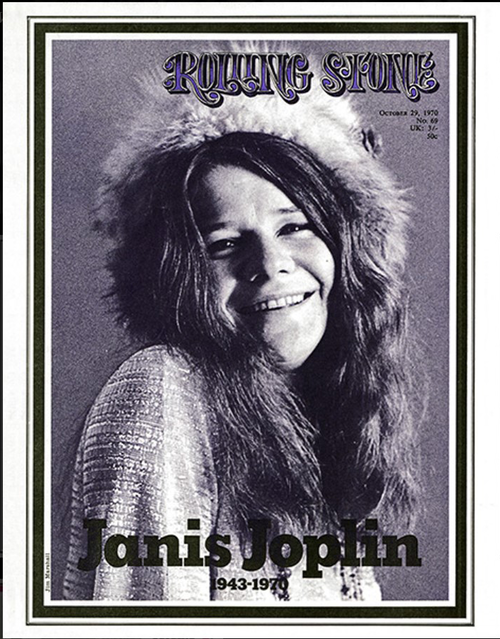
Roger Black: Yes, and the amazing thing is people say that Rolling Stone isn’t what it used to be, but nothing is what it used to be. The culture is totally different and it has changed several times since. People say the magazine business is in convulsion and we haven’t figured out what we’re doing, and I think that’s fair. But if you talk to people in the music business, it’s morphing constantly They’re struggling to come up with new business models all of the time.

And the same thing with movies. Every two years, I’d say, there is a Variety or Hollywood Reporter headline that says, the studio system as we know it has collapsed. (Laughs) It’s all changing. And I don’t know what business doesn’t do that. But with the case of the long-form motion picture industry, with the kind of consolidation they’ve done and those huge franchises they’ve built, they’ve figured out how to make money, so there is a business model there.

Not so much with magazines. I believe that’s the real problem and that’s the second part of what we’re going to talk about at this conference, what do we do; how do we recreate the magazine experience in the digital era? And how do we do it digitally? I will be the first to admit that I have not succeeded in figuring out digital formats for magazines that have the same compelling feeling, the same attraction, the same experience where you sit down with a good print magazine and you enjoy it. And then you get to a finish; you feel like you’ve completed it and you put it down.

And that’s not true with the websites or the apps. They’re never finished. And it’s a very tangential and short experience. You dive in and read part of an article and you’re gone. You don’t even know where the article came from some of the time.

Samir Husni: Maybe that’s something that’s good. Maybe we should reconsider and say that if it’s not ink on paper, it’s not a magazine. You can call it anything you want, but it’s not a magazine.

Roger Black: Yes, I agree. It isn’t a magazine. I think that the apps, some of the news apps, particularly Financial Times and to some degree, The New York Times; the Financial Times actually still has an edition concept, you can look at live news or the edition, which is interesting. I guess the Brits are a little more conservative than we are. I can spend time in the morning with The New York Times’ app, I can spend 20 minutes without changing it, but the tendency nowadays is to immediately go to the Washington Post or the Financial Times or the L.A. Times or The Guardian; all have the same reading experience. Maybe some of us used to get five daily papers every morning, I remember at one time I got three at least. And I used to read The Wall Street Journal too.

So, there was some of that, but with a magazine, Esquire and The Atlantic, and at one moment in time, New York Magazine, there have been quite a few where you felt like when you needed something to do, you could just sit down and read the magazine. And that experience, the edition experience is unique.

Samir Husni: I’ve always had this question in the back of my mind, was there a difference in culture, design-wise, for Rolling Stone when it moved to the east coast from the west coast? Did that impact the design or the brand, or was it looked at as just a different location?

Roger Black: It’s difficult for me to sort out how much of it was because of New York and how much of it was because of the change in the business, because if you remember, that move coincided with the magazine’s heyday. That was a time when it was filled with ads and had everyone’s attention. It was very important at that moment. It was also past the 10-year mark and it was beginning to institutionalize; it was beginning to settle into patterns. If you look at, say, Fortune magazine, it was very experimental and very interesting from a design point of view in the early days. But then by the 50s it became almost formulaic, and I think Rolling Stone was settling into a formula, into its formula. Three features and one of them would be rock and roll, one would be personality and one would be politics, the front of the book and the back of the book. And a certain number of pages.

Now, from a design point of view, that was the year that the new design appeared, which was really a consolidation of what we had been working on for the last couple of years. There were particular typefaces and that morphed frequently, but it was still very recognizable and it’s still recognizable, if you look at the news section in the front of Rolling Stone, there’s a resemblance to what it did 40 years ago.

However, we did have access to a much bigger pool of talent visually. Annie (Leibovitz), at that time, was beginning to pull away from the magazine. She took a year’s leave and went off with the Rolling Stones band. And we had to find people who could do that kind of work. And Jann loved the kind of social side, so he got Richard Avedon to do that big issue, “The Family.” And he got Avedon’s old buddy, Hiro, the famous still-life photographer; he hired him and pretty much made his own assignment to cover the space shuttle series that Ed Zuckerman wrote. He took that picture that you later saw everywhere, it was a clothing rack with spacesuits hanging on it, so it was like ready-to-wear spacesuits, which was a symbol of the shuttle. Famous picture, and that was something that Annie never would have taken. She didn’t think that way.

We began to see a lot of other photography. We would send photojournalists like Nancy Moran to Panama with Jan Morris, things like that. So, it became much more big-time. Anybody would answer the phone. And that was a change from when I started in 1975; you’d call somebody in New York from San Francisco and they’d say, I don’t know, what are you going to pay? (Laughs) By 1977, you’d call New York and they’d seen all of the publicity and parties; we had an architectural review in The New York Times of our office, it was becoming very big-time, so you’d call somebody up then and they’d say yes before they heard any of the details. That was a big difference.

The other thing is, one of the big upsides of the early days of Rolling Stone was that it took a lot of risks and it wasn’t afraid of failure. It was actually part of the culture, sort of like a Silicon Valley culture, where you aim high and sometimes you fall flat on your face. But because we had a limited budget, we would just go ahead and print it. (Laughs) And by the time we got to New York, we started to understand that there was a kind of bottom, a threshold that we had to get over. We couldn’t print failures, we had to have a certain level of sophistication at the bottom. And that’s a difference.

So, if you look back at Mike Salisbury’s or my early magazines, there were things that seemed like a good idea at the time, and then two months later we’d ask, what were we thinking? (Laughs) And that also allowed the most extraordinarily wonderful layouts to appear.

And Jann was doing the same thing, his interest in space was very interesting. It was almost like he had become an Arthur C. Clarke fan. What was Rolling Stone covering space for? We did an astronomy piece called “The Odyssey and The Ecstasy” about Mars. And I did the “2001” look for that, very elegant and minimal. And that was a great layout. In a more formatted magazine, you would have to use all of the same typefaces for all of the stories, which is sort of the pattern today, but we were able to create things that were very individual.

Rolling Stone was big enough that you had a kind of “Rolling Stone World or Universe,” it was like a theme park. And you could have quite a lot of variety within that and you were still New York and Rolling Stone. Today, in publishing and in the media, particularly in digital media, the theme park is the whole Internet, it isn’t one brand. And so individual brands have to strive for consistency. I’ve heard designers criticize The New York Times for using different fonts in their magazine, so you’re going through the website and sort of randomly, you come up on a magazine article and because you’re not holding the magazine, people say that it doesn’t go with the brand. Give me a break, come on, why does everything have to be exactly the same? (Laughs)

And I think that was beginning to be lost in New York. It became more institutionalized, more establishment, more self-conscious. But nevertheless, look at what Fred Woodward did in his era. That was some of the most wonderful layouts in 20th century magazines. And that was quite a few years later.

Samir Husni: You are bringing all of these people together on May 25th. Is it going to be the Clash of the Titans? Are they going to check their egos outside the door before they come in? (Laughs)

Roger Black: (Laughs too). One thing that I’m trying to do, and we’ll see how successful I am, is to get everybody to focus, not so much on their portfolios, because with people like Fred Woodward, we know his portfolio. And we don’t need to see the history of Annie Leibovitz’s photographs again. It’s like going to a Picasso show, okay that’s the Blue Period, I get it. (Laughs) I want to get them to tell some of their funny stories, because they all have hilarious anecdotes. But I really want to find out what they learned.

We also have the three big photo editors. They were big in the industry, Karen Mullarkey, who I brought in. And then Laurie Kratochvil, who I had known from the 70s, and was photo editor for 15 years or so. And she hired Jodi Peckman, who has been there ever since. So, there is a 40-year span of photo editors that are going to be there too.

And what I want to ask everyone is what they learned. What was the point? What is the value that we can impart? If you had a young designer today, what would you say to them? Or a young photography editor, what are the main guidelines? What is the meaning of Rolling Stone? What is the end result of all of this? And try to push that into not just an oral history, but actual analysis. And that’ll be fun to do. Andy Cowles, who was one of the designers who shook things up, who burned the brush, he is going to try and talk about how the brand was built and what that means now. And for the new owner, that may be what he paid for, the brand. What can you do with that?

Samir Husni: As you talk about the integration of the design, the photography, the writers, you name it; don’t you think that’s what differentiates the creation of a magazine from any website? Anybody who thinks they can create a blog and they can have some magazine online, with the same person doing the writing and the editing, while you rarely find in the history of magazines, any of them done by one person. It’s always that collective art.

Roger Black: Yes, and that’s the fun part too, I think. We do have one session on the team at Rolling Stone, and none of the top art directors are there, but all of the people who are on the panel have gone on to become art directors. We’ve had more people who have become art directors from the 70s than anything else. Some of them went into advertising, there is Rich Silverstein in San Francisco, but there are people like Mick Stevens, The New Yorker cartoonist, he was a paste-up artist.

At the time they were there, they were part of a team. It was the hippie radical culture, a lot of people were doing the whole women’s movement that’s going on now; what was it like then, did women have equal pay and were they treated equally? Near as I can tell, we never even asked that question. If somebody was an art director, they all got the same pay. It wasn’t much, we weren’t paid a lot, but there was never any thought that you would pay a woman less. That didn’t make any sense.

In fact, we probably got better women at each grade because they were scrambling. They were willing to work for less. But I think if you look at the editorial department, it was all women. Harriet Fier, who just died this year, was a managing editor during that time. Sarah Lazin, who has gone on to become a fairly big-time book agent and Marianne Partridge were there. There was an enormous group of very great, very talented and wonderful editors who were all women. And that was interesting to me in the current context. It was the interaction between the team, now sometimes we had huge fights between editors and art directors, mostly over space. Jann actually agreed at one time that in the feature well, we do the following allocation, 50/50 solid text and everything else. So, art and white space, whatever you want to do with it. (Laughs)

But it was on the average of an issue, it wasn’t every article. So, we could have one very texty piece. But the idea of what the headlines were; how the actual picture worked within the sequence of the story, or the way the captions, how much spacing for captions; that was all done in a collaborative effort. And it was quite fun; it was a really great group.

We had moved on in that generation, the first 10 years of Rolling Stone, even though there were people like Mike or Tony, who were already fairly big-time art directors before they got there, unlike me, who nobody had ever heard of. There was never a feeling of the great master, there was none of that. We didn’t hand down sketches as art directors to a staff who implemented them. We sat down as a team and decided what would be best to do and who should do it.

By the time I got there, it wasn’t one art director designing everything, everybody in the art department, all of the designers anyway, contributed. They did layouts; they did covers. The job of the art director was to corral that group and get them to work together harder.

There is a fellow who will be at the conference on the team panel, Vincent Winter, who lived in Paris and is mostly a photographer now; we worked together subsequently on many projects. He had this brilliant idea of the way the typography should work at that moment in time, which was use modern construction, modern architecture, and use old-style typefaces. And it gave an enormous charge to the magazine. It became much more electric than previously. He went in and worked with Robert Priest at Esquire. In that early 80s period, Esquire got really exciting under Robert Priest. And I credit Vincent, maybe in the same way that we worked together, it was like he would challenge me and I would challenge him. And that created something that might have been better than you could create on your own.

And that was the wonderful thing about it. And I feel like they had that same camaraderie among the writers. It was an amazing group.

Samir Husni: You’ve worked on so many magazines, but from talking to you many times, I’ve always felt that you have a soft spot for Rolling Stone. Why?

Roger Black: Well, I owe a lot to Rolling Stone. It taught me, because I never went to design school. I had already done some newspapers, tabloids. I had been the art director of a weekly in L.A. and then I had done some freelance work. I recently found the first issues of Cycle News that I did in 1973 or 1974. (Laughs) And they looked pretty good. And that was before Rolling Stone. So, I had learned a few things along the way, but Rolling Stone was a much more challenging environment. I had a year before I had to be the art director, so that was great training. And Jann had to be the most, he is a completely compulsive lunatic, but he’s a genius. He would come up with something in a split second that would electrify you and you’d have to move as fast as you could to keep up with him. And that was a wonderful experience.

I’ve been lucky enough to have worked with some great editors. Terry McDonell, who did Smart and then we did Esquire together, that was really fun. He is going to be a moderator at this thing, so that’ll be nice. And of course, Abe Rosenthal at The New York Times, there is no greater New York Times editor in its history. And I got to be his art director and that was pretty amazing.

Before Rolling Stone, as I said, no one had ever heard of me. I had never done anything nationally, and then I was. And it was huge success. And we won all of the awards. That was a great moment in my life. For many, many years, I tried to push back and people would say he’s the guy who did Rolling Stone and I would say that I had done other things. (Laughs) But still, it was very important to me and it was a great moment in time, so I’m happy to use that as the center of my resume. (Laughs again)

I think there’s a whole other conversation, which we touched on, which is that experience online. I did this thing called Tree Saver, which was a web app for turning pages. And we never had a matching business model, so we could never really make that idea work. We did quite a few of them, but they never made us a business success from it.

The same thing with the PDF magazines that Condé Nast got so excited about. And I remember at the time being skeptical. I’m working on my own book and I found a quote that said, “The iPad is not a magic pony.” That’s something that I said in a trade paper.

But there are people at Condé Nast and elsewhere who thought that they had solved the digital magazine problem. Just take the PDF’s and cast them into that format and that’s it. We ended up with Texture, which I think Apple bought. But Texture itself promotes individual articles for their magazines. And it’s not even a really good experience. It certainly doesn’t work on an iPhone. It’s okay. I subscribe to Texture. I can read The New Yorker on Texture if I don’t have my copy. And that’s good, I like that. I can go to The New Yorker app too, it’s very convenient. There are things that I don’t subscribe to, that I don’t get in there.

So, how can we work on this experience? If we can find a business model, I think we can recreate some of these. There are some things working. I’m doing TYPE magazine, for example, which is now in its second issue. It’s very much for love and not money. But we’re getting support and it’s kind of a tripod of members, advertisers and patrons holding it up.

Then there’s the billionaire magazine, Alta, which is quite good. And if we can find a benefactor, maybe we can hold on long enough until we can find an actual business model. I keep finding people who love the printed magazine.

That’s the conversation: how do we keep it going? Whether it’s things that you can create online, and as you pointed out, that’s not a magazine, but what could it be?

Samir Husni: Thank you.
h1

It’s A Mag Mag Mag World & Mag Culture Is Bringing It To New York City: The Mr. Magazine™ Interview With Jeremy Leslie, Owner & Curator, Mag Culture…

May 15, 2018

“I’ve always had a fundamental belief in it (print), but what encourages me to continue that deep belief is the wave after wave of new magazines with fantastic ideas and fantastic values; just the good stuff that’s being made is what continues to inspire and excite me.” Jeremy Leslie…

“I always say that I lived through the promise of the iPad and the tablet, and there are one or two cases where it still has a valid role to play; for certain publications it’s very useful. But essentially, I sat through lots of technology meetings where I just always felt in my heart of hearts, if somebody walked in with this new technology called “magazine” and put it down in front of them, everybody would say “Yes!” (Laughs)” Jeremy Leslie…

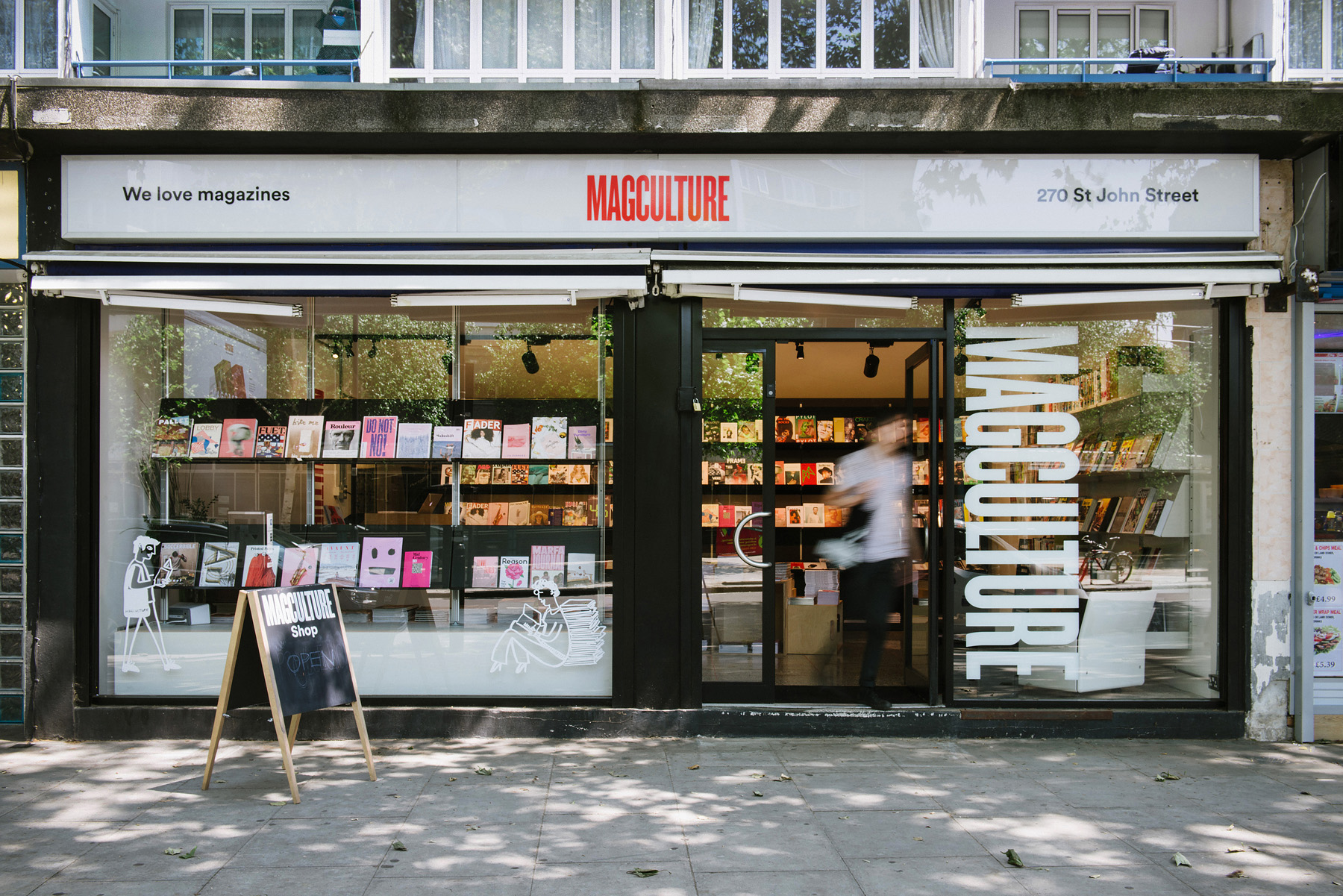
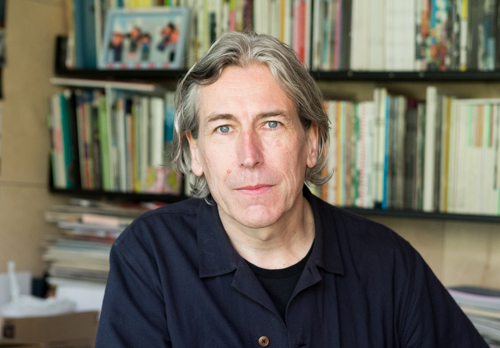
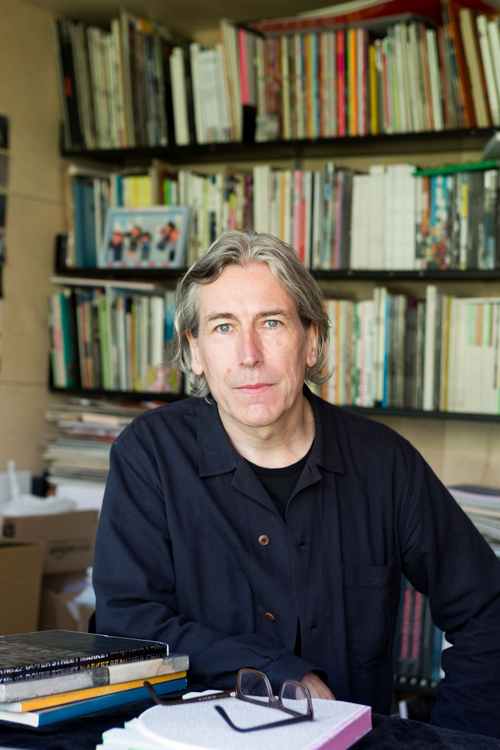
Jeremy Leslie is an author, a creative director, a designer, blogger, and owner of the London-based, brick and mortar shop, Mag Culture. Jeremy has 30 years of experience in magazine making. He has been art director for weeklies and monthlies and spent the nineties developing magazines for clients as diverse as BSkyB, Nike, Virgin Atlantic and Waitrose. He has written four books about editorial design and launched Mag Culture as a blog in 2006, adding the design studio in 2010, and shop in 2016. He is a man who believes in print and in the beauty and power of magazines.

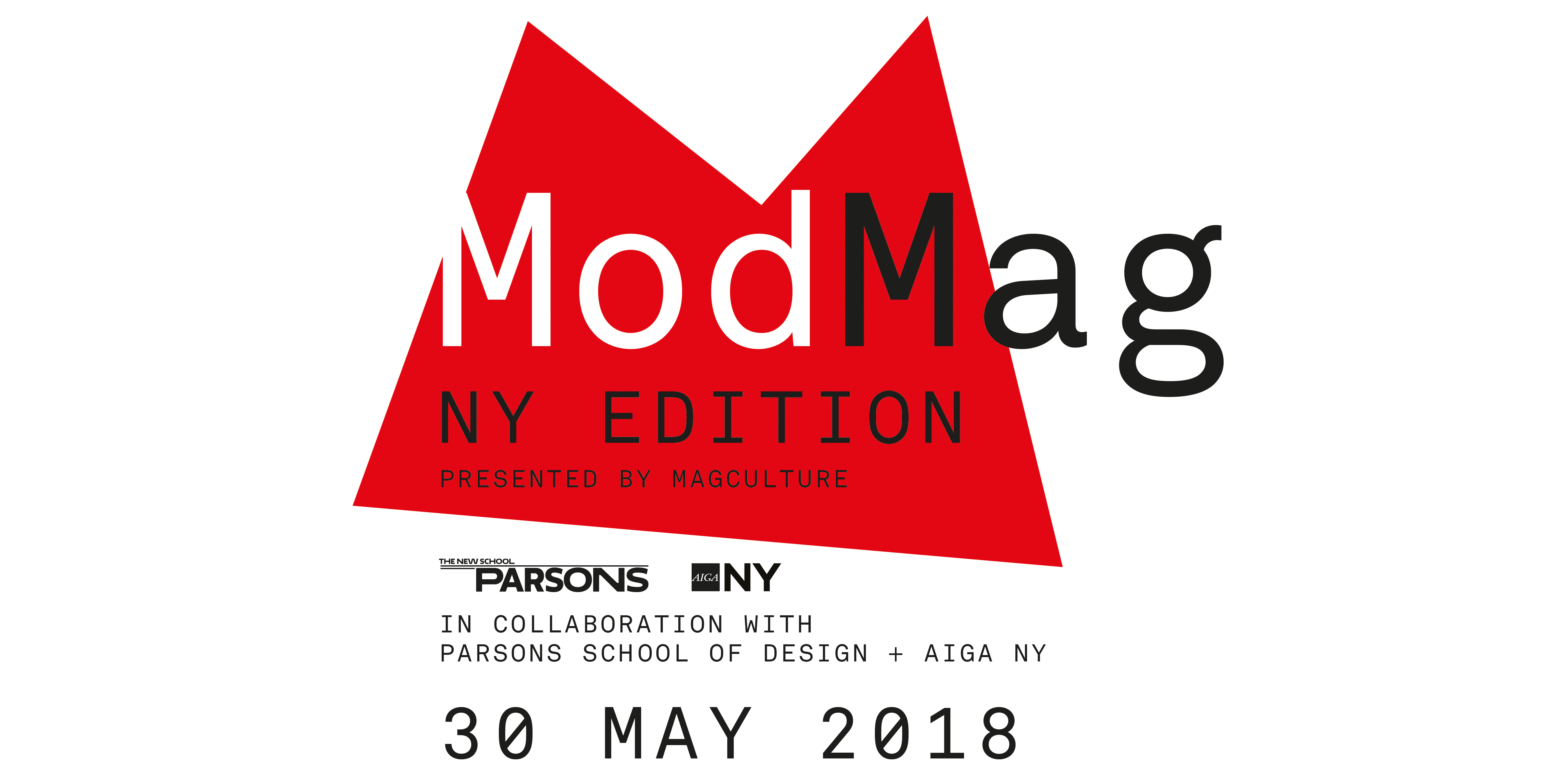
Since 2013, Jeremy has hosted ModMag, an annual event in London, which brings together a group of magazine-making talent from the U.K., the United States and across Europe. It is organized and moderated by Jeremy himself and this year he is bringing the highly successful conference to New York.

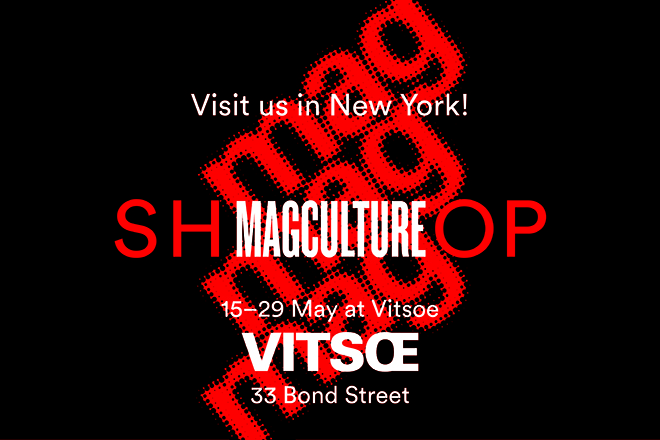
I spoke with Jeremy via Skype recently and we talked about the ModMag event which will be held on May 30th at the Parsons School of Design in New York City. This is the first time ever the event is being brought to the states, even though Jeremy said he’d been thinking about an NYC gathering for quite some time. For the two weeks leading up to ModMag, there will be a preview of the event as Mag Culture is launching, in collaboration with Vitsoe, a British furniture company, a pop-up venture that will bring about 100 magazines from Jeremy’s London shop to a temporary shop in Manhattan, allowing people to meet and greet local magazine-makers and commentators.

It should prove to be a very successful event and one that Jeremy hopes will be repeated many years to come in New York. So, I hope that you enjoy this Mr. Magazine™ conversation with a man who is as Print Proud as yours truly, but remains Digitally Smart as well, recognizing how important technology is in today’s magazine and business world.

And now, Jeremy Leslie.

But first the sound-bites:

On his take of the state of magazine media in 2018: I think there is this sort of curious paradox of the situation where, on the one hand, there are very major business challenges for the industry, and yet at the same time, it’s a hugely creative and innovative time for the industry. That would be my underlying story of where we are. Because of the business challenges the creative side of the industry has stepped up and has the opportunity to try things in a way that they haven’t had for quite some time. So, you see lots of experiments, lots of self-publishing; lots of projects where, frankly, the financial and business aspect is set aside and they’re concentrating on making lovely things, which is healthy for the industry, in terms of being inspirational.

On his definition of the word content today: I think, certainly, everything we do at Mag Culture is editorially considered, so in a sense, even the shop and the conference, all of these things are carefully planned and curated, if you like, so there’s an editorial point of view applied to that. So, it is all content, but it’s content in the best sense. It’s not just stuff that we’re pouring in; it’s the best content. We need a better word.

On what continues his belief in the power of print: I’ve always had a fundamental belief in it, but what encourages me to continue that deep belief is the wave after wave of new magazines with fantastic ideas and fantastic values; just the good stuff that’s being made is what continues to inspire and excite me. After quite a few years of work, we have established ourselves, and Mag Culture, as a lightening conductor for people who are doing interesting work in the magazine area. And it keeps coming; we don’t have to search for it.

On why he thinks magazines are continuously being made and shared all over the world: I think there are multiple reasons. Essentially, I believe there’s a difference between what people expect and what actually happens. And I think what many people in our industry expected and many foresaw, and they were wrong, was that digital would completely overtake print. One of the reasons that I started moving into the events and conferences was that I was tired of going to conferences, and yours is an exception to this, I was tired of going to publishing conferences and being faced with tech geeks telling me that everything was going to be on the robot plan. And I have my phone; I live on it; I need it; I wouldn’t be able to run my business without it. I’m not in denial about its role and its importance, but the idea that would sweep everything before it away and destroy print was always absurd in my view. And I think that’s now beginning to be established as the case.

On his most pleasant surprise since taking Mag Culture worldwide: The most pleasant surprise is the thing that contradicted perhaps what many people’s expectations were. And that is both here in London and when I travel, when I’m speaking at someone else’s conference or doing something myself abroad, the people you meet who are interested in and who are making magazines or who are interested in buying the magazines, are everyone. They’re not just art students or hipsters; they’re not a single type of person, they’re young people and old people and middle people, women and men; people of different backgrounds; it’s just a universal thing. People love it when they get the chance to see it.

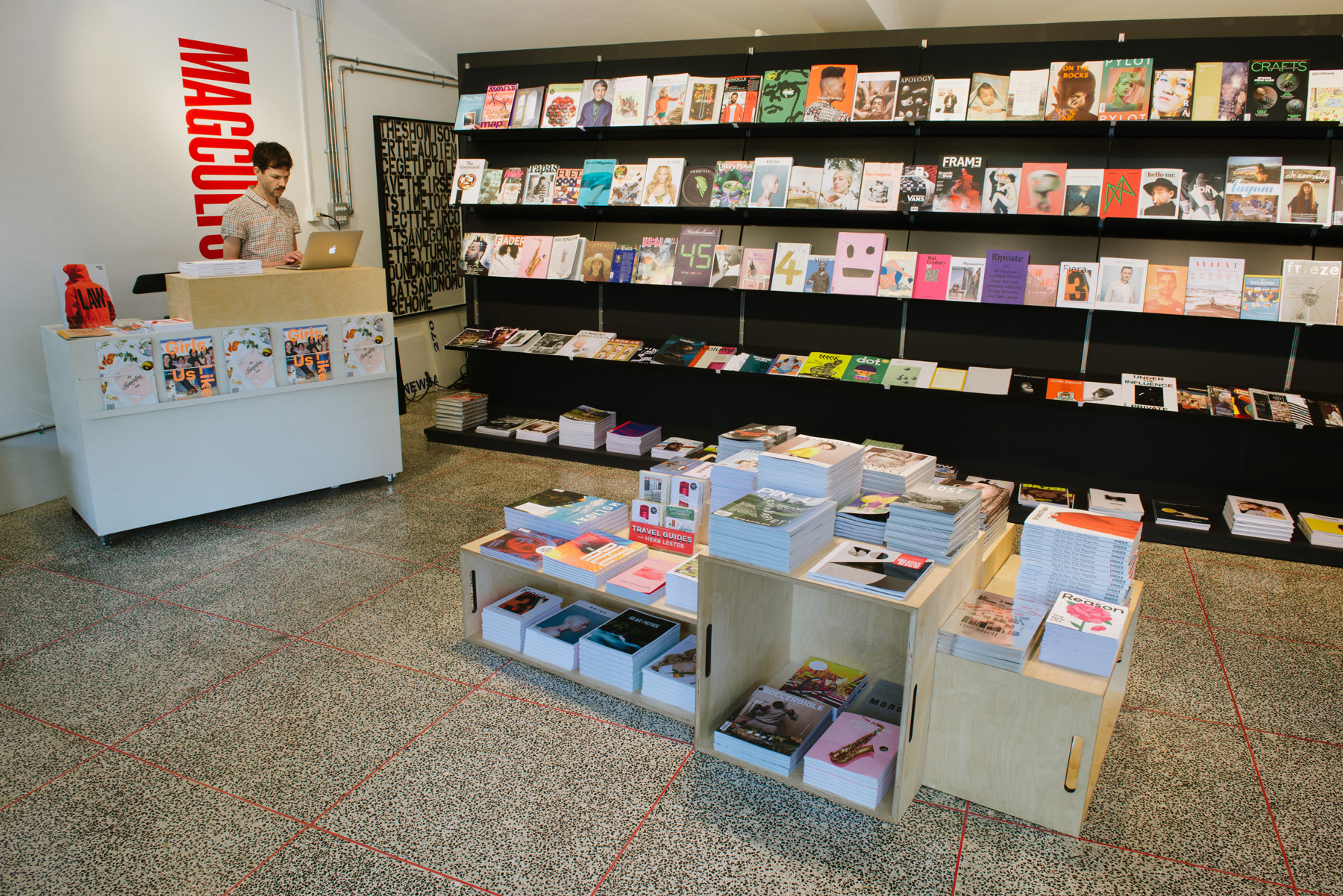
On having an actual physical store where he sells magazines: One of the great things about having a physical space and having a shop that’s in the same space as my studio, is that I’m here all of the time, even though I’m not in the store all of the time. I get to meet a lot of people who come by to drop off their magazines themselves, so I get to meet a lot of the people making the magazines and I find out what their orientation and their reason for doing it is, and that’s always interesting.

On what has been the biggest stumbling block he’s had to face: The hardest part of the whole business remains the fact that one magazine is really easy to pick up and enjoy, and that’s part of the joy of the magazine, they’re made for your hands. But as soon as you put 20 of them in a box, they’re very difficult to handle. (Laughs) So, the biggest stumbling block is the distribution and logistics around the business. I think a lot of the young publishers making independent magazines are being very intelligent about how they are reinventing the making of magazines. And I think on our end, myself and other people are looking at how the retail side of it works.

On the genesis of the ModMag conference idea and why he decided to bring it New York later this month: We did the first ModMag, it was called The Modern Magazine then, which was named for my book of the same name. So, that was in 2013, and we’ve done five of them now. I published my book, The Modern magazine, and I wanted to mark its publication, so I planned maybe an evening with a panel discussion. And that developed very quickly and it became a whole day, because the book contained interviews with various leading lights in the industry, and when I spoke to some of them about how they might be involved, it quickly became clear that everybody wanted to be involved. So, we did the whole day event. And that was mainly to launch the book. But it was successful enough that everybody said that I had to do it again the following year. And we did. And now we’ve done five years and it has grown and moved to a bigger venue. I came to realize that there are two big publishing cities in the English language publishing world and one is my city, London, and the other is New York. I had had the ambition to launch New York for some time. And it suddenly happened very fast.

On what he would hope to say about the New York conference a month from now after it’s over: We’ve done five in London, so I would like to think – I mean, it is the first time and I realize it’s an unknown quantity for a lot of people who might be thinking about attending, but what I would hope to be able to tell you in June, say to you is that the response was good enough that we’re going to do it again next year. That’s what I hope.

On whether in five years he believes that we’ll still be celebrating the power of print: I believe so. I think as an industry we have to be honest with ourselves and accept that we got to the stage where there were too many magazines. There were just too many magazines, too many, too often, too alike, too familiar. I think we’re optimistic about the near future, in terms of we’ll see a return to better quality, better made things, there might be less magazines, but the magazines that remain will be better made and better produced, less wasteful of resources, and more desirable and will have a far deeper relationship with their readers.

On anything he’d like to add: Yes, just one thing I’d like to highlight. The ModMag takes place all day on May 30th, but in the two weeks running up to that, we have a collaboration with our friends at Vitsoe, where we are bringing about 100 of our magazines from the London shop and we’ll have a shop in Manhattan. And we’re calling this collaboration “Mag, Mag, Mag.” And alongside the shop we will have a program of smaller events, which will be free for people to come in and meet one or two people from local magazines, some of the local independents, and some local commentators. So, there’s a two week run up to the event. And that starts on the 15th of May and ends on the 29th.

On what someone would find him doing if they showed up unexpectedly one evening at his home: To clear my mind I swim regularly, watch soccer and read. But true unwinding means with my wife Lesley, our sons are home from University, and we’ re playing cards and working our way through a bottle of wine.

On what he would have tattooed upon his brain that would be there forever and no one could ever forget about him: That I love magazines.

On what keeps him up at night: (Laughs) Managing the cash flow. It actually does; the economics of the magazine shop are very complicated. It’s very worrisome.

And now the lightly edited transcript of the Mr. Magazine™ interview with Jeremy Leslie, owner and editor of Mag Culture.

Samir Husni: You’re much more than just a creative director; give me the Jeremy Leslie state of magazine media in 2018 from your point of view.

Jeremy Leslie: I think there is this sort of curious paradox of the situation where, on the one hand, there are very major business challenges for the industry, and yet at the same time, it’s a hugely creative and innovative time for the industry. That would be my underlying story of where we are. Because of the business challenges the creative side of the industry has stepped up and has the opportunity to try things in a way that they haven’t had for quite some time. So, you see lots of experiments, lots of self-publishing; lots of projects where, frankly, the financial and business aspect is set aside and they’re concentrating on making lovely things, which is healthy for the industry, in terms of being inspirational.

In that last statement, I talked about the business challenges that face the magazine industry, but it’s not just the magazine industry, it’s actually the publishing and content industry as a whole that faces one fundamental challenge, and that is will people pay for content, that’s the challenge. And I think we’re beginning to see now that people are willing to pay.

The content wants to be free, that was always the idea behind the Internet. The information, the content wants to be free and it will be free, but it might not be very good content that’s free. So, people are beginning to realize and are getting used to the idea of subscribing and paying for a Netflix or The New York Times, The New Yorker, and other subscription vehicles. And this will filter down.

The overall business and finance of publishing and making things online or in print will never be even, it will always go up and down, up and down, but I think we’re about to see an up, as quality sees through and people begin to realize and accept that they need to pay if they want good stuff.

Samir Husni: As I talk with magazine editors, publishers and designers, even the definition of the word content has changed. How do you define content? Here you are, someone who’s sole job in the beginning was as a creative director, then you became a watcher of the industry; and then you opened a shop; Mag Culture is all over the place. Is that still content? Is the brick and mortar store; your commentary on the industry; the conferences that you’re doing; is that still considered content in this day and age?

Jeremy Leslie: I think it is, yes. I use the word content all of the time, and I’ve just repeated it about 20 times in my last sentence. But I’m not comfortable with the word. I think the word content is slightly dismissive and slightly undervalues it by its very nature. It sort of implies that there’s a space that needs to be filled and you pour it in, or shovel it in, that’s my issue with the word content, but I’m not sure we have a better word as of yet.

I think, certainly, everything we do at Mag Culture is editorially considered, so in a sense, even the shop and the conference, all of these things are carefully planned and curated, if you like, so there’s an editorial point of view applied to that. So, it is all content, but it’s content in the best sense. It’s not just stuff that we’re pouring in; it’s the best content. We need a better word.

Samir Husni: You have been a driving force, even through the shop, of bringing in all of these new talents, bringing in all of these new magazines. What continues your belief in the power of print in this digital age?

Jeremy Leslie: I’ve always had a fundamental belief in it, but what encourages me to continue that deep belief is the wave after wave of new magazines with fantastic ideas and fantastic values; just the good stuff that’s being made is what continues to inspire and excite me. After quite a few years of work, we have established ourselves, and Mag Culture, as a lightening conductor for people who are doing interesting work in the magazine area. And it keeps coming; we don’t have to search for it.

There’s all sorts of great magazines being made and interesting digital projects, exciting things going on, not just here in London, not just in your country, New York, the big cities, but from all over the world. There are people who really love and want to make magazines and want to share them. It’s an international phenomenon.

Samir Husni: Why do you think that’s happening?

Jeremy Leslie: I think there are multiple reasons. Essentially, I believe there’s a difference between what people expect and what actually happens. And I think what many people in our industry expected and many foresaw, and they were wrong, was that digital would completely overtake print. One of the reasons that I started moving into the events and conferences was that I was tired of going to conferences, and yours is an exception to this, I was tired of going to publishing conferences and being faced with tech geeks telling me that everything was going to be on the robot plan. And I have my phone; I live on it; I need it; I wouldn’t be able to run my business without it. I’m not in denial about its role and its importance, but the idea that would sweep everything before it away and destroy print was always absurd in my view. And I think that’s now beginning to be established as the case.

Of course, some areas are very affected by the free access online to mobile content. News and immediate headlines, things like that, print can’t compete on that level. But I think people are beginning to realize that there’s a place for both. That you can be waiting for a train and have your phone and then when you actually get in and sit down you can have the magazine. You use both. And I think people are realizing that sometimes they want to get away from screens, they want time away from the big screens we’re looking at now or the little screens that we have in our pocket. They want to get away from that and have an uninterrupted run at some content that they’re enjoying, some reading, some great articles, some great pictures. And just lose themselves and rest in a way that you can’t with digital screens.

Samir Husni: What has been the most pleasant surprise that you’ve had since you opened the shop, since you took Mag Culture, sort of worldwide, in terms of conferences and events?

Jeremy Leslie: The most pleasant surprise is the thing that contradicted perhaps what many people’s expectations were. And that is both here in London and when I travel, when I’m speaking at someone else’s conference or doing something myself abroad, the people you meet who are interested in and who are making magazines or who are interested in buying the magazines, are everyone. They’re not just art students or hipsters; they’re not a single type of person, they’re young people and old people and middle people, women and men; people of different backgrounds; it’s just a universal thing. People love it when they get the chance to see it.

Samir Husni: Having a physical store, do you ever watch people coming into your store? Do you ever ask them why did you buy this magazine or that magazine? Or do you just watch?

Jeremy Leslie: I just sort of watch. One of the great things about having a physical space and having a shop that’s in the same space as my studio, is that I’m here all of the time, even though I’m not in the store all of the time. I get to meet a lot of people who come by to drop off their magazines themselves, so I get to meet a lot of the people making the magazines and I find out what their orientation and their reason for doing it is, and that’s always interesting.

And then watching people. People come in and get the idea behind the shop, that it’s a space that shows off the magazines with as much care as the magazines show themselves off. So, it’s peaceful and gallery-like and people are encouraged to come in and browse and look and sit down. There are chairs, people can sit down and read, make a decision in their own time. And that’s my favorite thing, that people come in and spend an hour looking at everything. And then they’ll go and pick three or four magazines and you know that they’ve really thought with care and have decided that they really want those particular magazines.

Samir Husni: Especially with the cover prices.

Jeremy Leslie: These are not cheap magazines, these are things that you’re buying to enjoy and value and appreciate for time.

Samir Husni: What has been the biggest stumbling block that you’ve faced and how did you overcome it?

Jeremy Leslie: The hardest part of the whole business remains the fact that one magazine is really easy to pick up and enjoy, and that’s part of the joy of the magazine, they’re made for your hands. But as soon as you put 20 of them in a box, they’re very difficult to handle. (Laughs) So, the biggest stumbling block is the distribution and logistics around the business. I think a lot of the young publishers making independent magazines are being very intelligent about how they are reinventing the making of magazines. And I think on our end, myself and other people are looking at how the retail side of it works.

And we work with some very able and enthusiastic and optimistic people on the distribution side, but that distribution side is the hardest part of the business and it remains really difficult. It’s very slow and cumbersome, and it’s a broken part of the industry that somebody needs to take a really good look at. In Europe it’s bad, but I suspect in America it’s even worse, because of the scale of the country.

Samir Husni: One of your solutions was doing the physical shop. The other solution is you started the ModMag conferences. Tell me about the genesis of that idea and why you decided to bring it to New York later in May?

Jeremy Leslie: We did the first ModMag, it was called The Modern Magazine then, which was named for my book of the same name. So, that was in 2013, and we’ve done five of them now. I published my book, The Modern magazine, and I wanted to mark its publication, so I planned maybe an evening with a panel discussion. And that developed very quickly and it became a whole day, because the book contained interviews with various leading lights in the industry, and when I spoke to some of them about how they might be involved, it quickly became clear that everybody wanted to be involved. So, we did the whole day event. And that was mainly to launch the book.

But it was successful enough that everybody said that I had to do it again the following year. And we did. And now we’ve done five years and it has grown and moved to a bigger venue. It has become established as a “thing.” And as I mentioned earlier, it was also partially in reaction to so many conferences where everybody stood up and said forget about print and make everything mobile.

So, whilst we’re celebrating and promoting the idea of print, at every event we make sure that we have someone involved in digital as well, because I always like to be very clear about this, I couldn’t run my business, none of these magazines that we’re supporting could run their business, without the Internet. It’s integral to any new business, any startup business. You have to have a web presence and be using social media, these are all absolutely vital parts of the magazine process.

From the very first ModMag day, we had Richard Turley, British designer and much-awarded former creative director at Bloomberg Businessweek in New York, backstage. He came over to speak. Each year, we’ve had an American speaker, and I came to realize that there are two big publishing cities in the English language publishing world and one is my city, London, and the other is New York. I had had the ambition to launch New York for some time. And it suddenly happened very fast. I was talking to a couple of people and I have worked in New York before and I have quite a few contacts there. And I’ve been involved with judging SPD (Society of Publication Designers) awards and the like. I’ve spoken at your conference, and I’m aware from our figures that our second biggest audience beyond London and the U.K. is New York on the website.

So, it suddenly fell into place that we had the opportunity to work with Parsons School of Design and then AIGA (the professional association for design), their New York Chapter was very keen to support, so the three of us came together to collaborate on doing ModMag. And kind of do the same with New York speakers, with one or two from other countries to maintain that international aspect.

Samir Husni: What’s your expectations? If you and I are talking again in June and I ask you about the New York ModMag event, what would you hope to tell me then?

Jeremy Leslie: We’ve done five in London, so I would like to think – I mean, it is the first time and I realize it’s an unknown quantity for a lot of people who might be thinking about attending, but what I would hope to be able to tell you in June, say to you is that the response was good enough that we’re going to do it again next year. That’s what I hope.

One of the things that always works well and happens in London every year is that we get a lot of people who work in the industry in the audience and we have our guest speakers, and during the day everyone mixes, it’s a very social and open; it’s very much a celebration of the industry you work in. So, I want people to go away feeling inspired and saying “do it again.” (Laughs)

Samir Husni: As you look from your position, seeing that you’re not only an author, you’re also a creative director, designer, shop owner, conference leader, what do you see in your crystal ball? If you and I are sitting and talking five years from now, are we going to be celebrating and burying everything the naysayers believed about print, that it’s dead?

Jeremy Leslie: I believe so. I think as an industry we have to be honest with ourselves and accept that we got to the stage where there were too many magazines. There were just too many magazines, too many, too often, too alike, too familiar.

There was a very interesting piece on the Nieman Lab website recently, talking about how the 1960s, 1970s huge, appetite-led revolution in newspapers was really a small phase in history, and in that period and for those who lived through it, it felt like that was how it had always been. But it had not always been like that. The industry is forever shifting and changing and adapting to new technology, by which I don’t mean digital technology, better and faster printing; all the way back to the beginning of magazines, it’s all been about what technology is available for their production. With the introduction of the half-tone, and the introduction of color, etc.; all of these things have shifted the way the business and the industry works.

And so it will always be. It will always have to react to everything else that’s around it. So, it can’t always be up at the top, a huge, booming business. We’ve come off the back of a huge boon at the end of the previous century and now I think we’re just sort of bottoming out, coming out. I think we’re optimistic about the near future, in terms of we’ll see a return to better quality, better made things, there might be less magazines, but the magazines that remain will be better made and better produced, less wasteful of resources, and more desirable and will have a far deeper relationship with their readers.

Samir Husni: I remind people all of the time that paper is a good technology. With all of the tablets, everybody wanted to be like paper, and I wondered why do they want to create something like something I already have. (Laughs)

Jeremy Leslie: Exactly. We know our hearts are in exactly the same place and it’s what you just articulated. I always say that I lived through the promise of the iPad and the tablet, and there are one or two cases where it still has a valid role to play; for certain publications it’s very useful. But essentially, I sat through lots of technology meetings where I just always felt in my heart of hearts, if somebody walked in with this new technology called “magazine” and put it down in front of them, everybody would say “Yes!” (Laughs)

Samir Husni: Is there anything else you’d like to add?

Jeremy Leslie: Yes, just one thing I’d like to highlight. The ModMag takes place all day on May 30th, but in the two weeks running up to that, we have a collaboration with our friends at Vitsoe, where we are bringing about 100 of our magazines from the London shop and we’ll have a shop in Manhattan. And we’re calling this collaboration “Mag, Mag, Mag.” And alongside the shop we will have a program of smaller events, which will be free for people to come in and meet one or two people from local magazines, some of the local independents, and some local commentators. So, there’s a two week run up to the event. And that starts on the 15th of May and ends on the 29th. And then on the 30th of May we have the conference.

Samir Husni: If I showed up unexpectedly at your home one evening after work, what would I find you doing? Having a glass of wine; reading a magazine; cooking; watching TV; or something else? How do you unwind?

Jeremy Leslie: To clear my mind I swim regularly, watch soccer and read. But true unwinding means with my wife Lesley, our sons are home from University, and we’ re playing cards and working our way through a bottle of wine.

Samir Husni: If you could have one thing tattooed upon your brain that no one would ever forget about you, what would it be?

Jeremy Leslie: That I love magazines.

Samir Husni: My typical last question; what keeps you up at night?

Jeremy Leslie: (Laughs) Managing the cash flow. It actually does; the economics of the magazine shop are very complicated. It’s very worrisome.

Samir Husni: Thank you.
h1

“Integrated, Not Complicated” With Daren Mazzucca, Vice President/Publisher, Martha Stewart Living, Meredith – Mr. Magazine™ Presents Highlights From The ACT 8 Experience…

May 14, 2018

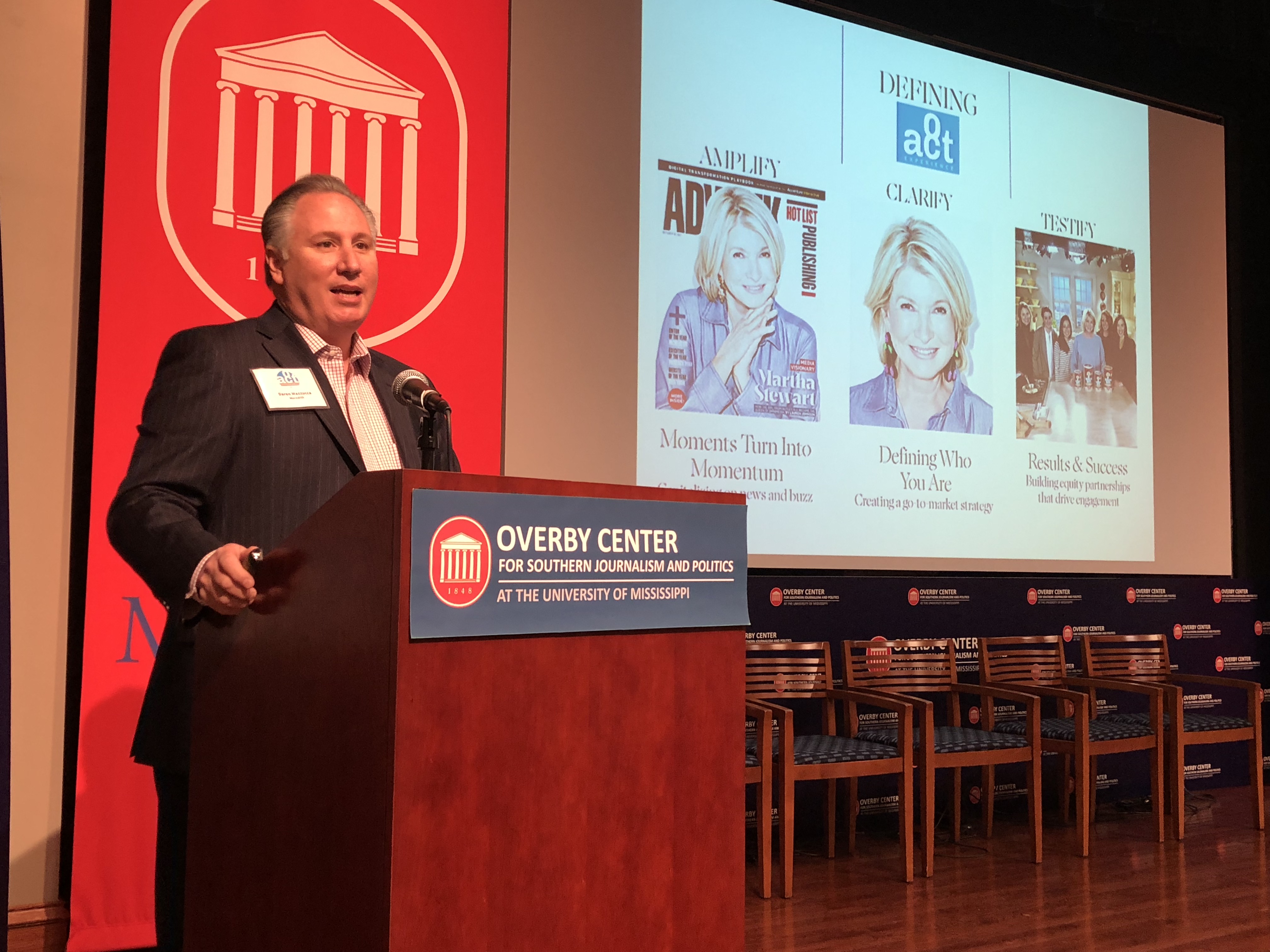
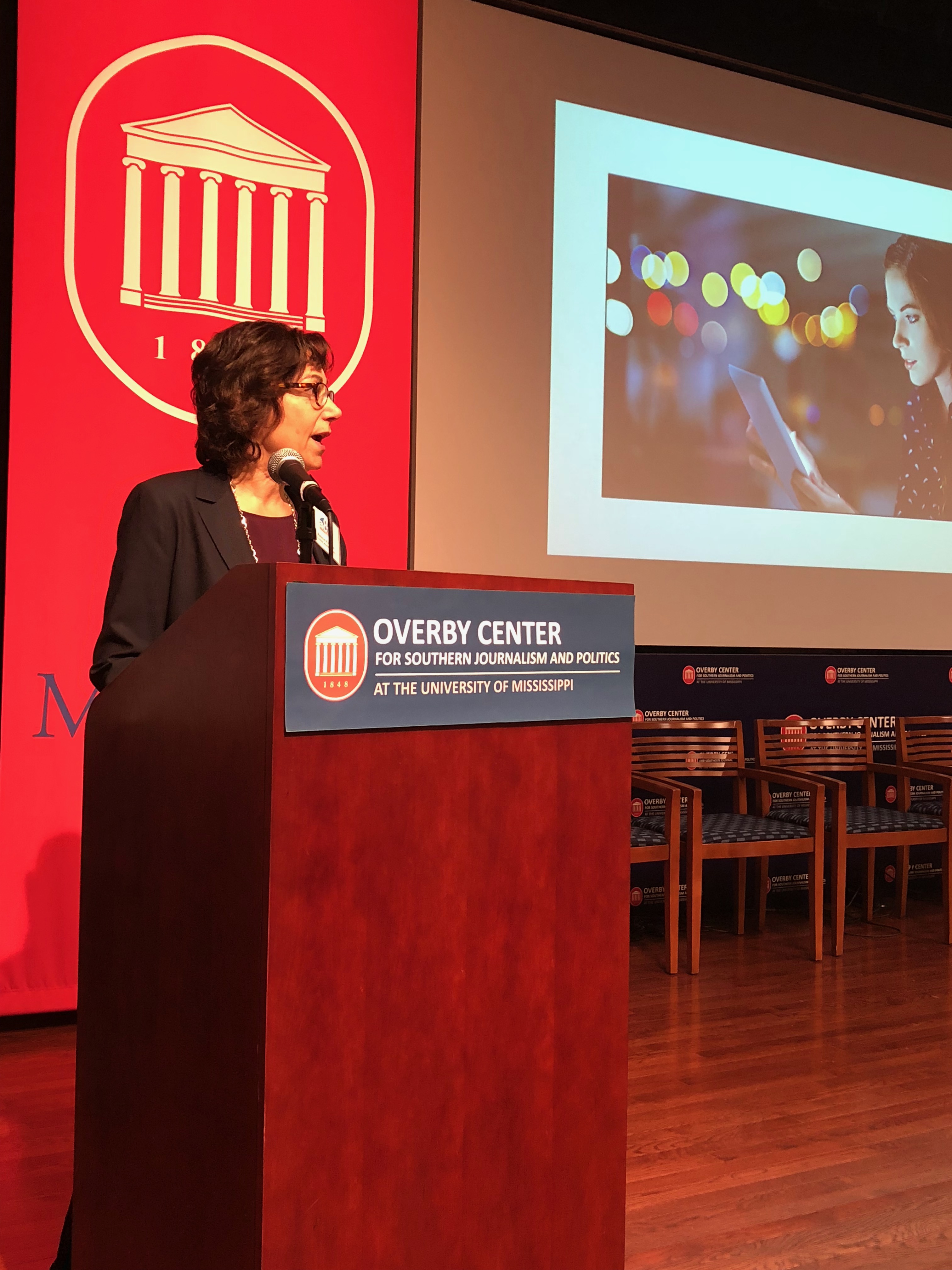
Daren Mazzucca, Vice President/Publisher, Martha Stewart Living, Meredith, speaking at the Magazine Innovation Center’s ACT 8 Experience, April 19, 2018.

Daren Mazzucca took the ACT 8 Experience stage on the third day of the conference, April 19, and gave those of us in the audience his interpretation of the word ACT, which Mr. Magazine™ defines as “Amplify, Clarify and Testify” the power of print. Daren took his ACT presentation and conformed it to the things that he and his team do on a daily basis at Meredith to market Martha Stewart’s highly successful brand.

• “Amplify” – turning moments into momentum.
• “Clarify” – defining who you are.
• “Testify” – results and success.

Daren’s marketing strategy of the Martha Stewart brand includes the firm belief that advertisers want to do business with people they like and trust, people who can “amplify,” take those special moments and turn them into motivational momentum. Staying true and authentic is powerful, “clarifying” who you are, and not trying to convince marketers that you’re something that you’re not is vital when you “testify,” talk about the results. Clients want to hear about successful results and know that their dollars are being converted into whatever they need to reach that audience.

Today, we are selling everything; cross platform is the only phrase that applies. And that was another important point, which was spot on with ACT 8’s theme of Print Proud Digital Smart, the fact that magazines and magazine media have to be integrated, but that does not mean complicated. From social media to websites, print to events, this integration takes on many roles, but it does not have to be stressful, worrisome, or complicated. Daren showed us that integration is simply a part of the service to clients: what are the advertisers’ needs, what are the brand’s unique benefits to the client, and how does your brand translate that into a media win?

Integrated, not complicated. Mr. Magazine™ couldn’t have said it better himself. In fact, Daren Mazzucca brought his marketing skills onto that ACT 8 stage and in an energetic, no-nonsense presentation showed us that the strategy of print and all things digital does not have to cause frown lines between your brows or knots in your stomach. It’s simply the way things have to be done today in order to produce spectacularly successful results for those clients that keep your brand strong.

To hear Daren Mazzucca’s entire presentation, please click the link below:

To relive all the presentations of the Magazine Innovation Center’s ACT 8 Experience go to http://www.mrmagazine.me and search for ACT 8.

h1

“Your Brain on Digital” With Joe Hyrkin, CEO, issuu – Mr. Magazine™ Presents Highlights From The ACT 8 Experience…

May 10, 2018

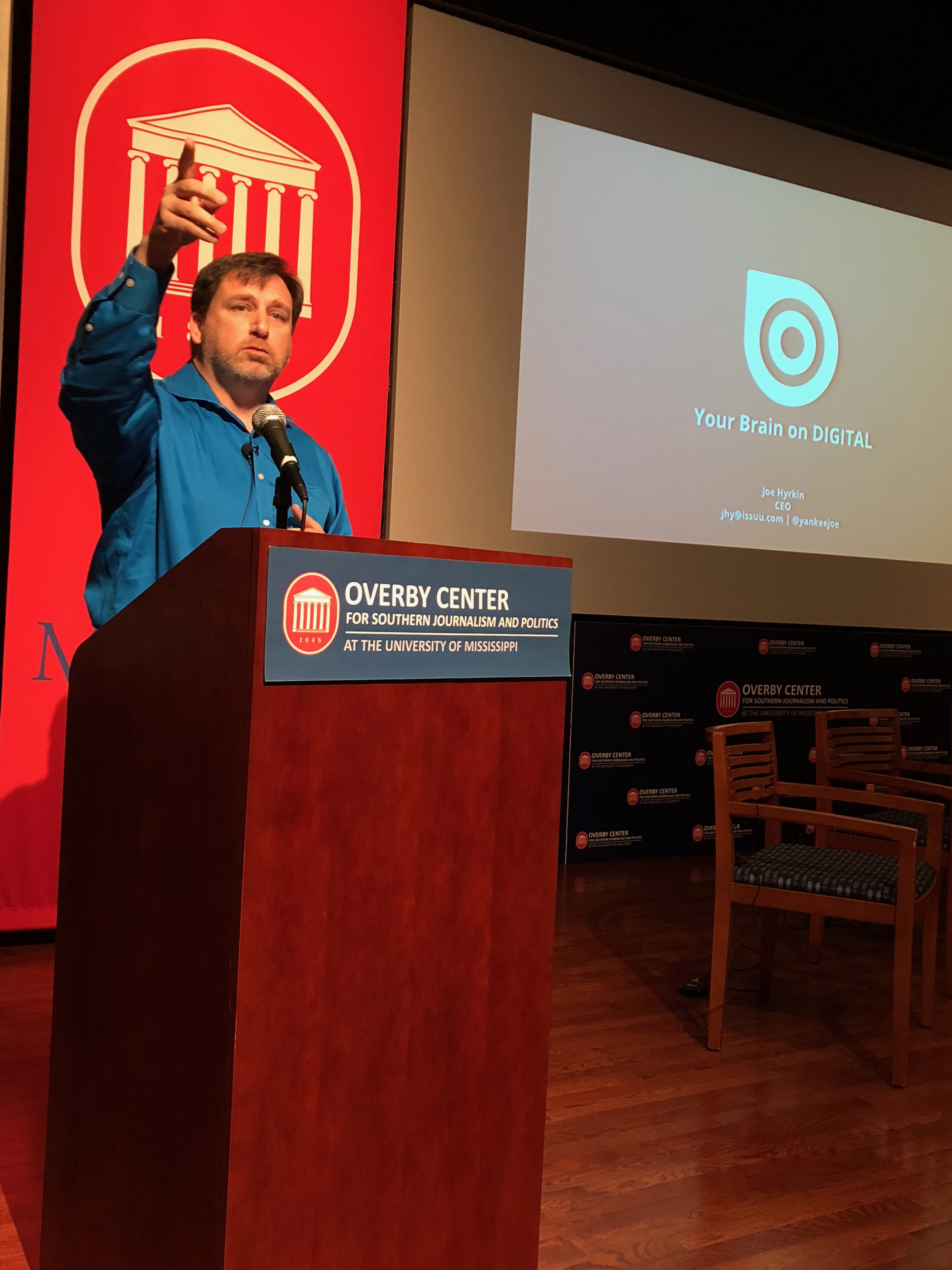
Joe Hyrkin, CEO, issuu, speaking at the Magazine Innovation Center’s ACT 8
Experience April 18, 2018.

A double rainbow. CEO of issuu, Joe Hyrkin, took the stage on day two of the ACT 8 Experience, showcasing a colorful double rainbow up on the big screen behind him. It was an absolutely spot on analogy of the fact that many of us, while cognizant of the things that are directly in our path, are oblivious to those spectacular moments and opportunities that sometimes present themselves in a different direction than our immediate focus is zeroed in on.

Joe runs issuu, which is a massive digital publishing platform that has over 40 million publications globally. These publications use issuu to get their content shared digitally to millions of visitors across the world. As Joe shared in his presentation, publishing is thriving today more than ever before, with magnificent titles being created and offered daily. “There is more content being created, shared and read in 2018 than ever before in the history of humanity,” he stated. And his thoughts on the future were just as positive and informed.

Joe presented our brains on digital, versus our brains on print, and asked us to consider the digital double rainbows that are offered to us through digital creation, distribution and monetization. He said over the next five years, there would be three billion + human beings digitally connected for the first time.

The world of publishing has come into its own. We have brilliantly done print magazines, and as Joe showed us, we have digital avenues, such as issuu, that use innovation, technology and engagement to connect us to the cyber spectrum of magazines.

Print Proud Digital Smart is not just a logo of the ACT 8 Experience, it’s the bottom line in the world of magazines and magazine media.

To hear Joe Hyrkin’s entire presentation, please click the link below:

To relive all the presentations of the Magazine Innovation Center’s ACT 8 Experience go to http://www.mrmagazine.me and search for ACT 8.

h1

Magazine Media: A Global View Researched And Documented – From the United States and Beyond… Mr. Magazine™ Presents Highlights From Linda Thomas Brooks and James Hewes’ Presentations At The ACT 8 Experience…

May 7, 2018

President and CEO of MPA – The Association of Magazine Media, Linda Thomas Brooks and President and CEO of FIPP – The Network for Global Media, United Kingdom, James Hewes, were two of the keynote speakers on the opening evening of the ACT 8 Experience, April 17, 2018. The gala was a glittering event filled with good food, great conversation, and amazing overtures about the positivity of print and digital together, putting their adversarial roles toward each other to bed once and for all.

Linda Thomas Brooks, President and CEO, MPA: The Association of Magazine Media, speaking at the ACT 8 Experience April 17, 2018.

Linda’s presentation began with a conversation about the power of magazine media. Linda came to her job as president and CEO of MPA after having been immersed in digital media for about 15 years, so as she eloquently put it, she knows what digital does well. But she also knows what magazines do well. And she totally understands what the two can do together, because as Linda put it that opening evening, “Magazine media lives in multiple formats.”

Her stellar presentation continued as she talked about how magazine media builds brands and sells product in a safe and transparent environment with demonstrable results and more rigor to prove it than anyone else. Trustworthy information is of paramount importance today to marketers and to consumers. Linda presented, from research done by the Edelman Trust Study, that customers are beginning to differentiate between platforms and media brands, showing consumer trust in platforms going down and their trust in journalism going up. Consumers are really thinking about where they’re getting the information that they’re using in their lives.

Her discussion was both eye-opening and well-received as industry leaders, journalism and marketing students, and academics gathered in the beautiful ballroom at the Inn at Ole Miss and listened to one of the first Print Proud Digital Smart moments of the ACT 8 Experience.

To hear Linda Thomas Brooks’ entire presentation, please click the link below.

James Hewes, President and CEO, FIPP: The Network for Global Media, United Kingdom, speaking at the ACT 8 Experience April 17, 2018.

James Hewes, president and CEO of FIPP, the network for global media, took the stage that same evening right after Linda Thomas Brooks. FIPP is an organization that empowers its members to build market-leading international businesses through intelligence, solutions and partnerships. Its members include: Business Insider, BuzzFeed, Elle, Wired and many, many others. James opened his presentation on 8 Industry Trends with a powerful statement about the magazine media industry’s diversity and vibrancy.

The 8 Industry Trends that FIPP’s research has uncovered and that James discussed are both interesting and developmentally important as they represent current industry challenges across the board:

1. Talent & Culture
2. The Elephant in the Room (referring to social media, platform specific marketing & content, and the renewed importance of the Google algorithm)
3. Print Matters
4. The State of Advertising
5. Subscriptions and Reader Revenue
6. The Power of Platforms & Platform-Focused Content
7. Blockchain – Betamax or VHS? (a discussion on the pros and cons of this emerging technology)
8. The Coming AI Revolution (artificial intelligence and looking at its potential)

To listen to James Hewes talk about these 8 Industry Trends in depth with wisdom and well-placed humor brought those of us in the audience much food for thought. (pun intended, as we dined on our delicious meal). James humanized these complex topics and left us with a hopeful curiosity that was exceeded only by an immense hope for the future and the technologies to come.

To hear James Hewes’ entire presentation, please click the link below.

To relive all the presentations of the Magazine Innovation Center’s ACT 8 Experience go to http://www.mrmagazine.me and search for ACT 8.

h1

“Your Brain on Paper/Print” With Daniel Dejan, ETC Print Creative Manager, Sappi North America – Mr. Magazine™ Presents Highlights From The ACT 8 Experience…

May 4, 2018

Daniel Dejan, ETC Print Creative Manager, Sappi North America, speaking at the Magazine Innovation Center’s ACT 8 Experience, April 18, 2018.

“Your Brain on Paper” and why we still love print was the focus of Sappi Paper’s Print Creative Manager for North America, Daniel Dejan. Day Two of the ACT 8 Experience brought Daniel to the stage to talk about our brain on paper and how we still love to read in print. Daniel’s discussion was all about the sensory, and his points made were just as magnetic. Touch, smell, sound, and sight are all a part of the experiences magazines create. And we as humans respond to that. Touching the mouse of your computer, while very instantaneously satisfying because, if everything goes according to pixel-plan, rapid information is at hand, it cannot replace the completely holistic adventure that ink on paper gives you.

And nobody can depict and tell that story like Daniel Dejan. He is the voice of paper when it comes to the positive reaction that the platform gleans from consumers.

And Sappi is the company that is as passionate about paper as its print creative director. Research and development is high on Sappi’s priority list as they continue to further sustainable and revolutionary ways to serve their customers in paper, believing that while we live in a digital age, print products are still the core of the publishing industry, and many others. Last year’s report that Sappi released “The Neuroscience of Touch” was an amazing study on the impact of print on the brain. Applying neuroscience to marketing, Sappi’s report helped us to understand why consumers are still triggered by certain stimuli, which in turn can help brands create better experiences for consumers.

At ACT 7 in 2017, Daniel spoke eloquently about the Haptic Brain, Haptic Hand, and the power of touch from that all-important report. This year at ACT 8, he continued the conversation and brought the audience many compelling reasons for why print is still a powerhouse to the senses. From sight to touch, smell to sound, reading in print is an experience unlike anything that pixels on a screen can offer. When we read in print, even the turning of the pages and the crackling of the paper that we hear emits a sensory perception. As Daniel stressed, it’s the complete sensory involvement that helps to make the print reading experience much richer. Even our bodies respond physically to reading on paper as heart rates and blood pressures decrease, and our overall comprehension is much better.

During the ACT 8 conversation, while those of us in the audience were totally engaged, Daniel said that the biggest challenge right now in photographic communication is that financial people are making aesthetic and marketing decisions. There are engagement techniques that many magazine media companies are failing to utilize, a particular issue with some Canadian companies that Daniel works with, such as special effects on covers and/or special inks.

So, in a world where continuous notifications and other digital distractions are a part of our daily lives and something that we’ve come to depend on for instant communication, Daniel Dejan, in his own inimitable way, showed us all at the ACT 8 Experience that the print reading experience is both welcomed by consumers and well deserved.

And the Print Proud Digital Smart way of making magazines continues.

To hear Daniel Dejan’s entire presentation, please click the link below.

To watch the entire ACT 8 Experience presentations please go to http://www.mrmagazine.me and search for ACT 8 Experience.

h1

Idealliance & Printing Industries Alliance To Honor Industry Leaders At The Annual Franklin Luminaire Awards

May 3, 2018

Humbled and honored to be one of the four recipients of the 2018 Franklin Luminaire Awards. Below is the press release that was issued today by the Idealliance and Printing Industries Alliance.

2018 Luminaire Awards Announced:
Chris Harrold, Mohawk Fine Papers;
Dr. Samir Husni, University of Mississippi;
Rebecca Pappas, BizBash Media;
John Sommers, Jr., Allied Printing Services

Idealliance and Printing Industries Alliance to honor industry leaders at the annual Franklin Luminaire Awards event in New York City on Oct. 17.


From left, Chris Harrold, Dr. Samir Husni, Rebecca Pappas, and John G. Sommers, Jr., who will be honored this fall with 2018 Luminaire Awards.

Alexandria, Va. (May 3, 2018) — Idealliance and Printing Industries Alliance are pleased to announce that Chris Harrold of Mohawk Fine Papers, Dr. Samir Husni—“Mr. Magazine” of the University of Mississippi, Rebecca Pappas of BizBash Media, and John G. Sommers, Jr., of Allied Printing Services will be recipients of 2018 Franklin Luminaire Awards.

The awards, which recognize exceptional professionals for their positive contribution and service within the media and graphic communications industry, will be presented at the annual Franklin Luminaire Awards event on Oct. 17 at The Lighthouse at Chelsea Piers in New York City. Event sponsorships are available and are offered at early bird rates through July 31.

“The annual Franklin Luminaire Awards event provides an opportunity for professionals from every sector of our industry to come together and recognize the contributions of incredibly talented and dedicated individuals who have proven their commitment to excellence,” says Meghan Milkowski, Co-Chair of the Franklin Luminaire Committee and Vice President of Operations-Print Group at Dow Jones.

“We look forward to honoring these four outstanding industry professionals and expressing our appreciation for their singular contributions to our industry during our Franklin Luminaire Awards program this fall,” says Franklin Luminaire Committee Co-Chair Steve Drew, Sales Executive-Magazine Group at LSC Communications. “Some 400 industry members attend this event each year, a testament to the strength of our industry and the contributions made by our honorees during their careers.”

Chris Harrold is Vice President & Creative Director at Mohawk Fine Papers in Cohoes, N.Y., where he has responsibility for brand management, strategic market development, and creative direction for the company’s product and marketing campaigns. Harrold joined Mohawk in 1990, holding positions from sales to marketing, and played a pivotal role establishing Mohawk as a market leader in digital printing. He is a Lynda.com author and speaks extensively on the role printing and paper play in design. Harrold holds a bachelor’s degree in art history from the State University of New York Oswego and an MFA degree from the Rochester Institute of Technology College of Imaging Arts & Sciences.

Samir “Mr. Magazine™” Husni, Ph.D., is the founder and director of the Magazine Innovation Center at The University of Mississippi. He is also Professor and Hederman Lecturer at the university’s School of Journalism and New Media. As Mr. Magazine™, he engages in media consulting and research for the magazine media and publishing industry in the United States and across the globe. Dr. Husni has written books and presented seminars on the future of print in a digital age. His latest book, Print Proud Digital Smart: The Book of Quotes, was published in March of this year.

Rebecca Pappas is Vice President of Production, Customer Service, and Audience Development at BizBash Media in New York. She previously served as Director of Publisher Relations at Qmags, where she worked with more than 50 publishers to manage the production, distribution, and marketing strategies of the digital editions of some of the industry’s largest B2B media companies, and as Director of Circulation & Manufacturing for BZ Media, a multi-title publisher in the IT space, where she worked with the newly formed BPA Worldwide’s Digital Task Force to help formulate digital edition audit rules and requirements.

John G. Sommers, Jr., President and CEO of Allied Printing Services, Manchester, Conn., grew up in and around his family’s business, working through school vacations to learn the printing industry from the “ground up.” He studied Business Finance at Stonehill College. After graduation, he joined the family business earlier than planned because his father, company President and CEO, felt that the business needed him to make an immediate impact during the economic recession. He worked in all internal departments at Allied, followed by outside Sales, and was named President in 2011, shortly before his father’s untimely passing in 2013. Since that time Allied has grown significantly and consistently reinvested in new equipment and technology under his leadership.

Franklin Luminaire Awards Platinum sponsorships (table of 10) are available at the early bird rate of $5,500 until July 31 ($6,500 after that date); Gold sponsorships (half-table of five) are $2,750 by July 31 ($3,250 after). Sponsors receive recognition in the printed program and signage, and during the evening’s program. Individual tickets are also available at $400.

For more information about sponsorships or tickets, please contact Kim Tuzzo of PIA at (800) 777-4742 or ktuzzo@pialliance.org.

h1

“Putting The Consumer First” With Bonnie Kintzer, President & CEO, Trusted Media Brands – Mr. Magazine™ Presents Highlights From The ACT 8 Experience

April 30, 2018

Bonnie Kintzer, President and CEO, Trusted Media Brands, speaking at the Magazine Innovation Center’s ACT 8 Experience, April 19, 2018.

“Adapting and adopting,” a phrase that Bonnie Kintzer, president and CEO of Trusted Media Brands, believes in strongly for the success of a company. When Bonnie came back to Trusted Media brands four years ago, after having been gone for seven years, the company was burdened by debt and had just emerged from its second bankruptcy. The overall mood then was one of despair and dejectedness. Not a great model for success. Hence, the phrase “adapt and adopt” was born.

But Bonnie was determined to see the company come back to growth again. As the Reader’s Digest Association, it had not weathered the times of change and disruption well, but the content of its brands was still trusted and strong.

And today through adapting and adoption of innovation and the taking advantage of new platforms and products that drive today’s magazine consumer, Trusted Media Brands is strong and growing. According to the latest data from comScore, the Trusted Media Brands Digital Network now reaches 63 million consumers a month and is among the top 30 out of 2,000 digital lifestyle networks. The brand teams create around 2,000 pieces of high quality written and video content a month. In fact, Bonnie pointed out in her presentation, based on the most recent data from the MPA: The Association of Magazine Media, Taste of Home and Family Handyman brands are now the top two magazine media brands on Pinterest, outperforming such well-known brands as Allrecipes, House Beautiful, Cooking Light and Bon Appetit. Adapting and adopting, indeed.

On day three of the ACT 8 Experience, Bonnie took the stage that morning of April 19 and talked about “putting the consumer first” and it was a mesmerizing conversation. Her wit, charm and engaging presentation was surmounted only by the truth and wisdom of her words. She opened the final morning of ACT 8 brilliantly.

And to hear Bonnie Kintzer’s entire presentation, please click the link below.

To watch the entire ACT 8 Experience presentations please go to http://www.mrmagazine.me and search for ACT 8 Experience.

h1

Liz Vaccariello & Her 11 New Rules for Making Magazines. Mr. Magazine™ Presents Highlights From The ACT 8 Experience

April 27, 2018

Liz Vaccariello, Editorial Director, Parents Magazine Network, Meredith, speaking at the Magazine Innovation Center’s ACT 8 Experience, April 18, 2018.

If the phrase “energetic enthusiasm” was defined in the dictionary, you’d find Liz Vaccariello’s name written categorically beside it. The editor in chief of the Meredith Parents Network has an exuberance for her brand and the industry in general that is contagious.

Liz was our opening keynote speaker for the first full day of the ACT 8 Experience on Wednesday morning, April 18. While the air in the room was expectant when she took the stage to give her presentation, by the time she accepted the resounding applause and descended the stairs to once again take her seat, it was electric.

Several beautiful covers of Parents magazine began the story she told showing mothers and their real-life children together in varying poses, and progressing into the stories within the magazine’s pages that brings the lives of different people, such as celebrities, Jenny Mollen and Jason Biggs, along with their two sons, onto a level that we all understand, that of simply being parents. Liz’s belief is that Parents magazine, and ALL magazines, can have an emotional connection with readers, and that the cover is the best and most important place to start.

But the meat of Liz’s talk was about her 11 New Rules for Making Magazines, which you will find below. And along with each one she presented, we were as engaged as new students on the first day of class, learning these rules as though they were the difference between an A and an F in the class, and for all intents and purposes, when it comes to a successful magazine, they are.

1. Understand your audience
2. Diversity matters
3. Don’t be too cool for school
4. Go for “Wow” instead of “Ugh”
5. Know that digital natives skim print differently
6. Let your audiences tell stories too
7. Welcome advertisers as partners and collaborators
8. Art is your story’s best friend
9. Display copy is crucial for voice
10. More is not necessarily better
11. Use humor to break through

And to see these rules presented as only Liz can click on the video below.

To watch the entire ACT 8 Experience presentations please go to mr.magazine.me and search for ACT 8 Experience.

h1

House Beautiful Magazine: Bringing The Concept Of Wellness and Better Living Through Design To Its Printed Pages & Its Multiplatform Audiences – The Mr. Magazine™ Interview With Sophie Donelson, Editor In Chief…

April 23, 2018

“I do think that the way readers engage with the magazine versus digital or social platforms, for example, it is a little bit different. We still have a halo or a level of importance, in a way, with the fact that something has been printed. We had to go through all of these steps, we had to make it in the flesh. There is something that still resonates with readers about print. That’s why you see, for example, in higher-ticket items, there is more of a trustworthiness that readers report when they read about something in print versus digitally. There’s a little bit of integrity, importance and trustworthiness that the medium itself delivers.” Sophie Donelson…

Bold moves and the execution of bold things, two enterprising concepts that House Beautiful is bringing to its multiplatform brand. For 121 years, House Beautiful has been there for its audiences of the past and the present, always with an eye on the future. It’s a legacy brand that has stayed relevant through evolvement, innovation and a journalistic competence that instills trust and integrity with every word and picture published, be that in print or on its digital and social media platforms.

Recently, House Beautiful announced “The Whole Home Project Concept House,” the magazine’s first-ever custom-built show house devoted to wellness and better living. “The Whole Home Project Concept House” will be brought to life in the Brookhaven neighborhood of Atlanta, Ga., breaking ground in October 2018. Built by Michael Ladisic, of Ladisic Fine Homes and designed by architect Linda D’Orazio MacArthur, of Linda MacArthur Architects, this new home will showcase better living through design—from a kitchen designed to make you healthier, to an entryway and garage organized to eliminate clutter and promote calmness, to every space around and in between.

I spoke to Editor in Chief Sophie Donelson recently and we talked about this idea that a person’s physical and mental wellbeing can be impacted by the homes we live in. It is certainly food for thought and definitely an intriguing topic of conversation. And that is exactly what Sophie is passionate about, engaging in an intimate conversation with her audience.

In a recent press release, House Beautiful magazine announced that “The Whole Home Project Concept House will show readers how strategic design choices can deliver more than a pretty space—they can help you live a smarter, happier and healthier life. It’s our core belief at House Beautiful that happiness begins at home—and with this project, that the wellbeing of your WHOLE self, from health to energy to your outlook are informed by our homes.”

As a trusted authority on home design, with an audience of more than eight million (MPA June 2017), the brand and its master at the helm are excited about the future and ready to engage with its mass audience in a conversation about a more holistic view of home and hearth to reach the whole person, body, mind and spirit.

And now, please enjoy the Mr. Magazine™ interview with Sophie Donelson, editor in chief, House Beautiful magazine.

But first the sound-bites:

On Marshall McLuhan’s belief that the medium is the message and whether now the “house” is the message for House Beautiful: (Laughs) I love a good Marshall McLuhan paraphrase. Yes, it’s certainly one of the mediums, absolutely. I’m thinking why not; why not build a house on top of doing the coverage that’s already quite ambitious? I thought that the project already felt like a big undertaking and then we’re in a meeting discussing it, and suddenly it’s happening. I’m so excited about it and it’s fun and interesting, and I think it’s a time for taking bold moves, doing bold things.

On the brand’s core belief that “Happiness Begins at Home” and “The Whole Home Project Concept House”: For House Beautiful, the idea that happiness starts at home, home being yes, a physical place, but also obviously a mindset and something that looms very large for all of us. People who aren’t interested in decoration are still acutely interested in what’s happening at their home and what home means to them. And when things aren’t going well at home, things aren’t going well in life. And when things are happy at home, it’s a lot easier to build from there and to be a happy person and to go out and do great things in the world. So, the way we think about success and happiness has really shifted to be more inclusive of the whole person. And that’s where the name “The Whole Home Project” came about. It wasn’t about kicking off every single room, but actually about a home that could address the whole person.

On how House Beautiful, a legacy title with 121 years under its belt, is manifesting itself to today’s many-platform audiences: What’s fun for me today is how much outreach we do with marketing and events. And then also, of course, digital and social media have surfaced these communities of people out in a way where they talk and meet more readily. And that to me seems just really exciting because it’s not just us talking to them, it’s them talking amongst each other, and bonding over a story or idea. I see that all of the time as I travel throughout this country. So, that’s one thing that I feel is very impactful. I feel our readers are more quickly able to find each other.

On how her role as editor of House Beautiful has changed over the last five years or so: What’s really fun for me is the ability to deliver it to the reader on multiple platforms; to be able to meet them in real life; to be able to talk to advertisers about what their needs are and they’re often the same needs as ours. We have very similar goals, so we think of advertisers as partners that can help you get what you want. We think of readers who are talking to us and telling us what they’re interested in and what they respond to. It’s just a little bit more holistic, but the fun part is there’s just more platforms, channels and levers to work with. It’s not just us and the printed page. Those are all, yes, busy-making, but they’re also just opportunities.

On whether the job met her expectations: I knew some of the challenges, but I did not know how much fun it would be, I’ll be very honest. That was the big difference. I didn’t know how much passion everybody would bring to it and how so much of what I do during the day is just so interesting. That’s an amazing part of this job. It is absolutely a 24-hour per day job, in the way that you’re never not thinking about opportunities and what’s next, following what other people are doing and spending a lot of time listening. I love all of that.

On whether she feels one can show rigorous journalistic trustworthiness better in print or that both print and digital can have unfailing integrity: All of the above. I think journalism takes many, many forms. You can write a journalistic caption to an Instagram, and I often do. My favorite people to follow on Instagram are some of these young architects and architecture enthusiasts who will snap a picture of a home in their neighborhood and then give you the quick postage stamp-sized story of the former owner or how it was built or some architectural detail, and I think that’s service, that’s incredible. And it’s also catching you where you were just wasting time or looking for trust and they serve you something substantial. And I think that’s unbelievable. It makes me so happy to surprise people with integrity. That is one of the great joys of my job.

On the biggest stumbling block she’s had to face: I think learning to engage the team together, to create something bigger than just you and a couple of ideas, I constantly have to stop myself from overindulging with an idea myself. I would love to write a lot of the feature stories, and my managing editor will give me eyes and it’s like, no, you will not be writing that, you do not have time. Please don’t. Or I’ll find a book section that I just love and I’m being really picky about who gets the assignment, and I have to remind myself to step back and make sure that I’m leaving lots and lots of room for other people to bring their ideas forward. That mine are certainly not the best or most important.

On how she would summarize a day in her life: I sometimes describe it to somebody as doing 700 small things, and together they do add up to important things, but a lot of my day is very quick-moving. There’s a lot of decisions and just being decisive and feeling good about it. And also just making connections, such as saying I don’t know the answer to something, but I trust “this” person to do that, deputizing. Keeping things moving. The worst thing I can do is delay. Delay is death in magazines. You cannot sit on something.

On anything she’d like to add: I’d have to say that I am excited to be at a magazine that is able to talk to such a big readership about the importance of home. It’s not lost on me, the rare opportunity to talk about something so intimate with a mass audience. I think that we underestimate how big a role the physical space and the mental perception we have of our homes, what a role that plays in every single facet of our lives.

On what someone would find her doing if they showed up unexpectedly one evening at her home: I wrote about it for the first time, and it wasn’t something I had thought about until literally last month, I cook, I put things together. I’m fairly competent in the kitchen. There’s something about the ritual of using my hands. I use my brain all day, but the chopping and the prepping and the washing, I used to think it was so tedious, but it is a zone that I get into.

On what she would have tattooed upon her brain that would be there forever and no one could ever forget about her: The highest compliment that I ever get is that I have a nice spirit or energy to me. So, I think it would be something in that vein. I’d like to be somebody that you’re in a room with and you feel better after just being around. That would be a nice legacy to leave.

On what keeps her up at night: Not too much, I’m a pretty good sleeper. But I like A-1 news stories, honestly, like under resourced, underprivileged people, the saddest stories. The New York Times refers to it as the neediest. I remember the neediest.

And now the lightly edited transcript of the Mr. Magazine™ interview with Sophie Donelson, editor in chief, House Beautiful magazine.

Samir Husni: To paraphrase Marshall McLuhan, who used to say the medium is the message, in your case, is the “house” now the message?

Sophie Donelson: (Laughs) I love a good Marshall McLuhan paraphrase. Yes, it’s certainly one of the mediums, absolutely. I’m thinking why not; why not build a house on top of doing the coverage that’s already quite ambitious? I thought that the project already felt like a big undertaking and then we’re in a meeting discussing it, and suddenly it’s happening. I’m so excited about it and it’s fun and interesting, and I think it’s a time for taking bold moves, doing bold things.

Samir Husni: In one of the quotes that I’ve read – “Happiness Begins at Home,” you define the word home as much more than just the home, it’s the home project, the concept house that you’re building in Atlanta. Tell me a little bit more about it.

Sophie Donelson: For House Beautiful, the idea that happiness starts at home, home being yes, a physical place, but also obviously a mindset and something that looms very large for all of us. People who aren’t interested in decoration are still acutely interested in what’s happening at their home and what home means to them. And when things aren’t going well at home, things aren’t going well in life. And when things are happy at home, it’s a lot easier to build from there and to be a happy person and to go out and do great things in the world.

I like talking about this for House Beautiful and in broader strokes because we have a population of readers who are just obsessed with their homes, they love decorating and they love shopping. But there’s a much larger body of people who are interested in the power that having a great home can kind of give them.

So, I start from that mindset. And the color and the warm personality and the way that we take our pictures and write our stories, there’s an effervescence and joy in how House Beautiful covers home and an inclusiveness, I would say, that long precedes me and has been a part of this magazine for its 121-year history and right up through today. This is a magazine that you go to when you want to feel good about your home and to feel good about yourself.

And when I started to think about the parallels between the national conversation about, not just happiness, which was about 10 years ago when the “Happiness Project” came out by Gretchen Rubin, and a number of other authors were addressing happiness as a topic, I suppose, much in the way House Beautiful addressed color for the first time as an actual topic and not just as something happening out there, something loose and tangential. This national conversation in the last couple of years has really shifted toward health, mental wellbeing, positivity, not just happiness and not just being physically fit, but being mentally sound and feeling good.

We all started to really acutely understand that it’s all connected. It’s not just a positive mood or a good day, but potentially the way we eat and the way we fuel our bodies has an impact on our minds. How we sleep at night; I mean, how many conversations involve “sleeping your way to the top,” what do all the amazing executives and creatives have in common: they take time to sleep and to have downtime.

So, the way we think about success and happiness has really shifted to be more inclusive of the whole person. And that’s where the name “The Whole Home Project” came about. It wasn’t about kicking off every single room, but actually about a home that could address the whole person. Again, not just that a color might make you happy, but eventually your kitchen could be designed in a way that could help you be healthy. That your organization goals and executing them could make you feel calm and put together and capable. All of this made us feel that there were opportunities at home that our design decisions could radically impact our wellness and happiness. And that’s how it came about.

So people like my mother-in-law now would know words like Breathwork, and I’m asking, when did that happen? That mediation is not woo and it’s sort of an amazing time, there’s almost a national reckoning and welcoming of whatever someone needs to make them feel good. And I love that and there’s like an analogous part of it, and every single room of the house has the opportunity to seize on this idea.

Samir Husni: As an editor of a legacy title, how do you feel that the DNA of the magazine has evolved from pure ink on paper to manifest itself in Concept House, digital, and its many other platforms? How do you feel the DNA of House Beautiful today is manifesting itself to the multitude of audiences out there?

Sophie Donelson: I have January through June 1927 on my desk right now, because we’re working on the Small Spaces issue, and I’m being very careful since it’s a bound book. I was trying to find the first time that we talked about small spaces, and it’s in the June issue. It reads: it’s furnishing the small room, schemes for the living room in House Beautiful, home #16. Of course, House Beautiful, like many shelter titles had house plans and architect plans and elevations and that kind of thing. And there were five small-roomed schemes, which of course, I’m doing a version of today. So, we see this legacy every single day and it’s so much fun.

But the first thing that comes to mind is community. And what’s really fascinating to me is that magazine readers and subscribers still have very strong opinions of who they identify with, such as “I’m a House Beautiful person,” or “I’m more of a this or more of a that person.” We have brands that we identify with and that has sort of always happened.

But what’s fun for me today is how much outreach we do with marketing and events. And then also, of course, digital and social media have surfaced these communities of people out in a way where they talk and meet more readily. And that to me seems just really exciting because it’s not just us talking to them, it’s them talking amongst each other, and bonding over a story or idea. I see that all of the time as I travel throughout this country. So, that’s one thing that I feel is very impactful. I feel our readers are more quickly able to find each other.

Samir Husni: Years ago, editors used to just have a print magazine, a deadline, and just had to meet that deadline, but today even the definition of editor has changed. How has your role as editor of House Beautiful changed over the last five years or so?

Sophie Donelson: Oh my gosh, does wearing pink more often than I’d like to count? (Laughs) I really was representing the magazine at something recently and I picked out an outfit and I thought, no, that’s not who they want today. They want the joyful, happy, warm House Beautiful editor, so I changed my outfit.

I take the journalism aspect and the editing aspect of my job very seriously. Those are things that drew me to this industry and what I still take so much pleasure in doing. What we think of as an editor, whether it’s a pink pen and not a red one, doing edits, and thinking of concepts within the vision of the magazine.

But what’s really fun for me is the ability to deliver it to the reader on multiple platforms; to be able to meet them in real life; to be able to talk to advertisers about what their needs are and they’re often the same needs as ours. We have very similar goals, so we think of advertisers as partners that can help you get what you want. We think of readers who are talking to us and telling us what they’re interested in and what they respond to. It’s just a little bit more holistic, but the fun part is there’s just more platforms, channels and levers to work with. It’s not just us and the printed page. Those are all, yes, busy-making, but they’re also just opportunities.

Eliot Kaplan and Newell Turner, Newell primarily, but of course Eliot, the longtime Hearst recruiter, who recently retired, these are the guys who got me to Hearst. I remember taking meetings when I briefly left publishing for a couple of years to work in e-commerce, digital and marketing, and they would ask me what would I do at Hearst and I told them that I wanted a job where I could do special projects and work in marketing. I wanted to be a part of the print magazine, but also wanted to know what was happening online. I wanted to know about the revenue streams; I wanted to touch all of these different parts because so many of them interested me. And at the time, I think I thought I was kidding with them, that job didn’t exist. But ‘lo and behold it does exist. (Laughs) And it’s editor in chief, and it’s so cool. It’s so much more of an interesting job to me than I think a narrower land would have been maybe 20 or 30 years ago.

Samir Husni: Did the job meet your expectations?

Sophie Donelson: I knew some of the challenges, but I did not know how much fun it would be, I’ll be very honest. That was the big difference. I didn’t know how much passion everybody would bring to it and how so much of what I do during the day is just so interesting. That’s an amazing part of this job. It is absolutely a 24-hour per day job, in the way that you’re never not thinking about opportunities and what’s next, following what other people are doing and spending a lot of time listening. I love all of that. And of course, how can you not take it home with you, it’s a home magazine.

Samir Husni: You mentioned that you’re still a believer in the journalism, editing and trustworthiness of the job, do you feel that you can show those aspects more in print or can you show the same rigorous journalism criteria in the digital platform?

Sophie Donelson: All of the above. I think journalism takes many, many forms. You can write a journalistic caption to an Instagram, and I often do. My favorite people to follow on Instagram are some of these young architects and architecture enthusiasts who will snap a picture of a home in their neighborhood and then give you the quick postage stamp-sized story of the former owner or how it was built or some architectural detail, and I think that’s service, that’s incredible. And it’s also catching you where you were just wasting time or looking for trust and they serve you something substantial. And I think that’s unbelievable. It makes me so happy to surprise people with integrity. That is one of the great joys of my job.

Many people love this magazine, they love the way it looks, they like pretty things, and then to surprise them with something where it actually makes them feel an emotion, from a personal essay standpoint or just a really human connection like there’s something great there. Or again, a little bit of mystery or insight into how something works together. There are so many options and places to make that happen.

I do think that the way readers, back to Marshall McLuhan, the way that they engage with the magazine versus digital or social platforms, for example, it is a little bit different. We still have a halo or a level of importance, in a way, with the fact that something has been printed. We had to go through all of these steps, we had to make it in the flesh. There is something that still resonates with readers about print. That’s why you see, for example, in higher-ticket items, there is more of a trustworthiness that readers report when they read about something in print versus digitally. There’s a little bit of integrity, importance and trustworthiness that the medium itself delivers. It’s our job, obviously, as editors and journalists to make sure that is the case.

And as I see the generation kind of grow and shift, that sentiment may evolve, I would expect it to evolve, I would hope it would evolve. But for right now, I do think that people take rather seriously what are in the pages of a magazine, for sure.

Samir Husni: You seemed surprised when I asked you did the job meet your expectations, and you talked about the fun and the passion. What has been the biggest stumbling block and how did you overcome it? Or have there been any stumbling blocks or has it been a nice walk in a rose garden?

Sophie Donelson: The idea that I have expectations of this job is laughable, this job has expectations of me. The part that I always want to grow, as we say in career coaching, development opportunities, not challenges, just opportunities, such as inspiring my team, working together as unique, individual, creative people. The job is the people. They’re the best part; they’re what makes the days so fun.

When I talk to my five-year-old and he asks me about someone and I say, oh, it’s my friend at work. They are absolutely a colleague, they may report to me, but I naturally refer to them all of the time as a friend, especially when talking to a five-year-old, it’s the shortest way of saying this is a person who I talk with and laugh with every single day. So, that’s a friend, right?

But I think learning to engage the team together, to create something bigger than just you and a couple of ideas, I constantly have to stop myself from overindulging with an idea myself. I would love to write a lot of the feature stories, and my managing editor will give me eyes and it’s like, no, you will not be writing that, you do not have time. Please don’t. Or I’ll find a book section that I just love and I’m being really picky about who gets the assignment, and I have to remind myself to step back and make sure that I’m leaving lots and lots of room for other people to bring their ideas forward. That mine are certainly not the best or most important.

Samir Husni: If you were to summarize a day in the life of Sophie, how would you put it together? Do you go with the flow or are you an organized person?

Sophie Donelson: I sometimes describe it to somebody as doing 700 small things, and together they do add up to important things, but a lot of my day is very quick-moving. There’s a lot of decisions and just being decisive and feeling good about it. And also just making connections, such as saying I don’t know the answer to something, but I trust “this” person to do that, deputizing. Keeping things moving. The worst thing I can do is delay. Delay is death in magazines. You cannot sit on something.

It’s just a lot of small tasks and actions, and this is why editors put so much effort into their editor’s letter. It’s probably the most concentrated energy that any of us put into anything all week, which is just funny to me because we’re all writers. We all know how to do this, it’s a muscle that we use often. But that in terms of like concentrated time is a real rarity, to think about something over a month, which I do, and then to just sit for a couple of hours and actually write something and not just a headline.

Samir Husni: Is there anything you’d like to add?

Sophie Donelson: I’d have to say that I am excited to be at a magazine that is able to talk to such a big readership about the importance of home. It’s not lost on me, the rare opportunity to talk about something so intimate with a mass audience. I think that we underestimate how big a role the physical space and the mental perception we have of our homes, what a role that plays in every single facet of our lives.

In a really turbulent news cycle and with a technology default, where we might find ourselves busier or crankier or prone to ups and downs about how many Instagram likes something gets or some sour commenter, there is a panacea for all of this. Sometimes it’s just cheap, fresh flowers or a nice scent in your home, like cooking cinnamon buns or something, or tucking in early for the night, preferably with print so you’re not having that screen in your face.

I think these are really important times to talk about self-care through home and this is a really great magazine to go to. It’s a magazine that people naturally trust and don’t feel intimidated by, so we’re able to have richer conversations because people aren’t expecting to look at something and say, I want that, but I’ll never have it. This is a really uplifting magazine, where people can say, I want that and I think I might just go for it. It’s a privilege to sit here during this moment, in which I think we could all use to go home early.

Samir Husni: Since you’re going home early, if I showed up unexpectedly at your home one evening after work, what would I find you doing? Having a glass of wine; reading a magazine; cooking; watching TV; or something else?

Sophie Donelson: (Laughs) I wrote about it for the first time, and it wasn’t something I had thought about until literally last month, I cook, I put things together. I’m fairly competent in the kitchen. There’s something about the ritual of using my hands. I use my brain all day, but the chopping and the prepping and the washing, I used to think it was so tedious, but it is a zone that I get into.

And I cook for my family. I would absolutely eat a boiled egg or peanut butter on a rice cake standing up in the kitchen, if left to my own devices, while probably having a glass of wine. But if my husband is home, I’ll make a nice healthy dinner. I’ll describe it as feeding my body; I’m usually listening to a podcast and feeding my mind. I’m working with my hands, and so it’s very immersive. That, to me, gives me peace. Aldo, if my hands are busy in the kitchen, I don’t have to take care of the children, that becomes his job, so it’s a little bit of an escape as well. And that’s what you’ll find me doing on the weeknights when I’m not traveling or out for industry stuff, which I try to keep evenly split, half and half.

Samir Husni: If you could have one thing tattooed upon your brain that no one would ever forget about you, what would it be?

Sophie Donelson: The highest compliment that I ever get is that I have a nice spirit or energy to me. So, I think it would be something in that vein. I’d like to be somebody that you’re in a room with and you feel better after just being around. That would be a nice legacy to leave.

Samir Husni: My typical last question; what keeps you up at night?

Sophie Donelson: Not too much, I’m a pretty good sleeper. But I like A-1 news stories, honestly, like under resourced, underprivileged people, the saddest stories. The New York Times refers to it as the neediest. I remember the neediest.

Samir Husni: Thank you.