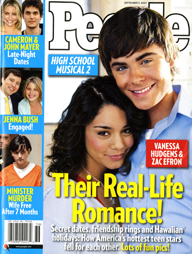

Nothing surprises me anymore when it comes to magazine cover testing. Everything is fair game. The latest cover test that I’ve discovered is People magazine. The magazine is testing the placement of the rail to the left or to the right of the main cover story. To me the rail to the right is the logical way our eye moves from left to right as we read things, but again, the rail on the left gives the buyer instant read of the stories even before they say the name of the magazine or the main cover story. Confused? Well, join the club. I have given up on trying to understand cover testing long time ago. The variables are too many and editors are better off spending that extra money on something else. I asked an editor one time for the reason she always tests her magazine covers on the newsstand? Her answer was very simple, “because everybody does it.”

Right or Left…People tests the “rail”
August 29, 2007And they say teens don’t read…
August 28, 2007
News from the Big Apple that Teen Vogue magazine is raising its rate base to 950,000 from the current level of 900,000. Teen Vogue was launched in 2003 with a rate base of 450,000. This new rate, effective Feb. 2008, represents an increase of 111% since the magazine was started. Today’s news comes on the heel of rumors that Condé Nast was ready to shut down Teen Vogue. The rate increase, announced by Vice President and Publisher Gina Sanders, is the best response I’ve seen yet to a rumor of magazine closure. It is amazing how many proofs the prophets of doom and gloom need to accept the fact that teens read and read a lot if the content is relevant to their needs, wants and desires. Shoving something down their throat that is not relevant to them and wondering why they don’t read it is a completely different story.
“Cutting” the hand that feeds you…
August 28, 2007


What if you were to buy a magazine on the newsstand and the price you pay for that magazine is considered by the publisher to be the price for a subscription? Nothing more, nothing less…not even the cost of a postage stamp. The cover price you’ve just paid for the magazine is all the money you are going to spend on that magazine for the rest of the year. There will be no need for you to return to the newsstand to buy another issue of the magazine. Your $3.99 or $5.99 has earned you a year’s subscription. Is this a smart marketing gimmick or another slap in the face of selling magazines on the newsstands? The three featured magazines above are just doing that. Buy them once on the stands and they love you so much that they will continue to send the magazines to you for a whole year. This is yet another example of the blind race toward counting customers rather than finding customers that count. I have said it before and I will say it again, the only solution for the ills of the magazine industry is to start moving toward becoming a circulation-driven industry and not an advertising-only- driven industry. In the business of customers who count, giving away free subscriptions just because someone buys one issue, is the wrong direction. Look at the above examples and judge for yourself. It seems to me that we are not “biting” the hand that feeds us, but actually “cutting” it off.
Cover justice, ten years later…
August 26, 2007
It was ten years ago when Princess Di and Mother Teresa both died within 48 hours from each other. There was enough time for all the major newsweeklies and weeklies to put either one of the subjects on their covers. With no exception, all the major magazines went with the mass, Princess Di rather than the class, Mother Teresa. The big picture was for the Princess and the side-bar picture was for Mother Teresa. Now, a decade later, the renovated and reinvented Time magazine reversed that picture. Mother Teresa, in a very powerful and moving account of her journey of faith, received the big cover picture treatment from Time magazine and Princess Di received the side-bar treatment. One more feather in the crown of the new Time magazine.
Bringing down the house of Reiman…one “ripple” at a time (take 2)
August 26, 2007Few days ago I posted a blog on the many changes taking place at what used to be called Reiman Publications. My friend Bob Sacks distributed my blog on his e-newsletter and yesterday he published the following responses to the blog:
I think you and Samir are just not in tune with the understanding corporations have of successful business:
1) No leadership in Greendale, home of Reiman Publications . . . Well, they were taking over. And everyone at the formerly Reiman publisher knows that corporations only invest to increase the value of their holdings. Therefore, there must be a lot of value in owning Reiman. Does that value go away because the orders come from New York? Of course not. And by getting rid of the president, they actually increase the value per employee, meaning that the workers must be even more secure in their positions.
2) The end of the “No Advertising” model. . . . If no ads is good, then more ads will be better. After all, people are buying the magazines anyway, so might as well make advertisers happy. And maybe $6 million in subscriptions goes away, but multiple that $60,000 by 12 months – that’s $720,000! Just in the first year! It will only take them 8 years to make up the difference. And if they can sell four times that amount of ads every single issue, then they break even in two years! It’s the Greendale Granfalloon! (Here’s the definition – http://en.wikipedia.org/wiki/Granfalloon – of a granfalloon, which was a marketing concept from Kurt Vonnegut.)
3) Readers are no longer the number one customer: . . .. Did you ever talk to one? . Did you ever talk to one? I didn’t think so – me neither. Telling readers what to think is what editors are for. Or is it publishers? In any case, it’s younger editors .. . or publishers . . . and so they need to talk to a younger set of readers. But that’s ok; the readers will go away but they’ll have the advertisers.
4) There is no number 4. Well, there was, but it got laid off along with the people who used to think that they knew what they were doing just because they made profits year after year. Profits! Hah! I’d like to know just how much red ink their revenues could have brought them. Hey, maybe we can get a deal from one of the advertisers!
(Submitted by a writer)
Re: BoSacks Speaks Out: Bringing Down the House of Reiman
Great article! Barb Newton worked with me at Rodale for almost 20 years and without exaggeration is one of the smartest publishing executives around. Her direct marketing, circulation and management skills are surpassed only by her editorial instincts.
When Ripplewood eliminated her job, they eliminated the one strong leader who could have made the transition work.
(Submitted by a Publisher)
Re: BoSacks Speaks Out: Bringing Down the House of Reiman
So the experts at RDA say that branding is important and Reiman is not known, but their titles are. My goodness RDA has undersold and under-estimated the brand of Reader Digest and the other valuable titles they have purchased over the years. What makes them so knowledgeable now?
(Submitted by a Printer)
Re: BoSacks Speaks Out: Bringing Down the House of Reiman
Samir has got it right. But (and it’s a big BUT) . . .
Berner’s charge from Ripplewood is to pump up the numbers and flip RDA in three to five years (give or take). The quickest way to do that, in addition to cutting overhead to the bone, is to abandon the Reiman revenue model. The new management is on the way to doing both. It won’t be difficult to attract advertisers – virgin properties and all that. And when you’re starting from a zero base it will look pretty impressive quite quickly.
Will the ad pages stick? Will the core reader audience bail out? Will the bottom fall out? As long as it takes more than three years for any of that to happen Ripplewood’s strategy will be perceived as successful and RDA will once again be public with a new management team having to deal with the problems.
So as right as you and Mr. Magazine might be, it’s not relevant in today’s private capital world. Unfortunately.
(Submitted by a Former Publishing Exec)
Re: BoSacks Speaks Out: Bringing Down the House of Reiman
Bo, You and I had a conversation about what might happen at Ripplewood when the first deal went down. You told me that they would destroy the Reiman property in the pursuit
of Wall Street gains. I told you that you were wrong and that the Reiman titles were an excellent base to build upon, and that I would buy you dinner at the restaurant of your choice if things went sour and they started to ad advertising. My question now is where do you want to eat.
(Submitted by a Publisher)
Any or all ideas and comments all welcomed. Keep them coming.
Print is Dead…Wake up! It was only a nightmare…
August 23, 2007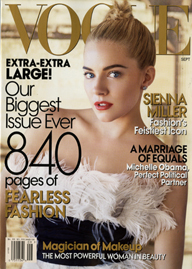

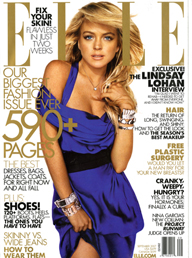

As I get ready to debate my friend Bob Sacks at the Florida Magazine Association’s annual convention at the Great Floridian Hotel in Disney World, I made my usual newsstand stop to get my ammunition for the debate. Well, guess what? My eyes started to play tricks on me…magazine after magazine in the women and fashion section were screaming at me “Biggest Issue Ever.” I rubbed my eyes and took a second look. I asked myself how can this be true? I thought someone told me (actually a lot of someones) that print is dead. Well folks, guess what, print is not dead. Soon the prophets of doom and gloom will wake up from their nightmare. The four magazines and their covers above are there for you (and them) to see and attest to the power of print. Four different magazines with hundreds of pages all ready for your fingers to do the walking… no matter how many pages you can store on one e-paper, the feeling is not the same. Buying those magazines, for less than $20 total, gave me the complete satisfaction of having my cake and eating it too. My friend Bob, you know you can’t have your e-paper and eat it too…
Paper vs. Pixel: The Florida Fight (Husni vs. Sacks)
August 21, 2007
My friend Bob Sacks, commented today on my “Bringing down the house of Reiman” blog. Bob comments also mentioned the next dual that the two of us will have at The Florida Magazine Association in Orlando next Thursday. His comments follow:
BoSacks Speaks Out: This is a right on target article by Samir Husni (read it here), that also gives me the opportunity to tell you that he and I are once again putting on the verbal boxing gloves this week, to debate your future. That is correct. It is a point-counterpoint presentation on the future of print and how it will affect the distribution channels of magazines! It is the Keynote Session titled – Paper vs. Pixel.
This is a terrific and ongoing debate/discussion/assessment of our industry and where we see it headed.
There are some industry trends and business models that Samir and I agree upon and some where you will find us in dramatically and diametrically opposite camps. Either way you take it, this slug fest has received nothing but rave reviews by all attendees across the nation. If you are in Florida, you should make every attempt to be there. We may be the ones on stage, but we are talking about you and your career.
We will be at the Disney’s Grand Floridian Hotel in Orlando this Thursday, August 23, at 4 PM at the Florida Magazine Association’s annual Conference.
To see the entire program click here, and to get your own copy of the fight poster click here.
Bringing down the house of Reiman…one “ripple” at a time
August 20, 2007


In the age of mergers and acquisitions, promises are rarely kept and previous owners/founders usually live to see the day that their babies lose their DNA and the original parents end up disowning the products emotionally after they have disowned them financially.
Reader’s Digest Association is a good example. RDA bought Reiman Publications (Country, Taste of Home, etc.) in 2002. (RDA paid $760 million for Reiman Publications; click here to order the book that tells the whole story of the sale, the history of Reiman’s “no ad” approach and more.)
The changes in the company started from that point on, with redesigns and repositioning of several of the titles. That was attempted to force growth, but it didn’t work. Then Ripplewood Holdings bought RDA, taking over in early 2007, and began accelerating the changes even more.
Now, according to sources knowledgeable with what Ripplewood is doing, the process of de-branding of Reiman Publications has started…and started big time.
The Milwaukee Journal Sentinel reported on June 19 that Ripplewood renamed Reiman Publications. It’s now RDA Milwaukee. “Reiman as an entity is going to go away,” company President Barbara Newton told the paper shortly before she lost her job.
According to my sources the RDA release reflected the fact that “Reiman is not a known brand. The brand is in the magazine names.”
So how is Ripplewood changing the Reiman brand? Well let me count the ways:
1. No leadership in Greendale, home of Reiman Publications:
Ripplewood terminated Barb Newton, Reiman Publications president, after deciding they don’t need a President in Greendale anymore, that they can run the whole thing from New York! So they now have nearly 500 people nearly a thousand miles away without a direct “leader”. However, RDA spokesman William Alder told the Journal Sentinel that this change represents “a re-upping of the commitment to work with the folks there (in Greendale).”
2. The end of the “No Advertising” model:
Reiman Publications created one of the most successful magazine publishing models ever–one that was strictly dependent on circulation revenues. When RDA bought it, the company was extremely profitable. It published 13 national titles reaching more than 16 million paid subscribers…without a single advertisement.
Now, Ripplewood has decided to remove that unique aspect; it has started carrying advertising. The first ad brought in $60,000 for the Select Comfort Bed ad that’s included in the current issue of five of the company’s magazines–Country, Birds & Blooms, Backyard Living, Reminisce and Farm & Ranch Living.
One of my sources feels that $60,000 ad will cost the company more than $6 million in renewals. Why? Because the no-ad approach was—more than anything else–the one thing that made the magazines “different”.
It was by far the magazines’ most talked-about element over the years. Now, with the removal of that unique element, this source believes renewals will drop off so fast that what started out as a Ripple will end up being a title wave!
Amazingly, the Ripplewood folks don’t feel the “no advertising” approach is essential to their success. In fact, their reaction to this unique approach of publishing is “utter disbelief that Reiman Publications has had this huge circulation and hasn’t bothered to sell advertising up till now,” a reliable source told me.
3. Readers are no longer the number one customer:
According to my sources, the Reiman Publications’ empire that was built on reader input is now heading toward a complete U-turn. In fact, an internal e-mail from one of the RDA managers last winter stated, “I don’t care what the reader wants…this is what I want!”
That’s not far from reflecting the current feeling at Ripplewood. One of its managers recently stated, “We need to turn over this circulation base anyway; we need to attract a much younger, more vibrant audience.”
In short, “the magazines just haven’t been the same for more than a year. And now with the inclusion of ads, they’re really not going to be the same,” my source said.
Am I surprised? NO. Why not? Well, the top 14 people who were in charge of Reiman Publications are no longer employed at Reader’s Digest Association. So, since most of these top people have been replaced by RDA’s chosen people…didn’t RDA pay all that money to buy themselves?
A final thought, a wise person summed for me this whole process of mergers and acquisitions as follows:
“The bottom line is this: Small companies do things that benefit the customer. Corporations do things that benefit the stockholders. Small companies think long-term. Corporations think short-term, as in quarterly reports. Small companies really get to KNOW their customers to sustain growth. Corporations aren’t much interested in getting to know the customers and concentrate on maintaining growth through what they learned works for other audiences.”
Will magazines die? Not any time soon, not ever I say…
August 17, 2007Krishna Prasad, the journalist behind the Sans Serif blog from India interviewed me last week for his blog. What follows are his comments and the link to the video interview conducted in Washington, D.C. He wrote:
WASHINGTON, DC: In a journalism ocean full of gloom and impending doom—full of pornographic navel-gazing over its current state—Professor Samir Afif Husni comes across like an isle of hope that American publishers, investors, and editors either can’t see or are trying desperately to swim away from.
Not only does the chair of the department of journalism at the University of Mississippi believe that news of the death of newspapers is vastly exaggerated, the man trademarked as “Mr Magazine” believes—pinch yourself—that magazines will not only survive but thrive.
That optimism may seem natural for a “minority among the minorities”, a Presbyterian among the Lebanese, who seen far worse. But that optimism is also a reflection of the passion for a genre of journalism that has captivated America’s “leading magazine expert” since he was eight.
Dr Husni, who holds a doctorate in journalism from the University of Missouri-Columbia and a master’s degree in journalism from the University of North Texas, has over 24,000 magazines in his private collection—and over 800 neckties in his wardrobe.
And when he is not in his office reading magazines, he is at the newsstands buying magazines, as he was in Washington, DC, while attending the annual conference of the Association of Educators in Journalism and Mass Communications (AEJMC) last week.
In this sans serif exclusive video, shot against the backdrop of the Washington Public Library, Dr Husni explains why magazines will always be around—and just what they will need to do so as not to be overwhelmed by the surging waters of pessimism that has very nearly consumed American newspapers.
To watch the video click the play key above and to read the Sans Serif blog click here.
The good news about online magazine sites…
August 16, 2007Online magazine web sites at Hearst are helping the company’s print products, says Chuck Cordray VP and general manager at Hearst Magazines Digital Media. In an in-depth interview posted on PBS MediaShift blog site, writer and freelancer Mark Glaser interviewed Mr. Cordray on a variety of topics related to print and online. Two highlights from the blog-in-depth interview:
“The print subscribers who subscribe online are generally eight to 10 years younger on average than the ones who subscribe through the traditional methods. The online people are finding us sooner. And of the online subscribers, more than 90% of them are brand new to the Hearst subscription world — they’ve never subscribed to any of our magazines before. They look the same as our other subscribers but we’re getting them earlier.”
“The likelihood of an individual online visitor to subscribe [to a print magazine] has gone up more than 50 percent,” he said. “We have had sites that have doubled their propensity for an individual visitor to subscribe. This isn’t about cannibalization, it’s about brand experience. If you have a good experience in print, you might try out the mobile experience. If you have a good experience online, you might subscribe to the print publication. This is about brand reinforcement, not about cannibalization.”
To read the entire interview with Corday click here.


