

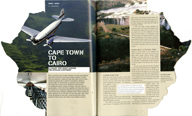
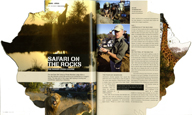
Once in a blue moon you see a design in a magazine that stops you in your tracks. Well, this is one of those times. Mate magazine, the Style, Body and Travel magazine had a special section on travel to Africa in its most recent issue. The entire 16-page section is die-cut from one side to the shape of the continent of Africa. The map of Africa outlines a picture of an elephant and screams Africa Special all over. A brilliant execution which I hope the above pictures may give it some justice (We added a white piece of paper in the background to show the die-cut effect). Mate is a German magazine available in both English and German and identifies itself as “a quarterly lifestyle magazine for smarter men all over the world.” Click here to learn more about Mate.

Mate magazine: A cut above
September 13, 2007The beauty of science: what comes around goes around
September 12, 2007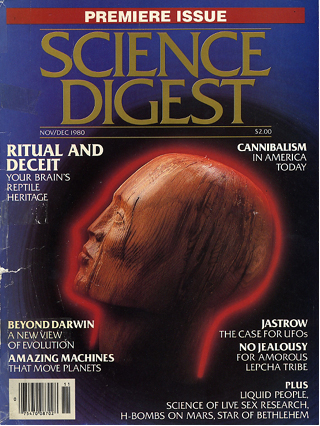
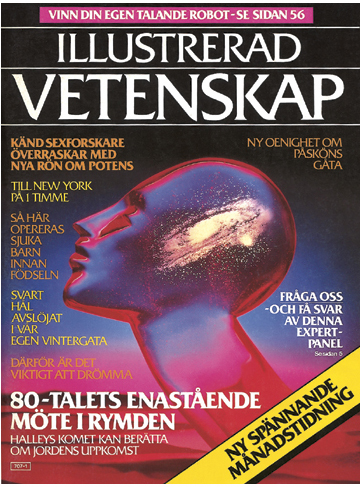
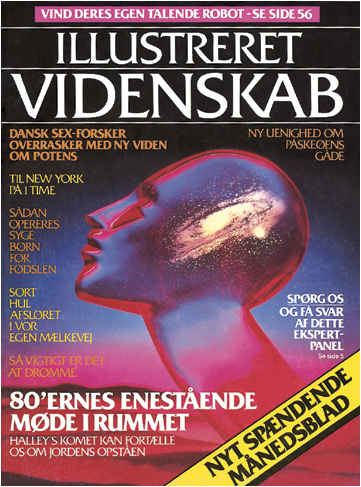
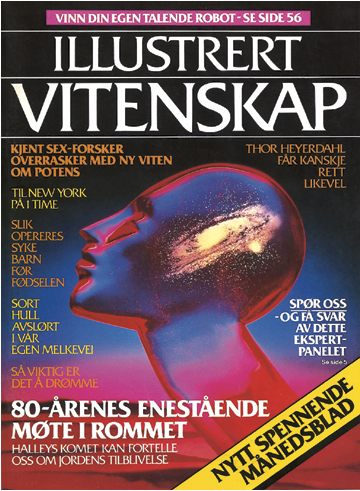
As a student at The University of Missouri in the early 80s I was thrilled to meet with John Mack Carter when he came to visit our campus. Mr. Carter was (and still is) to me one of the new magazine icons of our industry. He has been responsible for launching more magazines than any other person I know. His visit came on the heels of Hearst launching the newly expanded and enlarged Science Digest. The little digest magazine has grown under John’s leadership to a standard size mass science magazine. The first issue was published in Nov. 1980 after four successful test issues. It only took three years for the Swedish magazine company Bonnier to take notice and a deal was struck with Hearst to launch the magazine in three Scandinavian countries: Sweden (of course), Denmark and Norway. The magazine was launched in 1984 under the name Science Illustrated and became a big success. Science Digest, however, did not enjoy the same success Science Illustrated enjoyed and it closed its doors. Now, with the Bonnier magazine company establishing a base in the United States after investing in World Publications and buying Time4Media, the company announced that after more than 20 dormant years of Science Digest, the company is launching Science Illustrated once again. In a press release the company said,
“Science Illustrated is Bonnier Corp.’s first U.S. launch of a title from its European parent company. Illustreret Videnskab (Danish for “Science Illustrated”) is the highest-circulation magazine in Scandinavia and the flagship of Bonnier’s European portfolio. Science Illustrated will have an initial distribution of 170,000 copies. The staff of Bonnier Corp.’s Popular Science, including the editorial and business units, will be charged with executing the launch of Science Illustrated. Popular Science publisher Gregg Hano will also serve as publisher for Science Illustrated.
The magazine will debut on newsstands Dec. 18, heating up the science magazine category that has just witnessed a redesign of the very successful and longest continuously published magazine in America, Scientific American and all of its new siblings SA Mind and SA Reports.
Best Life for a healthy man…
September 11, 2007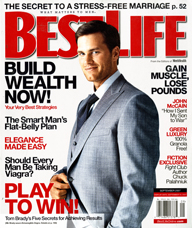
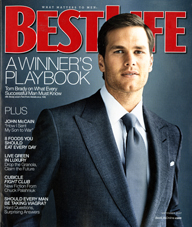
I like Men’s Health, but I love Best Life. That was not the case when Best Life was spun-off from Men’s Health. But as the baby grew and started taking baby steps and later started walking on its own, I started to fall in love. When people ask me for a men’s magazine that address both their body and mind, heart and soul, style and lifestyle I have one answer to them: Best Life. A no-non-sense magazine for the “mature” man (no not the over 65 crowd), but for the power-thinking, hard-working and pleasure-loving man. Best Life is one of the few men’s magazines that you can safely have in the office or at home without having to dash to cover it with another magazine when a significant other or friend surprise you with a visit. A must read for today’s man. (The images above are from the newsstand and subscription covers of the September issue).
New Magazine Launches: A healthy August…
September 9, 2007The August numbers of new magazine launches are in and they are almost double than July, but still short of the numbers of August 2006. A total of 61 new titles were launched in August compared to that of 74 last August bringing the number of new magazines so far to 439 way short of the 681 new titles launched in the same period of 2006. The good news this month is that the number of titles launched with four time frequency or above is 27 which is 16 more titles than the 11 launched in August 2006. The overall number of new titles launched with a frequency of four time or above so far this year has reached 163 compared to that of 217 for the same reporting period of 2006. By far August has been a very good month for new magazine launches, a much needed boost in the midst of some of the announcements of magazine closures. I am glad The Reaper is providing a RIP website and I am gladder that the delivery room in the magazine world is introducing many more titles than The Reaper can handle. For a complete list and images of all the new titles of 2007 so far click here.
A magazine name to ponder…
September 7, 2007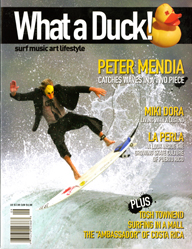
What a Duck! is the name of the new magazine aimed at the surfing, music, and art lifestyle of the young and young at heart who enjoy such a way of life. The logo of the magazine, you’ve guessed it, is a rubber duck. What is more interesting is the cover shot with the rubber duck mask on his face surfing on the water. Quite an interesting use of a logo and cover image, not to mention the choice of words for the name of the magazine. Remember the many television sitcoms with the famous use of the word witch with a capital B.
How many cover prices can a magazine have?
September 6, 2007
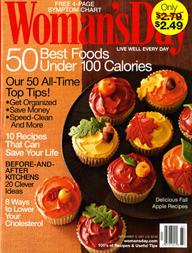
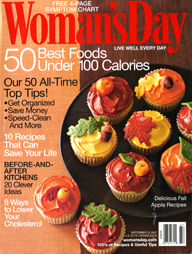
Well, as many as the publisher wishes to have. Woman’s Day opted for three cover prices, at least that’s all what I found so far. From the wholesaler’s “losing” cover price of $1.99, to the “minimum money making” cover price of $2.49 and last but not least the regular $2.79 cover price. As you can see the discounted cover prices are highlighted big times, while the regular cover price does not call attention to itself. When I wrote few weeks ago that I was really impressed by the magazine’s redesign, I did not expect to pay $7.27 for one issue of Woman’s Day.
Meet The Reaper: the anti Samir Husni
September 5, 2007In today’s Media Life’s Magazines section, reporter Diego Vasquez interviews The Reaper, the person behind the blog MagazineDeathPool.com. The Reaper offers the views of yet another prophet of doom and gloom with regards to the magazine industry. I thought you may enjoy reading his comments regarding the demise of the magazine industry. It is the best use of facts to write fiction. Read for yourself.
“Medical Tourism”… yes that is the name of a new magazine
September 5, 2007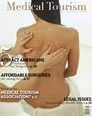
You’ve seen the reports on TV, you’ve read some of the stories in the papers, now you will have an entire magazine devoted to the topic. Medical Tourism, the new monthly publication that debuts this October, will be distributed free to the “50 million uninsured in America and also to those decision makers in US healthcare.” Jonathan Edelheit, the president of the Medical Tourism Association told me in an e mail that the magazine and the organization are “dedicated to helping to solve the American HealthCare crisis by allowing the 50 million Americans without insurance information on going overseas to foreign countries for surgery and healthcare, where the prices are almost 80% less and the quality of care is equal to the United States. Many Americans die each year or live in pain because they do not know going overseas is a viable option.” The magazine will cover issues “such as the quality of care overseas, legal issues with seeking medical care overseas, the cost of care, and even exposing things such as why the same manufacturer of parts for a hip replacement charges $9,000 in the US, but only $2,000 in India for the same parts.” So next time you are in need of healthcare, why not plan a trip to ease the pain (of both yourself and your pocket book) and increase the gain of the world being flat. To your health will gain a brand new meaning after the first issue of Medical Tourism will be out. For more information on the magazine and the organization click here.
The things we do to keep the post office happy…
August 31, 2007

When magazines publish special issues or spin offs they have one of two options: sell it on the newsstands only and thus do whatever you want to do to identify the name of the publication and its spin off, or mail that issue as part of the magazine subscription to your subscribers. However if you decide to do both, you better watch the size of the original name of the magazine. Your friends at the post office have more rules and regulations on the size of the name of the spin off in comparison to the name of the magazine. You must adhere to these specifications in order for that extra issue to qualify for periodical mailing. Take the example of In Style Makeover magazine, one of four spin offs of In Style magazine. The magazine plays big the name Makeover on the newsstand edition, while the original name In Style is the dominant part of the name on the subscribers edition. The rest of the magazine is the same. At least it is good to know that the wholesalers are not the only folks trying to tell publishers what to do with their magazines in order to obtain their service.
Vibe sans Vixen double up…
August 30, 2007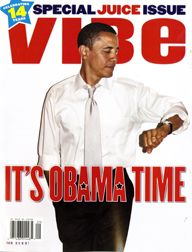

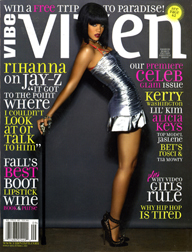
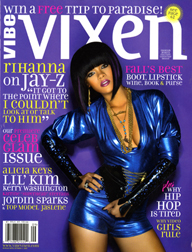
I guess September is the month for doubles even for those magazines who are on their final breath. Vibe and its soon-to-die sister Vibe Vixen opted for split covers on both magazines. Vibe made history with its first non-music cover and Vibe Vixen made history by becoming history itself. The split covers of Barack Obama offered the gutsy cover, Obama on his own and the not-so-gutsy Obama who needs “40 more who will change the world.” The Barack only cover wins my vote hands down. As for the recently shuttered Vibe Vixen, well pick your choice of either cover. I have no opinion on either. But, what the heck, it is their last issue, so it must be a collector’s item. Buy both for safe keeping… one day the two copies and five dollars will buy a good cup of coffee.


