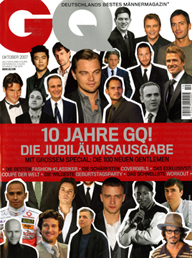

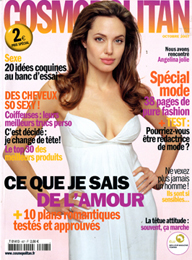

During my trip to Germany I picked up the 10th anniversary issue of the German edition of GQ. It came in two sizes: the standard size and a handy “pocket size” edition to fit easier in your briefcase. I was amazed to the see the difference in price: the standard size four euros, the mini only one euro. A difference of three euros for the same stuff. However, unlike the original pocket size magazine Glamour (the UK edition) the mini GQ is in fact a reduction of the original magazine rather than a specific design for that size… (so have your magnifiers ready). The next day I traveled to France and picked up a copy of Cosmopolitan. The same story there. One standard size and one mini. However, the French were not willing to give the store away just because it was a mini…only 20 cents discount for the mini. The standard Cosmopolitan was two euros and the mini was 1.80. In fact I saw more maxi and mini magazines in France than any other country that I have visited. The mini editions vary in adjectives from travel size, to handy size, to handbag size all the way to pocket size. Thank you UK Glamour for introducing a new “buzz” size to the magazine market place…

Size does matter…
October 5, 2007The Magazine Marketplace in Flux—How Can PR Benefit (and Help)?
October 3, 2007
Under the heading of Barks & Bites, the Bulldog Reporter’s Daily’ Dog newsletter published the following article that I wrote for them in yesterday’s edition. You can access the article here or just keep on reading.
When sporting events see small crowds, you don’t hear the managers bemoaning the death of a sport; when stocks prices fall, you don’t hear CEOs complaining that money is no longer a viable product; but for some reason a drop in new magazine launches makes our industry think our days are numbered.
The numbers this year are lackluster at best, but there is no reason to think this is the first step down a slippery slope to the death of the magazine industry. Just as many other industries experience every few years, we are seeing nothing more than a market correction. I said a few years back that we would see something like this during 2007 and 2008 with a rebound to normal form in 2009.
This year, through the first six months of the year, the numbers were significantly lower than last year’s numbers. In fact, this is the first year that I can remember the numbers dropping by more than 38% from the previous year’s numbers. With 342 new launches through the end of June 2007, this number is well behind the 555 new launches that 2006 saw by the same point last year. Magazines published with a four times frequency or higher totaled 125 or 37% of the total magazines launched in 2007. Last year, the total number of magazines with four times frequency or more during the same period of time was 163 or 29% of the total magazines launched in the first half of 2006. This year also witnessed a drop in the total number of specials and annuals. A total of 188 specials and 19 annuals were born in the first half of 2007 compared with 2006’s 251 specials and 28 annuals. The July numbers looked just as slim with only 36 new launches during the month, a decrease from the 52 titles launched during July of 2006.
These numbers show no sign of improving over the remainder of the year, but this drop shouldn’t mean panic for the publishing world. Reading though the state of the magazine industry may seem alarming at first but keep in mind that while the numbers may show a significant change from the past few years of record launches we still have more magazines alive and kicking on the newsstands today than ever before in our industry.
The number of launches will ebb and flow and it serves to remind us that change is a constant in this industry and we have to remember that the only way we can remain relevant in a constantly advancing world is to take note of the change and adapt to it as it comes.
In the case of public relations professionals, this means a change in the way PR has been done and a movement toward what the rest of the industry is slowly waking up to: The problem in our industry is with the message, not the medium.
When the average person on the street thinks of “public relations,” he or she probably gets images in mind of mass press releases and email blasts to multiple outlets with the entire audience in mind, not the individual. For some time this has been a true representation of how PR has worked—but the numbers I mention above tell us that we have to change that perception and if not the perception, then most definitely the practice.
Over 15,000 magazines are presented to the general public each month on newsstands and in their mail boxes for their choosing. Many of these magazines share similar content and even design. Since the advent of desktop publishing in the 1980s and the increasingly easy means by which anyone can start a magazine, new titles have popped up in record numbers and are starting to see an increase in lifespan on the newsstand. With all the titles out there, the need for individual magazines to specialize and differentiate themselves from other titles is paramount to survival.
Because of this, the old way of blanket press releases cannot work anymore. Where one person could write a press release and blast email it to hundreds of outlets, it is now time to become more individual in the way we disseminate information. We must tailor these press releases to specific audiences and for specific publications.
With budget constraints becoming more and more of an issue to publishers, freelance writers are becoming a more necessary part of the magazine budget. Therefore, press releases specifically tailored for a magazine become a cost efficient way to provide content to readers, while maintaining a feel of title-specific material.
Simply put, before writing a press release or pitch, we need to go back to a pure, basic common sense approach to public relations. Remember to think of your audience, think of the magazine’s audience and keep in mind that you are the matchmaker, putting the two together.
And above all, best of luck.
Happy 50th Birthday GQ…
October 2, 2007 The only quarterly that is published monthly, Gentlemen’s Quarterly celebrates its 50th anniversary in style, not any style but that of The 50 Most Stylish Men of the Past 50 Years. However only ten made it to the cover and the remaining 40 were featured inside the magazine. The 50th anniversary celebration starts with the letter from the editor in chief Jim Nelson “GQ at Fiddy” and continues in every single page of the 474 pages of the Oct. issue. Of interest is the “GQ Regrets” section that is headlined “What the Hell Were We Thinking?” This section brought back memories of the great clean up work that the late GQ editor Art Cooper did at GQ once he took over the editorship of the magazine in the mid 80s. He left the magazine with nothing to regret. Nelson continued the great work of Cooper and GQ today is at its best. I just wanted to make sure that Art Cooper gets a piece of the celebration cake at GQ. I truly believe that the current GQ owes a lot of its success to the re-branding work of Art Cooper who made the magazine a must for every man and not just a few. Happy Birthday.
The world’s smallest book, the world’s largest paper mill, and the world’s largest newsstands
September 29, 2007
 During my visit to Germany earlier this week, I was lucky to have had the opportunity to visit The Gutenberg Museum in Mainz and to speak at the Myllykoski Summit ’07 in Munich. During the visit to the museum, I was wowed by the beauty of the first ever printed Bible and was introduced to the whole process of printing following the footsteps of Gutenberg. In addition to the great printing works of Gutenberg, the museum also has the world’s smallest printed book that includes the Lord’s prayer in seven different languages. Another Wow! moment. I bought a copy and could not stop being amazed by the power of print and ink on paper. And, as if I needed another proof that we will have printed stuff as long as we have human beings, my next stop was Munich where I was speaking at the paper company Myllykoski Summit 07 on the future of ink on paper. The company is investing 486 million euros to build the largest paper mill that I have ever seen—a state of the art project that started last Oct. and is nearing completion. You have to visit the mill to believe it. When I gave my speech the next day I challenged all in attendance who still have any doubt about the future of print to go and do two things: visit the paper mill and go to a newsstand—any newsstand—and check the amount of magazines and newspapers carried in Germany. I thought we had a lot of magazines in the United States, but now I have to say that the stands in Germany carry more titles than any other country I have visited. To be true and honest to myself, I was never overwhelmed with a newsstand in my life until I visited the ones in Germany. I was amazed and stunned. I issue the same plea for anyone that still doubts the power of print…go visit Germany, it is worth the price. I thought I saw large newsstands in New York City, in Tokyo, in Helsinki, but what I saw in Germany is second to none. All in all, I came back from my trip with my belief in the future of print deeper than ever. No wonder the title of my speech was Ink on Paper: The Future is NOW.
Two covers for the doers and one for the lookers
September 28, 2007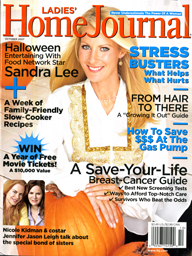
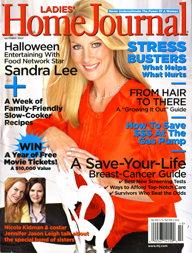
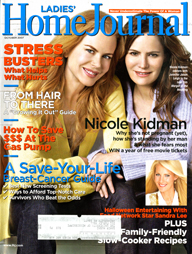
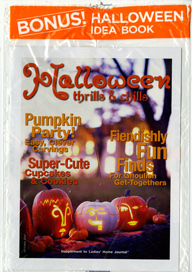
The October issue of Ladies’ Home Journal features a split newsstands cover with two images of Sandra Lee, the Food Network star. One image has Ms. Lee relaxing with the pumpkins and the other sitting on a chair. Both covers promise Halloween entertaining with the star. Those two covers seem to aim at the LHJ readers who are more of the doers rather than the lookers. However, the magazine’s subscribers received what I call the cover for the lookers…rather than being entertained by doing something (stuff for Halloween) the magazine offers the subscribers Nicole Kidman and her costar Jennifer Jason Leigh on the cover. A nice touch from the magazine is that of reversing the cover images on both the newsstands and the subscribers. Ms. Lee appears in a small image in the lower right corner of the subscribers issue, and Ms. Kidman and Ms. Leigh appear in a similar box in the lower left corner of the single copy issue covers. One more note about LHJ and its covers this month, if you are lucky enough the magazine has a gift for you in some markets in which readers receive a bonus Halloween idea book poly-bagged with the magazine. It will be fun to see whether LHJ readers are more on the doing side (service journalism at its best) or on the looking size (celebrity journalism at its best). This issue of LHJ is a perfect example of how a women’s service journalism magazine can reach that lucrative dual audience of the doers and the lookers. By the way, for those of you lookers, if you really look hard at the Kidman-Leigh cover, you will be able to find a pumpkin in the picture. Let the search begins.
Details does not want you to buy Details…
September 24, 2007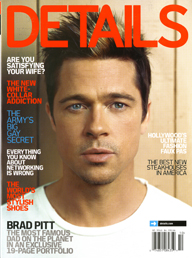
 On my trip to Europe this week I had a copy of Details magazine with me. So what is the big deal you ask? Well, Details magazine and its editors in a moment that belongs to “What were they thinking?” had an ad in the magazine announcing the new and renovated website for the magazine. Nothing out of the norm so far until you read the copy of the ad: “The new, improved Details.com is here. More videos, exclusive deals, style tips — and it won’t weigh down your briefcase.” The emphasis is mine. It won’t weigh down your briefcase…what are they telling me? In simple terms they want me to stop buying the magazine and just enjoy the website. What is the logic behind that? I have no earthly idea, but the folks at Details definitely did not want me carrying the magazine in my briefcase. I doubt that they were thinking about my well being. This is the first time I’ve seen a magazine advocating avoiding the print edition because it is “too heavy.” And not any magazine that they are advocating not buying…it is their own. Go figure!
Good Timing: From Germany with Love… The Husni-Sacks Magazine Future Debate
September 23, 2007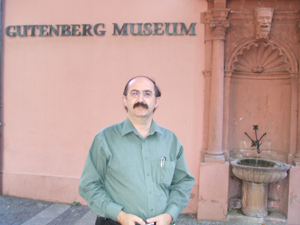 I am in Germany this week (more on that later), but I was so fortunate that on the day the PBAA released its newsletter recapping the 21st Annual Convention that was held in Philadelphia last June, I was visiting the museum of the founder of the printed word Jonannes Gutenberg in Mainz, Germany. Wow, what an experience and what a collection. From the first printed Bible to the world’s smallest printed book (the Lord’s prayer in seven languages) I was in awe. My belief in the printed word is now stronger than ever and the debate that follows will give my readers few more clues on this belief and why I do believe that as long as we have human beings we will have ink on paper. Enjoy reading the debate (it is lengthy) or just print the PDF for easier read by clicking here.
Brouhaha in Philadelphia: BoSacks vs. Mr. Magazine
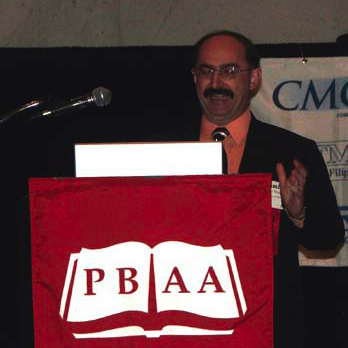
Magazine industry observers Samir Husni and Bob Sacks may not be as entertaining as Muhammed Ali, but they come pretty close when they put on their “dead trees versus electronic paper” debate. Actually, Husni and Sacks resemble a long-married couple more than Ali and, say, George Foreman. The two share a mutual regard, agree about many things, and no one delivers a knock-out blow at their debates. They just really like to disagree. So, they did plenty of that as they highlighted the challenges of the magazine business today and offered some prescriptions and predictions for the future.
Samir Husni, Chair of the Journalism Department at the University of Mississippi and the self-styled “Mr. Magazine,” came out of his corner first, and recounted how he’s been hearing about the end of print journalism since he started graduate school in 1980. His main point was that magazines, as a medium, are alive and well.
The industry’s problems stem from not delivering the right message through the magazine medium to the right audience. That’s a problem with us – publishers, editors and circulators – and it’s one that can be solved. He challenged the audience to set about solving this problem forthwith, instead of pondering about what the media environment of the future might look like. If you’re not solving your immediate and near-term problems, Husni cautioned, you won’t be around to see the brave new world of media five or ten years hence. Oh, and one thing, don’t call anything that isn’t ink on paper a magazine. Nothing makes Mr. Magazine madder than that.
Bob Sacks or BoSacks for short, the magazine industry veteran and publisher of the electronic newsletter “Heard on the Web,” didn’t directly contradict Husni. He simply said that he would tell another side of the magazine story, whereupon he began outlining why it was a more important side than Samir’s paean to the printed page. “Print isn’t dead,” Sacks said, “but it has a sibling” in the form of electronic distribution. Sacks likened the print and digital formats to parallel universes with content serving as the bridge between them. To this point, Sacks brought special zeal. Today, when information is available in multiple formats, he maintained, it is vital for publishers to see that their franchise is content or thought and that their business is information distribution. To capture the business of publishing today, Sacks has coined the phrase El-Cid, which stands for Electronically Coordinated Information Distribution. He doesn’t discount a continuing role for printed magazines – they are “electronically coordinated,” too, after all – but his outline of “screen-agers” as a generation that doesn’t know a time without cell phones and the web strongly suggests where he thinks the publishing industry
is heading.Really, the disagreement between Husni and Sacks comes, not from the head, but from the heart. Sacks revels in surprising the audience with just how many major corporations are working on the development of electronic paper and how our best efforts today are not even as refined as the Model T of the automotive world. For Sacks, it is a brave new world of wonderful ways to share content. Husni, by contrast, displayed during his presentation a cartoon of an information consumer surrounded by electronic gizmos that looked like a whirlwind collection of junk.
The next slide depicted Husni broadly smiling and sitting, Indian-style, in front of a mainline magazine rack. It was the Professor’s very idea of the good life. He doesn’t discount the growing importance of electronic information dissemination, even if he scoffs at the primitive nature of some web content today. And BoSacks foretells a reduction in dead-tree-paper magazines, not their disappearance. Still, Husni’s main argument (printed magazines are alive and well) leads him to one set of insights and
Sacks main argument (content is king; format doesn’t matter) lead him to another. Considering them both is a pretty useful exercise for anyone in the magazine business today.In support of his main argument about the vitality of printed magazines, Husni makes a number of other claims. Among them: the pace of change and the flow of information has quickened, but all the new media hasn’t really changed what’s on offer to consumers. Blogs, for instance, are merely the modern-day equivalent of newspapers’ invitations for readers to write their own news. Web content is not so different from television. It’s suited for delivering nuggets of information to passive viewers. Printed magazines retain their special ability to deepen stories by delivering detailed narrative to active readers. One, important lesson print publishers should learn from their media cousins is in the area of taking payment. Cable TV companies and internet service providers don’t go begging for subscribers with after-term renewal solicitations. They cut them off.
That magazines retain their special purpose (in spite of their subscription pricing anomalies) can be seen in the evolution of the celebrity news category over the past seven years, according to Husni. People has been joined by more than half-a-dozen, direct competitors – not to mention countless web sources – and still the title thrives, as do its biggest competitors. Husni sees other signs of magazines’ health – from an almost doubling of new title introductions over the past 20 years to the proliferation and greater specialization of titles to Condé Nast’s lavish launch of Portfolio just this year. “Book-a-zines,” “mooks,” and custom publishing are also testimony to the medium’s strength and versatility. But we should be doing better.
Despite its successes, Husni seems to think American periodical publishers are too timid. He characterizes the American scene as “static, stubborn and sad” while our international competitors are “smart, sexy and surviving.” The most glaring contrast is between newspapers. While newspaper readership and circulation in North American continues to decline, it’s growing everywhere else. “In the rest of the world newspapers are becoming daily magazines and have even begun incorporating daily and weekly magazines in their editions.” They are creating and strengthening addictive relationships with their readers, in other words, not shutting down the presses and waiting for a technological solution just over the horizon.
Husni ended his presentation by delivering kudos to one magazine that is using technology to good effect. JPG is a plucky, new title that accepts photographic submissions via the web and subjects them to on-line peer review before editors make final selections and assemble theme-based issues. It’s published six times annually – on paper.
Though he didn’t comment on it, BoSacks would likely approve of JPG as the kind of niche, small-print-order publication well suited to dead-trees-paper form. He certainly would approve, along with Husni, of the title’s straddling of the print/digital divide. (Photographers can submit their work at (http://www.jpgmag.com) But the big story, according to Sacks, is the migration of content, advertising spending, and people – especially young people, under 30 – to digital delivery formats. He recounted ten headlines from 2007, such as “Online Ads Have Overtaken Magazine Advertising,” to underscore this point. He also reminded audience members that U.S. magazine sales, which grew from 245 million to 366 million in the 20 years leading up to 1990, has stagnated in the 17 years since. The story for newspapers is even worse, with household penetration and daily circulation numbers showing precipitous declines. These trends pre-date, and seem to have been little affected by, the growth of the internet. They owe their origins to a proliferation of media outlets dating back to the advent of radio.
BoSacks sees the digital delivery of printed content, not as the continuation of print’s decline, but rather as its savior, a trend that holds the potential to usher in a new golden age of publishing. Technological advances that Sacks believes are coming in the near future will ” . . . make all of the world’s information . . . available for immediate distribution in any format.” Chief among these advances is electronic reusable paper, which will combine the virtually limitless storage capacity of computers with the low-cost portability of traditional paper. Model T versions of the concept, like the Sony EReader, may be clunky and costly, but global technology giants, including Hewlett-Packard, BASF, Bridgestone Corp., and Eastman Kodak, are working on improved versions that will allow commuters to read web content during their train ride, and then toss the device into the trash can like a rolled-up newspaper.
BoSacks ticked off current, early-adapter uses of electronic ink and paper, from restaurant menus to hospital ID bracelets. He allowed how widespread use of the technology depends upon easy access to the web – and then he reminded people that that was already taking place. Philadelphia is creating a city-wide web hot zone. Georgia has committed to making the entire state WiFi accessible, and rural areas everywhere may soon benefit from Broadband over Powerline (BPL) service, which will enable devices to access the web through their electrical power cords. The key point is that the costs for all of these technologies are coming down, while the cost of traditional paper, printing and postage is going nowhere but up.
Printing on paper is a 600-year-old technology, and “all technologies are eventually replaced or at least superseded by newer and more efficient technologies,” BoSacks reminded audience members. He is terribly excited about exactly what form that technology will take. Samir Husni really isn’t all that jazzed about it, and may well be the sort to pay a premium so that he can receive his content on good ole paper, thank you very much He perks up when discussing all the exciting things happening in print right now – even if many of them are happening outside the U.S.
Though their academic interests differ and they may be loathe to admit it, key observations and recommendations from both Mr. Magazine and BoSacks were strikingly similar. Both see the trend of increasing numbers of more narrowly focused, special interest titles continuing. Both regard “addictive content” as critical to the health of any print journalism outlet. Both caution magazine publishers to eschew the example of American newspapers, who have allowed their offerings to become less addictive over time. Lastly, both lament the continuing newsstand policies that result in more than a Billion Dollars of waste each year, although they did so without offering immediate solutions. While their pugilistic natures make them well-suited for their role as conference debaters, Husni and Sacks might also make a good pair atop a masthead as co- CEO’s of the “BoSacks Mr. Magazine Publishing Company.” Any takers?

Taking a page from Lucky
September 19, 2007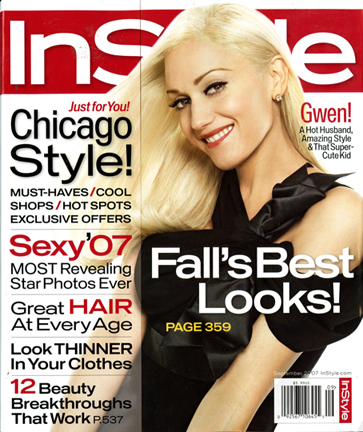
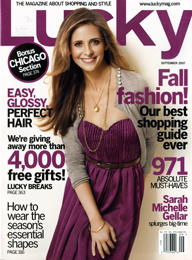
The September issue of InStyle magazine has many regional editions/additions,on a cover flap, based on specific metro areas such as Chicago, New York, Atlanta, etc. This is a technique that Lucky magazine has been doing since its launch. Lucky adds two to four pages on a specific city at the end of the magazine and teases it on the cover to shop that specific city. At one stage Lucky had 16 different such editions. InStyle this month is doing the same, but rather than shop Chicago, it is Just for You! Chicago Style. The only difference between Lucky special regional sections and InStyle, in Lucky you only find your city, in InStyle all the cities are there in the same issue, so they are only special on the cover.
15 Hottest Magazine Launches: Oct. 06 – Sept. 07
September 19, 2007
The following entry is from www.minonline.com:
The 15 magazines below have been named the Hottest Magazine Launches of the year by min magazine and partner Samir Husni, also known as “Mr. Magazine,”. The launches will be honored on November 13, 2007 during a luncheon at the Tavern on the Green in NYC. The HOT Launch, People and Reinvention will be announced during the ceremony. The luncheon will be filled with excitement from the award winners, great food and entertainment- register soon, last year’s luncheon sold out two-weeks before the event!
Hottest Launch Magazines
* American Driver
* Antenna
* Condé Nast Portfolio
* Craft
* eldr
* Garden & Gun
* Highlight’s High Five
* Hip Hop Weekly
* National Geographic Little Kids
* NEED
* Outside’s Go
* Statement
* The American
* The Land Report
* Ty Pennington at Home
For more details click here.
September is “smelling” good…
September 14, 2007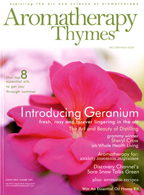
Three new magazines are reviewed on the What’s Hot What’s New section of Mr. Magazine™, our weekly review of new magazines as they appear on the nation’s stands. If you like your magazine to be considered for review please send a copy of your premiere issue to: Samir Husni, 114 Farley Hall, P.O. Box 2906, University, MS 38677. Click here to enjoy the Aromatherapy Thymes’ review plus two more.


