Archive for the ‘News and Views’ Category

h1

Goodbye to 8020 Media: Take 3 A Call to Change the Publishing Model

January 6, 2009

Media reporters and bloggers alike have been swarming like bees over the news of the demise of 8020 Media and JPG magazine. I have said it once, and I will say it again now, we’ve become an industry (media reporters, bloggers) that thrive on the bad news of the demise of our own media. We are quick to report the news of the death, slow to report the news of the success or birth of new publications. And even when we report the bad news we do not offer any solutions. The news surrounding 8020 Media and JPG magazine is yet another example of what I have been trying to promote regarding the need for a new publishing model. That’s why I referred to 8020 Media and JPG as the “candle in the wind.”

The publishing model pre WWII was based on circulation driven revenues, after WWII we shifted to an advertising driven revenue model. Now we are stuck. Very few magazines remained sincere to their original mission and revenue stream, i.e. circulation driven (Highlights, Consumer Reports, and the entire herd of Reiman publications during the Roy Reiman ownership era). The current magazine model that depends on advertising as a major source of revenue hit a major set back with the horrific economic meltdown. Major magazine publishers continue to chase numbers rather than customers hoping that by giving their magazines away they can be ready for the advertising come back. So, today you can get 24 issues of Cosmopolitan for $10, O, The Oprah Magazine, 24 issues for a mere $10 and of course my favorite example 52 issues of Newsweek for $10.

Well, today Mitch Fox, President and CEO of 8020 Media, e-mailed me what I felt is a true call for action regarding the magazine industry. With his permission, here is the entire e-mail:

I’m still disappointed that not one magazine company can see this as a game changer for them….At the least the beginning of what can be a game changer for them.
They already have a pre — existing community of people (readers/subscribers) who they need to connect with in a NEW way…as well as recruit NEW members to this community….and ultimately retain them as readers/subscribers or; just web visitors (uniques) or; just buyers of their branded products, or just attendees at their (paid) events….in sum, they have to open up every revenue source possible…it’s just naive to think that any ONE revenue source will be so substantial that it can sustain a business any longer.

At one time that revenue source was subscription / newsstand revenue. Later, the paradigm shifted to advertising revenue. And for some time we have been aware that advertising will no longer sustain us…yet we’ve not changed our business models significantly enough.

Now…there is no one revenue source substantial enough to sustain our businesses.

So I’d suggest magazines develop the web to reach out and expand their universe of customers (readers) and monetize them (online advertising) and recruit them to subscribe to the magazine, and to participate in it ( the key to growing the online community) and continue to market to them in all the ways I described above, and all the ways we have yet to imagine. And that my friends is a way to begin to “re — build” the NEW magazine model…

Some of this will work, some won’t, but innovation is imperative, and damn it…this is a great (and cheap) place to start. (Build an online community around the title web visitors and readers.) See the response to a well-organized community by reading savejpg.com.
The power behind these magazines titles (brands?) has to be unleashed to remain competitive in this shifting media landscape. Otherwise, the next generation of readers, who are upon us NOW by the way, will simply not look to the magazines as sources for entertainment, inspiration or information…they will look elsewhere…they already do…and only a few rare titles, filing niche market needs will survive. Maybe we wouldn’t feel so anxious if the economy had not crashed around us so suddenly, thereby making this need for a new model such an imperative…but no matter, we deal with the circumstances we face, not the ones we wish for….and our reality is such that we have to innovate, and even improvise, but not ignore. Some magazines have already moved through this transition, most have not…I hope to see more push themselves to change their own self perception enough to push themselves to this new place, and enjoy the success that will come with such experimentation.
It’s late…but not too late.

h1

One Magazine, One Diet (or Weight Loss), Two Names…

January 6, 2009

diet2009-1myweightloss-1diet2009-2
Do you rather go on a diet or would you rather have a plan just for you to lose weight? That is the question that the folks at Meredith seem not to find an answer to. Thus they gave their newest Better Homes and Gardens Special Interest Publication magazine two different names with the exact same content (and what seems to be the IN cover-line these days Yes, You Can!). One edition of the magazine is called Diet 2009 and the other edition is called My Weight Loss. However, neither name of the magazine is to be found anywhere inside the magazine. Even on the table of contents the editors managed to introduce a design element that covered the name of the magazine on the inside cover replica. Clever, very clever indeed!

h1

“A Candle in the Wind”: Goodbye to 8020 Media and JPG… Take Two

January 4, 2009

Earlier this morning I received the following e-mail from Mitch Fox, President and CEO of 8020 Media with the heading “Goodbye to 8020 Media…Not so fast!”… Here is his e mail

Good Morning,

Well, this has been quite a crazy couple of days since I last wrote to you. As you may have seen reported, after we announced we were forced to close 8020 Media we were approached by over twenty people/companies who want to make an offer to acquire the company. What happened?

Well, first of all, many thanks to all our friends in the press who wrote about our demise…it was great of you to jump on the story, and we appreciate and respect the effort you put forth to get the story just right…after all, JPG is a great property, with a large number of loyal members, a growing advertiser base, and a real prospect for profit….not to mention the foundation of what publishing can look like in the very near future. It surely has value.

However, all of this activity really shows the massive shift in news media consumption,,,,because it shows the power of the press…especially the online press who got the story out wide and fast….And to the right people.

Maybe it’s generational, geographical, or industry related…but there is definitely “something” going on here….And for “it” we’re grateful.
.
Web based companies have come forward with offers to acquire JPG…and we’re once again excited about its future.

So we’ve set a date of Wednesday, January 7th to get in the bids…and we’ll vet them at that time and make a decision.

I’ll keep you posted….

All my best,

Mitch

Oh yeah…and this site : SaveJPG.com didn’t hurt either…Check it out, especially the comments:

http://www.savejpg.com/

To read the earlier news regarding 8020 Media and JPG click here.

h1

“A Candle in the Wind”: Goodbye to 8020 Media and JPG…

January 2, 2009

tn-jpg
Last October I interviewed Mitchell Fox, President and CEO of 8020 Media the publishers of 8020 Media. He shared with me his plans for the future of the company and promised to keep me posted on the latest community additions to the company that they were ready to make in the near future. However, in what seemed to be prophetic now, he told me “It is infinitely more complicated to produce a good magazine, distribute it, and sell it, than it is to just get a blog up and running.” Well, early this morning I received a note from Mitch addressed to Friends of 8020 Media that shows how difficult it is to produce and publish a good magazine. Under the subject-heading “Goodbye to 8020 Media,” here is the entire letter from Mitch:

January 2, 2009

To all of our friends,

In the face of these extraordinary economic times, in a devastated advertising climate, we can no longer continue to operate the business due to lack of funds, and hence we have to close 8020 Media effective immediately.

There is no doubt that our company has done what no others have yet to do…that is, prove that the web and print can work effectively together, one supporting the other.

We’ve also proven that community generated media CAN be a powerful thing…and it can create spectacular media.

The riddle of having a sound web platform support that drives interactivity with a print product has been solved, however, none of us could have predicted the global economic collapse we’ve witnessed in the past few months. So our timing to grow the business and bring it to profitability through even the smallest amount of additional funding could not have been worse.

So, while we sit here at the precipice of profitability, the negative marketplace forces are too strong to overcome, and we must take this regrettable action.

It remains undeniable that the publishing industry MUST find a new model, and mass collaboration and participation in the media property is certainly now proven it can be the foundation of this new model (NOTE: This is NOT citizen journalism).

We’ve cracked the code on marshaling a community around a media property online and in print….and helping them become active , loyal, and engaged participants in both.

We do owe a debt of thanks to Minor Ventures for believing in us, and funding us to this point and to have even given us a chance to make this business successful, and for that confidence we’ll always be grateful.

There is a lot to be learned from the 8020 Media experiment and the two magazines it published JPG and Everywhere. However, it is important to study the early stages of 8020 or what I call the “love affair” era and compare it with the “institutionalization” of the company in the last year and a half. I am a firm believer that JPG was the “candle in the wind” that will be remembered as the first magazine to utilize the web to innovate in print, and innovate well indeed.


h1

You, I and the Magazine Business: Promises for 2009

January 1, 2009

You continue to predict the death of print; I will continue to promote the endless innovations possible in print.

You continue to count the number of magazine dying; I will continue to count the number of magazines being born (for the record, magazines with 4 times frequency or more were born to a ratio of 20 to one… for every magazine pronounced dead in 2008, the same year saw 20 new launches).

You continue to mourn the dead advertising model that served the industry well since World War II; I will continue to celebrate those who are trying to reinvent the publishing model and those who will continue to depend on circulation to foot their bills and sustain their success.

You continue to be in the business of counting numbers; I will continue to be in the business of customers who count.

You continue to be in the business of catering to Madison Ave. and the advertising community; I will continue to be in the business of serving the reader, turned customer (Yes I know they don’t pay as much per issue, but there is a much more of them than the advertisers, and once you have the right customers, the advertisers will follow).

You continue to write about the layoffs and firings in the magazine business; I will continue to write about all the new hires and new companies flourishing.

You continue to report the failures in the magazine business and magazines trimming and slimming their pages; I will continue to write about magazine successes and magazines increasing their pages.

You continue to be in the business of giving away your content; I will continue to be in the business of monetizing content and finding ways to pay for it.

You continue to be in the business of serving audiences everywhere in all media; I will be in the business of identifying the best content, through the best medium to serve the best customer.

You continue to be in the business of giving content; I will be in the business of selling content.

You continue to use the shotgun approach in your marketing strategy; I will continue to use my laser-targeted approach.

You continue to see the cup half empty; I will continue to see the cup half full.

You continue to pretend to lead and direct the magazine industry; I will continue to serve an industry I live, love and cherish.

You continue to be an insider trenched in your ways; I will continue to be an outsider looking at all the ways.

You continue to see the light at the end of the tunnel as the train coming; I will continue to see the light.

Happy New Year and All The Best,

Samir “Mr. Magazine™” Husni

h1

Richard Stengel on: TIME’s Person of the Year; the newsweeklies; and the future of print

December 18, 2008

time-cover-poy2richard-stengel-headshot1
It is no secret that Barack Obama is TIME’s Person of the Year. However, revealing the name of the POY has been one of the most guarded secrets in our industry. The man in charge of the selection is Richard Stengel, TIME’s managing editor. I had the opportunity to ask Mr. Stengel few questions regarding his choice of Obama as the Person of the year, the icon issues of TIME and the future of the newsweeklies and print in general.

Could you have chosen anyone but Obama?

We started thinking about it, (we asked ourselves) can you not choose him? And what would the consequences be? You could make the case that it was the American voter, or the economy, or the subprime mortgage, or some kind of a financial services product that tipped the scales in such a way to make an Obama victory possible. It all kept coming back to Obama himself… So, sometimes the answer is looking you right in the eye and is right in front of you and that’s certainly how we felt this year.

What makes this issue special?

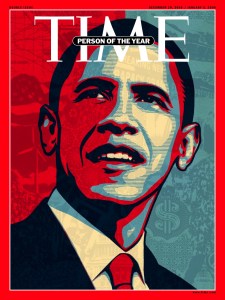
I think it’s about the most beautiful Person of the Year issue that I can recall. It’s very, very visual. The person of the year package opens with 18 pages of images that we collaborated with Flickr, the image sharing site, images done by regular people, not people of Obama. It’s a dazzling array because he is, in many ways, the people’s president. He inspired people in a way that we haven’t seen in a very, very long time. And the art created by regular folks, regular voters around the world, is beautiful and inspiring. And (at the same time) it beautifully compliments the cover itself. I think it’s just a gorgeous memorable iconic image done by Shepherd Ferry, who did the first original Obama poster with “Hope” on it. That (poster) became a symbol of the campaign. We went back to him and said hey what would you do now for President Elect Obama? And it’s really an outstanding memorable iconic image. I think that people will be looking at for decades to come.


I noticed that this year’s Person of the Year cover has no cover lines. Why?

Right, in fact we don’t even have (Obama’s) name on the cover. It just says Person of the Year and because of that very reason, we were thinking, it’s so beautiful, it’s so much a kind of iconic poster, (so) why you even put the name on it. In fact Arthur Hochstein, our great art director went and did a little research and the only other time we didn’t put a name on a Person of the Year was when we did an Aaron Stickler portrait of Ronald Regan in 1980. It was just a portrait of Regan in Person of the Year.


How important for the survival of magazines like TIME all those iconic issues like Person of the Year, The TIME 100, The List issue, etc…?

I think the annuities, as we call them, are incredibly important. The most important one for us specifically is the Person of the Year issue. That’s the greatest annuity in all of journalism and it’s something that people know all around the world. It’s a sub-brand of the TIME brand, but it’s (also) intrinsically part of it. And I think it works so well because people associate us with history. They associate us with giving a perspective on history. They associate us with talking about people who make news, people who make a difference, people who shape history. That all works beautifully with the TIME brand and the Person of the Year issue embodies that. I think going forward as to your larger question about As to the future of magazines (in general), and the news magazines in particular, I think what has happened in our popular culture as a whole has affected magazines. Look at what’s happened with the movie business. You have to have block busters, and that’s what they look for. Annuities are our blockbusters. It’s the thing that grabs people’s attention and grabs them by the collar and says, look we have something that’s special, that’s different, that’s not the same as what you get everyday or every week. So, I really place a high value in annuities and I would love to have even more. So if you have any suggestions, let me know.

What about the future? Are we in trouble or there is still a future for print?

I sometimes think is that even though we cover the whole world, we cover the economy, and we cover media, we’re often myopic about ourselves. We fail to remember that we are part of the same sea; we’re swimming with everyone else. We think that somehow we’re immune to other trends in the economy. TIME Magazine is very healthy and very robust and profitable. We’ve had to go through some slimming downs, but that’s like also what happens in the economy. I mean, we’re not General Motors, Lehman Brothers, or any of the investment bank… Those places have failed; we’re actually are doing well. I mean, I don’t want to compare ourselves to other titles but I think they’re in different situations than we are. There is a kind of survival of the fittest in all businesses that exist.
Well, if you look at an analogy with Detroit, to use General Motors again (as an example). They had too many products on the market. They had too many different types of cars they were making for their share of the market. I think (that is) one of the things that is happening in the media, apart from the rise of online and the digital space and all of that. I actually think is a great thing for the media. Maybe there are too many products out there. Certainly too many products for the share of the market and there will be some slimming down. I think that’s inevitable. That’s inevitable in every business. You know, they tell you in business school, there were 80 different car companies in America in 1920. That slimmed down before the golden age of the automobile industry…I think some of this is just necessary economies.

So, will print survive?

Our election commemorative issue was the largest newsstand seller since 9/11 and, you know, people want some historical object. I think that is one of the signs of health for print because people like things. And that will never go away.

h1

Obama is TIME’s Person of the Year

December 17, 2008

time-cover-poy
History was made on Nov. 5, 2008. So, how can a magazine choose anybody else but the history-maker President elect Obama for its branded and coveted Person of the Year issue? Well they did not and TIME choose the President-elect Obama as its POY. “In the most anticipated issue of the year, out Friday, TIME names President-elect Barack Obama 2008 Person of the Year,” the magazine’s press release said. Of note is the picture chosen for the cover. TIME’s managing editor Richard Stengel writes, “Our cover portrait is by the street artist Shepard Fairey whose roots are in the skateboarding world and whose early poster of then Senator Obama became the great populist image of the campaign.”

More on the POY later…

h1

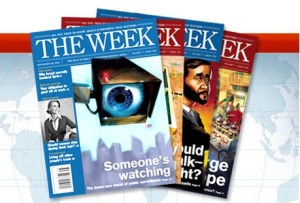
The Mr. Magazine™ Interview: William Falk, The Week’s Editor-in-Chief “There is such a rich vein of material to mine now.”

December 14, 2008

theweek
There are newsweeklies and there is The Week.

True to its name, The Week provides its readers with “all you need to know about everything that matters.” A magazine that distills “the best of the U.S. and international media” and offers it on a silver-platter, well, in fact it offers it on 44 pages of ink on paper weekly every Friday in The Week and pixels on a screen daily at www.theweek.com.

Started in the UK in the late 90s and launched in the US by media maven Felix Dennis in 2001, The Week is still delivering news and opinions from all around the world both in print and on the web. A formula that many said would never work, (On a side note, I still remember the worlds of a CEO of a major publishing company telling me, “This magazine will never work in America.”)…

Well, Felix Dennis sold his other media properties in the US (Maxim, Blender, etc.) but he kept The Week. Why you may ask? Maybe because it is unique (how many other magazines you can use this adjective to describe them?); maybe because it is a MUST read for anyone who really wants to be in the know; maybe because The Week, in its condensed view of the world, will continue to shed some light that will help our intellect as we move ahead in this new century watching the world become flatter by the day; or maybe because Felix Dennis is a genius who knows, to put it bluntly, that the light at the end of the tunnel for the news business is not the train coming.

To understand The Week, I visited with William Falk, the magazine editor and asked Mr. Bill for some answers on the many questions regarding The Week and its success story:

What is The Week?

We usually describe it as a witty distillation of the best of the U.S. and international media with the real focus on commentary and criticism reviews. We are a weekly magazine that very quickly brings you up-to-date on what happened in the world last week if you were too busy to devote an hour of the day to reading your daily newspaper or the web. We really help you make sense of that news by giving you some of the best opinions, commentary and ideas that we can find.

How to your reconcile your sources between print and the web?

We certainly use a lot of web material now. I would say that newspapers and magazines are still probably the backbone of what we provide, but we are blending in more and more web material as websites get better and better. When we launched a magazine in 2001, there were only a handful of websites that really had high quality columnists writing for them. Now we find more and more sites that are providing some really high quality commentary on a daily basis, so we are using more and more of that. We don’t use a lot of material from what you would classify as a blog, although the line there is really blurring more and more. We like to use material that is considered as opposed to some consciousness that is considered as some blogs where the writing isn’t necessarily that good or some people are having instantaneous reactions to things. We like to get a sense that there has been some thought process involved, and the writing itself is considered and has some quality.

If you look at all the other weeklies, what is the role of The Week?

I think that The Week harkens back to the individual vision that they had at TIME magazine. We still want to bring the busy man and woman up-to-date on what has happened and fill in the gaps in their knowledge. Most of the other newsweeklies are under pressure from everything that is on the Internet. The media are evolving away from anything that you would recognize as a newsweekly. The Economist would make an exception, but I think that TIME, Newsweek and US News, which is not a weekly anymore, it is a monthly, seem to be evolving into thought magazines like the Atlantic. They are having a lot of these idea pieces and essays, and they are making very little effort to sum up the weeks’ events. I see a lot of Vanity Fair touches. They are really evolving out of their space and leaving that space to us and The Economist. That space simply being where you go at the end of the week to review what happened and have us, sort of, tour through the thinking of some learned people finding out what you need to know.

The role of editors today is different than it was ten or twenty years ago. How do you define your role as a magazine editor?

My role is probably somewhat unique because of the uniqueness of the magazine, so in a sense I am a museum curator. I am somebody who consumes an enormous amount of media every week and I am reading constantly. I read on the commute to work. I wake up and start reading newspapers. I get several newspapers at home. I am reading all day long. I think my role is really to identify what the big issues and controversies are at a given time and to select for readers some of the most provocative or provisional thinking about those issues, to stimulate people and give them different ways to consider familiar news. I think my job is to provide some sense as to what the heck does this all mean and to help our readers make sense of the world. They are going to have lots of other sources of pure data and information pouring in and I am the person who says, okay, I know you are feeling a bit overwhelmed, let me help tell you (a) here are the stories you need to pay attention to and what is going on. If I don’t include it, you can safely not have to worry about it too much; and (b) here is a range of thinking about these stories, so you can help make up your own mind and feel like you have an informed opinion.

How is The Week put together? How do you select the content and how do you manage to keep that creditability and objectivity that gives The Week high rankings in the aforementioned categories?

Really, it is something that is paramount. My thinking is putting a magazine together and individual articles together. Part of what I really try to do is be very informed as to what conservatives are thinking at any given moment, what liberals are thinking and what centrists are thinking, so that every week we really try to reflect all the major points on the political spectrum. It is something that we really pay a lot of attention to here, and it manifests itself not just in the inclusion of a liberal or a conservative piece, but thinking about what stories are important to people who feel that they are conservative or liberal. If you put on Fox News at night, you are going to see a different line up of stories and controversies than you are going to see at MSNBC. We have to know about both of those and select some from both that people will find interesting.

What has been the most pleasant surprise in the last seven years since The Week was started?

There have been a lot of pleasant surprises. I think certainly that the widespread acceptance that we have found. We launched at 100,000 readers and we have grown to about 500,000. The sense that some magazines that looked down their nose at us years ago are now copying us in many ways. I see a lot of features from The Week and ideas from The Week that are being adapted and used all over the media now. Certainly these marketing studies, which are quantitative and therefore give you a real sense of what the readers are thinking, could be rated as most objective and most credible in recent years. That study over publications like The Economist, The Wall Street Journal and The New York Times is really very flattering and heartening. We have fifteen to twenty people putting this product together, and some of these publications have literally twenty or thirty times that kind of staff. In some ways, I think it is a real testimony to the brilliance of the British editors who figured out this format to begin with and that we were lucky enough to inherit it. The hard work everybody on my staff to execute that and make the magazine lively and fun. I think that is the other key to our success is that you can do The Week’s format badly. There is no guarantee that the format itself will be interesting or successful. It is really understanding, getting The Week and finding the core of the stories, the most interesting ideas and language.

What was the biggest hurdle you have had to overcome?

The biggest hurdle has been finding people who do this well. To get my original staff I probably did writing tests of 200-300 people and interviewed a lot of those folks and over the years just filling vacancies or expanding staff. Part of the secret of The Week is that the writing was all very smooth and we write our essays with five or six opinions and sources in it. It all must read as if it were one coherent conversation, and that actually takes a lot of effort on our part. The simplicity of the magazine is the result of a tremendous amount of hard work on our part. That is another thing that we really focus on. We aim the magazine at intelligent, busy people, so we really want the material to be done at a high intelligence level, yet also be very simple because we understand. I think that some other publications do not necessarily understand that. Our readers have very busy lives. They now have jobs that require them to spend ten to twelve hours a day working. Many readers have children and they may have all sorts of other obligations. In the media sometimes, we think that everybody is following all of the stories to the same extent that we are, and they are not. They have other things that they have to pay attention to. We are very respectful of our readers’ time and energy, so, when we write something, we really try to make it inclusive, not to assume that they know too much, but subtly weave in the background that you need if you haven’t been following that story, and to write it in a way that it has it all crystal clear with what happened, what the debate is and what the ideas are within that debate. Finding people who can do that is really quite difficult. A lot of accomplished journalists have come in here, have tried to do it and failed. It has taken most of us months to really learn to do this well, or six months to a year to get good at this, including myself. A lot of issues are primitive when I look back on them. You get better and better at it as you do it.

What is the problem in the magazine business? Is it the economy, the internet or the content?

I think to some extent it is the business model. The magazine industry has been long predicated on a business model in which we essentially give away magazines. You spend more on the paper and the shipping than you get for a subscription, and magazines have made that up with ad dollars and lots of ad pages. The Internet is making a lot of those ads go away. It is crippling for the industry to have so much competition and also the free competition of Internet material. There is also a lot of magazine material online now that is free, so I think that more than anything the business model is at fault. At The Week, we have a somewhat different business model where we are 50/50 in terms of ad revenue and circulation revenue. I think that actually positions us better to weather these sorts of storms that have hit. We are in better shape for that reason.

What makes Bill tick in the morning?

I love this work. I love my job. I am very wrapped up in the issues of our times. We live in a fascinating age. We launched the magazine April 2001, just before 9/11 and President Bush had been elected. It was funny, because, in the first five or six months of the magazine, we actually had trouble finding good controversies to put in the magazine. I remember we did an issue after Bush’s first 100 days. The headline was “The Quiet Presidency”. Our controversy of the week was about how lovely it was after the tumult of the Clinton years to have a president who has basically done very little and during whose presidency very little had happened. On the other level, I turned the corner on Fifth Avenue and showed the World Trade Center in flames. I knew at that moment that everything was going to be different. It certainly has been different from that day forward. From the war on terrorism to the intense political battles we have had in our country in the last eight years to this historical Obama presidency, which is going to be tremendous fun to watch unfold and see where that goes, I just think this is a great time to be alive and thinking. There is such a rich vein of material to mine now. The internet is wonderful. Newspapers still have wonderful material in them and there is just so much stuff to pour through every week as our society changes that for people in the business of thinking about the world and debating what we should do about our problems. I can’t think of a more interesting time.


h1

Is the Internet Dead?

December 11, 2008

If one applies the same logic media critics (those who keep telling us that print is dead) use any time they hear of layoffs in the magazine and newspaper businesses, than this story from Ad Age should lead to the conclusion that the internet is facing the same fate. Ad Age reports this morning that “the 1,500-person round of layoffs at Yahoo has begun and sales and marketing, content, engineering and administration have all been affected, including at Yahoo-acquired companies such as Right Media Exchange and Maven Networks.”
I have said it, and will continue to say it, our publishing model (including that on line) is bloated, very bloated… it is time for change, real change. It is not the medium that has the problems, but rather its publishing model. The economy is providing us with a huge wake up call. We better act up or the light at the end of the tunnel will indeed be the train coming.

h1

Lessons from Abroad: Selling Content, and NOT Giving Content…

December 9, 2008

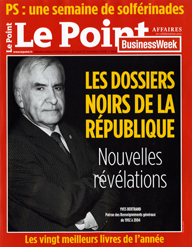
lexpresslexpressstyleslepointparis-match
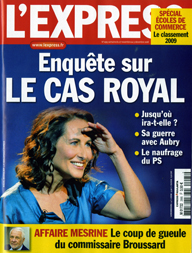
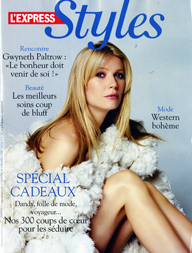
I know it is the season to give, but I am going to write today about selling rather than giving. For starters, I am amazed by the size of the so called news weeklies in Europe. Every time I am on an overseas trip I pick up some of the weeklies, regardless whether I can read them or not, and I am shocked how thick and heavy they are. Case in point the three weeklies I picked up in Paris. L’Express (with a supplement), Le Point and Paris Match. Each is a least 140 pages with one reaching the 200 page count. Paris is not unique, Rome is the same (some issues of Panorama hit the 350+ pages). Brussels, Amsterdam, London, Madrid and other European cities still are producing hefty-sized printed weeklies. So why them and not us? Why are our news weeklies limited to 68 to 80 pages most of the times? One thing I know for sure, it is NOT the size of the staff. Our magazines have at least double if not triple the staff of their European counterparts. So, is it the publishing model or is it the audience? Or is it as one of my colleagues at the University of Mississippi said, “My theory is that our society’s and culture’s anti-intellectualism is partly responsible.”
My theory has more to do with our publishing model. Few points to consider. Point number one, our publishing model is bloated. We SPEND much MORE to CREATE LESS content than our European counter parts. (Did you notice that even with all the cuts in our media industry there were no change in the size of the publications? Whether it is a magazine or a newspaper operating with a slimmer staff, a much slimmer staff, the publications are still the same size. Makes you wonder what were all these people doing!)
Point number two, the publishing model overseas still charges readers/customers for the content of the magazine. We give it away. The publishing model overseas still offers readers/customers content they can’t find in any other medium. We are losing our uniqueness in print. The publishing model overseas is adapting to the changing media consumptions of its audience ONLY when it is needed. Here we are talking a lot about change, we are changing for change sake, but in reality we are doing the same thing over and over and expecting different results every time; the Chinese define that as INSANITY.
Point number three: I know change is hard to come by. Yet, I also know that if we do not change we are going to die. We have to start catering to our Most Valuable Person. Our MVP is our reader turned customer. Our MVP is expecting us to Meet and exceed his or her expectations when in comes to content; Validate his or her expectations; and Preview what is coming in the days ahead. It is all about the content and the price of that content. I will feel much better if a magazine offers its selected readers/customers free subscriptions because they meet the criteria of “customers who count” than asking anyone to send $5 or $10 dollars for a one year subscription. Customers who count will be looking for “content that counts” and not just for any content delivered to any customer.
Drop your shotguns, and sharpen your lasers… The light at the end of the tunnel should not be the train coming.