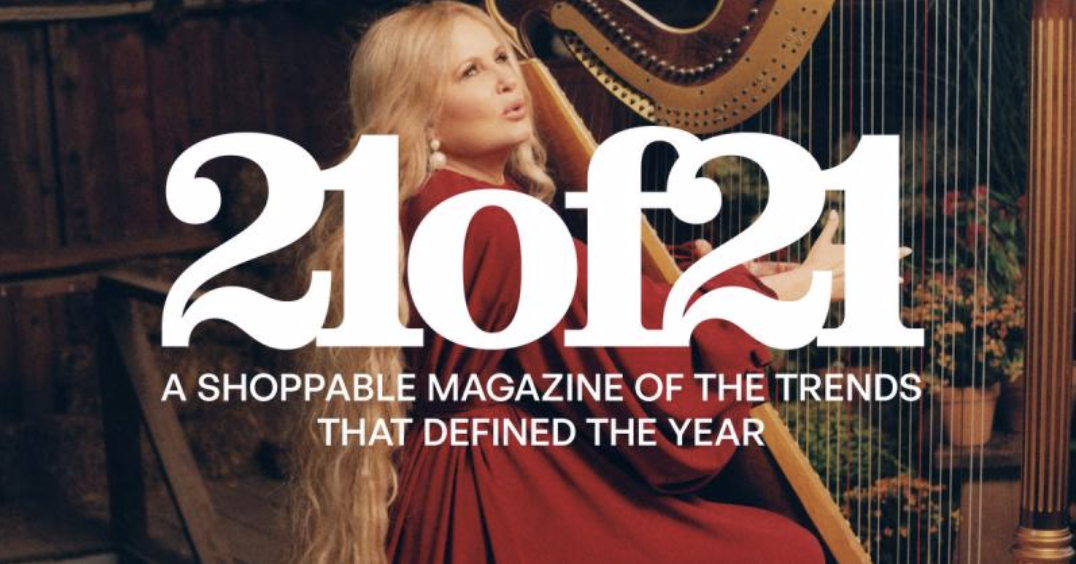
The News: “PAPER and Google Shopping have partnered to transform the trends of 2021 into an innovative shoppable magazine. Celebrities and influencers Jennifer Coolidge, Bella Poarch, Bretman Rock, Bia and Law Roach are featured. The shoppable magazine packages 21 of the most boundary-pushing trends in an editorial feature conceived by cultural disruptor PAPER. The trend list, including ‘cottagecore’ and TikTok Beauty was curated based on Google trends data.”
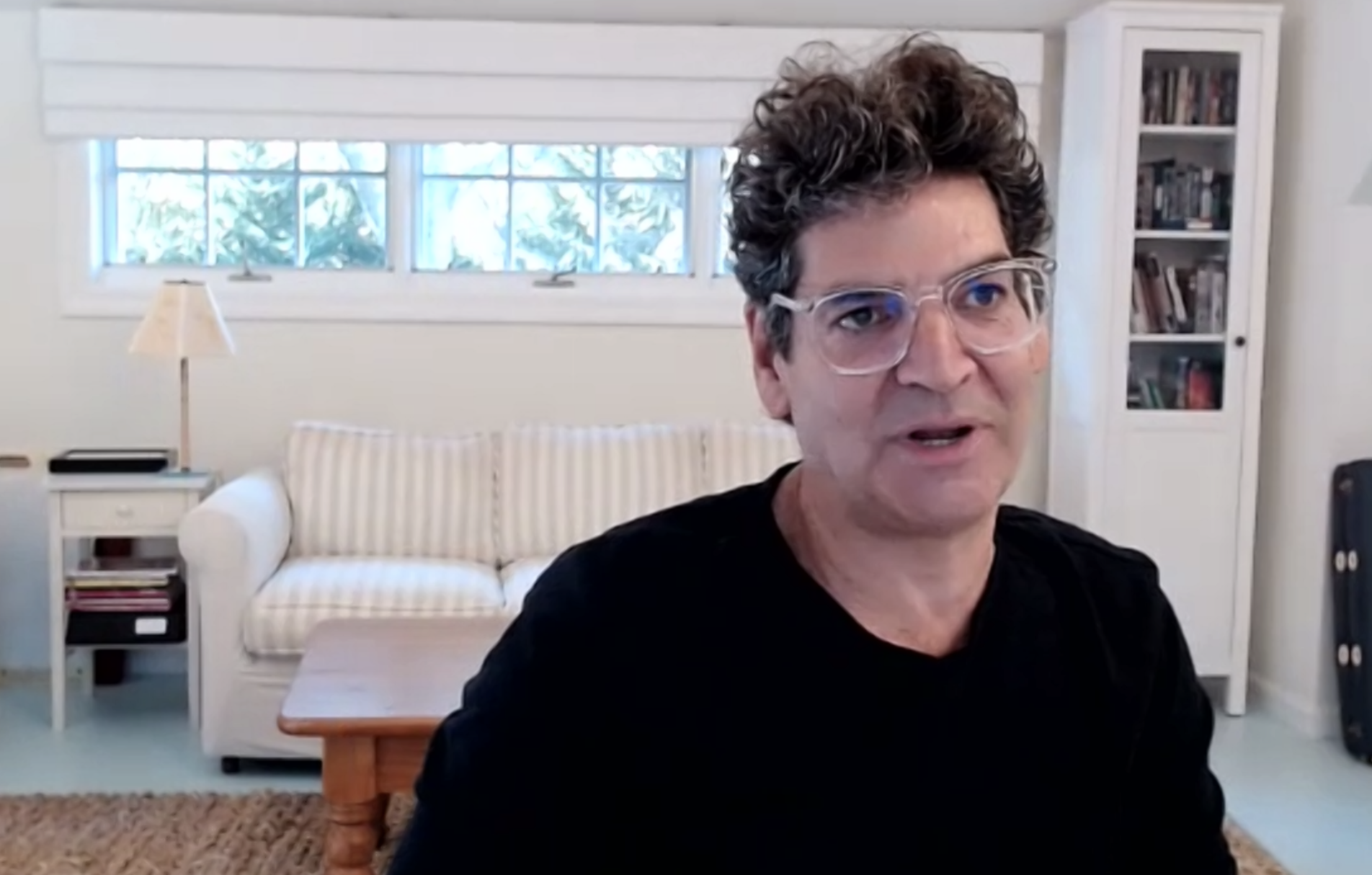
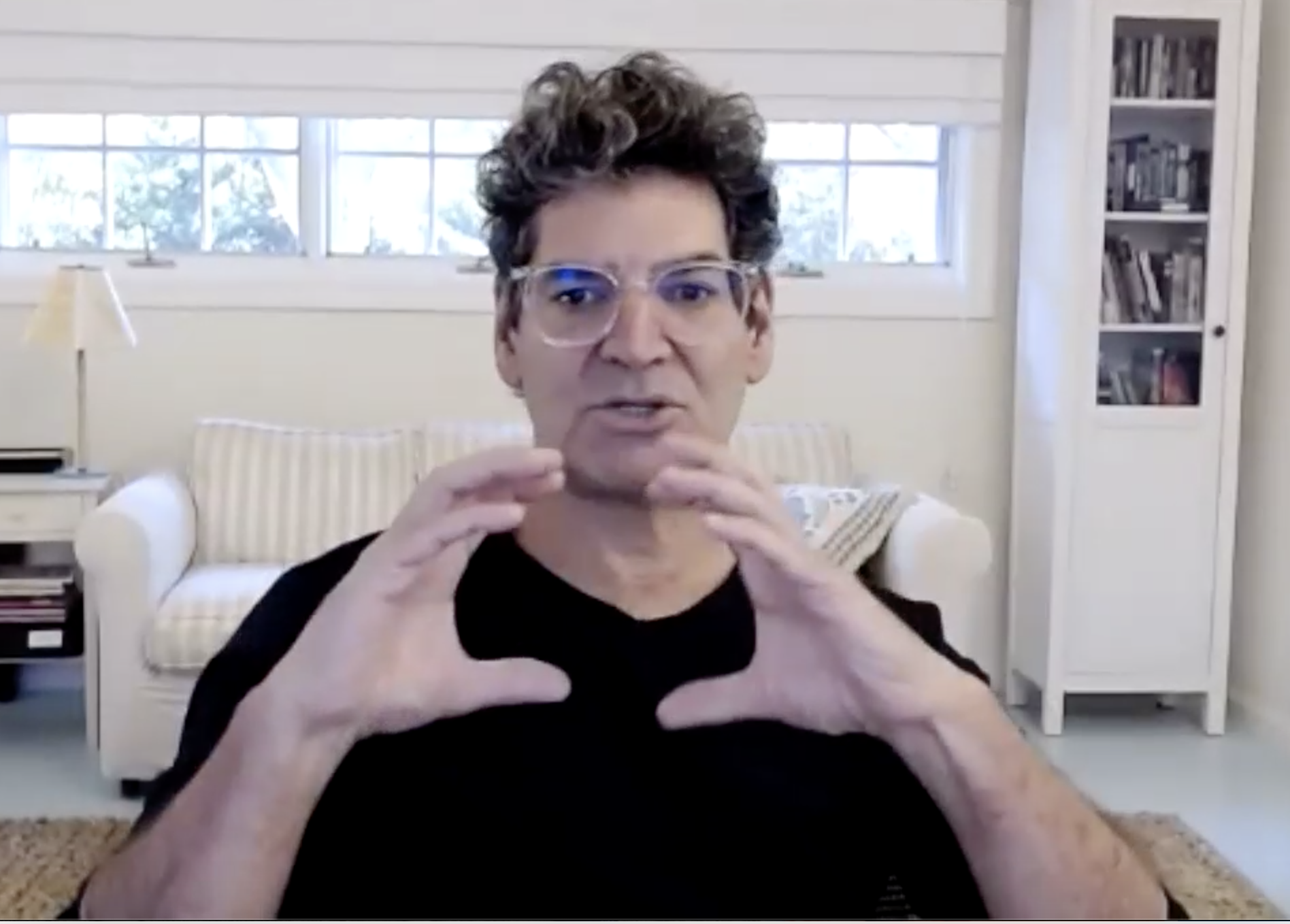
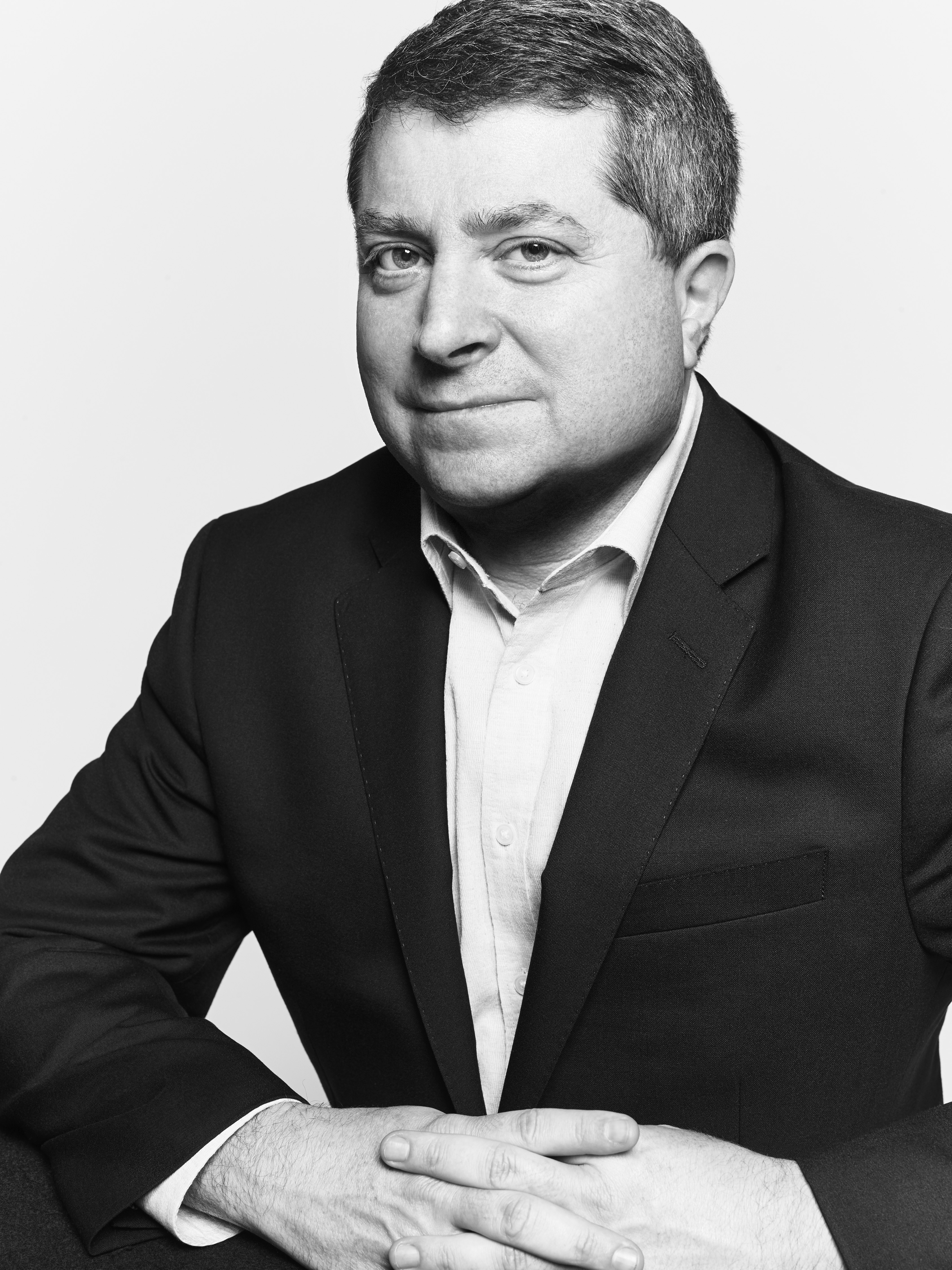
The Interview: Having seen the aforementioned press release, I decided to reach out to Tom Florio, of Vogue & Condé Nast’s fame and currently the founder & CEO of ENTtech Media Group LLC, which owns PAPER, and engaged in a Mr. Magazine™ conversation about ENTtech Media Group, 21of21 Shoppable magazine, the past, present and future of magazines and media brands. Here is part one from our conversation presented in a new Mr. Magazine™ interviews format. Hope you will enjoy…
The concept of ENTtech Media Group: I don’t approach what I do with the parameters of a magazine or not a magazine. I think that what we’ve built is an entertainment technology company (ENTtech Media Group). The foundation of the company is the distribution part, right? Like you talk about magazines, you have content, you have distribution and you have an audience. And I think when you come from the media world with that point of view, you create content for an audience, as opposed to what we see a lot of. Many brands and many agencies think they’re in the content business, but they’re not really creating content to bring in an audience. They’re creating content with a brand in mind to communicate to an audience like a group of people, a consumer.
Defining a magazine: So my answer to your question is magazines have a connection with a consumer base and they’re creating content for that consumer base to, to accept, to take it in. So, I think that the first step is there needs to be a content strategy and there needs to be an audience. Then, with some regularity, you’re communicating with that audience, but that could also apply to Tik Tok, right? You have multiple infinite numbers of creators that have created an audience, but they’re not magazines, like the D’Amelio girls have 25 million followers bigger than Vogue, you know? But to me, when I approach a magazine, it’s to create content for like-minded people, and to communicate it with a certain curated informed point of view. That’s the idea of ENTtech Media Group. It is to let the creative process drive the content, but to use technology, to identify and distribute the content.
Circulation vs. Advertising: Unlike the old days of magazines, where you basically bought your audience with the lowest price, a dollar a name, and we know how it worked. You sell a bunch to the airlines and the airlines would send you a check. You create a circulation base and then you charge a CPM against that circulation base with the rare situations of like the People magazines of the world, or like The New Yorker, which I actually was the one who pushed The New Yorker from $16 a subscription where we were losing $16, because it costs $33 initially to break even on that subscription, to $50. Right. And this is back in 1995, The New Yorker was able to actually raise the subscription price and not lose any circulation at all.
Usually, as you know, there is a relationship between how much you raise the subscription price and the fall out in circulation. There was none. But if you looked at that field, looked at the circulation of The New Yorker, pre Tina (Brown), people like up here who has been subscribing for 10 plus years, and we drop the subscription to $16 to bring in all these other people over here because they wanted to make it cool and like a Condé Nast magazine. Right. But, in reality, the consumer should always pay for The New Yorker and the advertising should be secondary. So you have The New Yorker, you have People magazine, you have a handful of publications that were making money on circulation, but most weren’t.
The genesis of ENTtech Media Group: So what I wanted to do is to use technology to identify audiences and serve audiences messages based on their interests. And you don’t need a subscription strategy to do that. I took the team out of a company called The Audience.
The Audience was a social architecture company, started by Sean Parker, Ari Emanuel and Oliver Lockett. The Audience was one of the first social media companies that could identify groups of people and serve them messages via social media, like using Facebook and such. What they wanted to do then was build these audiences around celebrities for the purpose, not of today’s influencer marketing was way too soon, but to drive movie viewership and things like that.
The approach that they used ended up failing. Not the technology, but the approach and I took the team out of that and were actually one of the founders of ENTtech. So my idea was if I could create a content strategy that’s highly creative and curated, and now I could identify people out there in the world, I could just push my content out to these people and then build my website. And that what was interesting about Paper specifically when I acquired it. Paper had just broken the internet with that famous Kim Kardashian cover. In fact “break the internet” is now a phrase trademarked by Paper. So I had seen that while I was interested in this new business model for media. And I was like, well, that was interesting because if we look at Paper’s Kim cover versus the Vogue’s Kim cover that was shot by Annie Leibovitz, which was four months apart. Let’s say that the Vogue cover cost $200,000 because it is Annie’s, right. Jean-Paul Goude shot the Paper cover for $10,000. The Vogue cover generated 750,000 uniques to the Vogue website. The Paper cover generated 30 million uniques to the Paper site, which nobody knew about Paper.
What I found to be very interesting is, here’s this social architecture that is really not being exploited across media properties. You had politicians using it very successfully, as we saw for this last election, you had brands buying it and using it on Facebook, but you really didn’t have media properties going in and using it to find audiences. So, I had this Paper that knew how to make content for the internet, which was really low budget content that would go viral. The idea of ENTtech was to bring these two things together and to use it that way and to see if we could repeat it. And we did.
The changing business model:The print magazine, which I would have closed anyway, even without COVID, was more like marketing and merchandising PR, but nobody is buying print advertising really. It didn’t make sense and it wasn’t part of the strategy. It didn’t matter how much circulation Paper had or even its three and a half million uniques across our social platforms.
Take for example AT&T; they were sponsoring the Jennifer Lopez Super Bowl Saturday concert. We just created all the meme marketing around it, and white labeled our social architecture. We went into the market by doing AB testing and everything else with our content. We went back to AT&T and said I know you are using this other company out there to do your social buying, a very big one that also does Procter & Gamble. I said, but I can tell you right now, Jennifer’s real fans are not going to tune in to Super Bowl Saturday on Facebook at 10 o’clock at night and watch her video. And they were like, what are you talking about? And we came up with this whole strategy that was kind of content. And then using our social architecture and with a $2 million budget delivered 7 million live streams, bigger than Taylor swift the year before who had a big social presence and actually gave AT&T a million dollars back. And they were like, wait a minute. Guess what, I did it with three people.
So that’s when I knew we were onto something. That’s when we first launched ENTtech; it was three months into the company. And they were like, wait a minute. You know, like this other company, you outperform them two to one. And, and so we as a brand, the Paperbrand sits at this intersection of internet culture and pop culture. We amplify internet culture in a pop culture way. So, for example, Paper covered Billie Eilish five years ago and then it pushed that content out through the internet. So now we get to this project and we, this long history of doing this including all the social media for the BTS concert in Riyadh globally. We also did the social media for the 20th anniversary of Target and delivered 16 million live streams, bigger than CNN’s Trump debate.
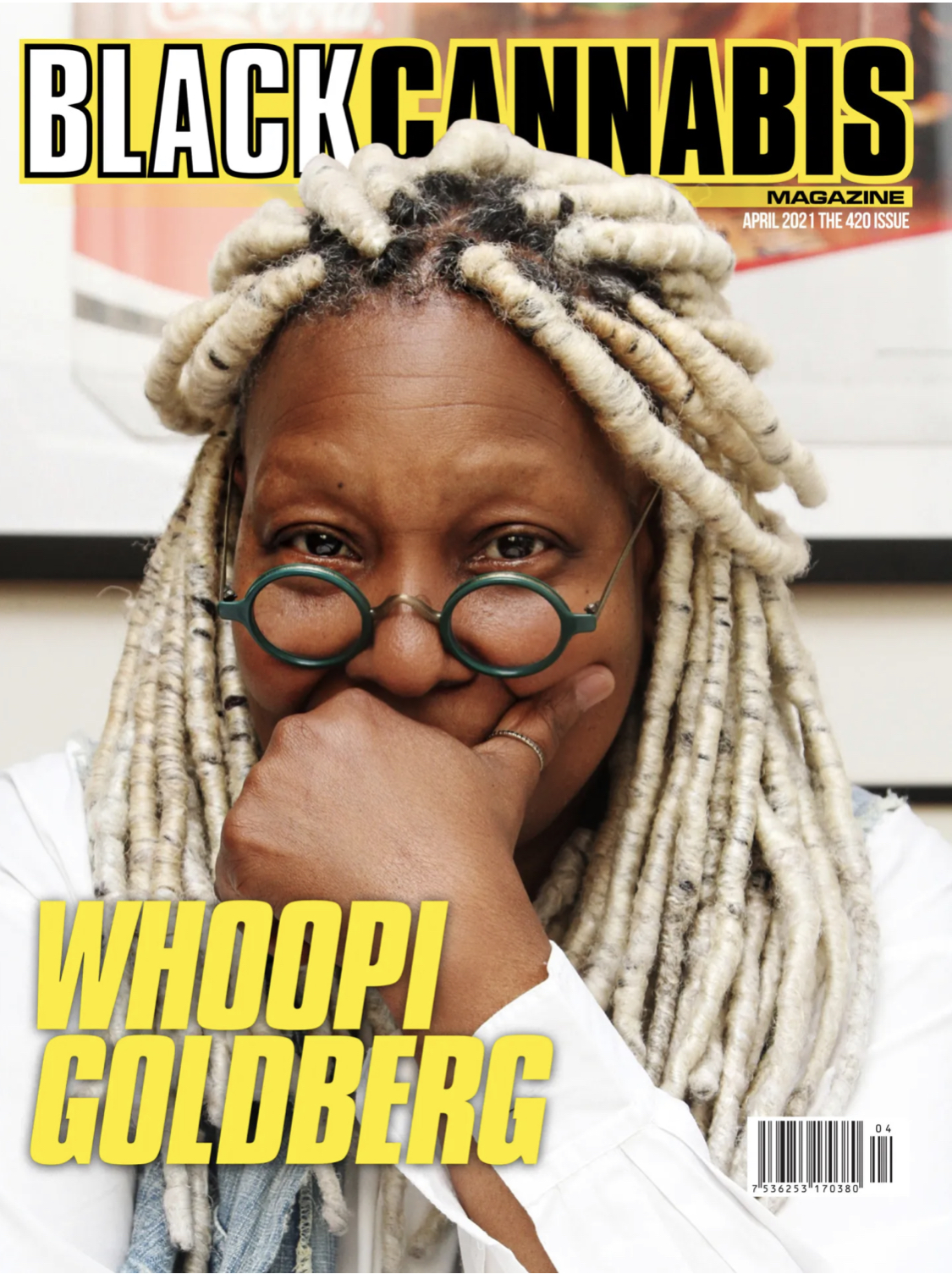
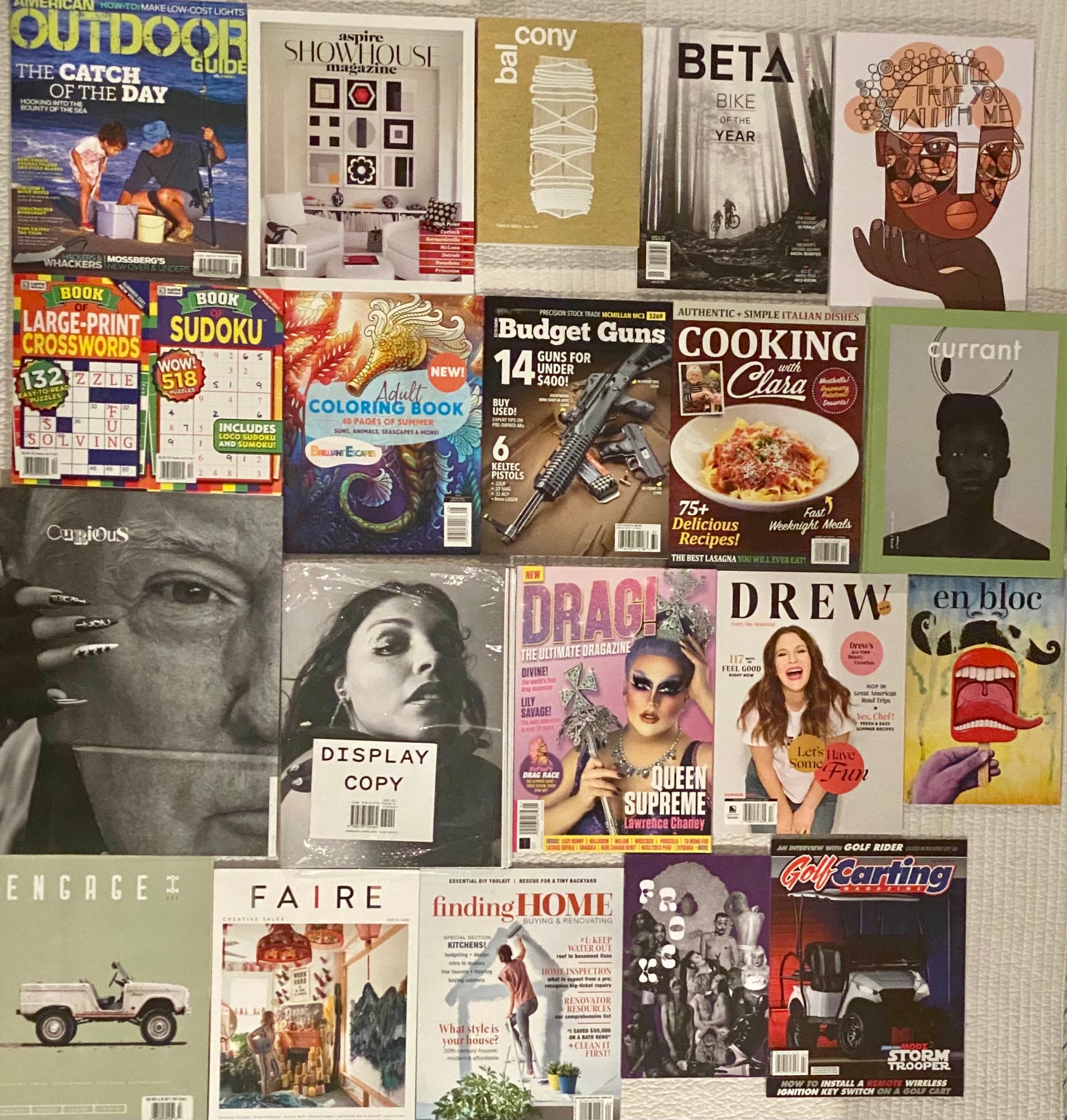
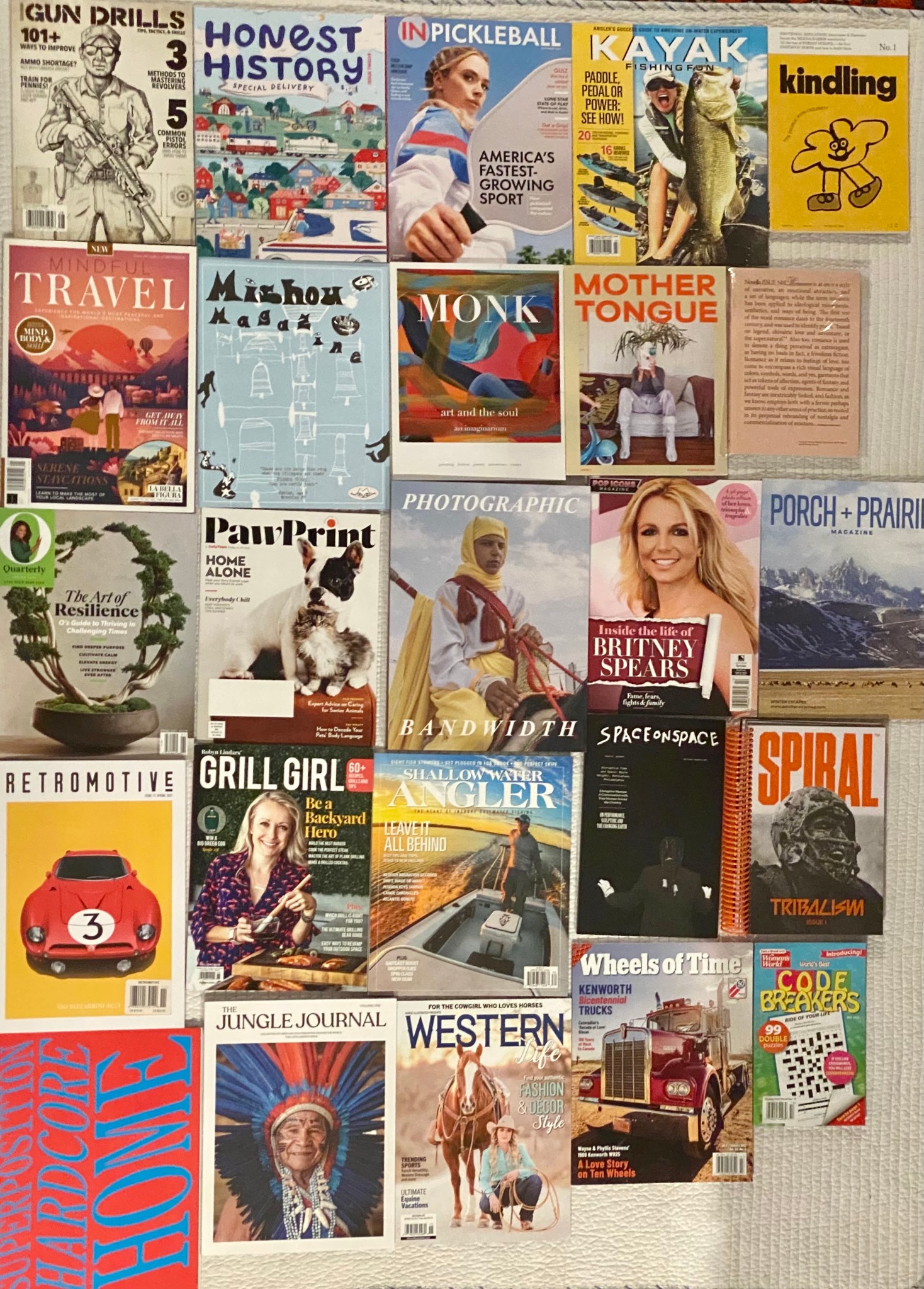
Black Cannabis magazine and 46 other new titles arrived to the nation’s newsstands during the months of April to September of 2021. The new arrivals join the 34 titles launched in the first quarter of 2021 bringing the total of new titles to 81 titles so far. The new magazines covered every conceivable subject from the indoors to the outdoors and beyond. In a climate that is filled with uncertainty, the new titles continue to pump new blood in a magazine media market that has seen so many changes in the last few years.
From Bauer’sDrew magazine to AIM’s Finding Home, there is no shortage of new ideas to reach customers searching for curated and edited content. From Kindling to Mother Tongue, from InPickleball to PawPrint, and from the $95 a copy (and worth every penny) Curious magazine from the newly established Curious Society, to the latest addition in bicycling magazines BETA… you name the subject and rest assured you are going to find a title or two (well make that three or four) that addresses that subject matter in a very engaging, entertaining, and authentic way like no other mass media can ever do.
So, here are the titles that yours truly was able to find in the last six months, some are brand new, some just made their arrival to the newsstands, and some arrived from overseas to our shores.
Keep in mind that in my book magazines are much more than content providers, they are experience makers.
So, take a look at the new experience makers below and please remember, if Mr. Magazine™ can’t physically hold, touch and purchase the magazine, it does not enter the monthly counts. And counts now include only the titles with a regular frequency that are either new, first-seen on Mr. Magazine’s™ radar, or arriving to the national newsstands for the first time.
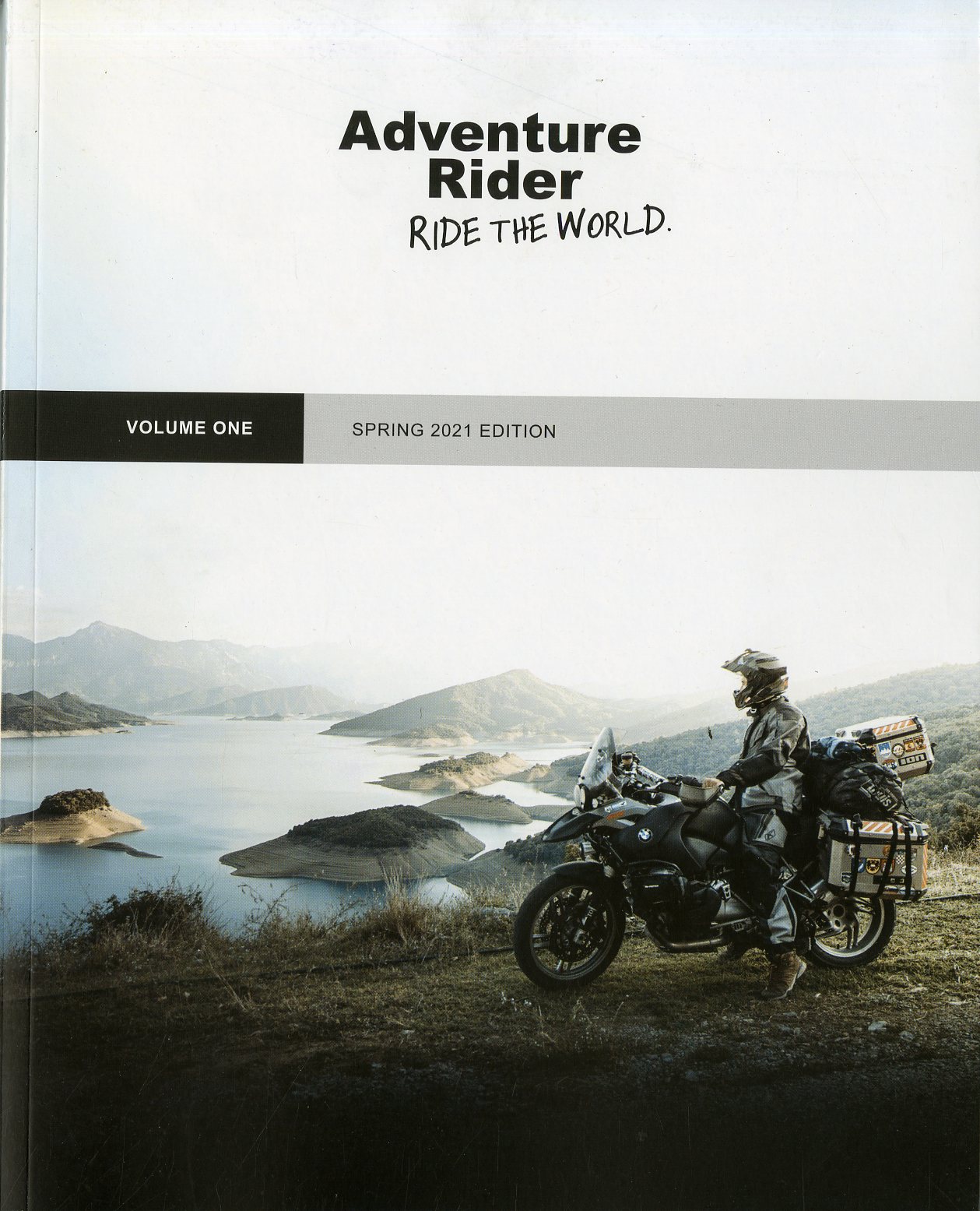
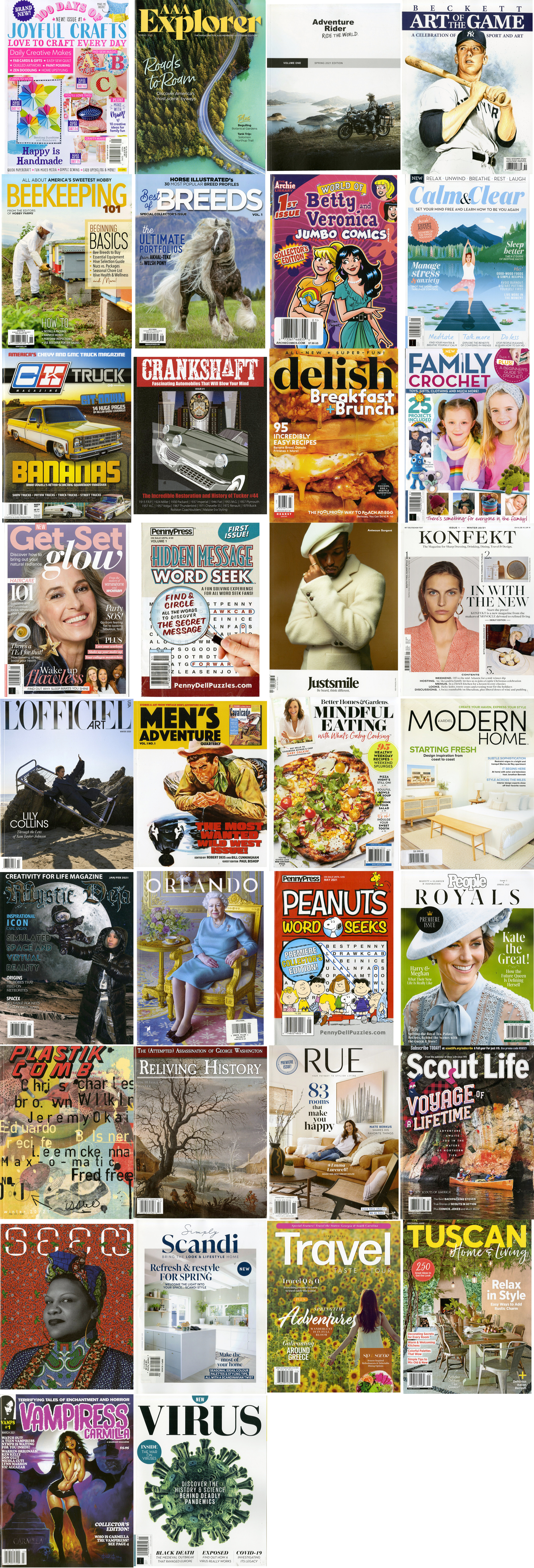
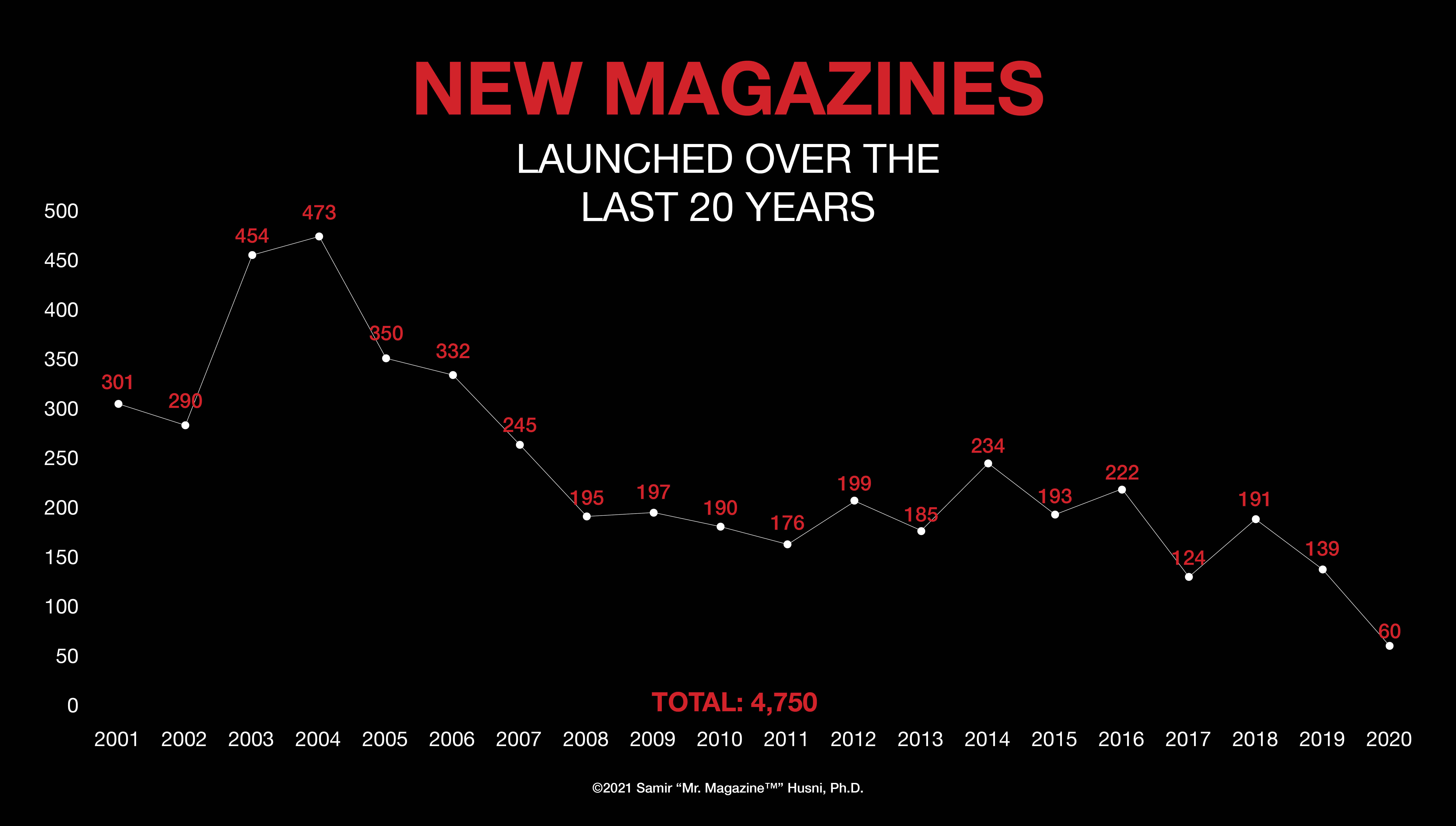
Whether you want to take a RoyalsRue or you want to Justsmile and be Seen, or take a Men’s Adventure or be an Adventure Rider with or without a Crankshaft, there is always room for Delish and there is a new magazine with all the aforementioned names that appeared on the nation’s newsstands in the first quarter of 2021. Indeed there were 34 new titles that were launched or relaunched in those first three months, and this number is more than half of the total number of 60 magazines that launched in 2020.
Boys’ Life; published since 1911, changed its name to Scout Life to pave the way for a gender-free community of scouts. And it’s a new name and a new look for AAA members as the print edition of its member publication is now known as AAA Explorer, giving the title a fresh look and a fresh new moniker.
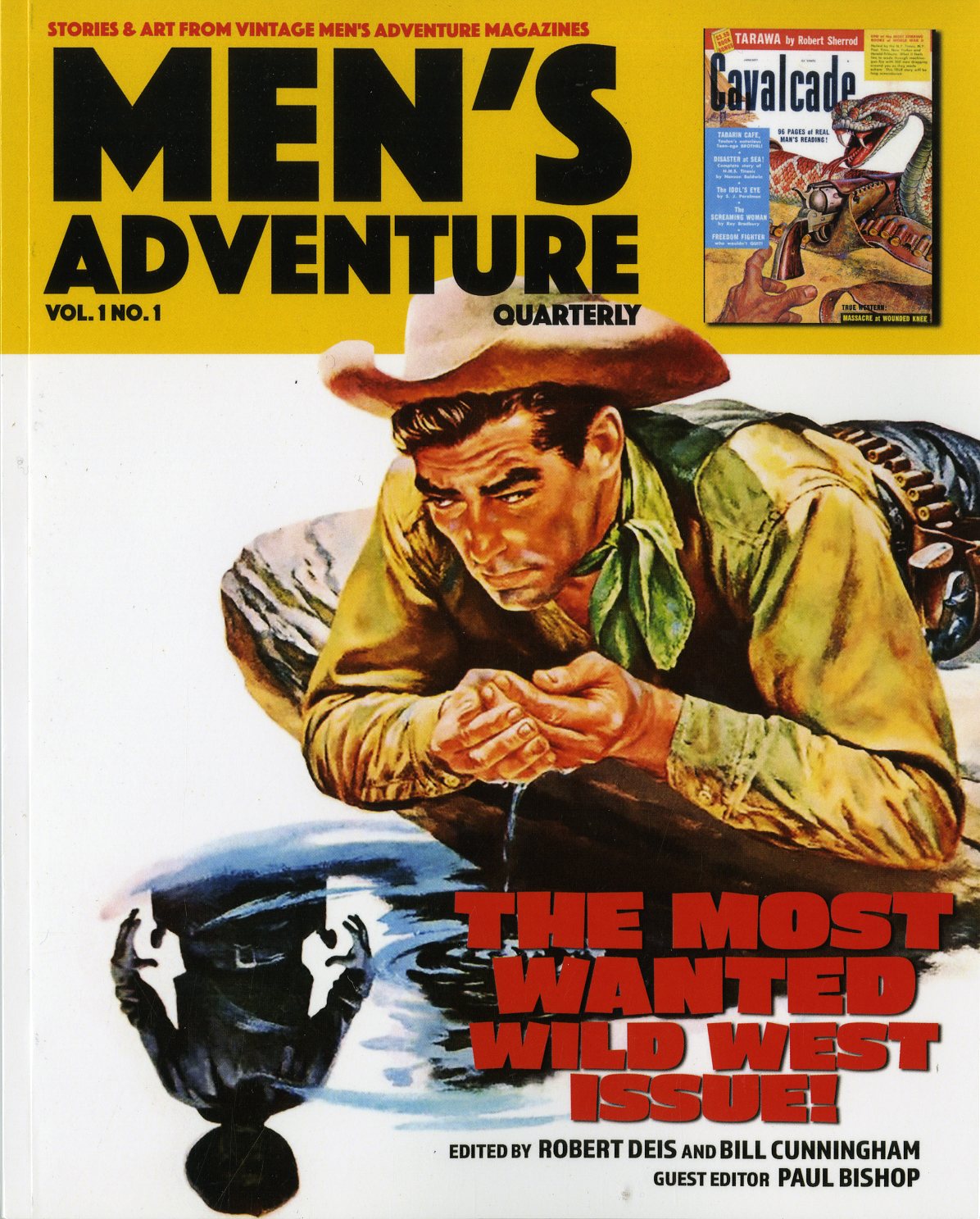
And if you remember the men’s adventure magazines of the 1950s, you’ll definitely want to order the first issue of Men’s Adventure Quarterly, a new print-on-demand magazine (when you order it, they send it) that features many of the exciting adventure stories born in the 1950s and 1960s. It’s a retro feeling old fans will love and new fans will quickly cultivate.
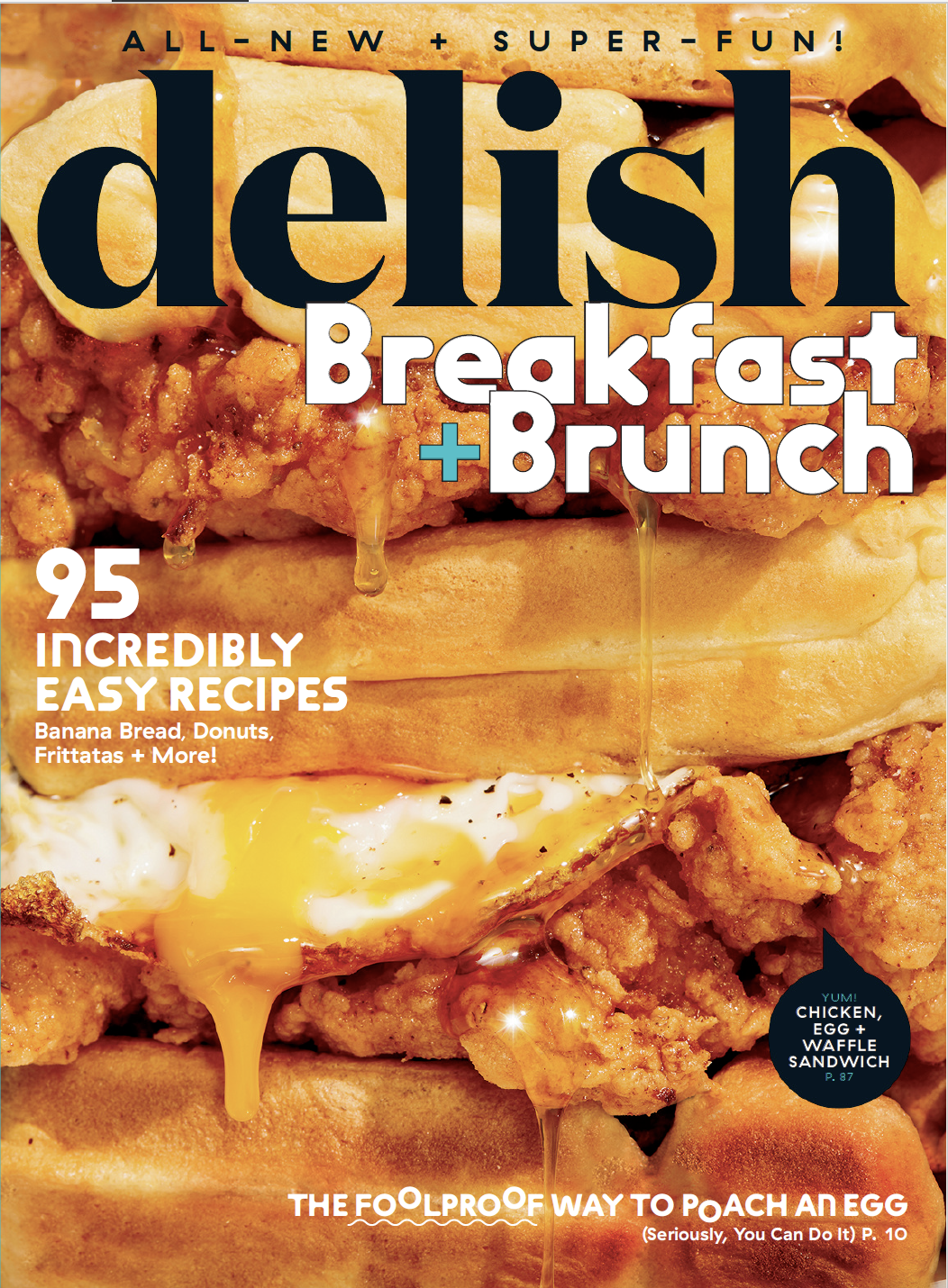
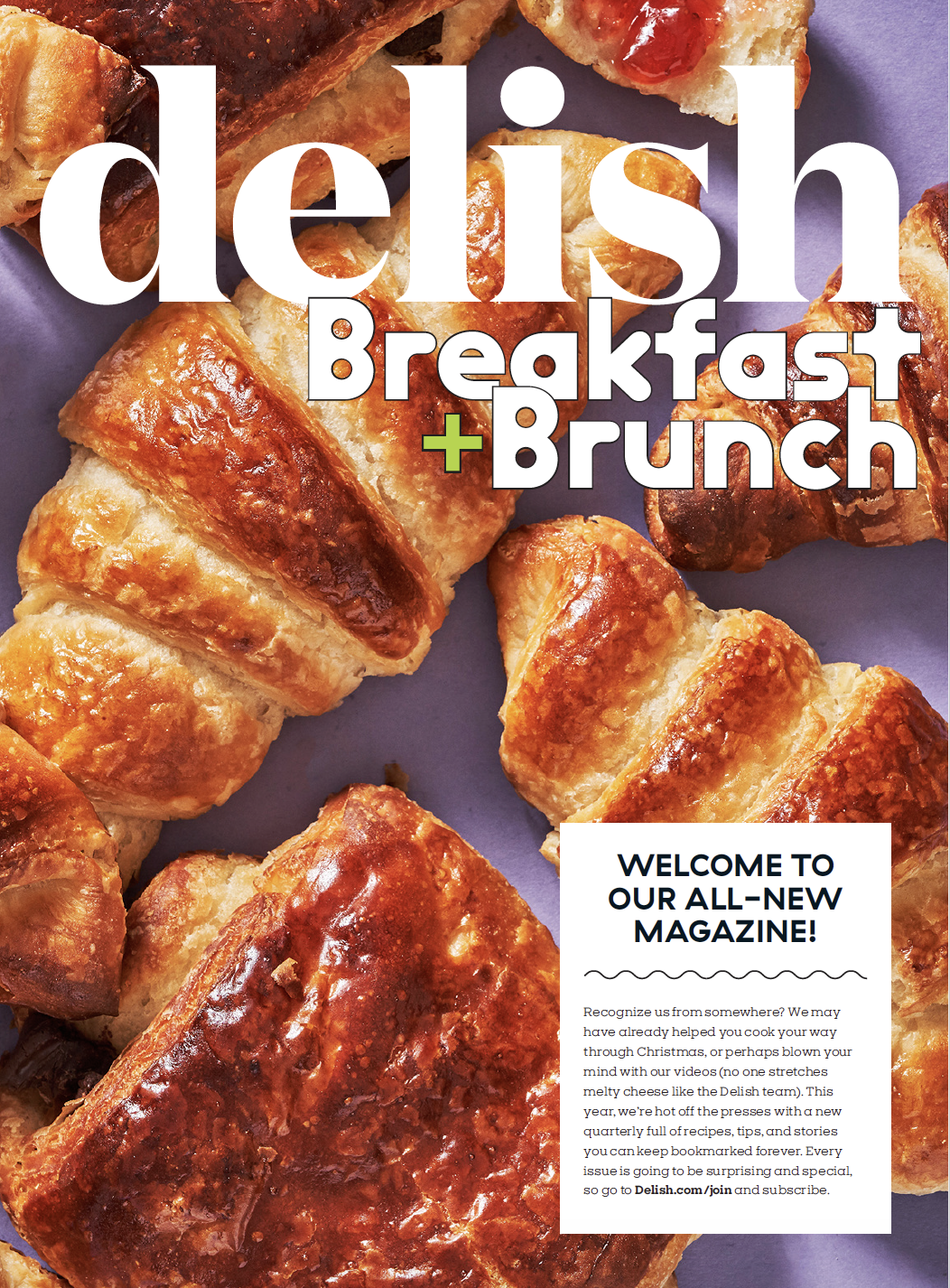
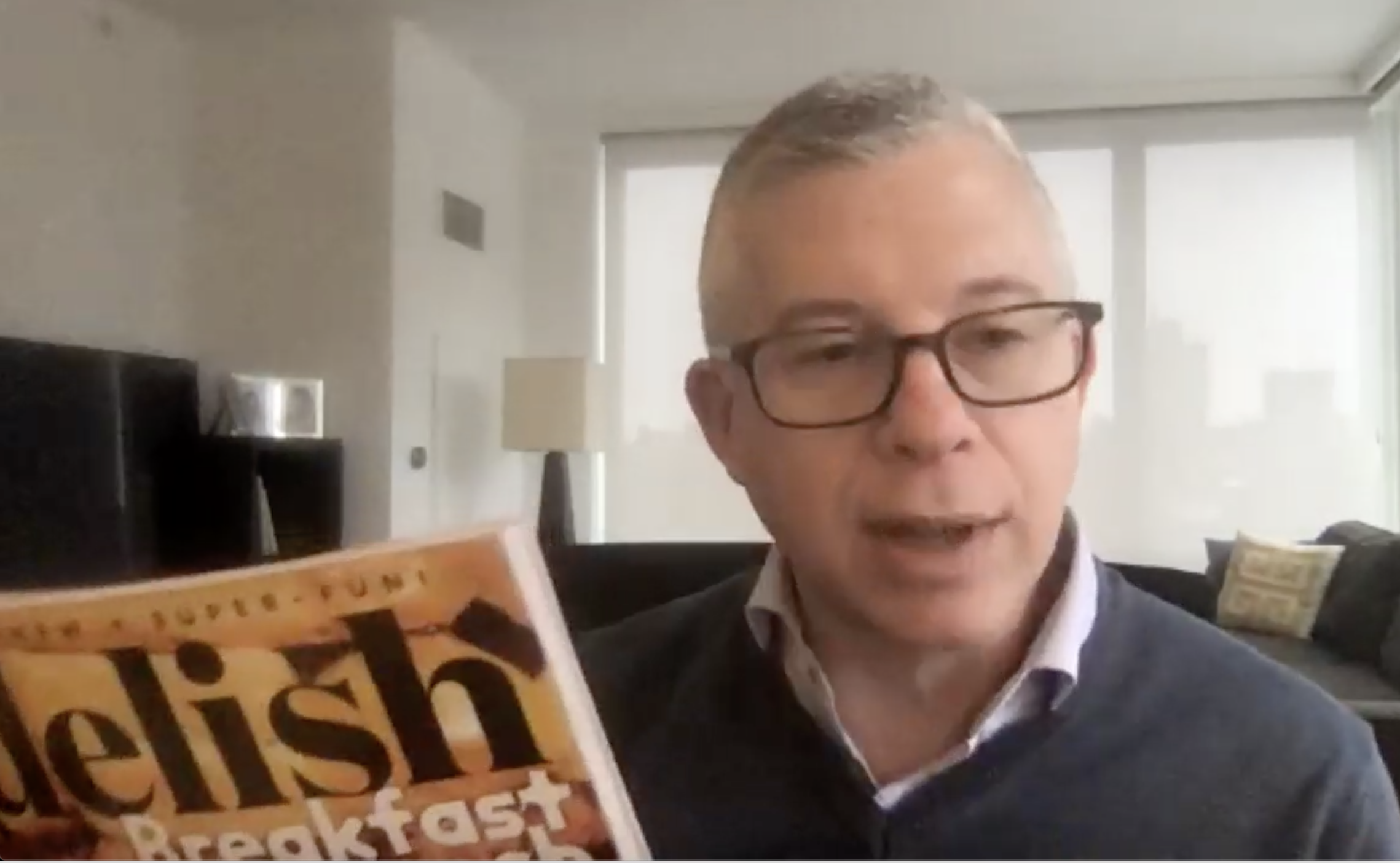
A successful digital-first brand from Hearst that has seen immeasurable growth with not only its website, but its printed bookazines and cookbooks, Delish.com is launching a quarterly print magazine. Delish in print will be sold at the newsstands, but will also be an integral part of the subscription model the brand has in place for its online footprint. Issue 1 features some delectable ideas for breakfast + brunch.
And with the world infatuated with the Royal family more so today than ever before, PEOPLE brings us a new quarterly magazine simply called Royals. It’s sure to satisfy the most enthusiastic of Royal lovers.
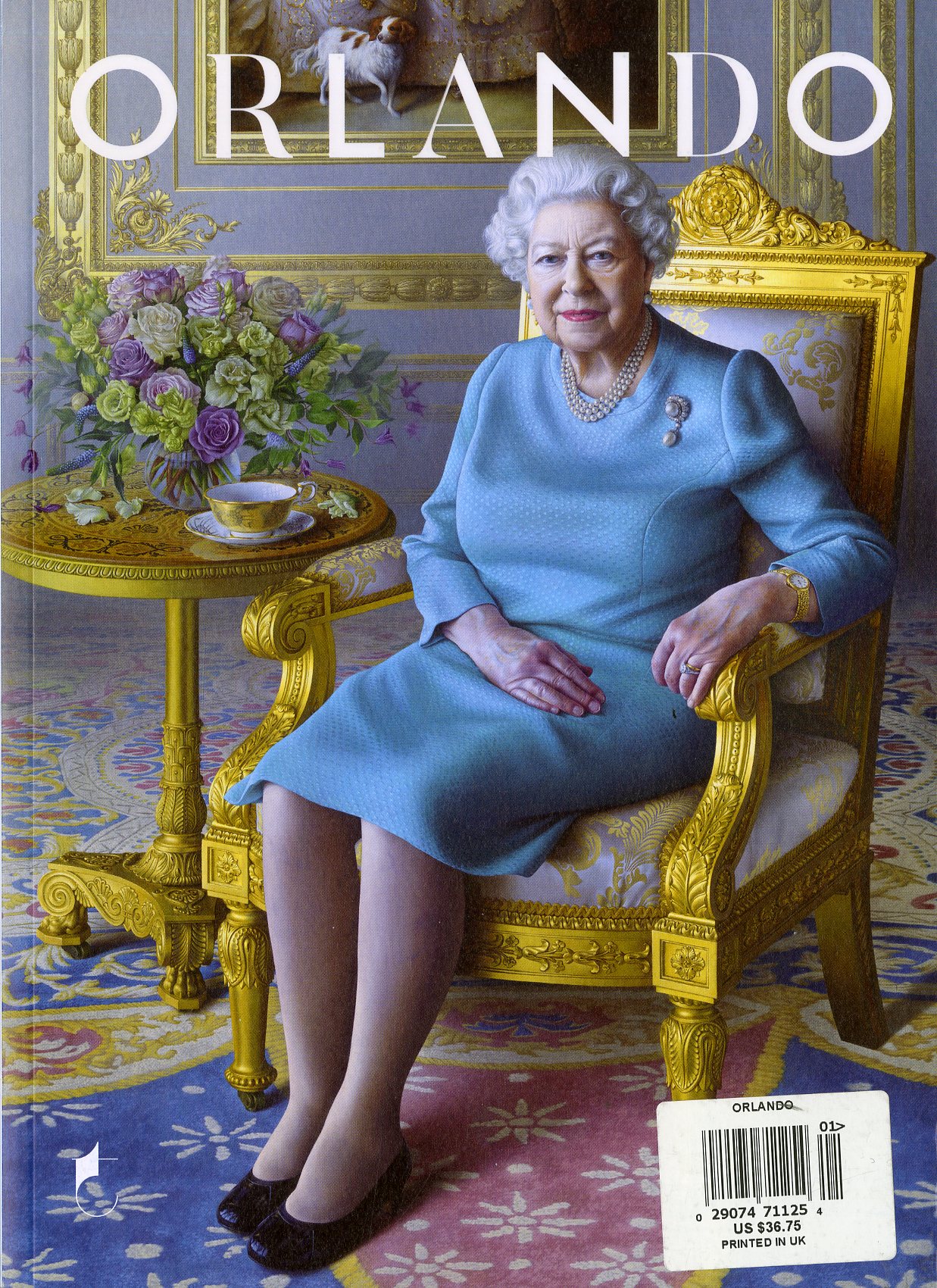
And there are a lot of global magazines that are reaching newsstands in America. Magazines created and appreciated in our neighboring countries across the pond that are now showing up here for us to enjoy, such as Konfekt. A sharp, elegant and well-turned-out new magazine from the creators of Monocle. It’s a quarterly publication covering fashion, travel, design, drinking, dining and culture in both English and German. And so is Orlando, not the city, but an international Italian magazine with Queen Elizabeth II gracing the cover of its first edition, and Simply Scandi setting the stage for a welcoming spring.
On the home front, Justsmile magazine is an independent cultural publication at the cross-section of fine art, fashion, ideas, self-expression, and inclusivity, according to its website. Mr. Magazine™ thinks it’s a sharp-looking new title that can be used as a tool for expressing ideas and dialogues. Created for everyone, Justsmile aims to shine a light on honest examples of inclusivity and diversity, providing a collaborative platform for Black and people of color voices to explore their work.
So, without any further delay, here are the covers of the 34 new titles launched in the first three months of 2021.
***And please remember, if Mr. Magazine™ can’t physically hold, touch and purchase the magazine, it does not enter the monthly counts. And counts now include only the titles with a regular frequency that are either new, first-seen on Mr. Magazine’s™ radar, or arriving to the national newsstands for the first time.
“As great as social media is and as great as having a digital magazine is, it still doesn’t feel like a total representation until you have something in print. Something you can have on your kitchen table or your coffee table and say this is what I read. And that’s missing when you have it only in digital.” Patricia DeLuca…
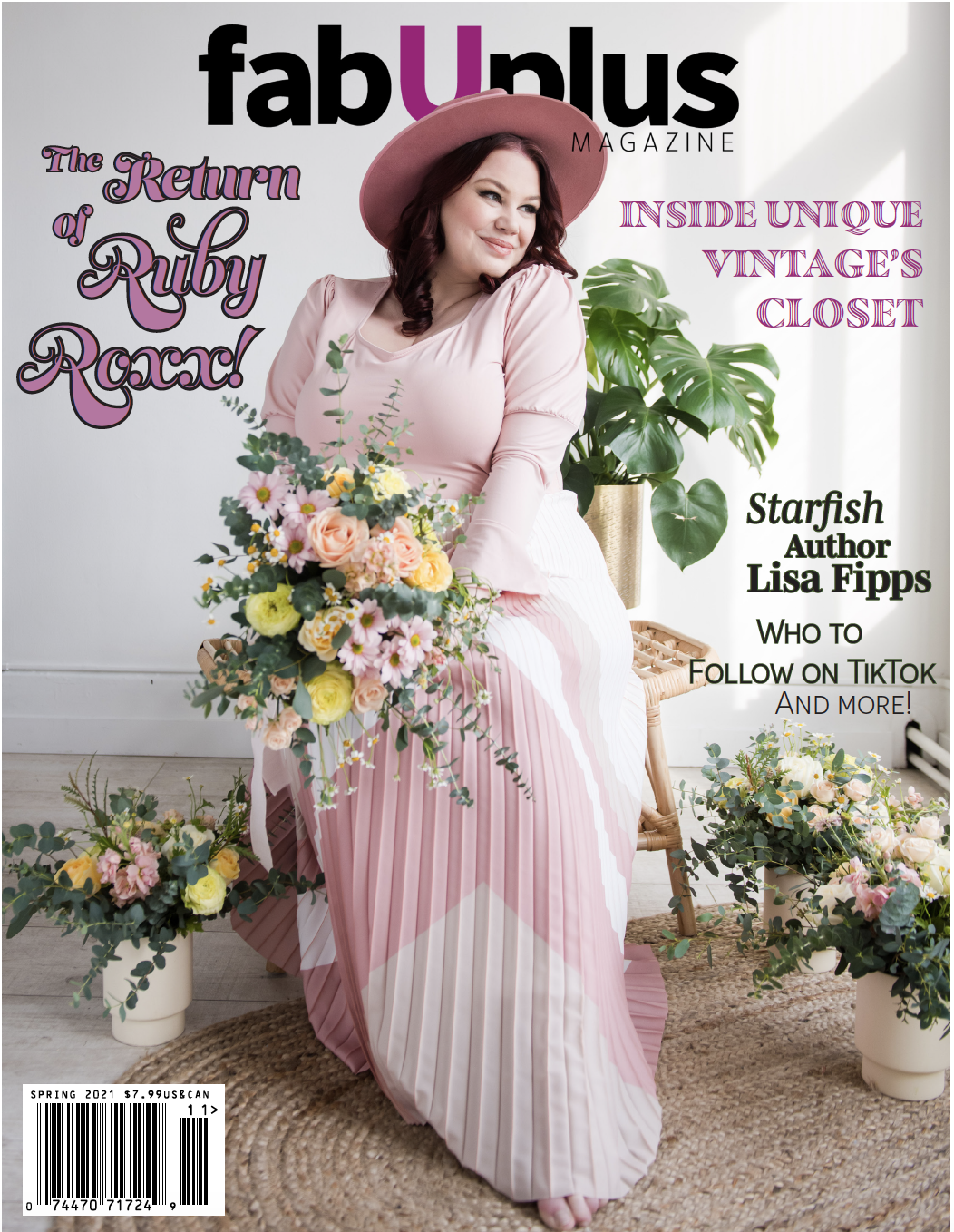
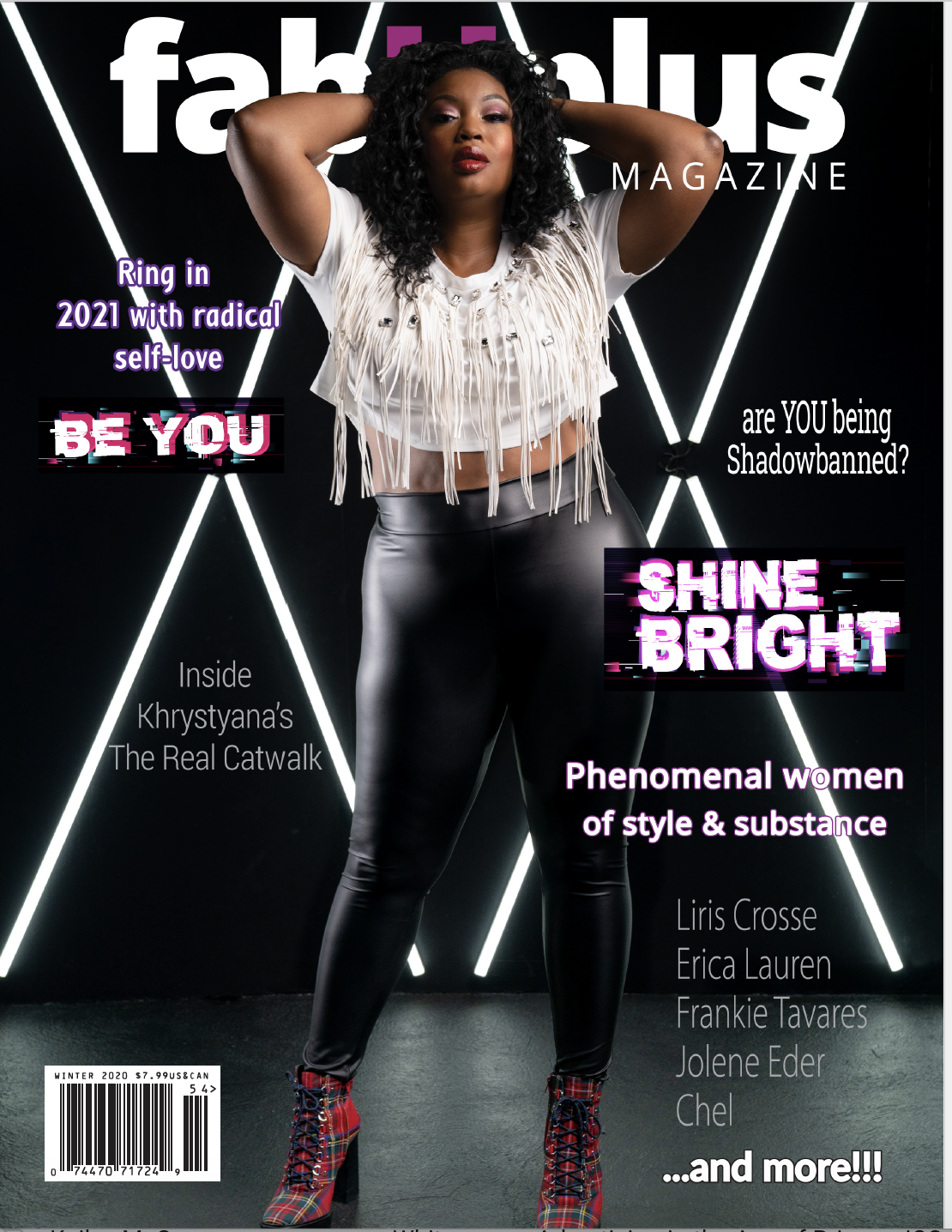
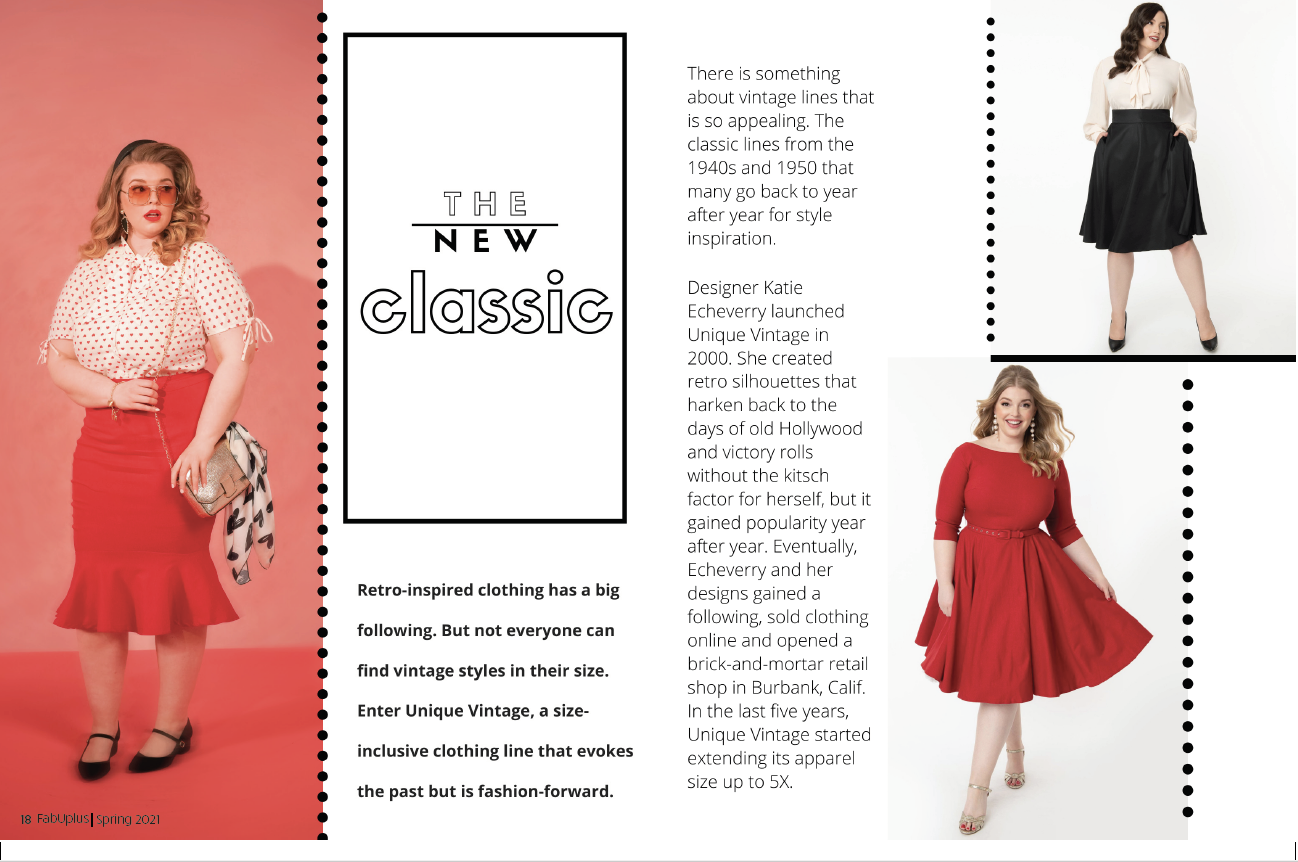
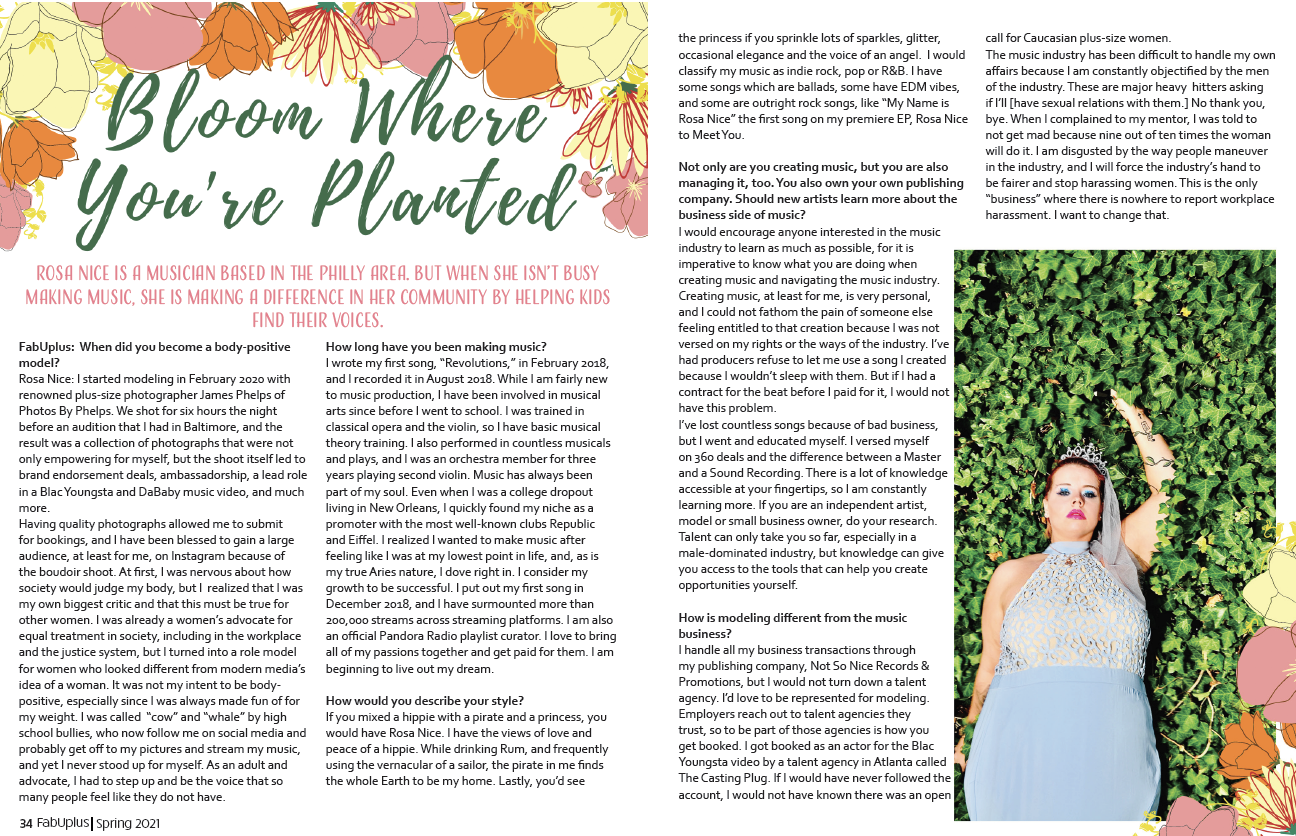
Body positivity for all sizes, that is the mission for FabUplus magazine. FabUplus is a health, fitness and lifestyle magazine dedicated to women with curves. The brand went on an 18-month hiatus and is now back in print with a fresh new relaunch. According to editorial director, Patricia DeLuca, the brand’s goal is to empower, encourage and inspire women to maintain a healthy lifestyle no matter what their size.
I spoke with Patricia recently and we talked about the brand’s strong belief that size does not define one’s health and fitness level. Patricia stressed that FabUplus celebrates a woman’s inner curves and the unique editorial content relates to the plus-sized community, engaging and informing women to be fit, healthy and curvy at the same time. Patricia said watch for the Spring 2021 issue, which is scheduled to hit newsstands this week.
Mr. Magazine™ will definitely be watching for it.
And now please enjoy the Mr. Magazine™ interview with Patricia DeLuca, editorial director, FabUplus.
But first the sound-bites:
On publishing during a pandemic: I’m still asking myself that question. How did we get through this? The decision to relaunch FabUplus happened sometime in early 2020. And it was the publisher, Christopher Salute, who really persevered. He felt there was a need for FabUplus to return to print, and I agreed with him. It was doing okay digitally, but there was a need there. There are plenty of publications that are doing well digitally, but there’s still something about grabbing a magazine and feeling it in your hands.
On the magazine’s competitive set today: There are other magazines out there; Maddie Jones with Plus magazine, she’s been doing this for a really long time and she brings fashion and glamour, all that to the shoot, and we want that as well, but we also want to represent different types of beauty. There’s beauty in strength and we want to focus on wellness and fitness. There are women who go to the gym for their mental health, not just to fit into a size smaller.
On challenges she might face with FabUplus: I see two challenges. One is with advertisers. I don’t know how comfortable some advertisers will feel about working with a company that’s very body positive. We do represent women of all shapes. There are some companies that like the idea of body positivity, but then if someone is above a size 24, they may say whoa, we don’t know about that. So, I’m hoping we can work with companies and advertisers that walk the walk and will support a brand that supports body positivity in every size.
On relaunching with a print component: As great as social media is and as great as having a digital magazine is, it still doesn’t feel like a total representation until you have something in print. Something you can have on your kitchen table or your coffee table and say this is what I read. And that’s missing when you have it only in digital.
On any chance they’ll increase the frequency from just quarterly: For right now, it’s quarterly. We’ll see how it goes. We still need to build our following. We had a strong following back when FabUplus was still in print, and when they took the hiatus, the brand definitely felt it. But when we returned, we got a welcoming return, people were glad to see us back on the newsstands. But I also think we need to re-earn our followers’ trust again, to show them we’re not going away again, that we’re here to stay.
On anything she’d like to add: I would like to thank our supporters for making FabUplus a part of their everyday lives. We hear them online and we definitely heard them when we were in print. We’ll keep championing body positivity as long as people want to see it. And we feel like this is something that is here to stay.
On what makes her tick and click: I feel like I always have to search for the new thing; what’s going on. Part of my every day checklist is going onto social media and seeing what’s new and in the news, which may not be the healthiest thing, but it’s something I’ve always done, whether it’s been a newspaper, magazine, or online. It’s what is happening and how can my experience help my community.
On whether she enjoys the business side or the editorial side better: I knew editorial was a part of the pie chart, but placement was very valuable too. And I learned so much about publishing as a whole by doing the field rep job. I knew when we had great issues and people were really proud of it, but sometimes they didn’t sell. And maybe it just wasn’t a strong cover or something. You could have all of this great content inside, but if the cover wasn’t compelling, it wouldn’t sell.
On how she unwinds at the end of the day: I have a dog, so I make sure he’s taken care of. Since I’ve been working from home, he’s been by my side and I think there will be real separation anxiety if we ever do return to the office. (Laughs) I spend time with my dog and our gym just reopened in our local neighborhood, so I go there, but there’s only five people or so there and we’re all spread out.
On what keeps her up at night: It’s always going to be deadlines. Even with my day job at License Global. We recently had a relatively smooth deadline and then I thought instantly about the next one. Once the deadline is done, then there is that in-between time, leaving the printer and going to the printer, and once it’s on stands, there’s that space or that timing where I’m thinking, did we get it right; did it look good; are we going to hear back from this person; is it going to sell.
And now the lightly edited Mr. Magazine™ interview with Patricia DeLuca, editorial director, FabUplus.
Samir Husni: You’ve been in publishing for quite some time now, from your days at Time Out New York to today and FabUplus. How have you handled publishing during a pandemic?
Patricia DeLuca: I’m still asking myself that question. How did we get through this? The decision to relaunch FabUplus happened sometime in early 2020. And it was the publisher, Christopher Salute, who really persevered. He felt there was a need for FabUplus to return to print, and I agreed with him. It was doing okay digitally, but there was a need there. There are plenty of publications that are doing well digitally, but there’s still something about grabbing a magazine and feeling it in your hands.
With the relaunch, Christopher also wanted to make sure that it came back very strong and to do that we needed some help. So we relied on other people who were in print publishing as well. We had a guest editor for the relaunch, Renee Cafaro, who is the U.S. editor of a plus size magazine called Slink. She was very generous with her time and her connections as well to help us relaunch with the Winter issue.
And we did shoots during a pandemic. One shoot was a classic shoot; it wasn’t through an iPad or an iPhone; we had people onset. Everyone that was there complied with the CDC guidelines, so it was a very closed set.
Despite all that, I don’t think anyone would have known we were at limited resources because of COVID, but I thought it was a very successful issue. The cover looked great. And this was something that everyone truly believed needed to be done in the market.
Samir Husni: You’ve been involved with other launches, such as King and Rides Magazines for Harris Publications, who at one time also published a plus size magazine called Mode. Who would you consider your competitive set today?
Patricia DeLuca: I think Mode was very ahead of its time. The photo shoots were gorgeous; the clothing was all high-end at a time when most women were still trying to find where to buy clothing for themselves. One of the articles I wrote for Time Out New York was about where to find plus size fashion in New York City because people who visit are from everywhere but New York and chances are they’re not a size six, so where do you go if you need something?
And King magazine was really championing a beauty that wasn’t recognized as well with Black women. And the body types that weren’t being represented in other men’s magazines like Maxim and FHM. And it was great to work on the magazine.
There’s a real need. There’s a lot of talk about body positivity and how everybody should be addressing it, but there isn’t really one particular brand that’s going to represent it and represent it well. And not do it for lip service or maybe they’re feeling pressure from advertisers or somewhere else higher up. This is something we’ve all lived with. There are different levels of privilege; there’s body privilege. There are people who have had doors opened for them because of how their body looks. And I can speak from experience about that. I’ve been fatter; I’ve been thinner and I’ve seen those differences.
I think with FabUplus coming back to the market, it’s a return to that representation. That yes, there’s all this glad talk about body positivity and about having representation; other magazines get big pops when they feature somebody not classically suited for their magazine. But there isn’t one magazine that shows different body types on the regular and I think FabUplus fits in.
There are other magazines out there; Maddie Jones with Plus magazine, she’s been doing this for a really long time and she brings fashion and glamour, all that to the shoot, and we want that as well, but we also want to represent different types of beauty. There’s beauty in strength and we want to focus on wellness and fitness. There are women who go to the gym for their mental health, not just to fit into a size smaller. So, we want to focus on that. And we really want to be inclusive and we’re hoping down the line that FabUplus becomes more and more inclusive.
Samir Husni: What do you think will be your biggest challenge with FabUplus?
Patricia DeLuca: I see two challenges. One is with advertisers. I don’t know how comfortable some advertisers will feel about working with a company that’s very body positive. We do represent women of all shapes. There are some companies that like the idea of body positivity, but then if someone is above a size 24, they may say whoa, we don’t know about that. So, I’m hoping we can work with companies and advertisers that walk the walk and will support a brand that supports body positivity in every size.
And then also the plus sized community. It’s been very supportive, but like every community there is always gatekeepers, and whenever we do something wrong we will hear about it through social media. We’re under the umbrella of Bold Holdings, so there’s FabUplus, Bold Magazine, which is more of a literary publication, and then Strutter, which is a little more pop culture. So we’re three brands that really don’t fit into what the plus sized community is right now, which is very strong on influencers and very strong on fashion. We want to bring in all the other things that encompass plus size life and culture.
And I’m editorial director for all three, but I’ve been working with FabUplus more as editor in chief because there was more of a need, since we’re in print and I have print experience. We were trying to not only relaunch, but also slowly rebrand the issue because we need to freshen up the layouts and that’s not an overnight thing. It’s going to take some time. We’re currently working on our summer issue and there will be some tweaks to that as well. Hopefully by year’s end we’ll have a solid look that’s true to our brand.
Samir Husni: Why did the brand feel it was important to come back in print?
Patricia DeLuca: As great as social media is and as great as having a digital magazine is, it still doesn’t feel like a total representation until you have something in print. Something you can have on your kitchen table or your coffee table and say this is what I read. And that’s missing when you have it only in digital.
And there’s something very private about digital as well, everything is on your phone or on your laptop, so you have this community that’s very small. But with print, it feels more stable. There’s this feeling of realness when you get a print edition of something. It feels very official. And to invest in printing and design, all these elements that come together to make a print magazine, it feels like that movement is very real. And it’s not just a hashtag. Hashtags do have power, we’ve seen it, but this leap from the screen onto the page is not a backward move at all. There will be a digital and social presence, but we felt it was really important to have that print aspect too. We want to be more than something that just lives on your screen, we want to be part of your everyday life in real life. We’re a quarterly magazine and we want to be on your tables for a long while.
Samir Husni: Any chance you’ll increase the frequency?
Patricia DeLuca: For right now, it’s quarterly. We’ll see how it goes. We still need to build our following. We had a strong following back when FabUplus was still in print, and when they took the hiatus, the brand definitely felt it. But when we returned, we got a welcoming return, people were glad to see us back on the newsstands. But I also think we need to re-earn our followers’ trust again, to show them we’re not going away again, that we’re here to stay.
Samir Husni: Is there anything you’d like to add?
Patricia DeLuca: I would like to thank our supporters for making FabUplus a part of their everyday lives. We hear them online and we definitely heard them when we were in print. We’ll keep championing body positivity as long as people want to see it. And we feel like this is something that is here to stay.
Samir Husni: What makes you tick and click and motivates you to get out of bed in the mornings?
Patricia DeLuca: I feel like I always have to search for the new thing; what’s going on. Part of my every day checklist is going onto social media and seeing what’s new and in the news, which may not be the healthiest thing, but it’s something I’ve always done, whether it’s been a newspaper, magazine, or online. It’s what is happening and how can my experience help my community. Whether my community is within my household or a circle of friends or my work team. So I guess it’s service, in one way or another. What’s happening and how can I help.
Samir Husni: You’ve been on both sides, business and editorial. Which side do you enjoy more?
Patricia DeLuca: If you would have asked me that when I first started out, I would have said editorial. When I was a field rep at Time Out New York, I had a lot of outdoor time; I was outdoors for half the day, making sure the magazine had great positioning, the posters we used to print had prime placement.
And talk about a gradual change, I would go to newsstand reps and at first no one wanted anything to do with Time Out, I was a pest asking how many copies they sold. And then weeks later, they would ask me if I had another poster, and in a weird way, working in circulation, I knew when a magazine was going to do well because I knew when the newsstand owners would ask me for more posters to get more copies, I would be the liaison between our circulation team and them But when random people would ask me about the magazine, I knew it was popular.
I knew editorial was a part of the pie chart, but placement was very valuable too. And I learned so much about publishing as a whole by doing the field rep job. I knew when we had great issues and people were really proud of it, but sometimes they didn’t sell. And maybe it just wasn’t a strong cover or something. You could have all of this great content inside, but if the cover wasn’t compelling, it wouldn’t sell. I will always champion the editorial, but I learned a lot working in circulation.
Samir Husni: How do you unwind at the end of the day?
Patricia DeLuca: I have a dog, so I make sure he’s taken care of. Since I’ve been working from home, he’s been by my side and I think there will be real separation anxiety if we ever do return to the office. (Laughs) I spend time with my dog and our gym just reopened in our local neighborhood, so I go there, but there’s only five people or so there and we’re all spread out.
Going back to what I said about the community of FabUplus readers who go to the gym for mental health and clarity, that’s why I go too, because at the end of the day I just need an hour to not think about deadlines and layouts, all the things that tend to take up space in my mind.
And then just catching up with friends and family. I’m on my phone constantly, because if it’s not through social media, I’m on the phone. Once I get away from my screen, I try to have some Facetime with real people.
And I’m here with my parents as well, so I’m checking in with them constantly to make sure they’re okay. Some of my spare time recently, between my day job, which is with License Global, when I had down time, it was looking for a place for my parents to be vaccinated. It’s tough to get appointments.
And I do enjoy picking out magazines; I pick up a magazine to read it because I enjoy it. I truly love magazines. There is something about magazines that has always intrigued me. And I try to hold off on the glass of wine until the weekend.(Laughs)
Samir Husni: My typical last question; what keeps you up at night?
Patricia DeLuca: It’s always going to be deadlines. Even with my day job at License Global. We recently had a relatively smooth deadline and then I thought instantly about the next one. Once the deadline is done, then there is that in-between time, leaving the printer and going to the printer, and once it’s on stands, there’s that space or that timing where I’m thinking, did we get it right; did it look good; are we going to hear back from this person; is it going to sell.
I’m thinking about that right now with FabUplus because it’s being shipped to Barnes & Noble and my thing is will it have good placement. I know the last issue did. But will we continue to have that? And how do we keep this going? And while it may keep me up at night, it is something that I’m enjoying.
“When you and I talked last in 2014, there was just a period where the word legacy was kind of a bad word in this industry. It was considered a negative, because all of the digital upstarts seemed like they were the sole future of media. And there was a skepticism in the industry itself about legacy. And I think what we’ve seen in the pandemic, with the misinformation about vaccines, the election, with the lies that have spread through the campaign and after, I think you’re seeing a resurgence of legacy; the power of legacy media; the value of legacy media, because we have 100 years of trust that nobody can replicate.” Edward Felsenthal…
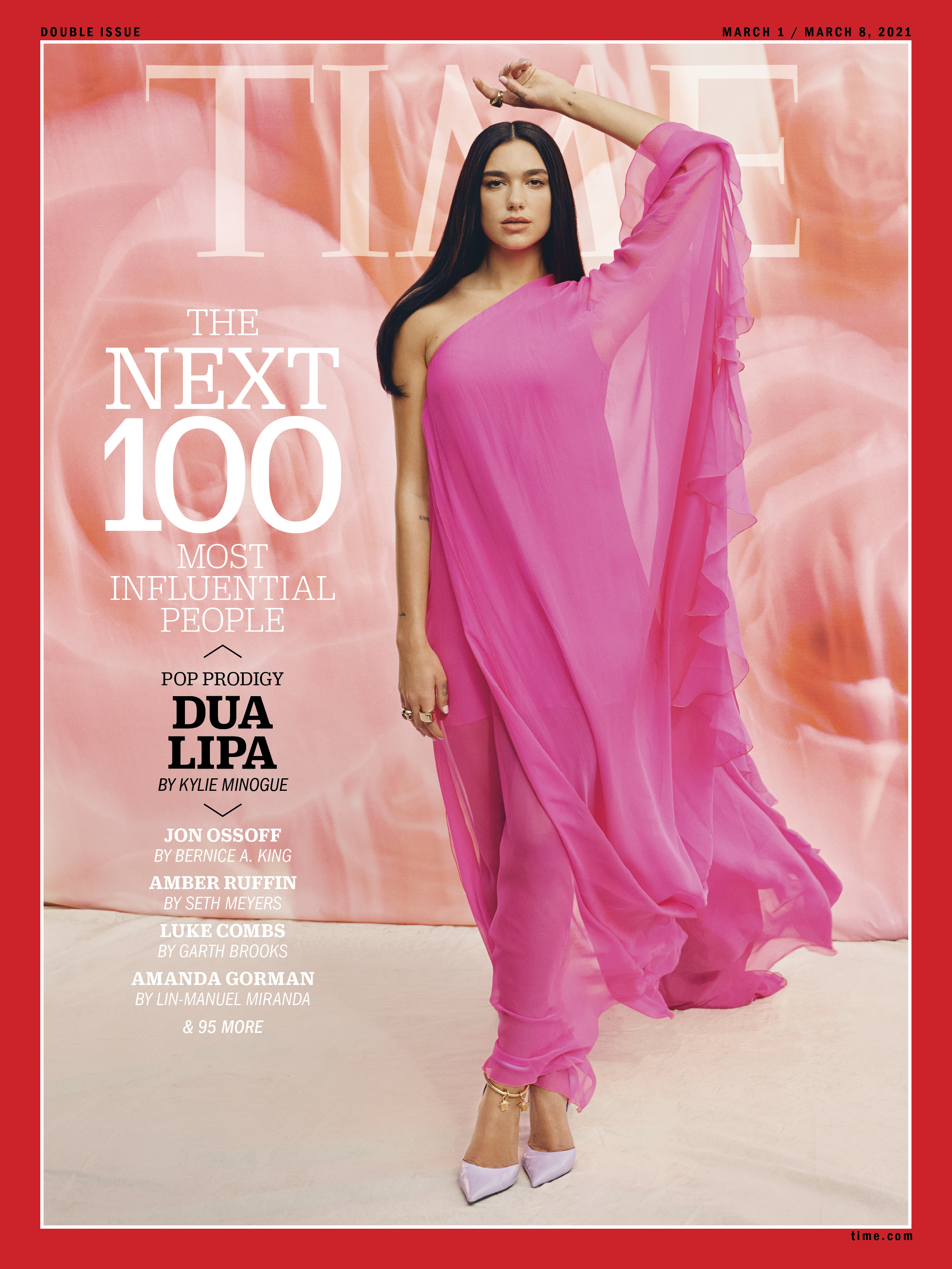
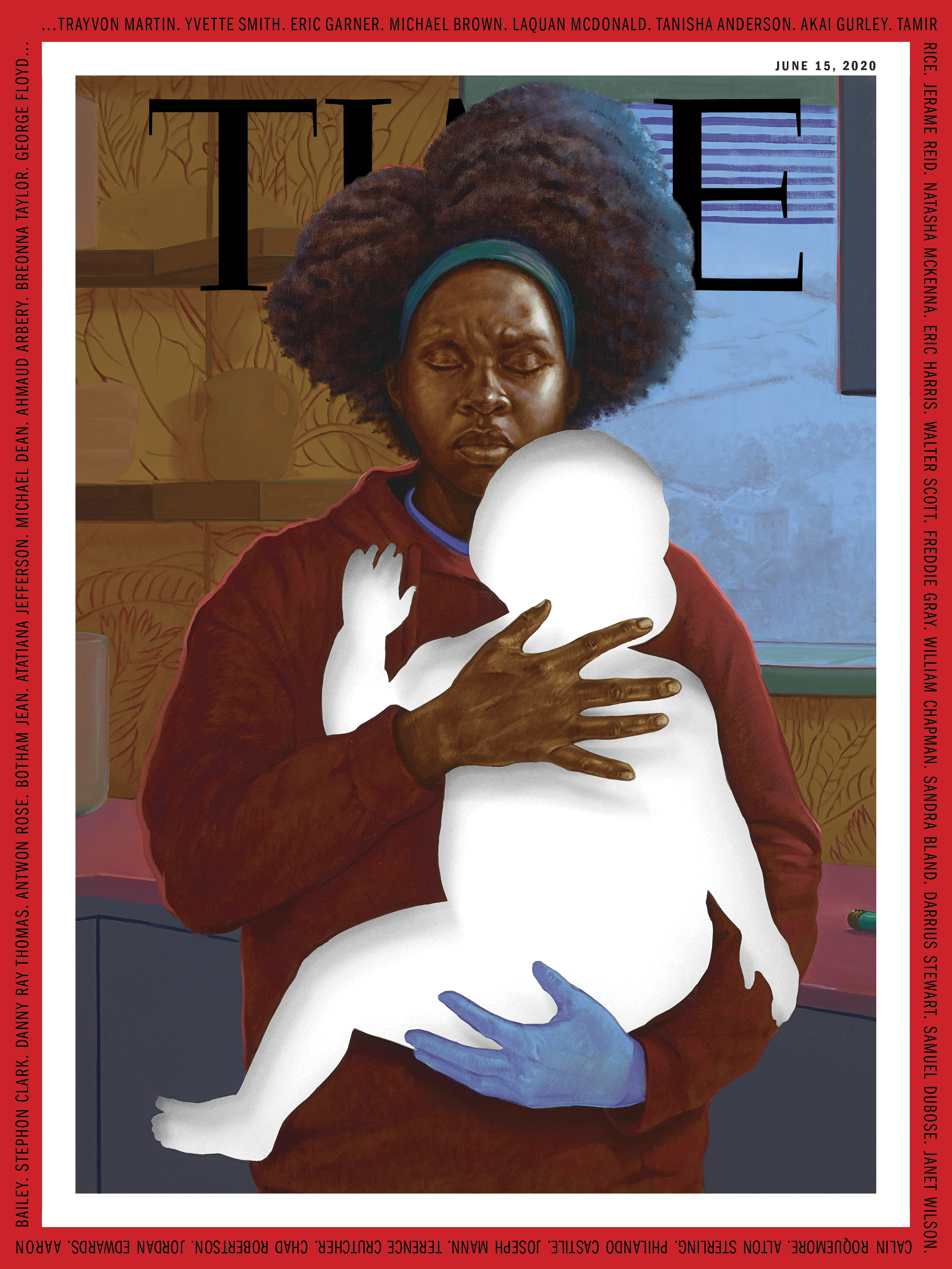
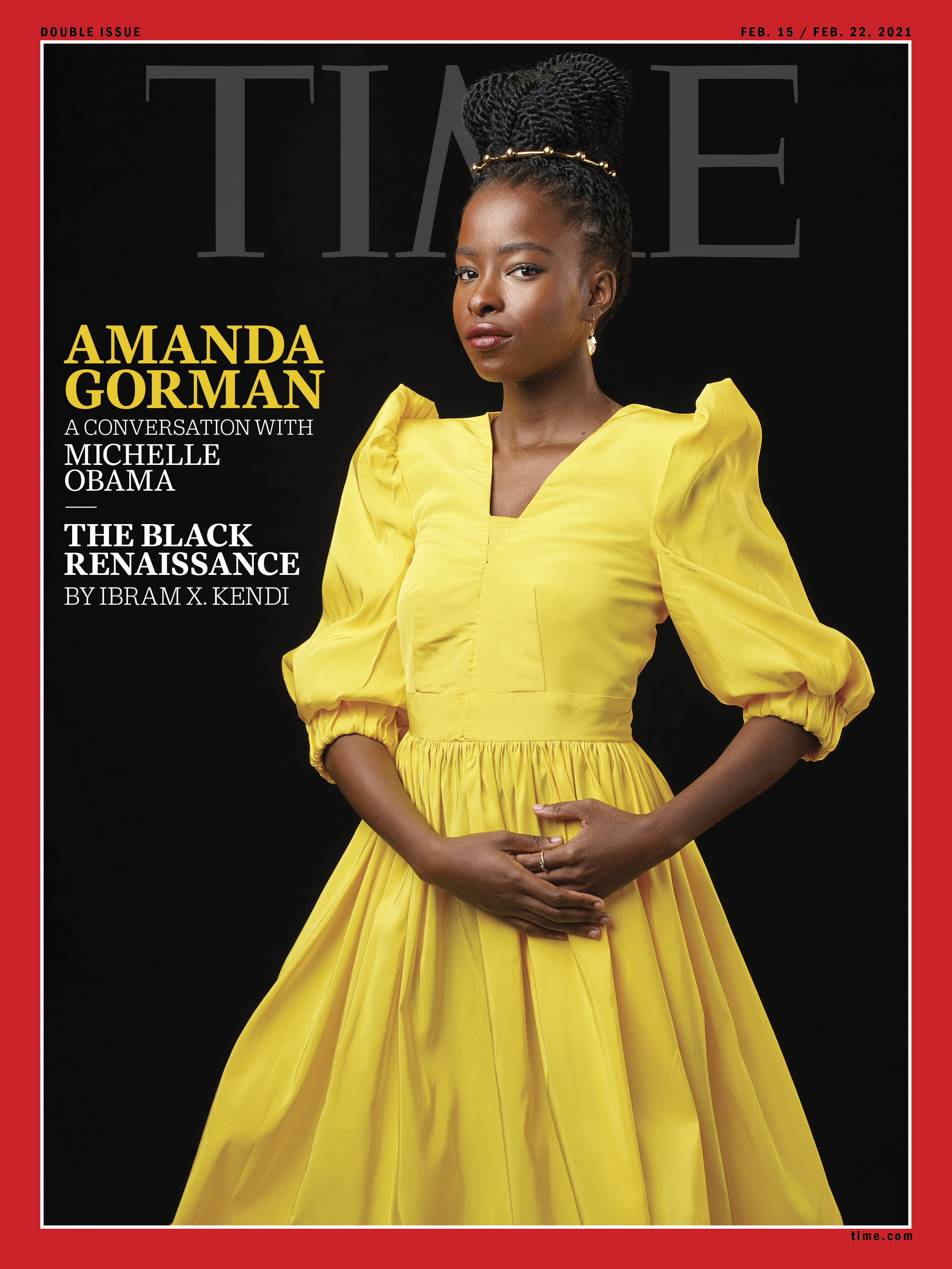
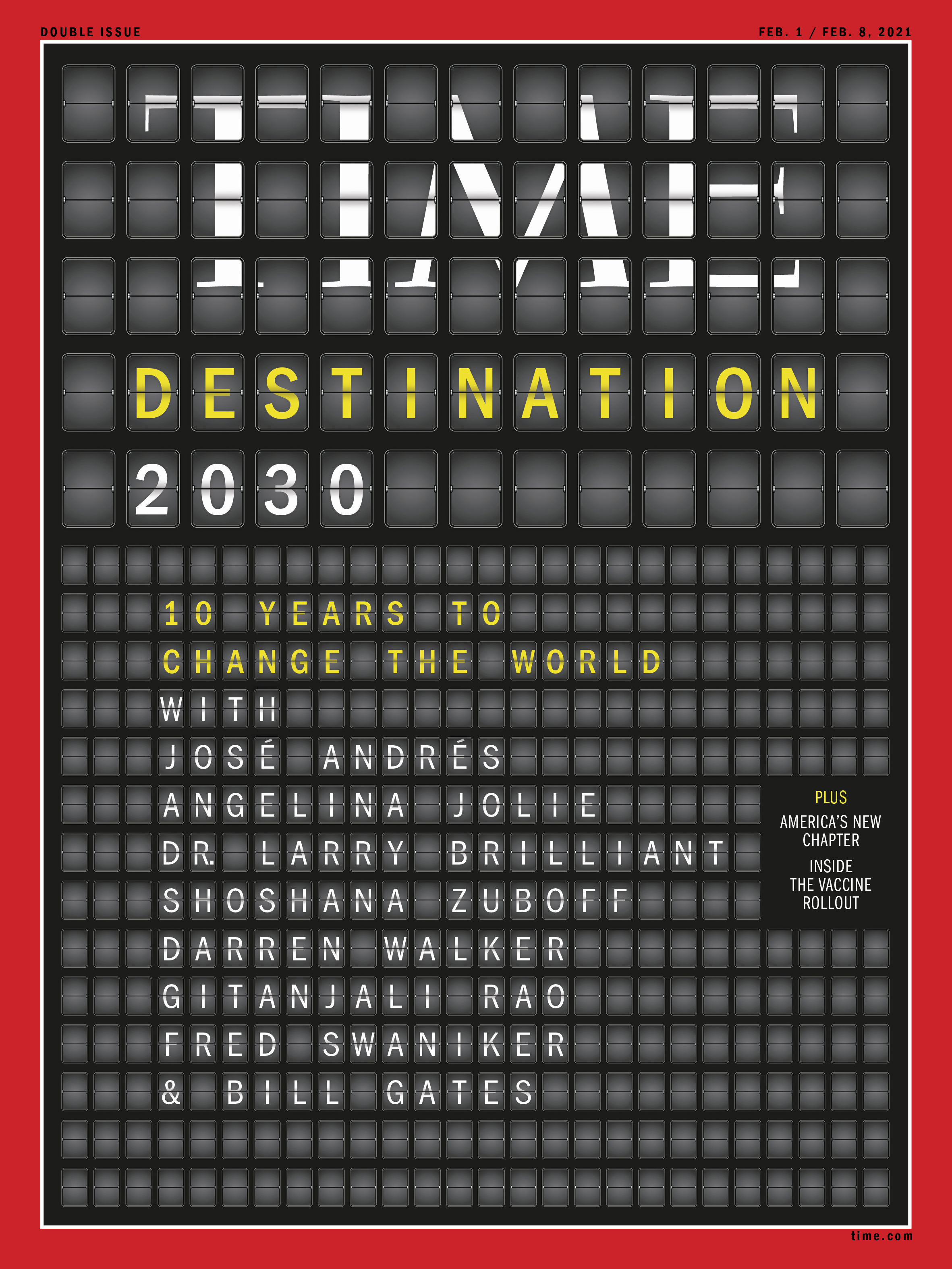
Edward Felsenthal is the Editor in Chief and CEO of TIME. Prior to his current position, Edward was managing editor of Time.com where he directed its digital operations and successfully created a global 24/7 news operation.
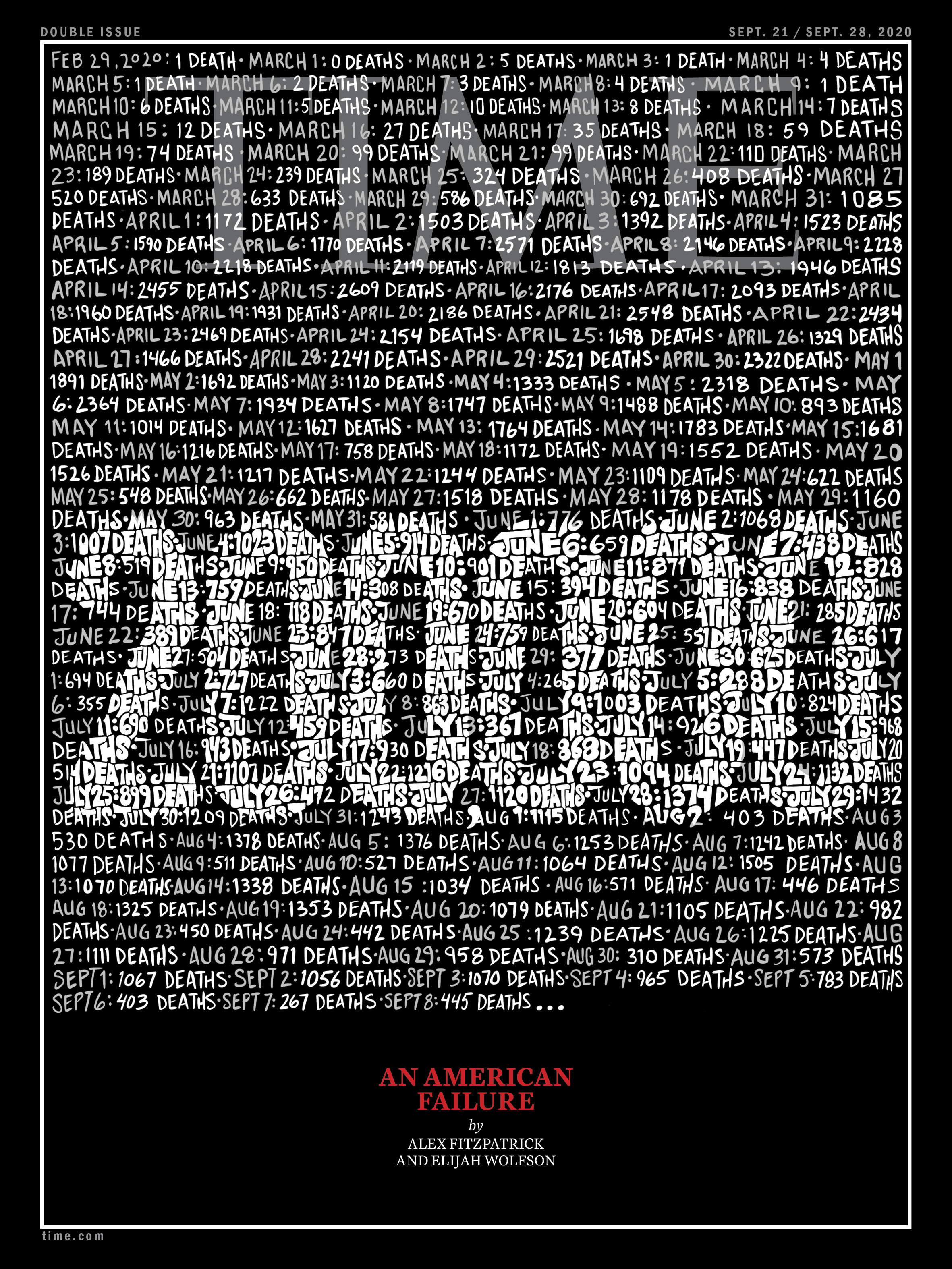
I spoke with Edward recently and we talked about his current role at TIME and operating such an esteemed and important legacy title during a pandemic. Soon the magazine will celebrate its 100th year in publishing. On March 3, the brand will be 98-years-old and is still going strong. Edward shared that after they were removed from the constraints of being a part of Time Inc. and sold by Meredith to their current owner, opportunities became a reality, even during a pandemic.
In April of this year TIME will launch a special print issue called TIME Business and rollout a digital component of it as well. Edward said it will be a vertical area of focus for the company. The print magazine is now biweekly with a minimum of 100 pages per issue.
So, while times may be trying and uncertain right now, Mr. Magazine™ can appreciate this ray of hope on the horizon, hope which always springs eternal. So please enjoy the Mr. Magazine™ interview with Edward Felsenthal, CEO & Editor in Chief, TIME.
Edward Felsenthal, CEO & Editor in Chief, TIME
But first the sound-bites:
On how his role is different today as CEO of the entire Time brand than when he was managing editor of Time.com: The theme is the same throughout, which is transformation. We have a brand that will be 98-years-old next week, March 3rd. And so we’re nearing our 100th anniversary. Our brand has been built on this amazing magazine, which we all love and that I grew up reading. The task of the last couple of decades, and certainly the theme of my tenure at Time, which started right before you and I talked in that 2014 conversation, has been transformation. What are we going to build on top of the magazine? What is its digital future and where can the brand go? So, that’s the work I’ve been engaged in since Rick Stengel and Nancy Gibbs hired me.
On how the turmoil of 2020 impacted TIME: First of all, like everyone, we had to figure out how to do what we do remotely. We’re at almost a year from when we sent everyone home from our New York headquarters. We had just moved into a beautiful new office in Midtown a few months before and we were just adjusting to that space when everything went remote. And the rise in and realization of the danger of misinformation that ran through the election and continues to run through the world we cover has been a massive change in society.
On how TIME combats the spread of misinformation: You had a presidency conducted by Twitter. And so I think it extends beyond the pandemic and it extends beyond the media. Obviously, we have a role to call it like it is; to commit to truth. We have an opportunity as a brand. And I think what we’ve seen in the pandemic, with the misinformation about vaccines, the election, with the lies that have spread through the campaign and after, I think you’re seeing a resurgence of legacy; the power of legacy media; the value of legacy media, because we have 100 years of trust that nobody can replicate.
“Obviously, we have a role to call it like it is; to commit to truth. We have an opportunity as a brand…” Edward Felsenthal
On anything new on the horizon for print: With Time Inc., as I said, there were some constraints. Many times opportunities and investments went to other brands. But now, in April, we’re launching TIME Business and we’ve hired a terrific editor from The Wall Street Journal. It’s going to be a vertical area of focus for us. We’ll launch it with a special print issue and a digital rollout in April, looking at the role business plays in these various crises the world is facing.
On how he decides when content should be in print and what content should go online: We love print and I love print. And we have a very strong presence in print’ we’re a million-six subscribers in the U.S. We’re the largest player in print on news in the U.S. and in number of subscribers. Every issue is 100 pages at least, generally more. We’re really using print as a vehicle to go deep.
On whether moving forward, TIME will continue to be biweekly with double issues: Yes, double issues. A lot of brands now are doing double issues with 70 pages. I think the 100-page experience is a better experience. And it’s what print is supposed to be. It’s depth and you can immerse yourself into it in a way that you can’t in a 56-page book.
On what motivates him to get out of bed in the mornings: It goes back to what we talked about earlier. This is a moment of crisis for all of us across the world and I feel at TIME we have an opportunity to make a difference as the world rebuilds. We’ve really totally adjusted in the way we think about our coverage in light of the last year. And what the world is facing is unprecedented. We’re facing these multiple crises all over the world all at once. Health crisis; crisis of inequality and injustice; a sustainability crisis; a trust and truth crisis; an economic crisis. And the opportunity in these crises is how we rebuild. What gets me up in the morning is thinking about the role that TIME plays in this.
On how he unwinds in the evenings: I have three young kids, great kids. An upside to having our offices being remote is it’s two and a half hours of commuting that I don’t have to do. We have homeschooling here; we have remote work. It’s crazy. So there’s not a lot of R & R.
On what keeps him up at night: It’s just been such a challenging time, such a challenging year. As I said, I’m incredible inspired by the TIME team, their commitment and focus and coordination across the global team. A big worry of mine is burnout and stress, and the fact that I had trouble answering the “how do you relax” question is indicative of where everybody is right now. (Laughs)
And now the lightly edited Mr. Magazine™ interview with Edward Felsenthal, CEO and editor in chief, TIME.
Samir Husni: Last time we chatted, you were the managing editor of Time.com, now you’re the CEO and editor in chief of the entire brand. How different is your role today than what you were doing?
Edward Felsenthal: The theme is the same throughout, which is transformation. We have a brand that will be 98-years-old next week, March 3rd. And so we’re nearing our 100th anniversary. Our brand has been built on this amazing magazine, which we all love and that I grew up reading. The task of the last couple of decades, and certainly the theme of my tenure at Time, which started right before you and I talked in that 2014 conversation, has been transformation. What are we going to build on top of the magazine? What is its digital future and where can the brand go? So, that’s the work I’ve been engaged in since Rick Stengel and Nancy Gibbs hired me.
A lot of magazine companies and Time Inc. was one of them, although there were some early efforts, the profits from print were so good for so long the digital transformation happened slowly. Starting in 2014, I remember during the interview process for Time.com, the lead story was about Lincoln. So we really set about for the next few years building a major website; building an audience; building the relevance of the brand between the magazine and the web.
We built a huge social presence; we’re one of the largest players now on Twitter, Facebook and Instagram in our business. When I got to Time, we did about four videos per week, which were usually an editor interviewing another editor about what was in the magazine that week. We’ve now got an Emmy-winning video team and a studio division that is producing broadcast television and documentaries, and growing very quickly.
My role expanded when my friend Nancy left and I became editor and we also have new owners. As you know, Meredith Corporation bought Time Inc. and put some of the titles up for sale and TIME was one of them. And I led that process for the TIME brand. And when our new owners acquired us and we became an independent company for the first time in many decades, they asked me to take on this added role. But the work has been the same, transforming the brand; how do we have impact in our journalism and how do we deliver that journalism across platforms.
We had expanded into live events until the pandemic hit. We’re now doing virtual events. The pandemic accelerated massively all of that change.
Samir Husni: In 2018, under the new ownership, you went more toward an entrepreneurship and all of these changes began to take place. Then everyone was hit by the pandemic, social unrest, and the turmoil of the election. How did all of that impact TIME?
Edward Felsenthal: First of all, like everyone, we had to figure out how to do what we do remotely. We’re at almost a year from when we sent everyone home from our New York headquarters. We had just moved into a beautiful new office in Midtown a few months before and we were just adjusting to that space when everything went remote.
Actually, there was kind of a prophetic moment for us in the early part of last year, we were on our morning editorial meeting, which is where people from other parts of the country and the world join virtually and one of the editors in our Hong Kong office said greetings from the future, because they had already left their offices. That comment was driven home to me a couple of weeks later when we began working from home.
And that was of course a massive transition, but our team did a wonderful job getting everyone out safely and ensuring that our operations continued. And we didn’t miss a beat.
We then had to regroup in several areas. One of the nice things about getting out of Time Inc. was we had been somewhat constrained. All of these brands grew out of TIME: PEOPLE, Sports Illustrated; they all grew out of TIME. They were all pages in the magazine at one point. And we were constrained in some areas within that context.
One of the things that we were able to do as we got out on our own was live events. We had a great TIME 100 Summit in April 2019 with a long list of dignitaries. And we were going to do it again in 2020 until the pandemic came and it wasn’t possible. So we launched TIME 100 Talks, which over the last year has been our fastest growing product in business. So we now do more or less once a week a virtual Summit. So we pivoted very quickly digitally.
Another example was TIME for Kids. We’ve been doing it for 25 years; it’s print and it goes into schools. But nobody was in school, so there was no way to deliver it. In a period of two or three months, we did something that was already on our roadmap, but the pandemic just hurried it along, now it’s a digital subscription product. Of course, we had to make the school product digital, but it also enabled us to offer for the first time an at-home option for kids and an international option for kids. We’ve accelerated a lot of the digitization of our work and what we do.
You mentioned social unrest and the overdue awakening around racial justice that began in earnest after the killing of George Floyd and obviously that has played out in both our coverage and in our company. We’ve dedicated ourselves to the areas of focus in our coverage. One of them is equality and justice, and injustice. And that has been a value running through our coverage for a while, but was redoubled in 2020.
We’ve also recognized that we must hold ourselves accountable for ensuring that equality and justice and inclusion runs through our company, and building a company that reflects the demographics and experiences that we cover. So that has been a powerful change and direction for us.
And not just the presidential election, but the rise in and realization of the danger of misinformation that ran through the election and continues to run through the world we cover has been a massive change in society. Charlotte Alter and some of our team went on the road in the Fall and did a series where they really explored and exposed what was called on that piece “Unlogic.” And the prices of unlogic. I think we all thought at some level there was a combination of optimism and realism. This crisis of misinformation and some of the other crises that the pandemic and 2020 exposed are going to be with us for a long time.
Samir Husni: How does TIME combat the spread of misinformation?
Edward Felsenthal: Martin Baron, who is retiring from the Washington Post, has been doing a series of interviews. Recently in one, he was asked this same question and he said, and I agree with him, the press, the media, we have a big role in addressing this crisis, but it obviously extends way beyond us. And talking about the impact of the pandemic, I think a lot of it goes back to so much media now coming through social media, where this is no filter or where the filter are minimal.
And you had a presidency conducted by Twitter. And so I think it extends beyond the pandemic and it extends beyond the media. Obviously, we have a role to call it like it is; to commit to truth. We have an opportunity as a brand.
When you and I talked last in 2014, there was just a period where the word legacy was kind of a bad word in this industry. It was considered a negative, because all of the digital upstarts seemed like they were the sole future of media. And there was a skepticism in the industry itself about legacy. And I think what we’ve seen in the pandemic, with the misinformation about vaccines, the election, with the lies that have spread through the campaign and after, I think you’re seeing a resurgence of legacy; the power of legacy media; the value of legacy media, because we have 100 years of trust that nobody can replicate.
And that’s not everything because there are people out there who are going to believe what they believe and for whom the legacy either doesn’t matter or they treat as a negative. But I think an institution like ours has a tremendous amount of trust. At a time when there’s very little trust in society at large; we have a lot. And I think we have an opportunity there to use that.
I would add that I think that trust applies, not just what to know, but what to do. We’ve seen that in the pandemic. What I mean by that is for decades TIME’s role was informing people about what’s happening in the world. But we’re also seeing that people trust us as I said, not just about what to know, but about what to do in their own lives.
And we asked what is our value-add going to be in covering the pandemic? And we said that it was going to be holding governments accountable, providing trusted guidance about the pandemic and the health issues; it’s going to be celebrating the front line workers and this incredible moment where people were coming together in powerful ways. But also providing clear information about how to keep safe. The vaccines as they’ve developed, the masks, and really providing guidance to our readers as human beings and to their families.
We launched a Coronavirus newsletter that is now over 100,000 subscribers, the fastest growing newsletter by far. And I think that’s another level where trust connects to the pandemic. We have found our role, and we had it all along, in the guidance we’re providing to people about their own health and the health of their families during the pandemic.
Samir Husni: Anything new on the horizon as far as print that you’d care to talk about?
Edward Felsenthal: With Time Inc., as I said, there were some constraints. Many times opportunities and investments went to other brands. But now, in April, we’re launching TIME Business and we’ve hired a terrific editor from The Wall Street Journal. It’s going to be a vertical area of focus for us. We’ll launch it with a special print issue and a digital rollout in April, looking at the role business plays in these various crises the world is facing.
We’ve always had business coverage, but the focus of business at Time Inc. was Fortune, so we have an opportunity now and a great new leader coming in for it.
Samir Husni: I’ve noticed that TIME the magazine is published biweekly now instead of weekly, with an additional issue in January. Yet the website is 24/7. How do you decide what content should be in print and what should go online?
Edward Felsenthal: We love print and I love print. And we have a very strong presence in print’ we’re a million-six subscribers in the U.S. We’re the largest player in print on news in the U.S. and in number of subscribers. Every issue is 100 pages at least, generally more. We’re really using print as a vehicle to go deep. Nobody is getting their news in a physical product delivered to their door. Breaking news is already there; our readers know what’s happening in the world when they pick up the magazine. So we want to give them depth and take them somewhere, and an incredible experience with that physical magazine, 100 pages with a great glorious cover.
We have 2.3 million print and digital subscribers around the world, so all of our content is on the website. We’ve launched a digital subscription that is a huge area of focus for us, growing our digital relationship with our consumers. Our print readers can connect their accounts to digital. We’re just a few weeks into it, but it’s great to see the interest in TIME digital and that people are willing to pay for our digital content as well as our print.
Some brands have pulled out of video. Our philosophy has been multiplatform. We love print; we’ve invested tremendously in digital and digital subs; and we’ve built out video and are doing short and long-form video, and in-studio. We did three, one-hour primetime broadcast specials in the Fall of 2020. So, we’re committed to multiplatform and we’re reaching different people on different platforms; expanding our audience and expanding our impact and reach of the journalism that we do. And that’s incredibly exciting.
Samir Husni: Moving forward, TIME will continue to be biweekly with double issues?
Edward Felsenthal: Yes, double issues. A lot of brands now are doing double issues with 70 pages. I think the 100-page experience is a better experience. And it’s what print is supposed to be. It’s depth and you can immerse yourself into it in a way that you can’t in a 56-page book.
We have an incredibly loyal readership, a million-six subs and people just love the brand. And we say thank you.
Samir Husni: Henry Luce was described as Time’s lightning and Briton Hadden as its thunder. Are you both the lightning and the thunder now?
Edward Felsenthal: (Laughs) I think I’m lightning. I’ll have to think about who’s thunder.
Samir Husni: What motivates you to get out of bed in the mornings?
Edward Felsenthal: It goes back to what we talked about earlier. This is a moment of crisis for all of us across the world and I feel at TIME we have an opportunity to make a difference as the world rebuilds. We’ve really totally adjusted in the way we think about our coverage in light of the last year. And what the world is facing is unprecedented. We’re facing these multiple crises all over the world all at once. Health crisis; crisis of inequality and injustice; a sustainability crisis; a trust and truth crisis; an economic crisis. And the opportunity in these crises is how we rebuild.
So what gets me up in the morning is thinking about the role that TIME plays in this. There aren’t many brands like ours; we’re global; we have 100 years of trust and a brand that can reach everywhere in the world. We have an opportunity and an obligation to spotlight solutions, write about solutions for the crises themselves, but also focus our journalism on how we can make the world better.
Samir Husni: After a very busy day, how do you unwind in the evenings?
Edward Felsenthal: I have three young kids, great kids. An upside to having our offices being remote is it’s two and a half hours of commuting that I don’t have to do. We have homeschooling here; we have remote work. It’s crazy. So there’s not a lot of R & R.
I have some friends whose kids are older who talk about just finishing something on Netflix and they’re about to start something else. We’re doing a little bit of that, but it’ll take me another 20 years of getting through Netflix. There’s not a lot of relaxing. (Laughs)
But I feel very fortunate. We’ve been healthy; the TIME team has really pulled together. It’s been really hard on everybody. And I’m really proud of the team.
Samir Husni: My typical last question; what keeps you up at night?
Edward Felsenthal: It’s just been such a challenging time, such a challenging year. As I said, I’m incredibly inspired by the TIME team, their commitment and focus and coordination across the global team. A big worry of mine is burnout and stress, and the fact that I had trouble answering the “how do you relax” question is indicative of where everybody is right now. (Laughs)
And we’re working hard to do what we can to make sure people take their vacations, even though sometimes it’s unclear where to go. Or to take time off and encourage them to raise their hand if they feel burned out. But everyone is so committed to what they do. But that’s a concern, mental health and wellness as we approach the year mark of this massive change in the way we live and work.
“This is where the partnership between myself and Joanna Saltz (editorial director) really comes into play because we worked on this together. Delish.com started 10 years ago, but it really was part of a joint venture that we had with MSN. The Delish as we know it now, under Joanna, really didn’t start until around six or seven years ago. And one of the first things she said we had to do as the brand started to grow was that we had to have a cookbook. We had to have a printed, physical, tangible manifestation of the brand. And that was the launch of the cookbook and it sold well, so we saw that our audience would respond to that.” Dan Fuchs…
A successful digital-first brand from Hearst that has seen immeasurable growth with not only its website, but its printed bookazines and cookbooks, Delish.com is launching a quarterly print magazine. Delish in print will be sold at the newsstands, but will also be an integral part of the subscription model the brand has in place for its online footprint. An all-access subscription of $20 annually will not only get you everything online, but also the 96 page (plus covers) printed magazine as part of the memebership.
Dan Fuchs, formerly of HGTV magazine and O, The Oprah Magazine, is the VP/Chief Revenue Officer of the new quarterly print publication. I spoke with Dan recently and we talked about this exciting new venture into the world of print for a digital-only entity. Dan said it’s an exhilarating time for a brand that has been successful online and in the world of print, with its special bookazines and cookbooks, to have a quarterly magazine coming out in print. Opportunities and more growth will surely follow. And with Editorial Director, Joanna Saltz, as his partner, Dan is looking forward to the future of Delish in all its exciting extensions.
And now please enjoy the Mr. Magazine™ interview with Dan Fuchs, VP/Chief Revenue Officer, Delish quarterly magazine.
But first the sound-bites:
On having no ads in the first edition of Delish quarterly: I’m very excited as a chief revenue officer to find ways that we can work with advertising partners on this brand, but the design behind it is not an advertising-driven model. It is a way for us to generate, from a purely financial standpoint more revenue from the consumer, but really to expand the brand into all places that we think the brand will be well-received.
On getting much more value for your money with the $20 annually all-access model of Delish: It’s a better deal and it’s our way of really trying to encourage our readers to get the all-access. We’ve seen such loyalty from our fan base; we can see that on social media. So, it’s no surprise that here we are now two months in and we’re nearing 30,000 memberships sold and more than two-thirds of them are for the all-access model. And I think you’ll start to see, once the magazine is out, more people going that way.
On the balance of the advertisers or the sponsors to the content of the magazine or to the revenue: We already have a few page commitments from some advertisers out there, but we’re interested in talking about some deeper integrations, maybe into native content. I think because the structure of the magazine is really bookazine quality, in terms of the paper stock and the photography; in terms of the oversize. We’re committed to a print run size and book size of 96 pages plus covers. So for this year at least, we’re capping the number of advertisers to eight per issue. And we start with advertising in the second issue.
On what role he feels print plays in today’s digital world: What the magazine allows us to do is capture the collectability of something. Delish started 10 years ago, but it really was part of a joint venture that we had with MSN. The Delish as we know it now, under Joanna, really didn’t start until around six or seven years ago. And one of the first things she said we had to do as the brand started to grow was that we had to have a cookbook. We had to have a printed, physical, tangible manifestation of the brand.
On why now seemed to be the perfect time to launch the print edition of Delish: We feel that our audience is telling us now is the right time. I think what we have seen in the data drives, a lot of that is the type of recipes that we’re seeing people really leaning into, the sourdough breads, the baked lasagnas; more of the comfort foods. And a real interest in videos on technique. And an interest in trying something new.
On his elevator pitch for advertisers: I have met with a bunch of prospective advertisers and some of our existing clients and I think the elevator pitch is that this is a natural extension of a brand that already has proven success. And this is a way for you as the marketer; you’ve been working with us on Delish.com and you’ve been working with us with branded content that’s digital; you’ve been working with us on customized social posts; we did a lot of live programming, so here’s a way to work with us on something that we know will resonate with our audience, your customer, but to do it in a different way.
On some of the challenges he thinks he might face in launching the quarterly magazine and the membership model: You do get into the “why now” and “why print” and as we look at trends on newsstand, I think there is that unfortunate mythology about the print model that we have to address. A hurdle that we have to overcome is to prove to people that this digital-first brand might have a digital-first audience, but that audience is interested in print as well. How do we demonstrate that? Fortunately we have four or five years’ worth of data on our print products and granted it’s been a different model.
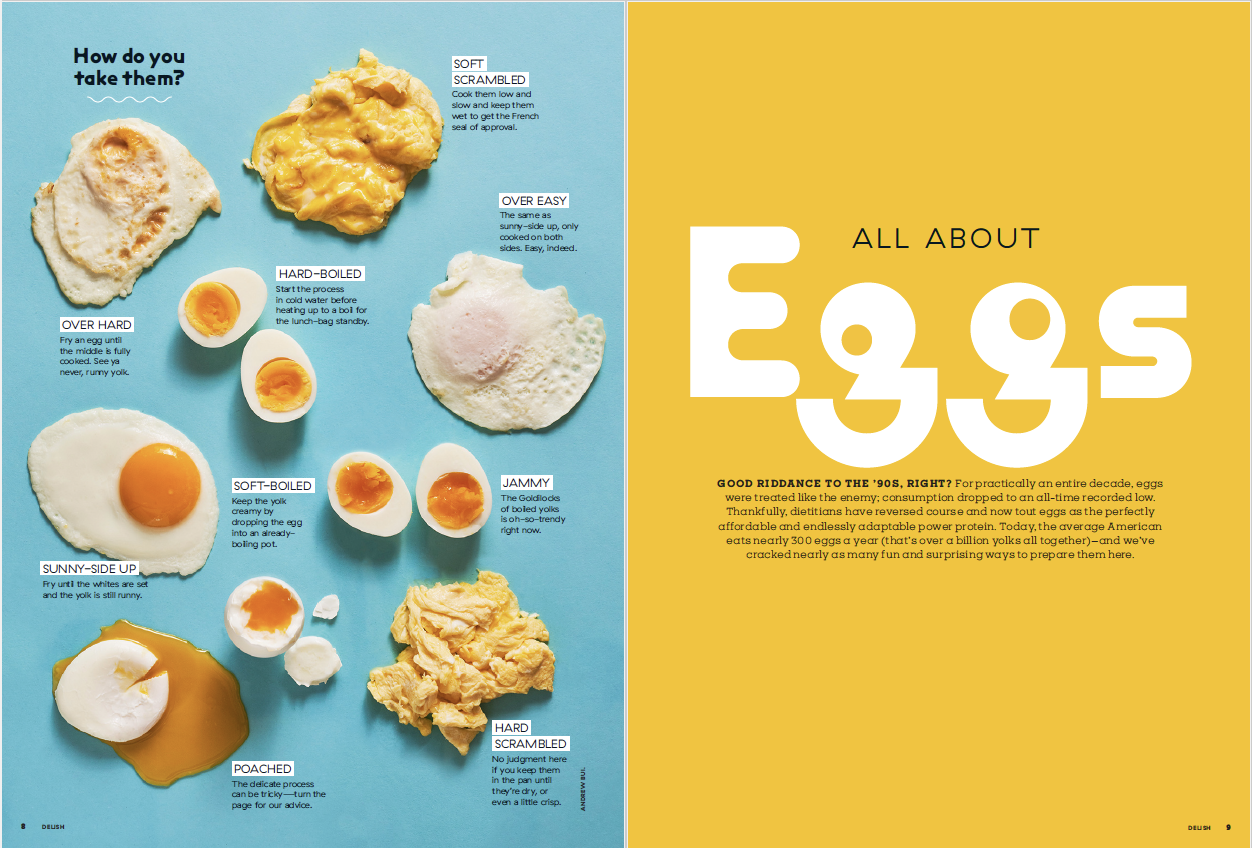
On diversity and inclusion in the magazine: I’m excited about this first issue because we feel that Delish has been a very inclusive brand all along, but particularly as we go through the magazine what has always been important to us is that our readers understand the story behind the food or the origins behind the food. And we know our audience is excited to try new and different things. I’ll give you an example. The first chapter is all about eggs, who doesn’t like a good egg to start off with breakfast. But it’s the variety of ways that we’re going to show you to make those eggs. Of course, there’s a frittata, and we have a recipe for Migas, also a Sabich sandwich, which is an Israeli sandwich, and we give you some background on that and the ingredients you need.
On what he hopes to achieve in the first year of the magazine: So the fast forward would be that we prove the naysayers wrong, that we expanded a brand, that while rooted in digital, could deliver on our promise to reach our audience in many different ways. But from an overall editorial perspective, I’d feel like we reached success if we could find our consumers saying this is such a great addition to their Delish experience; it doesn’t replace anything, it’s not redundant in any way.
On anything he’d like to add: We are really proud of this brand and I have to give a lot of kudos to Joanna Saltz and her editorial team who adapted so quickly to an extremely challenging situation. We have a test kitchen in the Hearst Tower that we could not get access to, so her editorial team was doing recipe videos out of their homes and what was really exciting and heartwarming was our audience loved it.
On what makes him tick and click: I have always felt so lucky to be a part of this business, this industry. It is the people that I get to work with. I’m coming up on my 18th year at Hearst and we have exciting things going on. It’s the colleagues that I work with, Joanna as my partner on the editorial side; it’s some of the team members who came with me from HGTV magazine and from Oprah. But it’s also our clients; it’s our advertisers, who are also open and excited about what’s going on.
On how he unwinds at the end of the day: If you dropped by, you might see the bar and the wine fridge, so there’s definitely enjoyment in that. And even though it’s been a full year of cooking for my family, we’ve been able to spend more time together, at the end of the day it’s hitting up Delish, listening to some good music and sitting down with a nice cocktail from one of my favorite new books.
On what keeps him up at night: Not necessarily things about work; I think our country has been through quite a lot, but I’m always a very hopeful and optimistic person. There’s a lot of indecision out there: when are we going back to the office, all the things that we talked about that I love about the business, when are we going back into ad agencies to talk to customers; when are we going to have another ACT Experience, so I think it’s just the waiting. And still accepting the realities.
And now the lightly edited Mr. Magazine™ interview with Dan Fuchs, VP/Chief Operating Officer, Delish quarterly magazine.
Samir Husni: Previously you were the publisher of HGTV and today you’re the VP/Chief Revenue Officer of a new quarterly magazine, Delish. Typically, when I talk with publishers or CRO’s, they tell me how many ads they had in the first issue of the new magazine, but in Delish’s first edition there isn’t a single ad. Is this a new business model that you’re having to adjust to?
Dan Fuchs: Yes, there is definitely a need to adjust. And it’s a great question because it sort of leads into what this new job is for me. As you indicated, I’ve been at Hearst for a while and I’ve had the privilege of working on some of our bigger print brands, HGTV magazine; I worked at the Oprah magazine, and the origin of my new position at Delish is that Delish has been an important part of the overall Hearst digital portfolio.
But we’ve seen such incredible growth from the brand through all of its digital extensions, obviously the site itself and huge growth across social media, and as we started doing more print products, and this is the beauty of Zoom, it’s the show and tell, whether it be a hardcover cookbook that we produced or a variety of our bookazines, Holiday Cookies from last year, we’ve seen the brand resonate at all touchpoints.
We’re a digital-first brand; we’re a digital video-first brand, but as we adapt to our audience, and our audience has really shown us, particularly during the last 12 to 14 months, the passion that they have for cooking and the fun and enjoyment that goes around food.
The new magazine that we’ll talk about today, Delish quarterly, really comes into play as a real enhancement for a new membership model that we’ve come up with. Starting about two months ago, we introduced Delish Unlimited. A lot of Hearst sites now are behind a pay meter. I think we’ve seen as an industry, whether it’s print or digital, people will pay for really good content. And they’ll pay for really good brands and they’ll pay for the authenticity and the integrity that goes behind those brands.
So, the pay meter was launched in December. Our readers can get up to four free articles and then they’re told now for unlimited access we have two separate models. One is a digital-only, which is $3 per month or there is the all-access model. The all-access model for a $20 annual gets you unlimited content on Delish.com; it gets you access to some new editorial interactive technology that we’re introducing; it gets you a newsletter; and it gets you an annual subscription to the launch of the new Delish quarterly.
I’m very excited as a chief revenue officer to find ways that we can work with advertising partners on this brand, but the design behind it is not an advertising-driven model. It is a way for us to generate, from a purely financial standpoint more revenue from the consumer, but really to expand the brand into all places that we think the brand will be well-received.
Samir Husni: When I went to the site to check out this new membership model, one of the things I discovered is if I subscribe to the Delish $3 per month plan, I’ll be paying $36 per year and I won’t get the print product. But if I choose the all-access model for $20 annually, I’ll get much more for my money.
Dan Fuchs: It’s a better deal and it’s our way of really trying to encourage our readers to get the all-access. We’ve seen such loyalty from our fan base; we can see that on social media. So, it’s no surprise that here we are now two months in and we’re nearing 30,000 memberships sold and more than two-thirds of them are for the all-access model. And I think you’ll start to see, once the magazine is out, more people going that way.
The financials behind it are we’ve been doing some really great newsstand-only, one-off projects like the Holiday Cookies and we’ve done Soups and Stews; we’ve done a lot of work in the keto space, so the Delish quarterly magazine will be part of this new subscriber model, but of course, it will also be on newsstand as well. And we’ll be promoting in the issue itself; it’s the fourth cover ad, which I will likely sell to a partner for the next three issues, but here, we really want to encourage our audience to go ahead and sign up for a subscription. Potentially, by the end of 2021, it’ll be really interesting to see the balance of subscriber versus newsstand for the magazine. The magazine hits newsstands March 2, 2021, but subscribers might get it a week or so earlier.
Samir Husni: What about the balance of the advertisers or the sponsors to the content of the magazine or to the revenue?
Dan Fuchs: We already have a few page commitments from some advertisers out there, but we’re interested in talking about some deeper integrations, maybe into native content. I think because the structure of the magazine is really bookazine quality, in terms of the paper stock and the photography; in terms of the oversize. We’re committed to a print run size and book size of 96 pages plus covers. So for this year at least, we’re capping the number of advertisers to eight per issue. And we start with advertising in the second issue.
What you’ll see is a smaller ad presence than you’ll see in most consumer magazines, but in addition to some run-of-book-ads, you might see some new and exciting and interesting expressions of brands, whether that may be through native content, advertorial content; we’re open to doing a lot of cool things.
Samir Husni: Delish is a very well-known brand. As you said, it’s a digital-first brand and has been in existence for more than 10 years. What role do you think the print quarterly is going to play in this digital age? Your editor wrote in the first issue that here was something you could book-keep forever. Besides being able to keep it forever, what role do you feel print plays today?
Dan Fuchs: This is where the partnership between myself and Joanna Saltz really comes into play because we worked on this together. We both have extensive print backgrounds at Hearst. In addition to being the editorial director of Delish, Joanna is also the editor in chief of House Beautiful, so she knows a lot about brands and how to express them in print as well as in digital.
I think for us, when we look at the way our audience interacts with food content, recipe content digitally, it’s certainly very active. We can look at Google Analytics and see transit traffic that happens around 3:00 or 4:00 p.m., people are in that what’s-for-dinner type mode.
What the magazine allows us to do is capture the collectability of something. Delish.com started 10 years ago, but it really was part of a joint venture that we had with MSN. The Delish as we know it now, under Joanna, really didn’t start until around six or seven years ago. And one of the first things she said we had to do as the brand started to grow was that we had to have a cookbook. We had to have a printed, physical, tangible manifestation of the brand. And that was the launch of the cookbook and it sold well, so we saw that our audience would respond to that.
But I always look at this as an extension of that idea. It’s a quarterly publication; it’s designed to be a collectible, and when you see it and go through some of the content, the focus that we’re doing is really big, lush, beautiful photography.
Delish is also very video-focused, so the hyper lapse, the hands and pans; it’s kind of interesting for us to take digital content and translate it into print. You could love pancakes and there’s an IHOP copycat recipe on Delish.com, but here we shoot it for print. And it has a different look and a different feel, that you could eat the food right off the pages, but the service is still there.
What’s key is that they have to be complementary. And we want our audience to be interacting with the same sort of theme and the same fun that Delish provides, but that the content is not in any way redundant and that it is a different experience.
Samir Husni: What about the timing for launching this quarterly print magazine? We are approaching one year living in this pandemic; why do you think now is the perfect time for Delish in print?
Dan Fuchs: We feel that our audience is telling us now is the right time. I think what we have seen in the data drives, a lot of that is the type of recipes that we’re seeing people really leaning into, the sourdough breads, the baked lasagnas; more of the comfort foods. And a real interest in videos on technique. And an interest in trying something new. We’re also watching social media and if you’re into TikTok, I’m sure you’ve seen the baked feta pasta craze that’s been going on. And that’s something pre-pandemic that people may have not been as excited and focused about doing.
Print allows you to really take a recipe and make it more than just functional, really blow it out in terms of the photography and give an overall sense of the food that’s there. So, the audience has led us to that, the data of the type of content that we see doing well has also led us to that. And also, still the success in our print vehicles. We have another print business where we do spiral-bound books that are Amazon print-on-demand. So we take no inventory; we print a new copy every time someone wants one, and particularly during a pandemic those are doing really well. So, we will see.
Again, the success is not heavily reliant on newsstands, although I think we’ll do well there. But our fans who have really grown with us over this pandemic time, they’re the ones who have signed up for the Delish Unlimited membership and they will continue to do so and they’ll be really excited about the new magazine.
Samir Husni: What’s your elevator pitch for advertisers? There are a gazillion of food magazines out there, including your own Food Network among others, what’s your unique selling point for advertisers?
Dan Fuchs: I have met with a bunch of prospective advertisers and some of our existing clients and I think the elevator pitch is that this is a natural extension of a brand that already has proven success. And this is a way for you as the marketer; you’ve been working with us on Delish.com and you’ve been working with us with branded content that’s digital; you’ve been working with us on customized social posts; we did a lot of live programming, so here’s a way to work with us on something that we know will resonate with our audience, your customer, but to do it in a different way.
We have some advertisers who think only about print, that’s what they feel resonates with their audience, and we talk to them about how we can work together in the print environment. But if I’m limited in the amount of time I can talk to people, I’d tell them that it’s one of the larger food brands in America with probably the largest growth curve there, proven content that’s data driven, based on what we’ve seen this past year and based on newsstand sales from our other print products, and it’s something that we feel very confident will be successful.
Samir Husni: What are some of the challenges that you feel you’re going to face in launching the quarterly magazine and this whole membership model and what’s your plans to overcome them?
Dan Fuchs: You do get into the “why now” and “why print” and as we look at trends on newsstand, I think there is that unfortunate mythology about the print model that we have to address. A hurdle that we have to overcome is to prove to people that this digital-first brand might have a digital-first audience, but that audience is interested in print as well. How do we demonstrate that? Fortunately we have four or five years’ worth of data on our print products and granted it’s been a different model.
Also there was some skepticism from the start just about most of our competitors in the digital food space are free sites, the pay meter is new, but here we are two months in significantly exceeding all benchmarks at Hearst and not seeing any drop-off in traffic overall.
There hasn’t been that much pushback; I think there has been a “why now,” but the launch of the membership program really seemed to be a perfect time for us to introduce this idea that Joanna and her team have had for a while.
Samir Husni: Will there be any changes as far as diversity and inclusion in the magazine?
Dan Fuchs: Absolutely and I’m glad you asked that. I’m excited about this first issue because we feel that Delish has been a very inclusive brand all along, but particularly as we go through the magazine what has always been important to us is that our readers understand the story behind the food or the origins behind the food. And we know our audience is excited to try new and different things. I’ll give you an example. The first chapter is all about eggs, who doesn’t like a good egg to start off with breakfast. But it’s the variety of ways that we’re going to show you to make those eggs. Of course, there’s a frittata, and we have a recipe for Migas, also a Sabich sandwich, which is an Israeli sandwich, and we give you some background on that and the ingredients you need.
I think this is a perfect example of what you’re talking about, this recipe for congee, which is written by June Xie, who runs our test kitchen at Delish. In addition to a really great recipe that our readers may not be familiar with and would want to try, we tell the story behind it. It’s a first-person account that June talks about, such as growing up in Beijing.
Food, as we’ve seen over the last year, food is closely linked with people’s identities and their cultural identities. So we’ve tried very hard in the magazine for people to really see the true story behind the food. And the true story behind the people who are writing about it.
Samir Husni: What do you hope to achieve in the first year of Delish quarterly?
Dan Fuchs: I would say, and it feels a little déjà vu, with all the things we used to say when we launched HGTV magazine, is there ever a good time to launch a magazine? But the time is when your audience tells you they want it.
So the fast forward would be that we prove the naysayers wrong, that we expanded a brand, that while rooted in digital, could deliver on our promise to reach our audience in many different ways. But from an overall editorial perspective, I’d feel like we reached success if we could find our consumers saying this is such a great addition to their Delish experience; it doesn’t replace anything, it’s not redundant in any way.
From a sales perspective, it would be very exciting to see this drive even more memberships, that people are excited about a subscription model. And from an advertising perspective, it would be great to show some examples of really exciting native integrations that we’ve done, that go beyond just the printed ad page. I’ve set the bar pretty high for myself in the past and I’m excited to work together to deliver that this year.
Samir Husni: Is there anything you’d like to add?
Dan Fuchs: We are really proud of this brand and I have to give a lot of kudos to Joanna Saltz and her editorial team who adapted so quickly to an extremely challenging situation. We have a test kitchen in the Hearst Tower that we could not get access to, so her editorial team was doing recipe videos out of their homes and what was really exciting and heartwarming was our audience loved it. They loved seeing the imperfections along the way. They liked seeing what it was like inside someone’s apartment, with their kids running around. It made it more real to them.
So the editorial team, instead of being overwhelmed or intimidated by that, really rose to the challenge and at a time where people were holding back on certain things, they really pushed forward and we tried new things. That’s what Delish quarterly is about; it summarizes the spirit of Hearst and of this brand and our team. We’re always going to be innovative and we’re always going to put the brand and the audience first.
Samir Husni: What makes you tick and click and motivates you to get out of bed in the morning?
Dan Fuchs: I have always felt so lucky to be a part of this business, this industry. It is the people that I get to work with. I’m coming up on my 18th year at Hearst and we have exciting things going on. It’s the colleagues that I work with, Joanna as my partner on the editorial side; it’s some of the team members who came with me from HGTV magazine and from Oprah. But it’s also our clients; it’s our advertisers, who are also open and excited about what’s going on.
I love that every day looks different. And granted, it might be in the kitchen versus the living room and that might be the biggest difference in change of location. I do miss getting on airplanes and seeing people in person, but the day is always different and I get to talk to a lot of fun and exciting people. So I consider myself very fortunate.
Samir Husni: How do you unwind after a hard day’s work?
Dan Fuchs: If you dropped by, you might see the bar and the wine fridge, so there’s definitely enjoyment in that. And even though it’s been a full year of cooking for my family, we’ve been able to spend more time together, at the end of the day it’s hitting up Delish, listening to some good music and sitting down with a nice cocktail from one of my favorite new books.
Samir Husni: My typical last question; what keeps you up at night?
Dan Fuchs: Not necessarily things about work; I think our country has been through quite a lot, but I’m always a very hopeful and optimistic person. There’s a lot of indecision out there: when are we going back to the office, all the things that we talked about that I love about the business, when are we going back into ad agencies to talk to customers; when are we going to have another ACT Experience, so I think it’s just the waiting. And still accepting the realities.
I’m looking forward to going back to the way things were in some ways, but also being excited about the stuff we’ve learned doing things differently. I’m excited about how we’ll conduct business in the future. It’s different every year.
New Magazines: The Life Blood Of The Magazine Industry
At Least 4,730 New Magazines Launched In The Last 20 Years…
In any industry or profession, without new birth, products, ideas, or people, there is no growth. If you’re not growing, if you’re not introducing new blood to the mix of what you have, you’re dying incrementally. And the lifecycle and growth of magazines aren’t any different than any other lifecycle. Yes, magazines come and magazines go, but just because one magazine folds it doesn’t mean the entire print medium is dying.
And while in the last 20 years the number of consumer magazines in this country aimed at the general public has remained steady, averaging at around 7,000 titles, it should be noted that in those same 20 years we had at least 4,730 new magazines coming into the marketplace. And the reason I say at least, is because those were the ones that I was actually able to buy and collect ink on papers copies from. My definition was and is still is, “if it is not ink on paper, it is not a magazine.” And if I don’t have a physical copy of the magazine, it does not get added to the data on new magazines. There has always been an influx of new print hitting mailboxes and newsstands nationwide, ranging from a yearly high of 450+ to a low of 60 due to the onset of the pandemic in 2020.
Those new titles are the life’s blood of the magazine industry. And even if 70 percent of those magazines have died, which is the survival average of new magazines after four years of publishing, the remaining provide a good chuck of the magazines in the marketplace.
Why am I talking about new magazines and the need to launch new titles aimed at different audiences? Mainly because people have been asking me about it, many have called and interviewed me about whether there is still room today for new magazines? My answer is there’s always room. To me, magazine publishing is like the digital sphere. There is no end for digital and there is no end for ideas and launching new magazines.
What does it take to launch a new magazine and what are some of the steps to make sure it’s successful?
The most important aspect, based on my research, is that you have to find an audience. That’s number one. An audience who is willing and capable to pay the price of the magazine and the advertised goods in the magazine. The average cover price of a new magazine is inching toward the $10.00 figure. You have to be in the business of selling relevant, engaging content to an audience who one, can afford the price of your magazine and two, can benefit from what’s inside that magazine. The old business model of selling the audience to an advertiser to make money is slowly but surely heading to the history books. You must be in the business of selling content and creating experiences with the audience.
Nobody needs a magazine. Magazines are like chocolate. Nobody needs chocolate but once you start eating it you get addicted to it and you want more. Same thing with magazines. You have to create this relationship. And number two, you have to provide me with something different. Something unique. If I can Google a question and find its answer, it doesn’t belong in your magazine.
So the process of starting a new magazine begins with an idea. The very first thing you need to do if an idea comes to your mind is put it in writing. Ideas come by the dozen and are worth a dime. It’s the execution of the idea that sets it apart. So once you get the idea, once you boil it down to a very specific one sentence “this is what the magazine is going to be all about,” find the means and ways to reach that audience. Because the best ideas in the world, if they don’t have an audience, they are never going to go anywhere.
And believe in yourself. The sky is not the limit. No, you are the limit! Believe in yourself because everyone is going to tell you “this will never work.” And all the successful magazines in history were published based on ideas that folks were told their ideas would never work or no one would ever buy them.
For the last 20 years, new magazines have continued coming into the world just like their predecessors before them. For a glimpse at how the numbers fell in any given year, here is a chart that myself and my team put together of new launches that have frequency from 2001 until 2020.
As you can see, the numbers have been strong (stronger in some years), but even in 2020 with a pandemic raging, we had 60 new magazines to hit newsstands. Nothing short of amazing.
And many of these from the last twenty years are still going strong as you can see from the different titles scattered in this blog.
And these are just some of the titles still engaging the audiences with excellent experience making and good content providing. The longevity of these magazines prove they still have viable, relevant, necessary and sufficient content that audiences want.
So what are you waiting for? Start putting your ideas on paper and let the fun begin. Magazine publishing, as one friend from The Netherlands once told me, “is believing.” And I do believe.
“Going into Playgirl, it’s very intentionally diverse because I think as you approach the idea of what space a modern feminist publication could occupy, one of the things that I’ve thought a lot about, and I think this is what the tagline on the cover speaks to, is the idea that rather than offering the feminist point of view, what if we offer a feminine point of view? And what does that look like? What are the ideals that are lifted up? What are we celebrating? What are we putting forward with this magazine?” Skye Parrott…
Skye Parrott, editor in chief of the newly relaunched Playgirl magazine. Photo by Kat Slootsky
From the ashes, Playgirl has been reborn with a new, more feminine viewpoint, but with its indelible history intact. The former Playgirl had its last issue in 2015 and the difference between that Playgirl and today’s Playgirl is palpable. With a new publisher/owner and a new editor in chief, the magazine is ready to tackle today’s issues, including injustices and the pandemic, with a steadfast head on its shoulders and a fresh new voice in women’s magazines.
Skye Parrott is the new editor in chief, formerly cofounder and creative director of Dossier, an arts and fashion magazine, known as a platform that championed young creatives and helped to launch the careers of many photographers, fashion designers, and artists. Today, Skye is bringing her talents and creative vision to Playgirl.
I spoke with Skye recently and we talked about this new, modern-day Playgirl magazine. She was excited about the new direction, yet recognized the value of the title’s history, knowing that nudity and sexuality had always been a part of the magazine, but according to Skye it’s all about the approach to those topics and the way you execute them.
“I think we’ve looked at sex and sexuality and the body very differently in this magazine than how it was approached previously.”
The articles are there and very substantive, with the subject matter very topical for the world of today. The magazine has beautiful photography, yet stories that are compelling and on point with the issues we are facing currently. It’s a rebirth of a brand that many have been waiting for.
So, I hope that you enjoy this Mr. Magazine™ interview with Skye Parrot, editor in chief, Playgirl Magazine (relaunched). It was a delightful conversation about a title that should open up many more dialogues.
And once again, in 2020 Playgirl magazine returned to the newsstands as an upscale coffee-table like magazine
But first the sound-bites:
On why she accepted the role of editor in chief to bring Playgirl back to print and where it fits in the marketplace today: I was introduced to the publisher, who is a young man from a publishing family. He’s the great-grandson of Eugene Meyer, who owned the Washington Post for many years. The opportunity to buy the magazine sort of fell into his lap. He didn’t have any personal experience in publishing, but he saw it as an interesting and incredible opportunity. From the beginning it seemed like an incredible opportunity to me as well. To take this iconic, feminist magazine and to reimagine it for today’s world seemed very exciting. The moment seemed really right to do something interesting with it that could be meaningful. And I think that’s what we achieved in terms of the marketplace.
On whether it was intentional that she created a magazine that is so diverse and seems to be a coffee table book for an adult female who can have both a feast for her eyes and a feast for her brain: I wish you could see that I’m really smiling right now because that’s exactly what I hoped to create with this. Dossier was an incredibly diverse publication as well. And it was quite a long time ago in terms of the life of a magazine. Dossier launched in 2007/2008 and so diversity has always been very central to the work that I look to do. I’m from New York originally and I see diversity as a very central piece of the conversation. For lack of a different way of saying it, I find it quite boring to see the same person repeated in various iterations again and again and to only share one point of view. I don’t find that to be very interesting personally and I’ve never looked to replicate that in the publications that I’ve done.
On whether she thinks the nudity in the magazine is a plus or a negative: I was thinking about this the other day. If I were starting the magazine from scratch, there are things that would have probably been a little bit different about it than Playgirl. But when you’re relaunching something and you have a title that has a history, I think you have to also look at the history of that title and think about how to include that history in what you’re making today. And Playgirl obviously has a history of being very much interwoven with sex and I think that is a conversation that you have to have in the magazine, otherwise it doesn’t make sense. It’s just the name Playgirl slapped onto a magazine that has no relationship to the history.
June 1973 saw the launch of Playgirl as The Magazine For Women and continued publishing until 2015
On the gorgeous photography and the meaty reading material in the magazine and whether the pictures are bait to get people to actually sit down and discover other things in the magazine: I’ve never really thought of it that way. For me the approach to the magazines that I have done has always been informed by what I want. When I founded Dossier, one of the big conversations that we had then was why did something have to be one or the other? Why does it have to be we have The New Yorker, but it’s all words or we have these beautiful fashion magazines, but there’s nothing of any substance in them. What if you had these things together because people are multidimensional, just because you like to look at beautiful pictures doesn’t mean you don’t want to read something as well.
On how she decided on a naked, pregnant Chloë Sevigny for the cover: A lot of making a good magazine is taking advantage of the luck of what is available at the time it’s available. So, it was quite lucky that Chloë Sevigny was pregnant and that she was quite open to doing this cover and when that became clear, that she was open to doing it, it seemed to me like a no-brainer that we would put her on the cover. That having been said, I think from the beginning it was very clear that what we wanted to do with the cover was to look at female power in a different way.
On one criticism and one positive piece of feedback she has gotten since the first issue has been out: I’d start first with the criticisms, because I would love it if we could get some, but unfortunately in the world right now, I feel like those criticisms, you get them in person from people, and right now there’s just no in person. So, the feedback I’ve gotten has been only positive about it. I would love to share the critiques because there’s always room to make something better and to do more, but the feedback I have gotten has been really enthusiastic.
On whether she thinks magazines as a whole play a role similar to a Paradise Island or an Island of Clarity as they used to refer to The Wall Street Journal since many other platforms bombard the audience with only bad news:That’s a very interesting question. I can only speak to the kinds of magazines that I’ve looked to make and the kinds of magazines that I’ve looked to make are not trying to provide a Paradise Island, they’re not trying to sugarcoat anything. But what I look to do with Playgirl and what I think that we accomplished pretty well is to address the world as it is in a way that’s honest and vulnerable, but also has humor and hope.
In January 1973 Playgirl returned as a magazine for Women’s Entertainment, but stopped publishing after one issue.
On what she would hope to tell someone Playgirl had achieved in one year: As far as the magazine goes, I don’t know what the future holds for it, to be frank. The pandemic has changed the calculus a little bit for the publisher and he hasn’t got our schedule yet for the second issue. Ideally, when you do a biannual magazine, you immediately start working on the next issue, but that’s not the case for Playgirl. So, I really don’t know. But what I hope is the experience of reading it will have given people stuff to think about, will have given people enjoyment and maybe will have added something to the conversation about life and the world and the human experience.
On the magazine being more of a luxury item with its $20 cover price: Absolutely. It’s quite a niche product, but that’s also my background. With Dossier, we tried very hard to keep the cover price reasonable, we worked to do so, but ultimately a $20 magazine is a bit of an indulgence. The hope is with the magazine at that price, it is something you keep and look at it a little more like a book. So, when you said it looked like a coffee table book, I hope that’s what it is because at $20 it should be something that you want to hold onto.
The original Playgirl magazine circ. 1955 was a men’s magazine
On what someone would find her doing if they showed up unexpectedly one evening at her home: I’ll mention it again, I have three young children, so my evenings end quite early. In a world where there isn’t COVID-19, I’m not sure what it would be, but with the pandemic right now what I’ve been watching is The Great British Baking Show on Netflix. (Laughs) It’s very soothing, there’s no drama. The drama comes from the cooking. Everyone is very kind to one another and it’s very British. There are lots of good manners and that’s how I’ve been unwinding right now. And cooking, I’ve done a little cooking. My husband has been doing a lot of cooking.
On shuttling between New York and Mexico: I’ve been living for the last two years in a tiny little town in Mexico called Sayulita. I’ve been going back and forth. I actually produced the entire magazine remotely. I built the team remotely, led the team remotely; I was in New York for some meetings, but almost the entire magazine was produced remotely, which was actually true for Dossier as well. It was a remote team then also.
On what keeps her up at night: I don’t know if you want to know the answer to that right now. (Laughs)
And now the lightly edited transcript of the Mr. Magazine™ interview with Skye Parrott, editor in chief, Playgirl.
Samir Husni: When you bring a print magazine back to print in this day and age, everybody takes notice. But why specifically did you accept the job as editor in chief to bring Playgirl back and how do you place it in today’s marketplace among all the other magazines out there?
The original Playgirl magazine was a men’s magazine circ. 1955
The very launch of Playgirl magazine as a women’s magazine Jan. 1973
The first issue of Playgirl magazine as entertainment for women June 1973
The relaunch of Playgirl in 2020 after it ended its print run from 1973 to 2015.
Playgirl magazine through the years, from what started as a men’s magazine in 1955 to a women’s magazine in 1973 – 2015 and its relaunch in 2020.
Skye Parrott: Those are excellent questions. I was introduced to the publisher, who is a young man from a publishing family. He’s the great-grandson of Eugene Meyer, who owned the Washington Post for many years. The opportunity to buy the magazine sort of fell into his lap. He didn’t have any personal experience in publishing, but he saw it as an interesting and incredible opportunity. We were introduced about two years ago by mutual friends. He was familiar with Dossier and that’s how I came into the picture.
From the beginning it seemed like an incredible opportunity to me as well. To take this iconic, feminist magazine and to reimagine it for today’s world seemed very exciting. The moment seemed really right to do something interesting with it that could be meaningful. And I think that’s what we achieved in terms of the marketplace.
I wasn’t concerned about the readership for it. To me the readership seemed quite clear. A lot of my work has been questions of gender and more and more as my work has gone on I feel like a female audience has been who I’ve been interested in communicating to and about. So, Playgirl seemed like a real opportunity to do that in terms of the actual economics of magazines. As we both know, those can be really trickier. I think magazines on their own are not a very good stand-alone business, that’s quite clear, but they’re quite an effective marketing tool for another business.
Samir Husni: Was it intentional that diversity is all over the magazine, gender is all over the magazine, size is all over the magazine? Even before magazines were celebrating Blackness and after the murder of George Floyd, and I know the magazine was in the making even before the pandemic, was it intentional that you created a magazine that seems to me to be a coffee table book for an adult female who can have a feast for her eyes but at the same time have a feast for her brain?
Skye Parrott: I wish you could see that I’m really smiling right now because that’s exactly what I hoped to create with this. Dossier was an incredibly diverse publication as well. And it was quite a long time ago in terms of the life of a magazine. Dossier launched in 2007/2008 and so diversity has always been very central to the work that I look to do. I’m from New York originally and I see diversity as a very central piece of the conversation. For lack of a different way of saying it, I find it quite boring to see the same person repeated in various iterations again and again and to only share one point of view. I don’t find that to be very interesting personally and I’ve never looked to replicate that in the publications that I’ve done.
Going into Playgirl, it’s very intentionally diverse because I think as you approach the idea of what space a modern feminist publication could occupy, one of the things that I’ve thought a lot about, and I think this is what the tagline on the cover speaks to, is the idea that rather than offering the feminist point of view, what if we offer a feminine point of view? And what does that look like? What are the ideals that are lifted up? What are we celebrating? What are we putting forward with this magazine?
The idea, as I spoke a little about in the editor’s letter, is that there have been a lot of magazines made for women that still goes through this kind of male gaze. So, what if we make a magazine for women that’s really about the female gaze in a much broader sense? And for me, diversity, community, celebrating different kinds of bodies, looking at the experience of being female in different ways, for me those are hyper-feminine. And those are things that I look to do with the magazine.
Samir Husni: Do you think you would have been able to do that without the nudity? I mean, do you think the nudity in the magazine is a plus or a negative?
Skye Parrott: I was thinking about this the other day. If I were starting the magazine from scratch, there are things that would have probably been a little bit different about it than Playgirl. But when you’re relaunching something and you have a title that has a history, I think you have to also look at the history of that title and think about how to include that history in what you’re making today. And Playgirl obviously has a history of being very much interwoven with sex and I think that is a conversation that you have to have in the magazine, otherwise it doesn’t make sense. It’s just the name Playgirl slapped onto a magazine that has no relationship to the history.
But I think the way that we approach sex, I hope, is from a very different point of view than how the magazine approached it when it first launched in the ‘70s, and certainly in later iterations when it was called Playgirl but it was basically a magazine for gay men. I think we’ve looked at sex and sexuality and the body very differently in this magazine than how it was approached previously.
Samir Husni: As I flip through the pages, yes, you gave me some gorgeous photography and you name the age and I found it there, but there is also some heavy-duty reading material. There is solid-type pages. What are you trying to achieve? Are you using the images as bait to get people to the magazine and once there, they sit down and discover there is a lot of different things in there?
Skye Parrott: I’ve never really thought of it that way. For me the approach to the magazines that I have done has always been informed by what I want. When I founded Dossier, one of the big conversations that we had then was why did something have to be one or the other? Why does it have to be we have The New Yorker, but it’s all words or we have these beautiful fashion magazines, but there’s nothing of any substance in them. What if you had these things together because people are multidimensional, just because you like to look at beautiful pictures doesn’t mean you don’t want to read something as well.
And I think having done that for so many years at Dossier, I never considered a different approach. I’m a huge reader myself and I have been my entire life. So, even though I come out of a visual background, reading is a massive part of my life. So the idea of creating something that didn’t have a high level of literary content never crossed my mind.
Samir Husni: You’re a mom and you combined the image of motherhood with Playgirl’s first cover. How did the idea of that first cover for the relaunch, having a pregnant, naked woman on the cover, how did that come about? It’s a bit of a throwback to the Vanity Fair cover with Demi Moore. What was your thinking behind that? Did you want to send a shockwave to the audience? I’m intrigued to know how you decided on that cover.
Skye Parrott: A lot of making a good magazine is taking advantage of the luck of what is available at the time it’s available. So, it was quite lucky that Chloë Sevigny was pregnant and that she was quite open to doing this cover and when that became clear, that she was open to doing it, it seemed to me like a no-brainer that we would put her on the cover.
That having been said, I think from the beginning it was very clear that what we wanted to do with the cover was to look at female power in a different way. And I think the reason this cover became something that we absolutely wanted to do was because putting a naked woman on the cover who is pregnant is really a strong statement about the basis of female power.
I think putting a naked woman on the cover in a sort of sexual pose is one thing, putting a naked man on the cover is something else, but putting a naked woman who is pregnant on the cover is saying that this power in women is somewhat very different than where we’re used to seeing it as a society. And for me, that was a statement that really lined up with what we were doing with the magazine.
Samir Husni: I know the first issue of the magazine has very limited availability, but what has been the feedback you’ve received? I saw your interview with Monocle and the WWD review, but besides the media people, what has been one criticism your circle has given you and what was one positive about the relaunch?
Skye Parrott: I’d start first with the criticisms, because I would love it if we could get some, but unfortunately in the world right now, I feel like those criticisms, you get them in person from people, and right now there’s just no in person. So, the feedback I’ve gotten has been only positive about it. I would love to share the critiques because there’s always room to make something better and to do more, but the feedback I have gotten has been really enthusiastic.
I’ve heard a lot that it was like a breath of fresh air at this moment, that it made people feel joy and hope when they saw it and consumed it. I’ve heard that from a number of women, that it felt very fresh and very “right now” in a positive way. I love to hear that. Obviously, you make magazines hoping that you’re going to give people a certain experience and that you’re bringing something good into the world. And so to hear that has been the case is beyond satisfying.
I’ve gotten just a lot of very positive feedback. I haven’t heard a lot of critique yet, but I expect I will. Certainly, there’s always room to make things better.
Samir Husni: As a magazine editor, with almost all the other platforms bombarding the audience with bad news, murders, demonstrations, social injustices, you name it, do you think the magazine as a whole plays a role similar to a Paradise Island or an Island of Clarity as they used to refer to The Wall Street Journal?
Skye Parrott: That’s a very interesting question. I can only speak to the kinds of magazines that I’ve looked to make and the kinds of magazines that I’ve looked to make are not trying to provide a Paradise Island, they’re not trying to sugarcoat anything. But what I look to do with Playgirl and what I think that we accomplished pretty well is to address the world as it is in a way that’s honest and vulnerable, but also has humor and hope.
And I think the magazine does that very well. There’s a lot to talk about and I hope this opens up discussions, but not in a way that’s so heavy people feel more hopeless, because I don’t believe the world needs more of that right now.
And as you noted, the magazine was finished in March and we were supposed to come out in April, but the publisher decided to hold it. We finally started to work on it again for two weeks in September and then it came out in October. So, when I went back to work on it in September I hadn’t looked at in six months and I had the sense that we were going to have to make big changes to it for the magazine to be appropriate in the world at that time. But much to my pleasant surprise, after I went through it, it didn’t need big changes. There were only very small changes.
There was this portfolio at the core of it, which is about these feminist activists; we had already done that. We’d already talked about these women who are doing these really important things and how they’re doing them. We already had all of these first-person essays. I added only two first-person essays that I thought specifically looked at some aspects of what had been going on in the last six months in a very beautiful and thoughtful way.
One of those was from a woman named Ivy Elrod who is quite a good friend of mine. She lives in Nashville and she wrote an essay called “We Need To Talk About The Bird.” And it’s wonderful. First of all, it’s incredibly funny and I think that’s really important. She’s also smart and she talks in it about the experience of parenting during the pandemic and the experience of being a biracial person and the experience of sort of reckoning with identity. And all of that is woven through the story. These are serious subjects to talk about, but to do so with humor and depth is really the trick.
That piece is really the tone that I hope is woven through the whole magazine. To talk about things that are important, but to find a way to do it that balances the heaviness and the lightness of life.
Samir Husni: If you and I are having this conversation one year from now, what would you hope to tell me you had accomplished with Playgirl?
Skye Parrott: I wish I knew. I can maybe imagine my life about a week from now, (Laughs) if I’m lucky. One year ago, I wouldn’t have imagined anything going on, so I wish I had the crystal ball to say that I could plan for anything a year from now, but I have no sense of what my life will look like. Or the world, for that matter. As you noted, I have three children and they’re in school. One of my younger children goes to school in a park, outside.
As far as the magazine goes, I don’t know what the future holds for it, to be frank. The pandemic has changed the calculus a little bit for the publisher and he hasn’t got our schedule yet for the second issue. Ideally, when you do a biannual magazine, you immediately start working on the next issue, but that’s not the case for Playgirl. So, I really don’t know. But what I hope is the experience of reading it will have given people stuff to think about, will have given people enjoyment and maybe will have added something to the conversation about life and the world and the human experience.
Samir Husni: You’ve made the magazine more like a luxury item with the $20 cover price.
Skye Parrott: Absolutely. It’s quite a niche product, but that’s also my background. With Dossier, we tried very hard to keep the cover price reasonable, we worked to do so, but ultimately a $20 magazine is a bit of an indulgence. The hope is with the magazine at that price, it is something you keep and look at it a little more like a book. So, when you said it looked like a coffee table book, I hope that’s what it is because at $20 it should be something that you want to hold onto.
Samir Husni: Let’s assume there’s no COVID-19 and I show up unexpectedly at your home one evening after work, what would I find you doing? Having a glass of wine; reading a magazine; cooking; watching TV; or something else? How do you unwind?
Skye Parrott: I’ll mention it again, I have three young children, so my evenings end quite early. In a world where there isn’t COVID-19, I’m not sure what it would be, but with the pandemic right now what I’ve been watching is The Great British Baking Show on Netflix. (Laughs) It’s very soothing, there’s no drama. The drama comes from the cooking. Everyone is very kind to one another and it’s very British. There are lots of good manners and that’s how I’ve been unwinding right now. And cooking, I’ve done a little cooking. My husband has been doing a lot of cooking.
Samir Husni: I read that you shuttle between New York and Mexico?
Skye Parrott: Yes. I’ve been living for the last two years in a tiny little town in Mexico called Sayulita. I’ve been going back and forth. I actually produced the entire magazine remotely. I built the team remotely, led the team remotely; I was in New York for some meetings, but almost the entire magazine was produced remotely, which was actually true for Dossier as well. It was a remote team then also.
I’ve been doing that for two years. We’re back in New York right now, but we may go back to Mexico for some time this winter. My kids are in school remotely, so it’s open.
Samir Husni: My typical last question; what keeps you up at night?
Skye Parrott: I don’t know if you want to know the answer to that right now. (Laughs)
“I think the beauty of Magma is that the only brand that needs to be worried about is that of the person writing. So, even if you’re a columnist within a magazine, you still need to write in regards to the publication you’re writing for. With Magma, if your culture is you and you’re sharing a story that comes from you, that piece of media is going to be as authentic as possible.What Magma is doing is opening the ability to have that occur for those who want to share a story.” Jake Warner…
A Mr. Magazine™ Launch Story…
Imagine you’re a photographer, on deadline for an assignment overseas. You get through the shoot, but another hurdle is somehow getting the stills/videos over to your team in Los Angeles within the next hour, using only your smartphone and the slowest Wi-Fi you’ve ever seen.
This is exactly what happened to Jake Warner, CEO and cofounder of Magma, a content creation platform born out of his desire for on-the-go publishing software that was free, fast, aesthetically pleasing, and easy to use.
Magma’s co-foundeder Joey Chowaiki, a design professional and photographer for brands like Red Bull and GoPro, as well as the founder of the one of the first influencer marketing agencies, Open Influence, Magma is led by a team of digital natives and it combines the most trusted tools and systems from the industry’s top publishing experts into one simple, free mobile app.
I spoke with Jake recently and we talked about the different aspects of Magma and the desire he has for the brand to be thought of as a content creation tool that allows anyone to create the authentic content that matters to them. In this day and age of creating content in innovative and different ways, Magma offers an easy and strong way to get your content out there into the world.
According to Jake, Magma is a place where first-time bloggers and 30-year publishing vets can all feel satisfied. Everything from short stories, breaking news, guides, and even pro-level media galleries can be created, consumed, and shared in minutes using Magma’s evolutionary design suite and complimentary social hub. Jake’s take on his company is: whether your goal is to grow your platform engagement, build a professional portfolio, or simply hone your creativity skills during the lockdown, you can create your own digital magazine all from the palm of your hand.
And now without further ado, please enjoy the Mr. Magazine™ interview with Jake Warner, CEO & cofounder, Magma.
But first the sound bites:
On the genesis of Magma: You could just have these templates, people could put whatever media they wanted for resolution and they could write whatever they wanted, they could link it and quote it, they could source it. And the sharing and consumption part was as easy as picking up a magazine. That would be something that could be a game changer. It was about two and a half years of severe development, A/B testing, reiterating our mantra to ourselves and then seeing if the product really stood up to that.
On whether the content creator has the possibility of making money or just Magma: 100 percent. So, to segue into that, the biggest complaint that we had for our feedback, and we talk to bloggers who had multimillion dollar businesses solely from them blogging on free platforms; we spoke to journalists from some of the largest publishing houses in the world, and it was the same thing, the big digital options that were out there were too interested in reaping the financial benefits for themselves and the business model revolved around the company gaining the benefit rather than the creator.
On what he would hope to tell someone Magma had achieved in one year: I think what Magma had achieved would be from a business aspect, startups do not need to have a massive evaluation and insane resources to get creative with their business and their business model to be able to keep the lights on and still scale. That’s a side note.
On whether it’s going to be a free-for-all, where anyone can publish anything they want or Magma is going to have some curation and editing: There are three different points that we’ve been looking at if we were going to censor for the greater good of both legal and what’s right or wrong. One was based on there would be some sort of age scanner and that would be in the settings of our app, so you could actually censor or not censor and what that does is if it’s 18+ content, you wouldn’t see it. And that would be done by actually scanning an ID. As far as technology goes that’s as far as people can take it at this point and we’re looking at using technology right now that allows us to censor that.
On whether he has any plans with Magma to encourage or enhance minorities: Absolutely. I think in regards to these publications finally opening their eyes to different areas where they can be pulling content from other than just the mainstream, often Caucasian viewpoint, it all comes down to culture. When culture is involved in its rawest form, people drive culture and people who are culture-shifters are allowed to share in their rawest form and that’s when you’re going to get content that’s authentic from that point.
On promoting content creator’s work on Magma: It comes in stages. The first thing is we need to get as much exposure to the platform as possible. That’s first and foremost. It’s unfortunately a very dumb-downed, simple marketing strategy of we need exposure and we need users. Once that occurs what we’re going to do is actually utilize the content within Magma that we deem important. So, it might not be the one that has the most views, or the most engaging likes or whatever might be the coolest content, the sexiest content; it’s going to be the content that we believe deserves to have a voice and be on center stage.
On anything he’d like to add: I want Magma to be perceived as a tool more than anything. We’re using things that are native and familiar to a mass market to allow them to comfortably come to Magma and learn it, such as the fact that there are social aspects to the platform. And it is an app. But at the end of the day we want to be known as a tool to create and share and consume, and we want that more than anything. I think that’s the hardest part of our storytelling of the brand: this is not an app; it’s not a social platform; this is a tool to be able to create media that matters.
On what someone would find him doing if they showed up unexpectedly one evening at his home: As cliché as this sounds, either editing photos that I’ve taken along with having a cup of coffee or looking at magazines and photo books. I’m a photographer and a designer at heart and I’m truly obsessed with photos to the point where any chance I get to take photos that I think would be interesting, I do so. And I have photo books from every genre and I love reading them and interacting with them. I don’t have the attention span to read an actual piece of literature more than 30 minutes, but when I can look at photos, it allows me to actually sit there and interact for a while.
On what keeps him up at night: Magma. (Laughs) During the day it’s operations, so even with the developers and designers and marketing PR, it’s what’s best for the company. My mind starts shifting back to the designer part of me, which is not always a good thing to have in a CEO or an executive. Us designers can be too much of a perfectionist. And I stay up sometimes thinking about how I can make certain things that I okayed during the day even better without driving my team crazy.
And now the lightly edited transcript of the Mr. Magazine™ interview with Jake Warner, CEO & cofounder, Magma.
Samir Husni: I downloaded the Magma app, it is now on my phone. And I did some research about you and about the app and what Magma can do for people who want to create their own platforms using nothing but their iPhones. Tell me about the genesis of Magma.
Jake Warner: I worked in content creation and design for years. I worked for companies like Red Bull and in media management. And as anyone who uses any of these professional tools knows the hardest thing is sending and sharing content among your team members.
I was on a trip for Red Bull and I needed to send a bunch of photos at high resolution with a bunch of verbiage and a couple of videos to a team. And I didn’t have great service. I said this is insane, there has to be a better way to send content and on the other end, the receiving end, it should be very easy to consume it. And I thought, it should be almost like a digital magazine.
And a light bulb went off. Everyone could have their own digital magazine and that would solve this issue. That would be the medium to share this kind of content with everyone, whether publicly or privately, that’s where this should start.
So, I designed the platform and ended up leaving that position, teaming up with my business partner who had started one of the first social media and marketing firms in the world. And he saw the same gap, but for professional content sharing.
It was like the perfect storm of too many people saying the same thing: there’s nothing out there that I feel comfortable sharing while having fun. There were some certain blogging platforms, but they just didn’t do it. Next thing you know, we’re really diving deep into publishing culture; the habits of publishing; reading more data about publishing and magazines and newspapers than I ever even knew existed. And then interviewing creators and publishers themselves and asking them what they would want in a futuristic, one-stop shop platform.
It came down to simplicity very, very fast. When it came to the process of designing it – I’m fluent in Adobe Creative Suites, I played with InDesign for hundreds if not thousands of hours trying to figure out where the shortcuts were, what was really necessary and what wasn’t, what’s something that professionals like to say that they use because they know how to use it but others don’t.
You could just have these templates, people could put whatever media they wanted for resolution and they could write whatever they wanted, they could link it and quote it, they could source it. And the sharing and consumption part was as easy as picking up a magazine. That would be something that could be a game changer. It was about two and a half years of severe development, A/B testing, reiterating our mantra to ourselves and then seeing if the product really stood up to that.
Now we’re at a point where I think the only way for us to move forward is to actually launch it. We’ve done some beta testing where it’s been about eight months of no marketing and no PR, just word of mouth. If you find it great; if we happen to give it to you as a friend, great. And we’ve seen about 1,200 magazines published. Some are great, some are mediocre, some you can tell people don’t know what they’re doing, but at the end of the day every single mag published has been something new and refreshing. And we’ve learned a lot from everything on that platform.
We’re excited now to start gathering data on more of a market approach to it. There are a lot of publications that are shutting down and not only is that kind of forcing professionals to look for different avenues to expose their content, but it’s sparking light bulbs within consumers and creators; if they’re not doing it anymore this is now an opening for me to share my experience and my aspect on whatever industry or genre I’m interested in. That’s where we’re going to push it.
Samir Husni: You mentioned that a lot of publications are folding; really, the whole business model is changing. My mantra has always been that publications don’t have a problem with ink on paper, they have a problem with the business model. Magazines have always depended on advertisers to foot the bill and we give the information free. If I create this content and float it through Magma, will I make money or will you be the only one making money?
Jake Warner: 100 percent. So, to segue into that, the biggest complaint that we had for our feedback, and we talk to bloggers who had multimillion dollar businesses solely from them blogging on free platforms; we spoke to journalists from some of the largest publishing houses in the world, and it was the same thing, the big digital options that were out there were too interested in reaping the financial benefits for themselves and the business model revolved around the company gaining the benefit rather than the creator.
So, we went to the drawing board and we said that if we were going to do a model with a paywall, it has to benefit the writer, the journalist, the creator of the magazine first, because there will never be an incentive for them to keep sharing more and they’re the ones who will be building our business model, it’s not us.
Coming in probably the next three to six months, it’s in testing right now, it is a paywall that can be created at the creator’s discretion. So, based on the amount of content, we have AI that is going to scan the magazine you’re about to publish, tell us how much content is there, how long the read of that content is on an average; is there video content, are there shopping links? And it puts the content into a paid structure. So, this is only two pages, there’s one photo, written word, this person only has 100 subscribers, they get about 20 views per mag, this will fall into the $1 category per mag.
If someone has three and half million views per mag across the platform as well as web, they have 10 pages, it’s a seven minute read only on wordage, it’s 20 minutes on video, there’ shopping, this is a $7 mag.
We’re going to build a structure based on actual performance and we think this will benefit you as a publisher, not just what you want to make, but what we think is it will allow you to have the best performance of your business model. It’s going to give you a price and you’re going to be able to charge for it. We take such a small fee of that in comparison to what everyone else does.
The biggest hurdle with that is – you’ve probably heard this with the gaming company, Epic Games and Fortnight, Apple takes a percentage of every in app purchase. We’re diligently working with Apple, we’re working with payment processing companies like Stripe to figure out the best model where no matter what happens the creator actually ends up with the biggest cut of the profits and our cut, although small, is enough for us to still keep building that scale of the app.
Samir Husni: If everything falls into place and you and I are having this discussion one year from now, what would you hope to tell me Magma had achieved during that year?
Jake Warner: I think what Magma had achieved would be from a business aspect, startups do not need to have a massive evaluation and insane resources to get creative with their business and their business model to be able to keep the lights on and still scale. That’s a side note.
What we are bringing, freedom, to the journalist world through a platform that could ultimately be the go-to source for crowdsourcing news. And that’s my personal end-goal with this company is being able to have publications, have mags submitted or find mags and to say this would be great for us and pay that creator to actually put that mag in their publication house, their media house.
And I think what’s going to end up happening with this roll out that’s occurring right now, it started this week, so over the next month you will really start seeing a lot of advertisement in regards to Magma and exposure, I think I’m going to be able to sit back and say my company was able to bring a healthy, powerful tool to a world that is now consuming our everyday lives as far as digital and global, bring a healthy tool that allows more by taking less from us. We’re not requiring anything of the creator other than just to share their moments, thoughts and stories.
Samir Husni: With the things that we’re seeing currently, the Section 230, the issues with Twitter and Facebook; how much control do you think you’re going to have as the app creator, founder, owner? Is it going to be a free-for-all, anyone can publish anything they want or you’re going to have curation and editing?
Jake Warner: There are three different points that we’ve been looking at if we were going to censor for the greater good of both legal and what’s right or wrong. One was based on there would be some sort of age scanner and that would be in the settings of our app, so you could actually censor or not censor and what that does is if it’s 18+ content, you wouldn’t see it. And that would be done by actually scanning an ID. As far as technology goes that’s as far as people can take it at this point and we’re looking at using technology right now that allows us to censor that.
But we do want it to be a platform where if you have a compelling story or you have something that you want to share that could ultimately benefit someone’s life or change someone’s life or add to data and science, whatever it might be, you shouldn’t be blocked by random walls and barriers.
The biggest thing is nudity, it’s probably one of the more aggressive topics. We spoke with a journalist who worked for years with National Geographic and he said they would do these amazing stories and oftentimes they would be in very remote locations and nudity would be a way of life there. And that content needs to be shared and those stories need to be told but you can’t do it on the modern day stage because these platforms won’t allow it. These platforms are so into collecting data that we wouldn’t even be able to post this as a free story essentially, to think what you want without it being subcategorized into some sort of a backend system and it being associated with other things.
So, I think Magma, as far as comparing us to those, we’re definitely doing more of a free-for-all, but we’re still going to have to abide by certain barriers that are out of our control to intercept.
Samir Husni: One of the things happening in the magazine industry as a whole, and I wrote an article for the Poynter Institute about it and I’m working on another one, is that mainstream magazines suddenly have discovered minorities, Black people, gays, transsexuals, and people of color. There has been more covers and more coverage of them, especially Black people, in the last four months than we have seen in the last 90 years or so. Do you have any plans with Magma to encourage or enhance minorities?
Jake Warner: Absolutely. I think in regards to these publications finally opening their eyes to different areas where they can be pulling content from other than just the mainstream, often Caucasian viewpoint, it all comes down to culture. When culture is involved in its rawest form, people drive culture and people who are culture-shifters are allowed to share in their rawest form and that’s when you’re going to get content that’s authentic from that point.
And although these publications are shifting now and allowing new concepts to come in, they still need to keep it on-brand. I think the beauty of Magma is that the only brand that needs to be worried about is that of the person writing. So, even if you’re a columnist within a magazine, you still need to write in regards to the publication you’re writing for. With Magma, if your culture is you and you’re sharing a story that comes from you, that piece of media is going to be as authentic as possible. What Magma is doing is opening the ability to have that occur for those who want to share a story.
I’m as California as it gets, I’ve been surfing my whole life. One of the publications that has always been at my house from the time I was born and before is Surfer Magazine. It’s one of the longest running publications, but unfortunately they just ended their 60 year run abruptly this month.
And one of the beautiful things about it is the cover is a photo from a gathering that occurred in regards to Black Lives Matter and surfing. And it was put on by a gentleman named Sal Masekela who you should look at as someone who is definitely going to lead a movement in the future. He’s the only Black action sports personality. He was the host of X Games and he assembled this rally that stood for Black Lives Matter, but it was all surfers. When you think of a surfer you usually think of a blonde, white guy on the beach. It was the furthest thing from that guy. It was thousands of people from all different races and colors, surfing together for one day in regards to Black Lives Matter.
And a photo of that rally ended up being the final cover for Surfer Magazine. And I have the magazine right here and it ended up being such a monumental situation in regards to publishing. The only thing on it is Surfer Magazine and “We’re In This Together.” That’s all it said. And it ended after they’d made that, so they didn’t know it was ending. And I talked to Sal who assembled the rally and I asked him what he thought about him doing this and it ending up being the last issue of the magazine? And he said he couldn’t of dreamed of a better thing because what’s now happening is a lot of people that saw it have reached out to him to do different things in media.
And I think you’re going to start seeing an unfortunate downfall of some of these larger publications; you’re going to see the same content from there start spreading itself in different directions, being spearheaded by different individuals. I think Magma will be a great tool for those individuals to be able to start sharing authentic.
Personally, I didn’t want a mag from Magma to ultimately replace a magazine. That’s something that I want to make clear. It wasn’t ‘I’m going to come out with this new product, this new platform that will ultimately be a younger, faster, stronger version of yesterday’s publications.’ It’s using that format of laying out a story as a new tool because we think that’s the best way to actually get this content across in the best quality and the best fashion and the best speak.
But I think that this could also be a steppingstone for a lot of people who once they get into sharing and creating and publishing on Magma, it might open a door where they want to take it to another level and print an actual magazine in the same way Instagram did for photography. There are a lot of people taking photos on Instagram using filters who are now world-renowned actual photographers who are shooting on film now. And are shooting for magazine covers, having the film developed and having it turn into a cover.
So, everything goes full circle in that regard, and I think Magma could definitely be something that introduces an era of individuals who don’t read magazines, don’t read newspapers, that are actually understanding the power of having something in depth and it could lead them into getting into it.
Samir Husni: What’s your plan to promote their work? You mentioned you were going to start a marketing campaign; will that be to promote Magma or everything that comes into the app?
Jake Warner: It comes in stages. The first thing is we need to get as much exposure to the platform as possible. That’s first and foremost. It’s unfortunately a very dumb-downed, simple marketing strategy of we need exposure and we need users. Once that occurs what we’re going to do is actually utilize the content within Magma that we deem important. So, it might not be the one that has the most views, or the most engaging likes or whatever might be the coolest content, the sexiest content; it’s going to be the content that we believe deserves to have a voice and be on center stage.
And we’re looking and developing different forms of AI that would allow us to easily scrape what we’re looking for as the platform grows. That marketing at first is just going to be very intense, social marketing, word of mouth, a lot of press, but it’s going to transition heavily into you may see a mag being promoted on other platforms. And you’re not going to see the creator first; you’re not going to see Magma in any form, you’re just going to see a mag promoted.
Could it be promoted by us? Most likely. It’s going to be our way of being able to take mags and move them into other atmospheres and environments. We’ve made it very clear; we’d rather a mag get created on Magma and shared to Twitter from a publisher or a journalist and have a million views occur on the web, the new version of that mag appearing on Twitter, rather than on our platform because if someone is taking a mag from us and sharing it to where their people are, that is what we imagine being the ultimate form of actually publishing a mag in this new age.
We’re going to do everything that we can as we start marketing and creating different tactics to give a microphone and a spotlight to as much content as we can as the driving force of our brand, rather than just our brand.
Something I’ve made clear to everyone and I don’t think a lot of founders do it in this stage of their company, is we have a lot to learn. And I don’t think it’s based off of more investments or more resources, I think it’s solely just watching people use the platform in the wild. We can do A/B testing all day long and have groups of individuals say yes or no to design, to flow and creation flow, to publishing flow and reading, but at the end of the day the only people who really matter are those that are not being asked to do testing, are not being asked to take a look, but the ones who are actually going to use it.
I think in the next six months we’re going to learn so much from individuals, people who may not have any design background and how they use it. I always say that an 11-year-old from the middle of nowhere is going to end up being the person who teaches us the most about our platform. It’s going to be interesting.
Samir Husni: Is there anything you’d like to add?
Jake Warner: I want Magma to be perceived as a tool more than anything. We’re using things that are native and familiar to a mass market to allow them to comfortably come to Magma and learn it, such as the fact that there are social aspects to the platform. And it is an app. But at the end of the day we want to be known as a tool to create and share and consume, and we want that more than anything. I think that’s the hardest part of our storytelling of the brand: this is not an app; it’s not a social platform; this is a tool to be able to create media that matters.
It is the easiest and strongest way to publish anything. We’ve seen people create look books, publish them privately and use it to actually get their purchase orders of their company through. We’ve seen people create mags and publish them privately every single day as their memos for their morning meetings and sharing it on Slack during the pandemic. Why? It’s a lot easier than creating something and having to upload it to Dropbox.
We want people to use this as they feel comfortable in doing so rather than trying to follow trends on how to get popular and grow. Use it how you feel you should and that’s the best. We see too many people on Instagram and Twitter and Snapchat and Pinterest; if I don’t use these filters and structure my content this way or that way I’m not going to get the likes or the followers. If you have 100 subscribers on Magma, you read every single thing and share everything you do, that is way stronger and way more meaningful than a million followers on Instagram just scrolling and interacting with your content for 12 seconds. And that’s what we want to get across.
Samir Husni: If I showed up unexpectedly at your home one evening after work, what would I find you doing? Having a glass of wine; reading a magazine; cooking; watching TV; or something else? How do you unwind?
Jake Warner: As cliché as this sounds, either editing photos that I’ve taken along with having a cup of coffee or looking at magazines and photo books. I’m a photographer and a designer at heart and I’m truly obsessed with photos to the point where any chance I get to take photos that I think would be interesting, I do so. And I have photo books from every genre and I love reading them and interacting with them. I don’t have the attention span to read an actual piece of literature more than 30 minutes, but when I can look at photos, it allows me to actually sit there and interact for a while.
Samir Husni: Do you print your pictures and look at them ink on paper?
Jake Warner: Not as much as I’d like to. Every once and a while I take a photo and as soon as I click the shutter, even if it’s on digital, I say that was the shot. That was it. Recently, I actually drove late at night to this area called One More in the middle of central California. Kelly Slater’s Pro Surfer has a wave pool there and I went up and took photos of the wave pool for a night session. They had just put these lights in, so it’s the world’s most perfect wave and it’s in a pool in the middle of nowhere.
I took photos of someone surfing this at night under stadium lighting. I haven’t looked at the photos yet because I got back in the middle of the night, but there are a few in there that are definitely going to make it to print soon.
Samir Husni: My typical last question; what keeps you up at night?
Jake Warner: Magma. (Laughs) During the day it’s operations, so even with the developers and designers and marketing PR, it’s what’s best for the company. My mind starts shifting back to the designer part of me, which is not always a good thing to have in a CEO or an executive. Us designers can be too much of a perfectionist. And I stay up sometimes thinking about how I can make certain things that I okayed during the day even better without driving my team crazy.
Magazines have always been reflectors of society. Their role as mediator and advocate for important issues of the day is evident by many of the tried and true brands that have been around for decades and by many of the new titles that are being brought into the world today. Such as a new British title called Anxiety Empire.
Anxiety Empire was birthed into existence using Kickstarter to raise the funds needed to publish the magazine, and in unheard approach to a business model is offered to the public free of charge, although there is no advertising in the magazine to foot the bill. It explores mental health as not just an individual issue, but as an issue of society and how we live our lives, and thus believes that the magazine should be available to its audience free of charge.
The founder, creative director and editor in chief, Zoë Hough, writes in the inaugural edition of the new print magazine:
“When I started the Instagram account @anxietyempire in late 2017, I did so because – after working in a job which felt pretty damaging to my own mental health – I felt there was a need for more discussion around mental health in the workplace. But work is of course only one system of society which has a big impact on our mental health, and I found myself wanting to explore these systems in depth, which is how the idea for this print magazine came about; to look at macro systems of society and explore the impact they have on the mental health of us as individuals.”
Anxiety Empire is more of a project for its creator and was made free to the public – because the powers-that-be at the magazine believe that mental health resources should be accessible for all. As Hough added in the introduction to the first issue: “We all have mental health.”
Indeed.
The inaugural issue examines the world of media and its effect on mental health. Issue 02 will explore the ways in which the education system impacts our mental health. Exploring the many facets of society in regards to the impact each macro system has on our psyches and emotional reactions is an avenue well worth exploring.
Anxiety Empire truly offers what a magazine does best: informs, educates and inspires. This new magazine is something that will provide all of those things to people about a subject that has been taboo for generations, but is finally beginning to come to light using reason, education and compassion. Anxiety Empire deserves a special mention as it strives to provide a connection that sometimes only a magazine can: a deep, personal curiosity and caring that brings people together. And remember if it is not ink on paper it is not a magazine.
And in today’s uncertain world that is something worth noting.