Archive for the ‘Magazine Power’ Category

h1

People en Español: The Largest Selling Hispanic Magazine In The U.S. Celebrates Its 20th Anniversary – The Mr. Magazine™ Interview With Armando Correa, Editor In Chief & Monique Manso, Vice-President, Brand Sales Director, People en Español

November 4, 2016

The Mr. Magazine™ Weekend Interview

people-espanol-front-cover

“So, the printed magazine isn’t going away; it’s one element of everything else that we’re doing. And a very important element, because I’ll tell you, what Armando is being very humble about is that celebrities call him when they want to tell their baby stories, such as when they’re pregnant; or when they want to talk about divorces; illnesses that they’re battling. From the celebrity point of view, that magazine coverage is where they want their exclusives to appear.” Monique Manso

“In the beginning it was only the print. And then we created the website; the social media, we’re really growing in social media. We also have the 50 Most Beautiful Hispanics; the 25 Most Powerful Women, so we’re events, we’re print, we’re social media. People en Español is like a force right now in the Hispanic market.” Armando Correa

People en Español is the largest selling Hispanic magazine in the United States and it’s also celebrating its 20th anniversary this year. For a project that was only given, according to its Editor in Chief, Armando Correa, a five-year lifespan, the magazine isn’t doing too bad at all. Published 11 times a year, People en Español reaches an audience of 7 million every month with its editorial mix of Hispanic and popular entertainment, fashion and beauty trends, and compelling human-interest stories. The brand’s social media footprint includes 1,320,000 followers on Twitter, over 3,960,781 “Likes” on Facebook and 1,300,000 followers on Instagram. And its live event Festival, a two-day event that has become one of the most-anticipated celebrations of Hispanic culture in the country is in its fifth year and growing annually. So, for a five-year prediction, this 20-year vet of the magazine industry is proving that the printed page, combined with all of the digital and live components together can far exceed expectations.

I recently spoke with Armando Correa, editor in chief and Monique Manso, vice-president and brand sales director about People en Español’s past, present and future. Armando has been there since the beginning and his faith in the brand has never wavered. And Monique’s passion and love for the brand is highly contagious. It’s no wonder People en Español shows no signs of resting on its laurels, as it prepares to penetrate the Latin American market even more with new extensions of the brand like Chica and Ponte Bella, in-book inserts that appear to be growing and taking on a life of their own.

So, I hope that you enjoy this Mr. Magazine™ interview with two people who work diligently and very complementary together to keep their brand at the top of its game, Armando Correa, Editor in Chief & Monique Manso, Vice-President, Brand Sales Director, People en Español.

But first the sound-bites:

Armando Correa

Armando Correa

On whether Armando Correa ever thought the magazine would be celebrating its 20th anniversary (Armando Correa): When I came to New York in 1997, they hired me as a senior writer and I moved from Miami to New York. I sold my house and I left a steady job at the Miami Herald, the Spanish edition, and the editor of People en Español at that time told me the job was only going to be for five years. And now we’re celebrating 20 years.

On whether they’re seeing a larger Hispanic market opening up or just competition as more and more new Hispanic titles are being launched each year (Monique Manso): I wouldn’t say that we’ve seen a huge boom in the marketplace, but I do believe that there are marketers that have never been really focused on the Hispanic community before that are now suddenly targeting them and looking for an eye toward growth. But our growth has been so organic over the past 20 years that Armando and his team have grown this audience by giving the reader what they want.

On what role the print component of People en Español plays in editorial decisions (Armando Correa): People en Español is a Spanish magazine for the entire Spanish community. We’re talking about people who are English dominant, Spanish dominant, bilingual, multicultural and multigenerational. And the Spanish dominance of this audience is the unifier. We’re talking about people who are the stock in Univision and Telemundo, watching soap operas in the Spanish market in primetime: 7, 8 and 9:00 p.m.

On what role the print component of People en Español plays in editorial decisions (Monique Manso): We act as, not only the unifier, but the curator, the funnel for all of that to come together in one place, where a Latino could certainly go to multiple locations to get this information; we’re the curator of everything under one umbrella; as I said whether it’s Univision, Telemundo, Hollywood, music, or Broadway.

Monique Manso

Monique Manso

On whether they feel the curation aspect of what the magazine does can be done anywhere else other than in the printed edition (Monique Manso): The printed edition is only one place where we deliver that information. We deliver to people at peopleenespanol.com, and certainly through our social and mobile products. Socially, our editors here at People en Español have a huge audience, as well as peopleenespanol.com, and so print is only one place to tell a part of the story. But just like everybody else who is in the celebrity-entertainment news world, we’re doing all of our breaking news and our timely information digitally.

On whether he ever imagined that People en Español would receive the accolades that it has over the years and retain such longevity (Armando Correa): I was sure that People en Español would live longer than five years. I remember when we started the magazine; we had instead of the 50 Most Beautiful, the 25 Most Beautiful and half of them were from the general market, people like Julia Roberts. Right now we have the 50 Most Beautiful, all of them Hispanic. And you can go from Jennifer Lopez to all the talent from Univision and Telemundo. And next year for 2017, we’ll celebrate the 20th anniversary of the 50 Most Beautiful franchise and we’ll celebrate with a list of 100.

On a stumbling block that they face (Monique Manso): I don’t think it’s a stumbling block, but I think it’s watching the changes in our audience. I’m a first generation Latino born in the U.S. married to a Latino male, who is a foreign-born Latino, and I have twin boys who are Latino, born in the U.S., and Armando has a very similar story to my husband, if you compare him to my husband. My twins are eight-years-old and Armando has children ranging from 13 to 5 years old. And I think the real question on everybody’s mind is what are these kids who are playing soccer on soccer fields or Lacrosse in mixed communities whose jerseys read Gomez or Gorrea; how are they going to consume media? I don’t think it’s a black and white answer.

On whether they would have been able to do any of this without the People brand attached to their title (Monique Manso): I guess we’ll never know, because that’s all we’ve ever been. But the reality is that it’s a very powerful name. We have the huge benefit of being part of the People family and being part of the Time Inc. family.

On whether we’ll be seeing a larger portion of the newsstands carrying more Hispanic magazines with all of the political and media attention Latinos have received recently (Monique Manso): I don’t know. I think that the very early closure of Glam Belleza and Cosmo Latina was probably something that made people pause and wonder just what was the right recipe for success. I mean Hola!; again, a beautiful publication, but this isn’t their first time at the rodeo. They’ve tried this before and have been unsuccessful. So, I wouldn’t be so bold as to say that I could predict that there would be more magazines. I think the folks that we have to keep our eyes on are some of those millennial offerings that are out there and really trying to develop a completely new space in the Hispanic community.

cvr_zoeOn whether they feel there is a part of the audience that Time Inc. as a whole isn’t reaching or they have everyone covered (Monique Manso): I think right now we have them covered. You’re right; the Essence Festival is the largest celebration of African American culture and that just turned 21-years-old. It happens in New Orleans every Fourth of July. We have a huge live events business coming out of Sports Illustrated. We’ve got the market cornered on the empowerment of Latino women and then the cultural celebration with Festival. Fortune’s Most Powerful Women Summit is an amazing experience that just passed, and now they have something for the millennial which is coming up in San Diego.

On any thoughts or worries about the upcoming election (Armando Correa): We have 27 million Hispanics right now with the right to vote and I think if that entire 27 million Hispanics go and vote on November 8th, we will be deciding who will be the next president.

On anything they would like to add (Monique Manso): From my end, I’m just really proud of continuing to be the number one brand in this country for this community, and having the most affluent readers. As the Latino community becomes more successful, they become more empowered and more affluent; we continue to serve that community.

On anything they would like to add (Armando Correa): People en Español is the number one brand in the United States and I think for the next year we’re looking for more penetration with Latin Americans. We’re working on it and you’re going to see that soon.

On what someone would find them doing if they showed up unexpectedly one evening to either of their homes (Monique Manso): I have twin boys who are eight, so for me it’s all about spending quality time with them and making them feel special in the time that they have with me, whether it’s homework or watching a movie together. But if you caught me on a weekend, you’d also find me cooking, because it’s a real passion of mine and something very core to the Latino culture as well.

On what someone would find them doing if they showed up unexpectedly one evening to either of their homes (Armando Correa): For me, taking care of the kids at night and during the weekends, and between 9:00 p.m. and 2:00 a.m., I write. I published my first fiction novel, and I’m still writing. That’s my therapy, some people meditate; I write.

On what keeps each of them up at night (Monique Manso): What keeps me up at night is how to best serve this community. If you’ve read the press recently, whether it’s around diversity in the workplace or Black Lives Matter; Corporate America, depending on how you look at it, can be struggling at times with how to be inclusive of our multicultural communities as a whole.

On what keeps each of them up at night (Armando Correa): I am very competitive and I am always trying to get all of the exclusives for the Hispanic market. Those exclusives have to be in People en Español. I’m fighting all of the time for all of the exclusives. People call me when they’re getting engaged or pregnant, and I want to know all of the exclusives, the biggest ones and the smallest ones.

And now the lightly edited transcript of the Mr. Magazine™ interview with Armando Correa, Editor in Chief & Monique Manso, Vice-President, Brand Sales Director, People en Español.

Samir Husni: Armando, did you ever in your wildest dreams think People en Español would be celebrating its 20th anniversary?

Armando Correa: When I came to New York in 1997, they hired me as a senior writer and I moved from Miami to New York. I sold my house and I left a steady job at the Miami Herald, the Spanish edition, and the editor of People en Español at that time told me the job was only going to be for five years. And now we’re celebrating 20 years.

Since the beginning I have believed in the market; I have believed in the project; and I have believed in Time Inc. and People en Español.

Samir Husni: This year alone we saw two new titles launching, Cara Mia from Argentina, and Hola! Made in USA; are you seeing a much bigger market for Hispanic magazines or are you just seeing more competition?

Armando Correa: It is a big market right now; we’re at 55 million Hispanics in the States. And we’re not exactly competing with Hola!

Monique Manso: No, we don’t view them as our competitor. I wouldn’t say that we’ve seen a huge boom in the marketplace, but I do believe that there are marketers that have never been really focused on the Hispanic community before that are now suddenly targeting them and looking for an eye toward growth. But our growth has been so organic over the past 20 years that Armando and his team have grown this audience by giving the reader what they want.

Hola! is one of the newest launches that you’re talking about, but two years ago we had Glam Belleza launch and Cosmo Latina, both of which folded and I think that they were beautiful products, but weren’t really studying their audience to see where that organic growth was coming from.

So, we play in a very different space; everything that we do at People en Español is through the filter of celebrity and entertainment. We are an entertainment news publication, we’re not a fashion magazine and we’re not a lifestyle publication; although we do incorporate some of that. So we do live in a unique space.

Samir Husni: Armando, in both celebrating 20 years and looking into the future, we know that the entire entertainment field has exploded, from TV to the Internet to social media. What role does a printed People en Español play in your editorial decisions of what to showcase in the magazine?

people-espanol-back-coverArmando Correa: People en Español is a Spanish magazine for the entire Spanish community. We’re talking about people who are English dominant, Spanish dominant, bilingual, multicultural and multigenerational. And the Spanish dominance of this audience is the unifier. We’re talking about people who are the stock in Univision and Telemundo, watching soap operas in the Spanish market in primetime: 7, 8 and 9:00 p.m.

Monique Manso: So, we’re the only place where they can get their Univision talent news and their Telemundo talent news and it could live side-by-side with stories from Hollywood and those celebrities that are coming, whether it’s the Eva Longoria’s of the world; the Salma Hayek’s, or the J Lo’s of the world. And that’s coupled with music that ranges from Mexican-regional to global pop, such as what Ricky Martin does.

We act as, not only the unifier, but the curator, the funnel for all of that to come together in one place, where a Latino could certainly go to multiple locations to get this information; we’re the curator of everything under one umbrella; as I said whether it’s Univision, Telemundo, Hollywood, music, or Broadway. You’ll see all of the coverage we’ve just done of Lin-Manuel Miranda, and that all comes with a very different point of view, because the editors of People en Español aren’t just telling the stories that a Hollywood Reporter can tell; their doing it with the DNA of the Hispanic community. So, our readers expect to see a very different side; a very personal side; a very culturally-relevant side of those stories that they wouldn’t get anywhere else.

Armando Correa: People en Español is defined by the access we have to the celebrities. We open the conversation with the celebrities and the audience trusts us.

Samir Husni: Do you think the printed magazine can be replaced when it comes to delivering that curation aspect, or do you feel that as long as we have that audience we will continue to have the printed edition of People en Español?

Monique Manso: The printed edition is only one place where we deliver that information. We deliver to people at peopleenespanol.com, and certainly through our social and mobile products. Socially, our editors here at People en Español have a huge audience, as well as peopleenespanol.com, and so print is only one place to tell a part of the story. But just like everybody else who is in the celebrity-entertainment news world, we’re doing all of our breaking news and our timely information digitally.

We also launched a product a few years ago in-book called Chica, which is an English-language insert and we did that because in studying our audience we realized that about 30 percent of our audience were millennials, so when Armando went on the road with the editors to talk to the audience about the redesign, he heard more and more from this millennial audience not to change a thing about their magazine; don’t change a thing about peopleenespanol.com, but they wanted more content, which would appeal to all of the aspects of their millennial lifestyle. And so we launched Chica in-book, but what you will see happen over the course of the next several months is you’ll see it really evolve into a much bigger digital play that will be predominantly English, in some cases bilingual.

people-espanol-insideThe same will happen with another part of our brand called Ponte Bella, which is becoming more and more successful with that millennial audience online. So, the printed magazine isn’t going away; it’s one element of everything else that we’re doing. And a very important element, because I’ll tell you, what Armando is being very humble about is that celebrities call him when they want to tell their baby stories, such as when they’re pregnant; or when they want to talk about divorces; illnesses that they’re battling. From the celebrity point of view, that magazine coverage is where they want their exclusives to appear.

Armando Correa: In the beginning it was only the print. And then we created the website; the social media, we’re really growing in social media. We also have the 50 Most Beautiful Hispanics; the 25 Most Powerful Women, so we’re events, we’re print, we’re social media. People en Español is like a force right now in the Hispanic market.

Samir Husni: Armando, when you left your full-time job at the Miami Herald and People en Español told you it was only going to be a five-year project, did you ever dream that, one; you would be selected by myself and min as one of the hottest launches of the last 30 years, and two; that you would not only be celebrating 20 years, but looking forward to the next 20?

Armando Correa: I was sure that People en Español would live longer than five years. I remember when we started the magazine; we had instead of the 50 Most Beautiful, the 25 Most Beautiful and half of them were from the general market, people like Julia Roberts. Right now we have the 50 Most Beautiful, all of them Hispanic. And you can go from Jennifer Lopez to all the talent from Univision and Telemundo. And next year for 2017, we’ll celebrate the 20th anniversary of the 50 Most Beautiful franchise and we’ll celebrate with a list of 100.

Samir Husni: What do you see as a major stumbling block that you’ll have to face and how will you overcome it?

Monique Manso: I don’t think it’s a stumbling block, but I think it’s watching the changes in our audience. I’m a first generation Latino born in the U.S. married to a Latino male, who is a foreign-born Latino, and I have twin boys who are Latino, born in the U.S., and Armando has a very similar story to my husband, if you compare him to my husband. My twins are eight-years-old and Armando has children ranging from 13 to 5 years old.

And I think the real question on everybody’s mind is what are these kids who are playing soccer on soccer fields or Lacrosse in mixed communities whose jerseys read Gomez or Gorrea; how are they going to consume media? I don’t think it’s a black and white answer. I believe we’re still living in a time where the average age of these young women who are reading our magazine and migrating to the U.S. came when they were 13, if they were foreign born. So, a lot of their DNA; a lot of who they were became already established, and they’re fully bilingual and they’re still really immersed in living in two cultures.

I don’t think this is a trip through the rose garden, but I do think that if anybody has proven themselves in the way that they can keep a finger on the pulse of what their audience wants, it’s this editorial team. And so they’re continuing to do that.

Twenty years ago, Armando’s predecessor may have rolled over and said are you crazy? I would never put an English language insert in my magazine, and here’s Armando 18 years later not only putting an English language insert in, but also developing an extension of the brand online in English and bilingual to give more content. And I think that over time we’ll continue to measure the appetite for that. I don’t think it’s one size fits all, because we’re never going to alienate our core audience, and even the youngest millennial, the 18 to the 24-year-olds, have said to us that Spanish makes them feel an emotional connection.

And the stories that we tell are emotional stories, whether it’s the birth of a new baby; a divorce; a human success story; these are all very emotional stories and there’s something attached to them that we appeal to.

people-espanol-inside-2Armando Correa: I remember when I talked to Benjamin Bratt during the ‘90s at the beginning of the magazine, he told me that when his mom came from Peru in the ‘60s and ‘70s, they tried to be integrated in the United States, but it was completely different than it is right now. And she said to him that he had to have an American name and he had to forget Spanish; he had to be fully integrated in this society if he wanted to be respected in the U.S.

Today, my children speak Spanish; Monique’s children speak Spanish, because now Hispanics are a force in the United States. We’re 55 million and we can keep our culture and be integrated in this society.

Monique Manso: The other thing that I wanted to talk about, and it’s sort of couched in a franchise that we’re focused on and developing is our 25 Most Influential Women franchise. This is a piece that started in-book in the magazine, where every editor of People en Español would celebrate the 25 Most Influential Women and year after year we’d look at very similar celebrities and entertainers, musical acts, etc. As time has gone on, we realized that our readers are incredibly focused on their careers. Never before in the history of Hispanic women have they been this successful and they’re really starting to shape the labor force for two reasons, one is pure volume; numbers and growth in this country, and the other is because they don’t come from the kind of financial stability that allows them to drop out of the labor force, so life-changes like babies and marriage or having to care for an elderly parent or parents; those two things, coupled with their success is really helping them to shape the labor force.

But interestingly, what we’ve learned after much research is that they don’t feel completely at home in their own homes because they may be more successful than anybody in their family and they don’t feel completely in place at work because of gender biases and racial biases, not malicious, just very subtle, and they feel like they don’t bring their true selves to work. So, again, that’s an example of how we show them (our readers) that success story.

And now with the 25 Most Influential franchise, we’re actually creating workshops and consumer-facing experiences where we bring females to speak about careers and entrepreneurship and empowerment. And many of these celebrities who show them another side of themselves as businesspeople, not just as the beautiful woman they see on the screen.

So, again, those are very emotional connections for women who are living in a predominantly English-language society at work during the day, but come home to a very culturally centered, relevant home.

Samir Husni: Would you be able to do any of this without the People brand attached to the title of the magazine?

Monique Manso: I guess we’ll never know, because that’s all we’ve ever been. But the reality is that it’s a very powerful name. We have the huge benefit of being part of the People family and being part of the Time Inc. family. When you look at Hispanics across all of Time Inc. by the way, just before you get to our third party partners and before you layer in the data-driven offerings that we have now through our new acquisition, Viant, we’re over 14 million Hispanics, so when you look at the Hispanic audience and at People magazine, Real Simple, In Style and Health; and at People en Español and many others here at Time Inc., you tie it altogether; we’ve go the largest Hispanic audience out there, bigger than Univision and Telemundo, and certainly bigger than any traditional Hispanic competitor in the field.

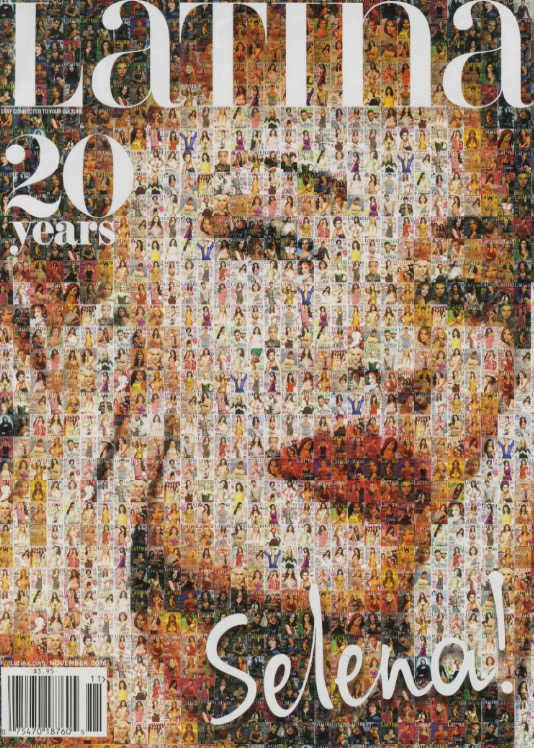
There are a lot of benefits in being a part of the Time Inc. family. We were born out of the People name; I’m sure you know the history and the story, Samir. During the tragic death of Selena, People covered the story and actually put Selena on the cover and that was way before my time here, but Armando still remembers the numbers. It sold over a million copies and everyone realized that this was an audience that was important. And that was way before the news that we saw in the last census.

Armando Correa: When they created People en Español, at the same time they created Teen People, but Teen People is gone and 18 years later we’re here celebrating our 20th anniversary. And Teen People grew faster than us. I remember we started with 120,000, and they went from 100,000 to 250,000, from 250,000 to a half million. And then, unfortunately, they disappeared a year later.
Samir Husni: I think they hit 1.6 million before they died.

Armando Correa: Exactly.

Samir Husni: Today, there is a lot of attention toward the Latino audience, whether it’s from the political right, left, or from the media; do you expect to see more magazines coming to the marketplace that will be integrated with all of the general interest magazines on the newsstand? Are we going see a bigger chunk of the newsstands carrying Hispanic-focused magazines?

Monique Manso: I don’t know. I think that the very early closure of Glam Belleza and Cosmo Latina was probably something that made people pause and wonder just what was the right recipe for success. I mean Hola!; again, a beautiful publication, but this isn’t their first time at the rodeo. They’ve tried this before and have been unsuccessful. So, I’m skeptical as well as to whether or not it’s going to happen. It’s also imported. There is no original content in Hola! Latinos are not stupid, so to give them a European-based publication with repurposed content that they can find on the web time and time again before it even hits the newsstand, I don’t think is the right way to go either.

So, I wouldn’t be so bold as to say that I could predict that there would be more magazines. I think the folks that we have to keep our eyes on are some of those millennial offerings that are out there and really trying to develop a completely new space in the Hispanic community. And they’re starting small, but with very good products and quite frankly, those are the kinds of folks that Armando and I are most interested in partnering with, because the other stuff; we have that down pat, right? Many people come to us looking for the scale that they can’t get on their own and we’re looking for ways to continue to develop new offerings, so I’m more focused on those kinds of spaces.

Armando Correa: And all these new products, they are concentrating on part of the market; we’re seeing the market as a whole.

Monique Manso: We’re branching out a lot in the digital space; as I said, with Ponte Bella and definitely Chica, keep your eye on those two, for sure. The other place is in the live events space. I told you about the 25 Most Influential Women experience, which I believe in addition to this consumer facing day of empowerment, careerism and professionalism can become so much more through E-learning series, networking events, speakers, bureaus and things like that.

And then in Hispanic Heritage month, we’ve created, quite frankly, the only one of its kind and the largest of its kind; a curated content experience with our Festival. So, there are amazing cultural events out there, such as Fiesta Broadway, and they are all phenomenal sampling opportunities. There are also amazing musical experiences out there, whether it’s the iHeartRadio Tour, etc., and those are all just concert experiences, but are phenomenal.

But what we’ve done is really bring together an entire experience during Hispanic heritage month that not only entertains, even though we’re People en Español, but in addition to entertaining, we inspire and inform and motivate. So, you’ll see us develop that more and more over time. It’s two full days of activities and we just celebrated our fifth year of this experience. So, five years later, again, many of our competitors have tried to launch live events’ experiences and they haven’t made it past year one or two. We bring the best and the brightest of Hollywood and Hispanic television, so whether it’s Wilmer Valderramam, who was there to inspire and motivate people to vote, to the most popular Univision and Telemundo talent; really, this live event experience is something that we continue to grow and that generates even more digital and social media content. And that’s really the space that we’re focused on.

Samir Husni: When we look at Time Inc. as a whole; the Essence Jazz Festival is one of the largest in the world, in terms of live events that’s hosted by a brand. And then you are doing live events and Time and Fortune are doing something on an international basis. From your experience and your work at Time Inc., is there any segment of the audience that you’re not reaching? Or do you feel you have it all covered?

Monique Manso: I think right now we have them covered. You’re right; the Essence Festival is the largest celebration of African American culture and that just turned 21-years-old. It happens in New Orleans every Fourth of July. We have a huge live events business coming out of Sports Illustrated. We’ve got the market cornered on the empowerment of Latino women and then the cultural celebration with Festival. Fortune’s Most Powerful Women Summit is an amazing experience that just passed, and now they have something for the millennial which is coming up in San Diego.

And then People is launching the Pro Beauty Tour and that will be focused on beauty, beauty, beauty. And EW has launched Pop Fest, which is all about pop culture. So, I think we’re pretty covered right now. I’m sure we’ll think of more. With Tasty we just did a breakfast event; it’s one of our new digital launches. Everything from epicurean to empowerment to sports to the Latino community to the African American community; we’ve got it all. And it’s becoming a real growing business for us.

Samir Husni: As we head toward electing a new president, any thoughts or worries about the upcoming election?

Armando Correa: We have 27 million Hispanics right now with the right to vote and I think if that entire 27 million Hispanics go and vote on November 8th, we will be deciding who will be the next president.

Monique Manso: Those Hispanics who don’t understand their rights or feel empowered to vote or feel as though their vote doesn’t matter; that’s the most important thing for us. It’s why we made it such a crucial part of our message during Festival on October 15th and 16th, because we feel the responsibility to use our power to convene; the power that Armando has to convene Latinos in such large numbers either through the printed page, through social media, or through digital. It’s our responsibility to use that power to convene to make them all understand how important their vote is.

Samir Husni: Is there anything that either of you would like to add?

Monique Manso: From my end, I’m just really proud of continuing to be the number one brand in this country for this community, and having the most affluent readers. As the Latino community becomes more successful, they become more empowered and more affluent; we continue to serve that community. We’ve got more moms, more homeowners, more millennials, than any of our competitors out there and I would just say that the listening tool that our editors have used has led to our success, and I think you’ll just continue to see us listen.

Armando Correa: People en Español is the number one brand in the United States and I think for the next year we’re looking for more penetration with Latin Americans. We’re working on it and you’re going to see that soon.

Samir Husni: If I showed up unexpectedly one evening to your home what would I find you doing; reading a magazine; reading your iPad; watching television; having a glass of wine; or something else?

Monique Manso: I have twin boys who are eight, so for me it’s all about spending quality time with them and making them feel special in the time that they have with me, whether it’s homework or watching a movie together. But if you caught me on a weekend, you’d also find me cooking, because it’s a real passion of mine and something very core to the Latino culture as well. That’s me, but Armando just released a book, so I’m sure you’ll catch him writing. (Laughs)

Armando Correa: For me, taking care of the kids at night and during the weekends, and between 9:00 p.m. and 2:00 a.m., I write. I published my first fiction novel, and I’m still writing. That’s my therapy, some people meditate; I write.

Samir Husni: My typical last question; what keeps you up at night?

Monique Manso: What keeps me up at night is how to best serve this community. If you’ve read the press recently, whether it’s around diversity in the workplace or Black Lives Matter; Corporate America, depending on how you look at it, can be struggling at times with how to be inclusive of our multicultural communities as a whole.

And so I think it’s really important that people in roles such as mine, which is the brand lead for People en Español and in such an important company like Time Inc., really sort of wave the baton loudly and proudly in front of everybody to ask, are we listening; are we including? And if we are to speak on behalf of our marketers to the community out there who is shopping for the products of our partners and who is watching their movies and driving their cars; let’s make sure that our inner organization looks like the external.

Armando Correa: I am very competitive and I am always trying to get all of the exclusives for the Hispanic market. Those exclusives have to be in People en Español. I’m fighting all of the time for all of the exclusives. People call me when they’re getting engaged or pregnant, and I want to know all of the exclusives, the biggest ones and the smallest ones.

Monique Manso: Yes, he’s about breaking the story fast and making sure that we’re the only ones to break it.

Armando Correa: And that’s my fight every night. At the same time, we run a business and I want to be in budget and those are some of the things that keep me up at night.

Samir Husni: Thank you.

h1

Gulfshore Life Magazine: A Regional Publication That’s Proving Local Interests Are A Grand Way For The Printed Page To Shine – The Mr. Magazine™ Interview With Brett Wilson, President & Group Publisher, Gulfshore Life

November 3, 2016

“I can tell you the obituary for the death of magazines has been written way too soon. We can see the longevity of magazines, not only with Gulfshore Life, but with all of Open Sky’s magazines; Austin Monthly, Marin Magazine, San Antonio Magazine and Oklahoma City. We can see a bright future for the regionalism of magazines.” Brett Wilson

gulfshore-life-art-coupBecoming involved in the community you live in has always been a good idea for everyone, magazines as well, and when you’re a regional publication; the more involvement, the better. Gulfshore Life magazine takes that theory to heart. Since 1970, Gulfshore Life magazine has captured the vibrant spirit, style and natural beauty of Southwest Florida’s Gulf Coast, from Fort Myers and Cape Coral down to Naples and Marco Island. And they show no signs of slowing down now.

Around a year ago, the powers-that-be at the magazine decided to bring a seasoned veteran of the publishing business to its table by hiring Brett Wilson as group publisher and president of the longstanding read. With Brett’s experience at titles such as Sports Illustrated and Southern Living and a host of other national titles, Gulfshore Life gained a coup when they brought him onboard. However, when I spoke with Brett recently in my office at the Magazine Innovation Center at the University of Mississippi, he told me in his own words that adjusting to a regional title after so many years of working at mass market brands was a bit tough. But it didn’t take him long to get into the swing of things, and now he describes Gulfshore Life as a Godsend to him.

Along with his past magazine experiences, Brett and I talked about the growth of regional magazines and how he felt that they had a very bright and promising future. And not only Gulfshore Life, but all of Open Sky Media’s titles, which include San Antonio Magazine and Austin Monthly, to name a few. And when it comes to native advertising, the accompanying boutique-sized magazines, Celebrate and Holiday Wish Book, are beautifully-done creations in and of themselves that offer advertisers a wonderful option for an artfully-crafted environment for their products. And there’s also a Gulfshore Business magazine that complements the creative brand nicely. It’s a win-win situation for everyone concerned.

So, I hope that you enjoy this very insightful trip into the world of regional magazines with a man who has now ran the gamut of publisher – from the national titles to local brands, and will tell you in a heartbeat that while he certainly believes in promoting and offering digital into the landscape of his brand; the death of print was highly exaggerated – the Mr. Magazine™ interview with Brett Wilson, president and group publisher, Gulfshore Life.

But first the sound-bites:

Brett Wilson

On why he is still doing print in this digital age: Well, it’s interesting. First I show them, Samir, my 450-page magazine from January and I say if print is dead then we must be in the wrong business, because we just cut down a lot of trees for our January issue. We’re a seasonal company, primarily dependent on the seasonality of the southwest Florida region. So, we can tell you with tangible facts that year-round we publish a magazine 12 times per year. As the season kicks in, starting in about September or October, you’ll see our magazine double and triple in size. So, there’s still a large demand for it. We’re selling a large percentage from off of the newsstands and we have demands for subscriptions.

On how the role of publisher has changed over the years: I think it’s come full circle. The job of a publisher today is more important than ever, because you have to understand both the church and state divisions, and understand how to monetize your product both digitally and in print without sacrificing the integrity of your journalism.

On whether he believes that imaginary wall between church and state exists today or it’s becoming more like the Berlin Wall: No, it’s not the Berlin Wall. I can tell you that in the early days you had to almost whistle by the editor’s office so that he wouldn’t catch you just walking by. Today, the wall has lowered to maybe fence status, where there’s a lot more handshaking and more cooperation. Good editors understand the need for, obviously, monetization of what they sell. There is a fine line. And the fine line is what the publisher can keep them from crossing.

On working for a regional publication versus a national one: It’s been a Godsend for me personally. The national business, the last 12 or 15 years of my career, I felt like it was pretty much a yearly undertaking to downsize my staff. It was death by a 1,000 cuts in the national space, well-documented by yourself and others. I’ve worked everywhere from USA Today to Time and Sports Illustrated, and in each one of those jobs we had to do more with less, which is what all businesses have to do. In the regional world, I think we’re seeing resurgence in the interest in the magazines. We think of ourselves as craft beer or craft cheese; it’s handmade in a region, and people love the handmade aspects of what we do in the magazine business in the region. They’re passionate about it.

On whether the print product showcases the “handmade” aspect better or it’s hand-in-hand with digital: It’s hand-in-hand and it depends on the user. We do know that a lot of people depend on our digital assets to plan their weekends. Since we’re a monthly, we’re not as timely in the print product, so they definitely use our digital aspects to plan what restaurant they’re going to review, when they look at past issues of our magazine. But they still curl up with our magazine and I think in many ways they like having it on their coffee tables.

On what has been the most pleasant moment for him since he became publisher and president of Gulfshore Life: What has been so pleasurable that I haven’t experienced in the last five or six years of my life was sitting down at a table and having the chef of a restaurant come over and introduce himself and try to provide me a free meal or try and buy me a drink because he’s so enamored of the magazine that we publish. The love and the attention that our magazine gets in our region makes you feel very special.

On the biggest stumbling block he’s had to face and how he overcame it: I came down about a year ago and I had starry eyes, thinking that I could bring a lot of my “big” magazine experience to make it work in a microcosm like what we do in the region. And I stumbled a little bit. I have to be sure that what I do now is not just because it worked in a big magazine format. A lot of what we did in the big scale; it’s not just as simple as scaling it down for the local. And so I’ve had to adapt the way I look at business and be much more attentive to what my existing staff tells me, and to listen more. It’s been humbling for me.

On anything else he’d like to add: I can tell you that we’ve redesigned the magazine, which was a great process for all of us on my staff to go through. We increased the size of the magazine; we gave it a new, modern, fresher look. But I can tell you the obituary for the death of magazines has been written way too soon.

On what someone would find him doing if they showed up unexpectedly at his home one evening: I am very proud to say that I’m 53-years-old and almost every day I go to an outdoor community swimming pool and take 45 minutes to exercise in an outdoor pool and that’s year-round. I couldn’t do that in Connecticut. (Laughs) And you may catch me with a glass of wine, watching a beautiful sunset off of the Gulf Shore coast, which is also something that can’t be missed and I try at least twice a week to catch one of those sunsets.

On what keeps him up at night: Making sure that my staff and our business model is looking ahead and being as bright as we possibly can be for the light that we need to shine on our community. And making sure that we don’t get complacent and making sure that we don’t turn into only a fashion magazine. That we talk about what’s important in our community and that’s a broad reach of topics.

And now the lightly edited transcript of the Mr. Magazine™ interview with Brett Wilson, president and group publisher of Gulfshore Life magazine.

Samir Husni: You’re the publisher of Gulfshore Life magazine and a host of other magazines in the Florida region; why are you still doing print in this digital age? What do you say to people when they ask you that question?

gulfshore-life-businessBrett Wilson: Well, it’s interesting. First I show them, Samir, my 450-page magazine from January and I say if print is dead then we must be in the wrong business, because we just cut down a lot of trees for our January issue.

We’re a seasonal company, primarily dependent on the seasonality of the southwest Florida region. So, we can tell you with tangible facts that year-round we publish a magazine 12 times per year. As the season kicks in, starting in about September or October, you’ll see our magazine double and triple in size. So, there’s still a large demand for it. We’re selling a large percentage from off of the newsstands and we have demands for subscriptions.

But we haven’t walked away from digital; we have digital as a supplement. We use a lot of social media. We have a lot of events. We’re still targeting our normal demographics, which are 55+, but we’re also going after incognizant, because there are a lot of younger families staying in Florida.

Samir Husni: You have a history; you’ve been on the business/publishing side since your days with Southern Living, Sports Illustrated, Time, Parade, just a host of titles.

Brett Wilson: I can’t keep a job, Samir. (Laughs)

Samir Husni: (Laughs too). How has the job of publisher changed over the years? Are you still doing the same job that you did on the West Coast for Southern Living selling ads?

Brett Wilson: I think it’s come full circle. The job of a publisher today is more important than ever, because you have to understand both the church and state divisions, and understand how to monetize your product both digitally and in print without sacrificing the integrity of your journalism.

In the early days of Time Inc. and certainly Southern Living, it was taught and hammered into me that we would never sell our soul; never sell the integrity of what we do. But today with native advertising and with a lot of the other social media pushing the edges of integrity, I think a publisher’s job is to be a Solomon-like, benevolent dictator who is making sure that while we still monetize the product, we keep that product with strong editorial integrity.

Samir Husni: Do you think that imaginary wall between church and state still exists today, or do you feel it’s becoming like the Berlin Wall?

Brett Wilson: No, it’s not the Berlin Wall. I can tell you that in the early days you had to almost whistle by the editor’s office so that he wouldn’t catch you just walking by. Today, the wall has lowered to maybe fence status, where there’s a lot more handshaking and more cooperation. Good editors understand the need for, obviously, monetization of what they sell. There is a fine line. And the fine line is what the publisher can keep them from crossing.

It depends on the magazine you work in. Obviously, we’re a lifestyle magazine, but we also kind of fancy ourselves as the Vanity Fair of our region. We’ve published award-winning stories; we’ve published stories on heroin addiction recently and what it has done to the region. We’ve embedded a reporter in the Dunbar section of Fort Myers, which is an impoverished section, primarily African American, and we report on all of the struggles that that community has had.

So while we’re a lifestyle magazine, we’re also not afraid to be hard-hitting journalists. And as a result we have to make sure that we still keep that fence up, but we also want to make sure that we handshake with both sides of the business.

Samir Husni: How is it to work for a regional publication versus a national one?

gulfshore-life-celebrateBrett Wilson: It’s been a Godsend for me personally. The national business, the last 12 or 15 years of my career, I felt like it was pretty much a yearly undertaking to downsize my staff. It was death by a 1,000 cuts in the national space, well-documented by yourself and others. I’ve worked everywhere from USA Today to Time and Sports Illustrated, and in each one of those jobs we had to do more with less, which is what all businesses have to do. But it’s been a difficult time in the last 10 or 15 years. Time Inc. was where I spent 21 years of my career and as stories will be written and have been written, changes they are dramatic.

In the regional world, I think we’re seeing resurgence in the interest in the magazines. We think of ourselves as craft beer or craft cheese; it’s handmade in a region, and people love the handmade aspects of what we do in the magazine business in the region. They’re passionate about it.

Samir Husni: Do you think that print showcases that “handmade” aspect more than digital or it’s hand-in-hand?

gulfshore-life-holiday-wish-bookBrett Wilson: It’s hand-in-hand and it depends on the user. We do know that a lot of people depend on our digital assets to plan their weekends. Since we’re a monthly, we’re not as timely in the print product, so they definitely use our digital aspects to plan what restaurant they’re going to review, when they look at past issues of our magazine.

But they still curl up with our magazine and I think in many ways they like having it on their coffee tables. They like the fact that they’re part of the community, even though they may only live in that community eight months out of the year.

Samir Husni: What has been the most pleasant moment for you since becoming publisher and president of Gulfshore Life?

Brett Wilson: What has been so pleasurable that I haven’t experienced in the last five or six years of my life was sitting down at a table and having the chef of a restaurant come over and introduce himself and try to provide me a free meal or try and buy me a drink because he’s so enamored of the magazine that we publish.

The love and the attention that our magazine gets in our region makes you feel very special. So, it’s not just one moment, it’s a daily walk through the community, where they have a respect and it’s probably akin to the old-time newspaper publisher in a town where everyone needs each other and it’s a symbolic relationship. And it’s been great. That has been a very pleasurable part of all of this; the happiness that we bring to people.

Samir Husni: What has been the biggest stumbling block for you and how did you overcome it?

Brett Wilson: I came down about a year ago and I had starry eyes, thinking that I could bring a lot of my “big” magazine experience to make it work in a microcosm like what we do in the region. And I stumbled a little bit. I have to be sure that what I do now is not just because it worked in a big magazine format. A lot of what we did in the big scale; it’s not just as simple as scaling it down for the local. And so I’ve had to adapt the way I look at business and be much more attentive to what my existing staff tells me, and to listen more. It’s been humbling for me.

Samir Husni: Is there anything else you’d like to add?

Brett Wilson: I can tell you that we’ve redesigned the magazine, which was a great process for all of us on my staff to go through. We increased the size of the magazine; we gave it a new, modern, fresher look.

But I can tell you the obituary for the death of magazines has been written way too soon. We can see the longevity of magazines, not only with Gulfshore Life, but with all of Open Sky’s magazines; Austin Monthly, Marin Magazine, San Antonio Magazine and Oklahoma City. We can see a bright future for the regionalism of magazines.

Samir Husni: If I showed up unexpectedly at your home one evening, what would I find you doing; reading a magazine; reading your iPad; having a glass of wine; watching television; or something else?

Brett Wilson: I am very proud to say that I’m 53-years-old and almost every day I go to an outdoor community swimming pool and take 45 minutes to exercise in an outdoor pool and that’s year-round. I couldn’t do that in Connecticut. (Laughs) And you may catch me with a glass of wine, watching a beautiful sunset off of the Gulf Shore coast, which is also something that can’t be missed and I try at least twice a week to catch one of those sunsets.

Samir Husni: My typical last question; what keeps you up at night?

Brett Wilson: Making sure that my staff and our business model is looking ahead and being as bright as we possibly can be for the light that we need to shine on our community. And making sure that we don’t get complacent and making sure that we don’t turn into only a fashion magazine. That we talk about what’s important in our community and that’s a broad reach of topics. That keeps me up at night. I like to think about what we can do better. And we can always do better.

Samir Husni: Thank you.

h1

Kazoo: A Magazine That Puts A Different Perspective On What It Means To Be A Little Girl In Today’s World – It’s Not Always About The Lip Gloss – The Mr. Magazine™ Interview With Erin Bried, Founder, Kazoo Magazine

October 31, 2016

A Mr. Magazine™ Launch Story

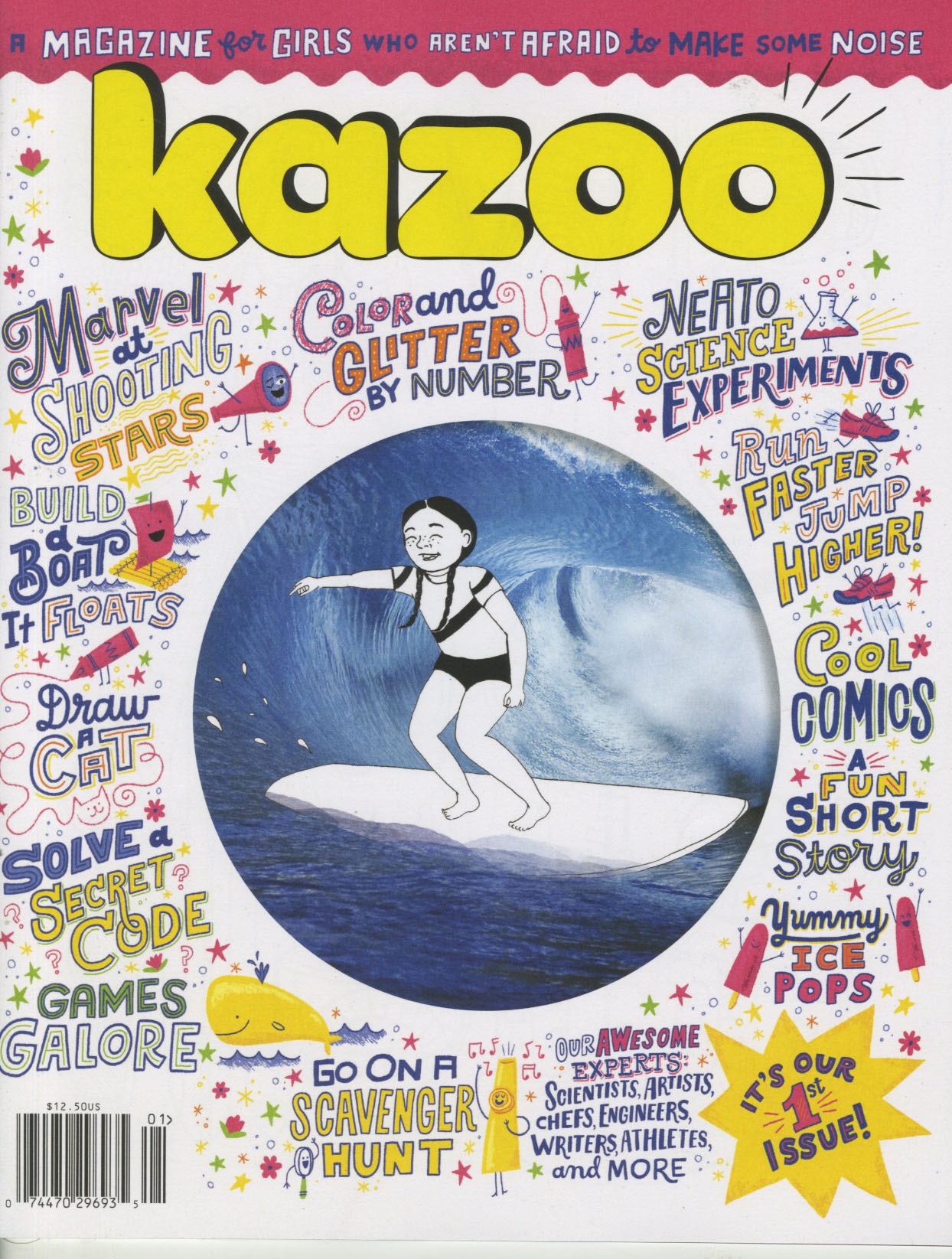
Kazoo issue number 2.

Kazoo issue number 2.

“It does feel like a radical thing to do at this moment, for sure. But I think kids in particular still crave, and in fact, require printed material. There are statistics from the American Academy of Pediatrics that children have on average seven hours of screen time per day, which is insane. No parent wants that for their child. And I don’t think it’s satisfying for kids either; it’s not engaging. And I know this is true of my daughters; kids like to have that tactile sensation; they like to turn and feel the pages and see the bright colors. And also go back to stories over and over again, without all those annoying popup ads and the low-battery lights; all of those things.” Erin Bried (On whether anyone asked her during this magazine journey if she was out of her mind to launch a print publication in this digital age)

“The act of holding a magazine in your hands and turning the pages gives you some breathing room and some time to focus and concentrate. It gives you a moment to pay attention and sit with material and come back to stories over and over in a way that the Internet doesn’t allow. It’s just so fast paced. It just gives kids space to think and dream. With Kazoo that’s what I want for them. I want girls and boys too, but girls especially, to come to these pages and be inspired. Here’s a scientist who’s studying space and meteorites that come to Earth, and what if I could do that? And I don’t think you have the room to daydream like that on the Internet and to imagine your future like that when you’re on the computer and you’re constantly clicking forward and backward and bookmarking and closing popup ads. It just doesn’t give you the space to do that like print does.” Erin Bried

Kazoo is a new kind of print magazine for girls – one that offers a world filled with more than the color pink and shiny lip glosses. Its founder, Erin Bried, is an author and veteran of the publishing industry. She decided to launch Kazoo magazine as an alternative to the staunchly stereotypical girl’s magazines that are out there in the marketplace and give her readers, target age 5-10 years old, something a little meatier to engage with; a magazine that promotes critical thinking and strong women, both past and present, and gives its readers successful and admirable role models to consider.

It’s a lovely magazine with a fresh and energetic take on the world of little girls. And it’s a Mr. Magazine™ selection for one of the 30 Hottest New Launches, well-deserved, I might add. I spoke with Erin recently and we talked about her vision for Kazoo, both before the first page was ever printed and now, after the second issue has been completed. Having been unable to find any magazines that reflected her daughter’s passions and interests, such as science and tree-climbing, Erin decided that it was time to fill that niche. So, Kazoo was born through Kickstarter and a lot of support from readers who obviously agreed with Erin, as her campaign was the highest-grossing journalistic endeavor in history for the crowdfunding resource.

I hope that you enjoy this conversation with a woman who knows innately that to offer children the world, there’s no better way to do it than through a great magazine; the Mr. Magazine™ interview with Erin Bried, founder, Kazoo magazine.

But first the sound-bites:

Erin Bried. (Photo by Circe)

Erin Bried. (Photo by Circe)

On that moment when she discovered that there was a niche, a place for a new type of kid’s magazine: Yes, it all revolved around that trip to the bookstore with my five year old. We were picking up some books and then we stopped by the newsstand and I looked at all of the titles. I’m familiar with the adult magazines, certainly, having been in the industry for so long. But I hadn’t really paid too much attention to the kid’s magazines up until then, when my older daughter came of age and started reading them. So, I figured we would stop by the newsstand and see if we could find something good for her to read. And I was so shocked by the offering on the newsstand and the lack of diversity for girls. Every cover we saw that day had a little girl in lip gloss and makeup on the cover; stories on good manners or pretty hair, or about her personal drama, and I just wanted so much more for my daughter.

On the prevalence to launch new magazines these days via a crowdfunding source such as Kickstarter: I think it’s such a fantastic platform for us. I chose to launch through Kickstarter because I wanted to see if there was a big enough audience right away. I know how hard the print landscape is right now and I wanted to make sure that I was launching a successful enterprise with a big enough and passionate enough audience behind it.

On whether anyone stopped her during this journey to ask if she was out of mind for launching a print magazine in this digital age: It does feel like a radical thing to do at this moment, for sure. But I think kids in particular still crave, and in fact, require printed material. There are statistics from the American Academy of Pediatrics that children have on average seven hours of screen time per day, which is insane. No parent wants that for their child. And I don’t think it’s satisfying for kids either; it’s not engaging. And I know this is true of my daughters; kids like to have that tactile sensation; they like to turn and feel the pages and see the bright colors. And also go back to stories over and over again, without all those annoying popup ads and the low-battery lights; all of those things.

On the biggest stumbling block she’s had to face and how she overcame it: I wouldn’t say that there has been a stumbling block; I think it was a tremendous blessing for us, but we took off so quickly. We finished the Kickstarter and I had scheduled the first issue to come out only three months later, which in retrospect I wish I would have allowed myself a little bit more time (Laughs), because we spent the first few weeks fulfilling all of the rewards for the Kickstarter. So we were sending T-shirts and bags; kazoos and stickers all over the world. And that was very time-consuming. We’ve had such tremendous growth so quickly, and for that I am so excited and grateful. And we’ve had to adapt to that quickly as well. I was doing the envelope-licking and stuffing and managing the subscriber data base myself with this increasingly unwieldy Excel spreadsheet. We finally got help for that and I think it will make a huge difference in freeing up my time and brain space to think harder and longer about the actual making of the magazine.

On the most pleasant moment for her throughout this experience: Despite all of the glue on my tongue from the envelope licking, the entire process has been so exciting, heartening and inspiring. And I have loved every second of it. We have gotten such incredible reader feedback everyday on social media. And through email we get pictures of our readers clipping the magazine with their art projects. Now we’re starting to get mail from them with pictures they’ve drawn and funny jokes they want to share, and questions they want us to ask scientists.

On whether she thinks there is room for more children’s magazines in the marketplace that are purely circulation driven and with no ad revenue: I certainly think there is more room; we’re definitely proof of that. There is nothing like Kazoo on the newsstands. There is nothing with such a strong point of view. And I think that’s what sets up apart; every story in Kazoo is either developed or inspired by a top woman in her field.

On whether she believes that’s the future of the magazine industry; to be more circulation driven than advertising driven, especially in print: We don’t have any ads between our covers and I think that’s because no parent wants their kid wading through advertisements; these aren’t savvy consumers, and they don’t know the difference between editorial and ads. And I want our editorial to remain pure. Most magazines make most of their revenue through advertising and I feel like that can be a problematic paradigm.

On whether she hesitated when she made the cover price of Kazoo $12.50: I was a little concerned about that, but then I thought of all of these major consumer magazines and if you pulled out every ad page, the quantity of editorial in Kazoo is certainly comparable. So, will parents pay a higher premium to protect their children from a constant barrage of advertisements; I think so.

On having an online presence: You have to have an online presence, that’s the way we connect with the parents of our readers and let them know what we’re doing. To be a quarterly; you put your issue out and then you’re sort of quiet for a few months, and I want to maintain the relationship throughout the whole year, every day.

On what role she thinks the printed magazine plays in today’s digital age: The act of holding a magazine in your hands and turning the pages gives you some breathing room and some time to focus and concentrate. It gives you a moment to pay attention and sit with material and come back to stories over and over in a way that the Internet doesn’t allow. It’s just so fast paced. It just gives kids space to think and dream.

On whether she will publish a Kazoo for boys: As far as boys go, we certainly welcome boys as our readers; our target is girls, but I think it would be amazing for boys to subscribe to Kazoo. There’s nothing about the actual content of the magazine that boys couldn’t read and enjoy. They could do the mazes, read the short stories, and do the science experiments. There is nothing gendered about it. Would I launch a separate magazine for boys? Not right now.

Erin Bried  with daughters, Ellie (5) and Bea (1). The daughters are Kazoo’s Tiny and Teeny Editors. (Illustration by Libby Vanderploeg)

Erin Bried with daughters, Ellie (5) and Bea (1). The daughters are Kazoo’s Tiny and Teeny Editors. (Illustration by Libby Vanderploeg)

On what made her decide to go with the handwritten-type covers: I wanted it to be colorful and playful and engaging, and also accessible for our readers. Our five-year-old readers are only just learning to read, so they’ll be reading with their parents. Our ten-year-old’s certainly will be reading by themselves, so I wanted it to engage and be accessible to all of our readers.

On anything else she’d like to add: One thing I would like to say about Kazoo is you hear a lot of talk about how we need to inspire our girls and help them feel confident and all of these different things. That’s often the talk we hear about what girls need and require, but I think what’s different about Kazoo is young girls are our target readers, ages 5-10, and they already know that they’re smart. They already know that they can be silly and run fast and they can do anything, this is not new information to them. It would be shocking to them if you told them otherwise.

On what someone would find her doing if they showed up at her home one evening unexpectedly: Right now, after the kids go to bed, I’ll often hop back on the computer and do more work while the house is quiet. But yes, a glass of wine is always such a nice way to end the day, and some conversation with my better half. Going out to dinner in Brooklyn; any of those things sound great.

On what keeps her up at night: (Laughs) What doesn’t keep me up at night? It’s been a little bit difficult lately. My kindergartner was having a thing at school where her whole class takes a bite of an apple at the same time, and I woke up in the middle of the night because I had forgotten to put an apple in her bag. I got up and put the apple in her bag, so it can be something as trivial as that, to what artist are we going to use for the spring issue? Which fiction author will write our next short story?

And now the lightly edited transcription of the Mr. Magazine™ interview with Erin Bried, founder, Kazoo magazine.

Samir Husni: You’ve managed to receive a lot of publicity and write-ups about Kazoo and about your story; would you mind telling me about that moment when you discovered there was a niche, a place for a new kind of kid’s magazine?

Erin Bried: Yes, it all revolved around that trip to the bookstore with my five year old. We were picking up some books and then we stopped by the newsstand and I looked at all of the titles. I’m familiar with the adult magazines, certainly, having been in the industry for so long. But I hadn’t really paid too much attention to the kid’s magazines up until then, when my older daughter came of age and started reading them. So, I figured we would stop by the newsstand and see if we could find something good for her to read.

And I was so shocked by the offering on the newsstand and the lack of diversity for girls. Every cover we saw that day had a little girl in lip gloss and makeup on the cover; stories on good manners or pretty hair, or about her personal drama, and I just wanted so much more for my daughter. She’s not interested in any of that. She’s more interested in climbing trees, running fast and playing pirates. There was nothing on the newsstand that we saw to reflect her interests and her passions.

So, we left that day with no magazines and she was just totally OK with it; she didn’t think twice about it. As we were walking home I kept thinking about it. I kept thinking how terrible it was that I could not find anything for her and that we could do so much better for our daughters. These messages have real consequences in their lives; we’ve seen this in so much of the research.

Well, I tucked it in the back of my mind, but I kept thinking that somebody should do something about it, and it became one of those ideas that stuck. It kept percolating and percolating. Finally I thought if somebody is going to do something; I can’t wait on that. I had the background and I certainly had the skills, so I decided to do it. I was going to be the one to bring this into the world. And then shortly after that we launched the Kickstarter.

Samir Husni: It seems that almost three out of every ten new magazines I see have been launched via crowdfunding; via Kickstarter.

Erin Bried: I think it’s such a fantastic platform for us. I chose to launch through Kickstarter because I wanted to see if there was a big enough audience right away. I know how hard the print landscape is right now and I wanted to make sure that I was launching a successful enterprise with a big enough and passionate enough audience behind it.

And I was so happy and inspired to find out that there were so many other parents and uncles, grandparents and neighbors who felt the same way I did. Within 30 days we had raised over $171,000, which made us when we closed our campaign, the highest journalism Kickstarter campaign in history. And that was so exciting.

Samir Husni: Erin, you’re a product of this magazine industry and have been involved with so many things; did anyone stop you during this entire journey and ask you were you out of your mind to launch a print magazine in this digital age?

Kazoo

Kazoo

Erin Bried: (Laughs) It does feel like a radical thing to do at this moment, for sure. But I think kids in particular still crave, and in fact, require printed material. There are statistics from the American Academy of Pediatrics that children have on average seven hours of screen time per day, which is insane. No parent wants that for their child. And I don’t think it’s satisfying for kids either; it’s not engaging. And I know this is true of my daughters; kids like to have that tactile sensation; they like to turn and feel the pages and see the bright colors. And also go back to stories over and over again, without all those annoying popup ads and the low-battery lights; all of those things.

Also, Kazoo is designed for kids to actually use and manipulate the pages. There are search and finds, where they will circle the hidden objects; there are mazes where they will take a crayon or pencil and mark right on the page and I think that’s very important.

And I was also heartened by the statistics that the sales of children’s books were up; they’ve gone up steadily over the years. I think it was a 13 percent rise last year, so children may buck this trend. (Laughs)

Samir Husni: Now, with two issues under your belt; what has been the biggest stumbling block that you’ve had to face and how did you overcome it?

Erin Bried: I wouldn’t say that there has been a stumbling block; I think it was a tremendous blessing for us, but we took off so quickly. We finished the Kickstarter and I had scheduled the first issue to come out only three months later, which in retrospect I wish I would have allowed myself a little bit more time (Laughs), because we spent the first few weeks fulfilling all of the rewards for the Kickstarter. So we were sending T-shirts and bags; kazoos and stickers all over the world. And that was very time-consuming.

But we managed to pull off a wonderful first issue. We had all of these great contributors from Alison Bechdel to Diana Nyad and Mickalene Thomas. So we did it. It wasn’t easy and I didn’t sleep very well, but we made it. So, I would have allowed more time.

And as I said earlier in our conversation, we’ve had such tremendous growth so quickly, and for that I am so excited and grateful. And we’ve had to adapt to that quickly as well. I was doing the envelope-licking and stuffing and managing the subscriber data base myself with this increasingly unwieldy Excel spreadsheet. We finally got help for that and I think it will make a huge difference in freeing up my time and brain space to think harder and longer about the actual making of the magazine.

Samir Husni: What has been the most pleasant moment for you throughout this experience?

Erin Bried: Despite all of the glue on my tongue from the envelope licking, the entire process has been so exciting, heartening and inspiring. And I have loved every second of it. We have gotten such incredible reader feedback everyday on social media. And through email we get pictures of our readers clipping the magazine with their art projects. Now we’re starting to get mail from them with pictures they’ve drawn and funny jokes they want to share, and questions they want us to ask scientists.

And I have never before in my career felt so connected with the reader and so conscious of doing right by them. I want to exceed their expectations every issue, and I’m talking about both the kids and the parents. I just want to make it great and I want everybody to be excited. I want every issue to be better than the last. And just seeing the smiles on their faces and the art projects that they’ve been inspired to do, and getting these letters from parents that say things like their kids have never read out loud before, but they have been reading the stories over and over again to everyone. There is nothing better than that; there’s nothing more satisfying than that.

Samir Husni: There are plenty of children’s magazines in the marketplace and as you’ve said, the majority of them cater to the Barbies and the princesses of the category. When you look at magazines like Highlights, which for 70 years never accepted advertising and depended on circulation; do you think there is more room for children’s publications today that are along the same route as Kazoo, which is purely circulation driven with no ad revenue?

Erin Bried: Yes, Highlights is amazing with what they have done and what they’ve grown. I certainly think there is more room; we’re definitely proof of that. There is nothing like Kazoo on the newsstands. There is nothing with such a strong point of view. And I think that’s what sets up apart; every story in Kazoo is either developed or inspired by a top woman in her field.

Samir Husni: Do you think that’s the future of the industry; to be more circulation driven, rather than advertising driven, especially in print?

Erin Bried: We don’t have any ads between our covers and I think that’s because no parent wants their kid wading through advertisements; these aren’t savvy consumers, and they don’t know the difference between editorial and ads. And I want our editorial to remain pure. Most magazines make most of their revenue through advertising and I feel like that can be a problematic paradigm.

Samir Husni: You’re someone who is in the industry; you’re not some novice who just one day decides to start a magazine. You know how the industry works. Did you hesitate when you put a cover price of $12.50 on the magazine? For $12.50 I can get a whole year of some magazines that will remain nameless.

Erin Bried: Yes, it’s true, I was a little concerned about that, but then I thought of all of these major consumer magazines and if you pulled out every ad page, the quantity of editorial in Kazoo is certainly comparable. So, will parents pay a higher premium to protect their children from a constant barrage of advertisements; I think so.

There are two other reasons for our cover price. One is we print in the U.S.A., in Vermont, on recycled paper, which I think is important when you’re making a magazine for children to keep their futures in mind; we wanted to do it in a sustainable way.

And finally, I feel very passionately about the importance of paying your contributors, and I think that’s one of the problems with digital media. You have all of these websites that are asking for content and are not paying their contributors as well. And I want top contributors and I want to value our artists for their work. And to do that, you need to pay them.

Samir Husni: I love your P.S. in the first issue: Although Kazoo is print only by design, we have some cool stuff online.

Erin Bried: You have to have an online presence, that’s the way we connect with the parents of our readers and let them know what we’re doing. To be a quarterly; you put your issue out and then you’re sort of quiet for a few months, and I want to maintain the relationship throughout the whole year, every day. And let people know what we’re up to and what we’re excited about. We want to hear from them and find out what they want to see more of so that we can keep evolving the magazine, and keep everyone excited, happy and satisfied.

Samir Husni: In this day and age, where you see we are bombarded by information and we’re living in what I call an “isolated connectivity,” what role do you think the print magazine plays in today’s new generation?

Erin Bried: The act of holding a magazine in your hands and turning the pages gives you some breathing room and some time to focus and concentrate. It gives you a moment to pay attention and sit with material and come back to stories over and over in a way that the Internet doesn’t allow. It’s just so fast paced. It just gives kids space to think and dream.

With Kazoo that’s what I want for them. I want girls and boys too, but girls especially, to come to these pages and be inspired. Here’s a scientist who’s studying space and meteorites that come to Earth, and what if I could do that? And I don’t think you have the room to daydream like that on the Internet and to imagine your future like that when you’re on the computer and you’re constantly clicking forward and backward and bookmarking and closing popup ads. It just doesn’t give you the space to do that like print does.

One thing that I love that we do in Kazoo is that we illustrate all of our experts as they were when they we were young girls. So, I get photos of all of them when they were girls to give to whoever is illustrating our current issue, we have a different illustrator every issue, and they illustrate our experts. We get their childhood photos and we draw them as they were when they were kids, so our readers can more easily see themselves in these future positions of power. What does a future Fulbright Award winning cosmos chemist look like? She looks just like me. Or what does a future Olympian look like? She looks just like me. A future major artist or a future record-breaking swimmer; what do they look like? I just want our readers to be able to see themselves in every page of the magazine and imagine a future where they can be anything.

Samir Husni: Will you publish a Kazoo for boys?

Erin Bried: We get so many emails from parents asking about a Kazoo for teenaged girls and I always laugh and I’m so flattered that people will write and think why not just launch two magazines at once. (Laughs) It’s a wonderful idea, but I don’t think I can do that right now.

As far as boys go, we certainly welcome boys as our readers; our target is girls, but I think it would be amazing for boys to subscribe to Kazoo. There’s nothing about the actual content of the magazine that boys couldn’t read and enjoy. They could do the mazes, read the short stories, and do the science experiments. There is nothing gendered about it.

It would be amazing for them to see all of these wonderful women role models, because we don’t see them when you look around in popular culture. We don’t see them as much in politics, or hanging on the walls of our museums or in our Fortune 500 companies. We just don’t see women as much, so I think it’s important to carve out that niche for girls. We don’t see them even in children’s books. Boys are 1.6 times more likely to be in the title of a children’s book than a girl. It’s important to create this space for girls.

Boys certainly have a lot of gender expectations that are put on them that are as unfair as the gender expectations that are often put on girls. Would I launch a separate magazine for boys? Not right now.

Samir Husni: I have to ask you about the design. What made you decide to go with handwritten covers; what was your thinking behind that?

Erin Bried: I wanted it to be colorful and playful and engaging, and also accessible for our readers. Our five-year-old readers are only just learning to read, so they’ll be reading with their parents. Our ten-year-old’s certainly will be reading by themselves, so I wanted it to engage and be accessible to all of our readers.

And we also made a conscious decision not to picture any girls on our pages. You’ll see that there are no photos of real girls on any page, because I never wanted our readers to start comparing themselves to anyone else and think that they don’t look right or doing it right; that they don’t look happy enough or just whatever. I wanted them to totally be lost in their own experience. So, that was a conscious decision not to picture girls on any pages. And it was a good one. It allows us to be really playful with our illustrations and we often combine illustrations with photos, which I think is really fun and engaging, and offers a lot of depth and diversity.

I have such a great team helping me; Nia Lawrence is our art director and Andie Diemer is our photo editor. I just feel so grateful to be working with such smart and creative people.

Samir Husni: Is there anything else you’d like to add?

Erin Bried: One thing I would like to say about Kazoo is you hear a lot of talk about how we need to inspire our girls and help them feel confident and all of these different things. That’s often the talk we hear about what girls need and require, but I think what’s different about Kazoo is young girls are our target readers, ages 5-10, and they already know that they’re smart. They already know that they can be silly and run fast and they can do anything, this is not new information to them. It would be shocking to them if you told them otherwise.

Kazoo’s mission is to reinforce what they already know. If you go to playground and you look at young girls play, they’re screaming, running, hanging upside down; they’re being strong; they’re already amazing. And Kazoo is just reinforcing in them what they already know, so that by the time they do get to adolescence, which is typically when young girls start to question their confidence, our Kazoo readers will be fortified, they will be more likely to question anybody who makes them feel wrong or that they can’t do something, than they would themselves.

I’d also like to say that I don’t have a problem with princesses, just that there is more out there than the color pink for girls. Kazoo is not an anti-princess magazine in any way; it’s just a magazine that offers a whole world out there.

Samir Husni: If I showed up at your home one evening unexpectedly what would I find you doing; reading a magazine; reading your iPad; having a glass of wine; watching television; or something else?

Erin Bried: Right now, after the kids go to bed, I’ll often hop back on the computer and do more work while the house is quiet. But yes, a glass of wine is always such a nice way to end the day, and some conversation with my better half. Going out to dinner in Brooklyn; any of those things sound great.

I feel like it’s been a while since I’ve done any of those things. Right now it’s still fast and furious startup mode.

Samir Husni: My typical last question; what keeps you up at night?

Erin Bried: (Laughs) What doesn’t keep me up at night? It’s been a little bit difficult lately. My kindergartner was having a thing at school where her whole class takes a bite of an apple at the same time, and I woke up in the middle of the night because I had forgotten to put an apple in her bag. I got up and put the apple in her bag, so it can be something as trivial as that, to what artist are we going to use for the spring issue? Which fiction author will write our next short story?

It’s such exciting stuff to think about, and I guess I’m up because I’m excited about everything we can do. There’s so much to do and having only put out two issues so far I have a list of ideas longer than my arm. It’s just so amazing and I feel so grateful and lucky to know I have a job where I can think, who do I want to talk to? Which writer in the whole world do I want to talk to next about writing and getting writing activities or lessons from to teach our readers? Which amazing woman should we feature in the next maze, where they can meet her from one point to her destination? We’ve done Jane Goodall, Into the Forest of Tanzania; we’ve done Diana Nyad, from Cuba to Florida; who do we want to feature next in this maze? It’s just all so exciting.

The whole world is out there for us to explore and to share with our readers; that’s what keeps me up at night.

Samir Husni: Thank you.

h1

Longevity And History In Magazines: The Celebrations Continue…

October 26, 2016

A Mr. Magazine™ Musing…

winespectatorhorseillustratedowlmississippisheen Recently I published an anniversary commemoration blog for several magazines that had proven their “stuff” over the years. No surprise in my wonderful world of print there are more that need to be recognized. Was there ever any doubt?

So it is with the greatest of pleasure I salute the following titles on their anniversary milestones…may you celebrate many, many more!

Among those celebrating this week are Wine Spectator that launched in 1976 with an initial investment of $40,000. A bonus reprint of that first issue is included inside the 40th anniversary. The magazine today has an audited circulation of 391,000 and a readership of 3.2 million.
Three magazines are celebrating 40 years of publishing, Horse Illustrated, Owl, and Wine Spectator; celebrating 35 years is Mississippi magazine and 10 years is Sheen magazine. Congratulations to one and all.

Salute! And if you are celebrating an anniversary please send me a note, or better yet, an invite and I will be sure to include your magazine in a future Mr. Magazine™ Musing…

h1

Ad Sales, Consulting & The Business Side Of The Magazine Industry In A Very Honest & Practical Way – The Mr. Magazine™ Interview With James G. Elliott, President, The James G. Elliott Company.

October 26, 2016

“…We saw our own industry stand up and use words like “when the magazine industry goes out of business, we’re moving towards that with our digital products.” I will never forget that. And I think that that is crazy. This is the way I feel. We’re now seeing the slowdown of that kind of talk and simply accepting that magazines are a horizontal medium for some; for some they can be a vertical offshoot, but they have a place in the media world.” James G. Elliott (on whether he believes the magazine industry is slow to react to thing)…

jimelliott0015lorescropThe James G. Elliott Company, which began as a publishers’ rep some 30 years ago, has evolved into the nation’s largest national outsourced media ad sales company and full-service media solutions consultancy for print and digital publishers and organizations. Its president, James G. Elliott (Jim) and I have been friends and professional associates for years. So, when it came to taking the pulse of the buyers, sellers and marketing community in general, I knew Jim was my best resource.

For more than 30 years, he has worked on the business side of the magazine industry, offering solutions and publishing services to many, many in the media industry, across the spectrum, from B to B to consumer magazines. If it’s happening in advertising and marketing, you can bet Jim knows about it.

I spoke with Jim recently and we talked about some of the problems and some possible solutions for the world of magazines and magazine media. We also touched on his newly released third study, done with Kantar Media to understand the challenges today’s Media Planners, Buyers and Sellers face, and to discover areas where expectations are misaligned. It was a very interesting conversation. To access the study see link at the end of the interview.*
So, sit back and relax and enjoy the Mr. Magazine™ interview with James G. Elliott as we discuss the complex, but fascinating world that is the business side of magazines.

But first the sound-bites:

On what he is seeing from the advertising/marketing aspect of magazines and magazine media: From the advertiser and agency perspective you’re seeing the desire to find the ultimate answer to turning around the advertising decline that they’re experiencing at the same rate or bigger than we are. And that’s creating the search for other new and exciting things. Virtual reality is an example that I think the industry will spend a great deal of time looking at in the next couple of years. From the standpoint of media, particularly of the magazine business, I don’t think the magazine business is driving the show anymore. I think they’re kind of following, attempting to create shiny objects at the same time that lead the industry, but often are following on deaf ears, because they’re not the leaders in this process any longer.

On why he says that when the magazine industry still brings in billions of dollars: I think the magazine industry isn’t focusing, some are, but many are not focusing on what they know how to do best, which is the creation, curation and development of magazines in the best way possible.

On whether he believes that the advertising-driven business model that he created his own company around 30 years ago is dead or no longer viable: I don’t think so. I think that this business model is declining a bit at the moment, because I think the advertising market as a whole is declining at the moment, regardless of the press reports. But advertising and sponsorship will always have a place in the magazine industry and the extended magazine brand industry. So, no, I don’t see that that’s going away.

On whether he thinks the business model where advertising was 90% of the revenue of a publication is coming to an end: This is primarily a consumer-driven question and I think that you, Dr. Husni, has said for a very long time and I’ve always bought into it; it’s not magazines that are broken, it’s the magazine industry. This reliance on advertising by having contrived circulation was always flawed. And I think it’s Warren Buffet who said, “Only when the tide goes out do you discover who’s been swimming naked.” And I think that happened in the recession. You had magazines that were two million or three million circ that were really only one million or 750,000 circ, or whatever that circulation really was. So, I think that model was always flawed and it was like the real estate boom; at some point it was going to explode.
On the B to B market and it’s 100% advertising-driven model: With B to B model, I think that they needed to expand their products to enhance their magazine business, such as data basing; using better metrics to help advertisers drive sales, things like that. And charge for those metrics. In the B to B market there was an explosion of B to B publications in single sectors, way too many. There are many sectors, special interest sectors that had five to ten magazines in really what should have been a two or three brand field.

On how his own business is doing with all of the changes going on: My business is made up of two things. It’s made up of representing magazine brands, and secondly, it’s helping companies that may not want our selling services on a consulting basis. And both businesses right now are doing well.

On how he adapted to these changes and what he’s doing differently in his own business than he did ten years ago: We’ve adapted to the changes in lots of ways. One of the things that we did was to recognize that you had to actually train people; you had to teach them about the new products that were coming out. And we’ve done a fair amount of that, both internally and by bringing outside folks in to help us do that, and that was the first thing we did to adapt.

On the biggest stumbling block that’s facing his business: I think the biggest problem in my business is my potential clients understanding the buying process and actually what the environment is now, and how one must adapt to that new selling environment. Unfortunately, a lot of people who fund media companies today. Either they didn’t come out of the ad sales business, or if they came out of the ad sales business they came out of it in a different era. They came out of it when sellers were more important to the process. And the reason they were more important to the process was that they were conduits of data to the advertiser and the advertising agency.

On whether he believes the magazine industry is too slow to react to things: I’m a former advertising agency person, and if you ask me the difference between the two industries, I can actually explain best by a story. And it actually involves you, Samir. It was a story that I have never forgotten. It was about three or four years ago, you and I went to a conference and we sat together, as we often do. In that conference, it was an industry conference, not a magazine conference; there was a conversation that came up out of the second screen I think, television folks. When we were sitting and listening to them, they were embracing the television industry and talking about how they augmented that, and how that was another business that could be equally profitable, but they needed both. And then we saw our own industry stand up and use words like “when the magazine industry goes out of business, we’re moving towards that with our digital products.” I will never forget that. And I think that that is crazy.

On what he would bring back from the “good old days” if he could: I’d like to see more integrated research back into the buying process and more time spent on analysis of what really is being purchased for brands. And I don’t think it’s happening; I don’t think it’s as good as it was back a number of years ago.

On the most pleasant moment in his career: Without going into specifics, when I see people who have worked at the Elliott Company, and there are hundreds of them, that have gone on to very significant careers; that makes me really, really proud. I think that’s the best thing; that I was able to help a lot of people move on, or in many cases, stay. We have a history of people staying with us for long periods of time.

On anything else he’d like to add: If you asked me what major industry concern I have from a tactical standpoint and from a selling standpoint, I would tell you that it was the disconnect, in many ways, between buyers and sellers. I think that there is really a gap between the ways that the two process what they’re supposed to do with their jobs. The study that we just completed points out a lot of those things.

On what someone would find him doing if they showed up unexpectedly at his home one evening: Unfortunately, what I would probably be doing during the week after dinner is doing some more work. I think the requirements today on people like me are a lot harder than they used to be, there’s less time, which means that you have to end up doing more work. But for relaxation, I’m a sailor; I like to sail. I like to get out on the water on my boat.

On what keeps him up at night: What keeps me up at night is this industry moving to the next shiny object and forgetting things like where the money is, which is in the advertising and sponsorship business. I think the industry is too quick to grab onto the newest thing, thinking that that’s going to somehow solve its problems.

And now the lightly edited transcript of the Mr. Magazine™ interview with James G. Elliott, president, The James G. Elliott Company.

screen-shot-2016-10-26-at-12-33-13-pm
Samir Husni: With the current magazine and media climate, suddenly no one is just talking change; everyone is saying that “change” has left the station. What are you seeing from the advertising/marketing aspect of the industry that either gives you hope or makes you want to close shop and head home?

Jim Elliott: From the advertiser and agency perspective you’re seeing the desire to find the ultimate answer to turning around the advertising decline that they’re experiencing at the same rate or bigger than we are. And that’s creating the search for other new and exciting things. Virtual reality is an example that I think the industry will spend a great deal of time looking at in the next couple of years.

But as we know from the numbers of people that come in here with new and shiny objects, there is no shortage of them; there will be plenty of new ones in the next couple of years coming forward, all of which will attempt to have an advertising or sponsorship component to it.

From the standpoint of media, particularly of the magazine business, I don’t think the magazine business is driving the show anymore. I think they’re kind of following, attempting to create shiny objects at the same time that lead the industry, but often are following on deaf ears, because they’re not the leaders in this process any longer.

Samir Husni: Why do you say that when the magazine industry still brings in billions of dollars every year?

Jim Elliott: I think the magazine industry isn’t focusing, some are, but many are not focusing on what they know how to do best, which is the creation, curation and development of magazines in the best way possible. So many magazine companies divert energies into areas that are not going to pay out for them over time, as opposed to really saying: we’re in the magazine industry, and yes we should use online tools and online extensions to enhance our magazine brand, but those extensions aren’t going to, in the long-term, be the replacement for the magazine or magazines that they own.

Samir Husni: In one form or another, you’ve spent your entire career on the business side of the magazine industry. Are you telling me that the advertising-driven business model; the one that you actually created your own business around 30 years ago to work and sell with the business side of magazines; are you telling me that business model is dead or no longer viable?

Jim Elliott: I don’t think so. I think that this business model is declining a bit at the moment, because I think the advertising market as a whole is declining at the moment, regardless of the press reports. But advertising and sponsorship will always have a place in the magazine industry and the extended magazine brand industry. So, no, I don’t see that that’s going away.

Samir Husni: But do you think the business model where advertising was, in some cases, reaching 90% of the revenue of a publication is coming to an end?

Jim Elliott: No, I can answer your question, but first let me say, I have represented many, many products. I’ve been in B to B, in fact, we have a large B to B player now; I’ve been in consumer, we have many consumer titles here; and I’ve been in the association world. And I’ve been on the web-only world. So, I have a very broad perspective of different media types, as opposed to just being consumer magazines or just trade magazines.

That being said, this is primarily a consumer-driven question and I think that you, Dr. Husni, has said for a very long time and I’ve always bought into it; it’s not magazines that are broken, it’s the magazine industry. This reliance on advertising by having contrived circulation was always flawed. And I think it’s Warren Buffet who said, “Only when the tide goes out do you discover who’s been swimming naked.”

And I think that happened in the recession. You had magazines that were two million or three million circ that were really only one million or 750,000 circ, or whatever that circulation really was. So, I think that model was always flawed and it was like the real estate boom; at some point it was going to explode. Real estate values don’t continue to go up. I think the same thing happened here with the magazine industry. There’s a balance between circulation revenue, real audience, which is based on real audience, and the advertising business, and how that relates into the consumer magazine world.

Samir Husni: You answered my question only from the consumer side; B to B is a 100% advertising-driven business model.

Jim Elliott: That’s true. With B to B model, I think that they needed to expand their products to enhance their magazine business, such as data basing; using better metrics to help advertisers drive sales, things like that. And charge for those metrics. In the B to B market there was an explosion of B to B publications in single sectors, way too many. There are many sectors, special interest sectors that had five to ten magazines in really what should have been a two or three brand field.

I think the better brands were creating better content for their readers, and if you were to do an analysis of just the advertising revenue in the top one or two books in various B to B fields, you’d find that their performance was far better than an entire category’s performance.

Samir Husni: How is your business? With all of these changes and everything else; have you been able to ride the wave? Are you swimming against the tide or with it?

Jim Elliott: My business is made up of two things. It’s made up of representing magazine brands, and secondly, it’s helping companies that may not want our selling services on a consulting basis. And both businesses right now are doing well.

The second business, the consulting business, is doing particularly well from the standpoint of presidents of companies wanting to get a better picture outside of their organization about what’s really going on in the revenue side.

On the sales side, we haven’t experienced the kind of losses in our business that many companies have simply because we have a number of very healthy association magazines that really had a connection with their audiences. And that really had assets. So, when times became rougher they didn’t lose their advertisers at anywhere near the rate that some of the consumer titles did.

We just completed our third study of media buyers and it’s now out. But more importantly, we’ve taken the same study basically and we’ve gone to a random sample of sellers asking roughly the same questions, and it’s pretty interesting stuff.

Samir Husni: How did you adapt to the changes in your own business and what are you doing differently today than you did ten years ago?

Jim Elliott: We’ve adapted to the changes in lots of ways. One of the things that we did was to recognize that you had to actually train people; you had to teach them about the new products that were coming out. And we’ve done a fair amount of that, both internally and by bringing outside folks in to help us do that, and that was the first thing we did to adapt.

The second thing was to automate our sales processes to become contemporary with the CRM (customer relationship management) systems. The third was to get a better sense of really what we were competing with when it came to the various brands that we were representing, and not from a magazine centric standpoint, but from a total media perspective.

And there have been a lot of other things that we’ve done to adapt, but those are the fundamental, most important things we’ve done. We’ve also recognized that there’s a balance between relationship selling and transactional selling. And the way that the online business is being sold is OK for some, but not OK for all. One of the things that I believe very strongly is when you go in to sell somebody you have to figure out the way that they want to be sold, not the way that you want to sell them. And we really stress that inside our company, to really recognize what the buyer is looking for. How do they actually want you to sell them?

Samir Husni: It’s my understanding that you’re expanding the company; you’ve incorporated Ads & Ideas. Can you talk a little about that?

Jim Elliott: That was really just a mechanism for the consulting part of this business, which is growing, so that we could run that separately, either now or sometime in the future. It’s recognition that that’s a growing part of my business.

Samir Husni: What do you think is the biggest stumbling block that’s facing you, your company and the entire business as a whole, and how do you think you can get beyond that stumbling block?

Jim Elliott: I think the biggest problem in my business is my potential clients understanding the buying process and actually what the environment is now, and how one must adapt to that new selling environment. Unfortunately, a lot of people who fund media companies today. Either they didn’t come out of the ad sales business, or if they came out of the ad sales business they came out of it in a different era. They came out of it when sellers were more important to the process. And the reason they were more important to the process was that they were conduits of data to the advertiser and the advertising agency.

Today that reason for a seller is much less important. Today the seller needs to be a brand advocate. They need to be able to articulate a brand in its many facets, which include all of its electronic products; its magazines; and a very short window of a very short period of time to an advertiser or advertising agency.

The reason for that short period of time is that the responsibility of buyers has become much broader; they’re looking at a whole lot of more things than they did 20 or 30 years ago. So they have much less time by which to do it, and the necessity to communicate effectively, to get attention rapidly, not in long 45-minute meetings because it’s rare that you’ll get those kinds of meetings.

Samir Husni: Do you think the magazine industry is too slow to react? When television came into being in the early ‘60s and when TV became the big mass media, magazines were blamed that they were too slow to react.

Jim Elliott: I’m a former advertising agency person, and if you ask me the difference between the two industries, I can actually explain best by a story. And it actually involves you, Samir. It was a story that I have never forgotten. It was about three or four years ago, you and I went to a conference and we sat together, as we often do. In that conference, it was an industry conference, not a magazine conference; there was a conversation that came up out of the second screen I think, television folks.

When we were sitting and listening to them, they were embracing the television industry and talking about how they augmented that, and how that was another business that could be equally profitable, but they needed both.

And then we saw our own industry stand up and use words like “when the magazine industry goes out of business, we’re moving towards that with our digital products.” I will never forget that. And I think that that is crazy. This is the way I feel; you are one of the few people who has always said, “Wait a minute, don’t do that. What are you doing?” And I think you’re going to be proven right again. We’re now seeing the slowdown of that kind of talk and simply accepting that magazines are a horizontal medium for some; for some they can be a vertical offshoot, but they have a place in the media world.

I think some of the reasons for that is that the broadcast industry has always been more inclusive of outsiders and outside thought. They’ve always used lots of independents for lots of things; they don’t have this industry-only attitude, in my judgement. And so they were probably in a better position to adapt to new things.

Samir Husni: If you had the magic power to bring something from the past back to today’s world, what would you bring back from the “good old days?”

Jim Elliott: That’s a really good question. I think that in the old days there was much better research about magazines, television, and the integration of those things than there is today. The research is not as deep and there’s not as much looking by individual media planners into the magazines they’re buying, online that they’re buying and things like that.

When I was in the agency business, which was a very long time ago, as a media planner, I had two assistant media planners per one million dollars; two. Today, based on the Kantar-Elliott study, the average media planner has the responsibility in excess of $30 million and they work on five brands. So, the climate is very different. And to answer your question, I’d like to see more integrated research back into the buying process and more time spent on analysis of what really is being purchased for brands. And I don’t think it’s happening; I don’t think it’s as good as it was back a number of years ago.

Samir Husni: What has been the most pleasant moment for you in your career; is there a specific moment in time that you look at now and say, “Wow?”

Jim Elliott: Yes, there is actually. Without going into specifics, when I see people who have worked at the Elliott Company, and there are hundreds of them, that have gone on to very significant careers; that makes me really, really proud. I think that’s the best thing; that I was able to help a lot of people move on, or in many cases, stay. We have a history of people staying with us for long periods of time. That’s the thing that I’m going to remember best when I write my book.

Samir Husni: Is there anything else that you’d like to add?

Jim Elliott: If you asked me what major industry concern I have from a tactical standpoint and from a selling standpoint, I would tell you that it was the disconnect, in many ways, between buyers and sellers. I think that there is really a gap between the ways that the two process what they’re supposed to do with their jobs. The study that we just completed points out a lot of those things.

I’ll give you one tactical example; the average seller believes that they have half the amount of time to sell out an RFP than the average planner believes that they’re giving that seller, which is from a practical standpoint a big difference. When you take a look at the importance of personal meetings, you see that a way that personal meetings make a difference really is at the client level, more so and at a higher percent, according to the sellers. There is a lot of data that talks about this within that study. The study has just been released and we’ll be talking about it more.

If I had a magic wand I would make it a requirement that a seller work in an ad agency for a certain amount of time to really learn what it is that those folks are looking for.

Samir Husni: If I showed up at your home one evening unexpectedly, what would I find you doing; reading a magazine; reading you iPad; watching television; or something else?

Jim Elliott: Unfortunately, what I would probably be doing during the week after dinner is doing some more work. I think the requirements today on people like me are a lot harder than they used to be, there’s less time, which means that you have to end up doing more work. But for relaxation, I’m a sailor; I like to sail. I like to get out on the water on my boat. That’s what I really like to do, besides the fact that I have two freshmen that I need to get through the next four years of college. That’s my other special interest here.

Samir Husni: My typical last question; what keeps you up at night?

Jim Elliott: What keeps me up at night is this industry moving to the next shiny object and forgetting things like where the money is, which is in the advertising and sponsorship business. I think the industry is too quick to grab onto the newest thing, thinking that that’s going to somehow solve its problems.

Samir Husni: Thank you.

*Click here to see The Elliott/Kantar Media Study

h1

The Eternal Curation Role of Magazines… Yesterday, Today, And Tomorrow.

October 25, 2016

From the Mr. Magazine™ Vault…

listeners-digestThe following is the letter from the editors introducing the first issue of Listeners Digest published February 1939. The monthly noted “the endless demands and ceaseless activities of modern life prevent the listener from hearing all the really worthwhile presentations of radio.” As you read the complete introduction below, feel free to replace the word radio with the internet or social media or any other media that comes to mind… the end result will be the same.

No medium can replace the power of curation that magazines provide their readers and advertisers; no medium, plain and simple. Enjoy this journey back to 1939…

As Radio Comes of Age…

The people of the United States have been conscious of radio as a major source of entertainment for about ten years. During that period radio has been maturing as a sociological force. Each year radio has brought to the American fireside a greater and more immediate knowledge of politics, psychology, medicine fashions, economics, science, sports, along with entertainment of the highest order – music, drama, comedy.

listeners-digest-inside-cover-frontThe most dramatic evidence of radio’s contribution to modern life came during the world crisis of September and October. While nations teetered on the brink of disaster, radio’s immediate mobilization of world opinion was one of the principal factors in staving off a European war.

listeners-digest-back-inside-coverSurely we can attribute to radio a major share of credit for the fact that today millions of people are not only better informed, but more vitally interested in a wider variety of subjects than at any other period in history.

But the endless demands and ceaseless activities of modern life prevent the listener from hearing all the really worthwhile presentations of radio. In the United States alone the simultaneous programs of the four major networks and more than 500 stations far exceed the capacity of any one receiving set.

And so, with much that is airworthy being missed, and with much of that which is heard meriting a more leisured perusal than the fleeting airwaves permit, there seems to be a need for some medium that will sift, digest and reproduce radio in print.

This, then, is the conception of the need – and Listeners Digest is our answer.

h1

SwimSwam: From A Website To A Printed Magazine – The New Publication That Proves Adding A High-Quality Print Component to Your Brand’s Identity Is Always A “Swimmingly” Good Idea – The Mr. Magazine™ Interview With Braden Keith, Editor In Chief, SwimSwam Magazine

October 24, 2016

A Mr. Magazine™ Launch Story…

swimswam2

“We think people are going to want to keep these as sort of a record of the sport. A history of the sport and who were the biggest athletes and what were the best storylines of any given year. That’s why we went high on the price…” Braden Keith, on the high cover price of the magazine.

A magazine for those folks who can’t get enough of chlorine and the excitement of the swimmer’s life; SwimSwam grew from a very popular website into a beautifully-done, very high-quality large format magazine. Its paper is thick and lush and its contents filled to capacity with everything about the sport of swimming that could possibly interest an enthusiast. In fact, Mr. Magazine™ was so impressed with the new launch that I selected it as one of the 30 Hottest New Launches of the year.

Editor in chief Braden Keith and one of his partners, Olympic Gold Medalist Swimmer, Mel Stewart and his wife Tiffany, came together with two other very interested parties to found this amazing read. And I for one am awfully glad they did.

I spoke with Braden recently and we talked about the ins and outs of bringing a magazine such as this one to life, especially after four years on the web. Braden said it had been a learning process for him and his partners, and it continued to teach them every day more and more about the magazine industry. He reflected on a few of the challenges they had faced and those pleasant moments that made it all worthwhile. And he talked about the passion they all had about the brand, which convinced them they could contribute something valuable and collectible in the niche market.

So, grab your goggles and your love for a day at the pool and join the conversation – the Mr. Magazine™ interview with Braden Keith, editor in chief, SwimSwam magazine.

But first the sound-bites:

braden-hc-profile-image-235x300

On what made him decided they needed a print component to go along with the website: We launched the website in 2012. I’d had a previous website and Mel Stewart, one of my partners, who is an Olympic gold medalist in swimming, was looking to start something and we saw that our visions aligned. And the baby of that came out to be SwimSwam.com and we were like most people, we thought print was dead. Why would you print a magazine when you could have real time stuff up on the web forever. Fast forward four years later and all of the magazines were still around, and what we were hearing from all of our advertisers was that our competitors were getting a certain percentage of their money because they had a print magazine and people liked it. And so we decided that we’d give it a try and we thought that we could do it better than what was already in the market.

On the reaction to the print magazine from the swimming community: Some people were definitely skeptical and we had a lot who said the exact thing we’d thought earlier: why print? But I think that once people got the magazine and they held it, this is something that’s been very important to us; we wanted a magazine with thick pages and a thick cover that felt almost like a book more than a magazine. And people just loved it.

On whether the rather high cover price is a reflection of their belief that the magazine is more like a collector’s edition: I think that’s exactly what it is. We think people are going to want to keep these as sort of a record of the sport. A history of the sport and who were the biggest athletes and what were the best storylines of any given year. That’s why we went high on the price.

On any challenges he had to face while creating the print magazine: Definitely there have been challenges. When you’re producing content for a magazine, it all has to be good; it all has to be right. The copyediting; you need an extra layer of copyediting. We haven’t struggled with what to produce, but the actual production process has been a whole different thing.

On the most pleasant moment for him on this magazine journey: We set up a table at the Olympic trials in June this year in Omaha in a local restaurant near the pool and had magazines there for sale. We had a lot of people come up and buy the magazine there, but we had more people who were already subscribers to come up and tell us what a great magazine it was and how much they loved it.

On his future expectations for the magazine: We’d like to go to more than four issues per year, but we have to ramp up our subscribers so that we can afford it. That’s really something that we’d like to do. But we’re always going to be nervous. You hear what people say about magazines. For example, one of my favorite magazines, Mental Floss, just announced that they’re no longer going to be printing their magazine.

On his own personal background: I was a high school swimmer and played water polo in college. I coached swimming throughout college as a summer job, because it beat lifeguarding or checking out groceries at a grocery store. Then I kept getting sucked back into coaching and now I coach high school swimming, but that’s not my primary job; I work for a pipeline company in downtown Houston doing business analysis stuff.

On how he met and got into a partnership with Olympic gold medalist swimmer, Mel Stewart: I was doing my other website and there is a guy named Garrett McCaffrey, and he’s also a partner in the website, but he’s no longer a participating partner. He was sort of the godfather of swimming on the Internet, and had a site called Floswimming back in the day, and he had been aware of what else I was doing on the Internet on my other site. He and Mel had hooked up to start this new site and they wanted to do everything video-based. And Garrett told Mel that he needed to check out my site. Mel is an Olympic gold medalist and gets an automatic credibility and I was not a notable swimmer. But Garret told him that I had built an audience out of basically nothing and that they needed to talk to me about working with them.

On what someone would find him doing if they showed up unexpectedly at his home one evening: I will be on my computer and I’ll probably have the TV on sports, and I will be in front of my computer either writing or just compulsively refreshing social media.

On what keeps him up at night: Conflict, just interpersonal conflict. And in this industry there is always conflict. Somebody doesn’t like what you wrote, and I’ll just go over it and over it again in my head and that’s the toughest thing I deal with and what keeps me up at night.

And now the lightly edited transcript of the Mr. Magazine™ interview with Braden Keith, editor in chief, SwimSwam magazine.

Samir Husni: Congratulations on being named one of the “30 Hottest New Launches” of the year; a job well done. I know SwimSwam started as a website and then you launched the magazine; can you take me through the history of the launch? What made you decide that you needed a print publication to go along with the website?

swimswam1Braden Keith: We launched the website in 2012. I’d had a previous website and Mel Stewart, one of my partners, who is an Olympic gold medalist in swimming, was looking to start something and we saw that our visions aligned. And the baby of that came out to be SwimSwam.com and we were like most people, we thought print was dead. Why would you print a magazine when you could have real time stuff up on the web forever. And all of our competitors had magazines; we sort of didn’t get it. We thought the magazines would go away before we were ready to launch one.

Fast forward four years later and all of the magazines were still around, and what we were hearing from all of our advertisers was that our competitors were getting a certain percentage of their money because they had a print magazine and people liked it. And so we decided that we’d give it a try and we thought that we could do it better than what was already in the market. We thought that we could make it look and feel better; that we could capture a way to do a magazine that wasn’t a news-based magazine. We didn’t want to put out a magazine about things that had already happened and was old news that people had already read about on the Internet.

So, we just gave it a shot and we’re learning as we go, but as always we’re focusing on the content, content, content and trying to make it look good.

Samir Husni: What has been the reaction from the swimming community? Once you came up with that first issue, and after you’d been online for almost four years, what were people saying about the print edition?

Braden Keith: Some people were definitely skeptical and we had a lot who said the exact thing we’d thought earlier: why print? But I think that once people got the magazine and they held it, this is something that’s been very important to us; we wanted a magazine with thick pages and a thick cover that felt almost like a book more than a magazine. And people just loved it. We were 50/50 when we launched and we weren’t sure what the reaction would be, but people have really liked just the feel of it and the images have been a big piece of it, there are big, powerful images. Ad I think that’s worked really well for us.

Samir Husni: It’s not a cheap magazine, neither the subscription nor the single copy price; it’s almost $15 per issue. Is the cover price a reflection of the content or the belief that you feel like every issue of this magazine is more like a coffee table book or a collector’s edition?

Braden Keith: I think that’s exactly what it is. We think people are going to want to keep these as sort of a record of the sport. A history of the sport and who were the biggest athletes and what were the best storylines of any given year. That’s why we went high on the price. Obviously, the subscription is a pretty good discount from the cover price. I’m sure you’re aware that magazines on newsstands are not a very good economic model unless you’re a big producer.

Samir Husni: And were there any challenges that you had to overcome while doing it?

Braden Keith: Definitely there have been challenges. When you’re producing content for a magazine, it all has to be good; it all has to be right. The copyediting; you need an extra layer of copyediting. We haven’t struggled with what to produce, but the actual production process has been a whole different thing. Dealing with deadlines; we have deadlines on the web, but it’s more or less you get it done as quickly as you can, but when it comes to a magazine there’s a print deadline and things have to all be copyedited and there’s an entire process.

On the web, you write something, throw a picture on it and you copyedit it real quick and you put it up. With magazines, it’s a bit more complex. Between the deadlines and the design process that you have to go through, it’s very different. Information in the articles can change between when it was written and when it actually goes to print.

Those are some of the things that have caused us stress, but at the end of the day when we looked around at the market, there are two other big swimming magazines in the U.S., and we just thought we could do it better and were lucky enough to have found a good printing partner who happens to be a swim geek, as we like to call people who are big in the swimming world. And so he’s been really instrumental in helping us learn about the magazine industry and how to do this.

I wouldn’t say that it’s been as hard as we thought it would be, but then again we’re not perfect yet either. I think we’re still learning where some of these challenges are coming in. A big challenge that we got hit with, and I’m sure a lot of people did; our subscriber’s sign up for auto-renew and everybody received a new credit card with a chip in it this year and we lost probably half of our subscribers in a weekend from getting new credit cards. So, we’re learning about a lot of these things as we go, and I think we’re not far enough in to have learned all of the challenges yet, but we’ve had good people help us out.

Samir Husni: What has been the most pleasant moment for you throughout this magazine journey?

528220_10103177772625064_363191145_n1Braden Keith: We set up a table at the Olympic trials in June this year in Omaha in a local restaurant near the pool and had magazines there for sale. We had a lot of people come up and buy the magazine there, but we had more people who were already subscribers to come up and tell us what a great magazine it was and how much they loved it. And it felt really cool to have that fact-to-face interaction with our audience. Once again on the web, you don’t get a lot of interpersonal interactions with your audience, but it was a lot of fun to meet people face-to-face.

Samir Husni: If you and I were talking one year from now, what would you hope to tell me about the magazine? What are your future expectations?

Braden Keith: We’d like to go to more than four issues per year, but we have to ramp up our subscribers so that we can afford it. That’s really something that we’d like to do. But we’re always going to be nervous. You hear what people say about magazines. For example, one of my favorite magazines, Mental Floss, just announced that they’re no longer going to be printing their magazine. And I think it’s the greatest magazine that’s ever been made and if they can’t make it; it just makes me nervous. So, I hope that we’ll still be doing it in a year. I hope that people keep subscribing and the economics of it still makes sense, but I’ll still be very nervous about it.

Samir Husni: What’s your background? Are you a journalist or a swimmer? Or a swimmer turned journalist? What’s the story of Braden Keith?

Braden Keith: I was a high school swimmer and played water polo in college. I coached swimming throughout college as a summer job, because it beat lifeguarding or checking out groceries at a grocery store. Then I kept getting sucked back into coaching and now I coach high school swimming, but that’s not my primary job; I work for a pipeline company in downtown Houston doing business analysis stuff. I worked for the Texas A&M student paper for about three months when I was in college, but that’s the extent of my journalism training. I didn’t like it. They didn’t write things interestingly; they were really focused on this AP kind of, no analysis, no adjectives, style of writing and it just bored me and I hated it.

And that was always in the back of my mind, but the reason I go into this; I actually started more on the programming side and that drew me into it. I needed some tools for my coaching. I needed to build tools for calculating relays and things like that. Then people started using them and I wondered what I could do to get more people reading them, and make a little bit of money off of it at the same time. So, I just started writing stuff and it took off. I don’t really know what the catch was or why it worked, but I just happened to back into it accidentally.

Samir Husni: How did you meet Mel Stewart and get into this partnership with him?

Braden Keith: I was doing my other website and there is a guy named Garrett McCaffrey, and he’s also a partner in the website, but he’s no longer a participating partner. He was sort of the godfather of swimming on the Internet, and had a site called Floswimming back in the day, and he had been aware of what else I was doing on the Internet on my other site.

He and Mel had hooked up to start this new site and they wanted to do everything video-based. And Garrett told Mel that he needed to check out my site. Mel is an Olympic gold medalist and gets an automatic credibility and I was not a notable swimmer. But Garret told him that I had built an audience out of basically nothing and that they needed to talk to me about working with them. Mel was doing a clinic and he called me up and invited me out to dinner. We talked about it and discussed the money and advertisers he already had signed up and I told him that was more money than I had made in two years doing it, so consider me in. And away we went.

Samir Husni: On the current issue you have four co-founders; are you all from Texas?

Braden Keith: No, three of us happen to live here, but none of us are actually from here. We have one Canadian and the non-participating co-founder lives in Phoenix. We’re spread out all over the place.

Samir Husni: But the offices are in Austin?

Braden Keith: Yes, but it’s Mel and Tiffany Stewart, who are husband and wife that are there. We avoid having any kind of a formal office, which is an intentional decision. But technically our headquarters are in Austin. I’m in Houston.

Samir Husni: If I showed up at your home one evening unexpectedly, what would I find you doing; reading a magazine; reading your iPad; watching television; or something else?

Braden Keith: I will be on my computer and I’ll probably have the TV on sports, and I will be in front of my computer either writing or just compulsively refreshing social media.

Samir Husni: My typical last question; what keeps you up at night?

Braden Keith: Conflict, just interpersonal conflict. And in this industry there is always conflict. Somebody doesn’t like what you wrote, and I’ll just go over it and over it again in my head and that’s the toughest thing I deal with and what keeps me up at night.

Samir Husni: Thank you.

h1

W Magazine: Leading The New Revolution In Print Innovation, Or Doing Print Right In A Digital Age – The Mr. Magazine™ Interview With Stefano Tonchi, Editor, and Lucy Kriz, Publisher, Chief Revenue Officer, W Magazine

October 20, 2016

w-kendall-and-gigi-art-issue-cover

“I want to say that it’s very interesting how you have a certain backlash for everything digital when it comes to celebrities. And we see celebrities who are kind of stepping back from social media. Think about Jennifer Lawrence who doesn’t do any social media; a lot of celebrities don’t do it. So, when we do something special in print for a cover story and they agree to it; that makes print very powerful. Still, one of the biggest stories of last year is the Caitlyn Jenner cover and article in Vanity Fair and it was in print. She could have done it on a digital platform with a much larger audience, but guess what; she did it in a printed magazine.” Stefano Tonchi

“I think we are about innovation. We’re about innovation in print and we believe that the best innovation is also in our digital footprint, because everything that we do in print becomes incredibly interesting when we put it online. We start with print, where we have access to great artists, celebrities and models that are doing this with us because they’re going to create something in print that’s still very important to them. And then we amplify it on our social and digital platforms.” Stefano Tonchi

“You can always augment scale, but augmenting quality is very hard to do, and there has been this shift back to premium content and the trusted sources and we believe that this is going to bode very well for W, and frankly all of Condé Nast.” Lucy Kriz

“We make very strategic choices on where we’re going to push to make investments. And a big part of this year, certainly, was digital investment. We’ve also made a significant investment to beef up our team; we’ve hired over 16 people for digital this year, and for content. But we’ve also felt very strongly about pushing the print, because it drives so much of the creativity and the access that we have with the talent. And we know as the world has moved to a digital age and content is ubiquitous, the pendulum has swung back to premium content and something tactile. As the world goes hi-fi, there’s also this need for lo-fi.” Lucy Kriz

W magazine has started a revolution; a revolution in print, that is. An all-out, amplification campaign aimed at using the power of print to mirror our current society and political issues in beautiful and fashionable ways. From famous artists to eminent creative directors; W has captured the essence of thought-provoking content and images through collaborations with these creative giants of the business and brought it all home between the pages of their beautiful print magazine.

But with revolution comes innovation; it’s a must for the tour de force’s success. That being said, their digital platforms are also very important soldiers in this print campaign, and together the entities are definitely a force to be reckoned with.

I spoke with the leaders of the revolution Stefano Tonchi, editor and Lucy Kriz, publisher and chief revenue officer of W, recently, and we talked about this amazingly beautiful and charismatic revolution in print. As always, it was a delightful conversation with two people who are devoted to their brand and have a keen and focused eye toward its future.

From Kendall Jenner and Gigi Hadid on the cover of the W’s 10th Anniversary November Art issue, where they commissioned artists Ryan Trecartin and Lizzie Fitch, and then watched them transform the supermodels and social media stars into a multimedia artwork which comments on the nature of social media (and visually brings Snapchat’s filters to life), to the October issue which contained the first “his-and-hers” content with its flipped W-to-M feature; the magazine is exploding with print innovation and exceptional creativity. The dynamic excitement can only be duplicated in the voices and thoughts of Stefano and Lucy as they talk about the brand.

So, without further ado, the Mr. Magazine™ interview with Stefano Tonchi editor, and Lucy Kriz, publisher and chief revenue officer, W magazine.

But first the sound-bites:

stefano-tonchi-headshotOn W’s 10th Anniversary November Art issue (Stefano Tonchi): As part of our long-term strategy; what we’re doing makes the magazine more collectible and unique and it keeps readers more engaged. So, taking this idea of collaborating with artists, art directors and with great celebrities, and again as part of our history; for our 10th anniversary, which will be our November issue, we worked with a lot of different artists, almost 20 of them. Ryan Trecartin and Lizzie Fitch were commissioned for the cover. The duo has been featured in the Venice Biennale and at museums like MoMA PS1, in New York, and the Museum of Contemporary Art, Los Angeles; and yet, they are keenly in sync with what is happening in the culture at large.

On how they are able to afford such print innovations as they’ve recently created in this digital age in which we live (Lucy Kriz): We make very strategic choices on where we’re going to push to make investments. And a big part of this year, certainly, was digital investment. We’ve also made a significant investment to beef up our team; we’ve hired over 16 people for digital this year, and for content. But we’ve also felt very strongly about pushing the print, because it drives so much of the creativity and the access that we have with the talent.

On what differentiates W magazine from the rest of the crowd (Stefano Tonchi): There is something about our point of view and I think it comes from the days when it was a broadsheet. Mr. Fairchild, who started the magazine, was obsessed about the lives of the rich and famous. Following that there was a certain kind of voyeuristic approach that I think is still part of the fascination with W today, in print and in digital, because actually that kind of voyeuristic approach; knowing who is who and where they go and what they do, is one of the big engines of social media.

On the October issue and the flipped W which became an M (Stefano Tonchi): We always try to see fashion in the context of contemporary culture and what is happening now. So, the October issue was really a response to the fact that more and more on the runways, in the market, and the department stores, you see men and women’s fashion mixed together. We think about, say, how Gucci is being so forward, in terms of fluidity. And then Burberry, and Tom Ford; they’re all presenting men and women’s fashion together. And I think that’s been one of the engines.

On the size of the October issue and the growth of W (Lucy Kriz): We had our largest October issue in eight years, so it’s a combination of being strategic with resources and funding it through topline growth.

lucykriz_headshotOn whether we’re going to see more of the flipped M content (Lucy Kriz): We’re going to move forward with two issues next year that will have his-and-hers content. So, in general, we have several issues throughout the year that include both; February is Best Performances; October is our Royals issue, August is the Pop issue so, these are all right for a dual audience. We cover subject matter that makes sense for men and women. We have a more male-focused fashion approach in both April and October.

On the recent collaboration of W magazine with many famous artists and creative directors: If you think about this strategy of creating a collectible book; I felt like why don’t we invite iconic, very well-known art directors or creative directors to help us to define collectability? Terry Jones, the founder of i-D magazine, was the first one we called on, not only because he is very close to me and to everyone here, but also because he stands for certain values that are very important to us today, such as identity and the idea of diversity. He has been a great champion of these types of qualities and values. So, the September issue came out as a reflection of what was happening in society and had that attention to gender issues and identity.

w-halle-berry-cover-1016On whether Lucy’s job as publisher and chief revenue officer is easier, now that everyone seems to realize the value of print these days (Lucy Kriz): Easier? No, I don’t think that’s ever going to happen. (Laughs) But I would say it’s even more exciting, so definitely not easier, but more exciting. And I’ve always been someone who throws themselves at change and newness. W is loved and valued for its incredible content that we produce. And it is a pleasure to be out in the market everyday with that.

On whether Stefano thinks the entire climate among editors has changed now that we’re actually living the innovations (Stefano Tonchi): I think that the relationship with the readers and the relationship with the advertisers have changed; it’s a different kind of partnership. We used to be editors generally that would draw from our own knowledge and experience; it was a sort of one-way relationship. There wasn’t really a dialogue. With the advertiser we had a kind of dialogue; we didn’t hide behind a mask or anything, but it wasn’t a very clear relationship; the way we would put pages in the magazine or create content around it. Now we are in a new dimension where we are in a constant relationship with the readers and also with the advertisers.

w-chris-evans-cover-1016On anything either of them would like to add (Stefano Tonchi): I want to say that it’s very interesting how you have a certain backlash for everything digital when it comes to celebrities. And we see celebrities who are kind of stepping back from social media. Think about Jennifer Lawrence who doesn’t do any social media; a lot of celebrities don’t do it. So, when we do something special in print for a cover story and they agree to it; that makes print very powerful.

On anything either of them would like to add (Lucy Kriz): You can always augment scale, but augmenting quality is very hard to do, and there has been this shift back to premium content and the trusted sources and we believe that this is going to bode very well for W, and frankly all of Condé Nast.

On what keeps them up at night (Lucy Kriz): Let’s see, what’s keeping me up right now? It continues to be differentiating ourselves. We have such a clear position in print and we’ve done a great job of visual storytelling in print. And this collectible strategy is working. I want to continue to push our innovative storytelling in digital. How do we do what we do so beautifully and translate W’s specialness on other platforms?

On what keeps them up at night (Stefano Tonchi): It’s the idea of translating the content and the history and position of the magazine through the experience, and finding a way to finance and share it through distribution. I continuously spend time thinking about that, and also original ideas. I try to think as much as possible about things that have not been done. With the Internet it’s about aggregation of someone else’s content. So, I try to think about original content.

And now the lightly edited transcript of the Mr. Magazine™ interview with Stefano Tonchi, editor and Lucy Kriz, publisher and chief revenue officer, W magazine.

Samir Husni: I understand that we’re about to have a third punch; we had September; we had October; and now November is about to bring us more innovation and revolution in print. Can you tell me about it?

w-elle-fanning-cover-1016Stefano Tonchi: As part of our long-term strategy; what we’re doing makes the magazine more collectible and unique and it keeps readers more engaged. So, taking this idea of collaborating with artists, art directors and with great celebrities, and again in spite of our history; for our 10th anniversary, which will be our November issue, we worked with a lot of different artists, almost 20 of them. Ryan Trecartin and Lizzie Fitch were commissioned for the cover. The duo has been featured in the Venice Biennale and at museums like MoMA PS1, in New York, and the Museum of Contemporary Art, Los Angeles; and yet, they are keenly in sync with what is happening in the culture at large. Michael works with multimedia and many people call him the first Internet artist.

We worked with them on this project with two supermodels and social media stars of the moment, Kendall Jenner and Gigi Hadid. And it’s about performance and it’s about creating a series of images of their faces and bodies, which reflects a very interesting take on the idea of beauty and the idea of just where society is at the moment.

And that was our November anniversary cover project, but we have a lot of other projects inside the magazine and one of them was a group of posters that we asked 15 artists to create for us. We asked that they have a moral and political message, in terms of what they stand for, when it comes to the message. And this group of artists created posters and they are in the November issue, but they will also be put up in New York and Los Angeles right before the election. So, it’s another way, I think, to reaffirm the power of print, in that sense. You can’t be more “print” than with posters.

We had a number of editorial ideas, such as how do you do a house in a new way? So we worked with an artist on a certain house and then we had a novelist write about the owner of that house. It became a very different package after that.

I think we are about innovation. We’re about innovation in print and we believe that the best innovation is also in our digital footprint, because everything that we do in print becomes incredibly interesting when we put it online. We start with print, where we have access to great artists, celebrities and models that are doing this with us because they’re going to create something in print that’s still very important to them. And then we amplify it on our social and digital platforms.

w-ethan-hawke-cover-1016Samir Husni: Lucy, such innovation in print doesn’t come cheap. You can tell from the printing quality; from the hardback – the special edition in September, and the posters in the flip edition in October. How are you able to afford spending and investing in print in this digital age that we live in?

Lucy Kriz: We make very strategic choices on where we’re going to push to make investments. And a big part of this year, certainly, was digital investment. We’ve also made a significant investment to beef up our team; we’ve hired over 16 people for digital this year, and for content. But we’ve also felt very strongly about pushing the print, because it drives so much of the creativity and the access that we have with the talent. And we know as the world has moved to a digital age and content is ubiquitous, the pendulum has swung back to premium content and something tactile. As the world goes hi-fi, there’s also this need for lo-fi.

And we felt so strongly about it that we made choices about where to invest. The posters that were sort of this double-flip in October was something we felt was too important to not do, and we pushed resources toward it and I think it also drove significant revenue. And that was critical when you have an exciting moment and I can bring it to market; our marketing partners also see the importance of driving print newness in the market.

We had our largest October issue in eight years, so it’s a combination of being strategic with resources and funding it through topline growth.

Samir Husni: In preparing for this interview, I was looking at some old issues of W, and I went back to the 10th anniversary when it used to be a newspaper. After 44 years, as you get ready to celebrate your 44th anniversary, can you tell me the unique selling proposition that you have from an editorial point of view that differentiates W, besides the size of the magazine, from the rest of the crowd?

w-irina-shayk-cover-1016Stefano Tonchi: There is something about our point of view and I think it comes from the days when it was a broadsheet. Mr. Fairchild, who started the magazine, was obsessed about the lives of the rich and famous. Following that there was a certain kind of voyeuristic approach that I think is still part of the fascination with W today, in print and in digital, because actually that kind of voyeuristic approach; knowing who is who and where they go and what they do, is one of the big engines of social media. Why do people look at Instagram if it’s not to see what people are wearing, where they are, and who they’re with? Social media is all about voyeurism in the end.

So, there is that kind of DNA that’s been part of the brand since it started. And then as a brand, in the ‘90s the magazine became a big fashion photography book, and that’s the other DNA of the magazine. We have that voyeuristic approach and then we have this fantastic fashion photography and that makes it unique. Those two characteristics somehow are the language and the DNA of W. One is very visual and one is more about the content and approach. That kind of idea of being first to know who is who, where, what, was such a Fairchild kind of thing, but later in the ‘90s it became very visual and the most beautiful magazine in the world, and one of the largest ones for sure in America. And really like a place where you discover provocative photography, long narratives that offer something of substance and make you ask where do you find a story like this anymore, and may go on for 40 pages?

It’s just something very visual with us. And those are the two things that I think make this magazine very different. The tone and that kind of voyeuristic approach of being first in curiosity, and then the look of it; all of the images, is amazing.

Samir Husni: With the October issue, you had the flip W, which became an M.

w-jodie-foster-cover-1016Stefano Tonchi: We always try to see fashion in the context of contemporary culture and what is happening now. So, the October issue was really a response to the fact that more and more on the runways, in the market, and the department stores, you see men and women’s fashion mixed together. We think about, say, how Gucci is being so forward, in terms of fluidity. And then Burberry, and Tom Ford; they’re all presenting men and women’s fashion together. And I think that’s been one of the engines.

So, we keep moving with our readers and our advertisers in a certain way, because I always look at advertisers as readers too; they’re all consumers of our product.

Lucy Kriz: It’s how the industry is pushing.

Stefano Tonchi: Yes, I want an attachment that says contemporary art, because, again, it’s something that mirrors the attitude of the society that we’re in, and actually the attitude of our consumers, our readers; it’s part of their lives.

It’s the same with celebrities; they’re so much a part of the contemporary conversation that you need to have a point of view and we have expanded our presence also in the entertainment industry, making a statement with our movie issue and our Golden Globes party, and that kind of platform.

Samir Husni: Are we going to see more of inverted W?

Stefano Tonchi: I think what we’re going to see is more men’s editorials, because we think that’s something that the market is ready for.

w-kanye-west-cover-1016Lucy Kriz: We’re going to move forward with two issues next year that will have his-and-hers content. So, in general, we have several issues throughout the year that include both; February is Best Performances; October is our Royals issue, August is the Pop issue so, these are all right for a dual audience. We cover subject matter that really makes sense for men and women. We have a more male-focused fashion approach in both April and October. So, we’ll see the flip W, this flip issue, probably not a double-flip, which we did and was super-exciting, but it will be something else surprising, I’m sure, coming up. But you’ll see that again in April and October; it was very successful for us from a market and advertising perspective. We even heard from female consumers about how much they loved seeing the men’s content.

Stefano Tonchi: It also mirrors our evolution in the digital realms.

Lucy Kriz: Yes, 50% of our audience is male online. And so we feel that this is a great opportunity for us to expand our content and frankly, our advertising base. We’re excited because the response has been great. We’re going to do it twice in the official way, and then of course, a lot of our culture and art content certainly isn’t focused on just one gender.

w-rami-malek-cover-1016Samir Husni: The collaboration that you’re having with famous artists and famous fashion people and art directors on these great issues is very interesting.

Stefano Tonchi: If you think about this strategy of creating a collectible book; I felt like why don’t we invite iconic, very well-known art directors or creative directors to help us to define a moment? Terry Jones, the founder of i-D magazine, was the first one we called on, not only because he is very close to me and to everyone here, but also because he stands for certain values that are very important to us today, such as identity and the idea of diversity. He has been a great champion of these types of qualities and values. So, the September issue came out as a reflection of what was happening in society and had that attention to gender issues and identity.

What we’re going to do for March is something different. We’re going to work with another very iconic art director to define a moment that is very popular with young people and it’s something that we saw emerging in a lot of the recent collections in Milan, Paris and New York for next season. It’s about certain qualities, beauty and elegance.

w-julia-louis-dreyfus-cover-1016Samir Husni: As you move forward with this print revolution; Lucy, are you finding that your job is getting easier now, since most people see the importance of print these days? Is your job as publisher and chief revenue officer easier now since everyone has experienced both digital and print, or you still have to work 24/7?

Lucy Kriz: Easier? No, I don’t think that’s ever going to happen. (Laughs) But I would say it’s even more exciting, so definitely not easier, but more exciting. And I’ve always been someone who throws themselves at change and newness. W is loved and valued for its incredible content that we produce. And it is a pleasure to be out in the market everyday with that.

And when our brand partners are in print, they absolutely see the value of being in W. What’s also exciting, and makes it more complicated, is we have many different channels, and a very unique way to tap into a very powerful audience. So, the consumer is on various platforms. The challenge now is that I have advertisers come to me and ask how they can tap into a reader in every way. If I do something really bold in print, how do I talk to the reader in the right tone with social and can we do something big together? How do we engage the reader at the store?

That is the challenge; a challenge in an exciting way, but it’s consuming. So, my goal is to continue to move the relationship with our marketing partners from tactical, buying media, which no one just buys ad pages anymore, it’s strategic. And that’s really fun and where we shine, and that’s where the magic is for everybody. But it’s hard. (Laughs)

Samir Husni: Stefano, from an editorial point of view, do you feel that since you took over at W as the editor in chief that the entire climate among editors have changed and now we’re living the innovation rather than being scared of the disruption and innovations?

w-kit-harington-cover-1016Stefano Tonchi: I think that the relationship with the readers and the relationship with the advertisers have changed; it’s a different kind of partnership. We used to be editors generally that would draw from our own knowledge and experience; it was a sort of one-way relationship. There wasn’t really a dialogue. With the advertiser we had a kind of dialogue; we didn’t hide behind a mask or anything, but it wasn’t a very clear relationship; the way we would put pages in the magazine or create content around it. Now we are in a new dimension where we are in a constant relationship with the readers and also with the advertisers.

Lucy Kriz: I think Burberry was a great example in that we changed the form of the book, but we brought that to them and they bought it. It’s this dialogue that we have now.

Stefano Tonchi: With many of the collaborations, you have editorial ideas, but you also have to make them live on so many different platforms, such as Instagram and Facebook. Then you create events around the editorial idea, so it’s really much more of an involvement now.

And the idea of being scared of technology; I’ve never been scared of it, but I also see technology and all of these innovations as a technical revolution, in terms of a revolution that’s about distribution. It’s not a revolution that changed the value of content completely. Sure, if you’re working on a certain platform, you have to make a shorter story or something more colorful, or more easy to digest on the mobile phone, but at the same time, good content or a good interview; a great image, is the most valuable asset today. And that has nothing to do with technology; that has to do with creativity and talent.

Somebody that does an interview with a celebrity and brings out quotes that immediately become a huge digital sensation; well, that’s still the talent of the writer. Or like that image of Rihanna that we put on the September cover; it’s valuable no matter how you distribute it. It’s valuable because there was a group of people with incredible talent and experience that created it. And it was really created by hand; by the makeup artists; the work of stylists and the photographer, and that’s really valuable.

Samir Husni: Is there anything that either of you would like to add?

Stefano Tonchi: I want to say that it’s very interesting how you have a certain backlash for everything digital when it comes to celebrities. And we see celebrities who are kind of stepping back from social media. Think about Jennifer Lawrence who doesn’t do any social media; a lot of celebrities don’t do it. So, when we do something special in print for a cover story and they agree to it; that makes print very powerful. Still, one of the biggest stories of last year is the Caitlyn Jenner cover and article in Vanity Fair and it was in print. She could have done it on a digital platform with a much larger audience, but guess what; she did it in a printed magazine. She did it with a classic photographer, Annie Leibowitz.

w-priyanka-chopra-cover-1016Lucy Kriz: You can always augment scale, but augmenting quality is very hard to do, and there has been this shift back to premium content and the trusted sources and we believe that this is going to bode very well for W, and frankly all of Condé Nast.

Samir Husni: My typical last question; what keeps you up at night?

Lucy Kriz: Let’s see, what’s keeping me up right now? It continues to be differentiating ourselves. We have such a clear position in print and we’ve done a great job of visual storytelling in print. And this collectible strategy is working. I want to continue to push our innovative storytelling in digital. How do we do what we do so beautifully and translate W’s specialness on other platforms?

What we’re doing is working. We are scaling in social, for sure, and it’s interesting to see much larger brands than ours that are more mass, have tiny audiences in social. So, there’s this ascension of niche. But how do we make sure that we’re representing our uniqueness in social, and particularly in feed. It’s something that I’m thinking about all of the time.

Stefano Tonchi: It’s the idea of translating the content and the history and position of the magazine through the experience, and finding a way to finance and share it through distribution. I continuously spend time thinking about that, and also original ideas. I try to think as much as possible about things that have not been done. With the Internet it’s about aggregation of someone else’s content. So, I try to think about original content.

I like to think about a certain kind of moral and political power that magazines have today professionally. I always think about designers as people who have an incredible, moral responsibility, so I think fashion magazines can have a moral responsibility.

Samir Husni: Thank you.

h1

Celebrating Longevity In The World Of Print Magazines…

October 19, 2016

A Mr. Magazine™ Musing…mr-magazine-by-robert-jordan

Recently I published an anniversary commemoration blog for several magazines that had proven their “stuff” over the years. No surprise in my wonderful world of print there are more that need to be recognized. Was there ever any doubt?

So it is with the greatest of pleasure I salute the following titles on their anniversary milestones…may you celebrate many, many more!

Salute! And if you are celebrating an anniversary please send me a note, or better yet, an invite and I will be sure to include your magazine in a future Mr. Magazine™ Musing…

50 Years

50 Years


50 Years

50 Years


35 Years

35 Years


35 Years

35 Years


31 Years

31 Years


30 Years

30 Years


25 Years

25 Years


10 Years

10 Years


5 Years

5 Years

h1

Guideposts: Reinvigorating Itself Every Two Years With A New Print Magazine – This Time Around It’s A Title That Includes God’s Four-Legged Creatures Within Its Pages – The Mr. Magazine™ Interview With John Temple, President & CEO, Guideposts

October 19, 2016

temple-6

“I really am. I know it goes against every publishing convention, but I just think print has a lot of viability still. My plan is for Guideposts to launch a new magazine every two years.” John Temple (on whether he is still bullish about print)

And all God’s creatures said “Amen.” That’s right; all God’s creatures. It’s about the human condition always, but in the case of the new Guideposts title that is being tested even as we write and read; it’s about how the animals of creation assist us in that condition we call being human.

Since President and CEO, John Temple, returned to the helm of Guideposts in 2013, he has launched three new print titles; three new magazines in three years. I think it’s safe to say, John doesn’t see the power of print as being any weaker than it’s ever been. In fact, in his own words, “it’s his goal to launch a new print magazine every two years.” So far, he’s exceeding his goal.

I spoke with John recently and we talked about the new magazine that is being tested. So far, the name is still up in the air, but the mission of the publication is not: to show the emotional, spiritual and healing power of animals. It’s an idea John said they’ve had for a while, considering the success of the animal-themed testimonials that Guideposts runs between its own pages.

Along with the new title, John and I discussed the positivity that Guideposts and its other titles reflect in our sometimes crazy and chaotic world. It’s certainly something that we both see as extremely needed in these highly uncertain times.

But whether you’re a positive thinker by nature, or simply a lover of uplifting and beautiful storytelling, Guideposts’ titles offer you a diversion from this world of notifications and bells and whistles that we live in today. Much like the printed product always does.

So, escape with John and me for a few moments as we enter a world of hope and positivity – the Mr. Magazine™ interview with John Temple, President and CEO, Guideposts.

But first the sound-bites:

John Temple

On the essence of the new magazine they’re testing about the healing and inspirational powers of pets: With the new magazine that we’re testing; we had the idea some time ago about doing something in the area of pets, and one of the reasons for that is we run a few first-person stories in Guideposts magazine about pets and about pets and healing. So, we thought why don’t we try to create a magazine around pets, but we didn’t exactly know what to call it. We came up with three titles. One is, Inspiring Pets; or All Creatures; and the third title is Animals and Healing. All three of them are slightly different, in terms of their emphasis, but all of them are built around pets that inspire us.

On the early reaction of the testing: There really haven’t been any surprises. It’s been very fulfilling and very enlightening in that there seems to be a very good audience for this. We started out just testing the house file and of course, we knew that would be strong. And it was. That was in June, and then in September we tested the house file plus 100,000 outside-list names. And that also was strong.

On whether these new readers are branching off of the Guideposts brand or coming to Guideposts from the new titles: I think they’re probably branching off of Guideposts. The new magazines are different and not really Guideposts, in terms of content. And actually the pet’s magazine is going to be different too. It’s going to have third person articles in it and service features, so we’re kind of branching out.

On whether he’s bullish on print, since this is the third new magazine under his tenure as president & CEO: I really am. I know it goes against every publishing convention, but I just think print has a lot of viability still. My plan is for Guideposts to launch a new magazine every two years.

animals-healingOn his most pleasant surprise during his career with Guideposts: I think the viability of our magazine business has been the most pleasant surprise. When I came back in 2013, the magazine industry was in freefall. Advertising was bad and digital was taking over, and I just thought everything was a disaster. But we stayed with it and one of my goals was to reinvigorate the magazine division. We came up with editorial ideas and a marketing strategy, which I think was unique.

On the biggest stumbling block that he’s had to overcome: I think it’s a stumbling block that a lot of publishing people have had to deal with and that’s what do we do with digital? What do we do with social media and how do digital, social media and websites fit into the whole concept that we have in the magazine and book business?

On whether his digital revenue is approaching anywhere near his print revenue: Not yet. No, it isn’t. The print revenue is still a lot more than the digital revenue. But of course, the digital revenue is growing and it’s growing quickly.

On being highly involved in print while still growing the digital: One of the advantages that I think direct mail publishers have in the digital space is that we have millions and millions of names on our files and we have a tremendous amount of data on transactions and payments and all of those kinds of things. And to marry the data on the magazine and book side with the digital data has been a wonderful thing.

On whether he’s been able to maintain Guideposts’ circulation throughout the dawn of the digital age or if had to change things up somewhat: Like many, we have reduced the rate base a bit. Not dramatically, like some, but maybe 100,000. It’s hard to maintain a circulation with a publication that’s been around as long as ours and has had such reach. It’s hard to find in this day and age new names.

On whether he thinks the fact that Donald Trump and his father were both a part of the religious movement of Norman Vincent Peale and the power of positive thinking will bring the magazines any benefit during this political season: No, I don’t think that we’re going to get any benefit at all out of any of that. It’s all wrapped up in all of the politics and the publicity and the chaos that’s really going on in this political season. I don’t look at this as a benefit.

On whether people recognize Norman Vincent Peale still as a powerful link to Guideposts: I think a lot of people do still remember Norman Vincent Peale and I think there is a connection there. Obviously, as time goes on that tie will become less and less, but I think it’s still strong.

temple-5On what his expectations are a year from now when it comes to their stable of magazines: We’re investing a lot of energy and money in growing Mornings with Jesus and in growing the pet’s magazine. I don’t have any circulation goals yet for the pet’s magazine. But we’ll have 150,000 Mornings with Jesus subscribers after two years, which is pretty dramatic. I think the pet’s magazine is going to follow those trends. In a couple of years, we’ll be up to 150,000 in circulation for that magazine as well.

On whether circulation will remain the biggest chunk of their revenue or advertising will increase: Circulation will be the biggest chunk of the revenue; that won’t change. Our advertising that we do now is not a big part of the revenue for the products. And in fact, we probably aren’t going to do a lot of advertising in the new magazines, but what we are doing is a large amount of partnerships.

On whether Mornings with Jesus is doing better than Mysterious Ways: Yes, Mornings with Jesus is doing better than Mysterious Ways. We knew, for example, when we launched Mysterious Ways that it was going to be very strong with the house file. And it is, because we have a feature in Guideposts magazine called “Mysterious Ways.” And it’s the most popular single feature in the magazine.

On anything else he’d like to add: I really believe that this is a great time for magazines and books and content. There is a tremendous amount of energy and things that we can do with ideas and with content and with mission; just all of those things. It’s hard to pick and choose where to go, because there are so many options and so many places to go.

On whether he feels there more need now than ever before for magazines like Guideposts, Mornings with Jesus and Angels on Earth: I think there is. It helps and it tells people’s stories that resonate and sometimes it puts one person’s situation before someone else’s eyes and it makes a connection between the reader and the writer of the story.

On what someone would find him doing if they showed up unexpectedly to his home one evening: There is certainly an iPad; I do a lot of reading on the iPad, magazines and newspapers. It’s interesting, because when I’m on the go or I’m in the office or traveling on planes, I read the newspapers on the iPad. At home on the weekends, we get the newspapers delivered and I read the print.

On whether he preaches in a church since he’s a Presbyterian minister: No, I don’t. For me, my ministry really is Guideposts and what we can do through the magazine to really help people. If we can help in the promotion of lives or in the spiritual lives of someone or the faith lives of people; that’s a pretty good ministry.

On what keeps him up at night: Making sure that we navigate the roads successfully that are ahead of us. And there are so many roads that are available. And just trying to make sure and wondering are we making the right move; are we going in the right direction? And sometimes we are and sometimes we aren’t.

temple-1And now the lightly edited transcript of the Mr. Magazine™ interview with John Temple, President and CEO, Guideposts.

Samir Husni: This is magazine number five in your list of titles; you have Guideposts, Angels on Earth, Mysterious Ways, Mornings with Jesus, and now you’re testing this new magazine about the healing power of pets. Describe for me the essence of this new magazine.

John Temple: With the new magazine that we’re testing; we had the idea some time ago about doing something in the area of pets, and one of the reasons for that is we run a few first-person stories in Guideposts magazine about pets and about pets and healing. So, we thought why don’t we try to create a magazine around pets, but we didn’t exactly know what to call it. We came up with three titles. One is, Inspiring Pets; or All Creatures; and the third title is Animals and Healing. All three of them are slightly different, in terms of their emphasis, but all of them are built around pets that inspire us.

What we’ve done is gone back into the archives of Guideposts magazine and put together stories around these three themes. And that’s what the testing is about.

Samir Husni: What has been the early reaction of the testing? Have there been any surprises from the reaction of the audiences that have seen the magazine?

John Temple: There really haven’t been any surprises. It’s been very fulfilling and very enlightening in that there seems to be a very good audience for this. We started out just testing the house file and of course, we knew that would be strong. And it was. That was in June, and then in September we tested the house file plus 100,000 outside-list names. And that also was strong. We only have about three weeks’ worth of intake on that test, but the indications are that it’s going very well and that we have outside names that we can profitably mail.

Samir Husni: Do you think it’s the power of Guideposts and the power of the model brand that’s helping you to reach and nourish the same audience, or is it a different audience? Are you seeing people coming to Guideposts after all of these new magazines that you’ve launched, or are they branching off of Guideposts?

temple-2John Temple: I think they’re probably branching off of Guideposts. The new magazines are different and not really Guideposts, in terms of content. And actually the pet’s magazine is going to be different too. It’s going to have third person articles in it and service features, so we’re kind of branching out. Most of Guideposts magazine is first-person narratives of people telling their stories. We’re moving slightly into different directions.

Samir Husni: Are you still as bullish about print, because now under your tenure this is your third new magazine?

John Temple: I really am. I know it goes against every publishing convention, but I just think print has a lot of viability still. My plan is for Guideposts to launch a new magazine every two years.

Samir Husni: What has been the most pleasant surprise during your journey throughout the years with Guideposts?

John Temple: I think the viability of our magazine business has been the most pleasant surprise. When I came back in 2013, the magazine industry was in freefall. Advertising was bad and digital was taking over, and I just thought everything was a disaster. But we stayed with it and one of my goals was to reinvigorate the magazine division. We came up with editorial ideas and a marketing strategy, which I think was unique. And those two things together have given us the successes that we’ve achieved.

Samir Husni: What has been the biggest stumbling block or challenge that you’ve had to overcome?

John Temple: I think it’s a stumbling block that a lot of publishing people have had to deal with and that’s what do we do with digital? What do we do with social media and how do digital, social media and websites fit into the whole concept that we have in the magazine and book business? And it’s not really clear exactly how all of this is going to fit together.

It’s an evolution and it’s rapidly changing. It’s very difficult to grab onto it and to hold it and to keep it in one place, because it’s changing so quickly.

Samir Husni: Is your digital revenue approaching anywhere near your print revenue?

John Temple: Not yet. No, it isn’t. The print revenue is still a lot more than the digital revenue. But of course, the digital revenue is growing and it’s growing quickly. And that’s a nice added benefit for the revenue.

Samir Husni: In addition to the magazines, you have books and greeting cards; you’re still very involved in print as you grow the digital.

temple-4John Temple: Yes, we are. One of the advantages that I think direct mail publishers have in the digital space is that we have millions and millions of names on our files and we have a tremendous amount of data on transactions and payments and all of those kinds of things. And to marry the data on the magazine and book side with the digital data has been a wonderful thing. We’ve got a really good head start.

Samir Husni: Since the dawn of digital, say, around 2008 or 2009 when the tablet and Smartphones hit the scene; have you been able to maintain the circulation of Guideposts, or have you had to do anything differently? Have you reduced the rate base? What’s the story with the “Little Engine that Could?”

John Temple: Like many, we have reduced the rate base a bit. Not dramatically, like some, but maybe 100,000. It’s hard to maintain a circulation with a publication that’s been around as long as ours and has had such reach. It’s hard to find in this day and age new names. And with magazines like Prevention and other kinds of publications that are our size, they shrink in their circulation and it has an impact on us.

Samir Husni: With this presidential election, a lot of programs that’s dealing with the history of both candidates are focusing a lot on Norman Vincent Peale and the power of positive thinking, and that’s the church that Donald Trump’s dad and Donald Trump himself attended; do you think that you’ll get any lift from all of that, since you’re getting a lot of publicity?

John Temple: No, I don’t think that we’re going to get any benefit at all out of any of that. It’s all wrapped up in all of the politics and the publicity and the chaos that’s really going on in this political season. I don’t look at this as a benefit.

Samir Husni: Do you think that Dr. Peale’s name is a powerful link to Guideposts or is he a figurehead, such as when someone mentions Henry Luce and Time magazine in the same breath?

John Temple: I think a lot of people do still remember Norman Vincent Peale and I think there is a connection there. Obviously, as time goes on that tie will become less and less, but I think it’s still strong.

Samir Husni: If you and I are having this discussion a year from now, what would you hope to tell me about your stable of magazines? What are your expectations?

temple-3John Temple: We’re investing a lot of energy and money in growing Mornings with Jesus and in growing the pet’s magazine. I don’t have any circulation goals yet for the pet’s magazine. But we’ll have 150,000 Mornings with Jesus subscribers after two years, which is pretty dramatic. I think the pet’s magazine is going to follow those trends. In a couple of years, we’ll be up to 150,000 in circulation for that magazine as well.

In the meantime, we’ve already started looking at other possibilities for a magazine to launch. And I think that next year we’ll probably be testing something else.

Samir Husni: When you think about the business model that you follow, and that the majority of magazines in this country are advertising-driven, something like 80% or 90%; you were ad-free for a long period of time and then you began accepting advertising. Do you have a goal for your magazines’ ratio? Is it going to be 50/50, or circulation is still a big chunk of the revenue?

John Temple: Circulation will be the biggest chunk of the revenue; that won’t change. Our advertising that we do now is not a big part of the revenue for the products. And in fact, we probably aren’t going to do a lot of advertising in the new magazines, but what we are doing is a large amount of partnerships. We’re doing a lot of working with other companies in particular areas. They’re helping us with editorial content and they’re participating with us in the digital space and in the magazine.

Samir Husni: And Mornings with Jesus is doing much better than Mysterious Ways?

John Temple: Yes, Mornings with Jesus is doing better than Mysterious Ways. We knew, for example, when we launched Mysterious Ways that it was going to be very strong with the house file. And it is, because we have a feature in Guideposts magazine called “Mysterious Ways.” And it’s the most popular single feature in the magazine.

Samir Husni: Is there anything else that you’d like to add?

John Temple: I really believe that this is a great time for magazines and books and content. There is a tremendous amount of energy and things that we can do with ideas and with content and with mission; just all of those things. It’s hard to pick and choose where to go, because there are so many options and so many places to go. And we have to be rigorous in our priorities because we can’t take advantage of all of the opportunities we see.

Samir Husni: As we witness the decline of civility in our political culture; do you feel that there’s more need for magazines like Guideposts, Mornings with Jesus and Angels on Earth to bring back that civil aspect to the country?

John Temple: I think there is. It helps and it tells people’s stories that resonate and sometimes it puts one person’s situation before someone else’s eyes and it makes a connection between the reader and the writer of the story. And I think that’s very important and it does help.

Samir Husni: If I showed up unexpectedly to your home one evening after work, what would I find you doing; reading a magazine; reading your iPad; watching television; drinking a glass of wine; or something else?

John Temple: (Laughs) Well, there may be a little of the wine there. There is certainly an iPad; I do a lot of reading on the iPad, magazines and newspapers. It’s interesting, because when I’m on the go or I’m in the office or traveling on planes, I read the newspapers on the iPad. At home on the weekends, we get the newspapers delivered and I read the print.

Samir Husni: I know you’re a Presbyterian minister; do you still preach in a church?

John Temple: No, I don’t. For me, my ministry really is Guideposts and what we can do through the magazine to really help people. If we can help in the promotion of lives or in the spiritual lives of someone or the faith lives of people; that’s a pretty good ministry.

Samir Husni: My typical last question; what keeps you up at night?

John Temple: Making sure that we navigate the roads successfully that are ahead of us. And there are so many roads that are available. And just trying to make sure and wondering are we making the right move; are we going in the right direction? And sometimes we are and sometimes we aren’t. It’s interesting; we don’t always go in a straight line. This is uncharted territory.

Samir Husni: Thank you.