Archive for the ‘A Launch Story…’ Category

h1

SwimSwam: From A Website To A Printed Magazine – The New Publication That Proves Adding A High-Quality Print Component to Your Brand’s Identity Is Always A “Swimmingly” Good Idea – The Mr. Magazine™ Interview With Braden Keith, Editor In Chief, SwimSwam Magazine

October 24, 2016

A Mr. Magazine™ Launch Story…

swimswam2

“We think people are going to want to keep these as sort of a record of the sport. A history of the sport and who were the biggest athletes and what were the best storylines of any given year. That’s why we went high on the price…” Braden Keith, on the high cover price of the magazine.

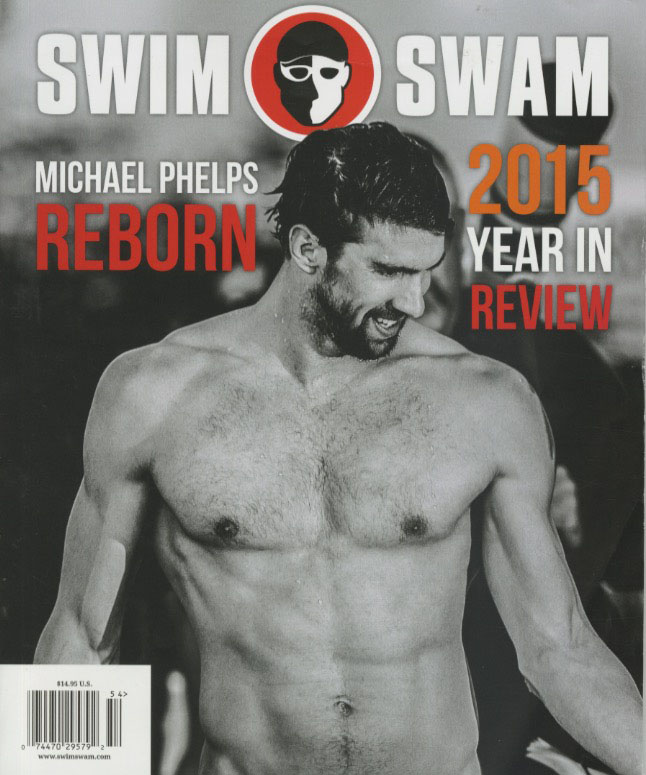
A magazine for those folks who can’t get enough of chlorine and the excitement of the swimmer’s life; SwimSwam grew from a very popular website into a beautifully-done, very high-quality large format magazine. Its paper is thick and lush and its contents filled to capacity with everything about the sport of swimming that could possibly interest an enthusiast. In fact, Mr. Magazine™ was so impressed with the new launch that I selected it as one of the 30 Hottest New Launches of the year.

Editor in chief Braden Keith and one of his partners, Olympic Gold Medalist Swimmer, Mel Stewart and his wife Tiffany, came together with two other very interested parties to found this amazing read. And I for one am awfully glad they did.

I spoke with Braden recently and we talked about the ins and outs of bringing a magazine such as this one to life, especially after four years on the web. Braden said it had been a learning process for him and his partners, and it continued to teach them every day more and more about the magazine industry. He reflected on a few of the challenges they had faced and those pleasant moments that made it all worthwhile. And he talked about the passion they all had about the brand, which convinced them they could contribute something valuable and collectible in the niche market.

So, grab your goggles and your love for a day at the pool and join the conversation – the Mr. Magazine™ interview with Braden Keith, editor in chief, SwimSwam magazine.

But first the sound-bites:

braden-hc-profile-image-235x300

On what made him decided they needed a print component to go along with the website: We launched the website in 2012. I’d had a previous website and Mel Stewart, one of my partners, who is an Olympic gold medalist in swimming, was looking to start something and we saw that our visions aligned. And the baby of that came out to be SwimSwam.com and we were like most people, we thought print was dead. Why would you print a magazine when you could have real time stuff up on the web forever. Fast forward four years later and all of the magazines were still around, and what we were hearing from all of our advertisers was that our competitors were getting a certain percentage of their money because they had a print magazine and people liked it. And so we decided that we’d give it a try and we thought that we could do it better than what was already in the market.

On the reaction to the print magazine from the swimming community: Some people were definitely skeptical and we had a lot who said the exact thing we’d thought earlier: why print? But I think that once people got the magazine and they held it, this is something that’s been very important to us; we wanted a magazine with thick pages and a thick cover that felt almost like a book more than a magazine. And people just loved it.

On whether the rather high cover price is a reflection of their belief that the magazine is more like a collector’s edition: I think that’s exactly what it is. We think people are going to want to keep these as sort of a record of the sport. A history of the sport and who were the biggest athletes and what were the best storylines of any given year. That’s why we went high on the price.

On any challenges he had to face while creating the print magazine: Definitely there have been challenges. When you’re producing content for a magazine, it all has to be good; it all has to be right. The copyediting; you need an extra layer of copyediting. We haven’t struggled with what to produce, but the actual production process has been a whole different thing.

On the most pleasant moment for him on this magazine journey: We set up a table at the Olympic trials in June this year in Omaha in a local restaurant near the pool and had magazines there for sale. We had a lot of people come up and buy the magazine there, but we had more people who were already subscribers to come up and tell us what a great magazine it was and how much they loved it.

On his future expectations for the magazine: We’d like to go to more than four issues per year, but we have to ramp up our subscribers so that we can afford it. That’s really something that we’d like to do. But we’re always going to be nervous. You hear what people say about magazines. For example, one of my favorite magazines, Mental Floss, just announced that they’re no longer going to be printing their magazine.

On his own personal background: I was a high school swimmer and played water polo in college. I coached swimming throughout college as a summer job, because it beat lifeguarding or checking out groceries at a grocery store. Then I kept getting sucked back into coaching and now I coach high school swimming, but that’s not my primary job; I work for a pipeline company in downtown Houston doing business analysis stuff.

On how he met and got into a partnership with Olympic gold medalist swimmer, Mel Stewart: I was doing my other website and there is a guy named Garrett McCaffrey, and he’s also a partner in the website, but he’s no longer a participating partner. He was sort of the godfather of swimming on the Internet, and had a site called Floswimming back in the day, and he had been aware of what else I was doing on the Internet on my other site. He and Mel had hooked up to start this new site and they wanted to do everything video-based. And Garrett told Mel that he needed to check out my site. Mel is an Olympic gold medalist and gets an automatic credibility and I was not a notable swimmer. But Garret told him that I had built an audience out of basically nothing and that they needed to talk to me about working with them.

On what someone would find him doing if they showed up unexpectedly at his home one evening: I will be on my computer and I’ll probably have the TV on sports, and I will be in front of my computer either writing or just compulsively refreshing social media.

On what keeps him up at night: Conflict, just interpersonal conflict. And in this industry there is always conflict. Somebody doesn’t like what you wrote, and I’ll just go over it and over it again in my head and that’s the toughest thing I deal with and what keeps me up at night.

And now the lightly edited transcript of the Mr. Magazine™ interview with Braden Keith, editor in chief, SwimSwam magazine.

Samir Husni: Congratulations on being named one of the “30 Hottest New Launches” of the year; a job well done. I know SwimSwam started as a website and then you launched the magazine; can you take me through the history of the launch? What made you decide that you needed a print publication to go along with the website?

swimswam1Braden Keith: We launched the website in 2012. I’d had a previous website and Mel Stewart, one of my partners, who is an Olympic gold medalist in swimming, was looking to start something and we saw that our visions aligned. And the baby of that came out to be SwimSwam.com and we were like most people, we thought print was dead. Why would you print a magazine when you could have real time stuff up on the web forever. And all of our competitors had magazines; we sort of didn’t get it. We thought the magazines would go away before we were ready to launch one.

Fast forward four years later and all of the magazines were still around, and what we were hearing from all of our advertisers was that our competitors were getting a certain percentage of their money because they had a print magazine and people liked it. And so we decided that we’d give it a try and we thought that we could do it better than what was already in the market. We thought that we could make it look and feel better; that we could capture a way to do a magazine that wasn’t a news-based magazine. We didn’t want to put out a magazine about things that had already happened and was old news that people had already read about on the Internet.

So, we just gave it a shot and we’re learning as we go, but as always we’re focusing on the content, content, content and trying to make it look good.

Samir Husni: What has been the reaction from the swimming community? Once you came up with that first issue, and after you’d been online for almost four years, what were people saying about the print edition?

Braden Keith: Some people were definitely skeptical and we had a lot who said the exact thing we’d thought earlier: why print? But I think that once people got the magazine and they held it, this is something that’s been very important to us; we wanted a magazine with thick pages and a thick cover that felt almost like a book more than a magazine. And people just loved it. We were 50/50 when we launched and we weren’t sure what the reaction would be, but people have really liked just the feel of it and the images have been a big piece of it, there are big, powerful images. Ad I think that’s worked really well for us.

Samir Husni: It’s not a cheap magazine, neither the subscription nor the single copy price; it’s almost $15 per issue. Is the cover price a reflection of the content or the belief that you feel like every issue of this magazine is more like a coffee table book or a collector’s edition?

Braden Keith: I think that’s exactly what it is. We think people are going to want to keep these as sort of a record of the sport. A history of the sport and who were the biggest athletes and what were the best storylines of any given year. That’s why we went high on the price. Obviously, the subscription is a pretty good discount from the cover price. I’m sure you’re aware that magazines on newsstands are not a very good economic model unless you’re a big producer.

Samir Husni: And were there any challenges that you had to overcome while doing it?

Braden Keith: Definitely there have been challenges. When you’re producing content for a magazine, it all has to be good; it all has to be right. The copyediting; you need an extra layer of copyediting. We haven’t struggled with what to produce, but the actual production process has been a whole different thing. Dealing with deadlines; we have deadlines on the web, but it’s more or less you get it done as quickly as you can, but when it comes to a magazine there’s a print deadline and things have to all be copyedited and there’s an entire process.

On the web, you write something, throw a picture on it and you copyedit it real quick and you put it up. With magazines, it’s a bit more complex. Between the deadlines and the design process that you have to go through, it’s very different. Information in the articles can change between when it was written and when it actually goes to print.

Those are some of the things that have caused us stress, but at the end of the day when we looked around at the market, there are two other big swimming magazines in the U.S., and we just thought we could do it better and were lucky enough to have found a good printing partner who happens to be a swim geek, as we like to call people who are big in the swimming world. And so he’s been really instrumental in helping us learn about the magazine industry and how to do this.

I wouldn’t say that it’s been as hard as we thought it would be, but then again we’re not perfect yet either. I think we’re still learning where some of these challenges are coming in. A big challenge that we got hit with, and I’m sure a lot of people did; our subscriber’s sign up for auto-renew and everybody received a new credit card with a chip in it this year and we lost probably half of our subscribers in a weekend from getting new credit cards. So, we’re learning about a lot of these things as we go, and I think we’re not far enough in to have learned all of the challenges yet, but we’ve had good people help us out.

Samir Husni: What has been the most pleasant moment for you throughout this magazine journey?

528220_10103177772625064_363191145_n1Braden Keith: We set up a table at the Olympic trials in June this year in Omaha in a local restaurant near the pool and had magazines there for sale. We had a lot of people come up and buy the magazine there, but we had more people who were already subscribers to come up and tell us what a great magazine it was and how much they loved it. And it felt really cool to have that fact-to-face interaction with our audience. Once again on the web, you don’t get a lot of interpersonal interactions with your audience, but it was a lot of fun to meet people face-to-face.

Samir Husni: If you and I were talking one year from now, what would you hope to tell me about the magazine? What are your future expectations?

Braden Keith: We’d like to go to more than four issues per year, but we have to ramp up our subscribers so that we can afford it. That’s really something that we’d like to do. But we’re always going to be nervous. You hear what people say about magazines. For example, one of my favorite magazines, Mental Floss, just announced that they’re no longer going to be printing their magazine. And I think it’s the greatest magazine that’s ever been made and if they can’t make it; it just makes me nervous. So, I hope that we’ll still be doing it in a year. I hope that people keep subscribing and the economics of it still makes sense, but I’ll still be very nervous about it.

Samir Husni: What’s your background? Are you a journalist or a swimmer? Or a swimmer turned journalist? What’s the story of Braden Keith?

Braden Keith: I was a high school swimmer and played water polo in college. I coached swimming throughout college as a summer job, because it beat lifeguarding or checking out groceries at a grocery store. Then I kept getting sucked back into coaching and now I coach high school swimming, but that’s not my primary job; I work for a pipeline company in downtown Houston doing business analysis stuff. I worked for the Texas A&M student paper for about three months when I was in college, but that’s the extent of my journalism training. I didn’t like it. They didn’t write things interestingly; they were really focused on this AP kind of, no analysis, no adjectives, style of writing and it just bored me and I hated it.

And that was always in the back of my mind, but the reason I go into this; I actually started more on the programming side and that drew me into it. I needed some tools for my coaching. I needed to build tools for calculating relays and things like that. Then people started using them and I wondered what I could do to get more people reading them, and make a little bit of money off of it at the same time. So, I just started writing stuff and it took off. I don’t really know what the catch was or why it worked, but I just happened to back into it accidentally.

Samir Husni: How did you meet Mel Stewart and get into this partnership with him?

Braden Keith: I was doing my other website and there is a guy named Garrett McCaffrey, and he’s also a partner in the website, but he’s no longer a participating partner. He was sort of the godfather of swimming on the Internet, and had a site called Floswimming back in the day, and he had been aware of what else I was doing on the Internet on my other site.

He and Mel had hooked up to start this new site and they wanted to do everything video-based. And Garrett told Mel that he needed to check out my site. Mel is an Olympic gold medalist and gets an automatic credibility and I was not a notable swimmer. But Garret told him that I had built an audience out of basically nothing and that they needed to talk to me about working with them. Mel was doing a clinic and he called me up and invited me out to dinner. We talked about it and discussed the money and advertisers he already had signed up and I told him that was more money than I had made in two years doing it, so consider me in. And away we went.

Samir Husni: On the current issue you have four co-founders; are you all from Texas?

Braden Keith: No, three of us happen to live here, but none of us are actually from here. We have one Canadian and the non-participating co-founder lives in Phoenix. We’re spread out all over the place.

Samir Husni: But the offices are in Austin?

Braden Keith: Yes, but it’s Mel and Tiffany Stewart, who are husband and wife that are there. We avoid having any kind of a formal office, which is an intentional decision. But technically our headquarters are in Austin. I’m in Houston.

Samir Husni: If I showed up at your home one evening unexpectedly, what would I find you doing; reading a magazine; reading your iPad; watching television; or something else?

Braden Keith: I will be on my computer and I’ll probably have the TV on sports, and I will be in front of my computer either writing or just compulsively refreshing social media.

Samir Husni: My typical last question; what keeps you up at night?

Braden Keith: Conflict, just interpersonal conflict. And in this industry there is always conflict. Somebody doesn’t like what you wrote, and I’ll just go over it and over it again in my head and that’s the toughest thing I deal with and what keeps me up at night.

Samir Husni: Thank you.
h1

Guideposts: Reinvigorating Itself Every Two Years With A New Print Magazine – This Time Around It’s A Title That Includes God’s Four-Legged Creatures Within Its Pages – The Mr. Magazine™ Interview With John Temple, President & CEO, Guideposts

October 19, 2016

temple-6

“I really am. I know it goes against every publishing convention, but I just think print has a lot of viability still. My plan is for Guideposts to launch a new magazine every two years.” John Temple (on whether he is still bullish about print)

And all God’s creatures said “Amen.” That’s right; all God’s creatures. It’s about the human condition always, but in the case of the new Guideposts title that is being tested even as we write and read; it’s about how the animals of creation assist us in that condition we call being human.

Since President and CEO, John Temple, returned to the helm of Guideposts in 2013, he has launched three new print titles; three new magazines in three years. I think it’s safe to say, John doesn’t see the power of print as being any weaker than it’s ever been. In fact, in his own words, “it’s his goal to launch a new print magazine every two years.” So far, he’s exceeding his goal.

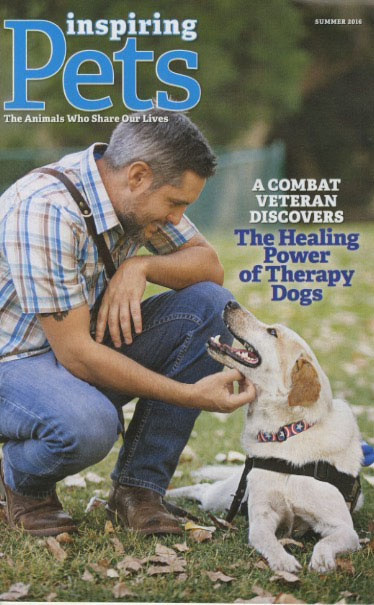
I spoke with John recently and we talked about the new magazine that is being tested. So far, the name is still up in the air, but the mission of the publication is not: to show the emotional, spiritual and healing power of animals. It’s an idea John said they’ve had for a while, considering the success of the animal-themed testimonials that Guideposts runs between its own pages.

Along with the new title, John and I discussed the positivity that Guideposts and its other titles reflect in our sometimes crazy and chaotic world. It’s certainly something that we both see as extremely needed in these highly uncertain times.

But whether you’re a positive thinker by nature, or simply a lover of uplifting and beautiful storytelling, Guideposts’ titles offer you a diversion from this world of notifications and bells and whistles that we live in today. Much like the printed product always does.

So, escape with John and me for a few moments as we enter a world of hope and positivity – the Mr. Magazine™ interview with John Temple, President and CEO, Guideposts.

But first the sound-bites:

John Temple

On the essence of the new magazine they’re testing about the healing and inspirational powers of pets: With the new magazine that we’re testing; we had the idea some time ago about doing something in the area of pets, and one of the reasons for that is we run a few first-person stories in Guideposts magazine about pets and about pets and healing. So, we thought why don’t we try to create a magazine around pets, but we didn’t exactly know what to call it. We came up with three titles. One is, Inspiring Pets; or All Creatures; and the third title is Animals and Healing. All three of them are slightly different, in terms of their emphasis, but all of them are built around pets that inspire us.

On the early reaction of the testing: There really haven’t been any surprises. It’s been very fulfilling and very enlightening in that there seems to be a very good audience for this. We started out just testing the house file and of course, we knew that would be strong. And it was. That was in June, and then in September we tested the house file plus 100,000 outside-list names. And that also was strong.

On whether these new readers are branching off of the Guideposts brand or coming to Guideposts from the new titles: I think they’re probably branching off of Guideposts. The new magazines are different and not really Guideposts, in terms of content. And actually the pet’s magazine is going to be different too. It’s going to have third person articles in it and service features, so we’re kind of branching out.

On whether he’s bullish on print, since this is the third new magazine under his tenure as president & CEO: I really am. I know it goes against every publishing convention, but I just think print has a lot of viability still. My plan is for Guideposts to launch a new magazine every two years.

animals-healingOn his most pleasant surprise during his career with Guideposts: I think the viability of our magazine business has been the most pleasant surprise. When I came back in 2013, the magazine industry was in freefall. Advertising was bad and digital was taking over, and I just thought everything was a disaster. But we stayed with it and one of my goals was to reinvigorate the magazine division. We came up with editorial ideas and a marketing strategy, which I think was unique.

On the biggest stumbling block that he’s had to overcome: I think it’s a stumbling block that a lot of publishing people have had to deal with and that’s what do we do with digital? What do we do with social media and how do digital, social media and websites fit into the whole concept that we have in the magazine and book business?

On whether his digital revenue is approaching anywhere near his print revenue: Not yet. No, it isn’t. The print revenue is still a lot more than the digital revenue. But of course, the digital revenue is growing and it’s growing quickly.

On being highly involved in print while still growing the digital: One of the advantages that I think direct mail publishers have in the digital space is that we have millions and millions of names on our files and we have a tremendous amount of data on transactions and payments and all of those kinds of things. And to marry the data on the magazine and book side with the digital data has been a wonderful thing.

On whether he’s been able to maintain Guideposts’ circulation throughout the dawn of the digital age or if had to change things up somewhat: Like many, we have reduced the rate base a bit. Not dramatically, like some, but maybe 100,000. It’s hard to maintain a circulation with a publication that’s been around as long as ours and has had such reach. It’s hard to find in this day and age new names.

On whether he thinks the fact that Donald Trump and his father were both a part of the religious movement of Norman Vincent Peale and the power of positive thinking will bring the magazines any benefit during this political season: No, I don’t think that we’re going to get any benefit at all out of any of that. It’s all wrapped up in all of the politics and the publicity and the chaos that’s really going on in this political season. I don’t look at this as a benefit.

On whether people recognize Norman Vincent Peale still as a powerful link to Guideposts: I think a lot of people do still remember Norman Vincent Peale and I think there is a connection there. Obviously, as time goes on that tie will become less and less, but I think it’s still strong.

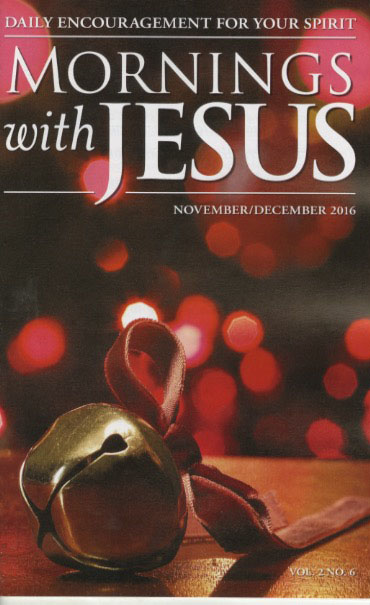
temple-5On what his expectations are a year from now when it comes to their stable of magazines: We’re investing a lot of energy and money in growing Mornings with Jesus and in growing the pet’s magazine. I don’t have any circulation goals yet for the pet’s magazine. But we’ll have 150,000 Mornings with Jesus subscribers after two years, which is pretty dramatic. I think the pet’s magazine is going to follow those trends. In a couple of years, we’ll be up to 150,000 in circulation for that magazine as well.

On whether circulation will remain the biggest chunk of their revenue or advertising will increase: Circulation will be the biggest chunk of the revenue; that won’t change. Our advertising that we do now is not a big part of the revenue for the products. And in fact, we probably aren’t going to do a lot of advertising in the new magazines, but what we are doing is a large amount of partnerships.

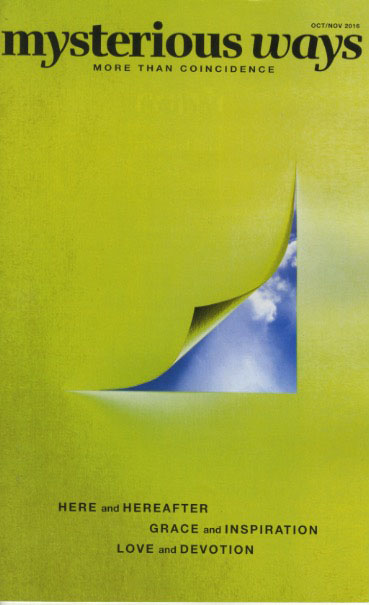
On whether Mornings with Jesus is doing better than Mysterious Ways: Yes, Mornings with Jesus is doing better than Mysterious Ways. We knew, for example, when we launched Mysterious Ways that it was going to be very strong with the house file. And it is, because we have a feature in Guideposts magazine called “Mysterious Ways.” And it’s the most popular single feature in the magazine.

On anything else he’d like to add: I really believe that this is a great time for magazines and books and content. There is a tremendous amount of energy and things that we can do with ideas and with content and with mission; just all of those things. It’s hard to pick and choose where to go, because there are so many options and so many places to go.

On whether he feels there more need now than ever before for magazines like Guideposts, Mornings with Jesus and Angels on Earth: I think there is. It helps and it tells people’s stories that resonate and sometimes it puts one person’s situation before someone else’s eyes and it makes a connection between the reader and the writer of the story.

On what someone would find him doing if they showed up unexpectedly to his home one evening: There is certainly an iPad; I do a lot of reading on the iPad, magazines and newspapers. It’s interesting, because when I’m on the go or I’m in the office or traveling on planes, I read the newspapers on the iPad. At home on the weekends, we get the newspapers delivered and I read the print.

On whether he preaches in a church since he’s a Presbyterian minister: No, I don’t. For me, my ministry really is Guideposts and what we can do through the magazine to really help people. If we can help in the promotion of lives or in the spiritual lives of someone or the faith lives of people; that’s a pretty good ministry.

On what keeps him up at night: Making sure that we navigate the roads successfully that are ahead of us. And there are so many roads that are available. And just trying to make sure and wondering are we making the right move; are we going in the right direction? And sometimes we are and sometimes we aren’t.

temple-1And now the lightly edited transcript of the Mr. Magazine™ interview with John Temple, President and CEO, Guideposts.

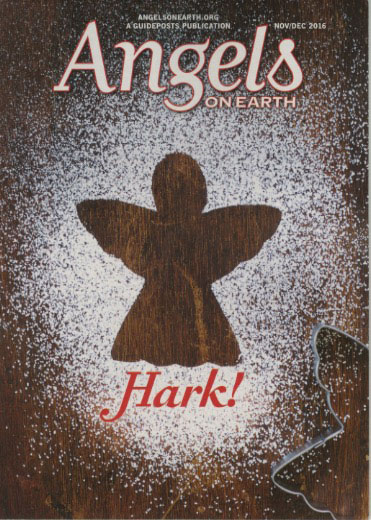
Samir Husni: This is magazine number five in your list of titles; you have Guideposts, Angels on Earth, Mysterious Ways, Mornings with Jesus, and now you’re testing this new magazine about the healing power of pets. Describe for me the essence of this new magazine.

John Temple: With the new magazine that we’re testing; we had the idea some time ago about doing something in the area of pets, and one of the reasons for that is we run a few first-person stories in Guideposts magazine about pets and about pets and healing. So, we thought why don’t we try to create a magazine around pets, but we didn’t exactly know what to call it. We came up with three titles. One is, Inspiring Pets; or All Creatures; and the third title is Animals and Healing. All three of them are slightly different, in terms of their emphasis, but all of them are built around pets that inspire us.

What we’ve done is gone back into the archives of Guideposts magazine and put together stories around these three themes. And that’s what the testing is about.

Samir Husni: What has been the early reaction of the testing? Have there been any surprises from the reaction of the audiences that have seen the magazine?

John Temple: There really haven’t been any surprises. It’s been very fulfilling and very enlightening in that there seems to be a very good audience for this. We started out just testing the house file and of course, we knew that would be strong. And it was. That was in June, and then in September we tested the house file plus 100,000 outside-list names. And that also was strong. We only have about three weeks’ worth of intake on that test, but the indications are that it’s going very well and that we have outside names that we can profitably mail.

Samir Husni: Do you think it’s the power of Guideposts and the power of the model brand that’s helping you to reach and nourish the same audience, or is it a different audience? Are you seeing people coming to Guideposts after all of these new magazines that you’ve launched, or are they branching off of Guideposts?

temple-2John Temple: I think they’re probably branching off of Guideposts. The new magazines are different and not really Guideposts, in terms of content. And actually the pet’s magazine is going to be different too. It’s going to have third person articles in it and service features, so we’re kind of branching out. Most of Guideposts magazine is first-person narratives of people telling their stories. We’re moving slightly into different directions.

Samir Husni: Are you still as bullish about print, because now under your tenure this is your third new magazine?

John Temple: I really am. I know it goes against every publishing convention, but I just think print has a lot of viability still. My plan is for Guideposts to launch a new magazine every two years.

Samir Husni: What has been the most pleasant surprise during your journey throughout the years with Guideposts?

John Temple: I think the viability of our magazine business has been the most pleasant surprise. When I came back in 2013, the magazine industry was in freefall. Advertising was bad and digital was taking over, and I just thought everything was a disaster. But we stayed with it and one of my goals was to reinvigorate the magazine division. We came up with editorial ideas and a marketing strategy, which I think was unique. And those two things together have given us the successes that we’ve achieved.

Samir Husni: What has been the biggest stumbling block or challenge that you’ve had to overcome?

John Temple: I think it’s a stumbling block that a lot of publishing people have had to deal with and that’s what do we do with digital? What do we do with social media and how do digital, social media and websites fit into the whole concept that we have in the magazine and book business? And it’s not really clear exactly how all of this is going to fit together.

It’s an evolution and it’s rapidly changing. It’s very difficult to grab onto it and to hold it and to keep it in one place, because it’s changing so quickly.

Samir Husni: Is your digital revenue approaching anywhere near your print revenue?

John Temple: Not yet. No, it isn’t. The print revenue is still a lot more than the digital revenue. But of course, the digital revenue is growing and it’s growing quickly. And that’s a nice added benefit for the revenue.

Samir Husni: In addition to the magazines, you have books and greeting cards; you’re still very involved in print as you grow the digital.

temple-4John Temple: Yes, we are. One of the advantages that I think direct mail publishers have in the digital space is that we have millions and millions of names on our files and we have a tremendous amount of data on transactions and payments and all of those kinds of things. And to marry the data on the magazine and book side with the digital data has been a wonderful thing. We’ve got a really good head start.

Samir Husni: Since the dawn of digital, say, around 2008 or 2009 when the tablet and Smartphones hit the scene; have you been able to maintain the circulation of Guideposts, or have you had to do anything differently? Have you reduced the rate base? What’s the story with the “Little Engine that Could?”

John Temple: Like many, we have reduced the rate base a bit. Not dramatically, like some, but maybe 100,000. It’s hard to maintain a circulation with a publication that’s been around as long as ours and has had such reach. It’s hard to find in this day and age new names. And with magazines like Prevention and other kinds of publications that are our size, they shrink in their circulation and it has an impact on us.

Samir Husni: With this presidential election, a lot of programs that’s dealing with the history of both candidates are focusing a lot on Norman Vincent Peale and the power of positive thinking, and that’s the church that Donald Trump’s dad and Donald Trump himself attended; do you think that you’ll get any lift from all of that, since you’re getting a lot of publicity?

John Temple: No, I don’t think that we’re going to get any benefit at all out of any of that. It’s all wrapped up in all of the politics and the publicity and the chaos that’s really going on in this political season. I don’t look at this as a benefit.

Samir Husni: Do you think that Dr. Peale’s name is a powerful link to Guideposts or is he a figurehead, such as when someone mentions Henry Luce and Time magazine in the same breath?

John Temple: I think a lot of people do still remember Norman Vincent Peale and I think there is a connection there. Obviously, as time goes on that tie will become less and less, but I think it’s still strong.

Samir Husni: If you and I are having this discussion a year from now, what would you hope to tell me about your stable of magazines? What are your expectations?

temple-3John Temple: We’re investing a lot of energy and money in growing Mornings with Jesus and in growing the pet’s magazine. I don’t have any circulation goals yet for the pet’s magazine. But we’ll have 150,000 Mornings with Jesus subscribers after two years, which is pretty dramatic. I think the pet’s magazine is going to follow those trends. In a couple of years, we’ll be up to 150,000 in circulation for that magazine as well.

In the meantime, we’ve already started looking at other possibilities for a magazine to launch. And I think that next year we’ll probably be testing something else.

Samir Husni: When you think about the business model that you follow, and that the majority of magazines in this country are advertising-driven, something like 80% or 90%; you were ad-free for a long period of time and then you began accepting advertising. Do you have a goal for your magazines’ ratio? Is it going to be 50/50, or circulation is still a big chunk of the revenue?

John Temple: Circulation will be the biggest chunk of the revenue; that won’t change. Our advertising that we do now is not a big part of the revenue for the products. And in fact, we probably aren’t going to do a lot of advertising in the new magazines, but what we are doing is a large amount of partnerships. We’re doing a lot of working with other companies in particular areas. They’re helping us with editorial content and they’re participating with us in the digital space and in the magazine.

Samir Husni: And Mornings with Jesus is doing much better than Mysterious Ways?

John Temple: Yes, Mornings with Jesus is doing better than Mysterious Ways. We knew, for example, when we launched Mysterious Ways that it was going to be very strong with the house file. And it is, because we have a feature in Guideposts magazine called “Mysterious Ways.” And it’s the most popular single feature in the magazine.

Samir Husni: Is there anything else that you’d like to add?

John Temple: I really believe that this is a great time for magazines and books and content. There is a tremendous amount of energy and things that we can do with ideas and with content and with mission; just all of those things. It’s hard to pick and choose where to go, because there are so many options and so many places to go. And we have to be rigorous in our priorities because we can’t take advantage of all of the opportunities we see.

Samir Husni: As we witness the decline of civility in our political culture; do you feel that there’s more need for magazines like Guideposts, Mornings with Jesus and Angels on Earth to bring back that civil aspect to the country?

John Temple: I think there is. It helps and it tells people’s stories that resonate and sometimes it puts one person’s situation before someone else’s eyes and it makes a connection between the reader and the writer of the story. And I think that’s very important and it does help.

Samir Husni: If I showed up unexpectedly to your home one evening after work, what would I find you doing; reading a magazine; reading your iPad; watching television; drinking a glass of wine; or something else?

John Temple: (Laughs) Well, there may be a little of the wine there. There is certainly an iPad; I do a lot of reading on the iPad, magazines and newspapers. It’s interesting, because when I’m on the go or I’m in the office or traveling on planes, I read the newspapers on the iPad. At home on the weekends, we get the newspapers delivered and I read the print.

Samir Husni: I know you’re a Presbyterian minister; do you still preach in a church?

John Temple: No, I don’t. For me, my ministry really is Guideposts and what we can do through the magazine to really help people. If we can help in the promotion of lives or in the spiritual lives of someone or the faith lives of people; that’s a pretty good ministry.

Samir Husni: My typical last question; what keeps you up at night?

John Temple: Making sure that we navigate the roads successfully that are ahead of us. And there are so many roads that are available. And just trying to make sure and wondering are we making the right move; are we going in the right direction? And sometimes we are and sometimes we aren’t. It’s interesting; we don’t always go in a straight line. This is uncharted territory.

Samir Husni: Thank you.
h1

RETRO Videogame Magazine: “Celebrate Gaming’s Past, Present, and Future,” The Mission Statement That Sums Up The Magazine & Its Founder To A Video-T – The Mr. Magazine™ Interview With Mike Kennedy, Founder & President, RETRO Videogame Magazine

October 17, 2016

A Mr. Magazine™ Launch Story

“Our demographic, our gamers that grew up in the dawn of the videogame age, the late ‘70s and early to mid ‘80s, through the crash and into the ‘90s; these people all grew up with videogame magazines. And to this day, and our sales show that we’re selling quite a few more print than we are digital, these people still enjoy that tangible product. And to that end we try to make a magazine that’s a little collectible. We have different artwork on the covers and different artists. We use a real high-grade paper inside and on the cover, not many ads; and it’s just a real high-quality magazine.” Mike Kennedy

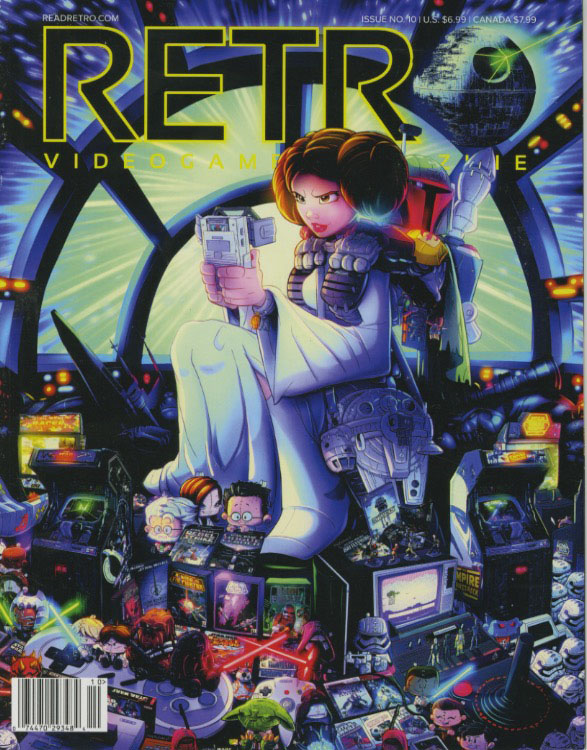
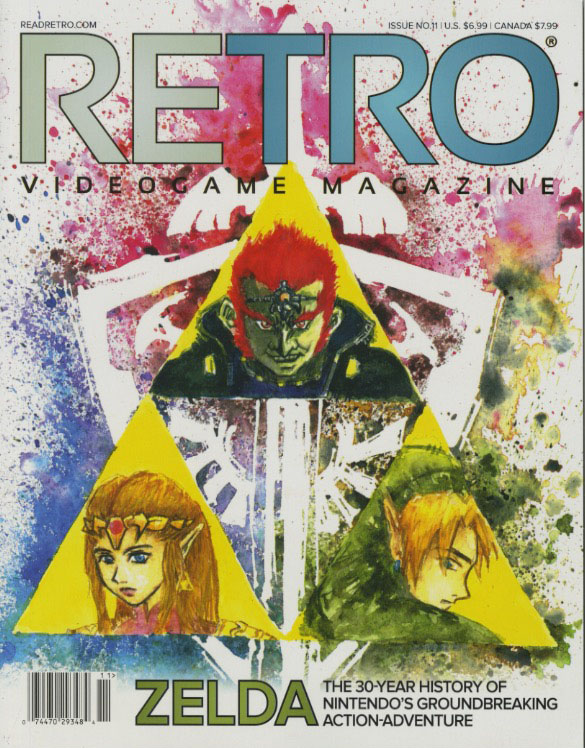
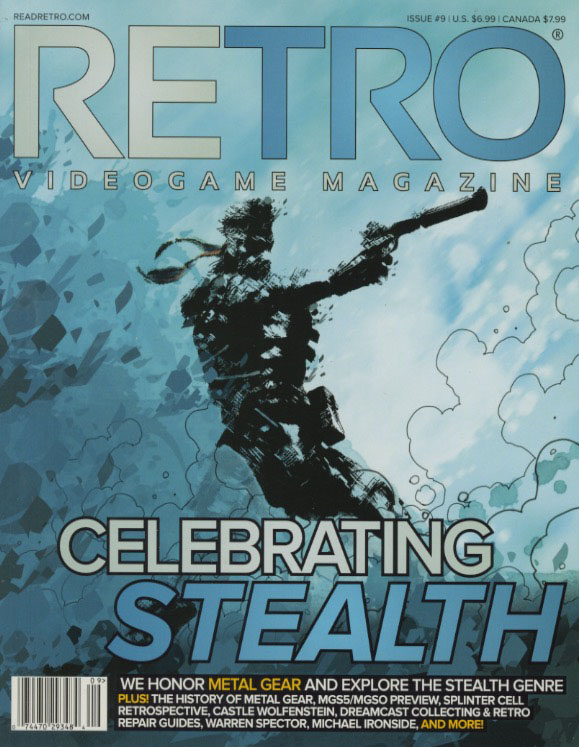
retro-5After being successfully crowd-funded through a double shot of Kickstarter, RETRO Videogame Magazine is into its 11th issue, with its gaming eye on the future. And while founder and president, Mike Kennedy will tell you in a heartbeat that it hasn’t been, nor is it now, a stroll through the proverbial Rose Garden, it is something that he has a passionate commitment to and a project that stirs his entrepreneurial spirit like nothing else could.

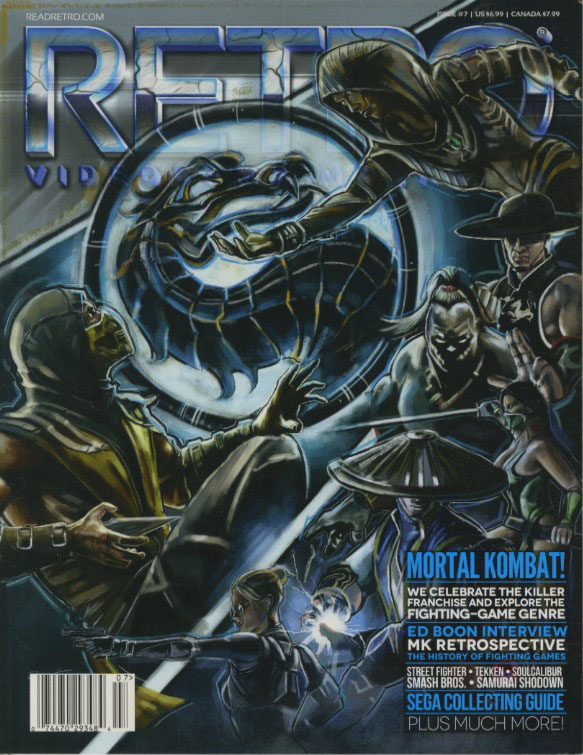
I spoke with Mike recently and we talked about the magazine, past, present and future; taking note of each step of the process along the way. It has been a bit of a harrowing journey for Mike and his wife, Tricia, who is co-publisher of the magazine, but it’s also been a learning experience and an exciting joy, such as when they saw Issue 7 in Barnes & Noble for the very first time. It was quite the proud moment for them both.

Mike is a man who is learning as he goes when it comes to the world of magazines, but he has no intention of quitting school. He wants to take RETRO as far as possible and turn it into a gaming brand that people can turn to for that vintage gaming experience that a tangible print product can provide. And it would appear that he’s doing that, with his team of some of the best writers, editors and artists that the industry offers. And with his RETRO store and his website, gamegavel.com, Mike is on his way to becoming a competitive brand indeed in the world of retro gaming.

So, I hope that you enjoy the Mr. Magazine™ interview with a man who has a gamer’s heart with an entrepreneur’s dream inside of it, Mike Kennedy, Founder and President, RETRO Videogame Magazine.

But first the sound-bites:

mike-kennedy

On the genesis of RETRO magazine: I never thought that I’d be a magazine publisher. In 2008, I started a video-gaming auction site called “GameGavel.com” and it was basically a gaming-dedicated auction site, very similar to what eBay does, but just dedicated to games and other things that geeks, nerds and gamers like. That was my first entrepreneurial venture that I was involved in. I started that for around $800, I think. And I’ve grown that site over the years.

On his most pleasant moment during this magazine experience: But the first milestone, as you indicated, was just getting that first issue in my hands after three or four months of work and a month of doing the Kickstarter; seeing that issue come in was a huge high. It was just amazing. Not only for me, but for my writers, who never probably in their careers, other than a couple of them who have been in the magazine business for a long time, a lot of the younger writers probably never thought they’d see their story in a magazine. So, it was cool for the entire team to be involved with that.

On the biggest stumbling block for him and how he plans to overcome it: Costs right now are our major stumbling block. It costs me somewhere around $14,000 to produce an issue. Not counting the printing. That $14,000 is what my content costs; my layout costs; artwork, editorial and my editors. And that’s not a ton of money. I don’t know in the magazine world if that’s high-end for creating a single issue or low-end.

On what he hopes to be saying about RETRO one year from now: I hope to be telling you that we’re hugely successful and we’ve been managing to get our issues out on time; we’re growing our readership and have expanded into more newsstands, which is something that I’m going to be doing, hopefully, very shortly with Curtis Circulation, maybe with Issue 13. I hope that’s what I’m telling you. (Laughs)

On anything else he’s like to add: Just that we appreciate all of the readers, obviously. We hope that we’re giving them a product that they’ll continue to read and to love, and want to continue to collect. My writing team, again, is the best in the business as far as I’m concerned. If we were better funded, we’d certainly be able to get these issues out on a regular basis; they’d all operate within the time frames and the deadlines and the schedules without fail. But everything is great; it’s just the constant kind of funding battle, which is something that every entrepreneur faces, certainly in the early stages like this.

retro-4On what someone would find him doing if they showed up unexpectedly one evening at his home: I probably work until somewhere between 7:00 p.m. and 8:00 p.m. If I’m doing stuff during the day for the magazine, then I have to make up for my real job in the evening or on the weekends. When you work out of your house you kind of are always working. My wife kind of goes crazy with it, but again, generally, you’re kind of always working. When you work out of your home and your home is your office, there’s always as excuse to go and sit down at the desk, pull up your financials and see what you can do. You’re always thinking about business, at least I am. Unfortunately, since I started all my videogame adventures; one of the things I do the least anymore is play videogames.

On what keeps him up at night: The magazine; 100 percent. Sometimes it’s just hard to sleep because I’m always trying to figure out that next move. And when you’re trying to survive, which is kind of the mode that I’m in, you’re constantly thinking about what you’re going to do tomorrow to make sure that another issue will be coming out? Again, it’s just a lot of biz-development type thoughts.

And now the lightly edited transcript of the Mr. Magazine™ interview with Mike Kennedy, Founder & President, RETRO Videogame Magazine.

Samir Husni: Tell me the story of RETRO.

retro-3Mike Kennedy: I never thought that I’d be a magazine publisher. In 2008, I started a video-gaming auction site called “GameGavel.com” and it was basically a gaming-dedicated auction site, very similar to what eBay does, but just dedicated to games and other things that geeks, nerds and gamers like. That was my first entrepreneurial venture that I was involved in. I started that for around $800, I think. And I’ve grown that site over the years.

About three or four years into running the auction marketplace, I got the idea of adding content to it. This whole idea of content and commerce combined was really interesting to me. What I wanted to do was give gamers the ability to go online and read about all of these retro and older games. And also give them the opportunity after reading about them to go buy them or sell them. And then embedding those buy/sell links into the content. So, the content all started as an online website; it integrated with the auction site.

After a few years of doing that, I became part of a podcast. And I had a listener who reached out to me and happened to be in the marketing/magazine side of things and he had the ability to do the entire layout and design and the creative work involved with a magazine. And he reached out to me and asked had I ever thought about doing a magazine? And I told him, obviously no. And he told me he would love to work with me on it and help me create it. Me being in the gaming world through the auction site and my podcast, I had quite a few contacts with journalists and writers and things like that.

So, it wasn’t a big switch to go from online to print, as far as attaining the content. It was kind of the same process. We had all of the building blocks in place, but then the question became: why do a magazine in this day and age?

Our demographic, our gamers that grew up in the dawn of the videogame age, the late ‘70s and early to mid ‘80s, through the crash and into the ‘90s; these people all grew up with videogame magazines. And to this day, and our sales show that we’re selling quite a few more print than we are digital, these people still enjoy that tangible product. And to that end we try to make a magazine that’s a little collectible. We have different artwork on the covers and different artists. We use a real high-grade paper inside and on the cover, not many ads; and it’s just a real high-quality magazine.

Anyway, it was a really nice switch. And then we decided that we’d do a Kickstarter for it and this was in the fall of 2013. We did our first Kickstarter and raised around $70,000. We sold about 2,500 subscriptions in a month and that really got the whole ball rolling. From the time our Kickstarter ended, which was in November, 2013; we had our first issue out in January. We’re bimonthly; so we’re supposed to be getting an issue out every other month, six issues per year.

And that’s what happened with the magazine its first year. For the most part, we got our issues out on time; it got a little slow in the summer, but everybody received their issues and then in the fall of 2014, in October, we did our second-year Kickstarter. And we raised another $40,000 to $50,000; sold another 1,400 to 1,500 subscriptions during that second time around.

And that’s pretty much gotten us to where we are today. I ended up having a sort of falling out with my layout/design person and so it’s been a struggle, because when he started he got a little stock in my company and was supposed to get some advertising commissions, but just starting out our ad sales were very insignificant for the most part, so he didn’t get paid a lot for that.

But when he left; when I let him go after Issue 7, suddenly I had to pay a layout/design person to come onboard and that was never budgeted in to the second-year Kickstarter. And like a lot of people who do Kickstarter, many times you underfund it; you don’t know all of the ends and outs. I had never published a magazine before, so finding the right printer, knowing what we should be paying to print; I think we got taken advantage of just a bit for six or seven issues; we were paying a lot for printing. We’ve since lowered the cost on that significantly by finding another vendor for that.

retro-2But you learn all of these things as you go, and frequently you don’t load everything into that Kickstarter that you need. Certainly, things like salaries for me were never loaded in. I have another job on the side, a career that I’ve been involved with for almost 30 years. I work out of my house; I’m a regional person, so it’s given me the opportunity to start this passion project on the side. I’ve really never paid myself, it was never budgeted in, but now we’re going on three years and I’d really like to start getting paid. (Laughs)

It’s a great magazine and super high-quality. So, that’s how the magazine started and has evolved. We’re 11 issues in right now and getting ready to finish out our second year, which will be the final issue of the year-two Kickstarter. We got pretty slow; again, underfunded. I’ve borrowed more money from my 401K to get Issue 11 out and now I’m trying to figure out what to do for Issue 12. I’m looking for other opportunities for my writing team to leverage their abilities to write for third parties and things like that. I’m looking for other revenue-generating opportunities to continue to help fund the magazine. And that’s where we’re at today.

Samir Husni: What has been the most pleasant moment for you during this magazine experience? Was it holding that first issue in your hands when it came back from the printer?

Mike Kennedy: There have been a few milestones for me and first of all, I absolutely love this. I want this magazine to continue forever; for people to enjoy it. Certainly, videogame magazines in the U.S. have pretty much died out completely, other than one behemoth magazine that we all know, “Game Informer.”

But the first milestone, as you indicated, was just getting that first issue in my hands after three or four months of work and a month of doing the Kickstarter; seeing that issue come in was a huge high. It was just amazing. Not only for me, but for my writers, who never probably in their careers, other than a couple of them who have been in the magazine business for a long time, a lot of the younger writers probably never thought they’d see their story in a magazine. So, it was cool for the entire team to be involved with that.

And then the second big milestone was finally seeing Issue 7, which was our first issue in Barnes & Noble. That was really great. That was probably the second-best day of this whole thing.

But everything else is just great. The whole creative process is amazing; figuring out what you’re going to feature in every issue; looking for the artists. It’s always a high when you see what your cover art is going to look like. Those are probably the next best days for me and then just working with a talented group of writers, some of them are the best writers in the industry.

When I did the Kickstarter, I surrounded myself with some of the best writers in the industry. Andy Eddy has been a writer; he was editor in chief of VideoGames & Computer Entertainment back in the mid-‘80s. I read his magazine back then and to have him on my team is pretty neat. And again, just to work with some of the best in the industry has been another great thing; so it’s really been a great project. It’s been a great experience. It’s been a lot of work, but it’s certainly very rewarding.

retro-1Samir Husni: What is the biggest stumbling block for you and how do you plan to overcome it?

Mike Kennedy: Costs right now are our major stumbling block. It costs me somewhere around $14,000 to produce an issue. Not counting the printing. That $14,000 is what my content costs; my layout costs; artwork, editorial and my editors. And that’s not a ton of money. I don’t know in the magazine world if that’s high-end for creating a single issue or low-end.

We do pay our writers well. I want to be a company that pays writers well. There are so many companies and websites that don’t pay at all; it’s really bad. The problem is you have so many people that; number one, think they’re writers because they can just sit at home and do it. Many of them are not great writers. It comes back to; you get what you pay for, it really does. When I originally started out I wasn’t really paying for writers for content, although I still had very acceptable writers at that time. But when you get into the magazine side, you really can’t low-ball these people. They’re contracting the writing for a lot of outfits and not getting paid a lot from some of them, just trying to get their name out there. So, I want writers that want to write for us because we do pay well.

And we didn’t budget $14,000 an issue times six into the Kickstarter; that was our fault. So, I’ve been trying to manage it, self-funding this to the point where we are today. But we do sell some advertisement, although I don’t have anyone full-time doing that. That’s one of my problems. I don’t really have the time to do it, which I feel terrible about because I think if I could focus on it, I would sell more. But when you have a real job and you do this on the side, there’s that tipping point where you have to decide when do you leave the comfort and safety of your real job and jump into this thing full-time? My problem is I get paid pretty well on my real job and at this point sucking all of that money out of the business wouldn’t make any sense. First of all, there wouldn’t be enough to suck out to support me, but even if there was, I’m sort of able to do it all at this point. It’s just a balancing act.

But the costs are certainly up there and I’m not personally wealthy to just continue to keep on funding this forever. I’m always looking for avenues to generate more revenue. We’re doing some side projects for third parties; we’ve done a couple of those. I’m talking to retailers about doing holiday buyer’s guides. The bottom line is we have a great pool of writers, editors and artists. Some of the best in the industry and they’re all here. It doesn’t seem like too much of a longshot to think that I can use those same people to create other products for other people; publish other products for other people, whether it be digital or print or both.

So, finding writers, keeping good writers, finding artists, none of that has been a problem. There are a lot of people that are good writers and who want to write and love being a part of a tangible magazine. Telling your friends and family to go to the store and pick up your magazine is pretty cool. And it’s just more meaningful than a website or a digital magazine to some extent.

Samir Husni: If you and I were having this same conversation one year from now, what would you hope to be telling me about RETRO?

Mike Kennedy: I hope to be telling you that we’re hugely successful and we’ve been managing to get our issues out on time; we’re growing our readership and have expanded into more newsstands, which is something that I’m going to be doing, hopefully, very shortly with Curtis Circulation, maybe with Issue 13. I hope that’s what I’m telling you. (Laughs)

Samir Husni: Is there anything else you’d like to add?

Mike Kennedy: Just that we appreciate all of the readers, obviously. We hope that we’re giving them a product that they’ll continue to read and to love, and want to continue to collect. My writing team, again, is the best in the business as far as I’m concerned. If we were better funded, we’d certainly be able to get these issues out on a regular basis; they’d all operate within the time frames and the deadlines and the schedules without fail.

But everything is great; it’s just the constant kind of funding battle, which is something that every entrepreneur faces, certainly in the early stages like this. But we’re 11 issues in and I think we have a pretty good track record for quality.

Samir Husni: If I showed up one evening unexpectedly to your home, what would I find you doing; reading a magazine; reading your iPad; playing a retro videogame; having a glass of wine; or something different?

Mike Kennedy: I probably work until somewhere between 7:00 p.m. and 8:00 p.m. If I’m doing stuff during the day for the magazine, then I have to make up for my real job in the evening or on the weekends. When you work out of your house you kind of are always working. My wife kind of goes crazy with it, but again, generally, you’re kind of always working. When you work out of your home and your home is your office, there’s always as excuse to go and sit down at the desk, pull up your financials and see what you can do. You’re always thinking about business, at least I am.

Unfortunately, since I started all my videogame adventures; one of the things I do the least anymore is play videogames. So, you’re probably never going to walk in on me playing a videogame. You may walk in on me watching TV and relaxing with my wife, or in the garage, which is the office, either planning the next issue or trying to figure out how I’m going to pay for the prior issue; just trying to figure out what my next move is, anything to progress this and keep this great thing moving forward is pretty much always on my mind.

Samir Husni: My typical last question; what keeps you up at night?

Mike Kennedy: The magazine; 100 percent. Sometimes it’s just hard to sleep because I’m always trying to figure out that next move. And when you’re trying to survive, which is kind of the mode that I’m in, you’re constantly thinking about what you’re going to do tomorrow to make sure that another issue will be coming out? Again, it’s just a lot of biz-development type thoughts. LinkedIn has been a tremendous asset. Whether it’s connecting with the writer, or the printers; LinkedIn has just been tremendous. Anybody that’s an entrepreneur and trying to make connections, you can’t go wrong with LinkedIn. It’s really great. And the people are great.

But the magazine keeps me up at night and what I’m going to do to get that next issue out. That’s the first thought, and then getting it out on time is the next thing. But again, it just really all comes down to capital and funding.

Right now, we’re just scratching the surface for this magazine. When we did the Kickstarter, we had subscribers in over 34 countries. So, it has international appeal and it’s selling really well. We were going through Ingram, and we were only in Barnes & Noble and Hastings Entertainment. Well, Hastings just went out of business. So we’ve been selling 30 percent, pretty much on target. We’ve nailed 30 percent sell-through at Barnes & Noble. But Ingram; that’s the only place they had us.

We’re talking to Curtis now and they love the magazine and they’re telling me that we’re going to sell 25 percent of what we stock. And they’re going to research the best stores for us to be in and get us in to a ton of other retailers. I’ve been told that growing your subscriber base really goes back to the newsstand primarily. You’re not going to grow your subscriber base just by being in Barnes & Noble. You have to be everywhere.

And printing costs are pretty cheap these days; I don’t really have any problems with that. Selling 25 percent of what we stock; we can certainly cover our printing costs, and hopefully some of the content cost and then factor in the advertising. It’s all the chicken or the egg; you have to have the circulation to get the advertisers. And you need the advertisers to help fund that circulation, so that’s the battle, I think, that so many people starting out are going to face. It’s really been a big learning experience.

Samir Husni: Thank you.
h1

The Magnolia Journal: The Power Of Print Manifests Itself As Meredith Teams Up With Chip & Joanna Gaines To Bring Their Successful Brand To Print – The Mr. Magazine™ Interview With Christine Guilfoyle, Senior VP, Publisher, Meredith National Media Group

October 12, 2016

“You know that I’m a huge proponent of things like this. What we’ve done at Meredith, and most recently with the launch of The Magnolia Journal; print is alive and well. The consumer continues to purchase print products that appeal to their passions and their sensibilities for service. Circulation numbers have never faltered and it’s our job as publishers, individually, and as publishing companies, to make sure that we continue to demonstrate to the advertising community that we have “her” hooked. And our content is distributed and it’s always on-fashion and that we serve up content that is unique to the platform from which it appears.” Christine Guilfoyle

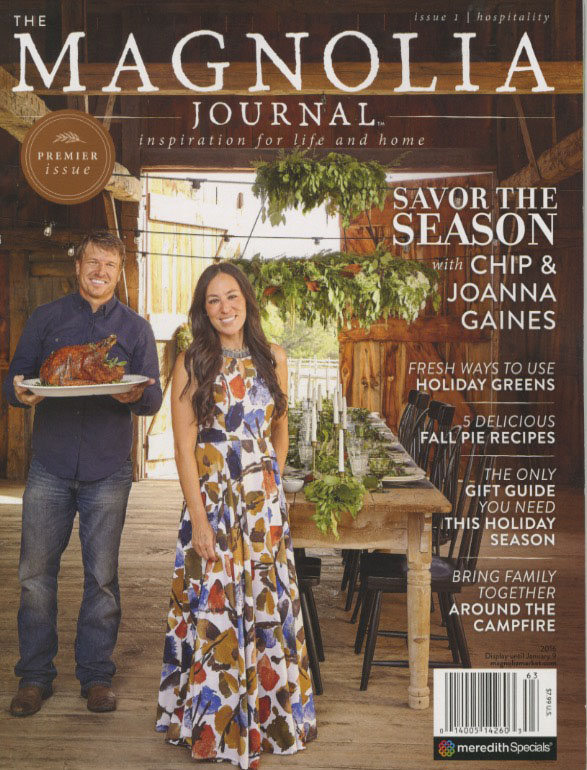
magnolia-journalToday existing brands are discovering the power of print on a regular basis. From television personalities to fashion retailers; the world of print is alive and well in the communities of many brands. Why are successful brands adding a print title to their repertoire? Possibly because it’s a fantastic way to stay connected to their audiences in a tactile and personal way.

Chip and Joanna Gaines have a successful television show on HGTV: “Fixer Upper,” in their immensely popular Magnolia brand. Their Magnolia Market, based in Waco, Texas, where the Gaines’ live, is flourishing with its website, along with a vacation rental called Magnolia House, Joanna’s Magnolia Home partnerships (furniture, paint, textiles and wall coverings), and a dedicated social media fan base. So, it stands to reason the Gaines’ needed a print magazine to round out their broad spectrum of media connection. So, The Magnolia Journal was born.

The Meredith Corporation believed strongly in this new cog in the Gaines’ media wheel and stepped in to make it happen. Christine Guilfoyle is senior VP and publisher for Meredith’s National Media Group. Christine is bullish about print; bullish about Meredith; and extremely bullish about her newest launch baby, The Magnolia Journal. She believes in this latest brand extension for the Gaines’ and feels it rounds out their successful brand nicely and also adds another wonderful flavor of content to the Meredith circle of publications.

I spoke with Christine recently and we talked about the ease she had in selling this latest piece of the Gaines’ brand puzzle to advertisers and the buying public. We also talked about her own personal commitment to Meredith and the work she does there and how much she truly loves and values the service journalism that the company has always stood for.

It was a lively and inspirational conversation with a woman who knows her company’s brands and who is dedicated to each and every one of them emphatically. So, I hope that you enjoy this Mr. Magazine™ interview with Christine Guilfoyle as we talk about the latest Meredith print launch, The Magnolia Journal.

But first the sound-bites:

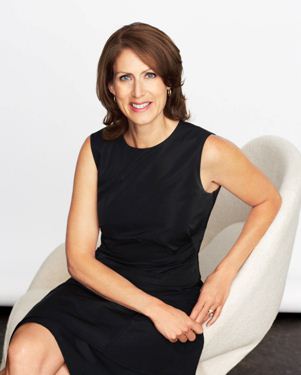
guilfoyle-christine-7-13

On whether we’re seeing a reversal on the way new titles are launched; brands first, and then the magazines: I can’t answer to that as it relates to the broader market, but I think the answer as it relates to Joanna and Chip Gaines is definitely. They have built a very powerful, cross-channeled franchise with HGTV and their “Fixer Upper” show; with their retail outlet; with their highly successful social media following and their blog.

On how easy it was for Meredith to produce the magazine: It was super easy. Again, I think that Chip and Joanna had a very clear vision of what they wanted the magazine to embody. They had very definitive ideas about the types of content. I think that their values and the things that they care about most; their home, family; the gathering together of family and friends and having good food on the table are very central to the Meredith Corporation and what our values are; and the heritage of what our company has always believed in for over 100 years.

On any stumbling block she had to face and how she overcame it: What did I have to overcome? It’s a silly thing. It was late in a calendar year planning cycle and there were people who were very interested in participating, but because of budgets or timing they were unable to, because of the deadlines. And as you know, launches don’t launch for two years now. Long gone are the very extended launch cycles, where you get to go on a two year roadshow. It was fast and furious; it was probably just over a month’s time that we had to get out into the market.

On whether she thinks partnerships are the future of publishing because it’s tough now for a company to do it on its own: I don’t look at it as being tougher and tougher. I think the world has changed. All the traditional publishers years ago did market research and launched brands that would be timeless. I think today because of fragmentation and technology and multichannel, there are topics, personalities or segments that already have an audience that is developed around them, but their expertise may not be in the printed product or in content distribution, and I think what we’ve been able to do here at Meredith, under the leadership of Steve Lacy and Tom Harty, is be very smart and open-minded. At the Meredith Corporation we serve the consumer. So, how are we filling out our consumer portfolio of content to make sure that at every life stage women have content from Meredith to consume?

On whether she feels service journalism is the wave of the future in publishing: We’re not in the news business or in the celebrity business, so I’m not going to talk about those things because I’m not an authority, but I think the consumer tends to have an insatiable appetite for both celebrity and news, and I think people that are in those areas of interest will figure out which channels they should be in to distribute that information. For Meredith, we’re in the service journalism business and have been for over 100 years. If you look at all of our acquisitions, really since the Gruner & Jahr and that was 12 years ago, and then since I’ve been back at the company, the last six years; we have acquired, and/or partnered, and/or licensed with content ideas, whether it’s in print or in digital, which round out our women’s life stage always on philosophy.

On whether Chip and Joanna Gaines will appear on every cover: I can tell you that we’ll see them on the cover of the second issue for sure. I think long-gone are the days where you say from now until the end of time they’ll appear on the cover. We will work with them and we will satisfy their schedule, and if the consumer wants them to be on the cover and they want to be on the cover, then the Meredith Corporation will have no problem with that.

On whether she thinks a year from now she will be as positive and upbeat about print publishing as she is today: I have 11 more years to go before I can retire, and that depends on if my husband will allow me to. (Laughs) I feel incredibly fortunate because I have gotten to work on some of the biggest brands in the business: TV Guide, People, Better Homes and Gardens twice. I’ve also gotten to work on some fantastic smaller brands, things like MORE magazine and the launch of Every Day with Rachael Ray, and I was able to work with Martha Stewart, and now I’m at Shape and launching The Magnolia Journal, and I participated in the launch of All Recipes. I can’t imagine, honestly, that I will ever really run out of enthusiasm, even if you told me that I had to do it for 22 more years versus 11, because I think you create your own opportunity. You surround yourself with smart people of all ages and levels of experience.

On anything else she’d like to add: I guess the only thing would be that we expect the subsequent issues to have continued success, not only in distribution, but in rate base and increased advertising opportunities. It’s exciting.

On what someone would find her doing if they showed up one evening unexpectedly at her home: I have never been a big television watcher and part of that has nothing to do with the platform. If I sit down at home, I may never get up again. It is a whirling dervish of activity. I have two teenaged daughters; a dog; a husband; there are endless people in and out of my home and I love it like that. We’re cooking and talking; we’re cleaning.

On what keeps her up at night: It’s the next big deal. It’s making sure that I’m satisfying, not only myself, but my management team. I look at those guys with love. I never want to let them down. So, regardless of what project I’m assigned, for me it’s Meredith first and foremost. Did somebody get something that I didn’t get; was someone more clever putting a proposal together than I was? I think all of us second guess our pipeline and our proposal response all the time.

And now the lightly edited transcript of the Mr. Magazine™ interview with Christine Guilfoyle, Senior VP, Publisher, Meredith National Media Group.

Samir Husni: Congratulations on yet another new launch.

Christine Guilfoyle: Thank you. I’m just happy that they continue to ask me to do things like this. (Laughs)

Samir Husni: In the past, we used to launch magazines first and then they became brands. And they would have brand extensions, such as with Better Homes and Gardens. Then we had the television shows and their products; you name it. Are we seeing a reversal of that now since we seem to have many existing brands that are discovering magazines?

magnolia-journalChristine Guilfoyle: I can’t answer to that as it relates to the broader market, but I think the answer as it relates to Joanna and Chip Gaines is definitely. They have built a very powerful, cross-channeled franchise with HGTV and their “Fixer Upper” show; with their retail outlet; with their highly successful social media following and their blog.

And to me what the magazine does for them, as you well know, and for those of us who love print, it gives this lasting, beautiful, tactile expression of what they believe their lifestyle philosophy is. And they know from their fans that there is a hunger for information from them and I think the whole notion of hold-it-touch-it-clip-it-save-it-cherish-it was important to Chip and Joanna. And I think there’s no other platform that satisfies that like a magazine does. I believe it’s quite natural with all of their other successful enterprises and media outlets of distribution. For them not to have a magazine would be more shocking to me.

Samir Husni: How easy was it for you to produce the magazine?

Christine Guilfoyle: It was super easy. Again, I think that Chip and Joanna had a very clear vision of what they wanted the magazine to embody. They had very definitive ideas about the types of content. I think that their values and the things that they care about most; their home, family; the gathering together of family and friends and having good food on the table are very central to the Meredith Corporation and what our values are; and the heritage of what our company has always believed in for over 100 years.

So, the coming together of Chip and Joanna Gaines and the Meredith Corporation was very easy. The putting together of the first issue of The Magnolia Journal was equally as easy. And then as it relates to me, the going out and selling the first-launch issue was incredibly easy. And I would say that their presence in social media made the introduction of the magazine to the buying community just almost effortless.

Samir Husni: In the midst of all of this easiness, was there any stumbling block that you had to face and overcome? And if so, how did you do so?

Christine Guilfoyle: What did I have to overcome? It’s a silly thing. It was late in a calendar year planning cycle and there were people who were very interested in participating, but because of budgets or timing they were unable to, because of the deadlines. And as you know, launches don’t launch for two years now. Long gone are the very extended launch cycles, where you get to go on a two year roadshow. It was fast and furious; it was probably just over a month’s time that we had to get out into the market.

But really this wasn’t a launch to find out what the advertising play is or was. It was much more to get an understanding about consumer demand. And I think very similarly to the launch of All Recipes magazine; we knew that the consumers were heavy engagers with the Gaines’; with their store; with their social and website; and with their television property. What we didn’t know was whether or not they would also want to engage in a magazine.

Samir Husni: We’re seeing all of these partnerships taking place now; Meredith has it with Rachael Ray, All Recipes, with the guys over at Beekman 1802 Almanac, and with Eat This Not That; as a publisher are these partnerships the future of publishing? Do companies not want to publish on their own anymore because it’s so very tough right now?

Christine Guilfoyle: I don’t look at it as being tougher and tougher. I think the world has changed. All the traditional publishers years ago did market research and launched brands that would be timeless. I think today because of fragmentation and technology and multichannel, there are topics, personalities or segments that already have an audience that is developed around them, but their expertise may not be in the printed product or in content distribution, and I think what we’ve been able to do here at Meredith, under the leadership of Steve Lacy and Tom Harty, is be very smart and open-minded. At the Meredith Corporation we serve the consumer. So, how are we filling out our consumer portfolio of content to make sure that at every life stage women have content from Meredith to consume?

And I think that it’s really smart that it doesn’t have to be something that’s homegrown. Obviously, Every Day with Rachael Ray for me was something that was incredibly personal; I left Meredith to launch it. So, when Meredith went into partnership with Rachael and Watch Entertainment, I was very fortunate that I was back and got to work on it again.

What would have happened if Rachael Ray had stayed at Reader’s Digest? What would have happened if Rachael had decided to go it alone? Who knows? But now it’s here and it’s part of our family and it’s thriving. You think about Martha in the same vein. You think about the Beekman Brothers and would they have been able to launch a magazine within the confines of their own business? I think probably the answer to that would have been no.

So, I don’t think it makes our job harder; it makes it interesting and filled with untapped opportunities and it allows us to fill in the gaps and really be a consumer centric organization so that we serve her, the consumer, because if you serve the consumer, the advertiser will follow.

Samir Husni: And that has been a central cornerstone of all of the Meredith publications; that core of service journalism and the attention to the consumer. Do you think the future of magazine publishing, as in ink on paper, is going to be service journalism, as opposed to say, celebrity journalism or news journalism?

guilfoyle-christine-7-13Christine Guilfoyle: We’re not in the news business or in the celebrity business, so I’m not going to talk about those things because I’m not an authority, but I think the consumer tends to have an insatiable appetite for both celebrity and news, and I think people that are in those areas of interest will figure out which channels they should be in to distribute that information.

For Meredith, we’re in the service journalism business and have been for over 100 years. If you look at all of our acquisitions, really since the Gruner & Jahr and that was 12 years ago, and then since I’ve been back at the company, the last six years; we have acquired, and/or partnered, and/or licensed with content ideas, whether it’s in print or in digital, which round out our women’s life stage always on philosophy. Prior to the acquisition of Eating Well, All Recipes and Rachael Ray, food, although our biggest advertising category; we didn’t have a title that was purely food.

So, we acquired three food titles, or channels, that actually round out the whole notion of eating healthy; eating as it relates to a celebrity’s point of view; and then the whole democratic recipe sharing that’s been going on across backyard fences since the beginning of time.

You know that I’m a huge proponent of things like this. What we’ve done at Meredith, and most recently with the launch of The Magnolia Journal; print is alive and well. The consumer continues to purchase print products that appeal to their passions and their sensibilities for service. Circulation numbers have never faltered and it’s our job as publishers, individually, and as publishing companies, to make sure that we continue to demonstrate to the advertising community that we have “her” hooked. And our content is distributed and it’s always on-fashion and that we serve up content that is unique to the platform from which it appears.

In the case of Chip and Joanna Gaines, they mastered social media. I don’t know, Samir, if you’ve looked at their Instagram and/or their Facebook, but Joanna posted the cover of The Magnolia Journal and within 24 hours across Facebook and Instagram there were nearly 145,000 likes of the cover.

Samir Husni: Will we see them on the cover of every issue?

Christine Guilfoyle: I can tell you that we’ll see them on the cover of the second issue for sure. I think long-gone are the days where you say from now until the end of time they’ll appear on the cover. We will work with them and we will satisfy their schedule, and if the consumer wants them to be on the cover and they want to be on the cover, then the Meredith Corporation will have no problem with that.

Samir Husni: If you could put on your cap from the future and if someone were to come to you a year from now and ask you about print, about Meredith, about publishing in general; do you think you would be as upbeat and positive as you are now, or do you think there could be a difference in your outlook?

Christine Guilfoyle: I have 11 more years to go before I can retire, and that depends on if my husband will allow me to. (Laughs) I feel incredibly fortunate because I have gotten to work on some of the biggest brands in the business: TV Guide, People, Better Homes and Gardens twice. I’ve also gotten to work on some fantastic smaller brands, things like MORE magazine and the launch of Every Day with Rachael Ray, and I was able to work with Martha Stewart, and now I’m at Shape and launching The Magnolia Journal, and I participated in the launch of All Recipes.

I can’t imagine, honestly, that I will ever really run out of enthusiasm, even if you told me that I had to do it for 22 more years versus 11, because I think you create your own opportunity. You surround yourself with smart people of all ages and levels of experience. We have a management team here that I put great faith in and I believe that they put great faith in me. And when you’re able to come and work with an organization that has grown to this size and they allow me to be incredibly entrepreneurial and give me new assignments; The Magnolia Journal is my 11th assignment in a little over six years at Meredith.

That to me says one of two things: either I can’t hold down a job or they want to continue to spread my enthusiasm and dedication to print throughout the organization. My workflow ebbs and flows and frankly, I love the work. I think there are far worse things to do for a living than getting to tell stories about people’s relationship with content. And why an advertiser should look for that experience to amplify their message. That to me is like we’re lucky.

I look at Rachael; I look at Martha, and I look at Chip and Joanna and one thing that is consistent is that people will invariably ask how they manage everything. The book tours; the TV show; the children; the this and that. How do they manage it? They love it. And they don’t look at it as a job.

I’ve been fortunate enough now to have Rachael twice in my career. Then I had the great fortune to meet Martha Stewart and get to work with her, and I thought, OK, I’m done. I’m not going to Hearst and I’m not going to work with the unbelievable Oprah Winfrey, but now I have Chip and Joanna. I would have never expected it, but all of them have a passion and a drive. And really the way in which they communicate their message is obviously very different, but at the heart of each of their messages is this: do something you love with people you love to do it with. And honestly, that’s really not very different than my own personal message. I do something that I love and I consider people above me and below me at Meredith my family. And that I get to do it with them is a privilege. I have an unbelievable respect for all of them as they do for me. And that’s a pretty unique position to be in.

Samir Husni: Is there anything else you’d like to add?

Christine Guilfoyle: I guess the only thing would be that we expect the subsequent issues to have continued success, not only in distribution, but in rate base and increased advertising opportunities. It’s exciting.

And I think as far as Meredith goes, I couldn’t be more excited for Tom Harty, Jon Werther and for Steve Lacy’s executive team for the next chapter. With our new senior leadership team and what that means for all of us that are here. There’s a feeling of invigoration throughout the organization and that’s exciting.

Samir Husni: If I showed up at your home one evening unexpectedly, what would I find you doing; reading a magazine; reading your iPad; watching television; cooking; or something else?

Christine Guilfoyle: All of them but the TV. I have never been a big television watcher and part of that has nothing to do with the platform. If I sit down at home, I may never get up again. It is a whirling dervish of activity. I have two teenaged daughters; a dog; a husband; there are endless people in and out of my home and I love it like that. We’re cooking and talking; we’re cleaning. People make fun of me because every Friday night the first thing I do when I walk in the door is pour myself a glass of wine. The second thing I do is pull out my vacuum. I don’t get to drink the wine until I’ve vacuumed the downstairs of my home. It’s like my reward at the end of the day. It means one less thing that I have to do the next day. And I really like that glass of wine when I’m done with my vacuuming. (Laughs) And it may lead to another.

Samir Husni: My typical last question; what keeps you up at night?

Christine Guilfoyle: It’s the next big deal. It’s making sure that I’m satisfying, not only myself, but my management team. I look at those guys with love. I never want to let them down. So, regardless of what project I’m assigned, for me it’s Meredith first and foremost. Did somebody get something that I didn’t get; was someone more clever putting a proposal together than I was? I think all of us second guess our pipeline and our proposal response all the time.

Samir Husni: Thank you.
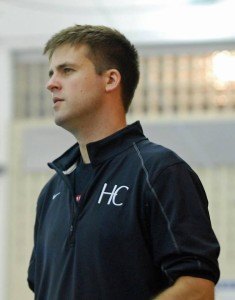
h1

Bling-Scene Magazine: A Luxury Title That Opens Up The Enigmatic World Of Fine Jewelry By Offering A Venue For Collaboration Using The Most Tactile Platform Of All: Print – The Mr. Magazine™ Interview With Neil Shah, Publisher, Bling-Scene Magazine

October 11, 2016

A Mr. Magazine™ Launch Story…

screen-shot-2016-10-10-at-8-48-38-am“We may launch a digital version at some point, but jewelry is very tactile. Orlando,our designer, is a very visual and tactile guy. The experience is different. In fact, there are many blogs and that kind of thing out there for the jewelry industry. There’s a lot of social media influence, but what was missing was that touch and feel. And if you notice the magazine, we went really went all out to focus on that touch and feel. The paper weight is heavier; the covers are heavier than whatever other luxury magazines we’re comparing it to that are out there; if you’re looking at a Robb Report or a Veranda, or any of these luxury lifestyle magazines. We’ve gone probably beyond that, in terms of the weight and the feel of it.” Neil Shah (On why they chose print as the best platform for Bling-Scene)

In the world of luxury lifestyles, nothing is more posh than fine jewelry. We’ve all romanced the stone at least once in our lives. But what you won’t find filling the newsstands are magazines on the upscale topic. That niche has been very lacking, that is, up until now.

Bling-Scene magazine is the latest luxury venture from a family who knows their way around a carat or two, or more, if I’m to be precise. After four decades in the diamond and jewelry industry, the Shah Luxury Group has now turned its attention to the world of magazines. And the beautifully-done, oversized, print title, Bling-Scene is the result. The magazine is the culmination of hard work and determination of all of the Shahs, father, Natwar Shah, his two sons, Neil and Salil Shah, and their creative partner and designer, Orlando Altamar.

I spoke with Neil recently and we talked about the vision the group had for Bling-Scene; the main one involving opening up the very reserved and secretive world of the jewelry industry and allowing it to connect and engage with the consumer. Bling-Scene’s focus will be one of collaboration and marketing, with the intent of partnering with different lifestyle brands and intertwining the worlds of fine jewelry, with, say, fashion, art, wine and any other luxury item. Hotels, resorts, the ideas are endless. Just ask Neil, who knows how intense he and his family and creative partner, Orlando, can be when it comes to ideas.

I hope that you enjoy the Mr. Magazine™ interview with a young man who has diamonds in his blood and when it comes to exciting new ways to further he and his family’s brand, a flood of ideas in his brain, Neil Shah, publisher, Bling-Scene magazine.

But first the sound-bites:

neil-shah

On the idea behind Bling-Scene and why they chose print in this digital age: My family and I run a jewelry company; my father, brother and myself, and we also have a partner, a gentleman by the name of Orlando Altamar. And he’s sort of the creative direction in the company. It was originally Orlando’s idea, which he’s had for several years. He had noticed basically that in the jewelry industry there was no print magazine. There’s a luxury lifestyle print magazine for car-lovers, cigar-lovers; any kind of interest or passion that people might have, but in the jewelry industry it’s kind of a missing niche. And print is a great platform for us as a jewelry company, manufacturer and a designer brand, to showcase ourselves as well. But we didn’t quite act on it at first. I was jogging one day and listening to iTunes and started listening to the iTunes Music Festival. I began wondering what this iTunes Music Festival was all about, and for some reason it hit me like an epiphany. It’s not just a phone, and it’s not just iTunes, and it’s not just a way to download music; it’s a lifestyle. It’s a whole experience.

On why he thought that for a luxury magazine print would be the best medium: We may launch a digital version at some point, but jewelry is very tactile. Orlando, as our designer, is a very visual and tactile guy. The experience is different. In fact, there are many blogs and that kind of thing out there for the jewelry industry. There’s a lot of social media influence, but what was missing was that touch and feel. And if you notice the magazine, we went really went all out to focus on that touch and feel. The paper weight is heavier; the covers are heavier than whatever other luxury magazines we’re comparing it to that are out there; if you’re looking at a Robb Report or a Veranda, or any of these luxury lifestyle magazines.

On how he took that idea and actually turned it into a printed magazine: It wasn’t so much of a moment as a long process, particularly because no one in the company had any background or knowledge of the magazine industry. We had looked at companies outsourcing some of the publications and the production of the magazine, so we tried that and it didn’t really match what we had envisioned. What we ended up with was more like a catalog, which was not what we were going for. We went through a number of iterations and it one thing after another began to fall into place. We started reaching out to anybody that we could talk to: our friends in the industry and outside the industry, anybody who was a writer so that we could start putting together some of the articles first. Each step we would reach out to people and the nice thing was, people were very, not just willing, but excited to help us on this.

On the biggest stumbling block they faced and how they overcame it: Up to now it was more a series of small stumbling blocks, nothing huge in and of itself, but again, not knowing anything about magazines, every little thing was difficult. When we were dealing with deadlines, the pressure was enormous. We were up late nights designing and this and that, so the whole process was pretty intense. I’ll give you an example. Very close to the end, when we were just hitting up against our deadline and we realized that we needed photo credits, so suddenly there was this nightmare, disaster situation where we had no idea how to put together photo credits.

On the plan for future issues: Probably Q2 of next year, we’d like to do the next issue at this point. We will be reaching out to advertisers and reaching out again to some of those people who wanted to get involved and other people in the jewelry world, and hopefully getting this to critical mass. One of the ideas behind this is to partner with retailers for distribution. We really want to ramp up the distribution pretty quickly through those partnerships. That’s all part of the plan in the next several months.

On how he plans to use Bling-Scene as a vessel to open up the jewelry industry and create a relationship between the audience and the fine jewelry market: Some of the things that we want to do are write feature stories about various vendors or manufacturers and that type of thing. And we want to also feature retailers, but obviously the retailers are more in the public eye, vendors are not. And the manufacturers and the brands don’t have as much exposure. So, bringing the audience into that world, educating them about how the jewelry environment works; there are a lot of issues in the industry right now, with blood diamonds and lab-grown diamonds, things like that. We want to educate them and also get them excited about jewelry.

On why he thinks fine jewelry magazines have been so few and far between in publishing: The only thing I can say on that is, again, the nature of the industry is fairly reserved and conservative, along with the lack of marketing. De Beers did the marketing job for the industry for decades and it was a service, but in a sense it left a vacuum in the industry where no one really had to think about it. So, when they pulled out, it’s a vacuum that hasn’t gotten filled yet.

On whether he’s more of a print lover now than a stone lover: Yes, we’re actually in love with and very excited by this project, almost more so than with what we’ve been doing in the jewelry world. From the day we started this and began producing content, I realized that it just amplifies everything that we love about jewelry and about everything we’re doing on the jewelry side. It makes that even more special, to be reaching out to people and engaging with our customers.

On what someone would find him doing if they showed up unexpectedly at his home one evening: Either playing with my son or reading various kinds of news, foreign policy and technology type news. Those are two of my hobbies. But you would probably find me playing with my five-year-old son.

On what keeps him up at night: Our factories and back office are in India where we do our manufacturing, so certainly talking to them and trying to stay in touch with the other side of the world is one thing, and the other would be ideas like Bling-Scene and other marketing ideas that we as a group, my family and Orlando and others in the company; we get very excited. We start geeking out on very small ideas that probably most people wouldn’t be very excited about, but we can talk about them for hours or lay awake thinking about them for hours.

And now the lightly edited transcript of the Mr. Magazine™ interview with Neil Shah, publisher, Bling-Scene Magazine.

Samir Husni: Would you give me a little background on the idea behind Bling-Scene and why you decided to launch a print magazine in this day and age?

screen-shot-2016-10-10-at-8-48-38-amNeil Shah: My family and I run a jewelry company; my father, brother and myself, and we also have a partner, a gentleman by the name of Orlando Altamar. And he’s sort of the creative direction in the company.

It was originally Orlando’s idea, which he’s had for several years. He had noticed basically that in the jewelry industry there was no print magazine. There’s a luxury lifestyle print magazine for car-lovers, cigar-lovers; any kind of interest or passion that people might have, but in the jewelry industry it’s kind of a missing niche. So, he’d had this idea for several years and when he joined our company, he brought it to us and I thought it was a great idea and a great concept. And print is a great platform for us as a jewelry company, manufacturer and a designer brand, to showcase ourselves as well.

But we didn’t quite act on it at first. I was jogging one day and listening to iTunes and started listening to the iTunes Music Festival. I began wondering what this iTunes Music Festival was all about, and for some reason it hit me like an epiphany. It’s not just a phone, and it’s not just iTunes, and it’s not just a way to download music; it’s a lifestyle. It’s a whole experience.

And that’s when it hit me what Bling-Scene is; it’s a way of indulging; a way for jewelry lovers to indulge in this. And it’s a way for the industry to collaborate and create content surrounding jewelry and create a lifestyle and to immerse people in that lifestyle.

Traditionally, the jewelry industry is a fairly reserved, somewhat protective or secretive industry, and in this day and time it’s time for people to come together and collaborate and this is what we envisioned. When we started talking about it with people, we got a somewhat powerful reaction and everybody wanted to get involved and that’s what really hit home with us. It’s an incredible way for people to collaborate.

Samir Husni: And why did you think for such a luxury magazine that print would be the best medium in this digital age?

Neil Shah: We may launch a digital version at some point, but jewelry is very tactile. Orlando, as our designer, is a very visual and tactile guy. The experience is different. In fact, there are many blogs and that kind of thing out there for the jewelry industry. There’s a lot of social media influence, but what was missing was that touch and feel. And if you notice the magazine, we went really went all out to focus on that touch and feel. The paper weight is heavier; the covers are heavier than whatever other luxury magazines we’re comparing it to that are out there; if you’re looking at a Robb Report or a Veranda, or any of these luxury lifestyle magazines. We’ve gone probably beyond that, in terms of the weight and the feel of it.

Samir Husni: After you had that a-ha moment when you were jogging and listening to iTunes, how did that epiphany manifest itself into an actual, physical, printed magazine?

Neil Shah: That wasn’t so much of a moment as a long process, particularly because no one in the company had any background or knowledge of the magazine industry. We had looked at companies outsourcing some of the publications and the production of the magazine, so we tried that and it didn’t really match what we had envisioned. What we ended up with was more like a catalog, which was not what we were going for.

So, we went through a number of iterations and it one thing after another began to fall into place. We started reaching out to anybody that we could talk to: our friends in the industry and outside the industry, anybody who was a writer so that we could start putting together some of the articles first. Each step we would reach out to people and the nice thing was, people were very, not just willing, but excited to help us on this. Everyone was very eager to get involved because they loved the idea, and all the more so with every step when it started coming together. The articles were amazing and layout of the pages looked beautiful. So, at every step people became more excited about it and more interested in getting involved.

We got a number of our friends involved in helping us with articles. Orlando put together a lot of the advertisements and the graphics. It was a long process, but we got through it.

Samir Husni: What was the biggest stumbling block during that process and how did you overcome it?

Neil Shah: Up to now it was more a series of small stumbling blocks, nothing huge in and of itself, but again, not knowing anything about magazines, every little thing was difficult. When we were dealing with deadlines, the pressure was enormous. We were up late nights designing and this and that, so the whole process was pretty intense.

I’ll give you an example. Very close to the end, when we were just hitting up against our deadline and we realized that we needed photo credits, so suddenly there was this nightmare, disaster situation where we had no idea how to put together photo credits. And then we looked at some other magazines and talked to a couple of people and it became clear, and it’s really not a big deal, but initially when we realized that we were trying to go to print and we had no photo credits it was almost a nightmare. Just things like that, a series of little stumbling blocks that meant a lot of work and a lot of late nights.

But probably the biggest challenge ahead of us is getting this to a point where it can sustain itself and launching it commercially, then getting it to a critical mass, in terms of defining the revenue model; that will probably be the biggest challenge that’s still ahead of us.

Samir Husni: Now that the first issue is out, what’s the plan for the future and next issues?

Neil Shah: Probably Q2 of next year, we’d like to do the next issue at this point. We will be reaching out to advertisers and reaching out again to some of those people who wanted to get involved and other people in the jewelry world, and hopefully getting this to critical mass.

One of the ideas behind this is to partner with retailers for distribution. We really want to ramp up the distribution pretty quickly through those partnerships. That’s all part of the plan in the next several months.

Samir Husni: One of the things that you mentioned earlier is that this has always been a really closed and secretive type of industry. How do you plan to use this magazine as a vessel to open up the industry and create this relationship between the audience, whether it’s the retailer or the customer, and the jewelry market?

Neil Shah: That’s a great question. Some of the things that we want to do are write feature stories about various vendors or manufacturers and that type of thing. And we want to also feature retailers, but obviously the retailers are more in the public eye, vendors are not. And the manufacturers and the brands don’t have as much exposure. So, bringing the audience into that world, educating them about how the jewelry environment works; there are a lot of issues in the industry right now, with blood diamonds and lab-grown diamonds, things like that. We want to educate them and also get them excited about jewelry.

In terms of marketing in the jewelry industry, traditionally it has been dominated by De Beers, but several years ago De Beers kind of stepped away from that and the industry hasn’t really found its footing, in terms of how to engage with the millennial audience. The hot topic in the industry publications right now; everyday it’s another story about how do we as an industry engage with millennials and this is one of our answers to that question; to put out a magazine like this and not just for jewelry, but open it up to lifestyle partner with other industries as well. We’d love to partner with a vineyard in something like this. In the magazine there are articles about resorts, hotels and vineyards; fashion and other things like that. We want to see collaboration, not just within the industry, but the industry reaching out to collaborate with other lifestyle brands and work together.

Samir Husni: Why do you think such a luxurious topic as in fine jewelry and romancing the stone hasn’t produced any publications devoted to that niche, while if you go to the newsstand you can find several magazines on watches? Why the lack in magazines about actual fine jewelry?

Neil Shah: The only thing I can say on that is, again, the nature of the industry is fairly reserved and conservative, along with the lack of marketing. De Beers did the marketing job for the industry for decades and it was a service, but in a sense it left a vacuum in the industry where no one really had to think about it. So, when they pulled out, it’s a vacuum that hasn’t gotten filled yet. That ability for us as an industry to relate to the consumer and reach out to them isn’t something that I think we’re just starting to do now.

Samir Husni: Are you now more of a print lover than a stone lover?

Neil Shah: (Laughs) Yes, we’re actually in love with and very excited by this project, almost more so than with what we’ve been doing in the jewelry world. From the day we started this and began producing content, I realized that it just amplifies everything that we love about jewelry and about everything we’re doing on the jewelry side. It makes that even more special, to be reaching out to people and engaging with our customers.

And it brings home the purpose of the jewelry in the first place, celebrating and commemorating special events in people’s lives. This is a way for us to carry on that connection.

Samir Husni: If I showed up at your home one evening unexpectedly, what would I find you doing, reading a magazine; reading your iPad; watching television; polishing a big rock; or something else?

Neil Shah: (Laughs) Either playing with my son or reading various kinds of news, foreign policy and technology type news. Those are two of my hobbies. But you would probably find me playing with my five-year-old son.

Samir Husni: My typical last question; what keeps you up at night?

Neil Shah: Our factories and back office are in India where we do our manufacturing, so certainly talking to them and trying to stay in touch with the other side of the world is one thing, and the other would be ideas like Bling-Scene and other marketing ideas that we as a group, my family and Orlando and others in the company; we get very excited. We start geeking out on very small ideas that probably most people wouldn’t be very excited about, but we can talk about them for hours or lay awake thinking about them for hours. And we also get on the phone with each other at 11:00 p.m. and don’t hang up until 2:00 a.m. (Laughs) And our wives are asking us what we’re doing on the phone at 2 in the morning. Hang up the phone and go to sleep. But we just get carried away with those ideas.

Samir Husni: Thank you.
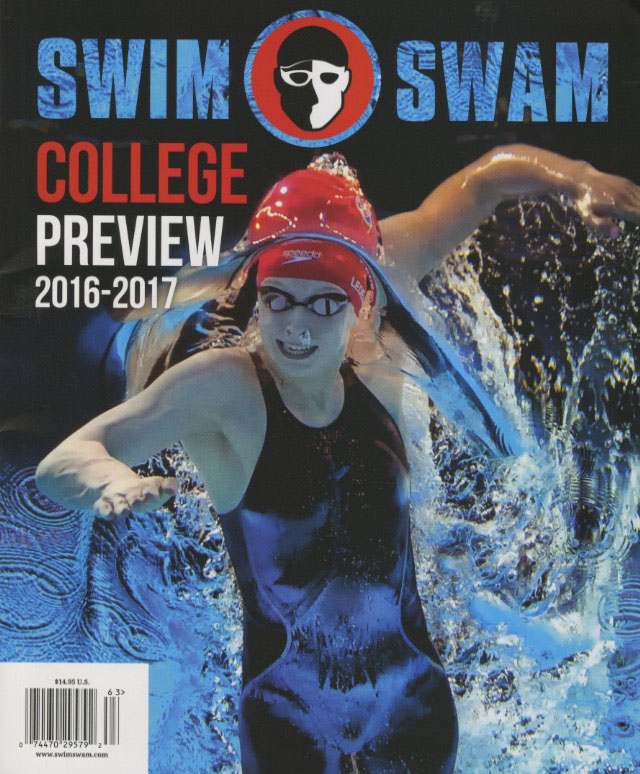
h1

Celebrity Page Magazine: Putting Readers On The Positive “Page” Of Their Favorite Celebrities’ Lives – The Mr. Magazine™ Interview With Daniel Hall, Publisher, Celebrity Page, Bella New York & Bella L.A.

September 29, 2016

A Mr. Magazine™ Launch Story

cp-1st-issue

“We had the print background and we believed in that. Also, with everything we were reading and researching, we felt that print is strong. I know it’s taken a pretty bad beating over the past several years, but really in the past two years we’ve seen a great surge in print again. And for us we felt that it’s almost not real until it’s in print. The digital is fantastic and we certainly have full digital; we’re doing a lot with video, and I like to say that we drive it all to our digital. We have a tangible lead behind that people want and we bring it all together with events.” Daniel Hall

Two new print titles have recently hit newsstands: Celebrity Page and Bella L.A. Both are from the creative talents of husband and wife team, Daniel and Courtenay Hall. The Hall’s began their passionate magazine journey with Bella New York, a women’s luxury lifestyle publication offering an insider’s guide to one of the most affluent areas in America. Bella New York spotlights a sophisticated combination of fashion, beauty, health, philanthropy, arts and culture, cuisine, celebrity and entertainment.

fb_img_1474642837794Bella L.A. is the latest regional title that will mirror its sister publication, only focusing on L.A. instead of the Big Apple. I spoke with Daniel Hall recently and we talked about his future vision for the Bella Media Group brand and how he and Courtenay hope to keep spinning the North American globe by having Bella’s for many, many cities. Next up: Miami.

The other new title is one that is unique in its desire to cast celebrities in a more positive light: Celebrity Page, named after the syndicated entertainment news program that airs on the cable network, REELZ. The magazine is a monthly that showcases many of the philanthropic efforts that celebrities are interested in. It also presents a more comfortable look at some of our greatest and most popular icons. It’s a breath of fresh air in the celeb world as it shies away from the behind-the-bushes-caught-you negativity many of the gossip-based titles go for. Daniel’s unique strategy for distributing the premiere issue was an exclusive deal with Barnes & Noble, which earned him first-shelf placement in the Entertainment section in all 634 stores as a joint partnership. While it was a most sweet deal, Daniel said for following issues it will not be Barnes & Noble exclusively as they plan on broadening their horizons and newsstands.

Daniel is a print lover from way back, as is his wife, Courtenay. They used their passion and their own money to start Bella New York and have watched it grow and flourish – so much so they started Bella L.A. and Celebrity Page.

So, I hope that you enjoy this very interesting discussion with a man who knows how to use hard work, passion and dedication to make his dream come true – the Mr. Magazine™ interview with Daniel Hall, publisher, Celebrity Page, Bella New York and Bella L.A.

But first the sound-bites:

fb_img_1474642820386

On why he’s launching print magazines in this digital age: By design, when we came up with the idea for Bella, we knew that we wanted to go to national with a bunch of regionals, if you will. Bella New York was our first magazine, obviously, and it’s been just a little over five years and we’re going onto Bella L.A. and because 50 percent of the content will be of national interest and the other 50 percent of the content is going to be geared toward that region. And we chose that model because we did not want to compete against the nationals; we didn’t want to have our fashion compete against Vogue. So, we said that if we take a little bit of the nationals and put it into a regional and then let that region own it with some local content, we felt like we’d have better success, because through our research we felt niche publications were doing better.

On the idea behind Celebrity Page magazine and its connection to the television program of the same name: Basically, we’ve partnered with the people who actually have Celebrity Page TV. Of course, we’re not partners with them on the television show, just on the print and the digital. We saw an area where we wanted to position celebrities in a positive light. We wanted to show their philanthropic efforts; we didn’t want to come across as a tabloid that was hiding in the bushes and seeing who was coming out of a cellulite clinic or anything like that.

On why he decided to go through Barnes & Noble exclusively for the distribution of the premiere issue of Celebrity Page: We have a great relationship with Barnes & Noble when it comes to Bella. And our sales are fantastic with them, so I approached them and asked if they’d want to partner with us on this launch. According to what they told me, this was the first time they had entered into this type arrangement too. I was able to negotiate first-shelf placement in the Entertainment section in all 634 stores as a joint partnership. And we said that through the TV and through the magazine, we would also promote Barnes & Noble and just try to drive readers and traffic to their retail outlets to help promote the store and really, just help everyone’s cause.

On what he believes the role of print is today: We had the print background and we believed in that. Also, with everything we were reading and researching, we felt that print s strong. I know it’s taken a pretty bad beating over the past several years, but really in the past two years we’ve seen a great surge in print again. And for us we felt that it’s almost not real until it’s in print. The digital is fantastic and we certainly have full digital; we’re doing a lot with video, and I like to say that we drive it all to our digital. We have a tangible leave behind that people want and we bring it all together with events.

On the biggest stumbling block that he had to face during the launch of any of his magazines and how he overcame it: Two things come to mind: the naysayers who kept saying print is dead and we were absolutely crazy to go into a print publication. Had we listened to any of those people we obviously wouldn’t have launched any of our magazines. So, I think overcoming all of the naysayers just as we were starting to do our preliminary research on what we should do and how we should launch. The second thing was the finances of launching. We did not go after investors. My wife and I self-funded. We like to say it was an Amex card and a dream. And literally it was. We sold the first issue on the concept; we printed a media kit and we sold the idea.

paris-coverOn where the next Bella magazine will be after New York and L.A.: As far as our business model, we plan on going to Miami next. And we’re hoping to do that in one year’s time. Miami and then next, and I’m not sure why really, but we felt we wanted to do something in either Dallas or Houston, something along those lines as a fourth market.

On the most pleasant moment he encountered during the launching of the magazines: I graduated from the Fashion Institute of Technology (FIT) in 1997 with a B.A.and I had the opportunity to go back and interview the president of the college for the magazine. And it’s those types of things that hit me sometimes and I can’t really believe they’re happening, and interviewing some of these amazing athletes and just having exposure and being able to highlight them. With Bella too, we’re fashion, beauty, wellness; we’re an overall lifestyle, those are just three of the main focuses of the magazine. And even a lot of the wellness content; when you’re highlighting these philanthropic efforts of some of these unfortunate diseases and things some children have; when we support them and we go to these fundraisers and highlight and try to help them create awareness; that is meaningful to us.

On anything else he’d like to add: I’d just like to thank our supporters and thank our team. We’re a small crew that does a lot. And really, everything that we do is to just try and put good content to each of those areas and basically don’t stop. Bella is an example of what passion and dedication can do.

On what someone would find him doing if they showed up unexpectedly to his home one evening: We have three small children, not so small now; they’re 12, 11 and 7. Being that we work together, we try when we come home to turn it off. And sometimes that’s difficult, because obviously, you’re always thinking of something. What needs to be done? But we really try to focus and get home and then zone in on what’s important at that point. For the most part it would be being with the children, doing something, whether it’s afterschool soccer, or just being home. It’s really family time that we focus on and we try to really pay attention to doing good quality family time and during the day good quality business.

On what keeps him up at night: I have to say that I am a good sleeper, so when it is bedtime, I can typically shut it down and go to sleep. But when I am kept up it’s just all of the activities of what we’re doing. I don’t want to ever take anything for granted. Life is short for all of us, so at night I try to really think of whether or not we accomplished what we wanted to? I think of strategic ways that we can do better to make a bigger impact on people that is going to be meaningful and to help them. We try and make the content more than just fluff. We try to make a difference with the brand when people are reading the pages of Bella and Celebrity Page.

And now the lightly edited transcript of the Mr. Magazine™ interview with Daniel Hall, publisher, Celebrity Page, Bella New York and Bella L.A.

bella-laSamir Husni: Why are you launching a new print magazine in this digital age? And in fact, with Bella L.A., you’re actually launching two print magazines; tell me a little about your story.

Daniel Hall: By design, when we came up with the idea for Bella, we knew that we wanted to go to national with a bunch of regionals, if you will. Bella New York was our first magazine, obviously, and it’s been just a little over five years and we’re going onto Bella L.A. and because 50 percent of the content will be of national interest and the other 50 percent of the content is going to be geared toward that region.

And we chose that model because we did not want to compete against the nationals; we didn’t want to have our fashion compete against Vogue. So, we said that if we take a little bit of the nationals and put it into a regional and then let that region own it with some local content, we felt like we’d have better success, because through our research we felt niche publications were doing better. And we’re not niche in the sense of a special interest type of publication; we’re still more general interest. We are appealing to the masses.

But we knew by focusing on each region it would allow them to own it and hopefully want to purchase it, and it has been. Thank God it has been going that way. It’s been a real grass roots effort, but it’s certainly been gaining momentum issue after issue, and we felt it was time to launch Bella L.A. now in order to keep that momentum going.

Samir Husni: In addition to Bella, you’ve just launched Celebrity Page. And you’ve launched it in a way that it’s only distributed at Barnes & Noble. Would you tell me about the genesis of the idea behind Celebrity Page, the magazine and its connectivity with the television program?

Daniel Hall: Basically, we’ve partnered with the people who actually have Celebrity Page TV. Of course, we’re not partners with them on the television show, just on the print and the digital. We saw an area where we wanted to position celebrities in a positive light. We wanted to show their philanthropic efforts; we didn’t want to come across as a tabloid that was hiding in the bushes and seeing who was coming out of a cellulite clinic or anything like that.

Being that celebrities are such icons really, if you will, to some of the millennials and to older folks as well and the impact that celebrities have on people’s lives; we felt that by putting a positive spin on it and by putting something new out there, and with the TV component to back it up and the full digital, it would be something good to partner on, and be great to add to the Bella Media Group portfolio as just a positive reinforcement to these celebrities of highlighting and honoring them for what they do in that positive way.

Samir Husni: Why did you decide to go through Barnes & Noble exclusively with the premiere launch of Celebrity Page?

Daniel Hall: We have a great relationship with Barnes & Noble when it comes to Bella. And our sales are fantastic with them, so I approached them and asked if they’d want to partner with us on this launch. According to what they told me, this was the first time they had entered into this type arrangement too. I was able to negotiate first-shelf placement in the Entertainment section in all 634 stores as a joint partnership. And we said that through the TV and through the magazine, we would also promote Barnes & Noble and just try to drive readers and traffic to their retail outlets to help promote the store and really, just help everyone’s cause.

We felt it was a good partnership for us. Barnes & Noble is obviously a great name, and you know better than anyone, as far as newsstands go, that they have certainly been struggling over that past few years, but our stand sales are great and we felt that if we could really promote one place and tell people: hey, go here, get it here, it would be very effective.

We are rolling out with another national distributor after this initial first issue, so it’s not going to be exclusive with Barnes & Noble anymore. We are going to increase with additional stands as well, and that will be through The Publishing Distribution. We’ve signed up with those guys as well. But for the launch we went with Barnes & Noble exclusively and it went great. We’re doing a lot of cross-promotion with them. We’re just trying to get people who shop there to purchase our magazine, obviously, but also any title.

Samir Husni: Someone might wonder what you’d been drinking to publish three print magazines in this digital age. What do you believe the role of print is today?

Daniel Hall: I come from a print background. And so does my wife. My wife Courtenay is the editor in chief of the magazine and I’m the publisher, so it’s a husband and wife combo. We met in college at our first job with an advertising agency. My wife jumped over to publishing first and I followed.

So, we had the print background and we believed in that. Also, with everything we were reading and researching, we felt that print s strong. I know it’s taken a pretty bad beating over the past several years, but really in the past two years we’ve seen a great surge in print again. And for us we felt that it’s almost not real until it’s in print. The digital is fantastic and we certainly have full digital; we’re doing a lot with video, and I like to say that we drive it all to our digital. We have a tangible leave behind that people want and we bring it all together with events.

But what we felt in print was exactly that; the tangible leave behind. The celebrities are very supportive and to give you an example, I think it was in our second issue, we highlighted a health expert. Tragically, she was on her deathbed about two months ago. Her niece called me and asked for copies of that issue of the magazine so that they could pass it around to members of the family.

And that just reconfirmed to us the specialness of print; you just can’t get that with digital. You’re not going to have somebody ask you to go get your digital archive so they can see their cover photo. So, I feel the pass-along with print is invaluable. And it’s just real. You have that print copy and these writers, celebrities and editors that we’re highlighting, they take those copies and they keep them forever. We just feel like that when it’s in print, it’s real. We knew that we couldn’t be solely in print, but we wanted to drive it all with the backbone being print. And adding the multiplatform to our brands as supporting everything, but knowing print is still the strongest; it gives the best return on investment and we felt the pass-along rate, as far as having them displayed in doctor’s offices and salons, that type of thing. And print is the most trackable. With digital it’s craziness with all of the numbers; there were a thousand clicks, but did someone walk through my door and purchase the product?

And the brands can get so crafty with print and people love it. You have that diamond ring jumping off of the glossy whit page, it’s just looks gorgeous. And we’re avid magazine readers. From the beginning we knew that we needed to do a print publication, plus the digital and with Celebrity Page, the TV components.

Samir Husni: What was the biggest stumbling block that faced you in the launch of Bella or Celebrity Page and how did you overcome it?

Daniel Hall: Two things come to mind: the naysayers who kept saying print is dead and we were absolutely crazy to go into a print publication. Had we listened to any of those people we obviously wouldn’t have launched any of our magazines. So, I think overcoming all of the naysayers just as we were starting to do our preliminary research on what we should do and how we should launch.

The second thing was the finances of launching. We did not go after investors. My wife and I self-funded. We like to say it was an Amex card and a dream. And literally it was. We sold the first issue on the concept; we printed a media kit and we sold the idea. We were able to sell enough to print our first edition and from there it just continued to roll. We call it an “attic startup,” we launched out of an attic where we lived and it was really a grass roots effort. It was having enough confidence to overcome the naysayers and then being bold enough to sell it before printing, knowing that we had to deliver. I think having our backs against the wall like that, knowing that those challenges really pushed us and motivated us to prove that print was not dead, it’s still very much alive, and you don’t need a big VC (venture capital) company behind you. You need passion, motivation and hustle, and you really can accomplish things and make your dreams come true.

Samir Husni: I interviewed a gentleman who just started a magazine down in New Orleans recently called Art+Design, and he quoted Tennessee Williams in his letter from the publisher, saying: “The United States has three major cities, New York, Los Angeles and New Orleans. And everywhere else is Cleveland.” So, where is the next Bella after New York and L.A.? Is it going to be New Orleans?

Daniel Hall: (Laughs) That’s a good point and it’s certainly a possibility. As far as our business model, we plan on going to Miami next. And we’re hoping to do that in one year’s time. Miami and then next, and I’m not sure why really, but we felt we wanted to do something in either Dallas or Houston, something along those lines as a fourth market.

Miami would be next. And that’s the beauty of it. The content when we designed Bella and we were putting the departments in place and how we would structure it, we knew that was the direction that we wanted. That with each magazine we could have different covers or we could have one cover across all titles and then still have our “Love in the City” and our “Chow Bella,” which is our food section, geared specifically toward that major market. That’s our idea. So, hopefully, God willing, Miami will be our next market.

Samir Husni: During the process of launching those magazines, what was the most pleasant moment that you encountered?

Daniel Hall: I graduated from the Fashion Institute of Technology (FIT) in 1997 with a B.A. and I had the opportunity to go back and interview the president of the college for the magazine. And it’s those types of things that hit me sometimes and I can’t really believe they’re happening, and interviewing some of these amazing athletes and just having exposure and being able to highlight them.

With Bella too, we’re fashion, beauty, wellness; we’re an overall lifestyle, those are just three of the main focuses of the magazine. And even a lot of the wellness content; when you’re highlighting these philanthropic efforts of some of these unfortunate diseases and things some children have; when we support them and we go to these fundraisers and highlight and try to help them create awareness; that is meaningful to us. And that makes it a little bit more real for me that we’re actually making a difference in some of these families’ lives by trying to help. Where some of these magazines never even think of covering a kidney disease or something else, we kind of promote that to really help create awareness and then we go and fully support the event; we back it and do fundraising and that type of thing.

I think a lot of the enjoyment comes from being involved in those types of things and being able to honor those families by just highlighting and helping to create awareness for their situations.

Samir Husni: Is there anything else that you’d like to add?

Daniel Hall: I’d just like to thank our supporters and thank our team. We’re a small crew that does a lot. And really, everything that we do is to just try and put good content to each of those areas and basically don’t stop. Bella is an example of what passion and dedication can do. It’s amazing that we’ve been fortunate enough to be able to get to where we are today, and we plan on keeping going and we truly appreciate everyone involved.

Samir Husni: If I showed up unexpectedly to your home one evening after work, what would I find you doing; reading a magazine, reading on your iPad, watching television, or something else?

Daniel Hall: We have three small children, not so small now; they’re 12, 11 and 7. Being that we work together, we try when we come home to turn it off. And sometimes that’s difficult, because obviously, you’re always thinking of something. What needs to be done? But we really try to focus and get home and then zone in on what’s important at that point. For the most part it would be being with the children, doing something, whether it’s afterschool soccer, or just being home. It’s really family time that we focus on and we try to really pay attention to doing good quality family time and during the day good quality business.

You can catch us doing anything from playing a board game, to sitting and watching a family movie together, and we try to do that. One night is movie night; one night is board game night; sometimes it is just everyone doing their own thing. My wife is a big TV fan, so I may just try and catch something that she has DVR’ed and we’ll watch it together. In the later part of the evening, after the kids have gone to bed, it will be back to work and trying to plan for the next day and week, and back into the thinking process.

Samir Husni: My typical last question; what keeps you up at night?

Daniel Hall: That’s a good question. (Laughs) I have to say that I am a good sleeper, so when it is bedtime, I can typically shut it down and go to sleep. But when I am kept up it’s just all of the activities of what we’re doing. I don’t want to ever take anything for granted. Life is short for all of us, so at night I try to really think of whether or not we accomplished what we wanted to? I think of strategic ways that we can do better to make a bigger impact on people that is going to be meaningful and to help them. We try and make the content more than just fluff. We try to make a difference with the brand when people are reading the pages of Bella and Celebrity Page.

So, if I am kept awake, it’s from thinking about the day and of new ideas about how we can differentiate and better ourselves.

Samir Husni: Thank you.

h1

WOTH Magazine: “Wonderful Things” Happen Between The Pages Of This New Dutch Launch – The Mr. Magazine™ Interview With Publisher, Toon Lauwen & Founding Editor, Mary Hessing

September 22, 2016

A Mr. Magazine™ Launch Story…

01covereng

“We decided to make a print magazine because we wanted it to be a beautiful thing and we thought about design and designers and the way they work, for them materials are very important. We also thought about their skills and the stories behind their ideas for the product. We figured for the magazine, for the media in which we’re telling these stories, it’s the same. So, this is something that you want to hold in your hands, something that materializes. It’s not that we don’t want to have any digital additions, but we want it to be something that you can cherish and keep and something that you can hold and feel the paper, because it’s the same with design.” Mary Hessing

“We also want to reach out to a larger community than the Dutch one, because that’s the reason we took it into an English version too, to have a larger exposure and make it possible to be more European. And that’s also a twist of the necessary optimism it takes to move forward. We tried to show the quality of the magazine with the paper, the lettering and the typeface, etc.” Toon Lauwen

Woth Wonderful Things is a new lifestyle magazine focused on interiors and design, but one done in a more personal way, with strong visuals and content about people and objects that are so interesting they make you wonder about them and the innovative creativity they display that stirs imaginations.

Real-life couple, Toon Lauwen and Mary Hessing, who are based in The Hague in the Netherlands, created this beautiful new publication, and between their support network of longstanding Dutch designers and professionals they have both been involved with for decades, Mary is a former editor in chief for Dutch design magazine Eigen Huis & Interieur, and her partner Toon has been in the business for decades, they started a crowdfunding campaign and made the design dream magazine a reality.

00000663portraitmaryhessingvoorinternet-photo-brenda-van-leeuwenI spoke with both Toon and Mary recently and we talked about their vision for this outstanding new magazine. The deep sentiments of a personal relationship with both the reader and the subject matter that Mary so strongly believes in, and the focus on good content and magnificent writing that Toon strives for with each and every word and page; it’s clear the two of them have a passion for Woth that will only grow and flourish.

So, I hope you enjoy this Mr. Magazine™ interview with two people who made a dream into a reality with hard work, creative ideas and superb content, and a network of people who believe in this magazine as much as they do, Toon Lauwen, Publisher, and Founding Editor, Mary Hessing, Woth Wonderful Things Magazine.

But first the sound-bites:

On the idea behind the magazine and why they decided on a print product (Mary Hessing): We decided to make a print magazine because we wanted it to be a beautiful thing and we thought about design and designers and the way they work, for them materials are very important. We also thought about their skills and the stories behind their ideas for the product. We figured for the magazine, for the media in which we’re telling these stories, it’s the same. So, this is something that you want to hold in your hands, something that materializes.

On why they chose to publish it in an English version (Mary Hessing): Because we have very good connections in Holland with Dutch designers. And Dutch designers are worldwide and that’s very important in this industry. And I think that we have the best commitment for making good content. And we’re trying to broaden our scope and bring it to the world, not only to Holland.

jwk_1653On whether it was easy to market the magazine (Toon Lauwen): Initially we started out with an idea, so we made a crowdfunding campaign, Indiegogo. So, we did interviews and Mary did that to engage our public with the new idea of this magazine. As an independent, we had to start out using a network that we already had. I have been doing this for over 20 years. Mary is the figurehead, so to speak, and she has actually done a lot of good footwork with those designers and brands in Italy and all over Europe to make all of those connections, also with the advertisers.

On any stumbling blocks they had to face and how they overcame them (Mary Hessing): What was really difficult was we started out with no money, with just this idea, so we asked a lot of people to help us. We did the crowdfunding campaign, but even before that we had been asking people from our network if they would help us out with the content. And I received all positive responses, everyone was really supportive and really thought we should do the magazine. Everybody felt there was a need for a project like this and that it would definitely get off the ground. Then we did the crowdfunding campaign, and I also asked the people I used to work with, most of them are freelancers now, to help us out with making the magazine.

On how difficult it was as a couple working together (Toon Lauwen): We’ve worked together before, of course. But then I was writing for a former magazine, but now we’re really teaming up because we’re both responsible for getting it to the printer and getting the bills paid, etc. We’re a business team. And that does take some adjustment, but on the other hand it’s also something we like to do. With our house, we did it together.

On what they hope the magazine has achieved in one year (Mary Hessing): I would really like the magazine to have a solid base and have a strong and healthy existence. And that it has secured its right to exist. And I want it to stand out independently from other magazines.

01coverengOn anything else they’d like to add (Mary Hessing): I’d like to emphasize that Dutch Designer Gert Dumbar made our logo. He’s an old family friend of mine and he did this as a favor to us. And I’m really proud of it. It’s so funny because I asked this really elderly gentleman to make something really bold and daring and fantastic, and when I asked him for the logo for “Wonderful Things,” he thought the word Woth was a strange and intriguing word. It’s such a strong logo and I think in a way there’s a little bit of the 1980s influence there, and I think it’s interesting because everybody is now looking at the ‘80s for inspiration and we have the real thing.

On what someone would find them doing if they showed up unexpectedly one evening at their home (Mary Hessing): I would probably be putting my children to bed which takes forever. (Laughs) I always like to make up with them for all of the things I missed during the day, so that takes time.

On what someone would find them doing if they showed up unexpectedly one evening at their home (Toon Lauwen): I might be watching a documentary or reading a book. I read about history a lot.

On what keeps them up at night (Mary Hessing): Living up to expectations from other people, not normally, but especially about this project.

On what keeps them up at night (Toon Lauwen): I’m always reasoning in my head about a tagline, or just some small thing. I’ve been a worrier since I was young; it’s my nature. (Laughs)

ton-of-hollandspreadAnd now the lightly edited transcript of the Mr. Magazine™ interview with Toon Lauwen, Publisher, and Founding Editor, Mary Hessing, Woth Wonderful Things Magazine.

Samir Husni: Tell me the idea behind the magazine and why you decided to launch a print publication in this digital age?

Mary Hessing: We decided to make a print magazine because we wanted it to be a beautiful thing and we thought about design and designers and the way they work, for them materials are very important. We also thought about their skills and the stories behind their ideas for the product. We figured for the magazine, for the media in which we’re telling these stories, it’s the same. So, this is something that you want to hold in your hands, something that materializes. It’s not that we don’t want to have any digital additions, but we want it to be something that you can cherish and keep and something that you can hold and feel the paper, because it’s the same with design.

Samir Husni: And why did you publish in an English version as well?

Mary Hessing: Because we have very good connections in Holland with Dutch designers. And Dutch designers are worldwide and that’s very important in this industry. And I think that we have the best commitment for making good content. And we’re trying to broaden our scope and bring it to the world, not only to Holland.

Samir Husni: Toon, as the publisher, how easy was it for you to market the magazine? You’re a great team and you have a known editor and the Dutch design is known all over the world. What was the reaction when you first went and tried to sell an ad or tried to get some sponsorship for the magazine?

Toon Lauwen: Initially we started out with an idea, so we made a crowdfunding campaign, Indiegogo. So, we did interviews and Mary did that to engage our public with the new idea of this magazine. As an independent, we had to start out using a network that we already had. I have been doing this for over 20 years. Mary is the figurehead, so to speak, and she has actually done a lot of good footwork with those designers and brands in Italy and all over Europe to make all of those connections, also with the advertisers.

That footwork really enabled us to make direct contact with the advertisers, the bosses of those brands, to ask them to support our magazine in the middle of the year, because we started out in May or June. So, our campaign was concentrated in mid-season, summer. It wasn’t a piece of cake, that’s for sure.

But nevertheless, we’ve found a true optimism with the people and an involvement with them at the brands, helping us out, buying advertisements, and also with the readership through subscriptions and single issues, just based on a campaign or an idea and largely dependent on an image that Mary put out as an editor in chief of the title that she worked at before.

Samir Husni: Was it all just a stroll through a rose garden, or should I say; a tulip walk…

Toon Lauwen: (Laughs).

Samir Husni: …that you had no stumbling blocks and no problems? Or did you have stumbling blocks, and if so, what were they and how did you overcome them?

portretten-ronald-vd-kempMary Hessing: What was really difficult was we started out with no money, with just this idea, so we asked a lot of people to help us. We did the crowdfunding campaign, but even before that we had been asking people from our network if they would help us out with the content. And I received all positive responses, everyone was really supportive and really thought we should do the magazine. Everybody felt there was a need for a project like this and that it would definitely get off the ground. Then we did the crowdfunding campaign, and I also asked the people I used to work with, most of them are freelancers now, to help us out with making the magazine.

So, we had the contacts and the crowdfunding. Then we had to actually make the pages. And everyone helped us for as long as they could, but at the end of the day we’re the only ones responsible for getting it to the printers. We are really grateful and happy that everybody was so supportive and helpful, but it can only stretch so far.

Samir Husni: How difficult is it for you as a couple to work together?

Toon Lauwen: It’s really easy because I’m writing a lot, so my concentration is totally different. To begin with, I work best in the mornings and Mary works at night, until 2 or 3:00 a.m. I’m always reasoning in my head what to write, which usually takes a lot of time and concentration for me. But now there was no time for that. We had to produce a lot of text.

Mary Hessing: You are two different people in your thought patterns, but also on energy levels as well. So, I work at night and normally I sleep very well. But these days, with the magazine, sleep was very difficult, so I was awake a lot. I would go to bed late and rise really early because I knew there were things we had to do for the magazine. So I would just do it.

Toon Lauwen: We’ve worked together before, of course. But then I was writing for a former magazine, but now we’re really teaming up because we’re both responsible for getting it to the printer and getting the bills paid, etc. We’re a business team. And that does take some adjustment, but on the other hand it’s also something we like to do. With our house, we did it together.

Mary Hessing: We renovated 15,000 squares and we’re still together, so I think we can argue, but we will manage. (Laughs)

Samir Husni: If we’re talking one year from now about the magazine; what do you hope you could tell me that Woth had achieved in that year?

Mary Hessing: I would really like the magazine to have a solid base and have a strong and healthy existence. And that it has secured its right to exist. And I want it to stand out independently from other magazines.

Toon Lauwen: We started out as a new title, typically niche, since it’s about design. And the name itself, calling it “Wonderful Things,” we want it to reach out to people with its ideas and its motivation of people who work with design, but not only designers, just anyone creative in general, chefs and any other professions. So, we made the format a bit broader that just the theory of design only. That’s what we were trying to do with the title, “Wonderful Things,” and the brand.

mary437defbwphotokasiagatkowskaMary Hessing: Also, I wrote for many years for two other design titles and working with design can be difficult. When you look at all of the living magazines around the world, a lot are based on the same formula and it’s very difficult to make it personal, so we’re really trying to find a way to make Woth personal. And we’re doing this by focusing on the creatives. Whatever we do we want to put them central. And in a way I think this could be like a human interest idea for a design and interior decorating magazine. I think people are interested in these people in the magazine; they’re superstars in a way, and they have a very nice way of living and great view of the world, so we really want to speak to them on a personal level.

This is what we’re aiming for. We want it to be personal. What I get back from people is the way it’s written, it is really personal.

Toon Lauwen: We also want to reach out to a larger community than the Dutch one, because that’s the reason we took it into an English version too, to have a larger exposure and make it possible to be more European. And that’s also a twist of the necessary optimism it takes to move forward. We tried to show the quality of the magazine with the paper, the lettering and the typeface, etc.

So, we hope that we can answer your question about where we’ll be in a year by saying we have evolved from a local niche magazine to bit more European, and that we even have a global reach.

Mary Hessing: Because of my work, I’ve been visiting countries and people everywhere and there is this connection between people, the way that they look at their lives, the way they live them. The people I work with, the agents and photographers internationally; these are all very nice and interesting people. I feel like there’s already a connection and I’d really like this magazine to be a magnet for that as well

Samir Husni: Is there anything else you’d like to add?

Mary Hessing: I’d like to emphasize that Dutch Designer Gert Dumbar made our logo. He’s an old family friend of mine and he did this as a favor to us. And I’m really proud of it.

Samir Husni: It really looks good.

Mary Hessing: It’s so funny because I asked this really elderly gentleman to make something really bold and daring and fantastic, and when I asked him for the logo for “Wonderful Things,” he thought the word Woth was a strange and intriguing word. It’s such a strong logo and I think in a way there’s a little bit of the 1980s influence there, and I think it’s interesting because everybody is now looking at the ‘80s for inspiration and we have the real thing. He’s from the spirit, so I think this is very interesting that all these other people are copying this idea and we have the real thing.

Samir Husni: If I showed up unexpectedly to your home one evening after work, what would I find you doing; would you be reading a magazine, your iPad, watching television, or something else?

Mary Hessing: I would probably be putting my children to bed which takes forever. (Laughs) I always like to make up with them for all of the things I missed during the day, so that takes time.

Toon Lauwen: I might be watching a documentary or reading a book. I read about history a lot.

Mary Hessing: He’s also a great cook and he always says that he cooks and it’s his gift to us and it is. But actually it’s his hobby, his way to relax.

Samir Husni: And you’re based in The Hague, correct?

Mary Hessing: Yes, we are.

Samir Husni: My typical last question; what keeps you up at night?

Mary Hessing: Living up to expectations from other people, not normally, but especially about this project.

Toon Lauwen: I’m always reasoning in my head about a tagline, or just some small thing. I’ve been a worrier since I was young; it’s my nature. (Laughs)

Samir Husni: Thank you.
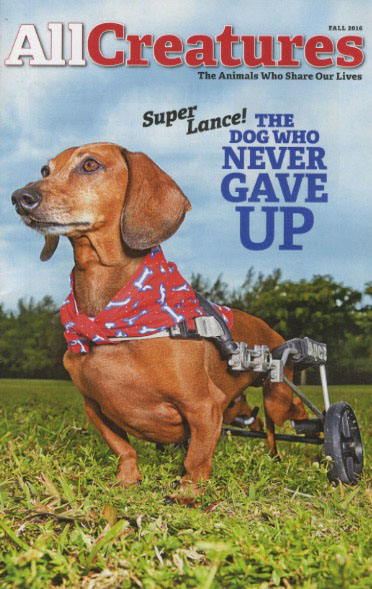
h1

Art+Design Magazine: From New Orleans To The World With Love – The Mr. Magazine™ Interview With Steve Martin, Founder & Publisher, Art+Design Magazine.

September 19, 2016

“While the Internet shows you what’s out there, it’s not what you always see. There are images that look great on the Internet, but once you see them in person, they’re not that hot. So, I think someone spending $25,000 and up for a painting rarely will buy it sight unseen on the Internet, unless it has provenance that it’s to an artist they have already experienced on some more intimate level in person. art-design

“Taking that idea and putting it back to the magazine; it’s like when people look at an artwork, they want to have a tactile experience, so picking up a magazine and looking at it, feeling the weight of the magazine in your hand, the thickness of the paper, the high visual quality of what’s on the page; it kind of creates a world that you can get sucked into. It captures your attention and your emotions, and you can experience it by holding it in your hand, take it home with you and read it at your leisure. It’s just a completely, I think, more rewarding experience than looking at an online magazine.” Steve Martin

Art+Design magazine is a New Orleans-based publication that is spreading its local wings and going global. Something its founder and publisher, Steve Martin, said has been the ultimate goal all along. The magazine is taking on the luxury market and adding a healthy dash of creative artistry to the mix by viewing each and every topic from an artistic lens, an interesting concept that certainly spices things up and changes the niche game entirely.

I spoke with Steve recently and we talked about his “worldly” expectations for Art+Design and also touched on the local insert that will soon start plumping the book with even more goodness of content, his new magazine called Canvas, an idea that came to him as he thought about some local advertisers who might get left behind with the new global slant of the parent publication.

Steve is an artist and a patron saint of the art districts of New Orleans and Miami, having galleries in both for quite some time. Today, he concentrates on his own studio in the Crescent City and his magazines that promise to bring art, fashion, photography, interiors and many other luxury topics to the four corners of the world, all covered in the creative style he knows so well, the artists’ eye. He is a man who is open about his deep and abiding faith in God and his sheer sincerity shines through each and every expression of his work that he shares.

So, I hope that you enjoy this very informative and interesting discussion with an artist and a creator of print that is both an entrepreneur and an experienced publisher in his own right, the Mr. Magazine™ interview with Steve Martin, Founder and Publisher, Art+Design magazine.

Steve Martin

Steve Martin

But first the sound-bites:

On the history of Art+Design: I started thinking about where people were coming from when it came to my own art and it was the luxury market. And I began to think about luxury lifestyle magazines and how when you look at W Magazine, they have an art editorial in there and it really means something, and there’s Architectural Digest that has an art essay in it, and it really just stands out. I came up with the idea of creating a magazine that encompassed art, design and the experience of that luxury lifestyle and that’s where Art+Design came from.

On why he felt that a print magazine was the best platform for Art+Design: It’s like when people look at an artwork, they want to have a tactile experience, so picking up a magazine and looking at it, feeling the weight of the magazine in your hand, the thickness of the paper, the high visual quality of what’s on the page; it kind of creates a world that you can get sucked into. It captures your attention and your emotions, and you can experience it by holding it in your hand, take it home with you and read it at your leisure. It’s just a completely, I think, more rewarding experience than looking at an online magazine.

On why he decided to go global with the magazine:
New Orleans has definitely injected into the world a great number of very influential people: writers, artists and musicians. It’s the birthplace of jazz and there’s quite a bit of culture that has permeated the world from New Orleans. I was thought that New Orleans was on the same level as New York and Paris in its cultural impact. And I really thought it should be elevated and there was nothing in New Orleans that elevated New Orleans or made anyone think of anything that they weren’t already thinking, which was that we were provincial. So, when I started this thing out I wanted it to be an international magazine. It was never meant to just stay local. My long-term vision was to launch it into the international public eye as quickly as possible.

On why he thinks it took so long for someone like himself to come along and realize that the city of New Orleans was deserving of a global magazine that documented the luxury lifestyle in an artistic way: It’s a little bit of that provincial nature that everyone saw from outside New Orleans. They weren’t off; it is provincial in a way. It’s a hip little city and a tight community. It’s done a certain way.

On whether he believes that as long as there is art, there will be print: Yes. I think that the demise of print magazines is premature. I don’t think that the Internet can give the experience that a magazine does. Now, will it kill off the weaker magazines; yes, it’s already done that. You’ve seen the decline in the print market and that’s due to the weaning process that’s heightened by the Internet. I don’t think that you get a chance to hang around if you’re not staying alive by figuring out how to stay alive. You have to be proactive in it. You can’t just create it, then let it coast.

On how he is being proactive with Art+Design:
We’re assignment driven, so we get submissions all of the time, but that’s never really worked out for us, so it’s really just keeping our eyes opened and looking at world trends. One of the things that I try to do, and is an interesting direction, I think, is that because New Orleans is that international city; we look for stories that are in the world and either have some thread back to New Orleans, and that can be really thin, or from a story that’s already here and has some effect out in the world.

On the biggest stumbling block he’s had to face and how he overcame it:
I guess it was the money because I started with none. I didn’t have a backer; it’s self-sustaining, I guess. The way that I created it was I took a notepad and I laid out 80 pages, hand-drawn in the notepad, and then I went into Vanity Fair, Vogue and Architectural Digest and Art News and tore pages out of those magazines and then created an 80-page, stapled together copy of those stripped out pages and I walked around the city and I showed people my notebook of what I wanted to design and what I wanted the layout of the magazine to be and the concept behind it, and then I showed them the ads and the stories that were in the stripped out pages that I had, and I said this is what I’m shooting for, for my magazine to be of this caliber and quality and this level of publication.
And I basically sold enough ads from that to start it, so the difficulty has been every issue for the first four years now has been hand-to-mouth.

On what kind of art he creates: My website is stevemartinfineart.com and I paint, sculpt and draw. I make prints. I’m self-taught, so I haven’t run into anything that I haven’t tried. (Laughs) I’m always experimenting. Again, I came from a little town and I have always been an artist. I won a competition when I was five years old and I got to go on television for an art piece that I did. And that’s when I decided that I wanted to be an artist. I got all that attention and some candy. And I’ve stayed with it.

On anything else he’d like to add: Art+Design is meant to be the global magazine, I want it to be on par with Vanity Fair, Town & Country, Architectural Digest; all of those magazines. That’s been the goal, to be in that peer group. Now that I have launched into that arena and we’re striving to get there, the local market at some point may get left behind, not in content all the way, but the ability for some of the local advertisers to hang. So, I came up with the idea of Canvas, our new magazine, and the name came from the art side; a blank canvas full of infinite possibilities. And then the other side of the coin is when you move into a new area you canvas the area to see what’s cool and what’s going on. So I took that as the catalyst for Canvas and decided that could be the growth vehicle, a certain level where the main focus would be Art+Design, but we could create an attachable magazine called Canvas Chicago; Canvas New Orleans; Canvas Atlanta; Canvas Miami, and then grow it from there.

On what someone would find him doing if they showed up unexpectedly at his home one evening: Sleeping, because I don’t stop. A few years ago, I sort of started over in my life, and I started the magazine at that same time. And I had a painting studio uptown New Orleans that’s literally a 10×10 room and I moved into that and basically took everything that I could make or create and I would put it into the magazine. So, I still live in that 10×10 room; I don’t need anything else because I just come here and sleep. I’m typically always working. If you want to catch me in the afternoon; I’ll probably be at work and we could have dinner, but when I go home, it’s just to fall into bed exhausted.

On what keeps him up at night: Nothing; I’ve come to a place in my life where, and I think it was in the last publisher’s letter before this, you can see some of the stuff I write a lot about, my experiences. One of the things that I used to do was come up with an idea; work like hell to make it come to pass, and then worry it to death. I’d worry about it all of the time. I have since learned through my faith to change my attitude from worrying about everything to having faith that things will work out. So, I haven’t changed my work ethic, I still come up with a zillion ideas and I still tenaciously work hard at it, but rather than worrying about it all of the time, now I have faith that it will either be or not be and I’m leaving that up to God to decide and then I just keep moving forward.

And now the lightly edited transcript of the Mr. Magazine™ interview with Steve Martin, founder and publisher, Art+Design magazine.

Samir Husni: Congratulations on the national launch of Art+Design. I picked up the magazine recently and loved it.

Steve Martin: Thank you. We’ve been working on it quite a while. We actually, through Curtis Circulation, went global with this issue, so we’re shipping magazines from Iceland, throughout Europe and down into Singapore, Australia and New Zealand, and then Panama, with more countries coming.

Samir Husni: Tell me the story of Art+Design.

Steve Martin: I’m an artist and I have a gallery on Julia Street in New Orleans and have had one there since the 1990s. It has always been a challenge as an artist and a gallery owner to build a sustainable branding campaign through advertising. The cash flow was always so uneven. And it made it difficult to assign contracts to get breaks for advertising in the magazine that we thought would bring buyers to the door.

So, I had always been interested in magazines since I was a kid. I grew up in a little rural town near Alexandria, Louisiana called Tioga. I’d joke around and say the only art they had in the whole town was the calendar that was at the gas station. It was very rural. But somehow in that rural setting I would get my hands on interior design magazines and I was amazed at all of the architecture and interiors that I saw in them. So I started looking at magazines and magazine design, and that was back in the 60s and 70s.

I moved to New Orleans in 1987 and was “discovered” by a gallery owner and I began having one-man shows, building my art career up from there. In the process of my art career, I became the president of the arts district here in New Orleans. And I did that up until Katrina hit. And when I moved to Miami to keep my New Orleans gallery going, I opened up two places and for three years I flew back and forth each month, from New Orleans to Miami. While in Miami, I created an arts district down there called “Miami Art Design and Entertainment District,” which was in what’s now the Design District, and later became Wynwood.

In the process of creating that district, I was trying to figure out a way to advertise the district and what we’d done in New Orleans was to create a walking brochure that basically had a little blurb about each gallery and a map and directory. So, I posed that to the people who became members of that organization down there and we had something that we’d never had in New Orleans, which was money to operate on. We had 110 members and they all put about $2,500, so we had $250,000 of operating cash for the 501(c) (3) to promote ourselves.

The young man that I was working with to create the walking brochure; we sat down and we started thinking about it and he said that this was kind of an opportunity to create something like an airline magazine for our neighborhood, where it’s only shown around in the district and it only writes about the people, the members, who are in the district and it would contain the brochure, but it would have editorial about the galleries and the shops, content that we can basically control. Then all of those people could place their ads around it.

So, we created something called the “Miami Design District Guide.” And it’s still going. The young man that runs it is John White. And he was the publisher; I was just helping with sales and getting the members to come on board.

Then when New Orleans got on its feet and I moved back from Miami, I brought that idea back here and I created a little magazine called “Art New Orleans.” And it was just for the New Orleans arts district. The editorials were about the galleries and artists in the district and advertisers were the art galleries around it. It was very myopic in its vision and it was only about art, therefore subject to the cash flow problems that galleries and artists generally always struggle with. So, it was never really viable; it couldn’t grow. It was a 32-page, saddle stitched magazine and it was promotional in nature. We only wrote about the people who advertised in there, or the district. And it stayed around for seven years; it was just kind of there. But it gave me an opportunity to learn a whole lot about the nature of publishing and what people are looking for and how to work within the industry.

When John White decided that after seven years of not making any money, actually losing money, that he didn’t want to be a part of the New Orleans one anymore, I offered to buy him out and he said no, let’s just let it kind of go away, and I told him that I was going to start another magazine and he said OK, and he went his way and I went mine and it was all on good terms.

I sat for a year thinking about how I wanted to move forward. And what I determined was magazines, basically being myopic in their vision, really got attention from the academic crowd, from other gallery owners and from other artists and teachers. And those were people interested in art and interested in seeing themselves in print and interested in what was going on in the art world. But it didn’t really bring a lot of art buyers in. And that’s what sustains the business.

So, I started thinking about where people were coming from when it came to my own art and it was the luxury market. And I began to think about luxury lifestyle magazines and how when you look at W Magazine, they have an art editorial in there and it really means something, and there’s Architectural Digest that has an art essay in it and it really just stands out.

I came up with the idea of creating a magazine that encompassed art, design and the experience of that luxury lifestyle and that’s where Art+Design came from. It’s a simple name, and because it’s so simple, I guess that’s why it was still there. I started looking for magazine names to name the publication and it seemed like everything that I could think of for a name had already been taken and was a magazine somewhere in the world. Finally it just came down to Art+Design, which is what it is, and that wasn’t taken and it worked, and it said what we were going to do.

So, the whole concept behind the magazine’s vision looked at every aspect of the luxury lifestyle through an artistic lens, and used that as the catalyst to write about whatever we wrote about, so it could be fashion or whatever; it’s an artistic view about fashion. Or if it’s an interior design, it’s an artist’s residence or an artistic view of the residence, because it’s different or it has a great art collection. And I thought that was something that may show up in other magazines, but it isn’t really focused on in other magazines. And that was the catalyst for the nature of what we were going to put out.

Samir Husni: Why did you feel that a printed magazine was the best platform for you to promote the art district and that luxury lifestyle?art-2

Steve Martin: Having experience with art, I know the Internet is a great research engine and it allows you to get out and look around to determine where things are that you might like or what you might like, but it’s not a great vehicle for selling art. You don’t know what you get until you have bought it and received it by mail basically. When you buy a painting, I think it’s a lot more of a tactile experience. You want to walk up to it and look at it; you want to touch it and have that intimate experience of being next to it when you’re thinking about bringing it home and putting it on your wall.

And while the Internet shows you what’s out there, it’s not what you always see. There are images that look great on the Internet, but once you see them in person, they’re not that hot. So, I think someone spending $25,000 and up for a painting rarely will buy it sight unseen on the Internet, unless it has provenance that it’s to an artist they have already experienced on some more intimate level in person.

Taking that idea and putting it back to the magazine; it’s like when people look at an artwork, they want to have a tactile experience, so picking up a magazine and looking at it, feeling the weight of the magazine in your hand, the thickness of the paper, the high visual quality of what’s on the page; it kind of creates a world that you can get sucked into. It captures your attention and your emotions, and you can experience it by holding it in your hand, take it home with you and read it at your leisure. It’s just a completely, I think, more rewarding experience than looking at an online magazine.

Samir Husni: And why did you make the decision to have a magazine that is still based in New Orleans, but now also global?

Steve Martin: I’ve always thought of New Orleans as an international city. And I experienced a little bit of frustration in Miami because it was another international city and I thought the closeness in the culture would make it a really easy transition. I really enjoyed Miami but the perception that people from different parts of the world have of New Orleans is quite different than what people in New Orleans think. We had Katrina going on at that time, and then there was the mayor of New Orleans who was always in the news with something he had done, and most of what people thought of about New Orleans was that it was a great place to visit, very historic, a lot of fun because of Bourbon Street and the French Quarter, but other than that people thought of it as being very provincial.

And being from Louisiana and New Orleans; New Orleans has definitely injected into the world a great number of very influential people: writers, artists and musicians. It’s the birthplace of jazz and there’s quite a bit of culture that has permeated the world from New Orleans. I was thought that New Orleans was on the same level as New York and Paris in its cultural impact. And I really thought it should be elevated and there was nothing in New Orleans that elevated New Orleans or made anyone think of anything that they weren’t already thinking, which was that we were provincial.

So, when I started this thing out I wanted it to be an international magazine. It was never meant to just stay local. My long-term vision was to launch it into the international public eye as quickly as possible.

Samir Husni: In your letter from the publisher you quote Tennessee Williams: the United States has three major cities, New York, Los Angeles and New Orleans. And everywhere else is Cleveland.

Steve Martin: Yes, that was in my publisher’s letter. art-design-pl-2

Samir Husni: There are plenty of magazines in New Orleans; why do you think it took so long for someone like yourself to come along and recognize what a cultural hub New Orleans is and that it should be made more global than it already is by documenting that globalization?

Steve Martin: It’s a little bit of that provincial nature that everyone saw from outside New Orleans. They weren’t off; it is provincial in a way. It’s a hip little city and a tight community. It’s done a certain way.

One of the things that I run into a lot is there are some advertisers here that aren’t global, but could be global advertisers. And I’ve approached them with the magazine and they’re not interested in advertising because we’re not a social magazine. All of the other magazines in New Orleans pretty much are social. There are pictures of who’s who, where they work, and the party, who they were with and so on. And that’s the local attitude. I don’t think they thought they could be more than what they were. They’ve been like they have for so long and that’s all that has mattered. New Orleans is somewhat isolated in its business culture; people do a lot of business out of New Orleans in different places, but it’s kind of closely-held here. I guess. And I don’t think they’ve dared to have the vision to see themselves in that arena somehow.

And there was really nothing else out there for them to do, it was kind of just what was available, I guess. I haven’t seen anything like that available to them in the 20 years that I’ve been here, a magazine that would not be just locally oriented.

Samir Husni: As an artist, do you believe that as long as there’s art, there will be print?

Steve Martin: Yes. I think that the demise of print magazines is premature. I don’t think that the Internet can give the experience that a magazine does. Now, will it kill off the weaker magazines; yes, it’s already done that. You’ve seen the decline in the print market and that’s due to the weaning process that’s heightened by the Internet. I don’t think that you get a chance to hang around if you’re not staying alive by figuring out how to stay alive. You have to be proactive in it. You can’t just create it, then let it coast.

Samir Husni: How do you do that? How are you being creative and not just letting it coast? How are you being proactive with Art+Design?

Steve Martin: We’re assignment driven, so we get submissions all of the time, but that’s never really worked out for us, so it’s really just keeping our eyes opened and looking at world trends. One of the things that I try to do, and is an interesting direction, I think, is that because New Orleans is that international city; we look for stories that are in the world and either have some thread back to New Orleans, and that can be really thin, or from a story that’s already here and has some effect out in the world.

We just try and keep our ears to the ground and really look for interesting things to write about because we want our editorial to be strong. It’s not a pay-to-play magazine, so we have a wall of separation between the editorials and the advertising, which is another thing that New Orleans is kind of bad about. It’s like all of the advertising here drives the editorial in most of the magazines. Not all of it, but a lot of it; a good portion of it.

In my experience with Art New Orleans, which was a little art promotional magazine that I did, it was all promotional and one of the comments that we received was, after a while people realized that you were only written about if you paid for it, and so it lost some of its impact. So, we made a decision to, with the creation of this magazine, or I made a decision, to keep that completely separate. You cannot buy an ad and get an article. It has to stand on its own legs. We don’t punish you if you’re an advertiser with a good story, we’ll write about it. But the key is it has to be a good story.

So with that said we look for good interesting stories. We’re not investigative journalism, it’s a lot of feel-good stuff; it’s not pie-in-the-sky stuff, we just like to write entertaining stories with witty and pithy commentary and points-of-view that people will enjoy reading. If you have a strong, visual content with no story behind it, it’s going to be just fluff, so we put in what we think are strong readable stories and then try to amaze everybody with the visual content, which is the art side of it.

Samir Husni: What has been the biggest stumbling block that you’ve had to face and how did you overcome it?

Steve Martin: I guess it was the money because I started with none. I didn’t have a backer; it’s self-sustaining, I guess. The way that I created it was I took a notepad and I laid out 80 pages, hand-drawn in the notepad, and then I went into Vanity Fair, Vogue and Architectural Digest and Art News and tore pages out of those magazines and then created an 80-page, stapled together copy of those stripped out pages and I walked around the city and I showed people my notebook of what I wanted to design and what I wanted the layout of the magazine to be and the concept behind it, and then I showed them the ads and the stories that were in the stripped out pages that I had, and I said this is what I’m shooting for, for my magazine to be of this caliber and quality and this level of publication.

And I basically sold enough ads from that to start it, so the difficulty has been every issue for the first four years now has been hand-to-mouth. There hasn’t been a cash cushion, so that makes things pretty nerve-wracking from time to time. And it’s based on what we sell in ads as to how thick the magazine is going to be and we’ve been blessed by people getting onboard and staying with us.

Samir Husni: You mentioned that you’re an artist, so do you paint or sculpt; what type of art do you create?

Steve Martin: My website is stevemartinfineart.com and I paint, sculpt and draw. I make prints. I’m self-taught, so I haven’t run into anything that I haven’t tried. (Laughs) I’m always experimenting. Again, I came from a little town and I have always been an artist. I won a competition when I was five years old and I got to go on television for an art piece that I did. And that’s when I decided that I wanted to be an artist. I got all that attention and some candy. And I’ve stayed with it.

My father was a contractor, a practical man who taught me business and the values of hard work and determination. A lot of what I’ve done is that I haven’t known any better. I didn’t know that I couldn’t do something, so I just tried it and was determined to make it work.

Samir Husni: Is there anything else you’d like to add?

Steve Martin: Art+Design is meant to be the global magazine, I want it to be on par with Vanity Fair, Town & Country, Architectural Digest; all of those magazines. That’s been the goal, to be in that peer group. Now that I have launched into that arena and we’re striving to get there, the local market at some point may get left behind, not in content all the way, but the ability for some of the local advertisers to hang.

So, I thought about how I wanted to expand this thing, what model I wanted to follow. One of the models that I looked at was modern luxury magazines and they have the different city magazines, such as Houston, C.S., and D.C. They have 26 labels. A certain percentage of each magazine is national content, similar across the board, and then depending on the local sales team’s ability, another percentage is for that city. And I thought that was one growth model, but it seemed cumbersome for what I had to work with here.

So, I came up with the idea of Canvas, our new magazine, and the name came from the art side; a blank canvas full of infinite possibilities. And then the other side of the coin is when you move into a new area you canvas the area to see what’s cool and what’s going on. So I took that as the catalyst for Canvas and decided that could be the growth vehicle, a certain level where the main focus would be Art+Design, but we could create an attachable magazine called Canvas Chicago; Canvas New Orleans; Canvas Atlanta; Canvas Miami, and then grow it from there. canvas

That was the thinking, how to bring local promotional content into magazine without compromising the integrity of the magazine. And I came up with creating a separate magazine that goes along with it where you could write profiles and you could put in advertorials and do things that were a little bit more local-based. I jokingly say that it’s going to be a cross between Scout Guide and Where Magazine.

Samir Husni: If I showed up unexpectedly to your home one evening after work, what would I find you doing; reading a magazine, reading your iPad, watching television, painting, or something else?

Steve Martin: Sleeping, because I don’t stop. A few years ago, I sort of started over in my life, and I started the magazine at that same time. And I had a painting studio uptown New Orleans that’s literally a 10×10 room and I moved into that and basically took everything that I could make or create and I would put it into the magazine. So, I still live in that 10×10 room; I don’t need anything else because I just come here and sleep. I’m typically always working. If you want to catch me in the afternoon; I’ll probably be at work and we could have dinner, but when I go home, it’s just to fall into bed exhausted.

Samir Husni: My typical last question; what keeps you up at night?

Steve Martin: Nothing; I’ve come to a place in my life where, and I think it was in the last publisher’s letter before this, you can see some of the stuff I write a lot about, my experiences. One of the things that I used to do was come up with an idea; work like hell to make it come to pass, and then worry it to death. I’d worry about it all of the time.

I have since learned through my faith to change my attitude from worrying about everything to having faith that things will work out. So, I haven’t changed my work ethic, I still come up with a zillion ideas and I still tenaciously work hard at it, but rather than worrying about it all of the time, now I have faith that it will either be or not be and I’m leaving that up to God to decide and then I just keep moving forward. If something fails, it’s a learning experience that I can incorporate into the next thing. I’ve had enough successes and failures in life to know that it’s life and mountains and valleys come and you never know where they’re going to be, you just have to have your head on right so that you can get through whatever. If you’re at the top of the mountain, don’t let it give you the big head, and if you’re in the valley, don’t despair.

Samir Husni: Thank you.

h1

Hola! Made In USA Magazine: The Passion & The Legacy Continues Through The Third Generation – The Mr. Magazine™ Interview With Eduardo Sánchez Pérez, Editor-In-Chief, ¡Hola! and Hello Magazines. An Encore Presentation

August 15, 2016

Hola! Made In USA magazine just hit the newsstands in the United States and in honor of this new edition to the wonderful world of print, here is an encore  Mr. Magazine™ interview from February, 2016 with ¡Hola!’s Editor In Chief, Eduardo Sánchez Pérez. 

August 2016 issue of ¡Hola! that hit U.S. newsstands.

August 2016 issue of ¡Hola! that hit U.S. newsstands.

“I don’t envision a day when we will have no print editions. I don’t know if ¡Hola! will be forever, but a magazine with beautiful pictures and positive stories will always be there. You cannot give the same product in digital. With a print magazine, you can buy it, collect it, and share it with someone. And you have that ownership feeling that this magazine is yours. Also the flow of the content into the magazine is important. We always start with beautiful houses or beautiful people at home; this is a product that needs some physical connection, it’s real and tangible, so paper is the best way to present it.” Eduardo Sánchez Pérez

From Spain with love…

HOLA-2 A magazine born from a beautiful love story that’s all about family, tradition and legacy; ¡Hola! was founded in Barcelona in 1944 by Antonio Sánchez Gómez and his wife, Mercedes Junco Calderón. The two had a dream of creating a small magazine that could entertain readers and show them the beauty of life through great stories and breathtaking photographs.

As the magazine grew over the years, their son Eduardo Sánchez Junco, joined the family business, along with his wife, Mamen Pérez Villota and the values of family, respect and honor were woven deeply into the ¡Hola! brand.

Today, ¡Hola! and Hello magazines are still family owned and ran by the children of Eduardo Sánchez Junco and Mamen Pérez Villota, along with Eduardo’s 95-year-old mother, who still does layouts and works for the magazine.

Their youngest child, Eduardo Sánchez Pérez is Editor-In-Chief of ¡Hola! and Hello and oversees, along with his sisters, the “small” magazine that has grown into a readership of 20 million according to Eduardo, and is translated into 11 different languages.

Hello III-15 I spoke with Eduardo on a recent trip to Spain and we talked about the special ingredients that have made both magazines so successful. As Eduardo’s father called it: the “Espuma de la vida” or the froth of life that both ¡Hola! and Hello are committed to bringing their readers each week. We also talked about all of the expansions and growth the brand has seen over the years and its possible print birth in the United States. It was a moving and inspiring conversation with a man who appreciates the traditions of his family’s past, while keeping his eyes firmly on the future.

So, I hope you enjoy this Mr. Magazine™ interview with Eduardo Sánchez Pérez, Editor-In-Chief, ¡Hola! and Hello magazines as he shows us that the family who publishes together definitely stays together through many generations.

But first the sound-bites:

EIC On the legacy of ¡Hola! and Hello: If you ask someone in Spain about ¡Hola!, people who know the business, they would say that ¡Hola! is Eduardo Sánchez Junco, my father. They would say my father. My father had three children and I am the youngest of the three. I have two sisters; Mamen is the oldest; and my other sister is called Mercedes. Although Mamen, the oldest, is the one that is more involved with me in the magazine and she’s the editor of the Mexican edition, while Mercedes is more involved in different parts of the business.

On how the company has managed to maintain its familial structure over the years and not become traded and have shares and shareholders: That’s probably because we’re a third generation and what we’ve seen over the years. My father was the only son of my grandparents. My grandfather was very much focused on journalism; he worked at a newspaper first and then he had the idea to create ¡Hola! in 1944 in Barcelona. So then my father continued the tradition in the 1980s doing all of the same things my grandfather had done and continuing the secret of this business, which is what he described as “being in the kitchen.” We have the restaurant and so we have to do the cooking, so we put together the ingredients.

On the ingredients that go into ¡Hola! to make it different from all the other celebrity magazines out there: (Laughs) It’s difficult to know exactly, but probably every cook would say a lot of love and a lot of charm. (Laughs again) It’s true that we have to do things thinking in the long-term. We never make any editorial decision based on the short-term, so it’s focusing very much on what ¡Hola! or Hello means. I sometimes feel like I’m just continuing a heritage that I received. And I will one day pass it to my children. At least, we hope someone from the family continues it. We follow what my grandfather called “Espuma de la vida” which is our brand name. We call it “Espuma de la vida,” a froth of life, but basically we do content that is normally positive, more than negative.

On the fact that his father was able to buy pictures of Lady Diana topless and then buried them in the archives so they would never be published: Yes, that was really exceptional. But my father was very exceptional. He had this intuition to move quickly when making decisions. And that’s probably one reason he was so successful. It never took him very long to make any decision about anything of great importance such as that, or any important piece of news. He always said that was an advantage, that he was the owner and the editor, which put him in another position when it came to important decisions about the company. But yes, he made the quick decision to buy and destroy the pictures. Nowadays, it would seem difficult that this could be repeated. And also Lady Diana was someone our readers loved and sometimes there is that special relationship between readers and personalities. And we consider our readers as part of our family. And of course, my family was shocked when Lady Diana died.

cover after fundraisingfamily with royal familyOn the decision to launch Hello magazine in the U.K.: My sisters were staying in London in the 80s and we went a couple of times to visit them, I think in the summertime. And my father always told me wherever I went for holiday or in the summer, I was in this business, so if there was a kiosk nearby, go and see what was out there. My father and I went to Harrod’s and there was a kiosk there and we looked for ¡Hola! and it was there buried in the same place as all of the other magazines and newspapers. Then we saw two English ladies come into Harrod’s for tea and they bought ¡Hola! magazine in Spanish, sat down in the restaurant and began chatting with the magazine in their hands, without speaking Spanish. Suddenly, my father realized that there wasn’t anything in the market with Lady Diana on the cover the way ¡Hola! had; we had her on the cover all of the time.

On the expansion of ¡Hola! or Hello almost globally: The expansion of ¡Hola! magazine probably started with ¡Hola! Spain in the 60s by going to Latin America. Well, actually, it probably started with my grandfather. Latin America has always liked ¡Hola! very much. There’s always been, and there still is, this connection between Latin America and Spain. We feel very much that we are united; we’re connected by the language and also by our way of life and we just have many things in common. ¡Hola! has always been very welcomed in all of the American countries, including the Hispanic speaking Americas.

On how he decides which country gets which magazine: ¡Hola! or Hello and how decisions such as those are made: We try to analyze a country and its market. That’s why it’s so important to have local partnerships, local people who can understand everything better. We’re publishing in 11 or 12 different languages right now. We reach more than 20 million readers. It’s quite a challenge, of course, but the principles are the same; we’re deeply respectful of the personalities and the local traditions and also the readers who are going to buy it.

On whether his grandmother, who started the magazine with her husband and who is 95 now, ever expect the magazine to be worldwide: (Laughs) No, of course not. In the beginning they had the idea to launch this small magazine. In a country like Spain in the 40s, it was after the War, their expectations were to create a small business for maybe 10 years or so. That’s why my grandfather asked my father to go to university to study something else other than journalism. Not because he didn’t love journalism, but because he thought ¡Hola! magazine would only last several years. No one ever thought it would grow as big as it is right now.

On his mother and father returning to school and his dad getting a degree in journalism after a law was passed in Spain requiring one to be an editor of a magazine: Yes, I remember when I was younger going with my mother and father to the university to see if they passed their exams. He went for four or five years to the university at the same time that he was editing the magazine. I know he enjoyed it and he liked it very much. It was probably a good thing because you always learn when you go to the university. So, that’s true. My mother and my father went.

On what motivates him to get out of bed in the morning: I feel very lucky because it’s always different every week. And it’s very exciting every week. Every week you have to find the right story for the cover and find the right people to talk with. Every week you find interesting people and their stories that you can share with your readers. And sometimes you receive a story so beautiful that the feeling is it’s the right content and it’s an exciting thing. And we have the satisfaction of knowing that we’re making a product that our readers like. There are some weeks better than others, of course, but then another week comes and it’s great. With the weekly, I have a little time to relax and make decisions with my small team, along with my main family members.

On whether he can ever envision a day when ¡Hola! and Hello are digital only: No, I don’t envision a day when we will have no print editions. I don’t know if ¡Hola! will be forever, but a magazine with beautiful pictures and positive stories will always be there. You cannot give the same product in digital. With a print magazine, you can buy it, collect it, and share it with someone. And you have that ownership feeling that this magazine is yours. Also the flow of the content into the magazine is important. We always start with beautiful houses or beautiful people at home; this is a product that needs some physical connection, it’s real and tangible, so paper is the best way to present it.

On whether the magazine is coming to the United States soon: We are starting with the website right now, hola.com-usa. We will have a team that will be working with both the website and then the magazine too. For example, on two occasions we have published a big scoop on hola.com-usa first, such as Paulina Rubio being pregnant. The scoop was to be in all of our magazines, but we decided to put it on our American website first. So the American print edition is an absolute priority.

On anything else he’d like to add: People have to feel it’s their magazine; it’s not international. It’s the magazine of their country. It doesn’t matter the ownership, because the spirit of the magazine is done for British people by British people.

On what keeps him up at night: What’s probably most difficult is, one of the brand values of ¡Hola! and Hello is when we publish a story or any piece of news, we’re very sure about the content. We’re very sure that we’re not wrong. You have to be very sure about the content. To be correct every week and not to fail in any small thing and continue to be the magazine that’s reliable and truthful; that’s probably my main worry.

And now the lightly edited transcript of the Mr. Magazine™ interview with Eduardo Sánchez Pérez, Editor-In-Chief, ¡Hola! and Hello.

With Eduardo Sánchez Pérez at the magazine's offices in Madrid.

With Eduardo Sánchez Pérez at the magazine’s offices in Madrid.

Samir Husni: In this world of corporate ownership it’s rare to see a grandson continuing the traditions of his grandfather and also his dad. Your grandfather started the magazine in Barcelona, moved it to Madrid, and now it’s almost worldwide. Everywhere you go there’s an ¡Hola! or Hello magazine, and it’s still in the family.

Eduardo Sánchez Pérez: If you ask someone in Spain about ¡Hola!, people who know the business, they would say that ¡Hola! is Eduardo Sánchez Junco, my father. They would say my father. My father had three children and I am the youngest of the three. I have two sisters; Mamen is the oldest; and my other sister is called Mercedes. Although Mamen, the oldest, is the one that is more involved with me in the magazine and she’s the editor of the Mexican edition, while Mercedes is more involved in different parts of the business.

Samir Husni: No one thinks of ¡Hola! as a family business because it’s worldwide. Everywhere you go; the Middle East, Canada, the Philippines, Thailand; just everywhere there is either an ¡Hola! or a Hello. How have you been able to maintain that family ownership and not become Wall Street traded or another company-traded with shares and shareholders?

Eduardo Sánchez Pérez: That’s probably because we’re a third generation and what we’ve seen over the years. My father was the only son of my grandparents. My grandfather was very much focused on journalism; he worked at a newspaper first and then he had the idea to create ¡Hola! in 1944 in Barcelona.

So then my father continued the tradition in the 1980s doing all of the same things my grandfather had done and continuing the secret of this business, which is what he described as “being in the kitchen.” We have the restaurant and so we have to do the cooking, so we put together the ingredients. And we do the meal every day. (Laughs) Well, every week in this case. And we serve it as if we were the owners of a restaurant. We feel the contact with our readers and our audience and our clients as strongly as if they were a part of our house or our family. We’ve always believed that that is the differentiation and the value of all of our business We’ve always been in control of the editorial line of the magazines and the little touch of the ¡Hola! family point of view. We always want that touch to be behind the product. And as the third generation, we are very much involved in this right now.

active at 95 I’m the editor of ¡Hola!, the magazine of Spain, and editor-in-chief of Hello magazine and trying to oversee all of the operations, my sister is co-editor of ¡Hola! and also editor in Mexico and we also have some other members of the family like my aunt; my uncle (General Manager of ¡Hola, Javier Junco Aguado) and my mother and my grandmother who is still around and a part of things. My grandmother, Mercedes Junco Calderon, is 95-years-old, but she still continues to do one magazine, this one. She is the founder and she makes the selections and deals with all of the productions of these different articles and different photo shoots. So this DNA; this business, is a big part of our family. We believe if we lose this family contact with the business, it would not be the same.

That’s one reason when we started being more international, our partners have to always think like and see that the original family owners are still involved when making decisions. So, when we go to a country, sometimes we own it; we buy the operation from the family. Sometimes we license the brand, but we always sustain control of the editorial line of the ¡Hola! family in Spain.

And we hope the spirit continues like this. And it’s not that we control every page of every magazine in the world, but we try, with everyone doing ¡Hola! magazine from every part of the world, to think what the ¡Hola! family would do in each case. And if there’s any doubt, they ask me; they ask Madrid and we share opinions about other experiences and we make sure to put the brand in the hands of some of our favorite partners in every country. Plus, the feeling that our partners have that they’re in good hands when we share this kind of market is very important to us.

Samir Husni: Let me go with you to the kitchen; what are the ingredients of that recipe that you serve every week and how is it different than all of the other celebrity magazines; all of the other weeklies that are out there? What’s your grandfather’s secret recipe that you continue using?

Eduardo Sánchez Pérez: (Laughs) It’s difficult to know exactly, but probably every cook would say a lot of love and a lot of charm. (Laughs again) It’s true that we have to do things thinking in the long-term. We never make any editorial decision based on the short-term, so it’s focusing very much on what ¡Hola! or Hello means.

illustradted issue I sometimes feel like I’m just continuing a heritage that I received. And I will one day pass it to my children. At least, we hope someone from the family continues it. We follow what my grandfather called “Espuma de la vida” which is our brand name. We call it “Espuma de la vida,” a froth of life, but basically we do content that is normally positive, more than negative. It’s glamorous and it’s happiness; it celebrates life. When you open the magazine, you forget about your worries and you know that you are in a comfortable environment. You’re not going to find anything inside the magazine that is going to increase your daily worries.

I would say that that’s the main part. There’s nothing in the short-term that’s worth changing the editorial line of the magazine that we’ve had for all of these years. But basically the ingredients are to get exclusive content of the personal life or the human interest of famous people. And not only celebrities, but personalities. We normally don’t call it celebrities; we prefer to say personalities or relevant people.

As another ingredient; it’s never-before-seen pictures of a certain event, or exclusive pictures of an event. So, when you have all of these things, you have our main menu. (Laughs)

Samir Husni: One of the examples I heard that reflects that menu or those ingredients was that your father was able to buy the pictures of Lady Diana topless and he buried them in the archives so that they would never be published. Do you think that you could find a publisher today or an editor today who would go to that extreme to buy a scoop and bury it, rather than publishing it? And did that happen after the launch of the magazine in the U.K.? And I’d like for you to tell me the story again of how Lady Diana was influential through her pictures of publishing the magazine in the U.K.

Eduardo Sánchez Pérez: Yes, that was really exceptional. But my father was very exceptional. He had this intuition to move quickly when making decisions. And that’s probably one reason he was so successful. It never took him very long to make any decision about anything of great importance such as that, or any important piece of news. He always said that was an advantage, that he was the owner and the editor, which put him in another position when it came to important decisions about the company.

I wasn’t involved really in the decision, but he always said that he had the opportunity to protect someone who was the main reason we were launching in the U.K. from bad pictures. And the main reason that we were so successful in the U.K. Lady Diana had given us hundreds of covers. And the fact that he had this opportunity was the unusual thing. Normally, these photographers prefer to do bigger business by spreading that content all over the world.

But he had the opportunity at that moment and he made the decision quickly and of course it was very personal to him. And the decision was based only on his appreciation of the image of someone who had done so much for him, without her knowing that she had done anything at all. But Hello could express its gratitude by doing this. It was preferable that those pictures were never published.

But yes, he made the quick decision to buy and destroy the pictures. Nowadays, it would seem difficult that this could be repeated. And also Lady Diana was someone our readers loved and sometimes there is that special relationship between readers and personalities. And we consider our readers as part of our family. And of course, my family was shocked when Lady Diana died.
People really get involved in this business, as you know; you’re passionate about it. And our readers feel these personalities are a part of their lives and that’s how we want to produce the product; with respect to these personalities and respect to the readers. We want to respect personalities because they deserve respect, but also because we put ourselves as readers too, as buyers even. And they deserve the respect and the attention, so we want to make every page of the magazine special. And maybe that’s one of the reasons we have these special relationships with the stories that we approach.

Samir Husni: Going back to Lady Diana; you told me the story of how the decision was made to launch the British edition of Hello. Can you recall that story?

Eduardo Sánchez Pérez: My sisters were staying in London in the 80s and we went a couple of times to visit them, I think in the summertime. And my father always told me wherever I went for holiday or in the summer, I was in this business, so if there was a kiosk nearby, go and see what was out there. My father and I went to Harrod’s and there was a kiosk there and we looked for ¡Hola! and it was there buried in the same place as all of the other magazines and newspapers. Then we saw two English ladies come into Harrod’s for tea and they bought ¡Hola! magazine in Spanish, sat down in the restaurant and began chatting with the magazine in their hands, without speaking Spanish.

Suddenly, my father realized that there wasn’t anything in the market with Lady Diana on the cover the way ¡Hola! had; we had her on the cover all of the time. Whenever we had a doubt about ¡Hola!’s cover, we would put Lady Diana or Caroline of Monaco on the cover. As far as what we had been told, the English press was in a big crisis in the 80s. In general, the U.K. was in an economic crisis.

So, the market was a bit stagnant, not many new magazines were being launched. So it was another great decision of my father’s after studying the market somewhat, that even though the environment wasn’t very good to launch a magazine, he was certain that he could bring something new to the market as ¡Hola! and Hello magazine had done with our different approach to the news and beautiful pictures.

Samir Husni: And the rest of the story is history. ¡Hola! or Hello are almost everywhere.

Eduardo Sánchez Pérez: The expansion of ¡Hola! magazine probably started with ¡Hola! Spain in the 60s by going to Latin America. Well, actually, it probably started with my grandfather. Latin America has always liked ¡Hola! very much. There’s always been, and there still is, this connection between Latin America and Spain. We feel very much that we are united; we’re connected by the language and also by our way of life and we just have many things in common.

¡Hola! has always been very welcomed in all of the American countries, including the Hispanic speaking Americas. So, the magazine has always put a lot of attention on international stories. Spain in the 60s; we used to put a lot of American stars on the covers. For example, I remember when the three astronauts went to the moon; we covered that so ¡Hola! has always had the idea of being a very international magazine. We believe it doesn’t always matter who, but what or how.

I remember my father, who didn’t speak English, when he started Hello in the U.K. and began working with the British team and was trying to explain what Hello was all about. And it was probably one of the biggest success stories of the British press for a magazine. And it was just by sharing stories more than names. It’s the human interest stories basically and putting all of the ingredients together which has given the magazine such success.

International stories have always been a part of our magazine, so after the success of the British edition, we went to Mexico, where we’re quite successful right now. Then we started finding certain partners in other countries. And in the beginning it was more of an adventure, an unknown field.
For example, what would happen if we started a magazine in a certain county? Russia and Turkey were the first two countries where we went into a partnership with another country and the result was fantastic and we found great people who understood the essence of the brand and how to take care of it. We found out that the Hello and ¡Hola! brand was more flexible than we believed at the beginning. And now we are in 35 different countries.

Of course, you need to find the right partner and you need the right team; a team that you can explain the way you want the product to be done and they instinctively know.

Samir Husni: I’ve heard a lot of stories, such as when you launched Hello in Thailand, with the Royal Family on the cover. You had an issue with where to put the logo because you can’t put anything above the Royal Family. And I saw one of the copies in the hallway when I first came into the building and it had the logo on the bottom of the page. How sensitive do you have to be to all of the cultural issues with Hello in the Middle East or Thailand or the Philippines? And also, how do you decide which country gets Hello as the name or ¡Hola!? I noticed the Philippine edition is ¡Hola!, although it’s in English. How do you make those decisions?

Thai coverEduardo Sánchez Pérez: We try to analyze a country and its market. That’s why it’s so important to have local partnerships, local people who can understand everything better. We’re publishing in 11 or 12 different languages right now. We reach more than 20 million readers. It’s quite a challenge, of course, but the principles are the same; we’re deeply respectful of the personalities and the local traditions and also the readers who are going to buy it.

It’s true that royal families are very important to us. Royalties, in our opinion, are an asset for a country and that joins the different values and makes royal families try and be good examples for society. They are our ambassadors and are the essence of traditions of the countries they are born to and also people who are working for the benefits of the society.

And being the first family, they have to attend to guests when they come to the country, so they show others much hospitality. They’re a mixture of glamour, high society and aristocracy, which is something that people like to read about. ¡Hola! and Hello take the reader to places they don’t normally have access to. So it’s important that we show how it is to be a part of the glitz and glamour and the parties. So, the royal families are an important part of our magazine and our product.

Yet, this was something that we didn’t really know about when we started in Thailand. That was something that the local editor of the magazine was very clear about, that nothing goes above the Royal Family, such as a logo, and there was no problem then. We were honored by the princess of Thailand, who was the first cover of the magazine. It was a very important thing for us and we are very grateful to the Royal Family that they would give us this consideration.

Actually, the first cover of Hello magazine was Princess Anne; it was an exclusive interview with Princess Anne inside the royal palace.

Samir Husni: Did you ever have a discussion with your grandmother, who is 95 now; did she ever expect that this little magazine that she and her husband created would grow to such magnitude? And it’s my understanding that he was the journalist and she was the designer?

Eduardo Sánchez Pérez: Yes, that’s right.

Samir Husni: Did she, in her wildest dreams, ever expect ¡Hola! and Hello to be this worldwide publication?

Eduardo Sánchez Pérez: (Laughs) No, of course not. In the beginning they had the idea to launch this small magazine. In a country like Spain in the 40s, it was after the War, their expectations were to create a small business for maybe 10 years or so. That’s why my grandfather asked my father to go to university to study something else other than journalism. Not because he didn’t love journalism, but because he thought ¡Hola! magazine would only last several years. No one ever thought it would grow as big as it is right now.

It’s a very beautiful story. My grandmother said she became a journalist for love; she was in love with my grandfather and she wanted to spend more time with him. And he thought it was a great idea. So he left his job at the newspaper and they began to work together from their home. And that’s how it all began. They worked at a very small table in a small room. They were a couple in love and making a magazine that they believed would entertain people. The magazine was created to entertain and to take readers to places they wouldn’t otherwise have access to. And to take the best of life and put it into a magazine and into pictures.

frist pic coverAn interesting anecdote is, those first five covers of the magazine have illustrations, because at that time prestigious magazines had illustrations on the covers and not pictures. The magazine was more or less about the society of Spain, but also you’ll read about Hollywood actors and some very interesting stories. But the cover was always a glamourous illustration, done by a very well-known illustrator, and of glamourous events. The first cover is the seaside in Barcelona; another cover was about going to the theatre; another one is horseracing at a country club; and it was done weekly. We’ve always been weekly since 1944. We have always been ready for our readers every week.

So, after five covers, they had to cut to reduce costs and my grandfather was very concerned about losing the illustration, they were very expensive. He thought there was nothing else to cut, he had analyzed everything and he would have to stop doing the illustrations and put a picture on the cover instead. So he went to the cinemas, because the cinemas were the first clients of ¡Hola! and also he had a good relationship with the owners of the cinemas in Barcelona. So he went to see his friends and asked what the next film they were showing would be. And it was a Clark Gable film, so he put a picture of Clark Gable on the cover. (Laughs)

Samir Husni: (Laughs too).

Eduardo Sánchez Pérez: And he discovered by accident, all because he wanted to reduce costs, what people really liked; to have pictures of celebrities on the covers. Why did he choose Hollywood actors; well first, because he had always wanted to include film reviews and talk about Hollywood celebrities in the magazine. But also because the only way you can have access to good quality pictures was to ask the cinemas to give you pictures they received from Hollywood. They would receive the films plus pictures to promote the film. It was an easy way to find high resolution pictures of Hollywood actors.

It’s interesting, my grandfather wrote a little bit about the story of the magazine when we published issue 2,000. And he talked about the phrase “Espuma de la vida,” which is what’s at the top of the glass of say, champagne, for example. The froth of life is at the top of the glass of champagne, which he related with happiness, with a glamorous life. He said business and economics; these things were heavy and made people think too much. That kind of heavy news goes to the bottom of the glass; what’s at the top? That’s ours; our news.

That’s why we don’t talk about politics or economics or anything like that. That’s why ¡Hola! and Hello are read by a large number of different kinds of people. And we hope that they all find something inside to help them forget about their problems and something that makes them feel better. And at the same time, they can talk and share the magazine with others and maybe find solutions to their own problems by reading how others have done it. Reading about family sagas, such as Lady Diana and now seeing Prince William; people have that feeling of involvement or of a relationship with the family.

Samir Husni: As fate would have it, your dad studied engineering and then there was a law in Spain that you have to have a degree in journalism to be an editor of a magazine. So, it’s my understanding that he went back with your mother to school to study journalism.

Eduardo Sánchez Pérez: Yes, I remember when I was younger going with my mother and father to the university to see if they passed their exams. He went for four or five years to the university at the same time that he was editing the magazine. I know he enjoyed it and he liked it very much. It was probably a good thing because you always learn when you go to the university. So, that’s true. My mother and my father went. A little bit more of their love story. My young parents doing what they needed to do. And my mother saying of course she would go, she could spend more time with her husband. My mother was originally involved in the magazine, so she went because she wanted to help my father.

Samir Husni: And did they advise you and say don’t go to school for journalism, there’s no future in it; go for something else? Or did you go to school for journalism too?

Eduardo Sánchez Pérez: I went to the Journalism University here in Madrid. I have two degrees basically, journalism and business and administration. So, I have a little bit of both. My father always said to me he would trade his degree to speak English. (Laughs)

Samir Husni: (Laughs too).

Eduardo Sánchez Pérez: English or another language. He spoke French, but he felt very bad that he couldn’t communicate his thoughts to the English-speaking people. Fortunately, he always had a good team of people who spoke both Spanish and English around him.

We live in the house where my grandparents lived when they left Barcelona and came to Madrid. They bought two floors of a house, the basement and the first floor where they put the office and they lived on the second floor.

Another example, my father said we were like farmers; they have a house underneath their house. (Laughs) It’s more or less the same. We live on the second floor and the cow is in the basement.
I don’t think it’s still there, but my grandfather had a small connection from the house to the office, a way to go in without going through the main entrance, because many times my grandfather and father would go to work in pajamas. (Laughs) And I remember my father would receive visitors anytime. The office was so small that he didn’t have a proper meeting room, so where I used to study and watch TV was his meeting room. So, I’d come home from school and go to watch TV and there might be someone famous standing there with him.

And that carried over to the magazine; you’re in my house, you’re part of my family. We used to say that ¡Hola! magazine should be something that you could leave on the table and not be afraid for your children to read. It’s a family magazine. You won’t find anything inside that would be bad for them, family-friendly, but very interesting.

a letter and KingAnd it’s not always positive, sometimes it’s a sad story, but what you get at the end, even if it’s sad, is a positive message. And the pictures are always beautiful. And it was a family unit, my grandparent and my parents would discuss why they did this or that in the magazine. And you learned a lot from these conversations. We’re bigger now, but we’re still in the same building and we still have lunch with my grandmother almost every day. And now we explain to her why we’ve done this or that. We all still try to share opinions. We feel more like journalists and publishers than businesspeople.

And also designers in a way; the design of ¡Hola! is another secret or another ingredient, which is big pictures and finding those big pictures from the right selection of pictures and giving them the right space and the right number of pages. We never begin a story thinking about how many pages we want to use. We just let our imagination flow. But if we have to cut, we always do more first and then cut. (Laughs)

Samir Husni: Through osmosis or something, magazines are in you. You’ve seen it from your grandfather; your father; your grandmother; your mother; what motivates you to get out of bed in the morning? Is it tradition, because your entire family has done it all of your life or there is something that excites you every morning and causes you to look forward to going to the office?

Eduardo Sánchez Pérez: I feel very lucky because it’s always different every week. And it’s very exciting every week. Every week you have to find the right story for the cover and find the right people to talk with. Every week you find interesting people and their stories that you can share with your readers. And sometimes you receive a story so beautiful that the feeling is it’s the right content and it’s an exciting thing. And we have the satisfaction of knowing that we’re making a product that our readers like. There are some weeks better than others, of course, but then another week comes and it’s great. With the weekly, I have a little time to relax and make decisions with my small team, along with my main family members.

As we’re improving and increasing the size, it’s very important that we keep professionalism a top priority. To have a professional team is very important. That’s something that we’ve been building on in the last years. Knowing that our business must have an important technology element, art, and we actually have more people working on the website now than in the magazines. So, there are many changes that we know we have to face and we’ll face them in a very professional way, while trying to continue with the family ownership. And keeping the family in on the editorial line and in every piece of print that we publish; I believe that we’re building a very professional team. And internationally we are competitive.

Samir Husni: Can you ever envision a day when there is no print component to ¡Hola! or Hello?

Hello Arabia II-10Eduardo Sánchez Pérez: No, I don’t envision a day when we will have no print editions. I don’t know if ¡Hola! will be forever, but a magazine with beautiful pictures and positive stories will always be there. You cannot give the same product in digital. With a print magazine, you can buy it, collect it, and share it with someone. And you have that ownership feeling that this magazine is yours. Also the flow of the content into the magazine is important. We always start with beautiful houses or beautiful people at home; this is a product that needs some physical connection, it’s real and tangible, so paper is the best way to present it.

Of course, there are technological advances that are really interesting and can be really beautiful. We were awarded by Apple the best newsstand application. We’re doing videos and we’re also including QR codes for watching videos. There is a lot of interaction that you can have with your readers by using the telephone and the magazine at the same time.

And I’m completely sure that magazines like ¡Hola! are necessary for a society. A healthy society will always have an ¡Hola! or Hello magazine.

Samir Husni: Are you bringing the magazine to the United States soon?

Eduardo Sánchez Pérez: We are starting with the website right now, hola.com-usa. We will have a team that will be working with both the website and then the magazine too. For example, on two occasions we have published a big scoop on hola.com-usa first, such as Paulina Rubio being pregnant. The scoop was to be in all of our magazines, but we decided to put it on our American website first. So the American print edition is an absolute priority. We don’t have a partner there, we’re going by ourselves. We already have some readership in the U.S. with ¡Hola! Spain in California. And at the same time we’re building a beautiful website with reliable information. Thankfully, we have learned a lot about digital from our Spanish readers and in the summertime we hope to establish the magazine. But for now we’re starting with the website.

Samir Husni: Is there anything else you’d like to add?

Eduardo Sánchez Pérez: People have to feel it’s their magazine; it’s not international. It’s the magazine of their country. It doesn’t matter the ownership, because the spirit of the magazine is done for British people by British people. It’s a British product. Everywhere we go; the product is about the people and their stories.

Samir Husni: My typical last question; what keeps you up at night?

Eduardo Sánchez Pérez: What’s probably most difficult is, one of the brand values of ¡Hola! and Hello is when we publish a story or any piece of news, we’re very sure about the content. We’re very sure that we’re not wrong. You have to be very sure about the content. To be correct every week and not to fail in any small thing and continue to be the magazine that’s reliable and truthful; that’s probably my main worry.

Plus, of course, to continue to have this relationship with our readers; the relationship of community and knowledge of what they like.

Samir Husni: Thank you.
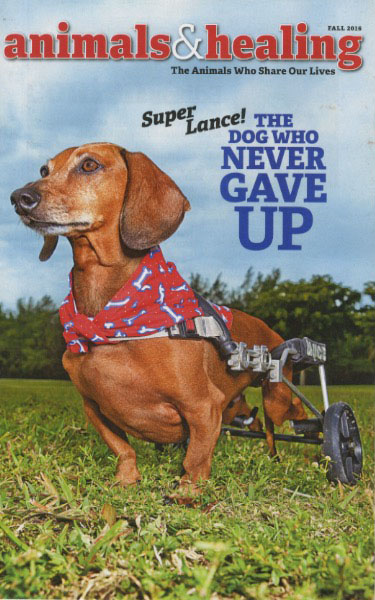
h1

Niépi Magazine Launches In The U.S. – Teaching Us Cuisine & The Art Of Living As Only The French Can – The Mr. Magazine™ Interview With Peter S. Walsh, Publisher, Niépi Magazine, U.S.A.

July 21, 2016

A Mr. Magazine™ Launch Story

Screen Shot 2016-07-20 at 7.15.43 PM “I’m a huge believer that print helps to monetize the digital audience. And as evidence of that is the fact that All Recipes was digital-only and then launched print.” Peter S. Walsh

(On whether he believes newsstands are dead or dying) “I would never use those words because I have too much respect for all of the good people who are in the newsstand industry, whether it’s retailer, distributor, national distributor, wholesaler, or publishers. We’re all aware over the last 25 years how much things have changed, in that the amount of magazines that are being distributed through the system has grown tremendously, but the amount of space for display has not. Yet, the largest and the most sophisticated and healthiest publishers like Meredith, like Condé Nast, like Hearst; they continue to launch magazines in print.” Peter S. Walsh

 Niépi – defined as a Balinese ceremony held on the night of New Year’s during which noise is made to scare away demons and our own fears. Niépi Magazine embraces that definition – only from a food state of mind.

The magazine was created and founded by Frédérique Barral and her daughter, who were both diagnosed as gluten intolerant. A native of France, Frédérique decided that she and her daughter needed to take control of the ingredients that went into their bodies, learn about them and decide what went into their foods. And it was in that mindset the idea for Niépi magazine was born and began publishing a French language version in France and Belgium in 2014.

Peter S. Walsh is a businessman who knows quite a bit about the magazine media business, from circulation to distribution to print production, Peter has done it all for many, many years. And he knew a great title when he saw it. That’s why when he was approached about publishing an English language version of the magazine, he did his research and Niépi magazine was born in the United States. It’s scheduled to debut on newsstands in early September.

I spoke with Peter recently and we talked about the magazine; about its origins; its name, and its future. Oh, and if you’re trying to tie the meaning of the name in with the food category – think about it this way: learning to live free of the demons that can affect our bodies, or in Peter’s words, “It’s teaching its readers about sustainable, organic food and showing people ways to eat so that it enhances their health and wellbeing.” And it’s extremely memorable and the tagline totally befitting: Cuisine & the Art of Living.

So, make some noise and create your own “Niépi” as you read and enjoy the Mr. Magazine™ interview with Peter S. Walsh, Publisher, Niépi Magazine, U.S.

But first the sound-bites:

Peter Walsh Head Shot 7_17_16On why he decided to launch a print magazine in the food space in today’s digital age: I’m a huge believer that print helps to monetize the digital audience. And as evidence of that is the fact that All Recipes was digital-only and then launched print. I thought there was a really great opportunity in the marketplace for a magazine that sets out up front that it’s covering organic, natural foods, sustainably-sourced foods, etc.

On what Niépi brings to the marketplace that isn’t already there: Our editorial mission is to show people beautiful food and recipes so that they’re eating things that are healthy and natural, which increases their wellbeing and overall health. And we’re covering it from the viewpoint and through the prism of the French people, or in particular, this French editor.

On his expectations for the magazine: In terms of the newsstands, like all magazines, I want to put it where I believe the readers are. And we believe that overwhelmingly the readers are female and we believe that we’ll attract an audience that is younger than, let’s say, Bon Appétit’s audience. So, what I want to do is, and am accomplishing this now with the help of Curtis Circulation, is get into Whole Foods and Kroger and Mariano’s Fresh Market and other great markets. The first order of business is bringing it into those retailers that are really devoting space to organic produce and foods.

On whether he feels the newsstand is dead or dying: I would never use those words because I have too much respect for all of the good people who are in the newsstand industry, whether it’s retailer, distributor, national distributor, wholesaler, or publishers. We’re all aware over the last 25 years how much things have changed, in that the amount of magazines that are being distributed through the system has grown tremendously, but the amount of space for display has not. Yet, the largest and the most sophisticated and healthiest publishers like Meredith, like Condé Nast, like Hearst; they continue to launch magazines in print.

On anything else he’d like to add: I hope that I defined it correctly as sustainable, organic food and showing people ways to eat so that it enhances their health and wellbeing.

On what motivates him to get out of bed in the morning: I tell people all of the time that I am a bit of a magazine geek. And I’ve been involved with magazines since 1981 when I started with ICF, a division of the Hearst Corporation here in Chicago. Over the years I’ve worked for companies such as Hearst and ADS Publisher Services. And I am somebody who just finds magazines one of the greatest media out there. I enjoy the format.

On what someone would find him doing if they showed up at his home one evening after work unexpectedly: You’d probably catch me at my desk or on my couch. I read a lot of magazines and also I wear a lot of different hats in my business. I am one of the owners of Niépi, that’s part of it. I am an owner.

On whether this is the first time he’s been a magazine owner: It is, yes. For 35 years I’ve either been a circulator or a consultant to publishers. And I continue to do that and I specialize in circulation and I also, over the last 10 years, have specialized in print production, because I currently do a lot of graphic design and printing projects. I print catalogs as well as I print magazines. So, to a small publisher I have been functioning as the circulation department and the production department.

On whether it makes a difference that he’s an owner this time around, rather than a hired consultant: Of course it does. It makes me want to work harder and obviously over the last three or four months I’ve had to set up many, many different parts of the structure, including the postal and the fulfillment, e-commerce, the website and social media.

On what keeps him up at night: To be brutally honest, what keeps me up is will our editorial be compelling enough to attract readers and to have them return and repeat purchase, whether that’s on the newsstand or subscription, because I tell people all of the time as good a circulator as I am; I can print it and make it look beautiful, but I cannot make people buy the magazine. And that’s the Catch-22.


And now the lightly edited transcript of the Mr. Magazine™ interview with Peter S. Walsh, Publisher, Niépi Magazine, U.S.

Samir Husni: How did you reach the decision to launch a print magazine, especially in the food space, in this digital age?

cover01-2Peter S. Walsh: I’m a huge believer that print helps to monetize the digital audience. And as evidence of that is the fact that All Recipes was digital-only and then launched print.

What happened in this particular case was that I am a consultant and a long-time circulator, and a gentleman who was an American, but lives in the south of France, met this couple that had started this magazine in 2014. He met them within just the last year. And when he met them he thought it was a beautiful magazine and he realized that they produced it in French, in France and Belgium, and he asked them would they be open to a co-publishing or royalty agreement where we would do it in English, and so we’re calling this the International version – English language version, of Niépi.

So, John, my financial partner, found me after poking around the newsstand business a little and realized that he needed someone to kind of steer the ship. And some people referred him to me. We sat down and talked. I was very impressed with the magazine and even though I knew the category of cuisine and food titles well, I wasn’t recently familiar with it, but I did a lot of research after John and I talked. I thought there was a really great opportunity in the marketplace for a magazine that sets out up front that it’s covering organic, natural foods, sustainably-sourced foods, etc.

And of course, we see how the supermarket industry has been doing in the last few years, where more or less the largest supermarkets have plateaued or flattened. And the ones that are growing are the ones that are devoting more space in their produce department to organic foods.

Samir Husni: What’s the expectations? Food has become the sex category of the 21st century in magazines; we have more food titles in the marketplace than ever before. You name the specialty and it’s there. What does this new magazine bring to the market that’s not already there?

Peter S. Walsh: You’re right. Years ago we had the very large food titles like Bon Appétit, Gourmet, which obviously Condé Nast folded years ago in 2009, and Food & Wine. And they’re all very large. And as you indicated, in recent years the category has fragmented into subject-specific food titles, such as gluten-free or sugar-free, etc. And I believe those are all covered in what we’re doing.

Our editorial mission is to show people beautiful food and recipes so that they’re eating things that are healthy and natural, which increases their wellbeing and overall health. And we’re covering it from the viewpoint and through the prism of the French people, or in particular, this French editor.

Samir Husni: You’ve been involved before with the magazine Naked Food and you’ve done other things in this category, so you’re no stranger to the niche. Now, if you would please put your newsstand cap on and tell me about a magazine with a French name, one that has gorgeous pictures in it; what do you think your expectations should be? Do you think that people are going to stop in their tracks and say: what’s this?

Peter S. Walsh: Actually, the name Niépi is not French. It’s French spelling because the couple that founded the magazine is from the south of France. The name Niépi is from the island of Bali and they have sort of a New Year’s celebration that goes on for about a week. And in the middle of it, they call one evening of the festivities Niépi. And what they do is people go outside and bang on pots and pans and make lots of noise and you may have heard about this in other cultures as well. The idea is that they’re casting out evil spirits and starting the New Year fresh.

It’s also a bit of an allegory of embracing our lives and casting away fear and living a little more fearlessly. And in the case of our magazine, the couple liked the theme and then they changed it to a French spelling, but the idea is that food and the way people approach it, it just so happened that this couple, Frédérique Barral and her daughter, were having some health issues, They became diagnosed as gluten intolerant, so they started the magazine talking about gluten-free, and again, it’s the two of them saying to the readership: take control of your diet. Take control of the ingredients in the food that you put into your body. So, that’s the reason behind the name.

When I was introduced to the magazine I thought: OK, it’s not an English language word. We’ll immediately need to spell that out to the reader, so if they see it on the newsstand they’ll know what it is. But with that said, I still liked the name Niépi because it’s short and cute, and because it’s memorable. People can remember it very quickly. And what we did is add the tagline right below it, which is Cuisine & the Art of Living.

In terms of the newsstands, like all magazines, I want to put it where I believe the readers are. And we believe that overwhelmingly the readers are female and we believe that we’ll attract an audience that is younger than, let’s say, Bon Appétit’s audience. So, what I want to do is, and am accomplishing this now with the help of Curtis Circulation, is get into Whole Foods and Kroger and Mariano’s Fresh Market and other great markets. The first order of business is bringing it into those retailers that are really devoting space to organic produce and foods. Of course, we’ll also be in every Barnes & Noble because we pay the promotional fee. Also, like most food titles, we’ll have a lot more subscriptions than we will have newsstand sales.

Samir Husni: I noticed that you have a hefty cover price.

Peter S. Walsh: Yes, $9.95. And that’s quarterly.

 Samir Husni: People keep telling us that the newsstand is dead or dying; is it?

Peter S. Walsh: I would never use those words because I have too much respect for all of the good people who are in the newsstand industry, whether it’s retailer, distributor, national distributor, wholesaler, or publishers. We’re all aware over the last 25 years how much things have changed, in that the amount of magazines that are being distributed through the system has grown tremendously, but the amount of space for display has not.

Yet, the largest and the most sophisticated and healthiest publishers like Meredith, like Condé Nast, like Hearst; they continue to launch magazines in print. And what we try to do is just basically be targeted and be very vigilant about where the copies go, because I like high sell-through. I want to get a 50% sell-through and I remember years ago when 50% was a low sell-through, so that shows you my age. (Laughs)

There was also a study recently that I read, which I was very interested in, and it showed that when people have great discounts off of their newsstand price; when they sell subscriptions at discounts of 50% or 60%, or more, then that’s connected to lower sell-throughs on the newsstand. And I thought that was really insightful and intriguing.

Cover prices have obviously gone higher. We’re printing a magazine that will be on heavier paper and it’ll be thicker than most of the other magazines that are in the space. And we know that quarterly $10 is not too much. Our basic subscription is $29.95, so that’s 25% off the newsstand. And if we increase frequency, I hope we can do six issues next year in 2017, and if things are profitable and the marketplace wants more, we’ll increase it to maybe 8, 9, or 10 issues in 2018. We’ll lower the cover price a bit if we increase frequency.

Samir Husni: Is there anything else that you’d like to add?

Peter S. Walsh: I hope that I defined it correctly as sustainable, organic food and showing people ways to eat so that it enhances their health and wellbeing.

Samir Husni: And the first issue will hit newsstands when?

Peter S. Walsh: Around September 1, 2016. We’re shipping around August 15th.

Samir Husni: What motivates you to get out of bed in the morning?

Peter S. Walsh: I tell people all of the time that I am a bit of a magazine geek. And I’ve been involved with magazines since 1981 when I started with ICF, a division of the Hearst Corporation here in Chicago. Over the years I’ve worked for companies such as Hearst and ADS Publisher Services. And I am somebody who just finds magazines one of the greatest media out there. I enjoy the format.

When I was with Times Mirror Magazines, I was the guy who got cross-merchandising into Wal-Mart and Kmart. So, we put hunting and fishing magazines in the hunting and fishing departments, rather than the mainline and it was shortly followed by craft magazines, etc. I’m a great magazine devotee. I literally touched or worked on hundreds of magazines. I’ve been able to catch lightning in a bottle a few different times and I really like talking about magazines, whether it’s the operations or whether I’m selling advertising, which I am starting to do with this magazine.

Samir Husni: If I showed up at your house one evening unexpectedly, what would I find you doing; reading a magazine; reading your iPad; watching television; or something else?

Peter S. Walsh: You’d probably catch me at my desk or on my couch. I read a lot of magazines and also I wear a lot of different hats in my business. I am one of the owners of Niépi, that’s part of it. I am an owner.

Samir Husni: Is that a first for you, being an owner?

Peter S. Walsh: It is, yes. For 35 years I’ve either been a circulator or a consultant to publishers. And I continue to do that and I specialize in circulation and I also, over the last 10 years, have specialized in print production, because I currently do a lot of graphic design and printing projects. I print catalogs as well as I print magazines. So, to a small publisher I have been functioning as the circulation department and the production department.

Every facet of magazine publishing is interesting to me and I’m not an editor; I’m not trained as an editor, but I hire editors and designers. As far as the business side of publishing magazines, that’s really my passion. It really is.

Samir Husni: Does it make a difference that you’re an owner this time around, rather than a hired consultant?

Peter S. Walsh: Of course it does. It makes me want to work harder and obviously over the last three or four months I’ve had to set up many, many different parts of the structure, including the postal and the fulfillment, e-commerce, the website and social media.

Of course, being an owner and having partners; I have people to answer to and I’m giving this 110% of my time.

Samir Husni: My typical last question; what keeps you up at night?

Peter S. Walsh: To be brutally honest, what keeps me up is will our editorial be compelling enough to attract readers and to have them return and repeat purchase, whether that’s on the newsstand or subscription, because I tell people all of the time as good a circulator as I am; I can print it and make it look beautiful, but I cannot make people buy the magazine. And that’s the Catch-22.

I believe that the editorial mission and the brand that comes from editorial and the design together; that is what drives a magazine. All great magazines; people can instantly tell. What is Rolling Stone about editorially? Well, we all know it’s rock and roll, but it’s also politics and it’s liberal. And that’s a voice that’s been going on since Jann Wenner was throwing the bundles off the back of his station wagon in San Francisco in 1967, same thing with Time or Playboy.

I think that if we want to be a great magazine and be around for the long term, we have to be compelling editorially and be of service to our readers. The proof is in the pudding and we’ll see when we get out there.

Samir Husni: Thank you