h1

Andy Clurman, President & CEO, AIM Media To Samir “Mr. Magazine™” Husni: “I Think There’s A Future For Print. It’s One Of The Oldest Forms Of Communication.” The Mr. Magazine™ Exclusive Interview… 

January 22, 2024

“Print is a foundation. Individually, everything we publish in print is profitable. And it’s part of our brand, position, platform, legitimacy, authenticity, all those things. You can get it, but it’s hard to get just in a digital form because there are so many people producing content all day every day.” Andy Clurman…

“We’re managing print as part of the portfolio and we’re doing it happily as long as it continues to contribute. I’ve seen a little bit of growth in print and subscription revenues in 2023, which was gratifying, particularly after the pandemic finally eased up.” Andy Clurman…

If you’re an enthusiast, AIM Media has a magazine for you. One of the world’s largest enthusiast media companies, Active Interest Media (aimmedia.com) produces leading consumer and trade events, websites, magazines, and films and TV shows that reach millions of readers, fans, and attendees in 85 countries. From Fine Homebuilding to Writer’s Digest, AIM has an eclectic mix of titles to entertain you and feed your enthusiasm.
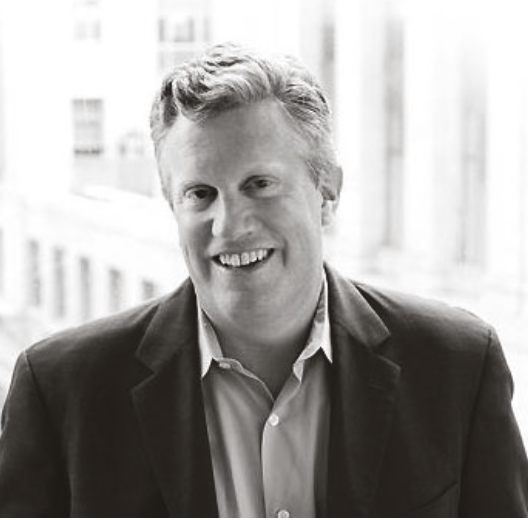
Andy Clurman is president and CEO of the company and firmly behind AIM’s M&A (Merger & Acquisition) strategies, such as the acquisition of The Taunton Press in 2023, a respected consumer media and book business, based in Newtown, Connecticut. I spoke with Andy recently and we talked about the acquisition and how it would expand AIM’s ever-growing enthusiast audience even more. It was an insightful discussion that offered knowledge and interesting concepts. And one that I hope you enjoy.

So now, here’s the Mr. Magazine™ interview with Andy Clurman, president & CEO, Active Interest Media (AIM) Please enjoy…

But first the soundbites:

On how he would evaluate 2023: I say that 2024 is a lot more promising than 2023 was. We didn’t set out a path to make a big acquisition in 2023, but as we got into the year and we saw the results of the increases in cost and the challenges of growing without investing, we thought ok, we need to change the model here. How do you do that?

On the revenue mix of AIM’s digital and print collectible events: We are now about 52% in terms of print revenue and of that it’s about 60/40 consumer revenue to advertising revenue. The remainder is made up of digital revenue from digital products, digital memberships, online education and learning, digital events, which we do a lot of digital events, and then live events. So we still have a good portfolio of in-person events and we’re growing more of those.

On his favorite brand among AIM’s many: It depends on who’s making the most money at any given moment. It’s just like I have three kids and I might tell any one of them, you’re my favorite today. (Laughs) Some are more evolved than others. Where our woodworking business has got 10 different dimensions to it and it’s really incredible to see what’s been built there over the years, some are more one dimensional. It’s fun to have them learn from each other.
On whether they will merge any of the magazines they just acquired, such as Fine Woodworking and Popular Woodworking: We kept them separate and they have thrived in that way. Likewise, with Horticulture and Fine Gardening which are great brands and have big audiences, our belief is that if it is a consumer driven business and consumers have made a choice to be part of a brand and a community, forcing them to join another doesn’t always work out the way you thought it might.

On whether he feels there’s still a future for print: I think there’s a future for print. It’s one of the oldest forms of communication.  And we know from neurological studies that it has a different impact on people when it comes to consuming information. The tactile experience. The ability to curate and surprise people with things they weren’t expecting. And I think the fundamental demand for print is still there; the channels to get it into people’s hands is very challenged, especially from the newsstand standpoint.

On whether he thinks you can trust print more than digital: It’s funny at how print is held at such a different standard than digital, which is a good thing. You can do outrageous things on digital networks and social media networks and suffer no consequences, where if you betray your audience in print, do that at your peril.

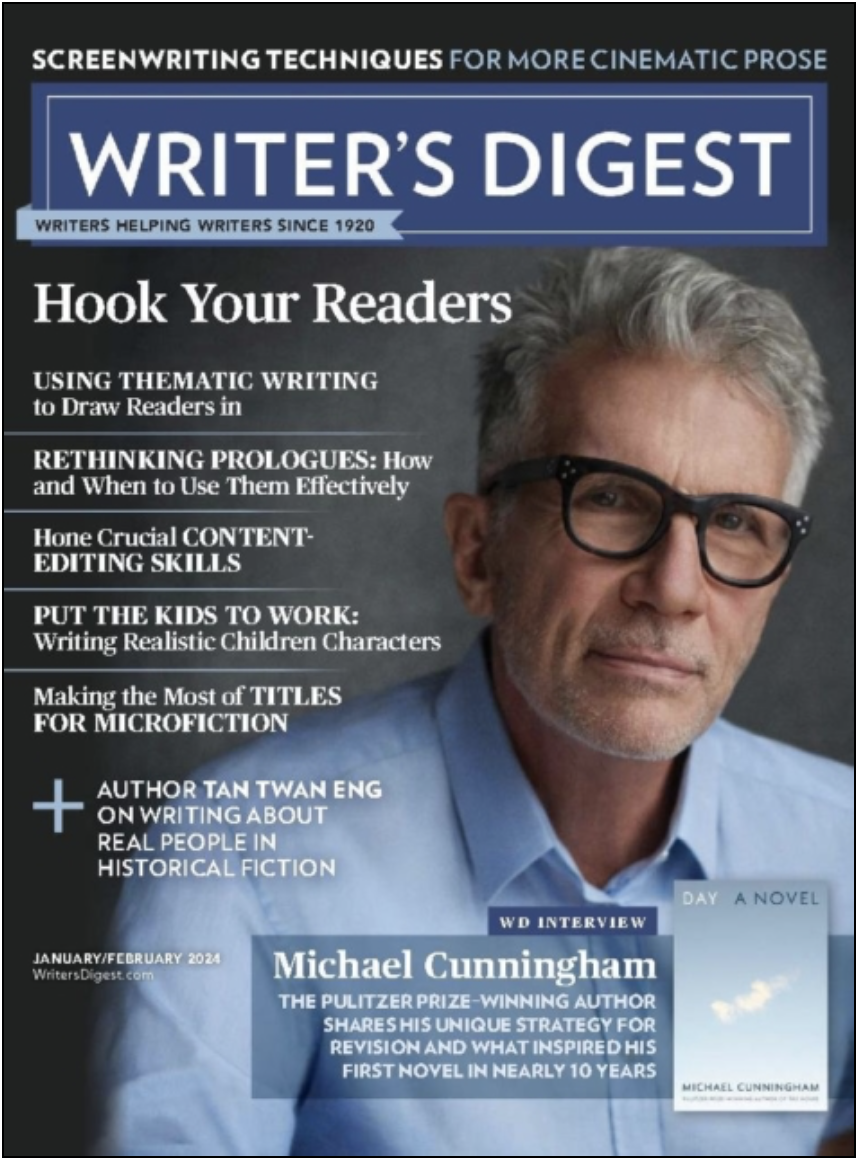
On where Writer’s Digest fits in with all of the other titles: There are things that I personally have an affinity for, that goes with my own hobbies and interests. But as a business, where there’s a strong community of people with enough critical mass and high information needs you can build a great business around them;  Writer’s Digest has been doing this for over 100 years.
On what he would hope to tell someone that he had accomplished a year from now: With the combined energy and experience of the AIM and Taunton brands and people, I’d love to be looking back this time next year and say we have achieved some growth in our major lines of business. We don’t need to grow 20% but if we can stay ahead of inflation and  continue to evolve our brands and business we will secure the future. I’ll consider that a good day’s work.

On what keeps him up at night: We have a lot of people relying on us in our company for their welfare and prosperity.  As I tell them that even though we’re not a public company, I consider them shareholders because they’re investing their time, money and career. For us, it’s making sure that we can provide them with a good outcome and a fair return on their investment

And now the lightly edited Mr. Magazine™ interview with Andy Clurman, president & CEO, Active Interest Media.

Samir Husni: Congratulations on acquiring The Taunton Press.

Andy Clurman: Thank you.

Samir Husni: It’s one of the few merger/acquisitions of 2023 that took place in the industry. That being said, how would you evaluate 2023?

Andy Clurman: It was a tough year in terms of managing cost and inflation, all while trying to grow simultaneously. And also trying to unlock some investment dollars while you’re attempting to satisfy everyone’s demands for price increases and more money, which was part of our impetus for the acquisition after spinning off AIM.

I don’t know if I’ve talked to you since this happened, but AIM is now a private company. And that’s great; it’s still a pretty good size. But it occurred to me, in the industry, with the companies that are our relative size, there are a lot of platforms and portfolios that used to be a lot healthier. But now because costs have risen, revenue hasn’t grown and I think they are finding themselves in what I call the ‘subscale zone.’ And that means that you’re big enough that you need to have all of the services and people and platforms to manage a company that’s $25 to $50 million, but with the cost pressures you’re not able to free up enough money to invest in your growth. And if you’re not investing in your growth, then you’re probably standing still.

And standing still is really going backward because everyone wants a raise. The landlord wants a raise; the paper company wants a raise; their staff wants a raise. Somebody told me once that if you’re not growing your revenue, you’re going out of business slowly and that’s absolutely true.

Despite having phenomenal products and people and a lot of innovation, being stuck in that subscale box puts a lot of a pressure on a company. So this acquisition is a great antidote to that. It gets us out of that zone and puts us in a higher revenue tax bracket in terms of the size of the company. It gave us a ton of new, super-talented people that are a lot like our A people coming over from Taunton and they’re super innovative. With limited resources they’re laying a lot of good foundations to grow the business, which we can now do together.

So I say that 2024 is a lot more promising than 2023 was. We didn’t set out a path to make a big acquisition in 2023, but as we got into the year and we saw the results of the increases in cost and the challenges of growing without investing, we thought ok, we need to change the model here. How do you do that? It’s certainly always risky and fraught with lots of other unintended consequences, but we’ve been M&A (Merger & Acquisition)  driven for 20 years and had a lot of great success doing that. The only difference is this one is on my back and my partner’s completely to make it work. We don’t have any outside investors or banks, so we’re operating without a net.  

Samir Husni: But on one hand, I’m sure it’s a relief. The only people you have to congratulate or blame would be you or your partner.

Andy Clurman: It’s a really fun position to be in. And then on the other hand, I’m still very involved with our equine business, which is backed by some great private equity partners and we’ve been going great guns there with the Equine Network. It’s somewhat of a parallel universe, but a little different business model.

Samir Husni: You’re strong on events, digital and print, what’s the end collectibles? And what’s the revenue mix?

Andy Clurman: We are now about 52% in terms of print revenue and of that it’s about 60/40 consumer revenue to advertising revenue. The remainder is made up of digital revenue from digital products, digital memberships, online education and learning, digital events, which we do a lot of digital events, and then live events. So we still have a good portfolio of in-person events and we’re growing more of those.

We’re doing curated gardening tours internationally and domestically, which have been booming. We’re relaunching a woodworking in-person event series. We still have in-person writing events for novelists and screenwriters. We still have some boutique home shows and traditional building conferences.

So I look at the business as we have 36 revenue lines in our P&L’s, not all in equal size and magnitude, and they certainly benefit from each other, but they don’t operate in box step. We look at where the things are that we can grow and put time and investment into those.

Samir Husni: I know it’s not a fair question to ask you, but do you have a crown jewel? Do you have a favorite child among your many?

Andy Clurman: It depends on who’s making the most money at any given moment. It’s just like I have three kids and I might tell any one of them, you’re my favorite today. (Laughs) Some are more evolved than others. Where our woodworking business has got 10 different dimensions to it and it’s really credible to see what’s been built there over the years, some are more one dimensional. It’s fun to have them learn from each other.

But there’s not a template boiler plate for every brand in every market. So what works in wood working wouldn’t necessarily work in super yachts. The strength of the company is in the diversity of the markets, the brands, and the people we have. Unfortunately, I spend most of my time on fixing problems or pushing the envelope on new frontiers, so I probably don’t spend enough time appreciating when the brands are going great and our crown jewels.

Samir Husni: Are you going to merge any of the magazines you just acquired, such as Fine Woodworking and Popular Woodworking? Are they going to be combined or continue as separate entities?

Andy Clurman: It’s interesting, historically I’ve worked for companies like Times Mirror when they owned Ski Magazine and Field & Stream, then bought Skiing Magazine and Outdoor Life. So I’ve worked in companies where you had multiple brands within one category. When those brands were ad businesses and ad driven, then they easily cannibalized each other with the advertisers.

When they’re consumer driven…for example, when we bought Popular Woodworking and Horticulture out of the F+W bankruptcy and we already had Woodsmith and Garden Gate, we thought that we were just going to combine them. But as we got into it and did some research, we found out they both had unique consumer franchises. And you know well, in the magazine world one plus one equals one typically in magazines and magazine brand audiences.

So we kept them separate and they have thrived in that way. Likewise, with Fine Woodworking and Fine Gardening which are great brands and have big audiences, our belief is that if it is a consumer driven business and consumers have made a choice to be part of a brand and a community, forcing them to join another doesn’t always work out the way you thought it might.

We’re going to look at lots of ways to cross-promote, cross-sell, up-sell, and take products that exist in one but not the other. But for now, unless proven otherwise, we think we’re going to keep the brands and manage them independently.

Samir Husni: Are they going to stay in Connecticut or are you moving everything to Colorado?

Andy Clurman: We have both in Colorado and Connecticut. Our official headquarters is Des Moines, Iowa now. After we sold our Healthy Living and Outdoor group to Outside, we don’t really have a critical mass of people in Colorado anymore. Taunton has also been working remotely since the pandemic, so they only had a few people going onto their campus in Newtown. And we’ve been wildly successful working remotely.

We still have offices in Des Moines and we have our woodshop and TV studio there and office space. We’re going to keep the woodshop and office space in Newtown, Connecticut where Taunton is, for the folks who work out of there. A lot of them are producing video, producing television, and doing the hands-on woodworking projects. So we’ve leased that building going forward.

Samir Husni: I call 2023 the year of the bookazines. We’ve seen more than 1,000 SIPs come to the marketplace. A360 put 525 on the shelves.

Andy Clurman: You can thank my friend Doug Olson for that.

Samir Husni: (Laughs) Do you think there’s still a future for print or do you feel it’s changing?

Andy Clurman: I think there’s a future for print. It’s one of the oldest forms of communication.  And we know from neurological studies that it has a different impact on people when it comes to consuming information. The tactile experience. The ability to curate and surprise people with things they weren’t expecting. And I think the fundamental demand for print is still there; the channels to get it into people’s hands is very challenged, especially from the newsstand standpoint.

As much as we still produce a lot of newsstand products and we’re on the newsstand and we produce a lot of print subscription products, we’re trying to evolve the business where we’re not going to be beholden to Google and Facebook, newsstand distribution and the retail system, which I think right now would be algorithmic changes.

I’m hearing from friends of mine who run digital only companies that are seeing these massive audience drops, they’re telling me whatever Google is up to now. And that is consuming their every waking thought. I don’t want to be beholden to one big advertiser or one big platform.

Print is a foundation. Individually, everything we publish in print is profitable. And it’s part of our brand, position, platform, legitimacy, authenticity, all those things. You can get it, but it’s hard to get just in a digital form because there are so many people producing content all day every day.

Samir Husni: Let’s talk about the trust factor; can you trust print more than digital? Because once you print something you can’t change it.

Andy Clurman: Is that a rhetorical question? It’s funny at how print is held at such a different standard than digital, which is a good thing. You can do outrageous things on digital networks and social media networks and suffer no consequences, where if you betray your audience in print, do that at your peril.

I think the things that have a very strong affinity with the audience make people take ownership of a magazine. They say things like don’t do that to my magazine. I know that our editors feel the same way. The people at Fine Homebuilding or Woodsmith or Power & Motoryacht, the editors and designers all feel that responsibility from the audience.

I’m not sentimental about print, however. My first magazine job was at Skiing Magazine in New York City and I’m the one who discontinued it in print a bunch of years ago when the business didn’t work anymore.

So we’re managing print as part of the portfolio and we’re doing it happily as long as it continues to contribute. I’ve seen a little bit of growth in print and subscription revenues in 2023, which was gratifying, particularly after the pandemic finally eased up.

It’s not a line of business that private equity is going to get excited about or Wall Street gets excited about, but it’s a great business as an owner-operated private company where you’re not subject to the expectations and pressures of those kind of investors.

Samir Husni: You have all of these specialized titles with the marine brand, the hallmark, homebuilding brand and others. And you also have Writer’s Digest. Where does it fit in this group of titles that you have?

Andy Clurman: There are things that I personally have an affinity for, that goes with my own hobbies and interests. But as a business, where there’s a great, strong community of people, like my new people, with enough critical mass and information, with community wants and needs, there’s your reason. And not everything works for everyone, but we have the abilities in the people in the company to manage events, to produce online education, to produce all kinds of digital products.

So you can substitute woodworking for writing or car collecting for gardening, but our mentality and strategies are roughly the same across the whole waterfront.

Samir Husni: And it’s your oldest title at over 100-years-old?

Andy Clurman: Writer’s Digest and Horticulture are both well over 100-years-old.

Samir Husni: I wonder if we’ll ever celebrate 100 years with any digital entity?

Andy Clurman: (Laughs) Well, we always hear that Meet The Press is the longest running television show on television. I’m on the board of Yankee Publishing. And compared to Meet The Press, Yankee is the longest, continuously published periodical in America dating back, I think, 275 years. And they still sell over a million copies a year.

Samir Husni: So if you and I were talking a year from now, what would you hope to tell me you had accomplished in 2024?

Andy Clurman: We are expecting, projecting, counting on reigniting some growth in our business after spending last year fighting inflation and figuring out a transformative way to get out of that box I was describing.

Having done that, I hope to follow through with all the plans we have around that. And one of those is, we are in the late stages of building out a much more sophisticated consumer data platform and automated marketing stack, which we built a big organization around to manage that. Then we can launch a whole bunch of even nichier products because even within the audience of writers there’s people who are science fiction writers, screen writers, murder-mystery writers and more..

So we think we can identify new groups of people or smaller groups of people and have an ability to serve more tailored content and services and products of interest to them. In Power & Motoryacht you’ve got people who are center console, offshore fishing people, you’ve got people who are Great Lakes bass boat fishing people.

So even though were already very niche, we still have a pretty big tent within these markets. So being able to serve them efficiently and at a relative scale, and also do a much better job of marketing to people rather than just everybody being the same. And  to have a system set up where you’re speaking more specifically to people’s interests and serving them with a whole array of products around that.

We think that’s a growth path for us. So with the combined energy, people and experience, I’d love to be looking back this time next year and say we have all of the major lines of business growing at some rate. We don’t need to grow 20% if we can stay ahead of inflation instead of going out of business slowly. Instead, securing the future. Then I’ll consider that a good day’s work.

Samir Husni: My typical last question; what keeps you up at night?

Andy Clurman: We have a lot of people relying on us in our company for their welfare and prosperity, even though I tell them that I consider them shareholders because they’re investing their time, money and career. For us, it’s making sure that we can provide them with a good outcome. I don’t think that we’re living on the ragged edge, but we’re risk takers and we’re doing things that are hopefully for all of our benefit.

I feel like the promises have been made and the expectations have been set so that everybody is gratified to be part of this. And is proud of what they’re doing.

Samir Husni: Thank you.
h1

Eric Hoffman, CEO, Hoffman Media To Samir “Mr. Magazine™” Husni: “We’re Not Running From Print; We Still Embrace It.” The Mr. Magazine™ Exclusive Interview…

January 11, 2024

“I think in a world where we have our phones with us all day, Smart TVs at night, multiple monitors we’re looking at throughout the day, I think the tactile experience of print in itself really is valuable. There are people who need that in their lives.” Eric Hoffman

“Our team has stepped up in incredible ways. We’ve got great people. And it goes back to the legacy that my mom built. As a company, we’ve spent a lot of time in these last few months thinking about why we do what we do. And if you think about when Phyllis started the business 40 years ago, at its core it was to enrich people’s daily lives. And that’s still true today.” Eric Hoffman

Hoffman Media may have started out as the little engine-that-could, where a mother of twin sons took her hobbies of  needlework and sewing to a new path professionally and made it into a business. But that was 40 years ago. While Phyllis Hoffman DePiano dedicated her talent and her determination to making her company what it is today, her sons Eric and Brian Hoffman have kept it focused in the right direction since her passing in July 2023. Today, it is a family owned and operated special-interest publisher based in Birmingham, Ala. that is going strong and poised on a positive course. 

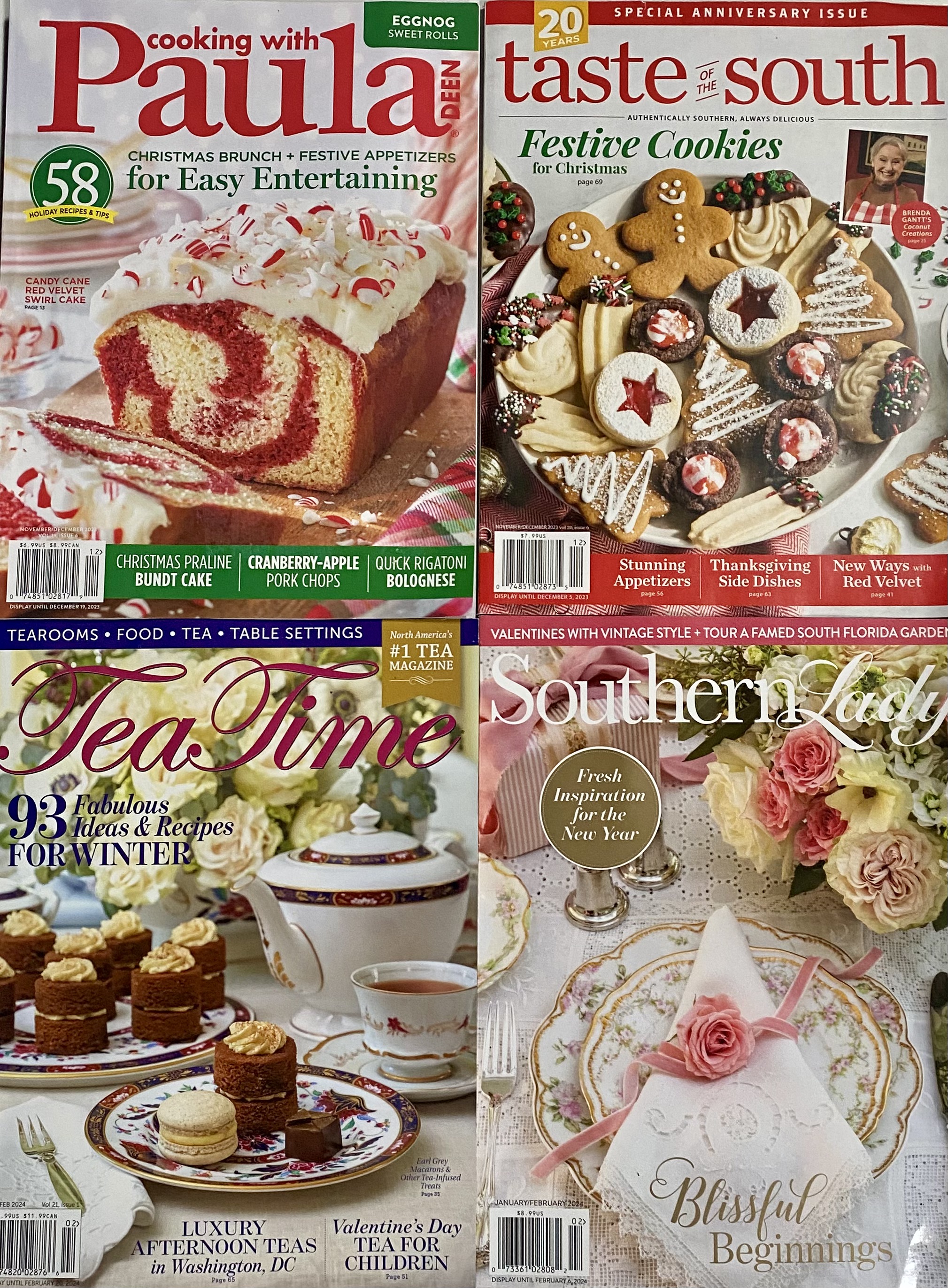
From Southern Lady to Bake from Scratch, Hoffman Media creates some of the most popular and iconic brands in the marketplace today. And Phyllis would be very proud of her sons and what they have accomplished.

I spoke with Eric recently and we discussed his position as CEO of the company. While he is grateful and proud of his mother’s faith in his abilities, he also acknowledges and recognizes her convictions in his twin brother’s creative talents – Brian is the Chief Creative Officer and Co-President of the company. They’re a fantastic team that their mother believed in.

I spoke with Eric about the things that 2023 brought to the company and changed it and to the brothers. The new leadership team, the unfortunate reductions they’d had to make, but also the camaraderie and success they established. It’s an informative interview with a great guy, a loving son and brother, and an excellent CEO. 

So please enjoy the Mr. Magazine™ interview.

 But first the soundbites:

On losing his mother, Phyllis Hoffman DePiano, in 2023: You never really expect to lose a parent, particularly at the age of 69. We worked together for 17 years; she brought me in young, and I had a little bit of experience, but I owe her for everything that I’ve learned about the business.

On how hard it was to assume the title CEO after losing his mother: Leading up to her passing, we had already started to assemble a new leadership team, aligned people across the business differently. So, to her credit, she gave me the full reins to the business. The end of June and July, we just had amazing people that could step up and really left us to focus on ourselves and our grief and everything that came with it.

On continuing to publish frequency magazines in a world where that’s an unusual idea: I think it comes down to the fact that it’s not about the quantity; it’s about the quality. I believe we’ve had this conversation before. (Laughs) We think about being in these niche markets that have this passionate base of readers and followers. If we do our job and we produce high quality, unique content, we think that will stand the test of time.

On why he’s a firm believer in print: I think it’s about following the customer. For example, this year our direct mail campaigns all exceeded budget expectations on response rate. We saw the average revenue per customer going up. So we feel confident that we’re not seeing pressure that would tell us otherwise.

On the trust factor with print: It is about building trust with the customers. We really don’t do a lot of gimmicky offers to get subscribers. I think that’s part of the integrity that you’re building. And the other things that we do: the video components, the events; everything ties back to what that brand is, print is just one component of how we interact and build that relationship.

On the rather high prices of Hoffman’s magazines and whether the audience puts up any resistance: You always do a test when it comes to these things, but my mother was also a firm believer in following your gut. As costs have gone up in the business with overhead, healthcare cost increases, paper increases, postage increases; as we think about how to continue to deliver that experience, we have to be mindful that we need to charge more. But we’re always testing. But so far it’s still a fairly healthy business.

On whether the highlight of his year was his mom naming him CEO: I would say better than that, the closeness my brother and I have been able to develop as business partners really even supersedes that. The fact that we’re a forty-year-old business, second generation, and we’re twins, we really balance each other out very well. The creative force that he is, coupled with my hands-on when it comes to the business side is great. Then seeing our team step up to support us through this year that we’ve had, it was amazing.

On what keeps him up night: I think about our strategic planning meeting that we had as an executive team in December. We probably had 50 ideas on the wall. If we could go do all of these things, what would we go do? And we challenged ourselves to focus on four. And those four things really connect back to our theme for the year on how we’re going to run the business. 

And now the lightly edited transcript of the Mr. Magazine™ interview with Eric Hoffman, CEO, Hoffman Media. 

Samir Husni: Needless to say, 2023 was a very tough year for you and your family. In your own words, can you elaborate a bit on that?

Eric Hoffman: Sure. You never really expect to lose a parent (Phyllis Hoffman DePiano), particularly at the age of 69. We worked together for 17 years; she brought me in young, and I had a little bit of experience, but I owe her for everything that I’ve learned about the business. 

Earlier in the year, one of the highlights of my career was when mom named me CEO. She was sick, but was still coming to the office when she could. Then in one meeting over lunch, she named me CEO, which was incredible and timely in that I think she knew that she was sick, and didn’t want to leave anything unsettled. What it did was set the path for the company to be able to have continuity through what was a horrible transition in July. It allowed the business to really continue to push forward.

Our team has stepped up in incredible ways. We’ve got great people. And it goes back to the legacy that my mom built. As a company, we’ve spent a lot of time in these last few months thinking about why we do what we do. And if you think about when Phyllis started the business 40 years ago, at its core it was to enrich people’s daily lives. And that’s still true today.

Samir Husni: And you did not miss a beat, there was no interruption whatsoever. Everything was published on time. How hard was that for you, becoming the CEO after what happened?

Eric Hoffman: It’s interesting, I called a meeting in the spring and I sat down with my mother to lay out some ideas I had about the business, some strategic things. I would have never asked for the title CEO; I always had deep respect for what she had and what she had built, but that was a very exciting day for me.

So leading up to her passing, we had already started to assemble a new leadership team, aligned people across the business differently. So, to her credit, she gave me the full reins to the business. At the end of July we just had amazing people that could step up and really left us to focus on ourselves and our grief and everything that came with it. 

Coming out of that, I was able to assemble a new leadership team. When I looked at the business I knew that we needed a new executive suite that would really run with great alignment and focus. So I promoted Greg Baugh to Chief Operating Officer, which was my previous job. Greg has been in the business for over 20 years and probably knows more about our business than anybody. He’s just an amazing mind and not only knows the production side, but also looks across a lot of the revenue.

Then we hired our first ever Chief Marketing Officer, Missy Polhemus, who actually worked at Time Inc. when she was younger. She spent five years, from 2008 to 2013, working with us here doing digital marketing and consumer marketing. Then she left and spent the better part of a decade doing other things, such as she helped Shipt, a large company in Birmingham that is a grocery delivery company, build, which ultimately was a fantastic exit. Then she went on to be the Chief Marketing Officer at TaxSlayer.com and so she had a unique perspective. And this past summer, at the end of July, she joined us as our first CMO, so she’s bringing a whole new level of strategy to the business, which is exciting.

We hired and ultimately promoted Laura Sappington as our Chief Financial Officer and she spent 25 years at Time Inc. working in finance, marketing and operations. She had a lot of experience on the Oxmoor House side of the book business. So the financial acumen coupled with the operations is something that we really value.

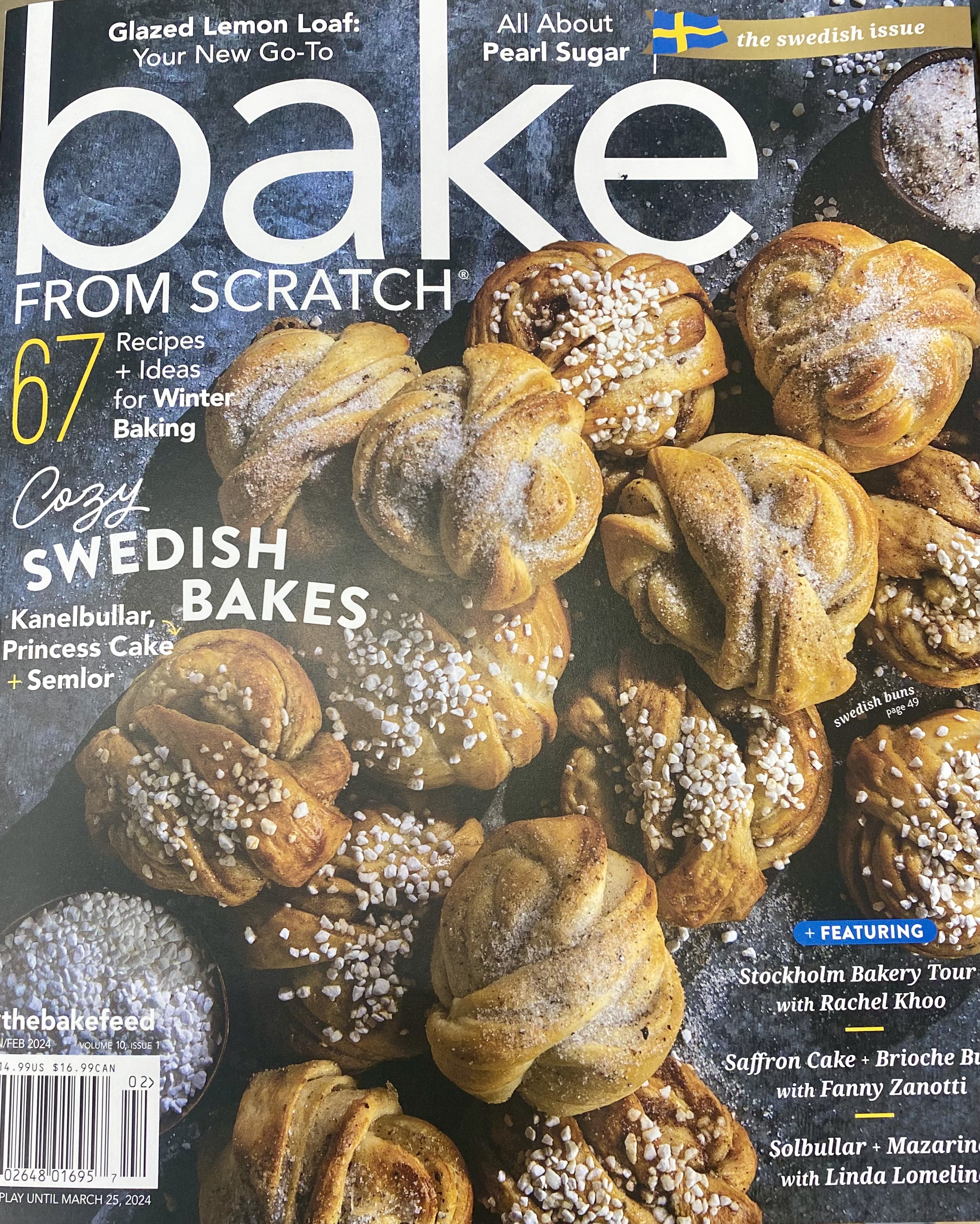
Then we promoted Brooke Bell to our Chief Content Officer. And this is an amazing story; she’s worked in virtually every aspect of editorial in our business. She’s had continual growth throughout her career. She worked really tight with my brother, Brian, who remains Co-President and our Chief Creative Officer. One of Brian’s passions, as you know, was launching Bake From Scratch, so Brooke works alongside him. Of course, she’s across all the editorial, but she’s really helped bring Bake From Scratch to life. It’s now our most profitable brand. So the energy they have put into that is really exciting to see. 

That leadership team coming together and being perfectly aligned in where we’re going as a business is great. We talked about the Why – to enrich people’s daily lives; the how is that we really are creating content and experiences that inspire people to pursue their passions. 

So  knowing those things; we think a lot about where we are in the media landscape. Everything we do is good and positive. And in a crowded media landscape with politics and negative news, shock value and all that, we get to bring positive experiences to people. We know that when our magazines arrive at someone’s house it’s a good day. One of the few things they’re probably looking forward to. 

Samir Husni: What’s your secret? Other magazine companies are trimming and cutting frequency, including major magazine companies. Yet you’ve stayed the course. That little engine that could that Phyllis started 40 years ago is still going strong. You’ve never cut the frequency and continue with all the publications. You’ve joined the crowded bookazine market; what’s your secret?

Eric Hoffman: I think it comes down to the fact that it’s not about the quantity; it’s about the quality. I believe we’ve had this conversation before. (Laughs) We think about being in these niche markets that have this passionate base of readers and followers. If we do our job and we produce high quality, unique content, we think that will stand the test of time.

I will say that if you look at our revenue mix, one of the interesting things that has changed is that print, subscription and newsstand itself really comprises just a little over half of our total revenue. So what we’ve done is really layer on other business units as ways to further service our customers. 

We launched 83 Press, which is our book imprint, and not only do our magazine brands produce books, but we’ve also really gotten into authored books. We’ve sort of become the publisher for influencers. We’ve done several projects, I think we have five or six under contract for next year; the book business will be probably north of 25% of total revenue. 

And then the consumer events business; we acquired the Original Sewing and Quilt Expos, which is nine shows around the country, we bought that business from F+W Media prior to their bankruptcy. This year we’ve seen recovery there where it’s on a path to be back to pre-COVID levels. 

And we’ve gotten into highly targeted events; we’ll do probably 15 this year, and those look more like 16 to 20 people, week long curated experiences. Bake From Scratch, for example, will probably have a dozen of them. And we call them our baking retreats. We get to do them in places like Paris, France, Italy, San Francisco, Alaska, and we do a handful of them in Birmingham in our new headquarters that we built. So the event business is double-digit growth with fantastic margins. 

We’re not running from print; we still embrace it. We have very healthy brands, but being able to take that customer through a bigger journey we think is interesting. 

And then advertising is really about 10% of the revenue mix, but very valuable in terms of margin and how we think about those brands and categories, it’s all endemic to what we do. We’re actually budgeting double-digit growth in advertising next year because of what we’ve seen. Advertisers are really looking to connect with passionate consumers now more than ever. The mass reach traditional rate base environment is a broken model. And I’ve said that before. What we’re finding out is that our larger clients really want custom experiences. They want to experience our video studios, our test kitchen, and they want a balance across print and digital. We’re now able to offer that. We’ve seen enormous growth in our home and décor category, in particular with Southern Home Magazine.

We’ve had fantastic traction in the travel and tourism business connecting people, whether that’s through southern lifestyle or culinary. We like where we’re positioned for that. 

So the revenue mix in general has changed a little bit, but healthy overall. We’ve seen the most pressure at newsstand. I think the consolidation that’s going on there, in terms of the publishers, the merger and also now having one national distributor; we still very much believe in the single copy business. You did an interview with Doug Olson and I think he kind of highlighted that, but there’s still definitely a place for the newsstand. How you think about it: where it’s distributed, what’s the price point, what are you doing there. 

I think the bookazine, the SIP business, is a pretty robust opportunity for us because we are able to be very targeted in subject matter and it becomes a little bit less of a price point.

Samir Husni: From everything you’ve said, you’re still a firm believer in print. Why? 

Eric Hoffman: I think it’s about following the customer. For example, this year our direct mail campaigns all exceeded budget expectations on response rate. We saw the average revenue per customer going up. So we feel confident that we’re not seeing pressure that would tell us otherwise. 

I think in a world where we have our phones with us all day, Smart TVs at night, multiple monitors we’re looking at throughout the day, I think the tactile experience of print in itself really is valuable. There are people who need that in their lives. And the book business too. The cookbook business is strong; I’ve probably got 100 of them at my house. I enjoy looking at them and reading them. It’s not about being antiquated, it’s really about delivering on that promise of what the brand stands for. 

Samir Husni: What about the trust factor? I’m giving a speech in Germany in May about print and trust compared to digital. Once you print a magazine you can’t go back and change something.

Eric Hoffman: I think about the authenticity that comes around, at least in our experiences. We have people every day who are passionate about what they’re doing. And they’re creating content from scratch. We’re testing recipes in a test kitchen to make sure that they work. The style of photography is shot in such a way that it can’t be duplicated. 

But it is about building trust with the customers. We really don’t do a lot of gimmicky offers to get subscribers. I think that’s part of the integrity that you’re building. And the other things that we do: the video components, the events; everything ties back to what that brand is, print is just one component of how we interact and build that relationship. 

Samir Husni: Your magazines are not cheap, such as Cast Iron, it’s almost $50 for a subscription. Some are $30 for a subscription.

Eric Hoffman: We actually have a sewing magazine called Classic Sewing and it’s a quarterly and it’s $75.

Samir Husni: Is there any resistance from the audience toward these prices?

Eric Hoffman: You always do a test when it comes to these things, but my mother was also a firm believer in following your gut. As costs have gone up in the business with overhead, healthcare cost increases, paper increases, postage increases; as we think about how to continue to deliver that experience, we have to be mindful that we need to charge more. But we’re always testing. But so far it’s still a fairly healthy business. 

Samir Husni: I know it was a tough year for your family, but what was the highlight of your year? Was it that meeting in April where your mom named you CEO?

Eric Hoffman: I would say better than that, the closeness my brother and I have been able to develop as business partners really even supersedes that. The fact that we’re a forty-year-old business, second generation, and we’re twins, we really balance each other out very well. The creative force that he is, coupled with my hands-on when it comes to the business side is great. Then seeing our team step up to support us through this year that we’ve had, it was amazing.

One of the hardest things I’ve had to do this year was implement our first-ever reduction in force that we’ve ever had to do in our 40-year history. That was incredibly difficult, but unavoidable. We tried virtually everything possible, managing costs, everything. 

And what came from that, unfortunately, was saying goodbye to super-talented, incredible people. But after that and seeing the business and our remaining people step up and take an ownership mentality; we’re already seeing the positive from that.

As we think about 2024 and real revenue growth, greater alignment across the business, and then being even more strategically focused, I would say it’s the people. That’s the highlight. It’s going through the adversity, through the loss of the founder, and some difficult choices that had to be made.

I’ll share this with you, in the last two years we were able to retire all of our debt. The business probably had four and a half million dollars of debt. Other than needing a line of credit for just managing working capital, we don’t have a lot of the burdens that many others do. 

Also, we have no outside investors. My brother and I as successors have the business. Don Logan, a legend in this business, he and his sons still own a small portion of the company, but we don’t have that private investor pressure. We have a long view on the industry. And I think it allows us to follow some of these things that we see working, like the event business and videos. 

We built up two video studios in Birmingham and we’ve seen some great things come from that. We formed a partnership with Williams Sonoma. We do a live Monday night baking class. And we’ve done over 100 live classes out of our studios and that’s become a real revenue stream. Each week we might have anywhere between 400 to 1,200 people taking the class. 

So we’ve seen the ability to make those investments into studios, we’ve built new headquarters in Birmingham, we revitalized the property in downtown Birmingham. We’re just taking a patient view of where we are and we think that’s good. There’s not many of us like that in our industry. We’re family run with no outside pressure from investors and a fairly healthy balance sheet. It gives us the ability to withstand a lot. Also lean into where we’re getting growth.

One of the things that we’re doing for the first time in the forty-year history, the company is going to an open book management. Our first town hall is set for January 16th. And through that we’re going to really be communicating to the whole business about just where we’ve been, performance, top to bottom, kind of how the game of business works. And then roll out our budget. 

More specifically is, rolling out an incentive plan where every employee in the business will participate based on our success. So as we develop greater alignment push, responsibility, accountability and authority through the organization, we think that will be an interesting way for us to grow the business and develop opportunities for everyone in the company to reward them financially and professionally. That’s starting this year. I’m excited about it because it’ll be a new approach to how we run the business. We have a lot to do. 

Samir Husni: My typical last question; what keeps you up at night?

Eric Hoffman: Wow! I wish I could tell you. (Laughs) I think about our strategic planning meeting that we had as an executive team in December. We probably had 50 ideas on the wall. If we could go do all of these things, what would we go do? And we challenged ourselves to focus on four. And those four things really connect back to our theme for the year on how we’re going to run the business.

So I guess what keeps me up at night is knowing that there are a lot of good things that we could go do. And maybe it’s getting better at saying no to 10 or 15 good ideas so that we can say yes to some great ones. We’re excited about where we’re going, but creative businesses are interesting because there’s always something new to explore, chase and figure out. You have to decide if it’s a distractor or the next homerun. 

I’d also like to express my deepest gratitude to every one of my employees. I want them to know that leading the business is a privilege and caring on the legacy that Phyllis has left us is a big burden to carry and I can’t do it alone. My brother and I can’t do it alone. It really is everyone in the organization that makes Hoffman Media such a special place. 

Samir Husni: Thank you. 

h1

TV Guide, TV Insider magazine and tvinsider.com President Tony Frost & Group Editorial Director, Michael Fell Bring Television Coverage In Print To A Razor-Sharp Level – The Mr. Magazine™ Exclusive Interview…

January 5, 2024

“Customers committing to longer term subscriptions and positive customer feedback. So they’re telling us that they want TV Insider, this is the magazine that they’ve been waiting for. We just have to market it on a larger scale and we have to promote it better…” Tony Frost

“You want to give people real content. There was a lot of lists online, but I think the curation is the key. We’ll pick each of the major streamers and other smaller streamers that our readers are interested in and give them an in depth amount of shows and reporting…” Michael Fell

When you think of the name TV Guide, your mind might go back about 40 years to the heyday of television and its printed cohorts, such as the aforementioned golden phoenix. And I call it a phoenix purposely because the frequency print magazine has definitely risen from the digital age’s ink ashes, along with two more great magazines from parent company NTVB Media:  TV Weekly and  now TV Insider (also frequency). While their accompanying websites are very complimentary and, in the case of tvinsider.com, going strong, you can’t emphasize enough that the print version of the magazines are just as prominent, if not more, than their pixels on a screen.

I spoke with Tony Frost, president and Michael Fell, group editorial director of the titles recently and we talked about the need for a printed streaming magazine that focused and curated television information for the readers. Tony and Michael are firm believers in print, much like yours truly. They see a definite want and need for this print magazine, along with the others. It was a refreshing discussion on something we all three love and have in common: print.

So please enjoy the Mr. Magazine™ exclusive interview…

But first the soundbites:

On what he was thinking in launching a monthly print magazine (Tony Frost): As I told you earlier in the year, Samir, Michael Fell, our group editorial director and editor in chief of TV Guide, carried out a very extensive survey of readers. And we got the response that there was a need for significantly more streaming-focused content. So we decided that we would give it a go.

On whether focused curation is the future of print (Tony Frost): Curation is a very  good word; we have experts – TV Guide’s complete editorial team  – who know TV from the inside out. The same team has brought that expertise to TV Insider. Over the whole year, the 12 issues will give you the most comprehensive guide on what to stream and why you  should watch the editors’ recommendations. The choices are carefully curated.   

On cornering the market on TV magazines and the synergy the publications are producing (Tony Frost): TV Weekly, produced out of NTVB’s Troy, Michigan HQ,  is a double issue and TV Guide is a content-laden triple. Both carry grids for regular channels  – in TV Guide’s case they have been doing this for 70 years. And we launched  TV Insider as a monthly for streamers. We’re covering all bases.

On cornering the market on TV magazines and the synergy the publications are producing (Michael Fell): You ask about synergy, I was thinking about how complementary the magazines are. I’ve always found this fascinating since Andy (DeAngelis) and Larry (MacKenzie) came on board; TV Weekly, as far as the grids and listings go are distributed regionally like TV Guide used to be.

On any changes coming up in 2024 (Michael Fell): A lot of 2023 was just seeing what works. Now we know that something like this can be successful and I think we’re going to be a little more focused on our cover choices.

On how the future magazine material might be decided (Tony Frost): In 2023, the emphasis was on what was the biggest show coming out from which streamer during the month that we went on sale. That’s where we started and continued during  2023. And now it might be that instead of doing the biggest show, we’ll still do a big show, but focus on a specific genre. 

On any predictions on streaming (Michael Fell): The reporting really settled into a certain groove post-strike about the contraction of the streaming services, such as not spending as much money, not going crazy with sequels, and being really focused. But we’re all about the consumers. And to me that’s a great thing, because streaming is THIS big and so if it becomes just THAT big, it becomes easier to handle for the consumers and we can in turn be more focused and curated for them.

On what they’d like to say that they had accomplished within the year (Tony Frost): We’re looking to extend our reach; we’re looking to make the magazine more visible; we’re looking for twice as many subscribers, and we’re seeing very encouraging early renewal indicators.

On what keeps them up at night (Michael Fell): I’m sleeping pretty well. (Laughs)

On what keeps them up at night (Tony Frost): There’s not much that keeps me awake at night, let me tell you. (Laughs too) 

And now the lightly edited transcript of the Mr. Magazine™ interview with Tony Frost, president TV Insider, & Michael Fell, group editorial director and editor in chief, TV Guide. 

Samir Husni: I’m calling 2023 the year of bookazines. We have more than 1,000 bookazines published and less than 100 regular frequency magazines. It may be closer to 50, I haven’t had a chance to count mine yet. Yet, if my memory serves me right, you are the only publisher launching a monthly magazine in 2023. Almost all of the new magazines that came out in 2023 are either quarterlies, bimonthlies, or twice a year. But you have launched a monthly. What were you thinking?

Tony Frost: As I told you earlier in the year, Samir, Michael Fell, our group editorial director and editor in chief of TV Guide, carried out a very extensive survey of readers. And we got the response that there was a need for a significant amount of  streaming-focused content. So we decided that we would give it a go.

And so far, it’s been an exciting challenge. We’re undoubtedly producing a very good magazine, getting a lot of praise from the industry and support from subscribers. And a decent number of them have signed up for a two-year deal, not just one. The numbers aren’t huge, but they are very encouraging. Our first subscription issue  was in April and after eight months we hit our first 12 months subs’ target. That is impressive. And we’re going to build on that in 2024.

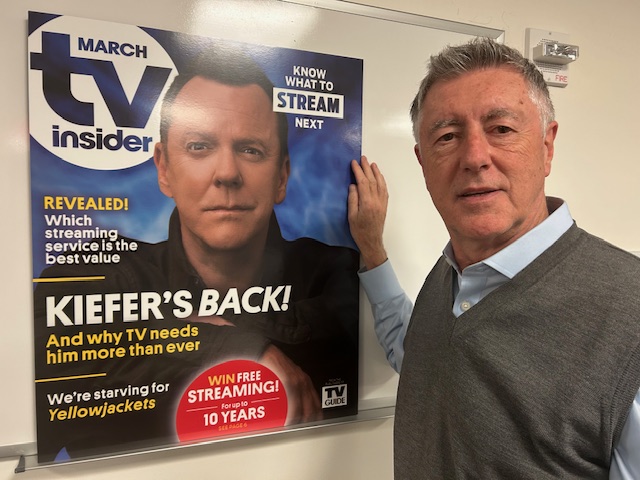
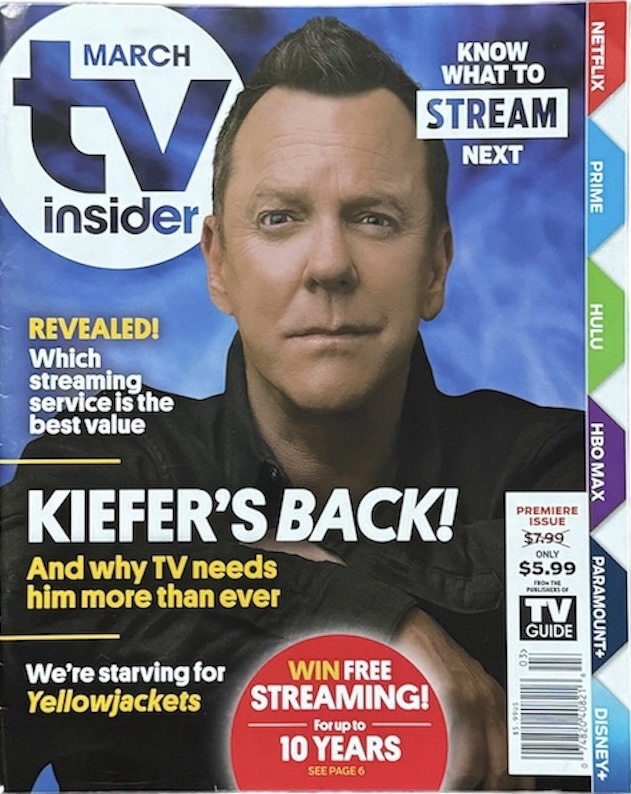
We recognize the challenges of print magazine economics in the current climate, so we did take a cautious approach with marketing spend. And we decided that we had to make every test dollar count. The same with newsstand; we’ve been very cautious with our retail presence. But we feel there is support for this title. We used 2023 as an experiment  to see what works on the cover. We’ve gone from the launch issue with Kiefer Sutherland in March and his then new action series, to costume drama with Bridgerton. We’ve done the final season of Billions and  Arnold Schwarzenegger’s first  TV role in Fubar. By the way, Arnold,  loved the magazine – he complimented us big time on it. Plus we’ve tested Sci-Fi on the cover with Marvel’s Loki.

They’ve all sold similar amounts at newsstands, but Bridgerton and Loki seem to be the most solid. So we’ve been learning as we go along – in 2024 we aim to put pedal to metal. For instance, I believe we have a new Bridgerton in the spring, is that right, Michael?

Michael Fell : Yep, May is the next season.

Tony Frost: So we’ll be all over that for our readers. And we have The Walking Dead as well!

Michael Fell: Yes, Rick and Michonne are coming back at the end of February. So we’re looking at that as a possible March issue. And if I could add something to Tony’s response to your original question, the why of it all has to do with the volume of programming.

You can go back a year ago and go online and find television guidance, and some of this is still true today. There are a lot of lists where people will recreate the publicity release list of stuff coming up in a particular month. It’ll just be a list of titles with no information. Or a little plot info. You often find 50 best shows on Netflix to watch now. And I’m looking at that list and I’m thinking I know those aren’t the best shows; I can see they’re just adding a few lines to the press release from the titles. I think there was a need that we saw. A curated, focused, structured need for reviews and guidance where we report on the shows. 

You want to give people real content. It wasn’t there online. We’ll pick each of the major streamers and other smaller streamers that our readers are interested in and give them an in depth amount of shows and reporting. But it’s still something that they can understand and appreciate and take hold of, as opposed to the massive lists and surface reporting that was online. I really think curation is the key.

Samir Husni: So do you think focused curation is the future of print in 2024?

Tony Frost:  Curation is a very  good word; we have experts – TV Guide’s complete editorial team  – who know TV from the inside out. The same team has brought that expertise to TV Insider. Over the whole year, the 12 issues will give you the most comprehensive guide on what to stream and why you  should watch the editors’ recommendations. The choices are carefully curated.   

Michael Fell: The services? It doesn’t stop. It keeps coming up. We cover 10 to 12 of the premier streamers. Our readers will often request info about smaller services like Acorn and Britbox. A big part of what the magazine does is provide the library material. Going back, there’s so much volume on television, is a monthly magazine that has a fair amount of library content; is that worth it to the reader? And we decided internally that it was. 

I told Tony this once; just before we were launching the magazine, I was in Tucson, Arizona visiting my brother and we were talking… do you know Mike Flanagan, Samir? He does a lot of shows on Netflix, like The Haunting of Hill House and Bly Manor. We were talking about some of his series and my brother mentioned how Mike Flanagan reuses some of his actors on different shows.

We were talking about Bly Manor and Midnight Mass and I asked him what about The Haunting of Hill House, which was Mike Flanagan’s first big Netflix series. He was like – what! I never even heard of it. And I was staring at my brother who subscribed to TV Guide magazine, was married and had two kids, one in college and one about to go to college, and I told him that his statement was proof to me that a monthly magazine with as much news stuff as we can, which also has a fair amount of library material, would be of major use to readers. He didn’t know anything about The Haunting of Hill House – and he liked Mike Flanagan’s other shows. I told him that I had a magazine for him that would be launching soon. 

Tony Frost: There’s 82 networks, 42 streamers, and 26 production studios currently. Plenty for us to write about. (Laughs) There’s also a bit of reverse engineering here, which I told you about earlier. First we had our well-established website, tvinsider.com, which has 10 million page views per month, so a lot of the work that Michael’s team does is repurposed on the website creating a natural synergy between the two. Also, tvinsider.com has proved to be a valuable source for new subscribers. So one supports the other and that has been a success.

Next year, apart from putting to use what we learned this year editorially and going deeper into that, we will continue drawing in subscriptions through traditional methods, reach new external audiences by direct mail and we’ve taken on a new digital marketing agency, named  salestube, based in Warsaw, Poland, to optimize paid search and social media efforts across all platforms for an even broader reach. That’s very important. 

As exciting as the material is that Michael’s team creates, we need more visibility; we have to get out there. And our website helps with the visibility. It’s very hard to make an impression at newsstand.  As you said Samir, there are so many SIPs out there. We have a small draw at newsstand which we use to really test covers and   editorial content,  as opposed to bringing in any real revenue. Ultimately, we see TV Insider as a subscription model, but that doesn’t mean in 2024 we won’t attempt some bold moves at newsstand.

Samir Husni: Let me ask you about your company, not only TV Insider. You’ve cornered the television magazine market. You have TV Guide, TV Weekly, and now you have TV Insider. In its heyday, TV Guide used to have 18 million in circulation, when there were no digital guides or anything. Is there any synergy in all of these guides you are producing?

Tony Frost: In this day and age, TV Guide magazine has a million subscribers And is jam-packed with content. That number is still very impressive. TV Weekly is doing well and in TV Guide we’ve just launched  “Extra” –  for subscribers to get digital access to a newsletter and grids updated every 24 hours. We are not standing still!

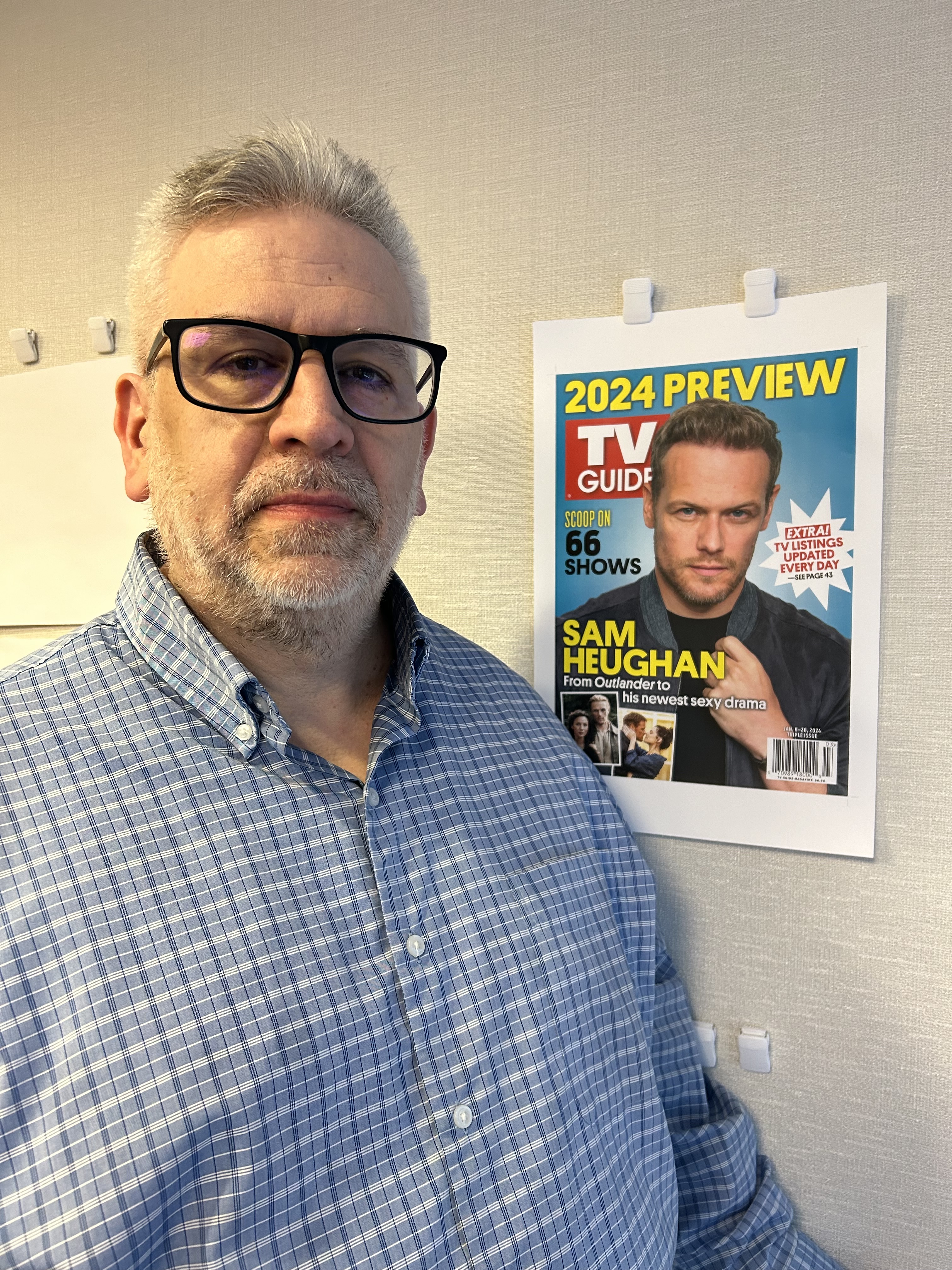
Michael Fell: In our 2024 preview issue we’re launching a newsletter service called “TV Guide Magazine Extra.” This service is just for subscribers and it’s a weekly newsletter serving two purposes. One is to give them access to online grids and listings, which are being updated every single day.

There is still a lot of appointment viewing, watching network and cable television, so we want to make sure that their literal day-to-day guidance is accurate. So this newsletter is going to provide online links to daily updated grids that are substantial with programming information and plot information that you won’t find anywhere else. Even on websites that already have online grids, the detail that will be provided is amazing. 

And also we’ll update them with new news items and articles within the newsletter for programming information, story information that we may not have been on top of in the previous magazine. So we want to make sure they’re completely updated with story and programming information.

Tony Frost: Last year when paper costs were sky high and most other chargesws were going through the roof, we had to make adjustments. The triple issue is a very robust magazine with a lot of content. 

Michael Fell: Going back to your question, you asked about synergy, I was thinking about how complementary the magazines are. I’ve always found this fascinating since Andy (DeAngelis) and Larry (MacKenzie) came on board; TV Weekly, as far as the grids and listings go are distributed regionally like TV Guide used to be. It’s almost ironic that the guys who came and took over TV Guide had their own guidance products which were being delivered regionally, which we know in publishing and printing, the paper and postage end is extremely difficult. But they are able to put Channel 2 for CBS because they’re locally delivered,

Tony Frost: TV Weekly is a bi-weekly listings magazine,  with regional editions just like TV Guide used to have. It is a valuable tool for many traditional TV users.

Michael Fell: Yes, so we take care of that customer who’s looking for really local information.

Samir Husni: Yes, such as mine is the Memphis area.

Tony Frost: Exactly. So TV Weekly is a double and TV Guide is now a triple. And we have TV Insider as a monthly for streamers. We’re covering all bases. 

Samir Husni: As we look forward toward 2024, will there be any major change coming up in the New Year? As compared to 2023?

Michael Fell: A lot of 2023 was just seeing what works. Now we know that something like this can be successful and I think we’re going to be a little more focused on our cover choices. If you look at all the covers, they’re certainly very broad, covering your hit Netflix dramas, Marvel Sci-Fi’s, maybe we’ll think about DC, I don’t know. (Laughs) I try, I really do try with DC and Zack Snyder, but it’s on and off. The biggest star in the world, Arnold Schwarzenegger, a great serial drama coming from Showtime; we’ve covered all kinds of shows. And I can’t tell you what it is right now, but I think what we’re going to be able to do in 2024 is be more focused on the covers. And really drill down on what’s going to work.

Samir Husni: How do you decide what you’d like for the material to be?

Tony Frost: In 2023, the emphasis was on what was the biggest show coming out from which streamer during the month that we went on sale. That’s where we started and continued during  2023. And now it might be that instead of doing the biggest show, we’ll still do a big show, but focus on a specific genre.

Samir Husni: Do you have any predictions about streaming? Will it continue to go up or is it hitting its status quo?

Michael Fell: The reporting really settled into a certain groove post-strike about the contraction of the streaming services, such as not spending as much money, not going crazy with sequels, and being really focused. But we’re all about the consumers. And to me that’s a great thing, because streaming is THIS big and so if it becomes just THAT big, it becomes easier to handle for the consumers and we can in turn be more focused and curated for them. 

There’s still going to be an amazing amount of overwhelming television and if the reporting from the industry says the sky is falling, we’re still thinking more about the consumers’ point of view. Such as number one: they’re not going to notice and two: it’s around the edges. And now streamers are focusing on, hey, maybe we shouldn’t do that fancy show that no one watched but we got to work with this great director. They’re like, let’s make some more shows that people are going to watch. And that’s all good for the consumer, the watcher, the viewer and that’s our audience. We’re not really industry-focused, we cover the industry, but always from the consumer point of view.

So, there will be some contraction, but I think it’s all good for the viewers. There will be plenty to watch. I’m just not crazy about the people feeling overwhelmed, especially if they’re reading our magazine.

Samir Husni: Let’s imagine that we’re in December 2024, what would you like to tell me you had accomplished throughout the year?

Tony Frost: We’re looking to extend our reach; we’re looking to make the magazine more visible; we’re looking for twice as many subscribers, and we’re seeing very encouraging early renewal indicators. Customers committing to longer term subscriptions and positive customer feedback. So they’re telling us that they want TV Insider, this is the magazine that they’ve been waiting for. We just have to market it on a larger scale and we have to promote it better. 

Samir Husni: My typical last question; what keeps you up at night?

Michael Fell: I’m sleeping pretty well. (Laughs)

Tony Frost: There’s not much that keeps me awake at night, let me tell you. (Laughs ,too)

I did want to say that one of our biggest successes over the past couple of years has been Yellowstone. We covered it from the beginning. TV Guide was the first  magazine to put  Yellowstone on its cover. Our  Yellowstone articles have been repurposed for our website tvinsider.com and we did three SIPs under the TV Guide logo. Obviously, the show has been featured in TV Insider magazine on a regular basis. In November we completed our fourth Yellowstone SIP in a partnership with a360, under the subhead The Complete Story – All Four Seasons. It has sold well in a short time with a cover price of  $13.99. We are happy with the results so far – and so are a360. I use this as an example of how important it is for a company like ours to be nimble and smart … always looking for the next opportunity.

Samir Husni: Thank you.
h1

Mr. Magazine™ Names TV Insider Magazine 2023 Launch of the Year + 10 Most Notables

January 2, 2024

More Than 1,200 Bookazines And At Least 71 Magazines Were Launched Last Year.

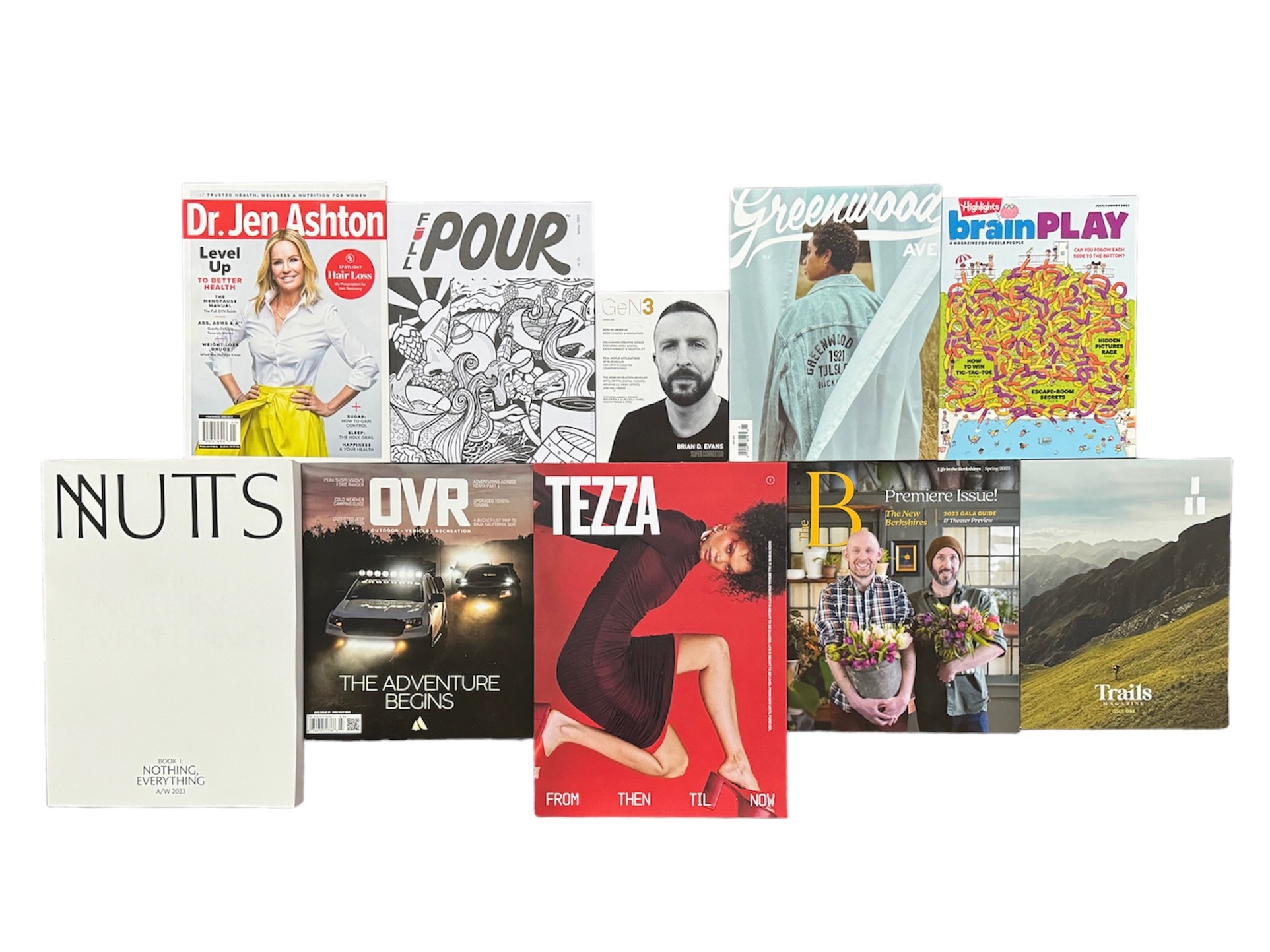
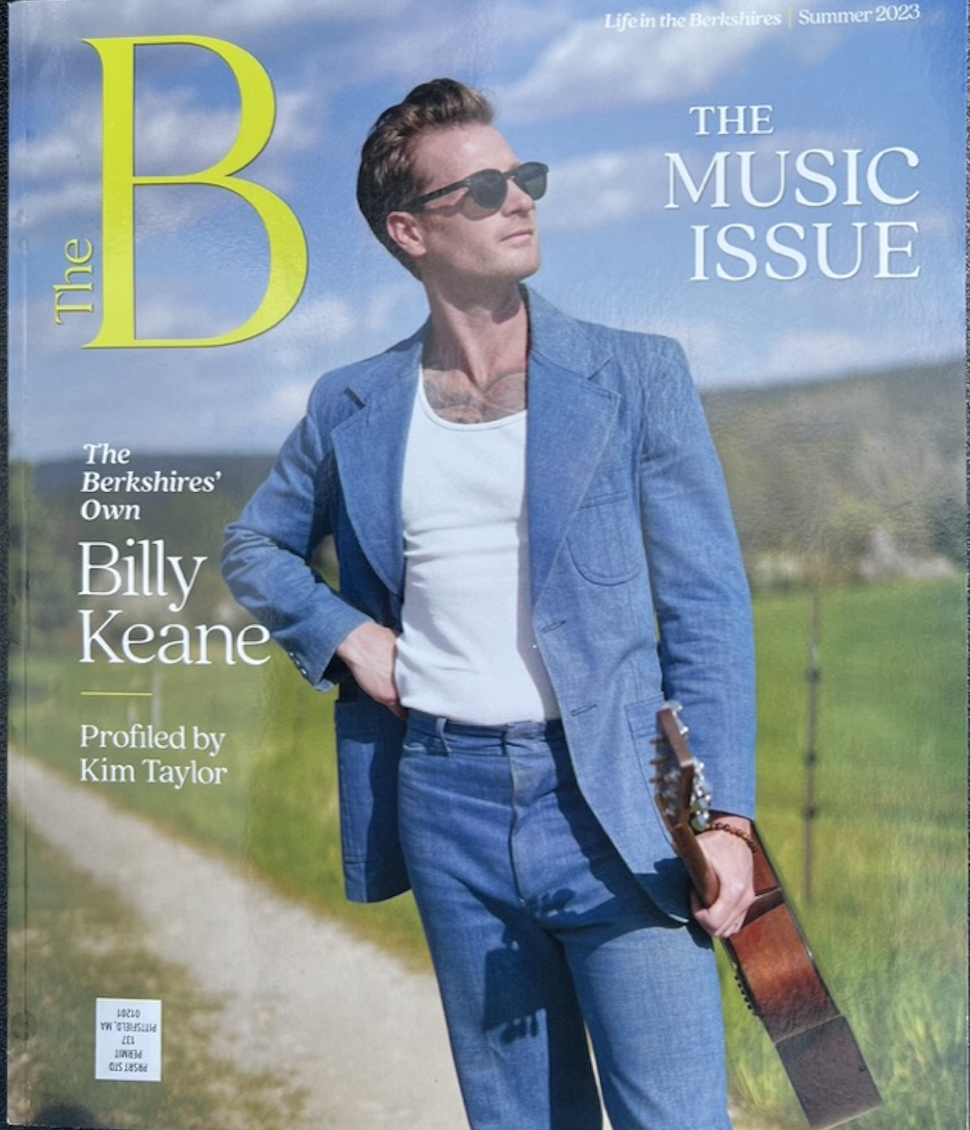
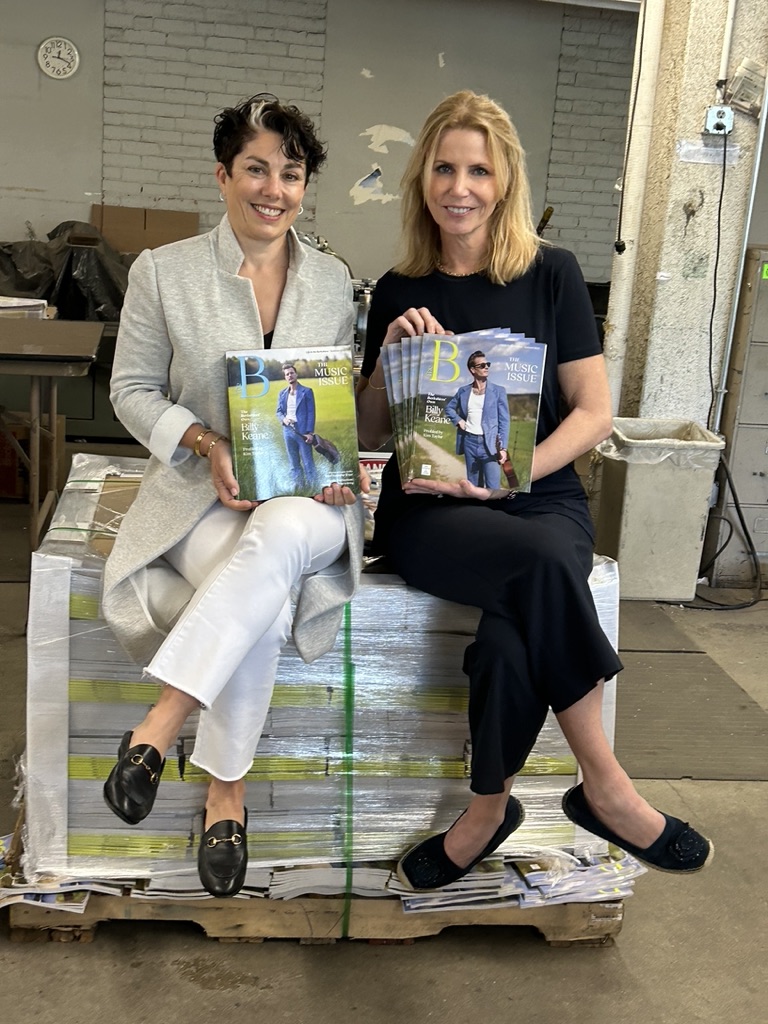
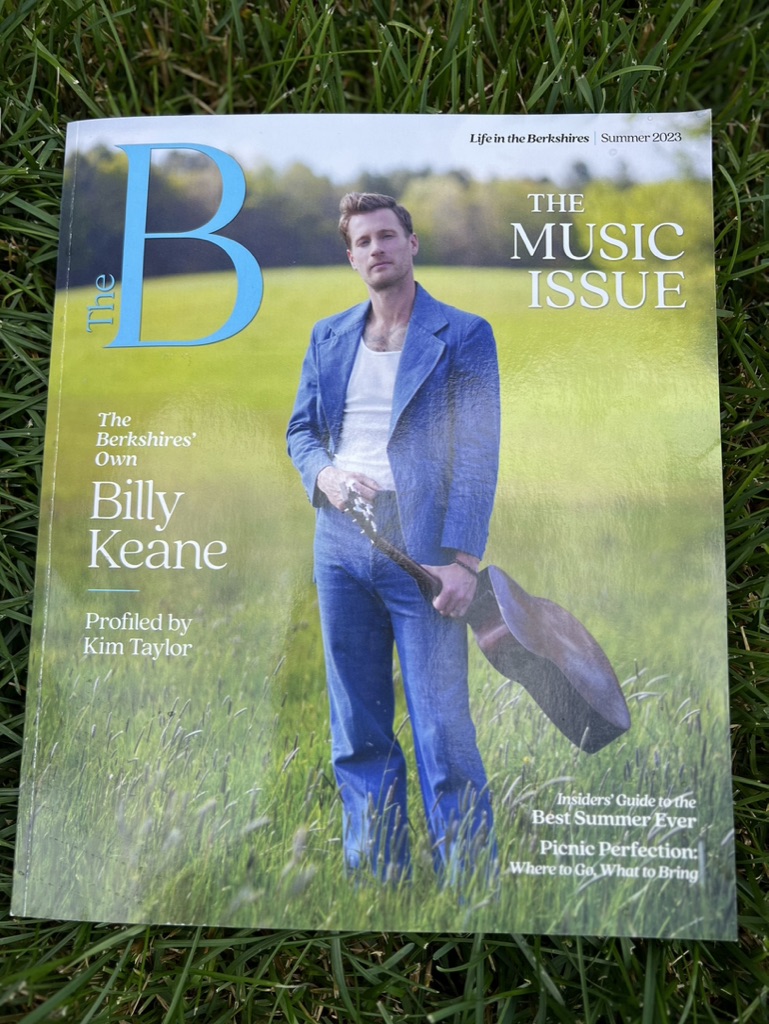
Dr. Jen Ashton,  Full Pour, GeN 3, Greenwood Ave., Highlights Brain Play, Nuts, OVR, The B,Tezza, And Trails Are The 10 Most Notable Launches…

2023 could easily go down in history as the year of the bookazine. More than 1,200 titles were launched last year covering every subject or personality under the sun (dead or alive, may I add). However, in the midst of this ocean of bookazines, there were also some brave souls who decided to buck the trend and publish magazines with frequency.

This image has an empty alt attribute; its file name is tv-insider-first-issue.jpg

Leading the pack was the publisher of TV Guide magazine , which in March brought the only monthly new title in 2023, TV Insider, a magazine for those who want to know what to stream next. That daring monthly launch and the need for a television streaming guide in the midst of all the streaming platforms available , made it easy for Mr.Magazine™ to name TV Insider the 2023 launch of the year. (Look for my interview with the president of TV Insider Tony Frost and its group editorial director Michael Fell on Friday).

And the 10 most notable launches of 2023, with quotes from their first editorial, in alphabetical order are:

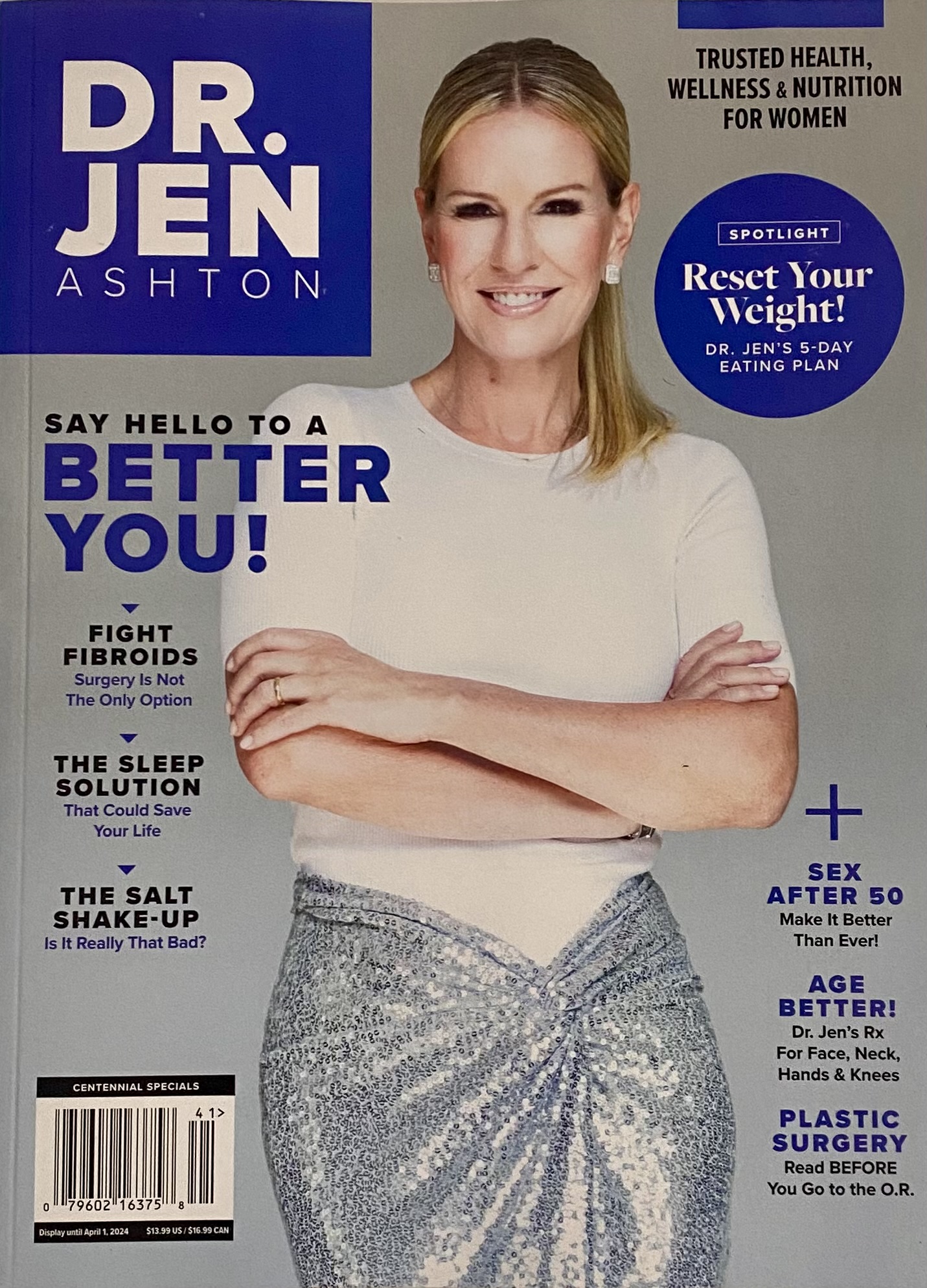
Dr. Jen Ashton:  “ From menopause to mental health, from sleep to sugar control, from thinning hair to skin rejuvenation, from weight loss meds to workouts that work – I’ve covered health topics you’ve told me are important to you.  I hear you, and I am fluent in women’s health.” Dr. Ashton, Editor- In-Chief.

Full Pour: “Here at Full Pour, we love a good glass as much as anyone.  Whether it be wine or beer, a spirited sip, an infused creation, a zero-proof selection or even a great cup of coffee or tea, we’re into it all – true beverage lovers through and through.” Lauren Buzzeo, Editor and Publisher.

GeN 3: “ While well on its way to becoming an overused buzzword, Web3 is more than just passing hype.  The fundamental concepts behind this arguably overused term are enduring and impactful… While developers continue to create and build, GeN3 steps forward to showcase the latest developments and innovations as they happen.  We are here to tell the story of Web3.” Sarah Block, Editor

Greenwood Ave.: “We seek to uplift entrepreneurs standing on the shoulders of those who came before us and, in doing so, inspire the next generation of Black makers, doers, and dreamers not just in Tulsa, but around the world.  Greenwood Ave. is everywhere.” Trey Thaxton, Founder.

Highlights Brain Play:  “Are you mad about mazes, loco for logic puzzles, and bonkers for board games? If you’re like us, you will love them all.  As “puzzle people,” we are not afraid to take on a challenge. We know that every problem has a solution, and we are determined to figure it out.” The Editors

Nuts:  “ Fashion magazines have traditionally sold dreams. The mood of Nuts is anxiety and malaise—the abortive night out, the workout gone wrong, the branch of Footlocker about to get looted.  Yet there’s something else deep within it, too: for one, the hope that the 21st -century angst expressed by the anonymous voices haunting these monochrome pages might one day be dispelled.” Alex Needham.  (Nuts editor and creative director is Richard Turley).

OVR: “ OVR is about getting out there in our vehicles to responsibly explore and discover the world around us.  Whether we’re forging ahead into the backwoods or taking a well known route on a favorite road trip, it’s all about getting out and enjoying the ride as well as the destination.” Jerry Tsai, Editorial Director.

TEZZA:  “The app started with the two of us, following a passion and building something together just because we love it. The fact that it has grown so much and is used by millions of creators around the world is just as humbling as it is invigorating… And with that we give TEZZA MAGAZINE Issue 01.  This will be the first of many and we can’t wait to feature more artists and creators in the years to come.” xx Tezza & Cole, The Founders.

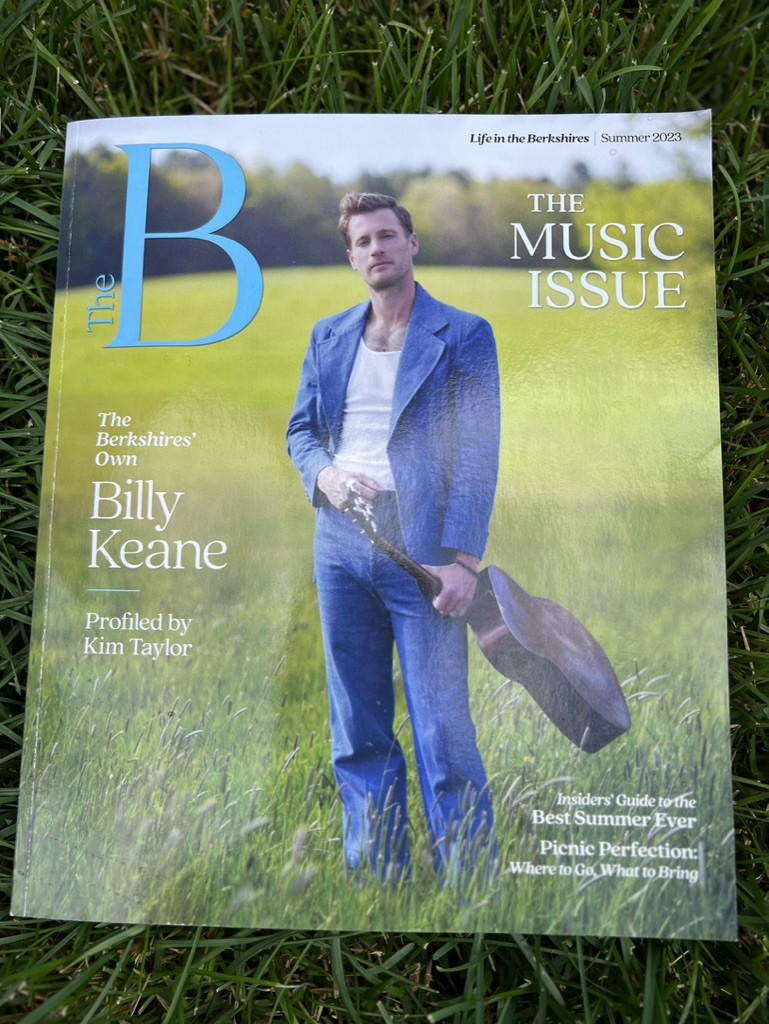
The B: “ Perhaps you are visiting for the first time, or maybe you attended summer camp or college nearby and now have property in the surrounding area.  Or you’re lucky enough to be a local.  Whatever the case, I expect you relish our creative culture, outdoor pursuits, and good living. The Berkshires speaks to you.” Michelle Thorpe Petricca, Publisher

Trails: “ This magazine is a return to the established route – quality journalism, printed in a real magazine, with a focus on the adventures that encourage us all to get outside – and our chance to improve on it.”  Ryan Wichelns, Editor-In-Chief.

And there you have the cream of the crop from 2023. Looking forward to a healthy and prosperous new magazine year in 2024. Remember, if it is not ink on paper, it is not a magazine.

All the best

Samir “Mr. Magazine™” Husni

h1

The Year Of The Bookazine… A Read, Beat, (… And Repeat) Podcast. Steve Tarter Interviews Mr. Magazine™

December 23, 2023

From the Read, Beat, (… And Repeat) podcast by Steve Tarter:

Media folks have been taking questions about the magazine industry to “Mr. Magazine” for decades. Samir Husni, 70, now retired after more than 30 years as a professor at the University of Mississippi, is still the oracle when it comes to magazines with his Mr. Magazine blog (https://mrmagazine.me/).
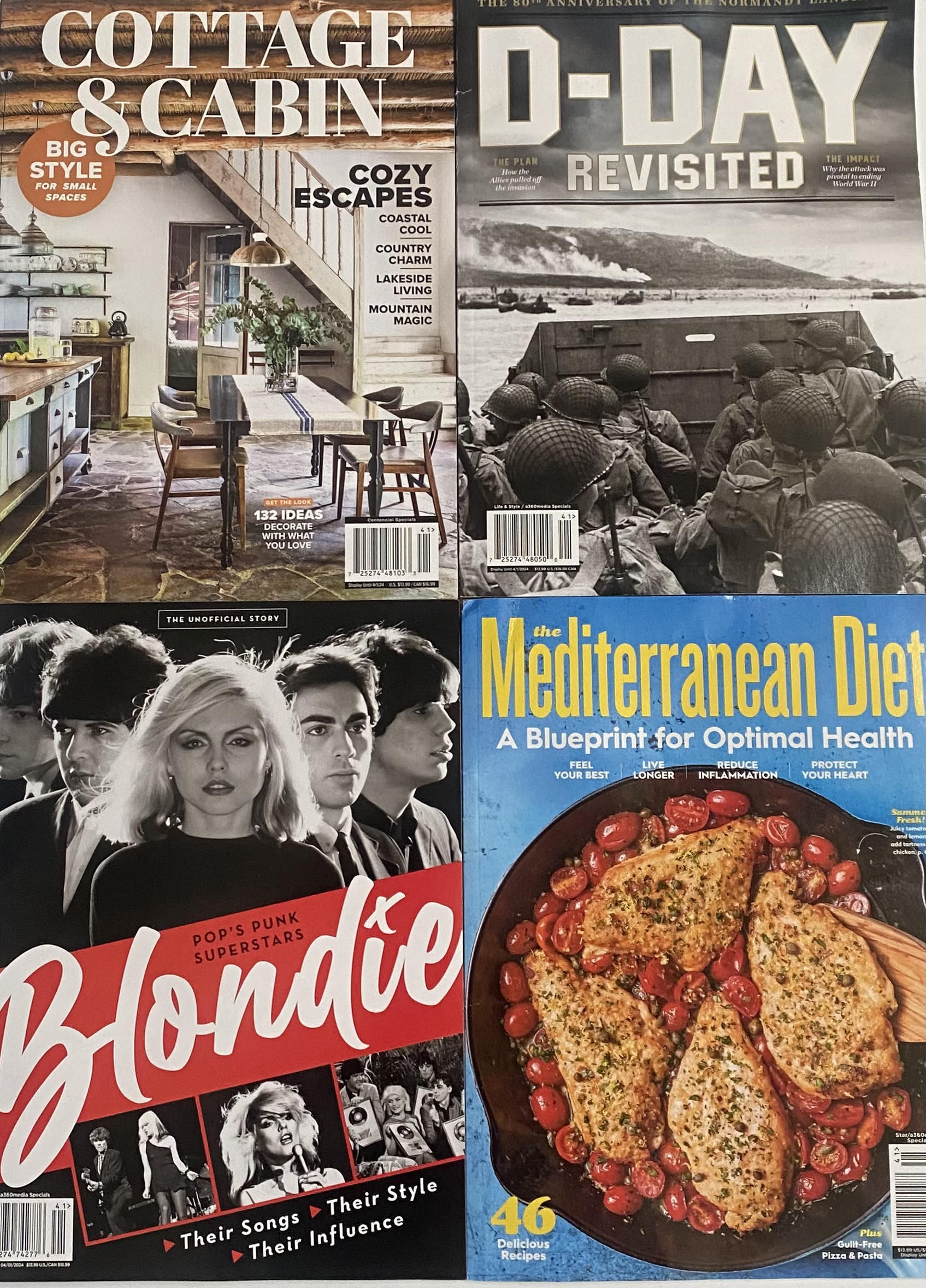
“It’s the world of bookazine these days,” said Husni, referring to the single-issue publications that turn up at checkout counters across America on subjects from Amazon to Zorro.


In 2023 at least 1,000 bookazine titles hit the marketplace, he said. In addition to filling ballparks, Taylor Swift led in the number of bookazines published this year. “Jesus ran second,” he told Steve Tarter.
The bookazine concept succeeds with consumers despite a high cover price (that now ranges between $14 and $15), said Husni. “It’s just one issue so there’s no long commitment. If you’re interested in going on a cruise, you’ll pay $15 for a copy of ‘Cruises on the Cheap,'” he said.
“The age of the mass magazines is gone,” said Husni, who recently donated his vast collection of magazines (five storage units worth) to his alma mater, the University of Missouri.
While Samir remains a supporter of the great magazines of the 20th century, citing Life, Reader’s Digest, TV Guide, and National Geographic, he’s not ready to shovel dirt on the printed page. “As long as we have human beings, we’ll have print,” he said.

To listen to the podcast please click here.

h1

Doug Olson, President & Chief Media Officer of a360media to Samir “Mr. Magazine™” Husni: “There’s Always Room For Print.” The Mr. Magazine™ Return Interview…

December 15, 2023

“Magazine advertising and print publications are definitely going to be a part of our mix. Digital is definitely going to grow. It’s not one or the other, it’s both.”

“I think the weekly is now more of a story behind the story if people want to get a little more in depth on what’s going on. It’s also a great summary vehicle, especially on the celebrity and entertainment side of things.”

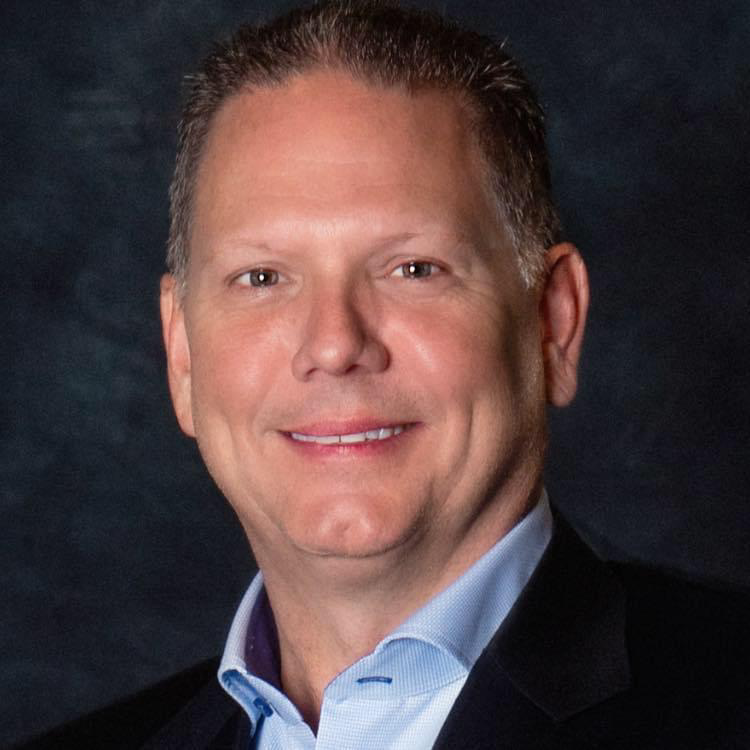
As I sit in front of my computer today, I have a very deep need to tell everyone how blessed I am. This interview with the inimitable Doug Olson is my first since having a massive heart attack and three stents placed in my heart’s arteries that really showed me how much I love my family, my life, and my work. While recovering, of which I am very thankful to God, I have been reflecting on what makes Mr. Magazine™ Mr. Magazine™, if you will. I have found that the love and care of my entire family is my number one possession in life. And the title of Mr. Magazine™ isn’t just a moniker. It’s also who I am. I’ve missed the words, pages, and smell of ink on paper. It’s in my blood and it’s who I am. And I am very thankful. I’ve missed you all. 

And now Doug Olson.

There is no doubt that Mr. Magazine™ loves interviewing magazine media people and Doug Olson definitely falls under that category. Prior to his role today as President & Chief Media Officer of a360media, the media division of accelerate360, he was President of the Magazine Division at Meredith Corporation, the leading multi-platform media company in the country. Throughout his career, he has held a variety of senior leadership positions in technology integration, strategic planning, and service delivery. In short, the man knows his way around magazines.

In this interview, we talk about magazines and magazine media, what he thinks they mean to the world today and where they’re headed in the future. He marvels at how successful bookazines have become and talks about the cultures that a360 is maintaining. It’s an informative discussion and I invite you to sit down, read and enjoy.

And now the complete interview with Doug Olson…

But first the soundbites:

On 2023, in terms of magazines and magazine media, especially for a360media: I think 2023 was a little bit more like 2022, input costs that went up are still there  and are slowly starting to come down. I would say the consumer has held in there with us, both from a subscription standpoint and at newsstand.

On the amount of weeklies a360media has: Yes, we have a lot of weeklies and obviously that’s something that we’re constantly looking at. As long as the consumer holds in there with us we’ll continue to provide them and when the consumer shows signs that they don’t need a product anymore, we’ll make some changes. 

On the role of a digital weekly in today’s digital age: I think the weekly is now more of a story behind the story if people want to get a little more in depth on what’s going on. It’s also a great summary vehicle, especially on the celebrity and entertainment side of things.

On the different companies they use to produce their bookazines: At the end of the day we want premium content. So we’ve gone to partners. People that have really good content in some of these genres. We think that they can do it at a very affordable price. And they like it because they get paid for their content and we like it because we know we have a better than average chance of it working out for us as well.

On whether bookazines are a reflection of American society: I believe that’s a true statement. If the consumer finds something that they’re really passionate about, what we call enthusiast brands or participation brands, something that they’re really into, they’re willing to pay their hard-earned money for it.

On whether bookazines will dominate a360 next year: In 2024, we’re probably going to reduce our number of releases and put more draw out on things that we think have a high probability of selling. And so would you rather have 500 that sell an average of X or would you rather have 400 that sell at a higher than X average.

On what his hope are for the women’s weekly magazines that a360 has: When you look at Woman’s World and First for Women, we think they have a tremendous upside. The digital properties of those are still relatively small. Both are two of the top-selling magazines in the country from a units and dollars perspective, with Woman’s World being the biggest. First for Women is 17 times per year, a tri-weekly, if you will. So we think they have a big opportunity.

On having ads in the bookazines: That’s really a content play there for the consumer, so you’re not going to see advertising, unless it’s really something special, within the pages of the magazine. Now the covers, especially Cover 4, is something that we have been talking with some of our marketing partners about and they’re really trying it. But it’s working out really well for them. 

On the revenue split between print and digital at a360: Our traditional business is still larger than our digital business. But I will tell you that I believe we will have big growth in our digital business in 2024.

On being at a360 for two years now and whether it has been easy for him: Well, year one, as you know, is nothing but constant inputs going up, so that’s always fun when you’re a magazine-centric, newsstand-centric portfolio. And then year two has really been a lot of Google changes, a lot of Meta changes. As you’ve read, a lot of people’s digital business has kind of stalled out in 2023 and we were not immune to that.

On what he is most proud of accomplishing so far: I would say that the leadership team that we have now in this organization and all of the changes that we’ve made to the culture.

On the future of quarterly magazines with celebrity partnerships such as Drew with Drew Barrymore: I’m a big partnership guy and I love those types of collaborations. Better with Dr. Jen Ashton (now Dr. Jen Ashton magazine) was very successful right out of the gate. Drew has really gotten a lot of great momentum, not only in the advertising community, but with the consumer.

On whether he thinks there’s still room for print in this digital age: Yes, absolutely. There’s always room for print. It’s just smaller and you have to be smart about how you do it. And you have to go where the consumer wants to be. And that’s what we’re trying to do. I think the biggest difference in what we’re doing and others have done in the past is if something isn’t working, we’re willing to give up on it and pivot to something else. 

On whether he ever compares his job at a360media to Meredith: Probably more than some of the people who work for me want to hear. (Laughs) There’s some great people who work now for Dotdash Meredith, people who made me very successful in that role for many years that I would do anything for. So I wish them nothing but success and I think it’s going to take all of us.

On the future of tabloids: I think the tabloids have a very loyal audience. And it’s really a newsstand play. The advertising that they get is more direct response. I think they’ve done quite well through some really difficult times in the economy.

On the trust factor in print: The one thing I always found fascinating, no matter what the person’s background was, they always felt like if they had their own magazine that was the ultimate badge of honor.  

On anything he’d like to add: How did we possibly get through the last several months without Mr. Magazine and his trademark being a part of our lives? In all seriousness, we’re so glad you’re back. Many people have been praying for you. And we missed you.

On what keeps him up at night: The biggest thing that keeps me up at night is what is Google doing? Because all of us trying to build our digital business, keeping up with Google used to be tough. Now it’s a full time job.

And now the lightly edited transcript of the Mr. Magazine™ interview with Doug Olson, President & Chief Media Officer of a360media.

Samir Husni: How would you describe 2023, in terms of magazines and magazine media, especially for a360media?

Doug Olson: I think 2023 was a little bit more like 2022, input costs that went up are still there  and are slowly starting to come down. I would say the consumer has held in there with us, both from a subscription standpoint and at newsstand. 

The nice surprise for us was that print advertising has actually held up pretty well. I know there has been a lot of secular decline over the last 10 years in magazine advertising and we’ve had a good year there. 

And our Specials business continues to grow. We’re doing really well there. I think we’re somewhere at the 35% or 36% of every single unit sold at the newsstand comes from a360 media and about 30% of every dollar spent, all of the revenue, comes from a360 media. So we’ve really done a lot of good work on the newsstand, especially with our Specials.

Samir Husni: And you’re still the only major magazine media company in the States that has nine weeklies? 

Doug Olson: Yes, we have a lot of weeklies and obviously that’s something that we’re constantly looking at. As long as the consumer holds in there with us we’ll continue to provide them and when the consumer shows signs that they don’t need a product anymore, we’ll make some changes. We have made some changes in the last couple of years since I arrived here, but obviously we are keeping a close eye on everything.

Samir Husni: What’s the role of a print weekly in this digital age?

Doug Olson:  I think the weekly is now more of a story behind the story if people want to get a little more in depth on what’s going on. It’s also a great summary vehicle, especially on the celebrity and entertainment side of things. It is hard to keep up with all of the news and who’s doing what and what releases are coming out and who’s starring in what television shows and what streaming services are available. So I think it’s a very good executive summary of what’s going on. But really the stories are more the stories behind the story. \

Samir Husni: You said your bookazines are exploding and yet when I look at them I see the rather large cover price. For example, the latest Taylor Swift with the collector’s poster was almost $18. And you’re also using so many different companies. I see Turnpike Media is doing some, Ten Media, Twenty-Two Media; can you explain how this works?

Doug Olson: That’s a great question and it’s by design. As you know from all the great work you’ve done in the industry, I’m a big believer in this bookazine format, the higher-priced, lower-frequency magazine, if you will. Our whole strategy is real simple: if we have owned and operated premium content, we will put bookazines out there under our owned and operated brands. 

But really at the end of the day we want premium content. So we’ve gone to partners. People that have terrific content in some of these genres. We think that they can create it at a very affordable price. And they like it because they get paid for their content and we like it because we know we have a better than average chance of it working out for us. 

But we take the risk. We take the risk on what the draw should be, where to distribute it, etc.? So it’s kind of a win/win. The content organizations get to be content houses and get paid for their great work and we do what we do and that’s take the risk and evaluate all of this. 

Samir Husni: So it’s more like a freelance? You buy the content from them regardless of the situation?

Doug Olson: We have a couple of different business models, but we certainly have a pure- content house model where we’re just paying them to do content for us. And we also have some partners where they participate in the upside if there’s any profit. We’re very flexible on our approach to this and at the end of the day: if we think it can work for us and if it works for our partner, then we’re all in. So we’ve gone from a couple of hundred bookazines a few years ago to around 525 that we’ve put out this year in 2023.

Samir Husni: Bookazines are technically taking over the market. You have to search for a frequency-published publication anymore. We use to say that magazines were a reflection of American society, but today do you think it’s the bookazines that are the reflection?

Doug Olson: I believe that’s a true statement. If the consumer finds something that they’re really passionate about, what we call enthusiast brands or participation brands, something that they’re really into, they’re willing to pay their hard-earned money for it. 

The trick now is this has all went down really from mass to niche and if you find the right niche… you know as well as I do that Taylor Swift and Barbie and some of these things in 2023 were absolutely on fire. We did way more around Barbie and Taylor Swift this year than we did around the Queen passing in 2022.  We thought the Queen was a big event for the industry, but that was a rounding error compared to what Ms. Taylor Swift has done for the economy. 

Samir Husni: I see you’ve brought out some big names. Are they in-house or are they freelancers? I know Bob Guccione Jr. did a Jesus magazine, he was the editor in chief, Steve Russell did a Cruise bookazine, Keith Blanchard is doing a lot of your own bookazines…are they all freelancers or something else?

Doug Olson: With our bookazines, we have a very small consumer revenue team that works on them. But almost everything else is either a partnership or freelance. 

Samir Husni: It’s surprising to see all these titles; you said 525 this year?

Doug Olson: Yes. 

Samir Husni: And if you add to that what Dotdash Meredith and Hearst is doing, bookazines are now the movers and shakers of the magazine industry. And you’re not only a publisher, but also a distributor. So I ask you, how do you see 2024 lining up? Do you see this trend continuing? Are we going to have 750 bookazines from you next year?

Doug Olson: It’s a portfolio play, right? Not everything you put out is going to be profitable. You hope that the majority of it is, but you never know, You get to a certain size and you are really only limited by display at retail. If you have enough display you can continue to put out a lot of product.

In 2024, we’re probably going to reduce our number of releases and put more draw out on things that we think have a high probability of selling. And so would you rather have 500 that sell an average of X or would you rather have 400 that sell at a higher than X average. 

With input cost being so high, we also have something that we call our fast reprint strategy. It’s really a replenishment strategy. So if you and I come up with an idea and we decide to put a special out around beautiful photography in Mississippi and we put it out there and it sells really well right out of the gate, the first week or two, we’ll turn around and reprint it right away. Then replenish that if we need to, because on average these are mostly quarterlies, they tend to stay out around 80 to 90 days. So if we find something that looks like it’s going to be a hit with the consumer, then we want to do more of it. 

Samir Husni: As I look at your portfolio, I see that you just brought Liz Vaccariello back to be editor in chief of Woman’s World and First for Women after Carol retired. You’re the only owner of  women’s weeklies in this country, what’s your hope for these magazines?

Doug Olson: When you look at Woman’s World and First for Women, we think they have a tremendous upside. The digital properties of those are still relatively small. Both are two of the top-selling magazines in the country from a units and dollars perspective, with Woman’s World being the biggest. First for Women is 17 times per year, a tri-weekly, if you will.  

That audience is quite different than where a lot of our competition is aimed. If you really look at the content of those magazines, it’s really mainstream women, that those products are aimed at; the C & D counties, the more rural areas, the Midwest, not big cities like some of the competition. 

I have a lot of experience with the big city targets as well, but we really think that what we call the Women’s Lifestyle Group has a lot of upside so we brought Liz Vaccariello in and she’s honestly a hall of famer, if you will. With her EIC experience on Prevention, Reader’s Digest, Parents, Real Simple, and PEOPLE magazine; she has a ton of experience in this publishing world and a lot of success. 

And we also brought in  Cece Ryan, who was the publisher at PEOPLE magazine and before that the publisher at Real Simple and she’s going to lead our sales and marketing efforts. So we’re really throwing our shoulder into our Women’s Lifestyle Group because it serves the market really well already, but can serve it even better and be bigger and more important to our portfolio.

Samir Husni: I see some of the bookazines are now carrying a back page ad; is that going to be a change, in terms of starting to have advertising in the bookazines?

Doug Olson: That’s really a content play there for the consumer, so you’re not going to see advertising, unless it’s really something special, within the pages of the magazine. Now the covers, especially Cover 4, is something that we have been talking with some of our marketing partners about and they’re really trying it. But it’s working out really well for them. 

You probably saw Skechers is on the back of several of our specials and bookazines… SAMIR HOLDS UP A BACK COVER OF ONE OF THE SIPS… yes, there it is on Martha Stewart. Skechers has been a great partner of ours and they continue to experiment with new things and I think it’s working out pretty well for them. 

But we’re going to be really respectful. We know that when the consumer is paying that kind of money for a content product that they’re expecting a lot of content, so the advertising will be, at least at this point, really on the covers and we’ll try to make it relevant to why the person is buying it in the first place. 

Samir Husni: Can you give me an idea what the split is in revenue between digital and print at a360media?

Doug Olson: Our traditional business is still larger than our digital business. But I will tell you that I believe we will have big growth in our digital business in 2024. And I would explain it to you this way: I’ve worked on some very large brands that had their fair share and it was really hard to figure out how you were going to get the next five percent out of some of those brands. They were so large and so successful to the advertising community. But we’re still working on getting our fair share. 

When I came into the organization, I brought a lot of very accomplished leaders with me over the last couple of years. And we’re still trying to get our large chunk of “fair share.” So we’re not looking at three or four or five percent growth like everyone else is, we’re looking at how we can get 10, 15 or 20 percent growth. We still have a ways to go to get our fair share in the digital space. It’s definitely smaller than the traditional part of our magazine portfolio. 

Samir Husni: You’ve been at a360 for almost two years now. Has it been a walk in a rose garden for you?

Doug Olson: Well, year one, as you know, was nothing but constant inputs going up, so that’s always fun when you’re a magazine-centric, newsstand-centric portfolio. Then year two has really been a lot of Google and Meta changes. As you’ve read, a lot of digital businesses have stalled out in 2023 and we were not immune to that. 

But we feel like between the people we’ve brought in and the partnerships we’ve developed during the last six months that we’re really positioned well to get our fair share of the digital business. So you’ll see us talking a lot about our digital growth and at the same time, you also saw the growth in our bookazine side of the business has been substantial. And that made up for some of the erosion we’ve seen or secular decline we’ve seen on something like a weekly magazine.

Samir Husni: If you had to pick one thing that you’re proud of accomplishing during your two years at a360, what would that be?

Doug Olson: I would say that the leadership team that we have now in this organization and all of the changes that we’ve made to the culture. Obviously, you get measured as a leader in media today by your financial results. I think all of us are on the hot seat because it’s not a walk in the park, to use your words, to be in charge of these organizations. But we’ve held our own and we’ve put a team of leaders together here that are unbelievably talented and accomplished.  I think the best for us is yet to come. We’re going to have an awesome 2024 and beyond. 

I’m really excited for what they’ve done in a very short period of time. A lot of them have been here less than 10 or 11 months. They and their teams are so collaborative and there are a lot of really good people here. They just needed really good leadership and they now have that. So I’m most proud of the leadership team and all they have done on the softer side of the business as far as changing the culture and getting the people to collaborate and be on board for what we’re trying to do.

Samir Husni: And you were one of the few who launched a few quarterlies besides the bookazines this year, including Better with Dr. Jennifer Ashton, Drew from Drew Barrymore, what do you think the future is for those type magazines?

Doug Olson: I’m a big partnership guy and I love those types of collaborations. Better with Dr. Jen Ashton (Better is now called Dr. Jen Ashton magazine) was very successful right out of the gate. Drew has builtup a lot of great momentum, not only in the advertising community, but with the consumer. The subscriptions with that one are doing great. So we’ll see more of that. I think that’s all part of the mix in this portfolio play that we call bookazines. 

Samir Husni: So you still believe there is room for print in this digital age? 

Doug Olson: Yes, absolutely. There’s always room for print. It’s just smaller and you have to be smart about how you do it. And you have to go where the consumer wants to be. And that’s what we’re trying to do. I think the biggest difference in what we’re doing and others have done in the past is if something isn’t working, we’re willing to give up on it and pivot to something else.  

I think a lot of the big publishers in the past have been really hesitant and by the time they made that decision it was too late. We have a lot of performance indicators that we keep track of. Magazine advertising and print publications are definitely going to be a part of our mix. Digital is definitely going to grow. It’s not one or the other, it’s both.

Samir Husni: Do you ever compare your job at a360media to Meredith?

Doug Olson: Probably more than some of the people who work for me want to hear. (Laughs) There are some great people who work for Dotdash Meredith, people who made me very successful in that role for many years that I would do anything for. So I wish them nothing but success and I think it’s going to take all of us in this industry to do our part. We can’t be fighting each other, we have to keep a united front to the industry so they see that magazines still matter. And they’re still a great base to feed other platforms from a content perspective. 

They’re just so different. We had all of this digital traffic, all of this data, and all of these huge brands when I was at Meredith and they made some decisions about which ones they wanted to go forward and which ones they didn’t, obviously, now that they’re under Dotdash. 

Now I have a different portfolio that has different needs and different wants, if you will. We’re going to try and get our fair share of digital, but at the same time we still think, especially in the bookazine genre, that the consumer is really interested in something that they’re passionate about. And we’re trying to serve them as best we can. So, two different ends of the spectrum. Meredith was very subscription-driven and this organization is much more newsstand-driven. But they both needed advertising. So there’s a lot of similarities, but they come at it from different perspectives. Great people in both organizations.

Samir Husni: Any future for the tabloids? Someone told me the tabloids were the digital of print. 

Doug Olson: I think the tabloids have a very loyal audience. And it’s really a newsstand play. The advertising that they get is more direct response. I think they’ve done quite well through some really difficult times in the economy. I’m not the expert in the tabloid business, but I can tell you that I have a lot of respect for the people who work on those titles. And they have a very loyal audience, so for the foreseeable future, they’re doing just fine. 

Samir Husni: Any comment on the trust factor in print?

Doug Olson: I think I’ve told you this before when we’ve talked, but getting back to the partnership part of the bookazine business, I have always been fascinated. We had a lot of partners that had very successful television shows or other venues when I was at Meredith, someone like Martha Stewart. 

But the one thing I always found fascinating, no matter what the person’s background was, they always felt like if they had their own magazine that was the ultimate badge of honor.  With Joanna Gaines, I think she is most proud of her magazine The Magnolia Journal. At least, when I was there she said that all of the time. And if celebrities had something with their name on it, there was just something special about that. 

I’m a big fan of magazines. We’ve all had to pivot. I don’t think the mass thing is a great idea. I wouldn’t launch a magazine that’s aimed at the masses in 2024. But if you find something 100,000 here or 200,000 there and do something really well, they’ll support it. And advertisers will come as you put together these audiences. It’s just a different way of doing it. You just have to be really patient and selective and put out premium content that the consumer is willing to spend their money on.

Samir Husni: Is there anything you’d like to add?

Doug Olson: How did we possibly get through the last several months without Mr. Magazine™ and his trademark being a part of our lives? In all seriousness, we’re so glad you’re back. Many people have been praying for you. And we missed you. We missed someone in the industry that still believes in it and still organizes all of us. I couldn’t be happier to be your first interviewee on your comeback. And I’m super glad that you’re back on the job.

Samir Husni: Thank you. I really appreciate that. 

Samir Husni: My typical last question, what keeps you up at night?

Doug Olson: The biggest thing that keeps me up at night is what is Google doing? Because all of us trying to build our digital business, keeping up with Google used to be tough. Now it’s a full time job. You have to make sure that your team out in the field knows exactly what they’re doing because everyone is looking for partners, brand safety and everything else, it’s become the number one thing. Keeping up with your digital business is keeping up with Google. 

Samir Husni: Thank you.  Season’s Greetings and the best of the New Year. Below is a picture I took of a Blue jay celebrating the season. See you in 2024.
h1

Mr. Magazine™ Takes A Much Needed Break…

September 13, 2023

You may have noticed that I have not posted any blogs or interviews since July 11.  On August 1, shortly after finishing a Zoom interview with a magazine editor/publisher from the United Kingdom, I started to feel some pain in my chest.  The pain increased and ended up like an elephant sitting on my chest.  Tried to treat with some home remedies to no avail.  By noon, and after the pain started spreading to my shoulders, my wife called my daughter and I was rushed to the emergency room at the local hospital.  I had suffered a massive heart attack and they needed to operate on me immediately.  

Three stents were placed in three major arteries (including the LAD, the so-called widow maker) that were 100%, 99%, and 95% blocked.  After a three-day stay in the hospital and seven medications, I am now slowly, but surely recovering.  It will take nine more weeks for my damaged heart muscles to completely recover.

Needless to say, slowing down does mean slowing a bit on my blog and interviews, but rest assured, although I am following the advice of a dear friend, “Give your heart a rest from your tireless labors in championing print and editorial content!” I will be back, shortly but surely… But for now, spending time with family and friends are priority number one. 

God bless and all the best.

Samir “Mr. Magazine™” Husni, Ph.D.

h1

R.I.P. Phyllis Hoffman DePiano: How Hoffman Media Built a Multi-Million Dollar Company from Scratch by Focusing on their Audience… A Tribute From The Mr. Magazine™ Vault..

July 11, 2023

A great magazine founder and publisher died yesterday July 10, 2023. Phyllis Hoffman DePiano died yesterday leaving her publishing company, Hoffman Media (the little engine that could), to her twin sons who loved, adored, and worked with their mom. In 2017 Phyllis and her two sons spoke at one of my magazine conferences and my friend Linda Ruth was able to sum and write up their presentation. What follows is a tribute to a great lady and her story.

Phyllis Hoffman DePiano presents with son’s Brian Hart Hoffman and Eric Hoffman

In publishing, founder Phyllis Hoffman began, there are no rules, no manual on how to be a successful publisher. “When we started in 1983 I was clueless,” she told the audience. “I knew that needlework was huge; I knew there were not magazines. And that was pretty much all I knew.” Hoffman was laughed out of every printer but one. They had no concept of direct mail. “What we did was printed up little brochures for shipowners to put into customer bags, inviting the people to be a charter subscriber. We went to Atlantic Media show with nothing but a single poster. We knew our break-even—it would be 3500 subscribers, paid in full up front, and that’s how many we got for the first issue. So we knew we could go one year.” Additional subscribers began to trickle in, till one day, Phyllis remembered, that she went to the post office with her two-year old sons, and the box was empty. Her heart sank—until the postal clerk invited her to retrieve the sacks of mail in the back, too much to fit into her box. By end of first year they had 100,000 subscribers, a 95% renewal rate—and they were turning down advertisers. That’s right—with a 68 page magazine, 70% content, 30% advertising, there just wasn’t room in the book.

Brian Hoffman, one of the two-year-olds at the post office that day in 1983 and now a co-president of the company, took up the story with Southern Lady magazine, Hoffman’s first magazine to branch out from craft to lifestyle. “Our company’s growth has followed our conversation with our customers,” he explained. “We listen to what they want, what they need, and then we work to give it to them.” An important lesson that Brian shared was to be patient. “Creativity is important, and it’s exciting,” he said. “But don’t change for the sake of change. Readers don’t feel the need for constant change; they are looking to you for consistency, to give them what they need and love. It’s easy to get off course, but listening to your readers will put you back on.” Creativity is important, innovation is important, but Brian emphasized the need for creative constraint as well, and for listening to the readers and acknowledging what they want. “Put your content out there. You’ll soon know if it’s a success,” he said. “The readers will tell you.” 

Eric Hoffman—the other twin boy, the other co-president—wound up with advice to the students in the audience. “I asked my young children what they would advise,” he said. “Be patient. Try hard. Work as a team. Help each other figure things out. It’s good advice,” he said. “Here at the ACT Experience, we’re a team, and we’re figuring out some big problems.” The lessons that Hoffman Media can bring include a belief and dedication to quality, in circulation, in editorial, in product, in audience. Hoffman runs each of its revenue streams as stand-alone profit centers—each has to make sense on its own, each must be a strong component of the whole. “The gimmicks built into the magazine business have caused a lot of problems,” he said. “We don’t give stuff away. Not to our subscribers, not to our advertisers. We work with our advertisers and prospects—the ones we believe belong in the mags. Just because they spend money doesn’t mean they belong with us. It keeps our business focused.” It is this focus, this understanding that they cant be all things to all people, that has guided Hoffman Media to a double-digit growth in a down market. 

“This is an amazing business,” Eric finished. “All the dot coms are jealous of what we do. This is what we want to be doing 30 years from now.” 

h1

Mike Obert, Publisher Of RLM Magazine To Samir “Mr. Magazine™” Husni, “I Think Print Still Resonates.” The Exclusive Mr. Magazine™ New Launch Interview…

July 6, 2023

“The first issue is always the easiest issue to get out. The second issue is probably the hardest one that you’re ever going to do because it just doesn’t come as easy as the first one did. Then once you hit number three and four, and so on, then I think you get those processes down.”

“You asked something about print earlier. And why I’m still doing print. I still walk into neighborhood houses and see a copy of our magazine on the coffee table or see another magazine on a coffee table. And I was thinking to myself why do people keep this stuff right here? Why are they referencing this stuff on their coffee tables?”

A quarterly print publication that showcases one of the fastest growing cities of the Dallas/Fort Worth area, Richardson Life Magazine (RLM) is as unique and interesting as Richardson, Texas itself. The magazine promotes upcoming events and connects people with their local neighbors while educating and informing them. 

Mike Obert is a businessman extraordinaire and knew the voice and flavor of Richardson would bring people to the magazine like a pied piper. So along with his wife they decided now was the perfect time to breathe life into the dream. And so RLM was born.

Mr. Magazine™ hopes you enjoy this fascinating read with a man who is still a strong believer in print and proves it every time with his new magazine. The Mr. Magazine™ interview with Mike Obert, Publisher, RLM Magazine. 

But first the sound bites:

On why he still believes in print and city/regional magazines in this day and age: I think print still resonates. And for doing city/regional type magazines, I think they’re extremely strong because I believe each city needs some sort of voice or flavor to go to for the information they want and need about some particular city.

On why now was the right time to publish this magazine: I think we’ve had success in some of the community magazines that we’ve done. And we just knew that the city that we were in needed that same sort of voice and there was nothing out there. We looked at it for probably two years and just decided to go ahead and launch this thing. And we’ve had tremendous response and feedback from people saying this is awesome.

On the many hats he wears and which he prefers; being a magazine publisher, ad guy, or outsource person: Probably a magazine publisher. I love that back-of-the-napkin strategy of putting numbers together. And should we do this story or this feature, and can we target these advertisers? So the publishing part to me is very exciting.

On whether it was a walk in a rose garden publishing this magazine or there were some challenges along the way:The launch of the magazine, because of the outsourcing that we do as well, probably made it a little bit easier for us to put it together because the engine was already there to put together a publication and get a website out. 

On how an outsourcing company helps when launching a magazine: I think for me, the outsourcing provided us a lot of that back office-admin type stuff. Sending invoices, tracking payments, making sure ad copy was in. All those small little details that in the past for me has kept me up late at night.

On how he overcame any challenges with the magazine: I think it’s all process-oriented. Creating that process, even as you’re going through it, even if it’s an initial launch; when you’re going through that process you make sure that you’re documenting all the steps so that it’s easier for people to walk in. My take on any city/regional community type magazine that I’ve been a part of, is first off having that formula and the formula being what’s going to be my content?

On whether he and his team have ever questioned what was or was not in the magazine: I think you always kind of second guess it. I’m probably not a perfectionist. To me it’s always get it out, we can fix it and correct it. Print it. I’ve had a lot of conversations with my editor about the digital side of things and it doesn’t have to be perfect to get it out, because you can always change the digital side of things. The print side of things, I get it, let’s make sure that we’re not making a huge mistake or doing something that we don’t want to be out there.

On when someone asks him for advice on starting a new magazine, does he encourage or  tell them they’ve lost their minds: I normally say, don’t do it. That’s the first thing I say, don’t do it. And then I say, why do you think you should do this? And then it’s what I said earlier. I think there’s been a lot of great editorial and content ideas that have been out there. It all comes down to that salesperson. And how are you going to generate revenue. A lot of people overlook that.

On how important it is to him to be a part of the community his magazine is about: I think it’s pretty important that they have the contacts, that they know the people to go after. I always tell people that I’m changing the world one quarter page at a time. I still sell ads. But I think I’m doing it not in an overbearing way. People know what my product is, and they know who I’m reaching.

On what he hopes to say about the magazine in a year: I would say a year from now that we’ll have a more clear formula for each issue. We’ve got a good blueprint in place. I think we’re still tweaking it a little bit, but as I said we don’t want to reinvent every issue. It doesn’t have to have something about new restaurants in Richardson or what new businesses have been launched around here.

On his busyness and when he sleeps: The outsourcing company has taken a ton of work off my plate. I’ve got my own personal executive assistant that does a lot of tasks for me. Before this call, I was on with her talking about the three things I need to get done today, including putting our digital issue up online and getting the social media plan ready for whenever issue number two drops. So all those kind of things are flowing through other people, which will free up the time that I have.

On any critique he’s had so far on the magazine: If I had any type of critique for issue number one it was the distribution and the circulation. Richardson is a town of 100,000, and we sent it to 15,000 people. Kind of cherry picked some of the different neighborhoods, more affluent neighborhoods. So if I had any kind of critique it was why didn’t you send it to 100,000 people? And that costs a lot of money. (Laughs) But that’s the only feedback that I’ve gotten on what I could have done differently.

On anything he’d like to add: There was one thing I was thinking about. I think you said something about print earlier. And why I’m still doing print. I still walk into neighborhood houses and see a copy of our magazine on the coffee table or see another magazine on a coffee table.

On what keeps him up at night: The price of paper. That keeps me up, though I think it’s kind of stabilized a little bit. From the business perspective there’s some things that I’m working on,  such as some acquisitions. And I’m diligently working through a lot of spreadsheets. And it’s dipping my toe in the water versus jumping cannonball style in the deep in and let’s go. So I think that’s the main thing that’s been keeping me up at night right now, how fast do I want to go?

And now the lightly edited transcript of the Mr. Magazine™ interview with Mike Obert, Publisher, RLM Magazine. 

Samir Husni: You’re a man of many hats, including now publishing a magazine for the city of Richardson, Texas. What’s the idea behind publishing a new city magazine, and specifically in print in this day and age? 

Mike Obert: I think print still resonates. And for doing city/regional type magazines, I think they’re extremely strong because I believe each city needs some sort of voice or flavor to go to for the information they want and need about some particular city. And with the decline, I think of newspapers having the daily news content, that information, there still needs to be something that is going to tell the story of a city or a region.  So that’s why I’m a big fan, a huge fan of the city/regional magazines.

Samir Husni: And what about the timing? I take it you and your wife are the engines behind this magazine?

Mike Obert: We are.

Samir Husni: Why did you decide now was the right time for this magazine? 

Mike Obert: I think we’ve had success in some of the community magazines that we’ve done. And we just knew that the city that we were in needed that same sort of voice and there was nothing out there. We looked at it for probably two years and just decided to go ahead and launch this thing. And we’ve had tremendous response and feedback from people saying this is awesome. 

Samir Husni: From the many hats you wear, which one do you prefer? Being a magazine publisher, ad director, or an outsource guy?

Mike Obert: Probably a magazine publisher. I love that back-of-the-napkin strategy of putting numbers together. And should we do this story or this feature, and can we target these advertisers? So the publishing part to me is very exciting. 

Samir Husni: Has this magazine been a walk in a rose garden for you to publish or have you faced some challenges along the way?

Mike Obert: The launch of the magazine, because of the outsourcing that we do as well, probably made it a little bit easier for us to put it together because the engine was already there to put 

together a publication and get a website out. I  always say when launching any type of magazine, you’ve got to have good content and you’ve got to have a salesperson. Without those two things nothing else is going to work. So just making sure that I had those two things in place, I could plug the rest of it in later. 

Samir Husni: What do you surrender from an outsourcing company that helps someone launch a new magazine? 

Mike Obert: I think for me, the outsourcing provided us a lot of that back office-admin type stuff. Sending invoices, tracking payments, making sure ad copy was in. All those small little details that in the past for me has kept me up late at night.

The sending out of emails, where people wake up the next morning and ask, what were you doing up till 1:00 or 2:00 in the morning. Even little things like charging credit cards after an issue goes out; it’s all just a very time consuming, repetitive task. And so the outsourcing firm that we have provides me the extra time so that I can get other things done for the magazine and keep it going.

Samir Husni: Going back to the rose garden, did you have any challenges along the way and if so how did you overcome them? 

Mike Obert: I wouldn’t say it was a thorny Rose Garden. There were roses there and it felt good. But every time you picked a flower you might have had a little bit of a challenge picking that flower because of the thorns on it.

How did we overcome it? I mean, I think it’s all process-oriented. Creating that process, even as you’re going through it, even if it’s an initial launch; when you’re going through that process you make sure that you’re documenting all the steps so that it’s easier for people to walk in. My take on any city/regional community type magazine that I’ve been a part of, is first off having that formula and the formula being what’s going to be my content? I stress with my editors and my content, don’t reinvent the magazine every time we go to press because it’s just going to be too difficult. 

The first issue is always the easiest issue to get out. The second issue is probably the hardest one that you’re ever going to do because it just doesn’t come as easy as the first one did. Then once 

you hit number three and four, and so on, then I think you get those processes down. You figure out what’s going to be easier, pieces of content to be able to do each month, and you’re not trying 

to hit a home run with every issue per se, but you need to have that templated format so that you can generate that content and get that publication to print.

Samir Husni: Did you ever think after the first issue was out that we should not have had this in it or oops we failed to mention this?

Mike Obert: Yes, I think you always kind of second guess it. I’m probably not a perfectionist. To me it’s always get it out, we can fix it and correct it. Print it. I’ve had a lot of conversations with my editor about the digital side of things and it doesn’t have to be perfect to get it out, because you can always change the digital side of things. The print side of things, I get it, let’s make sure that we’re not making a huge mistake or doing something that we don’t want to be out there. 

But at the same time let’s not over polish the apple on every issue. Things are going to happen. So I come from that standpoint of let’s just learn from it and move on. Where my editor was stressing all the way up to the last second, asking did I change that? Is that correct? 

Samir Husni: If somebody asks you about starting a new city/regional magazine, do you encourage them or tell them they’re out of their minds?

Mike Obert: I normally say, don’t do it. That’s the first thing I say, don’t do it. And then I say, why do you think you should do this? And then it’s what I said earlier. I think there’s been a lot of great editorial and content ideas that have been out there. It all comes down to that salesperson. And how are you going to generate revenue. A lot of people overlook that. 

And the ad sales part, it’s not rocket science. But it’s not easy. So just making sure that you’re aligned with that person. A lot of publishers become that salesperson because they are so passionate about their product and their market that they take that part on and people trust them. And so they’re willing to advertise with them. 

But I do tell people whenever they come to me to pause for a second. Make sure that you understand the sales part of it before you just jump in.

Samir Husni: In your case, how important is it for the salesperson to be a part of the community or a resident of the community if you’re going to launch a city magazine? 

Mike Obert: I think it’s pretty important that they have the contacts, that they know the people to go after. I always tell people that I’m changing the world one quarter page at a time. I still sell ads. But I think I’m doing it not in an overbearing way. People know what my product is, and they know who I’m reaching. So I’ll probably get more people calling in about wanting to reach this audience. 

There’s a lot of times you can send out emails or talk to people about getting into the magazine. But I think you need to have somebody that knows the key people and the right people to be able to launch the magazine. 

Samir Husni: If you and I are talking a year from now, what would you hope tell me about RLM? 

Mike Obert: I would say a year from now that we’ll have a more clear formula for each issue. We’ve got a good blueprint in place. I think we’re still tweaking it a little bit, but as I said we don’t want to reinvent every issue. It doesn’t have to have something about new restaurants in Richardson or what new businesses have been launched around here. 

So if you’re coming to me from a year from now, I would say that. I’ve got that formula for the Richardson Life Magazine out. I’ve got a bunch of committed advertisers that are in for a year or two years’ worth of commitments. And we’re getting content that’s coming to us through the front door, and that we’re not having to completely reach out every time. 

Samir Husni: You launched this magazine; you still have your outsourcing business; you have your family to take care of; when do you sleep? 

Mike Obert: (Laughs) It’s a good question. I’m pretty consistent with going to bed as soon as the kids all go to bed. I’m always the first one up around the house so that I can get some things in before things start moving around here.

And it’s summer here. Things are a little crazier than normal. But the outsourcing company has taken a ton of work off my plate. I’ve got my own personal executive assistant that does a lot of tasks for me. Before this call, I was on with her talking about the three things I need to get done today, including putting our digital issue up online and getting the social media plan ready for whenever issue number two drops. So all those kind of things are flowing through other people, which will free up the time that I have. 

Samir Husni: You mentioned that the reaction for the first issue has been very positive. Did 

anybody critique anything?

Mike Obert: If I had any type of critique for issue number one it was the distribution and the circulation. Richardson is a town of 100,000, and we sent it to 15,000 people. Kind of cherry picked some of the different neighborhoods, more affluent neighborhoods. So if I had any kind of critique it was why didn’t you send it to 100,000 people? And that costs a lot of money. (Laughs) But that’s the only feedback that I’ve gotten on what I could have done differently. 

Samir Husni: When is the second issue coming out?

Mike Obert: The second issue is at the printer right now and it should be out very soon. 

Samir Husni: Is there anything you’d like to add?

Mike Obert: There was one thing I was thinking about. I think you asked something about print earlier. And why I’m still doing print. I still walk into neighborhood houses and see a copy of our magazine on the coffee table or see another magazine on a coffee table. And I was thinking to myself why do people keep this stuff right here? Why are they referencing this stuff on their coffee tables?

I’ve had a lot of advertisers that I’ve talked to about the difference between advertising in a city/regional community type of magazine versus just direct mail. And I’m mailing all of our magazines directly to homes. My point always has been when I go to the mailbox and I pick up 

everything out of the mailbox, a magazine doesn’t go straight into the trash. It usually sits out and people will flip through it. 

Sometimes I don’t know if my wife wanted this magazine or not, so I’m not going to toss it out. If I go and I get those 4X6 direct mail pieces, those are typically, if it doesn’t relate specifically to me, those are going straight into the trash. 

So I always think of it of like I’m impacting these local community retailers, businesses and shops by delivering the audience they want to reach. So I’m connecting businesses with consumers. And to me, I think it’s pretty powerful that people hold on to these. They collect them. They know their neighbors, they know the different businesses. So to me, that just gives me a little bit of passion to what I do. 

Samir Husni: My typical last question, what keeps you up at night?

Mike Obert: The price of paper. That keeps me up, though I think it’s kind of stabilized a little bit. From the business perspective there’s some things that I’m working on,  such as some acquisitions. And I’m diligently working through a lot of spreadsheets. And it’s dipping my toe in the water versus jumping cannonball style in the deep in and let’s go. So I think that’s the main thing that’s been keeping me up at night right now, how fast do I want to go?

Samir Husni: Thank you. 
h1

The B Magazine Gets An A+. Publisher Michelle Thorpe Petricca, To Samir “Mr. Magazine™” Husni: “There’s Absolutely A Desire For Certain Segments Of A Population To Enjoy The Print Experience.” The Mr. Magazine™ Exclusive New Launch Interview…

June 19, 2023

“We tend to reach consumers over 40 plus or 50 plus, who grew up with magazines, loved the experience of magazines; who miss magazines. They’ll tell you stories of what their favorite magazines were and how they’ve changed.”

“I believe that there are consumers who want to guarantee that this magazine comes to them. That when they go, when the weather turns and the leaves fall and they move to their second home in Florida or California or Palm Springs or back to Boston or back to the city, they want it in their mailbox. And that consumer is absolutely going to pay for it and go to their mailbox.”

The B, a magazine of the Berkshires, is a regional title that is both very well connected to the Massachusetts area and is a new launch. Michelle Thorpe Petricca is the publisher of the magazine and brings immense talent and experience to this position. Michelle has been a fixture at Condé Nast in the past and carries a lot of deeply held beliefs about magazines, especially print ones.

The B celebrates life in the Berkshires and beyond, but also provides entertainment and knowledge about the area for people moving there or visiting. It’s a stylish title with a host of possibilities. Mr. Magazine™ suggests that you find your copy today. 

So please enjoy the Mr. Magazine™ interview with Michelle Thorpe Petricca, Publisher Of The B Magazine.

But first the sound-bites:

On how it feels to work on a smaller-sized publication than she’s used to: I love a launch. And I was part of Condé Nast with the launch of Lucky magazine, from the very beginning. And it has the same energy and the same excitement. Obviously, not the depths of floors of departments and support, however it’s energizing and thrilling for me to be part of that.

On one of her Condé Nast colleagues’ starting his own media company and magazine: I worked with Alan Katz’s wife for years at Self Magazine. I think Alan and Cheryl are just two very talented people. And I think what it shows is that there are stories to be told in this region, and there’s a lot of enthusiasm and passion for this region. And the fact that both are doing very well speaks to this untapped market in many ways. There’s a real hunger to be closer to the community.

On why she thinks people like herself still believe in magazines and in print: There’s absolutely a desire for certain segments of a population to enjoy the print experience. And I would say that that segment of the population in our community is not going to be Gen. Z though they are enjoying it. We tend to reach consumers over 40 plus or 50 plus, who grew up with magazines, loved the experience of magazines; who miss magazines. They’ll tell you stories of what their favorite magazines were and how they’ve changed.

On whether only print can link the past with the future in the present: You definitely found one of the most powerful platforms that we have at The B, and that literally is the archives of the Eagle which are situated in the basement here of the Clock Tower Building in Pittsfield. And if you came to the Berkshires and I brought you down there, your mind would be blown by the files and the archives of the history of Norman Rockwell, of Tanglewood and the Boston Symphony Orchestra.

On whether the magazine was an easy launch: My husband was from the Berkshires. His family has been here for 100 years. His grandfather moved here from Italy, slept in a tent, built a wonderful business that’s going strong. And I didn’t think that this opportunity was possible, to be able to tap this passion I have for print. And I feel so fortunate that the Eagle recognized and held a high value to print and that they invested in me.

Michelle Petricca, right, with editor in chief Amy Conway.

On any challenges or roadblocks they had to overcome: So what have we overcome? I would say that introducing a new print product, you really had to pass a lot of litmus tests here because I think they’ve seen other publications in the area before and they weren’t always done by magazine people. They may have been done by newspaper people ensuring that you were going to deliver what you promised.

On whether the magazine is moving from controlled circulation to subscription: That is in the works. I believe that there are consumers who want to guarantee that this magazine comes to them. That when they go, when the weather turns and the leaves fall and they move to their second home in Florida or California or Palm Springs or back to Boston or back to the city, they want it in their mailbox. And that consumer is absolutely going to pay for it and go to their mailbox.

On the wantedness factor that print inspires: Yes, exactly. I was spending some time in Barnes & Noble in Pittsfield the other day. Magazines seem to still be alive by the number of publications and special interest titles and the ones that are still available to consumers.

On anything she’d like to add: As far as the B, people want a connection to the community, so much so that even on the grounds where we live there’s a massive reckoning going on with the Native American tribes that lived here. Many of the cultural institutions, like Jacob’s Pillow, which is one of the oldest historic dance sites in the country and Beckett Hits in Beckett. Massachusetts; at the bottom of every single of their email signatures, they say we are on the lands of the Munsee Native Tribes, so there’s a whole connection. The good and the painful in our community. That’s why there’s still so many untold stories here.

On what keeps her up at night: From a professional level, it would be to make sure that we got it right. That it was factually correct. We have a responsibility to do it right. And so oftentimes I circulate stories to the editors here, to other people in our community. To have them look through it to make sure it’s right, because the last thing I ever want to do is have any stain that reflects any print  journalist that is here. So getting it right is important. That keeps me awake at night. 

And now the lightly edited transcript of the Mr. Magazine™ interview with Michelle Thorpe Petricca, publisher The B Magazine.

Samir Husni: Congratulations on The B Magazine.

Michelle Thorpe Petricca: Thank you, I appreciate that.

Samir Husni: How does it feel? Moving from magazines like Lucky and Allure with hundreds of thousands in circulation to launch a small-sized publication, a beautiful publication, but one that elevates like fifteen thousand in circulation?

Michelle Thorpe Petricca: I love a launch. And I was part of Condé Nast with the launch of Lucky magazine, from the very beginning. And it has the same energy and the same excitement. Obviously, not the depths of floors of departments and support, however it’s energizing and thrilling for me to be part of that. 

And then I was also part of US Weekly when it turned from a monthly to a weekly magazine. So I was prepared for the unexpected because the unexpected always happens with a launch. But I would say that being a part of the Berkshire Eagle, which is one of the longest continuously run newspapers in the country, it started in 1892, they have the same commitment to facts and credibility and to getting it right. Much like Condé Nast always wanted to do and does and still does. 

Samir Husni:  Your previous colleague, Alan Katz, also started The Mountains magazine. Now there’s two or three graduates from Condé Nast who started and launched magazines outside.

Michelle Thorpe Petricca: That’s right. In fact, I worked with Alan Katz’s wife for years at Self Magazine. I think Alan and Cheryl are just two very talented people. And I think what it shows is that there are stories to be told in this region, and there’s a lot of enthusiasm and passion for this region. And the fact that both are doing very well speaks to this untapped market in many ways. There’s a real hunger to be closer to the community. 

Alan, his focus is seven counties, so it’s broader. He’s got Sullivan County, Catskills, seven counties. I’m focused on three counties, Berkshire County, Columbia County and Litchfield County. So there is a point of difference there. And there’s a point of difference with our voices. But that being said, I think it’s fabulous. I really do. Allen and his team are doing a great job.

Samir Husni: Michelle, it’s so rare to see small, regional magazines bringing in top publishers,  top editors, national folks, like in your case. Like Amy Conway, who’s been the editor of Health Magazine, and Martha Stewart Wedding. Why do you think people like you and Amy still believe in this business, in print and in bringing a magazine into the world?

Michelle Thorpe Petricca: That’s a great question. There’s absolutely a desire for certain segments of a population to enjoy the print experience. And I would say that that segment of the population in our community is not going to be Gen. Z though they are enjoying it. We tend to reach consumers over 40 plus or 50 plus, who grew up with magazines, loved the experience of magazines; who miss magazines. They’ll tell you stories of what their favorite magazines were 

and how they’ve changed. And maybe they’re not happy about some changes. So there was certainly a desire to bring magazines back into their life.

More importantly, they want the things that magazines are, well-written and visually appealing. And it’s interesting, when I worked at Allure and worked for Linda Wells, she would often talk about how a magazine would bring you to this magical place, and Allure would share possible visions of a different self, of all the possibilities that were out there for you. And how you want to present yourself to the world. 

And so that aspiration and that inspiration is found in print, in these glossy, four color magazines. And when you come to a community, particularly like the Berkshires, you’re seeking pleasure. You’re seeking entertainment. You’re seeking visual experience of the outdoors, art, culture, theater. And so they’re pleasure-seekers and magazines bring a lot of pleasure. They’re very proud of where they live or where they have second homes, or where they’re visiting. And they have it in their homes. That is the greatest compliment. When someone says to me. I have guests coming up this weekend, and I made sure The B was in the guest room for them because they want to know more about where they’re visiting. And so print brings you closer to the experience. I think that that’s why it’s resonating with consumers today. 

The other part of my experience was spending time at a company called Modern Luxury, which published 84 magazines in 22 markets. And so I worked at Modern Luxury while I lived here in the Berkshires and I commuted back and forth. I got to see just how personal it was for these city titles to these particular communities. 

I remember it was Erin Lauder at Estee Lauder who wanted us to plan an event in Dallas,  Neiman Marcus for a launch of one of her fragrances. And I heard from her team that these were the dates available in Dallas. So I call up Neiman’s and said this is when we’re going to have the luncheon and they said, whoa, we can’t do it that date. And I’m like, it’s Aaron Lauder, of course you can do it that day. And they explained, oh, no, that’s the Texas/OU football game day. And all the jets fly in from Oklahoma. And there are big Gala’s and parties all around his event. 

So, I was able to bring that information back from the Dallas team of our local boots on the ground, and of Neiman Marcus local and go back to Estee lauder and say, well, here’s why that date doesn’t work. 

So, understanding the ebbs and flows of a local community are really important and it makes you have a better event or better print project product. Or helps you connect brands and advertisers to that community in a more relevant and more powerful way.

Samir Husni: That art of storytelling is so obvious since you are also reaching to the archives of the newspaper from 1789 on and using some of those pictures. Do you think only print can link the past with the future during the present?

Michelle Thorpe Petricca: What a great question. You definitely found one of the most powerful platforms that we have at The B, and that literally is the archives of the Eagle which are situated in the basement here of the Clock Tower Building in Pittsfield. And if you came to the Berkshires and I brought you down there, your mind would be blown by the files and the archives of the history of Norman Rockwell, of Tanglewood and the Boston Symphony Orchestra.

You’re transported when you walk downstairs and you go into these files of pictures that you’re holding that the Eagle owns. And so I don’t have any obstacles of publishing them. And knowing that there are people here that I can turn to… in fact, they have two Pulitzer Prize winning journalists on their editorial advisory board here. And being able to get it right, which is so important here at the Eagle is to tap those archives to connect the past of our community to the present. 

And so when we take a topic, the summer issue right now is at press, and the theme is music. And music plays an outsized role here in the Berkshires, as you can imagine with the home of Boston Symphony Orchestra all summer long. But it goes back even further than that. 

And our goal is, when this magazine comes out, that local mavens who have lived here for generations, to the tourists who happen to be staying at the Red Lion Inn, to a second homeowner from Williams College who loves the Berkshires, is to surprise them and to educate them, to help bring them closer to this community. 

So we literally went into the fields of a place called The Music Inn, which is in Stockbridge, and was part of an old gilded-age estate called Wheatleigh. The Music Inn was a home in the 1960s  of something called the Lenox School of Jazz, where black musicians would teach white musicians who came over from Tanglewood at night. And that school then turned in the ‘70s into something called The Music Inn where Bruce Springsteen played, the Allman Brothers,  BB King, and we literally went for the music issue and spent time in a place called the Potting Shed, which is a home to this woman now who has a plaque to all the musicians that played on those grounds. 

And so being able to walk those fields and give the history and bring the photographers, such as the talented Ben Garver, who is photographer for the Berkshire Eagle really helps bring the music experience to life. And then it also happened that really well known journalists like Tony Gervino, who was the editor in chief of Billboard Magazine and is currently the editor in chief of Jack Dorsey’s Title, a streaming music platform, happens to have a home in the Berkshires, and he’s like, I’d love to write an article for The B. And so when you live in a community where you can tap this talent, it helps make it an even stronger editorial product.

Samir Husni: You sound like you’re on Cloud Nine. Tell me, has the magazine launch been a walk in a rose garden for you?

Michelle Thorpe Petricca: It was really hard for me to leave Condé Nast in 2013. I mean, Allure was on fire. It was just so successful. And I loved the team. And I loved working with Agnes Chapski and Linda Wells and the whole Condé Nast family.  

I moved for love. My husband was from the Berkshires. His family has been here for 100 years. His grandfather moved here from Italy, slept in a tent, built a wonderful business that’s going strong. And I didn’t think that this opportunity was possible, to be able to tap this passion I have for print. And I feel so fortunate that the Eagle recognized and held a high value to print and that they invested in me. 

And then, of course, Amy Conway, our editor in chief, whose voice… it’s what she’s been able to accomplish in such a short amount of time. And you can tell she was Martha Stewart’s right arm for 20 years. And Amy knows how to tell a story. She really does. And she has been a complete joy and delight to work with, and I mean it. We speak the same language, and we were able to tap a local designer here, Julie Hammil, who creates a lot of visuals for a lot of the cultural economy institutions here such as Berkshire Botanical Gardens, or the Berkshire School. And so we were able to really go local here. And that meant a lot. Yes, I am on Cloud Nine. (Laughs)

Samir Husni: Any challenges or roadblocks that you have had to overcome?

Michelle Thorpe Petricca: So what have we overcome? I would say that introducing a new print product, you really had to pass a lot of litmus tests here because I think they’ve seen other publications in the area before and they weren’t always done by magazine people. They may have been done by newspaper people ensuring that you were going to deliver what you promised. 

So it happened fast. I literally was at an event with Hans Morris, who was one of the saviors of the Berkshire Eagle with a few other individuals who saved this incredible historic newspaper brand. And I was at an event with him, I guess maybe September or October. And we started talking. He used to be president of Visa and now is at NYCA Partners in New York and he knew my experience in magazines. He said let’s do it and I asked, seriously? And he said yes. 

So going from October to launching a magazine in basically April was fast without having hired an editor, without even having a name or an editorial calendar, the specs and the press. It was definitely a lot of sleepless nights. But it was so personal. And that would be an obstacle because I didn’t want to walk into my local grocery store and say hi to my butcher or the florist and for them to say it didn’t really work. I really wanted to make them proud and I would say that was an obstacle. Having to deliver, I would say that was a challenge. 

And then advertising, people literally writing checks from their own bank accounts, ensuring that you are going to deliver on what you’re promising. And ensuring trust in you. It is helpful that they knew who I was and they knew my husband. And they knew the Berkshire Eagle. That could be considered an obstacle. But my goodness, we doubled the number of advertisers and revenue in the summer issue. 

But let’s be clear. This is not necessarily a done success. We have three more issues to go with different editorial themes. We’re experimenting with a wedding issue. And so some of these things are unproven. But I do believe that we have the perfect alchemy at the moment and that things look positive, but it’s not done. You know that path, there could still be plenty of obstacles, especially as we try to figure out a formula for subscriptions versus controlled circulation. Figuring and navigating that I’m sure will be an interesting endeavor. 

Samir Husni: Are you moving from controlled circulation to subscription?

Michelle Thorpe Petricca: That is in the works. I believe that there are consumers who want to guarantee that this magazine comes to them. That when they go, when the weather turns and the leaves fall and they move to their second home in Florida or California or Palm Springs or back to Boston or back to the city, they want it in their mailbox. And that consumer is absolutely going to pay for it and go to their mailbox. 

But I also believe that we could do a hybrid model that has some control distribution in places like Canyon Ranch or fine museums or restaurants. And that we can also still sell it in some places because there isn’t going to be an unlimited number of copies floating around. People are going to see it and they’re going to want it. And if they can’t find it, they’re not going to be happy about it. There’s a wantedness to this and there’s a scarcity model to this, so I do believe that a hybrid model will work. 

Samir Husni: I think that wantedness is an important word you mentioned because. Again that’s what continues to differentiate print from the rest of the media that’s out there.

Michelle Thorpe Petricca: Yes, exactly. I was spending some time in Barnes & Noble in Pittsfield the other day. Magazines seem to still be alive by the number of publications and special interest titles and the ones that are still available to consumers. 

I just think that this is personal to people here. And so when it’s personal and you’re writing about their community, they’re not seeing this online. They’re not reading about this really anywhere else. That it means something different and there’s a different value to it. Especially when you’re supporting their causes that are their passion points. We live in a community that wants to give back, that wants to help out, that supports the arts. That is incredibly inclusive. And our intention is always to profile those saints and eccentrics that really romp our beloved County. And people want to support that and want to be part of that. 

Samir Husni: Is there anything you’d like to add?

Michelle Thorpe Petricca: I guess the question is, if you lived here, Samir, or you were a second homeowner, would you subscribe to The B? 

Samir Husni: (Laughs) Of course I would. My wife always asks me, why are you still getting magazines after we donated all our magazines to the University of Missouri where they are establishing the Samir Husni magazine collection in the library?

Michelle Thorpe Petricca: That’s incredible.

Samir Husni: 188,300 magazines. It took two 18-wheelers. 

Michelle Thorpe Petricca: Do you have photos or a video of that happening? 

Samir Husni: Yes. Actually they are doing a video on the whole transfer of the magazines from my storage units to the Library of Missouri.

Michelle Thorpe Petricca: Will it be on your blog?

Samir Husni: Once they send it to me, I will definitely put it on the blog.

Michelle Thorpe Petricca: Thank you! That’s magical. I can’t wait to see that. As far as The B, people want a connection to the community, so much so that even on the grounds where we live there’s a massive reckoning going on with the Native American tribes that lived here. Many of the cultural institutions, like Jacob’s Pillow, which is one of the oldest historic dance sites in the country and Beckett Hits in Beckett. Massachusetts; at the bottom of every single of their email signatures, they say we are on the lands of the Stockbridge-Munsee Community, so there’s a whole connection. The good and the painful in our community. That’s why there’s still so many untold stories here. 

Samir Husni: As long as you continue telling stories, you will continue to thrive and succeed.

Michelle Thorpe Petricca: I hope so. 

Samir Husni: My typical last question, what keeps you up at night?

Michelle Thorpe Petricca: From a professional level, it would be to make sure that we got it right. That it was factually correct. We have a responsibility to do it right. And so oftentimes I circulate stories to the editors here, to other people in our community. To have them look through it to make sure it’s right, because the last thing I ever want to do is have any stain that reflects any print  journalist that is here. So getting it right is important. That keeps me awake at night.

Even when we lay out the magazine, not being sensitive to advertisers as to where they are placed. Maybe that goes back to my Condé Nast days where, and this is probably not an appropriate story, but I was at Self magazine and we were laying out the magazine and we had a Revlon ad and the Revlon ad said, it’s a good hair day, and it was opposite of a Wonder Bra 

ad that said, who cares if it’s a bad hair day. (Laughs) 

And that was probably 1996 and it still haunts me to this day. You have to make sure that you’re sensitive to if I am this architect or this shop  and I’m opposite this editorial, how does that impact me. And that keeps me up at night on a professional level, because I think about it. It’s their business and they care so much about this ad. And it doesn’t matter if it’s a one six or full page, this means so much to them into their budget into their marketing plans that I really 

want to be sensitive to where that message lands.

Samir Husni: Thank you. 
Check out the second issue of The B here.