Archive for the ‘News and Views’ Category

h1

All treats and no tricks: The Mr. Magazine™ Interview with Rob Hill, Editor TREATS! magazine: “The big problems for the magazine industry lately has been more of a perception, fear and hyperbole thing than the actual apocalypse of print.”

April 28, 2011

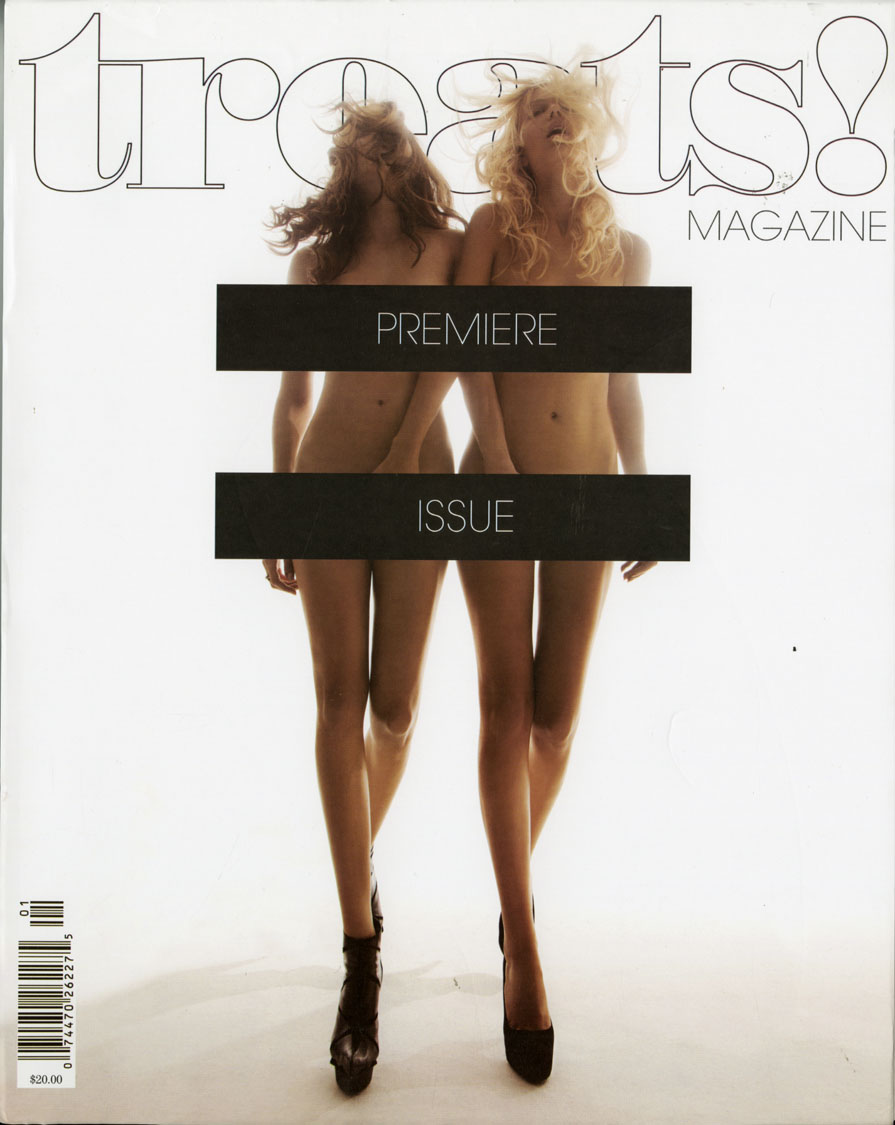
Bringing more treats than tricks is the key behind the launch of the new ultra glossy quarterly magazine TREATS! With a hefty $20 cover price for a single issue and “double the treats” on both front and back covers of the premiere issue, the European-styled magazine is turning heads of folks in the publishing industry including a one by the name of Hugh Hefner. “A few days after our launch party,” Rob Hill, TREATS! editor told me, “we got a call at the office form Hugh Hefner’s secretary saying she wanted to send a messenger asap for two copies for Hef. Someone at the party told him about it. He loves it; was really just raving about it.”

So, what is the secret of the new magazine that makes a legend like Hef ask for two copies. Well, I had the opportunity to ask Mr. Hill few questions about TREATS! and what makes the magazine tick and click in this day and age. His answers were candid, amazing and intriguing. In typical Mr. Magazine™ Interviews here are the sound-bites first followed by the entire interview.

Here are the sound-bites:

What I saw in TREATS! was a modern multi-platform media company with a fresh and well executed idea, that had a plan, a buzz, and a print product that was its anchor but not sole property by any means.

The marriage of photos and words on a printed page is very potent—especially put in the context of a well crafted magazine.

The (new magazine business) model will be to invest heavily in edit and content, charge a premium for it in both newsstand and subscriptions, market it smartly, find an audience, and grow slowly into it all.

Good magazines are good because of who goes up and down the elevators, not what printing press you use or who you buy your paper from.

We are trying to accomplish is introduce a brand that can thrive in many different areas, anchored by a great magazine.

And now for the full interview with Rob Hill:

Samir Husni: What is the trick behind Treats, i.e. what is the story of Treats!?

Rob Hill: TREATS! is the brainchild of Steve Shaw, the founder and publisher. Steve has been a very successful photographer for some time now. He’s one of the few photographers that really knows that fine line between taking sexy photos and sensual photos and the last few years he found that most of his assignments from magazines involved taking manufactured, parochial and pandering photos. As a lover of photography and photographers he wanted to start a publication—media company—that would give some of the best photographers, stylists, and models the platform to indulge and execute their creative fantasies without some draconian editorial edict: the only guidelines are spontaneity, sensuality, artistic and long, very long, stories; 15-20 and 25 pages. There are few magazines, mostly in London, that do aspects of this, but he really wanted it to have a L.A. point of view—the non-Hollywood one—even though it’s truly an international magazine, distributed in NYC, London, Paris, The Netherlands, Australia etc. There’s no doubt that L.A. is the city of not only the present bu the future in terms of art, inspiration, style etc. I think Tom Ford said that a few years ago. My job was to come in and find great writers and off-the-beaten-path long form articles mixed with artists, architecture, big Q&As and travel stories.

SH: The magazine is more of a treat to the eye and a meal to the brain, how is this combination of brains and beauty essential to the future of the magazine?


RH: When I first started at TREATS! most of the photo shoots were done and on the wall and I must admit I was intimidated. The shoots were so lush, original, provocative & almost dizzying. I was like, ‘Jeez, what can i bring to this?’ Then I really scoured old, vintage magazines, bathed myself in some of the great European magazines and came up with my vision of what should shoulder these amazing pictures. The article that really flipped the switch for me was the GARDEN OF ALLAH by Kirk Silsbee. Almost lost in history, the GARDEN OF ALLAH was a walled compound of villas, pools, and gardens on the corner of Sunset Blvd. and Laurel Canyon that was GROUND ZERO for some of the best parties, trysts, antics and tomfoolery of the biggest celebrities in the world—Monroe, Hemingway, Flynn, Bacall, Garbo, Marx brothers, Fitzjerald etc— from the 1920s to the 1950s; sorta the west coast Algonquin mixed with the Playboy Mansion, before there was a Playboy Mansion, with nice doses of the South of France sitting in the middle of Hollywood. That really set a nice tone and turns out to be the article that most people comment on a lot.

SH: From your launch letter, you sound like a major believer in print, you’ve never given up on print although most of the magazines you’ve worked for are no longer in print (Ray Gun, Bikini, FHM, Giant). How is Treats! different?

RH: Thanks for reminding me! Ha. But it’s true, it’s very difficult to launch a magazine, get it up and running, and keep it going and all those magazines were launches. I suppose I’ve never worked at any of the stalwarts that have been around for 30 or 40 years—maybe I have an underdog complex or something. What I saw in TREATS! was a modern multi-platform media company with a fresh and well executed idea, that had a plan, a buzz, and a print product that was its anchor but not sole property by any means. But the biggest thing for me is that I saw this as a brand—what Steve really saw it as, too, from the beginning—that could have tentacles in many different lifestyle categories. For a start our offices are next to SMUDGE PHOTO STUDIOS, which Steve founded as-well, and it’s really doing well, always booked and thriving with activity. But I would not be surprised at all that in the near future we have some sort of media or TV channel, small retail shops selling candles, apparel, prints, make-up, lipstick etc. things like that.

SH: The magazine is published with a quarterly frequency and a $20 cover price. Is this the new business model for print?

RH: Well, there is a new business model emerging in the magazine industry, just like every industry that has to reinvent itself or go extinct. We’ve seen it with the automobile industry, the banking industry, the movie industry, energy, etc. There’s gonna be lots of magazine launches happening in the near future—but they won’t be $70 million dollar launches with parties on Ellis Island and MC’d by ex-presidents; those days are over. But there will be launches for $500,000, a million, two million, even 5 to 10 million: If the idea is good and has traction across the media spectrum. The model will be to invest heavily in edit and content, charge a premium for it in both newsstand and subscriptions, market it smartly, find an audience, and grow slowly into it all. I think Tyler Brule at MONOCLE has invented the new model, really. He invested big time in edit, the product, charges $10 for it at the newsstand and $150 for a year’s subscription; I believe he has almost 20,000 subscriber’s or so…so do the math, it’s a healthy business, expanding, adding staff, creating new revenue streams; he now has half a dozen small retail MONOCLE shops around the world that sell luggage, fragrances, watches, etc. If you are an advertiser and book an ad in MONOCLE you may not be reaching 1.5 million people but the 120,000 or so you do reach you know are heavily invested in the product and most likely will be interested in YOUR product. It’s already been proven that a consumer is more likely to buy a product if they see the ad in a well-crafted, good looking magazine over, say, a radio ad, TV ad, Internet ad—especially for apparel, glasses, watches, hotels, furniture, architecture etc.

The experience of reading a magazine comes with the notion, or general acceptance, that the ads are something to be gazed at, a part of the product, where as, I think, the ads that pop up on a website are intrusive, annoying, and to be clicked off immediately. TV the same, except for the Superbowl, of course, and some other event type shows. Video ads on websites are a different story; they can be fun, provocative and engaging if done right and paired with the right kind of video content. This is where we see our website really gaining traction and the right marketing partners. But back to the business model idea: Playboy was right to up their cover price, sub price, and take their rate base down. I understand the whole rate base/ad game, I do, but look at what happened a few years ago when advertising fell of a cliff…all of a sudden all these good, greats, magazines had no revenue because they have been giving away their subs for years and just putting their magazines on the newsstand hoping people will buy them. Vanity Fair is a very well crafted, luxurious, premium product and yet it gives its subs away like it is Costco. I mean, a Vanity Fair subscriber won’t pay more than $12 a year to have THAT PRODUCT delivered to their door? It’s a bit schizophrenic, I think. But then again maybe there are army’s of people on whole floors of skyscrapers running the numbers and say they will lose hundreds of thousands readers. But then again, maybe there isn’t. Who knows.

SH: What are you trying to accomplish, prove with this latest print entity?


RH: Not out to prove anything, really. What, in the end, we are trying to accomplish is introduce a brand that can thrive in many different areas, anchored by a great magazine. My old boss always used to say, ‘Magazines are sorta like wine, people get passionate and emotional about their favorites—you can’t let them down. Ever!’ It’s true: poor, lazy, head-in-the-sand editors can bury a magazine the same way great editors can bring it alive. Good magazines are good because of who goes up and down the elevators, not what printing press you use or who you buy your paper from.

SH: As an experienced editor, who have seen it all, how is journalism and magazine editing today different than say ten years ago?

RH: You know what’s been great to see the last few years? Magazines that have been around for awhile operating on maybe their highest levels ever: Rolling Stone, Vanity Fair, Wired, Esquire etc. Esquire has made a very conscious effort to push the medium as far as they can being a big consumer magazine. It’s obvious that Jann Wenner has counter intuitively invested heavily in edit when everyone else was batting down the hatches and they are thriving. And to see what Bloomberg has done with Business Week is very inspiring. It’s a vital, exciting and poignant product. Very impressive. The competition and fear that the last few years have produced was maybe the best thing that ever happened to magazines—it forced them to hustle, rethink their medium, their place in the media landscape. Some were late to the game and some got there fast. And then to see all the great smaller launches like MAN ABOUT TOWN, PORT, and LULA in the UK; AFAR and TRUNK in the US; and a great magazine called ABOVE.

SH: What does the future hold to Rob Hill? What makes Rob tick and click every day in this media environment?

RH: I’ve always loved reading and working at magazines. Magazines are the most intimate and personal form of media that is out there—still. As the industry comes out of this vertiginous period of change and uncertainty, it’s very exciting. I’ve worked at a half a dozen magazines and I have never seen a response to any of them like with TREATS! A few days after our launch party we got a call at the office form Hugh Hefner’s secretary saying she wanted to send a messenger asap for two copies for Hef. Someone at the party told him about it. He loves it; was really just raving about it. He’s invited Steve up there a few times and now he is a regular! In fact, lots of those guys who hang out up there used to hang at the GARDEN OF ALLAH and were blown away by the article. What I think he—HEF—sees is that we’ve brought the medium and vision to a different level, a unique and invigorating product/brand for 2011 etc. And, well, he did it better than anyone back in 1955 so he knows it when he sees it, right? People like Ellen Von Unwerth, Donna Karan, Tom Ford, Shepard Fairey, Alessandra Ambrosio, Brett Ratner etc. have all been really supportive and excited about the brand. Everyday it’s someone new, it seems, ringing up, wanting to meet, talk etc. The manager of Book Soup in West Hollywood said she’s never seen a magazine sell 50 copies so fast. When we hear things like this we like to get up in the morning, even if we are hungover!

SH: What advice would you give someone wanting to start a new print magazine today?

RH: Invest in edit/content. Build a brand that transcends the magazine, and go slowly. Also, market, market, market. I mean when HBO has a new show, they market it. When Calvin Klein has a new line they market it. When Wrigley has a new gum they market it. When an indie film comes to town they market it. But magazines…well, they do nothing, really. I’m not saying spend millions on marketing but be creative. We’ve made a big move to market through Twitter and Facebook but also micro-marketing at newsstands, certain retail shops that makes sense for us, magazine and champagne signings at book stores, maybe some taxi cab stuff in NYC in the summer, London, too. I’ve never understood why magazines don’t market their products better. And, most importantly, don’t fall asleep at the wheel. Take note of Blockbuster, Friendster and My Space. Brands dead in the water; they drove right of the cliff in their fancy sports cars, stock options and hubris. In the 70s the NBA was Dead League Walking; look at it now. Adapt, adapt, adapt. It’s not survival of the fittest anymore, it’s survival of the adaptable!

SH: What are some of the pitfalls of launching a new magazine in this day and age?

RH: See above answer and inject it with steroids!

SH: Everyone is talking about a future where print and digital will live side by side. Your views please?

RH: It’s interesting, I went to visit my nephew in college and when I got to his Frat house there were magazines everywhere! Sports Illustrated, Maxim, US, Dwell, ESPN, GQ, Wired etc. I was like, Whoa, you guys read a lot of magazines. And they were like, ‘Uh, yes, we love magazines and magazines were not meant to be read on Blackberry’s or iPhones.’ Magazines are so much more than just vessels of information; they are accessories that help define who you are or who you want to be. My neighbor subscribes to MONOCLE but never reads it. One day I said to him, ‘Why do you pay $150 for a magazine you don’t read,’ and he said, ‘I like having it in my loft and I like knowing it’s there and I like looking at the ads!’ Pretty interesting statement. Would be hard to say about Perez Hilton, Pop Sugar or Tmz. We think magazine websites do two things really well: video and blogs. We have invested in both of those heavily. But the web doesn’t do long form writing and big, lush photography well—but magazines do. The web can’t sit on your coffee table or enhance you bookshelf. The marriage of photos and words on a printed page is very potent—especially put in the context of a well crafted magazine. My uncle fought in Vietnam and I asked him the other day, ‘How was the war really stopped? Was it the evening news? The protests? What? He said, ‘Still pictures and words. Life magazine. Esquire magazine.’ Obviously that was a different era and now revolutions are spearheaded by social media but great photos and words are still a powerful union.

I think the big problems for the magazine industry lately has been more of a perception, fear and hyperbole thing than the actual apocalypse of print. The publishers are scared they are going extinct so they don’t invest in their products, staff, marketing; the perception of media buyers that people don’t read or like magazines anymore; and the hyperbole of the media about the end of print. It was like the perfect storm… but also a bit of an illusion. Yes, the business model needed revamping but the desire for a great magazine hasn’t waned at all from what I can see. Every apartment or house I go to I see at the very minimum of 4 different brands of magazines: from married couples, to single friends to men, women, everything. And now with Zinio and the iPad the creative and financial possibilities are very exciting and make sense. As far as our website we will have some of the best and original video content—we have one of the best videographers in L.A. running this department—and a must read, exciting blog. We’ll create viral videos for our marketing partners that will be embedded by the most influential fashion and photography blogs in the world and, of course, on Vimeo, You Tube etc. The reason we are so bullish, really, is that now that people are beginning to understand that the same way sitcoms don’t work on the radio and radio shows—sans Howard—don’t work on TV, magazines aren’t meant to be read on mobile devices or websites, we can all get back to work creating exciting, envelope-pushing, multi-platform products that are fluid, appealing and circles that fit into circles. But what I am really interested to see is what happens when mobile devices become the primary way people use the Internet. Ever since I got a blackberry ninety percent of the time I spend of sites like Facebook or Huffington Post or IMDB is done through it so I never see ANY ads on those sites. And no one I know does, either. How do you solve this? I don’t know but somehow Steve Jobs will probably be involved in a solution, right?

SH: Thank you.

h1

New Borns and the Life Cycle of New Magazines… A Grandpa’s Story

April 26, 2011

I am sure you’ve heard this simile before: “Launching a new magazine is like giving a birth to a new baby.”

Well, I had the opportunity to put this simile to the test this month, and I promise this will be one of the very few times I bring personal and family issues to the blog. But as long as it is relevant, I figured why not?

My second grandson was born April 8. Baby Michael had difficulty breathing on his own (which meant we all had difficulty breathing). So, for ten days or so, the joys of birth turned into the agony of survival; and that my friends, is what led to this particular topic — the life cycle of new magazines.

When I have heard people use the aforementioned simile, I used to take it for granted.

However, I gave it a lot of thought during the past three weeks, and decided to compare human life with the life of a new magazine. After all, I have been preaching and teaching the importance to humanize media, particularly print, for years now. Without any further delay, here are the life cycles of a new magazine:

The Joys and Pleasures of Conception
Consider the A-HA! moment when you get the idea for a new magazine and the pleasure you feel, the joy that makes you rush and share the news about your idea with others. It is the same as the pleasures of making love hoping to conceive and have a baby.

It is the act of conceiving that brings all the joy and pleasure to the couple, the same as the act of coming up with an idea you think is going to be worth a million bucks! Many folks call me or email me daily with ideas they just conceived and want to share the news, seek advice or start the planning process of the “birth” of this new baby. It is rare during this stage that any negative thoughts come to mind. It is all about new beginnings and the joy of the moment at hand.

The Pains of Labor
Giving birth is not as much fun as conceiving. It does not take a genius or even a man to understand that. Women know it and feel it. Giving birth is hard labor, but the pains of labor are an important part of the life cycle of that newborn, whether a human or a magazine. After months of nurturing and tender loving, the time comes to give birth.

The pains of labor are well-documented and need no explanation. Getting that first issue out, meeting the deadlines and hoping all is A-OK are all part of the life cycle. It is the same with the mother and baby. You have to go through the pains of labor before you are able to enjoy and celebrate the birth, which leads us to the next stage of the life cycle of new magazines.

The Celebration of Birth
While the pleasures of conception may last a few moments, the celebration of birth is supposed to last a lifetime. With a new birth, you are only thinking positive thoughts, happy thoughts. Excitement is in the air and all around you. You are so proud of your new baby, new magazine.

You check every part of the baby; you check every page of the magazine. In most cases, you are there at the printer waiting for that first signature to come out from the presses. You hold it in your hands exactly like a mother holds the baby for the first time. Birth means celebration. Your future freezes at the present moment and the world gets reduced to your surroundings and the new creature (baby or magazine) at hand. You do not want any interruptions of that moment of celebration.

Then, as if lightning strikes, reality hits — and all of a sudden, you are not alone. You discover that the joy of celebration is just the beginning to the next step of the life cycle of the newborn — the fight for survival.

The Fight for Survival
It is a jungle out there. There are so many magazines and there are so many babies in the world. You have to carve your own niche. If the baby can’t breathe on his or her own, your entire world stops. You change course and plans. Your new magazine is out, but now you have to put it in the hands of the distributors. The tender, loving care you’ve given your new creation is no longer in your hands. Someone else is in charge.

You feel like you are losing control, and the doctors — the distributors — are in charge of that newborn. The baby must fight for survival. The new magazine must fight for survival.

The big difference here is new babies, thank God, have a much higher survival rate that new magazines. Here is where the similarities end: Survival rate for new magazines is less than two in 10 after four years of publishing.

Thank goodness for human life. We age much better than magazines, but in both cases we have to start the journey of life.

The Journey of Life

As in any creation, life does not stop at birth. Life continues, day after day, issue after issue. The journey of new magazine launches starts slow, very slow, and progresses as those new magazines try to develop customers who count, thus giving the magazine a long journey in life.

Folks in our publishing industry now plan their new launches around the 11-to-13-year life span: Three years to establish the magazine and lose money in the process of building the magazine base; four years of solid growth and money making; three to five years of reaching a plateau and one final year to prepare the demise of the publication.

Thank God the journey of life for new babies is not the same as the journey of life for magazines. The simile ends with the beginning of life. The journey, my friends, is a completely different story. Let the never-ending story begins.

For the record, this blog has been approved by Mr. Magazine Jr.™ and big brother to baby Michael, Mr. Elliott himself.

h1

More New Magazines, More Variety Headlines Quarter One of 2011

April 7, 2011

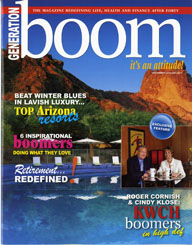
The numbers are in and they are good. There is a boom (as you can see with Generation Boom magazine) in the new magazine launches. At least 188 new consumer magazine titles appeared on the nation’s newsstands in the first quarter of 2011. (Trust me, I have every single one of them). From those there were 39 magazines published with a frequency of four times or more in the first quarter. While the total number is up by 18 titles from the 170 new magazines that appeared for the first time in the first quarter of 2010, the total number of magazines published with a four time or higher frequency was down by four from the 43 published in the previous year.

It should be noted that the new magazines arriving to the marketplace today are becoming more and more diverse in content and specializations. Just take a look at some of the new arrivals this quarter and enjoy the ride.

A simple trip to the newsstands will always give you this shot in the arm booster that print is well, alive and kicking. There is still a lot of money to be made in print, which by the way, is the topic for the Magazine Innovation Center’s second ACT Experience this coming Oct. 26 to 28 in Oxford, Mississippi at The University of Mississippi. Watch this blog for more details soon about the second ACT Experience: Restart Your Engines: The Future of the Printed Word.

h1

From Publishing Executive Magazine: “Mr. Magazine’s M.O. : Let My Magazines Grow”

April 4, 2011

Publishing Executive

Mr. Magazine’s M.O. : Let My Magazines Grow
We need to stop cursing an entire industry—a very good one, indeed—and blame our ills.
By Samir “Mr. Magazine” Husni, Ph.D.

Let me be very clear from my very first regular column in Publishing Executive: I do not think we have a magazine—as in an ink-on-paper magazine—problem in this country. The medium is A-OK, if not more than A-OK. The medium is at its best today; the problem we have is with the message. Plain and simple. Most of the messages out there are outdated, tired, weak, out-of-touch and, above all, unnecessary, insufficient and irrelevant. So, don’t kill the messenger just because the message stinks. There were more ink-on-paper magazines started in 2010 than in 2009. In fact, the total number of such titles, including the specials, book-a-zines and annuals exceeded 800. That is almost 100 more titles than 2009. Were all of those magazines worthy of arriving at the nation’s newsstands or in your mailbox? Definitely not! Did they contain content that is needed, wanted or even desired by our customers? Mostly not! Did those magazines create ways to grab the attention of the customers, keep their attention and leave them wanting more? Amazingly, only a few did that! So we need to stop cursing an entire industry—a very good one, indeed—and blame our ills.

I believe we are dealing with two double-edged swords: The sword of the magazine publishers and the sword of new technology (and I am not talking about iPad 1 or iPad 10). The publishers’ sword, while now paying lip service to the concept of “consumer-centric” magazines, is an antiquated, advertising-centric business model. The sword of the enhanced and improved technologies makes it cheap—if not dirt cheap—for everyone to think he or she can be a magazine publisher because they can now afford the price of the printing. Magazines are much more than a vehicle to carry and transport advertising, and they are much more than a medium to vent your ills and concerns to a very limited “captive audience.”

Print-Worthy Print

Ink-on-paper magazines are a physical storehouse of information that, if done well, “are worthy of being held in your hands,” as Steve and Debbee Pezman told me. The Pezmans started their magazine, The Surfer’s Journal, in 1992, charging $12.95 for the first issue. Now, 20 years later, they are still rocking, six times a year at a cover price of $15.95 an issue. They are creating “information” that is as good, if not better than the “storehouse” that contains it.

The goods are part of the store, and we are selling the entire store with its contents. You better be ready to pay up if you want to enjoy the experience, the total experience, and not just parts of it here and there. The total is much larger than the sum of the parts. Sue Roman, president of Taunton Press, identified three “must-haves” in any magazine they publish: “First, will the readers support the magazine? That means, will they pay a subscription price and single-copy price that is sufficient to profitably produce the magazine. Second, is there a strong base of advertisers who want to specifically reach these people? Third, is the subject matter well-served by the format of the magazine? Can it be compellingly communicated on a magazine spread, and is there an ongoing conversation about the topic that will keep the magazine lively for years to come?”

You would say, “But isn’t that pure common sense?” I would say, “You are right, my friend. However, the sad part of our magazine business is we have parked common sense in the garage and gotten rid of the keys.” We need to search for the keys, go back to the business of “common-sense” publishing and then watch our business grow. To paraphrase one famous wise person (and I am not talking about Bob Sacks here) “Let my magazines grow …” There is hope when there is a message worthy of hope! PE

Samir A. Husni, aka “Mr. Magazine”™, is the founder and director of the Magazine Innovation Center, Professor and Hederman Lecturer at the University of Mississippi’s Meek School of Journalism and New Media. You can follow him on his website (MrMagazine.com) and blog (MrMagazine.wordpress.com), and you can reach him at samir.husni@gmail.com.

h1

Too close for comfort… When magazines look amazingly alike

March 29, 2011


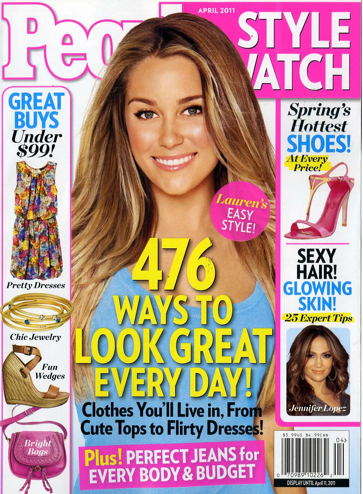
There is no question about it: People Style Watch has been a success story for this brand extension of People magazine. And, as is in any success stories imitators will take notice. I have always written about the three types of new magazine launches: The Ground Breakers, the ones that there is nothing like them on the marketplace when they first arrive; the Copy Cats, the ones that are quick to jump into the marketplace riding the coattails of the Ground Breakers and in some cases learn from the mistakes of the Ground Breakers and do a better job; and the Cheap Imitators, the ones that devote themselves to produce cheap copies of what they deem a success story on the newsstands.

Well, that brings us to Today’s Black Woman Style Report magazine that just published its second issue. Take a look at it and compare it with the latest issue of People Style Watch. Is it too close for comfort, or is it just me? What say you?

h1

Extra Covers: Consumer Centric or Advertising Centric?

March 24, 2011

From the good, the bad and the ugly department, this week witnessed the arrival of three magazines with “an extra cover.” Same magazine, two covers that are not split covers, but rather one cover on top of the other (if there is such a thing as a second cover since it is already covered). One of those covers was, believe or not, nothing but an advertisement. Yes you read that right. An ad with the complete magazine logo, UPC and cover price. The folks at BlackBook magazine seems to have gone out of their way to provide T-Mobile with a platform like no other. Never mind the confusion on the newsstands and the problem with having two covers that carry the UPC imprint (the computer coded universal price code) on both covers. In stores that depend on stripping and returning the covers only for credit, which one of the two will they send? Also, of course is this practice acceptable for a consumer magazine sold on the newsstands? Judge for yourself and take a look at BlackBook covers below.

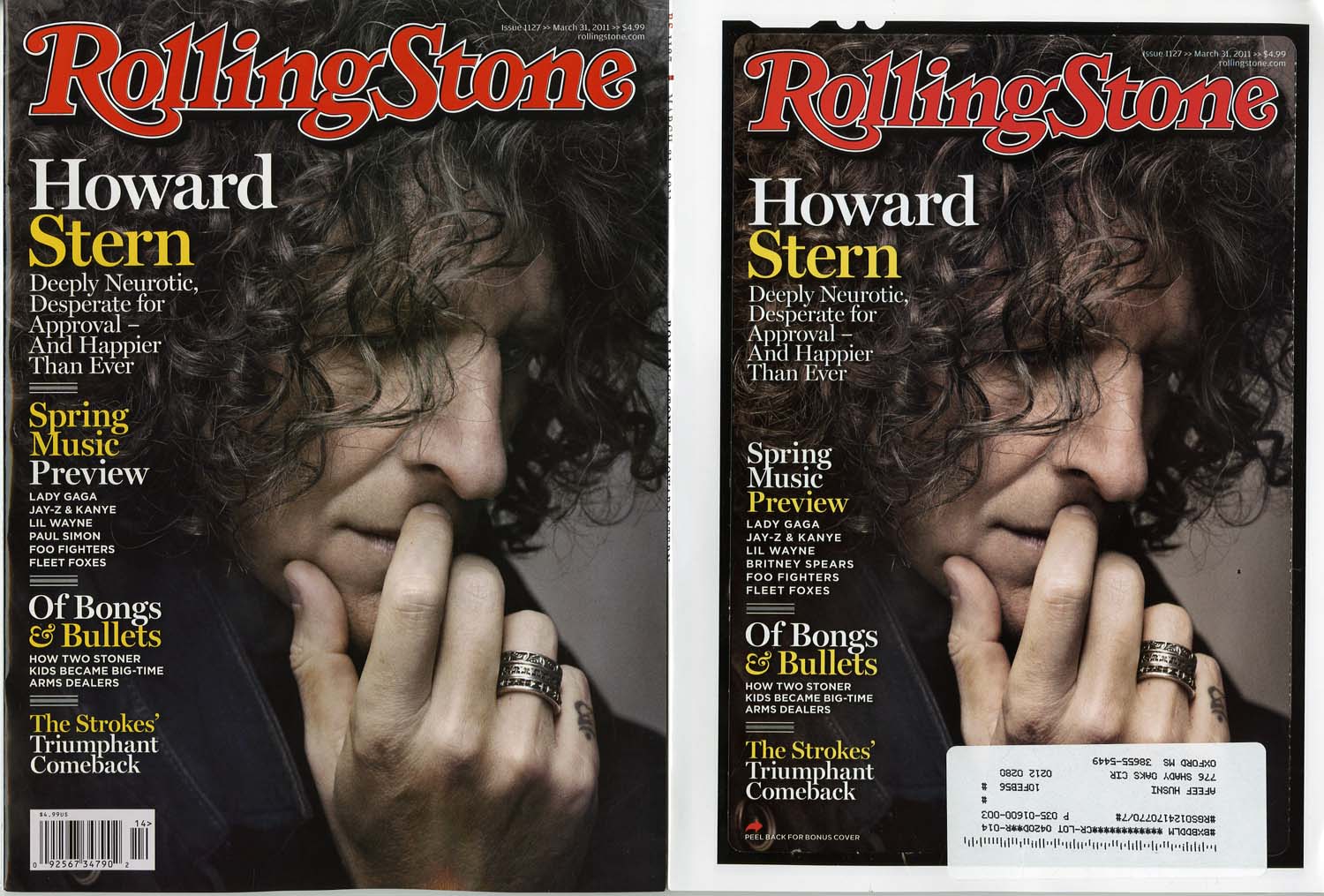
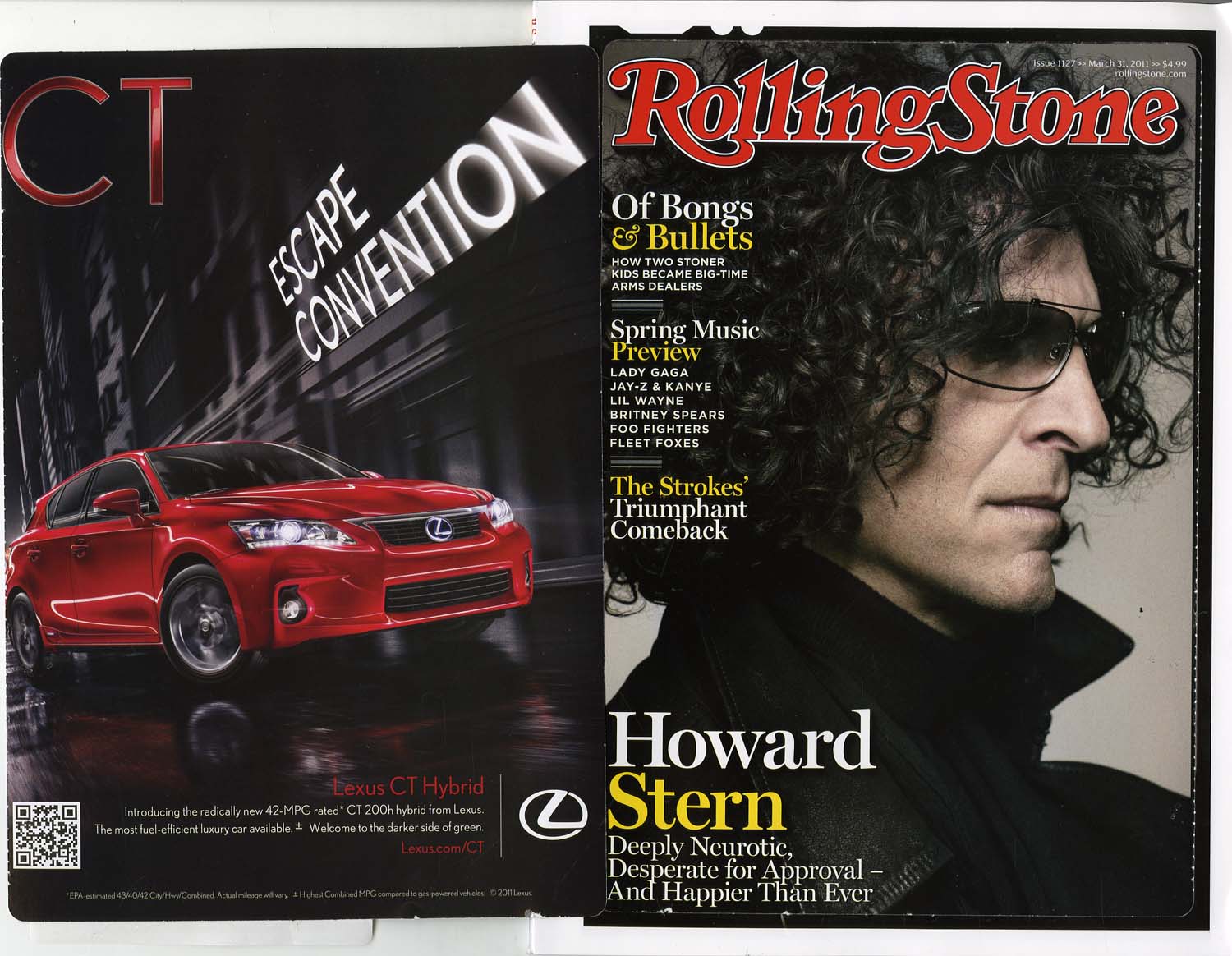
RollingStone magazine also had a double cover this issue. The newsstands distributed magazine had one cover before the other and the subscription edition had a very creative (which is the second time RS does something like this) embedded second cover within the first one. Subscribers have to peel the cover off the second cover. The end result is the same, more fun for the readers and more space for advertising. Now we have two front back cover-ads instead of one. Subscribers were directed to peel the cover to see the other one, single copy buyers were told nothing. They just had to open the page! See both covers below.

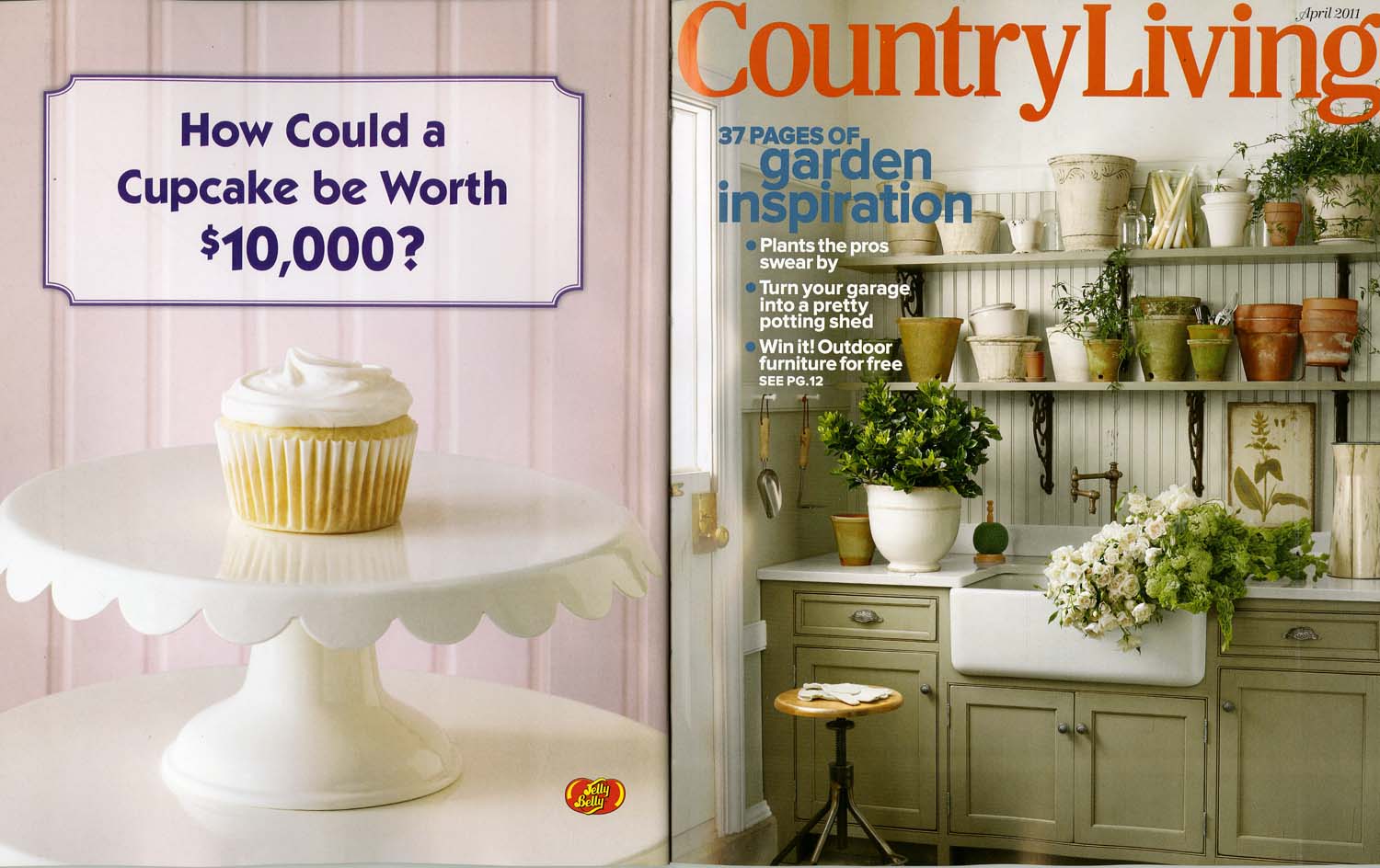
Last, but not least, is Country Living promising its readers on the front page with a bonus cover inside. The covers are editorially different, but they share the same DNA of the magazine. However, it is obvious that the “two for one” covers were created to create space to a well coordinated ad campaign for Jelly Belly. The first “back cover one ad” is a question with a little Jelly Belly logo (see below) and then when you flip cover two you see the rest of the ad (You have to buy the magazine to get the rest of the ad… I limit my examples to covers and not ads)… Take a look and judge for yourself.

Who says the magazine business is not a fun business! Enjoy.

h1

“People publishing their passions” or mass print: one magazine at a time: MagCloud marries print expertise and Cloud services. The Mr. Magazine™ Interview with HP’s ‘Chief MagClouder’ Andrew Bolwell

March 23, 2011

When I started the Magazine Innovation Center more than one year ago, my goal was to help amplify the future of print. The goal, was, is and will continue to be, to use digital and the new technologies to help amplify print and its future. Last month I had the opportunity to visit one such company that is practicing what I am preaching: they are using technology to amplify the future of print.

HP, through its MagCloud operation provides a service that offers publishers a complete publishing cycle. From uploading magazine pages, to printing, distributing and banking, MagCloud opens the opportunity to any one with an idea for a new magazine to use its services to make dreams come true. While print on demand and MagCloud is still in its infancy compared to the traditional printing model, I saw a lot of hope and a lot of possibilities for the future and power of the printed word. Some major magazine editors such as Jackie Leo, the former editor in chief of Reader’s Digest magazine used MagCloud to publish her first print issue of The Fiscal Times and the same is true for LiveStrong magazine published by Lance Armstrong and his LiveStrong organization. So what gives?

Well, to find out, I’ve opted to ask the folks at HP’s MagCloud about this “service” and they were generous enough with their time and information that led to this edition of the Mr. Magazine™ Interviews. Andrew Bolwell, HP’s Chief MagClouder answered my questions about MagCloud and its stated goal of “People publishing their passion.”

In typical Mr. Magazine™ Interviews here are the sound-bites followed by the complete interview:

MagCloud really sits at the cross roads of marrying our expertise in print and cloud services

For us it’s never been a matter of print or digital it’s been about choice.

We aim to be a one-stop shop for content publishers so they can focus all of their attention on their content and their customers.

We see MagCloud as much more than print-on-demand service; it’s a content publishing platform.

With MagCloud, publishers can now focus all their attention on content creation and marketing their products

I think at some point nearly all magazines will be printed on demand.

The beauty of digital printing is you can offer the same professional quality consumers expect from traditional magazines without the overhead of large print runs and long lead times.

And now for the full interview:

Samir Husni: When a normal consumer thinks about HP, their brains don’t jump directly to ink on paper. So why is HP interested in something like MagCloud?

Andrew Bolwell: HP has been a leader in both consumer and commercial printing for a long time. If you think of the number of HP digital presses used in the publishing industry we’ve been putting ink on paper for quite some time now. We’ve also been focusing a lot of attention on the cloud with web services and back end infrastructure. MagCloud really sits at the cross roads of those efforts, marrying our expertise in print and cloud services, so is a natural extension of what HP does well.

SH: How much do you believe in the future of ink on paper printed products?

AB: For us it’s never been a matter of print or digital it’s been about choice. You can’t deny the beauty and wonderful tactile nature of print. People buy magazines in print every day and we don’t see that going away anytime soon. We also think if you can take that beauty and permanence of print, and marry it with technologies that allow printed content to be highly customized, then you can start to imagine some pretty interesting new print products and advertising models. But back to my point on choice, we also appreciate the convenience of digital and that’s why we’ve been expanding to offer a digital option to our publishers and readers as well.


SH: Digital printing and print on demand is gaining ground around the globe, how does MagCloud set itself aside from other print on demand companies?

AB: We see MagCloud as much more than print-on-demand service; it’s a content publishing platform. What our customers appreciate is that they can simply upload their content to MagCloud and make it available in a variety of formats—print and digital—at whatever price point they want, with MagCloud managing all of the heavy lifting and providing the publisher with royalty payments. So order taking, printing, distribution etc.

With MagCloud, publishers can now focus all their attention on content creation and marketing their products, because we handle all the other aspects of production and distribution that in the past have made publishing a relatively expensive and risky endeavor.

SH: What do you see as the future of print on demand?

AB: Very bright. I think at some point nearly all magazines will be printed on demand.

SH: What are the goals of MagCloud?

AB: We want to transform the publishing industry, and create a model where anyone can easily publish content and distribute it as print and digital products worldwide. All as easy as uploading a video to YouTube.

We also want to remove the barriers and mystique of traditional publishing in order to proliferate the creation and distribution of highly customized, targeted content. People publishing their passion.

And we want people to have access to a much broader and diverse range of highly targeted magazines than is available using traditional publishing models today.

SH: Entrepreneurs seem to be a natural fit for the advantages of MagCloud, but how can an established magazine or media company benefit from MagCloud?

AB: It’s a good question. MagCloud is enabling existing media companies to be more experimental allowing them to adopt that same entrepreneurial spirit.

The beauty of digital printing is you can offer the same professional quality consumers expect from traditional magazines without the overhead of large print runs and long lead times.

With MagCloud established magazines can create customized and versioned issues based on audience, location or special interests, repackage existing content archives or test market new titles.

SH: What is the MagCloud model and how does one publish through MagCloud?

AB: MagCloud is as simple as uploading a PDF. A publisher uploads a PDF of their publication to the MagCloud website, selects their binding type and sets a price for both print and digital versions. The MagCloud service takes it from there with order and print management, as well as global distribution. We then pay publishers monthly based on sales.

SH: MagCloud seems to work as a pre-press, a printer, a distributor and a banker, can you elaborate on how exactly the role of MagCloud is defined?

AB: Yes, we aim to be a one-stop shop for content publishers so they can focus all of their attention on their content and their customers. MagCloud’s role is as content service provider; we provide publishers a self-service content publishing platform that takes their magazine from PDF to print and digital consumption.

SH: In a few words, what is vision and future of MagCloud?

AB: In a few words? A content service that enables a world of publishers to easily make their content available to a world of readers, in both print and digital formats.

We want to be the service that enables that. And looking forward, we want to evolve the MagCloud platform with additional services, such as content targeting and advertising, that will offer publishers new ways to make their content profitable and allow it to be consumed in new and compelling ways.

SH: Can you tell me about some of the pleasant surprises and biggest disappointments Magcloud faced in its first two years?

AB: One of the greatest surprises has been the diversity and creativity of the publications that are published through MagCloud. We have magazines on almost any topic, created by publishers of all ages all over the world, and have seen publishers collaborate using only the web to create magazines that until now were just not possible.

It’s been truly exciting to see the breadth of content that MagCloud has unlocked.

Disappointments? Maybe that established media companies would become greater innovators and take more advantage of services like MagCloud to deliver a new breed of custom content to their subscribers. There are great editorial and creative staffs out there that without the logjam of traditional publishing economics and distribution barriers could create some truly amazing targeted publications for their readers. I’m still waiting for my custom golf magazine, but we’re working on that…

SH: Thank you.
And for those of you who are still reading, what are you waiting for? Go get your magazine ready, upload it and join the wonderful world of print: one magazine at a time. Enjoy!

h1

A cover with more “strength and calm” for Men’s Health!

March 22, 2011

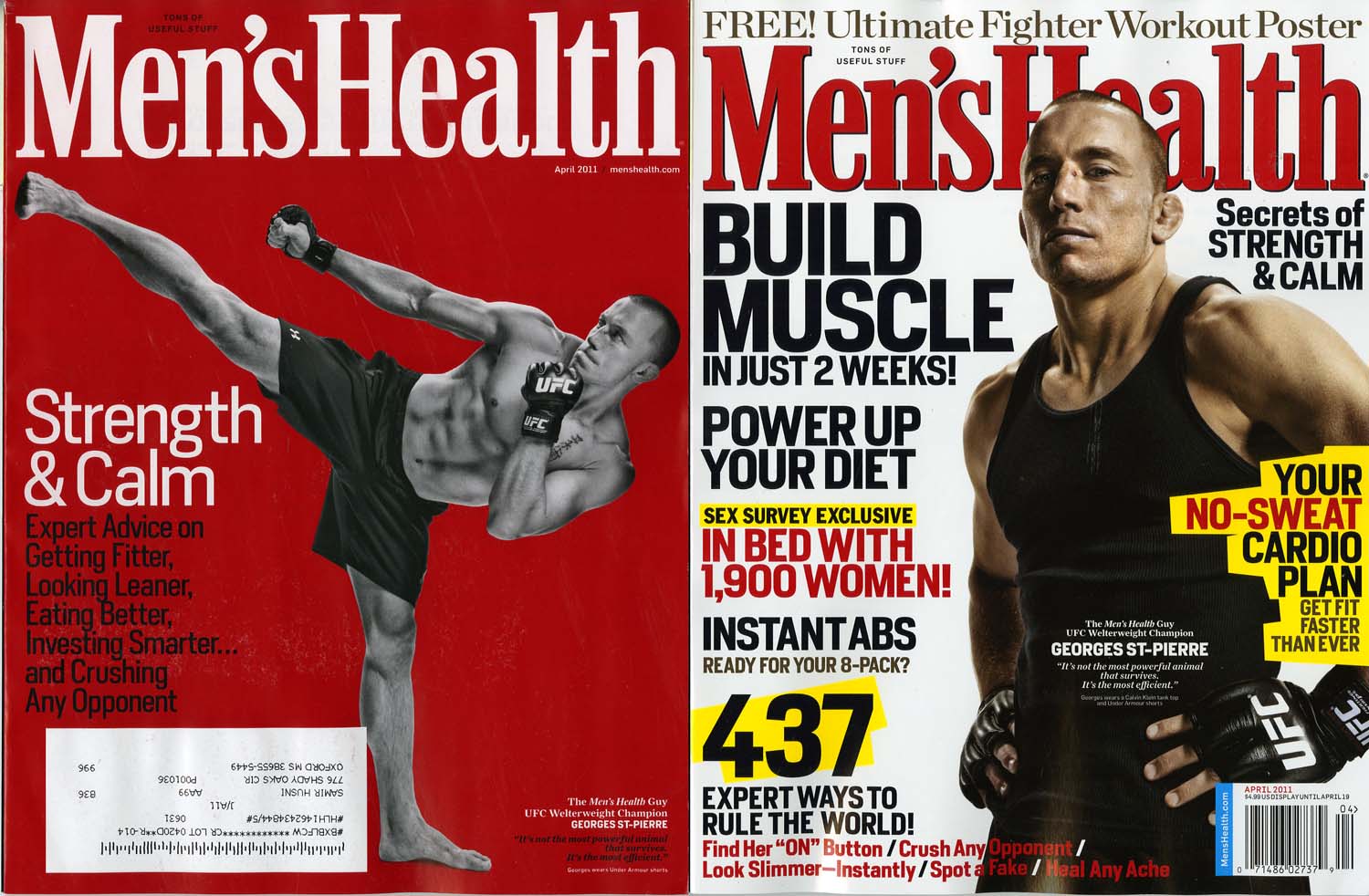
Wow! That was my reaction when the April’s copy of Men’s Health magazine arrived in my mailbox. A complete departure from their traditional cover design and colors. Men’s Health has been a leader in creating subscribers’ covers that differed from the single copy ones (usually with reduced type size and fewer cover lines), but the April issue subscription edition is new to me and the rest of the magazine subscribers.

Gone is the familiar white background and the majority of the cover lines. In, is an action and active, rather than passive, picture. Gone are the multiple cover lines. In, the one cover line offering all kind of “Expert advice on getting fitter, looking leaner, eating better, investing smarter… and crushing any opponent.”

Who says you need technology to create innovation in print! Covers that make readers take a second look are an innovation by themselves. Once you take a second look, you are engaged and the magazine is already in your hands. Enjoy!

h1

“Fine” Family Business: The Success Story of Taunton Press. The Mr. Magazine™ Interview with Sue Roman, President of Taunton Press

March 15, 2011

This is a story of a family business, a very successful family business. Taunton Press, publisher of everything “Fine” was founded more than 35 years ago. Its corner stones: consumers; its publishing model: consumer centric. The end result is one “Fine” magazine after another. Fine Woodworking, Fine Cooking, Fine Gardening… you get the picture.

I had the opportunity to talk with one “Fine” member of Taunton Press, Sue Roman, the president of the company and daughter of the founders Paul and Janice Roman. After my initial questions about the company and its role in today’s market place, I found myself going back for more. I discovered that there was as good a story about Sue Roman as the one about the company she leads. Sue was gracious enough to answer my “company” questions and then sits for a second round of questions, but this time about her story, her dreams and how she ended up on the helm of such a very successful magazine company.

So, in the usual Mr. Magazine™ Interviews, here are the sound bites followed by the two interviews, the company one and the personal one:

In our magazines, the reader is at the center. We ask them for a hefty subscription price, and then work really hard to deliver that high value in the magazine.

We strive to serve all the information needs of our customers.

All advertising is endemic to the subject of the magazine for all of our magazines.

We honor both the reader and the advertiser. Readers know to look for the advertisements in the front and the back of the book; however when they are in the article well they will find no advertisements to distract them from the content at hand.

Our editorial/art teams are masterful with using the magazine format to take complex ideas and processes and make them accessible and engaging.

If the publisher doesn’t think the magazine is valuable, as signaled by the subscription price, the reader won’t think it is valuable either.

When you’re focusing on communities of people who are passionate and who will talk to you and who like what you’re doing, you just kind of keep wanting to do more and figuring out what you can do.

I thrive on the challenge of what’s new and what’s going to resonate with people today.

I think one of the best skills you could ever have is being a good writer, a good thinker and a good interviewer. If you can do those three things, you can go far in any kind of publishing.

Where I see the difficulty is in the already-existing businesses that have already trained their readers to not value their product, to not pay for the product.

And now for the interviews:

Samir Husni: Let us start from the beginning, the foundation of Taunton Press. Take us through this consumer centric family business.

Sue Roman: Much of the foundation of how we operate was established at the beginning. My father, Paul Roman, started Fine Woodworking magazine, and hence the company, in 1975 to serve people just like him. He was a hobbyist woodworker and wanted to make beautiful things out of wood, but couldn’t find good information. He talked to the best woodworkers in the country at the time and asked them if they would be willing to share their expertise. Several key woodworkers said yes and he knew he could make the magazine. Next he and my mother, Janice Roman, his business partner, had to find out if enough people wanted the magazine. They created a direct mail piece that instructed people to send $8.00 for a quarterly magazine to a post office box in Connecticut. The response was very high (15%), so they cashed those checks, used that money to send out more direct mail, and with the first issue they had 25,000 subscribers and a sustainable business. I’m including a scan of the first direct mail piece and an article written about the launch for Fine Woodworking’s 25th anniversary.

From the beginning, advertising has been a service to the reader to help them find the tools and materials they needed to practice woodworking. All advertising is endemic to the subject of the magazine for all of our magazines. Even though Taunton magazines have a high demographic (the average HHI for our magazine readers is $150,000), the point of the advertising is to serve them as enthusiasts. This creates a win-win for the reader and the advertiser. Readers read the advertisements with great interest and need, and advertisers reach highly qualified, highly active participants. We honor both the reader and the advertiser. Readers know to look for the advertisements in the front and the back of the book; however when they are in the article well they will find no advertisements to distract them from the content at hand. All size advertisers are important to us, as they are to our readers, and you will see fractional ads in prominent places in both the front and the back of the magazine. All of our magazines follow this format.

We strive to serve all the information needs of our customers. Not only does Taunton serve them through magazines, but also through websites, books, DVDs, apps, and ebooks. We do fulfillment in house so we can stay close to our customers. When you call customer service you are speaking to someone in Newtown, CT who can help you with all product needs, or put you in touch with one of our editors if you have a question about the activity itself. We had a guy ankle-deep in wet concrete call Fine Homebuilding with a foundation question. That’s not uncommon at all. We had a gentleman sadly call our customer service to cancel his Fine Woodworking subscription after many years because he had developed an allergy to wood. After letting him unload his disappointment about giving up a hobby he loved, our customer service rep suggested he needed a new hobby, and by the end of the call he had switched his subscription to Fine Cooking.

SH: Your were one of the early practitioner of the “consumer centric” magazine publishing model before a host of companies started paying lip-service to the phrase. Can you expand on that consumer centric concept.

SR: In our magazines, the reader is at the center. We ask them for a hefty subscription price ($29.95-$37.95 for a one-year subscription depending on the title), and then work really hard to deliver that high value in the magazine in terms of finding the best experts in the field to be authors, producing detailed photos and drawings, and using archival quality paper. The beauty of our model is that by staying close to our readers, and serving them well, we can provide advertisers a highly engaged audience who are hungry for the products and services they offer. The readers are highly qualified because they have spent a good amount of money on the magazine demonstrating that they are willing to spend money on their passion because they are deeply engaged. The engagement level our readers have with every one of our magazine is off the charts (for instance, an average of 2.4 hours spent reading each issue of Fine Woodworking; Source: Harvey Research 2010 subscriber study). This means that the ads are in front of our readers multiple times. Since Taunton’s beginnings and even in the most recent surveys, well over 90% of our readers tell us that they keep every back issue for future reference. For convenience we have produced DVD archives of all our issues, which have been big sellers for us.

SH: What are the secrets of success in your publishing business model?

SR: We look for three things in a magazine. First, will the readers support the magazine? That means will they pay a subscription price and single copy price that is sufficient to profitably produce the magazine. Second, is there a strong base of advertisers who want to specifically reach these people? Third, is the subject matter well served by the format of the magazine? Can it be compellingly communicated on a magazine spread, and is there an ongoing conversation about the topic that will keep the magazine lively for years to come.

SH: Do you think that is the reason of your success story on the newsstands?

SR: We’re doing very well on the newsstand because readers can see and feel the quality of the magazine when it is in their hands. But there’s another factor–Taunton’s approach is in perfect alignment with the needs of wholesalers and retailers. We have high cover prices ($6.99 – $7.99 for core issues, $6.99 to $12.99 for SIPs) and manage our sell-thrus carefully. Combine that with consumers wanting our magazines, and the result is that wholesalers and retailers can make good money on our distribution without handling tons of copies. And because newsstand sales is a profit center for us, we continue to spend promotional dollars even in the economic downturn. We also treat the wholesalers and distributors as our partners, and send them a monthly electronic newsletter to keep them up to date on the new issues we are bringing out.

SH: Lately you have been publishing a host of special interest publications (SIPs). Is this a trend? How do you see the future of SIPs?

SR: In the last seven years we have produced a number of SIPs. Using our excellent newsstand distribution, we publish issues around particular topics that complement our regular issues. We work hard to make these highly valuable products, and the cover price matches that value. Because we produce some of the most in-depth, authentic information on the interests we publish in to satisfy our core hobbyists, SIPs with their single-topic orientation represent “the last and best word” for many folks who are not full-out enthusiasts. Introducing them to Taunton in this way helps us garner direct sales of other products while they are focused on their projects.

SH: Although you are consumer centric, yet your magazines include advertising. What role advertising play in your publishing business model?

SR: While the biggest proportion of our revenue comes from the reader in subscription sales, direct ancillary product sales, newsstand, and trade sales of our nearly 1,500 products, the advertising revenue is very important to us from the standpoint of overall profitability. Part of our mission is to connect enthusiasts with the suppliers of the tools and materials they need to be successful in their activities. We can do this in a number of ways including in the magazine, on our website, and in apps. Our leads are highly qualified because they have demonstrated their commitment with the money they spent to purchase our magazine and with the time they spend reading it. Taunton is an integral part of the markets we are in, and we want the tools, materials, and supply makers and distributors to be as successful as possible. We will work with them in creative ways to get in front of the people who want their products and services.

SH: If you take a look into the crystal ball, how do you see the future of printed magazines and what are you doing to amplify it?

SR: If you study our magazines, you will see how well served the information is by the magazine format. We can combine technical drawings, how-to photos, and deeply informative and engaging text all on the same spread. Our editorial/art teams are masterful with using the magazine format to take complex ideas and processes and make them accessible and engaging. Readers recognize this when they hold one of our magazines in their hands, and are willing to pay a high newsstand price or subscription price for it. This bodes well to me for the future of our type of printed magazine.

Our readers refer to back issues many times. We have used digital editions as a handy reference for them to search through past issues. We have been selling digital archives in CD or DVD format for nine years. Digital editions are also highly valuable to our international readers because they can get them on the publication date and not wait weeks for their issue to arrive in the mail. Digital issues are also a good way for people to have access to the magazine wherever they are.

And there are many other ways to serve enthusiasts both in print and digital formats. Taunton has a robust book program with more than 40 new titles per year and a backlist of more than 500 books available. Our fastest growing area has been online–Taunton’s Home and Garden Network is now number 15 in Comscore’s home category for web visits. We can connect and serve enthusiasts on our websites in ways that complement and support our magazines. Our magazine editors are completely plugged into our web activities. Video is a very compelling medium for how-to information, and we produce a lot of it for our sites. Our online audience is also highly engaged and makes the commitment to pay a fair price for content. We have over 80,000 paid members to our websites.

SH: If someone comes to you and say, “Sue, I would like to start a new magazine,” what would you tell that person?

SR: When people ask me for advice, I tell them to charge a subscription price that truly reflects the value of the magazine. If the publisher doesn’t think the magazine is valuable, as signaled by the subscription price, the reader won’t think it is valuable either. This also frees you from ups and downs of advertising for the success of the magazine.

In good times and in bad times, people have a fundamental need to create things with their own hands. People like to control their corner of the world, and make things to share with family and friends. We saw more people realize this after 9/11, and sales of our magazines, especially on the newsstand, reflected this. The economic crash in 2008 definitely hurt foot traffic in stores, decreased the money advertisers had to spend, and hurt the housing industry overall, and we felt all those things. However the underlying business model proved to be sound. With a balanced revenue portfolio between subscriptions, newsstand, and advertising, and with a rapidly growing digital/online business, we were able to cope and adjust to the new economic circumstances.

SH: How do you view the future of Taunton Press five years from today?

SR: Five years from now, Taunton will be fulfilling its mission of connecting enthusiasts with compelling and trusted information, services and products that help them fulfill their aspirations. We’re counting on print still being a viable format, but we are also preparing for more digital delivery through apps, mobile, web, and formats yet to be invented. Basically, our premise doesn’t change because enthusiasts will always want relevant, in-depth information and celebration of their passion. However, we are excited about the increased numbers of tools we have in digital media to address these passions and the ability to serve the reader anytime, anyplace, and in whatever form they want.

And now for the lightly edited, in typical Mr. Magazine style, interview that focuses on the woman who reigns today on the helm of Taunton Press and her dreams that came true and the one dream that, one day, maybe one day will come true. Intrigued enough, read on…

SH: One of the fascinating things is that Taunton Press is a family business. How did your parents drag you into this business?

SR: When my parents launched this, I was just getting into my teenage years. I was very much aware of what was going on. It was a very fast-growing business.
They would come home from work and talk about what they were doing over the dinner table every night. They were wrestling with, “How do we grow this company? What’s next?” It permeated the house with all their business discussions. At one point we told them that they couldn’t talk business at the dinner table anymore.
I worked here every summer through high school, through college. They were always short-handed and growing fast, and there were lots of opportunities. So, each summer they would throw me into a different area and say, “Go help out this person,” or “Go figure that out.” It was great training. I did everything from typing in subscription orders, developing photos in the darkroom; one summer I drew the charts for one of our first woodworking books. I programmed computers.

In 1984, my father said, “Well I don’t really have a good sense of how all the different parts of this business work together, will you collect all the data?” I spend all summer collecting data on all the different parts of the company; talking to different people and I put together this huge report for him, which I labeled at the time, “The Hitchhikers’ Guide to the Taunton Press.” It was just a wonderful way to grow up.

When we started video, I got a call when I was in college and got asked if I wanted to go out to California and be the grip on a photo shoot. I said, “Of course,” and I spent a week in a photo shoot with the brass wood-turners in the country. I always had a very good feel of what it was all about growing up. But when I graduated college, I couldn’t get far enough away from here.

I actually went off in a different direction. I was very interested in cultural studies. I studied African history, I did a semester in Nepal and after college I moved to Mexico. I thought I was going to be an anthropologist or do something with cross-cultural interaction. Then I got interested in bilingual publishing. I decided before I go start my own bilingual publishing company, maybe I should make sure I know what I need to know. My parents had always told us they didn’t want us to come back here and work after college. That wasn’t a problem; nobody wanted to.

Then five, seven, eight years later, my parents were telling us, “Any of you want to come back and work here?” I said I would come back for a couple years and learn the ropes because I really wanted to start a bilingual publishing company. So, I moved back from Mexico and they plugged me into a marketing job and then a year later, Fine Cooking was an idea that we started working on. I told my father I really wanted to get on the editorial side. Then I became an assistant editor. I completed 19 years here the other day. I guess I never got around to doing that bilingual publication.

It’s just been a fascinating place to work. It’s been constantly evolving, constantly changing. I gravitated to the editorial side and new product development. I spend a lot of my time here in new products. When the web was young I spent a couple years trying to figure out what that was going to do for us and leading our new media group. When you’re focusing on communities of people who are passionate and who will talk to you and who like what you’re doing, you just kind of keep wanting to do more and figuring out what you can do. There are so many different ways of doing that. Magazines are great and they’ve gotten a lot more interesting over the years with all the new tools. And there are books, web, video, digital, mobile and apps, and I just find it really fun and exciting.

SH: The entire environment for the Taunton Press was consumer-centric even before that term existed. A lot of people are paying lip-service to the term “consumer-centric,” but you’ve been practicing it and you continue to practice it. Did that make an impact on your decision?

SR: People here are very close to what they’re doing. One of the ways we recruit Fine Woodworking editors is we show them our workshop. And we tell them,”Well, you can do your own projects there on nights and weekends.” You’re surrounded by people who are the audience; they are cooks, they are woodworkers, they are sewers. There’s no gap between us and who we’re writing for. You just get that feeling that we are really a part of all of our communities that we’re in. We have people here who are on the high-passion end and they really get our readers. Most of our editors were readers before they came here. It flows very authentically.

SH: Do you see more magazines going in the direction of your business model, or it is impossible to do at this point? Can the Taunton Press business model be replicated in today’s marketplace?

SR: Definitely. I’m part of the independent magazine group at the MPA and there are many more companies like us now. I think you can start a business like this. Where I see the difficulty is in the already-existing businesses that have already trained their readers to not value their product, to not pay for the product, to wait for a subscription notice to tell them their product gets cheaper and cheaper the longer you dawdle on your renewal.

The companies that have already trained their customers to think a certain way; I think it’s going to be tough for them to make this switch. Also, it goes back to the DNA of the company. Where is the power and authority within the company and is it balanced or is it in the hands of the advertising? And if it is, that’s a hard shift for a company to make if you launch that way and you’ve been that way, then getting into these new distribution streams or into new gadgets and delivery mechanisms, they’re just more of a new twist on what you’ve already been doing.

With our business model, we can add on more of an ad based product, we can add on a completely user paid product, a continuity thing, like a subscription, we can add more of a one-off product, like our book sales. Or we can do something that is very blended, which is how online is for us. We’ve got a whole mix of businesses online and they can all play together.

SH: What makes you tick? What makes you say, “Wow, I love my life,” or “God, here’s another day.” Give me the reason you get out of bed in the morning.

SR: I thrive on the challenge of what’s new and what’s going to resonate with people today. It may or may not resonate with them yesterday, but what’s going to resonate with them today, what’s going to resonate with them tomorrow and how can we figure out how to make that. I love making things.

SH: What advice do you give to journalism students? Should they just give up and go major in something like anthropology? Do they have a future in journalism?

SR: I think one of the best skills you could ever have is being a good writer, a good thinker and a good interviewer. If you can do those three things, you can go far in any kind of publishing, and also having a lot of flexibility. I didn’t get into what our editors do here, but our editors travel out to the woodworkers, to their woodshops; they interview them, they have dinner with them, they help them write their stories, they take photographs, they might take video, they might blog about their trip. Being open to the interesting things going on in the world and being able to distill them in ways that other people can understand, which I think is what journalism is all about, is a great skill. There are more outlets for that now than there have ever been, so I think it’s an even more desired bundle of skills.

SH: Thank you.

h1

In the Good News department: There are 10,000 unique magazine titles today and Felix Dennis buys Mental Floss

March 14, 2011

Amazing news comes via John Harrington’s The New Single Copy regarding the total number of titles that were distributed on the American newsstands last year: 10,000. John cites MagNet as the source and writes: “MagNet found that more than 10,000 BIPAD numbers, each representing a different title, were reported as having some sales by its member wholesalers, who account for approximately 99% of all magazine sales.” The 10,000 number of titles is FIVE times that of the number of titles back in 1980. Amazing indeed.

Also, more amazing news comes via today’s The Wall Street Journal Felix Dennis buys Mental Floss magazine. A smart move from a man who knows a good thing when he sees one. Congratulations are in order for both the buyer and sellers. The two founders Will Pearson and Mangesh Hattikudur will continue with the magazine that aims to make you feel smarter.

What a great way to start your Monday morning… Enjoy.