Archive for the ‘Magazine Power’ Category

h1

Music & Entertainment 1953 Style. The Magazines And I Book. Chapter 12, Part 3.

November 28, 2021

Music and Entertainment Magazines … is the 12th chapter from the serialized book I am writing on the magazines of 1953, specifically March 1953, the month I was born.  This is chapter 12 part three.  Feel free to back track for chapters one, two, three, four, five, six, seven, eight, nine, ten and eleven in previous blogs.  Enjoy.

In March 1953 magazines that covered music and entertainment offered a great service to fans by providing current gossip of their favorite actors, singers, heartthrobs, many song lyrics and melodies, plus other pertinent information for people clamoring to be in-the-know. 

We have to remember that at this time, television was still in its infancy, basically still a “talking piece of furniture” that many were trying to adjust to and get to know. And while TV Guide was published in April 1953, and was a very big title, it did have regional predecessors that covered the infant television scene before the launch of the national edition on April 3, 1953. 

Music and entertainment magazines were the eyes and ears for fans, doing what the Internet and television does today for many people. In March 1953 there was a “channel” for every aspect of a fan’s interest, from honing their own musicality by learning lyrics to their favorite songs to enhancing their knowledge of popular movies and their stars. Magazines were the Internet of the times once again…and March 1953 had some of the best.

Let’s take a look, shall we?

MOVIE PIX

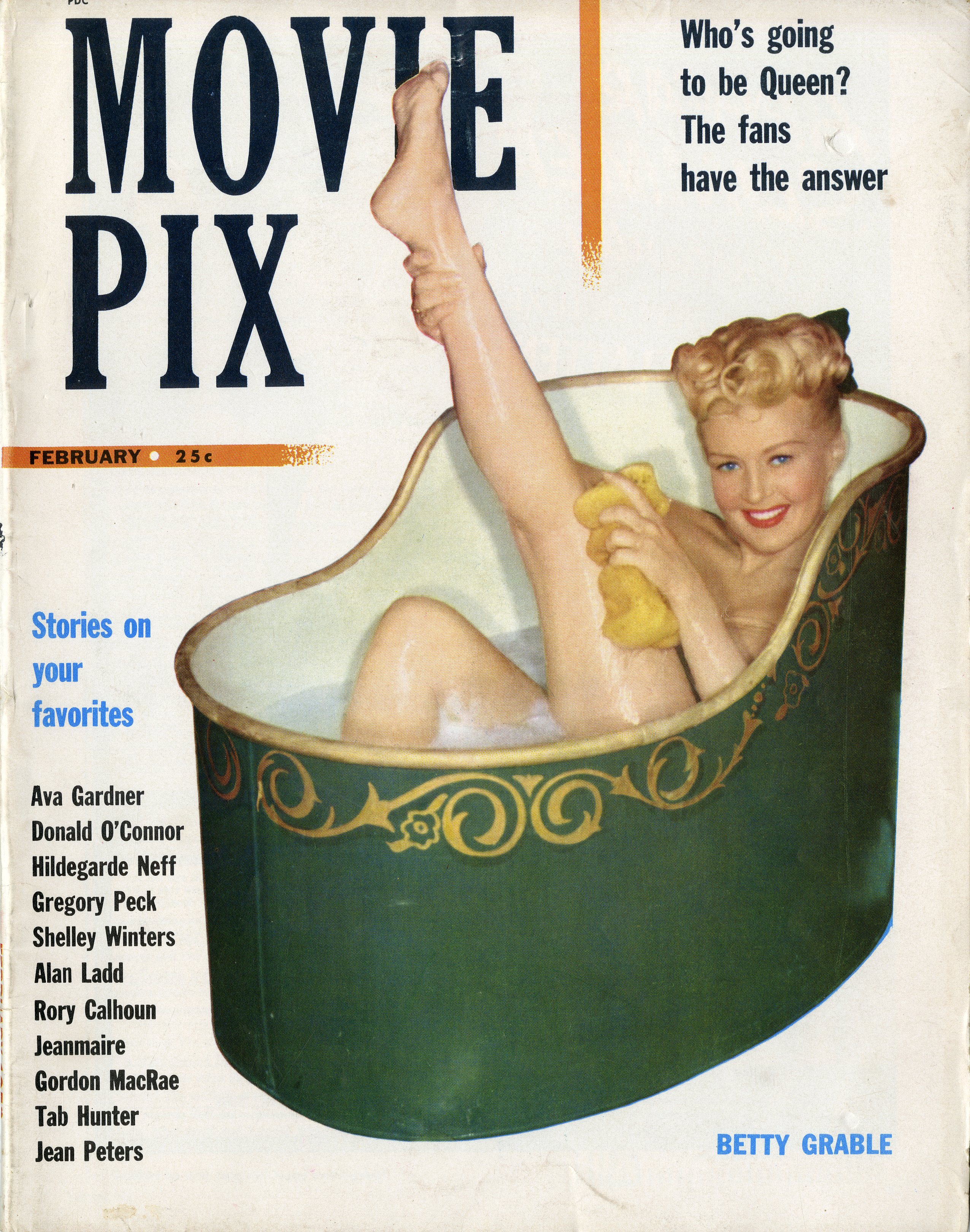
Movie Pix was a bimonthly magazine that was published by Astro Distributing Corporation and offered up great photographs of all the Hollywood legends and stars. From Frank Sinatra and Ava Gardner to Rory Calhoun, this entertainment magazine had the pictures you must see and the stories you must read if you were a Hollywood fan.

The February/March 1953 issue had Betty Grable and her notorious legs on the cover, taking a bubble bath in an old-fashioned ornate bathtub. The stories inside featured Ava Gardner, Donald O’Connor, Gregory Peck and a host of others. Celebrity entertainment at its best.

MOVIE PLAY

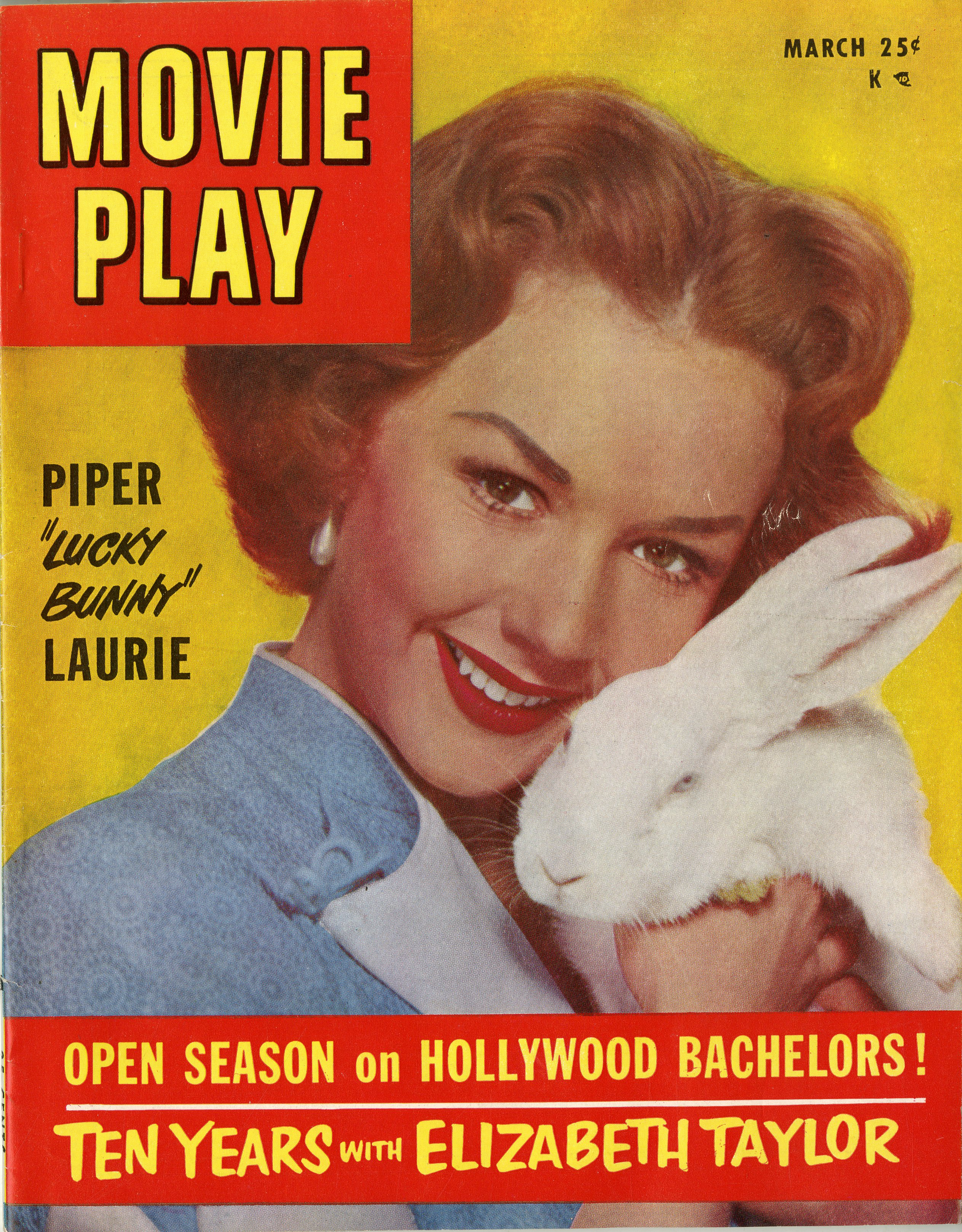
This magazine had the inimitable F. Orlin Tremaine as its editor in chief. Tremaine had been the editor for the influential Astounding Stories for many years. Movie Play was yet another celebrity title that offered film reviews, information on television, fashion and gossip that couldn’t be missed. 

The March 1953 issue had Piper Laurie and her “Lucky Bunny” on the cover and proclaimed that it was open season on Hollywood Bachelors. And of course ten years with Elizabeth Taylor was a given. One just had to read the magazine cover to cover. 

MOVIE STARS PARADE

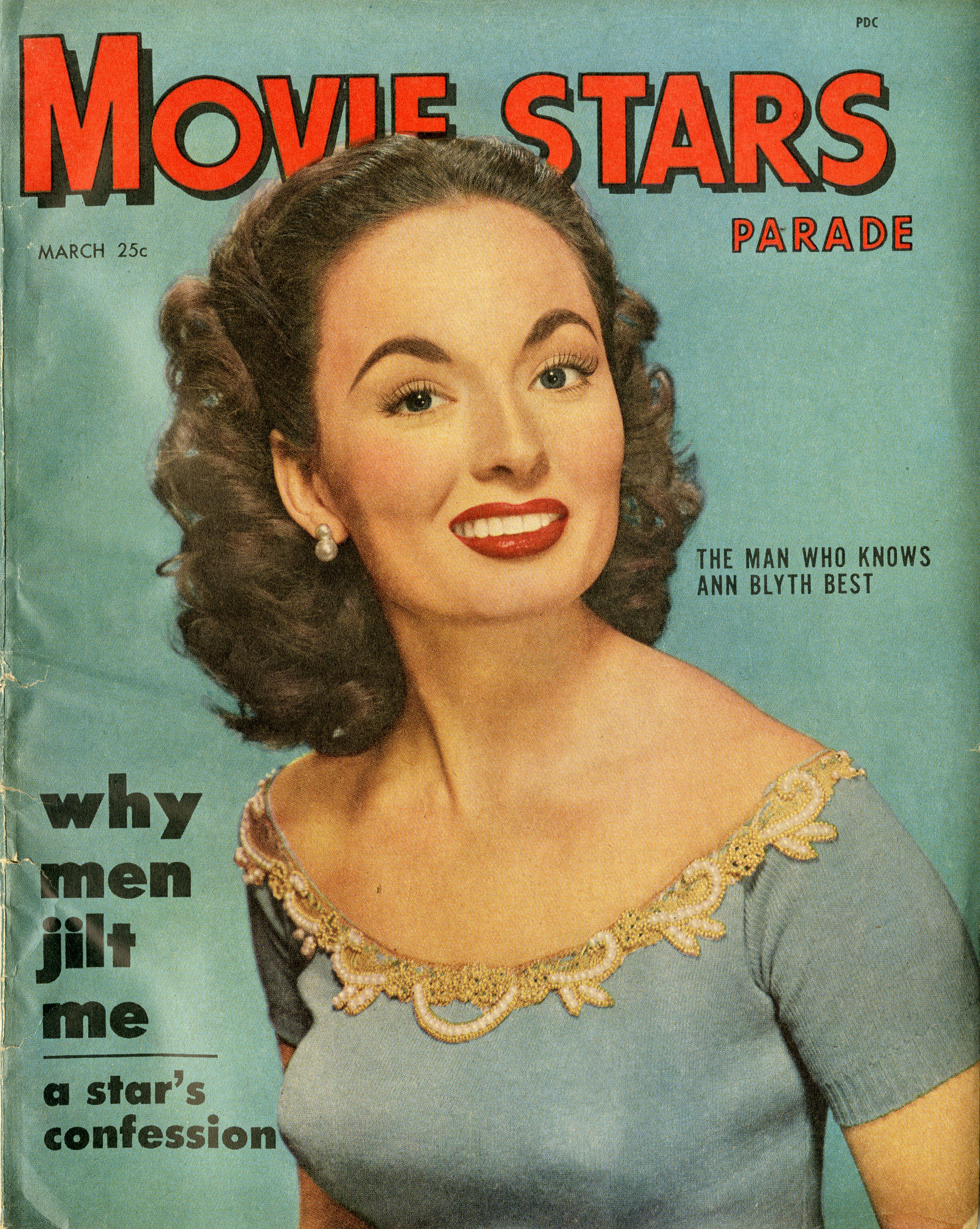
Ideal Publishing and William Cotton couldn’t be outdone when it came to the Hollywood celebrity magazines as Movie Stars Parade was another of their titles. With the tagline: the magazine for smart young moviegoers, the magazine’s mission was to be savvy and upbeat, interviewing and photographing everyone who was anyone in Hollywood.

The March 1953 edition had Ann Blyth on the cover and declared they had the man who knew her best inside the covers. Another star confesses her angst over why men jilt her. It’s a bit of a repeat performance here with some of the other celeb titles, but there seemed to be room for one more. 

MOVIE WORLD

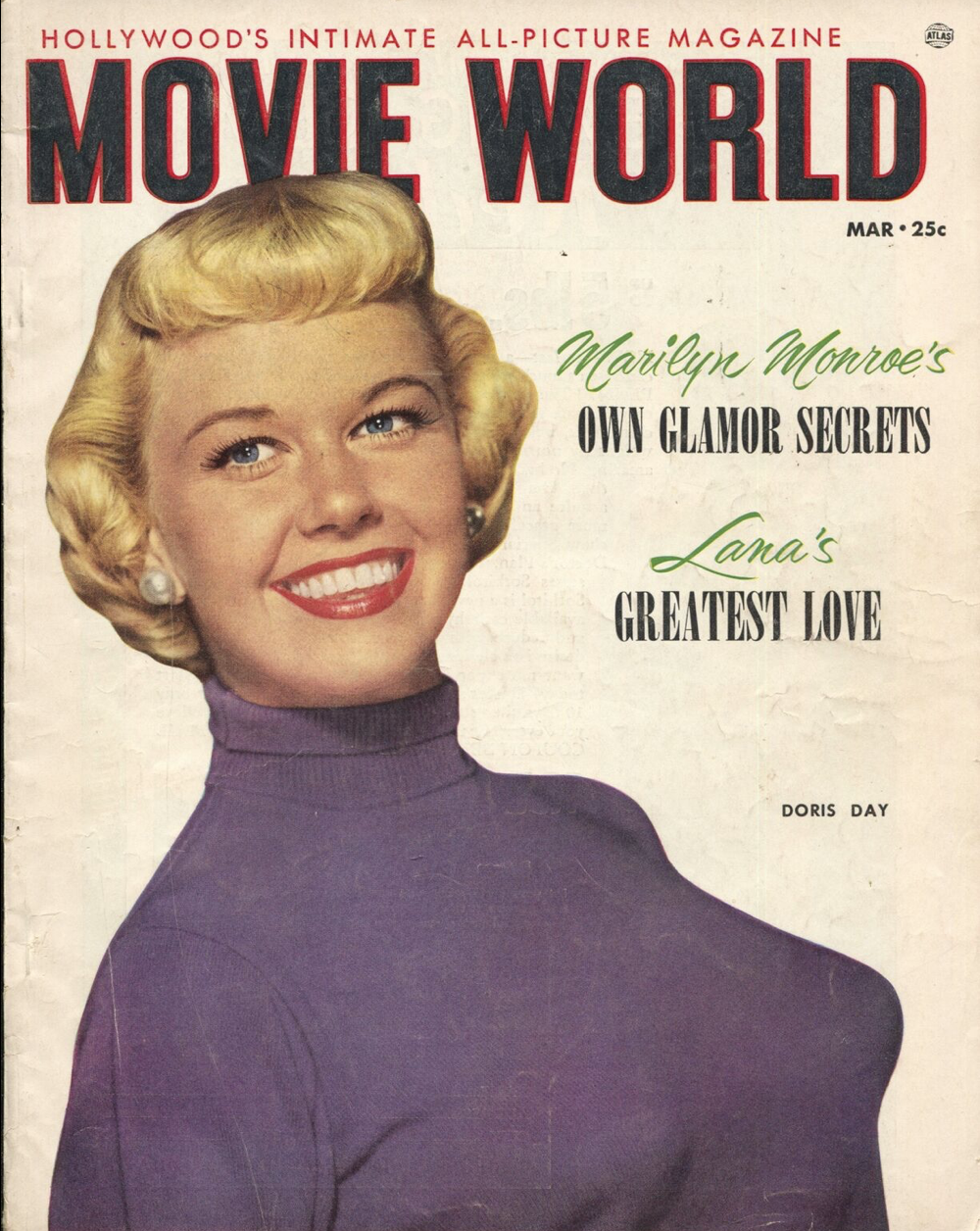
Another bimonthly magazine devoted to the world of movies and movie stars, Movie World was published by Interstate Publishing Corp. in New York City under the editorship of Bessie Little and publisher Martin Goodman.  In her letter from the editor Ms. Little encourages the magazine readers to stay interested in films by buying the sister publications of Movie World, Screen Stars and Filmland.

Movie World describes itself as “Hollywood’s Intimate All-Picture Magazine,” and the March 1953 features Doris Day, staring in the movie “April in Paris,” on the cover. However the big cover line, touts Marilyn Monroe’s own glamour secrets in addition to Lana’s greatest love. The magazine was divided into four sections: Hollywood Hilites, Hollywood Works, Hollywood Plays, and Hollywood at Home.

MUSIC JOURNAL

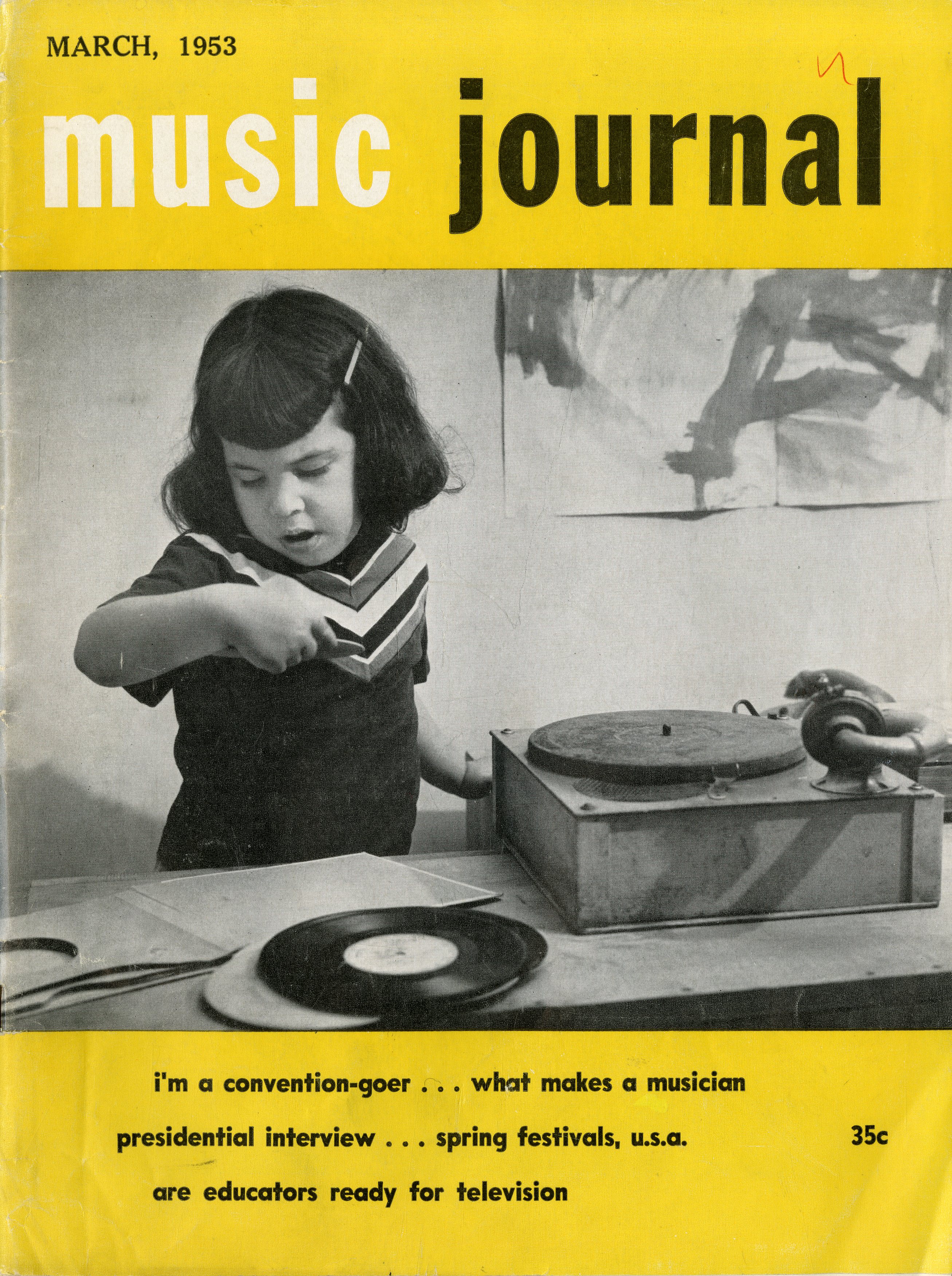
This magazine was founded by songwriter Al Vann and Choral Director Fred Waring in 1943, although only Vann was listed as publisher and advertising director. Vann had been a young Broadway actor and composed several songs throughout his lifetime: “Forever More,” “I Never Care About Tomorrow,” and “Old Man Moon.” The magazine was a look at the world of music from an educational viewpoint, in fact music educator Ennis Davis was the magazine’s editor.

The March 1953 issue was filled with articles about church festivals in Atlanta, the lowdown on orchestras, and movies and music. It had a musical crossword and a music quiz. Just a fun and informative magazine with an educational slant that couldn’t be ignored, yet didn’t make it stodgy at all. 

MUSIC OF THE WEST MAGAZINE

Joining together, many western music teachers associations, such as in Arizona, Oregon and Washington State, were featured in this educational tool used to inform and instruct on musicians of Western America. Founded in 1945, the magazine was `inspirational in connecting music teachers out west.

The March/April 1953 issue had Californian and Mezzo-Soprano Ruth Reynolds on its cover, a Coronado native who made a name for herself in the musical world during the ‘40s and ‘50s. There were letters from Europe and music and book reviews, along with all kinds of ads for music classes, pianos and other things of musical interest. The issue had a savvy look and a nice feel to only be 15 pages.

To be continued…

h1

A Very Happy Thanksgiving From The Mighty Magazine World…

November 23, 2021

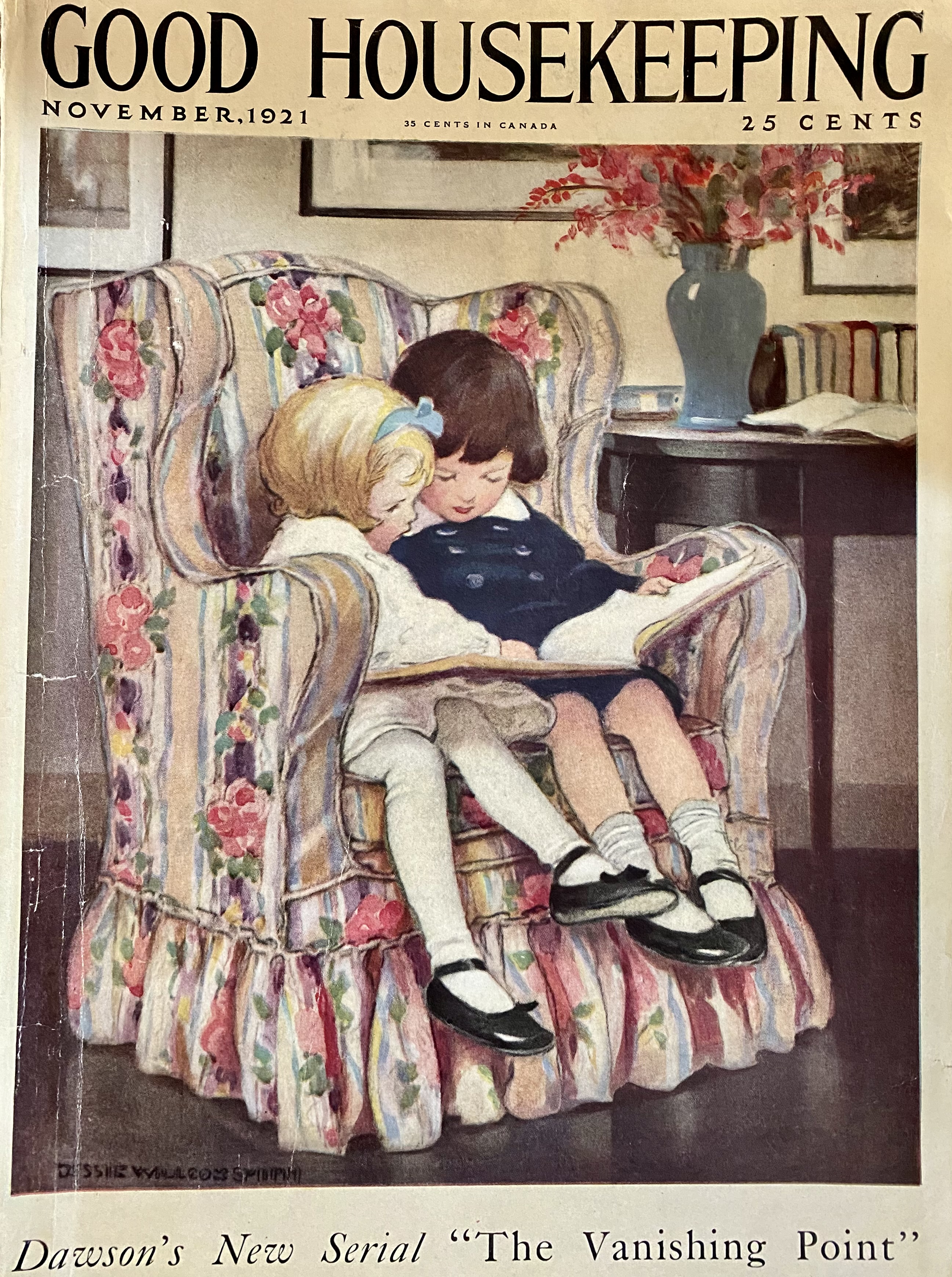
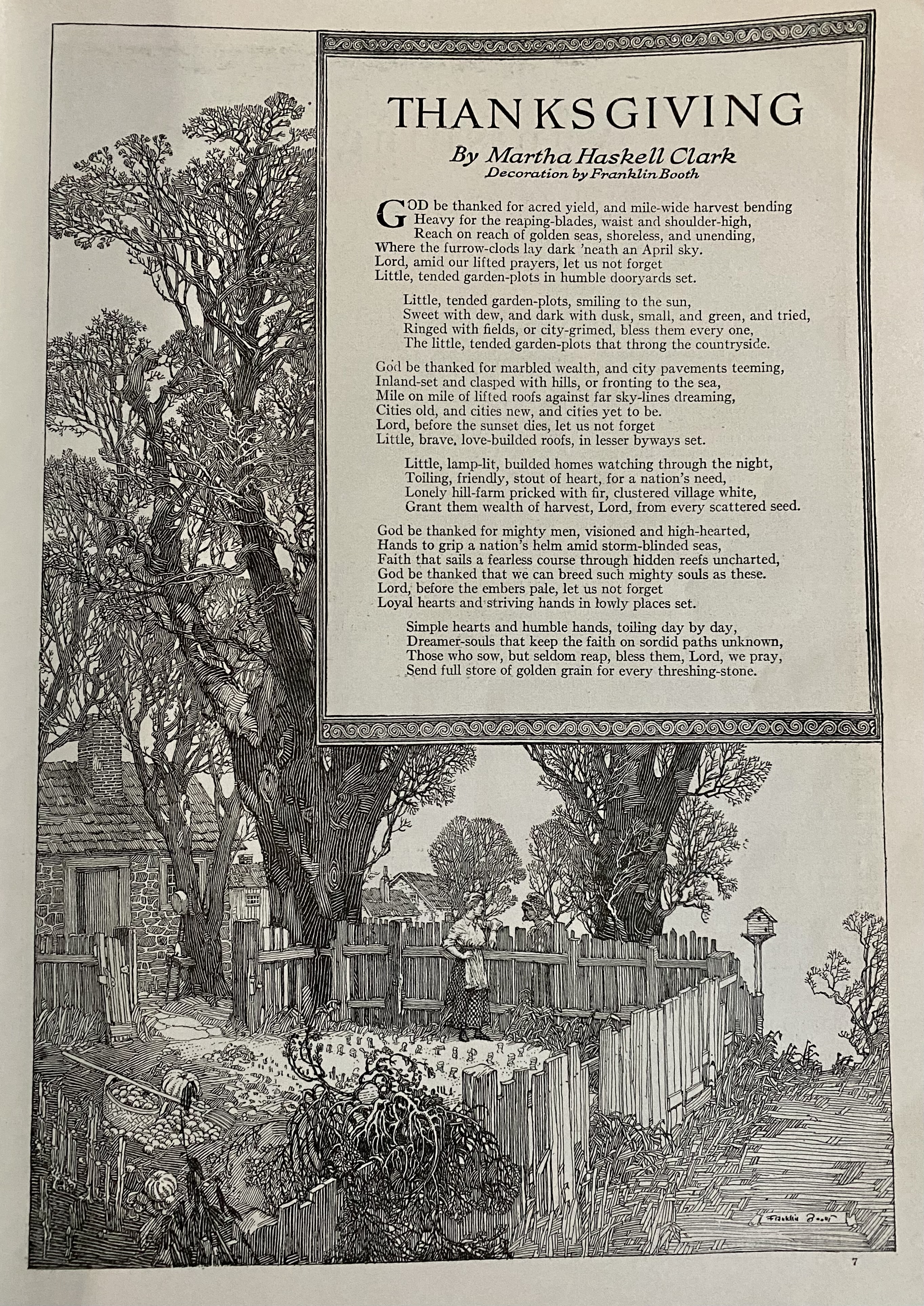
In the November 1921 issue of Good Housekeeping, Thanksgiving was celebrated with style:  a poem by Martha Haskell Clark and decoration by Franklin Booth.  What Good Housekeeping published a century ago, is as valid today as it was then…

Below are a few verses from the poem and feel free to click on the picture below to read the entire poem.

God be thanked for acred yield, and mile-wide harvest bending

Heavy for the reaping-blades, waist and shoulder-high,

Reach on reach of golden seas, shoreless, and unending,

Where the furrow-clods lay dark ‘neath an April sky.

Lord, amid our lifted prayers, let us not forget

Little, tended garden-plots in humble dooryards set.

…

Simple hearts and humble hands, toiling day by day,

Dreamer-souls that keep the faith on sordid paths unknown,

Those who sow, but seldom reap, bless them, Lord, we pray,

Send full store of golden grain for every threshing-stone.

Wishing you and yours a very happy Thanksgiving.

Samir “Mr. Magazine™” Husni, Ph.D.

h1

What If Digital Was First And Print Became The Revolution? A Mr. Magazine™ Musing…

November 19, 2021

What if… 

A Mr. Magazine™ Musing…

What if I tell you that regardless of what area you’re interested in, I can save you time, money, effort, energy, and provide you with all the information you want at your fingertips? What if I tell you that I can save you an entire week of Googling and digitally searching and sifting through all kinds of information to give you what you’re looking for? 

What if I tell you that there’s an invention that will put all the information that you’re looking for at your fingertips at a fraction of the cost that you would pay for an iPad or an iPhone or any other smart digital device? 

What if I tell you that this invention needs no batteries, no electrical connections, no solar power; nothing whatsoever except your hands to activate its power? What if I tell you that this new device is portable; it will fit in your purse or your coat pocket and you can take it anywhere with you? You can engage with it without worrying about losing power or anything else. 

What if I tell you that with this device you can mark it, clip it, tear it, read it and use it at your own pace? What if I tell you that this device is so innovative that it can surprise you with even more information than you originally wanted to know about? It will not only give you what you need and what you want, but also will give you things you didn’t know you needed or wanted. 

What if I tell you that once you engage with this device, you will have the time of your life because you’ll lose yourself, you’ll escape into a world that immerses you? There will be no popup moments; no uninvited content, everything in this device will be coherent and relevant, necessary and sufficient. 

What if I tell you that this device will become a longtime friend, something that you have been anticipating forever? So enough with the What Ifs, I can tell you now that this device is already here and it’s called a magazine? You can name the subject that you’re interested in and you will find a title on that topic with this new device, this magazine. It will answer and provide everything you’re looking for on that subject matter and so much more.

Is it a dream of the future? Lucky for you, no it’s not. It’s actually something current; something that is now and available. So what are you waiting for? Head to the newsstand, pick up a magazine, sit down and enjoy. Then let me know your thoughts on what if magazines were not invented until after the digital age…don’t you think print would start a revolution?

Mr. Magazine™ sits, reading a magazine, and waiting on your response…

Until the next time…

h1

RACEWKND magazine: Delivering the Culture & Lifestyle of Formula 1 to Your Home. The Mr. Magazine™ Interview with Magnus Greaves, Founder And Publisher.

November 18, 2021

“So a beautiful, oversized print product that is delivered to your home can have the effect of connecting you to the sport.” Magnus Greaves, Publisher, RACEWKND

Never give up trying new ideas. The aforementioned can easily describe Magnus Greaves, the man coming from the world of finance and an entire Wall Street driven media magazine venture, Double Down Media, that went belly up when the entire market, and the American magazine business model that was based on that market, went belly up too! Magnus, the ever-dreaming and planning financier, found yet another way in this digital age to enhance print and ensure its success in a completely different way than his previous ventures at Double Down Media, MyMag, and Rev.

In 2021 Magnus Greaves founded RACEWKND, a magazine that celebrates the culture and lifestyle of Formula 1 and delivers the racing experience right into your home.

I asked Magnus seven questions about his new venture. My questions and his answers are below. Enjoy…

Q1:  In a nutshell, tell me what is RACEWKND?  When was it started and how often it is going to be published?
RACEWKND celebrates the culture and lifestyle of Formula 1, the highest level of motorsport which is also seen as one of the world’s most glamorous sports. Back in 2015 I started a similar magazine called Rev Journal but was inspired during the pandemic to make significant changes to the branding, packaging, distribution and overall business model. This resulted in RACEWKND which has been extremely well received and we are now on a schedule to publish four issues per year. 

Q2:  How is this launch different from your previous venture MyMag?
MYMAG was a personal publishing platform for famous people but was sadly a bit ahead of it’s time (which I know sounds odd for a print product!) The innovation was in how we worked with the individual and I’m actually revisiting that concept again as I feel it ties in extremely well with social media. RACEWKND is much different as the original premise was more about filling a void in the market (this sexy global sport had no media product that celebrated its sexiness) and the innovation this time comes through the business model and distribution plan. 

Q3:  Who is the audience of RACEWKND and how to you plan to reach them?
Formula 1 has been extremely popular globally for decades but it’s never been able to crack the US market. In recent years the sport was also having a very hard time attracting new fans. That all changed quite dramatically with the Netflix show “Drive to Survive” which explores Formula 1 through the personalities, drama and locations. As a result, F1 is now exploding in the USA and is attracting a far more diverse audience. RACEWKND is created to appeal to this new audience as our editorial approach and design sensibility is a perfect next step for these new fans which, given the size of Netflix, now outnumber the size of the old-school F1 fan base. 

Q4:  What are some of the obstacles, if any,  facing you with this venture and how do you plan to overcome them?
The biggest obstacle we face is in connecting with the American F1 fan base in an efficient way. I will never, ever go down the newsstand route again and that simply wouldn’t be effective with this audience anyway, particularly in the USA. And unlike sports such as basketball, there are no stadiums that host multiple home games and no chains like Foot Locker that sell team merchandise, snaking it hard to find alternative channels to fans. So we had to come up with a completely new plan and that lead to a genuine breakthrough- RACEWKND has adopted the modern direct-to-consumer business/distribution model that’s been so successfully implemented for products such as eyeglasses, clothing, mattresses, etc. I figured if this approach works for mattresses, then certainly a light, flat product like a magazine should be perfect and the results have been amazing. We start the process with targeted advertising and affiliate partnerships which connect us to F1 fans. We then sell every subscription on our Shopify platform and send magazines out very efficiently using AmazonFBA. In fact, I’m thinking about working with other magazines to show them how to implement this great business model which brings so many benefits. 

Q5:  Some say we don’t have a print problem, we have a business model problem in the magazine media industry, what do you think?  What is the role of print in today’s media landscape?  What is the future of print?
Well I 100% agree with this statement!! Per my answer above, studying the direct-to-consumer business model (as well as the subscription box business model) completely changed how I perceive the magazine business, and it’s completely changed the economics of running a magazine company. As for the role of print, I feel it’s more relevant than ever for publishers that use it in a way that truly takes advantage of the medium, which unfortunately not many do. But the flip side of that is that many publishers have done an amazing job of adapting their offering to beautiful new tablets, so growth for magazine brands can come in many forms. As for RACEWKND, a tangible print product has enormous value as Formula 1 hosts 23 races in 23 different countries resulting in 95%+ of fans not attending a race during the season. So a beautiful, oversized print product that is delivered to your home can have the effect of connecting you to the sport. When there is only one shop in the USA that is dedicated to selling F1 merchandise, having a product like RACEWKND come to your house is a nice experience that is hard to replicate. 

Magnus Greaves, publisher, RACEWKND

Q6:  Anything else you’d like to add before my typical last question?
Operating in this new direct-to-consumer business environment has really highlighted to me the value of print as a product in a fresh way as well as the need to create a brand that reflects your overall goals rather than simply what you aim to achieve with a magazine. As a result, I feel less exposed to the various direct threats of the traditional publishing industry and more connected to the innovative companies that are being launched and celebrated in different arenas. And you will have noticed there is not one ad in our magazines- this new business approach eliminates that hassle!!

Q7:  What keeps Magnus up at night?
I go to sleep every night thinking of new ways to connect with the potential RACEWKND audience and making sure that we are doing a good job communicating the attributes of our great print product across digital channels. The tools are in place to achieve all of this but you have to continuously seek out best practices (from outside the publishing industry!) to stay on top of it all. 

Indeed, and thank you…

h1

When GQ Was, According to Esquire, As “Beluga Is To Caviar…” A Blast From The Past. A Mr. Magazine™ Nugget.

November 15, 2021

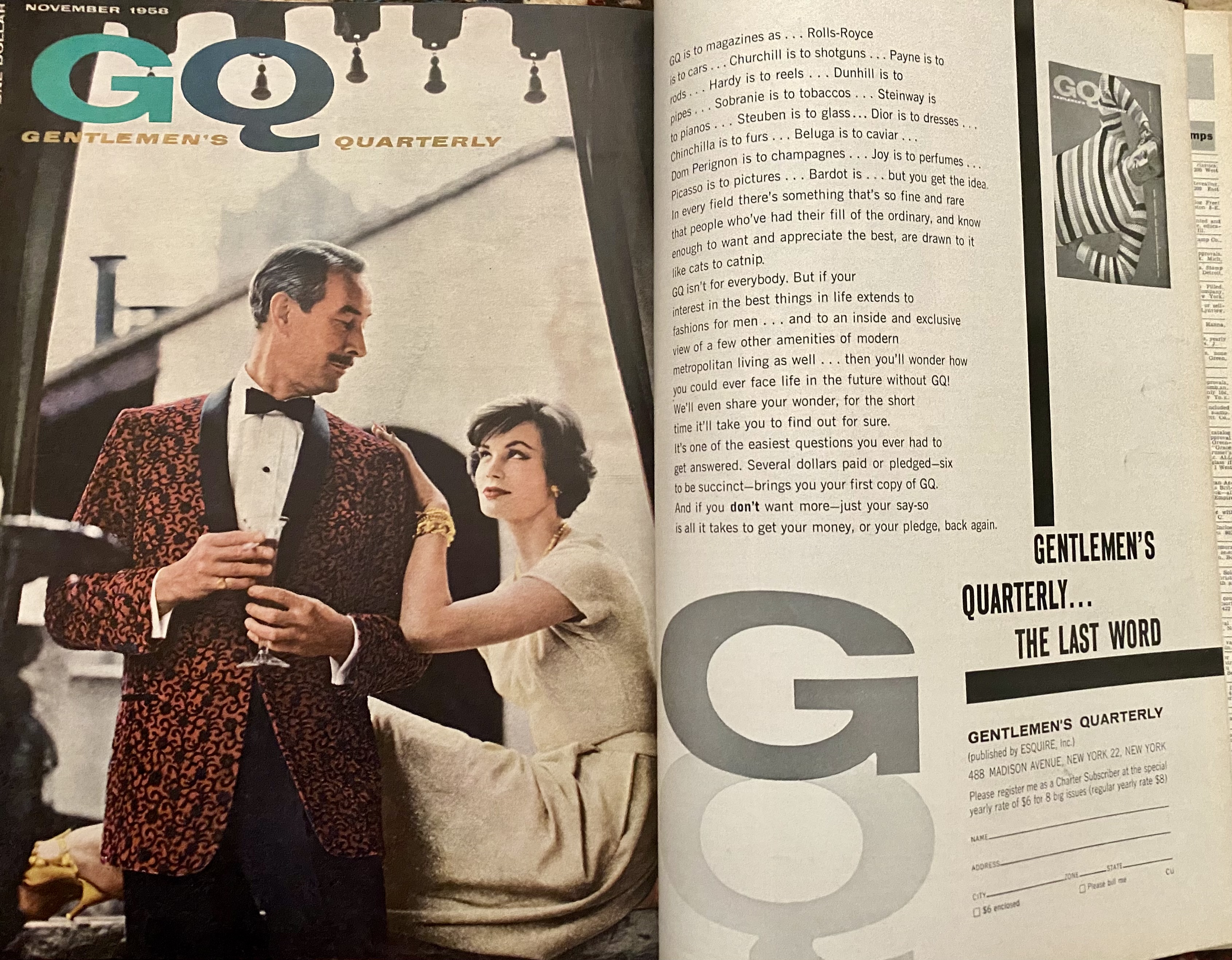
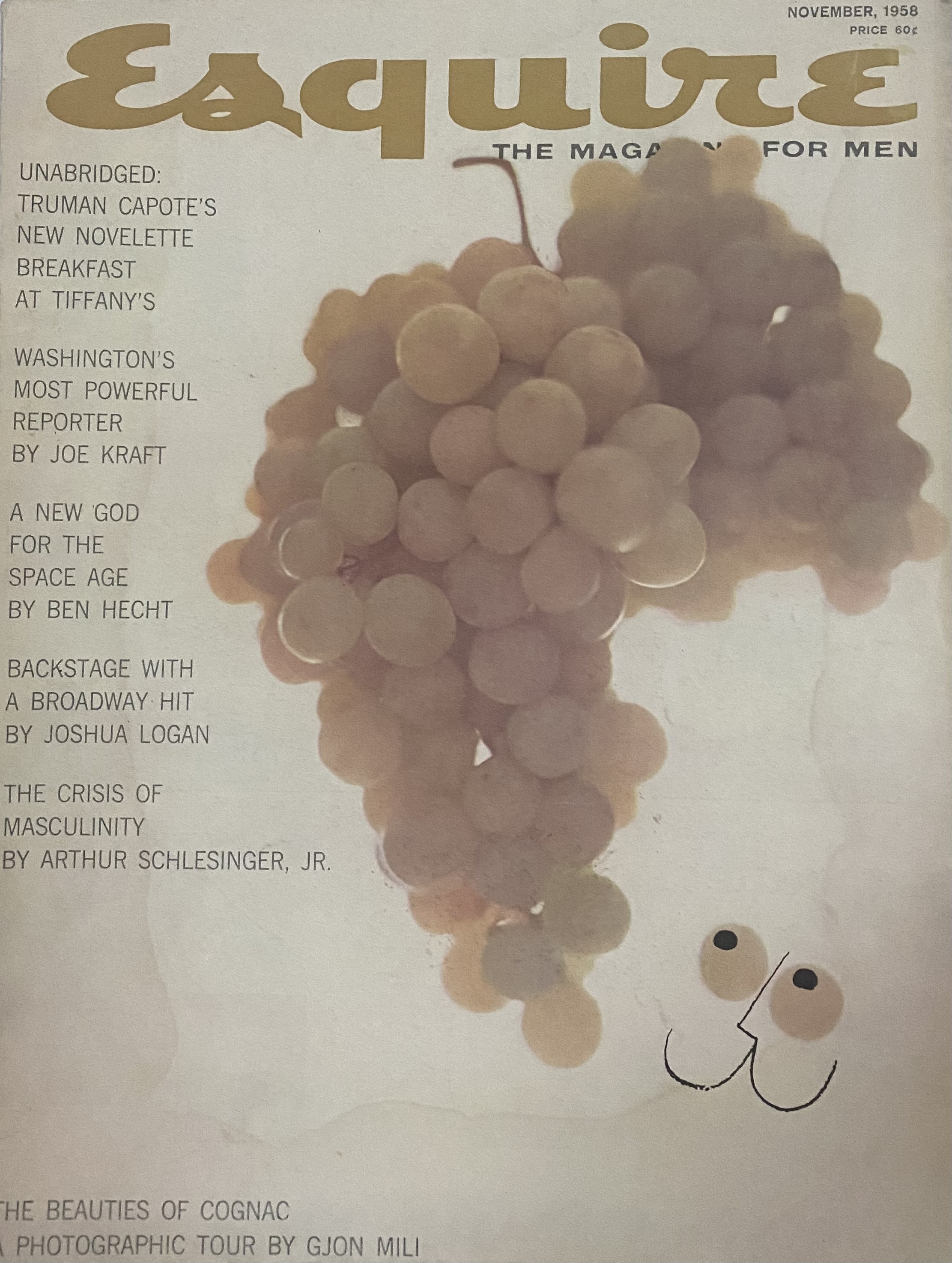
Here’s a blast from the past, the 1958 past.  An ad for GQ magazine in its sister publication Esquire.  GQ was published by Esquire Inc. in the late 1950s and the ad (as you can see in the pictures) touts GQ as the best magazine since sliced bread… Here is a snippet of the ad:

GQ is to magazines as…Rolls-Royce is to cars… Churchill is to shotguns… Payne is to rods… Hardy is to reels… Dunhill is to pipes… Sobranie is to tobaccos… Steinway is to pianos… Steuben is to glass… Dior is to dresses… Chinchilla is to furs… Beluga is to caviar… Dom  Perignon is to champagnes… Joy is to perfumes… Picasso is to pictures… Bardot is… but you get the idea. In every field there’s something that’s so fine and rare that people who’ve had their fill of the ordinary, and know enough to want and appreciate the best, are drawn to it like cats to catnip…

Do you know of a magazine today that the aforementioned similes can describe?  Would love to hear your views…

Until another Mr. Magazine™ Nugget, all the best…

h1

A “Mr. Magazine™” Conversation With Tom Florio, Founder & CEO, ENTtech Media Group. Part 2.

November 12, 2021

The News: “PAPER and Google Shopping have partnered to transform the trends of 2021 into an innovative shoppable magazine. Celebrities and influencers Jennifer Coolidge, Bella Poarch, Bretman Rock, Bia and Law Roach are featured. The shoppable magazine packages 21 of the most boundary-pushing trends in an editorial feature conceived by cultural disruptor PAPER. The trend list, including ‘cottagecore’ and TikTok Beauty was curated based on Google trends data.”

The Interview: Having seen the aforementioned press release, I decided to reach out to Tom Florio, of Vogue & Condé Nast’s fame and currently the founder & CEO of ENTtech Media Group LLC, which owns PAPER, and engaged in a Mr. Magazine™ conversation about ENTtech Media Group, 21of21 Shoppable magazine, the past, present and future of magazines and media brands.  Here is part two from our conversation presented in a new Mr. Magazine™ interviews format.  Hope you will enjoy…

On the Genesis of 21of21: I was in conversation with Stephanie Horton, the head of marketing for Google Shopping. And we had this idea about how to take information that’s coming from the consumer and curate it and create viral stories. And we have done it with the Demi Lovato story after NASA put out all this data about UFO.  Demi Lovato was all over her social media talking about UFO’s. So the editors of Paper, based on what was coming through social media, created this piece around Demi Lovato, where we actually made her an alien and shot it, and it went viral over the internet. 

So with Stephanie Horton we started to talk about how we could work together. And she said we have a lot of data in our Google trends and it would be really interesting to have your editors look at the data that’s coming through fashion, entertainment, and social, and have them curate what they think are the kind of coolest trends and create an editorial strategy that could be completely shoppable. And that’s what we’ve done. So when we looked at the trends, we studied the data and then we did what we do best: matched some of the content and some of the data with personalities, like taking Jennifer Coolidge and putting her with “cottage core,” which was kind of funny. With Google we built an entire new site around it from scratch, and the idea is to curate what the consumers are searching for and to add an entertainment quality to it, which we’re able to do as Paper, because we understand where the internet and pop culture come together, but then add this other layer of shoppability to it. And this was our first one out. 

On His Future Plans: I could say Google is amazing to work with. I mean they’re just so smart and fun to work with.  For me, it’s just consistent with where I’ve wanted to go with what a magazine is. It’s all about pushing everything forward. I’ve never used technology to hold on to an old way of doing media. And I think it’s one of the big mistakes larger companies have done. In 2004, we had shopvogue.com before there was a smartphone. You were able to scroll over things and click it and go to a URL. Neiman Marcus was the backend. So, even back then, you could shop the September issue of Vouge and we had 250,000 people spending 70,000 hours online shopping. 

So, so I’ve never been interested in using technology to support an old way of doing business. I’ve always been interested in taking magazine brands and pushing them out beyond the magazines. Let the magazine do what it does best that, and push it out beyond even its dot.com site. 

For me right now, taking ENTtech to a new level, doing shoppable magazines, doing NFTs, creating a record label because we produce a lot a of young talent like Dorian Electra.  These are the ways to take a content strategy with a, with a tech distribution platform, and just continue to communicate in different areas of entertainment for an audience. 

On ENTteck Media and Diversity: I launched ENTtech from scratch with one investor, and we grew five times in two years. And we’re taking a profit. We didn’t take profit last year, but we will break even or profitable one year after COVID. I actually spoke to a larger media company about investing in us because one of the things we do particularly well is we normalize diversity. It’s not like we’re trying to retrofit elitist with diversity. We did an issue with Colin Kaepernick on the cover of the September 2019 issue. The theme was “Know Your Rights.” 

We do the same with the LGBT community. We normalize; we don’t get wise. A lot of the work that we do is with big brands quietly behind the scene, advising them on their campaigns, to the LGBT community, to diverse audiences, and we help them create content strategies around them. So I think that’s a space that we have a lot of cultural legitimacyin, and we have a significant group of young, creative, and diverse contributors that enjoy working with Paper because we let them do the kind of work that’s important to them because it’s important to us. That’s part of our unique point of view in the world. 

The Future of ENTtech and 21of21: I’ve already had a little bit of feedback, um, that they liked it and they want to do it again, and we’ll probably move it up to September. I think there’s a lot of learning that took place. Stephanie and I met on this in July, we pulled the trigger on it in August and we delivered it in October. So our teams collectively worked really hard and furious to execute this. I could see an opportunity to take the entire Paperplatform and make it all shoppable. I don’t see any reason why a content platform shouldn’t be shoppable; people want to buy things.

I think our ability to amplify and target and deliver an audience for as little as a penny a view right now can compete with any major social entertainment company in the world. 

What Keeps Him Up at Night: My dog. (Laughs). What keeps me up at night? I think it’s very different Samir, when you’re an entrepreneur. I was a senior executive in a big successful company at the time. I was at the top of that food chain. When you own your company you worry about your staff, you worry about keeping everybody excited, and you worry about wanting to pay people more than you’re paying them. So I think what keeps me up at night is being an entrepreneur and thinking about all the things I want to do and wanting to take care of the people that work for me more than I’m able to do probably. I think about that a lot. 

One Final Word of Wisdom: If you’re part of the change, you don’t feel the change. So, all right, take care and thank you. 

h1

The True Nature Of Magazines… A Mr. Magazine™ Musing…

November 6, 2021
Magazines are experience makers whether they were the ones published in 1938 like Ken above or the ones published in 2021. (Ken’s complete first year is part of Mr. Magazine’s™magazine collection).

The True Nature Of Magazines…

Digital delivers content; magazines deliver experiences.

In a nutshell, that’s the premise of my blog today.

Magazines are more than content provider; they are experience makers.

No experience can be developed without repetition regardless of whether that repetition is weekly, monthly or even annually. Think of it as a weekday, a month, or a holiday.

Bookazines are not magazines yet they are invading the newsstands… they are paperbacks printed on better quality paper or as one publisher says, “they are the poor-man’s hardback books.”  Bookazines do not provide repetition, and without repetition there is no habit creation, and without habit creation there is no engaging experiences and without engaging experiences readers never turn into customers, and without customers there is no marketplace.

Magazines have in them a built in expected pleasant surprise that is based on continuity and change. Readers/customers are always looking for that surprise in the midst of the familiarity of the nature of the magazine… they know there will be a diet article or a cooking feature, but the surprise is in what is the diet this time or what is the meal plan in this issue?  An expected surprise…

As you know, it’s my postulate, if it is not ink on paper; it is not a magazine. Magazines are in your face, no need to search for them or Google them.  You can see them at the newsstands or you can invite them to your home.  Like a trusted friend they will visit you issue in and issue out.  There are no interruption or pop-up notifications, guaranteed. 

Even the original definition of the word magazine (from the Arabic or French word Maghzen) means a place where goods and supplies are stored:  a warehouse.  The store rarely changes its physical appearance but always changes the goods inside the store.  However, the goods are kept in areas where repeat customers can easily locate the goods they need.  The same is true with the magazine.  The readers can easily locate the regular departments, their favorite columnist, and always be surprised by the ever-changing yet constant themed content regardless of the subject matter.

In fact, some magazines are like an apartment building and others are like a mansion.  One can actually count the apartments in the building or the rooms in the mansion.  Everything is quantifiable.  The size, the width, the depth, all the dimensions are there.  You see the front door and you see the backdoor. You enter the first floor and you can move up to the top floor. It is one complete beautifully designed building or one gorgeous mansion.  You move from floor to floor or from room to room without ever leaving the building or the mansion. Everything in it is connected like a perfectly done jigsaw puzzle, some are 100 pieces and others are 1,000 pieces.  Digital is more like a maze.  You enter at your own risk and you hope to find the right exit without being caught in its web (pun intended).

The content and the ads reside in the same real estate without feeling out of place.  They complement each other to create one experience for the customer.  Unlike digital, the ads in a magazine relate to the topic and nature of the magazine.  Unlike digital, you will not find an ad about dog food in a food magazine or vice versa.  The majority of the ads in magazines are endemic to the content of the magazine, and unlike digital the ads are not foreign to the contentmatter that one is reading on the digital devices.  Ads in magazines are part of the experience; ads in digital are an eyesore.  The ads on digital devices don’t add anything to the experience or to the content matter.  They are only after you and your data.

To put it bluntly, ads in magazines are like inviting friends and their friends to your house; ads in digital are like a thiefinvading your house when you least expect it.  

And lest we forget, you can actually own the magazine, show the magazine, and display the magazine since it is a physical entity.  As for digital, even if you pay for it, you own nothing, and you can show nothing, all what you’ve paid for is in a virtual world.  The magazine is private and is yours.  You can hide it or display it, you can toss it or collect it, and you can share it or recycle it.  In short, it is yours and you can do whatever you want with it.

So, what are you still waiting for?  Head to a newsstand or bookstore, pick up a magazine or two, and come back home and lose yourself in an experience any other medium can provide.  Happy experience making…

Until next time…

Samir “Mr. Magazine™” Husni, Ph.D.

President and CEO, Magazine Consulting & Research, Inc.

h1

Music And Entertainment 1953 Style… The Magazines And I, Chapter 12, Part 2.

November 3, 2021

Music and Entertainment Magazines … is the 12th chapter from the serialized book I am writing on the magazines of 1953, specifically March 1953, the month I was born.  This is chapter 12 part two.  Feel free to back track for chapters one, two, three, four, five, six, seven, eight, nine, ten and eleven in previous blogs.  Enjoy.

In March 1953 magazines that covered music and entertainment offered a great service to fans by providing current gossip of their favorite actors, singers, heartthrobs, many song lyrics and melodies, plus other pertinent information for people clamoring to be in-the-know. 

We have to remember that at this time, television was still in its infancy, basically still a “talking piece of furniture” that many were trying to adjust to and get to know. And while TV Guide was published in April 1953, and was a very big title, it did have regional predecessors that covered the infant television scene before the launch of the national edition on April 3, 1953. 

Music and entertainment magazines were the eyes and ears for fans, doing what the Internet and television does today for many people. In March 1953 there was a “channel” for every aspect of a fan’s interest, from honing their own musicality by learning lyrics to their favorite songs to enhancing their knowledge of popular movies and their stars. Magazines were the Internet of the times once again…and March 1953 had some of the best.

Let’s take a look, shall we?

MODERN SCREEN

For over 50 years, Modern Screen was an American fan magazine that featured articles, images and personal interviews with movie stars, and later on many television personalities. The magazine debuted in the fall of 1930 and was founded by Dell Publications. Soon it became the direct competition for Photoplay and was one of the most popular “screen” magazines around, boasting the tagline America’s Greatest Movie Magazine. 

The March 1953 issue was certainly eye-catching with the lovely Rita Hayworth on the cover. The Talk of Hollywood was older wives with younger husbands, so there was an article on that and a romantic love story about actress Ann Blyth and her one true love. It was a time of Hollywood magic and this issue glittered that starlit path splendidly. 

MOTION PICTURE AND TELEVISION MAGAZINE

This title was a Fawcett Publication, which had a bevy of magazines, comic books and “Gold Medal” books, a line of paperback originals, which became a defining turning point in paperback publishing. Motion Picture And Television Magazine was an original movie fanzine full of gossip and romance for Hollywood fans of the ’50s. The magazine promised to incorporate screen life, Hollywood and movie story magazines, which was actually its tagline.

The March 1953 issue had Janet Leigh on the cover (a very young Janet Leigh) and declared that there were things us fans didn’t know about her personal life. Hmm… well of course, we just had to know. There were surprising true confessions of the stars – a very popular feature, I’m convinced. All in all, the magazine was another addition to satiate the cravings people had about Hollywood and all she entailed. It was a terrific read.

MOVIES

Movies magazine came from Ideal Publishing Corporation and Publisher William Cotton, who was known for his pulp magazines. Cotton was about building circulation and serving his demographic. He courted advertisers from a general perspective. He didn’t expect Chanel or Cadillac to advertise with him, but the more down-market products were right there with him. And in turn, publishing pulp made Cotton a very wealthy man. From Hollywood to personal romances, William Cotton ran the gamut of titles.

The February/March issue of Movies featured the usual talk-of-the-town. Marilyn Monroe’s Doctrine, an article by actor Robert Wagner and Debbie Reynolds, along with other scrapbook items for fans. The cover showcased the lovely Marilyn Monroe and offered her Secret Code for Life. You couldn’t get more Hollywood than Marilyn. 

MOVIELAND

Hillman Publications created this Hollywood monthly, competing directly with Bernarr Macfadden and Fawcett Publications. The magazine was another leg on the stool of celebrity entertainment, offering exclusive interviews, images and features.

The March 1953 edition had a magical picture of Doris Day on the cover in a pink chiffon dress that billowed out from her body as though in flight. One cover line beckoned for you to meet the new and sexy June Allyson and absorb five pages of Marilyn Monroe pin-ups. 

MOVIE LIFE

Movie Life was published by Ideal and William Cotton, another Hollywood title so popular in those days. Celebrity magazines have always been big sellers and eye-catchers, so no wonder Cotton kept adding to his stable of titles. Movie Life was a magazine filled with great images of movie stars, such as Esther Williams and Tony Curtis. The life the stars lived was something we all wanted and what better way to get it than from the pages of a vivid magazine.

March 1953 saw Lana Turner on the cover with picture scoops of Esther Williams, Howard Keel, Debra Paget and Dale Robertson. Actress and singer Gail Davis showed us the make-up styles of the day and how to apply them properly and we could read all about life with Lana in the cover story. It was a nice addition to the genre.

MOVIE PIN-UPS

Here comes another Ideal Publishing title from Mr. Cotton. This one was filled with sexy Hollywood sirens, both male and female, in various modes of poses. All in perfect form to clip the pictures from the magazine and hang on your wall. This title was just another in a long list of pulp-type magazines that made a small fortune for William Cotton.

The March/April 1953 issue had a beautiful image of Arlen Dahl that fans were sure to love, along with pictures of Debra Paget, Virginia Mayo and many others. The images and the poses were very tastefully done and just beckoned to be clipped out and hung up. Great photography. 

To be continued…

h1

The Mr. Magazine™ Launch Monitor… 47 New Titles In The Last Six Months…

October 26, 2021

Black Cannabis magazine and 46 other new titles arrived to the nation’s newsstands during the months of April to September of 2021. The new arrivals join the 34 titles launched in the first quarter of 2021 bringing the total of new titles to 81 titles so far. The new magazines covered every conceivable subject from the indoors to the outdoors and beyond. In a climate that is filled with uncertainty, the new titles continue to pump new blood in a magazine media market that has seen so many changes in the last few years.

From Bauer’s Drew magazine to AIM’s Finding Home, there is no shortage of new ideas to reach customers searching for curated and edited content. From Kindling to Mother Tongue, from InPickleball to PawPrint, and from the $95 a copy (and worth every penny) Curious magazine from the newly established Curious Society, to the latest addition in bicycling magazines BETA… you name the subject and rest assured you are going to find a title or two (well make that three or four) that addresses that subject matter in a very engaging, entertaining, and authentic way like no other mass media can ever do.

So, here are the titles that yours truly was able to find in the last six months, some are brand new, some just made their arrival to the newsstands, and some arrived from overseas to our shores.

Keep in mind that in my book magazines are much more than content providers, they are experience makers. 

So, take a look at the new experience makers below and please remember, if Mr. Magazine™ can’t physically hold, touch and purchase the magazine, it does not enter the monthly counts. And counts now include only the titles with a regular frequency that are either new, first-seen on Mr. Magazine’s™ radar, or arriving to the national newsstands for the first time. 

h1

Music And Entertainment 1953 Style… The Magazines And I, Chapter 12, Part 1.

October 23, 2021

Music and Entertainment Magazines … is the 12th chapter from the serialized book I am writing on the magazines of 1953, specifically March 1953, the month I was born.  This is chapter 12 part one.  Feel free to back track for chapters one, two, three, four, five, six, seven, eight, nine, ten and eleven in previous blogs.  Enjoy.

In March 1953 magazines that covered music and entertainment offered a great service to fans by providing current gossip of their favorite actors, singers, heartthrobs, many song lyrics and melodies, plus other pertinent information for people clamoring to be in-the-know. 

We have to remember that at this time, television was still in its infancy, basically still a “talking piece of furniture” that many were trying to adjust to and get to know. And while TV Guide was published in April 1953, and was a very big title, it did have regional predecessors that covered the infant television scene before the launch of the national edition on April 3, 1953. 

Music and entertainment magazines were the eyes and ears for fans, doing what the Internet and television does today for many people. In March 1953 there was a “channel” for every aspect of a fan’s interest, from honing their own musicality by learning lyrics to their favorite songs to enhancing their knowledge of popular movies and their stars. Magazines were the Internet of the times once again…and March 1953 had some of the best.

Let’s take a look, shall we?

3-D Screen

This magazine comes complete with a pair of 3D glasses for your viewing pleasure. Published by a company called Three-D Magazines, Inc., it featured wonderful photographs (not necessarily the 3-D ones either) of celebrities like Elizabeth Taylor and Jane Russell. It was a similar piece of the puzzle, but with an odd corner cut being 3-D.

The March 1953 issue had Jane Russell on its cover and photos that promised they were so real you could almost touch them of stars such as Marilyn Monroe, Janet Leigh and Rhonda Fleming. It was a tile when 3-D was becoming all the rage and magazines weren’t about to be left out of the firestorm.

ARTHUR GODFREY AND HIS GANG

Arthur Godfrey and His Gang was a magazine published by Ideal Publishing which was a subsidiary of Grosset & Dunlap and familiar to film fans all over because of its heavy load of fan, teenage and confession type magazines. William Cotton, who had been with Fawcett Publications at one time, founded the company in 1937. This magazine teamed up with one of the era’s most famous radio and TV personalities, Arthur Godfrey. And and at that time, everybody loved Godfrey.

The March 1953 issue featured Godfrey Today, Arthur and His Friends, Fly-Boy Godfrey ( who was an avid aviator) and other Godfrey-friendly features and information. There were stories on his crew of course, Julius La Rosa, Lu Ann Simms and all the others. Just anything and everything Arthur Godfrey, taking his popularity at the time and running with it. Great magazine for really hardcore fans. 

DOWN BEAT

Formatted like a normal vertical, Down Beat magazine for all intents and purposes appeared to be just another music magazine that covered jazz, blues and beyond. That is, until you opened its pages and then it became a totally different animal, as it folded open and flipped to a newspaper format, complete with a headline. The magazine was established in Chicago in 1934 and was named after the downbeat in music, or the first beat of a musical measure. It was published monthly by Maher Publications and is still being published today.

The March 1953 edition had Jackie Gleason on its cover and the line Jackie Gleason, Musician. Something that was sure to give people pause and to purchase the magazine. There were newspaper-style articles such as Influenza, In Flew Dinah (catchy headline) all about Dinah Washington being stricken ill at her closing performance in Honolulu. There were Down Beat’s Five Star Discs and Down Beat’s Scorecard, where current hits were rated. It was and is still a music lover’s dream-come-true magazine. 

FILMLAND

Flimland was another Martin Goodman title, published under the Red Circle Magazine umbrella. Making good in the pulp fiction market, Goodman knew his way around Hollywood gossip mags too. And Filmland offered the best in Hollywood news and images. From Shelley Winters to Janet Leigh, the magazine covered fan favorites every month. And with Goodman launching what would one day become Marvel comics, he certainly was no stranger to success in all genres.

The March 1953 issue was a great one with articles by Arlene Dahl, Shelley Winters and many others. The cover teased with Hundreds of New and Intimate Pictures and the stories inside ranged from Roy Rogers and his hero status to Dean Martin and his wife. And with actress Susan Hayward on the cover, the magazine was a complete fan have-to-have.

HIT PARADER

Hit Parader was launched in 1942 by Charlton Publications, which was based in Derby, Connecticut. The magazine was among the longest-lasting American music magazines, not ceasing publication until 2008. The title referred to the pre-music charts hit parade, so the magazine began as a song lyric phenom where people could go to find the correct words to their favorite songs. 

The March 1953 edition was filled with the lyrics to many famous songs of that era, such as I’m Just A Poor bachelor and Lady of Spain. Of course, there were many, many more, along with all the “Top Tunes.” Joni James graced this issue’s cover and there were exclusive hit movie tunes from Hans Christian Andersen. 

MAUDLIN SCREEN

This magazine, as they themselves put it, was “dredged” up monthly by Chaparral Publishing Company, which was created by Stanford Chaparral, the first successful college humor magazine outside the Ivy League. The golden age for Chaparral parodies was the 1950s and they were very good at it. They might not match the original’s production values, but they came closer than any other college mag. Maudlin Screen was of course a parody of Modern Screen and was an amusing clone of the Hollywood Fan magazine. The tagline was America’s Fanatic Movie Magazine, which of course was fittingly hilarious. 

The March 1953 issue had the requisite ingénue on the cover, a young female oddly enough holding a pipe. The stories were zany and outrageous: love-starved women of America, garbage collectors becoming cinema sensations and just all around unbelievable content. Far-fetched, funny and really smartly done. 

To be continued…