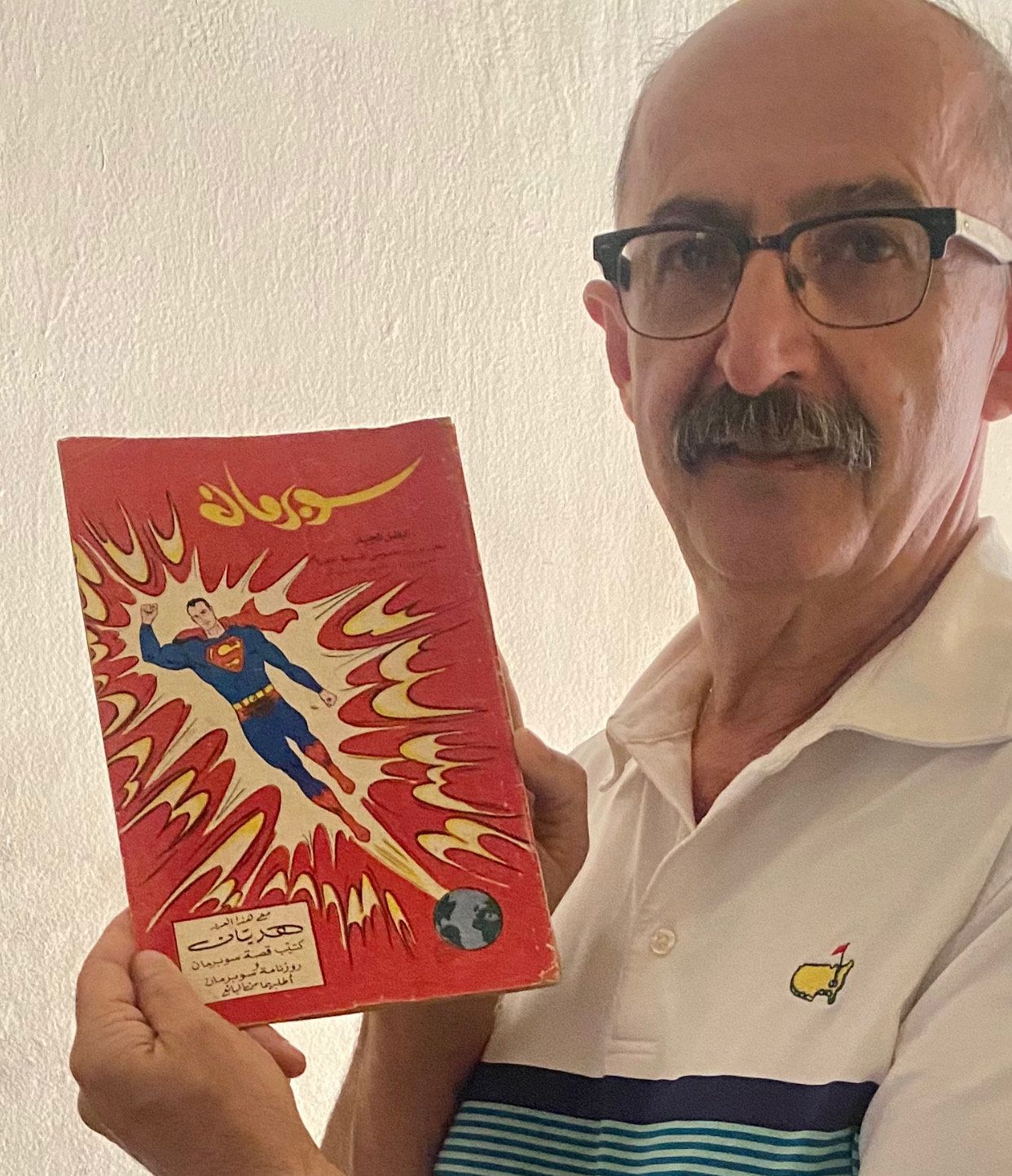
By now, most of this blog readers, know that my career in magazines started after falling in love with the ink and paper of the Lebanese first issue of the comic book Superman. Well, until recently, I did not how Superman made it to Lebanon in the 1960s of the last century. Howard Blue, the author of the new book The Man Who Sold Superman To The World, knew and documented how Superman made it to Lebanon and the rest of the world for that matter.
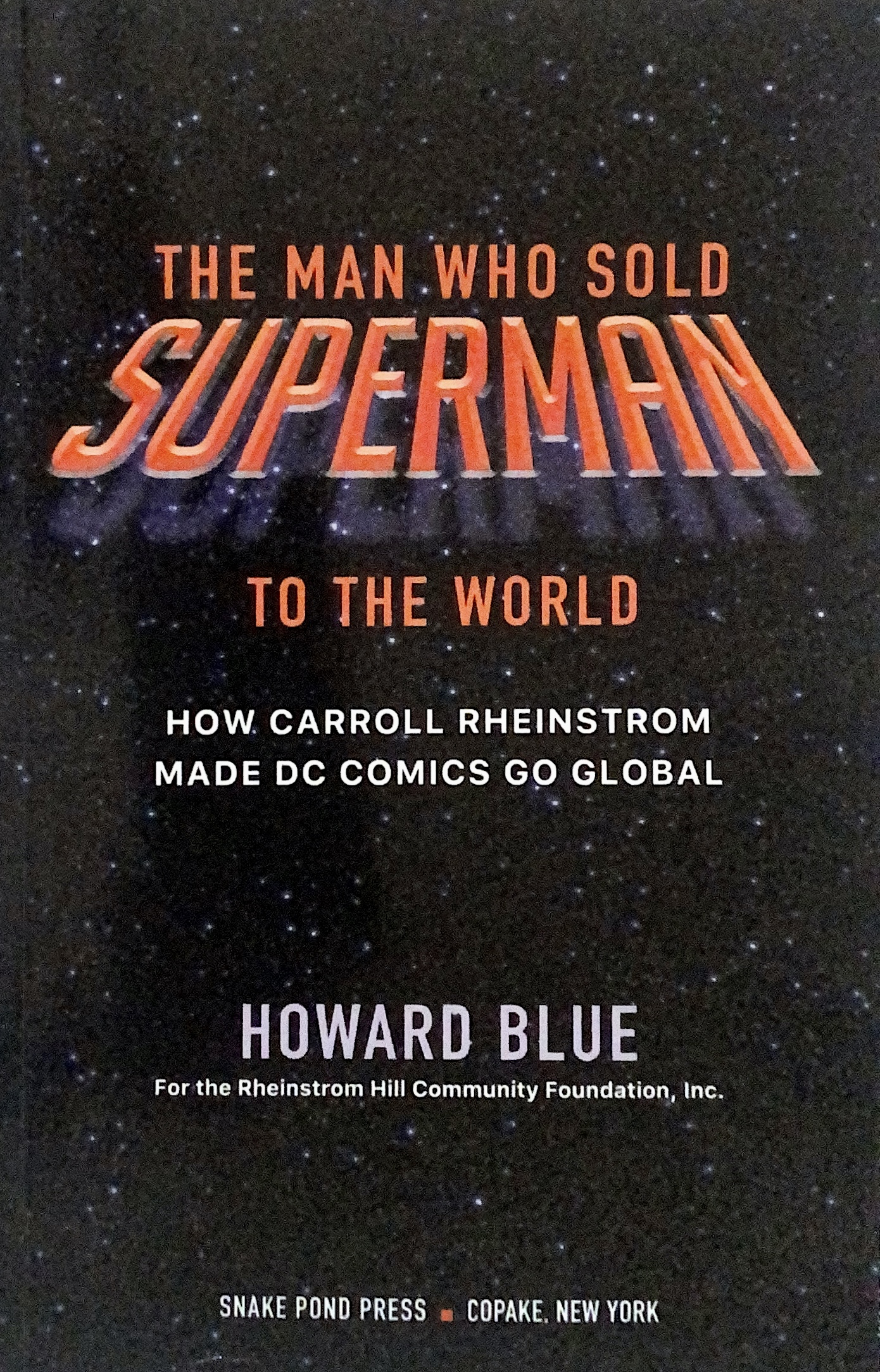
The Man Who Sold Superman To The World( front cover).
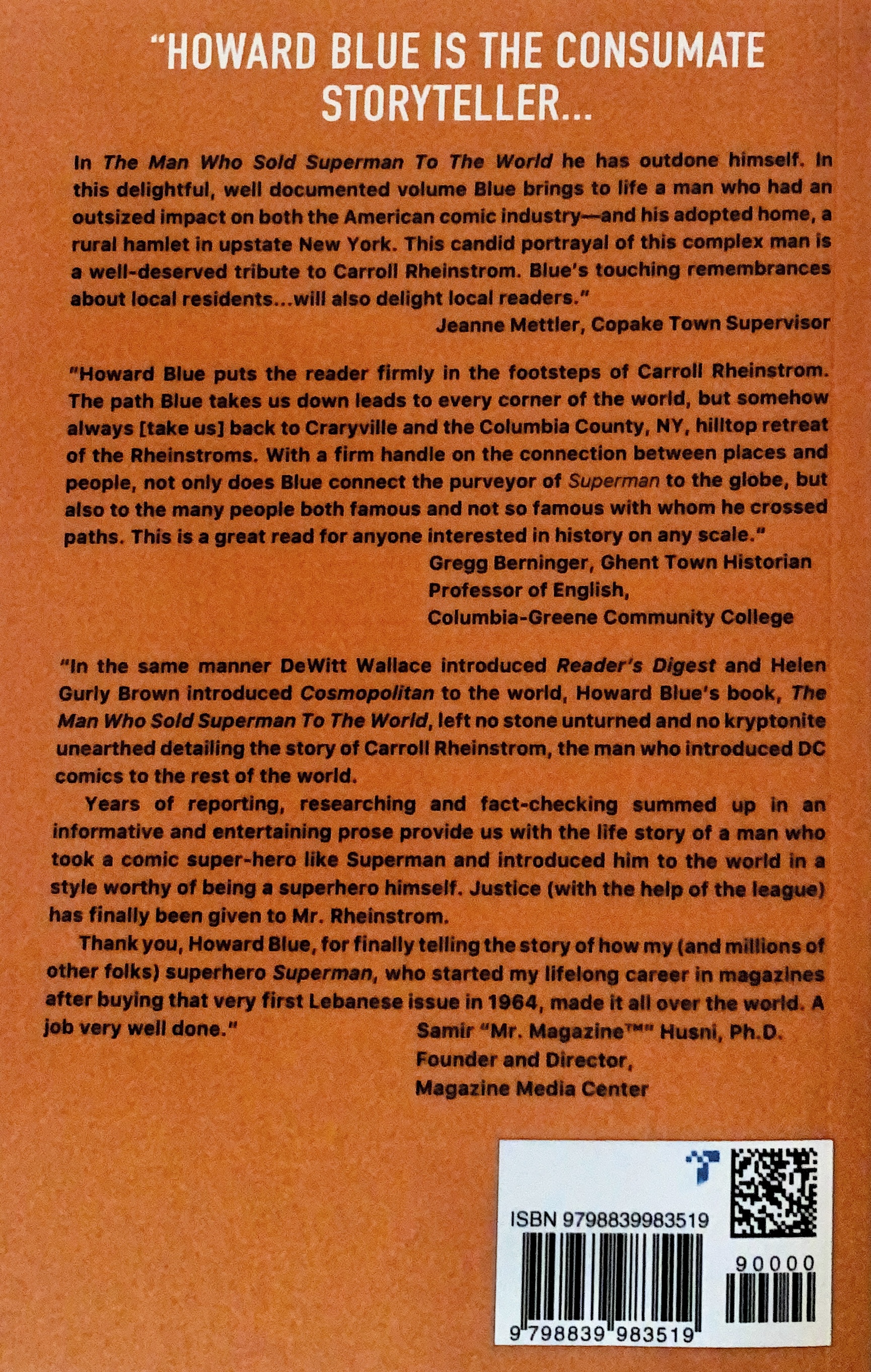
After reviewing the book, here is what I wrote and Howard thankfully used my review on the back of the book:
In the same manner DeWitt Wallace introduced Reader’s Digest and Helen Gurly Brown introduced Cosmopolitan to the world, Howard Blue’s book, The Man Who Sold Superman To The World, left no stone unturned and no kryptonite unearthed detailing the story of Carroll Rheinstrom, the man who introduced DC comics to the rest of the world.
Years of reporting, researching and fact-checking summed up in an informative and entertaining prose provide us with the life story of a man who took a comic superhero like Superman and introduced him to the world in a style worthy of being a superhero himself. Justice (with the help of the league) has finally been given to Mr. Rheinstrom.
Thank you, Howard Blue, for finally telling the story of how my (and millions of other folks) superhero Superman, who started my lifelong career in magazines after buying that very first Lebanese issue in 1964, made it all over the world. A job very well done.
Samir “Mr. Magazine™” Husni, Ph.D.
Founder and Director
Magazine Media Center
The Man Who Sold Superman To The World (back cover).
And here is part of what Mr. Blue wrote about my fascination with Superman in the book:
In Tripoli, Lebanon in 1964, ten-year old Samir Husni who became a dedicated fan of IP’s version of Superman (and who would in his professional life become known as Mr. Magazine) heard of it for the first time in a TV commercial when the famous phrase, “Look up in the air. It’s a bird it’s a plane, it’s Superman,” caught his attention. Saving up his weekly forty cents allowance, Samir crossed the street in front of his apartment and bought a copy in the neighborhood grocery store. Walking back home he had an almost magical experience, mesmerized as he read about the man from another planet…
The Man Who Sold Superman To The World is available on amazon.com by typing “Howard Blue Superman” you will land on the page to order the book. Highly recommended if you are a DC Comics fan and even more recommended if you are a Marvel Comics fan (as in know your enemy)… Enjoy
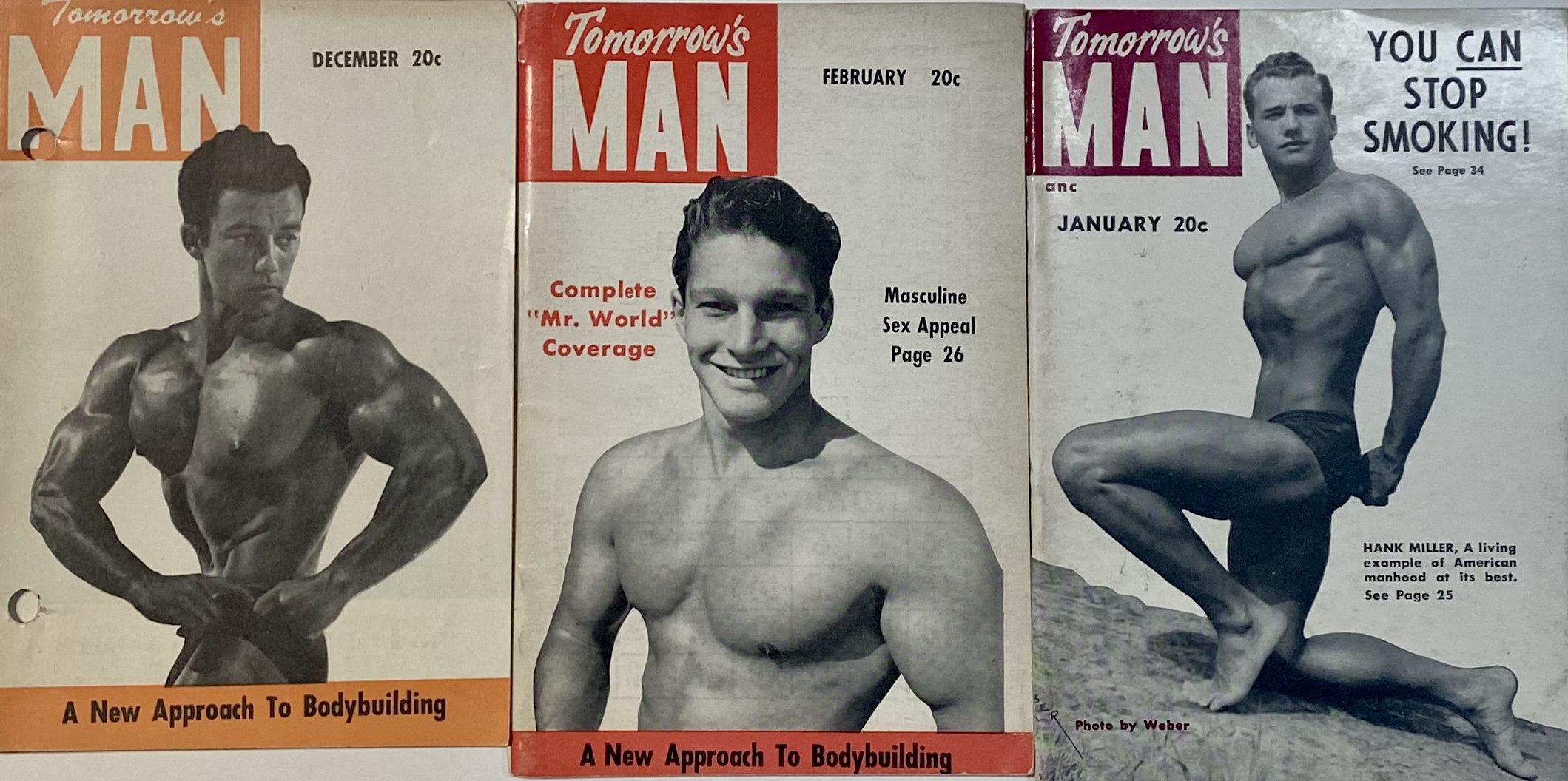
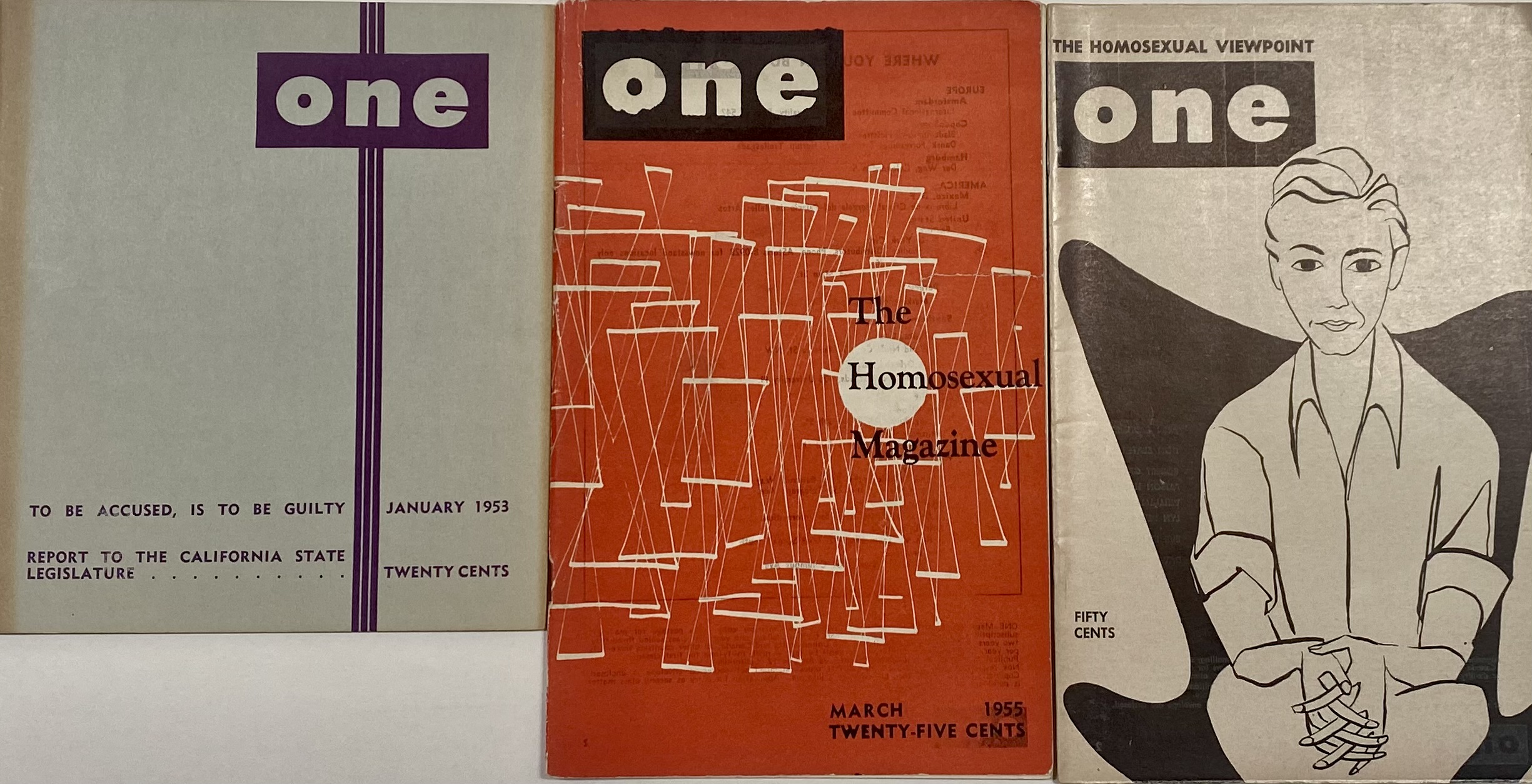
This is a story about what many consider the first two gay magazines in America. It is a bicoastal story for one (no pun intended) was born on the west coast and the other in the Midwest only to move at the ripe age of two to the east coast. Both died before they reached the age of 20 but the impact they left on the publishing industry and on their audience is unforgettable. One was out, and Tomorrow’s Man was in the closet.Onelaunched in January 1953 in Los Angeles and TM launched in December 1952 in Chicago. Onesold out of the 500 copies that it printed and TM skyrocketed to the largest selling bodybuilding magazine on the nation’s newsstands selling 100,000 a month. One labeled itself first as “The Homosexual Magazine,” and later as “The Homosexual Viewpoint,” andTM was labeled as “America’s first homosexual directed photo magazine.” One was published from 1953 to 1967 and TM was published from 1952 to 1971.
The genesis behind the idea for this blog (think of it as a preface to a possible book) is an article written by the editor of Drum magazine in 1965. What follows are excerpts of the aforementioned article:
The Story Behind Physique Photography
From Drum, October 1965, Volume V, Number 8
By Clark P. Polak
“The first issue had a scant 32 pages and measured a tiny 3-3/4 inches by 5-3/4 inches, selling at the then high price of 20¢. Today it has 48 pages and sells at the now low price of 35¢. Then was almost 14 years ago, the magazine was Tomorrow’s Man.
Conceived by Irvin Johnson in his Chicago Health Studio gym as an additional medium for promotion of his already successful high protein tablets, vitamin supplements and other so-called body building products, the first book was mailed to a few hundred enthusiasts.
But Johnson had bigger ideas for his little book. He managed to convince the monolithic American News Co. (now disbanded) that TM was really a body builder’s handbook and within two years his dream came to fruition with TM selling an amazing 100,000 copies per month.
The current best sellers, Strength and Health, plus many more of the ilk, were no competition to America’s first homosexual directed photo magazine, though TM has now dropped from its hey-day top. Others have now joined the bandwagon, but TM sales, always respectable, are again rising.”
So here are the facts about Tomorrow’s Man magazine (the older of the two by one month) and One magazine…
Tomorrow’s Man magazine:
Tomorrow’s Man magazine from the collection of Samir “Mr. Magazine™” Husni
Tomorrow’s Man
Dec. 1952
Vol. 1, No. 1
20 Cents
32 pages
3-3/4 inches by 5-3/4 inches
A New Approach To Bodybuilding
Published in Chicago, IL
Tomorrow is yours… pages 2 and 3
“You are standing on the threshold of a new life… a happier healthier existence. The men who cross this threshold will be stronger, more efficient men, ready to assume roles in the world of tomorrow. In a world torn by strife, the demand for greater strength of mind and body is not only pressing, it is vital.
Whether you take the challenge… whether you open the door or pass it by… depends on you. Tomorrow can be yours, but the choice is up to you.
This magazine is dedicated to that better tomorrow. It is dedicated to the young in spirit who will be tomorrow’s men. It is dedicated to men willing to accept something new and revolutionary…
Thus we dedicate this magazine to Tomorrow’s Man. In these pages you will find new ideas on building mental and physical strength. They are “new” only because they are just now coming into use. Actually, they are as old as common sense. But “old men” have refused to accept them since they do not conform to old teachings.
We think you will enjoy TOMORROW’S MAN. We hope it will help you find increased physical and mental strength. We know it can… if you’re young enough to accept a “young idea.”
AN OPEN LETTER
PAGE 5
THE Before and After pictures on pages 12 and 13 speak for themselves. They prove that the Johnson System really works.
The training program you undertake now will determine what you will be two or three months from now.
If you are really sincere, you can start your training now. Just send me a note saying “Send me full information about Johnson’s Scientific Body Building and Nutrition Course.”
IRVIN JOHNSON
22 E. Van Buren
Chicago, 5, Ill.
Table of contents is on page 7 with Irvin Johnson listed as editor and publisher. The magazine is published monthly with a subscription price of $2.00. Cover price 20¢.
One magazine:
One magazine from the collection of Samir “Mr. Magazine™” Husni collection
One magazine
“… a mystic bond of brotherhood makes all men one.” — Carlyle
Vol. 1, No. 1
January 1953
Published monthly.
20 Cents per issue, two dollars a year.
6 inches by 7 inches
28 pages
Published in Los Angeles, CA
Editorial Board: Martin Block, Dale Jennings, Don Slater. Contributing Editor: Donald Webster Corey. Business Manager: William Lambert. Circulation Manager: Guy Rousseau.
Letter to you:
ONE is a non-profit corporation dedicated to the service of humanity. Its hopes are high. Its plans ae big, but the moral support and practical backing of ONE’s readers must be had, if it is to go forward and achieve great things. There must be many and substantial financial contributions for supplies, for printing, for legal counsel, for equipment needed. The subscription rate cannot cover the cost of production, and advertisers brave enough to support such a publication may be few for some time to come.
If you cannot personally with us working side by side, your check or money order will put you into the front line. Let us show the world what we can do. It is now up to you, ONE’s readers, for this magazine will continue to go forward as fast you permit.
THE EDITORS
Page 3
In the June 1953 issue of One the price became 25¢ by now and the total pages still at 28 and the subscription is $2 a year.
On the inside front cover this was written:
“Everyday come orders for those two historic issues, One’s first and second, January and February 1953.
Everyday we regret we had only enough cash to print five hundred copies each.
Everyday we say, “The minute we get a little ahead, let’s reprint those two.” Then the printer, paper-supplier, binder and plate-maker all gleam with high-priced delight….”
On the last page of the June 1953 issue One identifies itself as such:
“ONE is a non-profit California corporation formed, “to publish and disseminate a magazine dealing primarily with homosexuality from the scientific, historical and critical point of view, and to aid in the social integration and rehabilitation of the sexual variant.” It is also “concerned with medical, social, pathological, psychological and therapeutic research of every kind and description pertaining to socio-sexual behavior,” and aims “to promote among the general public an interest, knowledge and understanding of the problems of such persons.”
One: The Homosexual Magazine tag line appeared for the first time on the cover of the January 1954 issue and was later changed in 1957 to The Homosexual Viewpoint.
Tomorrow’s Man was heavily driven by photography, largely semi-nude man posing in different forms of bodybuilding. One, on the other hand, was text heavy with very little photography used.
To be continued…
Comments, ideas, responses, feel free to email me at samir.husni@gmail.com or comment in the space below.
Samir “Mr. Magazine™” Husni, Ph.D.
Founder and Director
Magazine Media Center
Preserving the past, present, and future of magazine media.
Defining a magazine, to some, is a very mercuric issue. To others, it is a clear cut definition. During some recent readings, I came across this definition from the book Magazines In The United States published in 1956. However, the definition is from 1908.
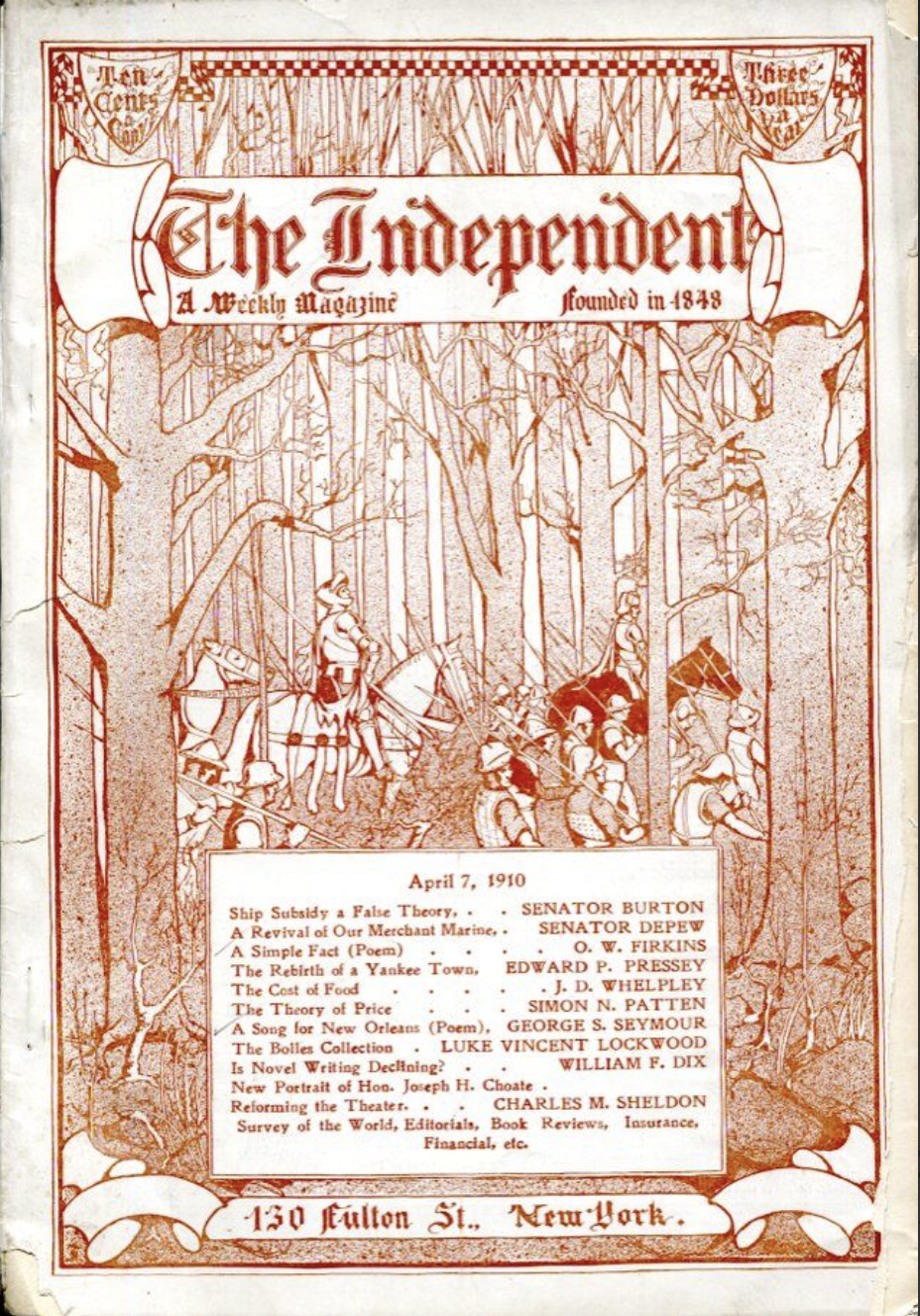
An issue of The Independent from 1910 for illustration purposes only…
What is a magazine? A definition from The Independent October 1, 1908
Early in the twentieth century The Independent, at the time a powerful weekly, could say editorially: “Modern American magazines have to a large extent fallen heir to the power formerly exerted by pulpit, by crowds, parliamentary debates and daily newspapers in the molding of public opinion, the development of new issues, and dissemination of information bearing on current questions.”
The Independent editorial writer expanded his argument by specific illustrations: “The magazine represents intellectual activity in its terminal buds. Its function is to work over old plots into new stories; to rewrite biography and history in accordance with the taste of the time, to resurrect forgotten truths, to make sound information palatable, to convert abstract science into applied science, to throw a searchlight into dark corners of the earth and some spots of our civilization, to start new movements and to guide old ones, to wake up people who are asleep by sounding the burglar alarm, to twist around the heads of those who are looking backward over their shoulders; in short, to inspire, to instruct, to interest.”
Quoted from Magazines In The United States, Second Edition, by James Playsted Wood. Published by The Ronald Press Company, New York. Page 197.
I was interviewed by Ashley Norris for FIPP website as part of his series of interviews with the speakers at the FIPP Congress in Portugal, June 7 to 9.
I found my match. Doug Bitto, the principal of Advantage Circulation Consulting, LLC. is as big of a magazine junkie as I am. He also is a firm believer that if it is not ink on paper, it is not a magazine. He describes himself as a bit of a pop culture junkie. “Magazines have fascinated me ever since I was very young,” he told me, “so it’s no surprise that I gravitated towards the business.”
Doug’s formula for a successful magazine is relatively simple as he says: “The underlying formula for all successful print magazines is relatively simple: Passion combined with deep knowledge, framed within the greater cultural understanding (i.e. what people actually want to read and buy at this particular moment in time).”
So with that in mind, and after a chat with Doug, here is the Mr. Magazine™ interview: Enjoy.
Samir Husni: During our chat, I felt I found my match in a person who believes in the power of print, can you please explain why?
Doug Bitto: When a print magazine is produced and distributed, it is a permanent snapshot of a culture. It cannot be changed, to be reviewed and scrutinized for decades (or even centuries) after being produced. A digital “magazine” on the other hand can be altered and the original message lost forever, including the advertising which is an essential component of cultural understanding. In addition, print is much more effective than digital in conveying a message because more of our senses are used when interacting with print. When was the last time anyone smelled their iPad?
S.H.: You run a circulation consulting company, do you mind expanding some of what your company does and your role running it?
D. B.: We have evolved into an end to end consulting firm over the last 20 years. In addition to the physical nuts and bolts aspects of newsstand distribution and management, we have expanded to include consulting on product development, working very closely with editors and designers. One of our strengths, I believe, is our ability to successfully recognize cultural trends and how they are applicable to our clients.
As far as my role is concerned, I wear many hats. At the end of the day, however, it’s about ensuring that I successfully guide my clients.
S. H.: Small, regional, and new niche magazines are your specialty. Why and do you think there is still room for new magazines in this digital age?
D. B.: Culture is constantly changing but much like radio, print will always be around. One trend we are seeing post-pandemic is the return to traditional media, as discussed in a recent article by Harvard Business Review https://hbr.org/2022/04/why-marketers-are-returning-to-traditional-advertising. Personally, I have not “seen” a digital ad in years, much less clicked on it. And if I find myself on a website that has pop-up ads (or worse yet, autoplay ads) I immediately click out without even looking. Not only are they annoying, they can actually create physical stress. Multiple studies have shown this. As the article states, people are becoming “ad blind” digitally due to these factors.
Print on the other hand is relaxing. And if ads are well curated, they fit seamlessly within a print magazine. I hate to break it to the digital ad folks out there but from a practical standpoint, print ads are far superior. When you turn the page of a print magazine, you HAVE to look on the next page. Ad blindness is almost impossible.
Advertising aside, magazines are rapidly turning into higher quality, higher dollar items with very little or no advertising. Again, not a new trend, but it is accelerating. And people are willing to pay for this experience. Out of the six new title launches we have recently launched or are launching over the next few months, four fall into this category. All are high quality in content and physical presentation. All are between $12.99-$14.99US, $14.99-$19.99CAN.
S. H.: Define a magazine for me.
D. B.: I take a traditional approach. Mirriam-Webster’s first entry is how I would define a magazine:
Definition of magazine
1a : a print periodical containing miscellaneous pieces (such as articles, stories, poems) and often illustrated
A digital publication is not a magazine, even though our culture is now defining many forms of media as a “magazine”. A different term should be used to describe a digital only publication.
S.H.: Can you share a success story of a new launch that you consulted on, and can you share one that failed?
D. B.: I would like to speak in general terms first.
The underlying formula for all successful print magazines is relatively simple: Passion combined with deep knowledge, framed within the greater cultural understanding (i.e. what people actually want to read and buy at this particular moment in time). A product that not only informs and inspires, but entertains. Especially with niche and hyper-niche titles, readers are more than likely to be passionate experts in their own right. They are looking for knowledge above and beyond what they possess. The “formula” does not guarantee success but without its understanding, failure is guaranteed. The most successful publishers have an innate understanding of this.
Regarding a successful launch, we have one title in the Sports Category that was basically a “gear” catalog when first presented to me. At launch it was approximately 40% catalog, not including additional advertising. But the content was excellent. The launch issue sold 51%. They have since expanded their content extensively but to this day their best selling issue of the year is always the “gear review” issue. Again, the publisher is one of the top experts in his field. And readers trust that the message being printed and products being presented are high quality.
Now for the really bad failure. When I first started consulting over 20 years ago I signed a lifestyle magazine whose only concern was ad dollars, as I came to find out later. Content was secondary. Lowsingle digit sales on the launch issue. And when I say low, I mean LOW…3%. Naturally, they did not last for more than a couple of issues.
S. H.: Anything else you would like to add.
D.B.: It may sound ridiculous in the digital age but nothing has really changed on the newsstand side of the business since its inception. Print magazines are produced and sent through distribution channels to retail. I believe that this industry has in many respects lost sight of the fundamentals. We cannot forget that this is an organic business and the most important people within the distribution channel are the merchandisers. Proper title placement and rotation are absolutely essential. Without merchandisers who understand how to merchandise magazines as the unique products that they are, the industry suffers.
On the publishing side, I foresee almost all of the large publishers eventually going digital with print being reserved for special issues, and small independent publishers launching at an increasing rate. This movement started more than a decade ago but it will accelerate and become more prevalent in the future. Driven, ironically enough, by the digital age and the increasing ease of publishing in print.
S. H.: What keeps Doug up at night these days?
D. B.: Without question, the health of the newsstand distribution industry. With costs rising and large publishers continuing to go digital only, all levels are being squeezed. That being said, I am actually very positive about the future of newsstand. There will undoubtedly be more pain to come, but I believe that this industry will survive.
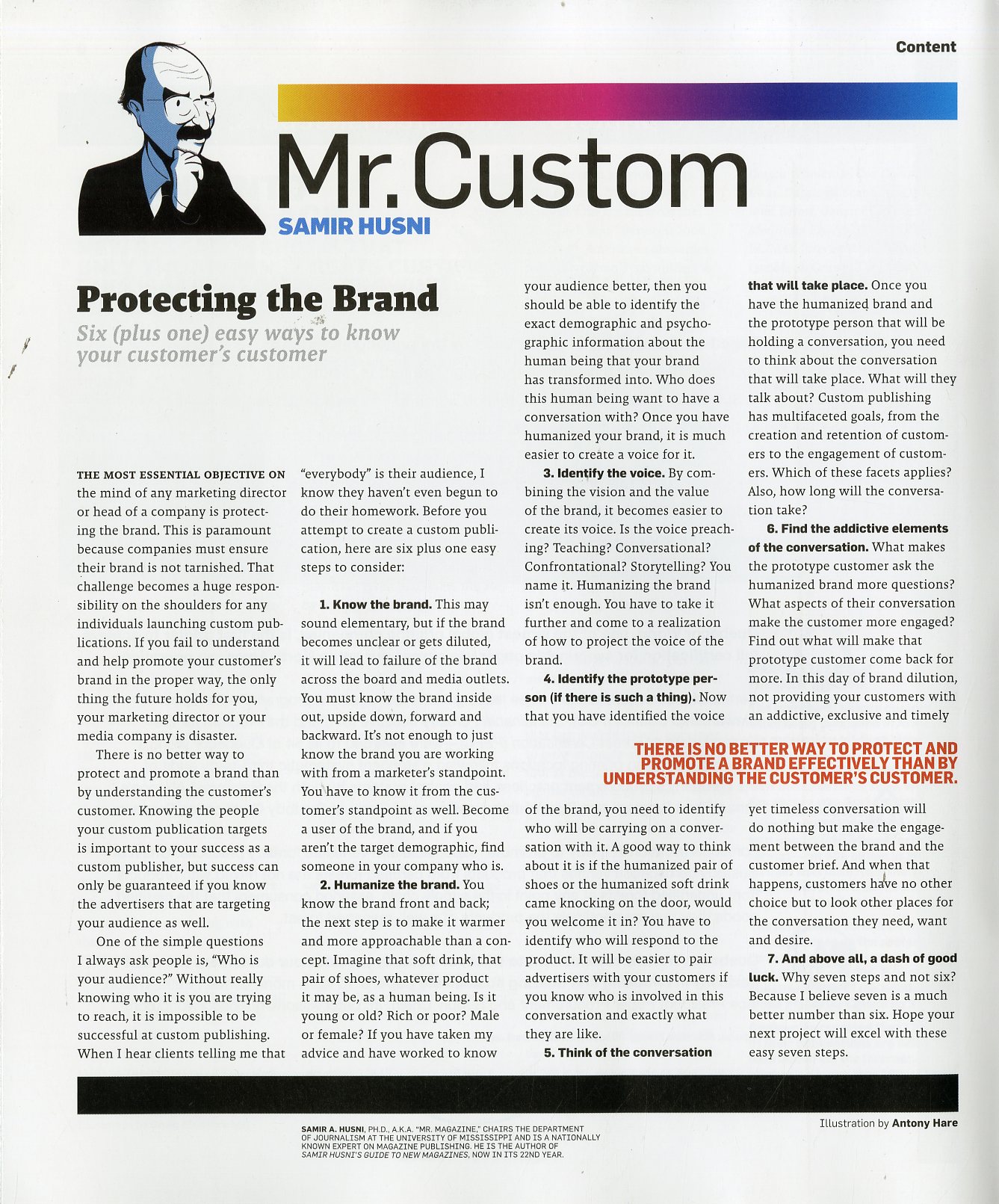
The following is a column I wrote for Content magazine back in 2008. Although it has been 14 years since I wrote it, I still stand by every word in it. Enjoy this journey through the Mr. Magazine™ Vault.
Protecting the Brand Six (plus one) easy ways to know your customer’s customer
Content Magazine Issue 03 Spring 2008
The most essential objective on the mind of any marketing director or head of a company is protecting the brand. This is paramount because companies must ensure their brand is not tarnished. That challenge becomes a huge responsibility on the shoulders for any individuals launching custom publications. If you fail to understand and help promote your customer’s brand in the proper way, the only thing the future holds for you, your marketing director or your media company is disaster.
There is no better way to protect and promote a brand than by understanding the customer’s customer. Knowing the people your custom publication targets is important to your success as a custom publisher, but success can only be guaranteed if you know the advertisers that are targeting your audience as well.
One of the simple questions I always ask people is, “Who is your audience?” Without really knowing who it is you are trying to reach, it is impossible to be successful at custom publishing. When I hear clients telling me that “everybody” is their audience, I know they haven’t even begun to do their homework. Before you attempt to create a custom publication, here are six plus one easy steps to consider:
1. Know the brand. This may sound elementary, but if the brand becomes unclear or gets diluted, it will lead to failure of the brand across the board and media outlets. You must know the brand inside out, upside down, forward and backward. It’s not enough to just know the brand you are working with from a marketer’s standpoint. You have to know it from the customer’s standpoint as well. Become a user of the brand, and if you aren’t the target demographic, find someone in your company who is.
2. Humanize the brand. You know the brand front and back; the next step is to make it warmer and more approachable than a concept. Imagine that soft drink, that pair of shoes, whatever product it may be, as a human being. Is it young or old? Rich or poor? Male or female? If you have taken my advice and have worked to know your audience better, then you should be able to identify the exact demographic and psychographic information about the human being that your brand has transformed into. Who does this human being want to have a conversation with? Once you have humanized your brand, it is much easier to create a voice for it.
3. Identify the voice. By combining the vision and the value of the brand, it becomes easier to create its voice. Is the voice preaching? Teaching? Conversational? Confrontational? Storytelling? You name it. Humanizing the brand isn’t enough. You have to take it further and come to a realization of how to protect the voice of the brand.
4. Identify the prototype person (if there is such a thing). Now that you have identified the voice of the brand, you need to identify who will be carrying on a conversation with it. A good way to think about it is if the humanized pair of shoes or the humanized soft drink came knocking on the door, would you welcome it in? You have to identify who will respond to the product. It will be easier to pair advertisers with your customers if you know who is involved in this conversation and exactly what they are like.
5. Think of the conversation that will take place. Once you have the humanized brand and the prototype person that will be holding a conversation, you need to think about the conversation that will take place. What will they talk about? Custom publishing has multifaceted goals, from the creation and retention of customers to the engagement of customers. Which of these facets applies? Also, how long will the conversation take?
6. Find the addictive elements of the conversation. What makes the prototype customer ask the humanized brand more questions? What aspects of their conversation make the customer more engaged? Find out what will make that prototype customer come back for more. In this day of brand dilution, not providing your customers with an addictive, exclusive and timely yet timeless conversation will do nothing but make the engagement between the brand and the customer brief. And when that happens, customers have no other choice but to look other places for the conversation they need, want and desire.
7. And above all, a dash of good luck. Why seven steps and not six? Because I believe seven is a much better number than six. Hope your next project will excel with these easy seven steps.
Until next time… all my best
Samir “Mr. Magazine™” Husni, Ph.D.
Founder and Director
Magazine Media Center
Preserving the Past, Present, and Future of Magazine Media
Our Wisconsin magazine is approaching its tenth anniversary in 2023. In its second issue there was an editorial talking about the “joys of magazine publishing.” I found myself emailing my friend Roy Reiman, Publisher of the new magazine Our Wisconsin, and Mike Beno, the magazine editor, to ask their permission to reprint parts of the introduction to the second issue of the magazine. So without any further ado, here is an excerpt from the February/March issue of Our Wisconsin magazine:
In magazine publishing, there’s nothing more exciting than the “launch.” Not many other things in business come close to this kind of adrenalin rush. You begin by coming up with an idea or concept for a magazine you feel is “entirely different”. You’re sure potential subscribers have never seen anything like this before. So you spend months (in our case, we began last spring) planning the format, the design and mostly the content. And then you start gathering that content…which isn’t easy when you don’t have a publication to showanyone. You just have to wave your hands a lot and write lengthy descriptions of what you plan to do. Then you pull all this together…sort through hundreds of pictures and ideas for articles (some terrific, some not even close)…write and design 68 pages…and finallyput the first issue on the press, printing enough to “test the market”…. And then you wait. And it drives you crazy. You wait for more than a week for the first response…any response, to see what total strangers think of your “baby”. “Inventing” a magazine is much more personal than inventing a lawn mower or a toothbrush. It’s more revealing of who you are; it’s an extension of your personality. There’s a lot of you between those pages. So the fear of rejection is greater. After you put that sample issue in the mail, you’re like a field goal kicker with the game on the line, with its heel or hero element. So you wait as the ball sails…for a long week or more. If, when the early responses begin trickling in, you learn readers don’t like the first issue, it hurts. To a degree, it’s as though you learned they don’t like you. But when you learn they like it–and some people even say they love it–wow! That ball is sailing through the middle of the uprights, and every subscription is a pat on the back.
I love magazines, and I love magazine launches even more. That is no secret. So, when I acquire a new magazine or read a story about a magazine launch, the urge to share my love with the whole wide world is overwhelming.
A revised copy of the aforementioned blog was first published on March 30, 2013.
Today, I am the proud grandpa of seven bundles of joy. The youngest, Sophia, just turned one and the oldest Elliott is now 14. When Michael, my second grandchild, was born I wrote a blog on April 26, 2011 that is as true today as it was 11 years ago… here is a repost of that blog. Enjoy.
I am sure you’ve heard this simile before: “Launching a new magazine is like giving a birth to a new baby.”
Well, I had the opportunity to put this simile to the test this month, and I promise this will be one of the very few times I bring personal and family issues to the blog. But as long as it is relevant, I figured why not?
My second grandson was born April 8. Baby Michael had difficulty breathing on his own (which meant we all had difficulty breathing). So, for ten days or so, the joys of birth turned into the agony of survival; and that my friends, is what led to this particular topic — the life cycle of new magazines.
When I have heard people use the aforementioned simile, I used to take it for granted.
However, I gave it a lot of thought during the past three weeks, and decided to compare human life with the life of a new magazine. After all, I have been preaching and teaching the importance to humanize media, particularly print, for years now. Without any further delay, here are the life cycles of a new magazine:
The Joys and Pleasures of Conception Consider the A-HA! moment when you get the idea for a new magazine and the pleasure you feel, the joy that makes you rush and share the news about your idea with others. It is the same as the pleasures of making love hoping to conceive and have a baby.
It is the act of conceiving that brings all the joy and pleasure to the couple, the same as the act of coming up with an idea you think is going to be worth a million bucks! Many folks call me or email me daily with ideas they just conceived and want to share the news, seek advice or start the planning process of the “birth” of this new baby. It is rare during this stage that any negative thoughts come to mind. It is all about new beginnings and the joy of the moment at hand.
The Pains of Labor Giving birth is not as much fun as conceiving. It does not take a genius or even a man to understand that. Women know it and feel it. Giving birth is hard labor, but the pains of labor are an important part of the life cycle of that newborn, whether a human or a magazine. After months of nurturing and tender loving, the time comes to give birth.
The pains of labor are well-documented and need no explanation. Getting that first issue out, meeting the deadlines and hoping all is A-OK are all part of the life cycle. It is the same with the mother and baby. You have to go through the pains of labor before you are able to enjoy and celebrate the birth, which leads us to the next stage of the life cycle of new magazines.
The Celebration of Birth While the pleasures of conception may last a few moments, the celebration of birth is supposed to last a lifetime. With a new birth, you are only thinking positive thoughts, happy thoughts. Excitement is in the air and all around you. You are so proud of your new baby, new magazine.
You check every part of the baby; you check every page of the magazine. In most cases, you are there at the printer waiting for that first signature to come out from the presses. You hold it in your hands exactly like a mother holds the baby for the first time. Birth means celebration. Your future freezes at the present moment and the world gets reduced to your surroundings and the new creature (baby or magazine) at hand. You do not want any interruptions of that moment of celebration.
Then, as if lightning strikes, reality hits — and all of a sudden, you are not alone. You discover that the joy of celebration is just the beginning to the next step of the life cycle of the newborn — the fight for survival.
The Fight for Survival It is a jungle out there. There are so many magazines and there are so many babies in the world. You have to carve your own niche. If the baby can’t breathe on his or her own, your entire world stops. You change course and plans. Your new magazine is out, but now you have to put it in the hands of the distributors. The tender, loving care you’ve given your new creation is no longer in your hands. Someone else is in charge.
You feel like you are losing control, and the doctors — the distributors — are in charge of that newborn. The baby must fight for survival. The new magazine must fight for survival.
The big difference here is new babies, thank God, have a much higher survival rate that new magazines. Here is where the similarities end: Survival rate for new magazines is less than two in 10 after four years of publishing.
Thank goodness for human life. We age much better than magazines, but in both cases we have to start the journey of life. The Journey of Life As in any creation, life does not stop at birth. Life continues, day after day, issue after issue. The journey of new magazine launches starts slow, very slow, and progresses as those new magazines try to develop customers who count, thus giving the magazine a long journey in life.
Folks in our publishing industry now plan their new launches around the 11-to-13-year life span: Three years to establish the magazine and lose money in the process of building the magazine base; four years of solid growth and money making; three to five years of reaching a plateau and one final year to prepare the demise of the publication.
Thank God the journey of life for new babies is not the same as the journey of life for magazines. The simile ends with the beginning of life. The journey, my friends, is a completely different story. Let the never-ending story begins.
For the record, this blog has been approved by Mr. Magazine Jr.™ and big brother to baby Michael, Mr. Elliott himself.
Welcome to the wonderful world of new magazines. And by world, I mean literally, the world. Here are four new magazines from Canada, China, England, and France, all in English and all are a clear testimony of the intimacy of the ink on paper and their creators. Thanks are in order to my friends at www.magculture.com who on a regular basis supply me with a host of new magazines from their store in the UK.
It used to be said that ideas come by the dozen and they are worth a dime; it is the execution of the ideas that count. Here are four very well executed ideas as introduced by their creators:
Chicken + Bread
From The United Kingdom
Editor in Chief Hope Cunningham writes in the intro of the first issue:
Chicken + Bread is a platform created to document food stories and histories that centre people of colour, especially those in the UK. Our contributions to food continue to change what we perceive to be “English” and this is certainly the case for various communities around the world and throughout history…
And this issue you in your hands is rooted in nostalgia too; fulfilling my lifelong dream of creating my own magazine. After many years of doubting, I’ve finally done it. I hope you enjoy, or, as the French say, bone apple tea.
Check it out at chickenandbread.com
Serviette
From Canada
Founder and Editor at Large Max Meighen writes in the intro of the first issue:
Hello and welcome to the inaugural issue of Serviette Magazine. For those who are unfamiliar with word “serviette”, it’s Canadian vernacular for a napkin… Whatever the circumstances, you can be certain that wherever there’s food, a serviette is close by.
To that same sentiment, Serviette is a magazine about food, but not just about the food we eat. It’s about the themes, ideas, conversations, an connectivity around the cycle of our food: the language, culture and transformative possibilities of the future of our food; the journey it takes from seed to stomach, and all of the people who helped it along its way.
Thank you so much for reading and supporting independent publishing. We wouldn’t exist without you.
Check it out at serviettemag.com
Overseas
From France
Editorial Director Andrea Casati writes in the note To Our Readers:
It all started with the waves. The waves of desire, the waves of passion. Overseas is a journey inspired by a challenge, a vision, a will: to tell the story of basketball from perspectives different than the canonical North American narrative. It wasn’t easy to start-out and sail, it wasn’t easy to face the fear of the unknown. But moving from port to port, from meeting to meeting, we understood that the route was the right one, yet not obvious.
Overseas is a pilgrimage in a basketball rooted I local cultures, an immersion int eh sea of superficiality and generalisation that continues to impoverish a movement with infinite facets, infinite meanings, infinite connections. Addition over subtractions. Complexity over banality…
Thank you for riding the wave of curiosity with us.
Check the magazine out at overseas-mag.com
Noisé
From China
Editor in Chief and Creative Director Tang Siyu writes in the intro of the first issue:
Noisé is a dream and an urge.
It’s about good stories that last.
It’s about visions and sensations that do not diminish.
It’s about true beauty, whether inside or outside.
It’s about trusting our instincts and breaking the rules.
It’s about our faith that people with a gift and people with a dream will shine.
So what are you waiting for? Head to your nearest magazine store and pick up a copy of a brand new magazine. There is no more intimacy than holding an ink on paper magazine in your hands. Wake up and smell the ink on paper. It is divine. Enjoy.
Keeping on track with the first quarter of 2021, a total of 29 magazines were available at the marketplace (whether at the newsstands or available via digital newsstands selling print). The magazines were as diverse in their subject matter and content as anyone can imagine.
Those new titles ranged in topics from Divorcing Well to In Her Garden, from Aspiring who launched its first national issue after being a regional magazine, to Al-Hayya a bilingual magazine in Arabic and English aimed at Arab women all over the globe. Ebony made its return to print with a special issue and Bavual made its debut after a preview issue earlier last Fall. Hills Views & Valleys is attempting to redefine luxury, while Reed is attempting to redefine design.
Of note the return of sex magazines to the marketplace. Nine of the 29 titles were sex titles as you can see in the pictures below.
Keep in mind that if it is not ink on paper, it is not a magazine in my book, and if I do not have a physical copy of the magazine it is not on the list.
Here are the titles that I was able to find in the first Quarter of 2022. Enjoy.