Archive for the ‘Inside the Great Minds of Magazine Makers’ Category

h1

Meredith’s Magazine President Doug Olson To Samir “Mr. Magazine™” Husni: “In Its Simplest Form, My Elevator Pitch Is We’re Playing To Win Versus A Lot Of People Who Are Playing Not To Lose.” A Mr. Magazine™ Exclusive First In-Depth Interview With Doug Olson.

March 10, 2018

A Mr. Magazine™ Exclusive

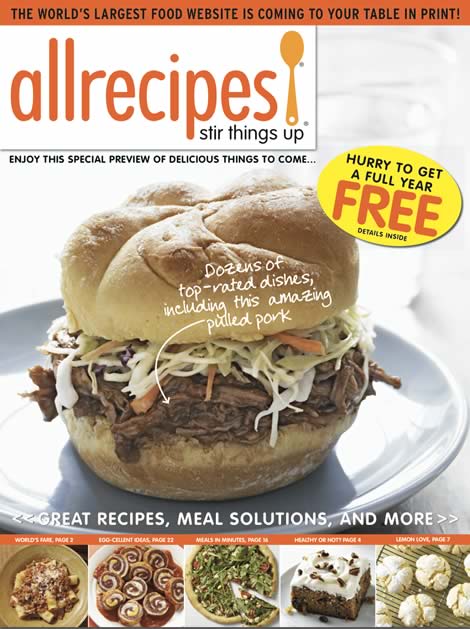
“We’ve made a pretty big bet that magazines are not going out of style with our acquisition of the Time Inc. portfolio of brands. We continue to be very excited about the future of these brands in all platforms, whether it’s in print or digital or social. Allrecipes is a perfect example of one of the brands that we took from digital and turned it into print, so obviously it has a very large footprint in digital, but the print continues to grow.” Doug Olson…

“At the end of the day, I think the beauty of the new Meredith Corporation is that we understand there is some transitioning or shifting going on, but we believe we’re in a place to participate in that too. But at the end of the day, if you want to reach consumers in a very credible way, we also have these big brands that have lots of tentacles on them, including a very large print footprint. It’s really interesting to me that a lot of these social media people keep coming to us because they want to have a print presence, because it legitimizes their social standing. If they can see it in print, it confirms that they made it.” Doug Olson…

As a diversified, publicly-held company, Meredith Corporation encompasses a vast array of magazines and magazine media entities that vary from its female-oriented consumer brands, such as Allrecipes and Better Homes & Gardens, to its expanded reach through acquisitions and strategic partnerships, such as its recent purchase of Time Inc. Meredith is now the largest magazine media company in the country.

Meredith’s Magazine President Doug Olson, is excited about the incoming titles that Time Inc. brings to the table, and is ready to roll up his sleeves and get busy. The future looks very bright indeed for Meredith and the additional family members it has brought into the fold.
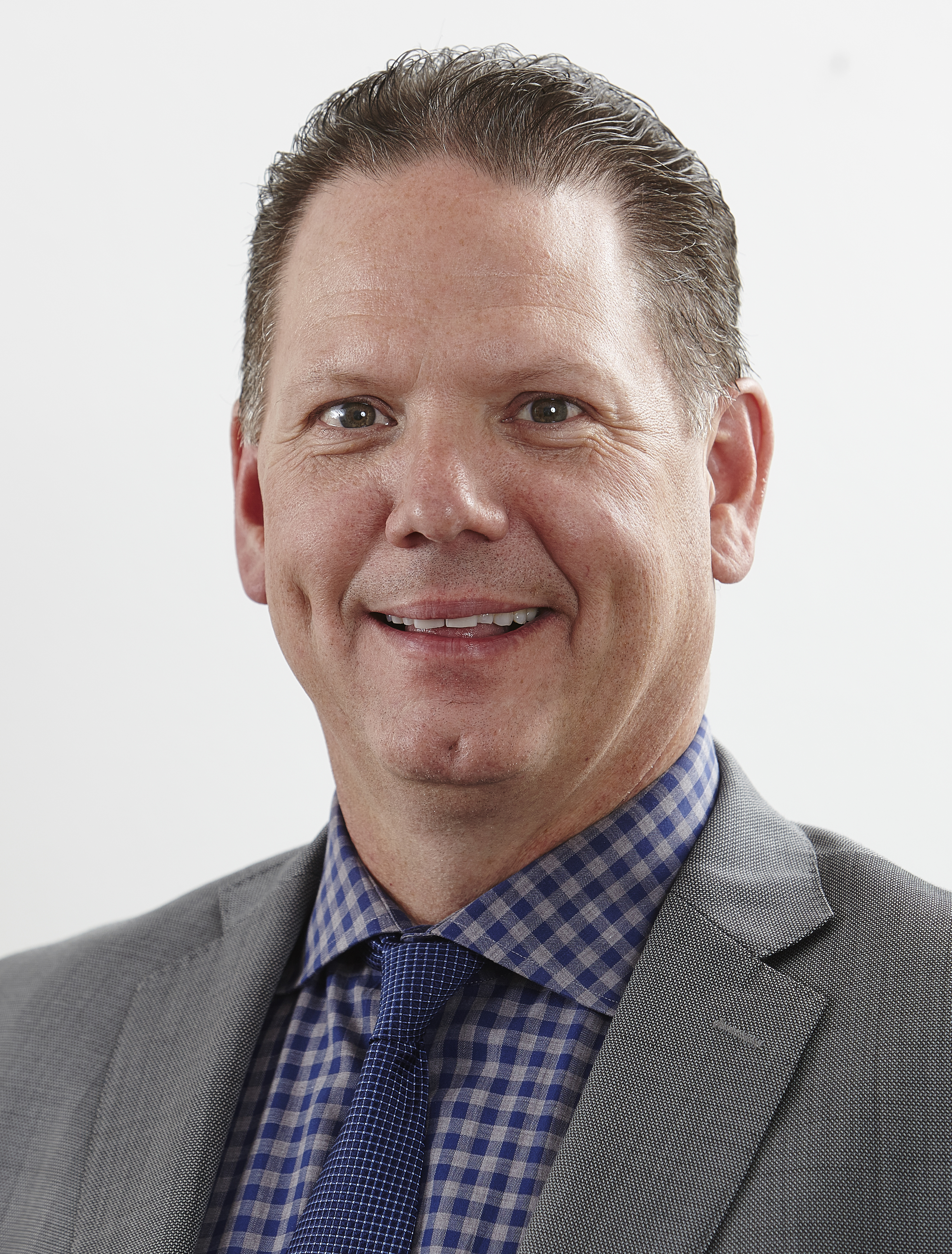
I spoke with Doug recently, for his first in-depth interview, and we talked about the Time Inc. acquisition and about the legacy Meredith and what this new endeavor could and would mean for the company. Doug is a firm believer in print, and he’s also an advocate for digital and all of its many extensions, from social media to online. And for the partnerships that pump new blood into the legacy company that keeps defying the odds and launching new print magazines, many of them from former digital-only entities. In Doug’s own words: “If they can see it in print, it confirms that they made it.” Print Proud Digital Smart, indeed.

So, I hope that you enjoy this conversation with a man who believes in his brands, all of his brands, both new and old, and believes in his company and says the differentiator between Meredith and many others is, Meredith doesn’t just play to not lose, Meredith plays to win – the Mr. Magazine™ exclusive interview with Meredith’s Magazine President Doug Olson.

But first the sound-bites:

On whether he thinks magazines are really going out of style or if there’s been a rebirth: Honestly, we’ve made a pretty big bet that they’re not going out of style with our acquisition of the Time Inc. portfolio of brands. We continue to be very excited about the future of these brands in all platforms, whether it’s in print or digital or social. Allrecipes is a perfect example of one of the brands that we took from digital and turned it into print. It obviously has a very large footprint in digital, but the print continues to grow. While the Magnolia Journal gets a lot of press these days, the Allrecipes brand has been very successful as well, especially given its origin within digital. It’s up to almost 1.3 million subscribers; it’s one of the brands that has been meeting its numbers every single year since we launched it.

On how he feels going into the marketplace knowing that Meredith is now the number one magazine media publisher in the United States: We think we’ve been the efficient operator in the marketplace for some time and that’s one of the reasons that we got the opportunity to own these great brands. But we understand our standing in the magazine world, if you will, has changed. It’s one that we embrace; we certainly respect it. But at the same time, we’re going to keep doing what we’ve been doing. We think we do a lot of X’s and O’s, blocking and tackling, just back to the basics to help advertisers sell more products or get their brand messages out to consumers. And that’s what we’ve done since the beginning on this thing, and that’s what we’re going to continue to do.

On how it feels to be in charge of the largest group of magazines in the country: It feels great. There are really five of us that have worked on this for over five years. I was in the initial meetings when we tried to jar these great brands loose from Time Warner back in 2012. And we’ve stuck with it and now we’re here. Again, we respect how big the task is, but at the same time we’ve got great people at legacy Meredith and there are some really good talented people at the incoming Time Inc.’s stable of brands and its employee base. We think that together the combination will be dynamite.

On whether the titles of publisher and editor may be coming back to the newly acquired Time Inc. titles: We’re strong believers in that someone has to get up every single day and focus on the individual brand. At Meredith, everyone is an integrated seller, it’s just to what degree do they focus on print versus digital and some of the other advertising mediums that are out there now. So, we want to take the best of both organizations…there are some things at the incoming Time Inc. organization that were working pretty well in the marketplace. There were a lot of things, especially around People magazine, that have been very vibrant for them. They’ve done a great job of focusing on what really throws off a lot of revenue and a lot of profit for the old Time Inc..

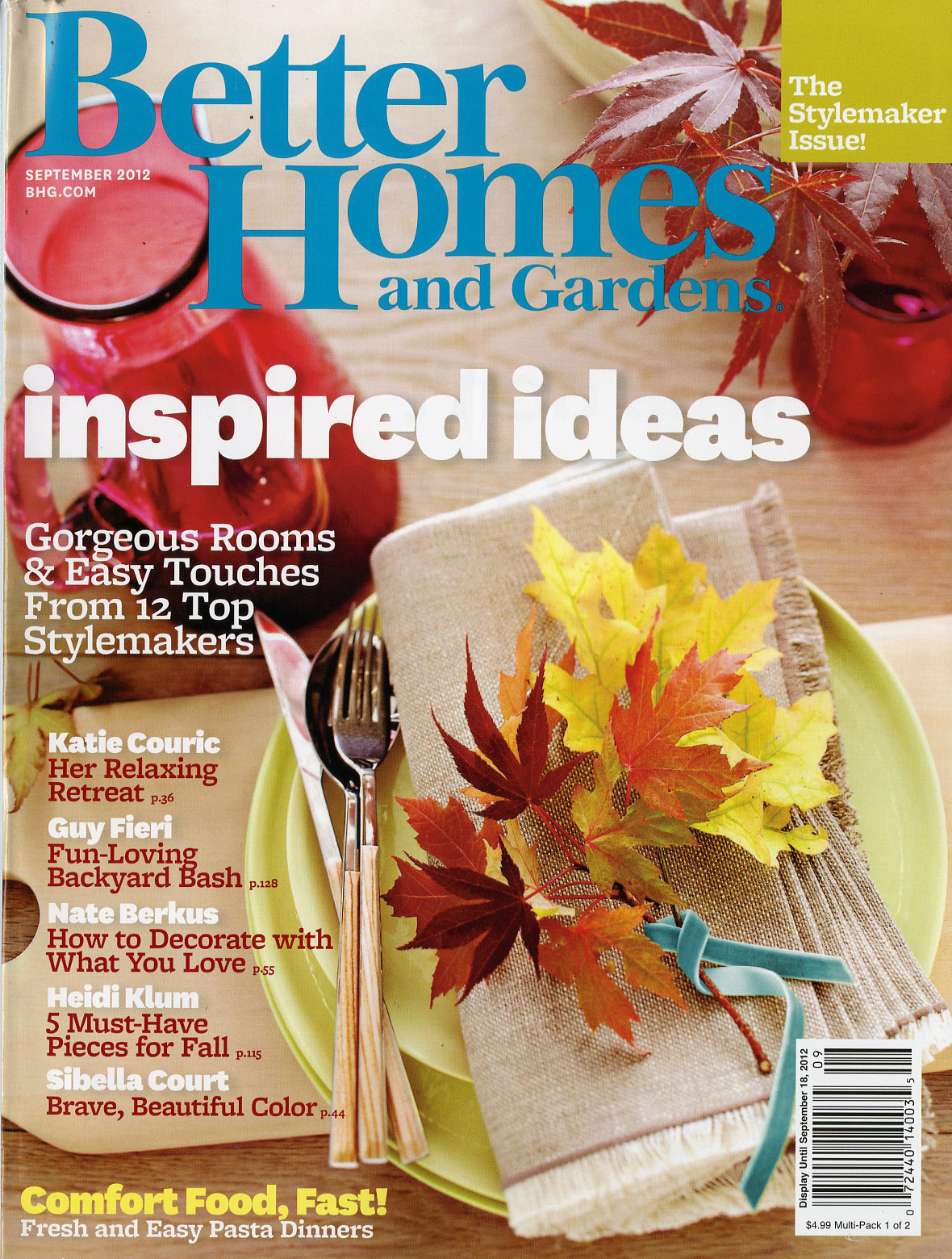
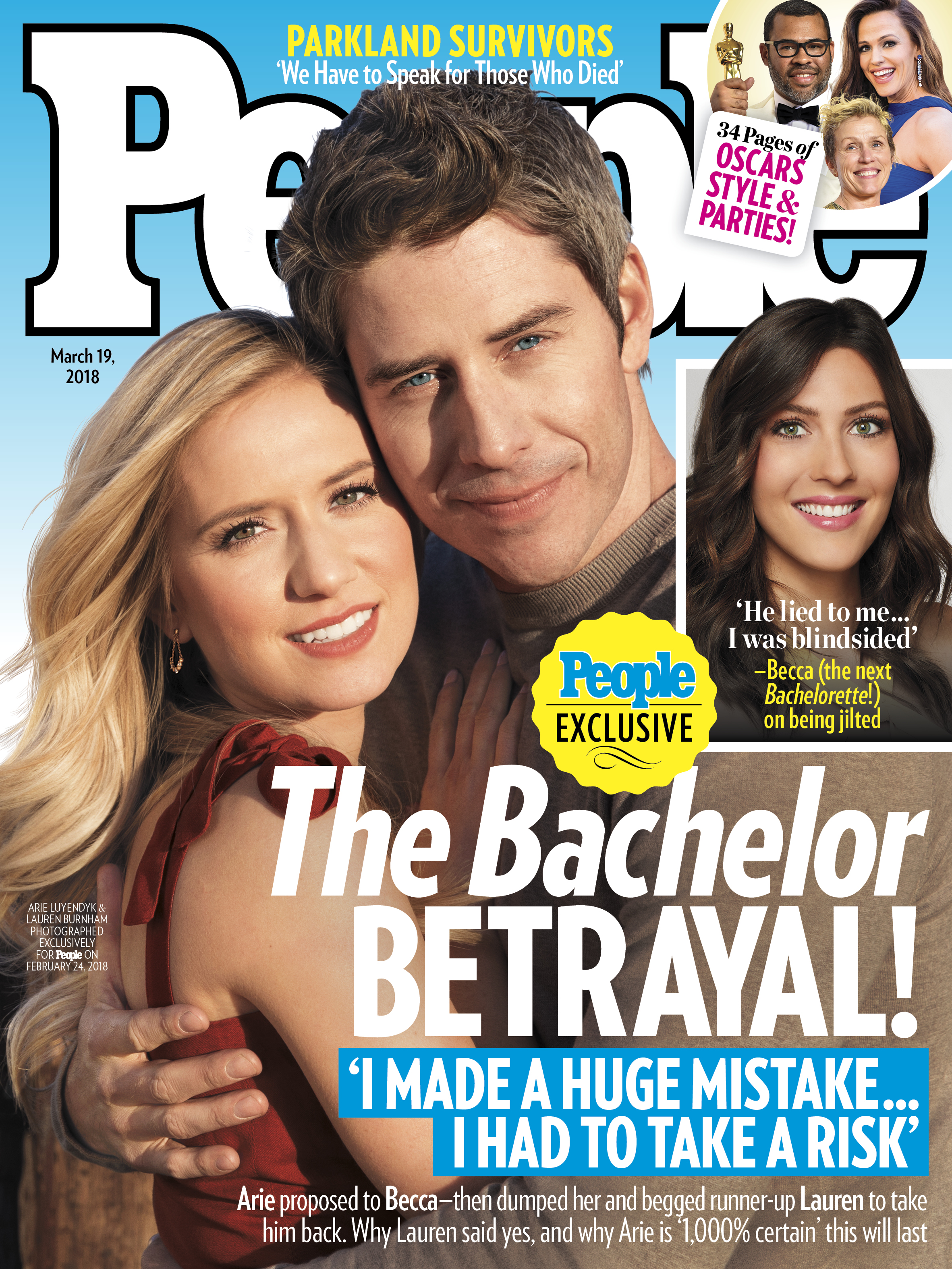
On how it feels to have weeklies now, such as People magazine: It’s definitely different for us, but the great news is there is a lot of expertise on the weeklies that exist in the acquired organization and we’re clearly leveraging their expertise. We admire the People brand. Obviously, as you mentioned, it’s the largest in the U.S., probably the largest in the world, if you really get down to it. But we’ve also run a very large brand ourselves called Better Homes & Gardens, which has a lot of multiplatform tentacles hanging off of it; a huge licensing program at Walmart, and a very large special interest media stable of brands that we sell on the newsstand. We’ve got a very large digital presence, so we’re used to overseeing and managing very large brands, but clearly People is at the next level.

On recent comments CEO Tom Harty made about increasing rates, cutting frequencies and reducing circulation, mainly due to the postal service: We stand by his comments that if such a large increase is passed on to an industry in one fell swoop, especially the way they’re talking about it, then there’s going to be some kind of fallout. You can’t continue to do what you’ve been doing, business as usual, with such a large increase in your expenses.

On the rumors that Meredith wants to be purely a women’s magazine publishing company: First of all, I don’t think people understand that we actually have some other men’s titles within the legacy Meredith stable. Successful Farming actually started the company and is very much aimed at mostly males, although there are more and more females that are operators in that space these days. Wood Magazine is another one. We do a fair amount of custom printing things along the way for some male audiences as well.

On whether he feels Meredith and Hearst are in a race when it comes to new magazines or new partnerships: I think Hearst is a very formidable competitor. They have some great brands over there as well and some really good people. I would say that they have chosen a path and we’ve chosen a slightly different path. We think brands matter tremendously and I think they do too, but we’ve put our money on brands that are some of the biggest in the world, and they went after some smaller ones, what we would call tuck-in acquisitions. I think both strategies are good strategies. It’s great to have a strong competitor, to be honest with you. It makes us better if we have a strong competitor.

On whether this year will see a calmer Meredith after the Time Inc. acquisition or 2018 will be full-steam ahead: We’ve shared with our shareholders, our board and our leadership team that this is really a two-year journey. This is a big undertaking; we want to get it right and take our time. We want to get the cost structure in line with the realities in the marketplace, and we don’t think we can do that in one fell swoop. We have to be very iterative. We’re doing some things now that are going to give some clarity to the marketplace as to who is covering their account and who they need to talk to. And we have to make sure that we get all of our brands covered, so that there are not brands lost in the shuffle.

On whether Meredith doubled or tripled his salary with the all of the added responsibilities: (Laughs) I would love it if you would send an email with that in it to Tom Harty. (Laughs again)

We think that we’ve embraced the realities of the marketplace over the last few years. And we believe that we’re very competitive and we’re going to be an employer of choice when all is said and done here. And I think there’s a lot of people at the incoming Time Inc. who are looking forward to some really good, solid leadership. They have great career opportunities in front of them. We haven’t even talked about how awesomely the content generation mechanism of this organization is. The editorial and the content production that we do is second to none.

On whether he is spending a lot of time now shuttling between New York and Des Moines: Yes, we’re spending a lot of time on the new business, but at the same time we have our existing legacy Meredith business to also run. The great thing is I have really good people who work for me and throughout this organization. We’ve asked everybody to step up and do more. We want to learn as much as we can of what was happening in a real positive way at the old Time Inc. and not lose that in all of the things we do. But clearly there will be some changes, and we’re going to put the best possible team on the field to go out and deal with the new realities of this marketplace, which is a lot tougher than it used to be.

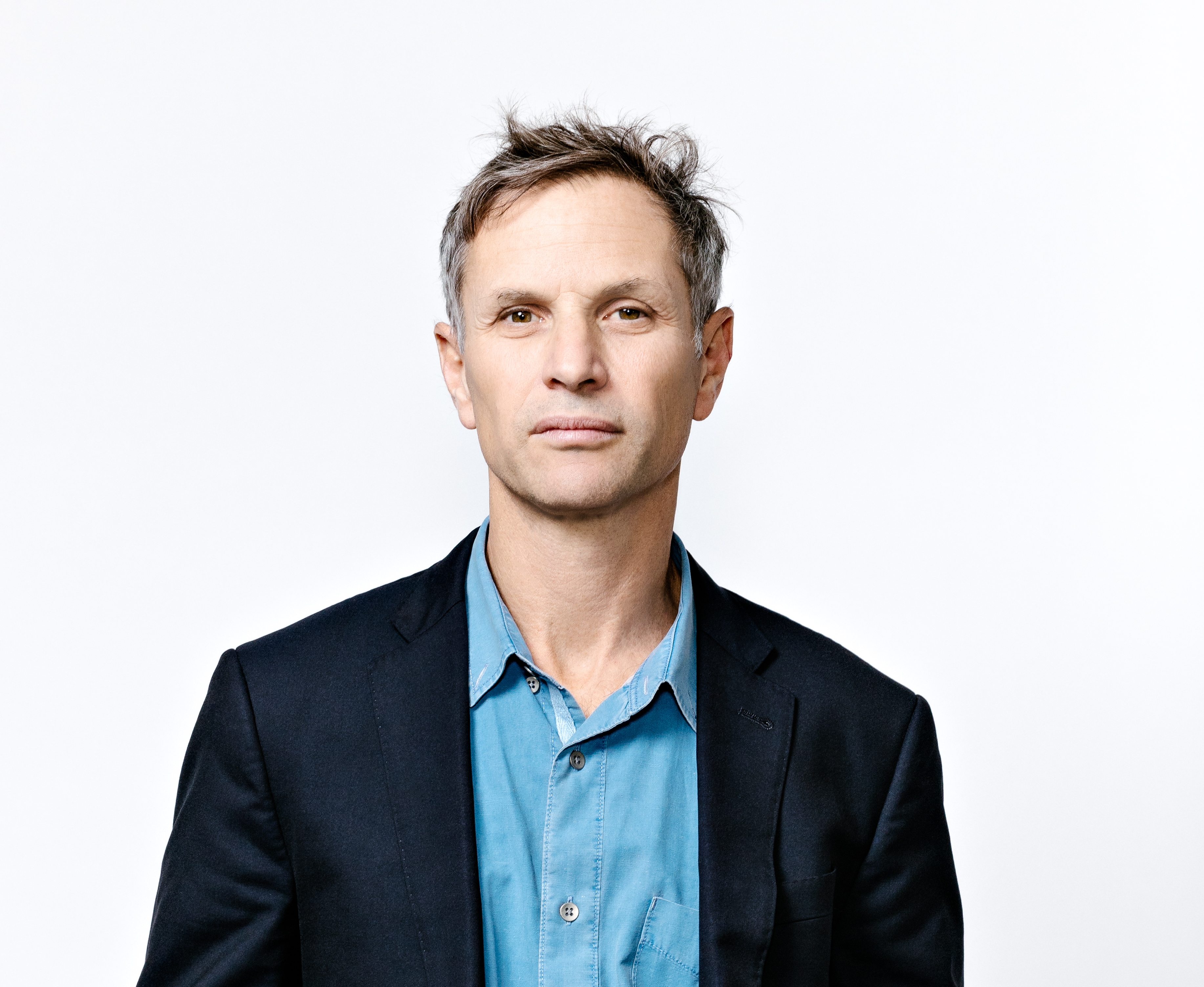
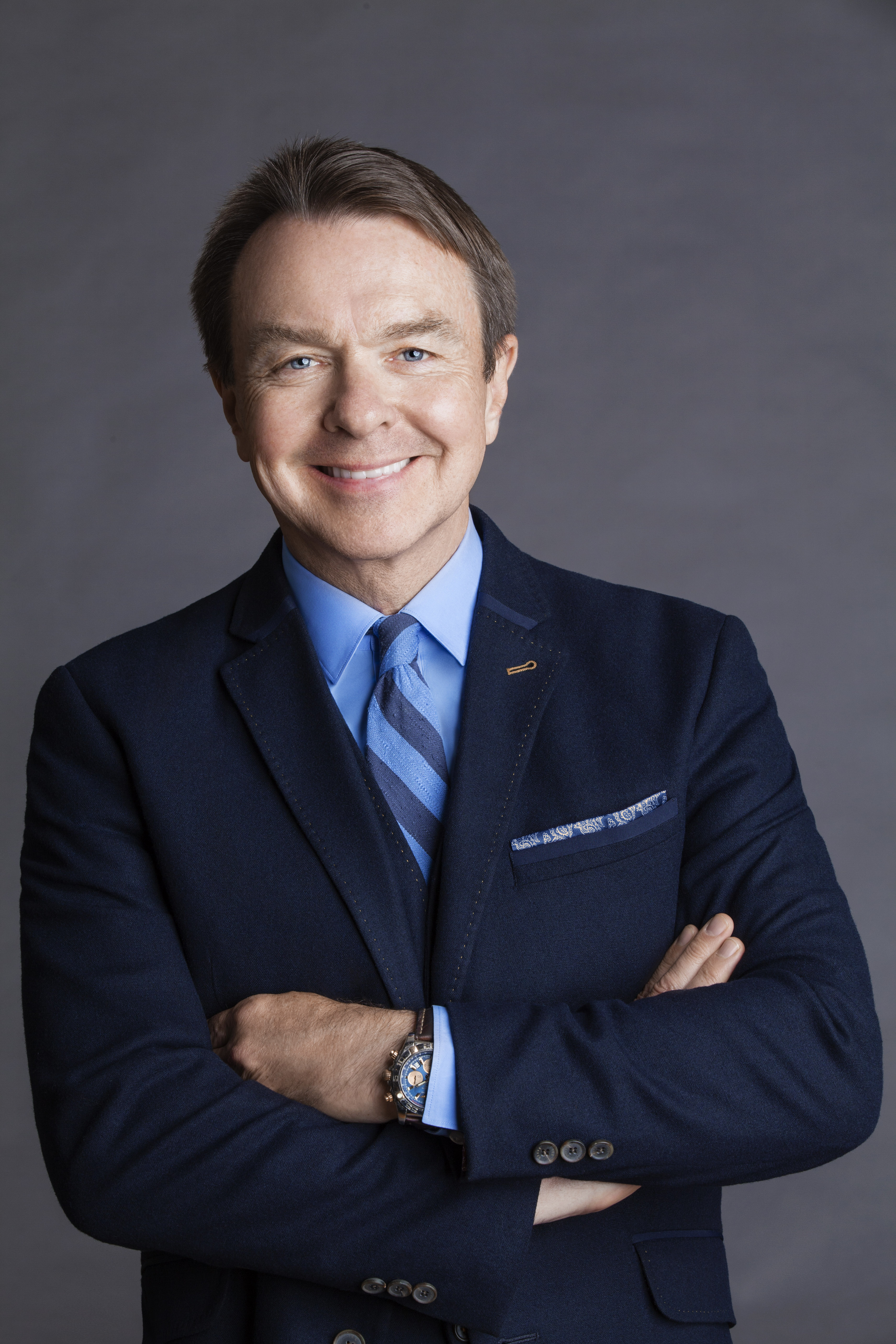
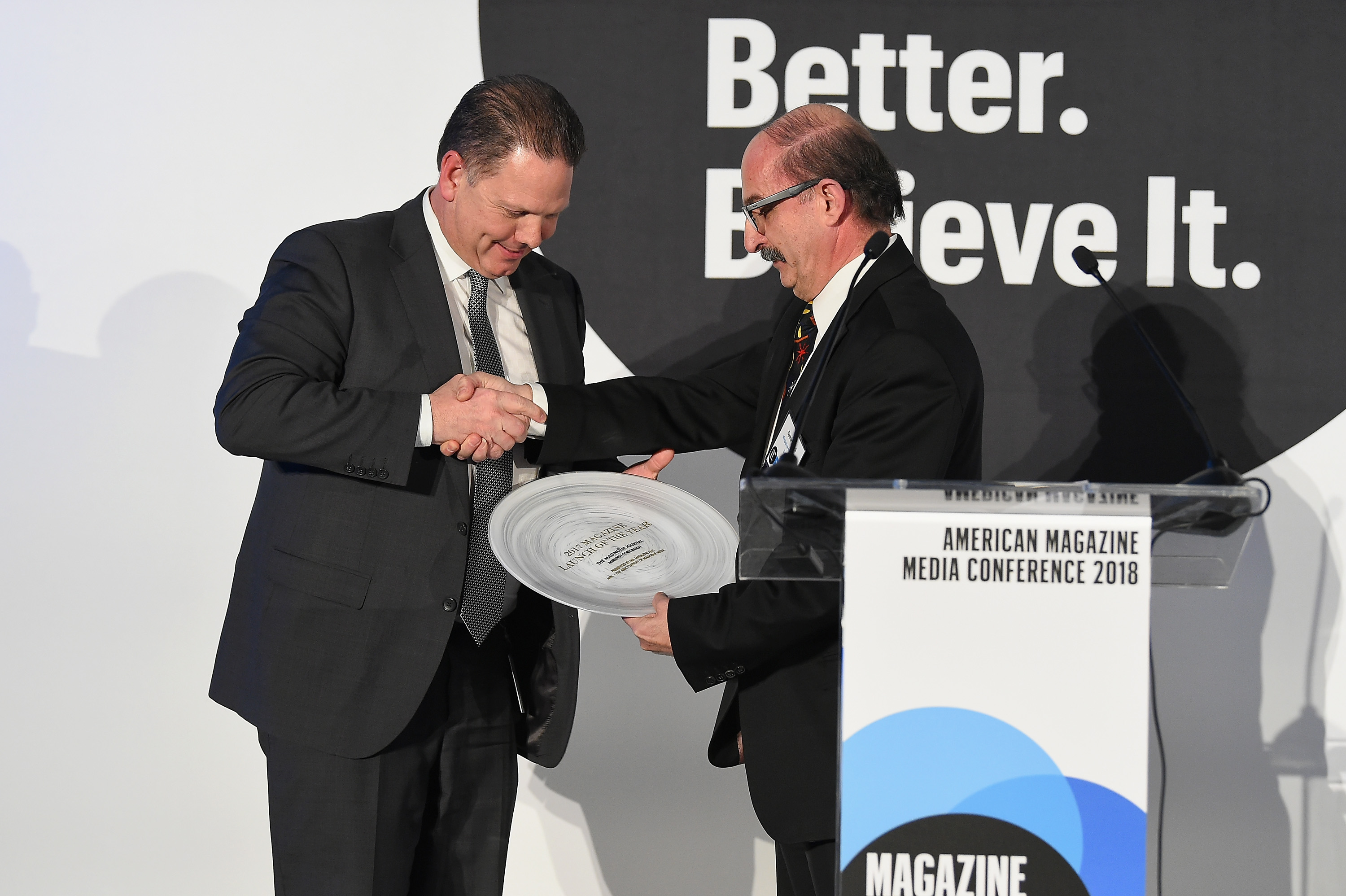
NEW YORK, NY – FEBRUARY 06: Doug Olson, president, Meredith Magazines accepting The Launch of the Year Award from Samir “Mr. Magazine™” Husni at the American Magazine Media Conference 2018 on February 6, 2018 in New York City. (Photo by Ben Gabbe/Getty Images for The Association of Magazine Media)

On the biggest stumbling block they faced during this transition and how they overcame it: That’s a good question. We’re not past it yet, we’re in the early stages. The easy part is actually done. The hard part now is making sure that we execute it the way we drew up the plans. But I think the biggest stumbling block was just getting everyone to believe and see what we see. That we see some great brands, that print is still a very big piece of an advertiser’s success moving forward. All of these great platforms, that large digital business that we have now between the two organizations puts us at number six for all unduplicated, unique visitors in the country.

On what someone would find him doing if they showed up unexpectedly one evening at his home: With all of the traveling that I do, it’s probably talking to my wife with a glass of wine in hand. We like to record some TV shows. For example, I hope no one lights me up over this, but we like to watch The Voice. That and we’re huge sports enthusiasts, so we like to go watch basketball and hockey games, volleyball and football, obviously. Anything except baseball regular season. I can’t do that. I try to go to the playoff games, but I can’t watch regular season baseball. Anything else sports-wise, we’re in. We’re also big water people, so we do a lot of wakeboarding, skiing, boating and tubing, and things like that. Only in the summertime, of course, in Iowa.

On what he would have tattooed upon his brain that would be there forever and no one could ever forget about him: I take this lead from my father who passed away last October. My dad always treated everybody the same. It didn’t matter if they were the CEO of the company or the person who was delivering the mail, he always treated people the same. And that’s what I try to do. So, I hope that people would say he was fair and treated everyone the same.

On what keeps him up at night: The biggest thing that keeps me up at night is the advertising marketplace. I struggle sometimes as to why advertisers put their money where they put it. We have all of the platforms and we feel really good that if an advertiser has a need, that we can help them solve whatever issue they’re trying to tackle. To me, some of this is all about attitude. The people who tend to work for us are very resilient; they’re very good at what they do. They get out there no matter what they’re told, even if they get a 15-minute meeting that was supposed to have been an hour and it gets shortened because of other commitments that the advertiser or agency has. They do their best to get the message out there. We can help sell more products and improve their brand.
And now the lightly edited transcript of the Mr. Magazine™ interview with Doug Olson, Meredith’s Magazine President.

Samir Husni: It was recently announced that Allrecipes has the fifth largest magazine media audience on a monthly average, 54 million. That’s double the number of people who watched the Oscars. As president of Meredith Magazines, what do you think the status of magazines is today? Are they really going out of style or has there been a rebirth; what’s going on?

Doug Olson: Honestly, we’ve made a pretty big bet that they’re not going out of style with our acquisition of the Time Inc. portfolio of brands. We continue to be very excited about the future of these brands in all platforms, whether it’s in print or digital or social. Allrecipes is a perfect example of one of the brands that we took from digital and turned it into print. It obviously has a very large footprint in digital, but the print continues to grow. While the Magnolia Journal gets a lot of press these days, the Allrecipes brand has been very successful as well, especially given its origin within digital. It’s up to almost 1.3 million subscribers; it’s one of the brands that has been meeting its numbers every single year since we launched it.

Samir Husni: Meredith’s chairman, Steve Lacy, told the Wall Street Journal that when he asked a reporter to guess how many Better Homes & Gardens printed 10 years ago versus how many it prints today…(Laughs) and we know of course, the answer is the same exact number.

Doug Olson: Yes, eight million.

Samir Husni: Eight million. So, when you go to the marketplace, and with Meredith now being the number one magazine media publisher in the United States, do you feel like the weight of magazine media is full on your shoulders or do you feel like you’re the defender of magazine media, or you’re just riding the wave?

Doug Olson: We think we’ve been the efficient operator in the marketplace for some time and that’s one of the reasons that we got the opportunity to own these great brands. But no, we understand our standing in the magazine world, has changed. It’s one that we embrace; we certainly respect it. But at the same time, we’re going to keep doing what we’ve been doing. We think we do a lot of X’s and O’s, blocking and tackling, just back to the basics to help advertisers sell more products or get their brand messages out to consumers. That’s what we’ve done since the beginning, and that’s what we’re going to continue to do.

And from a consumer perspective, what you brought up; we still do an eight million print run of Better Homes & Gardens today just like we did 10 years ago. You can pretty much look across our portfolio and it’s the same thing. Newsstand clearly has been challenged in the industry, but we’re one of the publishers, until recently with the Time acquisition, that really hasn’t relied that heavily on newsstand. And so our consumer metrics have never been stronger when you look at it across the board.

Samir Husni: I know that Steve Lacy took about four or five years to buy Time Inc., but for you, as president of Meredith Magazines, did it feel like you went to sleep one night and woke up the next morning in charge of the largest group of magazines in the country? How does that feel?

Doug Olson: It feels great. There are really five of us that have worked on this for over five years. I was in the initial meetings when we tried to jar these great brands loose from Time Warner back in 2012. And we’ve stuck with it and now we’re here. Again, we respect how big the task is, but at the same time we’ve got great people at legacy Meredith and there are some really good talented people at the incoming Time Inc.’s stable of brands and their employee base. We think that together the combination will be dynamite.

We have to go through this period where we get our go-to-market messaging correct and we have to get the right team on the field. Basically, we’re pivoting to change the sales structure as we speak. We told the marketplace that in roughly 60 days it would be business as usual from when we closed on January 31. Toward the end of March people are expecting to hear from us again. We’re working really hard to pivot this large portfolio and this big sales force to capitalize on the market.

Samir Husni: With all of the changes that took place at Meredith and venturing from print to multiplatform to capturing the audience, the consumers, you’ve never changed the structure. You kept the publisher as the title of publisher; you kept the editor as the title of editor. There is some talk or some quotes from Tom Harty and maybe others that those titles are coming back to the newly acquired magazines.

Doug Olson: We’re strong believers in that somebody has to get up every single day and focus on the individual brand. At Meredith, everyone is an integrated seller, it’s just to what degree do they focus on print versus digital and some of the other advertising mediums that are out there now. So, we want to take the best of both organizations…there are some things at the incoming Time Inc. organization that were working pretty well in the marketplace. There were a lot of things, especially around People magazine, that have been very vibrant for them. They’ve done a great job of focusing on what really throws off a lot of revenue and a lot of profit for the old Time Inc..

We think that we do some things particularly well; we’ve really stuck to our X’s and O’s blocking and tackling, if you will, uncovering the market, while everybody else in the marketplace was going through some kind of change, we just stuck with it. And we believe our secret sauce is working together, regardless of how we’re organized. The people who work at the legacy Meredith Corporation understand that we’re going to work together. So, if we need someone who has a little more expertise in shopper marketing, we bring them in and utilize them. At the end of the day, I think the structure is important, but I don’t think structure should get in the way of your ability to be successful.

Samir Husni: You mentioned People magazine and of course, it’s the number one moneymaking magazine in our country, both from circulation and from advertising, or at least it used to be for years. How does it feel to suddenly have weeklies now?

Doug Olson: It’s definitely different for us, but the great news is there is a lot of expertise on the weeklies that exist in the acquired organization, and we’re clearly leveraging their expertise. We admire the People brand. Obviously, as you mentioned, it’s the largest in the U.S., probably the largest in the world, if you really get down to it. But we’ve also run a very large brand ourselves called Better Homes & Gardens, which has a lot of multiplatform tentacles hanging off of it; a huge licensing program at Walmart; a very large special interest media stable of brands that we sell on the newsstand. We’ve got a very large digital presence, so we’re used to overseeing and managing very large brands, but clearly People is at the next level.

Samir Husni: Recently, Tom Harty made comments about possibly increasing rates, cutting frequencies and reducing circulation, mainly due to the postal service, can you comment on that?

Doug Olson: We stand by his comments that if such a large increase is passed on to an industry in one fell swoop, especially the way they’re talking about it, there’s going to be some kind of fallout. You can’t continue to do what you’ve been doing, business as usual, with such a large increase in your expenses.

Samir Husni: The last time I spoke with Tom, he mentioned that, because a lot of the talk in the industry was that Meredith was going to sell whatever is not aimed at women, whatever isn’t a women’s title, and Tom told me that Meredith was going to look at everything: men’s, women’s; you name it, although your expertise is in women’s titles. Can you put those rumors to rest, that you’re not going to be just a pure women’s magazine company?

Doug Olson: First of all, I don’t think people understand that we actually have some other men’s titles within the legacy Meredith stable. Successful Farming started the company and is very much aimed at mostly males, although there are more and more females that are operators in that space these days. Wood Magazine is another one. We do a fair amount of custom printing things along the way for some male audiences as well.

What I would say is that we’re looking at everything, like Tom said. Five years ago there were a lot of rumors that we didn’t want to buy the news and sports business – because we didn’t. But a lot has changed in the last five years. Those businesses have really nice digital extensions now and big audiences. When we say we’re looking at the portfolio in totality, we have to, because we have so many great brands in this stable and we want to make sure we put our best foot forward when we go to market.

But we’re a publicly-traded organization and so anything that makes money, obviously is high on our list. We don’t run brands that are unprofitable very long, so when we look at the new realities in the marketplace, we’re looking at it from all angles. How important is the digital business on some of these brands? What does their print future look like? Rate base, frequencies; there’s a lot to look at. We haven’t come to any conclusions yet, because we’re right in the middle of the analysis.

Samir Husni: Meredith and Hearst have been bringing in a lot of new magazines and entering a lot of new partnerships. Just before you bought Time Inc. you launched Hungry Girl with a partnership with the Hungry Girl, Lisa Lillien. Do you feel that you’re in a race with Hearst or the two of you are just happy to be the number one and number two in the magazine media field?

Doug Olson: I think Hearst is a very formidable competitor. They have some great brands over there as well and some really good people. I would say that they have chosen a path and we’ve chosen a slightly different path. We think brands matter tremendously and I think they do too. But we’ve put our money on brands that are some of the biggest in the world and they’ve went after some smaller, what we would call tuck-in acquisitions. I think both strategies are good strategies. It’s great to have a strong competitor, to be honest with you. It makes us better if we have a strong competitor.

Samir Husni: You’ve been so busy with the acquisition and you said that you had 60 days before it was back to business as usual, so will we see a calmer Meredith this year while you gather all the pieces, or you’re still going to be full-steam ahead?

Doug Olson: We’ve shared with our shareholders, our board and our leadership team that this is really a two-year journey. This is a big undertaking; we want to get it right and take our time. We want to get the cost structure in line with the realities in the marketplace, and we don’t think we can do that in one fell swoop. We have to be very iterative, if you will. So, we’re doing some things now that are going to give some clarity to the marketplace as to who is covering their account and who they need to talk to. And how do we make sure that we get all of our brands covered, so that there are not brands lost in the shuffle.

We’re working really hard on our organizational structures and what that’s going to look like over time, and we are doing it in a very controlled and managed fashion. It’s not going to be 60 days and that’s it, and then move on to greener pastures. We have a lot of work to do. We have some trends that we need to reverse, mostly with advertising. We’re going to have to roll up our sleeves and get back to those X’s and O’s, blocking and tackling, that we’ve been talking about. It all starts with clarity to the people that work in our organization and clarity to the marketplace.

Samir Husni: With the extra responsibilities that you have and the extra titles under your belt, and there was a lot of talk in the industry when Tom’s salary was revealed and how much less money it was compared to previous CEOs and other CEOs in the magazine business, because of all of these extra responsibilities, did Meredith double or triple your salary?

Doug Olson: (Laughs) I would love it if you would send an email with that in it to Tom Harty. (Laughs again)

Samir Husni: (Laughs too).

Doug Olson: We think that we’ve embraced the realities of the marketplace over the last few years. We believe that we’re very competitive and we’re going to be an employer of choice when all is said and done here. And I think there’s a lot of people at the incoming Time Inc. who are looking forward to some really good, solid leadership. They have great career opportunities in front of them. Like I said, everyone is an integrated seller.

We haven’t even talked about how awesomely the content generation mechanism of this organization is. The editorial and the content production that we do is second to none. It’s amazing. We cover a lot of different categories, readers’ patch and points. The people who create this great content every single day, as I meet more and more of them, are really tremendous resources and really good people.

We’re intentionally leaving the editorial alone for now and really focusing on the sales and marketing and some of the support organizations. We don’t want to get in the way of producing great content.

Samir Husni: Tell me how you’re spending your time now? Are you shuttling between downtown New York and Des Moines?

Doug Olson: Yes, we’re spending a lot of time on the new business, but at the same time we have our existing legacy Meredith business to also run. The great thing is I have really good people who work for me and throughout this organization. We’ve asked everybody to step up and do more. We want to learn as much as we can of what was happening in a real positive way at the old Time Inc. and not lose that in all of the changes. But clearly there will be some changes and we’re going to put the best possible team on the field to go out and deal with the new realities of this marketplace, which is a lot tougher than it used to be.

Samir Husni: If you had to pick one major stumbling block that faced this entire transition, what would that be and how did you overcome it?

Doug Olson: That’s a good question. We’re not past it yet, we’re in the early stages. The easy part is actually done. The hard part now is making sure that we execute it the way we drew up the plans. But I think the biggest stumbling block was just getting everyone to believe and see what we see. That we see some great brands, that print is still a very big piece of an advertiser’s success moving forward. All of these great platforms, that large digital business that we have now between the two organizations puts us at number six for all unduplicated unique visitors in the country.

Turning around advertising is huge for us. We need the entire portfolio to be more in line with what the legacy Meredith business is doing. Continuing to build digital is high on our list because six is great, but Facebook and Google at number one and number two, depending on which article you read, take anywhere from 65 to 80 percent off the top. And we have to continue to get scale and be innovative there so people want to turn to us at the same time they’re turning to Facebook and Google.

And when you’re doing all of these things at the same time, there are a lot of moving parts. I always describe it to my staff as we’re trying to change the tire on the car as we’re going 80 mph down the interstate.

Samir Husni: And if anyone can, Meredith can.

Doug Olson: We hope so. We’ve made a very large bet and the Meredith family has entrusted the management team and the board here has entrusted the management team to make this successful and we think we’re off to a good start. But like I said, it’s early days and a lot of work in front of us still.

Samir Husni: If I showed up unexpectedly at your home one evening after work, what would I find you doing? Having a glass of wine; reading a magazine; cooking; watching TV; or something else?

Doug Olson: With all of the traveling that I do, it’s probably talking to my wife with a glass of wine in hand. We like to record some TV shows. For example, I hope no one lights me up over this, but we like to watch The Voice. That and we’re huge sports enthusiasts, so we like to go watch basketball and hockey games, volleyball and football, obviously. Anything except baseball regular season. I can’t do that. I try to go to the playoff games, but I can’t watch regular season baseball. Anything else sports-wise, we’re in. We’re also big water people, so we do a lot of wakeboarding, skiing, boating and tubing, and things like that. Only in the summertime, of course, in Iowa.

Samir Husni: If you could have one thing tattooed upon your brain that no one would ever forget about you, what would it be?

Doug Olson: I take this lead from my father who passed away last October. My dad always treated everybody the same. It didn’t matter if they were the CEO of the company or the person who was delivering the mail, he always treated people the same. And that’s what I try to do. So, I hope that people would say he was fair and treated everyone the same.

Samir Husni: My typical last question; what keeps you up at night?

Doug Olson: The biggest thing that keeps me up at night is the advertising marketplace. I struggle sometimes as to why advertisers put their money where they put it. We have all of the platforms. We believe that if an advertiser has a need, we can help them solve whatever issue they’re trying to tackle. To me, some of this is all about attitude. The people who tend to work for us are very resilient; they’re very good at what they do. They get out there no matter what they’re told, even if they get a 15-minute meeting that was supposed to have been an hour gets shortened because of other commitments that the advertiser or agency has. They do their best to get the message out there. We can help sell more products and improve their brand.
We have this sales guarantee and it just always kind of blows my mind that more people don’t take advantage of that. We guarantee they will have more ROI if they put enough advertising into a national campaign. We can move the needle for them. They have a lot of choices, obviously, there’s a lot of experimentation, but I think there has been a lot of money put toward the things that really don’t move the needle. And I’m always struggling with why they don’t go back to what is proven. Whether it’s our digital or print, we’re going to stand behind it if they put a big enough campaign in the marketplace. Why would you not take a sure thing?

When people say, gee, my boss told me that we can’t do print anymore because print is dead, I don’t know what they’re really looking at to come to that conclusion. Other than a whole bunch of social media, which we know is not always exactly on point with the truth.
At the end of the day, I think the beauty of the new Meredith Corporation is that we understand there is some transitioning or shifting going on, but we believe we’re in a place to participate in that, too. If you want to reach consumers in a very credible way, we have these big brands that have lots of tentacles on them, including a very large print footprint. It’s really interesting to me that a lot of these social media people keep coming to us because they want to have a print presence, because it legitimizes their social standing. If they can see it in print, it confirms that they made it.

One of the things that’s important to me is that we’re playing to win. In its simplest form, my elevator pitch is we’re playing to win versus a lot of people are playing not to lose. You can use any sports analogy that you want on that sentence, but the people who play not to lose generally lose.

Samir Husni: Thank you.
h1

Adam Moss On Magazine Covers, Long-Form Journalism, Change, Print, Digital, And More Great Words Of Wisdom From The Longest Serving Editor-in-Chief Of New York Magazine. The Mr. Magazine™ Interview…

February 19, 2018

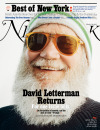
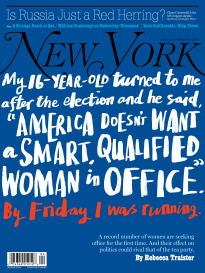
“The cover is no longer really to sell magazines on newsstand. As newsstands have become so much less important to all of us, the cover has a different function. It is basically the brand statement of what we make. It declares what we think is important or interesting; it declares our voice. Also, it’s an amazing document for the purposes of social media. Social media takes your cover and distributes it all over the place and it becomes an advertisement for the magazine that’s actually more important than it was originally meant to be when it was to stimulate newsstand sales.” Adam Moss…

“Before anyone was in this business at all, the New York Metro website was attracting a lot of people and it was attracting the sort of people who, if you were also an advertiser for a high-end luxury product, that was the only way you could reach them. So, from the very beginning, New York Magazine’s website was profitable, which was really unheard of. And what that meant was when the Wasserstein’s bought the magazine, and when I got here, the web wasn’t looked at as dangerous. The web wasn’t looked at as something that was going to steal business, the web was looked at as actually a way to build business. So, the logic of investing into the web, making our site a news site, was kind of obvious.” Adam Moss…

Being Print Proud Digital Smart isn’t just a mantra for showcasing a certain way of thinking when it comes to magazines and magazine media today. The phrase is much more than four words strung together in a random order that makes sense. It’s a vibrantly healthy way of doing business in today’s rapidly changing world of media publishing. New York Magazine and its very humble, and hard-working editor, Adam Moss, has a firm grip on this prescription for success. And why wouldn’t they? They have been looking at the web as a way to build business and not steal it from print years before anyone else had even heard of the word paywall, let alone knew what it meant.
 
And while the magazine’s editor in chief would never admit that he had a definitive hand in all of the success he and New York Magazine have seen, him earning Editor of the Year for Guiding the magazine’s election coverage in 2016 and the magazine winning the overall Magazine of the Year Award when ASME gave out the Ellie’s, it’s obvious to the naked eye that the two of them were made for each other. 
 
I spoke with Adam recently and we talked about many things, one of which was his celebrated abilities as an editor, yet his very un-celebrity type style when it comes to him presenting himself to the rest of the world. His response, and I paraphrase, he would rather his work speak for itself. And as the awards mount up and the magazine continues to buck the odds by making more revenue digitally than with its print component, Mr. Magazine™ would have to say his work definitely speaks for itself.  As does the Print Proud Digital Smart nature of the brand.
 
So, I hope that you enjoy the Mr. Magazine™ interview with Adam Moss, a magazine editor that I have followed and observed since 1988 when he launched 7 Days magazine in New York City. It was a delight to talk with Adam, and I am delighted to bring you this most engaging conversation.

But first the sound-bites:

On why he is a “celebrated” editor but not a “celebrity” editor: I think the reason I’m not a celebrity editor is that a ‘celebrity” editor is a somewhat different thing than an editor. And I’ve just never been comfortable doing celebrity-like things. I do my job and I hope I do it well. The more performance aspects of being an editor were never something that I was especially well-suited for.

On his concept of editing and creating a magazine: Well, of course, it’s changed over the years. Early in my career, I was very lucky to have worked at Esquire when Phillip Moffitt was the editor. He was fairly new to editing, certainly brand new to editing when it came to a magazine the scale of Esquire. So, to help him he brought in all of these legendary magazine editors from the ‘60s and ‘70s. And I was a junior editor at the time, and as he was being taught by this group of veterans, so was I.

On how he balances being Print Proud Digital Smart: By hiring good people who know things that you don’t know. And then you learn from them and try to help them think about things in a certain way, but essentially you let them do their jobs. As everything gets more complicated, the role of an editor is to hire specialists and let them do their thing.

On whether he feels more like a manager today rather than an editor: I certainly enjoy editing much more than I enjoy managing. (Laughs) But yes, inevitably, as the organizations that we run, in order to put out magazines and other content, get bigger, you have more and more the job of management, which is a necessary evil.

On his belief that an editor’s job is to know that great magazines are steeped in point of view, voice, and tone: Your main job is to understand what the point of view ought to be and to constantly evangelize it within your own organization, and try to coerce the organization to adapt and speak in that point of view. That’s an essential job.

On deciding what content goes where when it comes to the print and digital platforms: Well, you ask yourself where the audience is for an individual story. And the answer is usually obvious. But often, very often, you publish it in more than one place. Certainly, anything that is in the print magazine is then published on “Vulture” on “The Cut” or “Daily Intelligencer.” And often, something published on Daily Intelligencer also runs on The Cut because it’s of interest to The Cut reader; it’s of interest to the more politically-obsessed Daily Intelligencer reader. You just have this huge canvas now. And you use it in the most creative way that you can think of to reach the maximum audience that story might get.

On whether he thinks we are reaching a danger spot today, in terms of long-form journalism and storytelling in journalism: I think there are lots of threats to what we do, but I don’t believe long-form itself is in danger. In fact, because you can reach so many people through digital distribution, you can find readers for almost anything. And there’s a big, big audience out there for our longer stuff. Our longer stuff tends to do way better than the shorter stuff. It’s a good business to be in to make longer-form journalism. People really like stories and they like storytelling.

On the print platform now being biweekly, but the brand itself being by the hour or by the minute: By the minute, exactly. (Laughs too) When we went biweekly, the point that we were trying to make was that we were trying to adjust to the way in which people now read. They want an instant response to what is happening in the world and we provide that. And then they also want a deeper, more meditative content, not necessarily on a weekly schedule, which made us comfortable with having our stuff read on a biweekly basis.

On whether he thinks there is somehow a halo around a printed magazine cover that does not exist in digital: Probably. The cover is no longer really to sell magazines on newsstand. As newsstands have become so much less important to all of us, the cover has a different function. It is basically the brand statement of what we make. It declares what we think is important or interesting; it declares our voice. Also, it’s an amazing document for the purposes of social media. Social media takes your cover and distributes it all over the place and it becomes an advertisement for the magazine that’s actually more important than it was originally meant to be when it was to stimulate newsstand sales.

On whether he thinks this new idea of magazine covers is good or bad: I try not to think in those terms, because everything is both. Things change; there’s no fighting the things that change. And you just have to adjust to them and think of them as opportunities and not as problems. And I think basically most of the changes have been, not all, but most, have been for the better.

On being one of the few magazines that makes more money from digital than print: We’ve been at it for a very long time. We’ve been at it way longer than most, if not all, magazines. The story of New York and its digital incarnations have preceded me being here. It was kind of coincidence that the previous owners of this magazine went into a joint partnership with Cablevision in order to do their website. There was a website called New York Metro, and New York Metro had the magazine on it and it also had listings and that sort of thing. It was ahead of its time in that way, but it had one other thing that was crucially important, which is the reason that Cablevision wanted the partnership because they wanted to promote a fashion show that they had called “Full Frontal Fashion,” I believe. And what that meant was the promotional device was to run the runway pictures on the website. This was before any fashion designer had his/her own website. So, we were the only place you could get runway pictures, which meant that we got a lot of traffic from the very beginning.

On why he thinks magazine media created a welfare information society at the beginning of the digital age and offered for free the only product they created: It was similar to what almost all content fields did. The music business was famously very confused by the beginning of the digital age. People needed and wanted to get information for free and from the music side, it was easy to steal music. Everybody has been confused about how to make money off of digital habits. And I think the magazine business has been confused too. And it’s only now beginning to reckon with that in a serious way. That’s why you’re seeing paywalls and e-commerce, which we do here, actually very successfully. But also, our experience was that you could actually make advertising money off of the digital content. And so, we did that too.

On whether he feels the brand is a projection of himself: It’s a projection of a group think, and it’s the editor’s job to get the right group together to have that group think. So, it’s not because of me exactly, but it is a projection of a worldview that I’ve helped shape here. And it’s the product of a lot of people thinking. I can’t say that I’ve done anything particularly on purpose. The reason that I’m not out there giving parties and that sort of thing is because I can’t. (Laughs) Not because I willfully decided that was a bad tactic. I actually think it’s a good tactic. I think it’s often very helpful for places to have magazine editors with a higher profile. But for me, that’s just not the way that I work. For me, what it’s about is the work, and that’s what interests me.

On whether he is the longest-serving editor of New York Magazine so far: Yes, that is now true. It happened about two years ago that I passed Ed Kosner, who previously held that honor. I’ve been here almost twice as long as Clay Felker himself was here. I’ve been here forever.

On what we can expect in the next seven years from him and the magazine: I can’t even tell you what to expect tomorrow. (Laughs) This business changes so fast. And it’s a race to catch up to the changes in the business and also, of course, the changes in the world and what we cover.

On what piece of advice he would give upcoming editors or future industry leaders: Listen and watch. Don’t get too entrenched in your ways. Adapt. I think that, right now, is the most important thing an editor has to do, because the changes are so constant and profound. That said, at the same time, know who you are and know what your magazine or brand, if you will, is, and make sure that as things change, you’re true to the essence of what you’re making.

On what he would have tattooed upon his brain that would be there forever and no one could ever forget about him: He tried. (Laughs)

On what someone would find him doing if they showed up unexpectedly one evening at his home: Lately, I’ve gotten into drawing. (Laughs) So, I’m drawing madly when I go home. I watch TV and eat. I hang out with my friends and I also do work.

On what keeps him up at night: Everything, I can’t sleep.

And now the lightly edited transcript of the Mr. Magazine™ interview with Adam Moss, editor in chief, New York Magazine.

Samir Husni: Since 1988 when you launched 7 Days Magazine, I have followed your career, and 7 Days was a great magazine while it lasted, but you have continued the greatness. I was Googling your name, as I do with everyone I interview, and I was stunned that under your name on Google the only title you have is American editor. You are one of the most celebrated editors out there; were, in fact, named Editor of the Year, yet you aren’t a celebrity editor. Why is that?

Adam Moss: Why am I not a celebrity editor? (Laughs)

Samir Husni: (Laughs too) Yes, you are a “celebrated” editor, but you’re not a “celebrity” editor.

Adam Moss: Yes, I think the reason I’m not a celebrity editor is that a ‘celebrity” editor is a somewhat different thing than an editor. And I’ve just never been comfortable doing celebrity-like things. I do my job and I hope I do it well. The more performance aspects of being an editor were never something that I was especially well-suited for.

Samir Husni: You mentioned in your 50th anniversary issue of New York Magazine that you fell in love with the magazine’s cover, where the picture and the headline were in unison, and you never looked back. You knew you were going to be the editor of the magazine you fell in love with. Can you tell me a little bit about your concept of editing and creating a magazine?

Adam Moss: Well, of course, it’s changed over the years. Early in my career, I was very lucky to have worked at Esquire when Phillip Moffitt was the editor. He was fairly new to editing, certainly brand new to editing when it came to a magazine the scale of Esquire. So, to help him he brought in all of these legendary magazine editors from the ‘60s and ‘70s. And I was a junior editor at the time, and as he was being taught by this group of veterans, so was I.

So, my original concept of being a magazine editor was being an editor of the type that proliferated, and what I still think of as the Golden Age of Magazines. That was a terrific learning experience. I have tried to bring those old values of magazines as a kind of theatre, really, to the work I’ve done in other later eras.

Now, being a magazine editor is something else entirely, because you’re not only dealing with the printed page, you’re dealing with material that gets read, consumed, viewed in all sorts of other ways. It’s a much more expansive role. And I’ve learned as I’ve gone along, as I think all editors have. I’ve learned how to adapt the original values of storytelling, and of interesting and sometimes exciting an audience into the modern era with material consumed in video and digitally, interactive digital and all of the other tools that are available right now.

Samir Husni: Needless to say, you ended up being an excellent student of all of these changes.

Adam Moss: (Laughs) Well, thank you.

Samir Husni: New York Magazine won the overall Magazine of the Year when ASME gave the Ellie Awards, in terms of both the digital and print. Your print magazine is now biweekly and yet, you create covers that people talk about. You give the feeling that you’re Print Proud Digital Smart. How do you balance that?

Adam Moss: By hiring good people who know things that you don’t know. And then you learn from them and try to help them think about things in a certain way, but essentially you let them do their jobs. As everything gets more complicated, the role of an editor is to hire specialists and let them do their thing.

Samir Husni: Do you feel that you’re now more of a manager, rather than an editor?

Adam Moss: I certainly enjoy editing much more than I enjoy managing. (Laughs) But yes, inevitably, as the organizations that we run, in order to put out magazines and other content, get bigger, you have more and more the job of management, which is a necessary evil.

Samir Husni: Yet, you as an editor, believes that great magazines are steeped in point of view, voice, and tone.

Adam Moss: Yes, and that’s your main job. Your main job is to understand what the point of view ought to be and to constantly evangelize it within your own organization, and try to coerce the organization to adapt and speak in that point of view. That’s an essential job.

Samir Husni: However, you’re no longer just ink on paper, you’re all over the platforms. How do you decide what content goes where? This is a great story for print and that is a great story for the web? Do you struggle with those types of decisions when you read a story? Or do you never ask yourself those kinds of questions?

Adam Moss: Well, you ask yourself where the audience is for an individual story. And the answer is usually obvious. But often, very often, you publish it in more than one place. Certainly, anything that is in the print magazine is then published on “Vulture” on “The Cut” or “Daily Intelligencer.” And often, something published on Daily Intelligencer also runs on The Cut because it’s of interest to The Cut reader; it’s of interest to the more politically-obsessed Daily Intelligencer reader. You just have this huge canvas now. And you use it in the most creative way that you can think of to reach the maximum audience that story might get.

One of the great things about magazines these days and their distribution digitally and the way that the magazine business has changed is that with any individual story or piece of content, you are reaching so many more people than you could ever have reached when magazines were just print.

Samir Husni: One of the more famous, or maybe infamous would be a better description, writers of our time by the name of Michael Wolff, wrote a profile about you in 1999. He wrote that when you started at The New York Times Magazine you were an anti-Times sort of figure in the middle of the Times, because you were more into storytelling. As we look at long-form journalism today, do you have any fears that between digital, social media, and a president who believes media is the enemy; are we reaching a danger spot, in terms of long-form journalism and storytelling in journalism?

Adam Moss: I think there are lots of threats to what we do, but I don’t believe long-form itself is in danger. In fact, because you can reach so many people through digital distribution, you can find readers for almost anything. And there’s a big, big audience out there for our longer stuff. Our longer stuff tends to do way better than the shorter stuff. It’s a good business to be in to make longer-form journalism. People really like stories and they like storytelling.

And so, we publish a lot of long-form and we publish way more long-form than we did when I first got here 14 years ago. We also publish a lot of shorter stuff definitely, but we publish a lot more material period. We’re publishing about 140 things per day, so that’s a big difference from when I first got here when we were publishing maybe 30 articles per week.

Samir Husni: So, while the printed platform is biweekly, the brand itself is now by the hour, by the minute, by the second…(Laughs)

Adam Moss: By the minute, exactly. (Laughs too) When we went biweekly, the point that we were trying to make was that we were trying to adjust to the way in which people now read. They want an instant response to what is happening in the world and we provide that. And then they also want a deeper, more meditative content, not necessarily on a weekly schedule, which made us comfortable with having our stuff read on a biweekly basis.

Samir Husni: During these 14 years that you’ve been at New York Magazine, you have laid the groundwork for so many imitators. Your cover designs, what you’ve done to the covers of New York have been imitated worldwide. Wherever I travel overseas, people are always referring to the covers of New York Magazine.

Adam Moss; That’s good to hear.

Samir Husni: Do you still feel that the cover of a printed magazine today makes an impact? Is there somehow a halo around a printed magazine cover that does not exist in digital?

Adam Moss: Probably. The cover is no longer really to sell magazines on newsstand. As newsstands have become so much less important to all of us, the cover has a different function. It is basically the brand statement of what we make. It declares what we think is important or interesting; it declares our voice. Also, it’s an amazing document for the purposes of social media. Social media takes your cover and distributes it all over the place and it becomes an advertisement for the magazine that’s actually more important than it was originally meant to be when it was to stimulate newsstand sales.

Samir Husni: And do you think that is a good thing or a bad thing?

Adam Moss: I try not to think in those terms, because everything is both. Things change; there’s no fighting the things that change. And you just have to adjust to them and think of them as opportunities and not as problems. And I think basically most of the changes have been, not all, but most, have been for the better.

Samir Husni: I heard your CEO last week in New York when she was talking about the revenue from digital; you’re one of the few magazines that is making more money from digital than print.

Adam Moss: Yes, we’ve been at it for a very long time. We’ve been at it way longer than most, if not all, magazines. The story of New York and its digital incarnations have preceded me being here. It was kind of coincidence that the previous owners of this magazine went into a joint partnership with Cablevision in order to do their website. There was a website called New York Metro, and New York Metro had the magazine on it and it also had listings and that sort of thing. It was ahead of its time in that way, but it had one other thing that was crucially important, which is the reason that Cablevision wanted the partnership because they wanted to promote a fashion show that they had called “Full Frontal Fashion,” I believe. And what that meant was the promotional device was to run the runway pictures on the website. This was before any fashion designer had his/her own website. So, we were the only place you could get runway pictures, which meant that we got a lot of traffic from the very beginning.

Before anyone was in this business at all, The New York Metro website was attracting a lot of people and it was attracting the sort of people who, if you were also an advertiser for a high-end luxury product, that was the only way you could reach them. So, from the very beginning, New York Magazine’s website was profitable, which was really unheard of.

And what that meant was when the Wasserstein’s bought the magazine, and when I got here, the web wasn’t looked at as dangerous. The web wasn’t looked at as something that was going to steal business, the web was looked at as actually a way to build business. So, the logic of investing into the web, making our site a news site, was kind of obvious. And so, we did that very early. It was successful and the way we were doing it was successful and was a sort of model, which we did it first with food and then entertainment, etc. That model was easy to just keep replicating. And we’ve built the modern digital New York Magazine from a position of strength.

Samir Husni: And now, you’ve been imitated on both sides. Sports Illustrated just moved to a biweekly schedule in their print edition. Wired is starting a paywall for their digital content; why do you think the majority of some of the “smartest people on the face of the Earth,” magazine editors and publishers, created this welfare information society and gave away the only thing that they actually create?

Adam Moss: It was similar to what almost all content fields did. The music business was famously very confused by the beginning of the digital age. People needed and wanted to get information for free and from the music side, it was easy to steal music. Everybody has been confused about how to make money off of digital habits. And I think the magazine business has been confused too. And it’s only now beginning to reckon with that in a serious way. That’s why you’re seeing paywalls and e-commerce, which we do here, actually very successfully. But also, our experience was that you could actually make advertising money off of the digital content. And so, we did that too.

It’s very confusing. I mean, the smartest people on earth, as you put it, (Laughs) have a lot of reason to be confused. And have had a lot of reason to be confused, because it’s confusing.

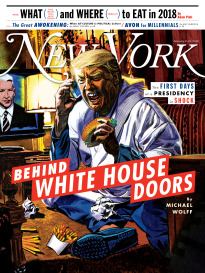
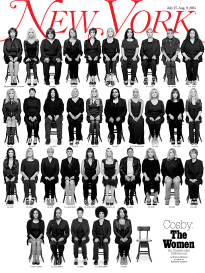
Samir Husni: Everyone I’ve talked to, once they found out I was interviewing you, had nothing but compliments to say about you, such as the most humble editor, a hardworking editor. And these words were from people who don’t pay compliments easily. So, you have this halo around you, yet as I stated in the beginning of this conversation, you’re not a “celebrity” editor. Do you thrive on letting your work become the celebrity, such as the cover of New York Magazine with the Bill Cosby accusers on it? Do you feel the brand is a projection of Adam Moss?

Adam Moss: It’s a projection of a group think, and it’s the editor’s job to get the right group together to have that group think. So, it’s not because of me exactly, but it is a projection of a worldview that I’ve helped shape here. And it’s the product of a lot of people thinking. I can’t say that I’ve done anything particularly on purpose. The reason that I’m not out there giving parties and that sort of thing is because I can’t. (Laughs) Not because I willfully decided that was a bad tactic. I actually think it’s a good tactic. I think it’s often very helpful for places to have magazine editors with a higher profile. But for me, that’s just not the way that I work. For me, what it’s about is the work, and that’s what interests me.

Samir Husni: And correct me if I’m mistaken, but aren’t you the longest-serving editor of New York Magazine so far?

Adam Moss: Yes, that is now true. It happened about two years ago that I passed Ed Kosner, who previously held that honor. I’ve been here almost twice as long as Clay Felker himself was here. I’ve been here forever.

Samir Husni: What can we expect in the next seven years, since we’re going in multiples of seven, you’ve been there 14 years now?

Adam Moss: I can’t even tell you what to expect tomorrow. (Laughs) This business changes so fast. And it’s a race to catch up to the changes in the business and also, of course, the changes in the world and what we cover.

Samir Husni: What piece of advice would you give upcoming magazine editors, future industry leaders? From somebody who has been there and done that, adapted to all of the changes; what piece of advice would you give them?

Adam Moss: Listen and watch. Don’t get too entrenched in your ways. Adapt. I think that, right now, is the most important thing an editor has to do, because the changes are so constant and profound. That said, at the same time, know who you are and know what your magazine or brand, if you will, is, and make sure that as things change, you’re true to the essence of what you’re making.

Samir Husni: If you could have one thing tattooed upon your brain that no one would ever forget about you, what would it be?

Adam Moss: He tried. (Laughs)

Samir Husni: If I showed up unexpectedly at your home one evening after work, what would I find you doing? Having a glass of wine; reading a magazine; cooking; watching TV; or something else?

Adam Moss: Lately, I’ve gotten into drawing. (Laughs) So, I’m drawing madly when I go home. I watch TV and eat. I hang out with my friends and I also do work.

Samir Husni: My typical last question; what keeps you up at night?

Adam Moss: Everything, I can’t sleep.

Samir Husni: Thank you.
h1

Two and a Half Days of Magazine and Magazine Media Bliss. An Invite to Attend the Magazine Innovation Center’s ACT 8 Experience April 17 to 19 in Oxford, Mississippi.

February 2, 2018

ACT 8 Experience is dedicated to the memory of Jennifer Reeder, VP of Sales at Democrat Printing and Lithography and a board member of the Magazine Innovation Center whose untimely death shocked all of us. May she rest in peace.

Welcome back, lovers of magazine and magazine media! I know you’ve all been lurking the blog to find out more information regarding our annual ACT Experience, the only Experience that we talk about nothing but magazines and magazine media. This year’s conference – ACT 8 Experience: Print Proud Digital Smart – is not for the faint-hearted. I can assure you we have an interesting lineup of professionals from all over the world. If you’re interested in marketing, journalism, digital or a combination of all, you need to attend this conference. It will be a wild ride of critiquing the current magazine industry and welcoming my magazine students who plan to change it for the better. Mark your calendars for April 17-19, because this will be the biggest and best ACT (Amplify, Clarify and Testify) to date.

For less than $400 you can attend and be part of this annual experience. ACT 8 Experience will be a chance for you to inspire industry leaders and future industry leaders to propel the world of magazines into a profitable future. I guarantee you will walk away with better connections and feel inspired about the magazine world outside your bubble.

This year we are welcoming several new faces including Linda Thomas Brooks, President & CEO of MPA, James Hewes, President and CEO of FIPP, the global media network based in the Untied KIngdom, Erik van Erp, Founder and Editor of Print Media News in The Netherlands, Bonnie Kintzer, President & CEO – Trusted Media Brands (formerly Reader’s Digest, and Newell Turner, Editorial Director of the Hearst Design Group.

You’ll have direct access to more than 10 editors and editorial directors, 9 presidents and CEO’s and a slew of marketers, designers and sales consultants. See the list of confirmed speakers so far at the end of this blog. A total of 33 magazine and magazine media makers sharing their knowledge and wisdom in the world of magazine and magazine media making.

Consider this a small vacation. Sit back and listen to prolific speakers tell their stories – their trials and tribulations we all rallied against to become the best writers, designers marketers and business people we could be.

Immerse yourself in the foothills of Mississippi by exploring the small but mighty town of Oxford. Take a step into southern past by strolling the streets in Clarksdale, Mississippi where the Delta Blues Museum and Morgan Freeman’s famous Ground Zero restaurant sit tucked into a humble downtown. Allow your creative juices to flow as you network with industry leaders.

I personally guarantee you will leave Oxford not only with a leg up on the industry but with a belly full of Mississippi fried catfish and an ear full of soothing, Delta blues. It’s a refreshing experience to slow down to the Mississippi pace of life. Enjoy a memorable ACT experience of learning, doing, seeing and living the Mississippi way.

Here is the link to register: http://maginnovation.org/act/register/. We only permit 100 attendees, so hop on now to reserve your spot. Join us this April for an (ACT) experience to remember!

Confirmed ACT 8 Experience Speakers (in Alpha Order) as of Feb. 1, 2018

Joseph Ballarini: Founder and Editor-in-Chief – Tail Fly Fishing magazine

Joe Berger: Publishers Marketing & Sales Consultant, Joseph Berger Associates
 
Linda Thomas Brooks: President & CEO – MPA: The Association of
Magazine Media
 
Deborah Corn: Principal, Chief Blogger, and Intergalactic Ambassador to The Printerverse™ – Print Media Centr
 
Marisa Davis: Associate Director, Product Marketing – MNI Targeted Media
 
Daniel Dejan: North American ETC (Education, Consulting and Training),
Print Creative Manager – Sappi Fine Paper
 
Jim Elliott: President – The James G. Elliott Company. 

Erik van Erp: Founder and Editor, Print Media News, The Netherlands
 
John French: Co-Founder – French LLC

Tony Frost: Senior Vice President, TVGM LLC, TV Guide

Natashia Gregoire: Reputation Manager, Editor, Access magazine – Fed Ex

Abdulsalam Haykal: Founder and Publisher, Harvard Business Review Arabic, United Arab Emirates

James Hewes: President & CEO – FIPP: The Network For Global Media
 
Mona Hidayet: Executive Director, Clients & Products – Advantage CS

Samir “Mr. Magazine™” Husni: Founder and Director, Magazine Innovation Center
 
Joe Hyrkin: CEO – issuu

Todd Krizelman: CEO – MEDIAradar
 
Bonnie Kintzer: President & CEO – Trusted Media Brands
 
Jerry Lynch: President – Magazine And Books, Retail Association
 
Daren Mazzucca: Vice President/Publisher – Martha Stewart Living

Mark Potts: Managing Editor – Alta The Journal of Alta California

Sebastian Raatz: Publisher/Co-founder – Centennial Media

Jen Ripple: Founder and Editor in Chief – DUN magazine

Monique de Ruiter: Former Editor Diversity magazine and VTWonen – The Netherlands

Bo Sacks: President, Precision Media Group

Ray Shaw: Executive Vice President/Managing Director – MagNet

Tony Silber: Former editor – Folio

Franska Stuy: Founder & Editor – Franska.NL, The Netherlands

John Thames: Founder & Publisher – Covey Rise Magazine
 
Newell Turner: Editorial Director – Hearst Design Group
 
Liz Vaccariello: Editor in Chief, Parents Magazine, and Content Director, Meredith Parents Network
 
Jeffrey Vitter: Chancellor – University of Mississippi
 
Thomas Whitney: President, Democrat Printing & Lithographing

Stay tuned as more speakers are added to the roster…

Don’t wait, register today. Registration is limited to the first 100 people. See you in April.

h1

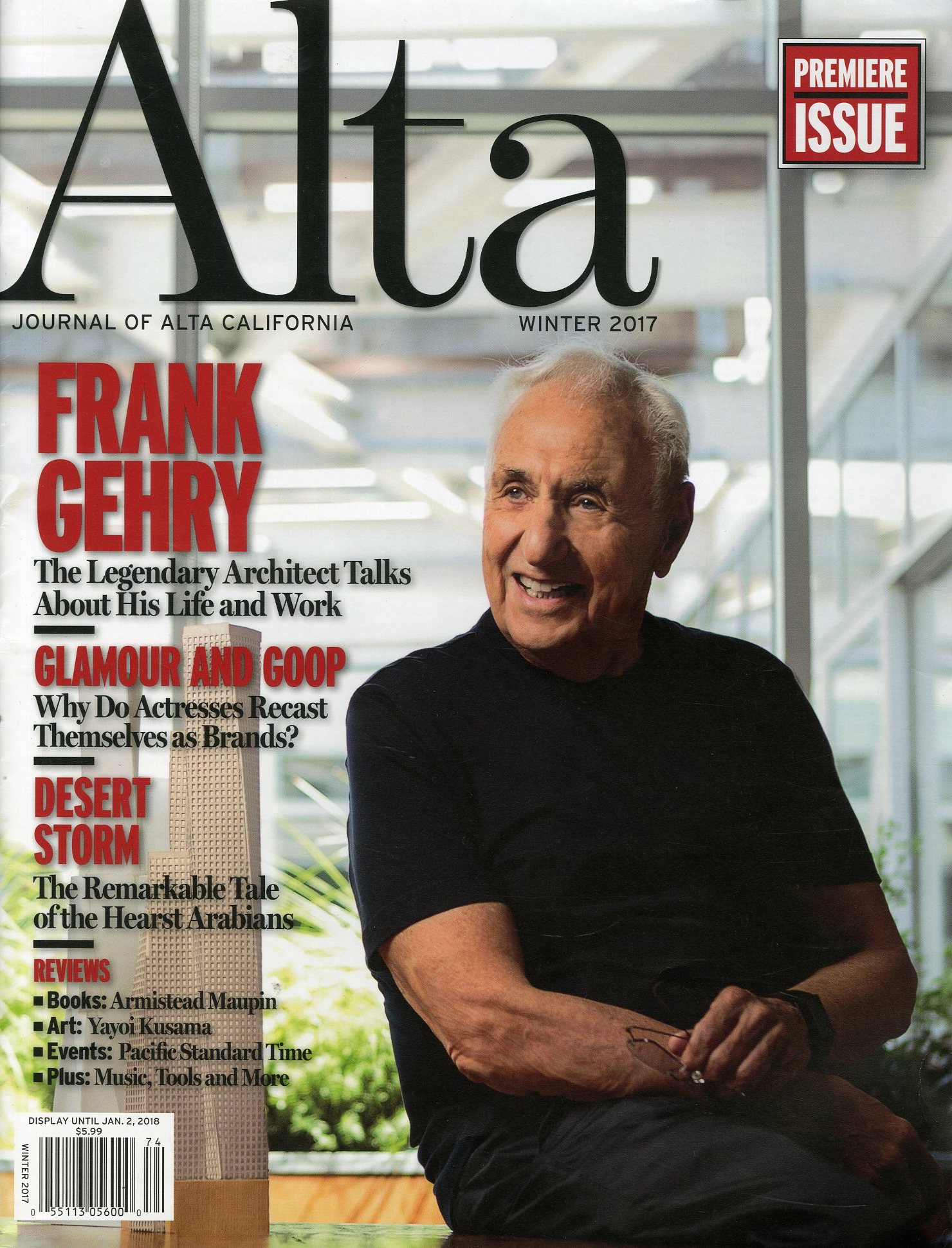
William R. Hearst III to Samir “Mr. Magazine™” Husni: I Like To Feel That Our Readers Aren’t A Mailing List, That They Are An Actual Community. The Mr. Magazine™ Interview With The Publisher & Editor Of Alta Journal Of Alta California…

January 29, 2018

“I wanted to deal with things that last a little bit longer. I was thinking about the people that I know: writers, photographers, editors; these are people who often write books, that take some time to write something. I was less interested in immediacy; I wanted things that had a lasting quality.” Will Hearst…

“We look at the advertising as the person who creates that product telling the story of their product. And if we believe that their product is good and their story is honest or amusing, then we induce them to advertise. In the long run, I think we’re going to make it or not make it on whether readers think we’re doing a good job and are willing to pay something. And if you look at the balance sheets of magazines and newspapers, what you’ll see is more revenue is coming from circulation, sometimes online circulation, sometimes print, and less revenue is coming from traditional advertising.” Will Hearst…

“Publishing magazines, to use a mathematical analogy; it’s an infinite, dimensional space. It’s not like there’s five niches and you have to pick one. There’s always something else; it’s always around the corner that there’s some originality. I believe in Michael Porter’s theory: Don’t compete to be the best at something that exists, compete to be different. Compete to find something that no one is doing and then do that better than anyone else does.” Will Hearst…

A Mr. Magazine™ Launch story…

William R. Hearst III (Will Hearst) is certainly no stranger to the world of publishing. From newspapers to magazines, he has ran the gamut of creating and guiding content for most of his life. Publishing to him, magazines in particular, is like facing an infinite, dimensional space, with the possibility of originality around every corner. Today, that originality comes in the form of a beautifully-done, large format title called “Alta Journal of Alta California.”

I spoke with Will recently and was fascinated by many of his ideas and suggestions when it came to business models, advertising, and the fact that he believes in Harvard’s Michael Porter’s theory that one shouldn’t compete to be the best at something that already exists, but instead, one should strive to compete to be different. Compete to find something that no one is doing and then do that better than anyone else does. Enter Alta. The magazine is dedicated to speaking to the local communities of the area that Will felt wasn’t being included in any conversation that already existed. So, being uniquely different was organic for the brand.

He is a firm believer in print, yet has a definitive desire to serve the online reader as well, and definitely represents the Print Proud Digital Smart model excellently. His staff gets full credit from him when it comes to editorial talent and factuality. In fact, he also follows mathematician, Don Knuth’s lead when it comes to monetarily rewarding readers for pointing out typos and factual errors in the editorial of the magazine. He has a penchant for exactness that in this age of “fake news” and “alternative facts” is greatly appreciated.

So, I hope that you enjoy this Mr. Magazine™ interview with a man whose greatest wish for his new publication is that he can make the experience of reading the magazine a little bit like the experience of actually living it, William R. Hearst III, editor and publisher, Alta Journal of Alta California.

But first the sound-bites:

On his idea of the new media model for Alta: My notion of the old media model is, and you can exaggerate here; the extreme of the old model is that you’re going to have a genius editor, William Shawn, or maybe you have Helen Gurley Brown, or somebody who is able to answer every question. And then the staff basically runs around executing that plan. At the opposite end of the spectrum, you have a complete, sort of blog community, every opinion is equal; you’re not really talking about facts; you have a comment section of the average website. And I thought there should be something in the middle where you had people who really wanted to work at being editors. I like to feel that our readers aren’t a mailing list, that it’s an actual community. And the community could disagree with us; the culture could change and we would need to change with it. So, I thought of a more dynamic, open model; a little more democratic, but not 100 percent democratic either.

On his challenge to readers that if a factual mistake or misstatement is found in the printed magazine, they will receive $10: I stole the idea from Don Knuth who wrote the print bible of software. He was writing technical articles where mistakes and typos meant that the software didn’t work or what was stated was wrong, but I just felt like we should challenge ourselves. And I worked for a guy when I was younger, the editor of the editorial page of The San Francisco Examiner, and his view was that there should be no typos on the editorial pages. There could be typos in the newspaper because you’re on deadline and you’re in a hurry, but in the things where you were really putting the brand of the owner on the page, there should be no typos.

On why he insisted on a print component for Alta: There are two reasons really and one of them is a content reason and one of them is a business reason. The content reason is that I wanted to deal with things that last a little bit longer. I was thinking about the people that I know: writers, photographers, editors; these are people who often write books, that take some time to write something. I was less interested in immediacy; I wanted things that had a lasting quality. And one reason print attracted me was I wouldn’t be yoked to the daily cycle of doing a website or a blog, because if you’re doing the Huffington Post or you’re doing these sites that have to be updated every 24 hours, you’re kind of forced to follow the news.

On whether he foresees a day without a print version: I don’t really. It’s like asking whether you think books will go away because there are books on Kindle? There’s a pace to writing a book. It just isn’t instant; it requires research, commitment, and digging deeper into a subject. And that’s the area in which I like to work, so I think that will persist. Maybe paper will go away, but I don’t think books will go away, and therefore I don’t think magazines and publishing will go away.

On what he would hope to say that he had accomplished with the brand one year from now: In your interviews, I was very struck by the guys from Garden & Gun magazine. This isn’t my demographic, but these guys really know what they’re doing. They know what kind of article fits in their magazine and what kind of article doesn’t. And they might have an article about hunting dogs that we would ever run, but for them it’s just right. They know their audience. And they’re regional, but they have the culture of their region in their blood. And that’s the kind of magazine that I’d like to be. I’d like to be favorably compared to those guys, in terms of writing quality and topical interest. If you live in that area; if you’re in my audience and in my community, I’d like you to feel this is your magazine. That’s what I’d like to say in a year.

On whether the editorial board and the inspirations that are credited in the magazine are his, Will Hearst’s, or Alta’s: They belong to the Journal of Alta California and we sort of rounded up the input of our staff and even wrote to a few people who told us we didn’t have enough women or people of other ethnicities, so we reedited the Inspiration Board to be a more complete history of our region. And less just people that “Will” liked to read. And we have our Board of Contributors, some of whom are active contributors and some of whom are on standby, because there are special topics where they have expertise.

On the 1970s-1980s magazine that tried to be the New York of California called “The New West”: They did a very good job, but I think they were to some degree yoked to this shorter cycle. They were modeled on New York Magazine, which was weekly, then bimonthly. But they had to keep up with events. A new politician comes onto the scene and they had to write about it. And new restaurants open.

On being both the editor and the publisher: Well, that’s another compromise. My title was originally going to be “proprietor.” I wanted people to think of the staff as the editorially creative talent, and I was there as a financial investor and as the owner; as the buck-stops-here. But I didn’t want to pretend that I would be doing everything, because you can’t do it all. The business is made out of people; it’s not made out of numbers.

On advertising and how he wants it to work in Alta: I wanted to follow the equation the way I think it’s moving, where readers have to be served well enough that you can begin to extract more revenue from them. They’re not going to pay for something that’s no good and they’re not going to overpay relative to competition. But my feeling is that good media will become more paid, and you’ve seen The New York Times and The Wall Street Journal start to charge for their websites. Kindle books are not free because there’s advertising in them. I think there’s a countertrend where readers have to pay a little more and advertisers are willing to pay more. And we wanted to anticipate that.

On advertising becoming less important over reader circulation revenue: Advertisers are more fickle than readers. Readers decide what they like and what they’re willing to pay for. Advertisers move in herds. And the herd is moving to online and the herd is moving to Facebook, and there may be good reasons to do that, but I think chasing the herd from the back is not a good business strategy.

On anything he’d like to add: Publishing magazines, to use a mathematical analogy; it’s an infinite, dimensional space. It’s not like there’s five niches and you have to pick one. There’s always something else; it’s always around the corner that there’s some originality. I believe in Michael Porter’s theory: Don’t compete to be the best at something that exists, compete to be different. Compete to find something that no one is doing and then do that better than anyone else does.

On what he would have tattooed upon his brain that would be there forever and no one could ever forget about him: We always had a great place to work; we always had fun and we were challenged.

On what someone would find him doing if they showed up unexpectedly one evening at his home: During the day, it’s probably reading or looking at manuscripts or calling people to see if I can cajole them into working with me. And at the end of the day, it could be a little bit of reading or it could be my kids. And once in a while, I like to solve math problems for fun.

On what keeps him up at night: What keeps me up at night is trying to make the experience of reading the magazine a little bit like the experience of living out here in the zone of arts and culture, technology and exploration. I’d like to do a little more environmental writing in the next year. I’d like to connect to that part of our history.


And now the lightly edited transcript of the Mr. Magazine™ interview with William R. Hearst III, editor & publisher, Alta Journal of Alta California.

Samir Husni: In your second editorial of the magazine, you write that you’re not a big believer in the old media model, but rather you’re trying to create a new model; a community where subscribers, staff, everybody is curating the information. Can you expand a little bit on your understanding of the new model for Alta, Journal of Alta California?

William R. Hearst III: Like a lot of projects, this starts with an idea or sort of a notion. I didn’t wake up as a youngster thinking that I wanted to start a magazine someday. The notion was a certain uncovered coverage area of the West, and its arts and culture.

I like to read; I’m a voracious reader and I’m involved with a magazine company and a newspaper company. I’ve been a newspaper publisher, so I’m very comfortable with reading, but I just felt that there was this underserved community that had to do with experiences of people who live in the West. People who sort of see the world like that New Yorker cartoon, but from a different point of view. One where New York and Manhattan seem very faraway and the immediate foreground is the beach and surfing, the mountains and the environment, Hollywood and Silicon Valley; these are our local communities. And I felt that I wanted to do something to talk to those communities. Then the idea of a magazine came second.

My notion of the old media model is, and you can exaggerate here; the extreme of the old model is that you’re going to have a genius editor, William Shawn, or maybe you have Helen Gurley Brown, or somebody who is able to answer every question. And then the staff basically runs around executing that plan.

At the opposite end of the spectrum, you have a complete, sort of blog community, every opinion is equal; you’re not really talking about facts; you have a comment section of the average website. And I thought there should be something in the middle where you had people who really wanted to work at being editors. Who would cultivate writers; look at pictures and put packages together, but also where some of the people who were writers would become editors, and some of the people who were readers would become writers, and not just in “Letters to the Editor.” So, there would be a much more fluid boundary between who the official staff people were and who the reader people were; who were the contributors and who were the advertisers.

I like to feel that our readers aren’t a mailing list, that it’s an actual community. And the community could disagree with us; the culture could change and we would need to change with it. So, I thought of a more dynamic, open model; a little more democratic, but not 100 percent democratic either.

Samir Husni: But you take this community one step further; this is probably one of the few times in my 40 years of following the magazine industry that I find an editor challenging readers, telling them that you will pay $10 if they find a mistake in the printed magazine.

Will Hearst: I stole the idea from Don Knuth who wrote the print bible of software. He was writing technical articles where mistakes and typos meant that the software didn’t work or what was stated was wrong, but I just felt like we should challenge ourselves. And I worked for a guy when I was younger, the editor of the editorial page of The San Francisco Examiner, and his view was that there should be no typos on the editorial pages. There could be typos in the newspaper because you’re on deadline and you’re in a hurry, but in the things where you were really putting the brand of the owner on the page, there should be no typos. So, I grew up in a culture where typos were, while maybe you couldn’t eliminate them; they were costly. And if you made a typo you had to apologize; you had to correct it and admit your mistake.

So, I stole this idea from Don Knuth that we would pay when people told us that we had a fact wrong, a reference that was incorrect, or we had a date wrong. There could be other kinds of mistakes that are more subject to interpretation, but when there are straightforward, factual mistakes or misstatements, or even gross errors of omission, we would make ourselves pay a fine to our readers who had found those things and we would honestly acknowledge them and move on.

Samir Husni: And…

Will Hearst: You’re dying to ask how much it has cost us so far, right? (Laughs)

Samir Husni: I was going to say that you’re either a very wealthy man or…(Laughs too)

Will Hearst: (Laughs again) No, we’ve paid out less than $100, but more than $10 since we put the policy in place.

Samir Husni: In this digital age, why did you insist on a print component for the Journal of Alta California?

Will Hearst: We get asked that question a lot and I think there are two reasons really and one of them is a content reason and one of them is a business reason. The content reason is that I wanted to deal with things that last a little bit longer. I was thinking about the people that I know: writers, photographers, editors; these are people who often write books, that take some time to write something. I was less interested in immediacy; I wanted things that had a lasting quality.

I remember when I was a newspaper editor and being surprised that more people go to museums than go to sporting events. More people attend cultural events than attend things that we consider to be pop culture. And so I thought there was a large audience of people who were interested in the arts and culture and technology and ideas, and that audience was really not interested in breaking news.

So, the people that I wanted to work with were working on a different schedule. And one reason print attracted me was I wouldn’t be yoked to the daily cycle of doing a website or a blog, because if you’re doing the Huffington Post or you’re doing these sites that have to be updated every 24 hours, you’re kind of forced to follow the news. Something happens and you have to react to it.

I wanted to break away from that and print seemed more natural to enforce that discipline on us and we would bore the crap out of people online if we only updated the site once a quarter or once a month, or once a week even was too slow. So, that was kind of the content reason. The things that we wanted to write about and the people that we wanted to work with were not naturally immediacy people, they were people who were more reflective.

And the second reason was just economics. If you’re trying to do a daily, you have to have a large staff and you have to have people constantly working on a short deadline. It was just too expensive to do that. So, for the topics that we wanted to cover, something that had a more leisurely pace was better-suited.

Now, I do feel, going back to the community idea, that we need to serve people who don’t want print or who want to access articles online or want to access an archive. So we’re trying to find ways to make the online archive and the online edition of the Journal of Alta California be very complete and no additional charge, where part of being a member is you get it all. You become a member and then you get everything.

And one of the things that I’m debating is whether we should put more things on the website. For example, we have a person who writes an article; he writes 2,000 words and we can run maybe 1,500. Well, maybe we should let the author go longer online for the people who really want to drill down one more level. So, we’re still trying to figure out what our online strategy is. We know what our print strategy is; we’re print people so we kind of know what to do and what we can afford to do.

Another question becomes: what should we do online? It shouldn’t be a scaled-down version of print. It should be an alternative extension of print. And we haven’t quite figured that out yet. I’m not anti-online. The 2018 online newspaper has probably 10 times more readers than the print newspaper, just to give you an example. So, I’m not turning my back on the online edition, I’m just trying to figure out how to make the two work together. But my core goal is more this membership idea; writing about certain topics; covering it well; and then serving that membership with whatever form of content is more convenient for them.

And as 10 years goes by and we have 100 readers for print and one million readers for online, then we should probably give up the print and be 100 percent online.

Samir Husni: And do you ever foresee that happening in our lifetime?

Will Hearst: I don’t really. It’s like asking whether you think books will go away because there are books on Kindle? There’s a pace to writing a book. It just isn’t instant; it requires research, commitment, and digging deeper into a subject. And that’s the area in which I like to work, so I think that will persist. Maybe paper will go away, but I don’t think books will go away, and therefore I don’t think magazines and publishing will go away.

I happen to like print; I happen to like the physical, tactile quality. You don’t need batteries; you can fold it up; you can tear it apart. But I tend to be a media consumer; I’m not a vegetarian when it comes to media. I’m kind of an omnivore. I like online; I like print; I like video; I like media.

It’s not unheard of for me that when I buy a book, I’ll buy the audio book and then buy the print book, and I’ll buy the Kindle book because I just really like that particular book. (Laughs) And I consume it different chunks at different times. It’s a little more expensive than maybe settling on one habit, but I think media consumption is about information and about human beings. It’s about learning; it’s not about print or online. It’s not about technology; it’s about the content of content.

Samir Husni: That’s one thing I strive for in my teaching; to tell the students that I don’t want to teach them the toys of the profession, they keep changing. They need to learn the profession.

Will Hearst: It’s very interesting; I give speeches sometimes to newspaper people and I find that if you’re a 60-year-old newspaper person, you’re kind of happy, because you’re going to retire and you can forget all about this technology. And if you’re a very young person interested in journalism, you’re very enthused about your career, because you’re probably going to be a blogger and appear on television, write, shoot your own pictures and maybe edit other people’s work. So, you have this multidimensional talent group in the younger generation.

And people in the middle are sort of lost, because they’re a little too old to learn all of the new skills; they’re a little more craft-union oriented, but they’re not close enough to retirement to turn their backs on it. They still have another 20 years to go. (Laughs)

The Hearst Foundation has a journalism award, and these are people who are freshmen in college, sometimes they’re a little bit father along, but they’re typically pre-professional, and they’re enthusiasm is amazing. And their skillset is so much wider than when I was a student. These people aren’t just photographers; they’re writers, photographers, broadcasters, bloggers, reporters, travelers; they’re multidimensional people. If you like media, you better be prepared to be a multitalented athlete. It’s a decathlon; it’s not a single-sport object.

Samir Husni: Now that you have two issues under your belt; if we had this conversation a year from now again, what would you hope to tell me that you had accomplished in the year since Issue two was out?

Will Hearst: I’d like to do more things outside of just California; I’d like to do the West. I think that’s really the topic zone. If I’m successful, I’d like to have people in Portland, Seattle, and San Diego. Maybe someone in Mexico; maybe some people in Denver who are correspondents and are sending us story ideas, and be where people in those geographies feel that we’re to talking to them.

In your interviews, I was very struck by the guys from Garden & Gun magazine. This isn’t my demographic, but these guys really know what they’re doing. They know what kind of article fits in their magazine and what kind of article doesn’t. And they might have an article about hunting dogs that we would ever run, but for them it’s just right. They know their audience. And they’re regional, but they have the culture of their region in their blood. And that’s the kind of magazine that I’d like to be. I’d like to be favorably compared to those guys, in terms of writing quality and topical interest. If you live in that area; if you’re in my audience and in my community, I’d like you to feel this is your magazine. That’s what I’d like to say in a year.

Samir Husni: When I look at your editorial board and your inspirations; are these Will Hearst’s inspirations and editorial board or do these belong to Alta Journal of Alta California?

Will Hearst: They belong to the Journal of Alta California and we sort of rounded up the input of our staff and even wrote to a few people who told us we didn’t have enough women or people of other ethnicities, so we reedited the Inspiration Board to be a more complete history of our region. And less just people that “Will” liked to read. And we have our Board of Contributors, some of whom are active contributors and some of whom are on standby, because there are special topics where they have expertise.

But I like the idea of honoring the people who came before us, who were already part of the canon of Western literature. And Kevin Starr, who I wrote about in my editorial, was a big believer in the idea that there was a Western canon of writers, viewpoints and experiences. And that this was different than the East and that it was literature-defined; a little bit less academically and more from the life experiences of people who lived out here. So, I wanted to put that Board of Inspiration in to kind of show people that we were respectful of our elders and looking to take the next step, but also to be inspired by what they did before us.

Samir Husni: In the late ‘70s or early ‘80s, I remember there was a magazine that tried to be the New York of California called “The New West.”

Will Hearst: Yes.

Samir Husni: In fact, there was two of them.

Will Hearst: They did a very good job, but I think they were to some degree yoked to this shorter cycle. They were modeled on New York Magazine, which was weekly, then bimonthly. But they had to keep up with events. A new politician comes onto the scene and they had to write about it. And new restaurants open.

So, we wanted to step back from that kind of pace, which I don’t think works in the 2018 era. I think that’s very expensive to do. I don’t know how The New Yorker people can afford to be a weekly, because you have to have a permanent staff. And you have to have a large staff of writers who are employees, not just contributors. That’s a very expensive proposition. They have a great brand and they’ve been doing it for a long time and they have a very loyal audience, so I don’t think they’re in trouble. I don’t mean to suggest that. But for a startup that would be an impossibly ambitious idea, I think.

Samir Husni: Being the editor and the publisher…

Will Hearst: Well, that’s another compromise. My title was originally going to be “proprietor.” I wanted people to think of the staff as the editorially creative talent, and I was there as a financial investor and as the owner; as the buck-stops-here. But I didn’t want to pretend that I would be doing everything, because you can’t do it all. The business is made out of people; it’s not made out of numbers.

So, you have to get really good people and you have to give them a chance to shine. And to make their own decisions. Our editorial meetings are very, I want to say contentious; people are very candid about offering their opinions and we try and make decisions, and maybe my vote is the last vote, but I’m very interested in making sure that people feel like it’s their magazine, that it’s not the Will Hearst magazine; it’s a community magazine and I’m the proprietor. I’m the caretaker of the community, but I’m not the tsar. I’m not the president.

Samir Husni: But as publisher, you have a say even about the ads. One of the things that captivated me when I was flipping through the pages was the type of advertisements that are in the magazine.

Will Hearst: My study of publishing in this era is that little by little advertising is less and less important and more and more difficult to obtain. In the ‘70s and ‘80s when I was a younger person, advertising was 80 percent of the revenue. And circulation was something that you had to try and maximize, because you used it to support your advertising rate base. And I think little by little what has happened is that it’s become very expensive to keep giving magazines away, and you become a slave to advertising.

And I wanted to follow the equation the way I think it’s moving, where readers have to be served well enough that you can begin to extract more revenue from them. They’re not going to pay for something that’s no good and they’re not going to overpay relative to competition. But my feeling is that good media will become more paid, and you’ve seen The New York Times and The Wall Street Journal start to charge for their websites. Kindle books are not free because there’s advertising in them. I think there’s a countertrend where readers have to pay a little more and advertisers are willing to pay more. And we wanted to anticipate that.

I looked at the Whole Earth Catalog and other places where the advertising is really products that would be of interest to the readers as opposed to whomever is willing to pay the freight. So, we give very discounted packages for people who want to advertise with us and we’re very selective about advertising, because we’re not charging them very much and we can afford to be a little bit choosy. We don’t take ads from people whose products we don’t think our readers would be interested in.

We look at the advertising as the person who creates that product telling the story of their product. And if we believe that their product is good and their story is honest or amusing, then we induce them to advertise. In the long run, I think we’re going to make it or not make it on whether readers think we’re doing a good job and are willing to pay something.

And if you look at the balance sheets of magazines and newspapers, what you’ll see is more revenue is coming from circulation, sometimes online circulation, sometimes print, and less revenue is coming from traditional advertising.

Samir Husni: Yes, in fact, one of the last new magazines that Meredith published, The Magnolia Journal, was based on 85 percent revenue from circulation and 15 percent from advertising, which is almost the opposite of the way things were.

Will Hearst: But if you go back to the 19th century, when my grandfather was publishing in San Francisco, circulation was 80 percent and advertising was kind of like an extra. It was nice to have; it was an extra. But the real make-or-break was would people put a coin in the box to buy the newspaper? Or typically, buy it in single copy form. And I think, to some degree, we’ve come full circle.

Advertisers are more fickle than readers. Readers decide what they like and what they’re willing to pay for. Advertisers move in herds. And the herd is moving to online and the herd is moving to Facebook, and there may be good reasons to do that, but I think chasing the herd from the back is not a good business strategy.

Samir Husni: Is there anything you’d like to add?

Will Hearst: Publishing magazines, to use a mathematical analogy; it’s an infinite, dimensional space. It’s not like there’s five niches and you have to pick one. There’s always something else; it’s always around the corner that there’s some originality. I believe in Michael Porter’s theory: Don’t compete to be the best at something that exists, compete to be different. Compete to find something that no one is doing and then do that better than anyone else does.

Samir Husni: If you could have one thing tattooed upon your brain that no one would ever forget about you, what would it be?

Will Hearst: We always had a great place to work; we always had fun and we were challenged.

Samir Husni: If I showed up unexpectedly at your home one evening after work, what would I find you doing? Having a glass of wine; reading a magazine; cooking; watching TV; or something else?

Will Hearst: During the day, it’s probably reading or looking at manuscripts or calling people to see if I can cajole them into working with me. And at the end of the day, it could be a little bit of reading or it could be my kids. And once in a while, I like to solve math problems for fun.

Samir Husni: My typical last question; what keeps you up at night?

Will Hearst: What keeps me up at night is trying to make the experience of reading the magazine a little bit like the experience of living out here in the zone of arts and culture, technology and exploration. I’d like to do a little more environmental writing in the next year. I’d like to connect to that part of our history.

And the other thing that keeps me up is who are the writers; who are the editors; who are the photographers, and where are the young writers? I think I have a pretty good Rolodex of people my generation who are proven writers, write on deadline, and who are good reporters, but we will have failed if we don’t find two or three young voices that no one has ever heard of. And I hope that we give them their first chance to be in the big-time. I hope that we discover them earlier and we promote them properly. And when they become so famous that we can’t afford them anymore; we will wish them good luck.

Samir Husni: Thank you.
h1

The Mr. Magazine™ Manifesto 2018: Never Stop Learning…

January 1, 2018

A Student Of Magazines For 40 Years

Humbled and proud to be on the Jan. 2018 cover of the Lebanese magazine Al Iktissad Al Jadeed. The cover story traces my journey and love of magazines from the streets of Tripoli, Lebanon to the United States and beyond. Thank you Bassem Bakkour.

I came to America in 1978 as a student of magazines and 40 years later I continue to be a student of magazines. That was a very profound year for me, as it laid the final foundation for something that was started much longer ago than that, when I was a mere boy growing up in Tripoli, Lebanon: my love and addiction for magazines. My hobby became my education, and my education became my profession. I have never worked a day in my life.

As a student of magazines, I have been very fortunate to have interviewed many eminent heads of magazines over the years. In fact, I interviewed 70 industry leaders in 2017 and it was the toughest job ever to highlight only 18 quotes (since it is 2018 that we are celebrating) out of those 70. Each and every interview provided me with many lessons to learn from. So, in true student form, and for the Mr. Magazine™ Manifesto, I decided to let them speak about the industry that I study so profusely. Their words are eloquent and resonate with what magazines are all about: an experience that transforms and transcends time and circumstances, while staying honest and hopeful about the digital age we’re living in.

So, Happy New Year from Mr. Magazine™. Let’s make 2018 the best year yet and I hope you glean as much wisdom and inspiration as I did from the following 18 lessons presented in no particular order:

1. Magazines Are Money Makers:

“We like to make money. We think there is money in print and more print, and we like to make money and grow profits in digital. You can’t have one be primary and one be secondary. We have to be good at both. The businesses have some things in common, but also, a lot of things that are not in common with each other. And we have to be very skilled at running good, solidly-profitable businesses in all of the areas that we operate.” David Carey, President Hearst Magazines.

2. Never Lose Sight Of The Soul And Purpose Of The Magazine:

“But here’s the thing, and this is the important thing; my job and our job in this moment in time is to get all of the technological things right, but never to lose sight of, or the feel for, what The New Yorker is or should be. That if we only concentrate on these questions of technology and business and all the rest, and lose sight of the soul of the place, of the purpose of the place, of the integrity of the place, all-knowing that we’re going to make mistakes along the way, that if we lose sight of that then it’s not worth it.” David Remnick, Editor, The New Yorker

3. Always Put Readers First:

“I tell my staff all of the time; think about your reader, and when you have a million things coming at you; when you’re wrestling with a story or when you’re confused about what to do next, just think about your reader and put yourself in their shoes and look at it from their perspective. And as long as you do that, you’re going to make the right decision.” Sid Evans, Editor In Chief, Southern Living & Coastal Living

4. Hope To Grow Again:

“I’d also like to say that it’s great to speak to someone who is passionate about print. I’m someone who grew up loving print. I love the print medium and nothing would make me happier than helping this company win in this new world and grow again. That’s what we wake up every day to do here.” Rich Battista, President and CEO, Time Inc.

5. Readers Will Pay For Quality Content:

“What’s been the most exciting thing to happen over this time is the consumer’s willingness to pay for quality content in all forms, be it print, digital, etc. And that’s a trend that’s increasing and is an exciting thing for folks that want to create great content for consumers. It’s going to allow us to think about all kinds of different ways that we can sell direct, so that’s an exciting shift over that time period.” Bob Sauerberg, President & CEO, Condé Nast

6. Magazines and Magazine Media Brands Are Credible:

“Part of what we’re doing is talking to consumers to remind them that magazine media brands have that credibility…People have figured out that not all content is created equal and consumers are using magazine brands as a shortcut to quality…All of the outside research, not MPA research, proves that magazines build brands and sell products at the same time better than any other media channel.” Linda Thomas Brooks, President & CEO, MPA: The Magazine Media Association

7. Inspiration Versus Utility:

“Consumers and women still love the printed format to turn to for inspiration and for more of that lean-back experience. And what we look for more with digital is as a utility to help them to do something in the short-term. So, inspiration versus utility, as I like to say.” Tom Harty, President & COO, Meredith

8. Print Is Restorative:

“I think you’re seeing a move-back to print; a move-back to the appreciation that print is restorative; it’s actually information that you take in. We know that there was a connection between the tactile, taking in of information… so, the touching of print and the absorption of information. And I feel very confident that print will continue to evolve and remain relevant.” Joanna Coles, Chief Content Officer, Hearst Magazines

9. Magazines Provide A Bonding Time That Makes You Feel Special:

“Right now there isn’t a digital component for Coloring with Mommy, because it’s really print and paper-driven. It’s a book that digitally, even if you printed out a comic book page, it wouldn’t be the same quality and it wouldn’t have the heart that we put into the magazine, because it’s not just coloring book pages. It’s that bonding time and the extra stuff that makes the magazine feel more special.” Brittany Galla, Editorial Director, Bauer Media Group’s Youth Division

10. Great Magazine and Magazine Media Ideas Get Funded:

“Great ideas do get funded. You know, create and sell. Great ideas get funded. Oftentimes, what I would tell our team when they would say, “Well, they don’t have a print budget.” I would say, “Let me ask you a question: do they have a budget?” Because every brand has a marketing budget, right? And, if you bring them a great idea, a great idea will get funding. And so we have many, many, many examples of business that has been created with no budget. The idea creates the budget. So, my mantra is “Great ideas do get funded” when you have the great, innovative idea.” Michael Clinton, President, Marketing and Publishing Director, Hearst Magazines

11. True Audience Based Magazines Are Here To Stay:

“I think my son at age 12 is pretty engaged across the spectrum of technology, but it was eye-opening to hear him say there might not be print when he becomes an adult. But I’m convinced there will be for my lifetime, particularly for kid’s magazines. I think we face different issues in some types of adult titles and different issues in current events and news than in true audience-based magazines. But at Highlights, we’re believers in print.” Kent Johnson, CEO, Highlights

12. Bookazines Must Reinvent Themselves:

“There was a time when people would put out any bookazine and it did well, because it was a bookazine, and it was single-topic, and it was a novelty. But these days the market is so flooded and the consumer has gotten so used to the bookazine that if you’re not changing the face of what the bookazine is; if you’re not recreating the entire bookazine itself and the bookazine category, it’s just going to start to drop and plummet and it’s going to be catastrophic for anyone in the bookazine business.” Tony Romando, Co-Founder, CEO, Topix Media Lab

13. Be In The Relationship Business:

“There’s room for it (print), of course, and if you’re in the relationship business, to some extent you’re agnostic. Your job is to really know the customer and how they want content experiences delivered to them. And if they’re raising their hands and saying they want magazines, then you provide magazines. And they still today provide fantastic and immersive lean-back experiences.” Dan Hickey, CEO, Kalmbach Publishing

14. Long-form Quality Engagement Is Where People Are Spending Their Time:

“I think this is really an exciting, rich topic right now, because what we are actually seeing is all of the platforms and all of the digital experiences that have endeavored to make the world revolve around the short-form snippet stuff, have all actually come around to the fact that long-form quality engagement is really where people are spending time.” Joe Hyrkin, CEO, issuu

15. Magazines Offer A Much Quieter Editorial Experience:

“When she’s (the consumer) reading the magazine, she needs a much quieter editorial experience. It needs to be more inspiring. And she has more time. She wants to take more of an emotional journey, rather than be hit over the head with all sorts of practical advice and alarming statistics and stories.” Liz Vaccariello, Editor In Chief, Parents Magazine

16. Magazines and Magazine Media Have A Different Business Model:

“I think fundamentally digital businesses are not the same as the magazine media business. We all have social media and you could say a magazine audience might be, from a community standpoint, like the original social media, but Facebook’s business model and Google’s business model are pretty radically different than the traditional magazine business model. So, it wasn’t a natural progression that if you’re in the magazine media business, you should have, would have figured all of that out.” Andy Clurman, President & CEO, Active Interest Media

17. A Tangible Magazine Is A Feather In The Cap For A Digital-First Brand:

“I actually think the tangible magazine you can hold in your hands is a feather in the cap for a digital-first brand. It’s what says, “We’ve made it. We’re here to stay. We’re legitimate.” And, almost counterintuitively, I suspect a lot of that is being driven by millennials. For as digitally savvy, and as digital-first a generation as millennials and Gen Z’s are, there’s also this yearning for authenticity and for something real. Again, I think it’s based on the type of content. I think with that generation in particular. It’s not fair at all to say millennials aren’t magazine readers. They’re magazine readers, but they want different types of magazines and want to consume information in different ways.” Doug Kouma, Editorial Content Director, Meredith

18. There Is No Need To Beat Up On Print:

“Why do people feel this need to beat up on print, in particular people in the industry? We closed our fiscal year June 30; we were up on advertising for both Reader’s Digest and Taste of Home year over year. Print is strong for us. We have a great respect for print and we have a great respect for the print reader. Of course, we expect greater growth to come from digital advertising, but one does not preclude the other.” Bonnie Kintzer, President & CEO, Trusted Media Brands

And there you have 18 lessons from 18 magazine industry leaders about the power of print; the expected growth of digital; and the MANY ways consumers want to consume their information. And in 2018, isn’t it time the industry let the audience decide that for themselves? Whether it’s a gloriously printed ink on paper magazine, a fantastic website that has depth and clarity, or a social media site that brings people and their comments together; the decision of where, how, and when these readers soak up and absorb content is one that in 2018 (and in the 21st century) should be made by them, magazines and magazine media are here to simply provide those outstanding experiences.

Thank you magazine industry leaders for all the lessons you taught me in 2017 and here’s to a great 2018 and more lessons to learn…

Happy New Year!
Samir “Mr. Magazine™” Husni, Ph.D.

* All quotes are taken from my interviews with the industry leaders in 2017 and all titles used are those that the industry leaders held at the time of the interview.

h1

The New Yorker’s Editor, David Remnick to Samir “Mr. Magazine™” Husni: “I Have Great Alarm About This War Against Fact; This Profusion Of Lying In High Places. But I Also Stake My Claim With A Journalism That Tries To Do The Best It Can. And Do An Honest Job. Whether It’s Traditional Media Or New Media, That Doesn’t Matter, It’s A True Media.” The Mr. Magazine™ Interview…

December 17, 2017

“I find words, and I understand why they’re used all of the time, but sometimes I bridle a little bit at words like content or products or platform, they seem a little cold. They seem a little remote and cold-blooded, because I think of The New Yorker as something much more warm-blooded or hot-blooded, which is alive. I don’t think of it as a can of soup or any of the other household products or a status symbol. I think of it as something, and I don’t care if it’s digital or on paper, I think of it as something that can reach your heart and mind in a unique way; in a surprising way. There aren’t too many household items or products that can do that.” David Remnick (on defining content in today’s digital age)…

“But here’s the thing, and this is the important thing; my job and our job in this moment in time is to get all of the technological things right, but never to lose sight of, or the feel for, what The New Yorker is or should be. That if we only concentrate on these questions of technology and business and all the rest, and lose sight of the soul of the place, of the purpose of the place, of the integrity of the place, all knowing that we’re going to make mistakes along the way, that if we lose sight of that then it’s not worth it.” David Remnick…

In this age of propaganda phrases like “fake news,” and “alternative facts,” The New Yorker brings forth a true journalism that many today are turning to for answers. In an article that Forbes.com ran this past February entitled, “10 Journalism Brands Where You Find Real Facts Rather Than Alternative Facts,” The New Yorker’s non-fiction content was deservedly touted as: long-form reports on politics, culture, business and other topics (that) often take months to report, write and fact check. The result is deep reporting and analysis each week that is hard to find elsewhere.

For over 92 years, The New Yorker has been providing its readers with excellence in journalism, whether it’s the brand’s commentary, fiction, satire, cartoons, poetry, or long-form stories that always give us food for thought and the information that we need to understand the issue at hand. For 19 years of that almost-century, David Remnick has been the editor and guiding force behind the award-winning publication. And while David himself is very quick to point out that The New Yorker is not, nor ever will be, a one-man show, he has left an indelible mark on the brand with his own strong beliefs in honesty, accuracy, fairness, and total teamwork.

I spoke with David recently and we talked about the status of true journalism in this age of Internet hoaxes, fake news, and alternative facts. It was an enlightening discussion with a man who lives in reality, recognizing that the dark powers of the Internet and the charlatans do exist, but also has the deep-seated integrity of his brand buried deep within his own chest, and believes that true reporting and accurate facts can be presented in both ink on paper and pixels on a screen.
So, I hope that you enjoy this very inspiring and delightful conversation with a man who began his reporting career at the Washington Post and has never forgotten the stalwart rules of good and true journalism, the Mr. Magazine™ interview with David Remnick, editor, The New Yorker.

But first the sound-bites:

On his feelings that today The New Yorker is the place to go for news, politics and humor, almost taking the place of newsweeklies: Well, I’m thrilled to hear it. I don’t think of The New Yorker at all as what we used to refer to as a newsweekly, like the old Time or Newsweek, or anything like that. The only parts of the print magazine that you could probably predict to some extent that we’re going to have something about that is in the cultural pages, in fact; reviews of this movie or that play. Beyond that, it’s open season. There’s a large measure of unpredictability in The New Yorker.

On where he thinks journalism is heading in 2018; is it the best of times, is it the worst of times for the profession: I think Dickens probably had it right. On the one hand, we live in an age in which the president of the United States and other leaders around the world have tried to muddy the waters about the difference between what is real and what is not real. What’s real and what’s fake. This phrase “fake news” is a weapon in the hands of, unfortunately, some very powerful people and their followers. On the other hand, I think a lot of people, many millions of people, reacted to this unfortunate turn by looking to what is best in journalism, what’s true. And that has been true at The New Yorker.

On The New Yorker’s revenues being 50/50 from print and digital: Well, obviously, print advertising everywhere is not a growth industry. And we also live in the reality that Facebook and Google own some enormous percentages of digital advertising as well. That’s just a reality. And we will go on battling for what part of the market we can get. And I think our advertisers will and should recognize that readers who seek out quality in their editorial matter are also great potential customers, but I leave those decisions to them.

On The New Yorker having a cult following and being almost a status symbol: I don’t mind the idea that readership of The New Yorker is somehow a club or an association or a marker, but I hope and pray that it’s something more serious than that. That it’s more joyful than that. That it’s not merely a status symbol, but something that people read and read deeply. And that it complicates and enlightens and brings joy to their lives. The idea that we can do that, with some very strange mixes, short fiction, journalism, humor, arts, and all the other ingredients that make up The New Yorker, that’s a very uplifting thing to know that you’re doing as a living.

On how he would define content today: I find words, and I understand why they’re used all of the time, but sometimes I bridle a little bit at words like content or products or platform, they seem a little cold. They seem a little remote and cold-blooded, because I think of The New Yorker as something much more warm-blooded or hot-blooded, which is alive. I don’t think of it as a can of soup or any of the other household products or a status symbol. I think of it as something, and I don’t care if it’s digital or on paper, I think of it as something that can reach your heart and mind in a unique way; in a surprising way. There aren’t too many household items or products that can do that.

On what The New Yorker is doing to ensure that true and factual journalism will always have a place in the industry: I can only speak with any authority about The New Yorker, I can’t speak for anybody else. And all I can tell you is that we have, at any one time, 17 or 18 fact-checkers working full-time, making sure the veracity of what we publish is as best as it can possibly be. We have all kinds of editors of enormous skill working with writers to make sure these pieces are clear, fair and rigorous. And at the same time, we don’t back away from a point of view, if that point of view can be substantiated and made clear.

On the voting down of Net Neutrality: If you ask me about Net Neutrality, I think that’s a shame. I think the Trump policy on Net Neutrality that really undermines the initial early idea of the Internet itself and gives great advantage to the biggest commercial companies, is an enormous step backward, if that’s what you’re asking.

On whether there is anything that traditional media companies can do about the recent vote: As an editor, all I can do is have The New Yorker voice its opinion and we’ve done that. And we’ve done it very clearly. Recently, on The New Yorker Radio Hour, one of my guests was Nicholas Thompson, who’s the editor of Wired, and I interviewed him and he was extremely forceful, and I agree with him. He was extremely forceful in his denunciation of the Trump policy rolling back New Neutrality.

On whether he can recall one moment in time of the 19 years he’s been the editor in chief of The New Yorker where he was thankful to be in that position or one moment where he said, oh my gosh, what am I doing here: (Laughs) That’s a good question. The feeling of “oh my gosh, what am I doing here” is what I first felt, because I’d never been the editor of anything and then suddenly, one second you aren’t and one second you are. One moment you’re not in that room, and then you’re in the room, and suddenly these decisions are yours to make. Or at least, you have to learn how to make them. So, I admit looking back in some early sense of panic that you can’t let show. But I’ve been grateful ever since.

On what’s next for The New Yorker: When you ask the question what’s next: I think in the last year especially, we’re living in this incredibly…I don’t know how to describe it. I have no clue what will happen from moment to moment. Dorothy Parker used to say, “What fresh hell is this?” And there is this feeling of what fresh hell will today bring, mainly from Washington, but not only. These are tough times.

On whether he feels that journalism as a whole is failing its audience, or that a few are managing to succeed: Well, I hope not. I’m not running around and patting myself on the back, and I don’t think that Dean Baquet is or Marty Baron, or any other editor worth his or her salt. I don’t think, at the same time, that we should hang our heads low just because the president is screaming fake news, just the opposite. You just have to redouble your efforts, because that’s the job. It’s not personal; it’s not a sense of personal defiance. It’s a sense of that’s the job.

On what someone would find him doing if they showed up unexpectedly one evening at his home: My boys are in their twenties and unfortunately they’re out of the house, happily for them, but unfortunately for nostalgic old me, but they’re well-launched. And I have an 18-year-old daughter who is at home and has autism, so it’s a personal challenge that will always be with us. So, that’s a large thing in my life and in my wife’s life. My wife is Esther Fein, who for many years was a reporter and editor at The New York Times. What do we do to relax? We try to spend some time together. And it’s not out of the question to watch the news on TV or even better, some show. But there’s a lot of reading to be done. It’s very hard to read in the office, and that means reading pieces that are actually going to go in the magazine or online, but also pieces that aren’t, that people send in and deserve an answer. Or reading galleys of books that may find their way into The New Yorker in some ways. And the reading never stops, but again I want to say that this is not by any stretch a one-person operation. It’s a very complicated, and ultimately team-oriented thing.

On what he would have tattooed upon his brain that would be there forever and no one could ever forget about him: I don’t know about me individually, but I want this place to be ruled by a sense of kindness, without swagger. I want there to be a sense of overall decency about The New Yorker. But again, that doesn’t mean we’re not going to have disagreements, arguments, or bad days, or all the rest. But I want that sense of decency between and among us to prevail.

On what keeps him up at night: There’s no end to it; there’s no end to it. (Laughs) But that’s my problem, not yours; don’t worry about it.

And now the lightly edited transcript of the Mr. Magazine™ interview with David Remnick, editor, The New Yorker.

Samir Husni: Whether intentionally or unintentionally, The New Yorker has become the place to go if you’re interested in news, politics and humor. It seems with most everyone I talk with, in and out of journalism schools, you have taken the place of a newsweekly on a daily basis.

David Remnick: Well, I’m thrilled to hear it. I don’t think of The New Yorker at all as what we used to refer to as a newsweekly, like the old Time or Newsweek, or anything like that. The only parts of the print magazine that you could probably predict to some extent that we’re going to have something about that is in the cultural pages, in fact; reviews of this movie or that play. Beyond that, it’s open season. There’s a large measure of unpredictability in The New Yorker.

Now online, there are more pieces that are reactive to the news, whether it’s political news or cultural news. But I think a lot of our readers are reading both at once. It’s not important to me particularly whether they’re reading on a screen or a phone or on paper, but I think a lot of people are reading all of what we do, which is to say, everything that’s coming out of The New Yorker.com, whether it’s the daily pieces or the long-form ones; in order for The New Yorker to be The New Yorker there has to be a huge measure of serendipity, unpredictability, surprise, delight; as well as depth, seriousness and accuracy. It’s a complicated piece of business, The New Yorker. It’s hard to define in a few words. Louis Armstrong was once asked the definition of jazz and he said: if you can’t hear it, I can’t explain it to you. (Laughs)

Samir Husni: (Laughs too).

David Remnick: And the funny thing about The New Yorker is that it’s evolving, obviously. What we used to do, not so many years ago, was publish a dozen things, once a week, with some cartoons, very little of graphic interest. No photographs, just cartoons. And now we’re something much, much more and more varied, that exists both in the longer term and in the shorter term. It’s visual and also a deep-reading experience. I hope our soul is much the same; our DNA is much the same, but we’ve evolved quite a lot.

Samir Husni: Through that evolvement, and considering the current status of journalism, where do you think journalism is heading in 2018? Is it in a better place today? Or can we paraphrase Charles Dickens and say, “These are the best of times, these are the worst of times?”

David Remnick: I think Dickens probably had it right. On the one hand, we live in an age in which the president of the United States and other leaders around the world have tried to muddy the waters about the difference between what is real and what is not real. What’s real and what’s fake. This phrase “fake news” is a weapon in the hands of, unfortunately, some very powerful people and their followers.

On the other hand, I think a lot of people, many millions of people, reacted to this unfortunate turn by looking to what is best in journalism, what’s true. And that has been true at The New Yorker. I think my brothers and sisters at The New York Times and the Washington Post and other publications have also felt this in very concrete terms. In terms of more readers wanting what we do. And it becomes not less important to them in a noisy, complicated world, but more important.

So, I have great alarm about this war against fact; this profusion of lying in high places. But I also stake my claim with a journalism that tries to do the best it can. And do an honest job. Whether it’s traditional media or new media, that doesn’t matter, it’s a true media. It’s a media that seeks to separate the wheat from the chaff; the true from the false. So, it is a very mixed picture and Dickens had it right, but where he was talking about the French Revolution, we’re talking about the 21st century.

Samir Husni: Chris Mitchell (The New Yorker’s Chief Business Officer) told me that the revenues of The New Yorker now are like 50/50 from digital and print.

David Remnick: Well, obviously, print advertising everywhere is not a growth industry. And we also live in the reality that Facebook and Google own some enormous percentages of digital advertising as well. That’s just a reality. And we will go on battling for what part of the market we can get. And I think our advertisers will and should recognize that readers who seek out quality in their editorial matter are also great potential customers, but I leave those decisions to them.

The other part of the picture is that the ever-increasing net percentage of our revenue comes from consumer revenue, as opposed to ad revenue. And that’s a reflection of readers wanting what we do, and they’re willing to pay for it. And that’s incredibly encouraging about the future.

Samir Husni: When I first came to America, I had a professor at Missouri who talked about The New Yorker, saying that it had those cult-like worshippers, readers, who just had to get the magazine every single week. It was a status symbol.

David Remnick: I don’t mind the idea that readership of The New Yorker is somehow a club or an association or a marker, but I hope and pray that it’s something more serious than that. That it’s more joyful than that. That it’s not merely a status symbol, but something that people read and read deeply. And that it complicates and enlightens and brings joy to their lives. The idea that we can do that, with some very strange mixes, short fiction, journalism, humor, arts, and all the other ingredients that make up The New Yorker, that’s a very uplifting thing to know that you’re doing as a living.

Samir Husni: And that mix; is that your definition of content today? If someone were to ask you, David, how do you define content today?

David Remnick: I find words, and I understand why they’re used all of the time, but sometimes I bridle a little bit at words like content or products or platform, they seem a little cold. They seem a little remote and cold-blooded, because I think of The New Yorker as something much more warm-blooded or hot-blooded, which is alive. I don’t think of it as a can of soup or any of the other household products or a status symbol. I think of it as something, and I don’t care if it’s digital or on paper, I think of it as something that can reach your heart and mind in a unique way; in a surprising way. There aren’t too many household items or products that can do that.

I think of it in different terms. I don’t want to get all spiritual and gooey on you, but I think of it as something on a very emotional level as well. And I think what’s important is people’s attachment to it is very heartfelt and very emotional. I get letters and emails reflecting that all of the time.

Samir Husni: There are more so-called journalism outlets today than ever before. What are you doing to ensure that the true voice of journalism, the factual rather than the fake journalism, still has a place in the industry?

David Remnick: I can only speak with any authority about The New Yorker, I can’t speak for anybody else. And all I can tell you is that we have, at any one time, 17 or 18 fact-checkers working full-time, making sure the veracity of what we publish is as best as it can possibly be. We have all kinds of editors of enormous skill working with writers to make sure these pieces are clear, fair and rigorous. And at the same time, we don’t back away from a point of view, if that point of view can be substantiated and made clear.

What we’re against is sloppiness, fakery, and inaccuracy. I totally understand that we’re going to make mistakes; I just want to keep them to an absolute minimum. And keep good faith with the reader.

Samir Husni: As those readers are searching for the truth and hungry for the truth in this sea of chaos that exists out there, what do you think The New Yorker’s role, in both print and digital, should play in this time of the darker side of the Internet? I’m sure you’ve heard that they voted down Net Neutrality; so, where do you think we’re heading?

David Remnick: If you ask me about Net Neutrality, I think that’s a shame. I think the Trump policy on Net Neutrality that really undermines the initial early idea of the Internet itself and gives great advantage to the biggest commercial companies, is an enormous step backward, if that’s what you’re asking.

Samir Husni: Now that the vote is in, is there anything that traditional media companies can do about this?

David Remnick: As an editor, all I can do is have The New Yorker voice its opinion and we’ve done that. And we’ve done it very clearly. Recently, on The New Yorker Radio Hour, one of my guests was Nicholas Thompson, who’s the editor of Wired, and I interviewed him and he was extremely forceful, and I agree with him. He was extremely forceful in his denunciation of the Trump policy rolling back New Neutrality.

We have different platforms that The New Yorker can exploit. Again, the weekly magazine, the website, which is coming at you, not just every day, but every hour of a moment, a radio program, which is on I think 230 or 240 public radio stations around the country, and obviously podcasts. We had a television show with Amazon at one point, what I would call a noble experiment (Laughs). And we have all kinds of events, the biggest of which is The New Yorker Festival. And I look for more, but always with the idea toward the highest quality. Whatever we do; whatever new initiative we have has to be, if not right away, then soon, at the level of quality that we take pride in.

Samir Husni: During the 19 years of your tenure as editor of The New Yorker, can you look back on one moment that made you so thankful that you’re the editor of The New Yorker, or one moment that made you think: oh my gosh, what am I doing here?

David Remnick: (Laughs) That’s a good question. The feeling of “oh my gosh, what am I doing here” is what I first felt, because I’d never been the editor of anything and then suddenly, one second you aren’t and one second you are. One moment you’re not in that room, and then you’re in the room, and suddenly these decisions are yours to make. Or at least, you have to learn how to make them. So, I admit looking back in some early sense of panic that you can’t let show. But I’ve been grateful ever since.

Some stories we published are extremely painful or tough, but I feel great gratitude, not only to be the editor of The New Yorker, but to live in a place where we can do that without fear of favor, whether it’s the Harvey Weinstein material or the recent piece on opioids, written by Patrick Keefe, or Jane Mayer’s extraordinary political coverage, most recently her profile of Mike Pence; Evan Osnos’s work has been remarkable, and here I’m just talking about political stories. It’s a bounty.

And I’m extremely grateful to our editors, people like Daniel Zalewski or Henry Finder, Dorothy Wickenden, Susan Morrison; and these are people who have been around for quite a while, editing these pieces and making them better and working with writers. Pam McCarthy is the deputy editor and does about a million things, and Michael Luo who is the web editor and has been so effective.

And I mention these people, not just to throw bouquets in various people’s direction, because there are many more, but also because I don’t believe in this business of the imperial editor. I don’t believe that one person has enough creativity or enough ideas or intellectual versatility to be capable of singlehandedly putting out something like The New Yorker. It requires a team. A team that argues; a team that gets along; a team that treats each other decently; a team that gets annoyed with each other once in a blue moon, like in any good team or family or whatever. It’s hard work, but it’s not the work of one person. And if you publish anything; I would appreciate you publishing that, because I think it’s true. And I’m not mentioning nearly enough people, I know that.

Samir Husni: What’s next for The New Yorker?

David Remnick: In terms of next week or in terms of six months from now or forever?

Samir Husni: (Laughs)

David Remnick: When you ask the question what’s next; I think in the last year especially, we’re living in this incredibly…I don’t know how to describe it. I have no clue what will happen from moment to moment. Dorothy Parker used to say, “What fresh hell is this?”

Samir Husni: (Laughs)

David Remnick: And there is this feeling of what fresh hell will today bring, mainly from Washington, but not only. These are tough times. We have existential crises that range from the global environment to the threat of a nuclear war with North Korea, to a renewed and very dangerous political rivalry with Russia, an ascendant China, which we seem to be mishandling spectacularly.

And it’s only incidentally that we see a story, you can barely breathe on the streets of New Delhi. There are real existential crises going on and we are, at the same time, obsessed with a million other things that are smaller and sucking the wind out of us. It’s very hard to live, it seems at times.

We just had a political race where we’re relieved and delighted that an accused sex offender and racist barely lost. This is what constitutes relief. These are tough times. And so it’s a big sense of responsibility.

I remember the morning after Trump won and talking with the staff about essential responsibility, about the need for rigor and covering the story in all its many directions with real boundless energy, and it’s tough. It takes a toll; it tires people out. But we can’t afford to be worn out by this; we have to be alert and on it.

Samir Husni: Do you feel that collectively, journalism as a whole is failing its audience, or that a few are managing to succeed?

David Remnick: Well, I hope not. I’m not running around and patting myself on the back, and I don’t think that Dean Baquet is or Marty Baron, or any other editor worth his or her salt. I don’t think, at the same time, that we should hang our heads low just because the president is screaming fake news, just the opposite. You just have to redouble your efforts, because that’s the job. It’s not personal; it’s not a sense of personal defiance. It’s a sense of that’s the job.

Samir Husni: If I showed up unexpectedly at your home one evening after work, what would I find you doing? Having a glass of wine; reading a magazine; cooking; watching TV; or something else?

David Remnick: It could be any of those things. My boys are in their twenties and unfortunately they’re out of the house, happily for them, but unfortunately for nostalgic old me, but they’re well-launched. And I have an 18-year-old daughter who is at home and has autism, so it’s a personal challenge that will always be with us. So, that’s a large thing in my life and in my wife’s life. My wife is Esther Fein, who for many years was a reporter and editor at The New York Times.

What do we do to relax? We try to spend some time together. And it’s not out of the question to watch the news on TV or even better, some show. But there’s a lot of reading to be done. It’s very hard to read in the office, and that means reading pieces that are actually going to go in the magazine or online, but also pieces that aren’t, that people send in and deserve an answer. Or reading galleys of books that may find their way into The New Yorker in some ways. And the reading never stops, but again I want to say that this is not by any stretch a one-person operation. It’s a very complicated, and ultimately team-oriented thing.

And the editors that I mentioned before, whom I hope you will mention; it’s only the start of it. I didn’t even mention the fiction editor, Deborah Treisman, who is remarkable and is publishing a story a week, and just published a story that went incredibly viral.

We’re in an innovative stage at The New Yorker. For years, because of the nature of technology and for commercial reasons, 90 percent of the task or more was putting out this print magazine of enormous quality. And I’m sure nobody thought that was easy. But now we do that and we do much else, and we also have to figure out all kinds of technological questions to make sure that 19-year-old readers and 25-year-old readers will find The New Yorker something that’s not only fascinating and enriching, but also convenient, easy to access, and modern in the best sense. And we’re experimenting with different ways of telling stories on film, or presenting stories online that are different from the way we were doing it two years ago or last week.

But here’s the thing, and this is the important thing; my job and our job in this moment in time is to get all of the technological things right, but never to lose sight of, or the feel for, what The New Yorker is or should be. That if we only concentrate on these questions of technology and business and all the rest, and lose sight of the soul of the place, of the purpose of the place, of the integrity of the place, all knowing that we’re going to make mistakes along the way, that if we lose sight of that then it’s not worth it. But if I can help us, along with all of my colleagues, by all means, modernize The New Yorker, but make it The New Yorker that we want it to be, that we’re proud of, that deeply values accuracy, fairness, rigor and clarity, and originality in writing, and soul, then we will have accomplished something great.

That’s a long answer to a question that really wanted to know if I have a glass of wine; the answer is I usually have a beer.

Samir Husni: (Laughs)

Samir Husni: If you could have one thing tattooed upon your brain that no one would ever forget about you, what would it be?

David Remnick: I don’t know about me individually, but I want this place to be ruled by a sense of kindness, without swagger. I want there to be a sense of overall decency about The New Yorker. But again, that doesn’t mean we’re not going to have disagreements, arguments, or bad days, or all the rest. But I want that sense of decency between and among us to prevail.

Samir Husni: My typical last question; what keeps you up at night?

David Remnick: There’s no end to it; there’s no end to it. (Laughs) But that’s my problem, not yours; don’t worry about it.

Samir Husni: (Laughs)

Samir Husni: Thank you.
h1

Connectiv’s Managing Director Michael Marchesano to Samir “Mr. Magazine™” Husni: “We Need To Make Sure We Are Ahead Of The Curve… When It’s Obvious, It Is Too Late.” – The Mr. Magazine™ Interview…

December 11, 2017

“My view as part of the Industry Association is that we need to be able to continue to push the envelope; we need to make sure that we are ahead of the curve, in the sense of what are the topics and what are the issues; what’s on the agenda and the radar, because when it’s obvious, it’s too late. We need to make sure that we’re putting forward the topics.” Mike Marchesano…

“The idea of print being gone forever will not be, certainly, in my lifetime. I have two children, 30 and 25; I don’t know, maybe in their lifetimes. But right now, no. I see print as part of the equation; it’s part of the branding; it’s part of the history.”Mike Marchesano…

The Software & Information Industry Association’s Connectiv (formerly American Business Media ABM), is the Business Information Association that strives to help members and nonmembers alike to understand the behaviors of their audiences. In the B2B space, information is critical and with the ever-changing technological landscape, staying on top of the many ways customers can and want to consume that information is just as vital.

Michael (Mike) Marchesano is managing director of Connectiv and joined SIIA in 2013, but he has been in the B2B field, in some capacity, for his entire career. Before coming onboard at SIIA, he was President and CEO of Aequor Media, a consulting firm dedicated to providing strategic, customized technology solutions for B2B and consumer magazines, newspapers, and Fortune 1000 companies. He was also Managing Director at the Jordan Edmiston Group, an investment banking firm, and before that, Executive Vice President & Chief Transformation Officer at the Nielsen Company; President and CEO at VNU Business Media; and President at BPA International (now BPA Worldwide). So, Mr. Magazine thinks it’s safe to say that Mike is a bit of a notable in the field of B2B.

I spoke with Mike on a recent trip to New York, and we talked about the B2B industry in general, and the status of the Association in 2017 and beyond. It was an enlightening conversation about an industry that is as complex as its sister counterpart, consumer magazines. Where business information is giving way to technology, Mike is convinced that just having technology isn’t enough, but having the right technology is all-important. Being where and when your audience wants you is critical. And knowing what the topics and the issues are beforehand, and what’s on the agenda and the radar, can be the difference between success and failure, because when it’s obvious, it’s too late.

So, I hope that you enjoy this very informative conversation with a man immersed in the B2B industry and who knows that in today’s media world, it doesn’t matter whether you’re print, digital, mobile, or video, as long as you’re all of the above and completely agnostic when it comes to platform, the Mr. Magazine™ interview with Mike Marchesano, managing director, Connectiv.

But first the sound-bites:

On where the B2B market is today as we approach the end of 2017: I would say that it’s very strong. The association that represents B2B media information companies, Connectiv, which was originally American Business Media (ABM), which before that was American Business Press, continues to be strong and is a reflection of the strength that B2B is presenting in probably over 100 different market sectors. And as the need for information becomes more and more critical, because technology is impacting every market, the need for independent, objective journalism and content is critical.

On whether his tenure at SIIA Association’s Connectiv has held its challenges: It’s been a challenging time for associations, because associations are going through transformations as well, as audiences rethink what’s the value of an association. The Great Recession really affected the Association and B2B, because as a result of it and the continued secular change that was happening in media investment, print was really becoming less and less the revenue-driver that it had once been. Digital was transforming the business, but digital was not closing the gap. The digital dimes weren’t replacing the print dollars.

On whether culture has been the biggest obstacle when it comes to the changes in the B2B space: Absolutely; absolutely. It really does require a mind shift in all aspects, whether it’s an editorial and content development, sales, in collaboration; you need a whole new DNA and a willingness to understand how to adapt to change. Some companies are better than others at it, but that’s a major challenge to make that pivot.

On what Connectiv is doing to make that pivot: We have really focused on two key temples for our organization; we are a learning and networking community. So, we do the learning through a variety of ways, through our events; we have a number of high-profile events that really bring together the C-Suite and their teams and then down a level to those that are really in the trenches to help affect change.

On whether he thinks Connectiv and other information companies can compete with technology companies as media companies: I think it’s not so much becoming a technology company, but it’s having the right technology that allows you to deliver your content in a way that your audiences will really want. So, yes, it’s not that we’re saying we won’t be technology companies, but there’s a big technology investment for a partnership.

On how he envisions moving business forward, in terms of the content and the information that the B2B audience is wanting: There’s more and more focus on audience, audience segmentation and understanding audience behavior. And what is the persona of your audience? And what are the different personas, because it isn’t just one. Through the different tools, you can go in and really understand how your audience is consuming information, which lets the media owner understand how they deliver value; how they use that to say to their advertisers: you’re interested in this particular segment of segments. I can show you how my audience, through these tools, is consuming this information. So, allowing that alignment of audience and marketer’s information.

On whether data and mining your audience is a trending buzzword phrase or the future: I would say it’s the future. But to really make it work, you just can’t flip a switch. There’s an investment; you have to build the platform to be able to collect the data and have it. And then you need a team to really analyze the data. It’s almost like, to use an example, you put sales force in, but if your team isn’t trained on how to use it, or any tool, you’re not going to get an ROI.

On where you find data scientists and data analysts: (Laughs) It’s a challenge; they’re not inexpensive. But they’re there, and companies are finding them. And the ones that are putting them into place and have the vision and the strategy; I think they’ll pay dividends.

On whether he can envision a day where print won’t be a part of B2B: The idea of print being gone forever will not be, certainly, in my lifetime. I have two children, 30 and 25; I don’t know, maybe in their lifetimes. But right now, no. I see print as part of the equation; it’s part of the branding; it’s part of the history.

On the biggest landmine he wants people to avoid in 2018: Not to be too risk-adverse. I think this is an exciting and interesting time. Not that you want to have a cavalier attitude, but change is happening so quickly and you really have to look at your audience and understand the audience behaviors.

On what he would have tattooed upon his brain that would be there forever and no one could ever forget about him: Committed to exceeding expectations.

On what someone would find him doing if they showed up unexpectedly one evening at his home: Reading B2B magazines. I have a long commute, so I do read a lot. Although, I’m old school; I read two newspapers in the morning, print papers. I don’t read online. And at night I read too. But at the end of the day, my eyes do get tired. (Laughs) But I do like magazines. I am a consumer of information. I like media, but I do like real estate and design, travel and food service. And those are crossover markets that go from B2B to consumer.

On what keeps him up at night: Just making sure that we can continue to deliver and have a valued proposition for our members and for our industry. I think about that all of the time. And as I said, what’s next and when it’s obvious, it’s too late. Those are the questions that I ask myself. What are we not doing? What should we be doing? And to continue to elevate and put a spotlight on what our member companies are doing.

And now the lightly edited transcript of the Mr. Magazine™ interview with Mike Marchesano, Managing Director, Connectiv.

Samir Husni: All the talk we hear in the media business is mainly about consumer magazines, yet there is a big segment of the business that consists of the B2B market. Can you give me an overview of where B2B magazine media is today, as we approach the end of 2017?

Visiting with Mike Marchesano in NYC.

Mike Marchesano: I would say that it’s very strong. The association that represents B2B media information companies, Connectiv, which was originally American Business Media, which before that was American Business Press, continues to be strong and is a reflection of the strength that B2B is presenting in probably over 100 different market sectors. And as the need for information becomes more and more critical, because technology is impacting every market, the need for independent, objective journalism and content is critical.

Audiences now have so many choices for information, more so than ever before. B2B and the strength of B2B, and it’s recognition of being an independent third party with credible journalists, continues to serve the markets. So, I would say the state of B2B content continues to be very strong for its audiences.

There are challenges, absolutely; significant challenges, because audiences want content when they want it, where they want it, almost in a 24/7 environment. So, media owners really have to think about not how they want to deliver it, but how their audiences want to consume information. And that has impacted investment, staffing, technology and platform. So, the onus is on media owners to really understand and create a strategy and a plan to deliver continued value to its audiences.

Samir Husni: During your tenure at the association, what has been some of the major stumbling blocks that you’ve faced and how did you overcome them? Or has it been a walk in a rose garden?

Mike Marchesano: (Laughs) No, it’s been a challenging time for associations, because associations are going through transformations as well, as audiences rethink what’s the value of an association. But that aside, I’ve been leading Connectiv since 2013, so coming up it will be four years. But I’ve been in B2B my entire career, I ran BPA, the circulation auditing firm for five years as CEO, but I was there for 21, so I learned about B2B in its glory days, the late ‘70s and early ‘80s. And then I ran a media company, Nielsen, VNU Media, and did some work in investment banking, so I have a long history of B2B. And I was on the board of ABM in 2001 to 2006.

The Great Recession really affected the Association and B2B, because as a result of it and the continued secular change that was happening in media investment, print was really becoming less and less the revenue-driver that it had once been. Digital was transforming the business, but digital was not closing the gap. The digital dimes weren’t replacing the print dollars. So, there was a lot of stress on B2B.

Also, a lot of the big players in B2B started to leave the market. There was McGraw-Hill, which was an institution in B2B; they really exited the market. There were big players like Reed Business Information. They started selling all of their brands and exited B2B.

VNU Business Media, which I was the CEO; when Nielsen came in as far as being part of the equation with A.C. Nielsen and Nielsen Media Research, Nielsen sold off the media assets, it kept the trade shows, but eventually sold off the media assets. So, big companies that were major players started leaving the Association and leaving the industry. That put a financial strain on the Association.

In 2013, ABM merged with the Software & Information Industry Association (SIIA) for strategic and economic reasons, economic because they could become part of the larger constellation, if you will, and a lot of the support services that were made up of the SIIA, and could be provided to ABM to reduce our head count.

But there was a strategic reason for it, and I think the strategic reason was the current challenge and opportunity for B2B. And what I mean by that is, within SIIA there are different communities: education, technology and financial services. And within SIIA there is a content information group, so companies like Thomson Reuters and LexisNexis; that’s where they played. And these were business to business companies, information providers that really focused on their audiences and created data and information products, solutions and content, but it was really subscription-based, not an advertising model.

More and more B2B media companies were looking at how they could evolve into becoming information companies. So, that merger, bringing those two communities together was strategic. Fast forward four years later, that is still part of the equation, but it’s very different changing your moniker from media company to information company; that’s easy to do. Really, actually having the DNA within your organization to create the products and services that really deliver that type of value to your audience, for a media company that’s a challenge. That’s a work in progress.

A great successful example of that in my view is Hanley Wood and Frank Anton. Probably a decade ago they started looking at how data and information assets would help enhance their leadership position in residential real estate. So they bought a company called Meyers Research, which provided product information that went into a residential project. Then they doubled-down maybe five years ago; they sold all of their trade shows, which were formidable, and took those proceeds to buy probably the leading information company in their space, Metrostudy, and pivoted, an aggressive pivot, and they became truly a media and information company.

My view is, that was a bold move; it was a risk, but Hanley Wood has always been a leader in its space and I would say it’s now paying dividends, because they really are positioned as a media and information company in that space.

Another good example is a company called Winsight and Mike Wood, Jr. is CEO, son of one of the founders of Hanley Wood. And over the last five to seven years, he acquired B2B assets in the food service group, which is a strong business, one of the big brands that he acquired. And he built a nice business, but about two years ago he acquired an information company called Technomic, which is sort of the Metrostudy for restaurants and food service, and it’s doing exactly that. It’s truly creating a media and information company.

And from that, obviously they have the print brands, a strong, digital platform; a very strong information platform, and events. To me that is the opportunity for B2B media; a strong marketing services and solutions element to that. So, it’s creating this bundle of services that, going back to the earlier point, provides the audience with just a host of information that they need to be successful in their market. And obviously, when you capture the audience, the marketers will follow.

So, those are just two examples of big change and big pivots; some risks, but knowing your market – I mean, Hanley Wood knows residential construction six ways to Sunday, and really changing what is a B2B media and information company going forward.

But that’s a bold move and not every company can get there, has the resources, has the opportunity to acquire those assets, or is even comfortable with that model, because that takes a different DNA. It’s taking a traditional print B2B media company and not just saying: well, tomorrow let’s change our whole structure, it’s hard work.

Samir Husni: One of the things that I hear a lot with the consumer magazine business is that the culture has been the biggest obstacle in all of the change. Is that true in the B2B space?

Mike Marchesano: Absolutely; absolutely. It really does require a mind shift in all aspects, whether it’s an editorial and content development, sales, in collaboration; you need a whole new DNA and a willingness to understand how to adapt to change. Some companies are better than others at it, but that’s a major challenge to make that pivot.

Samir Husni: What is Connectiv doing to help make that pivot?

Mike Marchesano: We have really focused on two key temples for our organization; we are a learning and networking community. So, we do the learning through a variety of ways, through our events; we have a number of high-profile events that really bring together the C-Suite and their teams and then down a level to those that are really in the trenches to help affect change.

And a great example of this is our Business Information Media Summit, which occurred November 13-15 in Ft. Lauderdale. We had about 300 attendees for two and a half days, looking at the entire business to business media and information landscape. And we did this through the keynotes; we had four keynotes. The lead keynote was Debra Walton, who is the chief content information officer for Thomson Reuters, talking about how they have migrated their different platforms of content and information to serve mainly the financial services industry.

And she really talked broadly about Thomson Reuters, and did a great job because she used Thomson Reuters as an example, but brought into play that if you’re not Thomson Reuters, and not many of us are; how could you apply this to your business? What are the struggles; what are the challenges; what are the opportunities that I need to be thinking through? So, that was a great keynote.

Then we had a different sort of take, a company called Brief Media; Elizabeth Green is the CEO and founder of this business. And she talked about being a small to midsized company; how she sort of broke the rules and really engaged her team and her company to take risks, which I think is important as you’re trying to transform your business. She gave her team the confidence to challenge and break through the models that maybe they had accepted and not challenged.

She gave two examples, and this was in the early 2000s. They were thinking about how to deliver their content digitally and this was when Apple and the iPad really weren’t making a big push. They asked themselves why they wanted to be limited to that device; instead they would invest in responsive design, so that they would be platform agnostic. And that was a big bet and a risk; it was a debate inside her team and they went forward and it was a great move. So, that was an example that the audience really took to heart. It doesn’t always go with what you think is expected behavior.

The other was she said they fired their best customer, because strategically and going forward, it wasn’t going to be, on the long term, the best for their business; it was a big move and a risk because they were losing a significant amount of revenue, but again, it paid off. It gave them the courage and the opportunity to push through and to find other markets.

So, those are some examples of an event where the speakers and the conversation really focuses on that. The Summit includes five tracks, dedicated tracks, on building data information products; on audience marketing and development; on strategy; on revenue-generating tactics that really give the audience the opportunity over those two and a half days to do a deep dive into those topics. It’s about 70 sessions and it really speaks to those issues. That’s our real learning community.

Our CEO Summit, which will be May 2018 in New Orleans, looks at the big issues and challenges that will be moving the business forward, so the theme for 2018 is how to truly move from an information company to a technology company. And we’ll look at the investments, challenges and opportunities to create the new technology stack. In our board meeting we talked about that; how do you look at the technology stack through business and how does it affect your entire business? Whether it’s audience, marketing; whether it’s account-based marketing or audience-segmentation. So, those are the big issues, and that’s really a CEO meeting.

Then we have 10 committees, 10 different subject matter committees, that bring the managers on the ground who have to execute the strategy of their CEOs, and those are virtual meetings. They meet periodically throughout the year and cover topics such as audience, data and information, revenue and digital So, those are roll-up-your-sleeve type meetings.

And then the last element is that in July 2017 we introduced Connectiv U, which is an online learning platform for distance learning that will allow members and nonmembers to go into different topic areas and really have a learning environment that they can go to whenever they need it. We led with digital to grid sales training, which is a curriculum of 10 courses. They are bite sized, anywhere from 10 to 14 minutes, focused on digital topics, from media to consultive selling.

And that is the first of a number of other curriculum that we’ll be adding, such as a curriculum on building data information products. And a curriculum on content development; social media strategies to video storytelling. And a track on events and conferences, because events and conferences are a big part of B2B, and a revenue driver for them.

So, those are just some of the examples of the dialogues that we’re having, and my view as part of the Industry Association is that we need to be able to continue to push the envelope; we need to make sure that we are ahead of the curve, in the sense of what are the topics and what are the issues; what’s on the agenda and the radar, because when it’s obvious, it’s too late. We need to make sure that we’re putting forward the topics.

In 2015, we had a session at our CEO Summit on artificial intelligence. We had the Director of Partnerships at the New England Journal of Medicine with IBM Watson talking about the partnership that they had entered into back in 2013 or so, where they were using IBM and the New England Journal of Medicine’s great content to further patient diagnostics for physicians.

And that was really: what are you talking about? And now, in 2017, we brought in the head of a company, NAI, who was a part of the team that founded Siri. And he spoke about artificial intelligence in applications of retail and media.

And again, fast forward from 2015 to 2017, some thought it was terrific; they really went away thinking, how do I apply this to my business? Others were not sure why that speaker was there, but you’re not going to get everyone to stand up and say this or that is great, but again, picking topics or having discussions that really move the agenda forward is what we need to be doing.

Samir Husni: Do you think the CEO Summit next May about changing from an information company to a technology company is a wise move? Can you compete with technology companies as media companies?

Mike Marchesano: I think it’s not so much becoming a technology company, but it’s having the right technology that allows you to deliver your content in a way that your audiences will really want. So, yes, it’s not that we’re saying we won’t be technology companies, but there’s a big technology investment for a partnership.

One of the things that we introduced this past year was our Innovation Awards. The Innovation Awards look at innovation in a half a dozen different categories. One of the categories that was probably the most popular was, “How do you use innovation with third-party partnerships to advance your agenda?” It used to be “Bill versus Bobby.” And now it’s “Bill, Buy or Rent,” and that partnership is the renting element. More and more B2B media companies that are not technology companies are partnering with third-party technology companies that really give them that DNA and that IQ that they need to advance that agenda.

So, it’s not really becoming a technology company, but the technology stack, whether you own it or rent it, is critical to how you’re going to move your business forward.

Samir Husni: And how do you envision moving that business forward, in terms of the content and the information that the B2B audience is wanting?

Mike Marchesano: There’s more and more focus on audience, audience segmentation and understanding audience behavior. And what is the persona of your audience? And what are the different personas, because it isn’t just one. Through the different tools, you can go in and really understand how your audience is consuming information, which lets the media owner understand how they deliver value; how they use that to say to their advertisers: you’re interested in this particular segment of segments. I can show you how my audience, through these tools, is consuming this information. So, allowing that alignment of audience and marketer’s information.

That’s one way, and the other is, when you look at audience behaviors, you find the ability to create new products. A good example is a company that was looking at particular key topics; what’s trending; what are the audience behaviors when it comes to these topics? And they saw a concentration in certain areas. From there, they said, okay, let’s build a conference. They had never done a conference on that topic, but they saw the behaviors and the trending of their audience in this type of content consumption, and they used that and it became a big draw for them and a revenue-driver.

So, the tools in the toolbox now are getting more and more sophisticated so that you can really zero in through these technology solutions and personalization to create new offerings that benefit your audience, but are also marketing opportunities for your customers. So, it’s a much more strategic, account-based marketing type of approach, as opposed to a broad base. It’s like fishing with a spear, as opposed to just fishing.

Samir Husni: We hear a lot about the importance of data and mining your audience; is it a buzzword phrase for just a year or two, or is it the future?

Mike Marchesano: I would say it’s the future. But to really make it work, you just can’t flip a switch. There’s an investment; you have to build the platform to be able to collect the data and have it. And then you need a team to really analyze the data. It’s almost like, to use an example, you put sales force in, but if your team isn’t trained on how to use it, or any tool, you’re not going to get an ROI.

If you’re going to really get into data and data mining, you have to put the platform in; you have to have a team that’s trained to do it. So, the idea of a data scientist five or seven years ago wasn’t even in the realms of possibility, but today you hear of it in more and more companies as you look at staffing. What are the functional areas that are most important: data scientists; data analysts, those are key functions that are now part of the marketing team; it’s a part of audience

The whole idea of digital, marketing content and audience, is all tied together. It’s not separate plumbing; it’s not siloed. And the data analysts and data scientists sit over and really create that.

Samir Husni: Where do you find those people?

Mike Marchesano: (Laughs) It’s a challenge; they’re not inexpensive. But they’re there, and companies are finding them. And the ones that are putting them into place and have the vision and the strategy; I think they’ll pay dividends.

Samir Husni: People used to talk about magazines as a magazine, whether it was Ad Age or Automotive News or Waste Age, but now they’ve become brands. Can you envision a day where some of the platforms that have existed will no longer be there? Can B2B survive without print publications? Can they go digital-only?

Mike Marchesano: The idea of print being gone forever will not be, certainly, in my lifetime. I have two children, 30 and 25; I don’t know, maybe in their lifetimes. But right now, no. I see print as part of the equation; it’s part of the branding; it’s part of the history.

Is it the future; no, it’s not the future, because audiences will continue to look for different ways to consume. But for now it’s part of the equation, but it’s a legacy part of the business, so media CEOs have to optimize it for profitability, making sure it’s as efficient as possible. And rethink how they’re delivering in print. A lot of companies are rethinking frequency. If they’ve always been 12 times; why are they 12 times? Is there a more efficient way to communicate in print with our audiences? So, I think that’s part of the examination.

As far as the brand, I do think that while companies have built their brands with print, that’s evolving, but still part of the equation. And now it’s how do we, through digital, through marketing services, through events and conferences, through data solutions, and print, serve our audiences. I think a good example of that transformation is in the AG market. It’s a really interesting market. It’s almost like a tale of two cities, because you have an audience where print is still part of the equation, they’re not office-based, they’re field-based, but information is still critical. So texting is very important. Data information on weather conditions; using data information for the way they feed their livestock and crops is critical. The radio is important, but so is print. So, it’s an interesting market where print is still part of the equation.

We do a research study every two years, a channel study, with the AG market. We’re getting ready to do one in 2018. We essentially look all of our titles in the group, which is significant, and we do a composite audience selection. And we ask them what channels they’re using, and print continues to be an important part of it.

As you look at the age breaks, 65 and older, they love print and they’re not going to change their behavior. They do look a little at the technology tools, but as you look at the next generation of leadership, the owner-operators that are 45-65, they’re using the tools more and more. They still use print, but are more interested in what is the technology toolbox. And then the 45 and under are shifting as well.

So, it’s a good example of print being a part of the equation, but it’s evolving, moving and changing. But that technology part, information and data, is really critical in the AG market. I think that’s a good example of maybe how other markets are going to follow as well. And that builds the brand, such as Farm Journal; great brand. Meister; they’re all really strong brands in that field.

Samir Husni: What’s the biggest landmine you want your people to avoid in 2018?

Mike Marchesano: Not to be too risk-adverse. I think this is an exciting and interesting time. Not that you want to have a cavalier attitude, but change is happening so quickly and you really have to look at your audience and understand the audience behaviors. And not where we are now, but as I said; when it’s obvious, it’s too late. So, you really have to start looking beyond the pale and start moving and pushing and thinking about what’s next.

Samir Husni: If you could have one thing tattooed upon your brain that no one would ever forget about you, what would it be?

Mike Marchesano: Committed to exceeding expectations.

Samir Husni: If I showed up unexpectedly at your home one evening after work, what would I find you doing? Having a glass of wine; reading a magazine; cooking; watching TV; or something else?

Mike Marchesano: Reading B2B magazines. I have a long commute, so I do read a lot. Although, I’m old school; I read two newspapers in the morning, print papers. I don’t read online. And at night I read too. But at the end of the day, my eyes do get tired. (Laughs) But I do like magazines. I am a consumer of information. I like media, but I do like real estate and design, travel and food service. And those are crossover markets that go from B2B to consumer.

Samir Husni: My typical last question; what keeps you up at night?

Mike Marchesano: Just making sure that we can continue to deliver and have a valued proposition for our members and for our industry. I think about that all of the time. And as I said, what’s next and when it’s obvious, it’s too late. Those are the questions that I ask myself. What are we not doing? What should we be doing? And to continue to elevate and put a spotlight on what our member companies are doing.

Samir Husni: Thank you.
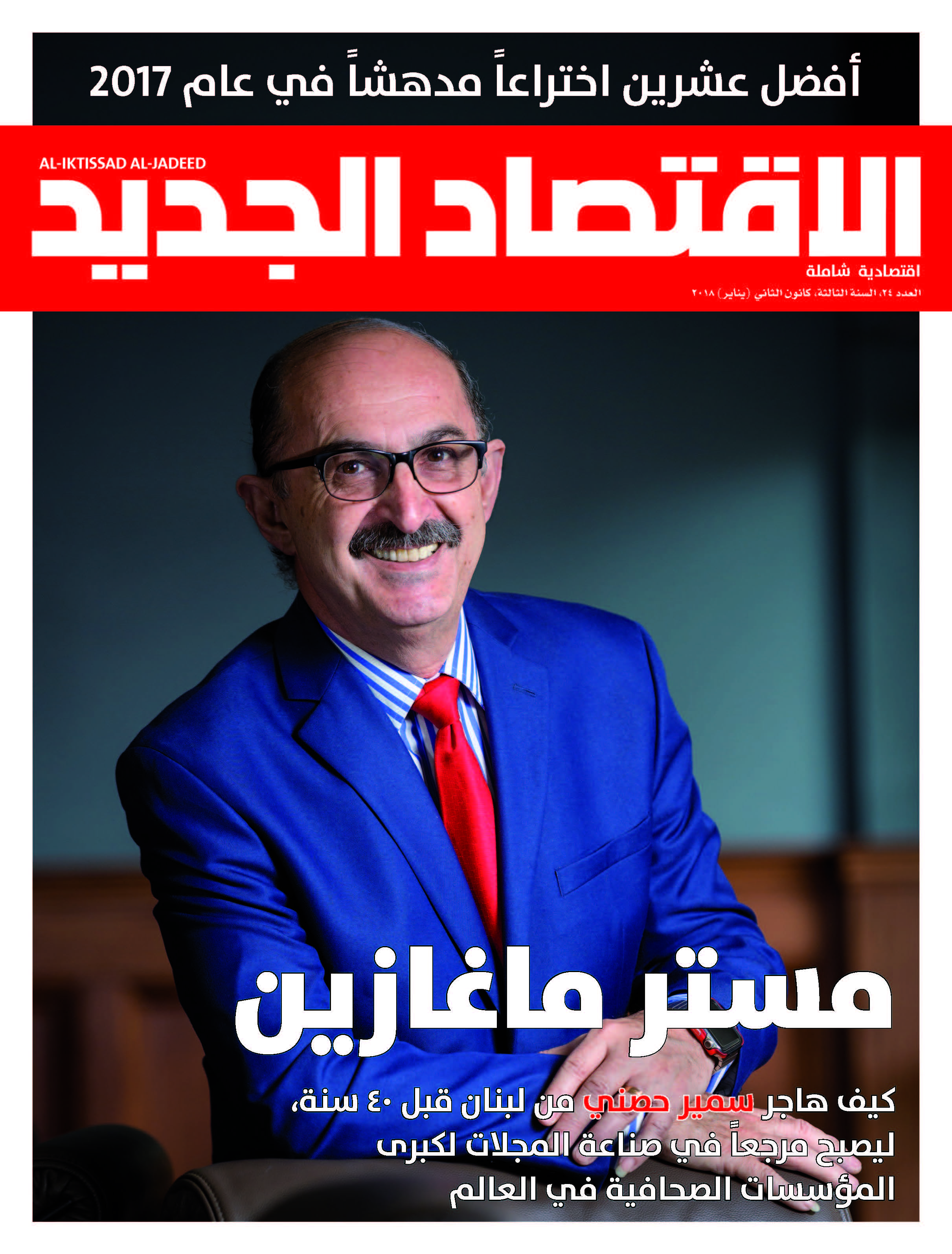
h1

Hearst Magazines’ Joanna Coles to Samir “Mr. Magazine™” Husni: “Print Is Never Going To Go Away… It Will Continue To Evolve And Remain Relevant.”– The Mr. Magazine™ Interview With Joanna Coles, Chief Content Officer, Hearst Magazines…

December 6, 2017

“I think you’re seeing a move-back to print; a move-back to the appreciation that print is restorative; it’s actually information that you take in. We know that there was a connection between the tactile, taking in of information… so, the touching of print and the absorption of information. And I feel very confident that print will continue to evolve and remain relevant.” Joanna Coles…

“In a magazine, you want to indulge in fabulous flights of fantasy with great photographers who can transport you and take you on a voyage of discovery that you didn’t know you wanted to go on. If you’re on your phone, you want digestible bits of information, some to make you laugh, some to make you feel, and some to inform you.” Joanna Coles…

“What is content? I think it is information served up in a responsible and entertaining way, that helps you understand and appreciate the world that you’re living in. And at its best, it resonates, and adds to your appreciation and understanding of the world we live in. And it’s also a fantastic emotional distraction. And at its worst, it’s full of misinformation and leaves you depressed and restless.” Joanna Coles…

From New York bureau chief for The Guardian to New York columnist for The Times of London, Joanna Coles knows her way around the world of journalism. With a stalwart stance on the future of her company and its print core, along with a vast knowledge of the digital world, where she sits on the board of Snapchat, part of her editorial strength lies in her talent, skillsets, and creativity. The other part is a combination of her humbleness when it comes to her own contributions, unequivocally giving credit to the teamwork at Hearst, and her own belief that the disruption of digital has only made print stronger.

I spoke with Joanna recently, upon a return trip from New York, where I had the pleasure of speaking with David Carey and Michael Clinton for an earlier Mr. Magazine™ interview, so it seemed only natural to talk with the first-ever chief content officer at Hearst Magazines, a position that Joanna Coles seems tailor-made for. With the intimate, tightly knit leadership that keeps Hearst Magazines on a steady course, Joanna’s adamant belief in print and intriguing eye on the company’s digital future is in sync, making it apparent that this woman knows how to define content; good, high quality content. The only kind Hearst creates.

In fact, she defined the word for me: “information served up in a responsible and entertaining way, that helps you understand and appreciate the world that you’re living in,” with a bit more added. And if out of those 21 words, the one that grabs you most is “responsible,” you would be in perfect accord with Joanna, because she feels responsible and accurate journalism is the only acceptable kind.

So, I hope that you enjoy this Mr. Magazine™ interview with a woman who is navigating her part of the Hearst vessel with a steady hand and an eye on that future with the expanding horizons, Joanna Coles, chief content officer, Hearst Magazines.

But first the sound-bites:

On what makes her enjoy journalism most in this day and age: It’s really a great time to be a magazine journalist, because there’s so much news going on and everybody is trying to make heads or tails of it. And we’re in the perfect position to do that. Not only have you seen magazines like The New Yorker completely changing the conversation around sexual harassment, but you also see a lot of magazines that are able to help readers make sense of a world that doesn’t feel like it makes sense anymore.

On whether she feels magazines are now well-primed to be the future leaders of the media industry: I do. I think that digital, which I’m also a part of through my connection on the Snapchat Board; digital has grown very much in the moment. What magazines are able to do is to think about where we are going as a culture; what kind of conversations we will be having; and we are soothsayers to the future. We are the predictors of what will happen. And it’s a very different skillset. And I think digital has only made us stronger and better.

On her being quoted as saying print isn’t dead yet: Well, I was being ironic, because since I’m British, I tend to end everything with “yet.” Print is never going to go away, and actually what we’re seeing now and what I like to say, which I’m very intrigued by too, is that we’re now in a moment of “post-the-euphoria-of-digital.” And we’re now beginning to understand the more destructive impact that some digital media have. And I think people are beginning to understand through their own behavior, which as we know is still very, very new, that if you spend a certain amount of time on your phone, you don’t actually end up feeling better educationally informed, you actually end up feeling restless and like you can’t focus or concentrate on anything.

On how, as the first-ever chief content officer at Hearst Magazines, she wraps her mind around all of the many titles that she’s in charge of: David (Carey) runs an incredibly organized ship. So, we have issue previews, where we learn what’s going to be in the magazine coming up, so we have regular meetings with the editors and publishers. I have a regular once-a-month, editor in chief meeting, where all of the editors come together; sometimes we bring in outside speakers from other industries to inspire us and to help us think strategically.

On how she feels the role of editor has changed in the last five years: The basic elements of journalism remains the same, which is to ask questions. What has become more challenging is the number of outlets to try and keep on top of, in terms of just the sheer amount of content they generate. And also the speed with which stuff goes out there with digital, that is really challenging and we’ve seen numerous incidents where people have gone out too early with misinformation that has caused enormous ramifications.

On what letter grade she would give present-day journalism: I think the journalism being practiced at the moment is extraordinary. The Washington Post; The New Yorker; Esquire: Town & Country; The New York Times, are all doing exceptional jobs of really trying to reflect the chaos going on in Washington and to explain it. I think we have some extraordinarily brave and dedicated journalists who are doing their jobs. And I’m sure they’re exhausted. The trolling that goes on with journalists is really a depressing development, but I think we have some astonishingly good journalism going on at the moment.

On what she expects to see editorially from Hearst in 2018: It’s always exciting to have new energy come in to the company, so we’re very excited about expanding to include both Men’s Health, Women’s Health and Prevention. And what those three titles do is give us even more expertise in the health and wellness area. And I think if you look at the demographic of the population, you look at what people are interested in; health and wellness and fitness are subjects that people are increasingly excited about. And also the sense of mental health and mindfulness are important to people. So, being able to offer more to readers around those subjects is really great for us.

On whether all of this seems like a walk in a rose garden, or she sees some thorns along the way: We are going through a walk in a rose garden, but we’re paying attention to the thorns along the way. (Laughs) I mean, I don’t want to pretend that this isn’t a challenging time, but as David is always telling us, the same word in Chinese that means crisis also means opportunity.

On her definition of content today: That’s a very good question; no one has asked me that before. What is content? I think it is information served up in a responsible and entertaining way, that helps you understand and appreciate the world that you’re living in. And at its best, it resonates, and adds to your appreciation and understanding of the world we live in. And it’s also a fantastic emotional distraction. And at its worst, it’s full of misinformation and leaves you depressed and restless.

On whether she believes content differs with the different platforms: Of course, because you want to always play to a platform’s strength. So, in a magazine, you want to indulge in fabulous flights of fantasy with great photographers who can transport you and take you on a voyage of discovery that you didn’t know you wanted to go on. If you’re on your phone, you want digestible bits of information, some to make you laugh, some to make you feel, and some to inform you.

On how she decides what content goes where: The editors make that decision. The editors are always thinking through the prism of their own brand; is this right for video, is this right for digital, is this print, is this a podcast, so the individual editors will have a good sense of where that material goes. For example, if you shoot Miley Cyrus, as Cosmo did recently; Miley Cyrus took Cosmo through her old childhood home and back to her childhood bedroom. That is a great story in print, because it’s emotional; the photos were terrific. But it was also a great video and it got great traction online, because you the viewer were taken into a private place that you don’t normally have access to. But in print, it was equally powerful.

On something that wished she hadn’t done during her professional career as an editor: I never think about what I shouldn’t have done. I’ve spent half my life in the fetal position about what I shouldn’t have done, but I also move on. I’ve made hundreds of mistakes, everybody who’s doing a job well has made hundreds of mistakes, but I don’t dwell on them.

On the best decision she’s made in her professional career: Probably saying yes to opportunity.

On the advice she might give a millennial who wanted to become the next Joanna Coles: First of all, I would instruct them to have fun. If you’re not passionate about doing it then you won’t enjoy it, because it’s a hard job; it’s long hours, but if you love it, it whistles past. And to be good to your peer group, because you will rise and fall with them, and there is no room in this business for people who misbehave. And the job is too big to waste energy treating people poorly.

On anything she’d like to add: I think that the importance of teamwork is one that gets overlooked in this business. Editors in particular get lavished with a lot of attention, but behind every good editor, or every editor with a certain amount of bravery to push the brand forward, there is always a loyal team who have got your back. And that’s the thing that I would like to make clear, that it’s easier to focus on individual people, but actually it’s always teamwork.

On what she would have tattooed upon her brain that would be there forever and no one could ever forget about her: When my husband first saw me at a party, he wanted to know who I was and the man next to him said, oh, that’s Joanna Coles, she’s the rudest woman in London, which of course intrigued him. I hope they wouldn’t say that now. I think if they knew me and had worked with me, I hope that they would say that she was fun to work with.

On what someone would find her doing if they showed up unexpectedly one evening at her home: You would find me walking the dog.

On what keeps her up at night: I’m embarrassed to say that I sleep like a log. Nothing keeps me up at night. I go to bed thoroughly exhausted and very excited about waking up the next morning.

And now the lightly edited transcript of the Mr. Magazine™ interview with Joanna Coles, chief content officer, Hearst Magazines.

Samir Husni: Joanna, you’ve done it all. You’ve been in newspapers, on TV; you’ve been in film, and magazines. What makes Joanna Coles enjoy this profession of journalism most in this day and age?

Joanna Coles: It’s really a great time to be a magazine journalist, because there’s so much news going on and everybody is trying to make heads or tails of it. And we’re in the perfect position to do that. Not only have you seen magazines like The New Yorker completely changing the conversation around sexual harassment, but you also see a lot of magazines that are able to help readers make sense of a world that doesn’t feel like it makes sense anymore.

Samir Husni: Do you feel that magazines are now well-primed to be the future leaders of print; of the industry?

Joanna Coles: I do. I think that digital, which I’m also a part of through my connection on the Snapchat Board; digital has grown very much in the moment. What magazines are able to do is to think about where we are going as a culture; what kind of conversations we will be having; and we are soothsayers to the future. We are the predictors of what will happen. And it’s a very different skillset. And I think digital has only made us stronger and better. But there is no question that as agenda-setters, magazines are very much still out in the forefront.

Samir Husni: You’ve been quoted as saying that print is not dead yet…

Joanna Coles: Well, I was being ironic, because since I’m British, I tend to end everything with “yet.”

Samir Husni: (Laughs).

Joanna Coles: And when people ask me how am I doing, I say, well, I’m still working. I don’t mean that I actually think I’m going to “stop” working; I’m always grateful for whatever I have and I’m happy to acknowledge that the future is unpredictable, but I don’t mean it literally. I’m sure that I said that in response to someone probably asking me if print is dead.

Print is never going to go away, and actually what we’re seeing now and what I like to say, which I’m very intrigued by too, is that we’re now in a moment of “post-the-euphoria-of-digital.” And we’re now beginning to understand the more destructive impact that some digital media have. And I think people are beginning to understand through their own behavior, which as we know is still very, very new, that if you spend a certain amount of time on your phone, you don’t actually end up feeling better educationally informed, you actually end up feeling restless and like you can’t focus or concentrate on anything.

And so, I think you’re seeing a move-back to print; a move-back to the appreciation that print is restorative; it’s actually information that you take in. We know that there was a connection between the tactile, taking in of information…so, the touching of print and the absorption of information. And I feel very confident that print will continue to evolve and remain relevant.

With our fashion titles, you see extraordinarily creative photography that cannot be replicated online. And you see people wanting to disengage or unplug from their phones. It’s not a zero-sum game, which is how people seem to think of it; it’s very much an additive game, I think.

Samir Husni: Your role is the first-ever chief content officer at Hearst Magazines, and one of the things that David (Carey) and Michael (Clinton) mentioned to me recently in New York was how small the leadership circle is at Hearst Magazines. There are five of you in top leadership positions and that’s one reason for the stability at Hearst. But as the chief content officer, you have a large portfolio under your leadership.

Joanna Coles: I do and it’s a portfolio that I hope will grow. We’ve added two new magazines this year: The Pioneer Woman and Airbnb, which we’re phenomenally excited about. And of course, we’ve just bought Rodale, so we’ll be adding Men’s Health and Women’s Health to the mix, and Prevention, Runner’s World and Bicycling.

Samir Husni: How do you wrap your mind around all of these different titles and the fact that you’re in charge of all of them?

Joanna Coles: David (Carey) runs an incredibly organized ship. So, we have issue previews, where we learn what’s going to be in the magazine coming up, so we have regular meetings with the editors and publishers. I have a regular once-a-month, editor in chief meeting, where all of the editors come together; sometimes we bring in outside speakers from other industries to inspire us and to help us think strategically.

There is always some minor crisis going on (Laughs), and then we’re always out thinking about new business; thinking about new partnerships. Hearst is a very creative partner, with the way that we work. There is an enormous team of extremely talented people at Hearst who do all of the work. And honestly, I do sit and listen to them and just say yes or no.

Samir Husni: From your days in the U.K. with The Guardian and The Times; you’ve seen a lot; what do you think was the major change that took place in your job as a magazine editor, as a journalist? How are things different from five years ago; from your days at Cosmo?

Joanna Coles: The basic elements of journalism remains the same, which is to ask questions. What has become more challenging is the number of outlets to try and keep on top of, in terms of just the sheer amount of content they generate. And also the speed with which stuff goes out there with digital, that is really challenging and we’ve seen numerous incidents where people have gone out too early with misinformation that has caused enormous ramifications. So, the speed to publish has changed dramatically and the scale of what’s out there has also changed dramatically, but the fundamental responsibility of journalism is more important now than ever, which is to hold the powerful to account and to keep on asking questions when everybody obfuscates or lies to your face.

Samir Husni: If you are awarded a Ph.D. in journalism and you’re teaching journalism today, what grade would you give present-day journalism as a whole?

Joanna Coles: I think the journalism being practiced at the moment is extraordinary. The Washington Post; The New Yorker; Esquire: Town & Country; The New York Times, are all doing exceptional jobs of really trying to reflect the chaos going on in Washington and to explain it. I think we have some extraordinarily brave and dedicated journalists who are doing their jobs. And I’m sure they’re exhausted. The trolling that goes on with journalists is really a depressing development, but I think we have some astonishingly good journalism going on at the moment.

Samir Husni: So, that’s A+ or an A?

Joanna Coles: I wouldn’t say an A+, because I think in the runs after the election there was some disappointing mix in understanding what was going on in the country, but I think the election was a wakeup call that journalists were out to touch the elite, where the elite from both coasts had somehow missed the story that was going on in rural communities. And I believe that everyone is very conscious that they’re trying to reflect the country as it is and reflect what’s going on in D.C. as it is, as well. They all need to double their staff, because there’s just so much news at the moment.

Samir Husni: Hearst launched two new magazines this year, and now you have acquired Rodale. If you were to put your editorial fortuneteller hat on; what do you expect to see in 2018?

Joanna Coles: It’s always exciting to have new energy come in to the company, so we’re very excited about expanding to include both Men’s Health, Women’s Health and Prevention. And what those three titles do is give us even more expertise in the health and wellness area. And I think if you look at the demographic of the population, you look at what people are interested in; health and wellness and fitness are subjects that people are increasingly excited about. And also the sense of mental health and mindfulness are important to people. So, being able to offer more to readers around those subjects is really great for us.

We already offer extraordinary riches when it comes to food. We have the Food Network Magazine; Good Housekeeping; Woman’s Day; Redbook; we have our online brand, Delish. So, we’re extraordinarily powerful in food. In the women’s fashion space, we have Marie Claire; Elle; Harper’s Bazaar; so again, extreme strength there.

We had traditionally less strength in the health and wellness space, which we’ve now doubled-down on with the Rodale purchase. And if you also throw in Oprah Magazine there, which has tremendous strength in the mental health and wellness fields, we build up an industry expertise which is unrivaled.

Samir Husni: So, do you think this transition will be a walk in a rose garden, or do you think there will be some thorns along the way?

Joanna Coles: We are going through a walk in a rose garden, but we’re paying attention to the thorns along the way. (Laughs) I mean, I don’t want to pretend that this isn’t a challenging time, but as David is always telling us, the same word in Chinese that means crisis also means opportunity.

The other thing that is becoming obvious is that the big tech companies are all feeling more responsibility toward thinking about content. We are constantly approached now by the companies on the West Coast, wanting to partner with us to create good quality content. And I think everybody realizes now there is an absolute block of, quite frankly, crap out there, and that brand feels both an obligation and an excitement around producing high quality, premium content.

Not only are there moral reasons for doing that, but there are also great business reasons for doing that. If you’re AT&T, or you’re JPMorgan Chase, you don’t want to be advertising next to nonsensical stories. You want to be up against high quality content, and that’s what Hearst is in the business of doing. I know, because I field a lot of the calls. There’s tremendous excitement working with a company like Hearst that knows what we’re doing.

We’ve just launched My Beauty Chat with Amazon and it uses Alexa Skill. And they’re incredibly upbeat about the potential for that. And we’ll definitely be doing more content with emerging text, with voice being a part of that. So, I see us developing that a lot. And obviously, Apple has its HomePod coming out next year, it’s just been delayed, but they’re excited to work with Google Home. We’re working on a lot of what we call “listenables,” which is bite sized pieces of audio content. So, I’m having conversations with chief content officers at many different companies than I would have been doing three years ago.

Samir Husni: Would you define the word content for me today? What’s content in 2018?

Joanna Coles: That’s a very good question; no one has asked me that before. What is content? I think it is information served up in a responsible and entertaining way, that helps you understand and appreciate the world that you’re living in. And at its best, it resonates, and adds to your appreciation and understanding of the world we live in. And it’s also a fantastic emotional distraction. And at its worst, it’s full of misinformation and leaves you depressed and restless.

Samir Husni: And does content differ with the many platforms?

Joanna Coles: Of course, because you want to always play to a platform’s strength. So, in a magazine, you want to indulge in fabulous flights of fantasy with great photographers who can transport you and take you on a voyage of discovery that you didn’t know you wanted to go on. If you’re on your phone, you want digestible bits of information, some to make you laugh, some to make you feel, and some to inform you.

Samir Husni: As you go through your day, how do you decide where the content goes? This belongs to print, this belongs to digital, this content is voice, this content is video; do you have to really think about those decisions or does it just come naturally to you?

Joanna Coles: The editors make that decision. The editors are always thinking through the prism of their own brand; is this right for video, is this right for digital, is this print, is this a podcast, so the individual editors will have a good sense of where that material goes. For example, if you shoot Miley Cyrus, as Cosmo did recently; Miley Cyrus took Cosmo through her old childhood home and back to her childhood bedroom. That is a great story in print, because it’s emotional; the photos were terrific. But it was also a great video and it got great traction online, because you the viewer were taken into a private place that you don’t normally have access to. But in print, it was equally powerful.

There are many subjects which lend themselves to the different forms of content, but the ideal is when you’re doing one story and you can package it out across all different media.

Samir Husni: What has been something that you wished you wouldn’t have done in your professional career as an editor?

Joanna Coles: I never think about what I shouldn’t have done. I’ve spent half my life in the fetal position about what I shouldn’t have done, but I also move on. I’ve made hundreds of mistakes, everybody who’s doing a job well has made hundreds of mistakes, but I don’t dwell on them.

Samir Husni: What’s the best decision you’ve made in your professional career?

Joanna Coles: Probably saying yes to opportunity.

Samir Husni: What advice would you give millennials who might want to follow in your footsteps? How can someone become the next Joanna Coles?

Joanna Coles: First of all, I would instruct them to have fun. If you’re not passionate about doing it then you won’t enjoy it, because it’s a hard job; it’s long hours, but if you love it, it whistles past. And to be good to your peer group, because you will rise and fall with them, and there is no room in this business for people who misbehave. And the job is too big to waste energy treating people poorly.

Samir Husni: Is there anything else you’d like to add?

Joanna Coles: I think that the importance of teamwork is one that gets overlooked in this business. Editors in particular get lavished with a lot of attention, but behind every good editor, or every editor with a certain amount of bravery to push the brand forward, there is always a loyal team who have got your back. And that’s the thing that I would like to make clear, that it’s easier to focus on individual people, but actually it’s always teamwork. And the real skill of a good editor in chief is managing a team. And also balancing all of their creative differences to make sure that you get the sum of the part, not the fragment of the part.

Samir Husni: If you could have one thing tattooed upon your brain that no one would ever forget about you, what would it be?

Joanna Coles: When my husband first saw me at a party, he wanted to know who I was and the man next to him said, oh, that’s Joanna Coles, she’s the rudest woman in London, which of course intrigued him. I hope they wouldn’t say that now. I think if they knew me and had worked with me, I hope that they would say that she was fun to work with.

Samir Husni: If I showed up unexpectedly at your home one evening after work, what would I find you doing? Having a glass of wine; reading a magazine; cooking; watching TV; or something else?

Joanna Coles: You would find me walking the dog.

Samir Husni: My typical last question; what keeps you up at night?

Joanna Coles: I’m embarrassed to say that I sleep like a log. Nothing keeps me up at night. I go to bed thoroughly exhausted and very excited about waking up the next morning.

Samir Husni: Thank you.
h1

Hearst Magazines: Strong & Steady Leadership From Two Men Who Know How To Sail Through The Disruptive Waters Of Constant Change – The Mr. Magazine™ Interview With David Carey, President & Michael Clinton, President, Marketing, Publishing Director, Hearst Magazines…

December 4, 2017

“We like to make money. We think there is money in print and more print, and we like to make money and grow profits in digital. You can’t have one be primary and one be secondary. We have to be good at both. The businesses have some things in common, but also, a lot of things that are not in common with each other. And we have to be very skilled at running good, solidly-profitable businesses in all of the areas that we operate.” David Carey…

“The only thing that’s a given is constant change. I think that when you visit us five years from now, I believe we’ll look back on 2017 as a period of calm, by comparison to what comes next. I absolutely believe that. The rate of change only picks up from here. I think we’re pretty good at managing, but we can be even better at it. And that’s not just the magazine business, that’s everything. What’s the job? Are we in the magazine business or the media business, or are we in the managing change in a confident manner business? I think I’ll take the latter, in terms of our team at the top of the enterprise, but even the people who show up, who come in everyday, and contribute so much.” David Carey…

“I think that when you have a natural curiosity of the marketplace and you’ve always got your antenna up as to where is the zeitgeist or where is the consumer, such as the discovery of The Pioneer Woman. That really came out of a conversation that we had with a woman who is a major retailer and she surfaced that The Pioneer Woman was a phenomena and that it was a phenomena within the center of the country, and so we were very curious. We asked if we could meet Ree Drummond and she came to New York. We heard her story and told her how unbelievably incredible we thought it was and that we wanted to test a magazine. And as you know, it’s been a wildly successful experiment thus far. We’ve had an over 70 percent sell-through; we’ve gone back to press; there has been an enormous take rate on the subscriptions.” Michael Clinton…

“I would add too that this was the year that many people said would come at some point, meaning there would be some natural consolidation in the industry. And the Time Inc. stuff has been going on for several years, but I think that the anticipation of consolidation was always in the air. We acquired Rodale; Meredith, Time Inc.; Wenner sells off two properties. The consolidation has begun, in terms of the industry, which is a natural thing.” Michael Clinton…

David Carey, president, Hearst Magazines.

Michael Clinton, president, marketing, publishing director, Hearst Magazines.

When the future history books are written about magazines and magazine media, two names will be prominently listed between those covers: David Carey, president and Michael Clinton, president, marketing, publishing director, Hearst Magazines. The top leadership are so in sync, so coordinated when it comes to their thinking processes, the two can finish each other’s sentences and answer each other’s questions readily and correctly. But this comes as no surprise to Mr. Magazine™ as the entire team at Hearst is a natural and harmonious balance of skill and talent, from the tiptop, all the way down the chain, with no one at the organization more eagerly willing to bestow credit on everyone than David and Michael.

Hearst has been synonymous with risk-taking for generations. According to David, this is the nature of Hearst, part of its DNA. From the day Helen Gurley Brown walked through the doors of the then small company and announced that she had a fantastic idea of basing a magazine on her bestselling book “Sex and the Single Girl,” which became the catalyst for what we know today as Cosmopolitan, to present-day partnerships with brands like The Pioneer Woman and cable TV; and the more recent acquisition of Rodale; Hearst is a force to be reckoned with in the world of magazines and business media. And the continued success of those insightful past contributions and the new affiliations of today can be attributed to the stalwart and innovative leadership of the company’s current captains of the ship, David and Michael.

I spoke with both of them on a recent trip to New York, and the conversation was both lively and informative. Our conversation took place in David’s office on the 43rd floor of the Hearst Tower. Strength in leadership today has never been more vital with the constant changes taking place in the marketplace and in magazine media. And according to David, constant change is the only given going on today. And Mr. Magazine™ would have to agree. From the disruptions of the day to the consolidations that are sometimes surprising, yet apt to happen, the landscape is rapidly becoming a more cocooned environment, with the three top publishing companies coming to the forefront to lead the way into the future: Hearst, Meredith, and Condé Nast.

David, Michael and I spent a moment in time talking about these changes, and about the past and future of magazine media, Hearst in particular. About their mantra of Print Proud, Digital Smart that Mr. Magazine™ “borrowed” as the theme for the next ACT Experience, with their knowledge, of course. And when it comes to reflecting upon 2017 as it draws to a close, as David put it, if we chat again in five years, it may actually be determined that 2017 was known as a period of calm, at least by comparison to what might be coming next. The “calm before the storm,” as it were.

But if you’re about to sail dangerously choppy waters, there aren’t two captains with any steadier hands or more determined and integrated thought processes than David and Michael, so you’re in good shape. And now the Mr. Magazine™ in depth interview with David Carey and Michael Clinton.

But first the sound-bites:

David Carey, president, Hearst Magazines.

On whether they think stability and constants in leadership make media businesses and cultures within organizations stronger (David Carey): The businesses that focused on either the wrong things, or had cultures that couldn’t adapt for the future; of course, people always misinterpret Charles Darwin when it comes to that, and Darwin didn’t say it was the strongest that could survive, it was those who could adapt. And I think you’re seeing this play out. Time Inc. used to be the mightiest and largest company, but they’ve had several leadership teams in several years, against a backdrop of change. And the outcome was not so favorable. And we’ve had very stable leadership now for some time, both at the corporate level and the division level, as has Meredith. And I think we’re both flexing our muscles.

On how Hearst has managed not to have a problem with culture change within its organization (David Carey): This is the nature of Hearst, when Hearst was a small company, Helen Gurley Brown walked through our doors with this crazy notion of a magazine roughly based on her bestselling book” Sex and the Single Girl.” She had never edited a magazine in her life. They give her Cosmopolitan, so talk about taking risks. Here’s an existing business and she changes it into something that had no resemblance to what it looked like before she came along. And of course, that took off.

On how Hearst has managed not to have a problem with culture change within its organization (Michael Clinton): Also, we as a company have always been first-movers in things. I remember on the ground floor of this small building, our new media lab, and no one before had done that. And so, whether it’s putting your toe into the new media lab or into cable television at the time, or into today’s world, such as Snapchat or other venues, I think we’ve just always been and our culture has always been curious about how we can play into new, emerging businesses.

Michael Clinton, president, marketing, publishing director, Hearst Magazines.

On how Hearst uncovers the not-so-obvious when it comes to its “magic formula” for ideas (Michael Clinton): I think that when you have a natural curiosity of the marketplace and you’ve always got your antenna up as to where is the zeitgeist or where is the consumer, such as the discovery of The Pioneer Woman. That really came out of a conversation that we had with a woman who is a major retailer and she surfaced that The Pioneer Woman was a phenomena and that it was a phenomena within the center of the country, and so we were very curious. We asked if we could meet Ree Drummond and she came to New York. We heard her story and told her how unbelievably incredible we thought it was and that we wanted to test a magazine. And as you know, it’s been a wildly successful experiment thus far.

On how Hearst uncovers the not-so-obvious when it comes to its “magic formula” for ideas (David Carey): We’re proud to talk about our successes, and we don’t boast about our failures, but we do think about trying new things; if you don’t strike out sometimes, you’re not at bat enough. So, we do all sorts of things and most of them have worked, and the things that haven’t worked we’ve learned from. We can’t be afraid to do that.

On the purchase of Rodale and what’s next for those titles with Hearst (David Carey): We hope to close in January, 2018, and we’ll take ownership and start to connect the very best practices in both directions. They’ve done a number of remarkable things and we learn from that, and we’ve done things that we can use, and we’ll start to merge the enterprises in January, February and March. We have great integration teams as we lift the business and shift it to Hearst and integrate it into our operation.

On the purchase of Rodale and what’s next for those titles with Hearst (Michael Clinton): It’s a great tuck-in to our existing portfolio, plus it, as David said, dimensionalizes it in another way in the health and fitness space. We sort of do health and fitness sporadically throughout the different magazines, but this gives us a real foothold in the space. And so it was a beautifully strategic acquisition for us, in terms of not just the consumer base, but the advertising base.

On whether Hearst and Rodale will be a perfect marriage (Michael Clinton): Why not? We had perfect marriages with Hachette when we acquired it. I think what is important is that we’re a publishing company. So, a publishing company acquiring a publishing company has a really good understanding of the idiosyncrasies of our business. So, we’re strategic. I think a different conversation might be had if we were not a publishing company.

On whether Hearst and Rodale will be a perfect marriage (David Carey): And we’ve published these magazines (titles) in international markets for many years; we’ve had the joint venture in the U.K. now for more than a decade, with Men’s Health, Women’s Health and Runner’s World. We’ve published Men’s Health and Women’s Health in the Netherlands and in China and Japan. So, we’ve known these brands and their potential, and in that particular way we had, not an inside track, but we had an intimate understanding of what these titles can do. So, that gave us a great appreciation.

On how they would feel if when the future history books are written, much of it is about Hearst (David Carey): We love the business and it’s good to be good at something, right?

On how they would feel if when the future history books are written, much of it is about Hearst (Michael Clinton): This is my fortieth year in the business, so I think that for those of us who have spent our careers in this business, we’ve chosen to be in this business. We just had psychologist, Angela Duckworth speak and she’s written a great book called “Grit: The Power of Passion and Perseverance,” and it’s about how that passion and perseverance wins the day. And I think that we can say that we both have passion for this business and I believe that says a lot.

On how they turned passion into monetary skills (David Carey): Well, it’s not just us. We have a very efficient leadership team and we have a team where everyone has really unique skills. And that’s always nice. I think the other thing about this company is that the leadership team is small and we have this big global business. And so, the politics at Hearst are the lowest of any big organization, because there’s a certain culture here where people roll up their sleeves and they get it done; we pass things back and forth and that’s a very important piece.

On how they turned passion into monetary skills (Michael Clinton): When you have a lot of layers and levels, there’s a lot of maneuvering and turf wars and protectionism, but I think we’re so efficient in our organization and we go right into the operators, so it’s just a very different model.

On how they would characterize magazine media in 2017 (David Carey): Well, I think you have to go backward. I recently watched a Ken Burns’ Vietnam PBS series; one of the episodes from 1968, which I think was called “Things Fall Apart,” and for the sixties, sometimes things were so great, and then you’re watching this episode and you had political unrest, the Democratic Convention in Chicago. You had all of the anti-war movements and the media questioning what we were doing in Vietnam. You had the sexual revolution coming in right on top of all of this and you felt every day was unpredictable. And that’s kind of 2017.

On how they would characterize magazine media in 2017 (Michael Clinton): I would add too that this was the year that many people said would come at some point, meaning there would be some natural consolidation in the industry. And the Time Inc. stuff has been going on for several years, but I think that the anticipation of consolidation was always in the air. We acquired Rodale; Meredith, Time Inc.; Wenner sells off two properties. The consolidation has begun, in terms of the industry, which is a natural thing.

On being Print Proud, Digital Smart (David Carey): We like to make money. We think there is money in print and more print, and we like to make money and grow profits in digital. You can’t have one be primary and one be secondary. We have to be good at both. The businesses have some things in common, but also, a lot of things that are not in common with each other. And we have to be very skilled at running good, solidly-profitable businesses in all of the areas that we operate.

On what’s next for Hearst in 2018 (David Carey): Hopefully, a new product and continuing that tradition. But you know, we’re heads down right now on the road to a Rodale integration. This is a company that likes to plan its work and work its plans. We know that for the first four or five months, we have to get a smooth integration of this business, and more partnerships. The more things change out there, the more that people seek us out to create new businesses. Some we’re discussing; some, that news will come more.

On any landmines they see that need to be avoided (Michael Clinton): I think there’s a lot of confusion, and I’m speaking from the ad-revenue side now. There is a lot of confusion in the marketplace about where people should be spending their money. There was a huge digital hangover and this was a very apparent theme at the ANA meeting in October. There seems to have been a very big retrenchment. Overall, there are a lot of landmines in what is the digital ecosystem going to look like. And that plays well for us, because of all the things that we’ve said; trusted brands, safe environment, first-party data.

On any landmines they see that need to be avoided (David Carey): I think there is a growing number of people that are so upended by all the political noise that it drives them back to comfortable lifestyle media. There is a lot of crazy stuff, and if you read every single word, every single day, it can terrify you. A number of people in the last month or so have told me that putting their phones down and getting out of the maelstrom of the news cycle to enjoy our products, such as Food Network magazine, HGTV, and Harper’s Bazaar, is great.
On what each would have tattooed upon their brains that would be there forever and no one could ever forget about them (David Carey): I’ll answer for Michael: endless creativity eternal optimism, and boundless energy.

On what each would have tattooed upon their brains that would be there forever and no one could ever forget about them (Michael Clinton): David would be: steady hand. What an organization wants in a leader is someone who is unflappable and has a steady hand; who has a rational point of view and doesn’t get wrapped up in the noise. And keeps the ship steering well, and I think David has enormous talent in that space, because there is a lot of chaos in our industry and our world.

On what keeps them up at night (Michael Clinton): (Laughs) My five-month-old puppy.

On what keeps them up at night (David Carey): The silence in our home while all the kids are gone.

And now the lightly edited transcript of the Mr. Magazine™ interview with David Carey, president & Michael Clinton, president, marketing, publishing director, Hearst Magazines.

Surrounded by two magazine media industry giants, David Carey (r) and Michael Clinton.

Samir Husni: Let us start with the easy question, how do you describe the magazine and magazine media business today?

David Carey: The businesses that focused on either the wrong things, or had cultures that couldn’t adapt for the future; of course, people always misinterpret Charles Darwin when it comes to that, and Darwin didn’t say it was the strongest that could survive, it was those who could adapt. And I think you’re seeing this play out. Time Inc. used to be the mightiest and largest company, but they’ve had several leadership teams in several years, against a backdrop of change. And the outcome was not so favorable.

And we’ve had very stable leadership now for some time, both at the corporate level and the division level, as has Meredith. And I think we’re both flexing our muscles. We feel so fortunate that we work for a large private enterprise that likes to invest in its core businesses; that is open to taking risks; and has a team of people, not just on this corporate floor, but throughout the whole organization that naturally grow, change and evolve at the fastest rate in the business. And that’s what gives us a strong and confident position as a media business. Not just the magazine business; the TV business; the cable business; the digital business; and everything is going through such change. And I think we have the best seat in the house.

Samir Husni: It seems many blame the lack of change on the culture, that it was the culture in the organization that was the toughest thing to change. How has Hearst managed not to have that problem?

David Carey: This is the nature of Hearst, when Hearst was a small company, Helen Gurley Brown walked through our doors with this crazy notion of a magazine roughly based on her bestselling book” Sex and the Single Girl.” She had never edited a magazine in her life. They give her Cosmopolitan, so talk about taking risks. Here’s an existing business and she changes it into something that had no resemblance to what it looked like before she came along. And of course, that took off.

And then Frank Bennack had the great wisdom and vision to invest in the cable business, forming a partnership with Capital Cities initially to launch A&E. Then we got the chance to buy 20 percent of ESPN, and those were small businesses that became big businesses. And those helped fund our entry into business media and buying 80 percent of Fitch Ratings and medical and transportation data businesses and those became more successful. And that got reinvested back into the magazine company through the acquisition of Lagardère; the creation of our ventures with Food Network, as well as our two tests from last year.

So, the overall corporation is one that just feels comfortable with that. I think the media businesses that have stuck to a couple of verticals now regret that. And Michael and I are the beneficiaries of it and it’s our job to advance it, but the corporation long before we arrived had this remarkable dexterity to look at a lot of different businesses and see that a tapestry of both information and media businesses was the best possible position for success. So, it’s kind of embedded in what we do.

We talk about our partnerships all of the time, such as Airbnb and The Pioneer Woman, but these partnership strategies have been in place for decades and we’re just the latest advocates of it. But this has been honed by generations of executives with our company.

Michael Clinton: Also, we as a company have always been first-movers in things. I remember on the ground floor of this small building, our new media lab, and no one before had done that. And so, whether it’s putting your toe into the new media lab or into cable television at the time, or into today’s world, such as Snapchat or other venues, I think we’ve just always been and our culture has always been curious about how we can play into new, emerging businesses. Some are successful; some aren’t. Some we retrench from and some we move forward on, but I think that’s part of the fluidity of the cultural mentality.

Samir Husni: As far as a “magic formula,” someone told me once that if it’s obvious; it’s too late. How do you see the not-so-obvious and how do you follow up with that?

Michael Clinton: I think that when you have a natural curiosity of the marketplace and you’ve always got your antenna up as to where is the zeitgeist or where is the consumer, such as the discovery of The Pioneer Woman. That really came out of a conversation that we had with a woman who is a major retailer and she surfaced that The Pioneer Woman was a phenomena and that it was a phenomena within the center of the country, and so we were very curious. We asked if we could meet Ree Drummond and she came to New York. We heard her story and told her how unbelievably incredible we thought it was and that we wanted to test a magazine. And as you know, it’s been a wildly successful experiment thus far. We’ve had an over 70 percent sell-through; we’ve gone back to press; there has been an enormous take rate on the subscriptions.

So, I think having a natural curiosity about what’s new, what’s next, but not just in the trendy stuff, in all parts of the cultures. We live on an island and we live in the bubble, so being curious about what’s going on across that river; we’re very relentless about that. And The Pioneer Woman is a great example of that.

David Carey: We’re proud to talk about our successes, and we don’t boast about our failures, but we do think about trying new things; if you don’t strike out sometimes, you’re not at bat enough. So, we do all sorts of things and most of them have worked, and the things that haven’t worked we’ve learned from. We can’t be afraid to do that.

Some companies are afraid to fail; now, the way we approach this is we publish two issues or four issues, so we kind of moderate the investment. We don’t go out and say this is going to be the biggest thing the world has ever seen; we let the marketplace test it and to pace what we do.

And the importance of things like Airbnb is we now have other big digital organizations, big technology companies, engage with us. They see the wisdom of creating physical media to reinforce their brands. So, every door opens a new door.

I wasn’t here during the dark days of 2008, when Food Network was launched, Michael, Cathie (Black) and Ellen (Levine) were, and it turned out to be, as you know, a remarkable success; number one in the category, dominant in every way. And that led to HGTV; that led to The Pioneer Woman; now Discovery acquires Scripps, so if you just stay at it and you’re open-minded, you never know what path you can take as these businesses evolve from one step to the next step and beyond. And we love that process.

Samir Husni: Last time we chatted, you told me that Hearst Magazines had doubled in size since you came onboard, and now you’ve acquired Rodale.

David Carey: Rodale is about 20 to 25 percent of our U.S. business, and is the equivalent of adding a little less than 10 percent of our global business, in terms of the overall international company.

Samir Husni: What’s next for Rodale titles with Hearst?

David Carey: We hope to close in January, 2018, and we’ll take ownership and start to connect the very best practices in both directions. They’ve done a number of remarkable things and we learn from that, and we’ve done things that we can use, and we’ll start to merge the enterprises in January, February and March. We have great integration teams as we lift the business and shift it to Hearst and integrate it into our operation.

The work streams are intense, because there’s everything from how do you pay people to benefits’ plans to keeping the lights on to billing advertisers to the technology systems. We recently had a long meeting and we feel so fortunate that our folks are just really good at this, because there are a hundred different work streams underway.

We have great admiration for the Rodale brands and for the categories they serve. This kind of “Wellthy” movement, which is their word, as you spell it out WELL-THY, is one that we very much believe in, not only in the U.S., but around the world.

And I think for Rodale, throughout the whole media business, as you’re seeing evidenced with AT&T and Time Warner, and so on, scale matters more than ever. So, it’s our hope that those brands connected to a larger scale enterprise will become more successful than they have been most recently.

Michael Clinton: It’s a great tuck-in to our existing portfolio, plus it, as David said, dimensionalizes it in another way in the health and fitness space. We sort of do health and fitness sporadically throughout the different magazines, but this gives us a real foothold in the space. And so it was a beautifully strategic acquisition for us, in terms of not just the consumer base, but the advertising base.

Samir Husni: It feels like the perfect wedding. Is it going to be the perfect marriage?

Michael Clinton: Why not? We had a great marriage with Hachette when we acquired it. I think what is important is that we’re a publishing company. So, a publishing company acquiring a publishing company has a really good understanding of the idiosyncrasies of our business. So, we’re strategic. I think a different conversation might be had if we were not a publishing company.

If you go and talk to people who came to us from Hachette, you would find that they would say they found a beautiful home; a home that understood them and understood their business, and that it was a very smooth and successful transition. So, I don’t see why this should be any different.

David Carey: And we’ve published these magazines (titles) in international markets for many years; we’ve had the joint venture in the U.K. now for more than a decade, with Men’s Health, Women’s Health and Runner’s World. We’ve published Men’s Health and Women’s Health in the Netherlands and in China and Japan. So, we’ve known these brands and their potential, and in that particular way we had, not an inside track, but we had an intimate understanding of what these titles can do. So, that gave us a great appreciation.

Rodale is important to us, because we couldn’t imagine another acquisition that had the type of natural fit with Hearst, which you identified as well. So, that’s why to us right when the announcement went out in June that it was for sale, we felt this was important. We’ll of course hope to expand our company through acquisitions into the future, but this one really felt as hand-in-glove as we could have imagined.

Samir Husni: When the future magazine history books about the 21st century are written, somehow there are a lot of similarities between now and what happened in the 1920s with Henry Luce and DeWitt Wallace, but this time it took place at Hearst, with David Carey and Michael Clinton. Do you feel that’s a huge responsibility or does it feel natural and like something that just happened?

David Carey: We love the business and it’s good to be good at something, right?

Michael Clinton: We’ve both been in it a long time. I’ve been in it for 40 years.

David Carey: And I’ve been in it for 33 years.

Michael Clinton: This is my fortieth year in the business, so I think that for those of us who have spent our careers in this business, we’ve chosen to be in this business. We just had psychologist, Angela Duckworth speak and she’s written a great book called “Grit: The Power of Passion and Perseverance,” and it’s about how that passion and perseverance wins the day. And I think that we can say that we both have passion for this business and I believe that says a lot. And we’ve obviously had many options and opportunities to do other things.

Samir Husni: But the difference is a lot of people have passion, but they don’t have the business skills to monetize that passion. How did you do that?

David Carey: Well, it’s not just us. We have a very efficient leadership team and we have a team where everyone has really unique skills. And that’s always nice. I think the other thing about this company is that the leadership team is small; it’s Michael, Joanna (Coles), Troy (Young), Debi (Chirichella), and myself, and we have this big global business. And so, the politics at Hearst are the lowest of any big organization, because there’s a certain culture here where people roll up their sleeves and they get it done; we pass things back and forth and that’s a very important piece.

And I think with some of the other companies you’ve seen, the politics are really kind of eating the companies from within a bit, not the publication; but you’ve seen Jack Griffin, a really able manager get thrown out, just all those sorts of crazy things that got in the way. And those were worrisome signs. We haven’t had any of that.

Michael Clinton: When you have a lot of layers and levels, layers and levels, there’s a lot of maneuvering and turf wars and protectionism, but I think we’re so efficient in our organization and we go right into the operators, so it’s just a very different model.

David Carey: If you think of the structures of other companies, there’s no other company that is global and private and has the access to capital that we do and likes to experiment. Those are unique Hearst DNA elements and it’s our job to leverage that.

We’re doing acquisitions in other markets around the world; we’re testing things all over and learning from everything that we do, that we don’t think our competition has it. No one else has their international business integrated in with the domestic business.

So, we get to do things relative to investments and strategies and acquisitions that we get to play for the long term. We’re grateful that Mr. Hearst created a trust that opens the company and that has enabled our division and other divisions to be entrepreneurial, even within the confines of a very large corporation.

Samir Husni: If you were to characterize 2017 in magazine media, what would you say?

David Carey: Well, I think you have to go backward. I recently watched a Ken Burns’ Vietnam PBS series; one of the episodes from 1968, which I think was called “Things Fall Apart,” and for the sixties, sometimes things were so great, and then you’re watching this episode and you had political unrest, the Democratic Convention in Chicago. You had all of the anti-war movements and the media questioning what we were doing in Vietnam. You had the sexual revolution coming in right on top of all of this and you felt every day was unpredictable. And that’s kind of 2017.

We have political unrest, that news plays out every day. Then you have media sector changes, not just magazines, everything about media. Then you have the magazine industry. And so, it’s change upon change upon change. And I think that what it teaches executives and corporations is the need to be strong and confident through this. We have employees and others who may ask does the world feel a little bouncy, even at the national level, let alone the industry level. It’s our job to lead them through this process.

There’s always opportunities, even when crazy, crazy disruption is happening. There are always companies that are winners. And companies are allowed to win, but they can also commit suicide. It’s all allowed. And we’re always thinking about how we can make our company a winner. I kind of joke, that chaos is going to be our friend and it is going to propel us forward not hold us back.

Michael Clinton: I would add too that this was the year that many people said would come at some point, meaning there would be some natural consolidation in the industry. And the Time Inc. stuff has been going on for several years, but I think that the anticipation of consolidation was always in the air. We acquired Rodale; Meredith, Time Inc.; Wenner sells off two properties. The consolidation has begun, in terms of the industry, which is a natural thing.

I was making the analogy recently; you may not remember Burdine’s and Kaufmann’s and Rich’s, and all of these regional department stores that existed. They all sort of consolidated. Then you had Macy’s, National, etc.

Pick an industry; airline industry; retail industry; just pick one and consolidation is ultimately something that happens in the business cycle. And I think in the media cycle with magazines, that was a natural thing that was going to happen. It started this year and I think it will make the companies that are committed as we are, stronger and have better products – stronger products, better marketplace dynamics. And it will help the industry be stronger, as opposed to fragmented.

David Carey: And we’ve seen the digital business go through different cycles for 20-plus years, and so the tone of the last few months, which had some of the shiniest objects, some of these companies potentially having futures that seemed a little less certain, are also a net benefit for companies like Hearst or Condé Nast or Meredith, in that, from a talent standpoint, that’s not so easy. Not everything is going to turn into Instagram; 12 employees, a billion dollars.

And these companies, which have for many years been bad businesses, but put a lot of spin on the ball; I sometimes reference my favorite movie “Toy Story.” Buzz and Woody, and you have the skeptical Woody who says, “Buzz, that’s not flying, that’s falling with style.” One of those great lines from Pixar.

Some of these pure play digital businesses, and some will succeed and have fantastic futures, but some have simply been “falling with style.” And I think the news that will be flowing in for the next six to 12 months are going to be those companies that never really had much of a real business, but put a lot of spin on the ball. And at the same time, it will be companies like ours, who have become far more skilled at digital, growing audiences, monetizing, producing video; those skills have matured here and elsewhere, and that’ll be good for us.

The pendulum is going to swing a bit in companies of trust and credibility. There’s been a lot of discussion on ad fraud and digital. Companies like ours would never do that. We replay 50 years into the future for reputation, not 50 hours. And so, there are a lot of elements, in terms of what will surely be the downfall of many ad-supported, independent, venture-backed, digital businesses, but that’s going to be a very important silver lining for the big publishers next year.

Michael Clinton: I just had this discussion recently with the CEO of a media agency. It was the number one issue, ad fraud, in terms of where the monies are going and making sure that it’s real people and all of the above.

Samir Husni: One of the things that I learned from the two of you and actually stole for the theme of my next ACT Experience in April, 2018 is the phrase: Print Proud, Digital Smart, based on an interview I did with Michael. I gave you credit, Michael. (Laughs)

Michael Clinton: (Laughs).

Samir Husni: Hearst has never ignored print, but you also invested in digital. In fact, you invested in print when others were ignoring print…

Michael Clinton: Or running away from print.

David Carey: We like to make money. We think there is money in print and more print, and we a like to make money and grow profits in digital. You can’t have one be primary and one be secondary. We have to be good at both. The businesses have some things in common, but also, a lot of things that are not in common with each other. And we have to be very skilled at running good, solidly-profitable businesses in all of the areas that we operate.

Samir Husni: What’s next? What can we expect from Hearst in 2018?

David Carey: Hopefully, a new product and continuing that tradition. But you know, we’re heads down right now on the road to a Rodale integration. This is a company that likes to plan its work and work its plans. We know that for the first four or five months, we have to get a smooth integration of this business, and more partnerships. The more things change out there, the more that people seek us out to create new businesses. Some we’re discussing; some, that news will come more.

And hopefully, there will be more opportunities for, not just the leadership teams, but for the rank and file. The people here who really make it happen.

Samir Husni: Any landmines you see that you need to avoid?

Michael Clinton: I think there’s a lot of confusion, and I’m speaking from the ad-revenue side now. There is a lot of confusion in the marketplace about where people should be spending their money. There was a huge digital hangover and this was a very apparent theme at the ANA meeting in October. There seems to have been a very big retrenchment.

Overall, there are a lot of landmines in what is the digital ecosystem going to look like. And that plays well for us, because of all the things that we’ve said; trusted brands, safe environment, first-party data. I’m sure you saw the magazine industry ad campaign that was out there and it leans into that discussion.

So, we view that we have a moment in time to really flex our muscles in this confusion, because I think marketers are really beginning to say, we need to really think hard about where we’re placing our money, and maybe we should step back before we step forward. And we’re well-placed there, so the landmine is the overall ecosystem, but the opportunity is that we have the stuff to lean forward into it.

David Carey: I think there is a growing number of people that are so upended by all the political noise that it drives them back to comfortable lifestyle media. There is a lot of crazy stuff, and if you read every single word, every single day, it can terrify you. A number of people in the last month or so have told me that putting their phones down and getting out of the maelstrom of the news cycle to enjoy our products, such as Food Network magazine, HGTV, and Harper’s Bazaar, is great.
I do think that we’re a year into great political change. And it seems everyone may be feeling a little seasick, but that should be good for all types of media.

Samir Husni: If you could have one thing tattooed upon your brain that no one would ever forget about you, what would it be?

David Carey: I’ll answer for Michael: endless creativity, eternal optimism, and boundless energy.

Samir Husni: (Laughs) Would you like to answer for David?

Michael Clinton: Yes, I think David would be: steady hand. What an organization wants in a leader is someone who is unflappable and has a steady hand; who has a rational point of view and doesn’t get wrapped up in the noise. And keeps the ship steering well, and I think David has enormous talent in that space, because there is a lot of chaos in our industry and our world.

David Carey: (Laughs) See, we can finish each other’s answers. This is going to be a great moment for us, and that doesn’t mean that every day is super-easy, because that would be naive to say that.

Sometimes when we speak to young people, college students will come in or we’ll speak to groups of them, and they’ll remark that the media business seems kind of crazy and I’ll usually say, you just have to pick a business, because I’m not sure where the calm waters are. The automotive business, where they’re worried about autonomous driving, which would upend everything. Retail or the hotel business, where you now have people who own apartments and homes all around you, that are your competitors. If you want to be a teacher potentially, but education has its own shifts as well.

So, the only thing that’s a given is constant change. I think that when you visit us five years from now, I believe we’ll look back on 2017 as a period of calm, by comparison to what comes next. I absolutely believe that. The rate of change only picks up from here. I think we’re pretty good at managing, but we can be even better at it. And that’s not just the magazine business, that’s everything. What’s the job? Are we in the magazine business or the media business, or are we in the managing change in a confident manner business? I think I’ll take the latter, in terms of our team at the top of the enterprise, but even the people who show up, who come in everyday, and contribute so much.

We just have to constantly evolve every single day. And when you get it right, it’s so satisfying. Sometimes you don’t get it right, of course, those days are more frustrating, but we get it right a lot. And it’s our job to continue that streak.

We see a zillion opportunities, in terms of what we do, how we do it, and where we do it. We work long days, so we’re limited by 10 or 11 hours a day. Part of our style is do something right, execute it well, and move on to the next one. We’re capacity-constrained in that way, but we have all sorts of ideas about what comes next for us.

Apple already has the iPhone 11 designed in their minds, and it’s our job to do the same thing. Kick around things internally, tweak things; it’s our job to keep that fresh pipeline of new products and new ideas, new ways of doing business, flowing. We opened a video studio next door, we own the commercial space, and the building next to us is 26,000 sq. ft.. We have six or seven video bays producing content every hour of every day, with more and more to come.

Samir Husni: Okay, Michael, what keeps you up at night?

Michael Clinton: (Laughs) My five-month-old puppy.

Samir Husni: (Laughs) David, what keeps you up?

David Carey: The silence in our home while all the kids are gone.

Samir Husni: (Laughs) Thank you both.

h1

Condé Nast’s President & CEO, Bob Sauerberg, to Samir “Mr. Magazine™” Husni: “I Think That Print Is Really Here To Stay; Consumers Just Love It. And I Think That They Love Our Magazines And They Love Other Companies’ Magazines.” The Mr. Magazine™ Interview…

November 17, 2017

“We’re building a big experiences business. It’s not just that everything is going digital, consumers also want to have real experiences. And we see that as a big business. My plan isn’t just the plan to pivot to digital; it’s a plan to build great brands and different forms of content in a variety of platforms. And that’s what really makes our future so exciting and so dynamic.” Bob Sauerberg…

“What’s been the most exciting thing to happen over this time is the consumer’s willingness to pay for quality content in all forms, be it print, digital, etc. And that’s a trend that’s increasing and is an exciting thing for folks that want to create great content for consumers. It’s going to allow us to think about all kinds of different ways that we can sell direct, so that’s an exciting shift over that time period.” Bob Sauerberg…

In January 2016, Condé Nast, one of the world’s most highly regarded and watched magazine media companies, with revered titles such as The New Yorker, Vogue, GQ, Vanity Fair, Wired, W, and Glamour, elevated Bob Sauerberg to the position of President and CEO, and the company has been moving forward with forceful and news-generating changes ever since. In less than two years under his CEO tenure, Condé Nast has seen more changes than the entire decade before. Following a strategy that is permeating the industry with premium content across all platforms, Condé Nast also has seen its digital revenues increase; has created different brand collections at the company, such as the Women’s Collection under the leadership of Alison Moore, and the Culture Collection under the leadership of Chris Mitchell; and has launched a digital-only platform, Them, that has seen phenomenal success, all without putting its traditional print content on the backburner. In short, Condé Nast is gearing up for a very exciting future and Bob Sauerberg is steady and strong at the helm.

I spoke with Bob recently and we talked about the changes and shifts throughout Condé Nast’s hallowed halls. From the departure of Graydon Carter as Vanity Fair’s editor in chief, to Radhika Jones being named as his successor, Bob expressed confidence and excitement about the company’s future. His supreme belief in the talented people who create Condé Nast’s high quality products is palpable, and his vision is on mark and focused when it comes to what he sees for the company’s future: sealing its position as a premium media company, diverse and varied, but with one sacred cow; the company’s valued position as a high-quality content-maker with 100 + years of expertise.

So, without further ado, I hope that you enjoy the Mr. Magazine™ interview with Bob Sauerberg, president & CEO, Condé Nast.

But first the sound-bites:

On his upcoming second anniversary as CEO of Condé Nast and how he would evaluate those first two years: My first two years have been very focused on putting the people, the employees, in place to do that. It’s not just words, there has to be a lot of action; reprioritizing which platforms we’re going to be publishing our content on over time, and really getting us properly set up so that we can scale those new growth initiatives.

On what percent of the strategic goals he set forth for Condé Nast he feels he’s at right now: We’re probably about 75 percent there. I think the foundation is all set, but it’s been disruptive. Going through massive change like this is incredibly disruptive. It’s very easy to put it down on paper and set up the vision, but it’s really harder to get people to understand it and execute it.

On the biggest challenge he’s had to face since putting those strategic goals in place: I’m going to say that the biggest challenges are culture. Every industry that’s going through massive transformation, by definition, if you’ve been a traditional business that’s been around for 100+ years like we have; we’ve created real expertise in content making, particularly in magazines. And as you go through these transformations, you’re doing different things, so getting the organization to change at a pace that’s at or greater than the marketplace is really difficult.

On whether anything has surprised him during the almost 18 years total that he’s been at Condé Nast: I’ll tell you what surprises me now, and I’ve been saying this forever, but the rate of change; I’ve been telling people that it’s going to keep changing faster than it has in the past, but it’s really mind-blowing to see how the marketplace is changing, particularly the advertising marketplace. It’s astonishing to see how there is always constant shift and change. So, that’s one change that’s been frustrating and perhaps difficult.

On whether he thinks he’ll see the day at Condé Nast where revenue is coming from both print and digital: Yes, I do. Our strategy for the next three years; the digital aspects of our business will be at least 50 percent. And I’m hoping within that composition that a big piece of that is coming from the consumer and not just from the advertiser.

On what the reader can expect from a Bob Sauerberg tenure with all of the changes that are taking place at Condé Nast: The latest announcement is the replacement of Graydon Carter, and that’s with Radhika Jones, who is an absolutely fabulous editor, and one with really endless potential. She’s brilliant; she’s innovative; she’s experienced on all platforms; and she has relationships with people everywhere, and she’s a very cool person. So, that’s the latest. And you’ve seen over the last couple of years a lot of changes; senior management here, and yes, these are my people and I’m really proud of them.

On whether there are any of the Condé Nast brands that would be considered sacred cows: What’s sacred here is quality content. That’s our expertise and it has been for 100 years. We may monetize that content differently over time; we may prioritize different brands at different points in time, because the marketplace changes. Those are all shifts that will happen naturally, but the DNA of our company, the expertise of it, is our quality content and that’s sacred.

On whether he can envision a day there isn’t a printed Vogue or Vanity Fair: I actually really don’t. I think that print is really here to stay; consumers just love it. And I think that they love our magazines and they love other companies’ magazines. All you have to do is hop on an airplane, or you’re sitting at a resort or something, by a pool, and everyone is reading a magazine.

On the thinking process behind folding a magazine such as Teen Vogue, and launching a digital-only entity such as Them: The print advertising business for the teen categories has just been struggling for some period of time. So, we just determined that when we looked out over the three-year plan, that we were fighting that platform; the cost versus the return; we were just finding a marketplace that was not going to return an outcome that we really liked. And most of our revenue was coming from our digital business; it had already transitioned to a digital brand. And we’re just getting started with Them. How many platforms we’re publishing; how things play out; that will change over time, but it could very well be a great magazine opportunity. But we’re just out of the gate and it’s wildly successful so far.

On whether he ever dreamed when he was a student at the University of Arkansas that he would one day become the leader of one the major publishing companies in the world: No, I really didn’t. I’ll tell you something; I’ve never interviewed for a job. I haven’t, I just sort of always tried to redefine every job I was in, and evidently people liked what they saw. I’ve always thought about the future and developing whatever I was doing. I’m obviously motivated, but I never really had a specific outcome that I had planned for my career. These things just sort of played out through just trying to do good work.

On being quoted as saying that he does not motivate people, he hires motivated people: I think that’s true. I would also say that my leadership approach is very much focused on mentoring and developing great people, so I’m not trying to put myself on the pedestal; I’m trying to keep the company on the pedestal. And then having all of the boats that we have rowing toward the vision that we all believe in. And I think motivated people like that.

On whether there are any surprises in store between now and the end of the year: It’s been reported that we’re gearing up to announce a Glamour editor, and I think that will probably be the last bit of noise that you’ll hear from us until 2018.

On what he would have tattooed upon his brain that would be there forever and no one could ever forget about him: Bold.

On what someone would find him doing if they showed up unexpectedly one evening at his home: I’m a SoulCycler. I’m the oldest guy SoulCycling in the back row. (Laughs) But I’m exercising hard. I’m not sure you have that in Mississippi, but it’s a cycling class that is an incredible workout for 45 minutes. It’s a real fun thing to do.

On what keeps him up at night: It really goes back to molding the culture, because I think that we’re working on the right things; we know what we need to do, and getting individuals there and really working on the right things, getting that culture right is really the thing that keeps me up.

And now the lightly edited transcript of the Mr. Magazine™ interview with Bob Sauerberg, president and CEO, Condé Nast.

Samir Husni: In January 2018, you’ll complete your second year as CEO of Condé Nast, and probably in that last two years there have been more changes at Condé Nast than in the previous decade. How would you evaluate those first two years?

Bob Sauerberg: I would say that our transformation plan is very focused on maintaining our leadership position of putting out the best magazines in the world. And trying to turn the magazine business into a better business by using that foundation to develop a very significant digital, video, branded content, and data business. And these experiences could really fuel our growth long-term, because the magazine business is obviously not a growing business.

My first two years have been very focused on putting the people, the employees, in place to do that. It’s not just words, there has to be a lot of action; reprioritizing which platforms we’re going to be publishing our content on over time, and really getting us properly set up so that we can scale those new growth initiatives. And everything we’ve done over the last two years has been really in concert with that plan.

Samir Husni: And if you were going to give yourself a grade, and I know it’s very tough to be your own professor and student at the same time, but do you feel that you’ve accomplished 90. 95, or 100 percent of that new strategic goal you put forth for Condé Nast?

Bob Sauerberg: We’re probably about 75 percent there. I think the foundation is all set, but it’s been disruptive. Going through massive change like this is incredibly disruptive. It’s very easy to put it down on paper and set up the vision, but it’s really harder to get people to understand it and execute it.

This year we reorganized our sales organization from 22 different siloed brands – 22 different sales organizations into one, which was a massive undertaking. Recently, we had our first national sales and marketing leadership meeting that the company has ever had, and it was the most satisfying day of my career at Condé Nast. We came together and it was incredibly clear the things that we could do differently to provide scaled programs for the marketplace, as well as amazing, individually branded things. So, I would say that when you go through transformation, the scorecard continually changes. And I’m feeling really good about the foundation we’ve put in place.

Samir Husni: What has been the biggest challenge that you’ve had to face since you began these changes?

Bob Sauerberg: I’m going to say that the biggest challenges are culture. Every industry that’s going through massive transformation, by definition, if you’ve been a traditional business that’s been around for 100+ years like we have; we’ve created real expertise in content making, particularly in magazines.

And as you go through these transformations, you’re doing different things, so getting the organization to change at a pace that’s at or greater than the marketplace is really difficult. You’ve got digital organization that’s coming in, that can do things quicker, and they have to work with the traditional content-makers who are so important to us. So, getting them to really find a way to work together, not frustrate each other, but really work together is the biggest challenge. When it happens and it works, it’s the greatest thing you’ve ever seen, when you’ve got talented people coming together toward a really great outcome.

Samir Husni: You’ve been at Condé Nast since 2000, so you’ve been there since the beginning of the 21st century, has anything surprised you in those 18 years?

Bob Sauerberg: I’ll tell you what surprises me now, and I’ve been saying this forever, but the rate of change; I’ve been telling people that it’s going to keep changing faster than it has in the past, but it’s really mind-blowing to see how the marketplace is changing, particularly the advertising marketplace. It’s astonishing to see how there is always constant shift and change. So, that’s one change that’s been frustrating and perhaps difficult.

What’s been the most exciting thing to happen over this time is the consumer’s willingness to pay for quality content in all forms, be it print, digital, etc. And that’s a trend that’s increasing and is an exciting thing for folks that want to create great content for consumers. It’s going to allow us to think about all kinds of different ways that we can sell direct, so that’s an exciting shift over that time period.

Samir Husni: I spoke with Chris Mitchell recently and he was telling me that The New Yorker is now almost at a 50-50 revenue break between print and digital. Do you think you’ll see the day at Condé Nast where almost all of the content is generating revenue both from print and digital?

Bob Sauerberg: Yes, I do. Our strategy for the next three years; the digital aspects of our business will be at least 50 percent. And I’m hoping within that composition that a big piece of that is coming from the consumer and not just from the advertiser.

The New Yorker very quietly has had one of the most successful consumer paywalls in existence. It’s a huge business and growing fast. And that’s a very prideful thing for a company, because we’ve got hundreds of thousands of people paying us for content in a variety of formats, in both digital and print. We’re feeling really good about that, and separately, we’re building a big experiences business. It’s not just that everything is going digital, consumers also want to have real experiences. And we see that as a big business.

My plan isn’t just the plan to pivot to digital; it’s a plan to build great brands and different forms of content in a variety of platforms. And that’s what really makes our future so exciting and so dynamic.

Samir Husni: With all of the changes that are taking place, and the fact that you’re also the first CEO without S.I. Newhouse in the house; will we be seeing more of Bob Sauerberg’s fingerprints upon the magazine? From the choices of new editors to the choices for new chief business officers; what can we, the readers, expect from a Bob Sauerberg tenure at Condé Nast?

Bob Sauerberg: The latest announcement is the replacement of Graydon Carter, and that’s with Radhika Jones, who is an absolutely fabulous editor, and one with really endless potential. She’s brilliant; she’s innovative; she’s experienced on all platforms; and she has relationships with people everywhere, and she’s a very cool person. So, that’s the latest.

And you’ve seen over the last couple of years a lot of changes; senior management here, and yes, these are my people and I’m really proud of them. They’re coming to the table with a couple of simple common traits, and one is that they want to do something really special and they want to do something that really creates a level of influence over the world that doesn’t exist elsewhere.

They come with skills that are expansive and not set on just one platform. And they not only want to do it, they know how to do it, whether it’s a chief business officer or an editor, or quite frankly, our digital team, who are really quite fabulous here. And our video team. The entertainment group we have here is second to none.

We started Condé Nast Entertainment five years ago. We had no video views; we were not doing video at all. And this year we’ll have 11 billion views of short-form video; five or six TV shows in production; a movie that’s out in the theaters now, with more to come; and this didn’t exist five years ago. It was an idea that I basically had on my whiteboard and we hired Dawn Ostroff and we made that happen.

What I’m proud about is that we have seen the trends; we know what they are and we’re trying to really balance out where we put our time, attention and investment, between the things that got us here, these great magazines that we produce, and these great brands that were created under S.I.’s leadership. So now, we’re finding ways to spin them into other platforms and to build other businesses around them and change the business model. All these things take time and determination, but it’s really happening and it’s not like a business plan; it’s real action and real revenue and real profit.

Samir Husni: As you move forward, are there any sacred cows with any of the brands, be it print or digital, or you’re going to do whatever it takes to stick to that strategy?

Bob Sauerberg: What’s sacred here is quality content. That’s our expertise and it has been for 100 years. We may monetize that content differently over time; we may prioritize different brands at different points in time, because the marketplace changes. Those are all shifts that will happen naturally, but the DNA of our company, the expertise of it, is our quality content and that’s sacred.

Now, will we figure out how to create that content with different cross-structures or different approaches, of course, everyone will do that, but I want our content to lead our company and I want it to be influential, different, and market-making. To me that’s our sacred cow.

Samir Husni: Do you envision a day when we won’t have a printed Vogue, Vanity Fair, or GQ?

Bob Sauerberg: I actually really don’t. I think that print is really here to stay; consumers just love it. And I think that they love our magazines and they love other companies’ magazines. All you have to do is hop on an airplane, or you’re sitting at a resort or something, by a pool, and everyone is reading a magazine.

The issue right now is the advertising marketplace is a bit fickle with it, because they’re shifting gears in terms of ow they’re spending their monies. What that’s really going to make us do is to think about how to monetize the magazines differently, get the consumers to pay more, find different ways to leverage those brands. And we will do that. But it’s a cultural moment when Vanity Fair’s cover hits the newsstands. And that’s an important part of our business. Just like it is with Vogue and with GQ.

Samir Husni: We’ve never seen anything digital create the same buzz as the covers of Vanity Fair have or the cover of GQ this month. When you fold a print magazine, such as when you folded the print edition of Teen Vogue, how is that different from say, Vogue? Or when you launched Them as a digital-only entity; what’s the thinking behind those types of decisions in the hierarchy at Condé Nast?

Bob Sauerberg: The print advertising business for the teen categories has just been struggling for some period of time. So, we just determined that when we looked out over the three-year plan, that we were fighting that platform; the cost versus the return; we were just finding a marketplace that was not going to return an outcome that we really liked. And most of our revenue was coming from our digital business; it had already transitioned to a digital brand. I wasn’t excited that we were going through that, but it was a good business decision.

And we’re just getting started with Them. How many platforms we’re publishing; how things play out; that will change over time, but it could very well be a great magazine opportunity. But we’re just out of the gate and it’s wildly successful so far. I think we had our first video that in its first day had 1.5 million views. It’s crazy. Our instinct was if we did this right we were going to catch a cultural wave and I think we have. One that makes that level of innovation very exciting.

Samir Husni: From a personal point of view, since your days in Arkansas, when you were a student at the University of Arkansas at Fayetteville, did you ever expect that one day you’d be the leader of one of the major magazine companies in the world?

Bob Sauerberg: No, I really didn’t. I’ll tell you something; I’ve never interviewed for a job. I haven’t, I just sort of always tried to redefine every job I was in, and evidently people liked what they saw. I’ve always thought about the future and developing whatever I was doing. I’m obviously motivated, but I never really had a specific outcome that I had planned for my career. These things just sort of played out through just trying to do good work.

So, I can’t say that it was calculated or anything; I just spent time doing whatever I was doing and tried to it as well as anyone could. And then you show up, and here’s where you end up.

Samir Husni: One of your famous quotes is “You do not motivate people, you hire motivated people.”

Bob Sauerberg: I think that’s true. I would also say that my leadership approach is very much focused on mentoring and developing great people, so I’m not trying to put myself on the pedestal; I’m trying to keep the company on the pedestal. And then having all of the boats that we have rowing toward the vision that we all believe in. And I think motivated people like that.

They like having a big runway where they can develop their skills, and I think that’s why I’m here at Condé Nast, because we have such talented people and I’m not trying to get in the way of their development or growth; I’m just trying to channel it toward the outcomes that we need to grow the company.

Samir Husni: Are there any surprises in store between now and the end of the year?

Bob Sauerberg: It’s been reported that we’re gearing up to announce a Glamour editor, and I think that will probably be the last bit of noise that you’ll hear from us until 2018.

Samir Husni: If you could have one thing tattooed upon your brain that no one would ever forget about you, what would it be?

Bob Sauerberg: Bold.

Samir Husni: If I showed up unexpectedly at your home one evening after work, what would I find you doing? Having a glass of wine; reading a magazine; cooking; watching TV; or something else?

Bob Sauerberg: I’m a SoulCycler. I’m the oldest guy SoulCycling in the back row. (Laughs) But I’m exercising hard. I’m not sure you have that in Mississippi, but it’s a cycling class that is an incredible workout for 45 minutes. It’s a real fun thing to do.

Samir Husni: My typical last question; what keeps you up at night?

Bob Sauerberg: It really goes back to molding the culture, because I think that we’re working on the right things; we know what we need to do, and getting individuals there and really working on the right things, getting that culture right is really the thing that keeps me up.

Samir Husni: Thank you.