h1

Flow Magazine: For Life’s Little Pleasures And Paper Lovers Here, There And Everywhere – The Mr. Magazine™ Interview With Joyce Nieuwenhuijs, Brand Director & Irene Smit, Creative Director.

November 16, 2015

From The Netherlands With Love…

“I think it’s good to say that we are an example of the fact that print is not dead. And I think that we show the power of print, but I also believe in digital. The goal must not be about the medium, but the consumer’s needs. We started off in print and it’s more a luxury and a passion for women, but we can’t exist and grow fast internationally without digital and social media. So, certainly, we also need digital and not just print.” Joyce Nieuwenhuijs

“As for the digital part, we were never opposed to digital; it was just that we love paper so much that we put all of that emotion for paper into the magazine. And when we started Facebook and other social media, it helped us to grow very much.” Irene Smit
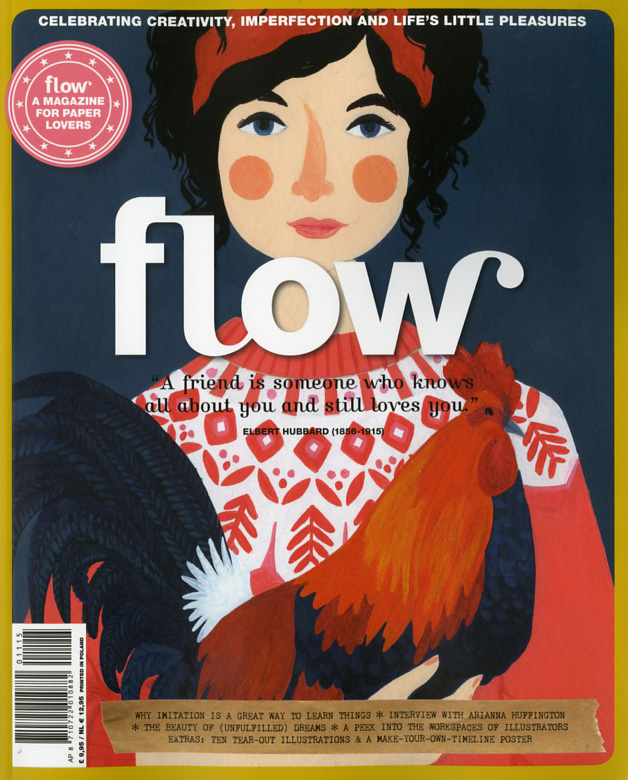
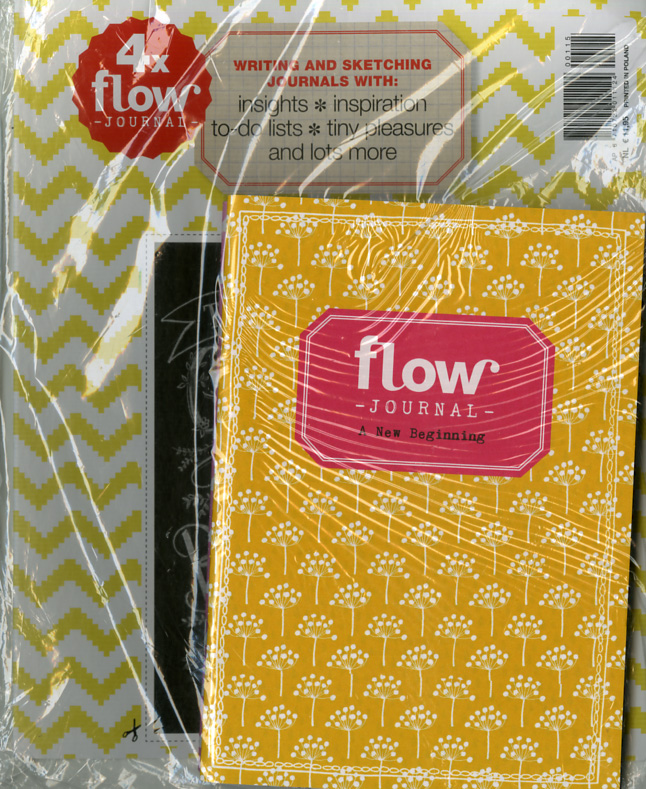
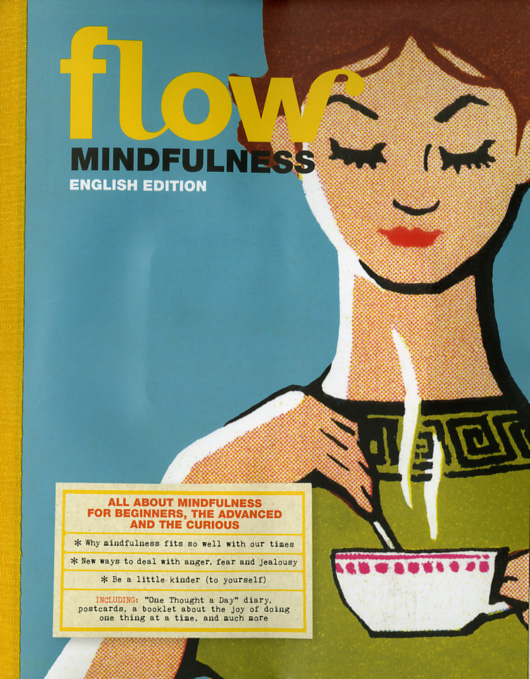
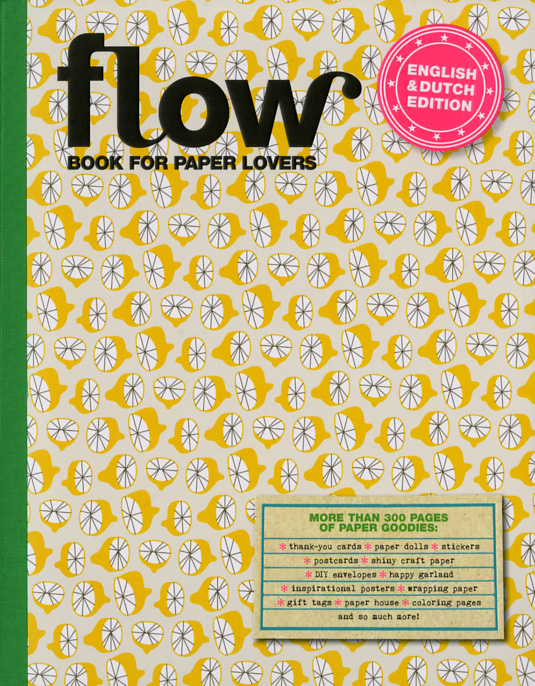
Flow3-2 Flow is a magazine that takes its time; it promotes celebrating creativity, imperfection, and life’s little pleasures. And it does so beautifully. The magazine and all of its special extensions and creative products are a print-lover’s dream. The different papers that are used with each issue are heavenly to the touch and mesmerizing to eye. It has become an international sensation with its many editions across the globe, having started out as a small Dutch magazine at the height of the economic crisis in 2008. It has since proven that if you follow your heart and your passion, anything is possible.

I still have vivid memories of holding that first issue of Flow magazine in my hands, together with its media kit, as the co-founders, flowing with joy (pun intended) presented me that first copy of the magazine. I was visiting the offices of Sanoma in The Netherlands where Joyce Nieuwenhuijs and Irene Smit work. Joyce is the brand director of Flow and Irene is the creative director. Both women have a firm grip on their seven-year-old’s hand and know how to lead it down the long and sometimes very winding road that is today’s magazine media world.

I spoke with Joyce and Irene recently and we talked about the concept of mindfulness and about how the magazine educates and encourages its readers to slow down and be conscious of every minute that they can. It was a look into a lifestyle that is both sought-after and needed in the busy world that we live in today.

So, I hope that you enjoy this respite with Joyce, Irene and Mr. Magazine™ as we take you into a world that will teach you how to go with the “Flow.”

But first, the sound-bites:

Joyce_Nieuwenhuijs On the birth of Flow Magazine (Joyce): Seven years ago we started Flow Magazine. It was 2008 and we got the go-ahead from the Board in July of that year. In September, the crisis began, so it was really a tough time to launch a new magazine. But actually, I think the crisis was a good point for us because everybody, especially Irene, the creative director, found a plan for the new concept, and a new magazine was born that didn’t exist until then.

On Irene’s recollection of the beginning of Flow (Irene):
I was with my Co-Editor-in-Chief, Astrid van der Hulst, and we were sitting with papers all around us, talking about what kind of magazine we would like to read. And we had both brought everything that inspired us with us, wrapping paper, little cards and all of these paper things. That was the time when we found out that we wanted to make a magazine that focused on living mindfully and being inspired.

On Flow presenting itself as the “anti-digital” and its DNA (Joyce): First, I think it’s good to say that we are an example of the fact that print is not dead. And I think that we show the power of print, but I also believe in digital. The goal must not be about the medium, but the consumer’s needs. We started off in print and it’s more a luxury and a passion for women, but we can’t exist and grow fast internationally without digital and social media. So, certainly, we also need digital and not just print.

flow2-1 On the biggest stumbling block she’s faced since the launch of the magazine (Joyce):
I only thought in opportunities in the beginning. But the challenge was Flow is an experience and you can’t just say that you have a new magazine, you have to see Flow before you can believe it’s a good idea. So, from the beginning really, that was a challenge. People get that Flow-feeling, and if they have a Flow Magazine in their hands; they’re in love. And for sure, if you have a brand that people love, you also have some people who don’t like it, but that’s OK, because you have to focus on the people who do love it. And if you’re mainstream; everybody likes you, but you’re not special. And I think that’s why Flow is good; it’s a love brand, but some people, mostly men, don’t understand what the magazine is. And from the beginning, we have to tell the story and that’s why I created the marketing strategy in ambassadors.

Irene Smit On how Irene coped with the economic crisis and the digital explosion in 2008 when the magazine was launched (Irene):
Well, the economic crisis was more of a natural thing that happened, because when we started the magazine it was something that we already felt. Everything was getting bigger, people were not getting happier, and the shift was to more expensive and purer products. So, I think the crisis helped us because the feeling that we wanted to put in the magazine was reflected in the people at that time. A lot of them recognized themselves in our magazine. And that was OK for us, certainly. I mean, the crisis wasn’t good for the sales market, of course, but I do think it helped to grow the magazine. A lot of people felt like there was no more welfare and were looking for new ways of living. And that’s what Flow is all about.

On the ambassador program that she strategized to get the magazine into the hands of people (Joyce):
Physically giving them their magazine to show them Flow, because before we did that, they couldn’t understand the magazine without it being in their hands; you couldn’t tell them the story. I think that’s another secret of Flow; it’s a true experience. It’s not just reading a magazine; it’s much more. And that’s why we’re able to grow the brand quickly.

On any cultural issues the magazine has faced crossing borders (Joyce):
That’s a good point. We thought when we launched Flow that we’d focus on the Dutch market because we didn’t really consider the international market eight years ago. But we received so much feedback from abroad, people who had seen it in airport shelves that we knew that we had to do something internationally, but we had to figure out how. We wondered if we’d need to change our content for something more local or culturally different. But that’s why the prices for us and the changes in the world are so good, because in the world we have the oppressions; everybody is under the same pressures with their jobs or working very hard to balance their daily lives. It’s a worldwide challenge. And digital really helped us because the world is nearby now. Eight years ago it wasn’t so nearby.

flow5-4 On defining Flow Magazine (Joyce): What is Flow? The essence of Flow is that we are a magazine that takes its time. And we help people to learn to do the same. And it helps people look for the imperfections, because we are living in a world of perfections. Flow shows you that life doesn’t have to be perfect.

On the success of Flow (Irene): The success is that we really make the magazine ourselves; it comes from us. And every Wednesday, we still sit together and drink coffee and come up with new ideas and new products. And we have to find time for that. We are creative directors, but we’re magazine makers as well.

On the most pleasant moment for her during the last seven years (Joyce):
When you’ve worked with Flow from the beginning; I think working with such a creative team every day and growing from a small magazine into a big, strong international brand makes each day so very pleasant. Also, the moment that we broke even and the return on our investment became really big was great.

On Irene’s most pleasant moment (Irene):
The best moment for me is that Astrid and I sit together every Wednesday morning in a very nice coffee shop and we drink coffee together and talk about everything that’s going on. New products we want to make; problems we have to deal with, just everything that’s going on.

On anything else she’d like to add (Joyce):
I think we have always had, and I will always have, a big ambition to grow the brand. But I believe it’s good to start small; think big, act small. That’s the secret of how we made Flow such a big brand. Nowadays, you have to learn by doing and you have to be an entrepreneur. More and more in the big challenge that we have as publishers you have to stay innovative with your product. And content is key for sure.

On what motivates her to get out of bed in the morning (Joyce):
Life is good, for sure. You have to claim the energy and look forward to doing things with your family. I love my job and love growing the brand. And being a part of today’s transformation gives me energy.

On what motivates Irene to get out of bed in the morning (Irene):
Truthfully, my children. (Laughs) My family life is still the most important thing to me. And my work life is important as well, and I love what I do. It’s so nice that I can invent new products and think about new products. I get a lot of letters from people worldwide who tell me that the magazine helps them so much. I even received a letter from someone in London who told me that her husband had just died and she read the magazine and it helped her tremendously. And I love these readers; they’re so special to us. Their letters mean so much.

On what keeps her up at night (Joyce):
I learned that if you get up very early and you work very hard, you have to sleep. (Laughs) We can work 20 hours, for sure, there is enough to do. But sometimes you have to take off and I learned that from Flow.

On what keeps Irene up at night (Irene): I never stay up at night. (Laughs) I sleep a lot. I go to bed very early and I’m so tired, I fall right to sleep.

And now the lightly edited transcript of the Mr. Magazine™ interview with Joyce Nieuwenhuijs, Brand Director and Irene Smit, Creative Director, Flow Magazine.

Samir Husni: Joyce, Flow Magazine is your baby.

Joyce Nieuwenhuijs: Yes, it is.

Samir Husni: Recreate that birth moment for me.

Joyce Nieuwenhuijs: Seven years ago we started Flow Magazine. It was 2008 and we got the go-ahead from the Board in July of that year. In September, the crisis began, so it was really a tough time to launch a new magazine. But actually, I think the crisis was a good point for us because everybody, especially Irene, the creative director, found a plan for the new concept, and a new magazine was born that didn’t exist until then.

We actually started Flow Magazine in November, 2008 and now seven years later, it’s growing very fast into a really beautiful, strong brand. The process we used was learning by doing and not starting with big budgets and huge print runs, but as entrepreneurs, with at first, a frequency of just six issues, so that we could grow the brand and surprise the readers.

From the beginning there was a lot of demand from readers in the Netherlands, but also from abroad. They couldn’t read it, but they thought it was amazing. It has grown very fast and now we have eight issues per year and six specials for the Netherlands, but we also have two licenses in Germany, France and the international edition in 20 countries.

So, in seven years and through entrepreneurship, we have 39 products now and we’re really proud of the baby we gave birth to in such chaotic times as it was for media then. Flow is a magazine that will give you rest in your hectic life.

Samir Husni: As the creative director, Irene, can you recall that moment of conception for you?

Irene Smit: Yes, very much. I was with my Co-Editor-in-Chief, Astrid van der Hulst, and we were sitting with papers all around us, talking about what kind of magazine we would like to read. And we had both brought everything that inspired us with us, wrapping paper, little cards and all of these paper things. That was the time when we found out that we wanted to make a magazine that focused on living mindfully and being inspired. We wanted to use four lines to describe the magazine.

So, we came up with those four lines that first day. I can remember vividly we were saying how nice this was or that was, and let’s do this or that. (Laughs) And we both did a mindfulness course, and mindfulness wasn’t as big then as it is now. But we really felt like it brought us so much.

We both finished the mindfulness course together and we learned so much. The idea of life and just accepting it as it is more, and to try and not to struggle so much. And this concept gave so much relief that we decided to use the idea for a magazine.

And I think that’s part of Flow’s success now; the message that you shouldn’t work too hard or try to be happy all of the time, just accept life with its ups and downs and be as happy as you can.

Samir Husni: We live in a digital age, and I don’t think anyone would argue with that statement. However, Flow presents itself as the “anti-digital.” So, what’s the DNA? What’s the philosophy behind Flow and can you describe the magazine a little bit, Joyce?

Joyce Nieuwenhuijs: First, I think it’s good to say that we are an example of the fact that print is not dead. And I think that we show the power of print, but I also believe in digital. The goal must not be about the medium, but the consumer’s needs. We started off in print and it’s more a luxury and a passion for women, but we can’t exist and grow fast internationally without digital and social media. So, certainly, we also need digital and not just print.

But the secret of Flow is we are a perfect fit for women, men too of course, but women lead very busy lives and it’s not only in the Netherlands, it’s worldwide. And I think that’s the secret behind how we have grown so fast. Also from abroad too, because times are changing; everybody has digital products and we all need a break from our hectic lives and Flow gives you the present of staying in the present, and Flow is a tool that they can use as me-time for themselves.

Samir Husni: Irene, when you brought the idea for the magazine to the powers-that-be, what was the initial reaction? Was everyone jumping up and down and telling you what a great idea it was?

Irene Smit: (Laughs) No, no one said what a great idea it was.

Samir Husni: (Laughs too).

Irene Smit: We tried to put it in a magazine format and it was a little bit difficult. And there were a lot of people who had ideas about it; some said we should go this way and some said that way. But we said just believe in us and let us do it how we think we should do it. If not, it will be just another magazine like all of the others out there. If you want to do things differently, you need to skip all of the other people and let us do it. So it was a struggle to get everyone to agree, for sure.

Samir Husni: What about you, Joyce; I remember when I first met you and the magazine was just coming out. A lot of people were happy and excited about the magazine, but some were skeptical and wondered could it really work; there were so many different types of paper; so many different sizes inside the magazine and pullouts. It was and continues to be a very interactive magazine with the readers. What was the biggest stumbling block or challenge that you faced since the launch and how did you overcome it?

Joyce Nieuwenhuijs: I only thought in opportunities in the beginning. But the challenge was Flow is an experience and you can’t just say that you have a new magazine, you have to see Flow before you can believe it’s a good idea. So, from the beginning really, that was a challenge. People get that Flow-feeling, and if they have a Flow Magazine in their hands; they’re in love. And for sure, if you have a brand that people love, you also have some people who don’t like it, but that’s OK, because you have to focus on the people who do love it. And if you’re mainstream; everybody likes you, but you’re not special.

And I think that’s why Flow is good; it’s a love brand, but some people, mostly men, don’t understand what the magazine is. And from the beginning, we have to tell the story and that’s why I created the marketing strategy in ambassadors. So, we started with a small ambassador group and then it grew to a wider reach. I invested a lot, not in big marketing budgets, but just in giving people that Flow-feeling, a sample of Flow.

We didn’t have social media until 2008; can you imagine? (Laughs)

Samir Husni: (Laughs too).

Joyce Nieuwenhuijs: We invest very much in marketing personally to give Flow to people, and now, when we launched in Germany and France, I said we have a very big marketing tool that doesn’t cost anything; we can use social media to spread the word. And we definitely spread the word with social media. So, that’s why social media is so important to us. It helps spread the word of Flow internationally.

Samir Husni: So, the ambassador program is actually having people physically taking the magazine?

Joyce Nieuwenhuijs: Physically giving them their magazine to show them Flow, because before we did that, they couldn’t understand the magazine without it being in their hands; you couldn’t tell them the story. I think that’s another secret of Flow; it’s a true experience. It’s not just reading a magazine; it’s much more. And that’s why we’re able to grow the brand quickly.

From the beginning, the strategy has been to expand the brand and form brand awareness in order to entrepreneur with other products in the magazine, especially products such as stationery. To build the brand and bring awareness is important because the engagement was so strong from the beginning. People love the brand and they want to have more of it. That’s why we now have 39 products, to build the brand. And I think it’s good because with Flow, your readers are really investors, so that’s why we invested a lot in the marketing plan. But that’s also why my strategy is to expand the brand in a healthy way, not too strong as a concept, but give surprises to the reader and encourage them to buy new products.

Samir Husni: Irene, as you were ready to do that first issue, something major was about to take place on the world’s stage.

Irene Smit: Yes, the economic crisis.

Samir Husni: The economic crisis and digital. We had both exploding at that time. So, how did you cope with both of those dramatic happenings during the launch of a brand new magazine that uses – how many types of paper?

Irene Smit: I don’t even know. I think maybe eight or nine every edition. Well, the economic crisis was more of a natural thing that happened, because when we started the magazine it was something that we already felt. Everything was getting bigger, people were not getting happier, and the shift was to more expensive and purer products.

So, I think the crisis helped us because the feeling that we wanted to put in the magazine was reflected in the people at that time. A lot of them recognized themselves in our magazine. And that was OK for us, certainly. I mean, the crisis wasn’t good for the sales market, of course, but I do think it helped to grow the magazine. A lot of people felt like there was no more welfare and were looking for new ways of living. And that’s what Flow is all about.

As for the digital part, we were never opposed to digital; it was just that we love paper so much that we put all of that emotion for paper into the magazine. And when we started Facebook and other social media, it helped us to grow very much. We have so many followers on Instagram and we have illustrators and crafters worldwide that we connect with on Instagram and Flow readers too. Digital helps us a lot to make connections so that we can be in contact with fans and readers all over the world. Also stay in touch with creative people who can help spread the word about Flow.

When we connect with someone like an illustrator from another part of the world, such as Australia, it’s a really great feeling to know they’re reading your magazine and you have that brand awareness.
flow 1-1

Joyce Nieuwenhuijs: That’s a good point. We thought when we launched Flow that we’d focus on the Dutch market because we didn’t really consider the international market eight years ago. But we received so much feedback from abroad, people who had seen it in airport shelves that we knew that we had to do something internationally, but we had to figure out how. We wondered if we’d need to change our content for something more local or culturally different.

But that’s why the prices for us and the changes in the world are so good, because in the world we have the oppressions; everybody is under the same pressures with their jobs or working very hard to balance their daily lives. It’s a worldwide challenge. And digital really helped us because the world is nearby now. Eight years ago it wasn’t so nearby.

We also have a lot of freelancers working internationally with us, we have a really international team, and we work many people from abroad, so that’s also a really nice thing. Also, with our digital and social media, everyone is looking on their emails or mobile devices for us and our videos.

Flow allows you to relax and step out of the busy world and that means that we are for everybody, that concept is universal.

Samir Husni: How does it feel, Irene, seven years later, and Flow being your creation, to see all of the imitations like Flow in the marketplace today? When you came there was nothing like it on the market. But today, almost everywhere I travel, people tell me how much they would love to do a magazine like Flow. Does that fact change anything about the present creation of the magazine; the fact that so many others, either have imitated it or want to? Your feet may be still on the ground, but is your head in the clouds with all of the admiration for the magazine?

Irene Smit: No, our heads are the same as they were in the beginning. (Laughs) We just want to create the most beautiful magazine that we would want to read ourselves. We still put everything from our lives into the magazine. It still feels very much like our baby and all the competitors aren’t real, because to me, some of them don’t come from the heart. And I think a reader can feel that. People may use a different kind of paper and try to do a remake of Flow, but it’s not the same. And that’s why I don’t think they’ll ever be as successful as our magazine.

It feels strange that it’s grown so big, because in daily life we’re still doing the same work. The success is that we really make the magazine ourselves; it comes from us. And every Wednesday, we still sit together and drink coffee and come up with new ideas and new products. And we have to find time for that. We are creative directors, but we’re magazine makers as well.

Samir Husni: What about you, Joyce; if somebody asked you to define Flow today, seven years later, what would you tell them?

Joyce Nieuwenhuijs: What is Flow? The essence of Flow is that we are a magazine that takes its time. And we help people to learn to do the same. And it helps people look for the imperfections, because we are living in a world of perfections. Flow shows you that life doesn’t have to be perfect.

Samir Husni: What has been the most pleasant moment for you during the last seven years?

Joyce Nieuwenhuijs: When you’ve worked with Flow from the beginning; I think working with such a creative team every day and growing from a small magazine into a big, strong international brand makes each day so very pleasant. Also, the moment that we broke even and the return on our investment became really big was great.

But for me, working with a good creative team is what makes every day pleasant and we also love being entrepreneurs. When we are here at FIPP and have become one the growing brands, I will be even more proud of the magazine.

Samir Husni: And Irene, what has been the most pleasant moment for you during the seven years?

Irene Smit: The best moment for me is that Astrid and I sit together every Wednesday morning in a very nice coffee shop and we drink coffee together and talk about everything that’s going on. New products we want to make; problems we have to deal with, just everything that’s going on.

We drink coffee for two hours and then everything feels OK and we come up with a lot of new ideas and those are the best moments of the week. And I think those two hours are some of the most successful hours of Flow. And we have to fight for the time to keep those Wednesday morning coffee sessions.

Samir Husni: Irene, what has been the biggest challenge that’s faced you over the seven years and how did you overcome it?

Irene Smit: The growth is still the most difficult challenge for us. To find a way to grow, but still keep this feeling that you’re a small team with quick decisions. There are more meetings now and more people that we have to inform and who are involved in the magazine.

Also the international teams; it’s difficult for us to tell them how to make the magazine because it’s just something that we do on our intuition. Now, we have to write down or tell them how we do it. (Laughs) How do you tell them when it’s just a feeling that we have? So, it’s a challenge to explain it, to let it grow, and to let it go a bit. Letting go is the most difficult for me.

Samir Husni: We have the Dutch, French and German editions and the English one in 20 different countries. Irene, can anyone actually claim that this is a Dutch thing – that Flow comes from the Dutch mentality?

Irene Smit: I think one of the strengths of Flow is that it’s not your typical Dutch magazine, because the Dutch magazine is now already so international because we work with a lot of illustrators. All our ideas about life and mindfulness, we put them into articles from our daily lives and we get letters from all over the world: Australia, Brazil and Canada. They tell us that we feel like their friends because we all have the same life and the same ideas.

I think this feeling and the things that we write about are so worldwide and that’s why the magazine is such a success. People recognize themselves in the magazine. There is an international vibe throughout the magazine that no matter where you’re from you can relate to it.

Samir Husni: Do you and your Co-Editor-in-Chief, Astrid, live the relaxed Flow-lifestyle and are you very close friends?

Irene Smit: No, we don’t live the relaxed Flow-lifestyle, because if we did we wouldn’t have the inspiration for the magazine anymore. (Laughs) We always say that our lives aren’t perfect and that’s what we write about, the things that come up in our lives. We are very good colleagues, but try not to be real friends. We are in a working relationship and we try not to do anything too personal together. We already spend a lot of time together at the office. And we live in the same town.

We think alike very much; we feel the same vibes when we enter a room. We get along so well together that it makes it very nice to work on the magazine.

Samir Husni: Joyce, is there anything else you’d like to add?

Flow4-3 Joyce Nieuwenhuijs: I think we have always had, and I will always have, a big ambition to grow the brand. But I believe it’s good to start small; think big, act small. That’s the secret of how we made Flow such a big brand. Nowadays, you have to learn by doing and you have to be an entrepreneur. More and more in the big challenge that we have as publishers you have to stay innovative with your product. And content is key for sure. The medium isn’t the goal, but it’s the consumer’s needs that we have to focus on, and growing our brands.

Samir Husni: Irene, is there any message you’d like to give your readers worldwide?

Irene Smit: It’s good to be more conscious of your time. I think that’s one of the biggest problems in the world at the moment. I just received some wonderful articles recently about mindfulness and all the pressures people have on their time. We’re always putting new stuff in our head. We should try to be more conscious of time off and empty our heads. Just be idle for a while. It’s very important to rest your mind.

Samir Husni: Joyce, what motivates you to get out of bed in the morning?

Joyce Nieuwenhuijs: Life is good, for sure. You have to claim the energy and look forward to doing things with your family. I love my job and love growing the brand. And being a part of today’s transformation gives me energy.

Samir Husni: And Irene, what about you?

Irene Smit: Truthfully, my children. (Laughs) My family life is still the most important thing to me. And my work life is important as well, and I love what I do. It’s so nice that I can invent new products and think about new products. I get a lot of letters from people worldwide who tell me that the magazine helps them so much. I even received a letter from someone in London who told me that her husband had just died and she read the magazine and it helped her tremendously. And I love these readers; they’re so special to us. Their letters mean so much.

With Joyce at the FIPP Congress in Toronto, Canada.

With Joyce at the FIPP Congress in Toronto, Canada.

Samir Husni: Joyce, my typical last question; what keeps you up at night?

Joyce Nieuwenhuijs: I learned that if you get up very early and you work very hard, you have to sleep. (Laughs) We can work 20 hours, for sure, there is enough to do. But sometimes you have to take off and I learned that from Flow. Sometimes you have to take off and be in the present. A good sleep will help you to grow.
Samir Husni: And Irene; what keeps you up at night?

Irene Smit: I never stay up at night. (Laughs) I sleep a lot. I go to bed very early and I’m so tired, I fall right to sleep.

Samir Husni: Thank you both.

h1

Marie Claire Spain: Speaking The Language Of Women Internationally With Humor, Style & Class – The Mr. Magazine™ Interview With Editor-In-Chief, Maria Pardo de Santayana

November 13, 2015

From Spain with love…

“I think the printed magazine’s mission is to curate all of these things that might be of the reader’s interest and put it into the perfect format that you don’t need to plug in and charge; in fact, you don’t need to do anything with it except enjoy it. You can take it with you everywhere and you can keep it forever. It’s a good photography of the time that it shows. If you see the magazine in 20 years’ time and you pick it up and read it; you’ll find that it’s a perfect history book because you can see the time represented in its pages vividly.” Maria Pardo de Santayana

MC2-2 Marie Claire is a unique fashion magazine. Mr. Magazine™ likes to call it “the fashion magazine with a conscience,” because of the high bar it sets for a rigorous standard for journalism. It is a fashion and beauty magazine, of that there’s no doubt, but it doesn’t shy away from the important issues that matter to women in the 21st century.

And Marie Claire Spain is the perfect international extension of the brand by offering its readers ideas for improving both their life and their personal image, by providing the latest trends, with a sense of humor and from an avant-garde but also close point of view.

Maria Pardo de Santayana is the editor-in-chief of Marie Claire Spain and has a passion for the brand that is palpable. Maria comes from an extensive magazine background, having worked at GQ for many years and also Hachette Spanish Press. She has a journalism degree in Information Sciences and a broad range of knowledge when it comes to what it takes to be at the helm of a magazine like Marie Claire Spain.

I spoke with Maria recently and we talked about her penchant for humor when it comes to most situations, whether good or bad. Her spirit of joy and laughter and her take on life in general was contagious as it spilled over into our conversation and made the interview wonderfully light-hearted and filled with confidence for her brand’s future.

Maria is a woman who has seen disappointment, but talks it all with a grain of salt as she keeps the optimism flowing and never forgets her passion and love for magazines.

So, I hope you enjoy this Mr. Magazine™ conversation with a lady who can make you laugh and make you admire the many facets of life in the magazine realm.

But first, the sound-bites:


FullSizeRender On the day in the life of an international magazine editor:
It depends very much on the time of the year. A normal day within the office starts with our first meeting with the team to look at the job that needs to be done for that day. And then the rest of the day moves on between meetings, readings, approvals and more meetings…(Laughs), more readings, and then giving birth to new ideas for the magazine.

On whether digital has made her life as an editor easier or harder:
Digital has made life 24/7; now you can’t close the office ever. And there are no Saturdays and Sundays. Of course, in some ways it’s made life easier too because technology is always helpful, but it also requires more dedication.

On how she balances the international theme of the magazine with the Spanish content:
Marie Claire is a brand that really takes care of its uniqueness and its DNA. More than that, because of Marie Claire’s long history in Spain, more than 20 years, it’s very well-established and it has managed to create its own uniqueness. In terms of the balance, it’s quite simple because the French and the Spanish women are quite similar; they’re both European and western; they share, more or less, the same difficulties and the same struggles and ambitions. So, it’s much easier, I believe, for our European Marie Claire to become nearer to the core of Marie Claire than maybe one from Asia, America, South Africa or Australia. For us, it’s much easier because we are really near the French culture.

On whether her entire team is tuned into the DNA of Marie Claire Spain:
One good point that I have with my team is that I have people from the founding of Marie Claire Spain, so they are still working here and they’re really able to teach me about the DNA of Marie Claire because these people have been working here for over 20 years, so they know a lot about Marie Claire.

On what motivates her to get out of bed in the morning: The thing that I like most is magazines. It’s always been like that with me since I was 14 years old. When you have the opportunity and the chance to work in something that you like so much; you don’t feel like it’s a job. It’s more like your hobby or something that you love to do, so there are not enough hours in the day for you to enjoy it. And that’s one of the things that motivate me. My father wanted me to be an engineer because I have a mathematical brain. I was a very good student; all A’s or A+’s. But I really liked magazines and that’s why I’m dedicated to them.

On any stumbling blocks she’s had to face:
I started as a journalist and I liked it very much and I believe that I have good managerial skills. I was moved and promoted to the management side. I was an Internet Director for five years for a large retail company and then I moved into an executive position and it was fun. I received good information from the MBA and I learned a lot, but I wasn’t happy. Of course, I was well-paid, but I just wasn’t happy. For me it’s very important to be happy and have fun where I work. So, I had to come back to the magazine business, but when I left I was just a normal editor, but I was a director at the time so I wanted to try to find a way to come back in a higher position. It took quite a lot.

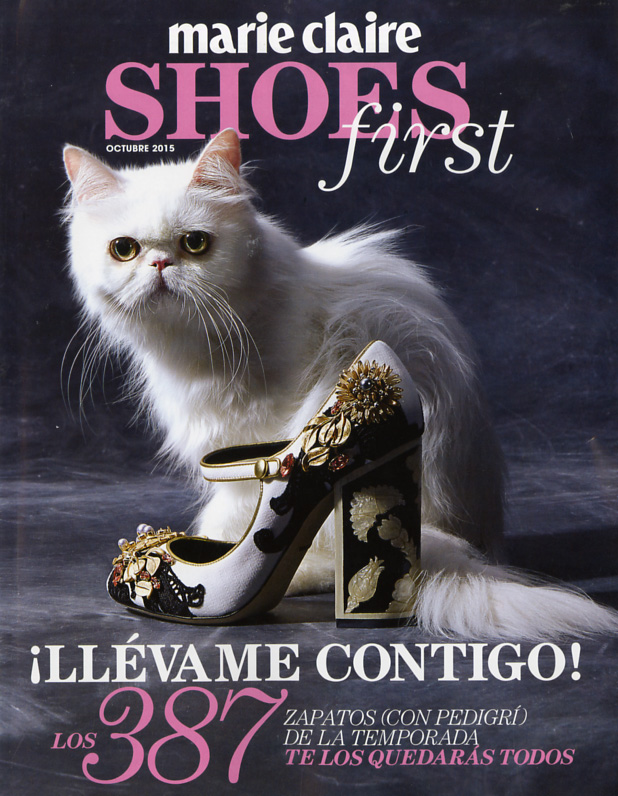
On whether some of the covers of the spinoff specials that Marie Claire is publishing are a reflection of her own personality, such as “Shoes First”:
Yes, they are. I believe that life without humor is useless. You have to laugh at yourself and at all of the bad situations that might come up. It’s not like being superficial, but it’s taking life with optimism. And that’s what we want to reflect. As I take my life with a lot of humor; I find that it is very important to life itself and to the magazine. And trying to make a 100-page supplement about shoes could bore someone to death, going from shoe-to-shoe-to-shoe. So, if you don’t put humor into that subject, it will be dull and boring.

On whether she believes in the future of print in this digital age:
Yes, absolutely I do, because I think that printed magazines work as the perfect curator for all of these platforms, the visual and audio impacts of digital; all of these things coming up to you in notifications, the nonsense and the important things. This generation has access to more information than ever, but less analyzed. So you see a lot of things, but there is so much that you don’t even have the time to take in what you’re seeing.

On what keeps her up at night:
Marie Claire. (Laughs) You know what, the thing is I was telling someone, when I go on holiday I can’t sleep the night through, but then when I start working again; your mind needs several hours of sleep and then it turns on. My head is full of Marie Claire in every way, Marie Claire ideas; Marie Claire people; Marie Claire stories, and so my mind is just awake all of the time.

And now the lightly edited transcript of the Mr. Magazine™ conversation with Maria Pardo de Santayana, Editor-In-Chief, Marie Claire Spain.

Samir Husni: Tell me about the day in the life of an international magazine editor, such as Marie Claire, in Spain?

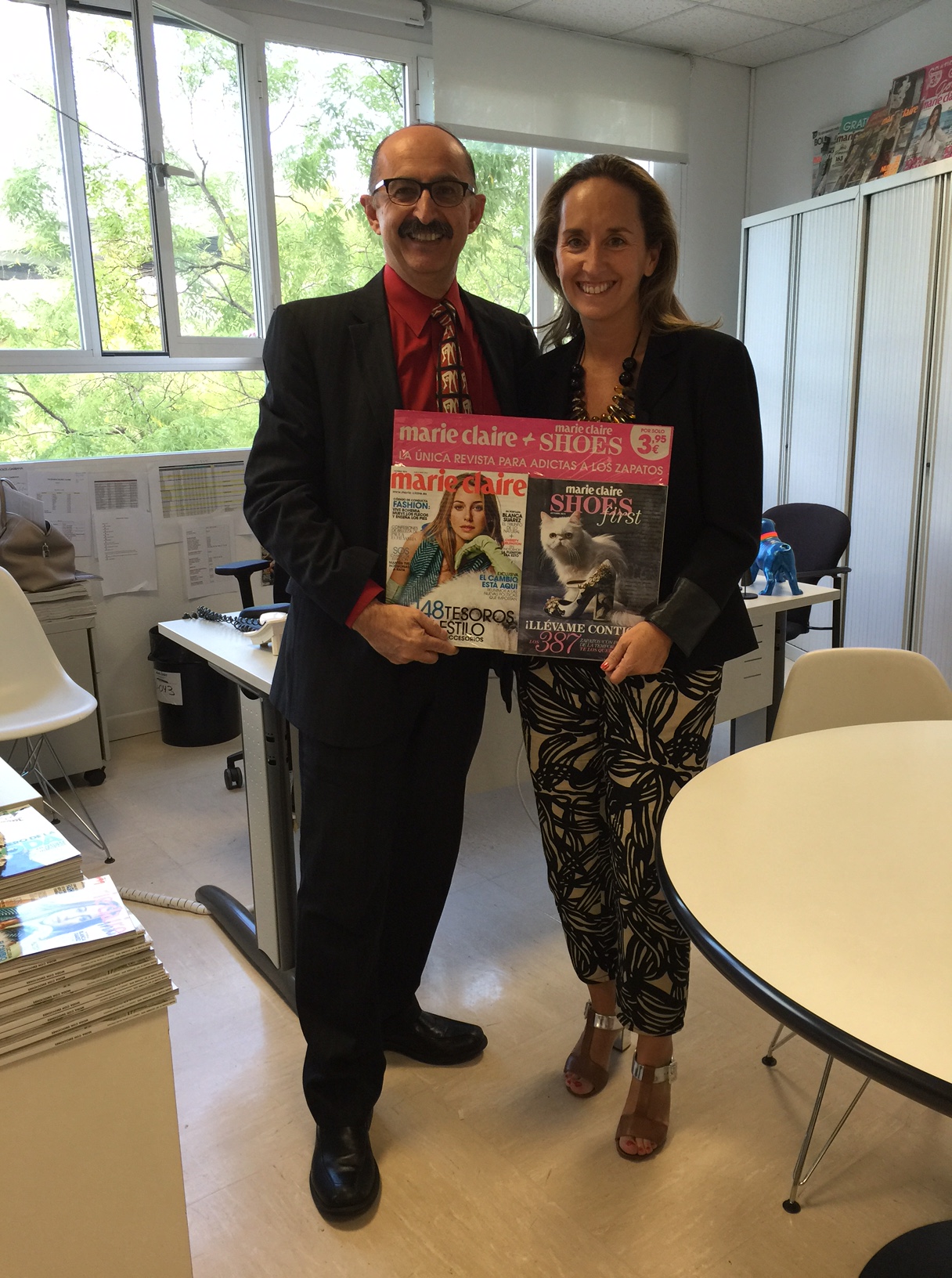
IMG_9069 Maria Pardo de Santayana: It depends very much on the time of the year. A normal day within the office starts with our first meeting with the team to look at the job that needs to be done for that day. And then the rest of the day moves on between meetings, readings, approvals and more meetings…(Laughs), more readings, and then giving birth to new ideas for the magazine.

When it comes to the first of the season, things change a little bit because we have to meet much more in terms of fashion to try and plan the whole season. And then we do that again for beauty and another for the covers. And then we have all of these spinoffs and supplements that we try to create.

So, it’s always a lot of work, but then again when we are at the shows, all of my days off are there and I have to do everything by mobile.

Samir Husni: It’s my understanding that the job of editors worldwide have dramatically changed since the dawn of the digital age. You’re no longer just editing a printed magazine, but you have so many other outlets that you have to care about. If you compared your life at GQ when you were there, and your life today at Marie Claire; did digital make life easier on you?

Maria Pardo de Santayana: Not at all. It’s become more troubling. When I was at GQ I was the deputy editor, I wasn’t the editor-in-chief, so I had a bit of an easier time, because I didn’t have the responsibility or the stress that comes with the editor-in-chief position. And also because the men’s market in Spain is much smaller than the women’s, so it’s a bit more relaxed work.

In terms of digital, the peculiar side of my job position at Marie Claire is that I don’t really take care of the website because it has an independent team. And they work it separately. So, for me it was more complicated at GQ because I did take care of more of the digital side, with GQ.com, but not here.

Digital has made life 24/7; now you can’t close the office ever. And there are no Saturdays and Sundays. Of course, in some ways it’s made life easier too because technology is always helpful, but it also requires more dedication.

Samir Husni: With Marie Claire specifically; with this magazine I always like to refer to as “fashion with a conscience,” as I flip through the pages of the magazine, there are a lot of similarities with all of the other Marie Claire international editions and there are also unique facets to the magazine. How do you balance that mix between international and Spanish?

MC1-1 Maria Pardo de Santayana: The Marie Claire DNA is quite clear for all of the international editions and they work very hard to make this real and happening. For instance, in June we’re all meeting in Paris, Marie Claire International, and we’ll have a two or three-day summit where we’ll discuss everything through the eyes of Marie Claire as a whole.

Marie Claire is a brand that really takes care of its uniqueness and its DNA. More than that, because of Marie Claire’s long history in Spain, more than 20 years, it’s very well-established and it has managed to create its own uniqueness.

In terms of the balance, it’s quite simple because the French and the Spanish women are quite similar; they’re both European and western; they share, more or less, the same difficulties and the same struggles and ambitions. So, it’s much easier, I believe, for our European Marie Claire to become nearer to the core of Marie Claire than maybe one from Asia, America, South Africa or Australia. For us, it’s much easier because we are really near the French culture.

Samir Husni: As you sit with your team and try to establish that issue in/issue out; I take it all of your team is Spanish?

Maria Pardo de Santayana: The fashion director is half American, but apart from that, yes, we are all Spanish.

Samir Husni: So, everyone is tuned into the DNA of Marie Claire or do you have any difficulties with that?

Maria Pardo de Santayana: One good point that I have with my team is that I have people from the founding of Marie Claire Spain, so they are still working here and they’re really able to teach me about the DNA of Marie Claire because these people have been working here for over 20 years, so they know a lot about Marie Claire.

And we’re a very small team, there are only 10 of us, it’s very easy to make the magazine work from one way to another. Also, it’s quite an international team because our deputy editor, she was raised in France, and also I had an international education. The syndication manager is also German, French and Spanish. So, it’s quite an international team.

But more important than that, on the core of the team we have people who have been working for Marie Claire since its beginning in Spain.

Samir Husni: What motivates you to get out of bed in the morning and say it’s going to be a great day?

Maria Pardo de Santayana: The thing that I like most is magazines. It’s always been like that with me since I was 14 years old. When you have the opportunity and the chance to work in something that you like so much; you don’t feel like it’s a job. It’s more like your hobby or something that you love to do, so there are not enough hours in the day for you to enjoy it. And that’s one of the things that motivate me. My father wanted me to be an engineer because I have a mathematical brain. I was a very good student; all A’s or A+’s. But I really liked magazines and that’s why I’m dedicated to them.

When I first told my father that I was going to be a journalist, he was like: Really? I was hoping that you’d be an engineer. And I told him that wasn’t going to happen because I really loved magazines.

I think that there has to be good people everywhere and if you’re doing what you love, good people help you do it better. I’m very lucky because this is my dream job.

Samir Husni: Has it been all smooth sailing for you or have you had to deal with a stumbling block or two along the way?

Maria Pardo de Santayana: I started as a journalist and I liked it very much and I believe that I have good managerial skills. I was moved and promoted to the management side. I was an Internet Director for five years for a large retail company and then I moved into an executive position and it was fun. I received good information from the MBA and I learned a lot, but I wasn’t happy. Of course, I was well-paid, but I just wasn’t happy.

For me it’s very important to be happy and have fun where I work. So, I had to come back to the magazine business, but when I left I was just a normal editor, but I was a director at the time so I wanted to try to find a way to come back in a higher position. It took quite a lot. I had several opportunities but they didn’t crystallize into anything because some of the offers I didn’t like enough to leave my then current position, and some of the others just didn’t happen.

After 5½ years of being out of the editorial business, and in the internet business for a big retail company, I managed to get back into magazines. Life isn’t always an easy path, but I always take it with a lot of optimism and I really enjoy my life. And even the bad times for me are a way of learning. When I see the glass it’s always half-full instead of half-empty.

MC3-3 Samir Husni: Looking at the covers of your spinoffs, especially with the “Shoes First,” are the covers a reflection of the fun, passionate Maria?

Maria Pardo de Santayana: Yes, they are. I believe that life without humor is useless. You have to laugh at yourself and at all of the bad situations that might come up. It’s not like being superficial, but it’s taking life with optimism. And that’s what we want to reflect.

As my CEO always tells me, we are absolutely disposable; you have to make people happy. There is no reason they should buy us, except for having fun and providing them with joy and something inspirational.

As I take my life with a lot of humor; I find that it is very important to life itself and to the magazine. And trying to make a 100-page supplement about shoes could bore someone to death, going from shoe-to-shoe-to-shoe. So, if you don’t put humor into that subject, it will be dull and boring. I always try to put some humor into everything that I do.

Samir Husni: Why do you think in this digital age that we live in, amidst all of these social media giants that we actually compete with, such as Google, Facebook and Twitter; why do you think there’s still a reason for a printed magazine? Do you believe in the future of print?

Maria Pardo de Santayana: Yes, absolutely I do, because I think that printed magazines work as the perfect curator for all of these platforms, the visual and audio impacts of digital; all of these things coming up to you in notifications, the nonsense and the important things. This generation has access to more information than ever, but less analyzed. So you see a lot of things, but there is so much that you don’t even have the time to take in what you’re seeing.

I think the printed magazine’s mission is to curate all of these things that might be of the reader’s interest and put it into the perfect format that you don’t need to plug in and charge; in fact, you don’t need to do anything with it except enjoy it. You can take it with you everywhere and you can keep it forever. It’s a good photography of the time that it shows. If you see the magazine in 20 years’ time and you pick it up and read it; you’ll find that it’s a perfect history book because you can see the time represented in its pages vividly.

Samir Husni: My typical last question; what keeps you up at night?

Maria Pardo de Santayana: Marie Claire. (Laughs) You know what, the thing is I was telling someone, when I go on holiday I can’t sleep the night through, but then when I start working again; your mind needs several hours of sleep and then it turns on. My head is full of Marie Claire in every way, Marie Claire ideas; Marie Claire people; Marie Claire stories, and so my mind is just awake all of the time. By the time I lay down to go to sleep, I might get a few hours and then it’s right back on. It’s all about Marie Claire now. I’m a little bit obsessed. (Laughs again)

Samir Husni: Thank you.

h1

Architectural Digest: Marrying All Platforms As One & Putting Audience First With The Nuptials – The Mr. Magazine™ Interview With Giulio Capua, Publisher & Chief Revenue Officer, Architectural Digest.

November 11, 2015

“It’s fascinating, the last thing that we feel in our brand here is that print is a difficult sell or that print is dying. I think that AD lives in a very unique place in the marketplace in that the subject matter is an extremely tactile one. It is still a product that our reader demographic wants to consume as a printed product.” Giulio Capua

Unknown Architectural Digest has been the authority on design for over 90 years, having published its first issue in 1920. And while those early editions may not have held the same international design-savvy and beautiful interiors that today’s magazine offers, it was still a pictorial of residences that included not only interiors and exteriors, but also floor plans, a guide for people who wanted to know the latest trends and information on design. And it’s stayed true to its DNA and has matured beautifully over the years.

Today the magazine has grown into a luxury brand that offers its readers the same informational trends and topics, with a 21st century outlook on design and content. Its partnerships are unique and well-blended with the magazine’s discerning eye and give the audience exactly what they’re looking for when it comes to decorating tips and renovation makeovers for their homes.

Giulio Capua is the Publisher and Chief Revenue Office of Architectural Digest, a position he has held since February 2007. Under his stewardship, since 2009 the magazine has experienced four consecutive years of sustained advertising page and revenue growth, and was named to the 2012 Advertising Age A-List.

Giulio continues to oversee the digital evolution of Architectural Digest, including the rapid growth of archdigest.com. In 2013, the brand launched AD DesignFile, a top online destination for design inspiration, and continues to expand its digital partnerships, content, and video offerings.

Before joining AD, Giulio served as Vice President and Publisher of Gourmet and prior to Gourmet he was Associate Publisher at GQ. To say that Giulio knows a little about magazines and magazine media, especially the brands at Condè Nast, would definitely be an understatement.

I spoke with Giulio recently and we talked about his vision for AD and how he planned on achieving that vision through a continuation of their beautiful print product and by expanding their digital presence to an even stronger component. The recent relaunching of AD’s website was one step in that direction. And we discussed the special partnerships and unique relationships he tries to form with each of his ad clients. It was an extremely interesting conversation and one I know you’ll enjoy as much as I did. So, without any further ado from me, I hope you enjoy the Mr. Magazine™ interview with Giulio Capua, Publisher & CRO, Architectural Digest.

But first, the sound-bites:

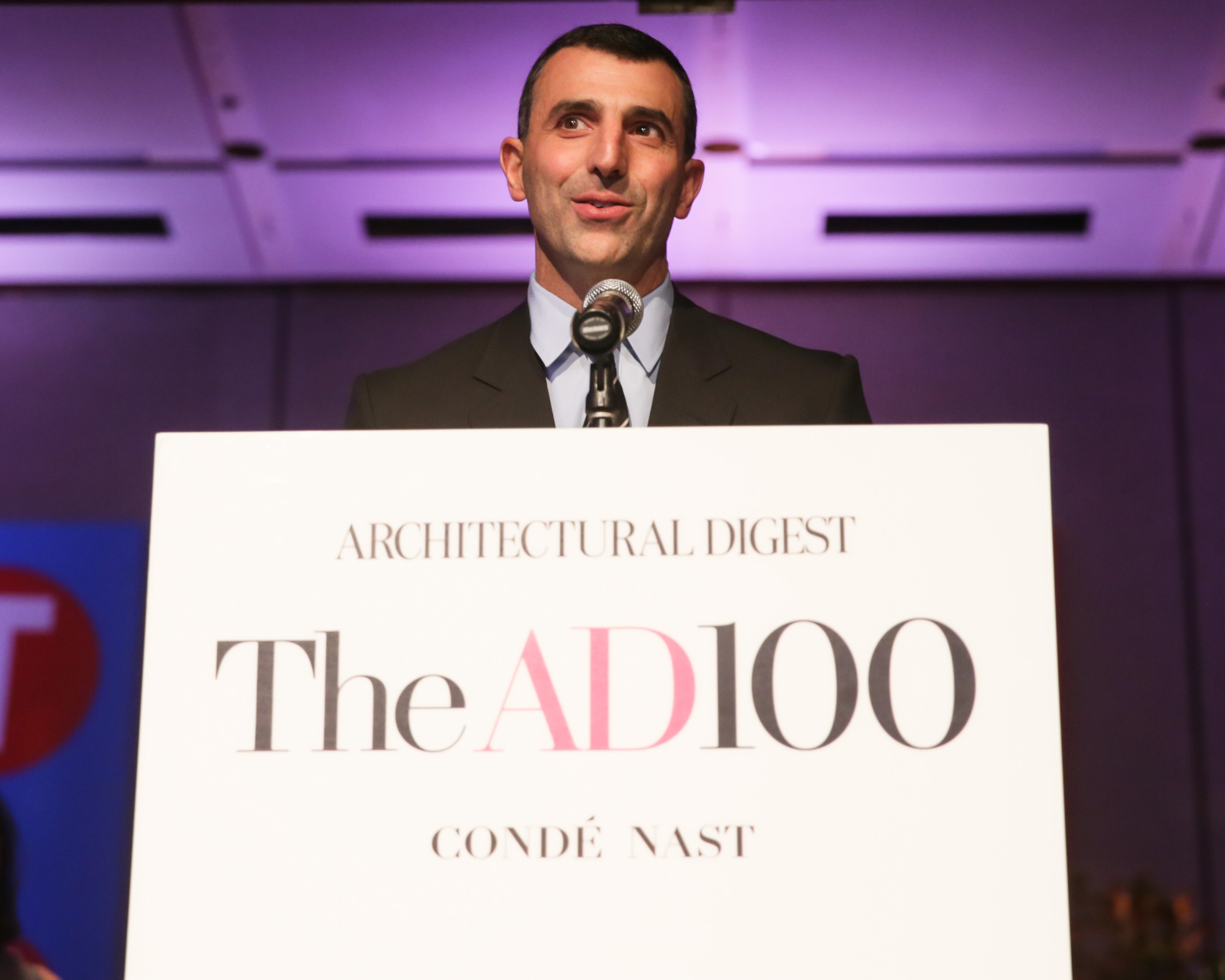
Giulio Capua

Giulio Capua

On the shift when he moved from Gourmet to Architectural Digest: I think that was a fascinating time for everyone in media business and particularly as it related to Gourmet. We were coming off of the best year in the history of the magazine. And then boom, as often happens in companies, we got the call from the CEO about changes the company was going to make. And he told me that he’d really like for me to go and run another company – Architectural Digest. And then of course, you’re hit with a recession the likes of which, certainly in my career, you’ve never seen before. It was an interesting storm. I was dealing with that and I was dealing with the typical transition that occurs when new leadership comes in, which was some people wanting to move with the old leader, some wanting to stay; you’re evaluating your team now in the context of a business climate where you have to make very different decisions about what you can and can’t afford.

On whether his degree in finance and marketing helped him through the storms of the recession or rather his experience at magazines like GQ and Gourmet did instead:
I think all of the above. The harsh reality of our business is that even though I have a degree in finance, I could never be in the leagues of working with the financials and options on how we restructure. You have to have a really great finance person on your team to do that, but I think I’ve gained great understanding of what the option team presents to me, so I could probably pick it up pretty quickly. But what got me through that time period more than anything was the experience I had; the executives in the company that were around me and my team. So, it’s the people above you; the people who work with you day-to-day in the trenches and all of the experience that you’ve garnered over the years.

On the moment when he felt they were out of the storm and back on the right track:
That’s a great question. I think there were so many stops and starts. Between 2009 and 2010, we started to feel it. But what would happen, particularly for the housing market, was they would get a couple of months where business was good and then literally the bottom would fall out again. So, it was an erratic recovery. I can tell you though without question that this year (2015) was the first year where I could say in my endemic business there’s been sort of a universal consistency to it.

On the expansions at Architectural Digest and whether or not they could have happened without the print component in the picture:
Absolutely not. It’s fascinating, the last thing that we feel in our brand here is that print is a difficult sell or that print is dying. I think that AD lives in a very unique place in the marketplace in that the subject matter is an extremely tactile one. It is still a product that our reader demographic wants to consume as a printed product.

On the digital platform and digital editions:
And I think the real question that’s out there now is what the future of the digital edition is? Is that really the place for the future or is the notion of having original content out there the way to go? And we’re all sort of struggling with that. And I think editors are going through this process where you have to think about your brand a little bit differently in the digital space and be willing to take a few more licenses with the things that you may want to test and try. The beauty of the digital content is that we know immediately what content is sticking and what content isn’t. And we feel like with that type of information you can map a strategy that could lead you to a different understanding of what your brand might be digitally versus what it is in print.

On what one might find him doing in the evenings – iPad versus printed magazine: (Laughs) It depends on the evening. If it’s a Friday evening it’s usually a glass of wine and everything is shut down and I’m sitting with my family. But I am absolutely a print junkie. I love print and I read, not just my magazine, but I love other magazines as well; I love fashion and sports magazines. But I think the thing that I’m continually comfortable doing is consuming content on my phone. For example, restaurant content I’ll look at on my phone, but I still pull out my Gourmet cookbook when I’m cooking certain recipes because I just love it and I’m so personally connected to that brand.

On anything else he’d like to add: Yes, one thing that I would like to add, and I think this is important for your students to understand as well, is that the thing that’s been the most refreshing for me is sort of watching your team embrace the way the marketplace has changed and really become marketers. We attack our clients’ business almost as a consultant and my team has produced over 115 pages of content this year. Those are scenarios where we’re working hand-in-hand with the client and you sort of transcend the relationship of media vendor and become a marketing partner.

On what motivates him to get out of bed in the morning: I’m blessed, truly I am. I love my job. I have the incredible privilege of working in a privately-held company that has incredible brands and whose clients are from so many diverse industries. I have clients from the automotive industry, the home industry, the luxury industry and the list goes on. And there are really, really smart people running those businesses. Every day is a new challenge. And the other thing that really gets me up and that I love is my team. When you get the opportunity to work and hire really smart people and empower them and watch them grow, there’s nothing better than that.

On what keeps him up at night:
Continuing to grow and develop our digital business so we can be sure that we can keep pace and keep the brand at this market-meeting position. Also, making sure that we’re doing enough to fortify alternate revenue streams, primarily digital, for the business long-term is important to me, and helping my 12-year-old to pass middle school. (Laughs)

And now the lightly edited transcript of the Mr. Magazine™ conversation with Giulio Capua, Publisher & Chief Revenue Officer, Architectural Digest.

Samir Husni: You took over Architectural Digest in 2007 and then everything went south with the digital explosion, but a year later you were able to turn things around. And now, for the last six years that you’ve been there you’ve seen nothing but growth, in terms of advertising pages and revenue. Can you describe that shift when you moved from Gourmet to Architectural Digest?

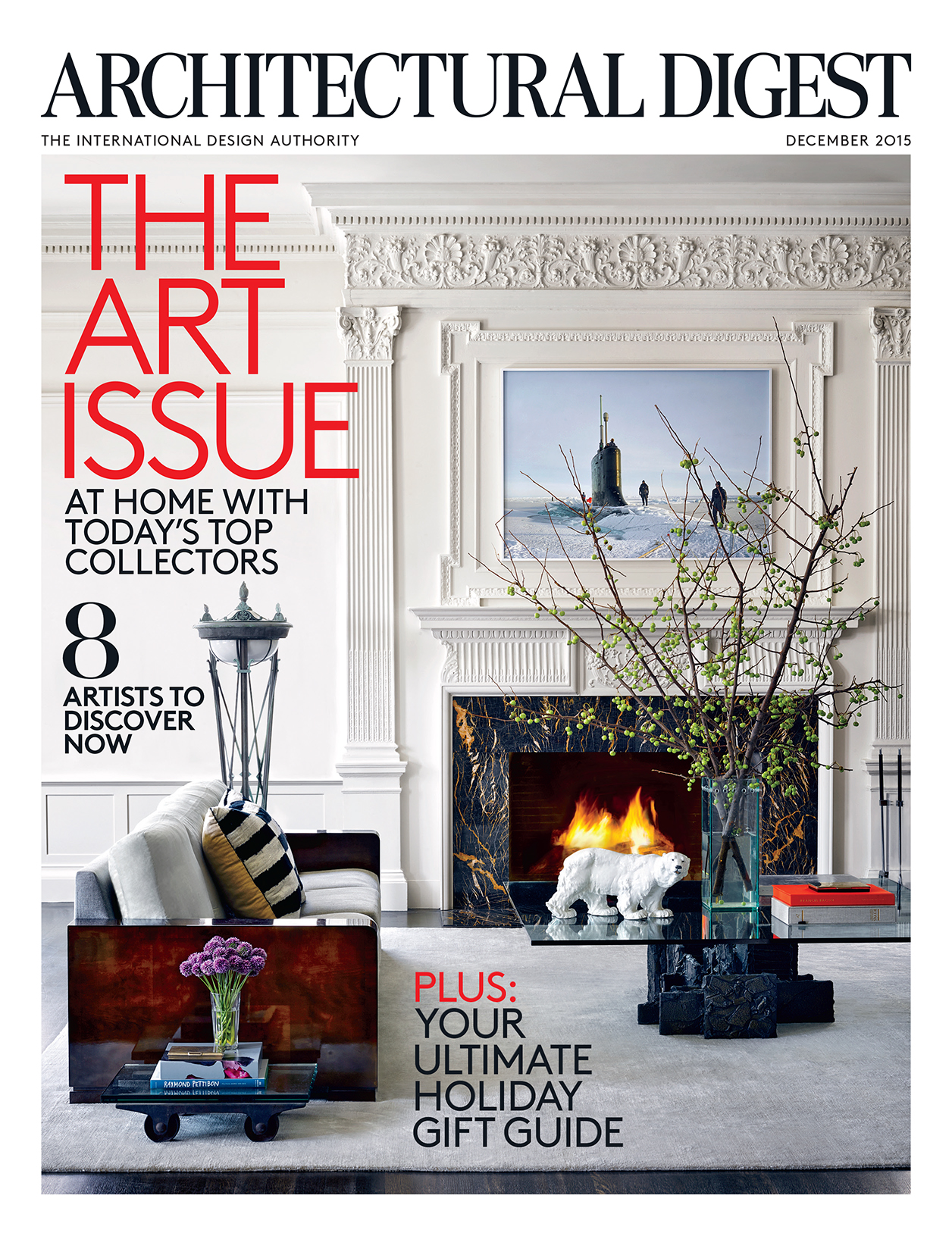
AD November cover Giulio Capua: I think that was a fascinating time for everyone in media business and particularly as it related to Gourmet. We were coming off of the best year in the history of the magazine. We had a television series on PBS that had been nominated for an Emmy Award and I had this magical relationship with my editor-in-chief, Ruth Reichl. She was just an amazing partner and we were firing on all cylinders and then boom, as often happens in companies, we got the call from the CEO about changes the company was going to make. And he told me that he’d really like for me to go and run another company – Architectural Digest.

But AD was a brand that I had great reverence for; I can’t say that I really had a strong understanding of the design business. I knew the part of AD that lived in the luxury space, but the design business to me, and the importance that AD has to the design industry, was something that I really didn’t understand.

And then of course, you’re hit with a recession the likes of which, certainly in my career, you’ve never seen before. There was the first Gulf War, but I was a young salesperson then and you felt it, but you really weren’t looking at it from a business leader’s standpoint. But that recession when it hit was like no other.

And to us our advertising volume is 50% what we call endemic. So, that would be anything that you renovate, decorate or build a high-end home with. For the most part it’s five or six categories within that 50% and they’re small businesses and they stick exclusively to print. And their cash flow is critical to their day-to-day existence.

So, when the business went over a cliff like it did, business just stopped. For some people who had projects in the pipeline, they saw those come to fruition because they were started and they were almost paid for, but for the most part, construction, building and renovations ground to a halt.

And the same thing was going on with the other 50% of our volume, which was luxury lifestyle. And those categories are automotive, travel, luxury, which categorizes jewelry, watches and fashion, technology and finance. Those are the five or six categories in luxury lifestyle. And they were all faced with the same challenges, budgets being cut back and that sort of thing. And I think at the time that we walked something like 42% of our volume over the course of that year. It was a really interesting challenge.

You know, Architectural Digest sat in this very important place because we still had a very profitable consumer business, meaning consumers were paying on average $22 – $24 for a subscription. And that’s very impactful on the bottom line. This is a title that was selling 12 issues for $8. Not that we could fall back on that, but it helped to sort of look at the business in a way that could show us how to navigate through the bottom and stay a relevant resource for our partners. And also look at the way we were doing business differently and move forward.

So, yes, it was an interesting storm. I was dealing with that and I was dealing with the typical transition that occurs when new leadership comes in, which was some people wanting to move with the old leader, some wanting to stay; you’re evaluating your team now in the context of a business climate where you have to make very different decisions about what you can and can’t afford.

I like to say that it was for sure an amazing learning experience, but I don’t necessarily want to go through it again. (Laughs)

Samir Husni: Did your degree in finance and marketing then become a great asset in your role as publisher and chief revenue officer at Architectural Digest or maybe instead, the experience you gained from your years at GQ and Gourmet helped you to navigate that perfect storm?

Giulio Capua: I think all of the above. The harsh reality of our business is that even though I have a degree in finance, I could never be in the leagues of working with the financials and options on how we restructure. You have to have a really great finance person on your team to do that, but I think I’ve gained great understanding of what the option team presents to me, so I could probably pick it up pretty quickly.

But what got me through that time period more than anything was the experience I had; the executives in the company that were around me and my team. So, it’s the people above you; the people who work with you day-to-day in the trenches and all of the experience that you’ve garnered over the years.

And I think a lot of it was also the readership experience that you have to show, both in terms of how you’re talking to your clients and your team. This was a time period where we had to really underscore, particularly to our endemic advertising base, again those small businesses that rely so heavily on Architectural Digest and other brands in that space; we had to underscore the fact that we were with them and we were going to figure out how to get through it together. And that was a tough time.

And the biggest transformation that also happened during that time was as the economy started to recover you had this parallel path happening in the world with this huge technology change. It wasn’t that we went into the recession and then when we started to build back up the media dynamic was the same; the media dynamic was completely transformed by the evolution of the digital space, primarily with mobile phones, tablets and social media.

So, suddenly coming out of the recession your clients weren’t faced with getting back a little bit more of their marketing budget and going right back to what they were doing before; it was an entirely different ballgame, with all of the many options. So they had to see how that tied in with their marketing dollars and then how that money was to be allocated.

Samir Husni: When was the moment you felt that you were out of the storm and back on the right track?

Giulio Capua: That’s a great question. I think there were so many stops and starts. Between 2009 and 2010, we started to feel it. But what would happen, particularly for the housing market, was they would get a couple of months where business was good and then literally the bottom would fall out again. So, it was an erratic recovery.

If you think about someone who’s running a business that’s really reliant on cash flow, their ability to set a plan for the year and stick to it, and I don’t mean just a marketing plan; I mean an overall business plan, such as what they were going to shoot for next year and really lay all of their targets out against that, their ability to do that was tough. So, we had a lot of month-to-month and a lot of stops and starts.

I think you saw that also in the luxury environment as well. It really wasn’t until I would say when we hit the end of 2012, we sort of felt like we could predict a year ahead. And we pretty much stuck to it.

I can tell you though without question that this year was the first year where I could say in my endemic business there’s been sort of a universal consistency to it. There’s a variety of categories in those businesses. There’s appliance, which operates in much larger channels, and their business has been really strong for two or three years. But these companies that are making very high-end fabric and lighting and selling to the design people; I think they’ve had a variety of experiences over the last couple of years.

In the broader marketing channels this was a very challenging year for luxury, primarily because of China Cooling and the strengthening of the dollar. So people who are selling Swiss watches and French luxury goods, even though their sales in the States in the last couple of years were flying, a good percentage of those sales was tourists shopping in America. And when that cools off; you know they had a real lucky year this year and now they’re all hoping that the next eight weeks are going to pull them out.

Samir Husni: You mentioned 2012, which was the year that you were once again named to the Advertising Age’s A-List, so I think the industry is watching you and the magazine. And you’ve expanded. You started the Architectural Digest’s Design File and the AD 360, and there’s a lot of, I don’t want to call them “native advertising” because you actually call them advertising and they’re labeled advertisement in the magazine. So, taking all of that into consideration, what role does the printed magazine play in this expansion and could it have happened without the print component?

Giulio Capua: Absolutely not. It’s fascinating, the last thing that we feel in our brand here is that print is a difficult sell or that print is dying. I think that AD lives in a very unique place in the marketplace in that the subject matter is an extremely tactile one. It is still a product that our reader demographic wants to consume as a printed product. And for the smaller advertisers they know immediately if their advertising is working. They let me know right away too, because we are typically their single largest expense on their marketing budget. So we really have to work very closely to make sure the program we give them meets the objectives going in, but they’ll know if the rug that they put in that ad is getting traction with the design community.

And then on the flip side, with our corporate advertisers, my biggest challenge to growing my business over the last two years has been having a companion digital product that meets the criteria that they’re looking for. There are certain times where you have to be at a certain traffic level on your site to appear in comScore measurements. If you’re not on comScore, when a digital agency is delivering a target, you’re site might not even pop up if you’re not at the minimum threshold.

So, what we’ve really been trying to do over the course of the last year and a half is re-platform our site, which we just did in September, it’s moved off of a rickety foundation to a more stable one that is universal to every platform, meaning web, tablet and phone. Universal also meaning how easy is the system for the editorial team to produce once and produce frequently and have the content be optimized for all of those screens.

But then also it was put into the kind of platform that allowed us to then build an editorial team that could meet the demands of a digital business. And what that means is we are producing original content at a very ramped-up scale on a daily basis; we’re producing 10-15 pieces of original web content a day. And with that comes the ability to grow your traffic and with growing traffic comes the ability to have a more scaled positon for your partners because in many ways if I could help them check the digital box, it would give me more print.

Samir Husni: And that scale on the digital side is so important, but it’s like when I interviewed Bob Garfield and we talked about trash advertising. We can build scale, there are so many ways to get scale, but is it the scale that you really want?

Giulio Capua: And there lies the big challenge. And when I say scale; I don’t think any of us think that AD is going to be this massive site. We need to be a premium digital destination for people who want design-industry news and want to use our imagery to garner inspiration for projects. And I think there’s an audience there for it that we just haven’t really tapped yet.

It’s amazing, we all live in our own little bubble and I’ve walked into many meetings at agencies where we’re doing a group presentation and two or three of the planning people at the table don’t even know our brand. It’s never crossed their radar screen. What that tells me is for another generation their experience with our brand may need to be digital at first and then later they may become subscribers.

But the one thing that we do know is that not a lot of our web users are readers of the magazine. Yet demographically they look relatively similar, they’re younger, but the income and the sensibility is the same. So I think that if we continue to build that content base we can develop a digital complement to the brand that will allow us to continue to bring the marketplace the complete offer.

Samir Husni: I’m hearing that more and more and yet when it comes to the practice, people are confused as to how to do it. I hear some say they may have only 8% duplication between the print and digital reader. And yet we’re struggling. But I am seeing a lot of changes taking place. We’re no longer dumping print content on a digital platform and proclaiming that’s a digital edition.

Architectural Digest-1 Giulio Capua: And I think the real question that’s out there now is what the future of the digital edition is? Is that really the place for the future or is the notion of having original content out there the way to go? And we’re all sort of struggling with that.

And I think editors are going through this process where you have to think about your brand a little bit differently in the digital space and be willing to take a few more licenses with the things that you may want to test and try. The beauty of the digital content is that we know immediately what content is sticking and what content isn’t. And we feel like with that type of information you can map a strategy that could lead you to a different understanding of what your brand might be digitally versus what it is in print.

And for something like AD, I don’t think it’s far afield or that it’s going to be dramatically different. But I believe the web is about service. There’s a service element that we can bring to our user that you probably wouldn’t see in the monthly magazine. Not because the editors don’t want to do it, but because they’re limited with that package every month.

And there’s also a level of reporting that we can do that you just simply can’t do in a monthly magazine any longer because of the lead time. And that’s extremely exciting and it opens up for the team a whole new opportunity to develop their content strategy in a way and test it. Take your brand for a test drive and see what it could be.

Samir Husni: If I surprise you one evening and knock on your door for a visit, do I catch you with an iPad in your hand or a printed magazine or watching TV, or simply having a glass of wine with everything shut down?

Giulio Capua: (Laughs) It depends on the evening. If it’s a Friday evening it’s usually a glass of wine and everything is shut down and I’m sitting with my family. But I am absolutely a print junkie. I love print and I read, not just my magazine, but I love other magazines as well; I love fashion and sports magazines.

But I think the thing that I’m continually comfortable doing is consuming content on my phone. For example, restaurant content I’ll look at on my phone, but I still pull out my Gourmet cookbook when I’m cooking certain recipes because I just love it and I’m so personally connected to that brand. I have probably seven or eight issues that sit in my kitchen because in those issues there are recipes that I know my family loves and that I love. And even though I can almost do them by rote, I still like to pull them out to look at the pictures and experience it as we packaged it at that moment.

Samir Husni: Is there anything else that you’d like to add?

Giulio Capua: Yes, one thing that I would like to add, and I think this is important for your students to understand as well, is that the thing that’s been the most refreshing for me is sort of watching your team embrace the way the marketplace has changed and really become marketers. We attack our clients’ business almost as a consultant and my team has produced over 115 pages of content this year. Those are scenarios where we’re working hand-in-hand with the client and you sort of transcend the relationship of media vendor and become a marketing partner.

For example, we’re in our second year of a five-city tour with Cadillac called “Driven by Design.” For Cadillac they really wanted to vision that brand as a luxury brand, not a luxury car, but a luxury brand. And part of the consumer profile that really pops is obviously, design is extremely important. And when they were launching one of their vehicles, the Escalade, which was last year, they really wanted us to partner with them on curating this five-city tour where we would garner access to unique spaces that were architecture-significant, program it, meaning have an interesting architect or designer there to talk about what was special about the space and work hand-in-hand with their events agency to create the tour. So the idea was, over the course of the day or morning, 70 to 100 people would be driven or drive their vehicle to these different spots where they would have some sort of interesting architectural experience.

This was an extremely successful program, both for them and for us, but when you think about that partnership; I don’t think many people out there would ever dream this was something that people on a magazine staff actually do. (Laughs) So, we literally had two staff members dedicated to this program all year because five cities, usually three or four stops per city, then you have to locate the city and program each experience and it’s really very rewarding, but it can be involved.

That type of marketing partnership is something that really brings you close to your clients and helps you understand their goals.

Samir Husni: I’ve noticed all of these AD 360 pages; it’s a very good example to show the marriage of print and digital and journalism and marketing altogether, the merger of all of these entities.

Giulio Capua: Thank you.

Samir Husni: What motivates you to get out of bed in the morning?

Giulio Capua: I’m blessed, truly I am. I love my job. I have the incredible privilege of working in a privately-held company that has incredible brands and whose clients are from so many diverse industries. I have clients from the automotive industry, the home industry, the luxury industry and the list goes on. And there are really, really smart people running those businesses. Every day is a new challenge.

And the other thing that really gets me up and that I love is my team. When you get the opportunity to work and hire really smart people and empower them and watch them grow, there’s nothing better than that. And we all work really hard at AD and we love being with each other. There are times when we all put our heads down; a good group of us worked two weekends in a row. And I’m not going to lie to you; when you’re not getting home on a Sunday and you’ve been working all week, you’re tired, but at the end of the day I think we all look at each other and think: we’re doing great work; we’re working really hard and we really enjoy each other’s company.

To me that’s the most important thing. I could not imagine waking up every day having to go to a job that you don’t like. That’s the one thing that I said to students when I spoke to them; it might take them awhile to find that job, particularly at their young age, and they might have to think about what motivates them and be a contributor also.

I have seven or eight millennials on my staff and none of them fit the mold of the privileged kid that doesn’t want to work hard. They’re all interesting, hardworking, smart and curious, and we love to promote that. There’s nothing better than seeing that. You walk into a room and see, making a presentation, that one young person who is going to challenge you and ask you questions and I think that’s really great. I love that.

Samir Husni: When you were in college, did you ever dream that this would be what you’d be doing in your career?

Giulio Capua: I don’t know. I was in a program at Ithaca College where a good portion of your senior class would work in a group, and at that time it was structured sort of like an ad agency, and you had a case study and you had to develop a campaign. And then we had to present that in competition and in our particular group we made it all the way to the national competition and placed third.

We were working as a team the entire year. There were a lot of personalities; you had to understand a little bit about how to agree and disagree, fight, get to a common goal and then ultimately rally around the creation of the campaign. That was a really good taste of management and work-culture.

And I also worked at the college newspaper, so I did have a sense of what it felt like to publish something, sell advertising and create content. Did I know that it would carry me here? Absolutely not; I had no clue. (Laughs) I remember putting on my wall at home all of the rejection notices that I had gotten from big ad agencies about jobs. That was my first love, to work in an ad agency.

And then I ended up landing a job as a sales representative for an independent web firm and they had all of these obscure trade magazines. But the two guys that owned it really taught me what it was like to sell and to run your own business. That gave me great experience. A couple of years later I ended up at General Media and then Condè Nast in 1990.

Samir Husni: My typical last question; what keeps you up at night?

Giulio Capua: Continuing to grow and develop our digital business so we can be sure that we can keep pace and keep the brand at this market-meeting position. Also, making sure that we’re doing enough to fortify alternate revenue streams, primarily digital, for the business long-term is important to me, and helping my 12-year-old to pass middle school. (Laughs)

Samir Husni: Thank you.

h1

Better Homes and Gardens: The Mother Of All Consumer Magazines Prepares For Its Next Century Under New Leadership. The Mr. Magazine™ Interview With Stephen Orr, BH&G New Editor-in-Chief.

November 9, 2015

“Magazines to me are not the thing that people carry around in their purse or under their arm as much as they used to, but the magazine to me is a quieter activity; it’s a less hectic information experience. It’s not like going through your Twitter feed or your Instagram feed where things are coming at you from every space. It’s a highly-curated space in time that you have for yourself. Before I even came here, I thought to myself, what is the BH&G reader doing and how is he or she looking at the magazine and I think it’s like a me-time moment where he or she has a moment during the day when things are quiet, kids are in bed or there’s a quiet space in the day and she’s going to sit for a while and look through her favorite magazine. We want to be that magazine.” Stephen Orr

BHGNovember Better Homes and Gardens was born in 1922 and in seven years will celebrate its 100th birthday. It is the largest paid consumer magazine in the country with 7.6 million in circulation (mainly subs) and 40 million readers.

Commanding a ship that large is a huge responsibility, but Stephen Orr is the man to do it. Combining both his art and editorial skills; he could easily be just what the doctor prescribed for the magazine as it moves into its next century. Stephen was Executive Editor of Condé Nast Traveler, and has more than 25 years of experience in content creation and design leadership across many of the media industry’s most recognizable brands.

Throughout his career, he has been very successful at developing brands across multiple channels. Prior to Condé Nast Traveler, Stephen was a VP/Editorial Director for the Martha Stewart Living brand, where he created multi-channel content with a special focus on style, food, and gardening as well as licensed product development. He has also held senior content creation leadership positions at multi-platform brands such as House & Garden, Domino, Gourmet, Bon Appétit, and Epicurious. Early in his career he held senior design positions at The New York Times Magazine, W, and WWD. He is a man both experienced and passionate about the world of magazines.

I spoke with Stephen recently and we talked about this passion of his for magazines and for people. In fact, he believes wholeheartedly that magazines are people and Mr. Magazine™ would have to agree with him on that. He loves the opinions and ideas of his staff and thrives on their energy and creative talent, which he feels overflows into the brand and makes it even more content-engaging and reflective of what BH&G’s audience expects from their favorite magazine.

With a few new surprises coming up down the pike from Stephen’s own creative energy and talent, the largest consumer magazine in the country can sail confidently into its 100-year-old berth, knowing that around the corner is the beginning of the next centennial which promises to be even better than the first.
And now without further ado, the Mr. Magazine™ interview with Better Homes and Garden’s new Editor-In-Chief, Stephen Orr.

But first, the sound-bites:

StephenOrr On his feelings when he was offered the job of editor-in-chief at Better Homes and Gardens: Certainly, it was an honor. I had been working in magazines for 25+ years and I had worked at a lot of different titles, but I had never worked at Meredith before. Meredith is a very disciplined company, which I really respect. They did a lot of interviews; I met a lot of different people during the process. It was a long interview process and I was really happy when I finally got the offer.

On whether the thought ever crossed his mind that he was moving from “class” to “mass” by joining a title that had 40 million in readership from specialized titles that had a more targeted audience: I think some of my other experiences that I’ve had helped with that. For instance, I’d say two places in particular; Domino Magazine, even though that was a Condè Nast Magazine and had a very elevated level of shopping. The original idea of Domino, and I was there in the early days until it shuttered, was to bring an accessibility to design and a feeling of how to combine kind of cheap-and-cheerful and this mix of high and low, and also point out to people when they should spend a little extra money on something, while giving them tips on ways to save money at the same time. And I also think Martha Stewart where I once worked was like that. Martha is the empress of bringing a level of knowledge and visual sense to a mass market audience. That’s what Martha has done so well for the American consumer.

On his multifaceted career as a journalist/designer/editor and how he plans to bring those personas into play at Better Homes and Gardens:
I think one of my strengths is, if I can say it about myself; I’m half visual and I’m half words. For half of my career I was an art director and a graphic designer and then the other half so far has been more of an editor with words and a writer. So, I definitely have those two sides of my brain and I think a magazine like Better Homes and Gardens, and in fact most magazines these days, unless you’re speaking of The New Yorker or something like that, are visually-driven. We only have the readers’ attention for such a brief span of time, so I think that my career as an art director does allow me to see things very visually.

On the February issue, which will be the first totally original issue under his guidance, and the changes readers can expect:
We’ve been feeding new things into the magazine; it’s been sort of a development over time. I’ve been here since July, so when I arrived they already had October’s issue basically done; I just did a few tweaks and changes, but not much; we didn’t shoot anything new. The only thing new there was my editor’s letter and in it I wanted to make a statement, so my editor’s letters will all be shot with an iPhone; the first one was a bit of a mix, but eventually they all will be shot with an iPhone. I wanted to immediately telegraph to people that these are new days here at Better Homes and Gardens; we are a print magazine, but we’re also BHG.com and we have our social media channels and I interact with our readers over all of those different ways, so I’m not a hidden editor-in-chief; I want to be connected with our readers, especially through our social media.

On whether he heard any media or reader feedback about the fact that once again a man was editor of Better Homes and Gardens, mainly a women’s magazine:
I haven’t heard anything about the fact that here’s a man doing this job at all. I think women are very accepting of men in roles where we talk to them about different things. I don’t know if women care as much whether it’s a man or a woman telling them about home décor or cooking or flower arranging, as long as people seem to know what they’re talking about.

On how important the printed Better Homes and Gardens is to him:
It’s all of equal importance. We talk about Omni-channel consumers, and that’s something we were discussing in a recent presentation. We have about 50 million readers, if you look at the whole audience, print and digital. It’s a gigantic number of people, and we want to appeal to them on whatever platform they’re on. And this is the way it is today with all of us; we consume information in the way that we find most convenient for us. So, magazines to me are not the thing that people carry around in their purse or under their arm as much as they used to, but the magazine to me is a quieter activity; it’s a less hectic information experience. It’s not like going through your Twitter feed or your Instagram feed where things are coming at you from every space.

On if we are talking seven years from now, on the 100th anniversary of the magazine, will the readers say it’s still they’re same Better Homes and Gardens or something totally different:
No, I want them to say it’s still theirs. I was saying in a meeting the other day; we get letters where people get upset if we give them a story that doesn’t particularly pertain to them; I mean, they do feel like it’s their magazine, but it’s hard with that many readers to hit a chord with every single person. And so I do hope the readers will realize that sometimes there might be a story that’s more kid-focused and they might be empty-nesters, so they might just glance at it and keep moving. But we’re trying to offer a wide range of stories so that the majority of every issue is appealing to our established audience as well as a new audience.

On the biggest challenge that he’s faced since becoming editor-in-chief of Better Homes and Gardens and how he overcame it:
There have been more perceptual challenges, I think. Maybe perceived challenges would be a better way to describe it, ones that I thought I might have. I felt like maybe I would encounter people who were set in their ways and resistant to new ideas or change, and I have to say that what I have encountered has been the exact opposite of that perception. I had never been to Iowa before in my life and coming here I found that people are categorically open to new ideas and change. And they’re eager for something new.

On anything else he’d like to add:
People might have a hard time understanding my living in Des Moines after living in New York City for so long, and people might have a hard time understanding, like you said, my coming from Condè Nast and now working at a gigantic, more mass general interest magazine, but I think what’s most exciting about working in media is it never stops changing. And I always tell people if you don’t like change, don’t work in media. (Laughs)

On what motivates him to get out of bed in the mornings:
What I like is when I come to the office in the mornings, the office is humming and people are going at full-tilt. I tend to come in slightly later than they do and stay later. That gives me a nice time at the end of the day to catch up on emails and read proofs and do the more concentrated work, because with a large staff like this we do a lot of meetings during the day, so the schedule is working great for me.

On what keeps him up at night:
I don’t have stress like I’ve had with other jobs. What I have isn’t stress. I guess with the responsibility of this title, I do think about the people here a lot. I’m a very people-focused editor-in-chief, so I would say that I spend time not worrying or stressing, but I spend time thinking about the people I work with and I spend time thinking about how they can be the best at their jobs.

And now the lightly edited transcript of the Mr. Magazine™ conversation with Stephen Orr, Editor-In-Chief, Better Homes and Gardens Magazine.

Samir Husni: Congratulations on being named editor-in-chief of the largest paid consumer magazine in the country.

Stephen Orr: Thank you.

Samir Husni: When you received the offer to take over at the helm of the mother of all consumer magazines, Better Homes and Gardens; what were your feelings at the time?

Stephen Orr: Certainly, it was an honor. I had been working in magazines for 25+ years and I had worked at a lot of different titles, but I had never worked at Meredith before. Meredith is a very disciplined company, which I really respect. They did a lot of interviews; I met a lot of different people during the process. It was a long interview process and I was really happy when I finally got the offer.

It was a real honor because I knew they didn’t take this job lightly. Their management and the executive team here know that this is their flagship brand, so they didn’t take anything about this job lightly.

Samir Husni: From all of these other titles that you’d been working with which were technically very specialized magazines to Better Homes and Gardens which has a big, mass 40 million-audience readership; did you at any given moment throughout that long interview process feel like you were moving from “class” to “mass?”

BHGSept15Cover Stephen Orr: I think some of my other experiences that I’ve had helped with that. For instance, I’d say two places in particular; Domino Magazine, even though that was a Condè Nast magazine and had a very elevated level of shopping.

The original idea of Domino, and I was there in the early days until it shuttered, was to bring an accessibility to design and a feeling of how to combine kind of cheap-and-cheerful and this mix of high and low, and also point out to people when they should spend a little extra money on something, while giving them tips on ways to save money at the same time. So, Domino Magazine was very much like that.

And I also think Martha Stewart where I once worked was like that. Martha is the empress of bringing a level of knowledge and visual sense to a mass market audience. That’s what Martha has done so well for the American consumer. And she educates people.

When I think of working at Domino and Martha Stewart Living; I think I learned a lot of those lessons here too, because we’re always talking to a huge range of people.

Samir Husni: From following your career and looking at what you’ve done; you yourself are a multiplatform journalist/designer/editor. You’ve worked in design and editing positions. How are you going to bring this multifaceted Stephen Orr to Better Homes and Gardens?

Stephen Orr: That’s a nice question. I work in both Des Moines and New York City, but primarily in Des Moines, and we have a very talented staff of people here. And they’ve been making a beautiful magazine for years. So, when I came in, I didn’t say: out with the old and in with the new. I wanted to build on what we had that’s really great and make it even better.

I think one of my strengths is, if I can say it about myself; I’m half visual and I’m half words. For half of my career I was an art director and a graphic designer and then the other half so far has been more of an editor with words and a writer. So, I definitely have those two sides of my brain and I think a magazine like Better Homes and Gardens, and in fact most magazines these days, unless you’re speaking of The New Yorker or something like that, are visually-driven. We only have the readers’ attention for such a brief span of time, so I think that my career as an art director does allow me to see things very visually.

We talk about things very visually and for me it’s how do we create engagement with the reader in the print page, but also how do we engage our reader at BHG.com and also our social media channels. All of those things have equal importance to me and with our staff and our editors we’re constantly talking about social media and how to get the word out about BHG and how to attract new readers, while we have our loyal audience base; we want to keep them really happy as well. That, to me, is the real challenge.

Samir Husni: It’s my understanding that February will be the first completely original issue under your leadership. Can you tell me a little about the changes you’ll be unveiling with that issue?

Stephen Orr: We’ve been feeding new things into the magazine; it’s been sort of a development over time. I’ve been here since July, so when I arrived they already had October’s issue basically done; I just did a few tweaks and changes, but not much; we didn’t shoot anything new.

The only thing new there was my editor’s letter and in it I wanted to make a statement, so my editor’s letters will all be shot with an iPhone; the first one was a bit of a mix, but eventually they all will be shot with an iPhone. I wanted to immediately telegraph to people that these are new days here at Better Homes and Gardens; we are a print magazine, but we’re also BHG.com and we have our social media channels and I interact with our readers over all of those different ways, so I’m not a hidden editor-in-chief; I want to be connected with our readers, especially through our social media.

One of our art director’s takes her iPhone and shoots my editor’s letter and then we pick up shots from either my Instagram or our staff’s Instagram’s. If it’s a food issue, we’ll have me with Nancy Hopkins, our food editor, and then we’ll have some shots from her Instagram and then another food editor’s Instagram.

People have had a very good response to it, even the editor’s letter. I think they find it very personable and they like how casual it is; it doesn’t feel staged like some do, which is why I we did it that way; I felt kind of uncomfortable just having a shot of me in a suit and tie, all posed and everything. I wanted it to show how as editors we lead the life. So for us, that was one of the first things that changed.

And then we’ve kind of loosened things up. One of the things that we’re trying to do at Better Homes and Gardens is try to loosen up the presentation a little bit, with more color and people. We’re trying to show people kind of an elevated version of real life and the best life can be in an accessible version.

And then we’re also trying to weave together some other themes: acknowledging that women have jobs at the same time that they’re trying to make a nice home that people work, but also have a home life. We’re trying to talk to new types of readers; we’re looking at young entrepreneurs and entrepreneurs of all ages and home-based businesses.

BHGOctober15 We’re also looking at trying to show a new type of BHG reader, but at the same time one of the things that’s very important to me is to highlight Better Homes and Gardens’ heritage because I believe if you run away from what you are; you’re denying what’s been accomplished over these almost 100 years, and the authority that Better Homes and Gardens has.

For instance, we’re doing a story on our own test kitchen to show people that we have all of these amazing resources here that sometimes get hidden just because they’ve been around the magazine for so long. Sometimes people forget how special they are because they’ve just always been there. But there are treasures here. We have an amazing test garden and test kitchen full of amazingly knowledgeable people and I want to bring that knowledge into the pages.

Samir Husni: I don’t know if you know this, but my magazine program here at the University of Mississippi was started by Meredith and Better Homes and Gardens.

Stephen Orr: That’s amazing. Meredith has so many deep community roots in so many places and that’s why it’s such a wonderful company. I’ve worked at Condè Nast primarily; I’ve also worked at The New York Times and other places, but you know, I love the culture of Meredith.

There are a lot of values at Meredith that I think we’re trying to show in the pages of Better Homes and Gardens. It’s has a very democratic appeal to a wide range of people and I think I understand that because I’ve lived in New York before being in Des Moines and New York now. I lived in New York for nearly 30 years, but before that I was raised in West Texas, so I really understand how it is to be brought up in the middle of the country and the values there.

Samir Husni: I love your ideas about the test gardens and test kitchen; I’ve seen them all and they’re amazing. I’ve often thought they should be written about.

Stephen Orr: Yes, there’s so much to do with it. We’re going to have regular features on the test kitchen and test gardens, whether they’re specific lessons or other things. Before I came, I don’t know how often there was a regular meeting, but now I have regular meetings with our head test gardener and she comes and tells us seasonally what’s interesting and she’s working on what plants she’s obsessed with. She’s on the front lines of gardening, doing her thing there. I planted 1,000 bulbs this weekend myself, but I don’t have the time to garden every day with my job, as much as I’d like to.

Samir Husni: When I received the note that you’d been appointed editor-in-chief of Better Homes and Gardens, I was taken back to almost 30 years ago when David Jordan was editor-in-chief of the magazine. Was there any response from the media or from readers about the fact that a man was now editor-in-chief of mainly a women’s magazine? When the first woman was hired as editor-in-chief, there were a lot of stories reflecting the sentiment that finally women’s magazines were getting women editors.

Stephen Orr: I haven’t heard anything about the fact that here’s a man doing this job at all. I think women are very accepting of men in roles where we talk to them about different things. I don’t know if women care as much whether it’s a man or a woman telling them about home décor or cooking or flower arranging, as long as people seem to know what they’re talking about.

Obviously, I’m not the only authority here, so for me when it comes to family and what a woman really thinks about something, I never tell women what they think, I always ask people who work with me, my executive editor or one of my other editors. I’ll ask then what do they think about something as a mom with young kids; what do you think we should do. From a health standpoint, Amy Brightfield will tell me what she does as a mom.

We have so many great experts here and I’m a very collaborative non-hierarchical kind of editor-in-chief, so we have a lot of talks and meetings. We’re all getting to know each other and I just want the communication to flow. That’s where I think the reader will feel that this is a team effort; it really is not just about me. It’s a team effort with people who have all kinds of expertise.

Samir Husni: You’ve emphasized the fact that you have print, BHG.com and all of your social media channels; how are you going to strike this balance between the 7.6 million subscriber/newsstand-based audiences and the website? How important is the printed Better Homes and Gardens to you?

Stephen Orr: It’s all of equal importance. We talk about Omni-channel consumers, and that’s something we were discussing in a recent presentation. We have about 50 million readers, if you look at the whole audience, print and digital. It’s a gigantic number of people, and we want to appeal to them on whatever platform they’re on. And this is the way it is today with all of us; we consume information in the way that we find most convenient for us.

Increasingly for people, it’s on their phones. We all go everywhere and we see people on their phones all of the time. You don’t see people flipping through magazines that much; you see people on their phones.

So, magazines to me are not the thing that people carry around in their purse or under their arm as much as they used to, but the magazine to me is a quieter activity; it’s a less hectic information experience. It’s not like going through your Twitter feed or your Instagram feed where things are coming at you from every space. It’s a highly-curated space in time that you have for yourself. Before I even came here, I thought to myself, what is the BHG reader doing and how is he or she looking at the magazine and I think it’s like a me-time moment where he or she has a moment during the day when things are quiet, kids are in bed or there’s a quiet space in the day and she’s going to sit for a while and look through her favorite magazine. We want to be that magazine.

It’s interesting that we get a lot of letters that say that and the other day we actually got a wonderful phone call from a woman, I believe in Tennessee, and she just talked about that she’d been going through some family trouble, health problems with relatives or something, she didn’t go into details, but she just left us a long phone message that was forwarded to me. She said that she loved Better Homes and Gardens and she was so excited by the new direction and she wanted to call and tell me that, because she’d walked in the door from a challenging week and she sat down with her magazine and she said it was almost like a healing moment for her, to sit there and look at all the beautiful images and flip through it at her own pace.

And that’s what I think we offer as a printed magazine. But we also offer people engagement on social media, which we’re trying to continually improve, and also quick and easy solutions and tips that they might encounter through their Facebook feeds and on BHG.com and videos. We all live in this multifaceted information world and I don’t think one aspect is better than another. I’m grateful that the printed page is still there for people because I do think that it offers them a respite during the day.

Samir Husni: If I’m talking with you seven years from now and you’re launching the Centennial edition, the 100th anniversary issue of Better Homes and Gardens; do you think the readers who have been with the magazine for 20 or 30 years and the new readers too, will say wow, it’s still my same Better Homes and Gardens or they’ll see a drastically different magazine?

Stephen Orr: No, I want them to say it’s still theirs. I was saying in a meeting the other day; we get letters where people get upset if we give them a story that doesn’t particularly pertain to them; I mean, they do feel like it’s their magazine, but it’s hard with that many readers to hit a chord with every single person. And so I do hope the readers will realize that sometimes there might be a story that’s more kid-focused and they might be empty-nesters, so they might just glance at it and keep moving.

But we’re trying to offer a wide range of stories so that the majority of every issue is appealing to our established audience as well as a new audience. I’ve worked at magazines before where they kind of discounted their existing audience and were rushing after a new audience and I didn’t want to do that here. I am very conscious of the fact that I want our magazine to appeal to people of all ages, of multi-generations; I’m a GNX, but barely. I’m on the cusp of Baby-Boomer.

I’m not a millennial at all, but I have the millennial mindset; I really follow what millennials are doing. I’m the type of person who is on their phone and Instagram all of the time. I read my news off of Twitter a lot, both in-depth news and looking through to primary news sources. I also get inspiration from Twitter and people who are doing interesting things. I get a lot of inspiration from Pinterest and Instagram every day. And so that’s how I get my information, but also when one of my favorite magazines comes through the door, I stop and I read that magazine.

I feel like I exist at the point where people that are older than me are less computer native in many ways and people younger than me are more computer native and information-technology native. And I feel very much at my age and my experience level, and how I started working with computers in college, I feel I’m very much a good representative of both groups. I’m neither too much of one nor not enough of the other. And I want to try and be that divining rod or whatever phrase might be used, to try and speak to all of the different audiences that we have.

And I feel like people in this day and age, especially marketers, put people into these groups and talk about how different we all are; I tend to focus more on how similar we are.

Samir Husni: I think your role at your age; you’re the two-lane bridge that connects both sides of the spectrum. I’m a little bit older than you and having grown up during the print platform and having adapted to the digital platform; to me that’s more powerful than just being a digital native or a print native.

Stephen Orr: I’m very happy with my position. I’m happy that I love print and I love books and magazines and I love the visual appeal of those things and I also love digital. I love being online.

But like most people and maybe younger people don’t feel this way, I actually look for ways to not be online. So a magazine is a way for me not to have to be connected. I don’t have to be connected all of the time; I’m the kind of person who might say, OK – I’m putting my phone in the drawer and I’m going outside. And that’s why I love gardening, because I can go outside and if I bring my phone with me, it’s too expensive to replace should I drop it…(Laughs)

Samir Husni: What has been the biggest challenge that you’ve had to face since you became editor-in-chief of Better Homes and Gardens and how did you overcome it?

Stephen Orr: There have been more perceptual challenges, I think. Maybe perceived challenges would be a better way to describe it, ones that I thought I might have. I felt like maybe I would encounter people who were set in their ways and resistant to new ideas or change, and I have to say that what I have encountered has been the exact opposite of that perception.

I had never been to Iowa before in my life and coming here I found that people are categorically open to new ideas and change. And they’re eager for something new. So, the wide range of people that I’m working with here on a day-to-day basis are open to change and everybody is willing to try something new; people are quick to get onboard.

They really know what they’re about and I value their expertise, because for me I don’t want to come in as a change agent and not listen to the people who have been doing it for a long time. I always want to hear: why did we do it that way and when did we last change it and what was the reaction? I don’t just blithely discard the past. For me it’s a combination of the past and the future. I’m a dual person; I love both.

But I don’t think I’ve encountered any enormous challenges. The things that I wondered might be challenges turned out not to be problems. The Meredith Corporation has been very supportive. We had a presentation a couple of weeks ago where they saw some of the ideas for some of the changes and they couldn’t have been happier and more supportive.

Samir Husni: Is there anything else you’d like to add?
Stephen Orr: People might have a hard time understanding my living in Des Moines after living in New York City for so long, and people might have a hard time understanding, like you said, my coming from Condè Nast and now working at a gigantic, more mass general interest magazine, but I think what’s most exciting about working in media is it never stops changing. And I always tell people if you don’t like change, don’t work in media. (Laughs)

Our world, because of technology and everything that’s happening, everything changes all of the time. And I think as editors our job is to be nimble. People overuse that word, but it’s such a nice word to think about because it implies that you’re able to skate over the surface and keep nimbly moving no matter what to make it all work. And I think that’s’ what’s exciting about what we’re doing in this day and age with media. The changes, even though they’re challenges, are what offer the most excitement.

Samir Husni: What motivates you to get out of bed in the mornings, especially now that you’re out of the City and in the Midwest? Does farm life get you out of bed any earlier these days? (Laughs)

Stephen Orr: (Laughs too) It does. They work on an earlier schedule and that took some getting used to. But there’s no commute here. In my last job, my commute was an hour. And that was killing me, an hour each way. Now my commute is five minutes, so I don’t have much to complain about.

What I like is when I come to the office in the mornings, the office is humming and people are going at full-tilt. I tend to come in slightly later than they do and stay later. That gives me a nice time at the end of the day to catch up on emails and read proofs and do the more concentrated work, because with a large staff like this we do a lot of meetings during the day, so the schedule is working great for me.

Samir Husni: My typical last question; what keeps you up at night?

Stephen Orr: I don’t have stress like I’ve had with other jobs. What I have isn’t stress. I guess with the responsibility of this title, I do think about the people here a lot. I’m a very people-focused editor-in-chief, so I would say that I spend time not worrying or stressing, but I spend time thinking about the people I work with and I spend time thinking about how they can be the best at their jobs.

So, that’s basically it. I’m just thinking about the people I work with a lot. I hope that doesn’t sound insincere, but that’s what I believe. I believe magazines are people and so for me all of the people that we work with here at Better Homes and Gardens are all friends, including digital and social media and our special issues. It’s thinking about everybody’s strengths and how to get everybody super-excited about making this product over all its platforms.

Samir Husni: Thank you.

h1

SELF Magazine: Meet The Editor Who Pours Herself Into The Pages Of The Magazine. The Mr. Magazine™ Interview With Joyce Chang, Editor-in-Chief, SELF Magazine.

November 6, 2015

“I think it functions holistically. When we think about our health holistically, we don’t just say if we run we’ll be healthy. Or I eat right, so therefore I don’t have to exercise. They all have to work together, but I think we are stronger for figuring out how they can all work together in meaningful ways and support each other. We get amazing cover subjects on the cover of our magazine. And there is no better poster for the brand than the magazine and that’s why we put so much time, attention, effort, thought and creativity into making these covers. And then these covers go everywhere. They’re on the homepage of Yahoo; they’re being spread socially through all of Ronda Rousey’s fan pages, and my sister, my best friend; everyone is a part of this.” Joyce Chang (On what she believes is the cornerstone of the SELF brand)

1979_large_self1 November Cover Image SELF Magazine has been the authority on health, wellness, beauty and style for women for over thirty years, exemplifying a spirit and energy that still permeates its pages today. The magazine went through a reinvention about a year ago to reinvigorate the brand under the watchful eye of its new editor-in-chief, Joyce Chang. In fact, the first issue of SELF was one of my early first editions added to my American collection of first editions right after arriving in the United States on September 1, 1978. The first issue of SELF magazine (above left) arrived on January 1979, four months after my arrival to the States.

Joyce served as executive editor for Cosmopolitan prior to joining SELF in May 2014. In just one year, she has not only rebranded the magazine and website, but has also used her position to advocate for women’s health and rights at large. She is a woman who knows what direction her brand is heading and how to navigate through any choppy waters she might encounter along the way. The positivity and energetic spirit that lives within the magazine is shared by its new leader. The two have come home to each other. .

With Joyce’s vision, SELF has become a more vibrant and beautiful brand that feels like a breath of fresh air on a hot summer’s day. She set out to create a motivational women’s guide to life and she succeeded brilliantly. The DNA of SELF remains intact, but the clean touches and vitality Joyce brought to the magazine is vivid.

I visited with Joyce recently at the magazine’s headquarters at 1 World Trade Center in New York City, and we talked about SELF’s past, present and future. It was an invigorating conversation about a legacy brand that has been reborn into a more dynamic reality and is thriving with the changes.

So, enjoy the passion and spirit of SELF’s new Editor-In-Chief, Joyce Chang, as you read the Mr. Magazine™ interview and get to know a woman who’s vision is as clear and sharp as the view from her office window.

But first, the sound-bites:

Joyce On the changes SELF Magazine has seen since its early 1980s inception and whether she adheres to the original DNA of the magazine or steers the magazine in a completely different direction: You know it’s funny; I was looking through some old issues of the magazine not too long ago and I believe we were looking at one from 1983. I flipped to the middle of the book and there was a column that was called “Self-Made.” And it was about a self-made reader. And one of our cornerstones in this “new” SELF is the idea of the self-made woman. And reading through the Self-Made column of this readers; she was entrepreneurial; she was trying to balance all the many aspects of her life, but was also very focused on the things that mattered to her, which were work, business and her family; the people that she loved, and also taking care of herself. That is still very much who we are today.

On whether the large, bold typography and very vocal covers are insisting that readers have to do something about themselves and voicing that magazine message firmly:
No, I don’t think that’s really our message, to do something about themselves. (Laughs) Rather, it’s do something for yourself. And I really don’t think our covers scream, I actually think our covers are really clear and really strong, that’s why we use the typography that we use. That’s why our cover subjects look the way they do. And actually, I feel like the newsstand is constantly screaming at you. Every cover has a thousand lines and a thousand gimmicks. There are bursts and bubbles and tons of color and of course, hair everywhere.

On if she struck the magazine with a magic wand and a living, breathing human being appeared from the pages, who she thinks it would be: I think the magazine reflects many women. It reflects many of the women that I know. It reflects pretty much every single woman that I interact with. They each have an element of SELF within them. And yes; it reflects my own thoughts as well. As I said, we are part of this generation of really motivated women who want the most out of their life. They want to make an impact on the world; they want to have careers that have impact, and they want to have really meaningful relationships. And these are all of the goals that I and my friends have. And these are the goals that so many women share with me when I go out and meet them.

On the major stumbling block she had to face:
We changed everything. We changed offices, just everything. There’s nothing that’s the same except for the name, even the logo is different. And being evolved to taking something that’s such a heritage brand, that has a long history as you said; people have such good feelings and such historical feelings about SELF, and just feeling confident in my vision of this is where it’s supposed to go was challenging.

On her most pleasant moment: I love this job. And I love this brand and I love this magazine. Every day I look out at the view from my office window and I think how amazing this all is. What a wonderful, inspiring place to be, to think about a brand that is about inspiration and motivation like SELF is. That’s all really satisfying. Every time I see one of our covers come together I feel really happy and really satisfied. This Ronda (Ronda Rousey) cover is everywhere and that’s really satisfying to me. When I go to the airport and I see our cover stand out on the newsstand, that’s really rewarding and satisfying to me.

On whether she thinks the role of an editor has changed since the days before the dawn of the digital age:
I don’t know if it’s because of the dawn of the digital age or not, but I do think the role of editor-in-chief has changed. It’s gotten bigger and I feel like the world has gotten bigger. And we have much larger appetites and we all want more out of our products. So, as the leader of a brand you have to come up with that “more” and you have to always be thinking about what else you can do.

On whether she thinks the magazine might be catching up to its mother/daughter dynamic when it comes to audience since teaming up with her mother for a feature in her first issue of the magazine:
Sure, I think it’s very possible. I think SELF is an ageless link; the things that we talk about at SELF are ageless propositions. We’re talking about taking care of you; it’s a universal message.

On which platform she believes is the cornerstone of the brand: I think it functions holistically. When we think about our health holistically, we don’t just say if we run we’ll be healthy. Or I eat right, so therefore I don’t have to exercise. They all have to work together, but I think we are stronger for figuring out how they can all work together in meaningful ways and support each other. We get amazing cover subjects on the cover of our magazine. And there is no better poster for the brand than the magazine and that’s why we put so much time, attention, effort, thought and creativity into making these covers. And then these covers go everywhere. They’re on the homepage of Yahoo; they’re being spread socially through all of Ronda Rousey’s fan pages, and my sister, my best friend; everyone is a part of this.

On anything else she’d like to add:
In this landscape, the strong will survive. And we are a magazine about strength and strong women and we’re just really starting to dig in when it comes to thinking of the most creative and innovative ways to, not just survive, but thrive.

On what motivates her to get out of bed in the morning:
I love this life. This is exactly what I wanted to do; just as you had a hobby of getting first editions since you were a child, I was a magazine junkie too when I was a kid. When I was 12-years-old, with some of my friends, I made up a rendition of The New Yorker for kids. And we published our own magazines. This is what I’ve always imagined and always dreamed of, so of course I’m going to jump out of bed; this is what I asked for.

On what keeps her up at night:
I try not to engage so much in that worry zone, but I do stay up at night because we have so many ideas and I wonder how we’re going to do them all. We need more pages; we need more platforms, more outlets for all of these ideas.

And now the lightly edited transcript of the Mr. Magazine™ interview with Joyce Chang, Editor-In-Chief, SELF Magazine.

Samir Husni: SELF was one of the first editions that I bought when I came to America. I arrived in 1978 and I believe the first issue of SELF came out in January 1979. SELF was born with a bang. The magazine was a major new launch from a major publisher. From that beginning and through all of the changes and different editors that the magazine has seen over the years; what is SELF today under your guiding hand? Do you still adhere to the original DNA of the early 1980s or is it a brand-new SELF Magazine?

Joyce Chang: You know it’s funny; I was looking through some old issues of the magazine not too long ago and I believe we were looking at one from 1983. I flipped to the middle of the book and there was a column that was called “Self-Made.” And it was about a self-made reader. And one of our cornerstones in this “new” SELF is the idea of the self-made woman.

It was so amazing to me to see this sort of time capsule of the headspace and the mental space of the SELF woman then and how similar it was to the SELF woman of today in a very essential way. Many of the trappings and references have changed, but the essential spirit is very much the same.

And reading through the Self-Made column of this reader; she was entrepreneurial; she was trying to balance all the many aspects of her life, but was also very focused on the things that mattered to her, which were work, business and her family; the people that she loved, and also taking care of herself. That is still very much who we are today.

I think we probably put an even finer point on it today and really look at ourselves as the motivated woman’s guide to life. The message that SELF began with has even greater relevance and the voice has grown even stronger because we have yet another generation, two generations of working women. And I think there has never been a time in history where we have had such a span and spectrum of accomplished women helping other women get to the next level.

So I think that we’ve just been building on the foundation that SELF is built upon, this very all-American idea of being self-made. And the way we look at it is; my mother always said to me a successful person is successful in all aspects of her life, you can’t just do it on one thing and call it a day. So successful people want to have meaningful relationships; they want to bring that same passion to their work, and that same discipline to the physical and to their health.

And so we really look at life as this 360° view of success. That’s what we aspire to; that’s what we want to inspire our readers to pursue and also that anything is possible. And in order to do all of these things, you have to take care of yourself. So, I think that’s very much in keeping with the origin story of SELF. And because it is such a universal message, it completely works today. But I think it’s even more resonating.

Samir Husni: And is it because we are today bombarded by information and surrounded by noise everywhere that you are becoming more vocal with the covers, so to speak? Like “Go For It” or with the big typography screaming in your face, insisting that readers have to do something about themselves?

Joyce Chang: No, I don’t think that’s really our message, to do something about themselves. (Laughs)

Samir Husni: (Laughs too).

Joyce Chang: Rather, it’s do something for yourself. And I really don’t think our covers scream, I actually think our covers are really clear and really strong, that’s why we use the typography that we use. That’s why our cover subjects look the way they do. And actually, I feel like the newsstand is constantly screaming at you. Every cover has a thousand lines and a thousand gimmicks. There are bursts and bubbles and tons of color and of course, hair everywhere.

All of that works for a certain kind of magazine. It sends a certain kind of message or multiple messages. And for us, I feel like our message is more focused than anyone else’s message, which we are all about confidence and positivity. Supporting you and whatever your goals are. So, that’s why you get “Go For It,” because it’s us just cheering you on. We know that life is busy, demanding and hard and we could all use a pick-me-up.

The point of all of this is not to tell you to do something or to scream at you; the point is for you to know that we’re cheering for you. And we want you to get whatever it is you want out of your day and out of your life.

Samir Husni: If I gave you a magic wand that you could use to strike the ink on paper magazine and instantly a living, breathing human being would materialize; would I see Joyce appearing from the pages of SELF or someone else? Who is the magazine?

Joyce Chang: I think the magazine reflects many women. It reflects many of the women that I know. It reflects pretty much every single woman that I interact with. They each have an element of SELF within them.

And yes; it reflects my own thoughts as well. As I said, we are part of this generation of really motivated women who want the most out of their life. They want to make an impact on the world; they want to have careers that have impact, and they want to have really meaningful relationships. And these are all of the goals that I and my friends have. And these are the goals that so many women share with me when I go out and meet them.

And even in the process of when I was hiring and people were coming to talk to me about why they wanted to join SELF, everyone was sharing these stories of looking for the next thing, and the next thing being something that made them really happy, the next thing being an outlet for their passion and creativity. And the next thing that they really wanted was something meaningful to them.

And I think that there has been such a shift in what success means to people, but particularly women. I think this answers that need to know what that next thing is. It might not give a clear-cut answer, but it has a lot of paths and a lot of ideas on how to pursue your answer to that question.

Samir Husni: Since you became editor-in-chief of SELF; what has been the major stumbling block that you’ve had to face and how did you overcome it?

Joyce Chang: We changed everything. We changed offices, just everything. There’s nothing that’s the same except for the name, even the logo is different. And being evolved to taking something that’s such a heritage brand, that has a long history as you said; people have such good feelings and such historical feelings about SELF, and just feeling confident in my vision of this is where it’s supposed to go was challenging.

It’s pretty different. As much as it was used to this original DNA; it was really different. It was a complete rewrite of the visual formula and it was a complete change in terms of tone of voice. So, it was a total overhaul. And it was like once you dove in, you just found more and more. And you just had to do it systematically.

It was something that I had learned when I was at Cosmo because we also had a total change; a transformation. And so I had done that the year before, so I felt ready and comfortable with SELF’s transformation. But nevertheless, it’s never easy to come in and take something as legacy as SELF and make it something totally different. So, that was obviously really hard, but also really rewarding and energizing in its own way.

I think personally the thing that was hardest for me was when you’re introduced to high-level worry. It’s a different level of stress when you run a brand than when you are the #2. And I always thought I was so busy and I always felt like I had a certain level of stress, as all New Yorkers have; we’re always competing with each other, who’s busier and who’s more stressed, but when you’re actually the person for whom the buck stops with you and you’re making all of these big decisions that affect people, readers and dealing with bottom lines, that’s another level of stress and another level of worry. And getting used to that was something that was hard. I never slept; I was always worried.

And I think as member of the media, the landscape is changing so quickly, we all want to be superheroes for our brands. We all want to figure out how we save print or how can we transform media so that we come out on top. How do we navigate this Wild West that nobody seems to really have an answer to? Everybody wants to be a superhero.

Actually you have to make peace with yourself and know that you don’t really have to be a superhero and you don’t have to be the one person who figures everything out. What your day-to-day comes down to is doing a really good job with what you have in front of you. And doing the best work that you can, and just figuring it all out day-by-day, so that you can get better at what you’re doing. What else can you do? You can’t solve the world’s problems overnight in your sleep. That was the hardest thing for me, letting go of some of that stuff and just doing the work instead.

Samir Husni: And what has been the most pleasant moment?

After the cover shoot of the November issue Joyce received a collection of nesting Ninjas which were displayed behind her desk.  I took a picture of the cover story and the Ninjas.

After the cover shoot of the November issue Joyce received a collection of nesting Ninjas which were displayed behind her desk. I took a picture of the cover story and the Ninjas.

Joyce Chang: I love this job. And I love this brand and I love this magazine. Every day I look out at the view from my office window and I think how amazing this all is. What a wonderful, inspiring place to be, to think about a brand that is about inspiration and motivation like SELF is. That’s all really satisfying.

Every time I see one of our covers come together I feel really happy and really satisfied. This Ronda (Ronda Rousey) cover is everywhere and that’s really satisfying to me. When I go to the airport and I see our cover stand out on the newsstand, that’s really rewarding and satisfying to me.

We were the exclusive media partner for a fitness retreat with the Tone It Up girls who are superstar trainers that have a huge fitness following. My fitness director and I went to the fitness retreat and we had a SELF photo booth and we did all of these different activations with them. And the women, 500 women from all over the country, from all different walks of life, were talking about what SELF meant to them and how they had grown into themselves through SELF. And how they’ve seen the change in the magazine over the last year and how much they appreciated it and how it had affected their lives. And when I get emails and letters from women who feel like SELF has changed their lives. That’s really rewarding and that’s why you do this kind of thing.

Personally, my mother is a cancer surgeon and she runs the Breast Center at UCLA. One of the causes that SELF has always been behind is breast cancer awareness. This year I’m able to help her with program. She’s had a program and an event that she’s done every year. And this year SELF can be a part of it. It’s something that’s important to my mother and it has always been a part of my life and it’s something that’s important to SELF. So, it’s really nice to be able to do things like that.

Samir Husni: As your job has changed, going from the #2 to the #1 at SELF, are you more than an editor-in-chief in today’s world? Do you think an editor’s role has changed since the dawn of the digital age? Are you more involved in events and in directives? Are you no longer just sitting behind your desk and editing a magazine?

Joyce Chang: I don’t know if it’s because of the dawn of the digital age or not, but I do think the role of editor-in-chief has changed. It’s gotten bigger and I feel like the world has gotten bigger. And we have much larger appetites and we all want more out of our products. So, as the leader of a brand you have to come up with that “more” and you have to always be thinking about what else you can do.

I don’t stay awake at night worrying about losing things; I stay awake at night thinking about what else we can do. There’s so much momentum to what’s possible with the brand and that’s exciting.

And I think that’s the pivot of what being an editor-in-chief is now; we’re actually brands, like all of these titles within the building, within this industry, we’re all brands. We’re all media brands and there’s so much more than just the book. There’s more than the digital platform. There are events, community, products; there are TV shows. There are a thousand things that fill this world we’re creating. And that’s really exciting. We do have to be multidisciplinary because we are creating this immersive world, that’s what a brand is, an immersive world.

Samir Husni: And now with that brand and teaming up with your mom in your first issue as editor-in-chief; does it feel like you’re catching up to your audience who might be a mother/daughter dynamic when it comes to the SELF life?

Joyce Chang: Sure, I think it’s very possible. I think SELF is an ageless link; the things that we talk about at SELF are ageless propositions. We’re talking about taking care of you; it’s a universal message.

To me, when I’m speaking to our reader, I speak to the age that she is in her own mind’s eye. And I think when you’re 21, you’re aspiring. You’re kind of thinking ahead to when you’re 25 and it’ll all make sense, or something like that. You’ll have a little more money and more control; there’s an aspiration there.

At the same time, I think when I go to a yoga class in Tribeca, I look at all these women and I have no idea how old any of them are. They could be 20, 30, 40 or 50 years old. So, I do think there is this ageless spectrum of where women are now. And what they really care about is the important things. They really care about their health, having meaningful experiences and a lot of market research shows that is what the millennial mindset is. I believe we have a very strong core audience in the 18-34 realms, but I also know plenty of mother/daughters who read the same SELF and get the same satisfaction out of their experience.

Samir Husni: What do you believe is the cornerstone for the SELF brand? Is it the printed magazine, the social media, the events?

Joyce Chang: I think it functions holistically. When we think about our health holistically, we don’t just say if we run we’ll be healthy. Or I eat right, so therefore I don’t have to exercise. They all have to work together, but I think we are stronger for figuring out how they can all work together in meaningful ways and support each other.

We get amazing cover subjects on the cover of our magazine. And there is no better poster for the brand than the magazine and that’s why we put so much time, attention, effort, thought and creativity into making these covers. And then these covers go everywhere. They’re on the homepage of Yahoo; they’re being spread socially through all of Ronda Rousey’s fan pages, and my sister, my best friend; everyone is a part of this.

It’s all of equal importance because one branch brings one thing and another branch brings another. Together we’re able to push this message out and amplify it to as many people as possible. And we think we have a very meaningful message and a very resonate one for right now. So I’m happy more people can see it.

Samir Husni: What would you like to tell me about SELF if we’re sitting and talking together one year from now?

Joyce Chang: That it all worked. It’s amazing. Everything worked.

Samir Husni: (Laughs)

Joyce Chang: It was just as I thought! (Laughs too)

Samir Husni: Is there anything else you’d like to add?

Joyce Chang: In this landscape, the strong will survive. And we are a magazine about strength and strong women and we’re just really starting to dig in when it comes to thinking of the most creative and innovative ways to, not just survive, but thrive.

Samir Husni: What motivates you to get up in the morning and say it’s going to be a great day?

Joyce Chang: I love this life. This is exactly what I wanted to do; just as you had a hobby of getting first editions since you were a child, I was a magazine junkie too when I was a kid. When I was 12-years-old, with some of my friends, I made up a rendition of The New Yorker for kids. And we published our own magazines. This is what I’ve always imagined and always dreamed of, so of course I’m going to jump out of bed; this is what I asked for.

And we just have so much going on and the opportunities are vast. There has been so much tremendous feedback and support, and other brands coming to us and wanting to partner and there are so many ways in which we can do that to expand our reach. It’s all very exciting and I can’t wait to get up and get going. There aren’t enough hours in the day to do all of the things that you’re supposed to do. That’s the natural momentum of when you’ve hit the right message and that’s where likeminded people are.

That gets me up and out in the morning and I also feel like that I’ve created a life that I really like down to the last detail. When my feet hit the floor; I love that rug that I have. And I love the coffee place down the corner from me. I live on the Upper East Side; my office is all the way down here at the World Trade Center and at first I was dreading the commute, but I found that being in the car for half an hour, driving down the FDR, with the river running alongside, was really a peaceful way to start the morning.

There are really all of these great things and it’s exciting. I have a lot of breakfasts in the morning with people who I am really excited to meet and so there are a thousand different ways to start the day that are positive and rewarding and that make you want to get up and get going.

Husniandjoyce Samir Husni: My typical last question; what keeps you up at night?

Joyce Chang: I try not to engage so much in that worry zone, but I do stay up at night because we have so many ideas and I wonder how we’re going to do them all. We need more pages; we need more platforms, more outlets for all of these ideas. I feel like sometimes that I stay up at night because my mind is racing with things that we can do and about how we can get it all done.

Samir Husni: Thank you.

h1

Ricardo: For The Love Of Food, Family, Magazines And Canada… The Mr. Magazine™ Interview With Marie-Josè Desmarais, Publisher & Denis Chamberland, CEO – Ricardo Magazine.

November 5, 2015

From Canada With Love…

“One of the big things that have come out of this is that, perhaps some people thought we were crazy to launch a paper product a year ago; people were looking at us and saying, are you sure you want to do this and we said yes, absolutely. We believe in magazines in the food category and we believe there’s a market and we believe we have something great to offer. And we were confident that it would work and we were right. Actually, people welcome new magazines when you’re doing them the right way, because you’ve seen what’s happened in past years; a lot of publishers have been their own worst enemies, with smaller editorial ratios and decreasing the overall quality of the magazine, such as the paper.” Marie-Josè Desmarais

Ricardo 5-6 Celebrity chef, Ricardo Larrivée, brings his highly successful brand to the English/Canadian audience with Ricardo Magazine’s English language version of the 14-year-old French magazine. The launch of the English version of the print publication happened a little over a year ago and according to Marie-Josè Desmarais, Ricardo Magazine’s publisher, the response has been totally positive.

I spoke with Marie-Josè recently and Denis Chamberland, CEO of the magazine, and the conversation served to reinforce the extreme fascination the buying public has with the food category in today’s market even more than the obvious explosion of food titles on newsstands does. It has become the “celebrity” section when it comes to magazine popularity.

We identified several reasons why this phenomenon might be taking place, along with the success of Ricardo’s latest metamorphosis, possible future plans of a more southern expansion for the magazine, and how it was to work with Ricardo himself, because it’s a given, when your brand has a living, breathing persona things can get interesting.

It was an enlightening conversation with two people who value their brand, adore and respect the man it was named for, and have very definitive goals when it comes to the future of the newest addition to the Ricardo family.

So, turn the oven on and get ready to be deliciously motivated as you enjoy the Mr. Magazine™ interview with Marie-Josè Desmarais, Publisher & Denis Chamberland, CEO, Ricardo Magazine.

But first, the sound-bites:


On the genesis of Ricardo Magazine (Marie-Josè Desmarais):
The magazine is new in English, but it’s not new in French, we’re into our 14th year in French, so it has been founded for a while. And Ricardo started the company. As a chef, he started out as a food columnist; he was a TV personality and then he had his own show. So, it’s been like an organic growth that happened with his brand and he is very charismatic.

Ricardo Publisher and CEO On why they decided to launch the English language version of Ricardo in Canada now (Marie-Josè Desmarais):
In order to become a success in English Canada, you really have to be tough because it’s a difficult market. In English Canada we compete against international titles, especially U.S. titles. The distribution process is extremely complex, that’s why we enlist the aid of our Consulting Circulation Executive, Tracey McKinley, who used to head circulation at Rogers Publishing. And you need a lot of money and you need to be very solid as a company, and we’re a private company. We’re not one of those giant companies that have a lot of assets in the market; we have a lot of assets in Québec, but we had to feel that we were very solid in order to do it. And that’s what decided it.

On that “aha” moment when all the planets were aligned and they decided to launch the magazine (Denis Chamberland):
I think Marie-Josè just said it; you have to be financially sound to launch a magazine and it was the right time for us to do so. But we had been thinking about it for years. We were dreaming about being Canada’s cooking magazine. But it was the right time financially to do it and to do it well.

On the most pleasant moment during this magazine journey (Marie-Josè Desmarais):
I’m an ex-editor, so I was publisher on this one. Seeing the first issue is always an amazing moment, when it’s off the printer’s, you know paper still holds its magic. But we did a big launch event on Dundas Square to launch the brand in Toronto. We were all there and we took a train with our clients. We fed people, it was a fun lunch event, and that, for us, was a very natural thing for our company. We love to feed people. And that was the day that we officially launched the magazine.

On the major stumbling block they’ve had to face with the launch of the magazine: That’s a good question. I don’t think there was a massive stumbling block. Obviously, we’re in a market where advertising sales can be a challenge. We’re coming with a big success, and having the success of Fringe behind us opened the door for advertising, so there was really nothing. Everything we’ve heard has been positive. You know, things like, you’re finally launching it or I’m so happy you’re doing it after all these years.

On how it is to work with Ricardo when putting together an issue of the magazine (Marie-Josè Desmarais):
Well, for example, he’ll come into the room where we’re working and entertain us for an hour and a half. He’s just so energetic and there are absolutely no horror stories when it comes to working with Ricardo. The person you see in the magazine or on television is authentic. What you see is what you get. He’s inspiring, dynamic, and full of energy and he tastes everything when he goes around the kitchen.

On the reaction from the English/Canadian market since the magazine has been out (Marie-Josè Desmarais):
Very positive. It was, at last we have a Ricardo magazine. Journalists were all over it; we had very good press I don’t remember seeing anything negative about our magazine. It was all positive and it was gorgeous.

On whether they believe in the future of a print product in this digital age (Marie-Josè Desmarais):
Yes, but we also believe in digital. We invest a lot in in digital. If you look at our website, it’s very, very high-quality and we do invest a lot in our website. We would not invest only in paper. We believe in catching our reader where they want to be. We think that print, for food; our food magazine is like a reference book, a cookbook that’s published six times per year. Nobody ever throws a Ricardo issue away; it’s not for recycling, it’s for consultation. And we believe people go onto the website when they, let’s say, need a quick chicken recipe.

On why they think the food category is so fascinating to audiences right now (Marie-Josè Desmarais):
It’s a cultural phenomenon right now. I think yes, it’s a trend, like there have been lots of trends, but it’s not a fast-moving trend. It’s been slowly building for years and it’s all about connecting people around the meal and the table; it’s not just about eating something delicious. It’s: why do you cook; why do you prepare that? It’s because you want to serve something great to your friends and family. There’s something very generous about that and very calming in these stressful times. We find that food media are like a refuge.

On whether the goal of the magazine is the same as Ricardo’s wish, for everyone who sits down at the table to be at ease and happy (Marie-Josè Desmarais): It is. We want people to sit together and enjoy the meal and that’s the goal. It’s not about competing to make the most complicated dessert; it’s about creating something good for you, delicious, and that will please everyone around the table and also make the cook proud. That’s one of the most important things.

On any future plans to bring Ricardo Magazine further south, across the border (Denis Chamberland):
We would love to see our magazine across the border, so I suppose it’s possible.

On why if expanding across the border is possible, each issue focuses on being “Canada’s Cooking Magazine” (Marie-Josè Desmarais):
Another good question. We want to be noticed because we’re a new title. We also want our audience to know that this is a Canadian magazine that’s tailored to their needs. But the recipes will work in any country. It’s not Canadian food. It’s international-level food, but it’s packaged specially for Canadians.

On her decision to move from a former editor of magazines to the publisher of Ricardo (Marie-Josè Desmarais):
I was an editor-in-chief years ago before I came to Ricardo. I came to Ricardo as a publisher. One of my former bosses, who was the president of Rogers Publishing at the time, Brian Segal, said famously, “You can’t make an editor out of a publisher, but you can make a publisher out of an editor.” And he had started doing that and he was the first in the business who started putting editors in publishers’ positions, and that started around 2007/2008 when the market was really difficult.

On whether she’s more of a content-provider or an experience-maker (Marie-Josè Desmarais):
Both. To me it’s the same thing. I don’t see a difference. It depends on the medium. But in Ricardo it’s sitting around the table and everybody is happy eating that lasagna. That’s contentment. That’s what we do.

On what keeps Marie-Josè up at night:
What keeps me up at night is how to get to the next step and just working the new ideas, working them up. And there are so many options; it’s more about where you start. And I reword the puzzle all of the time. A few years ago we didn’t have so many options in the magazine world; it was a very simple, straightforward business. But today, there are so many things you can do.

On what keeps Denis up at night:
Sometimes I would like to go faster, so sometimes I’m thinking about our future and that can keep me up at night because I would like to have our products in other countries and it’s not possible to do too many things at the same time.

And now the lightly edited transcript of the Mr. Magazine™ interview with Marie-Josè Desmarais, Publisher, & Denis Chamberland, CEO, Ricardo Magazine.

Samir Husni: Tell me the genesis of Ricardo Magazine. I know the tagline is New! Canada’s Cooking Magazine, but Ricardo has a history, such as 18 years on television in France and then 8 years in Canada. How did the idea for Ricardo Magazine start?

Ricardo 4-5E

Ricardo 3-3F Marie-Josè Desmarais: The magazine is new in English, but it’s not new in French, we’re into our 14th year in French, so it has been founded for a while. And Ricardo started the company. As a chef, he started out as a food columnist; he was a TV personality and then he had his own show. So, it’s been like an organic growth that happened with his brand and he is very charismatic.

Denis Chamberland: It was natural for Ricardo to launch a magazine because as a columnist, people really liked him and they wanted more content from him than once a week in the paper.

Samir Husni: Why did it take so long for you to launch the English language version of the magazine in Canada, considering that Martha Stewart started this trend about 20 years ago in the States and then Rachael Ray? It would seem that “food” has become the new celebrity when it comes to magazines. So, why did you decide to launch Ricardo in English in Canada now?

Denis Chamberland: We were waiting for somebody as special as Marie-Josè Desmarais to launch a magazine in English.

Marie-Josè Desmarais: (Laughs). We were waiting for the right moment. Launching a magazine in Québec is different. Are you familiar with Québec?

Samir Husni: Yes.

Marie-Josè Desmarais: Business in Québec is very particular. We do have our own system and it’s a place on earth where local magazines sell really well. That’s why we had Elle Québec very early, like 20 years ago.

So, in order to become a success in English Canada, you really have to be tough because it’s a difficult market. In English Canada we compete against international titles, especially U.S. titles. The distribution process is extremely complex, that’s why we enlist the aid of our Consulting Circulation Executive, Tracey McKinley, who used to head circulation at Rogers Publishing. And you need a lot of money and you need to be very solid as a company, and we’re a private company. We’re not one of those giant companies that have a lot of assets in the market; we have a lot of assets in Québec, but we had to feel that we were very solid in order to do it. And that’s what decided it.

Samir Husni: And at that point of conception when you got that “aha” moment and said, let’s do it; can you relive that a little?

Denis Chamberland: I think Marie-Josè just said it; you have to be financially sound to launch a magazine and it was the right time for us to do so. But we had been thinking about it for years. We were dreaming about being Canada’s cooking magazine. But it was the right time financially to do it and to do it well.

Samir Husni: What has been the most pleasant moment in this journey?

Marie-Josè Desmarais: I’m an ex-editor, so I was publisher on this one. Seeing the first issue is always an amazing moment, when it’s off the printer’s, you know paper still holds its magic. But we did a big launch event on Dundas Square to launch the brand in Toronto. We were all there and we took a train with our clients. We fed people, it was a fun lunch event, and that, for us, was a very natural thing for our company. We love to feed people. And that was the day that we officially launched the magazine. We met directly with our future readers.

Samir Husni: What has been the major stumbling block you’ve had to face with this launch and how did you overcome it?

Ricardo poster Marie-Josè Desmarais: That’s a good question. I don’t think there was a massive stumbling block. Obviously, we’re in a market where advertising sales can be a challenge. We’re coming with a big success, and having the success of Fringe behind us opened the door for advertising, so there was really nothing. Everything we’ve heard has been positive. You know, things like, you’re finally launching it or I’m so happy you’re doing it after all these years.

And for the record, we had launched in English years ago, very briefly, when we were with Gesca in France. We launched for about two years and that was around 2007 or so. We were partners with Gesca, it was a soft launch then, with a small circulation. But then Ricardo decided to buy back his shares and become the sole owner of his company.

In that context, it was not sustainable. It didn’t make sense, so Ricardo decided at that time that he wanted to wait and do it big and on his own terms. So, that’s what happened.

Denis Chamberland: And with original content in English. With that first launch, more or less, it was a translation of the magazine. And we don’t want that. We have a magazine for Canadians and it’s great new content for them.

Marie-Josè Desmarais: If you look at the magazine; if you look at it in French and English, you have the same cover and it does look like the same magazine as the French version, but if you look at it more closely, you’ll see that our columnists are English/Canadian for the English/Canadian version of the magazine out of respect for our readers. Not because our columnists aren’t good, but we want to encourage the business here and also we want to have a truly Canadian voice, so we’re adapting to the market. You’ll see that throughout the issue; it’s very important for us to have those columnists. We also adapt the content.

Samir Husni: Sometimes I hear fun stories about working with celebrities when it comes to creating a magazine and sometimes I hear horror stories; describe a typical workday with Ricardo as you’re creating an issue of the magazine.

Marie-Josè Desmarais: Well, for example, he’ll come into the room where we’re working and entertain us for an hour and a half. He’s just so energetic and there are absolutely no horror stories when it comes to working with Ricardo. The person you see in the magazine or on television is authentic. What you see is what you get. He’s inspiring, dynamic, and full of energy and he tastes things when he goes around the kitchen.

Samir Husni: And what has been the reaction coming from the English/Canadian market since the magazine has been out?

Ricardo 1-1 Marie-Josè Desmarais: Very positive. It was, at last we have a Ricardo magazine. Journalists were all over it; we had very good press I don’t remember seeing anything negative about our magazine. It was all positive and it was gorgeous.

One of the big things that have come out of this is that, perhaps some people thought we were crazy to launch a paper product a year ago; people were looking at us and saying, are you sure you want to do this and we said yes, absolutely. We believe in magazines in the food category and we believe there’s a market and we believe we have something great to offer.

And we also believe that the only way we could do this magazine was to go high-quality, very good paper quality and excellent photography; a very high editorial ratio versus advertising, and then do it in a deliberate way, not a desperate way. Our ratio is always 70% editorial, with a high cover price of $7.99. At launch it was $6.99, which is pretty high in this market.

But we decided to go with quality; to do a statement of quality and excellence. And we were confident that it would work and we were right. Actually, people welcome new magazines when you’re doing them the right way, because you’ve seen what’s happened in past years; a lot of publishers have been their own worst enemies, with smaller editorial ratios and decreasing the overall quality of the magazine, such as the paper. And we respect American publishers, everybody works hard, but we really believe we have a good recipe for success.

Samir Husni: So you believe in the future of a printed product in this digital age?

Marie-Josè Desmarais: Yes, but we also believe in digital. We invest a lot in in digital. If you look at our website, it’s very, very high-quality and we do invest a lot in our website. We would not invest only in paper.

Denis Chamberland: We believe in both.

Marie-Josè Desmarais: Yes, we do. We believe in catching our reader where they want to be. We think that print, for food; our food magazine is like a reference book, a cookbook that’s published six times per year. Nobody ever throws a Ricardo issue away; it’s not for recycling, it’s for consultation. And we believe people go onto the website when they, let’s say, need a quick chicken recipe. And they can go onto our website and find it. So, you go to both platforms for different reasons.

Samir Husni: Why do you think the food category, specifically in print magazines, has become the celebrity category of the 21st century, compared to the end of the 20th century when it was actual celebrities and other topics? Now, suddenly, it’s food. In the United States more food titles are published on a weekly basis, whether it’s bookazines or digest-sized, than in any other category. Why do you think there’s such a fascination with food today?

Marie-Josè Desmarais: (Laughs) That’s a big social and cultural question.

Denis Chamberland: I think people have become very health conscious; they want to take care of themselves. Same as running has never been so popular. Food is part of that movement.

Marie-Josè Desmarais: And it’s also a cultural phenomenon right now. I think yes, it’s a trend, like there have been lots of trends, but it’s not a fast-moving trend. It’s been slowly building for years and it’s all about connecting people around the meal and the table; it’s not just about eating something delicious. It’s: why do you cook; why do you prepare that? It’s because you want to serve something great to your friends and family. There’s something very generous about that and very calming in these stressful times. We find that food media are like a refuge.

And I also think that people are more informed now with the speed of communications. You can go and look at a restaurant menu where you can find out exactly what’s being served in Copenhagen or somewhere in Brazil; so it’s part of our world culture.

Samir Husni: I read Ricardo’s editorial in this issue and he wants everyone to feel at ease and happy when they’re sitting around the table. Is that also the goal with the magazine?

Ricardo 2-2 Marie-Josè Desmarais: It is. We want people to sit together and enjoy the meal and that’s the goal. It’s not about competing to make the most complicated dessert; it’s about creating something good for you, delicious, and that will please everyone around the table and also make the cook proud. That’s one of the most important things. And that the recipes are no-fail. And why, you might ask, are they no-fail? It’s because they’re tested to death; we don’t triple-test, we test 12 times if we need to. We test until it’s perfect. This magazine is about making people happy and proud to serve something great to family and friends.

Samir Husni: Are there any future plans to expand Ricardo’s borders, such as going a little more toward the south from Canada?

Denis Chamberland: We would love to see our magazine across the border, so I suppose it’s possible.

Samir Husni: So, why the focus on every issue as “Canada’s Cooking Magazine?”

Marie-Josè Desmarais: Another good question. We want to be noticed because we’re a new title. We also want our audience to know that this is a Canadian magazine that’s tailored to their needs. So, for instance, all of the ingredients that we talk about in our recipes will be available in most Canadian grocers. The wines we talk about are available at wine stores and the novelties, if you’re talking about a cookbook or a jar of jam; it doesn’t matter, everything is easily available. And that’s very highly appreciated by our audience. We’ve gotten a lot of comments that say, at last, a magazine that’s made in Canada and that helps me in my everyday life. You can find everything in it easily.

But the recipes will work in any country. It’s not Canadian food. It’s international-level food, but it’s packaged specially for Canadians.

Samir Husni: We are finding out that identification with the audience is very important. You’re looking for customers who count, rather than counting customers.

Marie-Josè Desmarais: Exactly. I love the way you said that.

Samir Husni: And that’s what grabbed me with Ricardo. I had heard about it before, but I had never seen it until recently. It certainly grabbed my attention.

Marie-Josè Desmarais: Thank you. I’m glad you liked it.

Samir Husni: As a journalist-turned-publisher, how easy or hard was that decision for you? Or was it simply easy because who could better explain the magazine than a journalist or editor?

Marie-Josè Desmarais: I was an editor-in-chief years ago before I came to Ricardo. I came to Ricardo as a publisher. One of my former bosses, who was the president of Rogers Publishing at the time, Brian Segal, said famously, “You can’t make an editor out of a publisher, but you can make a publisher out of an editor.” And he had started doing that and he was the first in the business who started putting editors in publishers’ positions, and that started around 2007/2008 when the market was really difficult. He said that content was the driving force behind the success in magazines and that’s why he decided to put editors in those positions.

Samir Husni: Do you believe it’s the content that drives magazines or is it the experience-making? Are you more of a content-provider or an experience-maker?

Marie-Josè Desmarais: Both. To me it’s the same thing. I don’t see a difference. It depends on the medium. But in Ricardo it’s sitting around the table and everybody is happy eating that lasagna. That’s contentment. That’s what we do.

But it’s not just the thing about circulation strategies, which are very important or advertising sales strategies and all of those business models that you’ve seen in magazines where you would inflate your circulation at a very high cost in order to get more money from advertisers without really caring about your audience. That’s not what we do. We do a great product, a great magazine with great content and great recipes, and the rest comes.

Samir Husni: Is there anything else you’d like to add?

Marie-Josè Desmarais: You’ll see us in paper, but you’ll also see us in digital as well; whatever platform people want to consume their content on.

Denis Chamberland: It’s the same experience and the same great content and the same audience.

Samir Husni: What motivates you to get up in the mornings and say it’s going to be a great day?

Denis Chamberland: Creating great content.

Marie-Josè Desmarais: That’s it.

Denis Chamberland: Make sure people relate to the brand more and more, day after day.

Marie-Josè Desmarais: I agree.

Samir Husni: My typical last question; what keeps you up at night?

Marie-Josè Desmarais: What keeps me up at night is how to get to the next step and just working the new ideas, working them up. And there are so many options; it’s more about where you start. And I reword the puzzle all of the time. A few years ago we didn’t have so many options in the magazine world; it was a very simple, straightforward business. But today, there are so many things you can do. You just want to pick the right path. With a small company we can rewrite that path if we have to and adapt it to the new reality.

Denis Chamberland: Sometimes I would like to go faster, so sometimes I’m thinking about our future and that can keep me up at night because I would like to have our products in other countries and it’s not possible to do too many things at the same time. We’re working on this new product that we launched last year and we want to make sure that it’s a success.

Samir Husni: Thank you.

h1

Bloomberg Pursuits: Intelligent Luxury For All With A New Redesign, New Editorial Content & A New Editor-In-Chief – The Mr. Magazine™ Interview With Emma Rosenblum

November 3, 2015

“For me what this magazine represents is a prize that you can keep on your table; the design is so thoughtful and the colors are so rich and the photography striking. I do think that with the Internet and online journalism there’s an immediacy to news nowadays that isn’t our purpose. Our purpose is to have something that’s kind of a keepsake that you want to really look at. So, I do think that print, as we’ve seen in the industry, is continuing to grow. We’re all just trying to make it the most gorgeous process that we can to differentiate from everything else that’s out there.” Emma Rosenblum

Pursuits_Cover_HOL15 Bloomberg Pursuits is a quarterly guide to intelligent luxury. It is distributed to all 375,000 Bloomberg Markets magazine subscribers—a highly-coveted and affluent readership comprised largely of users of the Bloomberg Professional Service around the world. The reader demographic is 63 percent male and 37 percent female. And at the helm is new Editor-In-Chief, Emma Rosenblum.

The magazine experienced a major redesign earlier in the year and under Emma’s guiding hand, Bloomberg Pursuits’ summer 2015 issue, which featured tennis star Maria Sharapova on the cover, signaled a new era of luxury publishing at Bloomberg. Readers will now find a much more sophisticated and energetic content, informing them about where to go, what to eat, what to wear, and how to spend their leisure time. And the design is now more modern, with an airy, bright aesthetic.

I spoke with Emma recently about all of the changes with the magazine and with her own life too, having experienced motherhood for the first time a few months ago. We talked about the juggling of two worlds as busy and complicated as both can be, and how creating a new magazine can be comparable to giving birth in some ways, something Mr. Magazine™ can’t do with all of the editor-in-chiefs he interviews. But Emma is a woman who believes with hard work, dedication and love for each, anything is possible. And it’s a definite that she is passionate about both her new roles.

We also discussed the redesign and refocus of the editorial content of the magazine and the reaction from readers and advertisers to the new look. It was a delightful and insightful conversation that I know you’ll enjoy. And now the Mr. Magazine™ interview with Emma Rosenblum, Editor-In-Chief, Bloomberg Pursuits Magazine.

But first, the sound-bites:

Emma Rosenblum Headshot
On how she’s juggling her new role as editor-in-chief of Bloomberg Pursuits and new motherhood:
I’m just starting to figure it all out now, because this is my first baby and I’m still on leave. I’m working from home, answering emails, getting pages sent to me and weighing in, because even though I’m on leave, I still feel very responsible for the product and want it to be done a certain way; it’s our holiday issue.

On how she plans to take the redesign and the DNA of the magazine and expand on it and grow it as the new editor-in-chief: We just closed our third issue of the redesign, so last summer was our first fully redesigned issue. And then we had the fall issue and this one is our holiday issue. So, I feel like we’re still figuring things out, but we’ve got a really good base for the design and the editorial viewpoint. And so it’s just a matter of tweaking and honing and figuring out what we like and don’t like. But as of right now we spent a lot of time thinking about what was going to go into the redesign and why; what it was going to look like and what kind of articles we were going to include, so I’m pretty comfortable with the DNA as it is. And just like any magazine, we’ll continue to experiment and try to make it as good as we can.

On whether she thinks luxury, upscale magazines such as Bloomberg Pursuits are the future of print:
Personally, that’s what I gravitate towards, but you can never say that’s the future; nobody really knows. For me what this magazine represents is a prize that you can keep on your table; the design is so thoughtful and the colors are so rich and the photography striking. I do think that with the Internet and online journalism there’s an immediacy to news nowadays that isn’t our purpose. Our purpose is to have something that’s kind of a keepsake that you want to really look at. So, I do think that print, as we’ve seen in the industry, is continuing to grow.

On the early reaction from people on the new redesign and changes with the magazine: It’s interesting, I keep saying to people: tell me if you don’t like it because nobody tells me that. Everybody tells me that it’s amazing and I always say, great, thank you. We have been getting really good reaction from our peers, which is super-important to us. Though from our readers we don’t get instantaneous feedback, so there isn’t quite a way to gauge that, but I’m hoping. Of course, the other most important party is the reaction from advertisers, which has been positive as well, so far, so good up to this point. We’ve gotten a very good internal reaction too, so I think it’s going pretty well.

On who would appear if she struck the magazine with a magic wand that could turn it into a living, breathing human being: Our readers are already really successful and really savvy and curious about the world. I would like to think the magazine is very reflective of what our readers really want to know and the terminal subscriber is our reader. So, the person who would emerge would be that exact type of person, but who has slightly more time to do their research about everything that is the best of the best. That’s who I think would appear, somebody who really knows what’s going on, who’s very stylish, well-traveled, loves restaurants; just everything that our magazine is about.

On being a curator as much as she’s a creator and how she handles the roles simultaneously:
Well, it just sort of goes hand-in-hand like with any magazine. I feel like that’s what being a magazine editor has always been. I don’t think that’s something new. I believe the word curator is slightly overused. Nowadays everyone is curating something. But that’s what we’ve always done.

On what she does differently today as an editor than she did before the digital explosion:
One of the best things about Bloomberg, if not the best thing, is that we have all of the different aspects of the company that we can use in conjunction with the magazine. We have our digital site, the TV station and our radio platform; so we use all of these, and especially our website very specifically for content and then we have segments on TV and radio as well.

On the major stumbling block that she’s had to face and how she overcame it:
That’s a good question. I think starting a magazine anew is always a big challenge and it was a big challenge for us, to try and think about and really pinpoint what it is our readers wanted and who our reader actually was and what didn’t exist out there already for them? And that was really hard because, as you know, the market is pretty saturated with luxury publications and we didn’t want to just be a copy of other people. And so it wasn’t the easiest to figure out what the actual mission of the magazine was because basically we were starting over with a blank slate. So, that took us a long time. We had a bunch of different ideas about it and we finally came up with this notion that we really wanted to be the person that’s telling the reader who doesn’t have enough time to know, what to do.

On whether the founder of the company, Mike Bloomberg, is a reader of the magazine:
I hope so. (Laughs) He’s very aware of everything that’s going on in the company. We create the magazine with him in mind too because he is one of our readers and he exemplifies this idea of the curious, successful person. And that’s what we want to create the content around.

On whether she thinks comparing the creation of a new magazine to the birth of a baby is a fair statement:
Creating a magazine is a lot of work and the “having a baby” metaphor is kind of apt in that it’s all you and you’re solely responsible for it. There are jobs that I’ve had where I was one of the pack and turning out someone else’s vision. And you can get very good at that and put your own mark on it where you can, but ultimately it’s somebody else’s product that they’ve created. So, this has been a super-new experience for me. To think and ask myself: what do I want; what kind of content do I think is right for the magazine? And a lot of times it’s hard to figure out because you do become very good at following someone else’s vision.

On what motivates her to get out of bed in the mornings:
Right now I’m out of bed a lot, especially in the middle of the night. (Laughs) But I love my job. I’ve never really had a day where I’ve been at work and haven’t thought how lucky I am to be able to do what I love. I have many friends who are not stimulated at all by their careers, but I learn something new every day. And it doesn’t matter if it’s a super-challenging day or just an average day at the office, it’s a pleasure to get up and create something. And it’s just fun. When I get out of bed, I’m happy that I get to go to my job; I’m not necessarily jumping for joy at having to roll out at 7:00 a.m. (Laughs)

On what keeps her up at night:
Besides the crying and daycare? (Laughs) In my new role, it’s this thing I have about always wanting everything to be perfect and getting better and better. And how do I do that? So, it’s a constant thought in the back of your mind of, OK – this issue is closed, now what’s next? How do we improve upon that one? And that’s basically what I think about all of the time.

And now the lightly edited transcript of the Mr. Magazine™ conversation with Emma Rosenblum, Editor-In-Chief, Bloomberg Pursuits Magazine.

Pursuits_Cover_FALL15 Samir Husni: The job of an editor isn’t getting any easier, nor is the job of being a mother. So, how are you juggling your new role as editor-in-chief of Bloomberg Pursuits and motherhood?

Emma Rosenblum: I’m just starting to figure it all out now, because this is my first baby and I’m still on leave. I’m working from home, answering emails, getting pages sent to me and weighing in, because even though I’m on leave, I still feel very responsible for the product and want it to be done a certain way; it’s our holiday issue. So, I do a lot while the baby is napping, and you know, it’s easier to work remotely nowadays. I just answer lots of emails and phone calls right now. And it’ll be a new stage when I get back to the office and we’ll just figure it out from there.

Samir Husni: As you prepare for the changes ahead, you’ve had a change in your life and now there has been a change in the magazine; how are you going to take the DNA of the magazine and expand on it and grow it as the new editor-in-chief?

Emma Rosenblum: We just closed our third issue of the redesign, so last summer was our first fully redesigned issue. And then we had the fall issue and this one is our holiday issue. So, I feel like we’re still figuring things out, but we’ve got a really good base for the design and the editorial viewpoint. And so it’s just a matter of tweaking and honing and figuring out what we like and don’t like.

But as of right now we spent a lot of time thinking about what was going to go into the redesign and why; what it was going to look like and what kind of articles we were going to include, so I’m pretty comfortable with the DNA as it is. And just like any magazine, we’ll continue to experiment and try to make it as good as we can. I’m the kind of person, which I think most editor-in-chiefs are; you’re never fully satisfied, you always want to make it better and better. So, that’s the goal going forward, to just keep going and making it even more surprising and beautiful and interesting.

Samir Husni: You’ve used the word beautiful a few times; do you think luxury, upscale magazines such as Bloomberg Pursuits are the future of print?

Emma Rosenblum: Personally, that’s what I gravitate towards, but you can never say that’s the future; nobody really knows. For me what this magazine represents is a prize that you can keep on your table; the design is so thoughtful and the colors are so rich and the photography striking.

I do think that with the Internet and online journalism there’s an immediacy to news nowadays that isn’t our purpose. Our purpose is to have something that’s kind of a keepsake that you want to really look at. So, I do think that print, as we’ve seen in the industry, is continuing to grow. We’re all just trying to make it the most gorgeous process that we can to differentiate from everything else that’s out there.

And in luxury, of course, that’s especially important because we’re showcasing these gorgeous travel destinations and fashion and food, things that you really want to see in a very luscious way. So, yes, I do think we’re heading toward that, but I also think we’re there already. And we’re just going to continue to try and figure out how readers respond to that and if they love it just like we do.

Samir Husni: And what has been the early reaction to the new redesign and changes with the magazine?

Emma Rosenblum: It’s interesting, I keep saying to people: tell me if you don’t like it because nobody tells me that. Everybody tells me that it’s amazing and I always say, great, thank you. We have been getting really good reaction from our peers, which is super-important to us. Though from our readers we don’t get instantaneous feedback, so there isn’t quite a way to gauge that, but I’m hoping.

Of course, the other most important party is the reaction from advertisers, which has been positive as well, so far, so good up to this point. We’ve gotten a very good internal reaction too, so I think it’s going pretty well. And we’re getting more notice; we’ve been picked up by a lot of websites and design sites as something that’s new and cool and should be checked out. So, I always take that to be a positive.

Samir Husni: If you struck Bloomberg Pursuits with a magic wand that could instantly transform the magazine into a living breathing human being, who would appear? And I’m not referring to the audience; I’m talking about the ink on paper magazine itself. What type of person would appear before our eyes if that were possible?

Emma Rosenblum: Our readers are already really successful and really savvy and curious about the world. I would like to think the magazine is very reflective of what our readers really want to know and the terminal subscriber is our reader. So, the person who would emerge would be that exact type of person, but who has slightly more time to do their research about everything that is the best of the best.

That’s who I think would appear, somebody who really knows what’s going on, who’s very stylish, well-traveled, loves restaurants; just everything that our magazine is about. But then also has the time to be doing all this research, which I don’t think our readers do have all of that time and that’s the service that we provide. They’re super-busy and on their computers all day, so we feel like we can bring them this service of being the arbiter of taste basically and say, you have this success now and in your leisure time, we know best and here’s that information.

Samir Husni: You mention researching and collecting in that description, so you’re as much as a curator as a creator; how are you juggling the curation with the creation?

Emma Rosenblum: Well, it just sort of goes hand-in-hand like with any magazine. I feel like that’s what being a magazine editor has always been. I don’t think that’s something new. I believe the word curator is slightly overused. Nowadays everyone is curating something. But that’s what we’ve always done.

When I started my career I was at New York Magazine and basically our jobs there were to find the coolest, most interesting aspects of the city; the stories within the city that would resonate with readers. And that to me is also curation. So I learned to do that very early on, to have an eye out for interesting things, things that would appeal to readers.

And then creating it is the second part of that. Once you have the idea and then the story itself, then you get to figure out how it should be presented to readers and decide the most interesting way to package it. The two have just always gone hand-in-hand to me; it’s not a new thing. And I think that’s what we do.

Samir Husni: What’s the new responsibility in your job today as editor-in-chief, something you do now that’s different from before the digital age, before 2007 and 2008?

Emma Rosenblum: One of the best things about Bloomberg, if not the best thing, is that we have all of the different aspects of the company that we can use in conjunction with the magazine. We have our digital site, the TV station and our radio platform; so we use all of these, and especially our website very specifically for content and then we have segments on TV and radio as well.

But we have to think about when we’re choosing stories how are we going to translate this or that piece for each platform. And you don’t want to do something that can only live in one medium, because first of all it’s not cost-effective. You want something that you can spread throughout all the platforms.

And secondly, the best way to get your story out there is to use all of these different outlets that we have. It’s just a new way of thinking, but honestly, I came of age during the digital age. I don’t feel like it’s something that’s not second nature to me whenever I think about a story. This has been since I was a young editor and was thinking about how to put something online.

I do think as the new generation of editors comes up, it’s not going to be so one-sided. For example, no one will be thinking in just print and have to develop the new skill of utilizing digital too. It will just be ingrained. You know when you’re assigning a story and wonder about sending a video crew as well as a photographer when we send a writer in order to get digital video so that we can put it up online.

For example, with our cover story last issue, which was Eric Ripert, we sent a writer and we did the traditional kind of writer/photo shoot setup that you’d do for a magazine, but then we went back the next day with a Bloomberg digital video crew and we filmed him cooking and giving a sort of life story while he was cooking, which was very complementary to what our writer was writing about for our print version.

Things like that are different, where you have to ask, what’s the best way to get this story out to the greatest number of people and also enrich the story? You don’t want to just put up a piece of junk online because it’s an extra; you really want to find something that will enhance what you already have. And I think that we’re doing that and to me that’s not so new.

Pursuits_Cover_SUMMER15 Samir Husni: What has been the major stumbling block in your journey with Bloomberg Pursuits and how did you overcome it?

Emma Rosenblum: That’s a good question. I think starting a magazine anew is always a big challenge and it was a big challenge for us, to try and think about and really pinpoint what it is our readers wanted and who our reader actually was and what didn’t exist out there already for them? And that was really hard because, as you know, the market is pretty saturated with luxury publications and we didn’t want to just be a copy of other people. And so it wasn’t the easiest to figure out what the actual mission of the magazine was because basically we were starting over with a blank slate. So, that took us a long time. We had a bunch of different ideas about it and we finally came up with this notion that we really wanted to be the person that’s telling the reader who doesn’t have enough time to know, what to do.

And also this idea of luxury is kind of a challenge too because what exactly does luxury mean? What do advertisers think of it as? And so those questions were a bit difficult to figure out. For us, what we really wanted to do was hopefully what we are doing and what we’ll continue to do as we really think about luxury as being disconnected from just blanket price point. I never wanted to just feature expensive things in boring settings. We really wanted to define what luxury meant to us and we decided that to us it meant the best, not necessarily just the most expensive.

And so trying to figure out what that was and really lock it down has been a challenge, I will say, but I do think that we’re now hitting our stride with our third issue. We’ve sort of gotten there. But you always have hits and misses when you’re doing a redesign. We came up with tons of stuff that we had to end up killing because it just didn’t work or look good.

Samir Husni: Is the founder of the company, Mike Bloomberg, a reader of the magazine?

Emma Rosenblum: I hope so. (Laughs) He’s very aware of everything that’s going on in the company. We create the magazine with him in mind too because he is one of our readers and he exemplifies this idea of the curious, successful person. And that’s what we want to create the content around.

Samir Husni: I’ve heard it said that creating a magazine is a lot of work and some have said it compares to having a baby – would you say that’s a fair statement?

Emma Rosenblum: Creating a magazine is a lot of work and the “having a baby” metaphor is kind of apt in that it’s all you and you’re solely responsible for it. There are jobs that I’ve had where I was one of the pack and turning out someone else’s vision. And you can get very good at that and put your own mark on it where you can, but ultimately it’s somebody else’s product that they’ve created.

So, this has been a super-new experience for me. To think and ask myself: what do I want; what kind of content do I think is right for the magazine? And a lot of times it’s hard to figure out because you do become very good at following someone else’s vision. For example, at Businessweek when I was there looking through stories the Businessweek lens or I worked at Glamour for two years and I became very good at thinking about how a story would resonate with young women. And it was the same at New York Magazine when I’d look at a story and try and see how it was relevant to New York.

To get out of that and actually do it myself and create a vision where someone else was working for me and following my lead has been, and maybe this goes back to the question about my biggest challenge or stumbling block, but it’s been really hard, but satisfying too. There’s a creative part of yourself that you have to tap into that you didn’t necessarily use before, you could get really good at channeling another editor.

Samir Husni: What motivates you to get up in the morning and start your day?

Emma Rosenblum: Right now I’m out of bed a lot, especially in the middle of the night. (Laughs) But I love my job. I’ve never really had a day where I’ve been at work and haven’t thought how lucky I am to be able to do what I love. I have many friends who are not stimulated at all by their careers, but I learn something new every day. And it doesn’t matter if it’s a super-challenging day or just an average day at the office, it’s a pleasure to get up and create something. And it’s just fun. When I get out of bed, I’m happy that I get to go to my job; I’m not necessarily jumping for joy at having to roll out at 7:00 a.m. (Laughs)

But people who work in magazines are so lucky to get to do what we do. It’s not drudgery. It’s cool and fun; it still has that glamourous “something” that makes people want to get into it even though you might see kids graduating from college and you think good luck. (Laughs again) Why are you doing this? But of course they are because when you’re having a day and you’re working with really creative people, both editorially and digitally, it’s something that most people don’t get to do. So for me it’s a real joy. I love it.

Samir Husni: My typical last question; what keeps you up at night?

Emma Rosenblum: Besides the crying and daycare? (Laughs) In my new role, it’s this thing I have about always wanting everything to be perfect and getting better and better. And how do I do that? So, it’s a constant thought in the back of your mind of, OK – this issue is closed, now what’s next? How do we improve upon that one? And that’s basically what I think about all of the time. And I just want to keep going and never get stagnated or feel bored with it or feel like I’ve done this and now I can go on autopilot. I never want to do that.

Pursuits_Cover_HOL15Samir Husni: Thank you.

As a bonus to the Mr. Magazine™ readers, click here to read the cover story of the holiday issue of Bloomberg Pursuits.

h1

62 New Titles Arrive In October To The Nation’s Stands… 21 Magazines With Frequency And 41 Book-a-zines

November 3, 2015

October is the month when children get excited about Halloween, parents get to indulge in leftover candy and new magazines are abundant. Whether preparing for the upcoming Christmas season or simply doing what magazines do best, reflecting our society, October brought us some of the most engaging content and beautiful imagery since…well, since September. For a look at how Oct. 2015 compared to Oct. 2014 take a look at the charts below…

Chart 1 shows the numbers and chart 2 shows the categories…
October 2015 vs 2014 pie graphs
October top categories 2015 vs 2014

From Guideposts’ inspirational and beautifully done “Mornings with Jesus” that launched after several test issues, to Meredith’s “Beekman 1802 Almanac” and everything in between; the new titles were diverse and simply entertaining with topics and content that will provide the audience with many joyful hours of reading. So, here we go with our beautiful October covers…

The beautiful bake From Scratch from the folks at Hoffman Media joins the rest of the October titles together with Heroes Reborn and Star Wars Rebels and Goder Magazine that arrives with two great covers, front and back, which are shown for your viewing pleasure, but counts as one magazine…

Below are the covers of the magazines with regular frequency and to see all the October titles including the bookazines, check the Mr. Magazine™ Launch Monitor:

All-In-16 Amazing Magazine-19 Bake From Scratch-13 BB Magazine-10 Beekman 1802 Almanac-7 Butternut-2 Elucid NY-2 First Time-3 Forged-5 Goder Magazine Cover 2-12 Goder Magazine Cover1-11 Heroes Reborn-8 Keith-20 Knock Smith Catalogue Magazine-4 LaPalme-1 Lowrider Scene Magazine-9 Mornings with Jesus-1 Pollen-18 Rustic Country-4 Stars Wars Rebels-3 STOL Aircraft Magazine-5 The KNow-15

h1

Mr. Magazine’s™ 30 Hottest Consumer Magazine Launches Of 2015.

November 2, 2015

New magazine launches have seen no slow down. I think we’ve done a respectable job of proving that fact over the last 12 months. And if you don’t agree, maybe the actual numbers will convince you. Between October 2014 and the end of September 2015 there was a total of 830 new magazine launches – with 215 of those promising frequency. For a print industry that has been written by some as dead or declining, that sounds extremely healthy to me. What about you?

Picture 38 It is with the greatest pleasure and honor that I acknowledge 30 of those wonderful new launches every year, in conjunction with min (Media Industry Newsletter), at a breakfast event in New York City. And it’s there that I also announce The Hottest Launch of the Year out of those 30. It’s an exciting time for everyone involved and a fantastic way to showcase the blood, sweat and tears (not to mention the ink and paper) that are poured into the makings of each of those new creations.

The question I’m asked most often about the event is my selection process and what criteria do I use to select the 30 hottest launches for any given year? And because being one of the hottest new launches doesn’t guarantee success; I always feel compelled to point that fact out. But being chosen does mean something; it means that the angst and hard work of the magazine’s staff and all the people that are behind that product has been noticed and acknowledged. And in today’s media world the criteria for selection is very stringent.

In reaching my decision on what makes a hot magazine, by far the number one criteria point is the audience’s reaction to that magazine. How did the overall marketplace react and how did its intended audience respond to it? And just as important; how did the industry behave toward it? These questions are the first thing I ask upon selection of the hottest 30. And once I’ve answered those initial questions, then I really get down to work. Remember my mantra: Audience First.

For example, major industry leaders’ launching new print magazines certainly is something that must be recognized because it speaks of the power of the medium. These people aren’t in the business of wasting dollars on something that has no value, especially when those new babies are some of the absolutely best of the best. This time around some of the mega giants of the publishing world, from Bauer to Meredith to Smithsonian to National Geographic and Rodale, have managed to recreate magic once again with titles that are content-engaging and design-brilliant.

And the entrepreneurs, with their vision and determination to launch their magazine no matter the cost to their wallets and their emotions, are no less amazing. Some of the best titles I’ve seen in a long time are among our Top 30 and they come from relatively unknown publishers who are not without experience, just without the stolid names that audiences know so well. Magazines such as: Big Life, Marijuana Venture, Take and Creativ.

So, the criteria for selection is based on factors that include creativity and audience reaction first and foremost, and then industry trends and as always, those rogue wildcards out there that just won’t be denied and seem to make some of the best magazines around.

Also, something has to grab my attention to be selected as a hot new launch, based on the comparative analysis of all the other magazines that are out there. To me, every new magazine is a good magazine. Any new launch is a good launch. I’ve always said my connection to ink on paper is a mutual one, but one that chose me first, albeit willingly. The passion that I have for magazines is not one that I can deny, nor do I even want to. We are connected and I love it.

So without further ado; here are the 30 Hottest New Launches for 2015 in alphabetical order:

Ballistic-9 (2)
Ballistic
Publisher – Stanley R. Harris
Editor – Michael O. Humphries

A quarterly magazine that is devoted to the firearms and survival lifestyles, Ballistic lives up to its name very well; it’s a no-holds-barred bible for people who are waiting on the Apocalypse and are determined to survive in spite of the odds. “Going Ballistic” takes on a whole new meaning as one flips through the pages of this extraordinary magazine from Harris Publications. It’s rich with the latest trends and technologies of the gun and survival world, with superb photography and content that can hold one’s attention even if you’re not an enthusiast of the subject matter. By the time you experience the magazine, you’ll feel like Mad Max’s sidekick and able to hold your own as the two of you scream across the Wasteland. Yes, it’s that good. And why it’s among Mr. Magazine’s™ 30 Hottest New Launches.

Big Life-24 (2)

Big Life
Publisher – Dan Willett
Editor – Ryan Waterfield

There’s a paragraph in the Letter from the Editor section of the premier issue of Big Life magazine that really says it all about this delightful read that’s dedicated to life in the mountains and the engaging, vital people who live and visit there. It reads:

Living in mountain towns, many of which are home to resorts, it can be tempting to live a self-indulgent life. But the people who live in these towns will surprise you.

And surprise you they just might. Co-founder and editor-in-chief, Ryan Waterfield, describes the magazine as Garden & Gun and Esquire meet in a dark bar. They have a torrid one-night stand and Big Life is born. I have to agree with that except for the fact that Big Life magazine is as sprawling and wide-open-spaced as its title suggests it is. When you pick up the magazine for the first time and each subsequent moment thereafter, that’s the response you feel from the virgin touch. It’s alive with fun and passion and content so dynamic it fairly reaches out from between the pages and grabs you along for the ride. And that’s what it did to Mr. Magazine™ and that’s why he roped it like a wild steer into his 30 Hottest New Launches.

CNet-15 (2)

C/Net
Publisher – Simon & Schuster
Editors – Lindsey Turrentine & Connie Guglielmo

Websites expanding into print is a familiar scenario these days. From Net-a-Porter to WebMD, the idea that print can and does make more of an indelible and collectable impression is one that more and more online-only publishers are realizing. Print plus digital has become their mantra of choice lately and Mr. Magazine™ is of course wondering what took them so long? But the fact that they’ve joined the ink on paper set is answer enough and C/Net magazine is one fantastic read. The magazine carries articles of its own, rather than recycled web content and that in itself shows the seriousness of this magazine’s presence on the newsstand. It’s a magazine that definitely has something to say and Mr. Magazine™ is certainly listening. Welcome to the 30 Hottest New Launches C/Net.

Cabin Living-6 (2)

Cabin Living
Publisher – Rob Clutter
Editor – Mark R. Johnson

What happens when Cabin Life magazine and Country’s Best Cabins merge? They become Cabin Living, of course. According to Publisher, Rob Clutter from his publisher’s page in the first issue, Cabin Living is now the biggest magazine serving the cabin enthusiast. And serve them this magazine does. From the artful design of the magazine to the exquisite cabins presented on its pages, Cabin Living is a robust and beautiful addition to Active Interest Media’s Home Group, which also publishes Log Home Living and Timber Home Living, among many others. The doable ideas and real-life advice and suggestions this magazine offers the reader makes it an absolute must-add to Mr. Magazine’s™ 30 Hottest New Launches. So, of course, I did.

Catster-20 (2)

Catster Magazine
Publisher – I-5 Publishing
Editor – Melissa Kauffman

After 49 years of publishing Cat Fancy magazine, America’s longest-running cat publication, decided to clean the litter box for the last time. The magazine had been well-loved among feline enthusiasts and saw many years of success. But for people who felt they were going to be lost without a magazine that catered to the many strange and wonderful attributes of the whiskered little creatures, it wasn’t long that Catster was born and the tradition continued. Launched in print form from its website that had been around for 10 years, the bimonthly monthly magazine is perfect bound and printed on beautiful heavy stock paper. Catster is a wonderfully authoritative voice on everything catty (and I mean that in the nicest possible way). This magazine is for cat parents and true feline enthusiasts. From the tips and kitty confessions readers respond to openly, to the Catster profiles of amazing cats and their owners, the magazine is as addictive to the humans who love them as catnip is to the four-legged beauties. So, grab the ball of yarn, Catster, and enjoy your place among the 30 Hottest New Mr. Magazine™ launches.

Creativ-19 (2)

Creativ
Publisher – Blake Brinker
Editor – Brad Thomas

Creativ is a concept born from the minds of Blake Brinker and Brad Thomas, publisher and editor-in-chief respectively. The magazine is an extension of their global online network that is serving to integrate print and digital to the acme of their intertwined possibilities. A showcase for the creativity of the Creativ community; the magazine celebrates the human imagination and originality in tangible form, cradling creativity of all kinds. With every spread between the magazine’s covers, links are offered to the featured artist’s individual portal on Creativ.com. It’s a unique and ingenious gratuity that conjoins the tangible with the conceptual. Mr. Magazine™ is very glad to welcome you to the fold, Creativ.

Do Magazine-12 (2)

DO Magazine
Publisher – Carole Giagnocavo
Editor – Peg Couch

Convincing adults that they’re creative and artistic can sometimes be a daunting task, but Publisher Carole Giagnocavo of DO Magazine believes a childlike creativity still lives in all of us as she writes in her publisher’s letter to readers in the first issue of DO Magazine. And that’s what the magazine is all about. Inspiration and step-by-step instructions lead readers on an exceptional journey to crafts, coloring and gift-making, in a calm, mindful and meditative way. It’s the best of all of the new adult coloring and crafty books out there that’s job is to help us stressed-out grownups get a little bit of their childhood back and enjoy life more. Mr. Magazine™ believes “DO” does the epitome of that mission and is happy to include the colorful and fun magazine in the 30 Hottest New Launches.

Dogster-29 (2)

Dogster
Publisher – I-5 Publishing
Editor – Melissa Kauffman

Not to be outdone by the furry, whiskered calicoes and tabbies and all of the other variety of felines out there, Dogster Magazine is for the other four-legged pet that we all know and love, the dog. Just as Cat Fancy became Catster, Dog Fancy became Dogster in its new and improved print fur coat. The “Fancy” titles were acquired by I-5 Publishing in 2013 and both new titles Dogster and Catster were reborn into print from their respective websites. And Mr. Magazine™ couldn’t be happier with the ink on paper pet enthusiasts’ magazines. Dogster is filled with content that’s both helpful and entertaining. It’s all about the love of the dog and is a welcomed edition to the 30 Hottest New Launches.

Eat This Not That-26 (2)

Eat This Not That!
Publisher – Galvanized Media & Meredith
Editor – David Zinczenko

The clean-eating and healthy lifestyle revolution that’s taking over the nation today is something that we can all get behind. It’s an attempt to treat our bodies as they were intended to be treated, as temples that house our own individual spirits. The magazine Eat This Not That! is an absolutely down-to-earth publication that can be used for just that effort. Its content is life-changing and filled with weight-loss recipes; food swaps that can help a person shed pounds off of their waistlines to look and feel better, and many other well-being tips and attitude adjusters. The premier issue held many supermarket secrets that saved people time when it came to decoding nutrition labels in the store and offered some of the tastiest and simplest recipes around. The magazine is based on David Zinczenko’s best-selling Eat This, Not That! series of books and is just a well-deserved addition to the 30 Hottest New Launches.

Le Pan-4 (2)

LE PAN
Publisher – Jeannie Cho Lee MW
Editor – Jill Triptree

Talk about your coffee table book! Oversized, elegant and beautiful; LE PAN Magazine celebrates the art of fine wine living, as is evidenced by its tagline. LE PAN is a new and commanding global voice in fine wine, cuisine and lifestyle. It is published in separate English-language and Simplified Chinese editions. The magazine is a sophisticated, passionate publication for all fine wine and dining aficionados and prides itself on being a leading world voice on the best chefs, restaurants and food and wine pairing on the planet. In fact, Mr. Magazine™ would take that one step further and say that LE PAN is so exceptionally chic and clever, just flipping through the pages can make one more cultured and refined. A feat such as that calls for a 30 Hottest Launch accolade, to say the least.

Marijuana Venture-25 (2)

Marijuana Venture
Publisher – Greg James
Editor – Garrett Rudolph

A strictly-business voice in the world of cannabis magazines; Marijuana Venture is a new business and consumer magazine that focuses on the professional side of planting and growing marijuana. From new techniques to the retailers trying to reach this niche audience, the magazine is a no-nonsense look at the industry of marijuana. There are no ads for the biggest and baddest bong or the latest implement to help one pass a drug test, just ads that are centered on the professional world of growers and retailers. It’s a look into the world of cannabis growing from a businessperson’s standpoint. And for that reason and many others, Mr. Magazine™ is “rolling” out the 30 Hottest Mew Launch red carpet for Marijuana Venture’s walk to fame.

Molly Green Magazine-11 (2)

Molly Green Magazine
Publisher – Paul & Gena Suarez, Molly Green, LLC
Editor: Dara Ekanger

Home… a way of life. With a tagline like that, what’s a magazine guru to do? Why, put it in the Top 30 Notables, of course. The word “Home” is key throughout the contents of Molly Green. From HOME-steading to HOME-keeping and HOME-schooling to HOME-industry; the magazine utilizes the comfort and joy the word exudes from every letter to engage its readers with great ideas and tips to make one’s home more homier. Welcome “home” Molly Green; you belong among the 30 Hottest New Launches.

Mornings with Jesus-1 (2)

Mornings with Jesus
Publisher – Guideposts
Editor – Rick Hamlin

In a world sometimes gone mad with conflict, strife and unease about the future, never has a magazine like Mornings with Jesus been needed more. Inspirational and designed to give Christians a closer connection to Jesus Christ, the magazine brings daily devotionals to a more personal level. With daily passages of Scripture as the foundation for each day’s reverence, contributors share their own personal experiences that relate to that day’s Bible verse, offering readers a chance to experience their own individual encounters. It’s a much-needed respite from the chaos that is our world today and very deserving of a place among the 30 Hottest New Launches.

National Geographic History-17 (2)

National Geographic History
Publisher – National Geographic Society
Editor – Jon Heggie

National Geographic’s History takes you on a journey through time with each issue as you discover different events that have taken place throughout humankind’s existence. Through stunning visuals and wonderful stories, this magazine shows that history is much more than what you learned in high school; it’s an odyssey that unfolds in different facets each time the adventures are retold. Some are surprising (even though it’s history) and some are extremely familiar, with new and exciting twists that bring you into that particular time, but in either case, it’s an experience that gives you a deeper understanding of our world’s history and its people, including ourselves. As Mr. Magazine™ always says, ‘you can’t see where you’re going, until you know where you’ve been.’ And I see this magazine definitely among the 30 Hottest New Launches.

Nickelodeon Magazine-16 (2)

Nickelodeon Magazine
Publisher – Terry Nantier
Editor – Jim Salicrup

Nickelodeon Magazine was born in the 1990s, sent to that great magazine heaven in the sky in 2009, and was revived in the summer of 2015 with its new and different format. The magazine features all-new comics based on the Nickelodeon shows that kid’s love, and while it may look more like a comic book in its new form, it’s still a parent’s dream-come-true by encouraging children to develop a love for reading, while still keeping them entertained. Each issue is filled with comics, games, puzzles, sneak peeks and articles featuring kids’ favorite Nickelodeon characters. The magazine incorporates fun and cartoon animation onto its pages, making it a Mr. Magazine™ favorite too and securing its spot among the 30 Hottest New Launches.

Organic Life-18 (2)

Organic Life
Publisher – Rodale
Editor – James Oseland

Organic Life is the latest offering from Rodale and is definitely a welcomed addition to the 30 Most Notable Launches. J.I. Rodale founded Rodale in 1930. His granddaughter, Maria Rodale, delivered the dream that her grandfather envisioned 85 years ago. That vision is encapsulated between the covers of the premiere issue of Rodale’s Organic Life magazine. Under the watchful eye of Editor-in-chief James (Jim) Oseland, the first issue of the magazine delivered 158 hefty pages from which 54 pages are advertising. From the moment of conception, to the hour of delivery, this is the story of a perfect magazine launch in 2015. While on the outset it may seems like a rebranding of the perennial title, Organic Gardening, in fact it’s much more than that, it’s a whole new approach to how we look at food and our bodies. It’s recipes and stories and tips that can show you the organic way might be just the best way for you to live your life. And it’s a Mr. Magazine™ pick for one of the 30 Hottest New Launches.

Parents Latina-22 (2)

Parents Latina
Publisher – Meredith Corporation
Editor – Grace Bastidas

The tagline for this Meredith addition to its Parent Network is: Healthy, Happy, Multicultural Kids. And this magazine is the publication to help American/Latina parents achieve that. Producing a balance between American and Latin cultures is the goal of any family integrated with both heritages and Parents Latina Magazine is a blueprint for bringing the Latina side more into the fold. If you’re a multicultural family that seems to have more of the American influence prevalent, then Parents Latina can help you with immersing your spouse and children into the rich traditions of the Latina culture. It’s a magazine that offers helpful content and down-to-earth solutions for many issues that might come up. And Mr. Magazine™ says “Bienvenida to the 30 Hottest New Launch list, Parents Latina!”

Plough-30 (2)

Plough Quarterly
Publisher – Sam Hine
Editor – Peter Mommsen

Plough Publishing re-launched its 94-year-old magazine as Plough Quarterly late in 2014. It had been twelve years since the publication went online-only. Since then Plough.com had become a top destination for Christian e-books and online inspiration, and it seemed the editors learned a few things from its success online. I interviewed Sam Hine, publisher of Plough Quarterly earlier this year and he told me that he felt magazines were more relevant than ever. And of course, Mr. Magazine™ agrees with him. In a world sometimes gone mad with violence from social and religious contentions and other issues that can only be handled from the far left or the far right; we all need a message of hope and renewal to refresh our hearts and souls and assure us that there is a greater good out there and we do have hope when it comes to a peaceful and loving future. And Plough Quarterly delivers that and much more. It’s spot among the 30 Hottest New Launches is a must.

Popular-10 (2)

Popular Magazine
Publisher – Jaclynn Jarrett
Editor – Marvin Scott Jarrett

Popular Magazine is a part of the Popular Media brand, which not only includes the publication, but a television platform as well. Marvin Scott Jarrett and his wife Jaclynn, co-founders of Nylon magazine, launched the Popular brand, which highlights fashion, beauty, music, celebrities and culture. The magazine has dynamic photography and content that’s geared toward young women who love a little anti-establishment in their lives. It’s edgy, with a bit of the avant-garde and has an addiction factor that should keep readers begging for more. And it has become “Popular” enough with Mr. Magazine™ to earn a place in the hottest new launches.

Roadkill-5 (2)

Roadkill
Publisher – The Enthusiast Network
Editor – David Freiburger

Motor Trend’s YouTube series comes alive in a print magazine. Roadkill is the automotive adventure show starring David Freiburger and Mike Finnegan of HOT ROD and it airs once a month on YouTube.com/MotorTrend. It’s as a wild a ride between the pages of the magazine as it is on video. The feel of the magazine is unbelievable and the photography is bold and daring. When you flip through its pages, you can’t help but be consumed by the magazine’s tagline: Automotive Chaos Theory. And it’s a given that David Freiburger and his partner in crime, Mike Finnegan, know a thing or two about automotive chaos as they piece together old cars and hit the road with them. The magazine is just a brilliant extension of those experiences and saves them into collectible form. So of course, Mr. Magazine™ hopped into the backseat and took off with the Roadkill crew, all the way to the 30 Hottest New Launch list.

Sift-23 (2)

Sift
Publisher – King Arthur Flour
Editor – Susan Reid

King Arthur Flour, America’s oldest flour company, has gone into the Magazine business and Mr. Magazine™ is very glad they have. The publication was created to educate and inspire people through the art and craft of baking. The content is rich with beautifully written stories, delectable photographs, and recipes that will make readers want to get into the kitchen as fast as they possibly can to try the carefully tested recipes. Sift Magazine is the company’s first foray into the world of special interest publications and the result is a 2015 spot in the hottest new launches. Mr. Magazine™ says take your apron off and come on in.

Simple Grace-3 (2)

Simple Grace
Publisher – Bauer Publishing
Editor – Carol Brooks

Your daily does of hope. The tagline says it all. Simple Grace is another brilliantly done devotional that’s designed to raise our spirits and teach us to rely on something larger than our daily stress and situations and for the Christian believer that means everything. The magazine is a monthly devotional with daily inspirational Bible quotes and content that is geared toward the love, kindness and support of God; Simple Grace is the first digest-sized, devotional magazine, targeting a mass audience on the nation’s stands, of its kind in the United States. And Mr. Magazine™ thinks you can never have too much hope.

Sip-27 (2)

Sip
Publisher – T.F. Associates, Inc.
Editor – Roseann Tully

A magazine that shares recipes that most bartenders would pay to know, Sip really does live up to its tagline “for the love of drink.” From champagne to Mescal, this devotional to drink offers both the exotic and the tried-and-true recipes for the drink aficionado. The magazine’s creativeness and vivid photography are thanks in large part to CEO & Founder Roseann Tully’s love and passion for champagne, which according to her letter from the editor; she discovered right after her senior prom, when the drinking age was eighteen and one of her friend’s mom offered their group a bit of champagne in crystal glasses. The experience never left her, the feeling of celebration and joy, thus her love for champagne began, much like Mr. Magazine’s™ love for Sip when he opened up the first page.

Smithsonian Journeys-21 (2)

Smithsonian Journeys
Publisher – Steve Giannetti
Editor – Victoria Pope

If you love to travel and you love to learn about the places and destinations you’re traveling to, then Smithsonian’s new magazine, Smithsonian Journeys is for you. The magazine could easily have the tagline, “Travel with A Purpose.” Of course, the one it has bodes well for it too, “Seeing the World in a New Light.” The editorial is wonderful, the photography and illustrations are bright and clear, the design is exceptional and even the ads are dynamic and only add to the energy and flow of the magazine. Smithsonian Journeys is a welcomed addition to its respected and revered namesake “Smithsonian” and also to Mr. Magazine’s™ 30 Hottest Launches.

Southern Home-14 (2)

Southern Home
Publisher – Hoffman Media
Editor – Andrea Fanning

Everything southern; Hoffman Media publications are the epitome of everything the south stands for: charm, grace, etiquette and delicious food; along with beautiful homes, craftwork and exquisite sewing. Southern Home Magazine is one of the latest new titles that the media company has come out with and no one does it better than Hoffman. Based in Birmingham and true southerners themselves, Phyllis Hoffman DePiano and her two sons, Brian Hart Hoffman and Eric Hoffman, know how to create southern beauty and grace. And that’s exactly what this magazine defines. It’s filled with amazing photographs of equally amazing homes spanning the entire southern hemisphere of the United States. It’s a definitive magazine; by that I mean it’s one that reflects its moniker to a perfect T: Southern Home. And Mr. Magazine™ is proud to have it living on his block of the 30 Hottest New Launches.

Take-7 (2)

Take Magazine
Publisher – Michael Kusek
Editor – Lauren Clark

Bringing New England’s new culture to a passionate and diverse audience is the mission of Take magazine. From dance to art to theatre to food; Michael Kusek, publisher and Lauren Clark, editor of the magazine are both very determined to make this the ink on paper place to be for people who want to be in the know about New England culture and each state’s distinctive “take” on that enlightenment. It’s a magazine conjoined with its digital counterpart, yet celebrated for its very different “take” on content that just doesn’t seem to be right for the web. It’s a great read and a visual extravaganza. And of course, there are so many twists you can create with the word “Take” that one can’t help but be fascinated by it. And “take” it Mr. Magazine™ did, all the way to the 30 Hottest New Launch list.

The Bight-2 (2)

The Bight
Publisher – Brandon Hayward
Editor – Brandon Hayward

A fishing journal that serves its audience with both beauty and information; The Bight is reminiscent of reading one of the literary masters, with its long-form storytelling and vivid imagery. The magazine is named for the waters around Southern California where sport fishing was born in that area, with the word bight defined as a curve or recess in a coastline, for the most part. And with a slight hint of that ultimate fishing experience: getting the first “bight.” The title alone lets you know you’re in for a saltwater fishing expedition unlike any you’ve ever known from a magazine. And of course, where would Mr. Magazine’s™ 30 hottest new launches be without the first “Bight?”

Unite 4 Good-28 (2)

Unite4: Good Magazine
Publisher – U4G Group LLC
President – Natalie Kole
Editor: Dustin Clendenen

Doing good, it’s as simple as that. Unite4: Good Magazine is a reflection of the organization that believes in giving back to communities, raising up the people who live in those communities, creating new opportunities and solving problems, and cultivating win-win situations. Unite4: Good Foundation is a non-profit organization that’s mission is to inspire global citizens to embrace positivity and acts of kindness, leading to worldwide collaboration and good will. And the magazine is another tangible extension of that mission. The magazine is filled with inspirational stories about celebrities who go above and beyond their star-quality to help others, and regular people who believe in reaching out in small and large ways. It’s a great magazine with brilliant pictures and promotes a positivity that cannot be ignored. So, Mr. Magazine™ didn’t; it’s home among the 30 Hottest New Launches.

Via Corsa-13 (2)

Via Corsa
Publisher – Ron Adams
Editor – Ron Adams

From guidebooks that take you on scenic routes to interesting places all over the globe, to a magazine that defines travel and adventure in some of the most beautiful and exotic cars a person can drive; Ron Adams is a man whose enthusiasm and passion for the trip far exceeds his overwhelming love for the potential vehicle. Via Corsa magazine is the latest endeavor for Ron and his publishing business, Via Corsa, Ltd. The magazine is a totally collectible publication that’s different from other car mags by promoting travel and the adventure of the trip more than the actual car itself. The writing is engaging and the photography is vivid and alive with sports cars and locales that would make any enthusiast addicted. Hence, the reason it’s among the 30 Hottest New Launches. Welcome Via Corsa!

Wheels Afield-8 (2)

Wheels Afield
Publisher – Kevin E. Steele
Editor – Mike Schoby

A magazine bolder than most; Wheels Afield takes outdoor, overland vehicle travel to a new level. It’s a magazine that highlights field sports, the vehicles and equipment used, and the adventure one finds on the trail. It’s superb writing and photography, with a high-quality production value that even the most novice of magazine reader can’t help but notice. In short, it’s a hottest new launch candidate from cover to cover. Welcome to Mr. Magazine’s™ adventurous world, Wheels Afield. So glad you could make it!

For more details about the hottest launch event click here.

h1

Butternut: Creating Content That’s Mentally And Physically Nutritious For Young Readers – The Mr. Magazine™ Interview With Jill Colella, Founder, Butternut Magazine.

October 29, 2015

A Mr. Magazine™ Launch Story…

“Having been a teacher, I worked in a school that had no lack of resources. It was a private school in D.C. But whenever I tried to use the laptop cards or bring my kids to one of those free computer labs, we always had trouble. Through the tried-and-true ink on paper; I was never let down, nor were my kids. And just the tactile nature of it and being able to pull it off a shelf and escape into text; it’s just a kind of reprieve that kids need to escape the noise in their lives.” Jill Colella

200px_pumpkin cover A children’s magazine that teaches reading literacy and food literacy; Butternut is a breath of fresh air on a hot sweltering day at the playground. The magazine encourages basic food and reading knowledge by inspiring curiosity about food in young readers, and adult kids too. It’s fun, smart and unique, a new launch that Mr. Magazine™ definitely gives two thumbs up.

Jill Colella is founder of Butternut and also of the five-year-old Ingredient Magazine, a food magazine for young readers 6-12. Jill has been working with kids, both as a teacher and a writer of educational materials, for quite some time. And as a very picky eater who became a chef to get a better understanding of different foods, she also knows a thing or two about nutrition and great recipes

I spoke with Jill recently about her new ‘baby’ Butternut and its targeted audience of 3-6 year-old’s, who not surprisingly, have an innate curiosity about where their food comes from and how it’s prepared. Getting the word out about the magazine is paramount as she moves forward to show that food and reading are connected in more ways than one might think. It’s a concept that has originality and a whole lot of passion behind it from a young woman who is dedicated to the brand and the cause. The magazine is supported by a subscription-base and shipped to many school libraries across the country as teachers all over are discovering the food and words relationship and finding it very beneficial to their students.

So, sit back and get ready to enjoy a conversation with a real entrepreneur and a woman who isn’t afraid to stay true to her own DNA and follow her dreams…the Mr. Magazine™ interview with Jill Colella, Founder, Butternut Magazine.

But first, the sound-bites:


jill_blue.background On where the idea for Teach Kids to Cook media came from:
It really had been simmering for a long time and it came out of my being very unhappy in a job on Capitol Hill more than ten years ago. I took the training to be a personal chef and never actually became a personal chef. And so I used all of the training that I had gotten and started a business giving hands-on cooking lessons for kids. But it mostly meant birthday party entertainment. And I loved it. I loved the direct, hands-on teaching and at that time I was building up a little reputation in the area and I eventually became a spokesperson for a publishing company and most of their authors were in England. It ultimately became a relationship with this publisher where I wrote books for them and did educational writing and all kinds of PR-type stuff and I really loved it. And I had this idea in the back of my mind for a while; why wasn’t there a magazine about food for kids?

On how she came up with the tagline for the magazine and the driving force behind it:
I was invited, probably two years ago now, to speak at a conference that was held by a school of architecture. When I wrote that speech was the first time that food as a lexicon occurred to me and that’s really the root of Butternut, the idea that food literacy can go hand-in-hand with reading literacy. And as a sort of system of language, food and the English language function very similarly. We have parts of speech; they work together in different order to create meaning. And the fundamentals of food work the same way. If you don’t have basic vocabulary, you can’t formulate a sentence. If you don’t have the basic vocabulary of food; if you can’t identify what is a potato, what is a sweet potato, and what is a yam; you can’t create sentences with those.

On how she plans to market Butternut:
The ongoing challenge of independent children’s magazine publishers is how do you make this a business instead of a hobby? And that’s the double-edged sword. I don’t have ambitions of being on the newsstands, unless someone reads this interview and finds a good way for me to make that happen. And for me distribution is about good old-fashioned hustle and individual outreach to those inspired. Subscriptions are available online, because it is a gift-able item, so lots of grandparents, aunts and uncles love to give this to members of their families.

On how she felt when she held the first issue of Butternut in her hands:
The way that you described it is pretty accurate. When I held it in my hand, it made sense; it just made sense. And I felt a sense of satisfaction. It’s making it as a hypothesis when I have the results in my hand and I get to interpret that data. And for me it made sense.

On whether Butternut and Ingredient Magazine will grow together as happy siblings:
Definitely together. Ingredient has five years of content and Butternut can pull from that, where it’s age appropriate and meaningful. In some ways, we don’t have to reinvent the wheel. Of course, it won’t be identical content, but we already know what readers were interested in, where things were interesting and fun for our team of editors and writers.

On why she thinks there has been such a fascination with the food category in magazines, even with young children:
I think the interest in food is in response to the Great Recession. When you don’t get a raise or your job is scaled back or there’s no overtime money, things like dining out go first. And you have to think about where you’re going to invest the money you do have in luxuries and in some ways that put people in the mindset of finding the pleasure in food again. It’s a hobby that you can invest time and energy in. There’s this beautiful alchemy; you can take ingredients that don’t really cost that much and are pretty accessible to most people, and create something amazing and offers a great experience in the creation of it. So, I think that’s really where it comes from.

On the major stumbling block she will face in the future:
It’s always going to be numbers and getting a robust circulation. And the question is what will be the outcome of that? In my case, more than likely, price point. Each magazine, Ingredient and Butternut, is published almost six times per year. And the price for the subscription is $35 to U.S. addresses. And to many people, that’s expensive and it is to some extent. But we’re very different from other magazines. Of course, we look like other magazines, but we’re different.

On what motivates her to get up in the mornings and never quit:
That’s a great question. This business moves me and I need to see what happens with it. I would never have told you in a million years, if this were 10 years ago, that I would be making kids magazines about food. (Laughs) Everything that I’ve really done was all of these weird moments that aligned so that I could see the light on the path that led up to all of this. And nothing else in my life has been that way, even though I’ve written tons of educational material for teachers; I’ve been a teacher myself; I’ve been involved in publishing; there’s just something different here.

On why she thinks there is still a need for ink on paper in a digital world:
Having been a teacher, I worked in a school that had no lack of resources. It was a private school in D.C. But whenever I tried to use the laptop cards or bring my kids to one of those free computer labs, we always had trouble. Through the tried-and-true ink on paper; I was never let down, nor were my kids.

On anything else she’d like to add:
Yes; I’ll get on my soapbox for a minute. I also worked in children’s book publishing and I worked for an imprint that’s based here in Minneapolis. And I did that job to learn a lot about how the publishing world works. Most of that job was a publicity job and so when you have a new book there are protocols for how to get that book reviewed. You have a list of people who expect to get a ton of galleys and books twice a year and their sole purpose is to write about them and then put that out into the world. Magazines don’t have that at all. And I just corresponded with School Library Journal and asked them if they had a protocol for magazine reviews. And they don’t. Even something like Highlights that has been around for a very long time and other great magazines; there’s a new magazine for kids about computers and coding; there’s a great magazine for kids in the military who move all around because of Mom and Dad’s careers, and librarians have no idea that these exist.

On what keeps her up at night:
The easy answer is circulation. It’s really getting the word out there into the world about these magazines. There will be a point where I run out of runway and I see that in my colleagues who also do independent magazines for children. It’s getting these materials into the hands of people who will most benefit from them.

And now the lightly edited transcript of the Mr. Magazine™ conversation with Jill Colella, Founder, Butternut Magazine.

Samir Husni: Congratulations on the first issue of Butternut.

Jill Colella: Thank you.

sm_2015SeptOct Samir Husni: I know you’ve done Ingredient Magazine, but tell me a little about the Teach Kids to Cook media as a company. Where did the idea for Teach Kids to Cook come from?

Jill Colella: It really had been simmering for a long time and it came out of my being very unhappy in a job on Capitol Hill more than ten years ago. I worked in publishing for a large, well-known think tank and I just ultimately wasn’t feeling it there anymore. I had a mentor who retired and was replaced with someone that I just couldn’t see eye-to-eye with and one day I literally quit on the spot, packed up my things and walked out the door. I remember it was 9:30 in the morning when that happened. I was downtown in D.C. after I left wondering what came next. (Laughs)

I had been interested in food and cooking and interestingly enough, Julia Child’s Kitchen exhibit had just opened at the Smithsonian and I hadn’t been to it yet, so I decided since I was downtown anyway, that’s where I was going to go. So, I literally had my bag of personal effects that I had taken when I walked out, and went and just stood in Julia’s Kitchen and thought about what comes next.

At that point, I had been flirting with the idea of becoming a personal chef. So, that is in fact what I did. I went and I took training to do that. I myself had always been a picky eater and that’s’ why I started getting interested in food and cooking.

And it was the job on Capitol Hill that forced that. All of a sudden I was going to executive lunches and the boardroom on the eighth floor, where it was a set menu from caterers, and it was things that I had never eaten before. And as a finicky eater, it stressed me out terribly. Something that seemed as delicious and ordinary to most people, such as salmon, sort of induced panic attacks in me. (Laughs) I realized that I needed to expand my palate, so it was in that position when I began to do that. And that’s when the interest in food came in.

I took the training to be a personal chef and never actually became a personal chef, because I was this girl who’d rather eat grilled cheese than salmon or some sophisticated dish. So, I wondered if I could actually pull it off.

And so I used all of the training that I had gotten and started a business giving hands-on cooking lessons for kids. But it mostly meant birthday party entertainment. You could pay Chef Jill to come do a birthday party for your kid and we would make something to eat and we’d make something that the other kids could take home as a party favor. And I did that for a few years.

And I loved it. I loved the direct, hands-on teaching and at that time I was building up a little reputation in the area and I eventually became a spokesperson for a publishing company and most of their authors were in England. They had a really hard time connecting their cooking authors with American journalists. They would send me the books and I would read them all and I would give interviews about the virtues of kids and cooking. And this was pre-Mrs. Obama, but the kids cooking just started to take off. And I enjoyed that.

It ultimately became a relationship with this publisher where I wrote books for them and did educational writing and all kinds of PR-type stuff and I really loved it. And I had this idea in the back of my mind for a while; why wasn’t there a magazine about food for kids? So, finally I just made one to see what it would look like and that was Ingredient Magazine in 2010 and had been producing those at that point.

Butternut has come along more recently. It was another one of those ideas that sort of poked at me and I just needed to make one and see what it looked like. The other thing that we’re doing as a company is to look through the different content that we have and find ways to identify and fill needs in the market that aren’t being met right now.

There is a large category of kid’s cookbooks, but they don’t necessarily answer how or why or dig more deeply into the more fundamental levels of curiosity. So, we’re in the process of creating e-books to do that and eventually some of those books will be print books as well.

Samir Husni: I noticed on the first issue of Butternut the tagline is: food literacy for young readers and eaters. And somehow you don’t think about literacy when you’re thinking about food. How did you come up with that tagline and what’s the fertilizer behind Butternut that urges it to grow?

200px_whats for lunch bn Jill Colella: Much of the time that I was Chef Jill giving birthday parties on the weekends and also piloting a magazine because it was an idea that I couldn’t get out of my mind, I also had a full-time job and that was as an English teacher. So, I basically viewed the world through the lens of an English teacher. And as much as I liked teaching literature, my skill is teaching writing and that’s what I love more than anything else, kind of skill-building.

I was invited, probably two years ago now, to speak at a conference that was held by a school of architecture. I had to double-check when I got this voice mail that a school of architecture was inviting me to speak at their conference. It just didn’t make sense.

It turned out that this particular college focused on outdoor play spaces, educational outdoor play spaces for children and some of my work had been in kids and gardening and that’s what they were interested in. So, the majority of attendees at this conference were teachers of very young children, ages 3-6. So, I gave my talk and I really had to think about what I was trying to say. I told my story and talked about the virtues of letting kids get hands-on in the dirt.

When I wrote that speech was the first time that food as a lexicon occurred to me and that’s really the root of Butternut, the idea that food literacy can go hand-in-hand with reading literacy. And as a sort of system of language, food and the English language function very similarly. We have parts of speech; they work together in different order to create meaning. And the fundamentals of food work the same way. If you don’t have basic vocabulary, you can’t formulate a sentence. If you don’t have the basic vocabulary of food; if you can’t identify what is a potato, what is a sweet potato, and what is a yam; you can’t create sentences with those. Language acquisition comes very early on; we don’t think anything of talking to babies when they don’t talk back.

It’s funny, magazines exist about poetry, dinosaurs and baby animals, and that’s all well and good, and those publications are wonderful, exciting and educational, but kids have a lot more debate ability and love and curiosity about food, and that’s from day-one, than they do about baby seals, which maybe they’ll never encounter in real life. Or they do occasionally at the zoo or something like that.

For me, there is a fundamental connection between building blocks and learning how to order those to be really empowered. The greatest thing that you can teach children right now for a lifetime of success is reading literacy. That is how to find meaning, how to ask questions, how to be a critical thinker, and food literacy. That’s a running start.

Samir Husni: What are your plans in terms of the distribution of the magazine? Will it be available for subscriptions and on the newsstands, because I noticed with the first issue that there’s no advertising and no cover price. How are you going to market Butternut?

Jill Colella: The ongoing challenge of independent children’s magazine publishers is how do you make this a business instead of a hobby? And that’s the double-edged sword. I don’t have ambitions of being on the newsstands, unless someone reads this interview and finds a good way for me to make that happen. (Laughs) It’s a speculative venture, as you well know. The thought of hundreds of copies being shredded makes me physically ill. (Laughs again) But that’s likely not going to happen, unless I can sell into a major distributor. I send copies of the magazine to Costco and Wal-Mart, to their magazine acquisition arm on a weekly basis. But if they never accept, really my primary audience is schools and libraries.

And for me distribution is about good old-fashioned hustle and individual outreach to those inspired. Subscriptions are available online, because it is a gift-able item, so lots of grandparents, aunts and uncles love to give this to members of their families. Those are the majority of subscribers, families and schools and libraries.

Samir Husni: When that first issue came back from the printer and you held it in your hand; can you describe for me how you felt at that moment? From conception to birth, people often compare the journey of launching a new magazine to pregnancy; how did you feel when you held your new baby in your hand for the first time?

Jill Colella: The way that you described it is pretty accurate. When I held it in my hand, it made sense; it just made sense. And I felt a sense of satisfaction. It’s making it as a hypothesis when I have the results in my hand and I get to interpret that data. And for me it made sense.

Samir Husni: And how is the new ‘baby’ in comparison to Ingredient? Are they going to be growing up steadily together or will one outgrow the other?

Cover.2014.mar.apr Jill Colella: Definitely together. Ingredient has five years of content and Butternut can pull from that, where it’s age appropriate and meaningful. In some ways, we don’t have to reinvent the wheel. Of course, it won’t be identical content, but we already know what readers were interested in, where things were interesting and fun for our team of editors and writers.

The other thing too is that I have been surprised that more middle schools purchased Ingredient than I thought they would. I taught 7th and 8th grade English for a very long time and I know the level of sophistication that kids at that age can read at and what their attention level is and also what topics they might be interested in. So, I’m pleased; I’m very pleased that school librarians are seeing value in Ingredient as a title for middle schools.

And food and cooking is a classic topic, where you can see that kind of high-low subject area where there are cookbooks and it’s not a babyish book or a babyish magazine. So, if you’re in 7th grade and you’re reading this magazine, it doesn’t feel like you’re reading something better-suited to third graders. So, that’s important. It allows us to really run with the age group 3-6 and really dial-in and calibrate age appropriateness in both magazines.

Samir Husni: Almost for the last five years, since Ingredient came onto the marketplace, we’ve seen more food magazines than any other category, aimed at every age group, about every specification and specialization under the sun. Why do you think there’s this fascination with food, even from such young ages as 3-6 year-old’s, which is Butternut’s targeted group?

Jill Colella: I think the interest in food is in response to the Great Recession. When you don’t get a raise or your job is scaled back or there’s no overtime money, things like dining out go first. And you have to think about where you’re going to invest the money you do have in luxuries and in some ways that put people in the mindset of finding the pleasure in food again. It’s a hobby that you can invest time and energy in. There’s this beautiful alchemy; you can take ingredients that don’t really cost that much and are pretty accessible to most people, and create something amazing and offers a great experience in the creation of it. So, I think that’s really where it comes from.

And while piano and Mandarin Chinese lessons and all those things are great for kids, it’s a wonderful thing to realize that we’re standing on this great, sort of uncut diamond with kids and food. We can spend hundreds of dollars on camp and Mandarin Chinese lessons, but we can actually go in our kitchens and have some meaningful time too.

Samir Husni: Now, with two magazines under your belt, what do you think will be your major stumbling block in the future and how will you overcome it?

Jill Colella: It’s always going to be numbers and getting a robust circulation. And the question is what will be the outcome of that? In my case, more than likely, price point. Each magazine, Ingredient and Butternut, is published almost six times per year. And the price for the subscription is $35 to U.S. addresses. And to many people, that’s expensive and it is to some extent. But we’re very different from other magazines. Of course, we look like other magazines, but we’re different.

Recently, I saw a promotion on Facebook that was the price of four magazines and they were Better Homes and Gardens, maybe Food Network Magazine and maybe Rachael Ray, those kinds of magazines, four of them for an entire year for $12. The truth is that I’ll never be able to produce Ingredient and Butternut for that price. We’re just not subsidized by advertisers. That’s not a place that I want to go with kids and food, not that it’s inconsistent with my values, but kids advertising food to kids is a can of worms and that industry is self-regulated. I do know that I don’t want to use that cover to advertise Pop-Tarts. I didn’t grow up on Pop-Tarts and whether I love them or I don’t doesn’t matter. I would rather have the food experience and for it to be truly about curiosity and not about selling kids. So, that’s my stumbling block, helping people see the value in supporting independent magazines for children, because more of us keep showing up and it’s a really tough industry.

Samir Husni: When I was reading the first issue of Butternut; what fascinates me is that combination of eating with purpose, eating for both the brain and the body. You’ve hit on a very unique DNA for a children’s magazine.

Jill Colella: Thank you.

Samir Husni: Now that you’ve moved from D.C. and the corporate world and you’re doing these magazines as an entrepreneur, what makes you tick and click and motivates you to get up each morning and say to yourself, I’m not giving up?

Jill Colella: That’s a great question. This business moves me and I need to see what happens with it. I would never have told you in a million years, if this were 10 years ago, that I would be making kids magazines about food. (Laughs) Everything that I’ve really done was all of these weird moments that aligned so that I could see the light on the path that led up to all of this. And nothing else in my life has been that way, even though I’ve written tons of educational material for teachers; I’ve been a teacher myself; I’ve been involved in publishing; there’s just something different here.

And that to me means that I just need to see it out. And if it hits and clicks and has the same power as Highlights and is around for 50 years that will be amazing. That’s what I want. But if it doesn’t, I still believe this is the truest expression of my DNA. And I just need to put it into the world. And that’s why I get up each and every day.

Samir Husni: Why do you think your audience, the schools and the children, still need an ink on paper publication in today’s digital world?

cover.2015.jan.feb_lowres Jill Colella: Having been a teacher, I worked in a school that had no lack of resources. It was a private school in D.C. But whenever I tried to use the laptop cards or bring my kids to one of those free computer labs, we always had trouble. Through the tried-and-true ink on paper; I was never let down, nor were my kids. And just the tactile nature of it and being able to pull it off a shelf and escape into text; it’s just a kind of reprieve that kids need to escape the noise in their lives.

Samir Husni: Is there anything else you’d like to add?

Jill Colella: Yes; I’ll get on my soapbox for a minute. I also worked in children’s book publishing and I worked for an imprint that’s based here in Minneapolis. And I did that job to learn a lot about how the publishing world works. Most of that job was a publicity job and so when you have a new book there are protocols for how to get that book reviewed. You have a list of people who expect to get a ton of galleys and books twice a year and their sole purpose is to write about them and then put that out into the world.

Magazines don’t have that at all. And I just corresponded with School Library Journal and asked them if they had a protocol for magazine reviews. And they don’t. Even something like Highlights that has been around for a very long time and other great magazines; there’s a new magazine for kids about computers and coding; there’s a great magazine for kids in the military who move all around because of Mom and Dad’s careers, and librarians have no idea that these exist. There’s no outreach arm to this audience, and really no one that I found who specializes in periodicals.

I wish there was a blogger who was a mouthpiece for these magazines. We have wonderful people creating beautiful, much-needed magazines and there’s no way to get the word out about them to the rest of the world to decision-makers who have purchasing power. Just pay a little bit more attention to magazines.

I remember reading a magazine when I was a kid; someone bought me a Barbie magazine. I can still see it in my mind, completely clearly. It’s different in ethos from what I do. But that magazine influenced me and it is a large part of what I do. It’s one of the dots on the path.

There are a bunch of kids reading these magazines and I would love to see some of these outlets get recognition.

Samir Husni: My typical last question; what keeps you up at night?

Jill Colella: The easy answer is circulation. It’s really getting the word out there into the world about these magazines. There will be a point where I run out of runway and I see that in my colleagues who also do independent magazines for children. It’s getting these materials into the hands of people who will most benefit from them. Connecting with the audience and making sure that I have a viable business to do that.

Samir Husni: Thank you.