h1

The Mr. Magazine™ Interview with Andy Serwer, Managing Editor, Fortune Magazine: A Fortune rooted in the past, spreads its wings to the future

March 4, 2010

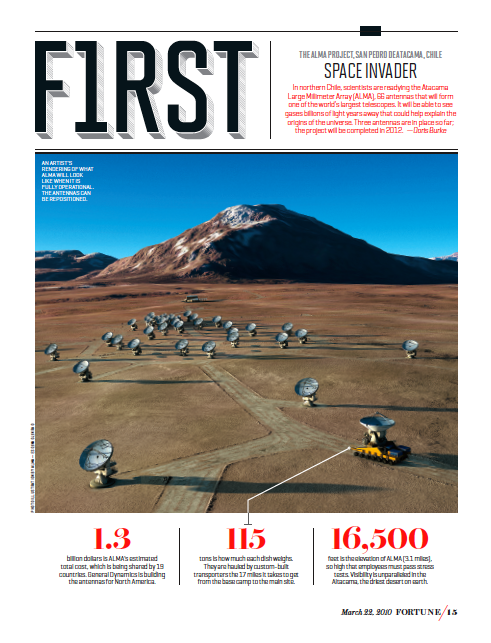
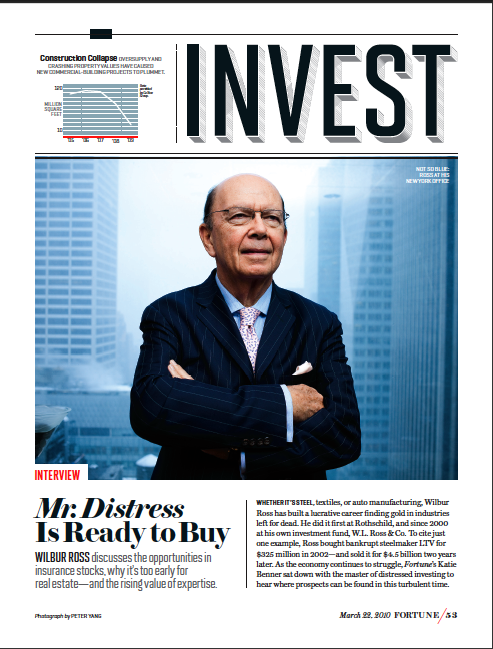
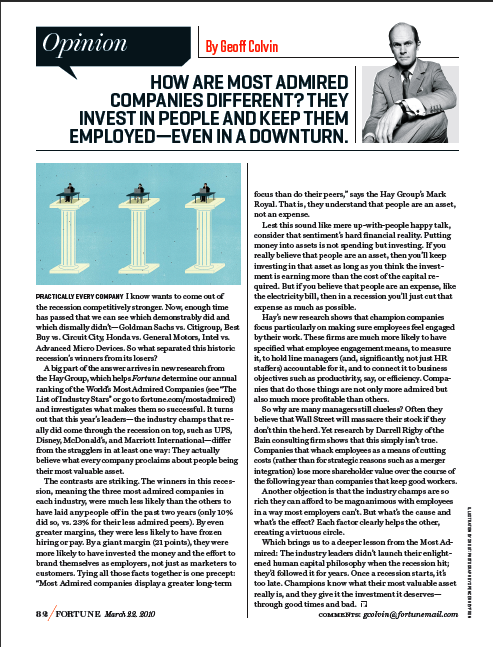
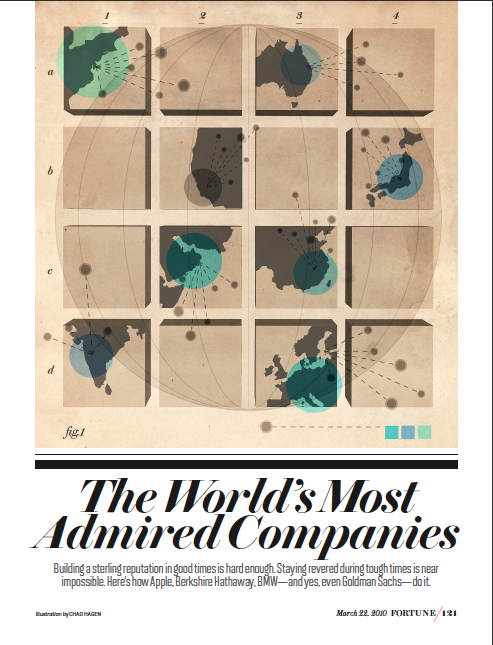
With deep roots in the past and new branches for the future, the new reinvented Fortune magazine gives a new, and positive, meaning for a blast from the past. Born in 1930 in the worst of economic times, Fortune magazine has reinvented itself 80 years later, also in the worst of economic times. (To the right is the new cover of the reinvented Fortune, and through the interview are sample pages from the magazine. Also to take a tour of the new Fortune click here).

Andy Serwer, Fortune’s managing editor wants the magazine to “start the conversation, again.” The new Fortune “wants to take the business issues of the day and be ahead of the curve,” he told me in The Mr. Magazine™ Interview. The new reinvented Fortune magazine, is the core of the Fortune enterprise, Mr. Serwer told me. The new Fortune reminded me so much of the original Fortune magazine, the Henry Luce’s Fortune of the 1930s and 1940s of the last decade. Delivering information through story telling, info-graphics, great photography and a hefty dose of the visual impact of print (that rare combination of typography and photography) all caught my attention and led to this interview with the man in charge of all these changes Andy Serwer.

And, as we every Mr. Magazine™ magazine interview, here are first some sound bites followed by a very lightly edited version of the interview with Andy Serwer:

Andy Serwer’s sound bites:

On the changes in Fortune magazine: “We decided to ensure the future of Fortune magazine by optimizing the frequency, and doing the magazine right. So, we’re investing in the physical properties of the magazine. We’re using better paper stock. Starting in this issue, we’ve invested in better paper that’s costing us more because we want the physical product to be better for our readers and for our advertisers. We’re rethinking our magazine to make it more relevant, more differentiated. There’s more utility in the front of the book.”

On whether he is an optimist or a pessimist: “You’ve got to be optimistic to an extent, positive in a realistic way. I won’t lie to you, sometimes its tough. You have to be realistic about what you’re doing, understand the limitations, and really embrace change. If you don’t like change here in the print business, you will be out of business very soon.”
On the future of the three major business magazines, Business Week, Forbes and Fortune: “There may not be a future for three of them. We’re certainly going to be one of them. I can tell you that.”

On the multi platform approach to the magazine business: “We understand that Fortune is a brand that is consumed across different platforms so obviously we’re exploring that. The magazine itself is the core of the enterprise.”
On his best advice to create a magazine: “You have to commit to doing a magazine, listen to your customers, respond to your customers, but also get out ahead of them and create a first class publication and that’s what we’re doing.”
And now for the full, lightly edited, interview with Andy Serwer, Fortune magazine managing editor.
SH: Fortune was launched in the worst of times, and from its very beginning, as a monthly magazine, it had a focus on customers who count rather than counting customers. With a cover price of $1, Fortune was an in-depth read and it answered the simple question, “What’s in it for me?” back then in 1930. How’s the new Fortune compared to the original Fortune of the 1930 that Henry Luce started?

AS: It’s interesting in fact, Samir; we’re 80 years old as of February. We do have this incredible tradition. There are some things that remained constant and some things that changed a lot. I think really, fortunately, one thing that has still made us very differentiated and very relevant is our long-form journalism. We’re really proud of that—our narrative, deep-dive stories. We did that in the first issue of the magazine, in February 1930, and we’re doing it today. Readers know that’s what we stand for, that’s a part of our brand. That’s a constant. The rest of the magazine has changed a lot. It’s shorter, the departments are shorter, there are all kinds of photography, and especially information graphics now that are off the chart, pun intended. I think behind it, there’s a business intelligence that is also constant. And of course, all the tertiary parts of the magazine, or of the enterprise I should say, are completely different, which is to say the websites and conferences and all of that. As far as the magazine itself, I think the long-form has stayed the same, and the essential core IQ of the magazine is another constant.

SH: One of the things I keep telling my students is that we’re no longer just in the information delivery business. We are more like experience makers. As I flip those old, old issues of Fortune, almost every issue had an experience that related to that audience and engaged that audience. As I look at some of the new designs, I look at some of the briefs–the info-graphics–it seems to me, its all designed to create an experience with the reader. How do you expect this is going to change where almost every magazine is now headed in that direction?

AS: We never want to insult the intelligence of our readers. I think that you could argue that a strategy where you have to say, “Hey, this important” isn’t the best. I think that everything we do has a high journalism IQ, especially our longer pieces, and our shorter ones as well. We’re adding value by having the smartest people in the business work here and do journalism. I think often our great work speaks for itself, not that we don’t emphasize great display type and great points of entry all that we can. But, I think you can over label.
SH: There was a lot of talk two years ago about the fate of business magazines, especially when Condé Nast launched Condé Nast Portfolio. Portfolio folded, Business Week was sold, Fortune is cutting its frequency and Forbes is in changing. You name it the troubles facing magazines, and they are all found in the business magazines. Is there a future for a business magazine in this day and age?

AS: I think there is a future for business magazines in this day and age. Was there a future for four of them? The marketplace said no. There may not be a future for three of them. We’re certainly going to be one of them I can tell you that. One of the other magazines went from perfect bound to saddle stitch and they reduced their frequency without being up front about it. We like to say we’re a little more transparent than that. We tell people that and we’re not blind to the marketplace. We need to optimize our business model. We don’t just cover business, we’re practitioners as well. We’re not so arrogant as to ignore the marketplace. We understand that Fortune is a brand that is consumed across different platforms so obviously we’re exploring that. The magazine itself is the core of the enterprise. We’re in good shape here. The other ones are in not as good shape as we are. Our mission is clear. We have great people. We have an environment where I get phone calls from people at other publications who want to come work here.
SH: Back in 1978 when Fortune changed to a bi-weekly magazine, people referred to the late ‘70s, early ‘80s as the “Golden Age” of magazines. In this digital age, what are you doing to ensure a future for print, especially with Fortune magazine?

AS: First of all, that “Golden Age” thing, I think it’s interesting you said that Samir, because people talked about the golden age of radio, the golden age of Hollywood, and both radio and especially Hollywood are as vibrant as ever. The ‘30s were a golden age in Hollywood, the ‘70s were a golden age in Hollywood and while you may not think that Avatar is a great, great film in the same way those classics were, it’s still doing okay. In other words, we can have a great new market for journalism, a digital marketplace that is essentially addictive. There’s never been more demand for business information, for news generally, than right now. An important point, Samir, is that the pie is getting a lot bigger. To me, by no means is it a foregone conclusion that magazines are not a part of that equation. They predicted the death of radio with television… Well, what am I doing? We decided to ensure the future of Fortune magazine by optimizing the frequency, and doing the magazine right. So, we’re investing in the physical properties of the magazine. We’re using better paper stock. Starting in this issue, we’ve invested in better paper that’s costing us more because we want the physical product to be better for our readers and for our advertisers. We’re rethinking our magazine to make it more relevant, more differentiated. There’s more utility in the front of the book. People said they wanted to know about careers and jobs; they wanted to know about entrepreneurism: we have two new departments to speak to that. They want to know about global business: we have a columnist, Michael Elliot from Time magazine that is going to address that. They want to know more about Washington and business: we have a “Washington Watch”, part of the front of the book that addresses that; we have a new columnist, Nina Houston, who is our Washington editor, who is addressing that. You have to commit to doing a magazine, listen to your customers, respond to your customers, but also get out ahead of them and create a first class publication and that’s what we’re doing.

SH: Our most valuable player is our customer and one of the things that I really liked out of the sample of pages I saw was the fact that they had that flashbacks of the ‘30s and ‘40s that I used to see in Fortune as I flipped through those old copies. There was always this “meet and exceed” the expectation of the readers, in which the magazine is previewing the future and validating that information. How are you going to use digital to enhance that print experience?

AS: Just to speak to that fact that you felt like it was evocative of our history, that was done in part by design. Our design director went back and set out to have a healthy flavor from that era for the new magazine. Our new fonts and our new logo speak to our tradition, and the information graphics as well. If you’re a great brand like ours, with a long history, you want to be cool, but you also want to show your tradition. I can think of a couple brands that aren’t journalistic. You think about BMW and Levi’s. These are brands that have a look and feel to them, they’ve been around for decades and decades, yet they’re really cool and cutting edge and that’s what we’re looking to do. As far as the digital piece goes, it’s interesting because it’s sort of like the website is the website and the magazine is the magazine and nary the two shall meet. Except, behind both is a shared value system. Part of our brand that is so important is trust and accuracy. We work very hard to preserve that on the web. I think there’s a story in the New York Times about a study that magazine websites are lacking in that department. There are tremendous time pressures with a web business. We’re not perfect, but we really strive to try to have the same standards with the website that we do with the magazine. We want to have the website be sort of a digital reflection of the magazine. We want it to speak. When you go to our website, we want it to really scream from the treetops, “This is Fortune magazine’s website.”

SH: How do you see the new Fortune playing a role in defining what journalism is? Everything else is changing. Do you view media today as changing the definition of journalism? Can we use Fortune as an example for the students, saying, “Here is an example of the new journalism of 2010 and beyond.”

AS: I’d like to think that Fortune is going to be in sort of the vanguard of how a magazine can adapt to this new age. It’s pretty clear that magazines are going to be around for quite some time. I’m very excited about the iPad. I’ve used one, although to be honest, the magazine’s functionality is not at the fore of that particular product, but it will be and it will be that and others. Magazines are going to be around. You go to a train, you go to a swimming pool, you go to a living room, you go to someone’s country house, you go to someone’s office, you go to doctor’s office, there are magazines all over the place and there are people reading them all over the place. They’re not going to stop doing that, so the same kinds of things hold true today that held true four years ago, which is to say you want to be very creative and ahead of the curve. But also you really need to do things that you can’t find online and that’s a conscious part of what we’re doing now. It’s not commoditized. If it ever was commoditized, your magazine, it sure as hell better not be today.

SH: That’s a very good point. What are the two or three things you have on your to-do list of the future? What do you expect from this reinvention of Fortune? What, at the end of the day, will someone say, “Andy, job well done, we’ve achieved our expectations.” What will that be?

AS: We want to be part of the conversation. That’s the big thing, which is to say, people talk about the magazine, “Did you see the article in Fortune?” They have to be able to do that. We have to be able to be something that people discuss. We have to take the business issue of the day and get ahead of the curve. We have to look great. That’s another piece. We have to have some utility as well. I would say those are the three things. We have to be something that people say, “Aha! That’s something I could actually do, or use in my life.” I think those are sort of the three pieces.

SH: What has been your biggest obstacle or biggest challenge in reinventing Fortune?

AS: I would say speed. I’ve always wished we could work faster and faster. I’m someone who likes to work practically around the clock and fortunately, most of the people here work around the clock. We’re working at a tremendous pace, but it never seems to be fast enough to my liking. I always wish we could change things quicker and be more responsive and get out ahead even better. But sometimes you have to take some time and parts of the process will take a little bit longer than you want them to.
SH: What was the easiest thing in reinvention of Fortune?

AS: The easiest thing I think about reinventing the magazine was getting people here to buy into it. It’s really great having a staff of business journalists because when you have to do really tough things like downsize the magazine and change the frequency, you can explain it to them and they can say, “Listen, I was just looking at GE’s business, I understand. And looking at our business, we understand. We need to do those things.” And when you talk to them about reinventing the magazine and making it more appealing to a reader in 2010, and not being so 2005 anymore, I mean, then people will hear, “When do we start?” It’s been a great effort by everyone here.

SH: Do you consider Andy the eternal optimist or do you think at some time in this business in the last few years you’ve felt some sense of pessimism?

AS: I’m definitely a “glass is half full” kind of person. Someone called me a happy warrior one time. I don’t know about that, but to lead any organization, you’ve got to be optimistic to an extent, positive in a realistic way. I won’t lie to you, sometimes its tough. You have to be realistic about what you’re doing, understand the limitations, and really embrace change. If you don’t like change here in the print business, you will be out of business very soon.

SH: Thank you.

h1

Start spreading the news: Print is NOT dead…

March 2, 2010

In what I hope is the beginning of a new trend in celebrating our magazine industry, five industry leaders teamed together to put a video promoting magazines and the power of print. Cathie Black, President of Hearst Magazines, Jack Griffin, President of Meredith National Media, Ann Moore, Chairman & CEO of Time Inc., Charles Townsend, President & CEO of Condé Nast and Jann Wenner, Chairman of Wenner Media launched their “good news” celebration video yesterday at the opening of the American Association of Advertising Agencies meeting in New York City. A long awaited step in the right direction and a great celebration of each and every one of the 9,400 print magazine titles that were distributed on the nation’s newsstands last year. Go spread the news, print is NOT dead.

h1

“Attack the Stack” Ushers the First National Magazine Day…

February 25, 2010

It is a good sign of things to come. In fact it is a very good sign that this National Magazine Day is not aimed at the advertisers or ad agencies and is not sponsored by a magazine publisher or even an ad club in this city or that. It is the first National Magazine Day organized by a reader, an avid reader who discovered his first magazine, Highlights for Children, at a very young age and never looked back.

His name is Kevin Smokler, a writer and author who lives in San Francisco, CA and the creator of what he hopes to be a national annual holiday event. Mr. Smokler writes on his website, “On Saturday, February 27th, ordinary folk across America (like you, like me) will spend the day “attacking the stack” or reading their way through the unread magazines they’ve accumulated. If you’re a big goody-goody and read your magazines straight through the moment they arrive, you may spend the day at your local library/bookstore/university exploring new periodicals, discussing your favorite magazines with friends, tweeting your favorite articles. As you wish.”

I asked Kevin about the origins of his idea, and his answer did not surprise me a bit. He told me that as a child he used to watch his dad, after dinner daily, go to his study room where a pile of magazines covered his entire checkerboard coach. “It is time to attack the stack, dad would say,” Kevin said. “It was the time to relax.” Kevin learned to humanize magazines and build relationships with them. “A magazine is like a person who will have something for you, whether you have five minutes or two hours,” he said.

Magazine Day is “a celebration of magazines and attacking the stack of unread titles piling up next to your bathroom sink.” Kevin invites folks no matter where they are, to “invite friends over and rumage though each other’s stacks (of magazines). Spend the day reading at your local coffee shop or library. Multch your magazines and construct a giant paper mache wildebeest. It’s up to you. The idea is to spend the day having fun and forming community around a shared love of magazines.”

Congratulations to Kevin on such a great idea, and congratulations to all magazine lovers on finally having a day they can call their own. To find out about the first ever National Magazine Day click here.

h1

John Harrington on The State of the Newsstands: Bloom in the midst of the doom and gloom

February 23, 2010

If anyone can put a positive and thoughtful spin on the “State of the Newsstand” in the United States after the “2009 worst year ever,” that person would be John Harrington, the founder and editor of The New Single Copy, and the man who knows more about the newsstand business than anyone I know. He has a wealth and depth of information that helps simplify the complex state of the newsstand (hopefully).

Armed with a lot of numbers, Mr. Harrington was my guest speaker at the Magazine Innovation Center at the University of Mississippi’s School of Journalism. He revealed to the students that “last year was the worst year ever in the history of the newsstands, yet we distributed more than 9,000 titles on the nation’s stands.” Yes, folks, you read that right. There were over 9,000 different titles (ranging from a one time appearance to a weekly presence) on the nation’s stands. However, Mr. Harrington revealed that his preliminary findings of the key industry performance figures for 2009 were not as encouraging as the number of titles available at the marketplace. The dollar sales for all magazines (audited and not-audited) was $4.44 billion, down 8.1% from 2008 and the total unit sales was 1.11 billion down 12.9% from 2008. The sales efficiency for 2009 was 36.0% up a little from 2008’s 35.2%.

Mr. Harrington also revealed that his research shows that based on available data from 316 magazines in 2001, the average subscription price for a magazine back then was $1.22, and the average single copy price was $2.83 for a ratio of 43% of the subscription price. In 2008, his research on 437 magazines shows that the average subscription price was $1.12 (down 8.2% from 2001), and average single copy prices were $3.76 (up 32.9% from 2001) for a ratio of 30% of the subscription price. His conclusion: we are still using the subscription copies as “a give away” to meet the rate base. That means we are still focusing on the advertising driven model as the major source of revenue. He went one step further and used as an illustration the revenues of the number one selling magazine on the nation’s newsstands Cosmopolitan. The latest available figures show that Cosmo (although it is the number one newsstand seller) generates 76% of its revenues from advertising, 20% from the newsstands and 4% from subscriptions. Keep in mind that Cosmo sells almost double the number of copies on the newsstands compared to subscriptions.

According to Mr. Harrington, Cosmo is not alone. In 2001 the revenue sources for the major 153 magazines were divided as follows: Advertising 70.9%, Subscriptions 18.9%, Newsstand 10.2%. In 2008 the revenue sources for the major 196 magazines were as follows: Advertising 79.2%, Subscription 11.9%, Newsstand 8.9%.

A lot of the current problems in the American publishing model are related to the economy of revenues that model has depended on for years. When the economy tanked in 2008, the business model followed. Mr. Harrington’s offered three “hopeful” predictions and one “better be”:

1. The newsstand will return to being friendly (hopefully)
2. Subscriptions marketing will be more rational (hopefully)
3. The publishing financial model will be more balanced (hopefully)
4. The world will be a better place (it better be)

And to cap it all, he reminded the students that “the newsstand IS the place where success in our business can truly be measured.” Why, you may ask? “Because folks have to pay the cover price to get the magazine, there is no other way around it.”

h1

New Magazine Launches: A Big January 2010 Comeback

February 8, 2010

January may have been the coldest month weather wise so far, but it had been anything but cold for the new magazine launches. Almost double the number of new magazines were started last month than in 2009. January 2010 witnessed the arrival and birth of 56 new titles for the first time on the nation’s newsstands. The 56 titles of 2010 compare with only 28 titles in 09, and 43 titles in 08, but still a little bit short of the 63 titles of January 2007.

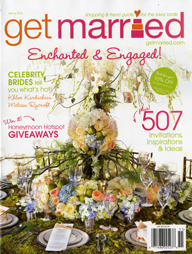
From those 56 new titles only 15 were published with any intended frequency while the remaining 41 were either book-a-zines or one shots celebrating specific events and foods (college football, comfort food, etc.) Leading the pack of January 2010 are magazines such as the advertising free, circulation driven My Home My Style from August Home Publishing in Des Moines, IA (six times a year with a subscription price of $19.95), and the web and television based getmarried.com publication Get Married published by the Atlanta, GA Get Married Media, Inc (four times a year with a cover price of $4.99). And talking about jumping from the web to print (what a great new discovery) is Hearst’s Delish.com new magazine Light & Delish that sells for $9.99 and comes full with recipes “developed and tested by the editors of Good Housekeeping, Redbook & Country Living.”

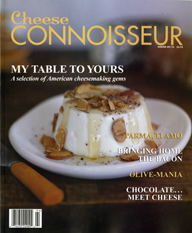
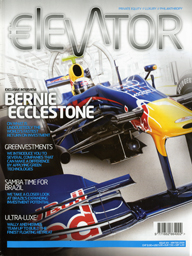
Also appearing for the first time on the nation’s stands is the British import HEPT Media Ltd. Elevator (quarterly with a $5.99 cover price) that is making its debut on the United States shores providing information on private equity, luxury and philanthropy. And celebrating its first anniversary by reaching out to the nation’s stands is Cheese Connoisseur published by Phoenix Media Network, Inc. in Boca Raton, FL (four times a year with a cover price of $5.95). Just in case you were a connoisseur of “art on the body,” the beautiful Inked magazine launched their first spin off Inked Girls filled with “world’s most beautiful women with tattoos.” Inked Girls comes with a bonus “Sailor Jerry pin up 2010 calendar” and costs $7.99 per issue.

So here you have it, a recap of the first month of the second decade of the 21st century showing no signs of cold, death or any frozen in on paper experience. Also recapping the numbers of launches of the last three years here are the latest numbers after we’ve added some, deleted few duplicates and went through 36 boxes of new magazines each representing a month since the beginning of 2007. The total number of launched in 2007 stands at 713, the total number of launches in 2008 stands at 685 and the total number of launches in 2009 stands at 747.

Enjoy the early signs of the crop of 2010 and keep on working your magic in ensuring a print future in a digital age.

h1

From God to Indie… Good Design IS Worthy of Repeating!

February 7, 2010


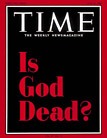
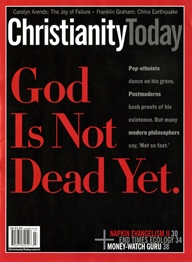
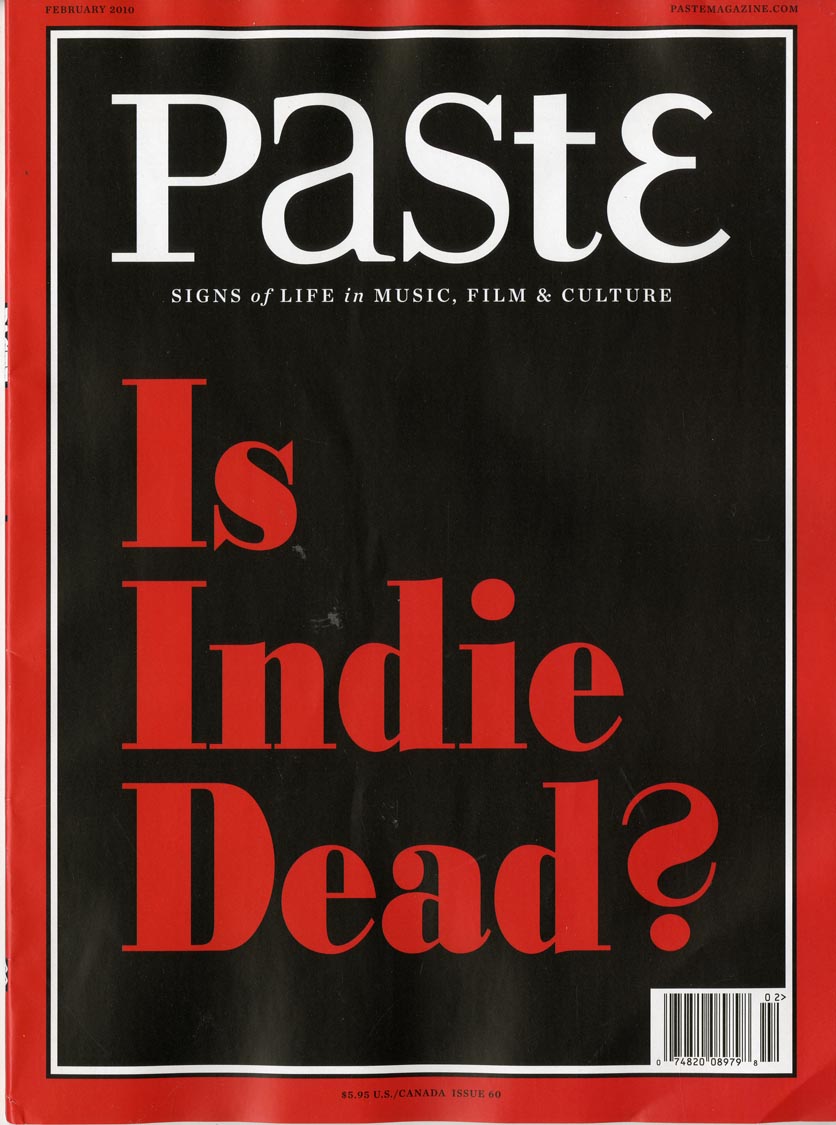
Back in the 60s, TIME magazine ran the famous cover “Is God Dead?” in red and black. Half a century later Christianity Today magazine ran a similar cover answering that famous question by stating “God Is Not Dead Yet.” This month Paste magazine took the exact TIME magazine design and asked a similar question, only replacing God with Indie? We may have to wait half a century to get the answer to Paste magazine’s question, however one thing is for sure, good design never goes out of style and is worthy of repeating time and time again (pun intended).

h1

Innovation in Print: The Qlix’s Experience Tenisha Anderson’s New Magazine in an Envelope

February 5, 2010


They say good things come in small packages, and they are right! When the first issue of Qlix magazine landed on my desk, WOW, was my first reaction. I know I have been writing about innovation in print every now and then, but now I am starting to see more of that innovation coming my way. Maybe, at last, that light at the end of the tunnel is not the train coming after all.

Last year I wrote about Abe’s Penny (it is one year old this month), a magazine that comes in weekly post cards mailed to the readers one card at a time. It is an attempt to utilize the sense that print, and only print, can master: A product you anticipate, you touch and feel, it comes to you, it seeks your address and knocks on your door steps, and then you sit back, relax, grab that glass of wine or cup of coffee and get engaged in an experience of the most “me-time” that can ever exist.

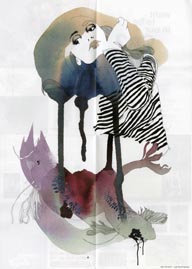
Well, Qlix magazine, published by TenStyle Media Inc. of Chicago, provides such an experience. It is innovative, creative, romantic, and above all engaging. It is a “found” experience to use a phrase from the tag line of the magazine. The magazine is divided into four sections: The Envelope (the cover of the magazine) that holds the content, Collectible Cards (interviews/profiles of emerging talents and concepts in the fashion industry), Fashion Poster (fashion visual editorial), and Poster Magazine (article features, columns and departments). The inspiration of the magazine comes from overseas and similar innovative magazine concepts such as South Africa’s MK Bruce Lee and Spain’s La Mas Bella magazines.

I asked Tenisha Anderson, the magazine’s publisher and editor three questions regarding Qlix magazine that aims to create “a visual and kinesthetic experience within an independent publication that celebrates all emerging talents and concepts within fashion semi-annually.” What follows are my questions and her answers.

Samir Husni: How did you come with this idea and why?

Tenisha Anderson: During my time at Colophon 2009 in Luxembourg, being around various independent magazine publishers and learning how they started, and just seeing how enthusiastic people were about print magazines really inspired me to pursue a long time goal of starting a magazine. Qlix’s packet format was inspired by several publications I came across at Colophon 2009 that bucked the normality of what a magazine is aesthetically suppose to look like and I was drawn to their magazines and seeing what they are about just from their unique format, more so then many of the others that would typical catch my eye. Therefore, I felt that if I was going to create a magazine, and a fashion magazine at that, that I needed to add my own ingenuity of how I wanted to present it. I didn’t want Qlix to appear as your typical independent fashion publication, although the content of Qlix covers emerging fashion talent (and who doesn”t), we also focus on emerging fashion concepts that are coming out. Plus the talent we cover isn’t only an emerging fashion designer, or photographer, but we also try to cover the talent that is sometimes forgotten (i.e. business mavens behind a new fashion pr firm or retailer, or a fresh forward illustrator, a crazy-skilled textile designer, fashion writer, a trend forecaster, etc.). Qlix knows it takes a village to showcase the end result.

SH: How important is the print component of the “experience” of the Emerging, Fashion and Found?

It’s very important, because the print component of the Qlix brand is to show that “Print IS NOT Dead”, but just evolving. Although Qlix is a multiplatformed brand with Qlix magazine, Qlixmag.com and the upcoming Qlix TV, the experience that the readers get with the print component is a kinesthetic one, encouraging reader interaction with the content, building a cohesive community between the reader and the publication.
Thus, whenever our readers “experience” Qlix magazine , they become inspired/motivated by what their peers, people just like them, are doing. Inspiration doesn’t always come from the top of the totem pole, and exposure for an emerging talent can come from some of the unlikeliest places. In a nutshell, I feel when you see what your peers are doing and that people are taking notice of that, then hopefully it will motivate you to do the same. That’s the Qlix experience.

SH: Why fashion and do you see this experience going into other categories?

I chose to do a fashion publication for several reasons, 1) fashion is my background, both educational and career-wise; 2) I’m part of the market I’m targeting; 3) I wanted to create a magazine where it didn’t seem like work to me, no matter how much research I do or how many hours I put into Qlix, it never feels like a job. Plus, fashion appeals to so many of the senses, I don’t think fashion magazines will ever be irrelevant. I hope this type of “experience” goes into other categories, although I do agree with your last interviewee, Magnus Greaves, that all magazines that are in print right now are not best served by that format. However, I do believe such creativity and innovativeness regarding the aesthetic of print magazines could revitalize the industry again and subdue all the naysayers that want to see the doom of print.

Here you have it. A new experience waiting for you to immerse into. Don’t wait, click here to order your free copy of the limited edition first issue, and get ready to relax and enjoy.

h1

Magnus Greaves to Mr. Magazine™: “I was in the business of paying for paper and giving it away for free… I woke up one day and decided that’s not very good.” The Mr. Magazine™ Interview: MYMAG and the New Magazine Business Model Behind Greaves’ New Venture

January 25, 2010

What can you do to ensure a print future in a digital age? The answer to this question came with ease to Magnus Greaves, the man coming from the world of finance and an entire Wall Street driven media magazine venture, Double Down Media, that went belly up when the entire market, and the American magazine business model that was based on that market, went belly up too! Magnus, the ever-dreaming and planning financier, found a way to use the digital age to enhance print and ensure its success in a completely different way than his first venture Double Down Media.

In Nov. 2009 Magnus Greaves founded MYMAG magazine, “a whole new concept in print magazines – one that leverages a celebrity’s fan base to reach an audience of readers/buyers.” Each issue of the magazine is a limited edition by itself and is created by a celebrity tastemaker for distribution to his/her fans “in order to share first-person and unfiltered insights on his/her interests and inspirations.”

I had the chance to talk with Magnus about MYMAG, the glossy print magazine and the Web site, “the celebrity’s ever-expanding online universe, providing exclusive video, commentary and links.” What follows are the sounds bites of the interview followed by the typical Mr. Magazine™ loosely edited transcript of the interview.

Magnus Greaves on the genesis of MYMAG idea:

“It started out by analyzing the magazine business then realizing like everything else now, it’s about people and their own personal networks”

Magnus Greaves on the selection of the tastemakers:

“The ultimate criteria wasn’t to find the most popular people, it was to find people that were popular and meaningful and had a good following within their particular niche.”

Magnus Greaves on why tastemakers want to be involved in MYMAG:

“Everybody responds very well to it because we kind of introduced it to them on the basis of it being a personal media platform, which they control.”

Magnus Greaves on MYMAG’s innovative distribution channel:

“We’re not going to send 10 to the newsstand hoping to sell 3. We’re not going to spend a lot of money trying to figure out who their (the tastemakers) audience is and how do we sell it to them. We’re facilitating something that wants to happen, which is a fan connecting with a particular celebrity.”

Magnus Greaves on the old American magazine business model: “

“I was in the business of paying for paper and giving it away for free… I woke up one day and decided that’s not very good. The rest of the time was spent trying to chase 40 or 50 advertisers on a monthly schedule. That was really tough.”

Magnus Greaves on the future of magazines:

“When you say magazine I think of a brand that creates content around a particular message. In that respect, I think the future looks fantastic.”

Magnus Greaves on the way he defines his business model:

“I think it’s important that people understand that yes, we are using magazines, but we’re not just purely in the magazine business. I look at our business as being one of connecting interesting, influential pacemakers and the people that follow them.”

And now for the complete, lightly edited, transcript of my interview with Magnus Greaves the founder of the new magazine MYMAG:

Samir Husni: How are you doing?

Magnus Greaves: I’m doing great. Thing are exciting, so I’m having fun.

SH: That’s what the magazines look like. All those folks are having fun and digging into their archives and picking up things. Tell me how did you come up with this the MYMAG idea? Did you wake up one day and say, “there is a void in the marketplace and I am going to fill it?”

MG: It was almost like that. Double Down Media was my first venture into the magazine business. Prior to that I had been in the world of finance and trading so when I got into the magazine business, because I love magazines, I thought there was an opportunity to create something unique for the trading community. Those magazines turned out really great; they were great products. We tried to come up with a unique business model, but the overall business model for magazines was pretty terrible. At the same time, it was really when the internet and online properties started kicking in. I was always watching and trying to analyze the trends that were making these online properties so valuable, but at the same time affecting magazines in a negative way. About three years ago I was reading one of those books about Google and the whole concept of targeted advertising and then it kind of clicked to me; wouldn’t it be amazing if you could apply all these principles and trends of online media, personalization and on-demand and customization, and apply that to the magazine business. So, the original concept for my magazine was that any individual could create a magazine for themselves, or to distribute to their friends if they so chose. I did a lot of work in that regard. I partnered up with HP, did a lot of work with the people over at Google, a lot of really smart people. But then I realized one day, that’s not really going to fly. The more we went into it, the more we realized, it’s more about the person making the choice of content and sharing it. So, we decided that it would be probably a better business model to focus on well known individuals, taste-makers, celebrities, and have them create magazines which we could then print in a limited run to distribute to their fans. It started out by analyzing the magazine business then realizing like everything else now, it’s about people and their own personal networks and then that’s how we changed the focus to MYMAG and I’m really glad we did.

SH: On what basis did you select those three first MYMAG’s?

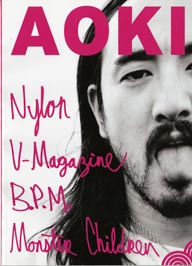
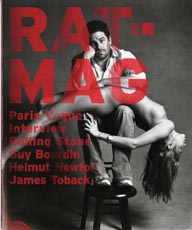
MG: It was important for us to choose three very different people, and it was also important for us to choose individuals that were well known but most importantly had a very tight connection with their fan base. The ultimate criteria wasn’t to find the most popular people, it was to find people that were popular and meaningful and had a good following within their particular niche. We wanted to make sure they connected with their fans directly in some way. With Olivia Munn, the actress and the television hostess, she is amazing when it comes to Twitter and her website to engage directly with her fans. Steve Aoki, he has his own clothing line, which is distributed in retail shops around the world and he tours constantly. Brett Ratner does a lot of personal appearances and people connect with him through his films and he’s picking up his own social media activity. So, it was important to us that we were able to work directly with these people and they have a direct connection with their fans because we decided we weren’t going to go through a traditional newsstand distribution model; that we wanted to sell the magazines primarily online via our website. So, these first three pacemakers have proven just fantastic to work with. The funny thing is when you read all their letters is that they each harbored a fantasy one way or another at some point of creating their own magazines. So, a collaboration with each of them was wonderful.

SH: What really fascinates me about the concept is that back when I was growing up all the celebrity magazines were about them. It was a fan club but more like the outsider looking in. Now you are giving the followers of those celebrities an inside peek of the mind of those celebrities.

MG: Exactly. I think we all have people we look up to, whether it’s an actor or a scientist or an academic, and we hope that a magazine that we like will do an article about them and we hope that the writer that they chose is going to have a good day and dig up the information that we want. MyMag flips that around and takes all the kind of death work out of it and we just hand it over to that particular individual. Collaborating with Brett Ratner was phenomenonal. He knew every article of every magazine that he wanted and where he wanted it placed. He knew the message that he wanted to get across and the personal stuff he wanted to contribute. So, the end product allows one of his fans to really get a great glimpse of what makes him tick. You see the content from other sources that inspires him and informs him and educates him at the same time he gives something personal of himself and that’s him. Our creative director kind of helped get that out of him and made sure that we there to acquire the content that he wanted. But, that’s really Brett Ratner. I think that’s what makes this quite a fun project for us to do but also for people to buy the magazine and see, “Hey, what’s this guy all about?”

SH: What role are the taste-makers playing in promoting the magazine?

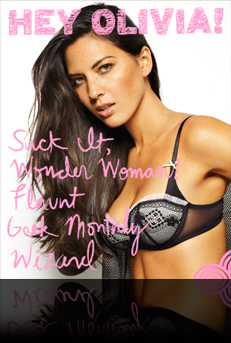
MG: Again, we’re really trying to work with people that have their own personal channels directly into their fans. If you take Olivia Munn for example, she’s on Twitter, she’s on Facebook, she’s on her own website, she does personal appearances, she has her own TV show; for each of those channels that she has to connect with her fans, she’s talking about the magazine, she’s talking about how she put it together. We had a photo shoot with her and then she chose three of the photos and posted those online for the fans to vote with poster ultimately went into our magazine. So that’s what we ended up including. They get very actively involved. With Steve Aoki, now I’m working with his management team to make sure that the magazines follow him on tour, and are part of the merchandise that’s available at each of his shows. I worked with him to make sure we get it at his fashion retail outlets. I think it’s such a fun process for them. It’s not, “Ok, we’ll do one meeting and then we’ll drop it.” It’s very collaborative and we have to work quite closely from start until right through the selling process. With each of them we’re talking about doing a follow-up magazine at some point as well. I think they really get a lot out of it too.

SH: Who’s lined up next for MyMag?

MG: We’ve had a pretty phenomenal series of conversations. Everybody responds very well to it because we kind of introduced it to them on the basis of it being a personal media platform, which they control. So, we are looking at it in different ways. We want to get more people from the area of music and film and entertainment. We’ve recently started having a lot of conversations with the people from the world of sports. We are looking at expanding in the UK where I used to live so we’re having a lot of conversations about UK pacemakers as well. I really want to reach out to business leaders or people from the world of technology or science or economics. I want to make sure we go to a diverse a range of people as possible to show how unique MyMag is. It’s interesting. When we did the original prototype, we called it “MyMag by Olivia Munn.” Then we realized it’s actually “Olivia Munn by MyMag.” Then we started getting into the collaborative process where we realized this is just Olivia Munn and she can call it whatever she wants. That was just a real change of mindset and it opened everything up for us. And it was at that point we realized, whoa, this is their unique magazine, so we can work with an astronaut and a cheerleader at the same time, going to two totally different audiences and that’s what we facilitate.

SH: You’re selling the magazine for $10 per copy. What’s the reaction? How are the sales? I don’t know if you can reveal the numbers, how many copies are we selling or…

MG: The sales have actually being going great. We made a point of really analyzing the fan base of each of these individuals to make sure the print run of each was limited so that we didn’t have a huge amount of pressure on our selves. Would we be able to sell out? We’re not going to send 10 to the newsstand hoping to sell 3. We’re not going to spend a lot of money trying to figure out who their audience is and how do we sell it to them. We’re facilitating something that wants to happen, which is a fan connecting with a particular celebrity. With Olivia Munn we started with her marketing campaign right away and having done the photo shoot and the video and the vote for the poster, that allowed us to sell a lot of magazines very very quickly. Our distribution model with Steve Aoki was slightly different. As I mentioned we’re going to go on tour with him. We’re going to go the retail outlets. Brett Ratner always has a lot of amazing projects lined up. So, we’re tying his magazine to those events as well. One of the things we made sure to do with each of these that it’s a timeless magazine. If Brett Ratner took content from the 50s, 60s, 70s, and 80s… There is nothing there that is time sensitive where if we don’t sell it by the end of the month it’s not expired. But these magazines, you could pick it up now, you could pick it up in a year’s time and it’s still going to be very relevant. That also takes the sales pressure off of us to just focus on running a great little business.

SH: Again, it’s customer based, you are going to make the money from the customers, the readers who are going to buy the magazines. There’s very limited advertising. Tell me about a little bit more about this business model.

MG: When I was in the business of paying for paper and giving it away for free… I woke up one day and decided that’s not very good. The rest of the time was spent trying to chase 40 or 50 advertisers on a monthly schedule. That was really tough. The advertising market gets tougher and that business model gets even dicier. Also, you want to give each advertiser meaningful opportunities. So, we decided to look at it from a fresh start. We decided, this is this individual’s magazine, so let’s not try to find 48 advertisers to go in there. Let’s really focus on the content and what this person has to say. Because we were able to make money on the actual magazine, then we could therefore offer a meaningful exclusive sponsorship to one sponsor, one brand. And the brands have reacted very positively to that because effectively, it’s not like they’re putting an ad in a magazine, it’s as though they are getting an additional endorsement from a particular celebrity. That’s a much easier business to be in as well than to be in the magazine advertising sales business. We also allow the pacemaker to put in an ad for a personal project that they have and we also encourage them to each put in an ad for a non-profit or charity that they support. Over time the advertising world is going to grow. The advertisers that we are speaking to at the moment, the sponsors we are speaking to now, they want to tie in an event with the celebrity, or some form of retail distribution, put the magazines in their stores and their outlets. Maybe eventually we might get more than one advertiser per issue, but for the moment, that’s all we need to make our business model work, which is a lot less stressful.

SH: Do any of the celebrity tastemakers have a say in terms of veto power over the advertiser?

MG: Absolutely. It’s their magazine. So we don’t want to force a brand on them that they don’t believe in. What’s actually been great is that most of these celebrities I speak to already have some form of existing brand relationship and they want us to talk to those particular brands first to see if we can come up with an interesting program. It’s just completely different from the old advertising model that I dealt with with the traditional magazine publishing.

SH: What’s a number, if you can identify a number that will make you say that you’ve achieved your goal? Or there is no such thing in this new business model?

MG: Absolutely. I’m happy to share our print runs. The initial print run for Steve Aoki and Brett Ratner was 75,000 magazines each, and we did an initial print run for Olivia Munn of 15,000 magazines. We are able to sell those magazines at very achievable numbers and be profitable. That’s why it becomes a nice business. So, it’s not about trying to sell a million magazines, it’s not about trying to get on to the newsstand and lose money that way in order to hopefully make it back on advertising. We set those numbers low. We analyzed what their fan base is. We look at the channels we have to reach that fan base. We don’t make it too difficult on ourselves. It also gives us the flexibility of creating the magazine that we want or the individual wants. There’s no pressure to kind of, “Oh, we better do it this way in order to do more sales.” We tell them to do whatever they want to do. They know their fans and those are the numbers we have to hit.

SH: I noticed there was a difference between the first magazine and Steve Aoki, and then Brett and Olivia were a different size. Is that just purely for printing purposes?

MG: The matte finish we had with Aoki was something that we collaborated with him and decided it was the best finish given the magazine he wanted to put together and then Brett and Olivia wanted a glossier finish, so we changed the paper for that. We also looked at the magazine and thought some of the content they had we might try slightly wider paper, which we actually feels achieves sort of the dimensions and presence that we wanted. I think that sort of paper size we went with Hey Olivia and Rat Mag is probably what we’ll go with forward. Although if any of the people that we work with wants to choose something different then that’s up for discussion as well.

SH: Do we know who is pacemaker #4?

MG: It’s going to be pacemaker 4, 5, and 6. We’re going to do another series of 3. I will personally send you the announcement in about a week’s time. We have a really outstanding individual who’s signed on and we’re sitting down with him and creating a magazine right now and we’re just getting the other two that are going to be in the same series, we’re getting all that started as well. We’re going to put out our press release probably about a week or two’s time. It’s some terrific people that we’re talking with.

SH: I’ve noticed when you gave me the list of the pacemakers, movie stars, fashion, music… You said you want to broaden into sports. You avoided the word politics. Will we ever see an Obama Mag?

MG: You know what, I would love it. I’d love Obama MYMAG and a Sarah Palin MYMAG. Absolutely. Politics is on there as well. If a politician that is in office is allowed to do it, that would be just phenomenal. But maybe if it’s somebody who just left office, that might be a little bit easier, but that would be on our radar screen. We need to think as across the board as possibly can to try and find unique audiences. Here’s the deal, it’s amazing to me when you look on say, Twitter, and you see people that have audiences of 100’s of thousands of people, which I’ve never heard of this individual. That’s what’s so wonderful about it is. It doesn’t matter if I’ve heard about them or not. Those 100’s of thousands of people have and all we’re trying to do is just facilitate that two-way communication. What I find interesting is at one point it was really unique for celebrities to have their own website, and then to have a blog and then have Twitter. But now everybody is following different paths and what we’re trying to offer with MyMag is a different medium, which allows them to get a different message across with bigger content. The response we’ve had to the first three magazines tells me that we are helping to do that.

SH: Do you believe in the future of print?

MG: 100 percent, absolutely. I don’t think all the magazines that are in print right now are best served by print. I think there are certain magazines, fashion magazines, longer reads, those types of magazines; I personally love in a print format. But there’s other types of magazines where it’s more about the brand and this table of writers and their message and I enjoy reading that on my laptop or on my iPhone. Print is an extremely portable, wonderful medium. I just think it’s better suited to some publications than others. What we’re trying to do is to look at a different way of looking a print and also a different way of collaborating with those great kinds of magazine brands. If you look at some of the magazines that participated in this project, it’s kind of blown my mind. It’s all fantastic publishers. It’s not like we had to go out and get second rate content. What’s been great about those conversations is to see how the magazine publishers are also looking at print and are willing to support innovative models in print as well.

SH: What keeps you up at night?

MG: In terms of this business? I get just kind of excited. My mind wanders off in different direction thinking about what we can do and where we can go with it. Suddenly we’ve been having conversations with brands. So, at the moment, these magazines that we’re talking about are really personality driven. Brands have been speaking to us about creating magazines which are personality driven but are also brand driven in a different way. It’s almost kind of in the custom publishing model. My mind starts fantasizing about that. I start thinking about the unique aspects of the opportunities out there. I think about how we’re going to apply the model in that context. I’m fascinated to bring this to Asia. I have some friends from Japan that just really want to bring it over there because they think it’ll be big, extremely well received. In terms of the business, strategic things, is the chess game to try and figure out the best ways to get the magazines in the hands of the fans. What we’ve found is that it’s really just about awareness and communication. If you let them know that this individual created a magazine, why they did it, and what’s in it, they come to our website. The traffic on our website some days boggles my mind. It’s been fantastic. We’re at the stage where it’s really the excitement of the project that really keeps me up at night. I can tell you that previously I was kept up at night by far worse problems. I have many nights where I was completely sleepless. This is a very exciting experience.

SH: If you put your futuristic cap on, how does the future look for the magazine business in the United States?

MG: It’s funny. When you say magazine I think of a brand that creates content around a particular message. In that respect, I think the future looks fantastic. Last month I bought Esquire and GQ on my iPhone and I really enjoyed both of those experiences. So the thought of Apple bringing out a tablet, I just think that that’s going to be a terrific medium for reading a magazine. I wasn’t overly excited about the Kindle or any of those other ones but I think if Apple does something with a tablet that’s similar to the iPhone, but bigger and better, that’s an exciting opportunity for those brands. I think that there’s a lot of magazines out there. There’s a lot of overlap. I think that the brands that are meant to stay out there hopefully will. I think that people should use the proper platform and take advantage of its unique characteristics. But I think a lot of those brands might just end up distributing content via online platform. If people are smart about it and they go with it and they learn from some of the other media forms that went online and faced the whole digitalization process before, I think that a lot of them will do quite well. Others, not so well.

SH: You mentioned you enjoyed the GQ and Esquire on your iPhone. Did you feel there was a difference in how you experienced the magazine between having the printed copy in your hand and having it on your iPhone?

MG: Absolutely. First of all, I felt that the GQ application was done a lot better than the Esquire application. I thought that there were a lot of cool things about the way GQ did it. I thought that given that the sort of screen and resolution on the screen, a lot of the photography came up really really well. Also you can turn it sideways and see the layout from the magazine itself and I thought that was really interesting in case you needed the sense of comfort of, “Whoa, what am I missing?” Then you realize, “I’m not really missing that much.” Will I do it every month like that? I might alternate back and forth. If it’s a particularly special issue for whatever reason, I’ll take it in a print format. But I have to say, for a first time out, I thought that the GQ app especially was pretty good. There are certain magazines like Paradis or Carl’s Car that I would never ever buy those in anything except for a print format just because those are such wonderful print experiences.

I think it’s important that people understand that yes, we are using magazines, but we’re not just purely in the magazine business. I look at our business as being one of connecting interesting, influential pacemakers and the people that follow them. It’s been a three plus year journey of trying to figure out what is the future of magazines and how do I create a business model that takes advantage of that as part of the conversation and then realizing I’m not in the magazine business, I’m in a different business. I think MyMag ended up in a really nice place and we have some very exciting opportunities in front of us.

SH: Thank you.
h1

Going Beyond Pure Content: Experiencing More New Magazines in 2009 but with Less Frequency…

January 11, 2010

As the numbers of the new magazine launches are tallied the early numbers show an increase of more than 50 titles in 2009 than that of 2008, however the magazines published with a frequency of four or more saw a decline of almost 25 titles.

The December new magazine launches totaling 74 new titles divided between 21 regularly published titles and 53 annuals and specials helped bring the total number of new magazines published in 2009 to 734 compared to the final tally of 685 in 2008. For those who still doubt the vitality of the magazines they need only check the number of new magazine launches back in the 80s when we had 234 new magazines published in 1985. Remember that in 1985 digital and the internet were the domain of research labs and not on every one’s desk and laptop!

The crop of 2009 saw 181 new magazines published with a frequency of four times or more compared to 208 in 2008 with similar frequency. The major change between the 80s and today is the frequency of the launches. Back then it used to be 2/3 of the magazines published with a regular frequency and 1/3 with the special or annual frequency. Now it is just the opposite. Publishers have learned the value of a special (high cover price, low creation cost) and are utilizing that with the help of magazines that do not exist in print any more but their brands continue to survive such as the famous Life magazine brand.

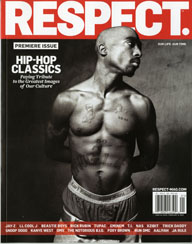
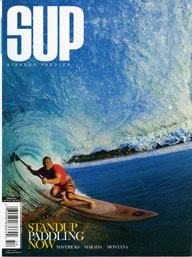
One thing all those new magazines share in common: they are more than content. They are trying to create an experience that goes beyond content. You can get content on any digital device, but getting the magazine experience is and should go beyond content. Witness Respect. magazine, the new magazine paying tribute to the greatest images of the Hip-Hop culture, or Sup, the magazine for Standup Paddling (yes you read that right). Witness MH+L (Modern Home + Living) the modern celebrity lifestyle magazine or Classic Properties International, the magazine about homes and estates from around the world. Each and every one of those December new launches may have content that you can find on the internet, however the experience you get from picking up the magazines and flipping through their pages goes way beyond the content delivery. Try it for yourself and you will understand what I mean.

If magazines were only content, that medium would have died years ago. Magazines are experiences and those experiences will continue to evolve and change year after year. Enjoy the crop of 2009 and looking toward a great 2010 and beyond.

h1

That Light at the End of the Tunnel is Not a Train & On the Need to Charge for Content

January 9, 2010

Last week I wrote a column regarding magazine circulation and the need to charge more for our content that appeared as a point-counter-point in Audience Development magazine and I also gave an interview to Publishing Executive Insider newsletter about the state of the magazine industry and the upcoming Publishing Business Conference and Expo that I am co-chairing in New York City this coming March.

Here is the intro to my interview with Publishing Executive Insider newsletter:

That Light at the End of the Tunnel Is Not a Train, Says Mr. Magazine
January 7, 2010
By Matt Steinmetz

Magazine industry advocate Samir Husni, who many know simply as “Mr. Magazine,” has made a career out of championing the magazine publishing business. Ever its defender, Husni is not afraid to be among the industry’s strongest critics, either. As co-chair of the 2010 Publishing Business Conference & Expo (PBC), he is playing a central role in the development of a conference program for magazine publishers struggling to, as he puts it, “ensure the success and survival of the old and trusted magazines and the new and upcoming magazines.”

In an interview on Thursday with Publishing Business Insider, the e-newsleter for the PBC community, Husni blasts the “major media companies … still in a state of coma … refusing to believe that the American business model that depends in large part on advertising is dead.” But he also offers a number of reasons for optimism, led by the publishers he sees that have begun to sell “experiences rather than content, thus making ink on paper or pixels on a screen more than just content.”

You can read the entire interview here.

As for the point-counter-point column that I wrote for the Winter 2010 issue of Audience Development magazine, here is the intro to that article:

The A|B Split
Are ultra-cheap magazine subscriptions good or bad business?
By Bill Mickey
Monday, January 4, 2010

With the decline in advertising, media companies have been exploring ways to coax more revenue from their readers. One by-product of this process has been a resurgence in paid content online. Yet that strategy requires publishers to convince readers that the content they’ve been getting for free in an ad-supported model is now valuable enough to pay for. Tangentially, print content is getting the same scrutiny, with publishers examining ways to wring more money from cover and subscription pricing. So, when a magazine promotes too-good-to-be-true subscription deals, some observers cringe at what they think is a tactic that only serves to bloat circulation and devalue the product. Others say not so fast, cheap subscriptions are simply one part of a wide array of marketing tactics that incrementally sustain and feed circulation, and cheap first offers often lead to high pay-up rates. Samir “Mr. Magazine” Husni, founder and director of the Magazine Innovation Center at the University of Mississippi, and John Klingel, former president of consumer magazine marketing at Reader’s Digest, offer their cases for and against cheap subscriptions.

We Can’t Add Value if It’s Perceived as Valueless
By Samir “Mr. Magazine” Husni, Ph.D.

A few months ago I visited with the folks at Western Horseman and saw a sign on the wall that made me smile. This sign was simple and to the point, and it showed me that even though our industry is changing around us on a daily basis, there are some things that will never change. The sign simply said: “The only way to make a magazine better for the advertiser is to make it better for the reader.”

Read the my entire column and that of Mr. Klingel here.