h1

The Husni Report: 1st Quarter 2010 Launches Same as 1st Quarter 2009 (and a response on why my numbers are different than other published numbers)

April 14, 2010

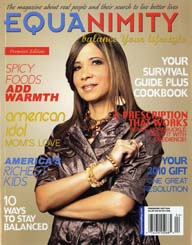
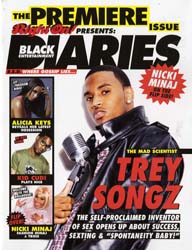
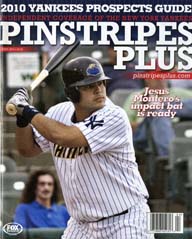
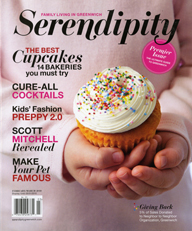
170 new magazines appeared for the first time on the nation’s newsstands in the first quarter of 2010. That is exactly the same number of magazines that were launched in the first quarter of 2009 (we reported back then 167 new titles, but the final tally ended up with 170 titles). This number represents 16 titles more than the 154 titles first published in 2007 and 17 titles more than the 153 titles first published in 2008. Call it what you want, but yet again the innovative media companies and entrepreneurs have shown a resiliency against all odds, and for that matter against the prophets of doom and gloom.

The new magazines of 2010 included 43 titles with a stated regular frequency and 137 with annual, two times, special, or frequency stated. Compare that with 58 new magazines with a stated frequency in 2009 and 112 with annual, two times, special, or frequency or no frequency stated. Amazing to say the least, is that in the worst of times American magazines will know that the best of magazines were launched in the worst of times. To paraphrase Charles Dickens, these are the worst of times. Let the new magazines roll off the presses and enjoy the images of the some of the new magazines launched in the month of March.
(I have received a comment from a reader and I have opted to post it as an addition to the post with my answer following the reader’s comment/question:
Mace asks:

How does the info here differ so widely from MediaFinder.com numbers? As noted on btobonline.com…
“Magazine launches in the first quarter totaled 25, down from 110 in the first quarter of 2009, according to data released Monday by MediaFinder.com, an online database of publications. Magazine closures also slowed, with 22 titles folding in this year’s first quarter compared with 95 in the year-earlier period.”
Any idea why the big difference?

My answer:

I do have every single magazine I report on and count. I do not deal with press releases, e mail information or any other data collection. It is that pure and simple: if I do not have a hard copy of the magazine I do not count. I have no idea how others count the launches, but my numbers are based on facts and actual magazines. I do this as a hobby and education. I am not in the business of selling data bases or anything else. You can check the covers of every issue on the mrmagazine.com website. I divide my numbers by total and break it down by those published 4 times a year and more and the other frequencies. Also the magazines I count are mainly consumer magazines and not trade or b2b magazines or organizational magazines. I have been doing this since 1978 and do have every magazine I ever count.

h1

From Silent Mode to Heated Mode: Reconstructing the Magazine Future… the Popular Science Way (Sidebar: Me and My iPad)

April 9, 2010

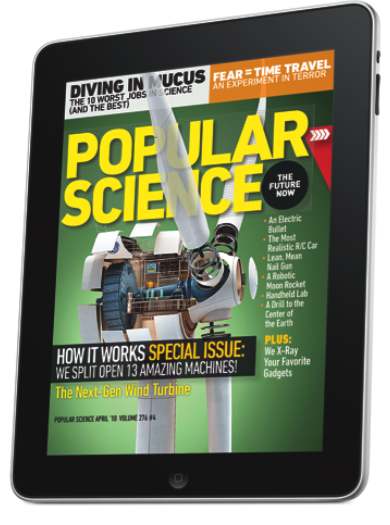
When a magazine bills itself as The Future Now and the philosophy of the CEO of the publishing company is based on Fail Fast and Fail Cheaply, the sky then becomes the limit to what to do when it comes to the future. While others take a wait and see approach, Bonnier’s Popular Science magazine takes the do, fail, redo and succeed approach. “The magazine is neither afraid of experimenting in public nor afraid of others imitating what the magazine is doing,” Mark Jannot, editor in chief of Popular Science told me in an interview on Wednesday.

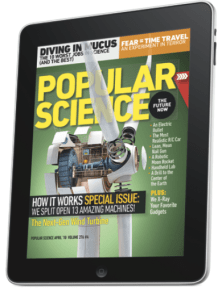
Popular Science +
was launched earlier this week to coincide with the launch of the iPad tablet from Apple. The magazine is billed as an “achievement in digital magazine reading that began months ago in a collaboration between Bonnier’s global R & D task force and BERG, a London based design firm.” The result is Mag+, a new platform which Bonnier bills as the “first step toward a vision of what digital magazine reading can be.”

The company identified “six basic principles that underlie the Mag+ digital platform.” They are:
* Silent mode. Magazines are a luxury that readers can lose themselves in. Mag + has fewer distractions than the Web. It allows readers to lean back, away from the browser, and just focus on the bold images and rich storytelling. Reduced complexity increases a reader’s immersion.
* Fluid motion. Magazines are easy to browse, and Mag+ replicates that with a story-to-story navigation that’s more like a panning camera than a flipping page. As we say, “Flow is the new flip.”
* Designed pages. Magazines are defined by their carefully conceived layouts that give readers an immediate understanding of the content and why it matters to them, a quality that got lost on magazine Web sites. Mag+ brings design back to digital publishing.
* Defined beginning and end. Unlike the Web, magazines have a defined storyline and flow from front to back. Mag + returns to the notion that something can be, and wants to be, completed. It’s the end of endlessness.
* issue-based delivery. One of the great joys of magazines is that feeling of anticipation when a new one arrives. Mag+ maintains that by delivering full issues at once with all the same content as the print edition, and on the same schedule.
* Advertising as content. Relevant, attractive advertising is as much a part of the magazine experience as the editorial content, and Bonnier wants Mag+ advertising to include both pin-ups and applications readers can appreciate.

Well, I have opted to go to the source regarding Mag+ and its first creation: Popular Science. I asked Mr. Jonnet what he thinks about all the changes taking place in our industry. His first reaction was to quote the famous saying “May you live in interesting times…this can be a curse and a blessing,” he said. These are indeed interesting times, and as I have learned over the years any time we use the word “interesting” it means we have no earthly idea what is going on. So I asked Mark whether they know what they are doing or are they just learning as they go? His answer, “We are doing more learning as we go. We follow our CEO Jonas Bonnier’s philosophy: fail fast and fail cheaply. It is exactly like skiing, you don’t learn how to ski unless you fall a few times along the slope.”

Popular Science has been one of the few magazines that has experimented with different digital formats. From the basic digital magazine that was identical to the printed magazine to the special interest web-only magazines known as Genius Guides. So why all this “testing” in public? “We felt there are no downsides for experimenting in public,” Mark said. “Even if the others imitated us, we will learn from our failures and change them to successes. We will always be ahead of the competition because we are aggressively experimenting. Failing in public does not scare us because that is how we learn.”

And talking about learning, I asked Mark whether he thinks that we are seeing the end of print and whether our industry is on its death bed. “The industry as a whole is healthy and robust,” Mark answered. “We will have print for years to come. We continue to deliver a strong magazine product both in print and now on a digital platform. Our product is meant to be consumed, and how it is consumed is a different story. We have to deal with the realities of the market place, the raising cost of paper, postage, distribution, and the changing technology.”

Is the iPad the salvation of our industry as many are predicting now? “We never had a device for people to consume,” Mark commented. “The web is classically a lean forward medium with a self directed quest for data. There is too much separation and gap between the customer and the web. In our case, we did not have the device yet when we started experimenting, but now I feel we have the device and I am exceedingly impressed. A device that you can actually hold, use to e mail, interact and is very comfortable. It is an extraordinary device.”

However, he was quick to add, “I am pretty proud of what we can accomplish now, but this is just the beginning. The iPad allows the consumer to engage with the magazine the same way the printed magazine does. It allows for the consumer to do other things at the same time whether watch television or something else. The web is NOT a magazine. The core qualities of what a magazine is are not found on the web. But now with PopSci+ the core qualities are delivered digitally on the iPad. The core definition of a magazine is that it is a periodical that is published at known intervals, delivering specific content that has been curated to meet the readers expectations. A lot of very careful thinking goes into the production of such a magazine.”

Are we seeing, to quote Popular Science tag line The Future Now?
“What we’ve done now is just the beginning,” Mark said. “We have the Mag+ that offers those six designs (see above), and in the next two months we will introduce the Hot Heated Mode that will allow users to comment, share, store and e mail from the pages of the magazine by rubbing on that specific page on the iPad. We are going to make use of the touch functionability of this device to great a unique experience. We want to create a magazine that is NATIVE to the device, that feels very natural. So rather than deconstruct the magazine to fit the device, we opted to construct a new magazine that benefits from the screen and the touch. This new device provides us with a new mountain range, you can see the text and separate it from the pictures or you can remove the text and just see the pictures…the possibilities are endless.”

So is it all about the “bells and whistles” that is going to help with our salvation? Mark was quick to issue an essential warning that seemed to be lost in our digital world. “Of course all these bells and whistles can be added now, however, if it can be added, it does not necessary mean that you should. We have to carefully curate what is best for this medium. We have to be careful not to assault the readers.”

What about the future of print I asked? “Well, we are not in such a dire situation in terms of print. Our circulation is very robust, there is no lack of demand for the printed edition. In fact, it is a fallacy that magazines are in trouble. Yes we had some hard times economically, and we felt it on the advertising side, but we are coming out of the recession now and things should get better.” Mark added, “Having said that, I think what we will see in the future is publishers migrating their readers from print to the tablets. The product is going to get better, and the better it gets the more migration we are going to see. However, print will be with us for the foreseeable decades. Print is not going to disappear in the near future. It is amazing that we, who are in the business of predicting the future, can only say that in the predicable future we are not going to see the death of print for decades. We are going to see the shift more in favor of the digital from print.”

What about journalism education and what educators should be teaching in the classroom. ” While it is necessary to teach the technology, however it is not sufficient,” Mark said. “The fundamentals of good writing, good reporting and editing must continue to have as much value, if not more, than the technology. It will be a mistake not to embrace the technology, but it will be a bigger mistake to ignore the fundamentals of journalism. We must embrace the new technologies and give students the opportunity to use them and learn how to publish on them. The new generations are the “Tech Natives”…that’s why I love hiring young people. They are both energetic and ambitious and they know all these technological devices. It is in their blood.” However, another warning from Mark regarding the technology and technological devices. Be aware that is is very much of a mistake to push the “fetish” of the technology and give up entirely on the core of journalism.”

Any final words of wisdom from the guy who is reconstructing the future of magazines, one technology and one device at a time?
“As I said in the beginning, the saying ‘may we live in interesting times” can be either a curse or a blessing. I like to think it is a blessing.”

Sidebar… Sidebar….Sidebar…Sidebar

Me and My iPad
Last night my 64 GB iPad arrived. It felt like Christmas in the office. My colleagues and assistants gathered around “the opening of the box.” The first disappointment was the packaging itself. It did not feel like an Apple package. Second disappointment was the weight of the device. Third disappointment, I could not use the wireless internet on campus because I could not download the Cisco security software needed on campus on all wireless connections (Problem solved the next day by sending my iPad’s WiFi number to get a waiver from the security). Fourth disappointment, attempting to spend my first night with my iPad at home, between learning how to use the device and the major thunderstorm passing our area, it took two hours to download the Popular Science+ April 2010 issue. Fifth disappointment, I did not know how to carry my iPad home. It came with no cover and I could not trust my briefcase to be the safe transportation vehicle for the device. Sixth disappointment, as I started to enjoy my iPad in the morning, I downloaded the latest GQ issue and as I was watching the Gillette video ad, my iPad froze. I could not even turn it off. I had to call Apple Support and they came to the rescue.

After all the aforementioned disappointments, I had to enjoy my iPad. I spent $699.00 plus taxes on my new device. I talked about it in class. Its functionability reminded me with the scrolls of centuries gone by. We are no longer limited by the dimensions of the page. You can scroll down, right, left… Space is no longer an issue. The issue remains what will get you engaged, what will keep you on the page and what will bring you back? It is all about the experience. I hope one day your experience with the device is much better then mine. I have to come back for another experience, mainly because I spent too much money to toss away. Stay tuned!


h1

Good Things Are Worth Repeating: What I Told the 2010 CASE Editors Forum

March 27, 2010

On March 24 I spoke at the Council for Advancement and Support of Education (CASE) 2010 Editors Forum in Cambridge, MA. My topic was “What Can Alumni Magazines Learn From the Newsstands?” Associate Editor Dale Keiger of the Johns Hopkins magazine and a blogger on The University Magazine Group’s blog UMagazinology wrote a good summation of my opening talk to the group.
He started the UMmagazinology blog by stating “The 2010 CASE Editors Forum in Boston got off to a fine start yesterday with an opening address by Samir Husni. Husni is the director of the Magazine Innovation Center at the University of Mississippi, and he bills himself as Mr. Magazine.” To read Dale’s entire blog click here, and to read his follow up blog click here.

And here is a tweet from Erica Endicott, Graphic Designer at Emory University in Atlanta, about the aforementioned presentation:

“It’s like a tent revival in here with Samir Husni. People are almost shouting “amen”!”

h1

Best Quote Yet on the Future of Magazines…

March 27, 2010

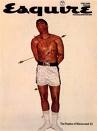
The legendary George Lois, Esquire’s magazine art director from 1962 to 1972 was asked in The New York Observer (March 22 issue) “What does he think about reading a magazine on the soon-to-be-released iPad?” His answer:

“It’s O.K., I guess. But magazines will never die because there is a visceral feeling of having that thing in your hands and turning the pages. It’s so different on the screen. It’s the difference between looking at a woman and having sex with her.”

h1

Innovation is the 2010 catch word, and Innovations in Magazines is its catch book

March 22, 2010

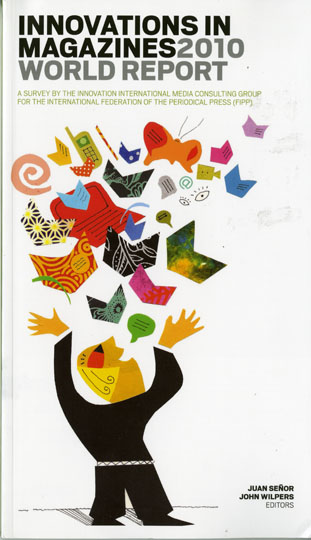
It seems as if the word innovation is occupying the center stage in anything “magazine-ish” these days. However, a great effort by the London based International Federation of the Periodical Press (FIPP) has resulted in the first ever compilation of examples of “how technology, out-of-the-box thinking and old-fashioned hard work are enabling innovation that is delivering new readers, revenues and relevance to magazines around the world.”

The result is the first ever Innovations in Magazines 2010 World Report, a well illustrated, 100 pages book that brings the reader an up-to-date round-up on what is going on in the world of magazine innovation world-wide. FIPP is not stranger to being on the cutting edge of what is best for the magazine industry world-wide. Chris Llewellyn, President and CEO of FIPP reminds the book readers of FIPP’s mission, “to strengthen links between magazine publishers world-wide in order to exchange knowledge, experience, and ideas.” This book is just one example of what FIPP has done and continue to do to help the periodical industry world-wide.

The range of innovative techniques and methods mentioned in this book brings the reader to a knowledge level that is required for anyone involved in the publishing industry. In fact, it almost leaves nothing to the imagination. It’s all in the book. A swift course at the fraction of the price that it will cost anyone to do all the research needed for this handy up-to-date information. Innovation in Magazines finally nullifies the definition of insanity that has been raging like a wild fire in our industry. It no longer talks about the same things time and time again and expect different results every time. The book does not talk about change or the need to change; it is “change in progress.” Grab it, read it and learn a lot from it.

As the book editors John Wilpers and Juan Señor write, “While many magazines cope with revenue and circulation losses by cutting back and retrenching, many others are countering hard times with hard work, imagination and innovation. This book highlights and celebrates this brilliance.”

A must have brilliance celebration. To order your own copy click here.

h1

Wellington Named AEJMC Magazine Division “Magazine Professional of the Year”

March 18, 2010

First it was the magazine now it is the publisher of the magazine who is receiving the honors of being named by the Association for Education in Journalism and Mass Communication’s Magazine Division as the 2010 Magazine Professional of the Year. Ted Spiker, professor of journalism at the University of Florida and current head of the Magazine Division made the announcement this morning. What follows is the Magazine Division’s press release:

Vicki Wellington, publisher of Food Network Magazine, was named the 2010 Magazine Professional of the Year by the AEJMC Magazine Division.

Wellington will accept her award at the annual AEJMC convention in Denver in August. On Thursday, Aug. 5, she will make a featured presentation, “Ensuring a Print Future in a Digital Age.”

In October 2009, Food Network Magazine was named Ad Age’s A-List Launch of the Year. In its launch year, the magazine tripled its rate base to 1.25 million. Food Network Magazine is already one of the 100 best-selling American magazines on the newsstand.

The honor was announced by the Division’s Immediate Past Head Dr. Dane Claussen, who chaired the selection process, and by Prof. Ted Spiker, the Division’s current Head. Dr. Samir Husni, director of the Magazine Innovation Center, nominated Wellington.

“When you consider what a success Food Network Magazine has been—especially during a challenging time for the media industry—then you can see why Vicki is well-deserving of this honor,” Spiker said. “And we’re thrilled that she’s going to share her vision of the future of magazines with us in Denver.”

Food Network Magazine is launched as a joint venture of Hearst Magazines and the Food Network in October 2008. Wellington had been publisher of CosmoGirl since February 2008. Prior to joining Hearst Magazines, Wellington was the founding associate publisher of domino magazine.

h1

The Magazine Innovation Center: An Update

March 17, 2010

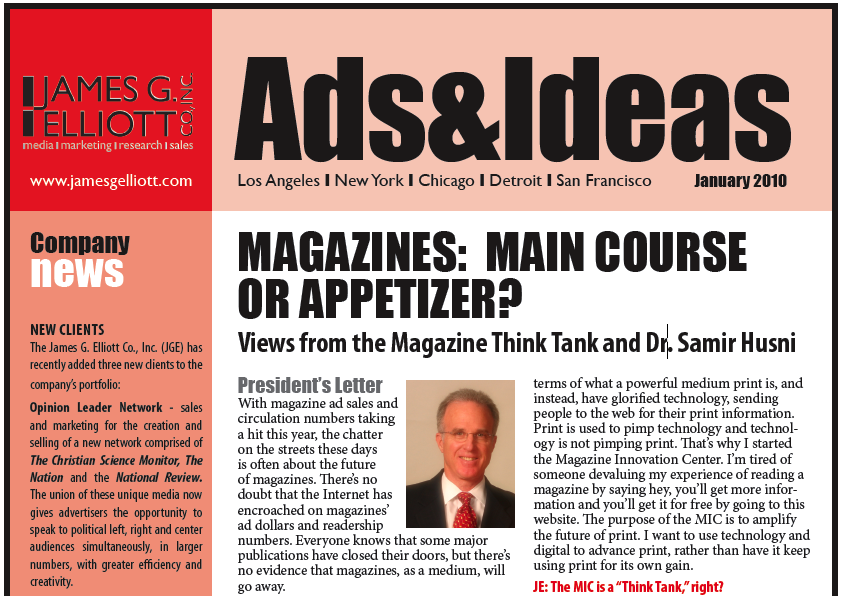
Jim Elliott president of James G. Elliott Co., Inc. recently interviewed me for his firm’s newsletter Ads & Ideas. He introduced the interview with the following:

President’s Letter
With magazine ad sales and circulation numbers taking a hit this year, the chatter on the streets these days is often about the future of magazines. There’s no doubt that the Internet has encroached on magazines’ ad dollars and readership numbers. Everyone knows that some major publications have closed their doors, but there’s no evidence that magazines, as a medium, will go away.
But that doesn’t mean we can be successful at doing what we’ve always done. In fact, maybe we need to ask ourselves, is the weakness in the marketplace a factor of magazines or advertising or the economy? The short answer is all three, and the long answer involves a look at the way magazines use technology, how magazines structure their revenue streams, and what magazines need to do to attract readers and advertisers in complex times.
I had the chance to talk to Dr. Samir Husni, known as “Mr. Magazine” for his long-term work at the University of Mississippi on the tracking of the magazine industry. Recently, he announced the start of his “Magazine Innovation Center,” a non-profit organization to study the future of magazines and print. Here’s what he had to say about magazine content, our industry, its digital competition, and what we, as an industry, should be doing to position magazine publishing as the exciting, powerful and important industry it is.

To read the Jim Elliott’s interview with me click here.

h1

Inside the magazine industry: Here & Now’s Robin Young interveiws Mr. Magazine™

March 10, 2010

Earlier today Here & Now the national radio news show aired an interview with me regarding the status of the magazine industry. Here is the intro from Here & Now web site and you can click on the link below to listen to the entire program.

For years, Samir Husni has been collecting the first editions of new magazines. He says he can go to a newsstand, look at the magazines for sale, and figure out who’s living nearby and what they’re interested in. He’s now a professor at the University of Mississippi’s School of Journalism; he’s also director of the school’s Magazine Innovation Center. We speak with “Mr. Magazine” about which magazines are dying and which are thriving.

To listen to the show, click here.

h1

Cathie Black: The Magazine World Today is an AND World and Not Either Or

March 9, 2010

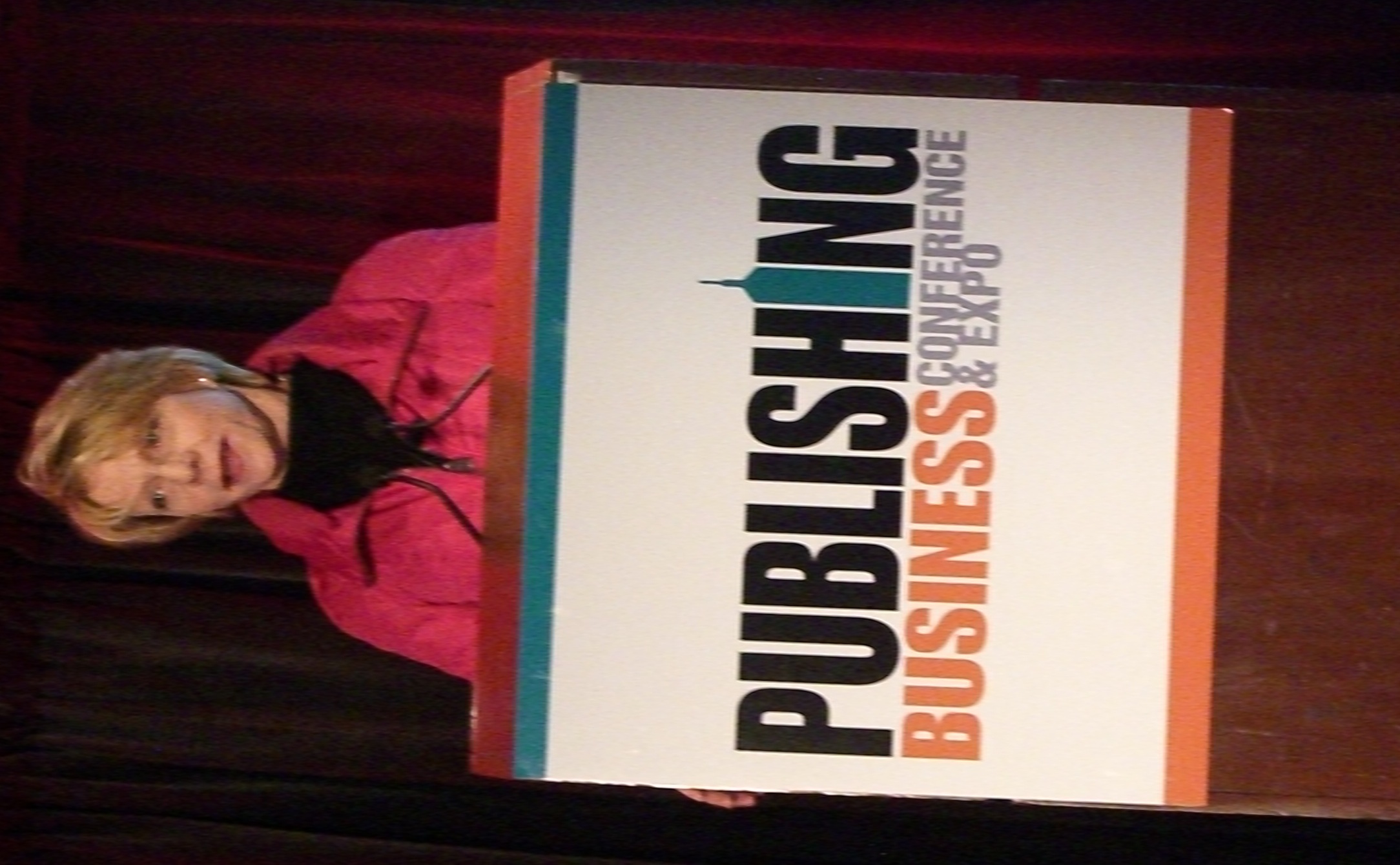
The magazine publishing business in no longer in the either or business. “Our world today is an AND world,” the first lady of magazine publishing Cathie Black, President of Hearst Magazines, told the audience attending the morning keynote event of the second day of the Publishing Business Conference and Expo in New York City.

However, that AND world had a funny start as Ms. Black started her presentation. A computer problem delayed the showing (for seconds) of the Power of Print video that Ms. Black wanted to open her remarks with. She was quick to announce to the audience with a big smile on her face, “That is why I believe in the future of print.”
Ms. Black went on to tell the audience, “We had a tough 18 months, however we did not have a consumer problem; we had an advertising problem.” She was quick to add that, “Now things are getting better. Our multi platform business is getting better and all of us talk about all platforms now.” She gave a new definition of the changing role of magazine companies. “A magazine company is now a diversified magazine company. We have become an advertising agency, we are designing ads, we are designing campaigns, creating events, etc,” she informed the audience.

She reflected on the changes taking place in both the physical shape of the magazines and their contents. “We’ve up-sized House Beautiful last year, we did the same with Good Housekeeping and we will do the same with Country Living this coming fall,” she said. “If we are going to charge more for our content, we have to offer an enhanced consumer experience,” Ms. Black said. “At the end of the day, it is all about innovation.”

Innovation does not necessary means that magazine companies are going to be in the device and tablets business. Ms. Black was quick to answer a question about the involvement of Hearst in the creation of a digital device platform. “We do not want to be in the device business,” she answered with no hesitation what so ever. “We need to create experiences based on what the readers want, where they wanted, when they wanted and how much they will pay for it.” The content is going to be different for each of the devices, invented or yet to be invented. “We are moving away from the devices business,” she concluded.

And as for the future, Ms. Black said, “there is no magic bullet, there is no magic answer, we will work with the innovations that comes to the table.” In conclusion, we all know that every thing is changing including the role of editors who are now can be seen “at NBC thinking about a television program, or attending a tech event or workshop, or taking an advertiser to lunch.”

h1

From Traditional Media to Tradigital Media: Reporter’s Notebook from Day One of the Publishing Business Conference and Expo

March 9, 2010

Print has no future. Print has a future. Print will vanish in 20 years. Print is still growing strong and will continue to do so. We are moving from the age of traditional media to the age of tradigital media. Those statements and more were what I heard in day one at the Publishing Business Conference and Expo in New York City. What follows are, in random order, some of those statements and who said them. Enjoy and keep in mind that only two people can ever tell you the future: God and a fool.

From Prescott Shibles, Vital Business Media:

On the state of change: We are moving from traditional media to tradigital media
On using dollars to chase pennies: Print dollars are changing to digital dimes
On the state of the web marketplace: Top 50 web properties hold an 89% revenue market share
On the new targeting: People are moving from site targeting to people targeting
On who has the real power in the digital space: The real powers in the digital space are Apple and Google


From Chris McMurry, CEO McMurry, Inc.:

On McMurry’s agenda for success:
1. Hiring great people, most companies just hire people
2. To make sure we are a great place to work
3. Evolve our business along the needs of our customers (most of them are businesses)
On the new age of advertising: The era of interrupted advertising is coming to a close and they are moving their marketing budgets into content marketing.
On the future of the media: The future of the media on the planet will be driven by corporate interest and not media interest.
On the role of the editor: Today’s editors have to become internal experts in the company regardless of the medium. They have to write, edit, shoot video, be behind the mike, etc. On change: 2009 was a great year to ask editors to change. When you change a title or a name, it forces people to think harder about the change…
On resisting change: As a leader I will not be tolerant with people who resist change.
It is better to buy than to build? Doing video for example, we bought a video company rather than taking the time for organic growth…building things organically costs more money and takes more time
On the future of print: Print is under assault…I still think it has years of life in it…if you are not aggressively growing your digital you will be left behind. The topic is not saving print, but rather the reality of the market place


From Bill Uhler, General Manager, Ogden Publications:

On the future of print: Print remains the main hub for our media business now, but it will continue to shrink… our print revenue have gone from 99.9% to 85%… the main revenue is still coming from print but, print will be smaller. We expect 10X audience for every print reader.
On magazine sales: Our magazine sales were up 16% on the newsstands last year and 11% up on the subscription front. A lot of our titles deal with sustainability…so they resonate with the readers…
On experimenting with higher prices: We were also raising the prices on both newsstands and subscription and it is having a nice effect on the draw. Our draw (number of copies distributed on the newsstands) started going up because the distributor is making more money from the higher cover prices.
On Ogden status: Our company is not shrinking, it is growing…we have no slow down…we are not shrinking back.


From Steve Forbes, Chairman and CEO, Forbes Media:

On the future of our industry: We have to get over platforms and delivery and think more of added value. Now the favorite word is metrics.
On the type of content: Make no mistake people want useful content.
On paying for content: You expect the bread and butter and water at a restaurant to be free. You know you are paying for it, but you do not want to see it itemized on your bill. People only pay if they feel they are getting value added information (they are not going to see it another place) unique information and specialized information useful for a particular need.
On the role of the iPads and other tablets: They will not be our salvation, but they will enable us to reach audiences that we were not able to reach. There will be no instant salvation.
On measuring success: How much money do we have in the bank?
On Mr. Forbes current investments: One major area of investment is in the overseas markets, thanks for high tech. We have the world at our fingertips. There is a huge appetite for local editions of Forbes overseas.
On the status of print: Print and books give credibility. Our Forbes Asia has a small circulation, but without the printed edition it will impossible to do the rest of the platforms.
On the future of print: Print will be around, but the business model will change.
On who is going to be the next president of the United States: Not me!