h1

Innovation in Print: A Head, A Magazine and A Lot of Sifting… McSweeney’s Number Thirty-Six

December 21, 2010

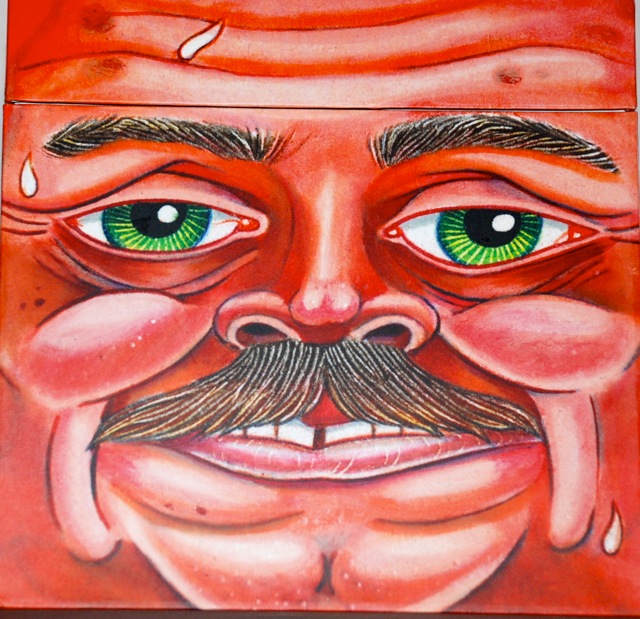
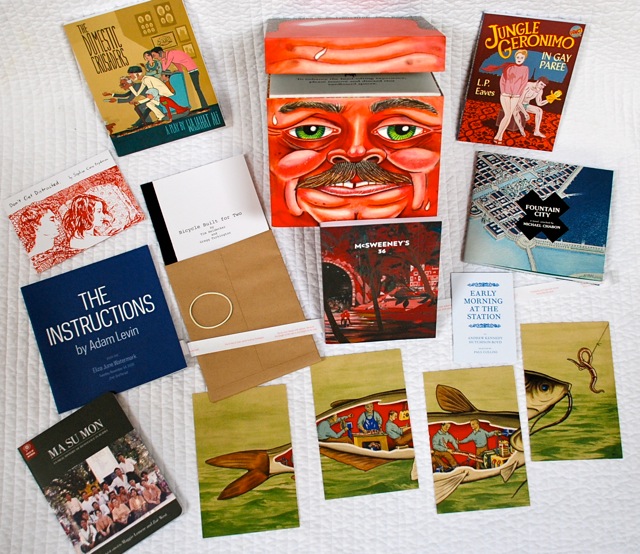
Taking the literary definition of a magazine as a storehouse, Dave Eggers and his team at Timothy McSweeney’s, delivers one of the best stores that can only be build in print. Inside the “head”, aka the store, McSweeney’s offers “a headful of new and unseen work” by Michael Chabon, John Brandon, Jack Pendarvis and Adam Levin among others. As you sift through the head you will find a roll of “fortunes” including the one that informs you that “Oliver Pratt is your real dad. Sorry for the late notice;” A “Catfish Scene” painting in four postcards; A mini “Fancy Times” book-a-zine; a novel in a bag; a mini booklet; and many other good, really good stuff, as you can see in the picture below.

The experience, and yes, it is an experience to open the “head” and take a peek inside. Pulling the ten different “products” from inside “the store,” the reader, turned shopper, gathers a wealth of information that is both entertaining and informative. An experience made for print and print only. And before your head starts spinning, take a look at the products inside the store.

In order for you to see the entire spinning store, I have shot of a mini video showing all sides of McSweeney’s Issue 36.

As for what is under the “head” or at the bottom of the store, well, I am not going to spoil all your fun. You have to buy the magazine to find out. Enjoy the experience! It is worth every penny of the $26 cover price.

h1

The Only “Trunk” You Need to Have and to Give This Holiday Season… The Mr. Magazine™ Interview with David Cicconi, Founder of Trunk magazine

December 20, 2010

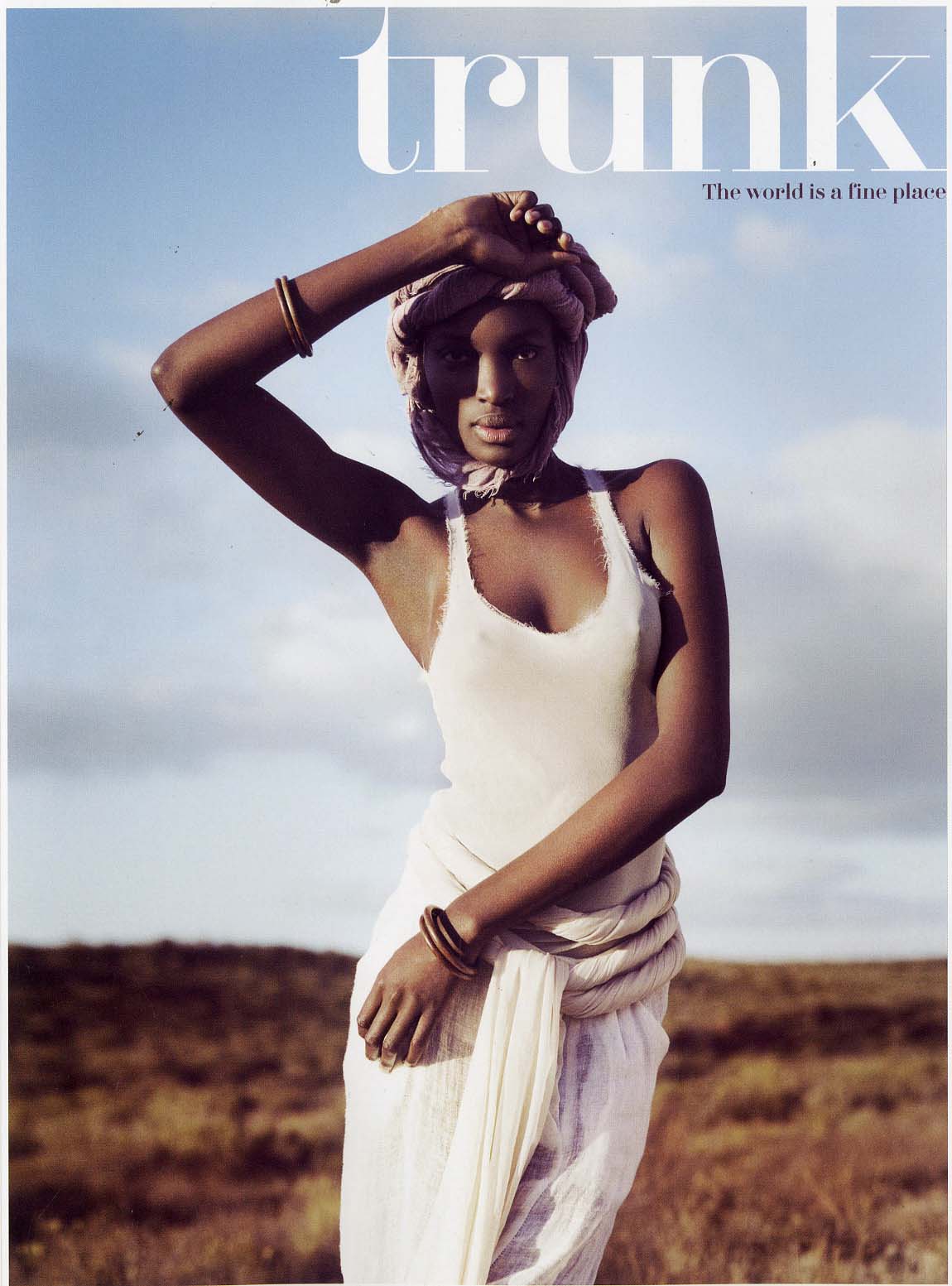
What happens when three creative magazine people put their energy and creativity in one trunk? Trunk magazine is born. The new magazine with the tagline “The World is a Fine Place,” is more than a welcomed addition to the world of magazines and media. It is the best gift that I, or anyone who shares my interest in the magazine, photography or design worlds, will find as a “wowing” ending for the 2010 and a “wowing” beginning for 2011. The best way to end a year and ring in the new year.

The “wowing” team behind Trunk is led by David Cicconi, the former photo director at Travel + Leisure.

“Trunk, in short, does what print was made to do,” Founder and Creative Director David Cicconi told me. “It is pure inspiration, with long reads and stunning images, for a demographic that embraces travel as a lifestyle. It will not compete with the internet: no lists. It will not talk down to its readers with travel tips: no articles through the eyes of locals or ex-pats. Our readers already know how to travel. It is simply a collection, issue after issue, of the most compelling and fascinating stories we could find around the world–nothing more… or less.”

“Trunk advertisers and controlled distribution for the debut issue are a testament to our niche,” Cicconi added. “The magazine was distributed at all Thompson Hotels, at Kartell, Swatch, Flight 001, Temperley of London, select Balazs properties, Emirates Airline lounges, Levis, Project No. 8, and many other similar travel, fashion and design venues. It can also be found (albeit sparingly) in locations in Paris, Milan, Rome, Berlin, London and Copenhagen.”

I had the opportunity to ask David few questions regarding this beautiful and inspiring magazine. What follows is the Mr. Magazine™ Interview with David Cicconi, founder and creative director of Trunk.

Samir Husni: Why Trunk and Why Now?

David Cicconi: Though it may not look like it or read like it, Trunk is a travel magazine. We see it as the only travel title occupying the Monocle / Wallpaper space. Much like these titles, Trunk is for an audience that leads an international lifestyle–people who embrace travel as a way of life rather than a break from life (or who at least have the curiosity and desire to do so). This is what makes Trunk unique–that it approaches travel as lifestyle and not merely a twice a year vacation. Nor are we about “how to travel like a local” or packing tips. Our readers know how to do this. They’re worldly, savvy, stylish and are just looking for inspiration and what to explore next.

Existing travel magazines are for a different audience and don’t offer content or an aesthetic consistent with the sensibility of the Trunk reader. Trunk’s mission is to showcase the most fascinating stories from around the world with as much style, originality and wit as we can muster. It also targets the very media professionals who produce it: writers, photographers, designers, etc. If we can please them with the results, then the general public is going to love what Trunk has to offer. We want to convey to our readers that same privilege and access to a culture/place/topic that our contributors experience on an assignment. As such, in the pages of Trunk it is the norm to find a 16-pg fashion spread with notes/backstory from the team behind it; or editorially, more beautiful and daring reads, including personal essays and fiction. We believe these types of stories paint a compelling picture of their setting and inspire readers to make a trip just as much or more so than a traditional travel narrative.

So “why Trunk?” It is the only magazine in its genre that does what it does and caters to this audience. And “why now?” This is a growing and influential niche in an ever-globalizing world. We’re doing it now because it’s a good idea and no one else has tapped this demographic by addressing (in an appropriate way) the very key to their mobile lifestyle: travel.

SH: You’ve launched both in print and online? What are you doing to ensure a print future for Trunk in a digital age?

DC: The short answer is that we have a more rudimentary site up right now. Over the next several issues, a full-blown website and iPad version / mobile app will become key components of the brand. But everything that I mentioned above–16-page photo essays, long reads, etc–is for the print medium. We’re surprised that travel magazines are moving more towards service and facts and lists, when that is exactly what the internet will always do much better and faster than any other medium.

Trunk, the print publication, will endure because, one, it does what print was meant to do and two it is the face of a larger lifestyle brand that will extend into TV, retail, branding, digital media, and beyond. The magazine is, in essence, the ultimate marketing tool and the principal aggregator of all content that will power the rest of the brand. It provides the inspiration, while the brand’s other extensions provide its audience with the facility and access to realize and attain whatever it is they read in the pages of Trunk. As such, the magazine is an indispensable element of the brand. Without it, how would we draw people in, motivate them to utilize Trunk’s other products and what would these products be offering without the original print content?

SH: The folks behind Trunk seem to have come from some very established magazines. Why is the reason for departure and what are they betting on this new launch?

DC: Our respective departures from our respective employers happened well before the launch of Trunk (some five+ years ago for all of us) and were for personal reasons to pursue a more freelance career. I moved to Europe (for a couple of years) to work as a freelance editorial photographer. Trunk’s editor-in-chief did the same as a freelance writer. And our design director moved to Italy with her family where she set up shop designing for a string of international titles. It was, however, this common experience of actually living abroad with an entirely mobile way of life that sparked Trunk’s evolution from its original incarnation of just an experiential travel magazine into the more refined concept of travel as lifestyle.

We are betting with Trunk that we can make a travel magazine that is more interesting to read, stylish to look at and that covers anything of interest from around the world without playing it safe and without tying our own hands creatively. We’d like to produce something more sophisticated and gutsy for an audience that would appreciate it–an audience that is much larger and more influential now than it ever was–and make the model work, without ever compromising the magazine’s mission. We’re also taking this uncompromising style, content, philosophy and breaking it out into a larger lifestyle brand that provides content and services for our target audience and beyond, with the same integrity and quality that people found in the print magazine.

SH: Your tagline, The World is a Fine Place shows rather a positive believe in our world rather than the doom and gloom attitude many are taking… Why? As founder, what are you trying to accomplish with this magazine?

DC: One of the key goals of Trunk is to demystify the world. We feel that a particular culture or destination does not need to be exoticized in order to make it interesting or worth visiting. In fact sometimes it is what’s familiar about a place that makes it more intriguing–to find out that people over there do things very similarly to how we do them over here is fascinating to Trunk. We obviously embrace what is singular about any given culture. But in our opinion, it’s that combination of the unique and universal–i.e. the common thread that connects us, coupled with indigenous nuance–that truly defines a place.

Trunk’s editor-in-chief and I spent two months in South Africa producing this debut issue. During that time, we were granted access to its budding design scene. Though we were in a country far from home, a place with its own history and issues, it was that dichotomy of a common ground amidst all the differences that made such an impact on us.

South Africa is a place with a dark past and a challenging present and future, to say the least. Until recently, there was not much positive coverage of the country, and American’s had (and still have) an incomplete view of what South Africa is about. One of Trunk’s goals is to break through the stereotypes and clichés–to not run away from the complexity of a foreign culture, but rather to embrace it, even extol it to the point that it is no longer so mysterious or alien. In fact, our alternate tagline for the magazine is, “There are no foreign lands.”

Destinations, the world over, are pigeon holed every day by the media. Africa is the perfect example of an entire continent with poor branding. This is something I read in Monocle a couple of years ago. There are obviously serious issues in many countries across Africa that need to be reported and addressed. But there are positives as well, and they also need to be exposed and explored.

Another perfect example of this is Kashmir. I was there over a year ago. And yes, there is still unrest. But it is a region struggling to get back on its feet–a place with hospitable people, beautiful scenery, and young minds passionate about resuscitating their homeland with innovation and determination. But western media is obsessed only with the doom and gloom of Kashmir. The people I met with did not want to contribute to more articles about the conflict. They were very hungry to convey to the world a different, more positive, and ultimately much more unique side to Kashmir. This is very similar to what Trunk’s photographer, Frédéric Lagrange, experienced when he produced his photo essay on the region. It is one of many things we hope to accomplish with Trunk, issue after issue.

SH: Thank you and best of luck on Trunk.

h1

An Industry Gone Insane: When One Issue Costs More Than a Year’s Subscrioption

December 17, 2010

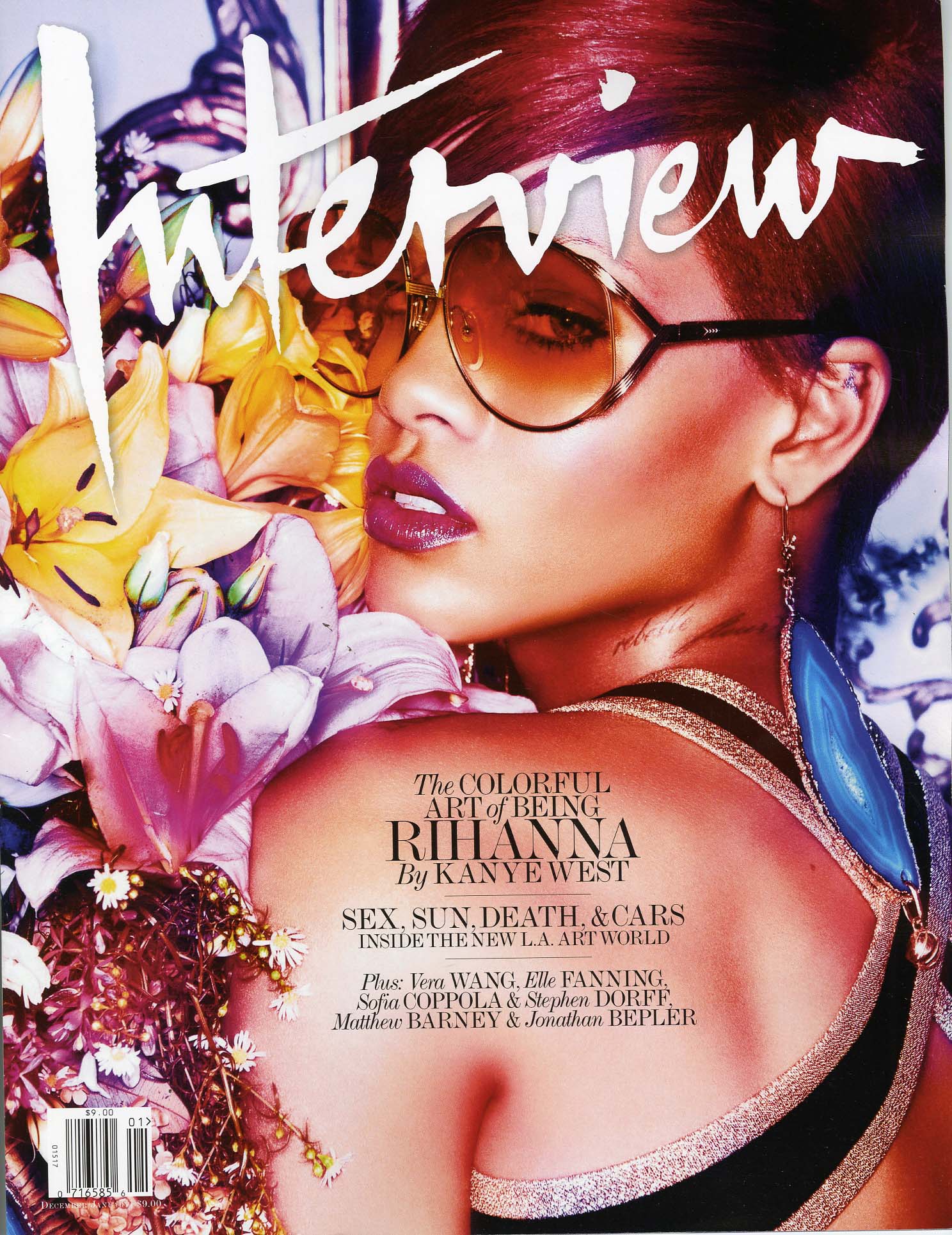
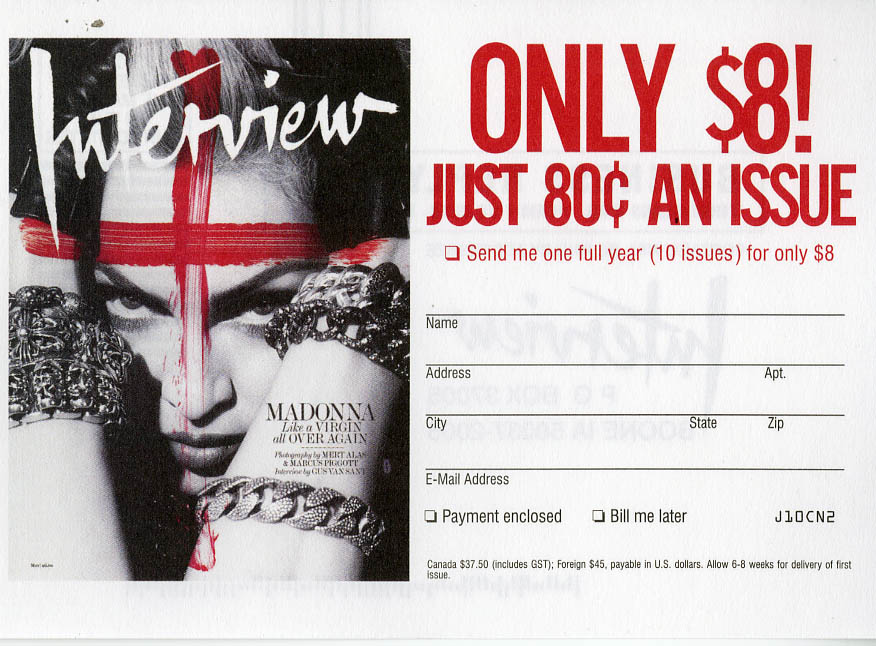
Every now and then, something on the newsstands really makes me shiver. I was doing my morning rounds on the newsstands and picked up a copy of the new issue of Interview magazine. The cover price: $9.00. Not a big surprise. Lately,I have been paying $9.00, $10.00 and $11.00 for single copy issues. However, the minute I opened the magazine the subscription card (the dandruff of our industry, as many like to call the sub. cards) fell to the ground. When I picked it up, it screamed at me, “You stupid Samir, you are going to spend $9.00 for one issue, when you could have received an entire year, 10 issues, for $8.00.”

A year for a price less than a single issue? Is this insanity or what? Next time when you read that the single copy sales are down, please do not blame the distributors or retailers.

Take a look our magazine industry practices and then judge for yourself. By the way, I wish I can say that this is the first time I write about Interview magazine and this practice, but it is not. I have written about it before and will continue to do so until we stop this insane practice of raising the cover price and reducing the subscription price so readers can save more that 90% of the cover price. It is insanity that needs to stop. We have to value the experiences we create, if our readers, users, listeners, viewers, all those so-called customers are to value those experiences. The time has come for our industry to change its old practices. This is NOT the 20th Century, and Interview magazine is NOT alone using this method of pricing for single copy and subscriptions!

h1

TIME’s Rick Stengel to Mr. Magazine™: That’s Why the TEA Party is NOT the Person of the Year. We Are Creators in Print and Curators Online and Other Words of Wisdom from TIME’s Managing Editor

December 15, 2010

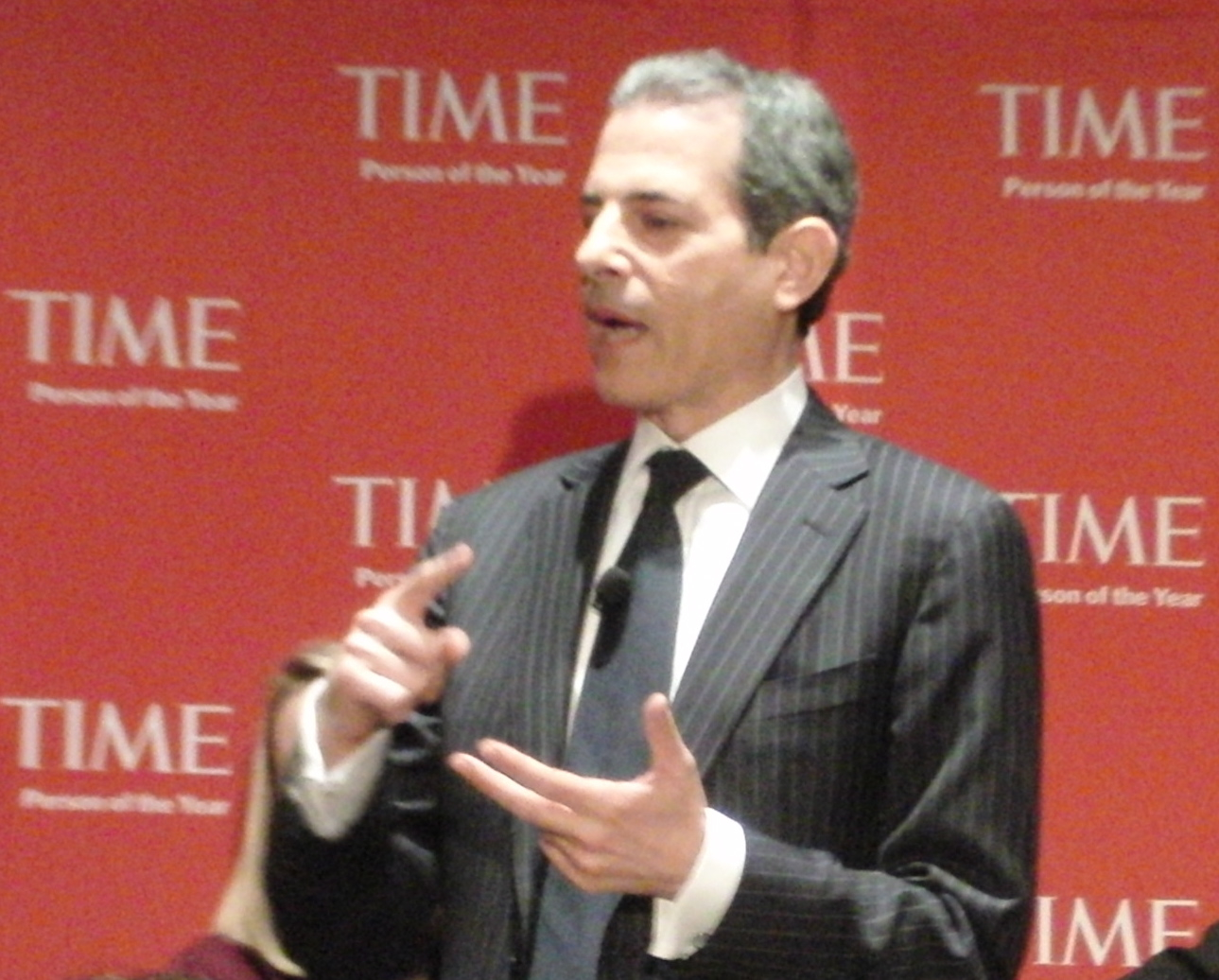
“In print we are creators and online we are curators,” that is the mantra Rick Stengel, managing editor of TIME believes in, and practices every day with his iconic brand TIME. In an exclusive interview with Mr. Magazine™ Mr. Stengel talks about his choice of Mark Zuckerberg as the Person of the Year; the reasons why the TEA Party was not chosen as the POY; the future of print and online; and the status of TIME as an iconic brand.

On whether TIME Person of the Year choices are getting softer and gentler, less controversial, after Sept. 11, 2001:

Last year we had Ben Bernanke, which a lot of people criticized, well they might have disagreed ideologically but I don’t think you could have a more serious newsy choice than the chairman of the Federal Reserve. Some people criticized it because it was dull. Obama was the year before that. Then as you know I did Vladimir Putin, which in some ways is probably the most controversial choice since the Ayatullah because he’s obviously not a good guy, he’s as authoritarian figure. So the answer is NO.
In Mark Zuckerberg’s particular case, what was clear is that Mark Zuckerberg in terms of the effect and the influence he is having across the globe, about to have six hundred million users on Facebook, is really historic in it’s reach and breath and I think something quite amazing is going on. I though a lot about Julian Assange, and as you know I interviewed him a couple of weeks ago, but in terms of the long-term in terms of greater effects, in terms of something that touches people’s lives everyday, Mark Zuckerberg seemed to me the clear choice.


On why the TEA Party was not selected as the POY:

There are a few reasons. First of all, our choice is an international choice. We have an international audience where we have readers all over the planet and so I’m always looking for something that is global in its influence. I’m not saying the TEA Party didn’t have some global influence, it really was an extraordinary year for the TEA Party. I’m biased in favor of choosing a person for the Person of the Year. We had gotten away from that. You know, there were a number of years in a row where it was a group, where it was Mr. and Mrs. Gates, and Bono, or the Whistle-Blowers, or the American soldier. I think people like to have a person to be the Person of the Year. Part of the problem for choosing the TEA Party was that it was really impossible to choose one person who is representative of the TEA Party. I think had we done that, no matter whom that person was, it wouldn’t necessarily have felt representative of what the TEA Party accomplished this past year. Another thing about the Tea Party, of course, is by design it doesn’t have a singular leader, it doesn’t have a centralized leadership and that makes it harder to choose a single person.

On the iconic status of TIME and its place in the media world today:

In this crazy media environment, great brands, iconic brands like TIME actually will thrive, provided you’re creating and continuing to create great content. One of the things we’ve done in the last few years is actually made the magazine newsier, more serious, more thoughtful about everything that is going on. That has made us even stronger in the marketplace and stronger in people’s loyalties. We’ve been growing in really every segment of our business. I also think that given this fractured, itemized media environment, people are looking for brands that they can trust and our trust meter continues to go up.

On being a creator and a curator of information:

We’re on every different platform there is and different platforms need different strategies and you want to do what is appropriate for each platform. We do more curation online than we do in print. To me the print product is also the place for original reporting and long-form journalism. Curation happens online, it happens on our iPad app. were we, for example, curate the best pictures of the week. I think you have to do what is appropriate to each medium and I also think, again, that one of the reasons people feel faithful to TIME is that we do a lot of original content and we do it with historical perspective and our actual expertise.

On the future, destruction and creativity

Well, even during the bad period, I always thought it’s an incredibly rich period for media. There are certain forms of media that it wasn’t good for. But, in terms of the amount of content that is being consumed, people are reading and watching and seeing as much news more than ever in the history of the media as they are now. I actually think it’s a great time in media. It’s just a difficult time for certain parts of old media. I’m optimistic and feel like it’s really a time of great creativity, you know destruction and creativity go together, but I see us moving ahead even more in a creative and fruitful direction.

h1

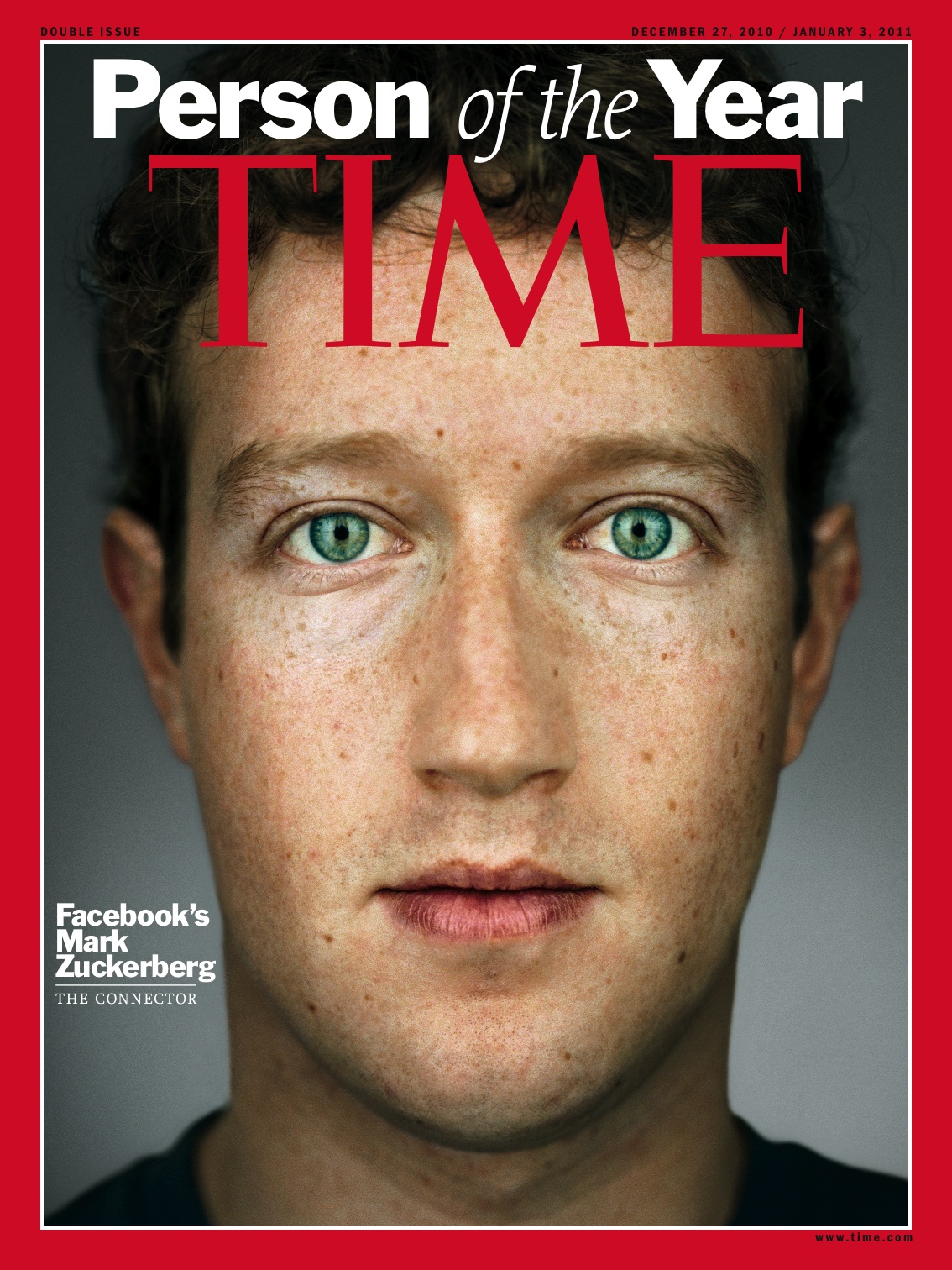
TIME names Facebook founder and CEO Mark Zuckerberg the 2010 TIME Person of the Year.

December 15, 2010


TIME named Facebook founder and CEO Mark Zuckerberg the 2010 TIME Person of the Year. Check it out here.
Look for my interview with TIME’s managing editor Rick Stengel later on my blog regarding TIME’s choice of Zuckerberg.

h1

What makes THE Most Notable Launch of the Last 25 Years Tick, Click and Stick: The Mr. Magazine™ Interview with David Zinczenko

December 14, 2010

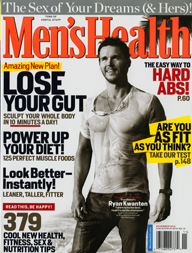
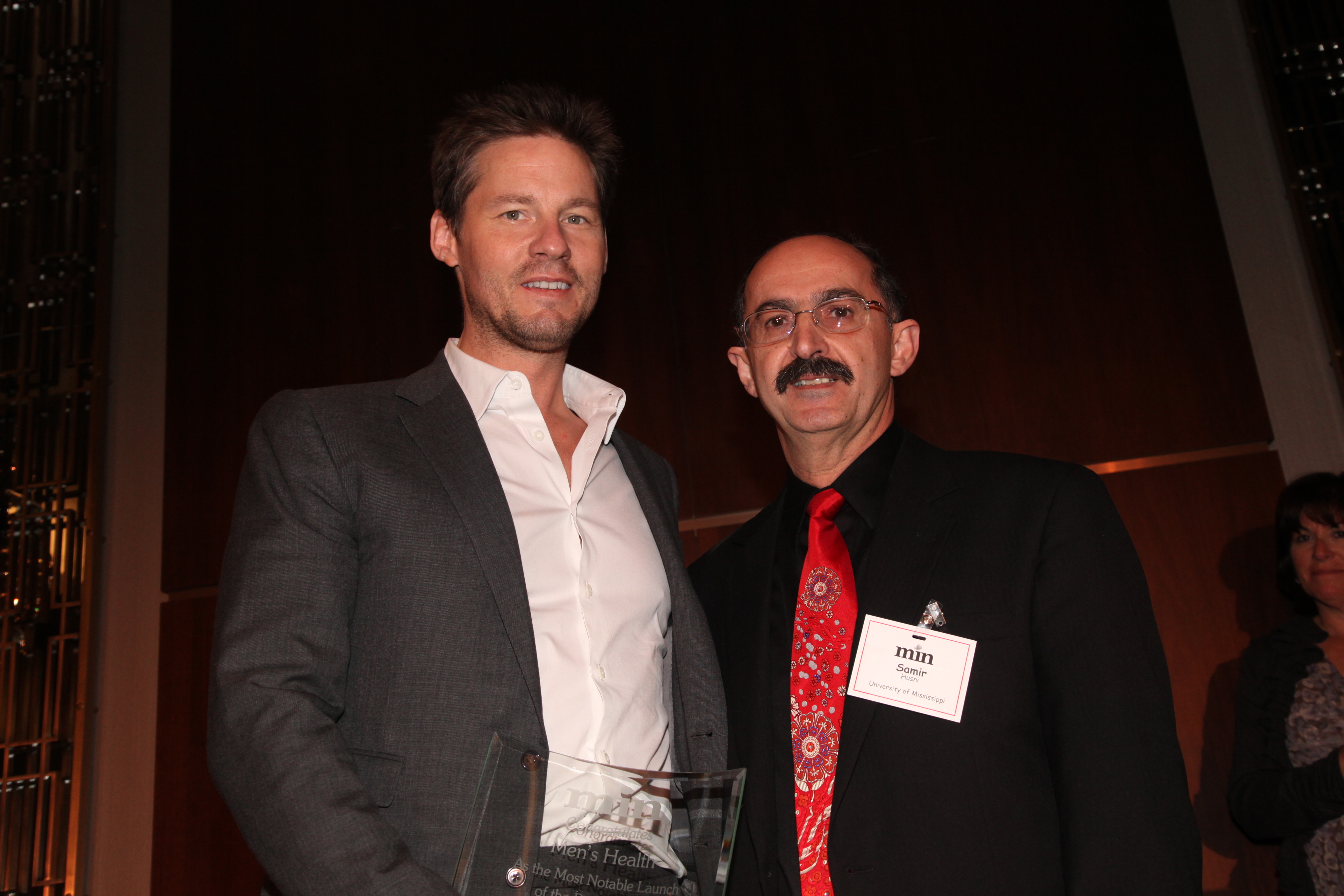
In the last 25 years more than 18,000 new magazines were introduced to the marketplace in the United States alone. Last week at min’s Most Intriguing Event in New York City, I revealed the name of The Most Notable Magazine Launch of the Last 25 Years. That prestigious honor went to Men’s Health magazine. Accepting the award was David Zinczenko, the editor in chief who, together with the entire Men’s Health team, made and continue to makes the magazine the power player it is today. Rooted in the United States with branches all over the world, Men’s Health is now more than a magazine. It has become a world-wide experience for men all over the world.

I had the opportunity to ask Mr. Zinczenko seven questions regarding what makes Men’s Health tick, click and stick with its readers, users, viewers, listeners and customers. His answers, each in two takes (thanks for his generosity with his time), shed more than a light on what can be considered a formula for success that others can try to imitate to create a successful publication for the 21st century and beyond.

Mr. Zinczenko secrets of success start and end with the readers. He values reader service more than anything else. His definition, “reader service is: compulsively actionable tips that can change lives. It has to be practical, it has to be effective, it has to be backed by solid science, and it has to be delivered to our guys in a way that doesn’t talk down to them, doesn’t nag them, doesn’t bore them.”

What follows is the complete, and lightly edited, Mr. Magazine™ Interview in which you will find “tons of useful ideas” from the man at the helm of the magazine that provides “tons of useful stuff.”

Samir Husni: Since the launch of Men’s Health many other imitators have come and gone. What is the secret of longevity for Men’s Health?

David Zinczenko: (Take One) We put an enormous amount of time and effort into reader research. Every single issue we do is run through a panel of reader/editors, who give us feedback on what’s working for them. And we do a staff post-mortem to review the findings. And a lot of our long-term success is based on institutional knowledge. The average editor on staff has been here about a decade. It takes several years to understand the voice and to get to know the important people in the fields of health, fitness and nutrition.

(Take Two) Omega 3 Fatty Acids. But seriously, a magazine lives and dies by the hardiness of the underlying idea that drives it. For us, the bedrock is helping men seize control of all of the most troublesome aspects of their lives. Their relationships. Their jobs, Their waistlines. Their health. Those needs are universal, and the responses to them change as the years go by, as well. We keep track of the primary mission, and constantly evolve the approaches to responding to it.

SH: What makes MH tick? What is the pulse of MH? The heart beat that keeps it going….

DZ: (Take One) Men’s Health is a place for men to go where they’re going to be told that they’re ok—that other men have the same concerns that they have. It was a revolutionary idea back in 1988 and it remains so to this day.

(Take Two) The beating heart of the magazine is reader service. Every editor who comes to work here has to be reeducated about what real reader service is: compulsively actionable tips that can change lives. It has to be practical, it has to be effective, it has to be backed by solid science, and it has to be delivered to our guys in a way that doesn’t talk down to them, doesn’t nag them, doesn’t bore them. We are the wise older brother our readers never had…even for guys who are older than we are.

SH: What makes MH click? What is the sound, the voice of the magazine?

DZ: (Take One) It’s a sensibility: the idea that we have something important to say, and we are going to say it in a way that’s going to entertain you, and entertain ourselves at the same time. We will not waste your time with blather, but neither will we bore you with self-importance.

(Take Two) The magazine’s voice is that of a guy who really knows what he’s talking about, but who is self-aware enough not to be a blowhard about it. That’s why we can get away with giving our guys advice without putting them off, and also maintain a great sense of humor when we do it. The fact is, we editors have had nearly all of the same problems we’re helping our readers to solve, so how could we possibly talk down to them?

SH: What makes MH stick? What are the values of the magazines? What keeps the conversation engaging with its readers?

DZ: (Take One) Positive, passionate, intensely researched, life-altering service. If it can’t change the lives of a majority of its readers, in big ways or in small ones, then it probably isn’t a Men’s Health story

(Take Two) The needs and yearnings of men are universal, and they’ve been around for a very long time. We’re able to identify those needs because we identify with them personally. We don’t have personal problems; we have story ideas, as an editor here once said. That’s our bond with our readers, and it’s a strong one.

SH: If you are to humanize MH, who will it be? The person, the identity, the voice, values and vision?

DZ: (Take One) It’s a bit of a cliché, but MH is that older brother, that wised-up guy who’s looking out for you. A lot of other men’s magazines seems to say, “we’re cooler than you, but if you give us your lunch money, we’ll let you sit at our table.” Men’s Health says, “we’re just like you. We just have learned a little bit more on our way here.”

(Take Two) The subline for the magazine started out as “tons of useful stuff for regular guys,” and that sticks with us still today. There’s a “regular guy” inside all of us; whether it’s our March cover guy Matt Damon or a subscriber in Iowa City. We’re all fighting to live a great life, be strong, be there for our loved ones, and the magazine supports that quest for “regular” guys around the globe.

SH: Where do you see MH 25 years from now?

DZ: (Take One) I think it’s easier to predict where men’s health will be than where the rest of the publishing industry will be. We’ve already made the leap out of the magazine category and into a larger space as a media brand and a format-agnostic information provider. Unless someone invents something more important to the individual than their own health and well-being, and that of their loved ones, I have to assume we’ll remain the category leader, as long as we stay true to our values and our voice.

(Take Two) I’ve heard so many of my peers in the magazine industry bemoan the death of print and worry about their futures. The fact is, we’re living in an age of unprecedented expansion in the tools we have to do our jobs, and the territory we can expand into. In fact, too many media people are like citizens of St. Louis in the early 1800s, looking west, and complaining about the Indians out there. What they should be doing is looking for California.

SH: What is the future of MH? Its ink on paper future and its digital future!

DZ: (Take One) We have to remain poised to expand into any media that we haven’t yet conquered. That means a greater TV presence, perhaps, as well-being ready to move on whatever new technologies arise. we’ve conquered apps for both the iPhone and iPad; what’s next?

(Take Two) About five years ago, we ceased to think about ink-on-paper vs. digital vs. whatever else is coming down the pike. Instead, it’s print and digital and smartphones and TV and radio and books and any other thing the communications geniuses dream up. Media will change and evolve in exciting ways, and our message will work on all of them. Our guys need help, and want to lead better lives. We’ll find them wherever they are, and lead them to the promised land. And by doing that, we’ll reach the promised land.

SH: Thank you.

The picture above is from the min event with David Zinczenko accepting The Most Notable Launch of the Last 25 Years. Photo by Doug Goodman Photography http://www.douggoodman.com

h1

In the New Magazines’ Launch-World, November 2010 is NOT a Cold Month

December 12, 2010

Unlike the cold cold weather of the winter, the November 2010 in the world of magazine launches has been a hot one. Indeed the number of launches has almost doubled in comparison is that of 2009. A total of 71 new launches appeared on the nation’s stands compared with 44 in November of last year. The sudden increase in the number of launches is yet another sign of the vitality of the magazine business that has been seeing quite a bit of good news lately on both advertising and circulation fronts.

From the 71 new titles 18 were published with an intended frequency of four times or more, double than the eight that were started with the same frequency in 2009.

November launches follow a very strong October. In October the total number of new magazines launched reached 95 with 20 magazines published with an intended frequency of four times or more. The above featured four magazines are nothing but a little representation of the quality of titles arriving at the marketplace lately.

All in all the total number of new magazines this year, so far, is almost the same as the last year. My expectations is this year’s total launches is going to exceed the 700 mark as a total number and the 200 mark as those published four times or more. Stay tuned!

h1

The Doctor Is In(teractive)… Bonnier’s Tom James on the Future, Magazines, Tablets and the Good Old Desktop Computer. The Mr. Magazine™ Interview

November 21, 2010

With the growing popularity of electronic tablets like the iPad, it seems that every publisher is doubling down on the future of publishing based on the “apps on a tablet” hand of cards. Publishers are rushing to get their own mag-apps on the market (if they don’t already have one) so as not to get left behind in this latest “as in today’s” digital revolution (no time for even calling it a trend, since tomorrow may bring another revolution). Of course, it’s all too easy to forget that consumers have been using digital content for years from their own desktop or laptop computers, not to mention those who haven’t yet jumped on the e-reader bandwagon.

Bonnier’s Skiing
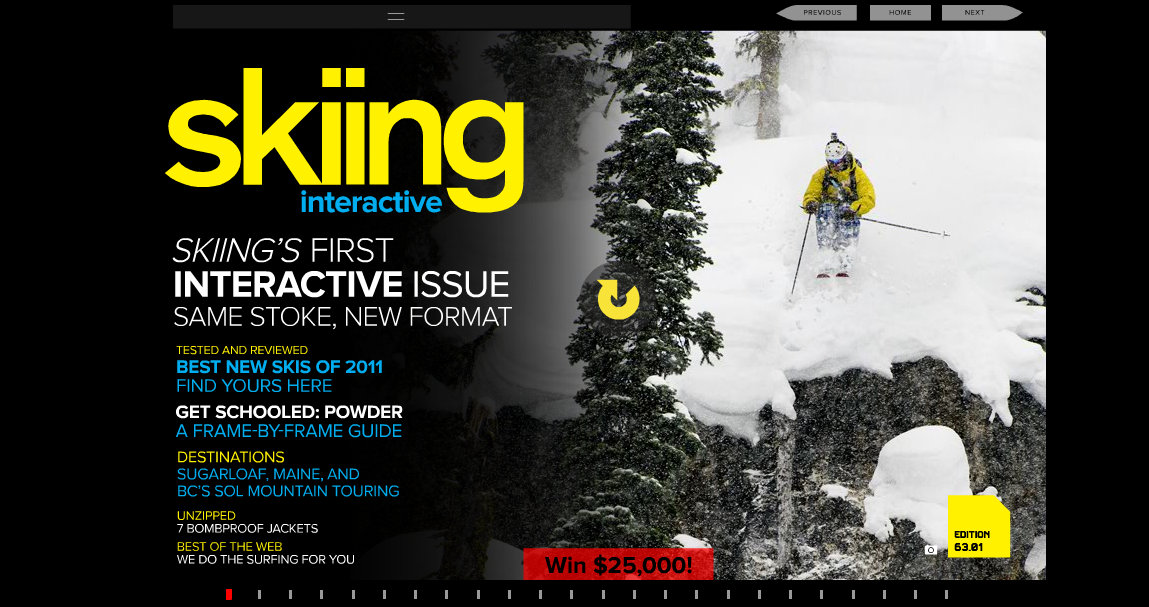
debuted Skiing Interactive this month, a fully interactive, Flash-based web publication which provides viewers with a unique and personalized reading experience. Using colorful infographics, geo-targeted mapping, videos and engaging articles readers can personalize to their wants and needs, skiing enthusiasts now have a brand-new way of hitting the slopes from the comfort of their own computer.

Creating the right content for the right medium is the philosophy of Tom James, who has been with Bonnier Corporation (formerly World Publications) since 1986 and is now editorial director for Bonnier’s Enthusiast Group. Last week I had the chance to converse with Mr. James, via the old reliable land line phone, regarding how magazines can move away from making digital replicas of their print titles and move toward creating compelling digital experiences.

To say Tom James is optimistic about the future of content delivery will be an understatement. He sees the publishing cup 90% full. Mr. James offers the industry a simple, yet very effective prescription to its problems. “Break out of the issue concept and the print paradigm and then everything becomes in place,” he says. As I have said time and time again, as long as we are thinking replicas (no matter how many plus plus plus you are willing to add) we are not innovating. We have to break the mold and think innovation rather than renovation.

The idea of engaging Mr. James in a conversation about the future of our industry germinated last summer when I met him in Denver, Colorado at the Association for Journalism and Mass Communications’ summer convention. He showed the magazine division of the association a preview of what Bonnier introduced this month: Skiing Interactive, an interactive publication that is not a replica for anything they have in print. After the launch of Skiing Interactive I felt it was necessary to check back with the interactivity doctor at Bonnier to try to understand, first hand, what are his innovation plans and where the future of publishing is taking us.

What follows, is the full, lightly edited, Mr. Magazine™ Interview with Tom James:

Samir Husni: What is Skiing Interactive?

Tom James: It’s our first launch into what I think is a new style of delivering content, really. The fact that we did it with skiing, it’s one of our titles and one of many that we’re considering to do it with, the style of delivering content which is more appropriate for the digital desktop format than what has previously been done for digital desktop magazines.

It’s really about all the digital magazines in the last two years, certainly the last year have been focused on the iPad and the apps and the way their app works. I’m more focused about the way the content is consumed by the consumer, the way the ads relate to the reader and the frequency. It’s a totally different strategy than, “Oh, can we make a cool app?” We’ve shown we can make a cool iPad app. I think our Mag Plus app is one of the most innovative iPad apps out there, but I still don’t think that’s the only thing that can be done with digital magazines.

SH: If we consider ourselves the most creative people in this industry, why can’t we think outside the focus of developing replicas of printed magazines? We have a new medium out there. Why can’t we just create a message for that specific medium, rather than creating a replica?

TJ: That’s my philosophy exactly. But you can’t deny everyone (who is) swept up in the romanticism of having something for the iPad. It was kind of heralded as a savior for the magazine industry and I just don’t think the magazine industry is that broke. We still know how to make great content that connects with the user. We just have to make the right content for the right medium. That’s not that tricky.

SH: You’re now the black sheep who’s doing that. You’re not following the masses. Steve Jobs has not lit a candle for you.

TJ: I consume a lot of magazines on the iPad, probably just like you do. It’s easy to carry them around that way. But, you can’t deny there’s a billion desktops and laptops in circulation being used right now as compared to under 10 million tablets, and we as publishers can get our content onto that medium in a better way. We can’t abandon that. We can’t just let our website be the way that we reach people through the desktop and laptop. I want to give them slices of content in a finite, digestible form that is pushed to them rather than a website (where) the user actively searches for what he’s looking for.

SH: How are you going to be able to take what I call our “welfare information society” we’ve created in the last 10 years, and find a way to charge and make money?

TJ: First off, I believe that we will make money from ads because we’re putting a huge focus on making the ads just as engaging and entertaining and as on target as the editorial content. A lot of our focus has been making our ads exceptional.

As a media person, I’m kind of embarrassed that the only media form where the ads are as important as the content is the Super Bowl. That’s one little thing that the ads are important on and I think we can make the ads just as important in our digital push of content. So, I think that by making better ads, we have a better business model, but I really don’t have the answer to that subscription problem. There’s a lot of really smart people working on that and it’s kind of a conundrum. People don’t seem to want to pay for digital products. I think over time they will, but I don’t know when or how we’re going to reach that tipping point.

SH: Tell me how you will respond to those who will say, “Now you are mixing church and state.” Is it our job as media folks to create better ads?

TJ: It’s certainly not mixing church and state. We are very definitive and emphatic about which screens are advertising and which screens are editorial. What we’ve done is we’ve created a new engaging form of media that tells stories in interactive, lean-forward ways. We think our advertisers should do the same. Now, because we created this form of media, we’re helping our advertisers learn how to create ads for that form of media.

We are sort of seeding the ideas at first. Like, “Hey, you can do a ‘Which ski suits me best’, a personalized interactive ad, versus just a pitch of a message.“ We’re just helping them learn that this is possible now. If you invented a billboard and no one had ever seen a billboard, you’d also have to create the first billboard ad, wouldn’t you? No one would know that format of advertising. That’s kind of the era we’re in right now. I think that advertisers will quickly catch on, and this is by no means merging “church and state.”

SH: When I buy a magazine, I’m buying it for the ads and the articles. I don’t like separating the two.

TJ: You’ve been an editor, and as an editor, I’m always embarrassed when the advertisements aren’t as on target or as good as my content. I feel like it’s wasting or interrupting my reader’s time. The time that the reader is in my world, so to speak, I feel responsible and I don’t want to insult him or her with crummy ads, just like I don’t want to insult him or her with crummy editorial.

SH: As a visionary in this field, where do you think we went wrong in this business? Were we swept away because the newspaper industry is hurting and they took all of print together? Or were we so in love and romanced with the iPad?

TJ: I don’t know if we went wrong yet. It was so good for a while that we considering this more challenging era problematic. I think there’s areas we’re going wrong. I think as content producers we have to get out of the mindset that content should be delivered to consumers when we want to deliver it. I think we should deliver it more or less when they want to get it, which might be every day, for all I know. It might be every half-hour. I think that’s an area where we’re going wrong, but I think being stuck in a print-centric mindset where it’s a monthly frequency and the editorial’s great and the ads suck, I think that’s an area we’re going wrong.

I just think it’s relative. You know how good the magazine industry was for a long, long time and I think that now we’re challenged a little more; there’s people who are doomsayers about it, but it’s just a little more challenging now.

SH: You’re the doctor. What’s the prescription? How do we face this challenge now?

TJ: I think it’s pretty simple, which is remarkable to say. You’ve got these different mediums. You have to deliver the right type of content for each medium. For example, on television, if we’re going to have apps that reside on your television, we should stream video to those apps. If we’re going to do the things we’re doing on desktops and laptops, I believe interactive infographics are the best. I think in print: good long reads, long-form journalism might be great, and great photos. I think from a content perspective, making sure you don’t force the wrong kind of content onto certain mediums.

From an advertising prospective, I think it’s working with your advertisers to do the same. When you look at the ads that are in the magazine apps in the iPad, they don’t touch the potential that they could have. They’re still pitches. I think once we get our content right for the medium and then help our marketers get their ads right for the mediums, we’ll be in a fine place. Does that work as a prescription?

SH: It sounds like a good start. Like you said, it’s such a simple prescription. Why aren’t we following it?

TJ: Because we do print so well. It’s hard to get out of that mindset. Editors are in love with the great read and their contacts are really great at creating great reads, all our contributors. So, the people we know create print media. So, we try to force those people’s skills and our skills into the other mediums which I don’t think works.

Other than maybe the New York Times, who has a great infographic department, we’re still very word-centric and that’s not the right form of content for the different mediums. We’re probably going to see some kind of Renaissance in the types of people that we’re hiring. People who know how to work with data better, who are more interested in information management than words and words telling a great story. That’s what I believe. I believe it’s a form of our context and our knowledge base.

SH: If someone said, “OK, Tom. Here is your crystal ball. What’s the future of print?”

TJ: Are you talking next three years, next 10 years, or the next 50 years? To me, print has a great future for our business until it become psychologically unsustainable. I don’t know if the world is always going to want to be cutting down trees and driving boxes of magazines around the country or world. But other than that, people love having a print product on their coffee table and I think that’s good news for us.

SH: What’s the future of the Internet? Is the Internet dead?

TJ: The future of the Internet? If I could answer that question, I would be in the penthouse of this hotel (where he was staying when we spoke via the phone). I don’t know. Delivering great content that’s easily accessible, whenever the user wants it, and helping our marketers reach those users with equally great content.

SH: It seems to me you’re betting more on the desktops and on the laptops than you’re betting on the tablets, for now.

TJ: For now, I go with the numbers. You know what, there’s not an iPad owner who doesn’t have a desktop and laptop, or very few. I love the tablets; I think they’re going to be a great supplement to how we consume media, but I believe this, and I hate to say this, but I believe people consume a lot of media at work while they’re screwing around between spreadsheets or whatever and that doesn’t just have to be Facebook. It can be our magazine content or our company’s content and it’ll be on the computer they’re using at work, which is probably a desktop or laptop. Desktops and laptops, those are dirty words. Those are great ways to consume content.

SH: You’re one of the few folks that I’ve spoken to who is really talking about the need to educate the advertiser. If we are going to make money, you can’t just tell them to do it by themselves, and you’re getting out of that replica world that everybody is talking about.

TJ: Skiing Interactive, for one, doesn’t relate to the Skiing print product in any way other than to DNA, perhaps, but not in the content. The content that we do in print is not as dynamic as the content we do in Skiing Interactive for the desktop and laptop. I’m really interested in helping and bringing the advertisers along with us. I don’t know if they are aware of everything the magazine industry is trying to do, and if we create something great, we have to help them create something great along aside it.

SH: One of the reasons I created the Magazine Innovation Center is to help amplify the future of print, because I feel like we use print so much to amplify the future of technology and digital and the web. Do you think it’s a lost cause? Can we use digital to amplify the future of the printed Skiing Magazine? Or is that necessary?

TJ: I think we can really help keep the brand in front of users with the digital product and then I do believe, especially in enthusiast products, whether you’re a cook or a snow skier, you like that product lying around your coffee table, so that when someone comes to visit you, it says, “Look, I’m into food” or “I’m into skiing.” So, I think that by keeping the brand important, which is in front of people everyday in their digital lifestyles and their digital habits that will create a continuing existence for a great print product.

Now, I’ve read on your site, “Is the future of magazines the book-a-zines?” and that might be. Maybe as we increase frequency digitally, we will decrease frequency and quality on the print product. The important thing is the brand is still going to be strong.

SH: Some companies are starting to think about the web and its interactivity as a good source of subscription models and direct marketing. Do you see that as a legitimate part of the deal?

TJ: I think that ultimately subscriptions might come as a package where you get a few print products, you get access to enhanced versions of the website and you get this pushed interactive product delivered to you on a regular basis. And getting back to one of your original questions, that might be how you monetize the subscription side of it, by packaging it into a multimedia, cross-platform situation where you just get everything that the brand offers for a certain price. I hope and want there to be print in that mix. But I know that there is going to be digital in that mix.

SH: What about the reader? The more mass and general the magazine is, the less specific the knowledge about the readers. How important is it for our future to go back to the old premise of knowing your audience?

TJ: That’s probably never going to change; as far as the primary importance and what the Internet era has created, more fractionalized and specific audiences. Then it’s even more important to know your audience. If I’m a skier in Colorado, I might be different than a skier in New Hampshire, and we probably are going to need to address those specific subsets. For those big generalized magazines, I don’t know how they’re going to do it. If People magazine wants to cover everything from music celebrities to soap opera celebrities, I’m not sure how they’ll do that. I like to deal with enthusiasts and people who are very passionate about specific things, and I think our company has always addressed, as our slogan says, “Connecting people with their passions.” General interest stuff, I don’t really know.

SH: What are some of the steps to fill the prescription you mentioned earlier?

TJ: I think it’s the same stuff we’ve talked about before; making sure that you don’t force one medium’s content inappropriately onto another medium, making sure that you pay attention to helping your marketers create equally engaging content across the mediums you are entering in. I think if your product is on target with the audience, appropriate for the medium, advertising is equally that way, and then your frequency is such that it’s available when the user more or less wants it, I think those would be the steps. The No. 1 step: break out of the issue concept and the print paradigm and then everything becomes in place, so to speak.

SH: What’s your next big project?

TJ: I’m just working on helping our company forge its way into the new media landscape. I wish I were in total control of my destiny. I want to work with all the groups that are working with, making media work for the future. I know we make great content; we just have to reach the people with it and in the correct way.

SH: Do you see the cup half full, half empty, three-quarters full?

TJ: I think the cup is 90 percent full. I think we learned a lot about efficiency in this era and we have an unbelievable amount of opportunities, and that’s a pretty good formula for being profitable.

SH: That’s great. You are the first person ever who goes above the 50 percent mark. I love it.

TJ: That feels pretty good. Why would anyone be in this industry if we thought it didn’t have a good future? It’s like people living in Detroit. They say, “Look, Detroit’s dying. I’m moving.” I think if you’re going to stay in this industry, you gotta make it work, and I think we can make it work.

SH: Thank you.

h1

8.2 Million Copies in a Dash! The Strategy Behind the New Food Magazine Launch

November 16, 2010


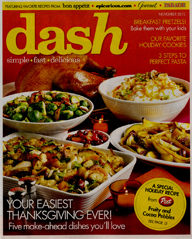
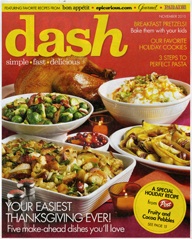
2010 will probably be best remembered as the year of magazines-distributed-via-newspapers. The year that the little kid came to the aid of its big sibling by adding an infusion of blood and livelihood. In October 2010, the new Athlon Sports, aimed at a male audience, was launched with a 7 million circulation inside America’s newspapers. Last week the new Dash magazine was also launched via newspapers with a female audience in mind and a 8.2 million circulation.

Both are attempting to serve the 100 million daily newspaper readership (yes, you read that right, 100 million folks still read the printed newspaper every day in these United States of America). Athlon Sports is going after the 55 million male readers and Dash magazine is going after the remaining 45 million female readers. Read here what I wrote about the launch of Athlon Sports last month.

Dash is the new magazine from Parade, the granddaddy of all newspaper-magazines with a circulation of 32.5 million every week. Dash bills itself as the “go-to source for putting quick and delicious meals on the table during the week. It has a mix of fun, a bit of inspiration using America’s best-loved food brands and always a back-to-basics sensibility.” The magazine is aimed at women who balance work and home and are between the ages of 25 and 54. The November pre-launch issue is the first of what will become a monthly-frequency-publication starting in February of next year. It is the second newspaper magazine launched by Parade after their two-year-old Parade Healthy Style.

“If you know the reader, you can figure out the edit,” Maggie Murphy, Dash’s editorial director told me. And boy, do they know the reader! They have studied and researched their readers inside out. Women newspaper readers, while not big on buying food magazines, read the food section in the newspaper on a regular basis. They want food content that will help them put the food on the table in a “simple, fast and delicious” manner, as Dash’s tagline says.

Ms. Murphy joined Parade in June as editor of the weekly and editorial director of Parade Publications. Her first assignment was to create the prototype issue of Dash magazine in four weeks. Drawing in on the vast wealth of food content from sister company Condé Nast’s bon appétit, Gourmet and epicurious.com, in addition to Parade magazine itself, Ms. Murphy and her team were able to create a down-to-earth food magazine for that “dashing moment in the life of the busy women who have to put that meal in the oven and get it done in the time the kids are done with their homework.”

“The uniqueness of Dash is evident in three areas,” Tracy Altman, senior vice president of special projects at Parade, told me. “One is the lack of duplication from other food magazines; two is the unique audience that we are reaching; and three, the Condé Nast relationship.” Ms. Altman should know. She was the publisher at the Publishing Group of America’s Relish magazine, another mega-launch newspaper-magazine that was launched five years ago. ” We all had such a great time putting together the strategy for Dash,” Ms. Altman said. And the “We” of course refers to the many folks behind the launch of Dash, including Ms. Murphy and Allison Werder, senior vice president of business development under the leadership of Jack Haire, chief executive officer of Parade.

The Dash strategy includes the monthly magazine distributed on Wednesdays (best food day) mainly in the B and C county newspapers. In addition to the printed edition, Dash introduced dashrecipes.com, a daily digital offering that includes a recipe database in partnership with Epicurious.com. Also, a retail distribution plan is part of that strategy which includes a public placement program that will make the magazine available at local markets and food festivals nationwide.

So the next time you are dashing out of the world of print, take a look at Dash and the rest of the national magazines distributed via newspapers; you will be glad you did. It will reassure you that the printed medium is still very well and alive. The problem is not with the medium, as I have said time and time again; it is with the message. So, for a change, stop dashing out of print and stop and study the Dash strategy to launch a new magazine… there are plenty of lessons to be learned. On that note, you can dash out of this blog and go pick yourself up a copy of Dash, lighting a candle in the print tunnel rather than cursing the dark.

h1

DECEMBER 9 IS min’s MORNING OF INTRIGUE: Most Notable Launch of the Last 25 Years and the Hottest Launches of 2009 – 2010

November 7, 2010

25 years ago, Steve Cohn was the first media reporter to write about a new publication born at The University of Mississippi called Samir Husni’s Guide to New Magazine. Steve, who has been editing min (media industry newsletter) since then, turned the coverage of my first Guide into an annual review of the hottest and most notable launches every year. Each December he devotes a page in min in which he and I review and preview the hottest and most notable launches of new magazines.

Well, this year, on the occasion of the 25th anniversary of the Samir Husni’s Guide to New Magazines, I will be honoring the 25 most notable launches of the last 25 years from a list of more than 18,000 new launches. The event will take place on December 9 at min‘s Most Intriguing People in Media breakfast in New York City. At the event I will reveal the MOST notable launch from among the 25 notable launches since 1985. Also at the event I will honor the 15 hottest launches of 2009/2010 (with a Sept. 30 cutoff date for the 2010 launches) including the hottest launch of the year, the hottest editor, publisher and art director. Also three magazines that reinvented themselves this year will be honored at the min event. Click here for more details about the min event.

What follows is what Steve wrote in minonline and in this week’s issue of min newsletter:

min’s Most Intriguing & Hottest Launches Set for Dec. 9
By Steve Cohn

We launched min’s Most Intriguing People in Media list in 2003 because there were many who made a difference in media but were not necessarily “hot” in an obvious sense. We wanted to recognize people who are making waves or embarking on a big adventure or facing a stiff challenge. Our Dec. 9 breakfast at New York’s Grand Hyatt continues the tradition in citing five executives who were new to their jobs in 2010—Prometheus Global Media president/CEO Richard Beckman, Next Issue Media president/CEO Morgan Guenther (see right), Sports Illustrated VP/corporate sales Kim Kelleher, ABM president/CEO Clark Pettit and Condé Nast president Bob Sauerberg—and, for each, “the best is yet to come” applies. As it does to the remaining 16.

University of Mississippi journalism professor Samir Husni—aka “Mr. Magazine”—will preside over two other celebrations on the program: the Hottest Launches of the Year and the 25 Most Notable Launches of the Last 25 years. At the event Samir will announce the hottest recent launch and the hottest launch of the last quarter century. We invite you to join us. Click here for more information.