h1

Rebecca Darwin to Samir Husni: “Garden & Gun Readers Are Unlike Anybody I Have Ever Met in My Life. They Are So Loyal; They’re Not Even Readers, They’re Fans.” The Mr. Magazine™ Interview with the President and CEO of Garden & Gun Magazine.

February 5, 2012

To say she is passionate about her job would be a major understatement. To say she is equally passionate about the magazine world would be yet another major understatement. The former publisher of The New Yorker magazine, and the current President and CEO of Garden & Gun magazine, Rebecca Darwin is more than passionate. She is in living a love affair with magazines. “I love anyone who loves magazines,” she told me during my interview with her via Skype.

Rebecca Darwin left New York City more than five years ago and headed South. She thought she left the publishing world behind her and was ready to start a new life in Charleston, South Carolina. Well, to paraphrase an old saying, “you can take Rebecca out of New York, but you can’t take magazines out of Rebecca.”

From the labor pains of the first year of life (costing almost 10 million dollars) to the ripe age of five, the story of Garden & Gun, and the women behind it, is unlike any story you may have heard about the launch and survival of a new magazine. Rebecca Darwin, president and CEO of Garden & Gun, shares that story and more in the Mr. Magazine™ Interviews below, followed by the sound-bites of the interview and the very lightly edited transcript.

The sound-bites:

On the reason she launched Garden & Gun: I did feel that there was a void, there was not a magazine that really spoke to people like me or to people who were very sophisticated, very worldly, but in love with where they’re from, which is this beautiful place called the south.

On the difference between being a publisher in New York City and in Charleston, South Carolina: It is very different when one sits in a room by one’s self and tries to start a magazine and you don’t even have paper clips.

On starting Garden & Gun: When you’re really starting, really from scratch, it is more of a challenge instead of an obstacle.

On the name of the magazine: The name was never an obstacle for me. The minute I heard the name, I thought, “Gosh, this could just be something incredible.” It will be something that will stop people. I know if you open up the cover and you look inside, you’re going to understand what this magazine means.

On the magazine going through 10 million dollars in its first year: That’s close.

On the ink on paper magazine: I always hear about the magazine and how people do love to touch it and hold onto it. I think part of our success is that we have, in some ways, brought back the beautiful, old magazine.

On the reaching the breakeven point: This is our year, this is our year, which is our fifth year. This pretty much puts you on track for what I would say is the benchmark for a successful magazine.

On what makes Rebecca tick: I love anybody who loves magazines. I’m getting to do what I always wanted to do in a place that I love to do it.

On Garden & Gun readers: Our readers are unlike anybody I have ever met in my life. They are so loyal; they’re not even readers, they’re fans.

And now for the very lightly edited transcript of Mr. Magazine™ Interviews Rebecca Darwin, president and CEO of Garden & Gun:

Samir Husni: Garden & Gun is a labor of love that you’ve been doing since you came from New York to Charleston and it was a rocky start; five years later, where are you now, why are you still doing it?

Rebecca Darwin: Well, you know, I would say, the start wasn’t so rocky. I think, if you remember, we were actually one of your top 15 magazines that year, number 2, I think we came out of the gate with gangbusters, but what happened to us is what happened to so many magazines, as you well know, over those couple of years that were really, really rocky for the economy. You know, I’ve often been asked in hindsight would we have launched the magazine if we’d known what was coming ahead and the same answer, would be no, wouldn’t have; but I’m not saying. I still would have done it and I think that, if anything, it just shows the perseverance that my employees, all of this group here, the team has, that our readers have, and that this brand has. We have come out on the other side and it’ll be our fifth anniversary this spring.

Samir Husni: Very few people really know about the beginnings; why would Rebecca Darwin after years at The New Yorker, after all that work, come down to Charleston, South Carolina and launch this soul-of-the-south publication?

Rebecca Darwin: Well, the way I got here was really because of my husband making a career change and going to seminary and becoming a Presbyterian minister. I had grown up in South Carolina, so when given the option of where we might move with his new venture, it was very appealing to me to come back to South Carolina, Charleston in particular, which is getting all kinds of kudos itself right now, it’s a very hot town and a beautiful place to live. But I did not come here with any intention of starting a magazine; I actually had two young children at that same time, my husband with a new life, me living in a new place, and didn’t anticipate that I would be starting a magazine. But two things happened, a number of my friends that I had known growing up started suggesting that we needed a great southern magazine; something like The New Yorker, I didn’t really think that that was going to work here, and then, as luck would have it, I met my partner, Pierre Manigault who is Chairman of the Board of the Evening Post, and the Evening Post publishes the newspaper here and was interested in the magazine business and asked me to come on as a consultant to help them look at some projects that they were working on. I did that for a couple of weeks and the next thing I knew I was writing the business plan for what came to be Garden & Gun magazine. When I got here I did feel that there was a void, there was not a magazine that really spoke to people like me or to… I think, people who were very sophisticated, very worldly, but in love with where they’re from, which is this beautiful place called the south, where you also live, so I felt like there was something there, that there was a void in the marketplace and did some research, put together a business plan and very, very quickly launched a magazine.

Samir Husni: What are some of the major obstacles that you have overcome since the magazine was launched?

Rebecca Darwin: Well, I would say that the biggest obstacle for me was having had an amazing career in New York with the best publishing companies that there are and always having had somewhat of an entrepreneurial spirit even within those companies, I worked on some of the challenging products within those companies, so I always felt like a marketer, an entrepreneur, starting new ideas within those companies. But it is very different when you sit in a room by yourself, when one sits in a room by one’s self, and tries to start a magazine and you don’t even have paper clips. You can’t go down to the 9th floor and talk to the circulation department; you can’t go into the HR department and talk about benefits, you know nothing about buying paper. I tapped into friends in the business, a lot of resources, and not that it was an obstacle, but that was a challenge to me and something that I truly, truly loved. Also a testament to the magazine is starting as a single title publisher at this point, not having the bench of people to rely on, but all of those subscribers that if you’re launching a magazine, again, within a bigger publishing company you’ve got lots of places to market your magazine, subscription mailings, we have none of that. So when you’re really starting, really from scratch, as I said is more of a challenge instead of an obstacle. The name, a lot of people like to think or make an obstacle, was never an obstacle for me. The minute I heard the name, I thought, “Gosh, this could just be something incredible.” And it will be something that will stop people, but I know if you open up the cover and you look inside, you’re going to understand what this magazine means. And if you don’t understand, then you probably shouldn’t be subscribing to it or reading it anyway. Those are the major things. And then of course, there is was that little thing called money.

Samir Husni: Rumor has it that you went through $10 million in the first year?

Rebecca Darwin: That’s close. The Evening Post was a very good financial supporter of this magazine initially and I was devastated when they decided not to continue with it, but very appreciative of what they had invested into the company at that point. And it was a fortunate thing for Pierre and me to be able to buy the magazine at the point that we did when that kind of resource had been put against the magazine. But you know too, Samir, that $10 million, if that’s what the number is, more or less, that’s not really that much when you compare it to some of the launches that you and I have experienced, right?

Samir Husni: You are more than an ink on paper magazine now, you have the club, you have the retail, digital; what is the future of Garden & Gun? Is it going to continue to be grounded in ink on paper and spreading from there? Or one day you see the future as digital; or the future as retail, or clubs?

Rebecca Darwin: I think all of those. One of the things that I always hear about the magazine is how people do love to touch it and hold onto it. I think part of our success is that we have, in some ways, brought back the beautiful, old magazine. We do not have a tremendous demand for digital at this point, although it is increasing and something we are very seriously looking at. I think that the two can co-exist. Garden & Gun, I see as the lynchpin of this company. My vision is that this is not a single title magazine company and it’s not just a magazine or a publishing company. There are a lot of things that can come out of this. But you know, we are only five-years-old and it has been an interesting time to be in this business. For me right now, I want to really make sure that everything that we do with the magazine, it is the core of the branch, is solid, and we’re doing the best that we can possibly do while we explore other things. But not to step out too far, too quickly, and really protect this amazing brand that we have built. Our readers are unlike anybody I have ever met in my life. They are so loyal; they’re not even readers, they’re fans. And so every decision that I make about this company, I think about them. I want them to come along for the ride. And they do want more. They’re always asking for more. And that’s why we do lots of events; that’s why the club was really initiated. The retail, the demand was there for something like, but I know that they are very outspoken, they love to call us, they love to talk to us, and I don’t want to make any missteps that are going to make them stray away from us.

Samir Husni: Are you at the break even point, close, or we are still swimming underwater?

Rebecca Darwin: This is our year, this is our year, which is our fifth year, as you know pretty much puts you on track for what I would say is the benchmark for a successful magazine. And business is really good; we just closed our April/May issue which is technically our fifth anniversary issue and it is the largest issue that we’ve ever had and way, way exceeded what we had in the budget for it.

Samir Husni: What keeps Rebecca up at night?

Rebecca Darwin: You know what; I’m pretty exhausted when it’s time to go to bed between all my children here and my child Garden & Gun and my two girls and my husband, who’s kind of a child too. I’m ready to go to sleep when I hit the sack. I tend to be one that wakes up more in the middle of the night because my head is racing and it’s all those things that I want to do. It goes on into when I get in the shower and I need to keep that little piece of paper next to me. So going to sleep isn’t the problem, but when I wake up I’m ready to do it all.

Samir Husni: Ten years from now we’re doing this conversation; what would you tell me about Garden and Gun, in 2022?

Rebecca Darwin: Ten years from now, I think that Garden & Gun will certainly be around. It’s hard to say exactly how big the magazine itself will be, in terms of circulation; I always pictured the magazine would kind of net out somewhere around 400, 500,000 in terms of total circulation. We will be either a monthly or coming out 10 times a year, I don’t know…will it still be print, that’s a hard one to predict. Although I do know that when I was publisher of The New Yorker many years ago, I was asked to talk about the end of magazines then and we’ve all been talking about it for a long time and they’re still around. I think that Garden & Gun will be, not a household name, but part of the language in this country. When you hear the words Garden & Gun, or G & G, which I think a lot of people will say, that you know what that means, if something is very G & G, it conjures up an image in your mind. And I think that we will be surprising people with some of the things that we’re going to do in terms of ways that the brand is going to grow. And we’ll be throughout the southeast and beyond, not just the magazine but other ventures that we have in mind.

Samir Husni: Anything I failed to ask you that you’d like to add?

Rebecca Darwin: I don’t think so. No, I always enjoy talking to you. I love anybody who loves magazines. I’m getting to do what I always wanted to do in a place that I love to do it. I’m just incredibly, incredibly proud of the magazine.

Samir Husni: The magazine has become the “talk of the south.” Is it strictly a magazine for the South?

Rebecca Darwin: I think that the magazine’s appeal (reaches) beyond the South and the people who have visited the South or lived in the South or have some kind of connection there, but I think it is the literary quality of the magazine. Great writing is something that, it doesn’t matter where you live you enjoy reading those kinds of articles and seeing the incredible visuals in the magazine. You know Dave DiBenedetto, who moved up into the editor-in-chief spot when Sid (Evans) left has done just an incredible job, he just stepped right in. In fact, his first issue was the last one that had the dog on the cover, not the drinks one, but that issue has sold incredibly. Barnes & Noble is kind of our sweet spot and we were selling at levels that would really amaze people in places like that. So he’s doing a great job and I also would be remiss if I didn’t just give a little kudos to Barbara Bing, our publisher, who lives in Atlanta, and is someone who I have known over the years on most of the magazines that I have worked for. She is doing an amazing job, really getting out there with the magazine and is a big piece of our success too.

Samir Husni: Thank you.
h1

55 New Publications Arrive to the Marketplace in Jan. 2012

February 1, 2012

The Mr. Magazine™ Launch Monitor recorded 55 new publications launched for the first time in Jan. 2012. For a complete list, images and details check the Mr. Magazine™ Launch Monitor here.

h1

Reinventing An Icon: The Saturday Evening Post’s Editorial Director Steve Slon to Samir Husni: I’m Trying to Create a Contemporary Magazine That’s Relevant, Beautiful, and Interesting. The Mr. Magazine™ Interviews.

February 1, 2012

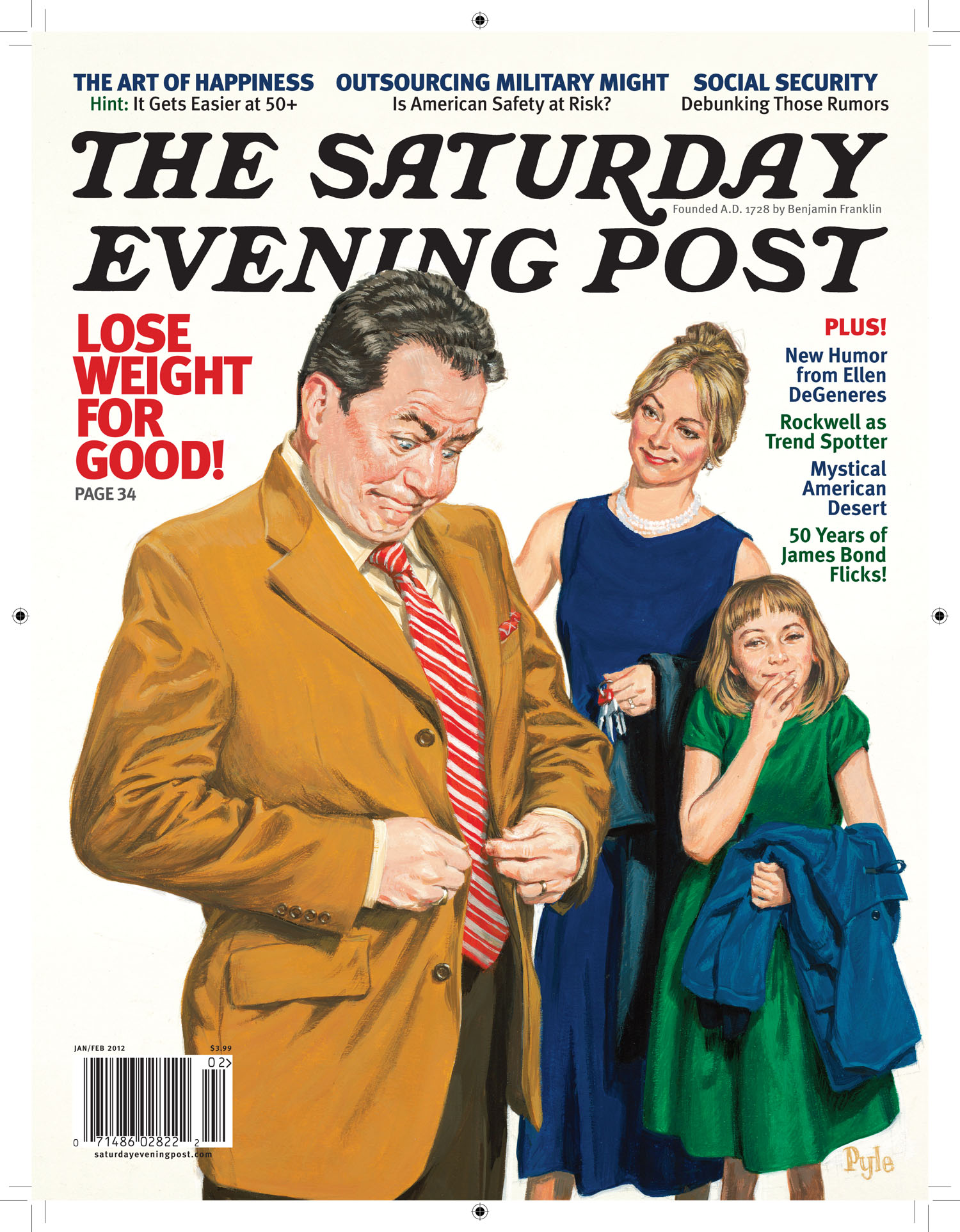
Imagine you are in charge of reinventing one of America’s icon magazines: The Saturday Evening Post. How would you react? What will be your first step? What are some of the obstacles facing you doing that? And do you think you can really reinvent such an icon? The aforementioned questions raced in my mind as I read the news that Steve Slon has been appointed editorial director of the iconic magazine The Saturday Evening Post and has been charged with the mission to reinvent the legend magazine.

Rather than trying to answer the questions myself, I opted to go to the newly appointed editorial director, the man who has led the AARP publications for years and consulted on many other magazines in his many years of professional editorial experience. Mr. Slon was gracious enough to answer my questions, even those that were casting more than a shadow of doubt on his new assignment for this “mission impossible.”

After all, mention the name The Saturday Evening Post to anyone and they will directly think you are talking about the past. So, how does Steve Slon plan to change this “past” stereotype to a present day 21st Century magazine? Well, in the typical Mr. Magazine™ Interviews, here are first the sound-bites followed by the very lightly edited transcript of the interview.

The Sound-bites

On his plan of action: To take some of the historical magic of the magazine and look for a contemporary application.

On the obstacles to reinvent the magazine: the first obstacle is that everybody thinks the magazine went out of business fifty years ago.

On the future plans to get the word out: To accomplish getting the magazine out, we’re developing some social media strategies… I’m not trying to recreate something that existed in our fantasies more than in reality…. I’m trying to create a contemporary magazine that’s relevant, beautiful, and interesting.

On the humanization of the magazine: It is a really well-rounded person with a liberal arts education who is curious about the world, who had personal concerns such as pocketbook concerns, maybe weighing a few pounds more than they wanted to and was just looking for good ideas about weight loss and money and that sort of thing.

On the name of the magazine: Magazine titles start out having a meaning and then the meaning sort of evaporates from it and it just becomes what it is.

On the future of print in a digital age: The experience of wrapping yourself in a magazine, opening it up and seeing it on nice paper, and seeing the beautiful images; the great magazines, like The New Yorker, Vanity Fair, just digging in and enjoying it and having a great read with the magazine in your lap, cannot really be equaled electronically.

On the audience of the magazine: It’s never going to be a magazine for twenty-year-olds in its current form.

On what keeps him up at night: Typos. I worry about interviews with people like you. I want to say the right thing.

And now for the lightly edited transcript of Mr. Magazine™ Interviews Steve Slon, editorial director, The Saturday Evening Post.

Samir Husni: The first obvious question: This is a big, big, big job to reinvent an icon in the magazine industry, The Saturday Evening Post. How do you propose to do that?

Steve Slon: Well, I’m glad that you used the word reinvent because I think that’s a key word. The way that I propose to do it is really to take some of the historical magic of the magazine and look for a contemporary application. So in other words, I want to make it clear from the outset that this is not in any sense of the word a nostalgia magazine. But at the same time we are a little bit always going to be trading on the wonderful legacy of the publication. So basically what I do is I deconstruct what the Post was in its hey-day that was a mix of an appreciation of art, of fiction, great writing, great journalism and I’m distilling that and bringing that into a modern context.

Samir Husni: What are some of the perceived obstacles that you see in front of you, preventing you from succeeding?

Steve Slon: Well, the first obstacle is that everybody thinks the magazine went out of business fifty years ago. No, seriously, the first mission is to get some word out that we are still publishing. My super secret strategy, and I’m going to put it on the line, is to build the magazine and make it a good read and fun to read and enjoyable. And then, strategically, we need to just get people to hear about it any possible way we can. And then get them to come and check it out. Then say, “Hey, this isn’t some old-fashioned thing, this is a contemporary magazine that’s really interesting. Because to my mind, what makes a magazine relevant is very plain and simple: Is it enjoyable to read? You know, it’s a very simple solution. So to accomplish getting the magazine out, we’re developing some social media strategies. We’re already… I’m not sure if the word would be syndicating, but we’re giving permission to the Hearst Wire Service to republish, every week or two, a story from the Post with a Post credit line at the end. Just to get the word out. We’re saying here’s the story, have people read it in the various newspapers that subscribe to the Hearst/New York Times Wire Service and put the magazine out there. And then people read it. My hope is…well, I don’t want to say hope actually, and my intent is for people to say, “Hey, that’s really interesting That’s the Post? Wait, the Post is still going? Wait, I better get that. I gotta’ check it out.” Then they come to the website and subscribe.

Samir Husni: I’m sure you wouldn’t have accepted the job if you weren’t up to the challenge.

Steve Slon: Yes, well I like a good challenge, yes.

Samir Husni: But the critics will say that Life tried to come back and could not, Look tried to come back and could not, Collier’s, somebody bought the trade mark but still did not know what to do with it. What’s different about the Saturday Evening Post?

Steve Slon: Well again, I’m not trying to recreate something that existed in our fantasies more than in reality, the magic of the magazine. I’m trying to create a contemporary magazine that’s relevant, beautiful, and interesting. The same thing that is a negative is also a positive, which is if you tried to launch a new magazine in the current environment you would have everything else going against you that we’re dealing with today, the splintering of media and the news. And you’d also have to create a brand; well we have a brand, for better or worse. We have a brand that people know instantly that it is a magazine and what it stands for, which is good quality, solid journalism, great fiction, great art, etc. So, it is a challenge. But look, when I went to AARP, it was called Modern Maturity; it was dead as a door nail. The MRI numbers on that were plummeting and we said, look, what can we do to make this better. We basically turned it around with quality stories, good articles, good pictures, etc. It can be done. We have every confidence that it can be done. To me, it’s really no fun going to a magazine where you’ve already hit your formula and you’re just doing it over and over. I love the excitement of saying, “Wait, let’s try this, let’s tweak it a little bit and let’s see what connects.” One of the things that I wanted to tell you about is that I’m finding is that the essay, the opinion piece; it’s hitting like a pinging for us really well. We certainly have our little collection of service stuff; we cover tech, we cover money, we cover health, etc. But when we did a piece by Diane Ravitch this fall on what’s wrong with American school systems and we got a flood of letters, the kind of letters you never get from an article about 5 ways to get rock-hard abs or 5 ways to lose weight or that kind of thing. So that was very exciting and that has inspired me to push a little further with the opinion side of the magazine.

Samir Husni: If I give you a magic wand and you can strike the ink on paper The Saturday Evening Post and a human being comes out of it, who would that person be?

Steve Slon: I like that because I like that image. I do think of the magazine as having a personality analogous to a human personality and so what I see is, well, let me back into this a little bit. I see the magazine as a balance between really useful, practical information and really stimulating ideas, with an overlay of art and design and, fiction of course, being a part of art. So I would consider it a really well-rounded person with a liberal arts education who is curious about the world, who had personal concerns such as pocketbook concerns, maybe weighing a few pounds more than they wanted to and was just looking for good ideas about weight loss and money and that sort of thing. But at the same time was equally, perhaps more interested, in the bigger questions in life, such as education, such as…you know we just did a big story on outsourcing military equipment to foreign countries and the implications for the defense of America. So I would say it’s a person with mostly catholic interests. I don’t want to characterize it and say it’s a single person, I’m not going to name a name, but I think it’s that kind of person, with a wide-ranging interest. And the thing is, this has the potential to be huge, because we’re all really people like this. The key is to find that mix of subjects that really click and we’re approaching it.

Samir Husni: Does the name keep you up at night? Would people, no matter how great the writing, how great the stories, pick up a magazine today called The Saturday Evening Post?

Steve Slon: I think that magazine titles, it’s really interesting, these magazine titles start out having a meaning and then the meaning sort of evaporates from it and it just becomes what it is. So for example, Gentlemen’s Quarterly is actually a monthly magazine, not a quarterly, nobody calls anybody a gentleman anymore; it’s an archaic word. Esquire is a similar word, Esquire is an old-fashioned word, nobody uses it. And yet, as a magazine, we just know what it is. GQ changed it, of course, to just the letters GQ. AARP, the organization that I used to work for, changed its name; it used to be the American Association of Retired Persons, it changed it to just AARP for a reason, because they didn’t want to be associated with only retired people because they had broader issues. But the thing is, it just became those initials. So I think that The Saturday Evening Post, you know arguably, yes, maybe it’s a little long, but I certainly don’t worry about it. Because it ceases to mean that it’s published weekly or anything to do with Saturday. It’s just a phrase that we know and we know it’s a magazine. So, no, it doesn’t bother me, short answer.

Samir Husni: Who’s the audience that you’re after now? Are you trying to maintain an audience that remembers that name, an older audience? Or are you going to try and move the magazine a little bit toward a younger audience?

Steve Slon: Well I think we all know that targeting older readers is difficult in the magazine business because advertisers aren’t curiously…I mean, again going back to my experience at AARP, our sales department did all kinds of studies showing that boomers, from 45 and up, spent more money on cars, more money on gadgets, electronics than anybody else, they have money, whereas people in their thirties and forties don’t have any discretionary money. But, nonetheless, Madison Avenue has a bias against older readers. That said, our average age of our readers is 55, we would like to bring that down a little bit to being the trailing edge of the boomer demo, so bring it down, our target might be say, 45. It’s never going to be a magazine for twenty-year-olds in its current form. Although we’re considering some electronic versions that might, specifically target a younger audience. But yes, for the foreseeable future, that will be a tough market even at 45+, for sales. Everybody has the same problem. If you look at our competitors, say a Smithsonian, an AARP magazine, or Prevention, or magazines that serve the 40+ demo, More magazine, it’s a tough market. A lot of your income has to come from serve. We’re looking for creative ways to get around it, of course. But it is hard. But we’re doing it.

Samir Husni: You mentioned that there is the possibility of a digital edition or something for the younger reader, how do you see the future of print, ink on paper, in this digital age, in general, and then specifically.

Steve Slon: In general, for the foreseeable future, they’re a generation who are reared on print, on paper, and there is something about the experience, I hope I don’t sound too old-fashioned here, but the experience of wrapping yourself in a magazine, opening it up and seeing it on nice paper, and seeing the beautiful images; the great magazines, like The New Yorker, Vanity Fair, just digging in and enjoying it and having a great read with the magazine in your lap, cannot really be equaled electronically. That said, another 10 or 15 years magazines are going to be viable on paper, and probably indefinitely for a smaller audience. But certainly it’s true a younger generation is coming up where they’re reading things first online, and second, maybe in print. It’s an evolution that has to happen. And we are, like everybody else, in the process of strategizing how to transform ourselves from an ink on paper magazine to a media company. And what’s needed at the Post actually… we have these incredible archives going back to the early 1800s that we have in an actual library, physical editions of the magazines under a curation that we are digitizing. So for example, we could create e-books, compiling some of the writers who wrote for the publication in its heyday, some of that stuff which is always going to be relevant. I made a list of some of them, in our archives we have: Ray Bradbury, Agatha Christie, William Faulkner, F. Scott Fitzgerald, Sinclair Lewis, I could go on. Kurt Vonnegut wrote for the magazine. These are stories that we own the rights to that we could create SIP’s or digital reader editions. What we’re struggling to figure out now is how to humanize that, can we give some of it away and then create custom collections for people. You can see it the way it actually appeared in the magazine with the original illustrations and so on. So, it’s pretty exciting stuff. We really have something that other magazines don’t.

Samir Husni: It’s exciting to you; it’s exciting to me. How can you spread this virus of excitement to the general community and to the public at large? What’s your marketing plans? What’s your promotion plans?

Steve Slon: The social media is probably the number one way. I’m not saying it isn’t anything you haven’t heard before, but I was at the IMAC conference. A lot of people were talking about how people were trying to reverse engineer Google’s search engine, while no one had the precise answer, all the arrows point to the number one trigger SEO ranking is Facebook. We’re lagging in that front I will say, but we’re working on it. You develop a community of people who like and share and want to hear about what’s new and learn about a free story from William Saroyan or something like that. I just want to go back to your earlier point, we might get excited, but what’s to excite the general public. The thing is we’re going to excite them with what we’re doing now, not what we did an hundred years ago, that’ll be just like a bonus. It has to be good now. And the magazine in its heyday was not a nostalgia magazine and we almost think of it that way because you know, Norman Rockwell. But it was a contemporary magazine. We talked about, in the last issue, about Rockwell discovering this very hot trend in the nineteen-teens with couples playing with Ouija Boards. And that was like all the rage and he did a cover of that. And that was a hot cover.

Samir Husni: A year from now, I am calling you for an interview and I am asking you: Steve, tell me where The Saturday Evening Post is today. What will you answer be?

Steve Slon: Well I have a modest, very reachable goal. We’re at 350,000 circ now; I want to get it to 500. We’re actually working with, I can’t name the name, a major internet publisher to do a co-op product, to do an online newsstand version and that would be Q1 and that’s another way we’re going to get the magazine out there. So I guess at a minimum we want to get up to 500,000 and more advertising. The other thing is I want the magazine to have a currency in social discourse, so an analogy is again, when I went to AARP, in the beginning I said to our staff, can you imagine someday that people will be saying to each other, ”Hey did you read something that was in the latest edition of this magazine.” It was something that we almost couldn’t conceive of because it was thought of as a magazine that was so limited in scope even though it was massive. And it was only about five yeas ago that we were mentioned on Saturday Night Live that AARP Magazine gets mentioned. So maybe a mention on Saturday Night Live would be our measure of success.

Samir Husni: One final question: What keeps Steve up at night?

Steve Slon: Typos. I worry about interviews with people like you and I want to say the right thing. Let me think about that for one sec. Some of the things that aggravate me are the Byzantine distribution system in single copy sales, so that because The Saturday Evening Post went through a sort of fallow period and fell off the map and basically gets hardly any newsstand distribution, which is very important just for people to see, you know walk into an airport or a supermarket, just to see it, and have the exposure, that people would know it’s there. We don’t have good newsstand distribution. That’s one thing.

Samir Husni: Thank you.
h1

Ultimate Interactive Magazine: One to Read and One to Eat…

January 31, 2012

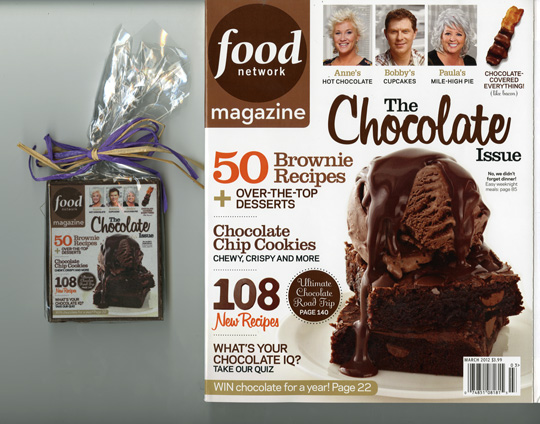
It can’t get any better. The March issue of Food Network magazine is The Chocolate Issue. It arrived earlier today via next day air from the magazine’s publisher Vicki Wellington (see my interview with Ms. Wellington here). The reason for the speedy delivery? The issue came with a “mini chocolate treat” with the cover design on the chocolate treat. What more interactivity can you ask from a magazine? One to read and one to eat. Thank you.

h1

Vicki Wellington to Samir Husni: Food is on Fire. People Who Don’t Even Like to Cook Love Food Network. Mr. Magazine™ Interviews the Publisher of Today’s Hottest Magazine: Food Network Magazine.

January 26, 2012

Vicki Wellington does not have to twitch her nose to bewitch you. The publisher of the Food Network Magazine, for whom Darren/Larry and the men at the ad agency from Bewitched were her “role model” growing up, is flying high with the most successful and hottest new magazine since 2009. Unlike Samantha, Wellington does not need a flying broom or a magic carpet to engage her customers with the hottest magazine on the marketplace today. All she needs is to feed the addiction of the American public to “food” and “celebrities.” Add a dash of pixels on a screen (make that a lot of screens) and a pinch of ink on paper (make that a lot of papers) and the result will be the Food Network Magazine –– led by the hottest, passionate and energetic magazine top chef Vicki Wellington.

The smile never departs from Vicki’s face. You could feel the vibrating energy radiating from her every time she mentions the magazine, the Food Network, the customers, the advertisers, the company and above all “her lean and very able staff.” To say she loves her job will be an understatement. She is as affectionate talking about the magazine and her job as her customers are affectionate about the magazine and the network behind it. It is a story of success second to none in today’s magazine world. It is a hot, hot, hot magazine and, of course, magazine publisher.

Watch below my interview with Vicki Wellington, publisher of the Food Network Magazine, followed by the sounds-bites of the interview and then read the entire (lightly edited) transcript of the interview.

The Sound-bites:


On the secret of Food Network Magazine success: An amazing brand, a super, powerful surround sound position in the market, and a beautifully translated magazine in print, great photography, great design.

It’s big, it’s growing, and we’re reaching the right types of people with the right kind of edit.

The minute it came out on the newsstand, as you know, it flew off the newsstand.

Food is on fire. So in our country, people who don’t even like to cook love Food Network.

On the expanding of the Food Network Magazine brand:
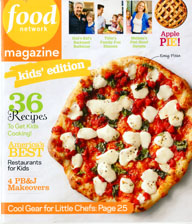
We’re creating a mini magazine called Food Network Magazine for Kids and it will run in our September back-to-school issue.

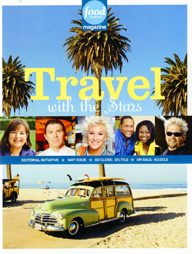
We’re creating in the May issue Food Network Magazine Travel, all edited through the eyes of our celebrity chefs.

On Vicki Wellington: I’m pretty happy here. It’s a pretty happy place. We have a great brand, we’re on fire; we really are.

On what keeps her up at night: Not having enough hours in the day.

And now, for the lightly edited transcript of the Mr. Magazine™ Interviews with Vicki Wellington, publisher of the Food Network Magazine.

Samir Husni: The Food Network Magazine has been one of few success stories we’ve seen in the last few years. What do you attribute that to?

Vicki Wellington: An amazing brand, a super, powerful surround sound position in the market and, as we just talked about, a beautifully translated magazine in print, great photography, great design. Food Network, as I said, has power on its own, plus the entertainment piece of it is absolutely non-stoppable. It’s a consumer favorite and that’s the lead point on all of it.

Samir Husni: But folks may say, ‘Oh this is just a fad. A year or two from now, people will be watching something else…people will be reading something else…’

Vicki Wellington: I don’t think so. I think that twenty years ago you didn’t even have a celebrity chef, now Food Network literally as a brand has created all these personalities. There’s young, there’s old, there’s someone for everyone. And as you know, we’ve had the TV for many, many years and we’ve got digital for many, many years, both very successful in their own right and we have many other pieces of the brand that surround sound a consumer, but consumers said they wanted this magazine. The minute it came out on the newsstand, as you know, it flew off the newsstand. We hit a million in circulation literally in 4 issues, which, as you know, is unheard of. Right now today, we’re at about 1.58 million over delivering, since we started, over 7 million readers. So I think this is the real deal.

Samir Husni: And you know your critics will say, ‘Well, you know, it’s because of the television the magazine is succeeding.’ Yet Hearst has ventured before into this area and published a magazine called Lifetime, which did not last long.

Vicki Wellington: I wasn’t here for that. That was obviously a whole different entity. I think for us, all of the stars are aligned here. Food is on fire. So in our country, people who don’t even like to cook love Food Network. I think again, this brand has something very special about it, and as we discussed, the interpretation of the brand. I think this is, obviously, a very different proposition. And from what I’m seeing, I think I told you, our Jan-Feb issue just did terrific on newsstand, and that’s not usually one of our biggest selling issues. The content, as you know, is completely integrated, 360, and of course, we do the same for advertising, there’s not a lot of brands, I don’t think there’s any, other than maybe one other, that can actually deliver that.

Samir Husni: Rumor has it that you’re expanding the brand; you’re bringing up a kids magazine, a travel magazine…

Vicki Wellington: Yes, yes, you’re very good with your rumors. I don’t know where you learned these things from, but we’re doing Food Network Magazine for kids, which is very exciting. I think I mentioned that literally over 12 million kids are watching Food Network programming, which is a huge amount. And we get letters all the time from women who read the magazine, we actually have more women readers than Real Simple has women readers and they’re cooking with their kids every single month. So we’re literally creating a mini magazine called Food Network Magazine for Kids and that will run in our September back-to-school issue and the consumers are really excited about it.

Samir Husni: And what about the travel magazine?

Vicki Wellington: Travel, another thing. When you go on vacation, I don’t know how the food is in Lebanon, I bet it’s good, but when people travel, it’s food-focused. If you go to Italy, it’s about the food. And so what our editors are doing, are creating in the May issue, Food Network Magazine Travel, all edited through the eyes of our celebrity chefs. So you’ll see Guy’s favorite…let’s say, breakfast haunt in San Francisco and where he recommends going and the hotel that he would recommend staying in, so it’ll be a lot of fun, it’ll be exciting and again, all edited through all of the various chefs eyes.

Samir Husni: Any downfalls? I mean, it sounds like one big success story after another.

Vicki Wellington: I’m pretty happy here. It’s a pretty happy place. We have a great brand, we’re on fire; we really are.

Samir Husni: So what keeps Vicki up at night?

Vicki Wellington: You always ask me that question. Honestly, and you laughed the last time I answered it, but it’s the truth; not having enough hours in the day. And that really is the truth. I wish there were more hours; we could be doing more work. You see what we put out, with a pretty lean team every single month. And we’re proud of all of it. But there’s not a lot to worry about, we’re excited. It’s big, it’s growing, and we’re reaching the right types of people with the right kind of edit. So it’s all good.

h1

Jack Haire to Samir Husni: Sunday Newspapers Are Doing Quite Well and So Are Parade and Dash magazines… The Mr. Magazine™ Interview with the CEO of Parade Publications on The Power and Reach of Print.

January 25, 2012

The man who believes in newspapers is putting his money where his mouth is. Jack Haire, CEO of Parade Publications, publisher of the mother of all newspaper-distributed-magazines, Parade, and its newest sibling, Dash, has managed to do what only a few managed in this “digital age”: he increased the circulation of one of America’s already largest circulated ink on paper magazines. Parade has increased its circulation by 600,000 copies to reach 32.5 million copies distributed weekly. No, this is not a typo, Parade magazine distributes a total of 32.5 million ink on paper copies every single week inside the pages of some 630 different newspapers every Sunday morning.

So is Jack Haire crazy to believe in the future of newspapers? Does he know something we do not? I visited with Jack last week in New York City in the office of Parade magazine and asked him the questions on everyone’s mind: “You revamped Parade last year and launched Dash. Both publications utilize newspapers for their distribution. The word on the street is that printed newspapers are dead or dying. What gives? Do you have a plan B or do you know something those so called experts don’t?”

Click on the video below to hear his answer and the answers to other questions related to Parade, newspapers, the future of print, and of course, what keeps Jack Haire up at night.

The soundbites:

On the future of magazines distributed via newspapers: There are still a 100 million Americans that read newspapers.

On an example of the health of Sunday newspapers: The Minneapolis Star Tribune, one of Parade’s newest partners, their Sunday editions, their most important day, are actually growing by 6 percent.

On Parade’s circulation: We increased our circulation this year. It’s all tied into distribution agreements and promotional agreements, but our circulation increased by 600,000 this year.

On the future of newspapers: The tale of the newspaper world and the innovation that is happening in that world is really a fascinating story and it’ll go on for a long time.

On the mission and role of Parade: Parade celebrates all that’s good in America, it brings a smile to people’s faces when they hear about Parade.

On his future plans for Parade: I hope to continue to see us grow and maybe launch something else before the end of this year.

On what keeps him up at night: I want Parade to be a great place to work. That’s a tall enough order in a tumultuous town.

And now for the lightly edited transcript of the full interview with Jack Haire, CEO of Parade Publications:

Samir Husni: One of the many things people wondered when you launched Dash, and revamped Parade, was “What’s plan B?” They said newspapers are dying, those people that are launching magazines that are going to be, or are inserted into newspapers… are they out of their minds?

Jack Haire: I’m not sure of the answer to that question, Samir. I don’t think so. There are still a 100 million Americans that read newspapers. It’s a huge audience of people searching for news, well-educated, and Sunday newspapers are actually doing quite well. Your old friend Mike Klingensmith, founder of Entertainment Weekly and publisher and president of Sports Illustrated, CFO of Time, Inc. is now the CEO of The Minneapolis Star Tribune, one of Parade’s newest partners. Their Sunday editions, their most important day, are actually growing by 6 percent. Across Parade’s 630 newspapers are sort of same-store sales, only to climb by one half of one percent across 630 newspapers, 32.5 million in circulation. We increased our circulation this year. It’s all tied into distribution agreements and promotional agreements, but our circulation increased by 600,000 this year. I think long before I go on to meet my maker these newspapers are going to be around and we’re in arguably the best in the country that provide a huge service to their community, and will they change? Surely, and in already 22 or 23 of the top 25 markets, the largest local site is the newspaper site, so we syndicate our contact for Dash and Parade across 500 of those newspapers now and reach an audience online of 50 million people. The tale of the newspaper world and the innovation that is happening in that world is really a fascinating story and it’ll go on for a long time.

Samir Husni: Parade is such a big brand, such a recognized household name. Any plans to expand the brand from outside the newspaper, any plans to do a Parade book or a monthly magazine on the newsstands?

Jack Haire: We have a lot of plans. We’ve tried to stay focused on when we build a digital business that we not only build it ourselves with the parade.com domain, but we build it in partnership with these 500 newspapers, so you want to be good at what you’re doing so before you go to the next thing, it’s important that you make sure Dash is successful. Tracey Altman has done a very nice job at that. We were happily named, by a fellow by the name of Samir, as one of the launches of the year, which we’re incredibly proud of, all of our people, but we were also profitable last year in our first year of not being fully monthly…we were published 11 times and we made a little money. So yes, do we have plans; absolutely. Parade celebrates all that’s good in America, it brings a smile to people’s faces when they hear about Parade. I remember reading Parade, I remember seeing it at my house when I was growing up, whatever town it might be. There’s a lot of great history, we feel that we can do some really interesting special interest publications that are digital only, some apps surrounding our personality at Parade, thematically around certain important holidays, and I also think that we can create some big, stand-alone publishing issues that we can distribute with a number of our key partners. I’m really excited about that and I’m excited about getting at them and I’m excited about getting at them this year. You know last year was such a challenging year in some ways that I want to make sure our base is really solid, but I hope to continue to see us grow and maybe launch something else before the end of this year.

Samir Husni: Last question, what keeps Jack up at night?

Jack Haire: A lot of things, I think. I came to Parade… I don’t know how old I was when I came to Parade… I was 56…been here 2½ years. I’ve worked at a number of other places and I really, really like the people here. I’m blessed to work with our editor, Maggie Murphy, the woman next door, Alice Werner, some very talented publishers, Brett and Tracey, and a 150 other folks. So I want to make Parade… I want to develop it into all that it can be; I want it to be successful in multiple platforms. And I want these people to learn the trade and the trades well here, so they can go on to enjoy a really successful career at other places and I want Parade to be a great place to work. That’s a tall enough order in a tumultuous town.

h1

David Carey to Samir Husni: This IS What Keeps Me UP at Night! The Mr. Magazine™ Interview with the President of Hearst Magazines

January 22, 2012

David Carey is the eternal optimist. The president of Hearst Magazines has his fingers on the pulse of the magazine industry. His prescription for an industry’s cure was outlined in his New Year’s letter to Hearst employees in which he stressed the need and importance of both the ink on paper and the pixels on the screen new magazine media business model.

I had the opportunity to visit with Mr. Carey last week in his office on the 43rd Floor of the Hearst Tower on 8th Ave. in New York City. After a brief chat on the status of industry in general and Hearst in particular, David was generous enough to share with me on tape some of his ideas and practices regarding the magazine industry now and in the future. I asked David what keeps him up at night and his answer surprised me as I am sure will surprise some of you, if not all of you interview readers and watchers everywhere.

Watch the edited video interview with David Carey below, followed by the typical Mr. Magazine Interviews™ soundbites and the transcript of the interview.


The soundbites:

On the mix between established titles and new ones: There is always room to both revitalize an existing product and as well as to especially create new ones.
On the reasons behind enhancing their print magazines: We do want to be best in class in all of our titles.
On the creation of a “backlist” single copy business: About 30 percent of our single copy sales are for issues that are no longer available for sale on ink and paper.
On the tablets’ threat: We don’t see that all these new devices have any significant cannibalization on the print form; they tend to bring in incremental new readers.
On costs and spending: We have to really focus on pulling out all of the unnecessary costs that are invisible to the end-users.
On what keeps him up at night: We have to compete against a swarm of entrepreneurs.

The lightly edited transcript of the interview:

Samir Husni: You’re the eternal optimist. I mean, every time I read anything you’ve written, anything you’ve talked about, you have always seen the industry’s cup as more than full, or half full. After being the president of Hearst Magazine for eighteen months, do you still believe the industry’s cup is more than half full?

David Carey: Absolutely; in the U.S., but especially around the world. In the U.S., we were just chatting a moment ago for those that just joined us, about the success of HGTV and this is our latest magazine test. So you read every day in the newspaper about housing woes and all the issues in the housing market, but here is a product, HGTV, all around home and garden television, that’s an enormous positive response by consumers, to a fresh new product that found white space that otherwise was difficult to find. So there is always room to both revitalize an existing product and as well as to especially create new ones. It’s not without their risks. But if you have a good brand, a good promotion planned, it is still within success. And all of the new devices, in a world where there won’t just be a tablet in every home, but there will be five tablets, and nooks, and kindles and so on, that people have opportunities to consume our content with so much greater frequency and you think about having dinner with a friend and they mention a great article in Esquire, and then you have to remember the newsstand, or the bookstore, the airport to buy it, and you might forget, now you go home and open up one of your devices and you buy it, and it shows up a minute later. So in terms of technology, it takes all of the friction out of the consumer experience and allows people, when they hear about something, to immediately be able to activate. And what a great thing for us, not only for our current products, but also as a big magazine publisher, we sit on these vast archives of content and it’s been hard for us to create new products and make money from. And one of the interesting stats that we’ve learned about our tablet business today is about 30 percent of our single copy sales are for issues that are no longer available for sale on ink and paper; so if you want the July issue of Cosmo and you can’t find it easily, you can still buy it, it’s still valid, still relevant, and it still pays off. And so we get an opportunity to create a backlist for content in a way that’s always driven the book industry, which has front list and back list titles. We’ve only been in the front list business, so we have all these new opportunities that have been created literally in the last 12 months.

Samir Husni: In your letter to the employees at the beginning of the year, you emphasized the focus that Hearst Magazines is going to be growing in both print and digital, and your latest enhancement of print is the February issue of Harper’s Bazaar where you upsized the magazine, something that you have been doing for the last few months with the rest of the magazines. Do you see any major change that’s going to take place, in terms of whether print will become rarer in the future, digital will be everywhere, the tablets will take the place… Why are you still investing in print?

David Carey: We don’t see that all these new devices have any significant cannibalization on the print form; they tend to bring in incremental new readers. So that’s a real positive. We are investing in a number of our editions because we do want to be best in class in all of our titles. We do know that as far as advertising, we want to be, ideally, one, two, maybe three, in terms of a category, you don’t want to be four or five. The old Jack Welch rule, about number one or number two or go home is certainly in place. So if there are places where we feel that we should not chop and we should be more competitive, we’re going to make an investment in them and sometimes it’s in the number of edit pages, sometimes it’s in the paper stock, or sometimes it’s in the photography. Then at the same time, I’ll be honest, we’re being very aggressive and looking for efficiencies that consumers don’t see. A lot of our work we’re off-shoring, in terms of production process, so the notion of what the consumers touch and feel has to be better than ever. But we have to really focus on pulling out all of the unnecessary costs that are invisible to the end-users.

Samir Husni: One final question: What keeps David up at night?

David Carey: Wow! Well, in our case, we are so fortunate to work at Hearst…this great company at this moment in time, but I do know that everyday in scores of the proverbial garages, in Silicon Alley and Silicon Valley, you have entrepreneurs who wake up wanting to take down News Corp, Advance, Time Warner, and Hearst, and they do so fearlessly, and they do so by not following normal rules and orthodoxies of what can and can’t be done. So the only thing that I really worry about is we have to compete not against the other big multi-nationals, I think we know how to do that, we have to compete against a swarm of entrepreneurs; so how can we have a company of enormous scale, but have that scale aid us and not get in the way. That’s what we think of everyday, how to be large and nimble, blessed with so much talent with the ability to move fast. If we can achieve that then that’s a significant accomplishment.

Samir Husni: Thank you.

h1

A Rebel (Magazine and Man) with a Cause? The Mr. Magazine™ Interview with Rick Cabral, CEO of Rebel Media, LLC.

January 20, 2012

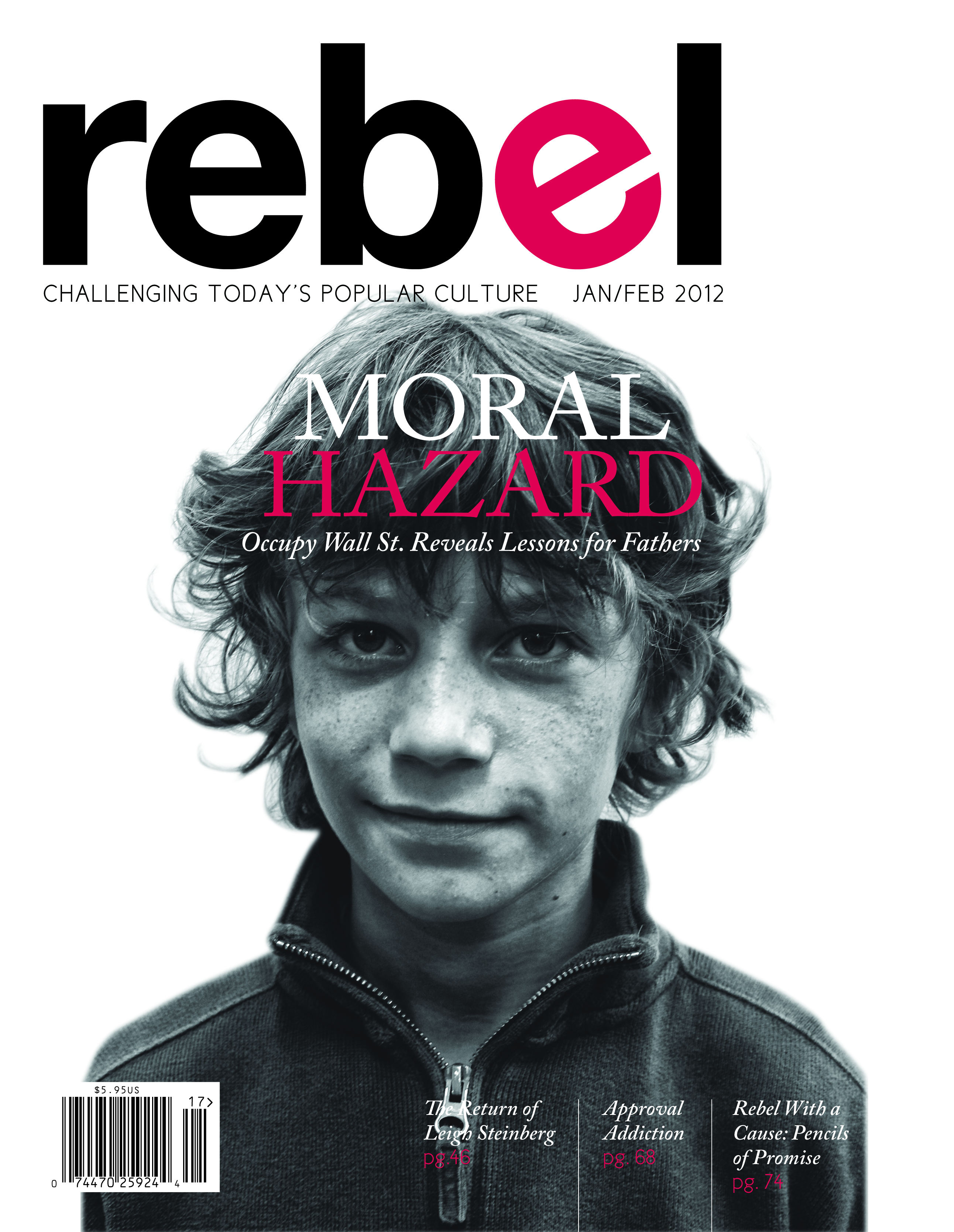
Do you have what it takes to be a rebel? Well, you can easily say yes if your name is Rick Cabral, CEO of Rebel Media, LLC. and publisher of Rebel magazine. The magazine is on a mission and so is the CEO of the company that publishes it. Started by a group of men with no prior publishing experience, one of Rebel’s mission “is to have men ask deeper questions about their life purpose and their interdependence to others.” A noble mission, but not an easy one to execute. However, Mr. Cabral, a rebel with a cause, is determined to make a go from the magazine (and all the additional channels) regardless of the hurdles and is enhancing Rebel’s business plan to ensure it is well set for the future.

So, in the typical Mr. Magazine™ Interviews style, first the soundbites followed by the entire interview revealing the story behind Rebel the magazine and the man:

The Soundbites:

On the purpose of Rebel magazine: To shine a spotlight on some of the false masculine stereotypes and behaviors, or thought processes that have become accepted cultural norms for men today.

On the publishing industry today
: The publishing industry is fraught with land mines – particularly for a self-published men’s magazine, launched in this tough and prolonged economic downturn.

On the business model of Rebel
: Until 2012 – Rebel took no advertising revenue, we provided free advertising space to our growing base of charitable and brand partners – some of which were very well established, while others were in need of, and deserving of, a voice in our publication.

On who Rebel is: Someone who represents human imperfection and all the truth that statement implies.

On the toughest hurdle so far: The most difficult challenge for us at Rebel has been without a doubt…distribution.

On the future of print in a digital age: Today, print still dominates, while digital supports that. That trend will reverse, and likely sooner than later

And now for the entire interview with Rick Cabral, CEO of Rebel Media, LLC.

Samir Husni: When you hear the word Rebel, you do not think of a magazine devoted to fathers and fatherhood… What is the story behind Rebel?

Rick Cabral: Well to be honest, Rebel is much more than a magazine about fathers, although fatherhood and the responsibility associated with that title, grace the pages of the publication frequently and we dedicate a feature piece to “fatherhood” in each issue. But Rebel provides readers a fresh perspective on a variety of topics such as: cultural interests, value based living, social responsibility, career and family challenges, relationships, sports, entertainment and more.

Rebel has an interesting history since the founding partners had no previous publishing experience. The magazine and overall mission really began as a response to my partners and I looking for a channel in which to reach men in a more authentic fashion. We hoped to shine a spotlight on some of the false masculine stereotypes and behaviors, or thought processes that have become accepted cultural norms for men today. We thought maybe we could encourage men to examine how they interact in the world, and/or evaluate their broader life purpose. We also hoped to inspire men through “real world” examples of other men, we like to call – ‘Rebels With A Cause’ – who are making an extraordinary impact on the lives of others through their work related endeavors, philanthropy, entertainment, humanitarian and/or cause related initiatives.

I guess to sum it up – by examining broader cultural paradigms, personal character and values, relationships, and ethical and moral issues – we hoped to have men asking deeper questions about their life purpose and their interdependence to others. We hoped to inspire individuals to get proactively involved in serving the interests of others before themselves and through our editorial content more accurately represent what men are experiencing in today’s cultural climate.

SH: So many other magazines aimed at fathers (and men) were published in the past and with rare exceptions all failed.  Why do you think Rebel will have a different future?

RC: Well again – fatherhood is only one aspect of our overall editorial – so I think Rebel has a much broader appeal to men in general, when compared directly to publications focused solely on reaching fathers. Rebel is a very unique publication – certainly a dramatic departure from traditional men’s magazines – which have been more focused on external issues such as fitness, grooming or say, fashion. We are not opposed to that per say, but we thought men today are facing a variety of personal and professional challenges in our modern world, and we tried to create a publication that more accurately reflected that.

One of the more interesting and unexpected aspects to Rebel since its inception is the response we get from female readers who continue to read and subscribe to the magazine and purchase it for their sons, husbands or brothers – we have a couple of interesting features called ‘VS’, and ‘Women on Men’, in which women have an opportunity to talk directly to our male readers, from their perspective, about a variety of subjects, in a very open and authentic way. Men always want to know what women are thinking anyway, so we thought this would be a great avenue to challenge gender perspectives and positively impact relationships in an sophisticated and edgy format.


SH: Funding and lack of advertising have always been cited as the number one reason for new magazine’s failure.  How are you dealing with funding and advertising for and in Rebel magazine?

RC: Very true – the publishing industry is fraught with land mines – particularly for a self-published men’s magazine, launched in this tough and prolonged economic downturn. It has been a challenge to say the least. Rebel is privately financed, which has given us autonomy to create this type of publication. I’m not sure the same could be said if this magazine were developed under a large media umbrella. But it also has required a different approach to both advertising and/or brand partner relations.

Rebel started out with the understanding that we could not succeed operating as an island. We also understood the financial ramifications of starting a magazine, and the distribution pitfalls that come along with it. We were determined to establish “like-minded” partner relationships that would ultimately become win-win situations for all involved. Until 2012 – Rebel took no advertising revenue, we provided free advertising space to our growing base of charitable and brand partners – some of which were very well established, while others were in need of, and deserving of, a voice in our publication. By working together, Rebel has developed new distribution channels and in turn creating brand advocates through each of our partnership communities.

Rebel has also taken a unique approach to our brand partners – we are actively pursuing those companies who have committed CSR initiatives and want to showcase them in our publication. We aren’t so much interested in having brands advertise their specific products and services solely, but rather engage with our community and partner communities at a different level, by introducing our readers to their “good purpose” initiatives. This way, consumers begin to see these brands as more than just commodities and more as ally’s in the ongoing struggle to improve our communities, take care of those in need, or find solutions to social injustices where present.

Taking that thought a step further and we get to the heart of the Rebel mission outside of the pages of the magazine – that is our service work. Rebel has created a service calendar much like our editorial calendar, and it is being developed as we speak for the remainder of this year. We do this because we believe strongly in the idea of serving others – it is a core mission and we think it is as important as the work we dedicate to the development of our editorial content. By partnering with like-minded brands and charitable organizations, Rebel becomes a catalyst to assist others; not just by talking about solutions but by creating them and engaging directly in their outcome. This is accomplished with the help of our community volunteers, and we thank them for their time and commitment to our cause work. There is so much need out there right now – we are just scratching the surface of our collective potential. Through these Rebel sponsored or co-sponsored initiatives we can bring the power and reach of our brand partners to positively and dramatically impact the lives of others in deeply personal ways.

SH: If you have a magic wand to strike the magazine and a human being comes out from the ink on paper pages, who will that person be?  Please describe.

RC: Well I think the way we would approach that is to say that the individual who walks out of our magazine is someone who represents human imperfection and all the truth that statement implies – because all of us, at our core, are a unique and specific piece of the greater whole. All of us are alike in that fact that we are a work in progress – we have made mistakes we wish we could erase, probably have been the beneficiary of a blessed moment or day, maybe we’ve experienced the gain or loss of loving another, or hope to be someone remembered for the good we brought to those around us. I would like to think the human being who walked out of our pages would look something like the rest of us. You and me, each trying to do the best we can with what we have been given. So eventually we come to some understanding of why we were here.


SH: What has been the most pleasant moment in the history of the magazine launch so far?  What has been your worst nightmare?

RC: Without question the most pleasant moment for our magazine came when we were notified that we had won two Folio Awards back in October.  I remember it so vividly, because all of the staff, as well as my partner and I were at a point that we were thoroughly exhausted from the last 12 months since launching our publication.  We had submitted one of our magazines to Folio back in May, 2011, and felt that we had created a magazine unlike anything in the industry, however, finding out that we were being recognized on a national scale sent a surge of gratitude through our entire office.  The timing of our awards could not have come at a more appropriate time for Rebel.  

I hate to call it a nightmare, but the most difficult challenge for us at Rebel has been without a doubt…distribution.  Being independently published poses obvious financial obstacles that larger publishing houses may not have.  With that being said, we have spent a tremendous amount of energy trying get Rebel and its unique content in as many hands as we can.  Our print circulation has ranged from 20,000 to 35,000 per issue, and we’re finding that through our combined digital distribution(currently over 500,000) we can effectively and inexpensively reach a fairly large audience.  

SH: You’ve started in print and now you are adding digital editions on the tablets.  What are your futuristic plans?  Are you going to be digital only? Both?  What about the future?

RC: We recognize the landmark shift that is occurring within the publishing industry and the importance of titles to provide their content across all platforms and not just in print. We envision our iPad or tablet digital edition eventually playing a greater role in expanding our circulation and becoming an important revenue stream. Today, print still dominates, while digital supports that. That trend will reverse, and likely sooner than later, our iPad/tablet digital publication will become the primary driver within our model and print will transition into a supporting role.

SH: What makes Rick tick and click every morning?  What makes you say wow, I love my job!

RC: If you were to ask anyone that really knows me they would tell you that it doesn’t take a lot to get me going in the morning.  Typically, I am up by 4am and getting on with my day.  What keeps me going and makes me say, “I love my job,” is the responses that we get from readers that let us know that what we have embarked on at rebel, is making a difference.  So whether it is the 65 year old war veteran who found our magazine at a hospital and immediately offered his assistance in moving our message forward, or the divorced mother from New York City that was so moved by what she read in our magazine and bothered by what traditional men’s media discusses that she bought a subscription as a Christmas present for her 13 year old son.  It is these and countless other stories that inspire me to get up each day and try to produce content that will help men become better men; better husbands, better fathers, better friends and/or leaders in their community.

SH: Thank you.  

h1

Introducing the All New Mr. Magazine™ Website, Blogs & Consulting Services…

January 16, 2012

The new year brings complete renewal for the Mr. Magazine™ website, blogs and consulting and research services. The website www.mrmagazine.com has a new look with links to all of Mr. Magazine™ blogs. The Mr. Magazine™ blogs are now divided into the different areas of interest to readers and users of Mr. Magazine™ websites and services. The sites were completely redesigned and a new logo has been introduced. The new logo, designed by Mr. Magazine™ webmaster and managing editor Allen Thigpen, reflects Mr. Magazine™’s love of magazines and his side-kick love of neckties. Click on the image below to see the full logo “experience.”

The new website is now linked directly to nine sites that are organized as such:

The Mr. Magazine™ Blog

Mr. Magazine™ Interviews

Mr. Magazine™ Consulting and Research Services

Mr. Magazine™ Press

Mr. Magazine™ Launch Monitor

Mr. Magazine™ Books and Links

About Mr. Magazine™

Magazine Innovation Center


ACT Experience: The Magazine Innovation Center’s Amplify, Clarify and Testify Annual Experience

I hope that you will find the new website and blogs useful and helpful. As I always tell folks, we are no longer just content providers, we have to be experience makers. I hope you will enjoy this new experience.

h1

Mr. Magazine™ (Samir Husni) Interviews (3): The Magazine Industry’s Cup? Half Full or Half Empty. Listen to the Experts

January 13, 2012

The Magazine Innovation Center at The University of Mississippi’s Meek School of Journalism hosted the ACT 2 Experience last October. We asked 17 media experts who attended the ACT2 Experience their opinions about the future of the printed word in a digital age. Click on the link above to watch and listen to the experts’ answer to the question “How do you see the magazine industry’s cup, half full or half empty?”

The experts are, in order of their appearances:

1. Sid Evans, Group Editor
Time Inc., Lifestyle Division

2. Bob Sacks, President
Precision Media Group

3. Vito Di Bari
Innovation Designer and Futurologist

4. Mark Pasetsky, Founder
Cover Awards

5. Phyllis Hoffman DePiano, CEO
Hoffman Media

6. Roy Reiman, Founder
Reiman Publications

7. David McDonald, CEO
True North Custom Media

8. Will Pearson, President
Mental Floss Inc.

9. Jeremy Leslie
Editorial Designer & Founder
magCulture.com

10. Sue Roman, President
The Taunton Press

11. James Elliott, President
The James G. Elliott Co., Inc.

12. John Harrington, Partner
Harrington Associates

13. Franska Stuy, Editor in Chief
Libelle

14. Frank Anton, CEO
Hanley-Wood

15. Scott Crystal, Former President
TV Guide

16. Steven Kotok, President
The Week, Felix Dennis Publications

17. Kent S. Johnson, CEO
Highlights For Children Inc.

Thanks are in order for all the experts and the journalism students at The University of Mississippi’s 2011-2012 magazine class who recorded the interviews.