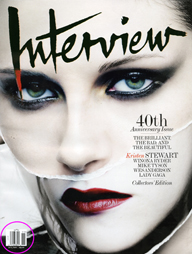

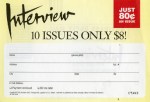
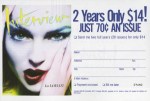
Can you imagine forking over $9.00 for one issue of a magazine and being welcomed inside with an invite to get the entire year of the magazine for only $8.00? But wait, there is more, if you double your order we will send you two years of the magazine for only $14.00. I am not making this thing up. I picked up the 40th anniversary issue of Interview magazine and paid my $9.00 cover price to be stunned (well, not really, since nothing surprises me any more about our industry) with all kinds of magazine subscription offers, such as 10 issues for $8 and 20 issues for $14. I understand the need to discount your subscription rates 20, 30, 40 and even 70% of the cover price, but to have a subscription rate lower than the price of one copy of the magazine, that is insane in my book. Interview, your subscription cards spoiled the beauty and value of my 40th anniversary issue. You owe me a one year subscription and an extra issue!

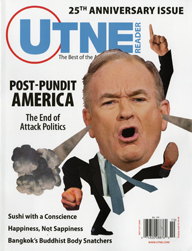
On the other hand, Utne Reader has increased the size of the magazine, the cover price and the subscription price. Putting their money where their mouth is, the magazine decided to go after customers who count and who are willing to pay the real price of the magazine. No more discounts. The difference between the July/August prices, and that of September/October is really stunning. (I know I just said earlier that nothings surprises me any more, but this one was a pleasant surprise.) The cover price is now $6.95 up $2 from the previous one, and the subscription rate for six issues is $36.00 up from $9.99. Check it out for yourself and see how some folks are aiming to make their money from the customers who count: the readers.


Archive for the ‘News and Views’ Category

A Smart move? In the case of Interview, I doubt it; Utne Reader, yes indeed.
October 15, 2009What will you do when your magazine reaches “over capacity?”
October 14, 2009Nothing, because it never does. As for some social networks, well, they do and here is the proof positive from my own twitter page: “Too many tweets! Please wait a moment and try again.”

Folio’s Tony Silber on the Magazine Innovation Center
October 13, 2009 On his Folio’s magazine blog, Tony Silber, general manager of Red 7 Media wrote yesterday the following blog: Magazine Innovation Center Offers Valuable Discussion
Inaugural event tackles micro, macro questions facing publishing. Click here to read Tony’s blog.
The verdict from Tony, “The Innovation Center, with its academic ambiance and its pro-print ethos, proved in its first event to be a valuable place to work through the key questions facing both individual publications as well as the big macro issues as well.”
Picture: Tony Silber during his talk at the Magazine Innovation Center meeting at the University of Mississippi.
Words of Wisdom from a sign on the wall at Western Horseman magazine
October 13, 2009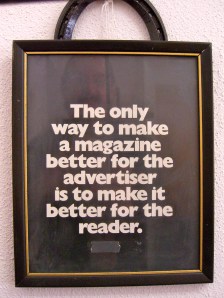
You can call that a WOW moment, or like I like to say a “Words Of Wisdom” moment. I was visiting Western Horseman magazine yesterday when a sign hanging on the wall of one of the offices captivated my attention. It was, appropriately, hanging from a horseshoe frame. I was told that the sign has been in the building since the early days of the magazine, which, by the way, will celebrate its 75th anniversary January 2011. Those simple WOW words say: “The only way to make a magazine better for the advertiser is to make it better for the reader.” A great motto to follow yesterday, today and tomorrow.
The picture on the right is of the sign on the wall, below is a picture of the first issue and 60th anniversary issue of Western Horseman and the iconic headquarters of the magazine in Colorado Springs.


Thinking of Brand Expansion? Read what the Food Network’s 100 million households wanted as a Brand Extension…
October 9, 2009A magazine. That’s what. An ink on paper magazine. Read on…



The prophets of doom and gloom were busy last week celebrating the news of the death of four magazines. In fact, some went as far as reporting the death of magazines. Yes, as one such prophet called me to ask about my opinion “now that magazines are dead.” Not one or two magazines, just magazines are dead.
Well, to use a famous quote from years gone by, the news of the death of magazines has been greatly exaggerated. In keeping up with my philosophy and promise that I posted in the beginning of this year, I will continue to report the good news of our industry and the news that celebrates our newborns, innovates every day and amplifies the future of print.
Food Network magazine is a great example of the aforementioned criteria. I asked Vicki Wellington, the magazine’s publisher two questions regarding the magazine and the category it serves: Food.
This new born that is barely one year old, Food Network magazine launched last November with a 300,000 rate base. It will celebrate a ONE MILLION rate base this coming January. Talk about amplifying the future of print. I asked Ms. Wellington:
SH: The November issue of FN magazine is more than 200 pages and carries three covers one for each food entry (main, side, and dessert)…what is the secret of your success during the period of other food magazines shutting down?
VW: Food Network Magazine launched at the right time with the right idea: we capture the spirit, fun and accessibility of the network and it’s celebrities – the rock-star chefs. We take an accessible, fresh and modern approach to entertaining, cooking, and eating, and it is all filtered through the lens of this diverse group of chefs, who give the magazine and the brand, an approachable, unique personality. People smile when they think about Food Network Magazine; it’s like a friend they already feel comfortable with and want to spend time with.
We did quite a bit of research before launching and knew what Food Network viewers expected from our magazine – they wanted a magazine that would be informative but not intimidating, offer behind-the-scenes info about their favorite chefs and shows, as well as great recipes, tips, tricks and news. The bar was set high but we delivered on their hopes: in less than one year, we’ve more than tripled our rate base and are going to one million with our January issue, based completely on consumer demand.
SH: Are we going to see more of the established magazines giving way to the new ones and what do you think is the future of new magazine launches?
VW: I think Food Network Magazine definitely changed the model for launches. This was already a well-respected, multi -platform brand with a viewer-ship of nearly 100 million households that felt passionately about it – and when asked what brand extensions they wanted, the overwhelming response was that they wanted a magazine! We did a lot of research and introduced two newsstand-only test issues, from there we carefully gauged consumer and advertiser interest, and we ended up beating every benchmark we set for ourselves in record time on both the circulation and advertising front.
Magazines need to find that unique niche and give readers what they want. A magazine with a new, unique point of view will connect with readers. And when readers are connected and responsive as ours are, marketers are excited to get on board.
SH: Thank you.
To experience the feel and look of the November’s multi cover click here.
September has been a great month: 71 new magazines, Magazine Innvoation Center approved and its first meeting a success…
October 1, 2009




September 2009 will go into my history books as a great month. More than 71 new magazines were launched, the IRS, the State of Mississippi and the Institute of Higher Learning (the body that governs the public universities in the State of Mississippi) have approved the Magazine Innovation Center as a charitable, not for profit organization on the campus of The University of Mississippi, and the first meeting at the Magazine Innovation Center took place for the first time last week.
But first news first. September witnessed the birth of 71 new magazines from which 18 are published with a frequency of four times or higher. The total number of magazines that have started in the first nine months in this year of doom and gloom has reached 528 and counting. Compare that to a grand total of 685 new magazines for the entire 2008 calendar year. From the 528 new magazines at least 138 titles have a frequency of four times or more.






The September titles offer a mix of special issues and one-shots celebrating the life of the late Senator Edward Kennedy, President Lincoln and basketball star Michael Jordan. Others included brand extensions such as Cesar’s Way, from the guy who brought us the television program The Dog Whisperer, Dwell’s magazine Make it Yours, and Shooting Times’ Livin’ the Dream (with four separate covers).



However a lot of new and refreshing ideas hit the newsstands for the first times, including but not limited to H+, Toast, WWII Quarterly, Ink Junkie, Evolo, Watch Journal and The Flyfish Journal. Not to be left behind is Marvel’s latest entry in celebration of Fashion Week in New York City: Models Inc. with two separate covers. Take a look at the images of those magazines above and make sure to make a trip to your nearest newsstands to buy a copy or two. Our industry is still well, alive and kicking… Just look at the other side of the coin, for every tail there is a head. Do not dwell on the tail, look at the other side. Be creative, be innovative, be a publisher of a necessary, sufficient and relevant medium and you will see the light at the end of the tunnel that is not the train coming.
As for the rest of the great news of September, the Magazine Innovation Center is now a reality and you will be reading more information about it in the near future. The Internal Revenue Service has approved MIC as a Not for Profit organization under Section 501 (c) (6). In addition the State of Mississippi has approved MIC as a charitable organization and the Institute of Higher Learning for the State of Mississippi has approved MIC as a center in the School of Journalism and New Media at the University of Mississippi.
In addition, MIC hosted as its first activity the Arthritis Today’s Advisory Board meeting on September 24 and 25. (More on that in a later post).
So, excuse my bragging, but I was told long time ago when I moved to Mississippi, “if it is true, it ain’t braggin’.” So next time you are feeling down and the news is all about doom and gloom, visit a newsstands, pick up a new magazine, sit back, relax and enjoy. Still feeling down, drop me an e mail at samir.husni@gmail.com and we can start the conversation about the three ships that help us cruise our future: ownership, showmanship and membership. All the best for now and best to all. Stop reading and go to your nearest newsstands. Spend some money and stop reading the free stuff…we have to be in the business of selling and buying content. To paraphrase the famous Mississippi saying, “if you don’t eat catfish we will both starve,” if you do not buy a magazine today we will all suffer. A good magazine should not go to waste…go buy one today.
Keeping Southern Living magazine Southern: The Mr. Magazine’s™ Interview with Southern Living’s Editor in Chief Eleanor Griffin: We are born and bred Southerners and We Will Always be Based in the South
September 26, 2009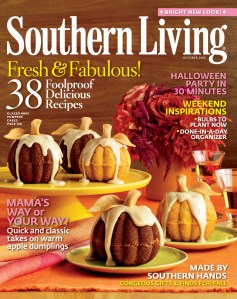 Southern Living, the south’s largest magazine, is sporting a new look this week. The Time Inc.’s southern publication is under the helm of a woman editor for the first time in its 43 years history. Eleanor Griffin, editor in chief, of Southern Living, a native southerner, came to the magazine from its now departed sister publication Cottage Living, the magazine she founded at the company once know as Southern Progress. She has one mission in mind: Keep it Southern.
This is the second magazine that Time Inc.’s Lifestyle Group restyles and redesigns in less than two months. Last month it was Cooking Light, this month it is Southern Living. The pace of change begs the question why and why now? I asked Eleanor Griffin this question and a host of other questions including the one that is on every southerner’s mind: are those Yankee New Yorkers messing up with our Southern Living and they moving the magazine up North?
Well, here are the headline sound bites (or what Eleanor refers to as bumper stickers) from my interview with Eleanor Griffin followed by the usual informal and lightly edited interview with Ms. Griffin.
Eleanor Griffin’s Bumper Stickers:
We are born and bred Southerners and we will always be based in Birmingham, Alabama
I am not messing with the DNA of the magazine. I’m tinkering a little bit more with the presentation.
We also talk about “Keeping it Southern” because I never ever want to be just another service magazine. I want to always, always be Southern Living.
Time Inc. is fertilizing us and I mean that in a positive way, no negative connotation. Time Inc. knows enough to let us do what we do best.
Southern Living still swings a pretty big bat in ad revenue and circulation.
The fun challenge here is to edit a magazine for people with shorter attention spans but still give them the richness they look for in a magazine like Southern Living.
No one has that differentiated Southern voice like Southern Living does.
New York (that is Time Inc.) recognizes that yes, they’re going to help us, but we know country ham and biscuits, we know barbecue, we know Southern football.
I want to seduce the reader, and I mean that in G-rated way. I want to give them something pleasurable, I want to give them a memory, I want to give them an experience.
 And now for the Mr. Magazine’s™ interview with Eleanor Griffin, editor in chief of Southern Living magazine:
SH: Why now? Last month Time Inc. restyled Cooking Light and now Southern Living and the rumor mill in the southern United States is that there is something going on at what used to be known as Southern Progress Corp. A lot of people are leaving, losing their jobs, and at the same time all of these changes are taking place. Is Time Inc. taking over literally and moving Southern Living from here to New York?
EG: No, we are still born and bred Southerners and we will always be based in Birmingham, Alabama. As for the change, primarily two factors come into play: one, Time Inc. is giving us the resources. They’ve given us resources to spend money and improve the magazine; and the second thing is coming in as a new editor, I’m old and ornery enough to want to put my stamp on the magazine and they gave me permission to do so. The reason we changed now is that it was part of my deal coming to Southern Living. I was born here and I worked here for 30 years, however I wanted to make the magazine a little more contemporary.
SH: I saw the October issue of Southern Living and somehow it had the feel of Cottage Living. Is it only me, or is this the plan?
EG: I will not argue with you. It’s still very Southern Living; that is our goal. But I’ve brought in a touch of informality–and that’s on purpose–to reach out to our younger readers. That’s intentional.
SH: How did you do that?
EG: We did the dreaded focus groups and listened very closely to my mail and my email, and I was hearing from a younger reader that said, “Oh, I like Southern Living, but I don’t have the time for it I used to. I’m too busy. I wish you had more for the novice.” Two of the areas they mentioned were that they assumed that we assumed they knew more than they did on cooking and gardening, so that’s how we started two columns. One of which is “Gardening 101” and the other is “Southern Living Cooking Class”. I kind of expanded that thought to kind of break it down a little bit. Then, I added “Half-Hour Hostess” to our food section, which is busy people who want to entertain after working all day, and we also added “Done In A Day”, which is a quick home project. I’m very proud of it because Southern Day Homes projects are Bedazzlers and sewing walls, and they look so dated. This is very, very stylish and much more contemporary.
SH: One thing that stopped me while flipping through the pages of the magazine is the fact that there is a lot of “How-To” with the exception of one or two of the feature articles, I asked myself, “Are we missing that storytelling aspect Southerners are known for? Are we moving toward a direction of making Southern Living a “How-To” magazine rather than a “Know-How?”
EG: That’s a great question: absolutely not. We did a lot of “How-To” in the magazine because I want a younger reader to know that you can find solutions in Southern Living, not just pretty pictures and recipes. I want her to know we have solutions. But to your point, you will see the soul of the South in this magazine. We had Pat Conroy, who we’ve gotten terrific response to in August. We had the Rosenwald Schools in September, and I’ve got the Everglades in November. So, granted, I didn’t have the signature soul of the South story in October, but if anything, you’re going to see more of that in the months to come. One example is we’re starting a new tradition in January that we’re going to have the “South Ten Comeback Neighborhoods.” I’m very pleased about that. You’ll see more historic preservation. We’re trying to do it all. My problem is that I don’t have the pages I need due to the economic and advertising situation. But, we’re very pleased that advertising started to come back in the fourth quarter because I want to do it all.
SH: One of the things that I have noticed with the October issue is that you’ve gone places where, if my memory serves me right, only for a brief, short moment in the history of Southern Living, which was back in the late 80s I think when the late Nancy Woodhall was the editorial director, dared to change the yellow color of the name to purple and other things and that did not last long. Do you expect any response from readers that all of a sudden the yellow nameplate is gone, it’s white. You have pink cover lines. Are you messing with Southern tradition? Or, as your editorial says, “Keeping it Southern?”
EG: We changed the logo color this month only because I had so much yellow on the cover that it was a little redundant. So we will probably 9 times out of 12 be yellow. This is done for graphic reasons. I am not messing with the DNA of the magazine. I’m tinkering a little bit more with the presentation. We will always be the South’s lifestyle authority. We will always be the go-to place for recipes, and how to put your house together. All we’re doing is freshening the delivery methodology so it’s delivered a little bit quicker and little bit more precise—not dumbed down—but, just a little bit quicker. As one of the biggest things I’ve learned from our reader mail, and speaking to these young women saying, “I love being a Southerner, but I don’t have time to do things that my mom did. I don’t have that kind of time. Can you break it down for me.” And that’s kind of the genesis of our signature column “Mama’s Way or My Way.” Sometimes we have a guilt thing that we Southern women want to do it all, kind of the Martha Stewart concept, and that’s not possible anymore. So “Mama’s Way, Your Way,” although it’s just starting out as a food column with the apple dumplings the traditional way, and a quicker way, that column may grow to come into other areas such as homes and gardens, for example.
SH: That’s a great column, if you really want to reach that dual audience, especially with the mother/daughter relationship that exists in the South.
EG: I speak in bumper stickers. With the staff we speak about “Modernized, but in Moderation” and we talk about “Update but not Upscale.” We also talk about “Keeping it Southern” because I never ever want to be just another Service magazine. I want to always, always be Southern Living. The fourth building block is a phrase we all use called “New Icon, Old Icon” and that’s that in every issue of the magazine, there should be some stories that an old icon, like on classic garden in Raleigh, North Carolina that speaks to a traditional reader, or a party in The Grove at Ole Miss, but then we have new icon stories on a loft in downtown Austin. So, the mix will always tilt toward old icon, but it’s just going to be leavened with some of the new icon things we’re doing.
SH: Which is something you mention in your editorial in the October issue that you’re respecting the past and looking to the future.
EG: Absolutely. Southern Living has been too successful for too long without my help. I am not going to come in and mess it up. My job is just to continue the vision and just update where we need to be. Two other areas that are we are updating, we’re doing a three page “Go To the Source” section where in the past we weren’t as helpful as we could have been on sourcing because we all want it at the click of a mouse now. We’ve also introduced a recipe index. And again, these are not earth shaking changes, they’re just ancillary improvements to make this magazine more useful everyday. The third thing I’m real proud of is we’ve introduced the “Made by Southern Hands” shopping page, and you being Mr. Magazine, know that one of the pages magazines do worst are the awful popcorn product pages. I think they’re a total throw away waste of time, but I feel like “Made by Southern Hands” so differentiates us because it’s showcasing Southern crafts people that someday may be the next Kate Spade. That’s a great way of presenting current things women love, which is shopping, but differentiating it that it’s got to be by a Southern, small, crafts-person. It’s not Michael Kors.
SH: I’m sure you’re hearing all the rumor mills that all the Southern Progress magazines are no longer a domain of their own, that the folks from New York are running the show. What message can you send to the mass audience, outside the media people with the rumor mills, that this 43-year-old magazine isn’t having its roots cut and grafting some new identity (heaven forbid, a Yankee one) in this magazine.
EG: I’d like to say that Time Inc. is fertilizing us and I mean that in a positive way, no negative connotation. We are in what’s called the lifestyle group at Time Inc., which groups us with Cooking Light, Real Simple, This Old House and because Cooking Light and Southern Living are two of the largest and most profitable titles, we are getting some resource dollars to continue to do what we do best. I’ve gotten some extra money to help me do some things that I need to like hiring a photo director, just kind of editorial improvements the reader may not notice the underscoring, structural changes, but they will notice they’re getting a better magazine. So, also you can say that you have 87 people who are born and bred Southerners down here, I’m a native Kentuckian. We do what we do so well, and we will continue to do it because New York recognizes that yes, they’re going to help us, but we know country ham and biscuits, we know barbecue, we know Southern football, we know all those touchstones that national cultural magazines don’t necessarily touch on and Time Inc. knows enough to let us do what we do best and they’ve been very helpful so far. Southern Living still swings a pretty big bat in ad revenue and circulation and that’s why Time Inc. has invested resources in us because the larger titles aren’t getting the money now, and I’m taking it and running with it and delivering a better product each month if I can.
SH: Is the restyling and redesign of Southern Living an attempt to catch up with the changing editorial?
EG: I think that’s a great point. I don’t like to say we’re written in sound bites, I would never say we’re simplified, but we are written a little bit punchier, and we’re working extra hard on reader entry points because I know one of your questions was we are getting used to seeing things on a screen and digitally with shorter attention spans. The fun challenge here is to edit a magazine for people with shorter attention spans but still give them the richness they look for in a magazine like Southern Living. It’s a bit of a balancing act, but I feel like it’s working out with both our signature one page columns and then the longer reads, which we’re known for and will continue to be known for.
SH: How are you going to enhance this new approach, this new print identity for the magazine, via the websites and the mighty arm of Time Inc. and AOL? What are doing to use technology to enhance the print edition of the magazine?
EG: First of all, we’re working very closely on our website, and we’re putting much more original content on our website. We’re doing more, particularly in our Homes area. Our galleries and our slide shows do extremely well. On the food side we are hooked up, as you probably know with MyRecipes.com, which leverages us with a much larger audience. Our Home stories, they start you with SouthernLiving.com and those leverage you to MyHomeIdeas.com, which is an aggregate website of our sister publications. Again, not only for more audience, but for richer experience on the site. I think just as Condé Nast had success with Epicurious and Concierge.com, the aggregate site, we’re having similar luck where we aggregate our sites into MyHomeIdeas and MyRecipes.com. That seems to be the way to go these days.
SH: So you differentiate between the magazine experience and the brand experience on the web?
EG: I’m a magazine junkie, not quite as much as you are, but I’m probably in the top ten, I surf a lot too. I think the best magazine websites may start out as a vertical, but they need to funnel you into titles with similar appeal. Because if I’m looking for a travel story or a recipe, I really don’t want to go to eight websites, I want it all at one click. In the same way, when you’re buying a air ticket, it’s such a pain to bounce back between Expedia, Travelocity, and Orbits. I like to go to Kayak and all those windows pop up with my ticket. Same thing with MyHomeIdeas and MyRecipes, I like to go to one site and it gives me aggregate from the title I like and other titles with a similar look and feel.
SH: What makes Southern Living, today, as relevant as it was 43 years ago when it was started for Southern women?
EG: I wish I could just read you my November editors note, which I just wrote about that very topic. We’re even more relevant today than we were 43 years ago because there are so many magazines, so many websites, and so many TV channels clamoring for our time. We’re the one voice that says, “Yes, we are a lifestyle, shelter magazine but we speak with a Southern accent, we know your values, we know your traditions, we’re edited for you, and again, a eye for the past and a respect for the future.” No one has that differentiated Southern voice like we do. I think that’s what makes us relevant, it will make us relevant 10 years from now.
SH: Are there any plans to reach that woman, besides the traditional web and print that will enhance that Southern Living brand?
EG: We’ve got several brand extensions going. We’re doing quite a bit right now in licensing. We have seven licenses for towels, furniture, paint, which we are expanding through licensing. That’s probably our number one brand extension right now for this magazine.
SH: What do you expect once this issue hits the newsstands on September 29th, what are you betting on from the audience?
EG: I’m expecting quite a bit of email based on what Mary Kay Culpepper (the departing editor in chief of Cooking Light magazine) based on her experience at Cooking Light. I’m expecting my very oldest readers to not email me, they’re going to write me and say they’re a little disappointed. But I think the vast majority are going to go, “It’s about time. Thank you for taking the magazine I love and just freshening it just a little bit, not messing with it, but just making it a little bit fresher for the busy life I live. I went through it with Cottage Living where some people though, “Oh, gosh, I thought it was going to be retirement cottages on the Coast, I’m not happy.” But the vast majority were, “I love this magazine.” And I expect the same reaction here. You can’t include everybody all the time, but I have a staff that has worked very hard for six months to really tune into where the modern young Southerner is going and we think we’re on tap to what you’re looking for.
SH: In the midst of all these changes, Southern Living is known for the white cake cover every December. Am I going to see my white cake on the December cover?
EG: I knew you were going to ask me that. I’m testing two white cakes. The answer is yes, but we’re testing an old icon which is a very traditional white cake and then we’re testing kind of a young sexy one and I’m going to see which one wins and go with my gut. But you will see a white dessert. I will put it that way.
SH: You are known to say that you want to “seduce the readers.” What is Eleanor Griffin recipe to seduce Southern Living readers?
EG: My thought is, Samir, it’s such a busy, hectic world and if you open up a magazine and I’m just giving them a cheesecake recipe, that’s fine but I feel I short-changed them a little bit. I want to seduce the reader, and I mean that in G-rated way. I want to give them something pleasurable, I want to give them a memory, I want to give them an experience. When I talk about transforming or transporting, a mediocre magazine gives you a cheesecake recipe and a paint color. Those are a dime a dozen. We talk about seducing the reader, but in a good way. We talk about transforming the reader a little bit too. It’s not just ink on paper. But a magazine that speaks to readers, transforms them and transports them either to a place they’d like to live or like to travel, that’s the best of print journalism. Solving a problem is good, but transporting and transforming is the goal of all good editors.
SH: Thank you.
Bob Sacks’ High Times: 35 and growing (no pun intended)
September 23, 2009

My friend Bob Sacks, of Bosacks.com fame, has had many jobs in journalism than I can count. However, one of his earliest print on paper inventions was the magazine High Times. The magazine celebrates its 35th anniversary with its November issue. I have decided to ask Bob some questions regarding this mile stone of the magazine that once was dear to his heart, but now he is “so long removed from High Times.”
SH: When you started High Times in the mid 70s did you foresee such a publication to continue publishing after all these years?
BS: No. The thought of the magazine lasting 35 years never occurred to me. I was 23 at the time and my viewpoint of the longevity of High Times or any of my other previous publications never occurred to me. Those were intense times for politics, for publishing, and the terrific young group that we assembled to produce that magazine. Everyone who was involved knew that High Times was a unique publication. Its over-whelming success was a remarkable thing to behold, but I never considered for a second a thirty-five year run. I would add that if you asked me then, I might have said sure, why not? But at the ripe age of 23, negotiating million dollar contracts, assessing quality issues, and the coordination of a large staff, I didn’t consider the future, but rather only the present conditions of how and when I was going to get the next issue to the printer.
SH: Do you think magazines like High Times are affected more or less with the internet and on line digital options?
BS: I am so long removed from High Times that I can’t answer that question with any specificity. I do know that the editorial focus today of High Times is actually very different than in the politically charged 1970s. I have no idea what they are doing now and how affected by the digital age they are. In general, I believe the success of any magazine; whether or not it is printed, digital or both; remains completely with the quality and uniqueness of the content. Quality content and the success that it brings is substrate indifferent.
SH: Does High Times still have a place in Bob Sacks’ heart?
BS: Oh yes, a very warm and affectionate place. Without High Times I would most likely have had a completely different career. Where else could I have had such a set of senior management responsibilities and learned the business at such a young age? All the staff empowered each other to perform in an industry where our publishing counterparts, for the most part, were twice our age. Our staff was intelligent, quick to learn, and resourceful. This was on-the-job training on the fly and in the heat of battle. It also affected my career in some very special ways. I knew at the time that I didn’t know everything that a true seasoned professional knew. That self-awareness was very helpful, and I have had a thirst for more knowledge ever since then. I believe because of that early experience I am still able to say when I didn’t know or understand things and ask for clarification or explanations. That kind of openness is the best way to grow and learn.
High Times was very much like a university experience. And the HT University graduates of the 1970s have spread wide, far and successfully in the publishing industry. Yes, those schooling years are very near and dear to me.
SH: Thank you Bob. And for those of you who sometimes wonder about my friend Bob and his “solutions” to our magazine problems, I hope this little history lesson from “the good old days” shed some light on what Bob was smoking, sorry I meant, publishing in the 70s. Enjoy and congratulations to High Times on a 35 years of growing in “?X@# on paper.”
In Celebration of New Magazines: Innovation Abounds Overseas
September 21, 2009
Every time I travel overseas, I find myself loading my suitcase (I always take an extra empty one) with a variety of magazines from all over the world. A lot of first issues, special issues and magazines that have innovative things that I feel obligated to bring back to the United States to show those who still have doubts about our future or the future of print in general. This time was no exception. I brought 70 pounds of magazines, 70 pounds of ink on paper, 70 pounds of new ideas and unique experiences that only magazines can bring to one’s values, visions and life.
Unlike some of our magazine editors and publishers societies that are willing to send their readers to websites celebrating and predicting the demise of the same industry they pretend to serve and cherish, most magazine editors and publishers overseas are devoted to promoting and celebrating the birth of new magazines and the survival of the established ones. Joining my friends from overseas, here is a celebration of the birth of some new titles that appeared on the world scene for the first time in the last few weeks:

Free Style Magazine: “The ultimate marriage between creativity and play,” writes Jason McGlade the magazine’s editor in chief and creative director in the first issue of the magazine. The round magazine that comes in a Frisbee is “full of delicious imagery and a melting pot of creative people who like to play.” The magazine’s staff is a “United Nations” in the making with offices and editors in Berlin, London, Milan among the few cities listed on the masthead. Freestyle Magazine is a must see, must have magazine and is worth every penny of the 15 Euros or British Pounds.

ESTELLE’S City Magazine Luxembourg: The bilingual English and French magazine wants “people to be curious.” The founder after which the magazine is named after, Estelle Sidoni, says that “she has the feeling that she never stops working,” but she is quick to add, “But I have found real freedom in my work, so it seems more like pleasure than work.” The magazine offers a “paradoxical mix of art and fashion, luxury and the humanitarian that (the founder) enjoys.” In addition the magazine provides a city agenda of Luxembourg, making it a must for any one planning to visit that part of the world.

LINDA.mode: While LINDA is not a new magazine in The Netherlands, its latest spin off LINDA.mode is sure is. In a typical LINDA style, the magazine is personal yet captivating, emotionally stunning and, for the lack of a better word, beautiful. And as if the magazine is not a must-have by itself, It comes with Patricia Paay’s CD “Who’s that lady with my man ’09.” If you have never seen LINDA. or flipped through one of its issues, it is not too late. The older the magazines the better it gets, and the more the spin offs the more passion to share.

Taste Britain: “The Best British Food & Drink.” As with the above listed magazines, Taste Britain is “a labour of love undertaken by a group of individuals entirely passionate about Great British food and drink,” writes Becky Ambury the magazine’s editor. She adds, “The British food scene has undergone a huge evolution in the last few years, with consumers demanding more, producers giving more and a rediscovered pride in the state of the nation’s food and drink. And it’s high time that there was a regular magazine to celebrate that.” Yes indeed, and what a celebration. Pick up a copy and enjoy some British cuisine tonight, tomorrow or the day after. Enjoy.

Living or Liv’: “Knowing, Showing,Going Places,” is the tag line of this new Dutch magazine that comes wrapped in a plastic sleeve with another cover printed on it giving the magazine the 3-D look it deserves and achieves. Liv’ as the magazine sans the cover is called promises a “new way of living” and takes you shopping in Oslo one day, lunching in Paris the other and sleeping in London yet on another day. And in an amazing frank approach to its content the magazine offers you the places to “Get Fat, Get Drunk, Get Poor and Get Laid.” The introductory cover price for the first issue is 4.95 Euros, one less Euro from its normal price.

Evita: The new beauty and health magazine published in Helsinki, Finland is the latest entry from Bonnier magazines to the Finnish market. Sporting a 180 pages for the first issue, the magazine, if nothing else, is a testament of bringing new magazines in the midst of very depressing economic times. However, the magazine looks more a beauty book rather than a health one. The name, on the other, I was told is short for E Vitamin, which we all know plays a big role in both beauty and health.

Helden: The magazine of blood, sweat and training. A combination of celebrity, personality and sports publication published by the famous Dutch television presenters Frits and Barbara Barend promises to be a glossy that is about men and women who have made their name in a sport. The quarterly (in Dutch) sells for 4.95 Euros and the first issue talks to Robin van Persie (from the Arsenal fame) and wife Bouchra about “their strong home, the secret of their relationship, nightly dinners and Robins career.”


Made of Japan: Saving the best for last this magazine is published in celebration of Onitsuka Tiger’s 60th anniversary. Onitsuka Tiger has “produced some timeless, heritage and classic designs that are still being worn today.” And this magazine is no exception. Published in both English and Japanese this magazine comes with the best binding ever (the stitching of the spine, like all treasured books of years gone by) however, the magazine makers left the magazine without the final cover wrap so readers can see the binding and feel the quality that lets you open flat any of the magazine’s over-sized spreads. Indeed it is a “unique publication” to celebrate a “unique occasion.” A doubt that any pixels on the screen can replicate this intimate experience with Made of Japan as the ink on paper can.
Three things all of the aforementioned magazines have in common: the passion of the publishers putting forth the first edition, the intimate must-have experience each one of the magazines promises to provide, and to top it all, the celebration of a new birth, a new magazine brought to the world of print that you can hold, touch, feel, smell and above all enjoy.
(The picture on top of this blog is from my hotel room at the Strand Hilton in Helsinki overseeing the Baltic River)
On the issue of “design catching up with editorial”: Christianity Today’s Mark Galli Answers Mr. Magazine’s™ Questions
September 17, 2009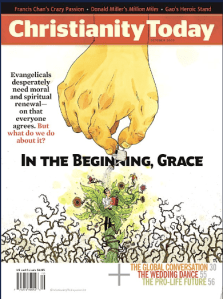
It must be the season to redesign. I have seen and heard about more redesigns of magazines this month than any other month that I can recall. The last to join the redesign crowds is the leading Christian magazine that was founded by no other than America’s leading evangelical preacher Billy Graham: Christianity Today.
In a press release from the magazine, David Neff, CT’s editor in chief says, “Redesign a magazine and you could disorient some readers. But we hope that the redesigned Christianity Today will quickly give the reader a better sense of orientation. We believe the magazine is easier to use and more thoughtful than ever.”
As with every redesign the expectations of the editors and the readers may or may not be the same. To find out why the redesign and why now, I asked Mark Galli, Christianity Today’s senior managing editor to expand on the editor’s statement in the press release and to tell me why they opted for the redesign now and what are some of the innovative ways they are doing with the magazine.
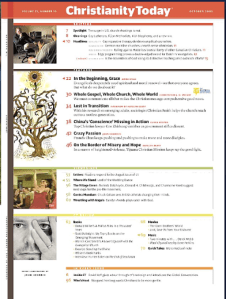
Mark was quick to tell me that “the better question would be, ‘What took us so long?’ In fact, editorial has run ahead of design, in terms of how articles are pitched, what topics we’re covering, and so forth. We’ve become an editorially younger and broader magazine in some ways, and our design needed to catch up.”
SH: Are we designing for design sake, or is there a method for the redesign?
MG: One of the goals of the redesign was to increase coherence. We want people to have a better grasp of the magazine’s structure so that they will instinctively know where they are, and where to go if they are looking for another type of article.
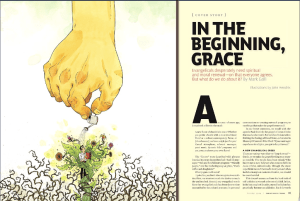
We begin, as we have before, with a news section, but now all our news pieces will be in this section, including the longer news pieces, which used to be put in the features area because of length. There will be exceptions to the rule–that is, when we judge that “news” has become a “feature.” This happened in the inaugural issue! At the last minute, I decided we simply had to include the story of the imprisoned Christian Chinese dissident; his life is literally on the line, and I didn’t feel we should wait another issue to publicize his case. But it will be the rare news piece that will make it into the features; we’ll keep all those together in the news section.
In addition, we now put all opinion pieces–letters, editorials, columns–in one place. Previously they were spread throughout the magazine. And we’ll continue keeping all review material together. In addition, these sections are color coded across the top, again to help with orientation. So now, the reader will always know where to go to read a certain genre.
SH: What do you consider are the innovative steps you’ve taken through this change at CT?
MG: Again, it’s a matter of design catching up with editorial. Take for example our expanded attention to younger readers: We’ve added a feature called “Who’s Next?” at the very end of the book. In one page, it introduces readers to someone who will have an increasing influence in our movement in the years to come. This ends the magazine on a forward looking note.
In addition, we’re trying to do some thing that can only be done in print. Our news section begins with a one-page, info-graphic intense summary of a news issue. In addition, factoids and quotes are stitched between columns of news. These are the types of things you cannot do as well online.
In addition, we increasingly see the magazine as a place where people in our larger community–evangelicalism–come to discuss, argue, debate issues of concern to the whole community. We still try to provide leadership though editorial–as expressed especially in our monthly editorial (a rarity in magazines these days), and by the subjects we choose to cover. But we are not a magazine just for evangelicals who agree with us. We are also a magazine of the broader movement. So we’ve inaugurated a feature called “The Village Green,” where we will have movement leaders present three view points on a different question each month. For example, in the October issue, we’re asking, in light of recent legislative and electoral defeats, where should pro-lifers put their energies in the months ahead–in works of compassion, in new legislative efforts, or what?
None of these efforts are innovative in the sense that they’ve never been done before. We’re merely taking tired-and-true magazine editorial ideas to integrate design and editorial ever more closely.
SH: How, if any, are you using digital to amplify the future of the printed magazine?
MG: We will continue posting our print articles on line gradually through the month after the print magazine comes out. Since we are in the middle of a online redesign, and since the economics of online publishing are shifting everywhere as we speak, we’re not sure how consistently we’ll do that in the future. How online and print work with one another is part of the discussion as we consider a redesign, which we hope to launch in January 2010.
SH: Thank you.
(Full disclosure: I have worked and consulted with Christianity Today Inc. for a period of more than three years from 2004 thru. 2007).


