Archive for the ‘Magazine Power’ Category

h1

Martha Stewart Living At 25: Leveraging The Personality, The Magazine, And The Cross Platform Selling. The Mr. Magazine™ Interview With Daren Mazzucca, Publisher, Martha Stewart Living.

May 4, 2015

“I believe that tablet access for all brands has kind of flattened out a bit; if you look at two or three years ago when we all believed that tablets were going to soar and some believed they would replace print, but that hasn’t been the case. The paper format is still the primary vehicle that women want to engage with. They curl up with it, take it with them, and tablets have pretty much plateaued in the marketplace.” Daren Mazzucca
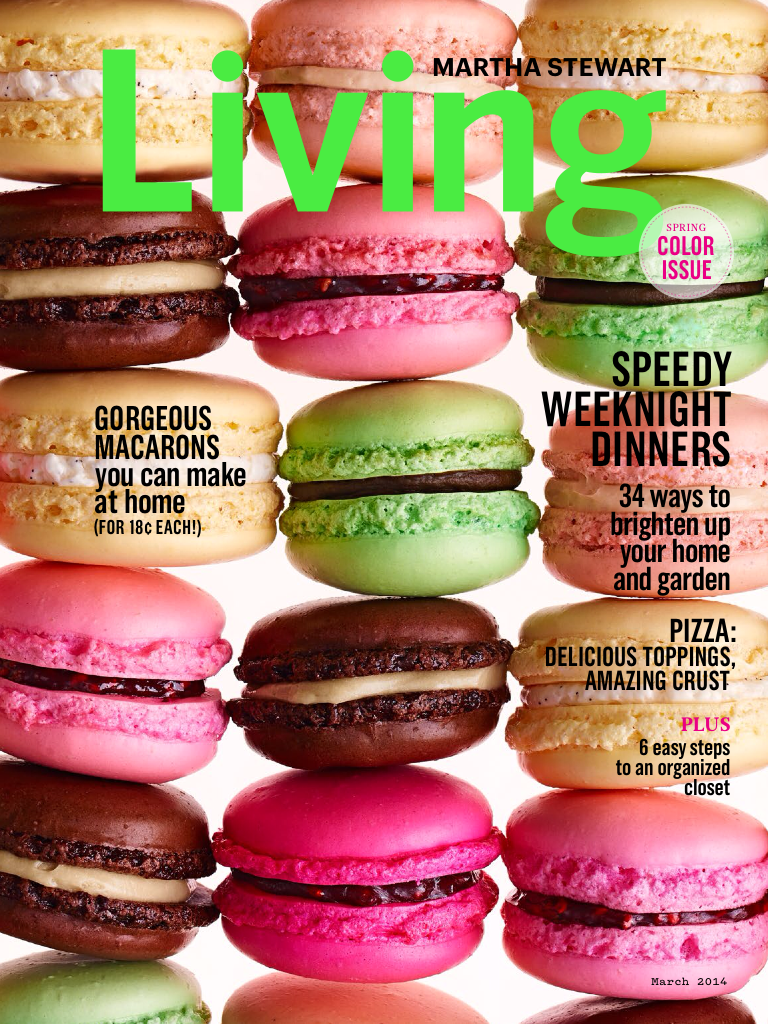
MSL cover Martha Stewart Living has always lived up to the dynamic personality of its namesake, staying true to its mission and focus: the creativity of the domestic arts. The magazine will celebrate its 25th birthday in 2016 under the masterful guidance of Meredith Corporation.

Meredith acquired the rights to Martha Stewart Living and http://www.marthastewart.com in October 2014 following a 10-year licensing agreement under which Meredith is responsible for sales and marketing, circulation, production, and other non-editorial functions of Martha Stewart Living and Martha Stewart Weddings magazines.

Daren Mazzucca, fresh from Better Homes and Gardens, where he also served as publisher, joined Meredith five years ago and has held senior sales leadership positions within the company. During his career, Daren has also worked at Good Housekeeping, Parade, Woman’s Day, Midwest Living and Country Living magazines.

I spoke with Daren recently and we talked about his first four weeks at the helm of Martha Stewart Living and the direction he saw the popular brand heading. If enthusiasm and excitement can catapult the compellation of properties that are held beneath the Martha Stewart umbrella successfully forward toward its 25th birthday, the brand should already be celebrating.

With collaboration and the resurrection of some favorite titles, Daren, along with the inimitable Martha Stewart and her editorial team, have some big plans for Martha Stewart Living. The future looks bright indeed for the brand and sunshades are definitely in order. Print has a definite champion in Daren Mazzucca and will surely thrive in the positivity of his attitude.

I hope you enjoy the Mr. Magazine™ interview with Daren Mazzucca, a man who thinks the tried and true value of the printed page may not be ready for the retirement pasture just yet.

But first the sound-bites:

On his most pleasant surprise during his first four weeks at Martha Stewart Living: I would have to say one of the biggest surprises has been how well-loved this brand is in the marketplace.

On his biggest stumbling block since coming onboard and how he plans to overcome it:
Right now a stumbling block or simply a challenge is getting to meet and know all of the MSLO (Martha Stewart Living Omnimedia) editors and doing so as quickly as possible and understanding how we can collaborate. And at the same time make sales calls and set a strategic plan in motion; so it’s that coordination of schedules.

On where he sees the future of celebrity-titled magazines heading:
I think it’s really all about the brand, and the personality which is Martha, translates into the brand-living. She sets the tone, but clearly Eric Pike, our editor-in-chief and his creative team, really fulfill that mission. The brand is really the front door to the world of Martha Stewart Living.

daren_mazzucca On how his relationship is with the brand’s namesake, Martha Stewart: It has been spectacular at this point. We’ve probably been together about six or seven times at different social settings. And they opened up their offices and home for a nice toast-and-get-together with the senior management team here and with Meredith and her editorial visionary team. It’s been a great collaboration.

On why Meredith removed all the bells and whistles from the digital entity and made it a straight replica of the magazine: I think it makes the most sense. I believe that tablet access for all brands has kind of flattened out a bit; if you look at two or three years ago when we all believed that tablets were going to soar and some believed they would replace print, but that hasn’t been the case. The paper format is still the primary vehicle that women want to engage with. They curl up with it, take it with them, and tablets have pretty much plateaued in the marketplace.

On doing anything differently to sell digital versus selling print:
Clients really want Omni-channel, cross platform opportunities. I really believe today that we lead with both together. So, they’re absolutely critical in the fact that Martha Stewart.com is a robust site that complements Martha Stewart Living, the print product. It really just gives us tremendous opportunity to be integrated.

On whether a brand like Martha Stewart Living could exist without a print component:
I don’t think so. (Laughs) I know that I answered that pretty quickly, but I really don’t believe so because when we talk to readers and marketers who buy it, they adore the printed product.

On why he thinks some media are still reporting on their own demise:
I don’t want to speak for them, but I think the issue there that you have to look at is their context when they use the word print. They may be talking about newspapers or weekly titles; it’s really more about what’s the context there.

On why he thinks we’re not doing more to promote print in this digital age:
I believe we are. In fact, at Martha Stewart, we’re launching four special interest line extensions that are starting soon. One is coming out in July, under the Everyday Food title, so we’re resurrecting the name and launching it as a stand-alone newsstand property. We are continuing to push out print products as extensions and bring them back.

On whether leaving Better Homes and Gardens, the largest consumer magazine in the country, took a huge weight off his shoulders: Perhaps. (Laughs) It’s wonderful to be at the crown jewel of the Meredith Corporation, which is Better Homes and Gardens; it’s an amazing brand that gets invited to be a part of every dialogue and discussion. What I do enjoy with this Martha Stewart Living opportunity is the fact that we can leverage the personality as well as the cross platform selling.

On whose idea it was to marry Meredith and the Martha Stewart brand:
That’s a good question. I’m not sure exactly who started the conversation, but I think both sides saw the benefits. Steve (Lacy) has said this; it’s very difficult in today’s marketplace to be a stand-alone brand. It’s very challenging, regardless of who you are. And when you can find opportunities to create new models that benefit both partners, that’s the kind of thing we’re pursuing and other media companies are pursuing too. I believe one has to think creatively that way.

On what he hopes to accomplish in a year:
We’re looking to create content opportunities that are rooted in creative insight for the reader first and then marry them up with an advertiser’s opportunity. I truthfully hope to fully benefit by having Meredith and collaborating with corporate sales, so we can put together great partnerships and deals.

On what makes him click and tick and keeps him motivated: Well, I have a family of five children; I’m highly motivated. (Laughs) What keeps me going is keeping up with technology, but also not losing a firm focus on family and togetherness and being with clients.

On whether he’s bothered by programmatic advertising or native advertising: They’re here to stay for the moment and it doesn’t bother me. Again, it’s learning the nuances of them and how they work in a media schedule. However, I think what’s tried and true has always worked too. We need to stay focused on that as well.

On why he believes it took the magazine industry so long to realize that print and digital have to coexist:
It’s been a rapid evolution. A lot has happened in a very short amount of time. And I think both sides had to adapt to that. Within our company it’s a very good synergy between the two. There are just a lot more tools in the toolbox.

On what keeps him up at night:
(Laughs) I don’t sleep much anyway, it’s a fast-paced world. What keeps me up is moving this brand, doing an exceptional job for Meredith and for Martha and the MSLO team.

And now the lightly edited transcript of the Mr. Magazine™ conversation with Daren Mazzucca, Publisher, Martha Stewart Living.
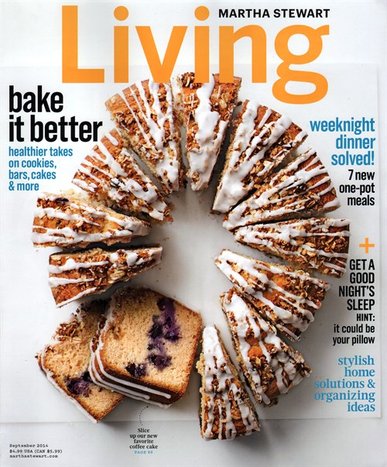
MSL cover2 Samir Husni: Daren, you’ve been four weeks on the job; what has been your most pleasant surprise so far?

Daren Mazzucca: I would have to say one of the biggest surprises has been how well-loved this brand is in the marketplace. I’ve been to several offices and I was at the New York Auto Show the day after I was announced and both clients and competitors were all acknowledging how much they loved the brand and that they were excited that it was part of Meredith and that I was going to be leading the charge.

I know that sounds a little self-serving, but the overall excitement in the industry for Martha and what she stands for really surprised me a bit. And I’ve been very pleased with that so far.

Samir Husni: And what has been the biggest stumbling block for you so far and how did you overcome it or how do you plan to overcome it?

Daren Mazzucca: Right now a stumbling block or simply a challenge is getting to meet and know all of the MSLO (Martha Stewart Living Omnimedia) editors and doing so as quickly as possible and understanding how we can collaborate. And at the same time make sales calls and set a strategic plan in motion; so it’s that coordination of schedules. We live in a world that’s fast-paced and everyone has a lot on their plates. The challenge has been making sure we’re all communicating as best as we possibly can.

I left a message just this morning for the CEO of MSLO, Dan Dienst, and I said that this week was a profound turning point; we’ve been having some really great engagement with Martha and her team overall and I feel like at week four, wow, we’ve made some great strides. I would say that that would be the challenges and the opportunities.

Samir Husni: Meredith now has Martha Stewart and Rachael Ray; where do you think the future of celebrity-titled magazines are heading? Do you think that it’s a trend that’s going to pick up and continue?

Daren Mazzucca: I think it’s really all about the brand, and the personality which is Martha, translates into the brand-living. She sets the tone, but clearly Eric Pike, our editor-in-chief and his creative team, really fulfill that mission. The brand is really the front door to the world of Martha Stewart Living. From her calendar that she publishes each and every month to her video plays on YouTube, as well as the buzz that she’s creating in the industry from a PR perspective in her social media settings.

It’s interesting to see. When you read about what’s happening with Dr. Oz and other personalities; at Meredith, we only put weight and stock into the brands, whether it’s Better Homes and Gardens brand, Rachael Ray brand or Martha Stewart Living.

Samir Husni: Martha is known in the industry as a hands-on magazine creator among other things. Judging from just these first four weeks that you’ve been there, can you expand on that? How is your relationship with the brand’s namesake?

Daren Mazzucca: It has been spectacular at this point. We’ve probably been together about six or seven times at different social settings. And they opened up their offices and home for a nice toast-and-get-together with the senior management team here and with Meredith and her editorial visionary team. It’s been a great collaboration.

I was recently at their Center for Living Gala which took place last week. She’s partnering with Mount Sinai, so I was able to participate in that. This week, Martha was hosting and emceeing the Matrix Awards, and she was beautiful and overwhelmingly excited to be there and looking to collaborate with us from a client’s perspective. She’s looking to help; she really has her finger on the pulse, and she’s been a great partner. She gave me a wonderful tour of her studios and test kitchens and talking to the editorial team, they tell me her input is greatly valued and she usually amplifies and makes things even better. And we’re excited about that. Does that make sense?

Samir Husni: Yes, it does. And you’re still in the honeymoon period. (Laughs)

Daren Mazzucca: (Laughs too) No doubt, but truthfully I’ve spent more time with her and her team than I’ve ever spent with someone else at any other brand during the first four weeks. We’ve been spending a lot of time together.

Next year is our 25th anniversary for the brand, the magazine, and so we’ve been brainstorming and talking about opportunities and initiatives rooted in reader benefit or user benefit and thinking about how now is the time to put those ideas in motion for greater sales success in 2016.

Samir Husni: One of the first things that Meredith did when they entered into that partnership was the announcement that they were removing all the bells and whistles from the digital edition and as of May it would be a replica of the magazine. What’s the philosophy behind that?

Daren Mazzucca: The straight-from-print edition, from a tablet perspective?

Samir Husni: Yes.

Daren Mazzucca: I think it makes the most sense. I believe that tablet access for all brands has kind of flattened out a bit; if you look at two or three years ago when we all believed that tablets were going to soar and some believed they would replace print, but that hasn’t been the case. The paper format is still the primary vehicle that women want to engage with. They curl up with it, take it with them, and tablets have pretty much plateaued in the marketplace.

Clearly, our newsletters continue to do exceptionally well; readers want to know the inside track and what’s happening with Martha and the brand, so they love our newsletters; they love search and our recipes, so it’s really aided the brand overall.

A part of the discussion around the tablet issue is also that by making this conversion, it has enabled us to go to other platforms. That actually enabled us, over the long-term, to potentially grow that reach, because before then we really weren’t able to do that. If you think about things like Next Issue media and other platforms, this gives us a greater opportunity to do that with the tablet version.

Samir Husni: According to comScore; you have almost the same monthly unique visitors as your readership, ten million readers for every issue, compared to about eight million monthly uniques; how do you think that relationship between the unique visitors and the readership is going to help you in your job as a publisher of a brand? Are you doing anything differently to sell digital versus selling print?

Daren Mazzucca: Clients really want Omni-channel, cross platform opportunities. I really believe today that we lead with both together. So, they’re absolutely critical in the fact that Martha Stewart.com is a robust site that complements Martha Stewart Living, the print product. It really just gives us tremendous opportunity to be integrated.

I’m working very closely with our corporate digital leadership here at Meredith Corporation to make sure that we leverage all of the view ability across both our web traffic as well as others, which is what marketers are looking for when it relates to scale. If they just want to tap into Martha Stewart Living we can do that, but the great benefit of being a part of the Meredith National Media Group is that we can scale things up.

Did you know that across the Meredith digital network we reach at least 70 million uniques; that’s the latest number that I’ve seen.

Samir Husni: 70 million across the entire company’s digital network?

Daren Mazzucca: Yes, across the entire Meredith digital network. That’s all of our different brands and properties.

Samir Husni: As we talk today, what’s the advertising revenue in terms of percentages between digital and print, mainly for the Martha Stewart Living brand? Are you still 90% print or is that number moving a little bit?

Daren Mazzucca: I don’t have that exact number today, but again, it’s the leverage of it across the network. One of the things the digital leadership is trying to do is reach the goal of 100 million uniques.

Samir Husni: So you’ll have 100 million in readership, because don’t you reach 100 million American women?

Daren Mazzucca: Yes, 100 million women, but if you’re talking about them in a digital platform only, now we’re at 70 million uniques, the goal we’re aiming for is to get to 100 million uniques.

Samir Husni: In one way or the other, would it be accurate to say then that the Meredith brand is in almost 1 out of every 2 households?

Daren Mazzucca: Yes, absolutely. It’s tremendous.

Samir Husni: So, how are you using that to sell more of the brand?

Daren Mazzucca: From Martha Stewart digital alone, we reach 32 million monthly uniques, so it’s nice to have that built-up traffic to be able to offer to an appliance manufacturer or to an automotive manufacturer. So, again, we’re using that scale and it’s great to have it, as opposed to having a million unique visitors. The fact that this brand has 32 million monthly digital uniques and then has scalable opportunities that Meredith can run with is phenomenal. If someone wants digital-only, we’re leading with that and then building in a print concept. And conversely, with every print proposal we’re taking out to marketers, we are weaving in a digital component as well.

Samir Husni: One of the majorly persistent questions that I hear from industry people is can a brand today, like a Martha Stewart or a Better Homes and Gardens exist without its print component?

Daren Mazzucca: I don’t think so. (Laughs) I know that I answered that pretty quickly, but I really don’t believe so because when we talk to readers and marketers who buy it, they adore the printed product. Just yesterday I was at an appliance company’s offices and when we walked in, from the receptionist to the assistants and laborers in the building, they glow; they light up when we hand the printed product to them. So, I really don’t believe so. Ask me 15 years from now, maybe that will change, but today the print is very much on the leading edge of the brand. It’s the front door, if you will.

Samir Husni: And I’ve seen that. In April we saw almost every major magazine company launch new titles. Meredith with Parents Latina, National Geographic with History, Bauer with Simple Grace; yet, why do you think that every time I pick up a newspaper, an Ad Age or an Adweek, they’re telling me that print is dead or dying or in decline?

Daren Mazzucca: I don’t want to speak for them, but I think the issue there that you have to look at is their context when they use the word print. They may be talking about newspapers or weekly titles; it’s really more about what’s the context there.

Samir Husni: Why do you think we’re not doing any more to promote the future of print in this digital age?

Daren Mazzucca: I believe we are. In fact, at Martha Stewart, we’re launching four special interest line extensions that are starting soon. One is coming out in July, under the Everyday Food title, so we’re resurrecting the name and launching it as a stand-alone newsstand property. We are continuing to push out print products as extensions and bring them back.

Advertising paging has been challenged, but the audience and demand as the 360 demographics revealed there’s still consumer demand for brands like Martha Stewart and Better Homes and Gardens in print. Marketers today have to cover off more bets than ever before and that has created an ad paging challenge, but demand has never been higher. And that’s why I also believe firmly that there’s a robust future for all of us. Consumers still want their magazines and content.

Samir Husni: You were the publisher of Better Homes and Gardens, the largest paid consumer magazine in the country, and now you’re at Martha Stewart Living; am I hearing this excitement in your voice because you took that big heavy load off of your shoulders, because you went from the largest print magazine in the country to one of its younger siblings?

Daren Mazzucca: Perhaps. (Laughs) It’s wonderful to be at the crown jewel of the Meredith Corporation, which is Better Homes and Gardens; it’s an amazing brand that gets invited to be a part of every dialogue and discussion. What I do enjoy with this Martha Stewart Living opportunity is the fact that we can leverage the personality as well as the cross platform selling. And we talk about sparking creativity and working more collaboratively with our corporate counterparts. It’s just a tremendous opportunity for us at Meredith to use our talents and skills to bring this brand to new levels and new heights.

Samir Husni: Whose idea was all of this? Was it Martha Stewart who came to Meredith saying, guys, I need help, or was it Steve Lacy (Chairman of the Board of Directors of Meredith Corporation and Chief Executive Officer with media and marketing operations) going to Martha Stewart saying that Meredith could help her brand?

Daren Mazzucca: That’s a good question. I’m not sure exactly who started the conversation, but I think both sides saw the benefits. Steve has said this; it’s very difficult in today’s marketplace to be a stand-alone brand. It’s very challenging, regardless of who you are. And when you can find opportunities to create new models that benefit both partners, that’s the kind of thing we’re pursuing and other media companies are pursuing too. I believe one has to think creatively that way.

And it’s not just in the magazine world, Samir. Look at other media industries and what goes on in the digital space alone. In the pure digital space, look at the acquisitions that go on and the partnerships. Again, that’s all about leveraging the best opportunities for both sides of the partnership.

I would also say, who would have thought that we in the media industry would have created a company called Comag and partnered together, where everyone was siloed? But I really believe that if you go backward in time, there’s always been collaboration and playing to your strengths and this partnership really allows, like I said earlier, Martha Stewart and her creative talents and her team to do what they do exceptionally well and then partner with Meredith to do what we do exceptionally well: packaging, contracts, efficiencies, printing, collaboration; it’s really a perfect storm and a perfect opportunity.

Samir Husni: That throws back for an old timer like me to a time in the 1970s and the 1980s when Meredith and Reader’s Digest were partners in Select, which was like one of the national distribution companies. And also Meredith had the printing plant in Des Moines and they were printing all kinds of magazines from all different areas.

Daren Mazzucca: It’s the modern day version of working and having a collaborative and creative synergy, absolutely. And other companies are doing it too. They’re outsourcing their HR departments because they’re not good at it and they do other things.

I worked at Reader’s Digest and earlier, you said I was smiling for our brand, and that’s so true. I’ve worked at other scale titles like Parade, which was the biggest brand in the business. To be at Martha Stewart Living today really gives me tremendous enthusiasm and energy to partner with it.

Samir Husni: So, what’s the future look like? I mean, if somebody stopped you on the street and said, Daren, I hear you’re now working at Martha Stewart Living and then they run into you a year later; what do you hope to have accomplished within that year to tell them about?

Daren Mazzucca: Well next year is our 25th anniversary, so we kick off officially with the December/January issue. As I mentioned earlier, we’re looking to create content opportunities that are rooted in creative insight for the reader first and then marry them up with an advertiser’s opportunity. I truthfully hope to fully benefit by having Meredith and collaborating with corporate sales, so we can put together great partnerships and deals. I’d like to grow automotive and appliances and food and packaged goods, cosmetics and home DIY. We’re having some unbelievable dialogue with the beauty and prestige categories right now that have been in the works.

I’m really excited about this pre-selling time that we’re doing right now, so we can have 12-month benefits as we gear up for 2016.

Samir Husni: You mentioned already that you’re going to bring back four SIPs with the Everyday Food brand and Meredith has been the leader in SIPs from its existence; are we going to see more SIPs that have Martha Stewart’s name on them: Martha Stewart Decorating, Martha Stewart Cooking…

Daren Mazzucca: We’re always looking for opportunities. We’re starting with her strength though, Everyday Food; we’re doing Halloween, which Martha does exceptionally well every year and we’re also going to do organizing, which Martha does great every year as well. So, we’ll start with those and look at other opportunities from there.

Samir Husni: Will I ever see a Martha Stewart/Rachael Ray Everyday SIP together?

Daren Mazzucca: You never know.

Samir Husni: (Laughs) They both have that “Everyday” thing working for them; one is living and one is food. And you need food for the living.

Daren Mazzucca: (Laughs too) Absolutely. I’m really excited. Martha and I have already discussed, as well as her team, places we’re going to go together and she’s a great partner with us. So, we’re very excited about that.

Samir Husni: Daren, what makes you click and tick and really look forward to getting up in the mornings and going to work?

Daren Mazzucca: Well, I have a family of five children; I’m highly motivated. (Laughs) What keeps me going is keeping up with technology, but also not losing a firm focus on family and togetherness and being with clients. I just love being a solution-based seller; I’ve told my father that for years, who was with Bristol-Myers Squibb his entire career, and he gave me great advice years ago. He said don’t ever go out in a car without showing something that’s unique from the magazine, so our team will be highlighting and pulling out a story or a feature, whether it’s the pork shoulder that’s coming up in our July/August issue or something else unique and different.

That’s what really keeps me going. This organization has been great, the Meredith Corporation. I’ve been blessed to be on three of the brands now, from Midwest Living to Better Homes and Gardens and now Martha Stewart. I’m really excited about what the future brings for us as an industry and as a brand.

Samir Husni: Are you bothered by programmatic advertising, native advertising; all of these new little phrases or programs that are creeping into the industry? Or do you think the more the better?

Daren Mazzucca: They’re here to stay for the moment and it doesn’t bother me. Again, it’s learning the nuances of them and how they work in a media schedule. However, I think what’s tried and true has always worked too. We need to stay focused on that as well.

I was just reading in The New York Times recently about the traditions of baking bread and how it’s come back and if you look at what’s happening in children’s home baking toys, they’re becoming more upscale. So, there are the nuances of the new, but working together with the nuances of what worked in the past.

And it’s always great content at the end of the day and that’s everything, Samir.

Samir Husni: Why do you think it took the magazine media industry five or six years to recognize what they’re recognizing now, that print isn’t going away and digital is not taking over; we have to coexist? We should stop using digital as a mistress and instead welcome her into the house as a sister or brother. Why did it take us six years?

Daren Mazzucca: It’s been a rapid evolution. A lot has happened in a very short amount of time. And I think both sides had to adapt to that. Within our company it’s a very good synergy between the two. There are just a lot more tools in the toolbox.

And there are a lot of great innovators out there; I happen to be in Chicago recently. Who would have thought to create Uber and it’s changing the way we use taxicabs. All digital platforms, from native to others are changing at light speed. Twitter and Facebook – light speed. We need to stick our toe in that market and be aware of what’s happening, but not jump into the deep end of the pool, because at the end of the day, we don’t want to jeopardize the good relationship we have with readers, which connects ultimately back to content.

I think if you look at ASME, as an industry we continue to evolve and change, so we’re moving faster now as an industry collectively, I believe.

Samir Husni: My typical last question; what keeps you up at night?

Daren Mazzucca: (Laughs) I don’t sleep much anyway, it’s a fast-paced world. What keeps me up is moving this brand, doing an exceptional job for Meredith and for Martha and the MSLO team. You know, we want to be successful as a group; we want to continue to bring her brand to new marketers and come up with some solutions to grow our franchise. That and a big family keep me up at night.

Samir Husni: Thank you.
h1

Travel Is Hot & So Is Print – The Reinvention of Travel+Leisure – The Mr. Magazine™ Interview With Jay Meyer, Publisher & Nathan Lump, Editor-In-Chief, Travel+Leisure Magazine

May 1, 2015

“If you look at travel media; travel media has had a growth of 37% in the last three years and the research team says that because of two reasons. One: because travel is luxury, and two: because we’re all so attached to our desktops, tablets and phones; at some point in time, people actually want to put those devices away and have a lean-back experience and dream a little bit and plan a trip; do something for themselves.” Jay Meyer

“What we’re seeing from the business community is that obviously, from a brand awareness and storytelling perspective, print is still a really important tool for us and that’s also partially because we’re living in the luxury space. And luxury advertisers have really seen that print still works for them from that perspective.” Nathan Lump

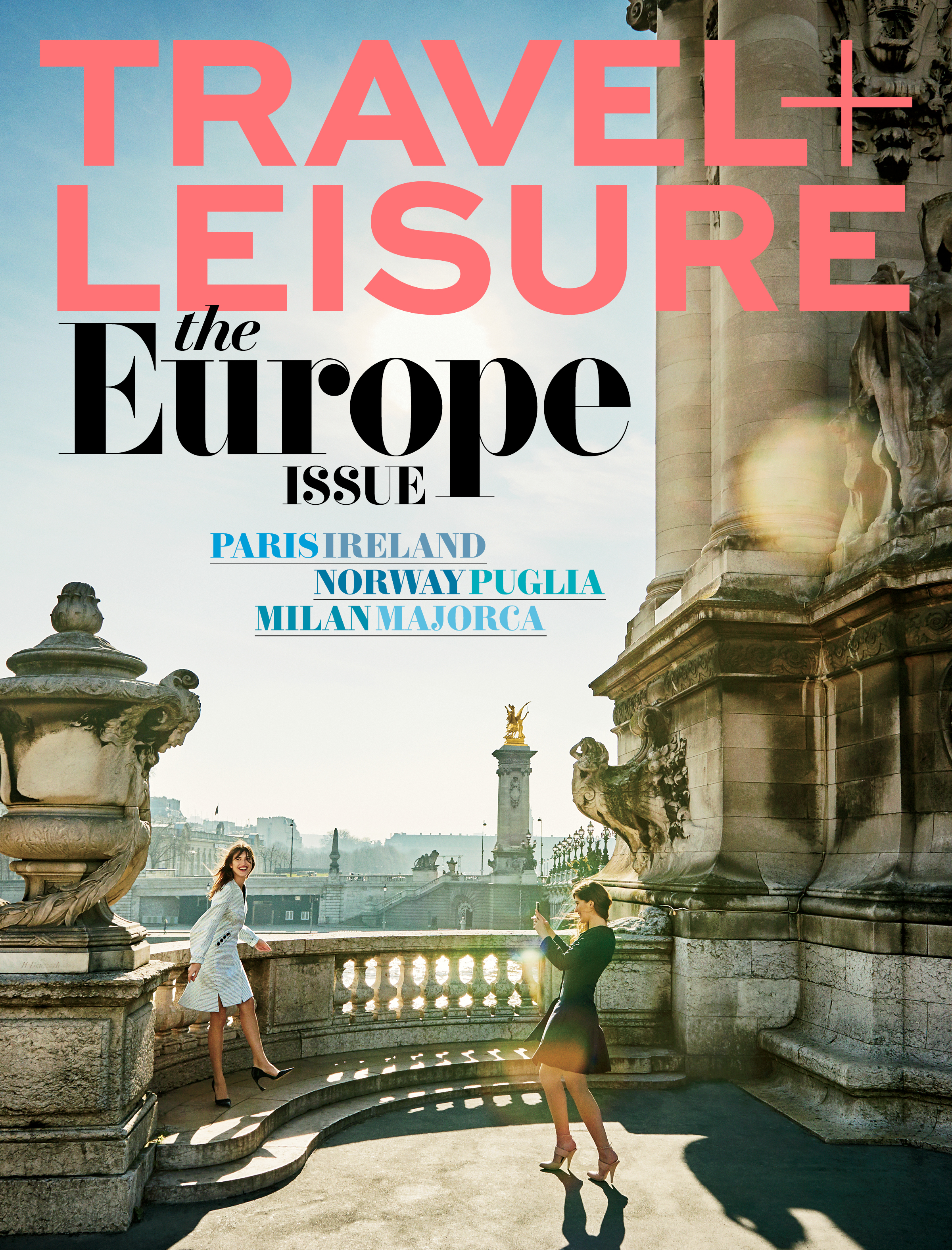
TL_May_2015_COVER Travel and magazines are two luxuries that go hand-in-hand, or so the powers-that-be over at Travel+Leisure believe whole-heartedly, and I would have to agree with them. While no one necessarily needs to read a magazine or travel to Europe just to see the Eiffel Tower; more often than not, it’s called for, if for no other reason than simply to disconnect from the real world and all of its devices that seem compelled to proclaim yet another notification of information. Something else travel and magazines have in common is their ability to transport you to idyllic locations totally different from the norm, another much-deserved, take-a-breath experience in our world of fast-paced existence.

Jay Meyer is vice president and publisher of Travel+Leisure magazine and Nathan Lump is editor-in-chief. The two are the highly-proud parents of the reinvented, more immersive and transporting travel magazine. With a redesign aimed at the current ravenous appetite affluent consumers have for travel, the magazine reaches out and touches that audience with an experience that shares their own memories through the art of travel. And for some, travel is art. And the new Travel+Leisure magazine showcases that trait beautifully.

I spoke with Jay and Nathan recently about the positive changes the magazine has made and about some of the numbers that support the idea that travel is a hot commodity right now in the world of magazine media. According to Jay, T+L is enjoying its largest audience ever in print, with 6.7 MM and in digital, 3.3 MM. The magazine is twice as large as its nearest competitor and has more millionaires in its audience than any measured publication.

Also, according to Time Inc.’s 10th Annual Time Inc./YouGov Survey of Affluence and Wealth which was recently released; leisure travel is expected to grow the most among all categories studied, with an increase of 15.9% from 2014 to $115.2 billion. When asked about passions, travel was the top response (67%), followed by “spending quality time with my family” (65%).

The findings certainly bode well for the future of Travel+Leisure and the two men whose passion for travel is exceeded only by their ardor for their brand.

So, I hope you enjoy this “trek” into the minds of two avid travelers as they talk about the magazine that always goes with them on their travels – the Mr. Magazine™ interview with Jay Meyer, Publisher, and Nathan Lump, Editor-in-Chief, Travel+Leisure.

But first the sound-bites:


On why Jay believes travel is so hot right now on the publishing scene:
If you look at travel media; travel media has had a growth of 37% in the last three years and the research team says that because of two reasons. One: because travel is luxury, and two: because we’re all so attached to our desktops, tablets and phones; at some point in time, people actually want to put those devices away and have a lean-back experience and dream a little bit and plan a trip; do something for themselves.

On Nathan’s opinion of the lean-back experience:
I think for me, it’s really true in the sense that when you think about it, we have so much information at our fingertips; no one necessarily needs to read a magazine in order to learn things, so those that do are obviously making a very conscious choice that they want to give a certain amount of their leisure time to that experience.

On whether Nathan can ever imagine Travel+Leisure not having a print component:
Sure. We’ve seen the growth in digital and all of us can imagine that world. I don’t think that world is upon us yet. Our readership in print is actually larger than it’s ever been in its history.

On Jay’s opinion of why Travel+Leisure’s audience numbers have increased within its print media, rather than its digital: I think there are a lot of reasons, but the simplest is that we needed to re-platform, which is now done. And in the past we have been producing about 10 pieces of content per week, and Nathan and his team are moving into a place where they’re going to produce 20 pieces of content per day, high velocity publishing, and we expect those numbers to increase exponentially.

On whether as a publisher, digital makes Jay’s life harder or easier when it comes to selling the brand to advertisers:
I think digital absolutely makes our lives easier. Nathan was talking about consumer behaviors earlier; if you actually think about the process and mindset of looking at travel as being inspired and then planning and considering and then buying and sharing; we need to be on all of those channels; we’re not there yet, but obviously, digital is a huge part of that process.

On how Jay sees the magazine’s attempt to attract luxury advertisers, but stay grounded and keep the magazine at mass appeal at the same time:
The answer is if you look at syndicated research, to your point, we have a really great audience and marketers see that audience as exactly what I said previously, in terms of, they have a healthy income, they take action, they travel, and outside of Travel+Leisure, if you look at it from the advertiser’s brand perspective, these are people that they want as customers.

On the humanization of the magazine and who would appear if Nathan struck the magazine with a magic wand:
Everything that we’ve done with the changes to the brand really begins with who we see this reader as, and fundamentally for me, it is that person who Jay mentioned earlier who takes 23 trips per year. So, when you think about that person, that person has been a lot of places, done a lot of things; they’ve crossed a lot of things off of their bucket list and they are fundamentally worldly people. They bring a sophisticated and cosmopolitan point of view to their lives and to their travels.

On why the magazine’s logo wasn’t changed during the redesign according to Nathan:
Partially, because I think that the brand is in such a healthy place and it has such great awareness and recognition. I felt why tinker with something that is working for us.

On the biggest stumbling block Jay had to face as publisher of the magazine:
In terms of Nathan’s arrival and from that point to where we are now, I think the biggest challenge has been time.

On how he overcame it: Honestly? Relentless hard work and a ton of travel. (Laughs)

On anything either would like to add – Jay first:
One thing that I would add is that we kind of summed up that the travel space is doing quite well and Nathan talked about the travel industry as a whole, the GDP and the number of jobs; I would just say that I want to applaud Time Inc. for giving us the resources to make this happen in print and digital, which as you know, doesn’t always happen together.

On what Nathan would like to add:
The one thing that I would add, Samir, is that we focused quite a bit on the print magazine, but I think the other thing that is really important here too is the digital piece because obviously we see tremendous opportunity for us to grow and also to evolve our business, particularly leveraging our digital platforms.

On Nathan’s opinion of why it took five to six years for the media industry to realize when it comes to print and digital, it’s not either/or, it’s both: I think for a lot of people there was just some basic fear and lack of understanding of how people were really using the product.

On what keeps Jay up at night: As we move forward, it’s an interesting time in the media world; it’s all about ideas. So, ideas keep me up at night, my own and others.

On what keeps Nathan up at night: What does keep me up at night is the fact that I have so many things that I want to do, that we want to do, and there is always that thinking like, oh no, are we going to be able to do it all and do it all as quickly as I would like.

And now the lightly edited transcript of the Mr. Magazine™ conversation with Jay Meyer, Publisher, and Nathan Lump, Editor-in-Chief, Travel+Leisure.

Samir Husni: First, congratulations on the magazine; I love the new design; actually, I love the whole reinvention of the magazine.

Jay Meyer: Thank you.

Samir Husni: Jay, what’s the status of the travel magazine market today? You’ve reinvented Travel+Leisure; Condè Nast Traveler is upscaling their magazine and changing the size; National Geographic Traveler has a new editor; Smithsonian came out with a new travel magazine and so did Airbnb; suddenly, it looks as though travel is hot. Why do you think this is happening now?

Style: "Rich_Color" Jay Meyer: Travel is hot. If you look at travel media; travel media has had a growth of 37% in the last three years and the research team says that because of two reasons. One: because travel is luxury, and two: because we’re all so attached to our desktops, tablets and phones; at some point in time, people actually want to put those devices away and have a lean-back experience and dream a little bit and plan a trip; do something for themselves.

We believe, and these products were built for, the reader and viewer of Travel+Leisure who wants to be inspired and we call those people: experience-collectors. They travel 23 times per year; they all have passports, and they have a really healthy income. And that 23 times per year breaks down to 13 business trips and 10 leisure.

Samir Husni: Nathan, you wrote in your letter from the editor that reading a magazine is a luxury. Can you expand on that a little bit more and on what Jay just said, in terms of the lean-back experience?

Nathan Lump: Sure. I think for me, it’s really true in the sense that when you think about it, we have so much information at our fingertips; no one necessarily needs to read a magazine in order to learn things, so those that do are obviously making a very conscious choice that they want to give a certain amount of their leisure time to that experience.

I’ve spent a lot of time looking at what behaviors look like across the platforms. One of the things, and it sounds very intuitive and I think it’s important to keep it in mind, because we live in a digital age, if I’m looking for information about something in particular, I’m going to engage in digital behaviors around finding that information. If I’m a traveler and I’ve decided to go to Spain; I’m not sitting around waiting for my Travel+Leisure to come and hoping there’s going to be an article about Spain in it for me. I’m going to go online and find out more information about the place that I’m going to go to.

From the magazine reading experience, I think what that means is we have this audience whether they purchased the magazine on the newsstand or they’re a subscriber, they’re interested in travel; they’ve decided to give us some of their leisure time, and they’re basically coming to us in an open mindset. They’re saying, I am open to the idea of discovering new places, new experiences and new things, so they’re issuing an invitation to us to get them excited.

For me, editorially, the bar that we set for ourselves, particularly in print, is to try and create an experience that is immersive and rich enough that we are, in fact, actually getting people excited about things that they didn’t know they should get excited about. And that’s a lot of what I mean when I talk about the luxury of magazine reading.

I would also add, just building on what Jay has said too about the travel category in general, and you probably know some of this, so forgive me if I’m telling you something that you already know; travel is over a $7 trillion industry globally. One in every 11 jobs is generated by the travel industry, so this is a huge category. It’s bigger than a lot of other categories or industries that we think about when we think about media and verticals.

When you look at spending; over the years travel has become much more essential to people. Twenty years ago when you used to ask people if times got tough, what would you cut out of your lives in terms of spending, travel would be right up there at the top. This has actually changed in the years since and it’s become much more of a thing that people say they wouldn’t cut out. They’ll say they won’t buy that new sofa, but they’re still going to take that trip. And that’s been a really important shift.

Recently, Time Inc. released the results of an annual survey that we do, a survey of affluence and wealth, and among the findings, one that I found compelling was of all the discretionary spending categories that these folks said they were going to spend money on this coming year; their desire for travel was the second biggest category in that survey for spending after automobiles. So, it’s obviously a real priority for people, which I think contributes to the durability of the category.

Samir Husni: As an editor-in-chief, Nathan, can you ever imagine Travel+Leisure not having a print component after what you told me about the strength and power of print?

Nathan Lump Headshot 4.15 Nathan Lump: Sure. We’ve seen the growth in digital and all of us can imagine that world. I don’t think that world is upon us yet. Our readership in print is actually larger than it’s ever been in its history.

Jay Meyer: Yes, it’s at 6.7 million.

Nathan Lump: I would say that for the moment we see print still as a healthy piece. Obviously, digital is a really important growth opportunity, but we still see that there is a desire for this kind of luxurious, more lean-back experience, at least, in our category.

Samir Husni: Jay, it has been your print audience that has almost doubled in number, rather than your digital audience. Yet, when I look at statistics and numbers from other magazines and hear about their 3 million in print circulation and their 25 million in digital audience, why do you think Travel+Leisure’s audience is still attached to the print media?

Jay Meyer: I think there are a lot of reasons, but the simplest is that we needed to re-platform, which is now done. And in the past we have been producing about 10 pieces of content per week, and Nathan and his team are moving into a place where they’re going to produce 20 pieces of content per day, high velocity publishing, and we expect those numbers to increase exponentially.

Now, having said that, I think the key was to re-platform and redesign, so that we were able to move this forward.

Samir Husni: Did digital make your life easier or harder, Jay, in terms of selling the brand Travel+Leisure? Is digital making your job as a publisher harder or can you just walk into any ad agency and not hear the word crazy when talking about the reinvention of a print magazine in this digital age?

Jay Meyer: I think digital absolutely makes our lives easier. Nathan was talking about consumer behaviors earlier; if you actually think about the process and mindset of looking at travel as being inspired and then planning and considering and then buying and sharing; we need to be on all of those channels; we’re not there yet, but obviously, digital is a huge part of that process.

Nathan Lump: I would add that what we’re seeing, and Jay correct me if I’m wrong, what we’re seeing from the business community is that obviously, from a brand awareness and storytelling perspective, print is still a really important tool for us and that’s also partially because we’re living in the luxury space. And luxury advertisers have really seen that print still works for them from that perspective.

And then digital gives us an additional tool in our toolkit to do that, but also to help those partners who are interested in really driving bookings or consideration via their own website. It satisfies those kinds of needs, so in fact, I think it gives us, from a strategic perspective; it gives us more to sell as opposed to selling against. It allows us, depending on what the partner is looking for, to provide them with the product that makes sense for them, or in many cases, both products because many of our advertisers advertise across platforms with us.

Jay Meyer: And that’s really the point. I think what we’re seeing and what we’ve seen in the last couple of years is that most core partners of Travel+Leisure are using both. They’re not choosing one over the other; they’re actually using both for different reasons.

Samir Husni: Jay, as I look at the May issue and the variety of ads; we go from Cartier to GEICO; can you briefly tell me how you’re trying to capture that luxury market and at the same time stay grounded and be as mass as the magazine can be since you are the largest travel magazine?

Jay Meyer: That’s a good question and a tough question. And the answer is if you look at syndicated research, to your point, we have a really great audience and marketers see that audience as exactly what I said previously, in terms of, they have a healthy income, they take action, they travel, and outside of Travel+Leisure, if you look at it from the advertiser’s brand perspective, these are people that they want as customers.

On the luxury side, if you break down the 6.7 million, we actually have 1.1 million who are millionaires. So, there is a super healthy top end of that audience and certainly the luxury marketers understand that and want to reach those people.

Samir Husni: Nathan, let me shift gears a little bit and talk about the content. If you could humanize the magazine, strike it with a magic wand and have a person appear; would I see Nathan materialize, and if so, what type of conversation would he and I have about Travel+Leisure?

Nathan Lump: That’s a good question and I may end up answering it in a slightly roundabout way. Everything that we’ve done with the changes to the brand really begins with who we see this reader as, and fundamentally for me, it is that person who Jay mentioned earlier who takes 23 trips per year. So, when you think about that person, that person has been a lot of places, done a lot of things; they’ve crossed a lot of things off of their bucket list and they are fundamentally worldly people. They bring a sophisticated and cosmopolitan point of view to their lives and to their travels. So, from my perspective what that means is, editorially, we need to be where they are. We need to be as sophisticated as they are or more so, because they’re looking at us to surprise them and to give them novelty.

We’re really trying to push the boundaries in terms of what we give them, making sure that we are not only super current and in the know, but that we’re also really insightful. These folks are also, I think, really engaged with the world and understand what’s going on around them, they comprehend that travel is a tool for understanding the world.

You’re going to see in upcoming issues, such as in our June edition, our cover story is about Cuba; we have another big story in that issue looking at New Orleans 10 years after Katrina. These are two of the big stories of our time and we’re looking at them particularly through the lens of travel because we know that our audience use travel as a means of understanding. It’s pleasurable, of course; we want to capture the pleasure and the joy and fun of travel, but we also understand that we need to engage with some of the big issues, so, you can tell me if I’m answering your question, but I’m trying to conjure that reader.

And if we’re personifying ourselves; I want to be them. I want the product to feel, in that way, very intelligent and sophisticated, very worldly and with a very strong global perspective; that we’re paying attention to the entire world, we’re engaged with that; we’re as interested in what’s happening on the other side of the planet as we are with what’s in our backyard.

Samir Husni: So, when the June issue arrives at my home and I peer through the peephole in my door; do I see Nathan standing there?

Nathan Lump: Well, sure; I am definitely this person myself, I would say. I’m a serious traveler and have been my whole life. I probably travel a bit more than 23 times per year; that may or may not be recommended. (Laughs)

Samir Husni: (Laughs too)

Nathan Lump: But I love it. For me, travel is the great passion in my life; it is the thing that has changed me. It’s opened my eyes to so many things. I grew up in a small town in Wisconsin and I’ve had this travel bug ever since I was a child. Who knows why – I do try to bring to the product my own passion for this subject.

In the very first issue that I touched, which was the December issue of last year, and was largely completed when I arrived, but I did make a couple of small changes to it; we changed the cover, but I also wrote my first editor’s note for Travel+Leisure. And one of the things that I said in there was that I believe the fundamental hallmark of a traveler is curiosity. A true traveler is genuinely curious. And they don’t lose that. The more that they see and travel; the more curious they become. And that is absolutely true of myself in my own life and I definitely bring that to the page.

So, yes, I hope that the magazine is a reflection of me in that way.

Samir Husni: You’re also sounding like a journalist because I tell my students that a true journalist is a curious journalist. I tell them they don’t need a degree in journalism; they need a degree in curiosity.

Nathan Lump: I completely agree with that and that’s the thing about our subject matter. A lot of people say that this is fluffy stuff, but I really charge my team with bringing a journalist’s point of view to the work that we do. And that doesn’t mean that it’s all serious, a lot of travel is about joy, and the traveler’s experience is having fun, but I think there is a lot about learning and exploring and seeing the world and that is journalism.

Samir Husni: So, my next curious question is why did you leave the design of the logo the same? You changed everything except the nameplate.

Nathan Lump: That’s true. Partially, because I think that the brand is in such a healthy place and it has such great awareness and recognition. I felt why tinker with something that is working for us. Sometimes an editor will come in and feel that they have to change absolutely everything, including that, but because our brand has such great awareness and such great affection from our readers, I didn’t want to confuse them in that way. I just thought it was better to keep that piece stable.

Samir Husni: Jay, what has been the biggest stumbling block that you’ve had to face with Travel+Leisure and how did you overcome it?

Jay Meyer: In terms of Nathan’s arrival and from that point to where we are now, I think the biggest challenge has been time.

Samir Husni: As in the company, the magazine, or real time? (Laughs)

Jay Meyer: No, real time. In terms of setting the course of what we wanted to do with the product and who we were talking to and actually making that happen in a very short amount of time, which was certainly tough on both sides of the house.

Samir Husni: How did you overcome it?

Jay Meyer: Honestly? Relentless hard work and a ton of travel. (Laughs)

Samir Husni: (Laughs too)

Jay Meyer: I think Nathan and I would have the same answer, which is just relentless determination to make sure it happened.

Samir Husni: Is there anything else either of you would like to add?

Jay Meyer: One thing that I would add is that we kind of summed up that the travel space is doing quite well and Nathan talked about the travel industry as a whole, the GDP and the number of jobs; I would just say that I want to applaud Time Inc. for giving us the resources to make this happen in print and digital, which as you know, doesn’t always happen together.

Travel as a category is not a core category for Time Inc. and not one that they have played in before Travel+Leisure arrived here. So, we applaud them for seeing the opportunity and giving us the resources to make it happen.

Nathan Lump: The one thing that I would add, Samir, is that we focused quite a bit on the print magazine, but I think the other thing that is really important here too is the digital piece because obviously we see tremendous opportunity for us to grow and also to evolve our business, particularly leveraging our digital platforms.

As Jay said, and as you know, we re-launched the print magazine and the website at the same time, and like Jay said that almost never happens. I can’t think of the last time someone did it. And we did it because I was really committed and the company was committed and supportive of the idea to reimagine the platforms holistically, understanding the ways in which they’re related to each other and the existing dialogue they have with each other and they allow us to do slightly different things to serve our audience.

From my perspective, what we’re going to be doing digitally; you’re going to see a lot more from us and the dispersion of the website is really just the beginning. There is a lot more to come in terms of features and functionality, but also in terms of how we use that to engage and serve the audience.

So, the digital piece of it is, I think; we don’t really look at it as a threat; we look at it as an opportunity. I’ve actually been more focused on digital, although I have a long background in print, I’ve been more focused on digital in recent years. And that’s also a little bit unusual for a magazine brand editor. The last five or six years, I’ve been almost exclusively focused on digital products, and so I really see the ways in which we can leverage that.

Samir Husni: Nathan or Jay, why do you think it took us almost five or six years to except the fact that it’s not either/or, it’s both?

Nathan Lump: I think for a lot of people there was just some basic fear and lack of understanding of how people were really using the product.

I also think too that some categories have been more challenged by digital than we have in the travel verticals; for instance, news media have had a harder time adjusting to the balance between print and digital. And those are obviously some of the biggest and best-known brands out there. So, I think that’s also driven the narrative a little bit. Publicly, because the news organizations have such large audiences, such a big pulpit, they’ve also been the ones that have in some ways seen digital be more of a challenge to print than we have in the travel verticals.

Samir Husni: My typical last question, and I’ll start with Jay; what keeps you up at night?

Jay Meyer: I’m not a strong sleeper, so a lot of things keep me up at night. (Laughs) I would say, and I won’t speak for Nathan, but I’m ambitious and curious. As we move forward, it’s an interesting time in the media world; it’s all about ideas. So, ideas keep me up at night, my own and others.

Samir Husni: And Nathan?

Nathan Lump: You kind of stole it from me, Jay. (Laughs) What does keep me up at night is the fact that I have so many things that I want to do, that we want to do, and there is always that thinking like, oh no, are we going to be able to do it all and do it all as quickly as I would like. Like Jay said, the world is evolving so quickly and so is the industry, that there’s always that concern if you’re moving along with it quickly enough. I think that’s why we’ve been so aggressive in the last six or seven months and why we’re going to keep that pace up. That is really the biggest thing, honestly, for me.

Samir Husni: Thank you.

h1

New Magazines Enjoying A Strong Spring Time… Rediscovering PRINT.

April 29, 2015

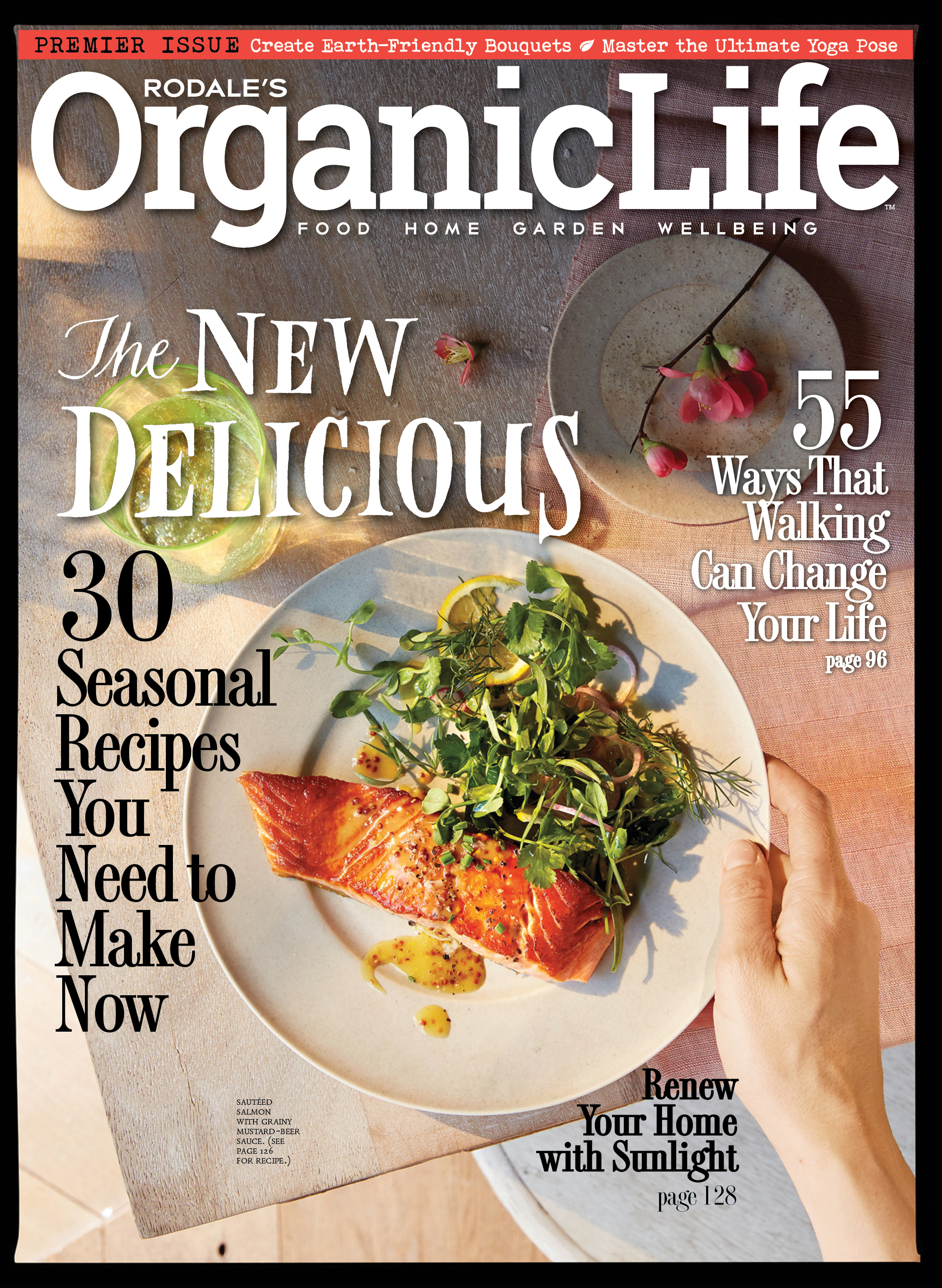
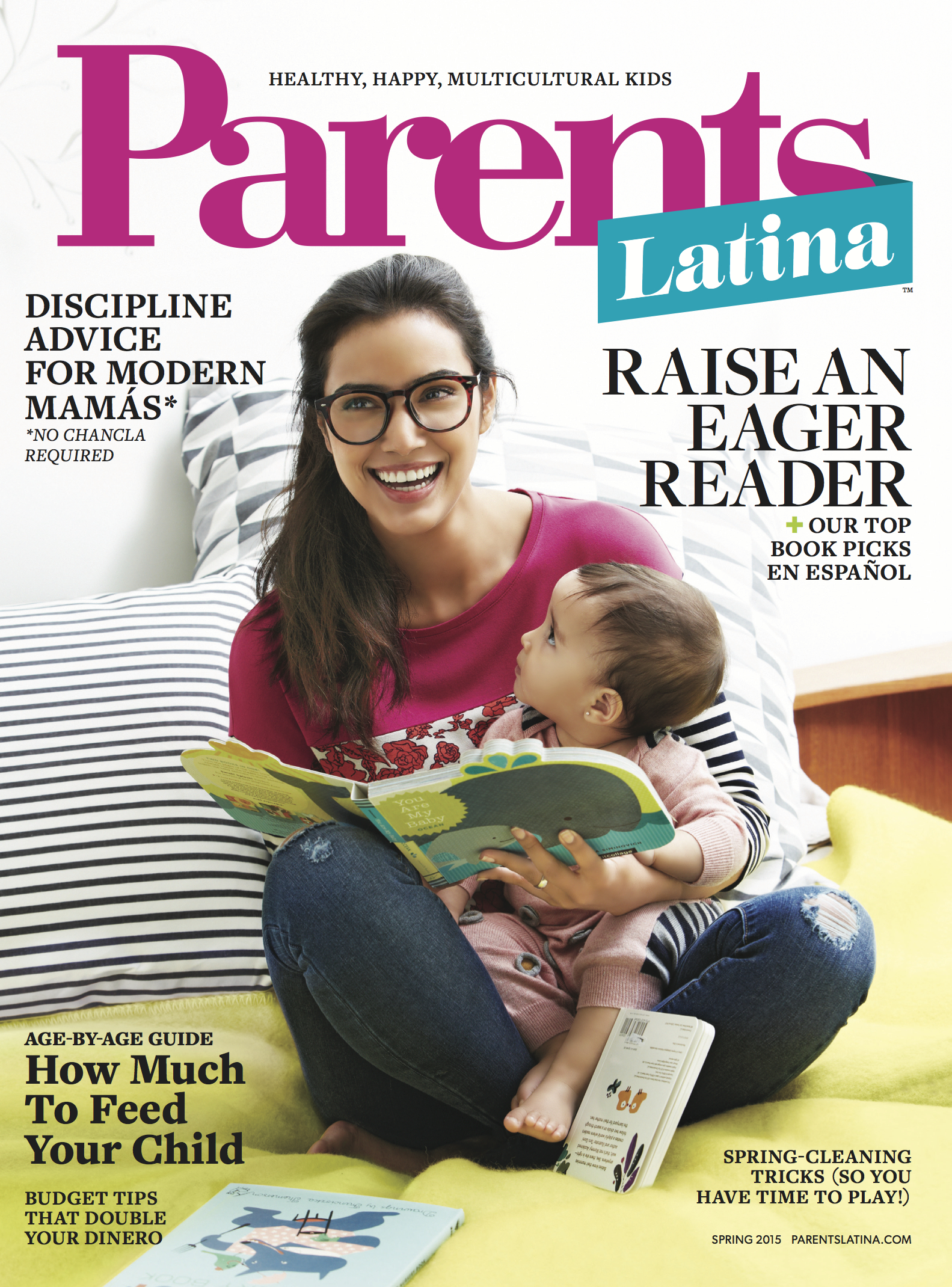
Rodale's Organic Life Sub.parents latina

The beauty of Springtime, in large part, is always the fresh, new buds that Mother Nature gives birth to and then nurtures with her showers and warmer temperatures.

April saw major publishers doing the same thing with their brands, giving birth to beautiful new magazines and cosseting them with the care and concern that only a parent can.

national geo history

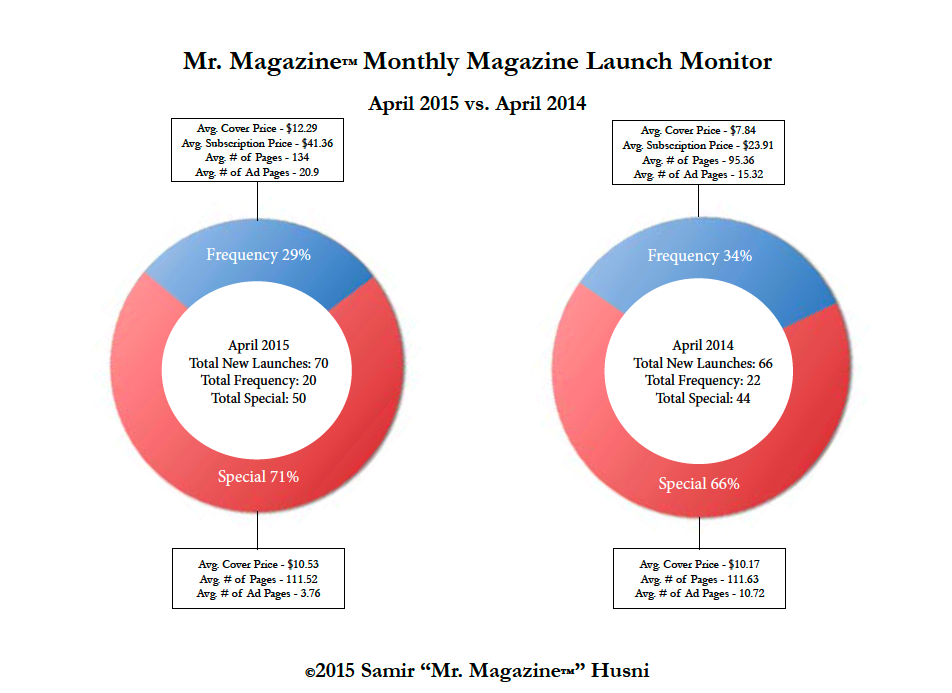
A total of 70 new titles hit the newsstand for April and 20 of them were with regular frequency. Out of those 20 newborns, 5 of them were delivered from large-scale publishers that show no fear in the face of cynics who still decry the value of print in today’s world. Print is on the rise; was there ever any doubt?

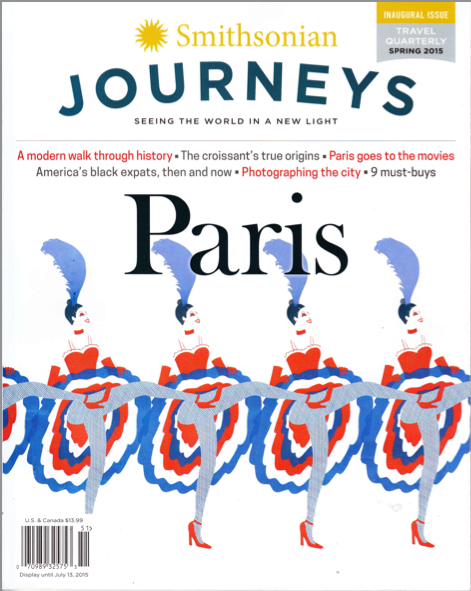
From National Geographic’s ‘History’ to Bauer’s powerhouse, ‘Simple Grace;’ the big houses are once again inking up their printers and truly having a good old-fashioned ‘print’ revival. Meredith launched ‘Parents Latina;’ Smithsonian has decided to take quarterly ‘Journeys’ and Rodale is educating us on the ‘Organic Life.’ What more could a magazine lover ask for? Maybe to see the beautiful covers?
SGD-1505-coverSJ

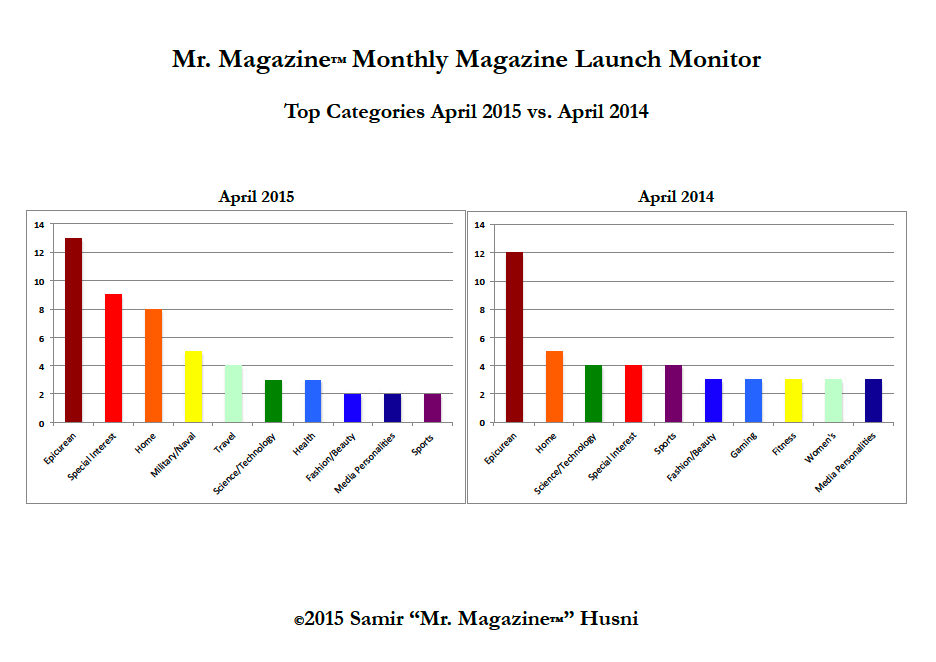
So, first here are the numbers for April 2015 launches compared to that of April 2014 as seen in chart 1 and in chart 2 below are the top categories for both years.

Chart 1
april launches

Chart 2
April categories

To see each and every launch of April and every other month please visit my Launch Monitor blog at www.launchmonitor.wordpress.com

h1

Magazines As Money Makers: The Commercial Role of the American Consumer Magazines. A Blast from Mr. Magazine’s™ Past: Dissertation Entries Part 9

April 29, 2015

Magazines as Money Makers
1983

magsatnewsstands “Magazines are big business,” said Howard Rusk Long of Southern Illinois University, Carbondale, in his introduction of James Ford’s book Magazines for Millions. No other description, no matter how many words are used, can better describe the money making role of the commercial function of the magazine. In fact, when a magazine, after a period of establishing itself, ceases making money, the graveyard is ready for it, together with the thousands that already rested there in peace.

The way magazines make money is in itself interesting because no other mass medium depends equally upon two sources at the same time to earn its income: the consumer and the advertiser. This was not the case in the early days of the magazine. Roland E. Wolseley noted that “the owners of magazines depended upon readers for nearly all their revenues. Advertising meant little.” On the other hand, with the advent of advertising in the early 1900s, a few magazines developed such power as advertising media that they were ready to give the magazine away free of charge in order to get the advertisers. Consumers became mere numbers to be sold to advertisers. Then television came. Together with the already existing radio and newspapers, it formed a new medium for advertising. The large mass circulation magazines could not compete. Losses started to accumulate, and profits started to disappear, and so did large mass circulation magazines.

The above information was written in 1983 and is taken from a portion of my dissertation when I was at the University of Missouri-Columbia where I obtained my doctorate in journalism. And while the majority of the material still holds true, things have changed drastically in some areas.

Magazines as Money Makers
2015

webmd magazine Making money in magazine media today is a bit of a sticky wicket. While a lot of magazines are still making a lot of money; of course, the changes that have been wrought during the last 32 years since I wrote the above information have definitely affected the magazine’s ability to bring in the big bucks the way it used to.

With the advent of the internet and all of its technological minions, magazines have had to reinvent themselves through innovation and creativity simply to survive in some cases, let alone make money.

Porter cover Yet, new blood is being generated each and every month (a proven fact that can be reflected upon through Mr. Magazine’s™ monthly Launch Monitor) and the magazine’s legacy is never far from the forefront of the buying public’s mind or the publisher’s heart.

With the realization that in today’s market magazines have to maintain a collectability factor rather than a disposability trait, publishers have gone above and beyond the call by creating literally pieces of art and literary treasures with some of the new magazines hitting the newsstands today. They’re coffee table additions and heirloom items that are aimed at the need people have to keep and collect. Quite the right thing to do in today’s world of fleeting digital content that disappears as fast as it’s deposited into cyberspace.

And with the undeclared new business model of higher cover prices for magazines instead of sole revenue dependence upon advertising; publishers are ever-so-slowly shifting the revenue responsibility from the advertiser to the consumer and generating real numbers (albeit not mass numbers) through newsstand and subscription by placing true value on their product.

cnet_magazine_cover-1-514x640 Then of course, there is the controversial native advertising (I know, controversial to some, but the new norm to others) that some magazines have allowed to creep upon their content pages. As you read these ‘normal’ articles, it suddenly dawns on you (as the consumer) that what you’re consuming is not merely an article about margarine and its benefits or detriments, but an actual essay written by one company’s PR firm or staff member that in truth makes margarine for profit. Not that that particular fact is hidden among the wordage, but nevertheless, the article is presented in a way that it appears to be simple editorial.

But I am not here to judge, simply to state facts. Making money today in magazine media is no small feat. It is survival of the fittest and sometimes that means doing what one has to do to persevere.

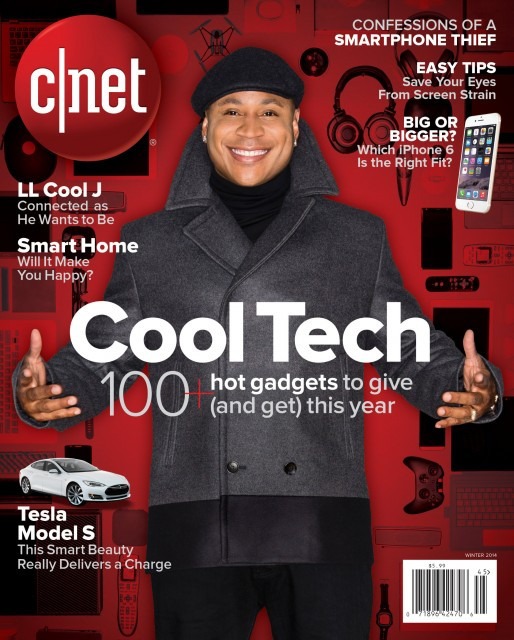
And the fact remains that many digital entities are dipping their toes into the pool of print, seeing a lasting value that they can’t focus in on through just the web, from Airbnb and their magazine, Pineapple, to Porter, Pitchfork Review, C/Net, WebMD and Allrecipes, to name just a few.

AllRecipes-Magazine And while magazines may not be the towering moneymaking Titans that they were in the 1980s, they’re certainly as relevant and valuable to the buying 2015 public as they were thirty or forty years ago. And if we remember that fact, that ‘Audience First’ modus operandi, we’ll realize that is truly the only thing that matters throughout the whole exciting, fun, sometimes perilous journey of the magazine.

Apr15 Cover 300dpiLast but not least, I can’t conclude without a quote from Adi Ignatius, editor-in-chief of Harvard Business Review magazine, who told me in a recent interview with him, “When I’ve worked at legacy publications, we’d create this content that was basically designed to be an adjacency to advertising. Whatever, fine. Then the advertising disappears. Advertising definitely comes and goes; you have to make sure that you have a product at the end of the day that your readers actually care about, because the advertising dollar today will disappear tomorrow.”

Until next week, when Mr. Magazine™ continues the Commercial Role of the magazine with Magazines as Marketing Tools. Enjoy your week with a magazine!

h1

PLUS, A Magazine With A Mission: Where The Readers Are Much More Than Their Status. The Rebranding Of HIV Plus Magazine – The Mr. Magazine™ Interview With Diane Anderson-Minshall, Editor-In-Chief.

April 27, 2015

“Print is not dead for us; it’s thrilling. Of course, I hear it in other magazines and it scares me to death because I’m such an old print horse that I never want it to go away. And so it’s really exciting for me to be at a magazine where there’s never talk of not doing print anymore. Yes, it’s doing well.” Diane Anderson-Minshall

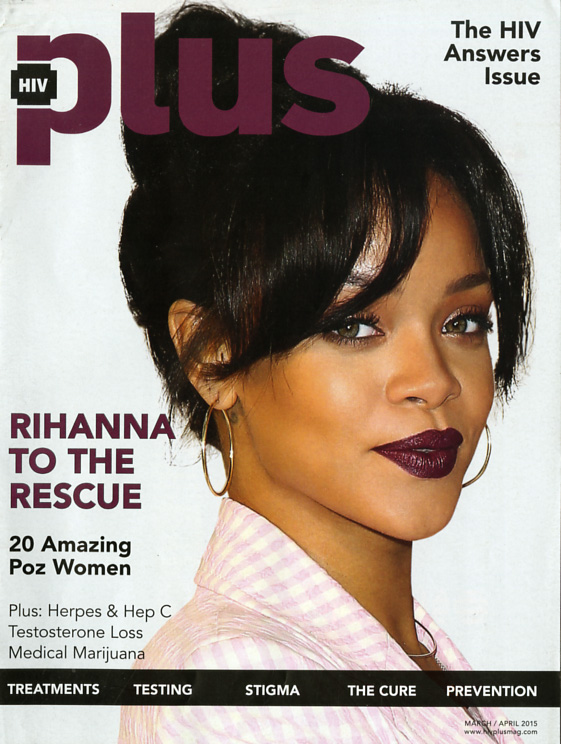
PLUS 2-2 Although we live in the 21st century and in an era of natural enlightenment overall; unfortunately, there is still a stigma attached to the three letters HIV virus and the implications and stereotypes that may follow.

That’s why the powers-that-be at HIV Plus magazine decided that their message of care and concern for people who suffer from HIV and all chronic, medically-managed illnesses would be better served to rebrand without those three letters. Hence, Plus magazine was born with the intent of opening up a whole new conversation with people who felt uncomfortable picking up the magazine when it was known as HIV Plus.

Diane Anderson-Minshall is editor-in-chief of the magazine and is a staunch advocate for the magazine’s mission. I spoke with Diane recently and we talked about the rebranding and how the hope of reaching more people with the magazine’s message was the driving force behind the change in title and design.

I hope you enjoy the Mr. Magazine™ interview with Diane Anderson-Minshall, Editor-in-Chief, Plus magazine, and a woman whose passion for the HIV/AIDS community and all who endure the pain of chronic illnesses, is genuine and far-reaching.

But first the sound-bites:


Head Shot - Diane Anderson-Minshall On changing the name from HIV Plus to simply Plus:
We did have people who told us if you don’t have HIV in the title, even though we’re still a magazine for people with HIV, but if we don’t have it in the title, it looks like a health magazine about several things, including HIV. You don’t have to be HIV positive to read it.

On the new tagline; you’re more than your status:
The bottom line is we’re recognizing that our readers have HIV, which is a chronic manageable condition and it’s not a definer of their lives, so we have to recognize that they need more out of a magazine than just treatment information. They’re looking for a whole magazine for the whole totality of their lives.

On keeping the website and social media with the original name:
We didn’t rebrand the website or the social media sites and part of that is because a magazine is something that is very visible versus a website where anyone can sneak onto it; we all know that because we sneak onto certain websites all the time.

On the new celebrity-oriented covers and whether they convolute the message the magazine is trying to render:
I don’t actually. I think that our mission is the same. We started doing celebrity covers when I came onboard as editor-in-chief and part of that is because celebrity covers are aspirational. I think that we’d be foolish to not recognize that people like to see aspirational profiles of other people who are doing something related to their lives.

On whether any celebrity has ever rejected the magazine’s offer to be on its cover:
Yes, absolutely. I’m not sure I can name who those people are, but that absolutely happens all of the time. And those are oftentimes celebrities who are doing something with an AIDS charity already, but who don’t want to be associated with a magazine. Sadly, it has happened a number of times.

On the biggest stumbling block she’s had to face:
The biggest stumbling block was getting our people who write for the magazine to recognize that our readership is a high school educated level readership, because I think people find that’s sometimes harder to write to.

On her most pleasant moment at the magazine: There have been so many. But at the U.S. Conference on AIDS last year in San Diego, for example, we made a life size cover of the magazine, with just the logo and a little bit of text, and then basically people came up and posed in front of the magazine like they were the cover star of the magazine. And then they Tweeted out the photos or we did and that was a great moment.

On whether she considers herself a journalist first or an advocate for the magazine’s mission:
I consider myself a journalist first, but there’s no denying that this is advocacy journalism. There’s just no denying that in order to do this magazine, you have to consider yourself an advocacy journalist.

On anything else she’d like to add:
One thing that people do keep asking me is whether we’ve made this change because we’re losing money? And this is the very first time I can say this, because a lot of times I’ve been at publications where what I’m about to say was not the case; where we did make a change and it was because we needed to deal with dropping revenue. In this case, we’ve been doing phenomenally well and we’ve been consistently doing well over the last few years that I’ve been here.

On why she believes print is not dead:
Print is not dead for us; it’s thrilling. Of course, I hear it in other magazines and it scares me to death because I’m such an old print horse that I never want it to go away. And so it’s really exciting for me to be at a magazine where there’s never talk of not doing print anymore.

On what keeps her up at night:
In terms of publishing, just production can keep me up at night. Just knowing production is two weeks away and that I have to file 80,000 words by then. That can keep me up at night. And that’s just the very beginning of what keeps me up at night.

And now the lightly edited transcript of the Mr. Magazine™ conversation with Diane Anderson-Minshall, Editor-in-Chief, Plus magazine.

Samir Husni: Why did you change the name of the magazine from HIV Plus to just Plus?

Diane Anderson-Minshall: My publisher, Joe Valentino, and I had been talking for a couple of years about whether the name of the magazine was kind and modern and really reflected all that we were doing with it for readers. We started doing some informal questioning of those readers and of people who distribute the magazine; because we’re a bit like WebMD in that we reached our quarter of a million reader’s right at the point of care, for the magazine in particular, of course, the mobile app and the web as well.

We started talking about how the name was; what we were doing with it; if it was reaching readers, that kind of thing, because when we started the magazine in the late 1990s it was a very different landscape in terms of who was reading the magazine and the kind of information that we were providing.

In the last couple of years, we’ve definitely become much more service-oriented than we were before. The magazine before had been very newsy, of course in part because it was also run by that staff of The Advocate, which is an LGBT news magazine, so it had been very newsy, but maybe wasn’t as useful when it came to what readers were looking for at that point.

This sort of informal questioning and surveying people kind of coalesced at the U.S. conference on AIDS last fall, where we did informal focus groups and we talked with a lot of people who were reading the magazine and also people who provided the magazine, like social workers, clinicians and people who ran LGBT centers or health centers or AIDS service organizations.

And when we started questioning them, we found a couple of things at that point and one of them was that we had a number of people who came up to the booth, picked up the magazine and said, oh my, I love Plus magazine and I read it all the time. And that made us realize that there was a chunk of our readership that was already calling us Plus magazine, sort of like the little HIV in our masthead or our logo at that point wasn’t resonating for them that it was part of the name of the magazine the way we had designed it.

And then at the same time we spoke with a number of people who said, I have a lot of people who read your magazine when they’re at my office or at the center, or getting their monthly healthcare or shots, but they won’t take it home, in part because it’s called HIV Plus. It’s really clear that it’s a magazine only for people with HIV.

So, I asked those people by just dropping the word HIV from the title, would it allow them to take the magazine home and feel comfortable about it? And the consensus was from all these people, yes, just removing the word; those three little letters from the title kind of eliminated the stigmatizing language that led with the virus. And this helped us think, well, OK, maybe this is a time for us to rebrand ourselves as Plus and eliminate the stigmatizing language that leads with the virus and tell our readers that at this point we understand that they more than their HIV status; you’re you, plus a little something more and for a lot of our readers that can be HIV or Hepatitis C or another condition.

At the same time, the change would open the magazine up for those people who would not pick it up or take it home because of having that HIV in the title. The change would make those people feel comfortable and safe to carry the magazine on a subway or read it in their cubicle or leave it on their coffee table if their friends come over.

A part of it was we recognized that there were different types of people reading our magazine and several of those people were very happy and proud to use HIV as a way to describe themselves and those are the people that we feel we were reaching at that point, and those people aren’t often living in the areas hardest hit by the virus. And we knew that there were a lot of people living in areas where they weren’t getting the right kind of treatment or getting connected to care; they’re weren’t getting the right kind of information because they were afraid for people to recognize that they had HIV.

So, we did have people who told us if you don’t have HIV in the title, even though we’re still a magazine for people with HIV, but if we don’t have it in the title, it looks like a health magazine about several things, including HIV. You don’t have to be HIV positive to read it. That’s kind of our angle; we’re trying to work to get those people who are afraid to pick up the magazine and we’re asking those people who lead with HIV in their lives to understand that we’re not going in the closet about being a magazine for people with HIV, we’re just asking them to make some considerations for those people who are afraid to pick up the magazine. By losing those three little letters in the title, we sort of open ourselves up for those people to join the conversation and have access to the information that they desperately need and aren’t getting yet.

Samir Husni: And that led to the new tagline under the name: because you’re more than your status?

PLUS 1-1 Diane Anderson-Minshall: Yes, I mean, we’re really just sort of playing around with different things and for me; I kept thinking with Plus, we wanted to tell our readers that we get you, you’re you, plus something extra, in this case, HIV, but it could be other things too.

But the bottom line is we’re recognizing that our readers have HIV, which is a chronic manageable condition and it’s not a definer of their lives, so we have to recognize that they need more out of a magazine than just treatment information. They’re looking for a whole magazine for the whole totality of their lives.

Samir Husni: You’re website is still HIV Plusmag.com…

Diane Anderson-Minshall: It is and that’s actually going to stay that way for now. We didn’t rebrand the website or the social media sites and part of that is because a magazine is something that is very visible versus a website where anyone can sneak onto it; we all know that because we sneak onto certain websites all the time. People generally don’t see a browser history; they don’t look into what we’re searching for, so you can actually go onto HIV Plusmag.com without feeling the stigma. And I’m assuming a lot of people will still do that, so you don’t feel any stigma when you do it because no one knows what you’re doing online, versus a magazine which is very visible; it’s something that you take home or have on your coffee table or next to your bed.

It’s something very different for people when they’re carrying the magazine versus reading the website. And we recognize that sometimes those are two different audiences with two different needs. So, we went ahead and left the social media and the web and our mobile app with the brand HIV Plus for a variety of reasons, but that’s one.

And then another reason is that making a change to those things right now; we just don’t want to scare off the readers that are accessing us through those channels at this point and we don’t need to lose traffic or any of those kinds of things. And we felt like again, with the website and the social media accounts, it just wasn’t as pressing to change those because people aren’t monitoring you when you’re looking at those sites versus when you have a magazine and it’s everywhere around you. Does that make sense?

Samir Husni: Oh yes, that makes perfect sense. In fact, you give more ammunition to my fight that digital and print each has its own role in today’s world.

Diane Anderson-Minshall: Yes, absolutely.

January February 2015 - Tyson Beckford HI Samir Husni: We all know that we live in a digital age and as you mentioned, it’s much easier for somebody with HIV to sneak onto the web and look for answers or help; yet with the magazine, it’s like announcing it to the world. As you move into Plus, even into the design of the cover with its celebrity-oriented nature; do you see any conflict between the message the magazine is providing and the look of the magazine?

Diane Anderson-Minshall: I don’t actually. I think that at this point, we’re the leading provider of HIV health information through the magazine and our online portals and mobile platforms and we still have the same mission, which is bringing accurate and trustworthy information about HIV and other related mental and physical health conditions, but in a way that’s empowering and entertaining and up-to-the-minute.

And so I think that our mission is the same. We started doing celebrity covers when I came onboard as editor-in-chief and part of that is because celebrity covers are aspirational. I think that we’d be foolish to not recognize that people like to see aspirational profiles of other people who are doing something related to their lives. Everybody picks up a magazine with a celebrity on it; it’s much harder to get people to pick up a magazine without a celebrity, so there’s no reason for us not to run those as well.

What we do is interview celebrities who are either people who do have HIV or have some relationship to HIV or AIDS, maybe through a family member or they work in a social cause related to it as a charity or they’re playing a role of an HIV-positive person on television or in film. And those are some of our most popular pieces.

What I think of these celebrity pieces is a little bit like the cherry in the cough syrup, you know; we need to make this sweet for people to pick up and then they get the information they need inside. The celebrity covers bring people in.

You’re at the doctor’s office and you’re looking at the array of magazines on the table and you’re next to us and you’ve got Sofía Vergara on the cover of WebMD and we’ve got somebody to compete with that so you’ll pick us up. And then you’ll find the information that you need; the treatment and medication information, but also the fitness, mental health, nutrition, sex and dating advice and the real, but aspirational profiles of other people living healthy lives with chronic conditions.

Samir Husni: Have you ever been rejected by a celebrity or a celebrity’s agent who said, no, we don’t want to be on the cover?

Diane Anderson-Minshall: Yes, absolutely. I’m not sure I can name who those people are, but that absolutely happens all of the time. And those are oftentimes celebrities who are doing something with an AIDS charity already, but who don’t want to be associated with a magazine. Sadly, it has happened a number of times.

And then we’ve also reached out to some celebrities we know who are HIV-positive themselves and tried to see if they were ready to have their coming-out interview and they were not. We don’t hold any ill will in those cases because we understand how difficult it is to come out about being HIV-positive, but again if you’re a celebrity with all the resources of the world at your fingertips and you’re not able to come out about being positive, imagine how difficult it is for the 18-year-old kid in the southeast who’s just found out he’s positive and has no resources.

Samir Husni: What has been the biggest stumbling block that you’ve had to face since becoming editor-in-chief of the magazine and how did you overcome it?

Diane Anderson-Minshall: The biggest stumbling block was getting our people who write for the magazine to recognize that our readership is a high school educated level readership, because I think people find that’s sometimes harder to write to. We’ve had to refocus the magazine a little bit and recognize that there are a couple of things happening here with this readership and one is that the readership isn’t college educated. And that changes how you’re writing things. I have a policy where I send back any story if I have to go to the writer and say, do you understand this sentence, and they say no, and I respond, then neither will our readers. I’ll send back anything where I can’t understand it and I think it’s really hard for people to like medical stuff without getting very science-oriented and boring. So, I believe we have a responsibility to our readers to make this stuff more interesting and understandable; to make it information that they’re going to want to read, rather than information that feels like it’s a package insert.

I feel like in a lot of ways one of our responsibilities is to take what pharmaceutical companies are saying about their medication for example, or about clinical trials or studies or new research and development, take that information and then translate for actual readers. And that’s a really heated task because there’s just such a big disconnect between science, academia and the way that they speak and the way an average real person does and the way that we understand things.

That’s actually been a challenge, making the magazine more service-oriented and more understandable to a group of readers who basically don’t know that kind of language and information that I think we sometimes fall back on.

We’re a niche magazine and I’ve always managed niche magazines, but I think in this case, we’re a niche magazine that’s finding out consistently that we have a wider audience than we once thought and so we’re trying to understand how to reach and speak to that audience cross range; 90% of our readers are men and among those, over half are people of color, and a larger majority are gay or bisexual, so that means we have 10% of women who are almost entirely straight, some are transgender, and of our readership, only about 88% have HIV, so I feel like we speak to the health needs of these readers more than any other magazine does. And I can say that even though we belong to the company that has the two largest gay publications on their roster; that we can speak to the health needs of gay and bisexual men in a way that other publications just can’t because we have the know-how and the experience.

But I do think we speak to both gay men and straight women and across different ethnic groupings; it’s a pretty broad range.

Samir Husni: And what has been your most pleasant moment at the magazine?

Diane Anderson-Minshall: There have been so many. I went to the ‘HIV is not a Crime,’ which is an anti-criminalization conference that was held last summer and was the very first, and is basically aimed around reforming HIV criminalization laws in the country, many of which were put together in the 1980s when AIDS was a terrifying thing and a lot of the lawmakers who originally worked on those initial laws are now arguing for those laws to be updated, reformed or ditched completely. I went to the conference, both to cover it and lend any advice and to really just support it to show that our organization supports that movement.

And I met so many people there who just treated me like a rock star, being the editor of Plus magazine, and it was amazing seeing these people who are frontline activists, working directly with politicians and people who had gone to the White House to speak to President Obama about HIV; people who are really major players in what we would call the HIV activist movement. And they were just very excited to have Plus represented there and excited to meet the people behind the magazine. I wouldn’t say it was like being One Direction or something, but it was really amazing.

Certainly, when we go to these events, it’s for us; it’s partly about a new opportunity for audience development, because that’s a part of what events are for publishers and their publications. And we love it. When we go these events we see people moving between our platforms with the brand, and once they get one platform, they explore the other and we’re a part of that when we’re doing these events.

But at the U.S. Conference on AIDS last year in San Diego, for example, we made a life size cover of the magazine, with just the logo and a little bit of text, and then basically people came up and posed in front of the magazine like they were the cover star of the magazine. And then they Tweeted out the photos or we did and that was a great moment because, again, when we’re trying so desperately to reach people who are afraid to pick up the magazine, at the same time, we have all of these other people who are so proud of the work that they’re doing or so proud of the life they’re living.

And some of them aren’t activists; they’re ordinary people living with HIV. But they were so proud to be on the cover of the magazine, to be like cover stars. Just the excitement and the energy around something like that; it wasn’t even about our social media numbers shooting up, which they did, but it was really about that wonderful feedback that people were getting what we were doing, that they like what we’re doing and that we’re giving them something that’s really adding to their lives.

Samir Husni: What do you consider yourself? I know you’re the editor-in-chief, but what do you consider yourself to be first, a journalist, an advocate, or a rock star?

Diane Anderson-Minshall: (Laughs) I consider myself a journalist first, but there’s no denying that this is advocacy journalism. There’s just no denying that in order to do this magazine, you have to consider yourself an advocacy journalist. I think those two things are first and the rock star is very, very far down on the line. I have moments of feeling like a rock star, but I know I’m not.

Samir Husni: (Laughs) Is there anything else that you’d like to add?

Diane Anderson-Minshall: I feel like we reflect the best the country has to offer in coverage of HIV and Aids and we’re trying to take a magazine that’s largely a service publication and work in hard-hitting news and health investigations and have the latest treatment information, and these interviews that are always inspirational, for our readers.

We’ve won a number of awards for our coverage of HIV and AIDS, including the National Lesbian and Gay Journalists Association; they have an excellence in HIV/AIDS coverage award which we’ve won a few times. We’ve won some other awards as well and I was given the Western Publishing Association; the Maggie Award last year. They have an inaugural leadership award and I was given that for the work on HIV Plus mobile app. So, we get pretty good validation from other journalists in other areas media.

One thing that people do keep asking me is whether we’ve made this change because we’re losing money? And this is the very first time I can say this, because a lot of times I’ve been at publications where what I’m about to say was not the case; where we did make a change and it was because we needed to deal with dropping revenue.

In this case, we’ve been doing phenomenally well and we’ve been consistently doing well over the last few years that I’ve been here. In fact, we’ve often been the top print magazine in the company and that includes both Out and The Advocate magazines, because our ad sales are consistent and we don’t face the same economic setbacks that other advertising arenas do, like fashion or travel and advertising industries, for example. Pharmaceutical industries have specific things they need to advertise and they have requirements for that advertising, so as long as the medication market is robust, then we continue to have consistent ad sales, which is our primary driver of funds.

So, it’s important for me to make it clear that this was not a decision we made because we weren’t selling, it was quite the opposite and I’m really proud of that.

Samir Husni: So, you’re telling me that print is not dead?

Diane Anderson-Minshall: Print is not dead for us; it’s thrilling. Of course, I hear it in other magazines and it scares me to death because I’m such an old print horse that I never want it to go away. And so it’s really exciting for me to be at a magazine where there’s never talk of not doing print anymore. Yes, it’s doing well.

Samir Husni: My typical last question; what keeps you up at night?

Diane Anderson-Minshall: Everything. Even though we’re doing well, we still have limited resources allocated to editorial, so we still have everyone doing the job of four different people.

In terms of publishing, just production can keep me up at night. Just knowing production is two weeks away and that I have to file 80,000 words by then. That can keep me up at night. And that’s just the very beginning of what keeps me up at night.

Samir Husni: Thank you.
h1

Harvard Business Review: A Magazine That Readers Care About. The Mr. Magazine™ Interview With Adi Ignatius, Editor-In-Chief.

April 24, 2015

“When I’ve worked at legacy publications, we’d create this content that was basically designed to be an adjacency to advertising. Whatever, fine. Then the advertising disappears. Advertising definitely comes and goes; you have to make sure that you have a product at the end of the day that your readers actually care about, because the advertising dollar today will disappear tomorrow.” Adi Ignatius

Apr15 Cover 300dpi Focusing on areas such as leadership, finance, marketing and the art of managing people, among many other business-related topics, Harvard Business Review (HBR) is a magazine dedicated to improving all facets of management in today’s fast-paced world.

Adi Ignatius is editor-in-chief, or as he likes to refer to himself, the balancer-in-chief of HBR. He came to the magazine in 2009 from TIME, where he was deputy managing editor, helping to oversee the week-to-week editing of the magazine and was also responsible for many of TIME’s special editions, including the Person of the Year and TIME 100 franchises.

After coming onboard at Harvard Business Review, Adi set about reinventing the academic read into more of a consumer-type magazine, one that has seen circulation growth and subscription prices increase since his joining the team.

I spoke with Adi recently and the discussion was both fun and informative. He has definite opinions on where HBR is heading and the future of magazine media in general.

So, I hope you enjoy this conversation with a man who believes in the timelessness of his brand and the collectability factor he thinks all magazines need today, the Mr. Magazine™ interview with Adi Ignatius, Editor-in-Chief, Harvard Business Review.

But first the sound-bites:

Adi Ignatius On the transition he had to make in 2009 when he came to HBR right after the Market crash: When I came on in 2009, Harvard Business Review hadn’t written a word about the recession and that seemed odd. I understood that the magazine always wanted to be timeless in everything it did, but it seemed that this was a different period; readers were desperate for information about the worst economic situation that we’ll all hopefully face in our lifetimes. Luckily, the people who run this place wanted somebody who had that kind of metabolism, someone who could bring a sort of timely sensibility to the timeless tradition and deal head-on with some of the topics people were worried about.

On the advice he would give media leaders about the future of print today:
I think getting past the sense of a lot of things that we thought were traditionally important like print, front pages, home pages, viewing yourself as only a destination site; I think you have to let go of these assumptions and really follow where the market is going and where readers are going. And make sure your content is unique and valuable and make sure you are maximizing every possible connection and platform that you could be on.

On some of the stumbling blocks that would prevent magazine media from implementing his common sense advice:
We all know where this plot line is heading; we all know that we are moving rapidly toward a more digital, or even fully digital, future. The problem is we’re in the present. And the present is still in some ways attaching more value to the print part of our operations than is likely to happen in the future. So, it’s very difficult to handle that transition when we’re still relying on print for the bulk of our revenue and ad revenue, in some cases. It’s very hard to forego the short-term revenue that we all depend on to make the sort of long-term future digital.

On whether he thinks publishers are placing too much dependence on social media these days:
We used to depend on LinkedIn for a huge amount of traffic, but when LinkedIn realized they weren’t simply a place for people to search for jobs, they decided to have content and stickiness, and a lot of that content was HBR. Then they sort of realized that they could be developing their own content and didn’t really need partners. So, that was a moment of panic, but I think as long as you’re creating content that’s valuable to your audience, whether it’s a big or a niche audience, you can adapt to these things.

On whether he can ever see a day when HBR will not have a print component: In theory, yes; it’s not a part of any of our plans at this point. I can imagine a reduction in print, in the number of print copies, and I would say that’s probably likely for us. And that would be driven by two main things: the decline in print advertising, which is real and profound and we see no sign of that being reversed, and more interestingly, a kind of shift in consumption habits.

On the cover price of HBR: Yes, we are higher-priced, but this magazine is for people who love ideas and you’ll find ideas in this publication that can improve your company and your career, well beyond what we’re charging. That’s essentially our value proposition.

On whether the collectability factor is important in magazine media today:
I think we’ve all realized the value of the archives. We have an archive that goes back 25-30 years and subscribers get full access to anything that we’ve published during that time. And we tested that a couple of years ago and found out that subscribers were willing to pay significantly more when they realized they had access to that archive.

On anything else he’d like to add:
That was a reinvention in 2010 and by any measurement that you could use, it worked. Our circulation has risen and is now at a record level, about 300,000. We have to do this again. We have to reinvent the business model again for all the reasons that our colleagues in the industry are doing it.

On what keeps him up at night:
Our situation is a little more complicated because we also need contributors to feel like we’re the best place for them to publish their ideas. We’re this hybrid; we’re somewhere in between a normal magazine and an academic journal. And that sometimes keeps me up at night; whether I can keep that balance intact, while still driving the business forward. That’s what I do; I’m balancer-in-chief.

And now the lightly edited transcript of the Mr. Magazine™ conversation with Adi Ignatious, Editor-in-Chief, Harvard Business Review.

Samir Husni: You’ve been at Harvard Business Review since 2009, so you had just come onboard when the Market crashed. Can you describe how the transition for you was during that precarious time?

Adi Ignatius: I interviewed for the job in 2008, so when I came on in 2009, Harvard Business Review hadn’t written a word about the recession and that seemed odd. I understood that the magazine always wanted to be timeless in everything it did, but it seemed that this was a different period; readers were desperate for information about the worst economic situation that we’ll all hopefully face in our lifetimes. And a publication like Harvard Business Review could provide insight.

Luckily, the people who run this place wanted somebody who had that kind of metabolism, someone who could bring a sort of timely sensibility to the timeless tradition and deal head-on with some of the topics people were worried about.

We took that opportunity to kind of reinvent the magazine, the website and set out a path for growth from that.

Samir Husni: If you were going to apply the same formula that you did for the Harvard Business Review on its business side to magazine media today, in 2015; what type of magazine would you create to help magazine publishers and editors adapt to all the changes that are taking place and what advice would you give those media leaders about the future of print today?

Adi Ignatius: I wouldn’t necessarily get hung up on print. I don’t think the answer for all of us is finding out a way to maximize print; some of us will be print; some of us will be digital, and then some of us will be a hybrid.

I think getting past the sense of a lot of things that we thought were traditionally important like print, front pages, home pages, viewing yourself as only a destination site; I think you have to let go of these assumptions and really follow where the market is going and where readers are going. And make sure your content is unique and valuable and make sure you are maximizing every possible connection and platform that you could be on. That’s obvious maybe, and the hard part might be actually implementing that. I guess that would be my first bit of advice.

Samir Husni: What do you think are some of the stumbling blocks that are stopping people from implementing that common sense solution?

Adi Ignatius: I guess some of them you’re probably very familiar with. We all know where this plot line is heading; we all know that we are moving rapidly toward a more digital, or even fully digital, future. The problem is we’re in the present. And the present is still in some ways attaching more value to the print part of our operations than is likely to happen in the future. So, it’s very difficult to handle that transition when we’re still relying on print for the bulk of our revenue and ad revenue, in some cases. It’s very hard to forego the short-term revenue that we all depend on to make the sort of long-term future digital. And we all think that we can manage that transition and jump from one to the other and do it at the perfect time versus our knowledge of a company like Kodak, which knew very well the digital future was coming, didn’t handle the transition well at all. And that’s what happens if you don’t.

But I think one big problem is simply the fact that print remains hugely important for most of our business models and, as I said, it’s very difficult to forego the short-term revenue.

The second thing is just the landscape is moving so quickly. If you look at social media, the Harvard Business Review is very successful in social media. We have a huge number of shares and a huge number of followers; we generate a lot of traffic through social media. What will our relationships be with Facebook, Twitter, LinkedIn and others in a few years; it’s impossible to know. Probably very different from what they are now.

There’s a fundamental uncertainty that means we’re all experimenting a lot, but it’s somewhat difficult to have as much confidence in precise, future digitally-focused plans because it’s such a moving target.

Samir Husni: Do you think we’re making the same mistake as we did when we put all of our dependence upon advertising, because now we’re trying to depend so much on social media? What if Facebook decides to listen to the rumors I’ve been hearing and becomes an enclosed website, where it won’t take you to your website?

Adi Ignatius: I think we have to be open to that possibility. I think the most important thing is not to panic. There will be surprises like that. We used to depend on LinkedIn for a huge amount of traffic, but when LinkedIn realized they weren’t simply a place for people to search for jobs, they decided to have content and stickiness, and a lot of that content was HBR (Harvard Business Review) and I think HBR was some of the best performing content on that site.

And then they sort of realized that they could be developing their own content and didn’t really need partners. So, that was a moment of panic, but I think as long as you’re creating content that’s valuable to your audience, whether it’s a big or a niche audience, you can adapt to these things. So, we don’t have the same kind of relationship with LinkedIn now, but we’re working on developing other relationships with LinkedIn. Facebook and Twitter are great referrals to our site. If they’re cut off, we’ll figure something else out. A good brand with good content just has to be nimble. And if some of these things happen, we’ll figure something else out; I really do believe that.

Samir Husni: Can you foresee a day when HBR will not be in print?

Adi Ignatius: In theory, yes; it’s not a part of any of our plans at this point. I can imagine a reduction in print, in the number of print copies, and I would say that’s probably likely for us. And that would be driven by two main things: the decline in print advertising, which is real and profound and we see no sign of that being reversed, and more interestingly, a kind of shift in consumption habits. The challenge for us is to truly make digital a long-form reading experience that is as effective as print is now. And that involves new personalization, new utility, kind of a reinvention of what a long-form article is online, which is what we’re doing.

You talked about advertising before; the trap that many legacy publications have fallen into over the years is the pursuit of advertising at the expense of the relationship with the reader and the creation of quality content.

Nowadays, native advertising is viewed as a panacea for a lot of publications and a lot of native advertising solutions are great. We at HBR haven’t plunged into that yet, but we will and that’s fine. But I worry when I see some legacy publications, when they talk about what they’re doing; all they seem to be able to discuss is native. And my only feeling on that is advertising comes and goes, that is fact.

When I’ve worked at legacy publications, we’d create this content that was basically designed to be an adjacency to advertising. Whatever, fine. Then the advertising disappears. Advertising definitely comes and goes; you have to make sure that you have a product at the end of the day that your readers actually care about, because the advertising dollar today will disappear tomorrow. And there will be a new model, fine, you just have to make sure that you’re creating content that people actually care about and that isn’t just being created or advertising dollars.

Samir Husni: Somebody recently told me that the magazine industry doesn’t have an ink on paper problem; it has an advertising problem. Do you agree?

Adi Ignatius: Meaning what, exactly?

Samir Husni: That advertising is disappearing from print.

Adi Ignatius: Well, yes, that’s true. There are other models; some of the magazines that you and I love most are essentially subsidized by, I don’t know, a wealthy benefactor, maybe, something like that.

Samir Husni: (Laughs)

Adi Ignatius: And that’s also a good model. At HBR, just so you know; we’re not subsidized by the school, quite to the contrary. I’ve worked at Dow Jones and I’ve worked at Time Inc. And at HBR, we’re as commercially focused as any other publication that I’ve ever worked at. And we have to be successful on the bottom line and we have to be significantly profitable and the money that we make goes back to Harvard Business School to fund its case studies and research.

So, we’re very much in the real world and we’re very aware that advertising dollars have disappeared, but we’re a premium-priced subscription. Advertising is an important revenue source for us, but subscription is a more important source. What we’ve been able to accomplish in recent years is to increase circulation and increase the average price of a subscription and we want to keep doing that. So, I think there are ways if you have the right model and a target audience.

Samir Husni: With the price of the newsstand edition for just one copy, you can buy a year’s subscription to other magazines.

Adi Ignatius: Yes, that’s true. But I think if you get a subscription offer from Time magazine for $20 for a year and a half, it feels a little like the magazine is saying this publication has no value, please subscribe. And that’s not our approach. Yes, we are higher-priced, but this magazine is for people who love ideas and you’ll find ideas in this publication that can improve your company and your career, well beyond what we’re charging. That’s essentially our value proposition.

Samir Husni: One of the things that you mentioned earlier in our conversation was the need to create this timely, yet timeless, content. Do you think this is the future of print, that the printed word has to have a collectability factor and that it can’t be something described as disposable?

Adi Ignatius: I think we’ve all realized the value of the archives. We have an archive that goes back 25-30 years and subscribers get full access to anything that we’ve published during that time. And we tested that a couple of years ago and found out that subscribers were willing to pay significantly more when they realized they had access to that archive. And I think other publications are doing the same thing and unearthing archival ways that are proving valuable, informative and fun. I think in that sense, a smart curation of archives is a way to prove the timelessness of some of the ideas that we publish. And we want to do more of that.

The Harvard Business Review in the past was only about timelessness and I think the brand has proven adaptable enough that now, particularly on the web, we do things that are really timely.

Samir Husni: On a personal level with the magazine; what has been the biggest stumbling block that you’ve faced and how did you overcome it?

Adi Ignatius: When I came in 2009, we decided that we were going to reinvent the magazine. The company had just hired a consultant who had done focus groups and research and who had talked to people and concluded that the way we used to produce our covers, I don’t know of you remember it, but HBR used to be like an academic journal or like National Geographic in the old days, where the table of contents was fully listed on the cover.

And the consultant concluded that the table of contents on the cover was as iconic for Harvard Business Review as the red border is for Time magazine. And that you mess with that at your own peril. And I wasn’t sure that I bought that. (Laughs) And I saw the focus groups and heard what they were saying, things like, yes, I’m a marketing guy and I can see the table of contents, check out if there’s anything for me and if I’d really like to read it.

But to me that meant they were looking at the table of contents and if there wasn’t anything that appealed to them, they weren’t even going to open the magazine or even tear the plastic covering off, so all that work that one does to produce a magazine, the photos, the layout, the headlines and callouts; they weren’t even going to see any of that.

And our readership was pretty much going to decide that they should just go online and research what they wanted and buy articles there and they weren’t even going to subscribe.

So, we decided to do nothing that was revolutionary, but basically remake HBR more like a magazine. Maybe it was late in the era of print magazines, but it was still very important to us to create more of a personalization. HBR articles are hard going, so we wanted to make them somewhat more accessible, in terms of the art, headlines and presentation, because that’s it, right? You want people to read the articles they didn’t think they wanted to read from the table of contents, but they’re drawn into it for some reason and realize how interesting it really is.

Samir Husni: Anything else you’d like to add?

Adi Ignatius: That was a reinvention in 2010 and by any measurement that you could use, it worked. Our circulation has risen and is now at a record level, about 300,000; our newsstand sales, even in this climate, basically have risen every year from 2010 onward, we average about 40,000 on the newsstand at $17.95, so by any measure, that’ s been successful.

We have to do this again. We have to reinvent the business model again for all the reasons that our colleagues in the industry are doing it. We’re kind of in the process of a strategic rethink to redefine what it means to be a subscriber, a member who belongs to Harvard Business Review. And I believe we’ll have some pretty interesting things to talk about in a few months.

Samir Husni: My typical last question; what keeps you up at night?

Adi Ignatius: (Laughs) Business thinkers often say that you need to focus on one audience primarily and that would be readers, focus on your readers and keep your eye on them. But our situation is a little more complicated because we also need contributors to feel like we’re the best place for them to publish their ideas. We’re this hybrid; we’re somewhere in between a normal magazine and an academic journal.

And maintaining that sweet spot requires us to play this game of wanting HBR to be more accessible, but it also needs to sustain its level of rigor so that we remain true to who we are, but we also remain the place for the kind of authors that we want, who come up with the great ideas and that we remain the place they want to publish them. And that sometimes keeps me up at night; whether I can keep that balance intact, while still driving the business forward. That’s what I do; I’m balancer-in-chief.

Samir Husni: Thank you.
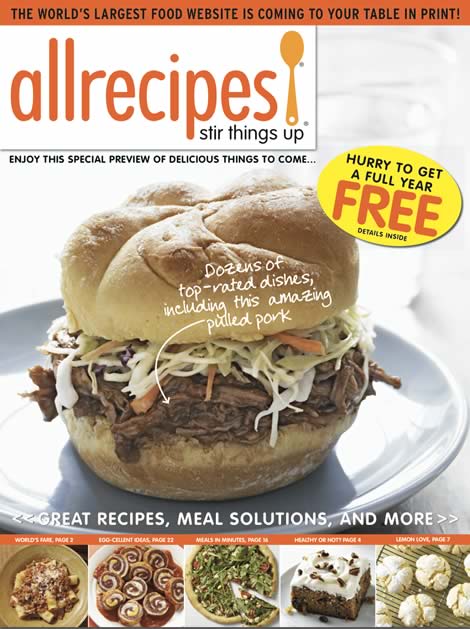
h1

‘Riding Out The Storm’ With Innovation, Creativity & A Firm Hope For The Future Of Regional Magazines – The Mr. Magazine™ Interview With Fred Parry, Publisher, Inside Columbia Magazine.

April 22, 2015

“People still want them (Magazines). If people didn’t want those magazines, basically our business model would fail. While it’s been reduced; I think there’s still a market for that. Print is still credible; people still want that tangible experience and they still want to have that quiet time with a magazine. And I also believe there are times when people want to be on a digital diet, they want to be away from all of those devices. They just want some quiet time.” Fred Parry

Cover-4ee185aaNever let it be said that Mr. Magazine™ misses an opportunity to pick the brain of a magazine publisher. Recently, I had the pleasure of meeting Fred Parry, publisher of Inside Columbia magazine, as he was visiting Oxford and the University of Mississippi on a private visit.

Upon receiving word that Fred was in town, I invited him to attend my early morning magazine service journalism class at Ole Miss and then afterward we went back to my office for an in depth discussion of the future of city and regional magazines and what innovations and mind sets he has put into place at Inside Columbia (Missouri). As a University of Missouri – Columbia graduate myself, my ears were attuned to the many wonderful and inspired thoughts he had on the industry, and the city and regional category in particular.

From his opinion that traditional advertising is no longer a sustainable model for magazine publishing to the fact that he believes custom content and sponsored advertising is the new path in the woods that magazine media should take; we had a lively and informative talk that raised important questions and also answered some that have been broached over the years.

I hope you enjoy this heart-to-heart with Fred Parry, Publisher, Inside Columbia magazine, as much as I did participating in it, but first the sound-bites.

Fred Parry On whether magazine publishing has recovered from the 2008 crisis: We are seeing light at the end of the tunnel. I don’t think we’ll ever see the revenue levels and the level of activity that we saw in 2008 before the Market crashed. I think for the first few years we all hoped things would get back to “normal” or what we were used to, but I believe we’re all slowly waking up to the fact that advertising is no longer a sustainable model for magazine publishing.

On how he sees the transition from print to digital and going from a monthly to an hourly publication: I think it’s pretty clear that people want an hourly publication. I think people want content updated as frequently as we’re willing to do it, so that’s a real transition for us and a paradigm shift certainly.

On whether he believes that people will pay for custom content or that the status quo of our Welfare Information Society will remain intact: We have done ourselves a great disservice by creating that Welfare Information Society and I think that it’s going to be almost impossible to teach people that they have to pay for content. Somebody will hopefully find a way to do it.

On whether he thinks we can sell a publishing future to consumers without a printed product: Absolutely, by selling sponsored content. I think that’s where the revenue model is.

On the fact that we live in a digital age, yet we’re continuing to produce magazines in the same way as we did in 2007: People still want them. If people didn’t want those magazines, basically our business model would fail. While it’s been reduced; I think there’s still a market for that. Print is still credible; people still want that tangible experience and they still want to have that quiet time with a magazine.

On how Inside Columbia magazine has changed over the years: One of the things that have changed for sure is that our magazines are much smaller than they were in 2008. And I think that we’re probably more in tune with our target reader and what his/her needs are.

On whether the future of city and regional magazines appears brighter now than for the rest of the industry: I think it’s brighter because we’re smarter than we were six years ago; it’s brighter because we’re much more efficient; we’re spending money much more cautiously and really, for most of us, there is a better return on our investment. We’re leaner and meaner, and I think we’re poised to sort of ride out the storm.

On the main stumbling block Inside Columbia and other city and regional magazines are facing today: It’s the traditional advertising model. Trying to go out and sell paid advertising and display advertising gets harder every single day. Six or seven years ago advertising revenue was 92% of our revenue. Today, our core magazine might be 50% of our revenue.

On what keeps him up at night: I think that it’s always a struggle to try and figure out what our advertisers are thinking. There’s always something shiny and new that comes along and steals the attention of the traditional marketers that have supported us over the years. So, I think the thing that keeps me awake is trying to figure out how to stay a step ahead; how to outsmart these “innovators” that come in with these latest and greatest ideas that nine times out of ten are not sustainable.

And now the lightly edited transcript of the Mr. Magazine™ conversation with Fred Parry, Publisher, Inside Columbia magazine.

Parry and Husni Samir Husni: As the publisher of a city and regional magazine; where do you see the future of that genre’ heading? And have we recovered from the crisis of 2008? Are you still seeing black clouds or are there rays of sunshine peeping through?

Fred Parry: We are seeing light at the end of the tunnel. I don’t think we’ll ever see the revenue levels and the level of activity that we saw in 2008 before the Market crashed. I think for the first few years we all hoped things would get back to “normal” or what we were used to, but I believe we’re all slowly waking up to the fact that advertising is no longer a sustainable model for magazine publishing. And I think the sooner that we can break ourselves away from the addiction of advertising revenue, the sooner we’re going to make that transition into being really content companies versus magazine publishing companies.

As we look at ways to distribute the content that we produce every day, whether it’s through a daily e-newsletter or some type of Smart newspaper or Smart magazine that you described in one of your recent blogs, I really believe that is our future and as soon as we embrace that, we’ll stop wasting time and money trying to make the advertising model work.

Samir Husni: How do you view the transition from ink on paper to digital? And also going from a monthly publication or six times per year to say an hourly, if not a by the minute type publication?

Fred Parry: I think it’s pretty clear that people want an hourly publication. I think people want content updated as frequently as we’re willing to do it, so that’s a real transition for us and a paradigm shift certainly.

But I think there are still going to be people who want that tangible reading experience, whether it’s in the bathroom or on the beach, there will be a need for that magazine. It will just become a very small percentage of our annual revenue model.

And the custom content, the way that’s evolving; the lines between editorial and promotional content have become so blurred, and there doesn’t seem to be much of an effort to defend those lines any longer. People tend to find as much value in promotional content as they do in editorial content.

So, those of us over the age of 30 in the magazine publishing business are still scratching our heads. And the real innovators are the people who are figuring out that john Smith wants to read about wine, baseball and Manchester United Soccer, and until we are able to provide custom content for John Smith, we’re going to lag behind.

Samir Husni: Do you think if we’re able to do that, and I know that technology makes it easy for us to provide that custom content; do you think that people will be willing to pay money for that or do you think they’ll expect the free ride of digital to continue and the Welfare Information Society to remain status quo?

Fred Parry: We have done ourselves a great disservice by creating that Welfare Information Society and I think that it’s going to be almost impossible to teach people that they have to pay for content. Somebody will hopefully find a way to do it.

We’re spending a lot of time in the publishing business right now; I’ve been to three magazine conferences in the last month and the one common thread that is being woven through all of these conferences and what publishers are talking about today are these universal or integrated audience data bases, where every engagement a reader has with our magazines; we need to capture that engagement.

So, if John Smith is reading about wine in our magazine or online, we need to somehow note that engagement and to know that the next time we have some content about wine, we need to alert John Smith that there is an article coming out in next month’s magazine about wine and we think that he’d enjoy it. Or let readers know that we just posted this on our blog or on our website. Being able to capture intelligence about our readers’ preferences and being able to say we know that reader 6279 is interested in these 15 verticals, these 15 categories of interest.

There are a couple of companies that are helping publishers capture that information; it is high-minded; it is something that’s very difficult for those of us that grew up in the traditional world of publishing to get our heads around, but I think it’s very clear that’s our future.

Samir Husni: Do you think that we can monetize that future without the printed product?

Fred Parry: Absolutely, by selling sponsored content. I think that’s where the revenue model is. Once we have the audience established; once we have a greater degree of confidence about the significance and validity of our data bases; I think that we can go to marketers and say, look, I can put you right in front of and help you interact with this small cluster. And maybe that small cluster is just 150 readers or maybe it’s 15,000, but they are uniquely interested in what you’re selling. And I can make it very easy for you to interact with them.

Samir Husni: And what if that advertiser or marketer tells you that they have the same capability of reaching them directly, why would they need you?

Fred Parry: They can’t produce the same kind of content that we’ll produce. They won’t have the same creditability that we do as a content provider. I think that’s going to be our only unique vantage point that we have the creditability and a reputation for generating quality content that people are going to be interested in.

As long as we can preserve our brands and keep building our brands, I believe we’ll have that advantage over the marketer.

Samir Husni: I think you’ll agree with me when I say we live in a digital age. Why are we continuing to produce magazines today like we did in 2007?

Fred Parry: People still want them. If people didn’t want those magazines, basically our business model would fail. While it’s been reduced; I think there’s still a market for that. Print is still credible; people still want that tangible experience and they still want to have that quiet time with a magazine. And I also believe there are times when people want to be on a digital diet, they want to be away from all of those devices. They just want some quiet time.

Maybe I’m just fooling myself, but I’m hoping that there’s still some desire for that physical magazine.

Samir Husni: Have you changed at all? If you compare a copy of Inside Columbia from the early years to a copy from today is there a major difference? I’m one of those people who say there’s not a problem with ink on paper, the problem is with what is being put on the ink on paper. Do I still need a local guide to restaurants in town or a list of all the attorneys in town in print, or should my content change to reflect the new realities of the digital age?

Fred Parry: One of the things that have changed for sure is that our magazines are much smaller than they were in 2008. And I think that we’re probably more in tune with our target reader and what his/her needs are.

At Inside Columbia magazine we have identified a 43-year-old female, named Lisa, as our target audience. And we have painted a picture of Lisa; we have a fictitious character that’s on a poster in our office. Our editors ask what would Lisa think about this; our advertising sales reps ask don’t you want to get this message to Lisa, so that’s one thing that’s changed since 2008. We’re a lot more in tune with what our reader wants and what our reader needs. We know what Lisa’s insecurities are and we know what her frustrations are; we know what keeps Lisa awake at night. If our magazine can somehow satisfy that concern and her needs; we’re really filling a nice void.

Probably more than anything, our magazine is Lisa’s connection to her community and to the real world. Lisa is pretty inundated right now with trying to get the kids to soccer and to school and trying to maintain the house, but also finishing that degree that she’s working on and working part-time somewhere. Lisa’s plate is absolutely full, but if our magazine can serve as that connection between Lisa and the world that she wants to belong to, the world that she wants to be engaged with, that’s probably the strongest benefit that we offer.

Samir Husni: Do you think that the future of the Lisa’s of the world and of the regional and city magazines is a little brighter than the rest of the industry?

Fred Parry: I think it’s brighter because we’re smarter than we were six years ago; it’s brighter because we’re much more efficient; we’re spending money much more cautiously and really, for most of us, there is a better return on our investment. We’re leaner and meaner, and I think we’re poised to sort of ride out the storm. And as the industry evolves and continues to change and be affected by technology; I feel like we’re going to be in a much better position to either innovate or jump on board.

Samir Husni: If you had to name one stumbling block facing the future of Inside Columbia and the future of city and regional magazines, what would it be?

Fred Parry: It’s the traditional advertising model. Trying to go out and sell paid advertising and display advertising gets harder every single day. Six or seven years ago advertising revenue was 92% of our revenue. Today, our core magazine might be 50% of our revenue.

And so we’re replacing that advertising revenue with custom publishing, which has been a big growth sector for us. We’re replacing that magazine revenue with events, digital newsletters, e-blasts and different projects that really have nothing to do with the magazine, other than the fact that we’re borrowing or trading on the goodwill of our brand. And that brand opens the door for us. Inside Columbia is a very strong brand, just like 5280 is in Denver or Boston Magazine. It doesn’t really matter what we’re selling, because we have the creditability of our brand behind us and people trust our brand. I think that’s probably where we have an edge over a lot of other people who are trying to produce content.

Samir Husni: My typical last question; what keeps you up at night?

Fred Parry: (Laughs) I think that it’s always a struggle to try and figure out what our advertisers are thinking. There’s always something shiny and new that comes along and steals the attention of the traditional marketers that have supported us over the years. So, I think the thing that keeps me awake is trying to figure out how to stay a step ahead; how to outsmart these “innovators” that come in with these latest and greatest ideas that nine times out of ten are not sustainable. But they come in and they temporarily steal our milk and bread and it’s a disruption, to say the least.

I think the thing that keeps me awake is figuring out how to outsmart those folks; how do I go in and make my relationship with that marketer, with the person who’s paying the bills, so strong, that they’ll stop looking at other places and be as faithful to me as I am to them.

Samir Husni: Thank you.

h1

Magazines As Informers. The Social Role of the American Consumer Magazines. A Blast from Mr. Magazine’s™ Past: Dissertation Entries Part 8

April 17, 2015

Magazines as Informers
1983

Mr. Magazine™ in his official role as a professor and educator.

Mr. Magazine™ in his official role as a professor and educator.

In a country such as the United States, media critics claim that mass communication media should have a social responsibility toward the audience it is serving. In the case of magazines, for example, Roland Wolseley argues that they should have the obligation “to provide the people with a fair presentation of facts, with honestly held opinions, and with truthful advertising.” This obligation was obvious in the case of Curtis Publishing Co. v. Butts where the court penalized the Saturday Evening Post for not taking more time in checking its story on coach Butts. The Magazine Advertising Bureau agreed that magazines have more obligations than other mass media because they “do not have the spot news function of either the newspaper or the radio. With the advent of television and its role in entertaining, magazines began to focus more on informing people about different matters that help them with their daily living. This new focus covered a broad base of information. Topics such as how to prepare food better, or to cope with rigors of living, or even how to survive a nuclear war, are but a few examples of this new focus.

The role of magazines as informers is chiefly detected through the news they print, the meanings they give to events, and the descriptions used to identify those events. Benjamin M. Compaine divided this role of magazines into two parts: passive and active. The passive information, he said, is information intended for the reader’s entertainment or for his general knowledge. On the other hand, active information is intended for specific use. Compaine gave an example of each type. Passive information might be an article on the life of Billie Jean King, while active information might be an article on how to cure tennis elbow. Compaine also noted that the special interest consumer magazines deal with active information and that general interest consumer magazines deal with passive information.

Whether active or passive, the role of magazines as informers witnessed no basic change through the years. “There are just as many people who turn to magazines primarily for information,” the study found. “People regard magazines as an excellent way of keeping abreast of trends, keeping informed about new products, and securing information about individual and special interests and activities such as hobbies, decorating, family care, and fashion.”

John Tebbel went a step further in discussing the role of the magazine as informers. He said, “Among the consumer magazines, the informational function is preeminent, no matter what audience is being reached…We live in an Age of Information, and certainly magazines are the prime carriers of it.” Magazines carry information that is far different from that found in other media. This information, especially in the newsweeklies, has helped, according to John Hohenberg, to “fill an indefensible gap in the reporting of national and international affairs by less qualified daily newspapers of the nation and the bulletin-type coverage of radio and television.” This gap would only be filled by magazines in their roles as informers by offering the readers something quite different from that of newspaper or television information.

To put it in the words of Louis M. Lyons, then curator of the Nieman Foundation for Journalism at Harvard University, this information should “give the readers something to chew on, to mull over, something to stir his imagination, to reflect about, not only to broaden his awareness of current issues but to lead him to consider matters that are not now and may never be current issues, but should engage the attention of the questing mind.”

The above information was written in 1983 and is taken from a portion of my dissertation when I was at the University of Missouri-Columbia where I obtained my doctorate in journalism. And while the majority of the material still holds true, things have changed drastically in some areas.

Magazines as Informers
2015

passive reeseactive cover

While many facets of magazine media have changed drastically over the years, this is one area that has not. In fact, I still stand behind every word that I wrote in 1983 concerning magazines as informers.

The voices remain status quo as well. In 2015, the passive information exists and so does the active. Examples today of Compaine’s observation could be: passive – Reese Witherspoon on the January 2015 cover of Glamour, offering a look inside her personal life with the statement “I don’t do regret,” and active – February’s Muscle & Fitness, which compels you to ‘Pump up Your Gains with a Proven Workout.’

Magazines inform on many levels: political, epicurean, fashion and beauty, science, celebrity, health, fitness, and the list goes on and on. The words of Louis M. Lyons have never been truer than they are today, the information one finds within the covers of a magazine should “give the readers something to chew on, to mull over, something to stir his imagination, to reflect about, not only to broaden his awareness of current issues but to lead him to consider matters that are not now and may never be current issues, but should engage the attention of the questing mind.” And without a doubt, they do.

Next week Mr. Magazine™ begins the journey of The Commercial Role of magazines then in 1983, and now in 2015.

Until next week…stay ‘informed,’ pick up a magazine.

h1

Travel With A Purpose: Smithsonian Embarks On New Journeys (The Magazine, That Is). The Mr. Magazine™ Interview With Publisher Steve Giannetti And Editor-in-Chief Victoria Pope

April 15, 2015

“I’m very excited about this part of our business. I was brought up in print and I do believe that it’s the role of print and how it plays in the overall world of our media. You see it as much as I do; now we’re seeing digital-only plays that want to get into the print business and so, isn’t it right that we should actually start with the median and grow it the other way? That’s where I see the future going, creating content that can be deeper and articulated in different ways in the world of publishing.” Steve Giannetti

“I believe very much in the importance of the commercial side. I don’t feel successful without being successful.” Victoria Pope

SJ If you love to travel and you love to learn about the places and destinations you’re traveling to, then Smithsonian’s new magazine, Smithsonian Journeys is for you. The magazine could easily have the tagline, “Travel with A Purpose.” Of course, the one it has bodes well for it too, “Seeing the World in a New Light.”

Steve Giannetti is the chief revenue officer and Victoria Pope is editor-in-chief and the two together have a collaborative bond that is apparent throughout the pages of the sleek magazine. The editorial is wonderful and the ads are dynamic and only add to the energy and flow of the magazine.

I spoke with Steve and Victoria recently and they praised their new baby as only parents could and should, without ignoring the inherent pitfalls of growing up that every infant has. The power and beauty of print was a driving factor behind the powers-that-be of the Smithsonian’s decision to launch a new title. And by the deep, enriched feeling you get from just flipping through the pages, I would say they made a stellar decision.

So, sit back and enjoy the Mr. Magazine™ interview with Steve Giannetti, Publisher and Victoria Pope, Editor-in-Chief, Smithsonian Journeys.

But first, the sound-bites:

On why Smithsonian decided to launch a print magazine in a digital age: What a great opportunity to create a tangible, tactile, beautiful product that is able to take all of our travel resources and put them together in one place. (SG)

On why Paris was the city of choice for the first issue: Honestly, when I came into the job, I could do whatever I wanted, but within a very short period of time. And I wanted to pick a place that I felt I knew on the ground a bit. I knew a little bit about Arab culture there; I had read a lot about black American culture historically there, so I felt like I had a strong starting point. (VP)

On whether the history of the city or region chosen will play an integral part of every issue: That’s the idea. We’re in the midst of doing an issue now that will be on what’s called the “Inca Highway,” the countries of the Andes, so Peru, Ecuador, Bolivia and Chile. Again, it’s trying to create a rounded, curated view of that region. We have a piece on what’s called “Astro Tourism” in Chile, which is to say it’s going to be a story on the southern night sky and about stargazing. (VP)

On whether anyone told Steve that Smithsonian was out of its mind for launching a print magazine today: I can tell you that exact quote was said to me several times. I was asked why we would do it and I explained to them that if you look at the magazine business today, Samir, where is it resonating the most? With high quality, beautiful, tactile publications and that this is far more than just a magazine print launch. And I also said wait until you see the issue.

On where Steve sees the future of print: There is no doubt the future of print, I think, is creating products that are more a part of a larger medium mix, it’s not just print alone. It’s now the launching point of a content platform that we’re going to be expanding, so I see this more as print’s role in the entire medium mix and I see us growing in, and I don’t want to call them niches, because that’s not the right word, but I see us growing in areas that can create content that is deeper and more easily articulated in other platforms. And I think consumers will pay for that. And if consumers pay for it, advertisers will follow.

On the major stumbling block Victoria felt they had to face while launching the magazine: Of course, you have to start small and by that I mean small budget as well. For me, it’s been quite an issue to find the kinds of contributors that I want in a foreign venue. I have to start from scratch basically when it’s a place far away. I don’t have the budget to send people from the states and I’m not even sure that’s the model that I want to follow.

On Steve’s opinion of the biggest stumbling block: The biggest stumbling block was really in convincing people that we were creating a beautiful product that no one had ever seen before, but tell them also that they were going to have trust and take that ride with us.

On whether Steve believes pricey magazines and consumer-driven revenue may be the new business model for magazines: As the chief revenue officer and I’m also in charge of consumer marketing as well, so yes, I don’t want to be reliant on just sponsors and advertisers, so the answer to that question is yes. We do feel a product has to be paid for, or at least somewhat paid for or monetized through the consumer.

On the human being Victoria feels the magazine would become if struck with a magic wand that could turn Smithsonian Journeys into a person: It’s Victoria, but it’s also the Smithsonian Journeys traveler, frankly. I spent a lot of time talking with the people on the travel side about the people they’ve met on the trips, who they are and what they are, people who are autodidacts, who are very interested in all kinds of subjects. Then I try to incorporate my personality and the things that I’m interested in and the visual sense of the art director, in with those people, so truly it’s rather a cohort of people.

On what motivates Victoria to get our bed and look forward to going to work: I really love the process of figuring out how the magazine is going to look with the art director.

On what motivates Steve to get out of bed and look forward to going to work: Having been in this business for a long time, what I really love about getting up today is that we’ve created a new product that’s amazing. I’m sitting here with the editor-in-chief, right? I believe in church and state, but what I really love is that we’ve created this arm-in-arm, not me telling Victoria how to write the edit or what to write, but us constantly talking about how we can make it better and sharing what we think about every facet of the magazine.

On what keeps Steve up at night: What keeps me up at night is very simple right now. It’s that I know we’ve created a great product, but is the consumer going to think it’s great.

On what keeps Victoria up at night: I’m kept awake by the many needs to move very quickly ahead and whether I’ll be able to make something as good as I want it to be. There really isn’t a lot of time between issues, it seems that way, and that keeps me up.

And now for the lightly edited transcription of the Mr. Magazine™ conversation with Steve Giannetti, Publisher, and Victoria Pope, Editor-in-Chief, Smithsonian Journeys.

Samir Husni: Why did Smithsonian decide to launch a new magazine in print in today’s digital age?

Steve Giannetti Photo Steve Giannetti: There are a couple of reasons why and the first one is that travel is in the DNA of the Smithsonian brand and our travel division is called Smithsonian Journeys. Smithsonian Journeys is a place where you can book a trip to virtually any place in the world and when you go on one of our trips a Smithsonian expert is with you. This has been around for about 30 years and it’s a really robust business for us.

From a commercial standpoint, travel has been a really large part of our advertising and sponsorship and the Smithsonian consumers love to travel; we know that from our business; they have money and they have time.

We felt with all these areas coming together; what a great opportunity to create a tangible, tactile, beautiful product that is able to take all of our travel resources and put them together in one place. That was really the genesis of this idea and then we brought Victoria on, who used to work at National Geographic, and she’s just brought a whole new perspective. As we say on the cover: seeing the world in a new light is exactly what this publication is about.

Samir Husni: Victoria, that leads me to the question, why did you choose the city that never ceases to delight and fascinate Americans, Paris, for the first issue?

Victoria Pope: (Laughs) Doesn’t that say it all? Honestly, when I came into the job, I could do whatever I wanted, but within a very short period of time. And I wanted to pick a place that I felt I knew on the ground a bit. I knew a little bit about Arab culture there; I had read a lot about black American culture historically there, so I felt like I had a strong starting point. I also just wanted a place in which we could follow very vividly the template that I think is important in this kind of journalism, which is taking history and bringing it into the modern and bringing it alive. Paris is a city that does have those connections everywhere, so it was a good model location for us.

Samir Husni: Victoria, what was your position at National Geographic?

Victoria Pope Headshot Victoria Pope: I had several positions. For most of my nine years there I was deputy to the editor-in-chief, so I was number two at the magazine.

Samir Husni: When I flipped through the pages of the first issue, I felt as though you were a curator of Paris. If someone is interested in Paris and its history and how it relates to Americans; you’ve done a great job with that curation. Is this what we’ll see with every issue’s topic?

Victoria Pope: That’s the idea. We’re in the midst of doing an issue now that will be on what’s called the “Inca Highway,” the countries of the Andes, so Peru, Ecuador, Bolivia and Chile. Again, it’s trying to create a rounded, curated view of that region. We have a piece on what’s called “Astro Tourism” in Chile, which is to say it’s going to be a story on the southern night sky and about stargazing.

Then there will be a piece on La Paz on the ways in which superstition infuses everyday life. Charles Mann, who is the author of 1491, is going to be looking at the ecology of the region and how that ecology really gave it the possibilities of becoming a great civilization back at the time of the Incas. And several stories deal with Incan civilization.

What we do know with each issue is that we want to follow the kinds of subjects that are most important to the Smithsonian readers, meaning Smithsonian in a general sense, the Smithsonian partaker, if you will, the people who go on tours and who like the museums in the magazine. And we’re always going to try and have one science story; we’re always going to have history, whether it be deep history, like archaeology in the case of the Andean countries, or in the case of Paris, we went back to the 17th century.

So we know that these two elements will be in each issue and then also a certain amount of food history, but also some contemporary food reporting. We feel that people care about this a lot and we’re trying to do everything a little bit deeper than it is in most travel publications because I personally find that most travel magazines don’t give me enough of what I want.

I was a foreign correspondent for over 10 years and I remember that when people would visit me, tourists and friends, they really wanted to know about the places; they really wanted to know more than just what they could find out quickly in a list of places to see, such as monuments and restaurants, and that’s what we’re trying to cater to.

Samir Husni: Steve, this is a print publication in a digital age and as the chief revenue officer, you had the responsibility of trying to sell this magazine to advertisers. Did anybody tell you that you were out of your mind to bring another print publication into this digital age?

Steve Giannetti: I can tell you that exact quote was said to me several times. I was asked why we would do it and I explained to them that if you look at the magazine business today, Samir, where is it resonating the most? With high quality, beautiful, tactile publications and that this is far more than just a magazine print launch. And I also said wait until you see the issue.

The initial response was that, but after a bit it was more of, I’m really happy you’re doing this and that you’re staying committed to a platform that is very important. And as you can see, we were very successful in bringing in a quality group of advertisers to the magazine and we hope to bring in more.

Samir Husni: The whole “print is dead” marching band has dissolved and now the new group’s mantra is “print is in decline.” Where do you see the future of print?

Steve Giannetti: There is no doubt the future of print, I think, is creating products that are more a part of a larger medium mix, it’s not just print alone. It’s now the launching point of a content platform that we’re going to be expanding, so I see this more as print’s role in the entire medium mix and I see us growing in, and I don’t want to call them niches, because that’s not the right word, but I see us growing in areas that can create content that is deeper and more easily articulated in other platforms. And I think consumers will pay for that. And if consumers pay for it, advertisers will follow.

I’m very excited about this part of our business. I was brought up in print and I do believe that it’s the role of print and how it plays in the overall world of our media. You see it as much as I do; now we’re seeing digital-only plays that want to get into the print business and so, isn’t it right that we should actually start with the median and grow it the other way? That’s where I see the future going, creating content that can be deeper and articulated in different ways in the world of publishing.

Samir Husni: What was the major stumbling block that you had to face during this launch process and how did you overcome it?

Steve Giannetti: In terms of advertising or in general?

Samir Husni: In general, or in terms of what you consider the major stumbling block from the point of conception to the point of birth of Smithsonian Journeys?

Victoria Pope: Of course, you have to start small and by that I mean small budget as well. For me, it’s been quite an issue to find the kinds of contributors that I want in a foreign venue. I have to start from scratch basically when it’s a place far away. I don’t have the budget to send people from the states and I’m not even sure that’s the model that I want to follow. I felt finally, when I did get the freelancers that I wanted in Paris to contribute that I would be much happier that I had people who were based in Paris doing it than sending people that I knew from National Geographic or some other place to go over, but it’s very tricky to do that and also not have a very big budget or lead time.

Those are the typical kinds of problems of a start-up and you work on fumes a lot of the time. I’m just very pleased that the first issue has turned out well and I think the second issue will be very good too and we’ll probably be able to grow and put more resources quickly into it.

Steve Giannetti: And that’s the word: resources. The biggest stumbling block was really in convincing people that we were creating a beautiful product that no one had ever seen before, but tell them also that they were going to have trust and take that ride with us. There are going to be bumps from a budgeting standpoint, and I from the chief revenue officer’s standpoint said, we’re going to bring more advertisers into this as well. Hopefully, Samir, what we’re going to find is that it won’t be just travel advertisers, but we’ll get more advertisers that are in the travel genre.

And once we overcame that and people started seeing the magazine being created and seeing it as it grew, internally here at the Smithsonian it’s become a fulcrum of “I want to see this.” I’m in D.C. and I’m carrying a copy and keeping it close to my vest so people don’t steal it from me.

It took a while to get over that first hump, but once we got there and people saw what we were creating and the type of advertising that we were bringing in and the product itself, everybody called and said let’s do it. And you get that with a lot of start-ups.

Samir Husni: I noticed that the cover price is $13.99, for one issue, while you can get almost an entire year of Smithsonian for that price. Is this the new model? Are we going to see more consumer-driven revenue generation from print than from advertising?

Steve Giannetti: As the chief revenue officer and I’m also in charge of consumer marketing as well, so yes, I don’t want to be reliant on just sponsors and advertisers, so the answer to that question is yes. We do feel a product has to be paid for, or at least somewhat paid for or monetized through the consumer. To be successful in the future, Samir, I think any print publication has to look at that model, absolutely.

Samir Husni: The new magazine that National Geographic just launched, National Geographic History, the cover price is $9.99 and published 6 times per year, so we’re starting to see these high cover prices, which to me is sending a signal that if you really like what you see, you will pay for it.

Steve Giannetti: That’s exactly right and remember, Smithsonian Journeys is all original editorial, while some launches are able to use and take into consideration refurbished editorial. So nobody has seen this before. And we felt if we were able to create this unique editorial, it would be great. And this is unique, not only in terms of the content, but also in the view that we’re looking at traveling, and I think this is something that consumers will pay for. And the consumers will talk, so knock on wood, Samir; I’m hoping you’ll buy 200 copies. (Laughs)

Samir Husni: (Laughs too) Victoria, if I give you a magic wand and you strike Smithsonian Journeys premier issue with it and a person, a human being, appears in place of the magazine; who would it be and how will that person, male or female, engage with the audience?

SJ Victoria Pope: It’s Victoria, but it’s also the Smithsonian Journeys traveler, frankly. I spent a lot of time talking with the people on the travel side about the people they’ve met on the trips, who they are and what they are, people who are autodidacts, who are very interested in all kinds of subjects. Then I try to incorporate my personality and the things that I’m interested in and the visual sense of the art director, in with those people, so truly it’s rather a cohort of people. I try to bring all of that into this person who represents the magazine. And I think if that’s successful, then I’ve reached a large enough readership. We don’t need to be huge; we just need to be…

Steve Giannetti: …loved. (Laughs)

Victoria Pope: By a subset of people who love to travel and like knowing about places and like the idea of reading several stories about a region or a city at once. And I have to say, I think quite a few people fit that.

Steve Giannetti: If you were going to go to Paris and you read this magazine, I think you’d have a huge head start on seeing the city in a way that probably you would not have experienced in a first-time journey. And that’s what our people want. The traveler from Smithsonian; the cultural traveler wants to learn about things that are new. Not new in the fact that they’re brand-new, but they’re uncovered. They like to discover and they’re curious and that’s the type of person that we want to read this. The ability to take this content and grow it out is something that I’m excited about as well.

Samir Husni: What is the initial launch; can you share some numbers?

Steve Giannetti: We’re putting out 150,000 on the newsstand and I have some alternate distribution going into some cruise lines as well. So, it’s probably about 170,000 altogether.

Samir Husni: Will the magazine have subscriptions or be strictly on the newsstands in the beginning?

Steve Giannetti: Good question. What we did, Samir, was a pre-launch email exchange with some of our list to see if they would buy the magazine in advance. And the response has been very robust, so that’s good. And we have a card in the magazine that asks the reader if they’d like to receive it, I want to get that feedback. I would love to grow it, but right now I think you have to establish the beat ship with the fact that if it works on the newsstand, I would love to grow it, yes. But we have to wait and see what the consumer says here first, if that makes sense.

Samir Husni: Most good magazine launches considered the newsstand as their acid test; if it worked on the newsstand first, then they could go from there.

Steve Giannetti: That’s exactly right. We’re confident that this is going to work, that’s why we’ve committed to four of these.

Samir Husni: Victoria, would you think it was a horrible nightmare if Steve came to you and said let’s do this magazine monthly?

Victoria Pope: (Laughs)

Steve Giannetti: (Laughs too) Yes, the answer is yes.

Victoria Pope: Definitely. (Laughing) That would be an impossibility, but we do need to grow in a lot of ways. We need to grow both in having more editorial products, whether they are specials that come out of Journeys or other things. I have lots of ideas of things that we could produce. I want to spend my free time that I’ll someday have, building up our digital extensions, because I feel there is so much that I could do to help them. We want to make at lists of eating, for example, with the feature that we have on food and the history of food, a very regular and important feature digitally, so I’m trying to get people every week to write something on the subject of food history. We have many things to do beyond the print location.

Steve Giannetti: So, the growth process is to not necessarily increase frequency, it’s increasing the engagement with the consumer in different areas of this great content. And I think if we can do that, frequency will become part of it, but that’s really not going to be our barometer of growth. You don’t want to be just pumping out magazines that don’t have the quality that we have with the Smithsonian. Quality is something we always strive for, whether it’s the magazine or anything else we do. We always ask the question, is this going to represent the brand that we have to represent?

Samir Husni: Anything else either of you would like to add?

Victoria Pope: When you have time to settle down and read it; I’d love to have your thoughts about how we could make it better. Maybe it’s unfair to ask that of you, but I’d love to have your practiced eye to tell us what you think might be missing because it’s evolving; it’s definitely going to evolve.

Samir Husni: I’ll be more than happy to do that.

Samir Husni: Victoria, what makes you get out of bed in the mornings and motivates you to say, wow, I can’t wait to get to work?

Victoria Pope: I really love the process of figuring out how the magazine is going to look with the art director. I have, for probably the fifth time in my life in journalism, probably the perfect partner in my art director because we’re able to bounce ideas off of each other and we often agree about things and that to me, being able to create a product that’s so visual and written that is in harmony, where the visuals are exciting and help to bring people into the storytelling, is really wonderful.

Samir Husni: And Steve?

Steve Giannetti: Having been in this business for a long time, what I really love about getting up today is that we’ve created a new product that’s amazing. I’m sitting here with the editor-in-chief, right? I believe in church and state, but what I really love is that we’ve created this arm-in-arm, not me telling Victoria how to write the edit or what to write, but us constantly talking about how we can make it better and sharing what we think about every facet of the magazine. So, it has really re-jazzed me and reenergized me to say that I’m in a business that has a lot of growth areas.

We’re working together now and I really love that. Years ago, the church and state chasm was so big that it just didn’t work. But now, being able to collaborate on something new and come out with a great product, that’s really energizing, even for an old guy like me.

Samir Husni: (Laughs) Steve, since you mentioned the old guy and I did not, my typical last question; what keeps you up at night?

Steve Giannetti: (Laughs too) What keeps me up at night is very simple right now. It’s that I know we’ve created a great product, but is the consumer going to think it’s great.

Samir Husni: And Victoria?

Victoria Pope: I’m kept awake by the many needs to move very quickly ahead and whether I’ll be able to make something as good as I want it to be. There really isn’t a lot of time between issues, it seems that way, and that keeps me up. I still have two assignments to make for the next issue.

Let me just say something about the collaboration with Steve. It’s been really nice. I remember the very first day we met on my fifth day on the job and I said, I think that we’re going to have to stream these quarterlies; it’s going to be better if we just, instead of covering the world every four months, we narrow it down to cities and regions. And Steve immediately picked up on that and was able to reinforce what I was thinking editorially from a business standpoint. And that meant a lot to me.

I believe very much in the importance of the commercial side. I don’t feel successful without being successful.

Samir Husni: Thank you.
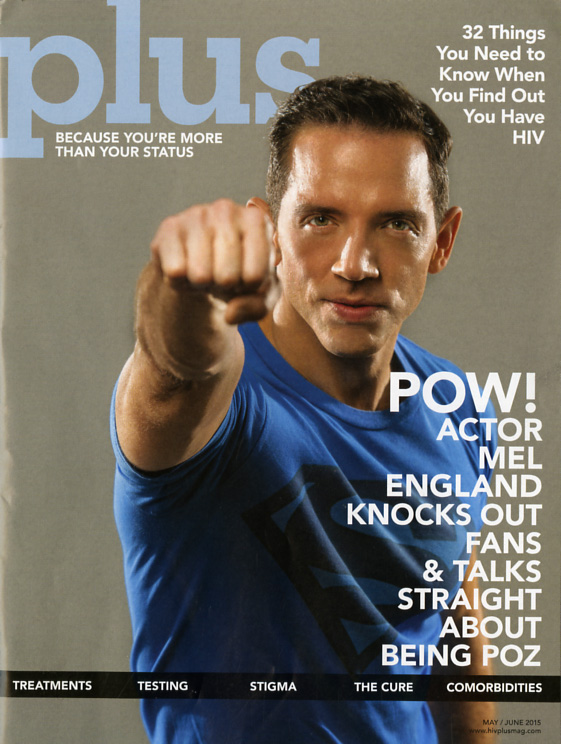
h1

Forbes’ Chief Product Officer Lewis DVorkin To Samir “Mr. Magazine™” Husni: The Magazine Business Does Not Have An Audience Problem; The Magazine Business Has An Advertiser Problem. The Mr. Magazine™ Interview.

April 9, 2015

“I think that the pendulum always swings back and forth and I think the pendulum, which had swung pretty much to digital, now may swing, while not all the way back, certainly somewhat toward starting the comeback a bit, because there is a recognition that audiences do like their magazine products.” Lewis DVorkin

Lewis DVorkin at the Magazine Innovation Center, The University of Mississippi

Lewis DVorkin at the Magazine Innovation Center, The University of Mississippi

If you sell it and the public buys it; it’s a product, according to Lewis DVorkin. And it’s very hard to argue with his straightforward logic. And why would anyone want to? Lewis DVorkin is chief product officer for Forbes and believes whole-heartedly in his brand as a valuable product worth selling, and with the across-the-board success of the Forbes brand, obviously worth buying to the consumer.

Lewis is the one-and-only chief product officer in a legacy media company and knows something about platforms, strategies and the power of print integrated in a digital world. With impressive style and intuition, Forbes has done powerful things with native advertising, both within its pages and on its covers.

I spoke with Lewis recently during his visit to Meek School of Journalism and New Media where he was the opening keynote at the 2015 Ole Miss New Media Conference at the University of Mississippi. After his speech Lewis and I visited in my office at the Magazine Innovation Center and engaged in a conversation about print, digital, the small screens that we consume our information on and how they seem to be getting even smaller, and we talked about the future of devices in the world of magazines and magazine media. His answers were succinct and informative.

I hope you enjoy the Mr. Magazine™ interview with Lewis DVorkin, Chief Product Officer, Forbes magazine; I know you’ll be very enlightened by his answers.

But first the sound-bites:


Lewis DVorkin at the Magazine Innovation Center, The University of Mississippi[/caption] On the role he believes print plays in a digital world:
Obviously, we’re big believers in print. Audiences love, and I can’t speak for newspapers, I’ve been out of that business for a while, but I can say audiences love magazines. They love the identification they have with a magazine; they love the tactile part of the magazine; they love getting it, whether they buy it or it comes to them; they love the storytelling; they love the photography, and they love what a magazine offers. The magazine business does not have an audience problem; the magazine business has an advertiser problem.

On whether he believes the industry will have to continue to depend on advertisers for survival or will it ever make money on its customers:
There is something more to it than the size of the audience, there is also what are the new kinds of products and features that you’re developing for your print product, and as you probably know, we have native advertising in Forbes magazine and we’ve done some dramatic things with second covers and placing a native ad on the cover of Forbes.

On the fact that we’ve moved from a big screen to a small screen and with the Apple Watch coming out, an even smaller screen: Devices will get smaller and smaller. It’s what I was mentioning before; so what’s the kind of content that you consume on these devices and how do we produce content for these devices? It’s difficult enough to figure it out on the Smartphone and there will be a time when we need to figure it out on these wearable devices, but I would also caution you to remember however many years the iPad has been out, maybe four or five years now, that was going to change everything and it really didn’t.

On why he refers to Forbes’ platforms as products:
People are buying it. When you buy something; you’re paying for a product. And if you’re paying to buy this collection of 200 pages or 250 pages, it is a product. If you’re going to a mobile website to look at advertising; it’s a product that houses the advertising.

On the major stumbling block he’s had to face:
Technology is hard. Technology is really hard to move fast enough for the change in consumer behavior. Consumers move faster than advertisers; they move faster in some ways than publishing technology; this is not about us; it’s about the industry and I think that we’re always finding ourselves just stumbling over the question: how do we move fast enough with the technology that we have?

On what keeps him up at night: I generally sleep really well, but I do think a lot about the notion of websites and apps, browsers and apps. It’s very difficult and since I’m a chief product officer; if we can’t make money, that’s not a good thing. And the app world is a difficult world to make money in, but more people are on their Smartphones than ever. So, how do we monetize our users on a Smartphone and when apps are not, so far in the news business, great revenue-drivers and we struggle with that.

And now the lightly edited transcript of the Mr. Magazine™ conversation with Lewis DVorkin, Chief Product Officer, Forbes magazine.

Lewis DVorkin and Samir "Mr. Magazine™" Husni at the Meek School of Journalism, Ole Miss.

Lewis DVorkin and Samir “Mr. Magazine™” Husni at the Meek School of Journalism, Ole Miss.

Samir Husni: You told me that anytime you hear the word start-up, it gives you a rush. Today, there are a lot of new start-ups being launched in print and also a lot of digital entities. What do you think is the role of print in today’s digital age?

Lewis DVorkin: Obviously, we’re big believers in print. Audiences love, and I can’t speak for newspapers, I’ve been out of that business for a while, but I can say audiences love magazines. They love the identification they have with a magazine; they love the tactile part of the magazine; they love getting it, whether they buy it or it comes to them; they love the storytelling; they love the photography, and they love what a magazine offers. The magazine business does not have an audience problem; the magazine business has an advertiser problem. And advertisers are now trying to move to where they believe their new audiences are, which certainly is digital.

It was interesting; Martin Sorrell recently talked about how magazines have been undervalued or not valued enough by marketers, so I think that the pendulum always swings back and forth and I think the pendulum, which had swung pretty much to digital, now may swing, while not all the way back, certainly somewhat toward starting the comeback a bit, because there is a recognition that audiences do like their magazine products.

Samir Husni: At Forbes, you’re one of the few entities in your space that digital actually brought more readerships to your print. How can you monetize that? Will there ever be way where we can start making money from our consumers, our customers, the readers; or will we have to continue to depend on advertisers for our survival?

Lewis DVorkin: You know, the number that I talk about is an MRI number and advertisers do buy on MRI numbers, so the fact that our MRI numbers have risen is a good thing and our salespeople go out and sell our magazine.

But there is something more to it than the size of the audience, there is also what are the new kinds of products and features that you’re developing for your print product, and as you probably know, we have native advertising in Forbes magazine and we’ve done some dramatic things with second covers and placing a native ad on the cover of Forbes. And those new products and features have attracted a lot of advertisers to us who are interested in being able to participate.

So, again, when I say that print has an advertising problem, we’re trying to find solutions to that. And one of the solutions is the integration, clearly labeled, of marketing content in our magazine in powerful ways. And I think that’s going to have a significant impact on the revenue of the magazine.

Samir Husni: Tomorrow, the preorders for the Apple Watch will begin; the Apple store will start selling the Apple Watch, which based on what I’ve read can actually replace the mobile phone. So, we’re moving from a big screen to a smaller screen and then to an even smaller one.

Lewis DVorkin: As I told someone, what I want is a chip in my ear and all I have to do is tweak it and I can talk, or turn it off or whatever. I mean, devices will get smaller and smaller. It’s what I was mentioning before; so what’s the kind of content that you consume on these devices and how do we produce content for these devices? It’s difficult enough to figure it out on the Smartphone and there will be a time when we need to figure it out on these wearable devices, but I would also caution you to remember however many years the iPad has been out, maybe four or five years now, that was going to change everything and it really didn’t. Smartphones were going to change things.

So, I think the recognition is that everybody (has a device); you have a six-plus; I have a five; some people have watches; some have desktops; there will be many different form factors, and I think the challenge for journalism is that each form factor will require a different kind of format of content. It’s not going to be 3,000 words on a watch, nor is it going to be on a watch what it will be on a Smartphone. That’s a big challenge and we’ll figure it out.

Samir Husni: You took the unprecedented step of getting the title of Chief Product Officer and you identify the magazine and the digital devices as products. Some people in the industry think that we are much more than products; we are the journalists and the marketers; what’s your answer to that? Why do you refer to the magazine, the app and the website as products?

Lewis DVorkin: People are buying it. When you buy something; you’re paying for a product. And if you’re paying to buy this collection of 200 pages or 250 pages, it is a product. If you’re going to a mobile website to look at advertising; it’s a product that houses the advertising. It doesn’t feel as glamourous or as professional perhaps or as romantic. I go back to the days when journalism was a public trust, but all of those things were still on the TV shows, which were products.

And I think that what we have to recognize is that these things are things that make money and are being sold and we need to treat them as something different than just stories. They need to be treated differently than that. And I think that if you pay attention to that, then you will be able to deliver the journalism in a more effective way.

Samir Husni: What has been the major stumbling block that you’ve had to face in recent years and how did you overcome it?

Lewis DVorkin: Technology is hard. Technology is really hard to move fast enough for the change in consumer behavior. Consumers move faster than advertisers; they move faster in some ways than publishing technology; this is not about us; it’s about the industry and I think that we’re always finding ourselves just stumbling over the question: how do we move fast enough with the technology that we have?

And when you combine that with again, consumers are moving faster than the advertising business, and working with marketers and agencies is a little difficult stumbling block on the Smartphone device as well.

So, these are sort of industry-wide stumbling blocks; I don’t think that there is anything specific to Forbes, but they’re really hard.

Samir Husni: And my typical last question; what keeps you up at night?

Lewis DVorkin: I generally sleep really well, but I do think a lot about the notion of websites and apps, browsers and apps. It’s very difficult and since I’m a chief product officer; if we can’t make money, that’s not a good thing. And the app world is a difficult world to make money in, but more people are on their Smartphones than ever. So, how do we monetize our users on a Smartphone and when apps are not, so far in the news business, great revenue-drivers and we struggle with that. We have some ideas, but they’re early. Those things, if I do worry about anything, would be it. We have built a very big desktop presence, with very big revenue. How do we achieve the same on the Smartphone devices? That’s probably where I spend the majority of my time, so that’s where I have the majority of my worries. But I can really sleep OK.

Samir Husni: Thank you.