Archive for the ‘A Launch Story…’ Category

h1

Beekman 1802 Almanac: Two Men & A Magazine – From Farm To Press. The Mr. Magazine™ Interview with Brent Ridge, Co-Founder and Co-Editor-in-Chief.

October 9, 2015

A Mr. Magazine™ Launch Story…

“I also think that there is a way for print magazines to live on, they just have to adapt. We look at some great magazines like Kinfolk Magazine and Sweet Paul Magazine, even Edible Magazine to some degree; these are people who are doing great things with print, but also trying to rejigger the business model of the print magazine. And that’s really what we’re doing with the partnership with Meredith; we wanted to create this really beautiful magazine using amazing paper; a magazine that people would actually want to keep and hold onto, rather than toss it away.” Brent Ridge

1802-1 Most of the time you’ll hear the phrase “I love all magazines equally” flow from the lips of Mr. Magazine™. And that’s because it’s true. Very rarely do I differentiate between my children; I love all of them the same. Every cover, every size and every finish; just every element of ink on paper brings me joy.

However on occasion there have been times, few and far, far between, where I have been overwhelmed by the subtle beauty and the pleasing content of a magazine. So much so that I find myself reading and rereading from front cover to back many times over.

That would be the case with Beekman 1802 Almanac. It’s an original twist on a generational favorite: the Farmer’s Almanac. Modernized, but not to the point that the old-time concept is unrecognizable, the magazine is a breath of fresh air on a hot, sweltering day at the newsstands.

Brent Ridge and Josh Kilmer-Purcell are co-editors-in-chief of this new title. And the two young men practice what they preach when it comes to the content and concept of the magazine. They live on a rural farm that was built in 1802 by Judge William Beekman and they love the farm life and experience it daily; they raise pigs, protect their apple trees from deer and practice the art of soap making. All farm-type things they learned from their neighbors, who are people that always believe in being neighborly. It’s a throwback existence that they enjoy immensely. And it shows throughout the pages of the magazine.

Partnered with the Meredith Corporation, which has assisted them in reaching a much broader audience, the sky (or I better say, Brent and Josh) seems to be the limit for this refreshing magazine.

I spoke to one half of this farm-loving duo recently, Brent Ridge. Brent and I discussed the genesis of the magazine, whether he and Josh had been accused of being crazy for starting a print magazine in this digital age, and we even covered a stumbling block or two that they had to face when getting it off the ground. But hey, for two guys who can muck out a barn, putting together a magazine should have been a piece of cake, right?

Find out the answer to that one as you read and enjoy the Mr. Magazine™ interview with Brent Ridge, co-editor-in-chief, Beekman 1802 Almanac.

But first, the sound bites:

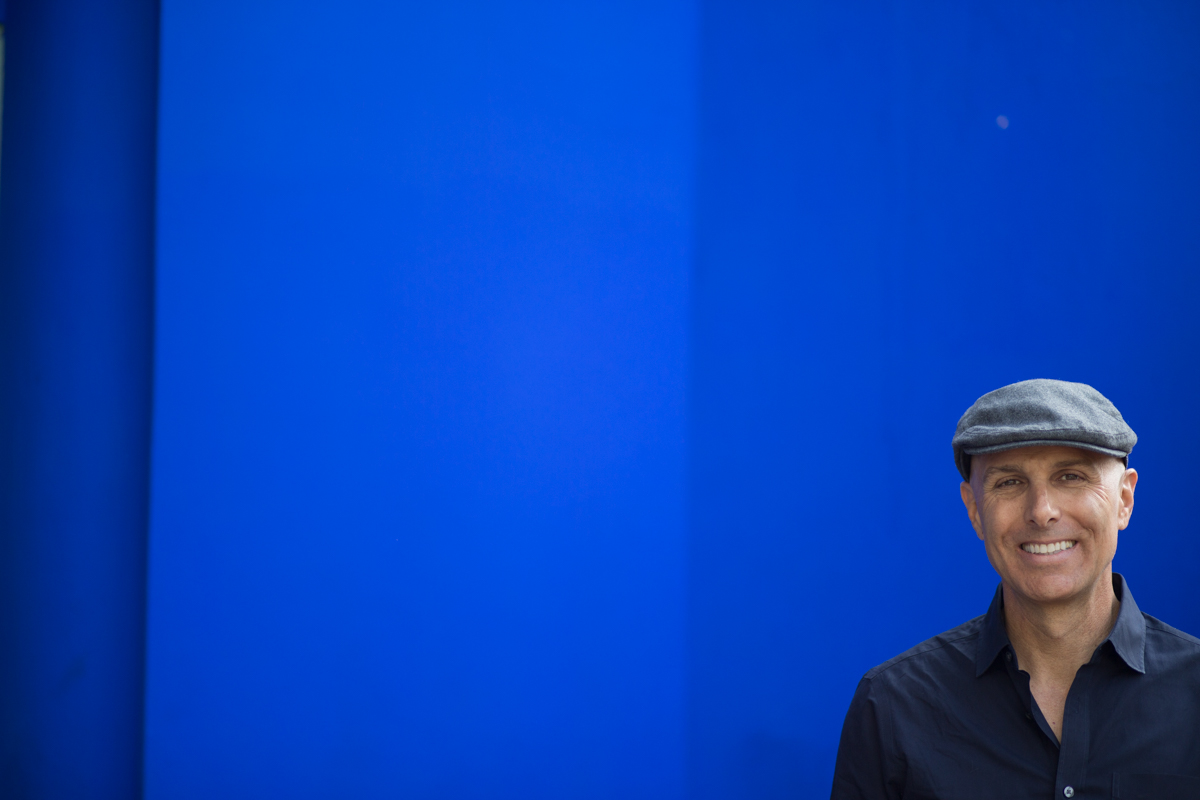
Brent Ridge, co editor-in-chief and co founder, Beekman 1802 Almanac.

Brent Ridge, co editor-in-chief and co founder, Beekman 1802 Almanac.

On the genesis of Beekman 1802 Almanac: We’re always looking at the past and trying to modernize things from the past. So, the idea of doing a modern version of an almanac was something that had always intrigued us. We also felt that just from the people who were on our blog and our social media; there was a hunger for really great content that wasn’t being met.

On whether anyone has asked them yet if they’re out of their minds for starting a print magazine, especially an almanac, in a digital age: As I said, we always try to modernize old things; we do a modern take on very traditional things. So, that was in our wheelhouse. I also think that there is a way for print magazines to live on, they just have to adapt. We look at some great magazines like Kinfolk Magazine and Sweet Paul Magazine, even Edible Magazine to some degree; these are people who are doing great things with print, but also trying to rejigger the business model of the print magazine.

On any stumbling blocks they had to face and overcome during the process of putting the magazine together:
For us the hardest part was figuring out what the architecture of the magazine was going to be. And thinking about the things that were typically in a magazine, such as the letter from the editor and what our take would be on our own letter from the editor. So, that became “Life Lessons” for us. What will be the front-of-book feature in our magazine? And so that became the “Gazette.” And so, really just figuring out what was going to be the hallmark elements of the magazine that was the labor part.

On the most pleasant moment they’ve had throughout the process of the first issue: I think the most pleasant moment was when we saw the layout of the Gazette, which is our front-of-book feature. The theme of the magazine is “cultivate a better life” and that tagline was chosen deliberately, particularly the word cultivate. So many people today talk about living your best life and going after that best life, so that word cultivate has a certain amount of grit to it and the idea that you actually have to work for something in order to get it to grow and flourish. And that’s really what we believe.

On whether he thinks it’s easy to cultivate and duplicate the farm life through a magazine to someone who may be confined to the city limits:
I don’t think living a better life is ever easy; I do think it’s something that you have to work towards. We’re not experts at anything. When we got the farm, we weren’t farmers; we had to learn how to do that. We had to learn how to start our business and we had to learn how to put together a magazine.

On how they go beyond just a content-provider to being an experience maker instead:
What we hope to do as future issues of the magazine come out; we’re aiming to be a quarterly, so each season we would have this almanac guide to enjoying the individual seasons, but we hope to have actual events around the country built around each season of the almanac so that people could come and experience the content and we’ll bring the content of every issue to life and we’ll do that all across the country.

On if someone only had 15 minutes to read the magazine he would suggest reading only the Gazette: Yes, if you only have 15 minutes to sit down and read it, I would start with the Gazette because you’re going to get 20 amazing things to educate yourself and learn about.

On whether the 1802 concept of the magazine will keep me in the past the entire time I spend with it:
No, definitely not. Again, we say that everything that we do is a modern take on traditional life. We think that there are a lot of lessons that can be learned from the way people lived their lives in 1802, in terms of the quality of things that they produced, the level of detail on the things that they produced and the overall craftsmanship of their work.

On the working relationship between him and Josh while creating the magazine:
We are complete opposites. Anybody who has ever spent time with us will realize that. And I think that’s actually very beneficial to us, because we’re opposites and we’re also not afraid to present our viewpoint and to argue our viewpoint and I think that makes everything that we design, whether it’s one of our books or one of our products; I think it makes everything better by the fact that we have differing opinions.

On who the magazine’s audience is:
What we’ve found with our company, Beekman 1802, is that we’re really a mother/daughter brand, which I think very few brands like that exist these days, where you’re getting the moms and grandmothers to show an interest in what you’re doing. But we’re also getting that 22-year-old who’s just starting out their life out of college. And we go to do our book signings and other events; we can sometimes have three generations of people who are there to see us and get their books signed.

On what gives them the most satisfaction out of everything they do:
I think the biggest satisfaction for us comes from building community and finding likeminded people. We call everybody who comes into our realm our neighbors, whether they happen to be right down the street or halfway around the world. We call them our neighbors because we have a collective mindset.

On anything he’d like to add:
I hope that everybody enjoys the magazine as much as you did. We think that it’s different from anything else out there and we’re so lucky to have a great partner like Meredith. We just hope people find enjoyment in it.

On what motivates him to get up each morning:
I am a true Pollyanna. I get up every morning singing and I’m always in a good mood. And even if we’re not on the farm, if we’re traveling some place, I get up every morning and go outside and try to find something beautiful to reflect on.

On what keeps him up at night:
I’m a very good sleeper. Nothing keeps me up. I exhaust myself during the day so that when I hit the pillow I’m ready for sleep. So nothing keeps me up right now.

And now the lightly edited transcript of the Mr. Magazine™ conversation with Brent Ridge, co-editor-in-chief, Beekman 1802 Almanac.

Brent Ridge and Josh Kilmer-Purcell Samir Husni: Congratulations for putting out such a great magazine. I loved it. I found myself looking at every page; I couldn’t put it down.

Brent Ridge: Thank you; I’m so pleased to hear you say that.

Samir Husni: Could you give me a little bit of background about the genesis of Beekman 1802 Almanac – this two men and a magazine dream? When was that conception moment when you both said, “We can do a magazine?”

Brent Ridge: We’re always looking at the past and trying to modernize things from the past. So, the idea of doing a modern version of an almanac was something that had always intrigued us. We also felt that just from the people who were on our blog and our social media; there was a hunger for really great content that wasn’t being met.

That’s really why we decided to do the magazine, because we felt that there was a desire for great content and then we just used the old Farmer’s Almanac as a jumping off point for our design and the concept.

Samir Husni: But has anyone asked either of you yet if you’re out of your minds for starting a print magazine, especially an almanac, when we’re living in a digital age?

Brent Ridge: As I said, we always try to modernize old things; we do a modern take on very traditional things. So, that was in our wheelhouse. I also think that there is a way for print magazines to live on, they just have to adapt. We look at some great magazines like Kinfolk Magazine and Sweet Paul Magazine, even Edible Magazine to some degree; these are people who are doing great things with print, but also trying to rejigger the business model of the print magazine.

And that’s really what we’re doing with the partnership with Meredith; we wanted to create this really beautiful magazine using amazing paper; a magazine that people would actually want to keep and hold onto, rather than toss it away. But in order to do a magazine like that and get it out to a wide audience, we needed the partnership of someone like Meredith, who could help us out with the paper, printing and distribution, so it’s a match made in heaven with Meredith.

Samir Husni: After you and Josh (Josh Kilmer-Purcell, co-editor-in-chief) decided once-and-for-all to do the magazine, tell me about that nine month experience; was it a tough labor or was it a strictly smooth delivery? Were there any stumbling blocks that you had to face and overcome?

Brent Ridge: Obviously, we had never put together a magazine before. I had worked at Martha Stewart, so I had contributed to a magazine, but had never actually sat down and thought about the elements that needed to be in place to make a great magazine.

For us the hardest part was figuring out what the architecture of the magazine was going to be. And thinking about the things that were typically in a magazine, such as the letter from the editor and what our take would be on our own letter from the editor. So, that became “Life Lessons” for us. What will be the front-of-book feature in our magazine? And so that became the “Gazette.” And so, really just figuring out what was going to be the hallmark elements of the magazine that was the labor part. After we got the structure down, it was easy to come up with great stories and pictures and things like that because the world is full of interesting things to talk about. It was just figuring out what was going to be the format.

Samir Husni: What has been the most pleasant moment for you during this process?

Brent Ridge: I want to say being finished with it. (Laughs)

Samir Husni: (Laughs too). But you know there is a second issue coming, so you’re never really finished.

Brent Ridge: Yes, exactly. I think the most pleasant moment was when we saw the layout of the Gazette, which is our front-of-book feature. The theme of the magazine is “cultivate a better life” and that tagline was chosen deliberately, particularly the word cultivate.

So many people today talk about living your best life and going after that best life, so that word cultivate has a certain amount of grit to it and the idea that you actually have to work for something in order to get it to grow and flourish. And that’s really what we believe.

The idea of the Gazette was that in each issue we’re going to give you these 20 themes that will help you to cultivate a better life. And when we saw that feature come together as our front-of-book feature, we said, yes, this clearly states what this magazine is going to be about.

Samir Husni: Do you think it’s easy to cultivate and duplicate your lifestyle, living on a farm, to a mass audience who may fantasize about living the farm life, but are still confined to the city limits?

Brent Ridge: I don’t think living a better life is ever easy; I do think it’s something that you have to work towards. We’re not experts at anything. When we got the farm, we weren’t farmers; we had to learn how to do that. We had to learn how to start our business and we had to learn how to put together a magazine.

So, the approach that we take with both our website and certainly with our magazine is that we’re not experts and we’re not trying to tell you how to live your life, we’re learning how to live and cultivate a better life and we just want to invite other people to learn along with us.

Samir Husni: When you invite people to have that dinner experience with the “Fabulous Beekman Boys,” how do you see your magazine going beyond just a content-provider to being an experience maker instead?

Brent Ridge: I’m glad you said that because we often think of what we’re doing as an experiential thing. Whether it’s our flagship store or our mercantile and shared screens or when people come and tour the farm in Sharon Springs, New York, we’re always thinking about how people can touch it or feel it and experience it; we think that’s so critical.

And what we hope to do as future issues of the magazine come out; we’re aiming to be a quarterly, so each season we would have this almanac guide to enjoying the individual seasons, but we hope to have actual events around the country built around each season of the almanac so that people could come and experience the content and we’ll bring the content of every issue to life and we’ll do that all across the country.

Samir Husni: What are you waiting for to decide about going quarterly? What are the determinates that will tell you it’s a go?

Brent Ridge: It will really depend on how the consumer responds to the magazine. If enough people like the things that we’ve put together here and like the content and spread the word, then that’s what we’ll do. You have to supply the consumer with something that they want. We always say that you can make any number of beautiful things that no one ever sees, so you do have to keep the consumer in mind and give them what they want. Hopefully, we’ve done that and if the consumer says so, then we’ll move forward.

Samir Husni: And do you think that people can replicate or duplicate that experience from the pages of the magazine?

Brent Ridge: That’s our goal and all of the things that we’re going to be talking about are very simple and very easy for the person who is either living on a farm and doesn’t have a lot of time because they’re farming, or that person who lives in the city or the suburbs who just dreams of that life. And so they can bring a little bit of that into their own home.

Samir Husni: If I told you that I only had 15 minutes to spend with your magazine, would you tell me; Samir, read nothing but the Gazette?

Brent Ridge: Yes, if you only have 15 minutes to sit down and read it, I would start with the Gazette because you’re going to get 20 amazing things to educate yourself and learn about.

Samir Husni: I see that we’re in 1802 from the title of the magazine, what will bring me back to the present as I’m reading? Will I need a goat or a donkey or something to kick me back into 2015 from the pages of 1802?

Brent Ridge: (Laughs) No, definitely not. Again, we say that everything that we do is a modern take on traditional life. We think that there are a lot of lessons that can be learned from the way people lived their lives in 1802, in terms of the quality of things that they produced, the level of detail on the things that they produced and the overall craftsmanship of their work.

So, we do think there are a lot of lessons that have been forgotten about when it comes to life in that timeframe, but we also try to put everything in the context of our modern world. For instance, one of the features in every issue is going to be the InstaStory, I don’t know if you noticed the story about the ice harvest, so in every issue of the Almanac there’s going to be an InstaStory taken from Instagram. It’s a story that’s told through our Instagram feed or one of our reader’s Instagram feeds. So, it’s the whole story told in pictures, because that’s so much how the modern consumer looks at life, with their Instagram feed. And we know that’s how people are living their lives, but how does that apply to what we’re trying to say in the Almanac? So, it really is about trying to blend the two worlds.

Samir Husni: Speaking of blending; can you talk a little bit about the working relationship between you and Josh when it comes to creating the magazine?

Brent Ridge: We are complete opposites. Anybody who has ever spent time with us will realize that. And I think that’s actually very beneficial to us, because we’re opposites and we’re also not afraid to present our viewpoint and to argue our viewpoint and I think that makes everything that we design, whether it’s one of our books or one of our products; I think it makes everything better by the fact that we have differing opinions. And sometimes if you can argue your point well enough, it doesn’t change the other person’s mind completely, but it moves the needle a little bit to a place where you may not have landed before and sometimes that’s more interesting.

We’ve been together now for 15 years; we understand how to communicate with one another and I think that’s critical.

Samir Husni: Who’s your audience? Whom do you want to see reading Beekman 1802 Almanac?

Brent Ridge: What we’ve found with our company, Beekman 1802, is that we’re really a mother/daughter brand, which I think very few brands like that exist these days, where you’re getting the moms and grandmothers to show an interest in what you’re doing. But we’re also getting that 22-year-old who’s just starting out their life out of college. And we go to do our book signings and other events; we can sometimes have three generations of people who are there to see us and get their books signed.

They’re all compelled by the story and they’re all really interested in cultivating a better life, they really are. We really don’t try and segment and say this is the audience we’re going after; we just want to provide great content that everybody can learn from.

Samir Husni: From everything you’re doing, the magazine, the blog and the products; what brings you the most joy at the end of the day when you sit down with that glass of wine or warm milk? What gives you that feeling of intense satisfaction?

Brent Ridge: I think the biggest satisfaction for us comes from building community and finding likeminded people. We call everybody who comes into our realm our neighbors, whether they happen to be right down the street or halfway around the world. We call them our neighbors because we have a collective mindset.

So, I think that building that community and finding likeminded people; that’s what we love to do and when you look at our Facebook page and all the people who have bought the magazine in any given week, they’re excited by it. And that’s what we’re honored by; that someone has chosen to bring a little bit of what we’ve done or our lives into their homes and share it with us and that’s an incredible honor. And I don’t think there’s anything better than that.

Samir Husni: Is there anything that you’d like to add?

Brent Ridge: I hope that everybody enjoys the magazine as much as you did. We think that it’s different from anything else out there and we’re so lucky to have a great partner like Meredith. We just hope people find enjoyment in it.

Samir Husni: What makes you tick and click and motivates you to get up each morning?

Brent Ridge: I am a true Pollyanna. I get up every morning singing and I’m always in a good mood. And even if we’re not on the farm, if we’re traveling some place, I get up every morning and go outside and try to find something beautiful to reflect on. And that’s why almost every morning there’s some photo on our Instagram feed or on our Facebook page of something beautiful, because I think it’s so important to start your day off with a beautiful thought. And that’s what gets me started every morning.

Samir Husni: My typical last question; what keeps you up at night?

Brent Ridge: I’m a very good sleeper. Nothing keeps me up. I exhaust myself during the day so that when I hit the pillow I’m ready for sleep. So nothing keeps me up right now.

Samir Husni: Thank you.

h1

Hoffman Media: From A Crafting & Needlework Village To An Epic Women’s Interest Empire – The Mr. Magazine™ Interview With Phyllis Hoffman DePiano & Brian Hart Hoffman.

October 1, 2015

At the Hottest Magazine Launches awards held on Friday Dec. 9, 2016 at the Yale Club in New York City, Phyllis Hoffman DePiano was named the publisher of the year and Bake From Scratch was named the hottest magazine launch of the year. What follows is an interview I did with the hottest publisher of the year Phyllis Hoffman DePiano and Brian Hart Hoffman, the editor in chief of the hottest magazine launch of the year Bake From Scratch, back in October of 2015.  Enjoy the stroll along memory lane…

“…That tactile experience of turning pages and not being glued to a screen is important. I think in the beginning everyone thought digital was going to replace everything, but that quiet restorative experience of sitting down and reading a magazine and marking your favorite page; our readers really enjoy that.” Phyllis Hoffman DePiano

“… In a world where we are consuming digital so often in our day, such as in today’s business and the personal time we spend with our phones and tablets; I think print is still an escape that people love and enjoy. Looking at the indicators in the business and the marketplace, we haven’t seen any reason to abandon introducing new print titles. People love them and they’re selling really well and we’re going to keep delivering that to them based on demand.” Brian Hart Hoffman

Southern Home-4 Everything southern; Hoffman Media publications are the epitome of everything the south stands for: charm, grace, etiquette and delicious food; along with beautiful homes, craftwork and exquisite sewing. The magazines are very much like their owners, down-to-earth and extremely real.

Phyllis Hoffman DePiano and her two sons, Brian Hart Hoffman and Eric Hoffman, along with a team of creative talent, make up Hoffman Media, one of the few remaining family-owned and operated publishing houses around. Starting out very small many years ago, Phyllis took the company and grew it into the women’s interest empire that it is today. From niche titles with frequency to special bookazines that cover diverse topics, Hoffman Media has become a force to be reckoned with when it comes to southern women’s magazines.

And now with her two sons assisting her at the helm, Phyllis sees nothing but growth and success for the future. I spoke with Phyllis and Brian recently and we talked about that very subject: Hoffman Media’s past, present and future. The family connection of passion and dedication to the brand, its readers and the creative people they employ, was vibrant.

Bake from Scratch-3 From Southern Homes to Bake From Scratch to Southern Cast Iron, the Hoffman’s know what it means to be southern and to give their audience the real deal; it’s a total immersion that is both natural and refreshingly authentic.

So sit back and relax, have a mint julep and enjoy the Mr. Magazine™ interview with Phyllis Hoffman DePiano and Brian Hart Hoffman, Hoffman Media.

But first, the sound-bites:

On the history of Hoffman Media and how it went from a small group of needlework and crafting magazines to the empire it is today: (Phyllis Hoffman DePiano) We were in the needlework and craft market for 10 years after we started our company in 1983. And then we sold our business to PJS Publications, which was a bigger business in the craft and needlework space. And after five years, all of us, PJS and all of the subsidiaries, were sold to PRIMEDIA and they went through a series of transitions and changes and moving people around, and they started consolidating their offices and wanted me to move to Denver. My boys were seniors in high school and we were embedded here in Birmingham, so I wasn’t open to a move. Steve Elzy asked me would I like to buy the original magazine back. So, in 1998 we bought our business back and started again as Hoffman Media. Fast-forwarding to where we are today, we have added titles in the cooking and entertaining space. In fact, we recently approved the magazine 10 Years with Paula Deen, and so our company took a big transition once we diversified some of the crafts into the cooking and entertaining space. And that has really been exciting for us.

On why Hoffman is immersed in the idea of producing collectible items with every issue they publish today: (Brian Hart Hoffman) One thing that we’ve never been apologetic about is that we are, what we would consider, a premium publisher. Our readers enjoy beautiful photography, very nice paper and they tell us that they want more of it. And for lack of a better word, it’s trendy right now to be using the wide format, larger publications and readers want the high-quality. They love cookbooks and they also love collector’s editions’ publications. We just really try to do our homework and respond to what consumers and the industry are asking for and are enjoying.

On whether she ever felt any competition with the other Birmingham-based publications: (Phyllis Hoffman DePiano) No, we did not. And Southern Living is what we’re talking about, of course, and what’s so funny is that all of the people who were in the top management years ago are all still good friends of mine today; it’s really a wonderful community here. We wrote our first southern magazine unapologetically geared toward women. And that is something that had not been done in the south because we had the beautiful Veranda, Southern Living and Southern Accents that were geared to the reader period, be it man or woman.

Phyllis shot holding magazines On being a woman at the helm of an operation like Hoffman Media and whether that may have made a difference in her relationship with the readers: (Phyllis Hoffman DePiano) I think so because I believe that they could relate to us as people who are also going home and setting our tables too. It’s funny, because I do speak at a lot of women’s events, and I think it is a good connection, I really do.

On whether Hoffman Media is trying to dominate the southern women’s market with all of its many titles: (Brian Hart Hoffman) I would say that we would absolutely like to dominate the southern publishing space, but by doing it in a very disciplined manner, where our editorial is still very niche-focused. Southern foods, southern lifestyles, southern personalities and southern décor; these are all things that are in our backyard here in the south and we have relationships with so many people in the industry, with home interior design and shops that own restaurants and food brands that make the south just such a wonderful place to be.

On why in this digital age, Hoffman Media is bringing so many print titles to the marketplace: (Brian Hart Hoffman)When I spoke at the ACT 5 conference last year, I referenced this in my presentation; we’ve heard so many people in the last 8 to 10 years telling us that print is dying and it’s all going digital, and all of these alerts and alarms about what’s going to ultimately happen, but we thoroughly see and believe that there’s an audience for multiple forms of media. You have to have the digital components and the social media presence, but people still love holding that high-quality publication in their hands. They take it to the kitchen with them; they curl up on the sofa and read it like a book.

On a new sewing magazine Hoffman Media is introducing: (Phyllis Hoffman DePiano) The reason that we’re bringing this back is all of the magazines in that space have been folded. They have fallen into the hands of companies that are digital-only and so the print magazines have gone away. In tune with those audiences, people want print magazines in that sewing space because of the same reason they want the pictures, to put them on their shelves in their sewing rooms. They want to have the patterns so they can reproduce what is going on. Children’s sewing right now is one of the hottest markets that there is and women today who are sewing still love the visual.

On any major stumbling block she’s had to face and how she overcame it: (Phyllis Hoffman DePiano) Probably in our current days, such as last year with the folding of Source Interlink and the effect it had on the newsstands. That was a huge setback for us, in terms of our distributions; we had to work very, very diligently to overcome that and we did.

On what has been the highlight of Brian’s career so far since joining his mom at Hoffman Media: (Brian Hart Hoffman) In the last eight years, the highlight of learning from mom, the CEO, and the professional development that I’ve been able to experience and tapping into my creative brain that I wasn’t fully aware of, the brainpower and the creative instincts that I had to lead an editorial division of a publishing company; every day is the highlight. We work with such talented people who make the creative process that much more fun. And I get to see my mom and brother, so that’s a pretty good gig.

On anything else they’d like to add: (Phyllis Hoffman DePiano) In our company, like Brian said, we’re committed to growing this company by keeping our eyes and ears opened to what is going on in the market and what the trends and demands are, and through consultants a well. We’re very cautious in that we don’t just completely jump in without testing markets and listening to our advertisers. From that standpoint, that’s why a lot of what we do is not assuming that we have all the answers; we’re very in tune with the people in our industry and the trends that they’re seeing and the wants and needs of the reader.

Brian Hoffman 2014 On anything else they’d like to add: (Brian Hart Hoffman) I think that I would reiterate Mom’s same sentiment; the DNA of our company is to really just look for voids in the marketplace and opportunities for us to be very niched in our approach to magazine publishing, and again, delivering products that are high-quality into a marketplace of people who are seeking out content in that particular genre of titles. We never wanted to be a mass-reach, broad reader service. We’re not trying to take on the multimillion circulation magazines. We’re trying to be the best Hoffman Media we can be.

On what keeps them up at night: (Phyllis Hoffman DePiano) For me, it’s the self-imposed understanding that we’re responsible for our employees, these people who have committed their lives and their professional careers to us. Making sure that we’re making prudent decisions about our business and growth, giving them opportunities and looking down the road, because to me, as I said when I spoke at one of the ACT conferences, our assets walk in and out of our door between 8-5, or whenever they go home, and making sure they have opportunities to be a part of the growth and to have a good foundation is vital.

On what keeps them up at night: (Brian Hart Hoffman) For me personally, new ideas and creativity keep me up at night. I believe I do some of my best thinking when I wake up at 2:00 a.m. with a good idea that I need to jot down or if I’m writing an article, because it comes to me in the night sometimes. I would say that creativity keeps me up at night.

And now the lightly edited transcript of the Mr. Magazine™ conversation with Phyllis Hoffman DePiano and Brian Hart Hoffman, Hoffman Media:

Samir Husni: You’ve been in the publishing business for many years now and a lot has changed. Today, when someone hears the name Hoffman Media, people stop and they listen. Can you take me through that progression from that small group of craft and needlework magazines of yesterday to the “empire” Hoffman Media is today?

Phyllis Hoffman DePiano: Yes, I can. I’ll try to be brief. We were in the needlework and craft market for 10 years after we started our company in 1983. And then we sold our business to PJS Publications, which was a bigger business in the craft and needlework space. That was also a folio company of John Suhler & Associates.

And after five years, all of us, PJS and all of the subsidiaries, were sold to PRIMEDIA and they went through a series of transitions and changes and moving people around, and they started consolidating their offices and wanted me to move to Denver. My boys were seniors in high school and we were embedded here in Birmingham, so I wasn’t open to a move.

Steve Elzy asked me would I like to buy the original magazine back. At the time that I was with them, we had eight magazines, I think it was; we’d started McCall’s Quilting and just a whole McCall’s needlework franchise. And that stayed with them because they were buying up some other quilting titles as well.

So, in 1998 we bought our business back and started again as Hoffman Media. From there we still had a presence in the needlework and craft industry, but we realized that there was a southern market out there for women that was basically untapped, specifically written for women. And so we launched Southern Lady and from that we have launched several other magazines that are now in our portfolio of magazines.

Fast-forwarding to where we are today, we have added titles in the cooking and entertaining space. In fact, we recently approved the magazine 10 Years with Paula Deen, and so our company took a big transition once we diversified some of the crafts into the cooking and entertaining space. And that has really been exciting for us.

Our readers are people who love to do things with their hands, whether it’s cooking or entertaining, flower-showing, you name it; they’re very hands-on, can-do people. They also love to eat out, so restaurants have a great appeal to our readers too and we do a lot in the food space. And Brian can speak to that, because that’s really where all of these meal publications have come in.

Samir Husni: Brian, from the days of Southern Lady and even Cooking with Paula Deen, which were all good magazines, but didn’t necessarily have that collectible feel as the new magazines you’re putting out today do, such as Southern Home or Southern Cast Iron. Why the change in not only the specialization, but in the quality of the paper and the sizes of the magazines; why are you so immersed in producing collectible items with every issue now?

Brian Hart Hoffman: One thing that we’ve never been apologetic about is that we are, what we would consider, a premium publisher. Our readers enjoy beautiful photography, very nice paper and they tell us that they want more of it. And for lack of a better word, it’s trendy right now to be using the wide format, larger publications and readers want the high-quality. They love cookbooks and they also love collector’s editions’ publications.

We just really try to do our homework and listen to what the industry is asking for and what consumers are enjoying. That higher price point, that premium bookazine product is something that our readers and consumers are really embracing right now.

Phyllis Hoffman DePiano: Also, a lot of our magazines are collector’s items. With Southern Lady, we have probably half of our readership that is original and they collect every issue. We treat each magazine as if it were going to be collected because we put things in there specifically that are timeless. We’re trendy, but for example, if we’re doing a feature on Thanksgiving, our recipes and all of the ideas that we have, we try to make them timeless so that these magazines do have value for a long time.

So, the new ones are very exciting to us because they are in the wide format and they do have the matte finish paper which is something people love. Some of our magazines are still on gloss, because that audience likes the glossy, shiny, slick pages. We’re very choosy with our readers because at the end of the day your product has to please your readers and the perceived value a lot of times is in the materials that we use.

It’s funny to me in publishing a magazine on matte finish it’s perceived to be more expensive, more valuable and luxurious than one on a pretty gloss paper. And we’ve seen that coming I don’t know how many times.

Samir Husni: In the beginning when people looked at some of your titles and compared them to the other southern magazines that are based and published in Birmingham, many said yes, they’ll probably be here for a few years, then they’ll be gone. Now, you are a force to be reckoned with; did you ever feel that you were in any competition with your next door neighbors?

Phyllis Hoffman DePiano: No, we did not. And Southern Living is what we’re talking about, of course, and what’s so funny is that all of the people who were in the top management years ago are all still good friends of mine today; it’s really a wonderful community here.

We wrote our first southern magazine unapologetically geared toward women. And that is something that had not been done in the south because we had the beautiful Veranda, Southern Living and Southern Accents that were geared to the reader period, be it man or woman. In fact, it’s funny we have Victoria now, because when Hearst started Victoria magazine years ago, we at Hoffman Media kept saying, why would someone do a magazine for southern women because we have beautiful homes and talented entrepreneurs and no one is really celebrating them? And one of our art directors looked at me, it was so funny, he asked me, why do you think as a publishing company we have to just stick to needlework? And that was kind of a cold, sobering, ice-in-the-face feeling and I thought, you know, he’s right.

And that’s when we did the prototype for Southern Lady, centering on the traditions of the south and the home and places women love to visit. But we did it from a woman’s perspective, written by women, for women. So, it was a different slant. It was funny because when I had the concept; people at Southern Living wanted to hear my presentation and said they’d love to give me their opinion. And I met with them, and when I think about that now, I realize how huge that was. (Laughs) And they all said, oh, my wife would love this magazine.

We knew that we’d never be the size of a machine like Southern Living, but we knew that we had a market if their wives would love the magazine, many women would. So, we did the prototype and put it out there. And we discovered that it had found a place where it was about women and entrepreneur issues, women who had formed businesses and were doing great things in their communities.

So, yes, they are the big southern giant, but we found that we don’t have to have millions of subscribers to be successful. And we have good circulations, large circulations, but we also have targeted audiences and that makes a difference. We’re not marketing to the masses.

It’s really been an amazing ride. And Tea Time, which is all about afternoon tea, is the only magazine in that market space. And we’ve enjoyed being in that niche market.

One by one, Taste of the South, then Cooking with Paula Deen, and Paula Deen is probably the one that put us on the map, where people actually said, oh, that Hoffman Media because it went huge right alongside Rachael Ray, in fact they launched two weeks apart, and neither one knew the other was doing a magazine, so that was kind of amazing. But it was one of the first celebrity magazines and that kind of put us on the map, so to speak. And from there and the titles that we see today, Taste of the South has grown amazingly.

The south is an exciting place and that’s where we and Brian step in to tell people that we’re really in tune with what’s going on throughout the south, be it a small tea room or a huge, gorgeous restaurant or food festivals and I think that’s what separates us. We’re small enough to be nimble. We can move quickly to cover something that’s important and that I think separates us. We’re very involved, from the top down, with our advertisers and our readers. I’m not saying they’re not, don’t misunderstand me, but when you have the readerships that they do, millions of people, that’s a great thing. But we find that the intimacy in the markets that we’re in has great appeal.

Samir Husni: Being a woman at the helm of this operation, like the founder of Veranda; do you think that created or made a difference in your relationship with the southern woman?

Phyllis Hoffman DePiano: I think so because I believe that they could relate to us as people who are also going home and setting our tables too. It’s funny, because I do speak at a lot of women’s events, and I think it is a good connection, I really do. Not so much now as it used to be because as in our foods category, we’ve got a great male editor, Josh Miller… He’s wonderful. Of course, Brian is the editor of Bake From Scratch.

Samir Husni: When is Bake From Scratch going to be on the newsstands?

Phyllis Hoffman DePiano: It won’t be on sale until October. But yes, it was a gutsy move to be honest with you, for a woman to even own a publishing company; to start up a small company amidst the big giants. But we trolled at the more intimate spaces, shops, designers and I think that people could relate to us, I really do, because of that.

Samir Husni: Last time I visited with you both, you were in small, crammed offices where everybody could see everybody. I don’t know how big the offices are now, but…

Phyllis Hoffman DePiano: Much bigger. (Laughs)

Samir Husni: (Laughs too) But as you turn that engine where you are producing one title after another, one SIP after another, one bookazine after another; are you planning to dominate this market, in terms of cooking and decorating? With your latest magazine, Southern Home, and with the specialty bookazines, whether they’re for baking or Christmas Baking, or with Celebrate and Enjoy, just all of these titles; from an editorial point of view, are you trying to cast a huge net over the southern ocean?

Southern Cast Iron-5 Brian Hart Hoffman: I would say that we would absolutely like to dominate the southern publishing space, but by doing it in a very disciplined manner, where our editorial is still very niche-focused. Southern foods, southern lifestyles, southern personalities and southern décor; these are all things that are in our backyard here in the south and we have relationships with so many people in the industry, with home interior design and shops that own restaurants and food brands that make the south just such a wonderful place to be.

We absolutely want to be partners with them and dominate the southern publishing space. We are an authority; we work with experts and our publications are beautiful and respected by readers and continue to grow.

Phyllis Hoffman DePiano: One thing that I think that sets us apart from other magazines and it’s an intentional thing that we do, is our recipes have to be successful in a home kitchen. The ingredients need to be common ingredients that you can find in the grocery stores and I think that’s part of why people love our magazines. When I say common, I don’t mean that in a derogatory way; it’s a celebration of traditional southern foods, with maybe a little twist. But we make an intentional effort that any person in a kitchen can follow our instructions and they’re easy to accomplish recipes. That’s where you have success with readers; when they can relate and when what you publish is relevant.

Samir Husni: Brian, didn’t anyone tell you or remind you that we live in a digital age; why are you bringing all of these print titles to the marketplace?

Brian Hart Hoffman: When I spoke at the ACT 5 conference last year, I referenced this in my presentation; we’ve heard so many people in the last 8 to 10 years telling us that print is dying and it’s all going digital, and all of these alerts and alarms about what’s going to ultimately happen, but we thoroughly see and believe that there’s an audience for multiple forms of media. You have to have the digital components and the social media presence, but people still love holding that high-quality publication in their hands. They take it to the kitchen with them; they curl up on the sofa and read it like a book.

I think in a world where we are consuming digital so often in our day, such as in today’s business and the personal time we spend with our phones and tablets; I think print is still an escape that people love and enjoy. Looking at the indicators in the business and the marketplace, we haven’t seen any reason to abandon introducing new print titles. People love them and they’re selling really well and we’re going to keep delivering that to them based on demand.

Phyllis Hoffman DePiano: We have our digital platforms as well and I think they’re two different leaders, with different audience members. But that tactile experience of turning pages and not being glued to a screen is important. I think in the beginning everyone thought digital was going to replace everything, but that quiet restorative experience of sitting down and reading a magazine and marking your favorite page; our readers really enjoy that.

Samir Husni: Phyllis, following your Facebook page, I’ve noticed that you’re going back to your roots and introducing a new craft magazine.

Phyllis Hoffman DePiano: It’s going to be sewing and the reason that we’re bringing this back is all of the magazines in that space have been folded. They have fallen into the hands of companies that are digital-only and so the print magazines have gone away. In tune with those audiences, people want print magazines in that sewing space because of the same reason they want the pictures, to put them on their shelves in their sewing rooms. They want to have the patterns so they can reproduce what is going on. Children’s sewing right now is one of the hottest markets that there is and women today who are sewing still love the visual. A lot of these women are sewing on $8,000 to $10,000 sewing machines. It’s not a saving-money thing like it used to be years ago. It is an art form for creating beautiful sewn garments and it’s just like painting a portrait to an artist.

So, that’s the market we’re in and it’s a gutsy move; it’s $75 per year. It’s an expensive magazine to produce, but in the market space that these readers are in, it’s not out of line at $18.75 an issue. That’s for the pattern, instructions and there’s also a lot of digital, there’s downloadable designs, downloadable patterns and so it’s a combination of print and digital in one subscription.

Samir Husni: When is the first issue of Classic Sewing coming out?

Phyllis Hoffman DePiano: In December.

Samir Husni: From hearing the two of you talk, people might think your journey has been a path through a rose garden; a highway to magazine heaven. What has been one of the major stumbling blocks you’ve had to face and how did you overcome it?
Phyllis Hoffman DePiano: Probably in our current days, such as last year with the folding of Source Interlink and the effect it had on the newsstands. That was a huge setback for us, in terms of our distributions; we had to work very, very diligently to overcome that and we did.

As far as a major stumbling block, early on in our career when (the national distributor) Select Magazines bellied up, we had just begun putting our magazines on the newsstands and they filed bankruptcy and we had to recover from that.

As with all businesses, I think we have ebbed and flowed with what’s going on with the economy. I can recall two events when we had Desert Storm, that was the first time our country had been at war in modern times; we saw a drying up of people, they were holding on to their incomes, advertisers weren’t advertising, nobody knew what was going to happen. It was a scary time. And we had to weather that slump.

And after 9/11, it was the same thing, the fear in our country and what everyone was going to do. Our readers stayed with us; we weathered the ups and downs of newsstand and advertising and that was a difficult time.

The economics and the economy of newsstand; just like everybody else, those things have been tough. And things that are out of your control, such as paying for postage, you can’t control that. It’s day-to-day things like that. Even Katrina; when it blew away the whole coast, it was the same thing. Our whole southern district was affected. If you’re in the magazine world, you just have to ebb and flow with the national concerns.

Samir Husni: Brian, if you were to select a pivotal moment since you joined the company with your mom, what has been the highlight of your experience so far?

Brian Hart Hoffman: One thing that I always say is I never really knew that I had a dream to be in magazine publishing because my first career in the airline industry was such a big part of my life and my dreams as a child, but I think that I took it for granted growing up in a household where this passion was also in my life, whether I knew it or not.

And in the last eight years, the highlight of learning from Mom, the CEO, and the professional development that I’ve been able to experience and tapping into my creative brain that I wasn’t fully aware of, the brainpower and the creative instincts that I had to lead an editorial division of a publishing company; every day is the highlight. We work with such talented people who make the creative process that much more fun. And I get to see my mom and brother, so that’s a pretty good gig.

Phyllis Hoffman De Piano: It’s a great gig. Eric and Brian were promoted to co-president this year. Eric is the president, chief operating officer and Brian is the president, chief creative officer and I’m the chairman of the board now, because they have moved into areas of responsibilities that I have pushed down to them. As the evolution of a legacy business continues, that’s what has to take place as time moves on, so that was a big event too in their lives. It certainly was in mine because I realized the two kids that I raised are now the presidents of the company I started when they were two-years-old.

Samir Husni: Is there anything either of you would like to add?

Phyllis Hoffman De Piano: In our company, like Brian said, we’re committed to growing this company by keeping our eyes and ears opened to what is going on in the market and what the trends and demands are, and through consultants a well. We’re very cautious in that we don’t just completely jump in without testing markets and listening to our advertisers. From that standpoint, that’s why a lot of what we do is not assuming that we have all the answers; we’re very in tune with the people in our industry and the trends that they’re seeing and the wants and needs of the reader. And when it comes to our young people; they’re retreating more back to their homes; they’re entertaining at home and we become a resource for them and that’s something that we always want to do. When you pay for one of our magazines, you get more than your money’s worth.

Brian Hart Hoffman: I think that I would reiterate Mom’s same sentiment; the DNA of our company is to really just look for voids in the marketplace and opportunities for us to be very niched in our approach to magazine publishing, and again, delivering products that are high-quality into a marketplace of people who are seeking out content in that particular genre of titles. We never wanted to be a mass-reach, broad reader service. We’re not trying to take on the multimillion circulation magazines. We’re trying to be the best Hoffman Media we can be. And I think that’s what guides us every day; we’re not always looking outside the walls of other publishers and asking how we can beat them; we’re looking inside and for opportunities to be the best that we can be. That drives our day-to-day creative engine, and why we put the passion, energy and dedication into each and every one of our publications.

Samir Husni: My typical last question, what keeps you up at night?

Phyllis Hoffman DePiano: For me, it’s the self-imposed understanding that we’re responsible for our employees, these people who have committed their lives and their professional careers to us. Making sure that we’re making prudent decisions about our business and growth, giving them opportunities and looking down the road, because to me, as I said when I spoke at one of the ACT conferences, our assets walk in and out of our door between 8-5, or whenever they go home, and making sure they have opportunities to be a part of the growth and to have a good foundation is vital.

With Eric and Brian, it’s rewarding having your sons onboard, because before I was kind of a solo leader. Now, having Eric and Brian as a team, and each one of us has a different personality and different strengths and talents; it’s good to have that team now working and committed to growing the business so that it does have a great future, for not only us as a family, but our employees that work here as well.

Brian Hart Hoffman: The same thing really. As business owners, that’s something that everyone who owns a business worries about because that’s what drives us every day.

But for me personally, new ideas and creativity keep me up at night. I believe I do some of my best thinking when I wake up at 2:00 a.m. with a good idea that I need to jot down or if I’m writing an article, because it comes to me in the night sometimes. I would say that creativity keeps me up at night.

Samir Husni: Thank you both.

h1

Getting “The Bight” – A Fisherman’s Dream – The Mr. Magazine™ Interview With Brandon Hayward, Publisher, Editor-In-Chief, The Bight magazine.

September 28, 2015

A Mr. Magazine™ Launch Story…


“And I think that no matter what happens people are always going to be thirsty for good reads and information. I know that I have romanticized visions of print because I’ve worked in it for my short career after college, the last 12 years, but I just think that print is the perfect medium for this type of project. I don’t think this same project would work online, with the book type thing going on. I just don’t think people want to read 6,000 word features online or on their phones. They want to read short, punchy things and to not take anything away from a lot of current magazines, but my opinion is that a lot of magazines are trying too hard to be like the web, shortening down their content, making columns that are super, super short and blog-like, using hashtags and @ symbols.” Brandon Hayward

bight_cover_grande A fishing journal that serves its audience with both beauty and information; The Bight is reminiscent of reading one of the literary masters, with its long-form storytelling and vivid imagery. The magazine is named for the waters around Southern California where sport fishing was born in that area, with the word bight defined as a curve or recess in a coastline, for the most part. And with a slight hint of that ultimate fishing experience: getting the first “bight.” The title alone lets you know you’re in for a saltwater fishing expedition unlike any you’ve ever known from a magazine.

Brandon Hayward is the captain aboard this particular boat and admits The Bight isn’t for everyone; it definitely isn’t your run-of-the-mill, how-to-fish, where-to-fish magazine. It’s epic adventure, told in a lengthy way; it’s big, bold photo-essays that show no signs of stressing about how much room they take up within the pages of the magazine and it’s both excitement and relaxation for the reader. It’s the ultimate saltwater experience for that target audience.

I spoke with Brandon recently and we talked about The Bight and his goals for the magazine. And about the charter boat business he also owns that allows him the foundation for his printed dream. It was a fun and interesting discussion about a man, his love for the sea and print magazines, and a concept that involves limited advertising, long flowing journalism and photos that are breathtaking and come alive on the pages.

So, grab your deck shoes and your seafaring ways and climb aboard for a trip around The Bight. The Mr. Magazine™ interview with Brandon Hayward.

But first, the sound-bites:

On how he came up with the idea for The Bight and the reason behind its very upscale look and upscale cover price: I thought there were plenty of publications out there about “how to fish” and “where to fish,” so I wanted to come up with something that was more about the culture of fishing and more about why we fish and the people we meet along the way. And I had written three books on saltwater fishing before, so I thought that my kind of fan base, if you will, would take just fine to a $15 piece of printed material.

On why it’s only biannual and if there’s a plan to increase the frequency:
My plan is in 2017 to go to three per year, and then two years from then in 2019, to go to a quarterly. I have another business too, I own a charter fishing boat and I do, dare I say, not upscale, but I take limited groups on big game fishing trips in Southern California. I do that quite often. I don’t have the staffing or the manpower to do more than two per year.

Brandon Hayward practicing what he preaches...

Brandon Hayward practicing what he preaches…


On why he chose print for The Bight and why he thinks people still enjoy the tactile experience of actually holding a magazine in their hands:
The fishing industry has a smaller, less connected audience; it’s an older demographic. Fishing is actually kind of trendy right now and there are a lot of young people, teenagers and twenty-something’s, doing it. But still, the people who prop up the fishing industry are the baby boomer generation and the ones with resources; they spend time and money on fishing. They’re also the type of people who relate to print products a lot and still like buying fishing magazines.

On that “aha” moment when he decided he wanted to do his magazine similar to The Surfer’s Journal concept: It happened when I went over to The Surfer’s Journal and I talked to its owners and publishers, the Pezman’s, and they said they would help me to get the first issue out the door. We decided to do the first issue together and then we would reassess about whether to do a partnership or whether I would do it by myself. After doing the first issue, Steve Pezman was really looking to work less these days and not more, so I ended up taking it on by myself, but that moment was definitely when Steve and Debbee Pezman said, OK – we’ll partner up on this idea.

On how successful he envisions The Bight to be:
If I could get 20,000 subscribers, I would be very happy, and looking at the competing titles that are out there, and just the pool of West Coast anglers, I definitely think that’s attainable. And you don’t have to be from the West Coast to enjoy this magazine because it’s so high-end. So, I think once I get to 10,000 subscribers, I’ll have something really legitimate and my goal is to carve out 20,000 subscribers.

On where he came up with the name “The Bight” and the whole culture of fishing concept:
The definition of a bight is that curved indenture in the coast. And here in Southern California, we have a bight, it’s called the Southern California bight and it goes from Point Conception to the Mexican border and both of those points are kind of dividing lines in terms of where we catch certain species of fish. It’s a different world north of Point Conception, with cooler water, and down here, we get more of the exotics. But the double meaning part is the bight is an area that fish sort of find irresistible. And it’s a very specific style of fishing in Southern California with the rods and reels and the tackle, so it demands that it have its own kind of title for this area. In terms of the culture of fishing and why I’m into it; I’ve just never had any other job my entire adult life, besides working in fishing. My summer job when I was in high school and in college was being a deckhand on fishing boats in San Diego. Somehow when I got out of college I landed into outdoor writing and this is something that I’d rather do.

On whether he thought of linking his charter business to subscriptions of the magazine and whether he keeps copies of The Bight onboard when he’s booked for a fishing trip:
Yes, I have it on the boat and a lot of my charter customers are people who have followed my outdoor writing over the last 10 years, so they’re familiar with it. I’ve thought about doing the combined charter/magazine approach, but I just didn’t want to force anyone into subscribing. But I definitely think there’s some sort of a play there that could come with it for sure.

On his dream goal for the magazine:
I’ll feel like I’ve made it with The Bight when I, and I wouldn’t even have to hit that 20,000 mark, when I get around that 10,000 number and I start treating The Bight more like my primary source of income versus my charter fishing, that’s when I’ll say I’m happy and I’ve sort of “made it,” if you will.

On what makes him click and tick and motivates him to get up in the mornings:
On the professional front, getting something from a contributor that just blows your socks off. For example, there are a few rafts of photography that we got for the issue that comes out in November, where as soon as I saw them I was just so excited to hook into the words and think about layouts, because it’s really neat, you’ll get these bundles, and it’s like going fishing. A good fishing magazine, in my opinion, or a good fill-in-the-blank magazine that’s about some sort of discipline, should make you feel like you just did that activity. So, I get the same excitement that I get from catching a big fish or putting a client on a big fish when I get one of these incredible groups of photography or when someone hits me with words that are just really wonderful.

On the fact that so far his colors for the magazine have been bright and bold and what the colors for the November issue might be: The color for November is very, very dark and instead of a shot that involves water and fish, it’s a person on the cover this time. And there are also a few tweaks in terms of cover design. I realized that with all of our issues, this fall issue, the two we do a year; the fall issue is the one issue that we don’t sell or release if there’s a big fishing trade show called the Fred Hall Show. So, I wanted to try on something different instead of having something expected, like the real bright color, I wanted to try something a little bit different this time and see how it’s received.

On anything else he’d like to add:
The default with a lot of people anytime you talk about magazines or mention anything about print is that it’s dead and I just think with The Bight there’s something different and that we’re able to do big huge photo-essays, 20-plus pages, long-form journalism, 4,000 to 8,000 word features, and by having this edit well, that has no advertising in it; it’s a real editorial playground.

On what keeps him up at night:
On a professional front, what keeps me up at night is I know that The Bight could hit that 20,000 mark and I know that it could really take hold and be a lot stronger if I had more of my own time and resources to dedicate to it. I do this charter fishing business and sometimes I’m up at 2:00 a.m. and getting home at 8:00 p.m. on those trips or I’m fishing all night for white seabass or lobster and it really takes a lot of my mental and physical bandwidth to run a charter boat.

And now the lightly edited transcript of the Mr. Magazine™ conversation with Brandon Hayward, publisher & editor-in-chief, The Bight.

Samir Husni: Congratulations on the magazine, it’s very well done. Tell me a little about The Bight; how did you come up with the idea for the magazine and why did you decide to go very upscale and very expensive with it?

Brandon Hayward: I’m 35-years-old, so most people in my position, their default plan would most probably be to try and do something online with a digital magazine or something like that. But after college I started working for a weekly newspaper called Western Outdoor News and it was more about how to go fishing and topics like that than anything else.

And a few buildings down from us there was a publication called The Surfer’s Journal, same concept as The Bight, limited advertising, maximum content, and something that was a real evergreen and would live with the reader forever.

I thought there were plenty of publications out there about “how to fish” and “where to fish,” so I wanted to come up with something that was more about the culture of fishing and more about why we fish and the people we meet along the way.

And I had written three books on saltwater fishing before, so I thought that my kind of fan base, if you will, would take just fine to a $15 piece of printed material.

Samir Husni: And why only biannual? Why not four times a year or six times a year; is there a plan to increase the frequency?

Brandon Hayward: My plan is in 2017 to go to three per year, and then two years from then in 2019, to go to a quarterly. I have another business too, I own a charter fishing boat and I do, dare I say, not upscale, but I take limited groups on big game fishing trips in Southern California. I do that quite often. I don’t have the staffing or the manpower to do more than two per year. And I’m not in a financial position where I can just stop my guiding and go all in on The Bight, because it’s a startup and as you can imagine, it costs a lot for buyouts and printing and everything else.

Samir Husni: You’re 35-years-old, and according to your demographic, you should be more absorbed with the digital sphere of consuming content, yet the fishing and the deep-sea fishing activities you’re involved in all require touching and feeling. You can’t have a virtual fishing trip and get the same enjoyment. That said, why do you think people still cherish the print experience, holding that magazine in their hands and relishing the feel of it?

Brandon Hayward: To me it’s a combination of two different things. One is that the fishing industry has a smaller, less connected audience; it’s an older demographic. Fishing is actually kind of trendy right now and there are a lot of young people, teenagers and twenty-something’s, doing it. But still, the people who prop up the fishing industry are the baby boomer generation and the ones with resources; they spend time and money on fishing. They’re also the type of people who relate to print products a lot and still like buying fishing magazines.

And what’s happened with a lot of publications is that ad dollars have gotten kind of snugger and they’ve had a tougher go at it. As you know, there’s not even a line anymore between ads, advertorial and content; there’s a lot of buy-this-ad-and-we’ll-write-a-story-about-you. But we don’t do any of that stuff; we are a real purist publication and we do no more than 14 advertisers or sponsors. I think a lot of the readers out there got tired of the BS reading experience, where they’re just reading advertorials and they know they’re getting something pure with us.

Samir Husni: When you decided to publish The Bight, and you mentioned earlier The Surfer’s Journal, which in fact I have every copy of that magazine in my office, what was that “aha” moment when you saw The Surfer’s Journal and you knew that you wanted to do your own magazine similar to that? What was the genesis of that I-must-do-this-magazine feeling?

Brandon Hayward: It happened when I went over to The Surfer’s Journal and I talked to its owners and publishers, the Pezman’s, and they said they would help me to get the first issue out the door. We decided to do the first issue together and then we would reassess about whether to do a partnership or whether I would do it by myself.

After doing the first issue, Steve Pezman was really looking to work less these days and not more, so I ended up taking it on by myself, but that moment was definitely when Steve and Debbee Pezman said, OK – we’ll partner up on this idea.

But currently, with the issue that’s out now and the one coming out in November and from here on out; I’m the sole owner of the magazine. I own 100%.

Samir Husni: As you look at your competitive set, we all know that even the specialty magazines are having trouble in terms of advertising and ad revenue mainly because of the economy. How big do you envision The Bight to become? For a magazine to have a cover price of $15, immediately you’re saying “I have a very specific audience and they are who I’m after.”

Brandon Hayward: If I could get 20,000 subscribers, I would be very happy, and looking at the competing titles that are out there, and just the pool of West Coast anglers, I definitely think that’s attainable. And you don’t have to be from the West Coast to enjoy this magazine because it’s so high-end. So, I think once I get to 10,000 subscribers, I’ll have something really legitimate and my goal is to carve out 20,000 subscribers. And as I said, that would make me very happy.

The thing about The Bight is it’s not for every fisherman; we cater to, dare I say, kind of a little bit of an affluent, more white-collar type of reader. So, there are a lot of specific things to The Bight that sort of whittles down the potential reader pool: the cover price, as you said, the type of content that we have and the fact that we’re not about where to fish or how to fish. Some people want a publication that’s going to tell them how to tie knots, where to go catch a big fish, that type of thing. And while I know some of that is going to interlace within our content, there are not a lot of how-to fishing articles in it.
But I also know that has already been done and the reader is a little bit bored with some of that.

Samir Husni: For some reason and I don’t really know why, the magazine reminded me of reading Ernest Hemingway’s, “The Old Man and the Sea,” which I read in 7th grade English class in Lebanon. It invoked those same feelings. Tell me where you came up with the name The Bight and that whole culture of fishing. As a 35-year-old man; how did you combine your joy of fishing and taking people on chartered fishing trips, with living the “culture” of fishing from a literary point of view?

The Bight, here we come...

The Bight, here we come…

Brandon Hayward: When I was naming the title, two different names sort of rattled around in my head, but I wanted to have something that kind of had a double meaning and something that not everyone would get, but if you saw it, you’d get it immediately.

The definition of a bight is that curved indenture in the coast. And here in Southern California, we have a bight, it’s called the Southern California bight and it goes from Point Conception to the Mexican border and both of those points are kind of dividing lines in terms of where we catch certain species of fish. It’s a different world north of Point Conception, with cooler water, and down here, we get more of the exotics.

But the double meaning part is the bight is an area that fish sort of find irresistible. And it’s a very specific style of fishing in Southern California with the rods and reels and the tackle, so it demands that it have its own kind of title for this area. And enough of it blends throughout the West Coast that it works for the whole region.

In terms of the culture of fishing and why I’m into it; I’ve just never had any other job my entire adult life, besides working in fishing. My summer job when I was in high school and in college was being a deckhand on fishing boats in San Diego. Somehow when I got out of college I landed into outdoor writing and this is something that I’d rather do.

Even when I had one of my first meetings with the Pezman’s at The Surfer’s Journal, I remember them asking that even if I didn’t make any money at this would I still do it, and I said yes I would; I just love outdoor writing; I love this area and I think there’s something kind of missing in the landscape.

Samir Husni: Have you considered offering the magazine as a combined perk of your chartering business? You book a charter and you get a subscription to the magazine? Have you considered alternative ways of distributing The Bight and putting it into the hands of more readers? And do you have the magazine on the boat when you go out on a charter?

Brandon Hayward: Yes, I have it on the boat and a lot of my charter customers are people who have followed my outdoor writing over the last 10 years, so they’re familiar with it. I’ve thought about doing the combined charter/magazine approach, but I just didn’t want to force anyone into subscribing. But I definitely think there’s some sort of a play there that could come with it for sure.

Samir Husni: When you were asked if you would publish the magazine if you weren’t making any money and you said yes, that’s very noble to say, but at the end of the day we all know that this is a business and if you’re not making money, you can’t afford to just keep on publishing. What’s your long-term goal? Let’s say by next year you have 20,000 subscribers; is that the mark where you’ll say, “I’ve made it, this is it.” Or what’s your dream goal with this magazine?

Brandon Hayward: We’ve done three issues; the third issue is coming out and the other two have been profitable, just based on the model, it’s more like a book than a magazine, so there’s limited advertising, but we’re not cheap; we charge $6,000 for a spread, inside front and back covers, $3,000 for a spread in the book, and $2,500 for a single page.

The reason why there’s only a $500 difference between the inside-book spread and the single page is that my long-term goal is to get all spread advertising in it and get rid of the single pages and the way that I’ve gone about that is to just make it a small bump for a company to go from a single page to a spread.

I’ll feel like I’ve made it with The Bight when I, and I wouldn’t even have to hit that 20,000 mark, when I get around that 10,000 number and I start treating The Bight more like my primary source of income versus my charter fishing, that’s when I’ll say I’m happy and I’ve sort of “made it,” if you will.

Samir Husni: So, the day you retire the boat and become a publisher and editor-in-chief full-time is the day when you believe that you can officially say you’re there?

Brandon Hayward: I’ll never retire the boat until I truly retire from everything. Instead of doing 150 trips per year; when I start doing only 50 trips per year on my boat with my best clients and working on The Bight four days a week, that’s when I’ll say I finally got it right exactly where I want it to be.

Samir Husni: Needless to say; you’ve done a wonderful job with the magazine. I can feel your passion. I don’t know you and I’ve never met you, but I can see you through the pages of the magazine. And I can see the passion on almost every page of the publication. So, what makes you tick and click and motivates you to get up in the mornings and say it’s going to be a great day?

Brandon Hayward: On the professional front, getting something from a contributor that just blows your socks off. For example, there are a few rafts of photography that we got for the issue that comes out in November, where as soon as I saw them I was just so excited to hook into the words and think about layouts, because it’s really neat, you’ll get these bundles, and it’s like going fishing. A good fishing magazine, in my opinion, or a good fill-in-the-blank magazine that’s about some sort of discipline, should make you feel like you just did that activity. So, I get the same excitement that I get from catching a big fish or putting a client on a big fish when I get one of these incredible groups of photography or when someone hits me with words that are just really wonderful.

And I know, not that I’m a person who says this is the best ever or this is going to be the best one, but the current issue that we just sent to the printer, this is sort of the crown jewel of The Bight. It’s the one that just blends everything perfectly; the photography is incredible; it’s written well and we definitely picked it up a notch in terms of the layout and just on every level. This is the issue that really defines The Bight.

So, what makes me tick is waking up in the morning, and aside from eating breakfast with my kids and hanging out with my family; it’s hooking into that second round of proofs and looking at what’s to come. That’s definitely my passion and there’s nothing else that I’d rather do. I work both of my dream jobs and I know that’s kind of cliché and people say that about a lot of stuff, but if someone knocked on my door right now and said that I could have any job in the world, that I could do whatever I wanted; I’d have to say thanks, but I’m already doing it.

Samir Husni: I’ve noticed that you use those extremely bright colors, such as yellow for the issue zero, orange for issue one; can we get a hint of the color for the November issue?

Brandon Hayward: The color for November is very, very dark and instead of a shot that involves water and fish, it’s a person on the cover this time. And there are also a few tweaks in terms of cover design. I realized that with all of our issues, this fall issue, the two we do a year; the fall issue is the one issue that we don’t sell or release if there’s a big fishing trade show called the Fred Hall Show. So, I wanted to try on something different instead of having something expected, like the real bright color, I wanted to try something a little bit different this time and see how it’s received.

The big thing with The Bight on a sidebar is no matter what we do, we always want to be very, very surprising, so after two issues where one was an underwater picture of a fish and the second one was an above water picture of a fish with these bright colors, I wanted to really mix it up on this issue so that when people opened up their envelope and pulled their issue of The Bight out, or they get it from their tackle shop or Barnes & Noble, wherever they go to get their bound and printed magazine, they’ll say wow, this is the new one? And I feel what the cover might lack in terms of action-fishing appeal, whoa, look at that fish, I want to catch it; it’s going to make up for it in terms of people being intrigued.

Samir Husni: Is there anything that you’d like to add?

Brandon Hayward: The default with a lot of people anytime you talk about magazines or mention anything about print is that it’s dead and I just think with The Bight there’s something different and that we’re able to do big huge photo-essays, 20-plus pages, long-form journalism, 4,000 to 8,000 word features, and by having this edit well, that has no advertising in it; it’s a real editorial playground.

And I think that no matter what happens people are always going to be thirsty for good reads and information. I know that I have romanticized visions of print because I’ve worked in it for my short career after college, the last 12 years, but I just think that print is the perfect medium for this type of project. I don’t think this same project would work online, with the book type thing going on. I just don’t think people want to read 6,000 word features online or on their phones. They want to read short, punchy things and to not take anything away from a lot of current magazines, but my opinion is that a lot of magazines are trying too hard to be like the web, shortening down their content, making columns that are super, super short and blog-like, using hashtags and @ symbols.

My point is I think that when people point to magazines and titles and say they failed or went away, it’s probably because they weren’t very good magazines in the first place.

Samir Husni: My typical last question; what keeps you up at night?

Brandon Hayward: On a professional front, what keeps me up at night is I know that The Bight could hit that 20,000 mark and I know that it could really take hold and be a lot stronger if I had more of my own time and resources to dedicate to it. I do this charter fishing business and sometimes I’m up at 2:00 a.m. and getting home at 8:00 p.m. on those trips or I’m fishing all night for white seabass or lobster and it really takes a lot of my mental and physical bandwidth to run a charter boat.

So, to do a job like that where you work minimum 14 hour days and a lot of times 18 hour days, and then come home and expect to create good content and give things a good edit is really difficult sometimes.

And what keeps me up at night is just knowing the fact that I have this really great platform, but I’m not able to dedicate 100% of my own resources to it. So, I would say that’s it, but I fall asleep knowing that I have a good, sort of mini team; we all have our own separate jobs that are all full-time, everyone that works with me on The Bight is really talented. And we piece it together and we make it happen.

Samir Husni: Thank you.
h1

Larry Genkin: The Man Who Wants To Reinvent The Digital Content Reading Experience – The Mr. Magazine™ Interview With Founder & CEO, Of Eleven Media.

September 21, 2015

“Print is not going away. Print is the necessary part of this business because that’s where the lion’s share of revenues comes from, but the big guys who are the innovators in the printing industry; they understand that the publishers want to make money and they need to make money. And I think that we have a model that’s flexible enough for them to really test and figure out what will work in their market.”Larry Genkin

Picture 31 A publishing company that’s determined to set digital content on its ear with its innovative business model software and a plethora of partnered online platforms that are as diverse as the celebrities and people who are joined at the hip with them.

It’s an intriguing concept that Larry Genkin, founder and CEO of the company Of Eleven Media, is exceptionally excited about. The reinvention of the digital realms of magazine media is something that has had publishers thwarted from the beginning. How do you make money from your digital content? The answer so far hasn’t been banner ads or native advertising, but Larry believes strongly that he and his team at Of Eleven Media have found the solution to this profoundly ongoing problem with the software they’ve invented called Ad Einstein. The program is for the advertising dilemma publisher’s face when it comes to making money on their digital ads.

And from a publishing standpoint with the 19 different digital platforms they’ve launched so far with some partners, the company’s other originally designed program called MagTitan, gives digital readers an amazingly astute innovation that is more readable and enjoyable than anything out there today.

I spoke with Larry recently and he demonstrated the software for Mr. Magazine™ through an interactive portal where I could visually see and experience the magnitude of MagTitan’s reader capabilities. It was truly an undeniably pleasant and entertaining foray into the world of digital content. I was suitably impressed and informed.

The interview with Larry was thorough; the demonstration interesting, and the concept totally innovative and creative, but for the record, Larry uses the tagline Reinventing Magazines but I do not. To me, he is reinventing digital and reinventing content on different digital platforms. Remember, a magazine in Mr. Magazine’s™ book must be ink on paper, pure and simple.

So, I hope you will enjoy this lengthy conversation about MagTitan and Ad Einstein with Larry Genkin, Founder & CEO, Of Eleven Media.

But first, the sound-bites:

Larry Genkin - Of Eleven Media (Headshot) On the genesis of his company Of Eleven Media: We’ve been in the publishing business for a while. We love print because it’s readable, it’s portable and it’s a wonderful technology, but the digital stuff in this time period was doing none of that. So, we said OK, there wasn’t a lot of money and we were very limited in what we could do. How could we play in the digital world? Our vision at that point was to be the leading digital magazine publisher in the world and we wanted to launch 100 magazines in all these different niches in three years. We asked ourselves then were there any software programs out there that we could purchase to launch our magazines that would do what we wanted it to do, what we envisioned the technology could do? And when we looked, there was nothing out there. We were publishers, but we needed to be able to build the technology because it didn’t exist in nature.

On how Of Eleven Media’s software, Ad Einstein, makes money for his company and other publishers:
With Ad Einstein what we’ve done is we say to the advertisers, you’re only going to pay when we can verify that somebody has actually read your ad, because that’s our job as publishers; to get a prospect who is interested in your product or service, to look at your ad. The rest is really up to you.

On how he is achieving that scale that other, more established media companies have not:
Here’s what I can tell you from the hundreds of thousands of visitors that we’ve had for our magazines in aggregate so far over these few months. Readers spend good time with our publications. Our content is really good, but I don’t think it’s because of anything more than it’s very readable, even on the smallest devices. From a circulation standpoint; what we do is start by partnering with someone who has a data base. We come to these people and they become our equity partners in a publication and they can distribute the magazines through their email lists and their social media followings.

On how they’re making money if the subscriptions are free and readers are using the ad block apps:
I think you know this as well as I do, there is a lot of experimentation going on with ad block. What I can tell you, and I don’t want to stir up a hornet’s nest here; we’ve figured out a way to have our ads displayed. And what I suspect will happen over time is it’s going to be this cat and mouse game where publishers figure out how to beat the ad blockers; the ad blockers will come back and it’ll be this back and forth gaming.

On his business model, which is still based on free content to the reader, with the advertisers singularly footing the bill: I think the business model that’s going to win and be successful in today’s world is going to be a hybrid model? Money is made off of print; we all know that publishers aren’t abandoning print, because they all know the lion’s share of their revenues and profits are coming from print. I think in this new model you keep all of that; you don’t change it. To abandon that as a publisher would be a silly mistake. What you have to do is then generate add-on revenue from digital. I think what you see publishers doing today are going through all of these gyrations to try and generate needed revenue and that comes from getting into events or doing things that are far-removed from their core content in creating what should be an experience that a reader must read every time that issue is put out. And they’re doing it out of necessity to pay the electric bill.

On why he thinks the titans of the magazine media world haven’t already figured out how to do what he believes his business-model software can do, make money from digital: Well, I think it comes down to a pure question of economics. If you look at economics and you look at the big Titans of this industry, all of the companies that you mentioned, they realize that they have all sorts of financials showing that their print revenues are declining, their print readership is declining; it’s not entirely going away, I don’t think that will ever happen, but it is in decline. The amount that they can get from a per-page basis is declining and digital is increasing. So, they say, Holy Crap, what do we do?

On how he plans to compete with companies like Google, Facebook and Twitter that are basically already using the business model he is proposing for magazines:
If we as publishers give away all of our content to these players, we’re in trouble. I think a publisher needs to be self-sufficient. You can be lured by the traffic numbers. People are using Facebook, so if I put it out there I can get traffic. Well, you know what, they might read your stuff, and that’s OK, but if you can’t monetize that how are you going to pay your staff; how’re you going to pay your printer or your electric bill? I’m very, very concerned about it. So what I come back to as a publisher is this model; you leverage Facebook. And this is a model that I think is a way to leverage what social media can do for us instead of giving them your content.

On what happens if Facebook ever becomes self-contained and providing a link to an online magazine will not open up to the article onsite: I think every publisher has to look at it this way, let’s start with making our business successful with what we’ve got. And what we’ve got is some sort of database and we’ve got some sort of content-creation expertise. And we also hope we have some sort of ad constituency that wants to reach our readers. We’ve got to make money off of that core proposition through print and digital. Now, if we can test and do things with these other platform providers and it proves to be a smart business move, then by all means do it. But I think to sit on your hands and wait for the day that they’re going to come to your rescue…you know, hope is not a business plan.

On whether his business model beliefs have fallen on deaf ears or does magazines and magazine media see him as the knight in shining armor who can save the digital content world: I don’t call myself a knight in shining armor; if you look at this realistically, we have a ragtag group of people; we’re a virtual company; I have people working literally all over the globe who are banded together by the Internet and we’re all working for a cause. And the reality of it is, I wouldn’t be here doing what I’m doing if we hadn’t lost everything once before. But what I think happens when you come out of a place of desperation and you’re forced to think in a different way, is that’s how innovation comes about. It’s cliché, but innovation happens in garages. You’re freer to think in different ways if you don’t have to make payroll; if you have to answer to shareholders, you’re not necessarily in a position to think. So, I think that we, just by accident, stumbled across some things that work and what I can tell you is that you can’t get a client like USA Today by accident. They’ve looked at what we’ve produced and they see the wisdom in it. And for us, that’s a great validation. We have a lot of work left to do, there’s no doubt about that.

On anything else he’d like to add: What we did with the first issue of USA Today with our technology is put it in one-page design as opposed to a two-page spread, because a two-page spread is great for print, but it doesn’t exist in digital. So, why do that? We also reimagined the cover for them using animations and storytelling. The way that the software works is you go left and right between stories and up and down to read them. That way we don’t force you to flip 15 pages past stories you’re not interested in. Most importantly, the content is very readable without zooming, pinching or squinting.

On what keeps him up at night: What keeps me up at night is I don’t want to be Xerox PARC. I think that we’ve developed a number of technologies: MagTitan, Ad Einstein, Infinite Pages; all of these things in and of themselves, any one of them would be great, but if you learn the lesson of Xerox PARC, they had all of these brilliant minds creating transformative technologies and it wasn’t them that ended up being able to bring it to market.

And now the lightly edited transcript of the Mr. Magazine™ interview with Larry Genkin, Founder & CEO, Of Eleven Media.

Samir Husni: Tell me a little about Of Eleven Media.

Picture 33 Larry Genkin: We’ve been in the publishing business for a while. I started back in trade publishing, working as an ad sale rep at a company called Phillips Business Information and I ended up starting my own publishing business and doing everything that publishers do, not exclusively with magazines, but everything from trade shows to books.

Eventually, having a couple of different businesses, we started a company called GSG Media and there were a handful of us that launched magazines for this big up and coming thing called social media. And we had magazines on “Facebook in Business,” “Twitter in Business,” LinkedIn in Business” and one on “Google in Business” and it was exciting because it was at a time when social media was really picking up steam and we had the publications and some marketing partners on it.

Long story short, and this was back in 2008/2009, I lost my shirt. I lost everything. You look back in hindsight and you understand that the global economy was going through a horrible time. But when you come out of an experience where you lose everything, and I myself ended up having to go through personal bankruptcy, it’s a very difficult time.

When you go through something like that, at least for me; I started to reflect with the team, a core group of us who were all involved in GSG Media and those social media publications, reflected and thought: what did we do wrong? What could we have done different? We were trying to take something positive from the experience.

And it wasn’t until a little bit later when I worked for a guy from Oklahoma who was formerly the 25th wealthiest person in the U.S. named Bill Bartmann, who is really a brilliant businessman, that I learned a valuable lesson, which I think he sort of meant as a joke, but the team and I really took it to heart. He said in business he believed that it was imperative that you become the market leader. That’s the real path to success. And he said it’s not as hard to be the market leader as people think; all you need to do is figure out where the herds are running to and then just go get out in front of them.

So, I started to really think about what he said and the wisdom of it. I looked at the publishing business through a different lens after that. And one thing that I saw at that time was, and you know all the statistics better than I do, readership was migrating to online media. And advertising was also going through a reflection point where advertising in online media was really taking off. So, we said OK – if this is where readership is going; if this is where advertising dollars are being spent, how do we go get out in front of them? Also, part of it was how do we do it with no money?

All of us at that point in time were working other jobs and yet reinventing magazines became our mantra. Our tagline was sort of: what would magazines be like if they were invented today? If we could forget everything that we’ve learned in the publishing business and we knew about the power, for example, of these digital devices and what they can do; what would we do; and it became obvious.

You talk a lot about innovation and I love that about your work. To us, we thought that what was being done with digital editions of magazines was the equivalent of the early days of television. If you go back to the early days of television, the first shows were the popular radio shows. It wasn’t a digital medium. You had people who would stand on a stage and do vaudeville kinds of things or comedy; really just very static. It wasn’t until a little while later when people like Ernie Kovacs came in and really took advantage of what this new medium of television could offer.

And we kind of looked at magazines and digital in the same way. We said you know what; the only innovation that’s happening with digital publications is Page-Flipper. They’re taking a replica of a magazine that was designed to be beautiful in print and they’re squishing it down for a computer screen and it’s very difficult to read. Then when you get to the tablet, they’re squishing it down even further and now it’s next to impossible to read without zooming or pinching, scrolling or squinting. And then to make it worse, the biggest readership growth is on the Smartphones or mobile devices and you’re taking something that was 8½x11 and squishing it down to fit an iPhone. I mean, forget about it. It’s a terrible, terrible reading experience and it’s static.

We love print because it’s readable, it’s portable and it’s a wonderful technology, but the digital stuff in this time period was doing none of that. So, we said OK, there wasn’t a lot of money and we were very limited in what we could do. How could we play in the digital world? Our vision at that point was to be the leading digital magazine publisher in the world and we wanted to launch 100 magazines in all these different niches in three years.

We asked ourselves then were there any software programs out there that we could purchase to launch our magazines that would do what we wanted it to do, what we envisioned the technology could do? And when we looked, there was nothing out there. We were publishers, but we needed to be able to build the technology because it didn’t exist in nature. So, me being naïve like I was, I figured it would take us maybe three or four months to build our version of the technology.

Well, two years later (Laughs) I finally finished Version 1 of; it was this hard, hard process and what we figured out was a number of really important things. As publishers, what we figured out was how to make digital magazines come alive and be a really great reader experience. We figured out how to make them readable on the biggest devices, such as a 27-inch monitor, to the smallest Smartphones. And we also figured out how to give publishers a business model where they can not only make money in print, but they can actually turn digital into a profit center as well, because what we know today is that most publishers are giving away digital. They’re making all their money on print because all that they can do is replicate issues today, saying to the advertisers, oh yes, Mr. Advertiser, we have a digital edition and if you buy the print, then you get the digital for free.

Publishers are dying the death of a thousand cuts and you see all of these layoffs happening; you can’t give away a product and not expect a day of reckoning later on. So, what we figured out was how to make the technology actually have a viable business model where publishers can now make money from digital as well as print. The technologies are called MagTitan and Ad Einstein.

And one last part of the story just to bring you up to the current day; while we were building the technology, something again that we thought would only take three or four months, I had a small editorial team and we decided to go ahead and launch a magazine so that it would be ready when the software was.

But what happened was we finished the magazine, but the software wasn’t ready. So, we said let’s build another magazine until it’s ready. When we finally finished the software about five or six months ago, we realized that we have 19 magazines that we rolled out on all sorts of different topics; some of them are in partnership with readers and celebrities, for example, we have one called Sharkpreneur Magazine and it’s done with Kevin Harrington of Shark Tank; the famous sports agent, Lee Steinberg, who was the real-life Jerry Maguire; he’s our partner on Game Changer Magazine.

So, we had all of these publications and as we started to release these out to the world; I would get calls on average every other week, and a publisher would say, I just saw your magazine, Small Business Edge, and your technology is really interesting; how much would it cost for me to use it with my magazine? I would have to tell them at that point in time that we were publishers, just like them, and the software was intended for use with our publications only.

Now, I may be slow, but I’m not dumb. You get a number of those types of calls and suddenly you wake up and realize that other publishers see the value in your product and we might have a good business for ourselves in being a software provider to the publishing industry as well as a publisher.

About three months ago we made a major pivot as a company and decided to allow our software to be licensed. But being in that business is a completely different one than publishing and our technology on the backend wasn’t designed for other people to use. It wasn’t user-friendly; it was really designed only for us because we knew how to use it.

So, we had to rebuild some modules of the software to allow for licensing of other people and all of that. We just recently, within the last few weeks, got our first marquee client, USA Today, the magazine group. And we’ve gotten two other publishers who have signed on and now we’re in talks with lots and lots of people, showing and doing what you do out in the world, being an evangelist for magazines and in particular this technology in the business model.

Samir Husni: A lot of the major publishers have moved away from the replicas and they’re doing other things with their apps and still they can’t find a way to make money. If a magazine is making money from digital, it’s doing so maybe from native advertising. And now with the coming of ad block technologies or IOS 9, which will have ad block built in and all of these other ways to avoid ads; are you making money from anyone who is just looking at your digital platforms?

Larry Genkin: Well, there are a couple of different things. Let’s first talk about the business model. We developed this technology called Ad Einstein and the reason we call it Ad Einstein is because it’s brilliant. I say that tongue-in-cheek, but it really is absolutely brilliant for publishers.

To describe the business model, think about it this way, if you’re an advertiser and to make money in advertising right now, if you’re an ad sale rep selling media, it is a very, very hard time. There is lots of competition; the price is being pushed downward toward zero, especially in digital.

We looked at the biggest advertising successes of our lifetimes and figured out how we could bring that to the magazine business, because frankly, we wanted to make it easy for us to sell ads and now easy for our publishers to sell ads. So, what we did was look at Google. I found different research, but with Google approximately one out of every 12 ad dollars on the planet are spent with Google. And part of the reason that they’ve been such a runaway success in my estimation is for two reasons; they pioneered and made popular pay-per-performance advertising and you cannot argue with the fact that advertisers love that they only pay when their little text ad gets clicked on with Google. That’s something that has proven to be successful.

The other thing that Google has done that was a game changer is to allow advertisers to set their own budgets. One of the challenges that every magazine on the planet has and I don’t care if it’s a circulation of 5,000 or a million-five is that we always price people out because we have thresholds of what our fractional ads are or full-page ads and some people can’t afford it. They don’t have the budget. Well in Google, if you can afford $1 you can run $1 worth of ads and when that is used up, they’ll pull you out and put someone else in.

So, with Ad Einstein what we’ve done is we say to the advertisers, you’re only going to pay when we can verify that somebody has actually read your ad, because that’s our job as publishers; to get a prospect who is interested in your product or service, to look at your ad. The rest is really up to you.

It’s up to your ad, your company’s reputation and all of those kinds of things. What we say is if somebody flips past your ad and doesn’t spend much time on it, you shouldn’t have to pay. And we don’t charge those clients. But conversely, if they do one of two things which are: either clicking on the ad, and that could be a link or a video or to buy a product; we actually have technology that allows people to securely buy products with a credit card right within the advertiser’s ad without ever leaving the magazine, then we charge them. Or if the customer spends ten seconds or more on that ad, since we only display full-page ads and since we only display one page at a time, if they spend ten seconds or more on that ad, then they’re either reading it or they’ve fallen asleep. It has to be one of the two.

For our magazines we call it the “verified view” and we’ve set the price at $1. An advertiser can come into our Ad Einstein platform, create or upload their ad, set their budget between $1 and whatever their credit limit is and start or stop whenever they want and only be charged when somebody clicks or views their ad.

So, when you start to look at that model, it’s something that’s easy to sell to an advertiser, and to a publisher the business model is profound. Let’s say you have 25,000 readers for the July issue of your magazine and that reader goes through your digital issue and maybe they flip past 10 ads while they’re reading, but they trigger one. By our metrics, 10 seconds for viewing for clicking.

Well then, that publisher would make $25,000 if they were charging $1 per view, with our software they can set the price, so if they want $5 per view or .20 cents per view, they can do whatever they want. The difference for publishers is that they can actually make real money. Maybe the reader will trigger four ads or ten ads; you can make real money from this and your goal as a publisher becomes creating great content and displaying it in a way that can really be read, not squinting, so that readers will spend time with your publication and they’ll trigger ads as they go through.

The other part of this is as a publisher your job is to keep bringing in more readers to your publication and producing great content so that they’ll stay with you. With our publications we let anybody in who wants to see it, so we don’t put up any barriers. I could go into why I think apps are a foolish mistake for publishers for so many reasons; I’m not surprised in the least that they haven’t been successful, because you’re putting barriers in front of the content. All of our software which is designed to have the performance and look great like an app does, but it’s completely browser-based. So if someone sees a magazine or an article on social media, they can click right from Facebook or Twitter and open up that magazine. Then they’re in and they’re triggering ads and the publishers are immediately making money.

Samir Husni: From all of the titles that you already have on MagTitan now; what’s the largest circulation or viewership that you’ve achieved? How are you getting that scale that established magazine brands have achieved over the years?

Picture 32 Larry Genkin: There are a couple of ways, but keep in mind that right now we are pivoting as a company. We never planned on becoming a software company too, so all the data and things that I have for this are early.

But here’s what I can tell you from the hundreds of thousands of visitors that we’ve had for our magazines in aggregate so far over these few months. Readers spend good time with our publications. Our content is really good, but I don’t think it’s because of anything more than it’s very readable, even on the smallest devices.

From a circulation standpoint; what we do is start by partnering with someone who has a data base. We come to these people and they become our equity partners in a publication and they can distribute the magazines through their email lists and their social media followings.

We actually just formed a joint venture company that’s going to be a big part of our circulation strategy and our client’s; it’s called Digital Direct. Digital Direct is a partnership with a data firm that has a data base of 110 million records. And we can sort those records by over 300 different demographic, psychographic and geographic criteria.

Let’s say we have a publication or a client of ours has a publication; they can come in and they can specify who their target reader is and that could be everything from title to SIC (Standard Industrial Classification) codes, to household income; all the things that are publicly available through the Experian databases and things like that. And then we’ll go out and we’ll offer those targeted people subscriptions to our publications, in our case, for free. When they opt in they get immediate access to the publications.

Samir Husni: But if they get the subscription for free and at the same time they get ad block; how are you making money? That’s the problem that most of the media industry are facing; every time we figure out a new way to make money on digital, our audience is finding a way to get the information for free.

Larry Genkin: Well, and I think you know this as well as I do, there is a lot of experimentation going on with ad block. What I can tell you, and I don’t want to stir up a hornet’s nest here; we’ve figured out a way to have our ads displayed. And what I suspect will happen over time is it’s going to be this cat and mouse game where publishers figure out how to beat the ad blockers; the ad blockers will come back and it’ll be this back and forth gaming.

Just like what The Washington Post is doing; it’s very easy if someone is using ad block, you can have the approach where you say, we’re not going to let you see the content until you turn off ad block or at least consider it because of this. And I think there will be all sorts of experimentation on this.

I kind of look at it this way; Nordstrom’s, unlike many department stores, doesn’t have a limit as to how many clothing items you can bring into your dressing room. I read a book called “The Nordstrom Way” and I was fascinated by this and one of the Nordstrom family members said in response to the question, don’t you know that you’re going to make it a lot easier for people to steal from you? And he said, of course we know that and that’s factored into our business model, but we don’t believe in punishing the 99.9% of the people and inconveniencing them for the small fraction of people who are going to take advantage of us.

I know that the economics of ad blocks are going to take away business from publishers; it’s going to happen. But the real question becomes can you get enough people in to make the model still work? And you have to just deal with that reality.

Samir Husni: What amazes me is every time that we try to come up with a business model that will compete with the print business model; we are finding all of these challenges dealing with making our customers pay for digital content. And it’s been that way from the beginning. For years I’ve been preaching that we’re in the business of selling content and changing content to become an experience. Do you really think on the future run that we’ll be able to survive in an environment I like to call “The Welfare Information Society,” that all content is free and we have to depend on someone else to foot the bill? That’s what your model is based on; I will get you the eyes; I will get you the content, but you have to pay $1 to me per click or pay for a 10 second view of the ad?


Larry Genkin: From the advertiser; the reader doesn’t pay anything.

Samir Husni: Yes, that’s what I’m saying; it’s still free content to the reader. We’re still creating a business model that’s exactly like the business model of the magazine industry. For years we’ve been in the business of counting customers, rather than in customers who count.

Larry Genkin: I think the business model that’s going to win and be successful in today’s world is going to be a hybrid model. Money is made off of print; we all know that publishers aren’t abandoning print, because they all know the lion’s share of their revenues and profits are coming from print.

Let’s say you have a circulation of 3,000, an ad rate of $5,000 and the publisher is lucky enough to have 30 print ads, which gives them $150,000 per issue, approximately a profit margin of 20. They have $30,000 net profit per issue, with $360,000 per year.

I think in this new model you keep all of that; you don’t change it. To abandon that as a publisher would be a silly mistake. What you have to do is then generate add-on revenue from digital. I think what you see publishers doing today are going through all of these gyrations to try and generate needed revenue and that comes from getting into events or doing things that are far-removed from their core content in creating what should be an experience that a reader must read every time that issue is put out. And they’re doing it out of necessity to pay the electric bill. But if you could take your core product and then generate incremental dollars from it in digital, then you have a winning model.

So, if you look at this model; you keep all of the print revenue and then we know that you can generate more readers than whatever the controlled circulation would be, say if you had 90,000 readers and two ads were triggered, that gives digital revenue $180,000 per issue, physical profit margins are higher, they would be at least 40% and in that particular scenario, they would have a profit of $72,000. So, the publisher basically had a 250% increase in their profits by having the hybrid model. It’s really just a factor of bringing in readers and being able to charge for digital.

And when you see the technology behind it, you can see how it’s compelling for advertisers and how we’ve really created an experience. When you look at the USA Today issue, you’ll see that even in the early stages, this is something that’s, to your point, an experience for readers, much more so than these static, boring replicas.

Samir Husni: And I agree with that, and please forgive the Doubting Thomas in me, but if the possibility of making all of that increase and profit from digital advertising is there; why do you think, and no pun intended, the titans of the magazine media world haven’t already figured it out?

Larry Genkin: Well, I think it comes down to a pure question of economics. If you look at economics and you look at the big Titans of this industry, all of the companies that you mentioned, they realize that they have all sorts of financials showing that their print revenues are declining, their print readership is declining; it’s not entirely going away, I don’t think that will ever happen, but it is in decline. The amount that they can get from a per-page basis is declining and digital is increasing. So, they say, Holy Crap, what do we do?

Imagine if they said instead; let’s just create a superior digital edition. We’re going to make just the most amazing digital software out there. And let’s say that they did it, that they created something that was far better than print. Well, look at the prices that you can get for digital. I’m talking dollars here for this kind of stuff; if you wanted to advertise in any of the Titans’ publications, you better be able to write a check for a $100,000 or you can’t play.

So, what happens if they create that experience and then suddenly their advertisers say I’d much rather spend $10,000 and get into your digital product than $100,000 to be in your print product? If they did that and made a switch, they’re out of business in a nanosecond because of their overhead. They have office buildings, multi-million dollar lease payments due, all of these middle managers getting $200,000 per year, including the top guys who don’t want to jeopardize their salaries. What happens is instead they’re not motivated to innovate like they should. They test around the edges and while this happens they start to die a death of 1,000 cuts.

I don’t think it’s any great secret in my mind why Meredith decided to sell. Meredith has some of the most respected publications in the world. If they truly believed in that, why would they do it? They’re taking the money and they understand that this is going to be a big problem and there is going to be a day of reckoning. You can’t just stay in a state of decline. You have to innovate and I think that’s the main reason that they haven’t experimented as aggressively as they could have because they’re holding onto what they have and they have shareholders to report to and they want to slow the decline as much as they can.

Samir Husni: But on the other side of the coin; Meredith being sold for $2.4 billion is nothing to sneeze at. Media General must have seen there was a value for all of these products, all of the brands that Meredith had, to pay that amount of money.

Larry Genkin: I wouldn’t sneeze at that either. If someone wanted to write me a check for that amount of money, I’d take it. But from what I’ve read about this particular acquisition, from what I understand the premium that they got over the current valuation was a very modest sum, somewhere around 10% is what I heard. And also Media General is going to sell off all the print publications; what they were interested in were the TV assets. But whether that’s true or not, who knows, the rumor mill keeps going.

But be that as it may, what we know is that we have to innovate and I think that you look at digital advertising; you look at how well Facebook and Google are doing and you understand that you can make a business off of digital advertising, with ad blocks and all of those kinds of things.

The key thing is I believe that there are two big mistakes that publishers make today and that’s apps and banner ads.

Let’s take apps first; apps are a replica. You put all of these barriers in front of your content. Somebody has to go to the app store where there are millions and millions of apps. Unless you’re The New Yorker, The New York Times or Time magazine, nobody is going to find your trade publication by accident in the app store. The only way that they’re going to find you is if you are directing them there. You have to do all the marketing to get them there.

Then once you get them there, they have to go in the app store and find your app. They have to download it, typing in a password. And all of us have limited storage on our phones and we’re maxing out all of the time; so now I have to be willing to download hundreds of megabytes or gigabytes onto my phone and take up that storage and I have to download the edition itself once I get the extra storage.

And let’s say I go and do all of that stuff, I’ve given away all of the customer data to the platform providers, so I don’t even know who my customers are anymore, I can’t market to them. And even if they went through and went into the publication; how am I going to get them back to the next issue? I don’t have any mechanisms, other than hoping that they remember me, to do it.

By the way, it’s still a replica. No publishers are inserting new ads and getting new ad dollars from their tablets. And you have to make money off of this stuff; you can’t give it away and expect success. So to me that’s a loser model.

The other big loser model is banner advertising. You think about what publishers are doing; I hear this all of the time, we’re not getting great readership from our digital editions. Well, the reason for that isn’t necessarily because readers don’t like digital editions; they spend hours on Facebook or Flipboard and all of these things. It’s not that they don’t like digital content; it’s that you’re displaying it in a way that’s boring and impossible to read without zooming all in.

And then publishers hope they’ll pull up their websites. And then they use programmatic. I can’t imagine how publishers are not seeing the disaster that’s coming with this, because they’ve commoditized their ad space. If you look at most ads that publishers are running through programmatic, where they’re not selling it themselves, they’re getting less than a $1 per thousands. And it’s because banner ads don’t work; it’s because there is a massive amount of inventory, so that the pressure on banner advertising is not going to change.

If you look at the money that you can make in print, and you’ve now given your audience away and said, well, you can actually get my audience, but that was only through our print product, now you can also get it online for .98 cents per thousands.

If you don’t have Huffington Post, Time Inc. kind of traffic, and you’re a pay publication and you get 100,000 people to your website each month, even if it’s filled to the brim with ads, you can’t make enough to buy dinner for your staff with that. It baffles me. So, I think that’s a loser model.

What publishers have to do is take all of the barriers off of print and they have to turn digital into a premium profit setter and I think that’s where the technology side of what we’re doing with USA Today, for example, and what we’ve developed really gives publishers the opportunity to do that.

Samir Husni: Let me bring a quote from Bob Garfield into this discussion, whom I recently interviewed. “The new media companies in our world today are Google, Facebook and Twitter that are out there.” How are you going to compete with this set of new media companies that are technically doing exactly what you propose to do with magazines, but with a very specific content?

Larry Genkin: I think publishers need to go into working with these platform providers with their eyes wide-opened. We’re going to experience what the newspaper industry experienced with Craig’s List taking away their classifieds and these niche sites taking away car ads and things like that. These guys, in my estimation, are wolves in sheep clothing, because what their motivation is to keep eyeballs on their platforms. And they understand clearly that they need to have great content to get the eyeballs on their content, so that they serve up ads and make all of this money.

If we as publishers give away all of our content to these players, we’re in trouble. I think a publisher needs to be self-sufficient. You can be lured by the traffic numbers. People are using Facebook, so if I put it out there I can get traffic. Well, you know what, they might read your stuff, and that’s OK, but if you can’t monetize that how are you going to pay your staff; how’re you going to pay your printer or your electric bill? I’m very, very concerned about it. So what I come back to as a publisher is this model; you leverage Facebook. And this is a model that I think is a way to leverage what social media can do for us instead of giving them your content.

From our magazine Crushing It, we shared a story on our Facebook page. When a reader, somebody who is getting that feed, clicks on it, they’re not staying on Facebook anymore. The link opens up the magazine and because I shared a specific story, it opens up to that particular page and now I’m in the magazine and I can go and read the story. What happens then is the readers sees ads while they’re in there and we’ve made money from that reader. So instead of giving your content to Facebook, you use Facebook to drive people to your content as a way of making money.

What you don’t want to do is use banner ads because banner ads aren’t going to yield you the revenue. You have to have a better model where you can make more money than that.

Samir Husni: Before I call you the knight in shining armor that has come to save the magazine industry… (Laughs)

Larry Genkin: (Laughs too).

Samir Husni: What will happen if Facebook carries out its threat to have everything on Facebook become self-contained within the site and then you wouldn’t be able to go from a link to an article?

Larry Genkin: As a publisher who makes a living being able to sell to my advertiser base and my client base, I have to control my own destiny. If you are a CEO of a publishing company, to give up your control to Facebook or any other entity, hoping that they’re going to be altruistic and worry about your interests; I wouldn’t trust that. Maybe it’ll be great and they’ll give you a large amount of money, I don’t know; when that happens then I’ll migrate there.

I think every publisher has to look at it this way, let’s start with making our business successful with what we’ve got. And what we’ve got is some sort of database and we’ve got some sort of content-creation expertise. And we also hope we have some sort of ad constituency that wants to reach our readers. We’ve got to make money off of that core proposition through print and digital.

Now, if we can test and do things with these other platform providers and it proves to be a smart business move, then by all means do it. But I think to sit on your hands and wait for the day that they’re going to come to your rescue…you know, hope is not a business plan.

Samir Husni: So, let me ask you the million dollar question; is Larry’s preaching, the knight in shining armor that’s hoping to reinvent digital within the magazine industry; is his preaching falling on deaf ears or does he see victory at the end of the tournament field?

Larry Genkin: I don’t call myself a knight in shining armor; if you look at this realistically, we have a ragtag group of people; we’re a virtual company; I have people working literally all over the globe who are banded together by the Internet and we’re all working for a cause. And the reality of it is, I wouldn’t be here doing what I’m doing if we hadn’t lost everything once before. I felt the pain; I’ve lost my house and had to move. Our staff has taken reduced pay or simply gone without a paycheck; we’ve financed this all ourselves, between my father and me and a couple of angels, with literally just hundreds of thousands of dollars. We haven’t even gotten over a million.

But what I think happens when you come out of a place of desperation and you’re forced to think in a different way, is that’s how innovation comes about. It’s cliché, but innovation happens in garages. You’re freer to think in different ways if you don’t have to make payroll; if you have to answer to shareholders, you’re not necessarily in a position to think.

So, I think that we, just by accident, stumbled across some things that work and what I can tell you is that you can’t get a client like USA Today by accident. They’ve looked at what we’ve produced and they see the wisdom in it. And for us, that’s a great validation. We have a lot of work left to do, there’s no doubt about that.

But the other thing that I can tell you is we are negotiating with a couple of very large printing firms and printing firms are in the position where their revenues and profits are decreasing because the folio sizes are going down, so they need to find a way to serve their client and continue to enhance their bottom line. And the reaction has been very positive from these people. So there’s a distinct possibility in the not too distant future that we can talk again and we’ll have an announcement where some printers are going to bring this technology to their publishers.

Print is not going away. Print is the necessary part of this business because that’s where the lion’s share of revenues comes from, but the big guys who are the innovators in the printing industry; they understand that the publishers want to make money and they need to make money. And I think that we have a model that’s flexible enough for them to really test and figure out what will work in their market.

Samir Husni: Anything else that you’d like to add?

Larry Genkin: What we did with the first issue of USA Today (special edition magazine) with our technology is put it in one-page design as opposed to a two-page spread, because a two-page spread is great for print, but it doesn’t exist in digital. So, why do that? We also reimagined the cover for them using animations and storytelling. The way that the software works is you go left and right between stories and up and down to read them. That way we don’t force you to flip 15 pages past stories you’re not interested in.

Most importantly, the content is very readable without zooming, pinching or squinting. What’s happening behind the scenes is our software is figuring out what device someone is on and serving up one of 318 sizes that are ideal for that particular device. It’s readable and that’s the key takeaway here. The technology is great and it’s getting better every day.

Samir Husni: My typical last question; what keeps you up at night?

Larry Genkin: What keeps me up at night is I don’t want to be Xerox PARC. I think that we’ve developed a number of technologies: MagTitan, Ad Einstein, Infinite Pages; all of these things in and of themselves, any one of them would be great, but if you learn the lesson of Xerox PARC, they had all of these brilliant minds creating transformative technologies and it wasn’t them that ended up being able to bring it to market.

What I and my dedicated team have to do is execute and that means we have to be out there and we have to educate and when publishers say I want an app, we have to explain why that’s not the right way to go. When publishers say they’re really bumping up their websites and they’re basing their model off of banner ads, pennies on the dollar; we have to explain why that’s not a wise approach.

There’s a statement that I love and I’m sure I’m about to butcher it, but it goes something like: all great truths pass through three stages. At first they’re ignored, second, they’re violently opposed and third, they’re regarded as self-evident.

It doesn’t happen automatically. And we have to go out there and tell our story and that’s what keeps me up at night, not being Xerox PARC.

Samir Husni: Thank you.
h1

Quartz: The Power Of Good Journalism To Move Society Forward – The Mr. Magazine™ Interview With Jay Lauf, Publisher and President, Quartz.

September 17, 2015

Mr. Magazine™ at the waterfront in Cape Town.

Mr. Magazine™ at the waterfront in Cape Town.

From South Africa with Love: The Mr. Magazine™ Interview

“It’s not self-help; we’re not a trade vehicle, something that’s designed to help you with the day-to-day running of the business necessarily. But what you have is a lot of people who believe in the power of good journalism to move society forward, to help good ideas rise to the top and to help uncover negative issues when those arise. And I think the cohering DNA of anybody who works at Quartz, whether you are on the editorial, engineering, or marketing teams, is a desire to figure out a way to make high-quality, intellectually rigorous journalism thrive in a digital age.” Jay Lauf

Quartz is an arm of Atlantic Media that is a global business news brand that was launched in September 2012 for people who are excited by change. It serves as a digital guide to the new global economy. Designed for an efficient, mobile reading experience, Quartz serves business professionals who travel the world, are focused on international markets, and value critical thinking.

Jay Lauf is publisher and president of Quartz and is a man who has managed to do what others in the publishing industry haven’t been able to quite master; he has grown the audience of Quartz tremendously and has brought digital revenue to the company, revenue that accounts for more than half of its total dollars. And while Jay refuses to take all the credit for that growth, he knows a little bit about publishing, having 25 years of experience, serving as publisher at both Wired and The Atlantic for many years.

I caught up with Jay recently in Cape Town, South Africa, where we were both speaking at the Media24/Lifestyle Summit. We talked about the global mission of Quartz and the drive to educate and help people all over the world find their place in this often confusing global economy of ours. Jay is a man who is as business savvy as the brand he is so passionate about. We talked about the upcoming three-year anniversary of Quartz and the digital publications’ many achievements and its robust success. And in typical Mr. Magazine™ style, we even talked about the possibility of adding a print component to the mix. No definite answer to that one; I’ll get back to you later on Quartz-in-print.

I hope you enjoy this lively and extremely interesting Mr. Magazine™ conversation with a man who has been in the business long enough to know a winner when he stares one in the face each and every day; the Mr. Magazine™ interview with Jay Lauf, publisher and president, Quartz. Our conversation took place at the beautiful and famous Tea Room at the Mount Nelson Hotel in Cape Town.

But first, the sound-bites:


Jay Lauf In Cape Town with The Lion's Head mountaintop to his right and Table mountain to his left.

Jay Lauf In Cape Town with The Lion’s Head mountaintop to his right and Table mountain to his left.


On some of the most important achievements that Quartz has realized since its inception three years ago in 2012:
I think some of the greatest achievements for Quartz over the last three years have to do with how quickly we’ve scaled. Starting with an audience of zero in September 2012 and ostensibly without any advertising; we achieved 10 million readers globally before we were 2½ years old. And to do that as rapidly as we did, I think is an achievement that we’re really proud of and frankly, a testament to the power of social word-spreading.

On whether he feels the achievements that Quartz has had over the last three years would have been possible or the venture even doable at all without the strong Atlantic brand behind it:
That’s a really great question. Do I think we could have achieved what we have so far? Yes; I think the premise of Quartz and the independence of Quartz stands on its own, but there’s absolutely no question that the brand certainly helped by giving us a strong foundation and instant credibility, being born from a company that produces The Atlantic certainly helped with both, advertisers trusting us from the beginning and readership as well.

On whether or not he immediately jumped on the job at Quartz or took some time to mull it over from all angles: I have navigated most of the last 15 years of my career with my gut and my heart, quite frankly. The Atlantic had been my favorite magazine; I’d been a subscriber for well over ten years before I received the first recruiting call from Justin Smith (then president of Atlantic Media). I went on the original interview for The Atlantic with Justin and David Bradley out of purely a fan-voiced curiosity. I really wanted to see who put The Atlantic together because I loved it and I had never met these guys before. When the Quartz opportunity came about it was the first time that I was less about gut and more calculated, because that for me offered an opportunity to pick your buzz word, jump into a purely digital, social startup, but inside a company I already had equity with and one where I knew the owner and I knew the company and we knew each other.

On how Quartz puts the reader first and offers them something different from everything else out there on the digital landscape:
What we try to do every single day whether it’s through the lenses of advertising, content or design is to think about what would we want as users from this proposition? And what you discover is that if you respect the reader first, it’s not only because that’s great for the reader, it’s great for the publisher and the advertiser too. So, “reader-first” is absolutely at the heart of literally everything that we develop at Quartz.

On the moment he knew that he’d made the right decision to take the job with Quartz:
I would say halfway through, maybe toward the end of 2013. The first year of any startup you’re kind of just in a fog. You’re not really stepping back and assessing; you’re in the thick of it 24-7. By the end of 2013 when we really started to see an acceleration of the business side and advertisers were really beginning to jump in and being very positive about what they were hearing from us; you could see in the tea leaves that 2014 was going to be a really strong year.

On whether he believes an endeavor like Quartz would have been possible without the financial backing of David Bradley or was it simply part luck and the other part good-sense:
I think any success that’s as drastic as what we’ve achieved is part luck, and anyone who tells you otherwise is probably a charlatan. But there’s no question that having David’s backing was important. But I think it has as much to do with his support and fresh ideas and a willingness to take risks on those ideas, as it does his money that put us in a position to be as successful as this.

On the global audience of Quartz and how it came about:
The concept was to be global from the beginning; to be distinctly post-national. We try to speak in a post-national voice. What’s amazing to me and just fascinating to observe, is that putting out great content and putting it on the free and open web, and again, without any local promotion in this market or any, actually grew a global audience. The audience found us through the sharing mechanisms that are now networked globally. And it’s pretty amazing.

On whether he believes the homepage is dead:
I think in the beginning we were correct and boldly said the homepage was dead and launched as you may remember, without a homepage at all. That level of focus allowed us to really spend our intellectual and financial resources on creating things besides the homepage that were actually going to be bigger drivers of traffic. So, it depends on how one defines “dead.”

On whether or not he can envision a print version of Quartz in the future:
I’m done predicting the future; those of us who predict the future end up contradicting ourselves three or four years later. I will say there is a bunch of people on our team who love beautiful magazines. And a lot of the queues that we do in terms of design and advertising are taken from magazines. So, that’s certainly something that we talk about and have talked about. But there’s certainly nothing in the imminent future.

On anything else he’d like to add:
I think the interesting thing to think about on the inside is we are an institution that recognizes that the economy is now global and increasingly interconnected and the world is getting smaller, but we do not want to come into these locales and tell the same stories that typical western media are telling over and over again.

On the mission of Quartz:
It’s not self-help; we’re not a trade vehicle, something that’s designed to help you with the day-to-day running of the business necessarily. But what you have is a lot of people who believe in the power of good journalism to move society forward, to help good ideas rise to the top and to help uncover negative issues when those arise.

On whether he feels that Quartz is a candle illuminating the darker side of social media and the Internet:
Yes, but I think there are many candles; I can’t claim that we’re the only flickering light in a dark storm. And I don’t think the storm is as dark as people claim it is. I believe that journalism is very alive and vibrant right now. It’s definitely very noisy and confusing, and yes; I think what we try to do is adhere to a certain set of principles that regardless of the noise that’s going on around us, our readers can rely on to get consistent quality from us.

On what makes him tick and click and motivates him to get out of bed every morning:
There are times when I feel like the luckiest guy in media. I was an English and History major in college and if you’d told me then that I would someday be the publisher of Wired and The Atlantic, of all things, and now this thing called Quartz, which if we do it right will be an iconic media property of its time, I would have either laughed you out of the room or said sign me up right now.

On what keeps him up at night:
The main thing that keeps me up at night in today’s ecosystem is finding and retaining great talent, particularly in the publishing business. The biggest resource that we have is our talent: designers, engineers, journalists, thinkers, ad sales people and writers. Without them you can have the most meaningful mission in the world, but you can’t necessarily execute on it.

And now the lightly edited transcription of the Mr. Magazine™ interview with Jay Lauf, president and publisher, Quartz.

Samir Husni: You’ve been president and publisher at Quartz since 2012; can you briefly recap some of the most important achievements you’ve accomplished in the last three years and any stumbling blocks you’ve had to face and how you overcame them?

Jay Lauf: Sure, I’ll try and encapsulate that. I think some of the greatest achievements for Quartz over the last three years have to do with how quickly we’ve scaled. Starting with an audience of zero in September 2012 and ostensibly without any advertising; we achieved 10 million readers globally before we were 2½ years old. And to do that as rapidly as we did, I think is an achievement that we’re really proud of and frankly, a testament to the power of social word-spreading.

But scale isn’t the only attainment; the other thing we’ve achieved that we’re quite proud of is the right demographics. We had a very specific target demographic over the course of these first 2½ years that we were hoping to reach, which was and is global business professionals who are in decision-making roles and when you look at the syndicated research, we have achieved a really high-end audience of those 10 million people. And that’s been a really gratifying piece of the experience.

The other two quick things that I’d cite are one: what was then a novel approach to design, and by design I mean Big D and Small D design, Big D meaning user interface and really thinking about the systems, and Small D referring to aesthetic design, has actually changed the way some of the biggest bellwethers that we were hoping to compete with thought about doing their design, which is the sincerest form of flattery in a way. And those are the things; recognition is a high-quality vehicle, while scaling quickly has been really gratifying.

Lastly, on the business side of the equation, we’ve got over 125 blue-chip companies that have run advertising with us across the three years that we’ve been in existence. We’re doing everything custom, there’s no IAB (Interactive Advertising Bureau) standard advertising units on the page, so despite the fact that there could theoretically be challenges for these advertisers in terms of custom work, a price point that is much higher than your standard banner ad, I’ve got a better than 90%, at this point, renewal rate/retention rate with advertisers. So, clearly we’re doing something really well on that front.

Samir Husni: Do you think you could have achieved or actually done any of those things if you weren’t part of the Atlantic Media group and launched with that solid brand, which has been in business for over a century and a half, behind you?

Jay Lauf: That’s a really great question. Do I think we could have achieved what we have so far? Yes; I think the premise of Quartz and the independence of Quartz stands on its own, but there’s absolutely no question that the brand certainly helped by giving us a strong foundation and instant credibility, being born from a company that produces The Atlantic certainly helped with both, advertisers trusting us from the beginning and readership as well.

So, there’s no question that we had a head start and maybe it helped to accelerate us in the beginning much more quickly, but I think doing Quartz on its own would have been possible, just not nearly as easy.

Samir Husni: When you were offered the job at Ouartz; did you just immediately say yes and jump onboard, or did you step back and look at it from all perspectives? Can you recall your thoughts pre-September 2012 before Quartz actually began?

Jay Lauf: I have navigated most of the last 15 years of my career with my gut and my heart, quite frankly. I got the opportunity at Wired back in 2001 and the brand just got under my skin in a deep way and we were really passionate about the mission we were on.

But The Atlantic had been my favorite magazine; I’d been a subscriber for well over ten years before I received the first recruiting call from Justin Smith (then president of Atlantic Media). I went on the original interview for The Atlantic with Justin and David Bradley out of purely a fan-voiced curiosity. I really wanted to see who put The Atlantic together because I loved it and I had never met these guys before.

And when I did meet them, I realized how serious they were about pivoting The Atlantic to a digital-first position, and how determined they were to really make it a viable business. And I thought, wow, this is never going to come along again in my career and I took The Atlantic job as much out of passion as calculation. And when I did it at the time, people asked: are you crazy? You’re leaving Wired to go to The Atlantic? And people couldn’t understand why one would take what seemed like a step down. It ended up being one of the best moves of my career and I passionately advocated for that magazine and worked on it through the four years that I was there.

So, when the Quartz opportunity came about it was the first time that I was less about gut and more calculated, because that for me offered an opportunity to pick your buzz word, jump into a purely digital, social startup, but inside a company I already had equity with and one where I knew the owner and I knew the company and we knew each other. So, I just thought that an opportunity like Quartz was never going to come along again in my career and that I had to do it.

And three years later I’m as grateful that I made that decision as I was when I chose to go to The Atlantic in 2008.

Samir Husni: You used the phrase “digital-first” which was buzz words a few years back. Now we rarely hear “digital-first” or “print-first” phrases; we’re hearing more of what I mentioned in my new book “Audience First.” How did you approach your customers, whether that’s the advertiser or the reader, in a different way with Quartz than what was already out there, such as the two giants that you went after, FT (Financial Times) and The Economist?

Jay Lauf: The FT and The Economist may say that they do this as well, and perhaps they do, but from the beginning we have been zealous about a reader-first approach. So, if you look at the conventions that Quartz did away with as a reader-first approach, we realized our target audience is using mobile devices more than any other mechanism for reading and discovering the content. We realize that they don’t respond to banner ads and a lot of the commoditized ad units that one has on a website.

And so what we try to do every single day whether it’s through the lenses of advertising, content or design is to think about what would we want as users from this proposition? And what you discover is that if you respect the reader first, it’s not only because that’s great for the reader, it’s great for the publisher and the advertiser too. So, “reader-first” is absolutely at the heart of literally everything that we develop at Quartz.

Samir Husni: So, my reading won’t be preempted by a video that I have to watch first before I receive access to the content, unless I hit “skip ad?”

Jay Lauf: Correct. I’ve said publicly to keep myself honest, you will never see one of those interstitial takeovers that jumps in front of your reading experience and asks you politely to “wait 15 to 30 seconds” before you can read the content. We won’t do that. Kevin Delaney, my co-president, has said publicly that we won’t do pre-roll on Quartz. And sometimes I’m biting the back of my knuckle over that one, but we say that because we know that it’s a lousy user experience and there has to be a better way to have readers experience the advertising on our site.

Samir Husni: In these last three years, and I believe you’re celebrating exactly three years as we speak…

Jay Lauf: Yes, you’re right. Next week will be the actual three-year anniversary of Quartz.

Samir Husni: What has been that “wow” moment for you? That time during those three years when you said, yes, I made the right decision when I took the job at Quartz?

Jay Lauf: I would say halfway through, maybe toward the end of 2013. The first year of any startup you’re kind of just in a fog. You’re not really stepping back and assessing; you’re in the thick of it 24-7.

By the end of 2013 when we really started to see an acceleration of the business side and advertisers were really beginning to jump in and being very positive about what they were hearing from us; you could see in the tea leaves that 2014 was going to be a really strong year.

So, I would say that have to be it. By the Q4 of 2013 I could finally lift up and say, wow, this is actually starting to take off the way we had hoped it would.

Samir Husni: And do you think were it not for the financial backing of David Bradley a project like Quartz could have been started today? For example, could a random person who heard your story do the same thing without some very deep pockets? Does it take a lot of money and capital to achieve what you’ve achieved with Quartz or was it part luck, part good sense?

Jay Lauf: I think any success that’s as drastic as what we’ve achieved is part luck, and anyone who tells you otherwise is probably a charlatan. But there’s no question that having David’s backing was important. But I think it has as much to do with his support and fresh ideas and a willingness to take risks on those ideas, as it does his money that put us in a position to be as successful as this.

And it probably took less money than people might suspect in the first year. I’m not at liberty to discuss what those numbers would be, but the difference is we didn’t have to go out and pull together other shareholders, stakeholders and investors who may or may not have the same level of commitment that somebody like David does and expect a return on that investment far more quickly than he might. And we were liberated from that and I think that gave us the latitude and freedom to create something that was unlike what you had seen before. And that was distinctly reader-first, because sometimes when you’re building reader first, the pathway to monetization is not as direct as a much more commoditized thing.

Samir Husni: In just three short years, you are not only national but Quartz also has an international scope. Today you’re in South Africa, tomorrow you’re going to be in Nairobi, and the next day who knows? You have a network. How did you accomplish that? Was it the concept that attracted the international interest or was it the content? And what came first, the concept, the content or the audience?

Jay Lauf: Probably in the order that you just described. The concept was to be global from the beginning; to be distinctly post-national. We try to speak in a post-national voice. When Kevin Delaney first began to assemble his editorial team, he required that they speak at least two languages fluently and our first team of journalists that were with us at the very beginning spoke over 15 languages fluently and had reported from over 100 different countries in their careers.

So, I think that we achieved both a perspective and a tone of voice that appealed globally. From the first month and you might be surprised to learn this, we were 60% U.S. and the other 40% was outside the U.S. audience. By the end of the first year, we had been accessed in over 170 countries around the world. Today we are closer to something like 56/44 – 56% U.S. – 44% outside the U.S.

What’s amazing to me and just fascinating to observe, is that putting out great content and putting it on the free and open web, and again, without any local promotion in this market or any, actually grew a global audience. The audience found us through the sharing mechanisms that are now networked globally. And it’s pretty amazing.

Samir Husni: I’ve heard talk recently about the death of the homepage; is the homepage dead and do we now depend on social media to spread the word or links to articles? Having achieved what you’ve achieved in three short years; what’s your take on the homepage and its importance?

Jay Lauf: I think in the beginning we were correct and boldly said the homepage was dead and launched as you may remember, without a homepage at all. That level of focus allowed us to really spend our intellectual and financial resources on creating things besides the homepage that were actually going to be bigger drivers of traffic. So, it depends on how one defines “dead.” Eight to ten percent of our traffic comes to the homepage. And with 10 million readers globally, that means somewhere between 800,000 and one million readers come to the homepage.

That begins to change the way that we think about the homepage in the sense that’s a decently robust magazine subscription base. So, we have instituted what you would call a homepage as a way to treat that group of readers differently. We suspect there are two groups that come to the homepage: the real loyalists who want to come every single day and check out what we’re doing and then people who are discovering us for the first time. They may have heard about us and somebody may have said they should try Quartz or check into QZ.com.

So, signaling something different to those folks than you might to the person who discovers you more serendipitously in their feed or has already discovered you and therefore by habit is clicking on your link in their feed, means that you can probably do something different with the homepage.

But speaking in purest terms that the homepage is dead helps you rear-end your thinking around the convention that if not completely dead, then certainly not as important as it once was.

Samir Husni: Being Mr. Magazine™ I have to ask this question, is there a printed magazine in your future?

Jay Lauf: (Laughs) I’m done predicting the future; those of us who predict the future end up contradicting ourselves three or four years later. I will say there is a bunch of people on our team who love beautiful magazines. And a lot of the queues that we do in terms of design and advertising are taken from magazines. So, that’s certainly something that we talk about and have talked about. But there’s certainly nothing in the imminent future. But if we reconvened here ten years from now and it turned out there was a print version of Quartz, I wouldn’t fall off my chair.

Samir Husni: Is there anything else that you’d like to add?

Jay Lauf: I think the interesting thing to think about on the inside is we are an institution that recognizes that the economy is now global and increasingly interconnected and the world is getting smaller, but we do not want to come into these locales and tell the same stories that typical western media are telling over and over again. So, if you’re in Africa it’s pretty straightforward; it’s about political turmoil and crises; it’s about piracy.

But when you come to Africa, what you discover is that there’s vibrancy to the entrepreneurial community and to the business community that’s just beginning to take hold here. And no one is telling those stories; no one is helping Africans understand their place in the global economy or what the impact of the global economy is on them. And this is true not just in Africa, but in places like India, even in Asia, which have markets that have highly evolved media, but a lot of the media is very, sort of myopic and inward-facing. What we’re hoping to do all over the world is help people understand their place in this global economy and help them navigate the challenges and take hold of the opportunities that it presents for them.

So, I think that’s what’s on our mind when we come to places like Africa, is to try and understand what the stories are that no one is telling and that are actually interesting and related to the global economy.

Samir Husni: In the early stages of the 20th century, Professor Ben Patterson defined magazine publishing in America as two groups: the missionaries and the merchants. With the missionaries, they still want to make money and it’s a business, but they want to promote America the Great as well, they had a greater-good mission. And then there were the merchants who were strictly moneymaking and business. You reminded me of the missionaries as you were talking about Quartz; you’re on a mission. There’s that DNA of the whole concept of helping others from an economical and global point of view.

Jay Lauf: Yes; it’s not self-help; we’re not a trade vehicle, something that’s designed to help you with the day-to-day running of the business necessarily. But what you have is a lot of people who believe in the power of good journalism to move society forward, to help good ideas rise to the top and to help uncover negative issues when those arise.

And I think the cohering DNA of anybody who works at Quartz, whether you are on the editorial, engineering, or marketing teams, is a desire to figure out a way to make high-quality, intellectually rigorous journalism thrive in a digital age. And we feel like if we can figure that out, all of us will someday be able to look back on that chapter of our careers and say, wow, we really accomplished something that mattered.

Samir Husni: So, do you feel as though you’re a candle in the midst of this dark side of social media and the Internet? That you feel a social responsibility to journalism as opposed to gossip journalism?

Jay Lauf: Yes, but I think there are many candles; I can’t claim that we’re the only flickering light in a dark storm. And I don’t think the storm is as dark as people claim it is. I believe that journalism is very alive and vibrant right now. It’s definitely very noisy and confusing, and yes; I think what we try to do is adhere to a certain set of principles that regardless of the noise that’s going on around us, our readers can rely on to get consistent quality from us. And hopefully we lead the way sometimes in that.

Samir Husni: What makes you tick and click and motivates you to get out of bed every morning and say it’s going to be a great day?

Jay Lauf: There are times when I feel like the luckiest guy in media. I was an English and History major in college and if you’d told me then that I would someday be the publisher of Wired and The Atlantic, of all things, and now this thing called Quartz, which if we do it right will be an iconic media property of its time, I would have either laughed you out of the room or said sign me up right now.

I feel like I’m in graduate school every day. I’m smarter every day at the end of the day than I was when I came in that morning. And I get paid for that. That gets me up every day; it’s fun and dynamic.

Samir Husni: My typical last question; what keeps you up at night?

Jay Lauf: The main thing that keeps me up at night in today’s ecosystem is finding and retaining great talent, particularly in the publishing business. The biggest resource that we have is our talent: designers, engineers, journalists, thinkers, ad sales people and writers. Without them you can have the most meaningful mission in the world, but you can’t necessarily execute on it. And it’s harder and harder because there are more and more options; we’re in an era where people are not loyal to companies and companies are not loyal to people. And people move around a lot, certainly in this industry space. So that’s what keeps me up at night; it’s how do I find the right people for the Quartz mission and how do we keep them excited about that every day.

Samir Husni: Thank you and until we meet in the States enjoy your journeys…

Sunset at Cape Town, South Africa...

Sunset at Cape Town, South Africa…

h1

Via Corsa Magazine: Get Ready For Travel And Adventure From A New Car Enthusiasts Magazine. The Mr. Magazine™ Interview With Ron Adams, Founder And Publisher.

August 24, 2015

A Mr. Magazine™ Launch Story…

“I recently returned from England where I had the opportunity to interview the owner of the best manufacturer of large scale model automobiles on the planet. Their models are highly detailed works of art that are custom made for automobile enthusiasts, car manufacturers and race teams. It was during my interview when I asked him what else he had done, to which he replied he had also built industrial scale models of everything from drilling platforms to office buildings for one of the largest commercial architectural firms in the U.K. He then paused and flippantly said that in the design phase, the firm’s customers really preferred his scale models over the 3D digital renderings. He went on to explain that these models were something tangible that the client could touch and feel and see and therefore felt they could trust. I laughed and told him it sounds a lot like the magazine business.” Ron Adams

via corsa From guidebooks that take you on scenic routes to interesting places all over the globe, to a magazine that defines travel and adventure in some of the most beautiful and exotic cars a person can drive; Ron Adams is a man whose enthusiasm and passion for the trip far exceeds his overwhelming love for the potential vehicle.

Via Corsa magazine is the latest endeavor for Ron and his publishing business, Via Corsa, Ltd. The magazine is a totally collectible publication that’s different from other car mags by promoting travel and the adventure of the trip more than the actual car itself.

I spoke with Ron recently about the launch, which happened this month, and since I am also consulting with him on the magazine, we covered quite a bit of information regarding the genesis, process and ultimate birth and delivery of Via Corsa.

Ron is a man very passionate about adventure when it comes to travel. His love for the trip and the experiences he encounters along the way is infinite. We talked about what it took to go from publishing guidebooks and straight informative content, to a magazine that weaves stories and enchants the reader with a much different type of editorial.

It was a conversation that unlocked many doors to Ron’s belief that the tangibility of print and the power of the written word to tell those stories are priceless.

So, I hope you enjoy the Mr. Magazine™ interview with Ron Adams, Editor-In-Chief, Publisher of Via Corsa magazine – rev up your engines and get ready to read!

But first, the sound-bites:

ron adams On the genesis of the magazine and why he wanted to start a print magazine in this digital age: The passion started many years ago; in fact, as a youngster. But the passion isn’t just for the cars; it’s for the travel and the adventure as well. I recently returned from England where I had the opportunity to interview the owner of the best manufacturer of large scale model automobiles on the planet. It was during my interview when I asked him what else he had done, to which he replied he had also built industrial scale models of everything from drilling platforms to office buildings for one of the largest commercial architectural firms in the U.K. He then paused and flippantly said that in the design phase, the firm’s customers really preferred his scale models over the 3D digital renderings. He went on to explain that these models were something tangible that the client could touch and feel and see and therefore felt they could trust. I laughed and told him it sounds a lot like the magazine business.

On what his expectations are for the magazine:
The whole idea begins with the car, but not as something you might think. The car is just a tool; the car is, perhaps the object of your passion, but the car is just a tool to begin living the adventure. And that’s where the true passion is. And that’s where my passion is.

On the launch story of Via Corsa:
Smooth sailing, it was not. Coming from guidebooks and as a guidebook publisher, we were really looking at only content and information and to transition into a magazine is to become a storyteller. When we looked at what we had in the guidebooks, and the people, places, events and drives that we were covering; we had to take what was really just a listing of information for users who traveled and turn it into stories of adventure. To have the reader experience our adventure as Via Corsa experienced them.

On his emotional journey during the process of bringing the magazine to fruition:
It seemed fairly straightforward and easy to do the guidebooks by comparison. In fact, as a major stumbling block; it was a much harder journey to move to the magazine because everything was so much more complicated, though it was in a good way. There were several times however when I just wanted to throw in the towel and say this is beyond me as a publisher. But we pushed forward and as we did a couple of interesting things happened.

On whether the cover story on Cuba was planned with travel restrictions from the United States being lifted: That was pure luck. It just so happened that Brenda Priddy was going to Cuba and just after she’d finished that trip, announcements were made about travel restrictions to Cuba being lifted. So, it was pure luck.

On what he hopes to say and accomplish concerning the first year of the magazine:
Wow, what a ride! We’ve gone on a great adventure with this magazine. We’re not really talking about the business side of the model; we’re talking about the editorial and the content. And that’s really what drives me as a publisher. The business is what it is. Print is what it is. But really what I’m trying to dive deep into is all of the stories out there to be told.

On how much the magazine launch consumed him and whether his wife and children ever gave him the ultimatum, us or the magazine:
No, that didn’t really happen. Again, coming from several years of publishing the guidebooks, we were able to pace everything pretty well. So, that didn’t happen and as we move forward through priming out the future issues, everything seems to be fitting into a nice schedule.

On the most pleasant surprise he’s had during his publishing experience:
What I call Easter Eggs. And if you know what Easter Eggs are in DVD’s; it’s those weird little icons that you can push with your remote and something strange happens. Easter Eggs in my world are strange little happenings and I’ll tell you a story of one. Several years ago I was at the BMW factory in Germany; they actually have a couple, this was in a place called Dingolfing. And I’d made an appointment to see the media liaison for BMW to photograph the factory. And when I showed up he had no idea who I was, his demeanor said I don’t really care about this; I don’t like this and who are you. So, I handed him a guidebook and he looked at it. After about 30 seconds he put the guidebook down and said, “Moment.” He picked up the phone and spoke in German to someone, hung up the phone and said, “I’ve got a surprise for you.” So, on his own time, after we photographed the BMW factory, he took us to a brand new museum in Dingolfing, Germany that we then covered. And he got it. He saw what we were trying to accomplish.

On where he is going to position Via Corsa in the marketplace with so many titles out there:
A lot of the car magazines today cater to the new purchase experience; in other words, they’re looking to sell a car and that’s a good thing, a lot of people need help when buying their cars. But once you buy your car and it’s sitting in your garage, then what? There are virtually no publications out there, online or in print, that really cater to the enthusiast once he or she owns the car. And that’s where we pick up.

On what his dream car is and where his dream location would be if he were driving that car:
That is the proverbial question isn’t it? Is it the journey or the destination? For me personally, I love the journey. The journey is where the adventure lies and the destination is simply the end. But what would be the dream car? That’s tough. I guess the car manufacturers are far too good at building better and better sports cars for me to want to stick with any one car. But if I had to narrow it down, it has to be Italian.

On what motivates him to get out of bed every morning: Looking for the next story. The joy in getting up and going to the computer, going on the trips, doing the work on the editorial side, is what gets me up in the morning.

On anything else he’d like to add:
When someone looks at my magazine, I don’t want them to say, “Oh, this is great,” and then toss it aside when they’re done. I’m trying to create a magazine that’s enjoyable, informative and tells good stories, but is also collectible. And I would love to hear from people a year from now, five years from now, who would contact us and say, “I so remember that first issue; I still have it. It’s still relevant and interesting. It’s still something that I would read today.”

On what keeps him up at night:
I sleep pretty well, but the one thing that keeps me up at night is I’m always thinking about that next trip.

And now the lightly edited transcript of the Mr. Magazine™ conversation with Ron Adams, Editor-In-Chief, Publisher, Via Corsa magazine.

via corsa 2 Samir Husni: After looking at the first issue of Via Corsa, I can feel that this is a labor of love and passion for you. Tell me a little about the genesis of the magazine; what made you decide that you wanted to start a print magazine in this digital age?

Ron Adams: The passion started many years ago; in fact, as a youngster. But the passion isn’t just for the cars; it’s for the travel and the adventure as well. And the two for me have always gone hand-in-hand, both the travel and the passion for the cars.

I recently returned from England where I had the opportunity to interview the owner of the best manufacturer of large scale model automobiles on the planet. Their models are highly detailed works of art that are custom made for automobile enthusiasts, car manufacturers and race teams. It was during my interview when I asked him what else he had done, to which he replied he had also built industrial scale models of everything from drilling platforms to office buildings for one of the largest commercial architectural firms in the U.K. He then paused and flippantly said that in the design phase, the firm’s customers really preferred his scale models over the 3D digital renderings.

He went on to explain that these models were something tangible that the client could touch and feel and see and therefore felt they could trust. I laughed and told him it sounds a lot like the magazine business.

Samir Husni: What do you expect to showcase to the world from this magazine; to the rest of the hobbyists and to people like you? What are your expectations for Via Corsa?

Ron Adams: The whole idea begins with the car, but not as something you might think. The car is just a tool; the car is, perhaps the object of your passion, but the car is just a tool to begin living the adventure. And that’s where the true passion is. And that’s where my passion is.

The car sitting in the garage doesn’t do very much for anyone, maybe some people, but not for me. The car is there to go on the racetrack; the car is there to go on a drive and it doesn’t matter if you go on a drive down the road to the store or a 1,000 mile rally cross-country. It’s the adventure that the car can take you on; the adventure that you can live and that’s what it’s really all about.

Samir Husni: How did you take that adventure and passion, that car, and create the first issue of the magazine? Tell me the story of the launch. Was it all smooth sailing?

Ron Adams: Smooth sailing, it was not. Coming from guidebooks and as a guidebook publisher, we were really looking at only content and information and to transition into a magazine is to become a storyteller.

When we looked at what we had in the guidebooks, and the people, places, events and drives that we were covering; we had to take what was really just a listing of information for users who traveled and turn it into stories of adventure. To have the reader experience our adventure as Via Corsa experienced them. We had to be able to turn a relatively bland guidebook story about a museum into something far more interesting or a drive that we may have only listed the route for into an adventure along the coast of Oahu, which is one of our feature stories in the first issue.

And that’s a good thing. I think people really want to see more than just a listing of hotel prices or routes along a drive; they really want to feel the passion of the person behind the wheel going on that drive through the countryside or that lap of that racetrack.

Samir Husni: I received a press release for the first issue announcing that the magazine would go on sale in mid-August and it is indeed out now. And for truth in reporting, I am consulting with you on this magazine launch. That being said, from the time you conceived the idea to the day you received your copy of the first issue and held it in your hands, can you describe your emotional journey during that time frame? Was there ever a moment when you said to yourself, this is too hard; why am I doing this?

Ron Adams: There are several times that I said that. It seemed fairly straightforward and easy to do the guidebooks by comparison. In fact, as a major stumbling block; it was a much harder journey to move to the magazine because everything was so much more complicated, though it was in a good way.

There were several times however when I just wanted to throw in the towel and say this is beyond me as a publisher. But we pushed forward and as we did a couple of interesting things happened.

The turning point really came during the ACT 5 Conference, something I want to thank you for, and that was a conversation that I had with Keith Bellows (former editor-in-chief, National Geographic Traveler). Up until that point, everything was headed in one direction and he singlehandedly, in one sentence, changed everything into a different direction.

In talking with him, and at the time he was the editor-in-chief of National Geographic Traveler; I asked him how he approached travel destinations that he knew beyond a shadow of a doubt that most people couldn’t go to. And he said very simply: just tell a good story. And that’s what we’re trying to do.

We’re trying to leave all of that information on our digital side; the information that tells you the routes and the airport times or any of that type of content, but in print we want to bring you the story. We want to bring you into the world that we’re experiencing. And when Keith Bellows said what he did, that really changed the entire direction of the magazine. And from that point on it’s been fairly easy to create the content that you see today.

Samir Husni: Your cover story for the first issue is on Cuba; was that luck or planned, considering what is happening with the United States’ relationship with Cuba?

Ron Adams: That was pure luck. It just so happened that Brenda Priddy was going to Cuba and just after she’d finished that trip, announcements were made about travel restrictions to Cuba being lifted. So, it was pure luck.

The initial cover was supposed to be on Hawaii, but as it turned out, Brenda provided a much better story.

Samir Husni: If you and I talk again a year from now and I ask you how the first year with Via Corsa went, what would you like to think your answer would be?

Ron Adams: Wow, what a ride! We’ve gone on a great adventure with this magazine. We’re not really talking about the business side of the model; we’re talking about the editorial and the content. And that’s really what drives me as a publisher. The business is what it is. Print is what it is. But really what I’m trying to dive deep into is all of the stories out there to be told. And that’s where my passion and my love are. And that’s where I want to see myself one year from now, to look back and reflect on all of those stories that I was able to put into print.

Samir Husni: I hear a lot of fun stories and a lot of horror stories too about people who fall in love with the launch of their magazine and get so busy with that first issue that they lose the rest of their lives; how much did the launch of Via Corsa consume you? Did your wife and kids ever say it’s the magazine or us?

ron adams car Ron Adams: No, that didn’t really happen. Again, coming from several years of publishing the guidebooks, we were able to pace everything pretty well. So, that didn’t happen and as we move forward through priming out the future issues, everything seems to be fitting into a nice schedule, with production, the editorial side, the business side and with family too.

Samir Husni: What has been the most pleasant surprise with the launch of the magazine?

Ron Adams: What I call Easter Eggs. And if you know what Easter Eggs are in DVD’s; it’s those weird little icons that you can push with your remote and something strange happens. Easter Eggs in my world are strange little happenings and I’ll tell you a story of one.

Several years ago I was at the BMW factory in Germany; they actually have a couple, this was in a place called Dingolfing. And I’d made an appointment to see the media liaison for BMW to photograph the factory. And when I showed up he had no idea who I was, his demeanor said I don’t really care about this; I don’t like this and who are you. So, I handed him a guidebook and he looked at it. You could see his expression begin to change from one of confusion and perhaps a little bit of disdain for me, to complete enlightenment and joy.

After about 30 seconds he put the guidebook down and said, “Moment.” He picked up the phone and spoke in German to someone, hung up the phone and said, “I’ve got a surprise for you.” I said great; what is it? He told me that there was a new museum about 300 yards from where we were and he was going to take me to it over lunch.

So, on his own time, after we photographed the BMW factory, he took us to a brand new museum in Dingolfing, Germany that we then covered. And he got it. He saw what we were trying to accomplish. It was something that we could not describe via emails or PDF’s; it was something that couldn’t be described over the phone, but once he held that guidebook in his hands, he saw what we wanted to do and he showed us more. And those little surprises happen all the time and I love those.

Samir Husni: We hear it a lot; in fact, every time a new magazine is launched: there are so many car titles out there, so many travel titles, so many this and so many that. How are you going to position Via Corsa in the marketplace?

Ron Adams: A lot of the car magazines today cater to the new purchase experience; in other words, they’re looking to sell a car and that’s a good thing, a lot of people need help when buying their cars. But once you buy your car and it’s sitting in your garage, then what?

There are virtually no publications out there, online or in print, that really cater to the enthusiast once he or she owns the car. And that’s where we pick up. We’re filling a need that’s there because people have a desire to experience their car, to drive their car once they’ve bought it.

Is this magazine a car magazine; well, maybe, but I think of it as more of a travel and adventure magazine. It just so happens to be geared for car enthusiasts. And I believe that’s an untapped market.

Samir Husni: I’m going to put you in the driver’s seat for a moment, no pun intended. Tell me the dream car that you’d like to be driving to the dream destination that you’d like to be arriving. What would those be?

Ron Adams: That is the proverbial question isn’t it? Is it the journey or the destination? For me personally, I love the journey. The journey is where the adventure lies and the destination is simply the end. I try to live my life as much as an adventure as much as possible and I am far too restless to settle down at any one destination. But what would be the dream car? That’s tough. I guess the car manufacturers are far too good at building better and better sports cars for me to want to stick with any one car. But if I had to narrow it down, it has to be Italian. After all Italian automobiles are passion.

Samir Husni: What motivates you to get out of bed every morning and say it’s going to be a great day? What drives you?

ron adams car2 Ron Adams: Looking for the next story. The joy in getting up and going to the computer, going on the trips, doing the work on the editorial side, is what gets me up in the morning. The business side; that’s important; I’m living and dealing with that, it’s something that’s been a part of my life ever since the guidebooks began. But that’s really not what drives me or gets me up in the morning. It’s the ability to look at the world and try to funnel it through this magazine and bring it to the readers in an exciting way.

Samir Husni: Is there anything else you’d like to add?

Ron Adams: When someone looks at my magazine, I don’t want them to say, “Oh, this is great,” and then toss it aside when they’re done. I’m trying to create a magazine that’s enjoyable, informative and tells good stories, but is also collectible.

And I would love to hear from people a year from now, five years from now, who would contact us and say, “I so remember that first issue; I still have it. It’s still relevant and interesting. It’s still something that I would read today.”

So, as we move through this magazine business, what I hope to see is with this magazine that we’ve created is something that’s really enduring.

Samir Husni: My typical last question; what keeps you up at night?

Ron Adams: I sleep pretty well, but the one thing that keeps me up at night is I’m always thinking about that next trip.

Samir Husni: Thank you.
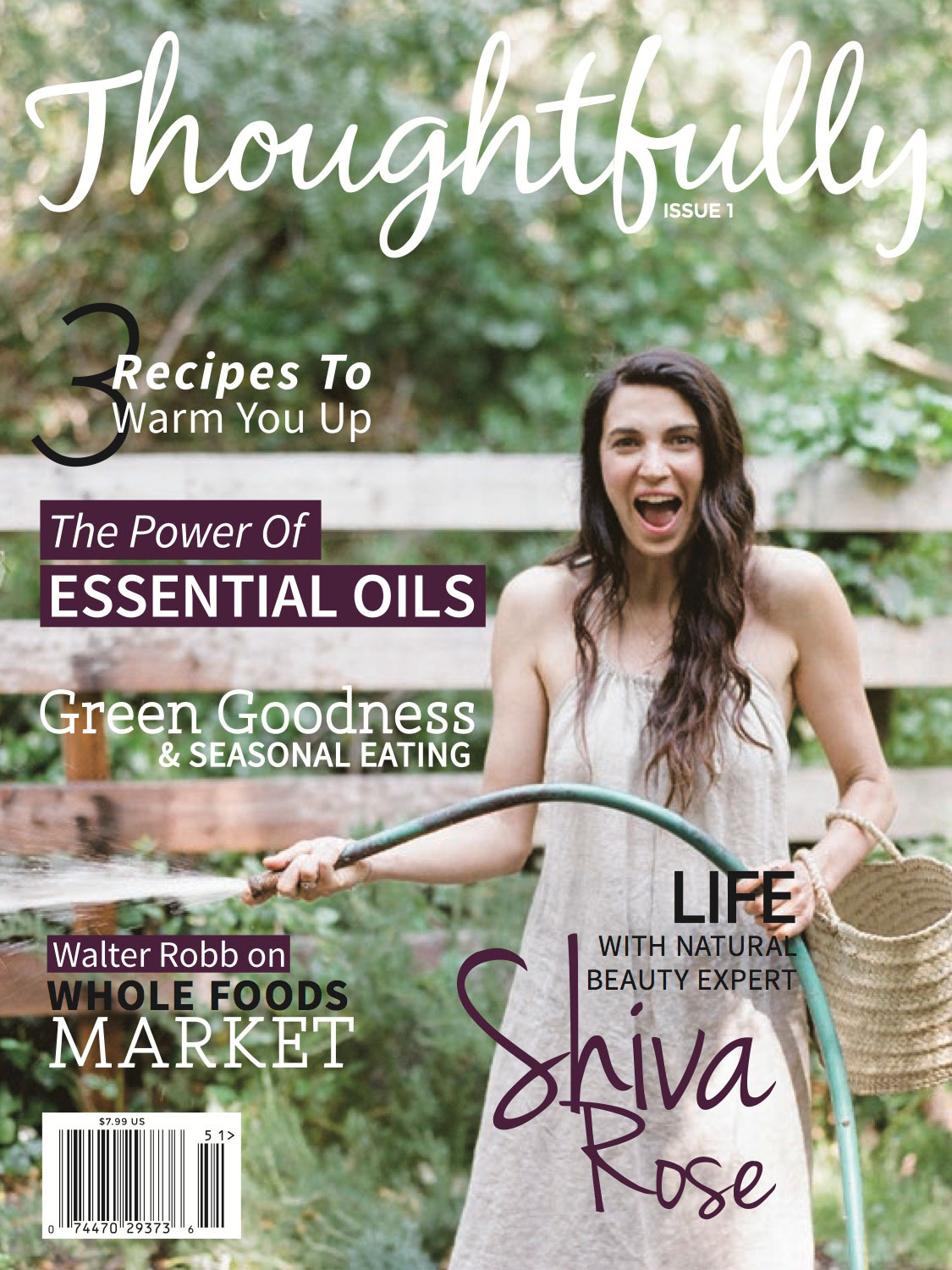
h1

Fighters And Survivors Of Cancer & Many Other Challenges Are “Out Living It” With Positive Energy And An Outdoor Commitment That Helps Heal The Soul – The Mr. Magazine™ Interview With Sarah Hubbard, Director of Marketing, Out Living It Magazine

August 21, 2015

“We kind of struggled with that in the beginning, because obviously our age demographic is a digital age group: 18-39. They’re engaging with mobile more than anything, but what we wanted to start with was something really tangible. So, at the base level we wanted it to be something that when you’re in a waiting room, you could find it on the table and you could see it, experience it and actually hold it in your hand.” Sarah Hubbard (on why they decided on a print publication instead of digital-only)

Out Living It-1 First Descents is a non-profit organization that provides life-changing outdoor adventures for young adults impacted by cancer and many other challenges. The lifestyle promotes the peace, serenity and positivity of nature to bring people who are facing some of life’s biggest trials a sense of zeal and confidence despite their circumstances.

Sarah Hubbard is the marketing director for the organization and a cancer survivor herself. As a survivor of pediatric cancer, First Descents and the new Out Living It magazine are a combination of Sarah’s love for the outdoor lifestyle and the cause that is the nearest and dearest to her heart.

I spoke with Sarah recently and we talked about the foundation for the magazine, the First Descents organization, and the need she felt was there for a print publication in a world where digital content is fleetingly plentiful. The tangibility of print and the substance of something that could be held and enjoyed was a powerful motivation for Sarah when it came to bringing the magazine to fruition. The passion she has for the First Descents mission is transcended only by her dedication to making the magazine Out Living It a success.

After reading this interview with Sarah, maybe you’ll be reminded of how each day we should all be “Out Living It” to the fullest. I know Mr. Magazine™ was. And now the Mr. Magazine™ interview with Sarah Hubbard, Marketing Director, Out Living It magazine.

But first, the sound-bites:


On the launch of the magazine and on why they decided to add a print publication to their organization:
First Descents provides outdoor adventures for young adults, and for us that means ages 18-39, who’re fighting cancer. The really unique thing about First Descents is, even if you go to the website, but more importantly if you meet some of our participants in person, is it’s a really positive energy. It’s not your typical cancer organization; it’s this incredibly positivity. And I think our participants really embody our mantra of “Out Living It.” So, in thinking about how this would resonate with a larger community, we realized that we use the outdoors as a way to challenge these people and remind them that they’re capable of living a really wonderful life, but that goes way beyond our campus. There are people out there who are facing other diseases and going through really difficult life stages and they might need that mantra of “Out Living It” as well.

On the connection between Mountain Magazine and Out Living It:
Mountain Media publishes a lot of custom publications; I actually had worked with them in a prior career and so when I thought about whom I wanted to publish the magazine and partner with, they were the obvious choice.
Sarah Hubbard
On why they chose print instead of digital-only content:
We kind of struggled with that in the beginning, because obviously our age demographic is a digital age group: 18-39. They’re engaging with mobile more than anything, but what we wanted to start with was something really tangible. So, at the base level we wanted it to be something that when you’re in a waiting room, you could find it on the table and you could see it, experience it and actually hold it in your hand.

On whether the tagline “Out Living It” was always a part of the organization or was added for the magazine: It wasn’t, no. I believe it was added to the organization around 2011. Our founder was trying to come up with a mantra and a tagline for the organization and he came up with Out Living It, which I think is an absolute success. It means getting outside and living your life, but it also means living so well that cancer doesn’t stand a chance or whatever disease doesn’t stand a chance or any given challenge doesn’t stand a chance; just whatever your circumstances might be.

On some of the major challenges she thinks the magazine will face: We put together a combination of content where I think anyone could pick up the magazine and it would look and feel like maybe a Mountain Magazine; it’s travel tips and recipes and it’s these incredible feature stories. But for those who are in our community and those who are really paying attention to the content; I think it’s really easy to realize there’s a thread that goes through all of the stories. And that thread is that every single person from the photographer who is at the very front of the magazine to the athlete at the very end is living the “Out Living It” mantra; there’s some sort of challenge that’s being faced through every single story. The easy part is finding that content; it’s easy to find inspiring content. I think the testing for us is going to be growing this community on just the First Descents family.

On since all of the stories in the magazine are based on survivors of many types of medical and other challenges, whether it’s also written by those same survivors: It’s not. In the first issue we really tried to incorporate other people who were using the outdoors as the root of their therapy, if you will. In the first issue we did a great feature on an amazing organization called High Fives and it’s based more in treatment for people who’ve had debilitating injuries. We try to go beyond campus as much as we can. The articles are not written, at this point, by the people who are going through the challenges. We do have professional writers interviewing them and putting the stories together just like for any other publication.

On what she’d like to be able to say the magazine had accomplished one year from now:
This magazine for us is less about the financial and more about connecting a group of people who are finding common ground in the way that they’re facing whatever challenges are in their lives. So, I really want the energy that exists within First Descents, this really positive outlook on a very difficult situation, to spread outward. For us, obviously growing subscriptions would be really great, just in the fact that it would show us that the momentum was building and that people were really liking the idea and really gravitating toward it.

On being a cancer survivor herself and what motivates her to get out of bed every morning now and look forward to going to work: I was involved with First Descents as a volunteer here and there over the years, even before I came on as the marketing director. And the reason that this really resonated with me, and I think the reason it resonates with so many people is, first of all, the positivity that I talked about; there’s something so unique about this organization; it’s not depressing; it’s so inspiring and happy and funny. But beyond that, I realized that if I were to get cancer again at the age of 33, this is how I would fight it. This is the organization that I would seek out.

On what keeps her up at night:
Right now, this magazine. (Laughs) I’m so passionate about it. It’s really become my little baby. It’s an experiment, for sure, and something that our staff has really gotten behind. I feel like it’s my responsibility to make it successful, so yes, I woke up in the middle of last night, about 2:00 a.m., thinking about how I can do things better for the fall issue; how we can make it successful.

And now the lightly edited transcript of the Mr. Magazine™ conversation with Sarah Hubbard, Marketing Director, Out Living It magazine.

Samir Husni: Would you tell me about the launch of Out Living It magazine and why you decided to add a print publication to the organization?

Sarah Hubbard: Sure. First Descents provides outdoor adventures for young adults, and for us that means ages 18-39, who’re fighting cancer. The really unique thing about First Descents is, even if you go to the website, but more importantly if you meet some of our participants in person, is it’s a really positive energy. It’s not your typical cancer organization; it’s this incredibly positivity. And I think our participants really embody our mantra of “Out Living It.” And they say over and over again that they wouldn’t trade anything, even the cancer diagnosis, because the energy they received from the First Descents organization reminded them that they need to be living.

A lot of us live in this sort of default; we go to work; we come home; we sometimes just go through the motions and this community of people at First Descents really doesn’t live that way. They’re living this packed, engaging and actively-positive lifestyle, which for me, coming in as an employee, was really inspiring. They have more energy and passion in their little finger than I do period.

So, in thinking about how this would resonate with a larger community, we realized that we use the outdoors as a way to challenge these people and remind them that they’re capable of living a really wonderful life, but that goes way beyond our campus. There are people out there who are facing other diseases and going through really difficult life stages and they might need that mantra of “Out Living It” as well.

I started looking out into the marketplace to see what sort of publications were out there in, first and foremost, waiting rooms. If you’ve ever sat in a waiting room, there can be some really depressing type of publications there. They’re either research-based or there’s a bit of a melancholy element to them, so I wanted to come up with a magazine that really exemplified what this “Out Living It” energy was, which is exciting, colorful and adventurous and a wonderful tool for anyone going through something difficult. And they could read it and relate to what others were going through and maybe say, “OK, I got this. If other people are going through something similar to what I’m going through and they’re looking at it with this amazing perspective; I can too.”

And I also wanted it to be a magazine that anyone could read, healthy or unhealthy. Anyone could have it on their coffee table and have a really exciting collection of stories that would really light a fire under them, regardless of whom they were or what they might be going through. And a magazine that would give you great reasons to travel or tell you a little about companies that you didn’t know were doing great things, but they are. I just wanted the magazine to be a really amazing tool on how to live that “Out Living It” type of lifestyle for everyone.

Samir Husni: What’s the link between Out Living It and Mountain Magazine? I get Mountain Magazine and Out Living It was sent to me.

Sarah Hubbard: Mountain Media publishes a lot of custom publications; I actually had worked with them in a prior career and so when I thought about whom I wanted to publish the magazine and partner with, they were the obvious choice.

We work on the editorial content together; I kind of put together to edit what stories I want and who I want to profile and then they take it from there. They contact the writers, they do the editing and layout and they’re not making any profit off of it. They’re doing it absolutely as a passion project and they’re such an amazing group of people and they really believe in the mission as well and that was very important to me.

Samir Husni: As you reflect on your own life, you’re a survivor of pediatric cancer; do you think having a printed magazine instead of digital-only content is a better way to reach that audience? Why print?

Sarah Hubbard: That’s a really good question. We kind of struggled with that in the beginning, because obviously our age demographic is a digital age group: 18-39. They’re engaging with mobile more than anything, but what we wanted to start with was something really tangible. So, at the base level we wanted it to be something that when you’re in a waiting room, you could find it on the table and you could see it, experience it and actually hold it in your hand.

We also wanted it to be a great tool to connect our community; we wanted to be able to send it out to people who were supporting us and have it be something that they actually received in the mail and could look at and flip through.

So, I think the plan is to start with the print magazine to show people what this really looks and feels like, and then potentially, hopefully we’ll be successful and can transition to just digital down the line. I think we needed the print to kind of show people what we’re doing, because it’s such a new concept; I believe we needed something that they could actually hold in their hands to really understand what we’re trying to accomplish.

Samir Husni: Did you always have the “Out Living It” logo under the First Descents umbrella? Was the tagline always there or was this something strictly added for the print magazine?

Sarah Hubbard: It wasn’t, no. I believe it was added to the organization around 2011. Our founder was trying to come up with a mantra and a tagline for the organization and he came up with Out Living It, which I think is an absolute success. It means getting outside and living your life, but it also means living so well that cancer doesn’t stand a chance or whatever disease doesn’t stand a chance or any given challenge doesn’t stand a chance; just whatever your circumstances might be.

I think it speaks perfectly to our audience. We still use the logo without sometimes for marketing purposes, but for the most part we do use the “Out Living It” script logo as much as we possibly can.

Samir Husni: What do you think will be some of the major challenges that will face this new magazine and how do you plan on overcoming them?

Sarah Hubbard: Good question. We put together a combination of content where I think anyone could pick up the magazine and it would look and feel like maybe a Mountain Magazine; it’s travel tips and recipes and it’s these incredible feature stories. But for those who are in our community and those who are really paying attention to the content; I think it’s really easy to realize there’s a thread that goes through all of the stories. And that thread is that every single person from the photographer who is at the very front of the magazine to the athlete at the very end is living the “Out Living It” mantra; there’s some sort of challenge that’s being faced through every single story.

The easy part is finding that content; it’s easy to find inspiring content. I think the testing for us is going to be growing this community on just the First Descents family. And trying to get the Out Living It message out to a broader group of people and have them accept it and be interested in it, especially with a medium like print.

That’s going to be a big challenge. It’s a print magazine; print magazines and content in general can be challenging; I think anyone in the editorial world would say that. So, just trying to make a name for this publication, I think, will probably always be challenging.

I was with the publisher yesterday and we were talking and he said, you know, we’re always going to have to fight for this. And I agree. But I believe it’s really something to fight for and the feedback that we’ve gotten from advertisers, writers and people reading it, has been great. They’ve said they’ve never seen anything like this before. So, I’m really hoping that momentum builds, but you know better than anyone, it’s always a challenge to try and come up with content that people are going to engage with.

Samir Husni: I know all of the stories are featuring survivors; will that always be your DNA? And since all of the features, everything you’ll find in the magazine is about survivors; is it also written by survivors?

Sarah Hubbard: It’s not. In the first issue we really tried to incorporate other people who were using the outdoors as the root of their therapy, if you will. In the first issue we did a great feature on an amazing organization called High Fives and it’s based more in treatment for people who’ve had debilitating injuries. We try to go beyond campus as much as we can. The articles are not written, at this point, by the people who are going through the challenges. We do have professional writers interviewing them and putting the stories together just like for any other publication.

That being said, we do have a lot of talented alumni in our community and some very talented writers that have gone through some really challenging things and we’d love to start folding them in so that they could write from a first-person perspective. We’re hoping to do some of that in the fall issue.

Samir Husni: If we have a conversation one year from now when you’re celebrating the first anniversary of Out Living It magazine; what would you hope to tell me that you’ve accomplished within that year?

Sarah Hubbard: This magazine for us is less about the financial and more about connecting a group of people who are finding common ground in the way that they’re facing whatever challenges are in their lives. So, I really want the energy that exists within First Descents, this really positive outlook on a very difficult situation, to spread outward.

For us, obviously growing subscriptions would be really great, just in the fact that it would show us that the momentum was building and that people were really liking the idea and really gravitating toward it.

But beyond that, I think that a year from now, we’d like to be receiving the same feedback that we’ve been getting from people lately, which has been how inspiring and upbeat the magazine is for someone who’s read it at their oncologist’s office or doctor’s office. Or how people have said it’s the only thing they want to read while they’re waiting to have their bloodwork done and how the magazine really speaks to them on many levels, especially as a young person facing a really difficult time. That would be enough for me.

The financial, I think, will come later, but for me, as long as we continue to get the feedback we’ve been receiving, that would be great. There was a hole in the market and we filled it and it’s really speaking to people, that would be a huge success for me.

Samir Husni: To talk a little on the personal side, you’ve said that you love the outdoor lifestyle and this cause is near and dear to your heart because you yourself are a survivor. What motivates you now to get out of bed every morning and say wow, I can’t wait to get to work?

Sarah Hubbard: I was involved with First Descents as a volunteer here and there over the years, even before I came on as the marketing director. And the reason that this really resonated with me, and I think the reason it resonates with so many people is, first of all, the positivity that I talked about; there’s something so unique about this organization; it’s not depressing; it’s so inspiring and happy and funny.

But beyond that, I realized that if I were to get cancer again at the age of 33, this is how I would fight it. This is the organization that I would seek out, because I’ve already turned to the outdoors for my own kind of personal solace, happiness and adventure, but if I were to be facing something really difficult, First Descents would be the perfect match for me.

The amazing thing about working for an organization like First Descents is that you’re surrounded by and engaging with people all day long who are facing challenges that some of us can’t even imagine. And these people are parents; they have careers; they’re literally trying to schedule in fighting cancer in an everyday life that we all have. It blows my mind what some of them are going through. And they’re going through it with smiles on their faces and they’re making jokes and supporting one another. So, I think this job, unlike any other job I’ve ever had, is a very strong, daily reminder of how important it is to really live every day. That may sound cliché, but it’s true.

Samir Husni: We need those types of clichés in the world today.

Sarah Hubbard: Yes, we do. It’s like all the little catastrophes in my life, such as my car breaking down; they just don’t mean anything in the world that I live in at First Descents. It’s just trying to stay surrounded by the people that I love and being able to do the things that I love and living life as well as I possibly can, those are the things that are really important.

Samir Husni: Is there anything else that you’d like to add?

Sarah Hubbard: We’re just hoping to continue to get great feedback and keep the magazine going and keep it alive as long as we possibly can, because I think there’s something really unique about it.

Samir Husni: My typical last question; what keeps you up at night?

Sarah Hubbard: Right now, this magazine. (Laughs) I’m so passionate about it. It’s really become my little baby. It’s an experiment, for sure, and something that our staff has really gotten behind. I feel like it’s my responsibility to make it successful, so yes, I woke up in the middle of last night, about 2:00 a.m., thinking about how I can do things better for the fall issue; how we can make it successful. So yes, the magazine is keeping me up at night right now.

Samir Husni: Thank you.

h1

Going Green Takes On A Whole New Meaning – “Venturing” Into The Business World Of Marijuana Growers & Retailers – A Magazine For The Cannabis Professional – The Mr. Magazine™ Interview With Greg James, Publisher, Marijuana Venture Magazine.

August 19, 2015

“A lot of people say that print is declining and digital is the thing these days, but I think there’s still a huge demand for print and I think because the barrier of entry to digital is so low there’s just so much stuff out there that a lot of people like the fact that we have a real print magazine that’s 150 pages and it’s in real bookstores. That could be the one thing, there are competitors out there and there is very little barrier to entry for digital magazines, but I think if we just continue to put out a really good publication and focus on business, we’ll be fine.” Greg James

MV 2-2 A strictly-business voice in the world of cannabis magazines; Marijuana Venture is a new business-to-business magazine that focuses on the professional side of planting and growing marijuana. From new techniques to the retailers trying to reach this niche audience, the magazine is a no-nonsense look at the industry of marijuana. There are no ads for the biggest and baddest bong or the latest implement to help one pass a drug test, just ads that are centered on the professional world of growers and retailers.

Greg James is publisher and knows a thing or two about the publishing industry, having founded Topics Entertainment in 1990 and still remains active as the company’s CEO. From CD-ROMS’s to DVD’s, Greg has been involved in media for quite some time.

With Marijuana Venture magazine (his first magazine endeavor), he has seen the magazine go from an eight-page local newsletter as recently as March 2015, to a full-fledged magazine that has grown and expanded with pages of advertising and can now be found from Barnes & Noble to Books-A-Million. It’s a success story that centers on hard work, originality and content that is both tasteful and socially responsible as it delves into the business world of legalized marijuana.

I spoke with Greg recently and we talked about “going green” and what that meant to him as a businessman already in the publishing world and how venturing into the magazine aspect of that environment was both different and the same. We talked about any stigma attached to the subject matter of his publication and the social responsibility the magazine conducts as it educates.

The conversation was open, honest and a lot of fun, much like the personality of the man himself. So, I hope you enjoy the Mr. Magazine™ interview with Greg James, Publisher, Marijuana Venture magazine; Mr. Magazine™ certainly did.

But first, the sound-bites:

Alpental spring On how he made the transition from CD’s and DVD’s to a magazine and whether it’s his first magazine venture (no pun intended): Yes, it is the first time that I’ve done a magazine. I think the background we have in CD-ROM’s and DVD publishing definitely helped, because I knew already how that business worked and there are a lot of similarities. The CD/DVD business, the book business and the magazine business are all fairly similar and a lot of it is handled by the same distributors, they just have different divisions.

On how he came up with the idea for the magazine: Yes, well, I just looked around about a year and a half ago and the marijuana business was getting a lot of publicity and all the existing magazines were all really about pot culture, about getting stoned, but there wasn’t really any business magazine out there that was serious. And I just figured that this could be something that there might be a need for.

On where he sees the magazine one year from now: Well, I just want to keep growing it. We just hired another designer a few weeks ago and I got another salesperson recently, so I think the magazine could become quite a bit bigger and quite a bit more influential.

On the biggest stumbling he thinks he’ll have to face:
A lot of people say that print is declining and digital is the thing these days, but I think there’s still a huge demand for print and I think because the barrier of entry to digital is so low there’s just so much stuff out there that a lot of people like the fact that we have a real print magazine that’s 150 pages in real bookstores. That could be the one thing, there are competitors out there and there is very little barrier to entry for digital magazines, but I think if we just continue to put out a really good publication and focus on business, we’ll be fine.

On the role of print and the content curation it exemplifies when it comes to the low barrier of entry involving digital and social responsibility:
That’s a really, really good point. You can say anything you want on social media and in a digital magazine and it doesn’t really matter. And that really is another reason why we’ve been popular; a lot of the content in the culture pot magazines is just anecdotal articles on growing; where someone says I’ve always done it this way and it’s always worked for me. What we’ve tried to do is go to some of these university websites that do research on controlled environment agriculture and reprint that research.

On whether being a new magazine publisher motivates and excites him, or it’s just another day-at-the-office:
There’s a little bit of the be-careful-what-you-ask-for in this deal. (Laughs) But a year and a half ago I was thinking, this might be a fun little project, and now all of a sudden I’m putting in 10-hour days. No, I’m excited by it and I like it. I love the fact that we’re growing as fast as we are and I like the fact that we’re putting out something that I think is useful for people.

On whether he envisions more competition from other new magazines aimed at the business side of cannabis:
I hope not. (Laughs) Frankly, I was surprised that there weren’t more competitors already, but I think people are kind of figuring it out now that we’re getting all of this exposure at Barnes & Noble, Hastings and Books-A-Million and getting into more places. We probably will get more competition, but we’ve got a pretty good lead.

On how he came up with the name, Marijuana Venture:
I found Garrett Rudolph, the editor, when he was working at a small newspaper in eastern Washington, I have some property up there and I get that newspaper, and he had mentioned that he was leaving, so I shot him an email and asked him would he be interested in doing the magazine. But basically we sat in this office and you know how things are today; we had to find a dot.com that would also work with the magazine name, so we tried all kinds of different names. We discovered that Marijuana Venture.com was an available website, so that became the name.

On anything else he’d like to add or that surprised him with this endeavor: One thing that surprised me a little was that there has been very little negative feedback from anybody that I’ve mentioned the magazine to. In other words, I’ve been pleasantly surprised at how accepted the whole legal recreational marijuana field has become in Washington and just about anywhere else and with everybody I talk to. I think that’s really cool.

On what keeps him up at night:
Nothing. (Laughs) I have about two shots of Johnny Walker every night before I go to bed, so I sleep very soundly. I honestly don’t have any worries about the magazine or the business because it’s been making a profit for about the last eight or nine months in a row and it’s growing, maybe not spectacularly, obviously it doesn’t have the revenues that the software publishing business had. But it’s a nice, consistent growth pattern.

And now the lightly edited transcript of the Mr. Magazine™ interview with Greg James, Publisher, Marijuana Venture Magazine.

Samir Husni: Congratulations on the new magazine and the new reach to the newsstands.

Greg James: Thank you.

Samir Husni: I was looking at the background of your company and at what you do; how did you make the jump from what the company does, in terms of entertainment, languages, documentaries, videos, audio and all the software to a magazine? Is this your first magazine venture (no pun intended)?

MJV Greg James: Yes, it is the first time that I’ve done a magazine. I think the background we have in CD-ROM’s and DVD publishing definitely helped, because I knew already how that business worked and there are a lot of similarities. The CD/DVD business, the book business and the magazine business are all fairly similar and a lot of it is handled by the same distributors, they just have different divisions.

Ingram Publishing or Ingram Periodicals is part of the whole Ingram Company, which also has Ingram Entertainment and Ingram Micro, so that helped. It made it a lot easier to get it into the big retail stores because I knew how it worked at Barnes & Noble, Hastings and Books-A-Million, plus we already had the relationship with those three venues on the entertainment side. So, it was also easier because I knew how to call one of the buyers that bought magazines.

Samir Husni: How did you come up with the idea for the magazine? I know you’re in Washington State, so it’s easier to consider the idea there. (Laughs)

Greg James: (Laughs too) Yes, well, I just looked around about a year and a half ago and the marijuana business was getting a lot of publicity and all the existing magazines were all really about pot culture, about getting stoned, but there wasn’t really any business magazine out there that was serious. And I just figured that this could be something that there might be a need for.

We started out with an eight-page newsletter in Washington State and it just started growing almost immediately. I don’t want to sound too cocky, but it was fairly easy to find advertisers because they were all looking for a way to reach all these people that had their applications in for licenses. So, there were a lot of companies that wanted to sell them lights and soils, fertilizers and fencing, along with security systems and everything else. There were a lot of advertisers immediately out there that wanted to reach these people.

Samir Husni: That statement is more than evident, because the first issue I saw on the newsstand was almost 80 pages of ads.

Greg James: Yes, and it keeps growing every month. We’re probably at 85 or 90 this month.

Samir Husni: If you and I are having this conversation one year from now; where do you think Marijuana Venture magazine will be by then?

Greg James: Well, I just want to keep growing it. We just hired another designer a few weeks ago and I got another salesperson recently, so I think the magazine could become quite a bit bigger and quite a bit more influential.

Our deal is basically to just stay focused on the business. There are probably half dozen, at least, other magazines that deal with marijuana. There are High Times, Weed World, Skunk, Culture, Dope and Chronic; they all have culture-type things in them. They’re all about pot culture. They have articles on getting stoned in Europe and the potency of pot, tattoo art and all those kinds of things. They’re all culture magazines.

High Times has an ad for the Whizzinator; I’m not going to describe it to you, but it’s something you whip out to put fake urine in for a drug test so you don’t fail the test. We’re not going to run an ad for the Whizzinator and we refuse to run ads with girls in skimpy outfits sitting on bongs and things like that, which is what you find in most of those other magazines.

We found that the advertisers that we have really love the fact that we don’t carry ads like that and a lot of them have told us that they won’t advertise in High Times because they think it’s kind of tacky; they don’t want to be in that kind of a magazine. It’s more of a serious business.

Samir Husni: What do you think is going to be the biggest stumbling block that you’ll have to face and how do you plan to overcome it?

MV 1-1 Greg James: A lot of people say that print is declining and digital is the thing these days, but I think there’s still a huge demand for print and I think because the barrier of entry to digital is so low there’s just so much stuff out there that a lot of people like the fact that we have a real print magazine that’s 150 pages and it’s in real bookstores.

That could be the one thing, there are competitors out there and there is very little barrier to entry for digital magazines, but I think if we just continue to put out a really good publication and focus on business, we’ll be fine.

The other thing is if you read the magazine, there are lots of articles written by lawyers and accountants in there on the legal aspects of it and I think that’s the other thing that really resonates with our readers is that they are learning a lot about all of the legalities; that it’s not as simple as they thought to get into the commercial marijuana business. There are a lot of rules and regulations and taxes, among other things that I think our readers are discovering.

Samir Husni: One of my pet peeves, in fact I wrote a Mr. Magazine™ Musing about it recently, is that there is no social responsibility with any of the “social” media. As you said, there are very low barriers to entry and if you say a simple “hi” to someone, they can respond with an inappropriate picture or comment without any repercussions. And that’s why I believe that now more than ever before there’s an even bigger role for print when it comes to the curation aspect of content; exactly as you said about Marijuana Venture and its obligation to remain seriously professional about a topic that is sometimes misused inappropriately.

Dec-Cover-150x150 Greg James; Yes, and that’s a really, really good point. You can say anything you want on social media and in a digital magazine and it doesn’t really matter. And that really is another reason why we’ve been popular; a lot of the content in the culture pot magazines is just anecdotal articles on growing; where someone says I’ve always done it this way and it’s always worked for me.

What we’ve tried to do is go to some of these university websites that do research on controlled environment agriculture and reprint that research. We say, hey, you may have always grown with metal halide lights, but Utah State University did a study, a full-blown research paper was printed and published, on which lights were the best for controlled environment agriculture and they came to the conclusion that it was the double-ended, high-pressure sodium lights that were best. Well, we printed that in the magazine. And it was actually kind of funny because we did get some feedback and usually, you’ll laugh, but a couple of comments we received were: well, what does this guy know about growing marijuana; he’s a university professor; we’ve been doing it forever. (Laughs)

Samir Husni: (Laughs too).

Greg James: I was thinking, you need to listen to yourself here. (Laughs again) This guy is a university professor; he has a Ph.D. in horticulture in the study of lights and their effect on plants for 20 years and you’re trying to tell me you know more about this than he does, because you’ve been growing pot in your basement for the last few years.

Samir Husni: Just an FYI; we have the only legal marijuana field at a university in the United States of America here at the University of Mississippi.

marijuana-venture-4 Greg James: Yes, I know you do. (Laughs) You guys know what’s going on too, but it’s kind of funny, a lot of the pot business is like that. It’s based on anecdotal stuff and it’s based on the marketing departments of lighting companies. They haven’t relied on science because, when you think about it, with these huge margins, maybe 80 or 90 % margins, when you’re growing it illegally in your garage and you don’t have to pay any taxes on it, really if anything works, you’re probably going to get a good return on that investment.

Whereas now that it’s commercially legal in Washington and Colorado and soon they’re going to be growing it in Oregon and Alaska; now there’s real competition all of a sudden. And if you’re going to spend $1 million to create this state-of-that-art indoor growth facility like they’re doing in Colorado and Washington; you better do your research and figure out which lights are the most efficient and which ones have been studied.

And I think that’s one of the things that we’re doing at the magazine now, but again; it’s really funny how people say I’ve always done it this way, so it has to be the best way to do it. Ok, but maybe you should read up a little on it before you buy half-a-million- dollars’ worth of lights.

Samir Husni: As a new magazine publisher; do you get out of bed in the mornings motivated and more excited or is it just another day at the office?

Greg James: There’s a little bit of the be-careful-what-you-ask-for in this deal. (Laughs) But a year and a half ago I was thinking, this might be a fun little project, and now all of a sudden I’m putting in 10-hour days.

No, I’m excited by it and I like it. I love the fact that we’re growing as fast as we are and I like the fact that we’re putting out something that I think is useful for people. I don’t really have an exit strategy or anything; it was all about just doing this and it’s been a fun project and it’s growing fast. We just come in and work hard every day and sell ads, write stories and try and get it into more locations. It’s all pretty basic stuff; there’s nothing super-glamorous about it. Photographers are going out and shooting pot plants; maybe if it was Playboy it would be a little more fun. (Laughs)

Samir Husni: (Laughs too).

Greg James: And none of us in the office, by the way, are users. In a sense, maybe that makes us a little more agnostic or unbiased in our approach to the business. And I do think that might be another thing that has given us a little advantage; I sense when I look at some of these other magazines like Skunk, High Times and Weed World, most of the people who are writing for them and work for them are all pot users. We’re not. We have a clinical approach to the whole thing.

Samir Husni: I was going to ask you if you were going to have the Marijuana Venture Good Housekeeping test kitchen. (Laughs)

Greg James: (Laughs too) We have one guy in the office who’s like our Mikey; he does try it; we give him test pot sometimes, but I learned my lesson; I let him take a toke of this vape and he got so stoned he was useless for most of the rest of the afternoon. (Laughs)

Samir Husni: (Laughs too).

Greg James: So, it’s very restricted now.

Samir Husni: Do you envision that we’re going to see more magazines aimed at the business of growing marijuana with the magazine MG just arriving on the market? Do you think you’re going to have more competitors?

Greg James: I hope not. (Laughs) Frankly, I was surprised that there weren’t more competitors already, but I think people are kind of figuring it out now that we’re getting all of this exposure at Barnes & Noble, Hastings and Books-A-Million and getting into more places. We probably will get more competition, but we’ve got a pretty good lead.

My honest view of a business like this is those that work the hardest are the ones who will succeed. That’s the way it was for Topics Entertainment and the CD-ROM and DVD business. And it seems to me it’s the same thing here; you just get in the office early and you get on the phone, start calling and you work it.

I’ve actually been rather surprised that we haven’t had more competition, but part of it, as I said, is all about how hard you work and I sell ads every day. I’m on the phone all day long.

Samir Husni: How did you come up with the name? You didn’t try and soften it at all; Marijuana Venture is pretty self-explanatory.

Greg James: The name was a bit funny. I found Garrett Rudolph, the editor, when he was working at a small newspaper in eastern Washington, I have some property up there and I get that newspaper, and he had mentioned that he was leaving, so I shot him an email and asked him would he be interested in doing the magazine. And he said he would be, so that’s how fast that happened.

But basically we sat in this office and you know how things are today; we had to find a dot.com that would also work with the magazine name, so we tried all kinds of different names. We discovered that Marijuana Venture.com was an available website, so that became the name. But we tried everything: Marijuana Business, Cannabis Business, Marijuana-whatever, you name it, we tried it and finally Marijuana Venture was the one name that worked for both the magazine and a domain name that we could register. So, it stuck.

Samir Husni: Is there anything else that you’d like to add about Marijuana Venture? Anything that really surprised you?

Greg James: One thing that surprised me a little was that there has been very little negative feedback from anybody that I’ve mentioned the magazine to. In other words, I’ve been pleasantly surprised at how accepted the whole legal recreational marijuana field has become in Washington and just about anywhere else and with everybody I talk to. I think that’s really cool.

I’m going to guess that in most of the states in this country it’s going to be legal within the next ten years, because none of the bad stuff has happened in Colorado that some people predicted. They’re raising taxes from this; it’s been closely regulated; the stores are all nice and clean, they’re not full of weirdos and I think all of the doomsday people are finding out that none of their dark predictions have happened, so that’s what has surprised me.

I’ve mentioned to people that I’m doing a magazine on the legal marijuana business; nobody is judgmental. They just respond with a “that’s cool” or “that’s a good idea”

Samir Husni: My typical last question; what keeps you up at night?

Greg James: Nothing. (Laughs) I have about two shots of Johnny Walker every night before I go to bed, so I sleep very soundly. I honestly don’t have any worries about the magazine or the business because it’s been making a profit for about the last eight or nine months in a row and it’s growing, maybe not spectacularly, obviously it doesn’t have the revenues that the software publishing business had. But it’s a nice, consistent growth pattern. The people I work with are all fun and cool; we all get along well. Yes, so nothing keeps me up at night. I’m quite a sound sleeper and I get up early at 6:00 a.m. every morning.

Samir Husni: Thank you.

h1

The ‘Take’ On New England’s New Culture – Brought To You By A Magazine That Defines It – The Mr. Magazine™ Interview With Michael Kusek, Publisher & Lauren Clark, Editor – Take Magazine. A Mr. Magazine™ Launch Story.

August 3, 2015

A Mr. Magazine™ Interview.  Photo by Jared Senseman.

A Mr. Magazine™ Interview. Photo by Jared Senseman.

“The biggest challenge has been, with certain people, to counter this belief that print is on its way out, rather than saying that print is evolving. In our Kickstarter video and with people who have these mindsets, we sort of describe ourselves as being the modern magazine. And that what’s going to be interesting is not whether it’s print or digital. We have a print edition and an online edition that work together. You can get certain information from our online source that doesn’t translate into print, like video and audio, and you can get information through our print edition, such as really beautiful photography, stories that demand to be on the printed page, that doesn’t translate digitally. And that’s where this industry is going; print is not going away.” Michael Kusek

“It’s exciting to see your work in both formats, (print & digital) but in different ways. Having said that; I’m not sure how to describe to you how it’s different. I guess the web is more immediate and it generates that immediate, sort of social media response. But seeing your byline in print, on the printed page, it’s like your work is going into a permanent record. And I would think a lot of writers would say the same thing. It’s thrilling in both places for those different reasons.” Lauren Clark

take_001_cover_FINAL Bringing New England’s new culture to a passionate and diverse audience is the mission of Take magazine. From dance to art to theatre to food; Michael Kusek, publisher and Lauren Clark, editor of the magazine, due to debut its first issue in September 2015, are both very determined to make this the ink on paper place to be for people who want to be in the know about New England culture and each state’s distinctive “take” on that enlightenment.

Recently, I spoke with both Michael and Lauren about the upcoming September launch and the conception of the actual idea for Take. Michael took me on an eight year journey of how the magazine was born. From the initial thought way back when (2008) before publishing as we once knew it plummeted into the depths of despair, to a few years later when things once again began to pump up a lung and breathe again.

This is a story of passion and belief in a dream’s concept, so much so that the individual almost wills it into being. Michael is a man filled with that passion and the belief that a magazine that covers the entire New England area, not just one particular section, has a place on the marketplace reserved just for its uniqueness.

And Lauren is a woman with as much passion about the magazine as its publisher and the right person to complement the publication’s leader.

It’s a win/win situation and a total team effort, from designers to photographers, writers to salespeople. It’s a magazine conjoined with its digital counterpart, yet celebrated for its very different “take” on content that just doesn’t seem to be right for the web. It’s a great read and a visual extravaganza. And of course, there are so many twists you can create with the word “Take” that one can’t help but be fascinated by it.

So, sit down and “take” 15 minutes or so to read this new magazine’s contemporary “take” on New England culture; it’s sure to enlighten and entertain you. And “take” my word for it; you won’t be disappointed. Enjoy the Mr. Magazine™ interview with Michael Kusek, Publisher and Lauren Clark, Editor-In-Chief, Take magazine.

But first, the sound-bites:

Michael Kusek and Lauren Clark. Photo by Dominic Perry.

Michael Kusek and Lauren Clark. Photo by Dominic Perry.

On why it took Michael eight years to actually launch Take magazine:
That’s a good question. When I started I was working at an alternative newsweekly here in western Massachusetts. I had made plans then to leave and start Take magazine, but I decided to go on a vacation first and was traveling overseas when the entire U.S. market went into the toilet. I came back and that’s when so many magazines were folding and it didn’t seem like a great time to go out and seek investors, so I put it on the backburner for a little while, until it looked like the industry was changing and getting a bit healthier.

On whether Lauren thought he was out of his mind when he asked her to be the editor of a print magazine in today’s digital world:
At first I said, wow, that’s really exciting. Yes, I’d love to be involved. And then as we started really talking about it and it became more serious, I thought to myself, is this idea crazy? (Laughs again) But the more I looked at a lot of the things that Michael just told you, and the more we talked together; he really helped to enlighten me, because like a lot of people nowadays, I do read a lot of things online. But I also still read print.

On the concept of Take and what Michael is trying to accomplish with the magazine:
Take magazine is a publication about culture-makers who live in the New England area. So, unlike your standard “arts” magazine that would just cover, say, fine art or maybe just theatre; we’re taking a really broad look at culture in the region. And that includes things like fine art and theatre, but it also includes design, food, literature and dance; just many areas of cultural interest.

On how Michael came up with the name “Take” for the magazine:
It’s simply our “take” on things. It’s our lens on the creative community here in New England.

On whether Michael’s decision to cover the entire New England area was a business or editorial one:
It was a little of both. We can really talk about how we’re tackling it from the editorial side. Having worked for a very regional, localized newspaper that covered three counties and had a small arts magazine that covered western Massachusetts; I saw the limitations in audience, in terms of the business side. But the other part of that was the last sort of all-New England-magazine to launch was in the late 80s, early 90s, at least from my research; I haven’t been able to find anything any later than that time frame and it was New England Monthly.

On the process Lauren used to put together the first issue of Take which will launch in September:
Some of the content will be updated material from the prototype, but the first issue is a much bigger one that that. The first things we do are try to get stories from a diversity of disciplines and from every state in the region. So, we want content that has geographic diversity and disciplinary diversity. We need a designer from Rhode Island; we need a writer from New Hampshire, so that’s how I’m planning every issue, sort of making this grid of how do we cover the entire region so that everybody in New England feels like this is their magazine.

On how Lauren decided what the cover of the premier issue should be:
Well, we were actually thinking about having six covers at first, to represent each state. (Laughs) But that was just a little too ambitious for the first issue. So, we decided on three different covers instead. We had some terrific feature stories that had fantastic imagery.

On the biggest stumbling block Michael faced after starting the magazine and how he overcame it:
I think one of the biggest challenges has been that people have bought into this idea that print is dead or print is on its way out. And these are things I’ve heard from potential advertisers and certainly from some potential investors. They’re skeptical about the future of print. And that has been the biggest challenge because for somebody who’s in it, you can look at all of the great independent magazines that are coming out and you can see that there are a lot of dynamic things happening from all of the legacy publishers of magazines as well, and you wonder where that mindset comes from.

On where Lauren feels more accomplished in her work, online or in print, or is it the same experience for her in either format: I think it’s the same. It’s exciting to see your work in both formats, but in different ways. Having said that; I’m not sure how to describe to you how it’s different. I guess the web is more immediate and it generates that immediate, sort of social media response. But seeing your byline in print, on the printed page, it’s like your work is going into a permanent record.

On what makes Lauren tick and click and motivates her to get out of bed in the mornings: The amount of work I need to get done. (Laughs again) The amount of tasks that I have to do and the people I need to get in touch with; articles I have to assign. That’s the nuts and bolts, but I’m attached to this project because I think Michael is the guy to do it, frankly. And I’m not the only one who thinks that either. He has a really good intellect about these sorts of things and he has a super professional and personal network and he’s very persuasive. (Laughs)

On what makes Michael click and tick and motivates him to get out of bed in the mornings:
I’m an incredibly lucky guy and I work with an amazing group of people every day. And I’m so lucky that when I was putting things together, I had this dream team in my head, and when Lauren and I met and became friends, there was that epiphany one time where I just turned to her at a party and said you have to be my editor. And I’m so happy that she agreed.

On who Michael thinks the magazine’s audience is and how he defines Take’s team when it comes to delivering the best of New England’s culture to that targeted group:
I think that’s really our audience; our audience is really a New Englander first and our audience is somebody who works in the creative economy and secondarily are people who are cultural consumers and I think that if you add those groups together, you have a sizably potential audience for this as a magazine. And who are we, the people who are going to bring it to you? I think at the core it’s really our amazing staff of people who work on Take.

On anything else Michael would like to add:
Viva print!

On anything else Lauren would like to add:
We want to get the people in New England to think of themselves as New Englanders, not just “I’m from Providence,” but “I’m from New England” and there’s a lot of great contemporary culture in the region to explore and they don’t have to take the train to New York to see great culture.

On what keeps Michael up at night:
It’s making sure that my staff is taken care of and that we have the resources to keep moving forward.

On what keeps Lauren up at night:
What keeps me up at night is the haunting feeling that I need to have more information coming out of New Hampshire. (Laughs)

And now the lightly edited transcription of the Mr. Magazine™ conversation with Michael Kusek, Publisher and Lauren Clark, Editor-In-Chief, Take magazine.

Samir Husni: Why did it take you eight years to launch Take magazine?

Michael Kusek: (Laughs) That’s a good question. When I started I was working at an alternative newsweekly here in western Massachusetts. We had started a small regional magazine and I saw what we had done there and I was getting ready to end my time with them and that was at the very end of 2008.

I had made plans then to leave and start Take magazine, but I decided to go on a vacation first and was traveling overseas when the entire U.S. market went into the toilet. I came back and that’s when so many magazines were folding and it didn’t seem like a great time to go out and seek investors, so I put it on the backburner for a little while, until it looked like the industry was changing and getting a bit healthier.

In that period of time, the iPad was born. And everyone was going to buy millions of magazines on their iPad. (Laughs) And it was that mindset that got me to look at the magazine again. I had gone back into doing public relations and communications, which had been my professional background for a very long time. But I began to look at the magazine again and at a different source of revenue for it, and while that hasn’t necessarily worn itself out, it definitely got me back into the swing of trying to start Take magazine. So, this was sort of my little side project for a number of years.

At the beginning of 2014, I was sitting with a business consultant friend of mine having a beer and he asked me when on earth are you ever going to start the magazine that you’ve been talking about trying to start for a very long time, and I said to him that I would love to start it except I’m having a horrible time trying to write the business plan. So, he pulled together a group of people and helped me write the business plan over the course of last spring and summer.

In that period of time, I had been talking with Lauren about being my editor-in-chief when we started to get some seed money to make things happen. And then in the fall of 2014, we created our prototype and soft-launched it in January 2015.

So, to make a long story longer, there have been lots of years of research and watching the market and deciding that now was exactly the right time to start it.

Samir Husni: Lauren, when Michael approached you about becoming the editor of a print magazine, did you ask him was he out of his mind?

Lauren Clark: (Laughs) No, not at first.

Samir Husni: (Laughs too).

Lauren Clark: At first I said, wow, that’s really exciting. Yes, I’d love to be involved. And then as we started really talking about it and it became more serious, I asked myself, is this idea crazy? (Laughs again)

But the more I looked at a lot of the things that Michael just told you, and the more we talked together; he really helped to enlighten me, because like a lot of people nowadays, I do read a lot of things online. But I also still read print. And what we’re doing with Take magazine is pretty specific for a pretty targeted audience and a specific topic, which I think lends itself pretty well to print, so I’m onboard with that.

Samir Husni: Michael, tell me the concept of Take; what are you trying to do with the magazine?

Michael Kusek: Take magazine is a publication about culture-makers who live in the New England area. So, unlike your standard “arts” magazine that would just cover, say, fine art or maybe just theatre; we’re taking a really broad look at culture in the region. And that includes things like fine art and theatre, but it also includes design, food, literature and dance; just many areas of cultural interest.

This is a region rich with people making things and there wasn’t one cohesive publication that covered this entire region. And our goal is to be that magazine that ties everything that is happening here altogether.

Samir Husni: And what is the background on the name “Take?” One of the hardest things for people who are starting a new magazine to come up with is the title. How was the name “Take” conceived?

Michael Kusek: It’s simply our “take” on things. It’s our lens on the creative community here in New England. And the other part of the reason I chose Take is as a marketer, as a person who comes out of marketing and communications, there are about a million different ways that you can use the word “take” to generate a hook and to generate interest.

Samir Husni: You mention in the intro of the prototype issue, the pilot issue from January, that it’s the entire area of New England. And while I know that regional magazines are doing much better than the general interest magazines, was that a business decision or a reflection of the editorial content and you felt that the rest of us all over the country didn’t have a need to read about the culture of New England? (Laughs)

Michael Kusek: (Laughs too) It was a little of both. We can really talk about how we’re tackling it from the editorial side. Having worked for a very regional, localized newspaper that covered three counties and had a small arts magazine that covered western Massachusetts; I saw the limitations in audience, in terms of the business side. To develop a critical mass of readership, I needed to think bigger when we were looking at the business plan.

But the other part of that was the last sort of all-New England-magazine to launch was in the late 80s, early 90s, at least from my research; I haven’t been able to find anything any later than that time frame and it was New England Monthly. New England Monthly was late 80s, early 90s and was very successful. It was kind of a Harper’s/Atlantic, but for the whole region. And that was also based here in Northampton where I am.

New England Monthly’s footprints here in western Massachusetts, even though it hasn’t been around for a long time; it’s footprints still has some influence here today, and I think that also got me to look, from a business sense, at the entire region.

Samir Husni: Are you still on target to launch the first issue in September?

Lauren Clark: Yes, our first issue is at the printer now.

Samir Husni: Lauren, tell me about the process; how did you put together that first issue? Did you sit down with your team, alone, or with Michael; what was the conception mode of the content of the first issue?

take_001_cover_FINAL2 Lauren Clark: Some of the content will be updated material from the prototype, but the first issue is a much bigger one that that. The first things we do are try to get stories from a diversity of disciplines and from every state in the region. So, we want content that has geographic diversity and disciplinary diversity. We need a designer from Rhode Island; we need a writer from New Hampshire, so that’s how I’m planning every issue, sort of making this grid of how do we cover the entire region so that everybody in New England feels like this is their magazine; so that the creative people in New England feel like we really are covering the entire region and all the cool stuff that’s going on throughout all the New England states.

So, that was the starting point. Then it was just a matter of tapping into a lot of the really talented contributors that are in this region. We have a photo editor who helps us out from the Boston area and he knows people all over the region. So, we had some great photography, fantastic writers, which a lot of them started out writing for us on the website.

And we have writers from all over the region. We have some great ones in Rhode Island, in Maine and Vermont, some people out of Boston; we’re trying to get the contributors of our content to be all over the region as well. It’s really important to us to not just be Northampton-centric or Boston-centric, but to really spread ourselves out content and contributor-wise.

Samir Husni: And how did you make the decision about what went onto the cover of the premier issue?

Lauren Clark: Well, we were actually thinking about having six covers at first, to represent each state. (Laughs) But that was just a little too ambitious for the first issue. So, we decided on three different covers instead. We had some terrific feature stories that had fantastic imagery. And we featured some original artwork from one of our feature subjects, the artist Eben Kling, who lives in Connecticut, so that’s one of our covers, original artwork by him and it’s just fantastic.

And the other two are photographs from our photo editor, Izzy Berdan. So, it’s going to be exciting when these covers come out, because people are just going to kind of randomly get whatever cover they get and they’ll be able to compare their issue with somebody who received a different cover.

Samir Husni: Michael, what has been the biggest stumbling block that you’ve had to face since actually starting the magazine and how did you overcome it?

Michael Kusek: I think one of the biggest challenges has been that people have bought into this idea that print is dead or print is on its way out. And these are things I’ve heard from potential advertisers and certainly from some potential investors. They’re skeptical about the future of print. And that has been the biggest challenge because for somebody who’s in it, you can look at all of the great independent magazines that are coming out and you can see that there are a lot of dynamic things happening from all of the legacy publishers of magazines as well, and you wonder where that mindset comes from.

Some of the people we connect with a lot, such as some of our younger contributors, even people on our staff here at the magazine are all very much into analog. They buy vinyl, they like photographing with film cameras, and they also buy books. And we see that.

The biggest challenge has been, with certain people, to counter this belief that print is on its way out, rather than saying that print is evolving. In our Kickstarter video and with people who have these mindsets, we sort of describe ourselves as being the modern magazine. And that what’s going to be interesting is not whether it’s print or digital. We have a print edition and an online edition that work together. You can get certain information from our online source that doesn’t translate into print, like video and audio, and you can get information through our print edition, such as really beautiful photography, stories that demand to be on the printed page, that doesn’t translate digitally. And that’s where this industry is going; print is not going away.

That’s always been the biggest challenge, particularly when it comes to us accessing resources to grow as a business.

Samir Husni: Lauren, where do you value your work more? Do you feel that you’ve accomplished more when you see your work in print or when it’s in a digital format or is it the same thing for you?

take_001_cover_FINAL3 Lauren Clark: I think it’s the same. It’s exciting to see your work in both formats, but in different ways. Having said that; I’m not sure how to describe to you how it’s different. I guess the web is more immediate and it generates that immediate, sort of social media response. But seeing your byline in print, on the printed page, it’s like your work is going into a permanent record. And I would think a lot of writers would say the same thing. It’s thrilling in both places for those different reasons.

Samir Husni: Lauren, what makes you tick and click and motivates you to get out of bed in the mornings?

Lauren Clark: (Laughs) The amount of work I need to get done. (Laughs again) The amount of tasks that I have to do and the people I need to get in touch with; articles I have to assign. That’s the nuts and bolts, but I’m attached to this project because I think Michael is the guy to do it, frankly. And I’m not the only one who thinks that either. He has a really good intellect about these sorts of things and he has a super professional and personal network and he’s very persuasive. (Laughs)

And the rest of the people on our team feel the same way and they’re all talented in their backgrounds. And some of their backgrounds are not necessarily conventional when it comes to working on a magazine, but that kind of puts them in a better position to react and be flexible to anything that’s thrown their way in this start-up.

Samir Husni: And Michael, what makes you tick and click and motivates you to get out of bed in the mornings?

Michael Kusek: I’m an incredibly lucky guy and I work with an amazing group of people every day. And I’m so lucky that when I was putting things together, I had this dream team in my head, and when Lauren and I met and became friends, there was that epiphany one time where I just turned to her at a party and said you have to be my editor. And I’m so happy that she agreed.

It’s the people that I work with. And it’s an incredible amount of work; it’s an always-on type of proposition; you always have to be on and working. We soft-launched in January and received 200 pitches, and 400 people went to our website within a month and said that they wanted to freelance for us.

We just sent our first press release out at the beginning of July. We really went public with this whole idea and we’ve been able to sell close to 600 subscriptions, just in terms of people coming to our website or responding to what we’ve been putting out on social media. With every event we do, people are genuinely excited and this is a project. I get very little negatives, such as this is never going to work. People are just overwhelmingly positive and what to see this happen and that gets me out of bed in the mornings. I know we’re on the right path.

Samir Husni: That’s great. One of my new books coming out in the middle of August is called “Audience First” and I’m reading your last paragraph in the prototype’s publisher’s letter and you say: I believe that there’s an audience out there for a new, well-written and beautifully designed magazine on paper about New England. I think we’re just the people to bring it to you. Tell me who is that audience and who are you?

TAKE cover-1 Michael Kusek: That audience is culturally adventurous people and that audience member is a person who is not only interested in what’s happening in their hometown here in New England, but they have a willingness to hop in their car and drive around to see who else is in the rest of the neighborhood.

I think that’s really our audience; our audience is really a New Englander first and our audience is somebody who works in the creative economy and secondarily are people who are cultural consumers and I think that if you add those groups together, you have a sizably potential audience for this as a magazine.

And who are we, the people who are going to bring it to you? I think at the core it’s really our amazing staff of people who work on Take: my editor, my photo editor and our art director and our web guy; we just have an amazing team. It’s our circulation people who are helping us out; it’s our sales folks. So far this year, we’ve probably worked with almost 50 different freelancers from all over the region and we’re finding them to be as equally committed to us and very excited about this idea of bringing a new look to New England culture. And I think that team may look small on the masthead now, but that team is actually just going to grow larger over time.

Samir Husni: Are you still planning on 10 issues per year?

Michael Kusek: Yes, we are.

Samir Husni: Any final “take” you’d like to add about anything we’ve discussed or haven’t discussed? Pun intended. (Laughs)

Michael Kusek: (Laughs too) Viva print! That’s my final thought on magazines.

Samir Husni: Indeed.

Lauren Clark: My final Take would be it’s just something about New England. As I said at the beginning of my editor’s letter, yes, New England’s new culture is a “thing.” We want to get the people in New England to think of themselves as New Englanders, not just “I’m from Providence,” but “I’m from New England” and there’s a lot of great contemporary culture in the region to explore and they don’t have to take the train to New York to see great culture.

Samir Husni: My typical last question; what keeps you up at night? Michael?

Michael Kusek: (Laughs) What keeps me up at night? When I do stay up at night it’s usually because I’m exhausted. (Laughs again) No, it’s making sure that my staff is taken care of and that we have the resources to keep moving forward.

Samir Husni: And Lauren?

Lauren Clark: What keeps me up at night is the haunting feeling that I need to have more information coming out of New Hampshire. (Laughs)

Samir Husni: Thank you.

h1

A Magazine Of Possibilities That Was Born From The Womb Of The Arab Spring – Seeking Change & Inspiration – The Mr. Magazine™ Interview With Ibrahim Nehme, Editor-In-Chief, Founder, The Outpost Magazine.
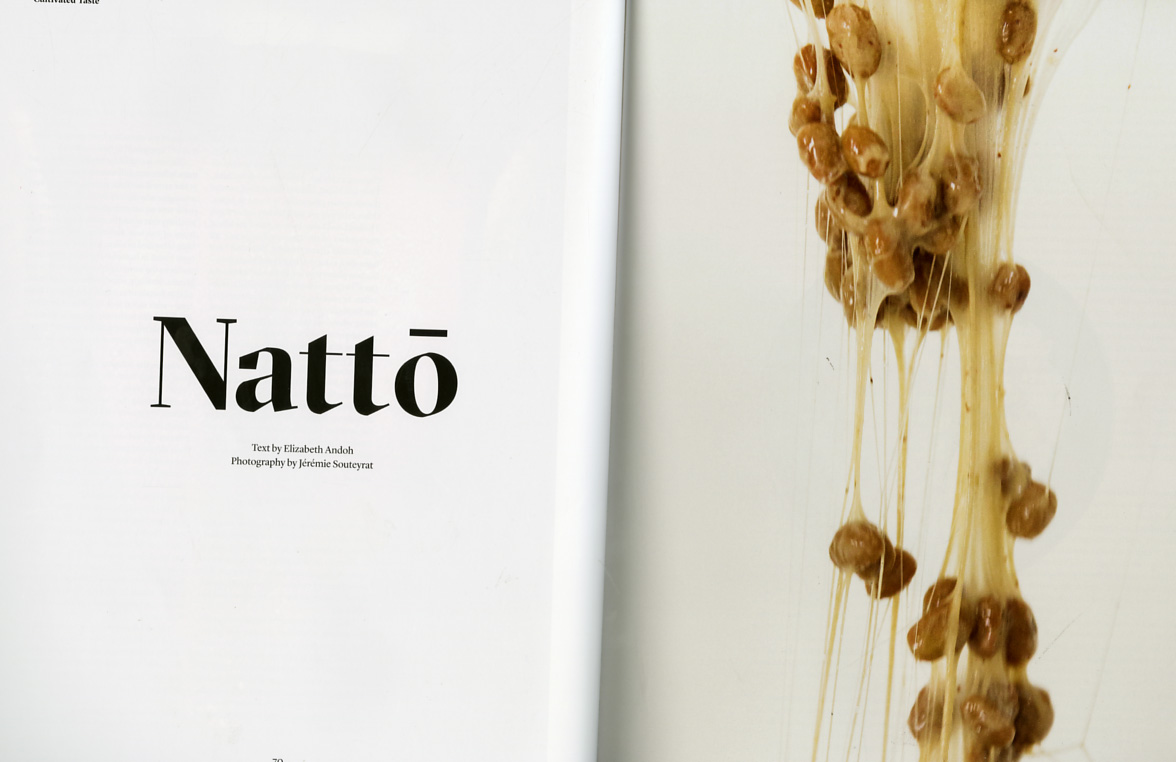
July 28, 2015

Reporting from Lebanon.

Reporting from Lebanon.

From Lebanon With Love. A Mr. Magazine™ Interview From Lebanon.

“Growing up, I always had a knack for physical things and I was never that great when it came to technology, so for me the printed product was a natural choice when I chose to make the magazine. For a magazine that’s mission is to ignite the renaissance of this area of the world; I don’t think digital-only can achieve that; people need to feel the tangible aspect of things.” Ibrahim Nehme

scan-20150725194142-1 The possibility of possibility was the idea-embryo for The Outpost magazine, a Beirut-based publication that seeks to promote the positive and facilitate real change within the Arab world. Ibrahim Nehme is the founder and editor-in-chief of the magazine and a young man who is adamant about his creation and about the mission he is dedicated to. An excerpt from his editor’s letter in the very first issue showcases the magazine’s reason for existence quite eloquently:

There are moments in history when humanity, with grit, passion and erudition, saliently moves forward. In moments like these, all the fears that have previously held us back, the ideas that sounded impossible, and the assumptions that defined our limits disintegrate as a breed of individuals reaffirm the notion of the possibility of possibility.

I met with Ibrahim on a recent trip to Lebanon. We spoke at Paul’s, a coffee shop on the main highway leading to North Lebanon and close to the Casino Du Liban. It was as inspiring a conversation as The Outpost’s mission statement is. Positivity and idealism and real passion are three words that can be used liberally when describing the young man who sat before me and talked about young people in the Arab nation who are ready for change and growth and a clear and concise direction for a successful future.

From the first-issue editor’s letter:

Our first issue is being published at a time when a renewed sense of possibility enshrines the Middle East. The current social, cultural and political transformations are reweaving the fabric of the societies we inherited. A new generation is emerging that is, for the most part, eager to dust off thick layer of tyranny, narrow-mindedness and impotence to embark on a cathartic journey of reform.

scan-20150725194535-2 As you can read for yourself from the inspiring editorial; the magazine is intelligent, poignant and excellently written and gives a most personal look at life in the Arab world. I spoke with Ibrahim about the magazine’s frequency change (from quarterly to bi-annual), the sustainability of the publication through the World Makers concept (allowing readers to pay for a spot in the magazine to feature their own work), and about the future of the magazine. It was a premier interview with a young man who is a premier human being, using his passion to change his world for the better.

So, I hope you enjoy this stirring interview with Ibrahim Nehme, Founder & Editor, The Outpost magazine; it certainly made Mr. magazine™ see the “possibility of possibility,” and I’m sure it will you too.

But first, the sound-bites:

Ibrahim Nehme On the background of The Outpost magazine: Basically, in 2011 I was contemplating whether or not I should leave Lebanon and go somewhere abroad and continue my studies. At the time I was working for ArabAd, which is a local magazine, and the experience with ArabAd kind of opened my eyes to the world and the situation of the country, which at that time, and in a way still is, really bad. It came down to staying in Lebanon and doing something about it, like trying to create a magazine that actually ups the standards of the local print industry, or just leaving.

On why he chose English instead of Arabic for the language of the magazine: We wanted to publish in English because we wanted to reach out to this particular target group, but for a magazine that has a mission really larger-than-life, with a mission that seeks to ignite change in this part of the world, we’re aware of the limitations of the English language and we do have plans to publish in Arabic, possibly a newspaper that will be distributed for free.

On whether he felt it was crazy to start a print magazine in a digital world: For a magazine that’s mission is to ignite the renaissance of this area of the world; I don’t think digital-only can achieve that; people need to feel the tangible aspect of things.

On the biggest stumbling block that he’s had to face: The biggest stumbling block was the fact that before starting I had a very clear plan as to how to gear this magazine forward. I had a plan for after the first year and what would happen; how we would secure revenue, but as it turned out, how things worked in my head were completely at odds with how the commercial world works.

On why he thinks the magazine is selling out at bookstores, even with the hefty cover price of $12: When we first launched Issue # 0 everyone said that it was too expensive. It’s a quarterly magazine, so it comes out every three months and you’re paying $5 technically for three months, whereas there are monthly magazines that are $7.00 here on the stands. I think because it’s all new and the market is completely immature, people aren’t familiar with the concept that you actually have to pay for quality products.

On why he changed the frequency from quarterly to bi-annual: Primarily for financial reasons because to produce this kind of magazine it takes so many resources, also time being one of those resources.

On what motivates him to get out of bed each morning: The magazine is what motivates me, because the prospect is so exciting. We haven’t even scratched the surface of what we can achieve with this magazine. And just the prospect of really seeing the long-term vision of where this could go and trying to work toward that is really exciting.

On where he expects to see the magazine one year from now: So, in a year’s time, if this works out, we will have three main pillars for the operation, which is the printed edition, the project that we are conceiving, as well as our digital platform, which is not going to be as much a hub for content as much as a platform for World Makers. So that will encourage people to connect with each other, because I think that it can become a facilitator for change.

On the definition of a World Maker: A World Maker is a person, in this case, really an Arab person, living in the region and who is trying to do something independently to facilitate positive change in the Arab world.

On anything else he’d like to add: I think that we’re meeting at an interesting point because for the longest of time we’ve been trying to figure out who we are and what the magazine stands for and the point of view resonates with the type of people we are trying to reach out to. I think now we have matured somewhat and really know what we stand for and we know what we’re trying to do and that dictates our editorial and our conceptual strategies. We’re really doing very well; we’re in 50 cities around the world.

On what keeps him up at night: Lately, as I said, I’ve been sleeping like a baby. Nothing is keeping me up.

And now the lightly edited transcript of the Mr. Magazine™ conversation with Ibrahim Nehme, Founder and Editor-In-Chief, The Outpost magazine…

From Lebanon With Love

From Lebanon With Love

Samir Husni: Tell me about the background of The Outpost – why Lebanon and how did it get started?

Ibrahim Nehme: Basically, in 2011 I was contemplating whether or not I should leave Lebanon and go somewhere abroad and continue my studies. At the time I was working for ArabAd, which is a local magazine, and the experience with ArabAd kind of opened my eyes to the world and the situation of the country, which at that time, and in a way still is, really bad.

It came down to staying in Lebanon and doing something about it, like trying to create a magazine that actually ups the standards of the local print industry, or just leaving. And at the time the Arab spring was happening and there was this inspiring energy going throughout the region and I felt that it was a good time to stay and do something with print.

And that’s how the magazine of possibilities was born, because at the time the region was open to all inspiring possibilities. In a way it was born from the womb of the Arab spring as a magazine of possibilities that aims to capitalize some kind of change in this ongoing revolution. It’s a political magazine; it’s a socially-conscious magazine, and it reaches out primarily to young Arabs who are the activators of change.

So, that was the initial idea. We launched our very first issue, number zero, and it was intentionally numbered zero because we were a bunch of young people with no significant experience in making a magazine or in publishing. We just wanted to put our ideas out there.

It kind of picked up though soon after the issue was out; we were nominated for awards and the feedback was really good. It just took off from there. There have been so many changes to our strategy in how we’re approaching print.

Samir Husni: Why did you choose English and not Arabic as the language of the magazine?

Ibrahim Nehme: English was the striking point because the creative director at the time and myself, were like most Lebanese, American-schooled, and we consume our media primarily in English. And like us, there are legions of other young Arabs in Lebanon and in other parts of the region who also consume media in English and not in Arabic, which may be a shame I know, but that’s the reality of things.

We wanted to publish in English because we wanted to reach out to this particular target group, but for a magazine that has a mission really larger-than-life, with a mission that seeks to ignite change in this part of the world, we’re aware of the limitations of the English language and we do have plans to publish in Arabic, possibly a newspaper that will be distributed for free.

And also, because now we’re reaching out to Europe and America; we’ve been getting a lot of requests that are from non-Arabs. And I think publishing in English is helping to break these stereotypes associated with the Arab world. I always get messages from surprised readers, such as: we didn’t expect Beirut to be as you show it, so I think that it’s helping in that sense.

Samir Husni: We live in a digital age and you’re a young man, under 30, fully aware of the digital tendencies of your generation; are you crazy to start a print magazine today and to also try and defend the future of print in this digital age?

Ibrahim Nehme: Growing up, I always had a knack for physical things and I was never that great when it came to technology, so for me the printed product was a natural choice when I chose to make the magazine.

It was never really a matter of print or digital; I think that somehow the conversation has been skewed and framed in such a way that it’s wrong. Every media has its different pros and cons and its different features.

We started out in print and we knew that digital would come at some point down the line, so we have to start working on our digital platform, which we are now doing. And we’re thinking that we will conceive it the way that we did the print edition.

Again, for a magazine that’s mission is to ignite the renaissance of this area of the world; I don’t think digital-only can achieve that; people need to feel the tangible aspect of things.

Samir Husni: What has been the biggest stumbling block that you’ve had to face and how did you overcome it?

Ibrahim Nehme: The biggest stumbling block was the fact that before starting I had a very clear plan as to how to gear this magazine forward. I had a plan for after the first year and what would happen; how we would secure revenue, but as it turned out, how things worked in my head were completely at odds with how the commercial world works.

And it took me almost a year to grasp that we, the publishers of the magazine, and the media industry were on a completely different page. We speak a completely different language and for the longest time we were trying to change our language to make them understand who we are and what we’re trying to do, up until we finally realized that wasn’t going to happen. Now we’re at the point of realizing what we stand for and how we’ve been doing in the market and we’re trying to turn that into revenue that will help us sustain this enterprise.

What we’re doing is scrapping advertising; starting with the next issue we will no longer publish any form of advertising; I’ll tell you more about this. We thought that moving forward and in order to keep this magazine sustainable, we could enlist the people who really believe in the value of the magazine, not advertising agencies or media companies; but the people who are really seeing the value of the magazine, the readers. And in many ways these readers are the change agents who are implementing positive change in the region, which in this issue we call them “World Makers.” A “World Maker” is anyone who lives and is trying to do something positive for nothing in return.

scan-20150725194724-3 With the next issue we have something called the World-Making Factorium, which is a poster inside the magazine. We talked about 50 World Makers and we tried to find connections between them. The idea is, for example, one woman is trying to make one place better and then collectively the whole place is going to become better because it’s inhabited by all of these caring people. These World Makers were numbered, indexed and rearranged, then connected to each other based on what they are working on. The result is a network showing the world that is constructed due to each of them making change in different clusters.

We have to take money, of course, to sustain it, but the gift that we’re giving is important involving the World Makers, who are the revenue generators of the magazine. But it’s an upfront framework for supporting the magazine.

Samir Husni: I tried to find Issue 5 when I first arrived in Lebanon recently and in every bookstore that I visited they told me it was sold out. So, even with the $12 cover price, which is a hefty price for a magazine in Lebanon, it’s still sold out. Why do you think that’s happening?

Ibrahim Nehme: Yes, it’s $12 and when we first launched Issue # 0 everyone said that it was too expensive. It’s a quarterly magazine, so it comes out every three months and you’re paying $5 technically for three months, whereas there are monthly magazines that are $7.00 here on the stands. I think because it’s all new and the market is completely immature, people aren’t familiar with the concept that you actually have to pay for quality products.

But we went bi-annual and people are buying it anyway and the price is still the same – $12 for every six months. What happened is we went bi-annual and we forgot to account for the fact that there are three more months that the magazine is on the shelves, so it was set up very fast.

Samir Husni: Why did you change the frequency?

Ibrahim Nehme: Primarily for financial reasons because to produce this kind of magazine it takes so many resources, also time being one of those resources. It’s a conceptual magazine, so we spend a lot of time developing the concept that binds everything together. And the quarterly frequency made it very short.

Samir Husni: Is The Outpost your night job or your day job? (Laughs)

Ibrahim Nehme: (Laughs too) My night and day job. It’s my life right now. And this is another source of revenue; we’ve been partnering with organizations that have been approaching us to produce some printed material for them and these types of jobs are really paying for the printing of the magazine and other costs. So, even when I’m working on that, it’s under The Outpost’s umbrella.

Samir Husni: What motivates you to get out of bed each morning and say it’s going to be a great day?

Ibrahim Nehme: Recently, I haven’t been able to wake up easily because I’ve been working so hard; I’ve been really exhausted.

Aside from that because it’s just a phase, the magazine is what motivates me, because the prospect is so exciting. We haven’t even scratched the surface of what we can achieve with this magazine. And just the prospect of really seeing the long-term vision of where this could go and trying to work toward that is really exciting.

Samir Husni: Do you envision seeing yourself one day being the Tyler Brûlé of the Middle East and The Outpost as having the same success as Monocle?

Ibrahim Nehme: No, because we’re not a commercial magazine such as that; we’re more like an activist magazine than a lifestyle magazine, which is what Tyler has in Monocle. I love hearing his stories, they’re very inspiring and a lot of what he’s trying to do now, in terms of a business model, could inspire us in many ways, but to say that we may someday be as Monocle – no.

Samir Husni: You’ve created a very well done magazine, in terms of content, readability, design, photography, charts and infographics; you name it, it’s very well done. And all of this is rare for an activist-type magazine. If I’m sitting here with you in Beirut next year; how far has The Outpost come in one year? Where do you expect to see the magazine a year from now?

Ibrahim Nehme: Actually, we are currently working on a project that’s due a year from now. We’re trying to test different things and see how they would fit into each other. One of the things that we’re doing is developing a project, it’s an offline and online project, whereby we get the readers, as well as artists that we select from the region, to engage in a debate concerning a particular topic and then all the outcomes from the interactions and interventions that happen will be channeled into that issue.

I think that a lot of the things that happen in the process of creating the magazine remain in our heads and ideas from our closed brainstorming sessions and I think that these things are important and we need to open up the discussion and let other people in who are outside the magazine.

So, in a year’s time, if this works out, we will have three main pillars for the operation, which is the printed edition, the project that we are conceiving, as well as our digital platform, which is not going to be as much a hub for content as much as a platform for World Makers. So that will encourage people to connect with each other, because I think that it can become a facilitator for change.

Samir Husni: Give me your definition of a World Maker.

Ibrahim Nehme: A World Maker is a person, in this case, really an Arab person, living in the region and who is trying to do something independently to facilitate positive change in the Arab world. They could be an entrepreneur, an artist, an environmentalist, a lawyer, an activist or a feminist, you name it. Any person across different levels of activity who are trying to advance the region against all odds and creating worlds from scratch, because they’re living in a place where the entire infrastructure for living, for working, for production, for creation, is non-existent. That’s a World Maker.

Samir Husni: Do you feel like you’re the oddball, like you’re swimming against the current in this part of the world?

Ibrahim Nehme: For sure.

Samir Husni: Does that frustrate you or encourage you?

Ibrahim Nehme: It used to frustrate me a lot; now, I’ve made peace with it.

Samir Husni: Is there anything else you’d like to add?

Ibrahim Nehme: I think that we’re meeting at an interesting point because for the longest of time we’ve been trying to figure out who we are and what the magazine stands for and the point of view resonates with the type of people we are trying to reach out to. I think now we have matured somewhat and really know what we stand for and we know what we’re trying to do and that dictates our editorial and our conceptual strategies. We’re really doing very well; we’re in 50 cities around the world.

Also I think that it’s helping. When you say that it’s mission is to help ignite a renaissance by basically inspiring people to do positive things, like inspiring this person to start up a business, or that person to work on fixing something else, just so many different things. We had a message from a lady in Cairo who said she had seen our magazine and she was really inspired, so she decided to buy the magazine in Egypt. If we could have that woman times 2,000 in five years, , it would be awesome. As I said, we’re just scratching the surface.

Samir Husni: My typical last question; what keeps you up at night?

Ibrahim Nehme: Lately, as I said, I’ve been sleeping like a baby. Nothing is keeping me up.

Samir Husni: Thank you.