
The news about U.S. News & World Report cutting its frequency next year to 26 times a year brought the prophets of doom and gloom from their hideaways to spread yet another prophecy of “Print is Dead” and “We told you so.” The funny thing is those folks have such short memories and can’t seem to recall their own predictions in 1985 about the end of the newsweeklies because of a thing called CNN, and later because of another thing called the internet.
It is good to hear from the folks at U.S. News and World Report that the terms news and weekly are now an oxymoron. I have been saying that for at least five years now, in fact my actual quote was more directed to the terms “news and paper” as being an oxymoron. But that does not mean we are not going to have daily papers or weekly magazines. All what it means is that news will no longer be the domain of paper, whether it is daily or weekly. I was amazed to learn on a recent trip to The Netherlands that they do not call their “newspapers” newspapers, but rather dailies. So the problem of being an oxymoron does not exist over there. As I have always said, the problem is not what frequency you decide upon, but rather what content are you going to provide. Try to convince The Week or The Economist or Time that there is no room for magazines that deal with newsy and important issues on a weekly basis. Some cover the issues with a “nugget” style and some provide you with the entire “breast of chicken.”
A quick look at the content of U.S. News & World Report shows that neither the U.S. News or the World Reports are there, in force, anymore…it feels that the great DNA of the two combined magazines of days past has disappeared. Maybe a better name for the new product should be U.S. Consumer & Reports since, after all, it seems like what they are trying to do is, in fact, create another Consumer Reports magazine, but this time one that is published every other week.
It is a sad day for a magazine that once was considered the “academic” of all news weeklies to exit the weekly scene completely, but it is a sadder day when we butcher a DNA and put the blame on something else. Killing the magazine and starting a new one with a new name U.S. Reports will be much more appreciated from both the traditional readers of the magazine and those who may pick up the magazine under the new name.

It is the content and not the frequency…
June 11, 2008My friend Bob…one step closer to ink on paper
May 31, 2008
What follows is the most recent column my friend Bob Sacks wrote in Publishing Executive magazine. I decided to run the entire article with just one comment: my friend Bob is moving one step closer to ink on paper away from its imitation the e-paper thing. Bob does not even once refer to e-paper in this article and pushes his predictions to 2025 rather his usual “five years from now.” Judge for yourself after you read his column.
http://www.pubexec.com/story/story.bsp?sid=107630&var=story
Publishing Executive
BoSacks: Looking at the Future of New LaunchesWill the increasing costs of entry make print publishing a world where only the brave and truly committed dare to go?
As you may know, my friend Samir Husni, also known as Mr. Magazine, tracks new magazine launches. He has done so for decades and has amassed a wealth of data. In his latest announcement, the overall numbers for our business are less than stellar. Many possible reasons exist for this decline. Both Husni and I can postulate about its causes, but neither of us actually knows.According to Husni: “The number of new magazine launches in the first quarter of 2008 (150) increased by five titles compared to Q1 2007. [While it was an increase,] it is still a far cry from the introduction of 192 new magazines in the same time period in 2006. However … only 41 magazines were launched with the intention to be published at least four times a year compared with 50 in 2007, and 72 in 2006.”
Husni goes on to ask:
“So what does this mixed bag of numbers mean? Not much. Since I have started tracking new magazine launches, I have witnessed a two or three years’ decline after a very healthy and busy year. [2005] was a very healthy year—1,013 new magazines were launched. The decline started in 2006. We are in our third year of decline. In 2006, we [saw] 901 new launches. The number dropped to 715 last year, and if the trend of the previous years continues, we will see another drop again this year before the numbers bounce back. Call it market correction if you please, but definitely it is not a sign that print is on its way out.”
Well, on that last point, Mr. Magazine and I agree. Printed magazines are not on their way out. Not by a long shot. I believe that the printed magazine will have a prosperous run until the advent and adaptation of new technologies, which will finally surpass the printed magazine around 2025. So there is some breathing room left. And even in 2025, magazines will not be completely gone, and those publishers established to produce them will do just fine. But I do believe that by 2025, the printed magazine will not be the predominant way that the public will read, but rather only one of the ways. Sort of like it is now, only more so.
So what will happen to Husni’s belief that there will be a predictable parabolic curve of highs and lows of new title releases? I think there will always be some high points of new releases and some low points. But as we move into the future there will be periods of lower highs and lower lows. And the long-term trend will be a decreased number of new printed titles, until we reach a new level of sustainability. That new sustainability will be predicated on the dictates of the new information age, balanced with the cost structure of print-and-ship manufactured goods. This may not be a bad thing for the printing and publishing industry. Perhaps a more expensive entry fee to be a printed publisher will lead to a greater survival rate, as only the brave and the truly committed will apply.
I believe we will reach a new successful, sustainable plateau of new releases more in line with the new business realities of the day. The further the reach of a new digital infrastructure, the less drive there will be to spend money on printed products. Publishing has always had a component of vanity attached to it. Almost everybody wants to be a publisher. In the past, the only way to do that was to put ink on paper. It was significantly less costly than it is today to materialize those vanity impulses.
I think we will find that the new world order is based on dematerialization. The dematerialization business plan can send billions of words anywhere on the planet in an instant with no material form and no manufacturing expenditure.
So, as usual, Mr. Magazine and I agree on some points and disagree on others. For today, we agree that the printed magazine is not going away any time soon, but disagree on the relevance of the decreasing trend in new startups.
Bob Sacks (aka BoSacks) is a printing/publishing industry consultant and president of The Precision Media Group (BoSacks.com). He is also the co-founder of the research company Media-Ideas (Media-Ideas.net), and publisher and editor of a daily international e-newsletter, Heard on the Web. Sacks has held posts as director of manufacturing and distribution, senior sales manager (paper), chief of operations, pressman, circulator and almost every other job this industry has to offer.
Copyright 2008 | North American Publishing Company | All Rights Reserved
1500 Spring Garden Street, 12th Floor | Philadelphia, PA 19130 USA | (215) 238-5300
European Diaries (2)… Reading under “the influence of SMS”
May 30, 2008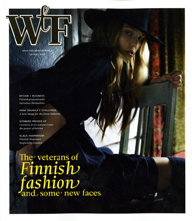
When I arrived in my hotel room in Helsinki, Finland, the name of the magazine waiting for me on the coffee table caught my attention immediately. WTF screamed the name, and since I have been around college students a lot (you know, part of my job) I was stunned for a second since I knew what WTF* stands for in the recent climate of SMSing. I grabbed the magazine as fast as my hands can reach to it and looked at that cover, then looked again. In very small type under the name the web address read www.welcometofinland.fi. What a sigh of relief. I opened the pages safely and saw the Welcome to Finland name in big type on the table of contents page. Maybe the WTF was a good attention grabber for me to pick up the magazine, but I truly miss the days when we used to spell everything, the right way, the right style. Anyway, I had a great time in Finland and gave few presentations to the folks at the Finnish Periodical Association and my friends at Sanoma Magazines Finland. Next time I am in Helsinki I will make sure to pick up my welcoming magazine without reading it “under the influence of SMS.”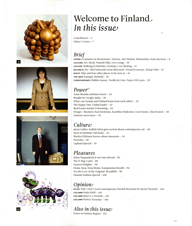
* For those of you who are not familiar with the SMS language, WTF stands for What the f—?
The Power of Interactive Printed Magazines… A Magazine called “Your Old House”…
May 29, 2008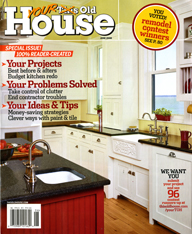
First there was JPG, then came Everywhere, and then the mainstream media took notice: there is a good, indeed a very good use, for the internet and the web in generating content for the printed magazines that we do. Before the Web, writing letters to editors and sharing comments was limited to a few who were determined to do so. Now, readers’ opinions are a click away and the minute they read something they like, they hate, or they can’t stand, chances are you are going to hear from them.
That is why the folks at This Old House have decided to bestow the honor of changing the name of the June issue of the magazine to Your Old House, since it was 100% reader created. And the “YOUR” belongs to “You people,” who are “Kooks. Obsessive. Irrational. Possibly out of your minds,” writes Scott Omelianuk, the magazine’s editor. Omelianuk quickly adds, “And we love you for it.”
To me, this is yet another example of the power of print in being an interactive medium. Before the web, Reiman publications set the standards in reader generated content. After the web, the field is now leveled and those editors who are willing to listen to what Time’s managing editor Richard Stengel told my students that the future of journalists is “to be more curators and less creators,” there is a lot of room for printed magazines to thrive and excel.
“The Public Voted” for the June’s issue of This (Your) Old House’s cover image, the winners of the remodeled houses’ contest, and the shared money saving tips on home improvements.
European Diaries (1)… Sex and The City (The Magazine)
May 27, 2008
On a recent trip to Estonia I picked up a copy of a new Russian magazine called Sex and The City. Yes you read that right. A monthly magazine that have been published for seven months now carrying the name of the big HBO hit series, and now hit-to-be movie, Sex and the City. The magazine reminded me a lot of Cosmopolitan and was divided into two main sections, you’ve guessed it, sex and the city. The 224-page issue seven of the magazine carries a variety of articles that feel and look like pages of Cosmopolitan (which by the way, is also published in Russia). The surprising fact is this is not a one shot special issue of the magazine dealing with the Sex and the City series (more about that in a later blog) but rather a monthly addictive dose of information sprinting off the name of the famed television series. The examples below illustrate the similarities with the pages of Cosmo and the cover above (for those who can read Russian) probably provides a lot of cover lines selling the power and addictiveness of Sex and the City.

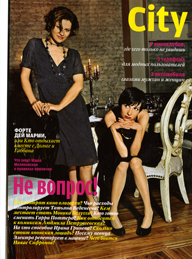
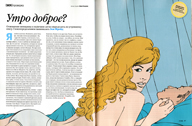

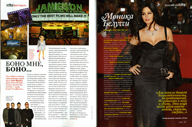
A very interesting magazine that merely seems to add to the mix of women’s magazine titles and begs the question to whether such a magazine can survive on the American marketplace considering the success of the television series?
The future (from Sweden) in few sound-bites
May 16, 2008Martin Schori of the Swedish media related newspaper Dagens Media interviewed me in Stockholm yesterday during my first leg of my European trip. The questions evolved around the future of print, the need of the internet, and other media related issues. To view the entire interview click here.
Heading to Europe…
May 12, 2008It used to be said that April is the cruelest month in academia, well it is and so is May. I will be leaving to Europe on a seminar-giving tour that will take me to Sweden, Finland and Estonia starting tomorrow and lasting until May 25. In case my blogging slows down, now you know why. It is not for the lack of information, but rather to give me the chance to catch a break. I will be blogging every now and then from Europe if the opportunity lands itself, otherwise look for a very active week after May 25. In the meantime I wish all of you a great summer season and plenty of good magazines to read.
The glossy weekly named TIME…
May 5, 2008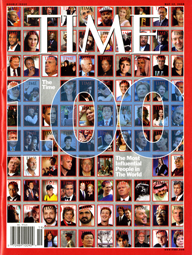
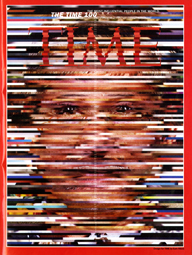
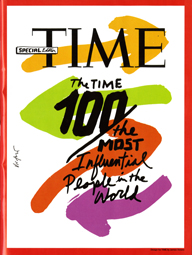
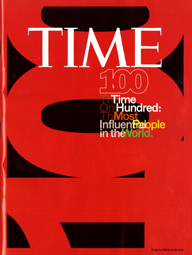
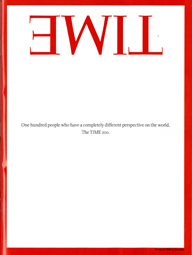
In a continuation of transforming the magazine to a weekly of the 21st century (a monthly glossy on a weekly basis), TIME magazine sports five different covers this week to celebrate the fifth anniversary of its The TIME 100 Most Influential People in the World. The magazine asked “several top graphic designers to create bonus covers to mark the fifth anniversary of this issue.” The designers include Chip Kidd, Neville Brody, James Victore and Michael Lee. And if you think the covers are great, think twice about the writing and photography. To quote Richard Stengel, TIME’s managing editor “What does it take to produce 100 profiles by 100 writers, plus great photography and five different covers? A whole world of talent.” Yes, indeed.
Split covers and different stars reach Hip Hop Weekly world…
May 1, 2008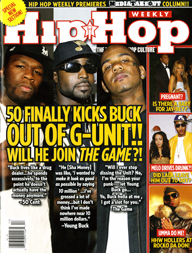
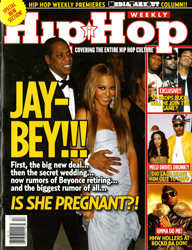
The two-year old Hip Hop Weekly was published without any fanfare, but since it changed its format from a tabloid to a standard size glossy magazine Hip Hop Weekly started gaining space on the newsstands and I have selected it as one of min’s magazines hottest launches of last year. Now, the magazine that covers the hip hop culture on a weekly basis is learning the tricks of the trade and offering split covers on the nation’s stands. The latest issue comes with two covers, one devoted to Jay Z and the other to 50 Cent….In any case, both covers are a reflection of a culture that is gaining ground in a world surrounded by celebrity news and gossip…Britney, Jen, Paris and the rest of the gang better watch out, Hip Hop Weekly’s covers are off limit to you…but the rest of the Hip Hop stars can now have a magazine they can call their own. Check it out if you are interested in keeping up with the hip hop culture…you will not regret it and you may learn a thing or two…
New Magazine Launches: First Quarter ’08 — totals are up, 4x or more are down
April 26, 2008The number of new magazine launches in the first quarter of 2008 witnessed an increase of five titles compared to those introduced in 2007. A total of 150 new magazines were introduced to the American magazine scene in the first quarter of 2008. This is an increase of five from 2007, but still a far cry from the introduction of 192 new magazines in the same time period of 2006. However the number of titles published four times or more in the first quarter of this year has dropped by nine. Only 41 magazines were launched with the intention to be published at least four times a year compared with 50 in 2007, and 72 in 2006.
So what does this mixed bag of numbers mean? Not much. Since I have started tracking new magazine launches, I have witnessed a two or three years’ declines after a very healthy and busy year. 2005 was a very healthy year. 1013 new magazines were launched. The decline started in 2006. We are in our third year of decline. In 2006 we have seen 901 new launches, the number dropped to 715 last year, and if the trend of the previous years continues, we will see another drop again this year before the numbers bounce back. Call it market correction if you please, but definitely it is NOT a sign that print is on its way out. History will tell us otherwise. So enjoy this quarter’s crop and look forward to more titles to come next month.
Here is the break down of the numbers by month:
January-March – 150 total magazines
January – 42 magazines (14 published 4x or more):
6 quarterly
5 bimonthly
2 monthly
1 10x
28 specialFebruary – 52 magazines (16 published 4x or more):
10 quarterly
2 bimonthly
2 monthly
1 9x
1 10x
1 bi-annual
3 annual
32 specialMarch – 56 magazines (11 published 4x or more):
9 quarterly
2 monthly
5 annual
40 special
Click here to see images of all magazines launched so far in 2008.


