h1

Spry, The New 9-Million (Newspaper Distributed) Health Magazine: Are They Out of Their Minds?

September 7, 2008


On Thursday Sept. 11, Spry magazine launches with a record 9.2 million copies distributed via newspapers. Yes, you read that right, distributed via newspapers. If, for a moment, I ignore the fact that a new magazine is being launched this week with a circulation of 9.2 million (200,000 copies delivered as a bonus on the 9 million guaranteed base), I can’t but wonder about the fact that the magazine is going to be distributed via newspapers. Remember, newspapers, the medium that more people have predicted its demise than there are actually newspapers in this country. Well, I have said it before and I will say it again, newspapers are not dying in America, however, some of them are just committing suicide. It was ironic to see few days ago a report on the Cox news service (part of the Cox newspapers chain) talking about the flourishing status of the European newspapers. The sad/funny part about the report is that we publish it in our American newspapers but we do not bother to learn any lessons from it. We continue to chase the news and try to stay up-to-date on our pages, while we know at the same time that it is not possible to do so with ink on paper anymore.

Well, back to my original reason for this blog, publishing a mass circulating magazine using newspapers as the method of distribution. Spry, is of course not the first national magazine distributed via newspapers. In fact it is the third title from the same company Publishing Group of America (PGA). PGA publishes American Profile on a weekly basis, Relish on a monthly basis and now Spry.

I asked Dick Porter, PGA’s CEO what were they thinking to launch a new printed magazine to be distributed in a medium that some say is dying. Are you out of your mind? I said. His response:

“I say look at our circulation growth (in both American Profile and Relish). In every medium today (newspapers, televison, etc), it is painful and partly it is because of the impact of technology. Consumers can put stuff on the internet that is free with a digital camera that is pretty good. (However) I think there is always a premium for the best storytellers… In the newspaper channel, clearly there is pain. I had this question when I was in Chicago and was asked aren’t you in a channel that is dying. I said first of all, look at the capacity. There is at least three buckets to segment newspapers, metro dailies, which are probably hurt more today than non-metro weeklies, and then there are free newspapers. The free newspaper market is growing like crazy. We are not even in that market and maybe we should be. I think if you added up all the paid circulation of newspapers on a daily basis, the number is something like 60 to 70 million. (The 770 daily audited newspapers have a circulation of about 45 million). I don’t know the exact number. But if you figure 60 million a day times 365 days a year that is an awful lot of capacity. Even in a doom’s day scenario, pick your number if you think it is going to be halves in three years. As long as I am only trying to launch a twelve time frequency, there is a lot of capacity out there for us to have enormous magazines. I think the proof of that mass is pretty simple. Look at Relish. Two years ago people thought why would you launch a newspaper magazine? That is such a tough environment. We launched at six million and today it is twelve million and in January it will go to fifteen million. We are also looking at frequency growth there too. We think there might be room for a thirteenth issue. In the case of Spry, six million wasn’t good enough. We launched at nine and had to raise the bar for ourselves. Probably the newspaper industry is tougher in 2008 than it was in 2006. There is just not a lot of conventional magazines out there approaching three million circulation today.”

Needless to say PGA is not the only publishing company putting its faith in the newspaper industry and using newspapers as a good distribution system for their magazines. The Gannett newspaper chain is using USA Today to distribute their outdoor magazine Open Air and the Dow Jones company is using The Wall Street Journal to distribute WSJ. The aforementioned titles are but a few of newly launched national magazines to be distributed through the newspapers, thus hitting two birds with one stone. First, they avoid the entire distribution problem (the crowded newsstands and the expensive direct mail) and second the need to search for an audience, since the newspapers have their captive audience ready and willing to receive the new publications.

Spry, WSJ., Open Air, Relish and American Profile have been a welcomed addition to the national magazine scene in the last few years and a major vote of confidence in the future of mass circulation magazines. Creative ways of distribution show that a special interest magazine does not need to have a circulation of less than 100,000, but rather can reach 15-million circulation as in the case of the food magazine Relish.

I think our industry needs to take an in-depth look at the aforementioned magazines and the way they are able to buck the trends and the prophets of doom and gloom. The future of magazines in print is definitely not limited to special interest and coffee table magazines, but to creative, well done, content driven magazines such as Spry, WSJ. and Open Air. Three new national magazines born in 2008 providing three solid answers to anyone who questions the vitality of print and whether print is well, alive and kicking.
h1

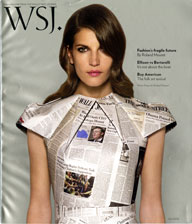
WSJ.:The New Standard of Luxury Magazines

September 3, 2008


Reading The Wall Street Journal is normal. Wearing The Wall Street Journal is another story. The new WSJ., the magazine of The Wall Street Journal, does exactly that with its launch issue cover. Turning the pages of the newspaper into a “Moon Dress by Ronald Mouret” is the first of many glimpses of what this new magazine is going to be. Elegant, upscale and aimed at the “cream of the crop” of The Wall Street Journal readers, the magazine offers its readers a European look and feel from the cover all the way to the inside pages. The cover image echos the famous British ID magazine’s “one eye closed” image that appears on every cover of ID. Toned down cover typography makes the image jump at you from behind the metallic sliver ink that has become synonymous with luxury titles. (See the Interview magazine blog below.)
A unique table of contents adds to the intrigue of this new magazine. The departments are divided into Hunter and Gatherer instead of just listings of department heads. The feel of the publication reflects the readers the magazine is trying to attract. Tina Gaudoin, the British-imported editor-in-chief, opens her letter from the editor by stating, “Here’s what we know about you, the Wall Street Journal reader: You are smart, well-read, discerning about what you consume, opinionated and generous.” She adds, “At WSJ. we believe luxury is not about how you spend — it’s the way you live that counts.”
I asked Michael Rooney, the chief revenue officer at The Wall Street Journal, what makes WSJ. different than the rest of the luxury magazines. He responded, “I think the difference will be that it will have The Wall Street Journal DNA which is that we provide clarity to our readers about all issues… they come to us not just for the facts, but they come to us for what (the facts) mean.” Crystal clear clarity is what he really meant, because the content, the audience and the design of WSJ. is more than crystal clear in what they are trying to achieve.
WSJ. magazine is yet another welcomed new magazine bucking the trend that print is dead and the future is for something else. The audience of WSJ. was already there, the advertisers were already there, all what the folks at the Journal had to do was build the bridge that links the readers/customers to the advertisers…and they build one good “London” bridge… In fact, WSJ. is, to me, the new standard in luxury magazines and has become my standard (even after only one issue) in comparing other luxury magazines to.

h1

Interview: The Definition of a Good Magazine…

September 2, 2008


After a hectic Labor Day break, a very welcomed surprise arrived in the mail. Alan Katz, Group Publisher at Brant Media, publishers of Interview, Art in America and The Magazine Antiques, and the ex-Publisher of New York magazine, Cargo and Vanity Fair, sent me a copy of the renovated “bigger, bolder and sexier” Interview magazine. I think the word renovated does not give the changes in the magazine justice… It is more of a rebirth from cover to cover. A rebirth using the same DNA that the magazine founder Andy Warhol created when the magazine was conceived.
In a rather unique Interview style, the new editorial directors of the magazine Glenn O’Brien and Fabien Baron engage in an interesting exchange about the changes in the magazine, opting for a dialogue between the two rather than the traditional letter from the editor. Baron tells O’Brien, ” I think Any Warhol invented a new kind of magazine. It happened around the same time the cassette recorder was introduced. It was the first oral magazine…And being Andy’s magazine, visually it was up to the level of a great artist.” Baron responds to O’Brien saying, “But magazines have changed. Today the Internet does what magazines used to do. They give you the news, the flash, the buzz. Today a good magazine is more like what a book was in the past. I think that what we’re doing is going against the instant, disposable thing. I think we are offering something made with real craftsmanship, with a very high level of work coming from many people.” All I can add to that is just say Amen!
The brand new Interview with a glowing red and silver metallic cover featuring Kate Moss in all her glory, together with some hefty well written and photographed articles are worthy much more than the $3.99 cover price. Check it out today, the power of the photography, the feel of the typography, and the passion of the design make the new Interview a good magazine, a good one indeed.

h1

Brits Bring Knowledge to the American Shores…

August 27, 2008


The British are coming… This time they are coming armed with Knowledge for “the curious mind.” Whether it is science, history or nature the first issue of the BBC Knowledge magazine does indeed offer a wealth of knowledge. Andy Benham, the magazine’s publishing director said in a press release that “the magazine has been poistioned to capitalize on the strength of the BBC’s brand in the U.S. and while the content will feed American interests, the Britishness and BBC-ness of the magazine are seen as being key assets, offering consumers a fresh alternative to what is currently on the market.”
Two things captivated me about the BBC Knowledge: the first is the variety of content and design that indeed sets the magazine apart of what is on the market. The mix of in depth stories and great stunning photography made me stop on every page of the 100-page premiere issue. I can feel the European flair of the magazine in every page, yet it also felt so American. A welcomed blend of that Euro-American mix that hopefully one day will find its way to more magazines and newspapers in our country. The second thing that grabbed my attention is the dependency on circulation rather than advertising to survive in today’s market place. It is something that I have been advocating for some time. The magazine carries a limited number of ads, but Benham comments in the press release that “our primary aim is to build a solid core of subscribers…we want to offer readers the best of BBC stories in the magazine while carefully considering the tone and quality of any potential advertisers.”
BBC Knowledge is indeed a breath of fresh air in today’s market place where more major magazine publishers are committing suicide with some of their magazines rather than attempting to adjust to the changing market place. Check BBC Knowledge here, buy a copy at the newsstand for $5.99 or order an annual (six issues) subscription for $29.95. Real prices for real content. Enjoy your imported knowledge for the week.

h1

The Future of Magazines on Fox Business — Part Two

August 21, 2008

Here is the direct link to the interview on Fox Business on Tuesday August 19, 2008. See blog below for details.

Vodpod videos no longer available.

more about "Mr. Magazine › Create New Post — Word…", posted with vodpod

h1

The Future of Magazines on Fox Business — Part One

August 21, 2008

Here is the direct link to the interview on Fox Business on Tuesday August 19, 2008. See blog below for details.

Vodpod videos no longer available.

more about "Video – FOXBusiness.com", posted with vodpod

h1

The Future of Magazines on Fox Business News

August 20, 2008


Yesterday I was interviewed on the Fox Business News’ morning show Money for Breakfast. Read what the show’s host Alexis Glick wrote about the show on her blog and watch the interview with me, Matt Kinsman, Managing Editor of Folio magazine and Dave Kansas, President of FiLife.com.
Click here to read and watch The Glick Report.

h1

The Wall of Shame… or How Can We Cure the Ills of the Single Copy Sales

August 14, 2008


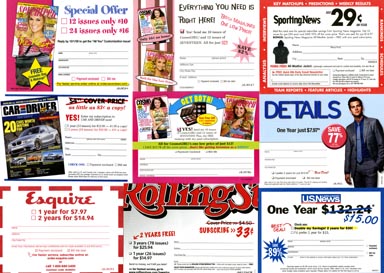
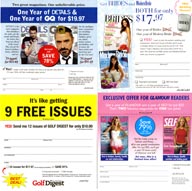
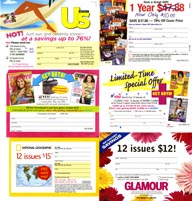
I have received more phone calls this week asking about the reasons single copy sales are down by 6.4% and subscription sales are up, thus keeping the level of circulation figures the same as the last six months. Well, I have decided to visit the newsstands one more time, and this time not to buy any magazines, but rather to collect the subscription cards (one of the major ills of our industry today) found inside the magazines on the newsstands maybe I can get my answers.
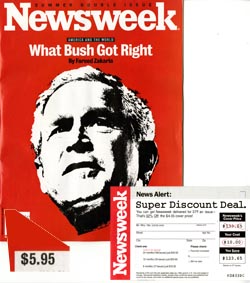
What I found, and this by the way, came as no surprise to me, is that what we used to call the “dandruff of the industry” has exploded to an extremely shameless effort of forcing the newsstand buyer not to purchase a magazine on the newsstands. My first pick was the newsweeklies. Newsweek has a hefty price for its current double issue of $5.95. I picked up the magazine and a card screaming at me, “you stupid Samir, you are going to pay almost six dollars for a magazine instead of sending four more dollars and getting the entire year for ten dollars!” I put the magazine back. The rest of the magazines were no different. I moved to the women’s magazine section, the same can be said about them, buy a year of Cosmopolitan and we will send you a year of Marie Claire, for less than two dollars, yes less than two dollars. The men’s magazines are no different. Buy GQ and we will send you Details, or buy Details for a mere $7.97 a year. The sports category offers no surprises either, a year of Sporting News start at 29 cents an issue (compare that to the $3.99 cover price), and so is the music category with Rolling Stone being sold at 33 cents an issue.
Take a look at the above wall of shame and ask yourself why newsstands are not selling as they used to in the “good old days.” Do you remember when Cosmo used to cost more to subscribe than to buy on the newsstands? Do you remember when Family Circle and Woman’s Day were only sold on the newsstands? Do you still see the success of the single copy driven Woman’s World? Try to ask yourself what can we do with a “numbers” driven model that worked for years, but is no longer working today? Our magazine industry is at a crossroads and unless we make the right choices we are doing to end in the graveyard of history. Magazines must and should start charging the realistic cover prices and subscription prices. For what it’s worth, here are few simple ideas for us to make the right choices:

1. Magazine subscriptions should not be less than 20 – 30% of the cover price. In fact we should sell magazine subscriptions as a service to the reader, delivering the magazine home, saving on gas and effort to go to the newsstands, etc. Think about any retail mail order business…sometimes you pay for shipping and handling a heftier price compared to the product itself.
2. Magazine cover prices should be slashed down. If you truly want your magazine to reach that single copy market why not selling at a fair price that does not scare the readers. Why should I pay $5.95 for a 72-page issue of Newsweek and $3.99 for a 400-page issue of GQ? It just makes no sense. Newsweek, Time and the rest of the newsweeklies should carry a cover price of no more $1.99 if they want the magazines to move on the newsstands. That will make them more competitive in terms of their subscription prices.
3. Stop chasing the numbers of customers and concentrate on customers who count. The first step in doing such is stop the rate base gimmick. You can’t anymore chase a rate base number and try to meet that number. Today’s customers are different and reaching those who count is much more important than counting them.
4. Go back to the business of selling content and not giving content away. If you value your content, you need to start making your customers pay for it.
So, next time you want to know why the newsstands sales are down, please do not blame the internet or the television or technology. Our problems are from within, and as long as we keep on burying our head in the sand our industry is not going to thrive and be alive.

h1

As American As An Apple Pie…

August 7, 2008


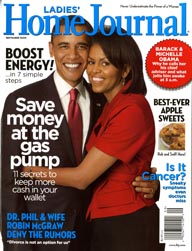
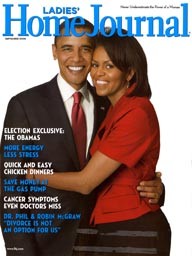
Ladies’ Home Journal’s Sept. issue sports an interview with Michelle and Barack Obama with the picture of both sharing the cover of the magazine. Single copy buyers get an extra inset picture, with not so subliminal message, of an apple pie that readers can “rub and sniff” and the smell of the apple pie sends a wow through the senses of the customers. What can be more American than an apple pie? Well, you do not have to be a genius to add one plus one and the entire cover package is smelling like an apple pie. The subscribers of Ladies’ Home Journal have to be satisfied with the smell of ink on paper (and as much as I love the smell of ink on paper, I can’t write that the smell of ink on paper is as American as an apple pie…)
In my previous blog, I have asked the question about the coverage both Obama and McCain are receiving from the American magazines, well you can add this one to the Obama camp and you can keep on counting… My guesstimate is the score is at least 4 to 1 in favor of Obama. Have a different theory, please do not hesitate to comment.

h1

Reader’s Digest Takes a Page From Obama’s Campaign, and Who Landed on More Magazine Covers…Obama or McCain?

July 29, 2008


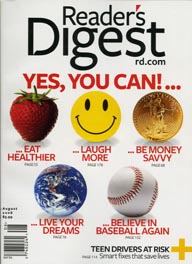
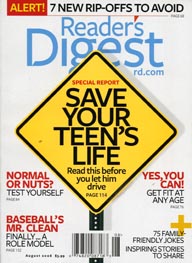
In yet another magazine example of offering different single copy covers in different areas of the country, Reader’s Digest in its August issue took the Obama’s campaign slogan “Yes, You Can” and used it on one of the two covers being sold on the newsstands. I wish I can say the other cover is a page from the McCain’s campaign, but by its looks I doubt that.
Which brings me to a completely different academic topic, have you noticed how many covers Senator Obama has been on compared with Senator McCain. It will make a nice academic study to compare the two senators and the number of times they have appeared on magazine covers. Whether on the cover of American magazines or European magazines, my theory is that Senator Obama has appeared on more magazine covers than Senator McCain. It is just a hypothesis for now, but I bet you it will not be hard to accept after some research. A graduate student waiting in the wings for a master’s thesis topic can take this challenge and start the research. Please keep me posted, or just let me know whether you agree with my hypothesis or not…