

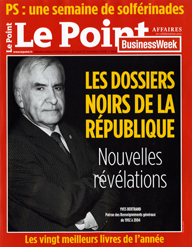

I know it is the season to give, but I am going to write today about selling rather than giving. For starters, I am amazed by the size of the so called news weeklies in Europe. Every time I am on an overseas trip I pick up some of the weeklies, regardless whether I can read them or not, and I am shocked how thick and heavy they are. Case in point the three weeklies I picked up in Paris. L’Express (with a supplement), Le Point and Paris Match. Each is a least 140 pages with one reaching the 200 page count. Paris is not unique, Rome is the same (some issues of Panorama hit the 350+ pages). Brussels, Amsterdam, London, Madrid and other European cities still are producing hefty-sized printed weeklies. So why them and not us? Why are our news weeklies limited to 68 to 80 pages most of the times? One thing I know for sure, it is NOT the size of the staff. Our magazines have at least double if not triple the staff of their European counterparts. So, is it the publishing model or is it the audience? Or is it as one of my colleagues at the University of Mississippi said, “My theory is that our society’s and culture’s anti-intellectualism is partly responsible.”
My theory has more to do with our publishing model. Few points to consider. Point number one, our publishing model is bloated. We SPEND much MORE to CREATE LESS content than our European counter parts. (Did you notice that even with all the cuts in our media industry there were no change in the size of the publications? Whether it is a magazine or a newspaper operating with a slimmer staff, a much slimmer staff, the publications are still the same size. Makes you wonder what were all these people doing!)
Point number two, the publishing model overseas still charges readers/customers for the content of the magazine. We give it away. The publishing model overseas still offers readers/customers content they can’t find in any other medium. We are losing our uniqueness in print. The publishing model overseas is adapting to the changing media consumptions of its audience ONLY when it is needed. Here we are talking a lot about change, we are changing for change sake, but in reality we are doing the same thing over and over and expecting different results every time; the Chinese define that as INSANITY.
Point number three: I know change is hard to come by. Yet, I also know that if we do not change we are going to die. We have to start catering to our Most Valuable Person. Our MVP is our reader turned customer. Our MVP is expecting us to Meet and exceed his or her expectations when in comes to content; Validate his or her expectations; and Preview what is coming in the days ahead. It is all about the content and the price of that content. I will feel much better if a magazine offers its selected readers/customers free subscriptions because they meet the criteria of “customers who count” than asking anyone to send $5 or $10 dollars for a one year subscription. Customers who count will be looking for “content that counts” and not just for any content delivered to any customer.
Drop your shotguns, and sharpen your lasers… The light at the end of the tunnel should not be the train coming.

Lessons from Abroad: Selling Content, and NOT Giving Content…
December 9, 2008Committing Mass Suicide is No Way Out for the Magazine Industry
December 7, 2008Some say we live in interesting times and I say we live in desperate times when it comes to the American magazine scene. Just days after returning from an overseas trip where I enjoyed seeing and buying magazines and newspapers that charge real prices for their content, I received an e mail from Hearst Magazines inviting me (being the valued subscriber who paid less than $7 per subscription to subscribe to all their magazines just a few months ago) to take advantage of “incredible savings” on all my favorite magazines.
Savings is not really the right word they should use. Desperate techniques (so I won’t use the permanent “Going Out of Business” sign used by many New York stores often to grab customers attention) that are used to go after “numbers to count” rather than “customers who count.” Do you remember years back when Hearst announced that they are trimming their circulation rates in order to cut all the marginal subscribers. They were going for customers who count and getting out of the business of counting customers.
Well, selling magazine subscriptions (whether a whole year or just six months) for the price of one issue is in no way a plan to reach customers who count. We are back in the business of counting customers… a plan that worked well since WWII until few years back.
It is time to CHANGE our ways of doing business. It is time to change our method of pricing and selling magazines. Maybe, for a change, we can start saying Yes We Can and start thinking of the readers as a good source of revenue. After all my friends at the Magazine Publishers of America keep on reminding me that according to their Magazine Handbook (page 18 to be exact) circulation is responsible for 44% of the magazine industry revenues. I may be naive, but try to explain to me when you sell 12 issues of a magazine for $5 how can you make a single penny in revenue from circulation? (Not to mention my favorite example of selling 52 issues of Newsweek for $10).
Back to the Hearst offer, here is the e mail so you want think I am making this up…

Take advantage of these incredible savings now and stock up on all your favorite magazines. SAVE BIG on holiday gifts too. We have something for everyone on your list — family, friends and co-workers. At just $5 these are terrific as main gifts or stocking stuffers. Click here to start shopping now and don’t forget to pass this offer along to others to let them know what a great deal you’ve found. Happy saving!
These are our lowest prices of the year — but they won’t last long. Shop and Save now!
Yes, I may save now, but at this level of sales will I have a magazine to receive a year from now? That, my friends, is the real question.
Back in the USA with a Refreshed View of Print and Newspapers
December 5, 2008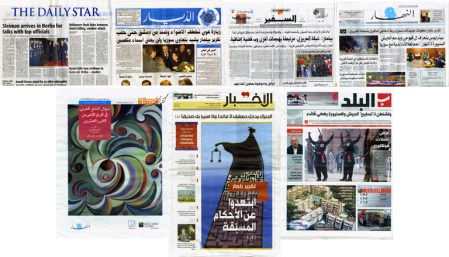
After a 10-day trip to The Netherlands, France and Lebanon I am back in the office with a more refreshed view of the future of ink on paper and anything else that surrounds it. I will be devoting this space in the next few days on some of the observations that I have witnessed first hand about the future of newspapers, news magazines and print in general.
In Lebanon, my native homeland, I am amazed at the number of dailies that are still published. Every morning I had the choice of almost 20 newspapers, yes, you read that right. In this small tiny middle eastern country newspapers are still thriving. I bought 10 papers every morning (My mom still does not understand why I waste my money on paper… She held the same view since I was eight years old). Each paper provides its readers with a distinct point of view, a deep understanding of what is going on and an explanation of how you are supposed to react to what is going on. There are the independent papers, the political party papers and the so called supported/sponsored papers. Each has its own philosophy and understanding that makes the different television channels available look like child play by comparison.
Yes, there is internet in Lebanon, and yes there is a hefty number of television stations, and yes newspapers have their web sites and on line updates, yet no one is talking about the death of print. No one is digging their own grave by digging so deep in the ground that they are surrounded by nothing but the walls they’ve just created. They studied their content, adjusted their content and some adjusted their size to meet the needs, wants and desires of their readers. Lebanon is not alone; the same is true in the other two countries I have visited. Technology is thriving, but not at the expense of print (More about that in a later blog).
Folks overseas are watching us and learning from our mistakes. My question is, when are we going to learn from their innovations in print and its content?
Let the Bad Times Roll… “Hard Times are Good Times” for New Magazines
November 21, 2008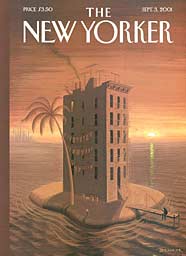
Some say these are the worst of times, and some others remind them that so were the 1920s. New magazines arrive on the market place, and other magazines depart the market place. There is nothing new under the sun. But, for a change, you do not have to take my word for it. Here is an article from the vault of The New Yorker magazine circa Sept. 3, 2001. It was published a week before the tragic events of Sept. 11, so I do not think it got a lot of attention. For those of you who are feeling the pain of today’s economic crisis, you will find solace in reading James Surowiecki’s article titled Let the Bad Times Roll. Here is one quote from the article, “But history suggests that for new magazines hard times are good times.” Read the entire article here.
Why Magazines Still Matter? Words of Wisdom from Rebecca McPheters
November 20, 2008
Are we facing the doom and gloom of the magazine industry? Well, if you read the daily media reports, you will think so. So, is there any bloom in the midst of all the doom and gloom? I will be asking some of the movers and shakers in our business the same question about whether they see the glass half-full or half empty and will be bringing their answers to you via my blog.
The Increasing Relevance of Magazines was the title of Rebecca McPheters, president of McPheters & Company at the Custom Publishing Council (CPC) meeting last week in NYC. I asked Rebecca why magazines still matter. Excerpts from her answer:
I believe that magazines are more relevant than they have ever been before. Why? Because magazine readership is growing…magazines give you an opportunity to engage with content that you are tremendously interested in…The same is true for newspapers.
To listen to her answer click here rebecca-mcpheters30
The Glass is Still Half-Full: Words of Wisdom from Condé Nast’s David Carey
November 18, 2008
Are we facing the doom and gloom of the print industry in general and the magazine industry in particular? Well, if you read the daily media reports, you will think so. So, is there any bloom in the midst of all the doom and gloom? I will be asking some of the movers and shakers in our business the same question about whether they see the glass half-full or half empty and will be bringing their answers to you via my blog. So stay tuned. Here is the first installment.
I had the opportunity to meet with David Carey, Group President at Condé Nast last Wed. during my week-long visit to New York City. I asked him whether he still sees the glass as half-full in the magazine business… Excerpts from his answer:
I would think that every industry in the history of the world has gone through what we are going through right now… I think the population of half-full thinkers shrinks right now, but God forbids, it never goes to zero…Out of these periods of time new ways of doing business emerges…new thinkers, new readers…I would say, yes, very much so half-full. I might have fewer brethren who see (it) that way, but I still very much do.
Listen to Carey’s interview29.
Pearl Awards and Pearl Words of Wisdom at the Custom Publishing Council Conference
November 14, 2008

The Increasing Relevance of Magazines was the title of Rebecca McPheters, president of McPheters & Company at the Custom Publishing Council (CPC) meeting this morning at The Hearst Tower in NYC. Yes, you read that right, her presentation title was indeed talking about the increasing relevance of magazines in 2008. In an industry surrounded by doom and gloom it seems to me that the positive message is so often overlooked by the same folks who work and cover our own industry. It was so refreshing to hear Rebecca say “The search for newness must not be allowed to eclipse the proven value of that which is less new.” All what I can say to that is Amen!
In addition to that Rebecca pointed out that “While most people know that magazine reading strongly correlates with education and affluence, few realize that younger adults spend more time reading magazines — and read more magazines — than those who are older.” She sites the MRI Spring 2008 research showing that young adults age 18 – 24 read an average of 7.2 magazines compared to the 35+ age group that reads 6.0 magazines.
One more interesting factoid she presented is from Media Guru Ed Papazian who estimates that the ad avoidance factor for internet advertising is at a staggering 75% compared with 30% for magazines.
The meeting started with a presentation on the changing demographic landscape of America by Ken Gronbach author of The Age Curve: How to Profit from the Coming Demographics Storm, the audience and technology by Sarah Rotmann Epps, analyst, eMedia, Forrester Research and the global brand by Don Diforio, senior vice president, Millward Brown.
The Pearl’s of wisdom were preceded last night by the 5th annual prestigious Pearl Awards at the Rainbow Room in NYC. Advertising Age’s editor Jonah Bloom and yours truly were the presenters. To read all about the awards and see the list of the winners click here.
TIME Person of the Year: Obama, the Economy or the American Consumer?
November 13, 2008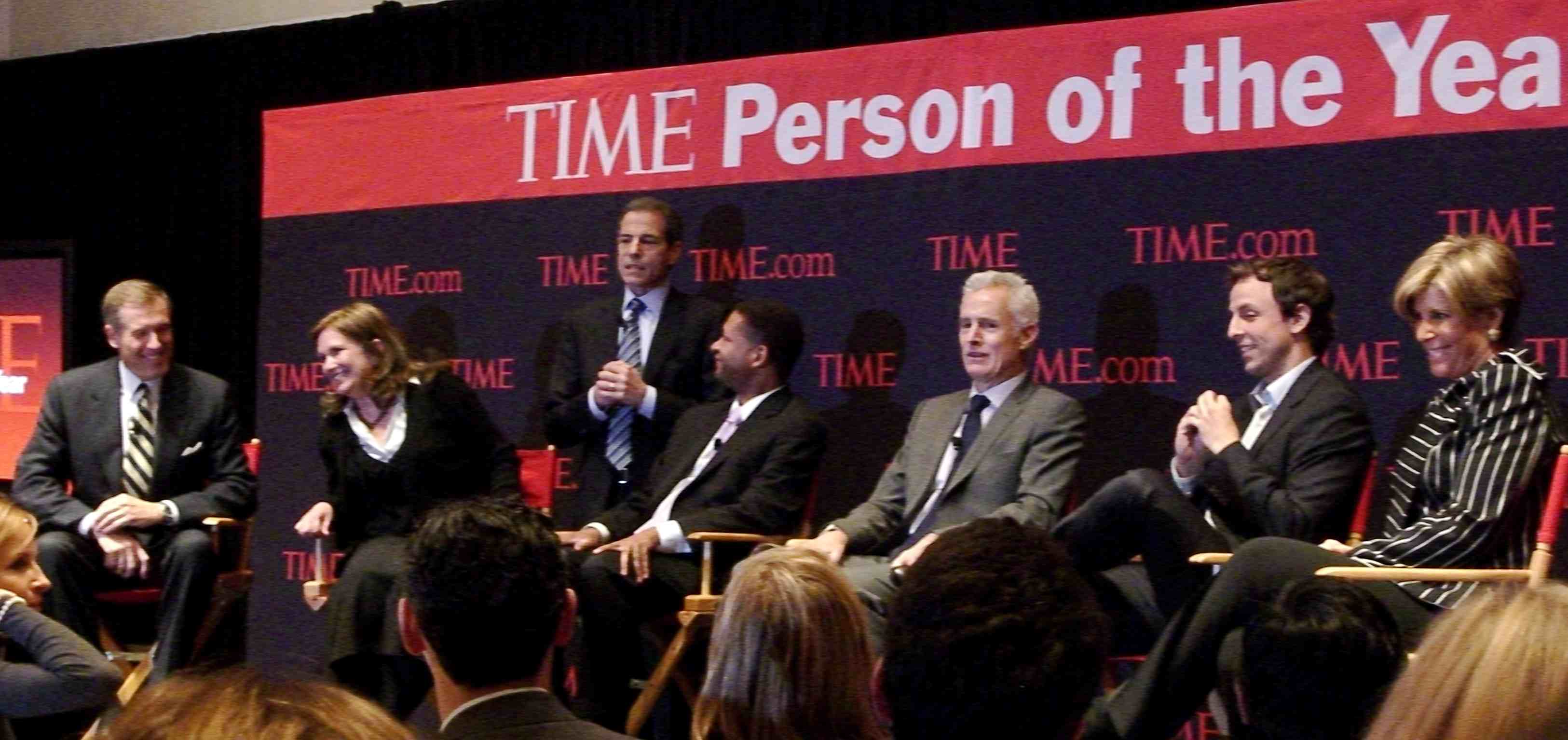
It seemed obvious enough that President-elect Barack Obama will be TIME Person of the Year. But the debate that took place at the TIME Person of the Year Lunch earlier today at the Time & Life building in the Big Apple, seems to cast a little doubt on that. Although the panelist were hard pressed to name a first and second runners up if the choice is not Obama, yet Obama’s name kept resurfacing. Finally someone from the audience asked the panelist to answer the question Richard Stengel, managing editor of TIME, asked them earlier to no avail to name a number two or three for the Person of the Year.
Suze Orman (far right) host of The Suze Orman Show who predicted in 2004 that the Dow will be in the 7,000 to 8,000 range in 2008-09, ventured to mention The American Consumer and the end of consumerism. She predicted the end of consumerism “not because the American Consumers want to end it, but because they have to.” “Consumers,” she added, “can’t get credit today. And if they can’t get credit they can’t buy…and there goes economy.” Elizabeth Edwards, senior fellow at the Center for American Progress predicted that all the future issues have to be framed with the economy in mind. “Whether it is health care, foreign affairs, or any other subject matter facing us, it has to be framed by the economy.”
Other panelists included Rep. Artur Davis (D – AL), Seth Meyers, head writer, Saturday Night Live, John Slattery, Roger Sterling on AMC’s Mad Men and Brian Williams, anchor and managing editor, NBC Nightly News.
So is the economy or is it Obama? Well we will have to wait until Dec. 17 when Rick Stengel will reveal one of the most sought after issue of TIME magazine. To paraphrase Brian Williams answer predicting the name of the person of the year, he said, if you want the Gods to laugh then tell them what is going to happen tomorrow.
A Brighter Star Among Mediaweek’s Media All Stars… Jeff Fischer and the Power of Print
November 12, 2008
At the 23rd Annual Mediaweek‘s Media All Stars Luncheon Awards event earlier today there were many stars including Gene Simmons, Rock God and Media Mogul, who was the Guest Presenter of the event. However, among all the recipients of the Media All Stars Awards, one in particular captured my attention. His name is Jeff Fischer, SVP and managing director at Universal McCann’s J3. Jeff sound bites ( the All Stars had less than 45 seconds to comment after winning an award) about the power of print captivated my attention. I asked him after the event to elaborate on his sound bites. Here is his response:
In my rushed attempt to send a challenge to the media industry today, I was trying to make what I feel is an appropriate analogy given the popularity of and shift in spending to the digital space. I have been calling print the “original paid search” vehicle. My intent is to reframe the view of print as a way to capture consumers who are passionate about and seeking specific types of content much like search is discussed in the digital space. The idea is that content is valuable, consumers are willing to pay for it and more importantly they proactively seek it out. Not sure if it falls flat…but it’s my attempt at keeping marketers interest in print.
Well, Jeff, it did not fall flat on me at least… and I hope many others will see the power of print as a medium that is still relevant today if, and only if, we focus on your words “that content is valuable” and if I may add, that valuable content must be sold to the customers who count and not just given out in order for us to count customers.
Congratulations to Jeff and the rest of the Mediaweek’s Media All Stars.
Introducing The Hottest Magazine Launches of 2008…
November 10, 2008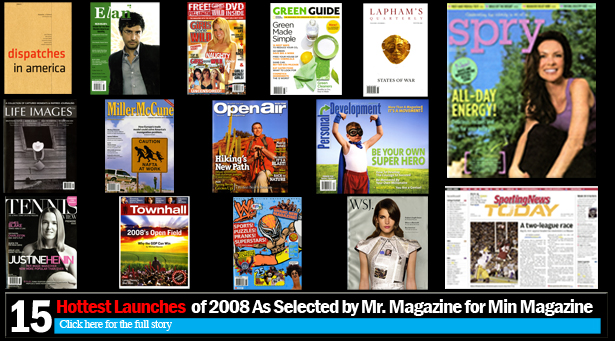 This morning at the min magazine Awards Event at the Grand Hyatt, NYC I handed out the honors to the 15 new magazine launches published between Oct. 2007 and Sept. 2008. The honor of The Hottest Magazine Launch went to Spry magazine from the Publishing Group of America. That is three out of three new launches that the PGA introduced that have won The Hottest Magazine Launch of the year. The first two were American Profile and Relish. Congratulations to all. The event was sponsored by min: media industry newsletter and you can read more about it here. The Digital Hottest Launch of the Year went to Sporting News Today.
In addition to the new launches two established magazines were recognized for reinventing themselves. They were Bon Appetit and Ebony. More details and complete info later on the mrmagazine.com website.


