h1

“Magazine Publishers Should Be Creators of Change,” Says Manuel Yáñez Herrero, Director General of Revistas Mexico, and Other Words of Wisdom in this Mr. Magazine™ Interview from Mexico City

September 16, 2013

Director AMER- Manuel Yáñez Herrero2 Knee-jerk reactions to the onset of digital have been a problem to print publishers since the dawn of cyberspace. The cries of ink-on-paper being swallowed up by the “Digital Black Hole” could, and still can be heard resoundingly throughout the media world. But rather than reacting to the uncertainty of the moment, Manuel Yáñez Herrero, Director General of the Asociación Mexicana de Revistas, A.C., believes that magazine publishers should be creators of change, not Chicken Little running from the Digital sky that is about to fall upon their heads. And while content is vital to the success of your magazine; the engagement of that content is nothing without passion and emotion motivating each and every facet of the publication, from design to writing, to the ads placed within the pages.

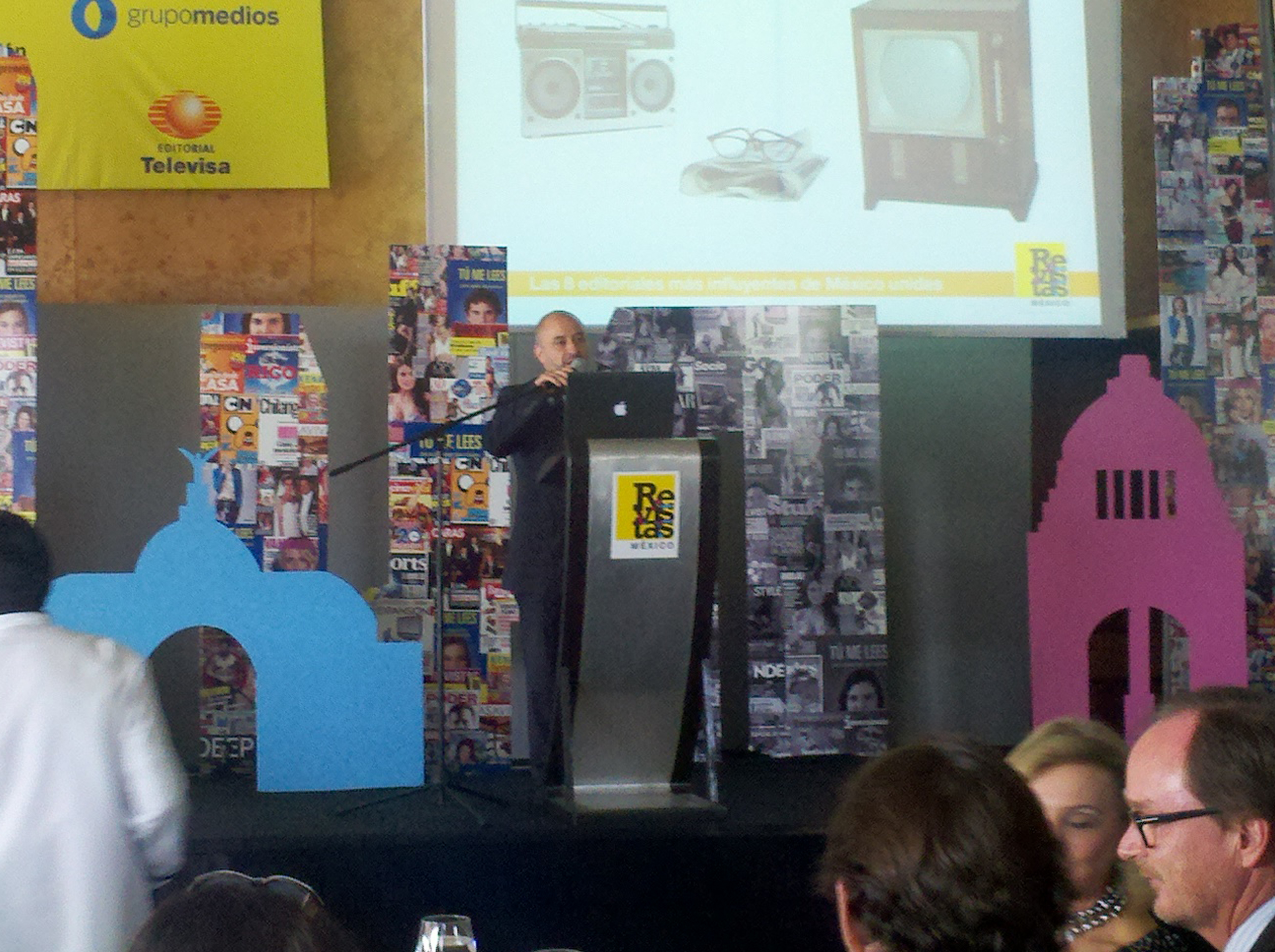
SAMIR HUSNILast week I was honored to be asked by the Revistas Mexico to be the keynote speaker at their annual breakfast meeting in Mexico City. I seized the opportunity to ask Mr. Herrero some questions about the magazine market in Mexico and the challenges that our neighbors south of the border are facing. His detailed answers to my questions are below in the Mr. Magazine™ interview with Manuel Yáñez Herrero… and get ready to be inspired!

Samir Husni: What do you think are the major problems facing the magazine industry in Mexico? Single copy sales? Advertising? Move to digital?

Manuel Yáñez Herrero: Mexicans have been, for centuries, very creative people; we love color, music and having fun. This means we have a bunch of young creative people putting out great magazines.

So in this field we really do not see a threat. We have strong traditional titles and we continue to launch new ones. BUT, and as you can see it is a big but, it’s our distribution.

As you experienced, Mexico City is a huge, quite complicated place and for the past 80 years or so we have been distributing magazines the same way. We, via our printers, send allotment of our titles to the old part of the city located, as in every city, in the center. Then we have a Union. This Union controls newsstands. If you want to own one you must be part of the Union. These newsstands are hereditary.

So the Union there delivers our magazines to a ¨Despacho,” which is mainly a small warehouse. Then another part of the Union that owns a smaller warehouse called an “expendio,” which is a sort of wholesaler, goes to a Despacho (there are 4 of them) and takes the magazines. Then every day at 5 in the morning the voceadores (owners of newsstands) buy the magazines they think will sell. Some of them have credit so they take a bigger allotment, but some do not, so they just take what they can afford.

You know what this means, it, off course, limits sales tremendously and dooms new launches. Then they take the magazine to the newsstand to sell and after display time concludes, depending on frequency, weeklies, fortnightly, monthly etc., they take the ones that didn’t sell back. This also means that monthlies and bimonthlies suffer because they very seldom are displayed for the whole 30 or 60 days.

We give credit to the Union, so we get sales info and payment 8 days after closing date. Ten years ago this channel used to account for up to 60% of sales now it is only around 15%.

What has happened is there are more and more convenience stores (7 elevens and such) and there is a chain called oxxo that owns almost 12,000 convenience stores around the country. So now these stores account for around 25% of sales.

Then there were, for the past 40 years, three National Distributors: DIMSA (owned by an American, Brian Weiner), CITEM (owned by the biggest drugstore medicine distributor in the country), and Intermex (owned by editorial Televisa).

IMG_3804It’s the usual terrible system; we deliver allotment, they make bundles depending on volume for each state or retailer (Wal-Mart and such), then they truck every bundle to its destination. We get sales info and payment 90 days later. They keep, on average, 40% of the cover price, with which they cover every expense: delivery returns, the cost of renting space in retail stores, etc., and as you can imagine they were losing money a lot of money. Payments were on average after 140 days instead of 90 and just last month CITEM folded and stopped payments all together.

So for starters, with this business model distribution was never the way it should have been due to lack of cash flow; distributors just took our titles to places where they could make money. Titles that did not sell, no one cared about, as long as they sold advertising, distribution was free! And successful magazines covered the costs of lousy ones.

As you can see, the future looks gloomy. We, in Revistas Mexico, are trying to take control of distribution. In the meantime, we are losing readership and exhibit space. We are almost there; we already negotiated with retailers and agents in every state (newsstand and convenience store local distributors), but our cash flow has been affected immensely. We are also working very closely with Intermex Editorial Televisa’s distribution arm to consolidate all our titles and work together in getting info and having just a group of supervisors (there used to be three groups, one per each National Distributor, and maybe one from at least 3 editors groups).

It’s an interesting problem to have. I know that in England, France and Spain they’ve had similar problems and similar solutions, with different results, none of them that successful. I would like to design a better business model.

Sorry for the long answer, but this is a big problem.

As far as Ad sales, we currently represent 4% of adspend pay. We know we should at least grow a couple of percentage points and that is an objective.

Samir Husni: What is the role of Revistas Mexico?

Manuel Yáñez Herrero: Due to all of the above, three years ago the industry’s bigger players decided to work together. In the past we worked with the Mexican Chamber of the Editorial Industry (CANIEM: Camara Nacional de la Industria Editorial Mexicana), which grouped Book Editors, Newspaper editors, Magazine editors together.
IMG_3809After hundreds of hours, finally, on October 2011, we came to an agreement and legally formed the Mexican Association of Magazine Editors (AMER: Asociacion Mexicana de Editores de Revistas) with the Revistas Mexico brand.

We have 4 objectives:

1.- To promote the intimate relationship we have with our audience
2.- To make more transparent the way we measure our industry
3.- To have more and better distribution and exhibition spaces
4.- To promote editorial professionalism

For the first time we are working with PWC sharing industry information, very basic, but hard information:

· Jobs generated
· Single Copy Sales
· Ad Page sales
· Readership segmentation by age, geography and economic status
· Advertisers: who they are, how much do they invest and which gives us our Top 10 group.

We have this information per Quarter and we are sharing it with Industry players, Brands Agencies, and such.

We work with a government sector that supervises magazine contents and covers. They are in charge of giving title and content certificates for every magazine. They see that no child porn exists, that if a crime is committed by a minor there is no disclosure of any information about him/her and things like that. We also help make sure that there is no censorship regarding any publication.

We work also with the education side of the government with a program designed to professionalize every economic sector. In our case we focus on Editorial Industry. We are currently describing what we do, how we do it and who does what. Then we describe each job and so forth. We will then have a certificate which will help design courses for the betterment of people working in Editorial. We are working closely with Colleges and Universities to revise and design courses, Masters Degrees and even a specific career in Magazine Editorial.

We at Revistas Mexico are working with CEOs of our affiliates to solve the distribution problem.

We are working to promote creativity in magazine advertising (there is none!) so we are developing Lynx Awards for creativity in magazine advertising. Right Now TV ads are created and then maybe there is a still photo with a caption that turns into the magazine ad. We know specific design ads are by far more effective.

Samir Husni: You have such a marvelous magazine reading campaign. Tell me a little bit about the power of print and reading campaign?

IMG_3806Manuel Yáñez Herrero: Talking to friends and family, I realized that most people do not comprehend how many magazines they actually read. Very commonly their answer to the question: do you read magazines were a flat NO. Then talking a bit more they came to the realization that they read all the time. We started the statement, You Read Us When…and then we added…when you want to know about business, when you want to know about celebrities, when you are planning your wedding, when you get pregnant, when you have a baby, on the plane, at the dentist, at the checkout, even when you go to the restroom. Like you, more than 60 million people read us.

We invested more than 30 million pesos on a print campaign in our titles, some out of home and a couple of TV ads. You can see all of it on our page www.revistasmexico.org .

IMG_3807Speaking of which, we developed a web site where our advertisers can find which magazines are better for their specific target audience. You fill out sex, age and socio-economic status and we display all our magazines that cover that specific readership.

We are present on FB, Twitter and Linkedin @revistasmexico

Finally we are about to launch a Revistas Mexico Kiosk, http://www.revistasmexico.net

Samir Husni: How do you see the future?

Manuel Yáñez Herrero: The future is quite interesting. We stopped reacting to digital buzz and readership changes and are working on being the creators of change. We know that not only is content important, but what that content means to our audience. Engagement is nothing without passion and emotion.

Also, every media is different. Our brands should speak differently in each one, same message, same brand identity, but different ways to be read or heard or viewed.

It’s a complicated, but bright future.

________________________________________________________________________________

Check and register for the Magazine Innovation Center’s ACT 4 Experience:

Screen shot 2013-09-04 at 9.44.28 PM

Click here to register and here to see the list of speakers and sponsors.

h1

The ACT 4 Experience in the Words of Bo Sacks…

September 13, 2013

Screen shot 2013-09-04 at 9.44.28 PM

“This is an event that is very important to me, and I have found that it resonates profoundly, not only with the students, but with every professional that attends.”

Screen shot 2013-09-12 at 8.42.37 PM

“As most of the long-term readers of this newsletter know, my dear friend Dr. Samir Husni, who sometimes in some circles is known as Mr. Magazine, is the founder and director of the Magazine Innovation Center at the University of Mississippi’s Meek School of Journalism, and he is also a Professor at the School of Journalism there at ‘Ol Miss.

Samir and I have been publicly debating the future of this industry since at least 2006 and probably before.

996 I want you all to know that the Thrilla on Manila is still truly an amazing event to see and is happening three times in a convenient media boxing ring conference near you. I assure you that each of these events will be completely different, with different formats, different subjects of focus, but not without the heat of two respectful, yet formidable adversaries. In general we are always talking about the future of media. To be truthful, if you think about it, that future, would be your future. For me, I look forward to these events with greatest of anticipation. They have been enjoyed over the years by thousands.

But before we get to the report of those events listed below, there is another event happening early in November, after the big debates, on Samir’s own turf at the University of Mississippi. This will be the 4th time that Samir has invited publishing luminaries to the school to speak to the students of journalism and also in turn to each other. This is an event that is very important to me, and I have found that it resonates profoundly, not only with the students, but with every professional that attends. I have been to every one of these events except the year that I was laid low by disrespectful publishing hating kidney stones. If you look at the list of speakers you will be greatly impressed too. It is one of the most relaxed and inspiring events of the publishing year, and I should know as I attend almost all of them.”

Thank you Bo.

To register for the ACT 4 Experience click here.
And to see the latest list of speakers and sponsors click here.

h1

Viva Newsweek, Adios The Daily Beast? A Mr. Magazine™ Commentary

September 12, 2013

PTDC0004 What goes around comes around. Last year The Daily Beast thought it had the last laugh when it was announced that Newsweek, the 80+ year-old, established magazine, and brand, will end its print edition after being merged with the almost unknown brand (outside the circles of the media,) The Daily Beast.

Well, the first rebirth of Newsweek came from overseas where the magazine returned to print on the world’s newsstands in Europe, Asia, Latin America and the Middle East. The second rebirth of Newsweek came when it was sold and was freed from the claws of the Beast. Now comes what maybe the true hope of a come back for Newsweek:

PTDC0004Tina Brown is leaving The Daily Beast to start her own Tina Brown Live Media, and the fate of The Daily Beast remains unknown. My guess it will go to the that wonderful world of the pixels on a screen afterlife. Will we see a return of the printed edition of Newsweek here? Only time will tell.

But in the mean time I am going to enjoy reading my recent print copy of Newsweek that I brought with me from my recent trip Mexico City.

h1

WELCOME TO ACT 4…DON’T LET DIGITAL SCARE YOU – THE POWER OF PRINT INTEGRATED

September 6, 2013

Screen shot 2013-09-04 at 9.44.28 PM

Change was, is and will continue to be the only constant in the magazine and magazine media world. However, change has evolved from the slow-moving, steam-powered train, to a nuclear-impelled, speed-possessed bullet.

The Magazine Innovation center at the University of Mississippi, which I founded in 2009, continues its series of Experiences, aptly named ACT (Amplify, Clarify and Testify) with the ACT 4 Experience themed: Don’t Let Digital Scare You – The Power of Print Integrated.

The Experience takes place in Oxford, Mississippi at the Meek School of Journalism and New Media, starting the evening of November 5, 2013 and ending the night of November 7. The intimate, and highly interactive, gathering is limited to 25 speakers, 60 attendees and 20 students.

The event receives national and international attention and kudos. It also includes a tour of the Mississippi Delta, the B.B. King Museum and the Delta Blues Museum.

This year there will be four interactive panels focusing on: print and the future of the printed press; single copy sales in a digital age; the economic status of the magazine media business, in terms of revenue, mergers and acquisitions; and “let’s do launch,” featuring first hand experiences from publishers and editors of new magazine launches.

In addition, there will be few keynote speeches by leaders in the magazine media industry about the latest in integrating print with digital and contemporary tried-and-true practices of print and print-integrated.

Confirmed speakers as of today (in alphabetical order) for the ACT 4 Experience include:

•Jay Annis, Vice President, Trade Sales at The Taunton Press
•Matt Bean, Managing Editor, Sports Illustrated’s SI.com
•Gil Brechtel, President and CEO, MagNet
•Daniel Dejan, National Print & Creative Specialist, Sappi Fine Paper
•Jim Elliott, CEO, The James G Elliott Company
•Gregg Hano, CEO at Mag+
•John Harrington, Editor of The New Single Copy
•Rich Jacobsen, President & CEO, Time Warner Retail Sales & Marketing
•Keith Kawasaki, Senior Director, iostudio
•Ed Knudson, EVP, Sales and Marketing, Digimarc
•Billy Morris, CEO, Morris Communications
•Gary D. Parisher, President, Cheeriodicals
•Reed Phillips, CEO and Managing Partner, desilva+Phillips
•John Puterbaugh, CEO, Nellymoser: a Brown Printing Company
•Roy Reiman, Founder, Reiman Publications
•Bob Sacks, Bosacks.com, President and Publisher
•Tony Silber, General Manager, Red7Media, Publisher of Folio
•Megan Smith, Founder & Editor, Cake & Whiskey magazine
•Franska Stuy, Editor in Chief, Libelle, The Netherlands
•John Thames, Publisher/Editor in Chief, Covey Rise Magazine
•Kelly Waldrop, Assistant Publisher, Covey Rise Magazine
•Julie Wilson, Owner/Publisher, STORY magazine

Confirmed Sponsors (as of today) are (in alphabetical order):

•Brown Printing
•Delta Magazine
•Democrat Printing
•Digimarc
•Freeport Press
•The James G. Elliot Company
•Morris Communications
•Publishers Press
•Sappi Fine Paper
•Shweiki Media
•The James G. Elliott Company

Remember, space is limited so “ACT” now.

Click here to register for the ACT 4 Experience…

h1

August Was A “Special” Month For New Launches – With 60 Brand New Annuals, Specials & Bookazines and 8 with Regular Frequency

September 5, 2013

It’s hard to believe the summer of 2013 is almost behind us, but it’s true. The month of August was certainly one for the Special Edition magazine- with 60 new launches being introduced. The topics were as unique as the meaning of the word “Special” itself. From two of the Robertson clan of Duck Dynasty fame on the cover of USA Today’s Hunt & Fish, to the “Duke” and another collection of “Royal Baby” covers everyone can ooh and ahh over; the 60 Special titles touched on such variety, there is surely something there for everyone. There were 8 new magazines launched in August with frequency and they too are very much worthy of your time. So say goodbye to Summer 2013 with the August launches, but say hello to the 68 new titles that made this month so “Special.”

Click here to check each and every title added to the new magazine launch monitor in August 2013.
__________________________________________________________________________________

Screen shot 2013-09-04 at 9.44.28 PM

Click here to register. Space is limited. More information coming soon.

h1

Cheeriodicals: A New and Unique Way to Distribute Magazines and Spread Some Cheer at the Same Time. The Mr. Magazine™ Interview with Gary Parisher, President of Cheeriodicals

August 30, 2013

So what is “Cheeriodicals?” In short, it is what happens when you use magazines to spread cheer among people. No wonder then, when I heard about this company, I reached out to its founder and president Gary Parisher and invited him to come to the Magazine Innovation Center at The University of Mississippi to sit down with me for an on-camera in-depth Mr. Magazine™ Interview.

The genesis of Cheeriodicals began when the company started distributing magazines in “Tiffany-styled” green boxes to sick folks in hospital beds, and later expanded it to children in hospitals, and to individuals celebrating an event and even corporations sending good wishes to their clients and customers.

New, different and unique ways in magazine distribution are rare. So, what happens when you have an idea that combines all three concepts in one? Cheeriodicals is born. Watch below to see the story of Cheeriodicals from A to Z…

h1

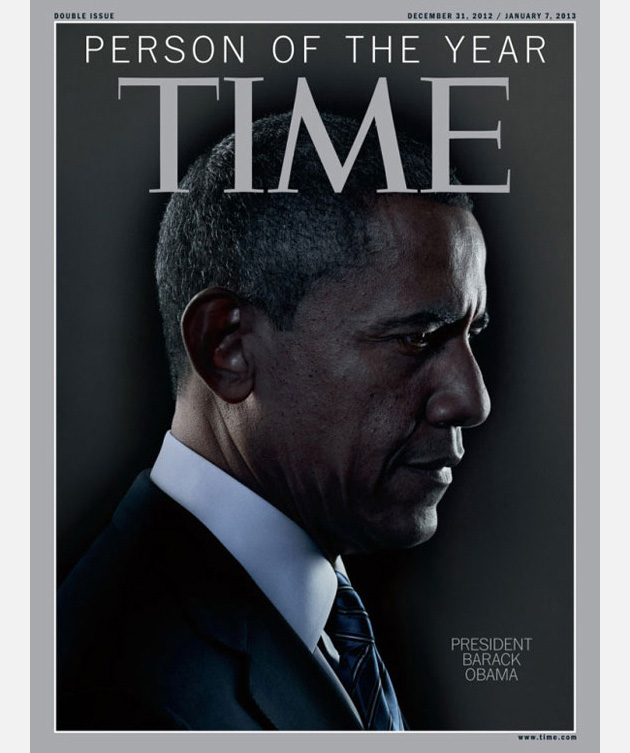
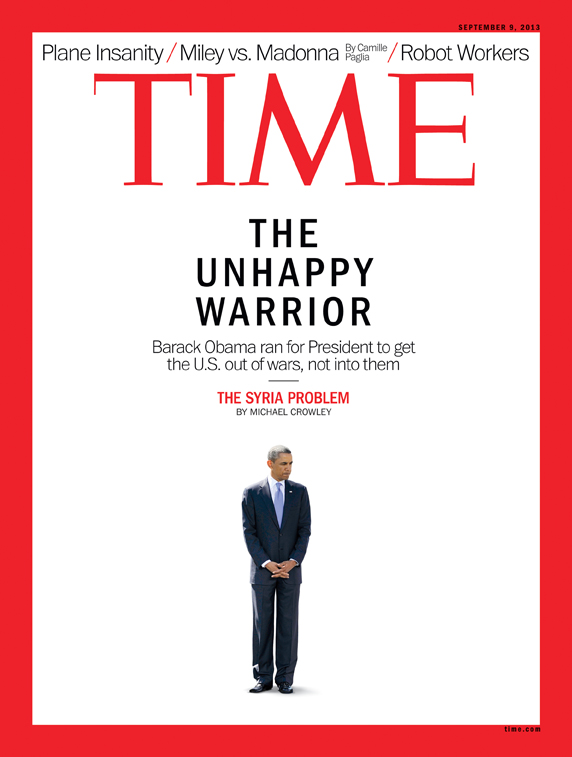
From THIS to this… President Obama and TIME’s Cover Page…

August 29, 2013

This is a “TIME” moment where a picture is worth a thousand words. The image of the president on the cover of TIME. From the Person of the Year to The Unhappy Warrior. That’s all I have to say about that!

TIME-Magazines-2012-Person-of-the-Year-Barack-Obama-the-President-019.9.13

Both covers are the same size, I just took some editorial liberty in the presentation…

h1

How Do I Love September? Let Me Count The Magazines…

August 23, 2013

instyle sub-97Elle Subscription-96

I love thee to the depths of Elle and breadth and height of InStyle
My soul can reach, when feeling out of Vogue
For the ends of Harper’s Bazaar and ideal Vanity Fair.
I love thee to the level of Glamour’s & W’s
Most quiet need, by People StyleWatch and Marie Claire.
I love thee freely, as men strive for Details
I love thee purely, as they turn from Cosmopolitan tales.
I love thee with a passion GQ
In my old griefs, and with my childhood’s faith.
I love thee with a love, Esquire, I seemed to lose
With my lost saints, — I love thee with the breath,
Smiles, tears, of all my life! — and, if God choose,
I shall but love thee better, New York Magazine, after death.

Yes, I realize I owe Ms. Barrett Browning (and my assistant Angela) an apology for taking liberty with her classic poem (and helping reshape the poem), however, the sentiment is oh-so sincere.

September brings about the hint of autumn, the singular flutter of a yellowing leaf to the ground, depending upon where you live; I live in Mississippi – hence the singular flutter, splashes of oranges and yellows from the pumpkins and fall squash in the markets.

But most important in the world of magazines (ink on paper that is) and magazine media (everything else)– it is that time of year when the crème-de-la-crème of publishing rise to the top with their most extravagant issues of the year.

And for most, September 2013 is offering their biggest editions ever. It’s a celebration of fashion, football and the fall season.

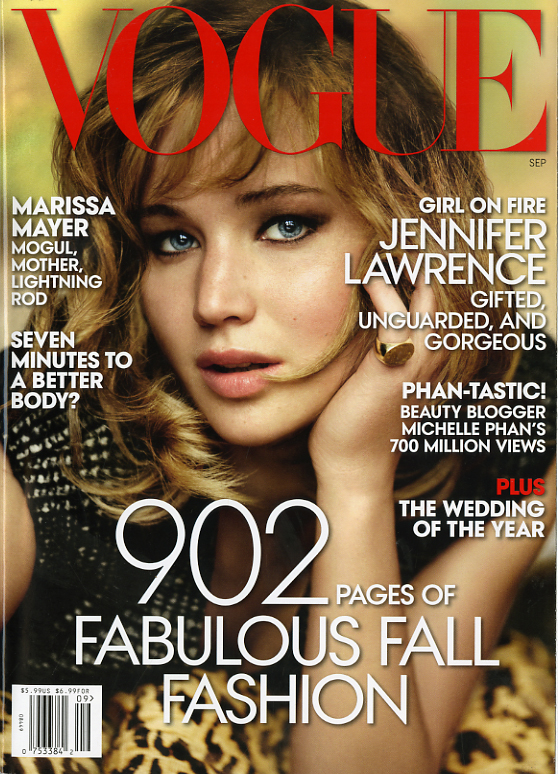
Vogue
Vogue
Up first and weighing in at a hefty 902 pages is Vogue. This issue is synonymous with evocative style, beauty and fashion, as only Vogue can do. The content of the magazine is chocked full of visually liberating ads that transport you into a world of haute couture that is both extreme and exhilarating.

Anna Wintour’s letter from the editor begins on page 276, just to drive home the image of the magazine’s thickness in one’s mind. Totally amazing.

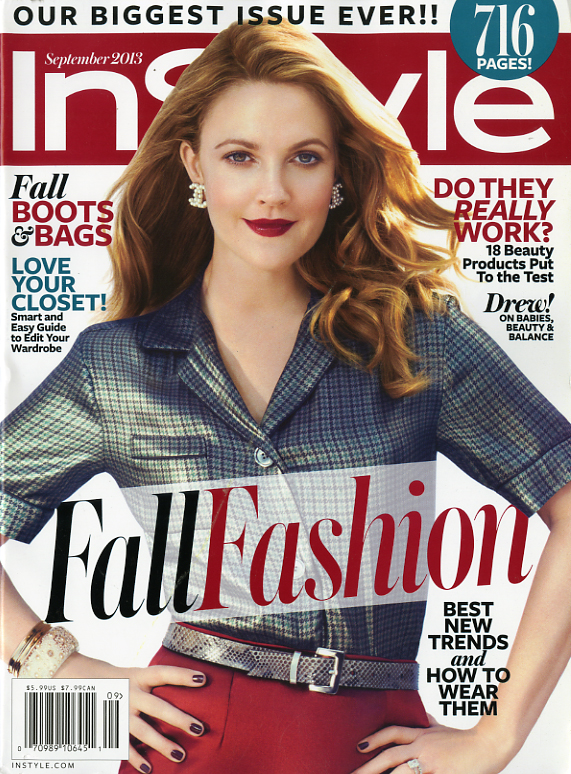
Instyle
InStyle
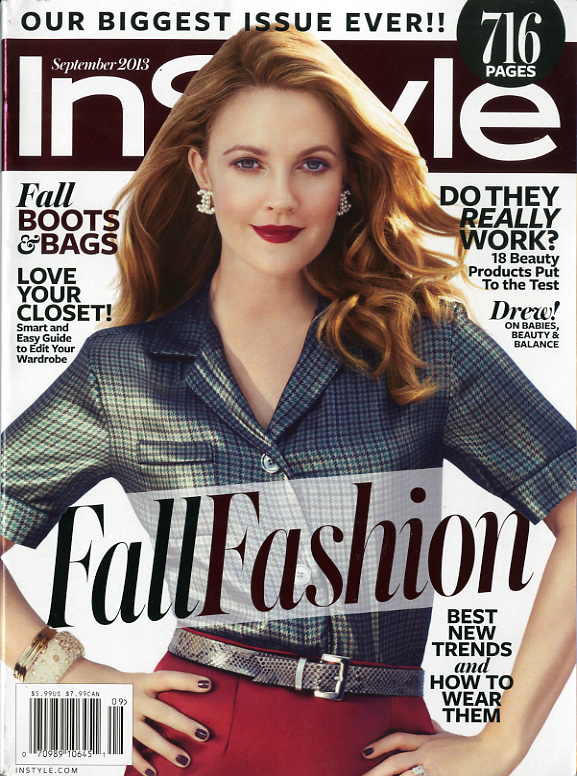
InStyle shows off their “biggest issue ever!!” – two exclamation points. 716 pages of fall fashion.

Elle
ELLE
ELLE shouts to the world: “Our biggest fashion issue ever! 650+ pages” – with a curvaceous Kate Upton receiving the cover’s hello.

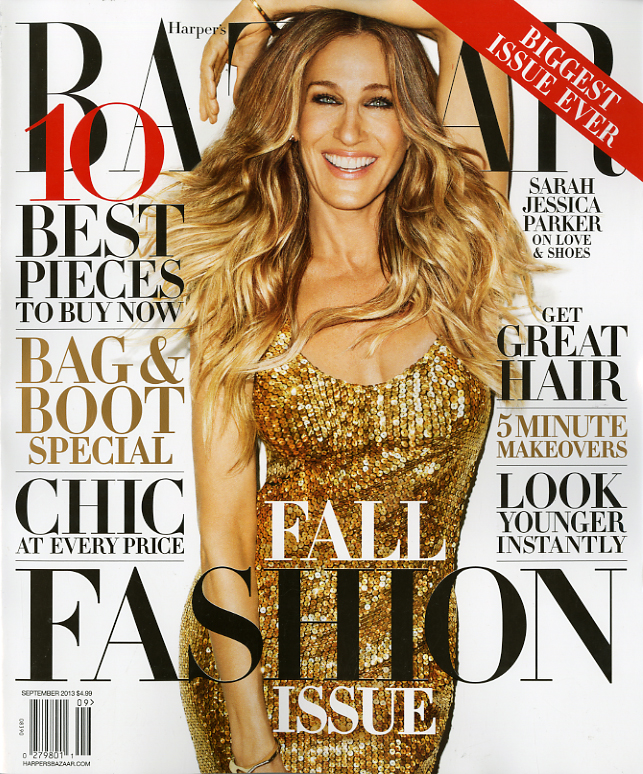
Harper'sBazaar
Harper’s Bazaar
Not to be left behind, Harper’s Bazaar proclaims “Biggest Issue Ever” with 598 pages of fashion fun. You’ll find Editor, Glenda Bailey’s letter, on page 206 and in her own words the proud declaration: “Our September Issue, the largest issue in our history.” Certainly, something to exclaim about.

W
W
The fall fashion issue of W flaunts its oversized beauty proudly with 454 pages of chic.

MarieClare
Marie Claire
Marie Claire comes in at 428 pages and looks marvelous doing it.

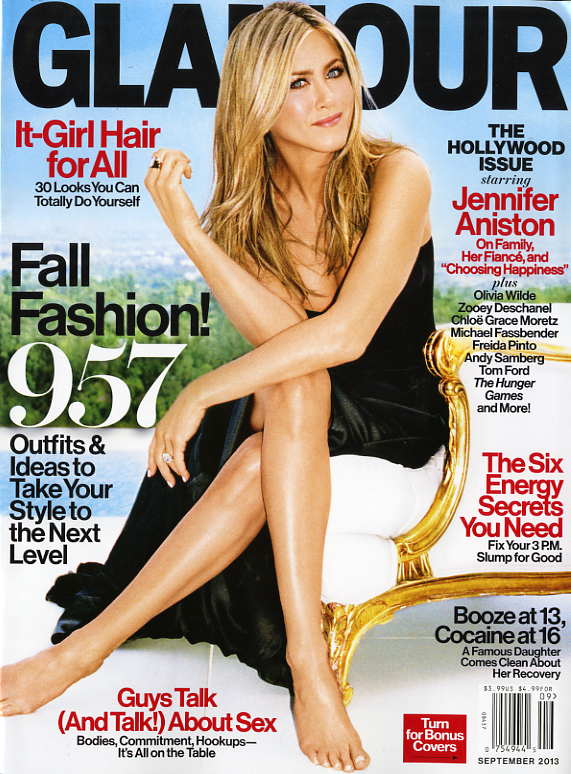
Glamour
Glamour
Glamour, as “glamorous” as ever with 386 pages.

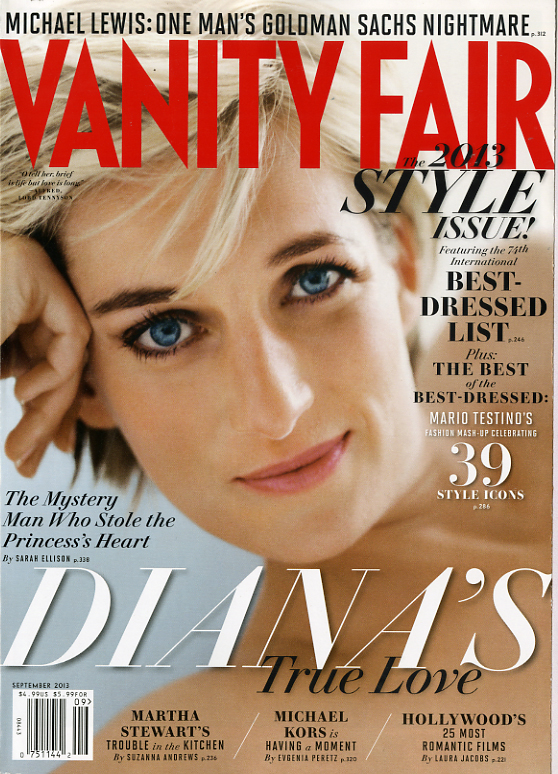
VanityFair
Vanity Fair
Vanity Fair is 362 pages of style, featuring the 74th International Best-Dressed list and a dead celebrity on the cover.

PeopleStyleWatch
People StyleWatch
People StyleWatch at 328 pages announce their “Biggest Issue Ever.”

Cosmopolitan
Cosmopolitan
Cosmopolitan shares their always entertaining “tips and advice” between their 264 pages.

New York
New York
New York Magazine features 208 pages in their fall fashion double issue – and is very noteworthy because the fashion model is sporting a barely-there design (a tattoo) made in collaboration with Marc Jacob’s tattooist – which happens to be the model’s husband.

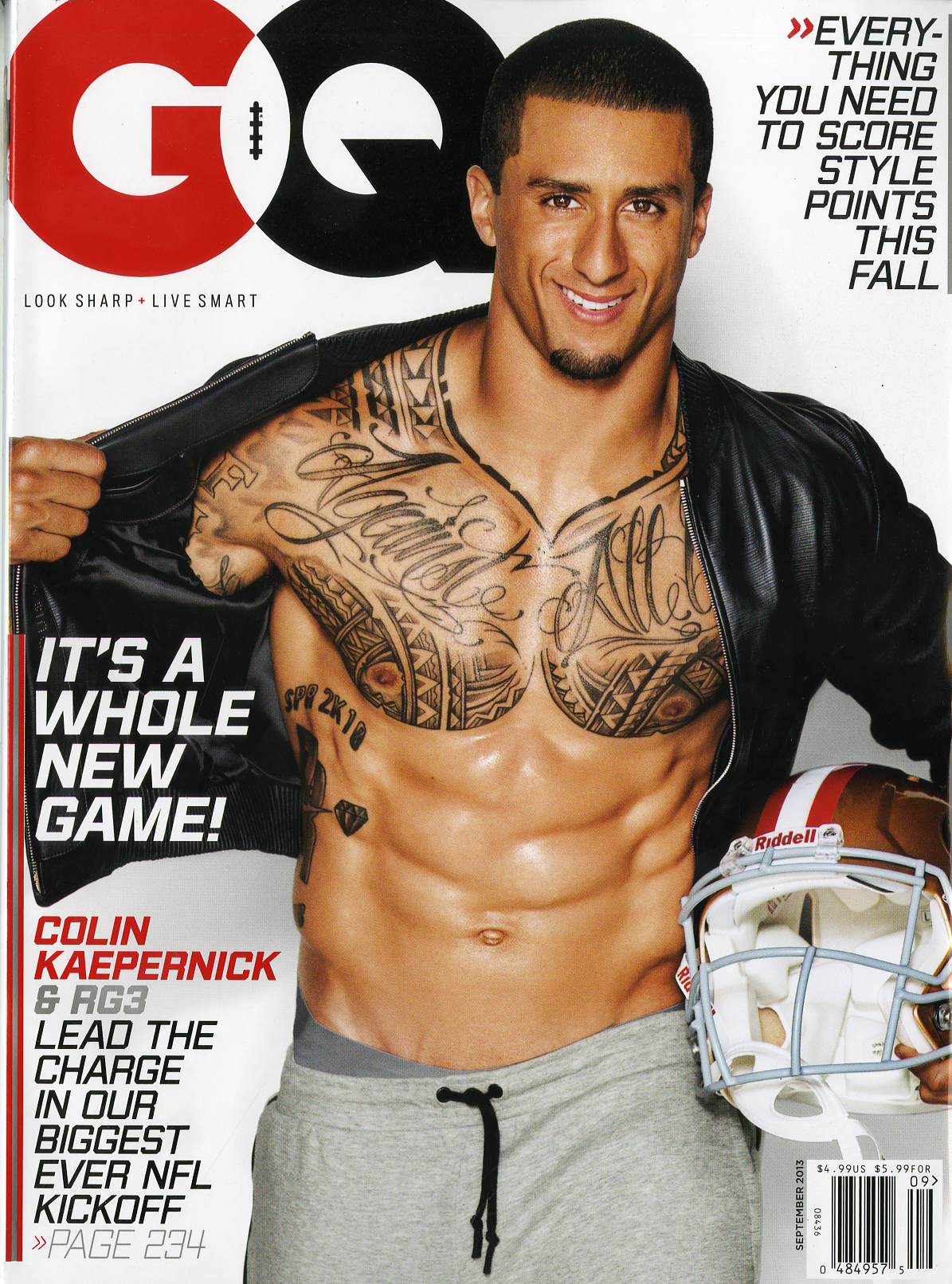
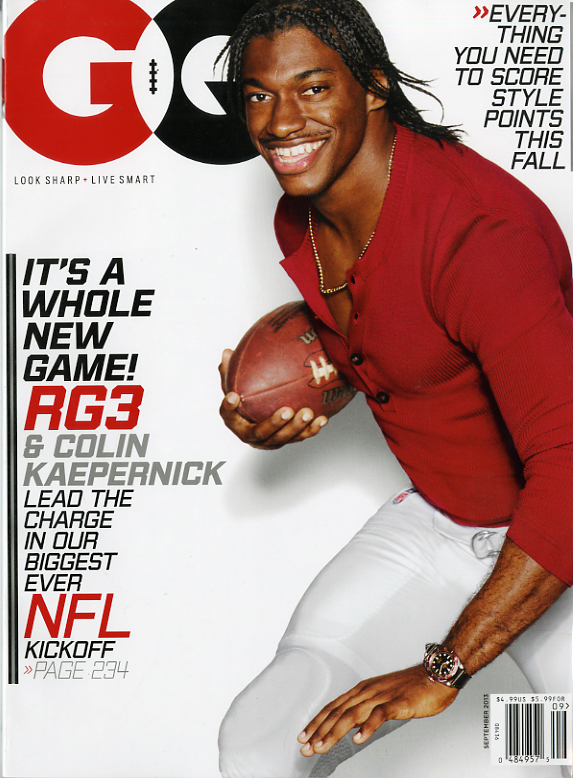
GQ2GQ1
GQ
And in the men’s world, GQ comes in with two different covers giving a shout-out to their biggest ever NFL kickoff with 296 pages.

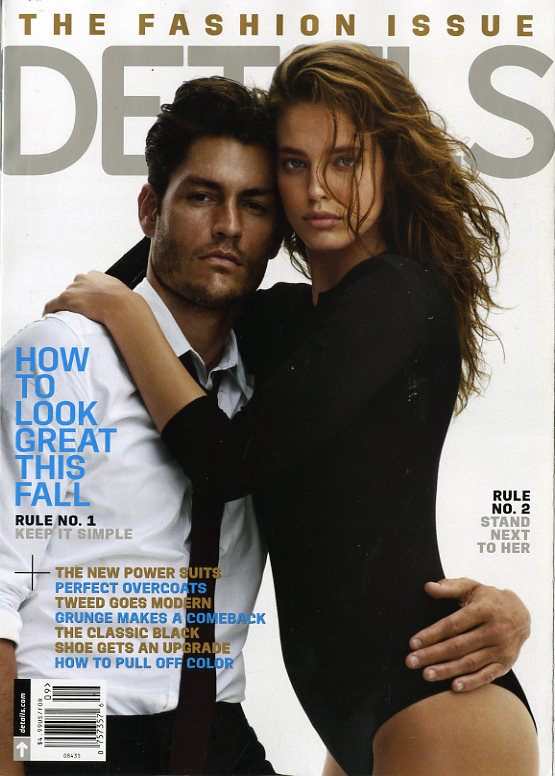
Details
Details
The fashion issue of Details uses 234 pages to tell guys how to look great this fall.

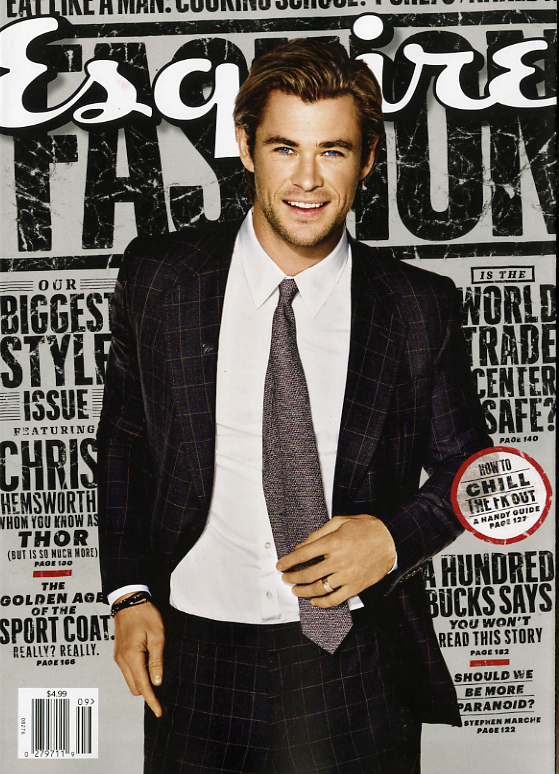
Esquire
Esquire
And Esquire has 216 pages with their biggest style issue, featuring Thor himself – Chris Hemsworth.

So what does all this mean? Simply that print magazines still anticipate the seasons the same way we humans do. In fact, it might be fair to say, we anticipate the seasons because of those special magazine issues. With their lush, overflowing-to-the-hilt content, I really can’t think of a reason not to.

So, to September…how do I love thee? Let me count the magazines – and the pages!

h1

The American Newsstand: The Solution, in a Nutshell…

August 22, 2013

Reading the headline above may leave you thinking, “There’s a solution to the magazine industry’s newsstand woes? Why haven’t we fixed this a long time ago?”

If only the solution was that simple. But like a tough nut, there’s are many layers to the issue that must be cracked, peeled away, before the real meat is revealed and relished.

And with this article, I think we’ve been doing that, peeling away the layers, one at a time. All of the industry veterans quoted in this article have their own experiences and track record to back up their opinions and perspectives. We must take these, along with the thoughts and ideas of many others, and like a jigsaw puzzle piece them together so that the picture becomes clear and comprehensible.

A recent panel discussion at the MPA/PBAA Retail Marketplace brought together top magazine executives focused on retail channels. They all agreed on the importance of these channels and discussed their views on how to stunt the decline in sales, while maximizing the potential and profitability of the print product.

Hearst’s President, David Carey, spoke about the “mobile blinder” factor plaguing the newsstand: “Hopefully, the improved economy will translate into increased visits to stores. And the magazine category needs to work with the retail community to find a solution to the mobile blinder factor. We have to co-opt that experience at the front of the store with magazine content and promotional innovations that employ digital and mobile technology.”

Chairman and CEO of the Meredith Corporation, Steve Lacy, pointed out that Meredith’s recently acquired all-digital brand allrecipes proved quite popular. Approximately 25-percent of the 25 million unique visits per month were generated right in store aisles, as shoppers looked for recipes and ingredients information. As a test, Meredith took one of its food special interest publications and put the allrecipes logo on the cover. This yielded a 40% retail sales lift, Lacy reported.

“This is a digital consumer, and she’s also very interested in the print that ties this all together. Our greatest corporate lesson in the last year has been to figure out how to connect those dots and help our advertisers sell product to her when she’s right there in the supermarket. Everything that we’re seeing indicates that Gen Y is very engaged in these brands on every platform, from mobile to print.”

Condè Nast’s President, Bob Sauerberg, encouraged a “getting together” of the powers-that-be.

“We have to stop the decline,” Sauerberg said. “This industry has brands like no other, it has assets like no other, it has editors and consumer marketers like no other. And we’ve all accumulated incredible digital assets that I think will really help us grow. We’ve got to work together to ‘product-ize’ those things, to get to retailers and really move the needle.”

Skip Zimbalist, chairman and CEO of Active Interest Media (AIM), agreed that retail will continue to be vitally important.

“AIM is redoubling efforts to get into specialty retail stores serving the same consumers that AIM titles serve, such as equine and boating,” he said, “and if it’s Vegetarian Times, to be in the section where soy is sold.”

Gil Brechtel, President and CEO of MagNet, offered these “nut-cracking” strategies:

• Spread the message;
• Drive sales, instead of focusing on cost reduction;
• Publish good, quality content – something the customer will pay for; and
• Bring the major components of the newsstand: publishers, national distributors, wholesalers, and retailers together in a collaborative effort to grow sales.

So what do you think? Can we save the American Newsstand? Let me know what you think and stay tuned.

h1

Rethinking Newsstand Sales: Magazines, Money and Mobile Blinders*

August 21, 2013

Screen shot 2013-06-11 at 4.45.47 PM David Carey, president of Hearst Magazines, believes that people crave “spontaneous combustion” from their media purchases. “We live in this on-demand world,” Carey elaborates. “There’s nothing more satisfying than going to the newsstand, [browsing] by a subject area that you’re passionate about, and you literally own it right then. You take it home, and you get to devour it.”

Newsstand sales exceed $3 billion, and magazines are sold at more than 100,000 retail spaces across North America. Single-copy magazine sales are critical to the industry’s future prognosis. The newsstand, in its many retail manifestations, often provides insight into trends in magazine sales and how to best target magazine readers. The picture, however, is often bleak.

John Harrington is a partner in Harrington Associates, publisher of The New Single Copy newsletter and the annual Magazine Retail Sales Experience. “Newsstand, single copy, retail magazines – whatever you choose to call it – is sick,” Harrington affirms. “Sales are down more than 40% in five years, and the decline is continuing. Retail dollar sales . . . are below what they were in 1993. Beyond that, the wholesale level is financially distressed, and then some.”

Joe Berger of Joseph Berger Associates, a circulation marketing and consulting firm in Chicago, agrees with Harrington: “The present status of single copy sales in the U.S. is, at best, tenuous.” Much analysis about the declining vital stats of newsstand sales has revealed numerous contributing factors, and left publishers pondering if the trends are irreversible. Everyone from CEOs to copy editors can cite causes for the newsstand’s declining health, but few offer viable remedies. Yet a close look at some of the crucial issues related to newsstand sales points the way to a brighter outlook.

Disparity in Distribution

Luke Magerko is a 20-year publishing industry veteran who spent a number of years at Meredith Corporation and with wholesaler Independent Direct Distributors before his venture into the publishing arm. Most recently, he founded The Market Analytics Project, which compiles and interprets actionable data analytics for publishers, vendors and retailers.

The contemporary newsstand climate is “bleak,” according to Magerko.

“Retailers are reducing in-store magazine space due to rapid sales declines. Wholesalers continue to add small fees and adjust terms and conditions in the hope they can generate incremental revenues at publisher expense. Lastly, newsstand departments, national distributors, and consultants avoid industry challenges by blaming outside forces such as the debilitating 2008 recession and the Internet,” he confides.

“Sales have never recovered from the Great Recession,” according to Harrington. “But the biggest killer today is digital – not just the Internet or tablets, but the breadth of social media, the names of which I can’t even keep up with. Answers? I could become a rich man if I knew that, but how about finding new ways and places to display magazines? And I don’t mean putting cooking magazines in the produce section. I mean getting them where people are willing to spend money, like when they enter the store. By the time they get to the checkout, they’ve already spent their impulse money. I know it’s not that simple, but not much has changed with [magazine] merchandising and marketing for maybe 30 years.”

Merchandising and marketing in a new way could potentially have a big impact, but the industry must begin by controlling its own narrative, according to Joe Berger: “The first thing is perception and marginalization. The perception issue is that we are going away; we’re dinosaurs, and we have horrible press. We also seem to be our own worst enemy, because in the name of transparency we now trumpet our sales results on a quarterly basis, so news writers – who don’t really understand the business – can write articles about the ‘Continued Problems of the Newsstand: What Should Be Done!’

“The second issue seems to be simple economics,” Berger adds. “Each link in the distribution chain has a different measure for success. A publisher may break even at 35 percent, but a wholesaler may be deep in the hole at a 35-percent sell-through. The solution for the wholesaler is to try and sell more efficiently and revise the distribution to a lower, more efficient draw. That can even work on a national basis. But I have seen that strategy succeed, and I have seen it fail. Often we just see a lower draw and the same or even lower sell-through, even if the entire distribution is worked.”

Luke Magerko also notes that wholesalers face disparity challenges in the way they manage their magazine sales. “Wholesalers currently work under two separate business models,” Magerko explains. “According to the Point of Sale [POS] Panel at PBAA, 55 percent of magazines sales are recorded using retail POS data. Wholesalers pay national distributors, and by extension publishers, using the traditional debit/credit method (Draw – Return = Sale). This is inefficient, and wholesalers are financially damaged by this model.”

And Magerko concurs newsstand marketing needs an overhaul. “Checkout space is not being utilized to its fullest potential, and I believe there are specific titles, categories and formats not being represented. There needs to be a new mix at the checkout,” he explains.

Publishers need to manage their own expectations, he adds. “Publishers should evaluate every part of their newsstand supply chain using profitability, not sales, as the basis for their decisions.”

Mining for Better Data
Gil Brechtel is President and CEO of MagNet, which provides critical sales and marketing information to the publishing industry. As the man with his forefinger on the pulse of the industry’s newsstands, Brechtel offers particular insight and hope.

“Bookazine sales have increased during the last five years when the industry sales were suffering,” he notes, “and that’s certainly a positive. I think it says that consumers are prepared to spend money on good quality publications, even though they may be at a $10 cover price. I think it also says that the consumer is smart enough to realize, why buy a magazine at full price on the newsstand, when they can get it through subscription at a reduced price?”

Brechtel notes that because bookazines aren’t offered through subscription, consumers are accustomed to paying full cover price for them. He also notes the impact of celebrity-style publications slipping in popularity. “Celebrity categories represent 25 percent of the business,” Brechtel asserts, “and when those sales are down 12-13 percent a year; alone, they represent a two- to three-percent decline on the overall business. And I don’t see the celebrity titles turning around anytime soon, mainly because of social media and the Internet, and the fact that the fans of the celebrities appearing on the cover already know the information way before the consumer can read it in People magazine.”

“Good, quality publications are selling, but at the same time the overall business is tough on the people involved, mainly the wholesalers and the publishers who are looking at and focusing their attention on digital and social media and not on the newsstand,” Brechtel adds, “which means we’re not seeing as many good, quality launches as we would hope, that would sustain the business long-term.”

There’s also a big question of mobile blinders – the phenomenon by which consumers are involved with their mobile devices while standing in retail lines. This is time that used to be spent perusing magazine covers.

“We need to think about two things: One, those celebrity titles for the most part are weeklies, so they’re turning 52 times a year, and therefore generating revenues on every issue,” he explains. “But I think we do need to look at the checkout titles and determine their true profitability for the retailers, and perhaps we should be rotating some of these high-cover-priced specials through pockets up at the checkouts, so that they’re more visible to the consumer.”

Brechtel strongly believes the industry should work together more collaboratively – publishers, distributors, wholesalers, retailers – to glean new ways to drive sales, and not solely focus on cost reduction.

Newsstand & Subscription: A Healthy Codependency
Despite its diminishing appearance, the newsstand still represents a vital revenue vein for the publishing organization. “Newsstand remains a key factor in the launch of a new magazine,” according to Harrington. “It is also a valuable source of new subscriptions, and it is still profitable in itself.”

Joe Berger agrees that the newsstand can prove to be the perfect platform for new title launches. “The newsstand is still quite important,” he cautions. “As long as we have bricks-and-mortar retail, a newsstand is a good measure of how well your audience – presuming you have placement in the right locations – will respond to what you’ve published. Is there a link between single copy and subscriptions? Sadly, in our market, the link is that single copy is a loss leader and a marketing ploy for selling subscriptions. If there was more equity in pricing, we may see stronger newsstand sales. However, that genie has been out of the bottle for years.”

“Newsstand provides a great opportunity to understand customers better,” Magerko suggests. “My research indicates that newsstand is actually a leading indicator for each publishing department. Newsstand results can predict renewal rates for consumer marketing groups, provide feedback to editors because the main message is located on the magazine cover and consumers make a choice based on those messages. And lastly, through advanced text analytics and marketing analytics, a consumer marketing group should use cover results to determine the most effective message for direct mail.”

Steve Lacy, CEO, Meredith Corporation, is of the “all-platforms, all the time” school of thought. “I see an amazing opportunity to support the consumer – especially the Gen Y consumer that is very, very engaged,” Lacy confides. “As a cook, as a gardener, as a home enthusiast, she wants the print product for relaxation when she finally gets the kids in bed. She wants the digital property for taking action, and she wants the mobile property when she’s engaged at retail and ready to make a buy.”

The Good News
“Look, publishing is being challenged from a thousand directions,” Harrington affirms. “The primary response has been to expand into digital, but there needs to be a major effort to help newsstand. The wholesale level does not work under the current financial structure. It needs to be restructured before it collapses, and publishers have an even larger void to wallow around in.”

“Publishers need to reestablish their role in the supply chain and within their own newsstand departments,” suggests Luke Magerko. “The publisher is the second most important player in the supply chain behind the retailer. However, they have ceded their authority almost completely to members of the supply chain.” But publishers must remain diligent about the quality of the product they’re increasingly worried about disseminating.

Bob Sauerberg, president, Condé Nast, believes his company’s primary role today is in building brands. “Our strategy is to build brands, and our brands start with our magazines,” he expounds. “Print has never been more vital. The consumers tell us every day through all of our business channels, from subscriptions to retail, that they want print. They love it, and they are actually willing to pay more for it, which is an important part of our strategy in the long term.”

As CEO of Active Interest Media, Skip Zimbalist also remains bullish on print. “I’m very optimistic, and we see our audience in print as stable. We don’t see our audience as going down. . . . When television came in, people said it was the death of radio; well, radio is still here and doing very well, thank you. And I think print magazines are going to be here 20 years from now and doing very well, as well.”

MPA’s president and CEO Mary Berner has faith in the future of magazines – whether they’re distributed in print or electronically, as part of a subscription, or by way of a supermarket check-out line.

“I think we have key assets that are important in this wildly-competitive market,” she reminds industry colleagues. “And we’ve got brand relationships. People go and seek out the magazine brand,” Berner continues. “They go and look for Vogue or Cosmopolitan on every platform. So, that relationship with the consumer, I think, in this kind of digital explosion, is what’s going to be the most important.”

* The above article is a reprint of my article that appeared in the July/August issue of Publishing Executive magazine.