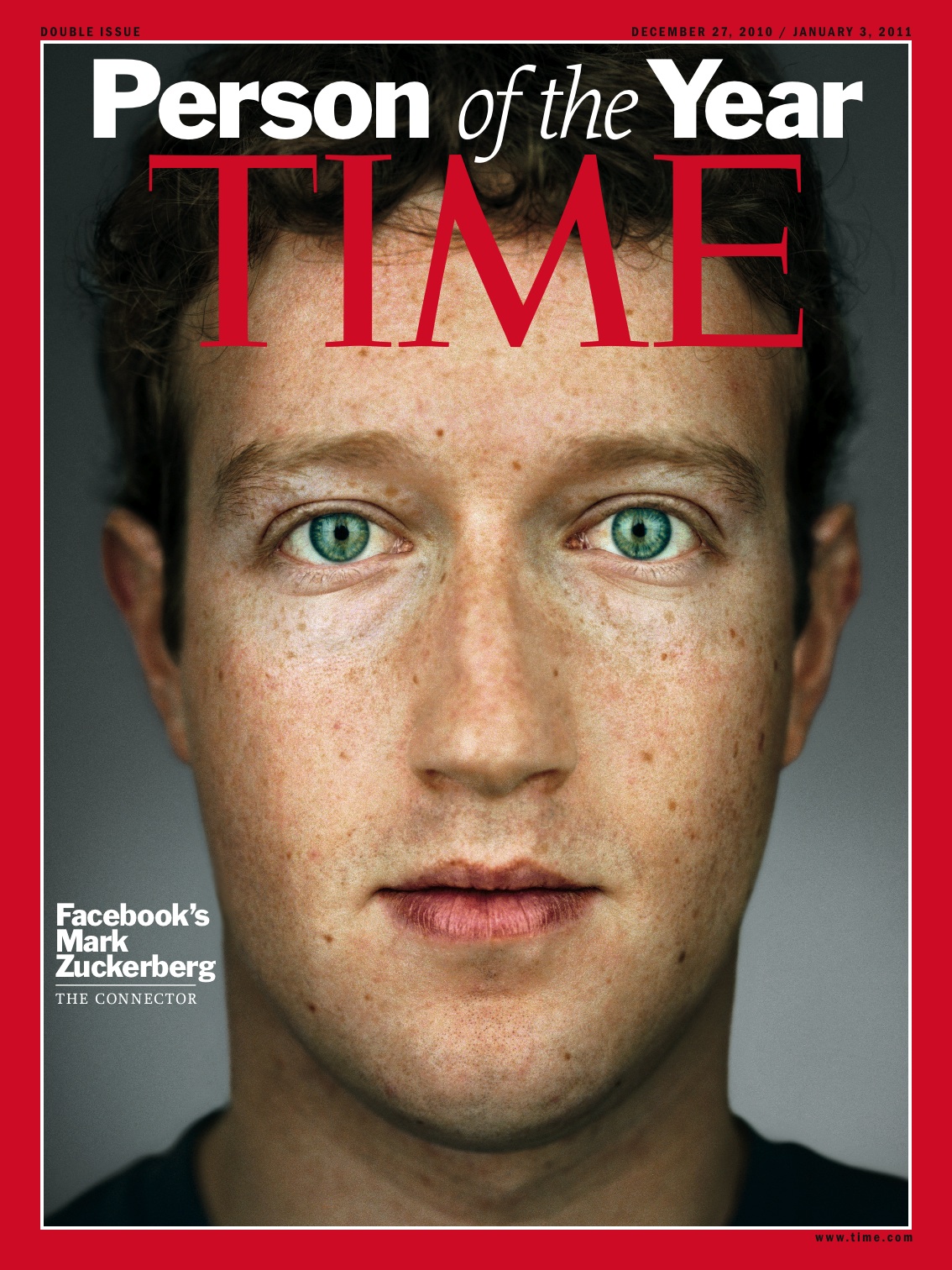
TIME named Facebook founder and CEO Mark Zuckerberg the 2010 TIME Person of the Year. Check it out here.
Look for my interview with TIME’s managing editor Rick Stengel later on my blog regarding TIME’s choice of Zuckerberg.
Archive for the ‘News and Views’ Category

TIME names Facebook founder and CEO Mark Zuckerberg the 2010 TIME Person of the Year.
December 15, 2010What makes THE Most Notable Launch of the Last 25 Years Tick, Click and Stick: The Mr. Magazine™ Interview with David Zinczenko
December 14, 2010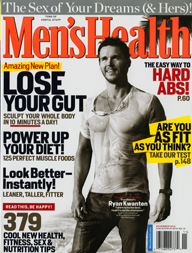

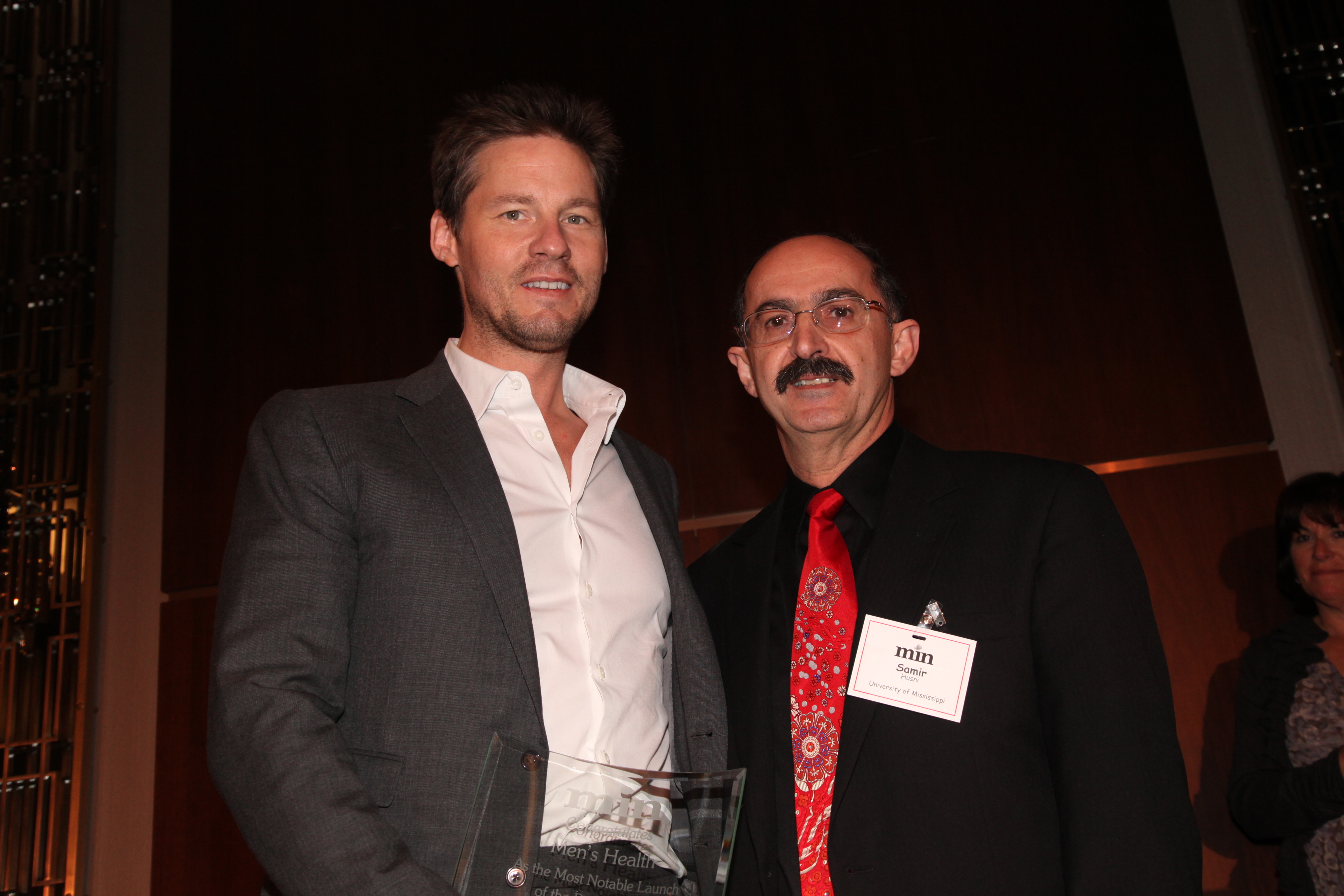
In the last 25 years more than 18,000 new magazines were introduced to the marketplace in the United States alone. Last week at min’s Most Intriguing Event in New York City, I revealed the name of The Most Notable Magazine Launch of the Last 25 Years. That prestigious honor went to Men’s Health magazine. Accepting the award was David Zinczenko, the editor in chief who, together with the entire Men’s Health team, made and continue to makes the magazine the power player it is today. Rooted in the United States with branches all over the world, Men’s Health is now more than a magazine. It has become a world-wide experience for men all over the world.
I had the opportunity to ask Mr. Zinczenko seven questions regarding what makes Men’s Health tick, click and stick with its readers, users, viewers, listeners and customers. His answers, each in two takes (thanks for his generosity with his time), shed more than a light on what can be considered a formula for success that others can try to imitate to create a successful publication for the 21st century and beyond.
Mr. Zinczenko secrets of success start and end with the readers. He values reader service more than anything else. His definition, “reader service is: compulsively actionable tips that can change lives. It has to be practical, it has to be effective, it has to be backed by solid science, and it has to be delivered to our guys in a way that doesn’t talk down to them, doesn’t nag them, doesn’t bore them.”
What follows is the complete, and lightly edited, Mr. Magazine™ Interview in which you will find “tons of useful ideas” from the man at the helm of the magazine that provides “tons of useful stuff.”
 Samir Husni: Since the launch of Men’s Health many other imitators have come and gone. What is the secret of longevity for Men’s Health?
David Zinczenko: (Take One) We put an enormous amount of time and effort into reader research. Every single issue we do is run through a panel of reader/editors, who give us feedback on what’s working for them. And we do a staff post-mortem to review the findings. And a lot of our long-term success is based on institutional knowledge. The average editor on staff has been here about a decade. It takes several years to understand the voice and to get to know the important people in the fields of health, fitness and nutrition.
(Take Two) Omega 3 Fatty Acids. But seriously, a magazine lives and dies by the hardiness of the underlying idea that drives it. For us, the bedrock is helping men seize control of all of the most troublesome aspects of their lives. Their relationships. Their jobs, Their waistlines. Their health. Those needs are universal, and the responses to them change as the years go by, as well. We keep track of the primary mission, and constantly evolve the approaches to responding to it.
SH: What makes MH tick? What is the pulse of MH? The heart beat that keeps it going….
DZ: (Take One) Men’s Health is a place for men to go where they’re going to be told that they’re ok—that other men have the same concerns that they have. It was a revolutionary idea back in 1988 and it remains so to this day.
(Take Two) The beating heart of the magazine is reader service. Every editor who comes to work here has to be reeducated about what real reader service is: compulsively actionable tips that can change lives. It has to be practical, it has to be effective, it has to be backed by solid science, and it has to be delivered to our guys in a way that doesn’t talk down to them, doesn’t nag them, doesn’t bore them. We are the wise older brother our readers never had…even for guys who are older than we are.
SH: What makes MH click? What is the sound, the voice of the magazine?
DZ: (Take One) It’s a sensibility: the idea that we have something important to say, and we are going to say it in a way that’s going to entertain you, and entertain ourselves at the same time. We will not waste your time with blather, but neither will we bore you with self-importance.
(Take Two) The magazine’s voice is that of a guy who really knows what he’s talking about, but who is self-aware enough not to be a blowhard about it. That’s why we can get away with giving our guys advice without putting them off, and also maintain a great sense of humor when we do it. The fact is, we editors have had nearly all of the same problems we’re helping our readers to solve, so how could we possibly talk down to them?
SH: What makes MH stick? What are the values of the magazines? What keeps the conversation engaging with its readers?
DZ: (Take One) Positive, passionate, intensely researched, life-altering service. If it can’t change the lives of a majority of its readers, in big ways or in small ones, then it probably isn’t a Men’s Health story
(Take Two) The needs and yearnings of men are universal, and they’ve been around for a very long time. We’re able to identify those needs because we identify with them personally. We don’t have personal problems; we have story ideas, as an editor here once said. That’s our bond with our readers, and it’s a strong one.
SH: If you are to humanize MH, who will it be? The person, the identity, the voice, values and vision?
DZ: (Take One) It’s a bit of a cliché, but MH is that older brother, that wised-up guy who’s looking out for you. A lot of other men’s magazines seems to say, “we’re cooler than you, but if you give us your lunch money, we’ll let you sit at our table.” Men’s Health says, “we’re just like you. We just have learned a little bit more on our way here.”
(Take Two) The subline for the magazine started out as “tons of useful stuff for regular guys,” and that sticks with us still today. There’s a “regular guy” inside all of us; whether it’s our March cover guy Matt Damon or a subscriber in Iowa City. We’re all fighting to live a great life, be strong, be there for our loved ones, and the magazine supports that quest for “regular” guys around the globe.
SH: Where do you see MH 25 years from now?
DZ: (Take One) I think it’s easier to predict where men’s health will be than where the rest of the publishing industry will be. We’ve already made the leap out of the magazine category and into a larger space as a media brand and a format-agnostic information provider. Unless someone invents something more important to the individual than their own health and well-being, and that of their loved ones, I have to assume we’ll remain the category leader, as long as we stay true to our values and our voice.
(Take Two) I’ve heard so many of my peers in the magazine industry bemoan the death of print and worry about their futures. The fact is, we’re living in an age of unprecedented expansion in the tools we have to do our jobs, and the territory we can expand into. In fact, too many media people are like citizens of St. Louis in the early 1800s, looking west, and complaining about the Indians out there. What they should be doing is looking for California.
SH: What is the future of MH? Its ink on paper future and its digital future!
DZ: (Take One) We have to remain poised to expand into any media that we haven’t yet conquered. That means a greater TV presence, perhaps, as well-being ready to move on whatever new technologies arise. we’ve conquered apps for both the iPhone and iPad; what’s next?
(Take Two) About five years ago, we ceased to think about ink-on-paper vs. digital vs. whatever else is coming down the pike. Instead, it’s print and digital and smartphones and TV and radio and books and any other thing the communications geniuses dream up. Media will change and evolve in exciting ways, and our message will work on all of them. Our guys need help, and want to lead better lives. We’ll find them wherever they are, and lead them to the promised land. And by doing that, we’ll reach the promised land.
SH: Thank you.
The picture above is from the min event with David Zinczenko accepting The Most Notable Launch of the Last 25 Years. Photo by Doug Goodman Photography http://www.douggoodman.com
In the New Magazines’ Launch-World, November 2010 is NOT a Cold Month
December 12, 2010

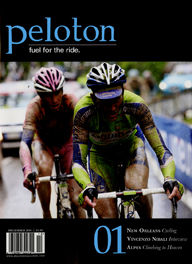
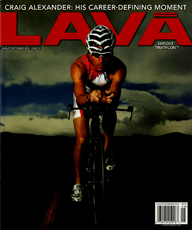
Unlike the cold cold weather of the winter, the November 2010 in the world of magazine launches has been a hot one. Indeed the number of launches has almost doubled in comparison is that of 2009. A total of 71 new launches appeared on the nation’s stands compared with 44 in November of last year. The sudden increase in the number of launches is yet another sign of the vitality of the magazine business that has been seeing quite a bit of good news lately on both advertising and circulation fronts.
From the 71 new titles 18 were published with an intended frequency of four times or more, double than the eight that were started with the same frequency in 2009.
November launches follow a very strong October. In October the total number of new magazines launched reached 95 with 20 magazines published with an intended frequency of four times or more. The above featured four magazines are nothing but a little representation of the quality of titles arriving at the marketplace lately.
All in all the total number of new magazines this year, so far, is almost the same as the last year. My expectations is this year’s total launches is going to exceed the 700 mark as a total number and the 200 mark as those published four times or more. Stay tuned!
DECEMBER 9 IS min’s MORNING OF INTRIGUE: Most Notable Launch of the Last 25 Years and the Hottest Launches of 2009 – 2010
November 7, 201025 years ago, Steve Cohn was the first media reporter to write about a new publication born at The University of Mississippi called Samir Husni’s Guide to New Magazine. Steve, who has been editing min (media industry newsletter) since then, turned the coverage of my first Guide into an annual review of the hottest and most notable launches every year. Each December he devotes a page in min in which he and I review and preview the hottest and most notable launches of new magazines.
Well, this year, on the occasion of the 25th anniversary of the Samir Husni’s Guide to New Magazines, I will be honoring the 25 most notable launches of the last 25 years from a list of more than 18,000 new launches. The event will take place on December 9 at min‘s Most Intriguing People in Media breakfast in New York City. At the event I will reveal the MOST notable launch from among the 25 notable launches since 1985. Also at the event I will honor the 15 hottest launches of 2009/2010 (with a Sept. 30 cutoff date for the 2010 launches) including the hottest launch of the year, the hottest editor, publisher and art director. Also three magazines that reinvented themselves this year will be honored at the min event. Click here for more details about the min event.
What follows is what Steve wrote in minonline and in this week’s issue of min newsletter:
min’s Most Intriguing & Hottest Launches Set for Dec. 9
By Steve Cohn
We launched min’s Most Intriguing People in Media list in 2003 because there were many who made a difference in media but were not necessarily “hot” in an obvious sense. We wanted to recognize people who are making waves or embarking on a big adventure or facing a stiff challenge. Our Dec. 9 breakfast at New York’s Grand Hyatt continues the tradition in citing five executives who were new to their jobs in 2010—Prometheus Global Media president/CEO Richard Beckman, Next Issue Media president/CEO Morgan Guenther (see right), Sports Illustrated VP/corporate sales Kim Kelleher, ABM president/CEO Clark Pettit and Condé Nast president Bob Sauerberg—and, for each, “the best is yet to come” applies. As it does to the remaining 16.
University of Mississippi journalism professor Samir Husni—aka “Mr. Magazine”—will preside over two other celebrations on the program: the Hottest Launches of the Year and the 25 Most Notable Launches of the Last 25 years. At the event Samir will announce the hottest recent launch and the hottest launch of the last quarter century. We invite you to join us. Click here for more information.

The ACT Experience at the University of Mississippi: A Different Discussion About the Future of Magazine Publishing
November 2, 2010By John Harrington
Editor, The New Single Copy

There is no question that the program for the ACT (Amplify, Clarify, Testify) Experience, sponsored by the Magazine Innovation Center at the University of Mississippi, held two weeks ago, was different from what we expect at magazine industry gatherings. Speakers included the editorial director of a large Brazilian publisher, the CEO of a publisher launching a seven million copy newspaper supplement, the head of a major custom publishing company, the creative director of group of hotel publications, the founder and president of a national advertising sales service business, the managing director of a major Dutch magazine, the chief marketing officer of digital development company, the editor of a totally online magazine, and two consumer marketing (AKA audience development/circulation) observers and analysts.
The agenda was assembled by a Lebanese immigrant to the United States, and it unfolded in a part of the country probably best known for college football and being the scene of some of the more notable and disturbing moments of the civil rights movement of the 1960’s. The registrants were an equally diverse group, and they also included a good number of journalism students. Given that eclectic mixture, it is my perhaps biased opinion (I was one of the “observers and analysts”), the event provided an outstanding perspective on the state, current and future, of the magazine business. Media businesses are always in transition, but the pace of that transition increases and decreases in cycles.
Right now, for magazines, it has accelerated to a dizzying level. At the American Magazine Conference (AMC), held in early October, where the venerable Magazine Publishers of America changed its name to MPA the Association of Magazine Media, the agenda was heavily focused on digital developments, with a list speakers not quite as international, but equally representative of the onrushing magazine future as those on the program at ACT. Early this summer, not even six months ago, new CEOs were named at each of the four largest publishing companies. Implicit in those executive changes is a shift in publishing strategies, in the words of one of those publishers, from an “advertising-centric” to a “consumer-centric” economic model. Clearly, the focus at AMC, from a more corporate perspective, and at ACT, where a somewhat more entrepreneurial view was evident, was on potentially seismic changes in the publishing business.
There was a gentle irony evident at ACT, organized by Samir Husni, the professor who made the University of Mississippi’s journalism school a force in magazine publishing, and is generally thought to be proponent of the role of print on paper. Digital was part of nearly every discussion that took place, not just in the development of editorial content, but in the roles of marketing and advertising, and even in consumer marketing. The shifts moving through the business were captured in comments by Ann Russell, editor of VIVMag, an online publication, who also has considerable traditional magazine experience. On her changing role, she said, “The editor is becoming a director.” Looking ahead, she asked, “Are we there yet?,” then answered her own question, with “There is no there.” Another aspect of the shifting landscape was offered by Thomaz Souto Correa, editorial vice president of The Abril Group (Brazil). It is important as digital format are developed, he said, “to concentrate on the future of the reader, more than the magazine.” He followed that up by saying that publishers need to “maintain editorial credibility to keep reader trust.”
Both comments are central to the viability of print, whether on paper, in digital, and in the next incarnation as well. In my presentation on newsstand and its role in a future heavily influenced by digital, I raised the issue of the breaking down of “silos.” Initially, it referred to the oft-times isolated parts of circulation, subscriptions and newsstand, where my experience found promotional strategies often in conflict, and worse, counter productive. However, at ACT, in group discussions following the general presentations, the silo issue, or more properly the breaking down of silos, resonated for the broader magazine media business, especially as publisher models transition from ad-centric to consumer-centric. The New Single Copy has regularly commented on how “good” publishing economics do not always translate into good newsstand channel economics. As an example, a publisher’s decision to reduce frequency saves on production costs while spreading advertising revenues, but reduces wholesaler and retailer income with any operational savings. Further, advertising promises were often the basis, as the late Dan Capell wrote, for “most bad circulation decisions.”
Samir Husni and the Magazine Innovation Center intend a second act, and maybe more, for ACT. It has the opportunity to become an incubator of change for the magazine media business for the next decade and beyond. It will not replace AMC, but if expanded to include a few more of the “usual suspects,” without losing its entrepreneurial flavor, ACT can emerge as an influential and complementary fixture on the media calendar.
Besides Russell, Correa, and myself, the other speakers at ACT were Stephen Duggan, Athlon Sports; David MacDonald, Sunshine Media Group; Haines Wilkerson Morris Visitor Publications; Lisette Heemskerk, Mood for Magazines, the Netherlands; James Elliott, James G. Elliott Company; Baird Davis, consumer marketing analyst; and Jeanniey Mullen, Zinio. The opening dinner speaker was Roger Fransecky, CEO, the Apogee Group; and the closing dinner guests heard from Bob Guccione, Jr., founder of Gear and Spin magazines, as well as the first editor-in-residence at the Magazine Innovation Center.
Reprinted with permission from the November 1, 2010 issue of The New Single Copy newsletter.
The Future Notebook (1): When Roger Fransecky Talks, I Listen
October 28, 2010The first ever Amplify, Testify, and Clarify (ACT) Experience that the Magazine Innovation Center at The University of Mississippi’s Meek School of Journalism and New Media is now history. However, the lessons learned at this experience offered “a mosaic of opinion and perspective, when combined into a whole, provided a good look at where the industry is now and where it needs to go,” as my friend Tony Silber, general manager of Red 7 Media wrote in his blog on the Folio magazine website.
Over the next few days and weeks, I will providing links to the keynote speeches that the first ACT Experience witnessed and heard. Those experiences help us, as the theme of the first Experience promised, Reimagine the Future While We Still Have Time.
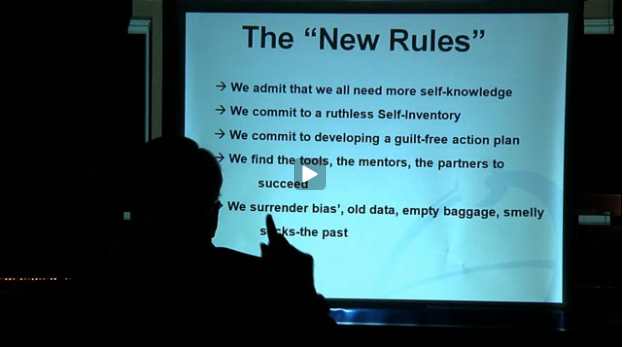
The opening remarks at the ACT Experience came from Roger Fransecky, the chief executive officer of the Apogee Group. When Roger talks, I listen. And so did the 125 lucky folks who were in attendance on the opening night of the ACT Experience. Here are some sound bites from Roger’s presentation:
The thing that we are really about is possibility
The invitation of life is to life a remarkable life and never settle for second best
We are no longer in the information business we are in the conversation business
There are no accidents
The spirit of this conference is one of generosity
Real change happens deliberately
The challenge of life is to pay attention
This whole conference is about that nutty thing called change
Some are running on empty because of their belief
The question of life is not what you are doing but what are you becoming
Click here to watch Roger Fransecky’s presentation on Reimagining The Future While We Still Have Time.
In ‘Digital Distraction’ Age, Magazines No Longer Information Providers. A report from the Reimagining the Future conference.
October 26, 2010By Tony Silber, Folio Magazine

Living in an age of “digital distraction,” magazine-based media companies need to come to terms with what they’re becoming, and whether they’re doing it by default or design, said Roger Fransecky, CEO of the corporate-consulting firm Apogee Group, and keynote speaker at last week’s “Reimagining the Future,” conference held at the Magazine Innovation Center at the University of Mississippi.
The powerful metaphor going forward is “conversation,” Fransecky said, and media companies can create a path to the next one. “You’re no longer information providers, you’re in the conversation business,” he told the audience of about 125 magazine-industry professionals and journalism-school students. From a business perspective, the challenge is to ask a series of questions in that context. “What’s over?’ Fransecky asked. “What do you still believe? When you look at your business, you need to ask, ‘what do we still trust?’”
The conference was organized by Samir Husni, founder and director of the Magazine Innovation Center, and was held at the center’s facility in Oxford, Mississippi. Over the three-day event, speakers tackled the fast-changing landscape from a variety of perspectives, sometimes outlining what they’re doing in their own businesses and other times prescribing advice for the industry.
For example, James G. Elliott, CEO of an eponymous media sales and consulting firm, noted that the recession has hit all media, not just print media and not just magazines. High unemployment in the upper middle class, he said, has caused a dramatic falloff in subscriptions and newsstand sales.
Magazines, Elliott said, are too magazine-centric. “The thinking is isolated and inbred,” he said. “We allow folks in other industries to define us or ignore us.”
Circulation consultant Baird Davis said publishers were caught flat-footed by the recession. There are, Davis said:
• Too many marginal publications
• Too many “over-circulated” publications
• An over-abundance of “leveraged” companies
• Too many “lightly” qualified CEOs
• A lopsided concentration on advertising
• A fragile newsstand channel and diminished consumer value of subscription files
• Diminished circulation staffs with reduced consumer-marketing skills
• Companies improperly organized and staffed to meet demands of the new digitally driven consumer-centric market
And with the recession, Davis said, the private-equity fueled “Leveraged Era” was done.
‘Don’t Be Scared. Be Excited.’
There were some mixed messages about how to deal with the universe of Internet information, where blogs, videos, comments, posts and other content doesn’t have the same meticulous attention to accuracy and credibility as traditional print media. When it comes to advertising, Elliott said to do in print what you would do online. But Thomaz Souto Correa, editorial vice president of The Abril Group in Brazil, said the correct focus should be on the future of the reader, not the future of the magazine. Correa asked the most provocative question of the event: Given the changing rules for content online, “Will credibility matter in the future?”
The conference closed with a presentation from Bob Guccione, Jr., who kept his commitment to speak even though his father, Penthouse founder Bob Guccione, had died the previous day. Fear and mystification of the Internet, Guccione, Jr., said, is unfounded. “The Internet is a railroad track, an infinite number of railroad tracks, carrying other people’s cargo,” he said. “And we’re the other people. To think otherwise is like a farmer saying to his tool: ‘Command me.’
“I have no insights into digital media,” Guccione said. “None! And I’m starting two Web sites. I think it’s still about, ‘How do you make it interesting?’ It’s all going to come down to the quality of the content. Don’t be scared. Be excited. Wake up excited.”
Quote Unquote: Nothing Goes Away… Words of Wisdom from Esquire’s David Granger
October 16, 2010From time to time I will be posting selective quotes from top magazine editors and other media pundits regarding the future of the magazine industry. Today’s Quote Unquote comes from the November 2010 issue of Esquire magazine. David Granger, Esquire’s editor in chief writes in his Letter from the Editor,
…
I lose patience with pundits who prophesy and lobby for the demise of all traditional media in favor of newer forms. Newer media perforce create more ephemeral “content.” And the reality is that all of these forms of expression — new and old, digital and analog — are going to continue, and they are going to continue to prosper. The things we create in print and in digital are so completely different from each other that they appeal to fundamentally distinct needs.The war between old and new is a false construct. Nothing goes away. The human need to create is too great, and the human desire to be entertained is too intense to allow any form, whether books or oil painting or even blogging, to disappear.
They who have ears, let them hear.
Is the Book-a-Zine the New Magazine?
October 13, 2010
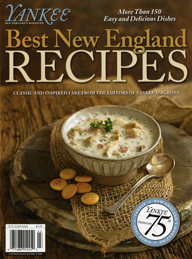

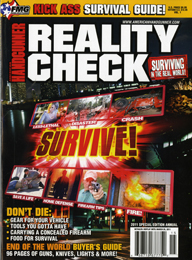
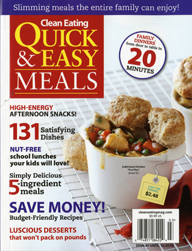
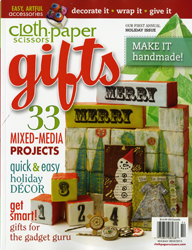
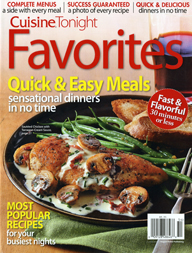
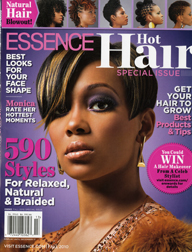
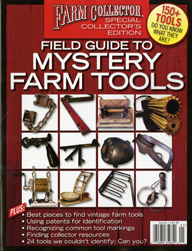
If the future is now, then today’s definition of a magazine may well be a book-a-zine. In the last ten days I was able to find and buy 26 new launches that fit the definition of a book-a-zine. A book-a-zine can be defined as a line extension of a known or established brand in which, in most cases, better quality paper is being used and the majority of the content is recycled from older issues of that brand. The new titles that I found were on the newsstands and most of them at the check out counters. Almost every magazine and every major brand are producing those book-a-zines and placing them on the racks. The newsstands are starting to look like the paperback bookshelves at the bookstores.
The majority of those book-a-zines deal with food and crafts, and some even combine food and crafts in one publication thus creating gifts from food or vice versa. From Holiday Cheer to Quick & Easy Meals, from Gluten-Free Holiday Guide to a Field Guide To Mystery Farm Tools, the cover prices range from a low of $4.99 (one out of 26) to a high of $14.99 (also one out of 26). I paid a total of $262.62 for my collection of book-a-zines in the first ten days of October.
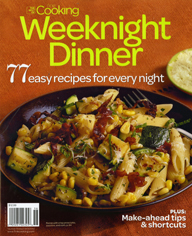
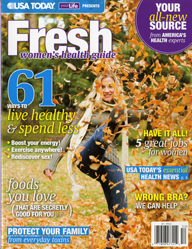
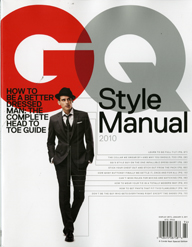
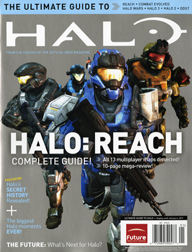
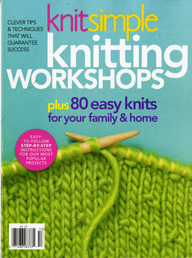
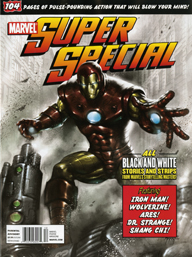
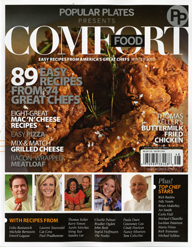
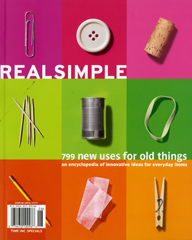
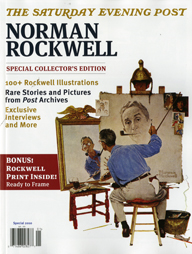
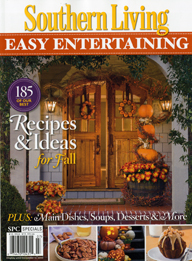
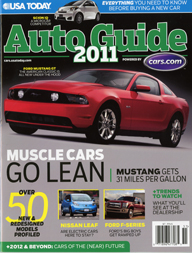
Here is, for the fun of it, the names of all the book-a-zines that I have bought including the brands behind the names and the cover prices. Also, for your visual delight, the covers of all the book-a-zines. Enjoy.
Farm Collector Field Guide To Mystery Farm Tools $7.99
Living Without’s Gluten-Free Holiday Guide $6.95
Marvel Super Special $9.99
American Handgunner Reality Check $9.95
Clean Eating Quick & Easy Meals $9.99
Real Simple 799 new uses for old things $13.99
Better Homes and Gardens Special Interest Publications Food Gifts $9.99
Essence Hot Hair $4.99
Future Ultimate Guide to Halo $9.99
Cloth.Paper Scissors Gifts $14.99
The Saturday Evening Post Norman Rockwell $9.99
Cooking Light Best Quick & Easy Recipes $11.99
Victoria Holiday Bliss $7.99
USA Today Fresh Women’s Health Guide $7.99
Southern Living Easy Entertaining $10.99
Cuisine Tonight Favorites $9.95
Family Tree Discover Your Roots $12.99
Delish.com Easy & Delish Comfort Food $9.99
Knit Simple Knitting Workshops $9.99
Fine Cooking Weeknight Dinner $12.99
Wild Bird Hummingbirds $10.99
Cars.com USA Today Auto Guide $7.99
GQ Style Manual $10.99
Popular Plates Comfort Food $8.99
Good Housekeeping, Redbook & Country Living Holiday Cheer $9.99
Yankee Best New England Recipes $9.99






7,000,000, Yes SEVEN Million is the Launch Circulation of the New Ink-on-Paper Sports Magazine: Athlon Sports
October 6, 2010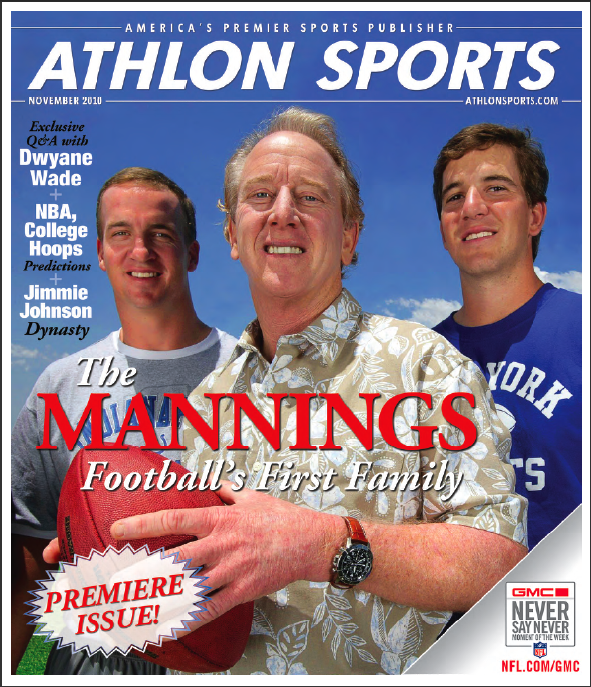
I had to spell it out. 7,000,000 is the total circulation figure for the first issue of the new sports magazine Athlon Sports. The newspaper-inserted-magazine’s first issue, sporting the First Family of Football (The Manning Family) will make its debut inside ink on paper newspapers on Oct. 18. Athlon Sports is one of two new publications arriving to the nation’s news(stands)papers this fall. Dash, a food monthly published by the granddaddy of newspaper-inserted-magazines Parade, will make its debut in November.
Althon Sports will be the largest launch this year and the magazine will be one leg of a multi-layered stool that includes a three weekly “Athlon Sports Extra Innings” sports pages distributed and ready to print in the host newspapers in addition to a web feed and presence. The goal of the Extra Innings is to “enhance current sports editorial in print and drive readers online.” Extra Innings will focus on Inside College Football, Inside Pro Football and Inside NASCAR for now.
Athlon Sports is the first newspaper-distributed-magazine aimed mainly at a male audience. The others such as Parade, USA Weekend, American Profile, Relish, Spry and Healthy Style are all aimed mainly at a female audience.
Stephen Duggan, CEO of Athlon Sports is going to be one of the featured keynote speakers at the Magazine Innovation Center’s first ACT Experience during which he will answer the question “7 Million Circ Launch — Why Now?” Three of the talking points of his speech will be, “Go big or go home,” “Crazy? I hope not,” and “Newspapers… A growth story.”
Mr. Duggan will be joined by 13 other keynote speakers at the three day event held on the campus of The University of Mississippi at the Meek School of Journalism and New Media. For more details on all the speakers and the schedule of the ACT Experience events click here.


 Mr. Magazine